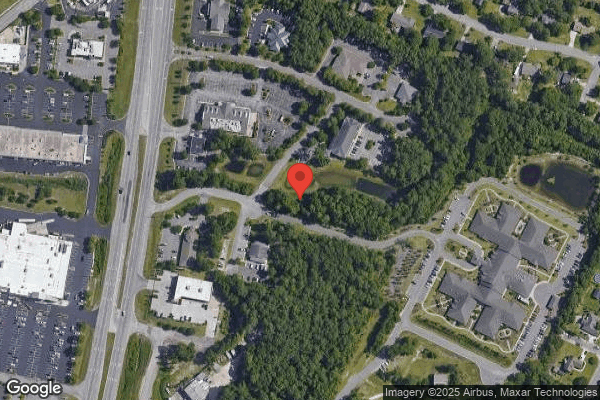
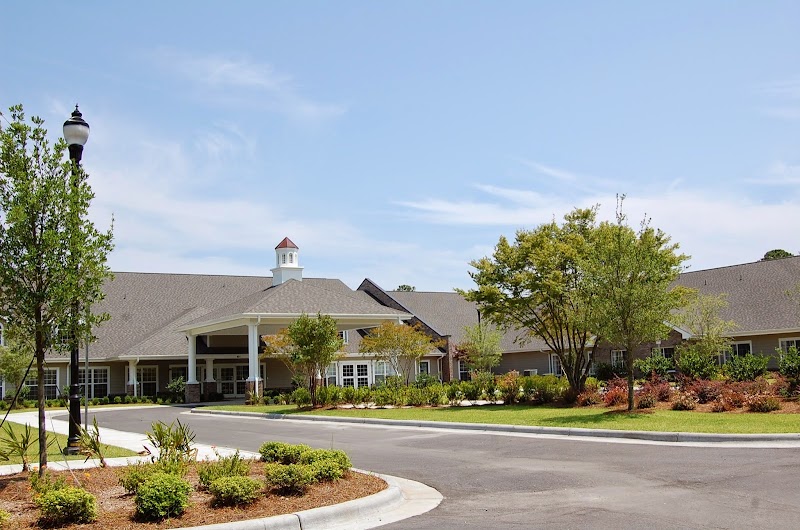
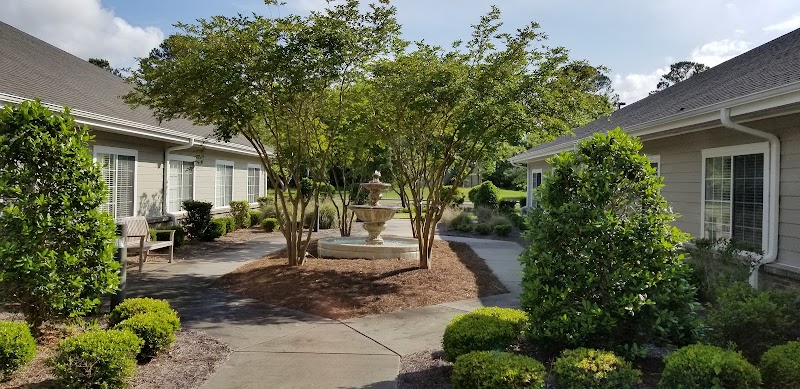
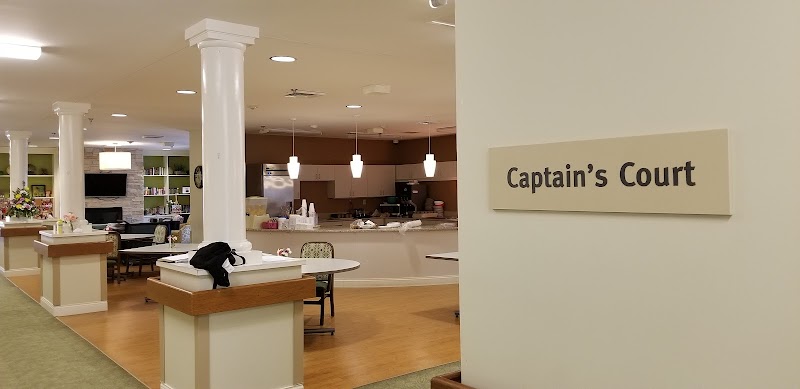
Trinity Grove

631 Junction Creek Drive, Wilmington, NC 28412 (910) 442-3000
Non profit - Church related 100 Beds LUTHERAN SERVICES CAROLINAS Data: November 2025 2 Immediate Jeopardy citations
Trust Grade
11/100
#207 of 417 in NC
Last Inspection: September 2025

Inspected within the last 6 months. Data reflects current conditions.

Overview

Trinity Grove in Wilmington, North Carolina, has received a Trust Grade of F, indicating significant concerns about the facility's operations. Ranked #207 out of 417 in the state means they are in the top half, but the low trust grade raises red flags. The facility is improving, having reduced issues from 6 in 2024 to 5 in 2025, but still has serious deficiencies, including two critical incidents of physical abuse by staff against residents. Staffing is a strong point, with a 5/5 star rating and turnover at 49%, which is average for North Carolina, while RN coverage is better than 85% of facilities, suggesting good medical oversight. However, there are concerning findings such as a staff member slapping residents, which indicates a troubling environment despite some positive staffing metrics.

Trust Score
F
11/100
In North Carolina
#207/417
Top 49%
Safety Record
High Risk
Review needed
Inspections
Getting Better
6 → 5 violations
Staff Stability
⚠ Watch
49% turnover. Above average. Higher turnover means staff may not know residents' routines.
Penalties
⚠ Watch
$38,170 in fines. Higher than 94% of North Carolina facilities. Major compliance failures.
Skilled Nurses
✓ Good
Each resident gets 56 minutes of Registered Nurse (RN) attention daily — more than average for North Carolina. RNs are trained to catch health problems early.
Violations
⚠ Watch
16 deficiencies on record. Higher than average. Multiple issues found across inspections.
★★★☆☆
3.0
Overall Rating
★★★★★
5.0
Staff Levels
★★★★☆
4.0
Care Quality
★★☆☆☆
2.0
Inspection Score
Stable
2024: 6 issues
2025: 5 issues

The Good

  • 5-Star Staffing Rating · Excellent nurse staffing levels
  • 4-Star Quality Measures · Strong clinical quality outcomes
  • Full Sprinkler Coverage · Fire safety systems throughout facility
  • No fines on record

Facility shows strength in staffing levels, quality measures, fire safety.

The Bad

3-Star Overall Rating

Near North Carolina average (2.8)

Meets federal standards, typical of most facilities

Staff Turnover: 49%

Near North Carolina avg (46%)

Higher turnover may affect care consistency

Federal Fines: $38,170

Above median ($33,413)

Moderate penalties - review what triggered them

Chain: LUTHERAN SERVICES CAROLINAS

Part of a multi-facility chain

Ask about local staffing decisions and management

The Ugly 16 deficiencies on record

2 life-threatening 2 actual harm
Sept 2025 5 deficiencies 1 Harm
SERIOUS (G) 📢 Someone Reported This

A family member, employee, or ombudsman was alarmed enough to file a formal complaint

Actual Harm - a resident was hurt due to facility failures

Free from Abuse/Neglect (Tag F0600)

A resident was harmed · This affected 1 resident

**NOTE- TERMS IN BRACKETS HAVE BEEN EDITED TO PROTECT CONFIDENTIALITY** Based on record review, observation, and staff, Power of Attorney, and Nurse Practitioner interview, the facility failed to prot...

Read full inspector narrative →
**NOTE- TERMS IN BRACKETS HAVE BEEN EDITED TO PROTECT CONFIDENTIALITY** Based on record review, observation, and staff, Power of Attorney, and Nurse Practitioner interview, the facility failed to protect a severely cognitively impaired resident (Resident #65) from the right to be free of physical abuse. On 08/29/25 at approximately 10:30 PM, when Nurse Aide (NA) #1 and NA #2 were providing care for Resident #65 who was agitated and combative, NA #2 struck the resident with an open hand on the left side of her face. This action would have caused a reasonable person psychosocial harm such as feelings of anger, fearfulness, humiliation, and helplessness. The deficient practice occurred for 1 of 3 residents reviewed for abuse (Resident #65).Findings included:Resident #65 was readmitted to the facility on [DATE] with diagnoses that included Alzheimer's disease with late onset, dementia with unspecified severity and behavioral and mood disturbances, anxiety and chronic pain.Review of the care plan for Resident #65 revised on 06/05/2025 revealed the following focus areas:Impaired Functional Performance as evidenced by (AEB) requiring staff assistance to complete activities of daily living (ADL) secondary to impaired cognition, decreased mobility, and unsteady gait and balance. Resident #65 refused assistance and resisted care at times. Anticipate resident requiring increased assistance as her disease process progresses. The goals were that Resident #65 would continue to participate in ADL through the next review. Interventions included to always approach in a friendly, non-threatening manner, try to re-direct with refusals; and allow resident to calm down then have another staff member attempt or re-approach in a timely manner if resident is resisting care. Resident #65 has mood and behavior problems with episodes of pacing, rummaging, screaming, being short tempered, being easily annoyed, being verbally and physically abusive towards staff, setting off door alarms and will frequently remove pants secondary to Alzheimer's/dementia with mood and behavioral disturbance. Resident #65 will refuse taking her scheduled medications at times. She gets angry when there is a facility emergency and she's not allowed to assist, such as when another resident falls. The goal was for Resident #65 to continue to participate in decision making regarding her daily routine and not injure herself or others when being abusive by the review date. Interventions included to anticipate and meet the needs of Resident #65, stop and talk with her as passing by (resident enjoys looking at family photos, clipping coupons, flipping through newspapers and books, drinking coffee), encourage visitation from family for socialization and diversion, encourage out of room for meals and activities, attempt to keep a consistent routine, offer snacks or drinks (resident loves coffee) for diversion, intervene as necessary to protect the rights and safety of others, remove from the situation and take to an alternate location as needed, minimize the potential for the resident's disruptive behaviors by offering tasks which divert attention, monitor behavior episodes and attempt to determine underlying causes considering location, time of day, persons involved, and situations and document behavior and potential causes. Review of a quarterly Minimum Data Set (MDS) dated [DATE] documented that Resident #65 had short and long term memory problems and was rarely or never understood. She was aware of the location of her room, staff faces and names; but did not know the current season or that she was in a nursing home. She continuously presented inattention and disorganized thinking. Physical behavioral symptoms directed towards others (e.g., hitting, kicking, pushing, scratching, grabbing) occurred on 1 to 3 days. Other behavioral symptoms not directed towards others (such as verbal or vocal symptoms like screaming) occurred on 1 to 3 days. The facility filed an Initial Allegation Report to the State on 08/30/25 at 12:37 AM for an allegation of abuse. The accused employee was NA #2. The facility became aware of the incident on 08/29/2025 at 10:30 PM. The allegation details were that the resident (Resident #65) became combative during care and was hitting and kicking the nurse aides. The resident hit NA #2 in the face and NA #2 swatted back at the resident. NA #2 was suspended pending an investigation, all residents were assessed with no new issues noted. Local law enforcement and DSS were notified on 08/30/25. The facility documented that the resident suffered no physical or mental harm. The facility Investigation Report was filed with the State on 09/08/25. The allegation was not substantiated by the facility because post investigation the Administrator determined that NA #2 did not swat at Resident #65 because there was no injury or mental anguish. The accused individual's employment (NA #2) was terminated related to the allegation on 09/04/25. In a telephone interview with NA #1 on 09/16/25 at 2:27 PM she stated she had asked NA #2 help her with an incontinent round for Resident #65 at approximately 10:30 PM on 08/29/25. She explained that it was the normal baseline behavior for Resident #65 to strike out at staff during incontinence care or showering. She explained that 2 aides were always needed when providing incontinent care to Resident #65. Staff often used chocolate to calm Resident #65 or would leave the room and re-approach Resident #65 later to give her time to calm down. She reported they had already successfully changed the resident's diaper and NA #2 was pulling up the resident's covers on her bed. Resident #65 told NA #2 that she didn't want the blanket and tried to swat NA #2 with her hand. NA #1 heard NA #2 tell Resident #65, If you hit me, I'm gonna hit you back!. NA #1 heard Resident #65 tell NA #2 if she hit her she would report it. NA #2 continued to pull up the covers and NA #1 stated Resident #65 slapped NA #2. NA #1 stated she saw NA #2 slap Resident #65 with an open hand across the left cheek of her face, and it sounded like a loud clap. NA #1 explained she then tried to get herself and NA #2 out of the room as quickly as possible because she knew it was considered abuse to strike a resident. NA #1 noted when they left the room NA #2 was mingling around her and told her, I didn't mean to do it-it was a reflex. NA #1 stated she was afraid to report NA #2 for abuse in NA #2's presence so she texted the nurse working on the Rehabilitation Hall and asked her to call her and Nurse #1 over to the Rehabilitation Hall so that she could tell Nurse #1 what happened, which she did. The Rehabilitation Nurse called the Administrator immediately and Nurse #1 returned to the memory care unit to monitor NA #2. NA #1 stayed on the Rehabilitation Hall because that is where she was originally scheduled to work on third shift and it was time to change shifts. NA #1 reiterated she had reported the abuse as quickly as she could after it happened.In a telephone interview with NA #2 on 09/17/25 at 9:55 AM she stated NA #1 had asked her to help with incontinence care for Resident #65. She noted she knew it was going to be chaotic because earlier in the shift after supper it took 3 nurse aides to put Resident #65 in bed because she was combative. NA #2 noted when she entered the resident's room at the end of the shift, the resident was already screaming, swinging her arms and kicking. She stated she went in the room to complete incontinence care because she was trained to care for residents who had dementia, and this was the resident's normal behavior. NA #2 explained after the incontinence care was done, she bent down to pull up the resident's bed sheet, and the resident slapped her on her face really hard. NA #2 stated she backed up at that time but that she was all tangled up with the Resident #65 who had sat up in bed and had a grip on her. NA #2 noted at that time she was trying to push the resident down in the bed and her hand may have touched the resident's face in the struggle. She stated she was aware there was an allegation that she had slapped the resident but stated she had not. She noted she was also aware that there was an allegation that she told the resident that if the resident hit her she would hit her back and stated she had never said that. NA #2 also explained that law enforcement alleged to her that she had told the resident if the resident smacked her, then she would smack the resident. She stated she had not made either statement to hit or smack the resident. She noted there had been 2 aides on the memory care unit that night instead of 3, but she did not feel that the unit was short staffed. She recalled she had 11 residents on her assignment on 08/29/25 on second shift and explained she was able to complete her assignment during her shift.A telephone interview was conducted with Nurse #1 on 09/16/25 at 9:27 PM. He stated he was the nurse on duty in the memory care unit on 08/29/25 from 7:00 PM until 7:00 AM. He reported NA #1 and NA #2 went to change Resident #65's brief. When they came out of the resident's room, NA #2 told him that Resident #65 had hit her. He stated NA #1 was quiet. He explained he was called by Rehabilitation Hall Nurse who asked him to bring NA #1 to the Rehabilitation Hall. When he arrived at the Rehabilitation Hall with NA #1, NA #1 told him that Resident #65 had swatted at NA #2 while they were in the room providing care and that NA #2 had swatted back at Resident #65 and hit her on the left side of her cheek on her face. The Rehabilitation Hall Nurse tried to call the Director of Nursing but was unsuccessful, so she then called the Administrator to report alleged abuse. Nurse #1 stated the Administrator was present at the facility within 5 minutes. Nurse #1 explained that the Administrator took NA #2 off the memory care unit and told him (Nurse #1) to complete an assessment on Resident #65. Nurse #1 stated he noted Resident #65 had red dots on her left cheek when he assessed her. Nurse #1 explained that he could not determine that the discoloration on the resident's left cheek had been caused by a slap. Nurse #1 stated he completed skin checks on all the other resident's on the memory care unit. Nurse #1 commented that Resident #65 was normally combative during incontinence care, and the nurse aides were to stop care and re-approach later if a combative resident could not be calmed. Nurse #1 stated that NA #2 never told him that she had hit Resident #65 on the face. He reported that NA #2 was removed from the memory care unit by the Administrator on 08/29/25 and had not returned to work. A progress note written by Nurse Practitioner #1 on 09/02/25 at 10:45 AM documented that she assessed Resident #65 who was neurologically at baseline. She noted that she assessed Resident #65 to have multiple skin lesions and age-related changes on both sides of her face with a small area of petechiae on her left cheek. There was no pain, redness, bruising, or edema on her face. Resident #65 had no new complaints or distress noted. An interview was conducted with Resident #65's Power of Attorney (POA) on 09/16/25 at 3:10 PM. She stated she listened to her voice mail on Saturday morning (08/30/25) around 6:30 AM. She reported she called the facility and Nurse #1 told her that Resident #65 had been combative during care and when the resident swatted at a nurse aide the nurse aide hit her back. The POA stated she arrived at the facility that morning around 9:30 AM and took pictures of Resident #65's left side of her face. She stated she did see marks on Resident #65's left cheek. She reported when she was taking the pictures, Resident #65 asked her if someone had hit her. The POA found this unusual because Resident #65 had never said anything like that before. She asked Resident #65 if someone had hit her and the resident replied she did not know. The POA stated she had asked Nurse #1 for a report, and he told her the Administrator would call her. When the Administrator had not called her by noon, she googled what to do and called Adult Protective Services to file a complaint. She recalled the Administrator called her on 08/30/25 and told her he had had interviewed both of the nurse aides involved. He reported to her that he had escorted the accused nurse aide out of the building and suspended her. The POA stated Resident #65 had been at the facility for 6 years and that this was the first time anything like this had happened to her. She noted she had not visited Resident #65 on Friday (08/29/25) but had seen her the day before (Thursday) and the marks on her face were new.An observation of Resident #65 was made on entry (09/15/25) at lunchtime at 12:05 PM and again on 09/16/25 at 12:30 PM. No marks were visible on the left side of Resident #65's face. An attempt was made to interview Resident #65 on 09/17/25 at 3:05 PM, but Resident #65 was not able to understand the conversation. An interview was conducted with Nurse Practitioner #1 on 09/18/25 at 1:33 PM by telephone. She stated when she had assessed Resident #65 on 09/02/25 she had not found any frank marks or bruising on the resident's face. Nurse Practitioner #1 explained although she did observe 3 petechia dots on the resident's left facial cheek, she wouldn't call those marks a bruise. She noted the petechia could have just been due to the aging process and changes in the resident's skin. She stated Resident #65 was at baseline and was not able to tell her if anyone had hit her.An interview was conducted with the Administrator on 09/18/25 at 10:30 AM. He stated that he did not substantiate this allegation of abuse because when he talked to the local law enforcement officer who had responded to the incident, the information the office told him regarding staff interviews varied from the staff interviews that he had conducted himself. The Administrator explained he did not have a copy of the law enforcement report because when he had asked the officer for a copy of the report he was told the report had not been written yet and that the investigation was still open. The Administrator provided a Plan of Correction with an alleged completion date of 09/04/25, but it was not accepted because the plan did not include monitoring of staff to resident interactions or of care being provided.
CONCERN (E)

Potential for Harm - no one hurt, but risky conditions existed

Deficiency F0565 (Tag F0565)

Could have caused harm · This affected multiple residents

Based on record review and staff and resident interviews, the facility failed to act upon concerns that were reported by the Resident Council and communicate the efforts to address concerns that were ...

Read full inspector narrative →
Based on record review and staff and resident interviews, the facility failed to act upon concerns that were reported by the Resident Council and communicate the efforts to address concerns that were reported during Resident Council Meetings for 7 of 9 months reviewed (November 2024, March 2025, April 2025, May 2025, June 2025, July 2025 and August 2025). Findings included: a. The Resident Council Agenda dated 10/28/24 indicated in the notes section of the form that the following concerns were voiced: more sugar-free desserts, updated call bell system, and call bell response time. Staff in attendance at the meeting were Social Worker #1, the Director of Nursing and the Dietary Manager. b. The Resident Council Agenda dated 11/18/24 did not indicate that a response was provided to the council regarding the concerns that were voiced on 10/28/24 or any follow-up that the facility completed. Staff in attendance at the meeting were: Social Worker #1, the Administrator and the Dietary Manager. c. The Resident Council Agenda dated 2/24/25 indicated that the following concern was voiced: the dryer is broken in the laundry room. d. The Resident Council Agenda dated 3/24/25 indicated that the following new concerns were voiced: staffing concerns and staff not available to assist after meals are served. The March meeting minutes did not indicate that a response was provided to the council regarding the concerns that were expressed at the 2/24/25 meeting or any follow-up that the facility completed. Staff in attendance were Social Worker #1, the Administrator, Director of Nursing, and the Dietary Manager. e. The Resident Council Agenda dated 4/28/25 indicated the following new concerns were voiced: air conditioners not working in some resident rooms, staffing concerns, staff not available to assist after meals are served, and residents not offered choices for meals. The April meeting minutes did not indicate that a response was provided to the council regarding the concerns that were expressed at the 3/24/25 meeting or any follow-up that the facility completed. Staff in attendance were the Administrator, Dietary Manager, and Social Worker #1. f. The Resident Council Agenda dated 5/27/25 indicated the following concerns were voiced: air conditioning not working in some resident rooms and Nurse Aides sitting after serving meals and not assisting the residents when asked. The Agenda indicated that these concerns were voiced the previous month and the Administrator was to address. The May meeting minutes did not indicate that a response was provided to the council regarding the concerns that were expressed at the 4/28/25 meeting or any follow-up that the facility completed regarding air conditioning, staff not assisting after meals and not offered choices at meals. Staff in attendance was Social Worker #1. g. The Resident Council Agenda dated 6/30/25 indicated the following concerns were voiced: air conditioning not working in all rooms, Nurse Aides sitting after serving meals and not assisting residents when asked. The June meeting minutes did not indicate that a response was provided to the council regarding the concerns that were expressed at the 5/27/25 meeting or any follow-up that the facility completed regarding air conditioning, Nurse Aides sitting after serving meals and not getting up to help when asked. Staff in attendance were Social Worker #1 and the Administrator. h. The Resident Council Agenda dated 7/28/25 indicated the following concerns were voiced: air conditioning not working in all rooms, Nurse Aides sitting after serving the meals and not assisting residents when asked. The July meeting minutes did not indicate that a response was provided to the council regarding the concerns that were expressed at the 6/30/25 meeting or any follow-up that the facility completed regarding the air conditioning and Nurse Aides sitting after meals were served and not assisting residents when asked. Staff in attendance were Social Worker #1 and the Administrator. i. The Resident Council Agenda dated 8/25/25 indicated the following concerns were voiced: staffing. The August meeting minutes did not indicate that a response was provided to the council regarding the concerns that were expressed at the 7/28/25 meeting or any follow-up that the facility completed regarding the air conditioners and the Nurse Aides sitting after serving the meals and not assisting residents when asked. Staff in attendance were Social Worker #1, Dietary Manager and Administrator. During an interview with the Resident Council on 9/17/25 at 10:30 AM the residents stated that Resident Council meetings were held regularly but their concerns were not addressed. The residents stated they felt that their concerns fell on deaf ears. The residents stated that they were told I'll look into it, when they expressed concerns, but nothing was ever done, and this made them feel like they did not make any difference. An interview was conducted with Resident #16 on 9/17/25 at 11:00 AM. Resident #16 stated that the council met monthly, and Social Worker (SW) #1 recorded the concerns that were expressed. Resident #16 indicated that nothing was done about the concerns that were expressed in the meetings. Resident #16 stated she attended all the Resident Council meetings and was frustrated with the lack of follow-up because she felt that management did not address the concerns of the council. She stated the council was not provided with a resolution to the concerns that were expressed each month. An interview with Social Worker #2 on 9/17/25 at 3:29 PM revealed that she was responsible for recording the grievances in the logbook and keeping the logbook with the forms, however it was Social Worker #1 that attended the Resident Council meetings. Social Worker #2 stated that Social Worker #1 should have written up grievances for the concerns that the Resident Council voiced each month at the meetings. The concerns that were expressed in the Resident Council meetings should have been given to the appropriate department manager to address, investigate and work on a resolution. SW #2 reviewed the logbook and indicated that there were no grievances completed from the Resident Council meetings. An interview with Social Worker #1 on 9/18/25 at 12:10 PM revealed that she conducted the monthly Resident Council meetings and recorded the minutes. Social Worker #1 stated that she had not been trained in how to oversee the Resident Council meetings and how to address grievances or concerns that were expressed during the meetings. SW #1 stated she did not complete grievance forms for each of the concerns expressed at the meetings and she did not review the grievances from the previous meeting or inform the Resident Council of the resolution. An interview with the Administrator on 9/18/25 at 10:16 AM revealed that there wasn't a formal process to address the grievances brought up by the Resident Council and they had not been discussing the resolution each month. The Administrator stated that they should address the grievances and provide a resolution at the next month's meeting. The Administrator acknowledged he should have implemented measures to address the concerns expressed by the Resident Council members and he explained that SW #1 who was responsible for conducting the meetings, was not in the position for long and was not aware of how to conduct the meetings.
CONCERN (E)

Potential for Harm - no one hurt, but risky conditions existed

Infection Control (Tag F0880)

Could have caused harm · This affected multiple residents

Based on observations, record review, and staff interviews the facility failed to 1.) maintain clean technique (a strategy used during wound care to prevent or reduce the risk of transmission of micro...

Read full inspector narrative →
Based on observations, record review, and staff interviews the facility failed to 1.) maintain clean technique (a strategy used during wound care to prevent or reduce the risk of transmission of microorganisms from one person to another or from one surface to another. This includes in part; maintaining a clean field (clean workspace) to prevent cross contamination) during wound care to a Stage III left heel pressure wound. Nurse #6 did not clean the work surface area or place a barrier prior to placing the wound care supplies that included a clean dressing onto the resident's dresser and did not place a barrier underneath the resident's (Resident #11) left heel during wound care which allowed the left heel to touch the floor and potentially contaminate the wound. 2.) implement the infection control policy and procedures for Enhanced Barrier Precautions (EBP) when providing direct care activities to residents with a Stage III pressure wound and an indwelling medical device (Resident #11 and Resident #100). This occurred for 3 of 3 staff members who were observed for infection control practices (Nurse #6, Nurse #5, Nurse Aide #6). Findings included: 1.) During an interview on 09/17/25 at 3:30 PM the Infection Control Preventionist Nurse stated there was no facility policy in place regarding the procedures to use when performing dressing changes. A wound care observation was conducted on 9/17/25 at 12:44 PM of Nurse # 6 providing wound care to Resident #11's Stage III left heel pressure wound. Resident #11 was oriented to person only and was observed in her room sitting up in a wheelchair during the wound care. Nurse #6 donned gloves and a gown and placed the wound care supplies on Resident #11's dresser without placing a barrier down or cleaning the work area. Nurse #6 removed Resident #11's shoe revealing no dressing covering the left heel wound. Nurse #11 did not place a barrier between Resident #11's left heel and the floor to prevent potential contamination of the wound. Resident #11's heel was left uncovered and resting on the floor while Nurse #6 retrieved the wound supplies. Nurse #6 returned and lifted the left heel, cleaned the wound with wound cleanser, then left the heel resting on the floor while she retrieved the wound medication. Nurse #6 then lifted the heel, applied the medication to the wound then left the heel resting on the floor again while she retrieved the new dressing. Nurse #6 then lifted the heel from the floor and applied the new dressing. During an interview on 09/17/25 at 1:00 PM Nurse #6 stated she had been a nurse less than one year. Nurse #6 stated the previous dressing must have fallen off and indicated she did not think to place a barrier under Resident #11's right heel prior to letting the heel rest on the floor to prevent possible contamination of the wound. Nurse #6 indicated she should have placed a barrier under Resident #11's heel and cleaned the dresser or placed a barrier down before placing the wound care supplies on it. She stated it was done in error, and she received infection control training upon hire to the facility. During an interview on 09/17/25 at 3:30 PM the Infection Control Preventionist Nurse stated Nurse #6 should have placed a clean barrier under Resident #11's heel for the dressing change to prevent the heel wound from touching the floor and cleaned the area or placed a barrier on the dresser before placing the new dressing supplies on it to reduce the risk of contaminating the wound. She stated Nurse #6 had received infection control training. 2.) The facility's Infection Control Policy revised 4/3/25 revealed in part: Enhanced Barrier Precautions (EBP) were designed to reduce transmission of multidrug resistant organisms (MDRO) and employed targeted gown and glove use during high contact resident care activities. EBP was indicated for residents with wounds and/or indwelling medical devices even if the resident was not known to be infected or colonized with a MDRO. a. During an observation on 09/17/25 at 1:30 PM Nurse #5 was observed performing a peripherally inserted central catheter (PICC) line flush (a PICC line is a type of central venous catheter used to access the veins near the heart to deliver medications and other treatments. A PICC line flush is the process of injecting normal saline or heparin through the PICC line to keep it clear of blockages and to ensure it remains functional for the delivery of medications) for Resident #100. Nurse #5 was wearing gloves but no gown. An enhanced barrier precautions sign was observed on Resident #100's door. Personal Protective Equipment (PPE) supplies were inside of Resident #100's room at the doorway. During an interview on 09/17/25 at 1:35 PM Nurse #5 stated she was aware Resident #100 was on enhanced barrier precautions. Nurse #5 stated she knew she had to wear gloves but was not certain that she needed to wear a gown as well when providing direct care including flushing a PICC line. Nurse #5 stated she had received infection control training including training on enhanced barrier precautions. b. During an observation on 09/17/25 at 12:00 PM Nurse Aide #6 was observed in Resident #11's room in the bathroom preparing to assist Resident #11 to the toilet. Nurse Aide #6 was not wearing a gown or gloves. Resident #11 had a Stage III left heel pressure wound. Nurse Aide #6 picked up Resident #11's left heel without wearing gloves to observe for a heel wound. The left heel had no dressing in place. There was no sign on Resident #11's door indicating enhanced barrier precautions and no gowns were in the room, gloves were observed in a box on the wall inside of Resident #11's room. During an interview on 09/17/25 at 12:30 PM Nurse Aide #6 stated she had worked in the facility for two years and she knew Resident #11 had a heel wound but she was not aware Resident #11 should be on enhanced barrier precautions. Nurse Aide #6 stated there was no sign on the door to let staff know to wear gloves and a gown when providing care. She stated she had received training on infection control including enhanced barrier precautions. During an interview on 09/17/25 at 3:30 PM the Infection Control Preventionist Nurse stated Resident # 11 was on enhanced barrier precautions due to having a Stage III heel wound and a sign should have been placed on the residents door and supplies placed in or near Resident #11's room. She stated Resident #100 was on enhanced barrier precautions due to having a PICC line. She stated staff had been trained on infection control including enhanced barrier precautions and Nurse #5 and Nurse Aide #6 should have donned the appropriate PPE. The Infection Control Preventionist Nurse stated she and the Wound Nurse, along with the floor nurses, shared the responsibility of ensuring precaution signs were placed on the residents' doors when precautions were implemented and to ensure gloves and gowns were accessible to staff. During an interview on 09/17/25 at 4:13 PM the Wound Nurse stated she shared the responsibility for ensuring enhanced barrier precaution signs were placed on the residents' doors when indicated. The Wound Nurse stated Resident #11 had a Stage III pressure wound on the right heel that developed in August 2025 and should have had the enhanced barrier precaution sign placed sooner. She stated it was an oversight. During an interview on 9/18/25 at 2:00 PM the Administrator indicated staff received annual infection control training. He stated Nurse #6 should have followed the appropriate infection control measures when performing wound care and Nurse #5 and Nurse Aide #6 should have followed the facility policy on enhanced barrier precautions.
MINOR (B)

Minor Issue - procedural, no safety impact

Grievances (Tag F0585)

Minor procedural issue · This affected multiple residents

**NOTE- TERMS IN BRACKETS HAVE BEEN EDITED TO PROTECT CONFIDENTIALITY** Based on record review, and Responsible Party (RP) and staff interviews, the facility failed to provide written grievance summar...

Read full inspector narrative →
**NOTE- TERMS IN BRACKETS HAVE BEEN EDITED TO PROTECT CONFIDENTIALITY** Based on record review, and Responsible Party (RP) and staff interviews, the facility failed to provide written grievance summaries for 1 of 1 resident (Resident #37). Findings included: Review of facility policy dated 08/01/23 titled Guaranteed Fair Treatment Process read in part: The Administrator, Executive Director or other individual designated to oversee the concern process will receive a copy of all written grievances for tracking purposes and will assist with investigations as necessary. The person filing the concern has the right to receive a written summary of a statement of the concern, the steps taken to investigate the concern, a summary of pertinent findings or conclusions, whether the concern was confirmed or not confirmed, and any corrective actions taken or to be taken by the facility. The Administrator, Executive Director will provide a written response within 3 working days, unless all parties are notified that additional time is needed.Resident #37 was admitted to the facility on [DATE].Resident #37's quarterly Minimum Data Set (MDS) dated [DATE] indicated that the resident was cognitively intact. A review of the facility's grievance log from 10/11/24 through 09/18/25 revealed one grievance from Resident #37's Responsible Party (RP) dated 07/06/25, for an air-conditioning thermostat not working properly in resident's room, with room temperature reading 76.8 F. On the response to concern section of the grievance form dated 07/09/25 read, Removed room system from outdated computer system. Now, resident's room is constantly 70-71 degrees Fahrenheit (F.). The resident and RP expressed gratitude and verbally said room is at the temperature they want. On the bottom page of the grievance form was dated 07/09/25, as resolved; but the grievance page summary and finding section was left blank. The section stating a copy of the grievance decision section was given to the individual was blank, along with the next line of the form stating the written notification was sent by email or postal mail to the individual was also left blank, without a signature or date. An interview was conducted on 09/18/25 at 8:10 AM with the Maintenance Director. He stated he was aware of one written grievance dated 07/06/25 from Resident #37's RP, regarding resident's air conditioning not working properly. The Maintenance Director did know of another grievance regarding laundry dryer #3 breaking down around the end of April/2025, but it was reported through his work order system and not from a resident or their family. The maintenance director stated Resident #37's written air conditioner thermostat grievance dated 07/06/25 was resolved the same day it was reported, which required resident's room thermostat being reprogramed and re-set. He stated he was not sure if a written grievance summary letter about the air conditioner was ever given to the residents or his RP. The Maintenance Director stated he received multiple work orders for the laundry's 3rd dryer breaking down, which were also repaired timely by their outside laundry repair vendor within a couple of days. He stated even with the 3rd dryer down; the facility's remaining 2-dryers were more than able to launder all of residents clothing timely. He stated he never received a written grievance about the down dryer from Resident #37 or his RP. He stated he received notifications of the down dryer always through their electronic work order system. He also stated he never heard of any residents not receiving their laundered clothing due to a dryer being down. An interview was conducted on 09/18/25 at 3:15 PM with Resident #37's RP. She stated she put in 6-grievances verbally or by email to the facility's administrative staff (Administrator, Director of Nursing, and Social Worker). She stated she had never received a written grievance summary from the facility for any of her 6 grievances. An interview was conducted on 09/18/25 at 9:00 AM with the Social Worker (SW). She stated Resident #37's RP never received a completed written grievance summary for any of RP's grievances, because the administrative staff deemed them to be concerns, not official grievances. Therefore, the administrative staff did not need to fill out a formal written grievance for Resident #37's or his RP, or provide a written summary to the complainant for RP's 6-verbal/emailed grievances: protein serving sizes were too small, mouthwash not provided timely, no staff were feeding the resident, facility's broken dryer resulted in the resident having no pants, and resident's room air-conditioning thermostat was not working properly. The Social Worker (SW) revealed that she did not know until today that she needed to provide a written grievance summary to grievance/concern complainants. She said she thought the verbal summary was okay. She said before today, she had only called, emailed, or spoken to complainants in person and verbally summarized the grievances, with nothing given to them in writing. She said she did not know she was required to provide a written grievance summary to every complainant. The SW said the resolution to Resident #37's six concerns/grievances were given to the complainant or his RP verbally, which included:1. Resident #37 gained greater than 5 lbs. in two months and had always received 3-5 ounces of protein per meal. 2. Resident's mouthwash was ordered on 07/30/25 and 1st evening dose was given to Resident #37 timely on 08/01/25. 3. Facility's third dryer was fixed by maintenance work order timely, and no residents were without dried clothing. 4. Resident had a Dycem meal plate place mat (a unique, durable polymeric material), a meal scoop plate, and a soup spoon for all meals, preferring to feed self, resulting in his gained weight. 5. Housekeeping had always mopped daily and cleaned resident's room. 6. Resident's air-conditioning thermostat was fixed and reprogrammed by maintenance director the same day it was reported malfunctioning.An interview on 09/18/25 at 3:30 PM with the Administrator revealed Resident #37's RP did not receive a written grievance summary for the 6 grievances she reported and should have. The Administrator stated he was not fully aware the complainant needed to receive a written summary of their grievance findings within 3 days, even if they were resolved verbally. An interview with the Director of Nursing (DON) or Assistant Director of Nursing (ADON) were not obtained due to being out of the facility for medical reasons or out of the country.
MINOR (C)

Minor Issue - procedural, no safety impact

Staffing Information (Tag F0732)

Minor procedural issue · This affected most or all residents

Based on record review and staff interviews, the facility failed to document accurate information on the daily nurse staffing sheets to include the census for 4 of 4 days of the survey (09/15/25, 09/1...

Read full inspector narrative →
Based on record review and staff interviews, the facility failed to document accurate information on the daily nurse staffing sheets to include the census for 4 of 4 days of the survey (09/15/25, 09/16/25, 09/17/25, and 09/18/25).The findings include: A review of the daily posted nurse staffing information sheets for the 4-neiborhoods dated 09/15/25, 09/16/25, 09/17/25, and 09/18/25 revealed no entry in the areas of census for the 4- resident neighborhoods and for all shifts. The census number on 1st (7:00 AM - 3:00 PM), 2nd (3:00 PM - 11:00 PM), and 3rd (11:00 PM - 7:00 AM) shifts were left blank for the following days: 09/15/25, 09/16/25, 09/17/25, and 09/18/25. An interview on 09/18/25 at 11:00 AM was conducted with the facility's temporary scheduler. She verified that the census numbers for the facility's 4-neighborhoods on their daily nurse staffing sheets were all left blank. She stated she was not including facility census on daily nurse staffing sheets. Scheduler stated that the Administrator would work with her to ensure all the assignment sheets and daily nurse staffing posting reflects, daily census, and who was working the floor and when. An interview was conducted on 09/18/25 at 03:00 PM with the Administrator. He stated he was unaware the daily posted nurse staffing information sheets were not filled out completely to include census numbers for the 4- neighborhoods. Administrator said the facility's temporary scheduler was new to the position and that as the current Administrator he would take it upon himself to train the new scheduler in how to fill out the daily schedule forms correctly and would review the forms daily to ensure the daily posted nurse staffing information sheets are filled out completely to include census numbers.
Oct 2024 3 deficiencies 1 Harm
SERIOUS (G)

Actual Harm - a resident was hurt due to facility failures

Free from Abuse/Neglect (Tag F0600)

A resident was harmed · This affected 1 resident

**NOTE- TERMS IN BRACKETS HAVE BEEN EDITED TO PROTECT CONFIDENTIALITY** Based on record review, and staff and the Medical Director's interviews, the facility failed to protect a resident's right to be...

Read full inspector narrative →
**NOTE- TERMS IN BRACKETS HAVE BEEN EDITED TO PROTECT CONFIDENTIALITY** Based on record review, and staff and the Medical Director's interviews, the facility failed to protect a resident's right to be free from physical abuse. On 5/18/24 a severely cognitively impaired resident (Resident #34) was grabbed around the neck using both hands and choked by another cognitively impaired resident (Resident #61) in the dining area of the locked dementia unit. Staff reported Resident #34 was crying and seemed distraught immediately following the incident. A second resident to resident altercation occurred on 5/25/24, 7 days later, when Resident #61 grabbed another cognitively impaired resident (Resident #17) by her neck with one hand and pushed her to the floor. Staff reported Resident #17 yelled out as she was falling down, she seemed scared and frightened during the incident, and after the incident she was upset and distraught and stated that Resident #61 was trying to hurt me. There were no physical injuries during either incident. This occurred with 3 of 3 Residents (Resident #34, #61, #17) reviewed for resident-to-resident abuse. The action inflicted by Resident #61 would have caused a reasonable person psychosocial harm such as feelings of fearfulness and agitation. Findings included. Resident #61 was admitted to the facility 09/19/23 with diagnoses including dementia with anxiety, agitation, mood with behavioral disturbance, and bipolar disorder. A care plan dated 09/28/23 revealed Resident #61 was at risk for injury to self and others due to a neurologic imbalance that could contribute to the development of manic episodes to include impulsivity, reckless behaviors, and aggression, secondary to bipolar disorder. Resident #61 was very possessive of her personal space and could become aggressive towards others. She experienced episodes of paranoia, anxiety, aggression, pacing, exit seeking and sexual behaviors (flirting/kissing). The goal of care was to not injure herself or others when aggressive, she will be redirected by staff with inappropriate behaviors and will participate in unit activities without demonstrating inappropriate behaviors through the review date. Interventions included in part: to administer medications as ordered. Update the physician with escalation in mood and behaviors. Assess and anticipate resident's needs. Attempt to keep resident away from other residents when agitated and aggressive. Provide physical and verbal cues to alleviate anxiety; give positive feedback, assist verbalization of the source of agitation, assist to set goals for more pleasant behavior, encourage seeking out of a staff member when agitated. If the resident becomes agitated: attempt to intervene before agitation escalates; guide away from the source of distress; Engage calmly in conversation; If response is aggressive, staff will walk calmly away, and approach later. Provide a safe environment. Gently redirect other residents out of her personal space as needed. Guide toward socially appropriate behavior. Encourage medication adherence. Provide structured safe activities. Provide Psychiatric consult as indicated. A physicians order dated 10/27/23 for Resident #61 revealed Escitalopram Oxalate (Lexapro) 20 milligrams (mg) daily for generalized anxiety disorder. Resident #61's Medication Administration Record (MAR) revealed a physicians order dated 04/02/24 for Quetiapine Fumarate (Seroquel- an antipsychotic medication) 50 milligrams (mg). Give in the afternoon along with Quetiapine 12.5 mg for dementia with mood disturbance. A physicians order dated 04/12/24 for Resident #61 revealed Escitalopram Oxalate (Lexapro) 10 milligrams (mg) daily for generalized anxiety disorder. The MDS quarterly assessment dated [DATE] revealed Resident #61 was rarely or never understood, with memory problems. She exhibited disorganized thinking and had physical and verbal behaviors directed toward others. She received psychotropic medications. She was independent with ambulation. A physicians order dated 04/26/24 for Resident #61 revealed to increase Escitalopram Oxalate (Lexapro) to 20 milligrams (mg) daily for generalized anxiety disorder. a.) Resident #34 was admitted to the facility on [DATE] with diagnoses including Alzheimer's, and dementia. A care plan dated 02/28/23 revealed Resident #34 had the potential for adverse consequences related to psychotropic medications prescribed for treatment of depression, anxiety, and agitation. Interventions included in part; to administer medications as ordered and monitor for escalating mood and behaviors; and to notify the physician of new or changed symptoms and report unusual behaviors to the nurse, such as agitation, drowsiness, hallucinations, and anxiety. The Minimum Data Set (MDS) quarterly assessment dated [DATE] revealed Resident #34 was severely cognitively impaired. She exhibited verbal behaviors directed toward others. She received psychotropic medications. A behavior note dated 05/18/24 at 7:26 PM documented by Nurse #1 revealed resident (Resident #34) was hit and called names by another resident (Resident #61) . Resident #61 then proceeded to choke the other resident. This nurse intervened and the residents were separated. The Director of Nursing (DON) and family members were notified. During a phone interview on 10/09/24 at 12:44 PM Nurse #1 stated she witnessed the altercation between Resident #61 and Resident #34 on 05/18/24. She was sitting at the nurses station and Resident #34, who had a history of saying things that didn't make sense, she raised her voice and the nurse immediately looked up and saw Resident #34 hit Resident #61 with her arm on her upper leg as she was walking by. She reported that Resident #61 was walking by Resident #34 from the side and grabbed Resident #34 from the side by her neck with both hands wrapped around her neck. This occurred in the dining room in the locked dementia care unit. She stated it happened so fast and she immediately jumped up and ran to where the residents were, and she and another Nurse Aide intervened at the same time and separated the residents. Nurse #1 reported that she saw Resident #61 put both hands around Resident #34's neck but she could not tell the force used by Resident #61 once she grabbed her by the neck. She stated there were no marks or redness on Resident #34's neck at that time and no injury to her neck ever developed. She reported that Resident #34 did not have any shortness of breath or respiratory distress from being grabbed by the neck at that time or at any time following the altercation. She stated Resident #34 started crying and seemed distraught and the Nurse Aide immediately took Resident #34 in her wheelchair to her room. She was still crying but shortly after the incident Resident #34 seemed okay and did not remember what had happened. Nurse #1 stated she immediately redirected Resident #61 who was independent with ambulation and walked her to her private room where she stayed. She stated Resident #61 told her that Resident #34 was picking on her in school and while riding the bus and she had enough of it and stated, I bet she [Resident #34] wouldn't do that again. She stated the altercation occurred in the dining area where the 300 hall and the 400-hall joined. She stated Resident #61 resided on the 300 hall and Resident #34 resided on the 400 hall. She reported that she stayed with Resident #61, and the Nurse Aide stayed with Resident #34 in their rooms until they had both calmed down. She stated she could not recall who the Nurse Aide was that day. She stated as soon as the situation was under control and residents were safe and the situation was deescalated, she then reached out to the Director of Nursing, the Physician, notified the resident's Responsible Party, and notified Psychiatry Services to let them know Resident #61 needed to be seen as soon as possible. She reported both residents rooms were on opposite sides of the unit, and the incident occurred during the afternoon, but she couldn't remember the exact time. She stated Resident #61's room was in direct sight of the nurses station, and she initially stayed in Resident #61's room approximately 30 minutes following the incident. She stated Resident #61 spent a lot of time in her room and stayed in her room for the remainder of her shift. Later in the shift neither resident seemed to remember what happened. She reported signs of agitation had decreased with both residents after the incident. She reported that she was instructed by the Physician to give Resident #34 an as needed medication but could not recall what medication. Nurse #1 stated she had worked in the facility since December 2022, and primarily worked on the locked unit and there had been no previous altercations reported to her regarding the residents. Review of the Medication Administration Record (MAR) dated May 2024 revealed Resident #34 was administered Ativan (anti-anxiety medication) 0.5 milligrams as needed for agitation by Nurse #1 on 05/18/24 at 2:11 PM. During an interview on 10/09/24 at 3:20 PM Nurse Aide #1 stated she worked on 05/18/24 from 3:00 PM until 11:00 PM but she did not witness the incident because she came in later on 2nd shift. She stated she was told Resident #61, who had dementia, had choked Resident #34, who also had dementia. She stated Resident #34 talked a lot and would carry on and could have said something that provoked Resident #61, but she was uncertain if that's what happened since she did not witness the altercation. She stated both residents were acting as usual during the shift, and she did not recall seeing any marks or redness on either resident. She reported she had worked in the facility for 7 months on the locked unit and she had never witnessed Resident #61 or Resident #34 lash out physically to other residents. Attempts were made during the investigation to contact the Nurse Aide #2, #3, and #4 who worked on 05/18/24 from 7:00 AM until 3:00 PM. They were no longer employed and there was no response. Attempts were made to contact Nurse Aide #5 and #6 who worked on 05/18/24 from 3:00 PM until 11:00 PM and there was no response. A physicians note dated 05/20/24 at 10:36 AM documented by the Medical Director revealed Resident #61 was a [AGE] year-old with osteoarthritis (OA) and dementia. She continued to have episodes of agitation. She had an altercation with another resident (Resident #34) over the weekend. Resident #61 was alert and oriented to person only. The assessment included the diagnoses of OA and dementia with agitation. The plan of care for Resident #61 included changing the time of Resident #61's Buspar (antianxiety medication) dosing to noon instead of later in the evening. An interview was conducted on 10/09/24 at 3:30 PM with the Director of Nursing (DON) along with the Administrator. The DON stated she was notified by Nurse #1 on 05/18/24 following the incident between Resident #61 and Resident #34. She stated Nurse #1 told her what happened, and the situation had deescalated, the residents were immediately separated, and there were no injuries. She stated both residents went back to their rooms, and that all residents were safe. She stated Resident #61 had remained in her room following the incident and there was no further contact between the two residents. She stated the residents resided on the locked dementia unit and all residents on the locked unit had constant supervision. She stated both residents had severe dementia, and they had not had any altercations with each other prior to that time. Following the incident, they did a medication review regarding the residents and concluded that Resident #61 had a recent dose reduction of her antidepressant medication. They ended up increasing her back to the initial dose. She stated she instructed Nurse #1 to closely monitor both residents, and to notify the Physician and the Responsible Party. She stated both residents appeared to be at their baseline following the incident. During an interview on 10/10/24 at 12:06 PM the Medical Director stated she was made aware of the incident on 05/18/24 between Resident #61 and Resident #34. She reported that Resident #61 was adjusting to medication changes during that time period. They increased the medication back to the initial dose and she was currently stable on her medications. Resident #34 had no injury from the incident. There had been no further altercations between the residents since that time. She stated both residents had severe dementia and Resident #61 was not considered a threat to other residents. b.) Resident #17 was admitted to the facility on [DATE] with diagnoses including Alzheimer's, dementia with behavioral disturbances, and psychosis. The Minimum Data Set (MDS) quarterly assessment dated [DATE] revealed Resident #17 was severely cognitively impaired. She had no physical behaviors directed toward others but did have verbal behaviors directed toward others. She received psychotropic medications. She used a walker for mobility. A care plan dated 03/15/24 revealed Resident #17 had impaired cognitive function and thought processes secondary to Alzheimer's, Dementia and psychosis. She could be irritable, suspicious of taking medications, short tempered, easily annoyed and physically aggressive. She had episodes of wandering into other residents rooms and taking their personal belongings. Interventions included in part; to administer medications as ordered. Provide consistent care and routines to decrease confusion. Redirect when needed. Cue, reorient and supervise as needed. Evaluate for situational stressors. Review medications and record possible causes of cognitive deficit such as new medications or dosage increases; recent discontinuation, omission or decrease in dose, drug interactions, adverse drug reactions, or drug toxicity. An incident note dated 05/25/24 at 7:52 PM documented by Nurse #2 revealed she heard a crashing noise while she was at the nurses station. She witnessed Resident #17 falling down onto her left side next to another residents chair. A witness stated another resident (Resident #61) grabbed Resident #17 by her neck and pushed her down. Resident #61 stated Resident #17 pushed into her with her walker and hit her in the left eye, so she grabbed her and pushed her down. Resident #17 was unable to state what occurred. The residents were separated for safety with no injuries noted. Neurologic checks were initiated for Resident #17 without abnormal findings. The Physician, the Director of Nursing and the residents' Responsible Party were made aware of the incident. During an interview on 10/09/24 at 2:18 PM Nurse #2 stated she worked fulltime in the locked unit and had worked in the facility since 2022. She stated Resident #17 ambulated with supervision with her rollator and tended to run into things. She didn't witness the incident between Resident #61 and Resident #17 on 05/25/24 but heard the commotion from the nurses station and looked up as Resident #17 was falling down and landed on the floor. Resident #61 said Resident #17 ran into her with her walker. She stated Resident #17 bumped Resident #61 with her rollator and Resident #61 got upset. She reported that she didn't witness Resident #61 putting her hands on Resident #17's neck but a nurse aide (she could not recall which nurse aide) reported that Resident #61 grabbed Resident #17 by the neck and pushed her down. The residents were immediately separated, and she checked on Resident #17. She did a neurologic check, and physical assessment and Resident #17 appeared to be okay and had no marks or redness on her neck, and there was no respiratory distress. Resident #61 was redirected and was walked down to her room. She stated once the situation had deescalated, the residents were redirected, and all residents were safe, she called the Director of Nursing. She also notified the resident's Responsible Party, and Physician and no new physician orders were received. She stated immediately following the altercation Resident #17 was upset and distraught, she yelled out as she was falling down then once they got her up and sitting in a nearby chair, she seemed okay. Resident #17 carried on as usual with no signs of distress. She stated Resident #17 was her usual self and did not remember the incident. She had no indicators of pain that she recalled and her physical assessment including a skin assessment was normal. Nurse #2 stated it happened out of the blue and there had been no arguing or no interaction between the two residents that day and no altercations between them since then. During an interview on 10/09/24 at 3:55 PM Nurse Aide #7 stated she witnessed the altercation on 05/25/24 between Resident #61 and Resident #17. She stated it occurred in the locked unit in the dining area. Resident #17, who had severe dementia, was walking through with her rollator and bumped into Resident #61, who also had dementia. Resident #61 grabbed Resident #17 by the neck with one hand and pushed her to the ground. Resident #17 fell, landed on the floor but she did not hit her head. Resident #17 yelled out as she fell. She stated she immediately went to Resident #17 to make sure she was okay, and at that time Nurse #2 came up and assessed Resident #17. She stated Resident #61 was easily redirected following the incident and went down to her room. She stated she could not tell how strong of a hold Resident #61 had on Resident #17's neck. There was no redness on Resident #17's neck that she saw, and Resident #17 had no difficulty breathing or shortness of breath. She stated the incident happened really fast and the residents were separated. She stated they sat Resident #17 down in a chair close by and she was up moving around as usual soon after. She reported that she routinely worked on the locked unit, and she had not witnessed any change in Resident #17 following the incident and there had been no altercations between the two residents since then. During an interview on 10/10/24 at 11:05 AM Nurse Aide #8 stated she witnessed the altercation between Resident #61 and Resident #17 on 05/25/24. She reported that she was standing in the dining room and Resident #17 was sitting in a chair with her walker in front of her. Resident #61, who ambulated independently, tried to squeeze by her and hit Resident #17's walker. Resident #17 stood up and started yelling at her. Resident #61 grabbed her and caused Resident #17 to fall. She stated she could not say for sure exactly where Resident #61 grabbed Resident #17, but it was somewhere above her shoulder area. The residents were immediately separated. Nurse #2 assessed Resident #17, and they did vital signs on Resident #17 every 15 minutes. She reported there were no injuries that she saw and there was no sign of shortness of breath or difficulty breathing. She indicated that she did not see redness on Resident #17's neck. She stated Resident #61's family came in after the incident and calmed her down. She stated Resident #61 got upset easily but was never aggressive or attacking anyone. She stated Resident #17 had no change in behavior, but she typically got aggressive and resistive to care because she did not understand things but that was her normal behavior. She stated in the moment of the altercation, Resident #17 seemed scared and frightened and Resident #17 stated she was trying to hurt me, but later she did not remember the incident. She stated she routinely worked on the locked unit and there had been no altercations between the two residents since that time. A progress note dated 05/28/24 at 10:22 AM documented by Nurse Practitioner #1 indicated Resident #17 was a [AGE] year-old with dementia with behaviors. She was seen today for follow up from attack by another resident (Resident #61). The nurse this weekend reported she (Resident #17) was choked and pushed to the ground. She denied any pain on assessment and she did not want to be examined fully today and was getting agitated. There was no bruising to her neck. The physical assessment revealed she was in no distress. There were no new skin lesions, or rashes. There was no change in vision, no complaints of headache, and no neurologic changes. She had no anxiety or depressive symptoms. The conjunctiva (thin, clear membrane that covers the inner surface of the eyelid and the white part of the eyeball) was clear with no drainage or erythema (redness). She had no changes from baseline and was up ambulating. The assessment and plan of care revealed weakness, dementia with behaviors, and agitation. There were no medication changes. Resident #17 continued with agitation at times and as needed medications would continue. There was no physical trauma found or reported from assault. A progress note dated 05/29/24 documented by the Psychiatrist revealed a psychiatric evaluation for mood for Resident #61, a [AGE] year-old. The Psychiatrist indicated they were asked to see Resident #61 urgently after an altercation with another resident (Resident #17). When asked about the incident, Resident #61 stated that a little boy hit me, so I sort of swatted back at him, and he told everyone I hit him in the stomach. Sometimes in life you just have to deal with people like that. She denied suicidal ideation or hallucinations and was pleasantly confused. Staff reported that Resident #61 hit another resident (Resident #34) last week, but the other resident provoked and struck her first. This incident occurred as another resident bumped into her with her walker and [Resident #61] reported she hit her [Resident #34]. She [Resident #61] then grabbed her [Resident #34] by the throat and dropped [Resident #34] to the ground. The Primary Care Provider saw Resident #61 since and increased her Seroquel (antipsychotic medication). She has a history of dementia, and bipolar disorder. Her signs and symptoms are moderate, occurring intermittently throughout the week and month. She denied paranoia or delusions, and she was compliant with medications. There were no reported side effects or concerns. The associating and modifying factors include chronic health conditions, loss of mobility and independence, and living in a long-term care/rehabilitation facility. A Physicians note dated 05/30/24 at 12:49 PM documented by the Medical Director indicated Resident #61 had genetic testing and was taken off Lexapro (antidepressant) based on this report. Her behaviors seemed to increase, and she was placed back on Lexapro. She had an incident right before restarting the Lexapro with one resident (Resident #34) and a similar episode with a second resident (Resident #17) on 05/25/24. Resident #61 was on Seroquel (antipsychotic medication) three times a day. Psychiatry Services was asking to change to extended-release dosing. The Medication Administration Record (MAR) was reviewed at length. The Medical Director indicated they would not make any changes at this time and discussed this with her Responsible Party. Resident #61 was noted to only be back on Lexapro for five days and may have needed more time for it to be effective. Resident #61's Buspar (anti-anxiety medication) was continued. A progress note dated 5/30/24 at 3:36 PM documented by Nurse #2 revealed a new order was received for (Resident #61) to change Seroquel (antipsychotic medication) to 150 milligrams extended release daily. The Responsible Party was notified. During an interview on 10/10/24 at 12:06 PM the Medical Director stated she was made aware of both incidents (05/18/24 and 05/25/24) regarding Resident #61. She reported that Resident #61 was adjusting to medication changes during that time period. They made necessary dose adjustments during that time which she tolerated. She was stable on her medications and there had been no further altercations between the residents since that time. She stated both residents had severe dementia and Resident #61 was not considered a threat to other residents. An interview was conducted on 10/09/24 at 3:30 PM with the Director of Nursing (DON) along with the Administrator. The DON stated she was made aware of the altercation between Resident #61 and Resident #17 on 05/25/24. She stated with any resident-to-resident altercation they reviewed the incident, they made sure all residents were safe and then made determinations on the root cause of the altercation. She stated both residents had severe dementia, and, in this case, she felt like the altercation was a reflexive response by Resident #61 versus a willful action regarding both incidents. She stated they determined that Resident #61 had recent psychotropic medication changes during the time of the altercations. Her Lexapro was decreased, and her behavior increased in that short period of time. She stated they notified the Physician and the Psychiatrist, and both evaluated Resident #61 and agreed to increase her Lexapro to the initial dose. She stated her medications were resumed at the original dose and she has had no altercations with any residents since then. She stated that all residents on the locked unit were closely supervised by staff. She indicated Resident #61 was stable on her current medications and was not a threat to other residents. Attempts were made to interview the Psychiatrist who evaluated Resident #61. She was on sick leave and there was no further response.
CONCERN (D)

Potential for Harm - no one hurt, but risky conditions existed

Abuse Prevention Policies (Tag F0607)

Could have caused harm · This affected 1 resident

**NOTE- TERMS IN BRACKETS HAVE BEEN EDITED TO PROTECT CONFIDENTIALITY** Based on record review and staff interviews the facility failed to implement their abuse policy for reporting an alleged violati...

Read full inspector narrative →
**NOTE- TERMS IN BRACKETS HAVE BEEN EDITED TO PROTECT CONFIDENTIALITY** Based on record review and staff interviews the facility failed to implement their abuse policy for reporting an alleged violation of abuse when the facility failed to report two resident to resident altercations to the State Agency, Adult Protective Services, and to Law Enforcement following the altercations. There was no documentation that a written investigation was conducted. This occurred with 3 of 3 residents (Resident #34, Resident #61, and Resident #17) who were investigated for abuse. Findings included. The facility policy titled, Abuse Investigation and Reporting, revised 01/26/23 revealed in part; all alleged violations involving abuse, neglect, exploitation, or mistreatment are reported immediately, but no later than 2 hours if the events that cause the allegation involve abuse or result in serious injury, or no later than 24 hours if the events that cause the allegations do not involve abuse or result in serious injury to the Administrator, NC Department of Health Service Regulation (DHSR), and to Adult Protective Services. This included an allegation regarding any individual against whom an allegation was made. Reports of any reasonable suspicion of crime against a resident of the facility must be submitted to at least one law enforcement agency. The Administrator will ensure that a completed Initial Allegation Report is submitted to DHSR in the required timeframe. Adult Protective Services must also be notified within the same time frames. The Administrator will ensure that a report of the investigation is submitted within 5 working days of the allegation using the DHSR Investigation Report. a.) Resident #34 was admitted to the facility on [DATE] with diagnoses including Alzheimer's, and dementia. Resident #61 was admitted to the facility 09/19/23 with diagnoses including dementia with anxiety, agitation, mood and behavioral disturbance, and Bipolar Disorder. A behavior note dated 05/18/24 at 7:26 PM documented by Nurse #1 revealed resident (Resident #34) was hit and called names by another resident (Resident #61) . Resident #61 then proceeded to choke the other resident. This nurse intervened and the residents were separated. The Director of Nursing ( DON) and family members were notified. During a phone interview on 10/09/24 at 12:44 PM Nurse #1 stated she witnessed the altercation between Resident #61 and Resident #34. She was sitting at the nurses station and Resident #34 who had a history of saying things that didn't make sense, she raised her voice and the nurse immediately looked up and saw Resident #34 hit Resident #61 with her arm on her upper leg as she was walking by. She reported that Resident #61 was walking by Resident #34 from the side and grabbed Resident #34 from the side by her neck with both hands wrapped around her neck. This occurred in the dining room in the locked dementia care unit. She stated it happened so fast and she immediately jumped up and ran to where the residents were, and she and another Nurse Aide intervened at the same time and separated the residents. Nurse #1 reported that she saw Resident #64 put both hands around Resident #34's neck but she could not tell the force used by Resident #61 once she grabbed her by the neck but stated there were no marks or redness on her neck at that time and no injury to her neck ever developed. She reported that Resident #34 did not have any shortness of breath or respiratory distress from being grabbed by the neck at that time or at any time following the altercation. She stated Resident #34 started crying and seemed distraught and the Nurse Aide immediately took Resident #34 in her wheelchair to her room she and she was still crying but shortly after the incident Resident #34 seemed okay and did not remember what had happened. She stated as soon as the situation was under control and residents were safe and the situation was deescalated, she then reached out to the Director of Nursing. b.) Resident #17 was admitted to the facility on [DATE] with diagnoses including Alzheimer's, dementia with behavioral disturbances, and psychosis. An incident note dated 05/25/24 at 7:52 PM documented by Nurse #2 revealed she heard a crashing noise while she was at the nurses station. She witnessed Resident #17 falling down onto her left side next to another residents chair. A witness stated another resident (Resident #61) grabbed Resident #17 by her neck and pushed her down. Resident #61 stated Resident #17 pushed into her with her walker and hit her in the left eye, so she grabbed her and pushed her down. Resident #17 was unable to state what occurred. The residents were separated for safety with no injuries noted. Neurologic checks were initiated for Resident #17 without abnormal findings. The Physician, the Director of Nursing and the residents' Responsible Party were made aware of the incident. During an interview on 10/09/24 at 2:18 PM Nurse #2 stated she worked fulltime in the locked unit and had worked in the facility since 2022. She stated Resident #17 ambulated with supervision with her rollator and tended to run into things. She didn't witness the incident between Resident #61 and Resident #17 on 05/25/24 but heard the commotion from the nurses station and looked up as Resident #17 was falling down and landed on the floor. Resident #61 said Resident #17 ran into her with her walker. She stated Resident #17 bumped Resident #61 with her rollator and Resident #61 got upset. She reported that she didn't witness Resident #61 putting her hands on Resident #17's neck but a nurse aide (she could not recall which nurse aide) reported that Resident #61 grabbed Resident #17 by the neck and pushed her down. She stated once the situation had deescalated and the residents were redirected, and all residents were safe, she called the Director of Nursing. An interview was conducted on 10/09/24 at 3:30 PM with the Director of Nursing (DON) along with the Administrator. The DON stated she was notified by Nurse #1 on 05/18/24 following the incident between Resident #61 and Resident #34. She stated Nurse #1 told her what happened, and the situation had deescalated, the residents were immediately separated, and there were no injuries. She stated both residents went back to their rooms, and that all residents were safe. She stated Resident #61 had remained in her room following the incident and there was no further contact between the two residents. She stated both residents had severe dementia, and they had not had any altercations with each other prior to that time. She was also made aware of the altercation between Resident #61 and Resident #17 on 05/25/24. She stated with any resident-to-resident altercation they reviewed the incident, they made sure all residents were safe and then made determinations on the root cause of the altercation. She stated both residents had severe dementia, and, in this case, she felt like the altercation was a reflexive response by Resident #61 versus a willful action regarding both incidents. She stated they determined that Resident #61 had recent psychotropic medication changes during the time of the altercations. Her Lexapro was decreased, and her behavior increased in that short period of time. She stated they notified the Physician and the Psychiatrist, and both evaluated Resident #61. She stated her medications were resumed at the original dose and she has had no altercations with any residents since then. She stated that all residents on the locked unit were closely supervised by staff. She indicated Resident #61 was stable on her current medications and was not a threat to other residents. She stated they did not consider either altercation to be resident abuse. She reported she did a verbal investigation to include talking with all staff involved during both altercations, ensuring a physical examination was completed by the nurse to assess for injury, as well as ensuring the safety of all residents on the unit with close monitoring of the residents by the staff. Also, notifying the Physician and Psychiatrist who both completed evaluations of the residents. She stated she did not complete a written report of the investigation to include the staff interviews or obtain written witness statements. The Administrator stated since the altercations were not considered abuse, they did not report the allegations to DHSR, Adult Protective Services, or to law enforcement.
CONCERN (D)

Potential for Harm - no one hurt, but risky conditions existed

Deficiency F0810 (Tag F0810)

Could have caused harm · This affected 1 resident

**NOTE- TERMS IN BRACKETS HAVE BEEN EDITED TO PROTECT CONFIDENTIALITY** Based on observations, record review and staff interviews, the facility failed to provide adaptive equipment for eating for 1 of...

Read full inspector narrative →
**NOTE- TERMS IN BRACKETS HAVE BEEN EDITED TO PROTECT CONFIDENTIALITY** Based on observations, record review and staff interviews, the facility failed to provide adaptive equipment for eating for 1 of 1 resident (Resident #62) reviewed for adaptive devices for eating. Findings included: Resident #62 was admitted on [DATE] with diagnosis which included adult failure to thrive, diabetes, dementia, and protein calorie malnutrition. Resident #62's admission Minimum Data Set (MDS) assessment dated [DATE] revealed the resident had severe cognitive impairment. Review of Resident #62's care plan revealed a focus dated 9/17/24 for self-care performance deficit as evidenced by requiring staff assistance to complete activities of daily living secondary to impaired cognition and impaired mobility. Interventions included set-up assistance with eating; be sure to cut food up and offer finger foods as needed. The resident may need cueing to stay on task and may need physical assistance with certain foods. Dycem (a non-skid rubbery mat) under the plate, Right-handed large handle curved spoon (left bent), lightweight non spill handled cup with a lid and a straw and raised edge partitioned plate. A physician order dated 9/18/24 for Resident # 62 specified to place blue Dycem piece under red raised divider plate; right-handed built-up spoon (left bent); lightweight non-spill handled cup with a lid and a straw; pillow placed behind patient's back for positioning during self-feeding. Assistance needed during feeding: needs assistance to place spoon in right hand, scoop food onto spoon, does best with finger foods, needs to be told what food is on the plate and redirected to eat more when distracted with meals. Review of an occupational therapy evaluation and plan of treatment dated 9/18/24 revealed Resident #62 was evaluated for self-feeding needs. The focus of Resident #62's treatment plan indicated the resident required assistance with self-feeding to maintain her skill level and adjust to the use of the bent spoon due to impaired range of motion due to arthritis. The evaluation noted Resident #62 had low vision and was provided with a blue Dycem under the plate to avoid slipping on the tabletop, left bent right-handed large handled curved spoon, lightweight non-spill cup with a lid and a straw and red raised edge partitioned plate. The evaluation indicated that Resident #62 required assistance with meals to encourage intake. Resident #62 consumed 90 percent of her meal with assistance and adaptive equipment. Instructions were provided to staff regarding the adaptive equipment and assistance needed at mealtimes. An observation was conducted of the lunch meal on 10/07/24 at 12:45 PM. Resident #62 was sitting in the dining room with a white sectional plate in front of her with a serving of chicken and dumplings and French fries in front of her. Resident #62 did not have the ordered built-up silverware or the non-spill handled cup. Resident #62 was not eating and was not assisted by staff with her meal. At 12:55 PM Resident # 62 was not eating and was not assisted by the staff. At 1:45 PM Resident #62 picked up a French fry and attempted to eat it. Resident #62 did not consume anything at the meal and was not assisted by staff with her meal. An observation was conducted on 10/9/24 at 12:40 PM. Resident #62 had a red high walled sectional plate for her meal with no Dycem under the plate and did not have the ordered built up/bent silverware or the Kennedy cup. Resident #62 was attempting to scoop food with the standard fork. Resident #62 was unable to get the food to her mouth. An interview was conducted with Nursing Assistant (NA) # 1 on 10/9/24 at 1:50 PM. NA # 1 indicated she did not think there were any residents that required special silverware or cups for meals. NA # 1 stated the adaptive equipment was listed on the meal ticket for each resident. NA # 1 indicated Resident #62 used a sectional plate, but she did not know of any other special devices that she required for eating. An interview was conducted with Unit Coordinator # 1 on 10/9/24 at 3:34 PM. Unit Coordinator # 1 stated the nursing staff were responsible for getting the special adaptive devices such as built-up silverware and special cups for residents for the meals. Unit Coordinator # 1 indicated the meal ticket listed the adaptive devices that were ordered, and the nursing staff were to ensure those items were provided when serving resident meals. An interview was conducted on 10/10/24 at 11:15 AM with Nursing Assistant (NA) # 2. NA # 2 stated the meal ticket listed the residents' diet and any special items or devices for meals. NA # 2 stated the dietary staff plated the meal and handed it to the NAs. The NAs then obtained the silverware, cups and any additional items for the meals. Once all items were assembled, the meal was served to the residents. NA # 2 stated she did not know what the non-spill handled cup was and did not know of any resident that required a special cup or special silverware. An interview was conducted with the Dietary Manager on 10/10/24 at 11:45 AM. The Dietary Manager stated there were residents that required adaptive equipment including built up silverware, non-spill handled adaptive cups, and high walled sectional plates for eating. The Dietary Manager stated she kept a list in the kitchen of residents with orders for adaptive equipment. The Dietary Manager stated she instructed the dietary staff to check the list of adaptive equipment and then bring the items to the unit for the meal service. The Dietary Manager indicated there was a meal ticket for each resident and each meal which listed the ordered diet and adaptive equipment. The nursing staff were responsible for reading the meal tickets for each resident and ensuring the adaptive equipment was provided when they served the meal. The Dietary Manager indicated she expected the residents would receive the ordered adaptive equipment for each meal. The Dietary Manager indicated the therapy staff communicated with her frequently regarding adaptive equipment for the residents. Review of the Dietary Manager's adaptive equipment tally report kept in the kitchen for the dietary staff revealed Resident #62 was listed as the following equipment was ordered: non-spill handled cup with a lid and a straw, red 3 compartment plate, Dycem rubber placemat, right angled bent fork, and right-angled bent spoon. An interview was conducted with the Administrator on 10/10/24 at 4:00 PM. The Administrator stated he expected that the residents would be provided with assistive devices for eating and drinking.
Aug 2024 3 deficiencies 2 IJ (2 affecting multiple)
CRITICAL (K) 📢 Someone Reported This

A family member, employee, or ombudsman was alarmed enough to file a formal complaint

Immediate Jeopardy (IJ) - the most serious Medicare violation

Free from Abuse/Neglect (Tag F0600)

Someone could have died · This affected multiple residents

**NOTE- TERMS IN BRACKETS HAVE BEEN EDITED TO PROTECT CONFIDENTIALITY** Based on record review and staff interviews the facility failed to protect residents' right to be free from physical abuse perpe...

Read full inspector narrative →
**NOTE- TERMS IN BRACKETS HAVE BEEN EDITED TO PROTECT CONFIDENTIALITY** Based on record review and staff interviews the facility failed to protect residents' right to be free from physical abuse perpetrated by Nurse Aide (NA) #2. On the evening of [DATE], NA #1 heard a slapping sound when 3 nurse aides were providing care. NA #1 turned around and asked NA #2 what happened. NA #2 stated she popped Resident #3 on the nose. During the day shift while two aides were providing care on [DATE], NA #1 observed NA #2 slap Resident #4 on the face. Resident #4 put her hand to her cheek and had a look of disbelief and shock after she was slapped. During the day shift, 15 minutes later, on [DATE] while two nurse aides were providing care, NA #3 observed NA #2 pop Resident #6 in the mouth two times. Due to the physical abuse a reasonable person would have experienced intimidation and fear. This was for 3 of 4 residents (Resident #3, #4 and #6) reviewed for abuse. Findings included: A summary of the 5 day investigation report submitted to Department of Health and Human Services (DHHS) completed by the Administrator dated [DATE] revealed Nurse Aide [#2] was rough with multiple residents during care. a. Resident #3 was admitted to the facility on [DATE]. Diagnoses included Alzheimer's Disease, vascular dementia with mood disturbance and anxiety. The Minimum Data Set (MDS) quarterly assessment dated [DATE] revealed Resident #3 was severely cognitively impaired. He demonstrated physical behaviors toward others 4-6 days and verbal behaviors directed toward others 1-3 days during this assessment period. A care plan dated [DATE] was in place for psychotropic medication use and resistance to care at times related to Alzheimer's/dementia with mood disturbance and anxiety. Interventions included, in part, to monitor and record reoccurrence of target behavior symptoms, violent aggression towards staff/others. A witness statement (undated) by Nurse Aide (NA) #1 revealed on Friday, [DATE] at dinner time, me, [NA #2] and [NA #4] went in to provide [activity of daily living] (ADL) care to [Resident #3] on the memory care unit. We were changing him and his bed linens. [Resident #3] became combative, which is his normal response to ADL care. During the care, he hit me in the chest and I responded by raising my voice telling him to stop hitting me. I was holding his hands so he would not hit me or the other caregivers when he attempted to kick us. He was also trying to pull my hands to his mouth so that he could bite me. I do understand that due to his cognitive level he cannot help that he is combative during ADL care. After we got him changed and ready for dinner, I was over by the little area by the doorway looking down getting the laundry and trash ready to take out, when I heard a slapping noise. When I asked what happened [NA #2] responded with I popped him on the nose. I asked, Why would you do that? and [NA #2] giggled. Then we all left the room. A phone interview was conducted with Nurse Aide (NA) #1 on [DATE] at 3:30 PM. NA #1 reported on [DATE], she and NA #2 and NA #4 were providing care for Resident #3 who resided on the memory care unit at about 6:00 PM. She stated Resident #3 had become combative which was a normal behavior for him during care and he hit her in the chest. NA #1 stated she said in a louder voice, but not yelling, to Resident #3 to stop hitting her. NA #1 stated she guided his hands so that he would not hit her or the other caregivers and he began to attempt to kick the three of them while trying to put her hand in his mouth with an attempt to bite her hand. NA #1 stated we had finished getting Resident #3 cleaned up and dressed and she had turned her back to pick up the trash and heard a slap sound. NA #1 described the sound as a slapping sound someone would hear when slapping bare skin with an open hand. She turned and asked NA #2 what happened and NA #2 stated she popped Resident #3 on the nose. NA #1 stated she asked NA #2 why she would do that and told her she should not do that. NA #1 stated NA #2 giggled. NA #1 reported Resident #3 did not seem bothered that he had been slapped on his nose. NA #1 stated at the time, she did not know if maybe she was over reacting in thinking that this was actual abuse and since she was not certain that this was abuse, she did not notify the nurse regarding this incident. NA #1 stated, in looking back, she should have reported that she heard NA #2 slapping Resident #3 and report what NA #2 said she did to Resident #3 on [DATE] because the incidents that occurred afterwards with Resident #4 and Resident #6 may not have happened. A witness statement dated [DATE] by Nurse Aide #2 revealed Friday, [DATE] right before dinner [NA #1], [NA #4] and I went to get [Resident #3] of the memory care unit ready for dinner. We were providing ADL care when [Resident #3] hit [NA #1] in the chest to which she responded by yelling Stop hitting me! I touched him on the nose and told him We do not hit women! An interview was attempted by the surveyor with NA #2 via phone and text messages on [DATE] and [DATE]. NA #2 did not return the phone calls or respond to the text messages. A witness statement dated [DATE] by Nurse Aide #4 revealed On [DATE] around 6:00 PM, [NA#1], [NA #2] and I went in to provide ADL care for [Resident #3]. He was combative during care which is his normal behavior. Once we had finished his care, [NA #1] was getting the trash up, I was getting the linens, and [NA #2] was over by [Resident #3]. I saw [NA #2] pop [Resident #3] on the nose and tell him we do not hit women. [NA #1] said Oh my God, we do not do that! to [NA #2]. We all left the room together. An interview was attempted with NA #4 on [DATE] and [DATE] via phone and text messages. NA #4 did not return the phone calls or respond to the text messages. b. Resident #4 was admitted to the facility on [DATE] and expired on [DATE]. Diagnoses included Alzheimer's Disease, dementia with behavioral disturbance, and anxiety. The MDS quarterly assessment dated [DATE] revealed Resident #4 was moderately cognitively impaired and exhibited no behaviors. She had impairment to both sides to her lower extremities and used a wheelchair A review of the care plan updated on [DATE] revealed a plan of care was in place for requiring assistance with ADLs due to impaired mobility and impaired cognition secondary to Alzheimer's and dementia. Resident is combative and resistant to care and refuses medications. Interventions included to encourage the resident to help with ADLs as able, provide simple tasks, and simple cueing/instructions and speak slowly and clearly, assure safe environment, and allow time for the resident to calm down during increased agitation and approach later to provide needed care. A plan of care was in place for Alzheimer's / dementia and the potential to feel confused, restless, and irritable. Resident resists care, can be combative and scream and have aggression. Interventions included intervening as necessary to protect the rights and safety of resident and others, approach/ speak in a calm manner, and divert attention. Monitor behavior episodes and attempt to determine underlying cause. A witness statement by NA #2 dated [DATE] revealed [Resident #4] a resident of the memory care unit was to be given a bed bath. I asked [NA #1] to help me with her bath. When we go in to start the bed bath, I realized I had forgotten the supplies and asked [NA #1] to get them. [NA #1] returned with the supplies and then left to go help the nurse with another resident. A statement written by the Administrator on [DATE] revealed, in part, video camera footage was reviewed of Resident #4's room from [DATE]. The video camera footage revealed NA #1 was in Resident #4's room for 8 minutes. An interview was attempted with NA #2 via phone and text messages on [DATE] and [DATE]. NA #2 did not return the phone calls or respond to the text messages. A witness statement (undated) by NA #1 revealed on Saturday [DATE] at approximately 1:45 PM, I was asked by [NA #2] to help with a bed bath for [Resident #4], resident on memory care unit. When I came into the room, [NA #2] said she forgot the linens and asked me to get them and she would prepare for the bed bath we were about to give. [Resident #4] is 'feisty as she punches and hits staff during care because she does not like to be naked. [NA #2] was saying to her calm down, you do not want to stink, do you? At that time, [Resident #4] was punching and hitting [NA #2], and in turn, [NA #2] smacked [Resident #4] on the cheek. [Resident #4]'s reaction was one of disbelief and she reached up and put her hand on her face where [NA #2] smacked her. [NA #2] was on the door side of the bed and I was on the window side of the bed facing each other. I told [NA #2] do not hit my resident and knock it off and then [NA #2] giggled. I then left the room, leaving [NA #2] in the room because I felt uncomfortable. A phone interview was conducted with Nurse Aide (NA) #1 on [DATE] at 3:30 PM. NA #1 reported on [DATE] she was asked by NA #2 to assist with giving Resident #4 a bed bath who resided on the memory care unit. NA #1 stated while assisting Resident #4 with her bath she had become feisty as she does and was punching and hitting NA #2. NA #2 was telling Resident #4 to calm down. NA #1 stated at that time Resident #4 was punching and hitting NA #2 and NA #2 smacked Resident #4 on the cheek with an opened hand. NA #1 stated Resident #4 put her hand to her cheek and was shocked that she just got smacked. NA #2 described Resident #4's expression of shock as opening her eyes and mouth open wide while her hand was on her cheek. NA #1 stated she did not see any red marks on her face, but she stated to NA #2 do not hit my resident and to knock it off. NA #1 stated she left the room and left NA #2 alone with Resident #4 because she was uncomfortable with being in NA #2's presence. NA #1 stated, in looking back, she should not have left NA #2 alone with Resident #4. NA #1 added, she did not react the right way and should have ensured that Resident #4 was safe and protected instead of leaving her alone with NA #2. c. Resident #6 was admitted to the facility on [DATE]. Diagnosed included Alzheimer's disease, dementia with behavioral disturbance, and psychosis. The MDS quarterly assessment dated [DATE] revealed Resident #6 was severely cognitively impaired. She demonstrated physical behaviors directed toward others 1-3 days, verbal behavior directed toward others 1-3 days, other behaviors not directed toward others 1 -3 days, and wandering 1-3 days during this assessment period. A review of Resident #6's care plan dated [DATE] revealed a plan of care for impaired function/thought processes secondary to Alzheimer's/dementia and psychosis. She can be irritable, suspicious of taking medications, short tempered, easily annoyed and physically aggressive with care. Interventions included cue, reorient, and supervise as needed, engage the resident in simple, structured activities that avoid overly demanding tasks, evaluate for situational stressors, have another staff member attempt, or try at a later time when being resistive/combative with care. A witness statement dated [DATE] by Nurse Aide #3 revealed During the last round about 2:00 PM on [DATE], I witnessed [NA #2] pop [Resident #6] on the mouth. We were standing on both sides of her at the end of her bed to provide needed care. [Resident #6] was standing during the care at first, but then she sat on the bed so we could change her pants. [NA #2] had a hold of her hands while I was providing care so that she would not hit us. She started to look like she was going to spit on us, [NA #2] saw this also. At that point, [NA #2] popped her mouth like to tell her no. [Resident #6] called her the N word then [NA #2] popped her mouth again. [NA #2] did not just cover her mouth; she popped her mouth 2 different times, like you would pop a kid's hand who was doing something wrong. An interview was attempted with NA #3 via phone and text messages on [DATE] and [DATE]. NA #3 did not return the phone calls or respond to the text messages. A witness statement by Nurse Aide #2 dated [DATE] revealed [Resident #6] resident of the memory care unit had wet pants during our last round of the day. [NA #3] asked me to help change her. [Resident #6] was yelling at us but she sat willingly on the edge of the bed. [Resident #6] spat on me, and I covered her mouth with my hand which caused her to try and bite me. I removed my hand and she attempted to spit on me again, and I covered her mouth again and told her keep your spit in your mouth, that is nasty! I was upset and had a right to be mad with her spitting on me; it would make anybody feel some kind of way. An interview was attempted with NA #2 via phone and text messages on [DATE] and [DATE]. NA #2 did not return the phone calls or respond to the text messages. A phone interview with NA #1 via phone on [DATE] at 3:30 PM revealed she had spoken to NA #3 regarding what she had observed NA #2 with Resident #3 and Resident #4 on [DATE] at the end of their shift. NA #1 stated NA #3 reported to her what she had witnessed with NA #2 and Resident #6. NA #1 stated NA #3 had witnessed abuse too. NA #1 stated she had to let Nurse #1 know because there were just too many observations that abuse happened. A phone interview was conducted with Nurse #1 on [DATE] at 10:00 AM. Nurse #1 reported she did not recall being made aware of the alleged abuse allegation of NA #2 with Resident #6, but that it was a long time ago. An interview was conducted with the Director of Nursing (DON) on [DATE] at 2:00 PM. The DON reported she did not know why Nurse Aide #2 would hit any resident. She stated all nursing staff had been educated on how to take care of dementia residents when the residents became combative or uncooperative. She stated hitting a resident due to their uncooperative behavior was not acceptable. An interview was conducted with the Administrator on [DATE] at 2:10 PM. The Administrator reported he did not know why Nurse Aide #2 would hit any resident. He stated he did not feel that Nurse Aide #2 was having burn out from being on the memory care unit too long and he added, NA #2 was properly trained on providing care to dementia residents and aware of the abuse policy and procedure. The Administrator was notified of immediate jeopardy on [DATE] at 12:25 PM. The facility provided the following corrective action plan with a completion date of [DATE]. Address how corrective action will be accomplished for those residents found to have been affected by the deficient practice. On [DATE], Nurse Aide (NA) #2 was suspended and told to not return to work until the investigation was complete. On [DATE], all affected residents (Residents #3, #4, #6) were immediately physically assessed for any signs of injury with no findings noted by the hall nurse. On [DATE], adult protective services was contacted at 9:07 PM and the local police were contacted at 9:07 PM by the Administrator. The affected residents' responsible parties were contacted on [DATE] by the hall nurse. The physician was contacted on the night of [DATE] by the hall nurse regarding the affected residents. No new orders were received from the physician. On [DATE], the social worker interviewed the affected residents to assess their psychosocial well-being and no changes in mood or behavior were noted. Address how the facility will identify other residents having the potential to be affected by the same deficient practice. All residents that reside on the neighborhood where the allegations were stated to have occurred were assessed for any signs of injury by a licensed nurse beginning on [DATE] and completed on [DATE] with no negative findings. The NA #2 was suspended on [DATE] and had no contact with residents after that day. NA #2's permanent assignment was on the memory care unit but there were times she had worked on other assignments in the past. Every resident on the other neighborhood had a skin assessments with no negative findings since her last worked shift off memory care on [DATE]. The facility interviewed all alert and oriented residents of that neighborhood on [DATE] with no negative findings. Address what measures will be put into place or systemic changes made to ensure that the deficient practice will not recur. On [DATE], all staff were reeducated on the Lutheran Services Carolinas policy, Abuse Investigation and Reporting for Senior Services by the Administrator and charge nurse. This policy includes specific language related to how to report suspected abuse or mistreatment and what constitutes abuse, neglect, misappropriation of property and injury of unknown origin. This policy also addresses the protection of residents during an investigation by stating individuals employed by the facility will be suspended, pending results of investigation. This education was completed for all staff on [DATE], and staff not educated on this date were in-serviced prior to working their next shift by the staff development coordinator, charge nurse for the unit, or administrator. This education is included in the orientation for all new staff and will be repeated at least annually during the annual skills fair and as needed. Indicate how the facility plans to monitor its performance to make sure that solutions are sustained; and include dates when corrective action will be completed. The corrective action completion dates must be acceptable to the State. Beginning [DATE], the Administrator, Director of Nursing, and/or designee will monitor at least ten staff/resident interactions per week for one year using the form titled, Staff/Resident Interaction Form. This monitoring will include interviews with residents, staff, and/or family members as well as observations. Any concerns identified will immediately be addressed by the Administrator. The plan of correction will be discussed at the next quarterly Quality Assurance Performance Improvement meeting. After that meeting, any negative outcomes will be reviewed with the leadership team in future quarterly Quality Assurance Performance Improvement meetings. The immediate jeopardy was removed on [DATE] and the plan of correction was completed on [DATE]. The Corrective Action Plan was validated on [DATE]. Interviews with the nursing staff, environmental staff, dietary staff, and administrative staff were conducted and confirmed that education was provided regarding what constitutes abuse, neglect, misappropriation of property and injury of unknown origin. Education was also provided regarding protecting the residents' right to be free from abuse. A review of the audits to monitor the facilities performance to make sure that solutions are sustained included review of the form titled, Staff/resident interaction form. This form was completed weekly since [DATE] to include 10 staff members per week were observed interacting with residents. The completion date of [DATE] for the corrective action plan was validated.
CRITICAL (K) 📢 Someone Reported This

A family member, employee, or ombudsman was alarmed enough to file a formal complaint

Immediate Jeopardy (IJ) - the most serious Medicare violation

Abuse Prevention Policies (Tag F0607)

Someone could have died · This affected multiple residents

**NOTE- TERMS IN BRACKETS HAVE BEEN EDITED TO PROTECT CONFIDENTIALITY** Based on record review and staff interviews the facility failed to identify and report abuse on [DATE] in the Alzheimer's unit w...

Read full inspector narrative →
**NOTE- TERMS IN BRACKETS HAVE BEEN EDITED TO PROTECT CONFIDENTIALITY** Based on record review and staff interviews the facility failed to identify and report abuse on [DATE] in the Alzheimer's unit when NA #1 heard a slapping sound while NA #1, NA #2, and NA #4 were providing care to Resident #3. NA #1 heard a slapping sound and turned around and asked NA #2 what happened. NA #2 stated she popped Resident #3 on the nose. NA #1 stated she did not know if what she witnessed was actual abuse and did not report it to Nurse #1 until [DATE]. The facility failed to protect other residents from physical abuse perpetrated by Nurse Aide (NA) #2 on [DATE] when NA #1 and NA #3 failed to report physical abuse to the nurse on the evening of [DATE] for Resident #3 and not until 4:00 PM on [DATE] for Resident #4 and Resident #6. On [DATE], NA #1 and NA #2 were providing care for Resident #4 and NA #1 observed NA #2 slap Resident #4 on the face. During the same day shift on [DATE], 15 minutes later, NA #3 and NA #2 were providing care to Resident #6 and NA #3 observed NA #2 pop Resident #6 in the mouth two times. NA #1 notified Nurse #1 of the abuse she and NA #3 witnessed on [DATE] at 4:00 PM, but Nurse #1 failed to report the abuse allegation to the Director of Nursing until 8:00 PM on [DATE] indicating that she was not certain of what was reported to her was actual abuse. More than one vulnerable resident was physically abused as a result of not implementing the abuse policy. All residents residing on the Alzheimer's unit were at risk for abuse. This deficient practice was identified for 3 of 4 residents reviewed for abuse. Findings included: The facility's abuse policy dated February [DATE] and revised on [DATE] titled, Abuse Investigation and Reporting for Senior Services read, in part, as follows: Identification and Investigation: (1) The person(s) observing or suspecting incidents of resident abuse, neglect, exploitation or misappropriation of property must report such knowledge or suspicion to the nursing supervisor or his/her department managers as soon as he or she is aware of an incident or potential incident and (2) The nursing supervisor or department manager must notify the Administrator and Director of Nursing immediately. Protection: (1) While the investigation is pending, accused individuals employed by the facility will be suspended pending the result of the investigation. Reporting: (1) For certified nursing facilities and skilled nursing facilities, all alleged violations involving abuse, neglect, exploitation, or mistreatment including injuries of unknown source and misappropriation of resident property are reported immediately. a. Resident #3 was admitted to the facility on [DATE]. A phone interview was conducted with Nurse Aide (NA) #1 on [DATE] at 3:30 PM. NA #1 reported on [DATE], she and NA #2 and NA #4 were providing care for Resident #3 who resided on the memory care unit at about 6:00 PM. She stated Resident #3 had become combative which was a normal behavior for him during care and he hit her in the chest. NA #1 stated she said in a louder voice, but not yelling, to Resident #3 to stop hitting her. NA #1 stated she guided his hands so that he would not hit her or the other caregivers and he tried to kick the three of them while trying to put her hand in his mouth with an attempt to bite her hand. NA #1 stated we had finished getting Resident #3 cleaned up and dressed and she had turned her back to pick up the trash and heard a slap sound. NA #1 described the sound as a slapping sound someone would hear when slapping bare skin with an open hand. She turned and asked NA #2 what happened and NA #2 stated she popped Resident #3 on the nose. NA #1 stated she asked NA #2 why she would do that and told her she should not do that. NA #1 stated NA #2 giggled. NA #1 stated at the time, she was not certain that this was abuse and she did not report this incident to the nurse. NA #1 stated she did not know if maybe she was overreacting in thinking that this was actual abuse. NA #1 stated, in looking back she should have reported what she heard NA #2 doing and what NA #2 said she did to Resident #3 on [DATE] because the incidents that occurred afterwards with Resident #4 and Resident #6 may not have happened. An interview was attempted with NA #2 via phone and text messages on [DATE] and [DATE]. NA #2 did not return the phone calls or respond to the text messages. An interview was attempted with NA #4 on [DATE] and [DATE] via phone and text messages. NA #4 did not return the phone calls or respond to the text messages. A phone interview was conducted with Nurse #1 on [DATE] at 10:00 AM. Nurse #1 reported at 4:00 PM on [DATE], NA #1 came to her stated she had a moral dilemma. Nurse #1 stated NA #1 reported she had witnessed some instances of abuse by NA #2 during their shifts on [DATE] and [DATE]. Nurse #1 stated NA #1 wanted to keep her name anonymous about the reporting of abuse and did not tell Nurse #1 anything until her shift was over on [DATE] and NA #2 already had left the facility. Nurse #1 stated had NA #1 reported what she witnessed on [DATE], the reoccurrences of the alleged physical abuse by NA #2 to Resident #4 and Resident #6 may not have happened on [DATE]. Nurse #1 stated she was not certain what happened was abuse and spoke with Nurse #2 who told her she needed to report what was told to her by NA #1. Nurse #1 stated she notified the Director of Nursing on her way home that evening about 8:00 PM. Nurse #1 stated she should have notified the Director of Nursing immediately after NA #1 informed her of what she and NA #3 had witnessed on [DATE] and [DATE]. b. Resident #4 was admitted to the facility on [DATE] and expired on [DATE]. A phone interview was conducted with Nurse Aide (NA) #1 on [DATE] at 3:30 PM. NA #1 reported on [DATE] she was asked by NA #2 to assist with giving Resident #4 a bed bath who resided on the memory care unit. NA #1 stated while assisting Resident #4 with her bath she had become feisty as she does and was punching and hitting NA #2. NA #2 was telling Resident #4 to calm down. NA #1 stated at that time Resident #4 was punching and hitting NA 2# and NA #2 smacked Resident #4 on the cheek with an open hand. NA #1 stated Resident #4 put her hand to her cheek and was shocked that she just got smacked. NA #2 described Resident #4's expression of shock as opening her eyes and mouth open wide while her hand was on her cheek. NA #1 stated she did not see any red marks on her face, but she stated to NA #2 do not hit my resident and to knock it off. NA #1 stated she left the room and left NA #2 alone with Resident #4 because she was uncomfortable with being in NA #2's presence. NA #1 stated, in looking back, she should not have left NA #2 alone with Resident #4. NA #1 added, she did not react the right way and should have ensured that Resident #4 was safe and protected instead of leaving her alone with NA #2. NA #1 stated she should have reported her observation of abuse on Resident #4 immediately to the Nurse. An interview was attempted with NA #2 via phone and text messages on [DATE] and [DATE]. NA #2 did not return the phone calls or respond to the text messages. A phone interview was conducted with Nurse #1 on [DATE] at 10:00 AM. Nurse #1 reported at 4:00 PM on [DATE], NA #1 came to her stated she had a moral dilemma. Nurse #1 stated NA #1 reported she had witnessed some instances of abuse by NA #2 during their shift. Nurse #1 stated she should have implemented the abuse policy and procedure as soon as she was notified of the incident that NA #1 observed with NA #2 and Resident #4 in order to protect all the other residents from any further abuse. c. Resident #6 was admitted to the facility on [DATE]. A written statement dated [DATE] by NA #3 revealed During the last round about 2:00 PM on [DATE], I witnessed NA #2 pop Resident #6 on the mouth. We were standing on both sides of her at the end of her bed to provide needed care. Resident #6 was standing during the care at first, but then she sat on the bed so we could change her pants. NA #2 had a hold of her hands while I was providing care so that she would not hit us. She stated to look she was going to spit on us, NA #3 saw this also. At that point NA #2 popped her mouth like to tell her no. Resident #6 called her the N word then NA #2 popped her mouth again. NA #3 did not just cover mouth; she popped her mouth 2 different times, like you would pop a kid's hand who was doing something wrong. An interview was attempted with NA #3 via phone and text messages on [DATE] and [DATE]. NA #3 did not return the phone calls or respond to the text messages. An interview was attempted with NA #2 via phone and text messages on [DATE] and [DATE]. NA #2 did not return the phone calls or respond to the text messages. An interview with NA #1 via phone on [DATE] at 3:30 PM revealed she had spoken to NA #3 on [DATE] regarding what she had observed NA #2 with Resident #3 on [DATE] and Resident #4 on [DATE] and NA #3 reported to her what she had witnessed NA #2 with Resident #6 on [DATE]. NA #1 stated NA #3 told her that she had witnessed abuse too. NA #1 stated she had to let Nurse #1 know because there were a number of observations that abuse happened. An interview with Nurse #1 via phone on [DATE] at 10:00 AM reported she did not recall being made aware of the alleged abuse allegation of NA #2 with resident #6, but that it was a long time ago. An interview with Nurse #2 on [DATE] at 11:36 AM revealed Nurse #2 stated she and Nurse #1 did report on [DATE] at change of shift. Nurse #2 reported Nurse #1 stated she needed her opinion regarding an anonymous report on potential or possible abuse, but that she did not believe the perpetrator in question (NA #2) had done what was reported to her. Nurse #2 asked Nurse #1 if she notified the Director of Nursing or the Administrator and Nurse #1 replied no because she did not feel NA #2 was guilty of anything. Nurse #2 stated she told Nurse #1 it was not up to her to determine whether or not it happened and that she needed to report it immediately. Nurse #1 stated to Nurse #2 she would call the Director of Nursing (DON) on the way home. Nurse #2 stated she was concerned about the delay in reporting, so she notified the Assistant Director of Nursing (ADON) on [DATE] to make her aware of what Nurse #1 reported to her and to make sure that the ADON notified Nurse #1 to make sure she contacted the DON. Nurse #2 stated the ADON told her that Nurse #1 had made the DON aware. Nurse #2 stated Nurse #1 reported she completed skin checks on Resident #3, Resident #4, and Resident #6 before she left on [DATE]. An interview was conducted with the Director of Nursing (DON) on [DATE] at 2:00 PM. The DON reported she was made aware of the abuse allegation by Nurse #1 on [DATE] at around 8:00 PM. The DON stated Nurse #1 reported to her that an anonymous staff member had reported to her at 4:00 PM that abuse had occurred, and that more than one resident was involved. The DON stated she explained to Nurse #1 the importance of calling the Administrator and the DON immediately if abuse was suspected so that they could suspend the perpetrator pending the investigation to ensure all the residents were protected from abuse. The DON informed Nurse #1 to notify the Administrator right away. The Administrator was made aware at 8:45 PM. The DON reported NA #1 notified her via phone as well on [DATE] at 9:18 PM and she instructed NA #1 to notify the Administrator immediately. An interview was conducted with the Administrator on [DATE] at 2:10 PM. The Administrator reported there was a delay in reporting and that NA #1 and NA #3 should have identified and reported the abuse they witnessed immediately to their supervisor. He stated Nurse #1 should have notified the Director of Nursing and him once she was made aware of what the nurse aides witnessed at 4:00 PM. The Administrator stated he notified law enforcement and Adult Protective Services on [DATE] at 9:09 PM and submitted his report to Department of Health and Human Services via fax at 10:01 PM on [DATE]. The Administrator was notified of immediate jeopardy on [DATE] at 12:25 PM. The facility provided the following corrective action plan with a completion date of [DATE]. Address how corrective action will be accomplished for those residents found to have been affected by the deficient practice. On [DATE], NA#2 was suspended and told to not return to work until the investigation was complete. On [DATE], all affected residents (residents #3, #4, #6) were immediately assessed for any signs of injury with no findings noted by the hall nurse. On [DATE], adult protective services were contacted at 9:07 pm and the local police were contacted at 9:07 pm by the administrator. The affected residents' responsible parties were contacted on [DATE] by the hall nurse. The physician was contacted on the night of [DATE] by the hall nurse regarding the affected residents. No new orders were received from the physician. On [DATE], the social worker interviewed the affected residents to assess their psychosocial well-being and no changes in mood or behavior were noted. Nurse Aide (NA) #1, #3, and Nurse #1 were educated prior to their next shift on Lutheran Services Carolinas policy Abuse Investigation and reporting for Senior Services. NA #1 and Nurse #1 were given final warnings for not reporting possible abuse timely. Nurse #1 received final verbal warning from Director of Nursing (DON) on [DATE] by phone and documentation followed of final warning on [DATE]. NA # 1 received verbal final warning from DON on [DATE], NA # 1 did not return to work after [DATE] thus DON was unable to complete written documentation of final warning. Address how the facility will identify other residents having the potential to be affected by the same deficient practice. All residents that reside on the neighborhood where the allegations were stated to have occurred were physically assessed for any signs of injury by a licensed nurse beginning on [DATE] and completed on [DATE], with no negative findings. NA # 2 was suspended on [DATE] and had no contact with residents after that day. NA #2's permanent assignment was the memory care unit but had worked on another long-term care unit in October. NA #2's last day worked off memory care was [DATE]. Every resident on that neighborhood had a skin assessment with no negative findings since her last shift worked off memory care on [DATE]. The facility interviewed all alert and oriented residents of that neighborhood on [DATE] with no negative findings. The interviews were completed on [DATE] by Administrator and Social Worker. Address what measures will be put into place or systemic changes made to ensure that the deficient practice will not recur. On [DATE], all staff were reeducated on the Lutheran Services Carolinas policy, Abuse Investigation and Reporting for Senior Services by the administrator and charge nurse. This policy includes specific language related to how to report suspected abuse or mistreatment and what constitutes abuse, neglect, misappropriation of property and injury of unknown origin. This policy also addresses the protection of residents during an investigation by stating individuals employed by the facility will be suspended, pending results of investigation. This education was completed for all staff on [DATE], and staff not educated on this date were in-serviced prior to working their next shift by the staff development coordinator, charge nurse for the unit, or administrator. This education is included in the orientation for all new staff and will be repeated at least annually during the annual skills fair and as needed. Indicate how the facility plans to monitor its performance to make sure that solutions are sustained; and Include dates when corrective action will be completed. The corrective action completion dates must be acceptable to the State. Beginning [DATE] the administrator, director of nursing, and/or designee will monitor at least ten staff/resident interactions per week for one year using the form titled, Staff/Resident Interaction Form. This monitoring will include interviews with residents, staff, and/or family members as well as observation. Any concerns identified will immediately be addressed by the administrator. The plan of correction was discussed at the next quarterly Quality Assurance Performance Improvement meeting. After that meeting, any negative outcomes will be reviewed with the leadership team in future quarterly Quality Assurance Performance Improvement meetings. The immediate jeopardy was removed on [DATE] and the plan of correction was completed on [DATE]. The Corrective Action Plan was validated on [DATE]. Interviews with the nursing staff, environmental staff, dietary staff, and administrative staff were conducted and confirmed that education was provided regarding what constitutes abuse, neglect, misappropriation of property and injury of unknown origin. Education was also provided regarding identifying abuse, protecting the residents' right to be free from abuse, and reporting abuse. A review of the audits to monitor the facility's performance to make sure that solutions are sustained included review of the form titled, Staff/resident interaction form. This form was completed weekly since [DATE] to include 10 staff members per week were observed interacting with residents. During an interview with the SDC nurse, she stated if she identified abuse during the audits then she would report it immediately to the Administrator and Director of Nursing. The completion date of [DATE] for the corrective action plan was validated.
CONCERN (D) 📢 Someone Reported This

A family member, employee, or ombudsman was alarmed enough to file a formal complaint

Potential for Harm - no one hurt, but risky conditions existed

Quality of Care (Tag F0684)

Could have caused harm · This affected 1 resident

**NOTE- TERMS IN BRACKETS HAVE BEEN EDITED TO PROTECT CONFIDENTIALITY** Based on record review, staff, Nurse Practitioner, and the Medical Director's interviews the facility failed to complete neurolo...

Read full inspector narrative →
**NOTE- TERMS IN BRACKETS HAVE BEEN EDITED TO PROTECT CONFIDENTIALITY** Based on record review, staff, Nurse Practitioner, and the Medical Director's interviews the facility failed to complete neurological assessments for a resident who experienced an unwitnessed fall and received an anticoagulant medication. This occurred for 1 of 3 residents (Resident #1) reviewed for falls. Findings included. Resident #1 was admitted to the facility on [DATE] with diagnoses including congestive heart failure, cerebral vascular accident (CVA), and hemiplegia involving the left non dominant side. A care plan dated 03/19/24 revealed Resident #1 had the potential for falls related to a history of falls, left hemiparesis, and weakness with impaired mobility. Interventions included in part to encourage him to use the call light and assist with transfers and remind him to ask for help. The Minimum Data Set (MDS) quarterly assessment dated [DATE] revealed Resident #1 had moderate cognitive impairment. He required extensive 2-person assistance with bed mobility, transfers and toileting. He received anticoagulant medication. A physician's order dated 04/16/24 for Resident #1 revealed Xarelto (an anticoagulant) 15 milligrams daily for cerebral vascular accident. A post fall evaluation note dated 6/11/24 at 6:46 PM documented by Nurse #3 revealed in part; on 06/11/24 at 4:45 PM Resident #1 had an unwitnessed fall in the bathroom. Resident #1 was reaching for an item at the time of the fall. He was found on the floor with the call light in his hand. He was assisted to bed, the skin tear was cleansed and dressed. Resident #1 was not hospitalized , the provider was notified. A review of the neurological and vital sign check list revealed; vital signs and neuro checks were to be conducted every 15 minutes for 1 hour; every 30 minutes for 1 hour; every hour for 4 hours; then every 4 hours for 24 hours. A review of the neurological assessments that were completed for Resident #1 following the fall on 06/11/24 at 4:45 PM revealed the following: 06/11/24 at 4:45 PM: pulse rate 68 beats per minute (bpm), blood pressure 92/64 (systolic/diastolic). Pupils normal, level of consciousness was cooperative. Movement with left side weakness, right side strong. Speech was clear. 06/11/24 at 5:27 PM: pulse rate 68 beats per minute (bpm), blood pressure 114/67 (systolic/diastolic). Pupils normal, level of consciousness was cooperative. Movement with left side weakness, right side strong. Speech was clear. 06/11/24 at 6:00 PM: pulse rate 68 beats per minute (bpm), blood pressure 105/71 (systolic/diastolic). Pupils normal, level of consciousness was cooperative. Movement with left side weakness, right side strong. Speech was clear. There were no neurological assessments conducted at 5:00 PM, 5:15 PM, 5:45 PM, or 6:30 PM following Resident #1's fall on 06/11/24 at 4:45 PM. A nursing progress note dated 06/11/24 at 6:52 PM documented by Nurse #3 revealed Resident #1's blood pressure was 92/64. No further vital signs or neurological assessments were documented at 6:52 PM. During an interview on 07/31/24 at 2:45 PM Nurse #3 stated she was the assigned nurse for Resident #1 on 06/11/24 when the fall occurred. She stated Resident #1 had just returned from the hospital around lunchtime on the day of the fall. He had been hospitalized for congestive heart failure. She stated the afternoon of 06/11/24 he was alert and oriented to person, and place and could follow direction. She reported the fall occurred in the bathroom. Nurse Aide #6 along with another nurse aide took him in the bathroom and assisted him to the toilet using stand and pivot assistance with a gait belt and told him to call using the call light when he was ready. She reported that Resident #1 had lived there for several years, and he preferred to be left alone in the bathroom for privacy. She stated during that time Resident #1 fell off of the toilet, the call light alarmed, and she heard him calling when he fell. The nurse aides came in with the nurse along with the unit manager/house coordinator. She assessed him then they got him up and into bed. She reported at that time he had complaints of only mild pain, they put him in the bed, and he appeared settled. She reported she notified the physician following the fall. The physician told her to monitor him but there was no order received to send him to the hospital at that time. She stated neuro assessments and vital signs were initiated. She stated she did not complete all of the neuro assessments due to being busy and not delegating other tasks to be done to the nurse aides and she tried to do everything herself. She stated she was aware of the facility policy and frequency to conduct neuro assessments following an unwitnessed fall in order to identify a change in condition. During an interview on 07/31/24 at 3:00 PM Nurse #4 the unit manager/house coordinator stated Resident #1 had lived in the facility for several years and had a history of CVA with left sided weakness, he was wheelchair bound but could stand and pivot with a gait belt for transfers. She stated the fall occurred in the afternoon and he had just returned from the hospital earlier that day. She stated following the fall two nurses went in to assess him and he had a skin tear. His vital signs and a neuro assessment was completed by Nurse #3 at that time. She stated neuro checks were to be conducted every 15 minutes following a fall for 1 hour, then every 30 minutes for one hour, then every 1 hour for 4 hours. She indicated she was not aware that all of the neuro assessments were not completed. During an interview on 08/02/24 at 2:00 PM the Director of Nursing (DON) stated Resident #1 was assessed by Nurse #3 following readmission on [DATE] and he was at his baseline. Prior to hospitalization he could be assisted to the toilet by 2 staff and left alone per his request for privacy. She stated following the fall on 06/11/24 Nurse #3 should have completed the neuro assessments according to their policy to assess for any change in condition. During an interview on 08/02/24 at 3:00 PM the Nurse Practitioner indicated neuro assessments were to be completed in full and timely following an unwitnessed fall in order to assess for any changes. During a phone interview on 08/02/24 at 4:30 PM the Medical Director indicated neuro assessments following an unwitnessed fall should be conducted to determine the need for further evaluation and/or hospitalization.
Jul 2023 4 deficiencies
CONCERN (D)

Potential for Harm - no one hurt, but risky conditions existed

Resident Rights (Tag F0550)

Could have caused harm · This affected 1 resident

**NOTE- TERMS IN BRACKETS HAVE BEEN EDITED TO PROTECT CONFIDENTIALITY** Based on observations, record review, and staff interviews the facility failed to maintain dignity for a resident (Resident #76)...

Read full inspector narrative →
**NOTE- TERMS IN BRACKETS HAVE BEEN EDITED TO PROTECT CONFIDENTIALITY** Based on observations, record review, and staff interviews the facility failed to maintain dignity for a resident (Resident #76) with an uncovered urinary drainage bag, with urine visible for public view from the hallway. The reasonable person concept was applied as individuals have the expectation of being treated with dignity and would not want their urine visible to visitors, staff, and other residents, for 1 of 1 resident reviewed for dignity. The findings included: Resident #76 was admitted to the facility on [DATE]. Diagnoses included urinary tract infection (UTI), dementia, and urinary retention. The quarterly Minimum Data Set assessment for Resident #76 revealed he was severely cognitively impaired. He was coded as having an indwelling urinary catheter. Resident #76's Care Plan last reviewed on 05/01/2023 revealed a plan of care for indwelling catheter with an intervention to position the catheter bag and tubing below the level of the bladder and away from entrance room door. An observation of Resident #76 occurred on 07/10/2023 at 11:48 A.M. Resident #76 was lying in bed and his urinary drainage bag was visible from the hallway with dark amber urine noted. Another observation of Resident #76 occurred on 07/12/2023 at 10:38 A.M. Resident #76 was lying in bed and his urinary drainage bag was visible from the hallway with dark amber urine noted. An interview with Nurse Aide (NA) #3, who was assigned to Resident #76's hall, was completed on 07/12/2023 at 10:41 A.M. NA #3 stated that Resident #76 should have a cover on his urinary drainage bag. She further stated that she would get a cover for the urinary drainage bag. An interview with Nurse #3 was completed on 07/12/2023. Nurse #3 stated that urinary drainage bags should have a privacy cover on them. She further stated that she did not know why Resident #76's urinary drainage bag did not have a cover. An interview was completed with the Director of Nursing (DON) on 07/13/2023 at 10:16 A.M. The DON stated that she thought the breakdown in the process was a lack of education. She further stated that staff didn't know a resident that doesn't leave their room should have a privacy cover on their urinary drainage bag if it can be seen from the hallway.
CONCERN (D)

Potential for Harm - no one hurt, but risky conditions existed

Deficiency F0811 (Tag F0811)

Could have caused harm · This affected 1 resident

**NOTE- TERMS IN BRACKETS HAVE BEEN EDITED TO PROTECT CONFIDENTIALITY** Based on record review, observations, and staff interviews, the facility failed to adhere to the list of residents who met the c...

Read full inspector narrative →
**NOTE- TERMS IN BRACKETS HAVE BEEN EDITED TO PROTECT CONFIDENTIALITY** Based on record review, observations, and staff interviews, the facility failed to adhere to the list of residents who met the criteria to have paid feeding assistants assist them with eating. Paid Feeding Assistant #1 was observed feeding Resident #68. Resident #68 was assessed to have difficulty swallowing and on a pureed diet and was not to be fed by a paid feeding assistant. The deficient practice occurred for 1 of 1 paid feeding assistant. Findings included: Resident #68 was admitted to the facility on [DATE]. Diagnoses included dementia and dysphagia (difficulty swallowing). The physician's orders for Resident #68 revealed an order for a regular diet, pureed texture, regular/thin consistency dated 12/28/2022. The quarterly Minimum Data Set assessment dated [DATE] revealed Resident #68 was severely cognitively impaired and required extensive assistance of one staff member for eating. Resident #68's plan of care to maintain adequate nutritional status listed the following interventions: monitor/document/report any signs and symptoms of difficulty swallowing such as pocketing, choking, coughing, drooling, and holding food in her mouth. Review of the Diet Order Tally Report list of residents on a regular textured diet provided by the facility dated 5/30/2023 revealed Resident #68 was not listed as a resident paid feeding assistants could assist with eating. An observation of Paid Feeding Assistant #1 feeding Resident #68 a pureed diet occurred on 07/10/2023 at 12:15 P.M. An interview with the Paid Feeding Assistant was completed on 07/10/2023 at 12:18 P.M. The Paid Feeding Assistant stated that she always fed Resident #68 lunch because it took her so long to eat. An interview with Assistant Director of Nursing (ADON) was completed on 07/10/2023 at 3:39 P.M, The ADON stated that paid feeding assistants were allowed to feed residents that are on a regular textured diet. She further stated that Resident #68 was not on the list of residents the paid feeding assistants could assist with eating, because she was on a pureed textured diet. An interview was completed with Speech Language Pathologist (SLP) #1 on 07/12/2023 at 10:19 A.M. SLP #1 stated that Resident #68 was receiving SLP services for difficulty with eating and swallowing. She stated that Resident #68 had difficulty with the oral phase, and that she would pocket her food, cough, and take a very long time to eat. SLP #1 stated that because it took her so long to eat, she would become fatigued before she finished her meals. She further stated that Resident #68 required physical assistance and cueing while eating. An interview with SLP #2 was completed on 07/12/2023 at 10:53 A.M. SLP #2 stated that the final recommendation from her for Resident #68's diet was a pureed diet with thin liquids. She further stated that Resident #68 should be watched closely while eating for pocketing and to make sure she swallows the food. An interview was conducted with the Director of Nursing (DON) on 07/13/2023 at 09:42 A.M. The DON stated that the breakdown in the process was that the list of residents on a regular textured diet was not posted in a visible place in the nurses' station and the nurses did not know who the paid feeding assistant was allowed to feed and not allowed to feed. She further stated that the paid feeding assistants had been given the list of residents they could feed after they finished the training.
CONCERN (E)

Potential for Harm - no one hurt, but risky conditions existed

Deficiency F0761 (Tag F0761)

Could have caused harm · This affected multiple residents

Based on observation, staff and Director of Nursing interviews, and record review, the facility failed to: store an opened bottle of lorazepam in the locked drawer of the medication cart, label a bott...

Read full inspector narrative →
Based on observation, staff and Director of Nursing interviews, and record review, the facility failed to: store an opened bottle of lorazepam in the locked drawer of the medication cart, label a bottle of ophthalmic solution and a bottle of eye drops with an opened date and discard 2 bottles of eye drops that had exceeded the manufacturer's recommendation for usage for 1 of 2 medication carts observed for medication storage. Findings included: Observation of the Airlie by the Sea medication cart on 7/11/23 at 4:10 PM with Nurse #2 in attendance revealed: An opened bottle of lorazepam 2 milligrams per milliliter with liquid observed in the vial in the top unlocked drawer of the medication cart. Resident #34's bottle of Ketorolac 0.5% ophthalmic solution with no opened date observed on the bottle. Medication was delivered on 4/24/23. Resident #39's bottle of Brimonidine eye drops with an opened date of 5/10/23. The manufacturer recommendation for Brimonidine eye drops indicated discard 4 weeks after opening. Resident #47's bottle of Brimonidine eye drops with an opened date of 3/24/23. Resident #47's bottle of Lumigan 0.01% eye drops with no opened date. An interview was conducted on 7/11/23 at 4:15 PM with Nurse #2 who was assigned to the Airlie by the Sea medication cart. Nurse # 2 revealed she administered a dose of lorazepam out of the bottle from the emergency kit earlier that day but there was not another nurse available to witness wasting the remainder of the medication in the vial. Nurse #2 did not know why she had not placed the opened bottle of lorazepam in the locked drawer in the medication cart. Nurse #2 further revealed the eye drops should have been labeled with the date they were first used. Interview on 7/13/23 at 10:58 AM with the Director of Nursing (DON) indicated that there was a breakdown in the process for labeling medications with opened dates. The DON indicated the breakdown occurred due to further education required. DON indicated she expected that medications would be discarded if past the recommended usage date and that medications would be labeled when opened.
CONCERN (E)

Potential for Harm - no one hurt, but risky conditions existed

Food Safety (Tag F0812)

Could have caused harm · This affected multiple residents

Based on observations and staff interviews the facility failed to: keep an oscillating fan clean which was blowing onto the food preparation area of the kitchen. The findings included: During a follo...

Read full inspector narrative →
Based on observations and staff interviews the facility failed to: keep an oscillating fan clean which was blowing onto the food preparation area of the kitchen. The findings included: During a follow-up observation of the main kitchen area on 07/11/23 at 4:12 PM an oscillating fan was blowing into the kitchen. The fan was located about six feet in front of the kitchen's main food preparation table unit. The face, blades, and back of the oscillating fan was coated with a thick layer of dirt and long strands of dust. At this time the kitchen aide #1 stated she knew she should not have aimed the fan toward the preparation table where she was working, but she was hot. The DM reported it was important to keep all kitchen fans clean so they would not blow dust and dirt into food and onto food preparation surfaces, causing cross-contamination. DM stated she thought the oscillating fan was used mainly in the dish machine area because during the summer it got so hot in that area of the kitchen. During an interview with the Administrator and DM on 07/13/23 at 4:30 PM, they both reported it was their expectation the facility's kitchens follow all regulatory guidelines for food and kitchen sanitation safety.
May 2023 1 deficiency
CONCERN (E) 📢 Someone Reported This

A family member, employee, or ombudsman was alarmed enough to file a formal complaint

Potential for Harm - no one hurt, but risky conditions existed

Abuse Prevention Policies (Tag F0607)

Could have caused harm · This affected multiple residents

Based on record review and staff interviews the facility failed to implement their abuse policy for reporting and investigating abuse when Nurse Aide #1 failed to report allegations of staff (Nurse Ai...

Read full inspector narrative →
Based on record review and staff interviews the facility failed to implement their abuse policy for reporting and investigating abuse when Nurse Aide #1 failed to report allegations of staff (Nurse Aide #2) to resident abuse to facility management as soon as she observed or suspected incidents of resident abuse so that an investigation could have been conducted. This failure had the potential to affect residents in the facility. Findings included. The facility's policy titled Abuse Investigation and Reporting for Senior Services revised 09/19/22 revealed in part, it was the responsibility of all facility personnel to promptly report any incident or suspected incident of resident abuse or neglect to facility management. These reports may be made without fear of retaliation from this facility or staff. The person observing or suspecting incidents of resident abuse, neglect, or exploitation must report such knowledge or suspicion to the nursing supervisor or the department manager as soon as he or she is aware of an incident or potential incident. The Administrator or designee is responsible for ensuring a thorough investigation of the allegations is conducted. During a phone interview on 05/08/23 at 6:00 PM with Nurse Aide #1 she stated she was a new nurse aide and started working at this facility approximately 2 months ago in March 2023. She stated during the 2 months she worked at the facility she primarily worked the 3:00 PM to 11:00 PM shift on the locked memory care unit along with Nurse Aide #2. She stated soon after starting on the memory care unit she became uncomfortable with the way Nurse Aide #2 provided care for the residents on the unit. She stated Nurse Aide #2 lacked patience with residents, was not gentle, and easily became frustrated with the residents. She stated she had witnessed Nurse Aide #2 rough handling residents specifically residents that required total care such as when putting residents to bed Nurse Aide #2 was very forceful with them and if a resident would try to get back up out of bed Nurse Aide #2 would push the residents back down on the bed. She stated she observed Nurse Aide #2 hold residents down by their arms and legs while in the bed and yell at the residents when she became frustrated. She stated she did not recall which residents were involved or when the incidents occurred, but these behaviors were directed at multiple residents on the memory care unit. She stated she was unaware if any residents on the memory care unit exhibited bruising or injuries resulting from Nurse Aide #2 and stated she wasn't sure if Nurse Aide #2's behaviors were intentional or not. Nurse Aide #1 stated this had been an ongoing concern and occurred frequently but stated she did not report any of this information to anyone in the facility. She stated she waited to report this information because she was a new nurse aide and didn't know if her observations were actual abuse, but then stated she realized her observations were abusive, so she reported this to someone not affiliated with the facility and that person notified Social Services of these allegations. She stated she didn't want to notify facility management because she thought there was no way Nurse Aide #2 had never been reported before. She stated she felt that Nurse Aide #2 must have been reported by other staff and facility management just didn't do anything about it. She stated she should not have made that assumption. She stated she had received abuse training upon hire that included recognizing signs of abuse, types of abuse, and reporting the suspicion of abuse immediately to a supervisor. She stated she should have notified the nurse on the unit, the Director of Nursing, or the Administrator of these allegations right away so that an investigation by management could have been done but stated she did not do that. During an interview on 05/09/23 at 9:00 AM the Administrator along with the Director of Nursing (DON) each stated Nurse Aide #1 had not reported any suspicion of staff to resident abuse by Nurse Aide #2 or any staff member to either of them. The DON stated all staff received abuse training upon hire and at least annually regarding identifying, and reporting actual or suspected abuse and indicated staff were also made aware that reports of abuse may be made without fear of retaliation. The DON and Administrator both confirmed that Nurse Aide #2 had never been reported for allegations of resident abuse and they were not made aware of any suspected abuse by Nurse Aide #2. They each stated Nurse Aide #1 should have reported to either of them the suspected abuse allegations involving Nurse Aide #2 immediately so that an investigation could have be conducted.
Understanding Severity Codes (click to expand)
Life-Threatening (Immediate Jeopardy)
J - Isolated K - Pattern L - Widespread
Actual Harm
G - Isolated H - Pattern I - Widespread
Potential for Harm
D - Isolated E - Pattern F - Widespread
No Harm (Minor)
A - Isolated B - Pattern C - Widespread

Questions to Ask on Your Visit

  • "What changes have you made since the serious inspection findings?"
  • "What safeguards are in place to prevent abuse and neglect?"
  • "Can I speak with families of current residents?"
  • "What's your RN coverage like on weekends and overnight?"

Our Honest Assessment

Strengths
  • • Licensed and certified facility. Meets minimum state requirements.
Concerns
  • • Multiple safety concerns identified: Federal abuse finding, 2 life-threatening violation(s), 2 harm violation(s), $38,170 in fines. Review inspection reports carefully.
  • • 16 deficiencies on record, including 2 critical (life-threatening) violations. These warrant careful review before choosing this facility.
  • • $38,170 in fines. Higher than 94% of North Carolina facilities, suggesting repeated compliance issues.
  • • Grade F (11/100). Below average facility with significant concerns.
Bottom line: This facility has a substantiated abuse finding. Extreme caution advised. Explore alternatives.

About This Facility

What is Trinity Grove's CMS Rating?

CMS assigns Trinity Grove an overall rating of 3 out of 5 stars, which is considered average nationally. Within North Carolina, this rating places the facility higher than 99% of the state's 100 nursing homes. This mid-range rating indicates the facility meets federal standards but may have areas for improvement.

How is Trinity Grove Staffed?

CMS rates Trinity Grove's staffing level at 5 out of 5 stars, which is much above average compared to other nursing homes. Staff turnover is 49%, compared to the North Carolina average of 46%.

What Have Inspectors Found at Trinity Grove?

State health inspectors documented 16 deficiencies at Trinity Grove during 2023 to 2025. These included: 2 Immediate Jeopardy (the most serious level, indicating potential for serious harm or death), 2 that caused actual resident harm, 10 with potential for harm, and 2 minor or isolated issues. Immediate Jeopardy findings are rare and represent the most serious regulatory concerns. They require immediate corrective action.

Who Owns and Operates Trinity Grove?

Trinity Grove is owned by a non-profit organization. Non-profit facilities reinvest revenue into operations rather than distributing to shareholders. The facility is operated by LUTHERAN SERVICES CAROLINAS, a chain that manages multiple nursing homes. With 100 certified beds and approximately 94 residents (about 94% occupancy), it is a mid-sized facility located in Wilmington, North Carolina.

How Does Trinity Grove Compare to Other North Carolina Nursing Homes?

Compared to the 100 nursing homes in North Carolina, Trinity Grove's overall rating (3 stars) is above the state average of 2.8, staff turnover (49%) is near the state average of 46%, and health inspection rating (2 stars) is below the national benchmark.

What Should Families Ask When Visiting Trinity Grove?

Based on this facility's data, families visiting should ask: "What changes have been made since the serious inspection findings, and how are you preventing similar issues?" "What safeguards and monitoring systems are in place to protect residents from abuse or neglect?" "Can I visit during a mealtime to observe dining assistance and food quality?" "How do you handle medical emergencies, and what is your hospital transfer rate?" These questions are particularly relevant given the facility's Immediate Jeopardy citations and the substantiated abuse finding on record.

Is Trinity Grove Safe?

Based on CMS inspection data, Trinity Grove has documented safety concerns. The facility has 1 substantiated abuse finding (meaning confirmed case of resident harm by staff or other residents). Inspectors have issued 2 Immediate Jeopardy citations (the most serious violation level indicating risk of serious injury or death). The facility has a 3-star overall rating and ranks #1 of 100 nursing homes in North Carolina. Families considering this facility should ask detailed questions about what corrective actions have been taken since these incidents.

Do Nurses at Trinity Grove Stick Around?

Trinity Grove has a staff turnover rate of 49%, which is about average for North Carolina nursing homes (state average: 46%). Moderate turnover is common in nursing homes, but families should still ask about staff tenure and how the facility maintains care continuity when employees leave.

Was Trinity Grove Ever Fined?

Trinity Grove has been fined $38,170 across 3 penalty actions. The North Carolina average is $33,461. While any fine indicates a compliance issue, fines under $50,000 are relatively common and typically reflect isolated problems that were subsequently corrected. Families should ask what specific issues led to these fines and confirm they've been resolved.

Is Trinity Grove on Any Federal Watch List?

Trinity Grove is not on any federal watch list. The most significant is the Special Focus Facility (SFF) program, which identifies the bottom 1% of nursing homes nationally based on persistent, serious quality problems. Not being on this list means the facility has avoided the pattern of deficiencies that triggers enhanced federal oversight. This is a positive indicator, though families should still review the facility's inspection history directly.