SMP HEALTH - ST CATHERINE NORTH
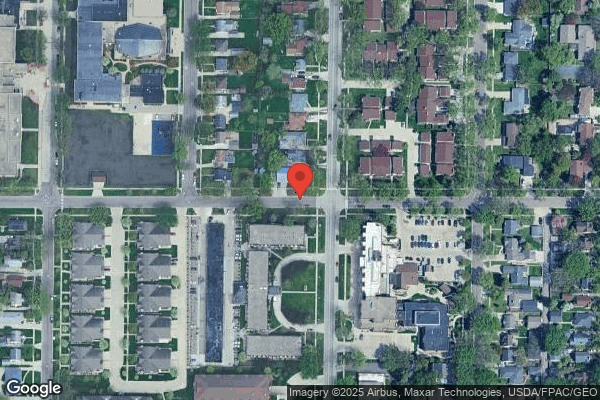
1351 N BROADWAY, FARGO, ND 58102 (701) 277-7999
Non profit - Corporation 125 Beds SMP HEALTH Data: November 2025
Trust Grade
83/100
#13 of 72 in ND
Last Inspection: October 2024

Within standard 12-15 month inspection cycle. Federal law requires annual inspections.

Overview

SMP Health - St. Catherine North has a Trust Grade of B+, which means it is recommended and above average in quality. It ranks #13 out of 72 facilities in North Dakota, placing it in the top half of the state, and #4 out of 8 in Cass County, indicating that only one other local facility is better. The facility's trend is stable, with no significant changes in issues from 2023 to 2024, and it has a strong staffing rating of 5 out of 5 stars, with a turnover rate of 37%, which is better than the state average of 48%. However, there are some concerns, as the facility has received $6,168 in fines, which is average, and has less RN coverage than 91% of other state facilities, which could impact care quality. Specific incidents include a failure to provide adequate assistance during a mechanical lift transfer, resulting in an injury, and medication errors affecting the accuracy of residents' care plans. Overall, while the facility has strong staffing and a good reputation, families should be aware of these issues as they make their decision.

Trust Score
B+
83/100
In North Dakota
#13/72
Top 18%
Safety Record
Moderate
Needs review
Inspections
Holding Steady
4 → 4 violations
Staff Stability
○ Average
37% turnover. Near North Dakota's 48% average. Typical for the industry.
Penalties
✓ Good
$6,168 in fines. Lower than most North Dakota facilities. Relatively clean record.
Skilled Nurses
○ Average
Each resident gets 37 minutes of Registered Nurse (RN) attention daily — about average for North Dakota. RNs are the most trained staff who monitor for health changes.
Violations
⚠ Watch
12 deficiencies on record. Higher than average. Multiple issues found across inspections.
★★★★★
5.0
Overall Rating
★★★★★
5.0
Staff Levels
★★★☆☆
3.0
Care Quality
★★★★☆
4.0
Inspection Score
Stable
2023: 4 issues
2024: 4 issues

The Good

  • 5-Star Staffing Rating · Excellent nurse staffing levels
  • Full Sprinkler Coverage · Fire safety systems throughout facility
  • No fines on record
  • Staff turnover below average (37%)

    11 points below North Dakota average of 48%

Facility shows strength in staffing levels, fire safety.

The Bad

Staff Turnover: 37%

Near North Dakota avg (46%)

Typical for the industry

Federal Fines: $6,168

Below median ($33,413)

Minor penalties assessed

Chain: SMP HEALTH

Part of a multi-facility chain

Ask about local staffing decisions and management

The Ugly 12 deficiencies on record

1 actual harm
Oct 2024 3 deficiencies
CONCERN (D) 📢 Someone Reported This

A family member, employee, or ombudsman was alarmed enough to file a formal complaint

Potential for Harm - no one hurt, but risky conditions existed

Unnecessary Medications (Tag F0759)

Could have caused harm · This affected 1 resident

Based on observation, review of facility policy, review of professional reference, and staff interview, the facility failed to ensure a medication error rate of less than five percent for 2 of 7 resid...

Read full inspector narrative →
Based on observation, review of facility policy, review of professional reference, and staff interview, the facility failed to ensure a medication error rate of less than five percent for 2 of 7 residents (Resident #97 and #110) observed during medication administration. Two medication errors occurred during staff administration of 28 medications, resulting in a seven percent error rate. Failure of staff to properly prepare and administer medications may inhibit the effectiveness of the medication, cause subtherapeutic levels, and may have a negative impact on the resident's overall health. Findings include: Review of the facility policy titled Medication Administration occurred on 10/17/24. This policy, dated 10/07/24, stated, . Medications are administered . as ordered by the physician and in accordance with professional standards of practice . Policy Explanation and Compliance Guidelines . Compare medication source . with MAR [medication administration record] to verify . dose . Administer medication as ordered in accordance with manufacturer specifications. Prescribing information found at https://www.drugs.com/pro/depakote.html, page 2, stated, . Depakote is administered orally in divided doses. Depakote should be swallowed whole and should not be crushed or chewed . and page 63, stated, . Depakote Sprinkle Capsules may be swallowed whole, or the capsule may be opened and the contents may be mixed into a small amount of soft food, such as applesauce or pudding. - Review of Resident #97's medical record occurred on 10/16/24. A physician's order, dated 07/03/24, stated. Meclizine HCl Oral Tablet . Give 25 mg [milligrams] . for Vertigo . Observation on 10/16/24 at 8:36 a.m., showed a medication aide (MA) (#3) prepared Resident #97's medications for administration. The MA referred to the resident's MAR, obtained a bottle of meclizine from the medication cart, dispensed one pill from the bottle, and placed the pill in a medication cup along with the resident's other scheduled medications. When asked to confirm the dosage of the meclizine, he/she prepared and dispensed into the cup, the MA again referred the Resident #97's MAR and compared the dosage listed on the pill bottle (which listed 12.5 mg per tablet). The MA confirmed he/she should have dispensed two meclizine pills from the bottle to equal the ordered dose of 25 mg. - Review of Resident #110's medical record occurred on all days of survey. A physician's order, dated 05/01/24, stated, Depakote Sprinkles Oral Capsule Delayed Release Sprinkle 125 MG . Give 2 capsule by mouth three times a day . Okay to open . Observation on 10/16/24 at 1:30 p.m. showed a staff nurse (#4) dispensed two Depakote Sprinkle capsules from Resident #110's medication card, placed the capsules into a cup along with other scheduled medications, poured the medications from the cup into a plastic sleeve, and crushed the medications. The nurse then poured the crushed contents into applesauce and administered the medications to Resident #110. The nurse (#4) failed to follow manufacturers prescribing instructions and crushed the Depakote Sprinkle delayed release capsules. During an interview on 10/16/24 at 3:41 p.m., an administrative staff member (#5) confirmed Depakote Sprinkles should not be crushed.
CONCERN (D) 📢 Someone Reported This

A family member, employee, or ombudsman was alarmed enough to file a formal complaint

Potential for Harm - no one hurt, but risky conditions existed

Deficiency F0760 (Tag F0760)

Could have caused harm · This affected 1 resident

Based on observation, record review, review of facility policy, review of professional reference, and staff interview, the facility failed to ensure residents remained free of significant medication e...

Read full inspector narrative →
Based on observation, record review, review of facility policy, review of professional reference, and staff interview, the facility failed to ensure residents remained free of significant medication errors for 1 or 1 sampled resident (Resident #110) with a significant medication error. Failure of staff to administer medications per manufacturer recommendations may inhibit the effectiveness of the medication, cause subtherapeutic levels, and may have a negative impact on the resident's overall health. Findings include: Review of the facility policy titled Medication Administration occurred on 10/17/24. This policy, dated 10/07/24, stated, . Medications are administered . as ordered by the physician and in accordance with professional standards of practice . Administer medication as ordered in accordance with manufacturer specifications. Prescribing information found at https://www.drugs.com/pro/depakote.html, page 2, stated, . Depakote should be swallowed whole and should not be crushed or chewed . Page 63, stated, . Depakote Sprinkle Capsules may be swallowed whole, or the capsule may be opened and the contents may be mixed into a small amount of soft food, such as applesauce or pudding. - Review of Resident #110's medical record occurred on all days of survey. A physician's order, dated 05/01/24, stated, Depakote Sprinkles Oral Capsule Delayed Release Sprinkle 125 MG . Give 2 capsule by mouth three times a day . Okay to open . Observation on 10/16/24 at 1:30 p.m. showed a staff nurse (#4) dispensed two Depakote Sprinkle delayed release capsules from Resident #110's medication card, placed the capsules into a cup along with other scheduled medications, poured the medications from the cup into a plastic sleeve, and crushed the medications. The nurse then poured the crushed contents into applesauce and administered the medications to Resident #110. The nurse (#4) failed to follow manufacturers prescribing instructions and crushed the Depakote Sprinkle capsules. During an interview on 10/16/24 at 3:41 p.m., an administrative staff member (#5) confirmed Depakote Sprinkles should not be crushed.
CONCERN (D) 📢 Someone Reported This

A family member, employee, or ombudsman was alarmed enough to file a formal complaint

Potential for Harm - no one hurt, but risky conditions existed

Food Safety (Tag F0812)

Could have caused harm · This affected 1 resident

Based on observation, review of facility policy/procedure, review of manufactures' label, and staff interview, the facility failed to date time sensitive thickened beverages with an opened date and to...

Read full inspector narrative →
Based on observation, review of facility policy/procedure, review of manufactures' label, and staff interview, the facility failed to date time sensitive thickened beverages with an opened date and to store food in a sanitary manner in 2 of 8 unit kitchenettes (3 South and 3 North). Failure to label beverages with an open date may compromise the safety and quality of the item and failure to store food in a sanitary manner can affect safety. Findings include: Review of the facility policy/procedure titled Storage of multi-use ice pack in freezers, occurred on 10/17/24. This policy, dated 07/16/24, stated . 2. Separation of Ice Packs and Food: a) Ice packs may be stored in the same freezer as food but must not be in direct contact with any food items. Ice packs should be stored on separate shelves or in containers that keep them distinct from food products. b) If separate shelves are not available, ice packs must be placed in a way to prevent them from touching food. Observations of the main kitchen and unit kitchenettes occurred on 10/16/24 at 1:45 p.m. with two administrative staff members (#1 and #2) and showed the following: - Three South kitchenette refrigerator, contained an undated opened container of thickened juice, the product label stated use within 10 days of opening. The freezer compartment contained an ice pack not separated from food items. - Three North kitchenette freezer, contained two ice packs not separated from food items. The facility staff failed to store ice packs on separate shelves from food items or in a distinct container. During the observation, an administrative staff member (#2) stated, she expected ice packs to be stored in a plastic bag. The administrative staff member (#1) disposed of the unlabeled juice and confirmed it should be dated when opened.
May 2024 1 deficiency 1 Harm
SERIOUS (G) 📢 Someone Reported This

A family member, employee, or ombudsman was alarmed enough to file a formal complaint

Actual Harm - a resident was hurt due to facility failures

Accident Prevention (Tag F0689)

A resident was harmed · This affected 1 resident

Based on record review, review of facility investigation, review of the facility policy, and staff interview, the facility failed to ensure adequate supervision and assistance for 1 of 1 closed record...

Read full inspector narrative →
Based on record review, review of facility investigation, review of the facility policy, and staff interview, the facility failed to ensure adequate supervision and assistance for 1 of 1 closed records (Resident #1) reviewed for an accident with subsequent injury. Failure to provide adequate assistance with a full-body mechanical lift transfer resulted in Resident #1's injury and placed all residents requiring full-body mechanical lifts at risk for injury. This citation is considered past non-compliance based on review of the corrective action the facility implemented immediately following the incident. Findings include: Review of the facility policy titled Safe Resident Handling/Transfers occurred on 05/21/24. This policy, revised 05/10/24, stated, . It is the policy of this facility to ensure that residents are handled and transferred safely to prevent or minimize risks for injury and provide and promote a safe, secure and comfortable experience for the resident while keeping the employees safe in accordance with current standards and guidelines. Staff members are expected to maintain compliance with safe handling/transfer practices. Failure to maintain compliance may lead to disciplinary action . Review of the Validation Checklist-Mechanical Lift occurred on 05/21/24. This document, dated 2024, stated, Purpose: To determine if the individual performs transfers with mechanical lifts in accordance with professional standards of practice and as per manufacturer's instructions for use. Attached the sling straps to the desires settings and ensured the straps were secure. Gently raised the resident minimally away from the bed surface and ensured that straps were still secure. Moved and positioned the lift over the respective chair, with the assistance of the second staff member, and gently lowered the resident into the chair . Review of Resident #1's medical record occurred on 05/21/24. The care plan stated, . TRANSFER: I require assist of 2 with hoyer [full-body mechanical lift] for transfers. Review of Resident #1's progress notes identified the following: * 05/09/24 at 10:39 a.m., [Resident #1] fell out of hoyer sling during transfer this morning. Pupils reactive and equal in size. Unable to assess strengths bilaterally. Resident guarding right hip and grimacing. Notification: Call placed to [provider name]. Send resident to . ER [emergency room] for further evaluation. * 05/09/24 at 12:38 p.m., . Resident returns to facility from . ER. Neuros [neurological assessments] are as follows: Pupils are equal and brisk to react. Resident remains aphasic (baseline for her). Able to do ROM [range of motion] on all 4 extremities with some guarding during motion of her leg. * 05/10/24 at 11:40 a.m., . Resident was very sleepy during brunch. She kept placing her hand near her head and looking down. Ice pack applied for 15 mins [minutes] and Tylenol provided for comfort. Neuros have remained unchanged this shift and continue to be assessed every 2 hrs [hours]. She has a large area of bruising to the back of skull, with further bruising running down the left & [and] right neck into the collar bone region. Her scalp has a small area with dried blood on it. * 05/11/24 at 7:03 a.m., . Resident slept comfortably all shift with no s/s [signs/symptoms] of pain/infection. Back of head stopped oozing this shift. Hematoma [pool of blood or bruise] still present to back of head with edema. Neuro checks completed and are running her baseline at this time. * 05/11/24 at 1:17 p.m., . Resident slept all morning/early afternoon and was unable to be arose. Did not receive medication or any food. Resident had 75 second seizure at 1300 [1:00 p.m.] today. on-call provider . was called . Send resident in to . ER and hold bed. The facility's investigation report, dated 05/13/24, stated, . based on the demonstration of how the fall occurred and reporting of staff who witnessed the fall, investigation indicates that [certified nurse aide (#2)] did not follow the proper steps for a safe transfer by ensuring that the sling was securely hooked to the lift, having equipment in the appropriate position, and keeping her hands on the resident for guidance and/or support during the transfer . During an interview on the afternoon of 05/21/24 an administrative staff member (#1) confirmed staff failed to properly transfer Resident #1 which led to the injuries. Based on the following information, non-compliance at F689 is considered past non-compliance. The facility implemented corrective actions for the deficient practice by: * Completing an investigation with interviews of staff that determined the cause of the incident. * Providing immediate staff education on 05/09/24 to staff via e-mail regarding proper transferring with Hoyer lifts. * Completing competency validations of safe transfers for all nursing staff beginning 05/09/24. The facility addressed measures put in place and implemented systemic changes to ensure the deficient practice does not recur by: * Implemented weekly Hoyer transfer audits to ensure staff on all units are performing safe and appropriate transfers using mechanical lifts * Implemented weekly care plan audits to ensure Hoyer sling sizes are on each resident care plan. * On 05/10/24 all mechanical lifts were inspected to ensure they were working properly. The surveyor determined a deficient practice existed on 05/09/24. The facility implemented corrective action and completed all staff education on 05/20/24.
Sept 2023 4 deficiencies
CONCERN (D)

Potential for Harm - no one hurt, but risky conditions existed

MDS Data Transmission (Tag F0640)

Could have caused harm · This affected 1 resident

Based on record review and review of the Long-Term Care Facility Resident Assessment Instrument (RAI) 3.0 User's Manual (Version 1.16), the facility failed to ensure timely electronic data submission ...

Read full inspector narrative →
Based on record review and review of the Long-Term Care Facility Resident Assessment Instrument (RAI) 3.0 User's Manual (Version 1.16), the facility failed to ensure timely electronic data submission of required Minimum Data Sets (MDS) discharge assessments for 3 of 3 supplemental residents (Resident #18, #56, and #98). Failure to follow the MDS data submission specifications does not meet the intended regulatory requirements. Findings include: The Long-Term Care Facility RAI 3.0 User's Manual, revised October 2019, page 2-37 stated, Discharge Assessment-Return Not Anticipated . Must be submitted within 14 days after the MDS completion date. Review of Resident #18, #56, and #98's medical records occurred on 09/21/23. The MDSs showed a discharge date of 06/07/23 for Resident #18, 06/07/23 for Resident #56, and 06/15/23 for Resident #98. On the morning of 09/21/23, a nurse (#1) reviewed validation reports and confirmed CMS did not receive the above discharge assessments. The facility failed to submit the discharge assessments to Center for Medicare and Medicaid Services (CMS).
CONCERN (D)

Potential for Harm - no one hurt, but risky conditions existed

Accident Prevention (Tag F0689)

Could have caused harm · This affected 1 resident

Based on observation, record review, and staff interview, the facility failed to provide appropriate supervision for 1 of 5 sampled residents (Resident #97) observed during a gait belt transfer. Failu...

Read full inspector narrative →
Based on observation, record review, and staff interview, the facility failed to provide appropriate supervision for 1 of 5 sampled residents (Resident #97) observed during a gait belt transfer. Failure to provide adequate assistance during a transfer places the resident at risk for accidents, falls, or injuries. Findings include: Review of Resident #97's medical record occurred on all days of survey. The current care plan stated, . I have an ADL [activities of daily living] self-care performance deficit r/t [related to] deconditioning, impaired mobility, arthritis . Transfer: I require 1 [assist of one] with a 4WW [four-wheel walker] for pivot transfers. Observation on 09/19/23 at 9:08 a.m. showed a certified nurse aide (CNA) (#4) applied a gait belt and brought the 4WW to Resident #97. The CNA walked beside the resident holding on to the gait belt until the entrance of the bathroom. The CNA then left the resident standing unattended to move the scale chair closer. Observation showed the resident swayed from side to side while holding the 4WW. The CNA failed to remain by the resident's side during a transfer. During an interview on 09/19/23 at 10:01 a.m., an administrative nurse (#2) confirmed staff should not leave the resident unattended.
CONCERN (D)

Potential for Harm - no one hurt, but risky conditions existed

Deficiency F0849 (Tag F0849)

Could have caused harm · This affected 1 resident

Based on record review and staff interview, the facility failed to ensure residents' records contained the hospice plan of care and certification of a terminal illness for 1 of 3 sampled residents (Re...

Read full inspector narrative →
Based on record review and staff interview, the facility failed to ensure residents' records contained the hospice plan of care and certification of a terminal illness for 1 of 3 sampled residents (Resident #106) receiving hospice services. Failure to obtain these documents limits staff's ability to ensure coordination of care between the facility and the hospice. Findings include: Review of Resident #106's medical record occurred on all days of survey. Diagnoses included hypertensive [high blood pressure] heart disease with heart failure, congestive heart failure and myocardial infarction [type of heart attack]. The resident elected and received hospice services at home for five months prior to admission to the facility in July 2023. The medical record lacked the hospice certification of terminal illness and plan of care until the hospice recertification plan of care completed on 08/16/23. During an interview on 09/21/23 at 9:30 a.m., an administrative nurse (#2) confirmed Resident #106's medical record lacked the hospice certification and plan of care for three weeks after admission.
CONCERN (E)

Potential for Harm - no one hurt, but risky conditions existed

Assessment Accuracy (Tag F0641)

Could have caused harm · This affected multiple residents

**NOTE- TERMS IN BRACKETS HAVE BEEN EDITED TO PROTECT CONFIDENTIALITY** Based on record review, review of the Long-Term Care Facility Resident Assessment Instrument (RAI) 3.0 User's Manual (Version 1....

Read full inspector narrative →
**NOTE- TERMS IN BRACKETS HAVE BEEN EDITED TO PROTECT CONFIDENTIALITY** Based on record review, review of the Long-Term Care Facility Resident Assessment Instrument (RAI) 3.0 User's Manual (Version 1.17.1), and staff interview, the facility failed to ensure accurate coding of the Minimum Data Set (MDS) for 3 of 24 sampled residents (Resident #9, #19 and #24). Failure to accurately complete the MDS does not allow each resident's assessment to reflect their current status/needs and may affect the accurate development of a comprehensive care plan and the care provided to the residents. Findings include: SECTION K: SWALLOWING/NUTRITIONAL STATUS The Long-Term Care Facility RAI User's Manual, revised October 2019, pages K-5 through K-12, stated, . K0300: Weight Loss . Coding Instructions . Code 2, yes, not on physician-prescribed weight-loss regimen: if the resident has experienced a weight loss of 5% or more in the past 30 days or 10% or more in the last 180 days, and the weight loss was not planned and prescribed by a physician. K0510: Nutritional Approaches . K0510D, therapeutic diet (e.g., low salt, diabetic, low cholesterol) . Therapeutic diets are not defined by the content of what is provided . but why the diet is required. Therapeutic diets provide the corresponding treatment that addresses a particular disease or clinical condition which is manifesting an altered nutritional status by providing the specific nutritional requirements to remedy the alteration. to manage problematic health conditions (e.g. supplement for protein-calorie malnutrition). - Review of Resident #9's medical record occurred on all days of survey. A dietary progress note, dated 06/27/23 at 5:04 p.m., stated, . Weight of 195 lb [pounds] from 6/23/23 is down significantly 22 lb or 10.1% in the past 6 months. A quarterly MDS, dated [DATE], identified section K0300: Weight Loss coded no and K0310: Weight Gain, coded 2, yes, not on physician-prescribed weight-gain regimen. During an interview on 09/21/23 at 10:19 a.m., an administrative staff member (#3) confirmed staff failed to correctly code Section K as weight loss on Resident #9's MDS. - Review of Resident #19's medical record occurred on all days of survey. Provider orders indicated a regular diet with thin liquids. A dietary progress note, dated 08/04/23 at 9:09 a.m., stated, . Nutritional CAA [care area assessment] triggered r/t [related to] use of therapeutic diet (dx [diagnosis] mild malnutrition). A significant change MDS, dated [DATE], identified section K0510D coded for a therapeutic diet. Resident #19's medical record failed to identify a provider's diagnosis of mild malnutrition or other diagnoses to support coding of a therapeutic diet on the MDS. During an interview on 09/21/23 at 10:19 a.m., an administrative staff member (#3) confirmed staff should not have coded a therapeutic diet in Section K on Resident #19's MDS. SECTION N: MEDICATIONS The Long-Term Care Facility RAI User's Manual, revised October 2019, pages N-6 and N-7, stated, . Coding Instructions . N0410E, Anticoagulant (e.g., warfarin, heparin, or low- molecular weight heparin): Record the number of days an anticoagulant medication was received by the resident at any time during the 7-day look-back period (or since admission/entry or reentry if less than 7 days). - Review of Resident #24's medical record occurred on all days of survey. Medications included Eliquis (an anticoagulant) 5 milligrams (mg) twice per day with an order date of 04/19/23. Resident #24's quarterly MDS, dated [DATE], failed to identify the use of an anticoagulant under Section N. SECTION O: SPECIAL TREATMENTS, PROCEDURES, AND PROGRAMS The Long-Term Care Facility RAI User's Manual, revised October 2019, page O-5, stated, . Hospice care . Code residents identified as being in a hospice program for terminally ill persons where an array of services is provided for the palliation and management of terminal illness and related conditions. - Review of Resident #24's medical record occurred on all days of survey. The record identified Resident #24 admitted to Hospice on 01/19/23. A significant change MDS, dated [DATE], failed to identify the Hospice admission under Section O. During an interview on 09/21/23 at 9:48 a.m., an administrative nurse (#1) confirmed staff failed to code anticoagulant use and hospice services for Resident #24.
Aug 2022 4 deficiencies
CONCERN (D)

Potential for Harm - no one hurt, but risky conditions existed

Transfer Notice (Tag F0623)

Could have caused harm · This affected 1 resident

Based on record review and staff interview, the facility failed to provide the resident or their representative and the State Long Term Care Ombudsman written notice of transfer for 1 of 2 resident cl...

Read full inspector narrative →
Based on record review and staff interview, the facility failed to provide the resident or their representative and the State Long Term Care Ombudsman written notice of transfer for 1 of 2 resident closed records (Resident #120) with hospital transfers. Failure to provide a written notice of transfer does not allow the resident and/or representative to make an informed choice regarding the resident's rights. Failure to notify the Ombudsman does not allow the Ombudsman to know the resident was transferred and be alerted to possible assistance to the resident and/or representative if needed. Findings include: Review of Resident #120's medical record identified hospitalizations on 07/22/22 and 07/26/22. The medical records lacked evidence of written transfer notices given to the resident and/or their representative, or the Ombudsman. During an interview on 08/17/22 at 5:45 p.m., an administrative staff member (#3) confirmed there were no written transfer notices completed for the transfers on 07/22/22 and 07/26/22.
CONCERN (D)

Potential for Harm - no one hurt, but risky conditions existed

Assessment Accuracy (Tag F0641)

Could have caused harm · This affected 1 resident

**NOTE- TERMS IN BRACKETS HAVE BEEN EDITED TO PROTECT CONFIDENTIALITY** Based on record review, review of the Long-Term Care Facility Resident Assessment Instrument (RAI) 3.0 User's Manual (Version 1....

Read full inspector narrative →
**NOTE- TERMS IN BRACKETS HAVE BEEN EDITED TO PROTECT CONFIDENTIALITY** Based on record review, review of the Long-Term Care Facility Resident Assessment Instrument (RAI) 3.0 User's Manual (Version 1.17.1) and staff interview, the facility failed to complete a Minimum Data Set (MDS) that accurately reflected the residents' status for 2 of 25 sampled residents (Resident #4 and #68). Failure to accurately code the MDS may negatively affect the development of a comprehensive care plan and the care provided to the residents. Findings include: Section E: Behaviors The Long-Term Care Facility RAI Manual, revised October 2019, page E-5, stated, . E0200: Behavioral Symptom - Presence & Frequency . Steps for Assessment . 1. Review the medical record for the 7-day look-back period. 2. Interview staff, across all shifts and disciplines, as well as others who had close interactions with the resident during the 7-day look-back period, including family or friends who visit frequently or have frequent contact with the resident. 3. Observe the resident in a variety of situations during the 7-day look-back period. Review of Resident #68's medical record occurred on all days of survey. The quarterly MDS, dated [DATE], identified Resident #68 verbal behaviors occurred on 4-6 days, other behaviors occurred daily, and wandering occurred daily during the seven-day look-back period. Resident #68's medical record lacked evidence of the behaviors occurring as documented on the MDS. During an interview on the morning of 08/18/22, an administrative nurse (#1) verified Resident #68's medical record lacked necessary documentation for behavior coding. Section N. Medications The Long-Term Care Facility RAI Manual, revised October 2019, page N-3, stated, . N0350: Insulin . Steps for Assessment 1. Review the resident's medication administration records for the 7-day look-back period (or since admission/entry or reentry if less than 7 days). 2. Determine if the resident received insulin injections during the look-back period. 3. Determine if the physician (or nurse practitioner, physician assistant, or clinical nurse specialist if allowable under state licensure laws) changed the resident's insulin orders during the look-back period. 4. Count the number of days insulin injections were received and/or insulin orders changed. Review of Resident #4's medical record occurred on all days of survey. The quarterly MDS, dated [DATE], identified Resident #4 had an order for insulin and received one insulin injection in the seven-day look-back period. Resident #4's medical record lacked a physician's order for insulin and evidence of insulin administration. During an interview on 08/18/22 at 10:27 a.m., an administrative nurse (#4) confirmed she inaccurately coded the insulin and injection for Resident #4.
CONCERN (D)

Potential for Harm - no one hurt, but risky conditions existed

ADL Care (Tag F0677)

Could have caused harm · This affected 1 resident

Based on observation, record review, review of facility policy, and staff interview, the facility failed to ensure residents received the necessary services to maintain oral hygiene for 1 of 8 sampled...

Read full inspector narrative →
Based on observation, record review, review of facility policy, and staff interview, the facility failed to ensure residents received the necessary services to maintain oral hygiene for 1 of 8 sampled residents (Resident #33) observed during morning cares. Failure to provide oral care for a dependent resident may result in poor hygiene, increased dental problems, decline in oral intake, and a decreased quality of life. Findings include: Review of the facility policy and procedure titled Standards of care occurred on 08/18/22. This policy, reviewed/revised 08/11/20, stated, . Procedure: 1. All staff are expected to provide services and care for all residents that meet the defined Standards of Care. Routine Care Each of the following is part of the routine care provided by care givers, unless otherwise directed. General Standards: . Oral care will be done in the morning and at bedtime. Observation on 0816/22 at 8:45 a.m. showed two certified nurse aides (CNAs) (#5 and #6) provided morning personal care, dressed, and transferred Resident #33 to his wheelchair using a full body lift. Prior to leaving the room, the CNA (#5) directed CNA (#6) to brush Resident #33's teeth. The CNA (#5) failed to provide oral care prior to removing the resident from his room. Review of Resident #33's medical record occurred on all days of survey. The current care plan stated, . I have an ADL [activities of daily living] self care performance deficit [related to] impaired mobility . dementia . Personal Hygiene/Oral Care: I require assist of one staff with personal hygiene and oral care. Resident #33 saw the dentist on 07/14/22, the report stated, #3 [and] #27 [dental descriptor for individual teeth] appear like probable decay. Numerous areas of likely decalcification. Tissues generalized red [and] inflamed . should have full evaluation. Needs help brushing after meals and before bed. Do the best you can. During an interview on 08/18/22 at 10:59 a.m., an administrative nurse (#7) identified oral cares are to be completed, at least, in the morning and at bedtime which is their standard of care.
CONCERN (D)

Potential for Harm - no one hurt, but risky conditions existed

Accident Prevention (Tag F0689)

Could have caused harm · This affected 1 resident

Based on record review, review of facility policy, and staff interview, the facility failed to ensure a safe environment for 1 of 2 sampled residents (Resident #34) who utilized an electric wheelchair...

Read full inspector narrative →
Based on record review, review of facility policy, and staff interview, the facility failed to ensure a safe environment for 1 of 2 sampled residents (Resident #34) who utilized an electric wheelchair. Failure to reassess safe use of an electric wheelchair places residents at risk for pain and/or injury. Findings include: Review of the facility policy titled Therapy Services occurred on 08/18/22. This policy last reviewed/revised dated 03/23/12, stated . If therapy is warranted after screening, the therapist or nursing will write their recommendations after evaluation and treatment. Therapists and nurses will make a notation in the progress notes any time there is a status change related to therapy. Review of Resident #34's medical record occurred on all days of survey. Diagnoses included Parkinson's disease, dementia with behavioral disturbance, paraplegia, multiple sclerosis and visual hallucinations. Review of Resident #34's progress notes identified the following: * 05/10/22 at 5:38 p.m. Resident was noted to bump into the corner of the front desk with his power chair. The arm on the right side of the chair hit the counter hard enough to break off a piece of the cosmetic plastic. * 07/06/22 at 9:44 a.m. Resident then came out to dining room and ran into a table causing his power chair to get stuck under the table. Resident yelled and hit at table and accidentally hit joy stick on chair causing chair to lift table off the ground and tip table on its side. Resident then ran into door frame of his room bumping his L) [left] foot on wall. * 07/18/22 at 7:53 a.m. Area between great toe and second toe on L) foot has an open area. Some bruising noted to top of great toe and a patch of red noted to skin at 2nd joint of great toe. Wife stated resident had an injury similar to open area that resulted from toe being bumped and bent to the side. Previous injury was in same location current open area is noted. * 07/18/22 at 10:51 a.m. Physician Orders: ok to send to [name of facility] ER [emergency room] for assessment of skin issue . open area great to L) foot . * 07/18/22 at 12:31 p.m. Return from Appointment . Physician Orders: 1. Keflex [oral antibiotic] 500mg BID [twice a day] x [times] 7 days 2. dressing to remain in place until next visit on 7/22 Comments: Wound flushed, sutured, dressing applied. * 07/26/22 at 7:57 p.m. Resident very spasmatic and jerky this shift causing him to [sic] unable to control his power chair in a smooth and safe manner. At one point, resident bumped hard into his closet doors. * 08/01/22 at 10:42 p.m.1930-2030 [7:30 p.m. to 8:30 p.m.] Observed Behavior: . Resident then paced dining room (in power chair) and then the unit halls. Resident then turned chair up full speed and slammed through the double doors at end of unit and through the lobby/office areas. Resident attempted to push through door at north end of building by offices and then turned around and headed back towards unit. Resident then forcefully bumped front door with chair several times attempting to open front door. * 08/02/22 at 3:23 p.m. abrasion Location: R) [right] shin 3x3cm [centimeters] . RA noted during cares . resident unaware of abrasion . Resident has been noted to be bumping into things with power chair recently. It is thought resident may have bumped leg into something causing abrasion . * 08/15/22 at 4:45 p.m. Laceration to dorsal second left toe at first joint. Approximately 1.25cm in length. Skin tear to left second toe medial aspect at last tarsal joint. Blood blister and loose nail to third left toe tip. Abrasion to left first toe to nail bed(nail not present) . Area cleansed with sterile saline and gauze. Wrapped with sterile 2x2's and wrapped with gauze wrapping for transport to ER for evaluation. noted blood dripping from resident's left sock . Resident description: States he doesn't know what happened. Appears as if resident's toes rubbed across/caught on something. * 08/15/22 at 5:14 p.m. Physician Orders: Ok to send resident to [name of facility] ED [emergency department] for evaluation of L) foot injury to Great toe & [and] index toe . During an interview on 08/18/22 at 9:37 a.m., an administrative nurse (#1) reported facility staff are expected to complete a nursing assessment if an incident occurred where the resident ran into objects in the environment and staff would monitor the resident with independent use of the electric wheelchair. If another incident occurred, a referral to therapy would be requested. During an interview on 08/18/22 at 8:07 a.m., a facility nurse (#2) confirmed an Occupational Therapy evaluation had not been completed for Resident #34's safe use of the electric wheelchair since 02/28/22.
Understanding Severity Codes (click to expand)
Life-Threatening (Immediate Jeopardy)
J - Isolated K - Pattern L - Widespread
Actual Harm
G - Isolated H - Pattern I - Widespread
Potential for Harm
D - Isolated E - Pattern F - Widespread
No Harm (Minor)
A - Isolated B - Pattern C - Widespread

Questions to Ask on Your Visit

  • "Can I speak with families of current residents?"
  • "What's your RN coverage like on weekends and overnight?"

Our Honest Assessment

Strengths
  • • Grade B+ (83/100). Above average facility, better than most options in North Dakota.
  • • 37% turnover. Below North Dakota's 48% average. Good staff retention means consistent care.
Concerns
  • • 12 deficiencies on record, including 1 serious (caused harm) violation. Ask about corrective actions taken.
Bottom line: Generally positive indicators. Standard due diligence and a personal visit recommended.

About This Facility

What is Smp Health - St Catherine North's CMS Rating?

CMS assigns SMP HEALTH - ST CATHERINE NORTH an overall rating of 5 out of 5 stars, which is considered much above average nationally. Within North Dakota, this rating places the facility higher than 99% of the state's 100 nursing homes. This rating reflects solid performance across the metrics CMS uses to evaluate nursing home quality.

How is Smp Health - St Catherine North Staffed?

CMS rates SMP HEALTH - ST CATHERINE NORTH's staffing level at 5 out of 5 stars, which is much above average compared to other nursing homes. Staff turnover is 37%, compared to the North Dakota average of 46%. This relatively stable workforce can support continuity of care.

What Have Inspectors Found at Smp Health - St Catherine North?

State health inspectors documented 12 deficiencies at SMP HEALTH - ST CATHERINE NORTH during 2022 to 2024. These included: 1 that caused actual resident harm and 11 with potential for harm. Deficiencies causing actual harm indicate documented cases where residents experienced negative health consequences.

Who Owns and Operates Smp Health - St Catherine North?

SMP HEALTH - ST CATHERINE NORTH is owned by a non-profit organization. Non-profit facilities reinvest revenue into operations rather than distributing to shareholders. The facility is operated by SMP HEALTH, a chain that manages multiple nursing homes. With 125 certified beds and approximately 120 residents (about 96% occupancy), it is a mid-sized facility located in FARGO, North Dakota.

How Does Smp Health - St Catherine North Compare to Other North Dakota Nursing Homes?

Compared to the 100 nursing homes in North Dakota, SMP HEALTH - ST CATHERINE NORTH's overall rating (5 stars) is above the state average of 3.1, staff turnover (37%) is near the state average of 46%, and health inspection rating (4 stars) is above the national benchmark.

What Should Families Ask When Visiting Smp Health - St Catherine North?

Based on this facility's data, families visiting should ask: "Can I visit during a mealtime to observe dining assistance and food quality?" "How do you handle medical emergencies, and what is your hospital transfer rate?" "Can I speak with family members of current residents about their experience?"

Is Smp Health - St Catherine North Safe?

Based on CMS inspection data, SMP HEALTH - ST CATHERINE NORTH has a clean safety record: no substantiated abuse findings (meaning no confirmed cases of resident harm), no Immediate Jeopardy citations (the most serious violation level indicating risk of serious injury or death), and is not on the Special Focus Facility watch list (a federal program monitoring the lowest-performing 1% of nursing homes). The facility has a 5-star overall rating and ranks #1 of 100 nursing homes in North Dakota. While no facility is perfect, families should still ask about staff-to-resident ratios and recent inspection results during their visit.

Do Nurses at Smp Health - St Catherine North Stick Around?

SMP HEALTH - ST CATHERINE NORTH has a staff turnover rate of 37%, which is about average for North Dakota nursing homes (state average: 46%). Moderate turnover is common in nursing homes, but families should still ask about staff tenure and how the facility maintains care continuity when employees leave.

Was Smp Health - St Catherine North Ever Fined?

SMP HEALTH - ST CATHERINE NORTH has been fined $6,168 across 1 penalty action. This is below the North Dakota average of $33,141. While any fine indicates a compliance issue, fines under $50,000 are relatively common and typically reflect isolated problems that were subsequently corrected. Families should ask what specific issues led to these fines and confirm they've been resolved.

Is Smp Health - St Catherine North on Any Federal Watch List?

SMP HEALTH - ST CATHERINE NORTH is not on any federal watch list. The most significant is the Special Focus Facility (SFF) program, which identifies the bottom 1% of nursing homes nationally based on persistent, serious quality problems. Not being on this list means the facility has avoided the pattern of deficiencies that triggers enhanced federal oversight. This is a positive indicator, though families should still review the facility's inspection history directly.