
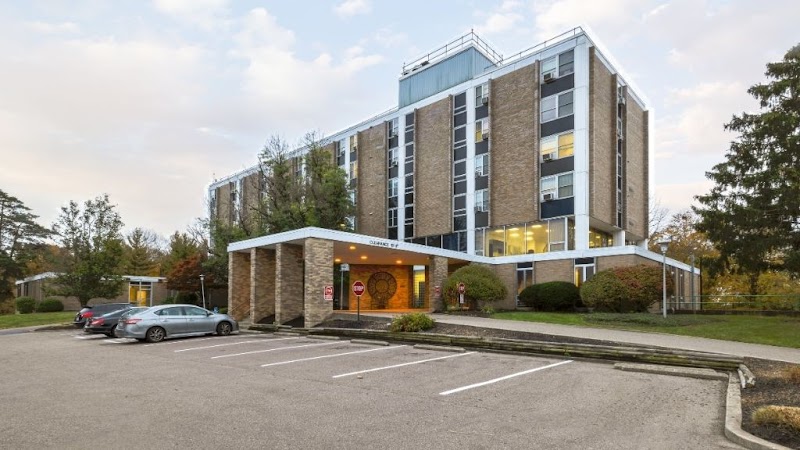
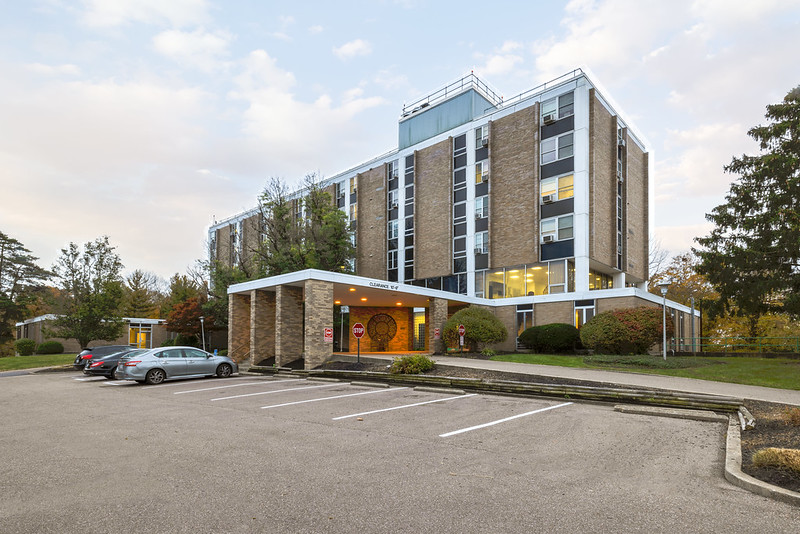
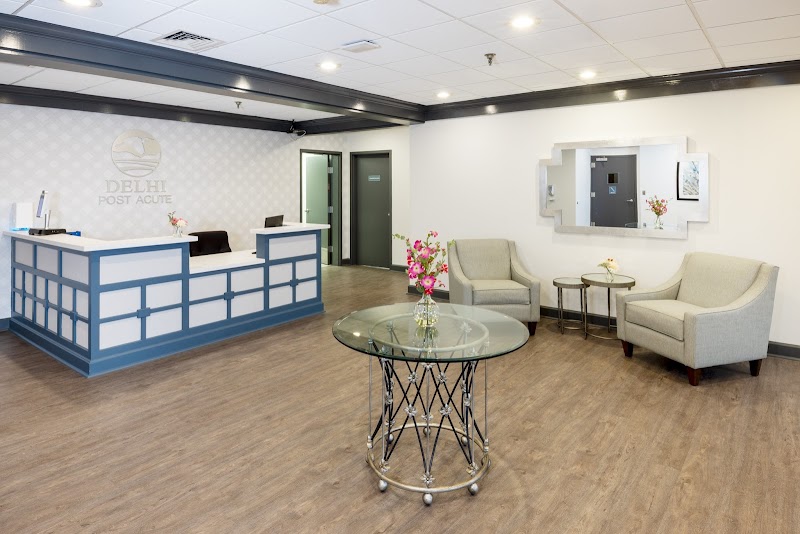

DELHI POST-ACUTE

5999 BENDER ROAD, CINCINNATI, OH 45233 (513) 922-1440
For profit - Limited Liability company 116 Beds PACS GROUP Data: November 2025
Trust Grade
50/100
#657 of 913 in OH
Last Inspection: May 2024

Within standard 12-15 month inspection cycle. Federal law requires annual inspections.

Overview

Delhi Post-Acute in Cincinnati has a Trust Grade of C, which means it is average-neither great nor terrible. It ranks #657 out of 913 facilities in Ohio, placing it in the bottom half, and #52 out of 70 in Hamilton County, indicating limited options for better local care. Unfortunately, the facility is worsening, with reported issues increasing from 1 in 2023 to 9 in 2024, which raises concerns about the quality of care. Staffing is a strength, as they have a low turnover rate of 0%, significantly better than the state average, although their overall staffing rating is poor at 1 out of 5 stars. On the positive side, there have been no fines, which is reassuring. However, recent inspections revealed some concerning issues, such as the dietary director not being certified to oversee the kitchen, which could affect nearly all residents' meals. There were also problems with not following the approved meal menu and cleanliness issues in the kitchen, including unclean food preparation equipment, which could impact food safety for residents. Overall, while there are some strengths, the increasing number of issues and specific deficiencies raise valid concerns for families considering this nursing home.

Trust Score
C
50/100
In Ohio
#657/913
Bottom 29%
Safety Record
Low Risk
No red flags
Inspections
Getting Worse
1 → 9 violations
Staff Stability
○ Average
Turnover data not reported for this facility.
Penalties
✓ Good
No fines on record. Clean compliance history, better than most Ohio facilities.
Skilled Nurses
○ Average
Each resident gets 30 minutes of Registered Nurse (RN) attention daily — about average for Ohio. RNs are the most trained staff who monitor for health changes.
Violations
⚠ Watch
37 deficiencies on record. Higher than average. Multiple issues found across inspections.
★★☆☆☆
2.0
Overall Rating
★☆☆☆☆
1.0
Staff Levels
★★★★☆
4.0
Care Quality
★★★☆☆
3.0
Inspection Score
Stable
2023: 1 issues
2024: 9 issues

The Good

  • 4-Star Quality Measures · Strong clinical quality outcomes
  • Full Sprinkler Coverage · Fire safety systems throughout facility
  • No fines on record

Facility shows strength in quality measures, fire safety.

The Bad

2-Star Overall Rating

Below Ohio average (3.2)

Below average - review inspection findings carefully

Chain: PACS GROUP

Part of a multi-facility chain

Ask about local staffing decisions and management

The Ugly 37 deficiencies on record

Oct 2024 2 deficiencies
CONCERN (D) 📢 Someone Reported This

A family member, employee, or ombudsman was alarmed enough to file a formal complaint

Potential for Harm - no one hurt, but risky conditions existed

Respiratory Care (Tag F0695)

Could have caused harm · This affected 1 resident

**NOTE- TERMS IN BRACKETS HAVE BEEN EDITED TO PROTECT CONFIDENTIALITY** Based on medical record review, observations, resident and staff interviews, and policy review, the facility failed to timely ob...

Read full inspector narrative →
**NOTE- TERMS IN BRACKETS HAVE BEEN EDITED TO PROTECT CONFIDENTIALITY** Based on medical record review, observations, resident and staff interviews, and policy review, the facility failed to timely obtain and implement hospital recommendations for positive airway pressure devices, and the facility failed to have physician orders for positive airway pressure devices. This affected one (Resident #72) of three residents reviewed for positive airway pressure devices. The facility census was 101. Findings include: Review of the medical record revealed Resident #72 was admitted to the facility on [DATE]. Diagnoses included chronic obstructive pulmonary disease (COPD) and diastolic heart failure. Review of the most recent Minimum Data Set (MDS) 3.0 assessment dated [DATE] revealed Resident #72 had moderately impaired cognition, had no behaviors, and did not reject care. Review of the care plan dated 08/05/24 revealed Resident #72 was at risk for complications with the respiratory system due to multiple diagnoses. Resident #72 was noted to adjust her oxygen settings on her own. Interventions included assess/report signs of hypoxia, incentive spirometer as ordered, oxygen therapy as ordered, and remind resident not to adjust her oxygen settings as needed. Resident #72 discharged to the hospital on [DATE] and returned to the facility on [DATE]. Review of the hospital Discharge summary dated [DATE] revealed Resident #72 presented to the Emergency Department (ED) with shortness of breath, increased confusion, and taking off her oxygen per nursing facility on 09/03/24 and was admitted with COPD exacerbation, acute on chronic respiratory failure with hypercapnia and hypoxia, and acute metabolic encephalopathy. Resident #72 was treated with steroids, bronchodilators, and bilevel positive airway pressure (BiPAP), and showed significant improvement, and was back to her baseline at the time of discharge. Resident #72 was weaned to her baseline oxygen of three liters per minute and was recommended to continue using BiPAP while sleeping at the facility. There were no specifications noted on the discharge summary for BiPAP settings. Review of the medical record revealed no progress noted regarding follow-up with the hospital for clarification for BiPAP settings after return to the facility on [DATE]. There were no active or completed physician orders for the use BiPAP for Resident #72. Resident #72 discharged to the hospital on [DATE]. Review of the hospital paperwork dated 09/17/24 revealed Resident #72 presented to the ED with a complaint of altered mental status (AMS). It was strongly suggested the altered mental status was secondary to medication. While Resident #72 would most likely benefit from BiPAP, it was highly unlikely she would use BiPAP. Since she did not present with acute hypercapnia nor need BiPAP during this admission, recommendations included to hold off on BiPAP after discharge. There were no active or completed physician orders for the use BiPAP for Resident #72. During an interview on 10/01/24 at 2:38 P.M., Registered Nurse (RN) #226 verified Resident #72 had no records for BiPAP in her electronic medical record. RN #226 stated she knew Resident #72 looked in the medical record and verified Resident #72 did not have an order in the chart for BiPAP and the resident had a BiPAP machine in her room. During an interview and observation on 10/01/24 at 2:57 P.M., Resident #72 was observed sitting up in bed with a BiPAP machine on a cart at bedside. Resident #72 stated the machine had been ordered around the beginning of September, date not specified. The resident stated the device originally sat in her room about four to five nights, unused, because none of the staff knew how to apply it. An unidentified nurse set up the device, explained how to use it, and the resident stated she both applied and turned on the device herself at bedtime. During an interview on 10/01/24 at 3:57 P.M., the Director of Nursing (DON) stated she called their supplier last week (09/27/24) in response to family concerns that Resident #72 was not getting her BiPAP. The DON stated Respiratory Therapy (RT) was supposed to come assess the resident first before the machine was delivered to the resident. The DON stated Resident#72 had not been assessed by RT, and the DON was not sure why the BiPAP machine had been delivered to her room. The DON verified Resident #72 used the machine without physician orders. The DON did not know how the machine had been delivered without an order. Observation and interview on 10/02/24 at 10:19 A.M. revealed Resident #73 was seated upright in bed with BiPAP mask on face and machine running. Licensed Practical Nurse (LPN) #154 was standing at bedside with resident adjusting straps to facemask for BiPAP machine. LPN #154 stated Resident #72 had an order for BiPAP to be used at bedtime and as needed (PRN). The nurse stated she walked into the room and Resident #72 was putting on the mask because she said she wanted to take a nap. The nurse stated she had just turned the machine on and was adjusting the straps when this surveyor walked into the room. The nurse verified there was an error message on the machine and removed the mask. LPN # 154 stated she did not know what the settings were supposed to be and stated she had to check the order. LPN # 154 verified Resident #73 did not have an order on file for the BiPAP machine and stated she would have to call the provider for settings before she could apply the mask to the resident. LPN #154 stated she did not know how long Resident #73 had the device. LPN # 154 stated she had just returned from a two-week vacation and believed Resident #72 had the device before she left. Review of the facility document titled CPAP/BiPAP Support, dated 03/2015, revealed prior to using positive air pressure devices, nurses should check the medical record for baseline oxygen saturation levels, review the physician's order to determine oxygen concentration, flow, and Positive End-Expiratory Pressure (PEEP) settings for the machine. This deficiency represents non-compliance investigated under Complaint Number OH00158245.
CONCERN (D) 📢 Someone Reported This

A family member, employee, or ombudsman was alarmed enough to file a formal complaint

Potential for Harm - no one hurt, but risky conditions existed

Pharmacy Services (Tag F0755)

Could have caused harm · This affected 1 resident

**NOTE- TERMS IN BRACKETS HAVE BEEN EDITED TO PROTECT CONFIDENTIALITY** Based on medical record review, staff interview, and policy review, the facility failed to provide medications as ordered. This ...

Read full inspector narrative →
**NOTE- TERMS IN BRACKETS HAVE BEEN EDITED TO PROTECT CONFIDENTIALITY** Based on medical record review, staff interview, and policy review, the facility failed to provide medications as ordered. This affected one (Resident #72) of five residents reviewed for medication administration. The facility census was 101. Findings include: Review of the medical record revealed Resident #72 was admitted to the facility on [DATE]. Diagnoses included chronic obstructive pulmonary disease (COPD), anxiety disorder, and major depressive disorder. Review of the most recent Minimum Data Set (MDS) 3.0 assessment dated [DATE] revealed Resident #72 had moderately impaired cognition and did not reject care. Review of the care plan dated 08/05/24 revealed Resident #72 was at risk for pain or discomfort due to shingles neuropathy, chronic back pain, and right fourth and fifth toe fractures. Interventions included to administer medications as ordered, assess pain every shift and as indicated, and notify physician of unmanageable/intolerable pain. Review of Resident #72's physician orders dated August 2024 revealed an order for Lyrica (generic is pregabalin) oral capsule 75 milligrams (mg) - Give one capsule by mouth three times a day for pain. Review of the Medication Administration Record (MAR) dated August 2024 revealed Resident #72 did not receive doses of Lyrica 75 mg on 08/12/24 (three doses), 08/13/24 (three doses), and 08/17/24 (three doses). Review of the progress notes dated 08/12/24, 08/13/24, and 08/17/24 revealed Lyrica (Pregabalin) 75 mg was not available to be administered. During an interview on 10/01/24 at 2:38 P.M., Registered Nurse (RN) #226 verified Resident #72 did not receive nine doses of Lyrica as ordered on 08/12/24, 08/13/24, and 08/17/24 because the facility did not have medication and the medication was unavailable in the emergency supply. Review of the policy titled Administering Medications dated 04/2019 revealed medications were administered in a safe and timely manner and within one hour of their prescribed time. This deficiency represents non-compliance investigated under Complaint Number OH00158245.
May 2024 6 deficiencies
CONCERN (D)

Potential for Harm - no one hurt, but risky conditions existed

Pharmacy Services (Tag F0755)

Could have caused harm · This affected 1 resident

Based on medical record review, resident interview, staff interview, and review of the facility policy, the facility failed to ensure medications were ordered and available for administration as order...

Read full inspector narrative →
Based on medical record review, resident interview, staff interview, and review of the facility policy, the facility failed to ensure medications were ordered and available for administration as ordered by the physician. This affected one (Resident #40) of 19 sampled residents. The facility census was 95 residents. Findings include: Review of the medical record for Resident #40 revealed an admission date of 05/04/22 with a diagnosis of anxiety disorder. Review of the care plan for Resident #40 initiated on 06/08/22 and revised on 01/30/24 revealed the resident received psychotropic medications that included antianxiety medications. Interventions included staff were to give medications as ordered. Review of the medication review report for Resident #40 revealed a physician's order dated 06/30/23 for Ativan (an antianxiety medication) one milligram (mg) by mouth every six hours for anxiety disorder. Review of the annual Minimum Data Set (MDS) assessment for Resident #40 dated 04/19/24 revealed the resident was cognitively intact and had received antianxiety medication during the last seven days of the assessment period. Review of the order audit for Resident #40 revealed the pharmacy dispensed Ativan on 04/28/24. Review of the controlled drug record for Resident #40 revealed the facility received 60 Ativan tablets on 04/29/24. According to the prescription label on the form, the next Ativan refill required a new prescription. Further review of the drug record revealed the last dose of Ativan for Resident #40 was signed out on 05/19/24 at 6:00 A.M. Review of a medication error report dated 05/20/24 timed at 1:00 P.M. for Resident #40 revealed the resident's Ativan supply was exhausted on 05/19/24, which caused the resident to miss four doses between 05/19/24 and 05/20/24. Interview on 05/20/24 at 12:50 P.M. with Resident #40 confirmed the facility ran out of the resident's Ativan on 05/19/24 at 6:00 A.M. Interview on 05/22/24 at 10:43 A.M. with Registered Nurse (RN) #03 confirmed she did not administer Resident #40's 12:00 A.M. or 6:00 A.M. dose of Ativan on 05/20/24 because she did not have access to the facility's emergency medication kit. Interview on 05/22/24 at 6:42 A.M. with Licensed Practical Nurse (LPN) #05 confirmed there had been times when the facility did not have Resident #40's Ativan medication. LPN #05 stated when that happened, she called the pharmacy to make sure it was on the way. LPN #05 stated medications should be reordered at least two days prior to the last dose available to ensure the medication was available to administer as ordered. Interview on 05/22/24 at 2:01 P.M. with LPN #06 confirmed the normal process for reordering medications was to first check to see if the resident had an active prescription. If the resident had an active prescription, the staff could reorder the medication via the resident's electronic health record two to three days prior to the last available dose of the medication to ensure the medication would be available when needed. LPN #06 further confirmed she did not notice Resident #40 was low on Ativan, but if she had, she would have reordered the medication. Interview on 05/22/24 at 1:31 P.M. with the Regional Nurse Consultant (RNC) confirmed that typically the facility should reorder narcotics at least two days prior to the last available dose of medication or when there were 10 doses left to give. The RNC stated the staff should have re-ordered Resident #40's Ativan by 05/17/24, but they had not done so, and Resident #40 missed four doses of Ativan on 05/19/24 and 05/20/24. Interview on 05/23/24 at 11:07 A.M. with the Director of Nursing (DON) confirmed nurses should reorder controlled substances according to the sticker on the medication pack provided by the pharmacy. The DON confirmed nurses should administer medications as ordered and to report to her as soon as possible of any missed doses or difficulty accessing the emergency medication box. Review of the facility policy titled Pharmacy Services Overview revised in April 2019, revealed the facility staff should ensure residents had a sufficient supply of their prescribed medications and that residents received medications (routine, emergency or as needed) in a timely manner. Nursing staff should communicate prescriber orders to the pharmacy and were responsible for contacting the pharmacy if a resident's medication was not available for administration.
CONCERN (D)

Potential for Harm - no one hurt, but risky conditions existed

Deficiency F0760 (Tag F0760)

Could have caused harm · This affected 1 resident

Based on medical record review, staff interview and facility document and review of the facility policy, the facility failed to ensure residents were free from significant medication errors. This affe...

Read full inspector narrative →
Based on medical record review, staff interview and facility document and review of the facility policy, the facility failed to ensure residents were free from significant medication errors. This affected one (Resident #40) of 19 sampled residents. The facility census was 95 residents. Findings include: Review of the medical record for Resident #40 revealed an admission date of 05/04/22 with a diagnosis of anxiety disorder. Review of the care plan for Resident #40 initiated on 06/08/22 and revised on 01/30/24 revealed the resident received psychotropic medications that included antianxiety medications. Interventions included staff were to give medications as ordered. Review of the medication review report for Resident #40 revealed a physician's order dated 06/30/23 for Ativan (an antianxiety medication) one milligram (mg) by mouth every six hours for anxiety disorder. Review of the annual Minimum Data Set (MDS) assessment for Resident #40 dated 04/19/24 revealed the resident was cognitively intact and had received antianxiety medication during the last seven days of the assessment period. Review of the order audit for Resident #40 revealed the pharmacy dispensed Ativan on 04/28/24. Review of the controlled drug record for Resident #40 revealed the facility received 60 Ativan tablets on 04/29/24. According to the prescription label on the form, the next Ativan refill required a new prescription. Further review of the drug record revealed the last dose of Ativan for Resident #40 was signed out on 05/19/24 at 6:00 A.M. Review of a medication error report dated 05/20/24 timed at 1:00 P.M. for Resident #40 revealed the resident's Ativan supply was exhausted on 05/19/24, which caused the resident to miss four doses between 05/19/24 and 05/20/24. Interview on 05/20/24 at 12:50 P.M. with Resident #40 confirmed the facility ran out of the resident's Ativan on 05/19/24 at 6:00 A.M. Interview on 05/22/24 at 10:43 A.M. with Registered Nurse (RN) #03 confirmed she did not administer Resident #40's 12:00 A.M. or 6:00 A.M. dose of Ativan on 05/20/24 because she did not have access to the facility's emergency medication kit. Interview on 05/22/24 at 6:42 A.M. with Licensed Practical Nurse (LPN) #05 confirmed there had been times when the facility did not have Resident #40's Ativan medication. LPN #05 stated when that happened, she called the pharmacy to make sure it was on the way. LPN #05 stated medications should be reordered at least two days prior to the last dose available to ensure the medication was available to administer as ordered. Interview on 05/22/24 at 2:01 P.M. with LPN #06 confirmed the normal process for reordering medications was to first check to see if the resident had an active prescription. If the resident had an active prescription, the staff could reorder the medication via the resident's electronic health record two to three days prior to the last available dose of the medication to ensure the medication would be available when needed. LPN #06 further confirmed she did not notice Resident #40 was low on Ativan, but if she had, she would have reordered the medication. Interview on 05/22/24 at 1:31 P.M. with the Regional Nurse Consultant (RNC) confirmed that typically the facility should reorder narcotics at least two days prior to the last available dose of medication or when there were 10 doses left to give. The RNC stated the staff should have re-ordered Resident #40's Ativan by 05/17/24, but they had not done so, and Resident #40 missed four doses of Ativan on 05/19/24 and 05/20/24. Interview on 05/23/24 at 11:07 A.M. with the Director of Nursing (DON) confirmed nurses should reorder controlled substances according to the sticker on the medication pack provided by the pharmacy. The DON confirmed nurses should administer medications as ordered and to report to her as soon as possible of any missed doses or difficulty accessing the emergency medication box. The DON confirmed the facility made a significant medication error for Resident #40 because the resident missed four doses of ordered medication. Review of the facility policy titled Pharmacy Services Overview revised in April 2019, revealed the facility staff should ensure residents had a sufficient supply of their prescribed medications and that residents received medications (routine, emergency or as needed) in a timely manner. Nursing staff should communicate prescriber orders to the pharmacy and were responsible for contacting the pharmacy if a resident's medication was not available for administration.
CONCERN (D)

Potential for Harm - no one hurt, but risky conditions existed

Medical Records (Tag F0842)

Could have caused harm · This affected 1 resident

Based on record review, staff interview, and review of the facility policy, the facility failed to ensure staff accurately documented medication administration. This affected one (Resident #40) of 19 ...

Read full inspector narrative →
Based on record review, staff interview, and review of the facility policy, the facility failed to ensure staff accurately documented medication administration. This affected one (Resident #40) of 19 sampled residents. The facility census was 95 residents. Findings include: Review of the medical record for Resident #40 revealed an admission date of 05/04/22 with a diagnosis of anxiety disorder. Review of the care plan for Resident #40 initiated on 06/08/22 and revised on 01/30/24 revealed the resident received psychotropic medications that included antianxiety medications. Interventions included staff to give medications as ordered. Review of the medication review report for Resident #40 revealed a physician's order dated 06/30/23 for Ativan (an antianxiety medication) one milligram (mg) by mouth every six hours for anxiety disorder. Review of the annual Minimum Data Set (MDS) assessment for Resident #40 dated 04/19/24 revealed the resident was cognitively intact and received antianxiety medications during the assessment period. Review of the Medication Administration Record (MAR) for Resident #40 dated May 2024 revealed Registered Nurse (RN) #03 documented administration of Ativan one mg to the resident on 05/20/24 at 12:00 A.M. and 6:00 A.M. Review of the facility medication error report dated 05/20/24 timed at 1:00 P.M., revealed Resident #40's Ativan supply was exhausted on 05/19/24, which caused the resident to miss four doses of medication between 05/19/24 and 05/20/24. Interview on 05/22/24 at 10:43 A.M. with RN #03 confirmed she did not administer Resident #40's routine doses of Ativan on 05/20/24 at 12:00 A.M. and 6:00 A.M. because she could not access the emergency box. RN #03 stated she documented administration of those doses in error. Interview on 05/23/24 at 11:07 A.M. with the Director of Nursing confirmed nurses should not document administration of a medication unless the medication had actually been administered. Review of the facility policy titled Administering Medications revised April 2019 revealed the individual administering the medication should initial the resident's MAR on the appropriate line after giving each medication and before administering the next one.
CONCERN (F)

Potential for Harm - no one hurt, but risky conditions existed

Deficiency F0801 (Tag F0801)

Could have caused harm · This affected most or all residents

Based on staff interview and facility document review, the facility failed to ensure that the designated director of food and nutrition services met the requirements for a dietary supervisor of a faci...

Read full inspector narrative →
Based on staff interview and facility document review, the facility failed to ensure that the designated director of food and nutrition services met the requirements for a dietary supervisor of a facility kitchen. This had the potential to affect 94 of 95 residents who received meals from the kitchen. Findings include: Interview on 05/20/24 at 9:01 A.M. with the Dietary Director (DD) confirmed she had been in the position since January 2024, and she was in the process of completing her certified dietary manager course. Interview on 05/23/24 at 9:02 A.M. with the Administrator confirmed the DD did not have a food service manager certification. The Administrator stated the DD had only been in the position since January 2024 and was obtaining the certification but had not yet scheduled the exam. Interview on 05/23/24 at 9:08 A.M. with the facility's Registered Dietitian (RD) confirmed that the DD was working on her food service manager certification. The RD stated the DD should have the certification, because she was running a kitchen. Interview on 05/23/24 at 10:15 A.M. with the Administrator confirmed the DD did not meet the qualifications for their position. The Administrator confirmed the DD should have certification as a food service manager. Review of the job description titled Dietary Supervisor signed by the DD on 01/21/24 revealed the job required the employee to be a graduate of an approved dietary manager's course that met the state and federal care regulations.
CONCERN (F)

Potential for Harm - no one hurt, but risky conditions existed

Menu Adequacy (Tag F0803)

Could have caused harm · This affected most or all residents

Based on review of the facility menu, observation, staff interview, facility document review, and facility policy review, the facility failed to follow the planned menu as approved by the dietitian. T...

Read full inspector narrative →
Based on review of the facility menu, observation, staff interview, facility document review, and facility policy review, the facility failed to follow the planned menu as approved by the dietitian. This had the potential to affect 94 of 95 residents who received meals from the kitchen. Findings include: Review of the facility menu dated 05/21/24 revealed the planned lunch menu included Polish sausage on bun, sauerkraut, garlic mashed potatoes, green beans, and Jello rainbow cake. Observation on 05/21/24 at 11:22 A.M. revealed the lunch trays included a Polish sausage on a bun, mashed potatoes, and sauerkraut. Further observation also revealed lunch trays included an orange (for residents with a regular diet order), canned fruit (for residents with a mechanical soft diet order) and apple slices (for residents with a renal diet order). There was no cake or green beans on the lunch trays. Interview on 05/21/24 at 2:29 P.M. with the Dietary Director (DD) confirmed the lunch trays did not include green beans or cake as outlined on the menu. The DD further confirmed an orange was not an equivalent substitute for cake, and that the cake was not served because they did not have staff available to bake a cake. Interview on 05/22/24 at 12:43 P.M. with the Registered Dietitian (RD) confirmed the current menus were already in use when she started at the facility. The RD stated she had not reviewed the menus because they had been reviewed and approved by the previous RD. The RD stated her expectation was that the facility should follow the menus and an orange was not an appropriate substitute for cake. Interviews on 05/22/24 at 4:32 P.M. with the Director of Nursing (DON) confirmed the kitchen staff should follow the menus, policy, and RD recommendations. Interview on 05/23/24 at 10:49 A.M. with the Administrator confirmed the kitchen should follow the menus or get approval from the RD to change them. Review of the facility policy titled Menus revised October 2008 revealed menus shall meet the nutritional needs of residents, should be prepared in advance, and should be followed. The Dietitian should review and approve all menus.
CONCERN (F)

Potential for Harm - no one hurt, but risky conditions existed

Food Safety (Tag F0812)

Could have caused harm · This affected most or all residents

Based on observation, staff interview, review of facility documents and policies, and review of the United States Food and Drug Administration (USFDA) Code, the facility to ensure kitchen equipment us...

Read full inspector narrative →
Based on observation, staff interview, review of facility documents and policies, and review of the United States Food and Drug Administration (USFDA) Code, the facility to ensure kitchen equipment used in resident food preparation was kept clean and free of dust and debris. This had the potential to affect 94 of 95 residents who received meals from the kitchen. Findings include: Observation on 05/20/24 at 9:09 A.M. revealed there was a black and pink substance on the interior ice shield of the ice machine in the kitchen. Observation on 05/21/24 at 10:25 A.M. revealed the black and pink substance remained on the interior shield of the ice machine in the facility kitchen. Observation on 05/21/24 at 10:33 A.M. revealed there was a fan running in the dish room that had dust and dirt buildup on the fan cover. Dust was hanging off the cover and blowing in the wind produced by the fan. The fan was blowing toward the clean dishes in the dish room. Observation on 05/21/24 at 10:52 A.M. revealed there was a metal dish rack being used to store clean water pitchers stored upside down. The rack had dust buildup with small pieces of dust hanging from the metal racks. Interview on 05/22/24 at 10:39 A.M. with the Administrator confirmed the fan and the ice machine were dirty and should be cleaned by the Maintenance Director (MD). The Administrator confirmed the metal dish rack was dirty and should be cleaned as needed by the kitchen staff. Interview on 05/22/24 at 10:56 A.M. with the MD confirmed there was no cleaning log for the fans in the kitchen, and the ice machine was scheduled for cleaning every six months. The MD stated they might need to change the ice machine to a quarterly cleaning schedule. Interview on 05/22/24 at 12:43 P.M. with the Registered Dietitian (RD) stated the kitchen staff should keep kitchen equipment clean to prevent dirt from falling in the food. The RD stated she had told the kitchen staff about the dust hanging off the fan and that it could blow onto the clean dishes. The RD stated she was not aware of the dirty ice machine but had noted some general cleaning needs on a previous visit to the kitchen. Interview on 05/22/24 at 4:32 P.M. with the Director of Nursing (DON) confirmed the kitchen staff should follow the policies for cleaning because it was important for infection control. Review of the facility document titled Daily Kitchen Cleaning Schedule, undated, revealed there were no guidelines for cleaning the ice machine, the kitchen fan, or metal dish racks. Review of the facility document titled Ice Machine Cleaning Schedule, undated, revealed the ice machine should be cleaned every six months and was due to be cleaned next in July 2024. The cleaning schedule indicated staff should check the filters, clean the coils, sanitize the interior, and delime the machine, as necessary. Review of an undated manufacturer's instruction manual for cleaning the ice machine revealed the manufacturer generally recommended two annual cleanings, but some businesses required four major cleanings every year. Further review revealed in between the more thorough cleans, the machine should be wiped down as needed due to spillage or any noticeable internal or external dirtiness. Review of the facility policy titled Sanitization revised November 2022 revealed the food service area should be maintained in a clean and sanitary manner. All kitchens, kitchen areas and dining areas should be kept clean, free from garbage and debris, and protected from rodents and insects. Ice machines and ice storage containers should be drained, cleaned, and sanitized per the manufacturer's instructions. Review of the USFDA Code dated 2022 Chapter 4, Section 4-601.11, revealed nonfood contact surfaces or equipment should be kept free of an accumulation of dust, dirt, food residue, and other debris.
Feb 2024 1 deficiency
CONCERN (D) 📢 Someone Reported This

A family member, employee, or ombudsman was alarmed enough to file a formal complaint

Potential for Harm - no one hurt, but risky conditions existed

Pharmacy Services (Tag F0755)

Could have caused harm · This affected 1 resident

**NOTE- TERMS IN BRACKETS HAVE BEEN EDITED TO PROTECT CONFIDENTIALITY** THE FOLLOWING DEFICIENCY REPRESENTS AN INCIDENT OF PAST NONCOMPLIANCE THAT WAS SUBSEQUENTLY CORRECTED PRIOR TO THIS SURVEY. Base...

Read full inspector narrative →
**NOTE- TERMS IN BRACKETS HAVE BEEN EDITED TO PROTECT CONFIDENTIALITY** THE FOLLOWING DEFICIENCY REPRESENTS AN INCIDENT OF PAST NONCOMPLIANCE THAT WAS SUBSEQUENTLY CORRECTED PRIOR TO THIS SURVEY. Based on observation, record review, interviews, and facility incident report, the facility failed to administer medication as ordered. This affected one (Resident #95) of three residents reviewed for medication administration. The facility census was 94. Findings include: Review of the medical record for Resident #95 revealed an admission date of 01/09/24 and a discharge date of 01/28/24 with diagnoses of lung disease, type II diabetes, osteoporosis, and heart disease. Review of the most recent Minimum Date Set (MDS) assessment dated [DATE] revealed the resident was cognitively impaired and required moderate assistance with care. Review of the physician's orders dated 01/09/24 noted an order for Prolia 60 mg (a medication that helps stop the development of bone removing cells) per injection every six months on the 12th of the month. Review of the 01/24 Medication Administration Record (MAR) revealed the medication was given on 01/12/24. The medication was not due until 04/12/24. Review of the facility incident report dated 01/15/24 revealed the medication was given in error. Interview with the Director of Nursing (DON) on 02/15/24 at 11:00 A.M. verified Resident #95's Prolia was given too soon. The DON noted it was transcribed incorrectly to the MAR. As a result of the incident, the facility took the following actions to correct the deficient practice by 01/22/24. · On 01/15/24, Resident #95 was fully assessed by facility nursing and deemed to be in good health; there were no injuries or health declines noted. The doctor was called with orders for labs on 01/22/24. · On 01/19/24 the DON provided education to all nursing staff regarding the importance of accurate order entry. The education was completed on 01/22/24. · On 01/19/24 audits were conducted on all admissions since 01/01/24. No other errors were found. · On 01/19/24, the DON implemented weekly audits for four weeks to ensure medication orders align with resident's current status. This deficiency represents non-compliance investigated under Complaint Numbers OH00150507 and OH00150366.
Jul 2023 1 deficiency
CONCERN (D) 📢 Someone Reported This

A family member, employee, or ombudsman was alarmed enough to file a formal complaint

Potential for Harm - no one hurt, but risky conditions existed

Quality of Care (Tag F0684)

Could have caused harm · This affected 1 resident

**NOTE- TERMS IN BRACKETS HAVE BEEN EDITED TO PROTECT CONFIDENTIALITY** Based on observation, staff interview, record review, and policy review, the facility failed to ensure wound treatments were com...

Read full inspector narrative →
**NOTE- TERMS IN BRACKETS HAVE BEEN EDITED TO PROTECT CONFIDENTIALITY** Based on observation, staff interview, record review, and policy review, the facility failed to ensure wound treatments were completed as physician ordered. This affected one (Resident #8) of four residents reviewed for wound care. The facility census was 101. Findings include: Review of the medical record for Resident #8 revealed an admission date of 05/25/23. Diagnoses included hemiplegia and hemiparesis following cerebral infarction affecting left non-dominant side, type II diabetes mellitus with neuropathy, and partial traumatic amputation of right lower leg. Review of the most recent Minimum Data Set (MDS) 3.0 assessment dated [DATE] revealed Resident #8 was cognitively intact, had no behaviors, did not reject care, and did not wander. Review of the care plan dated 05/25/23 revealed Resident #8 was at risk for impaired skin integrity related to cerebrovascular accident (CVA) with left-sided hemiplegia, malnutrition, diabetes, venous insufficiency, cardiac conditions and osteoarthritis. Interventions included to encourage not to self-transfer, notify wound nurse if ulcer develops, pressure reduction mattress, observe skin during daily care, daily preventative skin care, incontinence care as needed, and dietitian review for nutritional recommendations as needed. Review of the physician orders dated 07/01/23 revealed Resident #8 had a wound care order to cleanse the skin tear to the left shin, apply Thera Honey Gel, and cover with bordered gauze every day. Observation on 07/06/23 at 1:50 P.M. revealed Resident #8 had two bordered foam dressings on his left lower leg dated 07/03/23. During an interview on 07/06/23 at 2:16 P.M., Licensed Practical Nurse (LPN) #181 verified the dressing on Resident #8's lower leg were dated 07/03/23 and verified the physician order was for the dressing to be changed daily. Review of the policy titled Wound Care, revised October 2010, revealed the facility provided wound care according to physician orders to promote healing. This deficiency represents non-compliance investigated under Complaint Numbers OH00143849 and OH00143819.
Dec 2022 1 deficiency
CONCERN (F) 📢 Someone Reported This

A family member, employee, or ombudsman was alarmed enough to file a formal complaint

Potential for Harm - no one hurt, but risky conditions existed

Room Equipment (Tag F0908)

Could have caused harm · This affected most or all residents

Based on resident and staff interviews, observations, and record reviews, the facility failed to maintain an operating telephone system. This had the potential to affect all 88 residents residing in t...

Read full inspector narrative →
Based on resident and staff interviews, observations, and record reviews, the facility failed to maintain an operating telephone system. This had the potential to affect all 88 residents residing in the facility. Findings: Random observations throughout the survey n 12/15/22 revealed nursing staff making telephone calls on their cell phones related to facility business. An attempt to call the facility from an outside telephone number on 12/15/22 at 9:44 A.M. revealed the facility telephone rang four times and an option menu was offered. A selection was made for the nursing department and a message was received the voicemail was full. During an interview on 12/15/22 at 10:45 A.M. with a Licensed Practical Nurse (LPN) #15, who worked on the fifth floor, she reported the telephones have been broken for months. She stated the telephone would ring half a ring one time and then stop ringing not giving the staff enough time to answer. She reported the telephone call would at times transfer to other floors and they would have to rely on those staff to take information and pass it on to them as the internal and external transferring of telephone calls did not work. She stated facility staff usually tried to make sure messages were relayed but they often had agency staff who would just keep trying to transfer the telephone call until it dropped and then the information as to who was calling was lost. She stated while she was told the facility was working on fixing the problem, they had not been given a time frame and had been offered no alternatives, resources, or plans of action. During interviews on 12/15/22 at 11:00 A.M. with State Tested Nurse Aides (STNA) #18 and STNA #20, who worked on the third floor, they stated they thought there had been concerns with the telephone system for about six months and reported the telephone on the third floor did not have a dial tone (which was confirmed). During an interview on 12/15/22 at 3:00 P.M. with the Receptionist #32, she reported the transferring system was not working consistently and she had been asked by some callers not to transfer the telephone call but to take and deliver the messages herself. During an interview on 12/15/22 at 3:53 P.M. with the Administrator and the Director of Nursing (DON), the Administrator reported the telephones had been inconsistent with people being able to successfully call in. The DON stated the telephone situation had gotten worse over the last three months. The Administrator reported the new telephone company was on shut down for Christmas from 12/15/22 to 01/20/22 so the first available live date for the new telephone system was 01/24/23. During an interview on 12/15/22 at 2:36 P.M. with Resident #4 he reported his friend had been unable to call him on the facility telephone for some time. He stated he had been told they were fixing the telephone system and then a cordless phone would be available but it had not yet happened. During an interview on 12/15/22 at 2:45 P.M. with Resident #5, she reported she had tried to use the telephone in her room a few times but it had not worked. During an interview on 12/15/22 at 2:50 P.M. with Resident #1, she reported she was aware her sister had trouble calling in to the facility but she was not sure how long it had been a problem. During an interview on 12/15/22 at 2:56 P.M. with Resident #2, he reported he and his wife had complained about her not being able to call in and talk to him several times over the last several months and they were told it was being worked on but they had seen no changes. He stated he was being told now it would be the end of January before the issue was resolved and he and his wife thought that was too long to have issues with the telephones. Review of the Timeline of Events for telephone service revealed on 09/27/22, the Administrator met with a new company to discuss the possibility of installing a new telephone system. It was documented families were having difficulty reaching residents in the facility. Two weeks ago there was a meeting between the facility and the new telephone company and they were given a go live date for the new phone system of 01/24/23. Review of the Resident Council Meeting minutes from September 2022 to November 2022 revealed at the meeting on 10/25/22 some residents were reporting the telephones were not working properly in their rooms. This deficiency represents non-compliance investigated under Complaint Number OH00138360.
Nov 2022 1 deficiency
CONCERN (D) 📢 Someone Reported This

A family member, employee, or ombudsman was alarmed enough to file a formal complaint

Potential for Harm - no one hurt, but risky conditions existed

Medical Records (Tag F0842)

Could have caused harm · This affected 1 resident

**NOTE- TERMS IN BRACKETS HAVE BEEN EDITED TO PROTECT CONFIDENTIALITY** Based on medical record review, staff interviews emergency medical run sheet review, and policy review, the facility failed to a...

Read full inspector narrative →
**NOTE- TERMS IN BRACKETS HAVE BEEN EDITED TO PROTECT CONFIDENTIALITY** Based on medical record review, staff interviews emergency medical run sheet review, and policy review, the facility failed to accurately document the date and time of nurse practitioner visits and medication administrations. This affected one (#85) of three resident reviewed for chart accuracy. The facility census was 82. Findings include: Review of Resident #85's closed medical record revealed an admission date of 05/03/22. Resident #85 was discharged to the hospital via 911 on 05/19/22. His diagnoses included diabetes mellitus 2, acquired absence of right leg below knee, heart failure, gastro esophageal reflux disease, anemia, major depressive disorder, anxiety disorder, and schizoaffective disorder. Review of the five-day Minimum Data Set (MDS) assessment for Resident #85, dated 5/10/22, revealed Resident #85 was cognitively intact; required extensive assistance from staff with bed mobility; totally dependent on staff with assistance with transfers, dressing, toilet use, and personal hygiene and required supervision from staff with eating. Review of the nursing progress note for Resident #85 with a created date of 05/19/22 at 7:09 A.M. and entry time of 05/19/22 at 7:36 A.M., revealed Resident #85 was discharged to the hospital by 911, per ambulance. Review of the 911 emergency squad run report dated 05/19/22 at 12:12 A.M., revealed the squad responded to a call at the facility and found Resident #85, unresponsive with clammy hot skin. Resident #85's oxygen saturation was recorded at 83 and body temperature reading was recorded at 103.8. The ambulance arrived at the hospital on [DATE] at 12:42 A.M. Review of Resident #85's Medication Administration Record revealed Licensed Practical Nurse (LPN) #500 documented he administered medication including atorvastatin calcium tablet 40 milligram (mg) and insulin glargine-yfgn 100 unit/1 milliliter (ml) insulin pen, inject 35 unit subcutaneous on 05/20/22. Review of the physician visits/nurse practitioner notes for Resident #85 revealed Resident #85 was assessed by the facility Nurse Practitioner (NP) #450 on 05/19/22 at 00:00. Further review of the NP #450 assessment revealed she signed and dated her assessment on 05/19/22 at 12:38 P.M. Interview on 11/17/22 at 12:05 P.M., with NP #450 confirmed she could not have assessed Resident #85 on 05/19/22, if he was discharged to the hospital on that date. NP #450 stated she must have seen him the day prior on 05/18/22. NP #450 stated she no longer works with the company and does not have access to her notes. Interview on 11/17/22 at 3:11 P.M., with the Administrator confirmed Resident #85 was discharged from the facility on 05/19/22 at 12:25 A.M. The Administrator stated the resident did not return to the facility. The Administrator confirmed Resident #85 was not in the facility on 05/19/22 and could not have been assessed by NP #450. The Administrator stated NP #450 no longer works at the facility because she had a lot of errors with reporting. Interview on 11/22/22 at 8:00 A.M., with the Director of Nursing (DON) confirmed NP #450's documentation state Resident #85 was assessed by her at the facility on 05/19/22 at 0:00. The DON confirmed Resident #85 was not in the facility on 05/19/22. The DON state NP #450 is no longer with the facility related to a concern of documentation. The DON confirmed Resident #85's Medication Administration Record revealed Licensed Practical Nurse (LPN) #500 documented he administered medication including atorvastatin calcium tablet 40 mg and insulin glargine-yfgn 100 unit/1 ml insulin pen, inject 35 unit subcutaneous on 05/20/22. The DON confirmed Resident #85 discharged from the facility around midnight on 05/19/22 and did not return to the facility. Review of the policy titled, Charting and Documentation, dated July 2017, revealed documentation in the medical record will be objective (not opinionated or speculative), complete and accurate.
Jun 2021 10 deficiencies
CONCERN (D)

Potential for Harm - no one hurt, but risky conditions existed

Safe Environment (Tag F0584)

Could have caused harm · This affected 1 resident

**NOTE- TERMS IN BRACKETS HAVE BEEN EDITED TO PROTECT CONFIDENTIALITY** Based on observation and interview, the facility failed to maintain a sanitary homelike environment. This affected two of eight ...

Read full inspector narrative →
**NOTE- TERMS IN BRACKETS HAVE BEEN EDITED TO PROTECT CONFIDENTIALITY** Based on observation and interview, the facility failed to maintain a sanitary homelike environment. This affected two of eight residents (#3 and #46) sampled for ADL assistance. Facility census was 62. Findings include: 1. Resident #3 admitted on [DATE] with diagnoses that included but were not limited to unspecified dementia with behavioral disturbance, insomnia, hypertension, and major depressive disorder. 2. Resident #46 admitted on [DATE] with diagnoses that included but were not limited to unspecified dementia without behavioral disturbance, unspecified atrial fibrillation, and supraventricular tachycardia. Interview on 06/21/21 at 12:26 PM revealed State Tested Nurse Aide (STNA) #123 stated she had lad emptied the bedside commode in the morning, but did not check the bedside commode before passing lunch trays. STNA #123 verified the bedside commode was full of urine. Interview on 06/21/2021 at 1:42 P.M. STNA # 123 confirmed Resident #46's bedside commode still had urine inside, and STNA #123 confirmed she had not emptied it since morning. Observation on 06/21/2021 at 12:26 P.M. revealed Resident #46's bedside commode contained amber urine, and STNA #35 left the room without emptying the bedside commode. Observation on 06/21/2021 at 12:42 P.M. revealed STNA #139 removed Resident #46's lunch tray and left the room without emptying the bedside commode which contained urine.
CONCERN (D)

Potential for Harm - no one hurt, but risky conditions existed

ADL Care (Tag F0677)

Could have caused harm · This affected 1 resident

Based on record review, observation, interview and policy review, the facility failed to ensure toenails of dependent residents were trimmed. This affected one (Resident #28) of 17 residents sampled. ...

Read full inspector narrative →
Based on record review, observation, interview and policy review, the facility failed to ensure toenails of dependent residents were trimmed. This affected one (Resident #28) of 17 residents sampled. The census was 62. Findings include: Review of the medical record for Resident #28 revealed an admission date of 12/28/20 with a diagnosis of chronic obstructive pulmonary disease (COPD) and diabetes mellitus (DM). Review of the Minimum Data Set (MDS) for Resident #28 dated 04/20/21 revealed resident was cognitively intact and required limited assistance of one staff with personal hygiene and grooming. Review of care plan for Resident #28 dated 03/08/21 revealed resident was at risk for complications with activities of daily living (ADL) self-care performance related to impaired respiratory status, impaired mobility, and mood/behavioral disturbances. Interventions included staff to provide nail care as needed. Review of the medical record for Resident #28 revealed no documentation regarding podiatry visits or refusal of foot care. Review of facility documented dated 04/07/21 signed by the attending physician revealed resident was approved to be seen by the facility podiatrist for foot evaluation-thick nails. Review of podiatrist note dated 06/24/21 timed at 11:25 A.M. revealed podiatrist was in the facility on 05/05/21 but resident refused to be seen by the podiatrist because she was in the smoking area and did not want to come down for the visit. Review of facility document dated 06/24/21 revealed Resident #28 was scheduled on as a new patient with the facility podiatrist to be seen on 06/25/21. Observation of Resident #28 on 06/21/21 at 1:30 P.M. revealed resident's toenails were long and jagged and extended past the end of her toe by approximately half an inch. During interview on 06/21/21 at 1:30 P.M. with Resident #28 confirmed her toenails were long and she had asked to have them trimmed by the podiatrist. During interview on 06/21/21 at 1:45 P.M. with Licensed Practical Nurse (LPN) #139 confirmed Resident #28's toenails were long and needed to be trimmed. LPN #139 confirmed social services handled scheduling residents to be seen by the podiatrist. Interview on 06/24/21 at 9:07 A.M. with Social Worker (SW) #750 confirmed resident had not been seen by a podiatrist since admission to the facility in December 2020. SW #750 further confirmed the resident's record did not include documentation of any refusals of podiatry. During interview on 06/24/21 at 2:00 P.M. the Director of Nursing (DON) stated the facility obtained the refusal form from the podiatrist's office on 06/24/21 documenting resident refusal of podiatry on 05/05/21. She stated the resident's record contained no documentation of the facility's efforts to provide or arrange for toenail care for the resident. Facility staff were not permitted to cut the resident's toenails because she was diabetic. Review of the facility policy titled Care of Fingernails and Toenails, dated February 2018, revealed the facility would ensure resident nail beds were cleaned and nails were kept trimmed to prevent infections.
CONCERN (D)

Potential for Harm - no one hurt, but risky conditions existed

Deficiency F0685 (Tag F0685)

Could have caused harm · This affected 1 resident

Based on record review, observation, and interview, the facility filed to failed to ensure residents received vision services. This affected one (Resident #28) of 17 residents sampled. The census was ...

Read full inspector narrative →
Based on record review, observation, and interview, the facility filed to failed to ensure residents received vision services. This affected one (Resident #28) of 17 residents sampled. The census was 62. Findings include: Review of the medical record for Resident #28 revealed an admission date of 12/28/20 with a diagnosis of chronic obstructive pulmonary disease (COPD) and diabetes mellitus. Review of the Minimum Data Set (MDS) for Resident #28 dated 04/20/21 revealed resident was cognitively intact and required limited assistance of one staff with activities of daily living . Review of a facility document dated 04/07/21 and signed by the attending physician revealed the resident was approved to be seen by the facility eye doctor for decreased vision. Review of the medical record for Resident #28 revealed no documentation regarding eye doctor visits. Observation of Resident #28 on 06/21/21 at 1:30 P.M. revealed the resident did not wear prescription glasses. During interview at this time the resident stated her vision needed checked and she thought she might need prescription glasses. During interview on 06/24/21 at 9:07 A.M., Social Worker (SW) #750 confirmed the facility had not arranged for Resident #28 to be seen by an eye doctor.
CONCERN (D)

Potential for Harm - no one hurt, but risky conditions existed

Pressure Ulcer Prevention (Tag F0686)

Could have caused harm · This affected 1 resident

Based on record review, observation, interview and policy review, the facility failed to ensure pressure relieving devices were in place to the feet for a resident with unavoidable pressure ulcers. Th...

Read full inspector narrative →
Based on record review, observation, interview and policy review, the facility failed to ensure pressure relieving devices were in place to the feet for a resident with unavoidable pressure ulcers. This affected one (Resident #23) of four facility identified residents with pressure ulcers. The census was 62. Findings include: Review of the medical record for Resident #23 revealed and admission date of 02/08/18 with a diagnosis of schizophrenia. Review of Minimum Data Set (MDS) for Resident #23 revealed resident was cognitively impaired and required extensive assistance with activities of daily living. Resident #23 had a physician order dated 03/01/21 for multi-podus boots to both feet as tolerated every shift. Review of the care plan for Resident #23, updated 03/09/21, revealed resident had actual impaired skin integrity as evidenced by pressure ulcers to her bilateral heels. Interventions included the following: administer medications as ordered, monitor/document for side effects and effectiveness, administer treatments as ordered and monitor for effectiveness, pressure reducing mattress to bed, monitor/document/report to physician as needed changes in skin status: appearance, color, wound healing, signs and symptoms of infection, wound size, and stage, obtain and monitor lab/diagnostic work as ordered. Review of wound physician visit note for Resident #23 dated 06/11/21 revealed the physician emphasized the importance of the facility staff following the physician's order for resident to wear multi-podus boots while in bed and in chair to offload the wound. Review of nurse progress note for Resident #23 dated 06/12/21 revealed resident was seen during wound rounds on 06/11/21 and was treated for unavoidable stage four pressure ulcers to both heels. During observation on 06/21/21 10:22 A.M., the resident was resting in bed an the multi-podus boots were not on her feet. There was a single multi-podus boot on the floor on the corner of resident's room. During interview on 06/21/21 at 10:30 A.M., State Tested Nursing Assistant (STNA) #133 confirmed Resident #23 was not wearing multi-podus boots and she didn't think Resident #23 had to wear the multi-podus boots anymore because she was on hospice. During observation on 06/21/21 at 1:40 P.M., Resident #23 was resting in bed and the multi-podus boots were not on her feet. During interview on 06/21/21 at 1:45 P.M., Licensed Practical Nurse (LPN) # 139 stated she was not sure if the resident still had an order for multi-podus boots. She stated the resident's multi-podus boots were in the nursing station. Review of the facility policy titled Prevention of Pressure Injuries, dated April 2020, revealed the facility would identify pressure injury risk factors and would implement specific interventions to reduce or eliminate skin breakdown. This deficiency substantiates Complaint OH00113593.
CONCERN (D)

Potential for Harm - no one hurt, but risky conditions existed

Respiratory Care (Tag F0695)

Could have caused harm · This affected 1 resident

Based on record review, observation, interview and policy review, the facility failed to ensure nebulizer tubing and masks were changed as ordered by the physician. This affected one (Resident #28) of...

Read full inspector narrative →
Based on record review, observation, interview and policy review, the facility failed to ensure nebulizer tubing and masks were changed as ordered by the physician. This affected one (Resident #28) of 11 residents receiving respiratory treatment. The census was 62. Findings include: Review of the medical record for Resident #28 revealed an admission date of 12/28/20 with a diagnosis of chronic obstructive pulmonary disease (COPD) and diabetes mellitus. Review of June 2021 physician orders for Resident #28 revealed orders for albuterol per handheld nebulizer every six hours as needed for shortness of breath and an order to change nebulizer tubing and mask once per week on Sundays. Observation of Resident #28 on 06/21/21 at 1:30 P.M. revealed resident's nebulizer tubing was dated 05/24/21. During interview on 06/21/21 at 1:35 P.M., Licensed Practical Nurse (LPN) #139 confirmed the tubing to Resident #28's nebulizer was dated 05/24/21 and it was supposed to be changed weekly on Sundays by night shift staff. Review of facility policy titled Administering Medications via a Small Volume Handheld Nebulizer, dated October 2010, revealed the nursing staff should follow any physician order pertinent to nebulizer treatments.
CONCERN (D)

Potential for Harm - no one hurt, but risky conditions existed

Drug Regimen Review (Tag F0756)

Could have caused harm · This affected 1 resident

Based on record review, staff interview, and review of facility policy the facility filed to failed to ensure pharmacy recommendations were addressed by the attending physician in a timely manner. Thi...

Read full inspector narrative →
Based on record review, staff interview, and review of facility policy the facility filed to failed to ensure pharmacy recommendations were addressed by the attending physician in a timely manner. This affected one (Resident #28) of six residents reviewed for medications. The census was 62. Findings include: Review of the medical record for Resident #28 revealed an admission date of 12/28/20 with a diagnosis of chronic obstructive pulmonary disease (COPD) and diabetes mellitus (DM). Review of the pharmacy recommendations for Resident #28 dated 01/14/21 revealed resident was at risk for venous thromboembolism (VTE) and had COVID-19. Further review of the recommendation revealed it was marked as urgent with a prompt response needed and recommended the attending physician consider temporary anticoagulant therapy due to resident's increased risk of VTE. The recommendation had not been addressed by the physician. Interview on 06/24/21 at 2:00 P.M. with the Director of Nursing (DON) confirmed the facility failed to ensure the pharmacy recommendation for the anticoagulant had been reviewed. She stated she found the recommendations in a pile in an office and stated they had not been reviewed by the physician. Review of facility policy titled Medication Regimen Reviews, dated May 2019, revealed the Consultant Pharmacist would review each resident's medication regimen at least monthly and would provide a report to the facility outlining any medication recommendations or irregularities and the facility would ensure the attending physician documents in the medical record that the irregularity has been reviewed and what (if any) action was taken to address it.
CONCERN (D)

Potential for Harm - no one hurt, but risky conditions existed

Medication Errors (Tag F0758)

Could have caused harm · This affected 1 resident

Based on record review, interview and policy review, the facility failed to ensure orders for as needed anti-anxiety medication had a duration for the order. This affected one (Resident #23) of 19 res...

Read full inspector narrative →
Based on record review, interview and policy review, the facility failed to ensure orders for as needed anti-anxiety medication had a duration for the order. This affected one (Resident #23) of 19 residents with orders for anti-anxiety medication. The census was 62. Findings include: Review of the medical record for Resident #23 revealed and admission date of 02/08/18 with a diagnosis of schizophrenia. Review of Minimum Data Set (MDS) for Resident #23 revealed resident was cognitively impaired and required extensive assistance with activities of daily living. Review of June 2021 monthly physician orders for Resident #23 revealed resident had an order dated 04/23/21 for as needed Ativan every two hours. Review of the June 2021 Medication Administration Record (MAR) for Resident #23 revealed the resident received as needed doses of Ativan on the following dates: 06/01/21, 06/02/21, 06/03/21, 06/04/21, 06/05/21, 06/06/21, 06/08/21, 06/09/21, 06/10/21, 06/11/21, 06/14/21, 06/17/21, 06/19/21. Interview on 06/24/21 at 3:01 P.M. with Registered Nurse (RN) #190 confirmed Resident #23's as needed Ativan order did not include a stop date. Review of facility policy titled Tapering Medications and Gradual Dose Reduction, dated April 2007, revealed the physician would review periodically whether medications were still necessary as ordered
CONCERN (D)

Potential for Harm - no one hurt, but risky conditions existed

Deficiency F0810 (Tag F0810)

Could have caused harm · This affected 1 resident

**NOTE- TERMS IN BRACKETS HAVE BEEN EDITED TO PROTECT CONFIDENTIALITY** Based on record review, observation, interview and policy review, the facility failed to provide assistance with adaptive feedin...

Read full inspector narrative →
**NOTE- TERMS IN BRACKETS HAVE BEEN EDITED TO PROTECT CONFIDENTIALITY** Based on record review, observation, interview and policy review, the facility failed to provide assistance with adaptive feeding equipment ordered by the physician. This affected one (Resident #314) of 17 residents sampled. The census was 62. Findings include: Review of the medical record for Resident #314 revealed a readmission date of 06/16/21 with diagnoses including seizure disorder, aphasia, and dysphagia. Review of the Minimum Data Set (MDS) assessment dated [DATE] revealed resident was cognitively impaired and required supervision with eating. Review of care plan for Resident #314 dated 05/27/21 revealed had a nutritional problem or potential nutritional problem and was at risk for significant weight change. Interventions included to provide diet as ordered and assistance with eating as needed. Review of June 2021 physician orders revealed an order for resident to have sip cup with meals and supplements Review of speech therapy evaluation dated 06/02/21 revealed resident was recommended to use sip cup for fluids to promote self-feeding. Review of dietary progress notes for Resident #314 dated 06/10/21 and 06/17/21 revealed the resident was supposed to use a sip cup when consuming liquids. During observation on 06/21/21 at 11:15 A.M., a State Tested Nursing Assistant (STNA) #133 entered Resident #314's room carrying a sip cup and a carton of a liquid supplement. STNA left the sip cup on the resident's over bed table and pierced the carton of liquid supplement with the straw attached to the carton and left the room. The resident had difficulty maneuvering the straw from the supplement carton to her mouth. During interview on 06/21/21 at 11:20 A.M., Resident #314 had difficulty with word finding. When questioned about whether she thought it was easier to consume liquids using the sip cup, Resident #314 nodded yes. During interview on 06/21/21 at 11:25 A.M., STNA #133 confirmed she had taken the sip cup to the resident's room so she would have it for later. She did not pour the liquid supplement into the sip cup because she didn't think it was necessary. During interview on 06/24/21 at 11:29 A.M., Speech Therapist (ST) #700 confirmed Resident #314 should use the two-handled sip cup for all liquid consumption to promote self-feeding. Review of the facility policy titled Assistive Devices and Equipment, dated January 2020, revealed the facility would maintain and supervise the use of assistive devices and equipment for residents including specialized eating utensils and equipment.
CONCERN (D)

Potential for Harm - no one hurt, but risky conditions existed

Deficiency F0919 (Tag F0919)

Could have caused harm · This affected 1 resident

**NOTE- TERMS IN BRACKETS HAVE BEEN EDITED TO PROTECT CONFIDENTIALITY** Based on observation and interview, the facility failed to have functioning call light available to all residents. This affected...

Read full inspector narrative →
**NOTE- TERMS IN BRACKETS HAVE BEEN EDITED TO PROTECT CONFIDENTIALITY** Based on observation and interview, the facility failed to have functioning call light available to all residents. This affected one (Resident #3) of 24 residents sampled for call lights. The facility census was 62. Findings include: Resident #3 admitted on [DATE] with diagnoses including unspecified dementia with behavioral disturbance, insomnia, hypertension, and major depressive disorder. Review of most recent Minimum Data Set (MDS) assessment dated [DATE] revealed Resident #3 was cognitively intact, had no behaviors, did not wander, and did not reject care. Resident #3 required no physical staff assistance and supervision/set-up assistance with all ADL's. Record review revealed Resident #3 transferred to their current room on 05/26/2021. Observation on 06/21/21 at 1:50 P.M. revealed the room was occupied by two residents (#3 and #46), and had one call light attached to the bed of Resident #46. Resident #3 had no access to a call light. Observation on 06/22/2021 at 1:10 P.M. revealed Resident #3 had no call light. Interview on 06/21/21 at 1:52 P.M. State Tested Nurse Aide (STNA) #123 stated Resident #3's had been a private room and was recently made into a semi-private room. STNA #123 verified Resident #3 had no access to a call light on her side of the room. Interview on 06/22/2021 at 1:10 P.M. revealed Licensed Practical Nurse (LPN) #158 confirmed Resident #4 had no access to a call light. Interview on 06/24/2021 at 9:15 A.M. Administrator stated maintenance and housekeeping prepared room for transition from private to semi-private. The Administrator stated he was unaware that Resident #3 did not have call light.
CONCERN (E)

Potential for Harm - no one hurt, but risky conditions existed

Deficiency F0761 (Tag F0761)

Could have caused harm · This affected multiple residents

**NOTE- TERMS IN BRACKETS HAVE BEEN EDITED TO PROTECT CONFIDENTIALITY** Based on observation, staff interview and policy review the facility failed to ensure expired medication was timely discarded fr...

Read full inspector narrative →
**NOTE- TERMS IN BRACKETS HAVE BEEN EDITED TO PROTECT CONFIDENTIALITY** Based on observation, staff interview and policy review the facility failed to ensure expired medication was timely discarded from the medication carts and the nursing station storage areas. This have the potential to affect all residents residing on the memory care unit and the third floor. The facility censes was 62. Findings include: 1. Observation on [DATE] at 6:31 A.M. of the dementia units' medication cart revealed the following opened expired stock medications: a bottle of calcium citrate plus vitamin D3 expired on 04/21, a bottle of senna-plus with an expiration date of 05/21 and a bottle of aspirin 81 milligrams (mg) with an expiration date of 04/21. 2. Observation on [DATE] at 6:45 A.M. of treatment cart in the dementia unit revealed an opened, expired, and unlabeled tube of hemorrhoidal ointment dated 02/21, opened expired tube of hydrocortisone cream 2.5 % for Resident #32, opened expired tube of desonide cream 0.5 % for Resident #27 with an expiration dated on 08/2020, an expired tube of hydrocortisone cream for Resident #11 dated 04/2021, a tube of hydrocortisone cream with an expiration date of 02/21 for Resident #22, four vials of injectable haloperidol closed with expiration date of 04/2021 for Resident #47, 90 individual packages of ABH (Ativan, Benadryl and Haldol) packaged in thirty count zip lock baggies for Resident #301 with expiration dates of [DATE], [DATE] and [DATE]. Interview on [DATE] at 7:11 A.M. with Licensed Practical Nurse (LPN) #112 verified the expired medication should have been discarded. 3. Observation on [DATE] 10:35 A.M. of medication cart on the fifth floor revealed an open and undated insulin Aspart Flexpen for Resident #8 that was half empty (75 units of 250 remaining). An open and undated Lantus Solostar glargine insulin pen for injection opened half used (180 units of 250 units remaining) for Resident #41 and a Lantus solo star insulin glargine for injection opened half (20 units remaining of 250 units) for Resident #16. Interview with LPN #137 on [DATE] at 10:50 A.M. verified the insulin pens should have labels on them indicating when they were opened. Review of the facility policy Storage of Medications, dated [DATE] revealed discontinued, outdated or deteriorated drugs or biologicals are returned to the pharmacy or destroyed.
Feb 2019 15 deficiencies
CONCERN (D)

Potential for Harm - no one hurt, but risky conditions existed

Resident Rights (Tag F0550)

Could have caused harm · This affected 1 resident

Based on medical record review, observations, facility job description review and staff interviews, the facility failed to ensure residents were treated in a dignified manner. This affected one (#1) o...

Read full inspector narrative →
Based on medical record review, observations, facility job description review and staff interviews, the facility failed to ensure residents were treated in a dignified manner. This affected one (#1) of three residents reviewed for dignity during the investigation stage of the survey. The facility census was 73. Findings include: Review of Resident #1's medical record revealed an admission date of 06/26/16. Diagnoses included psychotic disorder with delusions, altered mental status, dementia and symbolic dysfunctions. Review of the quarterly Minimum Data Set (MDS) assessment, dated 01/22/19, revealed the resident had severe cognitive impairment, difficulty focusing attention, and no behaviors. The assessment revealed the resident was always incontinent of urine and bowel and required one to two person extensive physical assistance with most activities of daily living (ADLs). Observation on 02/26/19 at 9:41 A.M. revealed State Tested Nursing Assistant (STNA) #2, while in the common area of the memory unit, where 12 residents were participating in a trivia activity, asked residents loudly who pooped because she could smell it. STNA #2 stated loudly it was Resident #1 because she knew what her poop smelled like. STNA #2 stated every resident's poop smells differently and that was how she could tell who had pooped. Licensed Practical Nurse (LPN) #60 laughed. STNA #2 took Resident #1 to her room for provision of incontinence care and returned Resident #1 to the common area once care was completed. Interview with Director of Nursing (DON) on 02/26/19 at 4:30 P.M. verified the incident was inappropriate and stated there needed to be education. Interview with Administrator on 02/26/19 at 6:05 P.M. verified the incident was a violation of a resident's dignity and would investigate. Interview of DON on 02/27/19 at 12:15 P.M. revealed the STNA #2 was suspended and denied calling the resident by name. Review of the job description for the Unit Aide revealed it stated to ensure the aide treated all residents fairly and with kindness, dignity, and respect.
CONCERN (D)

Potential for Harm - no one hurt, but risky conditions existed

Deficiency F0578 (Tag F0578)

Could have caused harm · This affected 1 resident

**NOTE- TERMS IN BRACKETS HAVE BEEN EDITED TO PROTECT CONFIDENTIALITY** Based on medical record review, staff interview, and review of facility policy, the facility failed to verify and document code ...

Read full inspector narrative →
**NOTE- TERMS IN BRACKETS HAVE BEEN EDITED TO PROTECT CONFIDENTIALITY** Based on medical record review, staff interview, and review of facility policy, the facility failed to verify and document code status for a resident. This affected one (Resident #44) of 25 reviewed during the initial pool sample of the annual survey. The facility census was 73. Findings include: Review of the medical record revealed Resident #44 was admitted to the facility on [DATE] with diagnoses including dementia without behaviors, dysphagia, hypertension, anxiety disorder, insomnia, malignant neoplasm of prostate, and and type two diabetes mellitus. Review of the admission Minimum Data Set (MDS) assessment, dated 12/11/18, revealed the resident had severe cognitive impairment. Review of Resident #44's Electronic Health Record (ELH) and Hard Chart revealed no physician orders for the residents code status, no Iowa Physician Orders for Scope of Treatment (IPOST) (a medical order for using or forgoing medical treatment), and/or no advanced directives were noted in either health record. Further review of the ELH revealed Resident #44's care plan dated 12/07/18 documented the resident requested a Do Not Resuscitate(DNR) order, the facility will honor the residents requested code status during his stay, with interventions including the nursing will notify the physician when the residents heart stops, the nursing staff will provide dignity and privacy, and Physician Orders and/or IPOST will be posted in the chart. Review of physician orders, dated 12/04/18, revealed Resident #44 was admitted to hospice care for diagnosis of prostate cancer. Interviews conducted on 02/26/19 at 9:50 A.M. with the Assistant Director of Nursing (ADON) #89 and Licensed Practical Nurse (LPN) #12 both verified they were unable to provide documentation of verification of code status for Resident #44. LPN #12, the nurse caring for Resident #44, reviewed Resident #44 ELH and Hard Chart and stated she was unable to locate a code status, so he would be a full code. LPN #12 also verified Resident #44's care plan documented the resident's request for DNR will he honored by the facility during his stay. ADON #89 then stated the care plan did not document the resident was a DNR, it documented the resident requested to be DNR and that request would not be in affect until the facility had DNR forms signed, and the resident was at that time a full code. Review of the facility policy, Code Status Orders and Response dated 10/2017 revealed each resident/resident representative or legally authorized party will have their elected code status documented in the medical record, and the code status physician order (DNR or Full Code) would be filed as the first document within the medical record.
CONCERN (D)

Potential for Harm - no one hurt, but risky conditions existed

Notification of Changes (Tag F0580)

Could have caused harm · This affected 1 resident

**NOTE- TERMS IN BRACKETS HAVE BEEN EDITED TO PROTECT CONFIDENTIALITY** Based on medical record review, staff interview, physician interview and review of facility policy, the facility failed to timel...

Read full inspector narrative →
**NOTE- TERMS IN BRACKETS HAVE BEEN EDITED TO PROTECT CONFIDENTIALITY** Based on medical record review, staff interview, physician interview and review of facility policy, the facility failed to timely notify of the physician of a resident's significant weight loss. This affected one (Resident #56) of three residents reviewed for nutrition. The facility identified 13 residents who have had unplanned significant weight loss or gain. The facility census was 73. Findings include: Review of the medical record revealed Resident #56 was admitted to the facility on [DATE] with diagnoses including traumatic brain injury, anxiety disorder, unstageable pressure ulcer of the buttock, altered mental status, chronic obstructive pulmonary disorder, diabetes mellitus, paranoid schizophrenia, mood disorder, schizoaffective disorder, intellectual disabilities and dementia. Review of the quarterly Minimum Data Set (MDS) assessment, dated 01/14/19, revealed the resident's long-term memory was impaired and the resident required extensive one-person assistance with eating. The resident's swallowing/nutritional status revealed no swallowing disorders noted, with no noted weight loss. Further review of the medical record revealed Resident #56 was hospitalized on [DATE] through 12/18/18 and 12/21/18 through 12/24/18 with psychiatric issues, and again from 01/14/18 through 01/18/18 with dehydration and Clostridium difficile(c-diff) a bacteria that causes inflammation in the colon and severe diarrhea. Review of Resident #56 monthly weights revealed weights of 214 pounds (lbs.) on 10/04/18, 210 lbs on 11/05/18, 205 lbs on 12/10/18, and 180 lbs. on 01/18/18 a significant weight loss of 12.20%. Further review of the medical record was silent of verification the residents family and/or physician were notified of the weight loss. Interview on 02/27/19 at 10:17 A.M. with Dietetic Technician (DT) #106 stated typically with a significant weight loss she will notify the physician and she will order weekly weights, monitor intakes, and order mighty shakes and protein powder for weight loss and wounds. Subsequent interview on 02/27/19 at 3:04 P.M., the DT stated the resident was re-weighed and current weight increased to 185.4 lbs. DT #106 stated she will usually notify the physician of weight loss by fax and keep a copy of the fax in the record, and the physician will usually accept whatever she recommends for orders. DT #106 stated she has orders put in for her recommendations and she was unsure of how the physician signs them, but they were notified of the orders by her fax. DT #106 verified the resident's medical record and/or progress notes were silent of verification the physician was ever notified of the resident weight loss. On 02/27/19 at 4:19 P.M., DT #106 provided notification sheet signed by her on 01/31/19 (almost two weeks after the documented weight loss) notifying the physician of the significant weight loss and recommended orders, and the physician signed the notification sheet on 02/27/19. Interview on 02/27/19 at 4:15 P.M. with Licensed Practical Nurse (LPN) #78 stated weights for resident were ordered monthly and documented in the Electronic Health Record, and any concerns were supposed to be reported to the physician. Telephone interview on 02/28/19 at 12:50 P.M. Resident #56's Medical Doctor (MD) #106 stated she does not recall the facility providing her notification of Resident #56's weight loss. MD #106 stated if her residents would have a significant weight loss, she would expect staff to notify her immediately, have dietary review, obtain orders for supplements, and monitor for continued weight loss. Review of the facility policy Clinical Change in Condition dated 06/15 revealed daily observation and communication is important in identifying changes in a resident that requires further investigation. When a change in condition is noted staff soul contact the physician, provide clinical data, document notification and physician response in the residents medical record, document in the progress note, and initiate any new physician orders.
CONCERN (D)

Potential for Harm - no one hurt, but risky conditions existed

Abuse Prevention Policies (Tag F0607)

Could have caused harm · This affected 1 resident

**NOTE- TERMS IN BRACKETS HAVE BEEN EDITED TO PROTECT CONFIDENTIALITY** Based on record review, resident and staff interview, and review of the facility Self-Reported Incident and facility policy, the...

Read full inspector narrative →
**NOTE- TERMS IN BRACKETS HAVE BEEN EDITED TO PROTECT CONFIDENTIALITY** Based on record review, resident and staff interview, and review of the facility Self-Reported Incident and facility policy, the facility failed to implement their policy when a resident alleged verbal abuse. This affected one (Resident #65) of 25 residents reviewed in the initial pool sample of the annual survey. The facility census was 73. Findings include: Review of the resident record revealed Resident #65 was admitted to the facility on [DATE] with diagnoses including epilepsy, major depressive disorder, chronic leukemia, overactive bladder, hydrocephalus, persistent mood disorder, and difficulty walking. Review of the quarterly Minimum Data Set (MDS) assessment, dated 01/29/19, revealed the resident was moderately cognitively impaired, had no noted behaviors during the look back period and the resident required extensive one-person assistance with toileting. Interview on 02/25/19 at 10:10 A.M. with Resident #65 stated State Tested Nursing Assistant (STNA) #67 called him a, son of a explicit 'word' last week when assisting him in the restroom. Resident #65 stated he informed the Administrator about the incident and he was unsure if anything was done about it. Interview on 02/25/19 at 11:20 A.M. with the Administrator stated Resident #65 had not made any allegations of verbal abuse to him last week, or at any time, but stated Resident #65 was known to make false allegations. When questioned further, the Administrator stated he had never been notified of any abuse allegations made by Resident #65. Review of the facility Self-Reported Incident(SRI) initiated on 02/25/19 at 12:49 P.M., and completed on 02/26/19 at 7:59 P.M., by the facility Administrator revealed the facility unsubstantiated to allegation of verbal abuse. The Administrator investigation included the Director of Nursing interviewed STNA #67 and she stated she did not make any disparaging remarks towards Resident #65. The facility investigation included Social Services will follow up with Resident #65 and staff was in-serviced on resident abuse. Interview on 02/28/19 at 10:03 A.M. with the Administrator stated he followed up on the allegation of abuse by filing an SRI with the State Agency and put STNA #67 on administrative leave. The Administrator stated based on STNA #67's statement the facility did not feel the allegation was substantiated, so the facility in-serviced staff on 02/25/19 on Abuse and STNA #67 returned to work on 02/27/19. The Administrator verified the SRI investigation was filed as completed. Administrator verified STNA #67 was the only person interviewed regarding the allegation prior to marking the SRI as completed and STNA #67 returned to work. He stated Social Services (SS) #52 will follow-up with the resident on the allegation. The Administrator verified STNA #67 was working in the facility on 02/28/19. Interview on 02/28/19 at 10:24 A.M. with SS #52 stated she interviewed Resident #65 and other residents on 02/28/19. SS #52 stated Resident #65 verified his statement regarding STNA #67, however he was known to make false allegations. SS #52 was unable to provide information regarding other false allegations of abuse made by the resident. Review of Time Detail punches for STNA #67 with the Business Office Manager (BOM) #56 revealed STNA #67 punched in on 02/25/19 (the night the Administrator was informed of the abuse allegation) at 11:59 P.M. and out at 9:03 A.M. on 02/26/19, on 02/27/19 punched in at 6:57 A.M. out at 3:08 P.M. and back in at 10:57 P.M. BOM #56 verified the time punches to be correct. Review of the facility policy titled, Abuse Prevention Program and Reporting, last revised date 04/2014, revealed the facility would provide for the immediate safety of the residents. The Administrator would immediately relieve the staff member of their duties until the investigation is completed, investigate the allegation, and immediately notify the physician and resident representative.
CONCERN (D)

Potential for Harm - no one hurt, but risky conditions existed

Investigate Abuse (Tag F0610)

Could have caused harm · This affected 1 resident

**NOTE- TERMS IN BRACKETS HAVE BEEN EDITED TO PROTECT CONFIDENTIALITY** Based on record review, resident and staff interview, and review of the facility Self-Reported Incident and facility policy, the...

Read full inspector narrative →
**NOTE- TERMS IN BRACKETS HAVE BEEN EDITED TO PROTECT CONFIDENTIALITY** Based on record review, resident and staff interview, and review of the facility Self-Reported Incident and facility policy, the facility failed to thoroughly investigate an allegation of verbal abuse. This affected one (Resident #65) of 25 residents reviewed in the initial pool sample of the annual survey. The facility census was 73. Findings include: Review of the resident record revealed Resident #65 was admitted to the facility on [DATE] with diagnoses including epilepsy, major depressive disorder, chronic leukemia, overactive bladder, hydrocephalus, persistent mood disorder, and difficulty walking. Review of the quarterly Minimum Data Set (MDS) assessment, dated 01/29/19, revealed the resident was moderately cognitively impaired, had no noted behaviors during the look back period and the resident required extensive one-person assistance with toileting. Interview on 02/25/19 at 10:10 A.M. with Resident #65 stated State Tested Nursing Assistant (STNA) #67 called him a, son of a explicit 'word' last week when assisting him in the restroom. Resident #65 stated he informed the Administrator about the incident and he was unsure if anything was done about it. Interview on 02/25/19 at 11:20 A.M. with the Administrator stated Resident #65 had not made any allegations of verbal abuse to him last week, or at any time, but stated Resident #65 was known to make false allegations. When questioned further, the Administrator stated he had never been notified of any abuse allegations made by Resident #65. Review of the facility Self-Reported Incident(SRI) initiated on 02/25/19 at 12:49 P.M., and completed on 02/26/19 at 7:59 P.M., by the facility Administrator revealed the facility unsubstantiated to allegation of verbal abuse. The Administrator investigation included the Director of Nursing interviewed STNA #67 and she stated she did not make any disparaging remarks towards Resident #65. The facility investigation included Social Services will follow up with Resident #65 and staff was in-serviced on resident abuse. Interview on 02/28/19 at 10:03 A.M. with the Administrator stated he followed up on the allegation of abuse by filing an SRI with the State Agency and put STNA #67 on administrative leave. The Administrator stated based on STNA #67's statement the facility did not feel the allegation was substantiated, so the facility in-serviced staff on 02/25/19 on Abuse and STNA #67 returned to work on 02/27/19. The Administrator verified the SRI investigation was filed as completed. Administrator verified STNA #67 was the only person interviewed regarding the allegation prior to marking the SRI as completed and STNA #67 returned to work. He stated Social Services (SS) #52 will follow-up with the resident on the allegation. The Administrator verified STNA #67 was working in the facility on 02/28/19. Interview on 02/28/19 at 10:24 A.M. with SS #52 stated she interviewed Resident #65 and other residents on 02/28/19. SS #52 stated Resident #65 verified his statement regarding STNA #67, however he was known to make false allegations. SS #52 was unable to provide information regarding other false allegations of abuse made by the resident. Review of Time Detail punches for STNA #67 with the Business Office Manager (BOM) #56 revealed STNA #67 punched in on 02/25/19 (the night the Administrator was informed of the abuse allegation) at 11:59 P.M. and out at 9:03 A.M. on 02/26/19, on 02/27/19 punched in at 6:57 A.M. out at 3:08 P.M. and back in at 10:57 P.M. BOM #56 verified the time punches to be correct. Review of the facility policy titled, Abuse Prevention Program and Reporting, last revised date 04/2014, revealed the facility would provide for the immediate safety of the residents. The Administrator would immediately relieve the staff member of their duties until the investigation is completed, investigate the allegation, and immediately notify the physician and resident representative.
CONCERN (D)

Potential for Harm - no one hurt, but risky conditions existed

Transfer Notice (Tag F0623)

Could have caused harm · This affected 1 resident

**NOTE- TERMS IN BRACKETS HAVE BEEN EDITED TO PROTECT CONFIDENTIALITY** 3. Review of the medical record revealed Resident #56 was admitted to the facility on [DATE] with diagnoses including traumatic ...

Read full inspector narrative →
**NOTE- TERMS IN BRACKETS HAVE BEEN EDITED TO PROTECT CONFIDENTIALITY** 3. Review of the medical record revealed Resident #56 was admitted to the facility on [DATE] with diagnoses including traumatic brain injury, anxiety disorder, epilepsy, chronic obstructive pulmonary disorder, paranoid schizophrenia, and dementia. Review of the quarterly Minimum Data Set (MDS) dated [DATE] revealed the resident's long-term memory was impaired. Review of the medical record revealed Resident #56 was transferred out of the facility on 12/13/18, 12/21/18, 01/14/18, and again on 02/11/18 to local hospitals. Further review of the medical record revealed the record was silent of verification the ombudsman was notified of any and/or all of the residents transfers. Interview on 02/26/19 at 4:05 P.M. with Business Office Manager (BOM) #56 revealed she was responsible for sending out Bed Hold notices when residents were hospitalized but was not aware of which staff member was responsible for notifying the Ombudsman. Interview on 02/26/19 at 4:08 P.M. with Social Service Designee (SSD) #52 revealed she was not aware of the requirement to notify the Ombudsman when residents were hospitalized and was not aware of which staff member was responsible for notifying the Ombudsman. Interview on 02/26/19 at 4:29 P.M. with the Administrator revealed he was not aware of the requirement to notify the Ombudsman when residents were transferred to an acute care hospital. The Administrator verified the facility sent no notification to the Office of the State Long Term Care Ombudsman regarding residents transferred to the hospital since his date of hire in 08/2018, and stated the facility would develop a policy to start doing so. Based on medical record review and staff interview, the facility failed to inform the State Long Term Care Ombudsman when residents were hospitalized . This affected three (#19, #56, and #62) of five residents reviewed for hospitalizations. The facility census was 73. Findings include: 1. Record review for Resident #19 revealed the resident was admitted [DATE] and had a readmission dated of 12/28/18. Diagnoses included chronic kidney disease, malignant neoplasm of the prostate, chronic obstructive pulmonary disease, and heart failure. Review of the quarterly Minimum Data Set (MDS) assessment dated [DATE] revealed Resident #19 had intact cognition and required extensive to total assistance with activities of daily living (ADLs). Review of the medical record revealed the resident was transferred via 911 to an acute care hospital after a change in condition on 01/11/19 and returned to the facility on [DATE]. The medical record contained no evidence that the facility informed the Office of the State Long Term Care Ombudsman of the resident's transfer. 2. Record review for Resident #62 revealed the resident was admitted to the facility on [DATE] and had a readmission date of 04/09/18. Diagnoses included chronic kidney disease, neuromuscular dysfunction of the bladder, paraplegia, and anxiety disorder. Review of the quarterly Minimum Data Set (MDS) assessment, dated 01/27/19, revealed the resident had intact cognition. The resident required extensive assistance with bed mobility and toilet use; and was totally dependent upon staff for transfers. Review of the medical record revealed the resident was transferred to an acute care hospital on [DATE] due to a change in condition and returned to the facility on [DATE]. The medical record contained no evidence that the facility informed the Office of the State Long Term Care Ombudsman of the resident's transfer.
CONCERN (D)

Potential for Harm - no one hurt, but risky conditions existed

Quality of Care (Tag F0684)

Could have caused harm · This affected 1 resident

**NOTE- TERMS IN BRACKETS HAVE BEEN EDITED TO PROTECT CONFIDENTIALITY** Based on medical record review, observation and staff interviews, the facility failed to timely identify and assess a resident's...

Read full inspector narrative →
**NOTE- TERMS IN BRACKETS HAVE BEEN EDITED TO PROTECT CONFIDENTIALITY** Based on medical record review, observation and staff interviews, the facility failed to timely identify and assess a resident's skin ulcer. This affected one (Resident #44) of four residents reviewed for skin conditions. The facility census was 73. Findings include: Review of the medical record revealed Resident #44 was admitted to the facility on [DATE] with diagnoses including dementia without behaviors, hypertension, anxiety disorder, malignant neoplasm of prostate, and type two diabetes mellitus. Review of the admission Minimum Data Set (MDS) assessment, dated 12/11/18, revealed the resident had severe cognitive impairment, had no noted behaviors and the resident required extensive two-person assistance with bed mobility and transfer. The resident required extensive assistance with one-person assistance with personal hygiene and the resident had no noted pressure or other ulcers, wounds, and/or skin problems noted, however he was at a high risk for development of pressure. Review of the Electronic Health Record (EHR) was silent of weekly skin assessments prior to 02/26/19, since the residents admission on [DATE]. Further review of the medical record revealed Resident #44's Braden Scale assessment dated [DATE], documented the resident at a moderate risk for pressure ulcer development. Review of Resident #44's care plan, revised on 12/19/18, revealed the resident was at risk for pressure and impaired skin integrity related to diagnoses and staff would monitor for changes in skin status. Observation and interview conducted on 02/26/19 at 2:16 P.M. with the Assistant Director of Nursing (ADON) #89 and Licensed Practical Nurse (LPN) #12 stated they were not aware of any skin issues with Resident #44. ADON #89 and LPN #12 then went to the Resident #44's room and conducted a skin assessment of the resident's foot and revealed a quarter sized scabbed area surrounded by dry flaky skin, noted to the outside of his left foot. Interview conducted on 02/27/19 at 9:48 A.M. the Director of Nursing (DON) stated weekly skin assessment should be documented in the residents Electronic Health Record (EHR), and there was also wound books on each floor if the staff did not have time to document in the EHR. The DON verified there were no skin assessments in the resident's EHR prior to 02/26/19. Interview conducted on 02/27/19 at 1:31 P.M. with the Wound Care Specialist Nurse Practitioner (NP) #100 stated Resident #44's wound looked like a diabetic wound, and it may be related to his shoes rubbing the side of his foot. NP #100 stated she doesn't think he has had it long because it was still tender to touch, but due to the resident continuing to wear the shoes, the wound was starting to develop a callus. Interview and record review conducted on 02/27/19 at 4:58 P.M. with the ADON #89 stated usually residents have physician orders for weekly skin assessment and they were documented on the Treatment Administration Record (TAR) to monitor skin. ADON #89 stated Resident #44's skin assessment orders were initiated on 02/27/19. Review of Wound Book skin assessment sheet for Resident #44 with ADON #89 revealed and verified the last documented skin assessment was completed on 02/06/19 with no skin impairment noted.
CONCERN (D)

Potential for Harm - no one hurt, but risky conditions existed

Deficiency F0685 (Tag F0685)

Could have caused harm · This affected 1 resident

**NOTE- TERMS IN BRACKETS HAVE BEEN EDITED TO PROTECT CONFIDENTIALITY** Based on medical record review, resident, family and staff interview and observation, the facility failed to ensure a resident r...

Read full inspector narrative →
**NOTE- TERMS IN BRACKETS HAVE BEEN EDITED TO PROTECT CONFIDENTIALITY** Based on medical record review, resident, family and staff interview and observation, the facility failed to ensure a resident received the proper assistive devices to maintain the resident's vision. This affected one (Resident #2) of one resident reviewed for vision during the annual survey. The facility census was 73. Findings include: Medical record review revealed Resident #2 was admitted on [DATE]. Diagnoses included hypotension, cognitive communication deficit and intellectual disabilities. Review of the quarterly Minimum Data Set (MDS) assessment, dated 01/17/19, revealed Resident #2 was cognitively impaired and the resident's vision was adequate which meant Resident #2 has the ability to see fine detail, including regular print in newspaper and books. Review of the resident's plan of care revealed there was no comprehensive person -centered plan for eye care or eye wear. Interview on 02/26/19 at 9:39 A.M. with a family member for Resident #2 reported the resident had a pair of glasses but rarely wears them. Family member reported resident was wearing glasses when admitted and always wants Resident #2 to wear them. Interview on 02/27/19 at 11:25 A.M., revealed State Tested Nursing Assistant (STNA) #25 reported she has seen the resident with glasses on in the last year sometime but denied seeing eyeglasses on the resident's face recently. Observation on 02/27/19 at 1:24 P.M., revealed Resident #2 was sitting in his wheelchair in his room watching television. There were two pairs of glasses sitting on the dresser, where the television was standing. Interview on 02/27/19 at 1:30 P.M. with Registered Nurse (RN) #80 verified Resident #2 was not wearing glasses on his face at the time of interview and verified there was no plan of care in place related to vision. However, RN #80 reported she will change the plan of care and add eyeglasses, eye care etc. Interview on 02/27/19 at 1:45 P.M. with STNA #25 reported she does not know where the glasses came from. Interview on 02/28/19 at 8:46 A.M. with Resident #2 revealed Resident #2 confirmed he wears glasses and stated he sees better with them on his face. Resident #2 denied refusing to wear eyeglasses.
CONCERN (D)

Potential for Harm - no one hurt, but risky conditions existed

Accident Prevention (Tag F0689)

Could have caused harm · This affected 1 resident

**NOTE- TERMS IN BRACKETS HAVE BEEN EDITED TO PROTECT CONFIDENTIALITY** Based on medical record review, observation, staff and resident interview and facility manual review, the facility failed to ens...

Read full inspector narrative →
**NOTE- TERMS IN BRACKETS HAVE BEEN EDITED TO PROTECT CONFIDENTIALITY** Based on medical record review, observation, staff and resident interview and facility manual review, the facility failed to ensure a resident did not keep his own cigarettes and lighter in his room. This affected one (Resident #7) of 15 residents who smoke within the facility property. The facility census was 73. Findings include: Medical record review revealed Resident #7 was admitted to the facility on [DATE]. Diagnoses included chronic obstructive pulmonary disease, cognitive communication deficit, muscle weakness, lack of coordination, chronic fatigue, bipolar disorder and depression disorder. Review of the quarterly Minimum Data Set (MDS) assessment, dated 01/23/19, revealed Resident #7 was cognitively intact. Review of the plan of care, dated 02/26/19, revealed Resident #7 smoked and it stated the resident would maintain smoking safety with staff supervision. Observation on 02/25/19 at 3:50 P.M., revealed Resident #7 walked out of his room, went on the elevator and went into the smoking area alone without being accompanied with staff. Resident #7 had his own cigarette and lighter and began smoking. Resident #7 had brown marks on the left fingers. Interview on 02/25/19 at 3:52 P.M. with Resident #7 reported he does not smoke in his room. Resident #7 reported he can go and come as he pleases when he wants to smoke a cigarette. Resident #7 reported his fingers were brown because he wants to get all of it he can. Resident #7 reported he rolls up his cigarettes by using loose tobacco. Interview on 02/26/19 at 2:30 P.M. with the Director of Nursing (DON) stated it was unacceptable for the resident to have his own cigarette lighter and loose tobacco in the room. Observation on 02/27/19 at 1:41 P.M., revealed Resident #7 went to the smoking area and pulled out a cigarette and the lighter from his pocket and started smoking a cigarette. Observation and interview on 02/28/19 8:30 A.M., revealed Registered Nurse (RN) #75 reported she believed family members give resident smoking utensils instead of bringing them to the charge nurse on the floor. RN #7 was observed removing smoking paraphernalia including tobacco, paper and lighter from Resident #7 ' s room. Review of the facility's administrative manual on smoking, last revised on 01/2019, revealed stated that all smoking materials would be secured by the facility.
CONCERN (D)

Potential for Harm - no one hurt, but risky conditions existed

Incontinence Care (Tag F0690)

Could have caused harm · This affected 1 resident

**NOTE- TERMS IN BRACKETS HAVE BEEN EDITED TO PROTECT CONFIDENTIALITY** Based on medical record review, observations, and staff interviews, the facility failed to ensure residents received timely inco...

Read full inspector narrative →
**NOTE- TERMS IN BRACKETS HAVE BEEN EDITED TO PROTECT CONFIDENTIALITY** Based on medical record review, observations, and staff interviews, the facility failed to ensure residents received timely incontinence care. This affected one (#2) of one residents reviewed for incontinence care. The facility census was 73. Findings include: Medical record review revealed Resident #2 was admitted to the facility on [DATE]. Diagnoses included cognitive communication deficit, need for assistance with personal care, muscle weakness, cerebral palsy, intellectual disabilities, and cerebral infarction due to unspecified occlusion or stenosis of unspecified cerebral artery. Review of the quarterly Minimum Data Set (MDS) assessment, dated 01/17/19, revealed Resident #2 was cognitively impaired and required extensive assistance for bed mobility, transfer and for toileting required two persons physical assist. Resident #2 was always incontinent of bladder and bowel with no toileting program. Review of nursing notes from 10/2018 through 02/28/19 revealed no notes indicating that Resident #2 refused to have brief change or refused to be cleaned up. Review of updated plan of care revealed no indications that Resident #2 refused any type of care. Observation made on 02/25/19 at 12:20 P.M., revealed Resident #2 was sitting in wheelchair in room with a foul odor resembling a bowel movement. Interview on 02/25/19 at 12:23 P.M., revealed Registered Nurse (RN) #21 revealed there was one State Tested Nursing Assistant (STNA) on the floor and there were 18 residents. RN #21 reported there was no certain number of residents to STNAs. She reported it depends on the availability of staff.; however, the nurse on the floor was to assist the nursing assistant. Interview on 02/25/19 at 12:27 P.M., revealed STNA #25 recognized the smell in Resident #2's room. STNA #25 reported she was the only STNA on the floor and has 18 residents. STNA #25 revealed she must clean up from lunch meal by picking up trays in the dining room and in resident's room. STNA #25 stated Resident #2 was a check and change and required a Hoyer lift; therefore, she has to go to another floor to get a Hoyer and find another STNA to assist her after she get all the trays up from lunch. STNA #25 revealed the nurse on the floor was from an agency and does not know the residents well. STNA #25 reported she checked the resident before lunch and he did not need to be changed. STNA #25 reported the trays from lunch come around noon. Continuous observation on 02/25/19 from 12:27 P.M. to 1:45 P.M. revealed no staff members went to assist Resident #2 with his toileting needs, until 1:45 P.M. At 1:45 P.M., STNA #2 and #25 were observed going into Resident #2's room to change the resident. Interview on 02/25/19 at 2:00 P.M., revealed STNA #25 reported Resident #2 had a bowel movement. Interview on 02/26/19 at 1:00 P.M. with the Director of Nursing (DON) and Assistant Director of Nursing (ADON) reported residents were to be checked and changed every two hours, but if they need to be changed within that time frame then they need to be changed immediately. This is an example of continued non-compliance from the survey dated 01/16/19.
CONCERN (D)

Potential for Harm - no one hurt, but risky conditions existed

Deficiency F0726 (Tag F0726)

Could have caused harm · This affected 1 resident

**NOTE- TERMS IN BRACKETS HAVE BEEN EDITED TO PROTECT CONFIDENTIALITY** Based on medical record review and staff interview, the facility failed to ensure licensed nurses were knowledgeable of how to p...

Read full inspector narrative →
**NOTE- TERMS IN BRACKETS HAVE BEEN EDITED TO PROTECT CONFIDENTIALITY** Based on medical record review and staff interview, the facility failed to ensure licensed nurses were knowledgeable of how to provide necessary services described in the physician's orders and the care plan for a resident who received hemodialysis. This affected one (Resident #62) of two residents the facility identified as receiving hemodialysis. Findings include: Record review for Resident #62 revealed the resident was admitted to the facility on [DATE] and had a readmission date of 04/09/18. Diagnoses included chronic kidney disease, neuromuscular dysfunction of the bladder, paraplegia, and anxiety disorder. Review of the quarterly Minimum Data Set (MDS) assessment dated [DATE] revealed the resident had intact cognition. The resident required extensive assistance with bed mobility and toilet use, was totally dependent upon staff for transfers, and received dialysis services. Review of the care plan, dated 12/13/17, revealed Resident #62 required hemodialysis related to renal failure, refused dialysis at times, had been educated on possible outcomes of noncompliance including death, and remained at risk for complications with impaired renal status and hemodialysis. Interventions included to monitor for bruit/thrill to access site in left arm every shift; no blood draws or blood pressure checks to left arm due to fistula site; and monitor, document, report to the physician any signs or symptoms of infection to the access site: redness, swelling, warmth, or drainage to left arm fistula and right upper chest catheter; monitor, document, report to the physician signs or symptoms of bleeding, hemorrhage, bacteremia, septic shock; and report significant changes in pulse, respirations, and blood pressure immediately to the physician. Review of Resident #62's physician's orders sheet, dated 02/2019, revealed an order dated 06/14/18 to monitor left arm shunt bruit/thrill every shift. Review of the Treatment Administration Record (TAR), dated 02/2019, revealed there was an order to monitor the left arm shunt bruit/thrill every shift was signed by licensed nurses as having been completed. Interview on 02/28/19 at 6:14 A.M. with Licensed Practical Nurse (LPN) #84 stated she checked Resident #62's fistula site by feeling it to check for a pulse. LPN #84 stated she only checked for a pulse at the site and was unable to state how to check for a bruit. LPN #84 stated she informed the Director of Nursing upon hire that she did not know how to check for thrill and bruit for residents with fistulas and was told the facility would teach her. LPN #84 stated she has worked at the facility for two months and denied the facility ever provided any education on how to monitor dialysis access sites for residents who receive dialysis. When asked how she knew to palpate the fistula site, LPN #84 stated she just searched it on the internet and was not aware of what a bruit was or how to check for it. LPN #84 verified the current TAR contained an order to monitor bruit and thrill every shift, verified her initials on the TAR, and verified she has never checked the resident's dialysis fistula site for a bruit. Interview on 02/28/19 at 9:28 A.M. with the Director of Nursing (DON) verified Resident #62's TAR and care plan instructed to monitor the left arm shunt bruit and thrill every shift, and verified LPN #84's initials on the TAR as having signed for completing the monitoring on the days she was assigned to the resident (for 02/2019 on dayshift: 02/01, 02/02, 02/03, 02/05, 02/06, 02/08, 02/09, 02/10, 02/11, 02/15, 02,18, 02/20, 02/22, 02/24, 02/25, and nightshift 02/27). The DON stated LPN #84 had called her this morning after her interview with the surveyor and informed her of the discussion regarding her lack of knowledge of how to monitor Resident #62's fistula for a bruit. The DON verified no inservice had been provided to facility nursing staff regarding how to monitor dialysis access sites, but will set up inservices and monitor in the facility's quality assurance performance improvement process.
CONCERN (D)

Potential for Harm - no one hurt, but risky conditions existed

Drug Regimen Review (Tag F0756)

Could have caused harm · This affected 1 resident

**NOTE- TERMS IN BRACKETS HAVE BEEN EDITED TO PROTECT CONFIDENTIALITY** Based on medical record review and staff interview, the facility failed to ensure irregularities and recommendations noted by th...

Read full inspector narrative →
**NOTE- TERMS IN BRACKETS HAVE BEEN EDITED TO PROTECT CONFIDENTIALITY** Based on medical record review and staff interview, the facility failed to ensure irregularities and recommendations noted by the pharmacist during the monthly regimen review process were reviewed and addressed by the physician. This affected one (Resident #66) of five residents reviewed for unnecessary medications. Findings include: Record review revealed Resident #66 was admitted to the facility on [DATE] and had a readmission date of 09/16/17. Diagnoses included low back pain, major depressive disorder, type two diabetes mellitus without complications, and neoplasm of the brain. Review of the quarterly Minimum Data Set (MDS) assessment, dated 01/29/18, documented the resident had intact cognition. Review of the physician's orders sheet, dated 02/2019, revealed an order dated 05/28/18 for Venlafaxine Extended Release (a psychoactive medication used for the treatment of depression) 150 milligrams (mg.) daily for major depressive disorder. Review of a multi-resident pharmacy monthly regimen review report revealed a recommendation dated 12/22/18 to evaluate Resident #66 for a trial dose reduction of Venlafaxine from 150 mg. daily to 75 mg. daily. When the facility was asked to provide evidence that the physician reviewed and addressed the pharmacy recommendation, the facility provided a pharmacy consult sheet, dated 12/09/19, that documented a request to the physician to evaluate the resident for a trial dose reduction of Venlafaxine from 150 mg. daily to 75 mg. daily. The form documented a nurse practitioner (NP) response that disagreed with the pharmacist's recommendation and was dated 02/28/19, nearly 12 weeks after the recommendation was written and after the facility was asked to provide evidence of physician follow-up to the recommendation. Review of medical record, including the progress notes from 12/02/18 to 02/18/19, revealed no evidence of physician review of the pharmacist's recommendation or other communication with the physician regarding the recommendation. Review of the Medication Administration Records (MARs) from December 2018, January 2019, and February 2019 revealed the resident continued to receive the medication at the original dose of 150 mg. per day. During an interview on 02/28/19 at 4:22 P.M. with the Director of Nursing (DON) and Assistant Director of Nursing (ADON) #89, ADON #89 stated she had a telephone discussion with the NP on 12/14/18 and wrote on the consult sheet that the NP declined the recommendation, but stated the NP never documented on or signed the consult sheet, and she found it NP's mailbox on this date. ADON #89 verified the pharmacy recommendation dated 12/09/18 to attempt a dose reduction of the resident's Venlafaxine was found in the medical records department and was faxed to, addressed by the nurse practitioner, and faxed back to the facility on this date, after the surveyor requested evidence of physician documentation that the pharmacist's recommendation had been reviewed and addressed.
CONCERN (E)

Potential for Harm - no one hurt, but risky conditions existed

Safe Environment (Tag F0584)

Could have caused harm · This affected multiple residents

**NOTE- TERMS IN BRACKETS HAVE BEEN EDITED TO PROTECT CONFIDENTIALITY** Based on record review, observation, family, resident and staff interviews, the facility failed to maintain residents' environme...

Read full inspector narrative →
**NOTE- TERMS IN BRACKETS HAVE BEEN EDITED TO PROTECT CONFIDENTIALITY** Based on record review, observation, family, resident and staff interviews, the facility failed to maintain residents' environment in a sanitary and comfortable manner. This affected five Residents (#2, #29, #59, #60 and #73) of 25 residents during the initial pool sample of the annual survey. The facility census was 73. Findings include: 1. Medical record review revealed Resident #2 was admitted to the facility on [DATE]. Diagnoses included cognitive communication deficit, muscle weakness, lack of coordination, cerebral palsy, intellectual disabilities and cerebral infarction due to unspecified occlusion or stenosis of unspecified cerebral artery. Review of the quarterly Minimum Data Set (MDS) assessment, dated 01/17/19, revealed Resident #2 was cognitively impaired. Observation on 02/25/19 at 10:45 A.M., revealed Resident #2 with sitting in his wheelchair watching television and observed his wheelchair was dirty. Further Observation on 02/25/19 at 12:20 P.M., revealed Resident #2 sitting in his wheelchair and his wheelchair had many pieces of food debris, dirt and the stained with juice drippings. Subsequent observation on 02/26/19 at 9:56 A.M., revealed his wheelchair was dirty with food particles in it. Interview on 02/26/19 at 9:44 A.M. with a family member for Resident #2 reported Resident #2 stayed in his wheelchair until he goes to bed and reported the wheelchair needed to be cleaned more. The family member stated he/she has cleaned it several times in the past and all it takes was just spraying it down. Interview on 02/26/19 at 3:05 P.M. with the Director of Nursing (DON) reported wheelchairs were cleaned as needed. The DON reported the facility does not have a policy or a cleaning schedule for wheelchair cleaning. Further observations from 02/26/19 through 02/28/19 revealed his wheelchair remained dirty with food particles, dirt and stained liquids. Interview on 02/27/19 at 1:28 P.M. with State Tested Nursing Assistant (STNA) #25 verified the resident's wheelchair was dirty and reported the resident was up in his wheelchair when she comes to work in the morning. She stated third shift STNAs were responsible for cleaning wheelchairs. Interview on 02/27/19 at 1:54 P.M., revealed Certified Occupational Therapist Assistant (COTA) #9 reported wheelchairs were normally cleaned on third shift. 2. Observation on 02/27/19 12:10 P.M., revealed Resident #29, #59, #60, and #73 sitting at the dining room table on the third floor. There were two tables. The shorter table was positioned under the taller table. When the residents would eat their meal, the table would shake and rock back and forth. The taller table prevented the smaller table from tilting over and food falling on the floor. Interview on 02/27/19 at 12:15 P.M., revealed Maintenance Assistant (MA) #68 reported there were some missing screws on the table. MA #68 stated after Resident #29, #59, #60 and #73 finished eating their meal, he would take care of the problem. MA #68 reported there was no service request placed to fix the table. Interview on 02/27/19 at 12:30 P.M., revealed State Tested Nursing Assistant (STNA) #25 was not aware of the shorter table wobbling due to it being positioned under the taller table. Observation from 02/27/19 to 02/28/19 to 5:00 P.M., revealed the table was not fixed and still rocking back and forth under the taller dining room table. 3. Observation on 02/25/19 at 12:00 P.M., revealed the dining room walls on the first floor were stained with dirt and water marks. Further observations on 02/26/19 at 10:30 A.M., the revealed dining room walls were stained with water marks and dirt. Observation on 02/25/19 at 4:10 P.M., revealed the dining room wall on the third floor next to the television towards the bottom had splattered marks of red substance that looked like dried ketchup or dried barbeque sauce. The splattered marks were scattered across the electrical outlet. Subsequent observations on 02/26/19 at 10:17 A.M., revealed no changes with the dried-up red substance on the third floor. Interview on 02/26/19 at 10:34 A.M., with Housekeeping (HK) #47 reported her responsibility was to keep the residents' rooms clean, sanitize the rooms, and take out the trash. HK #47 reported she cleaned the dining room's tables, chairs and walls. HK #47 reported she also dust mopped the dining room floors. HK #47 verified the findings on the first floor walls and the the dining room on the third floor with the dried up red substance. 4. Observation on 02/26/19 at 11:00 A.M., revealed the dining room on the fifth-floor walls were stained with dried up spots on it that looked like coffee stains. Observation 02/27/19 at 10:35 A.M., revealed the dining room on the fifth-floor walls were stained with dried up spots that looked like coffee stains. Interview on 02/27/19 at 12:30 P.M. with HK #7 verified the findings in the dining room on the fifth-floor walls were stained with dried up spots
CONCERN (E)

Potential for Harm - no one hurt, but risky conditions existed

Food Safety (Tag F0812)

Could have caused harm · This affected multiple residents

Based on observation, staff interview and facility policy review, the facility failed to label and date food items on the unit refrigerators and freezers and failed to keep unit refrigerators and free...

Read full inspector narrative →
Based on observation, staff interview and facility policy review, the facility failed to label and date food items on the unit refrigerators and freezers and failed to keep unit refrigerators and freezers clean and kept at appropriate temperature. This had the potential to affect the 32 residents residing on the fourth and fifth floor who receive food from the kitchen. The facility census was 73. Findings include: Observation on 02/27/19 at 10:44 A.M. with Registered Nurse (RN) #200 revealed the refrigerator and freezer on the fifth floor were dirty and stained with food. The refrigerator thermometer was at 45 degrees Fahrenheit (F). RN #200 verified the findings at this time. Interview on 02/27/19 at 10:50 A.M. with Assistant Director of Nursing (ADON) reported housekeeping was responsible for cleaning the refrigerators on each unit. Observation on 02/27/19 at 10:56 A.M. with Licensed Practical Nurse (LPN) #210 revealed the refrigerator and freezer on the fourth floor had a 20-fluid ounce of Santa Orange Pop opened and no name, 20 fluid ounce [NAME] Tea opened with no name, and a gallon of ice cream almost empty with no name and no with a date on it. The refrigerator and freezer were dirty inside and out. LPN #210 verified the findings. Reviewed policy titled, Labeling and Dating stated all opened and left over items need to be labeled with the date of opening/date stored and a discard /use-by date.
CONCERN (F)

Potential for Harm - no one hurt, but risky conditions existed

Deficiency F0761 (Tag F0761)

Could have caused harm · This affected most or all residents

Based on record review, observation, staff interview, and review of facility policy, the facility failed to dispose of expired and/or out dated medication. This affected one medication storage refrige...

Read full inspector narrative →
Based on record review, observation, staff interview, and review of facility policy, the facility failed to dispose of expired and/or out dated medication. This affected one medication storage refrigerator and the central storage supply room, reviewed for medication storage during the annual survey. This had the potential to affect all 73 residents residing in the facility. The facility census was 73. Findings include: 1) Observation and interview conducted on 02/28/19 at 2:20 P.M. with Registered Nurse (RN) #75 of the third floor medication storage refrigerator revealed an open vial of Tuberculin Purified Protein Derivative (PPD) (used to test for Tuberculosis) dated 12/18/18. RN #75 verified the opened PPD should have been discarded 30 days after opening. 2) Observation and interview conducted 02/28/19 at 3:05 P.M. with the Director of Nursing (DON) and Assistant Director of Nursing (ADON) #89 reviewed medication storage located in the central supply room. During observation, two bottles of Sodium Bicarbonate (treats acid indigestion) 325 milligram (mg.) was observed with expiration dated 07/2018. ADON #89 verified the past expiration dated medication and removed it at that time. Review of the facility's standing orders revealed Sodium Bicarbonate was on the list to administer to the residents as needed. Review of the undated facility policy titled Discontinued Medications revealed medication, including but not limited to, multiple dose injectable vials, once opened, require an expiration date shorter then the manufactured's expiration date to insure medication purity and potency. All expired medications will be removed from the active supply and destroyed in the facility, regardless of amount remaining.
Understanding Severity Codes (click to expand)
Life-Threatening (Immediate Jeopardy)
J - Isolated K - Pattern L - Widespread
Actual Harm
G - Isolated H - Pattern I - Widespread
Potential for Harm
D - Isolated E - Pattern F - Widespread
No Harm (Minor)
A - Isolated B - Pattern C - Widespread

Questions to Ask on Your Visit

  • "Can I speak with families of current residents?"
  • "What's your RN coverage like on weekends and overnight?"

Our Honest Assessment

Strengths
  • • No major safety red flags. No abuse findings, life-threatening violations, or SFF status.
  • • No fines on record. Clean compliance history, better than most Ohio facilities.
Concerns
  • • 37 deficiencies on record. Higher than average. Multiple issues found across inspections.
  • • Grade C (50/100). Below average facility with significant concerns.
Bottom line: Mixed indicators with Trust Score of 50/100. Visit in person and ask pointed questions.

About This Facility

What is Delhi Post-Acute's CMS Rating?

CMS assigns DELHI POST-ACUTE an overall rating of 2 out of 5 stars, which is considered below average nationally. Within Ohio, this rating places the facility higher than 0% of the state's 100 nursing homes. A rating at this level reflects concerns identified through health inspections, staffing assessments, or quality measures that families should carefully consider.

How is Delhi Post-Acute Staffed?

CMS rates DELHI POST-ACUTE's staffing level at 1 out of 5 stars, which is much below average compared to other nursing homes.

What Have Inspectors Found at Delhi Post-Acute?

State health inspectors documented 37 deficiencies at DELHI POST-ACUTE during 2019 to 2024. These included: 37 with potential for harm.

Who Owns and Operates Delhi Post-Acute?

DELHI POST-ACUTE is owned by a for-profit company. For-profit facilities operate as businesses with obligations to shareholders or private owners. The facility is operated by PACS GROUP, a chain that manages multiple nursing homes. With 116 certified beds and approximately 101 residents (about 87% occupancy), it is a mid-sized facility located in CINCINNATI, Ohio.

How Does Delhi Post-Acute Compare to Other Ohio Nursing Homes?

Compared to the 100 nursing homes in Ohio, DELHI POST-ACUTE's overall rating (2 stars) is below the state average of 3.2 and health inspection rating (3 stars) is at the national benchmark.

What Should Families Ask When Visiting Delhi Post-Acute?

Based on this facility's data, families visiting should ask: "Can you walk me through typical staffing levels on day, evening, and night shifts?" "Can I visit during a mealtime to observe dining assistance and food quality?" "How do you handle medical emergencies, and what is your hospital transfer rate?" "Can I speak with family members of current residents about their experience?" These questions are particularly relevant given the below-average staffing rating.

Is Delhi Post-Acute Safe?

Based on CMS inspection data, DELHI POST-ACUTE has a clean safety record: no substantiated abuse findings (meaning no confirmed cases of resident harm), no Immediate Jeopardy citations (the most serious violation level indicating risk of serious injury or death), and is not on the Special Focus Facility watch list (a federal program monitoring the lowest-performing 1% of nursing homes). The facility has a 2-star overall rating and ranks #100 of 100 nursing homes in Ohio. While no facility is perfect, families should still ask about staff-to-resident ratios and recent inspection results during their visit.

Do Nurses at Delhi Post-Acute Stick Around?

DELHI POST-ACUTE has not reported staff turnover data to CMS. Staff turnover matters because consistent caregivers learn residents' individual needs, medications, and preferences. When staff frequently change, this institutional knowledge is lost. Families should ask the facility directly about their staff retention rates and average employee tenure.

Was Delhi Post-Acute Ever Fined?

DELHI POST-ACUTE has no federal fines on record. CMS issues fines when nursing homes fail to meet care standards or don't correct problems found during inspections. The absence of fines suggests the facility has either maintained compliance or corrected any issues before penalties were assessed. This is a positive indicator, though families should still review recent inspection reports for the full picture.

Is Delhi Post-Acute on Any Federal Watch List?

DELHI POST-ACUTE is not on any federal watch list. The most significant is the Special Focus Facility (SFF) program, which identifies the bottom 1% of nursing homes nationally based on persistent, serious quality problems. Not being on this list means the facility has avoided the pattern of deficiencies that triggers enhanced federal oversight. This is a positive indicator, though families should still review the facility's inspection history directly.