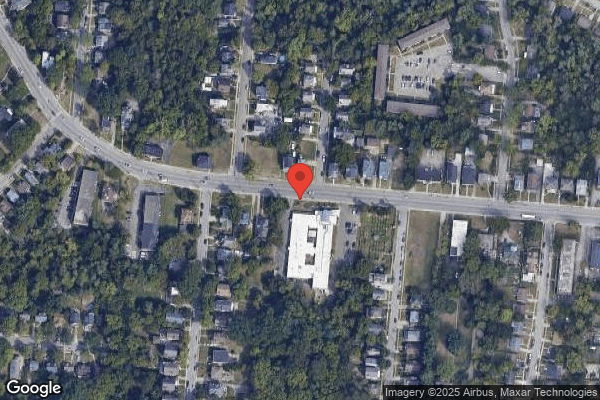
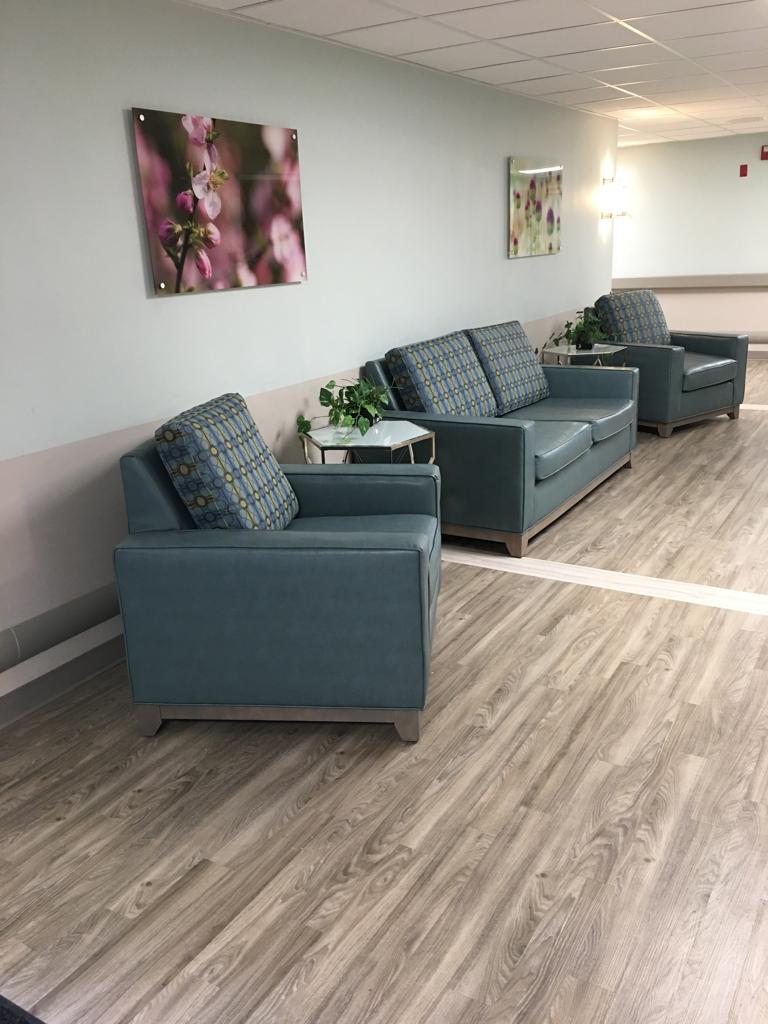
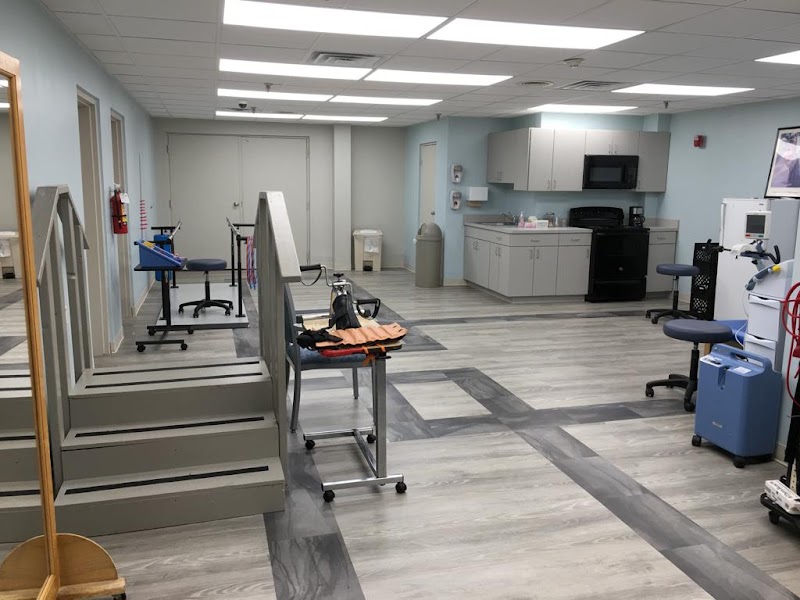
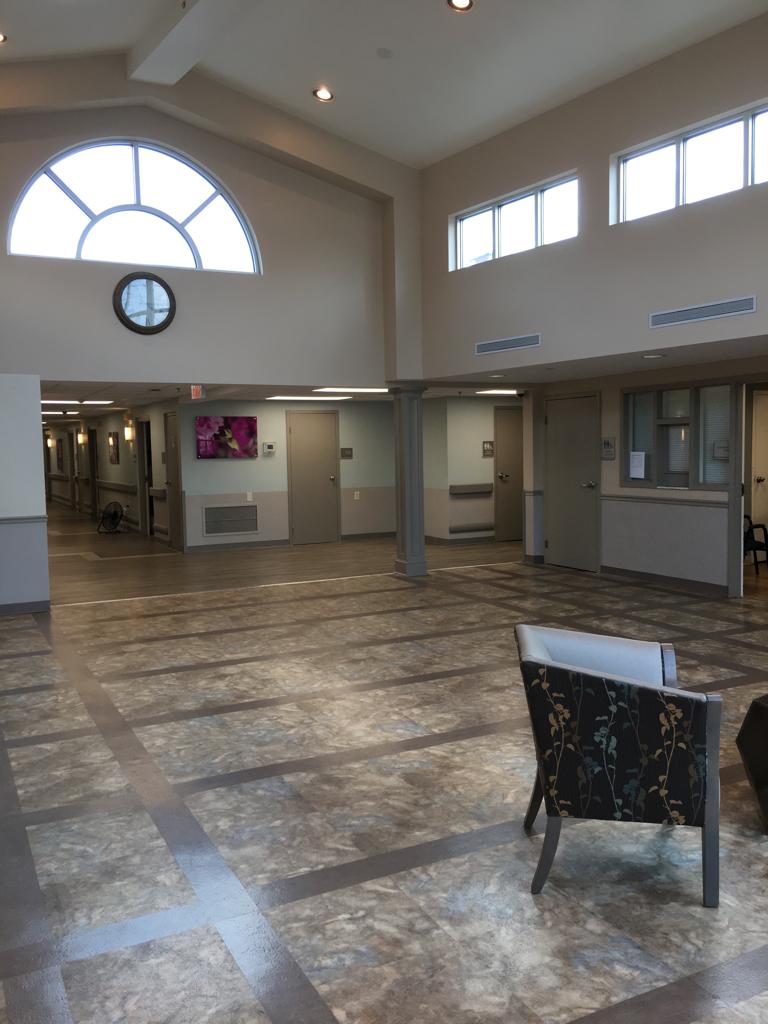
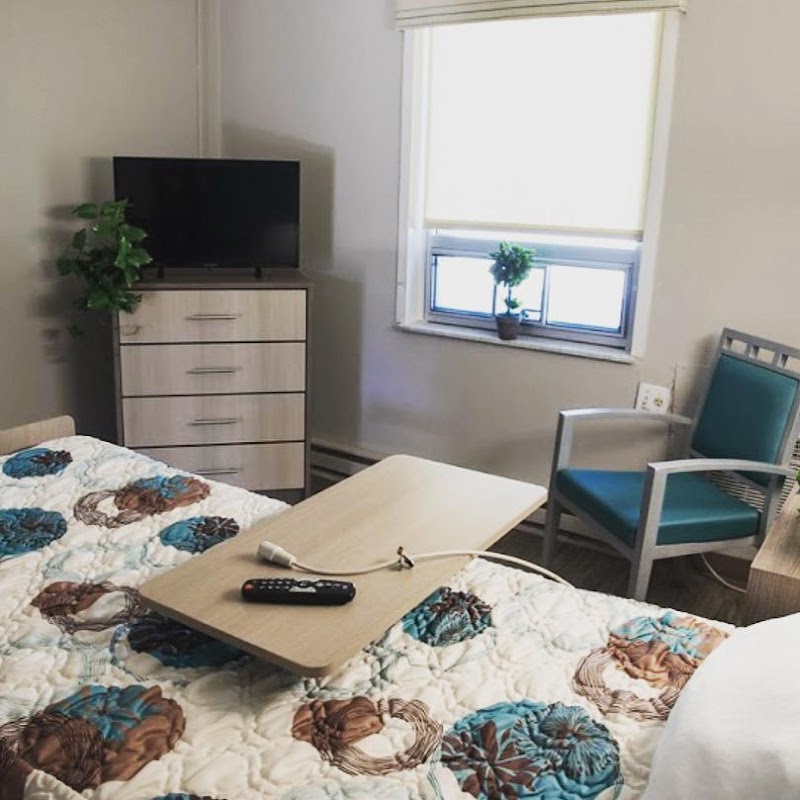
Photo by Harrison Pavilion Rehabilitation & Nursing Care
Photo by Harrison Pavilion Rehabilitation & Nursing Care
Photo by Harrison Pavilion Rehabilitation & Nursing Care
1 / 5 photos
Last Inspection: October 2023
Over 2 years since last inspection. Current conditions may differ from available data.
Overview
Harrison Pavilion Care Center has received a Trust Grade of F, indicating significant concerns about the quality of care provided. Ranking #865 out of 913 nursing homes in Ohio places it in the bottom half, and specifically #66 out of 70 in Hamilton County, meaning there are many better options available nearby. The facility's situation is worsening, with issues increasing from 3 in 2024 to 5 in 2025. Staffing is a major concern, with a low rating of 1 out of 5 stars and a high turnover rate of 72%, which is much above the state average of 49%.
While there have been no fines recorded, indicating some compliance with regulations, the nursing home has faced serious incidents, including a resident's suicide due to inadequate behavioral health services and three residents suffering significant weight loss because their dietary needs were not met. Additionally, one resident fell and fractured a bone due to a lack of proper supervision, highlighting serious safety concerns. Overall, families should weigh these significant weaknesses against the few strengths when considering this facility for their loved ones.
Trust Score
F
8/100
In Ohio
#865/913
Bottom 6%
Safety Record
High Risk
Review needed
Inspections
Getting Worse
3 → 5 violations
Staff Stability
⚠ Watch
72% turnover. Very high, 24 points above average. Constant new faces learning your loved one's needs.
Penalties
✓ Good
No fines on record. Clean compliance history, better than most Ohio facilities.
Skilled Nurses
⚠ Watch
Each resident gets only 25 minutes of Registered Nurse (RN) attention daily — below average for Ohio. Fewer RN minutes means fewer trained eyes watching for problems.
Violations
⚠ Watch
75 deficiencies on record. Higher than average. Multiple issues found across inspections.
Full Sprinkler Coverage · Fire safety systems throughout facility
No fines on record
Facility shows strength in quality measures, fire safety.
The Bad
1-Star Overall Rating
Below Ohio average (3.2)
Significant quality concerns identified by CMS
Staff Turnover: 72%
26pts above Ohio avg (46%)
Frequent staff changes - ask about care continuity
Chain: CCH HEALTHCARE
Part of a multi-facility chain
Ask about local staffing decisions and management
Staff turnover is very high (72%)
24 points above Ohio average of 48%
The Ugly
75 deficiencies on record
1 life-threatening2 actual harm
Sept 20252 deficiencies
CONCERN(D)📢 Someone Reported This
A family member, employee, or ombudsman was alarmed enough to file a formal complaint
Potential for Harm - no one hurt, but risky conditions existed
Quality of Care(Tag F0684)
Could have caused harm · This affected 1 resident
Based on medical record review, resident interview, and staff interview, the facility failed to ensure residents received timely treatment for respiratory infections. This affected one (Resident #7) o...
Read full inspector narrative →
Based on medical record review, resident interview, and staff interview, the facility failed to ensure residents received timely treatment for respiratory infections. This affected one (Resident #7) of seven residents sampled for respiratory infections. The facility census was 79 residents. Findings include: Review of the medical record for Resident #7 revealed an admission date of 08/03/18 with a diagnosis of major depressive disorder Review of the Minimum Data Set (MDS) assessment for Resident #7 dated 06/18/25 revealed the resident had moderately impaired cognition. Review of the progress note for Resident #7 dated 09/03/25 revealed the nurse practitioner (NP) assessed Resident #7 for complaints of complaint of cough for several days. Lung auscultation revealed concerns for wheezes bilaterally. The NP gave orders for a stat (immediate) chest x-ray and Tylenol cold & flu medication. Review of the physician's orders for Resident #7 revealed an order dated 09/03/25 for a stat chest x-ray. There was no written order for Tylenol cold and flu medication. Interview on 09/08/25 at 11:34 A.M. with Resident #7 confirmed he had for medicine for flu and had been having symptoms for a week or two including a cough and a runny nose. Interview on 09/10/25 at 10:00 A.M. NP #492 confirmed she had assessed Resident #7 on 09/03/25 and gave a verbal order to the nurse to implement the standing order for Tylenol cold and flu medication and to give a dose immediately. NP #492 stated she was unaware the order had not been placed and verified the Tylenol cold and flu medication was not on Resident #7's profile.This deficiency represents noncompliance investigated under Complaint Number OH00162888 (iQIES 1311544)
CONCERN(D)📢 Someone Reported This
A family member, employee, or ombudsman was alarmed enough to file a formal complaint
Potential for Harm - no one hurt, but risky conditions existed
Accident Prevention(Tag F0689)
Could have caused harm · This affected 1 resident
Based on medical record review, staff interview, and review of the facility policy, the facility failed to complete root cause analysis following resident falls. This affected one (Resident #39) of th...
Read full inspector narrative →
Based on medical record review, staff interview, and review of the facility policy, the facility failed to complete root cause analysis following resident falls. This affected one (Resident #39) of three residents reviewed for falls. The facility census was 79 residents.Findings include:Review of the medical record for Resident #39 revealed an admission date of 06/17/24 with diagnoses including Parkinson's disease, type two diabetes, depression, generalized anxiety disorder, and unspecified dementia. Review of care plan for Resident #39 dated 06/18/24 revealed the resident was at risk for falls. Interventions included anticipating resident needs, keeping the call light within reach, maintaining a safe environment, and educating the resident regarding appropriate footwear, using call light for assistance, and safe use of mobility devices. Review of the progress note for #39 dated 02/24/25 revealed the resident had an unwitnessed fall in her room. Staff found Resident #39 seated on the floor in front of her walker. Resident #39 stated she hit her head during the fall. Review of the facility incident report and investigation of Resident #39's fall on 02/24/25 revealed it did not include a root cause analysis of the events and factors leading to the resident's fall. Review of the Minimum Data Set (MDS) assessment for Resident #39 dated 06/24/25 revealed the resident was cognitively intact, had no behaviors, did not wander, and did not reject care. Interview on 09/11/25 at 10:00 A.M. with the Director of Nursing (DON) confirmed the facility did not complete a root cause analysis of Resident #39's fall on 02/24/25. The DON confirmed part of the facility's fall investigation process should include a root cause analysis. Review of the facility policy titled Managing Falls and Fall Risk dated December 2007 revealed the facility evaluated falls and identified interventions related to the resident's specific risks and causes to try to prevent the resident from falling. This deficiency represents noncompliance investigated under Complaint Number OH00162646 (1311543).
Feb 20253 deficiencies
CONCERN(D)📢 Someone Reported This
A family member, employee, or ombudsman was alarmed enough to file a formal complaint
Potential for Harm - no one hurt, but risky conditions existed
Transfer Requirements(Tag F0622)
Could have caused harm · This affected 1 resident
**NOTE- TERMS IN BRACKETS HAVE BEEN EDITED TO PROTECT CONFIDENTIALITY** Based on staff interview, record review, and review of discharge notices, the facility failed to permit a resident to remain in ...
Read full inspector narrative →
**NOTE- TERMS IN BRACKETS HAVE BEEN EDITED TO PROTECT CONFIDENTIALITY** Based on staff interview, record review, and review of discharge notices, the facility failed to permit a resident to remain in the facility and not transfer or discharge from the facility without the proper documentation regarding the need for discharge from the facility or the physician. This affected one Resident (#400) of the three residents reviewed for transfers. The facility also failed to allow a resident to remain in the facility for the duration of their discharge notice. This affected one Resident (#100) out of three residents reviewed for transfer or discharge. The facility census was 78.
Findings include:
1) Review of Resident #400's closed medical record revealed the resident was admitted to the facility on [DATE]. Diagnoses included major depressive disorder, acquired absence of right leg below the knee, acquired absence of left leg below the knee, schizoaffective disorder and constipation. Resident #400 discharged from the facility on 02/10/25. Resident #400's census information revealed Resident #400 was his own responsible party.
Review of Resident #400's medical record from 11/08/24 to 02/12/25, revealed no documentation a discharge notice was given to Resident #400.
Review of Resident #400's admission MDS assessment dated [DATE] revealed Resident #400 was cognitively intact, was independent with eating, and required maximal and moderate assistance with activities of daily living (ADL)s.
Review of Resident #400's behavior agreement dated 01/10/25, revealed Resident #400 was not following the recommendations of the Centers for Disease Control (CDC) and the facility regarding signing out of the facility with the nursing staff. Resident #400 had verbalized understanding of the risk he possessed to himself, and others and Resident #400 had been offered assistance with finding another facility that would meet his needs. The facility agreed to allow Resident #400 to continue residency with the facility under the following conditions: Resident #400 would remain in the facility unless medically necessary, Resident #400 would abide by the recommendations of the facility that were present and any changes of recommendations that have been implemented by the facility or CDC, and Resident #400 was made aware that not following the contract and leaving the facility unnecessarily may result in an against medical advice (AMA) discharge. The behavior agreement stated failure to follow the conditions could result in an automatic AMA, 30-day or immediate discharge from the facility. Resident #400 signed the behavior agreement.
Review of Resident #400's progress note dated 02/10/25 at 1:57 P.M., revealed Resident #400 was discharged from the facility.
Review of Resident #400's incomplete Discharge summary dated [DATE], revealed Resident #400 discharged to another long-term care facility and Resident #400 was fine with the discharge. Information regarding Resident #400's admission date, date of discharge, reason for admission, reason for the discharge, treatment provided, progress in the facility, nutritional information, and therapy services were missing from the discharge summary.
Interview with the Administrator by telephone and Regional Director of Operations (RDO) #600 and the Director of Nursing (DON) in person on 02/11/25 at 2:14 P.M., revealed residents in the facility were not allowed to leave the facility without supervision. The Administrator reported the facility was located in an area with a large amount of violence and it was not safe for residents to sign themselves out and sit in front of the facility. The Administrator stated Resident #400 had a behavior agreement that was put in place on 01/10/25 which stated Resident #400 would remain in the facility unless medically necessary. The Administrator stated Resident #400 was also smoking marijuana in the facility and he was discharged from the facility because he was smoking marijuana. The Administrator stated Resident #400 was given an immediate discharge notice, but she could not recall the date. The Administrator verified Resident #400 discharged from the facility on 02/10/25 to another long-term care facility.
Interview with the DON on 02/11/25 at 2:45 P.M., verified the facility did not have a copy of a discharge notice given to Resident #400 and there was no documentation in Resident #400's chart that Resident #400 was provided with a discharge notice. The DON stated Resident #400 had a Discharge summary dated [DATE] that reported Resident #400 was fine with the discharge. The DON verified the discharge summary did not include information regarding Resident #400's admission date, date of discharge, reason for admission, reason for discharge, treatment provided, progress in the facility, nutritional information, and therapy services.
2) Review of Resident #100's closed medical record revealed the resident was admitted to the facility on [DATE]. Diagnoses including hypertensive heart disease without heart failure, abnormal results of thyroid function studies, lymphedema not elsewhere classified, insomnia, alcohol abuse, anemia, hyperlipidemia, alcoholic cirrhosis of liver with ascites and gastro esophageal reflux disease with esophagitis with bleeding. Resident #100 discharged from the facility on 02/08/25. Resident #100's census information revealed Resident #100 was his own responsible party.
Review of Resident #100's quarterly MDS assessment dated [DATE], revealed the resident was cognitively intact. Resident #100 was independent or required supervision with ADLS. supervision with showering.
Review of Resident #100's discharge care plan dated 08/08/21, revealed Resident #100 expressed the wish to discharge home. Resident #100 was currently homeless but wished to apply to Medicaid waiver programs once eligible. Interventions included notifying the physician of discharge plans and needs, making referrals to community agencies, encourage the resident to be involved in discharge planning, and discuss the discharge planning process with the resident as requested.
Review of Resident #100's behavioral care plan dated 07/18/22, revealed the resident had a behavior problem as evidenced by a history of signing out of the facility and consuming alcohol in the community.
Review of Resident #100's behavior agreement dated 11/14/24, revealed the resident was not following the recommendations of the CDC and the resident increased the health risk of others by unnecessarily leaving the facility and then returning. Resident #100 was educated and the resident verbalized understanding of the risks he possessed to himself, and others. Resident #100 had been offered assistance with finding another facility that would meet his needs. The facility agreed to allow Resident #100 to continue residency in the facility under the following conditions: Resident #100 would remain in the facility unless medically necessary, Resident #100 would abide by the recommendations of the facility that were present and any changes of recommendations that have been implemented by the facility or CDC, and Resident #100 was aware of not following the contract and leaving the facility unnecessarily, may result in an AMA discharge. The behavior agreement stated failure to follow the conditions could result in an automatic AMA discharge. Resident #100 signed the behavior agreement along with the Administrator on 11/14/24.
Review of Resident #100's 30-day discharge notice dated 01/13/25, revealed Resident #100 was given a 30-day discharge notice with a discharge date of 02/13/25. Resident #100's discharge notice stated Resident #100 was being discharged because Resident #100's needs could not be met by the facility and the safety of other individuals was endangered. Resident #100 was given a behavior contract on 11/14/24 for going out of the facility and coming back drunk and disorderly. On 01/10/25, Resident #100 broke the behavior contract as the resident did not sign out of the facility and then returned with a beer for himself and others then refused to give the contraband to the nursing staff at first. The appeal information and contact information for the Ombudsman were listed on the notice. The notice was signed by Resident #100, the Administrator and Registered Nurse (RN) #437 on 01/13/25.
Review of Resident #100's care conference dated 01/30/25, revealed Resident #100 attended in person. Resident #100 was leaving in his wheelchair in a negative two-degree weather to go to the store and he went down a hill in his wheelchair. Resident #100 was given a 30-day discharge notice and was in the process of looking for another facility.
Review of Resident #100's progress note written by Licensed Practical Nurse (LPN) #434 dated 02/08/25 at 5:10 P.M., revealed Pt left from the facility around 1400 Pt did not notify nurse that he was leaving PT returned to facility at 1300. Made Pt aware that he could not re-enter to the facility due to behavior contract Pt refused to sign AMA papers.
Review of Resident #100's progress note dated 02/08/25 at 5:31 P.M., revealed LPN #434 notified the physician of Resident #100's discharge.
Review of Resident #100's physician order dated 02/08/25, revealed Resident #100 discharged from the facility AMA.
Review of Resident #100's incomplete Discharge summary dated [DATE], revealed Section B (Social Services) indicated the resident understood the discharge due to having a Brief Interview Mental Status (BIMS) of 15, indicating cognitively intact, was on a 30-day discharge and behavioral contract. The resident was discharged with family and sister called to pick up his belongings. There was no documentation about a follow physician appointment including name, address, phone and appointment time, no documentation about community resources offered, and if any special treatments were required. The Service Discharge Summary indicated the resident broke his behavior agreement by going out of the facility without signing out. Resident #100 was on a 30-day discharge notice for the same behavior and Resident #100's family was coming to pick up his belongings. The discharge summary had no documentation in the recapitulation of residents stay, dietary/nutrition, activities, Rehabilitiation services, discharge instructions/follow-up precautions and the resident and/or the resident representative signature.
Review of Resident #100's undated AMA form, revealed Resident #100 refused to sign the AMA form. The form was signed by LPN #434 and RN #437.
Interview with LPN #435 on 02/11/25 at 8:44 A.M., revealed residents were not allowed to sign out of the facility alone. LPN #435 stated that residents could only sign out of the facility with family or supervision and Resident #100 violated his behavior agreement that stated he would not leave the facility. LPN #435 reported Resident #100 was discharged from the facility AMA on 02/08/25 because he went out of the facility against his behavior agreement on that date.
Interview with the Administrator by telephone and Regional Director of Operations (RDO) #600 and the Director of Nursing (DON) in person on 02/11/25 at 2:14 P.M., revealed residents in the facility were not allowed to leave the facility without supervision. The Administrator reported the facility was located in an area with a large amount of violence and it was not safe for residents to sign themselves out and sit in front of the facility. The Administrator stated Resident #100 was constantly leaving the facility and they discussed with Resident #100 that he could not sign out without supervision or without physician orders. The Administrator verified a behavior agreement was completed with Resident #100 on 11/14/24 that stated Resident #100 would not leave the facility unless medically necessary. The Administrator stated Resident #100 continued to go out of the facility without signing out and without supervision and the facility issued Resident #100 a 30-day discharge notice on 01/13/25 because Resident #100 went out during the cold weather and brought other residents alcohol and cigarettes. The Administrator stated Resident #100 went out of the facility on 02/08/25 without supervision and without signing out and he was discharged AMA on 02/08/25 for violating his behavior agreement. When Resident #100 returned to the facility, the Administrator stated staff told Resident #100 that they would pack up his stuff and was to remain in the lobby until he was picked up by family or a bus. The Administrator stated she was not sure how Resident #100 left the facility. The Administrator reported Resident #100's sister came and got his stuff. The Administrator stated that Resident #100 wanted to remain in the facility after he left the facility without signing out of the facility. The Administrator stated he broke the behavior agreement so that's him basically saying he was going AMA.
Telephone interview with Resident #100's sister on 02/11/25 at 2:53 P.M., revealed the DON informed her that Resident #100 was discharged from the facility because he was leaving the facility without supervision. Resident #100's sister stated the facility had Resident #100 sign a behavior agreement that he would not leave the facility, and he left the facility against the agreement. Resident #100's sister reported Resident #100 was currently at the homeless shelter, but she was not sure who picked Resident #100 up from the facility on 02/08/25 to take him to the homeless shelter.
Attempted to call Resident #100 on 02/11/25 at 2:57 P.M. with no response.
Review of an electronic mail (email) note dated 02/12/25 at 1:35 P.M., from the Surveyor to the Administrator, DON and RDO #600, revealed the Surveyor asked the facility to clarify the times from the progress noted dated 02/08/25 at 5:10 P.M. when Resident #100 was recorded as leaving the facility at 2:00 P.M. and then returning at 1:00 P.M.
Review of an email note dated 02/12/25 at 1:38 P.M., from the Administrator, revealed we are told he left multiple times that day. He didn't sign out for any of them so I really can't answer that sorry.
Review of the policy titled Facility-Initiated Transfer or Discharge dated October 2022 revealed residents have the right to remain in the facility once admitted in the facility. The residents and their representatives are given a 30 day advance written notice of an impending transfer or discharge from the facility.
This deficiency represents non-compliance investigated under Complaint Number OH00162483 and OH00160783.
CONCERN(D)📢 Someone Reported This
A family member, employee, or ombudsman was alarmed enough to file a formal complaint
Potential for Harm - no one hurt, but risky conditions existed
Deficiency F0661(Tag F0661)
Could have caused harm · This affected 1 resident
**NOTE- TERMS IN BRACKETS HAVE BEEN EDITED TO PROTECT CONFIDENTIALITY** Based on staff interview and record review, the facility failed to ensure a resident's discharge summary included a recapitulati...
Read full inspector narrative →
**NOTE- TERMS IN BRACKETS HAVE BEEN EDITED TO PROTECT CONFIDENTIALITY** Based on staff interview and record review, the facility failed to ensure a resident's discharge summary included a recapitulation of the resident's stay. This affected one Resident (#400) out of three residents reviewed for transfer or discharge summaries. The facility census was 78.
Findings include:
Review of Resident #400's closed medical record revealed the resident was admitted to the facility on [DATE]. Diagnoses included major depressive disorder, acquired absence of right leg below the knee, acquired absence of left leg below the knee, schizoaffective disorder and constipation. Resident #400 discharged from the facility on 02/10/25. Resident #400's census information revealed Resident #400 was his own responsible party.
Review of Resident #400's medical record from 11/08/24 to 02/12/25, revealed no documentation a discharge notice was given to Resident #400.
Review of Resident #400's admission MDS assessment dated [DATE], revealed Resident #400 was cognitively intact, was independent with eating, and required maximal and moderate assistance with activities of daily living (ADL)s.
Review of Resident #400's behavior agreement dated 01/10/25, revealed Resident #400 was not following the recommendations of the Centers for Disease Control (CDC) and the facility regarding signing out of the facility with the nursing staff. Resident #400 had verbalized understanding of the risk he possessed to himself, and others and Resident #400 had been offered assistance with finding another facility that would meet his needs. The facility agreed to allow Resident #400 to continue residency with the facility under the following conditions: Resident #400 would remain in the facility unless medically necessary, Resident #400 would abide by the recommendations of the facility that were present and any changes of recommendations that have been implemented by the facility or CDC, and Resident #400 was made aware that not following the contract and leaving the facility unnecessarily may result in an against medical advice (AMA) discharge. The behavior agreement stated failure to follow the conditions could result in an automatic AMA, 30-day or immediate discharge from the facility. Resident #400 signed the behavior agreement.
Review of Resident #400's incomplete Discharge summary dated [DATE], revealed Resident #400 discharged to another long-term care facility and Resident #400 was fine with the discharge. Information regarding Resident #400's admission date, date of discharge, reason for admission, reason for the discharge, treatment provided, progress in the facility, nutritional information, and therapy services were missing from the discharge summary.
Review of Resident #400's progress note dated 02/10/25 at 1:57 P.M., revealed Resident #400 was discharged from the facility.
Interview with the Administrator by telephone and Regional Director of Operations (RDO) #600 and the Director of Nursing (DON) in person on 02/11/25 at 2:14 P.M., revealed residents in the facility were not allowed to leave the facility without supervision. The Administrator reported the facility was located in an area with a large amount of violence and it was not safe for residents to sign themselves out and sit in front of the facility. The Administrator stated Resident #400 had a behavior agreement that was put in place on 01/10/25 which stated Resident #400 would remain in the facility unless medically necessary. The Administrator stated Resident #400 was also smoking marijuana in the facility and he was discharged from the facility because he was smoking marijuana. The Administrator stated Resident #400 was given an immediate discharge notice, but she could not recall the date. The Administrator verified Resident #400 discharged from the facility on 02/10/25 to another long-term care facility.
Interview with the DON on 02/11/25 at 2:45 P.M., verified the facility did not have a copy of a discharge notice given to Resident #400 and there was no documentation in Resident #400's chart that Resident #400 was provided with a discharge notice. The DON stated Resident #400 had a Discharge summary dated [DATE] that reported Resident #400 was fine with the discharge. The DON verified the discharge summary did not include information regarding Resident #400's admission date, date of discharge, reason for admission, reason for discharge, treatment provided, progress in the facility, nutritional information, and therapy services.
Review of the facility's undated discharge summary and plan policy revealed the discharge summary will include a recapitulation of the resident's stay at the facility and a final summary of the resident's status at the time of the discharge. The discharge summary shall include a description of the resident's current diagnoses, medical history, course of illness, treatment, and therapy since entering the facility, current laboratory, radiology, consultation and diagnostic test results, physical and mental functional status, ability to perform activities of daily living, and nutritional status.
CONCERN(E)📢 Someone Reported This
A family member, employee, or ombudsman was alarmed enough to file a formal complaint
Potential for Harm - no one hurt, but risky conditions existed
Resident Rights(Tag F0550)
Could have caused harm · This affected multiple residents
**NOTE- TERMS IN BRACKETS HAVE BEEN EDITED TO PROTECT CONFIDENTIALITY** Based on staff interviews and record review, the facility failed to allow residents who were cognitively intact and were their o...
Read full inspector narrative →
**NOTE- TERMS IN BRACKETS HAVE BEEN EDITED TO PROTECT CONFIDENTIALITY** Based on staff interviews and record review, the facility failed to allow residents who were cognitively intact and were their own persons, the ability to independently sign out of the facility. This affected four Residents (#16, #69, #100 and #400) of the four residents reviewed for resident rights. The facility identified 63 Residents (#02, #05, #06, #09, #10, #11, #12, #13, #14, #15, #16, #17, #18, #19, #20, #22, #23, #24, #26, #27, #28, #29, #30, #31, #33, #35, #37, #38, #39, #40, #41, #42, #43, #45, #48, #49, #50, #52, #53, #54, #55, #56, #57, #58, #60, #61, #62, #63, #65, #66, #67, #68, #69, #70, #71, #72, #73, #75, #76, #78, #79, #80 and #81) as being their own person without a guardian at the facility and was able to sign themselves out of the facility if desired. The facility census was 78.
Findings include:
1) Review of Resident #16's medical record revealed the resident was admitted to the facility on [DATE]. Diagnoses included ataxia following other cerebrovascular disease, insomnia, atherosclerotic heart disease of native coronary artery without angina pectoris, chronic obstructive pulmonary disease (COPD), unspecified focal traumatic brain injury with loss of consciousness and hypertension. Resident #16 was recorded as his own responsible party.
Review of Resident #16's annual Minimum Data Set (MDS) assessment dated [DATE] revealed the resident was cognitively intact, was independent with eating and required moderate assistance for all other activities of daily living (ADLs).
2) Review of Resident #69's medical record revealed the resident was admitted to the facility on [DATE]. Diagnoses included hypertensive heart disease with heart failure, hepatic encephalopathy, unspecified cirrhosis of liver, type two diabetes mellitus with diabetic neuropathy, cellulitis of left lower limb, cellulitis of right lower limb, and peripheral vascular disease. Resident #69 was his own responsible party.
Review of Resident #69's admission MDS assessment dated [DATE], revealed Resident #69 was cognitively intact, and was independent with eating, required set up assistance or supervision with other ADLs.
Review of Resident #69's behavior agreement dated 02/08/25, revealed the resident was not following the recommendations of the Centers for Disease Control and Prevention (CDC) and increased the health risk of others by leaving the facility unnecessarily and then returning. Resident #69 was educated on the behavioral agreement and verbalized understanding of the risk he possessed to himself, and the others. Resident #69 had been offered assistance with finding another facility that would meet his needs. Resident #69 was allowed to continue residency at the facility under the following conditions: Resident #69 would remain in the facility unless medically necessary, Resident #69 would abide by the recommendations of the facility that were present and any changes of recommendations that were implemented by the facility or CDC. Resident #69 was aware that not following the behavioral contract and leaving the facility unnecessarily may result in an against medical advice (AMA) discharge. The behavior agreement indicated that if Resident #69 failed to follow the conditions, this could result in an automatic AMA discharge. Resident #69 refused to sign the behavior agreement.
3) Review of Resident #100's closed medical record revealed the resident was admitted to the facility on [DATE]. Diagnoses included hypertensive heart disease without heart failure, abnormal results of thyroid function studies, lymphedema not elsewhere classified, insomnia, alcohol abuse, anemia, hyperlipidemia, alcoholic cirrhosis of liver with ascites and gastro esophageal reflux disease with esophagitis with bleeding. Resident #100 discharged from the facility on 02/08/25. Resident #100 was his own responsible party.
Review of Resident #100's behavioral care plan dated 07/18/22, revealed the resident had a behavior problem as evidenced by a history of signing out of the facility and consuming alcohol in the community. Interventions included discussing the resident's behavior if reasonable, intervene as necessary to provide the rights and safety of others, monitor behavior episodes and attempt to determine the underlying cause and minimize the potential for the resident's disruptive behaviors by offering tasks to divert attention.
Review of Resident #100's behavior agreement dated 11/14/24, revealed the resident was not following the recommendations of the CDC and the resident increased the health risk of others by unnecessarily leaving the facility and then returning. Resident #100 was educated and the resident verbalized understanding of the risks he possessed to himself, and others. Resident #100 had been offered assistance with finding another facility that would meet his needs. The facility agreed to allow Resident #100 to continue residency in the facility under the following conditions: Resident #100 would remain in the facility unless medically necessary, Resident #100 would abide by the recommendations of the facility that were present and any changes of recommendations that have been implemented by the facility or CDC, and Resident #100 was aware of not following the contract and leaving the facility unnecessarily, may result in an AMA discharge. The behavior agreement stated failure to follow the conditions could result in an automatic AMA discharge. Resident #100 signed the behavior agreement along with the Administrator on 11/14/24.
Review of Resident #100's 30-day discharge notice dated 01/13/25, revealed Resident #100 was given a 30-day discharge notice with a discharge date of 02/13/25. Resident #100's discharge notice stated Resident #100 was being discharged because Resident #100's needs could not be met by the facility and the safety of other individuals was endangered. Resident #100 was given a behavior contract on 11/14/24 for going out of the facility and coming back drunk and disorderly. On 01/10/25, Resident #100 broke the behavior contract as the resident did not sign out of the facility and then returned with a beer for himself and others then refused to give the contraband to the nursing staff at first. The appeal information and contact information for the Ombudsman were listed on the notice. The notice was signed by Resident #100, the Administrator and Registered Nurse (RN) #437 on 01/13/25.
Review of Resident #100's quarterly MDS assessment dated [DATE], revealed the resident was cognitively intact. Resident #100 was independent or required supervision with ADLS.
Review of Resident #100's care conference dated 01/30/25, revealed Resident #100 attended in person. Resident #100 was leaving in his wheelchair in a negative two-degree weather to go to the store and he went down a hill in his wheelchair. Resident #100 was given a 30-day discharge notice and was in the process of looking for another facility.
Review of Resident #100's progress note written by Licensed Practical Nurse (LPN) #434 dated 02/08/25 at 5:10 P.M., revealed Resident #100 left the facility around 2:00 P.M. and did not notify the nurse he was leaving. Resident #100 returned to the facility at 1:00 P.M. Resident #100 was made aware that he could not reenter the facility due to his behavior contract and Resident #100 refused to sign AMA papers.
Review of Resident #100's progress note dated 02/08/25 at 5:31 P.M. revealed LPN #434 notified the physician of Resident #100's discharge.
Review of Resident #100's incomplete Discharge summary dated [DATE], revealed the resident broke his behavior contract agreement by going out of the facility without signing out. Resident #100 was on a 30- day discharge notice for the same behavior and Resident #100's family was coming to pick up his belongings.
Review of Resident #100's physician order dated 02/08/25, revealed Resident #100 discharged from the facility AMA.
Review of Resident #100's undated AMA form revealed Resident #100 refused to sign the AMA form. The form was signed by LPN #434 and RN #437.
4) Review of Resident #400's closed medical record revealed the resident was admitted to the facility on [DATE]. Diagnoses included major depressive disorder, acquired absence of right leg below the knee, acquired absence of left leg below the knee, schizoaffective disorder and constipation. Resident #400 discharged from the facility on 02/10/25. Resident #400 was his own responsible party.
Review of Resident #400's medical record from 11/08/24 to 02/12/25 revealed no documentation a discharge notice was given to Resident #400.
Review of Resident #400's admission MDS assessment dated [DATE] revealed Resident #400 was cognitively intact, was independent with eating, and required maximal and moderate assistance with ADLs.
Review of Resident #400's behavior agreement dated 01/10/25, revealed Resident #400 was not following the recommendations of the CDC and the facility regarding signing out of the facility with the nursing staff. Resident #400 had verbalized understanding of the risk he possessed to himself, and others and Resident #400 had been offered assistance with finding another facility that would meet his needs. The facility agreed to allow Resident #400 to continue residency with the facility under the following conditions: Resident #400 would remain in the facility unless medically necessary, Resident #400 would abide by the recommendations of the facility that were present and any changes of recommendations that have been implemented by the facility or CDC, and Resident #400 was made aware that not following the contract and leaving the facility unnecessarily may result in an AMA discharge. The behavior agreement stated failure to follow the conditions could result in an automatic AMA, 30-day or immediate discharge from the facility. Resident #400 signed the behavior agreement.
Interview with Licensed Practical Nurse (LPN) #435 on 02/11/25 at 8:44 A.M. revealed the residents were not allowed to sign out of the facility alone. LPN #435 stated the residents could only sign out of the facility with family or supervision. LPN #435 stated Resident #100 violated his behavior contract which stated he would not leave the facility. LPN #435 reported Resident #100 was discharged from the facility AMA on 02/08/25 because he went out of the facility against his behavior contract on that date.
Interview with Resident #16 on 02/11/25 at 8:52 A.M., revealed the resident had resided at the facility for over four years, and he had previously been allowed to sign himself out of the facility to go to the store alone. Resident #16 stated the facility no longer allowed him to sign out or leave the facility unless he was with family.
Interview with Resident #69 on 02/11/25 at 12:47 P.M., revealed the Administrator presented him with a behavioral contract because he went out of the facility with his family. Resident #69 reported the behavior contract stated he would not leave the facility, and he refused to sign the behavioral contract.
Interview with the Administrator by telephone, and Regional Director of Operations (RDO) #600 and the DON in person on 02/11/25 at 2:14 P.M. revealed residents in the facility were not allowed to leave the facility without supervision. The Administrator reported the facility was located in an area with a large amount of violence and it was not safe for the residents to sign themselves out and sit in front of the facility. The Administrator stated Resident #69 was given a behavior agreement after he left the facility with family at 1:30 A.M. The DON stated Resident #69 told the nurse he was leaving the facility, but the nurse told him that he could not go out of the facility because they needed a physician order. The Administrator, DON and RDO #600 confirmed the behavior agreement provided to Resident #69 on 02/08/25 stated he would not leave the facility unless medically necessary. The Administrator stated Resident #100 was constantly leaving the facility and they discussed with Resident #100 that he could not sign out without supervision or without physician orders. The Administrator verified a behavior agreement was completed with Resident #100 on 11/14/24 which stated Resident #100 would not leave the facility unless medically necessary. The Administrator stated Resident #100 continued to go out of the facility without signing out and without supervision and the facility issued Resident #100 a 30-day discharge notice on 01/13/25 because Resident #100 went out during the cold weather and brought other residents alcohol and cigarettes. The Administrator stated Resident #100 went out of the facility on 02/08/25 without supervision and without signing out and he was discharged AMA on 02/08/25 for violating his behavior agreement. The Administrator stated the staff told Resident #100 that they would pack up his stuff and Resident #100's sister came and got his stuff. The Administrator reported Resident #100 remained in the lobby until he was picked up by family or a bus, she couldn't remember which one. The Administrator stated that Resident #100 wanted to remain in the facility after he left without signing out of the facility. The Administrator stated he broke the behavior agreement so that's him basically saying he was going AMA. The Administrator stated Resident #400 had a behavioral agreement that was put in place on 01/10/25 which stated Resident #400 would remain in the facility unless medically necessary. The Administrator stated Resident #400 was also smoking marijuana in the facility and he was discharged from the facility because he was smoking marijuana. The Administrator stated Resident #400 was given an immediate discharge notice, but she could not recall the date. The Administrator confirmed Resident #400 discharged from the facility on 02/10/25 to another long-term care facility.
Telephone interview with Resident #100's sister on 02/11/25 at 2:53 P.M. revealed the DON informed her that Resident #100 was discharged from the facility because he was leaving the facility without supervision. Resident #100's sister stated the facility had Resident #100 sign a behavior agreement that he would not leave the facility, and he left the facility against the agreement. Resident #100's sister reported Resident #100 was currently at the homeless shelter, but she was not sure who picked Resident #100 up from the facility on 02/08/25 to take him to the homeless shelter.
Attempted to call Resident #100 on 02/11/25 at 2:57 P.M. with no response.
This deficiency represents non-compliance investigated under Complaint Number OH00162483 and OH00160783.
Feb 20243 deficiencies
CONCERN(D)📢 Someone Reported This
A family member, employee, or ombudsman was alarmed enough to file a formal complaint
Potential for Harm - no one hurt, but risky conditions existed
Free from Abuse/Neglect(Tag F0600)
Could have caused harm · This affected 1 resident
**NOTE- TERMS IN BRACKETS HAVE BEEN EDITED TO PROTECT CONFIDENTIALITY** Based on staff and resident interviews, medical record review, review of Self-Reported Incident (SRI), review of police report, ...
Read full inspector narrative →
**NOTE- TERMS IN BRACKETS HAVE BEEN EDITED TO PROTECT CONFIDENTIALITY** Based on staff and resident interviews, medical record review, review of Self-Reported Incident (SRI), review of police report, and policy review, the facility failed to ensure a resident was free from abuse. This affected one (#34) resident out of four residents reviewed for abuse. The facility census was 80.
Findings included:
1. Review of the medical record for Resident #34 revealed an admission date of 07/19/16 with medical diagnoses of hypertension (HTN), nephrotic syndrome, heart disease, chronic obstructive pulmonary disease (COPD), and schizophrenia.
Review of the medical record for Resident #34 revealed a quarterly Minimum Data Set (MDS), dated [DATE], which indicated Resident #34 was cognitively intact and was independent with eating, toilet hygiene, bed mobility, and transfers. The MDS did not indicate any behaviors.
Review of the medical record for Resident #34 revealed a nurse progress note, dated 01/08/24 at 6:00 A.M. with stated Resident #34 reported to the nurse that his roommate, Resident #84, was physically aggressive towards him which was witnessed by staff. The note continued to state the two (#34 and #84) residents were separated, assessments were completed, and the physician was notified. The note stated no injuries were noted.
2. Review of the medical record for Resident #84 revealed an admission date of 11/11/23 with medical diagnoses of HTN, peripheral neuropathy, anxiety, diabetes mellitus, and chronic pain syndrome. Review of the medical record for Resident #84 revealed a discharge date of 02/13/24.
Review of the medical record for Resident #84 revealed an admission MDS, dated [DATE], which indicated Resident #84 was cognitively intact and required supervision with toilet hygiene, bed mobility, and transfers. The MDS did not indicate any behaviors.
Review of the medical record for Resident #84 revealed a nurse progress note, dated 01/08/24 at 6:19 A.M., which stated Resident #84 initiated physical aggression towards his roommate Resident #34. The note stated Resident #84 informed the nurse that Resident #34 hit him on the left hip and lower back with the bathroom door before leaving their room. The note continued to state Resident #84 followed Resident #34 out into the hallway and started to hit Resident #34 with his walker in his back. The note stated the residents were separated and skin assessments were completed with no injuries noted.
Interview on 2/15/24 at 10:01 A.M. with Resident #34 confirmed Resident #84 hit him with his walker in the hallway which was witnessed by staff. Resident #34 stated he had a little pain at the time of the incident but denied any injuries . Resident #34 stated the incident was unprovoked and denied hitting Resident #84 while in their room. Resident #34 stated Resident #84 was moved to a different room and there were no further incidents between the two residents.
Interview on 02/15/24 at 10:56 A.M. with Licensed Practical Nurse (LPN) #122 confirmed she witnessed Resident #84 intentionally hit Resident #34 with his walker while in the hallway on 01/08/24. LPN #122 stated she separated the residents and Resident #34 called the police to report the altercation.
Interview on 02/15/24 at 12:00 P.M. with Director of Nursing (DON) stated an investigation was completed on 01/08/24 into the allegation of abuse by Resident #84 to Resident #34. DON stated she did not substantiate the allegation because she did not believe Resident #84 intentionally hit Resident #34 with his walker. DON stated Resident #84 was moved to a different room and there were no further incidents between the two residents.
Review of the SRI report, dated 01/08/24, stated Resident #84 was observed by staff throwing his walker at Resident #34 and hitting him in the back. The report stated no injuries were noted and an investigation was completed. The facility did not substantiate the allegation of abuse.
Review of the police report dated 01/08/24, Resident #84 was charged with simple assault.
Review of the facility policy titled, Abuse and Neglect Protocols, stated residents have the right to be free abuse, neglect, misappropriation or resident property, exploitation, corporal punishment, physical or chemical restraints. The policy stated abuse was defined as the willful infliction of injury, unreasonable confinement, intimidation or punishment with resident physical harm, pain, or mental anguish.
This deficiency represents non-compliance investigated under Complaint Numbers OH00150614 and OH00150334.
CONCERN(D)📢 Someone Reported This
A family member, employee, or ombudsman was alarmed enough to file a formal complaint
Potential for Harm - no one hurt, but risky conditions existed
Deficiency F0697(Tag F0697)
Could have caused harm · This affected 1 resident
**NOTE- TERMS IN BRACKETS HAVE BEEN EDITED TO PROTECT CONFIDENTIALITY** Based on medical record review and staff and pain specialist staff interviews, the facility failed to ensure a pain specialist a...
Read full inspector narrative →
**NOTE- TERMS IN BRACKETS HAVE BEEN EDITED TO PROTECT CONFIDENTIALITY** Based on medical record review and staff and pain specialist staff interviews, the facility failed to ensure a pain specialist appointment was scheduled and failed to effectively manage a resident's pain. This affected one (#84) resident out of three residents reviewed for pain management. The facility census was 80.
Findings included:
Review of the medical record for Resident #84 revealed an admission date of 11/11/23 with medical diagnoses of HTN, peripheral neuropathy, anxiety, diabetes mellitus, and chronic pain syndrome. Review of the medical record for Resident #84 revealed a discharge date of 02/13/24.
Review of the medical record for Resident #84 revealed an admission Minimum Data Set (MDS), dated [DATE], which indicated Resident #84 was cognitively intact and required supervision with toilet hygiene, bed mobility, and transfers.
Review of the medical record for Resident #84 revealed a Nurse Practitioner (NP) note, dated 01/18/24, which revealed Resident #84 stated his current pain management was no longer working for his pain and Resident #84 asked for a pain management referral. The note stated Resident #84 rated his pain a seven out of ten on the pain scale.
Review of the medical record for Resident #84 revealed a physician order, dated 11/14/23, for Norco 7.5-325 milligram (mg) one tablet by mouth every six hours as needed for pain and an order dated 11/11/23 for gabapentin 600 mg one tablet by mouth three times per day for pain. Further review of the physician orders revealed an order dated 01/29/24 for a consultation for pain management.
Review of the medical record for Resident #84 revealed a nurse's note, dated 01/29/24 at 8:16 P.M. that stated a pain specialist office was contacted per the order and Resident #84's medical information was faxed to the office. The note stated the nurse was informed by the office staff that a determination would be made in three to four days if the pain specialist would accept Resident #84. Further review of the medical record revealed no documentation to support Resident #84 was scheduled an appointment with the pain specialist or that the facility followed up on the referral.
Interview on 02/15/24 at 11:27 A.M. with Receptionist #210 from pain specialist office stated there was no documentation to support their office received a referral for Resident #84.
Interview on 02/15/24 at 11:48 A.M. with Director of Nursing (DON) confirmed the facility staff did not follow up with the pain specialist office to schedule Resident #84's consultation appointment. DON also confirmed the medical record for Resident #84 did not contain any documentation to support the facility staff adjusted Resident #84's pain medications or offered other non-pharmacological interventions to effectively manage his pain.
This deficiency represents non-compliance investigated under Complaint Number OH00150614.
CONCERN(D)📢 Someone Reported This
A family member, employee, or ombudsman was alarmed enough to file a formal complaint
Potential for Harm - no one hurt, but risky conditions existed
Infection Control(Tag F0880)
Could have caused harm · This affected 1 resident
**NOTE- TERMS IN BRACKETS HAVE BEEN EDITED TO PROTECT CONFIDENTIALITY** Based on medical record review, observation, staff interview, and review of facility policies, the facility failed to follow inf...
Read full inspector narrative →
**NOTE- TERMS IN BRACKETS HAVE BEEN EDITED TO PROTECT CONFIDENTIALITY** Based on medical record review, observation, staff interview, and review of facility policies, the facility failed to follow infection control guidelines when administering medications. This affected one (#70) out of three residents reviewed for medication administration. The facility census was 80.
Findings included:
Review of the medical record for Resident #70 revealed an admission date of 03/19/08 with medical diagnoses of depression, diabetes mellitus (DM), hypertension (HTN), chronic obstructive pulmonary disease, dementia, and schizoaffective disorder.
Review of the medical record for Resident #70 revealed a quarterly Minimum Data Set (MDS), dated [DATE], which indicated Resident #70 had moderate cognitive impairment and was independent with eating, bed mobility and transfers.
Review of the medical record for Resident #70 revealed a physician order dated 11/27/21 for metformin 500 milligram (mg) one tablet by mouth daily for DM, an order dated 01/13/22 for metoprolol 25 mg one tablet by mouth daily for HTN, and an order dated 06/30/22 for Risperdal one mg one tablet by mouth three times per day for schizoaffective disorder.
Observation on 02/14/24 at 8:35 A.M. of Licensed Practical Nurse (LPN) #196 administering medications to Resident #70 revealed LPN #196 placed the metoprolol 25 mg tablet, the metformin 500 mg tablet, and the Risperdal one mg tablet directly into her bare hand from the pill card and then placed the medications into the pill cup. LPN #196 was observed handing the pill cup with the medications to Resident #70 who consumed the medication in the presence of LPN #196. LPN #196 did not wash her hands, use hand sanitizer, or use gloves before or after administering medications to Resident #70.
Interview on 02/14/24 at 8:45 A.M. with LPN #196 confirmed she placed Resident #70's metoprolol, metformin, and Risperdal tablets directly into her bare hand then placed the medications into the pill cup prior to administering the medications to Resident #70. LPN #196 also confirmed she did not perform hand hygiene prior to or after administering medications to Resident #70.
Review of the facility policy titled, Administering Medications stated the staff should follow infection control procedures (e.g. handwashing, antiseptic technique, gloves) for administering medications.
Review of the facility policy titled Handwashing/Hand hygiene, revised August 2019, stated hand hygiene is the primary means to prevent the spread of infections.
This deficiency is based on incidental findings discovered during the course of this complaint investigation.
Dec 20233 deficiencies
CONCERN(E)📢 Someone Reported This
A family member, employee, or ombudsman was alarmed enough to file a formal complaint
Potential for Harm - no one hurt, but risky conditions existed
Deficiency F0694(Tag F0694)
Could have caused harm · This affected multiple residents
**NOTE- TERMS IN BRACKETS HAVE BEEN EDITED TO PROTECT CONFIDENTIALITY** THE FOLLOWING DEFICIENCY REPRESENTS AN INCIDENT OF PAST NON-COMPLIANCE THAT WAS SUBSEQUENTLY CORRECTED PRIOR TO THIS SURVEY.
Bas...
Read full inspector narrative →
**NOTE- TERMS IN BRACKETS HAVE BEEN EDITED TO PROTECT CONFIDENTIALITY** THE FOLLOWING DEFICIENCY REPRESENTS AN INCIDENT OF PAST NON-COMPLIANCE THAT WAS SUBSEQUENTLY CORRECTED PRIOR TO THIS SURVEY.
Based on record review, review of the State of Ohio Board of Pharmacy Terminal Distributor Licensure of Prescriber Practices, and staff interview, the facility failed to ensure medications administered intravenously (IV) were obtained from a source with a Terminal Distributor of Dangerous Drugs (TDDD) license (which allows a business entity to purchase, possess, and/or distribute dangerous drugs at a specific location) specific to the State of Ohio. This deficiency affected four (Residents #3, #25, #37, and #42) of four residents reviewed for medications administered by a contracted ancillary provider. This affected 26 current residents (#3, #4, #10, #13, #14, #15, #18, #25, #30, #31, #34, #35, #37, #41, #42, #44, #46, #50, #56, #63, #66, #67, #69, #78, #79 and #81) and twelve discharged residents (#85, #86, #88, #89, #90, #91, #92, #93, #94, #95, and #96) identified by the facility who received IV fluids from the unlicensed source. The facility census was 80.
Findings include:
1. Record review for Resident #3 revealed the resident admitted to the facility on [DATE]. Diagnoses included protein-calorie malnutrition, hypertension, and seizures.
Review of the Brief Interview for Mental Status (BIMS) assessment dated [DATE] revealed Resident #3 had intact cognition.
Review of the physician orders dated 06/05/23, 07/18/23, and 08/14/23 revealed Resident #3 had orders start a peripheral IV for 500 milliliter (ml) IV Micronutrient Hydration Therapy-Hydration Infusion (for overall support for multiple comorbidities) (Vitamin C, B Complex, B1, B2, B3, B4, B5, B6, B12, Magnesium Chloride, Calcium Gluconate, and Zinc) and 500 ml of Normal Saline (NS) 0.9 percent (%) for fluids. On 04/26/23 this resident received a Nutritional Infusion (for malnutrition) (Vitamin C, B Complex, B1, B2, B3, B4, B5, B12, Magnesium Oxide, Calcium Gluconate, Zinc, Amino, Glutamine, Arginine, Orthinine, Lysine, Citrulline, and BCAA.)
Review of the Medication Administration Record (MAR) revealed Resident #3 received IV Micronutrient Hydration Therapy - Infection Infusion from a contracted company on 04/26/23, 06/08/23, 07/19/23, and 08/16/23. All the IV Micronutrient Hydration Therapy-Infection Infusion administrations were completed by an ancillary provider not employed at the facility.
2. Record review for Resident #25 revealed the resident was admitted to the facility on [DATE]. Diagnoses included altered mental status, dementia, psychoactive substance abuse, schizophrenia, and COVID-19.
Review of the Brief Interview for Mental Status (BIMS) assessment dated [DATE] revealed Resident #32 had impaired cognition.
Review of the physician orders dated 04/05/23 revealed Resident #25 had an order dated 04/05/23, 05/24/23, 06/05/23,07/19/23, and 08/14/23 to start a peripheral IV for IV Micronutrient Hydration Therapy - Cognition Infusion (Vitamin C, B-Complex, B-1, B2, B3, B5, B-6, Biotin, B-12, Magnesium Chloride, Calcium Gluconate, Zinc, Amino Blend, Glutamine, Arginine, Omithine, Lysine, Citrulline, Taurine, and Glycine) 1,000 ml with 1,000 ml of NS 0.9%.
Review of the Medication Administration Record (MAR) revealed Resident #25 received the IV Micronutrient Hydration Therapy - Cognition Infusion with NS 0.9% on 04/26/23, 05/24/23, 06/07/23, 07/19/23, and 08/16/23. All the IV Micronutrient Hydration Therapy - Cognition Infusion administrations were completed by an ancillary provider not employed at the facility.
3. Record review for Resident #37 revealed the resident was admitted to the facility on [DATE]. Diagnoses included multiple sclerosis, protein-calorie malnutrition, hyperkalemia, and cirrhosis of the liver.
Review of the Brief Interview for Mental Status (BIMS) assessment dated [DATE] revealed Resident #37 had intact cognition.
Review of the physician orders dated 04/05/23, 06/05/23, and 07/18/23 revealed Resident #37 had an order to start a peripheral IV for IV Micronutrient Hydration Therapy - Derma and Infection Infusion (Vitamin C, B-Complex, B1, B2, B3, B5, B6, B12, Magnesium Chloride, Calcium Gluconate, Zinc, Amino Blend, Glutamine, Arginine, Ornthine, Lysine, Citrulline, BCAAA, B7 Biotin, and Glutathione) 500 milliliters (ml) per hour with 500 ml of Normal Saline (NS) 0.9% due to wound management and infections. On 08/14/23, a Hydration Infusion for hydration (Vitamin C, B Complex, B1, B2, B3, B4, B5, B6, B12, Magnesium Chloride, Calcium Gluconate, and Zinc) 250 ml at 250 ml per hour.
Review of the Medication Administration Record (MAR) revealed Resident #37 received the IV Micronutrient Hydration Therapy -with NS 0.9% on 04/26/23, 06/07/23, 07/19/23, and 08/16/23 All the IV Micronutrient Hydration Therapy - Nutrition Infusion administrations were completed by an ancillary provider not employed at the facility.
4. Record review for Resident #42 revealed the resident was admitted to the facility on [DATE]. Diagnoses included hypertension, Alzheimer's disease, edema, dermatitis, and other infectious or parasitic diseases.
Review of the Brief Interview for Mental Status (BIMS) assessment dated [DATE] revealed Resident #42 had intact cognition.
Review of the physician orders dated 04/05/23, 05/24/23, 06/07/23, 07/19/23 and 0814/23 revealed Resident #42 had an order to start a peripheral IV for IV Micronutrient Hydration Therapy -Cognition Infusion (Vitamin C, B-Complex, B-1, B2, B3, B5, B-6, Biotin, B-12, Magnesium Chloride, Calcium Gluconate, Zinc, Amino Blend, Glutamine, Arginine, Omithine, Lysine, Citrulline, Taurine, and Glycine) 1,000 ml with 1,000 ml of NS 0.9%.
Review of the Medication Administration Record (MAR) revealed Resident #42 received the IV Micronutrient Hydration Therapy - Nutrition Infusion with NS 0.9% on 05/11/23, 06/08/23, and 07/13/23. All the IV Micronutrient Hydration Therapy - Cognition Infusion administrations All the IV Micronutrient Hydration Therapy - Cognitive Infusion administrations were completed by an ancillary provider not employed at the facility.
Interview with the Corporate [NAME] President of Operations (CVOP) #60 on 12/06/23 at 9:54 A.M. confirmed she was never provided with the company's Ohio Terminal Distributor of Dangerous Drugs (TDDD) license. CVOP #60 confirmed Residents #3, #25, #37, and #42) received IV infusions of medications supplied by an unlicensed ancillary provider. All infusions ceased in September 2023 due to state licensure issues.
Interview with Medical Director (MD) #70 on 12/06/23 could not be completed after several calls that went unreturned.
Interview with a representative for the ancillary provider on 12/06/23 at 9:55 A.M. confirmed his company did not have and had never had an Ohio TDDD license to provide medications in the state of Ohio, and he did not understand the specific Ohio laws.
Review of the State of Ohio Terminal Distributor Licensure of Prescriber Practices https://www.pharmacy.ohio.gov/, dated 08/24/23, revealed a TDDD license allows a business entity to purchase, possess, and/or distribute dangerous drugs at specific locations. Terminal distributors of dangerous drugs include, but are not limited to, hospitals, pharmacies, Emergency Medical Services (EMS) organizations, laboratories, nursing homes, and prescriber practices. Distribution includes the administration of drugs on-site to patients as well as providing medications to patients to take away from the facility for later use. Dangerous drugs are defined in the Ohio Revised Code as any drug that meets any of the following: 1. Requires a subscription; 2. Bears on the label a Federal Legend (Rx Only or Caution: Federal law prohibits dispensing without a prescription); 3. Is intended for injection into the human body; or 4. Any drug that is a biological product as defined in section 3715.01 of the Revised Code. Ohio Revised Code (ORC) 4729.51 states that no licensed manufacturer, outsourcing facility, third-party logistics provider, repackager, or wholesale distributor shall sell dangerous drugs to anyone other than the following: (1) a licensed terminal distributor of dangerous drugs; (2) Any person exempt from licensure as a terminal distributor of dangerous drugs under section 4729.541 of the Revised Code (3) a licensed manufacturer, outsourcing facility, third-party logistics provider, repackager, or wholesale distributor; or (4) A terminal distributor, manufacturer, outsourcing facility, third-party logistics provider, repackager, or wholesale distributor that is located in another state, is not engaged in the sale of dangerous drugs within this state, and is actively licensed to engage in the sale of dangerous drugs by the state in which the distributor conducts business. In general, the exemptions to Ohio's TDDD licensure requirements do not apply if the prescriber practice is engaged in drug compounding. Compounding is defined as the preparation, mixing, assembling, packaging, and labeling of one or more drugs. Compounding includes the combining, admixing, diluting, reconstituting, or otherwise altering of a drug or bulk drug substance.
The deficient practice was corrected on 11/21/23 when the facility implemented the following corrective actions:
•
The company no longer serves the facility with cessation of services effective on 09/22/23.
•
All residents that received services from the company have been properly assessed by the Director of Nursing (DON)/designee and do not have any signs or symptoms of adverse effects related to IVF/medications received on or before 11/21/23.
•
All residents with prior services from the company are at risk of this alleged deficient practice.
•
This service from the company is no longer being offered effective 09/22/23.
•
All contracts that involve providing medication were reviewed to ensure the proper TDDD licensure is in place, completed on or before 11/21/23.
•
Education was provided to the governing body to ensure that TDDD licensure for Ohio is effective before accepting medication into the facility or completion of administration was completed on or before 11/21/23. This was completed by the Director of Clinical Services #99.
•
Administrator/designee will complete audits of any company providing any pharmacy services to ensure that the appropriate TDDD license is effective in the state of Ohio. Audits will be completed weekly for one month and then monthly for three months. All audits will be provided to the Quality Assurance Performance Improvement (QAPI) committee for review effective 11/21/23.
This deficiency represents non-compliance investigated under Complaint Number OH00148108.
CONCERN(E)📢 Someone Reported This
A family member, employee, or ombudsman was alarmed enough to file a formal complaint
Potential for Harm - no one hurt, but risky conditions existed
Pharmacy Services(Tag F0755)
Could have caused harm · This affected multiple residents
**NOTE- TERMS IN BRACKETS HAVE BEEN EDITED TO PROTECT CONFIDENTIALITY** THE FOLLOWING DEFICIENCY REPRESENTS AN INCIDENT OF PAST NON-COMPLIANCE THAT WAS SUBSEQUENTLY CORRECTED PRIOR TO THIS SURVEY.
Bas...
Read full inspector narrative →
**NOTE- TERMS IN BRACKETS HAVE BEEN EDITED TO PROTECT CONFIDENTIALITY** THE FOLLOWING DEFICIENCY REPRESENTS AN INCIDENT OF PAST NON-COMPLIANCE THAT WAS SUBSEQUENTLY CORRECTED PRIOR TO THIS SURVEY.
Based on medical record review, review of the State of Ohio Board of Pharmacy Terminal Distributor Licensure of Prescriber Practices, and staff interview, the facility failed to ensure medications were obtained from a source with a Terminal Distributor of Dangerous Drugs (TDDD) license (which allows a business entity to purchase, possess, and/or distribute dangerous drugs at a specific location) specific to the State of Ohio. This deficiency affected four (Residents #3, #25, #37, and #42) of four residents reviewed for medications administered by a contracted ancillary provider. This affected 26 current residents (#3, #4, #10, #13, #14, #15, #18, #25, #30, #31, #34, #35, #37, #41, #42, #44, #46, #50, #56, #63, #66, #67, #69, #78, #79 and #81) and twelve discharged residents (#85, #86, #88, #89, #90, #91, #92, #93, #94, #95, and #96) identified by the facility who received IV fluids from the unlicensed source. The facility census was 80.
Findings include:
1. Record review for Resident #3 revealed the resident admitted to the facility on [DATE]. Diagnoses included protein-calorie malnutrition, hypertension, and seizures.
Review of the Brief Interview for Mental Status (BIMS) assessment dated [DATE] revealed Resident #3 had intact cognition.
Review of the physician orders dated 06/05/23, 07/18/23, and 08/14/23 revealed Resident #3 had orders start a peripheral IV for 500 milliliter (ml) IV Micronutrient Hydration Therapy-Hydration Infusion (for overall support for multiple comorbidities) (Vitamin C, B Complex, B1, B2, B3, B4, B5, B6, B12, Magnesium Chloride, Calcium Gluconate, and Zinc) and 500 ml of Normal Saline (NS) 0.9 percent (%) for fluids. On 04/26/23 this resident received a Nutritional Infusion (for malnutrition) (Vitamin C, B Complex, B1, B2, B3, B4, B5, B12, Magnesium Oxide, Calcium Gluconate, Zinc, Amino, Glutamine, Arginine, Orthinine, Lysine, Citrulline, and BCAA.)
Review of the Medication Administration Record (MAR) revealed Resident #3 received IV Micronutrient Hydration Therapy - Infection Infusion from a contracted company on 04/26/23, 06/08/23, 07/19/23, and 08/16/23. All the IV Micronutrient Hydration Therapy-Infection Infusion administrations were completed by an ancillary provider not employed at the facility.
2. Record review for Resident #25 revealed the resident was admitted to the facility on [DATE]. Diagnoses included altered mental status, dementia, psychoactive substance abuse, schizophrenia, and COVID-19.
Review of the Brief Interview for Mental Status (BIMS) assessment dated [DATE] revealed Resident #32 had impaired cognition.
Review of the physician orders dated 04/05/23 revealed Resident #25 had an order dated 04/05/23, 05/24/23, 06/05/23,07/19/23, and 08/14/23 to start a peripheral IV for IV Micronutrient Hydration Therapy - Cognition Infusion (Vitamin C, B-Complex, B-1, B2, B3, B5, B-6, Biotin, B-12, Magnesium Chloride, Calcium Gluconate, Zinc, Amino Blend, Glutamine, Arginine, Omithine, Lysine, Citrulline, Taurine, and Glycine) 1,000 ml with 1,000 ml of NS 0.9%.
Review of the Medication Administration Record (MAR) revealed Resident #25 received the IV Micronutrient Hydration Therapy - Cognition Infusion with NS 0.9% on 04/26/23, 05/24/23, 06/07/23, 07/19/23, and 08/16/23. All the IV Micronutrient Hydration Therapy - Cognition Infusion administrations were completed by an ancillary provider not employed at the facility.
3. Record review for Resident #37 revealed the resident was admitted to the facility on [DATE]. Diagnoses included multiple sclerosis, protein-calorie malnutrition, hyperkalemia, and cirrhosis of the liver.
Review of the Brief Interview for Mental Status (BIMS) assessment dated [DATE] revealed Resident #37 had intact cognition.
Review of the physician orders dated 04/05/23, 06/05/23, and 07/18/23 revealed Resident #37 had an order to start a peripheral IV for IV Micronutrient Hydration Therapy - Derma and Infection Infusion (Vitamin C, B-Complex, B1, B2, B3, B5, B6, B12, Magnesium Chloride, Calcium Gluconate, Zinc, Amino Blend, Glutamine, Arginine, Ornthine, Lysine, Citrulline, BCAAA, B7 Biotin, and Glutathione) 500 milliliters (ml) per hour with 500 ml of Normal Saline (NS) 0.9% due to wound management and infections. On 08/14/23, a Hydration Infusion for hydration (Vitamin C, B Complex, B1, B2, B3, B4, B5, B6, B12, Magnesium Chloride, Calcium Gluconate, and Zinc) 250 ml at 250 ml per hour.
Review of the Medication Administration Record (MAR) revealed Resident #37 received the IV Micronutrient Hydration Therapy -with NS 0.9% on 04/26/23, 06/07/23, 07/19/23, and 08/16/23 All the IV Micronutrient Hydration Therapy - Nutrition Infusion administrations were completed by an ancillary provider not employed at the facility.
4. Record review for Resident #42 revealed the resident was admitted to the facility on [DATE]. Diagnoses included hypertension, Alzheimer's disease, edema, dermatitis, and other infectious or parasitic diseases.
Review of the Brief Interview for Mental Status (BIMS) assessment dated [DATE] revealed Resident #42 had intact cognition.
Review of the physician orders dated 04/05/23, 05/24/23, 06/07/23, 07/19/23 and 0814/23 revealed Resident #42 had an order to start a peripheral IV for IV Micronutrient Hydration Therapy -Cognition Infusion (Vitamin C, B-Complex, B-1, B2, B3, B5, B-6, Biotin, B-12, Magnesium Chloride, Calcium Gluconate, Zinc, Amino Blend, Glutamine, Arginine, Omithine, Lysine, Citrulline, Taurine, and Glycine) 1,000 ml with 1,000 ml of NS 0.9%.
Review of the Medication Administration Record (MAR) revealed Resident #42 received the IV Micronutrient Hydration Therapy - Nutrition Infusion with NS 0.9% on 05/11/23, 06/08/23, and 07/13/23. All the IV Micronutrient Hydration Therapy - Cognition Infusion administrations All the IV Micronutrient Hydration Therapy - Cognitive Infusion administrations were completed by an ancillary provider not employed at the facility.
Review of the facility's contract with the ancillary provider revealed the contract was entered into agreement on 01/24/23. This provided for a monthly clinic to be provided to residents with various deficiencies. The type of therapy was administered per physician orders by contracted staff through the ancillary provider.
Interview with the Corporate [NAME] President of Operations (CVOP) #60 on 12/06/23 at 9:50 A.M. confirmed the facilities entered into the contract with the ancillary provider on 01/24/23 and began treatment clinics in March 2023. CVOP #60 verified the ancillary provider brought their own supplies and IV products to the facility. CVOP #60 verified the ancillary provider was based out of Illinois and used their own staff for IV administration. CVOP #60 verified she was never provided with the company's Ohio Terminal Distributor of Dangerous Drugs (TDDD) license. CVOP #60 verified the above listed residents received IV infusions of medications supplied by an unlicensed ancillary provider.
Interview with Chief Executive Officer #80 from the ancillary provider on 12/06/23 at 9:55 P.M. verified his company did not have and did not ever have an Ohio TDDD license to provide drugs in the State of Ohio, as he did not understand the specific Ohio laws. He verified a Cease-and-Desist order was given in September 2023, and no further infusions had taken place after this order. He verified two of his nurses would come in the facility and provide services, one with an Ohio license and the other with a reciprocal license from the state of Indiana to practice in Ohio.
Review of the State of Ohio Terminal Distributor Licensure of Prescriber Practices https://www.pharmacy.ohio.gov/, dated 08/24/23, revealed a TDDD license allows a business entity to purchase, possess, and/or distribute dangerous drugs at specific locations. Terminal distributors of dangerous drugs include, but are not limited to, hospitals, pharmacies, Emergency Medical Services (EMS) organizations, laboratories, nursing homes, and prescriber practices. Distribution includes the administration of drugs on-site to patients as well as providing medications to patients to take away from the facility for later use. Dangerous drugs are defined in the Ohio Revised Code as any drug that meets any of the following: 1. Requires a subscription; 2. Bears on the label a Federal Legend (Rx Only or Caution: Federal law prohibits dispensing without a prescription); 3. Is intended for injection into the human body; or 4. Any drug that is a biological product as defined in section 3715.01 of the Revised Code. Ohio Revised Code (ORC) 4729.51 states that no licensed manufacturer, outsourcing facility, third-party logistics provider, repackager, or wholesale distributor shall sell dangerous drugs to anyone other than the following: (1) a licensed terminal distributor of dangerous drugs; (2) Any person exempt from licensure as a terminal distributor of dangerous drugs under section 4729.541 of the Revised Code (3) a licensed manufacturer, outsourcing facility, third-party logistics provider, repackager, or wholesale distributor; or (4) A terminal distributor, manufacturer, outsourcing facility, third-party logistics provider, repackager, or wholesale distributor that is located in another state, is not engaged in the sale of dangerous drugs within this state, and is actively licensed to engage in the sale of dangerous drugs by the state in which the distributor conducts business. In general, the exemptions to Ohio's TDDD licensure requirements do not apply if the prescriber practice is engaged in drug compounding. Compounding is defined as the preparation, mixing, assembling, packaging, and labeling of one or more drugs. Compounding includes the combining, admixing, diluting, reconstituting, or otherwise altering of a drug or bulk drug substance.
The deficient practice was corrected on 11/21/23 when the facility implemented the following corrective actions:
•
The company no longer serves the facility with cessation of services effective on 09/22/23.
•
All residents that receidved services from the company have been properly assessed by the DON/designee and do not have any signs or symptoms of adverse effects related to IVF/medications received on or before 11/21/23.
•
All residents with prior services from the company are at risk of this alleged deficient practice.
•
This service from the company is no longer being offered effective 09/22/23.
•
All contracts that involve providing medication were reviewed to ensure the proper TDDD licensure is in place, completed on or before 11/21/23.
•
Education was provided to the governing body to ensure that TDDD licensure for Ohio is effective before accepting medication into the facility or completion of administration was completed on or before 11/21/23. This was completed by the Director of Clinical Services #99.
•
Administrator/designee will complete audits of any company providing any pharmacy services to ensure that the appropriate TDDD license is effective in the State of Ohio. Audits will be completed weekly for one month and then monthly for three months. All audits will be provided to QAPI for review, effective 11/21/23.
This deficiency represents non-compliance investigated under Complaint Number OH00148108.
CONCERN(E)📢 Someone Reported This
A family member, employee, or ombudsman was alarmed enough to file a formal complaint
Potential for Harm - no one hurt, but risky conditions existed
Deficiency F0837(Tag F0837)
Could have caused harm · This affected multiple residents
**NOTE- TERMS IN BRACKETS HAVE BEEN EDITED TO PROTECT CONFIDENTIALITY** THE FOLLOWING DEFICIENCY REPRESENTS AN INCIDENT OF PAST NON-COMPLIANCE THAT WAS SUBSEQUENTLY CORRECTED PRIOR TO THIS SURVEY.
Bas...
Read full inspector narrative →
**NOTE- TERMS IN BRACKETS HAVE BEEN EDITED TO PROTECT CONFIDENTIALITY** THE FOLLOWING DEFICIENCY REPRESENTS AN INCIDENT OF PAST NON-COMPLIANCE THAT WAS SUBSEQUENTLY CORRECTED PRIOR TO THIS SURVEY.
Based on medical record review, review of the State of Ohio Board of Pharmacy Terminal Distributor Licensure of Prescriber Practices,, and interview, the facility failed to ensure a contracted entity had appropriate State of Ohio required credentials for provision of services for residents. This deficiency affected four (Residents #3, #25, #37, and #42) of four residents reviewed for medications administered by a contracted ancillary provider. This affected 26 current residents ( #3, #4, #10, #13, #14 #15, #18, #25, #30, #31, #34, #35, #37, #41, #42, #44, #46, #50, #56, #63, #66, #67, #69, #78, #79 and #81) and twelve discharged residents (#85, #86, #88, #89, #90, #91, #92, #93, #94, #95, and #96) identified by the facility who received IV fluids from the unlicensed source. The facility census was 80.
Findings include:
1. Record review for Resident #3 revealed the resident admitted to the facility on [DATE]. Diagnoses included protein-calorie malnutrition, hypertension, and seizures.
Review of the Brief Interview for Mental Status (BIMS) assessment dated [DATE] revealed Resident #3 had intact cognition.
Review of the physician orders dated 06/05/23, 07/18/23, and 08/14/23 revealed Resident #3 had orders start a peripheral IV for 500 milliliter (ml) IV Micronutrient Hydration Therapy - Hydration Infusion (for overall support for multiple comorbidities) (Vitamin C, B Complex, B1, B2, B3, B4, B5, B6, B12, Magnesium Chloride, Calcium Gluconate, and Zinc) and 500 ml of Normal Saline (NS) 0.9% for fluids. On 04/26/23 this resident received a Nutritional Infusion (for malnutrition) (Vitamin C, B Complex, B1, B2, B3, B4, B5, B12, Magnesium Oxide, Calcium Gluconate, Zinc, Amino, Glutamine, Arginine, Orthinine, Lysine, Citrulline, and BCAA.)
Review of the Medication Administration Record (MAR) revealed Resident #3 received IV Micronutrient Hydration Therapy - Infection Infusion from a contracted company on 04/26/23, 06/08/23, 07/19/23, and 08/16/23. All the IV Micronutrient Hydration Therapy - Infection Infusion administrations were completed by an ancillary provider not employed at the facility.
2. Record review for Resident #25 revealed the resident was admitted to the facility on [DATE]. Diagnoses included altered mental status, dementia, psychoactive substance abuse, schizophrenia, and COVID-19.
Review of the Brief Interview for Mental Status (BIMS) assessment dated [DATE] revealed Resident #32 had impaired cognition.
Review of the physician orders dated 04/05/23 revealed Resident #25 had an order dated 04/05/23, 05/24/23, 06/05/23,07/19/23, and 08/14/23 to start a peripheral IV for IV Micronutrient Hydration Therapy - Cognition Infusion (Vitamin C, B-Complex, B-1, B2, B3, B5, B-6, Biotin, B-12, Magnesium Chloride, Calcium Gluconate, Zinc, Amino Blend, Glutamine, Arginine, Omithine, Lysine, Citrulline, Taurine, and Glycine) 1,000 ml with 1,000 ml of NS 0.9 percent (%).
Review of the Medication Administration Record (MAR) revealed Resident #25 received the IV Micronutrient Hydration Therapy - Cognition Infusion with NS 0.9% on 04/26/23, 05/24/23, 06/07/23, 07/19/23, and 08/16/23. All the IV Micronutrient Hydration Therapy - Cognition Infusion administrations were completed by an ancillary provider not employed at the facility.
3. Record review for Resident #37 revealed the resident was admitted to the facility on [DATE]. Diagnoses included multiple sclerosis, protein-calorie malnutrition, hyperkalemia, and cirrhosis of the liver.
Review of the Brief Interview for Mental Status (BIMS) assessment dated [DATE] revealed Resident #37 had intact cognition.
Review of the physician orders dated 04/05/23, 06/05/23, and 07/18/23 revealed Resident #37 had an order to start a peripheral IV for IV Micronutrient Hydration Therapy - Derma and Infection Infusion (Vitamin C, B-Complex, B1, B2, B3, B5, B6, B12, Magnesium Chloride, Calcium Gluconate, Zinc, Amino Blend, Glutamine, Arginine, Ornthine, Lysine, Citrulline, BCAAA, B7 Biotin, and Glutathione) 500 milliliters (ml) per hour with 500 ml of Normal Saline (NS) 0.9% due to wound management and infections. On 08/14/23, a Hydration Infusion for hydration (Vitamin C, B Complex, B1, B2, B3, B4, B5, B6, B12, Magnesium Chloride, Calcium Gluconate, and Zinc) 250 ml at 250 ml per hour
Review of the Medication Administration Record (MAR) revealed Resident #37 received the IV Micronutrient Hydration Therapy - with NS 0.9% on 04/26/23, 06/07/23, 07/19/23, and 08/16/23 All the IV Micronutrient Hydration Therapy - Nutrition Infusion administrations were completed by an ancillary provider not employed at the facility.
4. Record review for Resident #42 revealed the resident was admitted to the facility on [DATE]. Diagnoses included hypertension, Alzheimer's disease, edema, dermatitis, and other infectous or parasitic diseases
Review of the Brief Interview for Mental Status (BIMS) assessment dated [DATE] revealed Resident #42 had intact cognition.
Review of the physician orders dated 04/05/23, 05/24/23, 06/07/23, 07/19/23 and 0814/23 revealed Resident #42 had an order to start a peripheral IV for IV Micronutrient Hydration Therapy -Cognition Infusion (Vitamin C, B-Complex, B-1, B2, B3, B5, B-6, Biotin, B-12, Magnesium Chloride, Calcium Gluconate, Zinc, Amino Blend, Glutamine, Arginine, Omithine, Lysine, Citrulline, Taurine, and Glycine) 1,000 ml with 1,000 ml of NS 0.9%.
Review of the Medication Administration Record (MAR) revealed Resident #42 received the IV Micronutrient Hydration Therapy - Nutrition Infusion with NS 0.9% on 05/11/23, 06/08/23, and 07/13/23. All the IV Micronutrient Hydration Therapy - Cognition Infusion administrations All the IV Micronutrient Hydration Therapy - Cognitive Infusion administrations were completed by an ancillary provider not employed at the facility.
Review of the facility's contract with the ancillary provider revealed the contract was entered into agreement on 01/24/23. This provided for a monthly clinic to be provided to residents with various deficiencies. The type of therapy was administered per physician orders by contracted staff through the ancillary provider.
Interview with the Corporate [NAME] President of Operations (CVOP) #60 on 12/06/23 at 9:50 A.M. revealed the facilities entered into the contract with the ancillary provider on 01/24/23 and began treatment clinics in March 2023. CVOP #60 verified the ancillary provider brought their own supplies and IV products to the facility. CVOP #60 verified the ancillary provider was based out of Illinois and used their own staff for IV administration. CVOP #60 verified she was never provided with the company's Ohio Terminal Distributor of Dangerous Drugs (TDDD) license. CVOP #60 verified the above listed residents received IV infusions of medications supplied by an unlicensed ancillary provider.
Interview with Chief Executive Officer #80 from the ancillary provider on 12/06/23 at 9:55 A.M. verified his company does not have and did not ever have an Ohio TDDD license to provide drugs in the State of Ohio, as he did not understand the specific Ohio laws. He verified a Cease and Desist order was given in September 2023, and no further infusions had taken place after this order. He verified two of his nurses would come in the facility and provide services, which one had an Ohio license and the other has a reciprocal license from the state of Indiana to practice in Ohio.
Review of the State of Ohio Terminal Distributor Licensure of Prescriber Practices https://www.pharmacy.ohio.gov/, dated 08/24/23, revealed a TDDD license allows a business entity to purchase, possess, and/or distribute dangerous drugs at specific locations. Terminal distributors of dangerous drugs include, but are not limited to, hospitals, pharmacies, Emergency Medical Services (EMS) organizations, laboratories, nursing homes, and prescriber practices. Distribution includes the administration of drugs on-site to patients as well as providing medications to patients to take away from the facility for later use. Dangerous drugs are defined in the Ohio Revised Code as any drug that meets any of the following: 1. Requires a subscription; 2. Bears on the label a Federal Legend (Rx Only or Caution: Federal law prohibits dispensing without a prescription); 3. Is intended for injection into the human body; or 4. Any drug that is a biological product as defined in section 3715.01 of the Revised Code. Ohio Revised Code (ORC) 4729.51 states that no licensed manufacturer, outsourcing facility, third-party logistics provider, repackager, or wholesale distributor shall sell dangerous drugs to anyone other than the following: (1) a licensed terminal distributor of dangerous drugs; (2) Any person exempt from licensure as a terminal distributor of dangerous drugs under section 4729.541 of the Revised Code (3) a licensed manufacturer, outsourcing facility, third-party logistics provider, repackager, or wholesale distributor; or (4) A terminal distributor, manufacturer, outsourcing facility, third-party logistics provider, repackager, or wholesale distributor that is located in another state, is not engaged in the sale of dangerous drugs within this state, and is actively licensed to engage in the sale of dangerous drugs by the state in which the distributor conducts business. In general, the exemptions to Ohio's TDDD licensure requirements do not apply if the prescriber practice is engaged in drug compounding. Compounding is defined as the preparation, mixing, assembling, packaging, and labeling of one or more drugs. Compounding includes the combining, admixing, diluting, reconstituting, or otherwise altering of a drug or bulk drug substance.
The deficient practice was corrected on 11/21/23 when the facility implemented the following corrective actions:
•
The company no longer serves the facility with cessation of services effective on 09/22/23.
•
All residents that received services from the company have been properly assessed by the Director of Nursing (DON)/designee and do not have any signs or symptoms of adverse effects related to IVF/medications received on or before 11/21/23.
•
All residents with prior services from the company are at risk of this alleged deficient practice.
•
This service from the company is no longer being offered effective 09/22/23.
•
All contracts that involve providing medication were reviewed to ensure the proper TDDD licensure is in place, completed on or before 11/21/23.
•
Education was provided to the governing body to ensure that TDDD licensure for Ohio is effective before accepting medication into the facility or completion of administration was completed on or before 11/21/23. This was completed by the Director of Clinical Services #99.
•
Administrator/designee will complete audits of any company providing any pharmacy services to ensure that the appropriate TDDD license is effective in the State of Ohio. Audits will be completed weekly for one month and then monthly for three months. All audits will be provided to QAPI for review, effective 11/21/23.
This deficiency represents non-compliance investigated under Complaint Number OH00148108.
Oct 202311 deficiencies
CONCERN(D)
Potential for Harm - no one hurt, but risky conditions existed
Deficiency F0558(Tag F0558)
Could have caused harm · This affected 1 resident
**NOTE- TERMS IN BRACKETS HAVE BEEN EDITED TO PROTECT CONFIDENTIALITY** Based on record review, observation, resident interview, and staff interview, the facility failed to ensure a resident was provi...
Read full inspector narrative →
**NOTE- TERMS IN BRACKETS HAVE BEEN EDITED TO PROTECT CONFIDENTIALITY** Based on record review, observation, resident interview, and staff interview, the facility failed to ensure a resident was provided the assistance to obtain a pair of shoes. This affected one (#64) of 24 residents sampled during the annual survey. The facility census was 83.
Findings included:
Review of Resident #64's medical record revealed an admission date of 12/14/22. His diagnoses included atherosclerotic heart disease, essential tremor, intellectual disabilities, osteoarthritis, cervical disc degeneration of the cervical region, intervertebral disc degeneration of the lumbar region, chronic pain syndrome, ischemic cardiomyopathy, personal history of traumatic brain injury, occlusion and stenosis of the bilateral carotid arteries, hypothyroidism, type II diabetes, with diabetic neuropathy, and muscle weakness.
Review of the quarterly Minimum Data Set (MDS) assessment dated [DATE] revealed he was cognitively intact and needed supervision for activities of daily living.
Review of Resident #64's podiatry visit note dated 08/15/23 revealed under footwear evaluation the resident was counseled on proper footwear. The details included wearing well-fitting comfortable shoes. It noted he was in a risk category of loss of protective sensation with weakness, deformity, pre-ulcer, or callus but no history of ulceration.
Review of the funds balance revealed on 10/02/23 the resident had $1,600.59, which was sufficient to cover the cost of a pair of new shoes.
Observations on 09/26/23 at approximately 11:30 A.M. and again on 10/02/23 at 2:10 P.M., revealed Resident #64 was wearing non-skid socks and had a soft pair of slip-on house shoes next to the bed.
Interview on 09/26/23 at approximately 11:30 A.M., with Resident #64 stated he wanted diabetic shoes, but no one had ordered him any. Resident #64 stated the only shoes he had were two pair of soft house shoes. Resident #64 stated someone had given him a pair of shoes that did not fit. Resident #64 stated one of the shoes did not have a shoestring, so they were given to another resident.
Interview on 10/02/23 at 12:47 P.M., with the Administrator revealed the facility did not get Resident #64 any diabetic shoes due to the podiatrist not writing an order for them. The Administrator stated the podiatrist would be the one to request the shoes.
CONCERN(D)
Potential for Harm - no one hurt, but risky conditions existed
Deficiency F0645(Tag F0645)
Could have caused harm · This affected 1 resident
**NOTE- TERMS IN BRACKETS HAVE BEEN EDITED TO PROTECT CONFIDENTIALITY** Based on record review, and staff interview, the facility failed to complete a Significant Change Pre-admission Resident Review ...
Read full inspector narrative →
**NOTE- TERMS IN BRACKETS HAVE BEEN EDITED TO PROTECT CONFIDENTIALITY** Based on record review, and staff interview, the facility failed to complete a Significant Change Pre-admission Resident Review (PASARR) for Resident #24. The facility failed to complete a PASARR review for Resident #63 in a timely manner following the expiration of the Hospital Exemption Notification System ([NAME]) approved stay at the facility. The facility failed to ensure Resident #70's PASARR was completed correctly by failing to identify mental health diagnoses. This affected three (#24, #63 and #70) of three residents reviewed for PASARR. The facility census was 83.
Findings include:
1. Record review for Resident #24 revealed he was admitted to the facility on [DATE]. His diagnoses included antisocial personality, major depressive disorder, schizoaffective disorder, insomnia, bipolar disorder, depression, and altered mental status.
Review of quarterly Minimum Data Set (MDS) assessment, dated [DATE], revealed Resident #24 was cognitively intact. The MDS assessment revealed he required extensive assistance from staff with bed mobility, transfers, and eating. Resident #24 was totally dependent on staff with toilet use, transfers, and personal hygiene. Further review of the MDS assessments revealed Resident # 24 had a Significant Change MDS assessment completed on [DATE] related to an acute hospital stay.
Review of the Preadmission Screening and Resident Review for Resident (PASARR) for Resident #24 revealed the only PASARR in place was dated, [DATE]. The facility failed to submit a PASARR for Resident #24 related to his significant change in health dated [DATE].
2. Record review for Resident #63 revealed she was admitted to the facility on [DATE]. Her diagnoses included acute and chronic respiratory failure, hypertensive heart disease, chronic kidney disease, depression, morbid obesity, post-traumatic stress disorder (PTSD), mood affective disorder, and anemia. Hospital discharge referral dated, for Resident # 63 revealed she was given the medication.
Review of the quarterly MDS assessment for Resident #63, dated [DATE], revealed she was cognitively intact. Further review of the MDS assessment revealed she was independent and required no assistance from staff with all activities of daily living.
Review of the Hospital Exemption Notification Screening ([NAME]) dated [DATE] revealed Resident #63 could reside in a skilled nursing facility for a less than thirty day stay or PASARR was completed. Review of PASARR for Resident #63, dated [DATE] revealed the facility did complete a PASARR review within the required expiration of the [NAME].
3. Record review for Resident #70 revealed he was admitted to the facility on [DATE]. His diagnoses included dysarthria, dysphagia, intracerebral hemorrhage, essential primary hypertension, bipolar disorder, malingerer, chronic pain syndrome, anxiety disorder, insomnia, hypoglycemia, and psychoactive substance abuse.
Review of the quarterly MDS assessment for Resident #70, dated [DATE], revealed he had mildly impaired cognition. Further review of the MDS assessment revealed he required supervision from staff with all activities of daily living.
Review of PASARR, dated [DATE] revealed the facility failed to identify Resident # 70's anxiety disorder or bipolar disorder.
Interview on [DATE] at 4:29 P.M., with Social Service Designee (SSD) #84 confirmed Resident #24 did not have a Significant Change in Condition PASARR screening completed on [DATE]. SSD #84 confirmed Resident #63 did not have a PASARR screening completed within thirty days of admission. SSD #84 confirmed the [NAME] expired on [DATE] and the PASARR was not completed until [DATE]. SSD #84 was unable to provide information regarding the PASARR for Resident #70.
CONCERN(D)📢 Someone Reported This
A family member, employee, or ombudsman was alarmed enough to file a formal complaint
Potential for Harm - no one hurt, but risky conditions existed
Accident Prevention(Tag F0689)
Could have caused harm · This affected 1 resident
Based on record review, resident interview, staff interview, and policy review, the facility failed to complete a thorough investigation to identify the root cause of the fall during a Hoyer lift tran...
Read full inspector narrative →
Based on record review, resident interview, staff interview, and policy review, the facility failed to complete a thorough investigation to identify the root cause of the fall during a Hoyer lift transfer. This affected one (#47) of three residents reviewed for falls. The facility census is 83.
Findings include:
Review of Resident #47's medical record revealed an admission date of 05/09/23, with diagnoses including: heart failure, hypertension, Diabetes Mellitus 2, and hyperlipidemia.
Review of the quarterly Minimum Data Set (MDS) assessment, dated 08/15/23, for Resident #47 revealed she was cognitively intact. Further review of the MDS assessment revealed she required extensive assistance from staff with bed mobility, dressing, and personal hygiene. Resident #47 was totally dependent on staff for assistance with transfers and toilet use. Resident # 47 was independent with eating.
Review of nursing progress notes for Resident #47 revealed a nursing note created on 06/21/23 at 7:09 P.M. and effective for 06/21/23 at 11:15 A.M. revealed, the resident stated the Hoyer lift tipped while the aide/s was transferring her to the wheelchair.
Interview on 09/25/23 with Resident #47 revealed she was dropped from a Hoyer lift during a Hoyer lift transfer from her bed to the wheelchair.
Review of the facility form titled, IDT Post Fall/Incident Investigation/Summary, dated 06/21/23 at 11:15 A.M., revealed the Hoyer lift became unbalanced, tipped over and resulted in Resident #47 falling to the floor. The IDT team identified the need for more staff assisting with transfers.
Review of the facility statements obtained from staff revealed the facility failed to obtain a statement from STNA #200 or #201 who were present and attempted to transfer Resident #47 from the wheelchair to the bed on 06/21/23. Review of the statement from Registered Nurse (RN) #49 revealed she was the nurse working on the floor on the day of the incident. RN #49 stated, STNA #200 and #201 informed her the Hoyer lift tilted while they were transferring the resident from the bed to the wheelchair and caused the Resident (#47) to fall on the floor.
Interview on 09/28/23 at 4:24 P.M., with the Director of Nursing (DON) confirmed Resident #47 was dropped from a Hoyer during a transfer on 06/21/23. The DON stated a new Hoyer lift was ordered following the fall. The DON stated she interviewed the two aides involved in the transfer and the previous Hoyer lift was not sturdy enough for Resident #47's weight. The DON stated she thought the previous Hoyer lift held 600 pounds (lbs.) to 800 lbs. However, the DON felt the tip of the Hoyer was related to the distribution of Resident # 47's weight. The DON confirmed she did not feel the issue was related to the need for more staff present, however, she felt the required a Hoyer lift that accommodated a higher weight limit. The DON confirmed the current Hoyer lift has a weight limit of 1000 lbs.
Subsequent interview on 10/02/23 at 3:55 P.M., with Resident #47 confirmed two aides were present during the transfer on 06/21/23. Resident #47 stated the Hoyer left leg was caught on the leg of the bed. Resident #47 confirmed the Hoyer lift tipped and she (Resident #47) fell to the ground. Resident #47 stated she cannot say if it is true or not but one of the aides involved in the Hoyer lift transfer, told her the Hoyer lift used was not sturdy prior to her (Resident #47) incident.
Subsequent interview on 10/02/23 at 11:08 A.M., with the Director of Nursing (DON) confirmed she failed to obtain the statements of the two former STNA (#200, #201) who no longer worked at the facility. The DON stated she had the statements, however, she is no longer able to locate the statements.
Review of the policy titled, Fall and Fall Risk, managing, dated December 2007, revealed the facility will identify interventions related to the resident's specific risks and causes to try and prevent the resident from falling and try to minimize complications from falling.
This deficiency represents noncompliance discovered during complaint investigation of Complaint Numbers OH00146509 and OH00146416.
CONCERN(D)📢 Someone Reported This
A family member, employee, or ombudsman was alarmed enough to file a formal complaint
Potential for Harm - no one hurt, but risky conditions existed
Deficiency F0697(Tag F0697)
Could have caused harm · This affected 1 resident
**NOTE- TERMS IN BRACKETS HAVE BEEN EDITED TO PROTECT CONFIDENTIALITY** Based on record review, resident interview, staff interview and observations, revealed the facility failed to ensure pain medica...
Read full inspector narrative →
**NOTE- TERMS IN BRACKETS HAVE BEEN EDITED TO PROTECT CONFIDENTIALITY** Based on record review, resident interview, staff interview and observations, revealed the facility failed to ensure pain medications were available and provided timely to a resident to maintain pain management. This affected one (#1) of one resident reviewed for pain management. The facility census was 83.
Findings include:
Review of Resident #1's medical record revealed an admission date of 04/23/07, with diagnoses including age-related osteoporosis and osteoarthritis.
Review of the Minimum Data Set (MDS) assessment dated [DATE] revealed Resident #1 was cognitively intact.
Review of physician's orders dated 09/18/23 for Voltaren (diclofenac sodium) gel 1%, apply two grams (g) topically to wrist and arm every day and night shift.
Observation and interview on 09/25/23 at 11:08 A.M., revealed Resident #1 was noted to be shaking her left forearm, wrist, and hand. Resident #1 stated that she had arthritis and it hurt. Resident #1 reported that she told the nurse, and she was given pain medication, but it still hurt.
Interview and observation on 09/25/23 at 3:50 P.M., revealed Resident #1 were shaking her left arm, wrist, and hand. She reported she was still having pain and that her topical analgesic was not available.
Interview on 09/25/23 at 4:06 P.M., with Licensed Practical Nurse (LPN) #23 verified she gave Resident #1 her oral pain medication, but her topical pain medication, Voltaren, was not at the facility and she had to reorder it from the facility.
Interview on 09/27/23 at 8:25 A.M., with LPN #23 stated that Resident #1's Voltaren arrived on 09/26/23.
This deficiency represents noncompliance discovered during complaint investigation of Complaint Numbers OH00146509, OH00146416, and OH00146234.
CONCERN(D)📢 Someone Reported This
A family member, employee, or ombudsman was alarmed enough to file a formal complaint
Potential for Harm - no one hurt, but risky conditions existed
Deficiency F0925(Tag F0925)
Could have caused harm · This affected 1 resident
Based on observation, interview and policy review, the facility failed to ensure the facility was free of gnats. This affected the kitchen area. The facility census was 83.
Findings include:
During ob...
Read full inspector narrative →
Based on observation, interview and policy review, the facility failed to ensure the facility was free of gnats. This affected the kitchen area. The facility census was 83.
Findings include:
During observation during the initial tour of the facility kitchen on 09/25/23 at 9:21 A.M., a large, soiled cookie sheet pan had drain flies flying around the pan.
During interview at the time of the observation, Dietary Manager (DM) #82 confirmed the facility has an issue with gnats in the drain.
Review of the pest control billing statements revealed the facility had been treated for gnats on 08/14/23. The statement stated the Kitchen has very poor sanitation. Please focus on keeping the dishwasher area clean please.
Review of the policy titled Pest Control, dated May 2008, stated, the facility shall maintain an effective pest control program and the building is kept free of insects and rodents.
This deficiency represents noncompliance discovered during complaint investigation of Complaint Number OH00146416.
CONCERN(E)📢 Someone Reported This
A family member, employee, or ombudsman was alarmed enough to file a formal complaint
Potential for Harm - no one hurt, but risky conditions existed
Deficiency F0553(Tag F0553)
Could have caused harm · This affected multiple residents
**NOTE- TERMS IN BRACKETS HAVE BEEN EDITED TO PROTECT CONFIDENTIALITY** Based on record review, staff interview, resident interview, and review of the policy, the facility failed to ensure residents w...
Read full inspector narrative →
**NOTE- TERMS IN BRACKETS HAVE BEEN EDITED TO PROTECT CONFIDENTIALITY** Based on record review, staff interview, resident interview, and review of the policy, the facility failed to ensure residents were invited to their care plan meetings. This affected four (#18, #28, #47, and #233) of four residents reviewed for care conferences. The facility census was 83.
Findings include:
1. Review of Resident #18's medical record revealed she an admission date of 09/25/20, with diagnoses including: anemia, coronary artery disease (CAD), hypertension, gastroesophageal reflux disease (GERD), diabetes mellitus 2 (DM2), hyponatremia, hyperlipidemia, anxiety disorder, depression, asthma, respiratory failure, and schizophrenia. Review of Resident #18's care conferences revealed her last completed care conference was 12/09/21.
Review of the annual Minimum Data Set (MDS) assessment, dated 08/11/23, revealed Resident #18 was cognitively intact. Further review of the MDS assessment revealed she required limited assistance from staff with bed mobility, transfers, and toilet use. Resident #18 required supervision from staff with walking and personal hygiene. Resident #18 was independent with eating. Review of Resident #18's care conferences revealed her last completed care conference was 12/09/21.
Interview on 09/25/23 at 10:55 A.M., with Resident #18 revealed she could not remember the last time she had a care conference to discuss her plan of care with the care team. Resident #18 stated it was a long time ago.
2. Review of Resident #28's medical record revealed an admission date of 05/17/22 and readmitted on [DATE] from the hospital. His diagnoses included alcohol induced persisting dementia, history of traumatic brain injury, dysphagia, diabetes mellitus 2, major depressive disorder, hyperlipidemia, anxiety disorder, major depressive disorder, alcohol dependence, and hypertension.
Review of the discharge MDS assessment for Resident #28, dated 09/13/23 revealed he had moderately impaired cognition. Further review of the MDS assessment revealed he required supervision from staff with dressing, eating, toilet use, and personal hygiene.
Interview on 09/26/23 at 9:06 A.M., with Resident #28 revealed he had never had a care conference with the care team to discuss his plan of care.
3. Review for Resident #47's medical record revealed an admission date of 05/09/23. Her diagnoses included heart failure, hypertension, DM2, and hyperlipidemia.
Review of the quarterly MDS assessment, dated 08/15/23, for Resident #47 revealed she was cognitively intact. Further review of the MDS assessment revealed she required extensive assistance from staff with bed mobility, dressing, and personal hygiene. Resident #47 was totally dependent on staff for assistance with transfers and toilet use. Resident # 47 was independent with eating.
Interview on 09/24/23 at 2:14 P.M., with Resident #47 revealed she had never met with the care team and had a care conference to discuss her plan of care.
4. Review of Resident #233 revealed she was admitted to the facility on [DATE]. Her diagnoses included chronic obstructive pulmonary disease (COPD), hypercalcemia, DM2, tachycardia, respiratory failure with hypoxia, opioid dependence, depression, hyperlipidemia, obesity, and cognitive communication deficit.
Review of the new admission MDS for Resident #233, dated 08/27/23 revealed she was cognitively intact. Further review of the MDS assessment revealed she required limited assistance from staff with bed mobility, transfers, toilet use, and personal hygiene. Resident #233 revealed she was independent with eating.
Interview on 09/26/23 09:06 A.M., with Resident #233 revealed she had never had a care conference to discuss her plan of care with the care team at the facility.
Interview on 09/27/23 at 3:02 P.M., with the Social Service Director (SSD) #84 confirmed the last care conference for Resident #18 was completed on 03/29/22. SSD #84 confirmed Residents #28, #47, and #233 have never had a care conference following their admission to the facility. SSD #84 confirmed the facility should schedule care conferences for new admissions to the facility and quarterly during the Resident assessment.
Review of the facility policy titled, Resident Participation, dated 2016, revealed the resident or resident representative are encouraged to participate in the resident's assessment and in the development and implementation of a Resident's plan of care. Further review of the facility policy revealed, a comprehensive care plan is developed within seven days of completing a resident assessment.
CONCERN(E)📢 Someone Reported This
A family member, employee, or ombudsman was alarmed enough to file a formal complaint
Potential for Harm - no one hurt, but risky conditions existed
Safe Environment(Tag F0584)
Could have caused harm · This affected multiple residents
Based on observation, resident interviews, staff interviews, record review, and policy review, the facility failed to provide a home like environment in maintaining resident's rooms in good condition....
Read full inspector narrative →
Based on observation, resident interviews, staff interviews, record review, and policy review, the facility failed to provide a home like environment in maintaining resident's rooms in good condition. This affected four (#03, #21, #36, and #233) of 83 residents residing in the facility. The facility census was 83.
Findings include:
1. Review of Resident #03's medical record revealed an admission date of 03/19/08, with diagnoses including atrial fibrillation, gastroesophageal reflux disease (GERD), diabetes mellitus 2, and hyperlipidemia.
Review of the annual Minimum Data Set (MDS) assessment, dated 07/12/23, revealed Resident #03 had severely impaired cognition. Further review of the MDS assessment revealed he required supervision assistance from staff with bed mobility, transfers, dressing, toilet use, and personal hygiene.
Observation on 10/03/23 at 10:11 A.M., revealed Resident #03's bathroom entry wall was busted with exposed dry wall, the window seal had a cracked edge with pieces missing, the air conditioning unit was broken with the facing hanging off, all along with the wall was chipped paint with scratches along the wall, the walls were stained with a substance that appeared as if it was running down the wall, around the bottom of the wall was stains of black/brown unknown substance and along the floor of the baseboard heating unit.
Interview on 10/03/23 at 10:11 A.M., with Floor Technician (FT) #79 confirmed Resident #03's room had broken window seal, broken air unit hanging off the wall, the door frame around the wall was smashed and plaster exposed, the walls were soiled with dirt and unknown brown and black substance smeared around wall and base board unit.
2. Review of Resident #233's medical record revealed an admission date of 07/24/23, with diagnoses including: chronic obstructive pulmonary disease, diabetes mellitus 2, opioid dependence, hypomagnesemia, hypoxemia, anxiety disorder, and acidosis.
Review of the New admission MDS assessment for Resident #233 revealed she was cognitively intact. Further review of the MDS assessment revealed she required limited assistance from staff with bed mobility, transfers, dressing, toilet use and personal hygiene. Resident # 233 revealed she was independent and required no assistance from staff with eating.
Interview on 09/25/23 at 11:53 A.M., with Resident #233 stated the toilet runs in her bathroom and she has reported this to management. Resident #233 stated she would love to have a mirror in her bathroom over the sink and has asked management for a mirror over her sink.
Observation on 09/25/23 at 11:53 A.M., revealed Resident #233's toilet sounded like running water and would continuously start then stop. The sounds continued of the toilet shutting on and off. The bathroom sink did not have a mirror located above it and the wall air conditioning unit located beside Resident #233's bed had white unpainted, cracked caulking around it.
Interview and observation on 09/26/23 at 3:55 P.M., with the Director of Nursing in Resident #233's room confirmed the toilet continued to run, the bathroom did not contain a mirror and the wall around the air conditioning unit was white with exposed cracked, chipped caulking.
3. Review of Resident #21's medical record revealed an admission date of 02/23/23, with diagnoses including: schizophrenia, diabetes mellitus 2, and asthma.
Review of the quarterly MDS assessment, dated 08/04/23 revealed he had impaired cognition. Further review of the MDS assessment revealed he required supervision from staff with bed mobility, transfers, dressing, toilet use and personal hygiene.
Review of Resident #36's medical record revealed an admission date of 05/22/23, with diagnoses including: chronic obstructive pulmonary disease (COPD), osteoarthritis, hypertension, and chronic bronchitis.
Review of the quarterly MDS assessment, dated 08/09/23, revealed he required supervision from staff with bed mobility, transfers, dressing, toilet use, and personal hygiene.
Observation on 09/28/23 at 3:34 P.M., revealed Resident #21 and #36's bathroom did not have cold water available at the bathroom sink, and the electric socket in the bathroom was exposed with no cover.
Interview on 09/28/23 at 3:34 P.M., with STNA #175 confirmed the cold water was not running in Resident #21 and #36's bathroom sink. SNTA #175 confirmed the electric socket in the bathroom was exposed with no cover on it.
4. Observation on 09/25/23 at 11:15 A.M., revealed a strong and foul smelling odor was noted in one of the residential hallways and identified as coming from Resident #36's room.
Interview on 09/25/23 at 11:15 A.M., with Occupational Therapist #41 verified there was a strong odor in the hallway radiating from Resident #36's room.
Interview on 09/25/23 at 11:29 A.M., with Resident #36 stated he had some old rotted food he forgot about in his room and it spilled.
Review of the policy titled, Quality of Life-Homelike Environment, dated May 2017 stated, Residents are provided with a safe, clean, comfortable and homelike environment and encouraged to use their personal belongings to the extent possible. Further review of the policy revealed the facility and staff shall maximize the characteristics of the facility to reflect a homelike setting including a clean, sanitary, and orderly environment. The policy stated, staff shall provide person-centered care that emphasizes the resident's comfort, independence, and personal needs and preferences.
This deficiency represents noncompliance discovered during complaint investigation of Complaint Numbers OH00146517, OH00146416, OH00146414, and OH00146234.
CONCERN(E)📢 Someone Reported This
A family member, employee, or ombudsman was alarmed enough to file a formal complaint
Potential for Harm - no one hurt, but risky conditions existed
Menu Adequacy(Tag F0803)
Could have caused harm · This affected multiple residents
Based on observations, grievance report review, spread sheet review, email communication review, policy review, resident interviews, staff interviews, Registered Dietician interview, the facility fail...
Read full inspector narrative →
Based on observations, grievance report review, spread sheet review, email communication review, policy review, resident interviews, staff interviews, Registered Dietician interview, the facility failed to ensure residents were provided with adequate portion sizes and substitutes according to the approved menus/spreadsheets. This had the potential to affect 82 of 82 residents who were served food from the kitchen. The facility identified one resident (#19) did not receive food from the facility kitchen. The facility census was 83.
Findings include:
Review of the facility form titled, Grievance/Complaint Report, dated 07/03/23 revealed Resident #40 stated he was, getting small portions, and would like more protein.
Interview on 09/25/23 at 1:53 P.M., with Resident #7stated the facility only provides small portions of food. Resident #7 stated he will ask for more food and staff will tell them they are out of food. A follow up interview with Resident #07 on 10/02/23 at 3:44 P.M., revealed the facility had an issue in the kitchen over the weekend and was unable to utilize the facility stove. Resident #07 stated he was given three or four bites of oatmeal for breakfast and nothing else on 09/30/23. Resident # 07 stated he was given a hot dog at lunch time on 09/30/23 and nothing else for lunch. Resident #07 stated he was given grilled cheese for dinner with sliced tomatoes on 09/30/23.
Interview on 09/26/23 at 10:45 A.M., with Resident #132 stated the facility served small portions, and they were not served more food if they asked for it.
Observation on 09/27/23 at 11:39 A.M., of the lunch time tray line revealed the facility was serving pulled pork on a burrito shell, topped with shredded cheese, a side of rice, orange slices, and orange drink. Observation of the tray line revealed Dietary [NAME] (DC) #97 used a set of metal tongs to dip the pulled pork onto the burrito shell, he utilized his gloved hand to dip the shredded cheese garnish and utilized a four-ounce (oz) spoon for the rice.
Review of the facility spread sheet for the lunch meal on 09/27/23 revealed the facility would provide three oz of pork, 1 burrito shell, 1/8 cup of shredded cheese, ½ cup of spanish rice, and ½ cup of oranges.
Interview on 09/27/23 at 11:55 A.M., after the lunch cart had left the kitchen for delivery Dietary Manger (DM) #82 confirmed DC #97 utilized tongs to serve the pulled pork and he should have used a three oz dip. DM #82 confirmed the cook was using a three and half oz spoon, however, he was utilizing a four oz spoon for rice. DM #82 verified the facility ran out of food and was unable to serve the last five residents without cooking more rice.
Observation on 09/27/23 at 4:45 P.M., of the evening tray line revealed the facility served chicken nuggets, green beans, french fries, and cookies for dinner, with orange drink. Observation of the tray line revealed DC #40 used tongs to dip the chicken nuggets onto the resident's plates and utilized his gloved hand to dip the french fries.
Interview at the time of the observation, with DC #40, verified he was utilizing tongs and was using a gloved hand to serve french fries. DC #40 stated he was using a four oz spoon for green beans, and 3 oz spoon for mashed potatoes.
Review of the facility spread sheet for dinner on 09/27/23 revealed the facility would provide the following meal for dinner, chicken nuggets two oz of protein, ½ cup of tater tots, ½ cup of green beans, and frosted white cake (one piece), and a biscuit, and 8 oz of milk.
Review of an email written from the Director of Nursing (DON) to the facility Registered Dietician (RD) #102, dated 09/30/23 at 1:14 P.M., revealed the email stated the facility was unable to utilize the stove related to a gas leak. The email stated, Breakfast today was cereal, served late and didn't match the menu. Lunch today was lunch meat on time and didn't match the menu. Dinner is going to be what was on the menu but cooked on the grill.
Interview on 10/03/23 at 9:20 A.M., with the Registered Dietician (RD) #102 confirmed she was only made aware of the food substitutions listed on the email to the Administrator for Saturday 09/30/23. RD #102 could not confirm if any other items were provided for the meal on 09/30/23. RD #102 stated the facility had already provided breakfast and lunch before an approval of the menu could be given. RD #102 confirmed the facility is supposed to utilize the spreadsheets to determine the amount of food to be given to each resident.
Review of the policy titled, Substitutions, dated April 2007 stated, the Food Service Manager, in conjunction with the Clinical Dietitian, may make food substitutions as appropriate or necessary. Further review of the policy revealed, the Food Service Manager will maintain an exchange list identifying the seven exchanges of food groups.
Review of the policy titled, Kitchen Weights and Measures, dated April 2007, stated, food service staff will be trained in proper use of cooking and serving measurements to maintain portion control. Further review of the policy stated, staff will be trained in the appropriate measurement and type of serving utensil for each food. The Food Service Supervisor will, ensure cooks prepare the appropriate amount of food for the number of servings required.
This deficiency represents noncompliance discovered during complaint investigation of Complaint Numbers OH00146416, OH00146414 and OH00146969.
CONCERN(E)📢 Someone Reported This
A family member, employee, or ombudsman was alarmed enough to file a formal complaint
Potential for Harm - no one hurt, but risky conditions existed
Safe Environment(Tag F0921)
Could have caused harm · This affected multiple residents
Based on observation, staff interview, and policy review, the facility failed to provide a home like environment by maintaining shower rooms and ensuring there was enough plates and silverware to serv...
Read full inspector narrative →
Based on observation, staff interview, and policy review, the facility failed to provide a home like environment by maintaining shower rooms and ensuring there was enough plates and silverware to serve meals. This had the potential to affect up to 50 of 83 residents who reside in the faciltiy. Excluding Resident #19, who does not receive food and a total of 59 residents who do not utilize the shower rooms. The facility census was 83.
Findings include:
1. Observation on 09/26/23 at 9:24 A.M., of the shower room located by the central services room revealed the air vents contained large amounts of fuzzy dust and dirt hanging off them in a fringe- like manner. The shower room contained black sludge like substances around the bottom of the shower room walls and on the floor of the shower room. The shower room had busted tile with exposed wall.
Interview on 09/26/23 at 9:24 A.M., with State Tested Nurse Aide (STNA) #83 confirmed the air vents in the shower room located near the central supply room had fuzzy, dust and dirt hanging off the vents. STNA #83 confirmed the shower contained a black sludge like substance around the bottom of the shower room and on the floor of the shower room. STNA #83 confirmed the shower room had busted tiles and exposed wall.
Observation 09/28/23 at 11:13 A.M., revealed the East Shower room contained a fuzzy dirt substance hanging from the shower vents. The around the bottom of the walls and flooring in the shower contained a black sludge and a black substance with fuzz around it. The shower tile was chipped, and caulking was exposed.
Interview on 09/28/23 at 11:13 A.M., with Licensed Practical Nurse (LPN) #24 confirmed the East Shower room contained dirt and long fuzzy dust hanging from the shower vent. LPN #24 stated, that black fuzzy stuff around the bottom of the walls and flooring of the shower is mold. LPN #24 confirmed the tiles were chipped and caulking exposed.
2. Observation on 09/27/23 at 11:35 A.M., of the tray line for lunch revealed the facility did not have enough plates and silverware to complete the tray line. Observations revealed the Dietary Manager (DM) #82 pulled plates from the first hall soiled cart, that had just returned from being delivered and returned to the kitchen. DM #82 then proceeded to run the plates and silverware through the dishwasher and then utilize the dishes and silverware, for the last hall cart to go out for lunch, to ensure enough dishes and silverware were available for all residents.
Interview on 09/27/23 at 12:40 P.M., with DM#82 confirmed the facility does not have enough plates or silverware to serve each resident at every meal without washing items from the first soiled returned dining cart.
Observation on 09/27/23 at 5:25 P.M., of the dinner meal revealed the facility was unable to complete the tray line without washing ten trays from the first soiled hall cart returned.
Interview on 09/27/23 at 5:29 P.M., with the DM #82 confirmed the facility does not have enough plates or silverware to complete the trays for dinner without washing the soiled items from first hall cart that goes out. DM #82 stated the facility should complete a facility sweep of resident rooms to see if there are trays and silverware that have not been returned because the residents will eat meals in their room.
Review of the policy titled, Quality of Life-Homelike Environment, dated May 2017 stated, Residents are provided with a safe, clean, comfortable and homelike environment and encouraged to use their personal belongings to the extent possible. Further review of the policy revealed the facility and staff shall maximize the characteristics of the facility to reflect a homelike setting including a clean, sanitary, and orderly environment. The policy stated, staff shall provide person-centered care that emphasizes the resident's comfort, independence, and personal needs and preferences.
This deficiency represents noncompliance discovered during complaint investigation of Complaint Numbers OH00146517, OH00146416, OH00146414, and OH00146234.
CONCERN(F)📢 Someone Reported This
A family member, employee, or ombudsman was alarmed enough to file a formal complaint
Potential for Harm - no one hurt, but risky conditions existed
Food Safety(Tag F0812)
Could have caused harm · This affected most or all residents
Based on observation, interview, and policy review, the facility failed to store and prepare food in a safe manner. This had the potential to affect 82 residents who received food from the kitchen. Th...
Read full inspector narrative →
Based on observation, interview, and policy review, the facility failed to store and prepare food in a safe manner. This had the potential to affect 82 residents who received food from the kitchen. The facility census was 83.
Findings include:
During observation of the kitchen refrigerator on 09/25/23 at 9:21 A.M., there was a plastic container in the refrigerator with sliced cucumbers with no label of the contents, only a date; a block of cheese, opened, with no label or date; a large plastic container of what appeared to be mushrooms with a date, however, no label to confirm what it was; a large bag of peppers with no label or date; a large plastic container of what appeared to be juice located on a shelf in the refrigerator with no label or date. Next to the large container of juice was another large plastic container with a large clump of unknown food inside it. Dietary Manager (DM) #82 stated at the time of the observation it was juice with fruit and that was what was left of the fruit. It did not contain a label or date.
There were two large plastic containers containing flour and sugar in the main kitchen under the counter. The containers did not have a label or a date.
The top of the three compartment sink was soiled with dirt and food crumbs. There was a large cookie sheet pan sitting by the dishwasher with drain flies flying around it. Underneath the dishwasher was black sludge dirt, two plastic lids, food crumbs, and dirt. There were broken tiles behind the stove.
Observation of the dry storage area revealed a bag of moldy hot dog buns.
During interview on 09/27/23 at 11:35 A.M. DM #82 confirmed the above observations.
During observation on 09/27/23 at 11:39 A.M., a yellow substance was rolling around underneath several clean trays as they were loaded onto the lunch cart. The tray line was stopped and Dietary [NAME] (DC) #97 stated the yellow substance was eggs from breakfast all along the tray prep top area. DC #97 utilized his gloved hands to garnish burritos with cheese instead of using a utensil. The tray line rand out of plates and silverware during lunch service. DM #82 took dirty dishes and silverware from the first tray cart and washed them to have enough dishware to complete lunch service. DM #82 confirmed the facility did not have enough silverware and dishes to serve all the residents.
During observation on 09/27/23 at 4:45 P.M. (DC) #40 utilized his gloved hand to serve french fries. DC #40 took dirty dishes from the dirty food cart returned to the kitchen and washed them to have enough dishware to serve all residents dinner. DC #40 confirmed the facility did not have enough silverware and dishes to complete the tray line.
During observation on 09/28/23 at 3:40 P.M., the sludge, dirt, and debris all over the floor and trash under dish machine, sink, and stove remained. This was confirmed by DM #82.
Review of the document from the pest control company visit, dated 07/10/23, stated, roaches in the broken tile behind the ovens in the kitchen, this still needs repaired. The document dated 08/14/23 revealed Kitchen has very poor sanitation. Please focus on keeping the dishwasher area clean please. Notes-Please focus on keeping the dishwasher area clean.
Review of the State of Ohio county health department, Food Inspection Report, dated 08/15/23, revealed, observed the presence of roaches under the stove of the facility, and it is not being adequately controlled. Observed the top of the dish washing machine soiled in debris. The reporter stated the floors in the kitchen are not cleaned as often as necessary. Observed fruit flies and vegetables in the walk-in refrigerator.
Review of the facility policy titled, Food Receiving and Storage, dated October 2017, stated, Foods shall be received and stored in a manner that complies with safe food handling practices. All food stored in the refrigerator or freezer will be covered, labeled, and dated.
CONCERN(F)📢 Someone Reported This
A family member, employee, or ombudsman was alarmed enough to file a formal complaint
Potential for Harm - no one hurt, but risky conditions existed
Deficiency F0920(Tag F0920)
Could have caused harm · This affected most or all residents
Based on observation, resident interview, staff interview and policy review, the facility failed to ensure residents were provided a dining room to eat their meals. This had the potential to affect 82...
Read full inspector narrative →
Based on observation, resident interview, staff interview and policy review, the facility failed to ensure residents were provided a dining room to eat their meals. This had the potential to affect 82 of 82 residents that receive meals from the dining room. The facility identified one (Resident #19) who did not receive his meals from the kitchen. The facility census was 83.
Findings include:
Observation of the dining meals throughout the week of the annual survey revealed the residents did not utilize the facility dining room.
Review of Resident #07's medical record revealed an admission date of 06/13/23, with diagnoses including: diabetes mellitus 2, essential primary hypertension, hyperlipidemia, osteoarthritis, insomnia, anxiety disorder, schizophrenia, chronic obstructive pulmonary disease (COPD), congestive heart failure (CHF), obesity, and osteoarthritis.
Review of quarterly MDS assessment for Resident #07 revealed he was cognitively intact. Further review of the MDS assessment revealed he was independent from the need of assistance with his meals.
Interview on 10/02/23 at 3:45 P.M., with Resident #07 stated he would enjoy eating in the dining room. Resident #07 stated he has never been given the opportunity to eat anywhere other than his room.
Interview on 09/27/23 at 5:29 P.M., with Dietary Manager (DM) #82 revealed the reason why the facility does not utilize the dining room is because the ceiling tiles need to be replaced.
Interview on 09/28/23 at 1:32 P.M., with the Administrator, revealed the facility dining room has not been open for the residents in over six months. The Administrator stated the facility has kept the dining room closed for various reasons including waiting on the new Director of Nursing (DON) to take over her position and waiting on the new Dietary Manager (DM) to start his position. The Administrator stated the dining room was located in the basement. The Administrator stated the care team has to figure out the logistics of the Residents getting to and from the dining room.
Review of the policy titled, Quality of Life-Homelike Environment, dated May 2017 stated, Residents are provided with a safe, clean, comfortable and homelike environment and encouraged to use their personal belongings to the extent possible. Further review of the policy revealed the facility and staff shall maximize the characteristics of the facility to reflect a homelike setting including a clean, sanitary, and orderly environment. The policy stated, staff shall provide person-centered care that emphasizes the resident's comfort, independence, and personal needs and preferences.
This deficiency represents the noncompliance investigated during the complaint investigation of Complaint Number OH00146416.
Sept 20231 deficiency
CONCERN(E)📢 Someone Reported This
A family member, employee, or ombudsman was alarmed enough to file a formal complaint
Potential for Harm - no one hurt, but risky conditions existed
Infection Control(Tag F0880)
Could have caused harm · This affected multiple residents
Based on record review, observations, staff interviews, review of facility policy, and review of online guidance per the Centers for Disease Control (CDC), the facility failed to ensure staff wore pro...
Read full inspector narrative →
Based on record review, observations, staff interviews, review of facility policy, and review of online guidance per the Centers for Disease Control (CDC), the facility failed to ensure staff wore proper personal protective equipment (PPE) to prevent the spread of Coronavirus Disease 2019 (COVID-19). This affected four (#39, #58, #61 and #80) of five residents reviewed for infection control. The facility census was 81.
Findings include:
1. Review of the medical record for Resident #39 revealed an admission date of 09/25/20 with diagnoses including chronic obstructive pulmonary disease (COPD), chronic respiratory failure (CRF) with hypoxia, diabetes mellitus (DM), anxiety disorder, cerebral infarction, and atherosclerotic heart disease.
Review of the Minimum Data Set (MDS) for Resident #39 dated 08/11/23 revealed resident was cognitively intact and required limited assistance of one staff with activities of daily living (ADL's).
Review of the physician orders for Resident #39 revealed an order dated 09/08/23 for strict room isolation with all services provided in the room due to positive COVID-19 infection.
Interview on 09/08/23 at 9:26 A.M. during the entrance conference of Licensed Practical Nurse (LPN) #325 confirmed the facility was experiencing a COVID-19 outbreak with 23 COVID-19 positive residents in the facility at the time of the survey. LPN #325 confirmed staff should don the following personal equipment when entering the room or working with a COVID positive resident: gown, gloves, N-95 mask, eye protection (face shield)
Observation on 09/08/23 at 9:42 A.M. revealed Resident #39's door was shut and there was a sign on the door indicating the resident was on droplet precautions and there was an isolation cart outside the door. Further observation revealed LPN #585 entered Resident #39's room wearing a cloth mask and carrying a plastic cup of pills and a cup of water.
Observation on 09/08/23 at 9:48 A.M. revealed LPN #585 exited the room wearing a cloth mask.
Interview on 09/08/23 at 9:48 A.M. of LPN #585 confirmed she was an agency nurse and no one had told her in report that Resident #39 had COVID-19. LPN #585 confirmed she was wearing a cloth mask she brought from home and had not donned PPE prior to entering Resident's #39's room to administer medications.
2. Review of the medical record for Resident #80 revealed an admission date of 06/13/23 with diagnoses including cerebral infarction, DM, and atrial fibrillation.
Review of the MDS for Resident #80 dated 08/17/23 revealed resident was cognitively intact and required limited assistance of one staff with ADL's.
Review of the physician orders for Resident #80 revealed an order dated 09/06/23 for strict room isolation with all services provided in the room due to positive COVID-19 infection.
Interview on 09/08/23 at 10:25 A.M. with the Director of Nursing (DON), the Infection Preventionist (IP) for the facility confirmed staff should wear an N-95 mask when providing care to a COVID-19 positive resident.
Observation on 09/08/23 at 12:09 P.M. revealed Resident #80's door was shut and there was a sign on the door indicating resident was on droplet precautions and there was an isolation cart outside the door. Further observation revealed State Tested Nursing Assistant (STNA) #350 entered Resident #80's room carrying a lunch tray. Prior to entering the room STNA #350 donned gown, glove, surgical mask and face shield.
Interview on 09/08/23 at 12:16 P.M. of STNA #350 confirmed she entered Resident #80's room to deliver his lunch tray and to provide care wearing a gown, gloves, surgical mask and face shield. STNA #350 confirmed Resident #80 was COVID-19 positive. STNA #350 thought wearing an N-95 mask was optional and that a surgical mask was an acceptable substitute.
3. Review of the medical record for Resident #61 revealed an admission date of 06/01/23 with diagnoses including, anxiety disorder, cerebral infarction, depression, hypertension, and DM.
Review of the MDS for Resident #61 dated 07/29/23 revealed resident was cognitively intact and required limited assistance with ADL's.
Review of the physician orders for Resident #61 revealed an order dated 09/04/23 for strict room isolation with all services provided in the room due to positive COVID-19 infection.
Observation on 09/08/23 at 12:19 P.M. revealed Physical Therapist (PT) #510 was providing stand by assistance with ambulation to Resident #61 in the hallway. Resident #61 was wearing a surgical mask and was walking toward the exit. PT #510 was wearing a surgical mask with an N-95 mask on top of the surgical mask.
Interview on 09/08/23 at 12:19 P.M. of PT #510 confirmed Resident #61 was COVID-19 positive and he was assisting the resident to go outside to get some fresh air. PT #510 confirmed he was wearing an N-95 mask on top of a surgical mask.
Interview on 09/08/23 at 1:50 P.M. with the DON confirmed an N-95 mask should not be placed on top of a surgical mask because this practice defeats the purpose of the N-95 and does not allow the N-95 to seal properly thus increasing the risk of transmission of infection.
4. Review of the medical record for Resident #58 revealed an admission date of 07/07/22 with diagnoses including seizures, insomnia, mood disorder, hypertension, and hemiplegia and hemiparesis following cerebral infarction.
Review of the MDS for Resident #58 dated 06/14/23 revealed resident was cognitively intact and required supervision of one staff with ADL's.
Review of the physician orders for Resident #58 revealed an order dated 09/04/23 for strict room isolation with all services provided in the room due to positive COVID-19 infection.
Observation on 09/08/23 at 12:10 P.M. revealed Resident #58's door was shut and there was a sign on the door indicating resident was on droplet precautions and there was an isolation cart outside the door. Further observation revealed STNA #210 entered Resident 58's room carrying a lunch tray. Prior to entering the room STNA #210 donned gown, gloves, and surgical mask.
Interview on 09/08/23 at 12:23 P.M. of STNA #210 confirmed Resident #58 was COVID-19 positive and she had entered his room to deliver his meal tray and provide care wearing a gown, gloves, and a surgical mask. STNA #210 confirmed eye protection was available, but she had donned a face shield before entering Resident #58's room.
Interview on 09/08/23 at 1:50 P.M. with the DON confirmed the facility had an adequate supply of PPE including N-95 masks and face shields.
Review of information handout per the CDC undated and provided to the staff as part of the facility's infection control education titled Sequence for Donning PPE revealed staff should ensure mask/respirator fits snugly against the face.
Review of the facility Droplet Precautions sign undated which had been placed on the doors of rooms for Residents #39, #58, #61, and #80 revealed the sign indicated staff should ensure their eyes, mouth, and nose were fully covered prior to entering the room.
Review of the facility policy titled Personal Protective Equipment (PPE) dated January 2012 revealed employees who failed to use appropriate PPE when indicated could be subject to disciplinary action.
Review of online resource per the CDC at https://www.cdc.gov/coronavirus/2019-ncov/hcp/infection-control-recommendations.html titled Interim Infection Prevention and Control Recommendations for Healthcare Personnel During the Coronavirus Disease 2019 (COVID-19) Pandemic updated 05/08/23 revealed healthcare workers who enter the room of a patient with suspected or confirmed SARS-CoV-2 infection should adhere to standard precautions and use a NIOSH Approved particulate respirator with N95 filters or higher , gown, gloves, and eye protection (i.e., goggles or a face shield that covers the front and sides of the face).
This deficiency represents non-compliance investigated under Complaint Number OH00146145.
Jun 20231 deficiency
CONCERN(D)📢 Someone Reported This
A family member, employee, or ombudsman was alarmed enough to file a formal complaint
Potential for Harm - no one hurt, but risky conditions existed
Unnecessary Medications(Tag F0759)
Could have caused harm · This affected 1 resident
Based on observation, medical record review, and staff interview, the facility failed to ensure medications were administered as ordered by the physician. A total of three medication errors were obser...
Read full inspector narrative →
Based on observation, medical record review, and staff interview, the facility failed to ensure medications were administered as ordered by the physician. A total of three medication errors were observed out of 25 opportunities for a medication error rate of 12 percent (%). This affected two (#60 and #61) of four residents observed during medication administration. The facility census was 82.
Findings include:
1. Review of Resident #60's medical record revealed an admission date of 01/06/23 with diagnoses including hemiplegia and hemiparesis following cerebral infarction, type two diabetes mellitus, and hypertension.
Review of a physician order dated 02/16/23 revealed Resident #60 was ordered supplement vitamin D2 50,000 units one capsule by mouth once daily on Monday and Thursday for vitamin D deficiency.
Observation on Thursday, 06/22/23 at 8:10 A.M., revealed Registered Nurse (RN) #125 administered medications to Resident #60 including one capsule of supplemental cholecalciferol (Vitamin D3) 1,000 units.
Interview with RN #125 on 06/22/23 at 10:09 A.M. verified Resident #60 had orders to receive vitamin D2 50,000 units, but was administered vitamin D3 1,000 units in error.
2. Review of Resident #61's medical record revealed an admission date of 05/05/22 with diagnoses including chronic obstructive pulmonary disease, schizophrenia, depression, and type two diabetes mellitus.
Review of a physician order dated 11/21/22 revealed Resident #61 was ordered an anti-seizure medication Depakote 500 milligrams (mg) by mouth once daily for seizures.
Review of a physician order dated 11/21/22 revealed an order for cholecalciferol (Vitamin D3) 4,000 units once daily.
Observation on 06/22/23 at 8:16 A.M. revealed RN #125 administered medications to Resident #61 including one tablet of Depakote 250 mg and two tablets of vitamin D3 1,000 units.
Interview with RN #125 on 06/22/23 at 10:10 A.M. verified Resident #61 had orders for Depakote 500 mg and vitamin D3 4,000 units, but was administered one tablet of Depakote 250 mg and two tablets of vitamin D3 1,000 units.
This deficiency represents non-compliance investigated under Complaint Number OH00142819.
Mar 20231 deficiency
CONCERN(D)📢 Someone Reported This
A family member, employee, or ombudsman was alarmed enough to file a formal complaint
Potential for Harm - no one hurt, but risky conditions existed
Pressure Ulcer Prevention(Tag F0686)
Could have caused harm · This affected 1 resident
**NOTE- TERMS IN BRACKETS HAVE BEEN EDITED TO PROTECT CONFIDENTIALITY** Based on medical record review, staff interviews, and policy review, the facility failed to ensure wound care orders were comple...
Read full inspector narrative →
**NOTE- TERMS IN BRACKETS HAVE BEEN EDITED TO PROTECT CONFIDENTIALITY** Based on medical record review, staff interviews, and policy review, the facility failed to ensure wound care orders were completed as ordered. This affected one resident (#76) out of three residents reviewed for wound care. The facility census was 77.
Findings include:
Review of the medical record for Resident #76 revealed Resident #76 was admitted to the facility on [DATE] and transferred to the hospital on [DATE] at the request of Resident #76's family. Diagnoses included congestive heart failure, type two diabetes mellitus without complications, hypertensive heart disease with heart failure, and hyperlipidemia.
Review of Resident #76's admission Minimum Data Set (MDS) 3.0 assessment, dated 03/13/23, revealed Resident #76 had severely impaired cognition. Resident #76 was assessed to require extensive assistance for bed mobility, transfer, dressing, eating, and personal hygiene, and was totally dependent for toilet use. The assessment indicated Resident #76 was at risk for developing pressure ulcers with no pressure ulcers noted.
Review of the facility assessment titled Braden Scale for Predicting Pressure Sore Risk, dated 03/08/23, revealed Resident #76 was at moderate risk for pressure ulcers.
Review of the wound evaluation, dated 03/23/23, revealed Resident #76 had an unstageable pressure ulcer to his right ankle that measured 5.01 centimeters (cm) by 3.93 cm with no depth measurement available. The treatment recommendation was for the wound to be cleansed with normal saline, apply medical-grade honey and then calcium alginate, and cover with a bordered foam dressing daily.
Review of the wound evaluation, dated 03/23/23, revealed Resident #76 had an unstageable pressure ulcer to his left ankle that measured 2.01 cm by 2.44 cm with no depth measurement available. The treatment recommendation was for the wound to be cleansed with normal saline, apply medical-grade honey and then calcium alginate, and cover with a bordered foam dressing daily.
Review of Resident #76's physician orders revealed an order, dated 03/23/23, to cleanse Resident #76's bilateral outer ankles with normal saline, pat dry, apply medical-grade honey followed by calcium alginate, and cover with border foam dressing.
Review of Resident #76's Treatment Administration Record (TAR) from 03/23/23 through 03/25/23 revealed there was no order on Resident #76's TAR for a treatment to Resident #76's ankles.
Review of the hospital paperwork dated 03/25/23 revealed the assessment of the Resident #76's skin indicated he had a stage two wound to both his left and right ankles.
Review of the facility form titled Unavoidable Pressure Ulcer, dated 03/23/23, revealed it was signed by Nurse Practitioner #300 and indicated Resident #76 was at risk for developing pressure ulcers and/or having difficulty with healing open areas due to diabetes and non-compliance with being repositioned and recommendations regarding off-loading.
Interview on 03/28/23 at 3:22 P.M. with the DON confirmed the order for wound care for Resident #76's ankles had not transferred over to the TAR in order for it to be completed and signed off on. The interview verified Resident #76's wound treatments were not completed as ordered.
Review of the facility policy titled Medication and Treatment Orders, revised 07/2016, revealed orders for medications and treatments would be consistent with the principles of safe and effective order writing.
Review of the facility policy titled Wound Care, revised 10/2010, revealed it should be verified that there is a physician order, and staff should document the date and type of wound care provided.
This deficiency represents non-compliance investigated under Complaint Number OH00141366.
Mar 20233 deficiencies
CONCERN(D)📢 Someone Reported This
A family member, employee, or ombudsman was alarmed enough to file a formal complaint
Potential for Harm - no one hurt, but risky conditions existed
Safe Environment(Tag F0584)
Could have caused harm · This affected 1 resident
Based on record review, observation, resident and staff interviews, and review of facility policy, the facility failed to ensure a clean, comfortable, and homelike environment in resident rooms. This ...
Read full inspector narrative →
Based on record review, observation, resident and staff interviews, and review of facility policy, the facility failed to ensure a clean, comfortable, and homelike environment in resident rooms. This affected two (#43 and #63) of three residents reviewed for physical environment. The facility census was 81.
Findings include:
1. Review of the medical record for Resident #43 revealed an admission date of 01/25/23 with diagnoses including paraplegia, neuromuscular dysfunction of bladder, hypertension, diabetes mellitus, and chronic pain syndrome.
Review of the Minimum Data Set (MDS) for Resident #43 dated 01/31/23 revealed the resident was cognitively intact and required extensive assistance of two staff with activities of daily living (ADL's).
Observation on 03/07/23 at 4:00 P.M. of Resident #43's room revealed there was a hole in the resident's wall which connected with the outside of the building. The hole was approximately one inch in diameter and was observed just above the upper right hand corner of the wall air conditioning unit. Sunlight from outside was observed shining through the hole and cold air could be felt coming through the hole.
Interview on 03/07/23 at 4:00 P.M. with Resident #43 confirmed the hole had been there for a while, a couple months. Resident #43 confirmed on a warm day he had ants crawl into his room through the hole and he had notified the staff but he couldn't remember who he told.
Interview on 03/07/23 at 4:21 P.M. with Maintenance Director (MD) #150 confirmed there was a hole in Resident #43's wall. MD #150 confirmed he was not aware of the hole until the surveyor brought it to his attention. MD #150 confirmed the hole should be repaired as it did not contribute to a homelike environment and could allow bugs/pests and/or the elements to get inside the resident's room.
2. Review of the medical record for Resident #63 revealed an admission date of 05/09/21 with diagnoses including schizoaffective disorder, head injury, blindness to right eye, and depression.
Review of the MDS for Resident #63 dated 01/11/23 revealed the resident was cognitively intact and required extensive assistance of one to two staff with ADL's.
Observation on 03/08/23 at 8:45 A.M. of Resident #63's room revealed the floor was dirty with a black residue scattered across the floor.
Interview on 03/08/23 at 8:45 A.M. of Resident #63 confirmed his floor had not mopped in a few days and the debris on the floor was because he eats in his room. Resident #63 confirmed he would prefer to have his room mopped daily.
Interview on 03/08/23 at 8:46 A.M. with State Tested Nursing Assistant (STNA) #350 confirmed Resident #63's floor was dirty and she thought the debris on the floor was related to spilled food and drinks.
Interview on 03/08/23 at 9:45 A.M. with Housekeeper #375 confirmed resident floors should be mopped daily. Housekeeper #375 confirmed Resident #63's floor was dirty and looked as if it had not been mopped for several days. Housekeeper #375 confirmed she had not worked on Resident #63's side of the building so she was unsure when it had last been mopped. Housekeeper #375 confirmed it looked like the floor was dirty from spilled food, beverages and nutritional supplements.
Review of the facility policy titled Floors dated December 2009 revealed floors shall be maintained in a clean, safe, and sanitary manner. All floors shall be mopped/cleaned/vacuumed daily in accordance with established procedures.
This deficiency represents non-compliance investigated under Complaint Number OH00140310.
CONCERN(D)📢 Someone Reported This
A family member, employee, or ombudsman was alarmed enough to file a formal complaint
Potential for Harm - no one hurt, but risky conditions existed
Deficiency F0761(Tag F0761)
Could have caused harm · This affected 1 resident
Based on record review, observation, resident nd staff interview, and review of facility policies, the facility failed to ensure safe and proper storage of medications. This affected one (#43) of thre...
Read full inspector narrative →
Based on record review, observation, resident nd staff interview, and review of facility policies, the facility failed to ensure safe and proper storage of medications. This affected one (#43) of three residents reviewed for physical environment. The facility census was 81.
Findings include:
Review of the medical record for Resident #43 revealed an admission date of 01/25/23 with diagnoses including paraplegia, neuromuscular dysfunction of bladder, hypertension, diabetes mellitus, and chronic pain syndrome.
Review of the Minimum Data Set (MDS) for Resident #43 dated 01/31/23 revealed the resident was cognitively intact and required extensive assistance of two staff with activities of daily living (ADL's).
Review of the March 2023 monthly physician orders for Resident #43 revealed an order dated 01/26/23 for Colace 100 milligrams (mg) twice daily.
Review of the March 2023 Medication Administration Record (MAR) for Resident #43 revealed 5:00 P.M. dose of Colace was signed off on 03/07/23 as administered by Licensed Practical Nurse (LPN) #100.
Further review of Resident #43's medical record revealed there was no information such as an assessment and/or order regarding the self-administration of medications.
Observation on 03/07/23 at 4:03 P.M. revealed there was a white round tablet in a plastic cup at Resident #43's bedside.
Interview on 03/07/23 at 4:03 P.M. with Resident #43 confirmed Licensed Practical Nurse (LPN) #100 brought his 5:00 P.M. dose of Colace into his room and left it at his bedside because he was receiving care.
Interview on 03/07/23 at 4:04 P.M. with LPN #125, the Unit Manager, confirmed there was a pill at Resident #43's bedside. LPN #125 confirmed Resident #43 did not have an order to self-administer medications or to leave medications at the bedside.
Interview on 03/07/23 at 4:04 P.M. with LPN #100 confirmed she was an agency nurse and she went to give Resident #43 his 5:00 P.M. dose of Colace but he was receiving care per the aides so she left the medication at his bedside. LPN #100 confirmed she did not see any orders for resident to self-administer medications or to leave medications at the bedside.
Interview on 03/07/23 at 4:25 P.M. with the Administrator confirmed Resident #43 did not have an order to self-administer medications. Administrator confirmed medications should not be left at the bedside.
Review of the facility policy titled Administering Medications dated April 2019 revealed if a resident is unavailable to receive medication the nurse will return to missed resident to administer the medication.
Review of the facility policy titled Storage of Medications dated April 2019 revealed all drugs and biological's are stored in locked compartments and the facility stores all drugs and biological's in a safe secure and orderly manner.
This deficiency is based on incidental findings discovered during the course of this complaint investigation.
CONCERN(D)📢 Someone Reported This
A family member, employee, or ombudsman was alarmed enough to file a formal complaint
Potential for Harm - no one hurt, but risky conditions existed
Deficiency F0919(Tag F0919)
Could have caused harm · This affected 1 resident
Based on record review, observations, staff interviews, review of facility work orders, and review of the facility policy, the facility failed to ensure resident call lights were functional. This affe...
Read full inspector narrative →
Based on record review, observations, staff interviews, review of facility work orders, and review of the facility policy, the facility failed to ensure resident call lights were functional. This affected two (#21 and #22) of three residents reviewed for physical environment. The facility census was 81.
Findings include:
1. Review of the medical record for Resident #21 revealed an admission date of 06/01/22 with diagnoses of acute osteomyelitis, acute respiratory failure with hypoxia, congestive heart failure (CHF), dementia with behavioral disturbance, anemia, hypertension, peripheral vascular disease, and dysphagia.
Review of the Minimum Data Set (MDS) for Resident #21 dated 12/31/22 revealed the resident was cognitively impaired and was totally dependent on the assistance of one staff with bed mobility and transfers.
Review of the care plan for Resident #21 dated 10/17/22 revealed the resident was at increased risk for falls and fall related injuries related to deconditioning, confusion, gait/balance problems, incontinence, behaviors of putting self on floor beside bed, non-compliance, weakness, and impaired memory. Interventions included be sure the resident's call light is within reach and encourage the resident to use it for assistance as needed. The resident needs prompt response to all requests for assistance.
2. Review of the medical record for Resident #22 revealed an admission date of 01/11/23 with diagnoses including generalized anxiety disorder, multiple rib fractures, chronic obstructive pulmonary disease (COPD), acute respiratory failure, alcoholic cirrhosis of the liver, ascites, hypertension, atrial fibrillation and hepatitis.
Review of the MDS for Resident #22 dated 02/02/23 revealed the resident was cognitively intact and required extensive assistance of two staff with bed mobility and transfer.
Review of the care plan for Resident #22 dated 01/30/23 revealed the resident was at high risk for falls related to poor decision making and non-compliance with calling for assistance. Interventions included be sure the resident's call light is within reach and encourage the resident to use it for assistance as needed. The resident needs prompt response to all requests for assistance.
Observation on 03/07/23 at 4:12 P.M. revealed the wall panel for the call lights in the room shared by Residents #21 and #22 had been ripped out of the wall and was dangling in air. There were no call light cords for Residents #21 and #22 to use to summon assistance via the facility's call light system. Resident #21 did not respond to request for interview and Resident #22 was sleeping.
Interview on 03/07/23 at 4:15 P.M. with Licensed Practical Nurse (LPN) #175 confirmed she was an agency nurse and had been working in the building since 7:00 A.M. that morning. LPN #175 confirmed she was unaware Resident #21 and #22's call lights were not in place and functioning.
Interview on 03/07/23 at 4:17 P.M. with State Tested Nursing Assistant (STNA) #200 confirmed she was the aide for Residents #21 and #22 and the call light panel on the wall had been ripped off for at a least a month. STNA #200 confirmed the facility knew the call lights were not working and the resident's did not have a way to call for assistance so she tried to check on them more frequently.
Interview on 03/07/23 at 4:24 P.M. with Maintenance Director (MD) #150 confirmed the call light in Resident #21 and #22's room had a short in it and needs to be replaced. MD #150 confirmed he pulled the panel out of the wall while trying to assess the problem, and that the call light in the room had been out of service for about a week. MD #150 confirmed Residents #21 and #22 were provided with bells to use to summon assistance until it could be repaired.
Observation on 03/07/23 at 4:24 P.M. with MD #150 and Administrator revealed Residents #21 and #22 had small bicycle style bells but neither resident had the bell within their reach.
Interview on 03/07/23 at 4:25 P.M. with the Administrator confirmed both Resident #21 and #22 were capable of using a call light/bell but neither resident was able to get out of bed to retrieve the call bell. Administrator confirmed call bells should be in reach.
Review of the facility work orders for 02/08/23 to 03/08/23 revealed a work order dated 02/27/23 which indicated Resident #21 and #22's call light needed to replaced. The work order had not been completed.
Review of the facility policy titled Answering the Call Light dated October 2010 revealed staff should be sure that the call light was plugged in at all times and when the resident is in bed or confined to a chair staff should be sure the call light is within easy reach of the resident. Staff should report all defective call lights to the nurse supervisor promptly.
This deficiency is based on incidental findings discovered during the course of this complaint investigation.
Dec 202132 deficiencies1 IJ
CRITICAL(J)
Immediate Jeopardy (IJ) - the most serious Medicare violation
Deficiency F0740(Tag F0740)
Someone could have died · This affected 1 resident
**NOTE- TERMS IN BRACKETS HAVE BEEN EDITED TO PROTECT CONFIDENTIALITY** Based on interviews with facility staff, the Medical Director, and Non-Physician Practitioners (NPPs), medical record review, re...
Read full inspector narrative →
**NOTE- TERMS IN BRACKETS HAVE BEEN EDITED TO PROTECT CONFIDENTIALITY** Based on interviews with facility staff, the Medical Director, and Non-Physician Practitioners (NPPs), medical record review, review of the pre-admission screening form, review of hospital records, review of Emergency Medical Services (EMS) run report, review of the coroner ' s report, review of facility e-mails, review of the facility timeline investigation, review of the police report, and review of facility policies, the facility failed to provide adequate behavioral health services for one resident (#231) with a known history of suicidal ideations, paranoia, delusions, and who had a recent hospitalization for suicide ideations. This resulted in Immediate Jeopardy and life-threatening serious injuries and ultimate death when Resident #231 placed an upright dresser on his neck and committed suicide on [DATE]. This affected one (#231) of 49 residents identified by the facility with a history of suicidal ideations/attempts since the incident on [DATE]. The facility census was 79.
On [DATE] at 5:13 P.M., the Administrator, Director of Nursing (DON), Regional Clinical Director (RCD) #170, Regional Director of Operations (RDO) #200, and Director of Clinical Operations (DCO) #121, were notified that Immediate Jeopardy began on [DATE], when Resident #231 was admitted to the facility after a lengthy hospital admission for suicidal and homicidal ideations, worsening agitation, and paranoid delusions when he threatened to kill himself and his wife. On [DATE], the facility Medical Director (MD) #160 saw resident via tele-health for chief complaints of Parkinson's disease and suicidal ideations and ordered resident to be seen by a psychiatrist. During the resident ' s admission from [DATE] through [DATE], the resident was noted to have paranoid behaviors and frequently commenting they are coming to get me. The facility had no monitoring in place, no care plan with interventions in place for specified behaviors and was not followed up on by the psychiatrist for suicidal ideations. On [DATE], Resident #231 was found lying on the floor of his room with a four-drawer upright dresser across his neck/head and after a short course of resuscitative efforts by facility staff and Emergency Medical Services (EMS), the resident was determined to be deceased and later determined by the coroner ' s report that Resident #231 ' s manner of death was suicide.
The Immediate Jeopardy was removed on [DATE] at 5:28 P.M. when the facility implemented the following corrective actions:
•
On [DATE], Resident #231 was no longer a resident in the facility.
•
On [DATE], Nursing management, the DON, Former Licensed Practical Nurse (LPN)/Assistant Director of Nursing (ADON) #120, and LPN/Unit Manager #70, were in-serviced by the Administrator related to reviewing hospital notes prior to accepting admissions to ensure that needs can be met prior to admission.
•
On [DATE], all nursing staff were in-serviced by the DON/designee, [NAME] President (VP) #172, and RCD #171 related to assessments upon admission, care planning, behavior health assessments, suicidal threats, safety and supervision of residents, medication administration, and medication changes.
•
On [DATE], Social Services Director (SSD) #26 was in-serviced by VP #172 related to completion of behavior and trauma assessments.
•
On [DATE], Minimum Data Set (MDS) assessment nurse LPN #162 was in-serviced by VP #172 related to MDS accuracy/coding/diagnosis and care plans.
•
On [DATE], all 79 current residents residing in the facility were assessed for suicidal ideations or history of suicidal ideations and six current residents were identified with a history of suicidal ideations; however, zero of 79 residents voiced current suicidal ideation thoughts. The six current residents were assessed to ensure that behavioral health services were in place by the Administrator/designee and SSD #26 and determined that four of the six residents are currently receiving services and the remaining two residents had previous refusals.
•
On [DATE], all rooms of residents with suicidal ideations or history of suicidal ideations were assessed for risks by the Administrator, RDO #200 and dressers were secured to the wall by Maintenance Director #108/designees, Floor Technician #40, Central Supply staff #51, and the Administrator.
•
On [DATE], any resident with suicidal ideations requiring behavioral health services were referred by SSD #26. Two residents were referred due to history of suicidal ideations, and no residents voiced any current suicidal ideation thoughts.
•
On [DATE], residents that were determined to have suicidal ideations or a history of suicidal ideation had a medication review completed by RCD #170 to determine if there were any recent psychiatric medication changes and none of the residents identified had any psychiatric medication changes in the past 30 days.
•
On [DATE], the DON and Current LPN/ADON #54 verified that all psychiatric medications ordered for residents identified for suicidal ideations and history of suicidal ideations are present in the medication cart.
•
On [DATE] to [DATE], all residents were assessed for risk utilizing the behavior assessment and trauma assessment and record reviewed by SSD #26/designee, Activities Director (AD) #29, LPN/Unit Manager #70, the DON, LPN/ADON #54, and Marketing/Admissions Director #111.
•
On [DATE], audits to start related to behavior assessments, medication change monitoring, behavioral health services, care plan related to behaviors, behavior monitoring, and interventions, to be completed by the DON/designee two times weekly for four weeks, then weekly for four weeks, then reported to the Quality Assurance Performance Improvement (QAPI) committee for review.
•
On [DATE], the Verbal Order Policy was updated to include verification of orders via telehealth visits by VP #172.
•
On [DATE], the Interdisciplinary Team (IDT) team (DON, LPN/ADON #54, LPN/Unit Manager #70, LPN/MDS #49, SSD #26, Marketing/Admissions Director #111, the Administrator, and AD # 29) were in-serviced by RCD #170 regarding assessments upon admission, care planning, behavior health assessments, suicidal threats, safety and supervision of residents, medication administration, medication changes, behavioral health services, verbal order verification including telehealth visits, and medication error/omission.
•
On [DATE], the DON and LPN/ADON #54, LPN/Unit Manager #70, the Administrator, LPN/MDS #49 and Marketing/Admissions Director #111 were in-serviced by RCD #170 and RDO #200 related to admission Criteria, Clinical Review Checklist, and [NAME] Sheet (a pre-admission screening tool).
•
On [DATE], all nursing staff in-servicing was initiated by the DON/designee related to assessments upon admission, care planning, behavior health assessments, suicidal threats, safety and supervision of residents, medication administration, medication changes, verbal order verification including telehealth visits, and medication error/omission. In-servicing to be completed for all new hires and annually.
•
On [DATE], all staff in-serving was initiated by the DON/designee related to safety and supervision of residents, suicidal threats, behavior assessment, intervention, and monitoring. In-servicing to be completed for all new hires and annually.
•
On [DATE], SSD #26 and LPN/ADON #54 were in-serviced by RCD #170 related to completion of behavior and trauma assessments, the referral process, and tracking log. LPN/ADON #54/designee will review all received progress notes for any orders that need to be transcribed prior to SSD #26 placing note in the chart.
•
On [DATE] from 8:30 A.M. to 12:20 P.M. and [DATE] from 3:00 P.M to 5:00 P.M., interviews were conducted with the DON, LPN/ADON #54, LPN/Unit Manager #70, LPN/MDS #49, SSD #26, Marketing/Admissions Director #111, and AD #29 and verified they were in serviced regarding care planning, assessments upon admission, white sheet (admission form) and admission criteria, behavior health assessments, suicidal threats, safety and supervision of residents, medication administration, medication changes, completion of behavior and trauma assessments, referral process and tracking log, behavioral health services, verbal orders verification including telehealth visits, and medication error/omission and all verbalized they were knowledgeable.
•
On [DATE] from 3:00 P.M. to 5:00 P.M., interviews were conducted with LPNs (#75, #82, and #86) and STNAs (#101 and #106) and verified they were in-serviced on safety and supervision of residents, suicidal threats, behavior assessment, intervention, and monitoring and all verbalized they were knowledgeable.
Although the Immediate Jeopardy was removed on [DATE], the facility remains out of compliance at Severity Level 2 (no actual harm with potential for more than minimal harm that is not Immediate Jeopardy) as the facility is still in the process of implementing their corrective action plan and monitoring to ensure on-going compliance.
Findings included:
Review of the medical record for Resident #231 revealed the resident was admitted on [DATE] and expired in the facility on [DATE]. The resident had diagnoses which included Parkinson ' s disease, dementia with behavioral disturbances, major depressive disorder, hypertension, restlessness and agitation, and psychotic disorder with delusions.
Review of the five-day admission MDS assessment dated [DATE] revealed Resident #231 was cognitively intact, had no behaviors, and required limited assistance with Activities of Daily Living (ADL). Section-D of the MDS (Resident Mood Interview) indicated the resident had feelings of being down, depressed, or hopeless, and no thoughts of self-harm.
Review of the base line care plan for Resident #231 dated [DATE] revealed resident was alert and cognitively intact. The base line care plan did not document any mental health issues and/or history of suicidal ideations and was not person centered for Resident #231. The baseline also revealed no evidence Resident #231 had recently been discharged from a lengthy hospital admission for mental health and psychiatric conditions which included self-harm and suicidal ideations.
Review of the undated handwritten pre-admission screening document for Resident #231 revealed the resident was admitted to the hospital on [DATE] with a diagnosis of dementia. Notes indicated the Former LPN/ADON (#120) signed as medical approval and the Administrator signed and approved the admission. The pre-admission screening form revealed no documented evidence of resident ' s behaviors and/or history of suicidal and homicidal ideations from admission.
Review of the hospital discharge summary for Resident #231 dated [DATE] revealed resident was admitted to the hospital on [DATE] with worsening agitation, paranoid delusions when resident was at home with his wife when he grabbed a knife threatened to kill himself and his wife. Hospital notes indicated resident had previous admissions in [DATE] for same symptoms and resident had previously threatened suicide. Hospital notes indicated a discharge suicide screen was completed and resident was recorded as being low, moderate, or high suicide severity during hospital stay and resident wished he was dead or could go to sleep and not wakeup.
Review of a facility e-mail generated by Marketing/Admissions Director #111 dated [DATE] at 10:09 A.M. and titled Admit Alert revealed Resident #231 was being admitted on this date along with an attachment which included Resident #231 ' s hospital discharge summary and medical records. Further review of the e-mail revealed the following staff members were forwarded the e-mail with records attachment: DON, LPN/Unit Manager #70, SSD #26, Environment Services Director (ESD) #51, Director of Human Resources/Business Office Manager #110, Corporate Resident Funds Staff #166, Former LPN/ADON #120, MDS #162, Medical Records Staff #163, Maintenance Director #164, Dietary Technician #165, Dietary Manager #167, and Therapy Director #168.
Review of the Pre-admission Screening/Resident Review (PAS/RR) document for Resident #231 dated [DATE] and created by Marketing/Admissions Director #111 revealed resident had documented diagnoses of dementia, and Alzheimer ' s disease, or some other organic mental disorder. Section-D (indications of serious mental illness) indicated resident had no diagnosis of any listed mental health disorders which included: schizophrenia, mood disorder, delusional (Paranoid disorder), panic or other severe anxiety disorder, somatoform disorder, personality disorder, other psychotic disorders and/or chronic mental disorder that may lead to chronic disability and notes indicated resident had not utilized any psychiatric services in the past two years. The PAS/RR indicated resident scored a zero on the level one PAS/RR and therefore did not trigger the level two screening assessment.
Review of the behavioral assessment and data collection for Resident #231 dated [DATE] revealed resident did not have history of behavior issues, had no acute change in mental status from resident ' s baseline, no hallucinations, no wandering, resident was not at risk for physical illness or injury and resident had no recorded behaviors.
Review of the social services assessment for Resident #231 dated [DATE] by SSD #26 revealed resident was admitted with Parkinson ' s disease and had diagnoses of depression/anxiety/mood disorder due to psychotic disorder with delusions due to known physiological condition.
Review of the progress notes titled Physician Progress Notes for Resident #231 effective [DATE] and created as a late entry on [DATE] by Medical Director (MD) #160 revealed resident was seen via tele-health for a new admission/history and physical along with LPN #80 reviewing the call/visit. MD #160 ' s notes indicated the chief complaint was Parkinson's disease and suicidal ideation. Notes indicated MD #160 reviewed the medical chart and past medical history. Notes indicated MD #160 completed a physical assessment on resident and assessment indicated resident was alert and oriented, had depression, was agitated but appropriate affect and mood. Notes indicated the plan was to continue medications and monitor, a psychiatrist consult due to depression with suicidal ideations, and monitor for behaviors and dementia due to restless and agitation.
Review of the physician orders for Resident #231 dated [DATE] and discontinued [DATE] revealed resident was ordered Seroquel (Antipsychotic) 25 milligrams (mg) at bedtime for behaviors. Physician orders dated [DATE] revealed resident was re-ordered Seroquel 25 mg at bedtime for psychotic disorder with delusions and discontinued on [DATE]. Review of the audit trail in the orders indicated Former LPN/ADON #120 discontinued the Seroquel 25 mg on [DATE] at 10:34 A.M. from a verbal order provided by MD #160. Review of physician orders dated [DATE] revealed resident was ordered Sertraline (Zoloft/antidepressant) 25 mg (half tab) daily for depression per verbal order by MD #160. Review of physician orders dated [DATE] revealed resident was ordered Nuplazid 34 mg (atypical antipsychotic) daily related to Parkinson disease and psychotic disorder with delusions due to known physiological condition by Nurse Practitioner (NP) #169. Review of the physician orders revealed no documented evidence a psychiatrist evaluation order was created or orders for behavior monitoring after admission and after discontinuation of Seroquel.
Review of the comprehensive care plan dated [DATE] for Resident #231 revealed the resident had slightly impaired cognitive function or impaired thought process related to paranoid delusions and agitation and a psychosocial well-being problem related to ineffective coping, recent admission, social isolation, Parkinson ' s disease, and psychotic disorder with delusions. Interventions included consult with pastoral care, social services, and psychiatry services, and assess for depression. The care plan revealed no documented evidence resident had recently been discharged from a lengthy hospital admission for mental health and psychiatric conditions which included suicidal and homicidal ideations.
Review of the psychiatric NP #169 progress notes dated [DATE] revealed Resident #231 was seen due to chief complaint/reason for visit for medication management and consideration for a gradual dose reduction. Notes indicated resident had reckless and aggressive behavior at home and threatened to kill himself and his wife. Notes indicated resident had presenting problems of anxiety, cognitive decline, hopelessness, negative symptoms, sadness, socially isolating and resident was not currently a danger to self/others. Notes indicated resident had multiple psychiatry admissions to hospital and resident was ordered to continue Carbidopa-Levodopa ER 50-200 mg three times daily, Hydroxine 25 mg three times daily, Seroquel 25 mg nightly, and Melatonin 3 mg at bedtime. Notes indicated resident was ordered to start Sertraline 12.5 mg daily. Notes indicated NP #169 discussed possibility of initiating Nuplazid 34 mg for overall management of resident psychotic disorder.
Review of the progress notes type Nursing Order Note for Resident #231 dated [DATE] indicated physician saw resident and created a new order for Sertraline 25 milligrams, give half tablet daily for depression, resident was a candidate for Nuplazid, and physician would call family to discuss. Notes indicated resident was diagnosed with depression, Parkinson's disease, and dementia with psychosis. Review of notes revealed these orders were from NP #169 ' s visit on [DATE].
Review of the progress notes type Health Status Notes for Resident #231 dated [DATE] indicated resident was assessed by NP #169 and resident was ordered Nuplazid 34 mg daily related to Parkinson ' s disease, psychotic disorder with delusions due to known physiology condition. Health statuses note effective [DATE] and recorded as late entry on [DATE] indicated the facility was to start Nuplazid 34 mg when medications were available from pharmacy. Health status note dated [DATE] at 8:43 P.M. by LPN #75 indicated nurse was called to resident ' s room at 4:50 P.M. and resident was noted to be lying on the floor, on his back with both arms out and legs straight and a dresser sitting across his neck. Notes indicated a small amount of blood was noted under resident, vital signs were unable to be obtained, and chest compressions started. Notes indicated EMS arrived and assumed care. Review of other health status notes lacked documented evidence for any indication resident ' s paranoia and/or behaviors were being monitored at admission, a reason why Seroquel was discontinued on [DATE], and no documentation to monitor behaviors following discontinuation of Seroquel.
Review of an e-mail dated [DATE] at 3:10 P.M. by LPN/MDS #162 indicated she was having a Utilization Review (UR) meeting with Marketing/Admissions Director #111 when Marketing/Admissions Director #111 informed her Resident #231 ' s son contacted him with concerns about medications found in the resident ' s room while the son visited. The e-mail also indicated Resident #231 stated he had been cheeking (hoarding) his medications. The e-mail indicated the message was sent to the Administrator, the DON, Former LPN/ADON # 120 and LPN/Unit Manager 70.
Review of the EMS run report for Resident #231 dated [DATE] indicated EMS was dispatched to the facility at 4:53 P.M. and arrived at resident at 4:58 P.M. Notes indicated when EMS arrived, resident was found down not breathing, no pulse and staff indicated resident was initially found in his room underneath a small dresser. Notes indicated EMS assumed care/scene, continued Cardiopulmonary Resuscitation (CPR) with an initial cardiac rhythm being asystole (flat line/no heartbeat) and no return of spontaneous circulation during care. Notes indicated resident had large bruising and deformity to neck. Notes indicated resident was pronounced deceased at 5:31 P.M. and the local Law Enforcement (LE) was requested due to the nature of the incident and bruising on the resident ' s neck and shoulder area.
Review of the Police Department (PD) incident detail report dated [DATE] at 4:51 P.M. indicated 911 was called at 4:51 P.M. for a dresser that fell on a resident ' s head and CPR had been started. Notes indicated at 5:13 P.M. the resident was deceased /dead on arrival (DOA). Notes indicated the PD arrived on scene at 5:36 P.M. and assumed scene. Notes at 5:47 P.M. indicated EMS had closed their incident.
Review of the discharged residents list dated [DATE] indicated Resident #231 was noted to be discharged to a funeral home.
Review of the incident/accident log revealed Resident #231 was recorded as having an unwitnessed fall on [DATE].
Review of the Coroner ' s report for Resident #231 revealed the case was reported on [DATE] and case/report completed on [DATE]. Notes indicated resident ' s cause of death was asphyxiation, compression of his neck and dresser placed on his neck and head. The manner of death was suicide.
Review of an undated facility timeline investigation for Resident #231 revealed the resident was admitted to the facility on [DATE] after an episode at home where the resident threatened to kill himself and his wife. Timeline notes indicated resident had past medical history of Parkinson ' s disease, worsening agitations, paranoid delusions, and psychiatric services from hospital indicated the symptoms were related to progression of Parkinson ' s disease. Notes indicated when the resident was admitted to the facility, the Continuity of Care (COC) form was reviewed, and all medications were verified with MD #160. Notes indicated the resident was admitted and the following was to be completed: continue medications; monitor for Parkinson ' s disease; consult with psychiatrist; monitor for restlessness and agitation; monitor for behaviors and resident was ordered to receive Physical Therapy (PT) and Occupational Therapy (OT). Timeline notes dated [DATE] indicated resident continued with paranoid behavior and frequently commenting they are coming to get me but made no comments of self-harm. Notes dated [DATE] indicated a referral to Psychiatric NP #169 was created and a care conference completed via phone. Notes dated [DATE] indicated the physician was in the facility and ordered Sertraline 12.5 mg daily for depression and Resident #231 was a candidate for Nuplazid. Notes dated [DATE] revealed resident continued with paranoid behavior and stated they are coming to get me but no statements of self-harm. Notes dated [DATE] indicated Psychiatric NP #169 assessed resident and created order for Nuplazid 34 milligrams daily related to Parkinson ' s disorder with delusion due to known physiological condition. Notes dated [DATE] revealed resident continued with Paranoid behaviors and frequently commenting they are coming to get me, and notes indicated resident did not make statements regarding harming himself or others and resident had no behaviors of self-harm or harming others. Notes dated [DATE] indicated resident had calm demeanor while he ambulated in the facility and spoke to numerous individuals and never mentioned harming self or others and no behaviors observed. Notes indicated other residents were interviewed and indicated Resident #231 made comments of they are coming to get me. Timeline notes dated [DATE] indicated resident was last seen at 4:20 P.M. when he was standing in his doorway and at 4:35 P.M., Housekeeper #33 walked by his room and saw him lying on the floor. Notes indicated LPNs (#80 and #75) responded to resident ' s room where resident was found lying flat on back with arms and legs spread out at side with dresser sitting upright on top of neck/head area. Notes indicated dresser was removed by nurse ' s, resuscitative measure started and 911 was called. Timeline notes indicated EMS arrived and assumed care and resident was pronounced deceased by EMS at approximately 5:05 P.M. Notes indicated local law enforcement arrived in facility and took over investigation. Notes indicated coroner and local Sheriff ' s Office arrived at approximately 12:00 A.M. and removed deceased resident.
Review of the May and [DATE] Medication Administration Record (MAR) for Resident #231 revealed resident ' s Seroquel 25 mg was discontinued on [DATE] and resident received his last dose on [DATE] at 9:00 P.M. Review of the May and [DATE] Treatment Administration Record (TAR) for Resident #231 revealed no documented evidence resident ' s behaviors were being monitored.
During interview with the DON on [DATE] at 5:06 P.M. revealed Resident #231 committed suicide in the facility, and she kept the large investigation file/binder on her desk waiting for the state agency to visit the facility. The DON further stated the facility did not submit an SRI and she did not know why.
Interview with the Administrator and RDO #200 on [DATE] at 5:15 P.M indicated the facility did not submit an SRI since the incident did not involve abuse, neglect, or injuries of unknown origin. RDO #200 stated the facility knew how resident ' s injury occurred so therefore, they were not required to submit an SRI. The Administrator stated the detectives determined the resident had committed suicide prior to them leaving the facility on [DATE]. The Administrator stated they did not have a coroner ' s report, so they did not have an official cause of death.
Interview with Marketing/Admissions Director #111 on [DATE] at 8:35 A.M. revealed he went to the hospital where Resident #231 was admitted and completed an in-person admission assessment. Marketing/Admissions Director #111 stated resident had an altercation with his wife and was admitted to the hospital. Marketing/Admissions Director #111 stated he interviewed nurses and social workers and all parties indicated the resident was on the proper medications and was calm and appropriate for facility admission. Marketing/Admissions Director #111 stated he purposefully sat next to the resident on the hospital bed to see what kind of reaction he would get from the resident, and the resident was calm and the politest person you could meet. Marketing/Admissions Director #111 stated the resident never made suicidal statements during his admission assessment. Marketing/Admissions Director #111 indicated Resident #231 ' s admission was discussed in a morning Intradisciplinary Team (IDT) meeting on [DATE] and an e-mail which included the continuity of care and medical records was sent to numerous staff members on [DATE] at 10:09 A.M. Marketing/Admissions Director #111 additionally stated he realized he made a mistake completing the admission PASRR when surveyors questioned the accuracy of the PASRR. Marketing/Admissions Director #111 confirmed he did not provide accurate information regarding a psychological diagnosis and psychiatric stay at a Geriatric Psychiatric hospital on the PASRR.
Interview with LPN/MDS #49 on [DATE] at 8:50 A.M. revealed Resident #231 was admitted and discharged before she was employed at the facility. LPN/MDS #49 indicated a normal process for new admissions included Marketing/Admissions Director #111 attending the morning IDT meetings to discuss new admissions, and to provide admission paperwork and/or records. LPN/MDS #49 stated the DON would review the paperwork, then disseminate it to everyone else for review. LPN/MDS #49 stated the DON made the final decision on admissions. LPN/MDS #49 stated if a resident came in with suicidal ideations or similar history, the social worker would assist in creating an appropriate care plan.
During an interview with LPN #80 on [DATE] at 9:09 A.M. he stated he completed the admission assessment for Resident #231 on [DATE]. LPN #80 stated MD #160 saw the resident via a telehealth visit on [DATE]. LPN #80 stated MD #160 and he reviewed the hospital records and reconciled the medication list. LPN #80 further stated he never heard MD #160 give a verbal order for the resident to be referred to the Psychiatrist. LPN #80 stated he never saw MD #160 ' s notes from [DATE] and was not sure how the physician progress notes were entered in the Electronic Medical Record (EMR).
Interview with Psychiatric NP #169 on [DATE] at 9:28 A.M. indicated he only saw Resident #231 on one occasion which was on [DATE] after he received a referral for medication management, and he did not see the resident from a referral for suicidal ideations. NP #169 stated he was not aware of the psychiatrist referral created by MD #160 on [DATE]. NP #169 stated the resident was restless, agitated with history of Parkinson ' s disease and he had numerous hospitals stays for psychiatric admissions. NP #169 stated he ordered resident to be started on half dose of Zoloft due to depression on a short-term basis to see how the resident tolerated the medications. NP #169 stated resident denied any suicidal ideations and resident ' s behavior did not indicate any suicidal ideations. NP #169 stated he had an extensive conversation with the residents ' son about psychosis and the numerous psychiatric admissions. NP #169 stated the resident was a candidate for Nuplazid for Parkinson ' s disease with delusions which is rarely covered by insurances. NP #169 stated he was working with the manufacturer to get some vouchers or somehow get the medication to the resident. NP #169 stated the one thing the resident said when he was walking out of the resident ' s door that still haunts him was I am never getting out of here am I?. NP #169 stated there were no orders created by him to have the Seroquel discontinued.
During a subsequent interview with the DON on [DATE] at 9:35 A.M. she stated she was not aware NP #169 saw Resident #231 for medication management and not for the suicidal ideation ' s referral from MD #160. The DON verified the facility had no documented evidence of a referral being made to the psychiatrist. The DON stated the facility had a new medical records staff and was not able to locate a lot of the admission paperwork for Resident #231. The DON further stated the nurses who sat in on the telehealth visits were responsible for any verbal orders provided from the physicians and NPPs. The DON stated she was not aware of what staff members had received and reviewed the hospital records for Resident #231 when he was admitted . During the interview, the DON continued to indicate she did not know the answers to the surveyor ' s questions.
Interview with LPN/MDS #162 on [DATE] at 12:05 P.M. indicated during a UR meeting, Marketing/Admissions Director #111 informed her Resident #231 ' s son called him and stated when he visited the resident, there was a cup of pills in the resident ' s room where he had been spitting them [TRUNCATED]
SERIOUS(H)
Actual Harm - a resident was hurt due to facility failures
Deficiency F0692(Tag F0692)
A resident was harmed · This affected multiple residents
**NOTE- TERMS IN BRACKETS HAVE BEEN EDITED TO PROTECT CONFIDENTIALITY** Based on observation, record review, staff and resident interview, and review of facility policy, the facility failed to provide...
Read full inspector narrative →
**NOTE- TERMS IN BRACKETS HAVE BEEN EDITED TO PROTECT CONFIDENTIALITY** Based on observation, record review, staff and resident interview, and review of facility policy, the facility failed to provide each resident with a therapeutic diet as ordered by the physician, and planned by the Registered Dietitian, and/or receive interventions per the plan of care to ensure the resident maintained acceptable parameters of nutritional status including body weight. This resulted in actual harm for three residents (#22, #40, #74) who experienced avoidable, unplanned significant to severe weight loss and/or failed to maintain their weight or improve weight status per the plan of care. Additionally, the facility failed to provide a therapeutic diet as ordered by the physician for one resident (#05) out of eight residents reviewed for Nutrition. The facility census was 79.
Findings include:
1. Review of Resident #22's medical record revealed he was admitted to the facility on [DATE], and readmitted [DATE], and had diagnoses including acute kidney failure, major depressive disorder, absolute glaucoma, diabetes mellitus type 2, dysphagia, and mild intellectual disabilities. The resident was hospitalized from [DATE], and returned on 11/01/21.
Review of the quarterly Minimum Data Set (MDS) assessment dated [DATE] revealed the resident was assessed as having moderate cognitive losses, was understood and able to understand, and required the physical assistance of one staff person to complete activities of daily living. The resident was assessed as being 73 (inches) tall and weighing 143 lbs (pounds) at the time of the assessment.
Review of the resident's current physician orders of 11/01/21 revealed the resident was to receive a low concentrated sweets, no added salt, pureed diet with thin liquids. The resident also had physician's orders for nutritional supplements including Magic Cup (a frozen nutritional supplement providing 290 calories and 9 grams of protein) three times a day starting 11/03/21 for adult failure to thrive, and Ensure Plus (a high calorie liquid supplement providing 350 calories and 16 grams of protein daily) on 11/17/21 for increased nutritional needs.
Review of the resident's November 2021 Medication Administration Record (MAR) revealed that nursing staff documented the resident as receiving the Magic Cup five times daily as there was a duplicate order for the supplement, one that was initiated on 11/01/21 specified to give with meals, and one that was initiated on 11/03/21 specified to give three times a day. The November MAR indicated the resident was receiving the Magic Cup at 9:00 A.M., 12:00 A.M., 2:00 P.M., 5:00 P.M., and 9:00 P.M. daily.
Interview on 11/17/21 at 10:37 A.M. with Licensed Practical Nurse #79, caring for Resident #22, reported that she doesn't give the Magic Cup, if it doesn't come on the resident's tray she will give the resident a chocolate Ensure supplement that he likes. Review of the MAR for November 2021 through 11/17/21 revealed that LPN #79 signed off as giving the resident the Magic Cup five times on 11/16/21, twice at 9:00 A.M.
Interview on 11/17/21 at 10:40 A.M. with unit manager, LPN #70 reported that she believed the Magic Cup order was a duplicate order, and stated she was going to get clarification on the Magic Cup order and the reported as needed use of the Ensure. She affirmed that LPN #79 was signing off as giving the Magic Cup on the MAR on the duplicate orders. It could not be ascertained how many times the resident's was receiving the Magic Cup daily.
Review of the most recent assessment of the resident's nutritional status dated 08/24/21 completed by DTR #152 revealed the resident was on a pureed consistency diet with honey thick liquids at that time. She noted the resident's appetite as good, 50-100% and was accepting 240 to 480 milliliters of fluid at each meal. DTR #152 documented the resident's height as being 73, weighing 142 lbs, with a body mass index of 18.7 indicating the resident was underweight. She noted the resident was on Magic Cup three times daily to help prevent further weight loss. DTR #152 documented the resident's diet provided 2000 calories a day and 90 grams of protein, and each Magic Cup provided an additional 290 calories and 9 grams of protein. She noted the residents nutritional needs would be met with his current diet, and supplementation.
Review of the resident's current comprehensive plan of care revealed the resident was identified has having a potential nutritional/hydration problem related to diabetic restrictions, mechanically altered diet, acute kidney injury, chronic kidney disease, adult failure to thrive, and diabetes mellitus type 2, anemia, intellectual disability, skin breakdown, hypertension, depression, underweight, hypercholesterolemia, dysphagia, and difficulty chewing and swallowing. 10/10/21 significant weight gain in the past 180 days; desired. The goal was for the resident to maintain adequate nutritional status as evidence by maintaining weight within 3% of 125 lbs, no signs or symptoms of malnutrition, and consuming at least three meals daily, and the resident would maintain his weight without significant weight change, through the review date of 12/08/21. Interventions included but were not limited to provide and serve the resident's diet as ordered, monitor intake and record each meal.
Review of the resident's height and weight history revealed the resident stood 73 tall and weight was 142.8 lbs on 10/10/21. Further review revealed no weight was recorded for the resident after he was readmitted from the hospital on [DATE].
Review of nutrition progress notes dated 10/12/21 by contracted Dietetic Technician Registered (DTR) #152 revealed the resident was identified on 10/10/21 at weighing 142.8 lbs which was an increase in weight of 10%. DTR #152 noted that weight gain for the resident was desirable, and to continue the Magic Cups three times a day.
Review of the resident's hospital discharge records dated 11/01/21 revealed the resident's weight was recorded as being 136 lbs at the time of discharge.
The resident's current weight was requested on 11/17/21.
Interview on 11/18/21 at 9:07 A.M. with unit manager LPN #70 revealed the resident was weighed on 11/17/21 as requested by the nurse aides and affirmed resident weighed 121.6 lbs. LPN #70 stated she did not think the resident's weight recorded in the 140 lb range were accurate. This represented a severe weight loss of 10.59% (percent) of the resident's total body weight in approximately two and a half weeks from the time of readmission.
Observation of the resident on 11/15/21 at 1:05 P.M. revealed the resident was served one bowl of pureed food, brown in color, and two cups of a lemonade appearing beverage. The resident was not served any additional food items including no fruit and no dessert. State Tested Nurse Aide (STNA) #102 who was present affirmed the resident received only the one bowl of pureed food and the two cups of lemonade. The resident ate all of what was served.
Review of the planned menu approved by Registered Dietitian (RD) #151 revealed that residents on a pureed diet were to receive two 4 ounce scoops of pureed chicken pot pie, and a 4 ounce scoop of pureed Italian green beans, a four ounce scoop of pureed pears, and four ounces of milk during the lunch meal on 11/15/21.
Observation of the resident on 11/15/21 at 6:04 P.M. revealed the resident was served a large scoop of an unidentifiable pureed food in a Styrofoam container, and a cup of orange drink/punch. STNA #106 who had served the resident affirmed what was on the resident's meal tray.
Review of the planned menu approved by RD #151 revealed that residents on a pureed diet were to receive a six ounce scoop of pureed soup, four ounces of vegetable juice, a six ounce scoop of sloppy joe on bun, and a three ounce scoop of pureed cake during the evening meal on 11/15/21.
Observation of the resident on 11/18/21 at 8:55 A.M. revealed the resident was eating his breakfast and receiving speech therapy services from Speech Therapist (ST) #25 at that time. On the resident's meal tray was a bowl of oatmeal, and a bowl of a milky slurry of what appeared to be a bread product made with milk, and orange juice. ST #25 confirmed what was on the resident's tray and left the room to get the resident a carton of milk and sugar for his oatmeal.
Review of the planned menu approved by RD #151 revealed that residents on a pureed diet were to receive six ounces of hot cereal, a three ounce scoop of pureed scrambled eggs with ham, a two ounce scoop of pureed toast, and eight ounces of milk during the breakfast meal on 11/18/21.
2. Review of Resident #74's medical record revealed the resident was admitted to the facility on [DATE] from an acute care hospital with diagnoses including wedge compression fracture of fifth lumbar vertebra, dementia, cognitive communication deficit, needs for assistance with personal care, and acute lymphoblastic leukemia.
Review of an admission MDS assessment of the resident dated 10/07/21 revealed the resident was assessed as having severe cognitive deficits, and requiring the extensive physical assistance of one staff person to complete activities of daily living, with the exception of eating for which the resident was assessed as being independent with set-up help only. The resident was edentulous and did not have dentures. The resident was assessed as standing 72 tall and weighing 178 lbs at the time of the assessment. The resident was not identified as having any known weight loss at that time.
Review of the resident's physician orders revealed the resident had orders for a regular diet, regular texture, thin consistency, as well as orders for nutritional supplementation consisting of Ensure twice daily for low prealbumin.
Review of the resident's weight history revealed the resident weighed 178 lbs on 10/01/21, and 167.4 lbs on 11/03/21. This was a 10.6 lb weight loss, and represented a severe weight loss for a one month time period.
On 11/18/21 it was requested for the resident to be reweighed. The resident's weight was recorded as 158.9 lbs in the electronic medical record by LPN #70. This represented a 10.17% weight loss a little over one and a half months.
Review of a the resident's admission nutrition assessment completed by DTR #152 on 10/04/21 revealed the resident was exhibiting lethargy and confusion, and needed curing to eat at the time of the assessment. She noted the resident was sent out to the hospital for altered white blood cell count on 12/01/21, and his prealbumin was found to be low. DTR #152 documented that weight stabilization would be ideal for the resident, and the resident needed to eat for strength and healing. She noted she requested to have Ensure added twice daily to increase calorie and protein in diet.
Review of a nutrition progress noted dated 11/12/21 by DTR #152 revealed the resident weight on 11/03/21 was 167.4 lbs. The resident's weight triggered for a significant weight loss over 30 days. She noted the resident was a one-person physical assist with eating meals, and was receiving Ensure supplement twice daily. DTR #152 documented on 11/12/21 that she would request to have the Ensure increased to three times a day, and noted the Registered Dietitian and nursing were made aware of the resident's weight change.
Review of the November 2021 significant weight change sheet completed by DTR #152, with review dates of 11/11/21 and 11/12/21 revealed that a recommendation was made to increase the resident's Ensure from twice daily to three times daily.
Review of the resident's November 2021 MAR revealed that DTR #152's recommendation on 11/12/21 to increase the resident's Ensure to three times a day was not ordered/implemented until 11/18/21 at 5:00 P.M.
Interview on 11/19/21 at 8:50 A.M. with the Director of Nursing (DON) revealed that when DTR #152 comes in she will send the significant weight change to me by e-mail. She affirmed the November significant weight change sheet was e-mailed to her, but did not have time to address it on Monday 11/15/21. She stated when DTR #152 makes recommendations it comes to her e-mail as well as the Assistant Director of Nursing (ADON), and LPN #70, and then the information for changes in diet/supplements would be conveyed to the physician and a physician order requested.
Review of the resident's current plan of care initiated 10/04/21 revealed the resident had a potential nutrition/hydration problem related to diagnoses including fracture lumbar vertebrae, dementia,, leukemia, and confusion. The plan of care documented the resident as having poor oral intake, and his own teeth. The plan of care problem for nutrition added for 11/03/21 documented the resident as having significant weight loss over the past 30 days. The goal was for the resident to maintain his weight without any significant changes and be free from signs and symptoms of dehydration. Interventions included but were not limited to: Ensure twice daily, and on 11/12/21 increase to three times daily; provide and serve diet as ordered; and nursing would inform the physician, family/representative of significant weight changes. The care planned interventions did not include assisting the resident to eat as needed as documented in DTR #152's assessment and progress notes.
Observation on 11/15/21 at 6:07 P.M. revealed the resident was in his room sitting up in a lounge chair attempting to feed himself, and the resident was edentulous. The food was served in a Styrofoam container sitting to the resident's left. The resident was served a hamburger, and a portion of vegetable soup that was put into one of the small compartments in the tray, and a glass of orange drink/punch. The resident was working on eating the hamburger. STNA #102 confirmed what the resident was served, and that there was nothing else on his tray.
Review of the planned, approved menu for regular diets for the evening meal on 11/15/21 revealed that residents on a regular diet were to receive a six ounce bowl of soup with crackers, a garden salad, a personal pizza, a piece of cake, and four ounces of milk. Review of the resident's meal tray card revealed the resident did not have any of these items listed as a dislike.
Observation on 11/16/21 at 9:26 A.M. revealed the resident was observed sitting up in his bed asleep with his breakfast tray in front of him. LPN #79 who was working on the unit affirmed the resident was asleep in bed with his uneaten tray in front of him. The nurse woke the resident up, set up the tray, and encouraged the resident to start eating.
Observation on 11/16/21 at 6:12 P.M. revealed the resident was laying in bed, in the dark, with a tray of food on an overbed table at the foot of his bed. Observation on 11/16/21 at 6:23 P.M. revealed the resident was still laying in bed, in the dark with his tray of food on an overbed table at the foot of his bed. Patient Care Assistant (PCA) #61 affirmed at that time she had taken the resident's tray to him and not served it as she needed someone to help her set him up to eat.
On 11/16/21 at 6:47 P.M., the resident was observed sitting up in bed, in the dark, with his meal tray in front of him uneaten. The resident was served a regular hamburger and stated he didn't want it. The resident was not observed to be offered feeding assistance or cueing during the meal period via intermittent observations.
Observation on 11/17/21 at 9:46 A.M. of the resident eating his breakfast revealed the resident was sitting up in a lounge chair with his food in front of him. The resident was served a scoop of oatmeal on his plate, a waffle, scrambled eggs, a piece of sausage, coffee and orange juice. The resident had eaten what appeared to be a bite or two of the waffle. When the resident was asked if he was going to eat his breakfast he stated no you eat it. He then pointed to the sausage and stated that it was pretty hard. The resident had consumed nearly nothing. Certified Nurse Aide (CNA) #65 who was assigned to the unit came in to check on the resident at that time. The nurse aide offered the resident some oats on a spoon and the resident declined. When asked what percent of the meal the resident usually consumed, she stated it depended on the day as some were better than others, but typically about 40% and anywhere from 0 % to 50%. CNA #65 then covered the residents plate and removed the tray from the room.
Review of the meal intake records for the breakfast meal on 11/17/21 revealed CNA #65 recorded the resident as having eaten 51 to 75% of his breakfast in the electronic health record on 11/17/21 at 10:12 A.M.
Observation of the resident on 11/19/21 at 9:14 A.M. revealed the resident was up in his lounge chair with his breakfast tray in front of him. His breakfast included orange juice, toast, and scrambled eggs on the main plate, and it appeared one menu item was missing. The resident had not touched the scrambled eggs. No staff were present in the room with the resident. When asked why he wasn't eating his eggs he stated there was no salt. When asked how they tasted he took a bite and said they needed salt. When asked if he had a salt packet he stated no, which observation of his tray confirmed. The resident did not eat his eggs or toast.
Interview on 11/17/21 at 2:42 P.M. with Registered Dietitian (RD) #151 revealed that she visited the facility only once monthly, but DTR #152 was there weekly. RD #151 was queried about DTR #152's recommendation to increase the residents Ensure on 11/12/21, and how soon a recommendation is to be acted on. She reported that if the recommendation is made early in the day it would be possible for the physician to be contacted and the order changed the same day. If the recommendation was made late on a Friday, the expectation would be for nursing to contact the physician and get the new order by the end of the day the following Monday.
3. Review of Resident #40's medical record revealed the resident was admitted to the facility on [DATE] with diagnoses including seizures, insomnia, muscle weakness, dysphagia, mood disorder, non-traumatic subarachnoid hemorrhage, hemiplegia and hemiparesis following cerebral infarction, anxiety disorder, and hypertension.
Review of a quarterly MDS assessment of the resident dated 10/04/21 revealed the resident was assessed as having intact cognitive skills, and required the physical assistance of one staff person to complete activities of daily living with the exception of eating which he could do independently with set-up help. The resident was assessed as standing 69 tall and weighing 128 lbs at the time of the assessment, and as having experienced weight gain and being on a physician prescribed weight gain regimen.
Review of the resident's current physician' orders dated 11/12/21 revealed the resident had an order to receive a mechanical soft textured diet effective 11/12/21 (previously regular texture with no double portions 04/21/20 through 11/12/21), with thin liquids and double portions at all meals. In addition, the resident had physician orders to receive nutritional supplements including Magic Cup with meals as of 09/20/21, and Ensure liquid supplement before meals was added on 10/21/21, and increased to four times a day on 11/12/21.
Review of the resident's weight history revealed the residents weights were documented as follows: 08/05/21, 138.2 lbs; 09/07/21, 117 lbs (no reweigh evident); 09/17/21, 120 lbs; 10/01/21, 129.2 lbs; and on 11/03/21, 124 lbs representing a significant 14.2 lb weight loss over a three month period.
Review of the resident's most recent nutrition progress notes dated 11/12/21 by DTR #152 revealed documentation that the resident's weight on 11/03/21 was 124 lbs and had decreased significantly, but has increased since 09/07/21. She noted weight gain is desired as the resident's current body max index (BMI) was 18.3 (underweight). DTR #152 documented the nutrition interventions included double portions at all meals, Magic Cups three times a day, and Ensure three times a day. She noted she would request to increase the Ensure to four times daily on that date. DTR #152 documented the Registered Dietitian and nursing was notified of the resident's weight change.
Further review of nutrition progress notes completed by DTR #152 on 10/12/21 and 09/19/21 revealed the technician recommended to continue nutrition interventions including a mechanical soft diet with double portions, Ensure three times daily and Magic Cups three times a day. However, review of the resident's physician ordered diet and supplements revealed the resident had an order for a regular texture diet, without double portions from 04/21/20 through 11/12/21. The order for mechanical soft diet with double portions was reordered on 11/12/21.
Review of the resident's current plan of care with a target day of 01/22/21 revealed the resident was noted as having a potential nutrition/hydration problem related to dysphagia, subarachnoid hemorrhage, weakness, mood disorder, hypertension, left hemiplegia, anxiety, decline in self feeding, low body weight, and overall medical condition. The goal for the resident was to maintain adequate nutritional status as evidence by maintaining weight within 3% of 137 lbs, no signs or symptoms of malnutrition, and consuming at least 75% of at least three meals daily. Interventions, included but were not limited to: monitor intake, weight, skin, laboratory values, medication, diet tolerance and hydration status, provide and serve supplements as ordered; Magic cup three times a day and double portions with meals; 11/12/21 increase Ensure to four times a day; serve diet as ordered and monitor intake and record each meal.
Observation on 11/15/21 at 12:54 P.M. of the resident eating his lunch in his room revealed the resident did not receive double portions, and did not receive a frozen Magic Cup. STNA #102 affirmed the resident did not receive double portions.
Review of the resident's tray card revealed the diet was listed as Regular, not mechanical soft, but did specify double portions. There was no documentation on the paper tray card that the resident was supposed to receive a frozen nutritional supplement (Magic Cup) at each meal.
Interview on 11/15/21 at 4:45 P.M. with the resident regarding his nutrition and weight revealed that he felt he was not receiving the right kind of food to gain weight, stating that he had lost weight. The resident reported he was not getting low fat milk, and was not getting double portions of food.
Observation on 11/15/21 at 6:02 P.M., and interview with the resident while he was eating supper in his room revealed the resident did not receive double portions, and no frozen nutritional supplement was evident on his tray. The resident affirmed he did not receive double portions, and got cookies and no frozen supplement or dessert.
Observation on 11/16/21 at 6:06 P.M. revealed the resident received two regular consistency cheeseburgers on his meal tray, which the resident confirmed. Review of the resident's printed paper tray card revealed the resident's diet listed on the tray card was Regular.
Interview on 11/17/21 at 03:42 P.M. with the resident affirmed he gets regular food which he prefers, and stated he did get mechanically soft food when he first came to the facility.
Interview on 11/17/21 at 5:01 P.M. with the resident to ascertain if he was receiving any frozen nutritional supplement with his meal revealed that he got something like a sherbet or an ice cream once in a while on his tray, but denied getting any frozen supplement/dessert on his tray three times a day. He stated he did get Ensure regularly.
Interview on 11/17/21 at 5:04 P.M. with LPN #79 revealed she assumed that the Magic Cup supplement for Resident #40 came on his meal tray, that she did not give it. When it was explained that the resident was not observed to receive it during meals on 11/15/21 or 11/16/21 she affirmed she was marking it off as given on the medication administration record and from now on would pay attention to ensure he was getting it.
Interview on 11/18//21 at 8:45 A.M. with unit manager LPN #70, while observing the resident's breakfast meal tray, confirmed the resident's tray card specified the resident was on a Regular Diet not a mechanical soft diet, and double portions were specified on the tray card. LPN #70 also confirmed there was no mention of a Magic Cup supplement to be served with meals three times a day.
4. Review of the medical record for Resident #05 revealed an admission date of 06/08/18. Diagnoses included bilateral primary osteoarthritis of knee, major depressive disorder, insomnia, alcoholic cirrhosis of liver with ascites, chronic viral Hepatitis C, alcohol abuse with other alcohol-induced disorder, ankylosis spondylitis of cervical region, and presence of left artificial knee joint.
Review of the quarterly Minimum Data Set (MDS) 3.0 assessment, dated 11/01/21, revealed this resident had intact cognition evidenced by a Brief Interview for Mental Status (BIMS) score of 15. This resident was assessed to require extensive assistance for bed mobility, transfer, dressing, toileting, and personal hygiene as well as supervision for eating.
Review of the active physician orders for November 2021 revealed the resident had a diet order that specified double portions dated 02/09/21.
Observation on 11/18/21 at 1:07 P.M. revealed Resident #05 was not served double portions for lunch, which included turkey, stuffing, and vegetables.
Interview on 11/18/21 at 1:08 P.M. with Certified Nursing Assistant (CNA) #66 confirmed the resident had not received double portions and verified the meal ticket on his tray indicated he should have been sent double portions.
Review of facility policy titled Weight Assessment and Intervention revised 09/2008 revealed the nursing staff were to measure the resident's weight on admission, and weekly for four weeks thereafter. If no weight concerns are noted at this point, weights will be measured monthly thereafter.
CONCERN(D)
Potential for Harm - no one hurt, but risky conditions existed
Notification of Changes(Tag F0580)
Could have caused harm · This affected 1 resident
**NOTE- TERMS IN BRACKETS HAVE BEEN EDITED TO PROTECT CONFIDENTIALITY** Based on observation, record review, staff and family/representative interview, and review of facility policy, the facility fail...
Read full inspector narrative →
**NOTE- TERMS IN BRACKETS HAVE BEEN EDITED TO PROTECT CONFIDENTIALITY** Based on observation, record review, staff and family/representative interview, and review of facility policy, the facility failed to notify each resident's family/representative when the resident experienced an unplanned significant weight loss. This affected one resident (#78) of 31 residents reviewed. The facility census was 79.
Findings include:
Review of Resident #74's medical record revealed the resident was admitted to the facility on [DATE], from an acute care hospital, with diagnoses including wedge compression fracture of fifth lumbar vertebra, dementia, cognitive communication deficit, muscle weakness, and acute lymphoblastic leukemia.
Review of the resident's admission Minimum Data Set (MDS) assessment dated [DATE] revealed the resident had severe cognitive impairments and required the extensive assistance of one staff person to complete activities of daily living with the exception of eating for which he was assessed as being independent with set-up help only. The resident and no natural teeth and no dentures.
Review of the resident's weight/height history revealed the resident stood 72 inches tall, and weighed 178 pounds (#) on admission. The next recorded weight was on 11/03/21 at which time the resident's weight was recorded as 167.4#. This represented a significant weight loss of 10.6# or 5.96 percent of his total body weight in one month.
Review of the resident's nursing and dietary progress notes for the month of November 2021 through 11/17/21 failed to reveal any documentation the resident's family/representative was notified regarding the residents significant weight loss.
Review of a progress note dated 11/12/21 by Dietetic Technician, Registered (DTR) #152 revealed she notified Registered Dietitian (RD) #151 and nursing of the resident's weight loss of 11/03/21, but there was no mention of the resident's family/representative being notified.
Interview on 11/18/21 at 2:58 P.M. with the resident's designated primary family/representative affirmed he had not been notified of the resident's significant weight loss.
Interview on 11/18/21 at 5:30 P.M. with unit manager, Licensed Practical Nurse (LPN) #70, after review of the resident's progress notes with LPN #70, affirmed there was no documentation to support the resident's family/representative were notified of the resident's weight loss. She stated she would contact the resident's family/representative to notify them of the resident's weight loss at that time.
Review of facility policy titled Change in a Resident's Condition or Status, revised 05/2017, revealed the facility shall promptly notify the resident, his or her Attending physician, and representative of changed in the resident's medical/mental condition or status. The procedure specified that a nurse will notify the resident's representative when there was a significant change in the resident's physical, mental, of psychosocial status, and except in medical emergencies, notifications would be made within 24 hours of a change occurring in the resident's medical/mental condition or status.
CONCERN(D)
Potential for Harm - no one hurt, but risky conditions existed
Report Alleged Abuse(Tag F0609)
Could have caused harm · This affected 1 resident
**NOTE- TERMS IN BRACKETS HAVE BEEN EDITED TO PROTECT CONFIDENTIALITY** Based on staff interview, review of facility investigation, review of facilities self-reported incidents (SRIs), review of medic...
Read full inspector narrative →
**NOTE- TERMS IN BRACKETS HAVE BEEN EDITED TO PROTECT CONFIDENTIALITY** Based on staff interview, review of facility investigation, review of facilities self-reported incidents (SRIs), review of medical records, and review of facilities Abuse Investigating and Reporting Policy, the facility failed to report an incident of possible neglect to the State Agency when a resident was found on the floor with a dresser on neck and determined deceased by emergency medical services (EMS). This affected one Resident (#231) of the 31 sampled residents. Facility census was 79.
Findings included:
Review of medical record for Resident #231 revealed resident was admitted on [DATE] and expired in the facility on [DATE]. Diagnosis included, but not limited to, Parkinson's disease, dementia with behavioral disturbances, major depressive disorder, hypertension, restless and agitation, and psychotic disorder with delusions.
Review of the five-day admission Minimum Data Set (MDS) dated [DATE] revealed Resident #231 was cognitively intact, had no behaviors, and required limited assistance with activities of daily living (ADLs). Section-D (Resident Mood Interview) indicated resident had feelings of being down, depressed, or hopeless, and no thoughts of self-harm.
During interview with Director of Nursing (DON) on [DATE] at 5:06 P.M. indicated Resident #231 had committed suicide in the facility on [DATE] and she maintained the large investigation file/binder on her desk, so it was available when the state agency to visit the facility. DON further stated the facility did not submit an SRI because she thought the coroner was required to tell us.
Interview with Administrator and Regional Director of Operations (RDO) #200 on [DATE] at 5:15 P.M. indicated the facility did not submit an SRI since the incident did not involve abuse, neglect, or injuries of unknown origin. RDO #200 stated the facility knew how resident's injury occurred so therefore, they were not required to submit an SRI. Administrator stated the detectives arrived in the facility and after they completed their investigation on [DATE] , they determined resident had committed suicide by placing the dresser on his neck. Administrator stated they did not have a coroner's report, so they did not have an official cause of death. Administrator stated he did not know how to get a report.
Subsequent Interview with Administrator on [DATE] at 9:30 A.M. indicated the facility contacted the coroner's office and the facility had to pay for the coroner's report online and the documents would be released.
Interview with Administrator on [DATE] at 11:00 P.M. indicated he just received the coroner's report and the ruling for Resident #231's death was suicide by asphyxiation. Administrator provided the surveyor with a copy of the report at same time.
Review Coroner's report for Resident #231 indicated the case was reported on [DATE] and case/report completed on [DATE]. Notes indicated resident's cause of death was asphyxiation, compression of his neck and dresser placed on his neck and head and manner of death was suicide.
Review of the facilities SRIs dated [DATE] revealed no documented evidence the facility created an SRI.
Review of an undated facilities timeline investigation revealed Resident #231 committed suicide by laying in floor and placing a dresser across his neck.
Review of [DATE] policy titled Abuse and Neglect protocol reveled the residents had the right to be free from abuse and neglect. Neglect is defined as failure of the facility, its employees, or services providers to provide goods and services to a resident that are necessary to avoid physical harm, mental anguish, or emotional distress. Injury of unknown source is defined as an injury that meets both of the following conditions: source of the injury was not observed by any person or the course of the injury could not be explained by the resident and the injury is suspicious because of the extent of the injury or the location of the injury , the number of injuries observed at one particular point in time or the incident of injuries over time. Adverse event is defined as untoward, undesirable, and unusually unanticipated event that causes death or serious injury, or the risk thereof.
Review of [DATE] facility policy titled Abuse Investigation and Reporting revealed all reports of resident abuse, neglect, exploitation, misappropriation of resident property, mistreatment and/or injuries of unknown source, shall be promptly reported to local, state, and federal agencies as defined by current regulations and thoroughly investigated by facility management. The administrator will ensure that any further potential abuse, neglect, exploitation, or mistreatment is prevented. An alleged violation involving abuse, neglect, exploitation, or mistreatment, including injuries of an unknown source and misappropriation of property will be reported by the facility administrator or designee to the state licensing /certification agency, and reported immediately, but not later than two hours if the alleged violation involved abuse or had resulted in seriously bodily injury.
CONCERN(D)
Potential for Harm - no one hurt, but risky conditions existed
Transfer Notice(Tag F0623)
Could have caused harm · This affected 1 resident
**NOTE- TERMS IN BRACKETS HAVE BEEN EDITED TO PROTECT CONFIDENTIALITY** Based on staff interview and record review, the facility failed to properly notify the Ombudsman program of resident hospitaliza...
Read full inspector narrative →
**NOTE- TERMS IN BRACKETS HAVE BEEN EDITED TO PROTECT CONFIDENTIALITY** Based on staff interview and record review, the facility failed to properly notify the Ombudsman program of resident hospitalizations. This affected two Residents (#03 and #29) out of five residents reviewed for hospitalization. The facility census was 79.
Findings include:
1. Review of the closed medical record for Resident #03 revealed he had an initial admission date of 05/12/11. He was recently admitted to the hospital on [DATE] and then re-admitted to the facility on [DATE]. Diagnoses included acquired absence of right leg above knee, acquired absence of left leg above knee, end stage renal disease, dysphagia, moderate protein-calorie malnutrition, hyperkalemia, nutritional deficiency, type two diabetes mellitus with diabetic peripheral angiopathy with gangrene, acute respiratory syndrome, chronic obstructive pulmonary disease, muscle weakness, dementia without behavioral disturbance, heart failure, peripheral vascular disease, dependence on renal dialysis, and anemia.
Review of the quarterly Minimum Data Set (MDS) assessment, dated 08/05/21, revealed this resident had impaired cognition evidenced by a Brief Interview for Mental Status (BIMS) score of 07. This resident was assessed to require extensive assistance for bed mobility, transfer, dressing, and toileting, limited assistance for personal hygiene, and supervision for eating.
Review of the nursing progress note dated 11/02/21 revealed the resident was transported to the hospital from dialysis due to a change in mental status.
Further review of the closed medical record for Resident #03 revealed no documentation related to notification to the ombudsman regarding hospitalization.
Interview on 11/19/21 at 10:47 A.M. with Director of Clinical Operations (CDO) #121 confirmed there was no record of notification to the ombudsman related to hospitalizations.
2. Record review for Resident # 29 revealed he was admitted to the facility on [DATE]. His diagnoses included benign prostatic hyperplasia, urgency of urination, dementia, nocturia, chronic ischemic heart disease, diabetes mellitus 2, and rheumatoid arthritis.
Review of quarterly MDS assessment dated , 11/04/21, revealed Resident # 29 was cognitively intact and required supervision from staff for bed mobility, transfers, eating and limited assistance from staff with dressing.
Review of Resident #29 nurse's progress notes revealed he was discharged and admitted to the hospital on [DATE]. Resident readmitted to the facility on [DATE].
Interview with the Admissions Director (AD) #111 revealed he notifies the resident of how many beds hold days that have if they discharge from the facility. However, he is not aware of the resident notification of discharge or Ombudsman notification of discharge.
Interview on 11/19/21 with the CDO #121 at 10:47 A.M. confirmed the facility does not give written notification of discharge to the residents or resident's family. CDO #121 confirmed the facility does not notify the Ombudsman regarding facility resident discharges.
CONCERN(D)
Potential for Harm - no one hurt, but risky conditions existed
Comprehensive Assessments(Tag F0636)
Could have caused harm · This affected 1 resident
**NOTE- TERMS IN BRACKETS HAVE BEEN EDITED TO PROTECT CONFIDENTIALITY** Based on observation, record review, and staff interview, the facility failed to conduct initial or periodic assessments of each...
Read full inspector narrative →
**NOTE- TERMS IN BRACKETS HAVE BEEN EDITED TO PROTECT CONFIDENTIALITY** Based on observation, record review, and staff interview, the facility failed to conduct initial or periodic assessments of each resident's activity interests. This affected one Resident (#22) of three residents reviewed for Activities. The facility census was 79.
Findings include:
Review of Resident #22's medical record revealed he was admitted to the facility on [DATE], and readmitted [DATE], and had diagnoses including acute kidney failure, major depressive disorder, absolute glaucoma, diabetes mellitus type 2, dysphagia, mild intellectual disabilities.
Review of the quarterly Minimum Data Set (MDS) assessment of the resident dated 09/20/21 revealed the resident was assessed as having moderate cognitive losses, was understood and able to understand, and required the physical assistance of one staff person to complete activities of daily living.
Review of the resident's electronic medical record revealed no documentation related to activities, activity assessment, or activities progress note since initial admission to the facility.
Review of the resident's activity plan of care created 10/13/21 revealed a problem/need of the resident has little or no activity involvement. The goal was for the resident to express satisfaction with the type of activities and level of activity involvement when asked through the review dated. Interventions included, but were not limited to establish and record the resident's prior level of activity involvement and interests by talking with the residents, caregivers, and family on admission as necessary, the resident prefers the following radio stations (none specified), and the resident prefers the following television channels (none specified).
Observation of the resident on 11/15/21 specifically at 1:05 P.M., 2:38 P.M., 6:04 P.M., and intermittently throughout the day revealed the resident lying in bed in a gown, with the left side of his bed against the wall, facing the closet door at the foot of his bed, with no television on, no radio, no personal items of interest if any, and no interaction by activity staff person. The resident remained in bed, mostly asleep, except for when meals were served. There was a television in the room, to the full right of the resident across the room approximately 5-6 feet away, which was not on.
Observation of the resident on 11/16/21 specifically at 9:58 A.M., and 6:06 P.M., and intermittently throughout the day revealed the resident lying in bed in a gown, with the left side of his bed against the wall, facing the closet door at the foot of his bed, with no television on, no radio, no personal items of interest if any, and no interaction by activity staff person. The resident remained in bed, mostly asleep, except for when meals were served.
Observation of the resident on 11/17/21 specifically at 11:18 A.M. and 3:10 P.M., and intermittently throughout the day revealed the resident lying in bed in a gown, with the left side of his bed against the wall, facing the closet door at the foot of his bed, with no television on, no radio, no personal items of interest if any, and no interaction by activity staff person. The resident remained in bed, mostly asleep, except for when meals were served.
Attempts to interview the resident on 11/18/21 at 8:55 A.M., while he was awake finishing his breakfast were unsuccessful. The resident was noted to be hard of hearing.
Interview on 11/19/21 at 11:18 A.M. with unit manager, Licensed Practical Nurse (LPN) #70 revealed the nurse thought the resident's television was in full view. She then affirmed on observation the resident faced the closet, and the television was to the right side of the resident across the room, and stated she would adjust his bed so that he could watch the television. LPN #70 reported that she had not seen the resident have any family visitors.
Interview on 11/17/21 at 5:13 P.M., with Activity Directory (AD) #29 revealed the resident usually is sleeping. She stated she goes to his room to say hello, and then he will look at you briefly then go to sleep. AD #29 shared she prints out daily chronicles and activity staff are to go in and ready the daily chronicles to him. She stated she had not tried music with the resident, and needed to get a radio. AD #29 also confirmed the resident's television was not in natural view for the resident. The resident's activity participation logs for September 2021 through November 17, 2021 were then reviewed with AD #29. The activity participation log for September 2021 indicated the resident participated in cards, happy hour/coffee time, and watching movies daily with encouragement, and spiritual/religious activity participation twice with encouragement, and music once with encouragement. The activity participation log for October 2021 indicated the resident participated in cards, happy hour/coffee time, and watching movies daily with encouragement, and spiritual/religious activity twice, and refused games daily. The activity participation log for November 2021 through 11/17/21 revealed resident participated in cards, happy hour/coffee time, and watching movies daily with encouragement. AD #29 affirmed the activity participation logs documentation was not correct. She stated that the activities marked as encouragement needed were actually activities the resident refused, and should have been coded as a refusal.
Interview on 11/19/21 at 9:16 A.M., with AD #29 affirmed she had not completed an activity assessment for the resident to determine any areas of interest for activities. She again stated he is most often asleep and voiced awareness the resident had hearing difficulties. AD #29 state she was going to try to call the family member listed as the primary contact for the resident regarding the resident's activity interest but has not as of yet.
CONCERN(D)
Potential for Harm - no one hurt, but risky conditions existed
Deficiency F0657(Tag F0657)
Could have caused harm · This affected 1 resident
**NOTE- TERMS IN BRACKETS HAVE BEEN EDITED TO PROTECT CONFIDENTIALITY** Based on staff interview, record review and review of facility policy, the facility failed to ensure residents comprehensive car...
Read full inspector narrative →
**NOTE- TERMS IN BRACKETS HAVE BEEN EDITED TO PROTECT CONFIDENTIALITY** Based on staff interview, record review and review of facility policy, the facility failed to ensure residents comprehensive care plans were reviewed and revised. This affected two Residents (#77 and #29) of the 31 residents sampled. The facility census was 79.
Findings included:
1. Record Review of Resident #77 revealed she admitted to the facility on [DATE]. Her diagnoses included, acute kidney failure, cognitive communication deficit, dysphagia, history of coronavirus (COVID) 19, and acute respiratory failure.
Review of her five-day admission Minimum Data Set (MDS) assessment, dated 11/08/21 revealed Resident #77 was cognitively intact. Further review of the MDS assessment for Resident #77 revealed she required supervision assistance from staff with bed mobility, transfers, and supervision assistance with personal hygiene, toilet use, eating, and dressing.
Review of the nursing progress notes dated 10/11/21 for Resident #77 had a fall and new fall interventions were listed as bed at lower position and floor mats at bedside.
Review of Resident #77 fall care plan revealed the facility initiated to encourage resident to allow for needed assistance on 10/07/21, fall mats to the side of the bed while in bed initiated on 10/29/21 and bed in lowest position while in bed initiated on 10/29/21. However, the review of Resident #77's fall care plan did not indicate Resident #77 refused to use a footrest for her right foot on wheelchair.
Review of the Inner Disciplinary Team (IDT) investigation and summary the facility investigated revealed no IDT reviewed a fall for Resident #77 dated 10/11/21 listed the intervention of, teach resident to teach her own limitations, dated 10/12/21.
Observation and interview with Resident #77 on 11/15/21 at 02:30 P.M. revealed Resident #77 had left the smoking area seated in her wheelchair and propelling herself toward her room. The resident was dragging her right foot with toe pointed down and moving behind the center of the chair as Resident #77 moved forward. Resident #77 stated she did not have a footrest for her right foot to rest on why she self-propels with her left food, however, she would like to request one. Resident confirmed she has fall mats folded at her bedside, however, she stated she does not use them while she is in bed.
Interview on 11/15/21 at 02:45 P.M. with Personal Care Assistant (PCA) #57 stated she will get a footrest for Resident #77's wheelchair.
Follow up interview on 11/18/21 at 09:00 AM with PCA #60 confirmed Resident #77 did not have a footrest for her right foot on her wheelchair. PCA #60 stated she will have to talk with therapy regarding the request for a footrest.
Interview on 11/18/21 at 09:06 A.M. with the Rehabilitation Director (RD) #10 he stated Resident #77 refuses to use the footrest for her right foot. He confirmed she will drag her foot while seated in her wheelchair and this was due to an old injury to her right hip. However, she refuses to use the footrest for the right foot. He confirmed he does not have any documentation to confirm she has refused the footrest for her wheelchair.
Interview on 11/18/21 at 03:16 P.M. with Licensed Practical Nurse (LPN) #49 revealed she added fall mats to Resident #77's care plan along with a low bed because she identified it in her room. LPN#49 stated she is new in her role and is learning her resident's. However, LPN#49 did not confirm if the fall mats or low bed was an effective fall intervention. LPN#49 confirmed she did not confirm a physician's order for either intervention.
2. Record review for Resident # 29 was admitted to the facility on [DATE]. His diagnoses included benign prostatic hyperplasia, urgency of urination, dementia, nocturia, chronic ischemic heart disease, diabetes mellitus 2, and rheumatoid arthritis.
Review of quarterly MDS assessment dated , 11/04/21, revealed Resident # 29 was cognitively intact and he required supervision from staff for bed mobility, transfers, eating and limited assistance from staff with dressing.
Review of Resident #29's fall care plan revealed the facility updated his fall care plan with safety nonskid strips in the bathroom on 11/18/21.
Review of Resident #29 nurse's progress notes revealed he had a fall on 08/24/21. Resident #29 received an x-ray due to pain in the coccyx area with no new orders indicated. On 08/27/21 resident had a fall, resident stated he was trying to use the restroom. Further review of the nurse's progress notes revealed Resident #29 had a fall on 08/28/21 in the restroom. Resident#29 had a fall on 09/26/21 had a fall by his bed and this resulted in a fracture of his nose. Resident had a fall on 11/17/21 and was found on his bathroom floor.
Review of the IDT Care team investigation and summary the facility investigated revealed no IDT review existed for the fall that occurred on 08/24/21 along with no neuro checks. The IDT review for the fall that occurred on 08/27/21 revealed Resident #29 fell, and intervention was to remember to use grab bars. The IDT review for the fall 08/28/21 revealed Resident #29 fell in bathroom and intervention was to remember to use grab bar. IDT team review for the fall on 09/26/21 revealed Resident #29 fell, and intervention was to have room free from clutter.
Resident #29 was sent to the hospital (readmitted three hours later) and returned with a fall with fracture to this nose, however, no neurochecks were completed. Further review of the IDT reviews revealed Resident #29 fell on [DATE] at 11:45 A.M. stated the intervention is fall strips added to the bathroom. However, the IDT team and observation revealed the non-skid fall strips were not placed until 11/18/21.
Interview on 11/18/21 at 10:30 A.M. with the Director of Nursing (DON) confirmed the nonskid strips had not been placed as the fall intervention in Resident #29's room following the fall on 11/17/21.
Interview on 11/23/21 at 01:59 P.M. with the DON confirmed the facility failed to complete neuro checks for Resident #29 following his falls on 09/16/21 and 11/17/21.
Interview on 11/18/21 at 10:32 A.M. with the LPN #49 confirmed Resident#29 fell and fractured his nose and returned from the hospital the same day. However, the care plan was not updated until 10/05/21 when the IDT team reviewed his fall.
Review of undated facility policy titled Care Planning - IDT indicated the IDT was responsible for the development of an individualized comprehensive care plan for each resident. A comprehensive care plan was to be completed for each resident within seven day of completion of the resident assessment (MDS).
Review of 04/01/09 policy titled Goals and Objectives, Care Plans revealed care plans shall incorporate goals and objective that lead to the resident highest obtainable level of independence. Care plan goats and objectives are derived from information contained in the resident's comprehensive assessment and were to be resident oriented, are behaviorally stated, are measurable and contain timetables to meet the resident need in accordance with the comprehensive assessment. Goals and objectives would be reviewed and /or revised when there had been a significant change in resident conditions and at least quarterly.
CONCERN(D)
Potential for Harm - no one hurt, but risky conditions existed
Deficiency F0658(Tag F0658)
Could have caused harm · This affected 1 resident
**NOTE- TERMS IN BRACKETS HAVE BEEN EDITED TO PROTECT CONFIDENTIALITY** Based on record review, observation, and interview the facility failed to provide professional services while administering medi...
Read full inspector narrative →
**NOTE- TERMS IN BRACKETS HAVE BEEN EDITED TO PROTECT CONFIDENTIALITY** Based on record review, observation, and interview the facility failed to provide professional services while administering medications to residents on therapeutic diet. This affected one Resident #71 out of one resident identified by the facility on thickened liquids. The in-house facility census was 79.
Findings include:
Review of the medical record for Resident #71 revealed an admission date of 10/13/21 with diagnoses including cerebral infarction, dysphagia, muscle weakness, constipation, encephalopathy, diabetes, hypertension, altered mental status, and magnesium deficiency.
Review of the five day Minimum Data Set (MDS) dated [DATE] revealed Resident #71 has mild cognitive deficits, requires extensive assistance with activities of daily living, limited with personal hygiene, and is occasionally incontinent of bowel and bladder.
Review of care plan dated 11/02/21 revealed Resident #71 has a swallowing problem related to coughing or choking during meals or swallowing medications. Swallowing assessment result revealed a diagnosis of dysphagia.
Review of physician's order dated 10/20/21 revealed that Resident #71 is to receive a regular diet mechanical soft texture, honey consistency liquids, and must be up for all meals.
Review of physician's order dated 11/09/21 revealed that Speech Therapy upgraded Resident #71 to nectar thick liquids, and continue all other dietary precautions.
Observation on 11/17/21 at 8:33 A.M. with Licensed Practical Nurse (LPN) #78 administering the following medications to Resident #71; aspirin 81 milligrams (mg), magox 400 mg, metformin 1,000 mg, lisinopril 10 mg, lyrica 100 mg, and miralax 17 grams in eight ounces of water that was not thickened.
Interview on 11/17/21 at 8:33 A.M. with LPN #78 verified that she was unaware that Resident #71 was on thickened liquids.
CONCERN(D)
Potential for Harm - no one hurt, but risky conditions existed
Deficiency F0679(Tag F0679)
Could have caused harm · This affected 1 resident
**NOTE- TERMS IN BRACKETS HAVE BEEN EDITED TO PROTECT CONFIDENTIALITY** Based on observation, record review, and staff interview, the facility failed to provide each resident an ongoing program of act...
Read full inspector narrative →
**NOTE- TERMS IN BRACKETS HAVE BEEN EDITED TO PROTECT CONFIDENTIALITY** Based on observation, record review, and staff interview, the facility failed to provide each resident an ongoing program of activities designed to support their physical, mental, and psychosocial well-being. This affected one Resident (#22) of three residents reviewed for Activities. The facility census was 79.
Findings include:
Review of Resident #22's medical record revealed he was admitted to the facility on [DATE], and readmitted [DATE], and had diagnoses including acute kidney failure, major depressive disorder, absolute glaucoma, diabetes mellitus type 2, dysphagia, mild intellectual disabilities.
Review of the quarterly Minimum Data Set (MDS) assessment of the resident dated 09/20/21 revealed the resident was assessed as having moderate cognitive losses, was understood and able to understand, and required the physical assistance of one staff person to complete activities of daily living.
Review of the resident's electronic medical record revealed no documentation related to activities, activity assessment, or activities progress note since initial admission to the facility.
Interview on 11/19/21 at 9:16 A.M., with Activity Director (AD) #29 affirmed that she had not completed any assessment of the resident's activity interests, present or past.
Review of the resident's activity plan of care created 10/13/21 revealed a problem/need of the resident has little or no activity involvement. The goal was for the resident to express satisfaction with the type of activities and level of activity involvement when asked through the review dated. Interventions included, but were not limited to establish and record the resident's prior level of activity involvement and interests by talking with the residents, caregivers, and family on admission as necessary, the resident prefers the following radio stations (none specified), and the resident prefers the following television channels (none specified).
Observation of the resident on 11/15/21 specifically at 1:05 P.M., 2:38 P.M., 6:04 P.M., and intermittently throughout the day revealed the resident lying in bed in a gown, with the left side of his bed against the wall, facing the closet door at the foot of his bed, with no television on, no radio, no personal items of interest if any, and no interaction by activity staff person. The resident remained in bed, mostly asleep, except for when meals were served. There was a television in the room, to the full right of the resident across the room approximately 5-6 feet away, which was not on.
Observation of the resident on 11/16/21 specifically at 9:58 A.M., and 6:06 P.M., and intermittently throughout the day revealed the resident lying in bed in a gown, with the left side of his bed against the wall, facing the closet door at the foot of his bed, with no television on, no radio, no personal items of interest if any, and no interaction by activity staff person. The resident remained in bed, mostly asleep, except for when meals were served.
Observation of the resident on 11/17/21 specifically at 11:18 A.M. and 3:10 P.M., and intermittently throughout the day revealed the resident lying in bed in a gown, with the left side of his bed against the wall, facing the closet door at the foot of his bed, with no television on, no radio, no personal items of interest if any, and no interaction by activity staff person. The resident remained in bed, mostly asleep, except for when meals were served.
Attempts to interview the resident on 11/18/21 at 8:55 A.M., while he was awake finishing his breakfast were unsuccessful. The resident was noted to be hard of hearing.
Interview on 11/19/21 at 11:18 A.M. with unit manager, Licensed Practical Nurse (LPN) #70 revealed the nurse thought the resident's television was in full view. She then affirmed on observation the resident faced the closet, and the television was to the right side of the resident across the room, and stated she would adjust his bed so that he could watch the television. LPN #70 reported that she had not seen the resident have any family visitors.
Interview on 11/17/21 at 5:13 P.M., with Activity Directory (AD) #29 revealed the resident usually is sleeping. She stated she goes to his room to day hello, and then he will look at you briefly then go to sleep. AD #29 shared she prints out daily chronicles and activity staff are to go in and ready the daily chronicles to him She stated she had not tried music with the resident, and needed to get a radio. AD #29 also confirmed the resident's television was not in natural view for the resident. The resident's activity participation logs for September 2021 through November 17, 2021 were then reviewed with AD #29. The activity participation log for September 2021 indicated the resident participated in cards, happy hour/coffee time, and watching movies daily with encouragement, and spiritual/religious activity participation twice with encouragement, and music once with encouragement. The activity participation log for October 2021 indicated the resident participated in cards, happy hour/coffee time, and watching movies daily with encouragement, and spiritual/religious activity twice, and refused games daily. The activity participation log for November 2021 through 11/17/21 revealed resident participated in cards, happy hour/coffee time, and watching movies daily with encouragement. AD #29 affirmed the activity participation logs documentation was not correct. She stated that the activities marked as encouragement needed were actually activities the resident refused, and should have been coded as a refusal.
CONCERN(D)
Potential for Harm - no one hurt, but risky conditions existed
Quality of Care(Tag F0684)
Could have caused harm · This affected 1 resident
Based on record review, observation, resident interview, staff interview, and review of facility policy the facility failed to conduct consistent assessments of resident's skin condition per a license...
Read full inspector narrative →
Based on record review, observation, resident interview, staff interview, and review of facility policy the facility failed to conduct consistent assessments of resident's skin condition per a licensed nurse. This affected three (#40, #70, #78) of three residents reviewed for skin integrity. The facility also failed to conduct regular pressure ulcer risk assessments which affected two (Residents #40 and #70) of three residents reviewed for skin integrity. The facility failed to document a description of impaired skin integrity which required intervention per physician's order which affected one (Resident #78) of three residents reviewed for skin integrity. The facility census was 79.
Findings include:
1. Review of the record for Resident #40 revealed an admission date of 09/18/17 with a diagnosis of chronic obstructive pulmonary disease (COPD).
Review of the Minimum Data Set (MDS) for Resident #40 dated 11/25/21 revealed resident was cognitively intact and required extensive assistance with activities of daily living (ADLs).
Review of pressure ulcer risk assessment for Resident #40 dated 11/26/20 revealed resident was a moderate risk for the development of pressure ulcers.
Review of the care plan for Resident #40 dated 08/25/21 revealed resident was at risk for impaired skin integrity related to diuretic medications and increase urination, psoriasis, ADL impairments, and overall medical condition. Interventions included the following: perform routine skin checks per facility policy, report any red or open areas.
Review of most recent weekly skin assessment for Resident #40 dated 11/22/21 revealed resident had no skin impairment.
Review of nurse progress notes for Resident #40 dated 11/23/21 through 12/10/21 revealed the record was silent regarding any refusals of skin assessment.
Observation of incontinence care for Resident #40 on 12/10/21 at 10:30 A.M. per State Tested Nursing Assistant (STNA) #200 revealed residents' bilateral buttocks were reddened but free of open areas. Resident #40 asked STNA #200 if her buttocks were reddened because they were sore.
Interview on 12/10/21 at 10:30 A.M. with Resident #40 confirmed she felt soreness to her buttocks and wanted the nurse to come looks at her skin later in the day.
Interview on 12/10/21 at 10:35 A.M. with STNA #200 confirmed Resident #40's buttocks were reddened but not open and she was going to report her observation to the nurse immediately.
Interview on 12/10/21 at 12:00 P.M. with the Director of Nursing (DON) confirmed all residents are supposed to have a head to toe skin assessment weekly per a licensed nurse. DON further confirmed the last record skin assessment for Resident #40 was done on 11/22/21 and last pressure ulcer risk assessment for resident was conducted in November of 2020.
2. Review of the medical record for Resident #70 revealed an admission date of 08/02/11 with diagnoses including non-pressure chronic ulcer of the lower leg, lymphedema, and morbid obesity.
Review of the MDS for Resident #70 revealed resident was cognitively intact and required limited assistance of one staff with ADLs.
Review of the pressure ulcer risk assessment for Resident #70 dated 10/20/20 revealed resident was at risk for development of pressure ulcers.
Review of the weekly skin assessment for Resident #70 dated 10/23/21 revealed resident had vascular wounds to his lower extremities and fungal excoriation to his groin and abdominal folds.
Review of the weekly skin assessment for Resident #70 dated 12/08/21 revealed resident's skin was warm and dry with fair turgor. The assessment did not include any other information regarding resident's skin. The box which read no skin abnormalities was unchecked.
Review of the care plan for Resident #70 dated 03/21/19 revealed resident was at risk for further impaired skin integrity related to peripheral vascular disease, chronic kidney disease, heart failure, obesity, medications, ADL impairments and overall medical condition. Interventions included resident was noted to have drainage from his lower extremity wounds and in between his folds, perform routine skin checks per facility policy, report any red or open areas.
Interview on 12/10/21 at 12:00 P.M. with the DON confirmed Resident #70 did not have a weekly skin assessment done per a licensed nurse from 10/23/21 until 12/08/21. DON further confirmed the last pressure ulcer risk assessment for resident was conducted in October of 2020.
3. Review of the medical record for Resident #78 revealed an admission date of 09/13/21 with a diagnosis of encephalopathy and a discharge date of 10/07/21.
Review of the MDS for Resident #78 dated 09/20/21 revealed resident had mild cognitive impairments and required extensive assistance of one staff with ADLs.
Review of the baseline care plan for Resident #78 dated 09/13/21 revealed resident had a history of skin issues which placed her at risk for impaired skin integrity.
Review of the pressure ulcer risk assessment for Resident #78 dated 09/13/21 revealed resident was at risk for development of pressure ulcers.
Review of the admission skin assessment for Resident #78 dated 09/13/21 revealed resident had no skin abnormalities.
Review of the nurse progress note for Resident #78 dated 09/29/21 revealed a physician's order to apply barrier cream to buttocks every shift for treatment of area. There is no further description of the area being treated with the barrier cream.
Review of the Treatment Administration Records (TARs) for Resident #78 for September and October 2021 revealed the barrier cream was documented as applied to area from 09/29/21 to 10/07/21.
Review of the weekly skin assessment for Resident #78 dated 10/05/21 revealed no new skin abnormalities were noted.
Interview on 12/10/21 at 12:00 P.M. with the DON confirmed Resident #78 did not have a weekly skin assessment done per a licensed nurse from 09/13/21 until 10/05/21. DON further confirmed the record did not include a description of the area to resident's buttocks being treated with barrier cream.
Review of the facility policy titled Prevention of Pressure Ulcers/Injuries dated July 2017 revealed the facility would ensure staff evaluate, report and document potential changes in the skin and would assess residents for existing pressure ulcer/injury risk factors.
This deficiency substantiates Complaint OH00128032.
CONCERN(D)
Potential for Harm - no one hurt, but risky conditions existed
Respiratory Care(Tag F0695)
Could have caused harm · This affected 1 resident
**NOTE- TERMS IN BRACKETS HAVE BEEN EDITED TO PROTECT CONFIDENTIALITY** Based on medical record review, observation, staff interview, and review of facility policy, the facility failed to ensure each ...
Read full inspector narrative →
**NOTE- TERMS IN BRACKETS HAVE BEEN EDITED TO PROTECT CONFIDENTIALITY** Based on medical record review, observation, staff interview, and review of facility policy, the facility failed to ensure each resident's oxygen tubing was dated, documented, and changed weekly per facility policy. This affected one Resident (#30) reviewed for respiratory care, out of 10 residents identified by the facility as receiving oxygen therapy. The facility census was 79.
Findings include:
Review of Resident #30's medical record revealed the resident was admitted to the facility on [DATE] and had diagnoses including chronic obstructive pulmonary disease, schizoaffective disorder, alcoholic liver disease, hypertensive heart disease with heart failure, and dementia with behavioral disturbance.
Review of a quarterly Minimum Data Set assessment (MDS) of the resident dated 10/08/21 revealed the resident had good memory and recall, and received oxygen during the assessment period.
Review of the resident's physicians orders revealed an order for oxygen at two liters per minute via nasal cannula as needed for shortness of breath.
Observation of the resident on 11/15/21 at 9:55 A.M. and 11:33 A.M. revealed the resident was receiving oxygen via nasal cannula and his humidifier bottle was empty. There was no date on the oxygen tubing or humidifier bottle. Interview with the resident at the time of the 11/15/21 11:33 A.M. observation revealed the resident used the oxygen when needed, not on a schedule, and also affirmed the humidifier bottle was empty.
Interview on 11/15/21 at 11:41 A.M. with Licensed Practical Nurse (LPN) #79, while observing the resident's oxygen tubing and humidifier bottle, affirmed that neither the oxygen tubing or humidifier bottle were dated, and that the humidifier bottle was empty. LPN #79 stated the resident's oxygen tubing was supposed to be changed out every seven days.
Interview on 11/17/21 at 11:09 A.M. with unit manager, LPN #70 revealed that the residents' oxygen tubing is to be changed weekly, and nurses should date the tubing and change it after seven days. She also stated the humidifier bottle should be checked daily, each shift, to make sure it is full.
Review of facility policy titled Respiratory Therapy - Prevention of Infection revealed the purpose of the policy/procedure was to guide prevention of infection associated with respiratory therapy task and equipment, including ventilators, among staff and residents. The steps in the procedure at the section labeled Infection Control Considerations Related to Oxygen Administration specified that the bottle used for humidification should be marked with the date and initial upon opening and was to be discarded after 24 hours, and change the oxygen cannula and tubing every seven (7) days, or as needed.
CONCERN(D)
Potential for Harm - no one hurt, but risky conditions existed
Medical Records(Tag F0842)
Could have caused harm · This affected 1 resident
**NOTE- TERMS IN BRACKETS HAVE BEEN EDITED TO PROTECT CONFIDENTIALITY** Based on staff interview, record review and review of facility policy, the facility failed to ensure residents medical records w...
Read full inspector narrative →
**NOTE- TERMS IN BRACKETS HAVE BEEN EDITED TO PROTECT CONFIDENTIALITY** Based on staff interview, record review and review of facility policy, the facility failed to ensure residents medical records were complete and accurately documented. This affected two Residents (#03 and #231) of the 31 sampled residents. Facility census was 79.
Findings included:
1. Review of medical record for Resident #231 revealed resident was admitted on [DATE] and expired in the facility on [DATE]. Diagnoses included, but not limited to, Parkinson's disease, dementia with behavioral disturbances, major depressive disorder, hypertension, restless and agitation, and psychotic disorder with delusions.
Review of the five-day admission Minimum Data Set (MDS) dated [DATE] revealed Resident #231 was cognitively intact, had no behaviors, and required limited assistance with activities of daily living (ADLs). Section-D (Resident Mood Interview) indicated resident had feelings of being down, depressed, or hopeless, and no thoughts of self-harm.
Review of psychiatric Nurse Practitioner (NP) #169 progress notes dated [DATE] revealed resident was seen due to chief complaint/reason for visit for medication management and consideration for a gradual dose reduction. Notes indicated NP #169 discussed the possibility of initiating Nuplazid (antipsychotic) 34 milligrams for overall management of resident psychotic disorder.
Review of progress notes type Health Status Notes for Resident #231 dated [DATE] indicated resident was assessed by the NP #169 and resident was ordered Nuplazid 34 mg daily related to Parkinson's disease, psychotic disorder with delusions due to known physiology condition. Health statuses note effective [DATE] and recorded as late entry on [DATE] indicated the facility was to start Nuplazid 34 mg when medications were available from pharmacy.
Review of physician orders for Resident #231 dated [DATE] revealed resident was ordered to receive Nuplazid Capsule 34 milligram one time daily at 9:00 A.M. on [DATE] related to Parkinson's Disease psychotic disorder with delusions due to known physiological condition.
Review of an untitled facility note dated [DATE] by Licensed Practical Nurse (LPN) #70 revealed the Nuplazid 34 mg never arrived in the facility to be administered .
Review of [DATE] medication administration record (MAR) indicated resident received Nuplazid 34 mg on [DATE], [DATE] and [DATE].
Interview with Psychiatric NP #169 on [DATE] at 9:28 A.M. indicated he only saw Resident #231 on one occasion which was on [DATE] after he received a referral for medication management. NP #169 stated he had an extensive conversation with resident's son about psychosis and the numerous psychiatric admissions. NP #169 stated resident was a candidate for Nuplazid for Parkinson's disease with delusions which is rarely covered by insurances. NP #169 stated he was working with the manufacturer to get some vouchers or somehow get the medication to resident. NP #169 stated Resident #231 never received the medication to be administered.
Interview with DON on [DATE] at 3:04 P.M. verified Resident #231's Nuplazid never arrived to be administered.
2. Review of the closed medical record for Resident #03 revealed he had an initial admission date of [DATE]. He was recently admitted to the hospital on [DATE] and then re-admitted to the facility on [DATE]. Diagnoses included acquired absence of right leg above knee, acquired absence of left leg above knee, end stage renal disease, dysphagia, moderate protein-calorie malnutrition, hyperkalemia, nutritional deficiency, type two diabetes mellitus with diabetic peripheral angiopathy with gangrene, acute respiratory syndrome, chronic obstructive pulmonary disease, muscle weakness, dementia without behavioral disturbance, heart failure, peripheral vascular disease, dependence on renal dialysis, and anemia.
Review of the quarterly MDS 3.0 assessment, dated [DATE], revealed this resident had impaired cognition evidenced by a Brief Interview for Mental Status (BIMS) score of 07. This resident was assessed to require extensive assistance for bed mobility, transfer, dressing, and toileting, limited assistance for personal hygiene, and supervision for eating.
Review of the nursing progress note dated [DATE] revealed the resident was transported to the hospital from dialysis due to a change in mental status.
Review of the nursing progress notes from [DATE] to [DATE] revealed there had been notes entered for [DATE], [DATE], and [DATE], which indicated Resident #3 had been screened for signs and symptoms of Coronavirus.
Interview on [DATE] at 1:40 P.M. with the Director of Nursing confirmed documentation was completed for Resident #3 when he was out of the facility and hospitalized .
Review of undated facility policy titled Documentation of Medication Administration revealed the facility documentation shall be accurate and complete.
CONCERN(D)
Potential for Harm - no one hurt, but risky conditions existed
Safe Environment(Tag F0921)
Could have caused harm · This affected 1 resident
3. Observation and interview on 11/15/21 at 10:09 A.M. with Resident #24 revealed resident was seated on the side of the bed. He stated room is cold and the seal around the window needed to be repaire...
Read full inspector narrative →
3. Observation and interview on 11/15/21 at 10:09 A.M. with Resident #24 revealed resident was seated on the side of the bed. He stated room is cold and the seal around the window needed to be repaired. He stated he had reported this need.
Interview on 11/19/21 at 03:23 P.M. with Maintenance Director (MD) #108 confirmed he was aware of the cold air around the window and Resident #24's concern regarding this. MD#108 stated he purchased a seal to go around the window to prevent cold air from entering Resident #24's room. However, MD #108 confirmed he has not completed installing the weather strip window repair in Resident #24's room.
4. Observation and interview on 11/18/21 at 9:00 A.M. with Resident #77 and Patient Care Assistant (PCA)#60 revealed Resident #77 was lying in bed. Resident stated the heat was working in her room however she did not have a cover on the base board heating. PCA #60 confirmed the base board was missing from the front of the heating device.
Interview and observation on 11/19/21 at 03:23 P.M. with MD #108 confirmed the missing heat cover with the exposed heating elements in Resident #77's room. He confirmed he was aware of the missing base board cover.
Interview and observation on 11/22/21 at 10:25 A.M. with MD#108 confirmed a large overflowing plastic bin on his office wall. The bin was overflowing with numerous work orders. MD#108 stated the work orders are written out at the nurse's station and he reviews them. However, MD #108 stated he does not have a tracking system in place to confirm work orders are followed up on or completed. He stated there are times employees will see him in the hall and tell him of something that needed addressed. He stated he is in the process of redesigning the work order system. He confirmed he has an electronic system available to track orders, however, he does not utilize this. MD #108 confirmed Resident #77's room continued to have no base board cover. MD#108 confirmed he has not repaired the leaking window or damaged window ledge for Resident #24.
Review of the facility policy titled, Work Orders, Maintenance, dated April 2010, revealed the facility failed to implement their policy. The policy stated, All work orders shall be available electronically utilizing TELS System or work order documentation/tickers is available at each nursing system.
Review of the policy titled, Quality of Life- Home Like Environment, Dated May 2017 revealed the facility failed to implement their policy. The policy stated, Staff shall provide person-centered care that emphasizes the residents 'comfort, independence and personal needs and preferences .
This deficiency substantiates Complaint Number OH00127309.
Based on observation, resident and staff interview, record review, and review of facility policy revealed the facility failed to provide each resident with a safe, functional, and sanitary environment which was clean and in good repair. This affected five Residents (#74, #30, #40, #24, and #77) out of 31 sampled residents. The facility census was 79.
1. Observation of the resident sleeping room and bathroom occupied by Resident's #30 and #40 on 11/15/21 at 9:56 A.M. revealed the cover to the baseboard heater in front of the toilet was missing exposing sharp edges of the heating element and there were multiple gnats in the bathroom.
The floor behind the head of Resident #30's bed was heavily soiled with food and other debris and his privacy curtain was stained and soiled with a large dark grayish/black in area near the resident's head. Resident #30 confirmed the privacy curtain was soiled.
Interview with Resident #40 on 11/15/21 at 4:44 P.M. stated there were gnats in the bathroom he shared with Resident #30 as water has been leaking out of the bottom of the toilet.
Observation on 11/15/21 at 5:06 P.M. revealed water leaking from the bottom of the resident's toilet and running onto the floor in the residents' room. A nurse was alerted to the leaking water, who in turn alerted maintenance.
Tour of Resident #30 and #40's room on 11/19/21 at 2:56 P.M. with Central Supply/Environmental Services Director (ESD) #51 affirmed the resident's toilet had been leaking and was replaced on 11/16/21. She stated that the gnats or drain flies were likely due to the leaking toilet. ESD #51 affirmed there was no cover to the baseboard heater and that an approximately three feet of the cover were missing exposing jagged edges of the heating elements. She also affirmed the presence of the soiled privacy curtain for Resident #30 at which time the resident denied anyone changed the privacy curtain recently.
2. Observation on 11/16/21 at 10:44 A.M. of the bedroom occupied by Resident #74 revealed an approximately 5 inches by 6 inches irregularly shaped area on the wall where the paint had peeled off, along with multiple flecks of dried on food/liquid debris. The left side of the resident's bed abutted the wall where the paint was missing.
Tour of Resident #74's room on 11/19/21 at 2:56 P.M. with Central Supply/Environmental Services Director (ESD) #51 affirmed the presence of the irregular area measuring approximately 5 inches by 6 inches of paint peeling/scraped off the wall, as well as the multiple flecks of dried on food/liquid debris.
CONCERN(E)
Potential for Harm - no one hurt, but risky conditions existed
Resident Rights(Tag F0550)
Could have caused harm · This affected multiple residents
**NOTE- TERMS IN BRACKETS HAVE BEEN EDITED TO PROTECT CONFIDENTIALITY** Based on observation, staff and resident interview, and review of facility policy, the facility failed to provide dining service...
Read full inspector narrative →
**NOTE- TERMS IN BRACKETS HAVE BEEN EDITED TO PROTECT CONFIDENTIALITY** Based on observation, staff and resident interview, and review of facility policy, the facility failed to provide dining services for residents in a dignified manner which enhanced their quality of life. This affected seven Residents (#45, #40, #75, #65, #9, #14, #36) out of a total facility census of 79.
Findings include:
1. Observation on 11/15/21 at 8:25 A.M. of breakfast being served on the [NAME] Hall revealed the residents were served their hot meals in Styrofoam take out containers, also known as clamshells. The menu specified that residents were served hot or cold cereal, scrambled eggs with ham bits, and toast that morning.
Interview on 11/5/21 with [NAME] #45, while touring the central kitchen at 8:38 A.M., affirmed that all residents were served their breakfast in Styrofoam containers this morning. [NAME] #45 sated that Styrofoam was used this morning due to not having enough staff.
Observation on 11/15/21 at 5:41 P.M. revealed that residents in the middle and back of [NAME] hall, including resident rooms 48 through 70 were served their supper, consisting of individual pizza and soup in a Styrofoam take out container.
2. Review of Resident #40's medical record revealed the resident was admitted to the facility on [DATE] with diagnoses including seizures, insomnia, muscle weakness, dysphagia, mood disorder, non-traumatic subarachnoid hemorrhage, hemiplegia and hemiparesis following cerebral infarction, anxiety disorder, and hypertension.
Review of a quarterly MDS assessment of the resident dated 10/04/21 revealed the resident was assessed as having intact cognitive skills and required the physical assistance of one staff person to complete activities of daily living except for eating which he could do independently with set-up help.
Observation on 11/15/21 at 12:54 P.M. revealed Resident #40 eating lunch. He was served his lunch on a regular plate, but received a plastic fork and spoon, and no knife steel or plastic to cut his food which the resident confirmed. The resident received what appeared to be a mixture of meat and vegetable in a brown gravy served over an open bun/croissant. Stated Tested Nurse Aide (STNA) #102 affirmed the resident had only plastic fork and spoon to eat with during the lunch time meal.
There was no reason evident in the resident's medical record, or plan of care, that excluded the resident from having regular silverware including a knife.
3. Review of Resident #75's medical record revealed the resident was admitted to the facility on [DATE] with diagnoses including Wernicke's encephalopathy.
Review of the minimum data set (MDS) assessment of the resident dated 08/13/21 revealed the resident had mild cognitive impairments and was able to feed herself with supervision and set-up help.
Observation on 11/15/21 at 5:41 P.M. revealed Resident #75 sitting in her room eating supper. The resident was served her supper in a Styrofoam take out container. In the main compartment was an individual pizza, and the vegetable soup was in one of the two small compartments in the container. The resident confirmed she was served on Styrofoam.
The resident was not in isolation for any reason, and there was no information evident in the medical record why the resident needed to be served on Styrofoam.
4. Review of Resident #65's medical record revealed the resident was admitted to the facility on [DATE] and had diagnoses including cerebral infarction.
Review of the MDS assessment of the resident dated 10/14/21 revealed the resident had intact cognitive skills and required the limited assistance of one staff person to eat.
Observation of the resident on 11/15/21 at 5:45 P.M. revealed the resident lying in bed feeding himself supper. The resident was served his supper in a Styrofoam take out container with a plastic spoon, no fork or knife, and no napkin. In the main compartment was an individual pizza, and the vegetable soup was in one of the two small compartments in the container. The resident confirmed he was served on Styrofoam, and stated he prefers a regular plate and regular silverware.
The resident was not in isolation for any reason, and there was no information evident in the medical record why the resident needed to be served on Styrofoam.
5. Interview on 11/15/21 at 5:59 P.M. with the staff person serving as the evening cook, Housekeeping Aide (HA) #37 affirmed that several residents were served their supper on Styrofoam take out containers. HA #37 reported that kitchen staff started serving the residents on regular plates and silverware, then ran out, and switched to Styrofoam and plastic utensils.
6. Interviews on 11/17/21 at 10:58 A.M. Residents #9, #14, #36, #45, and #75 reported the facility had served moldy and expired food and drinks to them. They stated that there was no consistency in when meals were served, sometimes dinner would be served as early as 3:30 P.M. and as late as 6:00 P.M. The residents interviewed communicated that they never knew what food was going to be served until it was served and despite having an alternatives menu, none of the alternatives were available when requested. They stated that individuals in semi-private rooms did not always get served their meals at the same time, and the facility's dishwasher was frequently broken, and their meals were served on disposable plates and utensils.
Interview on 11/16/21 at 3:27 P.M. with Central Supply/Environmental Services Director (ESD) #51 revealed she was the person in charge of the kitchen/dietary department in the absence of Dietary Managers #48 and #236 who were both on vacation. When queried if dietary staff were supposed to be using Styrofoam takeout containers and disposable utensils for residents as observed on 11/15/21, ESD #51 stated dietary staff were not supposed to be using disposable products when observed on 11/15/21. ESD #51 then shared the policy regarding the use of disposable dishes and utensils.
Review of facility policy titled Disposable Dishes and Utensils revised April 2007 specified the facility would only use single-service items only in extenuating circumstances, such as dish-machine failure, individual resident needs, or other documented reasons.
CONCERN(E)
Potential for Harm - no one hurt, but risky conditions existed
Deficiency F0578(Tag F0578)
Could have caused harm · This affected multiple residents
**NOTE- TERMS IN BRACKETS HAVE BEEN EDITED TO PROTECT CONFIDENTIALITY** Based on record review and staff interview, the facility failed to ensure that when a resident formulated an advanced directive ...
Read full inspector narrative →
**NOTE- TERMS IN BRACKETS HAVE BEEN EDITED TO PROTECT CONFIDENTIALITY** Based on record review and staff interview, the facility failed to ensure that when a resident formulated an advanced directive the resident's advanced directive was accurately recorded in all locations of the medical record to ensure the resident's wishes would be followed as directed in the event of an emergency. This affected four residents (#22, #40, #74, and #5) of six residents reviewed for Advance Directives. The facility census was 79.
Findings include:
1. Review of Resident #22's medical record revealed he was admitted to the facility on [DATE], and readmitted [DATE], and had diagnoses including acute kidney failure, major depressive disorder, absolute glaucoma, diabetes mellitus type 2, dysphagia, mild intellectual disabilities.
Review of the quarterly minimum data set (MDS) assessment of the resident dated 09/20/21 revealed the resident was assessed as having moderate cognitive losses, was understood and able to understand, and required the physical assistance of one staff person to complete activities of daily living.
Review of the resident's electronic medical record on 11/16/21 revealed the resident did not have an advanced directive specified. Review of the resident's paper hard chart at the nurse's station revealed a Do Not Resuscitate (DNR) form under the advanced directive tab of the record that had the resident's name filled out at the top but was not completed.
Review of the electronic medical record, and hard chart, with Licensed Practical Nurse (LPN) #74 on 11/16/21 at 10:06 A.M. affirmed the resident did not have an order for an advanced directive, or an advanced directive specified, in the electronic medical record. LPN #74 also confirmed that there was a DNR form with the resident's name filled in at the top of the form in the hard chart that was not completed. The nurse stated he would take the information to the unit manager or Director of Nursing for clarification.
Interview on 11/17/21 at 11:16 A.M. with unit manager, LPN #70 affirmed the resident did not have a completed advanced directive, but that an order for an advanced directive for a Full Code was obtained on 11/16/21.
2. Review of Resident #40's medical record revealed the resident was admitted to the facility on [DATE] with diagnoses including seizures, insomnia, muscle weakness, dysphagia, mood disorder, non-traumatic subarachnoid hemorrhage, hemiplegia and hemiparesis following cerebral infarction, anxiety disorder, and hypertension.
Review of a quarterly MDS assessment of the resident dated 10/04/21 revealed the resident was assessed as having intact cognitive skills and required the physical assistance of one staff person to complete activities of daily living with the exception of eating which he could do independently with set-up help.
Review of the resident's electronic medical record and paper hard chart on 11/15/21 at 5:21 P.M. revealed the resident's advanced directive in the electronic record specified the resident was designated to be a Full Code. The paper hard chart, under the advanced directive tab did not have any information regarding the resident's advanced directive.
Interview on 11/17/21 at 11:16 P.M. with unit manager, LPN #70, while the nurse reviewed both the resident's electronic medical record and hard chart, affirmed the resident had an order for a Full Code in the electronic record, and nothing in the paper hard chart regarding the resident's advanced directive.
3. Review of Resident #74's medical record revealed the resident was admitted to the facility on [DATE] from an acute care hospital with diagnoses including wedge compression fracture of fifth lumbar vertebra, dementia, cognitive communication deficit, needs for assistance with personal care, and acute lymphoblastic leukemia.
Review of an admission MDS assessment of the resident dated 10/07/21 revealed the resident was assessed as having severe cognitive deficits and requiring the extensive physical assistance of one staff person to complete activities of daily living, except for eating for which the resident was assessed as being independent with set-up help only.
Review of the resident's electronic medical record and paper hard chart on 11/15/21 at 5:36 P.M. revealed the resident's advanced directive in the electronic record specified the resident was designated to be a Full Code. The paper hard chart, under the advanced directive tab did not have any information regarding the resident's advanced directive.
Interview on 11/17/21 at 11:04 A.M., with unit manager, LPN #70, while the nurse reviewed both the resident's electronic medical record and hard chart, affirmed the resident had an order for a Full Code in the electronic record, and nothing in the paper hard chart regarding the resident's advanced directive. LPN #70 stated the expectation for residents' advanced directives if that the designation is in both the electronic record and paper hard chart.
4. Review of the medical record for Resident #5 revealed an admission date of 06/08/18. Diagnoses included bilateral primary osteoarthritis of knee, major depressive disorder, insomnia, alcoholic cirrhosis of liver with ascites, chronic viral hepatitis c, alcohol abuse with other alcohol-induced disorder, ankylosing spondylitis of cervical region, and presence of left artificial knee joint.
Review of the quarterly MDS, dated [DATE], revealed this resident had intact cognition evidenced by a Brief Interview for Mental Status (BIMS) score of 15. This resident was assessed to require extensive assistance for bed mobility, transfer, dressing, toileting, and personal hygiene as well as supervision for eating.
Review of the plan of care dated 07/20/21 revealed the resident was a full code. Interventions included allowing extra time for the resident to discuss feelings regarding full code status, calling 911 immediately as indicated, effectively communicating full code status wishes by placing in resident's chart and/or when resident must be transferred outside of the facility, interceding rapidly and beginning immediate resuscitative efforts utilizing all life-sustaining measures available if the residents heart stops beating or the resident stops breathing, notifying the family/guardian of residents condition promptly, and obtaining vital signs as ordered per physician and as needed as well as notifying the physician as indicated.
Review of the active physician orders in the electronic health record revealed the resident had an order dated 03/19/20 that identified the resident as having a code status of full code.
Review of the resident's paper chart revealed a DNR Identification Form signed by the physician on 11/07/19 that identified the resident as having a code status of do not resuscitate comfort care - arrest.
Interview on 11/16/21 at 10:54 A.M. with Assistant Director of Nursing (ADON) #54 verified the discrepancy between the electronic health record and the paper chart. She confirmed the resident had an order for a code status of full code dated 03/19/20 in the electronic health record as well as the paper copy of the do not resuscitate comfort care form signed by the physician on 11/07/19.
Review of facility policy titled Advance Directives revised 12/2016 revealed language that specified information about whether the resident has executed an advance directive shall be displayed prominently in the medical record. The policy and procedure did not specify that residents' advance director be displayed the electronic health record versus the paper hard chart, or both, only the medical record.
CONCERN(E)
Potential for Harm - no one hurt, but risky conditions existed
Investigate Abuse(Tag F0610)
Could have caused harm · This affected multiple residents
**NOTE- TERMS IN BRACKETS HAVE BEEN EDITED TO PROTECT CONFIDENTIALITY** Based on staff interview, review of facility investigation, review of facilities self-reported incidents (SRIs), review of medic...
Read full inspector narrative →
**NOTE- TERMS IN BRACKETS HAVE BEEN EDITED TO PROTECT CONFIDENTIALITY** Based on staff interview, review of facility investigation, review of facilities self-reported incidents (SRIs), review of medical records, and review of facilities Abuse Investigating and Reporting Policy, the facility failed to prevent potential further neglect during their investigation with ( Resident #231) when he had committed suicide in the facility. This had the potential to affect 49 Residents (#01, #02, #03, #04, #05, #06, #08, #09, #15, #18, #19, #20, #21, #22, #23, #25, #28, #32, #34, #36, #38, #39, #40, #41, #43, #44, #45, #47, #48, #49, #52, #53, #55, #58, #61, #64, #65, #69, #76, #85, #86, #87, #88, #89, #90, #91, #92, #93, and #94) whom the facility identified as having a history of suicidal ideations/attempts after the suicidal incident [DATE]. The facility census was 79.
Findings included:
Review of medical record for Resident #231 revealed resident was admitted on [DATE] and expired in the facility on [DATE]. Diagnoses included, but not limited to, Parkinson's disease, dementia with behavioral disturbances, major depressive disorder, hypertension, restless and agitation, and psychotic disorder with delusions.
Review of the five-day admission Minimum Data Set, dated [DATE] revealed Resident #231 was cognitively intact, had no behaviors, and required limited assistance with activities of daily living (ADLs). Section-D (Resident Mood Interview) indicated resident had feelings of being down, depressed, or hopeless, and no thoughts of self-harm.
Review Coroner's report for Resident #231 indicated the case was reported on [DATE] and case/report completed on [DATE]. Notes indicated resident's cause of death was asphyxiation, compression of his neck and dresser placed on his neck and head and manner of death was suicide.
Review of facilities in-services dated [DATE] revealed nursing staff was in-serviced by DON, [NAME] President (VP) #172, and Regional Clinical Director (RCD) #171 related to assessments upon admission, care planning, behavior health assessments, suicidal threats, safety and supervision of residents, medication administration, medication changes. Review of in-services dated [DATE] revealed Social Services Director (SSD) #26 was in-serviced, by VP #172 related to completion of behavior and trauma assessments. Review of in-services dated [DATE] revealed MDS/LPN #162 was in-serviced by VP #172 related to MDS accuracy/coding/diagnosis and care plans.
During an interview with DON on [DATE] at 5:06 P.M. indicated Resident #231 had committed suicide in the facility on [DATE] and she maintained the large investigation file/binder on her desk, so it was available when the state agency to visit the facility.
Interview with Administrator and Regional Director of Operations (RDO) #200 on [DATE] at 5:15 P.M. the police detectives arrived in the facility and after they completed their investigation on [DATE] , they determined resident had committed suicide by place the dresser on his neck.
Interview with DON on [DATE] at 9:35 A.M. indicated the facility had all the staff members fill out witness statements and facility completed In-services for staff on [DATE] and [DATE]. DON verified the facility did not implement their abuse, neglect protocol to prevent further neglect by completing but not limited to, assessments of other residents with similar history and behaviors for risk, assessment of the building for safety issues, audits, medication review, policy reviews, and review of care plans.
Interview with Director of Clinical Operations (DCO) #121 on [DATE] at 9:00 A.M. indicated the facility reviewed files and identified a total of 49 Residents (#01, #02, #03, #04, #05, #06, #08, #09, #15 #18 #19 #20 #21 #22 #23 #25 #28 #32 #34 #36 #38 #39 #40, #41, #43, #44, #45, #47, #48, #49, #52, #53, #55, #58, #61, #64, #65, #69, #76, #85, #86, #87, #88, #89, #90, #91, #92, #93, and #94) with suicidal history since the [DATE] suicidal incident. DCO #121 also verified the facility had no documented evidence the facility implemented their abuse and neglect protocol to prevent further neglect.
Review of an undated facilities timeline investigation revealed Resident #231 committed suicide by laying in floor and placing a dresser across his neck. Facilities investigation revealed no documented evidence the facility attempted to prevent further neglect while the investigation was in progress.
Review of [DATE] policy titled Abuse and Neglect protocol reveled the residents had the right to be free from abuse and neglect. Neglect is defined as failure of the facility, its employees, or services providers to provide goods and services to a resident that are necessary to avoid physical harm, mental anguish, or emotional distress.
Review of [DATE] facility policy titled Abuse Investigation and Reporting revealed all reports of resident abuse, neglect, exploitation, misappropriation of resident property, mistreatment and/or injuries of unknown source, shall be promptly reported to local, state, and federal agencies as defined by current regulations and thoroughly investigated by facility management. The Administrator will ensure that any further potential abuse, neglect, exploitation, or mistreatment is prevented.
CONCERN(E)
Potential for Harm - no one hurt, but risky conditions existed
Deficiency F0645(Tag F0645)
Could have caused harm · This affected multiple residents
**NOTE- TERMS IN BRACKETS HAVE BEEN EDITED TO PROTECT CONFIDENTIALITY** Based on record review and interview, the facility failed to ensure a valid Pre admission Screen and Resident Review (PASRR) was...
Read full inspector narrative →
**NOTE- TERMS IN BRACKETS HAVE BEEN EDITED TO PROTECT CONFIDENTIALITY** Based on record review and interview, the facility failed to ensure a valid Pre admission Screen and Resident Review (PASRR) was in place for three Residents (#24, #29, and #231) out of three residents reviewed for PASRR screenings. The facility census was 79.
Findings include:
1. Record review for Resident #24 revealed resident was admitted to the facility on [DATE]. His diagnoses included, essential primary hypertension, hyperlipidemia, major depressive disorder, asthma, diabetes mellitus 2, respiratory failure, hemiplegia and hemiparesis, pneumonia, and congestive heart failure.
Review of the quarterly Minimum Data Set (MDS) assessment dated [DATE] for Resident #24 revealed he was cognitively intact. Further review of the MDS assessment dated [DATE] revealed Resident #24 required extensive assistance from staff for bed mobility, transfers, walking, dressing, and bathing. He did not require any assistance from staff with eating and was totally independent with this task.
Review of the Hospital Exemption Notification System ([NAME]), dated [DATE], revealed Resident #24 was permitted to stay for 30 days in a skilled nursing facility. However, review of the PASRR for Resident #24 revealed it was not completed until [DATE]. Further review of the medical record for Resident #24 revealed no other [NAME] or PASRR was submitted following the 30 day stay exemption.
Interview on [DATE] at 12:10 P.M. with the Admissions Director (AD) #111 confirmed the facility completed the PASRR on [DATE] and the 30-day [NAME] exemption expired 30 days after admission to the facility. AD #111 confirmed the facility did not complete a PASRR review in with the required amount of time.
2. Record review for Resident # 29 was admitted to the facility on [DATE]. His diagnoses included benign prostatic hyperplasia, urgency of urination, dementia, nocturia, chronic ischemic heart disease, diabetes mellitus 2, and rheumatoid arthritis.
Review of quarterly MDS assessment dated , [DATE], revealed Resident # 29 was cognitively intact. Further review of the MDS assessment indicated he required supervision from staff for bed mobility, transfers, eating and limited assistance from staff with dressing.
Review of the PASRR review dated [DATE] identified incorrect information was provided on Section C of the PASRR review for Resident #29. Review of Section C of the PASRR review questions if the Resident #29 has a documented diagnosis of dementia. Resident #29's section C. of the PASRR review is marked N0-no diagnosis of Dementia. Review of Resident #29's medical diagnosis upon admission from the hospital to the facility on [DATE] included a documented secondary diagnosis of dementia.
3. Review of the medical record for former Resident #231 revealed he was admitted to the facility from a psychiatric hospital on [DATE]. He deceased at the facility on [DATE]. His diagnoses included Parkinson's disease, dementia with behavioral disturbance, major depressive disorder, essential primary hypertension, malignant neoplasm of colon, and psychotic disorder with delusion.
Review of the Resident #231's MDS assessment dated [DATE] revealed Resident #231 was cognitively intact. Further review of the MDS assessment for Resident #231 revealed resident required limited assistance from staff with bed mobility, transfers, walking in the room, dressing, toilet use and eating. However, Resident #231 required supervision from staff with personal hygiene.
Review of the PASRR Exemption Review, dated [DATE] for Resident #231 revealed incorrect information was entered on the PASSR exemption review form. Review Section D of the PASRR for Resident #231 revealed the no mental health diagnosis. Further review of the PASRR Section D 2 for Resident #231 revealed he did not have a psychiatric stay in a hospital or psychiatric treatment in the community for the past 2 years.
Interview on [DATE] at 08:32 A.M. with the AD #111 regarding completing the PASRR review for Resident #231. AD #111 stated Resident #232 was delusional at home and threatened his spouse with a knife. AD #111 stated he made a mistake completing the PASRR. AD #111 confirmed he did not provide accurate information regarding a Psychological diagnosis and psychiatric stay at a Geriatric Psychiatric Hospital.
CONCERN(E)
Potential for Harm - no one hurt, but risky conditions existed
Deficiency F0655(Tag F0655)
Could have caused harm · This affected multiple residents
**NOTE- TERMS IN BRACKETS HAVE BEEN EDITED TO PROTECT CONFIDENTIALITY** 3. Review of medical record for Resident #231 revealed resident was admitted on [DATE] and expired in the facility on [DATE]. Di...
Read full inspector narrative →
**NOTE- TERMS IN BRACKETS HAVE BEEN EDITED TO PROTECT CONFIDENTIALITY** 3. Review of medical record for Resident #231 revealed resident was admitted on [DATE] and expired in the facility on [DATE]. Diagnoses included, but not limited to, Parkinson's disease, dementia with behavioral disturbances, major depressive disorder, hypertension, restless and agitation, and psychotic disorder with delusions.
Review of the five-day admission MDS dated [DATE] revealed Resident #231 was cognitively intact, had no behaviors, and required limited assistance with ADLs. Section-D (Resident Mood Interview) indicated resident had feelings of being down, depressed, or hopeless, and no thoughts of self-harm.
Review of base line plan of care for Resident #231 dated [DATE] revealed resident was alert, cognitively intact. The baseline care plan revealed no evidence resident had recently been discharged from a lengthy hospital admission for mental health and psychiatric conditions which included self -harm and suicidal ideation's. Base line care plan was silent for any indication a base line care plan was implemented for instructions needed to provide effective and person-centered care to resident.
Interview with Licensed Practical Nurse (LPN) #80 on [DATE] at 9:09 A.M. indicated he completed the admission assessment for Resident #231 on [DATE]. LPN #80 stated MD #160 saw resident via a telehealth visit on [DATE]. LPN #80 stated MD #160 and he reviewed the hospital records and reconciled the medication list. LPN #80 stated he completed the baseline care plan and verified he did not indicated resident had a recent hospital admission for mental health and psychiatric admission which included suicidal and homicidal ideation's.
Review of Care Plans - Baseline Policy (dated 12/2016) revealed: A baseline plan of care to meet the resident's immediate needs shall be developed for each resident within forty-eight (48) hours of admission.
Based on chart review, interview, and policy review, the facility failed to provide baseline care plans upon admission. This affected two Residents (#27 and #71) . Furthermore, the facility failed to complete a baseline careplan accurately for one Resident (#231) out of 21 residents reviewed for baseline care plans. The in-house facility census was 79.
Findings include:
1. Review of medical record for Resident #27 revealed resident was admitted on [DATE] with diagnoses including rheumatoid arthritis, anxiety, bipolar, dysuria, overactive bladder, anemia, and vitamin D deficiency.
Review of the quarterly Minimum Data Set (MDS) dated [DATE] revealed Resident #27 has mild to moderate cognitive deficits, requires supervision with activities of daily living (ADLs), with extensive assistance locomotion, and is continent of bowel and bladder.
Review of medical records revealed they were silent related to the admission baseline care plan.
2. Review of the medical record for Resident #71 revealed resident was admitted on [DATE] with diagnoses including cerebral infarction, dysphagia, muscle weakness, constipation, encephalopathy, diabetes, hypertension, altered mental status, and magnesium deficiency.
Review of the five-day MDS dated [DATE] revealed Resident #71 has mild cognitive deficits, requires extensive assistance with ADLs, limited with personal hygiene, and is occasionally incontinent of bowel and bladder.
Review of medical records revealed they were silent related to the admission baseline care plan.
Interview on [DATE] at 10:37 A.M. with the Director of Clinical Operations #121 verified there was no admission baseline care plan in Resident (#27 and #71) in their charts.
CONCERN(E)
Potential for Harm - no one hurt, but risky conditions existed
Comprehensive Care Plan(Tag F0656)
Could have caused harm · This affected multiple residents
**NOTE- TERMS IN BRACKETS HAVE BEEN EDITED TO PROTECT CONFIDENTIALITY** 5. Record Review of Resident #77 revealed she admitted to the facility on [DATE]. Her diagnoses included, acute kidney failure, ...
Read full inspector narrative →
**NOTE- TERMS IN BRACKETS HAVE BEEN EDITED TO PROTECT CONFIDENTIALITY** 5. Record Review of Resident #77 revealed she admitted to the facility on [DATE]. Her diagnoses included, acute kidney failure, cognitive communication deficit, dysphagia, history of coronavirus (COVID) 19, and acute respiratory failure.
Review of her 5-day admission MDS assessment, dated 11/08/21 revealed Resident #77 was cognitively intact and she required supervision assistance from staff with bed mobility, transfers, and supervision assistance with personal hygiene, toilet use, eating, and dressing.
Review of the nursing progress notes dated 10/11/21 for Resident #77 had a fall and new fall were listed as bed at lower position and floor mats at bedside.
Review of Resident #77's fall care plan revealed the facility initiated encourage resident to allow for needed assistance on 10/07/21, fall mats to the side of the bed while in bed initiated on 10/29/21 and bed in lowest position while in bed initiated on 10/29/21. However, the review of Resident #77's fall care plan did not indicate Resident #77 refused to use a footrest for her right foot on wheelchair.
Review of the Inner Disciplinary Team (IDT) investigation and summary the facility investigated the revealed no IDT (Inter Disciplinary Team) reviewed a fall for Resident #77 dated 10/11/21 listed the intervention of, teach resident to teach her own limitations, dated 10/12/21.
Observation and interview with Resident #77 on 11/15/21 at 02:30 P.M. revealed Resident #77 had left the smoking area seated in her wheelchair and propelling herself toward her room. The resident was dragging her right foot with toe pointed down and moving behind the center of the chair as Resident #77 moved forward. Resident #77 stated she did not have a footrest for her right foot to rest on why she self-propels with her left food, however, she would like to request one. Resident confirmed she has fall mats folded at her bedside, however, she stated she does not use them while she is in bed.
Interview on 11/15/21 at 02:45 P.M. with Personal Care Assistant (PCA) #57 stated she will get a footrest for Resident #77's wheelchair.
Follow up interview on 11/18/21 at 9:00 AM with PCA #60 confirmed Resident #77 did not have a footrest for her right foot on her wheelchair. PCA #60 stated she will have to talk with therapy regarding the request for a footrest.
Interview on 11/18/21 at 9:06 A.M. with the Rehabilitation Director (RD) #10 he stated Resident #77 refuses to use the footrest for her right foot. He confirmed she will drag her foot while seated in her wheelchair and this was due to an old injury to her right hip. However, she refuses to use the footrest for the right foot. He confirmed he does not have any documentation to confirm she has refused the footrest for her wheelchair.
Interview on 11/18/21 at 03:16 P.M. with LPN #49 revealed she added fall mats to Resident #77's care plan along with a low bed because she identified it in her room. However, LPN#49 did not confirm if the fall mats or low bed was an effective fall intervention. LPN #49 confirmed she did not confirm a physician's order for either intervention.
6. Record review for Resident # 29 was admitted to the facility on [DATE]. His diagnoses included benign prostatic hyperplasia, urgency of urination, dementia, nocturia, chronic ischemic heart disease, diabetes mellitus 2, and rheumatoid arthritis.
Review of quarterly MDS assessment dated , 11/04/21, revealed Resident # 29 was cognitively intac and he required supervision from staff for bed mobility, transfers, eating and limited assistance from staff with dressing.
Review of Resident #29's fall care plan revealed the facility updated his fall care plan with safety non skid strips in the bathroom on 11/18/21.
Review of Resident #29 nurse's progress notes revealed he had a fall on 08/24/21. Resident #29 received an x-ray due to pain in the coccyx area with no new orders indicated. On 08/27/21 resident had a fall, resident stated he was trying to use the restroom. Further review of the nurse's progress notes revealed Resident #29 had a fall on 08/28/21 in the restroom. Resident#29 had a fall on 09/26/21 had a fall by his bed and this resulted in a fracture of his nose. Resident had a fall on 11/17/21 and was found on his bathroom floor.
Review of the IDT Care team investigation and summary the facility investigated the revealed no IDT review and existed for the fall that occurred on 08/24/21 along with no neuro checks. The IDT review for the fall that occurred on 08/27/21 revealed Resident #29 fell, and intervention was to remember to use grab bars. The IDT review for the fall 08/28/21 revealed Resident #29 fell in bathroom and intervention was to remember to use grab bar. IDT team review for the fall on 09/26/21 revealed Resident #29 fell, and intervention was to have room free from clutter.
Resident #29 was sent to the hospital (readmitted three hours later) and returned with a fall with fracture to this nose, however, no neurochecks were completed. Further review of the IDT reviews revealed Resident #29 fell on [DATE] at 11:45 A.M. stated the intervention is fall strips added to the bathroom. However, the IDT team and observation revealed the non-skid fall strips were not placed until 11/18/21.
Interview on 11/18/21 at 10:30 A.M. with the DON confirmed the nonskid strips had not been placed as the fall intervention in Resident #29's room following the fall on 11/17/21.
Interview on 11/23/21 at 1:59 P.M. with the DON confirmed the facility failed to complete neuro checks for Resident #29 following his falls on 09/16/21 and 11/17/21.
Interview on 11/18/21 at 10:32 A.M. with the LPN #49 confirmed Resident #29 fell and fractured his nose and returned from the hospital the same day. However, the care plan was not updated until 10/05/21 when the IDT team reviewed his fall.
Review of undated facility policy titled Care Planning - Interdisciplinary Team (IDT) indicated the IDT was responsible for the development of an individualized comprehensive care plan for each resident. A comprehensive care plan was to be completed for each resident within seven day of completion of the resident assessment (MDS).
Review of 04/01/09 policy titled Goals and Objectives, Care Plans revealed care plans shall incorporate goals and objective that lead to the resident highest obtainable level of independence. Care plan goats and objectives are derived from information contained in the resident's comprehensive assessment and were to be resident oriented, are behaviorally stated, are measurable and contain timetables to meet the resident need in accordance with the comprehensive assessment.
4. Review of medical record for Resident #231 revealed resident was admitted on [DATE] and expired in the facility on 06/12/21. Diagnoses included, but not limited to, Parkinson's disease, dementia with behavioral disturbances, major depressive disorder, hypertension, restless and agitation, and psychotic disorder with delusions.
Review of the five-day admission MDS dated [DATE] revealed Resident #231 was cognitively intact, had no behaviors, and required limited assistance with activities of daily living (ADLs). Section-D (Resident Mood Interview) indicated resident had feelings of being down, depressed, or hopeless, and no thoughts of self-harm.
Review of social services assessment for Resident #231 dated 05/12/21 by Social Services Director (SSD) #26 revealed resident was admitted with Parkinson's disease, and had diagnosis of depression/anxiety/mood disorder due to psychotic disorder with delusions due to known physiological condition.
Review of a facility email generated by Marketing Director /Admissions #111 dated 05/12/12 at 10:09 A.M. and titled Admit Alert revealed Resident #231 was being admitted on this date along with an attachment which included Resident #231's hospital discharge summary and medical records. Further review of the email revealed the following staff members were forwarded the email with records attachment: DON, LPN/Unit Manager #70, SSD #26, Environment Services Director (ESD) #51, Director of Human Resources/Business Office Manager (BOM) #110, Corporate Resident Funds Staff #166, LPN/ADON #120, MDS #162, Medical Records Staff #163, Maintenance Director #164, Dietary Technician #165, Dietary Manager # 167, and Therapy Director #168.
Review of progress notes titled Physician Progress Notes for Resident #231 effective 05/12/21 and created as a late entry on 05/24/21 by Medical Director (MD) #160 revealed resident was seen via telehealth-health for a new admission/history and physical along with licensed Practical Nurse (LPN) #80 reviewing the call/visit. MD #160 notes indicated the chief complaint was Parkinson's disease and suicidal ideation. Notes indicated MD #160 reviewed medical chart and past medical history. Notes indicated MD #160 completed a physical assessment on resident and assessment indicated resident was alert and oriented, had depression, was agitated but appropriate affect and mood. Notes indicated the plan was to continue medications and monitor, a psychiatrist consult due to depression with suicidal ideation's, and monitor for behaviors and dementia due to restless and agitation.
Review of comprehensive care plan dated 05/25/21 for Resident #231 revealed Resident had slightly impaired cognitive function or impaired thought process related to paranoid delusions and agitation and a psychosocial well-being problem related to ineffective coping, recent admission, social isolation, Parkinson's disease, and psychotic disorder with delusions. Interventions included consult with pastoral care, social services, and psychiatry services, and assess for depression. Care plan revealed no documented evidence resident had been discharged from a lengthy hospital admission for mental health and psychiatric conditions which included suicidal and homicidal ideation's and care plan revealed the facility failed to develop and implement a person-centered care plan to meet residents mental and psychosocial needs.
Review of undated handwritten preadmission screening document for Resident #231 revealed resident was admitted to hospital on [DATE] with diagnosis of dementia. Notes indicated the LPN/ADON #120 signed as medical approval and Administrator signed and approved the admission. Preadmission screening form revealed no documented evidence of resident's behaviors and/or history of suicidal and homicidal ideation's from admission.
Interview with Marketing Director /Admissions #111 on 11/17/21 at 8:35 A.M. indicated he went to the hospital where Resident #231 was admitted and completed an in-person admission assessment. Marketing Director /Admissions #111 stated resident had an altercation with his wife and admitted to hospital. Marketing Director /Admissions #111 stated he interviewed nurses, social workers and all parties indicated resident was on the proper medications, calm and appropriate for facility admission. Marketing Director /Admissions #111 stated resident never made suicidal statements during his admission assessment. Marketing Director #111 additionally state he realized he made a mistake completing the admission Preadmission Screening and Resident Review (PASRR) when surveyors questioned the accuracy of PAS-RR. Marketing Director /Admissions #111 confirmed he did not provide accurate information regarding a Psychological diagnosis and psychiatric stay at a Geriatric Psychiatric hospital on the PASRR.
Interview with LPN #80 on 11/17/21 at 9:09 A.M. indicated he completed the admission assessment for Resident #231 on 05/12/21. LPN #80 stated MD #160 saw resident via a telehealth visit on 05/12/21. LPN #80 stated MD #160 and he reviewed the hospital records and reconciled the medication list. LPN #80 stated he completed the baseline care plan and verified he did not indicated resident had a recent hospital admission for mental health and psychiatric admission which included suicidal and homicidal ideation's.
Interview with LPN/MDS #162 on 11/17/21 at 12:05 P.M. indicated she was involved in the care planning process but could not remember anything about Resident #231.
Interview with MD #160 on 11/17/21 at 2:13 P.M. indicated he saw Resident #231 on 05/12/21 via a telehealth visit and provided LPN #80 with verbal orders for Resident to be seen by the psychiatrist. MD #160 indicated he reviewed Resident #231's hospital records and medications and was aware of the behaviors and suicidal ideation's history. MD #160 stated nursing staff was tasked with monitoring residents for behaviors and other residents with similar suicidal history. MD #160 stated he was never consulted about the resident's behaviors and paranoia.
Interview with DON on 11/17/2 at 3:04 P.M. verified resident #231 did not have a care plan which indicated resident had been discharged from a lengthy hospital admission for mental health and psychiatric conditions which included suicidal and homicidal ideation's and verified the facility did not develop and implement a person-centered care plan to meet residents mental and psychosocial needs.
Based on observation, record review, staff and resident interview, the facility failed to implement and provide each resident with person-centered care consistent with physician orders and their written plans of care related to nutrition, mental health needs, behavioral needs, and fall interventions. This affected three Residents (#22, #40, and #74) out of eight residents reviewed for Nutrition, one Resident (#231) of one resident reviewed for Behavioral/Emotional needs, and two Residents (#29 and #77) of six reviewed for Accidents/Falls, out of 31 residents reviewed. The facility census was 79.
Findings include:
1. Review of Resident #22's medical record revealed he was admitted to the facility on [DATE], and readmitted [DATE], and had diagnoses including acute kidney failure, major depressive disorder, absolute glaucoma, diabetes mellitus type 2, dysphagia, mild intellectual disabilities. The resident hospitalized from [DATE], and returned on 11/01/21.
Review of the quarterly Minimum Data Set (MDS) assessment of the resident dated 09/20/21 revealed the resident was assessed as having moderate cognitive losses, was understood and able to understand, and required the physical assistance of one staff person to complete activities of daily living. The resident was assessed as being 73 inches tall and weighing 143 pounds at the time of the assessment.
Review of the resident's current physician orders of 11/01/21 revealed the resident was to receive a low concentrated sweets, no added salt, pureed diet with thin liquids. The resident also had physician's orders for nutritional supplements including Magic Cup (a frozen nutritional supplement providing 290 calories and 9 grams of protein) three times a day starting 11/03/21 for adult failure to thrive, and Ensure Plus (a high calorie liquid supplement providing 350 calories and 16 grams of protein daily) on 11/17/21 for increased nutritional needs.
Review of the resident's November 2021 Medication Administration Record (MAR) revealed that nursing staff documented the resident as receiving the Magic Cup as five times daily as there was a duplicate order for the supplement, one that was initiated on 11/01/21 specified to give with meals, and one that was initiated on 11/03/21 specified to give three times a day. The November MAR indicated the resident was receiving the Magic Cup at 9:00 A.M., 12:00 A.M., 2:00 P.M., 5:00 P.M., and 9:00 P.M. daily.
Interview on 11/17/21 at 10:37 A.M. with Licensed Practical Nurse (LPN) #79, caring for Resident #22, reported that she doesn't give the Magic Cup, if it doesn't come on the resident's tray she will give the resident a chocolate Ensure supplement that he likes. Review of the MAR for November 2021 through 11/17/21 revealed that LPN #79 signed off as giving the resident the Magic Cup five times on 11/16/21, twice at 9:00 A.M.
Interview on 11/17/21 at 10:40 A.M. with unit manager, LPN #70 reported that she believed the Magic Cup order was a duplicate order, and stated she was going to get clarification on the Magic Cup order and the reported as needed use of the Ensure. She affirmed that LPN #79 was signing off as giving the Magic Cup on the MAR on the duplicate orders. It could not be ascertained how many times the resident's was receiving the Magic Cup daily.
Review of the most recent assessment of the resident's nutritional status dated 08/24/21 completed by Dietetic Technician,Registered (DTR) #152 revealed the resident was on a pureed consistency diet with honey thick liquids at that time. She noted the resident's appetite as good, 50-100 percent and was accepting 240 to 480 millimeters of fluid at each meal. DTR #152 documented the resident's height as being 73 inches, weighing 142 pounds, with a body mass index of 18.7 indicating the resident was underweight. She noted the resident was on Magic Cup three times daily to help prevent further weight loss. DTR #152 documented the resident's diet provided 2000 calories and day and 90 grams of protein, and each Magic Cup provided an additional 290 calories and 9 grams of protein. She noted the residents nutritional needs would be met with his current diet, and supplementation.
Review of the resident's current comprehensive plan of care revealed the resident was identified has having a potential nutritional/hydration problem related to diabetic restrictions, mechanically altered diet, acute kidney injury, chronic kidney disease, adult failure to thrive, and diabetes mellitus type 2, anemia, intellectual disability, skin breakdown, hypertension, depression, underweight, hypercholesterolemia, dysphagia, and difficulty chewing and swallowing. 10/10/21 significant weight gain in the past 180 days; desired. The goal was for the resident to maintain adequate nutritional status as evidence by maintaining weight within three percent of 125 pounds, no signs or symptoms of malnutrition, and consuming at least three meals daily, and the resident would maintain his weight without significant weight changed, through the review date of 12/08/21. Interventions included but were not limited to provide and serve the resident's diet as ordered, and monitor intake and record each meal.
Review of the resident's height and weight history revealed the resident stool 73 inches tall and weight 142.8 pounds on 10/10/21. Further review revealed no weight was recorded for the resident after he was readmitted from the hospital on [DATE].
Review of nutrition progress notes dated 10/12/21 by contracted DTR #152 revealed the resident was identified on 10/10/21 at weighing 142.8 pounds which was an increase in weight of 10 percent. DTR #152 noted that weight gain for the resident was desirable, and to continue the Magic Cups three times a day.
Review of the resident's hospital discharge records dated 11/01/21 revealed the resident's weight was recorded as being 136 pounds at the time of discharge.
The resident's current weight was requested on 11/17/21.
Interview on 11/18/21 at 9:07 A.M. with unit manager, LPN #70 revealed the resident was weighed on 11/17/21 as requested by the nurse aides and affirmed resident weighed 121.6 pounds. LPN #70 stated she did not think the resident's weight recorded in the 140 pound range were accurate. This represented a severe weight loss of 10.59 percent of the resident's total body weight in approximately two and a half weeks from the time of readmission.
Observation of the resident on 11/15/21 at 1:05 P.M. revealed the resident was served one bowl of pureed food, brown in color, and two cups of a lemonade appearing beverage. The resident was not served any additional food items including no fruit and no dessert. State Tested Nurse Aide (STNA) #102 who was present affirmed the resident received only the own bowl of pureed food and the two cups of lemonade. The resident ate all of what was served.
Review of the planned menu approved by the Registered Dietitian (RD) #151 revealed that residents on a pureed diet were to receive two four ounce scoops of pureed chicken pot pie, and four ounce scoop of pureed Italian green beans, a four ounce scoop or pureed pears, and four ounces of milk during the lunch meal on 11/15/21.
Observation of the resident on 11/15/21 at 6:04 P.M. revealed the resident was served a large scoop of an unidentifiable pureed food in a Styrofoam container, and a cup of orange drink/punch. STNA #106 who had served the resident affirmed what was on the resident's meal tray.
Review of the planned menu approved by the Registered Dietitian (RD) #151 revealed that residents on a pureed diet were to receive a six ounce scoop of pureed soup, four ounces of vegetable juice, a six ounce scoop of sloppy joe on bun, and a three ounce scoop of pureed cake during the evening meal on 11/15/21.
Observation of the resident on 11/18/21 at 8:55 A.M. revealed the resident was eating his breakfast and receiving speech therapy services from Speech Therapist (ST) #25 at that time. On the resident's meal tray was a bowl of oatmeal, and a bowl of a milky slurry of what appear to be a bread product [NAME] with milk, and orange juice. ST #25 confirmed what was on the resident's tray and left the room to get the resident a carton of milk and sugar for his oatmeal.
Review of the planned menu approved by the RD #151 revealed that residents on a pureed diet were to receive six ounces of hot cereal, a three ounce scoop of pureed scrambled eggs with ham, a two ounce scoop of pureed toast, and eight ounces of milk during the breakfast meal on 11/15/21.
Review of facility policy titled Weight Assessment and Intervention revised 09/2008 revealed the nursing staff were to measure the resident's weight on admission, and weekly for four weeks thereafter. If no weight concerns are noted at this point, weights will be measured monthly thereafter.
2. Review of Resident #74's medical record revealed the resident was admitted to the facility on [DATE] from an acute care hospital with diagnoses including wedge compression fracture of fifth lumbar vertebra, dementia, cognitive communication deficit, needs for assistance with personal care, and acute lymphoblastic leukemia.
Review of an admission MDS assessment of the resident dated 10/07/21 revealed the resident was assessed as having severe cognitive deficits, and requiring the extensive physical assistance of one staff person to complete activities of daily living, with the exception of eating for which the resident was assessed as being independent with set-up help only. The resident was edentulous and did not have dentures. The resident was assessed as standing 72 inches tall and weighing 178 pounds at the time of the assessment. The resident was not identified as having any known weight loss at that time.
Review of the resident's physician orders revealed the resident had orders for a regular diet, regular texture, thin consistency, as well as orders nutritional supplementation consisting of Ensure twice daily for low prealbumin.
Review of the resident's weight history revealed the resident weighed 178# on 10/01/21, and 167.4# on 11/03/21. This was a 10.6# weight loss, and represented a severe weight loss for a one month time period.
On 11/18/21 it was requested for the resident to be re-weighed. The resident's weight was recorded as 158.9 pounds in the electronic medical record by LPN #70. This represented a 10.17 percent weight loss a little over one and a half months.
Review of a the resident's admission nutrition assessment completed by DTR #152 on 10/04/21 revealed the resident was exhibiting lethargy and confusion, and needed curing to eat at the time of the assessment. She noted the resident sent out to the hospital for altered white blood cell count on 12/01/21, and his prealbumin was found to be low. DTR #152 documented that weight stabilization would be ideal for the resident, and the resident needed to eat for strength and healing. She noted she requested to have Ensure added twice daily to increase calorie and protein in diet.
Review of a nutrition progress noted dated 11/12/21 by DTR #152 revealed the resident weight on 11/03/21 was 167.4 pounds. The resident's weight triggered for a significant weight loss over 30 days. She noted the resident was a one-person physical assist with eating meal, and was receiving Ensure supplement twice daily. DTR #152 documented on 11/12/21 that would request to have the Ensure increased to three times a day, and noted the Registered Dietitian and nursing were made aware of the resident's weight change.
Review of the November 2021 significant weight change sheet completed by DTR #152, with review dates of 11/11/21 and 11/12/21 revealed that a recommendation was made to increase the resident's Ensure from twice daily to three times daily.
Review of the resident's November 2021 MAR revealed that DTR #152's recommendation on 11/12/21 to increase the resident's Ensure to three times a day was not ordered/implemented until 11/18/21 at 5:00 P.M.
Interview on 11/19/21 at 8:50 A.M. with the Director of Nursing (DON) revealed that when DTR #152 come's in she will send the significant weight change she to me by email. She affirmed the November significant weight change sheet was emailed to her, but did not have time to address it on Monday 11/15/21. She stated when DTR #152 makes recommendations it comes to her email as well as the assistant director of nursing, and LPN #70, and then the information for changes in diet/supplements would be conveyed to the physician and a physician order requested.
Review of the resident's current plan of care initiated 10/04/21 revealed a the resident had a potential nutrition/hydration problem related to diagnoses including fracture lumbar vertebrae, dementia,, leukemia, and confusion. The plan of care documented the resident as having poor oral intake, and his own teeth. The plan of care problem for nutrition added for 11/03/21 the resident the resident as having significant weight loss over the past 30 days. The goal was for the resident to maintain his weight without any significant changes and be from signs and symptoms of dehydration. Interventions included but were not limited to: Ensure twice daily, and on 11/12/21 increase to three times daily; provide and serve diet as ordered; and nursing would inform the physician, family/representative of significant weight changes. The care planned interventions did not include assisting the resident to eat as needed as documented in DTR #152 assessment and progress notes.
Observation on 11/15/21 at 6:07 P.M. revealed the resident was in his room sitting up in a lounge chair in his room attempting to feed himself, the resident was edentulous. The food was served in a Styrofoam container sitting to the resident's left. The resident was served a hamburger, and a portion of vegetable soup portion into one of the small compartment in the tray, and a glass of orange drink/punch. The resident was working on eating the hamburger. STNA#102 confirmed was that resident was served, and that there was nothing else on his tray.
Review of the planned, approved menu for regular diets for the evening meal on 11/15/21 revealed that residents on a regular diet were to receive a 6 ounce bowl of soup with crackers, a garden salad, a personal pizza, a piece of cake, and 4 ounces of milk. Review of the resident tray card revealed the resident did not have any of these items listed as a dislike.
Observation on 11/16/21 at 9:26 A.M. the resident was observed sitting up in his bed asleep with his breakfast tray in front of him. LPN #79 who was working on the unit affirmed the resident with his uneaten tray in front of him. The nurse woke the resident up, set up the tray, and encouraged the resident to start eating
Observation on 11/16/21 at 6:12 P.M. of the resident revealed the resident was laying in bed, in the dark, with a tray of food on an over bed table at the foot of his bed. Observation on 11/16/21 at 6:23 P.M. revealed the resident was still laying in bed, in the dark with his tray of food on an over bed table at the foot of his bed. Patient Care Assistant (PCA) #61 affirmed at that time she had taken the resident's tray to him and not served it as she needed someone to help her set him up to eat.
On 11/16/21 at 6:47 P.M. the resident was observed sitting up in bed, in the dark, with his meal tray in front of him uneaten. The resident was served a regular hamburger and stated he didn't want it. The resident was not observed to be offered feeding assistance or cueing during the meal period via intermittent observations.
Observation on 11/17/21 at 9:46 A.M. of the resident eating his breakfast revealed the resident was sitting up in a lounge chair with his food in front of him. The resident was served a scoop of oatmeal on his plate, a waffle, scrambled eggs, a piece of sausage, coffee and orange juice. The resident had eaten what appeared to be a bite or two of the waffle. When the resident was asked if he was going to eat his breakfast he stated no you eat it. He then pointed to the sausage and stated that it was pretty hard. The resident had consumed nearly nothing. Certified Nurse Aide (CNA) #65 who was assigned to the unit came in to check on the resident at that time. The nurse aide offered the resident some oats i.e. on a spoon and the resident declined. When asked what percent of the meal the resident usually consumed she stated it depended on the day, some were better than others, but typically about 40 percent and anywhere from 0 - 50 percent. CNA #65 then covered the residents plate and removed the tray from the room.
Review of the meal intake records for the breakfast meal on 11/17/21 revealed CNA #65 recorded the resident as having eaten 51-75 percent of his breakfast in the electronic health record on 11/17/21 at 10:12 A.M.
Observation of the resident on 11/19/21 at 9:14 A.M. revealed the resident was up in his lounge chair with his breakfast tray in front of him. His breakfast included orange juice, toast, and scrambled eggs on the main plate, and it appear one menu items was missing. The resident had not touched the scrambled eggs. No staff were present in the room with the resident. When asked why he wasn't eating his eggs he stated there was no salt. When asked how they tasted he took and bite and said they needed salt. When asked if he had a salt packet he stated no, which observation of his tray confirmed. The resident did not eat his eggs or toast.
Interview on 11/17/21 at 2:42 P.M. with RD #151 revealed that she visited the facility only once monthly, but DTR #152 was there weekly. RD #151 was queried about DTR #152's recommendation to increase the residents Ensure on 11/12/21, and how soon a recommendation is to be acted on. She reported that if the recommendation is made early in the day it would be possible for the physician to be contacted and the order changed the same day. If the recommendation was made late on a Friday the expectation would be for nursing to contact the physician and get the new order by the end of the day the following Monday.
3. Review of Resident #40's medical record revealed the resident was admitted to the facility on [DATE] with diagnoses including seizures, insomnia, muscle weakness, dysphagia, mood disorder, non-traumatic subarachnoid hemorrhage, hemiplegia and hemiparesis following cerebral infarction, anxiety disorder, and hypertension.
Review of a quarterly MDS assessment of the resident dated 10/04/21 revealed the resident was assessed as having intact cognitive skills, and required the physical assistance of one staff person to complete activities of daily living with the exception of eating which he could do independently with set-up help. The resident was assessed as standing 69 inches tall and weighing 128 pounds (#) at the time of the assessment, and has having experienced weight gain and being on a physician prescribed weight gain regimen.
CONCERN(E)
Potential for Harm - no one hurt, but risky conditions existed
Accident Prevention(Tag F0689)
Could have caused harm · This affected multiple residents
**NOTE- TERMS IN BRACKETS HAVE BEEN EDITED TO PROTECT CONFIDENTIALITY** 7. Record review of Resident #77 revealed she admitted to the facility on [DATE]. Her diagnoses included, acute kidney failure, ...
Read full inspector narrative →
**NOTE- TERMS IN BRACKETS HAVE BEEN EDITED TO PROTECT CONFIDENTIALITY** 7. Record review of Resident #77 revealed she admitted to the facility on [DATE]. Her diagnoses included, acute kidney failure, cognitive communication deficit, dysphagia, history of coronavirus , and acute respiratory failure.
Review of her 5-day MDS assessment, dated 11/08/21 revealed resident was cognitively intact and required supervision assistance from staff with bed mobility, transfers, and supervision assistance with personal hygiene, toilet use, eating, and dressing.
Review of the nursing progress notes dated 10/11/21 for Resident #77 revealed she had a fall and new fall interventions were listed as bed at lower position and floor mats at bedside.
Review of Resident #77's fall care plan revealed the facility initiated to encourage resident to allow for needed assistance on 10/07/21, fall mats to the side of the bed while in bed initiated on 10/29/21 and bed in lowest position while in bed initiated on 10/29/21. The review of Resident #77's fall care plan did not indicate Resident #77 refused to use a footrest for her right foot on wheelchair.
Review of the Inner Disciplinary Team (IDT) investigation and summary revealed no IDT reviewed a fall for Resident #77 dated 10/11/21.
Observation and interview with Resident #77 on 11/15/21 at 02:30 P.M. revealed Resident #77 had left the smoking area seated in her wheelchair and propelling herself toward her room. The resident was dragging her right foot with toe pointed down and moving behind the center of the chair as Resident #77 moved forward. Resident #77 stated she did not have a footrest for her right foot to rest on why she self-propels with her left foot, however, she would like to request one. Resident confirmed she has fall mats folded at her bedside, however, she stated she does not use them while she is in bed.
Interview on 11/15/21 at 02:45 P.M. with Personal Care Assistant (PCA) #57 stated she will get a footrest for Resident #77's wheelchair.
Follow up interview on 11/18/21 at 09:00 AM with PCA #60 confirmed Resident #77 did not have a footrest for her right foot on her wheelchair. PCA #60 stated she will have to talk with therapy regarding the request for a footrest.
Interview on 11/18/21 at 09:06 A.M. with the Rehabilitation Director (RD) #10 he stated Resident #77 refuses to use the footrest for her right foot. He confirmed she will drag her foot while seated in her wheelchair and this was due to an old injury to her right hip. However, she refuses to use the footrest for the right foot. He confirmed he does not have any documentation to confirm she has refused the footrest for her wheelchair.
Interview on 11/18/21 at 03:16 P.M. with Licensed Practical Nurse (LPN) #49 revealed she added fall mats to Resident #77's care plan along with a low bed because she identified it in her room. However, LPN#49 did not confirm if the fall mats or low bed was an effective fall intervention. LPN #49 confirmed she did not confirm a physician's order for either intervention.
8. Record review for Resident # 29 revealed he was admitted to the facility on [DATE]. His diagnoses included benign prostatic hyperplasia, urgency of urination, dementia, nocturia, chronic ischemic heart disease, diabetes mellitus 2, and rheumatoid arthritis.
Review of quarterly MDS assessment dated , 11/04/21, revealed Resident # 29 was cognitively intact and required supervision from staff for bed mobility, transfers, eating and limited assistance from staff with dressing.
Review of Resident #29's fall care plan revealed the facility updated his fall care plan with safety non skid strips in the bathroom on 11/18/21.
Review of Resident #29 nurse's progress notes revealed he had a fall on 08/24/21. Resident #29 received an x-ray due to pain in the coccyx area with no new orders indicated. On 08/27/21 resident had a fall, resident stated he was trying to use the restroom. T his resulted in 2 elongated abrasions mid back and a tear on his buttocks. Further review of the nurse's progress notes revealed Resident #29 had a fall on 08/28/21 in the restroom and this resulted in bruising on his left check. Resident#29 had a fall on 09/26/21 had a fall by his bed and this resulted in a fracture of his nose. Resident had a fall on 11/17/21 and was found on his bathroom floor.
Review of the IDT care team investigation and summary revealed no IDT review existed for the fall that occurred on 08/24/21 along with no neuro checks. The IDT review for the fall that occurred on 08/27/21 revealed Resident#29 fell, and intervention was to remember to use grab bars. The IDT review for the fall 08/28/21 revealed Resident #29 fell in bathroom and intervention was to remember to use grab bar. IDT team review for the fall on 09/26/21 revealed Resident #29 fell, and intervention was to have room free from clutter. Resident #29 was sent to the hospital (readmitted 3 hours later) and returned with a fall with fracture to this nose, however, no neuro checks were completed. Further review of the IDT reviews revealed Resident #29 fell on [DATE] at 11:45 A.M. stated the intervention is fall strips added to the bathroom. However, the IDT team and observation revealed the non-skid fall strips were not placed until 11/18/21.
Interview on 11/18/21 at 10:30 A.M. with the Director of Nursing (DON) confirmed the nonskid strips had not been placed as the fall intervention in Resident #29's room following the fall on 11/17/21.
Interview on 11/23/21 at 1:59 P.M. with the DON confirmed the facility failed to complete neuro checks for Resident #29 following his falls on 09/16/21 and 11/17/21.
Interview on 11/18/21 at 10:32 A.M. with LPN #49 confirmed Resident #29 fell and fractured his nose and returned from the hospital the same day. However, the care plan was not updated until 10/05/21 when the IDT team reviewed his fall.
Review of the facility fall policy titled, Falls-Clinical Protocol, dated September 2012, revealed the facility failed to implement their policy. The staff and physician will monitor and document the individual's response to interventions intended to reduce falling or the consequences of falling.
Based on record review, observation, and interview the facility failed to ensure residents were smoking safely. This affected six Residents (#11, #31, #53, #57, #73, and #230) out of 29 residents identified by the facility as smokers. The facility failed to ensure resident safety while moving around in wheelchair affecting one Resident #77, and failed to put non-skid strips in bathroom to prevent falls affecting Resident #29. The in-house facility census was 79.
Findings include:
1. Record review of Resident #11 revealed resident was admitted on [DATE] with diagnoses including cerebral infarction, schizoaffective disorder, depression, hypertension, diaphragmatic hernia, hyperlipidemia, insomnia, and dysphagia.
Review of the admission Minimum Data Set (MDS) dated [DATE] revealed Resident #11 had no cognitive deficits, requires extensive assistance with activities of daily living (ADL), and is occasionally incontinent of bowel and bladder.
Review of Care Plan dated 10/25/21 revealed Resident #11 is a supervised smoker at the facility.
2. Record review of Resident #31 revealed resident was admitted on [DATE] with diagnoses including multiple sclerosis, rash, chronic obstruction pulmonary disease , diabetes, osteoarthritis, chronic pain syndrome, hypertensive heart disease, anxiety, and heart failure.
Review of the admission MDS dated [DATE] revealed Resident #31 has no cognitive deficits, requires extensive assistance with personal hygiene, toileting, dressing, supervision with all other ADL's, occasionally incontinent with bladder, and is continent of bowel.
Review of Care Plan dated 10/22/21 revealed Resident #31 is a smoker with interventions including to provide one to one assistance/supervision as necessary to prevent injury initiated on 10/22/21.
3. Record review of Resident #53 revealed resident was admitted on [DATE] with diagnoses including schizoaffective disorder, constipation, chronic obstructive pulmonary disease, peripheral vascular disease , vascular dementia, convulsions, mood disorder, tachycardia, depression, and anxiety.
Review of the discharge return anticipated MDS dated [DATE] revealed Resident #53 has moderate cognitive deficits, requires supervision with ADL's with the exception of extensive assistance with personal hygiene, and is always continent of bowel and bladder.
Review of Care Plan dated 12/05/16 revised 11/09/21 revealed Resident #53 is a smoker at the facility and requires to use a safety ashtray every time he smokes to ensure he doesn't burn his fingers. Resident #53 is unaware of when to stop smoking his cigarette.
4. Record review of Resident #57 revealed resident was admitted on [DATE] and a re-entry on 10/07/21 with diagnoses including diabetes, hypothyroidism, chondrocalcinosis, fall history, viral hepatitis C, hypertension, liver disease, neuromuscular dysfunction of bladder, insomnia, proteinuria, and anemia.
Review of the discharge return anticipated MDS dated [DATE] revealed Resident #57 has moderate cognitive deficits, requires supervision with ADL's, and is always continent of bowel and bladder.
Review of Care Plan dated 10/26/21 revealed Resident #57 is a supervised smoker at this facility.
5. Record review of Resident #73 revealed resident was admitted on [DATE] with diagnoses including atrial fibrillation, bipolar, insomnia, diabetes, schizoaffective disorder, and constipation.
Review of the admission MDS dated [DATE] revealed Resident #73 has no cognitive deficits, requires extensive assistance with ADL's, and is always incontinent of bowel and bladder.
Review of Care Plan dated 11/10/21 revealed Resident #273 is a supervised smoker at this facility.
6. Record review of Resident #230 revealed resident was admitted on [DATE] with diagnoses including schizophrenia, weakness, hypertension, anxiety, chronic obstructive pulmonary disease, and exertion headaches.
Review of the admission MDS dated [DATE] revealed Resident #230 has severe cognitive deficits, requires limited assistance with ADL's, and is continent of bowel and bladder.
Review of Care Plan dated 10/27/21 revealed Resident #230 is a supervised smoker at this facility.
Observation on 11/15/21 from approximately 2:05 P.M. to 2:15 P.M. during smoke time revealed three Residents (#11, #53, & #57) were smoking with a surgical mask hanging from one of their ears, and three Residents (#13, #73, & #230) were smoking with a surgical mask just under their chins.
Interview on 11/15/21 at approximately 2:15 P.M. with Activities Director #29 and Activities Aide #28 verified that residents are not required to remove their mask prior to smoking.
CONCERN(E)
Potential for Harm - no one hurt, but risky conditions existed
Deficiency F0710(Tag F0710)
Could have caused harm · This affected multiple residents
**NOTE- TERMS IN BRACKETS HAVE BEEN EDITED TO PROTECT CONFIDENTIALITY** Based on staff interview, medical record review and review of facility policy, the facility failed to ensure the physician perso...
Read full inspector narrative →
**NOTE- TERMS IN BRACKETS HAVE BEEN EDITED TO PROTECT CONFIDENTIALITY** Based on staff interview, medical record review and review of facility policy, the facility failed to ensure the physician personally approved in writing a recommendation for residents being admitted . This affected 21 residents (#12, #14, #15, #17, #22, #24, #27, #29, #33, #37, #40, #42, #71, #74, #76, #77, #78, #81, #229, #231, and #328) of the 31 sampled residents. The facility census was 79.
Findings included:
1. Review of medical record for Resident #231 revealed resident was admitted on [DATE] and expired in the facility on [DATE]. Diagnoses included, but not limited to, Parkinson's disease, dementia with behavioral disturbances, major depressive disorder, hypertension, restless and agitation, and psychotic disorder with delusions.
Review of the five-day admission Minimum Data Set (MDS) dated [DATE] revealed Resident #231 was cognitively intact, had no behaviors, and required limited assistance with activities of daily living (ADLs). Section-D (Resident Mood Interview) indicated resident had feelings of being down, depressed, or hopeless, and no thoughts of self-harm.
Review of undated handwritten preadmission screening document for Resident #231 revealed resident was admitted to hospital on [DATE] with diagnosis of dementia. Notes indicated the Licensed Practical Nurse (LPN)/Assistant Director of Nursing (ADON) #120 signed as medical approval and Administrator signed and approved the admission. Preadmission screening form revealed no documented evidence the Medical Director (MD) #160 personally approved in writing the admission.
Review of a facility email generated by Marketing Director /Admissions #111 dated [DATE] at 10:09 A.M. and titled Admit Alert revealed Resident #231 was being admitted on this date along with an attachment which included Resident #231's hospital discharge summary and medical records. Further review of the email revealed the following staff members was forwarded the email with records attachment: DON, LPN/Unit Manager #70, SSD #26, Environment Services Director (ESD) #51, Director of Human Resources/Business Office Manager #110, Corporate Resident Funds Staff #166, LPN/ADON #120, MDS #162, Medical Records Staff #163, Maintenance Director #164, Dietary Technician #165, Dietary Manager # 167, and Therapy Director #168. Email revealed no documented evidence the MD #160 personally approved in writing the admission.
Review of admission records for Resident #231 dated [DATE] reveled revealed no documented evidence the MD #160 personally approved in writing the admission.
During an interview with Director of Nursing (DON) on [DATE] at 5:30 P.M. indicated she could not locate any admission documents/records for Resident #231. DON stated Marketing /Admissions Director #111 should have copies of them. DON stated she would look for the additional documents in medical records. DON verified no admission records / documents were located.
During an interview with MD #160 on [DATE] at 9:52 A.M. indicated he was never consulted prior to a Resident #231's admission or any other admissions. MD #160 stated the facility accepted residents, then called him after residents were admitted to reconcile medications. MD #160 stated the facility recently started emailing him with updates on new admissions. MD #160 stated he was not aware he was required to personally approve in writing a recommendation for a resident to be admitted .
Interview with Marketing Director /Admissions #111 on [DATE] at 10:05 A.M. verified the MD #160 did not personally approve in writing an approval for Resident #231's admission on [DATE]. Marketing Director /Admissions #111 verified getting a written approval from the MD #160 was not part of the facilities admission process.
During email correspondence with Regional Clinical Director (RCD) #171 on [DATE] at 12:43 P.M. indicated the facility did not have an admission packet or admission documents for Resident #231.
2. Review of the medical record for the Resident #76, revealed an admission date of [DATE]. Diagnoses included, but not limited to schizoaffective disorder, muscle weakness, altered mental status, diabetes mellitus (DM), anxiety, hypertension (HTN), hypothyroidism,
Review of the most recently completed MDS assessment dated [DATE] revealed Resident #76 was cognitively intact, had no behaviors, did not reject care, did not wander, was one person assist and required extensive / minimal assistance with activities of daily livings (ADLs) and was frequently incontinent to bowel and bladder.
Review of admission documents for Resident#76 revealed resident was admitted on [DATE] and no documented evidence the physician personally approved in writing a recommendation for resident to be admitted to the facility.
3. Review of the medical record for the Resident #14, revealed an admission date of [DATE]. Diagnoses included, but not limited to acute kidney failure, DM, respiratory distress syndrome, enterocolitis, major depressive disorder, glaucoma, seizures, and anxiety .
Review of the most recently completed MDS assessment dated [DATE] revealed Resident #14 was cognitively intact, had behaviors, rejected care, required supervision, or limited assistance with ADLs.
Review of admission documents for Resident#14 revealed resident was admitted on [DATE] and no documented evidence the physician personally approved in writing a recommendation for resident to be admitted to the facility.
4. Review of the medical record for the Resident #15, revealed an admission date of [DATE]. Diagnoses included but not limited to, acute respiratory failure, chronic kidney disease, anxiety, chronic obstructive pulmonary disease (COPD), major depressive disorder, schizophrenia congestive heart failure, and weakness.
Review of the most recently completed MDS assessment dated [DATE] revealed Resident #15 had moderately impaired cognition, had no behaviors, did not reject care, required extensive assistance with ADLs.
Review of admission documents for Resident#15 revealed resident was admitted on [DATE] and no documented evidence the physician personally approved in writing a recommendation for resident to be admitted to the facility.
5. Review of the medical record for Resident #37, revealed an admission date of [DATE]. Diagnoses included but not limited to, acute respiratory failure, chronic kidney disease, anxiety, COPD, major depressive disorder, schizophrenia congestive heart failure, and weakness.
Review of the most recently completed MDS assessment dated [DATE] revealed Resident #37 had moderately impaired cognition, had no behaviors, did not reject care, required extensive assistance with ADLs.
Review of admission documents for Resident#37 revealed resident was admitted on [DATE] and no documented evidence the physician personally approved in writing a recommendation for resident to be admitted to the facility.
6. Review of the medical record for Resident #27 revealed an admission date of [DATE] with diagnoses including rheumatoid arthritis, anxiety, bipolar, dysuria, overactive bladder, anemia, and vitamin D deficiency.
Review of the quarterly MDS dated [DATE] revealed Resident #27 has mild to moderate cognitive deficits, required supervision with ADLs with extensive assistance locomotion, and is continent of bowel and bladder.
Review of admission documents for Resident #27 revealed resident was admitted on [DATE] and no documented evidence the physician personally approved in writing a recommendation for resident to be admitted to the facility.
7. Review of the medical record for Resident #71 revealed resident was admitted on [DATE] with diagnoses including cerebral infarction, dysphagia, muscle weakness, constipation, encephalopathy, diabetes, hypertension, altered mental status, and magnesium deficiency.
Review of the five day MDS dated [DATE] revealed Resident #71 has mild cognitive deficits, required extensive assistance with ADLs, limited with personal hygiene, and is occasionally incontinent of bowel and bladder.
Review of admission documents for Resident #71 revealed resident was admitted on [DATE] and no documented evidence the physician personally approved in writing a recommendation for resident to be admitted to the facility.
8. Review of the medical record for Resident #17 revealed resident had multiple admissions and discharges from the facility starting with admission on [DATE], discharged on [DATE]; admission on [DATE], discharged on [DATE]; and admission on [DATE], discharged on [DATE] with diagnoses including traumatic amputation of right foot, bipolar disorder, cellulitis, altered mental status, cerebral infarction, diabetes, hypertension, depression, schizophrenia, congestive heart failure, and ischemic heart disease. Resident #17 was discharged to home on [DATE].
Review of the discharge return not anticipated MDS dated [DATE] revealed Resident #17 had severe cognitive deficits, required limited to extensive assistance with ADLs, and was always continent of bowel and bladder.
Review of admission documents for Resident #17 revealed resident was admitted on [DATE], [DATE], and [DATE] and no documented evidence the physician personally approved in writing a recommendation for resident to be admitted to the facility.
9. Review of the medical record for Resident #12 revealed an admission date of [DATE] with diagnoses including chronic kidney disease, urinary tract infection, dementia, history of COVID-19, anxiety disorder, Alzheimer's disease, extrapyramidal and movement disorder, depression, seizures, hypotension, diabetes, bradycardia, chronic pain, and dysphagia. Resident #12 was discharged on [DATE] to another facility.
Review of the discharge return not anticipated MDS dated [DATE] revealed Resident #12 had no cognitive deficits, required limited assistance with ADLs, and is occasionally incontinent of bowel and bladder.
Review of admission documents for Resident #12 revealed resident was admitted on [DATE] and no documented evidence the physician personally approved in writing a recommendation for resident to be admitted to the facility.
10. Review of the medical record for Resident #33 revealed an admission date of [DATE] with diagnoses including end stage kidney disease, viral hepatitis -C, hypertension, dementia, and hyper/hypocalcemia.
Review of the quarterly MDS dated [DATE] revealed Resident #33 has severe cognitive deficits, required supervision to limited assistance with ADLs, and is occasionally incontinent of bowel and bladder.
Review of admission documents for Resident #33 revealed resident was admitted on [DATE] and no documented evidence the physician personally approved in writing a recommendation for resident to be admitted to the facility.
11. Review of the medical record for Resident #328, revealed an admission date of [DATE] and discharge date of [DATE]. Diagnoses included, but not limited Methicillin Resistant Staphylococcus Aureus (MRSA) infection and sepsis.
Review of the most recently completed MDS assessment dated [DATE] revealed Resident #328 was cognitively intact and was totally dependent on one to two people for ADLs.
Review of admission documents for Resident #328 revealed resident was admitted on [DATE] and no documented evidence the physician personally approved in writing a recommendation for resident to be admitted to the facility.
12. Review of the medical record for Resident #78, revealed an admission date of [DATE] and discharged on [DATE]. Diagnoses included, but not limited COVID-19, type two diabetes mellitus and hemiplegia and hemiparesis following a cerebrovascular disease.
Review of the most recently completed MDS assessment dated [DATE] revealed Resident #78 had moderate cognitive impairment and extensive assistance for ADLs.
Review of admission documents for Resident #78 revealed resident was admitted on [DATE] and no documented evidence the physician personally approved in writing a recommendation for resident to be admitted to the facility
13. Review of the medical record for Resident #229, revealed an admission date of [DATE]. Diagnoses included, but not limited to cerebral infarction and type two diabetes mellitus.
Review of the most recently completed MDS assessment dated [DATE] revealed Resident #229 had severe cognitive impairment and required extensive one to two assistance for ADLs.
Review of admission documents for Resident #229 revealed resident was admitted on [DATE] and no documented evidence the physician personally approved in writing a recommendation for resident to be admitted to the facility.
14. Review of the medical record for Resident #81, revealed an admission date of [DATE] and discharged [DATE]. Diagnoses included, but not limited malignant neoplasm of cervix uteri, palliative care, bipolar
Review of the most recently completed MDS assessment dated [DATE] revealed Resident #81 had severe cognitive impairment and required extensive assistance of one to two people with all ADLs.
Review of admission documents for Resident #81 revealed resident was admitted on [DATE] and no documented evidence the physician personally approved in writing a recommendation for resident to be admitted to the facility.
15. Review of the medical record for Resident#77 revealed she admitted to the facility on [DATE]. Her diagnoses included, acute kidney failure, cognitive communication deficit, dysphagia, history of coronavirus (COVID) 19, and acute respiratory failure.
Review of her five day MDS assessment, dated [DATE] revealed resident was cognitively intact and required supervision assistance from staff with bed mobility, transfers, and supervision assistance with personal hygiene, toilet use, eating, and dressing.
Review of admission documents for Resident #77 revealed resident was admitted on [DATE] and no documented evidence the physician personally approved in writing a recommendation for resident to be admitted to the facility.
16. Review of the medical record for Resident # 29 revealed he was admitted to the facility on [DATE]. His diagnoses included benign prostatic hyperplasia, urgency of urination, dementia, nocturia, chronic ischemic heart disease, diabetes mellitus 2, and rheumatoid arthritis.
Review of quarterly MDS assessment dated , [DATE], revealed resident was cognitively intact and required supervision from staff for bed mobility, transfers, eating and limited assistance from staff with dressing.
Review of admission documents for Resident #29 revealed resident was admitted on [DATE] and no documented evidence the physician personally approved in writing a recommendation for resident to be admitted to the facility.
17. Review of the medical record for Resident#42 revealed he was admitted to the facility on [DATE]. His diagnoses included neuromuscular dysfunction of bladder, mental disorder, schizophrenia, unspecified psychosis, anemia, major depressive disorder, generalized anxiety disorder, constipation, cachexia, paraplegia, and posttraumatic stress disorder.
Review of the quarterly MDS assessment, dated [DATE] revealed Resident #42 was cognitively in intact and required extensive assistance from staff with bed mobility, transfers, dressing, toilet use and personal hygiene. Resident #42 required supervision help from staff with eating.
Review of admission documents for Resident #42 revealed resident was admitted on [DATE] and no documented evidence the physician personally approved in writing a recommendation for resident to be admitted to the facility.
18. Review of the medical record for Resident #24 revealed he was admitted to the facility on [DATE]. His diagnoses included, essential primary hypertension, hyperlipidemia, major depressive disorder, asthma, diabetes mellitus 2, respiratory failure, hemiplegia and hemiparesis, pneumonia, and congestive heart failure.
Review of the quarterly Minimum Data Set (MDS) assessment dated [DATE] for Resident #24 revealed he was cognitively intact and required extensive assistance from staff for bed mobility, transfers, walking, dressing, and bathing. He did not require any assistance from staff with eating and was totally independent with this task.
Review of admission documents for Resident #24 revealed resident was admitted on [DATE] and no documented evidence the physician personally approved in writing a recommendation for resident to be admitted to the facility.
19. Review of Resident #40's medical record revealed the resident was admitted to the facility on [DATE] with diagnoses including seizures, insomnia, muscle weakness, dysphagia, mood disorder, non-traumatic subarachnoid hemorrhage, hemiplegia and hemiparesis following cerebral infarction, anxiety disorder, and hypertension.
Review of a quarterly MDS assessment of the resident dated [DATE] revealed the resident was assessed as having intact cognitive skills, and required the physical assistance of one staff person to complete activities of daily living with the exception of eating which he could do independently with set-up help.
Review of admission documents for Resident #40 revealed resident was admitted on [DATE]. The admission information lacked documented evidence the physician personally approved in writing a recommendation for resident to be admitted to the facility.
20. Review of Resident #22's medical record revealed he was admitted to the facility on [DATE], and readmitted [DATE], with diagnoses including acute kidney failure, major depressive disorder, absolute glaucoma, diabetes mellitus type 2, dysphagia, mild intellectual disabilities. The resident hospitalized from [DATE], and returned on [DATE].
Review of the quarterly minimum data set (MDS) assessment of the resident dated [DATE] revealed the resident was assessed as having moderate cognitive losses, was understood and able to understand, and required the physical assistance of one staff person to complete all activities of daily living.
Review of admission documents for Resident #22 revealed resident was admitted on [DATE]. The admission information lacked documented evidence the physician personally approved in writing a recommendation for resident to be admitted to the facility.
21. Review of Resident #74's medical record revealed the resident was admitted to the facility on [DATE] from an acute care hospital with diagnoses including wedge compression fracture of fifth lumbar vertebra, dementia, cognitive communication deficit, needs for assistance with personal care, and acute lymphoblastic leukemia.
Review of an admission MDS assessment of the resident dated [DATE] revealed the resident was assessed as having severe cognitive deficits, and requiring the extensive physical assistance of one staff person to complete activities of daily living, with the exception of eating for which the resident was assessed as being independent with set-up help only.
Review of admission documents for Resident #74 revealed resident was admitted on [DATE]. The admission information lacked documented evidence the physician personally approved in writing a recommendation for resident to be admitted to the facility.
During an interview with MD #160 on [DATE] at 9:52 A.M. indicated the facility accepted residents, then called him after residents were admitted to reconcile medications. MD #160 stated the facility recently started emailing him with updates on new admissions. MD #160 verified he did not personally approve in writing recommendations for admissions. MD #160 stated he was not aware he was required to personally approve in writing a recommendation for a resident to be admitted .
Interview with Marketing Director /Admissions #111 on [DATE] at 10:05 A.M. verified getting a written approval from the MD #160 was not part of the facilities admission process.
Review of [DATE] facility policy titled admission Policy revealed the facility would admit residents who could be adequately cared for by the facility.
Review of undated facility policy titled admission Assessment and Follow Up: Role of the Nurse revealed the facility would gather information about the resident's physical, emotional, cognitive, and psychosocial condition upon admission for purposes of managing the resident, initiating the care plan, and completing required assessment.
This deficiency substantiates Complaint Number OH00115520.
CONCERN(E)
Potential for Harm - no one hurt, but risky conditions existed
Deficiency F0711(Tag F0711)
Could have caused harm · This affected multiple residents
**NOTE- TERMS IN BRACKETS HAVE BEEN EDITED TO PROTECT CONFIDENTIALITY** Based on staff interview and interview with facility Medical Director (MD), medical record review and review of facility policy,...
Read full inspector narrative →
**NOTE- TERMS IN BRACKETS HAVE BEEN EDITED TO PROTECT CONFIDENTIALITY** Based on staff interview and interview with facility Medical Director (MD), medical record review and review of facility policy, the facility failed to ensure the physician and Non-Physician Providers (NPP) wrote, signed, and dated progress note at each visit. This affected 25 Residents (#05, #12, #14, #15, #17, #19, #22, #24, #29, #30, #34, #36, #37, #40, #48, #53, #71, #76, #77, #79, #81, #82, #229, #231, and #328) of the 31 sampled residents. Facility census was 79.
Findings included:
1. Review of medical record for Resident #231 revealed resident was admitted on [DATE] and expired in the facility on [DATE]. Diagnoses included, but not limited to, Parkinson's disease, dementia with behavioral disturbances, major depressive disorder, hypertension (HTN), restless and agitation, and psychotic disorder with delusions.
Review of the five-day admission Minimum Data Set (MDS) dated [DATE] revealed Resident #231 was cognitively intact, had no behaviors, and required limited assistance with activities of daily living (ADLs). Section-D (Resident Mood Interview) indicated resident had feelings of being down, depressed, or hopeless, and no thoughts of self-harm.
Review of MD #160 physician progress notes indicated Resident #231 was seen on [DATE] and note was recorded/signed as a late entry on [DATE].
Review of Nurse Practitioner (NP) #161 indicated Resident #231 was seen on [DATE] was note was signed/completed on [DATE].
2. Review of the medical record for the Resident #76, revealed an admission date of [DATE]. Diagnoses included, but not limited to schizoaffective disorder, muscle weakness, altered mental status, diabetes mellitus (DM), anxiety, HTN, hypothyroidism,
Review of the most recently completed MDS assessment dated [DATE] revealed Resident #76 was cognitively intact, had no behaviors, did not reject care, did not wander, was one person assist and required extensive / minimal assistance with activities of daily living and was frequently incontinent to bowel and bladder
Review of MD #160 physician progress notes indicated Resident #76 was seen on [DATE] and recorded/signed as a late entry on [DATE].
NP #161 progress notes indicated Resident #76 was seen on [DATE] and note was completed/signed on [DATE]. NP # 161 progress notes indicated Resident #76 was seen on [DATE] and note was completed/signed on [DATE]. Review of NP # 161 progress notes indicated Resident #76 was seen on [DATE] and completed/signed on [DATE].
Review of NP #173 indicated Resident #76 was seen on [DATE] was note was signed/completed on [DATE]. Review of NP #173 indicated Resident #76 was seen on [DATE] was note was signed/completed on [DATE].
3. Review of the medical record for the Resident #14, revealed an admission date of [DATE]. Diagnoses included, but not limited to acute kidney failure, DM, respiratory distress syndrome, enterocolitis, major depressive disorder, glaucoma, seizures, and anxiety .
Review of the most recently completed MDS assessment dated [DATE] revealed Resident was cognitively intact, had behaviors, rejected care, required supervision, or limited assistance with ADLs.
Review of MD #160 physician progress notes indicated Resident #14 was seen on [DATE] and note was recorded/signed as a late entry on [DATE]. MD #160 physician progress notes indicated Resident #14 was seen on [DATE] and note was recorded/signed as a late entry on [DATE]. MD #160 physician progress notes indicated Resident #14 was seen on [DATE] and note was recorded/signed as a late entry on [DATE]. MD #160 physician progress notes indicated Resident #14 was seen on [DATE] and note was recorded/signed as a late entry on [DATE]. MD #160 physician progress notes indicated Resident #14 was seen on [DATE] and note was recorded/signed as a late entry on [DATE].
Review of NP #161 progress notes indicated Resident #14 was seen on [DATE] was note was signed/completed on [DATE]. Review of NP #161 progress notes indicated Resident #14 was seen on [DATE] was note was signed/completed on [DATE].
Review of NP #173 progress notes indicated Resident #14 was seen on [DATE] was note was signed/completed on [DATE]. Review of NP #173 progress notes indicated Resident #14 was seen on [DATE] was note was signed/completed on [DATE]. Review of NP #173 progress notes indicated Resident #14 was seen on [DATE] was note was signed/completed on [DATE].
4. Review of the medical record for the Resident #15, revealed an admission date of [DATE]. Diagnoses included but not limited to, acute respiratory failure, chronic kidney disease, anxiety, chronic obstructive pulmonary disease (COPD), major depressive disorder, schizophrenia congestive heart failure, and weakness.
Review of the most recently completed MDS assessment dated [DATE] revealed Resident #15 had moderately impaired cognition, had no behaviors, did not reject care, and required extensive assistance with ADLs.
MD #160 physician progress notes indicated Resident #15 was seen on [DATE] and note was recorded/signed as a late entry on [DATE]. MD #160 physician progress notes indicated Resident #15 was seen on [DATE] and note was recorded/signed as a late entry on [DATE]. MD #160 physician progress notes indicated Resident #15 was seen on [DATE] and note was recorded/signed as a late entry on [DATE]. Review of MD #160 physician progress notes indicated Resident #15 was seen on [DATE] and note was recorded/signed as a late entry on [DATE].
Review of NP #161 progress notes indicated Resident #15 was seen on [DATE] and was note was signed/completed on [DATE]. Review of NP #161 progress notes indicated Resident #15 was seen on [DATE] and was note was signed/completed on [DATE].
5. Review of the medical record for the Resident #34, revealed an admission date of [DATE]. Diagnoses included but not limited to, COPD, major depressive disorder, peripheral vascular disease, dementia, heart failure, and chronic pain.
Review of the most recently completed MDS assessment dated [DATE] revealed Resident #34 had severely impaired cognition, had no behaviors, did not reject care, required limited or extensive assistance with ADLs.
MD #160 physician progress notes indicated Resident #34 was seen on [DATE] and note was recorded/signed as a late entry on [DATE]. MD #160 physician progress notes indicated Resident #34 was seen on [DATE] and note was recorded/signed as a late entry on [DATE]. Review of MD #160 physician progress notes indicated Resident #34 was seen on [DATE] and note was recorded/signed as a late entry on [DATE].
Review of NP #161 progress notes indicated Resident #34 was seen on [DATE] was note was signed/completed on [DATE]. Review of NP #161 progress notes indicated Resident #34 was seen on [DATE] was note was signed/completed on [DATE]. Review of NP #161 progress notes indicated Resident #34 was seen on [DATE] was note was signed/completed on [DATE].
6. Review of the medical record for the Resident #37, revealed an admission date of [DATE]. Diagnoses included but not limited to, acute respiratory failure, chronic kidney disease, anxiety, COPD, major depressive disorder, schizophrenia congestive heart failure, and weakness.
Review of the most recently completed MDS assessment dated [DATE] revealed Resident #37 had moderately impaired cognition, had no behaviors, did not reject care, and required extensive assistance with ADLs.
Review of MD #160 physician progress notes indicated Resident #37 was seen on [DATE] and note was recorded/signed as a late entry on [DATE].
Review of NP #173 progress notes indicated Resident #37 was seen on [DATE] and was note was signed/completed on [DATE]. Review of NP #173 progress notes indicated Resident #37 was seen on [DATE] and was note was signed/completed on [DATE]. Review of NP #173 progress notes indicated Resident #37 was seen on [DATE] and was note was signed/completed on [DATE]. Review of NP #173 progress notes indicated Resident #37 was seen on [DATE] and was note was signed/completed on [DATE]. Review of NP #173 progress notes indicated Resident #37 was seen on [DATE] and was note was signed/completed on [DATE].
7. Review of the medical record for Resident #71 revealed an admission date of [DATE] with diagnoses including cerebral infarction, dysphagia, muscle weakness, constipation, encephalopathy, diabetes, hypertension, altered mental status, and magnesium deficiency.
Review of the five day MDS dated [DATE] revealed Resident #71 has mild cognitive deficits, required extensive assistance with ADLs, limited with personal hygiene, and is occasionally incontinent of bowel and bladder.
Review of MD #160 physician progress notes indicated Resident #71 was seen on [DATE] and note was recorded/signed as a late entry on [DATE].
8. Review of the medical record for Resident #17 revealed multiple admissions and discharges from the facility starting with admission on [DATE], discharged on [DATE]; admission on [DATE], discharged on [DATE]; and admission on [DATE], discharged on [DATE] with diagnoses including traumatic amputation of right foot, bipolar disorder, cellulitis, altered mental status, cerebral infarction, diabetes, hypertension, depression, schizophrenia, congestive heart failure, and ischemic heart disease. Resident #17 was discharged to home on [DATE].
Review of the discharge MDS dated [DATE] revealed Resident #17 had severe cognitive deficits, required limited to extensive assistance with ADLs, and was always continent of bowel and bladder.
Review of MD #160 physician progress notes indicated Resident #17 was seen on [DATE] and note was recorded/signed as a late entry on [DATE].
9. Review of the medical record for Resident #12 revealed admission date of [DATE] with diagnoses including chronic kidney disease, urinary tract infection, dementia, history of COVID-19, anxiety disorder, Alzheimer's disease, extrapyramidal and movement disorder, depression, seizures, hypotension, diabetes, bradycardia, chronic pain, and dysphagia. Resident #12 was discharged on [DATE] to another facility.
Review of the discharge MDS dated [DATE] revealed Resident #12 had no cognitive deficits, required limited assistance with ADLs, and is occasionally incontinent of bowel and bladder.
Review of NP #173 progress notes indicated Resident #12 was seen on [DATE] was note was signed/completed on [DATE]. Review of NP #173 progress notes indicated Resident #12 was seen on [DATE] was note was signed/completed on [DATE]. Review of NP #173 progress notes indicated Resident #12 was seen on [DATE] was note was signed/completed on [DATE].
10. Review of the medical record for Resident #328, revealed an admission date of [DATE] and discharge date of [DATE]. Diagnoses included, but not limited Methicillin Resistant Staphylococcus Aureus (MRSA) infection and sepsis.
Review of the most recently completed MDS assessment dated [DATE] revealed Resident #328 was cognitively intact and was totally dependent on one to two people for ADLs.
Review of MD #160 physician progress notes indicated Resident #328 was seen on [DATE] and note was recorded/signed as a late entry on [DATE] .
11. Review of the medical record for Resident #79, revealed an admission date of [DATE] and discharged on [DATE]. Diagnoses included, but not limited to ataxia following cerebral infarction and peripheral vascular disease.
Review of the most recently completed MDS assessment dated [DATE] revealed Resident #79 had moderate cognitive impairment and required limited to extensive assistance of one or two for all ADLs.
Review of MD #160 physician progress notes indicated Resident #79 was seen on [DATE] and note was recorded/signed as a late entry on [DATE] . Review of MD #160 physician progress notes indicated Resident #79 was seen on [DATE] and note was recorded/signed as a late entry on [DATE] .
12. Review of the medical record for Resident #229, revealed an admission date of [DATE]. Diagnoses included, but not limited to cerebral infarction and type two diabetes mellitus.
Review of the most recently completed MDS assessment dated [DATE] revealed Resident #229 had severe cognitive impairment and required extensive one to two assistance for ADLs.
Review of MD #160 physician progress notes indicated Resident #229 was seen on [DATE] and note was recorded/signed as a late entry on [DATE] .
13. Review of the medical record for Resident #81, revealed an admission date of [DATE] and discharged [DATE]. Diagnoses included, but not limited malignant neoplasm of cervix uteri, palliative care, and bipolar.
Review of the most recently completed MDS assessment dated [DATE] revealed Resident #81 had severe cognitive impairment and required extensive assistance of one to two people with all ADLs.
Review of MD #160 physician progress notes indicated Resident #81 was seen on [DATE] and note was recorded/signed as a late entry on [DATE] .
14. Review of the medical record for the Resident #82, revealed an admission date of [DATE] and discharged on [DATE]. Diagnoses included, but not limited chronic obstructive pulmonary disease, COVID-19, right above the knee amputation, and left below the knee amputation.
Review of the most recently completed MDS assessment dated [DATE] revealed Resident #82 had moderate cognitive impairment and required assistance of one person for ADLs.
Review of MD #160 physician progress notes indicated Resident #82 was seen on [DATE] and note was recorded/signed as a late entry on [DATE] .
15 Review of the medical record for Resident #36, revealed a readmission date of [DATE]. Diagnoses included, but not limited chronic obstructive pulmonary disease, moderate intellectual disabilities, and peripheral vascular disease.
Review of the most recently completed MDS assessment dated [DATE] revealed Resident #36 was cognitively intact and required supervision to limited assistance with ADLs.
Review of MD #160 physician progress notes indicated Resident #36 was seen on [DATE] and note was recorded/signed as a late entry on [DATE] .
Review of NP #161 progress notes indicated Resident #36 was seen on [DATE] and note was recorded/signed as a late entry on [DATE]. Review of NP #161 progress notes indicated Resident #36 was seen on [DATE] and note was recorded/signed as a late entry on [DATE]. Review of NP #161 progress notes indicated Resident #36 was seen on [DATE] and note was recorded/signed as a late entry on [DATE]. Review of NP #161 progress notes indicated Resident #36 was seen on [DATE] and note was recorded/signed as a late entry on [DATE].
Review of NP #173 progress notes indicated Resident #36 was seen on [DATE] and note was recorded/signed as a late entry on [DATE]. Review of NP #173 progress notes indicated Resident #36 was seen on [DATE] and note was recorded/signed as a late entry on [DATE] . Review of NP #173 progress notes indicated Resident #36 was seen on [DATE] and note was recorded/signed as a late entry on [DATE] .
16. Review of the medical record for Resident #19, revealed a readmission date of [DATE]. Diagnoses included, but not limited to metabolic encephalopathy, type two diabetes mellitus, and traumatic brain injury.
Review of the most recently completed MDS assessment dated [DATE] revealed Resident #19 had severe cognitive impairment and required extensive to total assistance of one to two for all activities of daily living (ADLs).
Review of MD #160 physician progress notes indicated Resident #19 was seen on [DATE] note was recorded/signed as a late entry on [DATE]. Review of MD #160 physician progress notes indicated Resident #19 was seen on [DATE] and note was recorded/signed as a late entry on [DATE].
Review of NP #161 progress notes indicated Resident #19 was seen on [DATE] and note was recorded/signed as a late entry on [DATE].
17. Record Review of Resident #77 revealed she admitted to the facility on [DATE]. Her diagnoses included, acute kidney failure, cognitive communication deficit, dysphagia, history of coronavirus (COVID) 19, and acute respiratory failure.
Review of her five day admission MDS assessment, dated [DATE] revealed resident was cognitively intact and required supervision assistance from staff with bed mobility, transfers, and supervision assistance with personal hygiene, toilet use, eating, and dressing.
Review of MD #160 physician progress notes indicated Resident #77 was seen on [DATE] and note was recorded/signed as a late entry on [DATE].
18. Record review for Resident # 29 was admitted to the facility on [DATE]. His diagnoses included benign prostatic hyperplasia, urgency of urination, dementia, nocturia, chronic ischemic heart disease, diabetes mellitus 2, and rheumatoid arthritis.
Review of quarterly MDS assessment dated , [DATE], revealed resident was cognitively intact and required supervision from staff for bed mobility, transfers, eating and limited assistance from staff with dressing.
Review of MD #160 physician progress notes indicated Resident #29 was seen on [DATE] and note was recorded/signed as a late entry on [DATE]. Review of MD #160 physician progress notes indicated Resident #29 was seen on [DATE] and note was recorded/signed as a late entry on [DATE].
Review of NP #173 progress notes indicated Resident #29 was seen on [DATE] and note was recorded/signed as a late entry on [DATE].
19. Record review revealed Resident #24 admitted to the facility on [DATE]. His diagnoses included, essential primary hypertension, hyperlipidemia, major depressive disorder, asthma, diabetes mellitus 2, respiratory failure, hemiplegia and hemiparesis, pneumonia, and congestive heart failure.
Review of the quarterly MDS assessment dated [DATE] for Resident #24 revealed he was cognitively intact and required extensive assistance from staff for bed mobility, transfers, walking, dressing, and bathing. He did not require any assistance from staff with eating and was totally independent with this task.
Review of MD #160 physician progress notes indicated Resident #24 was seen on [DATE] and note was recorded/signed as a late entry on [DATE]. Review of MD #160 physician progress notes indicated Resident #24 was seen on [DATE] and note was recorded/signed as a late entry on [DATE]. Review of MD #160 physician progress notes indicated Resident #24 was seen on [DATE] and note was recorded/signed as a late entry on [DATE]. Review of MD #160 physician progress notes indicated Resident #24 was seen on [DATE] and note was recorded/signed as a late entry on [DATE].
Review of NP #173 progress notes indicated Resident #24 was seen on [DATE] and note was recorded/signed as a late entry on [DATE]. Review of NP #173 progress notes indicated Resident #24 was seen on [DATE] and note was recorded/signed as a late entry on [DATE]. Review of NP #173 progress notes indicated Resident #24 was seen on [DATE] and note was recorded/signed as a late entry on [DATE]. Review of NP #173 progress notes indicated Resident #24 was seen on [DATE] and note was recorded/signed as a late entry on [DATE].
20. Review of Resident #40's medical record revealed the resident was admitted to the facility on [DATE] with diagnoses including seizures, insomnia, muscle weakness, dysphagia, mood disorder, non-traumatic subarachnoid hemorrhage, hemiplegia and hemiparesis following cerebral infarction, anxiety disorder, and hypertension.
Review of a quarterly MDS assessment of the resident dated [DATE] revealed the resident was assessed as having intact cognitive skills and required the physical assistance of one staff person to complete activities of daily living with the exception of eating which he could do independently with set-up help.
Review of NP #173 progress notes indicated Resident #40 was seen on [DATE] and note was recorded/signed as a late entry on [DATE]. Review of NP #173 progress notes indicated Resident #40 was seen on [DATE] and note was recorded as a late entry on [DATE] and digitally signed by NP #173 on [DATE]. There were no recorded physician /MD #160 visits recorded.
21. Review of Resident #22's medical record revealed he was admitted to the facility on [DATE], and readmitted [DATE], with diagnoses including acute kidney failure, major depressive disorder, absolute glaucoma, diabetes mellitus type 2, dysphagia, mild intellectual disabilities. The resident hospitalized from [DATE] and returned on [DATE].
Review of the quarterly MDS assessment of the resident dated [DATE] revealed the resident was assessed as having moderate cognitive losses, was understood and able to understand, and required the physical assistance of one staff person to complete all activities of daily living.
Review of MD #160 progress notes indicated Resident #22 was seen on [DATE] and note was recorded/signed as a late entry on [DATE].
Review of NP #173 progress notes indicated Resident #22 was seen on [DATE] and note was recorded as a late entry on [DATE] and digitally signed on [DATE]. Review of NP #173 progress notes indicated Resident #22 was seen on [DATE] and note was recorded as a late entry on [DATE] and digitally signed on [DATE]. Review of NP #173 progress notes indicated Resident #22 was seen on [DATE] and note was recorded as a late entry on [DATE] and digitally signed on [DATE]. Review of NP #173 progress notes indicated Resident #40 was seen on [DATE] and note was recorded as a late entry on [DATE] and digitally signed on [DATE].
Review of NP #161 progress notes indicated Resident #22 was seen on [DATE] and note was recorded/signed on [DATE]. Review of NP #161 progress notes indicated Resident #22 was seen on [DATE] and note was recorded/signed on [DATE]. Review of NP #161 progress notes indicated Resident #22 was seen on [DATE] and note was recorded/signed on [DATE].
22. Review of Resident #53's medical record revealed the resident was originally admitted to the facility on [DATE] with diagnoses including schizoaffective disorders, constipation, chronic obstructive pulmonary disease, vascular dementia without behavioral disturbance, and convulsions. The resident was recently admitted to the hospital on [DATE] and returned to the facility on [DATE].
Review of a quarterly MDS assessment of the resident dated [DATE] revealed the resident had severe cognitive impairment and required supervision and with set-up help only to completed activities of daily living.
Review of MD #160 progress notes indicated Resident #53 was seen on [DATE] and note was recorded/signed as a late entry on [DATE]. Review of MD #160 progress notes indicated Resident #53 was seen on [DATE] and note was recorded/signed as a late entry on [DATE]. Review of MD #160 progress notes indicated Resident #53 was seen on [DATE] and note was recorded/signed as a late entry on [DATE]. Review of MD #160 progress notes indicated Resident #53 was seen on [DATE] and note was recorded/signed as a late entry on [DATE].
Review of NP #173 progress notes indicated Resident #53 was seen on [DATE] and note was recorded as a late entry on [DATE] and digital signed on [DATE]. Review of NP #173 progress notes indicated Resident #53 was seen on [DATE] and note was recorded as a late entry on [DATE] and digital signed on [DATE].
23. Review of medical record for Resident #48, revealed an admission of [DATE]. Diagnoses included but not limited to, dementia, psychosis, mood disorder, chronic respiratory distress, hypertension, adult failure to thrive, and bipolar.
Review of the quarterly Minimum Data Set (MDS) dated [DATE] revealed Resident #27 was moderately impaired and required limited assistance and supervision with ADLs.
Review of MD #160 physician progress notes indicated Resident #48 was seen on [DATE] and note was recorded/signed as a late entry on [DATE]. Review of MD #160 physician progress notes indicated Resident #48 was seen on [DATE] and note was recorded/signed as a late entry on [DATE]. Review of MD #160 physician progress notes indicated Resident #48 was seen on [DATE] and note was recorded/signed as a late entry on [DATE]. Review of MD #160 physician progress notes indicated Resident #48 was seen on [DATE] and note was recorded/signed as a late entry on [DATE]. Review of MD #160 physician progress notes indicated Resident #48 was seen on [DATE] and note was recorded/signed as a late entry on [DATE]. Review of MD #160 physician progress notes indicated Resident #48 was seen on [DATE] and note was recorded/signed as a late entry on [DATE]. Review of MD #160 physician progress notes indicated Resident #48 was seen on [DATE] and note was recorded/signed as a late entry on [DATE].
Review of NP #161 progress notes indicated Resident #48 was seen on [DATE] and note was recorded/signed on [DATE]. Review of NP #161 progress notes indicated Resident #48 was seen on [DATE] and note was recorded/signed on [DATE].
24. Review of medical record for Resident #30, revealed an admission of [DATE]. Diagnoses included but not limited to, dementia, psychosis, mood disorder, chronic respiratory distress, hypertension, adult failure to thrive, and bipolar.
Review of the quarterly MDS dated [DATE] revealed Resident #30 was moderately impaired and required limited assistance and supervision with ADLs.
Review of MD #160 physician progress notes indicated Resident #30 was seen on [DATE] and note was recorded/signed as a late entry on [DATE]. Review of MD #160 physician progress notes indicated Resident #30 was seen on [DATE] recorded/signed as a late entry on [DATE]. Review of MD #160 physician progress notes indicated Resident #30 was seen on [DATE] recorded/signed as a late entry on [DATE]. Review of MD #160 physician progress notes indicated Resident #30 was seen on [DATE] recorded/signed as a late entry on [DATE].
25. Review of the medical record for Resident #05, revealed an admission date of [DATE]. Diagnoses included bilateral primary osteoarthritis of knee, major depressive disorder, insomnia, alcoholic cirrhosis of liver with ascites, chronic viral hepatitis -C, alcohol abuse with other alcohol-induced disorder, ankylosing spondylitis of cervical region, and presence of left artificial knee joint.
Review of the quarterly MDS 3.0 assessment, dated [DATE], revealed this resident had intact cognition and required extensive assistance for bed mobility, transfer, dressing, toileting, and personal hygiene as well as supervision for eating.
Review of MD #160 physician progress notes indicated Resident #05 was seen on [DATE] and note was recorded/signed as a late entry on [DATE]. Review of MD #160 physician progress notes indicated Resident #05 was seen on [DATE] and note was recorded/signed as a late entry on [DATE].
Review of NP #173 progress notes for Resident #05 indicated resident was seen on [DATE] was note was recorded/signed as late entry on [DATE]. Review of NP #173 progress notes for Resident #05 indicated resident was seen on [DATE] was note was recorded/signed as late entry on [DATE].
During an interview with MD#160 on [DATE] at 9:52 A.M. indicated the process for him is to put the physician progress notes in the electronic medical record system was whenever he got around to doing it. MD #160 stated he had a lot residents to see and could not possibly put the note in at the time of visit.
Interview with Regional Clinical Director (RCD) 171 on [DATE] at 4:40 P.M. verified the above information.
Review of [DATE] facility policy titled Physician Visits revealed the physician must make visits in accordance with applicable state and federal regulations.
CONCERN(E)
Potential for Harm - no one hurt, but risky conditions existed
Deficiency F0761(Tag F0761)
Could have caused harm · This affected multiple residents
Based on observation, interview, and policy review the facility failed to ensure expired medications were properly disposed. This affected one medication room, and four medication carts out of six med...
Read full inspector narrative →
Based on observation, interview, and policy review the facility failed to ensure expired medications were properly disposed. This affected one medication room, and four medication carts out of six medication carts reviewed for medication storage. The in-house census was 79.
Findings include:
Observation on 11/16/21 at 3:05 P.M. through 4:00 P.M. of the medication room with the Director of Nursing (DON) revealed three chocolate ensure plus supplements with expiration date of 02/21, one bottle of fiber heal 15 Grams FIBER with expiration date of 06/21, six bottles of Vitamin B6 100 milligrams (mg) with expiration date of 04/21, four bottles of Vitamin B6 250 mg with a expiration date 07/21, one bottle of fish oil 500 mg with expiration date of 07/21, two bottles of vitamin B12 100 micrograms (mcg) with expiration dates of 08/21 & 09/21, and six bottles of vitamin E with expiration date 06/21. Continued observation with the DON of the East medication cart #1 revealed the following expired medications in cart: calcitrate 200 mg with expiration date 07/21, vitamin B12 100 mcg with expiration date 08/21, vitamin B6 50 mg with expiration date of 10/21, stress formula plus zinc with expiration date of 07/21, certirizne hydrochloride 10 mg with expiration date of 07/21, and biscodyl 5 mg with expiration date of 07/21. Continued observation with the DON of the front [NAME] #4 medication cart revealed the following expired medication: bisacodyl 5 mg with expiration date of 07/21. Continued observation with the DON of the back [NAME] #5 medication cart revealed the following expired medications: ferrous sulfate 325 mg with expiration date of 03/21, docusate sodium 100 mg with expiration date of 07/21, vitamin B6 100 mcg with expiration date of 07/21 and the following medications that are opened and not labeled were one vial of lantus insulin with no resident name and no date when opened, insulin lispro pen opened not dated, and one vial of admelog opened and not dated. Continued observation with the DON of the back East #2 medication cart revealed the following expired medication: fish oil 500 mg with expiration date of 07/21. Continued observation with the DON of the refrigerated medications revealed a vial of turbuculin was opened and not dated.
Interview on 11/16/21 at during the time of the observation with the DON verified all findings of expired medications and confirmed the medication room supplies the medication carts.
Review of the Storage of Medications Policy (dated 04/2019) revealed Discontinued, outdated, or deteriorated drugs and biologicals are returned to the dispensing pharmacy or destroyed.
CONCERN(E)
Potential for Harm - no one hurt, but risky conditions existed
Deficiency F0801(Tag F0801)
Could have caused harm · This affected multiple residents
Based on observation, staff interview, review of nutrition services agreement, and review of personnel records, the facility failed to employ sufficient staff with appropriate skills and competencies ...
Read full inspector narrative →
Based on observation, staff interview, review of nutrition services agreement, and review of personnel records, the facility failed to employ sufficient staff with appropriate skills and competencies necessary to carry out the function of the dietary department related to food and nutrition services. This had the potential to affect 77 of 79 residents of the facility , excluding residents #16 and #19 who received enteral feedings and nothing by mouth. The facility census was 79.
Findings include:
An initial tour of the central kitchen was conducted on 11/15/21 at 8:38 A.M. with [NAME] #45. There was no supervisor evident on duty. [NAME] #45 was on duty and reported that Dietary Manager (DM) #48 was on vacation. He stated he had been employed as a cook at the facility for about 4 weeks.
During tour of the central kitchen it was observed the kitchen was equipped with a single compartment low temperature dish machine with manufacturer's minimum wash and rinse operating temperatures of 120 Fahrenheit (F), and used a sanitizing agent to sanitize the dishes/silverware etc. with a chemical sanitizing agent sodium hypochlorite (bleach solution). The dish machine was tested by DA #44 who stated he regularly operated the machine. When DA #44 who was asked to test the concentration of the sanitizing agent running through the machine, who stated he did not know how to test the machine as no one ever told him how. He stated he did not record the concentration of the sanitizing agent on the dish temperature log. The surveyor pointed out the test trips for chlorine bleach and DA #44 then was asked to test the residual rinse water. The test strips indicated a chlorine bleach concentration of approximately 100 parts per million. Review of the dish machine temperature log for November 2021 revealed no area to record testing of the sanitizing solution, or evidence that is was tested during the month through 11/14/21.
While touring, [NAME] #45 tested the concentration of the quaternary ammonia solution in a bucket used for sanitizing food preparation and contact surfaces. The concentration was 50 parts per million. When asked what the proper strength of the quaternary ammonia solution was supposed to be, [NAME] #45 shared that he did not know. When asked to review the manufacturer's label he reported that label instructed to dilute to a strength of 200-400 parts per million (dependent on use).
Interview on with [NAME] #46 on 11/16/21 at 3:15 P.M. and 4:23 P.M. revealed she had been employed as a cook at the facility for about three weeks. She stated that she was responsible for preparing and serving the evening meal, and was the first time she was doing the tray assembly by herself. When asked if she had a spread sheet of all the special diets, which specified the menu items and portion sizes each diet was to receive, she stated she did not and asked if she could see the surveyor's copy. [NAME] #46 was encouraged to the facility for a copy of her own to use. [NAME] #46 shared she did have a production sheet but it did not provide the same information as the special diet spread sheet.
Observation on 11/16/21 at 4:23 P.M. of [NAME] #46 during tray assembly of the evening meal revealed the cook preparing mechanically soft hamburgers by cutting them into bites site pieces, and placing them on the plate with no bun, and no cheese. Review of the planned menu revealed that residents on mechanical soft diets were to receive a #10 (approximately 3 ounces) scoop of ground hamburger with shredded cheese on a bun, as well as a #8 scoop ( approximately 4 ounces) of carrots in lieu of lettuce and tomatoes which were being served to regular diets. No carrots were prepared.
Interview on 11/16/21 at 3:27 P.M. with Central Supply/Environmental Service Director (ESD) #51 revealed she was covering for DM #48 while she was on vacation, that she used to be certified in food safety but is no longer involved in kitchen operations.
Review of facility contracts revealed the facility had a current contract with a consultant Registered Dietitian (RD) #151 through a contracted nutrition services consulting company. The contract specified the Consultant will schedule services to review and/or update all pertinent resident documentation and related procedures to assure compliance with all federal, state, and local regulations. The contract also specified that the Consultant will provide specific advice and recommendations for procedure, documentation, and special attention to select residents whose nutritional needs may require so. In addition, the Consultant shall make a necessary menu modifications utilizing a spreadsheet format, for resident on therapeutic diets as indicated by a physician's prescribed diet order and the facilities' policies as needed.
Interview with RD #151 on 11/17/21 at 2:42 P.M., and on 11/19/21 at 10:06 A.M., revealed that she consulted at the facility one day monthly, and consultant Dietetic Technician, Registered (DTR) #152 worked at the facility one day weekly. She stated she reviews and approved the menus that dietary staff used. RD #151 stated the contracted consulting company provided the facility a diet manual they were using to the best of her knowledge, but had not reviewed any diet manual or verified that they currently had one. She reported that she provide resident specific nutrition related consulting, and approves the menus and conducts a sanitation audit monthly. RD #151 stated she was only at the facility a few hours a month and affirmed she did not oversee and kitchen operations including food production, menu adherence, or any general kitchen oversight. She reported neither she nor DTR #152 had any management responsibility in the kitchen.
Review of DM #45's personnel record revealed she was originally hired in the housekeeping department on 11/30/17, and worked in housekeeping until 06/01/21 when she took the position of Dietary Manager. Further review of DM #45's record revealed no evidence of enrollment or completion of any courses which would qualify the employees as a Certified Dietary Manager, a Certified Food Service Manager, an associate or bachelors degrees in food services or hospitality management, or any other qualifying certifications established by the State for food service managers or dietary managers. Review of the employees 90 day evaluation dated 09/01/21 revealed there were no training needs identified.
Review of ESD #51's per personnel record revealed she was hired on 11/15/11, and was currently the Director of Environmental Services. Further review of ESD #51's record revealed no evidence of enrollment or completion of any courses which would qualify the employees as a Certified Dietary Manager, a Certified Food Service Manager, an associate or bachelors degrees in food services or hospitality management, or any other qualifying certifications established by the State for food service managers or dietary managers. ESD #51 had completed a three hour Person in Charge Food Safety training in 08/04/15 conducted by the City of Cincinnati.
Interview on 11/18/21 at 5:20 P.M., and 11/19/21 at 10:15 A.M., with Regional Clinical Director (RCD) #200 affirmed that neither DM #45 or ESD #51 were Certified Dietary Managers, and neither had not completed an approved food protection/safety course approved by the state, although to the best of his knowledge DM #45 was in the process of completing Serve Safe training. He stated the company did provide the facility with a dietary manager part time, from a sister facility, Dietary Manager (DM) #236. He reported that DM #236 had completed Ohio Department of Health's certification in food protection course, and was also Serve Safe certified, and provided documentation of both. RCD #200 reported that DM #236 is in the facility a few hours each morning that he worked Monday through Friday, but was on vacation this week. He stated that DM #236 was the manager that was training DM #45.
CONCERN(E)
Potential for Harm - no one hurt, but risky conditions existed
Deficiency F0802(Tag F0802)
Could have caused harm · This affected multiple residents
Based on observation, staff and resident interview, review of the dietary staffing schedule, and review of the facility mealtime cart schedule revealed the facility failed to employ sufficient staff w...
Read full inspector narrative →
Based on observation, staff and resident interview, review of the dietary staffing schedule, and review of the facility mealtime cart schedule revealed the facility failed to employ sufficient staff with appropriate competencies to effectively carry out the functions of the food and nutrition service department. This had the potential to affect 77 of 79 residents of the facility, excluding residents #16 and #19 who received enteral feedings and nothing by mouth. The facility census was 79.
Findings include:
Observation on 11/15/21 at 5:52 P.M. of residents being served their evening meal revealed that as of 5:52 P.M. the residents on the back [NAME] hall had not been served.
Review of the facility's mealtime cart schedule revealed the time the last cart was scheduled to leave the kitchen for the evening meal, which was the back [NAME] cart, was 5:20 P.M.
Interview on 11/15/21 at 5:59 P.M. with the staff person serving as the evening cook, Housekeeping Aide (HA) #37 reported she was picking up i.e. working in the kitchen all week. She reported that she was the cook today, and will be working as an aide the rest of the week. HA #37 shared that they ran out of pizza and salad per the planned menu while assembling trays, then substituted turkey sandwiches for the pizza. She also stated that they ran out of plates and regular utensils, and then switched to Styrofoam and plastic utensils.
Observation on 11/15/21 at 6:02 P.M. of Resident #40 eating his meal in his room revealed that he received a turkey sandwich, vegetable soup, and cookies. Resident #40 confirmed there were no other food or beverage items on his tray.
Review of the planned menu for the evening meal on 11/15/21 revealed residents were to receive soup with crackers, house garden salad (vegetable juice for mechanical soft), personal pizza, cake of the day, milk and other beverage of choice.
Observation on 11/16/21 at 9:06 A.M. revealed that resident's on the back [NAME] hall had not been served their breakfast yet. This was confirmed by STNAs #95, and Patient Care Assistant (PCA) #59, who were waiting for the breakfast trays to arrive.
Review of the facility's mealtime cart schedule revealed that the time the last cart was scheduled to leave the kitchen for the breakfast meal, which was the back [NAME] cart, was 8:10 A.M.
Interview on 11/16/21 at 9:07 A.M. with Diet Aide (DA) #44 revealed that [NAME] #45, HA #34 who works as a cook and diet aide when needed, and DA #43. When asked about the delay in serving the breakfast trays, DA #44 stated that they did not start assembling trays until about 8:20 A.M. as they had to clean up after the shift that was on last evening before they could start.
Observation on 11/16/21 at 4:57 P.M. of meal preparation and tray assembly in the central kitchen revealed the tray line for the supper meal did not start until 5:00 P.M. Review of the facility mealtime cart schedule revealed that tray assembly for the evening meal was to start at 4:40 P.M. The staff present in the kitchen to assembly and deliver trays included [NAME] #45, HA #35, HA #37, and DA #41. During tray assembly and service [NAME] #46 and HA #35 were asked to provide a test tray on the last cart to leave the kitchen that evening.
Observation on 11/16/21 at 6:24 P.M. revealed that the last cart to leave the kitchen that evening was for the front [NAME] hall, not the back [NAME] hall, and it did not arrive until 6:24 P.M. The facility's mealtime cart schedule revealed the last tray cart to leave the kitchen was scheduled to do so at 5:20 P.M.
Interviews on 11/17/21 at 10:58 A.M. Residents #9, #14, #36, #45, and #75 reported that there was no consistency in when meals were served, sometimes dinner would be served as early as 3:30 P.M. and as late as 6:00 P.M. They stated that they never knew what food was going to be served until it was served and despite having an alternative menu, none of the alternatives were available when requested.
Review of the dietary schedule for the week of 11/14/21 through 11/20/21 revealed that housekeeping staff were scheduled to fill in as a dietary aides or cook during at least one of two shifts daily.
On 11/30/21 at 5:04 P.M. Director of Clinical Operations (DCO) #121 was asked to provide documentation of acknowledgement of job descriptions and competencies for performing services as a dietary aide and/or cook for housekeeping staff persons (#34, #35, and #37), who were observed to serve as dietary aides and/or cooks during the survey. DCO #121 responded in an email on 12/01/21 at 11:05 A.M. that there was no documentation of completion of any competencies/skills check for the three specified housekeeping staff related to dietary services.
CONCERN(E)
Potential for Harm - no one hurt, but risky conditions existed
Menu Adequacy(Tag F0803)
Could have caused harm · This affected multiple residents
**NOTE- TERMS IN BRACKETS HAVE BEEN EDITED TO PROTECT CONFIDENTIALITY** Based on observation, staff and resident interview, and review of planned menus, the facility failed to follow the planned menus...
Read full inspector narrative →
**NOTE- TERMS IN BRACKETS HAVE BEEN EDITED TO PROTECT CONFIDENTIALITY** Based on observation, staff and resident interview, and review of planned menus, the facility failed to follow the planned menus as approved by the Registered Dietitian for residents on mechanical soft and pureed diets, resulting in resident's not receiving all planned menu items necessary to meet their nutritional needs. This directly affected four Residents (#22, #71, #48, and #43) who were on texture modified diets, and had the potential to affect six additional Residents ( #72, #77, #62, #38, #40, #64) with physician's order for texture modified diets; mechanical soft or pureed. The facility census was 79.
Findings include:
1. Review of Resident #22's medical record revealed he was admitted to the facility on [DATE], and readmitted [DATE], and had diagnoses including acute kidney failure, major depressive disorder, absolute glaucoma, diabetes mellitus type 2, dysphagia, mild intellectual disabilities.
Review of the quarterly Minimum Data Set (MDS) assessment of the resident dated 09/20/21 revealed the resident was assessed as having moderate cognitive losses, was understood and able to understand, and required the physical assistance of one staff person to complete activities of daily living.
Review of the resident's current physician orders revealed the resident was to receive a low concentrated sweets, no added salt, pureed diet with thin liquids.
Observation of the resident on 11/15/21 at 1:05 P.M. revealed the resident was served one bowl of pureed food, brown in color, and two cups of a lemonade appearing beverage. The resident was not served any additional food items including no fruit and no dessert. State Tested Nurse Aide (STNA) #102 who was present affirmed the resident received only the one bowl of pureed food and the two cups of lemonade. The resident ate all of what was served.
Review of the planned menu approved by the Registered Dietitian (RD) #151 revealed that residents on a pureed diet were to receive two four ounce scoops of pureed chicken pot pie, and four ounce scoop of pureed Italian green beans, a four ounce scoop or pureed pears, and four ounces of milk during the lunch meal on 11/15/21.
Observation of the resident on 11/15/21 at 6:04 P.M. revealed the resident was served a large scoop of an unidentifiable pureed food in a Styrofoam container, and a cup of orange drink/punch. STNA #106 who had served the resident affirmed what was on the resident's meal tray.
Review of the planned menu approved by the Registered Dietitian (RD) #151 revealed that residents on a pureed diet were to receive a six ounce scoop of pureed soup, four ounces of vegetable juice, a six ounce scoop of sloppy joe on bun, and a three ounce scoop of pureed cake during the evening meal on 11/15/21.
Observation of the resident on 11/18/21 at 8:55 A.M. revealed the resident was eating his breakfast and receiving speech therapy services from Speech Therapist (ST) #25 at that time. On the resident's meal tray was a bowl of oatmeal, and a bowl of a milky slurry of what appear to be a bread product made with milk, and orange juice. ST #25 confirmed what was on the resident's tray and left the room to get the resident a carton of milk and sugar for his oatmeal.
Review of the planned menu approved by the Registered Dietitian (RD) #151 revealed that residents on a pureed diet were to receive six ounces of hot cereal, a three ounce scoop of pureed scrambled eggs with ham, a two ounce scoop of pureed toast, and eight ounces of milk during the breakfast meal on 11/15/21.
2. Review of Resident #71's medical record revealed the resident was admitted on [DATE] with diagnosis including cerebral infarction, dysphagia, muscle weakness, constipation, encephalopathy, diabetes, hypertension, altered mental status, and magnesium deficiency.
Review of the Medicare-5 Day MDS dated [DATE] revealed Resident #71 had mild cognitive deficits, required extensive assistance with activities of daily living and limited with personal hygiene.
Review of physician's order dated 10/20/21 revealed that Resident #71 is to receive a regular diet mechanical soft texture, honey consistency liquids, and must be up for all meals.
Observation of meal preparation and service for the evening meal on 11/16/21 revealed that at 5:10 P.M. the resident's tray being placed on the tray cart for service consisted of a hamburger cut into small pieces and a piece of lemon meringue pie. Housekeeping Aide (HA) #35, who was performing Dietary Aide duties, affirmed that only the hamburger (no bun) and pie were on the residents tray.
Observation of the resident eating supper in her room on 11/16/21 at 5:33 P.M. affirmed the resident was served a cut up hamburger (not ground) on a plate and a piece of pie. The resident commented that she had no difficulty chewing the hamburger. STNA #95 who was serving meal trays viewed the resident's tray and affirmed that she received only a cut up hamburger and a piece of pie. The STNA #95 went to get the resident something to drink, from the beverage cart outside the room.
Review of the planned menu approved by the Registered Dietitian (RD) #151 revealed that residents with orders for a mechanical soft diet were to have received a three ounce scoop of ground hamburger with shredded cheese on bun, a four ounce scoop of carrots, a four ounce scoop of baked beans, a slice of pie, and four ounces of milk during the evening meal on 11/16/21.
Observation on 11/18/21 at 1:10 P.M. revealed Resident #71 was given a tray with turkey in large chunks not grounded as required by mechanical soft.
Interview on 11/18/21 at 1:11 P.M. with STNA #95 verified that the turkey was not mechanical soft as ordered on dietary meal ticket.
Review of the planned menu approved by the Registered Dietitian (RD) #151 revealed that residents with orders for a mechanical soft diet were to receive a three ounce scoop of ground turkey with gravy during the lunch time meal on 11/18/21.
3. Review of Resident #48's medical record revealed the resident was admitted to the facility on [DATE] with diagnoses including dementia without behavioral disturbance, malignant neoplasm of soft palate, chronic respiratory failure, and adult failure to thrive.
Review of the quarterly MDS assessment of the resident dated 11/03/21 revealed the resident had severe cognitive impairment, and required the extensive assistance of one staff to eat.
Review of the resident's current physician orders revealed an order for the resident to have a regular diet with mechanical soft consistency with regular liquids.
Observation on 11/18/21 at 1:24 P.M. of the resident eating lunch, with assistance by Certified Nurse Aide (CNA) #65 revealed the resident received cup of pieces, and shreds, of turkey versus ground turkey. CNA #65 affirmed the resident received the shredded turkey.
Review of the planned menu approved by the Registered Dietitian (RD) #151 revealed that residents with orders for a mechanical soft diet were to receive a three ounce scoop of ground turkey with gravy during the lunch time meal on 11/18/21.
Observation on 11/19/21 at 12:35 P.M. of the resident eating lunch in his room, with assistance by STNA #101 revealed the resident was served only a fish portion, in whole form, and mashed potatoes on his main plate, as well as milk, pudding, and punch. STNA #101 affirmed the contents of the resident's meal tray.
Review of the planned menu approved by the Registered Dietitian (RD) #151 revealed that residents with order for a mechanical soft diet were to receive a three ounce scoop of ground battered fish, mashed potatoes, a four ounce scoop of diced beets, and a buttered roll during the lunch time meal on 11/19/21. No beets were or roll were served to Resident #48, and these items were not listed as a dislike on the resident's tray card.
4. Review of Resident #43's medical record revealed the resident had diagnoses including heart failure, chronic kidney disease, adult failure to thrive, and dysphagia.
Review of a quarterly MDS assessment of the resident dated 10/05/21 revealed the resident had good memory and recall, and required the extensive assistance of one staff person to eat.
Review of the resident's current physician orders revealed an order for the resident to receive a no added salt diet, mechanical soft texture, with regular consistency fluids.
Observation of meal preparation and service for the evening meal on 11/16/21 revealed that at 5:10 P.M. the resident's tray being placed on the tray cart for service consisted of a hamburger cut into small pieces and a piece of lemon meringue pie. Housekeeping Aide (HA) #35, who was performing Dietary Aide duties, affirmed that only the hamburger (no bun) and pie were on the residents tray.
Observation of the resident eating supper in his room on 11/16/21 at 5:35 P.M. revealed the only food items received on the tray were the cut up hamburger, and a piece of lemon meringue pie. The resident reported no problems chewing the hamburger, and affirmed he did not get a bun or baked beans per the posted/planned menu. STNA #95 who was serving meal trays affirmed the resident receiving only the cut up hamburger and the pie on his tray, and stated she did not know why he did not get the baked beans. The STNA #95 went to get the resident something to drink, from the beverage cart outside the room.
Review of the planned menu approved by the Registered Dietitian (RD) #151 revealed that residents with orders for a mechanical soft diet were to have received a three ounce scoop of ground hamburger with shredded cheese on bun, a four ounce scoop of carrots, a four ounce scoop of baked beans, a slice of pie, and four ounces of milk during the evening meal on 11/16/21.
Interview on 11/17/21 at 2:42 P.M. with RD #151 revealed affirmed that she reviewed and approved the menus the dietary staff used at the facility and the expectation was that they were to be followed, including for mechanically altered diets. She stated if the menu specifies a meat item is to be ground, it should be ground.
CONCERN(E)
Potential for Harm - no one hurt, but risky conditions existed
Deficiency F0804(Tag F0804)
Could have caused harm · This affected multiple residents
Based on observation, staff and resident interview, review of planned menus, and review of facility policy, the facility failed to provide food that was served at a safe and appetizing temperature. Th...
Read full inspector narrative →
Based on observation, staff and resident interview, review of planned menus, and review of facility policy, the facility failed to provide food that was served at a safe and appetizing temperature. This affected seven Residents (#30, #40, #9, #14, #36, #45, and #75) and had the potential to affect a total of 77 of 79 residents, excluding residents #16 and #19 who received enteral feedings and nothing by mouth. The facility census was 79.
Findings include:
Observation on 11/15/21 at 8:25 A.M. of breakfast being served on the [NAME] Hall revealed the resident's were served their hot meals in Styrofoam take out containers, also known as clamshells. The menu specified that residents were served hot or cold cereal, scrambled eggs with ham bits, and toast that morning.
Interview on 11/15/21 at 11:30 A.M. with Resident #30 revealed that he found the food at the facility to be served cold. He stated that the food was always cold, need seasoning, and that is was served on Styrofoam just about every meal.
Interview on 11/5/21 with [NAME] #45, while touring the central kitchen at 8:38 A.M., affirmed that all residents were served their breakfast in Styrofoam containers this morning. [NAME] #45 sated that Styrofoam was used this morning due to not having enough staff.
Interview on 11/15/21 at 04:45 P.M. with Resident #40 revealed that he found the food at the facility to be terrible.
Observation on 11/15/21 at 5:41 P.M. revealed that residents in the middle and back of [NAME] hall, including resident rooms 48 through 70 were served their supper, consisting of individual pizza and soup in a Styrofoam take out container.
Interview on 11/15/21 at 5:59 P.M. with the staff person servings as the evening cook, Housekeeping Aide (HA) #37 affirmed that several residents were served their supper on Styrofoam take out containers. HA #37 reported that kitchen staff started serving the residents on regular plates and silverware, then ran out, and switched to Styrofoam and plastic utensils.
Interviews on 11/17/21 at 10:58 A.M. Residents #9, #14, #36, #45, and #75 stated the facility's dishwasher was frequently broken as they were served meals with disposable plates and utensils. The residents reported when food was served on regular plates there were no plate warmers used, and the food would be cold at times.
On 11/16/21 at approximately 5:00 P.M., when tray assembly for the evening meal started, [NAME] #46 and Housekeeper (serving as a Diet Aide) #35 were asked to send a mechanical soft test tray at the end of the last tray cart, which was the back [NAME] hall.
On 11/16/21 at 6:24 A.M. the cart containing the test tray arrived, and the first tray was served. The last tray was served at 6:34 P.M., and the temperature of the food on the test tray was taken at 6:35 P.M. with Central Supply/Environmental Services Director (ESD) #51 present. A mechanical soft test tray was requested, and a cut up hamburger on a plate with baked beans was served. There was no bun or shredded cheese per the planned menu. The temperature of the hamburger was 103.5 Fahrenheit (F). The temperature of the baked beans on the plate were 115 F, and the spinach greens (served in lieu of carrots on the planned menu) was 120 F. While the flavor of the food when tasted was acceptable, the temperature was not. The temperature of the menu items tested were found to be cold to lukewarm. ESD #51 affirmed on 11/16/21 at 6:44 P.M. that the food temperatures on the test tray, the point of service, were not acceptable regarding palatability and would not be acceptable to served to residents.
Review of facility policy titled Disposable Dishes and Utensils revised April 2007 specified the facility would only use single-service items only in extenuating circumstances, such as dish-machine failure, individual resident needs,, or other documented reasons.
This deficiency substantiates Complaint Number OH00127698.
CONCERN(E)
Potential for Harm - no one hurt, but risky conditions existed
Deficiency F0805(Tag F0805)
Could have caused harm · This affected multiple residents
**NOTE- TERMS IN BRACKETS HAVE BEEN EDITED TO PROTECT CONFIDENTIALITY** 5. Review of the medical record revealed Resident #71 was admitted on [DATE] with diagnoses including cerebral infarction, dysph...
Read full inspector narrative →
**NOTE- TERMS IN BRACKETS HAVE BEEN EDITED TO PROTECT CONFIDENTIALITY** 5. Review of the medical record revealed Resident #71 was admitted on [DATE] with diagnoses including cerebral infarction, dysphagia, muscle weakness, constipation, encephalopathy, diabetes, hypertension, altered mental status, and magnesium deficiency.
Review of the Medicare-5 Day MDS dated [DATE] revealed Resident #71 has mild cognitive deficits, requires extensive assistance with activities of daily living, limited with personal hygiene, and is occasionally incontinent of bowel and bladder.
Review of care plan dated 11/02/21 revealed Resident #71 has a swallowing problem related to coughing or choking during meals or swallowing medications. Swallowing assessment result revealed a diagnosis of dysphagia.
Review of physician's order dated 10/20/21 revealed that Resident #71 is to receive a regular diet mechanical soft texture, honey consistency liquids, and must be up for all meals.
Review of physician's order dated 11/09/21 revealed that Speech Therapy upgraded Resident #71 to nectar thick liquids and continue all other dietary precautions.
Observation on 11/15/21 at 12:02 P.M. revealed Resident #71 was given a cup of yellow juice that was not thickened, a croissant covered with gravy, carrots, peas, and large chunks of beef with ice cream on her tray.
Interview on 11/15/21 at 12:04 P.M. with STNA #95 verified that the tray Resident #71 was not a mechanical soft diet, and ice cream is not thickened liquid as ordered on dietary meal ticket.
Observation on 11/18/21 at 1:10 P.M. revealed Resident #71 was given a tray with turkey in large chunks not grounded as required by mechanical soft.
Interview on 11/18/21 at 1:11 P.M. with STNA #95 verified that the turkey was not mechanical soft as ordered on dietary meal ticket.
Review of the Therapeutic Diets Policy (dated 10/17) revealed Therapeutic diets are prescribed by the Attending Physician to support the resident ' s treatment and plan of care and in accordance with his or her goals and preferences.
Based on observation, staff and resident interview, and review of planned menus, the facility failed to prepare the planned menus as approved by the Registered Dietitian for residents on mechanical soft and pureed diets, to ensure residents received food prepared in a form designed to meet their individual needs per physician orders and the comprehensive plan of care. This directly affected five Residents (#22, #48, #43, #40, and #71) who had physician orders for texture modified diets, and had the potential to affect five additional residents ( #72, #77, #62, #38, and #64) with physician's orders for texture modified diets; mechanical soft or pureed. The facility census was 79.
Findings include:
1. Review of Resident #22's medical record revealed he was admitted to the facility on [DATE], and readmitted [DATE], and had diagnoses including acute kidney failure, major depressive disorder, absolute glaucoma, diabetes mellitus type 2, dysphagia, mild intellectual disabilities.
Review of the quarterly Minimum Data Set (MDS) assessment of the resident dated 09/20/21 revealed the resident was assessed as having moderate cognitive losses, was understood and able to understand, and required the physical assistance of one staff person to complete activities of daily living.
Review of the resident's current physician orders revealed the resident was to receive a low concentrated sweets, no added salt, pureed diet with thin liquids.
Observation on 11/16/21 at 6:08 P.M. of the resident revealed the resident being served his meal by State Tested Nurse Aide (STNA) #90. The resident was served pureed meat, applesauce, pureed baked beans, and what appeared to be lettuce and tomatoes pureed together which was stringy and had small chunks of tomatoes. STNA #90 was queried if this was acceptable to serve to a resident on a pureed diet, and the nurse aide deferred to another nurse aide, STNA #95 who stated it was not. STNA #95 stated is was not smooth enough to served to the resident, and it was removed from the tray.
Review of the planned menu approved by Registered Dietitian (RD) #151 revealed that residents on a pureed diet were to receive four ounces of pureed carrots in lieu of chopped lettuce and tomato that were being served to residents on a regular diet, for the evening meal on 11/16/21.
2. Review of Resident #40's medical record revealed the resident was admitted to the facility on [DATE] with diagnoses including seizures, insomnia, muscle weakness, dysphagia, mood disorder, non-traumatic subarachnoid hemorrhage, hemiplegia and hemiparesis following cerebral infarction, anxiety disorder, and hypertension.
Review of a quarterly MDS assessment of the resident dated 10/04/21 revealed the resident was assessed as having intact cognitive skills, and required the physical assistance of one staff person to complete activities of daily living with the exception of eating which he could do independently with set-up help.
Review of the resident's current physician' orders dated 11/12/21 revealed the resident had an order to receive a mechanical soft texture diet, with thin liquids and double portions at all meals.
Observation on 11/16/21 at 6:06 P.M. revealed the resident received two regular consistency cheeseburgers on his meal tray, which the resident confirmed. Review of the resident's printed paper tray card revealed the resident's diet listed on the tray card was Regular.
Interview on 11/17/21 at 03:42 P.M. with the resident affirmed he gets regular food which he prefers, and stated he did get mechanically soft food when he first came to the facility.
Interview on 11/1/8/21 at 8:45 A.M. with unit manager Licensed Practical Nurse (LPN) #70 confirmed the resident's tray card specified the resident was on a Regular Diet not a mechanical soft diet.
3. Review of Resident #48's medical record revealed the resident was admitted to the facility on [DATE] with diagnoses including dementia without behavioral disturbance, malignant neoplasm of soft palate, chronic respiratory failure, and adult failure to thrive.
Review of the quarterly MDS assessment of the resident dated 11/03/21 revealed the resident had severe cognitive impairment, and required the extensive assistance of one staff to eat.
Review of the resident's current physician orders revealed an order for the resident to have a regular diet with mechanical soft consistency with regular liquids.
Observation on 11/18/21 at 1:24 P.M. of the resident eating lunch, with assistance by Certified Nurse Aide (CNA) #65 revealed the resident received cup of pieces, and shreds, of turkey versus ground turkey. CNA #65 affirmed the resident received the pieces/shreds of turkey versus ground turkey.
Review of the planned menu approved by the RD #151 revealed that residents with orders for a mechanical soft diet were to receive a three ounce scoop of ground turkey with gravy during the lunch time meal on 11/18/21.
Observation on 11/19/21 at 12:35 P.M. of the resident eating lunch in his room, with assistance by STNA #101 revealed the resident was served only a fish portion, in whole form, and mashed potatoes on his main plate, as well as milk, pudding, and punch. STNA #101 affirmed the contents of the resident's meal tray.
Review of the planned menu approved by the RD #151 revealed that residents with orders for a mechanical soft diet were to receive a three ounce scoop of ground battered fish.
4. Review of Resident #43's medical record revealed the resident had diagnoses including heart failure, chronic kidney disease, adult failure to thrive, and dysphagia.
Review of a quarterly MDS assessment of the resident dated 10/05/21 revealed the resident had good memory and recall, and required the extensive assistance of one staff person to eat.
Review of the resident's current physician orders revealed an order for the resident to receive a no added salt diet, mechanical soft texture, with regular consistency fluids.
Observation of meal preparation and service for the evening meal on 11/16/21 revealed that at 5:10 P.M. the resident's tray being placed on the tray cart for service included a hamburger cut into small pieces.
Observation of the resident eating supper in his room on 11/16/21 at 5:35 P.M. revealed the food items received on the tray were the cut up hamburger (not ground), and a piece of lemon meringue pie. The resident reported no problems chewing the pieces of hamburger at that time. STNA #95 who was serving meal trays affirmed the resident a cut up hamburger on his plate versus ground hamburger.
Review of the planned menu approved by the RD #151 revealed that residents with orders for a mechanical soft diet were to have received a three ounce scoop of ground hamburger with shredded cheese on bun during the evening meal on 11/16/21.
Interview with [NAME] #46 on 11/16/21 at 3:15 P.M. and 4:23 P.M., during observation of meal preparation and service, revealed she had been employed as a cook at the facility for about three weeks. She stated that she was responsible for preparing and serving the evening meal, and was the first time she was doing the tray assembly by herself. When asked if she had a spread sheet of all the special diets, which specified the menu items and portion sizes each diet was to receive, she stated she did not and asked if she could see the surveyor's copy. [NAME] #46 was encouraged to the facility for a copy of her own to use. [NAME] #46 shared she did have a production sheet but it did not provide the same information as the special diet spread sheet. [NAME] #46 preparing the evening meal was not observed to prepare any food for the texture modified diets in advance of tray assembly and affirmed at 4:57 P.M. that dietary staff did not prepare the mechanical soft or pureed diets in advance, that they fix it when it comes up on tray line.
Observation on 11/16/21 at 4:23 P.M. of [NAME] #46 during tray assembly of the evening meal revealed the cook preparing mechanically soft hamburgers by cutting them into bites site pieces, and placing them on the plate with no bun, and no cheese. Review of the planned menu revealed that residents on mechanical soft diets were to receive a #10 (approximately three ounces) scoop of ground hamburger with shredded cheese on a bun.
Interview on 11/17/21 at 2:42 P.M. with RD #151 revealed that she reviewed and approved the menus the dietary staff used at the facility and the expectation was that they were to be followed, including for texture modified diets. She stated if the menu specifies a meat item is to be ground, it should be ground.
CONCERN(E)
Potential for Harm - no one hurt, but risky conditions existed
Food Safety(Tag F0812)
Could have caused harm · This affected multiple residents
**NOTE- TERMS IN BRACKETS HAVE BEEN EDITED TO PROTECT CONFIDENTIALITY** Based on observation, staff interview, and review of facility policy, the facility failed to ensure that food was stored, prepar...
Read full inspector narrative →
**NOTE- TERMS IN BRACKETS HAVE BEEN EDITED TO PROTECT CONFIDENTIALITY** Based on observation, staff interview, and review of facility policy, the facility failed to ensure that food was stored, prepared, and served in accordance with professional standards for food service safety. This had the potential to affect 77 of 79 residents of the facility , excluding Residents #16 and #19 who received enteral feedings and nothing by mouth. The facility census was 79.
Findings include:
An initial tour of the central kitchen was conducted on 11/15/21 beginning at 8:38 A.M. with [NAME] #45. While touring the kitchen the following was observed:
a) The walk-in refrigerator that contained all the facility's refrigerated food, with the exception of milk, lacked an internal thermometer. The exterior thermometer indicated the temperature was 39 degrees Fahrenheit (F). [NAME] #45 affirmed there was no thermometer inside the refrigerator.
b) The floor of the walk-in freezer was littered with pieces of what appeared to be a cubed meat product and other frozen food products.
c) The milk cooler lacked a thermometer, and contained three cases of half pints of chocolate milk with a sell by date of 11/14/21, and one case of half pints of whole milk with a sell by dated of 11/17/21. Diet Aide (DA) #44 who affirmed the presence of the outdated milk stated he was working on getting rid of it.
d) The facility was equipped with a single compartment low temperature dish machine with manufacturer's minimum wash and rinse operating temperatures of 120 F, and used a sanitizing agent to sanitize the dishes/silverware etc. with a chemical sanitizing agent sodium hypochlorite (bleach solution). The dish machine was tested by DA #44 who stated he regularly operated the machine. When DA #44 who was asked to test the concentration of the sanitizing agent running through the machine, who state he did not know how to test the machine and did not record the concentration of the sanitizing agent on the dish temperature log. The surveyor pointed out the test trips for chlorine bleach and DA #44 then was asked to test the residual rinse water. The test strips indicated a chlorine bleach concentration of approximately 100 parts per million. Review of the dish machine temperature log for November 2021 revealed no area to record testing of the sanitizing solution, or evidence that is was tested during the month through 11/14/21.
e) [NAME] #45 tested the concentration of the quaternary ammonia solution in a bucket used for sanitizing food preparation and contact surfaces. The concentration was 50 parts per million. When asked what the proper strength of the quaternary ammonia solution was supposed to be, [NAME] #45 shared that he did not know. When asked to review the manufacturer's label he reported that label instructed to dilute to a strength of 200-400 parts per million (dependent on use).
f) The meal slicer was uncovered and visibly soiled with dried on bits of meat and a fried piece of meat lying under the blade. [NAME] #45 verified the condition of the meal slicer and affirmed it was not used that morning.
g) There was a bulk container of flour located underneath a food preparation counter. The scoop to remove the flour from the container was buried in the flour, and one would have to reach into the flour to get the scoop out. [NAME] #45 verified the scoop for the flour was located in the flour.
h) The commercial can opener and blade were heavily soiled with an accumulation of dried on food debris and splashes, with the blade notably soiled with dried on black debris. [NAME] #45 agreed the can opener was filthy removed it to take it to the dish washing area.
i) Inside the ice machine there was a slight accumulation of black substance and what appeared to be a pink/orange biofilm along a outer edge of where the ice was dispensed into the reservoir. [NAME] #45 affirmed the presence of the black substance, and DA #44 stated he thought the ice machine was cleaned the previous week but was not sure.
j) In the reach in refrigerator there was a thermometer which indicated the temperature inside the refrigerator was 28 F. There was an accumulation of ice in the bottom of the refrigerator. There was a pan containing three hamburgers that was not labeled or dated as to when it was prepared or to be disposed of. There were open containers of honey thick dairy drink and nectar thick apple juice that were not labeled as to either when they were open or when they were to be disposed of as the containers specified to use within seven days of opening.
2. Observation of Resident #40 on 11/16/21 at 9:22 A.M. during the breakfast meal revealed the resident was served a half pint of whole milk with a sell by date of 11/07/12. The milk had not yet been opened. Stated Tested Nurse Aide (STNA) #95 who was in the vicinity affirmed the date on the milk was 11/07/21, took the milk, and went and got the resident a pint of 2% milk that had a future sell by date.
Observation of Resident #22 on 11/16/21 at 9:31 A.M. during breakfast revealed the resident's meal tray had already been removed. The resident had the beverages from his breakfast tray remaining which included orange juice, and a half pint of whole milk dated 11/07/21. Resident #22 had consumed the milk. The date on the carton of whole milk was confirmed by Licensed Practical Nurse (LPN) #79 who was present at the time of the observation.
3. Observation of meal preparation and service on 11/16/21 beginning at 4:23 P.M. While observing salad preparation [NAME] #46 opened a head of lettuce and placed it directly on a food preparation counter. The cook did not wash the head of lettuce and began slicing the head of lettuce into strips and just before placing the lettuce on the plates was asked if it was customary for staff to not wash the lettuce before preparing and serving it. [NAME] #46 then stated the was going to wash the lettuce and carried the strips of lettuce and ran them under water at the sink while holding the strips of lettuce in her gloves hands then placed the strips of lettuce on the plate. The cook then took some [NAME] tomatoes out of a cardboard box, from the produce supplier, and began cutting them up for the salads. After cutting the tomatoes up in section the [NAME] #46 was again asked why she did not wash the tomatoes prior to cutting them up. [NAME] #46 stated am I supposed to then stated I thought they were already washed. The cook then went to the sink to wash the tomatoes. Observation of the cardboard box indicated the tomatoes were a product of Mexico and there was no indicated the tomatoes came pre-washed and ready for service.
During observation of meal preparation and service on 11/16/21 beginning at 4:23 P.M., and during tray assembly, the kitchen door that opened to the back parking lot and dumpster area was propped open with a rock/chunk of concrete. DA #41 affirmed the back door was being held open with the rock, stating he had done it, and removed the rock and closed the door.
Review of facility policy titled Sanitization revised 10/2018 revealed the food service area shall be maintained in a clean and sanitary manner. The procedures included, but were not limited to, the following: all food contact surfaces and utensils shall be washed to remove or completely loosen soils by using the manual or mechanical means necessary and sanitizing using hot water and/or chemical sanitizing solutions; sanitizing of environmental surfaces must be performed with one of the following solutions including 150-200 PPM quaternary ammonium compound; between uses, clothes and towels used to wipe kitchen surfaces will be soaked in containers filled with approved sanitizing solution; ice machines and ice storage containers will be drained, cleaned and sanitized per manufacturer's instructions and facility policy.
This deficiency substantiates Complaint Number OH00112830.
CONCERN(F)
Potential for Harm - no one hurt, but risky conditions existed
Deficiency F0838(Tag F0838)
Could have caused harm · This affected most or all residents
Based on staff interview, review of facility assessment, and review of facility policy, the facility failed to complete and update the facility assessment. This affected all 79 residents who resided i...
Read full inspector narrative →
Based on staff interview, review of facility assessment, and review of facility policy, the facility failed to complete and update the facility assessment. This affected all 79 residents who resided in the facility.
Findings included:
Review of facility assessment on 11/19/21 at 1:00 P.M. indicated the tool was last updated on 01/28/21. Review of Part one (Resident Profile), section 1.5 (Acuity), example three revealed no documentation for Activities of Daily Livings (ADLs). Review of Part three (Facility Resources Needed to Provide Competent Support and Care for Residents Population Daily); under section 3.2 (Staffing Plan) revealed a blank staffing assessment. Under section 3.8 (Physical Environment and Building/Plant Needs) revealed a blank assessment.
During interview with Administrator on 11/19/21 at 4:30 P.M. verified the assessment was not completed and updated.
Review of updated facility policy titled Facility Assessment revealed the facility assessment was conducted annually to determine and update the capacity to meet the need of and competently care for our resident during day-to-day operations. The facility assessment was intended to help facility plan for a respond to change in the needs of residents.
CONCERN(F)
Potential for Harm - no one hurt, but risky conditions existed
Deficiency F0839(Tag F0839)
Could have caused harm · This affected most or all residents
Based on staff interview and record review, the facility failed to ensure the Activities Director was properly certified. This affected all residents who resided in the facility. Facility census was 7...
Read full inspector narrative →
Based on staff interview and record review, the facility failed to ensure the Activities Director was properly certified. This affected all residents who resided in the facility. Facility census was 79.
Findings included:
During the extended survey review on 11/19/21 at 2:00 P.M. revealed no certification for Activities Director.
Interview with Activities Director #29 on 11/19/21 at 3:00 P.M. verified she was not certified as Activities Director. Activities Director #29 stated she was enrolled in the National Certification Council for Activity Professionals and anticipated to complete the course and be certified in February 2022.
Review of National Certification Council for Activity Professional documentation indicated Activities Director #29 was enrolled on 10/19/21.
CONCERN(F)
Potential for Harm - no one hurt, but risky conditions existed
Infection Control(Tag F0880)
Could have caused harm · This affected most or all residents
Based on observation, record review, interview, policy review, and review of online resources per the Center for Medicare and Medicaid Studies (CMS) and the Centers for Disease Control (CDC) the facil...
Read full inspector narrative →
Based on observation, record review, interview, policy review, and review of online resources per the Center for Medicare and Medicaid Studies (CMS) and the Centers for Disease Control (CDC) the facility failed to establish and maintain an infection prevention and control program designed to provide a safe, sanitary, and comfortable environment and to help prevent spread of infectious diseases including the Coronavirus 2019 (Covid -19) virus. This had the potential to affect all 79 residents. Furthermore, the facility failed to ensure staff wore personal protective equipment properly to prevent the spread of Coronavirus (COVID-19) and failed to ensure contracted staff had temperature taken and completed a signs and symptom screen for COVID-19 prior to entering the resident area. This had the potential to affect all residents in the facility except for four (#73, #74, #75, #76) residents residing in the facility's COVID-19 unit. The facility census was 79.
1. Observation on 11/15/21 from 08:00 A.M. to 04:30 P.M. revealed the facility listed a sign on Resident #278's door stating she was in isolation precautions. In addition to the signage the facility had a cart outside Resident #278's room with personal protective equipment (PPE) inside the cart.
Interview on 11/15/21 at 09:59 A.M. with the Director of Nursing (DON) confirmed Resident #278 was in isolation precautions. DON stated this is identifiable by the sign on the door and the PPE located in a cart outside the door.
Interview and observation on 11/15/21 at 11:18 A.M. with the DON confirmed the Admissions Director (AD) #111 was standing in the room of Resident #278 without PPE on. The DON confirmed the isolation precaution sign was posted outside the door of Resident #278 and the PPE cart was located outside the resident's room.
Observation and interview on 11/15/21 at 12:25 P.M. observed Patient Care Assistant (PCA) # 62 and PCA #57 walk into Resident #278's room with a lunch tray and neither employee applied PPE located outside Resident #278's door. PCA #62 stated she was not trained regarding the isolation sign posted outside Resident #278's room. PCA# 57 confirmed she walked into Resident #278's room and did not apply PPE provided in a cart outside Resident #278's room.
2. Observation was conducted on 11/15/21 at 9:59 A.M. of Resident #279's room , that the facility identified as an isolation room, did not have an isolation sign posted on door and no PPE was located outside the door.
Interview on 11/15/21 at 09:59 A.M. with the DON confirmed the facility did not have an isolation precaution sign posted on the door of Resident #279, nor did they have any type of cart containing PPE located outside the room of Resident #279.
Interview on 11/15/21 at 11:30 A.M. with the DON confirmed Resident #279 and #278 are the only residents in the facility on isolation precautions.
Interview on 11/15/21 at 11:40 A.M. with the Assistant Director of Nursing (ADON) #54 confirmed Resident #279 is in quarantine isolation precaution. ADON confirmed there continues to be no sign on the door of Resident #279's door warning of quarantine isolation precautions or PPE located outside the Resident 279's door.
Observation and interview on 11/15/21 at 04:22 P.M. with ADON # 54 following a visit with Resident #279 confirmed the facility did not have a place to doff and safely dispose of PPE when exiting Resident #279's quarantined room. The ADON confirmed the PPE cart outside located outside Resident #279's door did not contain any N95 mask.
3. Observation and interview on 11/15/21 at 10:32 A.M. revealed five bags of odorous, soiled, and dirty linen sitting directly on floor in plastic bags in Resident #24's room. State Tested Nurse Aide (STNA) #91 confirmed the five bags of soiled clothing and linens were lying directly on the floor inside a plastic bag in the doorway of Resident #24's room.
4. Observation and interview on 11/16/21 at 11:51 A.M. with Housekeeping Aide (HA) #31 standing in the laundry area with no face mask on. HA #31 confirmed her mask was not on prior to starting the interview. HA #31 revealed she was a housekeeper and was working as a laundry aide. HA #31 confirmed she has not received any training regarding how to care for infectious laundry items. HA #31 confirmed she is unsure what to do with potentially infectious laundry items received from a resident requiring isolation.
5. Observation on 12/10/21 at 10:15 A.M. revealed Licensed Practical Nurse (LPN) #285 revealed nurse was at the medication cart in the hallway wearing an N-95 mask pulled down below her nose which nurse pulled up over her nose as she saw the surveyor approach the cart.
Observation on 12/10/21 at 10:23 A.M. revealed LPN #285 entered Resident ##37's room and took his blood sugar with her N-95 mask pulled down below her nose.
Interview on 12/10/21 at 10:25 A.M. with LPN #285 confirmed her mask was below her nose while in the hallway at approximately 10:15 A.M. and she pulled it up when surveyor walked past. LPN #285 confirmed her mask was below her nose while taking Resident #37's blood sugar. LPN #285 confirmed she was a newer employee and had not been fit tested for the N-95 mask and complained it kept slipping down below her nose. LPN #285 confirmed she had not reported to the facility management that her mask did not fit properly.
Interview on 12/10/21 at 10:26 AM. with the Director of Nursing (DON) confirmed LPN #285 was a new hire and had not yet been fit tested for the N-95 mask. DON confirmed LPN #285 had not reported any problems with the fit of her mask. DON further confirmed the facility was currently in outbreak mode and all staff were required to wear N-95 masks covering their nose, mouth, and chin in resident areas.
6. Observation 12/10/21 at 10:45 A.M. revealed Therapeutic Behavioral Services Specialist (TBSS) #630 was seated at a table in the common area with six feet of Residents #25, #50, #51, #70 and was drinking coffee and had her mask pulled below her chin.
Interview on 12/10/21 at 10:46 A.M. with TBSS #630 confirmed her company had a contract to provide mental health services with the facility residents and she was in the facility working. TBSS #630 confirmed she had arrived on 12/10/21 at approximately 10:15 A.M. and had forgotten to check her temperature and complete a signs and symptom screen for COVID-19 prior to entering the resident area. TBSS 3630 further confirmed she had been sitting at the table, drinking her coffee and conversing with the residents since her arrival and had her mask pulled below her chin.
Interview on 12/10/21 at 10:47 A.M. with the DON confirmed contract employees were required to have their temperature taken and complete a signs and symptoms screen for COVID-19 prior to entering the resident area. DON further confirmed staff and contracted employees were required to wear masks at all times in the resident area and were not supposed to remove masks to consume beverages in the resident area.
Review of the facility policy titled, COVID-19, dated 09/14/21, revealed the facility failed to implement their policy. The policy stated, This facility shall follow current guidelines to ensure the facility is prepared to respond to the threat of COVID-19. This guidance will also assist with infection control and prevention practices to prevent the transmission of COVID-19.
Review of the facility policy titled, Laundry and Bedding, Soiled undated, revealed the facility failed to the implement their policy. The policy stated, Soiled laundry/bedding shall be handled, transported and processed according to best practices for infection prevention and control.
Review of the facility policy titled Personal Protective Equipment Using N95 Face Masks dated 11/29/21 revealed staff should wear an N-95 mask that covers the mouth and nose while performing treatments and services for the patient.
Review of an online resource from the CDC (https://www.cdc.gov/Coronavirus/2019-ncov/hcp/long-term-care-strategies.html) revealed the following guidance regarding facemasks: ensure all healthcare care personnel (HCP) wear a facemask while in the facility.
Review of QSO-20-14-NH per CMS dated 03/13/20 revealed the facility must screen all staff at the beginning of their shift for fever and respiratory symptoms and actively take their temperature and document absence of shortness of breath, new or change in cough, and sore throat.
Review of QSO-20-30-NH revealed the facility should implement 100% screening of all persons entering the facility to ensure temperature checks, ensure all outside persons entering building have a facemask, questionnaire about symptoms and potential exposure, observation of any signs or symptoms.
This deficiency substantiates Master Complaint Number OH00128032 and Complaint Number OH00115520.
Mar 201915 deficiencies1 Harm
SERIOUS(G)
Actual Harm - a resident was hurt due to facility failures
Accident Prevention(Tag F0689)
A resident was harmed · This affected 1 resident
**NOTE- TERMS IN BRACKETS HAVE BEEN EDITED TO PROTECT CONFIDENTIALITY** Based on observation, staff interview and record review, the facility failed to ensure all safety injury prevention intervention...
Read full inspector narrative →
**NOTE- TERMS IN BRACKETS HAVE BEEN EDITED TO PROTECT CONFIDENTIALITY** Based on observation, staff interview and record review, the facility failed to ensure all safety injury prevention interventions were in place as care planned for residents identified at risk for falls. This resulted in actual harm for one resident (#19) when the resident fell while he was not adequately supervised while up in his wheelchair and was subsequently hospitalized related to a fracture of the proximal left fibula. This affected two (Resident #11 and #19) of three residents reviewed for falls. The facility census was 83.
Findings include:
1. Record review revealed Resident #19 was admitted to the facility on [DATE]. Diagnoses included retention of urine, chronic obstructive pulmonary disease, chronic pain syndrome, dementia without behavioral disturbance, mild cognitive impairment and muscle weakness.
Review of the significant change Minimum Data Set (MDS) assessment, dated 02/12/19, revealed the resident to be cognitively impaired and required extensive assistance with bed mobility and transfers. Resident #19 had one fall with major injury.
Review of Resident #19's fall risk assessment, dated 01/27/19, revealed the resident had recent falls and was at a high risk for falls.
Review of the resident's fall care plan, dated 03/18/19, revealed the resident was to have a fall mat next to the bed and colored tape on his call button. Resident #19's care plan was also revised on 02/05/19 with an intervention to keep in a supervised area when up.
Review of Resident #19's fall investigations revealed the resident had numerous falls:
•
On 09/08/18, the resident fell while walking towards the smoking area in the courtyard and the new intervention was for the facility to provide Resident #19 with shoes.
•
On 09/08/18, the resident fell in his room and he reported he was trying to get into his chair in his room at the time of the incident. The new intervention was a wheelchair.
•
On 01/02/19, the resident fell on the floor in his bathroom. Resident #19 was reported to complain of dizziness and he was sent out to the emergency room and returned with a diagnosis of pyelonephritis and kidney stones.
•
On 01/05/19, the resident fell on the floor in front of the weight scale. Resident #19 was placed on 15-minute checks for 72 hours after his fall on 01/05/19.
•
On 01/06/19 at 1:15 P.M., the resident fell in the floor in his room by his bathroom. Resident #19 reported he was trying to take himself to the bathroom at the time of the fall. The new intervention was to place colored tape on his wheelchair brakes.
•
On 01/06/19 at 4:00 P.M., the resident fell in the floor in his room. He was observed to have a hematoma on the right side of his head and was noted with tremors after the fall. Resident #19 was sent out to the hospital and he returned with an indwelling catheter.
•
On 01/07/19, the resident fell on the floor in his room. Resident #19 reported the floor was wet at the time of the incident, but the floor was observed to be dry when staff assessed the area. The new intervention was to apply colored tape to his call light.
•
On 01/14/19, the resident was observed on his knees on the floor in his room and new intervention was to place a scoop mattress to his bed.
•
On 01/15/19, the resident was noted with blood on his pillow and the resident reported he slid out of bed and bit his lip. He was sent to the emergency room and another indwelling catheter was placed.
•
On 01/23/19, the resident was observed on the floor in his room with his wheelchair behind him and the new intervention was to place dycem to his wheelchair.
•
On 01/26/19, the resident was observed on the floor of his room and the new intervention was to provide the resident a reacher to allow the resident to pick stuff up easier.
•
On 01/27/19, the resident fell on the floor in his room. The new intervention was to keep the resident in a supervised area when he was up.
•
On 02/06/19, the resident fell on the floor in the hallway. Resident #19 was reported to have previously been in his wheelchair. Resident #19 was provided a prompt sign not to get out of bed by himself.
•
On 02/07/19, the resident fell on the floor in the doorway to his room. Resident #19 was observed to be laying on his back with his wheelchair flipped back. Resident #19 was noted to have previously been in the courtyard smoking. Resident #19 was sent to the emergency room for evaluation and returned from the emergency room with a fracture of the left proximal fibula. Resident #19 had a brace on his left leg upon his return to the facility and anti-tippers were placed to his wheelchair.
Review of witness statements from the resident's fall on 02/07/19 revealed Social Services Director (SSD) #62 left his office at approximately 2:40 P.M. and returned to his office around 4:32 P.M. SSD #62's statement revealed he noticed an overturned wheelchair outside of his door and found Resident #19 holding the back of his head. SSD #62 alerted nursing staff.
Review of the resident's progress notes revealed the resident fell on [DATE]. The progress note stated SSD #62 yelled out for assistance due to Resident #19 being on the floor still sitting in his wheelchair that appeared to be flipped backwards. Resident #19 was sent to the hospital for evaluation. Resident #19 was noted to return to the facility on [DATE] with a left proximal fibula.
Observation of Resident #19's room on 03/25/19 at 12:30 P.M. revealed the residents' call light not to have colored tape on it. Interview with Licensed Practical Nurse (LPN) # 18 on 03/25/19 at 12:30 P.M. verified Resident #19's call light did not have colored tape on it.
Observation of Resident #19 on 03/26/19 at 1:59 P.M. revealed the resident to be laying in his bed. Resident #19's fall mat was folded up behind his bed.
Observation of Resident #19 on 03/28/19 at 9:00 A.M. revealed the resident to be laying in his bed. Resident #19's fall mat was folded up on the floor approximately three feet from his bed. Interview with the Director of Nursing (DON) on 03/28/19 at 9:00 A.M. verified Resident #19's fall mat was not in place next to his bed.
Interview with the DON on 03/28/19 at 9:58 A.M. verified Resident #19 fell on [DATE] in the floor in his room and his intervention from the fall was to resident in a supervised area when he was up. The DON confirmed Resident #19 fell on [DATE] and was reported to be on the floor in the doorway to his room. Resident #19 was observed to be laying on his back with his wheelchair flipped back. The DON reported staff attempted to keep Resident #19 in a supervised area but the resident propelled himself in his wheelchair. Subsequent interview with the DON on 03/28/19 at 4:29 P.M. revealed the DON was unaware of if Resident #19's fall on 02/07/19 was witnessed. The DON stated Resident #19 was in the smoking area outside prior to his fall on 02/07/19 and that he was on his way back to his room when he fell.
Interview with SSD #62 on 03/28/19 at 4:40 P.M. revealed he was walking down the hallway on 02/07/19 when he noticed Resident #19's wheelchair was flipped backwards in the hallway near the doorway of his room. SSD #62 reported Resident #19's doorway to his room was next to SSD #62's office. SSD #62 reported he alerted nursing staff of Resident #19's fall. SSD #62 stated the nursing staff were located near the nursing station.
2. Record review for Resident #11 revealed the resident was admitted to the facility on [DATE]. Diagnoses included hypertension, heart failure, cerebral infarction and non-traumatic intracerebral hemorrhage.
Review of the quarterly Minimum Data Set (MDS) assessment, dated 02/07/19, revealed the resident had problems with long and short-term memory and had severely impaired cognitive skills for decisions. The resident required extensive assistance of one to two-persons for activities of daily living (ADLs). The resident had one fall without injury since admission or the prior assessment.
Review of the care plan, dated 01/09/18, revealed the resident was at risk for falls and fall related injuries. Interventions included to encourage non-skid socks/shoes, keep wheel chair in reach, colored tape on call light, clutter free environment, prompt sign to call for assistance posted in the room, and the use of a scoop mattress.
Review of the fall risk assessments, dated 02/03/19 and 03/11/19, revealed the resident was at high risk for falls.
Review of the fall investigation notes, dated 03/11/19, revealed the resident was found on the floor on 03/11/19 after she was assisted to her bed.
Observation on 03/27/19 at 7:35 A.M. revealed the resident was in a low bed that had a regular mattress instead of a scoop mattress.
Interview on 03/27/19 at 8:13 A.M. with MDS Nurse #80 verified the resident's fall risk care plan documented the resident was to have a scoop mattress on the bed. MDS Nurse #80 also verified that the resident was lying on a regular mattress instead of a scoop mattress.
CONCERN(D)
Potential for Harm - no one hurt, but risky conditions existed
Resident Rights(Tag F0550)
Could have caused harm · This affected 1 resident
**NOTE- TERMS IN BRACKETS HAVE BEEN EDITED TO PROTECT CONFIDENTIALITY** Based on observation, staff interviews and record review, the facility failed to ensure a resident who utilized a catheter drain...
Read full inspector narrative →
**NOTE- TERMS IN BRACKETS HAVE BEEN EDITED TO PROTECT CONFIDENTIALITY** Based on observation, staff interviews and record review, the facility failed to ensure a resident who utilized a catheter drainage bag was treated in a dignified manner. This affected one (Resident #19) of 24 residents reviewed for dignity. The facility census was 83.
Findings include:
Record review revealed Resident #19 was admitted to the facility on [DATE]. Diagnoses included retention of urine, benign prostatic hyperplasia with lower urinary tract symptoms. dementia without behavioral disturbance and mild cognitive impairment.
Review of the significant change Minimum Data Set (MDS) assessment, dated 02/12/19, revealed the resident to be cognitively impaired and required extensive assistance with dressing.
Observation of Resident #19 on 03/25/19 at 10:48 A.M. revealed the resident to be laying in his bed with his catheter bag to be clipped to the side of the bed. Resident #19's catheter bag did not contain a dignity bag and urine was observed inside the bag. Subsequent observations on 03/26/19 at 1:59 P.M., 03/27/19 at 9:40 A.M. and 03/28/19 at 9:00 A.M. revealed the resident to be laying in his bed with his catheter bag to be clipped to the side of the bed. Resident #19's catheter bag did not contain a dignity bag and urine was observed inside the bag.
Interview with the Director of Nursing (DON) on 03/28/19 at 9:00 A.M. verified Resident #19's catheter bag to be clipped to the side of his bed and the catheter bag did not contain a dignity bag and urine was observed inside the bag.
Review of the facility's Dignity policy dated August 2009 revealed residents should be treated with dignity and respect at all times and staff shall assist resident with keeping their urinary bags covered.
CONCERN(D)
Potential for Harm - no one hurt, but risky conditions existed
Notification of Changes(Tag F0580)
Could have caused harm · This affected 1 resident
**NOTE- TERMS IN BRACKETS HAVE BEEN EDITED TO PROTECT CONFIDENTIALITY** Based on record review and staff interviews, the facility failed to notify a resident's physician of a significant weight loss. ...
Read full inspector narrative →
**NOTE- TERMS IN BRACKETS HAVE BEEN EDITED TO PROTECT CONFIDENTIALITY** Based on record review and staff interviews, the facility failed to notify a resident's physician of a significant weight loss. This affected one (Resident #2) of four residents reviewed for nutrition. The facility census was 83.
Findings include:
Review of Resident #2's record revealed the resident was admitted to the facility on [DATE]. Diagnoses included essential hypertension, type two diabetes mellitus without complications and dysphagia.
Review of the quarterly Minimum Data Set (MDS) assessment, dated 02/21/19, revealed the resident to be cognitively intact and required extensive assistance with eating. Resident #2 was listed as receiving a tube feed and was reported to have lost five percent or more weight in the past month or 10 percent or more weight in the last six months without a physician prescribed weight loss plan.
Review of Resident #2's weights revealed the resident weighed: 130.6 pounds (lbs.) on 10/23/18 and 117.6 lbs on 10/30/18. This calculated to be a weight loss of 9.95 percent between 10/23/18 and 10/30/18.
Review of Resident #2's physician orders revealed resident was ordered Glucerna (tube feed formula product) 237 milliliters (ml.) bolus per her gastro intestinal tube four times a day tube from 10/08/18 to 01/22/19.
Review of Resident #2's physician notes revealed resident weight was assessed by the physician on 10/09/18. Further review of Resident #2's physician notes revealed resident was not assessed by the physician for her significant weight loss that occurred between 10/23/18 and 10/30/18 until 11/20/18.
Review of Resident #2's progress notes revealed there was no acute illness or other incidents that would contribute to a weight loss from 10/23/18 to 10/30/18. There was not any documentation that Resident #2's physician was notified of Resident #2's significant weight loss that occurred between 10/23/18 and 10/30/18.
Interview with Registered Dietician (RD) #300 on 03/27/19 at 9:10 A.M. verified resident had a significant weight loss of 9.95 percent between 10/23/18 and 10/30/18. RD #300 also confirmed there was no documentation that the physician was notified or assessed Resident #2's significant weight loss that occurred between 10/23/18 and 10/30/18 until 11/20/18.
CONCERN(D)
Potential for Harm - no one hurt, but risky conditions existed
Safe Environment(Tag F0584)
Could have caused harm · This affected 1 resident
Based on observation, resident interview, and staff interview, the facility failed to maintain resident equipment in good repair. This affected one (Resident #17) of 24 residents observed during the i...
Read full inspector narrative →
Based on observation, resident interview, and staff interview, the facility failed to maintain resident equipment in good repair. This affected one (Resident #17) of 24 residents observed during the initial screen process. The census was 83.
Findings include:
Observation on 03/25/19 at 12:18 P.M. revealed the edge of Resident #17's overbed table to have the laminate cover broken off and had pressed particle board exposed.
Interview on 03/25/19 at 12:18 P.M., Resident #17 voiced concern that the overbed table was chipped/broken on the corner. Resident #17 stated he/she informed staff at least a week ago, and they have not done anything about it. Resident #17 stated this was unsanitary because once wet, the exposed area could draw in bacteria.
Interview on 03/27/19 at 7:45 A.M., Housekeeper #85 stated Resident #17 reported to her on 03/26/19 that the corner of the overbed table was chipped off/broken, and that she verbally reported this to the Maintenance Director #5 on 03/26/19 between 9:30 A.M. and 10:00 A.M.
Interview on 03/27/19 at 07:47 A.M. with Nurse #80 verified the resident's overbed table was chipped off on the corner and stated she would inform Maintenance.
Interview on 03/27/19 at 08:07 A.M. with Maintenance Director (MD) #5 stated staff communicate work order needs to the maintenance department by filling out a slip at the nursing stations or informing him verbally. MD #5 stated he did not recall any staff person informing him of Resident #17's overbed table being in disrepair on 03/26/19. MD #5 verified the missing laminate with exposed pressed particle board piece on the top of Resident #17's overbed table. MD #5 stated this was the sort of equipment item that would be replaced and stated it would be replaced today.
CONCERN(D)
Potential for Harm - no one hurt, but risky conditions existed
Free from Abuse/Neglect(Tag F0600)
Could have caused harm · This affected 1 resident
**NOTE- TERMS IN BRACKETS HAVE BEEN EDITED TO PROTECT CONFIDENTIALITY** Based on record review, review of facility's self-reported incidents, staff interview and review of facility policy, the facilit...
Read full inspector narrative →
**NOTE- TERMS IN BRACKETS HAVE BEEN EDITED TO PROTECT CONFIDENTIALITY** Based on record review, review of facility's self-reported incidents, staff interview and review of facility policy, the facility failed to ensure Resident #36 was free from abuse. This affected one (Residents #36) of three residents reviewed for abuse. The facility census was 83.
Findings include:
Record review for Resident #36 revealed the resident was admitted to the facility on [DATE]. Diagnoses included age-related cognitive decline, difficulty walking, muscle weakness, anemia, gastro-esophageal reflux disease and neuralgia and neuritis.
Review of the quarterly Minimum Data Set (MDS) assessment, dated 01/23/19, revealed the resident had moderate cognitive impairment and required supervision and setup only for bed mobility, transfer between surfaces, walking in room and corridor and locomotion on and off the unit.
Review of the facility Self-Reported Incident (SRI) Control Number 167117 revealed Resident #36 was struck by Resident #46 on 01/14/19 after Resident #46 accused Resident #36 of touching him inappropriately.
Review of the facility's investigation revealed a complaint/grievance report in which Resident #36 reported to the nurse that Resident #46 struck him in the arm. It also revealed Resident #46 stated he struck Resident #36 and that Resident #36 did not touch him inappropriately.
Interview on 03/27/19 at 8:32 AM. with Social Service Director (SSD) #62 stated that when he spoke with Resident #36 regarding the incident, he did not visualize any bruising on the resident. However, he did verify a nursing note dated 01/14/19 at 10:50 A.M. which stated the resident was hit by his roommate in the right forearm which left him with a bruise measuring 4.0 centimeter (cm.) by 2.5 cm to his right forearm.
Review of policy entitled Abuse and Neglect Protocol dated 09/24/18 revealed the residents have the right to be free from abuse, neglect, misappropriation of resident property, exploitation, corporal punishment, physical or chemical restrains imposed for the purposes of discipline or convenience, and not required to treat the resident's medical symptoms, and involuntary seclusion. The policy defined the following terms of abuse was defined as the willful infliction of injury, unreasonable confinement, intimidation, or punishment with resulting physical harm, pain, or mental anguish. The policy continued with 'willful' as used in this definition of abuse means the individual must have acted deliberately.
CONCERN(D)
Potential for Harm - no one hurt, but risky conditions existed
Deficiency F0604(Tag F0604)
Could have caused harm · This affected 1 resident
**NOTE- TERMS IN BRACKETS HAVE BEEN EDITED TO PROTECT CONFIDENTIALITY** Based on record review, observation, staff interview and review of facility policy, the facility failed to assess a resident for...
Read full inspector narrative →
**NOTE- TERMS IN BRACKETS HAVE BEEN EDITED TO PROTECT CONFIDENTIALITY** Based on record review, observation, staff interview and review of facility policy, the facility failed to assess a resident for use of a seat belt to his wheelchair. This affected one (Resident #51) of one resident reviewed for physical restraints. The census was 83.
Findings include:
Review of the record for Resident #51 revealed the resident was admitted to the facility on [DATE] with diagnoses which included traumatic brain injury, schizophrenia, and epilepsy.
Review of the Minimum Data Set (MDS) assessment, dated 01/09/19, revealed the resident was cognitively impaired, used a wheelchair for mobility and required supervision with locomotion once in wheelchair.
Review of the nursing progress note, dated 02/15/19, revealed the resident was placed in a wheelchair with a seat belt applied for safety.
Review of the physician order, dated 02/19/19, revealed an order for a self-releasing seat belt to Resident #51's wheelchair. There was no rationale stated for its use on the physician order.
Review of the decision tree for device use for Resident #51, dated 02/19/19, revealed the resident used a seat belt for positioning in his wheelchair. The decision tree did not include whether the resident was capable of releasing the seat belt per self, the medical symptoms being treated by use of the seat belt, nor did it include less restrictive positioning interventions tried for the resident.
Review of the Treatment Administration Record (TAR), dated February and March 2019, revealed the resident was signed off for use of a seat belt to his wheelchair every shift.
Review of the care plan for Resident #51 revealed the care plan was silent regarding rationale for seat belt use.
Review of the occupational therapy (OT) evaluation for Resident #51, dated 02/26/19, revealed the facility was ordering a new custom wheelchair for the resident. Further review of the OT evaluation, including the section describing resident's current seating needs, revealed it was silent regarding use of a seat belt.
Review of the record for Resident #51 revealed it did not include a restraint assessment for use of the seat belt to the resident's wheelchair.
Observation of Resident #51 on 03/28/19 at 11:25 A.M. and 1:51 P.M. revealed the resident was seated in wheelchair with the seat belt and he did not attempt to remove the seat belt.
Interview with the Director of Nursing (DON) on 03/28/19 at 3:21 P.M. confirmed that Resident #51 had a seat belt applied to his wheelchair on 02/15/19 and that a physician's order for use of the seat belt was obtained on 02/19/19. The DON confirmed that a decision tree completed on 02/19/19 for Resident #51 did not include whether the resident was capable of releasing the seat belt per self, the medical symptoms being treated by use of the seat belt, nor did it include less restrictive positioning interventions tried for resident. The DON confirmed the OT evaluation completed on 02/26/19 for Resident #51 and the resident's care plan were silent regarding the use of the seat belt.
Interview with the Therapy Manager #101 on 03/28/19 at 4:38 P.M. confirmed that the OT evaluation for Resident #51 completed on 02/26/19 was silent regarding use of the seat belt.
Review of policy titled Use of Side Rails dated December 2016 revealed the definition of restraint is based upon the functional status of the resident and not on the device and that any device that the restricts freedom of movement or normal access to one's body could be considered a restraint.
CONCERN(D)
Potential for Harm - no one hurt, but risky conditions existed
Abuse Prevention Policies(Tag F0607)
Could have caused harm · This affected 1 resident
**NOTE- TERMS IN BRACKETS HAVE BEEN EDITED TO PROTECT CONFIDENTIALITY** Based on record review, review of facility policy and staff interviews, the facility failed to implement their abuse policy rega...
Read full inspector narrative →
**NOTE- TERMS IN BRACKETS HAVE BEEN EDITED TO PROTECT CONFIDENTIALITY** Based on record review, review of facility policy and staff interviews, the facility failed to implement their abuse policy regarding misappropriation and physical abuse to the residents. This affected one (Resident #69) of three residents reviewed for abuse. The facility census was 83.
Findings include:
Record review for Resident #36 revealed the resident was admitted to the facility on [DATE]. Diagnoses included age-related cognitive decline, difficulty walking, muscle weakness, anemia, gastro-esophageal reflux disease and neuralgia and neuritis.
Review of the facility Self-Reported Incident (SRI) Control Number 167117 revealed Resident #36 was struck by Resident #46 on 01/14/19 after Resident #46 accused Resident #36 of touching him inappropriately.
Review of the facility's investigation revealed a complaint/grievance report in which Resident #36 reported to the nurse that Resident #46 struck him in the arm. It also revealed Resident #46 stated he struck Resident #36 and that Resident #36 did not touch him inappropriately.
Interview on 03/27/19 at 8:32 AM. with Social Service Director (SSD) #62 stated that when he spoke with Resident #36 regarding the incident, he did not visualize any bruising on the resident. However, he did verify a nursing note dated 01/14/19 at 10:50 A.M. which stated the resident was hit by his roommate in the right forearm which left him with a bruise measuring 4.0 centimeter (cm.) by 2.5 cm to his right forearm.
Review of policy entitled Abuse and Neglect Protocol dated 09/24/18 revealed the residents have the right to be free from abuse, neglect, misappropriation of resident property, exploitation, corporal punishment, physical or chemical restrains imposed for the purposes of discipline or convenience, and not required to treat the resident's medical symptoms, and involuntary seclusion. The policy defined the following terms of abuse was defined as the willful infliction of injury, unreasonable confinement, intimidation, or punishment with resulting physical harm, pain, or mental anguish. The policy continued with 'willful' as used in this definition of abuse means the individual must have acted deliberately.
CONCERN(D)
Potential for Harm - no one hurt, but risky conditions existed
Report Alleged Abuse(Tag F0609)
Could have caused harm · This affected 1 resident
**NOTE- TERMS IN BRACKETS HAVE BEEN EDITED TO PROTECT CONFIDENTIALITY** Based on record review, staff interview, review of self-reported incidents and review of facility policy, the facility failed to...
Read full inspector narrative →
**NOTE- TERMS IN BRACKETS HAVE BEEN EDITED TO PROTECT CONFIDENTIALITY** Based on record review, staff interview, review of self-reported incidents and review of facility policy, the facility failed to report to the survey State Agency an investigation of an injury of unknown origin. This affected one (Resident #80) of three residents reviewed for abuse. The facility census was 83.
Findings include:
Review of the record for Resident #80 revealed the resident was admitted to the facility on [DATE] and expired in the facility on [DATE]. Admitting diagnoses included epilepsy, chronic ischemic heart disease, and vascular dementia with behavior disturbance.
Review of the Minimum Data Set (MDS) assessment, dated [DATE], revealed the resident was severely cognitively impaired and totally dependent on the assistance of two staff for activities of daily living.
Review of the nursing progress note, dated [DATE], revealed a bruise of unknown origin, four centimeters (cm.) in diameter was noted to the inner aspect of resident's right arm close to the elbow. Further review of the note revealed the nurse informed the unit manager of the bruise of unknown origin. On [DATE], the progress noted signed by the Director of Nursing (DON) revealed an investigation regarding the bruise to the resident's arm concluded the injury probably occurred occurred during one of resident's behavior episodes.
Review of facility investigation, dated [DATE], revealed multiple staff were interviewed regarding the injury of unknown origin/possible abuse for Resident #80 but that the conclusion of the investigation was that the bruise probably occurred during one of resident's behavior episodes.
Review of the facility Self-Reported Incidents (SRI) for the facility for [DATE] revealed no incidents were reported regarding Resident #80's injury of unknown origin/possible abuse first noted on [DATE].
Interview with the DON on [DATE] at 3:21 P.M. confirmed the facility conducted an investigation of Resident #80's bruise of unknown origin and concluded that abuse did not occur but that the bruise probably occurred during one of resident's behavior episodes. The DON confirmed the facility did not report the injury of unknown origin/possible resident physical abuse to the state agency.
Review of facility policy titled Abuse and Neglect Protocol, dated [DATE], revealed the facility would report all allegations of abuse including injuries of unknown origin immediately to the State Agency.
CONCERN(D)
Potential for Harm - no one hurt, but risky conditions existed
Transfer Notice(Tag F0623)
Could have caused harm · This affected 1 resident
**NOTE- TERMS IN BRACKETS HAVE BEEN EDITED TO PROTECT CONFIDENTIALITY** Based on record review and staff interviews, the facility failed to notify the Office of the State Long-Term Care Ombudsman of d...
Read full inspector narrative →
**NOTE- TERMS IN BRACKETS HAVE BEEN EDITED TO PROTECT CONFIDENTIALITY** Based on record review and staff interviews, the facility failed to notify the Office of the State Long-Term Care Ombudsman of discharges from the facility. This affected three (Resident #6, #34 and #37) of six residents reviewed for discharge notification. The facility census was 83.
Findings include:
1. Record review of Resident #6's chart revealed the resident was admitted to the facility on [DATE]. Diagnoses included anoxic brain damage and dementia with behavioral disturbance.
Review of the medical record revealed the resident was discharged to the hospital on 7/11/18 with upper gastro intestinal bleeding and a urinary tract infection and on 11/02/18 with dehydration and severe sepsis. The medical record contained no evidence that the Office of the State Long Term Care Ombudsman was notified in writing of the resident's hospitalizations on 07/11/18 and 11/02/18.
Interview with the Administrator on 03/26/19 at 12:56 P.M. verified the Office of the State Long Term Care Ombudsman were not notified of Resident #6's hospitalizations on 07/11/18 and 11/02/18.
2. Record review of Resident #34's chart revealed the resident was admitted to the facility on [DATE]. Diagnoses included chronic obstructive pulmonary disease and partial intestinal obstruction.
Review of the medical record revealed the resident was discharged to the hospital on [DATE] with pneumonia and on 12/11/18 due to a change in his vital signs. The medical record contained no evidence that the Office of the State Long Term Care Ombudsman was notified in writing of the resident's hospitalizations on 09/19/18 an 12/11/18.
Interview with the Administrator on 03/26/19 at 12:56 P.M. verified the Office of the State Long Term Care Ombudsman were not notified of Resident #34's hospitalizations on 09/19/18 and 12/11/18.
3. Record review of Resident #37's chart revealed the resident was admitted to the facility on [DATE]. Diagnoses included chronic pain syndrome, chronic obstructive pulmonary disease and acute respiratory failure.
Review of the medical record revealed the resident was discharged to the hospital on [DATE] with shortness of breath, on 12/31/18 with abdominal pain, and on 01/28/19 with decreased oxygen saturation levels. The medical record contained no evidence that the Office of the State Long Term Care Ombudsman was notified in writing of the resident's hospitalizations on 10/10/18, 12/31/18 and 01/28/19.
Interview with the Administrator on 03/26/19 at 12:56 P.M. verified the Office of the State Long Term Care Ombudsman were not notified of Resident #37's hospitalizations on 10/10/18, 12/31/18 and 01/28/19.
CONCERN(D)
Potential for Harm - no one hurt, but risky conditions existed
Medication Errors(Tag F0758)
Could have caused harm · This affected 1 resident
**NOTE- TERMS IN BRACKETS HAVE BEEN EDITED TO PROTECT CONFIDENTIALITY** 2. Record review for Resident #4 revealed the resident was admitted to the facility on [DATE]. Diagnoses included chronic obstru...
Read full inspector narrative →
**NOTE- TERMS IN BRACKETS HAVE BEEN EDITED TO PROTECT CONFIDENTIALITY** 2. Record review for Resident #4 revealed the resident was admitted to the facility on [DATE]. Diagnoses included chronic obstructive pulmonary disease (COPD and spinal stenosis. Review of the quarterly Minimum Data Set (MDS) assessment, dated 03/11/19, revealed the resident was cognitively intact.
Review of the physician orders revealed the resident was on duloxetine HCl capsule delayed release particles 60 milligrams (mg.) give one capsule by mouth one time a day for failure to thrive and 30 mg. one capsule by mouth one time a day for adult failure to thrive.
Interview on 03/27/19 at 3:10 P.M. with Registered Nurse (RN) #74 verified that resident had an order to receive duloxetine 30 mg and 60 mg daily for adult failure to thrive and verified it was not an appropriate diagnosis for that medication.
Based on medical record review, review of facility policy and staff interviews, the facility failed to ensure Resident #4 had an appropriate medical diagnosis for one psychotropic medication and failed to attempt a dosage reduction for Resident #42. This affected two (Resident #4 and #42) of the five residents reviewed for unnecessary medications. The facility census was 83.
Findings include:
1. Record review for Resident #42 revealed an admission date of 07/07/17. Diagnoses included dementia with behavioral disturbance and psychotic disorder.
Review of the Minimum Data Set (MDS) assessment, dated 01/22/19, revealed the resident was mildly cognitively impaired, required supervision with activities of daily living and was coded as negative for behaviors.
Review of the care plan for Resident #42, dated 05/03/18, revealed the resident was on antipsychotic therapy related to a diagnosis of psychosis. Interventions included physician and pharmacist to review medications on a routine basis for possible gradual dose reductions as indicated.
Review of Medication Administration Record (MAR) for Resident #42 revealed a physician's order dated 03/14/18 for the antipsychotic medication, Seroquel 25 milligrams (mg.) to be administered every night.
Review of the resident's behavior flow sheets for January, February, and March 2019 revealed the resident had no episodes of behaviors.
Review of the pharmacist medication regimen review (MRR) for Resident #42, dated 10/23/18, revealed a recommendation for a dosage reduction to ensure the resident was using the lowest possible effective/optimal dose. Review of the MRR revealed attending physician did not agree or disagree with the recommendation but referred the facility to the psychiatrist with the physician's signature and the words followed by psych written in the physician response section of the form.
Review of neuropsychiatric physician's note for Resident #42, dated 11/09/18, revealed the physician recommended a trial of reduction of Seroquel from 25 mg. to 12.5 mg. as resident had not exhibited psychotic like behavior. There was no evidence in the resident's medical record the trial reduction of Seroquel to 12.5 mg. was attempted.
Review of nurse progress notes for Resident #42 from 11/10/18 through 03/28/19 revealed no behavioral concerns documented for resident.
Interview with Licensed Practical Nurse (LPN) #22 on 03/28/19 at 11:08 A.M. confirmed no current behavioral concerns for resident.
Interview with the Director of Nursing (DON) on 03/28/19 at 3:21 P.M. confirmed Resident #42 had been on Seroquel 25 mg. every night since 03/14/18 and that a dosage reduction had not been attempted as recommended by the pharmacist and the psychiatrist.
Interview with the Social Services Director #62 on 03/28/19 at 4:30 P.M. confirmed the resident had not exhibited behaviors recently.
Review of facility policy titled Medication Management, dated 09/2010, revealed the facility would reevaluate behavioral symptoms to determine the effectiveness of the antipsychotic and the potential for reducing or discontinuing the dose.
CONCERN(D)
Potential for Harm - no one hurt, but risky conditions existed
Deficiency F0761(Tag F0761)
Could have caused harm · This affected 1 resident
Based on observation, staff interview, and review of facility policy, the facility failed to ensure expired medications were not available for use for residents. This affected one of three medication ...
Read full inspector narrative →
Based on observation, staff interview, and review of facility policy, the facility failed to ensure expired medications were not available for use for residents. This affected one of three medication carts reviewed for expired medications. This affected one (Resident #30) of nine residents whose medications the facility identified as being stored in the short back medication cart. The facility census was 83.
Findings include:
Observation on 03/28/19 at 1:39 P.M. revealed the short back medication cart contained a plastic bag containing three vials of Naloxone (can treat narcotic overdose in an emergency situation) 0.4 milligrams (mg.) per milliliter (ml.) labeled for Resident #30. All three vials had an expiration date of 12/2018. Licensed Practical Nurse (LPN) #18 and LPN #22 verified the finding at the time of the observation. LPN #22 stated she checked the medication cart for expired medications and overlooked removing the vials.
Interview on 03/28/19 at 3:18 P.M., the Director of Nursing (DON) stated facility nurses were responsible to check for and remove expired medications from the medication carts every shift.
Review of the facility policy titled, Storage of Medication dated 2007 revealed outdated, contaminated, discontinued or deteriorated medications and those in containers that are cracked, soiled, or without secure closures are immediately removed from stock, disposed of according to procedures for medication disposal.
CONCERN(D)
Potential for Harm - no one hurt, but risky conditions existed
Deficiency F0810(Tag F0810)
Could have caused harm · This affected 1 resident
**NOTE- TERMS IN BRACKETS HAVE BEEN EDITED TO PROTECT CONFIDENTIALITY** Based on record review, observation and staff interviews, the facility failed to ensure a resident who was assessed and ordered ...
Read full inspector narrative →
**NOTE- TERMS IN BRACKETS HAVE BEEN EDITED TO PROTECT CONFIDENTIALITY** Based on record review, observation and staff interviews, the facility failed to ensure a resident who was assessed and ordered specialized eating utensils was provided specialized eating utensils. This affected one (Resident #75) of one resident reviewed for the use of specialized eating utensils. The facility identified two residents who use assistive devices for eating. The facility census was 83.
Findings include:
Record review for Resident #75 revealed the resident was admitted to the facility on [DATE]. Diagnoses included dementia in other diseases classified elsewhere with behavioral disturbance, dysphagia and cerebral infarction.
Review of the quarterly Minimum Data Set (MDS) assessment, dated 03/05/19, revealed the resident to have moderate cognitive impairment and required extensive assistance with eating.
Review of the physician orders, dated 08/31/18, revealed the resident was ordered a divided plate and weighted utensils.
Review of Resident #75's meal ticket on 03/25/19 at 11:50 A.M. revealed the resident was to have weighted utensils.
Observation of Resident #75 on 03/25/19 at 11:50 A.M. revealed the resident to be sitting in his wheelchair in the dining room. Resident #75 was observed to have a divided plate in front of him that included beef stew and a dinner roll. Resident #75 was noted to have regular utensils next to his plate.
Observation of Resident #75 on 03/25/19 at 11:57 A.M. revealed the resident to be sitting in his wheelchair in the dining room with a divided plate that contained uneaten beef stew and a dinner roll. Resident #75 was noted to have regular utensils next to his plate.
Interview with Stated Tested Nurse Aide (STNA) #46 verified Resident #75's meal ticket stated resident was to have weighted utensils. STNA #46 confirmed Resident #75 did not receive weighted utensils with his meal on 03/25/19 and the resident had not eaten his meal.
CONCERN(F)
Potential for Harm - no one hurt, but risky conditions existed
Menu Adequacy(Tag F0803)
Could have caused harm · This affected most or all residents
**NOTE- TERMS IN BRACKETS HAVE BEEN EDITED TO PROTECT CONFIDENTIALITY** 2. Review of Resident #4 records revealed that she was admitted on [DATE]. Review of Resident #4's quarterly Minimum Data Set (M...
Read full inspector narrative →
**NOTE- TERMS IN BRACKETS HAVE BEEN EDITED TO PROTECT CONFIDENTIALITY** 2. Review of Resident #4 records revealed that she was admitted on [DATE]. Review of Resident #4's quarterly Minimum Data Set (MDS) assessment, dated 03/11/19, revealed the resident was cognitively intact.
Review of Resident #26 records revealed she was admitted on [DATE]. Review of Resident #26's quarterly MDS assessment, dated 02/04/19, revealed the resident was cognitively intact.
Interview on 03/25/19 at 10:44 A.M. with Resident #4 revealed resident's evening meal from 03/22/19 consisted of a single manicotti, which she described to be approximately two inches long and less than one inch in diameter, a single dinner roll, and one cookie. She stated that no vegetables or fruit was served with the meal and she felt unsatisfied and hungry afterwards.
Interview on 03/25/19 at 2:21 P.M. with Resident #26 stated the night before they had one manicotti, one dinner roll, one cookie for dessert. She described the meal as terrible and the pasta was dried on the ends.
Review of the printed menu revealed the stated meal was smoked kielbasa, egg noodles, buttered cabbage, Italian green beans, assorted breads, chocolate pudding, and choice of milk.
Interview on 03/27/19 at 9:49 A.M. with Dietary Manager #83 verified manicotti, garlic bread, and Italian blend vegetables (broccoli, cauliflower) were substituted for the printed meal. However, the residents did not receive the vegetables because the cook didn't cook them. Further, he stated the residents should have received more than one manicotti.
Review of the facility's list of residents who receive no food by mouth revealed Resident #2 and #6 receive no food by mouth.
Based on observation, resident and staff interview, review of facility menu and record review, the facility failed to follow dietary menus, notify residents of changes in the menu and provide appropriate substitutions for menu changes. This affected all residents residing in the facility except two residents (Resident #2 and Resident #6) that were identified as receiving no food by mouth. The facility census was 83.
Findings include:
1. Observation of the tray line in the kitchen on 03/26/19 at 7:53 A.M. revealed dietary staff to be serving residents cheese omelets, sausage patties, oatmeal and toast.
Review of the dietary menu spreadsheet revealed residents were to have hot or cold cereal, a choice of eggs and waffles on 03/26/19.
Interview with Dietary Manager #83 in 03/26/19 at 7:53 A.M. verified residents were not served hot or cold cereal, a choice of eggs and waffles as listed on the menu spreadsheet. Dietary Manager #83 reported cheese omelets, sausage patties, oatmeal and toast were being served due to the facility having to change the breakfast menu overnight.
Observation of the facility on 03/26/19 at 10:44 A.M. revealed the breakfast menu from 03/25/19 to 03/29/19 was not posted anywhere in the facility and the change in menus from hot or cold cereal, a choice of eggs and waffles to cheese omelets, sausage patties, oatmeal and toast on 03/26/19 was not posted in the facility.
Interview with the Administrator on 03/26/19 at 10:44 A.M verified the breakfast menu from 03/25/19 to 03/29/19 was not posted anywhere in the facility and the change in menus from hot or cold cereal, a choice of eggs and waffles to cheese omelets, sausage patties, oatmeal and toast on 03/26/19 was not posted in the facility.
CONCERN(F)
Potential for Harm - no one hurt, but risky conditions existed
Food Safety(Tag F0812)
Could have caused harm · This affected most or all residents
Based on observation, staff interviews and facility policy review, the facility failed to ensure food items were maintained and stored in a manner to prevent and protect food against contamination and...
Read full inspector narrative →
Based on observation, staff interviews and facility policy review, the facility failed to ensure food items were maintained and stored in a manner to prevent and protect food against contamination and spoilage. This affected all residents residing in the facility except Resident #2 and Resident #6 that were identified as receiving no food by mouth. The facility census was 83.
Findings include:
1. Observation of the facility's kitchen with Dietary Manger #83 on 03/25/19 at 8:41 A.M. revealed a dirty napkin to be laying on top of a milk cooler in the kitchen. There was also a bag of opened undated marshmallows that were open to air in the dry storage room. Approximately five flies were observed to be flying around the kitchen near the dishwasher. Further observation of the facility's dishwasher revealed there to be food debris in a trap located underneath the dishwasher.
Interview with Dietary Manager (DM) #83 on 03/25/19 at 8:41 A.M. verified there was a dirty napkin to be laying on top of a milk cooler in the kitchen and a bag of opened undated marshmallows that were open to air in the dry storage room. DM verified there were flies in the kitchen near the dishwasher and confirmed there was food debris in a trap located underneath the dishwasher. DM stated the food debris in the trap underneath the dishwasher should be cleaned out nightly, but the food debris were not cleaned out on 03/24/19.
Review of the facility's undated Dishwasher policy revealed the dish machine should be drained and cleaned between each meal service. This includes removing and cleaning the trap on the dishwasher.
Review of the facility's Pest Control policy dated May 2008 revealed the facility should maintain an effective pest control program.
2. Observation of the nourishment refrigerator and freezer in the west nurses station on 03/28/19 at 9:17 A.M. revealed there to be a open bag full of freezer burnt ice, a frozen half bottle of water that was open with a straw in it with no date or name on the bottle, a 24-ounce shake with a straw in it that did not have a name or date on it, and a bottle of frozen water with no name or date on it. Further observation of the refrigerator revealed a thermos of water with a dead fly on it with no name or date on it, and a half gallon of water with no name or date on it. There was also an unknown brown substance spilled in the bottom of the refrigerator.
Interview with Registered Nurse (RN) #74 on 03/28/19 at 9:17 A.M. verified there was an open bag full of freezer burnt ice, a frozen half bottle of water that was open with a straw in it with no date or name on the bottle, a 24-ounce shake with a straw in it that did not have a name or date on it, and a bottle of frozen water with no name or date on it in the freezer and a thermos of water with a dead fly on it with no name or date on it, and a half gallon of water with no name or date on it in the refrigerator. RN #74 also confirmed there was a unknown brown substance spilled in the bottom of the freezer.
Review of the facility's list of residents who receive no food by mouth revealed Resident #2 and #6 receive no food by mouth.
CONCERN(F)
Potential for Harm - no one hurt, but risky conditions existed
Infection Control(Tag F0880)
Could have caused harm · This affected most or all residents
**NOTE- TERMS IN BRACKETS HAVE BEEN EDITED TO PROTECT CONFIDENTIALITY** 2. Record review for Resident #16 revealed the resident was admitted to the facility on [DATE]. Diagnoses included schizoaffecti...
Read full inspector narrative →
**NOTE- TERMS IN BRACKETS HAVE BEEN EDITED TO PROTECT CONFIDENTIALITY** 2. Record review for Resident #16 revealed the resident was admitted to the facility on [DATE]. Diagnoses included schizoaffective disorder and influenza A (on 03/23/19).
Review of the quarterly Minimum Data Set (MDS) assessment, dated 02/13/19 revealed the resident required limited assistance of one person for bed mobility; transfer between surfaces; dressing; and toilet use. The resident required supervision of one person physical assist for walking in room and corridor; and locomotion on unit. The resident required supervision set up for locomotion off the unit. The resident required extensive assistance of one person for personal hygiene.
Review of a progress note, dated 03/23/19 at 10:34 A.M., revealed the resident was sent out to a local hospital after a call to emergency 9-1-1 for bleeding from her tracheostomy and the resident returned the same day.
Review of the care plan for Influenza A, initiated on 03/23/19 revealed the interventions included droplet precautions, encourage good fluid intake and offer residents favorite beverages, keep the room cool and cover lightly and avoid overheating.
Review of a physician's order in the resident's hard chart on 03/24/19 at 10:24 A.M. revealed there was an order for isolation was written. The isolation order was transcribed to the resident's electronic health record on 03/25/19 at 10:25 A.M. by Registered Nurse (RN) #74. The isolation order was discontinued on 03/26/19.
Observation on 03/25/19 at 10:24 A.M. revealed the resident was placed in droplet isolation for Influenza A by Registered Nurse (RN) #74.
Interview with the Assistant Director of Nursing (ADON) #79 on 03/27/19 at 3:26 P.M. verified the results of Resident #16's Rapid Influenza A test was positive from the local hospital's laboratory.
Interview on 03/28/19 at 7:53 A.M. with RN #74 verified that she initiated droplet isolation on 03/25/19 at 10:24 A.M. when she discovered the order had been written.
Review of the facility's undated policy entitled Influenza, Prevention and Control of Seasonal revealed under Droplet Precautions: Droplet precautions will be implemented for resident with suspected or confirmed influenza for seven days after illness onset of until 24 hours after the resolution of fever and respiratory symptoms, whichever was longer.
Based on observation, staff interview, review of facility policy and record review, the facility failed to ensure isolation precautions were followed with a resident with influenza and the facility failed to ensure infection control protocol was maintained for a resident with a urinary catheter. This affected two (Resident #16 and #19) of two resident reviewed for infection control. This had the potential to affect all 83 residents residing in the facility.
Findings include:
1. Record review for Resident #19 revealed the resident was admitted to the facility on [DATE]. Diagnoses included retention of urine, benign prostatic hyperplasia with lower urinary tract symptoms and dementia without behavioral disturbance.
Review of the significant change Minimum Data Set (MDS) assessment, dated 02/12/19, revealed the resident to be cognitively impaired and required extensive assistance with toileting.
Observation of Resident #19 on 03/28/19 at 9:00 A.M. revealed the resident to be laying in his bed with his catheter bag on the floor beside his bed.
Interview with the Director of Nursing (DON) on 03/28/19 at 9:00 A.M. verified Resident #19's catheter bag to be laying on the floor bedside his bag.
Review of the facility's policy on catheter care revealed the catheter bag and tubing should be kept off the floor to prevent infections.
Understanding Severity Codes (click to expand)
Life-Threatening (Immediate Jeopardy)
J - IsolatedK - PatternL - Widespread
Actual Harm
G - IsolatedH - PatternI - Widespread
Potential for Harm
D - IsolatedE - PatternF - Widespread
No Harm (Minor)
A - IsolatedB - PatternC - Widespread
Questions to Ask on Your Visit
"What changes have you made since the serious inspection findings?"
"Why is there high staff turnover? How do you retain staff?"
"Can I speak with families of current residents?"
"What's your RN coverage like on weekends and overnight?"
Our Honest Assessment
Strengths
• No fines on record. Clean compliance history, better than most Ohio facilities.
CMS assigns HARRISON PAVILION CARE CENTER an overall rating of 1 out of 5 stars, which is considered much below average nationally. Within Ohio, this rating places the facility higher than 0% of the state's 100 nursing homes. A rating at this level reflects concerns identified through health inspections, staffing assessments, or quality measures that families should carefully consider.
How is Harrison Pavilion Staffed?
CMS rates HARRISON PAVILION CARE CENTER's staffing level at 1 out of 5 stars, which is much below average compared to other nursing homes. Staff turnover is 72%, which is 26 percentage points above the Ohio average of 46%. High turnover can affect care consistency as new staff learn residents' individual needs. RN turnover specifically is 67%, which is notably high. RNs provide skilled clinical oversight, so turnover in this role can affect medical care quality.
What Have Inspectors Found at Harrison Pavilion?
State health inspectors documented 75 deficiencies at HARRISON PAVILION CARE CENTER during 2019 to 2025. These included: 1 Immediate Jeopardy (the most serious level, indicating potential for serious harm or death), 2 that caused actual resident harm, and 72 with potential for harm. Immediate Jeopardy findings are rare and represent the most serious regulatory concerns. They require immediate corrective action.
Who Owns and Operates Harrison Pavilion?
HARRISON PAVILION CARE CENTER is owned by a for-profit company. For-profit facilities operate as businesses with obligations to shareholders or private owners. The facility is operated by CCH HEALTHCARE, a chain that manages multiple nursing homes. With 84 certified beds and approximately 81 residents (about 96% occupancy), it is a smaller facility located in CINCINNATI, Ohio.
How Does Harrison Pavilion Compare to Other Ohio Nursing Homes?
Compared to the 100 nursing homes in Ohio, HARRISON PAVILION CARE CENTER's overall rating (1 stars) is below the state average of 3.2, staff turnover (72%) is significantly higher than the state average of 46%, and health inspection rating (1 stars) is much below the national benchmark.
What Should Families Ask When Visiting Harrison Pavilion?
Based on this facility's data, families visiting should ask: "What changes have been made since the serious inspection findings, and how are you preventing similar issues?" "How do you ensure continuity of care given staff turnover, and what is your staff retention strategy?" "Can you walk me through typical staffing levels on day, evening, and night shifts?" "Can I visit during a mealtime to observe dining assistance and food quality?" These questions are particularly relevant given the facility's Immediate Jeopardy citations, the facility's high staff turnover rate, and the below-average staffing rating.
Is Harrison Pavilion Safe?
Based on CMS inspection data, HARRISON PAVILION CARE CENTER has documented safety concerns. Inspectors have issued 1 Immediate Jeopardy citation (the most serious violation level indicating risk of serious injury or death). The facility has a 1-star overall rating and ranks #100 of 100 nursing homes in Ohio. Families considering this facility should ask detailed questions about what corrective actions have been taken since these incidents.
Do Nurses at Harrison Pavilion Stick Around?
Staff turnover at HARRISON PAVILION CARE CENTER is high. At 72%, the facility is 26 percentage points above the Ohio average of 46%. Registered Nurse turnover is particularly concerning at 67%. RNs handle complex medical decisions and coordinate care — frequent RN changes can directly impact care quality. High turnover means new staff may not know residents' individual needs, medications, or preferences. It can also be disorienting for residents, especially those with dementia who rely on familiar faces. Families should ask: What is causing the turnover? What retention programs are in place? How do you ensure care continuity during staff transitions?
Was Harrison Pavilion Ever Fined?
HARRISON PAVILION CARE CENTER has no federal fines on record. CMS issues fines when nursing homes fail to meet care standards or don't correct problems found during inspections. The absence of fines suggests the facility has either maintained compliance or corrected any issues before penalties were assessed. This is a positive indicator, though families should still review recent inspection reports for the full picture.
Is Harrison Pavilion on Any Federal Watch List?
HARRISON PAVILION CARE CENTER is not on any federal watch list. The most significant is the Special Focus Facility (SFF) program, which identifies the bottom 1% of nursing homes nationally based on persistent, serious quality problems. Not being on this list means the facility has avoided the pattern of deficiencies that triggers enhanced federal oversight. This is a positive indicator, though families should still review the facility's inspection history directly.
HARRISON PAVILION CARE CENTER
2171 HARRISON AVENUE, CINCINNATI, OH 45211 | (513) 662-5800