HILLEBRAND NURSING AND REHABILITATION CENTER
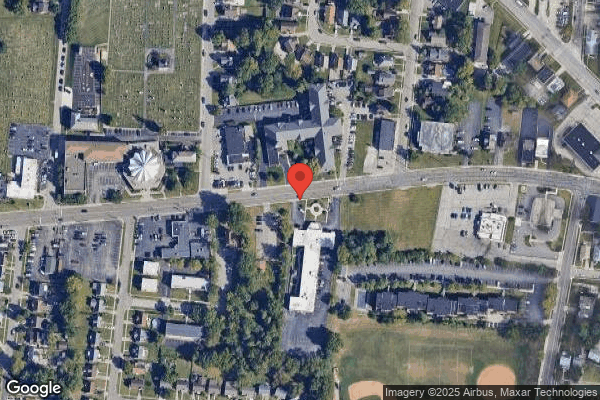
4320 BRIDGETOWN ROAD, CINCINNATI, OH 45211 (513) 574-4550
For profit - Corporation 108 Beds Independent Data: November 2025 1 Immediate Jeopardy citation
Trust Grade
43/100
#479 of 913 in OH
Last Inspection: February 2023

Over 2 years since last inspection. Current conditions may differ from available data.

Overview

Hillebrand Nursing and Rehabilitation Center has a Trust Grade of D, indicating below-average performance with some concerns regarding care quality. It ranks #479 out of 913 facilities in Ohio, placing it in the bottom half of the state's nursing homes, and #38 out of 70 in Hamilton County, suggesting limited options for better facilities nearby. The facility's trend is stable, with one issue reported in both 2024 and 2025, but it has a concerning $27,267 in fines, which is higher than 75% of Ohio facilities. Staffing received a below-average rating of 2/5 stars, with a turnover rate of 40%, which is better than the state average, indicating some staff stability. However, there have been significant incidents, such as a resident falling from a wheelchair due to improper safety measures during transportation and concerns regarding food safety practices that could affect all residents. Overall, while there are strengths in quality measures, the facility has notable weaknesses that families should consider.

Trust Score
D
43/100
In Ohio
#479/913
Bottom 48%
Safety Record
High Risk
Review needed
Inspections
Holding Steady
1 → 1 violations
Staff Stability
○ Average
40% turnover. Near Ohio's 48% average. Typical for the industry.
Penalties
✓ Good
$27,267 in fines. Lower than most Ohio facilities. Relatively clean record.
Skilled Nurses
⚠ Watch
Each resident gets only 29 minutes of Registered Nurse (RN) attention daily — below average for Ohio. Fewer RN minutes means fewer trained eyes watching for problems.
Violations
⚠ Watch
28 deficiencies on record. Higher than average. Multiple issues found across inspections.
★★★☆☆
3.0
Overall Rating
★★☆☆☆
2.0
Staff Levels
★★★★★
5.0
Care Quality
★★☆☆☆
2.0
Inspection Score
Stable
2024: 1 issues
2025: 1 issues

The Good

  • 5-Star Quality Measures · Strong clinical quality outcomes
  • No fines on record
  • Staff turnover below average (40%)

    8 points below Ohio average of 48%

Facility shows strength in quality measures.

The Bad

3-Star Overall Rating

Near Ohio average (3.2)

Meets federal standards, typical of most facilities

Staff Turnover: 40%

Near Ohio avg (46%)

Typical for the industry

Federal Fines: $27,267

Below median ($33,413)

Moderate penalties - review what triggered them

The Ugly 28 deficiencies on record

1 life-threatening
Mar 2025 1 deficiency
CONCERN (D) 📢 Someone Reported This

A family member, employee, or ombudsman was alarmed enough to file a formal complaint

Potential for Harm - no one hurt, but risky conditions existed

Medical Records (Tag F0842)

Could have caused harm · This affected 1 resident

**NOTE- TERMS IN BRACKETS HAVE BEEN EDITED TO PROTECT CONFIDENTIALITY** Based on medical record review and staff interviews, the facility failed to ensure resident's medical record contained documenta...

Read full inspector narrative →
**NOTE- TERMS IN BRACKETS HAVE BEEN EDITED TO PROTECT CONFIDENTIALITY** Based on medical record review and staff interviews, the facility failed to ensure resident's medical record contained documentation for completed care and services provided by staff. This affected one (#216) out of three residents reviewed for quality of care. The facility census was 103. Findings included Review of the medical record for Resident #216 revealed an admission date of 02/20/25 and a discharge home on [DATE] with private care givers and hospice. Resident #216 expired in the home on [DATE]. Diagnoses included Alzheimer's disease with late onset, dementia with agitation and anxiety. Review of the discharge Minimum Data Set (MDS) assessment for Resident #216 dated 02/25/25 was not completed at the time of the survey. Review of the baseline plan of care for Resident #216 dated 02/20/25 revealed the resident was admitted to nursing facility for a respite due to Alzheimer's disease. Interventions include use of my personal preferences to help develop plans of care and daily routine, manage all activities of daily living (ADL) supports, incontinence, medication and risks. Review of physician orders for Resident #216 revealed an order for a mechanical soft diet with mechanical soft texture and thin consistency, requires feeding assistance, cues, encouragement, send one to two finger foods per meal for diet type dated 02/20/25. Review of the electronic health record (EHR) for the certified nursing assistant (CNA) documentation for Resident #216 dated 02/19/25 to 03/05/25 revealed two entries for percentage of meal consumed on 02/24/25. The documentation contained one meal consumed at fifty percent to seventy five percent and one meal consumed at twenty six percent to fifty percent. The remaining dates during the time frame contained no documentation for percentage consumed. Review of the EHR for the CNA documentation for Resident #216 dated 02/19/25 to 03/05/25 titled ability to roll from lying on back to the right and left side five revealed five entries. There was no documentation for turning and repositioning on 02/20/25 and 02/25/25. On 02/21/25, 02/22/25, 02/24/25 there was only one entry for the care provided and there should have been two. The CNA's document the one time on a twelve hour shift indicating they have turned and repositioned the resident every two hours. Review of the EHR for the CNA documentation for Resident #216 dated 02/19/25 to 03/05/25 titled intake and output revealed revealed five entries. There was no documentation for any oral fluid intake on 02/20/25 and 02/21/25. On 02/22/25 at 1:41 A.M., 02/23/25 at 11:35 P.M. , 02/25/25 at 12:05 A.M. revealed was only one entry for 120 cubic centimeters (cc) of intake daily. Interview on 03/04/25 at 1:21 P.M. with the Director of Nursing (DON), verified the CNA documentation for Resident #216 was not completed as it should have been. Interview on 03/04/25 at 2:40 P.M. with the Administrator verified the lack of documentation related to turning and repositioning, meal intakes and intake and output of fluid for Resident #216. This deficiency represents non-compliance investigated under Complaint Number OH00163136.
Jun 2024 1 deficiency 1 IJ
CRITICAL (J) 📢 Someone Reported This

A family member, employee, or ombudsman was alarmed enough to file a formal complaint

Immediate Jeopardy (IJ) - the most serious Medicare violation

Accident Prevention (Tag F0689)

Someone could have died · This affected 1 resident

**NOTE- TERMS IN BRACKETS HAVE BEEN EDITED TO PROTECT CONFIDENTIALITY** Based on medical record review, observation, review of facility in-service records, review of a personnel file, review of the sa...

Read full inspector narrative →
**NOTE- TERMS IN BRACKETS HAVE BEEN EDITED TO PROTECT CONFIDENTIALITY** Based on medical record review, observation, review of facility in-service records, review of a personnel file, review of the safety inspection bus checklist, review of the facility's Self-Reported Incidents (SRIs), review of facility policies, review of the emergency medical services (EMS) run report, review of hospital documentation, resident interview, and staff interview, the facility failed to ensure a resident was safely secured in the wheelchair with an appropriate seat belt during transportation in a facility bus from an activity department outing. This resulted in Immediate Jeopardy when one resident (#05) was placed at potential risk for serious life-threating harm and/or injuries when on 05/28/24, Activity Director (AD) #300 abruptly stopped the facility bus, causing Resident #05 to fall forward out of his wheelchair, hitting another resident, and then landing on the floor. During the fall, Resident #05 sustained a degloving/laceration (a traumatic injury that results in the top layers of skin and tissue being torn away from the underlying muscle, connective tissue or bone) to his right lower leg, requiring 35 sutures, and a right chest contusion near his chemotherapy port-a-cath port. AD #300 pulled over and, with the help of Activities Assistant (AA) #315, attempted to lift Resident #05 off the floor of the bus. When they were unable to lift Resident #05, they summoned assistance from EMS, who arrived and transported Resident #05 to the emergency room (ER) for treatment. Resident #05 was treated in the ER and sent back to the facility with orders for antibiotics. On 06/01/24, four days following the bus accident, Resident #05 complained of chest pain with movement and pain, redness, warmth, and swelling to the open area on his right lower extremity. Resident #05 was sent to the hospital, admitted for cellulitis of the right leg, and remained in the hospital for four days for intravenous (IV) antibiotic treatment. This affected one (Resident #05) of three residents reviewed for use of assistive devices during transportation. The facility identified a total of 52 residents who utilized a wheelchair and the facility transportation. The facility census was 99. On 06/13/24 at 11:29 A.M., the Administrator was notified that Immediate Jeopardy began on 05/28/24 at approximately 2:15 P.M. when Resident #05 was placed in the facility bus, with his wheelchair secured to the floor of the bus, but with no seatbelt to secure the resident into the wheelchair. AD #300 abruptly stopped the facility bus, causing Resident #05 to fall forward out of his wheelchair, hitting another resident, and then landing on the floor of the bus. During the fall, Resident #05 sustained a degloving/laceration to his right lower leg, requiring 35 sutures, and a right chest contusion near his chemotherapy port-a-cath port. AD #300 pulled over and, with the help of AA #315, attempted to lift Resident #05 off the floor. When they were unable to lift Resident #05, they summoned assistance from EMS, who arrived and transported Resident #05 to the ER for treatment. Resident #05 was treated in the ER and sent back to the facility on antibiotics. On 06/01/24, Resident #05 complained of chest pain with movement and pain, redness, warmth, and swelling to the open area on his right lower extremity. Resident #05 was sent to the hospital, admitted for cellulitis of the right leg, and remained in the hospital for four days for intravenous (IV) antibiotic treatment. The Immediate Jeopardy was removed on 05/31/24 at approximately 12:45 P.M. when all education was completed for staff, which included that the transportation bus was not to be driven, and competency checks were completed on staff that were authorized to drive the other facility vehicle, which was the transport van, by ensuring proper securing of residents during transport. The deficiency remained at Severity Level 2 (no actual harm with potential for more than minimal harm that is not Immediate Jeopardy) until it was verified as corrected on 06/28/24 when the facility implemented the following corrective actions: • On 05/28/24 at 2:45 P.M., AD #300 notified Assistant Director of Nursing (ADON) #320 of the incident on the facility bus involving Resident #05. • On 05/28/24 at approximately 2:45 P.M., ADON #320 notified the DON of the incident on the facility bus involving Resident #05. • On 05/28/24 at 2:50 P.M., ADON #320 and the DON notified the Administrator of the incident on the facility bus involving Resident #05. • On 05/28/24 at approximately 3:00 P.M., the Administrator interviewed Transportation Driver (TD) #335 regarding the procedure for bus outings. He was not on the outing on the facility bus in which Resident #05 was injured. • On 05/28/24 at approximately 3:00 P.M., Licensed Practical Nurse/Unit Manager (LPN/UM) #350 notified Resident #05's representative by phone regarding the incident. • On 05/28/24 at approximately 3:30 P.M., the Administrator, the DON, and ADON #320 interviewed AD #300, upon her return to the facility, following the incident on the facility bus involving Resident #05. • On 05/28/24 at approximately 3:45 P.M., the Administrator left a voice message for the Director of Transportation (DOT) #330 to return her call. • On 05/28/24 at approximately 3:50 P.M., the Administrator interviewed Maintenance Director (MD) #325 regarding safety check procedures for the facility vehicles. • On 05/28/24 at 4:00 P.M., the Administrator issued a directive for the facility bus (the vehicle in use during the incident involving Resident #05) and the facility van to not be used until further notice. • On 05/28/24 at 4:00 P.M., involved parties, AD #300, DOT #330, MD #325, and TD #335 were put on suspension pending the outcome of the investigation. • On 05/28/24 at 4:00 P.M., Unit Clerk (UC) #355 started calling transportation companies to make arrangements for upcoming appointments already scheduled for the current week and the following week as the Administrator had issued the directive for staff not to use the bus or the van until further notice. • On 05/28/24 at approximately 4:30 P.M., a safety meeting was held with the Administrator, DON, ADON #320, LPN/UM #350, and Compliance Officer (CO) #345. Topics of the safety meeting included the following: the incident which occurred on 05/28/24 in the facility bus for Resident #05, education to be performed as a follow-up to the incident, who needed to be educated, taking the facility vehicles out of service temporarily, and delegated procedures to be completed. • On 05/28/24 at approximately 5:00 P.M., the facility initiated an SRI with the Ohio Department of Health (ODH). • On 05/29/24 at 9:00A.M., CO #345 created education for TD #335, DOT #330, MD #325, Maintenance Assistant (MA) #305, and AD #300. • On 05/29/24 at 9:00 A.M., the DON created a nursing education packet. • On 05/29/24 at 9:00 A.M., CO #345 developed an auditing system for the facility van and reviewed and updated the inspection checklist and competency skill list for drivers and maintenance staff. • On 05/29/24 at 11:00 A.M., the DON, LPN Supervisor #360, and State Tested Nursing Assistant (STNA) #365 began in-servicing staff regarding gait belts and abuse, neglect and misappropriation. The education was completed on 05/31/24 at approximately 5:30 P.M. • On 05/29/24 at approximately 11:45 A.M., the Administrator, DON, ADON #320, and CO #345 interviewed DOT #330 via telephone. • On 05/29/24 at approximately 2:00 P.M., a safety meeting was held with the Administrator, DON, ADON #320, LPN/UM #350, CO #345, and MA #305. At the meeting staff reviewed the status of the education and training following the incident. Facility management decided TD #335 and MD #325 would return to work on 05/31/24 and would be educated on 05/31/24 at 11:00 A.M. prior to resuming their work duties. • On 05/31/24 at 9:00 A.M., TD #335 and MD #325 returned to work. • On 05/31/24 from 11:00 A.M. to 1:00 P.M., CO #345 educated TD #335, MD #325, and MA #305. The education included the following: viewing a vehicle safety video, reviewing and signing education packets, review of competency, vehicle checklists and audit forms. • On 05/31/24 at approximately 12:45 P.M., MA #305, who had prior transportation knowledge from previous employment, performed competency checks on the facility van with assistance from ADON #320 and LPN/UM #350. • Beginning on 06/01/24 at approximately 10:00 A.M., TD #335 began audits of the facility van and MA #305 signed off on the audits. The audits were to be completed on days of driving the van, prior to driving the van, daily for two weeks, then three times per week for two weeks, and then monthly thereafter. • On 06/03/24 at 8:21 A.M., ODH requested additional information regarding the SRI. The facility sent the requested information to ODH at approximately 12:00 P.M. • On 06/03/24 at 12:15 P.M., the Ohio State Highway Patrol (OSHP) inspected the facility bus, and the bus passed the inspection. • On 06/03/24 at 3:00 P.M., CO #345 reviewed and updated the policy regarding transportation drivers and outings. The updates to the policy included staff would bring information regarding resident's code status on the outing and the driver of the vehicle would complete a final walk-through safety check of the residents before driving off. • On 06/13/24 at 3:00 P.M., MA #305 educated employees permitted to drive the facility bus (MD #325 and TD #335) on how to properly secure residents into the facility bus. MA #305 LPN/UM #350, and ADON #320 completed facility bus competencies with MD #325 and TD #335. Competencies will be completed on all authorized drivers for all facility vehicles quarterly. • Beginning on 06/14/24 facility bus audits were initiated. TD #335 will perform these audits Monday through Friday every day for 2 weeks, then 3 times a week for 2 weeks, and then monthly thereafter. • Interviews on 06/17/24 between 4:15 P.M. and 4:30 P.M. with TD #335 and MD #325 confirmed they were educated on the facility van on 05/31/24 and educated on the facility bus on 06/13/24. • On 06/28/24 between 8:22 A.M. and 9:10 A.M., observations, review of facility audit records, and interviews with TD #335, MD #325 and MA #305 were conducted. TD #335 was observed conducting the daily audit on the facility bus and van. TD #335 confirmed he has been completing audits of the bus and van daily on days worked (Monday-Friday). Review of the audits revealed they had been completed as indicated through 06/28/24 and no further issues were identified. TD #335 stated part of his daily audit is to check the mileage of each vehicle. TD #335, MD #325, and MA #305 confirmed the bus had not been driven since 06/03/24, when it was taken to the OSHP for inspection. The bus remains out of service. Findings include: Review of the medical record for Resident #05 revealed an admission date of 06/19/23 with diagnoses including, morbid obesity, cirrhosis of liver, dementia, chronic atrial fibrillation, bradycardia, malignant neoplasm of vertebral column and kidney, congestive heart failure, peripheral vascular disease, depression, anxiety, and vascular dementia. Review of the comprehensive Minimum Data Set (MDS) assessment for Resident #05 dated 04/20/24 revealed the resident had intact cognition and required supervision or touching assistance for bed mobility, transfers and ambulation. Resident #05 utilized a walker and wheelchair for mobility. Review of the prehospital care report summary (ambulance run report) for Resident #05 dated 05/28/24 revealed medics were dispatched on 05/28/24 at 2:23 P.M. for a person injured in a fall. Resident #05 was noted with an avulsion (pulling or tearing away) injury to the right lower leg. Resident #05 was noted stuck in a position with both legs under him under the wheelchair in front of him and his wheelchair stuck behind him and latched into place. Resident #05's wheelchair and multiple tie down points for the wheelchair had to be removed to access and extricate the resident. Once removal began, the resident slid backwards and a large skin tear on his lower right leg was observed. Medics bandaged the wound with a blood stopper and bleeding was controlled. Resident #05 was removed from the facility bus on the scoop stretcher and taken to the ER. Review of the hospital ER after visit summary for Resident #05 dated 05/28/24 revealed the resident was diagnosed with a large complex right leg laceration, a left knee contusion, and a right chest wall contusion. The laceration on the right leg measured 25 centimeters (cm.) in length and required 35 sutures. Following the laceration repair, a piece of skin was noted to be missing from the superior aspect of the wound. The missing piece of skin was found crumpled within Resident #05's sock, but it was completely devitalized and not able to be replaced. Resident #05 was given IV antibiotics in the ER and was prescribed oral antibiotics upon his return to the facility. Review of a nursing progress note for Resident #05 dated 05/28/24 at 6:49 P.M. revealed the activities department called ADON #320 and informed her Resident #05 fell from the wheelchair in the facility bus while returning from an outing. Resident #05 was noted to be on his knees with his legs under his wheelchair and fell forward and into the resident sitting in a wheelchair in front of him. The facility transport vehicle was pulled into a parking lot and nine-one-one (911) was called. EMS arrived and transported Resident #05 to the ER. Review of the SRI dated 05/28/24 revealed Resident #05's representative alleged neglect when the resident flew out of his wheelchair and was pinned under the chair in front of him. Resident #05's representative said if the resident had been secured, the incident would not have happened. The incident was described as follows: on 05/28/24, while returning from an activity outing, Resident #05 fell out of his wheelchair on the bus, into another resident. The bus was moved to a safe location. Staff were unable to assist Resident #05 up from the floor, so they called 911 and the resident was assisted from the floor to a stretcher and transferred to the hospital. An emergency safety meeting was conducted, and all involved staff were interviewed. Resident #05 was assessed at the ER and returned to the facility at approximately 10:00 P.M. on 05/28/24. The facility did not substantiate the allegation of neglect. Review of a nursing progress note for Resident #05 dated 05/29/24 at 1:59 A.M. revealed the resident returned from the hospital via ambulance. Review of a nursing progress note for Resident #05 dated 06/01/24 at 4:00 P.M. revealed Resident #05 complained of chest pain with movement and pain, redness, warmth, and swelling to the open area on the right lower extremity. The physician gave an order to transport Resident #05 to the hospital. EMS transported Resident #05 to the hospital and the resident's representative accompanied him. Review of a nursing progress note for Resident #05 dated 06/01/24 at 11:43 P.M. revealed the resident was admitted to the hospital for cellulitis of the right leg. Review of the hospital continuity of care and after visit summary for Resident #05 dated 06/05/24 revealed the resident was admitted to the hospital on [DATE] for cellulitis of the right lower extremity. Resident #05 required IV antibiotics for methicillin-resistant staphylococcus aureus (MRSA) infection to the wound the resident sustained during the accident in the facility bus on 05/28/24. Review of a nursing progress note for Resident #05 dated 06/05/24 at 2:57 P.M. revealed Resident #05 returned to the facility from the hospital. Review of the employee file for AD #300 revealed a hire date of 11/03/03. AD #300 completed a road test checklist on 06/02/06 and an employee driver training on 06/07/06. AD #300's employee file did not include driver training after 2006. AD #300 resigned from her position effective 06/12/24. Review of the driver/vehicle examination report and bus safety inspection report per the OSHP dated 06/03/24 revealed the facility bus passed the safety inspection. Interview on 06/12/24 at 9:10 A.M. with Resident #05 confirmed on 05/28/24 he went on an outing to a local restaurant in the facility bus along with seven or eight other residents. Resident #05 confirmed some residents were sitting in bus seats, and there were four residents, including himself, in wheelchairs.? Resident #05 stated he was sitting in his wheelchair in the back of the bus, next to the lift.? Resident #05 stated the staff had fastened his wheelchair to the floor of the bus, but no one had applied a seat belt to secure him into the wheelchair itself. Resident #05 further confirmed that as the bus pulled out of the restaurant to return to the facility, the driver hit the brakes suddenly and he fell forward out of his wheelchair and his right chest hit the wheelchair of the resident in front of him.? Resident #05 stated the other resident was on top of him and his legs were bent back behind him.? Resident #05 confirmed he repeatedly asked the driver (AD #300) to pull over, but she told him there was no place to pull over.? Resident #05 stated she finally pulled over in a parking lot and called EMS.? Resident #05 stated EMS got him out from under the other resident's wheelchair and transported him to the hospital.? The resident stated he was treated and released from the hospital and then ended up in the hospital for four days for IV antibiotics.? Interview on 06/12/24 at 11:17 A.M. with AA #315 confirmed on 05/28/24 he was riding near the front of the bus on a facility outing when the bus came to a sudden stop, and he heard Resident #05 say he was in pain. AA #315 stated he turned around and saw Resident #05 had slid out of his wheelchair and was on the floor of the bus. AA #315 stated he alerted the driver, AD #300, but it was a few minutes before the driver was able to pull over into a parking lot. AA #315 stated Resident #05 was on his knees, with his chest pressed up against the wheelchair in front of him. AA #315 stated there were four wheelchairs on the bus and all four wheelchairs remained in the upright position and secured when the bus came to a sudden stop. AA #315 confirmed Resident #05 was not secured into his wheelchair by a seat belt or any type of chest restraint when the bus stopped suddenly. Interview on 06/12/24 at 1:39 P.M. with AD #300 confirmed on 05/28/24, she and AA #315 took eight residents on an activity outing to a local restaurant for lunch. AD #300 stated after lunch she loaded everyone on the bus, including Resident #05 who was placed in the spot without a seatbelt. AD #300 confirmed sometimes they used a gait belt in that spot without a seat belt. AD #300 confirmed she did not restrain Resident #05's body into the wheelchair with anything on the way back from lunch on 05/28/24. AD #300 stated, on the day of the incident, she was driving and slowed down for traffic when AA #315 told her Resident #05 was on the floor of the bus. AD #300 stated as soon as it was safe she pulled over, and she and AA #315 attempted to lift Resident #05 off the floor of the bus. When they were unable to lift Resident #05, they called 911 and waited for EMS to arrive. AD #300 confirmed at the time of the incident, she was told a new seatbelt would be ordered and had previously been told she could use a gait belt to restrain residents in the fourth wheelchair spot, since there was not a seatbelt. AD #300 stated DOT #330 told her a year or two ago he was going to order a new harness/seatbelt and told her to use the gait belt until it arrived. AD #300 stated DOT #330 told her the previous administrator told him he could use a gait belt instead. AD #300 stated she was trained to drive the bus when the facility first got the bus back in 2006 but had not received any further training or competency checks. Interview on 06/12/24 at 2:15 P.M. with the Administrator confirmed she was unaware there was not a fourth seatbelt in the facility bus. The Administrator stated, following the incident, she learned the previous administrator had instructed staff to use a gait belt since there was no seatbelt in the fourth wheelchair spot. The Administrator confirmed the use of a gait belt in place of a seatbelt was not an appropriate practice. The Administrator stated, following the incident, DOT #330, AD #300, MD #325, and TD #335 were suspended. MD #325 and TD #335 were permitted to return to work on 05/31/24 as they were not present the day of the incident. The Administrator stated DOT #330 was responsible for overseeing the use of the bus and keeping everyone who was permitted to drive the facility vehicles up to date on safety measures. The Administrator stated facility vehicle competencies with return demonstration were completed with employees trained to drive facility vehicles using the facility van following the incident. Interview on 06/12/24 at 2:30 P.M. with DOT #330 confirmed he replaced the seatbelts in the bus approximately three years ago and stated there was another seatbelt on order at the time of the incident on 05/28/24 involving Resident #05. DOT #330 stated he was not sure when the fourth seatbelt for the bus came up missing. DOT #330 stated he ordered a replacement seatbelt approximately two years ago and installed the seatbelt with TD #335. DOT #330 stated the previous administrator allowed staff to use gait belts to restrain residents if the seatbelts were unavailable or not working. Interview on 06/12/24 at 2:53 P.M. with the Administrator confirmed she instructed staff not to use the facility bus or the facility van until further notice. The Administrator confirmed the facility was trying to decide if they could get a new bus because it required frequent repairs or if they might resume use of the bus involved in the incident with Resident #05. The Administrator confirmed the root cause of the incident involving Resident #05 had nothing to do with any mechanical failures of the bus. The Administrator confirmed the root cause of the incident causing injury to Resident #05 was AD #300's failure to properly secure Resident #05 in his wheelchair on the bus. Interview on 06/13/24 at 11:32 A.M. with the Administrator confirmed the education which included competencies and return demonstrations provided to drivers of the facility vehicles on 05/31/24 was completed using the facility van. The Administrator confirmed the staff had not been educated on using the facility bus which was the vehicle in use during the incident with Resident #05 on 05/28/24. Interview on 06/13/24 at approximately 12:00 P.M. with TD #330 confirmed DOT #335 had trained him in the past to use a gait belt as a substitute for the seat belt for the spot in the facility bus without a restraint. TD #330 confirmed he was unsure if this was a safe practice, but he did not report his concerns to the current facility Administrator. Observation on 06/13/24 at 12:05 P.M. of the facility bus (the vehicle in use at the time of the incident involving Resident #05) with TD #330 and MA #305 revealed the staff demonstrated how they used straps from two different restraint systems in order to be able to restrain three residents in wheelchairs prior to driving the bus. There was a fourth wheelchair seat in the bus which did not have any type of seatbelt or restraint. Interview on 06/13/24 at 12:10 P.M. with TD #330 and MA #305 confirmed the fourth wheelchair seat in the bus had no seatbelt or restraint. Further interview confirmed AA #315 told them Resident #05 had been sitting in the fourth wheelchair spot, which had no seatbelt or restraint when the resident was injured on 05/28/24. Review of the facility policy titled Activity Outings dated 06/01/24 revealed staff should secure residents in the vehicle before driving using an appropriate restraint or seat belt. The driver should conduct a final walk-through inspection to ensure everyone was properly secured before leaving for the destination. This deficiency represents noncompliance investigated under Complaint OH00154499 and Complaint OH00154442.
Nov 2023 1 deficiency
CONCERN (D) 📢 Someone Reported This

A family member, employee, or ombudsman was alarmed enough to file a formal complaint

Potential for Harm - no one hurt, but risky conditions existed

Quality of Care (Tag F0684)

Could have caused harm · This affected 1 resident

**NOTE- TERMS IN BRACKETS HAVE BEEN EDITED TO PROTECT CONFIDENTIALITY** Based on medical record review, staff interviews and policy review, the facility failed to obtain additional instructions/orders...

Read full inspector narrative →
**NOTE- TERMS IN BRACKETS HAVE BEEN EDITED TO PROTECT CONFIDENTIALITY** Based on medical record review, staff interviews and policy review, the facility failed to obtain additional instructions/orders from the physician when a vacuum-assisted closure (wound vac) was not available and/or not applied as ordered. Additionally, the facility failed to obtain instructions/orders to provide care for a residents peripherally inserted central catheter (PICC) line. This affected one (#130) of three reviewed for quality of care. The facility census was 103. Findings include 1. Review of the medical record for Resident #130 revealed an admission date of 10/09/23 and a transfer to the hospital on [DATE]. Diagnoses include surgical aftercare following surgery on the digestive system, ulcerative colitis with complications, rectal abscess, ileostomy, moderate protein calorie malnutrition, depression, hypokalemia, ileus, and hypothyroidism. Review of the admission Minimum Data Set (MDS) assessment dated [DATE] for Resident #130 revealed the resident had an intact cognition. Resident #130 was coded with rejection of care one to three days during the assessment period. Resident #130 required set up assistance with eating and extensive assistance with transfers, bed mobility and toileting. Resident #130 was coded with a surgical wound. Review of the plan of care for Resident #130 was in progress. Review of the physician orders for Resident #130 dated 10/09/23 revealed an order to change wound vac to rectal abscess area every Tuesday, Thursday and Saturday on day shift. Review of the Treatment Administration Record (TAR) for Resident #130 for October 2023 revealed wound vac was not applied on the 10/10/23 as ordered. Further review of the TAR revealed the wound vac was applied on 10/11/23. Review of the nurse's progress notes dated 10/09/23 and 10/10/23 for Resident #130 contained no documentation for physician notification of wound vac not being applied as ordered. Review of the progress notes for Resident #130 dated 10/11/23 at 11:03 A.M. revealed the resident's wound vac was placed on this day. Resident #130 tolerated procedure well. Interview on 11/14/23 at 10:10 A.M. with the Administrator stated Resident #130 had initially refused the wound vac at the hospital so when she was admitted it was ordered and was told it would ship overnight from the supplier. Due to Resident #130's late arrival, it was not shipped until the 10/10/23 and arrived at the facility on 10/11/23. Interview on 11/14/23 at 1:45 P.M. with the Director of Nursing (DON) and the Unit Manager Licensed Practical Nurse (LPN) #22 verified the physician was not notified of the delay in application of the wound vac and should have been. Additionally, the DON and Unit Manager LPN #22 verified there was not an order for a wet to dry dressing until the wound vac arrived. Interview on 11/14/23 at 2:16 P.M. with Nurse Practitioner (NP) #200 verified both perineal wound and abdominal wound were draining malodorous drainage. NP #200 stated she was not notified of the delay in wound vac placement. 2. Further review of the nurse's admission note for Resident #130 dated 10/09/23 revealed resident had a PICC that flushes easily and was patent (operational). Review of the physician orders for Resident #130 revealed there were no orders or instructions related to the PICC line. Review of the Medication Administration Record (MAR) for the month of October 2023 revealed there was no documentation regarding monitoring, dressing changes or flushes to PICC line. Interview on 11/14/23 2:16 P.M. with NP #200 verified the PICC line was in place when Resident #130 had her follow up appointment on 10/13/23 and further stated it was not placed during the appointment with her. Interview on 11/14/23 at 3:12 P.M. with LPN #2 states she started the admission assessment for Resident #130 and confirmed a PICC line was present on admission. LPN #2 stated she did not fully complete Resident #130's assessment so another LPN at the facility took over at the change of shift. Interview on 11/14/23 at 4:45 P.M. with the DON and Unit Manager LPN #22 verified the medical record contained no orders, treatments or monitoring for Resident #130's PICC line. Review of the facility policy titled Flushing Intravenous Access Devices undated stated to check physicians order noting flushing solution and amounts. The policy further states a PICC line should be flushed every 12 hours. This deficiency represents non-compliance investigated under Complaint Number OH00147507.
Feb 2023 15 deficiencies
CONCERN (D)

Potential for Harm - no one hurt, but risky conditions existed

Deficiency F0557 (Tag F0557)

Could have caused harm · This affected 1 resident

**NOTE- TERMS IN BRACKETS HAVE BEEN EDITED TO PROTECT CONFIDENTIALITY** Based on observation, resident and staff interview, and record review, the facility failed to provide a resident with dignity an...

Read full inspector narrative →
**NOTE- TERMS IN BRACKETS HAVE BEEN EDITED TO PROTECT CONFIDENTIALITY** Based on observation, resident and staff interview, and record review, the facility failed to provide a resident with dignity and respect regarding his personal possessions. This affected two (#21 and #27) of three residents reviewed for dignity and respect of personal possessions. The facility census was 97. Findings include. 1. Record review for Resident #21 revealed and admission date of 01/19/18. Resident #21's diagnoses included: essential primary hypertension, gastro- esophageal reflux disease, heart disease, respiratory failure, hyperlipidemia, anxiety disorder, insomnia, edema, major depressive disorder, tachycardia, dysarthria following cerebral infarction, and dysphagia. Review of the quarterly Minimum Data Set (MDS) assessment, dated 12/08/22, revealed Resident #21 he was mildly cognitively impaired. Further review of the MDS assessment revealed Resident # 21 required extensive assistance from staff with bed mobility, dressing, toilet use, and personal hygiene. He was totally dependent on staff for bathing. Resident #21 required supervision from staff with eating. Resident #21 required the assistance of two or more staff members for transfers in the bed, out of the bed, and personal care. Review of Resident #21's nursing progress notes dated, 02/06/23 revealed Resident #21 has experienced increased confusion. Further review of the progress notes revealed Resident #21 was started on an antibiotic on 02/09/23 for a possible urinary tract infection. The nursing progress notes revealed on 02/14/23 a note stating Resident #21 will play with the bed remote and have his bed up high at times. Review of Resident #21's care plans revealed he had a care plan for mental wellness and his interventions included, If I appear restless or complain of anxiety offer to take me to a quiet area for conversation, talk to me about my family as a distraction. Listen to my concerns and encourage me to express my feelings and assist me with finding ways to cope with these feelings of anxiety. Please offer non- pharmacological coping tools also, such as reading, food and fluids, coloring, music. Encourage me to express my feelings and offer active listening and emotional support. A care plan for cognition revealed Resident #21 has short term memory problems. Resident #21 had a care plan for, a change in mood and his interventions included, Please reassure me that my family and friends are able to be contacted by phone and mail. Help me contact them as I desire. Help me create a MY STORY Notebook so I can show my family and friends what I have been doing while we were apart. Encourage reminiscence while I am working on, MY STORY book. Listen and encourage me to verbalize my feelings. Observe for signs and symptoms of mood disorder or change in behaviors and offer reassurance and comfort. 2. Record review for Resident #27 revealed she was admitted to the facility on [DATE]. Her diagnoses included, essential primary hypertension, peripheral vascular disease, anemia, congestive heart failure, history of Coronavirus-2019 (COVID-19), duodenal ulcer, history of pulmonary embolism, and anemia. Review of the quarterly MDS assessment for Resident #27, dated 02/03/23, revealed she was cognitively intact. Resident #27 required extensive assistance from staff with bed mobility, transfers, dressing, and toilet use. Further review of the MDS assessment revealed Resident #27 required limited assistance from staff with personal hygiene and supervision from staff with meals. Interview on 02/15/23 at 1:34 P.M., with Resident #27 revealed she is the spouse and roommate of Resident #21. Resident #27 stated she did not feel the facility staff treated her husband with dignity and respect following the incident that occurred during the night on 02/14/23. Resident #27 stated she is the voice of her husband because is unable to communicate well and is bed bound. Resident #27 stated she was very upset because the staff was very rude to her husband for accidentally knocking his personal items of his bedside table while sleeping. Resident #27 stated the staff entered the room and found Resident #21's personal items all over the floor. Resident #27 stated the night shift nurse aide appeared agitated and she stated, she did not have time for this. Resident #27 stated the State Tested Nurse Aide (STNA) from last night threw all of Resident #21's personal belongings that he kept within reach at this bedside in a plastic trash bag and placed them out of reach from Resident #21. Resident #27 stated she felt very uncomfortable to see someone treat her spouse (Resident #21) this way because she knew it was an accident. Resident #27 stated Resident #21 did not mean to spill his personal items on the floor. Observation on 02/15/23 at 1:50 P.M., revealed the Activity Director (AD) #715 assisted Resident #27 to her room. Resident #27 stated, I may have said too much. AD #715 ask Resident #27 what she had said. Resident #27 stated she told the state surveyor how uncomfortable and upset she felt with the way the night STNA treated her spouse (Resident #21). Interview on 02/15/23 at 1:55 P.M., interview with Resident #21 revealed he was in bed with his bedside table over the bed. Resident #21 appeared to be alert with confusion, however, he was alert to himself. When questioned about the previous evening, Resident #21 pointed at his bed side table and then pointed toward the closet. Resident #21 was unable to verbalize what he pointed at. Observed a basket on his bed side table that included, a comb, a picture book, a list of phone numbers, a stress ball, glasses, and other personal items. Beside the bed toward the back of the headboard, several papers were piled, however, they were not within reach. Interview on 02/15/23 at 2:03 P.M. with STNA #875 revealed she was not the nurse aide for Resident #21, however, she stated she was told when she arrived at work that Resident #27's personal items from this bedside table were thrown in a bag and put in his closet out of reach by a night shift stna. Interview on 02/15/23 at 2:22 P.M. with Resident #30 revealed used to live across the hall from Resident #21 and #27. Resident #30 stated she was so glad that Resident #27 shared what happened to her husband the previous night. Resident #30 stated Resident #27 is her friend and she has never seen her so upset before. Interview on 02/15/23 at 2:24 P.M. with STNA #270 revealed she was the STNA#270 that found Resident #21's personal items in a trash bag and out of reach of Resident #21. STNA #270 stated the bag contained all the personal items that were important to Resident #21 including cards from family, a picture book, a list of phone numbers, lotion, a brush, a stress ball, a pencil pouch, and his glasses. STNA #270 stated she was confused on why the nightshift STNA #480 did not put his items back on this bedside table instead of throwing them in a trash bag and out of reach. STNA #270 stated this was the first time she had ever heard of Resident #21 dumping his items on the floor and thought it must have been an accident. Interview on 02/15/23 at 5:30 P.M., with STNA # 480 confirmed she was the night shift STNA who worked with Resident #21 on 02/14/22. STNA #480 stated Resident #21 is alert with confusion and would get confused with which button was his call light and which button operated his bed. STNA #480 stated Resident #21 knocked everything off his bed side table all over the floor. STNA #480 stated she walked into Resident #21's room and saw the mess of personal items on the floor and stated, Why did you do this?. STNA #480 stated she went and got the other staff members (nurse and aides) to see the mess he made all over the floor. STNA #480 stated she took all his items and placed them in a bag and put them out of reach. STNA #480 stated she was saving that for first shift to clean up because she did not have time for that. STNA #480 stated she should have taken a picture of the mess. STNA #480 stated she was not going to clean that up again, so she placed the items out of reach for Resident #21. STNA #480 stated the items all over the floor was just a bunch of stuff, like greeting cards, papers, and items he kept on the bedside table. Interview on 02/15/23 at 5:45 P.M., interview with STNA #350 confirmed she worked the night shift on 02/14/23. STNA #350 stated Resident #21 is confused and will put his call light on in place of using the button that controls that adjust his bed. STNA #350 stated she went into Resident #21's room at one point in the evening related to his call light on, and Resident #21 was asleep. STNA #350 stated there was no unusual behavior from Resident #21. STNA #350 stated the STNA #480 came and got her and the nurse to see the items all over Resident #21's room that fell off his bedside table. STNA #350 stated she helped STNA #480 pick up the items and place them in a bag. STNA #350 stated she did not question why the items were placed in a bag she was there to help. STNA #350 stated she heard #480 say to Resident# 21, Look what you did. Interview on 02/15/23 at 5:58 P.M., interview with Registered Nurse (RN) #300 confirmed she was the nurse caring for Resident #21 on the night shift of 02/14/23. RN #300 stated she did not know why STNA #480 wanted to see mess of personal items on the floor, she just knew this was not normal behavior for the Resident #21 and wanted to confirm he was ok. RN #300 stated she spoke to Resident #21 and believed he may have been dreaming and accidentally knocked the items off the bedside table. RN #300 stated the bedside table was not knocked over and it was just papers and personal items on the floor. RN #300 stated she did not understand why STNA #480 made a big deal about the personal items on the floor or why she bagged them up and put them out of reach. RN #300 confirmed this was the first time this has happened with Resident #21 that she was aware of.
CONCERN (D)

Potential for Harm - no one hurt, but risky conditions existed

Deficiency F0558 (Tag F0558)

Could have caused harm · This affected 1 resident

**NOTE- TERMS IN BRACKETS HAVE BEEN EDITED TO PROTECT CONFIDENTIALITY** Based on observation, record review, and staff interview, the facility failed ensure residents were provided form of communicati...

Read full inspector narrative →
**NOTE- TERMS IN BRACKETS HAVE BEEN EDITED TO PROTECT CONFIDENTIALITY** Based on observation, record review, and staff interview, the facility failed ensure residents were provided form of communication, to communicate the needs of the resident and have their personal needs met. This affected two resident (#87 and #60) of two residents reviewed for communication. The facility census was 97. Findings include: Review of the medical record for Resident #87 revealed she was admitted to the facility on [DATE]. Diagnoses included metabolic encephalopathy, type two diabetes mellitus with diabetic chronic kidney disease, end stage renal disease, Parkinson's disease, bipolar disorder, mixed hyperlipidemia, thrombocytopenia, major depressive disorder, vitamin d deficiency, and unspecified psychosis not due to a substance or known physiological condition. Review of the admission Minimum Data Set (MDS) assessment, dated 01/17/23, revealed this resident had severely impaired cognition evidenced by a Brief Interview for Mental Status (BIMS) score of 02. This resident was assessed to require extensive assistance for bed mobility, transfer, dressing, toileting, and personal hygiene as well as supervision for eating. Review of the plan of care initiated on 01/11/23 revealed Resident #87 was at risk for impaired communication. Interventions included allow adequate time for resident's response, educate representative/staff on anticipation of resident's needs until an alternate communication method can be established, incorporate alternate means of communication such as music, song, or visual demonstration, resident speaks in native language at times (Spanish), encourage resident to speak in English as resident can speak English fluently but chooses not to at times, and if resident refuses or cannot speak English at that time, anticipate resident needs until an alternate communication method can be established. Interview on 02/14/23 at 12:25 P.M., with State Tested Nursing Assistant (STNA) #365 revealed she had no way to communicate with Resident #87 when she spoke Spanish. STNA #365 stated she would try to encourage Resident #87 to speak English or attempt to identify Resident #87's needs. Observation on 02/14/23 at 1:29 P.M., revealed Resident #87 spoke some Spanish in addition to English, and no alternative communication methods were observed in Resident #87's room. 2. Record review for Resident #60 revealed she was admitted to the facility on [DATE]. Her diagnoses included hemiplegia, hemiparesis, speech and language deficits, syncope, epilepsy, aphasia, dysarthria, atrial fibrillation, and hypothyroidism. Review of the quarterly Minimum Data Set Assessment (MDS) for Resident #60, dated 01/02/23, revealed she had problems with her short term memory and was cognitively impaired. Further review of the MDS assessment revealed Resident #60 required extensive assistance from staff with bed mobility, transfers, dressing, and toilet use. She required limited assistance from staff with personal hygiene and supervision from staff with eating. Resident #60 was marked as unclear speech and rarely understood. Review of Resident #60's communication and cognition care plan revealed, I wish to improve my ability to make needs known by communication verbally and non-verbally. Please remind me of your name when caring for me. I have extreme difficulty with word finding. It is imperative that you are patient when conversing with me and allow ample time to form my thoughts and process what you are saying. I can use my communication board for communication with others. Interview on 02/15/23 at 9:54 A.M., with Licensed Practical Nurse (LPN) #775 stated the staff does not utilize a communication board for Resident #60 because the staff understands what Resident #50 trying to tell them. Observation on 02/14/23 at 9:45 A.M., revealed Resident #60 was seated in her wheelchair in the living room area by the nurse's station she was anxious and making sounds. However, no words were heard related to her diagnosis. Observed staff member Administrator in Training (AIT) #345 ask Resident #60 what she needed. Resident #60 anxiously voiced noises and grunts loudly, however, AIT #345 stated he could not help her right now because he was busy. Observed AIT #345 turn and walk away from Resident #60. Interview on 02/14/23 at 10:03 A.M., with AIT #345 confirmed he approached Resident #60 when she was making sounds and attempting to get his attention. AIT #345 confirmed he told Resident #345 he could not help her because he was busy and walked away from Resident #60. AIT #345 confirmed he did not attempt to get another staff member to help Resident #60.
CONCERN (D)

Potential for Harm - no one hurt, but risky conditions existed

Notification of Changes (Tag F0580)

Could have caused harm · This affected 1 resident

Based on record review, staff interview, and review of the facility policy, the facility failed to ensure the resident's attending physician was notified of significant weight loss. This affected one ...

Read full inspector narrative →
Based on record review, staff interview, and review of the facility policy, the facility failed to ensure the resident's attending physician was notified of significant weight loss. This affected one (#22) of eight residents reviewed for nutrition. The facility census was 97. Findings include: Review of the medical record for Resident #22 revealed an admission date of 01/12/23, with diagnoses including fracture to the right tibia and right fibula, Alzheimer's disease, chronic kidney disease, and atherosclerotic heart disease. Review of the Minimum Data Set (MDS) assessment for Resident #22 dated 01/18/23, revealed resident was cognitively impaired and required supervision and one-person physical assistance with activities of daily living (ADLs). Resident's height was 67 inches and weight was 161 pounds. Review of the admission physician orders for Resident #22 dated 01/12/23 revealed orders for a regular diet with thin liquids and Boost nutritional supplement 120 milliliters (ml) twice daily. Review of the nutrition and hydration care plan for Resident #22 dated 01/13/23 revealed care plan resident received a regular diet with highly variable meal intakes and appetite. Resident had variable self-feeding abilities and occasionally needed limited staff assistance depending on mood and energy levels surrounding meal times. Interventions included the following: Boost Plus to encourage by mouth and protein intakes while appetite remains variable, provide select menu, meals served in the dining room or resident's room depending on mood and need for meal encouragement, provide reminders about mealtimes, remind and encourage fluid intakes at and between meals. Review of the dietary progress note for Resident #22 dated 01/13/23, revealed the resident was in the facility for short term rehab status post hospitalization related to a fall at home with a fracture to the right tibia right fibula. Resident was on a regular diet and fed self with supervision and set up assistance. Resident had all natural teeth in good condition, no overt signs of chewing/swallowing difficulty or aspiration noted. Resident's family requested staff to encourage resident at meals. Resident was determined to be at moderate nutritional risk and was started on a nutritional supplement twice daily to increase protein. The dietitian was to monitor resident and the need for further nutrition interventions. Review of meal intake records for Resident #22 dated 01/12/23 to 02/16/23 revealed resident average meal intakes were 51-75 percent (%.) Review of the weight records for Resident #22 revealed weight on 01/16/23 was 159.2 pounds. Weight on 01/18/23 was 161 pounds. Weight on 01/25/23 was 152.5 pounds which was noted to be a loss of 9.4 pounds or 5.9 % loss from the comparison weight of 159.2 Weight on 02/13/23 was 149.5 which was noted to be a loss of 10.2 pounds or a 6.4% loss from the comparison weight of 159.2. Interview on 02/15/23 at 10:18 A.M., with Registered Dietitian (RD) #235 confirmed Resident #22 had experienced a weight loss of 10.2 pounds or 6.4% since admission to the facility. RD #235 confirmed the physician had not been notified of the resident's significant weight loss. Interview on 02/16/23 at 4:00 P.M., with the Director of Nursing (DON) confirmed the facility had not notified Resident #22's physician of resident's significant weight loss since admission. Review of the policy titled Weight and Height dated 02/10/21 revealed a weight loss of 5.0% in one month was considered significant. If there was a significant weight loss, therapeutic intervention by the RD, the physician, and the Interdisciplinary Team (IDT) will begin to assist resident in maintaining weight and preventing further unplanned weight loss or gain. Review of the policy titled Change in Resident's Condition or Status dated 03/01/17 revealed the facility would promptly notify the resident his or her attending physician, and representative of changes in the resident's condition or status.
CONCERN (D)

Potential for Harm - no one hurt, but risky conditions existed

Comprehensive Care Plan (Tag F0656)

Could have caused harm · This affected 1 resident

Based on record review, staff interview, and review of policies, the facility failed to develop care plans for residents receiving dialysis services. This affected one (#38) of four residents reviewed...

Read full inspector narrative →
Based on record review, staff interview, and review of policies, the facility failed to develop care plans for residents receiving dialysis services. This affected one (#38) of four residents reviewed for dialysis. The facility identified six residents receiving hemodialysis services. The facility census was 97. Findings include: Review of the medical record for Resident #38 revealed an admission date of 01/15/23 with diagnoses including metabolic encephalopathy, chronic obstructive pulmonary disease (COPD), pleural effusion, diabetes mellitus (DM), cirrhosis of the liver, end stage renal disease (ESRD), atherosclerotic heart disease. Review of the comprehensive admission Minimum Data Set (MDS) for Resident #38 dated 01/21/23 revealed resident was cognitively intact, required extensive assistance with activities of daily living (ADLs.) Review of the admission physician orders for Resident #38, dated 01/15/23, revealed an order for the resident to receive hemodialysis at the facility's dialysis clinic on Monday, Wednesday, and Friday; and an order to observe dialysis shunt to the left arm daily to check for thrill/bruit and report abnormal findings to the dialysis unit. Review of the care plans for Resident #38 dated 01/15/23 revealed it did not include a care plan regarding dialysis care and services and interventions related to dialysis care. Interview on 02/15/23 at 9:33 A.M., with the Director of Nursing (DON) confirmed Resident #38's care plans did not include a care plan regarding dialysis. Review of the undated policy titled Care Plan- Baseline and Comprehensive revealed the facility would develop a comprehensive care plan for the resident within seven days of the comprehensive MDS. The care plan should identify any professional and/or specialized services which are part of the resident's care. Review of the policy titled Dialysis Outpatient Program dated 08/02/20, revealed when a resident participates in the dialysis program, a coordinated plan of care between the facility, dialysis agency and resident/family will be developed and shall include directives for interchange of information useful and necessary for the care of the resident.
CONCERN (D)

Potential for Harm - no one hurt, but risky conditions existed

Deficiency F0657 (Tag F0657)

Could have caused harm · This affected 1 resident

**NOTE- TERMS IN BRACKETS HAVE BEEN EDITED TO PROTECT CONFIDENTIALITY** 2. Review of the medical record for Resident #15 revealed an admission date of 01/13/21. Diagnoses for Resident #15 includes: ch...

Read full inspector narrative →
**NOTE- TERMS IN BRACKETS HAVE BEEN EDITED TO PROTECT CONFIDENTIALITY** 2. Review of the medical record for Resident #15 revealed an admission date of 01/13/21. Diagnoses for Resident #15 includes: chronic obstructive pulmonary disease (COPD), acute respiratory failure, cellulitis of the left lower limb, urinary tract infection, atrial fibrillation, benign prostatic hypertrophy, hypertension, hyperlipidemia, major depressive disorder, and anxiety disorder. Review of the quarterly Minimum Data Set (MDS) assessments for Resident #15 dated 11/18/22 and 12/06/22 revealed resident was cognitively impaired. No hallucinations, delusions, or rejection of care was noted in the assessment. Resident #15 required extensive assistance of one to two staff with all activities of daily living (ADLs) except eating (supervision). The resident was coded as negative for the presence of pressure ulcers, but at risk for pressure ulcers. Review of the plan of care for Resident #15 dated 01/13/21 and updated on 12/15/22, revealed the resident was at risk for skin issues. Interventions included Ensure I have a pressure reducing mattress to my bed and cushion to my chair. Assist me with applying a barrier cream to my buttocks/coccyx/feet several times a day to help protect my skin. Encourage me to change my position frequently throughout the day and assist me as needed. Report any changes to my skin, such as increased redness, irritation, to my nurse. I have a history of swelling in my legs, assist me with applying ace wraps as ordered and encourage me to elevate my legs 3 x/day x 30 minutes throughout the day to help manage this. I am being followed by Ameriwound for BLE wounds. Please apply my treatments as ordered. Review of the progress notes for Resident #15 dated 12/05/22 at 3:12 P.M., revealed the resident was reported to have 2 small spots on right and left buttocks, unopened. State Tested Nurse Aide (STNA) placed barrier cream to the area. Will continue to monitor. Review of the facility form titled, Wound Observation Assessment for Resident #15, dated 12/08/22, revealed an open area to the left lower leg (rear) that was labeled as vascular. The measurements of the area were 4.3 centimeters (cm) x 3.1 cm x 0.1 cm. There was no mention of any areas to the buttocks. Review of the progress notes for Resident #15 dated 12/13/22 at 12:26 P.M., revealed the resident has old bruising on right hip. Resident also has shearing on sacrum and ointment was placed. Resident has cushions that he sits on. Review of the facility form titled, Wound Observation Assessment for Resident #15 dated 12/13/22, revealed bruising to the right hip measuring 10 centimeter (cm) x 10 cm. Also, the resident was noted to have a pressure ulcer to the sacrum measuring 5 cm x 2 cm x 0.2 cm. The stage of that pressure ulcer was noted to be Stage 2. The wound assessment was completed by Licensed Practical Nurse (LPN) #755. Review of the Wound Doctor Notes for Resident #15 dated 12/15/22, revealed the resident had multiple venous ulcers to the lower legs. A venous ulcer to the right posterior leg was noted measuring 2.2 cm x 2.4 cm x 0.1 cm. Another venous ulcer to the left anterior leg was noted measuring 1.1 cm x 3.9 cm x 0.1 cm. There was no mention of pressure sore to the buttocks or sacrum. Review of the nursing notes for Resident #15 dated 12/20/22 at 5:09 P.M., revealed the resident has small openings near right and left coccyx. Also, bruising on right back of thigh and left hip. Review of the facility form titled, Wound Observation Assessment for Resident #15 dated 12/21/22, revealed two separate areas labeled as pressure to the coccyx measuring 2 cm x 1 cm and 1 cm x 1 cm. The assessment also noted areas to the right front lower leg and left front lower leg which were labeled as scabs and redness. No depth or stage were given to the pressure ulcers. Review of the Wound Doctor Notes for Resident #15 dated 12/22/22, revealed the resident had multiple venous ulcers to the lower legs. A new area pressure ulcer was noted to the left buttocks area. The pressure ulcer was labeled as a Stage 3. Measurements to the area were 1.2 cm x 0.5 cm x 0.2 cm. New orders were given for wound gel to the area and get the resident a ROHO cushion for his chair. Interview on 02/16/23 at 1:46 P.M., with the Director of Nursing (DON) confirmed the care plan for Resident #15 was not updated since 12/15/22. The DON confirmed the care plan has nothing regarding pressure ulcers specifically. Based on record review, staff interview, and policy review, the facility failed to revise care plans as needed. This affected two (#15 and #23) of eight residents reviewed for pressure ulcers and unnecessary medications. The facility census was 97. Findings include: 1. Review of the medical record for Resident #23 revealed she was admitted to the facility on [DATE]. Diagnoses included unspecified dementia, unspecified severity, without behavioral disturbance, psychotic disturbance, mood disturbance, and anxiety, dysphagia following unspecified cerebrovascular disease, unspecified nondisplaced fracture of second cervical vertebra, subsequent encounter for fracture with routine healing, anxiety disorder, chronic kidney disease, hyperparathyroidism, epilepsy, unspecified not intractable, without status epilepticus, and moderate protein-calorie malnutrition. Review of the quarterly Minimum Data Set (MDS) assessment, dated 12/31/22, revealed this resident had moderately impaired cognition evidenced by a Brief Interview for Mental Status (BIMS) score of 10. No hallucinations, delusions, or rejection of care was noted in the assessment. This resident was assessed to require extensive assistance for bed mobility, transfer, dressing, eating, toileting, and personal hygiene. Resident #23 was identified as being at risk for pressure ulcers with no current pressure ulcers indicated on the assessment. a. Review of the plan of care for skin initiated on 01/18/22 revealed Resident #23 did not have any current pressure ulcers. Interventions included monitor skin during care and report any breakdown to the nurse and encourage repositioning throughout the day as well as assistance as needed. Further review of the plan of care revealed there had been no updates regarding any changes to Resident #23's skin. Review of the form titled Wound Assessment and Plan dated 01/19/23 revealed Resident #23 was examined by the wound physician for an unstageable wound to the sacrum and an unstageable wound to back of the head. The assessment indicated both wounds had an onset date of 01/17/23. Interview on 02/15/23 at 5:50 P.M., with the Director of Nursing (DON) confirmed Resident #23's care plan had not been updated after she developed two pressure ulcers. b. Review of the plan of care for Resident #23 dated 02/17/22 and updated 04/21/22 revealed the resident had mental wellness needs. Interventions included I wish to adjust to my surrounding and be free from feelings of depression/anxiety. I want to be free from side effects related to my psychoactive medication. Communicate with my doctor to ensure this medication remains effective, necessary, and free from side effects. Please offer nonpharmacological coping tools also, such as reading, food/fluids, coloring, music, etc. Encourage me to express my feelings and offer active listening and emotional support. I enjoy talking with others so please visit with me often and assist me to participate in activities I enjoy. Encourage me to continue to establish my own goals and daily routine. At times I speak of beliefs that are contrary to reality. I am seen by the psychiatrist for medication management as needed. Review of the physician orders for Resident #23 in 2022 and 2023 revealed the Risperdal (Anti-psychotic) order for the resident has changed four separate times. Resident #23 is currently ordered 1.5 milligrams (mg) of Risperdal daily. Interview on 02/16/23 at 1:43 P.M., with the Director of Nursing (DON) confirmed Resident #23 had been on Risperdal for the past year and the order had changed multiple times. The DON confirmed the last update to her mental wellness care plan was 04/21/22. Review of the policy titled, Care Plan-Baseline and Comprehensive dated 08/20/20 revealed Comprehensive care plans are revised as changes in the resident's condition dictate. Care plans are reviewed at least quarterly. Updates and revisions are communicated to the supporting staff and the resident.
CONCERN (D)

Potential for Harm - no one hurt, but risky conditions existed

Deficiency F0685 (Tag F0685)

Could have caused harm · This affected 1 resident

**NOTE- TERMS IN BRACKETS HAVE BEEN EDITED TO PROTECT CONFIDENTIALITY** Based on record review and staff interviews, the facility failed to arrange for a resident to receive services to address hearin...

Read full inspector narrative →
**NOTE- TERMS IN BRACKETS HAVE BEEN EDITED TO PROTECT CONFIDENTIALITY** Based on record review and staff interviews, the facility failed to arrange for a resident to receive services to address hearing difficulties. This affected one (#52) of two residents reviewed for communication. The facility census was 97. Findings include: Review of the medical record for Resident #52 revealed she was admitted to the facility on [DATE]. Diagnoses included atrial fibrillation, acute kidney failure, hypothyroidism, and other specified disorders of the peritoneum. Review of the annual Minimum Data Set (MDS) assessment, dated 12/02/22, revealed this resident had severely impaired cognition evidenced by a Brief Interview for Mental Status (BIMS) score of 05. This resident was assessed to require extensive assistance for bed mobility, dressing, toileting, and personal hygiene as well as supervision for eating. Resident #52 was identified on the assessment as having moderate hearing difficulty with no hearing aid or other hearing appliance used. Review of the plan of care for hearing initiated on 12/04/19 revealed Resident #52 was hard of hearing. Interventions included speak clearly and repeat information as needed. It was noted Resident #52 had hearing aids but did not typically wear them. Further review of the medical record for Resident #52 revealed no documentation related to audiology services. Observation on 02/14/23 at 9:50 A.M., revealed Resident #52 was not wearing hearing aids and had difficulty hearing when being communicated with. Interview on 02/15/23 at 5:55 P.M., with the Administrator and Director of Nursing (DON) revealed activity staff had attempted to provide amplifiers to Resident #52 without success but were unsure of when Resident #52 was last seen by audiology. Interview on 02/16/23 at 12:00 P.M., with the DON confirmed there was no documentation for Resident #52 regarding audiology services. Interview on 02/16/23 at 12:20 P.M., with State Tested Nursing Assistant (STNA) #495 revealed Resident #52 did not have or was wear hearing aids. STNA #495 stated Resident #52 had difficulty hearing at times when being provided with care.
CONCERN (D) 📢 Someone Reported This

A family member, employee, or ombudsman was alarmed enough to file a formal complaint

Potential for Harm - no one hurt, but risky conditions existed

Pressure Ulcer Prevention (Tag F0686)

Could have caused harm · This affected 1 resident

**NOTE- TERMS IN BRACKETS HAVE BEEN EDITED TO PROTECT CONFIDENTIALITY** Based on medical record review, staff interviews, observations, review of policies, and review of guidelines from the National P...

Read full inspector narrative →
**NOTE- TERMS IN BRACKETS HAVE BEEN EDITED TO PROTECT CONFIDENTIALITY** Based on medical record review, staff interviews, observations, review of policies, and review of guidelines from the National Pressure Ulcer Advisory Panel (NPUAP), the facility failed to thoroughly assess resident's skin, failed to notify the physician when areas developed and change soiled gloves during a dressing change. This affected three (#15, #23, and #155) of four residents reviewed for pressure ulcers. The facility census was 97. Findings include: 1. Review of the medical record for Resident #15 revealed an admission date of 01/13/21. Diagnoses for Resident #15 includes: chronic obstructive pulmonary disease (COPD), acute respiratory failure, cellulitis of the left lower limb, urinary tract infection, atrial fibrillation, benign prostatic hypertrophy, hypertension, hyperlipidemia, major depressive disorder, and anxiety disorder. Review of the quarterly Minimum Data Set (MDS) assessments for Resident #15 dated 11/18/22 and 12/06/22 revealed resident was cognitively impaired. No hallucinations, delusions, or rejection of care was noted in the assessment. Resident #15 required extensive assistance of one to two staff with all activities of daily living (ADLs) except eating (supervision). The resident was coded as negative for the presence of pressure ulcers, but at risk for pressure ulcers. Review of the Braden Scale for Predicting Pressure Assessment for Resident #15 dated 10/01/22, revealed the resident was not at risk for the formation of pressure ulcers. Review of the plan of care for Resident #15 updated on 12/15/22, revealed the resident was at risk for skin issues. Interventions included Ensure I have a pressure reducing mattress to my bed and cushion to my chair. Assist me with applying a barrier cream to my buttocks/coccyx/feet several times a day to help protect my skin. Encourage me to change my position frequently throughout the day and assist me as needed. Report any changes to my skin, such as increased redness, irritation, to my nurse. Review of the progress notes for Resident #15 dated 12/05/22 at 3:12 P.M., revealed the resident was reported to have 2 small spots on right and left buttocks, unopened. State Tested Nurse Aide (STNA) placed barrier cream to the area. Will continue to monitor. Review of the facility form titled, Wound Observation Assessment for Resident #15, dated 12/08/22, revealed an open area to the left lower leg (rear) that was labeled as vascular. The measurements of the area were 4.3 centimeters (cm) x 3.1 cm x 0.1 cm. There was no mention of any areas to the buttocks. Review of the progress notes for Resident #15 dated 12/13/22 at 12:26 P.M., revealed the resident has old bruising on right hip. Resident also has shearing on sacrum and ointment was placed. Resident has cushions that he sits on. Review of the facility form titled, Wound Observation Assessment for Resident #15 dated 12/13/22, revealed bruising to the right hip measuring 10 centimeter (cm) x 10 cm. Also, the resident was noted to have a pressure ulcer to the sacrum measuring 5 cm x 2 cm x 0.2 cm. The stage of that pressure ulcer was noted to be Stage 2. The wound assessment was completed by Licensed Practical Nurse (LPN) #755. Review of the Wound Doctor Notes for Resident #15 dated 12/15/22, revealed the resident had multiple venous ulcers to the lower legs. A venous ulcer to the right posterior leg was noted measuring 2.2 cm x 2.4 cm x 0.1 cm. Another venous ulcer to the left anterior leg was noted measuring 1.1 cm x 3.9 cm x 0.1 cm. There was no mention of pressure sore to the buttocks or sacrum. Review of the nursing notes for Resident #15 dated 12/20/22 at 5:09 P.M., revealed the resident has small openings near right and left coccyx. Also, bruising on right back of thigh and left hip. Review of the facility form titled, Wound Observation Assessment for Resident #15 dated 12/21/22, revealed two separate areas labeled as pressure to the coccyx measuring 2 cm x 1 cm and 1 cm x 1 cm. The assessment also noted areas to the right front lower leg and left front lower leg which were labeled as scabs and redness. No depth or stage were given to the pressure ulcers. Review of the Wound Doctor Notes for Resident #15 dated 12/22/22, revealed the resident had multiple venous ulcers to the lower legs. A new area pressure ulcer was noted to the left buttocks area. Measurements to the area were 1.2 cm x 0.5 cm x 0.2 cm. New orders were given for wound gel to the area and get the resident a ROHO cushion for his chair. Review of the physician orders for Resident #15 in December 2022 revealed orders for barrier cream to coccyx area. An order was noted on 12/20/22 through 01/03/23 which stated Clean coccyx wounds with Normal Saline (NS), pat dry, place (non-adherent foam dressing) every morning and at bedtime. The wound doctor order for gel on 12/22/22 is not in the physician orders only on wound notes. On 01/04/23, a new orders for wound gel to the coccyx area was written. No order for a ROHO cushion was in Point Click Care (PCC) for Resident #15 and there is no order for the cushion from the 12/22/22 wound note. Observation on 02/15/23 at 9:31 A.M., of the skin for Resident #15 revealed an area noted to the right buttocks. The open area appeared measure approximately 1 cm x 1 cm and had depth, without drainage. No area was noted on the left buttocks. Interview on 02/15/23 at 1:53 P.M., with the Director of Nursing (DON) confirmed no other treatment was in place from 12/13/22 through 12/19/22 for the pressure ulcer to the left buttocks/coccyx area other barrier cream. The DON confirmed there was pressure identified by a facility wound assessment on 12/13/22, but there is no proof that the doctor was notified. The DON also confirmed that the Wound Doctor noted the area to the left buttocks as a stage 3 pressure ulcer on 12/22/22. The DON confirmed the wound doctor orders were not implemented until 01/03/23. 2. Review of the medical record for Resident #155 revealed an admission date of 02/07/23 with a diagnoses including metabolic encephalopathy, end stage renal disease (ESRD), and diabetes mellitus (DM). Review of the Minimum Data Set (MDS) assessment for Resident #155 dated 02/13/22 revealed resident was cognitively impaired and required extensive assistance of one staff with activities of daily living (ADLs.) Review of the February 2023 monthly physician orders for Resident #155 revealed an order dated 02/09/23 to cleanse pressure ulcer to resident's left heel with normal saline, pat dry, apply wound gel to wound bed and cover with a dry dressing. Observation of wound care on 02/15/23 at 9:40 A.M., with Licensed Practical Nurse (LPN) #990 revealed the nurse removed an old dressing from resident's left heel wearing clean gloves. The dressing was adhering to the wound and nurse used normal saline to loosen the gauze from the wound and also cleaned the wound with gauze soaked with normal saline. There was dark reddish-brown exudate noted to the old dressing. LPN #990 then applied wound gel and a dry dressing to the wound bed using contaminated gloves. Nurse did not doff contaminated gloves, perform hand hygiene and don clean gloves prior to applying wound gel and a clean dressing to the wound. Interview on 02/15/23 at 9:52 A.M., with LPN #990 confirmed she did not doff contaminated gloves, perform hand hygiene and don clean gloves prior to applying wound gel and a clean dressing to Resident #155's wound. Review of the policy titled Clean Dressing Changes dated 04/21/21 revealed the following ordered steps were required when completing a clean dressing change: wash hands and put on clean gloves, loosen the tape and remove the existing dressing, if needed to minimize skin stripping or pain, moisten with prescribed cleansing solution or use adhesive remover to remove tape, remove gloves, pulling inside out over the dressing, discard into appropriate receptacle, wash hands and put on clean gloves, cleanse the wound as ordered, taking care to riot contaminate other skin surfaces or other surfaces of the wound, pat dry with gauze, wash hands and put on clean gloves, apply topical ointments or creams and dress the wound as ordered, secure dressing, mark with initials and date, discard disposable items and gloves into appropriate trash receptacle and wash hands. 3. Review of the medical record for Resident #23 revealed an admission date of 01/11/22. Diagnoses for Resident #23 included: unspecified dementia, unspecified severity, without behavioral disturbance, psychotic disturbance, mood disturbance, and anxiety, dysphagia following unspecified cerebrovascular disease, unspecified nondisplaced fracture of second cervical vertebra, subsequent encounter for fracture with routine healing, anxiety disorder, chronic kidney disease, hyperparathyroidism, epilepsy, unspecified not intractable, without status epilepticus, and moderate protein-calorie malnutrition. Review of the quarterly Minimum Data Set (MDS) assessment, dated 12/31/22, revealed this resident had moderately impaired cognition evidenced by a Brief Interview for Mental Status (BIMS) score of 10. This resident was assessed to require extensive assistance for bed mobility, transfer, dressing, eating, toileting, and personal hygiene. Resident #23 was identified as being at risk for pressure ulcers with no current pressure ulcers indicated on the assessment. Review of the plan of care for skin initiated on 01/18/22 revealed Resident #23 did not have any current pressure ulcers. Interventions included monitor skin during care and report any breakdown to the nurse and encourage repositioning throughout the day as well as provide assistance as needed. Review of the facility form titled Wound Observation Assessment, dated 01/13/23, revealed no skin issues were noted. Review of the nursing progress note dated 01/15/23, revealed Resident #23 had an open area on the back of her head. The area was described as part boggy and open as well as bright red. The note indicated Resident #23 complained of discomfort, and pain medication was administered per orders, which was effective. The note also revealed the issue would be reported to the next shift. Review of the facility form titled Wound Observation Assessment, dated 01/17/23, revealed Resident #23 had an unstageable pressure wound to the back of her head that measured 1.7 centimeters (cm) in length by 1.3 cm. in width with no depth listed. Review of the form titled, Wound Assessment and Plan dated 01/19/23, revealed Resident #23 was examined by the Wound Physician for an unstageable wound to the sacrum and an unstageable wound to back of the head. The assessment indicated both wounds had an onset date of 01/17/23. The sacrum wound was 1.1 cm in length by 1.4 cm in width with depth obscured. The scalp wound was 1.0 cm in length by 1.9 cm in width with depth obscured. Interview on 02/15/23 at 2:08 P.M., with the Director of Nursing (DON) revealed Resident #23's skin assessment on 01/13/23 indicated she had no skin issues. The DON indicated the skin assessment dated [DATE], listed the pressure ulcer to the back of Resident #23's head as unstageable with no other wounds listed. The DON confirmed the assessment completed by the Wound Physician on 01/19/23 revealed Resident #23 had unstageable pressure ulcers to the sacrum and scalp with an onset date of 01/17/23 for both wounds. The DON expressed the facility was unaware of the progress note dated 01/15/23. Observation on 02/16/23 at 9:11 A.M., of wound care for Resident #23 revealed that pressure ulcers continued to the back of the head and to the sacrum. Wound care was observed with the Wound Physician #970 and he stated that the area to the back of the head was almost healed. The pressure ulcer to the sacrum was noted to be similar as it was the previous week. No other concerns were noted. Review of the undated policy titled, Wound Policy revealed the facility staff is to observe skin, find areas of concern (i.e. wounds, skin tears, pressure areas that could break down). Licensed nurse will complete a full head to toe skin assessment on admission/re-admission and weekly thereafter. If a wound is present the licensed nurse will contact the doctor to get treatment orders and refer to wound doctor if necessary. Review of the NPUAP guidelines dated 2014, revealed facilities should educate health professionals on how to undertake a comprehensive skin assessment that includes the techniques for identifying blanching response, localized heat, edema, and induration. Further review of the guidelines revealed ongoing assessment of the skin was necessary in order to detect early signs of pressure damage. Visual assessment for erythema (redness of the skin) was the first component of every skin inspection. Skin redness and tissue edema resulting from capillary occlusion was a response to pressure, especially over bony prominences. Staff should conduct a head-to-toe assessment with particular focus on skin overlying bony prominences including the sacrum, ischial tuberosities, greater trochanters and heels and each time the resident was repositioned was an opportunity to conduct a brief skin assessment. This deficiency represents non-compliance investigated under Complaint Number OH00139975.
CONCERN (D)

Potential for Harm - no one hurt, but risky conditions existed

Accident Prevention (Tag F0689)

Could have caused harm · This affected 1 resident

**NOTE- TERMS IN BRACKETS HAVE BEEN EDITED TO PROTECT CONFIDENTIALITY** Based on observation, resident and staff interview, record review, and policy review, the facility failed to ensure a resident w...

Read full inspector narrative →
**NOTE- TERMS IN BRACKETS HAVE BEEN EDITED TO PROTECT CONFIDENTIALITY** Based on observation, resident and staff interview, record review, and policy review, the facility failed to ensure a resident who smokes was following the facility policy on securing smoking materials. This affected one (#349) of two residents identified as smokers. The facility census was 97. Findings include: Record review for Resident #349 revealed he was admitted to the facility on [DATE]. His diagnoses included malignant neoplasm of extrahepatic bile, chronic obstructive pulmonary disease, Parkinson's Disease, major depressive disorder, hypothyroidism, and overactive bladder. Review of New admission Minimum Data Set (MDS) assessment dated , 01/26/23, revealed Resident # 349 was cognitively intact. Further review of the MDS assessment Resident #349 required limited assistance from staff with bed mobility, transfers, dressing, toilet use, and personal hygiene. Resident # 349 required supervision from staff with walking and eating. Review of Resident #349's care plans revealed a Tobacco Use care plan, dated 01/21/23. The goal was listed as, Resident will adhere to the Tobacco/Smoking policies of the facility. The interventions included, conduct smoking safety evaluation upon admission and as needed. Educate Resident and responsible party of the facility tobacco/smoking policies. If a smoking facility, orient Resident to smoking time and procedures. Review of Resident #349's, Smoking Assessment, dated 01/20/23, Resident #349 was assessed and was listed as an independent smoker. Interview and observation on 2/16/23 at 10:59 A.M., with Resident #349 confirmed he is a smoker. Resident #349 stated keeps his lighter and cigarettes on him. Resident #349 walked over to his coat pocket and pulled out a pack of cigarettes and a blue lighter. Resident #349 stated he usually smokes about five cigarettes a day. Interview and on 02/16/23 at 11:04 A.M., with Stated Tested Nurse Assistant (STNA) #940 confirmed Resident #340 is an independent smoker, however, the facility staff will keep his lighter and cigarettes in a cabinet at the nurse's station. STNA #940 walked over to the cabinet and pulled out a large box of cigarettes. STNA #940 confirmed his lighter was not located in the box. STNA #940 confirmed Resident #340 has his lighter on him in his room. Review of the smoking policy titled, Smoking Policies, dated 03/2011, stated if residents are determined to be safe independently smoking their supplies will be readily available at the nurse's station, if they require assistance with transport to safe/designated smoking areas will provide transport to these areas.
CONCERN (D)

Potential for Harm - no one hurt, but risky conditions existed

Deficiency F0692 (Tag F0692)

Could have caused harm · This affected 1 resident

**NOTE- TERMS IN BRACKETS HAVE BEEN EDITED TO PROTECT CONFIDENTIALITY** Based on record review, staff interview, and policy review, the facility failed to implement interventions for a resident with s...

Read full inspector narrative →
**NOTE- TERMS IN BRACKETS HAVE BEEN EDITED TO PROTECT CONFIDENTIALITY** Based on record review, staff interview, and policy review, the facility failed to implement interventions for a resident with significant weight loss and failed to monitor weights per policy. This affected three (#22, #23, and #87) of eight residents reviewed for nutrition. The facility census was 97. Findings include: 1. Review of the medical record for Resident #23 revealed she was admitted to the facility on [DATE]. Diagnoses included unspecified dementia, unspecified severity, without behavioral disturbance, psychotic disturbance, mood disturbance, and anxiety, dysphagia following unspecified cerebrovascular disease, unspecified nondisplaced fracture of second cervical vertebra, subsequent encounter for fracture with routine healing, anxiety disorder, chronic kidney disease, hyperparathyroidism, epilepsy, unspecified not intractable, without status epilepticus, and moderate protein-calorie malnutrition. Review of the quarterly Minimum Data Set (MDS) assessment, dated 12/31/22, revealed this resident had moderately impaired cognition evidenced by a Brief Interview for Mental Status (BIMS) score of 10. This resident was assessed to require extensive assistance for bed mobility, transfer, dressing, eating, toileting, and personal hygiene. Review of the plan of care for nutrition revised on 02/15/23 revealed Resident #23 had variable intakes, required total assistance with feeding, and was at high risk for weight fluctuation. Review of the weights documented for Resident #23 revealed she was weighed on 11/01/22 at 139 pounds and was not weighed again until 01/09/23 at 112.4 pounds. On 02/09/23 the residnet was weighed at 115.6 pounds. Interview on 02/15/23 at 5:51 P.M. with the Director of Nursing (DON) confirmed there was no documented weight for Resident #23 between 11/01/22 and 01/09/23. Review of the facility policy titled Weight and Height Policy, revised 02/10/21, revealed all residents were to be weighed monthly. 2. Review of the medical record for Resident #87 revealed she was admitted to the facility on [DATE]. Diagnoses included metabolic encephalopathy, type two diabetes mellitus with diabetic chronic kidney disease, end stage renal disease, Parkinson's disease, bipolar disorder, mixed hyperlipidemia, thrombocytopenia, major depressive disorder, vitamin d deficiency, and unspecified psychosis not due to a substance or known physiological condition. Review of the admission Minimum Data Set (MDS) assessment, dated 01/17/23, revealed this resident had severely impaired cognition evidenced by a Brief Interview for Mental Status (BIMS) score of 02. This resident was assessed to require extensive assistance for bed mobility, transfer, dressing, toileting, and personal hygiene as well as supervision for eating. Review of the plan of care for nutrition initiated on 01/12/23 revealed Resident #87 had variable intakes and received dialysis three times a week as well as supplements. Review of the weights documented for Resident #87 revealed she was weighed on 01/11/23 at 138.4 pounds, 01/16/23 at 130.4 pounds, and 02/06/23 at 130.4 pounds. Review of the Medication Administration Record (MAR) for Resident #87 from 01/11/23 through 01/31/23 revealed Resident #87 was to be weighed weekly for four weeks and then monthly. There was a blank space on the MAR for weights on 01/23/23 and 01/30/23. Interview on 02/15/23 at 5:46 P.M. with the DON confirmed the missed weights on 01/23/23 and 01/30/23. Review of the facility policy titled Weight and Height Policy, revised 02/10/21, revealed residents that are newly admitted to the facility were to be weighed weekly for the first four weeks. 3. Review of the medical record for Resident #22 revealed an admission date of 01/12/23 with diagnoses including fracture to the right tibia and right fibula, Alzheimer's disease, chronic kidney disease, and atherosclerotic heart disease. Review of the Minimum Data Set (MDS) for Resident #22 dated 01/18/23 revealed resident was cognitively impaired and required supervision and one-person physical assistance with activities of daily living (ADLs.) Resident's height was 67 inches and weight was 161 pounds. Review of the admission physician orders for Resident #22 dated 01/12/23 revealed orders for a regular diet with thin liquids and Boost nutritional supplement 120 milliliters (ml) twice daily. Review of the nutrition and hydration care plan for Resident #22 dated 01/13/23 revealed care plan resident received a regular diet with highly variable meal intakes and appetite. Resident had variable self-feeding abilities and occasionally needed limited staff assistance depending on mood and energy levels surrounding meal times. Interventions included the following: Boost Plus to encourage by mouth and protein intakes while appetite remains variable, provide select menu, meals served in the dining room or resident's room depending on mood and need for meal encouragement, provide reminders about mealtimes, remind and encourage fluid intakes at and between meals. Review of the dietary progress note for Resident #22 dated 01/13/23 revealed resident was in the facility for short term rehab status post hospitalization related to a fall at home with a fracture to the right tibia right fibula. Resident was on a regular diet and fed self with supervision and set up assistance. Res had all natural teeth in good condition, no overt signs of chewing/swallowing difficulty or aspiration noted. Resident's family requested staff to encourage resident at meals. Resident was determined to be at moderate nutritional risk and was started on a nutritional supplement twice daily to increase protein. The dietitian was to monitor resident and the need for further nutrition interventions. Review of meal intake records for Resident #22 dated 01/12/23 to 02/16/23 revealed resident average meal intakes were 51-75 percent (%.) Review of the weight records for Resident #22 revealed weight on 01/16/23 was 159.2 pounds. Weight on 01/18/23 was 161 pounds. Weight on 01/25/23 was 152.5 pounds which was noted to be a loss of 9.4 pounds or 5.9 % loss from the comparison weight of 159.2 Weight on 02/13/23 was 149.5 which was noted to be a loss of 10.2 pounds or a 6.4% loss from the comparison weight of 159.2. Interview on 02/15/23 at 10:18 A.M. with Registered Dietitian (RD) #235 confirmed Resident #22 had experienced a weight loss of 10.2 pounds or 6.4% since admission to the facility. RD #235 confirmed the physician had not been notified of the resident's significant weight loss. RD #235 further confirmed the facility had not initiated any new interventions to prevent further weight loss for Resident #22. Interview on 02/16/23 at 4:00 P.M. with the Director of Nursing (DON) confirmed the facility had not initiated any new interventions to prevent further weight loss for Resident #22. Review of the policy titled Weight and Height 02/10/21 revealed a weight loss of 5.0% in one month was considered significant. If there was a significant weight loss, therapeutic intervention by the RD, the physician, and the Interdisciplinary Team (IDT) will begin to assist resident in maintaining weight and preventing further unplanned weight loss or gain.
CONCERN (D) 📢 Someone Reported This

A family member, employee, or ombudsman was alarmed enough to file a formal complaint

Potential for Harm - no one hurt, but risky conditions existed

Deficiency F0694 (Tag F0694)

Could have caused harm · This affected 1 resident

Based on record review, interview and policy review, the facility failed to ensure a peripherally inserted central catheter (PICC) was maintained. This affected one (Resident #151) of three residents ...

Read full inspector narrative →
Based on record review, interview and policy review, the facility failed to ensure a peripherally inserted central catheter (PICC) was maintained. This affected one (Resident #151) of three residents reviewed for IV therapy services. The facility census was 97. Findings include: Review of the medical record for Resident #151 revealed an admission date of 12/29/22 with diagnoses including fracture right humerus, acute osteomyelitis, diabetes mellitus (DM), and end stage renal disease (ESRD). Resident #151 was discharged on 02/03/23. Review of admission physician orders for Resident #151 dated 12/29/22 revealed an order for Vancomycin per IV three times weekly on Monday, Wednesday, and Friday. Review of the orders revealed they did not include orders regarding a dressing or flush to the PICC. Review of the December 2022 and January 2023 Treatment Administration Record (TAR) for Resident #151 revealed no documentation a dressing change or flush was ever performed to the PICC line during Resident #151's stay. During interview on 02/16/23 at 12:08 P.M., Licensed Practical Nurse (LPN) #430 stated IV dressings should be changed weekly at a minimum or as ordered. LPN #430 further confirmed Resident #151 did not have an order for a dressing change to his IV site. Interview on 02/16/23 at 12:02 P.M. with the Director of Nursing (DON) confirmed Resident #151 received IV Vancomycin three times weekly upon admission. DON confirmed Resident #151's record did not include orders for flushing the IV nor did it include orders for changing the dressing to the IV site. Review of the facility policy titled Flushing Intravenous Access Devices, undated, revealed IV access devices should be flushed per physician's orders at least every 12 hours and before and after each use. IVs could be flushed with saline or heparin or both in accordance with the physician's order for flushing the IV. Review of the facility policy titled Clean Dressing Changes, dated 04/22/21, revealed the facility would provide wound care in a manner to decrease potential for infection and/or cross-contamination. Physician's orders would specify type of dressing and frequency of changes. This deficiency represents non-compliance investigated under Complaint Number OH00139975.
CONCERN (D)

Potential for Harm - no one hurt, but risky conditions existed

Medication Errors (Tag F0758)

Could have caused harm · This affected 1 resident

Based on record review and interview, the facility failed to ensure residents had an appropriate diagnosis for the use of anti-psychotic medications. This affected two (Residents #23 and #51) of five ...

Read full inspector narrative →
Based on record review and interview, the facility failed to ensure residents had an appropriate diagnosis for the use of anti-psychotic medications. This affected two (Residents #23 and #51) of five residents reviewed for unnecessary medications. The facility census was 97. Findings include: 1. Review of the medical record for Resident #51 revealed an admission date of 01/04/21 with a diagnosis of dementia, COVID-19, dysphagia, anxiety disorder, major depressive disorder, and hyperlipidemia. Review of the quarterly Minimum Data Set (MDS) assessment for Resident #51, dated 01/31/23, revealed the resident was cognitively impaired. The assessment revealed no hallucinations, delusions, or rejection of care noted. Review of the physician orders for Resident #51 in February 2022 revealed orders for Seroquel (anti-psychotic) 25 milligrams (mg) in the morning for anxiety and Seroquel 25 mg at bedtime for agitation. During interview on 02/16/23 at 1:39 P.M., the Director of Nursing (DON) confirmed that anxiety and agitation are not correct approved indications for the usage of Seroquel. The DON also confirmed that no correct diagnoses were listed on any psychiatrist notes for Resident #51 for the use of Seroquel. 2. Review of the medical record for Resident #23 revealed an admission date of 01/11/22 with a diagnosis of dementia, COVID-19, dysphagia, history of falling, anxiety disorder, chronic kidney disease, hypertension, and muscle weakness. Review of the Medicare 5-day Minimum Data Set (MDS) assessment for Resident #23 dated 01/02/23 revealed resident was cognitively intact. No hallucinations, delusions, or rejection of care was noted in the assessment. Review of the physician orders for Resident #23 in February 2022 revealed orders for Risperdal (anti-psychotic) 1.5 milligrams (mg) daily for anxiety. During interview on 02/15/23 at 2:15 P.M., the DON confirmed that anxiety is not a correct approved indication for the usage of Risperdal. The DON also confirmed that no correct diagnoses were listed on any psychiatrist notes for Resident #23 for the use of Risperdal.
CONCERN (D)

Potential for Harm - no one hurt, but risky conditions existed

Infection Control (Tag F0880)

Could have caused harm · This affected 1 resident

Based on observation, staff interview, policy review and manufacturer's instructions, the facility failed to properly clean and sanitize the glucometer before and after use. This affected one (#68) of...

Read full inspector narrative →
Based on observation, staff interview, policy review and manufacturer's instructions, the facility failed to properly clean and sanitize the glucometer before and after use. This affected one (#68) of one resident observed for glucometer check. The census was 97. Findings include: During observation on 02/14/23 at 8:06 A.M., Resident #68 was sitting in his wheelchair in the common area with four other residents in the area. Licensed Practical Nurse (LPN) #700 gathered all her supplies at the medication cart. She cleansed the glucometer with an alcohol wipe and did not let it dry. The nurse did have gloves on prior to completing the blood glucose. After obtaining Resident #68's glucose reading, she returned the glucometer to the medication cart without cleaning it. Interview on 02/14/23 at 8:10 A.M. with LPN #700 confirmed that she used an alcohol wipe to cleanse the glucometer before using it to obtain the blood sugar of Resident #68. Review of the facility policy titled Glucometer Testing Policy and Procedure, undated, revealed Each resident that has finger sticks ordered will have their own glucometer machine. The glucometer needs to be disinfected after each use with Germicidal wipes, wipe entire surface three times let sit for minutes and wipe dry cloth. Additionally, the meter should be cleaned and disinfected after use on each patient. Review of the Assure Prism Multi Blood Glucose Monitoring System Manual revealed Before performing a blood glucose test, observe the following safety precautions: the meter should be cleaned and disinfected after use on each patient. The manual goes on to give directives regarding the cleaning and disinfecting of the meter. The cleaning procedure is needed to clean dirt as well as blood and other body fluids on the exterior of the meter before performing the disinfection procedure. The disinfection procedure is needed to prevent transmission of blood-borne pathogens. Clorox Germicidal wipes with 0.55% sodium hypochlorite as the active ingredient have been tested and approved for cleaning and disinfecting the Assure Prism multi Meter. This disinfectant has been shown to be safe for use with this meter. Any disinfectant product with the EPA registration number 67619-12 may be used on this device.
CONCERN (E)

Potential for Harm - no one hurt, but risky conditions existed

Safe Environment (Tag F0584)

Could have caused harm · This affected multiple residents

Based on observations, family and staff interviews, the facility failed to provide a clean and homelike environment. This affected five (#30, #82, # 347, #349, and #350) of five residents reviewed for...

Read full inspector narrative →
Based on observations, family and staff interviews, the facility failed to provide a clean and homelike environment. This affected five (#30, #82, # 347, #349, and #350) of five residents reviewed for environment. The facility census was 97. Findings include: Interview on 02/14/23 at 2:32 P.M., with Resident #30's daughter, during a family interview, revealed she was concerned with the dust and debris hanging from Resident #30's bathroom vent in the ceiling. Resident #30's daughter stated she has brought this to the attention of management in the past and it has not been resolved. Resident #30's daughter stated she is concerned that her mother is breathing the dust and debris in each time she uses the restroom. Observation on 02/14/32 at 2:35 P.M., revealed Resident #30's bathroom ceiling vent had visible debris and powdered like substance that appeared to be dust hanging from he ceiling vent. Interview on 02/15/23 at 2:14 P.M., with the Housekeeper (HK) #1000 revealed the housekeeping staff will clean the resident rooms and bathrooms daily. HK #1000 could not confirm how often he bathroom ceiling vents are cleaned. Observation on 02/15/23 at 2:15 P.M., with HK #1000, confirmed Resident #30, #82, #347, #349, and #350's bathroom had visible debris and powdered like substance that appeared to be dust piled up and hanging from the ceiling vents. Interview on 02/16/23 at 9:15 A.M., with the Administrator confirmed housekeeping will clean the resident rooms and bathrooms daily. The Administrator confirmed she cannot say how often the Resident bathroom vents are cleaned.
CONCERN (E)

Potential for Harm - no one hurt, but risky conditions existed

Deficiency F0761 (Tag F0761)

Could have caused harm · This affected multiple residents

Based on observations and staff interview the facility failed to ensure proper storage of medications including ensuring that expired medications were not being used. This affected one of the three me...

Read full inspector narrative →
Based on observations and staff interview the facility failed to ensure proper storage of medications including ensuring that expired medications were not being used. This affected one of the three medication carts reviewed and one out of two medication storage rooms in the facility. This had the potential to affect 18 residents (#1, #8, #12, #19, #27, #33, #42, #55, #57, #61, #73, #78, #86, #155, #245, #247, #346, #347) due to expired medications. The facility census was 97. Findings include: Observations on 02/14/23 at 8:24 A.M. of the 3rd floor medication room revealed outdated medications. The outdated medications found were Certavite Senior multivitamins dated 08/2021, Iron 325mg dated 12/2022, Calcium 600mg dated 05/2022, Vitamin D 400 iu dated 11/2019, Zinc 50mg dated 11/2022, Calcium Citrate plus Vitamin D dated 07/2017, Fish Oil 1200mg dated 11/2021, Vitamin B6 dated 03/2021. Interview on 02/14/23 at 8:27 A.M. with Licensed Practical Nurse (LPN) #505 confirmed the above outdated medications. Observations on 02/14/23 at 9:00 A.M. of the 3rd floor, Team 2 medication cart revealed outdated medications. The outdated medications found were Vitamin D 10mcg dated 07/2022, and Ferrous Gluconate 240mg dated 10/2021. Interview on 02/14/23 at 9:05 A.M. with LPN #700 confirmed the above outdated medications. The facility was unable to provide a written policy for medication storage.
CONCERN (F)

Potential for Harm - no one hurt, but risky conditions existed

Food Safety (Tag F0812)

Could have caused harm · This affected most or all residents

Based on observation, staff interview and policy review, the facility failed to ensure food items were properly sealed and dated and that the ice machine was clean. This had the potential to affect al...

Read full inspector narrative →
Based on observation, staff interview and policy review, the facility failed to ensure food items were properly sealed and dated and that the ice machine was clean. This had the potential to affect all 97 residents residing in the facility. All 97 residents were served food from the kitchen. The facility census was 97. Findings include: Observation on 02/13/23 at 6:45 P.M. of the walk-in refrigerator revealed two bags of undated shredded cheese, an open and undated box of assorted pastries, an undated bag of carrots, and an undated bag of hard-boiled eggs, which were all confirmed by Dietary Staff #405 at the time of the observation. Observation on 02/13/23 at 6:53 P.M. of the ice machine in the kitchen revealed a black discoloration on the inside of the lid and the side of the ice machine, which was confirmed by Dietary Manager #690 at the time of the observation. Review of the undated facility policy titled DATE MARKING revealed any ready-to-eat, potentially hazardous food prepared and held in refrigeration should be marked utilizing an established procedure to ensure food safety.
Jan 2023 1 deficiency
CONCERN (D) 📢 Someone Reported This

A family member, employee, or ombudsman was alarmed enough to file a formal complaint

Potential for Harm - no one hurt, but risky conditions existed

Incontinence Care (Tag F0690)

Could have caused harm · This affected 1 resident

Based on record review, interview and policy review, the facility failed to provide routine catheter care and failed to obtain a urine laboratory test, resulting in a urinary tract infection. This aff...

Read full inspector narrative →
Based on record review, interview and policy review, the facility failed to provide routine catheter care and failed to obtain a urine laboratory test, resulting in a urinary tract infection. This affected one (Resident #53) of three residents reviewed for catheter care. The facility census was 95. Findings include: Review of the medical record for Resident #53 revealed an admission date of 06/26/22 and a discharge date of 07/15/22. Diagnoses included fracture of the right femur, metabolic encephalopathy, aphasia, urinary tract infection, restlessness, agitation, retention of urine, and history of falling. Review of the admission Minimum Data Set (MDS) assessment for Resident #53, dated 07/02/22, revealed the resident was moderately cognitively impaired. Resident #53 rejected care from staff one to three days per week and had physical and verbal behaviors towards others one to three days a week. The resident required extensive assistance for all activities of daily living except eating, in which he required supervision. Resident #53 had an indwelling urinary catheter. Review of the plan of care for Resident #53 dated 07/06/22 revealed the resident had an indwelling catheter. Interventions included monitoring for signs/symptoms of infection, providing catheter care as ordered, and approaching at a different time if catheter care is originally refused. Review of a physician order dated 06/27/22 revealed an order for a urinalysis culture and sensitivity (UA C&S). Review of the physician orders in the electronic charting system revealed an order for a UA C&S created on 06/28/22 and signed off as completed on 06/29/22. There was no evidence in the medical record the urine sample was obtained and there were no laboratory results in the record. Review of the nursing notes for Resident #53 dated 07/01/22 at 6:25 A.M. revealed the resident was confused and his urine was dark in color. The nurse documented the physician needed to be called to order a UA C&S based on the results of the dipstick urine completed. Review of the Urine Dipstick Results for Resident #53 dated 07/01/22 revealed a high number of proteins, bloods, and positive for nitrates. On the form was an order from the doctor for a UA C&S based on the dipstick results. Review of the physician orders from 07/01/22 through 07/10/22 revealed the UA C&S was never ordered. Review of the nursing notes for Resident #53 dated 07/09/22 at 2:00 A.M. and 6:00 A.M. revealed the resident had brown colored urine. Review of the nursing notes for Resident #53 dated 07/11/22 at 6:53 A.M. revealed a foul odor coming from the resident's urine and it was dark amber colored. The physician was notified at this time and gave the order for a UA C&S. Review of the physician orders revealed an order for a UA C &S on 07/11/22 that was completed and sent to the laboratory that same day. Review of the results from the urinalysis dated 07/13/22 revealed the resident had a urinary tract infection with E. coli in his urine. Review of the physician orders for Resident #53 revealed an antibiotic was started on 07/14/22. Review of the physician orders for Resident #53 revealed an order on admission for catheter care each shift. Review of the treatment administration record (TAR) for June and July 2022 revealed catheter care was not documented at provided during night shift on 06/27/22 and 07/11/22; and during day shift on 07/01/22, 07/06/22, 07/07/22, 07/08/22, 07/10/22, 07/11/22, 07/11/22, 07/12/22 and 07/14/22. During interview on 01/11/23 at 12:30 P.M., the Director of Nursing verified catheter care was not signed off as completed on multiple occasions and verified the UA C & S ordered on on 06/28/22 and 07/01/22 were not completed. Review of the facility policy titled Indwelling Foley Catheter Care, dated October 2022, documented catheter care needs to be completed each shift. This deficiency represents non-compliance investigated under Complaint Number OH00133934.
Feb 2020 3 deficiencies
CONCERN (D)

Potential for Harm - no one hurt, but risky conditions existed

Unnecessary Medications (Tag F0759)

Could have caused harm · This affected 1 resident

**NOTE- TERMS IN BRACKETS HAVE BEEN EDITED TO PROTECT CONFIDENTIALITY** Based on observation, medical record review, interviews and review of Medscape the facility failed to ensure the medication erro...

Read full inspector narrative →
**NOTE- TERMS IN BRACKETS HAVE BEEN EDITED TO PROTECT CONFIDENTIALITY** Based on observation, medical record review, interviews and review of Medscape the facility failed to ensure the medication error rate was less than five percent when extended release (ER) and delayed release (DR) medications were crushed. There were 27 opportunities with three medication errors for a medication error rate of 11.11 percent. This affected one (Resident #89) of four residents observed. The facility identified 18 residents (#16, #24, #25, #34, #36, #37, #38, #39, #42, #45, #48, #54, #62, #66, #67, #70, #74, and #89) on Registered Nurse (RN) #51's assignment. The census was 95. Findings include: Review of the medical record for Resident #89 revealed an admit date of 02/20/19 with diagnoses including Alzheimer's, hypertension, irritable bowel syndrome, degenerative disc disease, osteoarthritis, and epilepsy. Review of an annual Minimum Data Set assessment dated [DATE] indicated severe cognitive deficits, no behaviors or rejections of care, and a need for extensive assist of one for activities of daily living completion. Review of the February 2020 physician orders revealed orders for Omeprazole (for heartburn) DR 40 milligram (mg) daily, Metoprolol Succinate (for hypertension) ER 25 mg daily, and Potassium Chloride (supplement) ER 10 milliequivalents (mEq) twice daily. All medications were to be given by mouth. Medication observation on 02/04/20 at 9:29 A.M. of RN #51 administering medications to Resident #89 revealed the nurse used pliers and crushed all the medications inside an individual packet. RN #51 then placed all the crushed medications into a cup and added applesauce before spooning the mixture into Resident #89's mouth. Resident #89 asked why the medications were like that and RN #51 stated because the resident was having trouble swallowing pills. Interview on 02/04/20 at 9:32 A.M. with RN #51 verified she had crushed Resident #89's medications to include Omeprazole DR, Metoprolol Succinate ER and Potassium Chloride ER. This counted as three errors. RN #51 stated the medications had needed crushed for a couple of weeks. RN #51 also explained ER and DR were the name of the drug manufacturer. Interview on 02/04/20 at 3:35 P.M. with facility Director of Nursing reported the DR (delayed release) and ER (extended release) medications cannot be crushed and staff should have called the physician to obtain an alternative medication or liquid. Review of electronic resource Medscape revealed medications labeled ER and the DR medications should not be crushed.
CONCERN (F)

Potential for Harm - no one hurt, but risky conditions existed

Infection Control (Tag F0880)

Could have caused harm · This affected most or all residents

Based on staff interview, review of facility policy and review of the facility maintenance binder the facility failed to perform monitoring per their policy. This had the potential to affect all resid...

Read full inspector narrative →
Based on staff interview, review of facility policy and review of the facility maintenance binder the facility failed to perform monitoring per their policy. This had the potential to affect all residents of the facility. The census was 95. Findings include: Review of facility undated policy entitled Water Management Program - Legionella, revealed a preventative maintenance program that included weekly water flushes of seldom used drains, quarterly flush of hot water storage tanks, annual visual inspection of water tank, and monthly inspect and disinfection of ice machines. An attached sheet had handwritten information dated 01/20/20 indicated quarterly visual inspections would be done March, June, September, and December each year; temperatures would be checked weekly on Fridays and disinfect would be checked monthly on a Monday. Review of the facility maintenance binder revealed an untitled form with room numbers. Across the top of the form was written 4/19, 2019, shower heads. The binder also included weekly water temperature check logs for resident rooms. Interview on 02/05/20 at 1:20 P.M. with facility Maintenance Director (MD) #86 reported the Water Management Program - Legionella was accepted 01/29/20 and he had not instituted the identified preventative maintenance in the policy, namely, system flushing, storage tank flushing, tank inspection, storage tank temperature, disinfection levels, visual inspection or environmental sampling. MD #86 denied any policy was in place prior to 01/29/20. He reported the form identified as 4/19 was a visual check of the residents room shower heads. He reported the only monitoring logs he completed were in the maintenance binder and referred to the resident room water temperature log. Interview on 02/06/20 at 12:20 P.M. with the facility Director of Nursing (DON) reported she participated in writing the policies for Legionella and there was a policy prior to 01/29/20. She provided a policy entitled, Policy and guidelines for control and prevention of Legionnaires Disease, issue date 08/26/18, review date 09/26/19. The policy indicated preventative maintenance included System Flushing -weekly- flush all drain outlets (both hot and cold) that are used less than once per week, Hot Water Storage Tank Flushing-quarterly- flush bottom drain valve on hot water tanks for five minutes at full flow, Hot Water Storage Tank Inspection -annually- inspect, clean, disinfect, and descale hot water storage tanks, Ice Machine Inspection- monthly- inspect and disinfect ice machines. Also indicated was Control Measure - Temperature weekly- measuring temperature in storage tanks as well as hot water distribution system, Disinfection Levels - monthly- residual chlorine should be checked to ensure proper disinfection is available, Visual Inspection- quarterly- ice machines, strainers, and shower heads should be inspected regularly for biofilm, corrosion and organic debris, Environmental Sampling- semi-annually- screening test should be conducted to test for Legionella bacteria. sample sites should encompass the entire water system. The DON verified the maintenance binder did not contain any records of flushing, inspections, storage tank temperature checks, disinfection levels, visual inspections, or environmental sampling. Follow up interview on 02/06/20 at 1:00 P.M. with MD #86 stated he knew nothing about the previous policy and when showed the policy he denied doing any visual inspections. He did report a new hot water storage tank was to be delivered the following week. He denied ever flushing the tank or measuring the temperature and reported the facility ice machines were cleaned monthly. MD #86 denied knowing anything about disinfection levels or sampling. Interview on 02/06/20 at 1:30 P.M. Licensed Nursing Home Administrator (LNHA) reported the facility had a consultant create the facility policy for Legionella that was just put in place in January 2020. When previous policy monitoring logs for 2019 was requested the LNHA reported he would bring those back. Follow up interview on 02/06/20 at 3:35 P.M. with LNHA presented a paper calendar titled January 2020. The calendar had handwritten notes of - environmental sampling semiannually, visual quarterly March, June, September, December, disinfection log monthly Monday, temperature weekly Friday. The calendar had a check mark on each Friday and a note on the 20th was chlorine residual test strip. When questioned the LNHA stated the Friday check marks indicated temperature checks but verified no site or result was listed.
MINOR (C)

Minor Issue - procedural, no safety impact

Deficiency F0577 (Tag F0577)

Minor procedural issue · This affected most or all residents

Based on review of facilities surveys, observation and interview, the facility failed to ensure survey results including complaint surveys for the preceding three years were available for review. This...

Read full inspector narrative →
Based on review of facilities surveys, observation and interview, the facility failed to ensure survey results including complaint surveys for the preceding three years were available for review. This had potential to affect all residents in the facility. The census was 95. Findings include: A resident council meeting was held on 02/06/20 at 11:32 A.M At the time of the meeting 10 Residents (#21, #27, #34, #40, #52, #57, #67, #86, #89, and #196) were interviewed and all 10 residents reported they were unaware of any posting in regard to the Ohio Department of Health survey results. Review of the facilities surveys for the last three years revealed multiple complaints were conducted including the dates of 03/05/19 and 10/12/19. Observation on 02/06/20 at 1:00 P.M. revealed the second and third floors bulletin board had a notice indicating a survey result book was in the library. The survey book did not include the three preceding years of surveys including complaint investigations. The survey results for 03/05/19 and 10/12/19 were not in the survey book. Interview on 02/06/20 at 1:40 P.M., the Administrator verified some of the survey results for the preceding three years were not in the survey book. The Administrator stated he thought someone must have took stuff out of the survey book.
Dec 2018 6 deficiencies
CONCERN (D)

Potential for Harm - no one hurt, but risky conditions existed

Abuse Prevention Policies (Tag F0607)

Could have caused harm · This affected 1 resident

**NOTE- TERMS IN BRACKETS HAVE BEEN EDITED TO PROTECT CONFIDENTIALITY** Based on observation, medical record review, staff interviews, resident interview, and review of facility policies, the facility...

Read full inspector narrative →
**NOTE- TERMS IN BRACKETS HAVE BEEN EDITED TO PROTECT CONFIDENTIALITY** Based on observation, medical record review, staff interviews, resident interview, and review of facility policies, the facility failed to implement their abuse policy when a resident obtained an injury of unknown origin. This affected one resident (#7) of 24 residents reviewed for abuse. The facility census was 91. Findings include: Review of the medical record revealed Resident #7 was admitted to the facility on [DATE] with diagnoses including dementia with behavioral disturbances, type two diabetes, heart failure, cerebral infarction (stroke), and anxiety disorder. Review of the quarterly Minimum Data Set (MDS) assessment dated [DATE] revealed the resident was severely cognitively impaired. The resident was noted to require an extensive one persona assist with transfers, dressing, toileting, and personal hygiene. Review of Resident #7's nursing progress note dated 11/16/18 revealed the resident was observed favoring her right hand. Her hand was noted to be swollen, tender to touch, and she was unable to bend it. Resident #7 told Licensed Practical Nurse (LPN) #39 she had not fallen, and did not know what had happened to her wrist. Further review of the progress noted revealed an x-ray was completed and the results were an acute intra-articular distal radial fracture (broken wrist). Resident #7 was sent to the hospital for further evaluation. Review of the facility's investigation for Resident #7's incident for 11/16/18 revealed Resident #7 had came to LPN #39 with a swollen right wrist, limited range of motion, and complaints of pain. The resident stated she did not know what happened to her wrist, however is was sore. Review of LPN #2's statement included in the investigation, revealed the resident told her she did not know how what happened to her wrist. Continued review of LPN #2's statement revealed she had asked Resident #7 again, later in the day what happened to her wrist, and she said she fell getting into bed. Observation and interview on 12/03/18 at 10:26 A.M., revealed Resident #7 was resting in bed and was noted with a cast on her right arm. Resident #7 stated she did not know how her wrist got broken. Interview on 12/05/18 at 3:55 P.M., with the Assistant Director of Nursing (ADON) #118 revealed when injuries of unknown origins occur, the facility would take statements from everyone, make a timeline of the incident of what occurred, do a risk management report, and file an Self-Reported Incident (SRI) if they could not figure out a conclusion. Interview on 12/05/18 at 5:20 P.M., with the Director of Nursing (DON) and ADON #18 revealed the facility did not submit a SRI regarding Resident #7's wrist fracture because later in the day the resident told a STNA she had fallen. The DON and ADON #118 both confirmed Resident #7 was cognitively impaired and the nurse note dated 11/16/18 revealed the resident had said she had not fallen. Review of the facility policy titled, Abuse Policy-Investigating Unexplained Injuries, dated 08/16/18 revealed a thorough investigation of all unexplained injuries would be conducted by staff to ensure the safety of residents had not been jeopardized. Investigation would include, but not limited to, accident/incident form completed by the nurse supervisor on duty, a list of all people who had contact with the resident in the last 48 hours, interviews with residents, and for incidence that result in injury of undetermined origin the DON would report an SRI within 4 hours to the Ohio Department of Health. Review of the facility policy titled, Abuse Policy- Self Reported Incident, dated 08/16/18 revealed all reports of resident abuse, neglect and injuries of an unknown source shall be promptly and thoroughly investigated by facility management, and at a minimum: initiate the SRI, review resident record to determine events leading up to the incident, interview the staff member, the resident (as medically appropriate), witnesses, the resident's attending physician to determine the resident's current mental status, and if able- the roommate/family/visitors.
CONCERN (D)

Potential for Harm - no one hurt, but risky conditions existed

Report Alleged Abuse (Tag F0609)

Could have caused harm · This affected 1 resident

**NOTE- TERMS IN BRACKETS HAVE BEEN EDITED TO PROTECT CONFIDENTIALITY** Based on observation, medical record review, staff interviews, resident interview, and review of facility policies, the facility...

Read full inspector narrative →
**NOTE- TERMS IN BRACKETS HAVE BEEN EDITED TO PROTECT CONFIDENTIALITY** Based on observation, medical record review, staff interviews, resident interview, and review of facility policies, the facility failed to report an injury of unknown origin to the state agency as required. This affected one resident (#7) of 24 reviewed for abuse. The facility census was 91. Finding include: Review of the medical record revealed Resident #7 was admitted to the facility on [DATE] with diagnoses including dementia with behavioral disturbances, type two diabetes, heart failure, cerebral infarction (stroke), and anxiety disorder. Review of the quarterly Minimum Data Set (MDS) assessment dated [DATE] revealed the resident was severely cognitively impaired. The resident was noted to require an extensive one persona assist with transfers, dressing, toileting, and personal hygiene. Review of Resident #7's nursing progress note dated 11/16/18 revealed the resident was observed favoring her right hand. Her hand was noted to be swollen, tender to touch, and she was unable to bend it. Resident #7 told Licensed Practical Nurse (LPN) #39 she had not fallen, and did not know what had happened to her wrist. Further review of the progress noted revealed an x-ray was completed and the results were an acute intra-articular distal radial fracture (broken wrist). Resident #7 was sent to the hospital for further evaluation. Review of the facility's investigation for Resident #7's incident for 11/16/18 revealed Resident #7 had came to LPN #39 with a swollen right wrist, limited range of motion, and complaints of pain. The resident stated she did not know what happened to her wrist, however is was sore. Review of LPN #2's statement included in the investigation, revealed the resident told her she did not know how what happened to her wrist. Continued review of LPN #2's statement revealed she had asked Resident #7 again, later in the day what happened to her wrist, and she said she fell getting into bed. Observation and interview on 12/03/18 at 10:26 A.M., revealed Resident #7 was resting in bed and was noted with a cast on her right arm. Resident #7 stated she did not know how her wrist got broken. Interview on 12/05/18 at 3:55 P.M., with the Assistant Director of Nursing (ADON) #118 revealed when injuries of unknown origins occur, the facility would take statements from everyone, make a timeline of the incident of what occurred, do a risk management report, and file an Self-Reported Incident (SRI) if they could not figure out a conclusion. Interview on 12/05/18 at 5:20 P.M., with the Director of Nursing (DON) and ADON #18 revealed the facility did not report/submit a SRI regarding Resident #7's wrist fracture because later in the day the resident told a STNA she had fallen. The DON and ADON #118 both confirmed Resident #7 was cognitively impaired and the nurse note dated 11/16/18 revealed the resident had said she had not fallen. Review of the facility policy titled, Abuse Policy-Investigating Unexplained Injuries, dated 08/16/18 revealed a thorough investigation of all unexplained injuries would be conducted by staff to ensure the safety of residents had not been jeopardized. Investigation would include, but not limited to, accident/incident form completed by the nurse supervisor on duty, a list of all people who had contact with the resident in the last 48 hours, interviews with residents, and for incidence that result in injury of undetermined origin the DON would report an SRI within 4 hours to the Ohio Department of Health. Review of the facility policy titled, Abuse Policy- Self Reported Incident, dated 08/16/18 revealed all reports of resident abuse, neglect and injuries of an unknown source shall be promptly and thoroughly investigated by facility management, and at a minimum: initiate the SRI, review resident record to determine events leading up to the incident, interview the staff member, the resident (as medically appropriate), witnesses, the resident's attending physician to determine the resident's current mental status, and if able- the roommate/family/visitors.
CONCERN (D)

Potential for Harm - no one hurt, but risky conditions existed

Investigate Abuse (Tag F0610)

Could have caused harm · This affected 1 resident

**NOTE- TERMS IN BRACKETS HAVE BEEN EDITED TO PROTECT CONFIDENTIALITY** Based on observation, medical record review, staff and resident interviews, and review of facility policies, the facility failed...

Read full inspector narrative →
**NOTE- TERMS IN BRACKETS HAVE BEEN EDITED TO PROTECT CONFIDENTIALITY** Based on observation, medical record review, staff and resident interviews, and review of facility policies, the facility failed to thoroughly investigate an injury of unknown origin. This affected one Resident #7 of 24 reviewed in the initial pool sample of the annual survey. The facility census was 91. Finding include: Review of the medical record revealed Resident #7 was admitted to the facility on [DATE] with diagnoses including dementia with behavioral disturbances, type two diabetes, heart failure, cerebral infarction (stroke), and anxiety disorder. Review of the quarterly Minimum Data Set (MDS) assessment dated [DATE] revealed the resident was severely cognitively impaired. The resident was noted to require an extensive one persona assist with transfers, dressing, toileting, and personal hygiene. Review of Resident #7's nursing progress note dated 11/16/18 revealed the resident was observed favoring her right hand. Her hand was noted to be swollen, tender to touch, and she was unable to bend it. Resident #7 told Licensed Practical Nurse (LPN) #39 she had not fallen, and did not know what had happened to her wrist. Further review of the progress noted revealed an x-ray was completed and the results were an acute intra-articular distal radial fracture (broken wrist). Resident #7 was sent to the hospital for further evaluation. Review of the facility's investigation for Resident #7's incident for 11/16/18 revealed Resident #7 had came to LPN #39 with a swollen right wrist, limited range of motion, and complaints of pain. The resident stated she did not know what happened to her wrist, however is was sore. Review of LPN #2's statement included in the investigation, revealed the resident told her she did not know how what happened to her wrist. Continued review of LPN #2's statement revealed she had asked Resident #7 again, later in the day what happened to her wrist, and she said she fell getting into bed. There was no evidence any other statements from other staff or residents were obtained for the prior 48 hours of the incident. Observation and interview on 12/03/18 at 10:26 A.M., revealed Resident #7 was resting in bed and was noted with a cast on her right arm. Resident #7 stated she did not know how her wrist got broken. Interview on 12/05/18 at 3:55 P.M., with the Assistant Director of Nursing (ADON) #118 revealed when injuries of unknown origins occur, the facility would take statements from everyone, make a timeline of the incident of what occurred, do a risk management report, and file an Self-Reported Incident (SRI) if they could not figure out a conclusion. Interview on 12/05/18 at 5:20 P.M., with the Director of Nursing (DON) and ADON #18 revealed the facility did not submit a SRI regarding Resident #7's wrist fracture because later in the day the resident told a STNA she had fallen. The DON and ADON #118 both confirmed Resident #7 was cognitively impaired and the nurse note dated 11/16/18 revealed the resident had said she had not fallen. Review of the facility policy titled, Abuse Policy-Investigating Unexplained Injuries, dated 08/16/18 revealed a thorough investigation of all unexplained injuries would be conducted by staff to ensure the safety of residents had not been jeopardized. Investigation would include, but not limited to, accident/incident form completed by the nurse supervisor on duty, a list of all people who had contact with the resident in the last 48 hours, interviews with residents, and for incidence that result in injury of undetermined origin the DON would report an SRI within 4 hours to the Ohio Department of Health. Review of the facility policy titled, Abuse Policy- Self Reported Incident, dated 08/16/18 revealed all reports of resident abuse, neglect and injuries of an unknown source shall be promptly and thoroughly investigated by facility management, and at a minimum: initiate the SRI, review resident record to determine events leading up to the incident, interview the staff member, the resident (as medically appropriate), witnesses, the resident's attending physician to determine the resident's current mental status, and if able- the roommate/family/visitors.
CONCERN (D)

Potential for Harm - no one hurt, but risky conditions existed

Deficiency F0625 (Tag F0625)

Could have caused harm · This affected 1 resident

**NOTE- TERMS IN BRACKETS HAVE BEEN EDITED TO PROTECT CONFIDENTIALITY** Based on medical record review, staff interview, and review of facility policy, the facility failed to provide residents and the...

Read full inspector narrative →
**NOTE- TERMS IN BRACKETS HAVE BEEN EDITED TO PROTECT CONFIDENTIALITY** Based on medical record review, staff interview, and review of facility policy, the facility failed to provide residents and the resident representative with written bed hold information at the time of transfer for hospitalization. This affected two (#1 and #17) of five residents reviewed for hospitalizations. The facility census was 91. Findings include: 1. Medical record review revealed Resident #1 was admitted to the facility on [DATE] and readmitted on [DATE]. Diagnoses included hypoxemia, dependence on supplemental oxygen, chronic ischemic heart disease, and hypertension. Review of the nursing progress notes dated 09/14/18 revealed the resident was emergently hospitalized on [DATE] for for bradychardia (slow heart rate). The notes document the resident returned on 09/26/18. Review of the Bed hold notice dated 09/14/18 documented the resident's representative was notified via telephone of the room rate per day. Interview on 12/03/18 at 6:16 P.M., Resident #1 reported a hospitalization that occurred at least six weeks ago, and stated he/she did not receive any bed hold information when hospitalized . Interview on 12/06/18 at 11:55 A.M., Admissions/Marketing Director (AMD) #70 stated the facility provides residents and/or their representatives as applicable with the facility's bed hold policy upon admission. AMD #70 stated the facility does not provide the bed hold information in writing again at the time of an emergency transfer to the hospital. AMD #70 verified written bed hold information was not provided to Resident #1 or his/her representative within 24 hours of the resident's hospitalization on 09/14/18. 2. Medical record review revealed Resident #17 was admitted to the facility on [DATE] and readmitted on [DATE]. His diagnoses included chronic atrial fibrillation, repeated falls, muscle weakness, difficulty in walking, dysphagia, dependence on supplemental oxygen, shortness of breath, fracture of the neck of the left femur, laceration without foreign body of the head, intracapsular fracture of the left femur, pneumonia, deficiency of specified B group vitamins, history of falling, diabetes type two, thromobocytopenia, epilepsy, abnormalities of gait and mobility, abnormal posture, atrial fibrillation, dehydration, hyperosmolality and hypernatremia, altered mental status, restlessness and agitation, carotid artery syndrome, personal history of malignant neoplasm, retention of urine, aphasia, dysarthria and anarthria, pure hypercholesterolemia, traumatic ischemia of the muscle, hypertension, edema, hyperlipidemia, osteoporosis, syncope and collapse and anemia. Review of the medical record revealed he was hospitalized on [DATE] for left hip fracture. The record contained no evidence of a transfer notice being provided. Interview with the DON on 12/06/18 at 1:20 P.M., verified the resident did not receive a bed hold notice upon being hospitalized on [DATE]. The only bed hold notice provided was given upon admission [DATE]. Review of the facility's undated policy titled, Bed-Hold and Return- readmission to the Facility revealed no content regarding providing residents or their representatives with written bed hold information beyond admission, such as for hospitalizations or therapeutic leaves.
CONCERN (E)

Potential for Harm - no one hurt, but risky conditions existed

Transfer Notice (Tag F0623)

Could have caused harm · This affected multiple residents

**NOTE- TERMS IN BRACKETS HAVE BEEN EDITED TO PROTECT CONFIDENTIALITY** Based on medical record reviews, staff interview and policy review, the facility failed to notify the resident, resident's repre...

Read full inspector narrative →
**NOTE- TERMS IN BRACKETS HAVE BEEN EDITED TO PROTECT CONFIDENTIALITY** Based on medical record reviews, staff interview and policy review, the facility failed to notify the resident, resident's representative and Long-Term Ombudsman of the transfer and reason for the transfer in writing in a language and manner they understood. This affected three (#1, #17 and #65) of five residents reviewed for hospitalizations. The facility census was 91. Findings include: 1. Medical record review for Resident #65 revealed an admission date of 10/10/18. Diagnoses included acute respiratory failure with hypoxia, repeated falls, urinary tract infection, heart failure, shortness of breath, congestive heart failure, chronic kidney disease stage three, type one diabetes mellitus, urogenital implants, mixed hyperlipidemia, other abnormalities of gait and mobility, cerebral infarction, and lymphedema. Further medical record review for Resident #65 revealed the resident went out to the hospital on [DATE] and returned on 11/01/18. No transfer discharge form was provided to the resident, resident's representative or the Long-Term Ombudsman. Interview on 12/06/18 at 11:03 A.M., with Director of Nursing (DON) the facility did not provide to the resident and/or resident's representative a copy of the transfer form in writing unless it was an involuntary or facility initiated transfer. The DON also verified the facility did not provide a written copy to the Ombudsman's office. 2. Medical record review revealed Resident #17 was admitted to the facility on [DATE] and readmitted on [DATE]. His diagnoses included chronic atrial fibrillation, repeated falls, muscle weakness, difficulty in walking, dysphagia, dependence on supplemental oxygen, shortness of breath, fracture of the neck of the left femur, laceration without foreign body of the head, intracapsular fracture of the left femur, pneumonia, deficiency of specified B group vitamins, history of falling, diabetes type two, thromobocytopenia, epilepsy, abnormalities of gait and mobility, abnormal posture, atrial fibrillation, dehydration, hyperosmolality and hypernatremia, altered mental status, restlessness and agitation, carotid artery syndrome, personal history of malignant neoplasm, retention of urine, aphasia, dysarthria and anarthria, pure hypercholesterolemia, traumatic ischemia of the muscle, hypertension, edema, hyperlipidemia, osteoporosis, syncope and collapse and anemia. Review of the medical record revealed he was hospitalized on [DATE] for left hip fracture. The record contained no evidence of a transfer notice being provided. Interview with the DON on 12/06/18 at 1:20 P.M., verified the resident or the Ombudsman did not receive a transfer discharge notice upon being hospitalized on [DATE]. 3. Medical record review revealed Resident #1 was admitted to the facility on [DATE] and readmitted on [DATE]. Diagnoses included hypoxemia, dependence on supplemental oxygen, chronic ischemic heart disease, and hypertension. Review of the nursing progress notes dated 09/14/18 revealed the resident was emergently hospitalized on [DATE] for for bradychardia (slow heart rate). The notes document the resident returned on 09/26/18. Review of the medical record revealed no evidence that the resident or resident's representative was provided with a written notice of the transfer when hospitalized . The medical record contained no evidence that the facility sent a copy of the notice to a representative of the Office of the State Long-Term Care Ombudsman. Interview on 12/06/18 at 11:03 AM, the DON verified the facility did not provide Resident #1 or the representative with a transfer notice in writing notice when hospitalized . Review of facility policy titled Notice of a Transfer and/or Discharge, undated revealed the facility was to notify the resident and the resident's representative (s) of the transfer or discharge and the reasons for the move in writing and in a language and manner they understand. The facility must send a copy of the notice to a representative of the Office of the State Long-Term Care Ombudsman.
CONCERN (F)

Potential for Harm - no one hurt, but risky conditions existed

Food Safety (Tag F0812)

Could have caused harm · This affected most or all residents

Based on observation, staff interview, and review of facility policies, the facility failed to dispose of outdated food, and handle food in a manor to prevent potential contamination. This had the pot...

Read full inspector narrative →
Based on observation, staff interview, and review of facility policies, the facility failed to dispose of outdated food, and handle food in a manor to prevent potential contamination. This had the potential to affect all 91 residents residing in the facility who the facility identified as receiving food from the kitchen. Findings include: Observation and interview on 12/03/18 at 8:57 A.M., with Dietary Supervisor (DS) #83 of the kitchen revealed the facility's main refrigerator had Egg Nog and Hot Dogs with a use by date of 11/28/18, cottage cheese with a use by date of 11/19/18, cream cheese with a use by date of 10/24/18, and chicken salad with a use by date of 12/01/18. DM #83 verified the past use by dated foods, and verified it was not the facility's policy to keep foods past their use by date. Observation and interview on 12/05/18 at 11:18 A.M., with Dietary Aid (DA) #72 during lunch service revealed the DA was observed taking temperatures of the days meal, consisting of hamburgers, gravy, mashed potatoes, bacon, and green beans. While obtaining food temperatures, DA #72 was observed putting the thermometer probe into the foods, wiping it with a kitchen towel which was sitting on the counter, then sitting the probe on the counter, and then re-inserting the probe into another food item. DA #72 stated she usually used alcohol wipes to clean the thermometer probe, however did not know where they were at. Observation and interview on 12/05/18 at 12:11 P.M., revealed DA #111 was observed serving the lunch meal service in the second floor dining area. DA #11 was observed opening packages of buns with gloved hands, then touching the buns with the same gloved hands without changing her gloves or performing hand hygiene. DA #111 was then observed touching lettuce, tomato, cheese, and bacon with the same gloved hands. DA #111 was observed using the same gloved hands and putting her glasses on and off her head, wiping her forehead with the back of the gloved hands, and again touching the aforementioned foods. DA #111 verified touching foods, packages, her glasses, and her face with gloved hands, without changing gloves and/or performing hand hygiene. Review of the facility policy titled, Taking Accurate Temperatures, dated 2017 revealed thermometers should be sanitized between uses during the meal with an alcohol swab, using a new swab for each sanitization. Review of the facility policy titled, Food Storage, dated 2017 revealed all food would be consumed by their use by dates, or frozen (if applicable), or discarded. Review of the facility policy titled, Employee Sanitary Practices, dated 2017 revealed staff would avoid touching their face while preparing foods and wash hands if contaminated, and use utensils to handle food.
Understanding Severity Codes (click to expand)
Life-Threatening (Immediate Jeopardy)
J - Isolated K - Pattern L - Widespread
Actual Harm
G - Isolated H - Pattern I - Widespread
Potential for Harm
D - Isolated E - Pattern F - Widespread
No Harm (Minor)
A - Isolated B - Pattern C - Widespread

Questions to Ask on Your Visit

  • "What changes have you made since the serious inspection findings?"
  • "Can I speak with families of current residents?"
  • "What's your RN coverage like on weekends and overnight?"

Our Honest Assessment

Strengths
  • • 40% turnover. Below Ohio's 48% average. Good staff retention means consistent care.
Concerns
  • • Multiple safety concerns identified: 1 life-threatening violation(s), $27,267 in fines. Review inspection reports carefully.
  • • 28 deficiencies on record, including 1 critical (life-threatening) violation. These warrant careful review before choosing this facility.
  • • $27,267 in fines. Higher than 94% of Ohio facilities, suggesting repeated compliance issues.
  • • Grade D (43/100). Below average facility with significant concerns.
Bottom line: Trust Score of 43/100 indicates significant concerns. Thoroughly evaluate alternatives.

About This Facility

What is Hillebrand's CMS Rating?

CMS assigns HILLEBRAND NURSING AND REHABILITATION CENTER an overall rating of 3 out of 5 stars, which is considered average nationally. Within Ohio, this rating places the facility higher than 0% of the state's 100 nursing homes. This mid-range rating indicates the facility meets federal standards but may have areas for improvement.
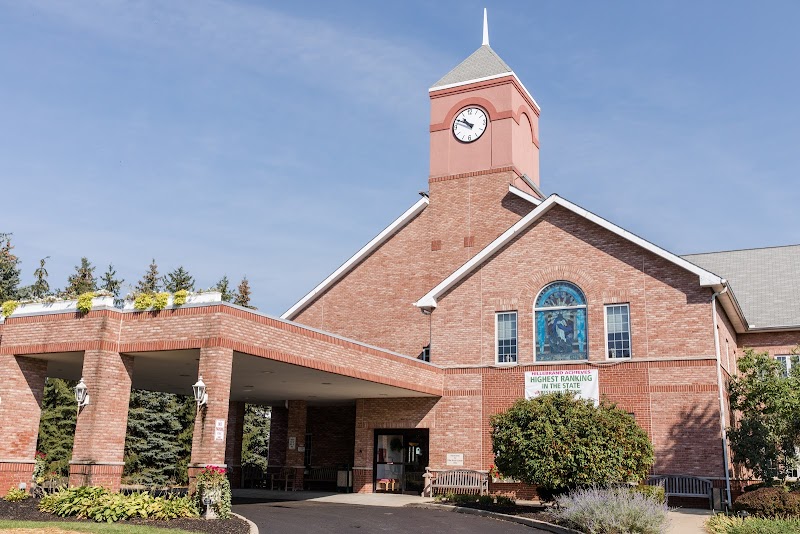
How is Hillebrand Staffed?

CMS rates HILLEBRAND NURSING AND REHABILITATION CENTER's staffing level at 2 out of 5 stars, which is below average compared to other nursing homes. Staff turnover is 40%, compared to the Ohio average of 46%. This relatively stable workforce can support continuity of care.

What Have Inspectors Found at Hillebrand?

State health inspectors documented 28 deficiencies at HILLEBRAND NURSING AND REHABILITATION CENTER during 2018 to 2025. These included: 1 Immediate Jeopardy (the most serious level, indicating potential for serious harm or death), 26 with potential for harm, and 1 minor or isolated issues. Immediate Jeopardy findings are rare and represent the most serious regulatory concerns. They require immediate corrective action.

Who Owns and Operates Hillebrand?

HILLEBRAND NURSING AND REHABILITATION CENTER is owned by a for-profit company. For-profit facilities operate as businesses with obligations to shareholders or private owners. The facility operates independently rather than as part of a larger chain. With 108 certified beds and approximately 102 residents (about 94% occupancy), it is a mid-sized facility located in CINCINNATI, Ohio.
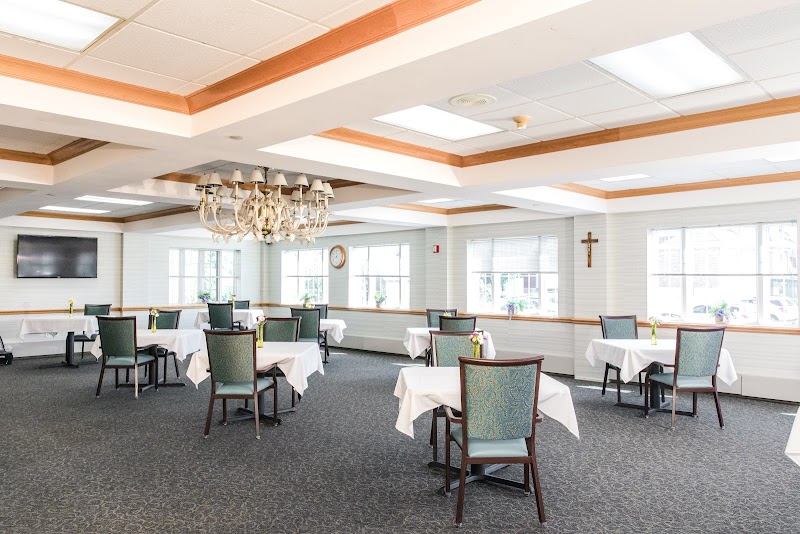
How Does Hillebrand Compare to Other Ohio Nursing Homes?

Compared to the 100 nursing homes in Ohio, HILLEBRAND NURSING AND REHABILITATION CENTER's overall rating (3 stars) is below the state average of 3.2, staff turnover (40%) is near the state average of 46%, and health inspection rating (2 stars) is below the national benchmark.

What Should Families Ask When Visiting Hillebrand?

Based on this facility's data, families visiting should ask: "What changes have been made since the serious inspection findings, and how are you preventing similar issues?" "Can you walk me through typical staffing levels on day, evening, and night shifts?" "Can I visit during a mealtime to observe dining assistance and food quality?" "How do you handle medical emergencies, and what is your hospital transfer rate?" These questions are particularly relevant given the facility's Immediate Jeopardy citations and the below-average staffing rating.

Is Hillebrand Safe?

Based on CMS inspection data, HILLEBRAND NURSING AND REHABILITATION CENTER has documented safety concerns. Inspectors have issued 1 Immediate Jeopardy citation (the most serious violation level indicating risk of serious injury or death). The facility has a 3-star overall rating and ranks #100 of 100 nursing homes in Ohio. Families considering this facility should ask detailed questions about what corrective actions have been taken since these incidents.

Do Nurses at Hillebrand Stick Around?

HILLEBRAND NURSING AND REHABILITATION CENTER has a staff turnover rate of 40%, which is about average for Ohio nursing homes (state average: 46%). Moderate turnover is common in nursing homes, but families should still ask about staff tenure and how the facility maintains care continuity when employees leave.

Was Hillebrand Ever Fined?

HILLEBRAND NURSING AND REHABILITATION CENTER has been fined $27,267 across 2 penalty actions. This is below the Ohio average of $33,352. While any fine indicates a compliance issue, fines under $50,000 are relatively common and typically reflect isolated problems that were subsequently corrected. Families should ask what specific issues led to these fines and confirm they've been resolved.

Is Hillebrand on Any Federal Watch List?

HILLEBRAND NURSING AND REHABILITATION CENTER is not on any federal watch list. The most significant is the Special Focus Facility (SFF) program, which identifies the bottom 1% of nursing homes nationally based on persistent, serious quality problems. Not being on this list means the facility has avoided the pattern of deficiencies that triggers enhanced federal oversight. This is a positive indicator, though families should still review the facility's inspection history directly.