INDIANSPRING OF OAKLEY

4900 BABSON PLACE, CINCINNATI, OH 45227 (513) 561-2600
For profit - Corporation 144 Beds CARESPRING Data: November 2025
Trust Grade
45/100
#482 of 913 in OH
Last Inspection: July 2023

Over 2 years since last inspection. Current conditions may differ from available data.

Overview

IndianSpring of Oakley has received a Trust Grade of D, indicating below average performance with several concerns. It ranks #482 out of 913 facilities in Ohio, placing it in the bottom half, and #39 out of 70 in Hamilton County, meaning only a few local options are better. The facility's situation is worsening, with issues increasing from 3 in 2024 to 4 in 2025. Staffing is rated 2 out of 5 stars, which is below average, and the turnover rate is 59%, slightly above the state average. However, there have been no fines, which is a positive sign. Specific incidents include a serious situation where a resident suffered a hip fracture after being rolled off the bed during care, indicating a failure to follow safe handling practices. Another serious finding involved a resident developing a stage three pressure ulcer that went unnoticed until it reached an advanced stage, highlighting weaknesses in skin assessment and monitoring. Additionally, there were concerns about food preparation practices that may pose a risk of foodborne illness for residents. Overall, while there are some strengths, the facility has significant areas that need improvement.

Trust Score
D
45/100
In Ohio
#482/913
Bottom 48%
Safety Record
Moderate
Needs review
Inspections
Getting Worse
3 → 4 violations
Staff Stability
⚠ Watch
59% turnover. Above average. Higher turnover means staff may not know residents' routines.
Penalties
✓ Good
No fines on record. Clean compliance history, better than most Ohio facilities.
Skilled Nurses
○ Average
Each resident gets 38 minutes of Registered Nurse (RN) attention daily — about average for Ohio. RNs are the most trained staff who monitor for health changes.
Violations
⚠ Watch
33 deficiencies on record. Higher than average. Multiple issues found across inspections.
★★★☆☆
3.0
Overall Rating
★★☆☆☆
2.0
Staff Levels
★★★☆☆
3.0
Care Quality
★★★☆☆
3.0
Inspection Score
Stable
2024: 3 issues
2025: 4 issues

The Good

  • Full Sprinkler Coverage · Fire safety systems throughout facility
  • No fines on record

Facility shows strength in fire safety.

The Bad

3-Star Overall Rating

Near Ohio average (3.2)

Meets federal standards, typical of most facilities

Staff Turnover: 59%

13pts above Ohio avg (46%)

Frequent staff changes - ask about care continuity

Chain: CARESPRING

Part of a multi-facility chain

Ask about local staffing decisions and management

Staff turnover is elevated (59%)

11 points above Ohio average of 48%

The Ugly 33 deficiencies on record

2 actual harm
Jul 2025 2 deficiencies 1 Harm
SERIOUS (G) 📢 Someone Reported This

A family member, employee, or ombudsman was alarmed enough to file a formal complaint

Actual Harm - a resident was hurt due to facility failures

Accident Prevention (Tag F0689)

A resident was harmed · This affected 1 resident

Based on medical record review, review of staff witness statements, review of hospital records, review of facility Interdisciplinary Team (IDT) fall follow-up notes, staff interview, review of online ...

Read full inspector narrative →
Based on medical record review, review of staff witness statements, review of hospital records, review of facility Interdisciplinary Team (IDT) fall follow-up notes, staff interview, review of online clinical resources per Medline Plus Medical Encyclopedia, and review of the facility policy, the facility staff failed to safely and properly position a resident in bed during incontinence care. Actual Harm occurred on 05/30/25 when Certified Nursing Assistant (CNA) #521 rolled Resident #108 who was in a raised bed away from the aide and onto the floor, resulting in a right nondisplaced intertrochanteric hip fracture which required a hospital admission and subsequent surgical repair of the right hip fracture on 06/02/25. This affected one (Resident #108) of three residents reviewed for falls. The facility census was 123 residents. Findings include: Review of the medical record for Resident #108 revealed an admission date of 01/09/25 with diagnoses including end stage renal disease, left below the knee amputation (BKA), diabetes mellitus, and intellectual disabilities. Review of the occupational therapy (OT) evaluation for Resident #108 dated 01/11/25 revealed attempts to assist with rolling the resident at bed level required two sets of hands to maintain safety. Review of the fall risk assessment for Resident #108 dated 04/26/25 revealed the resident was at high risk for falls. Review of the care plan for Resident #108 dated 05/02/25 revealed the resident had an activities of daily living (ADL) self-care performance deficit related to impaired mobility, impaired balance, and left BKA. Interventions included resident was totally dependent for bed mobility with the assistance of two staff. Review of the x-ray report for Resident #108 dated 05/31/25 revealed the resident had a nondisplaced right intertrochanteric (hip) fracture. Review of the Minimum Data Set (MDS) assessment for Resident #108 dated 06/01/25 revealed the resident was moderately cognitively impaired and section GG revealed the resident was dependent with rolling right to left (the ability to roll right to left and back and return to lying back on bed). Dependent was defined in the MDS as helper does all of the effort, and resident does none of the activity, or the assistance of two or more helpers is required to complete the activity. Review of a witness statement regarding Resident #108 dated 06/01/25 per Licensed Practical Nurse (LPN) #419 revealed on 05/30/25 the nurse was in the hallway near the resident's room and was conducting medication administration when she heard a loud noise. CNA #521 told the nurse the resident had fallen out of bed while the aide was providing care. CNA #521 told the nurse while the resident was lying flat, he was coughing and had fallen out of bed. Upon LPN #419's arrival to Resident #108's room, the resident was lying on a floor mat with his right side extended straight out. The nurse assessed the resident who denied pain and/or hitting his head. Review of a witness statement regarding Resident #108 dated 06/02/25 per CNA #521 revealed on 05/30/25 at approximately 8:00 P.M. to 8:15 P.M. the aide went into Resident #108's room to change the resident's incontinence brief. CNA #521 paused the resident's tube feeding, removed his soiled brief, rolled him onto his right side, and then used the draw sheet to position him in the center of the bed. CNA #521 was standing on the left side of the bed (if looking at bed from the foot of the bed). The bed was positioned at the waist height of the aide. As CNA #521 was cleaning the resident's buttocks, Resident #108 began coughing uncontrollably. CNA #521 immediately stopped providing care and the resident continued to cough very roughly and then fell off the bed and onto the fall mat located on the right side of the bed. CNA #521 immediately notified Resident #108's nurse of the fall. LPN #419 assessed Resident #108 and lowered the bed to put the resident back to bed with the assistance of another aide. Resident #108 started coughing so hard it had caused him to vomit. Resident #108 was sitting up in his bed at this time and complained of pain in his right hip but refused to go to the hospital. LPN #419 offered Resident #108 pain medication. CNA #521 frequently checked on Resident #108 throughout the night and he remained awake most of the night. Review of hospital notes for Resident #108 dated 06/02/25 revealed the resident presented to the emergency department via squad from facility with a report of a fall out of bed on 05/30/25. The resident had an x-ray of the right femur completed in the morning of 05/31/25 at the facility indicating a nondisplaced intertrochanteric fracture. Review of the facility fall timeline regarding Resident #108's fall on 05/30/25 revealed the resident had surgical repair of a right hip fracture on 06/02/25. Review of the IDT follow-up note regarding Resident #108 dated 06/04/25 revealed on 05/30/25 at approximately 9:00 P.M., CNA #521 notified the nurse that Resident #108 was on the floor. The nurse responded and observed Resident #108 lying on his right side on the floor mat on the left side of the bed. CNA #521 reported while she was providing care the resident experienced an excessive coughing episode during which his upper body shifted causing him to roll off the left side of the bed and onto the floor mat. Resident #108 stated to staff that he fell out of bed, landing on his right shoulder and denied hitting his head. The initial assessment revealed no apparent physical injuries or changes to range of motion or level of consciousness. Resident #108 complained of pain to the right shoulder. Staff assisted Resident #108 off the floor and back into bed without incident via lift sheet. The assessment did not indicate the need for emergency transfer, and Resident #108 indicated he did not want to go to the hospital. The nurse called the on-call physician and was directed to administer as needed Tramadol (pain medication) and routine Tylenol, continue neurochecks, continue to monitor and call back if there are any changes. When Resident #108 complained of increased pain, staff notified the nurse practitioner who gave an order for x-rays of the right shoulder and the right femur. The x-rays showed a right femur fracture. The on-call NP gave an order to send Resident #108 to the hospital for an evaluation. The IDT follow up indicated a new intervention status post fall would be to include side rails to the resident's bed to assist independence with bed mobility. Review of additional written information regarding Resident #108's fall provided by the Director of Nursing (DON) on 06/27/25 revealed the resident's care plan indicated the resident required extensive assistance of one person with bed mobility from 01/09/25 to 05/02/25. On 05/02/25 the fall IDT met and revised the care plan for Resident #108. During this revision the nurse clicked the intervention for total dependence times two staff in Resident #108's electronic medical record, but then immediately revised the intervention to read total dependence times one staff. Interview on 06/26/25 at 11:05 A.M. with LPN #450 confirmed Resident #108 had experienced a decline in condition prior to the fall out of bed on 05/30/25 and should have been a two-person assist. Interview on 06/26/25 at 3:15 P.M. with CNA #185 confirmed when you are providing care by yourself you should never roll a resident away from you. CNA #185 confirmed residents should be rolled towards you to prevent them from falling out of bed. Interview on 06/26/25 at 5:25 P.M. with CNA #521 confirmed she frequently provided care to Resident #108. CNA #521 stated she was providing care to Resident #108 by herself on 05/30/25 when she rolled Resident #108 onto his left side (his below the knee amputation side) and away from where the aide was standing. CNA #521 confirmed Resident #108 fell out of the raised bed and onto the floor of the opposite side of the bed where the aide was standing. CNA #521 stated she was unable to prevent Resident #108 from falling. Interview on 06/30/25 at 3:18 P.M. with LPN #419 confirmed she was passing medications on 05/30/25 when CNA #521 told her that Resident #108 had fallen out of bed. LPN #419 stated she found Resident #108 lying on the floor on his right side. LPN #419 further confirmed she assessed the resident while he was on the floor and saw no signs or symptoms of injury, and she and another aide assisted Resident #108 back into bed. Once in bed, Resident #108 began vomiting. LPN #419 confirmed Resident #108 refused to go the hospital for an evaluation. LPN #419 called the resident's provider regarding the fall and gave an update on the resident's condition and received orders for pain medication which she administered to Resident #108. LPN #419 confirmed by the morning of 05/31/25 Resident #108 was complaining of increased pain to the right leg, and she notified the provider who gave an order for an x-ray. Review of an online clinical resource titled Turning Patients Over in Bed: Medline Plus Medical Encyclopedia undated at: https://medlineplus.gov/ency/patientinstructions/000426.htm#:~:text=Standing%20with%20one%20foot%20ahead,the%20person's%20hip%20toward%20you revealed the following steps should be followed when turning a resident in bed: explain to the resident what you are planning to do so they know what to expect, encourage the person to help if possible, stand on the opposite side of the bed the resident will be turning towards, move the patient towards you, step around to the other side of the bed, ask the resident to look towards you (this will be the direction in which the person is turning.) Review of the facility policy titled Fall and Accident Management dated June 2019 revealed the facility would identify residents at risk for falls and would implement interventions to reduce the risk of injuries, falls, and other accidents. This deficiency represents noncompliance investigated under Complaint Number OH00166410.
CONCERN (D) 📢 Someone Reported This

A family member, employee, or ombudsman was alarmed enough to file a formal complaint

Potential for Harm - no one hurt, but risky conditions existed

Deficiency F0627 (Tag F0627)

Could have caused harm · This affected 1 resident

**NOTE- TERMS IN BRACKETS HAVE BEEN EDITED TO PROTECT CONFIDENTIALITY** Based on medical record review, staff interview, interview with home health staff, and review of the facility policy, the facili...

Read full inspector narrative →
**NOTE- TERMS IN BRACKETS HAVE BEEN EDITED TO PROTECT CONFIDENTIALITY** Based on medical record review, staff interview, interview with home health staff, and review of the facility policy, the facility failed to ensure appropriate information was communicated to resident family and home health provider upon discharge. This affected one (Resident #271) of three residents reviewed for discharge rights. The facility census was 123 residents. Findings include: Review of the medical record for Resident #271 revealed an admission date of 01/28/25 with diagnoses including protein-calorie malnutrition, malignant neoplasm of breast, acute kidney injury, dehydration, adult failure to thrive, iron deficiency anemia and intellectual disabilities. Resident #271 discharged from the facility back to her group home on [DATE]. Review of the Minimum Data Set (MDS) assessment for Resident #271 dated 01/31/25 revealed the resident had severe cognitive impairment, was frequently incontinent of bowel and occasionally incontinent of bladder, was dependent on staff assistance with activities of daily living (ADLs), was at risk for the development of pressure ulcers, but had no pressure ulcers. Review of a nurse progress note for Resident #271 dated 04/20/25 revealed staff identified a new open area to the resident's sacrum. The nurse cleansed the area with normal saline and applied barrier cream and a dressing. The nurse notified the resident's physician and obtained a treatment order for the wound. Review of the weekly wound progress note for Resident #271 dated 05/04/25 revealed the resident had a stage II sacral pressure ulcer which measured 1.8 centimeters (cm) in length by 1.2 cm in width by 0.1 cm in depth. The wound was round with a pink wound bed and a small amount of serous drainage. Review of the physician orders for Resident #271 revealed the wound care order upon the resident's discharge from the facility on 05/05/25 was to cleanse the wound with normal saline, pat dry, apply collagen and cover with a foam dressing or ABD pad secured with tape. Review of the discharge summary for Resident #271 dated 05/05/25 for Resident #271 which was provided to the resident's family and the home health Case Manager (CM) #999 revealed the resident had no skin impairment and the summary did not include the current physician's order for wound care. Review of the medical record documents for Resident #271, which included the resident's profile, discharge physician orders summary report, and attending physician progress notes dated 03/10/25 and 04/04/25 revealed all documents were printed by the outside home health agency on 05/11/25 at 8:57 A.M. Review of the home health nurse intake notes for Resident #271 dated 05/13/25 revealed the resident's sacral wound measured 4.0 cm in length by 4.5 cm in width by 0.2 cm in depth. Interview on 06/25/25 at 5:10 P.M. with the Director of Nursing confirmed the Discharge summary dated [DATE] for Resident #271 indicated the resident did not have any skin impairment and the discharge medication list did not include the resident's wound care order on the date of discharge. The DON confirmed the facility made a referral for Resident #271 to have home health nursing but was unable to verify if the facility notified the home health agency of the resident's actual discharge date . Interview on 06/26/25 at 11:39 A.M. with Home Health Nurse (HHN) #995 confirmed the home health care referral from the facility for Resident #271 came on 05/10/25 and the resident's discharge physician orders were printed on 05/11/25. She said the home health care agency called the family and CM #999 on 5/11/25 to schedule the initial nursing visit with the resident and the family said to call back on 05/12/25. The initial visit for Resident #271 from the home health nurse took place on 05/12/25. Phone interview on 06/27/25 at 9:00 A.M. with Home Health Community Care Coordinator (HCCC) #950 verified the home health agency did not receive confirmation from the facility that Resident #271 had discharged on 05/05/25 until 05/10/25, and if the notification came after 5:00 P.M. the orders would not be processed until the following day. HCCC #950 further confirmed the home health agency was part of the facility's parent organization and the home health agency had access to the resident's electronic medical record and could generate needed resident documents such as physician orders, but the facility was required to notify the home health agency when a resident's discharge date was determined and/or when the resident discharged . HCCC #950 verified the timestamp for Resident #271's discharge physician orders being printed was 05/11/25. Review of the policy titled Discharge Planning revised November 2016 revealed when a resident's discharge was anticipated, the facility would develop and implement a discharge plan that focused on the resident's discharge goals, the preparation of residents to be active partners and effectively transition them to post-discharge care, and the reduction of factors leading to preventable readmissions.
Apr 2025 1 deficiency
CONCERN (D) 📢 Someone Reported This

A family member, employee, or ombudsman was alarmed enough to file a formal complaint

Potential for Harm - no one hurt, but risky conditions existed

Accident Prevention (Tag F0689)

Could have caused harm · This affected 1 resident

**NOTE- TERMS IN BRACKETS HAVE BEEN EDITED TO PROTECT CONFIDENTIALITY** Based on observation, interview with staff and emergency services provider (EMT), review of resident medical records, hospital r...

Read full inspector narrative →
**NOTE- TERMS IN BRACKETS HAVE BEEN EDITED TO PROTECT CONFIDENTIALITY** Based on observation, interview with staff and emergency services provider (EMT), review of resident medical records, hospital records, emergency services (EMS) reports, and manufacturer guidelines, the facility failed to ensure Resident #109 was safely assisted with personal care to prevent a fall with injury and failed to thoroughly investigate the fall. This affected one (Resident #109) of five residents reviewed for accidents. Findings include: Resident #109 was admitted on [DATE] with a readmission date of 12/29/24 for diagnoses including acute and chronic respiratory failure with hypoxia, diabetes mellitus type 2 (DM2), cerebral infarction, hemiplegia and hemiparesis following cerebral infarction, peripheral vascular disease, and seizures. Review of Resident #109's care plan initiated 03/17/24 for an activities of daily living (ADL) self-care deficit due to impaired mobility and balance revealed the resident required extensive assistance of two staff for bed mobility, toileting, and transfers. Review of physician's orders revealed an order on 05/29/24 for an alternating pressure mattress. Review of Fall Risk Scale Score dated 01/19/25 revealed a score of 12, indicating Resident #109 was at risk of falls. Review of Minimum Data Set (MDS) assessment dated [DATE] revealed Resident #109 had severe cognitive impairment and was dependent on staff for all care. Review of Resident #109's progress note dated 04/10/25 at 8:48 A.M. revealed a fall occurred at 5:55 A.M. Review of EMS report dated 04/10/25 at 7:08 A.M. revealed Resident #109 fell at skilled nursing facility where (per staff) pt was being cleaned up and changed and when the aide went to pull the draw sheet from the pt's left side of the bed, this in turn flipped her over the mattress guards of the bed and then to the floor. Resident #109 has traumatic injuries to the mouth, nose, bridge of nose, and significant hematoma to forehead. Resident #109 was on blood thinners per staff, but aspirin only seen from brief review of paperwork. Resident #109 was baseline mentation and staff report no change in level of consciousness. Resident #109 was lifted back to bed by staff prior to EMS arrival. Aide who was involved did come to bedside and stated same situation as noted above. Resident #109 needed minor assistance for bleeding. Decision made to transport to local hospital due to resident condition, height of fall on head/face, and size of hematoma with associated blood thinner use. Review of hospital records dated 04/10/25 at 7:27 A.M. revealed the ER noted per EMS Resident #109 was being cleaned when the patient fell out of bed, over bed guard. Resident #109 fell, hitting her head. Resident #109 had swelling and abrasion to forehead, bridge of nose, and bleeding from mouth. Review of hospital records dated 04/10/25 at 7:40 A.M. revealed ER physician noted Resident #109 was being turned, or something similar and was rolled out of bed. Resident #109 landed on her face. Resident #109 presented with obvious trauma to the face, including some loose teeth. Review of Resident #109's physician orders revealed an order dated 04/10/25 every day and night shift to cleanse hematoma with normal saline, pat dry, apply double antibiotic ointment, leave open to air. Review of the Interdisciplinary Team (IDT) Follow Up Note for the incident date 04/10/25 at 5:55 A.M. revealed Resident #109 was at risk for falls related to a history of falls, atrial fibrillation, history of cerebrovascular accident, and seizures. Fall interventions put into place were fall mats to bedside, Resident #109 to be screened to assess bed mobility, and nonpowered mattress. The IDT note did not identify the root cause of the fall. A request was made for the fall investigation related to Resident #109's fall and only a statement from CNA #280 was provided. There was no evidence of a thorough investigation being completed. Observation on 04/21/25 at 12:20 P.M. of Resident #109 revealed the resident was lying on a flat mattress without bolsters or a perimeter mattress, with her feet floating on a cushion, fall mats were on the floor on each side of the bed. Resident #109 was not interviewable at the time of the observation. Interview on 04/22/24 at 4:53 P.M. with EMT #650 revealed when they arrived at the facility, Resident #109 was already back in bed, and the mattress she was on had an attached rail on it or like a small speed bump. EMT #650 stated the EMS team had difficulty getting Resident #109 from the mattress to the gurney due to the mattress' side support rail. EMT #650 stated he was concerned an individual would have to exert a lot of effort to get Resident #109 over that bump by themselves. The staff member, possibly a nurse, onsite told him only one aide was performing personal care, and that one aide was attempting to remove the draw sheet out from under Resident #109, by herself, which caused Resident #109 to roll out of bed. EMT #650 stated Resident #109 was not able to move or brace herself against a fall and had significant visible injuries, including teeth that appeared damaged, a large contusion to her head, and the bridge of her nose. Resident #109 was transferred to a local hospital. Interview on 04/23/25 at 3:10 P.M. with Certified Nursing Assistant (CNA) #280 stated she was providing incontinence care, and Resident #109 was a one person assist for personal care prior to the fall. CNA #280 stated she rolled Resident #109 away from her and she was trying to pull out the draw sheet, the mattress and the bolsters leaned away from her and Resident #109, which allowed Resident #109 to roll out of bed. CNA #280 checked on Resident #109 and she was responsive. CNA #280 called for help. Two nurses and CNA #280 were able to lift Resident #109 up and put her back in bed. CNA #280 stated she was suspended for her next scheduled shift and returned the next day for disciplinary education. CNA #280 stated she was told at the time of the re-education that Resident #109's alternating pressure bed could be made firmer during point of care and then turned back to the prescribed setting when the resident was not receiving care. CNA #280 stated she was not aware of that function of the mattress prior to the fall. CNA #280 stated if she had been aware of that function and trained fully on the use of the mattress prior to providing care to Resident #109, she felt the fall would not have occurred. Interview on 04/24/25 at 2:30 P.M. with Director of Nursing (DON) revealed the facility's practice was to educate staff on providing care as instructed in the care plan, such as after a fall. While re-educating CNA #280 after the fall on 04/10/25, it was discovered CNA #280 was following the current plan of care. DON stated the root cause of the 04/10/25 fall was a decline in Resident #109's bed mobility, which was determined by therapy's reassessment of her mobility after the fall. DON stated the mattress was changed out in an abundance of care, as a low air loss mattress could contribute to accidents and falls. DON did not specifically recall speaking to CNA #280 about utilizing the autofirm setting on the low air loss mattress for care, however if CNA #280 stated that they discussed it during her re-education, then it probably happened. Review of Fall and Accident Management, dated 06/2019, revealed the facility will work to 1. Identify hazard(s) and risk(s) to decrease the risk of injury; 2. evaluate and analyze hazard(s) and risk(s). Additionally, A score above 10 indicates an increased risk of falling. Review of alternating pressure mattress manual revealed the mattress had an Autofirm mode which provided maximum air inflation to assist both resident and caregiver during resident care and transfer. Under general repositioning, it was note Autofirm mode may be helpful to achieve a firm surface for repositioning purposes. This deficiency represents non-compliance investigated under Complaint Number OH00164933.
Jan 2025 1 deficiency
CONCERN (D) 📢 Someone Reported This

A family member, employee, or ombudsman was alarmed enough to file a formal complaint

Potential for Harm - no one hurt, but risky conditions existed

Deficiency F0760 (Tag F0760)

Could have caused harm · This affected 1 resident

**NOTE- TERMS IN BRACKETS HAVE BEEN EDITED TO PROTECT CONFIDENTIALITY** Based on medical record review, observations, staff interviews, and review of manufacturer's instructions, the facility failed t...

Read full inspector narrative →
**NOTE- TERMS IN BRACKETS HAVE BEEN EDITED TO PROTECT CONFIDENTIALITY** Based on medical record review, observations, staff interviews, and review of manufacturer's instructions, the facility failed to ensure staff prime an insulin pen prior to administration. This affected one (#11) out of three reviewed for medication administration. The facility census was 110. Findings include: Review of the medical record for Resident #11 revealed an admission date of 08/31/24. Diagnoses included type two diabetes mellitus (DM II), chronic pulmonary edema, and congestive heart failure (CHF). Review of the care plan dated 08/31/24 revealed Resident #11 had diabetes mellitus. Interventions included administering diabetes medication as ordered. Review of the physician order dated 08/31/24, revealed Resident #11 was ordered Humalog (quick acting insulin) Kwik Pen 100 unit per milliliter (ml) solution pen-injector, inject subcutaneously with meals for DM II per a sliding scale. Review of the Quarterly Minimum Data Set (MDS) assessment dated [DATE], revealed Resident #11 had intact cognition as evidenced by a Brief Interview for Mental Status (BIMS) score of 15. This resident was assessed to require setup with eating, partial assistance with toileting, dressing, and transfers, and supervision with bathing. Observation on 01/14/25 at 9:40 A.M. revealed Licensed Practical Nurse (LPN) #22 administered two units of Humalog Kwik Pen to Resident #11. LPN #22 did not prime the insulin pen prior to administering the insulin to Resident #11. LPN #22 dialed insulin pen to two units per sliding scale related to blood sugar of 202. Interview on 01/15/25 at 9:45 A.M. with LPN #22 verified she did not prime insulin prior to administering insulin. Review of the manufacturer instructions for Humalog Kwik Pen revealed the following: 1) Pull the pen cap straight off. 2) Check the liquid in the pen. 3) Select a new needle. 4) Push the capped needle straight onto the pen and twist the needle on until it is tight. 5) Pull off the outer needle shield. 6) To prime the pen, turn the dose knob to select two units. 7) Hold the pen with the needle pointing up and tap the cartridge holder gently to collect air bubbles at top. 8) Continue holding the pen with needle pointing up and push the dose knob until it stops and zero was seen in the dose window. This deficiency represents non-compliance investigated under Complaint Number OH00160452.
Jun 2024 1 deficiency
CONCERN (D) 📢 Someone Reported This

A family member, employee, or ombudsman was alarmed enough to file a formal complaint

Potential for Harm - no one hurt, but risky conditions existed

Deficiency F0761 (Tag F0761)

Could have caused harm · This affected 1 resident

**NOTE- TERMS IN BRACKETS HAVE BEEN EDITED TO PROTECT CONFIDENTIALITY** Based on observation, resident and staff interview, medical record review, and policy review, the facility failed to ensure medi...

Read full inspector narrative →
**NOTE- TERMS IN BRACKETS HAVE BEEN EDITED TO PROTECT CONFIDENTIALITY** Based on observation, resident and staff interview, medical record review, and policy review, the facility failed to ensure medications were stored in a safe and secure manner. This affected one (#4) of four residents observed for medications. The facility census was 98. Findings include: Record review for Resident #4 revealed an admission date of 04/03/24 with diagnoses including atrial fibrillation, history of transient ischemic attack, and cerebral infarction. Review of the Minimum Data Set (MDS) assessment dated [DATE] revealed Resident #4 was cognitively intact. Review of Resident #4's physician's orders revealed the resident was ordered the cholesterol medication atorvastatin 10 milligrams (mg) by mouth at bedtime, the supplement cyanocobalamin 1000 micrograms (mcg) by mouth daily, the blood pressure medication amlodipine besylate 10 mg by mouth daily, and the combination blood pressure medication hydrochlorothiazide and lisinopril 12.5 mg-20 mg by mouth daily on 04/03/24. On 04/16/24, Resident #4 was ordered the supplement Stress B-zinc one oral tablet daily, on 05/13/24 was ordered the anticoagulant apixaban 2.5 mg by mouth twice daily, and on 05/29/24 was ordered the blood pressure medication metoprolol succinate extended release (ER) 100 mg by mouth daily. Observation and interview on 06/03/24 at 11:35 A.M. with Resident #1 verified the presence of two medication cups at her bedside. One medication cup contained one tablet, identified as atorvistatin, and the other medication cup contained with seven various medications. Resident #1 stated she did not recall when the medications were from, but she decided not to take them because she had not been feeling well. Interview on 06/03/24 at 11:35 A.M. with Assistant Director of Nursing (ADON) #1 verified the presence of medications at Resident #1's bedside during observation. Review of a policy titled, Administration Oral Medications, dated 12/2021, revealed the nurse or medication aide administering the medication remains with the resident until the medicine is swallowed. This deficiency represents non-compliance investigated under Complaint Number OH00153632.
Apr 2024 2 deficiencies 1 Harm
SERIOUS (G) 📢 Someone Reported This

A family member, employee, or ombudsman was alarmed enough to file a formal complaint

Actual Harm - a resident was hurt due to facility failures

Pressure Ulcer Prevention (Tag F0686)

A resident was harmed · This affected 1 resident

Based on medical record review, observation, staff interview, review of facility policy, and review of guidelines from the National Pressure Ulcer Advisory Panel (NPUAP), the facility failed to adequa...

Read full inspector narrative →
Based on medical record review, observation, staff interview, review of facility policy, and review of guidelines from the National Pressure Ulcer Advisory Panel (NPUAP), the facility failed to adequately assess and monitor a resident's skin which resulted in Actual Harm for Resident #20 who was admitted to the facility without pressure ulcers and developed a stage three pressure ulcer (a full thickness skin break into the subcutaneous tissue which did not go into muscle or bone) to the right ischium which was not identified until it had reached an advanced stage. This affected one (Resident #20) of three residents reviewed for pressure ulcers. The facility census was 113. Findings include: Review of the medical record for Resident #20 revealed an admission date of 02/29/20 with diagnoses including Alzheimer's disease, anemia, atherosclerotic heart disease of coronary artery, and hypertension. Review of the care plan for Resident #20 dated 02/12/24 revealed the resident had potential for skin impairment related to impaired mobility, fragile skin, and incontinence. Interventions included the following: assist as needed with toileting and hygiene, staff to apply barrier cream as needed after incontinent episodes, staff to check skin daily while doing routine care and report changes to the nurse, staff to apply pressure reducing mattress to bed. Review of the pressure ulcer risk assessment for Resident #25 dated 02/25/24 revealed the resident was at moderate risk for the development of pressure ulcers. Review of the quarterly Minimum Data Set (MDS) assessment for Resident #20 dated 02/27/24 revealed the resident was cognitively impaired and dependent with eating, toileting, bathing, dressing, and transfers. Resident #20 was at risk for the development of pressure ulcers but did not have pressure ulcers. Review of the wound progress note for Resident #20 dated 03/20/24 per Wound Nurse Practitioner (WNP) #70 revealed the resident had developed an in-house acquired stage three pressure ulcer to the right ischium first observed by the staff on 03/19/24 which measured 2.0 centimeters (cm) in length by 2.0 cm in width by 0.8 cm in depth. The wound bed was yellow, pink and red with granulation tissue present and moderate amounts of serous and serosanguineous drainage noted. Treatment recommended was to apply alginate to the wound bed. Review of the physician's orders for Resident #20 revealed an order dated 03/20/24 to cleanse the pressure ulcer to the right ischium with normal saline, pat dry, apply calcium alginate and cover with abdominal pad and retention tape. Observation on 04/17/24 at 11:25 A.M. of wound care for Resident #20 per Licensed Practical Nurse (LPN) #200 revealed the resident had a quarter-sized pressure ulcer to right ischium with a moderate amount of serous drainage. Interview on 04/17/24 at 3:46 P.M. with Wound Nurse Practitioner (WNP) #70 confirmed she examined Resident #20 on 03/20/24 and determined the resident had a facility-acquired stage III pressure ulcer to the right ischium which was first identified by the staff on 03/19/24. Interview on 04/18/24 at 11:05 A.M. with the Assistant Director of Nursing (ADON) confirmed Resident #20 developed an open area to her right ischium which was first identified by the facility staff on 03/19/24. The wound was first measured and assessed by WNP #70 on 03/20/24 who determined the wound was a stage III pressure ulcer. The ADON confirmed the facility did not complete assessments of the skin to Resident #20's right ischium prior to 03/20/24. Review of the facility policy titled Skin Integrity Team (SIT) - Skin Monitoring Process dated June 2023 revealed the facility team would improve, maintain, and monitor residents' skin integrity with the goal for residents not to develop pressure ulcers unless clinically unavoidable. The nursing assistant should report any new and/or abnormal skin conditions to the nurse. Review of the NPUAP guidelines dated 2014 pages at https://npiap.com/general/custom.asp?page=2014Guidelines revealed facilities should educate health professionals on how to undertake a comprehensive skin assessment that included the techniques for identifying blanching response, localized heat, edema, and induration. Further review of the guidelines revealed ongoing assessment of the skin was necessary in order to detect early signs of pressure damage. Visual assessment for erythema (redness of the skin) was the first component of every skin inspection. Skin redness and tissue edema resulting from capillary occlusion was a response to pressure, especially over bony prominences. Staff should conduct a head-to-toe assessment with particular focus on skin overlying bony prominences including the sacrum, ischial tuberosities, greater trochanters and heels and each time the patient was repositioned was an opportunity to conduct a brief skin assessment. This deficiency represents noncompliance investigated under Complaint Number OH00152496.
CONCERN (D) 📢 Someone Reported This

A family member, employee, or ombudsman was alarmed enough to file a formal complaint

Potential for Harm - no one hurt, but risky conditions existed

Deficiency F0692 (Tag F0692)

Could have caused harm · This affected 1 resident

Based on medical record review, observation, staff interview, and review of the facility policy, the facility failed to implement nutritional interventions for a resident with significant weight loss ...

Read full inspector narrative →
Based on medical record review, observation, staff interview, and review of the facility policy, the facility failed to implement nutritional interventions for a resident with significant weight loss in a timely manner. This affected one (Resident #20) of three residents reviewed for weight loss. The facility census was 113. Findings include: Review of the medical record for Resident #20 revealed an admission date of 02/29/20 with diagnoses including Alzheimer's disease, anemia, atherosclerotic heart disease of coronary artery, and hypertension. Review of the quarterly Minimum Data Set (MDS) assessment for Resident #20 dated 02/27/24 revealed the resident was cognitively impaired and was dependent on staff assistance for eating, toileting, bathing, dressing, and transfers. Review of the care plan for Resident #20 dated 02/27/24 revealed the resident had a nutritional problem and was at risk for malnutrition related to unintentional weight changes, altered diets, and dysphagia. Interventions included the following: administer medications as ordered staff to monitor weight and make recommendations as needed, staff to obtain and monitor lab/diagnostic work as ordered, staff to provide extra high calorie, high protein food items as needed, staff to provide diet as ordered and monitor intake. staff to obtain weights per clinician orders. Review of the weights records for Resident #20 revealed the following dates and weights: 02/01/24-125.2 pounds (lbs.), 03/01/24- 116.2 lbs., 03/05/24-110 lbs., 03/20/24-108.9 lbs. Review of the nutritional progress note for Resident #20 dated 03/07/24 revealed resident had a significant weight loss of 12.1 percent (%) in thirty days. Resident #20 had impaired skin and increased metabolic demands for healing. The resident's meal intakes varied from zero to 100% of meals. Resident #20 remained dependent on staff for intake of meals. The dietitian recommending adding fortified pudding at lunch and dinner daily for additional nutrition support and for staff to monitor the resident's weight weekly. Review of the physician's orders for Resident #20 revealed an order dated 03/18/24 for the resident to be weighed weekly. Observations of meal service on 04/17/24 and 04/18/24 revealed Resident #20 was dependent on staff for feeding. Interview on 04/18/24 at 10:04 A.M. with Registered Dietician (RD) #60 confirmed weekly weights were not ordered for Resident #20 until 03/18/24. Interview on 04/18/24 at 2:47 P.M. with RD #60 confirmed the recommendation for fortified pudding at lunch and dinner was not implemented as a physician's order. Review of the facility policy titled Weight Monitoring dated June 2020 revealed nursing staff and dietician would evaluate, implement nutritional interventions, and monitor residents' weight status in order to provide appropriate nutritional and clinical care. The dietician reviewed weight differences and determined the next course of action. To appropriately confirm significant weight changes, a re-weight might be indicated. The dietician would ask nursing to complete necessary reweights. This deficiency represents noncompliance investigated under Complaint Number OH00152496.
Jul 2023 5 deficiencies
CONCERN (D) 📢 Someone Reported This

A family member, employee, or ombudsman was alarmed enough to file a formal complaint

Potential for Harm - no one hurt, but risky conditions existed

Safe Environment (Tag F0584)

Could have caused harm · This affected 1 resident

**NOTE- TERMS IN BRACKETS HAVE BEEN EDITED TO PROTECT CONFIDENTIALITY** Based on observations, resident and staff interview, and record review, the facility failed to maintain Resident #62's room in a...

Read full inspector narrative →
**NOTE- TERMS IN BRACKETS HAVE BEEN EDITED TO PROTECT CONFIDENTIALITY** Based on observations, resident and staff interview, and record review, the facility failed to maintain Resident #62's room in a clean manner. This affected one (Resident #62) of six residents reviewed for homelike environment. The facility census was 113. Findings include: Record review for Resident #62 revealed the resident was admitted to the facility on [DATE]. Diagnoses included dementia, anxiety, and Alzheimer's disease. Review of the quarterly Minimum Data Set (MDS) assessment, dated 04/21/23, revealed Resident #62 had mild cognitive impairment. Review of the progress note, dated 07/10/23, revealed Resident #62 had emesis two times on this day (07/10/23). Interview on 07/11/23 at 9:33 A.M. with Resident #62 revealed she was lying in bed watching television. Resident #62 stated she had vomited two times the previous evening on 07/10/23. Resident #62 stated she vomited in her sink and was concerned because she did not think staff had cleaned her sink out. Observation on 07/11/23 at 9:45 A.M. revealed Resident #62's sink had a ring of what appeared to be emesis around in the inside of the sink with dried brown, yellow, and white chunks of unknown substances. Observation and interview on 07/11/23 at 9:49 A.M. with State Tested Nurse Aide (STNA) #252 confirmed Resident's #62's bathroom sink had a large ring of dried brown, yellow, and white chunks of unknown substance. Interview and observation on 07/12/23 at 10:28 A.M. with Licensed Practical Nurse (LPN) #163 confirmed a large, splattered stain remained in Resident #62's bathroom sink. Interview on 07/13/23 at 8:51 A.M. with the Environmental Services Manager (ESM) #267 confirmed Resident #62's bathroom sink was stained with a large round ring stain from emesis on 07/10/23. ESM #267 stated she found cleaner herself and was able to remove the stain. ESM #267 confirmed the Resident's bathroom sinks were supposed to be cleaned daily. This deficiency represents non-compliance investigated under Complaint Number OH00144070.
CONCERN (D)

Potential for Harm - no one hurt, but risky conditions existed

Quality of Care (Tag F0684)

Could have caused harm · This affected 1 resident

**NOTE- TERMS IN BRACKETS HAVE BEEN EDITED TO PROTECT CONFIDENTIALITY** Based on medical record review, staff interview, and policy review, the facility failed to ensure orders from a wound clinic wer...

Read full inspector narrative →
**NOTE- TERMS IN BRACKETS HAVE BEEN EDITED TO PROTECT CONFIDENTIALITY** Based on medical record review, staff interview, and policy review, the facility failed to ensure orders from a wound clinic were implemented and followed for a resident with multiple diabetic wounds. This affected one (#70) of one resident reviewed for diabetic ulcers. The facility census was 113. Findings include: Review of Resident #70's medical record revealed Resident #70 was re-admitted to the facility on [DATE]. Diagnoses included morbid obesity due to excess calories, chronic diastolic (congestive) heart failure, chronic respiratory failure with hypoxia, gangrene, type II diabetes mellitus with diabetic chronic kidney disease, and end stage renal disease. Review of the Medicare five-day Minimum Data Set (MDS) assessment dated [DATE] revealed Resident #70 had moderate cognitive impairment. Resident #70 required extensive assistance of two staff for bed mobility, transfer, and toilet use. Review of the care plan revealed Resident #70 had venous/stasis ulcer to his bilateral feet/heels and right ankle related to his decreased functional ability, decreased sensory ability, and impaired/decreased mobility. Interventions included administering treatments as ordered and monitor for effectiveness. He also had a care plan regarding his surgical site to the left transmetatarsal amputation (TMA). The interventions included administering treatments as ordered and monitor for effectiveness. Review of the physician order dated 05/15/23 revealed there was an order for the left dorsal foot to be cleansed with normal saline, pat dry, paint with betadine, and cover with adaptic cover with meplex. It was to be changed on night shift every Monday, Wednesday, and Friday for wound care. The physician order dated 06/16/23 revealed an order to apply Santyl Ointment 250 units/gram (Collagenase) to the left heel, left foot, and right heel topically every night shift every Monday, Wednesday, and Friday for wound care. Before applying, cleanse with normal saline and pat dry. After applying ointment cover with a 4x4 and abdominal pad, wrap with kerlix, and secure. Review of the Wound Care Clinic notes dated 06/19/23 revealed the wound center was following six diabetic ulcers Resident #70 had. The wound care orders dated 06/19/23 were for the TMA and left foot medial wounds to be cleansed with normal saline and pat dry. Apply a silver alginate to the wound beds. Cover with dry gauze, ABD, and roll gauze. Change the dressing Mondays, Wednesdays, and Fridays. There was also an order for the bilateral heels, fifth toe amputation, right ankle and right/left dorsal foot wounds to cleanse the wound with normal saline and pat dry. Apply medihoney to the eschar areas. Cover with dry gauze, ABD, and roll gauze. Change the dressing Mondays, Wednesdays, and Fridays. The Wound Care Clinic note dated 07/10/23 revealed to continue with the same orders as 06/19/23. There was no evidence the Wound Care Clinic orders were implemented for Resident #70 at the facility from 06/19/23 to 07/11/23. Interview with the Director of Nursing (DON) on 07/13/23 at 3:00 P.M. verified the wound clinic orders for Resident #70 dated 06/19/23 and 07/10/23 were not implemented for Resident #70 at the facility. Review of the policy titled Skin Integrity Team (SIT)-Skin Monitoring Process, last revised 01/2023, revealed once the skin rounds and wound progress notes are completed, the SIT meeting will occur. This was to include verifying the treatment orders, care plans, and skin rounds match.
CONCERN (D) 📢 Someone Reported This

A family member, employee, or ombudsman was alarmed enough to file a formal complaint

Potential for Harm - no one hurt, but risky conditions existed

Pressure Ulcer Prevention (Tag F0686)

Could have caused harm · This affected 1 resident

**NOTE- TERMS IN BRACKETS HAVE BEEN EDITED TO PROTECT CONFIDENTIALITY** Based on medical record review, staff interview, and policy review, the facility failed to ensure a new unstageable pressure ulc...

Read full inspector narrative →
**NOTE- TERMS IN BRACKETS HAVE BEEN EDITED TO PROTECT CONFIDENTIALITY** Based on medical record review, staff interview, and policy review, the facility failed to ensure a new unstageable pressure ulcer (slough and/or eschar: known but not stageable due to coverage of wound bed by slough and/or eschar) was measured upon identification. This affected one (#13) of four residents reviewed for pressure ulcers. The facility identified nine residents with pressure ulcers. The facility census was 113. Findings include: Review of the medical record for Resident #13 revealed an admission date of 03/27/23. Diagnoses included pulmonary embolism, major depressive disorder, fibromyalgia, and adjustment disorder with mixed anxiety and depressed mood. Review of the quarterly Minimum Data Set (MDS) assessment dated [DATE] revealed Resident #13 had intact cognition. The resident required extensive assistance of two staff for bed mobility, transfers, and toileting. Review of a nursing progress note dated 06/09/23 revealed an unstageable pressure area was observed on Resident #13's heel. The physician was notified and orders were received for a treatment to the newly identified area. There were no measurements of the wound and no description of the wound. Review of Resident #13's Wound Progress Note, dated 06/15/23, revealed the first measurement of the unstageable pressure ulcer on the left heel was measured on 06/15/23. Review of the plan of care dated 07/10/23 revealed Resident #13 had a pressure ulcer to the left heel related to impaired mobility. Interventions included to administer treatments as ordered and monitor effectiveness, assist with mobility, turning, and repositioning, and evaluate wound for size and depth and document progress on an ongoing basis. Interview on 07/13/23 at 1:18 P.M. with Registered Nurse (RN) #300 verified Resident #13's unstageable pressure area to the left heel was identified on 06/09/23 and had no documented measurements until 06/15/23. RN #300 verified the pressure area should have been measured at the time it was identified and stated she was unsure why it was not measured as the nurse who identified the area should have documented measurements. Review of the facility policy titled Skin Integrity Team (SIT)-Skin Monitoring Process, dated 01/2023, revealed during skin rounds, if a new, significant, skin issue is noted, including unstageable ulcers, the nurse will initiate a wound progress note and complete the wound progress portion to document the specifics of the significant skin issue. This deficiency represents non-compliance investigated under Complaint Number OH00144070.
CONCERN (D) 📢 Someone Reported This

A family member, employee, or ombudsman was alarmed enough to file a formal complaint

Potential for Harm - no one hurt, but risky conditions existed

Accident Prevention (Tag F0689)

Could have caused harm · This affected 1 resident

**NOTE- TERMS IN BRACKETS HAVE BEEN EDITED TO PROTECT CONFIDENTIALITY** Based on medical record review, observations, staff interviews, and policy review, the facility failed to ensure the residents w...

Read full inspector narrative →
**NOTE- TERMS IN BRACKETS HAVE BEEN EDITED TO PROTECT CONFIDENTIALITY** Based on medical record review, observations, staff interviews, and policy review, the facility failed to ensure the residents who were at risk for falling had their care-planned and/or physician ordered fall interventions in place. This affected three (#13, #42, and #62) of five residents reviewed for falls. The facility census was 113. Findings include: 1. Review of Resident #13's medical record revealed an admission date of 03/27/23. Diagnoses included pulmonary embolism, insomnia, major depressive disorder, and adjustment disorder with mixed anxiety and depressed mood. Review of the quarterly Minimum Data Set (MDS) assessment dated [DATE] revealed Resident #13 had intact cognition and required extensive assistance of two staff for bed mobility, transfers, and toileting. Review of the plan of care dated 05/03/23 revealed Resident #13 was at risk for falls related to gait/balance problems, side effects of medications, and incontinence. Interventions included anti-rollback to Resident #13's wheelchair. Observation on 07/13/23 at 10:39 A.M. revealed Resident #13's red emergency call light was activated outside of her room. Resident #13 was observed in the bathroom, seated on the commode, and her wheelchair directly in front of her. There were no anti-rollbacks observed on Resident #13's wheelchair. Further observation revealed no other wheelchairs in Resident #13's room nor outside of her room. Observation and interview on 07/13/23 at 10:42 A.M. revealed Physical Therapy Assistant (PTA) #301 entered Resident #13's room to answer the emergency call light. PTA #301 stated Resident #13 must have taken herself to the bathroom. PTA #301 verified Resident #13's wheelchair did not have anti-rollbacks in place. Interview on 07/13/23 at 10:53 A.M. with the Administrator verified Resident #13 had an active care plan intervention for anti-rollbacks to her wheelchair. 2. Review of Resident #42's medical record revealed the resident was admitted to the facility on [DATE]. Diagnoses included heart disease, anxiety disorder, major depressive disorder, and restless leg syndrome. Review of the annual Minimum Data Set (MDS) assessment, dated 07/07/23, revealed Resident #42 had impaired cognition and required extensive assistance from staff with bed mobility, transfers, dressing, and toilet use. Review of the physician orders dated 05/05/22 revealed Resident #42 had an order for fall mats to the sides of the bed. Review of the fall care plan, dated 07/07/23, revealed Resident #42 was at risk for falls related to gait/balance issues, history of falls, side effects of medication, and various health diagnoses. Her interventions included fall mats to the sides of her bed. Observation and interview on 07/13/23 at 9:10 A.M. with State Tested Nurse Aide (STNA) #61 confirmed Resident #42 should have a fall mat to each side of her bed. STNA #61 confirmed both fall mats were stacked on top of each other on the left side of the bed only. Resident #61 was lying in bed at the time of the observation. 3. Review of Resident #62's medical record revealed the resident was admitted to the facility on [DATE]. Her diagnoses included acute and chronic respiratory failure with hypoxia, diabetes mellitus type II, severe obesity, vascular dementia, anxiety, and Alzheimer's Disease. Review of the quarterly Minimum Data Set (MDS) assessment, dated 04/21/23, revealed Resident #62 was mildly cognitively impaired and required extensive assistance from staff with bed mobility, transfers, dressing, and toilet use. Review of the fall care plan dated 04/2123 revealed Resident #62 was at risk for falls related to confusion, gait balance issues, impaired vision, history of falls, impulsive at times, and history of falls. Interventions included Dycem/posey grip to the seat of Resident #62's wheelchair. Interview on 07/12/23 at 10:02 A.M. with Assistant Director of Nursing (ADON) #300 confirmed Resident #62 required dycem posey grip to the seat of her wheelchair as indicated by an active physician order and confirmed it was located on the care plan. Interview and observation on 07/12/23 at 10:28 A.M. revealed State Tested Nurse Aide (STNA) #198 utilized a gait belt and assisted Resident #62 from her wheelchair. Licensed Practical Nurse (LPN) #198 was standing behind Resident #62's wheelchair and she confirmed Resident #62's wheelchair did not contain dycem or posey grip. Review of the facility policy titled Fall and Accident Management, dated 05/2016, revealed the facility will identify residents at risk for falls and interventions will be implemented and evaluated to reduce the risk of injuries, falls, or other accidents. This deficiency represents non-compliance investigated under Complaint Number OH00144070.
CONCERN (E)

Potential for Harm - no one hurt, but risky conditions existed

Food Safety (Tag F0812)

Could have caused harm · This affected multiple residents

Based on record review, observation, staff interview, and policy review, the facility failed to ensure food was prepared in a manner to prevent potential contamination and spread of foodborne illness....

Read full inspector narrative →
Based on record review, observation, staff interview, and policy review, the facility failed to ensure food was prepared in a manner to prevent potential contamination and spread of foodborne illness. This had the potential to affect all eight residents (#2, #3, #33, #37, #50, #53, #60, and #82) who received a pureed diet. The facility census was 113. Findings include: Observation on 07/12/23 at 11:18 A.M. revealed [NAME] #159 use her gloved hand to take four chicken breasts from a baking sheet, and placed them in a food processor, located directly next to the baking sheet, containing approximately ten additional chicken breasts. [NAME] #159 then reached on top of the steamer, located directly behind her, and obtained and donned a rubber oven mitt. [NAME] #159 pureed the chicken in the food processor, then removed the oven mitt, setting it on the counter. The arm of the oven mitt was observed sitting directly on top of two chicken breasts still remaining on the baking sheet. Interview on 07/12/23 at 11:20 A.M. with [NAME] #159 verified the arm of the oven mitt was resting directly on the chicken and removed the oven mitt and placed it on a cart beside the steamer. The cart contained a puddle of water, measuring approximately 10 inches by six inches. Continuous observation on 07/12/23 at 11:21 A.M. revealed [NAME] #159 changed her gloves, and placed the remaining chicken breasts from the baking sheet, including the two chicken breasts that had previously been in contact with the potentially contaminated oven mitt, into the food processor. [NAME] #159 pureed the chicken, then transferred into a pan for holding. Interview on 07/12/23 at 11:25 A.M. with [NAME] #159 verified the chicken, which the potentially contaminated oven mitt was resting on, was used in pureeing the remaining chicken. Review of the facility's residents diet list revealed Residents #2, #3, #33, #37, #50, #53, #60, and #82 received a pureed diet. Review of the facility policy titled Safe Food Handling and Storage, dated 06/2015, revealed proper handling of all foods is essential in preventing chemical, physical, or biological contamination.
Nov 2022 1 deficiency
CONCERN (E) 📢 Someone Reported This

A family member, employee, or ombudsman was alarmed enough to file a formal complaint

Potential for Harm - no one hurt, but risky conditions existed

Deficiency F0692 (Tag F0692)

Could have caused harm · This affected multiple residents

**NOTE- TERMS IN BRACKETS HAVE BEEN EDITED TO PROTECT CONFIDENTIALITY** Based on medical record review, staff interview, and review of email correspondence, the facility failed to consistently monitor...

Read full inspector narrative →
**NOTE- TERMS IN BRACKETS HAVE BEEN EDITED TO PROTECT CONFIDENTIALITY** Based on medical record review, staff interview, and review of email correspondence, the facility failed to consistently monitor and document resident meal intakes. This affected four Residents (#29, #52, #86, and #110) out of four residents reviewed for nutrition. The facility census was 109. Findings include: 1. Revew of the medical record for Resident #110 revealed the resident was admitted to the facility on [DATE] and discharged on 07/27/22. Her diagnoses included, but were not limited to, hypertensive chronic kidney disease, generalized anxiety disorder, major depressive disorder, and personal history of transient attack (TIA) and cerebral infarction without residual deficits. Review of Resident #110's care plan revealed Resident #110 had a nutritional problem and was at risk for malnutrition related to her chronic renal failure, depression/anxiety having a potential for negative impact on intakes, dysphagia, anemia, cancer, hypertension/heart disease, altered diets, increased metabolic requirements related to chemotherapy, and cognitive deficits. Resident #110's interventions included but were not limited to monitoring intakes and recording every meal. Review of Resident #110's meal intake documentation revealed there were missing meal intake documentation for 17 days between 07/01/22 and 07/27/22. There were ten days when no meal intakes were documented, four days when two meal intakes were missing, and three days when one meal intake was missing. 2. Review of the medical record for Resident #29 revealed the resident was originally admitted on [DATE] and was most recently admitted on [DATE]. Resident #29 discharged from the facility on 10/30/22. Resident #29's diagnoses included but were not limited to type two diabetes with hyperosmolarity, protein-calorie malnutrition, and pressure ulcer of the sacral region stage four. Review of Resident #29's dietary note, dated 09/29/22, revealed he was at risk for malnutrition related to increased needs due to skin breakdown and infection. The note indicated staff would continue to monitor Resident #29's intakes and adjust the nutrition plan of care as needed. Review of Resident #29's meal intake documentation for October 2022, revealed there were meal intakes missing for 19 out of 31 days in October 2022. There were four days in October 2022 which were missing one meal intake, five days which were missing two meal intakes, and 10 days which had no meal intakes recorded. 3. Review of the medical record for Resident #52 revealed Resident #52 was admitted to the facility on [DATE]. Her diagnoses included but were not limited to edema, anxiety disorder, and major depressive disorder. Review of Resident #52's dietary note, dated 08/23/22, revealed Resident #52's intake was overall stable and she continued to attend meals in the dining room. The note indicated staff would monitor Resident #52 and adjust accordingly. Review of Resident #52's meal intake documentation for October 2022 revealed there were no meal intakes recorded for 13 out of 31 days in October 2022. 4. Review of the medical record for Resident #86 revealed Resident #86 was admitted to the facility on [DATE]. His diagnoses included but were not limited to type two diabetes, morbid obesity, and nonpressure chronic ulcer of part of the left foot. Review of Resident #86's dietary note, dated 10/24/22, revealed Resident #86 had a significant weight loss likely due to fluid removal in the hospital. His dietary recommendations were for a low sodium diet and to monitor for compliance with nutritional recommendations (whether Resident #86 was eating meals in the facility or was ordering out). Review of Resident #86's meal intake documentation for October 2022 revealed there were meal intakes missing for 17 out of 31 days in October 2022. There were three days which had two meal intakes missing and 14 days which had no meal intakes recorded. Interview with Registered Dietitian #38 on 11/01/22 at 1:29 P.M. revealed meal intakes should be recorded after every meal, but when she see's a residents meal intakes are not being recorded she watches the resident eat. Review of email correspondence with the Administrator dated 11/07/22 at 2:03 P.M. revealed the facility does not have a policy regarding the recording of meal intakes. This deficiency represents non-compliance investigated under Complaint Number OH00136748.
Aug 2019 11 deficiencies
CONCERN (D)

Potential for Harm - no one hurt, but risky conditions existed

Report Alleged Abuse (Tag F0609)

Could have caused harm · This affected 1 resident

**NOTE- TERMS IN BRACKETS HAVE BEEN EDITED TO PROTECT CONFIDENTIALITY** Based on record review, resident and staff interview, review of Self-Reported Incidents, and review of facility policy, the faci...

Read full inspector narrative →
**NOTE- TERMS IN BRACKETS HAVE BEEN EDITED TO PROTECT CONFIDENTIALITY** Based on record review, resident and staff interview, review of Self-Reported Incidents, and review of facility policy, the facility failed to report allegations of verbal, sexual and physical abuse to the Survey State Agency, the Ohio Department of Health (ODH). This affected three (Residents #58, #76 and #106) of five residents reviewed for abuse. The facility census was 134. Findings include: 1. Review of record revealed Resident #58 was admitted on [DATE] with a diagnoses which included end stage renal disease. Review of the Minimum Data Set (MDS) assessment, dated 07/03/19, revealed the resident was cognitively impaired and was coded as negative for behavioral symptoms. Review of record revealed Resident #45 was admitted on [DATE] with diagnoses which included congestive heart failure. Review of the MDS assessment, dated 07/01/19, revealed the resident was cognitively intact, required supervision with activities of daily living, and was coded as negative for behavioral symptoms. Review of the progress notes for Resident #45, dated 08/05/19, revealed the resident made threats of physical injury to his roommate, Resident #58, that residents were immediately separated, and that Resident #45 was moved to a private room to avoid any potential physical altercations. Further review of the note revealed that Resident #45 acknowledged making threats to Resident #58 and that facility staff educated Resident #45 that he was not permitted to make threats towards others, and that Resident #45 verbalized agreement. Interview with Resident #45 on 08/12/19 at 3:37 P.M. confirmed he had made threats of physical harm towards his former roommate, Resident #58 on 08/05/19 and that was why he had been moved to his current room. Interview with Registered Dietitian (RD) #74 on 08/13/19 at 4:31 P.M. confirmed that Resident #45 made verbal threats to physically harm (beat him up, punch him in the face) Resident #58. RD #74 confirmed that she had notified nursing immediately and ensured the residents were separated. Interview with the Administrator on 08/13/19 at 5:07 P.M. confirmed the facility had not investigated Resident #45's verbal threats to Resident #58 as a potential instance of resident abuse nor had the facility reported the incident to the Ohio Department of Health (ODH). Review of facility Self-Reported Incidents (SRIs) for 08/05/19 through 08/15/19 revealed no reports were filed regarding the incident between Resident #45 and Resident #58. 2. Review of record revealed Resident #106 was admitted [DATE] with diagnoses which included anxiety disorder and history of transient ischemic attacks. Review of the MDS assessment, dated 07/23/19, revealed the resident had mild cognitive impairment, required extensive assistance of two staff with activities of daily living, and was coded as negative for behavioral problems, including hallucinations and delusions. Review of the nursing progress notes, dated 06/11/19 at 12:00 P.M. entered by Registered Nurse (RN) #20, revealed the resident alleged to staff that she was touched inappropriately by an unknown male, that vital signs were taken, that the resident's physician was notified, and that the facility's intervention regarding the resident's allegations were to provide the resident with an opportunity for positive interaction and attention and to stop and talk with resident when staff pass by. Review of the written statement per State Tested Nursing Assistant (STNA) #394, dated 06/11/19, revealed Resident #106 told STNA that a man came her into her room and told her he needed to do an exam on her, that she took her clothes off and when she asked why, he said it was his job. Further review of statement revealed that Resident #106 alleged that the unknown male had his hand in places it had no business, that he had put his fingers in her vagina and he did more to her than her own husband had done. Review of the written statement per Social Worker (SW) #500, dated 06/11/19, regarding Resident #106's allegation of being inappropriately touched by an unknown male revealed that resident appeared to be fine, that resident was assessed by the nurse practitioner (NP) on 06/11/19, that resident has history of making false allegations, and that the NP's assessment showed no signs of trauma. Review of the interdisciplinary note per Nurse Practioner (NP) #600, dated 06/11/19, revealed revealed NP assessed the resident, that resident had no recollection of making allegations of being touched inappropriately, and that resident has a history of confusion, past physical abuse and of making false allegations. Review of the progress note per NP #600, dated 06/12/19, revealed the resident was seen for follow up on staff's report from yesterday when the resident felt she was violated sexually. Further review of the note revealed NP examined the resident, that the review of systems was normal and that on 06/12/19 the resident denied any concerns. Review of the Self-Reported Incidents (SRIs) for the facility dated 06/11/19 through 08/13/19 revealed no reports regarding an alleged sexual abuse alleged by Resident #106. Interview on 08/13/19 at 3:25 P. M. with RN #20 confirmed she interviewed Resident #106 after learning that the resident had alleged being inappropriately touched by an unknown male. RN #20 confirmed that Resident #106's story was inconsistent, that resident had a history of adult abuse, that the resident did not recall making the allegation, and that the nurse reported the allegation to the Administrator and the Director of Nursing (DON). Interview with the Administrator on 08/13/19 at 5:00 P.M. confirmed that the facility took the following actions on 06/11/19 following Resident #106's allegation of being inappropriately touched: nursing and social services interviewed Resident #106, the attending physician was notified of the allegation, ensured no male nursing assistants were in the facility, obtained statements from staff and other residents regarding the allegation, nurse practitioner interviewed the resident. Interview with the Director of Nursing (DON) and the Administrator on 08/13/19 at 6:36 P.M. confirmed the allegation of sexual abuse by Resident #106 was not reported to ODH as an allegation of sexual abuse. Interview with NP #600 on 08/14/19 at 9:33 A.M. confirmed that on 06/11/19 staff had informed that Resident #106 had alleged that an unknown male had touched her inappropriately. NP further confirmed that she went to speak to the resident, that resident had no recollection of the incident, and that she did not perform a physical examination of the resident until the following morning on 06/12/19. 3. Review of the record for Resident #76 revealed an admission date of 11/27/16 with diagnoses which included dementia with behavioral disturbance. Review of the MDS assessment, dated 07/10/19, revealed the resident was cognitively impaired, required extensive assistance of two staff with activities of daily living, used a wheelchair for mobility, and was coded as negative for the presence of behavioral symptoms. Review of the nurse progress note, dated 04/28/19 at 6:53 A.M. written by Licensed Practical Nurse (LPN) #169, revealed the resident was being verbally abusive and was observed using her wheelchair and rolling over another resident's feet on purpose. Review of record revealed Resident #106 was admitted to the facility on [DATE] with diagnoses which included anxiety disorder and history of transient ischemic attacks. Review of the MDS assessment for Resident #106 dated 07/23/19 revealed resident had mild cognitive impairment, required extensive assistance of two staff with activities of daily living, and was coded as negative for behavioral problems, including hallucinations and delusions . Review of the nurse progress notes for Resident #106 from 04/28/19 through 08/15/19 revealed notes were silent regarding Resident #76 rolling over resident's feet and/or any interventions to protect resident or assess for possible injuries. Review of the facility's Self-Reported Incidents (SRIs), dated 06/11/19 through 08/13/19, revealed there were no reports regarding alleged physical resident to resident abuse against Resident #106. Interview with LPN #168 on 08/13/19 at 12:35 P.M. confirmed that she witnessed Resident #76 deliberately rolling over Resident #106's feet on 04/28/19, that she told Resident #76 to stop but the resident didn't listen and did it again. LPN #168 confirmed that she did not believe Resident #106 was injured but that she did not document a physical assessment of the resident and that she did not report the incident to administration. Interview with the Administrator on 08/13/19 at 4:37 P.M. confirmed that she was not notified of the incident in which Resident #76 rolled over Resident #106's feet on 04/28/19 until sometime on 04/29/19 and that the facility took the following actions following the report: random interviews of other residents on the floor, notification of Resident #76's representative, interviews of staff. Further interview with the Administrator confirmed the facility did not report or investigate the incident as an allegation of potential resident to resident physical abuse. Review of the facility policy titled Abuse, Neglect, and Misappropriation, dated 11/2016, revealed the facility would investigate and report to ODH all allegations of abuse, that resident to resident altercations would be investigated, and that a cognitively impaired resident could possibly commit an act of abuse.
CONCERN (D)

Potential for Harm - no one hurt, but risky conditions existed

Investigate Abuse (Tag F0610)

Could have caused harm · This affected 1 resident

**NOTE- TERMS IN BRACKETS HAVE BEEN EDITED TO PROTECT CONFIDENTIALITY** Based on record review, resident and staff interview and review of facility policy, the facility failed to thoroughly investigat...

Read full inspector narrative →
**NOTE- TERMS IN BRACKETS HAVE BEEN EDITED TO PROTECT CONFIDENTIALITY** Based on record review, resident and staff interview and review of facility policy, the facility failed to thoroughly investigate allegations of verbal, sexual and physical abuse to the Ohio Department of Health (ODH). This affected three (Residents #58, #76 and #106) of five residents reviewed for abuse. The census was 134. Findings include: 1. Review of record revealed Resident #58 was admitted on [DATE] with a diagnoses which included end stage renal disease. Review of the Minimum Data Set (MDS) assessment, dated 07/03/19, revealed the resident was cognitively impaired and was coded as negative for behavioral symptoms. Review of record revealed Resident #45 was admitted on [DATE] with diagnoses which included congestive heart failure. Review of the MDS assessment, dated 07/01/19, revealed the resident was cognitively intact, required supervision with activities of daily living, and was coded as negative for behavioral symptoms. Review of progress notes for Resident #45, dated 08/05/19, revealed the resident made threats of physical injury to his roommate, Resident #58, that residents were immediately separated, and that Resident #45 was moved to a private room to avoid any potential physical altercations. Further review of the note revealed that Resident #45 acknowledged making threats to Resident #58 and that facility staff educated Resident #45 that he was not permitted to make threats towards others, and that Resident #45 verbalized agreement. Interview with Resident #45 on 08/12/19 at 3:37 P.M. confirmed he had made threats of physical harm towards his former roommate, Resident #58 on 08/05/19 and that was why he had been moved to his current room. Interview with Registered Dietitian (RD) #74 on 08/13/19 at 4:31 P.M. confirmed that Resident #45 made verbal threats to physically harm (beat him up, punch him in the face) Resident #58. RD #74 confirmed that she had notified nursing immediately and ensured the residents were separated. Interview with the Administrator on 08/13/19 at 5:07 P.M. confirmed the facility had not investigated Resident #45's verbal threats to Resident #58 as a potential instance of resident abuse. 2. Review of record revealed Resident #106 was admitted [DATE] with diagnoses which included anxiety disorder and history of transient ischemic attacks. Review of the MDS assessment, dated 07/23/19, revealed the resident had mild cognitive impairment, required extensive assistance of two staff with activities of daily living, and was coded as negative for behavioral problems, including hallucinations and delusions. Review of the nursing progress notes, dated 06/11/19 at 12:00 P.M. entered by Registered Nurse (RN) #20, revealed the resident alleged to staff that she was touched inappropriately by an unknown male, that vital signs were taken, that the resident's physician was notified, and that the facility's intervention regarding the resident's allegations were to provide the resident with an opportunity for positive interaction and attention and to stop and talk with resident when staff pass by. Review of the written statement per State Tested Nursing Assistant (STNA) #394, dated 06/11/19, revealed Resident #106 told STNA that a man came her into her room and told her he needed to do an exam on her, that she took her clothes off and when she asked why, he said it was his job. Further review of statement revealed that Resident #106 alleged that the unknown male had his hand in places it had no business, that he had put his fingers in her vagina and he did more to her than her own husband had done. Review of the written statement per Social Worker (SW) #500, dated 06/11/19, regarding Resident #106's allegation of being inappropriately touched by an unknown male revealed that resident appeared to be fine, that resident was assessed by the nurse practitioner (NP) on 06/11/19, that resident has history of making false allegations, and that the NP's assessment showed no signs of trauma. Review of the interdisciplinary note per Nurse Practioner (NP) #600, dated 06/11/19, revealed revealed NP assessed the resident, that resident had no recollection of making allegations of being touched inappropriately, and that resident has a history of confusion, past physical abuse and of making false allegations. Review of the progress note per NP #600, dated 06/12/19, revealed the resident was seen for follow up on staff's report from yesterday when the resident felt she was violated sexually. Further review of the note revealed NP examined the resident, that the review of systems was normal and that on 06/12/19 the resident denied any concerns. Interview on 08/13/19 at 3:25 P. M. with RN #20 confirmed she interviewed Resident #106 after learning that the resident had alleged being inappropriately touched by an unknown male. RN #20 confirmed that Resident #106's story was inconsistent, that resident had a history of adult abuse, that the resident did not recall making the allegation, and that the nurse reported the allegation to the Administrator and the Director of Nursing (DON). Interview with the Administrator on 08/13/19 at 5:00 P.M. confirmed that the facility took the following actions on 06/11/19 following Resident #106's allegation of being inappropriately touched: nursing and social services interviewed Resident #106, the attending physician was notified of the allegation, ensured no male nursing assistants were in the facility, obtained statements from staff and other residents regarding the allegation, nurse practitioner interviewed the resident. Interview with the Director of Nursing (DON) and the Administrator on 08/13/19 at 6:36 P.M. confirmed that Resident #106 was not sent to the hospital for an evaluation or physical examination and that law enforcement was not notified of resident's allegation. Interview with NP #600 on 08/14/19 at 9:33 A.M. confirmed that on 06/11/19 staff had informed that Resident #106 had alleged that an unknown male had touched her inappropriately. NP further confirmed that she went to speak to the resident, that resident had no recollection of the incident, and that she did not perform a physical examination of the resident until the following morning on 06/12/19. 3. Review of the record for Resident #76 revealed an admission date of 11/27/16 with diagnoses which included dementia with behavioral disturbance. Review of the MDS assessment, dated 07/10/19, revealed the resident was cognitively impaired, required extensive assistance of two staff with activities of daily living, used a wheelchair for mobility, and was coded as negative for the presence of behavioral symptoms. Review of the nurse progress note, dated 04/28/19 at 6:53 A.M. written by Licensed Practical Nurse (LPN) #169, revealed the resident was being verbally abusive and was observed using her wheelchair and rolling over another resident's feet on purpose. Review of record revealed Resident #106 was admitted to the facility on [DATE] with diagnoses which included anxiety disorder and history of transient ischemic attacks. Review of the MDS assessment for Resident #106 dated 07/23/19 revealed resident had mild cognitive impairment, required extensive assistance of two staff with activities of daily living, and was coded as negative for behavioral problems, including hallucinations and delusions . Review of the nurse progress notes for Resident #106 from 04/28/19 through 08/15/19 revealed notes were silent regarding Resident #76 rolling over resident's feet and/or any interventions to protect resident or assess for possible injuries. Interview with LPN #168 on 08/13/19 at 12:35 P.M. confirmed that she witnessed Resident #76 deliberately rolling over Resident #106's feet on 04/28/19, that she told Resident #76 to stop but the resident didn't listen and did it again. LPN #168 confirmed that she did not believe Resident #106 was injured but that she did not document a physical assessment of the resident and that she did not report the incident to administration. Interview with the Administrator on 08/13/19 at 4:37 P.M. confirmed that she was not notified of the incident in which Resident #76 rolled over Resident #106's feet on 04/28/19, until sometime on 04/29/19 and that the facility took the following actions following the report: random interviews of other residents on the floor, notification of Resident #76's representative, interviews of staff. Further interview with the Administrator confirmed the facility did not obtain written statements from staff on the day of the allegation, did not document a physical assessment of Resident #106, and did not report or investigate the incident as an allegation of potential resident to resident physical abuse. Review of the facility policy titled Abuse, Neglect, and Misappropriation, dated 11/201,6 revealed the facility would investigate all allegations of abuse including resident-to-resident abuse and sexual abuse which was defined as nonconsensual sexual contact of any kind with a resident. Further review of the policy revealed that residents would be assessed for possible injury by a nurse following allegations of abuse and that the assessment would include a full body assessment and referred to hospital if indicated.
CONCERN (D)

Potential for Harm - no one hurt, but risky conditions existed

Pressure Ulcer Prevention (Tag F0686)

Could have caused harm · This affected 1 resident

**NOTE- TERMS IN BRACKETS HAVE BEEN EDITED TO PROTECT CONFIDENTIALITY** Based on observation, record review and staff interviews, the facility failed to ensure pressure reduction devices were in place...

Read full inspector narrative →
**NOTE- TERMS IN BRACKETS HAVE BEEN EDITED TO PROTECT CONFIDENTIALITY** Based on observation, record review and staff interviews, the facility failed to ensure pressure reduction devices were in place. This affected one (Resident #94) of four reviewed for pressure injury. The facility identified all 134 residents residing in the facility were receiving preventative skin care. Findings include: Review of Resident #94's medical record revealed an admit date of 06/16/19 with diagnoses including urinary tract infection, obstructive uropathy, dementia and malnutrition. Review of the Minimum Data Set (MDS) assessment, dated 07/19/19, revealed the resident had severe cognitive impairment, required extensive assistance of two staff members for bed mobility and transfers. Review of the physician orders, dated 07/19/19 revealed Prevalon boots (aid in pressure reduction) to be worn. Review of the [NAME] (care plan interventions for state tested nurse assistants) dated 08/09/19 indicated - offload heels with pillows as tolerated. The [NAME] was silent to Prevalon boots ordered by the physician. Review of the skin risk assessment, dated 08/09/19, revealed Resident #94 was at increased risk for pressure ulcer sores. A weekly skin note, dated 08/13/19, indicated Resident #94 had altered skin on his buttocks and groin. Observation on 08/12/19 at 3:07 P.M. of Resident #9 lying in bed with heels lying directly on the mattress. Prevalon boots were noted inside the open closet. Subsequent observation on 08/14/19 at 3:14 P.M. revealed Resident #94 was lying in bed asleep with heels lying directly on mattress. Interview on 08/12/19 at 3:15 P.M. with Licensed Practical Nurse (LPN) #160 who denied Resident #94 had any interventions to prevent skin injury. Interview on 08/14/19 at 5:48 P.M. with Registered Nurse (RN) #280 who verified Resident #94 was not wearing Prevalon boots and no documentation of refusals were documented. Interview on 08/15/19 at 2:31 P.M. with State Tested Nurse Assistant #398 and LPN #136 who both denied any knowledge of pressure reduction items ordered for Resident #94 and stated they had not attempted to offload his heels or apply any boots.
CONCERN (D)

Potential for Harm - no one hurt, but risky conditions existed

Accident Prevention (Tag F0689)

Could have caused harm · This affected 1 resident

**NOTE- TERMS IN BRACKETS HAVE BEEN EDITED TO PROTECT CONFIDENTIALITY** 2. Record review for Resident #94 revealed an admit date of 06/16/19. Diagnoses included urinary tract infection, atrial fibrill...

Read full inspector narrative →
**NOTE- TERMS IN BRACKETS HAVE BEEN EDITED TO PROTECT CONFIDENTIALITY** 2. Record review for Resident #94 revealed an admit date of 06/16/19. Diagnoses included urinary tract infection, atrial fibrillation, heart disease, dementia and hypertension. Review of the MDS assessment, dated 07/19/19, revealed the resident had severe cognitive impairment, required extensive assistance of two staff members for bed mobility, transfers and toileting. Review of the physician orders, dated 07/19/19, revealed orders for anti-rollbacks to wheelchair and anti-tippers to the back of the wheelchair. Review of the [NAME] (state tested nursing aide care plan for the resident), dated 08/09/19, indicated these same items. Observation on 08/12/19 at 3:07 P.M. of Resident #94 lying in bed. A wheelchair beside the bed had a name band on the left arm displaying Resident #94's name. The wheelchair did not have anti-rollbacks or anti-tippers attached. Interview on 08/12/19 at 3:19 P.M. with Unit Manager Register Nurse #296 reported the wheelchair was in use for Resident #94 and verified the anti-tippers and anti-rollbacks were not attached. RN #296 stated they did not get attached after he returned from the hospital and she would have them attached as soon as possible. Interview with State Tested Nurse Assistant (STNA) #398 who denied any knowledge of fall prevention items ordered for Resident #94. Based on record review, observations, and staff interviews, the facility failed to use safety device equipment as care planned to prevent falls. This affected two (Residents #58 and #94) of five residents reviewed for falls. The in-house facility census was 134. Findings include: 1. Record review for Resident #58 revealed the resident was admitted to the facility on [DATE]. Diagnoses included syncope, hyperglycemia, diabetes mellitus, atrial fibrillation, hypertension, hemiplegia, chronic obstructive pulmonary disease, arthropathy, glaucoma and altered mental status. Review of the quarterly Minimum Data Set assessment, dated 07/03/19, revealed Resident #58 has mild to moderate cognitive deficits and required extensive assistance with activities of daily living. Review of the care plan, dated 04/11/19, revealed Resident #58 was at risk for falls related to gait/balance problems, side effects of medications, impaired mobility, new environment, hemiparesis, altered mental status, incontinence and blind. An intervention, dated 10/27/17, was to place fall mats/floor mats to bedside. Review of the admission Fall Risk Scale, dated 07/02/19, revealed a score of 12.0 indicating the resident was at an increased risk for falls. Observation on 08/12/19 at 1:59 P.M. revealed Resident #58 was in bed, and the floor mats were leaning against the wall. Interview on 08/12/19 at 2:13 P.M. with Licensed Practical Nurse (LPN) #128 verified that the fall mats were not in place as care planned. Observation on 08/12/19 at 5:42 P.M. revealed Resident #58 was still in his bed and fall mats were still leaning against the wall and not in place beside the beds. Interview on 08/12/19 at 5:48 P.M. with the Director of Nursing (DON) verified that the fall mats were not in place as care planned.
CONCERN (D)

Potential for Harm - no one hurt, but risky conditions existed

Respiratory Care (Tag F0695)

Could have caused harm · This affected 1 resident

Based on record review, observation and staff interview, the facility failed to label resident oxygen tubing and humidification bottles with the date it was initiated. This affected one (Resident #92)...

Read full inspector narrative →
Based on record review, observation and staff interview, the facility failed to label resident oxygen tubing and humidification bottles with the date it was initiated. This affected one (Resident #92) of three residents reviewed for respiratory care. The facility identified 38 residents on oxygen use. The facility census was 134. Findings include: Record review for Resident #92 revealed an admission date of 07/10/19 with diagnoses which included chronic respiratory failure. Review of the Minimum Data Set (MDS) assessment, dated 08/05/19, revealed the resident was cognitively intact and required extensive assistance of two staff with activities of daily living. Review of the resident's physician orders, dated 07/29/19, revealed an order the resident may use oxygen at two liters per minute per nasal cannula as needed for shortness of breath. Observation of Resident #92 on 08/12/19 at 9:54 A.M. revealed the resident had oxygen in place at two liters per nasal cannula with humidification. The oxygen tubing and the humidification bottle was undated. Interview with Licensed Practical Nurse (LPN) #166 on 08/12/19 at 9:54 A.M. confirmed that neither the oxygen tubing nor the humidification bottle for Resident #92 were dated and could not determine when they had been initiated for the resident.
CONCERN (D)

Potential for Harm - no one hurt, but risky conditions existed

Deficiency F0698 (Tag F0698)

Could have caused harm · This affected 1 resident

Based on record review, dialysis staff interview and resident and staff interview, the facility failed to assess the resident's weight before providing peritoneal dialysis and failed to ensure medicat...

Read full inspector narrative →
Based on record review, dialysis staff interview and resident and staff interview, the facility failed to assess the resident's weight before providing peritoneal dialysis and failed to ensure medication was given per physician's order. This affected one (Resident #9) of one resident reviewed for peritoneal dialysis. The facility identified 10 residents on dialysis services. Findings include: Review of Resident #9's medical record revealed an admission date of 02/08/19. Diagnoses included diabetes mellitus, anemia, congestive heart failure and end stage renal disease. Review of the quarterly Minimum Data Set (MDS) assessment, dated 05/05/19, the resident's cognition was intact and there were no refusal of care or behaviors. The MDS also revealed assist of one was required for bathing, toileting, but supervision only for other activities of daily living. Review of the care plan, dated 02/08/19, had a focus for peritoneal dialysis and interventions that included administer medications as indicated, monitor for signs/symptoms of fluid overload including increased weight. Review of the Medication Administration Record (MAR), dated 05/2019, revealed Epogen 24000 units ordered 04/24/19 for every 14 days initialed on 05/07/19 and 05/22/19 as not administered with the reason documented as medication not available. Review of the MAR, dated 06/2019, revealed Epogen 40000 units ordered on 06/11/19 for every 14 days initialed on 06/11/19 as not administered with the reason documented as medication not available. Review of the MAR, dated 07/2019, revealed Epogen 15000 units ordered on 07/26/19 for every Monday, Wednesday, Friday initialed on 07/26/19 as not administered with the reason as medication not available. Review of the electronic health record and Treatment Administration Record (TAR), dated 07/2019, revealed the resident was to be weighed daily. The resident was not weighed 12 of the 31 days on the following dates: 07/07, 07/10, 07/12, 07/13, 07/15, 07/19, 07/20, 07/23, 07/24, 07/27, 07/29 and 07/30. Interview with Resident #9 on 08/12/19 at 3:55 P.M. reported her weights were not assessed prior to dialysis being initiated by the nurses. She reported asking the nurses about the weights and reported she was told her weight was fine. She also complained of not receiving Epogen injections stating, they kept saying they couldn't find the medicine. Resident #9 stated she had complained about the Epogen at her last care conference in May and reported she was receiving the medication more frequently since she kept the Epogen in her refrigerator in her room, but weights were still not done. Interview on 08/14/19 at 4:27 P.M. with Dialysis Case Manager #411 reported she had communicated with the facility frequently with concerns of Epogen medication not being received due to Resident #9's reports and a large decrease in her hemoglobin (blood count). CM #411 stated she and the nephrologist were comfortable the Epogen was received per order only the last two weeks. She denied being aware of weights not being obtained. Interview on 08/14/19 at 12:30 P.M. with Unit Manager Registered Nurse (RN) #296 who stated additional weights were present in another electronic health system that was not accessible to surveyors. She verified that even with the additional weights she located weights were not documented on 07/07, 07/10, 07/12, 07/13, 07/15, 07/19, 07/20, 07/23, 07/24, 07/27, 07/29 and 07/30/19. RN #296 stated she was aware of Epogen not being administered as ordered before she had accepted the Unit Manager position, but she now worked closely with the dialysis case manager to ensure availability of Epogen.
CONCERN (D)

Potential for Harm - no one hurt, but risky conditions existed

Pharmacy Services (Tag F0755)

Could have caused harm · This affected 1 resident

Based on record review and staff interview, the facility failed to administer physician ordered intravenous antibiotics. This affected one (Resident #71) of three residents reviewed for infections and...

Read full inspector narrative →
Based on record review and staff interview, the facility failed to administer physician ordered intravenous antibiotics. This affected one (Resident #71) of three residents reviewed for infections and had potential to affect three residents the facility identified as receiving intravenous antibiotics. The facility census was 134. Findings include: Review of Resident #71's medical record revealed an admit date of 06/10/19. Diagnoses included stroke, diabetes, anemia, urinary tract infection, heart failure, and hypertension. Review of the quarterly Minimum Data Set (MDS) assessment, dated 06/29/19, revealed the resident had intact cognition. Review of the resident's care plan, dated 07/30/19, revealed a focus of a blood infection with interventions including to administer antibiotics per physician orders. Review of the resident's Medication Administration Record (MAR), dated 08/01/19, revealed the physician ordered for Vancomycin (antibiotic) 500 milligrams every other day. Review of the MAR indicated Vancomycin was not administered on 08/03/19 and stated see the notes, on 08/05/19 it was marked the resident refused, on 08/11/19 it was marked the medication was not available and the MAR was silent on 08/07/19 and 08/09/19. Interview on 08/15/19 at 3:20 P.M. with Unit Manager Registered Nurse (RN) #296 reported the nurse on 08/09/19 forgot to sign the Vancomycin as given and would do a late entry. RN #296 reported on 08/09/19 the Vancomycin was not administered since the pump was not functioning and pharmacy was contacted to send a new pump that was delivered that evening. Additionally, RN #296 was unable to provide documentation why Vancomycin was not administered on 08/03/19 and 08/11/19. RN #296 stated she had no documentation of the physician being contacted for the missed doses.
CONCERN (D)

Potential for Harm - no one hurt, but risky conditions existed

Medication Errors (Tag F0758)

Could have caused harm · This affected 1 resident

**NOTE- TERMS IN BRACKETS HAVE BEEN EDITED TO PROTECT CONFIDENTIALITY** 2. Record review for Resident #45 revealed the resident was admitted to the facility on [DATE] with a diagnosis of congestive he...

Read full inspector narrative →
**NOTE- TERMS IN BRACKETS HAVE BEEN EDITED TO PROTECT CONFIDENTIALITY** 2. Record review for Resident #45 revealed the resident was admitted to the facility on [DATE] with a diagnosis of congestive heart failure. Review of the MDS assessment, dated 07/01/19, revealed the resident was cognitively intact and was coded as negative for behavioral symptoms. Review of the resident's physician orders, dated 07/17/19, revealed an order for the anti-anxiety medication clonazepam to be given as needed. The order did not include a stop date. Review of the Medication Administration Record (MAR) for Resident #45 revealed the resident received as needed doses of clonazepam on the following dates: 07/23/19, 07/24/19, 07/25/19, 07/27/19, 08/01/19, 08/04/19, 08/07/19, 08/08/19, 08/09/19, 08/10/19, 08/13/19 and 08/14/19. Review of the consultant pharmacist recommendation, dated July 2019, regarding the as needed clonazepam order for Resident #45 revealed a recommendation that as needed orders for psychotropic medications were limited to fourteen days and offered the following alternatives for the prescriber to consider: to discontinue the order, add a stop date within fourteen days of the order or if extending the order beyond fourteen days, document the rationale and add a stop date longer than 14 days. Further review of the consultant pharmacist recommendation for Resident #45 revealed the physician signed and dated the recommendation on 07/24/19 and noted that the resident refused changes in medications, but did not indicate a stop date for the order. Interview with the Director of Nursing (DON) on 08/15/19 at 9:45 A.M. confirmed that the as needed clonazepam order for Resident #45, dated 07/17/19, did not have a stop date and that as needed psychotropic medications should have a stop date. Review of the facility policy titled Psychotropic Medication Management, dated 10/2017, revealed that if a psychotropic medication is ordered on an as needed basis, the prescribing practitioner should document the rationale for use and indicate the duration for the order. Based on record review, staff interview and facility policy review, the facility failed to provide a stop date on psychotropic medications. This affected two (Resident #45 and #90) of seven residents reviewed for unnecessary medications. The facility in-house census was 134. Findings include: 1. Record review for Resident #90 on 08/14/19 revealed Resident #90 was admitted on [DATE]. Diagnoses included anxiety and depression. Review of the admission Minimum Data Set (MDS) assessment, dated 07/17/19, revealed Resident #90 has severe cognitive deficits. Review of the physician order, dated 07/16/19 revealed to give Alprazolam (anti-anxiety) 0.25 milligrams (mg.) every eight hours as needed for anxiety with no end date. Review of the Medication Administration Review (MAR), dated 07/2019, revealed Alprazolam 0.25 mg. was given on the following dates 07/17/19, 07/18/19, 07/19/19, 07/20/19, 07/21/19, 07/23/19, 07/24/19, 07/25/19, 07/26/19, 07/28/19 and 07/30/19. Review of the MAR dated for 08/2019 revealed the medication was given on 08/01/19, 08/03/19, 08/04/19, 08/06/19, 08/09/19, 08/10/19, 08/11/19, 08/12/19 and 08/13/19. Interview on 08/14/19 at 12:07 P.M. with the Director of Nursing (DON) verified there was no end date for the use of Alprazolam 0.25 mg as needed. Interview on 08/15/19 at 1:42 P.M. with the Director of Nursing and Corporate Registered Nurse #13 verified that the signature was a valid physician order and the order had not been followed resulting with no end or stop date.
CONCERN (D)

Potential for Harm - no one hurt, but risky conditions existed

Deficiency F0761 (Tag F0761)

Could have caused harm · This affected 1 resident

Based on record review, observation, staff interview, and review of facility policy, the facility failed to discard expired medications and failed to appropriately store medications regarding refriger...

Read full inspector narrative →
Based on record review, observation, staff interview, and review of facility policy, the facility failed to discard expired medications and failed to appropriately store medications regarding refrigeration. This affected three of four medication carts observed. The facility had eight medication carts. This affected three residents (Residents #57, #90 and #320) observed to have expired and/or improperly stored medications stored in the medication carts. The facility census was 134. Findings include: 1. Record review for Resident #57 revealed an admission date of 03/04/19 with a diagnosis of diabetes. Review of the physician orders, dated 06/18/19, revealed an order for Lantus insulin to be given by subcutaneous injection 20 units every evening. Observation of the Lantus insulin pen in the medication cart for Resident #57 on 08/14/19 at 2:39 P.M. with Registered Nurse (RN) #280 revealed the insulin had marked with an expiration date of 08/13/19. Interview on 08/14/19 at 2:39 P.M. with RN #280 confirmed the Lantus insulin pen for Resident #57 was expired and should be discarded. 2. Record review for Resident #90 revealed an admission date of 07/17/19 with a diagnosis of gastro-esophageal reflux disease. Review of the physician orders, dated 07/18/19, revealed an order for bismuth subsalicylate (also know as Pepto-Bismol) 30 milliliters as needed for loose stool. Observation of Pepto-Bismol in the medication cart on 08/14/19 at 8:28 A.M. with Licensed Practical Nurse (LPN) #122 revealed an opened bottle marked as opened by the staff on 07/19/19 with a manufacturer's expiration date of June 2019. Interview on 08/14/19 at 8:28 A.M. with LPN #122 confirmed the bottle had been opened by the staff and marked as opened on 07/19/19, but that the manufacturer's expiration date for the Pepto-Bismol for Resident #90 was June 2019 and that the medication was expired and should be discarded. 3. Record review for Resident #320 revealed an admission date of 08/01/19 with a diagnosis of cirrhosis of the liver. Review of the physician orders, dated 08/01/19, revealed an order for carafate liquid suspension 10 milliliters by mouth four times per day. Observation of the carafate liquid in the medication cart for Resident #320 on 08/14/19 at 2:40 P.M. with Registered Nurse (RN) #280 revealed the bottle was marked per the dispensing pharmacy that it should be stored in the refrigerator. Interview on 08/14/19 at 2:40 P.M. with RN #280 confirmed the bottle of carafate liquid for Resident #320 was being stored in the medication cart and should be stored in the refrigerator. Review of the facility policy titled Medication Storage, dated 08/2018, revealed that medication should not be retained or used for resident beyond the manufacturer's expiration date and that medications with a shortened expiration date once opened should be discarded per the manufacturer/supplier's recommendations with respect to expiration dates for opened medications.
CONCERN (D)

Potential for Harm - no one hurt, but risky conditions existed

Dental Services (Tag F0791)

Could have caused harm · This affected 1 resident

**NOTE- TERMS IN BRACKETS HAVE BEEN EDITED TO PROTECT CONFIDENTIALITY** Based on record review, observation, and resident and staff interview, the facility failed to offer and arrange for dental consu...

Read full inspector narrative →
**NOTE- TERMS IN BRACKETS HAVE BEEN EDITED TO PROTECT CONFIDENTIALITY** Based on record review, observation, and resident and staff interview, the facility failed to offer and arrange for dental consultation for one (Resident #45) of four residents reviewed for dental concerns. The facility census was 134. Findings include: Record review for Resident #45 revealed the resident was admitted on [DATE] with diagnoses which included congestive heart failure. Review of the Minimum Data Set (MDS) assessment, dated 07/01/19, revealed the resident was cognitively intact and was not coded for dental concerns. Review of the care plan, initiated on 01/25/19, revealed the care plan was silent regarding resident's dental status or any dental needs. Review of the physician's order, dated 01/25/19, revealed an order that resident may be seen by the dentist. Review of the record for Resident #45 revealed no written record of consent or declination of dental visits. Interview and observation of Resident #45 on 8/13/19 at 3:36 P.M. revealed the resident had multiple missing teeth and several teeth that appeared to show signs of decay. The resident stated she had multiple missing teeth and several teeth that appeared to show signs of decay. The resident denied any current mouth pain, he had not seen a dentist or been offered an opportunity to see a dentist since his admission to the facility, and that he would like to see a dentist to evaluate his missing and decaying teeth. Interview on 08/14/19 at 10:51 A.M. with Medical Records Coordinator #176 confirmed the facility had no record that Resident #45 had seen a dentist or had been offered an opportunity to see a dentist since his admission to the facility. Interview on 08/14/19 at 12:04 P.M. with the Director of Nursing (DON) confirmed the facility had a dentist that visited the facility on a regular basis and that residents were seen by the dentist if they requested it or if they had a dental problem. DON further confirmed that all residents and/or resident representatives were to be offered a consent form for routine dental visits from the facility dentist on which the resident and/or resident's representative could consent or decline dental visits. DON confirmed that the facility did not have a consent form for Resident #45 indicating whether the resident wanted dental visits or not.
CONCERN (D)

Potential for Harm - no one hurt, but risky conditions existed

Infection Control (Tag F0880)

Could have caused harm · This affected 1 resident

**NOTE- TERMS IN BRACKETS HAVE BEEN EDITED TO PROTECT CONFIDENTIALITY** Based on observation, record review and staff interview, the facility failed to follow infection control measures for a resident...

Read full inspector narrative →
**NOTE- TERMS IN BRACKETS HAVE BEEN EDITED TO PROTECT CONFIDENTIALITY** Based on observation, record review and staff interview, the facility failed to follow infection control measures for a resident's urinary catheter. This affected one (Resident #94) of three residents reviewed for urinary catheters. The facility identified three residents with urinary catheters. Findings include: Review of Resident #94's medical record revealed an admit date of 6/16/19 with diagnoses including urinary tract infection, prostate enlargement and obstructive uropathy. Review of the Minimum Data Set (MDS) assessment, dated 07/19/19, revealed the resident had severe cognitive impairment. Review of the state tested nursing aide [NAME], dated 08/09/19, revealed to position the catheter bag and tubing below the level of the bladder and off of the floor. Observation on 08/12/19 at 3:07 P.M. of Resident #9 revealed he was lying in bed and the resident's urinary catheter bag was lying on the floor. Interview on 08/12/19 at 3:15 P.M. with Licensed Practical Nurse #160 and Unit Manager, Registered Nurse (RN) #296 and RN #296 verified Resident # 94's urinary bag was lying on the floor and stated the bag did not have a hook to hang it. Observation of Resident #94 on 08/14/19 at 1:22 P.M. while at lunch revealed the urinary catheter tubing lying on the floor under his wheelchair. At the time of observation, State Tested Nurse Assistant (STNA) #398 verified the urinary catheter tubing was dragging on the floor and stated she had tried to curl it up but his pant leg caused the tube to drag.
Jul 2018 9 deficiencies
CONCERN (D)

Potential for Harm - no one hurt, but risky conditions existed

Assessment Accuracy (Tag F0641)

Could have caused harm · This affected 1 resident

**NOTE- TERMS IN BRACKETS HAVE BEEN EDITED TO PROTECT CONFIDENTIALITY** Based on record review and staff interview, the facility failed to ensure the residents were accurately assessed on their Minimu...

Read full inspector narrative →
**NOTE- TERMS IN BRACKETS HAVE BEEN EDITED TO PROTECT CONFIDENTIALITY** Based on record review and staff interview, the facility failed to ensure the residents were accurately assessed on their Minimum Data Set (MDS). This affected two (#105 and #115) of 27 residents reviewed for assessments. Facility census was 131. Findings include: 1. Review of Resident #105's medical record revealed an admit date of 06/13/18 with diagnosis including anemia, protein calorie malnutrition, arthopathy, chronic kidney disease, hypertension, gastroesophageal reflux disease, major depressive disorder, hypothyroidism, heart disease, hyperlipidemia, and malignant neoplasm of right bronchus (lung cancer). A MDS dated [DATE] revealed Resident #105 had moderate cognitive impairment and required limited to extensive assist for all activities of daily living except only supervision for eating. Review of the MDS Section I indicated Resident #105 had diagnosis of cancer, anemia, coronary artery disease, pulmonary embolus, hypertension, gastroesophageal reflux disease, renal failure, hyperlipidemia, thyroid disorder, depression, age related physical debility. Review of Continuation of Care Summary (hospital discharge orders) dated 06/21/18 listed diagnosis of anemia, aneurysm of abdominal aorta branch, arthritis, coronary artery disease, hyperlipidemia, hypertension, hyperlipidemia, hyperthyroidism, and within the course treatment chronic kidney disease, severe protein calorie malnutrition. Interview on 07/18/18 at 05:46 PM with Certified Nurse Practitioner #197 reported giving Resident #105 a boost of vitamin D for metastatic cancer and severe malnutrition. Interview on 07/18/18 at 06:00 P.M. with Registered Nurse (RN) #60 verified diagnosis for protein calorie malnutrition was on Continuation of Care Summary and that it should have been coded on MDS. 2. Medical record review revealed Resident #115 was admitted to the facility on [DATE] and discharged home on [DATE]. Diagnosis included pneumonia, acute respiratory failure with hypoxia, and chronic obstructive pulmonary disease. Review of Discharge Summary, Plan, Instructions dated 05/29/18 revealed Resident #115 discharge destination was home with family/friends. Review of progress note dated 05/30/18 at 11:49 A.M. revealed Resident #115 was discharged home with sister, orders reviewed with resident. No signs or symptoms of distress. Review of discharge MDS dated [DATE] revealed Resident #115 was discharged to acute hospital. Interview on 07/19/18 at 11:02 A.M. with Administrator #195 confirmed Resident #115 was discharged home and the MDS was inaccurate.
CONCERN (D)

Potential for Harm - no one hurt, but risky conditions existed

Deficiency F0657 (Tag F0657)

Could have caused harm · This affected 1 resident

**NOTE- TERMS IN BRACKETS HAVE BEEN EDITED TO PROTECT CONFIDENTIALITY** Based on observation, record review and staff interviews, the facility failed to ensure the comprehensive care plan was reviewed...

Read full inspector narrative →
**NOTE- TERMS IN BRACKETS HAVE BEEN EDITED TO PROTECT CONFIDENTIALITY** Based on observation, record review and staff interviews, the facility failed to ensure the comprehensive care plan was reviewed and revised to accurately reflect a resident's need for assistance with eating and skin condition. This affected one (#51) out of 26 residents reviewed for revision of care plans. The facility census was 131. Findings include: Record review revealed Resident #51 was admitted to the facility on [DATE] with the following diagnoses; acute and chronic respiratory failure with hypoxia, pneumonia, anxiety disorder, chronic kidney disease, type 2 diabetes, rheumatoid arthritis and heart failure. Review of Resident #51's Minimum Data Sets (MDS) assessments dated 02/23/18, 05/20/18 and 05/25/18, revealed the resident to be cognitively intact with no pressure area of a stage one or greater. Resident #51 required supervision with one-person physical assistance with eating during the 02/23/18 MDS, supervision with one-person physical assistance with eating during the 05/20/18 MDS and extensive assistance with one-person physical assistance with eating required during the 05/25/18 MDS. Review of Resident #51's care plan dated 07/19/18 revealed resident to have a stage 2 pressure area on her buttock. Review of the Resident #51's care plan on 07/17/18 revealed resident to require extensive assistance with one-staff member. Further review of Resident #51's care plan revealed resident's care plan had been changed from extensive assistance with one-staff member to eating with supervision and set up after interviews were conducted with staff on 07/18/18. Review of Resident #51's weekly skin round completed on 07/18/18 revealed resident to have no skin areas. Review of Resident #51's therapy notes revealed the resident started occupational therapy on 01/30/18 due to resident having decreased range of motion in her right hand that decreased her independence with self-feeding. Occupational therapy note dated 02/20/18 and signed by Director of Rehabilitation #159 revealed Resident #51 required minimum assistance with self-feeding. Further review of the occupational therapy note dated 02/20/18 revealed the dietician was notified to revise Resident #159's care plan. Review of Resident #51's occupational therapy evaluation dated 03/05/18 revealed resident continues to require minimum assist with feeding due to her requiring assistance with cutting food and set up. Observation of Resident #51 in the first-floor dining room on 07/18/18 at 8:02 A.M. revealed resident to be sitting in a wheelchair drinking from a cup with a straw. No staff were present at the table providing physical assistance to Resident #51. Observation of Resident #51 in the first-floor dining room on 07/18/18 at 8:14 A.M. revealed juice, coffee, yogurt, grits and scrambled eggs were delivered to the resident at that time. State Tested Nurse Aide (STNA) #187 assisted Resident #51 with putting butter and salt on her food. Resident #51 also obtained assistance with placing straws in her drinks. Resident #51 fed herself two bites of grits with a spoon. Resident #51 then placed her spoon on the table and waited several minutes before picking her spoon back up and placing it into her coffee. Resident #51 was observed drinking her coffee with her spoon. Observation of Resident #51 the first-floor dining room on 07/18/18 at 8:30 A.M. revealed resident sitting in a wheelchair with her food in front of her. Resident was not eating her food or holding her utensils. No staff were present at the table providing physical assistance to Resident #51. Observation of Resident #51 in the first-floor dining room on 07/18/18 at 8:32 A.M. revealed resident to be feeding herself grits with a spoon. No staff were present at the table providing physical assistance to Resident #51. Observation of Resident #51 in the first-floor dining room on 07/18/18 at 8:42 A.M. revealed Dietician #96 asking resident if she wanted a lid for her drink. Dietician #96 also salted Resident #51's eggs and pushed resident's grits and eggs closer to her. Interview with Dietician #96 on 07/18/18 at 8:43 A.M. verified Resident #51 was not provided physical assistance with eating. Dietician #96 reported Resident #51 does not require physical assistance with eating but does obtain assistance with set up only. Observation of Resident #51 in the first-floor dining room on 07/18/18 at 8:50 A.M. revealed resident sitting in a wheelchair with her food in front of her. Resident was not eating her food or holding her utensils. No staff were present at the table providing physical assistance to Resident #51. Observation of Resident #51 in the first-floor dining room on 07/18/18 at 12:26 P.M. revealed resident sitting in a wheelchair with chicken salad, chicken noodle soup and yogurt in front of her. Resident #51 was eating her chicken noodle soup with a straw at the time of the observation. No staff were present at the table providing physical assistance to Resident #51. Interview with Director of Rehabilitation #159 on 07/18/18 at 1:18 P.M. verified Resident #51's care plan listed her as needing extensive assistance with one staff member for eating. Director of Rehabilitation #159 reported Resident #51 was recently on occupational therapy for wheelchair mobility and she had previously received physical therapy, occupational therapy and speech therapy in February 2018 for eating. Director of Rehabilitation #159 reported resident only requires assistance with set up due to her arthritis. Interview with Director of Rehabilitation #159 on 07/19/18 at 9:35 A.M. revealed the therapy documentation is not the same as nursing documentation due to therapy using more specific measures. Director of Rehabilitation #159 reported Resident #51 was noted to need minimum assistance with eating but minimum assistance with therapy could mean resident needs assistance with putting a straw in a cup. Director of Rehab #159 reported Resident #51 initially was required maximum assistance with eating due to decreased range of motion when the initial assessment for occupational therapy services was completed on 01/31/18. Director of Rehabilitation #159 reported she updated Resident #51's care plan for her to have extensive assistance with one staff member on 01/30/18 when resident started services. Director of Rehabilitation #159 reported Resident #51's discharge note from occupational therapy completed on 03/05/18 stated resident continues to require minimum assistance for eating due to assistance with cutting food and set up. Director of Rehabilitation #159 reported Resident #51 was also assessed on 06/11/18 for eating and she was assessed as modified independence for self-feeding due to her use of equipment. Director of Rehabilitation #159 confirmed STNA's use the care plan to know what type of care to provide to residents. Interview with STNA #24 on 07/19/18 at 9:57 A.M. revealed STNA's use the [NAME] at the facility to know what type of assistance to provide to residents. Interview with Registered Nurse (RN) Unit Manager #98 on 07/19/18 at 12:32 P.M. verified Resident #51's care plan stated resident had a stage 2 on her right buttock. RN Unit Manager #98 confirmed Resident #51 did not have any current wounds and the care plan was not updated to reflect the resident's skin condition. RN Unit Manager #98 also reported information on the [NAME] that the STNA's use to provide care is automatically pulled from the care plan. Further interview with RN Unit Manager #98 revealed Resident #51 to not require physical assistance with eating.
CONCERN (D)

Potential for Harm - no one hurt, but risky conditions existed

ADL Care (Tag F0677)

Could have caused harm · This affected 1 resident

**NOTE- TERMS IN BRACKETS HAVE BEEN EDITED TO PROTECT CONFIDENTIALITY** Based on record review and resident and staff interview, the facility failed to ensure a resident who required assistance with s...

Read full inspector narrative →
**NOTE- TERMS IN BRACKETS HAVE BEEN EDITED TO PROTECT CONFIDENTIALITY** Based on record review and resident and staff interview, the facility failed to ensure a resident who required assistance with showering/bathing received a shower/bath per the residents schedule. This affected one (#51) of one residents reviewed for activities of daily living. The facility census was 131. Findings include: Record review revealed Resident #51 was admitted to the facility on [DATE] with the following diagnoses; acute and chronic respiratory failure with hypoxia, pneumonia, anxiety disorder, chronic kidney disease, type 2 diabetes, rheumatoid arthritis and heart failure. Review of Resident #51's Minimum Data Set (MDS) assessment dated [DATE], 05/20/2018 and 05/25/2018, revealed the resident to be cognitively intact. Resident #51 required physical help in part of the bathing activity during the 02/23/18 MDS, total dependence with bathing during the MDS dated [DATE] and total dependence with bathing during the MDS dated [DATE]. Review of Resident #51's care plan dated 07/19/18 revealed resident to require extensive assistance with one staff member for bathing. Review of Resident #51's documentation report for showers and baths revealed resident had two scheduled showers each week. Further review of Resident #51's documentation report for showers and baths revealed the box to be blank indicating resident did not receive a shower or bath on her scheduled shower days on 06/09/18 and 07/07/18. Review of Resident #51's progress notes on 06/09/18 and 07/07/18 provided no information regarding resident receiving or refusing a bath or shower. Interview with Resident #51 on 07/16/18 at 3:31 P.M. revealed she only received one shower last week. Resident #51 reported she wants two showers per week. Interview with State Tested Nurse Aide (STNA) #24 on 07/19/18 at 9:57 A.M. revealed all showers and baths are documented in the facility's electronic medical record system. STNA #24 reported staff also document refusals of showers and baths in the electronic medical record system. Interview with Registered Nurse (RN) Unit Manager # 98 on 07/19/18 at 10:04 A.M. verified Resident #51's documentation report for showers and baths had blank boxes on 06/09/18 and 07/07/18. RN Manager #98 reported the blank boxes on Resident #51's documentation report for showers and baths indicated the staff member forgot or did not chart the bathing activity. Interview with RN Unit Manager #98 on 07/19/18 at 10:42 A.M. revealed RN Unit Manager #98 attempted to the call the STNA that cared for Resident #51 on 06/09/18 and 07/07/18 but was not successful. RN Unit Manager #98 stated the STNA is no longer employed at the facility. RN Unit Manager #98 reported she was unable to provide information regarding whether or not Resident #51 received a shower or bath or 06/09/18 or 07/07/18.
CONCERN (D)

Potential for Harm - no one hurt, but risky conditions existed

Quality of Care (Tag F0684)

Could have caused harm · This affected 1 resident

**NOTE- TERMS IN BRACKETS HAVE BEEN EDITED TO PROTECT CONFIDENTIALITY** 2. Review of Resident #105's medical record revealed an admit date of 06/13/18 with diagnosis including anemia, protein calorie ...

Read full inspector narrative →
**NOTE- TERMS IN BRACKETS HAVE BEEN EDITED TO PROTECT CONFIDENTIALITY** 2. Review of Resident #105's medical record revealed an admit date of 06/13/18 with diagnosis including anemia, protein calorie malnutrition, arthopathy, chronic kidney disease, hypertension, gastroesophageal reflux disease, major depressive disorder, hypothyroidism, heart disease, hyperlipidemia, and malignant neoplasm of right bronchus (lung cancer). A Minimum Data Set (MDS) dated [DATE] revealed Resident #105 had moderate cognitive impairment and required limited to extensive assist for all activities of daily living except only supervision for eating. Review of Continuity of Care (COC) (hospital discharge orders) dated 06/13/18 revealed a listing on page three Important Communication - Follow up oncology appointment two-three weeks. Page nine revealed an entry in bold with large font- Please follow up with (physician's name), oncologist, in two-three weeks for a restaging scan. Please make this appointment as soon as possible. Interview with Resident #105 on 07/17/18 at 04:12 P.M. reported no other physicians had been seen, stated he/she is just seeing the physicians at facility. Interview on 07/17/18 at 04:46 P.M. with Registered Nurse (RN) Unit Manager #138 verified Continuity of Care information that Resident #105 was to see oncology within two-three weeks after 06/13/18. RN #138 unsure why order was not placed for appointment to be made. Interview 07/18/18 at 10:22 A.M. with RN #60 who stated facility procedure was for admission nurse to place order for appointment and medical records assistant would make appointment. He further stated facility would make transport arrangements at the facility expense if resident had no one to provide. RN #60 reports Resident #105 has no family or friends to assist in transportation and verified Resident #105 had not had an oncology appointment since admission. Review of facility policy for Appointment Scheduling for Residents dated 09/2017 revealed admitting nurse will review COC documents for any orders regarding follow up appointments with consultant specialist and medical record coordinator will be responsible for skilled residents. Based on record review, observation and staff interview, the facility failed to provide a skin wound treatment in accordance with physician orders affecting one (#85) of three residents sampled for skin wounds. Additionally, the facility failed to provide follow up care per the instructions on a residents discharge instructions affecting one (#105) of three residents reviewed. Facility census was 131. Findings include: 1. Resident #85 was admitted to the facility on [DATE]. Diagnoses included atrial fibrillation, heart failure, hypertension, neurogenic bladder, diabetes mellitus, anxiety disorder, chronic lung disease, cellulitis, morbid obesity, chronic pain syndrome and pain in right hip. A review of Resident #85 annual Minimum Data Set (MDS) dated [DATE] revealed she was independent to dependent with her activities of daily living. A review of the Nurse Practitioner Progress Note dated 06/28/18 documented Resident #85 had excoriation on her buttocks. A review of physician orders revealed the nurse was to apply Z-Guard paste (skin protectant) to posterior upper thighs topically every day and night shift for moisture associated skin damage. Before applying, cleanse the area with normal saline and pat dry. On 07/18/18 at 4:43 P.M. State Tested Nurse Aide #186 assisted Licensed Practical Nurse (LPN) #27 with the wound treatment. LPN #27 applied Z-Guard paste to the residents' upper thighs and buttocks. The residents' buttocks and upper thighs were excoriated. On 07/19/18 at 9:29 A.M. an interview with LPN #27 verified she did not cleanse the areas with normal saline in accordance with physician orders.
CONCERN (D)

Potential for Harm - no one hurt, but risky conditions existed

Accident Prevention (Tag F0689)

Could have caused harm · This affected 1 resident

**NOTE- TERMS IN BRACKETS HAVE BEEN EDITED TO PROTECT CONFIDENTIALITY** Based on record review, family and staff interviews, and observations, the facility failed to comprehensively re-assess a reside...

Read full inspector narrative →
**NOTE- TERMS IN BRACKETS HAVE BEEN EDITED TO PROTECT CONFIDENTIALITY** Based on record review, family and staff interviews, and observations, the facility failed to comprehensively re-assess a resident including investigating the incident of a resident falls. This affected one (#27) of five residents reviewed for falls. Facility census was 131. Findings include: Review of Resident #27's medical record revealed an admit date of 01/15/18 with diagnosis including but not limited to fracture left wrist, atrial fibrillation, hyperlipidemia, chronic obstructive pulmonary disease, heart disease, major depressive disorder, heart disease, and fracture left femur. A minimum Data Set (MDS) dated [DATE] indicated Resident #27 was severely cognitively impaired and required extensive assist of one to two staff for activities of daily living. The MDS further revealed falls had occurred since admission. Phone interview on 07/16/18 at 3:37 P.M. with Resident #27's family member reported the resident had several falls which had occurred prior to and after facility admission. Observation of Resident #27 on 07/18/18 at 8:58 A.M. revealed siting up in wheelchair which had anti-rollbacks and rear anti-tippers on wheelchair. In the wheelchair was a curve cushion and dycem (anti-slip pad) to prevent sliding. A floor matt was in place on each side of Resident #27's bed. Interview on 07/18/18 on 10:38 A.M. with Registered Nurse (RN) #60 revealed first fall for Resident #27 occurred on 02/18/18 at 3:25 P.M. when a State Tested Nurse Assistant (STNA) observed resident lower herself from wheelchair to floor and begin scooting. The intervention was to dump the rear of wheelchair seat. The next fall occurred 04/12/18 at 3:00 P.M. when Resident #27 was found on the floor in her room and stated the wheelchair had rolled backwards. The facility intervention was anti-rollbacks to the wheelchair. RN #60 reported Resident #27 was trying to get in bed and he was unaware of when the resident was seen last, was toileted last, or how long the resident had been up in her wheelchair. The next fall was on 04/15/18 at 3:15 P.M. when she was found in bathroom sitting on the floor. RN #60 stated appropriate footwear was on, wheel chair was not locked but anti-rollback was in place so a curve cushion and nonslip pad was added to wheelchair. RN #60 again was unaware of when the resident was seen last, was toileted last, or how long the resident had been up in her wheelchair. The next fall was on 06/19/18 at 11:00 P.M. when she was found on floor next to bed, asleep. The facility added floor mats on each side of her bed. RN #60 was unaware of when the resident was seen last, was toileted last, or how long the resident had been up in her wheelchair. The next fall was on 06/26/18 at 11:30 A.M. when a housekeeper saw her on ground in the hall. Resident #27 was lying on floor with a skin tear on her forehead and her wheelchair behind her. The facility intervention was to encourage her to be in common areas for supervision. RN #60 verifies resident self- propels her wheelchair and he was unaware of when the resident was seen last, was toileted last, or how long the resident had been up in her wheelchair. The next fall was on 07/14/18 at 8:00 A.M. when she was found on the matt. Resident #27 had a left arm bruise and a x-ray was obtained. RN #60 stated neurological checks were started and no new interventions were started. RN #60 stated he was unaware of when the resident was seen last, was toileted last, or how long the resident had been up in her wheelchair. The next fall occurred on 07/17/18 at 11:09 A.M. when she was found lying on her floor matt with a bloody mouth. RN #60 states resident was in bed prior to be found and the facility began use of a scoop mattress. He was unaware of when last seen or toileted. RN #60 stated staff is always interviewed after a fall and statements obtained. On 07/19/18 at 02:45 P.M. RN #60 presented a witness statement for fall of 04/12/18 that indicated Resident #27 had been toileted 30 minutes prior to fall. Review of the witness statement for fall of 04/15/18 indicated resident had been toileted within the hour before fall and resident wanders throughout the unit daily. Review of a witness statement for the fall of 06/26/18 was dated 07/18/18 and revealed the resident was last seen in wheelchair at unknown time with no other information. RN #60 stated all resident are viewed at least every two to three hours but the falls of 02/18/18, 06/19/18, 07/14/18, and 07/17/18 did not have witness statements and the fall of 07/14/18 had no new interventions. RN #60 verified the falls of 02/18/18, 06/19/18, 07/14/18, 07/17/18 failed to show investigations of when resident was last seen, assisted, or her activity prior to fall.
CONCERN (D)

Potential for Harm - no one hurt, but risky conditions existed

Pharmacy Services (Tag F0755)

Could have caused harm · This affected 1 resident

**NOTE- TERMS IN BRACKETS HAVE BEEN EDITED TO PROTECT CONFIDENTIALITY** Based on record review and staff interviews, the facility failed to ensure the staff stopped administering a medication to a res...

Read full inspector narrative →
**NOTE- TERMS IN BRACKETS HAVE BEEN EDITED TO PROTECT CONFIDENTIALITY** Based on record review and staff interviews, the facility failed to ensure the staff stopped administering a medication to a resident when it was discontinued by the physician. This affected one (#105) of five residents reviewed for medication regimens. Facility census was 131. Findings include: Review of Resident #105's medical record revealed an admit date of 06/13/18 with diagnosis including anemia, protein calorie malnutrition, arthopathy, chronic kidney disease, hypertension, gastroesophageal reflux disease, major depressive disorder, hypothyroidism, heart disease, hyperlipidemia, and malignant neoplasm of right bronchus (lung cancer). A Minimum Data Set (MDS) dated [DATE] revealed Resident #105 had moderate cognitive impairment and required limited to extensive assist for all activities of daily living except only supervision for eating. Review of Resident #105's Medication Administration Record (MAR) revealed an order for Diazepam (Valium) 10 milligrams (mg) give one tablet every 12 hours for anxiety for 30 days. This order was dated 06/13/18. The MAR revealed the valium was signed as administered twice a day on 06/14/18, 6/15/18, 6/16/18, 6/17/18, and once on 06/18/18. A review of a Controlled Drug Record for Resident #105 Diazepam 10 mg revealed the medication was signed out twice on 06/14/18, 6/15/18, 06/16/18, 06/17/18, and once on 06/18/18. A review of a untimed physician order dated 06/15/18 revealed an order to discontinue Valium with a note (hasn't been receiving). An interview on 07/18/18 at 10:22 AM with Registered Nurse (RN) who reported diazepam was administered to Resident #105 and did not know why the physician discontinue order was ignored.
CONCERN (D)

Potential for Harm - no one hurt, but risky conditions existed

Medical Records (Tag F0842)

Could have caused harm · This affected 1 resident

**NOTE- TERMS IN BRACKETS HAVE BEEN EDITED TO PROTECT CONFIDENTIALITY** Based on record review and staff interview, the facility failed to ensure medical records contained accurate dates of when a fac...

Read full inspector narrative →
**NOTE- TERMS IN BRACKETS HAVE BEEN EDITED TO PROTECT CONFIDENTIALITY** Based on record review and staff interview, the facility failed to ensure medical records contained accurate dates of when a facility acquired pressure ulcer was acquired. This affected one (#47) of 33 residents reviewed for accuracy of medical records. The facility census was 131. Findings include: Record review revealed Resident #47 was admitted to the facility on [DATE] with the following diagnoses: multiple sclerosis, pure hypercholesterolemia, gastro-esophageal reflux disease, mononeuropathy and major depressive disorder. Review of Resident #47's Minimum Data Set (MDS) assessments dated 06/30/2018, 05/22/2018 and 01/17/2018, revealed the resident to be cognitively impaired. Resident #47 was reported to have one stage 3 pressure area on the MDS dated [DATE] and no pressure areas on the MDS assessments dated 05/22/18 and 01/17/18. Review of Resident #47's weekly skin round opened in the electronic medical records system on 06/18/18 and signed by Director of Nursing (DON) #31 on 06/21/18 revealed resident to have a new area on her coccyx. Further review of the weekly skin round signed on 06/21/18 revealed the family was notified, the physician was notified and a new order was obtained. Review of Resident #47's weekly wound progress note opened in the electronic medical records system and completed by DON #31 on 06/20/18 revealed resident to have one facility acquired pressure ulcer on her coccyx acquired in the facility on 06/18/18. Review of Resident #47's weekly wound progress note opened in the electronic medical records system on 06/27/18 and completed by Assistant Director of Nursing (ADON) #60 on 07/02/18 revealed resident to have one facility acquired pressure ulcer on her coccyx acquired in the facility on 06/18/18. Review of Resident # 47's physician's orders revealed resident was ordered phytoplex z-guard paste to be applied to her sacrum topically every day and night shift for wound care on 06/20/18. Resident #47's order for phytoplex z-guard paste to be applied to her sacrum topically every day and night shift for wound care was discontinued on 06/21/18. Resident was ordered phytoplex z-guard paste to be applied to her coccyx topically every day and night shift for wound care on 06/21/18. Interview with DON # 31 on 07/19/18 at 2:20 P.M. verified she completed Resident #47's weekly skin round on 06/21/18. DON #31 reported the assessment was opened in the electronic medical record on 06/18/18 and remained open as a task until the skin round was completed on 06/21/18. DON #31 reported she found the area on 06/21/18 and immediately notified the physician and obtained treatment orders. DON #31 verified the weekly wound progress note signed by ADON #60 on 07/02/18 contained an inaccurate date of 06/18/18 for the date the in-facility pressure ulcer on Resident #47's coccyx was acquired. Further interview with DON #31 on 07/19/18 at 3:17 P.M. verified she completed Resident #47's weekly wound progress note on 06/20/18. DON #31 reported that she must have been at the facility late on 06/20/18 and found the area on Resident #47's coccyx on that date instead of on 06/21/18. DON #31 reported she immediately put an order for phytoplex z-guard paste to be applied to her sacrum topically every day and night shift for wound care into place. DON #31 reported she clarified the order on 06/21/18 for the phytoplex z-guard paste to be applied to the coccyx. DON #31 reported the wound progress note she completed on 06/20/18 did not contain a correct date of when the stage 3 pressure ulcer on Resident #47's coccyx was discovered. DON #31 reported the pressure ulcer was discovered on 06/20/18 and that the date of 06/18/18 on the progress note must have been a typing error.
CONCERN (E)

Potential for Harm - no one hurt, but risky conditions existed

Menu Adequacy (Tag F0803)

Could have caused harm · This affected multiple residents

Based on review of the facility spreadsheet, observation, staff interview and policy review, the facility failed to ensure the portion sizes reflected in the facility spreadsheet were followed to ensu...

Read full inspector narrative →
Based on review of the facility spreadsheet, observation, staff interview and policy review, the facility failed to ensure the portion sizes reflected in the facility spreadsheet were followed to ensure residents received adequate nutrition. This affected 57 (#368, #1, #103, #36, #370, #94, #37, #68, #89, #93, #78, #70, #34, #11, #9, #88, #14, #54, #42, #40, #20, #46, #101, #51, #47, #56, #62, #61, #67, #91, #30, #95, #12, #65, #63, #83, #112, #316, #374, #375, #58, #369, #372, #373, #113, #53, #26, #165, #52, #25, #38, #85, #110, #48, #10, #73, and #66) out of 131 residents residing in the facility that receive regular and mechanically soft diets that could potentially be affected. The facility census was 131. Findings include: Review of the dining spreadsheet for lunch on 07/17/18 revealed residents on regular and mechanical soft diets should have received a three way with three ounces (oz) of chili, three oz of noodles and two oz of cheese. Further review of the menu revealed residents will also receive half cup or four oz of cauliflower and one éclair dessert. 1. Observation of the tray line in the first-floor kitchenette on 07/17/18 at 12:13 P.M. revealed Dietary Aide #114 prepared a tray for Resident #369. Resident #369 received a regular diet. Dietary Aide #114 used a three oz scoop for the chili and tongs for the noodles and cheese. Interview with Dietary Aide #114 on 07/17/18 at 12:13 P.M. verified the Dietary Aide #114 used a three oz scoop for the chili and tongs for the noodles and cheese. Dietary Aide #114 stated she just grabs whatever amount of noodles the tongs will pick up. Dietary Aide #114 reported she gave Resident #369 about four oz of noodles and one oz of cheese with the tongs. 2. Observation of the tray line in the first-floor kitchenette on 07/19/18 at 12:15 P.M. revealed Dietary Aide #140 prepared a tray for Resident #14 for the resident using a three oz scoop for the chili and tongs for the noodles and cheese. Resident #14 was noted to receive a regular diet. Interview with Dietary Aide #140 on 07/17/18 at 12:15 P.M. verified she made Resident #14's tray using a three oz scoop of chili and tongs for the noodles and cheese. Dietary Aide #140 reported she gave Resident #14 about one oz of noodles with tongs and half oz of cheese with the tongs. Dietary Aide #140 reported this amount of chili, noodles and cheese was used for all regular and mechanical diets. 3. Observation of the tray line in the first-floor kitchenette on 07/19/18 at 12:17 P.M. revealed Dietary Aide #140 revealed Dietary Aide #140 to prepare a tray for Resident #48 for resident using a three oz scoop for the chili and tongs for the noodles and cheese. Dietary Aide #140 also provided resident with a six oz scoop of soup and three eclairs. Resident #48 was noted to be on a regular diet. Interview with Dietary Aide #140 on 07/17/18 at 12:17 P.M. verified Resident #48's tray was prepared using a three oz scoop of chili, a six oz scoop for the soup, three eclairs and tongs for the noodles and cheese. 4. Observation of the tray line in the first-floor kitchenette on 07/17/18 at 12:18 P.M. revealed Dietary Aide #114 prepared a tray for Resident #94. Resident #94 received a dysphagia advanced diet. Dietary Aide #114 used a three oz scoop for the chili and tongs for the noodles and cheese. Dietary Aide #114 also gave Resident #94 two-one oz scoops of yogurt. Interview with Dietary Aide #114 on 07/17/18 at 12:18 P.M. verified she prepared Resident #94's tray using a three oz scoop for the chili, two-one oz scoops of yogurt and tongs for the noodles and cheese. Interview with Executive Chef # 82 on 07/17/18 at 12:20 P.M. revealed three-one oz eclairs are equal to a regular size eclair. Executive Chef #82 stated he servers the smaller eclairs because they are easier to eat. Executive Chef #82 verified the cheese and noodles were served using tongs. Executive Chef #82 reported the tongs can pick up specified amounts of food when they are smashed together. 5. Observation of the tray line in the first-floor kitchenette on 07/17/18 at 12:20 P.M. revealed Dietary Aide #114 used a three oz scoop for the chili and tongs for the noodles and cheese when she prepared Resident #370's tray. Dietary Aide #114 also gave Resident #370 a two oz scoop of cauliflower. Resident #370 was noted to be on a dysphagia advanced diet. The amount of cheese and noodles picked up with the tongs for Resident #370, Resident #94, Resident #48, Resident #14, and Resident #369 were visibly different. Interview with Dietary Aide #114 on 07/17/18 at 12:20 P.M. verified she gave Resident #370 a two oz scoop of cauliflower with his three way. During the survey the facility identified 57 (#368, #1, #103, #36, #370, #94, #37, #68, #89, #93, #78, #70, #34, #11, #9, #88, #14, #54, #42, #40, #20, #46, #101, #51, #47, #56, #62, #61, #67, #91, #30, #95, #12, #65, #63, #83, #112, #316, #374, #375, #58, #369, #372, #373, #113, #53, #26, #165, #52, #25, #38, #85, #110, #48, #10, #73, and #66) residents that receive regular or mechanically soft diets that could potentially be affected. Review of the facility's meal service policy dated 02/2017 reported food will be prepared utilizing methods to assure appropriate nutritive value. The policy also stated, Portion sizes are outlined on the production sheets and meal tickets.
CONCERN (E)

Potential for Harm - no one hurt, but risky conditions existed

Food Safety (Tag F0812)

Could have caused harm · This affected multiple residents

Based on observation, staff interview and policy review, the facility failed to ensure food, beverages and pans were maintained in a manner to prevent and protect food against contamination and spoila...

Read full inspector narrative →
Based on observation, staff interview and policy review, the facility failed to ensure food, beverages and pans were maintained in a manner to prevent and protect food against contamination and spoilage. This affected all residents residing in the facility except for one (#22) resident who received nothing by mouth (NPO). The facility census was 131. Findings include: 1. Observation of the dry pan storage rack in the facility's kitchen on 07/16/18 at 7:43 A.M. revealed pans to be stacked wet. 2. Observation of the dry pan storage rack in the facility's kitchen on 07/18/18 at 9:17 A.M. revealed a stack of five-six inches deep half pans and a stack of 10-three inches deep third pans to be stacked wet with water between the pans. Interview with Executive Chef #82 on 07/18/18 at 9:17 A.M. verified the five-six inches deep half pans and a stack of 10-three inches deep third pans to have moisture between the pans. Executive Chef #82 removed the pans from the storage rack. 3. Observation of the glass refrigerator in the first-floor dining room on 07/19/18 at 1:16 P.M. revealed an opened gallon of milk with an expiration date of 07/16/18, an undated plate of chicken tenders and broccoli that was covered with plastic wrap, and a cup of juice with a plastic lid on top of it that was not dated. Interview with Executive Chef #82 on 07/19/18 at 1:16 P.M. verified the glass refrigerator in the first-floor dining room contained an opened gallon of milk with an expiration date of 07/16/18, an undated plate of chicken tenders and broccoli that was covered with plastic wrap, and a cup of juice with a plastic lid on top of it that was not dated. Executive Chef #82 removed the items from the refrigerator. 4. Observation of the glass refrigerator in the second-floor dining room on 07/19/18 at 1:25 P.M. revealed an opened gallon of milk dated 07/18/18, four individual cups of activia yogurt with expiration dates of 07/09/18 and a water that was opened and did not contain a date or name. Interview with Executive Chef #82 on 07/19/18 at 1:16 P.M. verified the glass refrigerator in the first-floor dining room contained an opened gallon of milk dated 07/18/18, four individual cups of activia yogurt with expiration dates of 7/9/18 and a water that was opened and did not contain a date or name. Executive Chef #82 removed the items from the refrigerator. Interview with Chef #198 on 07/19/18 at 1:30 P.M. reported that the dates on milk are sell by dates and the milk can be used after the date if it is checked prior to using it. Information and policies regarding food storage, cookware storage, expiration dates, use of milk after the expiration or sell by date were requested from Chef #198. Review of the facility's meal service policy dated 02/2017 revealed the facility will provide food and beverages prepared utilizing methods to ensure nutritive value, flavor, appearance, palatability and of safe and appetizing temperature. 5. Observation on 07/16/18 at 07:56 A.M. of a refrigerator in the second-floor activity room found the following items: -a container of yogurt stamped with a expiration date of 07/09/18 -an open, undated jar of picante sauce and a open, undated jar of caramel sauce -a unlabeled, undated jar of thick red sauce -a loaf of bread in the freezer dated best if sold by 02/05/18 and a loaf with a handwritten date of 02/22/18 - three open zip lock bags of red ice in the freezer, unlabeled, undated -in the adjacent cabinet an open undated bottle of vanilla extract, stamped sell by 04/11/18. Following the observation an interview with Activity Director #19 reported the unlabeled, undated jar was pizza sauce and the red ice was Gatorade. She further stated she was unsure of the facility food storage policy but food should be good through the stamped expiration date or discarded 30 days from the open date. During the survey the facility 130 out of the 131 residents receive meals from the kitchen and that Resident #22 is the only resident who is ordered to receive NPO. Review of facility Food Storage policy dated 06/2015 indicated all opened potentially hazardous food items will be labeled, dated, covered, and discarded within seven days.
Understanding Severity Codes (click to expand)
Life-Threatening (Immediate Jeopardy)
J - Isolated K - Pattern L - Widespread
Actual Harm
G - Isolated H - Pattern I - Widespread
Potential for Harm
D - Isolated E - Pattern F - Widespread
No Harm (Minor)
A - Isolated B - Pattern C - Widespread

Questions to Ask on Your Visit

  • "Why is there high staff turnover? How do you retain staff?"
  • "Can I speak with families of current residents?"
  • "What's your RN coverage like on weekends and overnight?"

Our Honest Assessment

Strengths
  • • No fines on record. Clean compliance history, better than most Ohio facilities.
Concerns
  • • Multiple safety concerns identified: 2 harm violation(s), Payment denial on record. Review inspection reports carefully.
  • • 33 deficiencies on record, including 2 serious (caused harm) violations. Ask about corrective actions taken.
  • • Grade D (45/100). Below average facility with significant concerns.
  • • 59% turnover. Above average. Higher turnover means staff may not know residents' routines.
Bottom line: Trust Score of 45/100 indicates significant concerns. Thoroughly evaluate alternatives.

About This Facility

What is Indianspring Of Oakley's CMS Rating?

CMS assigns INDIANSPRING OF OAKLEY an overall rating of 3 out of 5 stars, which is considered average nationally. Within Ohio, this rating places the facility higher than 0% of the state's 100 nursing homes. This mid-range rating indicates the facility meets federal standards but may have areas for improvement.
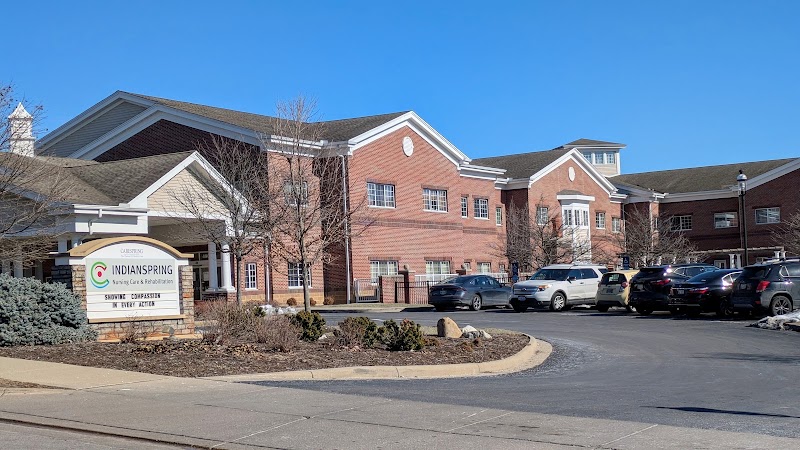
How is Indianspring Of Oakley Staffed?

CMS rates INDIANSPRING OF OAKLEY's staffing level at 2 out of 5 stars, which is below average compared to other nursing homes. Staff turnover is 59%, which is 13 percentage points above the Ohio average of 46%. High turnover can affect care consistency as new staff learn residents' individual needs.

What Have Inspectors Found at Indianspring Of Oakley?

State health inspectors documented 33 deficiencies at INDIANSPRING OF OAKLEY during 2018 to 2025. These included: 2 that caused actual resident harm and 31 with potential for harm. Deficiencies causing actual harm indicate documented cases where residents experienced negative health consequences.
Who Owns and Operates Indianspring Of Oakley?

INDIANSPRING OF OAKLEY is owned by a for-profit company. For-profit facilities operate as businesses with obligations to shareholders or private owners. The facility is operated by CARESPRING, a chain that manages multiple nursing homes. With 144 certified beds and approximately 115 residents (about 80% occupancy), it is a mid-sized facility located in CINCINNATI, Ohio.

How Does Indianspring Of Oakley Compare to Other Ohio Nursing Homes?

Compared to the 100 nursing homes in Ohio, INDIANSPRING OF OAKLEY's overall rating (3 stars) is below the state average of 3.2, staff turnover (59%) is significantly higher than the state average of 46%, and health inspection rating (3 stars) is at the national benchmark.

What Should Families Ask When Visiting Indianspring Of Oakley?

Based on this facility's data, families visiting should ask: "How do you ensure continuity of care given staff turnover, and what is your staff retention strategy?" "Can you walk me through typical staffing levels on day, evening, and night shifts?" "Can I visit during a mealtime to observe dining assistance and food quality?" "How do you handle medical emergencies, and what is your hospital transfer rate?" These questions are particularly relevant given the facility's high staff turnover rate and the below-average staffing rating.

Is Indianspring Of Oakley Safe?

Based on CMS inspection data, INDIANSPRING OF OAKLEY has a clean safety record: no substantiated abuse findings (meaning no confirmed cases of resident harm), no Immediate Jeopardy citations (the most serious violation level indicating risk of serious injury or death), and is not on the Special Focus Facility watch list (a federal program monitoring the lowest-performing 1% of nursing homes). The facility has a 3-star overall rating and ranks #100 of 100 nursing homes in Ohio. While no facility is perfect, families should still ask about staff-to-resident ratios and recent inspection results during their visit.

Do Nurses at Indianspring Of Oakley Stick Around?

Staff turnover at INDIANSPRING OF OAKLEY is high. At 59%, the facility is 13 percentage points above the Ohio average of 46%. High turnover means new staff may not know residents' individual needs, medications, or preferences. It can also be disorienting for residents, especially those with dementia who rely on familiar faces. Families should ask: What is causing the turnover? What retention programs are in place? How do you ensure care continuity during staff transitions?

Was Indianspring Of Oakley Ever Fined?

INDIANSPRING OF OAKLEY has no federal fines on record. CMS issues fines when nursing homes fail to meet care standards or don't correct problems found during inspections. The absence of fines suggests the facility has either maintained compliance or corrected any issues before penalties were assessed. This is a positive indicator, though families should still review recent inspection reports for the full picture.

Is Indianspring Of Oakley on Any Federal Watch List?

INDIANSPRING OF OAKLEY is not on any federal watch list. The most significant is the Special Focus Facility (SFF) program, which identifies the bottom 1% of nursing homes nationally based on persistent, serious quality problems. Not being on this list means the facility has avoided the pattern of deficiencies that triggers enhanced federal oversight. This is a positive indicator, though families should still review the facility's inspection history directly.