MOUNT NOTRE DAME HEALTH CENTER
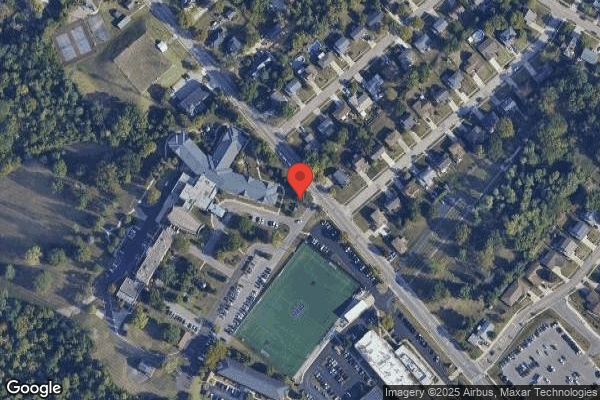
699 EAST COLUMBIA AVENUE, CINCINNATI, OH 45215 (513) 821-7448
Non profit - Church related 40 Beds Independent Data: November 2025
Trust Grade
93/100
#117 of 913 in OH
Last Inspection: November 2024

Within standard 12-15 month inspection cycle. Federal law requires annual inspections.

Overview

Mount Notre Dame Health Center in Cincinnati, Ohio, has received an excellent Trust Grade of A, indicating it is highly recommended and performs well compared to other facilities. It ranks #117 out of 913 in Ohio, placing it in the top half, and #11 out of 70 in Hamilton County, meaning only ten local options are better. However, the facility's trend is worsening, with issues increasing from one in 2019 to two in 2024. Staffing is a strength, with a perfect 5/5 star rating and a low turnover rate of 29%, significantly better than the state average of 49%. There have been no fines, which is a positive sign, and the facility has more RN coverage than 78% of Ohio facilities, ensuring better oversight of resident care. Despite these strengths, there have been some concerning incidents, such as staff failing to properly label and date food items in the kitchen, which could affect resident safety. Additionally, there were issues related to a resident not receiving necessary pre-admission screenings and another resident receiving medication when their vital signs indicated it should not have been administered. These incidents highlight areas the facility needs to improve while they maintain strong overall ratings and staff stability.

Trust Score
A
93/100
In Ohio
#117/913
Top 12%
Safety Record
Low Risk
No red flags
Inspections
Getting Worse
1 → 2 violations
Staff Stability
✓ Good
29% annual turnover. Excellent stability, 19 points below Ohio's 48% average. Staff who stay learn residents' needs.
Penalties
✓ Good
No fines on record. Clean compliance history, better than most Ohio facilities.
Skilled Nurses
✓ Good
Each resident gets 68 minutes of Registered Nurse (RN) attention daily — more than 97% of Ohio nursing homes. RNs are the most trained staff who catch health problems before they become serious.
Violations
✓ Good
Only 3 deficiencies on record. Cleaner than most facilities. Minor issues only.
★★★★★
5.0
Overall Rating
★★★★★
5.0
Staff Levels
★★★★★
5.0
Care Quality
★★★★★
5.0
Inspection Score
Stable
2019: 1 issues
2024: 2 issues

The Good

  • 5-Star Staffing Rating · Excellent nurse staffing levels
  • 5-Star Quality Measures · Strong clinical quality outcomes
  • Low Staff Turnover (29%) · Staff stability means consistent care
  • Full Sprinkler Coverage · Fire safety systems throughout facility
  • No fines on record
  • Staff turnover is low (29%)

    19 points below Ohio average of 48%

Facility shows strength in staffing levels, quality measures, staff retention, fire safety.

The Bad

No Significant Concerns Identified

This facility shows no red flags. Among Ohio's 100 nursing homes, only 1% achieve this.

The Ugly 3 deficiencies on record

Nov 2024 2 deficiencies
CONCERN (D)

Potential for Harm - no one hurt, but risky conditions existed

PASARR Coordination (Tag F0644)

Could have caused harm · This affected 1 resident

**NOTE- TERMS IN BRACKETS HAVE BEEN EDITED TO PROTECT CONFIDENTIALITY** Based on interview, medical record review, and facility policy review, the facility failed to submit a new Level I Pre-admission...

Read full inspector narrative →
**NOTE- TERMS IN BRACKETS HAVE BEEN EDITED TO PROTECT CONFIDENTIALITY** Based on interview, medical record review, and facility policy review, the facility failed to submit a new Level I Pre-admission screening and resident review (PASARR) when required for one (#4) of one sampled resident reviewed for PASARRs. The census was 39. Findings included: Review of an admission record revealed the facility admitted Resident #4 on 03/30/22. According to the admission record, the resident had a medical history that included diagnoses of anxiety disorder (onset 09/16/22), dementia (onset 10/01/22), major depressive disorder (onset 09/21/23), and delusional disorders (onset 11/06/24). Review of a quarterly Minimum Data Set (MDS) assessment, with an Assessment Reference Date (ARD) of 08/07/24, revealed Resident #4 had a Brief Interview for Mental Status (BIMS) score of 11, which indicated the resident had moderate cognitive impairment. The MDS assessment revealed the resident had active diagnoses to include anxiety disorder, depression, and psychotic disorder. Review of Resident #4's medical record revealed no evidence to indicate a level I PASARR screening was completed after the resident received new mental illness diagnoses. During an interview on 11/13/24 at 10:51 A.M., Social Worker (SW) #250 indicated she was responsible for resident PASARRs and indicated a resident review was done if there was a significant change or if a mental health diagnosis was added. SW #250 stated the resident review was for updates on the PASARR identification screening form. SW #250 indicated if the resident obtained a new mental health diagnosis, then a new resident review was completed at that time. SW #250 stated she completed a resident review for Resident #4 on 11/12/24 because the resident's prior PASARR did not have the resident's current mental illness diagnoses on it. SW #250 indicated the dates the resident obtained the mental health diagnoses were on the chart on the medical diagnoses list. SW #250 indicated the PASARR should have been resubmitted when the resident was diagnosed with the mental health diagnoses. During an interview on 11/13/24 at 12:27 P.M., the Director of Nursing (DON) indicated SW #250 was responsible for the PASARR process. The DON indicated she did not know much about the PASARR protocols, but if there was a regulation then she expected it to be followed. During an interview on 11/13/24 at 12:56 P.M., the Administrator indicated SW #250 was responsible for the resident PASARRs. The Administrator stated she expected for a Level I PASARR to be submitted when a resident obtained a new mental illness diagnosis. Review of a facility policy titled, PAS/RR [PASARR] Behavioral Health Services, revised 08/2024, indicated, the Social Worker or her designee will initiate a PAS/RR in the [name] system when a [resident] is being admitted to the facility from the community; when a [resident] is admitted to the facility from another facility and this document was not sent in with other transfer documents, or when a [resident] has a significant change in condition (either improvement or decline) and has indications of serious mental illness.
CONCERN (D)

Potential for Harm - no one hurt, but risky conditions existed

Deficiency F0760 (Tag F0760)

Could have caused harm · This affected 1 resident

2. Review of an admission record indicated the facility admitted Resident #33 on 04/25/23. According to the admission record, the resident had a medical history that included a diagnosis of HTN. Revie...

Read full inspector narrative →
2. Review of an admission record indicated the facility admitted Resident #33 on 04/25/23. According to the admission record, the resident had a medical history that included a diagnosis of HTN. Review of a quarterly MDS assessment, with an ARD of 10/23/24, revealed Resident #33 had a BIMS score of zero, which indicated the resident had severe cognitive impairment. Review of Resident #33's order summary report, that contained active orders as of 11/12/24, contained an order dated 03/06/24, for metoprolol succinate extended release (antihypertensive) 25 mg to administer 12.5 mg by mouth one time a day, with instructions to hold if the resident's SBP was less than 120 mmHg and/or the heart rate was less than 60 beats per minute. Review of Resident #33's MAR for the timeframe 10/01/24 to 10/31/24, revealed documentation that indicated staff administered metoprolol succinate 12.5 mg when the resident's SBP was less than 120 mmHg on 10/11/24, 10/28/24, and 10/30/24. Review of Resident #33's MAR for the timeframe 11/01/24 to 11/30/24, revealed documentation that indicated staff administered metoprolol succinate 12.5 mg when the resident's SBP was less than 120 mmHg on 11/02/24. During an interview on 11/13/24 at 9:11 A.M., LPN #2 stated if the vital signs were under the parameter, then she would hold the medication and document in the progress note that the medication was withheld. LPN #2 indicated it was on the nurse to catch it if the blood pressure was outside of the parameters. LPN #2 reviewed Resident #33's MAR for 10/11/24 and 10/30/24 then indicated she signed the metoprolol succinate 12.5 mg as administered so the medication would have been administered. LPN #2 stated the purpose of the parameter was so the blood pressure did not go too low and the resident become symptomatic of low blood pressure. During an interview on 11/13/24 at 9:44 A.M., Pharmacist #375 stated the purpose of including a parameter with a blood pressure medication order was to ensure a resident's blood pressure stayed within the range the physician felt was safe for the resident. Pharmacist #375 stated metoprolol tartrate acted to lower the blood pressure, and if it was administered when a resident's blood pressure was already low, it could cause tiredness, dizziness, and other unwanted adverse effects. During an interview on 11/13/24 at 11:38 A.M., Physician #300 stated the purpose of including parameters with medications such as metoprolol tartrate that lowered blood pressure was to prevent lowering a resident's blood pressure further to prevent any adverse effects. Per Physician #300, if a resident's blood pressure reading was already low, administering that medication could lower it further, which could cause adverse effects on a resident's desired blood pressure or heart rate. During an interview on 11/13/24 at 12:28 P.M., the Director of Nursing (DON) stated she expected the nurses to hold a medication if the resident's vital signs were outside the parameters outlined in the physician's order. During an interview on 11/13/24 at 12:56 P.M., the Administrator stated she expected nursing staff to follow the policies for following parameters under the guidance of the DON. Review of a facility policy titled, Administering Medication, revised 05/2024, indicated, medications shall be administered in a safe and timely manner, and as prescribed. The policy specified medications must be administered in accordance with the orders, including any required time frame. Based on interviews, medical record review, and facility policy review, the facility failed to follow vital sign parameters when administering blood pressure medications for two (#25 and #33) of five sampled residents reviewed for unnecessary medications. The census was 39. Findings included: 1. Review of an admission record indicated the facility admitted Resident #25 on 09/18/23. According to the admission record, the resident had a medical history that included diagnoses of congestive heart failure, hypertension (HTN), and atrial fibrillation. Review of a significant change in status Minimum Data Set (MDS) assessment, with an Assessment Reference Date (ARD) of 08/07/24, revealed Resident #25 had a Brief Interview for Mental Status (BIMS) score of 15, which indicated the resident had intact cognition. Review of Resident #25's care plan included a focus area, revised 08/01/24, that indicated the resident was at risk for complications related to adverse effects of medications used to treat chronic heart failure and HTN as well as changes in blood pressure. Interventions directed staff to administer medications and to check vital signs per the physician's order and to watch for complications related to a blood pressure below the parameters set by the physician. Review of Resident #25's order summary report which contained active orders as of 11/12/24, revealed an order dated 07/08/24 for metoprolol tartrate (an antihypertensive medication) oral tablet 25 milligrams (mg), give one tablet by mouth two times a day for HTN, with instructions to hold if the systolic blood pressure SBP was less than 110 millimeters of mercury (mmHg) or if the diastolic blood pressure (DBP) was less than 60 mmHg. Review of Resident #25's medication administration record (MAR) for the timeframe of 10/01/24 to 10/31/24, revealed evidence to indicate staff administered metoprolol tartrate to the resident when the resident had a DBP of 56 mmHg on 10/18/24, 57 mmHg on 10/24/24, and 58 mmHg on 10/26/24. Review of Resident #25's MAR for the timeframe of 11/01/24 to 11/30/24, revealed evidence to indicate staff administered metoprolol tartrate to the resident when the resident had a DBP of 54 mmHg on 11/04/24. During an interview on 11/12/24 at 2:50 P.M., Licensed Practical Nurse (LPN) #1 stated if vital sign parameters were included in a medication order, she checked the resident's vital sign prior to administering a medication and held the medication if the resident's blood pressure did not meet the criteria to administer the medication. LPN #1 stated she administered Resident #25's metoprolol tartrate on 10/24/24 because the resident's SBP was within an acceptable range even though the DBP was not. During an interview on 11/13/24 at 9:11 A.M., LPN #2 stated when she administered blood pressure medications with parameters, she checked the resident's blood pressure, and if the reading was below the parameter set by the physician to hold the medication, she did not administer the medication. LPN #2 stated on 11/04/24 she administered Resident #25's metoprolol even though the resident's DBP was below the specified parameter. Per LPN #2, the purpose of including a blood pressure parameter in a medication order that lowered a resident's blood pressure was to make sure the resident's blood pressure did not get too low to where the resident became symptomatic of low blood pressure.
Sept 2019 1 deficiency
CONCERN (F)

Potential for Harm - no one hurt, but risky conditions existed

Food Safety (Tag F0812)

Could have caused harm · This affected most or all residents

Based on observation, staff interview, and review of facility policy, the facility failed to label, date, cover and discard outdated foods items from the walk-in refrigerator and freezer. This had the...

Read full inspector narrative →
Based on observation, staff interview, and review of facility policy, the facility failed to label, date, cover and discard outdated foods items from the walk-in refrigerator and freezer. This had the potential to affect all 36 residents who resided in the facility and receive food from the kitchen. Findings include: On 09/03/19 at 8:16 A.M., an initial tour of the kitchen was conducted with Dietary Supervisor (DS) #100. During the observation the following concerns were verified by DS #100: a. In the freezer there was a bag of steak fries with no date of opened or a use by date. b. In the freezer there was a bag of fish with no date of opened or a use by date. c. In the freezer there was a ham rewrapped with no date or used by date. d. In the freezer there were eight bags of soup vegetables with no date or used by date. e. In the refrigerator there was a tray with 13 slices of apple spice cakes on a cart that were uncovered with no date or used by date. f. In the refrigerator on a tray there were seven cream puffs on a cart uncovered with no date or used by date. g. In the refrigerator there were a bag of carrots with a prep date of 08/25/19 and a used by date of 09/01/19 Interview on 09/03/19 at 8:30 A.M., DS #100 stated foods should be covered, labeled and dated. 2. Observation on 09/04/19 at 3:00 P.M., revealed Dietary [NAME] (DC) #200 took off plastic gloves and placed them on the counter to get a spatula for the pureed desert. DC #200 placed the spatula on top of the plastic gloves and proceeded to use the edge of the spatula to cut a piece of pie and place in the blender. Interview on 09/04/19 at 3:05 P.M., DC #200 reported she did not realize she had placed the spatula on top of the plastic gloves. DC #200 verified findings. 3. Observation on 09/04/19 at 5:10 P.M., revealed Dietary Aide (DA) #300 brought in the kitchenette six cups of ice uncovered. There was an ice machine in the hallway across from the finance and medical records office. The ice machine was also located down the hall from the bathrooms. Interview on 09/04/19 at 5:11 P.M., DA #300 reported she did not know she was supposed to cover the cups of ice. DA #300 verified findings of not covering cups of ice while traveling in the hall way then to the kitchenette. Review of the facility policy titled, Food Storage, no date, revealed all foods must be covered, labeled and dated.
Understanding Severity Codes (click to expand)
Life-Threatening (Immediate Jeopardy)
J - Isolated K - Pattern L - Widespread
Actual Harm
G - Isolated H - Pattern I - Widespread
Potential for Harm
D - Isolated E - Pattern F - Widespread
No Harm (Minor)
A - Isolated B - Pattern C - Widespread

Questions to Ask on Your Visit

  • "Can I speak with families of current residents?"
  • "What's your RN coverage like on weekends and overnight?"

Our Honest Assessment

Strengths
  • • Grade A (93/100). Above average facility, better than most options in Ohio.
  • • No major safety red flags. No abuse findings, life-threatening violations, or SFF status.
  • • No fines on record. Clean compliance history, better than most Ohio facilities.
  • • Only 3 deficiencies on record. Cleaner than most facilities. Minor issues only.
Concerns
  • • No significant concerns identified. This facility shows no red flags across CMS ratings, staff turnover, or federal penalties.
Bottom line: Generally positive indicators. Standard due diligence and a personal visit recommended.

About This Facility

What is Mount Notre Dame's CMS Rating?

CMS assigns MOUNT NOTRE DAME HEALTH CENTER an overall rating of 5 out of 5 stars, which is considered much above average nationally. Within Ohio, this rating places the facility higher than 99% of the state's 100 nursing homes. This rating reflects solid performance across the metrics CMS uses to evaluate nursing home quality.

How is Mount Notre Dame Staffed?

CMS rates MOUNT NOTRE DAME HEALTH CENTER's staffing level at 5 out of 5 stars, which is much above average compared to other nursing homes. Staff turnover is 29%, compared to the Ohio average of 46%. This relatively stable workforce can support continuity of care.

What Have Inspectors Found at Mount Notre Dame?

State health inspectors documented 3 deficiencies at MOUNT NOTRE DAME HEALTH CENTER during 2019 to 2024. These included: 3 with potential for harm.

Who Owns and Operates Mount Notre Dame?

MOUNT NOTRE DAME HEALTH CENTER is owned by a non-profit organization. Non-profit facilities reinvest revenue into operations rather than distributing to shareholders. The facility operates independently rather than as part of a larger chain. With 40 certified beds and approximately 36 residents (about 90% occupancy), it is a smaller facility located in CINCINNATI, Ohio.

How Does Mount Notre Dame Compare to Other Ohio Nursing Homes?

Compared to the 100 nursing homes in Ohio, MOUNT NOTRE DAME HEALTH CENTER's overall rating (5 stars) is above the state average of 3.2, staff turnover (29%) is significantly lower than the state average of 46%, and health inspection rating (5 stars) is much above the national benchmark.

What Should Families Ask When Visiting Mount Notre Dame?

Based on this facility's data, families visiting should ask: "Can I visit during a mealtime to observe dining assistance and food quality?" "How do you handle medical emergencies, and what is your hospital transfer rate?" "Can I speak with family members of current residents about their experience?"

Is Mount Notre Dame Safe?

Based on CMS inspection data, MOUNT NOTRE DAME HEALTH CENTER has a clean safety record: no substantiated abuse findings (meaning no confirmed cases of resident harm), no Immediate Jeopardy citations (the most serious violation level indicating risk of serious injury or death), and is not on the Special Focus Facility watch list (a federal program monitoring the lowest-performing 1% of nursing homes). The facility has a 5-star overall rating and ranks #1 of 100 nursing homes in Ohio. While no facility is perfect, families should still ask about staff-to-resident ratios and recent inspection results during their visit.

Do Nurses at Mount Notre Dame Stick Around?

Staff at MOUNT NOTRE DAME HEALTH CENTER tend to stick around. With a turnover rate of 29%, the facility is 17 percentage points below the Ohio average of 46%. Low turnover is a positive sign. It means caregivers have time to learn each resident's needs, medications, and personal preferences. Consistent staff also notice subtle changes in a resident's condition more quickly. Registered Nurse turnover is also low at 29%, meaning experienced RNs are available to handle complex medical needs.

Was Mount Notre Dame Ever Fined?

MOUNT NOTRE DAME HEALTH CENTER has no federal fines on record. CMS issues fines when nursing homes fail to meet care standards or don't correct problems found during inspections. The absence of fines suggests the facility has either maintained compliance or corrected any issues before penalties were assessed. This is a positive indicator, though families should still review recent inspection reports for the full picture.

Is Mount Notre Dame on Any Federal Watch List?

MOUNT NOTRE DAME HEALTH CENTER is not on any federal watch list. The most significant is the Special Focus Facility (SFF) program, which identifies the bottom 1% of nursing homes nationally based on persistent, serious quality problems. Not being on this list means the facility has avoided the pattern of deficiencies that triggers enhanced federal oversight. This is a positive indicator, though families should still review the facility's inspection history directly.