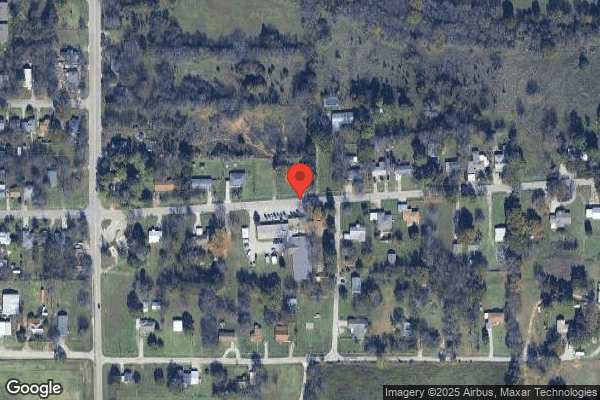




WOODVIEW HOME, INC.

1630 3RD AVENUE NORTHEAST, ARDMORE, OK 73401 (580) 226-5454
For profit - Individual 68 Beds ELMBROOK MANAGEMENT COMPANY Data: November 2025
Trust Grade
85/100
#39 of 282 in OK
Last Inspection: December 2024

Within standard 12-15 month inspection cycle. Federal law requires annual inspections.

Overview

Woodview Home, Inc. in Ardmore, Oklahoma, has a Trust Grade of B+, indicating it is above average and recommended for families considering care options. It ranks #39 among 282 facilities in Oklahoma, placing it in the top half, and #2 out of 4 in Carter County, meaning there is only one other local option that is better. The facility's performance has been stable, with two reported issues in both 2023 and 2024. Staffing is generally a strength, with a 4 out of 5 star rating, although the 62% turnover rate is slightly above average for the state. Notably, the facility has not incurred any fines, indicating good compliance with regulations. However, there are some concerning incidents noted during inspections. For instance, the ice machine was found with unsanitary residue, posing a health risk, and staff failed to follow a resident's fall prevention care plan, which could lead to potential harm. Additionally, there was an incident where a medication patch was not removed as prescribed, highlighting issues in medication management. Overall, while Woodview Home has strengths in its ratings and staffing, families should be aware of these specific concerns.

Trust Score
B+
85/100
In Oklahoma
#39/282
Top 13%
Safety Record
Low Risk
No red flags
Inspections
Holding Steady
2 → 2 violations
Staff Stability
⚠ Watch
62% turnover. Above average. Higher turnover means staff may not know residents' routines.
Penalties
✓ Good
No fines on record. Clean compliance history, better than most Oklahoma facilities.
Skilled Nurses
⚠ Watch
Each resident gets only 29 minutes of Registered Nurse (RN) attention daily — below average for Oklahoma. Fewer RN minutes means fewer trained eyes watching for problems.
Violations
✓ Good
Only 5 deficiencies on record. Cleaner than most facilities. Minor issues only.
★★★★★
5.0
Overall Rating
★★★★☆
4.0
Staff Levels
★★★★☆
4.0
Care Quality
★★★★★
5.0
Inspection Score
Stable
2023: 2 issues
2024: 2 issues

The Good

  • 4-Star Staffing Rating · Above-average nurse staffing levels
  • 4-Star Quality Measures · Strong clinical quality outcomes
  • Full Sprinkler Coverage · Fire safety systems throughout facility
  • No fines on record

Facility shows strength in staffing levels, quality measures, fire safety.

The Bad

Staff Turnover: 62%

16pts above Oklahoma avg (46%)

Frequent staff changes - ask about care continuity

Chain: ELMBROOK MANAGEMENT COMPANY

Part of a multi-facility chain

Ask about local staffing decisions and management

Staff turnover is elevated (62%)

14 points above Oklahoma average of 48%

The Ugly 5 deficiencies on record

Dec 2024 2 deficiencies
CONCERN (D)

Potential for Harm - no one hurt, but risky conditions existed

Comprehensive Care Plan (Tag F0656)

Could have caused harm · This affected 1 resident

Based on observation, record review, and interview, the facility failed to implement a fall prevention per the resident's care plan for one (#13) of three sampled residents reviewed for falls. The adm...

Read full inspector narrative →
Based on observation, record review, and interview, the facility failed to implement a fall prevention per the resident's care plan for one (#13) of three sampled residents reviewed for falls. The administrator reported 44 residents resided in the facility. A Falls - Clinical Protocol policy, dated March 2018, read in part, If underlying causes cannot be readily identified or corrected, staff will try various relevant interventions, based on assessment of the nature or category of falling .The staff and physician will monitor and document the individual's response to interventions intended to reduce falling or the consequences of falling. Resident #13 had diagnoses which included Alzheimer's disease, congestive heart failure, chronic pain, and a history of falls. An MDS assessment, dated 11/25/24, documented Resident #13 had severely impaired cognition. The assessment documented the resident had no falls since admission. A fall risk assessment for Resident #13, dated 11/26/24, documented the resident had a high risk for falls. An incident report, dated 12/02/24, documented Resident #13 was found on the floor. The report documented an intervention was a fall mat to be placed beside the bed and staff would monitor the intervention. A care plan for Resident #13, dated 12/03/24, documented the resident was at risk for falls due to psychotropic medication use and impaired balance. The care plan documented a fall mat would be placed beside the bed. On 12/11/24 at 3:03 p.m., Resident #13 was observed lying in bed asleep. There was no fall mat observed on the floor. On 12/11/24 at 3:07 p.m., CMA #1 checked Resident #13's room and reported there was no fall mat in the room. The CMA reported they were not aware a fall mat was supposed to be in use. On 12/11/24 at 3:27 p.m., the DON reported there should be a fall mat in place for Resident #13. They reported the updated care plan included the fall mat as an intervention to prevent falls.
CONCERN (D)

Potential for Harm - no one hurt, but risky conditions existed

Pharmacy Services (Tag F0755)

Could have caused harm · This affected 1 resident

Based on observation, record review, and interview, the facility failed to remove a medication patch as ordered for one (#16) of 10 sampled residents observed during a medication pass. The administra...

Read full inspector narrative →
Based on observation, record review, and interview, the facility failed to remove a medication patch as ordered for one (#16) of 10 sampled residents observed during a medication pass. The administrator reported 44 residents resided in the facility. Findings: An Administering Medications policy, dated April 2019, documented medications were to be administered in accordance to prescriber orders, including any required time frame. Resident #16 had diagnoses which included Alzheimer's dementia, hypertension, diabetes, and pain. An MDS assessment for Resident #16, dated 09/13/24, documented the resident was severely impaired with cognition. A care plan for Resident #16, dated 09/16/24, documented the resident had pain and medications would be administered as ordered. A physician's order for Resident #16, dated 10/12/24, documented Lidoderm (lidocaine) adhesive medicated patch 5%, 1 topical, apply to lower back every day at 9:00 a.m., then remove patch every evening at 9:00 p.m. On 12/10/24 at 10:00 a.m., CMA #2 was observed to remove a patch from Resident #16 and observed to apply a new lidocaine patch. CMA #2 reported the patch they removed should have been removed on 12/09/24 at 9:00 p.m. The CMA reported the lidocaine patch was to be applied in the morning, left in place for 12 hours, then removed in the evening. On 12/11/24 at 9:18 a.m., the DON reported CMA #2 had reported the lidocaine patch was not removed as ordered. The DON provided a copy of a medication error report completed on 12/10/24 and reported the physician order was not followed.
Oct 2023 2 deficiencies
CONCERN (D) 📢 Someone Reported This

A family member, employee, or ombudsman was alarmed enough to file a formal complaint

Potential for Harm - no one hurt, but risky conditions existed

Comprehensive Care Plan (Tag F0656)

Could have caused harm · This affected 1 resident

Based on record review and interview, the facility failed to update and implement comprehensive person-centered care plans to include relevant interventions for two (#35 and #188) of four residents sa...

Read full inspector narrative →
Based on record review and interview, the facility failed to update and implement comprehensive person-centered care plans to include relevant interventions for two (#35 and #188) of four residents sampled for falls. The administrator reported 37 residents resided in the facility. Findings: The Using the Care Plan policy, dated August 2006, read in part, .Changes in the resident's condition must be reported to the MDS Assessment Coordinator so that a review of the resident's assessment and care plan can be made . 1. A care plan for Resident #35, dated 08/16/23, read in part, .Approach: 05/17/23: Resident to use call light for assist; 07/11/23: Resident to use call light for assist; 07/29/23: Educated resident on the importance of locking wheelchair before trying to transfer; 08/07/23: Fall no injury-encourage resident to utilize call system when needing transfer assist; 08/24/23: Allow staff to assist with her needs. Created: 09/17/23. The interventions dated on 08/16/23 consisted of the following: Assessment and treatment for postural/orthostatic hypotension, evaluate need for bed/chair alarms, evaluate need for hip protectors, implement exercise program that targets strength, gait, and balance, increased staff supervision with intensity based on resident need. Obtain order for Vitamin D supplements of at least 800 units daily, order comprehensive medication review by pharmacist, assess for polypharmacy and medications that increase the fall risk . The fall interventions dated on 08/16/23 were listed on the plan of care; however, they were not implemented. An event report, dated 08/24/23, documented the resident had an unwitnessed fall in the bathroom which resulted in a hematoma. The report documented new intervention to prevent reoccurrence: Needs to call for help. Staff to ask Q2 hour if required toileting and assist as needed. The intervention was not added to the care plan. An event report, dated 08/27/23, documented the resident had a fall which resulted in a skin tear and bruise. The report documented new intervention implemented to prevent reoccurrence: Resident instructed to ask for assist with needs. Staff to ensure that table, drinks, and call light to remain within reach at all times. The care plan was not updated. An event report, dated 08/29/23, documented the resident had an unwitnessed fall in their room with no apparent injury. The report documented new intervention implemented to prevent reoccurrence: Exchanged w/c for larger w/c. The care plan was not updated. On 10/13/23 at 8:15 a.m., the RN/MDS coordinator reported the interventions listed on the care plan, dated 08/16/23, had not been implemented for the resident. The RN/MDS coordinator reported those interventions were added from a computer program template, but not implemented. On 10/13/23 at 08:35 a.m., the DON reported fall interventions listed on the care plan without a date came from a computer program template and had not been implemented. The DON reported they had informed the RN/MDS coordinator to delete the interventions on the care plan that came from the template. 2. A quarterly MDS assessment, dated 08/14/23, documented Resident #188 was admitted to the facility with diagnoses which included anemia, UTI, and Alzheimer's. The assessment documented the resident was severely cognitively impaired. The assessment documented a history of falls. A care plan for Resident #188, dated 08/24/23, documented the resident was at risk for falls. The plan of care documented repeated interventions to monitor the resident closely after each of the following falls that occurred on 06/23/23, 07/12/23, 07/22/23, and 08/16/23. The care plan included numerous fall interventions which included an evaluation for hip protectors, implement exercise program that targets strength gait and balance, increase staff supervision with intensity based on resident need, order comprehensive medication review by pharmacist, assess for polypharmacy and medications that increase the fall risk, and provide individualized toileting interventions based on needs/patterns. The fall interventions were listed on the resident's individualized plan of care; however, the interventions were not implemented and did not correspond to falls. On 10/13/23 at 8:00 a.m., the RN/MDS coordinator reported they used the event reports to create the plan of care. The RN/MDS coordinator reported the events dated 06/23/23, 07/12/23, 07/22/23, and 08/16/23 had the same interventions to monitor Resident #188 closely. The RN/MDS coordinator reported the other interventions listed with the date of 08/24/23 were not implemented, but added to the care plan through a computer template. On 10/13/23 at 8:35 a.m., the DON reported the fall interventions for Resident #188's care plan, which did not have a date, had not been implemented. The DON reported they had informed the RN/MDS coordinator to delete the interventions from the care plan if they were generated from the computer program template and not implemented for the individual resident.
CONCERN (D) 📢 Someone Reported This

A family member, employee, or ombudsman was alarmed enough to file a formal complaint

Potential for Harm - no one hurt, but risky conditions existed

Accident Prevention (Tag F0689)

Could have caused harm · This affected 1 resident

Based on record review and interview, the facility failed to implement the facility fall policy to ensure repeated falls were assessed to determine a pattern, and fall interventions were re-evaluated,...

Read full inspector narrative →
Based on record review and interview, the facility failed to implement the facility fall policy to ensure repeated falls were assessed to determine a pattern, and fall interventions were re-evaluated, for one (#188) of four residents sampled for falls. The administrator reported 37 residents resided in the facility. Findings: The Falls-Clinical Protocol, dated March 2018, read in part, .After a fall, the physician should review the resident's gait, balance, and current medications that may be associated with dizziness or falling .If underlying causes cannot be readily identified or corrected, staff will try various relevant interventions, based on assessment of the nature or category of falling, until falling reduces or stops or until a reason is identified for its continuation (for example, if the individual continues to try to get up and walk without waiting for assistance) .If the individual continues to fall, the staff and physician will re-evaluate the situation and reconsider possible reasons for the resident's falling (instead of, or in addition to those that have already identified) and also reconsider the current interventions . A quarterly MDS assessment for Resident #188, dated 08/14/23, documented the resident was severely cognitively impaired. The assessment documented a history of falls. A care plan for Resident #188, dated 08/24/23, documented the resident was at risk for falls. The plan of care documented the same intervention to monitor the resident closely following falls which occurred on: 06/23/23, 07/12/23, 07/22/23, and 08/16/23. The care plan included numerous fall interventions which included the evaluation for hip protectors, implement exercise program that targets strength gait and balance, increase staff supervision with intensity based on resident need, order comprehensive medication review by pharmacist, assess for polypharmacy and medications that increase the fall risk, and provide individualized toileting interventions based on needs/patterns. These fall interventions were listed on the resident's individualized plan of care but had not been implemented and did not correspond to specific falls. On 10/13/23 at 8:00 a.m., RN/MDS coordinator reported they used the event reports to create the plan of care for Resident #188. The RN/MDS coordinator reported the events dated 06/23/23, 07/12/23, 07/22/23, and 08/16/23 had the same intervention to monitor the resident closely. The RN/MDS coordinator reported other interventions listed, with the same date of 08/24/23, had not been implemented and were added to the care plan through a computer program template. On 10/13/23 at 8:35 a.m., the DON was asked about the fall interventions listed on resident #188's care plan. The DON reported the fall interventions without a corresponding fall date were not implemented. The DON stated they had informed the RN/MDS coordinator to delete the interventions on the care plan that were entered from the computer program template but not implemented for the resident.
Jun 2022 1 deficiency
CONCERN (E)

Potential for Harm - no one hurt, but risky conditions existed

Food Safety (Tag F0812)

Could have caused harm · This affected multiple residents

Based on record review, observation, and interview, the facility failed to ensure the ice machine was clean and sanitary. The dietary manager reported 34 residents received daily ice from the machine....

Read full inspector narrative →
Based on record review, observation, and interview, the facility failed to ensure the ice machine was clean and sanitary. The dietary manager reported 34 residents received daily ice from the machine. Findings: A maintenance log record documented monthly cleaning of the ice machine. The record documented 5/20/22 as the last date the ice machine had been cleaned and checked. On 06/07/22 at 10:08 a.m., the ice machine was observed to have a slimy film, with brown and black residue, on the ice guard plate inside the machine. At 10:21 a.m. the dietary manager was shown the residue and agreed it was not clean and sanitary for resident use.
Understanding Severity Codes (click to expand)
Life-Threatening (Immediate Jeopardy)
J - Isolated K - Pattern L - Widespread
Actual Harm
G - Isolated H - Pattern I - Widespread
Potential for Harm
D - Isolated E - Pattern F - Widespread
No Harm (Minor)
A - Isolated B - Pattern C - Widespread

Questions to Ask on Your Visit

  • "Why is there high staff turnover? How do you retain staff?"
  • "Can I speak with families of current residents?"
  • "What's your RN coverage like on weekends and overnight?"

Our Honest Assessment

Strengths
  • • Grade B+ (85/100). Above average facility, better than most options in Oklahoma.
  • • No major safety red flags. No abuse findings, life-threatening violations, or SFF status.
  • • No fines on record. Clean compliance history, better than most Oklahoma facilities.
  • • Only 5 deficiencies on record. Cleaner than most facilities. Minor issues only.
Concerns
  • • 62% turnover. Above average. Higher turnover means staff may not know residents' routines.
Bottom line: Generally positive indicators. Standard due diligence and a personal visit recommended.

About This Facility

What is Woodview Home, Inc.'s CMS Rating?

CMS assigns WOODVIEW HOME, INC. an overall rating of 5 out of 5 stars, which is considered much above average nationally. Within Oklahoma, this rating places the facility higher than 99% of the state's 100 nursing homes. This rating reflects solid performance across the metrics CMS uses to evaluate nursing home quality.

How is Woodview Home, Inc. Staffed?

CMS rates WOODVIEW HOME, INC.'s staffing level at 4 out of 5 stars, which is above average compared to other nursing homes. Staff turnover is 62%, which is 16 percentage points above the Oklahoma average of 46%. High turnover can affect care consistency as new staff learn residents' individual needs.

What Have Inspectors Found at Woodview Home, Inc.?

State health inspectors documented 5 deficiencies at WOODVIEW HOME, INC. during 2022 to 2024. These included: 5 with potential for harm.

Who Owns and Operates Woodview Home, Inc.?

WOODVIEW HOME, INC. is owned by a for-profit company. For-profit facilities operate as businesses with obligations to shareholders or private owners. The facility is operated by ELMBROOK MANAGEMENT COMPANY, a chain that manages multiple nursing homes. With 68 certified beds and approximately 41 residents (about 60% occupancy), it is a smaller facility located in ARDMORE, Oklahoma.

How Does Woodview Home, Inc. Compare to Other Oklahoma Nursing Homes?

Compared to the 100 nursing homes in Oklahoma, WOODVIEW HOME, INC.'s overall rating (5 stars) is above the state average of 2.7, staff turnover (62%) is significantly higher than the state average of 46%, and health inspection rating (5 stars) is much above the national benchmark.

What Should Families Ask When Visiting Woodview Home, Inc.?

Based on this facility's data, families visiting should ask: "How do you ensure continuity of care given staff turnover, and what is your staff retention strategy?" "Can I visit during a mealtime to observe dining assistance and food quality?" "How do you handle medical emergencies, and what is your hospital transfer rate?" "Can I speak with family members of current residents about their experience?" These questions are particularly relevant given the facility's high staff turnover rate.

Is Woodview Home, Inc. Safe?

Based on CMS inspection data, WOODVIEW HOME, INC. has a clean safety record: no substantiated abuse findings (meaning no confirmed cases of resident harm), no Immediate Jeopardy citations (the most serious violation level indicating risk of serious injury or death), and is not on the Special Focus Facility watch list (a federal program monitoring the lowest-performing 1% of nursing homes). The facility has a 5-star overall rating and ranks #1 of 100 nursing homes in Oklahoma. While no facility is perfect, families should still ask about staff-to-resident ratios and recent inspection results during their visit.

Do Nurses at Woodview Home, Inc. Stick Around?

Staff turnover at WOODVIEW HOME, INC. is high. At 62%, the facility is 16 percentage points above the Oklahoma average of 46%. High turnover means new staff may not know residents' individual needs, medications, or preferences. It can also be disorienting for residents, especially those with dementia who rely on familiar faces. Families should ask: What is causing the turnover? What retention programs are in place? How do you ensure care continuity during staff transitions?

Was Woodview Home, Inc. Ever Fined?

WOODVIEW HOME, INC. has no federal fines on record. CMS issues fines when nursing homes fail to meet care standards or don't correct problems found during inspections. The absence of fines suggests the facility has either maintained compliance or corrected any issues before penalties were assessed. This is a positive indicator, though families should still review recent inspection reports for the full picture.

Is Woodview Home, Inc. on Any Federal Watch List?

WOODVIEW HOME, INC. is not on any federal watch list. The most significant is the Special Focus Facility (SFF) program, which identifies the bottom 1% of nursing homes nationally based on persistent, serious quality problems. Not being on this list means the facility has avoided the pattern of deficiencies that triggers enhanced federal oversight. This is a positive indicator, though families should still review the facility's inspection history directly.