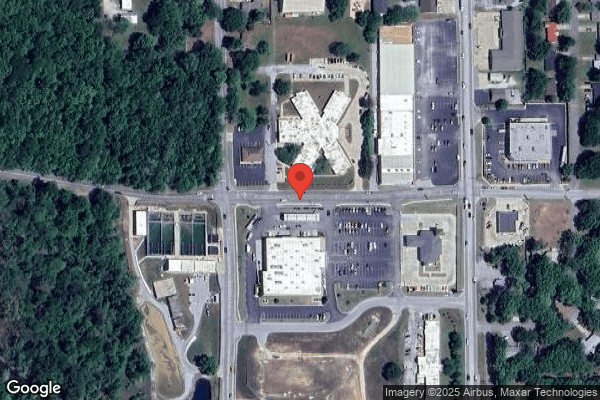
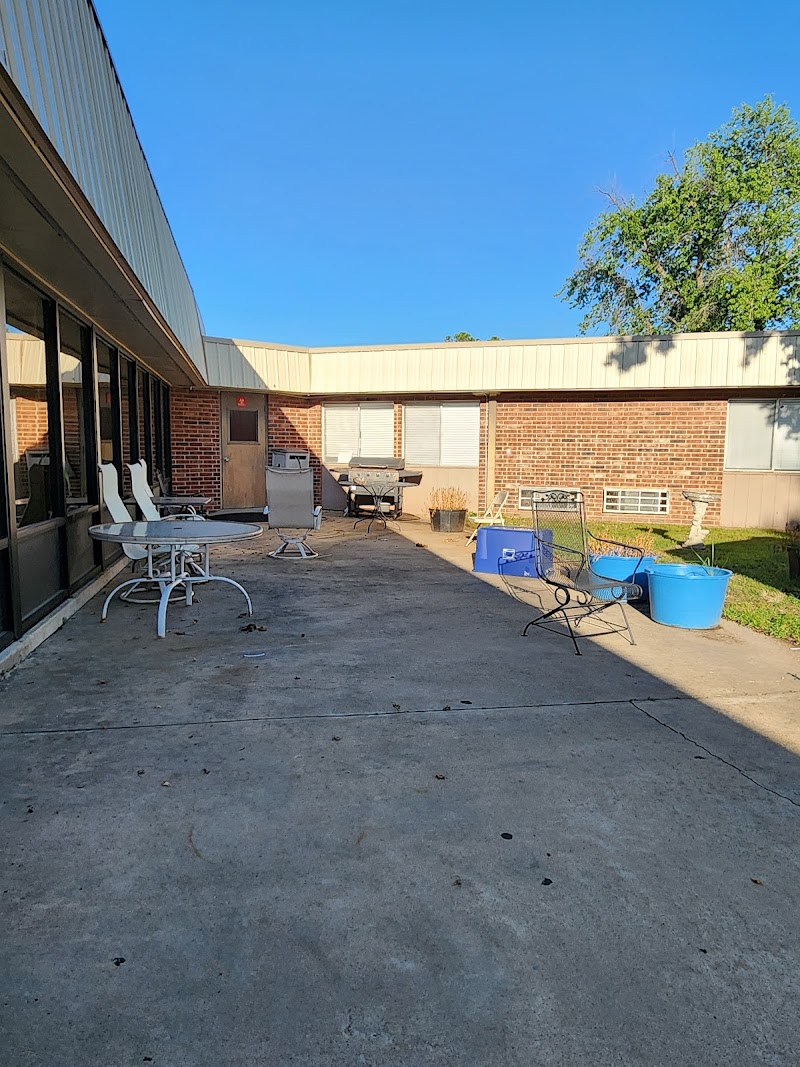
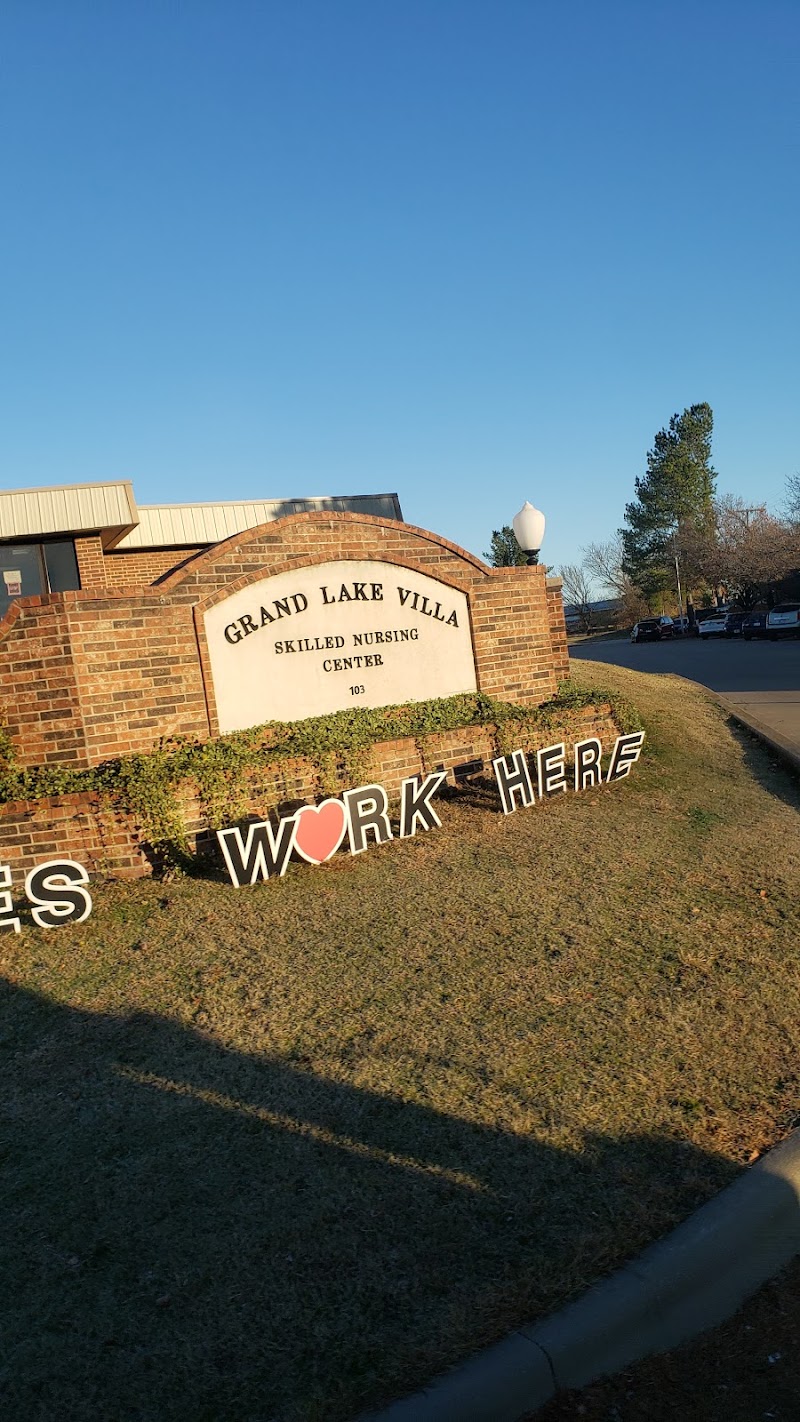
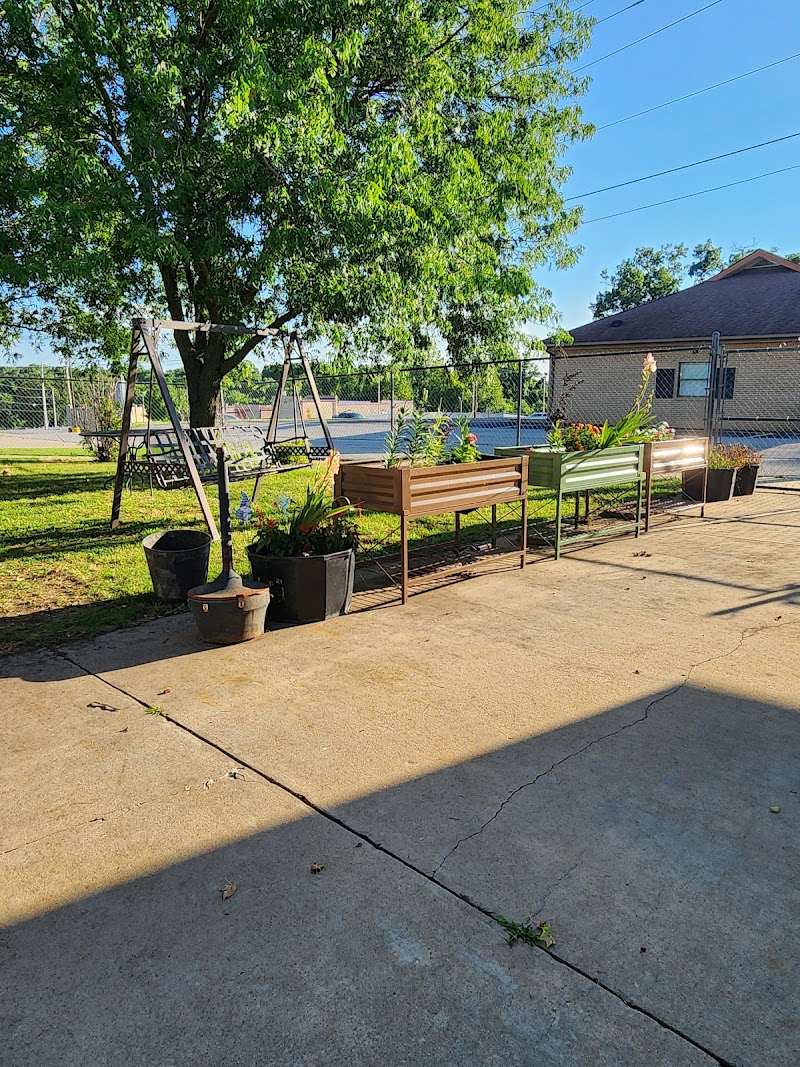
GRAND LAKE VILLA

103 HAR-BER ROAD, GROVE, OK 74344 (918) 786-2276
For profit - Limited Liability company 100 Beds MARSH POINTE MANAGEMENT Data: November 2025
Trust Grade
75/100
#56 of 282 in OK
Last Inspection: June 2024

Within standard 12-15 month inspection cycle. Federal law requires annual inspections.

Overview

Grand Lake Villa in Grove, Oklahoma, has a trust grade of B, indicating it is a good choice for families looking for care. It ranks #56 out of 282 facilities in Oklahoma, placing it in the top half, and #2 out of 5 in Delaware County, meaning only one local option is better. The facility's condition is stable, with 16 issues noted, but none of them are life-threatening or serious. Staffing is a weakness, rated at 1 out of 5 stars, but the turnover rate is 36%, which is good compared to the state average of 55%. There are no fines on record, which is a positive sign, and while RN coverage details are not available, a recent inspection revealed concerns such as unsanitary conditions in the ice machine and failure to update care plans according to resident preferences.

Trust Score
B
75/100
In Oklahoma
#56/282
Top 19%
Safety Record
Low Risk
No red flags
Inspections
Holding Steady
1 → 1 violations
Staff Stability
○ Average
36% turnover. Near Oklahoma's 48% average. Typical for the industry.
Penalties
✓ Good
No fines on record. Clean compliance history, better than most Oklahoma facilities.
Skilled Nurses
○ Average
RN staffing data not reported for this facility.
Violations
⚠ Watch
16 deficiencies on record. Higher than average. Multiple issues found across inspections.
★★★★☆
4.0
Overall Rating
★☆☆☆☆
1.0
Staff Levels
★★★☆☆
3.0
Care Quality
★★★★★
5.0
Inspection Score
Stable
2024: 1 issues
2025: 1 issues

The Good

  • Full Sprinkler Coverage · Fire safety systems throughout facility
  • No fines on record
  • Staff turnover below average (36%)

    12 points below Oklahoma average of 48%

Facility shows strength in fire safety.

The Bad

Staff Turnover: 36%

Near Oklahoma avg (46%)

Typical for the industry

Chain: MARSH POINTE MANAGEMENT

Part of a multi-facility chain

Ask about local staffing decisions and management

The Ugly 16 deficiencies on record

Jun 2025 1 deficiency
CONCERN (D) 📢 Someone Reported This

A family member, employee, or ombudsman was alarmed enough to file a formal complaint

Potential for Harm - no one hurt, but risky conditions existed

Report Alleged Abuse (Tag F0609)

Could have caused harm · This affected 1 resident

Based on record review and interview, the facility failed to ensure APS was notified of an allegation of abuse for 1 (#3) of 3 sampled residents reviewed for abuse. The DON reported the facility censu...

Read full inspector narrative →
Based on record review and interview, the facility failed to ensure APS was notified of an allegation of abuse for 1 (#3) of 3 sampled residents reviewed for abuse. The DON reported the facility census was 59. Findings: An admission record, dated 05/12/22, showed Res #1 had diagnoses which included Alzheimer's disease and anxiety. A facility document titled Abuse-Neglect-Misappropriation-Mistreatment Policy, dated 02/16/24, read in part, The facility will send a report to all reporting agencies as required by OSDH guidelines .The facility will send copies of the report to the OSDH/Adult Protective Services at the same time the report is sent to the OSDH. A quarterly assessment, dated 05/15/25, showed Res #3 had a brief interview for mental status score (a test for cognitive function) of 3, which was indicative of severe cognitive impairment. The assessment also showed Res #3 was dependent on staff for care. A nurse's note, dated 06/09/25 at 8:28 a.m., showed an allegation of abuse was reported to facility staff involving Res #3. The note also showed the OSDH, police department, power of attorney, administrator, and the physician were notified. The note did not show APS was notified. An incident report form, dated 06/09/25, showed an allegation of abuse was reported involving Res #3. The report also showed the physician, family, resident's legal representative, and local law enforcement were notified. The report did not show APS was notified. On 06/13/25 at 1:10 p.m., the DON stated APS should be contacted with any allegation of abuse. The DON also stated they could not find any documentation APS was notified of the allegation of abuse involving Res #3.
Jul 2024 1 deficiency
CONCERN (D) 📢 Someone Reported This

A family member, employee, or ombudsman was alarmed enough to file a formal complaint

Potential for Harm - no one hurt, but risky conditions existed

Report Alleged Abuse (Tag F0609)

Could have caused harm · This affected 1 resident

Based on record review and interview, the facility failed to ensure an alleged incident of physical and verbal abuse was reported to the facility administrator and Oklahoma State Department of Health ...

Read full inspector narrative →
Based on record review and interview, the facility failed to ensure an alleged incident of physical and verbal abuse was reported to the facility administrator and Oklahoma State Department of Health within two hours of the allegation for one (#1) of four sampled resident reviewed for abuse. A facility census report, dated 07/08/24, documented 56 residents resided in the facility. Findings: An Abuse Investigating and Reporting policy, dated 2017, read in part, An alleged violation of abuse, neglect, exploitation or mistreatment (including injuries of unknown source and misappropriation of resident property) will be reported immediately, but not later than: a. Two (2) hours if the alleged violation involves abuse OR (sic) resulted in serious bodily injury; or b. Twenty-four (24) hours if the alleged violation does not involve abuse AND (sic) has not resulted in serious bodily injury. An ODH 283 form (incident report form) documented an allegation of physical and verbal abuse occurred on 06/08/24. The form documented the allegation was reported to the DON on 06/10/24. A facility employee counseling form, dated 06/10/24, documented RN #1 had been disciplined for not reporting and allegation of abuse to the DON and not following the facility abuse policy regarding reporting. The form further documented RN #1's statement that they had been informed of the allegation by CNA #2 and instructed an LPN to assess the resident. The statement said RN #1 did not inform the DON of the allegation. On 07/08/24 at 10:10 a.m., CNA #2 stated they had witnessed CNA #1 curse at Resident #1 and grab the wrist of the resident and forcibly pull the resident's hands from their grip on the table. They stated about 45 minutes later they reported the incident to RN #1. They stated on the morning of 06/10/24 they also reported the incident to the DON. On 07/08/24 at 10:25 a.m., DON stated they had been told of the allegation that involved CNA #1 and Resident #1 on 06/10/24 by CNA #2. They stated that was the first time they heard about the allegation. They stated RN #1 reported they had been informed of the allegation on 06/08/24 but had not contacted the administration. They stated RN #1 had not followed policy regarding reporting and was counseled and reeducated on reporting allegation of abuse.
May 2023 4 deficiencies
CONCERN (D)

Potential for Harm - no one hurt, but risky conditions existed

Assessment Accuracy (Tag F0641)

Could have caused harm · This affected 1 resident

Based on record review and interview, the facility failed to ensure assessments were accurate for one (#2) of one resident who was reviewed for hospice services. The Resident Census and Conditions of...

Read full inspector narrative →
Based on record review and interview, the facility failed to ensure assessments were accurate for one (#2) of one resident who was reviewed for hospice services. The Resident Census and Conditions of Residents report, dated 05/02/23, documented 12 residents received hospice services. Findings: Resident #2 had diagnoses which included congestive heart failure. A Physician's Order, dated 08/30/22, documented to admit the resident to hospice services. A Hospice Certification of Terminal Illness form, dated 09/01/22 through 11/29/22, read in part, .Verbal Certification .Medical Director .I certify that this patient is terminally ill with a life expectancy of six months or less if the disease follows its normal course . The Certification was electronically signed by the physician. The significant change assessment, dated 09/09/22, documented the resident did not have a condition or chronic disease that may result in a life expectancy of less than six months. A Hospice Certification of Terminal Illness form, dated 11/30/22 through 02/27/23, read in part, .Verbal Certification .Medical Director .I certify that this patient is terminally ill with a life expectancy of six months or less if the disease follows its normal course . The Certification was electronically signed by the physician. The quarterly assessment, dated 12/10/22, documented the resident did not have a condition or chronic disease that may result in a life expectancy of less than six months. A Hospice Certification of Terminal Illness form, dated 02/28/23 through 04/28/23, read in part, .Verbal Certification .Medical Director .I certify that this patient is terminally ill with a life expectancy of six months or less if the disease follows its normal course . The Certification was electronically signed by the physician. The significant change assessment, dated 03/12/23, documented the resident did not have a condition or chronic disease that may result in a life expectancy of less than six months. On 05/05/23 at 1:33 p.m., the MDS coordinator was asked when assessments were to be coded the resident had a condition or chronic disease that may result in a life expectancy of less than six months. They stated if the physician documented the resident had a life expectancy of less than six months they would code the question as yes. They were asked where they obtained the physician's documentation. The MDS coordinator stated the hospice physician provided that information. The MDS coordinator was asked why the assessments dated 09/09/22, 12/10/22, and 03/12/23, for Resident #2, were not coded as having a life expectancy of less than six months. They stated they had not reviewed the physician's documentation on the hospice certification forms.
CONCERN (D)

Potential for Harm - no one hurt, but risky conditions existed

Deficiency F0657 (Tag F0657)

Could have caused harm · This affected 1 resident

Based on record review and interview, the facility failed to ensure care plans were reviewed and revised for one (#36) of 15 residents reviewed for care plans. The Resident Census and Conditions of R...

Read full inspector narrative →
Based on record review and interview, the facility failed to ensure care plans were reviewed and revised for one (#36) of 15 residents reviewed for care plans. The Resident Census and Conditions of Residents report, dated 05/02/23, documented 60 residents resided at the facility. Findings: Resident #36 had diagnoses which included congestive heart failure. A Physician's Order, dated 02/15/23, documented to administer lorazepam 0.5 mg every eight hours as needed for anxiety. This order was discontinued on 03/04/23. Review of the Care Plan, dated 02/23/23, did not reveal a problem, goal, or interventions for anxiety. A Physician's Order, dated 03/04/23, documented to administer lorazepam 0.5 mg every eight hours as needed for anxiety. On 05/05/23 at 3:15 p.m., the MDS/Care Plan nurse was asked why the care plan for Resident #36 had not been revised to include a care plan for anxiety. They stated they must have overlooked it.
CONCERN (D)

Potential for Harm - no one hurt, but risky conditions existed

Medication Errors (Tag F0758)

Could have caused harm · This affected 1 resident

Based on record review and interview, the facility failed to ensure as needed psychotropic medications were not ordered past 14 days without a documented physician's clinical rationale for two (#24 an...

Read full inspector narrative →
Based on record review and interview, the facility failed to ensure as needed psychotropic medications were not ordered past 14 days without a documented physician's clinical rationale for two (#24 and #36) of five residents reviewed for unnecessary medications. The DON identified 12 residents who received as needed psychotropic medications. Findings: An Antipsychotic Medication Use policy, dated December 2016, read in part, .The need to continue PRN orders for psychotropic medications beyond 14 days requires that the practitioner document the rationale for the extended order. The duration of the PRN order will be indicated in the order . 1. Resident #36 had diagnoses which included congestive heart failure. A physician's order, dated 02/15/23, documented to administer one tablet of lorazepam 0.5 mg every eight hours as needed for anxiety. A physician's order, dated 03/04/23, documented to administer one tablet of lorazepam 0.5 mg every eight hours as needed for anxiety for 60 days. Review of the April 2023 medication administration records revealed the resident had the order for lorazepam as an active order and had received the as needed medication 25 times. 2. Resident #24 had diagnoses which included anxiety. The Care Plan, dated 02/08/23, documented the resident was at risk for side effects and complications due to psychotropic drug use related to anxiety. A physician's order, dated 03/26/23, documented lorazepam 1mg every six hours PRN for anxiety/agitation. The electronic record documented Indefinite for the end date. Review of the April 2023 medication administration records revealed the resident had the order for lorazepam as an active order and had received the as needed medication six times. Review of the clinical record did not reveal a clinical rationale for continuation past 14 days or a specified duration of the PRN lorazepam. On 05/05/23 at 12:12 p.m., the consultant pharmacist was asked what the protocol was for PRN psychotropic medications. They stated PRN psychotropic medications were to be ordered for 14 days or the medication could extend past 14 days with a documented rationale from the physician. The consulting pharmacist was asked what the clinical indication for the PRN lorazepam was for Resident #36. They stated their records documented it was for anxiety. They stated in February 2023 they had requested the med be reviewed or reordered. They stated the physician addressed the recommendation on 03/02/23. The consulting pharmacist was asked what the physician's rationale was for continuing the as needed psychotropic medication for 60 days. They stated the physician had not provided a clinical rationale. They were asked what the clinical rationale was for the PRN lorazepam for Resident #24. The consultant pharmacist stated they reviewed the resident's medication in April 2023 but did not see any requests to the physician regarding the PRN lorazepam. They stated they did not recommend a duration or a rationale on every resident, every month. They stated they spread them out over the course of several months as to not overwhelm the facility. On 05/05/23 at 12:37 p.m., the DON was asked what the facility's protocol was for as needed psychotropic medications. They stated they would need to check. On 05/05/23 at 12:48 p.m., the DON stated the physician ordered as needed psychotropic medications for a duration of 14, 30, or 60 days, then re-evaluated the residents' need for the medication. The DON was asked what the duration was for the as needed lorazepam for Resident #24. They reviewed the electronic clinical record and stated they did not see a duration documented by the physician. They were asked where the physician had documented a clinical rationale for continuing the as needed psychotropic medication past 14 days. The DON reviewed the clinical record and stated there was not a clinical rationale documented by the physician. On 05/05/23 at 2:21 p.m., the DON was asked where the physician documented a clinical rationale to extend the as needed psychotropic medication past 14 days for Resident #36. They stated the physician did not document a rationale to continue past 14 days.
CONCERN (E) 📢 Someone Reported This

A family member, employee, or ombudsman was alarmed enough to file a formal complaint

Potential for Harm - no one hurt, but risky conditions existed

Food Safety (Tag F0812)

Could have caused harm · This affected multiple residents

Based on observation and interview, the facility failed to maintain the ice machine in a sanitary manner for one of one ice machines observed. The DON identified 63 residents who received nourishment ...

Read full inspector narrative →
Based on observation and interview, the facility failed to maintain the ice machine in a sanitary manner for one of one ice machines observed. The DON identified 63 residents who received nourishment from the kitchen. Findings: On 05/02/23 at 10:40 a.m., the maintenance supervisor was asked who was responsible for cleaning the ice machine. The maintenance supervisor stated the machine was leased and the leasing company performed all cleanings. The maintenance supervisor stated the machine was last cleaned in March 2023. The ice machine was observed with the maintenance supervisor. They removed the panel covering the mechanical components used to make the ice. An opaque tube, which appeared to run from the water reservoir, located at the base of the machine, to the top of the evaporator, was observed to have a shadowy, transitioning to a solid black, substance caked to the interior of the tube. The maintenance supervisor was asked what the substance was in the interior of the tube. The maintenance supervisor stated it was nasty and they would contact the supplier to clean the machine.
May 2019 10 deficiencies
CONCERN (D)

Potential for Harm - no one hurt, but risky conditions existed

Deficiency F0569 (Tag F0569)

Could have caused harm · This affected 1 resident

**NOTE- TERMS IN BRACKETS HAVE BEEN EDITED TO PROTECT CONFIDENTIALITY** Based on record review and interview, it was determined the facility failed to ensure a resident's funds were conveyed 30 days a...

Read full inspector narrative →
**NOTE- TERMS IN BRACKETS HAVE BEEN EDITED TO PROTECT CONFIDENTIALITY** Based on record review and interview, it was determined the facility failed to ensure a resident's funds were conveyed 30 days after discharge for one (#121) of three residents whose personal funds were reviewed. The facility identified 44 residents who had trust accounts. Findings: Resident #121 was admitted to the facility on [DATE]. The resident's clinical records documented he had expired/discharged on [DATE]. A check for 3,255.00 dollars was observed to have been dated [DATE]. On [DATE] at 1:36 p.m., the billing office manager was asked what had occurred regarding the refund owed to the resident. She stated the conveyance of the resident's personal funds had been sent over to corporate on [DATE]. She was asked why it had not been sent over earlier. She stated she was not positive but felt like it was redone due to it had been lost. At 3:19 p.m., the administrator was asked about the process for personal funds to be returned. She stated she was aware there had been an issue and it had taken longer to get the refund check for the resident's representative. She stated she had notified corporate and asked for a check to be issued when she was made aware it had not been done.
CONCERN (D)

Potential for Harm - no one hurt, but risky conditions existed

MDS Data Transmission (Tag F0640)

Could have caused harm · This affected 1 resident

Based on interview and record review, it was determined the facility failed to transmit two minimum data set documents within the required time periods for one (#1) of one resident who was reviewed fo...

Read full inspector narrative →
Based on interview and record review, it was determined the facility failed to transmit two minimum data set documents within the required time periods for one (#1) of one resident who was reviewed for resident assessments. The administrator identified 74 residents who resided in the facility. Findings: A quarterly assessment, dated 12/16/18, documented the assessment had been completed 12/17/18. A discharge assessment - return not anticipated report, dated 03/29/19, documented the resident discharged from the facility on 03/29/19. On 05/29/19 at 7:43 a.m., resident #1's electronic medical record was reviewed. One quarterly assessment, dated 12/16/18, was found to have been completed but not transmitted. One discharge assessment - return not anticipated report, dated 03/29/19 was found to have been completed but not transmitted. On 05/29/19 at 7:51 a.m., the DON was interviewed related to the two assessments that had not been transmitted. She was asked to review the minimum data set section of resident #1's medical record and locate any assessments that had not been transmitted. She stated a discharge assessment and quarterly assessment had not been transmitted. She was asked who was responsible for ensuring assessments were transmitted. She stated the MDS Coordinator that had created those assessment had recently resigned and she was now the one who ensured completeness and timelessness of those assessments. She stated they had not been transmitted as required.
CONCERN (E)

Potential for Harm - no one hurt, but risky conditions existed

Deficiency F0570 (Tag F0570)

Could have caused harm · This affected multiple residents

Based on interview and record review, it was determined the facility failed to ensure the surety bond was at an amount to cover the total amount of monies in the trust account for 49 of 49 residents w...

Read full inspector narrative →
Based on interview and record review, it was determined the facility failed to ensure the surety bond was at an amount to cover the total amount of monies in the trust account for 49 of 49 residents who were identified as having a personal funds account with the facility. Findings: The daily balance for resident funds was reviewed for April and May of 2019. The highest balance documented was 22,227.16. The administrator was asked for documentation of a surety bond. The administrator provided a copy of a surety bond effective 03/30/16 with no documented expiration date. An attached surety rider documented the amount of the surety bond had been decreased from 25,000.00 to 20,000.00 on 05/01/16. The copy of the surety bond documented contact information to confirm the surety bond was still in effect. On 05/29/19 at 5:23 p.m., the number to confirm the surety bond was in effect was called. The number was not a working number. The administrator was informed the surety bond could not be confirmed. With surveyors present, the administrator contacted the claims department of the company subscribed on the surety bond. The company was not able to confirm the surety bond was in effect. The surety bond company provided an alternate number to the agent who administered the surety bond. The number was not a working number. On 05/30/19 at 8:30 a.m., the administrator was asked if she had any more information regarding the surety bond. She stated the corporation who owned the facility had informed her the surety bond she provided the surveyor was no longer in effect. She stated she was working on obtaining a copy of the current surety bond but as yet did not have the information to provide. By the end of the survey, no further information was provided related to the surety bond for resident funds accounts.
CONCERN (E)

Potential for Harm - no one hurt, but risky conditions existed

Deficiency F0657 (Tag F0657)

Could have caused harm · This affected multiple residents

Based on interview and record review, it was determined the facility failed to update care plans according to resident preferences for ADL care for three (#4, #30, and #40) of three residents who were...

Read full inspector narrative →
Based on interview and record review, it was determined the facility failed to update care plans according to resident preferences for ADL care for three (#4, #30, and #40) of three residents who were sampled for activities of daily living. The facility identified 74 residents resided in the facility. Findings: 1. Resident #30 had diagnoses which included difficulty in walking, lack of coordination, and hemiplegia/hemiparesis following cerebral infarction (stroke) affecting the left non-dominant side. The care plan, dated 05/06/19, documented, .Focus .Resident is at risk for skin breakdown and pressure ulcers r/t Incontinence [sic], requires assistance with ADLs, toileting, bed mobility, transfers, fragile skin . The documented goal was .I will remain free from pressure ulcer through review date . The documented interventions were .Apply protective barrier cream as ordered .Assess and record changes in skin status. Report pertinent changes to physician .Assist resident with showers twice weekly, PRN, and upon request .check q 2 hrs and prn for toileting/hygiene needs .Monitor lab results as ordered and report abnormal results to physician .Provide dietary supplement as ordered .Provide incontinence care after each incontinent episode .Weekly skin assessments by nurse . The care plan did not address resident preferences in care. On 05/19/19 at 5:50 p.m., the resident was asked if the facility honored her preferences in care, such as when and how often she preferred to shower. She stated she did not know she had a choice in her care and no one had asked her preferences. She stated she would prefer to shower more frequently but was lucky if she received her baths twice a week as scheduled. 2. Resident #4 had diagnoses which included legal blindness, cerebral infarction (stroke), and diabetes mellitus. The care plan, dated 02/18/19, documented the resident required assistance with activities of daily living. The goals were to assist with ADLs while maintaining resident's current level of functioning for the next 90 days and the resident was to be clean, well groomed, and appropriately dressed daily through the next 90 days. The documented interventions included: ~ .Allow resident to participate in care by choosing clothing and choosing the timing and order of care received; ~Assist resident with showers twice weekly, PRN, and upon request . On 05/20/19 at 9:20 a.m., the resident was asked if the facility honored her preferences in care, such as when and how often she preferred to shower. She stated no one had asked her preference in care or they would know she preferred to shower more often than what was provided. 3. Resident #40 had diagnoses which included muscle weakness, lack of coordination, and complete quadriplegia. The care plan, dated 4/19/19, documented, .Focus .[Resident] is at risk for skin breakdown and pressure ulcers r/t Decreased Mobility, Decreased sensation, Hx pressure ulcer, Incontinence . The goal documented, .I will remain free from pressure ulcer through review date . The documented interventions were .Apply protective barrier cream as ordered .Assess and record changes in skin status. Report pertinent changes to physician .Assist resident with showers twice weekly, PRN, and upon request .Assist resident with turning and repositioning every two hours .Check q 2 hrs and prn for toileting/hygiene needs .Provide incontinence care after each incontinent episode .Weekly skin assessments by nurse . The care plan did not address resident preferences in care. On 05/21/19 at 1:40 p.m., resident #40 was asked if the facility honored his preferences in care, such as when and how often he preferred to shower. He stated nobody asked preferences. The resident stated he preferred to receive his ADL care all together, moving from bowel program, to dressing, and transfer assistance to his chair in the morning. He stated right now he waits all morning to complete his care before being assisted to his chair. On 05/30/19 at 11:15 a.m., the administrator, DON, and ADON were asked if the facility regularly monitored resident preferences in care. The group stated residents were free to come to any of their offices to discuss their preference in care. They were asked what were the residents who remained in their room or were not as assertive in their care to do. The ADON stated the facility asked about resident preferences on admission. The group was asked if they checked to see if those preferences changed once the resident was more accustomed to the facility. The DON stated no. They were asked if the facility routinely asked residents what their preferences in care were in their care plan meetings. The administrator stated no.
CONCERN (E)

Potential for Harm - no one hurt, but risky conditions existed

ADL Care (Tag F0677)

Could have caused harm · This affected multiple residents

Based on record review and interview it was determined the facility failed to provide assistance with bathing/showering for three (#4, #30, and #40) of four residents sampled for assistance with activ...

Read full inspector narrative →
Based on record review and interview it was determined the facility failed to provide assistance with bathing/showering for three (#4, #30, and #40) of four residents sampled for assistance with activities of daily living. The resident census and condition report identified 60 residents needing assistance with bathing/showering. Findings: 1. Resident #4 had diagnoses which included legal blindness, cerebral infarction (stroke), and diabetes mellitus. The care plan, dated 02/18/19, documented the resident was to receive a shower two times a week. On 05/20/19 at 9:20 a.m., the resident was asked if the facility honored her preferences in care, such as when and how often she preferred to shower. She stated no one had asked her preference in care or they would know she preferred to shower more often than what was provided. She stated the facility did not provide her showers as scheduled. The residents clinical record for ADL care for March, April, and May 2019 was reviewed. The clinical record documented the resident missed three scheduled showers in April and five scheduled showers in May. The facility was asked if there was other documentation of showers provided. Hand written bath/shower sheets were provided for March, April, and May 2019. The shower sheets were reviewed and documented the resident missed six showers in March, five showers in April, and five showers in May. 2. Resident #30 had diagnoses which included difficulty in walking, lack of coordination, and hemiplegia/hemiparesis following cerebral infarction (stroke) affecting the left non-dominant side. The care plan, dated 5/17/19, documented the resident was to receive two showers a week. It further documented the resident required assistance with ADL care due to weakness. The clinical record for ADL care for March, April, and May 2019 was reviewed. No documentation was provided for the month of March. The record documented the resident was out of the facility for the month of April. The record documented the resident missed four showers in the month of May. The facility was asked if there was other documentation of showers provided. Hand written bath/shower sheets were provided for March, April, and May 2019. The bath/shower sheets documented the resident missed five scheduled showers in March and three scheduled showers in May. The resident was out of the facility for the month of April. On 05/19/19 at 5:50 p.m., the resident was asked if the facility honored her preferences in care, such as when and how often she preferred to shower. She stated she had not received a bath since moving to 500 hall on 05/18/19. 3. Resident #40 had diagnoses which included muscle weakness, lack of coordination, and complete quadriplegia. The care plan, dated 04/19/19, documented the resident was to receive two showers each week. It further documented the resident required total assistance with all ADLs. On 05/19/19 at 3:20 p.m., CNA # 3 was asked if she had enough time to complete all of her assigned duties. She stated she worked the unit alone. The charge nurse and CMA would come back to the unit, but did not stay. She stated she did not have enough time to get all of her duties completed. She stated she could not get all the showers completed as scheduled. On 05/21/19 at 1:40 p.m., resident #40 was asked if the facility honored his preferences in care, such as when and how often he preferred to shower. He stated nobody asked preferences. The resident stated he did not receive his scheduled showers. The residents clinical record for ADL care for March, April, and May 2019 was reviewed. The clinical record documented the resident missed six scheduled showers in March, received all scheduled showers in April, and received two of the scheduled showers in May. The facility was asked if there was other documentation of showers provided. Hand written bath/shower sheets were provided for March, April, and May 2019. There were no bath/shower sheets provided for March. The bath/shower sheets documented the resident missed seven scheduled showers for April and seven scheduled showers for May. On 05/29/19 at 4:20 p.m., CNA #2 was asked if she had enough time to complete her assigned duties. She stated she did not have enough time to complete all her assigned duties and usually could not get all the showers done. She stated she usually missed one or two assigned showers daily and would offer those residents a shower the next day. On 05/30/19 at 11:15 a.m., the administrator, DON, and ADON were asked how often residents received showers. The administrator stated residents received a shower three times per week. The administrator stated they had a shower aide scheduled daily to assist residents with their showers. She stated the aide provided 17 showers just the day before. She was asked how many residents needed assistance with bathing. She looked at the DON and then replied that most residents required some kind of assistance with bathing. She was asked how 74 residents were to receive their baths three times a week for a total of 222 baths per week if the shower aide provided an average of 17 showers per day, totaling 119 showers in a 7 day period. The ADON responded, stating the residents were actually scheduled for only two showers per week. The administrator was asked why residents were not receiving their baths as scheduled. She stated the shower aide was not charting the showers she provided but instead, relied on the CNA assigned to the residents hall to chart the resident received a bath. She stated the shower aide filled out a shower sheet and handed it to the CNA to chart. She stated she now planned to have the shower aide document the showers she provided. She stated if they then see a need, she would hire another shower aide to assist with baths.
CONCERN (E)

Potential for Harm - no one hurt, but risky conditions existed

Respiratory Care (Tag F0695)

Could have caused harm · This affected multiple residents

**NOTE- TERMS IN BRACKETS HAVE BEEN EDITED TO PROTECT CONFIDENTIALITY** Based on observation, interview, and resident review, it was determined the facility failed to ensure oxygen tubing and nebulize...

Read full inspector narrative →
**NOTE- TERMS IN BRACKETS HAVE BEEN EDITED TO PROTECT CONFIDENTIALITY** Based on observation, interview, and resident review, it was determined the facility failed to ensure oxygen tubing and nebulizer tubing were labeled and dated for one (#68) of two sampled residents reviewed for respiratory services. The facility identified 20 residents who utilized oxygen. Findings: Resident #68 was admitted to the facility on [DATE] with diagnoses that included chronic obstructive pulmonary disease with exacerbation. A physician's order, dated 05/04/19, documented oxygen at three liters per minute via nasal cannula to keep saturation above 90%, to change O2 tubing weekly every Wednesday on the night shift, and to change nebulizer tubing weekly. On 05/19/19 at 4:13 p.m., the resident's oxygen and nebulizer tubing was observed. The tubings were not dated or labeled. The resident stated he wore his oxygen most of the time, especially in his room. On 05/28/19 at 2:11 p.m., the oxygen tubing and nebulizer tubing was observed. They were both dated 05/27/19. The resident stated they had changed the tubing last night. He stated it was the first time it had been changed since he admitted to the facility almost a month ago. On 05/29/19 at 2:20 p.m., LPN #2 was asked about the tubing changes. She stated they should have been done on Wednesdays. After she reviewed the physician's orders and treatment administration record for May 2019, she stated the night nurse had signed they had been changed each week. She stated she did not know why they had not been changed on 5/27/19 when a change should not have been due. At 3:07 p.m., the administrator was asked about the oxygen/nebulizer tubing. She stated one of the corporate consultants had checked and stated it wasn't being done. She stated they made a sweep of the facility and changed all of the tubings. She stated she did not know why it wasn't being done.
CONCERN (E)

Potential for Harm - no one hurt, but risky conditions existed

Deficiency F0725 (Tag F0725)

Could have caused harm · This affected multiple residents

Based on record review and interview, it was determined the facility failed to have sufficient staff to provide assistance with bathing/showering for three (#4, #30, and #40) of four residents sampled...

Read full inspector narrative →
Based on record review and interview, it was determined the facility failed to have sufficient staff to provide assistance with bathing/showering for three (#4, #30, and #40) of four residents sampled for assistance with activities of daily living. The resident census and condition report identified 60 residents needing assistance with bathing/showering. Findings: 1. Resident #4 had diagnoses which included legal blindness, cerebral infarction (stroke), and diabetes mellitus. The care plan, dated 02/18/19, documented the resident was to receive a shower two times a week. On 05/20/19 at 9:20 a.m., the resident was asked if the facility honored her preferences in care, such as when and how often she preferred to shower. She stated no one had asked her preference in care or they would know she preferred to shower more often than what was provided. She stated the facility did not provide her showers as scheduled. The residents clinical record for ADL care for March, April, and May 2019 was reviewed. The clinical record documented the resident missed three scheduled showers in April and five scheduled showers in May. The facility was asked if there was other documentation of showers provided. Hand written bath/shower sheets were provided for March, April, and May 2019. The shower sheets were reviewed and documented the resident missed six showers in March, five showers in April, and five showers in May. 2. Resident #30 had diagnoses which included difficulty in walking, lack of coordination, and hemiplegia/hemiparesis following cerebral infarction (stroke) affecting the left non-dominant side. The care plan, dated 05/17/19, documented the resident was to receive two showers a week. It further documented the resident required assistance with ADL care due to weakness. The residents clinical record for ADL care for March, April, and May 2019 was reviewed. No documentation was provided for the month of March. The record documented the resident was out of the facility for the month of April. The record documented the resident missed four showers in the month of May. The facility was asked if there was other documentation of showers provided. Hand written bath/shower sheets were provided for March, April, and May 2019. The bath/shower sheets documented the resident missed five scheduled showers in March and three scheduled showers in May. The resident was out of the facility for the month of April. On 05/19/19 at 5:50 p.m., the resident was asked if the facility honored her preferences in care, such as when and how often she preferred to shower. She stated she had not received a bath since moving to 500 hall on 05/18/19. 3. Resident #40 had diagnoses which included muscle weakness, lack of coordination, and complete quadriplegia. The care plan, dated 04/19/19, documented the resident was to receive two showers each week. It further documented the resident required total assistance with all ADLs. On 05/19/19 at 3:20 p.m., CNA # 3 was asked if she had enough time to complete all of her assigned duties. She stated she worked the unit alone. The charge nurse and CMA would come back to the unit, but did not stay. She stated she did not have enough time to get all of her duties completed. She stated she could not get all the showers completed as scheduled. On 05/21/19 at 1:40 p.m., resident #40 was asked if the facility honored his preferences in care, such as when and how often he preferred to shower. He stated nobody asked about preferences. The resident stated he did not receive his scheduled showers. The resident's clinical record for ADL care for March, April, and May 2019 was reviewed. The clinical record documented the resident missed six scheduled showers in March, received all scheduled showers in April, and received two of the scheduled showers in May. The facility was asked if there was other documentation of showers provided. Hand written bath/shower sheets were provided for March, April, and May 2019. There were no bath/shower sheets provided for March. The bath/shower sheets documented the resident missed seven scheduled showers for April and seven scheduled showers for May. On 05/29/19 at 4:20 p.m., CNA #2 was asked if she had enough time to complete her assigned duties. She stated she did not have enough time to complete all her assigned duties and usually could not get all the showers done. She stated she usually missed one or two assigned showers daily and would offer those residents a shower the next day. On 05/30/19 at 11:15 a.m., the administrator, DON, and ADON were asked how often residents received showers. The administrator stated residents received a shower three times per week. The administrator stated they had a shower aide scheduled daily to assist residents with their showers. She stated the aide provided 17 showers just the day before. She was asked how many residents needed assistance with bathing. She looked at the DON and then replied that most residents required some kind of assistance with bathing. She was asked how 74 residents were to receive their baths three times a week for a total of 222 baths per week if the shower aide provided an average of 17 showers per day, totaling 119 showers in a 7 day period. The ADON responded, stating the residents were actually scheduled for only two showers per week. The administrator was asked why residents were not receiving their baths as scheduled. She stated the shower aide was not charting the showers she provided but instead, relied on the CNA assigned to the residents hall to chart the resident received a bath. She stated the shower aide filled out a shower sheet and handed it to the CNA to chart. She stated she now planned to have the shower aide document the showers she provided. She stated if they then see a need, she would hire another shower aide to assist with baths.
CONCERN (E)

Potential for Harm - no one hurt, but risky conditions existed

Medication Errors (Tag F0758)

Could have caused harm · This affected multiple residents

Based on interview and record review, it was determined the facility failed to ensure one (#3) of five residents reviewed for unnecessary medications did not receive an antipsychotic drug without adeq...

Read full inspector narrative →
Based on interview and record review, it was determined the facility failed to ensure one (#3) of five residents reviewed for unnecessary medications did not receive an antipsychotic drug without adequate indications for use. The administrator identified 19 residents who were prescribed antipsychotic medications at the facility. Findings: An antipsychotic medication use policy, dated 2001, documented that residents would only receive antipsychotic medications when necessary to treat specific conditions for which those medications were indicated and effective. An admission assessment, dated 08/20/18, documented resident #3's cognition was severely impaired. The resident had no potential indicators of psychosis, had not demonstrated any behavioral symptoms, had a diagnosis of non-Alzheimer's dementia, did not have a diagnosis of psychotic disorder or schizophrenia, and had received an antipsychotic medication seven days of the seven day look-back period. A physician's order, dated 08/21/18, documented the resident had been prescribed quetiapine fumarate (Seroquel, an anitpsychotic medication) 50mg three tablets to be administered each night for dementia with behavioral disturbance and other recurrent depressive disorders. An undated document, titled Note to attending physician/prescriber, documented the resident had received Seroquel [quetiapine fumarate] 25mg at bedtime since 01/11/19 for the unapproved diagnosis of dementia. The physician's response was documented as a reduction of the dose to 12.5mg at bedtime. The document was signed by the physician on 04/30/19. A physician order, dated 05/01/19, documented the resident had been prescribed quetiapine fumarate 12.5mg one tablet to be administered each night for dementia with behavioral disturbance and other recurrent depressive disorders. A quarterly assessment, dated 05/17/19, documented the resident's cognition was severely impaired. The resident had no potential indicators of psychosis, had not demonstrated any behavioral symptoms, had a diagnoses of non-Alzheimer's dementia and dementia with a behavioral disturbance, did not have a diagnosis of psychotic disorder nor schizophrenia, and had received an antipsychotic medication seven days of the seven day look-back period. A care plan, dated 05/23/19, documented the resident had the problem, behaviors and cognition: dementia with behaviors. It further stated that [resident #3] had a history of physical abuse and resisted care, medications, and treatments. On 05/28/19 at 2:03 p.m., LPN #1, was asked how long she had worked with resident #3. She stated approximately three months. She was asked if the resident had demonstrated any behavioral symptoms. She stated she had seen the resident get upset with another resident twice and it was because the resident was hard of hearing and would get surprised by the other resident's sudden appearance or frustrated when she communicated with them. She was asked if she had seen the resident assault the other resident. She stated no. LPN #1 also stated the resident picked at her face and that her skin itched. She was asked if she knew why the resident was prescribed quetiapine fumarate. She stated it was for the reasons on the behavioral sheets but was unsure exactly why. At 2:33 p.m., CNA #1 was asked how long she had worked with resident #3. She stated since 03/03/19. She was asked if the resident had demonstrated any behavioral symptoms directed at herself or others during that time. She stated she had not seen any behaviors directed at others and the resident was very friendly and liked hugs. She stated that the resident picked at her skin but was not sure of the reason. At 2:43 p.m., the DON was asked how long she had worked at the facility. She stated approximately two months. She was asked if she was aware of resident #3's behaviors. She stated the resident often thinks she is going home. She was asked if she had seen the resident demonstrate any behaviors directed toward herself or others. She stated she had not. She was asked if she had observed any behaviors she could relate to psychosis. She stated she had not seen any behaviors and that the resident had dementia. She was asked if Seroquel [quetiapine fumarate] had been approved for the treatment of dementia. She stated no.
CONCERN (E)

Potential for Harm - no one hurt, but risky conditions existed

Unnecessary Medications (Tag F0759)

Could have caused harm · This affected multiple residents

Based on observation, interview, and record review, it was determined the facility failed to ensure a medication error rate of less than five percent for two (#2 and #32) of five sampled residents who...

Read full inspector narrative →
Based on observation, interview, and record review, it was determined the facility failed to ensure a medication error rate of less than five percent for two (#2 and #32) of five sampled residents who were observed during 30 opportunities of medication administration. Three medication errors were identified which resulted in a medication error rate of ten percent. This had the potential to effect 74 residents who resided at the facility and received medications. Findings: 1. Resident #2 had diagnoses which included Alzheimer's dementia, acute gastritis with bleeding, and glaucoma. The monthly physician's orders, dated May 2019, documented the resident was to receive Dorzolamide HCl - Timolol Mal Solution 22.3 - 6.8 mg/ml, one drop in each eye twice a day for glaucoma. On 05/22/19 at 9:10 a.m., LPN #4 was observed to administer medications to resident #2. The LPN administered three drops of Dorzolamide/Timolol solution to the left eye, with each drop directly dropped on the eye. The LPN administered one drop of Dorzolamide/Timolol solution to the right eye, with the drop directly dropped on the eye. The LPN did not pull the lower eye lid down and administer the medication into the conjunctiva area. The LPN administered 220 mg of ferrous sulfate (Iron) via gastrostomy tube. The monthly physician's orders did not document the resident was to receive ferrous sulfate (Iron). On 05/30/19 at 10:10 a.m., the LPN was asked how do you administer eye drops. The LPN stated she pulled the lower eye lid down and administered the ordered number of drops onto the interior lining of the lower eye lid. She was informed of the observation made on 05/22/19. She stated she must have been nervous during the observation because she intended to only one drop in each eye and did not intend for the drop to hit the eye directly. She was asked about the ferrous sulfate. She stated she did not know how the medication was observed to be administered since the resident did not have an order for ferrous sulfate and none was currently stored on her cart. 2. Resident #32 had diagnoses which included diabetes, hyperlipidemia, hypokalemia, and hypothyroidism. The monthly physician's orders, dated May 2019, documented the resident was to receive Synthroid 25mcg on an empty stomach, at least 30 minutes before breakfast. On 05/30/19 at 8:15 a.m., CMA #1 was observed to administer medications to resident #32. The resident was sitting on the bedside with her breakfast tray in front of her. She was observed eating her breakfast. The resident was asked how her breakfast tasted. She stated the cream of wheat was good. The CMA was observed to administer Synthroid along with 16 other medications while the resident was eating her breakfast. On 05/30/19 at 9:50 a.m., the DON was informed of the medication administration errors observed, including the Synthroid administered with breakfast. She stated their staff knew not to administer Synthroid with food.
CONCERN (E)

Potential for Harm - no one hurt, but risky conditions existed

Deficiency F0804 (Tag F0804)

Could have caused harm · This affected multiple residents

Based on observation and interview, it was determined the facility failed to provide residents with attractive, palatable food. The facility identified 73 residents who ate meals prepared in the kitch...

Read full inspector narrative →
Based on observation and interview, it was determined the facility failed to provide residents with attractive, palatable food. The facility identified 73 residents who ate meals prepared in the kitchen. Findings: The noon meal was observed on 05/19/19. Several residents were observed to receive the meal tray, taste the food, and return it to the kitchen uneaten. Alternate meal/sandwiches were observed to be served to the residents who requested them. Interviews were conducted with residents. Residents complained the food was often bland but when it was seasoned, it was seasoned to excess and salty. The residents complained meats and vegetables were overcooked, leaving the meat tough to cut and chew and the vegetables limp and without their color or flavor. On 05/19/19, the evening meal was sampled. The menu stated it was beef and broccoli. The beef and broccoli was served over rice. The broccoli was observed to be limp with a brownish hue. The meat was chewy. The only flavor was of the soy sauce, which was very salty.
Understanding Severity Codes (click to expand)
Life-Threatening (Immediate Jeopardy)
J - Isolated K - Pattern L - Widespread
Actual Harm
G - Isolated H - Pattern I - Widespread
Potential for Harm
D - Isolated E - Pattern F - Widespread
No Harm (Minor)
A - Isolated B - Pattern C - Widespread

Questions to Ask on Your Visit

  • "Can I speak with families of current residents?"
  • "What's your RN coverage like on weekends and overnight?"

Our Honest Assessment

Strengths
  • • No major safety red flags. No abuse findings, life-threatening violations, or SFF status.
  • • No fines on record. Clean compliance history, better than most Oklahoma facilities.
  • • 36% turnover. Below Oklahoma's 48% average. Good staff retention means consistent care.
Concerns
  • • 16 deficiencies on record. Higher than average. Multiple issues found across inspections.
Bottom line: Generally positive indicators. Standard due diligence and a personal visit recommended.

About This Facility

What is Grand Lake Villa's CMS Rating?

CMS assigns GRAND LAKE VILLA an overall rating of 4 out of 5 stars, which is considered above average nationally. Within Oklahoma, this rating places the facility higher than 99% of the state's 100 nursing homes. This rating reflects solid performance across the metrics CMS uses to evaluate nursing home quality.

How is Grand Lake Villa Staffed?

CMS rates GRAND LAKE VILLA's staffing level at 1 out of 5 stars, which is much below average compared to other nursing homes. Staff turnover is 36%, compared to the Oklahoma average of 46%. This relatively stable workforce can support continuity of care.

What Have Inspectors Found at Grand Lake Villa?

State health inspectors documented 16 deficiencies at GRAND LAKE VILLA during 2019 to 2025. These included: 16 with potential for harm.

Who Owns and Operates Grand Lake Villa?

GRAND LAKE VILLA is owned by a for-profit company. For-profit facilities operate as businesses with obligations to shareholders or private owners. The facility is operated by MARSH POINTE MANAGEMENT, a chain that manages multiple nursing homes. With 100 certified beds and approximately 61 residents (about 61% occupancy), it is a mid-sized facility located in GROVE, Oklahoma.

How Does Grand Lake Villa Compare to Other Oklahoma Nursing Homes?

Compared to the 100 nursing homes in Oklahoma, GRAND LAKE VILLA's overall rating (4 stars) is above the state average of 2.6, staff turnover (36%) is near the state average of 46%, and health inspection rating (5 stars) is much above the national benchmark.

What Should Families Ask When Visiting Grand Lake Villa?

Based on this facility's data, families visiting should ask: "Can you walk me through typical staffing levels on day, evening, and night shifts?" "Can I visit during a mealtime to observe dining assistance and food quality?" "How do you handle medical emergencies, and what is your hospital transfer rate?" "Can I speak with family members of current residents about their experience?" These questions are particularly relevant given the below-average staffing rating.

Is Grand Lake Villa Safe?

Based on CMS inspection data, GRAND LAKE VILLA has a clean safety record: no substantiated abuse findings (meaning no confirmed cases of resident harm), no Immediate Jeopardy citations (the most serious violation level indicating risk of serious injury or death), and is not on the Special Focus Facility watch list (a federal program monitoring the lowest-performing 1% of nursing homes). The facility has a 4-star overall rating and ranks #1 of 100 nursing homes in Oklahoma. While no facility is perfect, families should still ask about staff-to-resident ratios and recent inspection results during their visit.

Do Nurses at Grand Lake Villa Stick Around?

GRAND LAKE VILLA has a staff turnover rate of 36%, which is about average for Oklahoma nursing homes (state average: 46%). Moderate turnover is common in nursing homes, but families should still ask about staff tenure and how the facility maintains care continuity when employees leave.

Was Grand Lake Villa Ever Fined?

GRAND LAKE VILLA has no federal fines on record. CMS issues fines when nursing homes fail to meet care standards or don't correct problems found during inspections. The absence of fines suggests the facility has either maintained compliance or corrected any issues before penalties were assessed. This is a positive indicator, though families should still review recent inspection reports for the full picture.

Is Grand Lake Villa on Any Federal Watch List?

GRAND LAKE VILLA is not on any federal watch list. The most significant is the Special Focus Facility (SFF) program, which identifies the bottom 1% of nursing homes nationally based on persistent, serious quality problems. Not being on this list means the facility has avoided the pattern of deficiencies that triggers enhanced federal oversight. This is a positive indicator, though families should still review the facility's inspection history directly.