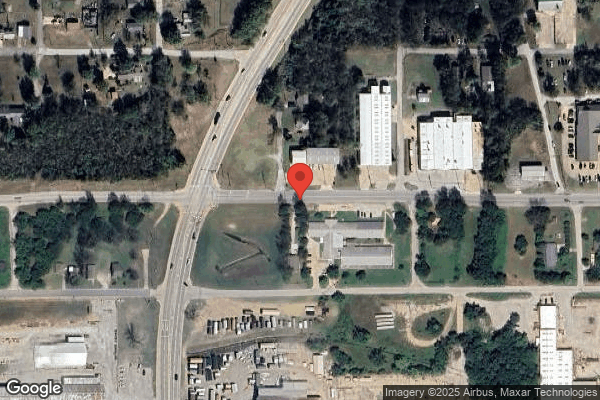

BEACON RIDGE

102 EAST LINE AVENUE, SAPULPA, OK 74066 (918) 216-1811
For profit - Limited Liability company 69 Beds RIVERS EDGE OPERATIONS Data: November 2025
Trust Grade
30/100
#195 of 282 in OK
Last Inspection: November 2024

Within standard 12-15 month inspection cycle. Federal law requires annual inspections.

Overview

Beacon Ridge in Sapulpa, Oklahoma has received a Trust Grade of F, indicating significant concerns with the facility's care and operations. Ranking #195 out of 282 in Oklahoma places it in the bottom half, and #6 out of 7 in Creek County means there is only one local option that is better. While the facility is showing improvement, reducing issues from 20 in 2024 to just 3 in 2025, the staffing turnover rate is concerning at 79%, which is considerably higher than the state average of 55%. There have been no fines, which is a positive sign, and the average RN coverage suggests that residents receive some level of professional nursing care. However, there are serious weaknesses, including failures to ensure residents could create advance directives, a lack of thorough investigations into allegations of abuse, and delays in completing important assessments, indicating areas where care could be significantly better.

Trust Score
F
30/100
In Oklahoma
#195/282
Bottom 31%
Safety Record
Low Risk
No red flags
Inspections
Getting Better
20 → 3 violations
Staff Stability
⚠ Watch
79% turnover. Very high, 31 points above average. Constant new faces learning your loved one's needs.
Penalties
✓ Good
No fines on record. Clean compliance history, better than most Oklahoma facilities.
Skilled Nurses
⚠ Watch
Each resident gets only 15 minutes of Registered Nurse (RN) attention daily — below average for Oklahoma. Fewer RN minutes means fewer trained eyes watching for problems.
Violations
⚠ Watch
38 deficiencies on record. Higher than average. Multiple issues found across inspections.
★☆☆☆☆
1.0
Overall Rating
★★☆☆☆
2.0
Staff Levels
★★★☆☆
3.0
Care Quality
★☆☆☆☆
1.0
Inspection Score
Stable
2024: 20 issues
2025: 3 issues

The Good

  • Full Sprinkler Coverage · Fire safety systems throughout facility
  • No fines on record

Facility shows strength in fire safety.

The Bad

1-Star Overall Rating

Below Oklahoma average (2.6)

Significant quality concerns identified by CMS

Staff Turnover: 79%

32pts above Oklahoma avg (46%)

Frequent staff changes - ask about care continuity

Chain: RIVERS EDGE OPERATIONS

Part of a multi-facility chain

Ask about local staffing decisions and management

Staff turnover is very high (79%)

31 points above Oklahoma average of 48%

The Ugly 38 deficiencies on record

Jan 2025 3 deficiencies
CONCERN (D) 📢 Someone Reported This

A family member, employee, or ombudsman was alarmed enough to file a formal complaint

Potential for Harm - no one hurt, but risky conditions existed

Transfer Notice (Tag F0623)

Could have caused harm · This affected 1 resident

Based on record review and interview, the facility failed to: a. give 30 days notice in writing of the resident's planned transfer/discharge to the resident/representative; b. send a copy of the notic...

Read full inspector narrative →
Based on record review and interview, the facility failed to: a. give 30 days notice in writing of the resident's planned transfer/discharge to the resident/representative; b. send a copy of the notice of transfer/discharge to the ombudsman's office; c. provide the resident with a statement of the resident's appeal rights, including the name, address, and telephone number of the entity which received such requests; d. provide information on how to obtain an appeal form; e. assist the resident in completing the form and submitting the appeal hearing request; f. provide the mailing and email address and telephone number of the agency responsible for the protection and advocacy of individuals with developmental disabilities; and g. the mailing and email address and telephone number of the agency responsible for the protection and advocacy of individuals with a mental disorder for one (#1) of three sampled residents whose clinical records were reviewed for transfer/discharge requirements. The facility admission/discharge list documented four residents who were transferred to the hospital since 10/01/24. Findings: The facility policy, titled Transfer or Discharge, Facility-Initiated and dated October 2022, read in parts, Except as specified below, the resident and his or her representative are given a thirty (30)-day advance written notice of an impending transfer or discharge from this facility .When residents who are sent emergently to an acute care setting, these scenarios are considered facility-initiated transfers, NOT discharges, because the resident's return is generally expected. Residents who are sent emergently to an acute care setting, such as a hospital, are permitted to return to the facility .Notice of Transfer is provided to the resident and representative as soon as practicable before the transfer and to the long-term care ombudsman .Notice of Facility Bed-Hold and Return policies are provided to the resident and representative within 24 hours of emergency transfer. Notices are provided in a form and manner that the resident can understand, taking into account the resident's educational level, language, communication barriers, and physical or mental impairments. Nursing notes will include documentation of appropriate orientation and preparation of the resident prior to transfer or discharge. If discharge is initiated by the facility after an emergency tranfers to the hospital, the reason for discharge is based on the resident's status at the time the resident seeks return to the facility (not at the time the resident was transferred to acute care). If the facility does not permit a resident's return to the facility based on inability to meet the resident's needs, the facility will notify the resident, and/or his or her representative in writing of the discharge, including notification of appeal rights. The facility will send a copy of the discharge notice to a representative of the Office of the State LTC Ombudsman. Notice of the Office of the State LTC Ombudsman will occur at the same time the notice of discharge is provided to the resident and resident representative. If a resident chooses to appeal a discharge, the facility will not discharge residents while the appeal is pending. If the resident chooses to appeal the discharge, the facility will allow the resident to return to his or her room or an available bed in the facility during the appeal process, unless there is documented evidence that the resident's return would endanger the health or safety of the resident or other individuals in the facility. Resident #1 had diagnoses which included fetal alcohol syndrome, schizophrenia, intellectual disabilities, and bipolar disorder. A nurse's progress note, dated 12/05/24, documented the resident was admitted to the facility from another nursing home, was pleasant, and was alert and oriented to person, place, time, and situation. The note documented the resident requested and received a tour of the facility. A nurses' progress note, dated 12/11/24, read in part, Call from [local hospital #1] on resident for information on why [they] went to the hospital. Resident refused treatment or to sign consent [for facility] to treat. Resident wanted to leave facility and no longer be here. Resident refusing care at this facility and has been aggressive both physically and sexually to staff. Resident assaulted staff by hitting [them] with a wooden sign. Resident is a danger to staff and other residents. Resident refusing care causes resident to be a danger to [themselves]. Nurse will relay message to the doctor. A nurse's note, dated 12/12/24, read in part, [Local ambulance service] brought [Resident #1] back to facility without report being called from [local hospital #1]. This facility has no right to treat [Resident #1] or make [Resident #1] stay as [Resident #1] expressed before leaving facility, Resident is a danger to staff and [themselves] as [themselves] has physically assaulted staff and refusing to consent to be treated poses a threat to [Resident #1's] health. Resident stated [they] wanted to go to [local hospital #2]. [Local ambulance service] called back and spoke with ADON and this nurse. Social worker at [local hospital #2] was notified by this nurse of situation with resident. Social worker stated [they] will call back after discussing situation with doctor and advised nurse this person usually goes to [satellite location for local hospital #2], not Tulsa. The nurse's note, dated 12/12/24, read in parts, Call back from Social Worker .[Social worker] wants to know if we will accept [Resident #1] back if [they] will sign consents and paperwork to treat at this facility. Informed social worker of inappropriate behavior, assaulting staff both physically and sexually, and assaulted [local ambulance service] staff when transferring, which is unlawful. Social worker will reach out to [their] DHS contact and would like to know if it is possible to send [Resident #1] back or if other arrangements need to be made. Informed SW I would send message to DON. Message sent to DON with phone number of SW. On 01/14/24 at 3:11 p.m., the ambulance service director was asked if the ambulance service transported Resident #1 on 12/11/24. The director stated the ambulance service transported the resident from hospital #1 back to the facility. The director stated it was a bitterly cold night and the resident was lightly clothed and strapped to a gurney. The director stated the facility staff refused to open the door and allow the resident and staff to enter the facility and discuss the situation. The director stated neither they nor the resident were informed of why the facility would not accept the resident back nor were they provided any paperwork from the facility. The director stated they had to transport the resident to another local hospital. On 01/24/25 at 3:15 p.m., LPN #1 stated when a resident was transferred/discharged to the hospital, the nurse was responsible for filling out the transfer packet. The LPN stated they read the forms to the resident before they were transferred, but the resident did not receive a copy of the forms and nothing was sent with the resident or ambulance personnel. The LPN stated the first form was a notice of transfer or discharge and documented where the resident was to transfer/discharge, the reason for the transfer or discharge, and the option for the resident to have their bed held. The LPN stated the second form was a check list of responsibilities for the nurse to complete prior to the resident's transfer/discharge. The LPN stated the third form was a certificate of medical necessity for emergency ambulance transport. The LPN stated the fourth, fifth, and sixth forms in the packet were not used. A review of the fourth form revealed it documented the resident had a right to appeal the decision to tranfers and provided the resident with an old address and contact information for the State Department of Health Long Term Care Division and the ombudsman's contact information. The fifth form was another facility check off list documenting the nurses' responsibilities with each resident transfer/discharge. The sixth form was another certificate of medical necessity to transport via ambulance. On 01/24/25 at 3:30 p.m., the social service director stated Resident #1 refused to sign the facility's consent to treat form and wished to go to a local company which worked directly with residents with intellectual disabilities. The social service director stated they had not contacted DHS Department of Developmental Disabilities nor contacted the local company to determine if a transfer was possible. The social service director stated they were not involved in the resident's transfer to the hospital and did not provide the resident with the discharge or bed-hold policy. On 01/24/25 at 3:45 p.m., the administrator stated Resident #1 did not want to live in the facility and instead wished to move to a local company that provided services to individuals with intellectual disabilities. The administrator stated the resident refused care and would not sign the facility's consent to treat form. The administrator denied contacting DHS and making a referral for services for a resident with intellectual disabilities nor contacting the local company which provided such services. The administrator was asked to provide documentation the facility assisted the resident with transferring to the local company for individuals with intellectual disabilities, documentation of the interventions attempted or used to encourage the resident's cooperation with care, what referrals were made on the resident's behalf, and who the facility contacted to help encourage the resident to cooperate with care (i.e. physician, psychiatric consult, ombudsman). The administrator reviewed the clinical record and stated there was no documentation to support any referrals were made or anyone was contacted/interventions changed to encourage the resident to cooperate with care. The administrator was asked to provide documentation the facility: a. provided the resident with a 30 days notice in writing of the resident's planned transfer/discharge to the resident/representative; b. sent a copy of the notice of transfer/discharge to the Ombudsman's office; c. provided the resident with a statement of the resident's appeal rights; d. provided information on how to obtain an appeal form; e. assisted the resident in completing the form and submitting the appeal hearing request; f. provided the mailing and email address and telephone number of the agency responsible for the protection and advocacy of individuals with developmental disabilities; and g. provided the mailing and email address and telephone number of the agency responsible for the protection and advocacy of individuals with a mental disorder. On 01/24/25 at 4:45 p.m., the administrator stated there was no such documentation in the resident's clinical record. The administrator stated they needed to in-service staff on the facility transfer/discharge/bed-hold policies and revise their transfer/discharge packets to ensure policies were followed and residents received the appropriate paperwork.
CONCERN (D) 📢 Someone Reported This

A family member, employee, or ombudsman was alarmed enough to file a formal complaint

Potential for Harm - no one hurt, but risky conditions existed

Deficiency F0625 (Tag F0625)

Could have caused harm · This affected 1 resident

Based on record review and interview, the facility failed to provide the bed-hold policy to one (#1) of three sampled residents who were transferred to the hospital. The facility admission/discharge ...

Read full inspector narrative →
Based on record review and interview, the facility failed to provide the bed-hold policy to one (#1) of three sampled residents who were transferred to the hospital. The facility admission/discharge list documented four residents who were transferred to the hospital since 10/01/24. Findings: The facility policy, titled Bed-Holds and Returns and dated October 2022, read in parts, All residents/representatives are provided written information regarding the facility and state bed-hold policies, which address holding or reserving a resident's bed during periods of absence (hospitalization or therapeutic leave). Residents, regardless of payer source, are provided written notice about these policies at least twice .notice 1: well in advance of any transfer (e.g. in the admission packet); and notice 2: at the time of transfer (or, if the transfer was an emergency, within 24 hours). Resident #1 had diagnoses which included fetal alcohol syndrome, schizophrenia, intellectual disabilities, and bipolar disorder. A nurse's progress note, dated 12/05/24, documented the resident was admitted to the facility from another nursing home, was pleasant, and was alert and oriented to person, place, time, and situation. The note documented the resident requested and received a tour of the facility. A nurses' progress note, dated 12/11/24, read in part, Call from [local hospital #1] on resident for information on why [they] went to the hospital. Resident refused treatment or to sign consent to treat. Resident wanted to leave facility and no longer be here. Resident refusing care at this facility and has been aggressive both physically and sexually to staff. Resident assaulted staff by hitting [them] with a wooden sign. Resident is a danger to staff and other residents. Resident refusing care causes resident to be a danger to [themselves]. Nurse will relay message to the doctor. A nurse's note, dated 12/12/24, read in part, [Local ambulance service] brought [Resident #1] back to facility without report being called from [local hospital #1]. This facility has no right to treat [Resident #1] or make [Resident #1] stay as [Resident #1] expressed before leaving facility, Resident is a danger to staff and [themselves] as [themselves] has physically assaulted staff and refusing to consent to be treated poses a threat to [Resident #1's] health. Resident stated [they] wanted to go to [local hospital #2]. [Local ambulance service] called back and spoke with ADON and this nurse. Social worker at [local hospital #2] was notified by this nurse of situation with resident. Social worker stated [they] will call back after discussing situation with doctor and advised nurse this person usually goes to [satellite location for local hospital #2], not Tulsa. The nurse's note, dated 12/12/24, read in parts, Call back from Social Worker .[Social worker] wants to know if we will accept [Resident #1] back if [they] will sign consents and paperwork to treat at this facility. Informed social worker of inappropriate behavior, assaulting staff both physically and sexually, and assaulted [local ambulance service] staff when transferring, which is unlawful. Social worker will reach out to [their] DHS contact and would like to know if it is possible to send [Resident #1] back or if other arrangements need to be made. Informed SW I would send message to DON. Message sent to DON with phone number of SW. On 01/14/24 at 3:11 p.m., the ambulance service director was asked if the ambulance service transported Resident #1 on 12/11/24. The director stated the ambulance service transported the resident from hospital #1 back to the facility. The director stated it was a bitterly cold night and the resident was lightly clothed and strapped to a gurney. The director stated the facility staff refused to open the door and allow the resident and staff to enter the facility and discuss the situation. The director stated neither they nor the resident were informed of why the facility would not accept the resident back nor were they provided any paperwork from the facility. The director stated they had to transport the resident to another local hospital. On 01/24/25 at 3:15 p.m., LPN #1 stated when a resident was transferred/discharged to the hospital, the nurse was responsible for filling out the transfer packet. The LPN stated they read the forms to the resident before they were transferred, but the resident did not receive a copy of the forms and nothing was sent with the resident or ambulance personnel. The LPN stated the first form was a notice of transfer or discharge and documented where the resident was to transfer/discharge, the reason for the transfer or discharge, and the option for the resident to have their bed held. The LPN stated the second form was a check list for the nurse to complete prior to the resident's transfer/discharge. The LPN stated the third form was a certificate of medical necessity for emergency ambulance transport. The LPN stated the fourth, fifth, and sixth forms in the packet were not used. A review of the fourth form revealed it documented the resident had a right to appeal the decision to tranfers and provided the resident with an old address and contact information for the State Department of Health Long Term Care Division and the ombudsman's contact information. The fifth form was another facility check off list documenting the staffs responsibilities with each resident transfer/discharge. The sixth form was another certificate of medical necessity to transport via ambulance. On 01/24/25 at 3:30 p.m., the social service director stated Resident #1 refused to sign the facility's consent to treat form and wished to go to a local company which worked directly with residents with intellectual disabilities. The social service director stated they had not reach out to the local company to determine if a transfer was possible. The social service director stated they were not involved in the resident's transfer to the hospital and did not provide the resident with the discharge or bed-hold policy. The social service director stated they were new to the position and did not know they needed to chart in the clinical record. On 01/24/25 at 3:45 p.m., the administrator stated Resident #1 did not want to live here and instead wished to move in with a local company that provided services to individuals with intellectual disabilities. The administrator stated the resident refused care and would not sign the facility's consent to treat form. The administrator was asked to provide documentation the facility assisted the resident with transferring to the local company for individuals with intellectual disabilities, documentation of the interventions attempted or used to encourage the resident's cooperation with care, what referrals were made on the resident's behalf, and who the facility contacted to help encourage the resident to cooperate with care (i.e. physician, psychiatric consult, ombudsman). The administrator reviewed the clinical record and stated there was no documentation to support any referrals were made or anyone was contacted/interventions changed to encourage the resident to cooperate with care. The administrator was asked to provide copies of the discharge and bed-hold policies provided to Resident #1 and documentation the resident's representative, ombudsman, and the State LTC office were notified of the discharge. On 01/24/25 at 4:45 p.m., the administrator stated there was no documentation the resident received the proper policies nor of the ombudsman or State LTC office being notified of the discharge. The administrator stated they needed to in-service staff on the facility transfer/discharge/bed-hold policies and revise their transfer/discharge packets to ensure residents received the appropriate paperwork.
CONCERN (D) 📢 Someone Reported This

A family member, employee, or ombudsman was alarmed enough to file a formal complaint

Potential for Harm - no one hurt, but risky conditions existed

Safe Transfer (Tag F0626)

Could have caused harm · This affected 1 resident

Based on record review and interview, the facility failed to allow one (#1) of three sampled residents who were transferred to the hospital to return to the facility. The facility admission/discharge...

Read full inspector narrative →
Based on record review and interview, the facility failed to allow one (#1) of three sampled residents who were transferred to the hospital to return to the facility. The facility admission/discharge list documented four residents who were transferred to the hospital since 10/01/24. Findings: The facility policy, titled Transfer or Discharge, Facility-Initiated and dated October 2022, read in parts, Except as specified below, the resident and his or her representative are given a thirty (30)-day advance written notice of an impending transfer or discharge from this facility .When residents who are sent emergently to an acute care setting, these scenarios are considered facility-initiated transfers, NOT discharges, because the resident's return is generally expected. Residents who are sent emergently to an acute care setting, such as a hospital, are permitted to return to the facility .If discharge is initiated by the facility after an emergency tranfers to the hospital, the reason for discharge is based on the resident's status at the time the resident seeks return to the facility (not at the time the resident was transferred to acute care). If the facility does not permit a resident's return to the facility based on inability to meet the resident's needs, the facility will notify the resident, and/or his or her representative in writing of the discharge, including notification of appeal rights. The facility will send a copy of the discharge notice to a representative of the Office of the State LTC Ombudsman. Notice of the Office of the State LTC Ombudsman will occur at the same time the notice of discharge is provided to the resident and resident representative. If a resident chooses to appeal a discharge, the facility will not discharge residents while the appeal is pending. If the resident chooses to appeal the discharge, the facility will allow the resident to return to his or her room or an available bed in the facility during the appeal process, unless there is documented evidence that the resident's return would endanger the health or safety of the resident or other individuals in the facility. Resident #1 had diagnoses which included fetal alcohol syndrome, schizophrenia, intellectual disabilities, and bipolar disorder. A nurse's progress note, dated 12/05/24, documented the resident was admitted to the facility from another nursing home, was pleasant, and was alert and oriented to person, place, time, and situation. The note documented the resident requested and received a tour of the facility. A nurses' progress note, dated 12/11/24, read in part, Call from [local hospital #1] on resident for information on why [they] went to the hospital. Resident refused treatment or to sign consent to treat. Resident wanted to leave facility and no longer be here. Resident refusing care at this facility and has been aggressive both physically and sexually to staff. Resident assaulted staff by hitting [them] with a wooden sign. Resident is a danger to staff and other residents. Resident refusing care causes resident to be a danger to [themselves]. Nurse will relay message to the doctor. A nurse's note, dated 12/12/24, read in part, [Local ambulance service] brought [Resident #1] back to facility without report being called from [local hospital 1]. This facility has no right to treat [Resident #1] or make [Resident #1] stay as [Resident #1] expressed before leaving facility, Resident is a danger to staff and [themselves] as [themselves] has physically assaulted staff and refusing to consent to be treated poses a threat to [Resident #1's] health. Resident stated [they] wanted to go to [local hospital #2]. [Local ambulance service] called back and spoke with ADON and this nurse. Social worker at [local hospital #2] was notified by this nurse of situation with resident. Social worker stated [they] will call back after discussing situation with doctor and advised nurse this person usually goes to [satellite location for local hospital #2], not Tulsa. The nurse's note, dated 12/12/24, read in parts, Call back from Social Worker .[Social worker] wants to know if we will accept [Resident #1] back if [they] will sign consents and paperwork to treat at this facility. Informed social worker of inappropriate behavior, assaulting staff both physically and sexually, and assaulted [local ambulance service] staff when transferring, which is unlawful. Social worker will reach out to [their] DHS contact and would like to know if it is possible to send [Resident #1] back or if other arrangements need to be made. Informed SW I would send message to DON. Message sent to DON with phone number of SW. On 01/24/25 at 3:15 p.m., LPN #1 stated when a resident was transferred/discharged to the hospital, the nurse was responsible for filling out the transfer packet. The LPN stated they read the forms to the resident before they were transferred, but the resident did not receive a copy of the forms and nothing was sent with the resident or ambulance personnel. The LPN stated the first form was a notice of transfer or discharge and documented where the resident was to transfer/discharge, the reason for the transfer or discharge, and the option for the resident to have their bed held. The LPN stated the second form was a check list for the nurse to complete prior to the resident's transfer/discharge. The LPN stated the third form was a certificate of medical necessity for emergency ambulance transport. The LPN stated the fourth, fifth, and sixth forms in the packet were not used. A review of the fourth form revealed it documented the resident's right to appeal the decision to tranfers and provided the resident with an old address and contact information for the State Department of Health Long Term Care Division and the ombudsman's contact information. The fifth form was another facility check off list documenting the staffs responsibilities with each resident transfer/discharge. The sixth form was another certificate of medical necessity to transport via ambulance. On 01/24/25 at 3:30 p.m., the social service director stated Resident #1 refused to sign the facility's consent to treat form and wished to go to a local company which worked directly with residents with intellectual disabilities. The social service director stated they had not reach out to the local company to determine if a transfer was possible nor contacted DHS. The social service director stated they were not involved in the resident's transfer to the hospital and did not provide the resident with the discharge or bed-hold policy. The social service director stated they were new to the position and did not know they were to chart in the resident's clinical records until after the resident had discharged . On 01/24/25 at 3:45 p.m., the administrator stated Resident #1 did not want to live in the facility and instead wished to move to a local company that provided services to individuals with intellectual disabilities. The administrator stated the resident refused care and would not sign the facility's consent to treat form. The administrator denied contacting DHS, making a referral for services for a resident with intellectual disabilities, nor contacting the local company which provided such services. The administrator was asked to provide documentation the facility followed their policies and provided the resident with the information to appeal his discharge, assisted the resident in obtaining the forms, and provided the resident with the appropriate contact information to appeal the decision with OSDH. The administrator was asked to provide documentation the resident/resident's representative, ombudsman, and the State LTC office were notified of the discharge and when the individual entities were notified. On 01/24/25 at 4:45 p.m., the administrator stated there was no such documentation in the resident's clinical record. The administrator stated they needed to in-service staff on the facility transfer/discharge/bed-hold policies and revise their transfer/discharge packets to ensure policies were followed and residents received the appropriate paperwork.
Nov 2024 16 deficiencies
CONCERN (D) 📢 Someone Reported This

A family member, employee, or ombudsman was alarmed enough to file a formal complaint

Potential for Harm - no one hurt, but risky conditions existed

Report Alleged Abuse (Tag F0609)

Could have caused harm · This affected 1 resident

Based on record review and interview, the facility failed to report an allegation of abuse to OSDH within two hours. The DON identified 57 residents resided in the facility. Findings: A facility Abus...

Read full inspector narrative →
Based on record review and interview, the facility failed to report an allegation of abuse to OSDH within two hours. The DON identified 57 residents resided in the facility. Findings: A facility Abuse, Neglect, and Exploitation policy, dated 2024, documented the facility was to report all allegations of abuse immediately, but no longer than two hours after the allegation was made. A facility reported incident, dated 10/16/24, documented an allegation of abuse regarding LPN #3. The incident report was not sent to OSDH until 10/17/24. On 11/19/24 at 11:58 a.m., the MDS coordinator stated the incident report should have been sent to OSDH within two hours, but was not.
CONCERN (D)

Potential for Harm - no one hurt, but risky conditions existed

Comprehensive Assessments (Tag F0636)

Could have caused harm · This affected 1 resident

**NOTE- TERMS IN BRACKETS HAVE BEEN EDITED TO PROTECT CONFIDENTIALITY** Based on record review and interview, the facility failed to complete comprehensive MDS assessments within the required time fra...

Read full inspector narrative →
**NOTE- TERMS IN BRACKETS HAVE BEEN EDITED TO PROTECT CONFIDENTIALITY** Based on record review and interview, the facility failed to complete comprehensive MDS assessments within the required time frame for two (#15 and #109) of five sampled residents reviewed for MDS assessment completion. The DON identified 57 residents resided in the facility. Findings: The Long-Term Care Facility Resident Assessment Instrument 3.0 User's Manual Version 1.19.1, dated October 2024, documented a significant change MDS must be completed no later than the 14th calendar day after determination a significant change had occurred. The manual also documented an admission assessment must be completed no later than the 14th day of the resident's admission. 1. Res #15 had a significant change assessment with an ARD of 10/16/24, reflective of the determination date a significant change had occurred. The MDS was not completed and signed until 11/18/24. 2. Res #109 was admitted to the facility on [DATE]. A comprehensive MDS was not completed until 11/18/24. On 11/19/24 at 9:30 a.m., the MDS coordinator stated the facility had been without an MDS coordinator for about five months. They stated they were aware there was an issue with completion of MDS assessments.
CONCERN (D)

Potential for Harm - no one hurt, but risky conditions existed

Deficiency F0655 (Tag F0655)

Could have caused harm · This affected 1 resident

**NOTE- TERMS IN BRACKETS HAVE BEEN EDITED TO PROTECT CONFIDENTIALITY** Based on record review and interview, the facility failed to develop a baseline care plan within 48 hours of admission for one (...

Read full inspector narrative →
**NOTE- TERMS IN BRACKETS HAVE BEEN EDITED TO PROTECT CONFIDENTIALITY** Based on record review and interview, the facility failed to develop a baseline care plan within 48 hours of admission for one (#109) of five sampled residents reviewed for MDS completion. The DON identified 57 residents resided in the facility. Findings: Res #109 was admitted to the facility on [DATE]. On 11/18/24 there was no active care plan documented in the resident's chart. On 11/19/24 at 9:30 a.m., the MDS coordinator stated baseline care plans should be completed within 48 hours of admission. They stated the facility had been without a MDS coordinator for about five months. They stated they were aware there were some issues with care plans.
CONCERN (D)

Potential for Harm - no one hurt, but risky conditions existed

Deficiency F0657 (Tag F0657)

Could have caused harm · This affected 1 resident

Based on observation, record review, and interview, the facility failed to review/revise a care plan for one (#17) of 15 sampled residents reviewed for care plans. The DON identified 57 residents resi...

Read full inspector narrative →
Based on observation, record review, and interview, the facility failed to review/revise a care plan for one (#17) of 15 sampled residents reviewed for care plans. The DON identified 57 residents resided in the facility. Findings: Res #17 was admitted to the facility with diagnoses which included chronic kidney disease, HTN, and chronic pain syndrome. A significant change assessment, dated 09/15/24, documented the resident was frequently incontinent of bladder and required partial to moderate assist with transfers. The assessment did not document the resident had an uindwelling catheter. A physician's order, dated 10/15/24, documented Hoyer lift with all transfers. On 11/18/24 at 11:40 a.m., Resident #17 was observed resting in bed with their eyes open. A catheter was observed draining to gravity at bedside. The resident's record was reviewed and the care plan had not been revised to document transfers with a lift or the catheter. On 11/20/24 at 12:03 p.m., the corporate nurse stated the care plan should have been revised to contain transfers with the lift and the catheter.
CONCERN (D)

Potential for Harm - no one hurt, but risky conditions existed

Incontinence Care (Tag F0690)

Could have caused harm · This affected 1 resident

Based on observation, record review, and interview, the facilty failed to obtain a physician's order for a catheter for one (#17) of one sampled resident reviewed for catheters. The DON identified 57 ...

Read full inspector narrative →
Based on observation, record review, and interview, the facilty failed to obtain a physician's order for a catheter for one (#17) of one sampled resident reviewed for catheters. The DON identified 57 residents resided in the facility. Findings: Res #17 admitted to the facility with diagnoses which included chronic kidney disease, HTN, and chronic pain syndrome. On 11/18/24 at 11:40 a.m., resident #17 was observed resting in bed with their eyes open. A catheter was observed draining to gravity at bedside. The resident's record was reviewed and did not contain a physician's order for a catheter. The resident's care plan was reviewed and did not document the resident's catheter. On 11/20/24 at 12:03 p.m., the corporate nurse stated a physician's order should have been obtained and the care plan for the catheter should have been developed.
CONCERN (D)

Potential for Harm - no one hurt, but risky conditions existed

Unnecessary Medications (Tag F0759)

Could have caused harm · This affected 1 resident

Based on observation, record review, and interview, the facility failed to ensure a medication error rate of less than 5%. A total of 30 opportunities were observed with two errors. The total medicati...

Read full inspector narrative →
Based on observation, record review, and interview, the facility failed to ensure a medication error rate of less than 5%. A total of 30 opportunities were observed with two errors. The total medication error rate was 6.67% related to incorrect doses of medication given to one (#55) of four sampled residents observed during the medication pass. The ADON identified 57 residents resided in the facility. Findings: An undated Medication Errors policy, read in part, The facility must ensure that it is free of medication error rates of 5% or greater. A physician's order for Resident #55 documented they were to receive fludrocortisone (steroid) 0.1mg tab - 0.5mg (5 tabs) by mouth daily and vitamin D3 25mg by mouth daily. A notation on the label of the blister pack for Resident #55's fludrocortisone 0.1mg tab read in part, give 5 tablets by mouth daily. The label on the blister pack for Resident #55's vitamin D3 read in part, vitamin D3 1,000 IU. On 11/20/24 at 10:24 a.m., CMA #1 was observed while administering medications to Resident #55. Medications administered by CMA #1 to Resident #55 by mouth included fludrocortisone 0.1mg tab - 1 tab and vitamin D3 1,000 IU cap - 1 cap. On 11/20/24 at 12:15 p.m., CMA #1 was asked how many tablets of fludrocortisone they had administered to Resident #55. They stated one. CMA #1 was asked to read the notation on the fludrocortisone blister pack and stated, I did not notice that notation there. We have always given [Resident #55] one tab. Usually if the dose is more than one tab it is highlighted. CMA #1 was asked to review Resident #55's order for vitamin D3 and if the dose given (1,000 IU) was equal to 25mg. They stated, I'll have to check with the nurse. On 11/20/24 at 12:25 p.m., LPN #1 was shown the blister pack for Resident #55's vitamin D3 and was asked if the dose of vitamin D3 given was equivalent to 25mg. They placed a call to the pharmacy and verified the dose was not equal to 25mg as ordered. LPN #1 was asked to review Resident #55's order for fludrocortisone and verified the dose given should have been 5 tabs. LPN #1 confirmed two medication errors had occurred. On 11/20/24 at 3:30 p.m., the corp nurse was informed of the observations described above and they acknowledged two medication errors had occurred.
CONCERN (D)

Potential for Harm - no one hurt, but risky conditions existed

Deficiency F0868 (Tag F0868)

Could have caused harm · This affected 1 resident

Based on record review and interview, the facility failed to ensure the QAA committee met at least quarterly. The DON identified 57 residents resided in the facility. Findings: The QAA committee meeti...

Read full inspector narrative →
Based on record review and interview, the facility failed to ensure the QAA committee met at least quarterly. The DON identified 57 residents resided in the facility. Findings: The QAA committee meetings were reviewed. The last QAA meeting documented was February of 2024. A QAA form, dated 08/22/24, documented a meeting was not completed in August 2024 due to the lack of a DON and staff. On 11/21/24 at 9:25 a.m., the interim administrator stated QAA meetings should have been completed quarterly. On 11/21/24 at 9:41 a.m., the interim administrator stated documentation of quarterly QAA meetings could not be located.
CONCERN (E)

Potential for Harm - no one hurt, but risky conditions existed

Deficiency F0578 (Tag F0578)

Could have caused harm · This affected multiple residents

**NOTE- TERMS IN BRACKETS HAVE BEEN EDITED TO PROTECT CONFIDENTIALITY** Based on record review and interview, the facility failed to ensure residents were offered the right to formulate an advanced di...

Read full inspector narrative →
**NOTE- TERMS IN BRACKETS HAVE BEEN EDITED TO PROTECT CONFIDENTIALITY** Based on record review and interview, the facility failed to ensure residents were offered the right to formulate an advanced directive for three (#7, 32, and #107) of six sampled residents reviewed for advance directives. The DON identified 57 residents resided in the facility. Findings: 1. Res #107 was admitted to the facility on [DATE]. Res #107's medical record did not contain an advanced directive or an advanced directive acknowledgement form. 2. Res #32 was admitted to the facility on [DATE]. Res #32's medical record did not contain an advanced directive or an advanced directive acknowledgement form. 3. Res #7 was admitted to the facility on [DATE]. Res #7's medical record did not contain an advanced directive or an advanced directive acknowledgement form. On 11/21/24 at 8:40 a.m., the corporate nurse stated the forms were not completed.
CONCERN (E) 📢 Someone Reported This

A family member, employee, or ombudsman was alarmed enough to file a formal complaint

Potential for Harm - no one hurt, but risky conditions existed

Investigate Abuse (Tag F0610)

Could have caused harm · This affected multiple residents

Based on record review and interview, the facility failed to conduct a thorough investigation after an allegation of abuse. The DON identified 57 residents resided in the facility. Findings: A facili...

Read full inspector narrative →
Based on record review and interview, the facility failed to conduct a thorough investigation after an allegation of abuse. The DON identified 57 residents resided in the facility. Findings: A facility Abuse, Neglect, and Exploitation policy, dated 2024, read in part, An immediate investigation is warranted when suspicion of abuse, neglect, or exploitation, or reports of abuse, neglect, or exploitation occur. The policy also read 4. Identifying and interviewing all involved persons, including the alleged victim, alleged perpetrator, witnesses, and others who might have knowledge of the allegations; 5. Focusing the investigation on determining if abuse, neglect, or exploitation, and/or mistreatment has occurred, the extent, and cause, and; 6. Providing complete and thorough documentation of the investigation. A facility reported incident, dated 10/04/24, documented an allegation of abuse. The report to OSDH did not include supplemental documentation regarding an investigation. On 11/19/24 at 10:34 a.m., the administrator stated they were responsible for investigations of abuse. They stated the investigation should include personal statements from and safe surveys. They stated there should have also been statements by those who were making the complaints/allegations. They stated inservices should be conducted with staff. Regarding the incident on 10/04/24, they stated they were unable to find the documentation of an investigation.
CONCERN (E)

Potential for Harm - no one hurt, but risky conditions existed

Deficiency F0638 (Tag F0638)

Could have caused harm · This affected multiple residents

Based on record review and interview, the facility failed to complete quarterly MDS assessments timely for three (#13, 20, and #31) of five sampled residents reviewed for MDS assessment completion. T...

Read full inspector narrative →
Based on record review and interview, the facility failed to complete quarterly MDS assessments timely for three (#13, 20, and #31) of five sampled residents reviewed for MDS assessment completion. The DON identified 57 residents resided in the facility. Findings: The Long-Term Care Facility Resident Assessment Instrument 3.0 User's Manual Version 1.19.1, dated October 2024, documented quarterly assessments must be completed no later than 14 calendar days after the ARD. 1. Res #13 had a quarterly MDS assessment with an ARD of 10/15/24. The assessment was not completed until 11/18/24. 2. Res #20 had a quarterly MDS assessment with an ARD of 10/15/24. The assessment was not completed until 11/18/24. 3. Res #31 had a quarterly MDS assessment with an ARD of 10/14/24. The assessment was not completed until 11/12/24. On 11/19/24 at 9:30 a.m., the MDS coordinator stated the facility had been without an MDS coordinator for about five months. They stated they were aware there was an issue with completion of MDS assessments.
CONCERN (E)

Potential for Harm - no one hurt, but risky conditions existed

Comprehensive Care Plan (Tag F0656)

Could have caused harm · This affected multiple residents

Based on record review and interview, the facility failed to develop a comprehensive care plan for: a. diabetic monitoring for one (#5) of five sampled residents reviewed for unnecessary medications; ...

Read full inspector narrative →
Based on record review and interview, the facility failed to develop a comprehensive care plan for: a. diabetic monitoring for one (#5) of five sampled residents reviewed for unnecessary medications; b. ADLs for one (#47) of three sampled residents reviewed for ADLs; c. pressure ulcers for one (#17) of two sampled residents reviewed for pressure ulcers, and d. psychotropic medications and diagnosis of psychosis for one (#31) of five sampled residents reviewed for unnecessary medications. The DON identified 57 residents who resided in the facility. Findings: 1. Res #5 was admitted to the facility with diagnoses which included type II diabetes mellitus and atrial fibrillation. A physician order, dated 08/22/24, documented to administer insulin glargine 10 units subcutaneously at bedtime for type II diabetes mellitus. A physician order, dated 08/22/24, documented to obtain FSBS and administer insulin lispro per sliding scale before meals for type II diabetes mellitus. A physician order, dated 08/22/24, documented to administer metformin (hypoglycemic medication) 500 mg two tablets twice daily for type II diabetes mellitus. A physician order, dated 08/22/24, documented to administer apixaban (anticoagulant medication) 5 mg twice daily for atrial fibrillation. A physician order, dated 09/02/24, documented to monitor for signs/symptoms of bleeding. An admission assessment, dated 09/04/24, documented the resident was cognitively intact and received insulin, hypoglycemic medication, and anticoagulant medication. A care plan, reviewed 11/20/24, had no documentation of diabetic monitoring or anticoagulant therapy. On 11/20/24 at 12:01 p.m., the corporate nurse stated diabetic monitoring and anticoagulant therapy should have been documented on Res #5's care plan. 2. Res #47 had diagnoses which included shortness of breath, weakness, and chronic kidney disease. A care plan, revised on 11/01/24, did not document ADLs. On 11/19/24 at 11:58 a.m., the MDS coordinator stated ADLs should be care planned. They were asked to review Res #47's care plan and stated they could not say ADLs were documented. 3. Res #17 was admitted to the facility with diagnoses which included of chronic kidney disease, HTN, and chronic pain syndrome. A skin assessment, dated 11/11/24, documented a new open area to the sacrum. A review of the resident's record did not document a care plan had been developed for the pressure ulcer. 4. Res #31 admitted to the facility with diagnosis which included unspecified psychosis. A physician's order, dated 02/06/24, documented Risperdal (antipsychotic medication) 1 mg twice a day. A care plan, dated 11/03/24, contained no documentation for unspecified psychosis or antipsychotic medication therapy. On 11/20/24 at 12:06 p.m., the corporate nurse stated the psychosis diagnosis and the antipsychotic medication should have been care planned.
CONCERN (E)

Potential for Harm - no one hurt, but risky conditions existed

Deficiency F0700 (Tag F0700)

Could have caused harm · This affected multiple residents

Based on observation, record review, and interview, the facility failed to: a. perform an entrapment risk assessment for four (#3, 5, 14, and #44); b. obtain a physician order for one (#3); d. obtain ...

Read full inspector narrative →
Based on observation, record review, and interview, the facility failed to: a. perform an entrapment risk assessment for four (#3, 5, 14, and #44); b. obtain a physician order for one (#3); d. obtain an informed consent for four (#3, 5, 14, and #44); and e. develop a care plan for side rail use for two (#3 and #14) of four sampled residents reviewed for accident hazards. The DON identified 13 residents whose beds were equipped with a bed rail of any type. Findings: An undated Proper Use of Bed Rails policy, read in parts, As part of the resident's comprehensive assessment, the following components will be considered when determining the resident's needs, and whether or not the use of bed rails meets those needs: medical diagnosis, behavioral symptoms, size and weight, sleep habits, medications, acute medical or surgical interventions, underlying medical conditions, existence of delirium, ability to toilet self safely, cognition, communication, mobility, risk of falling .The resident assessment should assess the resident's risk of entrapment between the mattress and bed rail or in the bed rail itself .Informed consent from the resident or resident representative must be obtained prior to installation and use of bed rails .Upon receiving informed consent, the facility will obtain a physician's order for the use of the specified bed rail and medical diagnosis, condition, symptom, or functional reason for the use of the bed rail .The facility will continue to provide necessary treatment and care to the resident who has bed rails in accordance with professional standards of practice and the resident's choices. This should be evidenced in the resident's records, including their care plan .A nurse assigned to the resident will complete reassessments in accordance with the facility's assessment schedule, but not less than quarterly, upon a significant change in status, or a change in the type of bed/mattress/rail. 1. Res #3 was admitted to the facility with diagnoses which included morbid obesity, muscle weakness, and reduced mobility. An admission assessment, dated 08/10/23, documented the resident was cognitively intact and required limited one person assistance with bed mobility and transfer. There was no documentation of an entrapment risk assessment, informed consent, or physician order for bed rails found in the medical record. There was no documentation of bed rail use in Res #3's care plan. On 11/18/24 at 11:52 a.m., Res #3 was observed lying in bed. Bilateral Halo bed rails were observed on the upper portion of the bed. Res #3 stated they used the rails to assist staff with turning them. 2. Res #5 was admitted to the facility with diagnoses which included weakness, pain, and insomnia. A care plan, dated 09/02/24, documented U rails on bed to assist with turning. An admission assessment, dated 09/04/24, documented the resident was cognitively intact, impaired on one side of upper body, and required substantial to maximum assistance with bed mobility. A physician order, dated 09/05/24, documented the resident could use bedside rails for positioning and mobility. The order documented 1/8 rails on both sides of the bed for positioning. There was no documentation of resident and/or representative informed consent for side rails found in the medical record. On 11/18/24 at 12:31 p.m., Res #5 was observed lying in bed. Bilateral half rails were observed on the upper portion of the bed. Res #5 stated the rails were utilized for positioning. 3. Res #44 was admitted to the facility with diagnoses which included muscle weakness, lack of coordination, and reduced mobility. An admission assessment, dated 10/04/21, documented the resident was cognitively intact and required extensive assistance with bed mobility. A care plan, dated 10/18/21, documented U rails on both sides of the bed to assist with positioning. A physician order, dated 11/23/21, document U rails times two for self-positioning. A bed rail entrapment risk assessment, dated 06/27/22, documented use of side rails. There was no documentation of an entrapment risk assessment since June 2022. There was no documentation of resident and/or representative informed consent for side rails found in the medical record. On 11/18/24 at 12:21 p.m., Res #44 was observed lying in bed. Bilateral U rails were observed on the upper portion of the bed. Res #44 stated the bed rails were used for turning in bed. On 11/19/24 11:00 a.m., LPN #1 stated a physician order was required prior to installation of all bed rails. LPN #1 stated they were not aware of informed consent, or a bed rail assessment having been required prior to the use of bed rails. On 11/19/24 at 11:39 a.m., the DON stated a physician order, entrapment risk assessment, and informed consent should have been completed prior to the use of bed rails for all residents in the facility. The DON stated entrapment risk assessments should have been completed quarterly and all residents with bed rails should have had the use of bed rails documented in their care plan. 4. Res #14 was admitted to the facility with diagnoses which included muscle weakness and cerebral infarction. A quarterly assessment, dated 07/26/24, documented the resident's cognition was moderately intact and was dependent for all functional abilities. There was no documentation of an entrapment risk or informed consent. There was no documentation of bedrail use in Res #14's care plan. On 11/18/24 at 4:27 p.m., Res #14 was observed resting in bed with their eyes open. Half rails were observed on the upper portion of the bed. On 11/19/24 at 11:39 a.m., the DON stated a physician order, entrapment risk assessment, and informed consent should have been completed prior to the use of bed rails for all residents in the facility. The DON stated entrapment risk assessments should have been completed quarterly and all residents with bed rails should have had the use of bed rails documented in their care plan.
CONCERN (E)

Potential for Harm - no one hurt, but risky conditions existed

Deficiency F0760 (Tag F0760)

Could have caused harm · This affected multiple residents

**NOTE- TERMS IN BRACKETS HAVE BEEN EDITED TO PROTECT CONFIDENTIALITY** Based on record review and interview, the facility failed to prevent a significant medication error occurred when the incorrect ...

Read full inspector narrative →
**NOTE- TERMS IN BRACKETS HAVE BEEN EDITED TO PROTECT CONFIDENTIALITY** Based on record review and interview, the facility failed to prevent a significant medication error occurred when the incorrect dosage of medication was administered for multiple administrations of a prescribed corticosteroid (steroid) for one (#55) of four sampled residents whose medication administration records were reviewed. The ADON identified 57 residents resided in the facility. Findings: An undated Medication Errors policy, read in part, The facility shall ensure medications will be administered according to physician's orders .Medication errors, once identified, will be evaluated to determine if considered significant or not by utilizing the following three general guidelines .c. Frequency of Error: If an error is occurring repeatedly such as an omission of a resident's medication several times. Resident #55 had diagnoses that included adrenocortical insufficiency and hypothyroidism. A physician's order for Resident #55 documented they were to receive fludrocortisone (steroid) 0.1mg tab - 0.5mg (5 tabs) by mouth daily. The label on the blister pack for Resident #55's fludrocortisone 0.1mg tab documented the prescription was filled on 09/04/24 for 150 tabs. A notation on the label read in part, give 5 tablets by mouth daily. There were 71 tabs remaining from Resident #55's fludrocortisone prescription, filled 09/04/24 for 150 tabs. Only 79 pills had been given from the prescription that was issued on 09/04/24 (79 days ago). On 11/20/24 at 12:15 p.m., CMA #1 was asked how many tablets of fludrocortisone they had administered to Resident #55 during the morning medication pass. They stated one. CMA #1 was asked to read the notation on the fludrocortisone blister pack and stated, I did not notice that notation there. We have always given [Resident #55] one tab. Usually if the dose is more than one tab it is highlighted. On 11/20/24 at 3:30 p.m., the corp nurse was informed of the observations described above. They were asked how long Resident #55's fludrocortisone prescription, filled on 09/04/24 for 150 tabs, would have lasted if the resident had been given 5 tabs daily as ordered. They stated 30 days. The corp nurse was asked if the refill date on the fludrocortisone and the number of pills given from the prescription to date, were an indication that Resident #55 had received the medication as ordered from 09/04/24 to 11/20/24. They stated no and acknowledged a significant medication error had occurred. On 11/21/24 at 9:03 a.m., Pharm Tech verified the last refill of fludrocortisone 0.1mg tab - 150 tabs was sent to the facility on [DATE].
CONCERN (E)

Potential for Harm - no one hurt, but risky conditions existed

Food Safety (Tag F0812)

Could have caused harm · This affected multiple residents

Based on observation and interview, the facility failed to ensure food was stored in accordance with professional standards for food service safety and dishes were sanitized prior to use. The DON ide...

Read full inspector narrative →
Based on observation and interview, the facility failed to ensure food was stored in accordance with professional standards for food service safety and dishes were sanitized prior to use. The DON identified 57 residents resided in the facility and received services from the kitchen. Findings: An initial tour of the kitchen was conducted on 11/18/24 at 10:39 a.m. The following observations were made: a. an open bottle of nectar thickened water with lemon, dated open on 11/07/24. The label on the container documented to discard after 10 days of opening; b. an open bottle of nectar thickened orange juice, dated open 11/03/24. The label on the container documented to discard after 10 days of opening; c. an open bottle of honey thickened orange juice, not dated when opened; d. an open bottle of honey thickened milk, dated open on 11/07/24. The label on the container documented to discard after four days of opening; e. an open bottle of honey thickened orange juice, not dated when opened; and d. the walk in freezer door was observed with ice accumulation on the outside of the seal to the door. Upon opening the door icicles were observed hanging above the door frame. An accumulation of ice was on the inside of the door as well as ice was on the outside of boxes stored in the freezer. There was a layer of ice on the floor of the freezer and the back wall had ice hanging from the cooling fans. On 11/18/24 at 10:40 a.m. an initial test of dish machine sanitation was conducted. The chlorine strips had no reaction. On 11/18/24 at 10:44 a.m., a second test of dish machine sanitation was conducted with the same results. On 11/18/24 at 10:45 a.m., the DM stated the dish machine was tested daily for sanitation. The DM was observed performing a chlorine test with no reaction. They stated they would have to serve on paper and call the dish machine people. On 11/18/24 at 10:55 a.m., the DM was shown the walk in freezer and stated corporate had ordered the part, but it had not come in yet. On 11/18/24 at 10:57 a.m., the DM was shown the thickened liquids. They stated they should have been thrown out already.
CONCERN (E)

Potential for Harm - no one hurt, but risky conditions existed

Infection Control (Tag F0880)

Could have caused harm · This affected multiple residents

Based on record review and interview, the facility failed to maintain a water management program to prevent the growth of Legionella and other opportunistic waterborne pathogens in the building water ...

Read full inspector narrative →
Based on record review and interview, the facility failed to maintain a water management program to prevent the growth of Legionella and other opportunistic waterborne pathogens in the building water system. The DON identified 57 residents who resided in the facility. Findings: A Legionella Water Management policy, revised September 2022, read in part, As part of the infection control prevention and control program, our facility has a water management program, which is overseen by the water management team .The purposes of the water management program are to identify areas in the water system where Legionella bacteria can grow and spread, and to reduce the risk of Legionnaire's disease .The water management program includes the following elements: an interdisciplinary water management team, a detailed description and diagram of the water system in the facility, the identification of areas in the water system that could encourage the growth and spread of Legionella or other waterborne bacteria, the identification of situations that could lead to Legionella growth, specific measures used to control the introduction and/or spread of Legionella, and documentation of the program. No documentation regarding maintenance of a water management program was found from record review. On 11/20/24 at 11:24 a.m., the maintenance supervisor was asked to provide documentation of water management procedures. The maintenance supervisor stated they had never heard of a water management program to reduce the risk and growth of Legionella. They stated they had not monitored the water system for Legionella per the policy and had never been educated to perform this task. On 11/20/24 at 12:07 p.m., the corporate nurse stated the facility had not maintained a water management program.
CONCERN (E)

Potential for Harm - no one hurt, but risky conditions existed

Deficiency F0909 (Tag F0909)

Could have caused harm · This affected multiple residents

Based on observation, record review, and interview, the facility failed to conduct regular inspections of all bed frames, mattresses, and bed rails as part of a regular maintenance program to identify...

Read full inspector narrative →
Based on observation, record review, and interview, the facility failed to conduct regular inspections of all bed frames, mattresses, and bed rails as part of a regular maintenance program to identify areas of possible entrapment for four (#3, 5, 14, and #44) of four sampled residents reviewed for accident hazards. The DON identified 13 residents whose beds were equipped with a bed rail of any type. Findings: An undated Proper Use of Bed Rails policy, read in parts, If bed rails are used, the facility ensures correct installation, use, and maintenance of the rails .The facility will assure the correct installation and maintenance of bed rails, prior to use. This includes: checking with the manufacturer(s) to make sure the bed rails, mattress, and bed frame are compatible and ensuring that the bed's dimensions are appropriate for the resident .Conducting routine preventative maintenance of beds and bed rails to ensure they meet current safety standards and are not in need of repair .The maintenance director, or designee, is responsible for adhering to a routine maintenance and inspection schedule for all bed frames, mattresses, and bed rails. 1. Res #3 was admitted to the facility with diagnoses which included morbid obesity, muscle weakness, and reduced mobility. An admission assessment, dated 08/10/23, documented the resident was cognitively intact and required limited one person assistance with bed mobility and transfer. On 11/18/24 at 11:52 a.m., Res #3 was observed lying in bed. Bilateral Halo bed rails were observed on the upper portion of the bed. Res #3 stated they used the rails to assist staff with turning them. 2. Res #5 was admitted to the facility with diagnoses which included weakness, pain, and insomnia. A care plan, dated 09/02/24, documented U rails on the bed to assist with turning. An admission assessment, dated 09/04/24, documented the resident was cognitively intact, impaired on one side of upper body, and required substantial to maximum assistance with bed mobility. A physician order, dated 09/05/24, documented the resident could use bedside rails for positioning and mobility. The order documented 1/8 rails on both sides of the bed for positioning. On 11/18/24 at 12:31 p.m., Res #5 was observed lying in bed. Bilateral half rails were observed on the upper portion of the bed. Res #5 stated the rails were utilized for positioning. 3. Res #44 was admitted to the facility with diagnoses which included muscle weakness, lack of coordination, and reduced mobility. An admission assessment, dated 10/04/21, documented the resident was cognitively intact and required extensive assistance with bed mobility. A care plan, dated 10/18/21, documented U rails on both sides of the bed to assist with positioning. A physician order, dated 11/23/21, document U rails times two for self-positioning. A bed rail entrapment risk assessment, dated 06/27/22, documented use of side rails. On 11/18/24 at 12:21 p.m., Res #44 was observed lying in bed. Bilateral U rails were observed on the upper portion of the bed. Res #44 stated the bed rails were used for turning in bed. On 11/19/24 at 1:30 p.m., the DON was asked to provide documentation of regular bed rail inspections for all residents with bed rails. On 11/19/24 at 2:33 p.m., the DON stated the facility was not able to provide documentation of regular bed rail inspections and maintenance. 4. Res #14 was admitted to the facility with diagnoses which included muscle weakness and cerebral infarction. A quarterly assessment, dated 07/26/24, documented the resident's cognition was moderately intact and was dependent for all functional abilities. On 11/18/24 at 4:27 p.m., Res #14 was observed resting in bed with their eyes open. Half rails were observed on the upper portion of the bed. On 11/19/24 at 1:30 p.m., the DON was asked to provide documentation of regular bed rail inspections for all residents with bed rails. On 11/19/24 at 2:33 p.m., the DON stated the facility was not able to provide documentation of regular bed rail inspections and maintenance.
Jan 2024 2 deficiencies
CONCERN (E) 📢 Someone Reported This

A family member, employee, or ombudsman was alarmed enough to file a formal complaint

Potential for Harm - no one hurt, but risky conditions existed

Deficiency F0838 (Tag F0838)

Could have caused harm · This affected multiple residents

Based on interview and record review, the facility failed to conduct and document a facility-wide assessment. The BOM identified 56 residents resided in the facility Findings: On 01/24/24 at 8:03 a...

Read full inspector narrative →
Based on interview and record review, the facility failed to conduct and document a facility-wide assessment. The BOM identified 56 residents resided in the facility Findings: On 01/24/24 at 8:03 a.m., the BOM was asked for a copy of the facility assessment. They stated they were unsure what a facility assessment was but would ask the stand-in administrator. On 01/24/24 at 12:03 a.m., the stand-in administrator presented their emergency preparedness book. They were informed it was not a facility assessment. They stated they would continue to look for the it. On 01/25/24 at 9:25 a.m., the stand-in administrator presented their emergency preparedness book stating this was their facility assessment. They were informed of the components required for a facility assessment. They stated they had never heard of a facility assessment and had never seen one in any of their buildings. On 01/25/24 at 10:00 a.m., the stand-in administrator stated they were unable to locate a facility assessment.
CONCERN (E) 📢 Someone Reported This

A family member, employee, or ombudsman was alarmed enough to file a formal complaint

Potential for Harm - no one hurt, but risky conditions existed

Infection Control (Tag F0880)

Could have caused harm · This affected multiple residents

Based on observation, interview, and record review, the facility failed to: a. implement their infection control program to prevent potential spreading of influenza; b. ensure OSDH was notified when...

Read full inspector narrative →
Based on observation, interview, and record review, the facility failed to: a. implement their infection control program to prevent potential spreading of influenza; b. ensure OSDH was notified when residents and/or facility staff had a positive influenza test result; and c. implement a surveillance plan for identifying, tracking, monitoring and/or reporting signs/symptoms of influenza for six (#1, 4, 5, 6, 7, and #9) of seven residents sampled for infection control. The BOM identified 56 residents resided in the facility Findings: A facility policy titled, Infection Prevention and Control Program, revised October 2018, documented, .7. Surveillance .b. Surveillance tools are used for recognizing the occurrence of infections, recording their number and frequency, detecting outbreaks .monitoring employee infection, monitoring adherence to infection prevention and control practices .10. Outbreak Management a. Outbreak management is a process that consists of . (3) preventing the spread to other residents .11. Prevention of Infection a. (4) communicating the importance of standard precautions and cough etiquette to visitors and family members . (7) implementing appropriate isolation precautions . According to CDC, If one laboratory-confirmed influenza positive case is identified along with other cases of acute respiratory illness in a unit of a long-term care facility, an influenza outbreak might be occurring. Active surveillance for additional cases should be implemented as soon as possible once one case of laboratory-confirmed influenza is identified in a facility .daily surveillance for influenza illness should be conducted among all new and current residents, healthcare personnel, and visitors of long-term care facilities .Ill residents should be placed on droplet precautions with room restriction and exclusion from participating in group activities .The local public health and state health departments should be notified of every suspected or confirmed influenza outbreak in a long-term care facility .Droplet Precautions should be implemented for residents with suspected or confirmed influenza for 7 days after illness onset or until 24 hours after the resolution of fever and respiratory symptoms, whichever is longer, while a resident is in a healthcare facility . On 01/23/24 at 9:50 a.m., an observation of signage on the outside of the front door that read Please wear a mask our facility is in a flu outbreak! On 01/23/24 at 9:52 a.m., observed there were no masks or alcohol gel available at the entry. On 01/23/24 at 9:53 a.m., upon entry into the facility approximately seven to eight staff members were standing at the nurse station observed not wearing a mask and they all began placing their mask on. On 01/23/24 at 10:20 a.m., the BOM was asked if the administrator or the DON were available. They stated, No. They were asked if the MDS coordinator was available. They stated they were all out with the flu. On 01/23/24 at 11:20 a.m., the administrator from a sister facility arrived to the facility. On 01/23/24 at 3:35 p.m. the director of clinical operations was asked if droplet precautions should have been implemented on residents with respiratory illness, suspected or confirmed influenza. They stated it should have been. They were asked if there should be cough etiquette and hand hygiene signage throughout the facility. They stated there should be. On 01/24/24 at 11:20 a.m., Housekeeper #1 was asked if they had been in serviced on the precautionary measures for influenza. They stated they had not been. On 01/24/24 at 1:43 p.m., the BOM provided an employee flu outbreak list there were five employees listed as either being suspected to have flu due to their respiratory symptoms or had a positive Influenza result. On 01/24/24 at 4:16 p.m., the DON was asked if they had notified the OSDH of the suspected and positive influenza. They stated they were unaware they needed to notify OSDH for influenza and they had not notified OSDH. 1. Res #1 had diagnoses which included influenza type A, COPD, and obstructive sleep apnea. On 01/16/24 at 5:21 p.m., a nurse note documented, Res #1 exhibited respiratory symptoms and complained of cough, shortness of breath, and nausea. The nurse note documented the resident stated they were feeling worse than they did that morning. On 01/16/24 at 6:48 p.m., a nurse note documented, the resident stated, I think I went south fast. I feel way worse. Res #1 had a temperature of 100.4 F. On 01/17/24 at 6:39 a.m., a nurse note documented, resident had more respiratory symptoms and c/o their chest aching. The resident's SPO2 was 88-89% on room air. Res. #1 was transferred to the local hospital ER via ambulance. On 01/17/24 at 12:58 p.m., a nurse note documented, Res #1 returned to the facility with a diagnosis of positive for influenza A. On 01/24/24 at 11:35 p.m. CNA# 1,2,3, and #5 were asked if they had been in-serviced on precautionary measures to implement to reduce Influenza symptoms, what symptoms to watch for, how and when to isolate, the type of isolation required. They stated they had not been. They stated they were in-serviced on handwashing last pay period. On 01/24/24 at 1:24 p.m., LPN #3 was asked if droplet precautions had been implemented for Res #7 when their respiratory symptoms began. They stated it had not been. They were asked if they had been in-serviced on precautionary measures to implement to reduce Influenza symptoms, what symptoms to watch for, how and when to isolate, the type of isolation required. They stated they had not been. 2. Res #4 had diagnoses which included respiratory infection suspected to be influenza. A quarterly resident assessment, dated 12/07/23, documented res #4s cognition was intact. On 01/16/24 at 11:18 a.m., a nurse note documented, the resident complained of feeling sick complaining of chest congestion, body aches, cough. Res #4's SPO2 was 80% on room air and their temperature was 100.8 F. On 01/17/24 at 1:50 p.m., a nurse note documented, family was notified the facility was in a flu outbreak. On 01/21/24 a medication administration record, documented Azithromycin 500 mg was initiated six days after Res #4 began exhibiting respiratory symptoms. On 01/24/24 at 8:39 a.m. the BOM was asked what day the facility was in a flu outbreak and signage was placed on the outside door. They stated 01/19/24. On 01/24/24 at 9:38 a.m., Res #4 was asked about their respiratory symptoms. They stated they had become sick that seemed like overnight. They stated they had a bad cough, congestion, fever, weakness, and increased fatigue. There was no signage on the outside of the resident's door or evidence droplet precautions had been implemented. On 01/24/24 at 1:14 p.m., LPN #3 was asked if droplet precautions had been implemented for Res #7 when their respiratory symptoms began. They stated it had not been. They were asked if they had been in-serviced on precautionary measures to implement to reduce Influenza symptoms, what symptoms to watch for, how and when to isolate, the type of isolation required. They stated they had not been. 3. Res #5 had diagnoses which included respiratory infection suspected to be influenza and COPD. A quarterly resident assessment, dated 10/15/23, documented Res #5's cognition was moderately impaired. On 01/17/24 at 12:24 p.m., a nurse note documented, they had attempted to notify the resident's family of the flu outbreak. On 01/19/24 at 5:52 a.m., a nurse note documented the resident voiced that they were feeling really bad and complained of a bad headache, chest congestion, coughing, and generalized body aches. On 01/19/24 at 9:16 a.m. a nurse note documented, the resident complained of not feeling well and coughing. On 01/24/24 at 9:46 a.m., Res #5 was asked about their respiratory symptoms. They stated they had been sick for about a week. They stated their symptoms included a bad cough, chest congestion and a horrible headache. They were asked if they smoked during their respiratory illness. They stated they did. They were asked if the staff had taken them to smoke separately from the other smokers. They stated they had went out to smoke with the other smokers. On 01/24/24 at 1:27 p.m., LPN #3 was asked if droplet precautions had been implemented for Res #5 when their respiratory symptoms began. They stated it had not been. They were asked if they had been in-serviced on precautionary measures to implement to reduce Influenza symptoms, what symptoms to watch for, how and when to isolate, the type of isolation required. They stated they had not been. 4. Res #6 had diagnoses which included respiratory illness suspected to be influenza. A quarterly resident assessment, dated 12/21/23, documented Res #6's cognition was intact. On 01/15/24 at 3:14 p.m., a nurse note documented the resident had a cough, congestion, and rhonchi. A chest x-ray was obtained with the finding of bilateral opacities may represent multifocal infectious process, to include viral agent. On 01/24/24 at 10:10 a.m., Res #6 was asked about their respiratory symptoms. They stated they had been sick for a little over a week. They stated their symptoms included cough, chest congestion, chest soreness, increased fatigue, headache, and weakness. They were asked if the staff had taken them to smoke separately from the other smokers. They stated they had not that they went out to smoke with the other smokers. On 01/24/24 at 10:26 a.m., LPN #4 was asked if droplet precautions had been implemented for Res #6. They stated it had not been. They were asked if they had been in-serviced on precautionary measures to implement to reduce Influenza symptoms, what symptoms to watch for, how and when to isolate, the type of isolation required. They stated they had not been. They were asked if the facility performed testing for influenza. They stated they had not. 5. Resident #7 had diagnoses which included COPD, asthma, history of Covid-19, and respiratory illness suspected to be the Influenza. A quarterly resident assessment, dated 12/30/23, documented res #7's cognition was intact. On 01/19/24 at 3:01 a.m., a nurse note documented the resident exhibited the following symptoms cough, congestion, aching chest with coughing. On 01/24/24 at 10:15 a.m., Res #7 was asked about their respiratory symptoms. They stated their symptoms seemed to begin overnight. They stated they had a bad cough with yellow sputum, congestion, generalized body aches, increased weakness and fatigue and a bad headache. They were asked if the staff had taken them to smoke separately from the other smokers. They stated they had not that they went out to smoke with the other smokers. On 01/24/24 at 10:26 a.m., LPN #4 was asked if droplet precautions had been implemented for Res #7. They stated it had not been. 6. Resident #9 had diagnoses which included diabetes and nicotine dependence. A quarterly resident assessment, dated 12/08/23, documented Res #9's cognition was intact. On 01/15/24 at 9:28 p.m., a nurse note documented Res #9's SPO2 was 83% B/P 141/73, HR 128, temperature 100.5 respirations 20. Res #8 was lethargic. The resident was sent to the ER. On 01/17/24 at 1:42 p.m., a nurse note documented family notified of facility flu outbreak. On 01/24/24 at 10:36 a.m., LPN #4 was asked if droplet precautions had been implemented for Res #9 when their respiratory symptoms began. They stated it had not been. They were asked if they had been in-serviced on precautionary measures to implement to reduce Influenza symptoms, what symptoms to watch for, how and when to isolate, the type of isolation required. They stated they had not been. On 01/25/24 at 11:07 a.m., CNA #2 was asked if residents #5, 6, 7, and #9 had been taken out to smoke separately from the other smokers. They stated the residents went out to smoke with the other smokers. The October, November, and December 2023, and January 2024 infection control logs were blank. The logs did not document any infections for those months. The October, November, and December 2023, and January 2024 infection control tracking maps were blank.
Jan 2024 2 deficiencies
CONCERN (D) 📢 Someone Reported This

A family member, employee, or ombudsman was alarmed enough to file a formal complaint

Potential for Harm - no one hurt, but risky conditions existed

Comprehensive Care Plan (Tag F0656)

Could have caused harm · This affected 1 resident

**NOTE- TERMS IN BRACKETS HAVE BEEN EDITED TO PROTECT CONFIDENTIALITY** Based on record review and interview, the facility failed to ensure a comprehensive care plan was developed related to the resid...

Read full inspector narrative →
**NOTE- TERMS IN BRACKETS HAVE BEEN EDITED TO PROTECT CONFIDENTIALITY** Based on record review and interview, the facility failed to ensure a comprehensive care plan was developed related to the resident's dental status for one (#10) of three sampled residents whose care plans were reviewed. The administrator identified 52 residents who resided in the facility. Findings: Res #10 was admitted to the facility on [DATE] with diagnoses which included diabetes, dental caries, and hypertension. An admission assessment, dated 04/18/23, documented the resident's dental status was obvious or likely cavity or broken natural teeth. There was no comprehensive care plan developed or implemented for Res #10's dental status and to include their upper and lower teeth extractions. On 01/09/23 at 1:17 p.m., the DON stated a comprehensive care plan related to the resident's dental status had not been completed but should have been.
CONCERN (D) 📢 Someone Reported This

A family member, employee, or ombudsman was alarmed enough to file a formal complaint

Potential for Harm - no one hurt, but risky conditions existed

Medical Records (Tag F0842)

Could have caused harm · This affected 1 resident

**NOTE- TERMS IN BRACKETS HAVE BEEN EDITED TO PROTECT CONFIDENTIALITY** Based on record review and interview, the facility failed to ensure resident records were complete for one (#10) of three reside...

Read full inspector narrative →
**NOTE- TERMS IN BRACKETS HAVE BEEN EDITED TO PROTECT CONFIDENTIALITY** Based on record review and interview, the facility failed to ensure resident records were complete for one (#10) of three residents whose records were reviewed. The administrator identified 52 residents resided in the facility. Findings: Res #10 was admitted to the facility on [DATE] with diagnoses which included diabetes, dental caries, and hypertension, right shoulder pain, and atrial fibrillation. An admission assessment, dated 04/18/23, documented Res #10's cognition was intact and was dependent on staff for most ADLs. A physician's progress note, dated 07/24/23, documented Res #10 attended an appointment with an orthopedic physician. There was no documentation found in the resident's record they had attended the appointment or when the resident returned to the facility. There also was no nursing documentation of the resident's condition upon return to the facility or if any physician orders were put in place. A physician's progress note, dated 10/11/23, documented Res #10 attended an appointment with an orthopedic physician. There was no documentation found in the resident's record they had attended the appointment or when the resident returned to the facility. There was also no nursing documentation of the resident's condition upon return to the facility or if any physician orders were ordered. On 01/08/24 at 10:40 a.m., the social service director stated Res #10 underwent extraction of their upper teeth on 12/05/23 . There was no documentation the resident had underwent extraction of their upper teeth in the record. There was no documentation found in the nursing notes related to follow up observation of the resident post teeth extraction or documentation of any aftercare provided or if any physician orders were ordered. On 01/08/24 at 10:41 a.m., the social service director stated Res #10 underwent extraction of their lower teeth on 12/19/23. There was no documentation the resident had underwent extraction of their lower teeth in the record. There was no documentation found in the nursing notes related to follow up observation of the resident post teeth extraction or documentation of any aftercare provided. On 01/09/24 at 10:03 a.m., the DON was asked what the policy was for nursing documentation. They stated the nurses are supposed to document on any resident with any significant changes for at least 72 hours. The nurses are also supposed to document when a resident leaves and returns to the facility in addition to any physician orders that were given. They were asked if this documentation occurred with Res #10. They stated no it was not but should have been.
Sept 2023 10 deficiencies
CONCERN (D) 📢 Someone Reported This

A family member, employee, or ombudsman was alarmed enough to file a formal complaint

Potential for Harm - no one hurt, but risky conditions existed

Transfer Requirements (Tag F0622)

Could have caused harm · This affected 1 resident

Based on record review and interview, the facility failed to ensure a resident was provided an involuntary notice of discharge that met the federal requirements for one (#256) of one sampled resident ...

Read full inspector narrative →
Based on record review and interview, the facility failed to ensure a resident was provided an involuntary notice of discharge that met the federal requirements for one (#256) of one sampled resident reviewed for involuntary discharge. The Resident Census and Conditions of Residents report, dated 09/08/23, identified 55 residents resided in the facility. Findings: Resident #256 had diagnoses which included paranoid schizophrenia, depression, and dementia. A Nurse Progress Note dated, 8/11/23, read in part, .resident was indeed unresponsive, EMSA arrived, resident transferred to [hospital] . A Hospital Physician Discharge Note, dated 08/15/23, read in part, .on arrival to our facility the resident was otherwise medically stable however prior nursing home refused to accept to patient back stating that the resident was discharged that day due to nonpayment and because of chronic medical issues they cannot take care of . There was no documentation that a 30 day involuntary discharge notice had been given to Resident #256 or family. On 09/07/23 at 8:15 a.m., the Administrator was asked if Resident #256 was given a discharge notice. She stated No.
CONCERN (D) 📢 Someone Reported This

A family member, employee, or ombudsman was alarmed enough to file a formal complaint

Potential for Harm - no one hurt, but risky conditions existed

Safe Transfer (Tag F0626)

Could have caused harm · This affected 1 resident

Based on record review and interview, the facility failed to ensure residents were allowed to return to the facility after they were hospitalized for one (#256) of two sampled residents reviewed for d...

Read full inspector narrative →
Based on record review and interview, the facility failed to ensure residents were allowed to return to the facility after they were hospitalized for one (#256) of two sampled residents reviewed for discharges. The Resident Census and Conditions of Residents report, dated 09/08/23, identified 55 residents resided in the facility. Findings: A admission Agreement document, undated, read in parts, .either party may terminate this agreement by giving a 30 day notice . Resident #256 had diagnoses which included dementia, schizophrenia, depression. A Nurses Progress Note, dated 08/11/23, documented to transfer the resident to the hospital. On 09/07/23 at 8:15 a.m., the Administrator was asked what the policy was for readmission to the facility after a hospital stay. She stated the facility tries to accommodate date every residents needs. She was asked if Resident #256 wanted to come back to the facility. She stated Yes, and he was refused because the facility could not take care of resident.
CONCERN (D)

Potential for Harm - no one hurt, but risky conditions existed

Deficiency F0657 (Tag F0657)

Could have caused harm · This affected 1 resident

Based on record review and interview, the facility failed to ensure a care plan was revised to reflect fall interventions for one (#16) of 15 sampled residents reviewed for care plans. The Residents C...

Read full inspector narrative →
Based on record review and interview, the facility failed to ensure a care plan was revised to reflect fall interventions for one (#16) of 15 sampled residents reviewed for care plans. The Residents Census and Conditions of Residents report, dated 09/08/23, documented 55 residents resided in the facility. Findings: Resident #16 had diagnoses which included dementia and displaced intertrochanteric fracture of right femur. A Nurse Progress Note, dated 04/05/23, read in part, .resident outside for .smoke break observed by staff tripping over leg of chair fell onto right knee and right side resident got right back up and said I'm okay .Assess outside area when [Resident] goes out for smoke break to make sure chairs are not to close together assist resident with pulling out chair or move chair for [Resident] assist with seating to ensure safety . A Nurse Progress Note, dated 05/22/23, read in part, .Resident just got a pop out of the vending machine turned to walk away lost balance fell onto left hip . A Care Plan, revised on 05/23/23, did not document any interventions for the falls from 04/05/23 and 05/22/23. On 09/08/23 at 8:55 a.m., the DON was asked when care plans would be revised for falls. She stated they were behind on care plans. She stated the staff were good about what to do, but not getting it documented on the care plan.
CONCERN (D)

Potential for Harm - no one hurt, but risky conditions existed

Deficiency F0745 (Tag F0745)

Could have caused harm · This affected 1 resident

Based on record review and interview, the facility failed to ensure a resident's referral for an outside appointment was completed timely for one (#17) of two residents reviewed for social services. T...

Read full inspector narrative →
Based on record review and interview, the facility failed to ensure a resident's referral for an outside appointment was completed timely for one (#17) of two residents reviewed for social services. The Residents Census and Condition of Residents report, dated 09/08/23, documented 55 residents resided in the facility. Findings: A Referral Policy, undated, read in part, .Our facility policy strives to act promptly on resident referrals to outside doctors/specialists. Once a referral is received the following takes place .The information is then given to our Social Service Director to schedule an appointment. This needs to be completed within 48 hours of receiving the information . Resident #17 had diagnoses which included glaucoma. A Quarterly Assessment, dated 06/08/23, documented Resident #17's cognition was intact. A Physician's Order, dated 08/24/23, documented, .Referral to see an optometrist . On 09/05/23 at 10:04 a.m., Resident #17 stated they had a problem with their left eye. They stated they had received two different eye drops, but their eye continued to be puffy and watery. Resident #17 stated they were suppose to see a specialist, but the facility hadn't made an appointment. On 09/06/23 at 9:59 a.m., LPN #4 was asked what staff were to do when they received a physician's order for a referral. They stated they put the order in the computer, printed it, and gave it to social services. On 09/06/23 at 10:00 a.m., the Social Service Director was asked how they ensured referrals were completed. They stated the staff gave them the referral and they worked on them immediately. The Social Service Director was asked if Resident #17 had any referrals. They stated they had an order, dated 08/24/23, for an optometrist. The Social Service Director was asked what had been completed regarding the referral. They stated the Activities Director had been assisting with the referrals. On 09/06/23 at 10:05 a.m., the Activity Director was asked what had been completed regarding Resident #17's referral. They stated Resident #17's family member stated to call around and make an appointment. The Activity Director was asked if anyone has made an appointment. They stated, I have not.
CONCERN (D)

Potential for Harm - no one hurt, but risky conditions existed

Pharmacy Services (Tag F0755)

Could have caused harm · This affected 1 resident

Based on record review and interview, the facility failed to ensure side effect monitoring was in place for a resident who was prescribed anticoagulants for one (#54) of five residents sampled for med...

Read full inspector narrative →
Based on record review and interview, the facility failed to ensure side effect monitoring was in place for a resident who was prescribed anticoagulants for one (#54) of five residents sampled for medication review. The Resident Census and Condition of the Residents report, dated 09/08/23, documented 55 residents resided in the facility. The DON identified six residents were prescribed anticoagulants. Findings: A High Risk Medications-Anticoagulants policy, undated, read in part, .The residents plan of care shall alert staff to monitor for adverse consequences. Risk associated with anticoagulant include: a. Bleeding and hemorrhage (bleeding gums, nosebleed, unusual bruising, blood in urine or stool) b. Fall in hematocrit or blood pressure c. Thromboembolism . Resident # 54 had diagnoses which included cerebral infarction, unspecified psychosis, and morbid obesity. A Physician order, dated 01/02/23, read in part, . Apixaban Tablet 5 MG Give 5 mg by mouth two times a day for Anti-coagulant . A Quarterly Assessment, dated 03/28/23, documented Resident #54's cognition was moderately impaired. A Care-plan, dated 08/04/23, did not document side effect monitoring for anticoagulants. There was no documentation in Resident 54's clinical record the facility was monitoring for side effects of the anticoagulant. On 09/07/23 at 9:54 a.m., the DON was asked what the policy was for monitoring side effects of anticoagulants. The DON stated they should have had monitoring for side effects. The DON was asked if Resident #54 was taking an anticoagulant. The DON stated Resident #54 was taking Apixaban 5 mg two times a day.
CONCERN (D)

Potential for Harm - no one hurt, but risky conditions existed

Dental Services (Tag F0791)

Could have caused harm · This affected 1 resident

Based on record review and interview, the facility failed to ensure dental services were provided to one (#40) of one sampled residents reviewed for dental services. The Resident Census and Condition ...

Read full inspector narrative →
Based on record review and interview, the facility failed to ensure dental services were provided to one (#40) of one sampled residents reviewed for dental services. The Resident Census and Condition of Residents report, dated 09/08/23, documented 55 residents resided in the facility. Findings: An Emergency Dental Care policy, undated, read in part, .dental care is available .Social services shall contact the consultant dentist to set up the appointment ( should social services not be available, the charge nurse shall contact the consultant dentist . Resident #40 had diagnoses which included depressive disorder, polyosteoarthritis, type 2 diabetes, and panic disorder. A Comprehensive Assessment, dated 04/23/23, documented the resident's cognition was mildly impaired. A Physician Order, dated 05/12/23, read in parts, .Ibuprofen Oral Tablet 600 MG .Give 600 mg by mouth every 6 hours for tooth pain . A Physician's Order, dated 06/27/23, read in part, .refer to dentist for possible gum/tooth infection . The MAR, dated 06/01/23 through 08/01/23, documented Resident #40 received Ibuprofen Oral Tablet 600 MG for tooth pain on 06/26/23 and 08/14/23. It documented Resident #40 received Motrin 400 mg on 08/02/23 and 08/17/23. A Care-Plan, dated 06/30/23, read in part, .I have infection of my tooth .I will be taking Amoxicillan until completed . A Progress Note, dated 08/03/23, documented the Resident requested a dental appointment. There was no documentation in Resident #54's clinical record the facility dental services were scheduled or received. On 09/06/23 at 11:51 a.m., Resident #40 was asked if they had any difficulty swallowing or chewing. Resident #40 stated, I have difficulty eating my favorite food pizza. I have some trouble eating anything chewy. Resident #40 was asked if they had oral pain. They stated it hurt which took away enjoyment from eating and curtailed their appetite. Resident #40 was asked if staff had scheduled any dental services for them. Resident #40 stated they have not been provided any dental care since being admitted . On 09/06/23 at 12:08 p.m., LPN #3 was asked about Resident #40's oral care. LPN #3 stated last they heard they were making the Resident an appointment to have their teeth pulled. The LPN stated they thought social services was handling that, but the facility did not have a social services person in a while and the one currently employed just started working there recently. On 09/06/23 at 12:24 p.m., Social Services was asked what the policy was for scheduling dental appointments.The Social Services stated there was a clinic that comes in every quarter.The Social Services was asked if Resident #40 had orders for a dental referral. They stated, I have not seen the order before and just started mid August. They were asked if Resident #40 had an appointment scheduled. The Social Services stated,I don't see one.
CONCERN (D) 📢 Someone Reported This

A family member, employee, or ombudsman was alarmed enough to file a formal complaint

Potential for Harm - no one hurt, but risky conditions existed

Deficiency F0947 (Tag F0947)

Could have caused harm · This affected 1 resident

Based on record review and interview, the facility failed to ensure a required staff in-service for dementia training was conducted annually for nurse assistants. The DON identified 24 residents with...

Read full inspector narrative →
Based on record review and interview, the facility failed to ensure a required staff in-service for dementia training was conducted annually for nurse assistants. The DON identified 24 residents with dementia resided in the facility. Findings: A Dementia protocol, revised November 2018, read in part .nursing assistants will receive initial training in the care of residents with dementia and related behaviors. In-services will be conducted at least annually . The facility in-service records were reviewed. There was no documented in-service for dementia training with nurse assistants since 04/22/22. On 09/07/23 at 10:53 a.m., the ADON was asked for the in-service logs for the facility. They stated there were no in-services since 11/28/22 and have not had one since. On 09/07/23 at 10:57 a.m., the DON was asked when in-service for nursing staff regarding dementia training had been conducted. She stated, I have not done any of the in-services.
CONCERN (E) 📢 Someone Reported This

A family member, employee, or ombudsman was alarmed enough to file a formal complaint

Potential for Harm - no one hurt, but risky conditions existed

Deficiency F0567 (Tag F0567)

Could have caused harm · This affected multiple residents

Based on record review and interview, the facility failed to ensure residents had access to monies held in their trust account at all times for two (#14 and #206) of two sampled residents for access t...

Read full inspector narrative →
Based on record review and interview, the facility failed to ensure residents had access to monies held in their trust account at all times for two (#14 and #206) of two sampled residents for access to their trust funds. The Resident Census and Condition of the Residents report, dated 09/08/23, documented 55 residents resided in the facility. The BOM identified 39 residents in the trust account. Findings: The Management of Residents' Personal Fund, policy, revised 03/2021, read in part, .Should our facility be appointed the residents' representative payee, and directly receives monthly benefits which the resident is entitled , such funds are managed in accordance with established policies and federal/state requirements . The BOM could not provide any financial statement's on resident held trust accounts prior to 07/01/23. On 09/05/23 at 1:59 p.m., Resident #206 stated they did not have access to their funds held in the trust account from January 2023 through August 2023. On 09/06/23 at 6:07 a.m., Resident #14 was asked about how their personal funds were managed. They stated from April 2023 to July 2023, they did not receive a trust statement, and the money was frozen when the facility ownership changed. On 09/07/23 at 9:14 a.m., the Administrator was asked to discuss resident trust funds managed by the facility. The Administrator stated Resident funds were not available from March 2023 through August 2023. The Administrator stated petty cash for residents can only be accessed when the BOM is working and the amount in the petty cash was not enough to provide for cash request for all residents who had money in facility managed trust accounts.
CONCERN (E)

Potential for Harm - no one hurt, but risky conditions existed

Deficiency F0582 (Tag F0582)

Could have caused harm · This affected multiple residents

Based on record review and interview, the facility failed to ensure a NOMNC and SNF ABN were provided for a facility initiated discharge from Medicare Part A services with days remaining for two (#256...

Read full inspector narrative →
Based on record review and interview, the facility failed to ensure a NOMNC and SNF ABN were provided for a facility initiated discharge from Medicare Part A services with days remaining for two (#256 and #23) of three sampled residents reviewed for beneficiary notices. The Entrance Conference Worksheet, undated, documented three residents discharged from Medication Part A services with days remaining in the last six months. Findings: An Advance Beneficiary Notice of Non-Coverage, policy, undated, read in part, .The ABN is a notice given to beneficiaries in Original Medicare to convey that Medicare is not likely to provide coverage in a specific case .healthcare providers .must complete the ABN as described below in order to transfer potential financial liability to the beneficiary, and deliver the notice prior to providing the items or services that are the subject of the notice . A SNF Beneficiary Protection Notification Review report, documented Resident #256 started Medicare Part A skilled services on 03/29/23 and the last covered day was 04/14/23. It documented the facility/provider initiated the Medicare Part A discharge. It documented a SNF ABN or NOMNC had not been provided to the resident. A SNF Beneficiary Protection Notification Review report, documented Resident #23 started Medicare Part A skilled services on 03/01/23 and the last covered day was 03/21/23. It documented the facility/provider initiated the Medicare Part A discharge. It documented a SNF ABN or NOMNC had not been provided to the resident. On 09/06/23 at 12:08 p.m., MDS Coordinator #1 was asked when SNF ABN and NOMNC were to be provided. She stated the notices were to given with in 24 hours of discharge. She was asked if the notices were provided to Resident #256 and #23. She stated, No.
CONCERN (E)

Potential for Harm - no one hurt, but risky conditions existed

Comprehensive Care Plan (Tag F0656)

Could have caused harm · This affected multiple residents

**NOTE- TERMS IN BRACKETS HAVE BEEN EDITED TO PROTECT CONFIDENTIALITY** Based on record review and interview, the facility failed to ensure a comprehensive care plan was completed for two (#19 and #25...

Read full inspector narrative →
**NOTE- TERMS IN BRACKETS HAVE BEEN EDITED TO PROTECT CONFIDENTIALITY** Based on record review and interview, the facility failed to ensure a comprehensive care plan was completed for two (#19 and #255) of 15 sampled residents reviewed for comprehensive care plan. The Resident Census and Conditions of Residents report, dated 09/08/23, identified 55 residents resided in the facility. Findings: A Care Planning policy, revised date, March 2022, read in part .the comprehensive, person-centered care plan is developed within seven (7) days of completion of the required MDS assessment (Admission, Annual or Significant Change in Status), no more that 21 days after admission . 1. Resident #19 had been admitted to the facility on [DATE] with diagnosis which included dementia, and atrial fibrillation. A Care Plan, dated, 07/13/23 documented one focus regarding personal choices. There were no other focus areas documented on the care plan. On 09/06/23 at 11:25 a.m., MDS coordinator #1 was asked what the policy was on implementing a comprehensive care plan. They stated I am not sure. The MDS coordinator #1 was asked if the one focus on the care plan was considered a comprehensive care plan. They stated, No. 2. Resident #255 had been admitted to the facility on [DATE] with diagnosis which included Alzheimer's, dementia, and altered mental status. A Care Plan dated, 07/08/23, documented only respiratory issues and all focus's cancelled on 08/22/23. On 09/08/23 9:30 a.m., MDS coordinator #1 was asked what the policy was for completion of a comprehensive care plan. They stated I'm not sure.
Feb 2023 3 deficiencies
CONCERN (E) 📢 Someone Reported This

A family member, employee, or ombudsman was alarmed enough to file a formal complaint

Potential for Harm - no one hurt, but risky conditions existed

Safe Environment (Tag F0584)

Could have caused harm · This affected multiple residents

Based on record review, observation, and interview the facility failed to provide maintenance services necessary to maintain a sanitary and comfortable environment for one (#5) of five sampled residen...

Read full inspector narrative →
Based on record review, observation, and interview the facility failed to provide maintenance services necessary to maintain a sanitary and comfortable environment for one (#5) of five sampled residents reviewed for having a clean, comfortable, homelike environment. The Resident Census and Conditions of Residents report, dated 02/08/23, documented 48 residents resided in the facility. Findings: Resident #5 had diagnoses that included COVID-19 positive and COPD. On 02/08/23 at 11:18 a.m., Res #5 was observed in their room up in wheelchair with mask on. Res #5 reported to this surveyor they had been needing weather-stripping around the window in their bathroom for weeks. Resident's bathroom was noted to be cold. Res #5 stated, I can barely stand to sit on the toilet it gets so cold. Res #5 was asked if they had reported this issue to anyone. They stated, I have told the administrator many times, but maintenance really don't come here a lot. On 02/08/23 at 2:45 p.m., the facility maintenance logs were requested from the administrator. On 02/08/23 at 3:00 p.m., the Administrator stated she had searched in the basement and could only find a maintenance log book from 2018. The administrator was asked what maintenance staff was currently employed at the facility. She stated, We have a new maintenance supervisor that started in October, but [they] do not have a log set up. The Administrator was asked how they kept track of maintenance issues that were pending or completed. She stated, I keep any reported issues on this 'White Board'. When they are done, I erase them. The Administrator was asked if the maintenance person was on site today. She stated no. She was asked if the maintenance person followed a set schedule. She stated, No. The administrator was asked how many hours the maintenance person worked each week. She stated, No set amount. [They] just let me know when [they] will be coming in. A large 'White Board' was noted on the wall in the administrator's office. The following items were written in the lower left corner of the board: window [Res #5's room number], leaky toilet [Res #1's room number], w/c brake [Res #2]. On 02/09/23 at 3:00 p.m., the Administrator was asked if they were aware Res #5 needed weather stripping around the window in their bathroom. She stated, Yes, it's on the list for maintenance to fix. The Administrator was asked if she knew when Res #5's maintenance issue had first been reported. She stated, No, but the maintenance person is coming today. I spoke to them and they said they would be in around 4:00 p.m. The administrator was asked if she knew how long Res #1's toilet had been leaking and she stated no. The Administrator was asked if these two issues were indicative of a sanitary, homelike environment. She stated no. On 02/09/23 at 3:45 p.m., the Maintenance Supervisor was asked if they had a set schedule and how many hours they worked each week. They stated, Typically 25-30. I come in on Mondays, Tuesdays, and Fridays during the day and on Thursdays in the evening. When asked how long they had been employed at the facility, the Maintenance Supervisor stated about two months. They were asked to produce the facility maintenance logs and stated, The facility had not had a maintenance person for a minute when I got here. There was not one in place. The Maintenance Supervisor was asked if there was a log documenting maintenance issues that were pending or completed since their date of hire. They stated no. The Maintenance Supervisor was asked how they kept track of maintenance issues that were pending or completed. They stated, When I am here, the staff come and tell me about the things that need fixing. When I am not here, they tell [the Administrator] and she writes it on the board. When I am done fixing them, they get erased No documentation could be produced for maintenance work performed at the facility since 2018.
CONCERN (E) 📢 Someone Reported This

A family member, employee, or ombudsman was alarmed enough to file a formal complaint

Potential for Harm - no one hurt, but risky conditions existed

Infection Control (Tag F0880)

Could have caused harm · This affected multiple residents

Based on record review, observation, and interview the facility failed to ensure (1) staff wore PPE while providing care and cleaned reusable blood pressure cuff after providing care for a resident on...

Read full inspector narrative →
Based on record review, observation, and interview the facility failed to ensure (1) staff wore PPE while providing care and cleaned reusable blood pressure cuff after providing care for a resident on TBP during a COVID-19 outbreak, (2) reusable respiratory equipment was cleaned between uses and changed weekly for two (#3 and #5) of five sampled residents reviewed for infection control, and (3) infection prevention and control policies and procedures were reviewed at least annually. The Resident Census and Conditions of Residents report, dated 02/08/23, documented 48 residents resided in the facility and nine residents received respiratory treatments. The DON identified four residents who were COVID-19 positive. Findings: A Cleaning and Disinfection of Resident-Care Equipment policy, revised 12/02/19, read in part, .Reusable single-resident items are items that may be used multiple times, but for one resident only .1b. Semi critical items are exposed to mucous membranes (i.e. respiratory therapy equipment) .They require cleaning and high level disinfection after each use .Each user is responsible for routine cleaning and disinfection of multi-resident items after each use . An Infection Prevention and Control Program policy, undated, read in part, .17. Annual Review .a. The facility will conduct an annual review of the infection prevention and control program, including associated programs and policies and procedures . An Infection Prevention and Control Program Review History Page, in the Infection Control Program book, documented the last review of the facility's 'Infection Control Program' was done on 12/01/21. (1) On 02/08/23 at 10:38 a.m., CMA #1 and CMA #2 were observed at the medication cart. CMA #1 was observed to pick up wrist B/P cuff from the top of medication cart, walk down the hall, and enter [unnamed resident's] room who was on TBP for being COVID positive. CMA #1 did not don a gown, eye protection, nor gloves before entering the room. CMA #1 was observed taking the resident's B/P. When done, CMA #1 exited the resident's room, walked down the hall to the medication cart, read the B/P off to CMA #2, placed the B/P cuff on top of the medication cart, and sanitized their hands with ABHR. CMA #2 was then observed removing the B/P cuff from the top of the cart and placing it in the top drawer on the cart. On 02/08/23 at 10:42 a.m., CMA #1 was asked the protocol for entering a residents' room when they are on TBP. She stated, You have to put on the PPE. CMA #1 was asked if they had put on proper PPE before entering [unnamed resident's] room to take their B/P. She stated, Oh, I forgot. CMA #1 was asked the protocol when using reusable multiple-resident items on a resident on TBP. She stated, You would need to sanitize it with that spray. CMA #1 was asked if they had sanitized the B/P cuff after use on [unnamed resident] who was on TBP before returning it to the medication cart. They stated no. On 02/08/23 at 10:44 a.m., CMA #2 was asked the protocol when using reusable multiple-resident items on a resident on TBP. She stated, You have to make sure you sanitize it. CMA #2 was asked if they had sanitized the B/P cuff after CMA #2 had used it to take a B/P on [unnamed resident] who was on TBP before placing it in the drawer of the medication cart. They stated, No. I didn't realize it wasn't sanitized. On 02/08/23 at 4:21 p.m., the DON was informed of the above observations. She was asked what the policy was for staff utilizing PPE when providing care to a COVID-19 positive resident. She stated, They should be wearing full PPE. N95s, face shields, gowns, and gloves. The DON was asked if staff followed facility policy for entering a residents' room when they are on TBP or for using reusable multiple-resident items on a resident on TBP. She stated no. (2) a. Res #5 had diagnoses that included COVID-19 positive and COPD. On 02/08/23 at 4:30 p.m., Res #5 was observed in their room. Their nebulizer kit was observed on the bedside table with the tubing connected to the nebulizer machine and the mask lying on the table. b. Res #3 had diagnoses that included diabetes (type 2) and acute respiratory infection. On 02/08/23 at 4:45 p.m., Res #3 was observed lying in bed awake and alert. Res #3's nebulizer kit was observed on the table at their bedside under a stack of papers. Res #3 was asked how often their nebulizer kit cleaned or changed and they stated they did not know. On 02/08/23 at 4:57 p.m., LPN #1 was asked how nebulizer kits were cleaned and stored between uses. LPN #1 stated, They are washed with soap and water, dried, placed in Ziploc baggies, and kept with the machine at the resident's bedside between uses. LPN #1 was asked how often nebulizer kits and tubing were changed. She stated they were changed every week on night shift. Documentation was submitted for the weekly changing of nebulizer kits on 01/02/23, 01/09/23, 01/16/23, and 01/23/23. There was no documentation of weekly nebulizer kit changes done after 01/23/23. (3) On 02/08/23 at 3:00 p.m., the DON was asked if they were the IP for the facility. They stated, Yes, until they find someone else. The DON was asked when the facility's Infection Prevention and Control Program had been updated. They stated, I do not know. That [Infection Control Program book] is all we have.
CONCERN (E) 📢 Someone Reported This

A family member, employee, or ombudsman was alarmed enough to file a formal complaint

Potential for Harm - no one hurt, but risky conditions existed

Deficiency F0888 (Tag F0888)

Could have caused harm · This affected multiple residents

Based on record review and interview, the facility failed to ensure staff who were not fully vaccinated, had been granted an exemption or temporary delay from the COVID-19 vaccine for five (Cook #1, [...

Read full inspector narrative →
Based on record review and interview, the facility failed to ensure staff who were not fully vaccinated, had been granted an exemption or temporary delay from the COVID-19 vaccine for five (Cook #1, [NAME] #2, [NAME] #3, [NAME] #4, and the Activity Asst) of 59 staff members reviewed for COVID-19 vaccination status. The COVID-19 Staff Vaccination Status for Providers report, submitted 02/08/23, documented the facility had 59 staff members. Findings: A COVID-19 Vaccination policy, undated, read in part, .26. All staff are required to receive the COVID-19 vaccination series .unless exempted for religious or medical reasons . An Employee COVID-19 Vaccinations policy, undated, read in part, .1. The facility will ensure that all eligible employees are fully vaccinated against COVID-19, unless religious or medical exemptions are granted . A COVID-19 Staff Vaccination Status for Providers report, submitted 02/08/23, documented five staff members (Cook #1, [NAME] #2, [NAME] #3, [NAME] #4, and the Activity Asst) were not vaccinated and had not requested nor been granted an exemption. On 02/08/23 at 3:52 p.m., the Administrator was asked what the hire dates were for the five unvaccinated staff. They reported the hire date for [NAME] #1 was 06/20/22, the hire date for [NAME] #2 was 02/16/22, the hire date for [NAME] #3 was 03/23/22, the hire date for [NAME] #4 was 05/27/22, and the hire date for the Activity Asst was 08/02/21. The Administrator was asked what the policy was for staff COVID-19 vaccinations. They stated, if staff were not vaccinated, they had to have an exemption. The Administrator was asked if they had followed facility policy. They stated no.
Feb 2022 2 deficiencies
CONCERN (D)

Potential for Harm - no one hurt, but risky conditions existed

Deficiency F0638 (Tag F0638)

Could have caused harm · This affected 1 resident

**NOTE- TERMS IN BRACKETS HAVE BEEN EDITED TO PROTECT CONFIDENTIALITY** Based on interview and record review, the facility failed to ensure a quarterly assessment was conducted every three months for ...

Read full inspector narrative →
**NOTE- TERMS IN BRACKETS HAVE BEEN EDITED TO PROTECT CONFIDENTIALITY** Based on interview and record review, the facility failed to ensure a quarterly assessment was conducted every three months for two residents (#1 and #2) of two reviewed for timely submission of resident assessments. The Administrator reported a census of 52 residents. Findings: 1. Resident (Res) #1 was admitted to the facility on [DATE] and had diagnoses which included chronic obstructive pulmonary disease, schizoeffective disorder bipolar type, and anxiety. A review of the Res's MDS assessment (a resident assessment tool used to identify resident care needs) documented the last quarterly MDS assessment was dated 08/20/21. The resident records did not document a November 2021 quarterly assessment. 2. Res #2 was admitted to the facility on [DATE] and had diagnoses which included kidney failure, diabetes mellitus, and depression. A review of the Res's MDS documented the last quarterly MDS assessment was dated 09/27/21. The resident records did not document a December 2021 quarterly assessment. On 02/08/22 at 8:29 a.m., the MDS coordinator reported the quarterly MDS assessments were not completed for Res #1 or #2. The MDS coordinator stated she did not have a plan for ensuring MDS assessments were completed timely.
CONCERN (E)

Potential for Harm - no one hurt, but risky conditions existed

Deficiency F0726 (Tag F0726)

Could have caused harm · This affected multiple residents

Based on interview and record review, the facility failed to ensure skills competency evaluations were conducted: a. annually for three certified nurse aides (#1, 2, and #3) of five personnel files re...

Read full inspector narrative →
Based on interview and record review, the facility failed to ensure skills competency evaluations were conducted: a. annually for three certified nurse aides (#1, 2, and #3) of five personnel files reviewed. b. upon hire for three certified nurse aides (#4, 5, and #6) of three personnel files reviewed. The Administrator reported a census of 52 residents. Findings: A policy and procedure, labeled Competency Evaluation, dated 01/01/21, documented in parts .Policy: It is the policy of this facility to evaluate each employee to assure appropriate competencies and skills for performing his or her job and to meet the needs of facility residents .Initial competency is evaluated during the orientation process .subsequent and/or annual competency is evaluated at a frequency determined by the facility assessment .or/or job performance evaluations .checklists are used to document training and competency evaluations .employee competency forms are maintained .in the employee's personnel file . 1. CNA #1 was hired on 11/09/20. A review of the employee's personnel file did not document an annual skills competency evaluation had been performed in 2021. 2. CNA #2 was hired on 05/08/19. A review of the employee's personnel file did not document an annual skills competency evaluation had been performed in 2020 or 2021. 3. CNA #3 was hired on 06/08/20. A review of the employee's personnel file did not document an annual skills competency evaluation had been performed in 2021. 4. CNA #4 was hired on 01/08/22. A review of the employee's personnel file did not document a skills competency evaluation upon hire. 5. CNA #5 was hired on 10/29/21. A review of the employee's personnel file did not document a skills competency evaluation upon hire. 6. CNA #6 was hired on 10/27/21. A review of the employee's personnel file did not document a skills competency evaluation upon hire. On 02/07/22 at 1:27 p.m., the Administrator stated the skills competency evaluations were not completed.
Understanding Severity Codes (click to expand)
Life-Threatening (Immediate Jeopardy)
J - Isolated K - Pattern L - Widespread
Actual Harm
G - Isolated H - Pattern I - Widespread
Potential for Harm
D - Isolated E - Pattern F - Widespread
No Harm (Minor)
A - Isolated B - Pattern C - Widespread

Questions to Ask on Your Visit

  • "Why is there high staff turnover? How do you retain staff?"
  • "Can I speak with families of current residents?"
  • "What's your RN coverage like on weekends and overnight?"

Our Honest Assessment

Strengths
  • • No fines on record. Clean compliance history, better than most Oklahoma facilities.
Concerns
  • • 38 deficiencies on record. Higher than average. Multiple issues found across inspections.
  • • Grade F (30/100). Below average facility with significant concerns.
  • • 79% turnover. Very high, 31 points above average. Constant new faces learning your loved one's needs.
Bottom line: Trust Score of 30/100 indicates significant concerns. Thoroughly evaluate alternatives.

About This Facility

What is Beacon Ridge's CMS Rating?

CMS assigns BEACON RIDGE an overall rating of 1 out of 5 stars, which is considered much below average nationally. Within Oklahoma, this rating places the facility higher than 0% of the state's 100 nursing homes. A rating at this level reflects concerns identified through health inspections, staffing assessments, or quality measures that families should carefully consider.

How is Beacon Ridge Staffed?

CMS rates BEACON RIDGE's staffing level at 2 out of 5 stars, which is below average compared to other nursing homes. Staff turnover is 79%, which is 32 percentage points above the Oklahoma average of 46%. High turnover can affect care consistency as new staff learn residents' individual needs.

What Have Inspectors Found at Beacon Ridge?

State health inspectors documented 38 deficiencies at BEACON RIDGE during 2022 to 2025. These included: 38 with potential for harm.

Who Owns and Operates Beacon Ridge?

BEACON RIDGE is owned by a for-profit company. For-profit facilities operate as businesses with obligations to shareholders or private owners. The facility is operated by RIVERS EDGE OPERATIONS, a chain that manages multiple nursing homes. With 69 certified beds and approximately 52 residents (about 75% occupancy), it is a smaller facility located in SAPULPA, Oklahoma.

How Does Beacon Ridge Compare to Other Oklahoma Nursing Homes?

Compared to the 100 nursing homes in Oklahoma, BEACON RIDGE's overall rating (1 stars) is below the state average of 2.6, staff turnover (79%) is significantly higher than the state average of 46%, and health inspection rating (1 stars) is much below the national benchmark.

What Should Families Ask When Visiting Beacon Ridge?

Based on this facility's data, families visiting should ask: "How do you ensure continuity of care given staff turnover, and what is your staff retention strategy?" "Can you walk me through typical staffing levels on day, evening, and night shifts?" "Can I visit during a mealtime to observe dining assistance and food quality?" "How do you handle medical emergencies, and what is your hospital transfer rate?" These questions are particularly relevant given the facility's high staff turnover rate and the below-average staffing rating.

Is Beacon Ridge Safe?

Based on CMS inspection data, BEACON RIDGE has a clean safety record: no substantiated abuse findings (meaning no confirmed cases of resident harm), no Immediate Jeopardy citations (the most serious violation level indicating risk of serious injury or death), and is not on the Special Focus Facility watch list (a federal program monitoring the lowest-performing 1% of nursing homes). The facility has a 1-star overall rating and ranks #100 of 100 nursing homes in Oklahoma. While no facility is perfect, families should still ask about staff-to-resident ratios and recent inspection results during their visit.

Do Nurses at Beacon Ridge Stick Around?

Staff turnover at BEACON RIDGE is high. At 79%, the facility is 32 percentage points above the Oklahoma average of 46%. High turnover means new staff may not know residents' individual needs, medications, or preferences. It can also be disorienting for residents, especially those with dementia who rely on familiar faces. Families should ask: What is causing the turnover? What retention programs are in place? How do you ensure care continuity during staff transitions?

Was Beacon Ridge Ever Fined?

BEACON RIDGE has no federal fines on record. CMS issues fines when nursing homes fail to meet care standards or don't correct problems found during inspections. The absence of fines suggests the facility has either maintained compliance or corrected any issues before penalties were assessed. This is a positive indicator, though families should still review recent inspection reports for the full picture.

Is Beacon Ridge on Any Federal Watch List?

BEACON RIDGE is not on any federal watch list. The most significant is the Special Focus Facility (SFF) program, which identifies the bottom 1% of nursing homes nationally based on persistent, serious quality problems. Not being on this list means the facility has avoided the pattern of deficiencies that triggers enhanced federal oversight. This is a positive indicator, though families should still review the facility's inspection history directly.