CENTRE CARE REHABILITATION AND WELLNESS SERVICES
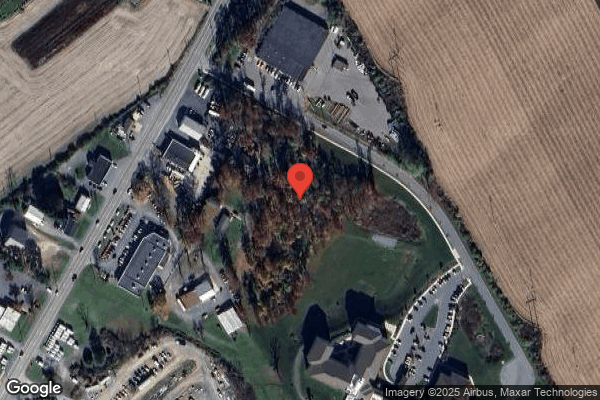
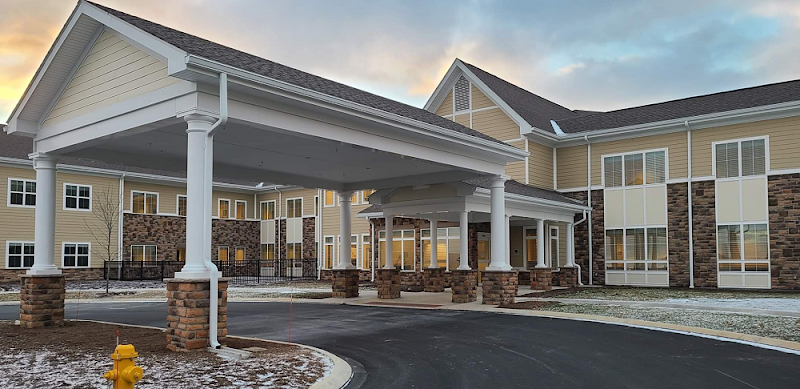
250 PERSIA ROAD, BELLEFONTE, PA 16823 (814) 278-6000
Non profit - Corporation 240 Beds Independent Data: November 2025
Trust Grade
60/100
#270 of 653 in PA
Last Inspection: August 2025

Inspected within the last 6 months. Data reflects current conditions.

Overview

Centre Care Rehabilitation and Wellness Services has a Trust Grade of C+, indicating it is slightly above average but not quite among the best options available. It ranks #270 out of 653 nursing homes in Pennsylvania, placing it in the top half, and #4 out of 6 in Centre County, suggesting there are only three facilities in the area that are better. The facility is improving, with issues decreasing from 14 in 2024 to 5 in 2025, which is a positive trend. Staffing is a strong point here, with a 4 out of 5-star rating and a turnover rate of 44%, which is slightly below the state average, meaning staff tend to stay longer and are familiar with the residents. However, there are concerns, including less RN coverage than 77% of other facilities, which could impact care quality, and specific incidents like improper storage in the kitchen and failure to obtain informed consent for side rails, which could pose risks to residents. Overall, while there are notable strengths, families should also consider the weaknesses and incidents reported.

Trust Score
C+
60/100
In Pennsylvania
#270/653
Top 41%
Safety Record
Low Risk
No red flags
Inspections
Getting Better
14 → 5 violations
Staff Stability
○ Average
44% turnover. Near Pennsylvania's 48% average. Typical for the industry.
Penalties
✓ Good
No fines on record. Clean compliance history, better than most Pennsylvania facilities.
Skilled Nurses
⚠ Watch
Each resident gets only 29 minutes of Registered Nurse (RN) attention daily — below average for Pennsylvania. Fewer RN minutes means fewer trained eyes watching for problems.
Violations
⚠ Watch
27 deficiencies on record. Higher than average. Multiple issues found across inspections.
★★★☆☆
3.0
Overall Rating
★★★★☆
4.0
Staff Levels
★★☆☆☆
2.0
Care Quality
★★★☆☆
3.0
Inspection Score
Stable
2024: 14 issues
2025: 5 issues

The Good

  • 4-Star Staffing Rating · Above-average nurse staffing levels
  • Full Sprinkler Coverage · Fire safety systems throughout facility
  • No fines on record
  • Staff turnover below average (44%)

    4 points below Pennsylvania average of 48%

Facility shows strength in staffing levels, fire safety.

The Bad

3-Star Overall Rating

Near Pennsylvania average (3.0)

Meets federal standards, typical of most facilities

Staff Turnover: 44%

Near Pennsylvania avg (46%)

Typical for the industry

The Ugly 27 deficiencies on record

Aug 2025 5 deficiencies
CONCERN (D)

Potential for Harm - no one hurt, but risky conditions existed

Investigate Abuse (Tag F0610)

Could have caused harm · This affected 1 resident

Based on review of facility documentation, clinical record review, and staff interview, it was determined that the facility failed to ensure a complete and thorough investigation of an injury of unkno...

Read full inspector narrative →
Based on review of facility documentation, clinical record review, and staff interview, it was determined that the facility failed to ensure a complete and thorough investigation of an injury of unknown origin for one of one resident reviewed. (Resident 152) Findings include:Clinical record review for Resident 152 revealed a progress note dated June 27, 2025, that indicated staff observed a 5 centimeter (cm) by 4 cm purple bruise to the top of Resident 152's right breast. The progress note indicated that Resident 152 was known to transfer self from chair to bed and toilet and that she was also known to wander with poor safety awareness. Review of the facility's investigation report dated June 27, 2025, at 8:00 AM revealed that Resident 152 was observed with a 5cm x 4cm purple bruise to the top of her right breast. The report also indicated that Resident 152 was unable to give a description of what occurred. The report indicated that the immediate action taken was to assess and measure the area. The report also indicated that Resident 152 was known to transfer self from chair to bed and toilet. She is a known wanderer with poor safety awareness, and she always has multiple things in her hands holding them against her body. The facility's investigation report also had a note dated June 27, 2025, that indicated an interdisciplinary team reviewed the incident and after the investigation it was noted that Resident 152 carries multiple things on her lap and chest while propelling herself up and down the hallways and throughout the building. Many times, she has two large pitchers of drinks with her rested on her chest. The report indicated that the area on her chest was consistent with carrying the two large pitchers of drinks with her and that abuse was ruled out. Further review of the facility's investigation into Resident 152's bruise on her right upper breast revealed two staff witness statements. The first statement was from a nurse aide dated June 27, 2025, that indicated she had Resident 152 on the toilet and Resident 152 pulled her collar down to show her the bruise located on the top of her right breast. The statement indicated Resident 152 was aware of the bruise but did not know how it occurred. The second statement was dated June 27, 2025, and was from a licensed practical nurse, and she indicated that she was made aware of the bruise by the registered nurse on duty and that Resident 152 did not know how the bruise occurred. Interview with the Director of Nursing on August 15, 2025, at 11:25 AM revealed that investigations of injuries of unknow origin require that the facility obtain statements from any staff assigned to the resident and any other staff who provided care or have direct knowledge of the incident on the three shifts prior to discovery unless a cause is identified during the interview process. She confirmed at this time that she only had the two statements provided to the surveyor and no further investigation was completed. The facility failed to thoroughly investigate Resident 152's injury of unknown origin to determine the cause and rule out abuse. 28 Pa. Code 201.14(a)(c) Responsibility of licensee 28 Pa. Code 201.18(b)(2)(e)(1) Management
CONCERN (D)

Potential for Harm - no one hurt, but risky conditions existed

Assessment Accuracy (Tag F0641)

Could have caused harm · This affected 1 resident

Based on clinical record review and staff interview, it was determined that the facility failed to ensure complete and accurate Minimum Data Set (MDS) assessments for one of 35 residents reviewed (Res...

Read full inspector narrative →
Based on clinical record review and staff interview, it was determined that the facility failed to ensure complete and accurate Minimum Data Set (MDS) assessments for one of 35 residents reviewed (Resident 13). Findings include: Clinical record review of Resident 13's current physician orders revealed an order for Nuplazid (an antipsychotic medication used to treat hallucinations associated with Parkinson's disease) oral cap 34 mg (milligrams) po (by mouth) at bedtime that was ordered November 13, 2021. Review of Resident 13's clinical record revealed quarterly Minimum Data Set Assessments (MDS, a form completed at specific intervals to determine care needs) dated March 11, 2025, and June 10, 2025, that failed to indicate Resident 13 was taking an antipsychotic medication. Interview with the Director of Nursing and Nursing Home Administrator on August 14, 2025, at 1:45 PM confirmed the above noted information that the facility failed to accurately code Resident 13's MDS assessments dated March 11, 2025, and June 10, 2025. 483.20(g) Accuracy of AssessmentsPreviously cited 10/8/2024 28 Pa. Code 211.5(f)(ix) Medical records 28 Pa. Code 211.12(d)(1)(5) Nursing services
CONCERN (D)

Potential for Harm - no one hurt, but risky conditions existed

Quality of Care (Tag F0684)

Could have caused harm · This affected 1 resident

Based on clinical record review and staff and resident interview, it was determined that the facility failed to ensure the highest practicable care for a change in condition for one of 35 residents re...

Read full inspector narrative →
Based on clinical record review and staff and resident interview, it was determined that the facility failed to ensure the highest practicable care for a change in condition for one of 35 residents reviewed (Resident 228).Findings include: In an interview with Resident 228 on August 12, 2025, at 12:10 PM the resident indicated although she was primarily independent with activities of daily living (walking, dressing, toileting, hygiene), she has been declining over the past several months with worsening recently due to having pneumonia (lung infection) and a recent appendectomy (procedure to remove an appendix). Resident 228 indicated she felt since staff knew she was independent in the past they don't offer more help, and it has all been harder for her lately. A family member of Resident 228's indicated they were purchasing an electronic scooter for the resident so she could get around easier. Resident 228 stated she was not receiving therapy nor has therapy assessed her with her recent decline. The family member indicated the purchase of a scooter was the family's decision and did not come from therapy. Clinical record review for Resident 228 revealed the resident did have two recent hospital admissions from June 23 to 28, 2025, and July 30 to 31, 2025, for pneumonia and the appendectomy. Review of a re-admission Nursing Evaluation dated July 31, 2025, revealed Resident 228 was assessed as independent with activities of daily living such as bed mobility, eating, transfers, toileting, dressing, and ambulation, upon return to the facility from the hospital on that date. Further clinical record review revealed a Rehabilitation Referral for Resident 228 dated August 5, 2025, that indicated the referral was requested due to the resident's re-admission and a change in functional status due to recent hospitalization. This referral was not signed off and locked in the electronic record system until August 14, 2025, at 6:34 PM, after the resident's and therapy concerns were brought to facility administration's attention on August 13, 2025, at 2:00 PM by the surveyor. There was no evidence to indicate therapy (physical therapy/occupational therapy) completed an assessment of the resident for the potential decline until August 14, 2025, nine days after the referral was initiated in the electronic record system. Review of a physical therapy evaluation and plan of treatment completed for Resident 228 dated August 14, 2025, revealed the resident presented a decline from her prior level of function as the resident required supervision or touching assistance to stand from sitting, required contact guard for transfers, and the resident's gait (walking) assessment was not attempted due to medical/safety concerns. The assessment indicated the resident was independent with these tasks as her prior level of function. Interview with the Director of Nursing on August 15, 2025, at 12:20 PM confirmed Resident 228 was not evaluated by therapy staff until August 14, 2025, when a rehab referral was paperwork was initiated on August 5, 2025, by nursing staff but not completed. 483.25 Quality of CarePreviously cited deficiency 10/8/24 28 Pa. Code 211.10(c) Resident care policies 28 Pa. Code 211.12(d)(1)(3)(5) Nursing services
CONCERN (D)

Potential for Harm - no one hurt, but risky conditions existed

Deficiency F0692 (Tag F0692)

Could have caused harm · This affected 1 resident

Based on review of select policy and procedures, clinical record review, and staff interview, it was determined that the facility failed to provide timely assessments and implement interventions to pr...

Read full inspector narrative →
Based on review of select policy and procedures, clinical record review, and staff interview, it was determined that the facility failed to provide timely assessments and implement interventions to promote acceptable parameters of nutritional status for one of seven residents reviewed for nutritional concerns (Resident 7). Findings include: The facility policy entitled Weighing of Residents, last reviewed without changes June 1, 2025, revealed the facility will monitor the resident's weight to detect significant weight loss or gain in order to ensure that the resident maintains acceptable parameters of nutritional status, taking into account the resident's clinical condition or other appropriate interventions, when there is a nutritional problem. If a resident exhibits a weight change of five pounds from the previous weight in a monthly report, the resident will be reweighed within 24 hours and the reweight will be recorded. If the weight is validated as a new greater than five percent change in one month, the resident will be reviewed by the registered dietitian to investigate the cause of the weight change and to determine if interventions are necessary. If the weight change falls into the significant category the registered dietician will complete a timely assessment to investigate to investigate the cause of the weight change. The registered dietician will notify the charge nurse, doctor, family, and registered nurse assessment coordinator of significant weight changes. Clinical record review revealed the facility admitted Resident 7 on January 21, 2023. Further review of Resident 7's clinical record revealed the following weight assessments: December 4, 2025, 220.6 poundsJanuary 8, 2025, 205.6 pounds (a 15-pound, 6.79 percent significant weight loss in 30 days)February 4, 2025, 207 pounds There was no evidence that staff obtained a re-weight or notified Resident 7's physician after the January 2025 significant weight loss. Further review of Resident 7's clinical record revealed no assessment of Resident 7's significant weight loss, or any interventions addressing the significant weight loss. Interview with the Nursing Home Administrator on August 15, 2025, at 11:00 AM confirmed these findings. The Nursing Home Administrator stated that registered dietitian is no longer employed by the facility. 28 Pa. Code 211.10(d) Resident care policies 28 Pa. Code 211.12(d)(1)(3)(5) Nursing services
CONCERN (E)

Potential for Harm - no one hurt, but risky conditions existed

Deficiency F0700 (Tag F0700)

Could have caused harm · This affected multiple residents

**NOTE- TERMS IN BRACKETS HAVE BEEN EDITED TO PROTECT CONFIDENTIALITY** Based on clinical record review, observation, and staff and resident interview, it was determined that the facility failed to ob...

Read full inspector narrative →
**NOTE- TERMS IN BRACKETS HAVE BEEN EDITED TO PROTECT CONFIDENTIALITY** Based on clinical record review, observation, and staff and resident interview, it was determined that the facility failed to obtain informed consent for use of side rails/enabler bars for two of three residents reviewed (Residents 40 and 176); and failed to assess the entrapment risk associated with the use of side rails/enabler bars for two of three residents reviewed (Residents 40 and 149). Findings include: Clinical record review for Resident 40 revealed a diagnosis list that included weakness, generalized muscle weakness, and difficulty in walking. Observation of Resident 40 on August 12, 2025, at 11:19 AM revealed the resident was in bed. There was a side rail attached to the resident's right side of the bed. A concurrent interview with Resident 40 revealed the resident utilizes the side rail to help get around. Clinical record review for Resident 40 revealed no evidence that the facility obtained informed consent or assessed the side rail for entrapment risks. An interview with the Nursing Home Administrator on August 15, 2025, at 10:06 AM confirmed there was no informed consent or assessment of entrapment zones for Resident 40. An interview with the Director of Nursing on August 15, 2025, at 11:31 AM revealed that it was determined that Resident 40's family brought the side rail into the facility and attached it to the resident's bed at an unknown date after Resident 40's admission to the facility. Clinical record review for Resident 176 revealed a diagnosis list that included generalized muscle weakness, and abnormalities of gait and mobility. Observation of Resident 176 on August 13, 2025, at 11:45 AM revealed the resident was sitting upright on the side of the bed. An enabler bar was observed attached to the resident's left side of the bed. The other side of the bed was against the wall. A concurrent interview with Resident 176 revealed he utilized the bar to help position. Clinical record review for Resident 176 revealed no evidence that the facility obtained informed consent for the use of the side rails/enabler bars. An assessment for Resident 176 titled, Bed Safety with Measuring Tool, dated June 9, 2025, noted staff documented yes to the question, Signed Consent explaining risk versus benefit in place for use of the siderail/enabler? However, there was no evidence of this document in the clinical record. An interview with the Director of Nursing on August 15, 2025, at 11:47 AM revealed the facility could provide no further documentation of informed consent related to enabler bars for Resident 176. In an interview and observation of Resident 149 on August 13, 2025, at 11:11 AM enabler bars (grab bars) were observed on both sides of the resident's bed. Resident 149 indicated the bars help her to move in bed. Clinical record review for Resident 149 revealed facility staff last assessed Resident 149's bed safety on June 9, 2025. Review of a Bed Safety with Measuring Tool assessment dated [DATE], for Resident 149 revealed the resident was noted to have bilateral (both sides) enabler bars on her bed. The assessment noted bed safety measurements were completed to assure there was no risk of entrapment (head/neck/chest getting stuck) for areas including Zone 1, within the rail' Zone 2, under the rail between the rail supports; Zone 3, between the rail and the mattress; and Zone 4, under the rail and the ends of the rail. Zone 6, the area between the end of the rail and the side edge of the head or footboard, was listed on the assessment but was not completed to indicate if the enabler bars passed or failed the safety assessment for the resident for this area. Further clinical record review for Resident 149 revealed the resident also had Bed Safety with Measuring Tool assessments completed on January 5, 2024, (the date the enablers were initiated), March 7, 2024, June 30, 2024, September 9, 2024, December 30, 2024, and March 7, 2025, with the Zone 6 assessment area not completed. The above results were reviewed during an interview with the Nursing Home Administrator on August 15, 2025, at 10:15 AM. 28 Pa. Code 211.10(d) Resident care policies 28 Pa. Code 211.12(d)(1)(3)(5) Nursing services
Oct 2024 10 deficiencies
CONCERN (D) 📢 Someone Reported This

A family member, employee, or ombudsman was alarmed enough to file a formal complaint

Potential for Harm - no one hurt, but risky conditions existed

Deficiency F0578 (Tag F0578)

Could have caused harm · This affected 1 resident

**NOTE- TERMS IN BRACKETS HAVE BEEN EDITED TO PROTECT CONFIDENTIALITY** Based on clinical record review and staff interview, it was determined that the facility failed to ensure resident participation...

Read full inspector narrative →
**NOTE- TERMS IN BRACKETS HAVE BEEN EDITED TO PROTECT CONFIDENTIALITY** Based on clinical record review and staff interview, it was determined that the facility failed to ensure resident participation in formulating an advance directive for one of four residents reviewed for advance directive concerns (Resident 127). Findings include: Clinical record review for Resident 127 revealed a Medical Treatment Guidelines document (form the facility utilized to document a resident and/or resident's responsible party participation in decisions regarding actions taken in the event of a medical emergency) signed by Resident 127 on [DATE], that indicated she desired full resuscitation as part of her medical care decisions. A physician's order instructed staff to provide Full Code treatment (medical personal would do everything possible to save life in a medical emergency) for Resident 127 from [DATE], to [DATE]. A quarterly MDS assessment (Minimum Data Set, an assessment tool completed at specific intervals to determine resident care needs) dated [DATE], assessed Resident 127 as cognitively intact (BIMS, Brief Interview for Mental Status, score of 13 to 15, indicated no cognitive impairment). A Medical Treatment Guidelines document signed by two facility staff on [DATE], indicated that Resident 127's daughter gave verbal consent to withhold medical procedures to restart breathing or restart the heart (CPR would not be attempted) in the event Resident 127's heart stopped beating or she stopped breathing. A physician's order active since [DATE], instructed staff to not provide resuscitation (DNR). The surveyor requested any evidence that the facility ensured that Resident 127 participated in the decision to change her medical treatment in the event of a cardiac or respiratory emergency during an interview with the Nursing Home Administrator and the Director of Nursing on [DATE], at 1:45 PM. Interview with the Nursing Home Administrator and the Director of Nursing on [DATE], at 2:00 PM confirmed that the facility had no evidence that Resident 127 participated in the decision to change her advance directives before the surveyor's questioning. The facility admission coordinator discussed the change with Resident 127 on [DATE] (following the surveyor's questioning). 28 Pa. Code 211.12(d)(1)(3)(5) Nursing services
CONCERN (D) 📢 Someone Reported This

A family member, employee, or ombudsman was alarmed enough to file a formal complaint

Potential for Harm - no one hurt, but risky conditions existed

Assessment Accuracy (Tag F0641)

Could have caused harm · This affected 1 resident

Based on clinical record review and staff interview, it was determined that the facility failed to ensure assessments accurately reflected a resident's status for one of 35 residents reviewed (Residen...

Read full inspector narrative →
Based on clinical record review and staff interview, it was determined that the facility failed to ensure assessments accurately reflected a resident's status for one of 35 residents reviewed (Resident 143). Findings include: Clinical record review for Resident 143 revealed a Preadmission Screening and Resident Review (PASRR, a federal requirement to help ensure that individuals are not inappropriately placed in nursing homes for long term care. PASRR requires that Medicaid-certified nursing facilities: evaluate all applicants for serious mental illness and/or intellectual disability, offer all applicants the most appropriate setting for their needs (in the community, a nursing facility, or acute care settings), and provide all applicants the services they need in those settings) completed July 17, 2024, that indicated she had a positive screen, and that she required a Level II PASSAR. A Department of Human Services Office of Mental Health and Substance Abuse Services letter dated July 25, 2024, determined that Resident 143 was eligible for mental health services and that the facility must provide or arrange for the provision of those services. An admission MDS assessment (Minimum Data Set, an assessment tool completed at specific intervals) dated August 1, 2024, indicated that Resident 143 was not considered by the state level II PASRR process to have serious mental illness and/or intellectual disability or a related condition. Interview with the Nursing Home Administrator and Director of Nursing on October 6, 2024, at 1:45 PM revealed that the coding on Resident 143's admission MDS assessment regarding her PASRR determination was incorrect. The facility completed a modification of Resident 143's admission MDS assessment on October 6, 2024, at 5:15 PM to reflect that Resident 143 was considered by the PASRR process have a mental health condition that made her eligible for additional services. 28 Pa. Code 211.12(d)(1)(3)(5) Nursing services
CONCERN (D) 📢 Someone Reported This

A family member, employee, or ombudsman was alarmed enough to file a formal complaint

Potential for Harm - no one hurt, but risky conditions existed

Comprehensive Care Plan (Tag F0656)

Could have caused harm · This affected 1 resident

Based on clinical record review and staff interview, it was determined that the facility failed to implement a comprehensive person-centered care plan regarding a pacemaker for one of 35 residents rev...

Read full inspector narrative →
Based on clinical record review and staff interview, it was determined that the facility failed to implement a comprehensive person-centered care plan regarding a pacemaker for one of 35 residents reviewed (Resident 176). Findings Include: Clinical record review for Resident 176 revealed a medical history that included the presence of a cardiac pacemaker (surgically implanted device used to control the electrical activity of the heart and regulate the heartbeat). Review of a significant change Minimum Data Set Assessment (MDS, an assessment completed at specific intervals to determine care needs) dated September 17, 2024, noted facility staff assessed Resident 176 as having a BIMS (Brief Interview for Mental Status) of 5, which indicated severe cognitive impairment. The MDS also noted the presence of a cardiac pacemaker. Review of documentation titled Electrophysiology Visit for Resident 176 dated August 19, 2024, revealed the resident had a biventricular pacemaker implanted on March 5, 2020. Review of Resident 176's clinical record on October 5, 2024, at 1:49 PM revealed no care plan was developed related to the resident's pacemaker or associated resident monitoring/assessment. The above information for Resident 176 was reviewed in a meeting with the Nursing Home Administrator and Director of Nursing on October 6, 2024, at 1:45 PM. 28 Pa. Code 211.10 (a)(c)(d) Resident care policies 28 Pa. Code 211.12(d)(1)(3)(5) Nursing services
CONCERN (D) 📢 Someone Reported This

A family member, employee, or ombudsman was alarmed enough to file a formal complaint

Potential for Harm - no one hurt, but risky conditions existed

Quality of Care (Tag F0684)

Could have caused harm · This affected 1 resident

**NOTE- TERMS IN BRACKETS HAVE BEEN EDITED TO PROTECT CONFIDENTIALITY** Based on observation, clinical record review, and resident and staff interview, it was determined that the facility failed to pr...

Read full inspector narrative →
**NOTE- TERMS IN BRACKETS HAVE BEEN EDITED TO PROTECT CONFIDENTIALITY** Based on observation, clinical record review, and resident and staff interview, it was determined that the facility failed to provide the highest practicable care regarding the use of medical devices for three of 35 residents reviewed (Residents 66, 155, and 167). Findings include: Observation on October 5, 2024, at 10:49 AM revealed Resident 155 was in her room with a sling to her left arm and shoulder immobilizing it. Review of Resident 155's clinical record revealed nursing documentation dated September 20, 2024, at 6:20 PM indicating that nursing staff found Resident 155 on the floor. The facility sent Resident 155 to the hospital on September 21, 2024, at 3:02 PM for continued complaints of left shoulder pain and a positive x-ray for shoulder fracture. Nursing documentation dated September 21, 2024, at 9:50 PM revealed that Resident 155 returned from the hospital with no new orders. Nursing documentation dated September 22, 2024, at 10:19 AM indicated that nursing staff sent a referral to therapy due to Resident 155 wearing a left arm sling. Review of Resident 155's hospital Discharge summary dated [DATE], indicated that Resident 155 sustained a closed left humeral fracture and should keep her left arm in a sling and swath for immobilization. There was no documented evidence in Resident 155's clinical record to indicate the use of a sling or swath for her fracture, or if she should have a therapy referral until September 27, 2024, after Resident 155 consulted with an orthopedic surgeon. The facility did not obtain any physician orders for the care and treatment of her left arm fracture until September 27, 2024, 6 days after Resident 155 returned from the emergency room. Interview with the Administrator and Director of Nursing on October 7, 2024, at 2:30 PM confirmed the above findings for Resident 155. Observation on October 5, 2024, at 11:09 AM revealed Resident 167 sitting at the nursing station with a black back brace wrapped around her midsection. Review of Resident 167's clinical record revealed nursing documentation dated June 7, 2024, that revealed the use of a back brace, but no indication why. Nursing documentation dated October 5, 2024, at 12:54 PM revealed that nursing staff found Resident 167 on the floor of another resident's room. The note continued to indicate that Resident 167 did not sustain any injuries but indicated that she did have her back brace on. There was no documented evidence in Resident 167's clinical record to indicate the use of a back brace. There was no physician's order, no plan of care regarding its use, and no therapy evaluation for proper use. After the surveyor brought up the concerns with the use of the back brace, nursing documentation dated October 7, 2024, at 4:56 PM indicated that Resident 167's family brought the back brace in for comfort, but that there was no physician's order. Nursing staff removed the back brace and will speak with family regarding the medical need for the back brace. Interview with the Director of Nursing on October 8, 2024, at 9:35 AM confirmed the above findings for Resident 167. Interview with Resident 66 on October 5, 2024, at 1:54 PM revealed that he brought a cardiac pacemaker (surgically implanted device used to control the electrical activity of the heart and regulate the heartbeat) check machine with him to the facility, and it was stored in his bedside cabinet. Resident 66 stated that he believed his pacemaker was last checked at an appointment in another town before his admission to the facility, and he typically has his pacemaker checked at least every two to three months. Clinical record review for Resident 66 revealed an admission History and Physical dated August 20, 2024, that included the following diagnoses: ischemic cardiomyopathy (heart disease resulting in unhealthy heart muscle), atrial fibrillation (irregular heartbeat that increases risk for blood clots and stroke), on chronic anticoagulation (medication used to delay blood clotting), and a past surgical history that included an implanted pacemaker. The documentation indicated that Resident 66 noted that his pacemaker had a generator life of approximately seven months and would need replaced in the near future. The documentation indicated that he would need established with a local cardiologist as he did not wish to be transported back and forth to the other town any longer. The documentation indicated that the facility would establish services with the cardiologist to have Resident 66's pacemaker generator exchanged in 2024. Review of Resident 66's plans of care developed by the facility to address his care needs did not include the presence of an implanted cardiac pacemaker or an intervention of a pacemaker check machine. Observation of Resident 66's room on October 7, 2024, at 1:10 PM with Employee 2 (nurse aide) confirmed that Resident 66 had a Medtronic box in his bedside stand for his cardiac pacemaker checks. Interview with the Nursing Home Administrator and the Director of Nursing on October 7, 2024, at 2:13 PM confirmed that the facility did not contact Resident 66's cardiologist to determine the correct implementation of the cardiac pacemaker check machine. The facility was unaware when this type of machine was to be active and monitoring (e.g., continuous, or intermittent); or the mechanism that permitted the remote monitoring of Resident 66's pacemaker (e.g., cell phone, wi-fi internet, landline telephone, etc.). The interview confirmed that the facility did not incorporate Resident 66's cardiac pacemaker needs into Resident 66's plans of care. 483.25 Quality of Care Previously cited 2/22/24 28 Pa. Code 211.10 (a)(c)(d) Resident care policies 28 Pa. Code 211.12(d)(1)(3)(5) Nursing services
CONCERN (D) 📢 Someone Reported This

A family member, employee, or ombudsman was alarmed enough to file a formal complaint

Potential for Harm - no one hurt, but risky conditions existed

Accident Prevention (Tag F0689)

Could have caused harm · This affected 1 resident

Based on facility documents, clinical record review, and staff and resident interview, it was determined that the facility failed to implement appropriate interventions to prevent a fall for one of 11...

Read full inspector narrative →
Based on facility documents, clinical record review, and staff and resident interview, it was determined that the facility failed to implement appropriate interventions to prevent a fall for one of 11 residents reviewed for falls (Resident 33). Findings include: Clinical Record review for Resident 33 revealed a nursing progress note dated July 5, 2024, at 10:45 PM that indicated a nurse aide was changing Resident 33's brief and bed linen, when she rolled her away from her, and she rolled onto the floor on the right side of the bed. She was noted to have a 10-centimeter (cm) x 10 cm skin tear on her left elbow, an 8 cm x 8 cm skin tear on her right elbow, and a 3 cm x 3 cm closed hematoma (a collection of blood under the skin that can look like a bad bruise) above her left eyebrow. The note also indicated that the new intervention would be to utilize two staff when rolling the resident. Review of Resident 33's active care plan dated June 17, 2024, revealed that there was no current intervention to indicate the number of staff required to safely roll her in bed. Her fall care plan indicated that she was at risk for falls related to her dependence on staff for safe positioning due to her lack of adequate core strength and balance. Her activities of daily living care plan had an intervention indicating that for bed mobility she required staff participation to reposition and turn in bed. A review of Resident 33's state optional quarterly MDS (minimum data set, an assessment completed at periodic intervals of time to assess resident care needs) completed on June 3, 2024, revealed the highest assistance she required for bed mobility was extensive assist of two staff. An interview with Resident 33 in her room on October 6, 2024, at 11:30 AM related to the fall on July 5, 2024, revealed that there was one nurse aide in the room and the nurse aide rolled her towards the wall. She said she usually will place her foot on the wall to help hold her over but on that day her foot slipped because it was wet, and she rolled right to the floor. She indicated that she uses the wall because they tell her to. When asked who she is referring to as they, she indicated the aides. Concurrent observation of her bed on at this time revealed that it is about 12 inches from the wall. Review of the facility's investigation into Resident 33's fall on October 6, 2024, at 11:30 AM indicated that Resident 33 indicated that the nurse aide rolled her over and her foot slipped off the wall. Clinical record review revealed a fall risk evaluation completed on June 4, 2024, for Resident 33, indicating that she was a moderate risk for falls. Interview with the Director of Nursing on October 7, 2024, at 10:24 AM revealed that there was no clinical evidence to indicate the level of assistance Resident 33 required during the task of bed mobility, at the time of her fall. When the surveyor asked the Director of Nursing how the staff would know Resident 33's level of assistance required for bed mobility she indicated normally the care plan or task but Resident 33's does not indicate a level of assistance. She also confirmed that the Resident 33 should not be expected to utilize her foot on the wall as a fall prevention intervention. The facility failed to initiate appropriate interventions to prevent a fall out of bed for Resident 33. 28 Pa. Code 201.18(b)(1)(e)(1) Management 28 Pa. Code 211.12(d)(1)(3)(5) Nursing services
CONCERN (D) 📢 Someone Reported This

A family member, employee, or ombudsman was alarmed enough to file a formal complaint

Potential for Harm - no one hurt, but risky conditions existed

Drug Regimen Review (Tag F0756)

Could have caused harm · This affected 1 resident

Based on clinical record review, and staff interview, it was determined that the facility failed to ensure that the resident's attending physician addressed pharmacy recommendations for two of five re...

Read full inspector narrative →
Based on clinical record review, and staff interview, it was determined that the facility failed to ensure that the resident's attending physician addressed pharmacy recommendations for two of five residents reviewed (Resident 84 and 195). Findings include: Review of Resident 195's clinical record revealed a form entitled Interdisciplinary Team Evaluation dated December 19, 2023, indicating that the team recommended Resident 195's physician consider a gradual dose reduction of Resident 195's Buspar (an antidepressant), Seroquel (a psychoactive medication used to treat mood disorders) and Trazodone (an antidepressant). Resident 195's physician responded to the recommendation indicating that patient still with outbursts and needs her ABH gel (a combination of medications used to treat anxiety), not able to decrease doses. Resident 195's physician refers to a medication that is not listed on the recommendation list and does not provide a clinical rationale as to why the listed medications cannot have a gradual dose reduction. An Interdisciplinary Team Evaluation dated June 24, 2024, indicated that the team recommended 195's physician again consider a gradual dose reduction of Resident 195's Buspar, Seroquel and Trazodone. The physician response to Resident 195's recommendation indicated that he has never met her and that a reduction would depend on symptoms, history and response to treatment, and side effects. The physician does not provide an order for a gradual dose reduction. Interview with the Director of Nursing on October 7, 2024, at 11:28 AM confirmed the above findings for Resident 195 and indicated that her June recommendation was sent to the wrong physician. The Director of Nursing indicated that the Interdisciplinary Team Evaluations recommending gradual dose reductions are completed in conjunction and with the guidance of the facility's pharmacist. Clinical record review for Resident 84 revealed an Interdisciplinary Team Evaluation dated April 24, 2024, that noted Resident 84 received the psychotropic medications Citalopram (antidepressant), Mirtazapine (an antidepressant), and Risperdal (an antipsychotic used to treat mental and mood disorders). An initial at the bottom of the document, dated May 1, 2024, indicated that a physician agreed with the interdisciplinary team's decision to not gradually reduce the dosages of the medications. An Interdisciplinary Team Evaluation dated July 30, 2024, again noted that Resident 84 received the psychotropic medications Citalopram, Mirtazapine, and Risperdal. An initial at the bottom of the document, dated July 31, 2024, again indicated that a physician agreed with the interdisciplinary team's decision to not gradually reduce the dosages of the medications. Interview with the Director of Nursing on October 8, 2024, at 11:35 AM, confirmed that the physician consulted by the facility to address Resident 84's mental health and behavioral needs, not Resident 84's attending physician, responded to the interdisciplinary team evaluations dated April 24, 2024, and July 30, 2024. The interview confirmed that the facility had no evidence that Resident 84's attending physician received a consultant pharmacist report regarding potential irregularities of, or requests to gradually reduce, Resident 84's psychotropic medications. Resident 84's medical record did not include evidence that her attending physician documented his or her evaluation of Resident 84's psychotropic medication or his or her rationale for not attempting a gradual dose reduction of the medications. 28 Pa. Code 211.9 (k) Pharmacy services 28 Pa. Code 211.12(d)(3)(5) Nursing services
CONCERN (D) 📢 Someone Reported This

A family member, employee, or ombudsman was alarmed enough to file a formal complaint

Potential for Harm - no one hurt, but risky conditions existed

Infection Control (Tag F0880)

Could have caused harm · This affected 1 resident

Based on clinical record review, observation, and staff interview, it was determined that the facility failed to implement enhanced barrier precautions for one of six residents reviewed for infection ...

Read full inspector narrative →
Based on clinical record review, observation, and staff interview, it was determined that the facility failed to implement enhanced barrier precautions for one of six residents reviewed for infection prevention and control concerns (Resident 87). Findings include: Review of the Centers for Medicare and Medicaid Services (CMS) memo entitled, Enhanced Barrier Precautions in Nursing Homes, dated March 20, 2024, revealed that nursing care facilities are to use enhanced barrier precautions (EBP, gown and glove use) for residents with chronic wounds or indwelling medical devices (i.e., indwelling urinary catheters) during high-contact resident care activities regardless of their multidrug-resistant organism status. High-contact activity would include things like dressing, transferring, changing linens, providing hygiene, changing briefs, wound care, or device care. Clinical record review for Resident 87 revealed a plan of care initiated by the facility on June 7, 2024, to address Resident 87's need for Enhanced Barrier Precautions (for an indwelling medical device and a chronic wound) that listed interventions that included don gown and gloves prior to high-contact resident care activities and doff prior to exiting. EBP are in place due to a history of a multi-drug resistant organism (infection-causing bacteria that is resistant to commonly prescribed antibiotics), wounds, and a Foley catheter (indwelling urinary catheter, flexible tube inserted through the penis into the bladder to drain urine). Please use gown and gloves for high-contact resident care activities. Observation of Resident 87 on October 6, 2024, at 8:38 AM with Employee 3 (licensed practical nurse) revealed that Employee 3 donned gloves but did not don a gown before removing blue cushioned boots from Resident 87's feet and removing a dressing from Resident 87's right foot. Employee 3 completed the steps for wound care to Resident 87's right foot, that included cleansing the wound sites and applying new dressings, without wearing an isolation gown. Interview with Employee 3 on October 6, 2024, at 8:47 AM indicated that she did not don a gown, because she believed that a gown was not necessary since there were no gowns on Resident 87's door. Employee 3 verified that the EBP sign on Resident 87's door instructed staff to gown and glove when doing wound treatments. The surveyor reviewed the above concerns regarding the implementation of EBP for Resident 87 with the Nursing Home Administrator and the Director of Nursing on October 6, 2024, at 1:45 PM. 483.80(a)(1)(2)(4)(e)(f) Infection Prevention and Control Previously cited deficiency 4/9/24 and 9/29/23 28 Pa. Code 211.12(d)(1)(5) Nursing services
CONCERN (D) 📢 Someone Reported This

A family member, employee, or ombudsman was alarmed enough to file a formal complaint

Potential for Harm - no one hurt, but risky conditions existed

Safe Environment (Tag F0921)

Could have caused harm · This affected 1 resident

**NOTE- TERMS IN BRACKETS HAVE BEEN EDITED TO PROTECT CONFIDENTIALITY** Based on observation and staff interview, it was determined that the facility failed to ensure a safe and clean environment in t...

Read full inspector narrative →
**NOTE- TERMS IN BRACKETS HAVE BEEN EDITED TO PROTECT CONFIDENTIALITY** Based on observation and staff interview, it was determined that the facility failed to ensure a safe and clean environment in the facility's main kitchen. Findings include: Observation in the main kitchen area on [DATE], at 10:38 AM revealed a first aid kit attached to the wall. Located on the top exterior of the kit were the following: a significant build-up of dust, four antiseptic towelettes that expired [DATE], an open triangular bandage box with no bandages, and burn spray with the plastic cap removed that expired [DATE]. The interior of the first aid kit contained multiple empty packages, alcohol cleansing pads that expired [DATE], and a container of burn treatment gel that had one open gel packet that was put back in the box with the others that had expired on [DATE]. The above information was reviewed with the Nursing Home Administrator on [DATE], at 1:35 PM. 28 Pa. Code 201.18 (b)(1)(3) Management
CONCERN (E) 📢 Someone Reported This

A family member, employee, or ombudsman was alarmed enough to file a formal complaint

Potential for Harm - no one hurt, but risky conditions existed

Deficiency F0688 (Tag F0688)

Could have caused harm · This affected multiple residents

Based on observation, clinical record review, and staff interview, it was determined that the facility failed to assess and implement physician ordered treatment to maintain range of motion for one of...

Read full inspector narrative →
Based on observation, clinical record review, and staff interview, it was determined that the facility failed to assess and implement physician ordered treatment to maintain range of motion for one of six residents reviewed with range of motion concerns (Resident 52). Findings include: Clinical record review for Resident 52 revealed a current physician's order dated August 10, 2023, that instructed staff to apply a right hand splint at all times except for care, remove daily for care. Clinical record review for Resident 52 revealed a current care plan that indicated the resident had an activities of daily living self care performance deficit related to the medical history and requires staff assistance for dressing, personal hygiene, bed mobility, and toilet use. An intervention included a right hand splint at all times except for care. A significant change Minimum Data Set Assessment (MDS, an assessment completed at specific intervals to determine care needs) dated July 29, 2024, noted facility staff assessed Resident 52 as having a BIMS (Brief Interview for Mental Status) of 6, which indicated cognitive impairment. Clinical record review for Resident 52 revealed the following Orders Administration Note related to the splint: September 7, 2024, at 2:54 AM: not available September 8, 2024, at 1:33 AM: no splint available September 9, 2024, at 1:15 AM: Unable to locate. September 10, 2024, at 5:06 AM: Not on. September 11, 2024, at 1:50 AM: not available September 13, 2024, at 3:50 AM: not available September 17, 2024, at 12:45 AM: no splint September 18, 2024, at 4:12 AM and 11:58 PM: no splint September 21, 2024, at 2:15 AM: not available September 22, 2024, at 2:16 AM: none September 24, 2024, at 1:48 AM: No hand splint September 25, 2024, at 12:50 AM: None present September 26, 2024, at 3:51 AM: no splint September 27, 2024, at 1:41 AM: none found October 1, 2024, at 2:53 AM: no splint on. October 2, 2024, at 2:45 AM: No splint October 4, 2024, at 1:16 AM: No splint available. October 5, 2024, at 1:52 AM: no splint found October 6, 2024, at 2:56 AM: no splint found October 8, 2024, at 2:11 AM: no splint available Observation of Resident 52 on October 6, 2024, at 10:21 AM and on October 8, 2024, at 9:41 AM revealed the resident was in bed. There was no observed splint on the right hand. An interview with Employee 6, licensed practical nurse, on October 8, 2024, at 9:41 AM revealed that Resident 52 sometimes removes the splint, and it should be somewhere in the room. Employee 6 proceeded to look in Resident 52's room for the splint but was unable to locate it. Employee 6 further reported that it may be in the laundry, which is located on the first floor. An interview with Employee 7, laundry staff, on October 8, 2024, at 9:50 AM revealed Resident 52's splint was not currently being laundered and further reported the last splint the employee remembers washing was approximately one week ago. The above information for Resident 52 was reviewed in a meeting with the Director of Nursing on October 8, 2024, at 1:45 PM. 483.25(c)(1)-(3) Increase/prevent Decrease In Rom/mobility Previously cited 9/29/23 28 Pa. Code 211.12(d)(1)(3)(5) Nursing services
CONCERN (F) 📢 Someone Reported This

A family member, employee, or ombudsman was alarmed enough to file a formal complaint

Potential for Harm - no one hurt, but risky conditions existed

Food Safety (Tag F0812)

Could have caused harm · This affected most or all residents

Based on observation and staff interview, it was determined that the facility failed to store food items and maintain equipment in a safe and sanitary manner in the facility's main kitchen. Findings ...

Read full inspector narrative →
Based on observation and staff interview, it was determined that the facility failed to store food items and maintain equipment in a safe and sanitary manner in the facility's main kitchen. Findings included: Initial tour of the facility's main kitchen on October 5, 2024, between 9:35 AM and 10:40 AM revealed the following: The walk-in freezer had multiple discarded items on the floor including under the storage shelves. These discarded items included the following: pieces of food (including broccoli and a piece of carrot), various paper products, and a balled-up hair net. Further observation of the walk-in freezer revealed four packages containing gluten free rolls with an expired use by date of 4/30. One of the packages was open to air exposing the rolls to the ambient air. A prep area in front of the freezer contained a drawer with various cooking utensils. There was a significant amount of debris in the bottom of the drawer. An overlying stainless steel shelf contained dust and debris and various stains/splashes on the underside of the shelf. A commercial mixer had various dried stains on the mixing bowl seat and the base of the mixer. Two warmer units had dust and debris on the top of the units. A large appliance Employee 1, cook, identified as a soup kettle, was covered with a plastic covering. A brown garbage lid was found placed on top of the machine. The plastic covering had a significant amount of dried splash stains on it. There was a build-up of debris including black colored chunks of an unidentified substance on top of the oven. A smaller can cart located near the center of the kitchen revealed at least four cans with extensive staining on the labels from splashes. A prep area across from the oven revealed a container of fresh peeled garlic that was partially used. There was no open date on it and there were several dried splash stains on the exterior of the container. Additional observations revealed a container labeled salt and pepper that was partially used. The container had no dates to indicate when it was open or when it expires or should be discarded. A stainless steel prep table next to the water fire extinguisher contained a significant amount of debris on the floor under the table that included a large onion. The bottom shelf of the table had several pans and cutting boards, and there was a build-up of debris on the shelf. A small muffin baking pan was stored upright with no protection from debris and the pan molds contained debris and a partial piece of onion skin. The spice shelf contained the following: Ground white pepper with a manufacturer's best by date of March 13, 2024. A container of rubbed sage with a manufacturer's best by date of August 14, 2023. All-purpose barbecue blend with a manufacturer's best by date of July 19, 2024. A large baking pan contained a dark brown cake type food item that was located on the bottom of a tray rack. The item was not labeled or dated, and the baking pan was not hot or warm to the touch (which would indicate it was recently removed from the oven). A walk-in cooler contained the following: A large plastic container of individually packaged commercially made peanut butter and grape jelly sandwiches. A large plastic container of individually packaged commercially made peanut butter and strawberry jam sandwiches. The package for the above sandwiches indicated to Thaw 30-60 minutes and eat within 8-10 hours. The packages were labeled with a PULL date of either 9/27 or 10/1. The website for the product instructs to keep the sandwiches frozen until ready to thaw, thaw for 30-60 minutes at room temperature and eat within 8-10 hours. The product can be refrigerated for up to 24 hours. A plastic container with a green lid marked garlic only that was partially used had no dates on it to indicate when it was open or should be discarded. A plastic container with a green lid with an unidentified food item had no label or dates on it. A plastic container with a red lid that had water pooling on the lid was marked BBQ sauce 9-12. A roll of Hot Spicy Ham and Water was on a shelf and dripping the liquid contents onto a cardboard box directly below it that contained pork tenderloin. A large plastic container that held multiple bags of garden salad. Three bags had a manufacturer's best by date of October 3, 2024, and two additional packages (one of them open to ambient air) had a best by date of October 1, 2024. The dishwashing area contained the following: The dishwasher had various dried stains on the exterior bottom panel of the machine. The end of the stainless steel shelf where the clean dishes were expelled from the dishwasher had a build-up of an orange, crusted substance stuck to the shelf. The wall at the end of the stainless steel shelf where the clean dishes were expelled had extensive brownish colored splash stains. There was a build-up of debris under the dishwasher. A large, gray colored, garbage receptacle with a lid had dried stains on the exterior of it and a build-up of debris in the handles on each side of it. Further observation of the dishwashing area revealed multiple pans of food from breakfast to be washed. Multiple winged insects were observed in the area. Additional winged insects were observed on the clock, two on the ceiling above the dishwashing area, multiple insects were observed to be on a piece of tubing under the stainless steel counter where the dishes entered the dishwasher. A winged insect was further observed around the main egress door to the kitchen, two winged insects were observed on the ceiling in the main kitchen outside of the dishwashing area. There were also 12 ants on the wall at the entry to the dishwasher and behind the dishwasher. The dishwasher contained two gauges to indicate the wash and rinse temperatures. The gauge labeled rinse had an extensive build-up of moisture on the inside of the gauge. Several observations of Employee 1 utilizing the dishwasher on October 5, 2024, at 10:20 AM revealed the following temperatures during use: 158 degrees Fahrenheit wash / 132 degrees Fahrenheit rinse; 162 degrees Fahrenheit wash / 138 degrees Fahrenheit rinse; 170 degrees Fahrenheit wash / 138 degrees Fahrenheit rinse. Upon questioning Employee 1 about the accuracy of the gauges and if the temperature were recorded the employee responded, The supervisor usually does that. An interview on October 8, 2024, at 11:00 AM with Employee 4, Director of Dining, and Employee 5, maintenance staff, revealed the dishwasher was a hot water sanitizing dishwasher and reported they are aware the machine is under temperature and contacted the repair company. The above information regarding the kitchen was reviewed with the Nursing Home Administrator on October 5, 2024, at 1:35 PM. 28 Pa. Code 201.14(a) Responsibility of licensee
Apr 2024 3 deficiencies
CONCERN (D) 📢 Someone Reported This

A family member, employee, or ombudsman was alarmed enough to file a formal complaint

Potential for Harm - no one hurt, but risky conditions existed

Deficiency F0761 (Tag F0761)

Could have caused harm · This affected 1 resident

**NOTE- TERMS IN BRACKETS HAVE BEEN EDITED TO PROTECT CONFIDENTIALITY** Based on observations and staff interview, it was determined that the facility failed to properly store, secure, and label resid...

Read full inspector narrative →
**NOTE- TERMS IN BRACKETS HAVE BEEN EDITED TO PROTECT CONFIDENTIALITY** Based on observations and staff interview, it was determined that the facility failed to properly store, secure, and label resident medications and biologicals on two of five nursing units (Rose Nursing Unit and [NAME] Nursing Unit, Residents 6 and 8). Findings include: Observation of the [NAME] Nursing Unit on April 9, 2024, at 5:50 AM revealed a tube of Calmoseptine (a topical medication used to treat various skin conditions) labeled with Resident 8's name in a corner staff seating area just off the main hallway. There were no staff observed in the area at the time and the tube was easily accessible to anyone passing by. Observation of the [NAME] Nursing Unit on April 9, 2024, at 5:55 AM revealed a tube of Calmoseptine labeled with Resident 6's name unsecured on top of a treatment cart in the hallway outside of resident rooms. A concurrent interview with Employee 3, licensed practical nurse, revealed that the medication should be secured in the treatment cart. Observation of the [NAME] Nursing Unit wound treatment cart on April 9, 2024, at 6:30 AM with Employee 4, licensed practical nurse, revealed a partially used tube of Calmoseptine with no name label on it. Employee 4 stated the unlabeled tube of medication should be disposed of and proceeded to remove it from the cart. An interview with the Director of Nursing on April 9, 2024, at 9:30 AM revealed the tubes of Calmoseptine should be labeled and secured in the treatment carts. The above information was reviewed in a meeting with the Nursing Home Administrator and Director of Nursing on April 9, 2024, at 10:45 AM. 28 Pa. Code 201.18(b)(1) Management 28 Pa. Code 211.9(a)(1) Pharmacy services 28 Pa. Code 211.12(d)(1)(3)(5) Nursing services
CONCERN (D) 📢 Someone Reported This

A family member, employee, or ombudsman was alarmed enough to file a formal complaint

Potential for Harm - no one hurt, but risky conditions existed

Infection Control (Tag F0880)

Could have caused harm · This affected 1 resident

**NOTE- TERMS IN BRACKETS HAVE BEEN EDITED TO PROTECT CONFIDENTIALITY** Based on observation, review of select facility policies and procedures, and staff interview, it was determined that the facilit...

Read full inspector narrative →
**NOTE- TERMS IN BRACKETS HAVE BEEN EDITED TO PROTECT CONFIDENTIALITY** Based on observation, review of select facility policies and procedures, and staff interview, it was determined that the facility failed to ensure an environment free from the potential spread of infection regarding transmission-based precautions on one of five nursing units ([NAME] Nursing Unit; Resident 1). Findings include: Review of the policy entitled, Linens - Isolation, noted that staff will place dirty linens of any resident on barrier precautions in a yellow laundry bag and it will be tied. This will prevent potentially contaminated linens or laundry from being carried out into the hallway before being placed in a dirty linen hamper. Staff, wearing gloves, will take the used yellow bags out of the resident's room and immediately place the yellow bags in the linen chute located in the dirty utility rooms. Staff will then remove their gloves and wash their hands immediately after handling these potentially contaminated linens/yellow bags. Review of the policy entitled, Infection Control Transmission-Based Precautions, noted that when a resident or unit is placed on transmission-based precautions, appropriate notification is placed on the room or unit entrance door so that personnel and visitors are aware of the need for and type of precaution. The signage informs staff of the type of Centers for Disease Control and Prevention (CDC) precaution(s), instructions for the use of personal protective equipment (PPE), and/or instructions to see a nurse before entering the room. The policy further noted under the section, Contact Precautions, that PPE including a gown and gloves is utilized before or upon entering the room and removed prior to leaving the resident room. Review of the Centers for Disease Control and Prevention (CDC) Guideline for Isolation Precautions: Preventing Transmission of Infectious Agents in Healthcare Settings, last updated July 2023, noted the type of precautions utilized for ESBL (Extended Spectrum Beta-Lactamase, a difficult to treat infection that is resistant to certain types of antibiotics) infections included Contact + Standard. Clinical record review for Resident 1 revealed a quarterly Minimum Data Set Assessment (MDS, an assessment completed at specific intervals to determine care needs) dated March 11, 2024, that assessed the resident as having a BIMS (Brief Interview for Mental Status) of 7, which indicated cognitive impairment. The MDS assessment noted the resident is dependent for toileting hygiene, has no indwelling catheter, and is frequently incontinent of urine. A current physician's order dated August 9, 2022, noted Contact Precautions: ESBL urine. The last urine culture and sensitivity for Resident 1 was dated September 1, 2023, and indicated it was positive for ESBL. The physician ordered the antibiotic Augmentin 875 mg (milligrams) twice a day for 7 days for the UTI (urinary tract infection). According to an email dated April 10, 2024, at 2:35 PM, the Director of Nursing stated the physician believes the resident is colonized and will always test positive for ESBL. A current care plan revealed Resident 1 has ESBL in the urine and some interventions instructed: bag and transport used linen according to facility protocol, preventing skin exposure or contamination; CONTACT ISOLATION: Wear gowns and masks when changing contaminated linens. Place soiled linens in bags marked biohazard. Bag linens and close bag tightly before taking to laundry. A review of the [NAME] (documentation for nursing staff that refers to pertinent resident care areas and specifics) for Resident 1 revealed, CONTACT ISOLATION: Wear gowns and masks when changing contaminated linens. Place soiled linens in bags marked biohazard. Bag linens and close bag tightly before taking to laundry. Observation of Resident 1's room on April 9, 2024, at 6:00 AM revealed a sign on the door frame that indicated a resident in the room was on contact precautions. The sign noted Contact Precautions (in addition to Standard Precautions). The sign instructed visitors to stop and report to the nurse before entering. The sign also indicated the following PPE: Gloves (Don gloves upon entry into the room or cubicle. Wear gloves whenever touching the patient's intact skin or surfaces and articles in close proximity to the patient. Remove gloves before leaving patient room.); and Gowns (Don gown upon entry into the room or cubicle. Remove gown and observe hand hygiene before leaving the patient care environment.). A tote was observed hanging on the door that included protective gowns and gloves. Further observation from the hallway on April 9, 2024, at 6:00 AM of Resident 1's room revealed Employee 1 (nurse aide) could be heard assisting the resident in the bathroom just inside the door of the room. Employee 1 was observed leaving the bathroom with no gown and only gloves. Employee 2 was also observed at that time entering the room with no gown and later exiting. Observation of Employee 1 on April 9, 2024, at 6:08 AM revealed Employee 1 exited the room with only gloves and no gown and holding various linens that were discarded in a blue linen bag located on a linen cart in the shared hallway. Upon surveyor questioning, both Employees 1 and 2 were unclear if the resident was on contact precautions and if a gown was needed for care. They instructed the surveyor that it should say on the sheet. Employee 2 indicated it was a care sheet with care instructions for the residents. However, upon checking this sheet, Employee 2 noted, it doesn't say. Employee 2 proceeded to ask Employee 3 (license practical nurse) who was nearby passing medications if the resident was on isolation and Employee 3 confirmed the resident is on isolation for ESBL in the urine. A follow-up interview with Employee 1 on April 9, 2024, at 6:41 AM regarding the earlier observations revealed that she was assisting Resident 1 in the bathroom with urinating. Employee 1 also confirmed disposal of the linens in the blue bag and advised they should have gone in a yellow bag. The above information for Resident 1 was reviewed with the Nursing Home Administrator and Director of Nursing on April 9, 2024, at 10:45 AM. 28 Pa. Code 201.18(b)(1) Management 28 Pa. Code 211.10(d) Resident care policies
CONCERN (E) 📢 Someone Reported This

A family member, employee, or ombudsman was alarmed enough to file a formal complaint

Potential for Harm - no one hurt, but risky conditions existed

Deficiency F0561 (Tag F0561)

Could have caused harm · This affected multiple residents

**NOTE- TERMS IN BRACKETS HAVE BEEN EDITED TO PROTECT CONFIDENTIALITY** Based on observation, as well as staff and resident interviews, it was determined that the facility failed to ensure self-determ...

Read full inspector narrative →
**NOTE- TERMS IN BRACKETS HAVE BEEN EDITED TO PROTECT CONFIDENTIALITY** Based on observation, as well as staff and resident interviews, it was determined that the facility failed to ensure self-determination for resident's choices related to wake time schedules for 21 of 34 residents sampled (Residents 1, 9, 10, 11, 12, 13, 14, 16, 17, 18, 19, 20, 21, 22, 23, 24, 26, 27, 29, 30, and 31). Findings include: Clinical record review for Resident 1 revealed a diagnosis list that included dementia (a loss of cognitive function that is caused by the permanent damage or death of the brain's nerve cells, or neurons) and a quarterly Minimum Data Set Assessment (MDS, an assessment completed at specific intervals to determine care needs) dated March 11, 2024, that noted facility staff assessed the resident as having a BIMS (Brief Interview for Mental Status) of 7, which indicated severe cognitive impairment. Clinical record review for Resident 9 revealed a diagnosis list that included dementia and a significant change MDS dated [DATE], that noted facility staff assessed the resident as having a BIMS of 99, which indicated the resident was unable to complete the assessment interview. The MDS further noted the resident's cognitive skills for daily decision making were assessed as moderately impaired. Clinical record review for Resident 10 revealed a diagnosis list that included dementia and a quarterly MDS dated [DATE], that noted facility staff assessed the resident as rarely/never understood and severely impaired in cognitive skills for daily decision making. Clinical record review for Resident 11 revealed a diagnosis list that included dementia and a quarterly MDS dated [DATE], that noted facility staff assessed the resident as having a BIMS of 99, which indicated the resident was unable to complete the assessment interview. The MDS further noted the resident's cognitive skills for daily decision making were assessed as moderately impaired. Clinical record review for Resident 12 revealed a diagnosis list that included dementia and an annual MDS dated [DATE], that noted facility staff assessed the resident as having a BIMS of 99, which indicated the resident was unable to complete the assessment interview. The MDS further noted the resident's cognitive skills for daily decision making were assessed as moderately impaired. Clinical record review for Resident 13 revealed a diagnosis list that included dementia and an admission MDS dated [DATE], that noted facility staff assessed the resident as having a BIMS of 99, which indicated the resident was unable to complete the assessment interview. The MDS further noted the resident's cognitive skills for daily decision making were assessed as moderately impaired. Clinical record review for Resident 14 revealed a diagnosis list that included dementia and a quarterly MDS dated [DATE], that noted facility staff assessed the resident as having a BIMS of 5 which indicted severe cognitive impairment. Clinical record review for Resident 16 revealed a diagnosis list that included dementia and a quarterly MDS dated [DATE], that noted facility staff assessed the resident as having a BIMS of 7, which indicated severe cognitive impairment. Clinical record review for Resident 17 revealed a diagnosis list that included dementia and a quarterly MDS dated [DATE], that noted facility staff assessed the resident as having a BIMS of 99, which indicated the resident was unable to complete the assessment interview. The MDS further noted the resident's cognitive skills for daily decision making were assessed as moderately impaired. Clinical record review for Resident 18 revealed a diagnosis list that included dementia and a quarterly MDS dated [DATE], that noted facility staff assessed the resident as having a BIMS of 15 which indicated no cognitive impairment. Clinical record review for Resident 19 revealed a quarterly MDS dated [DATE], that noted facility staff assessed the resident as having a BIMS of 99, which indicated the resident was unable to complete the assessment interview. The MDS further noted the resident's cognitive skills for daily decision making were assessed as severely impaired. Clinical record review for Resident 20 revealed a diagnosis list that included dementia and a quarterly MDS dated [DATE], that noted facility staff assessed the resident as having a BIMS of 7, which indicated severe cognitive impairment. Clinical record review for Resident 21 revealed a diagnosis list that included dementia and a quarterly MDS dated [DATE], that noted facility staff assessed the resident as having a BIMS of 99, which indicated the resident was unable to complete the assessment interview. The MDS further noted the resident's cognitive skills for daily decision making were assessed as moderately impaired. Clinical record review for Resident 22 revealed a diagnosis list that included dementia and a quarterly MDS dated [DATE], that noted facility staff assessed the resident as having a BIMS of 99, which indicated the resident was unable to complete the assessment interview. The MDS further noted the resident's cognitive skills for daily decision making were assessed as moderately impaired. Clinical record review for Resident 23 revealed a diagnosis list that included dementia and a quarterly MDS dated [DATE], that noted facility staff assessed the resident as rarely/never understood and severely impaired in cognitive skills for daily decision making. Clinical record review for Resident 24 revealed a quarterly MDS dated [DATE], that noted facility staff assessed the resident as rarely/never understood and severely impaired in cognitive skills for daily decision making. Clinical record review for Resident 26 revealed a diagnosis list that included Alzheimer's Disease (a type of dementia that causes problems with cognitive functioning) and an admission MDS dated [DATE], that noted facility staff assessed the resident as having a BIMS of 8, which indicated moderate cognitive impairment. Clinical record review for Resident 27 revealed a diagnosis list that included mild cognitive impairment and a quarterly MDS dated [DATE], that noted facility staff assessed the resident as having a BIMS of 11 which indicated moderate cognitive impairment. Clinical record review for Resident 29 revealed a quarterly MDS dated [DATE], that noted facility staff assessed the resident as having a BIMS of 9, which indicated moderate cognitive impairment. Clinical record review for Resident 30 revealed a quarterly MDS dated [DATE], that noted facility staff assessed the resident as having a BIMS of 9, which indicated moderate cognitive impairment. Clinical record review for Resident 31 revealed a quarterly MDS dated [DATE], that noted facility staff assessed the resident as having a BIMS of 10, which indicated moderate cognitive impairment. Observation of the facility on April 9, 2024, starting at 5:30 AM revealed there were residents on [NAME] Court, [NAME] Way, [NAME], and [NAME] Nursing units up and dressed for the day. Observation of the [NAME] Court Nursing Unit on April 9, 2024, from 5:32 to 5:52 AM revealed Residents 9, 10, 11, 12, 13, 14, 16, and 17 were up and dressed for the day. Attempts to interview the residents regarding their wake time preferences were unsuccessful due to their cognitive status. There was no documentation noted in these residents' clinical records that an early wake time was part of the resident's normal routine or was discussed with their responsible parties. Observation of the [NAME] Court Nursing Unit on April 9, 2024, at 5:32 AM revealed that most of the lights, which included hallway and resident room lights were turned on. Interview with Employee 5 (nurse aide) working the 11:00 PM to 7:00 AM shift revealed that they do what they can and start getting residents up around 5:00 AM. At 5:48 AM Employee 6 (nurse aide) was observed in Resident 14's room asking the resident if he wanted to get up for breakfast. Resident 14's light in his room was on at the time. Observation of the [NAME] Way Nursing Unit on April 9, 2024, at 5:55 AM revealed Residents 18, 19, 20, 21, 22, 23, and 24 were up and dressed for the day. Attempts to interview the residents (except Resident 18) regarding their wake time preferences were unsuccessful due to their cognitive status. There was no documentation noted in these residents' clinical records that an early wake time as part of the resident's normal routine was discussed with their responsible parties. Interview with Employee 7 (nurse aide) working the 11:00 PM to 7:00 AM shift confirmed that she is expected to get certain residents up and provide them morning care. Observation of the staff work area on [NAME] Way with Employee 7 revealed an 11-7 Get Up List with 16 residents listed. Interview with Resident 18 on April 19, 2024, at 10:18 AM revealed that she does not want to get up before 7:00 AM. Observation of the [NAME] Way Nursing Unit on April 9, 2024, at 6:11 AM revealed Residents 1, 26, 27, and 29 were up and dressed for the day. Attempts to interview the residents related to their wake time preferences were unsuccessful due to their cognitive status. There was no documentation noted in the residents' clinical records that an early wake time was part of the resident's normal routine or was discussed with their responsible parties. Interview with Employee 8 (nurse aide) working the 11:00 PM to 7:00 AM shift confirmed that she is expected to get certain residents up and provide them morning care. Observation of the staff work area on [NAME] (low hall) with Employee 8 revealed an 11-7 Get Up List with 5 residents listed. Observation of the [NAME] Nursing Unit on April 9, 2024, at 6:18 AM revealed Residents 30 and 31 were up and dressed for the day. Attempts to interview the residents regarding their wake time preferences were unsuccessful due to their cognitive status. There was no documentation noted in the residents' clinical records that an early wake time was part of the resident's normal routine or was discussed with their responsible parties. Interview with Employee 9 (nurse aide) working the 11:00 PM to 7:00 AM shift confirmed that the administration expects her to get certain residents up and ready for the day. She stated the residents are listed on their assignment sheets. She indicated there are two separate lists of residents to get up depending on the day of the week. These findings were reviewed with the Nursing Home Administrator and Director of Nursing during a meeting on April 9, 2024, at 10:57 AM The facility failed to promote and facilitate residents' self-determination related to wake times for Residents 1, 9, 10, 11, 12, 13, 14, 16, 17, 18, 19, 20, 21, 22, 23, 24, 26, 27, 29, 30, and 31. 28 Pa. Code 201.29 (a) Resident rights 28 Pa. Code 211.12 (d)(5) Nursing services
Feb 2024 1 deficiency
CONCERN (D) 📢 Someone Reported This

A family member, employee, or ombudsman was alarmed enough to file a formal complaint

Potential for Harm - no one hurt, but risky conditions existed

Quality of Care (Tag F0684)

Could have caused harm · This affected 1 resident

Based on clinical record review, review of select facility policies and procedures, and responsible party and staff interview, it was determined that the facility failed to provide the highest practic...

Read full inspector narrative →
Based on clinical record review, review of select facility policies and procedures, and responsible party and staff interview, it was determined that the facility failed to provide the highest practicable care regarding the use of outside resources for one of nine residents reviewed (Resident 1). Findings include: Review of the facility's current policy entitled Consults, indicates that the responsible party should be involved whenever possible. If the responsible party wishes to take the resident to appointments and is deemed safe that is an option. If the resident is competent and able to answer questions in the appointment, the resident may not need an attendant to go into the actual appointment. If they wish an attendant to go into the actual appointment, one will be arranged to go with the resident. Review of Resident 1's clinical record revealed that the facility initially admitted her in 2017. Resident 1 has a diagnosis of dementia, depression, cognitive communication deficit, mood disturbance, psychotic disturbance, and anxiety. The facility assessed Resident 1 as being not capable of making her own decisions and of being at high risk for falls. A nursing note dated February 14, 2023, at 7:19 PM indicated that Resident 1 returned from her orthopedic appointment that was located an hour and 45 minutes from the facility one way. Resident 1 had a fall with a fracture that happened on October 24, 2023, and the appointment was considered a follow up. There was no documented evidence in Resident 1's clinical record to indicate that the facility notified Resident 1's responsible party of the appointment so that the responsible party could be involved and attend the appointment. A phone interview with Resident 1's responsible party on February 22, 2024, at 10:50 AM confirmed that the facility did not notify her of the appointment on February 14, 2024. Resident 1's responsible party indicated that she attends all Resident 1's appointments if she is aware of them. A phone interview with a representative from the facility's transport company on February 23, 2024, at 11:00 AM revealed that the company does not send attendants with residents to be present with them during their appointments. Documentation provided by the Administrator on February 23, 2024, at 11:12 AM revealed that the transport company picked up Resident 1 at 1:15 PM on February 14, 2024. Interview with the Administrator on February 23, 2024, at 11:30 AM revealed that the facility does not have an agreement or contract with the transport company that took Resident 1 to her appointment. The Administrator indicated that the facility just calls the company and then receives a bill. Resident 1, who was totally dependent on staff for care, was out of the facility for 6 hours without any assistance from facility staff. Interview with the Administrator and Director Nursing on February 23, 2024, at 1:20 PM acknowledged the above findings for Resident 1. 28 Pa. Code 211.10 (a)(c)(d) Resident care policies 28 Pa. Code 211.12(d)(1)(3)(5) Nursing services
Sept 2023 6 deficiencies
CONCERN (D)

Potential for Harm - no one hurt, but risky conditions existed

Abuse Prevention Policies (Tag F0607)

Could have caused harm · This affected 1 resident

Based on clinical record review, review of facility documents, and resident and staff interview, it was determined that the facility failed to thoroughly investigate an incident to rule out potential ...

Read full inspector narrative →
Based on clinical record review, review of facility documents, and resident and staff interview, it was determined that the facility failed to thoroughly investigate an incident to rule out potential neglect for one of one resident reviewed (Resident 116). Findings include: Clinical record review revealed the facility admitted Resident 116 on September 1, 2022. A review of nursing documentation dated February 18, 2023, at 9:50 AM revealed a nurse aide was providing morning care and rolled Resident 116 to her right when she fell out of bed. Resident 116 stated she struck her head on the nightstand and had a small abrasion on her finger. A review of the facility investigation into Resident 116's February 18, 2023, fall revealed the facility's interdisciplinary team's follow-up action dated February 20, 2023, noting Resident 116 is to have two staff members for care. A review of Resident 116's plan of care for her activities of daily living deficit initiated on February 20, 2027, revealed Resident 116 required two people for care. Further review of Resident 116's clinical record revealed nursing documentation dated April 23, 2023, at 3:15 AM noting Resident 116 was being given incontinent care and was positioned on her left side, when she rolled out of bed and onto the floor. There were no injuries noted with this fall. An interview with the Director of Nursing on September 29, 2023, at 10:06 AM confirmed the nurse aide was not following Resident 116's plan of care for appropriate level of assistance during Resident 116's fall out of bed on April 23, 2023. The facility did not investigate and rule out potential neglect. 28 Pa. Code 201.18(b)(1)(e)(1) Management 28 Pa. Code 201.29(a) Resident rights 28 Pa. Code 211.12(d)(1)(5) Nursing services
CONCERN (D)

Potential for Harm - no one hurt, but risky conditions existed

ADL Care (Tag F0677)

Could have caused harm · This affected 1 resident

Based on clinical record review and resident and staff interview, it was determined that the facility failed to provide appropriate bathing assistance for residents dependent on staff assistance for 2...

Read full inspector narrative →
Based on clinical record review and resident and staff interview, it was determined that the facility failed to provide appropriate bathing assistance for residents dependent on staff assistance for 2 of 2 residents reviewed (Residents 22 and 97). Findings include: An interview with the Director of Nursing on September 27, 2023, at 1:10 PM revealed that the facility baths residents according to their preference. Clinical record review for Resident 22 revealed an annual Minimum Data Set Assessment (MDS, an assessment completed at specific intervals to determine care needs) dated July 10, 2023, that revealed nursing staff assessed Resident 22 as totally dependent on one-person physical assistance for bathing. A review of Resident 22's current care plan last reviewed on July 17, 2023, revealed a care plan for Activities of Daily Living (ADL) self-care deficit that indicated Resident 22's bathing preference was to receive a shower. A review of PCC (Point Click Care, a computerized documentation system) task documentation (documentation of the care provided to the resident) for her showers revealed that she was to have a shower every Monday and Thursday on the evening shift. A review of the documentation revealed the following dates of concern related to Resident 22's showers: Resident 22 was showered on June 27, 2023, and her next shower was not provided until July 6, 2023, 7 days later. Resident 22 was showered on July 13, 2023, and her next shower was not provided until July 19, 2023, Resident 22 was showered on July 27, 2023, and her next shower was not given until August 16, 2023, 20 days later. Resident 22 was showered on August 27, 2023, and her next shower was not given until September 16, 2023, 20 days later. Further clinical record review revealed that there was no documentation indicating why Resident 22 was not showered as per her care plan for the dates reviewed, June 27-September 27, 2023. The Director of Nursing confirmed the above noted findings related to Resident 22's showers in an interview on September 27, 2023, at 1:10 PM. Observation of Resident 97 on September 26, 2023, at 11:51 AM revealed she was in bed in her nightgown and her hair was unkempt. Resident 97 stated she does not remember the last time she received a shower. She stated recently there is usually not enough staff, and they just give her a bed bath. A review of Resident 97's most recent MDS (Minimum Data Set, an assessment completed at specific intervals to determine care needs) dated September 10, 2023, indicated nursing staff assessed Resident 97 as being totally dependent of one staff physical assistance for bathing. A review of Resident 97's task documentation revealed her bathing preference was identified as preferring a shower twice a week. Further review of Resident 97's task documentation revealed she had a shower on August 29, 2023, and then not again until September 15, 2023 (17 days later). An interview with the Director of Nursing on September 29, 2023, at 11:01 AM confirmed these findings. The facility failed to provide dependent residents with bathing assistance as per their preferences. 28 Pa. Code 211.12 (d)(1)(2)(3)(5) Nursing services
CONCERN (D)

Potential for Harm - no one hurt, but risky conditions existed

Pressure Ulcer Prevention (Tag F0686)

Could have caused harm · This affected 1 resident

**NOTE- TERMS IN BRACKETS HAVE BEEN EDITED TO PROTECT CONFIDENTIALITY** Based on clinical record review, observation, and staff and resident interview, it was determined that the facility failed to pr...

Read full inspector narrative →
**NOTE- TERMS IN BRACKETS HAVE BEEN EDITED TO PROTECT CONFIDENTIALITY** Based on clinical record review, observation, and staff and resident interview, it was determined that the facility failed to properly assess and monitor pressure areas for one of eight residents reviewed (Resident 187) and implement ordered pressure sore prevention devices for one of eight residents reviewed (Resident 205). Findings include: The policy entitled Pressure Injury-Risk Assessment, Prevention of Skin Breakdown and Skin Care Management, last reviewed July 25, 2023, indicates that pressure and non-pressure wounds will be monitored at least weekly with measurements and the status of the wound by documenting in the medical record. Review of Resident 187's clinical record revealed a risk assessment dated [DATE], indicating that the facility assessed her as being at moderate risk of developing pressure ulcers. A nursing note dated July 20, 2023, at 7:32 AM indicated that nursing staff assessed Resident 187's buttocks and indicated that a previous pressure ulcer area on her right buttock had resolved. A nursing noted dated September 15, 2023, at 6:08 AM indicated that there was an open area on Resident 187's left buttock and that Resident 187 said it was painful. There was no documented evidence in Resident 187's clinical record to indicate that the facility assessed the wound to obtain its status or measurements. A skin observation form dated September 21, 2023, indicated that Resident 187 had a small area on her left buttock. The form indicated that the area was being treated until resolved. There was no documented evidence that the facility assessed the wound to obtain its status or measurements. Interview with the Administrator and Director of Nursing on September 28, 2023, at 2:30 PM acknowledged the above findings for Resident 187. Review of the diagnosis list for Resident 205 revealed a history that included Type 2 Diabetes Mellitus with a Foot Ulcer. Clinical record review for Resident 205 revealed a health status noted dated June 8, 2023, at 7:45 PM that indicated the resident had a purple colored area that measured 3 x 2 centimeters (cm) on the right heel and a purple colored area that measured 1.5 x 1.5 cm on the left heel. Interventions noted included skin prep and a Heelz up pillow (a padded pillow that suspends the feet and heels to prevent pressure related skin injuries). Clinical record review for Resident 205 revealed a skin/wound note dated August 22, 2023, at 7:05 AM that revealed the right heel unstageable has resolved and preventative measures are in place. A medical provided note for Resident 205 dated August 21, 2023, at 9:41 AM revealed the resident had a history of a pressure sore to the right heel that was resolved. The plan noted by the medical provider recommended to continue offloading and prevention measures per the facility protocol. Preventative measures noted included pillows for heel offloading. Physician orders for Resident 205 revealed a current order for a Heelz Up pillow. The current care plan for Resident 205 revealed the resident has a potential for impairment to skin integrity related to decreased mobility. An intervention included a Heelz Up pillow. A review of the current [NAME] for Resident 205 revealed the preventative skin care and mobility sections listed the Heelz Up pillow. An order administration note for Resident 205 for the Heelz Up pillow dated September 26, 2023, at 1:05 AM and 10:26 PM revealed that the pillow was noted by staff as not in room. Observation of Resident 205 on September 26, 2023, at 10:04 AM revealed the resident was resting in bed. The resident's heels were positioned directly on the bed with no pressure relief measures or Heelz Up pillow in place. Observation of Resident 205 on September 27, 2023, at 9:35 AM revealed the resident in bed and the resident's heels were positioned directly on the bed without any pressure relief measures. A concurrent interview with the resident revealed his heels are supposed to be elevated. An interview with Employee 4, licensed practical nurse, on September 27, 2023, at 9:37 AM regarding Resident 205, confirmed the resident did not have his heels elevated. The cover to the Heelz up pillow was in the resident's room; however, Employee 4 could not locate the Heelz up pillow. The above information for Resident 205 was reviewed in a meeting with the Nursing Home Administrator and Director of Nursing on September 27, 2023, at 2:00 PM. 483.25(b)(1) Pressure Ulcers Previously cited 9/23/22 28 Pa. Code 211.10(d) Resident care policies 28 Pa. Code 211.12(d)(1)(3)(5) Nursing care services
CONCERN (E)

Potential for Harm - no one hurt, but risky conditions existed

Resident Rights (Tag F0550)

Could have caused harm · This affected multiple residents

Based on review of select facility policies, observation, and staff interview, it was determined that the facility failed to promote resident dignity and ensure the privacy of residents for eight of e...

Read full inspector narrative →
Based on review of select facility policies, observation, and staff interview, it was determined that the facility failed to promote resident dignity and ensure the privacy of residents for eight of eight residents observed (Residents 15, 20, 46, 67, 120, 126, 201, and 205). Findings include: Review of the Dignity Policy, revealed a purpose of the policy is to promote care for residents in a manner and in an environment that maintains or enhances a resident's dignity and respect in full recognition of his or her individuality. The policy further noted that staff in their interactions with residents will carry out activities that assist residents to maintain and enhance his/her self worth. One of the activities included respecting residents' private space and property, which included knocking on doors and requesting permission to enter. Observation on September 26, 2023, at 10:47 AM revealed that Employee 3, clerk and licensed practical nurse, entered Resident 46's and Resident 20's room to inquire about dietary choices without knocking or announcing her visit prior to entry. Observation on September 26, 2023, at 10:50 AM revealed that Employee 3 entered Resident 205's and Resident 120's room to inquire about dietary choices without knocking or announcing her visit prior to entry. Observation on September 26, 2023, at 10:52 AM revealed that Employee 3 entered Resident 201's and Resident 67's room to inquire about dietary choices without knocking or announcing her visit prior to entry. Observation on September 26, 2023, at 10:55 AM revealed that Employee 3 entered Resident 15's and Resident 126's room to inquire about dietary choices without knocking or announcing her visit prior to entry. The above findings were reviewed with the Nursing Home Administrator and Director of Nursing on September 27, 2023, at 2:00 PM. 28 Pa. Code 201.18(b)(1)(3) Management
CONCERN (E)

Potential for Harm - no one hurt, but risky conditions existed

Deficiency F0688 (Tag F0688)

Could have caused harm · This affected multiple residents

Based on clinical record review and staff interview, it was determined that the facility failed to provide services to maintain a resident's range of motion and mobility for two of five residents revi...

Read full inspector narrative →
Based on clinical record review and staff interview, it was determined that the facility failed to provide services to maintain a resident's range of motion and mobility for two of five residents reviewed (Residents 44 and 176). Findings include: Clinical record review for Resident 44 revealed a care plan from June 1, 2023, through July 10, 2023, for staff to provide restorative ambulation with limited assist and a walker to and from the bathroom and dining room as tolerated. Review of task documentation for Resident 44 for July 2023, revealed that staff did not document completion of the restorative task on the following dates: July 2, 4, and 7, 2023 Further review for Resident 44 revealed a current care plan for staff to provide restorative ambulation 50 to 150 feet with supervision and with a rolling walker as tolerated Review of task documentation for Resident 44 for July, August, and September 2023, revealed that staff did not document completion of the restorative task on the following dates: August 3, 4, 5, 6, 12, 19, and 20, 2023 September 2, 3, 4, 9, 10, 16, 17, 23, and 24, 2023 Clinical record review for Resident 176 revealed a current care plan for staff to provide a restorative active ROM (range of motion, movement of the body to maintain a resident's ability) to their bilateral lower extremities (leg, BLE) while lying supine as tolerated during care. Review of task documentation for Resident 176 from August and September 2023, revealed that staff documented not applicable or did not document completion of the restorative task on the following dates: Day shift August 14, 19, 20, 25, 29, and 31, 2023 September 2, 10, 24, and 26, 2023 Evening shift August 9, 15, 16, 17, 18, 19, 20, 24, 25, 26, 27, 28, 30, ad 31, 2023 September 1, 2, 3, and 15, 2023 Further review for Resident 176 revealed a current care plan for staff to provide a restorative ambulation from zero to 75 feet with supervision as tolerated. Encourage resident to use a rolling walker with ambulation. Review of task documentation for Resident 176 from August and September 2023, revealed that staff documented not applicable or did not document completion of ambulation on the following dates: August 19, 20, 30, and 31, 2023 September 2, 2023 The surveyor reviewed the above information on September 28, 2023, at 2:00 PM with the Nursing Home Administrator and Director of Nursing. 483.25(c)(1)-(3) Increase/prevent Decrease In Rom/mobility Previously cited 9/23/22 28 Pa. Code 211.10(a)(c)(d) Resident care policies 28 Pa. Code 211.12(c)(d)(1)(3)(5) Nursing services
CONCERN (E) 📢 Someone Reported This

A family member, employee, or ombudsman was alarmed enough to file a formal complaint

Potential for Harm - no one hurt, but risky conditions existed

Infection Control (Tag F0880)

Could have caused harm · This affected multiple residents

**NOTE- TERMS IN BRACKETS HAVE BEEN EDITED TO PROTECT CONFIDENTIALITY** Based on observation, review of select facility policies and procedures, and staff and resident interview, it was determined tha...

Read full inspector narrative →
**NOTE- TERMS IN BRACKETS HAVE BEEN EDITED TO PROTECT CONFIDENTIALITY** Based on observation, review of select facility policies and procedures, and staff and resident interview, it was determined that the facility failed to ensure an environment free from the potential spread of infection regarding transmission-based precautions on two of five nursing units (Rehab and [NAME]; Residents 10, 29, 55, 83, 107, and 174 ). Findings include: Review of the policy entitled Transmission Based Precautions, last reviewed on July 25, 2023, indicates that when a resident is on transmission-based precautions, appropriate notifications in the room or unit entrance door so that personnel or visitors are aware of the need for and type of precautions. The signage informs the staff of the type of precautions, instructions for use of personal protective equipment (PPE, gowns, gloves, masks, etc.), and/or instructions to see the nurse before entering the room. Interview with Resident 83 on September 26, 2023, at 10:51 AM revealed that she was on an antibiotic for an infection but could not recall for what. There was no evidence on Resident 83's doorway to indicate the need for visitors to adhere to any type of precautions or use of PPE. Review of Resident 83's clinical record revealed a current physician's order initiated on August 31, 2023, for nursing staff to place Resident 83 on contact precautions for an ESBL (Extended Spectrum Beta-Lactamase, a difficult to treat infection that is resistant to certain types of antibiotics) infection. An admission document dated August 17, 2023, indicated that Resident 83 was being transferred into the facility on contact precaution for the ESBL infection. The facility did not obtain a physician's order for contact precautions until August 31, 2023. Observation of Resident 83's room on September 27, 2023, 10:26 AM revealed no signage on her door regarding the need for contact precautions or use of any PPE. Interview with Employee 1, licensed practice nurse, at this time, confirmed the observation. Interview with Employee 2, infection control preventionist, on September 28, 2023, at 11:22 AM indicated that Resident 83's signage might have been taken down when she went for a hospital stay and did not get put back up. Employee 2 indicated that Resident 83's signage for contact precautions and PPE use was put back up on her door after the concerns were identified. Clinical record review for Resident 55 revealed the resident was currently on contact precautions due ESBL. Further review of the clinical record revealed the resident was incontinent of urine. Observation of Resident 55's room on September 27, 2023, at 9:30 AM revealed signage on the door that instructed visitors and staff to perform the following: don gloves upon entry into the room, hand hygiene according to Standard Precautions, don gowns upon entry into the room, and remove the gown and observe hand hygiene before leaving the patient care environment. Observation of Employee 5, hospitality staff, on September 27, 2023, at 9:49 AM revealed the staff member exited the Resident 55's room and immediately doffed her protective gown in the hallway just outside Resident 55's doorway. Employee 5 proceeded to walk down the hallway past two non-isolation rooms while holding the doffed gown under her left arm. Employee 5 proceeded to stop and speak to Employee 6, hospitality aide, while still holding the isolation gown under her left arm. Employee 5 then discarded the isolation gown in a trash receptacle in the main hallway. There was no observed hand hygiene after discarding the gown or upon exiting from Resident 55's room. There was no observed trash can at the entrance to Resident 55's room to dispose of isolation gowns or gloves upon exit. Observation of Employee 5 on September 27, 2023, at 9:55 AM revealed the employee emptied a resident trash can without utilizing gloves. Review of the Centers for Disease Control and Prevention (CDC) Guideline for Isolation Precautions: Preventing Transmission of Infectious Agents in Healthcare Settings, last updated July 2023, noted the type of precautions utilized for ESBL infections included Contact + Standard. Observation of Employee 7, housekeeping staff, on September 27, 2023, at 10:01 AM revealed the employee cleaned Resident 55's room with no isolation gown. Clinical record review for Resident 10 revealed the resident tested positive for COVID 19 on September 20, 2023. The resident's current care plan revealed the resident was on droplet isolation precautions due to testing positive. An intervention included staff had to wear appropriate personal protective equipment (PPE) according to guidelines. Clinical record review for Resident 174 revealed the resident tested positive for COVID 19 on September 21, 2023. The resident's current care plan revealed the resident was on droplet isolation precautions due to testing positive. An intervention included for staff to wear appropriate personal protective equipment (PPE) according to guidelines. Observation of Resident 10's and Resident 174's room had signage on the door indicating an isolation room. Observation of Employee 7 on September 27, 2023, at 10:15 AM revealed the employee donned a gown and gloves (the employee already had on an N95 respirator and protective eyewear) and entered Resident 10's and Resident 174's room to clean. Employee 7 was then observed on September 27, 2023, at 10:21 AM to exit the isolation room with the gown and gloves still on and gather supplies from his housekeeping mobile cart that was positioned in the hallway just outside the door, thus potentially contaminating the mobile cart. Employee 7 then returned to the isolation room to continue cleaning. At 10:31 AM Employee 7 doffed the isolation gown in the hallway just outside the door. Employee 7 was observed doffing the gown by grabbing the neckline of the gown with soiled gloved hands that had come in contact with the employee's clothing underneath and tearing the gown off. Employee 7 was then observed removing the gloves. The employee proceeded to remove his N95 mask and glasses without performing hand hygiene and putting them back on his face. The employee then utilized an alcohol based hand sanitizer. Employee 7 proceeded to clean up two piles of debris from sweeping Resident 10's and 174's room along with the combined pile of floor debris from Resident 55's room. The employee utilized a handheld dustpan and swept the debris onto it without utilizing any gloves. Employee 7 then cleaned a non-isolation room on September 27, 2023, at 10:39 AM. Observation of Employee 6, hospitality aide, on September 27, 2023, at 10:24 AM revealed the staff member emptied a trash bag without gloves from a mobile cart that had two compartments (one for trash and the other for linens) located in the main hall of [NAME] Neighborhood). The linen bag was noted to be yellow in color and contained various linens. A concurrent interview with Employee 8, nurse aide, revealed the yellow bag was for isolation room linens and stated it was supposed to be a blue bag and Employee 8 was unsure why the bag was yellow thus indicating isolation items. It was unclear if the items in the linen bag were from an isolation room. Employee 6 proceeded to remove the yellow bag from the mobile cart and tie it without any gloves on. Observation of Resident 107's room on September 27, 2023, at 12:10 PM revealed signage that indicated the resident was on isolation. Clinical record review for Resident 107 revealed that the resident had Methicillin-resistant Staphylococcus aureus (MRSA, infections caused by specific bacteria that are resistant to commonly used antibiotics) in the urine and was on MRSA precautions per a current physician's order dated September 19, 2023. Clinical record review for Resident 107 revealed a medical provider note dated September 21, 2023, at 2:50 PM that revealed the resident has a chronic indwelling foley catheter. However, the orders indicated the resident utilizes a condom catheter. An interview with Employee 9, registered nurse, on September 29, 2023, at 11:45 AM revealed Resident 107 did not have a catheter and sometimes refuses. Review of the Centers for Disease Control and Prevention (CDC) Guideline for Isolation Precautions: Preventing Transmission of Infectious Agents in Healthcare Settings, last updated July 2023, noted the type of precautions utilized for MRSA infections included Contact + Standard. Observation of Employee 7 on September 27, 2023, at 12:10 PM revealed the housekeeping staff member cleaned the room without an isolation gown. Employee 7 then cleaned a non-isolation room. The above information for Residents 10, 55, 107, and 174 were reviewed in a meeting with the Nursing Home Administrator and Director of Nursing on September 27, 2023, at 2:00 PM. An interview with the Director of Nursing (DON) on September 27, 2023, at 2:55 PM revealed an expectation would be that the environmental staff (housekeeping) utilize gowns to clean a room that is on contact isolation. Observation of Resident 29 on September 27, 2023, at 11:04 AM revealed the resident has a tracheostomy (trach, an opening surgically made through the neck into the windpipe, which a tube/cannula allows the passage of air and supplemental oxygen). There were no observed isolation signs indicating the resident was on isolation. A review of the diagnosis list for Resident 29 revealed the resident had a personal history of MRSA. A current task noted Resident 29 had Special Precautions: CONTACT PRECAUTIONS: MRSA to trach site. Review of staff documentation for Resident 29 revealed that staff were documenting yes, which indicated the precautions were being followed for the resident for the following dates reviewed: August 31, September 1 - 27, 2023. An interview with Employee 2 on September 29, 2023, at 10:43 AM revealed that Resident 29 was not on contact precautions as the task indicated, the task was never removed from the electronic charting. 28 Pa. Code 201.18(b)(1) Management 28 Pa. Code 211.10(d) Resident care policies
Aug 2023 1 deficiency
CONCERN (D) 📢 Someone Reported This

A family member, employee, or ombudsman was alarmed enough to file a formal complaint

Potential for Harm - no one hurt, but risky conditions existed

Accident Prevention (Tag F0689)

Could have caused harm · This affected 1 resident

Based on observation, clinical record review, and staff interview, it was determined that the facility failed to implement interventions to prevent falls for two of six residents sampled (Residents 1 ...

Read full inspector narrative →
Based on observation, clinical record review, and staff interview, it was determined that the facility failed to implement interventions to prevent falls for two of six residents sampled (Residents 1 and CR1). Findings include: Clinical record review for Resident 1 revealed the resident had dementia (a condition with progressive loss of thinking, memory changes, and personality change) and Parkinson's Disease (a condition that causes unintended tremors and movements such as shaking, stiffness, and difficulty with balance and coordination). Clinical record review for Resident 1 revealed current physician order's that were initiated January 31, 2023, for a standard wheelchair with a coccyx (tailbone) cut-out cushion and Dycem (non-slip pad provided on seating to prevent slipping and provide stabilization) underneath and on-top of the cushion, and bilateral elevation leg rests. If the cut-out cushion is unavailable, use a standard pressure relieving cushion. Review of a nursing progress note dated February 5, 2023, at 9:10 PM for Resident 1 revealed that the resident had fallen. The nurse found the resident lying on the right side at the foot of her bed with the top of her head against the wall. The wheelchair was positioned directly in front of the resident wedged between her and the closet behind it. There was no Dycem on top or under the wheelchair seat cushion. The wheelchair was removed for safety. The resident was wearing non-skid socks with poor tread, and no hipsters (padded underwear to help protect the hips from injury if a resident falls). There resident did not have any injuries. Staff education was provided to ensure Dycem is in place above and below the wheelchair cushion. The responsible party was contacted and reported preventing falls on two occasions when the resident tried to self-transfer, lost her balance, and began falling, and caught the resident to prevent falls. Review of a nursing progress noted dated June 25, 2023, at 8:05 PM for Resident 1 revealed the resident had fallen. The resident was lying on her right side and propped up on the elbow in her room with her head against the wall between the dressers. The resident was wearing non-skid socks, and the wheelchair was behind her. There was no Dycem on top of the wheelchair cushion. There were no injuries. Staff education was provided to ensure Dycem is in place on wheelchair as per care plan. Review of a nursing progress note dated July 18, 2023, at 2:00 PM for Resident 1 revealed that the resident fell in her room. The resident was sitting upright on her buttocks with her legs in front of her and her knees bent, and she was leaning onto the edge of the bed. Staff reported they went to notify the supervisor and upon their return the resident transferred herself back into bed. The wheelchair cushion was lying on the floor and there was no Dycem on top. Dycem was present on the wheelchair seat below the cushion. There were no injuries. Closed clinical record review for Resident CR1 revealed the resident had dementia, macular degeneration (an eye disease that can blur vision), and legal blindness. Review of facility documentation for Resident CR1 dated July 12, 2023, at 6:15 PM revealed the resident had fallen in another resident's room and the fall was unwitnessed. The resident was found lying on her left side. The resident had a 3-centimeter x 1 millimeter laceration (cut) on her left eyebrow with a moderate amount of bleeding. The resident would not let staff check the range of motion (how much the joint would move) to the right shoulder due to pain. The physician evaluated the resident, and the resident was sent to the hospital. The facility's investigation revealed the resident was wearing improper footwear. Staff were educated to ensure the resident was wearing non-skid socks or shoes with good tread while ambulation or mobilizing in the wheelchair on the unit. Review of a hospital history and physical for Resident CR1 dated July 12, 2023, revealed the resident had a Humerus Fracture (broken bone in upper arm) and a contusion (bruise) of the face. The facility failed to implement interventions to prevent falls related to Residents 1 and CR1. 28 Pa. Code 201.18 (e)(1) Management 28 Pa. Code 211.10(d) Resident care policies 28 Pa. Code 211.12(d)(1)(2)(3) Nursing services
May 2023 1 deficiency
CONCERN (E) 📢 Someone Reported This

A family member, employee, or ombudsman was alarmed enough to file a formal complaint

Potential for Harm - no one hurt, but risky conditions existed

Deficiency F0730 (Tag F0730)

Could have caused harm · This affected multiple residents

Based on staff interviews and review of facility documentation, it was determined that the facility failed to ensure that nurse aides received an annual performance evaluation for three of three emplo...

Read full inspector narrative →
Based on staff interviews and review of facility documentation, it was determined that the facility failed to ensure that nurse aides received an annual performance evaluation for three of three employees reviewed (Employees 1, 2, and 3). The findings include: On May 2, 2023, at 11:30 AM the surveyor requested from the Director of Nursing (DON) the most recent annual performance evaluations for Employees 1, 2, and 3. After reviewing the documents received from the DON, it was noted that there were no performance evaluations present in the documents. Interview with the DON on May 2, 2023, at 12:10 PM revealed that the facility does not complete annual performance evaluations on employees they just do competencies and in-services annually. Employee 1 was hired December 2, 2021, and should have had an annual performance evaluation by December 2, 2022. Employee 2 was hired February 19, 2013, and should have had an annual performance evaluation by February 19, 2023. Employee 3 was hired October 25, 2013, and should have had an annual performance evaluation by October 25, 2022. The Nursing Home Administrator (NHA) was made aware of the concerns related to Employees 1, 2, and 3 not receiving annual performance evaluations on May 2, 2023, at 1:00 PM. The NHA confirmed that the facility was not completing performance evaluations on nurse aides. 28 Pa. Code 201.19 Personnel policies and procedures
Understanding Severity Codes (click to expand)
Life-Threatening (Immediate Jeopardy)
J - Isolated K - Pattern L - Widespread
Actual Harm
G - Isolated H - Pattern I - Widespread
Potential for Harm
D - Isolated E - Pattern F - Widespread
No Harm (Minor)
A - Isolated B - Pattern C - Widespread

Questions to Ask on Your Visit

  • "Can I speak with families of current residents?"
  • "What's your RN coverage like on weekends and overnight?"

Our Honest Assessment

Strengths
  • • No major safety red flags. No abuse findings, life-threatening violations, or SFF status.
  • • No fines on record. Clean compliance history, better than most Pennsylvania facilities.
  • • 44% turnover. Below Pennsylvania's 48% average. Good staff retention means consistent care.
Concerns
  • • 27 deficiencies on record. Higher than average. Multiple issues found across inspections.
Bottom line: Mixed indicators with Trust Score of 60/100. Visit in person and ask pointed questions.

About This Facility

What is Centre Care Rehabilitation And Wellness Services's CMS Rating?

CMS assigns CENTRE CARE REHABILITATION AND WELLNESS SERVICES an overall rating of 3 out of 5 stars, which is considered average nationally. Within Pennsylvania, this rating places the facility higher than 0% of the state's 100 nursing homes. This mid-range rating indicates the facility meets federal standards but may have areas for improvement.
How is Centre Care Rehabilitation And Wellness Services Staffed?

CMS rates CENTRE CARE REHABILITATION AND WELLNESS SERVICES's staffing level at 4 out of 5 stars, which is above average compared to other nursing homes. Staff turnover is 44%, compared to the Pennsylvania average of 46%. This relatively stable workforce can support continuity of care.

What Have Inspectors Found at Centre Care Rehabilitation And Wellness Services?

State health inspectors documented 27 deficiencies at CENTRE CARE REHABILITATION AND WELLNESS SERVICES during 2023 to 2025. These included: 27 with potential for harm.
Who Owns and Operates Centre Care Rehabilitation And Wellness Services?

CENTRE CARE REHABILITATION AND WELLNESS SERVICES is owned by a non-profit organization. Non-profit facilities reinvest revenue into operations rather than distributing to shareholders. The facility operates independently rather than as part of a larger chain. With 240 certified beds and approximately 219 residents (about 91% occupancy), it is a large facility located in BELLEFONTE, Pennsylvania.
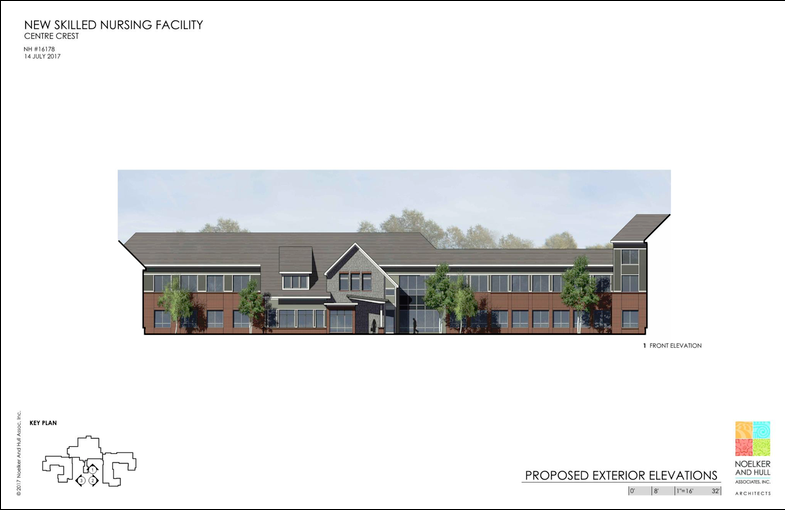
How Does Centre Care Rehabilitation And Wellness Services Compare to Other Pennsylvania Nursing Homes?

Compared to the 100 nursing homes in Pennsylvania, CENTRE CARE REHABILITATION AND WELLNESS SERVICES's overall rating (3 stars) matches the state average, staff turnover (44%) is near the state average of 46%, and health inspection rating (3 stars) is at the national benchmark.

What Should Families Ask When Visiting Centre Care Rehabilitation And Wellness Services?

Based on this facility's data, families visiting should ask: "Can I visit during a mealtime to observe dining assistance and food quality?" "How do you handle medical emergencies, and what is your hospital transfer rate?" "Can I speak with family members of current residents about their experience?"

Is Centre Care Rehabilitation And Wellness Services Safe?

Based on CMS inspection data, CENTRE CARE REHABILITATION AND WELLNESS SERVICES has a clean safety record: no substantiated abuse findings (meaning no confirmed cases of resident harm), no Immediate Jeopardy citations (the most serious violation level indicating risk of serious injury or death), and is not on the Special Focus Facility watch list (a federal program monitoring the lowest-performing 1% of nursing homes). The facility has a 3-star overall rating and ranks #1 of 100 nursing homes in Pennsylvania. While no facility is perfect, families should still ask about staff-to-resident ratios and recent inspection results during their visit.

Do Nurses at Centre Care Rehabilitation And Wellness Services Stick Around?

CENTRE CARE REHABILITATION AND WELLNESS SERVICES has a staff turnover rate of 44%, which is about average for Pennsylvania nursing homes (state average: 46%). Moderate turnover is common in nursing homes, but families should still ask about staff tenure and how the facility maintains care continuity when employees leave.

Was Centre Care Rehabilitation And Wellness Services Ever Fined?

CENTRE CARE REHABILITATION AND WELLNESS SERVICES has no federal fines on record. CMS issues fines when nursing homes fail to meet care standards or don't correct problems found during inspections. The absence of fines suggests the facility has either maintained compliance or corrected any issues before penalties were assessed. This is a positive indicator, though families should still review recent inspection reports for the full picture.

Is Centre Care Rehabilitation And Wellness Services on Any Federal Watch List?

CENTRE CARE REHABILITATION AND WELLNESS SERVICES is not on any federal watch list. The most significant is the Special Focus Facility (SFF) program, which identifies the bottom 1% of nursing homes nationally based on persistent, serious quality problems. Not being on this list means the facility has avoided the pattern of deficiencies that triggers enhanced federal oversight. This is a positive indicator, though families should still review the facility's inspection history directly.