PINE VIEW HEALTHCARE AND REHABILITATION CENTER
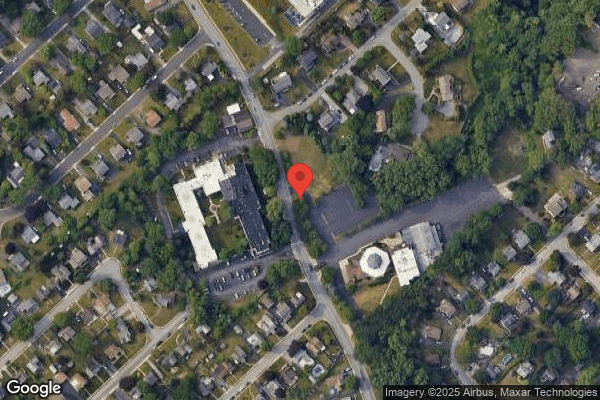
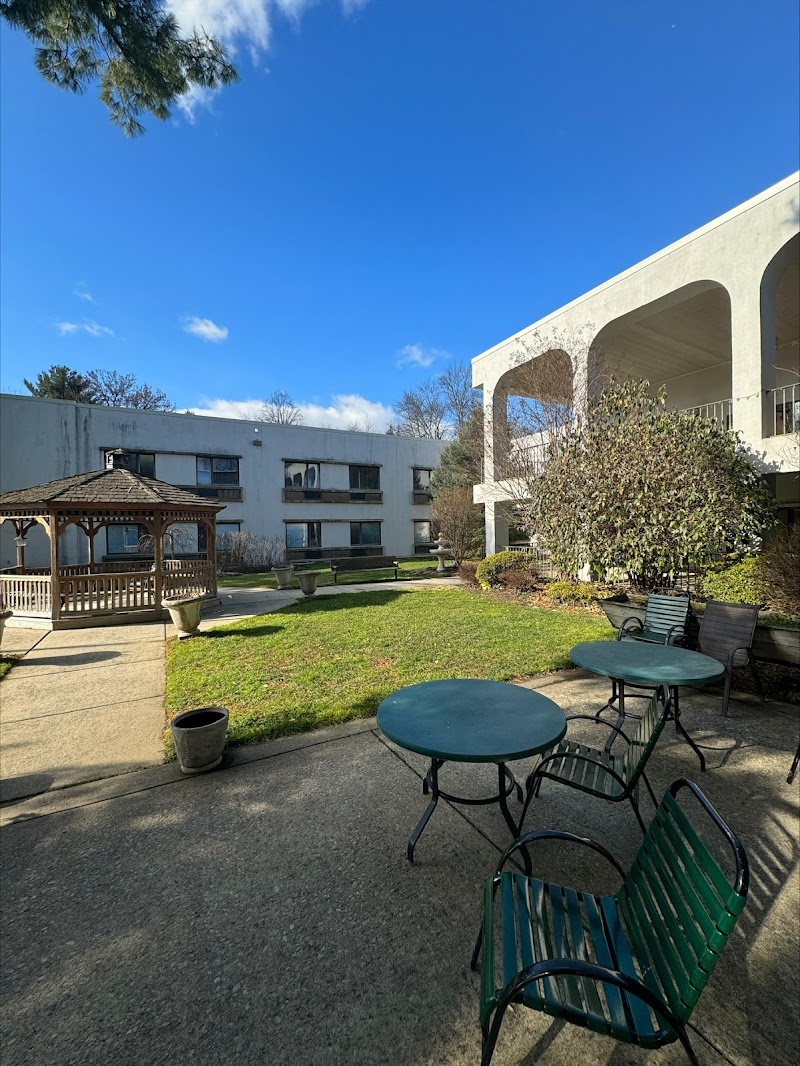
50 NORTH MALIN ROAD, BROOMALL, PA 19008 (610) 356-0800
For profit - Corporation 298 Beds Independent Data: November 2025
Trust Grade
50/100
#476 of 653 in PA
Last Inspection: August 2025

Inspected within the last 6 months. Data reflects current conditions.

Overview

Pine View Healthcare and Rehabilitation Center has received a Trust Grade of C, indicating an average performance that places it in the middle of the pack among nursing homes. It ranks #476 out of 653 facilities in Pennsylvania, meaning it is in the bottom half, and #22 out of 28 in Delaware County, suggesting that only a few local options are better. Unfortunately, the facility's trend is worsening, increasing from 8 issues in 2024 to 14 in 2025. Staffing is rated average with a 3/5 star rating, but the 49% turnover rate is concerning, matching the state average. While there have been no fines, which is a positive aspect, the facility has less registered nurse coverage than 99% of Pennsylvania facilities, which may impact the quality of care. Specific incidents noted include failures to provide scheduled showers for residents and not following physician's orders for medication administration, highlighting areas that need improvement despite the absence of critical or serious harm incidents.

Trust Score
C
50/100
In Pennsylvania
#476/653
Bottom 28%
Safety Record
Low Risk
No red flags
Inspections
Getting Worse
8 → 14 violations
Staff Stability
⚠ Watch
49% turnover. Above average. Higher turnover means staff may not know residents' routines.
Penalties
✓ Good
No fines on record. Clean compliance history, better than most Pennsylvania facilities.
Skilled Nurses
⚠ Watch
Each resident gets only 18 minutes of Registered Nurse (RN) attention daily — below average for Pennsylvania. Fewer RN minutes means fewer trained eyes watching for problems.
Violations
⚠ Watch
42 deficiencies on record. Higher than average. Multiple issues found across inspections.
★★☆☆☆
2.0
Overall Rating
★★★☆☆
3.0
Staff Levels
★★☆☆☆
2.0
Care Quality
★★☆☆☆
2.0
Inspection Score
Stable
2024: 8 issues
2025: 14 issues

The Good

  • Full Sprinkler Coverage · Fire safety systems throughout facility
  • No fines on record

Facility shows strength in fire safety.

The Bad

2-Star Overall Rating

Below Pennsylvania average (3.0)

Below average - review inspection findings carefully

Staff Turnover: 49%

Near Pennsylvania avg (46%)

Higher turnover may affect care consistency

The Ugly 42 deficiencies on record

Aug 2025 14 deficiencies
CONCERN (D)

Potential for Harm - no one hurt, but risky conditions existed

Deficiency F0604 (Tag F0604)

Could have caused harm · This affected 1 resident

Based on review of policies, clinical records and investigative reports, as well as observations and staff interviews, it was determined that the facility failed to ensure that residents were free fro...

Read full inspector narrative →
Based on review of policies, clinical records and investigative reports, as well as observations and staff interviews, it was determined that the facility failed to ensure that residents were free from any physical restraints not required to treat the resident's medical symptoms for two of 65 residents reviewed (Residents 111, 172). Findings include:The facility's policy on restraints, dated March 12, 2025, indicated that each resident would be free of restraints.A quarterly Minimum Data Set (MDS) assessment (a mandated assessment of a resident's abilities and care needs) for Resident 111, dated June 4, 2025, revealed that the resident was cognitively impaired, required assistance from staff for daily care needs, and utilized a wheelchair for mobility. The resident's care plan, dated June 2, 2022, revealed that the resident was at risk for falls and should be placed in a highly populated area to be monitored and not left alone in his room. A quarterly MDS for Resident 172, dated June 12, 2025, revealed that the resident was cognitively impaired, required assistance from staff for daily care needs, and utilized a wheelchair for mobility. Observations on August 24, 2025, at 9:46 a.m. revealed that Licensed Practical Nurse E3 pushed Resident 172 in his wheelchair to a table in the dining room and then engaged the wheelchair brakes. Resident 111 was seated at the same table with her wheelchair brakes engaged. Residents 111 and 172 were observed at that time to be attempting to push away from the table or move away but were unable to do so because their chairs were locked in place. There was no programming going on at that time.Observations on August 24, 2025, at 10:51 a.m. revealed that Residents 111 and 172 were still seated at the table with their wheelchair locks engaged. Resident 111 was trying to push her chair away from the table. Resident 172 was attempting to pull the tablecloth and table and then push the table away. He was unable to push himself away from the table because his chair was locked in place.Interview with Licensed Practical Nurse E3 on August 24, 2025 at 9:50 a.m. revealed that staff lock residents' wheelchairs in place in the dining room because they are at risk for falling. She stated that the residents would try to get up from their chairs and fall if they were not locked in place.Interview with the Director of Nursing on August 24, 2025 at 1:09 p.m. revealed that she did not believe it was a restraint to put the residents at the table and lock their chairs, even though it restricted their movements, because they were at risk of falling. 28 Pa. Code 201.18(e)(1) Management.28 Pa. Code 201.29(j) Resident rights. 28 Pa. Code 211.8(a) Use of restraints.
CONCERN (D)

Potential for Harm - no one hurt, but risky conditions existed

Comprehensive Assessments (Tag F0636)

Could have caused harm · This affected 1 resident

Based on review of the Resident Assessment Instrument User's Manual and clinical records, the Centers for Medicare & Medicaid Services (CMS) Minimum Data Set (MDS) validation report, as well as staff ...

Read full inspector narrative →
Based on review of the Resident Assessment Instrument User's Manual and clinical records, the Centers for Medicare & Medicaid Services (CMS) Minimum Data Set (MDS) validation report, as well as staff interviews, it was determined that the facility failed to ensure that the Care Area Assessment Process of comprehensive Minimum Data Set assessments and comprehensive assessments were completed in the required time frame for 9 of 65 residents reviewed (Residents 2, 3, 32, 35, 87, 99, 119, 122, 200). Findings include:The Long-Term Care Facility Resident Assessment Instrument (RAI) User's Manual, which provides instructions and guidelines for completing required Minimum Data Set (MDS) assessments (mandated assessments of a resident's abilities and care needs), dated October 2024, indicated that for admission MDS assessments, the assessment completion date, and the Care Area Assessment (CAA - the process of completing an in-depth assessment of triggered, potentially problematic care areas) completion date (Item V0200B2) were to be no later than the resident's admission date plus 13 calendar days and there must be an MDS every 92 days. A comprehensive MDS assessment for Resident 2 revealed that the ARD was May 13, 2025. The MDS assessment was dated as completed on May 28, 2023, which was two days late.A comprehensive MDS assessment for Resident 3 revealed that the ARD was July 13, 2025. The MDS assessment was dated as completed on July 28, 2023, which was two days late.A comprehensive MDS assessment for Resident 32 revealed that the ARD was August 6, 2025. The MDS assessment was dated as completed on August 20, 2023, which was one day late.A comprehensive MDS assessment for Resident 35 revealed that the ARD was May 13, 2025. The MDS assessment was dated as completed on May 27, 2023, which was one day late.A comprehensive MDS assessment for Resident 87 revealed that the ARD was August 1, 2025. The MDS assessment was dated as completed on August 15, 2023, which was one day late.A comprehensive MDS assessment for Resident 99 revealed that the ARD was April 30, 2025. The MDS assessment was dated as completed on May 16, 2023, which was three days late.A comprehensive MDS assessment for Resident 119 revealed that the ARD was May 1, 2025. The MDS assessment was dated as completed on May 16, 2023, which was two days late.A comprehensive MDS assessment for Resident 122 revealed that the ARD was May 14, 2025. There was no MDS completed in the prior 366 days.A comprehensive MDS assessment for Resident 200 revealed that the ARD was May 2, 2025. The MDS assessment was dated as completed on May 16, 2023, which was one day late.Interview with the Registered Nurse Assessment Coordinator Consultant (RNAC - a registered nurse who is responsible for the completion of MDS assessments) on August 26, 2025 at 3:44 p.m. confirmed that the above comprehensive MDS assessments were not completed in the required time frames.28 Pa. Code 211.5(f) Clinical records.
CONCERN (D)

Potential for Harm - no one hurt, but risky conditions existed

Deficiency F0638 (Tag F0638)

Could have caused harm · This affected 1 resident

Based on review of the Resident Assessment Instrument Manual and clinical records, as well as staff interviews, it was determined that the facility failed to ensure that quarterly Minimum Data Set ass...

Read full inspector narrative →
Based on review of the Resident Assessment Instrument Manual and clinical records, as well as staff interviews, it was determined that the facility failed to ensure that quarterly Minimum Data Set assessments were completed within the required time frame for 2 of 65 residents reviewed (Residents 25, 174). Findings include:The Long-Term Care Facility Resident Assessment Instrument (RAI) User's Manual, which provides instructions and guidelines for completing required Minimum Data Set (MDS) assessments (mandated assessments of a resident's abilities and care needs), dated October 2024, indicated that the assessment reference date (ARD - the last day of the assessment's look-back period) of a quarterly MDS assessment must be no more than 92 days after the ARD of the most recent assessment of any type, and the assessment was to have a completion date (Section Z0500B) that was no later than the ARD plus 14 calendar days. A quarterly MDS assessment for Resident 25 had an ARD of August 2, 2025, but it was not completed (Section Z0500B) until August 19, 2025.A quarterly MDS assessment for Resident 174 had an ARD of May 8, 2025, but it was not completed (Section Z0500B) until May 26, 2025.Interview with the Registered Nurse Assessment Coordinator Consultant (RNAC - a registered nurse who is responsible for the completion of MDS assessments) on August 26, 2025 at 3:44 p.m. confirmed that the above comprehensive MDS assessments were not completed in the required time frames.28 Pa. Code 211.5(f) Clinical records.
CONCERN (D)

Potential for Harm - no one hurt, but risky conditions existed

MDS Data Transmission (Tag F0640)

Could have caused harm · This affected 1 resident

Based on review of the Resident Assessment Instrument Manual and clinical records, as well as staff interviews, it was determined that the facility failed to ensure that encoding/transmitting Minimum ...

Read full inspector narrative →
Based on review of the Resident Assessment Instrument Manual and clinical records, as well as staff interviews, it was determined that the facility failed to ensure that encoding/transmitting Minimum Data Set assessments were completed within the required time frame for 5 of 65 residents reviewed (Residents 15, 77, 147, 199, 200). Findings include:The Long-Term Care Facility Resident Assessment Instrument (RAI) User's Manual, which provides instructions and guidelines for completing required Minimum Data Set (MDS) assessments (mandated assessments of a resident's abilities and care needs), dated October 2024, indicated that for entry and death in facility tracking records, the MDS Completion Date (Z0500B) must be no later than 7 days from the event date (A1600 for an entry record; A2000 for a Death in Facility tracking record)A discharge MDS assessment for Resident 15 had an ARD of May 4, 2025, but it was not completed (Section Z0500B) until May 19, 2025.An entry MDS assessment for Resident 77 had an ARD of June 1, 2025, but it was not completed (Section Z0500B) until June 25, 2025.A discharge MDS assessment for Resident 147 had an ARD of April 15, 2025, but it was not completed (Section Z0500B) until June 6, 2025.An entry MDS assessment for Resident 199 had an ARD of May 22, 2025, but it was not completed (Section Z0500B) until June 6, 2025.An entry MDS assessment for Resident 200 had an ARD of June 7, 2025, but it was not completed (Section Z0500B) until June 29, 2025.Interview with the Registered Nurse Assessment Coordinator Consultant (RNAC - a registered nurse who is responsible for the completion of MDS assessments) on August 26, 2025 at 3:44 p.m. confirmed that the above comprehensive MDS assessments were not completed in the required time frames.28 Pa. Code 211.5(f) Clinical records.
CONCERN (D)

Potential for Harm - no one hurt, but risky conditions existed

Assessment Accuracy (Tag F0641)

Could have caused harm · This affected 1 resident

Based on review of the Resident Assessment Instrument User's Manual and residents' clinical records, as well as staff interviews, it was determined that the facility failed to complete accurate Minimu...

Read full inspector narrative →
Based on review of the Resident Assessment Instrument User's Manual and residents' clinical records, as well as staff interviews, it was determined that the facility failed to complete accurate Minimum Data Set assessments for four of 65 residents reviewed (Residents 9, 10, 34, and 111).Findings include: The Resident Assessment Instrument (RAI) User's Manual, which gives instructions for completing Minimum Data Set (MDS) assessments (mandated assessments of a resident's abilities and care needs), dated October 2024, revealed that Section N0450D (antipsychotic medication review) was to be checked (1) yes, if a physician documented a GDR (gradual dose reduction-process involves slowly tapering a patient's medication to see if their symptoms can be managed with a lower dose or if the drug can be discontinued entirely) as clinically contraindicated. Physician's orders for Resident 9 dated May 21, 2025, included for the Resident to receive 0.5 milligrams (mg) of Risperdal (an antipsychotic medication) two times a day. Review of psychiatric consults for Resident 9 dated June 11, 2025, and July 16, 2025, indicated that a GDR was not indicated due to the resident having a chronic psychiatric illness and was stable on the current medication regimen. A quarterly MDS assessment for Resident 9 dated August 8, 2025, was coded 0 (no) for Section N0450D indicating that a physician did not document that a GDR of the resident’s antipsychotic medication was contraindicated. An interview with the regional Registered Nurse Assessment Coordinator on August 26, 2025, at 3:19 p.m. confirmed that there was documentation that a GDR was contraindicated for Resident 9, and her quarterly MDS assessments dated August 8, 2025, was coded incorrectly. Section N0415H was to be coded if the resident received an opioid (pain medication) medication during the seven-day assessment period and Section N0451K was to be coded if the resident received an anti-convulsant during the seven-day assessment period. Physician's orders for Resident 10, dated May 28, 2025, included orders for the resident to receive 50 mg Tramadol (opioid) at bedtime for pain management. Review of the resident's MAR for June 2025 revealed that the resident received Tramadol from June 1 through 30, 2025. However, a quarterly MDS assessment for Resident 10, dated June 12, 2025, revealed that Sections N0415H was not coded, indicating that the resident did not receive an opioid medication during the assessment period. Physician's orders for Resident 34, dated December 4, 2024 and October 6, 2023, included orders for the resident to receive 50 mg Tramadol twice a day for leg pain and 25 mg of Lamotrigine (anticonvulsant medication) twice a day for mood stabilization. Review of the resident's MAR for May 2025 revealed that the resident received Tramadol and Lamotrigine from May 1 through 31, 2025. However, a quarterly MDS assessment for Resident 34, dated May 16, 2025, revealed that Sections N0415H and N0415K were not coded, indicating that the resident did not receive an opioid or anticonvulsant medication during the assessment period. The RAI User's Manual, dated October 2024, revealed that if the pneumococcal (pneumonia) vaccine was not received, Section O0250C (pneumococcal vaccine) was to be coded with the reason the pneumonia vaccine was not received. The section was to be coded with a (1) if the resident was not in the facility; (2) if the received outside the facility; (3) if the resident was not eligible (medical contraindication); (4) offered and declined; (5) not offered; (6) inability to obtain influenza vaccine due to a declared shortage; and (9) none of the above. A quarterly MDS assessment for Resident 14, dated July 9, 2025 revealed that Section O0250C was coded with not offered. However, an influenza consent/declination form, dated September 25, 2024, revealed that Resident 14 was offered the influenza vaccine and declined. An interview with the Regional Registered Nurse Assessment Coordinator on August 26, 2025 at 3:19 p.m. confirmed that Resident 10, 14, 34, and 111's MDS assessments were coded incorrectly. The Long-Term Care Facility RAI User's Manual, which provides guidance and instructions for the completion of MDS assessments, dated October 2024, revealed that Section N was to be coded for medications received in the last seven days. Section N0415B was to be coded if the resident received an antianxiety medication in the previous seven days. Section N0451H was to be coded if the resident received an opioid (narcotic) medication in the previous seven days. Physician's orders for Resident 111, dated May 21, 2025, included an order for the resident to receive 0.5 milligrams (mg) Lorazepam (anti-anxiety medication) twice a day, and an order dated February 26, 2025 for the resident to receive 5 mg oxycodone (opioid) every six hours as needed for pain which was administered on June 1, 2025. A quarterly MDS assessment for Resident 111, dated June 4, 2025, revealed that Section N0415B was coded indicating that the resident had not received an anti-anxiety medication and Section N0415H was coded indicating that the resident had no received an opioid medication. An interview with the regional Registered Nurse Assessment Coordinator on August 26, 2025 at 3:19 p.m. confirmed that Resident 111's MDS was coded incorrectly. 28 Pa. Code 211.5(f) Medical records.
CONCERN (D)

Potential for Harm - no one hurt, but risky conditions existed

Comprehensive Care Plan (Tag F0656)

Could have caused harm · This affected 1 resident

Based on review of policies and clinical records, as well as staff interviews, it was determined that the facility failed to develop and implement an individualized care plan for one of 65 residents r...

Read full inspector narrative →
Based on review of policies and clinical records, as well as staff interviews, it was determined that the facility failed to develop and implement an individualized care plan for one of 65 residents reviewed (Resident 13). Findings include:The facility's policy regarding care plans, dated March 12, 2025, indicated that a comprehensive, person-centered care plan that includes measurable objectives and timetables to meet the resident's physical, psychosocial and functional needs is developed and implemented for each resident. Care plan interventions are chosen based on relevant clinical data and decision making. Assessments of residents are ongoing, and care plans are revised as information about the residents and the residents' conditions change. The interdisciplinary team reviews and updates the care plan when there has been a significant change in condition, when the desired outcome has not been met, when the resident has been readmitted from the hospital and at least quarterly, in conjunction with the required quarterly Minimum Data Set (MDS) assessment.A quarterly Minimum Data Set (MDS) assessment (a mandated assessment of a resident's abilities and care needs) for Resident 13, dated May 23, 2025, revealed that the resident was cognitively intact, required assistance with care needs, received an antibiotic and had a diagnosis that included hepatic encephalopathy (loss of brain function when the liver is unable to remove toxins from the blood).Physician's orders for Resident 13, dated June 10, 2025, included an order for the resident to receive 550 milligrams (mg) of Rifaximin (an antibiotic) twice daily for hepatic encephalopathy.There was no documented evidence that a care plan was developed to address Resident 13's hepatic encephalopathy and his need for long term antibiotic use for treatment of his hepatic encephalopathy.Interview with the Director of Nursing on August 25, 2025, at 4:26 p.m. confirmed that Resident 13 did not have a care plan to address his hepatic encephalopathy and his need for long term antibiotic use for treatment of his hepatic encephalopathy.28 Pa. Code 211.11(d) Resident care plan.28 Pa. Code 211.12(d)(5) Nursing services.
CONCERN (D)

Potential for Harm - no one hurt, but risky conditions existed

Deficiency F0657 (Tag F0657)

Could have caused harm · This affected 1 resident

Based on review of facility policies and clinical records, as well as staff interviews, it was determined that the facility failed to ensure that a resident's care plan was updated/revised to reflect ...

Read full inspector narrative →
Based on review of facility policies and clinical records, as well as staff interviews, it was determined that the facility failed to ensure that a resident's care plan was updated/revised to reflect the resident's specific care needs for two of 65 residents reviewed (Residents 5 and 13).Findings include:The facility's policy regarding care plans, dated March 12, 2025, indicated that a comprehensive, person-centered care plan that includes measurable objectives and timetables to meet the resident's physical, psychosocial and functional needs is developed and implemented for each resident. Care plan interventions are chosen based on relevant clinical data and decision making. Assessments of residents are ongoing, and care plans are revised as information about the residents and the residents' conditions change. The interdisciplinary team reviews and updates the care plan when there has been a significant change in condition, when the desired outcome has not been met, when the resident has been readmitted from the hospital and at least quarterly, in conjunction with the required quarterly Minimum Data Set (MDS) assessment.A quarterly Minimum Data Set (MDS) assessment (a mandated assessment of a resident's abilities and care needs) for Resident 5, dated July 15, 2025, and completed July 22, 2025, revealed that the resident was cognitively intact, required assistance with care needs, had a stage three pressure ulcer (pressure wound involving the fat layers beneath the skin), and did not receive intravenous (administration of fluids and/or medications directly into a person's vein) medications. A care plan for the resident, dated May 29, 25, indicated that the resident had a stage three pressure ulcer. A care plan for the resident, dated June 16, 2025, indicated that the resident was on intravenous fluids for a fluid deficit. A care plan for the resident, dated June 19, 2025, indicated that the resident had a midline intravenous catheter (a thin tube inserted into a vein and used long-term for the administration of fluids and/or medications). A care plan for the resident, dated July 2, 2025, indicated that the resident had a stage three pressure ulcer. A care plan for the resident, dated July 14, 2025, indicated that the resident was taking oral vancomycin (an antibiotic) related to sepsis (the body's extreme response to infection) and that staff were to maintain contact precautions (used to prevent the spread of infection passed through direct contact with an infected person or their environment).Review of Resident 5's clinical record, including review of the resident's Medication Administration Record (MAR) and physician's orders, revealed no documented evidence that the resident had an active stage three pressure ulcer, was receiving intravenous fluids, had a midline intravenous catheter, was taking oral vancomycin and no documented evidence that the resident was on contact precautions.Interview with the Director of Nursing on August 24, 2025, at 1:07 p.m. confirmed that Resident 5's care plans should have been updated to reflect that the resident did not have an active stage three pressure ulcer, was no longer receiving intravenous fluids, did not have a midline intravenous catheter, was no longer taking oral vancomycin and was not actively on contact precautions.A quarterly MDS assessment for Resident 13, dated May 23, 2025, and completed on May 28, 2025, revealed that the resident was cognitively intact, required assistance with care needs, received an antibiotic and had a diagnosis that included hepatic encephalopathy (loss of brain function when the liver is unable to remove toxins from the blood). A care plan for the resident, dated May 19, 2025, indicated that the resident was receiving intravenous antibiotic medications related to sepsis and extended spectrum beta-lactamase (ESBL) infection (a resistant bacterial infection that can be spread through contact) and was on contact precautions.Review of Resident 13's clinical record, including review of the resident's Medication Administration Record (MAR) and physician's orders, revealed no documented evidence that the resident was receiving an intravenous antibiotic for sepsis/ESBL infection and there was no documented evidence that the resident was on contact precautions.Interview with the Director of Nursing on August 25, 2025, at 4:26 p.m. confirmed that Resident 13's care plans should have been updated to reflect that the resident was no longer receiving intravenous antibiotic for sepsis/ESBL infection and no longer required contact precautions.28 Pa. Code 211.12(d)(5) Nursing Services.
CONCERN (D)

Potential for Harm - no one hurt, but risky conditions existed

Incontinence Care (Tag F0690)

Could have caused harm · This affected 1 resident

**NOTE- TERMS IN BRACKETS HAVE BEEN EDITED TO PROTECT CONFIDENTIALITY** Based on review of policies and clinical records, as well as observations and staff interviews, it was determined that the facil...

Read full inspector narrative →
**NOTE- TERMS IN BRACKETS HAVE BEEN EDITED TO PROTECT CONFIDENTIALITY** Based on review of policies and clinical records, as well as observations and staff interviews, it was determined that the facility failed to ensure that interventions were in place to prevent urinary tract infections for one of 65 residents reviewed (Resident 13) who had an indwelling urinary catheter.Findings include:The facility's policy regarding indwelling urinary catheters (a flexible tube inserted and held in the bladder to drain urine), dated March 12, 2025, revealed that catheter drainage bags were to be kept off the floor.A quarterly Minimum Data Set (MDS) assessment (a mandated assessment of a resident's abilities and care needs) for Resident 14, dated July 9, 2025, revealed that the resident was cognitively impaired, incontinent of bladder, and had urinary tract infections.Physician's orders for Resident 11, dated August 19, 2025, included an order for the resident to have an indwelling urinary catheter due to a pressure ulcer.Observations of Resident 14 on August 26, 2025, at 2:27 p.m. revealed the resident was laying in bed and her catheter collection bag was in direct contact with the floor. Interview with Licensed Practical Nurse XX ([NAME]) at that time confirmed that the catheter bag should not be in contact with the floor.Interview with the Assistant Director of Nursing on August 26, 2025, at 4:38 p.m. confirmed that Resident 14's catheter bag should be off the floor.28 Pa. Code 211.12(d)(5) Nursing Services.
CONCERN (D)

Potential for Harm - no one hurt, but risky conditions existed

Unnecessary Medications (Tag F0759)

Could have caused harm · This affected 1 resident

Based on review of manufacturer's instructions and clinical records, as well as observations and staff interviews, it was determined that the facility failed to maintain a medication administration er...

Read full inspector narrative →
Based on review of manufacturer's instructions and clinical records, as well as observations and staff interviews, it was determined that the facility failed to maintain a medication administration error rate of less than five percent. Findings include:Observations during medication administration on August 24, 2025, revealed that two medication administration errors were made during 25 opportunities for error, resulting in a medication administration error rate of 8.00 percent.Current manufacturer's directions for use of Advair (Fluticasone-Salmeterol) Inhalation Aerosol Powder (used to treat chronic obstructive pulmonary disease (COPD) and Asthma) revealed that serious side effects including thrush (a fungal infection in the mouth and throat) can occur. Rinse the mouth with water without swallowing after use to reduce the chance of getting thrush.Physician's orders for Resident 66, dated January 24, 2025, included an order for the resident to receive 100-50 micrograms of Fluticasone-Salmeterol Inhalation Aerosol Powder with instructions to inhale 1 puff orally twice daily for asthma and to rinse mouth after each use.Observations during medication administration on August 24, 2025, at 8:37 a.m. revealed that Licensed Practical Nurse E4 administered the Fluticasone-Salmeterol and did not have the resident rinse her mouth after administration.Physician's orders for Resident 129, dated May 24, 2025, included an order for the resident to receive 250-50 micrograms of Advair (Fluticasone-Salmeterol) Inhalation Aerosol Powder with instructions to inhale 1 puff orally twice daily for COPD. Step 5 on the Advair box stated to rinse mouth with water and spit out water after administration.Observations during medication administration on August 24, 2025, at 8:46 a.m. revealed that Licensed Practical Nurse E4 administered the Advair (Fluticasone-Salmeterol) and did not have the resident rinse her mouth after administration.Interview with Licensed Practical Nurse E4 on August 24, 2025, at 8:55 a.m. confirmed that she should have had Resident 66 and Resident 129 rinse their mouths after administering the Advair/ Fluticasone-Salmeterol.Interview with the Director of Nursing on August 24, 2025, at 3:11 p.m. confirmed that the nurse should have had Resident 66 and Resident 129 rinse their mouths after administering the Advair/ Fluticasone-Salmeterol.28 Pa. Code 211.12(d)(1)(3)(5) Nursing Services.
CONCERN (D)

Potential for Harm - no one hurt, but risky conditions existed

Deficiency F0761 (Tag F0761)

Could have caused harm · This affected 1 resident

Based on review of manufacturer's instructions, as well as observations and staff interviews, it was determined that the facility failed to date an opened multidose vial of Aplisol tuberculin (TB) sol...

Read full inspector narrative →
Based on review of manufacturer's instructions, as well as observations and staff interviews, it was determined that the facility failed to date an opened multidose vial of Aplisol tuberculin (TB) solution (used to test for tuberculosis infection) in one of two medication storage area refrigerators reviewed (1 Main) and failed to provide a separately-locked, permanently-affixed compartment in the refrigerator for the storage of controlled drugs (medications that have the potential to be abused) in two of two medication storage area refrigerators reviewed (1 main and 2 West).Findings include: Manufacturer's instructions for Aplisol TB solution, dated November 2013, indicated that vials in use more than 30 days should be discarded due to possible oxidation and degradation which may affect potency. Observations of the facility's medication storage area refrigerator on 1 Main, on August 26, 2025, at 11:01 a.m. revealed an opened and undated vial of Aplisol TB solution. The narcotic box in the refrigerator was fixed to the shelf and did not contain any narcotic medications; however, the shelf with the fixed narcotic box could be removed from the refrigerator. Interview with Licensed Practical Nurse E5 at the time of the observation confirmed that the vial of Aplisol TB solution was not dated when it was opened and confirmed that the shelf with the fixed narcotic box could be removed from the refrigerator. Interview with the Director of Nursing on August 26, 2025, at 1:11 p.m. confirmed that the vial of Aplisol TB solution should have been dated when opened and confirmed that the narcotic box should have been fixed to the fridge and not able to be removed. Physician's orders for Resident 181, dated October 5, 2018, included an order for the resident to receive 0.25 milliliters (ml) of lorazepam intensol concentrate (a controlled liquid antianxiety medication) 2 milligram/milliliter (mg/ml) by mouth every 4 hours as needed for anxiety. Observations of the second floor west medication refrigerator on August 26, 2025, at 9:43 a.m. revealed that there was a separate box secured in the refrigerator that contained two boxes of lorazepam intensol concentrate (a controlled liquid antianxiety medication) 2 milligram/milliliter; however, the entire shelf that the narcotic box was mounted on could be removed from the refrigerator. Interview with Registered Nurse Unit Manager E6 confirmed that the box was able to be removed from the refrigerator. Interview with the Director of Nursing on August 26, 2025, at 1:11 p.m. confirmed that the box was not permanently affixed and should have been. 28 Pa. Code 211.9(a)(1) Pharmacy services. 28 Pa. Code 211.12(d)(1) Nursing services.
CONCERN (E)

Potential for Harm - no one hurt, but risky conditions existed

ADL Care (Tag F0677)

Could have caused harm · This affected multiple residents

Based on review of clinical records and shower schedules, as well as staff interviews, it was determined that the facility failed to ensure that residents were provided with showers as scheduled for t...

Read full inspector narrative →
Based on review of clinical records and shower schedules, as well as staff interviews, it was determined that the facility failed to ensure that residents were provided with showers as scheduled for two of 65 residents reviewed (Residents 13 and 144).Findings include:A quarterly Minimum Data Set (MDS) assessment (a mandated assessment of a resident's abilities and care needs) for Resident 13, dated May 23, 2025, revealed that the resident was cognitively intact, required assistance with care needs including bathing and toileting hygiene, had an indwelling catheter and was incontinent frequently of bowel. A care plan for Resident 13, dated April 21, 2025, indicated that the resident had a history of refusal of medications, showers and treatments.Physician's orders for Resident 13, dated June 9, 2025, revealed that the resident was scheduled to receive a shower on Wednesdays and Saturdays on the 3-11 shift.A review of the nurse aide bathing report and Treatment Administration Record (TAR) for Resident 13 from April 2025, through August 24, 2025, revealed that there was no documented evidence that the resident received a shower as scheduled and there was no documented evidence that the resident refused his showers, requiring a bed bath be given.Interview with the Director of Nursing on August 25, 2025, at 4:36 p.m. confirmed that there was no documented evidence that Resident 13 received and/or refused showers from April 2025, through August 24, 2025, as per the resident's schedule and physician's orders.A quarterly MDS assessment for Resident 144, dated August 10, 2025, revealed that the resident was admitted to the facility on February, 5, 2025, was cognitively intact, required assistance with care needs including bathing and toileting, was frequently incontinent of bowel and bladder, and had a diagnosis of cerebral vascular accident (an event caused by poor blood flow or bleeding to in the areas of the brain).An interview with Resident 144 on August 23, 2025, at 10:45 a.m. indicated that she had not received a shower since she was admitted to the facility. She indicated that she would like a shower but was never offered one.Physician's orders for Resident 144, dated April 1, 2025, revealed that the resident was scheduled to receive a shower on Wednesdays and Saturdays on the 7-3 shift with indications to document refusals.A review of the nurse aide bathing report and TAR for Resident 144 from February 2025, through August 24, 2025, revealed that there was no documented evidence that the resident received a shower as scheduled and there was no documented evidence that the resident refused her showers, requiring a bed bath be given.Interview with the Director of Nursing on August 25, 2025, at 4:36 p.m. confirmed that there was no documented evidence that Resident 144 received and/or refused showers from February 2025, through August 24, 2025, as per the resident's schedule and physician's orders.28 Pa. Code 211.12(d)(5) Nursing services.
CONCERN (E)

Potential for Harm - no one hurt, but risky conditions existed

Quality of Care (Tag F0684)

Could have caused harm · This affected multiple residents

Based on review of facility policies and clinical record reviews, as well as staff interviews, it was determined that the facility failed to ensure that physician's orders regarding medication adminis...

Read full inspector narrative →
Based on review of facility policies and clinical record reviews, as well as staff interviews, it was determined that the facility failed to ensure that physician's orders regarding medication administration were followed for two of 65 residents reviewed (Residents 6, 30), and failed to address physician recommendations from an outside appointment for one of 65 residents reviewed (Resident 25).Findings include: A quarterly Minimum Data Set (MDS) assessment (a mandated assessment of a resident's abilities and care needs) for Resident 6, dated May 25, 2025, indicated that the resident was severely cognitively impaired, had no speech, could rarely understand, and was rarely understood, required assistance from staff for care needs, had diagnoses that included Type II diabetes (body does not use insulin effectively or does not produce enough insulin to control blood sugar levels), and was administered insulin (medication to lower blood sugar). A care plan dated April 23, 2025, for Resident 6 indicated that he was an insulin dependent diabetic, staff were to assess and record blood glucose, and levels and administer insulin as ordered. Physician's orders for Resident 6, dated June 11, 2025 , included an order for the resident to receive 2 units Insulin Lispro (a rapid-acting insulin) before meals and bedtime. Staff were to call the physician if the blood glucose was less than 70 milligrams per deciliter (mg/dl) or above 400 mg/dl. The dose was to be held if the blood glucose was less than 110 mg/dl, if the tube feed was off, or the resident was not eating. Physician's orders for Resident 6, dated August 11, 2025 , included an order for the resident to receive 2 units Insulin Lispro before meals. Staff were to call the physician if the blood glucose was less than 70 mg/dl or above 400 mg/dl. The insulin was to be held if the blood glucose was less than 110 mg/dl or if the resident was not eating. Review of the Medication Administration Record (MAR) for Resident 6, dated July and August 2025, revealed that on July 4, 2025, at 4:30 p.m. the resident had a blood sugar of 103 mg/dl and was administered 2 units of Lispro; on July 4, 2025, at 9:00 p.m. the resident had a blood sugar of 103 mg/dl and was administered 2 units of Lispro; on July 10, 2025, at 4:30 p.m. the resident had a blood sugar of 103 mg/dl and was administered 2 units of Lispro; on July 11, 2025, at 11:00 a.m. the resident had a blood sugar of 107 mg/dl and was administered 2 units of Lispro; on July 14, 2025, at 7:30 a.m. the resident had a blood sugar of 100 mg/dl and was administered 2 units of Lispro; on July 16, 2025, at 9:00 p.m. the resident had a blood sugar of 108 mg/dl and was administered 2 units of Lispro; on July 17, 2025, at 7:30 a.m. the resident had a blood sugar of 107 mg/dl and was administered 2 units of Lispro; on July 17, 2025, at 11:30 a.m. the resident had a blood sugar of 96 mg/dl and was administered 2 units of Lispro; on July 17, 2025, at 4:30 p.m. the resident had a blood sugar of 103 mg/dl and was administered 2 units of Lispro; on July 18, 2025, at 9:30 p.m. the resident had a blood sugar of 101 mg/dl and was administered 2 units of Lispro; on July 21, 2025, at 11:30 a.m. the resident had a blood sugar of 102 mg/dl and was administered 2 units of Lispro; on July 22, 2025, at 7:30 a.m. the resident had a blood sugar of 102 mg/dl and was administered 2 units of Lispro; on July 24, 2025, at 7:30 a.m. the resident had a blood sugar of 102 mg/dl and was administered 2 units of Lispro; on July 25, 2025, at 7:30 a.m. the resident had a blood sugar of 107 mg/dl and was administered 2 units of Lispro; on July 26, 2025, at 7:30 a.m. the resident had a blood sugar of 96 mg/dl and was administered 2 units of Lispro; on July 26, 2025, at 11:30 a.m. the resident had a blood sugar of 102 mg/dl and was administered 2 units of Lispro; on July 28, 2025, at 7:30 a.m. the resident had a blood sugar of 96 mg/dl and was administered 2 units of Lispro; on July 28, 2025, at 11:30 a.m. the resident had a blood sugar of 94 mg/dl and was administered 2 units of Lispro; on July 30, 2025, at 7:30 a.m. the resident had a blood sugar of 107 mg/dl and was administered 2 units of Lispro; on August 2, 2025, at 7:30 a.m. the resident had a blood sugar of 93 mg/dl and was administered 2 units of Lispro; on August 2, 2025, at 4:30 p.m. the resident had a blood sugar of 97 mg/dl and was administered 2 units of Lispro; on August 3, 2025, at 11:30 a.m. the resident had a blood sugar of 104 mg/dl and was administered 2 units of Lispro; on August 6, 2025, at 9:00 p.m. the resident had a blood sugar of 101 mg/dl and was administered 2 units of Lispro; on August 11, 2025, at 7:30 a.m. the resident had a blood sugar of 98 mg/dl and was administered 2 units of Lispro; on August 2, 2025, at 11:30 a.m. the resident had a blood sugar of 106 mg/dl and was administered 2 units of Lispro; on August 12, 2025, at 7:30 a.m. the resident had a blood sugar of 109 mg/dl and was administered 2 units of Lispro; on August 18, 2025, at 7:30 a.m. the resident had a blood sugar of 98 mg/dl and was administered 2 units of Lispro; on August 18, 2025, at 11:30 a.m. the resident had a blood sugar of 92 mg/dl and was administered 2 units of Lispro; on August 22, 2025, at 7:30 a.m. the resident had a blood sugar of 98 mg/dl and was administered 2 units of Lispro. Interview with the Director of Nursing on August 26, 2025, at 12:48 p.m. confirmed that Resident 6's insulin was not administered as physician ordered for the dates listed above. A facility policy related to consultations and appointments, dated March 12, 2025, indicated that upon return from a consultation, the nurse will review the consult documentation and ensure any new orders or recommendations are promptly communicated to the attending physician for approval and implementation. If no consult documentation is returned, the nurse will call the consulting physician to follow up. A significant change MDS assessment for Resident 25, dated June 2, 2025, revealed that the resident was cognitively intact, was independent with care needs, received radiation and had a diagnosis of prostate cancer. A consult note for Resident 25, from the radiation oncologist/urologist, dated July 22, 2025, revealed that the resident had moderate to severe dysuria (painful urination). A urinalysis (a test that examines a urine sample to detect and monitor various health conditions, including urinary tract infections) was done and showed evidence of an infection. A culture (a laboratory test that determines if bacteria or other microorganisms are present in a urine sample) was pending and the physician indicated that he would like the resident to start Bactrim double strength (DS) (an antibiotic) twice daily for 10 days and when the culture results come back, if it was resistant to Bactrim DS, he would change to antibiotic to one that shows sensitivity (identifies bacteria or yeast causing a urinary tract infection (UTI) and which drugs work best to treat the infection). A physician’s note for Resident 25, dated July 30, 2025, at 3:14 p.m. revealed that the resident endorsed dysuria and was seen for follow up status post urology recommendations. He indicated that the resident had a urine sample obtained from urology on July 22, 2025, and that urology prescribed Bactrim for 10 days. He indicated that the resident was to get his first dose the evening of July 30, 2025. There was no documented evidence that the facility obtained Resident 25’s radiology oncology/urology recommendations on July 22, 2025, for Bactrim DS related to a urinary tract infection. Interview with the Director of Nursing on August 25, 2025, at 11:48 a.m. confirmed that Resident 25’s consult note from July 22, 2025, was not sent to the facility until July 30, 2025. She indicated that typically there are no communication sheets sent back with the resident unless there are changes. She indicated that they must have forgotten to send the consult sheet indicating the recommendation for the antibiotic. She indicated that they did not consider the resident’s appointments with radiology/urology consult appointments as it was scheduled routinely for a time period of six weeks. She indicated that typically, for consult appointments, they would call the physician for updates if no communication was returned post appointment. The facility policy for administration procedures for all medications, dated March 12, 2025, indicated that medications will be administered in a safe and effective manner. Staff are to at a minimum, review the five rights of medication administration at each step of medication administration. Prior to removing the medication package/container from the cart/drawer, check for vital signs or other tests to be done during or prior to medication administration. When preparing to administer medication, staff are to obtain and record any vital signs or other monitoring parameters ordered or deemed necessary prior to the medication administration and notify the physician and/or prescriber of held medications for pulse, blood pressure, low or high blood sugar, or other abnormal test result for vital signs resulting in medication being held. A quarterly Minimum Data Set (MDS) assessment (a mandated assessment of a resident's abilities and care needs) for Resident 30 , dated June 28, 2025, revealed that the resident was cognitively impaired, received scheduled pain medication, received an opioid (a controlled pain medication), and had diagnoses that included dysphagia following a cerebral infarction (difficulty swallowing after having a stroke). Physician's orders for Resident 30 dated July 15, 2025, included for the resident to receive 25 milligrams (mg) of metoprolol tartrate (used to treat high blood pressure) twice a day and to hold the medication if the resident's blood pressure (BP) was less than 130 over 80. Review of the Medication Administration Record (MAR) for Resident 30, dated August 2025, indicated that 25 mg of metoprolol tartrate was administered to the resident on August 1 at 5:00 p.m. when the resident's BP was 151/60, August 2 at 9:00 a.m. when the resident's BP was 142/70, August 2 at 5:00 p.m. when the resident's BP was 145/78, August 3 at 9:00 a.m. when the resident's BP was 145/61, August 4 at 9:00 a.m. when the resident's BP was 132/78, August 5 at 9:00 a.m. when the resident's BP was 119/66, August 5 at 5:00 p.m. when the resident's BP was 120/60, August 7 at 9:00 a.m. when the resident's BP was 133/74, August 8 at 9:00 a.m. when the resident's BP was 144/66, August 9 at 9:00 a.m. when the resident's BP was 136/69, August 9 at 5:00 p.m. when the resident's BP was 125/68, August 10 at 5:00 p.m. when the resident's BP was 126/74, August 11 at 9:00 a.m. when the resident's BP was 134/78, August 11 at 5:00 p.m. when the resident's BP was 131/64, August 12 at 5:00 p.m. when the resident’s BP was 131/64, August 13 at 9:00 a.m. when the resident’s BP was 147/64, August 113 at5:00 p.m. when the resident’s BP was 149/57, August 14 at 5:00 p.m. when the resident’s BP was 155/61, August 15 at 5:00 p.m. when the resident’s BP was 136/77, August 18 at 9:00 a.m. when the resident's BP was 122/66, August 19 at 5:00 p.m. when the resident's BP was 132/71, August 20 at 5:00 p.m. when the resident's BP was 126/77, August 21 at 5:00 p.m. when the resident's BP was 143/64, August 23 at 9:00 a.m. when the resident's BP was 128/78, and August 24 at 5:00 p.m. when the resident's BP was 124/70. Interview with the Director of Nursing June 4, 2025, at 12:48 p.m. confirmed that Resident 30 was administered metoprolol tartrate when it should have been held per physician's orders for a BP less than 130 over 80 on the above-mentioned dates and times. 28 Pa. Code 211.12(d)(1)(5) Nursing Services.
CONCERN (E)

Potential for Harm - no one hurt, but risky conditions existed

Accident Prevention (Tag F0689)

Could have caused harm · This affected multiple residents

Based on review of facility policies and clinical records, as well as observations and staff interviews, it was determined that the facility failed to ensure that the resident environment remained as ...

Read full inspector narrative →
Based on review of facility policies and clinical records, as well as observations and staff interviews, it was determined that the facility failed to ensure that the resident environment remained as free from accident hazards as possible by failing to complete an air mattress safety assessment to identify potential safety hazards for 11 of 65 residents reviewed (Residents 1, 5, 7, 10, 13, 14, 19, 111, and 143) and failed to ensure that each resident received assistance devices to prevent accidents during transport in a wheelchair for one of 65 residents reviewed (Resident 172).Findings Include: A quarterly Minimum Data Set (MDS) assessment (a mandated assessment of a resident's abilities and care needs) for Resident 1, dated May 16, 2025, indicated that the resident was cognitively impaired, required assistance from staff for his daily care needs, and had diagnoses that included prostate (gland located below the bladder in men) cancer. Physician's orders for Resident 1, dated August 25, 2023, included an order for the resident's bed to be equipped with a low air loss mattress. There was no documented evidence that the use of an air mattress was assessed for potential safety hazards prior to the air mattress being placed on Resident 1's bed. Care plan for Resident 1 dated July 30, 2024, included that the resident was at risk for falls and staff were to provide a bariatric (medical treatment and management of obesity, or being significantly overweight to a degree that is dangerous to health) bed and a bariatric air mattress. Observations on August 23, 2025, at 11:52 a.m. revealed that Resident 1 was in bed with an air mattress in place. A quarterly MDS assessment for Resident 5, dated July 15, 2025, 2025, revealed that the resident was cognitively intact, required assistance with care needs, has an indwelling catheter and ostomy, stage 3 pressure ulcer (pressure wound that forms as a result of prolonged pressure involving the fat layers beneath the skin), and had a pressure relieving device on her bed. A care plan for the resident, dated July 2, 2025, included an intervention for the resident to have an air mattress. Physician's orders for Resident 5, dated July 11, 2025, included an order for the resident to have an air mattress (an inflated mattress for pressure relief) for skin integrity. Observations on August 23, 2025, at 12:14 p.m. revealed that Resident 5’s bed was equipped with an air mattress; however, there was no documented evidence that the use of an air mattress was assessed for potential safety hazards prior to being placed on the resident's bed. A quarterly MDS assessment for Resident 7, dated June 20, 2025, indicated that the resident was cognitively impaired, required assistance from staff for her daily care needs, had a stage two pressure ulcer (damage to the skin or underlying soft tissue), and received hospice services. Observations of Resident 7 on August 23, 2025, at 12:27 p.m. indicated the resident was laying in bed with an air mattress. Physician's orders for Resident 7, dated April 1, 2025, included an order to check the settings and function of the air mattress. Care plan for Resident 7 dated April 14, 2025, indicated that her family requested that the resident stay in bed at all times and was to have a pressure reduction mattress to the bed, Interview with the Nursing Home Administrator on June 17, 2025, at 4:03 p.m. confirmed that there were no specific assessments completed to ensure that the use of an air mattress was safe for Residents 7. A quarterly MDS assessment for Resident 10, dated June 12, 2025, indicated that the resident was moderately cognitively impaired and was at risk for developing pressure ulcers. Physician's orders for Resident 10, dated November 20, 2024, included an order for the resident's bed to be equipped with a low air loss mattress. There was no documented evidence that the use of an air mattress was assessed for potential safety hazards prior to the air mattress being placed on Resident 10's bed. Observations on August 23, 2025, at 10:40 a.m. revealed that Resident 10 was in bed with an air mattress in place. A quarterly MDS assessment for Resident 13, dated May 23, 2025, revealed that the resident was cognitively intact, required assistance with care needs, had an arterial/venous ulcer and surgical wound and had a pressure relieving device for his bed. A care plan for the resident, dated July 21, 2025, included an intervention for the resident to have an air mattress. Observations on August 23, 2025, at 11:04 a.m. revealed that Resident 13’s bed was equipped with an air mattress; however, there was no documented evidence that the use of an air mattress was assessed for potential safety hazards prior to being placed on the resident's bed. A quarterly MDS assessment for Resident 14, dated July 9, 2025, indicated that the resident was cognitively impaired, was incontinent of bowel and bladder, had limited range of motion to her lower extremities, had a pressure ulcer, and had diagnoses that included dementia. Physician's orders for Resident 14, dated August 19, 2025, included an order for the resident's bed to be equipped with an air mattress. There was no documented evidence that the use of an air mattress was assessed for potential safety hazards prior to the air mattress being placed on Resident 14's bed. Observations on August 26, 2025, at 2:27 p.m. revealed that Resident 14 was in bed with an air mattress in place. An annual MDS assessment for Resident 19, dated July 23, 2025, indicated that the resident was cognitively impaired, required assistance from staff for his daily care needs, and had diagnoses that included diabetes. Care plan for Resident 19 dated August 11, 2025, included that the resident was admitted with a stage two sacral wound (a shallow, open wound on the skin over the bony part at the base of the spine) and was to have an air mattress on his bed. There was no documented evidence in Residents 19’s clinical record to indicate that an air mattress safety assessment was completed to determine if the resident would be safe while on the mattress. A quarterly MDS assessment for Resident 111, dated August 28, 2025, revealed that he was cognitively impaired and required extensive assistance from staff for care. A care plan for the resident, dated May 13, 2025, revealed that he was at risk for skin breakdown and that he had an air mattress. A comprehensive MDS assessment for Resident 111, dated June 4, 2025, revealed that the resident was cognitively impaired and required extensive assistance from staff for care. A care plan for the resident, dated June 2, 2025, revealed that the resident was at risk for skin breakdown and that she had an air mattress. There was no documented evidence in Residents 111’s, clinical record to indicate that an air mattress safety assessment was completed to determine if the resident would be safe while on the mattress. A quarterly MDS assessment for Resident 143, dated May 12, 2025, indicated that the resident was moderately cognitively impaired and was at risk for developing pressure ulcers. Physician's orders for Resident 143, dated October 31, 2024, included an order for the resident's bed to be equipped with an air mattress. There was no documented evidence that the use of an air mattress was assessed for potential safety hazards prior to the air mattress being placed on Resident 143's bed. Observations on August 26, 2025, at 9:23 a.m. revealed that Resident 143 was in bed with an air mattress in place. An interview with the Nursing Home Administrator August 25, 2025 at 4:03 p.m. confirmed that the facility did not do a bed safety assessment on the residents before they were placed on the air mattresses. A quarterly MDS assessment for Resident 172, dated June 12, 2025, revealed that the resident was cognitively impaired, required staff assistance for all daily care needs, and used a wheelchair for mobility. Observations on August 24, 2025 at 9:46 a.m. revealed that Licensed Practical Nurse E3 pushed resident 172 from the table in the dining room through the hall and to his room while his feet, which had non-skid socks on, were dragging on the floor. Interview with Licensed Practical Nurse E3 on August 24, 2025 at 9:50 a.m. revealed that she pushed the resident back to his room so that she could give him his medications. She stated that he is able to self propel and that is why he did not have leg rests on his chair. She further stated that she didn't think that he needed leg rests to be pushed even though his feet were dragging on the floor. Interview with Nursing Home Administrator on August 24, 2025 at 3:51 p.m. confirmed that Resident 172 should have had leg rests on his wheelchair while being transported if his feet were dragging. He said that they do not keep leg rests on the residents that can self propel. 28 Pa. Code 211.12(d)(5) Nursing Services.
CONCERN (E)

Potential for Harm - no one hurt, but risky conditions existed

Pharmacy Services (Tag F0755)

Could have caused harm · This affected multiple residents

Based on review of facility policies and clinical records, as well as staff interviews, it was determined that the facility failed to maintain accountability for controlled medications (drugs with the...

Read full inspector narrative →
Based on review of facility policies and clinical records, as well as staff interviews, it was determined that the facility failed to maintain accountability for controlled medications (drugs with the potential to be abused) for two of 65 residents reviewed (Resident 5 and 30). Findings include: A facility policy regarding medication administration, dated March 12, 2025, indicated that after administering the medication, document administration on the Medication Administration Record (MAR) and the controlled substance sign out record, if necessary. A quarterly Minimum Data Set (MDS) assessment (a mandated assessment of a resident's abilities and care needs) for Resident 5, dated July 15, 2025, indicated that the resident was cognitively intact, required assistance with care needs, had pain and was taking an opioid medication (medications with the potential to be abused used to treat pain). Physician's orders for Resident 5, dated May 22, 2025, included an order for the resident to receive 5 milligrams (mg) of Oxycodone HCL (a narcotic pain medication) every four hours as needed for severe pain 7-10 on a pain scale for 14 days. Physician's orders for Resident 5, dated June 5, 2025, included an order for the resident to receive 5 mg of Oxycodone HCL every four hours as needed for severe pain 7-10 on a pain scale observe for respiratory depression, sedation and constipation. Physician's orders for Resident 5, dated July 11, 2025, included an order for the resident to receive 5 mg of Oxycodone HCL every six hours as needed for severe pain 7-10 on a pain scale. Review of the controlled drug record (a form that accounts for each tablet/pill/dose of a controlled drug) for Resident 5, dated May 2025 through August 2025, revealed that a 5 mg tablet of Oxycodone HCL was signed out on May 16 at 3:10p.m., May 22 at 1:00 p.m., May 23 at 12:45 p.m., May 25 at 9:30 a.m., May 30 at 10:15 a.m., June 5 at 2:36 p.m., June 9 at 9:4- a.m., June 18 at 9:00 p.m., June 19 at 9:00 p.m., June 22 at 9:55 a.m., July 2 at 8:00 p.m., July 3 at 9:00 p.m., July 28 at 1:50 a.m., July 29 at 11:00 a.m., August 3 at 3:15 p.m., August 5 at 9:45 a.m., August 18 at 1:00 p.m. and 6:45 p.m., and August 24 at 7:03 p.m. However, there was no documented evidence in Resident 5's clinical record, including the MAR, that the signed-out doses of Oxycodone HCL were administered to the resident on the above-mentioned dates and times. Interview with the Assistant Director of Nursing on August 26, 2025, at 4:42 p.m. confirmed that there was no documented evidence in Resident 5’s clinical record to indicate that the signed-out doses of Oxycodone HCL were administered to the resident on the above-mentioned dates and times. The facility's policy regarding controlled substances, dated March 12, 2025, indicated that the facility complies with all laws, regulations, and other requirements related to handling, storage, disposal and documentation of controlled medications. Wasting of controlled medication is done in the presence of the nurse and a witness who also signs the disposition sheet. A quarterly Minimum Data Set (MDS) assessment (a mandated assessment of a resident's abilities and care needs) for Resident 30 , dated June 28, 2025, revealed that the resident was cognitively impaired, received scheduled pain medication, received an opioid (a controlled pain medication), and had diagnoses that included dysphagia following a cerebral infarction (difficulty swallowing after having a stroke). Physician's orders for Resident 30, dated June 27, 2025, included an order for the resident to receive a 12 micrograms (mcg) Fentanyl (a narcotic pain patch) patch to be applied every three days for pain. The Medication Administration Record (MAR) and a controlled drug count record (tracks each dose of a controlled medication) for Resident 30, both dated July and August 2025, revealed that a Fentanyl patch was applied to the resident on July 3, 6. 9, 10, 12, 15, 18, 21, 24, 27, and 30, and August 2, 5, and 8, 2025. There was no documented evidence that two staff members signed that the old patch was destroyed after removal on these dates. Interview with the Director of Nursing on August 26, 2025, at 4:13 p.m. revealed that she was not aware that removing and destroying a Fentanyl patch required two nurse signatures and that there were not two witness signatures for the destruction of Resident 30’s Fentanyl patches on the above mentioned dates. 28 Pa. Code 211.9(a)(1) Pharmacy Services. 28 Pa. Code 211.12(d)(1)(3)(5) Nursing Services
Aug 2024 6 deficiencies
CONCERN (D)

Potential for Harm - no one hurt, but risky conditions existed

Employment Screening (Tag F0606)

Could have caused harm · This affected 1 resident

Based upon review of personnel records, it was determined the facility failed to obtain an FBI clearance for one of one employee reviewed (Employee E6). Findings include: Review of Employee E6's perso...

Read full inspector narrative →
Based upon review of personnel records, it was determined the facility failed to obtain an FBI clearance for one of one employee reviewed (Employee E6). Findings include: Review of Employee E6's personnel file revealed Employee E6 was hired on April 24, 2024 and indicated they had not resided within the Commonwealth of Pennsylvania during the previous two years. Further review of Employee E6's personnel file failed to reveal evidence of an FBI background clearance. Interview with Employee E3 on August 28, 2024, at 11:00 a.m. revealed that the facility failed to obtain an FBI background clearance for Employee E6. The above information was conveyed to the Nursing Home Administrator and Director of Nursing on August 28, 2024, at 11:15 a.m. 28 Pa. Code 201.18(b)(1)(2) Management Previously cited 9/26/2023, 1/17/2024
CONCERN (D)

Potential for Harm - no one hurt, but risky conditions existed

Investigate Abuse (Tag F0610)

Could have caused harm · This affected 1 resident

Based on review of the facility's policy, clinical records, and staff interviews, it was determined the facility failed to comprehensively investigate an unknown injury for one of the three residents ...

Read full inspector narrative →
Based on review of the facility's policy, clinical records, and staff interviews, it was determined the facility failed to comprehensively investigate an unknown injury for one of the three residents reviewed (Resident 146). Findings include: Review of the facility's policy titled Abuse Prevention Program revised in 2016, revealed, the administrator will ensure that all injuries are investigated. Injury of unknown source is defined as an injury that meets the following: The injury was not observed by any person, or the source of the injury could not be explained by the resident. The Director of Nursing (DON) or a designee will assess all injuries and document clinical findings in the clinical record. The investigator will compile a list of all personnel, including consultants, contract employees, visitors, family members, etc., who had contact with residents during the past 48 hours. Review of Resident 146's diagnoses including Alzheimer's disease (irreversible, progressive degenerative disease of the brain, resulting in loss of reality contact and functioning ability), Psychosis (severe mental disorder in which thoughts and emotions are so impaired that contact is lost with external reality) with violent behavior. Review of the Resident 146's Minimum Data Set (MDS- standardized assessment tool that measures health status in long-term care residents) dated July 8, 2024, revealed the resident had a severe cognitive impairment. An additional review of the MDS revealed that the resident was independent with ambulating. Review of Resident 146's current care plan revealed resident had combative behavior toward staff when providing care and when being redirected. The resident also had a care plan for wandering behavior and entering other resident's rooms. Review of Resident 146's nursing progress notes dated July 12, 204, at 7:32 p.m., revealed Resident 146 was seated in front of the nursing station when he/she attempted to walk and fell on the floor. The resident did not hit his head, a minor skin tear was observed on the left leg. Review of facility documentation and licensed Employee E4 statement revealed Resident 146 was sitting in a wheelchair close to the nursing station. The resident refused to sit, tried to stand up, and fell backward into a sitting position. Review of Resident 146's nursing progress notes dated July 13, 2024, at 8:46 p.m., revealed the resident's spouse approached the nurse at 7:45 p.m., and stated that the resident was noticed with a bruise above the right eye. The resident's wife stated that a phone call was received yesterday regarding a fall but was not informed regarding a bruise above the eye. Review of Resident 146's nursing progress notes dated July 14, 2024, at 8:06 a.m., revealed resident has a hematoma (collection of blood that pools outside of blood vessels in an organ, tissue, or body space) of unknown origin to the right eyebrow. No signs of pain/discomfort, staff sitting with the resident to maintain safety. Review of the facility's documentation and investigation of the right eye bruise failed to reveal that a thorough investigation was conducted. A statement from Employee E4, who worked on July 13, 2024, during the 3-11 shift was taken. No other statements were taken from other staff that had contact with the resident from previous shifts and days. Interview conducted with the Director of Nursing on August 28, 2024, at 11:30 a.m., indicated the right eye bruise was from the fall the day before despite clinical records documentation that the fall was witnessed, and the resident did not his/her head. It was also conveyed to the DON that as per the employee statement, Resident 146 fell backward into a sitting position with no indication that the resident's head was hit. The DON confirmed that aside from one statement provided to the surveyor there were no other staff statements taken. The facility failed to ensure Resident 146's right above eye bruise was thoroughly investigated. 28 Pa. Code 201.18(b)(1)(e)(1) Management. 28 Pa. Code 211.10(c) Resident Care Policies 28 Pa. Code 211.12(d)(1)(3)(5) Nursing Services
CONCERN (D)

Potential for Harm - no one hurt, but risky conditions existed

Quality of Care (Tag F0684)

Could have caused harm · This affected 1 resident

Based on clinical record review and staff interview, it was determined the facility failed to timely obtain a urine specimen for testing according to physician orders for one of 32 residents reviewed....

Read full inspector narrative →
Based on clinical record review and staff interview, it was determined the facility failed to timely obtain a urine specimen for testing according to physician orders for one of 32 residents reviewed. (Resident 58) Findings include: Review of Resident 58's clinical record revealed a progress note dated July 30, 2024, at 2:01 p.m. which indicated During afternoon rounds, resident appeared lethargic; resident will answer to name being called but more confused than (his/her) regular baseline. Resident will occasionally jerk but is unaware of jerking when asked. Call placed to MD (Medical Doctor), spoke to NP (Nurse Practitioner); NP stated MD will be notified. Awaiting call back. Further review of Resident 58's progress notes revealed on July 31, 2024, at 2:47 p.m. Still awaiting call from MD about resident confusion and not being (his/her) regular baseline. Resident occasionally jerk and appears to be more confused than normal. Review of Resident 58's August 2024 physician orders revealed an order dated August 2, 2024, UA/CS ASAP [urinalysis/culture and sensitivity as soon as possible]. Review of August 2024 Medication Administration Record (MAR) dated August 2, 2024, revealed Straight cath (catheter) as needed for urine analysis one time only. Review of Resident 58's progress notes dated August 4, 2024, at 6:55 a.m. revealed Resident still needs urine for the UA C &S order by doctor. Dayshift will try to obtain urine. Nursing will continue to monitor. Clinical record review revealed a urine specimen was obtained on August 4, 2024, during the day shift. Further review of the clinical record revealed on August 6, 2024, Resident 58 received an order for Cipro (antibiotic) 500 milligrams (mg) for treatment of a urinary tract infection. Interview with the Director of Nursing on August 28, 2024, at 11:30 a.m. confirmed the facility did not obtain the urine specimen as ordered by the physician in a timely manner which delayed the beginning of treatment for a urinary tract infection from July 31, 2024, until August 6, 2024. 28 Pa. Code 211.12(c)(d)(1)(5) Nursing Services Previously cited 3/19/2024
CONCERN (D)

Potential for Harm - no one hurt, but risky conditions existed

Pressure Ulcer Prevention (Tag F0686)

Could have caused harm · This affected 1 resident

Based on review of clinical records, facility documentation, observations and staff interview it was determined the facility failed to provide care and services to prevent the development and/or worse...

Read full inspector narrative →
Based on review of clinical records, facility documentation, observations and staff interview it was determined the facility failed to provide care and services to prevent the development and/or worsening of pressure ulcer and promote healing for one of 31 residents sampled (Resident 103). Findings include: Review of Resident 103's clinical record revealed the resident was admitted to the facility was on August 20, 2021, with diagnoses that included Muscle Weakness (decrease in muscle strength), Dysphagia following cerebral infraction (difficulty swallowing after stroke), Hemiplegia and Hemiparesis following cerebral infraction affecting right dominant side (paralysis of the entire right side of the body), Gastrostomy status (tube feed), bedridden (confined to bed), and Type 2 Diabetes Mellitus (long-term condition where the body doesn't properly regulate and use sugar). Review of Resident 103's clinical record revealed a progress note dated April 29, 2024, at 4:42 a.m. Resident have some redness around stoma (site where peg tube enters the body), G/T (Gastrostomy tube) is intact/patent and dressing applied. No concern of pain/discomfort and or distress noted. Review of Resident 103's care plan initiated June 24, 2024, revealed the resident was at risk for alteration in skin integrity related to impaired mobility, incontinence, and diabetes mellitus, with interventions which included monitor skin integrity, complete a full body check weekly, and check all of body for breaks in skin and treat promptly as ordered by doctor. Additional review of Resident 103's progress notes revealed a nursing progress note dated May 3, 2024, bleeding noted to peg tube site, area cleanse with normal saline. Split gauze in place. Pain noted to site, upon palpitation. PRN (as needed) Tylenol given via peg tube (feeding tube), resident in bed resting at this time. Review of facility form titled GDNWOUND - Weekly observation tool dated May 7, 2024, at 1:51 a.m., revealed Resident 103 had a Stage II pressure ulcer (partial thickness loss of dermis presenting as a shallow open ulcer with a red pink wound bed, without Slough) located at the peg tube site located on Resident 103's abdomen. Initial measurements of the Stage II pressure ulcer were 2.0 cm (centimeters) x 1.0 cm x 0.1 cm. Additional review revealed a treatment plan of wound cleanser and split gauze daily and as needed. Additional review of Resident 103's progress notes revealed a nursing progress note dated June 18, 2024, at 4:08 p.m. Stage II wound at peg site has been resolved on June 18, 2024. Interview conducted with the Director of Nursing (DON) on August 28, 2024, at 10:01 a.m. was unable to provide evidence of skin prep/treatment/observations of Resident 103's peg tube site from April 29, 2024, through May 7, 2024. Interview conducted with the Director of Nursing on August 28, 2024, at approximately 11:10 a.m., confirmed the facility failed to properly assess/treat Resident 103's peg tube site which resulted in a stage II pressure ulcer. 28 Pa. Code 211.12 (d)(3)(5) Nursing services
CONCERN (D)

Potential for Harm - no one hurt, but risky conditions existed

Deficiency F0692 (Tag F0692)

Could have caused harm · This affected 1 resident

Based on facility policy, clinical record review, and staff interview, it was determined the facility failed to obtain and monitor weights for one of 12 residents reviewed for nutrition (Resident 83)....

Read full inspector narrative →
Based on facility policy, clinical record review, and staff interview, it was determined the facility failed to obtain and monitor weights for one of 12 residents reviewed for nutrition (Resident 83). Findings include: Review of facility policy, Weight and Weight Change Management, revised 2024, revealed each patient will be weighed monthly or more frequently as deemed necessary by Physician's order, Dietitian, or IDT [interdisciplinary team]. Residents with a suspected weight change (per MDS [Minimum Data Set - periodic assessment of resident needs] guidelines) will have a re-weight completed in a timely manner. All confirmed re-weights will be documented in the electronic medical record. Review of Resident 83's clinical record revealed a weight of 164.4 pounds on July 3, 2024. Resident's weight was recorded as 150.0 pounds on August 1, 2024, a loss of 14.4 pounds or 8.8%. Further review of the clinical record revealed a weight change note on August 16, 2024, (15 days after the weight was obtained) indicated the resident triggered for a significant weight loss over 30 days and questioned the accuracy of the weight loss. Further weights were recommended to assess the validity of the weight status. No additional weights were obtained as of August 28, 2024 (12 days after the recommendation). Interview with the Director of Nursing on August 28, 2024, at 12:20 p.m. confirmed a re-weight should have been completed, but was not. 483.25 Quality of Care Nutrition/Hydration Status Maintenance Previously cited 9/26/23 28 Pa. Code 211.5(f) Clinical Records Previously 9/26/23 28 Pa. Code 211.10(c) Resident Care Policies 28 Pa. Code 211.12(d)(1)(3)(5) Nursing Services
CONCERN (D)

Potential for Harm - no one hurt, but risky conditions existed

Medication Errors (Tag F0758)

Could have caused harm · This affected 1 resident

Based on hospital records review, clinical records review, and staff interview, it was determined that the facility failed to ensure appropriate diagnosis for Antipsychotic medication and failed to at...

Read full inspector narrative →
Based on hospital records review, clinical records review, and staff interview, it was determined that the facility failed to ensure appropriate diagnosis for Antipsychotic medication and failed to attempt nonpharmacological intervention and appropriate indication for administration of as-needed anti-anxiety medication for one of five residents reviewed (Resident 73). Findings include: Review of Resident 73's physician orders dated June 18, 2024, revealed an order for Lorazepam (Anti-anxiety medication) 0.5 mg one tablet every 12 hours as needed for agitation. Review of Resident 73's June 2024, Medication Administration Record (MAR) revealed from June 18, 2024, until June 24, 2024, the resident was administered as-needed Lorazepam five times. Review of Resident 73's clinical records revealed that aside from agitation there were no appropriate indications as to why Lorazepam was administered to the resident. Additional review failed to reveal that non-pharmacological interventions were attempted before administering Lorazepam to Resident 73. Interview conducted with the Director of Nursing conducted on August 28, 2024, at 10:00 a.m., confirmed that there was no documentation of appropriate indications and non-pharmacological interventions before administering as-needed Lorazepam to Resident 73. Review of the hospital records dated July 19, 2024, revealed upon discharge, new medications, Trazadone (Anti-depressant medication) and Seroquel were ordered to promote sleep and reduce agitation. Review of the physician's order dated July 19, 2024, revealed an order for Quetiapine (Seroquel) Fumarate 25 mg given 0.5 tablets every eight hours as needed for agitation. Review of Resident 73's July 2024, MAR revealed resident was administered as-needed Seroquel three times. Review of Resident 73's August 2024, MAR revealed resident was administered as-needed Seroquel six times. Interview conduced with the Director of Nursing on August 28, 2024, revealed the Director of Nursing was unable to provide documentation of an appropriate diagnosis for the Antipsychotic medication Seroquel. The facility failed to ensure Resident 73 had an appropriate diagnosis for the use of Antipsychotic medication, and appropriate indications and attempts to provide non-pharmacological interventions were provided before administering as needed Lorazepam. 28 Pa. Code 211.12(d)(1)(3)(5) Nursing Services
Mar 2024 1 deficiency
CONCERN (D) 📢 Someone Reported This

A family member, employee, or ombudsman was alarmed enough to file a formal complaint

Potential for Harm - no one hurt, but risky conditions existed

Quality of Care (Tag F0684)

Could have caused harm · This affected 1 resident

Based on clinical records review, and interviews with resident and staff interviews, it was determined that the facility failed to ensure an order for NPO (nothing per mouth) before a procedure was fo...

Read full inspector narrative →
Based on clinical records review, and interviews with resident and staff interviews, it was determined that the facility failed to ensure an order for NPO (nothing per mouth) before a procedure was followed for one of the two residents reviewed (Resident R1). Findings include: Review of Resident R1's clinical record revealed Resident R1 was admitted to the facility with a diagnosis of Atrial Fibrillation (irregular heartbeat), awaiting hip surgery, and Intellectual disability. Review of Resident R1's admission Minimum Data Set (MDS- A standardized assessment tool that measures health status in long-term care residents) dated January 3, 2024, revealed resident's cognition was intact. Review of the nursing progress notes dated February 22, 2024, at 2:39 p.m., revealed resident returned from a Cardiologist (A physician who specializes in heart conditions) appointment. The note revealed that the resident was scheduled for a Transesophageal Echocardiogram (TEE- An ultrasound that provides highly detailed images of the heart and its internal structure) on February 28, 2024, at [Hospital Name]. NPO 12 hours before the procedure. Review of the physician's order dated February 23, 2024, revealed an order for NPO at midnight, may take all morning medications on February 28, 2024, with water every shift until 10:00 a.m. review of the nursing progress notes dated February 28, 2024, at 3:35 p.m., revealed resident's echocardiogram will be rescheduled, nurse practitioner is aware. Interview with Resident R1 was conducted on March 19, 2024. Resident R1 reported that on the morning of February 28, 2024, a female staff came to her/his room and provided her/him with a breakfast tray. Resident R1 reported that she/he consumed a cup of orange juice and 2-3 spoons of cereal when the nurse came and told her/him about the NPO order. Resident R1 reported that she was previously made aware of the NPO order but forgot about it on the day of the procedure. Interview with licensed nurse Employee E3 was conducted on March 19, 2024. Employee E3 reported that she/he was the nurse working on the morning of February 28, 2024. Employee E3 reported that at around 7:00 a.m. while receiving a report from the previous shift, an agency nurse aide provided Resident 1 a breakfast tray. Employee E3 reported talking to the resident and was informed that she/he consumed a few sips of orange juice. The doctor/procedure place was notified and ordered to reschedule the echocardiogram. interview with the Director of Nursing was conducted on March 19, 2024. The DON reported that for NPO orders, a communication form is sent to the kitchen. The facility was unable to provide documented evidence that a communication form was sent to the kitchen informing Resident R1 was NPO on February 28, 2024, until 10:00 a.m. The facility failed to ensure the NPO order was followed resulting in delay of Resident1's TEE procedu 28 Pa. Code 211.5(f) Clinical records 28 Pa. 211.12(c)(d)(1)(3)(5) Nursing services
Jan 2024 1 deficiency
CONCERN (D) 📢 Someone Reported This

A family member, employee, or ombudsman was alarmed enough to file a formal complaint

Potential for Harm - no one hurt, but risky conditions existed

Safe Environment (Tag F0921)

Could have caused harm · This affected 1 resident

**NOTE- TERMS IN BRACKETS HAVE BEEN EDITED TO PROTECT CONFIDENTIALITY** Based on observation and interviews, it was determined that the facility failed to maintain an environment that was safe and san...

Read full inspector narrative →
**NOTE- TERMS IN BRACKETS HAVE BEEN EDITED TO PROTECT CONFIDENTIALITY** Based on observation and interviews, it was determined that the facility failed to maintain an environment that was safe and sanitary in three of 11 rooms observed on the 3rd Floor Unit (rooms [ROOM NUMBER]) Findings include: Observation on the 3rd-floor unit room [ROOM NUMBER] conducted on January 17, 2023, at 10:30 a.m., revealed the following: Scattered dried light brown substance drips on the wall behind the resident's bed; multiple dried brown substance on the floor by the resident's bed, and dried brown substance on the wall near the bathroom door. In addition, the wall behind the resident's bed was observed with an uncovered electrical socket. Observation on the 3rd-floor unit room [ROOM NUMBER] conducted on January 17, 2024, at 10:35 a.m., revealed a dried light brown sticky and a dried dark brown sticky substance by the side of bed A floor, both approximately 1 foot in size. In addition, a light brown dried sticky substance approximately two feet in size was observed on the floor on the foot side of bed B. The sheet on bed A had a dried brown substance stain, and the pillowcase had a dried red substance stain. Observation on the 3rd floor unit room [ROOM NUMBER] bathroom conducted on January 17, 2024, 10:40 a.m., revealed a scattered dried brown substance on the rim of the toilet bowl. Observation conducted on January 17, 2024, at noon in the presence of licensed nurse Employee E3 revealed that the above observations in room [ROOM NUMBER] were still present and in the same condition. Employee E3 reported that the resident in the room had a behavior of throwing food and incontinent products on the floor/walls. Employee E3 also reported that the housekeeping staff already did their morning rounds/cleaning but would come back in the afternoon. Observation conducted on January 17, 2024, at 12:05 noon in the presence of licensed nurse Employee E3 revealed that the above observations in room [ROOM NUMBER] were still present and in the same condition. Employee E3 reported that there was only one resident in the room but had been using both beds. Employee E3 was unaware of the stains on bed A but reported that the sheets should have been changed. While doing the observation with Employee E3, unlicensed staff Employee E4 entered the room and started cleaning bed B. An interview with Employee E4 revealed that the dried substances on the floor had been present since they came in this morning. Observation conducted on January 17, 2024, at 12:10 noon in the presence of licensed nurse Employee E3 revealed that the above observations in room [ROOM NUMBER] bathroom were still present and in the same condition. The above information was conveyed to the Nursing Home Administrator on January 17, 2024, at 12:30 p.m. The facility failed to maintain a safe and sanitary environment in rooms [ROOM NUMBER]. Unit 28 Pa. Code 201.18(b)(1) Management
Sept 2023 18 deficiencies
CONCERN (D)

Potential for Harm - no one hurt, but risky conditions existed

Deficiency F0554 (Tag F0554)

Could have caused harm · This affected 1 resident

Based on review of policies and clinical records, as well as observations and staff interviews, it was determined that facility failed to determine if residents were safe to self-administer medication...

Read full inspector narrative →
Based on review of policies and clinical records, as well as observations and staff interviews, it was determined that facility failed to determine if residents were safe to self-administer medications for one of 89 residents reviewed (Resident 42). Findings include: The facility's medication administration policy, dated April 1, 2023, indicated that residents may self administer their own medications only if the attending physician, in conjunction with the Interdisciplinary Care Planning Team, have determined that they may have the decision-making capability to do so safely. A quarterly Minimum Data Set (MDS) assessment (a mandated assessment of a resident's abilities and care needs) for Resident 42, dated September 21, 2023, indicated that the resident was cognitively impaired, required limited assistance from staff with eating, and had diagnoses that included dementia. Physician's orders, dated March 8, 2022, included orders for the resident to receive one multi-vitamin daily. The resident's record contained no documented evidence that an evaluation was completed to determine if the resident was capable of self-administering medications. Observations during medication administration on September 26, 2023, at 8:21 a.m. revealed that Licensed Practical Nurse 1 crushed one multi-vitamin tablet and added it to a cup of liquid supplement, placed the cup on Resident 42's bedside table, and left the room. Interview with Licensed Practical Nurse 1 on September 26, 2023, at 8:21 a.m. confirmed that she left the cup of supplement containing the multi-vitamin with Resident 42. Interview with the Director of Nursing on September 26, 2023, at 1:57 p.m. confirmed that Licensed Practical Nurse 1 should not have left the cup with the multi-vitamin in it with Resident 42, and that an assessment to determine if Resident 42 was safe to self-administer her medications was not completed. 28 Pa. Code 211.12(d)(1)(5) Nursing services.
CONCERN (D)

Potential for Harm - no one hurt, but risky conditions existed

Abuse Prevention Policies (Tag F0607)

Could have caused harm · This affected 1 resident

Based on review of policies, Pennsylvania laws and personnel records, as well as staff interviews, it was determined that the facility failed to ensure that Pennsylvania State Police background checks...

Read full inspector narrative →
Based on review of policies, Pennsylvania laws and personnel records, as well as staff interviews, it was determined that the facility failed to ensure that Pennsylvania State Police background checks were completed for one of five employees reviewed (Nurse Aide 2). Findings include: The facility's policy regarding criminal background checks, dated April 21, 2023, revealed that the personnel/human resources director, or other designee, will conduct background checks, reference checks, and criminal conviction checks (including finger printing as may be required by state law) on all potential employees and contract personnel who meet the criteria for direct-access employee, as stated above. Such investigation will be initiated within two days of an offer of employment or contract agreement. Chapter 5, Section 502(a)(1) of Pennsylvania Act 169, dated December 18, 1996, indicated that a criminal history report was to be obtained from the State Police for all applicants. Section 501 defined State Police as The Pennsylvania State Police. Section 506 indicated that the facility could employ applicants on a provisional basis for a single period not to exceed 30 days if the applicant has applied for the Pennsylvania State Police criminal history record and the applicant provides a copy of the request form. The personnel file for Nurse Aide 2 revealed that she was hired by the facility on August 22, 2023, and as of September 25, 2023, there was no documented evidence that a Pennsylvania State Police background check was obtained. Interview with the Nursing Home Administrator on September 25, 2023, at 1:38 p.m. confirmed that there was no documented evidence that a Pennsylvania State Police background check was obtained and/or completed for Nurse Aide 2. 28 Pa. Code 201.18(b)(1)(e)(1) Management.
CONCERN (D)

Potential for Harm - no one hurt, but risky conditions existed

MDS Data Transmission (Tag F0640)

Could have caused harm · This affected 1 resident

Based on clinical record reviews and staff interviews, it was determined that the facility failed to transmit Minimum Data Set (MDS) assessments to the required electronic system, the Centers for Medi...

Read full inspector narrative →
Based on clinical record reviews and staff interviews, it was determined that the facility failed to transmit Minimum Data Set (MDS) assessments to the required electronic system, the Centers for Medicare and Medicaid Services (CMS) Quality Improvement and Evaluation System (QIES) Assessment Submission and Processing (ASAP) System, within 14 days of completion for eight of 89 residents reviewed (Residents 2, 13, 18, 91, 96, 132, 139, 147). Findings include: The Long-Term Care Facility Resident Assessment Instrument (RAI) User's Manual, which provides instructions and guidelines for completing required Minimum Data Set (MDS) assessments (federally-mandated assessments of a resident's abilities and care needs), dated October 2019, indicated that comprehensive MDS assessments must be transmitted electronically within 14 days of the Care Plan Completion Date (V0200C2 + 14 days). All other MDS assessments must be submitted within 14 days of the MDS Completion Date (Z0500B + 14 days). Section Z0500B of an entry tracking MDS assessment for Resident 2 revealed that the MDS assessment was completed on May 25, 2023, and was due to be submitted on or before June 7, 2023. However, the assessment was not submitted until June 9, 2023. Section Z0500B of a discharge tracking MDS assessment for Resident 2 revealed that the MDS assessment was completed on June 29, 2023, and was due to be submitted on or before July 12, 2023. However, the assessment was not submitted until July 25, 2023. Section Z0500B of an entry tracking MDS assessment for Resident 13 revealed that the MDS assessment was completed on July 6, 2023, and was due to be submitted on or before July 19, 2023. However, the assessment was not submitted until July 25, 2023. Section Z0500B of an entry tracking MDS assessment for Resident 18 revealed that the MDS assessment was completed on August 22, 2023, and was due to be submitted on or before September 4, 2023. However, the assessment was not submitted until September 13, 2023. Section Z0500B of an entry tracking MDS assessment for Resident 91 revealed that the MDS assessment was completed on June 27, 2023, and was due to be submitted on or before July 10, 2023. However, the assessment was not submitted until July 25, 2023. Section Z0500B of an entry tracking MDS assessment for Resident 96 revealed that the MDS assessment was completed on June 13, 2023, and was due to be submitted on or before June 26, 2023. However, the assessment was not submitted until July 11, 2023. Section Z0500B of an entry tracking MDS assessment for Resident 132 revealed that the MDS assessment was completed on August 23, 2023, and was due to be submitted on or before September 5, 2023. However, the assessment was not submitted until September 7, 2023. Section Z0500B of a discharge tracking MDS assessment for Resident 139 revealed that the MDS assessment was completed on August 27, 2023, and was due to be submitted on or before September 9, 2023. However, the assessment was not submitted until September 13, 2023. Section Z0500B of a discharge tracking MDS assessment for Resident 147 revealed that the MDS assessment was completed on August 18, 2023, and was due to be submitted on or before August 31, 2023. However, the assessment was not submitted until September 13, 2023. An interview with the Regional Registered Nurse Assessment Coordinator (RNAC - a registered nurse who is responsible for the completion of MDS assessments) on September 26, 2023 at 9:19 a.m. confirmed that the above MDS assessments were not electronically transmitted to the QIES ASAP system within the required time frames.
CONCERN (D)

Potential for Harm - no one hurt, but risky conditions existed

Assessment Accuracy (Tag F0641)

Could have caused harm · This affected 1 resident

Based on review of the Resident Assessment Instrument User's Manual and clinical records, as well as staff interviews, it was determined that the facility failed to complete accurate Minimum Data Set ...

Read full inspector narrative →
Based on review of the Resident Assessment Instrument User's Manual and clinical records, as well as staff interviews, it was determined that the facility failed to complete accurate Minimum Data Set assessments for three of 89 residents reviewed (Residents 2, 78, 98). Findings include: The Long-Term Care Facility Resident Assessment Instrument (RAI) User's Manual, which provides guidance and instructions for the completion of Minimum Data Set (MDS) assessments (mandated assessments of a resident's abilities and care needs), dated October 2019, indicated that the intent of Section N was to record the number of days, during the seven days of the assessment period, that any type of injection, insulin, and/or select medications were received by the resident. Section N0410F was to be coded with the number of days the resident received an antibiotic. A quarterly Minimum Data Set (MDS) assessment (a mandated assessment of a resident's abilities and care needs) for Resident 2, dated August 9, 2023, revealed that the resident was cognitively impaired, required extensive assistance with daily care needs, had diagnosis that included Alzheimer's disease. Section N0410F was coded (0), indicating that the resident did not receive any antibiotics during the look-back period. Physician's orders for Resident 2, dated August 5, 2023, included an order for the resident to receive 500 milligrams (mg) of Cefuroxime Axetil (an antibiotic medication) two times a day for pneumonia. Review of the Medication Administration Record (MAR) for Resident 2, dated August 2023, revealed that the resident was administered 500 mg of Cefuroxime Axetil at 9:00 am and 5:00 pm on August 6, 7, 8, and 9, 2023. Interview with the Regional Registered Nurse Assessment Coordinator (RNAC) on September 26, 2023, at 9:19 a.m. confirmed that Section N0410F was inaccurately coded on Resident 2's quarterly MDS assessment. The Resident Assessment Instrument (RAI) User's Manual, which gives instructions for completing Minimum Data Set (MDS) assessments (mandated assessments of a resident's abilities and care needs), dated October 2019, revealed that Section N0410C (Antidepressant Medications) was to be coded with the number of days the resident received an antidepressant medication during the seven-day assessment period. Physician's orders for Resident 78, dated June 17, 2021, included an order for the resident to receive 15 milligrams (mg) Remeron (antidepressant) daily. The resident's Medication Administration Record (MAR) for August 2023 revealed that the resident received Remeron daily from August 9-15, 2023. However, a quarterly MDS assessment for Resident 78, dated August 15, 2023, revealed that Section N0410C was coded (0), indicating that the resident did not receive an antidepressant medication during the seven days of the assessment period. Interview with the Regional Registered Nurse Assessment Coordinator (RNAC - a registered nurse who is responsible for the completion of MDS assessments) on September 26, 2023, at 9:19 a.m. confirmed that Section N0410C of Resident 78's MDS assessment of August 15, 2023, was not accurate and should have been coded to include the use of an antidepressant. The Long-Term Care Facility RAI User's Manual, which provides guidance and instructions for the completion of MDS assessments, dated October, 2019, indicated that the intent of Section N was to record the number of days, during the seven days of the assessment period, that any type of injection, insulin, and/or select medications were received by the resident. Section N0410B was to be coded with the number of days the resident received an antianxiety pill. Physician's orders for Resident 98, dated July 3, 2023, included an order for the resident to receive half of a five mg tablet of Diazepam (a medication to treat anxiety) two times a day for anxiety. The resident's MAR, dated August 2023, revealed that staff administered the half of a five mg tablet of Diazepam two times a day for anxiety on August 1 through 31, 2023. A Quarterly MDS assessment for Resident 98, dated August 11, 2023, revealed that Section N0410 B was coded 0, indicating that the resident did not receive an antianxiety during the seven-day look-back period. Interview with the Regional RNAC on September 26, 2023, at 9:19 a.m. confirmed that Section N0410 B was inaccurately coded for Resident 98. 28 Pa. Code 211.5(f) Clinical records.
CONCERN (D)

Potential for Harm - no one hurt, but risky conditions existed

Deficiency F0657 (Tag F0657)

Could have caused harm · This affected 1 resident

Based on review of policies and clinical records, as well as observations and staff interviews, it was determined that the facility failed to ensure that care plans were updated to reflect changes in ...

Read full inspector narrative →
Based on review of policies and clinical records, as well as observations and staff interviews, it was determined that the facility failed to ensure that care plans were updated to reflect changes in residents' care needs for three of 89 residents reviewed (Residents 51, 78, 79). Findings include: The facility's policy regarding care plans, dated April 21, 2023, indicated that the resident's care plan would be update or revised when the resident's care changed. A quarterly MDS assessment for Resident 51, dated August 4, 2023, indicated that the resident was cognitively impaired, had an indwelling urinary catheter (a tube inserted and held in the bladder to drain urine), and received an anticoagulant (blood thinning) medication. Resident 51's current care plan indicated that the resident used a diuretic (water pill) related to hypertension. Review of Resident 51's Medication Administration Record (MAR) for September 2023 revealed that the resident was not receiving a diuretic medication. A quarterly MDS assessment for Resident 79, dated July 20, 2023, indicated that the resident was cognitively impaired, received an anti-depressant and opioid (narcotic medication used to control pain), and had diagnoses that included hypertension (high blood pressure), end-stage kidney disease, and depression. Resident 79's current care plan indicated that the resident used a diuretic medication. Review of Resident 79's Medication Administration Record (MAR) for September 2023 revealed that the resident was not receiving a diuretic medication. Interview with the Director of Nursing on September 25, 2023, at 11:52 a.m. confirmed that Resident 51 and 79's care plan was not updated to reflect the discontinuation of their diuretic medication. A quarterly MDS assessment for Resident 78, dated August 15, 2023, indicated that the resident was cognitively impaired and required assistance from staff for daily care needs, including bed mobility. Resident 78's current care plan revealed that the resident required assistance with her activities of daily living after having a stroke. A side rail assessment for Resident 78, dated August 18, 2023, revealed that the resident required half side rails for bed mobility. Observations of Resident 78's bed on September 23, 2023 at 1:33 p.m. revealed that the bed was equipped with two half side rails and they were positioned in the up position. An interview with the Director of Nursing on September 24, 2023 at 12:44 p.m. confirmed that Resident 78's care plan was not resident-specific regarding her use of half side rails for bed positioning and that it should have been. 28 Pa. Code 211.11(d) Resident care plan. 28 Pa. Code 211.12(d)(5) Nursing services.
CONCERN (D)

Potential for Harm - no one hurt, but risky conditions existed

Unnecessary Medications (Tag F0759)

Could have caused harm · This affected 1 resident

Based on review of manufacturer's instructions and clinical records, as well as observations and staff interviews, it was determined that the facility failed to maintain a medication administration er...

Read full inspector narrative →
Based on review of manufacturer's instructions and clinical records, as well as observations and staff interviews, it was determined that the facility failed to maintain a medication administration error rate of less than five percent. Findings include: Observations during medication administration on September 24, 2023, revealed that four medication administration errors were made during 25 opportunities for error, resulting in a medication administration error rate of 16 percent. Physician's orders for Resident 139, dated August 27, 2023, included an order for the resident to receive one 5 mg tablet of Midodrine (used to treat low blood pressure) two times a day and staff was to hold for a systolic blood pressure (SBP-top number of a blood pressure reading) greater than 130 millimeters of mercury (mmHg). Observations during medication administration on September 24, 2023, at 8:55 a.m. revealed that Licensed Practical Nurse 3 placed Resident 139's Midodrine into a medication souffle cup with her other medications. She took the medication souffle cup containing the medications, placed them into a plastic sleeve, and crushed the medications. Licensed Practical Nurse 3 then returned the crushed medications to the medication souffle cup and administered them to the resident at 9:00 a.m. At 9:02 a.m. she obtained Resident 139's blood pressure, which was 134/45 mm/Hg. Manufacturer's instructions for Fluticasone nasal spray (a medication to treat allergies), undated, indicated that before using the spray, the user was to blow his/her nose to clear the nostrils, then insert the applicator into a nostril and while keeping the bottle upright, close off the other nostril, and breathe in through the nose. While inhaling, press the pump to release the spray. Physician's orders for Resident 133, dated September 14, 2023, included an order for the resident to receive one spray of Fluticasone 50 micrograms (mcg) in each nostril two times per day. Observations during medication administration on September 24, 2023, at 9:23 a.m. revealed that Licensed Practical Nurse 3 gave Resident 133 the Fluticasone nasal spray bottle and instructed the resident to spray three sprays into each nostril. The resident then sprayed three sprays of the Fluticasone into each nostril. Licensed Practical Nurse 3 did not instruct the resident to blow his nose prior to the administration of the Fluticasone and close off the other nostril during the administration of the Fluticasone. Interview with Licensed Practical Nurse 3 on September 24, 2023, at 9:25 a.m. confirmed that Resident 133 did not blow his nose prior to administration, did not close off the other nostril during the administration, and that the resident was administered three sprays of Fluticasone. Interview with the Director of Nursing on September 26, 2023, at 10:45 a.m. confirmed that Licensed Practical Nurse 3 should have taken Resident 139's blood pressure prior to administering the midodrine and that the medication should not have been given. The Director of Nursing also confirmed that Licensed Practical Nurse 3 should have had Resident 133 blow his nose prior to the administration of Fluticasone, close off the opposite nostril during the administration, and should not have instructed or allowed the resident to administer three sprays of the Fluticasone. 28 Pa. Code 211.12(d)(1)(5) Nursing services.
CONCERN (D)

Potential for Harm - no one hurt, but risky conditions existed

QAPI Program (Tag F0867)

Could have caused harm · This affected 1 resident

Based on review of the facility's plans of correction for previous surveys, and the results of the current survey, it was determined that the facility's Quality Assurance Performance Improvement (QAPI...

Read full inspector narrative →
Based on review of the facility's plans of correction for previous surveys, and the results of the current survey, it was determined that the facility's Quality Assurance Performance Improvement (QAPI) committee failed to correct quality deficiencies and ensure that plans to improve the delivery of care and services effectively addressed recurring deficiencies. Findings include: The facility's deficiencies and plans of correction for a State Survey and Certification (Department of Health) surveys ending September 2, 2022, and December 20, 2022, revealed that the facility developed plans of correction that included quality assurance systems to ensure that the facility maintained compliance with cited nursing home regulations. The results of the current survey, ending September 26, 2023, identified repeated deficiencies related to revising care plans, quality of care, nutrition/hydration status, and infection control. The facility's plan of correction for a deficiency regarding revising care plans, cited during the survey ending September 2, 2022, revealed that the facility developed a plan of correction that included completing audits and reporting the results of the audits to the QAPI committee for review. The results of the current survey, cited under F657, revealed that the facility's QAPI committee failed to successfully implement their plan to ensure ongoing compliance with regulations regarding revising care plans. The facility's plan of correction for a deficiency regarding quality of care, cited during the survey ending September 2, 2022, revealed that the facility developed a plan of correction that included completing audits and reporting the results of the audits to the QAPI committee for review. The results of the current survey, cited under F684, revealed that the facility's QAPI committee failed to successfully implement their plan to ensure ongoing compliance with regulations regarding quality of care. The facility's plan of correction for a deficiency regarding nutrition/hydration status, cited during the survey ending September 2, 2022 revealed that the facility developed a plan of correction that included completing audits and reporting the results of the audits to the QAPI committee for review. The results of the current survey, cited under F692, revealed that the facility's QAPI committee failed to successfully implement their plan to ensure ongoing compliance with regulations regarding nutrition/hydration status. The facility's plan of correction for a deficiency regarding infection control, cited during the survey ending December 20, 2022, revealed that the facility developed a plan of correction that included completing audits and reporting the results of the audits to the QAPI committee for review. The results of the current survey, cited under F880, revealed that the facility's QAPI committee failed to successfully implement their plan to ensure ongoing compliance with regulations regarding infection control. Refer to F657, F684, F692, F880. 28 Pa. Code 201.14(a) Responsibility of licensee. 28 Pa. Code 201.18(e)(1) Management.
CONCERN (D)

Potential for Harm - no one hurt, but risky conditions existed

Infection Control (Tag F0880)

Could have caused harm · This affected 1 resident

Based on review of facility policies and clinical records, as well as observations and staff interviews, it was determined that the facility failed to ensure that proper infection control practices we...

Read full inspector narrative →
Based on review of facility policies and clinical records, as well as observations and staff interviews, it was determined that the facility failed to ensure that proper infection control practices were followed while administering medications for one of 89 residents reviewed (Resident 139). Findings include: The facility's medication administration policy, dated April 21, 2023, indicated that staff was to follow established facility infection control procedures (e.g., handwashing, antiseptic technique, gloves, isolation precautions, etc.) for the administration of medications as applicable. Physician's orders for Resident 139, dated September 19, 2023, included an order for the resident to receive one one milligram (mg) tablet of Clonazepam (used to treat panic disorder) every 12 hours for anxiety. Observations during medication administration on September 24, 2023, at 8:55 a.m. revealed that while preparing medications for Resident 139, Licensed Practical Nurse 3 removed the Clonazepam from the medication blister package into her bare hand and then placed the medication into a medication souffle cup. She continued to prepare Resident 139's medications. She then crushed the medications in the souffle cup. Upon completion of crushing the medications she then administered the medications to Resident 139 at 9:00 a.m. Interview with Licensed Practical Nurse 3 on September 24, 2023, at 9:25 a.m. confirmed that she should not have touched Resident 139's medications with her bare hand. Interview with the Director of Nursing on September 26, 2023, at 10:45 a.m. confirmed that Licensed Practical Nurse 3 should not have touch Resident 139's medications with her bare hands. 28 Pa. Code 211.12(d)(1)(5) Nursing services.
CONCERN (D)

Potential for Harm - no one hurt, but risky conditions existed

Deficiency F0883 (Tag F0883)

Could have caused harm · This affected 1 resident

Based on review of facility policies and clinical records, as well as staff interviews, it was determined that the facility failed to ensure that each resident was offered and/or received the pneumoco...

Read full inspector narrative →
Based on review of facility policies and clinical records, as well as staff interviews, it was determined that the facility failed to ensure that each resident was offered and/or received the pneumococcal immunizations for four of 89 residents reviewed (Residents 19, 117, 125, 137). Findings include: The facility's policy regarding pneumococcal vaccines, dated April 21, 2023, indicated that prior to admission, all residents will be assessed for eligibility to receive the pneumococcal vaccine series, and when indicated, will be offered the vaccine within thirty days of admission to the facility unless medically contraindicated or the resident has already been vaccinated. A quarterly Minimum Data Set (MDS) assessment (a mandated assessment of a resident's abilities and care needs) for Resident 19, dated August 3, 2023, revealed that the resident was usually understood and could usually understand others, required limited assistance with personal hygiene needs, was not up to date on his pneumococcal vaccine, and was not offered a pneumococcal vaccine. Review of the immunization records for Resident 19 revealed no documented evidence that the resident was offered, received, or refused a pneumococcal vaccine since admission. A quarterly MDS assessment for Resident 117, dated August 11, 2023, revealed that the resident was cognitively impaired, required limited assistance with personal hygiene needs, was not up to date on his pneumococcal vaccine, and was not offered a pneumococcal vaccine. Review of the immunization records for Resident 117 revealed no documented evidence that the resident was offered, received, or refused a pneumococcal vaccine since admission. A quarterly MDS assessment for Resident 125, dated July 11, 2023, revealed that the resident was understood and could understand others, required supervision with personal care needs, was not up to date on his pneumococcal vaccine, and was not offered a pneumococcal vaccine. Review of the immunization records for Resident 125 revealed no documented evidence that the resident was offered, received, or refused a pneumococcal vaccine since admission. A quarterly MDS assessment for Resident 137, dated August 17, 2023, revealed that the resident was understood and could understand others, required limited assistance with personal hygiene needs, was not up to date on the pneumococcal vaccine, and was not offered a pneumococcal vaccine Review of the immunization records for Resident 137 revealed no documented evidence that the resident was offered, received, or refused a pneumococcal vaccine since admission. Interview with the Director of Nursing on September 26, 2023, at 1:27 p.m. confirmed that the facility had no documented evidence that Residents 19, 117, 125, and 137 were offered, received, or refused a pneumococcal vaccine since their admission or that the vaccine was medically contraindicated. 28 Pa. Code 201.14(a) Responsibility of licensee. 28 Pa. Code 201.18(b)(1) Management. 28 Pa. Code 211.12(d)(1)(5) Nursing services.
CONCERN (E)

Potential for Harm - no one hurt, but risky conditions existed

Comprehensive Assessments (Tag F0636)

Could have caused harm · This affected multiple residents

**NOTE- TERMS IN BRACKETS HAVE BEEN EDITED TO PROTECT CONFIDENTIALITY** Based on review of the Resident Assessment Instrument User's Manual and clinical records, as well as staff interviews, it was de...

Read full inspector narrative →
**NOTE- TERMS IN BRACKETS HAVE BEEN EDITED TO PROTECT CONFIDENTIALITY** Based on review of the Resident Assessment Instrument User's Manual and clinical records, as well as staff interviews, it was determined that the facility failed to ensure that comprehensive admission and annual Minimum Data Set assessments were completed in the required timeframe for 12 of 89 residents reviewed (Residents 50, 54, 62, 72, 89, 90, 91, 107, 112, 127, 144, 145). Findings include: The Long-Term Care Facility Resident Assessment Instrument (RAI) User's Manual, which provides instructions and guidelines for completing required Minimum Data Set (MDS) assessments (mandated assessments of a resident's abilities and care needs), dated October 2019, indicated that an admission MDS assessment was to be completed no later than 14 days following admission. An admission MDS assessment for Resident 107 revealed that the resident was admitted to the facility on [DATE], and the resident's admission MDS assessment was dated as completed on May 24, 2018, which was 16 days after admission. An admission MDS assessment for Resident 144 revealed that the resident was admitted to the facility on [DATE], and the resident's admission MDS assessment was dated as completed on September 7, 2023, which was 30 days after admission. An admission MDS assessment for Resident 145 revealed that the resident was admitted to the facility on [DATE], and the resident's admission MDS assessment was dated as completed on September 7, 2023, which was 24 days after admission. The RAI User's Manual, dated October 2019, indicated that an annual comprehensive MDS assessment was to be completed no later than the assessment reference date (ARD - the last day of the assessment's look-back period) plus 14 calendar days. An annual comprehensive MDS assessment for Resident 50, with an ARD of August 8, 2023, was due to be completed by August 22, 2023, but was not signed as completed until September 1, 2023, which was 24 days from the ARD until completion. An annual comprehensive MDS assessment for Resident 54, with an ARD of April 14, 2023, was due to be completed by April 28, 2023, but was not signed as completed until May 1, 2023, which was 15 days from the ARD until completion. An annual comprehensive MDS assessment for Resident 62, with an ARD of August 15, 2023, was due to be completed by August 29, 2023, but was not signed as completed until September 13, 2023, which was 29 days from the ARD until completion. An annual comprehensive MDS assessment for Resident 72, with an ARD of August 11, 2023, was due to be completed by August 25, 2023, but was not signed as completed until September 8, 2023, which was 28 days from the ARD until completion. An annual comprehensive MDS assessment for Resident 89, with an ARD of August 8, 2023, was due to be completed by August 22, 2023, but was not signed as completed until September 7, 2023, which was 30 days from the ARD until completion. An annual comprehensive MDS assessment for Resident 91, with an ARD of August 10, 2023, was due to be completed by August 24, 2023, but was not signed as completed until September 4, 2023, which was 25 days from the ARD until completion. An annual comprehensive MDS assessment for Resident 112, with an ARD of August 8, 2023, was due to be completed by August 22, 2023, but was not signed as completed until August 27, 2023, which was 19 days from the ARD until completion. An annual comprehensive MDS assessment for Resident 127, with an ARD of August 9, 2023, was due to be completed by August 23, 2023, but was not signed as completed until September 7, 2023, which was 29 days from the ARD until completion. The RAI User's Manual, dated October 2019, indicated that the ARD must be set within 92 days after the ARD of the previous assessment. An annual MDS assessment for Resident 90 revealed that the ARD was July 2, 2023, a prior MDS assessment within 92 days could not be found. An interview with the Regional Registered Nurse Assessment Coordinator (RNAC - a registered nurse who is responsible for the completion of MDS assessments) on September 26, 2023, at 9:19 a.m. confirmed that the above admission and annual MDS assessments were completed late. 28 Pa. Code 211.5(f) Clinical records.
CONCERN (E)

Potential for Harm - no one hurt, but risky conditions existed

Deficiency F0638 (Tag F0638)

Could have caused harm · This affected multiple residents

Based on review of the Resident Assessment Instrument User's Manual and clinical records, as well as staff interviews, it was determined that the facility failed to ensure that Quarterly Minimum Data ...

Read full inspector narrative →
Based on review of the Resident Assessment Instrument User's Manual and clinical records, as well as staff interviews, it was determined that the facility failed to ensure that Quarterly Minimum Data Set assessments were completed within the required timeframe for 56 of 89 residents reviewed (Residents 2, 9 16, 17, 18, 22, 23, 25, 31, 32, 33, 38, 39, 42, 49, 54, 55, 57, 59, 63, 67, 68, 69, 71, 74, 78, 82, 83, 85, 86, 90, 94, 97, 98, 101, 102, 104, 106, 109, 114, 115, 117, 119, 120, 122, 123, 124, 126, 127, 128, 129, 130, 134, 136, 137, 138). Findings include: The Long-Term Care Facility Resident Assessment Instrument (RAI) User's Manual, which provides instructions and guidelines for completing required Minimum Data Set (MDS) assessments (mandated assessments of residents' abilities and care needs), dated October 2019, indicated that the completion date for a quarterly assessment is the Assessment Reference Date (ARD - the last day of an assessment's look-back period) plus 14 days. A quarterly assessment is due every 92 days (ARD of most recent assessment + 92 days). A quarterly MDS assessment for Resident 2, with an ARD of August 9, 2023, was completed on August 27, 2023, which was four days late. A quarterly MDS assessment for Resident 9, with an ARD of August 23, 2023, was completed on September 12, 2023, which was seven days late. A quarterly MDS assessment for Resident 16, with an ARD of August 11, 2023, was completed on August 27, 2023, which was three days late. A quarterly MDS assessment for Resident 17, with an ARD of August 9, 2023, was completed on August 24, 2023, which was two days late. A quarterly MDS assessment for Resident 18, with an ARD of August 12, 2023, was completed on September 8, 2023, which was 14 days late. A quarterly MDS assessment for Resident 22, with an ARD of August 25, 2023, was completed on September 13, 2023, which was six days late. A quarterly MDS assessment for Resident 23, with an ARD of August 22, 2023, was completed on September 13, 2023, which was nine days late. A quarterly MDS assessment for Resident 25, with an ARD of August 22, 2023, was completed on September 13, 2023, which was nine days late. A quarterly MDS assessment for Resident 31, with an ARD of August 13, 2023, was completed on September 8, 2023, which was 13 days late. A quarterly MDS assessment for Resident 32, with an ARD of August 21, 2023, was completed on September 13, 2023, which was ten days late. A quarterly MDS assessment for Resident 33, with an ARD of August 10, 2023, was completed on August 27, 2023, which was four days late. A quarterly MDS assessment for Resident 38, with an ARD of August 14, 2023, was completed on September 13, 2023, which was 17 days late. A quarterly MDS assessment for Resident 39, with an ARD of August 15, 2023, was completed on September 6, 2023, which was nine days late. A quarterly MDS assessment for Resident 42, with an ARD of August 13, 2023, was completed on September 8, 2023, which was 13 days late. A quarterly MDS assessment for Resident 49, with an ARD of August 15, 2023, was completed on September 8, 2023, which was 11 days late. A quarterly MDS assessment for Resident 54, with an ARD of June 17, 2023, was completed on July 3, 2023, which was three days late. A quarterly MDS assessment for Resident 55, with an ARD of August 12, 2023, was completed on September 8, 2023, which was 14 days late. A quarterly MDS assessment for Resident 57, with an ARD of August 10, 2023, was completed on August 27, 2023, which was four days late. A quarterly MDS assessment for Resident 59, with an ARD of August 16, 2023, was completed on September 8, 2023, which was 10 days late. A quarterly MDS assessment for Resident 63, with an ARD of August 10, 2023, was completed on August 27, 2023, which was four days late. A quarterly MDS assessment for Resident 67, with an ARD of August 21, 2023, was completed on September 10, 2023, which was seven days late. A quarterly MDS assessment for Resident 68, with an ARD of August 11, 2023, was completed on September 8, 2023, which was 15 days late. A quarterly MDS assessment for Resident 69, with an ARD of August 23, 2023, was completed on September 12, 2023, which was seven days late. A quarterly MDS assessment for Resident 71, with an ARD of August 24, 2023, was completed on September 13, 2023, which was seven days late. A quarterly MDS assessment for Resident 74, with an ARD of August 18, 2023, was completed on September 6, 2023, which was six days late. A quarterly MDS assessment for Resident 78, with an ARD of August 15, 2023, was completed on September 13, 2023, which was 16 days late. A quarterly MDS assessment for Resident 82, with an ARD of August 19, 2023, was completed on September 9, 2023, which was eight days late. A quarterly MDS assessment for Resident 83, with an ARD of August 19, 2023, was completed on September 9, 2023, which was eight days late. A quarterly MDS assessment for Resident 85, with an ARD of August 8, 2023, was completed on September 4, 2023, which was 14 days late. A quarterly MDS assessment for Resident 86, with an ARD of August 21, 2023, was completed on September 13, 2023, which was 10 days late. A quarterly MDS assessment for Resident 90, with an ARD of August 17, 2023, was completed on September 8, 2023, which was nine days late. A quarterly MDS assessment for Resident 94, with an ARD of August 10, 2023, was completed on September 5, 2023, which was 13 days late. A quarterly MDS assessment for Resident 97, with an ARD of August 26, 2023, was completed on September 13, 2023, which was five days late. A quarterly MDS assessment for Resident 98, with an ARD of July 5, 2023, was completed on July 24, 2023, which was six days late. A quarterly MDS assessment for Resident 98, with an ARD of August 11, 2023, was completed on September 6, 2023, which was 13 days late. A quarterly MDS assessment for Resident 101, with an ARD of August 15, 2023, was completed on September 13, 2023, which was 16 days late. A quarterly MDS assessment for Resident 102, with an ARD of August 15, 2023, was completed on September 8, 2023, which was nine days late. A quarterly MDS assessment for Resident 104, with an ARD of August 10, 2023, was completed on August 27, 2023, which was four days late. A quarterly MDS assessment for Resident 106, with an ARD of August 10, 2023, was completed on August 27, 2023, which was four days late. A quarterly MDS assessment for Resident 109, with an ARD of August 12, 2023, was completed on September 8, 2023, which was 14 days late. A quarterly MDS assessment for Resident 114, with an ARD of August 14, 2023, was completed on September 8, 2023, which was 12 days late. A quarterly MDS assessment for Resident 115, with an ARD of August 24, 2023, was completed on September 13, 2023, which was seven days late. A quarterly MDS assessment for Resident 117, with an ARD of August 11, 2023, was completed on August 27, 2023, which was three days late. A quarterly MDS assessment for Resident 119, with an ARD of August 15, 2023, was completed on September 13, 2023, which was 16 days late. A quarterly MDS assessment for Resident 120, with an ARD of August 11, 2023, was completed on September 8, 2023, which was 15 days late. A quarterly MDS assessment for Resident 122, with an ARD of August 23, 2023, was completed on September 13, 2023, which was eight days late. A quarterly MDS assessment for Resident 123, with an ARD of August 18, 2023, was completed on September 8, 2023, which was eight days late. A quarterly MDS assessment for Resident 124, with an ARD of August 26, 2023, was completed on September 13, 2023, which was five days late. A quarterly MDS assessment for Resident 126, with an ARD of August 3, 2023, was completed on August 18, 2023, which was two days late. A quarterly MDS assessment for Resident 127, with an ARD of July 3, 2023, was completed on July 19, 2023, which was three days late. A quarterly MDS assessment for Resident 128, with an ARD of August 16, 2023, was completed on September 8, 2023, which was 10 days late. A quarterly MDS assessment for Resident 129, with an ARD of August 9, 2023, was completed on August 27, 2023, which was four days late. A quarterly MDS assessment for Resident 130, with an ARD of August 11, 2023, was completed on September 8, 2023, which was 15 days late. A quarterly MDS assessment for Resident 134, with an ARD of August 19, 2023, was completed on September 10, 2023, which was nine days late. A quarterly MDS assessment for Resident 136, with an ARD of August 24, 2023, was completed on September 13, 2023, which was seven days late. A quarterly MDS assessment for Resident 137, with an ARD of August 17, 2023, was completed on September 8, 2023, which was nine days late. A quarterly MDS assessment for Resident 138, with an ARD of August 11, 2023, was completed on September 8, 2023, which was 15 days late. Interview with the Regional Registered Nurse Assessment Coordinator (RNAC - a registered nurse who is responsible for the completion of MDS assessments) on September 26, 2023, at 9:19 a.m. confirmed that the MDS's were not completed within the required timeframe. 28 Pa. Code 211.5(f) Clinical records. 28 Pa. Code 211.12(d)(5) Nursing services.
CONCERN (E)

Potential for Harm - no one hurt, but risky conditions existed

Comprehensive Care Plan (Tag F0656)

Could have caused harm · This affected multiple residents

Based on review of facility policies, clinical records, and staff interviews, it was determined that the facility failed to develop a comprehensive care plan that included specific and individualized ...

Read full inspector narrative →
Based on review of facility policies, clinical records, and staff interviews, it was determined that the facility failed to develop a comprehensive care plan that included specific and individualized interventions to address the care needs for five of 89 residents reviewed (Residents 2, 22, 48, 51, 115). Findings include: A facility policy for Comprehensive Person-Centered Care Plans, dated April 21, 2023, included that care plans would be resident centered to express the needs of the residents. A quarterly Minimum Data Set (MDS) assessment (a mandated assessment of a resident's abilities and care needs) for Resident 2, dated August 9, 2023, revealed that the resident was cognitively impaired, required extensive assistance with daily care needs, was receiving supplemental oxygen, and had diagnosis that included Alzheimer's disease and congestive heart failure (condition when heart does not pump blood as efficiently as it should). Physician's orders for Resident 2, dated July 6, 2023, included that the resident receive 2 liters per minute (L/min) of oxygen for shortness of breath every shift. Physician's orders, dated August 23, 2023, included that the resident receive oxygen at 2 L/min. Oxygen could be titrated (adjusted to meet oxygen needs) as needed to keep his oxygen saturation (measurement of oxygen carried in the blood) above 92 percent. Observations of Resident 2 on September 23, 2023, at 10:50 a.m. revealed that the resident was resting in bed while receiving supplemental oxygen at 2 L/min. There was no documented evidence that a care plan was developed to address Resident 2's individual care and treatment needs related to his supplemental oxygen use. Interview with the Nursing Home Administrator on September 25, 2023, confirmed that a care plan to address the care needs related to Resident 2's use of supplemental oxygen was not developed and should have been. A quarterly MDS assessment for Resident 22, dated August 25, 2023, indicated that the resident was cognitively intact, received insulin (used to lower blood sugar levels) and an anti-anxiety medication, and had diagnoses that included diabetes (a disease that interferes with blood sugar control). Physician's orders, dated August 16 and September 2, 2023, included an order for the resident to receive 24 units of insulin Determir at bedtime and Novolog insulin (fast-acting insulin used to lower blood sugar levels) according to a sliding scale (the amount of insulin given is based on the result of a fingerstick blood sugar test) one time a day every Monday, Wednesday and Friday. Physician's orders, dated July 12, 2023, included orders for the resident to receive 5 milligrams (mg) of buspirone HCl three times a day for generalized anxiety disorder. Review of Resident 22's Medication Administration Record for September 2023 revealed that the resident received insulin Determir and buspirone HCl from September 1 through 25, 2023. Resident 22's current care plan did not include individualized interventions related to the use of insulin or an anti-anxiety medication. Interview with the Director of Nursing on September 26, 2023, at 1:15 p.m. confirmed that Resident 22's care plan did not include specific and individualized interventions related to receiving insulin or an anti-anxiety medication and should have been included on the care plan. A quarterly MDS assessment for Resident 48, dated August 15, 2023, revealed that the resident was cognitively intact, required minimal assistance of staff for daily care needs, had diagnosis that included heart failure, and received an anti-coagulant (blood thinner) medication. Physician's orders for Resident 48, dated November 13, 2021, included an order for the resident to receive 2.5 milligrams (mg) of Xarelto (blood thinning medication) once a day. Interview with the Director of Nursing on September 25, 2023, at 9:56 a.m. confirmed that Resident 48 did not have a care plan developed regarding her use of the anti-coagulant medication and there should have been. A quarterly MDS assessment for Resident 51, dated August 4, 2023, indicated that the resident was cognitively impaired, had an indwelling urinary catheter (a tube inserted and held in the bladder to drain urine), and received an anticoagulant medication. Physician's orders, dated September 8, 2022, included an order for the resident to have an indwelling urinary catheter; and physician's orders, dated November 14, 2022, included an order for the resident to receive 20 mg of Xarelto one time a day. Review of Resident 51's Treatment Administration Record (TAR) and Medication Administration Record (MAR) for September 2023 revealed that the resident had an indwelling catheter and received Xarelto September 1 through 26, 2023. Resident 51's current care plan did not include individualized interventions related to the indwelling urinary catheter or anticoagulant medication. Interview with the Director of Nursing on September 26, 2023, at 1:15 p.m. confirmed that Resident 51's care plan did not include specific and individualized interventions related to the indwelling urinary catheter or anticoagulant medication and should have been included on the care plan. A quarterly MDS assessment for Resident 115, dated August 24, 2023, revealed that the resident was cognitively intact and received an anti-depressant medication. Physician's orders for Resident 115, dated September 8, 2023, included an order for the resident to receive 10 mg of Lexapro (used to treat depression) daily in the morning for depression. Resident 115's MAR for September 2023 revealed that the resident received Lexapro as ordered. Resident 115's current care plan did not include individualized interventions related to the use of an anti-depressant medication. Interview with the Director of Nursing on September 26, 2023, at 1:15 p.m. confirmed that Resident 115's care plan did not include specific and individualized interventions related to receiving and anti-depressant medication and should have been included on the care plan. 28 Pa. Code 211.11(d) Resident care plans. 28 Pa. Code 211.12(d)(1)(5) Nursing services.
CONCERN (E)

Potential for Harm - no one hurt, but risky conditions existed

Quality of Care (Tag F0684)

Could have caused harm · This affected multiple residents

Based on review of facility polices and clinical records, as well as staff interviews, it was determined that the facility failed to ensure that residents received care and treatment in accordance wit...

Read full inspector narrative →
Based on review of facility polices and clinical records, as well as staff interviews, it was determined that the facility failed to ensure that residents received care and treatment in accordance with professional standards of practice, by failing to ensure that physician's orders were followed for four of 89 residents reviewed (Residents 2, 47, 98, 139). Findings include: The facility's policy regarding medication administration, dated April 21, 2023, revealed that medications are administered in accordance with prescriber orders, including any required timeframe. The following information is checked/verified for each resident prior to administering medications: Vital signs, if necessary. A quarterly Minimum Data Set (MDS) assessment (a mandated assessment of a resident's abilities and care needs) for Resident 2, dated August 9, 2023, revealed that the resident was cognitively impaired, required extensive assistance with daily care needs, and had diagnosis that included Alzheimer's disease and congestive heart failure (condition when heart does not pump blood as efficiently as it should). A care plan for Resident 2, dated May 26, 2023, indicated that the resident had congestive heart failure and should receive cardiac medications as ordered. Physician's orders for Resident 2, dated July 7, 2023, included an order for the resident to receive 125 micrograms (mcg) of Digoxin (medication used to manage and treat heart failure) one time a day, to be held if the resident had a heart rate that was less than 60 beats per minute (bpm). Review of Resident 2's Medication Administration Record (MAR) for August and September 2023 revealed that the resident was administered 125 mcg of Digoxin daily at 9:00 a.m.; however, there was no documented evidence that the resident's heart rate was obtained as ordered prior to administering the medication. Interview with the Director of Nursing on September 25, 2023, confirmed that there was no documented evidence that Resident 2's heart rate was being obtained prior to administering his Digoxin as ordered by the physician. A quarterly MDS assessment for Resident 47, dated August 3, 2023, revealed that the resident was cognitively impaired, required extensive assistance from staff for daily care needs, and had diagnoses that included coronary artery disease and hypertension (high blood pressure). Physician's orders for Resident 47, dated May 2, 2023, included an order for the resident to receive 25 mg of metoprolol succinate (used to treat heart failure and high blood pressure) one time a day and staff were to hold the medication for a systolic blood pressure (SBP - the top number of the blood pressure reading) of less than 130 millimeters of mercury (mmHg) or a pulse of less than 60 beats per minute. Review of the MAR's for Resident 47 for May, June, July, August and September 2023 revealed that metoprolol was administered when the resident's systolic blood pressure was less than 130 mmHg on May 25 and 29; June 3; July 5, 20 and 25; August 14 and 22; and September 19, 2023, and when the resident's pulse was less than 60 beats per minute on August 14 and 22, and on September 7 and 10, 2023. Interview with the Director of Nursing on September 26, 2023, at 1:25 p.m. confirmed that staff did not follow the physician-ordered parameters for Resident 47's metoprolol on the above dates and times and the medication should have been held. Physician's orders for Resident 98, dated July 3, 2023, included an order for the resident to receive one 3.125 mg tablet of Carvedilol (used to treat heart failure and high blood pressure) one time a day and staff were to hold if the systolic blood pressure was less than 130 mmHg. Review of the MARs for Resident 98, dated August and September 2023, revealed that staff documented one 3.125 mg tablet of Carvedilol was administered to the resident on August 2, 2023, with a blood pressure of 120/68 mmHg; on August 3, 2023, for a blood pressure of 118/70 mmHg; on August 5, 2023, for a blood pressure of 122/78 mmHg; on August 7, 2023, for a blood pressure of 123/66 mmHg; on August 8, 2023, for a blood pressure of 126/68 mmHg; on August 10, 2023, for a blood pressure of 116/68 mmHg; on August 11, 2023, for a blood pressure of 117/59 mmHg; on August 15, 2023, for a blood pressure of 92/52 mmHg; on August 17, 2023, for a blood pressure of 116/76 mmHg; on August 20, 2023, for a blood pressure of 117/65 mmHg; on August 22, 2023, for a blood pressure of 104/61 mmHg; on August 23, 2023, for a blood pressure of 128/75 mmHg; on August 24, 2023, for a blood pressure of 120/66 mmHg; on August 25, 2023, for a blood pressure of 125/72 mmHg; on August 27, 2023, for a blood pressure of 113/72 mmHg; on August 29, 2023, for a blood pressure 112/66 mmHg; on August 31, 2023, for a blood pressure of 114/62 mmHg; on September 1, 2023, for a blood pressure of 114/67 mmHg; on September 2, 2023, for a blood pressure of 111/76 mmHg; on September 6, 2023, for a blood pressure of 119/74 mmHg; on September 8, 2023, for a blood pressure of 118/68 mmHg; on September 9, 2023, for a blood pressure of 114/62 mmHg; on September 10, 2023, for a blood pressure of 122/68 mmHg; on September 11, 2023, for a blood pressure of 109/61 mmHg; on September 13, 2023, for a blood pressure of 114/63 mmHg; on September 14, 2023, for a blood pressure of 122/70 mmHg; on September 16, 2023, for a blood pressure of 108/66 mmHg; on September 18, 2023, for a blood pressure of 124/55 mmHg; on September 19, 2023, for a blood pressure of 118/65 mmHg; on September 20, 2023, for a blood pressure of 114/63 mmHg; on September 21, 2023, for a blood pressure of 117/63 mmHg, and on September 23, 2023, for a blood pressure of 115/70 mmHg. Physician's orders for Resident 98, dated July 3, 2023, included an order for the resident to receive one 50 mg tablet of Losartan (used to treat high blood pressure) one time a day and staff were to hold for a SBP less than 110 mm/Hg and or a heart rate less than 60 beats per minute. Review of the MARs for Resident 98, dated August and September 2023, revealed that staff documented that the one 50 mg tablet of Losartan was administered to the resident on August 14, 2023, for a blood pressure of 92/52 mmHg; on August 15, 2023, for a blood pressure of 92/52 mmHg; on August 22, 2023, for a blood pressure of 104/61 mmHg; on August 23, 2023, for a blood pressure of 104/61 mmHg; on September 5, 2023, for a blood pressure of 109/64 mmHg; on September 11, 2023, for a blood pressure of 109/61 mmHg; and on September 16, 2023, for a blood pressure of 108/66 mmHg. Interview with the Director of Nursing on September 25, 2023, at 4:10 p.m. confirmed that the MAR's indicated Resident 98 was administered the 3.125 mg tablet of Carvedilol and the 50 mg tablet of Losartan on the above dates. Physician's orders for Resident 139, dated August 27, 2023, included an order for the resident to receive one 5 mg tablet of Midodrine (used to treat low blood pressure) two times a day and staff were to hold for a SBP greater than 130 mmHg. Review of the MAR's for Resident 139 for September 2023 revealed that staff documented the 5 mg tablet of Midodrine was administered at 9:00 a.m. on September 12, 2023, for a blood pressure of 137/66 mmHg and on September 24, 2023, for a blood pressure of 134/45 mmHg. In addition, there was no documented evidence that staff obtained a blood pressure reading prior to the 5:00 p.m. Midodrine administration on September 1, 2, 3, 5 through 15, 17 through 21, 23, and 24, 2023. Interview with the Director of Nursing on September 25, 2023, at 9:43 a.m. confirmed that the 5 mg of Midodrine was administered to Resident 139 on September 12 and 24, 2023, and should not have been since the SBP was greater than 130 mmHg, and there was no documented evidence that a blood pressure was obtained prior to the 5:00 p.m. administration on September 1, 2, 3, 5 through 15, 17 through 21, 23, and 24, 2023. 28 Pa. Code 211.12(d)(1)(5) Nursing services.
CONCERN (E)

Potential for Harm - no one hurt, but risky conditions existed

Incontinence Care (Tag F0690)

Could have caused harm · This affected multiple residents

Based on review of clinical records, as well as staff interviews, it was determined that the facility failed to ensure that physician's orders were followed for an indwelling urinary catheter for one ...

Read full inspector narrative →
Based on review of clinical records, as well as staff interviews, it was determined that the facility failed to ensure that physician's orders were followed for an indwelling urinary catheter for one of 89 residents reviewed (Resident 39). Findings include: A Quarterly Minimum Data Set (MDS) assessment (a mandated assessment of a resident's abilities and care needs) for Resident 39, dated August 21, 2023, revealed that the resident was understood, could understand, required extensive assistance from staff for his daily care tasks, and had an indwelling urinary catheter. Physician's orders for Resident 39, dated November 24, 2022, included an order for staff to monitor the resident's suprapubic foley catheter (a tube inserted through the lower abdominal wall into the bladder to drain urine) every shift. Resident 39's clinical record and Treatment Administration Records (TAR's) for August and September 2023 revealed no documented evidence that the resident's suprapubic foley catheter was monitored during the day shift on August 18, 20, 30, 2023, and September 20, 2023; during the evening shift on September 8 and 17, 2023; and during the night shift on August 27, 2023, and September 11, 12, 15, and 23, 2023. Physician's orders for Resident 39, dated December 17, 2022, included an order for staff to monitor the resident's indwelling urinary catheter output every shift. Resident 39's clinical record and TAR's for August and September 2023 revealed no documented evidence that the resident's indwelling urinary catheter output was obtained during the dayshift on August 18 and 20, 2023, and September 20, 2023; during the evening shift on August 27, 2023, and September 8 and 17, 2023; and during the night shift on September 2, 11, 12, 15, 17, and 18, 2023. Interview with the Director of Nursing on September 26, 2023, at 1:20 p.m. confirmed that there was no documented evidence that Resident 39's suprapubic foley catheter was monitored or that the resident's indwelling urinary catheter output was obtained as ordered on the above dates. 28 Pa. Code 211.12(d)(5) Nursing services.
CONCERN (E)

Potential for Harm - no one hurt, but risky conditions existed

Deficiency F0692 (Tag F0692)

Could have caused harm · This affected multiple residents

**NOTE- TERMS IN BRACKETS HAVE BEEN EDITED TO PROTECT CONFIDENTIALITY** Based on review of clinical records, as well as staff interviews, it was determined that the facility failed to obtain weekly we...

Read full inspector narrative →
**NOTE- TERMS IN BRACKETS HAVE BEEN EDITED TO PROTECT CONFIDENTIALITY** Based on review of clinical records, as well as staff interviews, it was determined that the facility failed to obtain weekly weights as requested by the dietician for one of 89 residents reviewed (Resident 132). Findings include: A quarterly Minimum Data Set (MDS) assessment (a mandated assessment of a resident's abilities and care needs) for Resident 132, dated August 30, 2023, revealed that he had clear speech; was usually understood and could understand; required extensive assist of one for bed mobility, transfers, dressing, toileting and personal hygiene; was frequently incontinent of bowel and bladder; and weighed 155 pounds, indicating a loss of 5 percent or more and was not on a prescribed weight-loss regimen. A nutrition care plan for Resident 132, dated August 24, 2023, indicated that the resident had a history of weight loss and that he would maintain an adequate nutritional status. Interventions included observing for signs of malnutrition, determining individual likes and dislikes, and to weigh monthly per facility protocol or unless otherwise indicated. A nutrition note by the Registered Dietician, dated February 17, 2023, at 3:46 p.m. indicated that the resident was admitted on [DATE], and was ordered a regular diet, regular texture with thin liquids. Weekly weights x 4 in place to establish baseline. The resident was noted to have a malnutrition diagnosis. A nutrition note by the Registered Dietician, dated March 7, 2023, at 1:22 p.m. indicated that Resident 132's weight of 172.2 pounds on March 2, 2023, triggered for a significant weight change compared to 196 pounds on December 4, 2022 (180 days). Question the accuracy of the December 4, 2023 weight. Resident 132 was ordered a regular diet with double portions and consumes greater than 75 percent on average. The plan of care remains appropriate, weekly weights in place through March 18, 2023. Will monitor to determine baseline and make changes as needed. A review of Resident 132's weight records revealed that on February 22, 2023, his weight was 170.6 pounds and on March 2, 2023, his weight was 172.2 pounds; however, there was no documented evidence that the two remaining weekly weights for March 9, 2023, or March 16, 2023, were obtained as requested by the Registered Dietician on February 17, 2023. A nutrition note by the Registered Dietician, dated April 11, 2023, at 10:43 a.m. indicated that Resident 132 was readmitted on [DATE]. He was ordered a regular diet, regular texture with thin liquids. His weight on April 6, 2023, was 180 pounds, up 4.2 percent in one month, which is a borderline significant gain. There was no noted edema (swelling) upon admission. Weekly weights x 4 (April 13, April 20, April 27, and May 4, 2023) to reestablish a baseline after hospitalization. The Registered Dietician will monitor and follow up as needed. Review of Resident 132's weight records for April 6, 2023, through May 4, 2023, revealed that the weekly weights requested by the Registered Dietician on April 11, 2023, were not obtained. A weight change note by the Registered Dietician, dated May 9, 2023, at 8:59 a.m. indicated that Resident 132 triggered for a significant weight change; however, when using the most accurate comparison dates and corresponding weights, his weight is stable x 30 days and 90 days. The 180-day comparison weight was unavailable. The current plan of care was appropriate and will continue to monitor and follow up as needed. A weight change note by the Registered Dietician, dated June 6, 2023, at 4:39 p.m. indicated that Resident 132's weight of 164.4 pounds on June 6, 2023, triggered for a significant weight change compared to 180-day weight of 196 pounds on December 4, 2022. Question accuracy of December 4, 2022, weight due to weights being consistently 170-174 pounds between December 4, 2022, and March 2, 2023. Weight changes are insignificant x 30 days and 90 days but a downward trend is noted. Meal intakes were 50-100 percent on average per nursing documentation. Recommend daily bedtime snack to promote weight stability. The Registered Dietician will monitor and follow up as needed. A weight change note by the Registered Dietician, dated July 3, 2023, at 3:57 p.m. indicated that Resident 132's weight today shows a 11.6 pound decrease in one month. Meal intakes noted as 50-100 percent per nursing documentation. Bedtime snack implemented in June with 50-100 percent acceptance per electronic medication administration record (eMAR). No changes were noted in edema. Question accuracy of weight change, recommend further weights to be obtained to verify accuracy. The Registered Dietician will monitor and follow up as needed. A weight change note by the Registered Dietician, dated July 6, 2023, at 11:57 a.m. indicated that Resident 132's weight of 149.9 pounds today confirms that he has experienced a significant weight loss (down 8.9 percent in 30 days, down 16.8 percent in 90 days, and down 14.2 percent on 180 days). The resident usually consumes 50-100 percent of meals on average but was noted to have occasional refusals lately. Bedtime snack was ordered daily, with 100 percent acceptance per eMAR. Recommend increasing snacks to three times per day to prevent further weight loss and promote gradual weight gain/stability. Interview with the Registered Dietician on September 26, 2023, at 9:35 a.m. confirmed that Resident 132's weekly weights were not obtained as requested in March, April and May 2023 and that as of August, 2023, the resident had a true significant weight loss.
CONCERN (E)

Potential for Harm - no one hurt, but risky conditions existed

Pharmacy Services (Tag F0755)

Could have caused harm · This affected multiple residents

Based on review of policies and clinical records, as well as staff interviews, it was determined that the facility failed to ensure the accountability of controlled medications (drugs with the potenti...

Read full inspector narrative →
Based on review of policies and clinical records, as well as staff interviews, it was determined that the facility failed to ensure the accountability of controlled medications (drugs with the potential to be abused) for one of 89 residents reviewed (Resident 22). Findings include: The facility's medication administration policy, dated April 1, 2023, indicated that the individual administering the medication documented in the electronic MAR (medication administration record). A quarterly Minimum Data Set (MDS) assessment (a mandated assessment of a resident's abilities and care needs) for Resident 22, dated August 25, 2023, revealed that the resident was cognitively intact, required extensive assistance to total dependence from staff for daily care needs, had pain frequently, received pain medication routinely and as-needed, and received an opioid (a controlled pain medication). Physician's orders, dated March 10, 2023, included orders for the resident to receive 50 milligrams (mg) of Tramadol (a narcotic pain medication) every six hours as needed for a pain rating of 6 to 10 (on a scale of 1 to 10, where 10 is the worst pain). Resident 22's controlled substance records for July, August and September 2023 revealed that staff signed out doses of Tramadol for administration to the resident on July 8 at 9:00 p.m., July 18 at 9:00 p.m., August 2 at 9:00 p.m., August 8 at 9:00 p.m., August 10 at 9:00 p.m., August 24 at 9:00 p.m., August 30 at 9:00 p.m., September 15 at 9:00 p.m., and September 19, 2023 at 8:00 p.m. However, there was no documented evidence in the resident's clinical record, including on the MAR and nursing notes, that the Tramadol was actually administered to the resident on the above listed dates and times. Interview with the Director of Nursing on September 26, 2023, at 1:40 p.m. confirmed that the doses of Tramadol that were signed out on Resident 22's controlled medication log on the mentioned dates and times were not documented on the MAR as being administered to the resident and they should have been. 28 Pa. Code 211.9(h) Pharmacy services. 28 Pa. Code 211.12(d)(3)(5) Nursing services.
CONCERN (E)

Potential for Harm - no one hurt, but risky conditions existed

Deficiency F0804 (Tag F0804)

Could have caused harm · This affected multiple residents

Based on review of policies and observations, as well as resident and staff interviews, it was determined that the facility failed to serve palatable food that was at appropriate temperatures. Findin...

Read full inspector narrative →
Based on review of policies and observations, as well as resident and staff interviews, it was determined that the facility failed to serve palatable food that was at appropriate temperatures. Findings include: The facility's policy regarding food temperatures, dated April 21, 2023, revealed that the service temperature of hot foods to residents would be within the range of 120-140 degrees Fahrenheit (F) based on the resident's preference and cold foods were to be served to the residents at 45 degrees F. Interview with Resident 14 on September 23, 2023, at 2:05 p.m. revealed that the food was terrible and that she rarely gets any food that is edible. Interview with Resident 49 on September 23, 2023, at 2:34 p.m. revealed that the food is terrible and that she has been served moldy bread for her peanut butter sandwiches. She stated that the food often tastes old and stale. Interview with Resident 63 on September 23, 2023, at 1:40 p.m. revealed that the food is terrible and that she often skips the meals and eats a peanut butter sandwich. Interview with Resident 72 on September 23, 2023, at 1:51 p.m. revealed that the food is mushy, has no taste, and is terrible. Interview with Resident 92 on September 23, 2023, at 10:40 a.m. revealed that the food could be better and was not served at the proper temperature. Interview with Resident 115 on September 23, 2023, at 10:42 a.m. revealed that the food was garbage. The posted menu for September 25, 2023, revealed that the lunch meal was a tangy sweet and sour pork, fried rice, oriental vegetables, Mandarin oranges, and beverage of choice. A test tray for the lunch meal on the 2 [NAME] unit on September 25, 2023, revealed that the cart left the kitchen at 12:56 p.m., arrived on the nursing unit at 12:57 p.m., and the last resident was served at 1:02 p.m. The test tray was tasted at 1:02 p.m. and the Mandarin oranges were 61.6 degrees F, and the juice was 55.3 degrees F and had a diluted taste. Interview with the Dietary Manager on September 25, 2023, at 1:02 p.m. confirmed that the juice and Mandarin oranges were not served at the proper temperature and should have been colder. 28 Pa. Code 211.6(b) Dietary services.
CONCERN (E)

Potential for Harm - no one hurt, but risky conditions existed

Food Safety (Tag F0812)

Could have caused harm · This affected multiple residents

Based on review of policies and manufacturer's instructions, as well as observations and staff interviews, it was determined that the facility failed to store food in accordance with professional stan...

Read full inspector narrative →
Based on review of policies and manufacturer's instructions, as well as observations and staff interviews, it was determined that the facility failed to store food in accordance with professional standards of food service safety by failing to properly label and date refrigerated foods, to secure a door leading to the outside, and to ensure that ice was made and stored in sanitary ice machines for one of two ice machines reviewed (2 [NAME] unit). Findings include: The facility's policy regarding food storage, dated April 21, 2023, revealed that leftover food was to be stored in covered containers or wrapped carefully and securely. Each item was to be clearly labeled and dated before being refrigerated. Observations in the reach-in refrigerator on September 23, 2023, at 9:07 a.m. revealed that there was a package of chicken breast and a package of multiple hot dogs that were wrapped in cellophane and were not labeled or dated. Observations on September 23, 2023, at 9:14 a.m. revealed there was a door to the outside that was propped open with a plastic milk crate and no staff were present in the area. Interview with [NAME] 4 on September 23, 2022, at 9:07 a.m. and 9:14 a.m. confirmed that all food in the refrigerators were to be labeled and dated, and that the door leading to the outside should not have been propped open. Interview with the Nursing Home Administrator on September 25, 2023, at 10:48 a.m. confirmed that the kitchen door leading to the outside should not have been propped open with the milk crate. The manufacturer's instructions for the use of the Indigo ice machine, dated February 2020, revealed that an air gap (the unobstructed vertical space between the water outlet and the flood level rim of a fixture) was to be left between the drain line and floor drain to prevent drain water from flowing back into the ice machine and storage bin. Observations of the ice machine in the kitchenette on the 2 [NAME] unit on September 26, 2023, at 8:13 a.m. revealed that the drain pipe coming from the ice machine extended down into and past the rim of a plastic floor drain pipe. There was no air gap between the end of the ice machine's drain pipe and the plastic floor drain. Interview with the Maintenance Director on September 26, 2023, at 12:30 p.m. confirmed that the drain pipe coming from the ice machine extended down into and past the rim of the floor drain pipe and that there was no air gap. 28 Pa. Code 211.6(f) Dietary services. 28 Pa. Code 207.4 Ice containers and storage.
Feb 2023 1 deficiency
CONCERN (D) 📢 Someone Reported This

A family member, employee, or ombudsman was alarmed enough to file a formal complaint

Potential for Harm - no one hurt, but risky conditions existed

Safe Environment (Tag F0921)

Could have caused harm · This affected 1 resident

**NOTE- TERMS IN BRACKETS HAVE BEEN EDITED TO PROTECT CONFIDENTIALITY** Based on observation and interviews, it was determined that the facility failed to maintain an environment that was safe and san...

Read full inspector narrative →
**NOTE- TERMS IN BRACKETS HAVE BEEN EDITED TO PROTECT CONFIDENTIALITY** Based on observation and interviews, it was determined that the facility failed to maintain an environment that was safe and sanitary for residents on one of three units observed (3rd Floor Unit) Findings include: Observation on the 3rd-floor unit room [ROOM NUMBER], on February 9, 2023, at 9:10 a.m., revealed peeled wallpaper surrounding the air conditioner, re-enforced with paper tape. Peeled wallpaper at the bottom of the air conditioner revealed a wall that had multiple black specks and substance discoloration. The same wall was also observed with a baseball size hole. Observation on the 3rd-floor unit room [ROOM NUMBER], on February 9, 2023, at 9:15 a.m., revealed a brown substance stain on the wall. Observation on the 3rd-floor unit room [ROOM NUMBER] on February 9, 2023, at 9:20 a.m., revealed an L-shaped wood, approximately three feet long with five nails sticking out resting vertically on the wall by the window. In an interview with the unit manager, Employee E3 reported that the wood framing for the air conditioner might have come off. The nurse was unable to provide an approximate date. Observation on the 3rd-floor unit room [ROOM NUMBER], on February 9, 2023, at 9:30 a.m., revealed a broken bedboard left on the floor. Observation on the 3rd-floor unit room [ROOM NUMBER], on February 9, 2023, at 9:40 a.m., revealed bedside table drawer on bed two was broken, the cover missing, and screws/nails were exposed. Same room observations revealed bed one headboard was on the floor. Bed two wall had a softball-sized hole. Observation on the 3rd-floor unit room [ROOM NUMBER] on February 9, 2023, at 12:40 p.m., revealed multiple stains on the privacy curtain. The stains were in different sizes, colors were light brown. A dark brown substance discoloration was also observed on the same privacy curtain. Observation of the same room revealed a brown substance discoloration on the bed wall. The wallpaper by the air conditioner was peeling off, the exposed wall had black discoloration at the bottom of the air conditioner. The above information was discussed with the Nursing Home Administrator on February 9, 2023, at 12:45 p.m. The facility failed to maintain a safe and sanitary environment for the 3rd floor unit residents. Unit 28 Pa. Code 201.18(b)(1) Management
Dec 2022 1 deficiency
CONCERN (D) 📢 Someone Reported This

A family member, employee, or ombudsman was alarmed enough to file a formal complaint

Potential for Harm - no one hurt, but risky conditions existed

Infection Control (Tag F0880)

Could have caused harm · This affected 1 resident

Based upon observation and staff interviews, it was determined that the facility failed to ensure infection control measures were in place during a facility COVID-19 outbreak and when community transm...

Read full inspector narrative →
Based upon observation and staff interviews, it was determined that the facility failed to ensure infection control measures were in place during a facility COVID-19 outbreak and when community transmission levels were high on two of three nursing units observed (3rd Floor and 2 Main Units). Findings include: Observation of entrance to the facility on December 20, at 9:00 a.m., PPE required usage by staff and visitors was N95 masks. The facility record review revealed six active COVID cases in the facility. Observation on the 3rd-floor Unit on December 20, 2022, at 9:45 a.m., revealed licensed nurse Employee E3, was passing morning medication wearing a blue surgical mask. Interview with Employee E3 revealed that she/he was an agency staff and was not aware that an N-95 mask should have been worn when in the unit. Employee E3 stated, they said what I'm wearing was fine. Observation on 2 Main units on December 20, 2022, at 10:30 a.m., revealed unlicensed Employee E4 was observed wearing a blue surgical mask. Employee E4 was sited beside residents in front of the nursing station. Observation revealed three residents sited in front of the nursing station with no mask on. Observation on 2 Main unit on December 20, 2022, at 11:00 a.m., revealed unlicensed Employee E5 was walking in the hallway wearing a surgical mask and a clothes mask on top. Observation on the 3rd Floor Unit on December 20, 2022, at 12:15 p.m., revealed an unlicensed Employee E6 was in the hallway passing tray with an N95 on her/his neck. Employee E6 immediately put the N-95 on when the surveyor was seen walking. Employee E6 entered a resident room, pulled down his/her N95, and served the resident the meal. Telephone interview conducted with the Director of Nursing on December 20, 2022, at 3:00 p.m., and confirmed that an N-95 mask should be worn when in the unit. Observation on the 3rd-floor unit on December 20, 2022, at 3:30 p.m., in the presence of the Nursing Home Administrator (NHA), revealed two staff wearing a surgical mask while supervising multiple residents in the 3rd Floor common area. The NHA informed the staff that an N95 mask should be worn. The above information was conveyed to the NHA on December 20, 2022, at 4:00 p.m. The facility failed to ensure infection control measures were in place on 2 Main and 3rd floor. Unit 28 Pa. Code 201.18(b)(1) Management
Understanding Severity Codes (click to expand)
Life-Threatening (Immediate Jeopardy)
J - Isolated K - Pattern L - Widespread
Actual Harm
G - Isolated H - Pattern I - Widespread
Potential for Harm
D - Isolated E - Pattern F - Widespread
No Harm (Minor)
A - Isolated B - Pattern C - Widespread

Questions to Ask on Your Visit

  • "Can I speak with families of current residents?"
  • "What's your RN coverage like on weekends and overnight?"

Our Honest Assessment

Strengths
  • • No major safety red flags. No abuse findings, life-threatening violations, or SFF status.
  • • No fines on record. Clean compliance history, better than most Pennsylvania facilities.
Concerns
  • • 42 deficiencies on record. Higher than average. Multiple issues found across inspections.
  • • Grade C (50/100). Below average facility with significant concerns.
Bottom line: Mixed indicators with Trust Score of 50/100. Visit in person and ask pointed questions.

About This Facility

What is Pine View Healthcare And Rehabilitation Center's CMS Rating?

CMS assigns PINE VIEW HEALTHCARE AND REHABILITATION CENTER an overall rating of 2 out of 5 stars, which is considered below average nationally. Within Pennsylvania, this rating places the facility higher than 0% of the state's 100 nursing homes. A rating at this level reflects concerns identified through health inspections, staffing assessments, or quality measures that families should carefully consider.
How is Pine View Healthcare And Rehabilitation Center Staffed?

CMS rates PINE VIEW HEALTHCARE AND REHABILITATION CENTER's staffing level at 3 out of 5 stars, which is average compared to other nursing homes. Staff turnover is 49%, compared to the Pennsylvania average of 46%. RN turnover specifically is 58%, which is notably high. RNs provide skilled clinical oversight, so turnover in this role can affect medical care quality.

What Have Inspectors Found at Pine View Healthcare And Rehabilitation Center?

State health inspectors documented 42 deficiencies at PINE VIEW HEALTHCARE AND REHABILITATION CENTER during 2022 to 2025. These included: 42 with potential for harm.
Who Owns and Operates Pine View Healthcare And Rehabilitation Center?

PINE VIEW HEALTHCARE AND REHABILITATION CENTER is owned by a for-profit company. For-profit facilities operate as businesses with obligations to shareholders or private owners. The facility operates independently rather than as part of a larger chain. With 298 certified beds and approximately 190 residents (about 64% occupancy), it is a large facility located in BROOMALL, Pennsylvania.
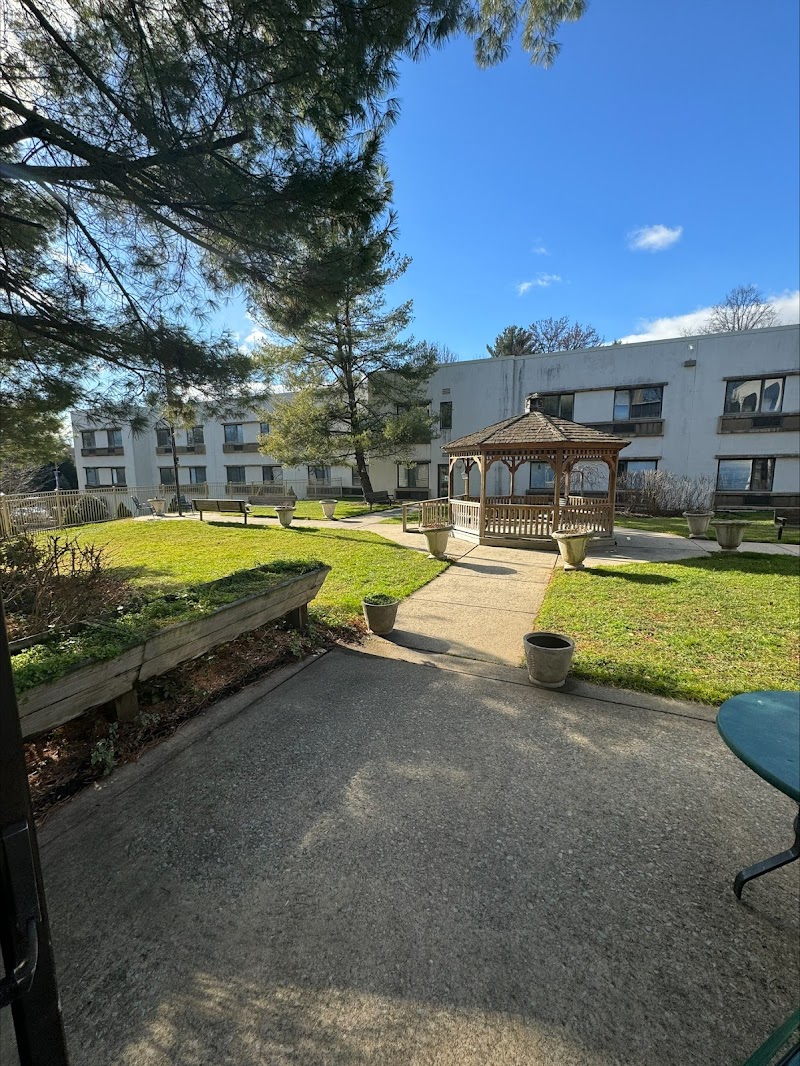
How Does Pine View Healthcare And Rehabilitation Center Compare to Other Pennsylvania Nursing Homes?

Compared to the 100 nursing homes in Pennsylvania, PINE VIEW HEALTHCARE AND REHABILITATION CENTER's overall rating (2 stars) is below the state average of 3.0, staff turnover (49%) is near the state average of 46%, and health inspection rating (2 stars) is below the national benchmark.

What Should Families Ask When Visiting Pine View Healthcare And Rehabilitation Center?

Based on this facility's data, families visiting should ask: "Can I visit during a mealtime to observe dining assistance and food quality?" "How do you handle medical emergencies, and what is your hospital transfer rate?" "Can I speak with family members of current residents about their experience?"

Is Pine View Healthcare And Rehabilitation Center Safe?

Based on CMS inspection data, PINE VIEW HEALTHCARE AND REHABILITATION CENTER has a clean safety record: no substantiated abuse findings (meaning no confirmed cases of resident harm), no Immediate Jeopardy citations (the most serious violation level indicating risk of serious injury or death), and is not on the Special Focus Facility watch list (a federal program monitoring the lowest-performing 1% of nursing homes). The facility has a 2-star overall rating and ranks #100 of 100 nursing homes in Pennsylvania. While no facility is perfect, families should still ask about staff-to-resident ratios and recent inspection results during their visit.

Do Nurses at Pine View Healthcare And Rehabilitation Center Stick Around?

PINE VIEW HEALTHCARE AND REHABILITATION CENTER has a staff turnover rate of 49%, which is about average for Pennsylvania nursing homes (state average: 46%). Moderate turnover is common in nursing homes, but families should still ask about staff tenure and how the facility maintains care continuity when employees leave.

Was Pine View Healthcare And Rehabilitation Center Ever Fined?

PINE VIEW HEALTHCARE AND REHABILITATION CENTER has no federal fines on record. CMS issues fines when nursing homes fail to meet care standards or don't correct problems found during inspections. The absence of fines suggests the facility has either maintained compliance or corrected any issues before penalties were assessed. This is a positive indicator, though families should still review recent inspection reports for the full picture.

Is Pine View Healthcare And Rehabilitation Center on Any Federal Watch List?

PINE VIEW HEALTHCARE AND REHABILITATION CENTER is not on any federal watch list. The most significant is the Special Focus Facility (SFF) program, which identifies the bottom 1% of nursing homes nationally based on persistent, serious quality problems. Not being on this list means the facility has avoided the pattern of deficiencies that triggers enhanced federal oversight. This is a positive indicator, though families should still review the facility's inspection history directly.