WECARE AT SOUTH HILLS REHABILITATION AND NRSG CTR
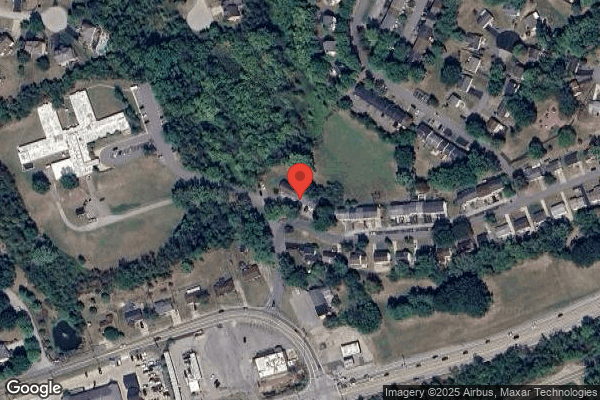
201 VILLAGE DRIVE, CANONSBURG, PA 15317 (724) 746-1300
For profit - Corporation 104 Beds WECARE CENTERS Data: November 2025 3 Immediate Jeopardy citations
Trust Grade
0/100
#645 of 653 in PA
Last Inspection: February 2025

Within standard 12-15 month inspection cycle. Federal law requires annual inspections.

Overview

WeCare at South Hills Rehabilitation and Nursing Center has received a Trust Grade of F, indicating significant concerns about the quality of care provided. With a state rank of #645 out of 653 facilities in Pennsylvania, they are in the bottom half, and they hold the lowest rank in Washington County at #12 out of 12. The facility is worsening, with issues increasing from 7 in 2024 to 24 in 2025, which raises red flags for potential residents and their families. Staffing is a concern as well, with a rating of 2 out of 5 stars and a high turnover rate of 77%, significantly above the state average. Notably, there have been critical incidents involving failure to protect residents from sexual abuse and inadequate supervision, leading to unsafe conditions for multiple residents. While there are no fines recorded, the overall poor ratings and critical incidents suggest that families should proceed with caution.

Trust Score
F
0/100
In Pennsylvania
#645/653
Bottom 2%
Safety Record
High Risk
Review needed
Inspections
Getting Worse
7 → 24 violations
Staff Stability
⚠ Watch
77% turnover. Very high, 29 points above average. Constant new faces learning your loved one's needs.
Penalties
✓ Good
No fines on record. Clean compliance history, better than most Pennsylvania facilities.
Skilled Nurses
○ Average
Each resident gets 39 minutes of Registered Nurse (RN) attention daily — about average for Pennsylvania. RNs are the most trained staff who monitor for health changes.
Violations
⚠ Watch
50 deficiencies on record. Higher than average. Multiple issues found across inspections.
★☆☆☆☆
1.0
Overall Rating
★★☆☆☆
2.0
Staff Levels
★☆☆☆☆
1.0
Care Quality
★☆☆☆☆
1.0
Inspection Score
Stable
2024: 7 issues
2025: 24 issues

The Good

  • Full Sprinkler Coverage · Fire safety systems throughout facility
  • No fines on record

Facility shows strength in fire safety.

The Bad

1-Star Overall Rating

Below Pennsylvania average (3.0)

Significant quality concerns identified by CMS

Staff Turnover: 77%

30pts above Pennsylvania avg (46%)

Frequent staff changes - ask about care continuity

Chain: WECARE CENTERS

Part of a multi-facility chain

Ask about local staffing decisions and management

Staff turnover is very high (77%)

29 points above Pennsylvania average of 48%

The Ugly 50 deficiencies on record

3 life-threatening 1 actual harm
Sept 2025 1 deficiency
CONCERN (E) 📢 Someone Reported This

A family member, employee, or ombudsman was alarmed enough to file a formal complaint

Potential for Harm - no one hurt, but risky conditions existed

Deficiency F0569 (Tag F0569)

Could have caused harm · This affected multiple residents

**NOTE- TERMS IN BRACKETS HAVE BEEN EDITED TO PROTECT CONFIDENTIALITY** Based on a review of clinical records and residents' financial account records and staff interview, it was determined that the f...

Read full inspector narrative →
**NOTE- TERMS IN BRACKETS HAVE BEEN EDITED TO PROTECT CONFIDENTIALITY** Based on a review of clinical records and residents' financial account records and staff interview, it was determined that the facility failed to return resident funds within 30 days of discharge/death to the appropriate party for one of five residents sampled (Resident R1 and Resident R2).Findings include: Review of the clinical record indicated Resident R1 was admitted to the facility on [DATE], with diagnoses that included cancer, high blood pressure, and diabetes. Review of facility documents revealed Resident R1 expired (passes away) on [DATE], at 6:41 a.m. During an interview on [DATE], at 12:30 p.m. Business Office Employee E1 stated the facility does not handle billing on site, the company uses the third-party company Wellsky. They stated, as of [DATE], Resident R1's responsible party was due a refund of $385.00. Review of an email provided by Business Office Employee E1, indicated Resident R1's family contacted the facility on [DATE], at 12:22 p.m. to inquire about the refund owed. The family had made previous inquiries regarding the refund. Review of the clinical record indicated Resident R2 was admitted to the facility on [DATE], with diagnoses that included diabetes, cerebral infarction (blood flow to the brain is obstructed by a blood clot resulting in death of brain cells), and high blood pressure. Review of facility documents revealed Resident R2 expired on [DATE], at 1:15 a.m. During an interview on [DATE], at 12:35 p.m. Business Office Employee E1 stated Resident R2's responsible party was due a refund of $2530.00. They stated the refund was processed on [DATE], by Wellsky. The facility was unable to provide a copy of the check or bank statement showing it was cashed. During an interview on [DATE], at 2:00 p.m., the Business Office Employee E1 verified that Resident R1's and Resident R2's personal funds were not refunded to the family within 30 days of his discharge/death from the facility.
Sept 2025 11 deficiencies 3 IJ (3 affecting multiple)
CRITICAL (K) 📢 Someone Reported This

A family member, employee, or ombudsman was alarmed enough to file a formal complaint

Immediate Jeopardy (IJ) - the most serious Medicare violation

Free from Abuse/Neglect (Tag F0600)

Someone could have died · This affected multiple residents

**NOTE- TERMS IN BRACKETS HAVE BEEN EDITED TO PROTECT CONFIDENTIALITY** Based on a review of facility provided policies and documentation, clinical records, and resident, family, and staff interviews,...

Read full inspector narrative →
**NOTE- TERMS IN BRACKETS HAVE BEEN EDITED TO PROTECT CONFIDENTIALITY** Based on a review of facility provided policies and documentation, clinical records, and resident, family, and staff interviews, it was determined that the facility failed to protect residents from resident-to-resident sexual abuse. This failure resulted in a resident with a known history of sexually inappropriate behavior touching non-consenting residents, which created an Immediate Jeopardy situation for five of 67 residents (Resident R2, R3, R4, R5, R6). Findings include:Review of facility Abuse and Neglect Policy reviewed 1/27/25, Abuse is defined as the willful infliction of injury, unreasonable confinement, intimidation, or punishment with resulting physical harm, pain or mental anguish. Abuse also includes the deprivation by an individual, including a caretaker of goods or services that are necessary to attain or maintain physical, mental, and psychosocial well-being. Instances of abuse of all residents, irrespective of any mental or physical condition, cause physical harm, pain or mental anguish. It includes verbal abuse, sexual abuse, physical abuse, and mental abuse including abuse facilitated or enabled through the use of technology. Neglect as defined as, means the failure of the facility, its employees or service providers to provide goods and services to a resident that are necessary to avoid physical harm, pain, mental anguish or emotional distress. Sexual Abuse is defined as a non-consensual sexual contact of any type with a resident. Willful, as defined as, and as used in the definition of abuse, means the individual must have acted deliberately, not that the individual must have intended to inflict injury or harm.Review of the Resident Assessment Instrument 3.0 User's Manual effective October 2024, indicated that a Brief Interview for Mental Status (BIMS), is a screening test that aides in detecting cognitive impairment). The BIMS total score suggests the following distributions:13-15: cognitively intact8-12: moderately impaired0-7: severe impairmentReview of the clinical record indicated Resident R1 was initially admitted to the facility on [DATE], and readmitted on [DATE].Review of Minimum Data Set (MDS - periodic review of resident needs) dated 6/3/25, included diagnoses of dementia (a group of symptoms that affects memory, thinking and interferes with daily life), history of a stroke, and a seizure disorder. Question C0500 BIMS Summary Score revealed Resident R1's score to be 1.Review of Resident R1's plan of care initiated on 7/10/24, indicated that Resident R1 was a registered sexual offender. The goal of this care plan was Will not exhibit inappropriate sexual behaviors towards others. Interventions listed were:-Counseling as indicated.-Life review with resident to identify triggers and coping. -Monitor resident's whereabouts, resident does have female friend, make sure residents are in common area.-Observe for wandering into other residents' rooms. Offer snacks to minimize wandering in search of food.-Provide consistent message from all IDT.-Psychology consult.-Report with Megan's Law (laws that mandate the creation of public registries of convicted sex offenders) as required.-Report inappropriate behavior towards others immediately to administration.Review of Resident R1's plan of care for Potential to be sexually inappropriate revealed it was not initiated until 7/30/25. The goal of this care plan was Resident will not harm self or others through the review date. Interventions listed were:-Administer medications as ordered. Monitor/document for side effects and effectiveness. -Analyze times of day, places, circumstances, triggers, and what de-escalates behavior and document. No documentation that this was completed.-Monitor/document/report as needed any signs/symptoms of resident posing danger to self and others. -Psychiatric/psychogeriatric consult as indicated.-When resident becomes sexually inappropriate: Intervene before behavior escalates; Guide away from source of distress; Engage calmly in conversation; If response is aggressive/ inappropriate, staff to ensure safety and walk calmly away, and approach later.Review of a physician order dated 8/18/25, indicated for Resident R1 to receive Fluoxetine (Prozac, an anti-depressant medication) 20 milligrams (mg) daily, for depression/sexually disinhibited behavior.During an interview on 8/29/25, at approximately 11:00 a.m. the Director of Nursing confirmed the medication adjustment was based on notification to the provider of increased sexual behaviors.Review of the clinical record indicated Resident R2 was admitted to the facility on [DATE].Review of the MDS dated [DATE], included diagnoses of Alzheimer's disease (a type of brain disorder that causes problems with memory, thinking and behavior), anxiety, and depression. Question C0500 BIMS Summary Score revealed Resident R2's score to be 3.Review of Resident R2's plan of care initiated 5/20/25, indicated Resident R2 was at risk of mood instability related to anxiety and bipolar disorder (mood disorder characterized by extreme shifts in mood, energy, and activity levels).During an observation on 8/21/25, at 10:40 a.m. Resident R1 was seen staring fixated at Resident R2. The surveyor observed Resident R2 roll her wheelchair backwards away from Resident R1. Resident R1 followed Resident R2 in his wheelchair. Activities Director Employee E1 separated Resident R1 and Resident R2, placing Resident R2 on the opposite side of the activity.During an interview on 8/21/25, at 11:12 a.m. Activities Director Employee E2 stated she had not seen Resident R1 be sexually inappropriate, stated he does not understand personal space. Confirmed that she has heard from other staff that being sexually inappropriate can be an issue for him.During an interview on 8/21/25, at 2:08 p.m. Certified Registered Nurse Practitioner (CRNP) (8/18/25 note) stated she has not witnessed him being sexually inappropriate, but two staff members approached her on 8/18/25, and verbalized to her he has been touching residents inappropriately. One resident with permission from family, but he was touching more per staff. During an observation on 8/21/25, at 2:15 p.m. three police cars were observed arriving at the facility.Review of a progress note written by the Director of Nursing dated 8/21/25, at 2:00 p.m. indicated, reported to this writer that resident was observed in an unoccupied room rubbing the leg of another resident (Resident R2). Resident R1 was immediately removed and placed on 1:1. Review of a progress note written by the Nursing Home Administrator dated 8/21/25, at 3:37 p.m. indicated, This writer and Director of Nursing placed call to [Resident R1's] contact. Updated [contact] on allegation of Resident R1 inappropriately touching a female resident and actions taken, including police notification and potential to have to refer [Resident R1] to an alternate facility. Stated we would keep her updated, she expressed understanding.Review of facility submitted information dated 8/21/25, indicated Resident R2, severe cognitive impairment, BIMS of 3, with a history of wandering, was found in an unoccupied room, with her pants down around her ankles, no brief, exposed from the hips down to her ankles where she had socks and shoes on preventing her shorts from coming off of her legs. Resident R2 was observed laying in the fetal position on her left side facing the wall. Resident R1 was observed at the bedside of where Resident R2 was laying, fully clothed (investigations revealed Resident R2 was not fully clothed). An adjacent resident was yelling up the hallway as staff were coming down the hallway to intervene. When staff entered the room, they noted that Resident R1 was close enough to reach out and touch resident, but verbal interviews and statements indicate there was no witnessed touching. Resident that was adjacent to the room was also interviewed and indicated he saw Resident R1 smacking Resident R2 on the bare buttocks. Timeline suggests they were in the room alone for 45 seconds to one minute per ongoing investigation. Staff intervened and removed Resident R1 from the room. Director of Nursing attempted to interview Resident R2, but due to cognitive status she is not interviewable. Nursing Home Administrator called 911 and [Police Department] presented to the facility. [Police Department] notified their detective department and had them also present to the facility. Recommendation made to send Resident R2 to the emergency room for a sexual assault consultation/rape kit. Residents husband was informed and presented to the facility. Resident was sent to [Hospital] and remains out of the facility at time of this report. All alert and oriented female residents will be interviewed, non-alert/oriented female residents will have a full body audit completed. Resident R1 placed on 1:1 with a staff member to ensure safety of all residents. All staff are educated on abuse upon hire, annually, and as needed.During an interview on 8/21/25, at 3:25 p.m. with Resident R2's husband revealed that he was not aware of what had occurred until he arrived at the facility. He stated, She is so scared of everything, doesn't like loud noises and things like that, she becomes afraid if someone pops the top on a can of soda. Is she going to be okay? He was observed consoling her and stroking her hand as she was on the stretcher.Review of the clinical record indicated that Resident R8 was admitted to the facility on [DATE].Review of the MDS dated [DATE], included diagnoses of polyneuropathy (condition were multiple nerves are damaged, causing pain, decreased sensation, and weakness) and high blood pressure. Question C0500 BIMS Summary Score revealed Resident R8's score to be 15.During an interview on 8/22/25, at 9:48 a.m. with Resident R8, he stated that he observed Resident R2 in a room with her pants down and no brief on with Resident R1 standing next to Resident R2 who was in bed. He yelled for assistance and was on his way to get his phone to call the police, he told someone to call them and is unsure of who made the call. He stated, This is disgusting that it has been going on, just bullshit, if that was my mother or grandmother, not sure what I would have done.During a follow-up interview on 8/29/25, at 2:35 p.m., Resident R8 confirmed he saw the incident. When asked what part of the body he observed Resident R1 touching, he stated, I saw ass. Resident R8 stated that he observed Resident R2 flailing her hand toward Resident R1, She definitely didn' t want it. Resident R8 stated, He's been doing it a long time. Resident R8 stated (as an example) he was out smoking and a peer resident stated, Where's [Resident R1]? and the response from another resident was, He's in someone's room molesting them.Review of hospital paperwork dated 8/22/25, indicated that Resident R2 was seen on 8/21/25, in the emergency room for sexual assault.Review of the clinical record indicated Resident R3 was admitted to the facility on [DATE].Review of the MDS dated [DATE], included diagnoses of heart failure (a progressive heart disease that affects pumping action of the heart muscles) and physical debility. Question C0500 BIMS Summary Score revealed Resident R3's score to be 15.Review of an electronic communication dated 8/12/25, at 6:18 p.m., provided to both the facility administration and the state survey agency indicated, It has come to our family's attention in the last 2 weeks that my grandmother has been harassed (and touched at least twice) by a male resident at your facility for months.During an interview on 8/21/25, Resident R3's granddaughter provided the name of the male resident spoken of in the electronic communication as Resident R1. Review of the clinical record indicated Resident R4 was admitted to the facility on [DATE].Review of the MDS dated [DATE], included diagnoses of diabetes (a metabolic disorder in which the body has high sugar levels for prolonged periods of time), depression, and quadriplegia (paralysis of all four limbs). Question C0500 BIMS Summary Score revealed Resident R4's score to be 10.During a family interview on 8/21/25, at 7:56 p.m. Resident R4's son confirmed that she has complained to family that a male resident wheels into her room while she is sleeping and touches her. My mom, she cannot defend herself. It's not okay, but I understand he has issues.Review of the clinical record indicated Resident R5 was admitted to the facility on [DATE].Review of the MDS dated [DATE], included diagnoses of dementia, anxiety, and depression. Question C0500 BIMS Summary Score revealed Resident R5's score to be 00, which indicated that Resident R5 is so severely cognitively impaired to not be able to complete the interview.During an interview on 8/21/25, at 3:25 p.m. Resident R8 stated that Resident R1 has been observed by himself and by other residents touching Resident R5 in the hallway. Resident R8 stated that Resident R1 has stuck his fingers in her mouth and then touched her groin; he has also been observed grabbing her breasts.Review of Resident R5's clinical record failed to reveal documentation that this concern (also stated by Employee E6) was reviewed by clinicians or any actions taken related to the above observation. Review of the clinical record indicated Resident R6 was admitted to the facility on [DATE].Review of the MDS dated [DATE], included diagnoses of Huntington's Disease (a condition that leads to progressive degeneration of nerve cells in the brain) and peripheral vascular disease (PVD - circulatory condition in which narrowed blood vessels reduce blood flow to the limbs). Question C0500 BIMS Summary Score revealed Resident R6's score to be 10.During an interview on 8/21/25, at approximately 2:20 p.m. Nurse Aide Employee E2 stated that she had to keep redirecting Resident R1, that he had been trying to get to Resident R5 and R6.Review of confidential staff interviews completed on 8/21/25, and 9/9/25, revealed the following: Confidential Employee E3: Never personally witnessed, has heard from other staff that he (Resident R1) is sexually inappropriate. Has observed Resident R1 touching others, more of a patting sense. Confidential Employee E4: Stated they have seen Resident R1 sexually inappropriate. Kissing, touching. Tried to separate them and bring him back to his unit. Has seen it recently with Resident R7 and here more recently with Resident R2. I've told em. Everybody knows it. Its everyday like, Oh I have had to get Resident R1 away from Resident R2. Oh, I just had to get Resident R1 away from whoever. Confirmed he wanders into other rooms, Oh yeah, he's everywhere. Real bad. Confidential Employee E5: I heard that he went into R2's room. Confidential Employee E6: Confirmed they have seen Resident R1 be inappropriate with residents. A lot in the dining room. When we separate them, he follows us, and gets very combative. Resident R5 was asleep in the dining room and Resident R1 put his fingers in her mouth. We were told its not inappropriate behavior. It really upset me. I was very uncomfortable. We were told, Do you kiss in your own home? but yes, with consent. Confidential Employee E7: He was kissing Resident R7. I told them but they say its ok. Confidential Employee E8: He always tries to get with women. Confidential Employee E9: One of our residents was her boyfriend, that was her boyfriend. Confirmed that they had heard that Resident R1 was sexually inappropriate, but not witnessed, I heard he was a pedophile. Confidential Employee E10: Touches other residents on the face. I take him away. Confirmed that she has never seen any sexual behavior, only seen him touch someone (arm) but have heard from other staff about Resident R1's behavior. Confidential Employee E11: I have seen him sitting close to other residents. I've never had to take separate them. Other staff have spoken about his being sexually inappropriate. Confidential Employee E12: I've heard of him touching other residents, I've never seen it. Confirmed they had heard from both residents and staff that Resident R1 is sexually inappropriate. I feel like if this had been handled when this started, today (referring to incident with Resident R2) would never have happened. When asked about reporting, The entire building knew. There was a lady who cannot communicate who he was touching inappropriately, [Resident R6] was her name. Confidential Employee E13: Confirmed they had seen Resident R1 be sexually inappropriate with both staff and residents. I fought with him, he literally tried to molest me. It took over an hour to get him out of the bathroom. When asked what residents, stated, Resident R7 mostly. He will go after more, any woman actually. Confirmed Resident R1 wanders into others rooms, walks around unclothed. He's a very sexual man. Confidential Employee E14: Mostly with Resident R7. He wanders a lot. I redirect him. Employee confirmed that other residents have complained about Resident R7's behavior, she allows him to put his hands on her leg and to rub her arms.- Confidential Employee E18: I've heard that he is inappropriate with residents but have never seen it myself. Confirmed that they heard it from staff and residents that it was Resident R1 that is sexually inappropriate.- Confidential Employee E20: Confirmed that they have seen Resident R1 be sexually inappropriate with other residents, stated This has been going on over a month, goes around touching women, putting his hand up their pants, sticking his fingers in their mouth, grabbing breasts, just continues to get worse. I also heard he tried to grab one of the Activity Aides between her legs. When I reported his increased behavior to the DON, she stated that they are older people and are allowed to touch.- Confidential Employee E21: I have heard that he has displayed inappropriate behavior but I have not experienced any situations to report about. - Confidential Employee E26: I have only overheard the other staff talking about it but have never physically seen it. Staff complain that he has been doing this for a while. The only thing I know is there is no consent for him to do or not to do these actions with other residents.- Confidential Employee E27: I know this has been going on for longer than 6 months and now Resident R1 has to be a 1:1 which is creating other issues. I do know there were no orders after the incident and then a couple days later orders appeared but they were placed by a corporate person. - Confidential Employee E32: I would say that it occurs Resident R1's behaviors occur frequently and he is not easily redirected. I brought it to the attention of the DON that his behaviors were getting worse and her reply was Some of these ladies enjoy it, should we be stopping their pleasure, I was so angry, and then she told me We should not be bringing his past and applying it now. I always redirect him and am thanked by the ladies that he is bothering. I visited Resident R2 at her new facility and the staff there thought she was bothersome because she is always yelling You will not sex me.- Confidential Employee E33: Confirmed that Resident R1 has been sexually inappropriate, states he is very-touchy, feely, at times can be redirected but others he becomes aggressive -and starts swearing and swinging out at staff. I would say his behavior is like a baby throwing a temper-tantrum because you took his toy away from him. I know a lot of issues occur in the Dining Room where he was free to move around. Management has been aware since February 2025.- Confidential Employee E34: Confirmed that Resident R1 has been sexually inappropriate. Incident occurred the other day when his aide had to leave, he was supposed to be watched by the DON until the next aide came in but was left alone, he sat next to a female resident and started to hold her hand (not Resident R7) and we felt things might escalate so we went to redirect and move him and he grabbed her chair and wouldn't let go becoming more aggressive. Resident R1's behaviors have been reported to the current DON and the one before this, we keep getting told we are investigating but nothing is done.- Confidential Employee E35: I really don't deal with Resident R1 that much. I know he is touchy with one resident but they are allowed (Resident R7). I also know that he is a 1:1.- Confidential Employee E36: I have personally never had to redirect Resident R1. We recently had to complete Abuse training because of the incident.- Confidential Employee E37: Confirmed that she has had to redirect Resident R1 a couple times and it is not easy, just don't understand why we are keeping him.- Confidential Employee E38: Stated, I saw him in the Dining Room with a resident being inappropriate. I reported it to nursing staff and the DON.- Confidential Employee E39: Confirmed that she has only seen Resident R1 display sexual behavior once and staff corrected his behavior, the behavior was brought to their attention by other residents.- Confidential Employee E40: Stated that she observed Resident R1 fondle a female resident's breast, she was in a wheelchair, unable to defend herself. Confirmed that the female resident was not Resident R7. Employee E40 stated she reported the incident to the Director of Nursing, and was told not to worry about it. I don't want to get anyone in trouble, but it (referring to the incident involving Resident R2 on 8/22/25) never should have happened. I still picture her. It's awful.On 8/22/25, at 11:56 a.m. the Nursing Home Administrator was made aware that an Immediate Jeopardy situation existed for five of 67 residents, and the Immediate Jeopardy template was provided to facility administration.This Immediate Jeopardy existed beginning 2/4/2025.On 8/22/25, at 2:38 p.m. an acceptable Corrective Action Plan was received which included the following interventions:Immediate action(s) taken for the resident(s) found to have been affected include: Resident R1 was placed on 1:1 8/22/25 and will remain on 1:1. Facility will ensure 1:1 is in place at all times by scheduling specific staff to perform this 1:1 duty each day on all three shifts.Residents R3, R4, R5, and R6 will remain safe from resident initiated sexual abuse through the facility providing 1:1 to Resident R1.Resident R1 and R2 were immediately separated on 8/21/25.Resident R2 was assessed for injuries and no injuries noted on 8/21/25. Resident R2 was sent to the hospital for further evaluation on 8/21/25 and remains at hospital.Identification of other residents having the potential to be affected was accomplished by:Current female residents who were cognitively intact were interviewed on 8/21/25. Current female residents who were cognitively impaired had a skin assessment completed on 8/21/25.No issues identified from interviews or skin assessments.Actions taken/systems put into place to reduce the risk of future occurrence include:Education will be completed by all staff on Abuse/Neglect and Reporting of Incident and Accidents by the Director of Nursing or designee by 8/22/25.How the corrective action(s) will be monitored to ensure the practice will not recur: Resident R1 will remain on 1:1. Resident R1 will be evaluated by psychiatry services on 8/22/25 in conjunction with the facility medical director.While Resident R1 remains in the facility audits will be completed on female residents who are cognitively intact daily x 5 days a week for two weeks, weekly for two weeks and then monthly for two months to ensure residents safety. These audits will be completed by Social Services or designee. While Resident R1 remains in the facility audits will be completed on female residents who are cognitively impaired daily x 5 days a week for two weeks, weekly for two weeks and then monthly for two months to ensure residents safety.An Ad Hoc Quality Assurance and Process Improvement Meeting was held by the Administrator on 8/21/25.Affected residents will be seen by facility contracted psychiatry/psychology provided if they request to do so to address their emotional trauma.This plan of correction will be monitored at the Quality Assurance and Process Improvement meeting until such time consistent substantial compliance has been met. During staff interviews conducted on 8/22/25, between 12:00 p.m. and 3:30 p.m. 12 staff members confirmed they received education on abuse prevention.The Immediate Jeopardy was lifted on 8/22/25, at 3:52 p.m., when the action plan implementation was verified.During an interview on 8/22/25, at approximately 4:00 p.m. the Nursing Home Administrator confirmed that the facility failed, to protect residents from resident-to-resident sexual abuse for five of 67 residents. This failure resulted in a resident with a known history of sexually inappropriate behavior touching a non-consenting resident, which created an Immediate Jeopardy situation for five of 67 residents. 28 Pa. Code 201.18(e)(1) Management28 Pa. Code 201.20(a)(b) Staff development28 Pa. Code 201.29(a)(c)(d) Resident rights
CRITICAL (K) 📢 Someone Reported This

A family member, employee, or ombudsman was alarmed enough to file a formal complaint

Immediate Jeopardy (IJ) - the most serious Medicare violation

Report Alleged Abuse (Tag F0609)

Someone could have died · This affected multiple residents

**NOTE- TERMS IN BRACKETS HAVE BEEN EDITED TO PROTECT CONFIDENTIALITY** Based on review of state laws, facility policy and documents, clinical records, and staff interview, it was determined that the ...

Read full inspector narrative →
**NOTE- TERMS IN BRACKETS HAVE BEEN EDITED TO PROTECT CONFIDENTIALITY** Based on review of state laws, facility policy and documents, clinical records, and staff interview, it was determined that the facility failed to implement policies and procedures to report allegations of abuse for four of 67 residents (Resident R2, R3, R5, and R6). This failure resulted in a resident with a known history of sexually inappropriate behavior touching non-consenting residents, which created an Immediate Jeopardy situation. Findings include:Review of the Older Adult Protective Services Act of 11/6/87, amended by Act 1997-13, Chapter 7, Section 701, requires any employee or administrator of a facility who suspects abuse is mandated to report the abuse. All reports of abuse should be reported to the local area agency on aging and licensing agencies. If the suspected abuse is sexual abuse, serious bodily injury, or suspicious death, the law requires additional reporting to the Department of Aging and local law enforcement.Review of facility policy Abuse, Neglect, Exploitation or Misappropriation Reporting and Investigating dated 1/27/25, indicated The administrator or the individual making the allegation immediately reports his or her suspicion to the following persons or agencies:The state licensing/certification agency responsible for surveying/licensing the facility. The local/state ombudsman. The resident's representative.Adult protective services (where state law provides jurisdiction in long-term care).Law enforcement officials. The residents attending physician. The facility medical director.Immediately is defined as:Within two hours of an allegation involving abuse or result in serious bodily injury; or Within 24 hours of an allegation that does not involve abuse or result in serious bodily injury. Review of the clinical record indicated Resident R3 was admitted to the facility on [DATE].Review of Resident R3's Minimum Data Set (MDS - periodic review of resident needs) dated 6/3/25, included diagnoses of dementia (a group of symptoms that affect memory, thinking, and interferes with daily life), history of a stroke, and a seizure disorder. Question C0500 BIMS Summary Score revealed Resident R3's score to be 1. Review of an electronic communication dated 8/12/25, at 6:18 p.m. provided to both the facility administration and the state survey agency indicated, It has come to our family's attention in the last 2 weeks that my grandmother has been harassed (and touched at least twice) by a male resident at your facility for months. During an interview on 8/21/25, at 8:45 p.m. Resident R3's granddaughter confirmed that the electronic communication provided to the facility was the same electronic communication provided to the state survey agency and provided the name of the male resident spoken of in the electronic communication as Resident R1.Review of documentation submitted by the facility to the State Survey Agency failed to include a report of possible abuse to Resident R3.During an interview on 8/21/25, at approximately 3:40 p.m. the Director of Nursing confirmed that a report was not made to the State Survey Agency related to the allegation of possible abuse reported by Resident R3's family member on 8/12/25.Review of the clinical record indicated Resident R2 was admitted to the facility on [DATE].Review of Resident R2's MDS dated [DATE], included diagnoses of Alzheimer's disease (a type of brain disorder that causes problems with memory, thinking and behavior), anxiety, and depression. Question C0500 BIMS Summary Score revealed Resident R2 ' s score to be 3.During an interview completed during the survey, Employee E4 stated they have seen Resident R1 being sexually inappropriate. Kissing, touching. Tried to separate them and bring him back to his unit. Has seen Resident R1 recently with Resident R7 and here more recently with Resident R2. I've told 'em. Everybody knows it. It's everyday like, Oh I have had to get Resident R1 away from Resident R2. Oh, I just had to get Resident R1 away from whoever. Confirmed he wanders into other rooms, Oh yeah, he's everywhere. Real bad.Review of documentation submitted by the facility to the State Survey Agency failed to include a report of possible abuse to Resident R2.Review of the clinical record indicated Resident R5 was admitted to the facility on [DATE].Review of the MDS dated [DATE], included diagnoses of dementia, anxiety, and depression. Question C0500 BIMS Summary Score revealed Resident R5 ' s score to be 00, which indicated that Resident R5 is so severely cognitively impaired to not be able to complete the interview.During an interview completed during the survey, Employee E6 stated they have seen Resident R1 be inappropriate with residents. A lot in the dining room. When we separate them, he follows us and gets very combative. [Resident R5] was asleep in the dining room and [Resident R1] put his fingers in her mouth. We were told it's not inappropriate behavior. It really upset me. I was very uncomfortable. We were told, 'Do you kiss in your own home?' but yes, with consent.Review of documentation submitted by the facility to the State Survey Agency failed to include a report of possible abuse to Resident R5.Review of the clinical record indicated Resident R6 was admitted to the facility on [DATE].Review of the MDS dated [DATE], included diagnoses of Huntington's Disease (a condition that leads to progressive degeneration of nerve cells in the brain) and peripheral vascular disease (PVD, circulatory condition in which narrowed blood vessels reduce blood flow to the limbs). Question C0500 BIMS Summary Score revealed Resident R6 ' s score to be 10.During an interview completed during the survey, Employee E12 stated, I've heard of him touching other residents, I've never seen it. Employee E12 confirmed they had heard from both residents and staff that Resident R1 is sexually inappropriate. I feel like if this had been handled when this started, today (referring to incident with Resident R2) would never have happened. When asked about reporting, Employee E12 stated, The entire building knew. There was a lady who cannot communicate who he was touching inappropriately, [Resident R6] was her name.Review of documentation submitted by the facility to the State Survey Agency failed to include a report of possible abuse to Resident R6.During an interview completed during the survey, Employee E20 stated that Resident R1's behaviors have been going on for over a month, that he goes around touching women, up their pants, fingers in their mouth, and grabbing their breasts. Employee E20 stated that the incidents were reported verbally. Through other staff members, was told that, They are older people and allowed to touch. During an interview completed during the survey, Employee E32 stated they told the Director of Nursing that Resident R1's behaviors were increasing, that he seems to target women that cannot defend themselves, and that other residents are attempting to stop Resident R1's behaviors. Employee E32 stated the Director of Nursing said, Some of these ladies enjoy it, should we be stopping their pleasure? Employee E32 stated, I was so angry, was told we should not be taking his past and applying it to now. I redirected him and the ladies thanked me. Told my colleagues to keep an eye on him. During an interview completed during the survey, Employee E33 stated, Yeah, touchy-feely. Employee E33 stated Resident R1's behaviors have not been addressed. Employee E33 stated NA Employee E17 had reported Resident R1's behaviors to administration, with the response that the Director of Nursing told her it was wrong and get rid of it. Employee E33 stated that facility management has been aware of Resident R1's behaviors since February (2025).During an interview completed on 9/9/25, Employee E34 stated, Yesterday (9/8/25) he was holding a resident's hand and they (staff) felt it could lead to other things, tried to move him and he grabbed the chair and then became aggressive. Employee E34 stated that Resident R1's behavior has been reported to both the current Director of Nursing and the previous Director of Nursing. During an interview Employee E38: Stated, I saw him in the Dining Room with a resident being inappropriate. I reported it to nursing staff and the DON.During an interview Employee E40: Stated that she observed Resident R1 fondle a female resident's breast, she was in a wheelchair, unable to defend herself. Confirmed that the female resident was not Resident R7, with whom Resident R1 has a relationship granted by family. Employee E40 stated she reported the incident to the Director of Nursing, and was told not to worry about it. I don't want to get anyone in trouble, but it (referring to the incident involving Resident R2 on 8/22/25) never should have happened. I still picture her. It's awful.On 8/22/25, at 11:56 a.m. the Nursing Home Administrator was made aware that an Immediate Jeopardy situation existed for four of 67 residents, and the Immediate Jeopardy template was provided to facility administration.This Immediate Jeopardy situation began 2/4/25.On 8/22/25, at 2:38 p.m. an acceptable Corrective Action Plan was received which included the following interventions:Immediate action(s) taken for the resident(s) found to have been affected include: Resident R1 was placed on 1:1 8/22/25 and will remain on 1:1. Facility will ensure 1:1 is in place at all times by scheduling specific staff to perform this 1:1 duty each day on all three shifts.Residents R3, R5, and R6 will remain safe from resident initiated sexual abuse through the facility providing 1:1 to Resident R1. Resident R1 and R2 were immediately separated on 8/21/25.Resident R2 was assessed for injuries and no injuries noted on 8/21/25. Resident R2 was sent to the hospital for further evaluation on 8/21/25 and remains at hospital.Identification of other residents having the potential to be affected was accomplished by:Current female residents who were cognitively intact were interviewed on 8/21/25. Current female residents who were cognitively impaired had a skin assessment completed on 8/21/25.No issues identified from interviews or skin assessments.Actions taken/systems put into place to reduce the risk of future occurrence include:Education will be completed by all staff on Abuse/Neglect and Reporting of Incident and Accidents by the Director of Nursing or designee by 8/22/25.How the corrective action(s) will be monitored to ensure the practice will not recur: Resident R1 will remain on 1:1. Resident R1 will be evaluated by psychiatry services on 8/22/25 in conjunction with the facility medical director.While Resident R1 remains in the facility audits will be completed on female residents who are cognitively intact daily x 5 days a week for two weeks, weekly for two weeks and then monthly for two months to ensure residents safety. These audits will be completed by Social Services or designee. While Resident R1 remains in the facility adults will be completed on female residents who are cognitively impaired daily x 5 days a week for two weeks, weekly for two weeks and then monthly for two months to ensure residents safety.An Ad Hoc Quality Assurance and Process Improvement Meeting was held by the Administrator on 8/21/25.Affected residents will be seen by facility contracted psychiatry/psychology provided if they request to do so to address their emotional trauma.This plan of correction will be monitored at the Quality Assurance and Process Improvement meeting until such time consistent substantial compliance has been met. During staff interviews conducted on 8/22/25, between 12:00 p.m. and 3:30 p.m. 12 staff members confirmed they received education on abuse prevention.The Immediate Jeopardy was lifted on 8/22/25, at 3:52 p.m., when the action plan implementation was verified.During an interview on 8/22/25, at approximately 4:00 p.m. the Nursing Home Administrator and the Director of Nursing confirmed that the facility failed to implement policies and procedures to report allegations of abuse. 28 Pa. Code: 201.14(a) Responsibility of licensee.28 Pa. Code: 211.10(d) Resident care policies.28 Pa. Code: 201.18 (b) (1) (e) (1) Management.28 Pa. Code: 211.12 (d) (1) (2) (5) Nursing services.
CRITICAL (K) 📢 Someone Reported This

A family member, employee, or ombudsman was alarmed enough to file a formal complaint

Immediate Jeopardy (IJ) - the most serious Medicare violation

Accident Prevention (Tag F0689)

Someone could have died · This affected multiple residents

**NOTE- TERMS IN BRACKETS HAVE BEEN EDITED TO PROTECT CONFIDENTIALITY** Based on a review of facility policy, clinical records, observations, and resident and staff interview, it was determined that t...

Read full inspector narrative →
**NOTE- TERMS IN BRACKETS HAVE BEEN EDITED TO PROTECT CONFIDENTIALITY** Based on a review of facility policy, clinical records, observations, and resident and staff interview, it was determined that the facility failed to provide necessary supervision of a resident with known sexually inappropriate behaviors. This failure resulted in an immediate jeopardy situation for five of 67 residents (Resident R2, R3, R4, R5, R6, ).Findings include:Review of the facility, Resident Supervision Policy & Procedures effective 2/1/25, indicated, It is the policy of this facility to ensure that all residents receive appropriate levels of supervision based on their individual needs, as identified through comprehensive and ongoing assessment. The goal of this policy is to promote resident safety, maintain dignity, and prevent accidents, neglect, or adverse events. Review of the facility, Behavior Management Policy revised 2/2/25, indicated, Patients exhibiting behavioral symptoms will be individually evaluated. The interdisciplinary team will identify underlying medical, physical, functional, psychosocial, emotional, psychiatric, or environmental causes that contribute to the resident's behavior(s). Review of the Resident Assessment Instrument 3.0 User's Manual, effective October 2024, indicated that a Brief Interview for Mental Status (BIMS) is a screening test that aides in detecting cognitive impairment. The BIMS total score suggests the following distributions:13-15: cognitively intact8-12: moderately impaired0-7: severe impairmentReview of the clinical record indicated Resident R1 was initially admitted to the facility on [DATE], and readmitted on [DATE].Review of Minimum Data Set (MDS, periodic review of resident needs) dated 2/12/23, included diagnoses of dementia (a group of symptoms that affects memory, thinking and interferes with daily life), history of a stroke, and a seizure disorder. Question C0500 BIMS Summary Score revealed Resident R1's score to be 1 severe impairment.Review of Resident R1's plan of care initiated on 7/10/24, indicated Resident R1 was a registered sexual offender. The goal of the care plan was Will not exhibit inappropriate sexual behaviors towards others. Interventions listed included: Counseling as indicated. Life review with resident to identify triggers and coping. No documentation Monitor resident ' s whereabouts, resident does have female friend, make sure residents are in common area. Observe for wandering into other residents ' rooms. Offer snacks to minimize wandering in search of food. Provide consistent message from all IDT. Psychology consult. Report with Megan's Law (laws that mandate the creation of public registries of convicted sex offenders) as required. Report inappropriate behavior towards others immediately to administration. Review of Resident R1's plan of care for Potential to be sexually inappropriate revealed it was not initiated until 7/30/25. The goal of the care plan was Resident will not harm self or others through the review date. Interventions listed were: Administer medications as ordered. Monitor/document for side effects and effectiveness. (Medications administered, no documentation of effectiveness). Analyze times of day, places, circumstances, triggers, and what de-escalates behavior and document. No documentation that this was completed. Monitor/document/report as needed any signs/symptoms of resident posing danger to self and others. Minimal documentation completed. Psychiatric/psychogeriatric consult as indicated. When resident becomes sexually inappropriate: Intervene before behavior escalates; Guide away from source of distress; Engage calmly in conversation; If response is aggressive/inappropriate, staff to ensure safety and walk calmly away, and approach later. Review of Resident R1's physician's orders dated 4/1/25, included behavior monitoring related to psychotropic medication use. Review of Resident R1's Treatment Administration Record (TAR) for April 2025, through August 2025, failed to include the option for monitoring for sexually inappropriate behavior. Listed behaviors to monitor for included unstable mood, signs and symptoms of changes, tearfulness, adjustment difficulty, withdrawal. Review of as needed nurse aide behavior monitoring revealed that the options for types of behavior that occurred were: Frequent Crying, Repeats Movement, Yelling/Screaming, Kicking/Hitting, Pushing, Grabbing, Pinching/Scratching/Spitting, Biting, Wandering, Abusive Language, Threatening Behavior, Sexually Inappropriate, Rejection of Care, None of the above observed. Review of the behavior monitoring documentation completed from 3/1/25, through 8/22/25, revealed the following: 3/22/25: Repeated movements, wandering.6/15/25: None of the above observed.8/19/25: None of the above observed.Review of Resident R1's psychiatry evaluation completed on 3/8/25, indicated, Requested by DON (Director of Nursing) to assess the patient's level of awareness, as he has been inappropriate with female peer in the facility and has a h/o (history of) these behaviors.Review of Resident R1's psychiatry evaluation completed on 8/12/25, indicated, Per the Director of Nursing, the patient has displayed sexually disinhibited behavior, specifically attempting to kiss staff. On interview, he endorsed depressed mood.Review of Resident R1's psychiatry evaluation completed on 8/22/25, indicated, He is consulted due to an incident on 8/21/25, where he was observed in an unoccupied room with a female resident where he was allegedly reported to be rubbing her leg. [Resident R1] does not recall the incident when asked. He does not want to hurt anybody when asked. He states he likes women, not men. When asked if he was touching another resident, he did state, I don't touch anyone. [Resident R1] per staff reports has a history of sexual misconduct. Within the report, collaboration with the DON was documented, Director of Nursing 8/22/25, reports [Resident R1] remains 1:1 (one-on-one monitoring by staff), he has a history of sexual misconduct, he has a history as a sex offender. Poor impulse control with incidents. No specific triggers when incidents occur. Seems to gravitate towards females. Review of facility submitted information dated 3/4/25, indicated, Housekeeper observed residents, [Resident R7] and [Resident R1], kiss in the hallway. Residents were separated. Neither of them can recall.Review of a physician order dated 3/26/25, through 8/18/15, indicated for Resident R1 to received fluoxetine (Prozac, a medication to treat depression) 10 mg daily, for depression. Review of a progress note dated 8/4/25, at 2:11 p.m. indicated, This writer spoke with [Resident R7 ' s] son, and son made me aware that his mom is dating [Resident R1] and that he does not have a problem with them holding hands and kissing. Everyone needs some affection and at this point in her life it doesn't bother me at all, and it doesn't bother her either. This writer informed son that we had to ensure that he was made aware. Son thanked writer for call.Review of a physician order dated 8/18/25, indicated for Resident R1 to receive fluoxetine 20 mg daily, for depression/sexually disinhibited behavior. During an observation on 8/21/25, at 10:40 a.m. Resident R1 was seen intently staring while grinning at Resident R2. The surveyor observed Resident R2 roll her wheelchair backwards away from Resident R1. Resident R1 followed Resident R2 in his wheelchair. Activities Director Employee E1 separated Resident R1 and Resident R2, placing Resident R2 on the opposite side of the activity.During an interview on 8/21/25, at 11:12 a.m. Activities Director Employee E2 stated she has not seen R1 sexually inappropriate, stated he does not understand personal space. Confirmed that she has heard from other staff that being sexually inappropriate can be an issue for him.During an interview on 8/21/25, at 2:08 p.m. certified registered nurse practitioner (CRNP) (8/18/25 note) stated she has not witnessed him being sexually inappropriate, but two staff members approached her on 8/18/25, and verbalized to her he has been touching residents inappropriately. One resident with permission from family, but he was touching more per staff.During an observation on 8/21/25, at 2:15 p.m. three police cars were observed arriving at the facility. Review of a progress note dated 8/21/25, at 2:00 p.m. indicated, Reported to this writer that resident was observed in an unoccupied room rubbing the leg of another resident. Resident was immediately removed and placed on 1:1.Review of a progress note written by the Nursing Home Administrator dated 8/21/25, at 3:37 p.m. indicated, This writer and Director of Nursing placed call to [Resident R1's] contact. Updated [contact] on allegation of Resident R1 inappropriately touching a female resident and actions taken, including police notification and potential to have to refer Resident R1 to an alternate facility. Stated we would keep her updated, she expressed understanding. Review of information submitted by the facility on 8/22/25, dated 8/21/25, indicated Resident R2, severe cognitive impairment, BIMS of 3, with a history of wandering, was found in an unoccupied room, with her pants down around her ankles, no brief, exposed from the hips down to her ankles where she had socks and shoes on preventing her shorts from coming off of her legs. Resident R2 was observed laying in the fetal position on her left side facing the wall. Resident R1 was observed at the bedside of where Resident R2 was laying, fully clothed. An adjacent resident was yelling up the hallway as staff were coming down the hallway to intervene. When staff entered the room, they noted that Resident R1 was close enough to reach out and touch resident, but verbal interviews and statements and indicate there was no witnessed touching. Resident that was adjacent to the room was also interviewed and indicated he saw Resident R1 smacking Resident R2 on the bare buttocks. Timeline suggests they were in the room alone for 45 seconds to one minute per ongoing investigation. Staff intervened and removed Resident R1 from the room. Director of Nursing attempted to interview Resident R2, but due to cognitive status she is not interviewable. Nursing Home Administrator called 911 and [Police Department] presented to the facility. [Police Department] notified their detective department and had them also present to the facility. Recommendation made to send Resident R2 to the emergency room for a sexual assault consultation/rape kit. Resident ' s husband was informed and presented to the facility. Resident was sent to [Hospital] and remains out of the facility at time of this report. All alert and oriented female residents will be interviewed, non-alert/oriented female residents will have a full body audit completed. Resident R1 placed on 1:1 with a staff member to ensure safety of all residents. All staff are education on abuse upon hire, annually, and as needed.During an interview on 8/21/25, at 3:25 p.m. with Resident R2 ' s husband revealed that he was not aware of what had occurred until he arrived at the facility. He stated, She is so scared of everything, doesn't like loud noises and things like that, she becomes afraid if someone pops the top on a can of soda. Is she going to be okay? He was observed consoling her and stroking her hand as she was on the stretcher.During an interview on 8/22/25, at 9:48 a.m. with Resident R8, he stated that he observed Resident R2 in a room with her pants down and no brief on with Resident R1 standing next to Resident R2 who was in bed. He yelled for assistance and was on his way to get his phone to call the police, he told someone to call them and is unsure of who made the call. He stated, This is disgusting that it has been going on, just bullshit, if that was my mother or grandmother, not sure what I would have done. During a follow-up interview on 8/29/25, at 2:35 p.m. Resident R8 confirmed he saw the incident. When asked what part of the body he observed Resident R1 touching, he stated, I saw ass. Resident R8 stated that he observed Resident R2 flailing her hand toward Resident R1, stated, She definitely didn't want it. Resident R8 stated, He's been doing it a long time. Resident R8 stated he was out smoking and a peer resident stated, Where's [Resident R1]? and the response from another resident was, He's in someone's room molesting them. Review of the clinical record indicated Resident R3 was admitted to the facility on [DATE].Review of the MDS dated [DATE], included diagnoses of heart failure (progressive heart disease that affects pumping action of the heart muscles) and physical debility. Question C0500 BIMS Summary Score revealed Resident R3's score to be 15. Review of an electronic communication dated 8/12/25, at 6:18 p.m. provided to both the facility administration and the state survey agency indicated, It has come to our family's attention in the last 2 weeks that my grandmother has been harassed (and touched at least twice) by a male resident at your facility for months. During an interview on 8/21/25, Resident R3's granddaughter provided the name of the male resident spoken of in the electronic communication, Resident R1. Review of the clinical record indicated Resident R4 was admitted to the facility on [DATE]. Review of the MDS dated [DATE], included diagnoses of diabetes (a metabolic disorder in which the body has high sugar levels for prolonged periods of time), depression, and quadriplegia (paralysis of all four limbs). Question C0500 BIMS Summary Score revealed Resident R4's score to be 10. During a family interview on 8/21/25, at 7:56 p.m. Resident R4's son confirmed that she has complained to family that a male resident wheels into her room while she is sleeping and touches her. My mom, she cannot defend herself. It's not okay, but I understand he has issues. Review of the clinical record indicated Resident R5 was admitted to the facility on [DATE].Review of the MDS dated [DATE], included diagnoses of dementia, anxiety, and depression. Question C0500 BIMS Summary Score revealed Resident R5's score to be 00, which indicated that Resident R5 is so severely cognitively impaired to not be able to complete the interview. During an interview on 8/21/25, at 3:25 p.m. Resident R8 stated that Resident R1 has been observed by himself and other residents touching Resident R5 in the hallway. Resident R8 stated that Resident R1 has stuck his fingers in her mouth and then touched her groin; he has also been observed grabbing her breasts. Review of the clinical record indicated Resident R6 was admitted to the facility on [DATE]. Review of the MDS dated [DATE], included diagnoses of Huntington's Disease (a condition that leads to progressive degeneration of nerve cells in the brain) and peripheral vascular disease (PVD, circulatory condition in which narrowed blood vessels reduce blood flow to the limbs). Question C0500 BIMS Summary Score revealed Resident R5 s score to be 10. During an interview on 8/21/25, at approximately 2:20 p.m. Nurse Aide Employee E2 stated that she had to keep redirecting Resident R1, that he had been trying to get to Resident R5 and R6. Review of confidential staff interviews completed during the survey revealed the following: Confidential Employee E3: Never personally witnessed, has heard from other staff that he (Resident R1) is sexually inappropriate. Has observed Resident R1 touching others, more it a patting sense. Confidential Employee E4: Stated they have seen Resident R1 sexually inappropriate. Kissing, touching. Tried to separate them and bring him back to his unit. Has seen it recently with Resident R7 and here more recently with Resident R2. I've told 'em. Everybody knows it. It's everyday like, Oh I have had to get Resident R1 away from Resident R2. Oh, I just had to get Resident R1 away from whoever. Confirmed he wanders into other rooms, Oh yeah, he's everywhere. Real bad. Confidential Employee E5: I heard that he went into R2's room. Confidential Employee E6: Confirmed they have seen Resident R1 be inappropriate with residents. A lot in the dining room. When we separate them, he follows us, and gets very combative. Resident R5 was asleep in the dining room and Resident R1 put his fingers in her mouth. We were told it's not inappropriate behavior. It really upset me. I was very uncomfortable. We were told, Do you kiss in your own home? but yes, with consent. Confidential Employee E7: He was kissing Resident R7. I told them but they say it's ok. Confidential Employee E8: He always tries to get with women Confidential Employee E9: One of our residents was her boyfriend, that was her boyfriend. Confirmed that they had heard that Resident R1 was sexually inappropriate, but not witnessed, I heard he was a pedophile. Confidential Employee E10: Touches other residents on the face. I take him away. Confidential Employee E11: I have seen him sitting close to other residents. I've never had to separate them. Other staff have spoken about his being sexually inappropriate. Confidential Employee E12: I've heard of him touching other residents, I ' ve never seen it. Confirmed they had heard from both residents and staff that Resident R1 is sexually inappropriate. I feel like if this had been handled when this started, today (referencing incident with Resident R2) would never have happened. When asked about reporting, The entire building knew. There was a lady who cannot communicate who he was touching inappropriately, [Resident R6] was her name. Confidential Employee E13: Confirmed they had seen Resident R1 be sexually inappropriate with both staff and residents. I fought with him, he literally tried to molest me. It took over an hour to get him out of the bathroom. When asked what residents, stated, Resident R7 mostly. He will go after more, any woman actually. Confirmed Resident R1 wanders into other's rooms, walks around unclothed. He's a very sexual man. Confidential Employee E14: Mostly with Resident R7. He wanders a lot. I redirect him. Employee confirmed that other residents have complained about Resident R7's behavior. Confidential Employee E18: I have not personally witnessed any behavior but have heard that it has been reported to management. Confidential Employee E20: Resident R1's behavior has been going on over a month, he goes around touching women, putting his hand up their pants, putting his fingers in their mouth, grabbing breasts. I have reported these incidents verbally but never filled out paperwork, did not know I was allowed. When I did report, I was told by the DON, They are older people and are allowed to touch. Confidential Employee E26: I have only overheard the other staff talk about Resident R1 but have never physically seen him do anything. As far as I know these incidents have been reported. Confidential Employee E32: I have brought the incidents with Resident R1 to the attention of the DON that his behaviors were getting worse, targets ladies that can't defend themselves, other residents try stopping it. The DON stated, Some of these ladies enjoy it, should we be stopping their pleasure. Told my other colleagues to keep an eye on him. The DON has stopped me from working there. Confidential Employee E33: Resident R1 is very touchy, feely, at times can be redirected but seems more aggressive acts like a baby, throwing a temper tantrum because you took away what he wants. I know an aide filed a report but the DON told her it was wrong and got rid of it. The situation is just very discouraging, was never told to file a report. I know management has known about it since February 4, 2025. Confidential Employee E34: There was a recent issue where his aide had to leave while he is being a 1:1, he was free to go into the Dining Room where he sat next to a lady (not Resident R7) and was holding her hand, we didn't want anything to escalate and tried to redirect but he became aggressive and held onto her chair. I know his issues have been reported to the current DON and the previous DON.During an interview on 8/29/25, at approximately 10:50 a.m. the Nursing Home Administrator and the Director of Nursing confirmed that the following care plan interventions had not been completed by the facility in any meaningful way: Life review with resident to identify triggers and coping. No documentation of completion. Observe for wandering into other residents' rooms. Offer snacks to minimize wandering in search of food. No documentation of wandering in behavior charting, which contrasted with multiple staff and resident interviews that described wandering behavior. Provide consistent message from all IDT. Facility administration unable to describe what the intervention would consist of. Report inappropriate behavior towards others immediately to administration. All staff interviewed stated they did not report it as everyone knows. Monitor resident's whereabouts, resident does have female friend. Make sure residents are in common areas. Multiple documented and verbal reports of resident being inappropriate with peers indicated a lack of monitoring of resident's whereabouts. Administer medications as ordered. Monitor/document for side effects and effectiveness. Initial order 3/8/25, with no lack of effectiveness documented to inform provider of the possible need of a medication adjustment. Analyze times of day, places, circumstances, triggers, and what de-escalates behavior and document. No documentation that this was completed. Monitor/document/report as needed any signs/symptoms of resident posing danger to self and others. Minimal documentation completed. On 8/29/25, at 11:40 a.m. the Nursing Home Administrator and the Director of Nursing were made aware that an Immediate Jeopardy situation existed for five of 67 residents, and the Immediate Jeopardy template was provided to facility administration. This Immediate Jepordy situation existed beginning 2/4/25.On 8/29/25, at 2:00 p.m. an acceptable Corrective Action Plan was received which included the following interventions: Immediate action(s) taken for the resident(s) found to have been affected include: Resident R1 was placed on 1:1 supervision on 8/21/2025 and continues to remain 1:1 supervision at this time. Resident R1 care plan will be updated on 08/29/2025 to individualized interventions regarding supervision based on his sex offender status. Resident R1 behavior is being monitored by the 1:1 supervisor.Facility will identify and address any allegations of inappropriate touching/behaviors via facility policy and investigative process. Follow-up and follow-through of interventions will be monitored by the Director of Nursing and Nursing Home Administrator.Any affected residents identified, reporting will be completed, notifications will be made, and support will be offered to residents and family.Staff and or consultants' failure to report any allegations timely will be addressed through the disciplinary process up to and including termination of employment or contracted services. Identification of other residents having the potential to be affected was accomplished by: An audit on all female residents from March 2025 to current will be completed by the Director of Nursing, or designee, to identify any documented inappropriate touching or sexually inappropriate behaviors. If any are found, we will follow facility policy and protocol of investigation, notification, and reporting.Current female residents who were cognitively intact are being interviewed five days per week, initiated on 08/21/2025. Current female residents who were cognitively impaired are having a complete skin assessment five days per week, initiated on 08/21/2025.No issues identified from interviews or skin assessments as of this date 08/29/2025.With resident remaining on 1:1 supervision, female residents are being kept safe from Resident R1 inappropriate touching/sexual behaviors.Actions taken/systems put into place to reduce the risk of future occurrence include: Education was completed with all staff on Abuse/Neglect, Reporting of Incident and Accidents by, and providing direct supervision with Resident R1 by the Director of Nursing on 08/21/2025.Education of all new hires will include supervision of handling residents with history of sexual aggression and behaviors. This will be updated into the new hire packet on 08/29/2025.Mandatory education will be sent to all staff on 08/29/2025 to inform staff of updates to Resident R1 care plan interventions to successfully redirect sexual aggression and behaviors. How the corrective action(s) will be monitored to ensure the practice will not recur: Resident R1 will remain on 1:1. Resident R1 is being followed by facility contracted psychiatric provider in conjunction with the facility medical director.Referrals are being made to alternate care facilities that can better meet Resident R1's needs.While Resident R1 remains in the facility audits will be completed on female residents who are cognitively intact daily x 5 days a week for two weeks, weekly for two weeks and then monthly for two months to ensure residents safety.While Resident R1 remains in the facility audits will be completed on female residents who are cognitively impaired daily x 5 days a week for two weeks, weekly for two weeks and then monthly for two months to ensure residents safety.An Ad Hoc Quality Assurance and Process Improvement Meeting was held by the Administrator or designee on 8/29/25 to address supervision of handling residents with sexual aggression and behaviors, including adding of this education to new hire orientation. This plan of correction will be monitored through facility Quality Assurance and Process Improvement meeting until such time consistent substantial compliance has been met. During staff interviews conducted on 8/29/25, between 2:00 p.m. and 3:30 p.m. ten staff members confirmed they received education on supervision of residents with known sexual behaviors and responding to residents' sexually inappropriate behavior. Review of clinical records completed on 8/29/25, confirmed care plan updates in place. Review of facility documentation completed on 8/29/25, confirmed either interviews or audits were completed on all female residents.The Immediate Jeopardy was lifted on 8/29/25, at 3:50 p.m., when the action plan implementation was verified. During an interview on 8/29/25, at approximately 4:00 p.m. the Nursing Home Administrator confirmed that the facility failed to provide necessary supervision of a resident with known sexually inappropriate behaviors. This failure resulted in an immediate jeopardy situation for five of 67 residents. 28 Pa. Code 201.18(b)(1)(3) Management28 Pa. Code 211.10(d) Resident care policies28 Pa. Code 211.12(d)(1)(3)(5) Nursing services
CONCERN (D) 📢 Someone Reported This

A family member, employee, or ombudsman was alarmed enough to file a formal complaint

Potential for Harm - no one hurt, but risky conditions existed

Deficiency F0575 (Tag F0575)

Could have caused harm · This affected 1 resident

Based on observation and staff interview, it was determined that the facility failed to post complete and current contact information for the Grievance Officer in the facility on three of three nursin...

Read full inspector narrative →
Based on observation and staff interview, it was determined that the facility failed to post complete and current contact information for the Grievance Officer in the facility on three of three nursing units (Bird Room (Main area near dining room), Solarium C and Solarium E).Findings include:During an observation completed 8/21/25, through 8/22/25, of the Bird Room (common area), the facility failed to reveal the address and email contact information for Adult Protective Services and the Office of the State Long-Term Care Ombudsman program along with the Grievance Officer for the facility, observations revealed in Solarium C and Solarium E common areas, the facility failed to reveal the correct contact information for the Grievance Officer.During an interview on 8/22/25, at approximately 2:50 p.m., the Nursing Home Administrator and Director of Nursing confirmed that the facility failed to post complete contact information for Adult Protective Services, State Long-Term Care Ombudsman, and the Grievance Officer as required in one resident common area and failure to list an updated contact for Grievance Officer in two of two common areas.28 Pa. Code: 201.14(a) Responsibility of licensee.28 Pa. Code: 201.18(e) Management.
CONCERN (D) 📢 Someone Reported This

A family member, employee, or ombudsman was alarmed enough to file a formal complaint

Potential for Harm - no one hurt, but risky conditions existed

Comprehensive Care Plan (Tag F0656)

Could have caused harm · This affected 1 resident

**NOTE- TERMS IN BRACKETS HAVE BEEN EDITED TO PROTECT CONFIDENTIALITY** Based on review of Resident Assessment Instrument (RAI) User's Manual, facility policy, clinical records, and staff interviews, ...

Read full inspector narrative →
**NOTE- TERMS IN BRACKETS HAVE BEEN EDITED TO PROTECT CONFIDENTIALITY** Based on review of Resident Assessment Instrument (RAI) User's Manual, facility policy, clinical records, and staff interviews, it was determined that the facility failed to develop comprehensive care plans to meet resident care needs for residents to be in a relationship for four of 67 residents (Residents R1, R7, R21, and R35).Finding include:Review of the facility policy Care Planning/ Interdisciplinary Care Planning Team dated 1/27/25, previously reviewed 10/23/24, indicated the Care Planning/Interdisciplinary Team shall serve as the authority for overseeing resident care services. The committee shall function as an advisory committee to the Quality Assessment and Assurance Committee. A comprehensive, person-centered care plan for each resident that includes measurable objectives and timetables to meet the resident's medical, nursing, mental and psychosocial needs that are identified in the comprehensive assessments.Review of Resident R1's admission record indicated he was admitted to the facility on [DATE] and readmitted [DATE].Review of the Minimum Data Set (periodic assessment of resident care needs) dated 6/3/25, included diagnoses of dementia (a group of thinking and social symptoms that interferes with daily functioning), high blood pressure, dysphagia (difficulty swallowing), and muscle weakness. Question C0500 BIMS Summary Score revealed Resident R1's score to be 1, severe impairment.Review of Resident R1's care plan dated 6/9/25 did not reveal a plan of care developed for a consensual romantic relationship with Resident R7. Within Resident R1's plan of care for Registered Sex Offender included the intervention initiated 3/6/25, of Resident does have a female friend, make sure residents are in common area.Review of Resident R1's Progress Notes revealed no documentation made to the guardian that he wished to be in a relationship with Resident R7.Review of Resident R7's admission record indicated that she was admitted on [DATE].Review of the MDS dated [DATE], included diagnoses Alzheimer's (a progressive disease that destroys memory and other important mental function), high blood pressure, muscle weakness, and dysphagia. Question C0500 BIMS Summary Score revealed Resident R7's score to be 3, severe impairment.Review of Resident R7's care plan dated 5/26/25, does not reveal that she was care planned to be in a consensual romantic relationship with Resident R1.Review of Resident R7's progress notes revealed that her guardian was contacted on 8/4/25, Writer spoke with son and son made me aware that his mom is dating Resident R1 and that he does not have a problem with them holding hands and kissing. Everyone needs some affection and at this point in her life it doesn't bother me at all, and it doesn't bother her either. This writer informed son that we had to ensure that he was made aware. Son thanked writer for call.Review of Resident R21's admission record indicated that she was initially admitted on [DATE] and readmitted on [DATE].Review of the MDS dated [DATE], included diagnoses of Parkinsonism (group of neurological disorders characterized by tremors, stiffness, slowness of movement, and difficulty maintaining balance), bipolar disorder (mental illness that causes unusual shifts in a person's mood, energy, activity levels, and concentration), and a seizure disorder. Question C0500 BIMS Summary Score revealed Resident R21's score to be 8, moderately impaired.Review of Resident R21's care plan initiated 12/13/21, does not reveal that she was care planned to be in a consensual romantic relationship with Resident R35.Review of a nurse practitioner progress note created on 8/21/25, at 4:14 p.m. indicated, Patient is involved in consensual romantic relationship with another resident which seems to improve her countenance; she has capacity as does the other resident.Review of Resident R35's admission record indicated that he was initially admitted on [DATE] and readmitted on [DATE].Review of the MDS dated [DATE], included diagnoses of heart failure (a progressive heart disease that affects pumping action of the heart muscles), arthritis (inflammation of one or more joints, causing pain and stiffness), and lung cancer. Question C0500 BIMS Summary Score revealed Resident R35's score to be 14, cognitively intact.Review of Resident R35's care plan initiated 7/2/25, does not reveal that he was care planned to be in a consensual romantic relationship with Resident R21.During an interview on 8/29/25, Resident R21 referred to Resident R35 as my man. Resident R35 stated that Resident R21 is going to be my wife.During an interview on 8/29/25, at approximately 4:00 p.m. the Nursing Home Administrator and the Director of Nursing confirmed the facility failed to develop and implement comprehensive care plans to meet resident care needs for four of 67 residents.28 Pa. Code 211.11(d) Resident Care Plan
CONCERN (D) 📢 Someone Reported This

A family member, employee, or ombudsman was alarmed enough to file a formal complaint

Potential for Harm - no one hurt, but risky conditions existed

Deficiency F0744 (Tag F0744)

Could have caused harm · This affected 1 resident

**NOTE- TERMS IN BRACKETS HAVE BEEN EDITED TO PROTECT CONFIDENTIALITY** Based on clinical record and facility document review and staff interview, it was determined that the facility failed to provide...

Read full inspector narrative →
**NOTE- TERMS IN BRACKETS HAVE BEEN EDITED TO PROTECT CONFIDENTIALITY** Based on clinical record and facility document review and staff interview, it was determined that the facility failed to provide the necessary services to meet the psychosocial needs resulting in the commitment of resident-to-resident sexual abuse for one of two residents with unmonitored hypersexual behaviors (Resident R1). Findings include:Review of the facility, Behavior Management Policy revised 1/27/25, indicated, Patients exhibiting behavioral symptoms will be individually evaluated. The interdisciplinary team will identify underlying medical, physical, functional, psychosocial, emotional, psychiatric, or environmental causes that contribute to the resident's behavior(s).Review of the Resident Assessment Instrument 3.0 User's Manual, effective October 2024, indicated that a Brief Interview for Mental Status (BIMS) is a screening test that aides in detecting cognitive impairment. The BIMS total score suggests the following distributions: 13-15: cognitively intact8-12: moderately impaired0-7: severe impairmentReview of the clinical record indicated Resident R1 was initially admitted to the facility on [DATE] and readmitted on [DATE].Review of Minimum Data Set (MDS, periodic review of resident needs) dated 2/12/23, included diagnoses of dementia (a group of symptoms that affects memory, thinking and interferes with daily life), history of a stroke, and a seizure disorder. Question C0500 BIMS Summary Score revealed Resident R1's score to be 1, severe impairment.Review of Resident R1s plan of care initiated on 7/10/24, indicated that Resident R1 was a registered sexual offender. Review of Resident R1s plan of care for Potential to be sexually inappropriate revealed it was not initiated until 7/30/25. Review of Resident R1s physicians orders dated 4/1/25, included behavior monitoring related to psychotropic medication use. Review of Resident R1s treatment administration record (TAR) for April 2025, through August 2025, failed to include the option for monitoring for sexually inappropriate behavior. Listed behaviors to monitor for included unstable mood, signs and symptoms of changes, tearfulness, adjustment difficulty, withdrawal.Review of facility submitted information dated 3/4/25, indicated, Housekeeper observed residents, [Resident R7] and [Resident R1], kiss in the hallway. Residents were separated. Neither of them can recall.Review of Resident R1s psychiatry evaluation completed on 3/8/25, indicated, Requested by DON (Director of Nursing) to assess the patient's level of awareness, as he has been inappropriate with female peer in the facility and has a h/o (history of) these behaviors.Review of a physician order dated 3/26/25, through 8/18/15, indicated for Resident R1 to received fluoxetine (Prozac, a medication to treat depression) 10 mg daily, for depression.Review of as needed nurse aide behavior monitoring revealed that the options for types of behavior that occurred were: Frequent Crying, Repeats Movement, Yelling/Screaming, Kicking/Hitting, Pushing, Grabbing, Pinching/Scratching/Spitting, Biting, Wandering, Abusive Language, Threatening Behavior, Sexually Inappropriate, Rejection of Care, None of the above observed.Review of this behavior monitoring completed from 3/1/25, through 8/22/25, revealed the following:3/22/25: Repeated movements, wandering.6/15/25: None of the above observed.8/19/25: None of the above observed. Review of a progress note dated 8/4/25, at 2:11 p.m. indicated, This writer spoke with [Resident R7s] son, and son made me aware that his mom is dating [Resident R1] and that he does not have a problem with them holding hands and kissing. Everyone needs some affection and at this point in her life it doesn't bother me at all, and it doesn't bother her either. This writer informed son that we had to ensure that he was made aware. Son thanked writer for call.Review of a physician order dated 8/18/25, indicated for Resident R1 to receive fluoxetine 20 mg daily, for depression/sexually disinhibited behavior.Review of a progress note dated 8/21/25, at 2:00 p.m. indicated, reported to this writer that resident was observed in an un-occupied room rubbing the leg of another resident. Resident was immediately removed and placed on 1:1.Review of a progress note dated 8/21/25, at 3:37 p.m. indicated, this writer and Director of Nursing placed call to [Resident R1s] contact. Updated [contact] on allegation of Resident R1 inappropriately touching a female resident and actions taken, including police notification and potential to have to refer Resident R1 to an alternate facility. Stated we would keep her updated, she expressed understanding.Review of confidential staff interviews completed on 8/21/25, and 8/22/25, revealed the following: Confidential Employee E3: Never personally witnessed, has heard from other staff that he (Resident R1) is sexually inappropriate. Has observed Resident R1 touching others, more it a patting sense. Confidential Employee E4: Stated they have seen Resident R1 sexually inappropriate. Kissing, touching. Tried to separate them and bring him back to his unit. Has seen it recently with Resident R7 and here more recently with Resident R2. I've told em. Everybody knows it. Its everyday like, Oh I have had to get Resident R1 away from Resident R2. Oh, I just had to get Resident R1 away from whoever. Confirmed he wanders into other rooms, Oh yeah, he's everywhere. Real bad. Confidential Employee E5: I heard that he went into R2s room. Confidential Employee E6: Confirmed they have seen Resident R1 be inappropriate with residents. A lot in the dining room. When we separate them, he follows us, and gets very combative. Resident R5 was asleep in the dining room and Resident R1 put his fingers in her mouth. We were told its not inappropriate behavior. It really upset me. I was very uncomfortable. We were told, Do you kiss in your own home? but yes, with consent. Confidential Employee E7: He was kissing Resident R7. I told them but they say its ok. Confidential Employee E8: He always tries to get with women. Confidential Employee E9: One of our residents was her boyfriend, that was her boyfriend. Confirmed that they had heard that Resident R1 was sexually inappropriate, but not witnessed, I heard he was a pedophile. Confidential Employee E10: Touches other residents on the face. I take him away. Confidential Employee E11: I have seen him sitting close to other residents. Ive never had to take separate them. Other staff have spoken about his being sexually inappropriate. Confidential Employee E12: Ive heard of him touching other residents, Ive never seen it. Confirmed they had heard from both residents and staff that Resident R1 is sexually inappropriate. I feel like if this had been handled when this started, today (referencing incident with Resident R2) would never have happened. When asked about reporting, The entire building knew. There was a lady who cannot communicate who he was touching inappropriately, [Resident R6] was her name. Confidential Employee E13: Confirmed they had seen Resident R1 be sexually inappropriate with both staff and residents. I fought with him, he literally tried to molest me. It took over an hour to get him out of the bathroom. When asked what residents, stated, Resident R7 mostly. He will go after more, any woman actually. Confirmed Resident R1 wanders into others rooms, walks around unclothed. Hes a very sexual man. Confidential Employee E14: Mostly with Resident R7. He wanders a lot. I redirect him. Employee confirmed that other residents have complained about Resident R7s behavior.During an interview on 8/22/25, at 3:45 p.m. the Nursing Home Administrator confirmed that Resident R1 displayed inappropriate sexual behaviors as early as 3/4/25, that a care plan and interventions were not developed until 7/30/25, that he was in a known relationship with Resident R7 that was not care planned, no documentation exists in Resident R1s clinical record for notification/acceptance of this relationship with Resident R1s emergency contact, no documentation exists in Resident R7s clinical record for notification/acceptance of this relationship with Resident R7s responsible party until 8/4/25, when relationship behaviors were documented on 3/4/25, that licensed nurse monitoring for behaviors only included those related to psychotropic medication use, that as needed nurse aide behavior monitoring only occurred three times in an approximate six month period, with no documentation of the inappropriate sexual behaviors verbalized by staff. During an interview on 8/22/25, at 4:00 p.m. the Nursing Home Administrator confirmed that the facility failed to provide the necessary services to meet the psychosocial needs resulting in the commitment of resident-to-resident sexual abuse for one of two residents with unmonitored hypersexual behaviors.28 Pa. Code 211.11(d) Resident care plan28 Pa. Code 211.12(d)(3)(5) Nursing services28 Pa. Code 211.16(a)Social services
CONCERN (E) 📢 Someone Reported This

A family member, employee, or ombudsman was alarmed enough to file a formal complaint

Potential for Harm - no one hurt, but risky conditions existed

Grievances (Tag F0585)

Could have caused harm · This affected multiple residents

Based on review of facility documentation, clinical records, staff interviews and resident interviews it was determined the facility failed to submit, document and/or follow-up on concerns/grievances ...

Read full inspector narrative →
Based on review of facility documentation, clinical records, staff interviews and resident interviews it was determined the facility failed to submit, document and/or follow-up on concerns/grievances presented by staff and residents (staff and residents wished to remain anonymous).Finding include:Review of Federal Regulation 483.10(i)(1) The resident has the right to voice grievances to the facility or other agency or entity that hears grievances without discrimination or reprisal and without fear of discrimination or reprisal. Such grievances include those with respect to care and treatments which has been furnished as well as that which has not been furnished, the behavior of staff and of other residents, and other concerns regarding their LTC facility stay.Review of facility policy, Skilled Nursing Facility Grievance Policy dated 1/27/25, revealed the facility is committed to maintaining transparent, fair, and accessible grievance process. Every grievance will be addressed promptly and appropriately, in accordance with federal and state regulations. Residents and their representative must be assured that: They can submit grievances orally or in writing; Their concerns will be investigated and responded to promptly; They will not face discrimination, reprisal, or retaliation; They will receive written notice of grievance outcomes within required timeframes.Review of the last six months of grievances revealed only three grievances filed. One grievance from March was from a visitor that sent negative feedback for a smell and T.V. and controller not working. In April a Grievance form was completed that should have been an incident report with an investigation done due to resident not receiving medication or vitals as ordered. The last Grievances were from July regarding a resident accusing another resident of physical harm (running over toes and ankle with wheelchair) which led to an investigation. The second grievance was a son that called in asking for records to be sent to an attorney, the attorney had not sent in a request and would need to do so. These grievances were resolved.Interview on 8/21/25, at 10:30 a.m. with Resident R8 and R9 revealed that they had filed both verbal and written grievances about another resident (male) being aggressive towards female residents and no actions were taken, did not receive a written confirmation that anything was being done and were threatened by staff to stop filing grievances and to quit complaining. Resident R8 and R9 revealed that at one point there were no forms at the grievance boxes to fill out, thus the grievances could not remain anonymous because they had to be submitted verbally.Interview on 8/21/25, at 10:43 a.m. with Employee E4 and E5 revealed that they had attempted to file grievances about a resident and were told that if they continued there would be consequences to them, that they would lose their jobs. Employee E4 and E5 stated that they started to refuse to file grievances for residents because they were afraid, they would be accused of complaining too much.During an interview on 8/22/25, at 2:50 p.m. the Nursing Home Administrator and Director of Nursing confirmed that the facility failed to address concerns from staff and residents.28 Pa. Code 201.29(a) Resident Rights.
CONCERN (E) 📢 Someone Reported This

A family member, employee, or ombudsman was alarmed enough to file a formal complaint

Potential for Harm - no one hurt, but risky conditions existed

Abuse Prevention Policies (Tag F0607)

Could have caused harm · This affected multiple residents

Finding include:Review of the facility policy Abuse and Neglect-Clinical Protocol dated 1/27/25, previously reviewed 10/23/24, indicated abuse is defined as the willful infliction of injury, unreasona...

Read full inspector narrative →
Finding include:Review of the facility policy Abuse and Neglect-Clinical Protocol dated 1/27/25, previously reviewed 10/23/24, indicated abuse is defined as the willful infliction of injury, unreasonable confinement, intimidation, or punishment with resulting physical harm, pain, or mental anguish. Abuse also includes the deprivation by an individual, including a caretaker, of goods or services that are necessary to attain or maintain physical, mental and psychosocial well-being. Instances of abuse of all residents, irrespective of any mental or physical conditions, cause physical harm, pain, or mental anguish. It includes verbal abuse, sexual abuse, physical abuse, and mental abuse including abuse facilitated or enabled through the use of technology.Review of the facility policy Abuse, Neglect, Exploitation or Misappropriation-Reporting and Investigating dated 1/27/25, previously reviewed 10/23/24, indicates all reports of resident abuse (including injuries of unknown origin), neglect, exploitation, or theft misappropriation of resident property are reported to local, state, and federal agencies (as required by current regulations) and thoroughly investigated by facility management. Findings of all investigations are documented and reported.Review of the facility policy Resident Right Guidelines for All Nursing Procedures dated 1/27/25, previously reviewed 10/23/24, indicates to provide general guidelines for residents while caring for the resident. Staff must have appropriate in-service training on resident rights, including preventing, recognizing and reporting resident abuse, resident dignity and respect, and resident access to information.Skilled Nursing Facility Grievance Policy dated 1/27/25, previously reviewed 10/23/24, indicates all residents, resident representatives, and responsible parties in the Skilled Nursing Facility (SNF) have the right to voice concerns, file grievances, and receive prompt, thorough, and impartial response without the fear of retaliation, as required under CMS SOM Appendix PP, F585 and Pennsylvania Department of Health (DOH) regulations. The facility is committed to maintaining a transparent, fair. and accessible grievance process. Every grievance will be addressed promptly and appropriately, in accordance with federal and state regulations. Residents and their representatives must be assured that: they can submit grievances orally or in writing, their concerns will be investigated and responded to promptly, they will not face discrimination, reprisal, or retaliation, they will receive written notice of grievance outcomes within required timeframes. Non-retaliation clause states that residents and staff are protected from retaliation related to filing or assisting in grievances. Any allegation of retaliation will be investigated and addressed immediately.During an interview on 8/21/25, at 10:38 a.m. Licensed Practical Nurse (LPN) Employee E16 stated she has seen a male resident that wonders and has heard that he touches female resident, she was told to not talk about it. During an interview on 8/21/25, at 10:34 LPN Employee E8 stated that she has seen the male resident with a female resident and knows that they have a history, she can't say that she has seen him wandering but knows that he has a history of it. She was also instructed not to talk about it.During an interview on 8/21/25, at 10:30 a.m. LPN Employee E6 stated that she has seen the male resident wandering and has had to redirect him away from female residents. She revealed that she has reported it to management and was instructed to keep quiet about it, was threatened with repercussions if she discussed it with anyone.During an interview on 8/21/25, at 10:30 a.m. Certified Nursing Assistant (CNA) Employee E5 revealed that she has seen this male resident wandering all over and has had to redirect him, she has spoken to families that ask if he was in their family members room and was told to deny it, she herself has been told not to talk about it and knows other staff have also been told not to talk about it or talk to family members or risk being terminated. Staff were told not to file any grievancesDuring an interview on 8/22/25, at 2:50 p.m. the Nursing Home Administrator (NHA) and the Director of Nursing (DON) confirmed that the facility failed to protect female residents from the male resident wandering into their rooms with no grievances or investigations available to confirm that the facility was aware of the situation or that they were doing anything regarding his behavior. The NHA and DON also stated they failed to make the staff feel safe from retaliation of being threatened with termination if they spoke with family, filing a grievance or talking amongst themselves regarding the male resident.28 Pa. Code 201.14(a): Responsibility of licensee.28 Pa. Code 201.18(b)(1)(e)(1): Management.28 Pa Code: 201.20 (b): Staff development.
CONCERN (E) 📢 Someone Reported This

A family member, employee, or ombudsman was alarmed enough to file a formal complaint

Potential for Harm - no one hurt, but risky conditions existed

Investigate Abuse (Tag F0610)

Could have caused harm · This affected multiple residents

**NOTE- TERMS IN BRACKETS HAVE BEEN EDITED TO PROTECT CONFIDENTIALITY** Based on review of facility policy and documents, clinical records, and staff interview, it was determined that the facility fai...

Read full inspector narrative →
**NOTE- TERMS IN BRACKETS HAVE BEEN EDITED TO PROTECT CONFIDENTIALITY** Based on review of facility policy and documents, clinical records, and staff interview, it was determined that the facility failed to implement policies and procedures to investigate allegations of abuse for four of 61 residents (Resident R2, R3, R5, and R6). This failure resulted in a resident with a known history of sexually inappropriate behavior touching non-consenting residents.Findings include:Review of facility policy Abuse, Neglect, Exploitation or Misappropriation dated 1/27/25, indicated All allegations are thoroughly investigated.Review of the clinical record indicated Resident R3 was admitted to the facility on [DATE].Review of the Minimum Data Set (MDS - periodic assessment of resident care needs) dated 7/7/25, included diagnoses of heart failure (a progressive heart disease that affects pumping action of the heart muscles) and physical debility. Review of Section C: Cognitive Patterns indicated Resident R3 was cognitively intact.Review of an electronic communication dated 8/12/25, provided to both the facility administration and the state survey agency indicated: It has come to our family's attention in the last 2 weeks that my grandmother has been harassed (and touched at least twice) by a male resident at your facility for months.During an interview on 8/21/25, at 8:45 p.m. Resident R3's granddaughter confirmed that the electronic communication provided to the facility was the same electronic communication provided to the state survey agency.Review of facility-provided investigation documents revealed an interview with Resident R3, but no interviews and/or observations with other residents to learn if a peer resident entering rooms and touching them was a concern to other facility residents. Review of Resident R3's clinical record indicated that from 8/1/25, through 8/18/25, Resident R3 had care documented as having been provided by eleven nurse aides (NA Employees E4, E15, E16, E17, E18, E19, E20, E21, E22, E23, and E24). Review of the facility-provided investigation documents revealed that only four of the eleven nurse aides who cared for Resident R3 from 8/1/25, through 8/18/25, were interviewed (NA Employees E21, E22, E23, and E24).Review of Resident R3's clinical record indicated that from 8/1/25, through 8/18/25, Resident R3 had care documented as having been provided by nine registered nurses (RNs) or licensed practical nurses (LPNs) (RN Employees E3, E14, E25, E26, E27, LPN Employees E28, E29, E30, and E31). Review of the facility-provided investigation documents revealed that only three of the nine RNs and LPNs who cared for Resident R3 from 8/1/25, through 8/18/25, were interviewed (RN Employees E4, E14, and E25).During an interview completed during the survey, Employee E4 stated they have seen Resident R1 being sexually inappropriate. Kissing, touching. Tried to separate them and bring him back to his unit. Has seen it recently with Resident R7 and here more recently with Resident R2. I've told 'em. Everybody knows it. It's everyday like, 'Oh I have had to get Resident R1 away from Resident R2. Oh, I just had to get Resident R1 away from whoever.' Confirmed he wanders into other rooms, Oh yeah, he's everywhere. Real bad.Review of the facility-provided incident list from March 2025, through August 22, 2025, failed to include documentation of an incident or investigation related to possible abuse of Resident R2.During an interview completed during the survey, Employee E6 stated they have seen Resident R1 be inappropriate with residents. A lot in the dining room. When we separate them, he follows us and gets very combative. [Resident R5] was asleep in the dining room and [Resident R1] put his fingers in her mouth. We were told it's not inappropriate behavior. It really upset me. I was very uncomfortable. We were told, 'Do you kiss in your own home?' but yes, with consent.Review of the facility-provided incident list from March 2025, through August 2025, failed to include documentation of an incident or investigation related to possible abuse of Resident R5.During an interview completed during the survey, Employee E12 stated, I've heard of him touching other residents, I've never seen it. Employee E12 confirmed they had heard from both residents and staff that Resident R1 is sexually inappropriate. I feel like if this had been handled when this started, today (referring to incident with Resident R2) would never have happened. When asked about reporting, Employee E12 stated, The entire building knew. There was a lady who cannot communicate who he was touching inappropriately, [Resident R6] was her name.Review of the facility-provided incident from March 2025, through August 2025, list failed to include documentation of an incident or investigation related to possible abuse of Resident R6.During an interview completed during the survey, Employee E20 stated that Resident R1's behaviors have been going on for over a month, that he goes around touching women, up their pants, fingers in their mouth, and grabbing their breasts. Employee E20 stated that the incidents were reported verbally. Through other staff members, was told that, They are older people and allowed to touch. Review of the facility-provided incident list from March 2025, through August 2025, failed to include documentation of an incident or investigation related to Employee E20's report of Resident R1's inappropriate sexual behavior. During an interview completed during the survey, Employee E32 stated they told the Director of Nursing that Resident R1's behaviors were increasing, that he seems to target women that cannot defend themselves, and that other residents are attempting to stop Resident R1's behaviors. Employee E32 stated the Director of Nursing said, Some of these ladies enjoy it, should we be stopping their pleasure? Employee E32 stated, I was so angry, was told we should not be taking his past and applying it to now. I redirected him and the ladies thanked me. Told my colleagues to keep an eye on him. Review of the facility-provided incident list from March 2025, through August 2025, failed to include documentation of an incident or investigation related to Employee E32's report of Resident R1's inappropriate sexual behavior.During an interview completed during the survey, Employee E33 stated, Yeah, touchy-feely. Employee E33 stated Resident R1's behaviors have not been addressed. Employee E33 stated Employee E17 had reported Resident R1's behaviors to administration, with the response that the Director of Nursing told her it was wrong and get rid of it. Employee E33 stated that facility management has been aware of Resident R1's behavior since February (2025).Review of the facility-provided incident list from March 2025, through August 2025, failed to include documentation of an incident or investigation related to Employee E17's report of Resident R1's inappropriate sexual behavior. During an interview completed on 9/9/25, Employee E34 stated, Yesterday (9/8/25) he was holding a resident's hand and they (staff) felt it could lead to other things, tried to move him and he grabbed the chair and them became aggressive. Employee E34 stated that Resident R1's behavior has been reported to both the current Director of Nursing and the previous Director of Nursing. Review of the facility-provided incident list from March 2025, through August 2025, failed to include documentation of an incident or investigation related to Employee E34's confirmation of previous report of Resident R1's inappropriate sexual behavior. During an interview on 08/22/25, at approximately 4:00 p. m. the Nursing Home Administrator and the Director of Nursing confirmed the facility failed to implement policies and procedures to report allegations of abuse for four of 61 residents. This failure resulted in a resident with a known history of sexually inappropriate behavior touching non-consenting residents. 28 Pa. Code: 201.14(a) Responsibility of licensee.28 Pa. Code: 211.10(d) Resident care policies.28 Pa. Code: 201.18 (b) (1) (e) (1) Management.28 Pa. Code: 211.12 (d) (1) (2) (5) Nursing services.
CONCERN (E) 📢 Someone Reported This

A family member, employee, or ombudsman was alarmed enough to file a formal complaint

Potential for Harm - no one hurt, but risky conditions existed

Administration (Tag F0835)

Could have caused harm · This affected multiple residents

Based on review of job descriptions, clinical records and staff interviews, it was determined that the Nursing Home Administrator (NHA) and the Director of Nursing (DON) failed to protect residents fr...

Read full inspector narrative →
Based on review of job descriptions, clinical records and staff interviews, it was determined that the Nursing Home Administrator (NHA) and the Director of Nursing (DON) failed to protect residents from resident-to-resident sexual abuse. This failure resulted in a resident with a known history of sexually inappropriate behavior touching a non-consenting resident, which created an Immediate Jeopardy for five of 67 residents (Resident R2, R3, R4, R5, R6).Findings include:Review of the facility-provided Nursing Home Administrator (NHA) job description indicated, The primary purpose of the job position is to manage the Facility in accordance with current applicable federal, state, and local standards, guidelines, and regulations that govern long-term care facilities. To follow all facility policies and apply them uniformly to all employees. To ensure the highest degree of quality care is provided to our residents at all times.Review of the facility-provided Director of Nursing (DON) job description indicated, To plan, organize, develop and direct the overall operation of the Nursing Service Department in accordance with current federal, state, and local standards, guidelines, and regulations that govern the facility, and as may be directed by the Administrator and the Medical Director, to ensure that the highest degree of quality care is maintained at all times.Based on findings identified in this report, the facility failed to prevent the failed protect residents from resident-to-resident sexual abuse. The NHA and the DON failed to fulfill their essential job duties to ensure the federal and state guidelines and regulations were followed.During an interview on 8/21/25, at approximately 3:45 p.m. the NHA and DON confirmed that they failed to effectively manage the facility to protect residents from resident-to-resident sexual abuse, which created an Immediate Jeopardy for five of 67 residents.28 Pa. Code 201.14(a) Responsibility of licensee.28 Pa. Code 201.18(b)(1)(3)(e)(1) Management.28 Pa. Code 211.12(d)(1)(2)(3)(5) Nursing services.
CONCERN (E) 📢 Someone Reported This

A family member, employee, or ombudsman was alarmed enough to file a formal complaint

Potential for Harm - no one hurt, but risky conditions existed

Deficiency F0865 (Tag F0865)

Could have caused harm · This affected multiple residents

Based on review of facility documentation, cited deficiencies from previous surveys, review of plan of correction documentation, and staff interview, it was determined that the facility's Quality Assu...

Read full inspector narrative →
Based on review of facility documentation, cited deficiencies from previous surveys, review of plan of correction documentation, and staff interview, it was determined that the facility's Quality Assurance and Performance Improvement (QAPI) program failed to correct previously cited deficiencies. This has the potential to affect 5 of 67 residents.Finding include:Review of the facility policy Quality Assurance and Performance Improvement (QAPI) Program dated 1/27/25, indicated objectives of the QAPI program include providing a means to measure current and potential indicators for outcomes of care and quality of life; establish and implement performance improvement projects to correct identified negative or problematic indicators; reinforce and build upon effective systems and processes related to the delivery of quality care and services; and establish systems through which to monitor and evaluate corrective actions.Review of the facility's deficiencies and plan of corrections for the State Survey and Certification (Department of Health) survey ending 2/3/25, revealed the facility developed a plan of correction that included quality assurance systems to ensure that the facility-maintained compliance with cited nursing home regulations.Review of the plan of correction for survey ending 2/3/25, revealed the following:-Charts will be updated to reflect current status, guardians will be updated regarded any suspected abuse.-House review has been completed to ensure no other residents have been identified as abused, neglected or exploited.-All staff will be in-serviced via [outside consulting company] for freedom from abuse/neglect with focus on sexual abuse.-24-hour report, progress notes, grievance reports will be reviewed at morning clinical meeting to ensure investigation is completed for any incidents, accidents or grievances if warranted.-Director of Nursing/designee will educate all staff on facilities policy and procedure of abuse/neglect.-Director of Nursing/designee will monitor 24-hour report, progress notes for any instances that fall into this category at clinical meeting.-Director of Nursing/designee will audit weekly x2, monthly x2 progress notes and 24-hour report.-Results of in-service, monitoring and audits will be submitted to the Quality Assurance Improvement Committee.The results of the current survey, ending 9/12/25, identified a repeated deficiency related to sexual abuse for five of five residents.During the survey process the following was revealed:-Resident R2 was found in a bed with her pants around her ankles, brief off and perpetrator standing over her, had been observed with his hand on her hip.-Resident R3's guardian filing a complaint with CMS regarding the perpetrator coming into her room, touching her and knocking things off her wall and table. Guardian was interviewed in the evening during the survey process.-Resident R4's guardian was interviewed and stated that the resident had told him that the perpetrator comes into the resident's room and has touched her.-Resident R5 was observed by other residents in the hallway and dining room with perpetrator sticking his fingers in her mouth, grabbing her breasts and touching her groin.-Staff stated Resident R1 had attempted to get to Resident R5 and R6.During an interview on 8/21/25 at approximately 3:30 p.m. the Nursing Home Administrator and Director of Nursing confirmed the facility failed to maintain an effective Quality Assurance Committee to ensure that the concerns related to sexual abuse were identified, with potential to affect 5 of 67 residents.42 CFR 483.75 (a)(2)(h)(i) QAPI Program/Plan, Disclosure/Good Faith Attempt.28 Pa. Code 201.18(e)(1) Management.28 Pa. Code 201.18(e)(2)(3)(4) Management.
Feb 2025 12 deficiencies 1 Harm
SERIOUS (G)

Actual Harm - a resident was hurt due to facility failures

Free from Abuse/Neglect (Tag F0600)

A resident was harmed · This affected 1 resident

**NOTE- TERMS IN BRACKETS HAVE BEEN EDITED TO PROTECT CONFIDENTIALITY** Based on review of facility policy, clinical records, observations, and resident and staff interviews, it was determined the fac...

Read full inspector narrative →
**NOTE- TERMS IN BRACKETS HAVE BEEN EDITED TO PROTECT CONFIDENTIALITY** Based on review of facility policy, clinical records, observations, and resident and staff interviews, it was determined the facility failed to ensure that one of 26 residents was free from sexual abuse that resulted in the actual harm of a newly diagnosed sexually transmitted infection for one of 26 residents (Resident R29). Findings include: A review of the facility policy titled Abuse and Neglect-Clinical Protocol, last reviewed 10/23/24, indicated that residents have the right to be free from abuse, as the willful infliction of injury, unreasonable confinement, intimidation, or punishment with resulting physical harm, pain, or mental anguish. Instances of abuse of all residents, irrespective of any mental or physical condition, or causes physical harm, pain or mental anguish. It includes verbal abuse, sexual abuse, physical abuse, and mental abuse including abuse facilitated or enabled through the use of technology. Neglect is the failure of the facility, its employees or service providers to provide goods and services to a resident that are necessary to avoid physical harm, pain, mental anguish or emotional distress. Sexual Abuse is defined as non-consensual sexual contact of any type with a resident. The term Willful is used in the definition of abuse means the individual must have acted deliberately, not that the individual must have intended to inflict injury or harm. Additionally, the facility policy indicated that abuse prevention included assessing, care planning, cause identification, treatment/management and monitoring residents with needs and behaviors that may lead to conflict or neglect. Assessing residents with signs and symptoms of behavior problems and developing and implementing care plans to address behavioral issues. The facility will strive to maintain adequate staffing on all shifts to ensure the needs of each resident are met. Review of Resident R29's clinical record revealed admission to the facility on [DATE], with diagnoses that included encephalopathy (disturbance of brain function that causes confusion, memory loss, and coma in severe cases), alcoholic cirrhosis (chronic liver disease caused by long-term, excessive alcohol consumption), depression, muscle weakness. Review of Resident R29's Minimum Data Set (MDS- a federally mandated standardized assessment process conducted periodically to plan resident care) assessment dated [DATE], section C Cognitive Patterns revealed severe cognitive impairment. Review of the resident profile revealed Resident R29 has a court appointed guardian. In court appointed guardianship paperwork dated 12/21/21, it states that due to her diagnosis, Resident R29 suffers from permanent damage to her brain and recovery is not possible. Resident R29 is unable to receive or evaluate information or to communicate decisions to such an extent that she is unable to meet her essential requirement for her personal and financial needs. Resident R29 is in need of guardianship services and is totally incapacitated. There is no less restrictive alternative to the appointment of a Plenary Guardian and of the estate of Resident R29. Review of Resident R29's comprehensive person-centered care, plan of care that was initiated on 10/21/24, and revised on 1/22/25, does not mention the resident as having behaviors related to inappropriate sexual behaviors (making sexually inappropriate statements to caregivers, engaging in relationships with other residents,or desire to be sexually active or show sexual expression). No planned interventions are noted to manage sexual behaviors, monitor and document episodes of inappropriate behaviors and/or to notify physician/nurse-practitioner/physician assistant when behaviors persist. During an interview on 2/6/25 at 3:18 p.m. Resident R29 revealed that she was in a relationship with Resident R67. She states they are engaged and plan to move in together when they both get out of the facility. When asked if they are sexually active she denied that they were. Review of Resident R67's clinical record revealed admission to the facility on 4/3/24, with diagnoses that included schizoaffective disorder (combination of symptoms of schizophrenia and mood disorder, such as depression or bipolar disorder. Symptoms may occur at the same time or at different times), Alcohol use, muscle weakness, and depression. Review of Resident R67's MDS assessment dated [DATE], section C Cognitive Patterns revealed Resident R67 had a BIMS score of 15, which indicated the resident is cognitively intact. Review of clinical progress notes on 11/26/24, indicated Resident R67 was unhappy with increased sexual dysfunction secondary to his medication and asked his psychiatrist to change his medications to alleviate the sexual dysfunction. Review of Resident R67's clinical record on 11/29/24, states the resident bought beer for a female resident because she had a migraine and she needed it. Resident R67 was given the explanation that he was not to buy alcohol for another resident and that if that resident needed alcohol it had to go through the physician. During an interview on 2/5/25, at approximately 2:40 p.m. with the DON she stated that Resident R67 did buy the alcohol for Resident R29. During an interview with Resident R67 on 2/6/25, at 2:44 p.m. he confirmed that he is in a relationship with Resident R29 and that they are engaged and his plan is to come back and visit her until she is able to be discharged and move in with him. Review of the clinical record reveals no documentation that Resident R67 is in a relationship with Resident R29. Review of Resident R29's clinical record revealed the resident was diagnosed with Trichomoniasis(sexually transmitted infection causing a foul-smelling vaginal discharge, genital itching and painful urination in women, men typically have no symptoms). Resident R29 saw a gynecologist on 1/21/25, and office reported to facility on 1/31/ 25, that results from [NAME] test (Pap test-a cervical cancer screening procedure that involves taking a cell sample from the cervix, cells are examined then under a microscope) back positive for this infection and resident would need to start antibiotics to treat the infection. During an interview with the gynecologist's office on 2/6/25, at approximately 10:30 a.m., revealed that Resident R29 stated she has been recently engaged in consensual intercourse. Resident also stated during this visit that she was engaged to a fellow resident, Resident R67, and they plan to move in together. Resident R29's clinical record failed to reveal documented evidence that social services, medical services or managerial staff followed up with the resident post-gynecological exam finding to determine the extent of relationship with Resident R67, and failed to reveal that her person-centered plan of care was reviewed and revised with new goals and approaches to manage her sexual behavior and resident-resident relationship. Review of RN Employee E1 statement on 2/4/25 at 11:30 a.m. reported that she was notified on 1/31/25 that Resident R29 had Trichomoniasis but the facility felt that she came that way (transferred from hospital on [DATE]), was aware that she was in a relationship with Resident R67, and there was concern that she might be pregnant due to abdomen being distended (no pregnancy test done at facility but at gynecological appointment on 1/21/25, the test was negative). During an interview on 2/6/25 at 11:00 a.m. Resident R29's guardian stated she was aware that Resident R29 was in a relationship with another resident at the facility but she was not made aware of the new diagnosis of a sexually transmitted infection. Guardian stated she feels that Resident R29 does not have the capacity to differentiate what sexual intercourse entails, meaning is it kissing, oral sex, masturbation or intercourse or what the repercussions could be such as pregnancy (Resident R29 is still in child-bearing age with monthly menstruation) or a sexually transmitted infection. During an interview on 2/6/25, at approximately 11:45 a.m. the Director of Nursing discussed Resident R29's behaviors as was noted from a previous facility, she was noted to be hypersexual in that she enjoyed flirting with the male residents and aides, talking in a sexual manner and she enjoyed sitting on men's laps, she had to be redirected of her behaviors at that facility and currently she is focused on her relationship with Resident R67. Resident R29 has never been care planned for these known hypersexual behaviors at her current facility. During multiple interviews with multiple staff members (NA Employee's E5, E8, and E9) on 2/6/25, it was noted that Resident R29 and Resident R67 are together all the time, she sometimes goes into his room, they cuddle and watch movies together on his computer, they talk about moving in together, hug in the hallway, have been seen kissing. Staff stated that they had made management aware of the seriousness of the relationship. During an interview with the Social Worker Employee E10 on 2/6/25, at 11:30 a.m, revealed that she was aware that Resident R29 and Resident R67 were friends but stated they feel Resident R29 is unable to make a decision to be in a committed relationship, Resident R67 can make that decision, they are engaged (did not mention he bought her an engagement ring), and spent time together in various areas of the facility but are never alone, also stated Resident R67 is due to be discharged soon and plans on returning to visit Resident R29. Further review with DON and NHA confirmed the facility failed to ensure proper staff supervision of Resident R29 and Resident R67 and to develop and implement necessary interventions for a resident with a severe cognitive impairment from entering a relationship with a resident with cognitive impairment. The facility failed to develop and implement interventions after suspected sexual abuse occurred and to prevent further incidents of sexual abuse from occurring. This incident was identified as a harm for one of twenty-six residents. 28 Pa. Code 201.14(a) Responsibility of licensee. 28 Pa. Code 201.18(e)(1) Management. 28 Pa. Code 201.29(a)(c) Resident rights. 28 Pa. Code 211.12(c)(d)(5) Nursing services.
CONCERN (D)

Potential for Harm - no one hurt, but risky conditions existed

Deficiency F0558 (Tag F0558)

Could have caused harm · This affected 1 resident

**NOTE- TERMS IN BRACKETS HAVE BEEN EDITED TO PROTECT CONFIDENTIALITY** Based on review of facility policy, clinical records, and staff interviews, it was determined that the facility failed to make c...

Read full inspector narrative →
**NOTE- TERMS IN BRACKETS HAVE BEEN EDITED TO PROTECT CONFIDENTIALITY** Based on review of facility policy, clinical records, and staff interviews, it was determined that the facility failed to make certain call light tubes were in reach for one of two residents with a breath activated call light response system (Resident R53). Findings include: The facility policy Call Light Response dated 10/23/24, indicated to ensure a call bell or alternative device will be accessible to each resident while in their room, toilet, or bathing area. Review of Resident R53's clinical record indicated admission to the facility on [DATE], and readmitted on [DATE]. Review of Resident R53's Minimum Data Set (MDS - a periodic assessment of care needs) dated 11/4/24, indicated diagnoses of dementia (a group of symptoms that affects memory, thinking and interferes with daily life), muscle weakness, and rheumatoid arthritis (chronic, painful inflammatory disorder affecting many joints, including those in the hands and feet). Review of Section GG: Functional Abilities, indicated that Resident R53 has range of motion impairment on both sides of her upper and lower body. Review of a physician's note on 1/13/25, indicated Resident R53 was diagnosed with stiff person syndrome (rare neurological disorder characterized by progressive muscular rigidity and stiffness). The note further stated that Resident R53 has finger and hand contractures (shortening of muscles, tendons, skin, and nearby soft tissues that causes the joints to shorten and become very stiff, preventing normal movement). Review of Resident R53's care plan last updated 1/15/25, failed to include a plan of care developed for complications of rheumatoid arthritis (other than pain), hand contractures, and the use of a breath activated call light system. Review of Resident R53's [NAME] (paper/electronic document that outlines the patients' activities of daily living, continence levels, and behaviors, as well as physician orders, advanced directives, diet, and allergies) as of 2/3/25, failed to include information related to a breath activated call light system. Review of a physician order dated 10/28/24, indicated, Resident unable to grip call bell, and other options failed to work due to resident condition, q 15-minute (every 15 minutes) safety checks. Review of a physician order dated 11/21/24, indicated, Resident has a call light system that is activated by blowing into white tube. Sometimes forgets it is there. Please reinforce use to her when in room. A sign is in place on footboard per request to remind her how to activate call system. Review of a progress note dated 10/28/24, at 2:44 p.m. indicated, Daughter notified of call bell unable to reach due to contractures, in hands bilaterally (both sides of the body), reviewed with daughter we have tried, head flat call bell, resident unable to move head, we are currently looking for the blow call and to see if it works on our system, as well we are currently having q 15-minute checks to ensure call bell placed in hand. and for safety. During an interview and observation on 2/3/24, at approximately 10:45 a.m. Resident R53 asked the surveyor for assistance. The surveyor asked the resident if she had activated her call light, and the resident stated she I don't think I have one of those. At this time, a breath activated call light tube was noted to be at the level of the resident's face, on a flexible mount, but turned completely away from the resident. On 2/3/24, the surveyor asked Registered Nurse (RN) Employee E2 for assistance with Resident R53, and she asked Nurse Aide (NA) Employee E6 to assist her. Upon entering the room, RN Employee E2 immediately repositioned the call light tube. NA Employee E6 stated, I don't even know how that thing works. During an observation on 2/4/25, at approximately 11:00 a.m. Resident R53's call light tube was turned away from her face. During an interview on 2/4/25, at approximately 11:02 p.m. NA Employee E7 confirmed that Resident R53's call light tube was turned away from her face, and she would be unable to activate it. NA Employee E7 confirmed that Resident R53 would call out if she needed assistance. During an observation on 2/5/25, at approximately 1:50 p.m. Resident R53's call light tube was turned away from her face. During an observation on 2/6/25, at approximately 12:30 p.m. Resident R53's call light tube was turned away from her face. During an interview on 2/6/25, at approximately 12:33 p.m. NA Employee E7 confirmed that Resident R53's call light tube was turned away from her face, and she would be unable to activate it. When asked, NA Employee E7 confirmed she was unaware of the physician's order for checks every 15 minutes. During an interview on 2/6/25, at approximately 3:30 p.m. the Nursing Home Administrator and the Director of Nursing confirmed facility failed to make certain call light tubes were in reach for one of two residents with a breath activated call light response system. 28 Pa. Code: 211.10(c)(d) Resident care policies. 28 Pa. Code: 211.12(d)(1)(2)(3)(5) Nursing services. 28 Pa Code: 201.29 (I)(o) Resident rights.
CONCERN (D)

Potential for Harm - no one hurt, but risky conditions existed

Deficiency F0565 (Tag F0565)

Could have caused harm · This affected 1 resident

Based on review of resident council minutes, resident and group interviews and interviews with staff and facility policy, it was determined the facility failed to ensure the residents were offered a p...

Read full inspector narrative →
Based on review of resident council minutes, resident and group interviews and interviews with staff and facility policy, it was determined the facility failed to ensure the residents were offered a private group meeting during resident council for 10 of 10 residents interviewed (Resident R10, R19, R26, R31, R40, R43, R50, R52, R54, R56). Finding include: Review of the facility policy titled, Resident Council reviewed 10/23/24, states the facility will provide space, privacy and support to conduct meetings. During Resident Group with ten alert and oriented residents on 2/5/25, at 1:00 p.m. Resident R10 and R43 indicated during resident council some of the members did not like to use their name if there was a concern or problem so the facility doesn't get told. Members of the resident council were asked , during the time they meet would it be more beneficial to meet in private than in the main dining room where staff and other residents continuously walk through and can hear the meeting going on, thus allowing residents to voice their concerns and the president can then take the concerns back to the facility. The President responded that Resident Council was always conducted with facility staff and other residents present, we never had it any other way. The residents that attended the group discussion were not aware they could have private meetings. Interview with Activities Director and Director of Nursing on 2/5/25, at 2:04 p.m. indicated the facility was always invited to group meetings but confirmed the meetings were not held privately with only residents. 28 Pa. Code 201.29(a) Resident Rights
CONCERN (D)

Potential for Harm - no one hurt, but risky conditions existed

Notification of Changes (Tag F0580)

Could have caused harm · This affected 1 resident

**NOTE- TERMS IN BRACKETS HAVE BEEN EDITED TO PROTECT CONFIDENTIALITY** Based on review of facility policy, clinical records, and staff interview, it was determined that the facility failed to notify ...

Read full inspector narrative →
**NOTE- TERMS IN BRACKETS HAVE BEEN EDITED TO PROTECT CONFIDENTIALITY** Based on review of facility policy, clinical records, and staff interview, it was determined that the facility failed to notify resident representative and/or medical providers of a change in condition for two of six residents (Resident R29 and R62). Findings include: Review of the policy Health, Medical Condition and Treatment Options, Informing Resident Of, dated 10/23/24, indicated the responsible party or guardian is to be notified when there has been any change in condition, such as the diagnosis of an infection and the start of antibiotics. Review of the Resident Assessment Instrument 3.0 User's Manual effective October 2024, indicated that a Brief Interview for Mental Status (BIMS), is a screening test that aides in detecting cognitive impairment. The BIMS total score suggests the following distributions: 13-15: cognitively intact 8-12: moderately impaired 0-7: severe impairment Review of the clinical record indicated Resident R62 was admitted to the facility on [DATE], and readmitted on [DATE]. Review of Resident R62's MDS - a mandated assessment of a resident's abilities and care needs) dated 12/3/24, included diagnoses diabetes (a metabolic disorder in which the body has high sugar levels for prolonged periods of time) and a seizure disorder. Review of Section B: Hearing, Speech, and Vision indicated Resident R62's vision was impaired, hearing was severely impaired, and she had no speech. Review of Section C: Cognitive Patterns indicated Resident R62 had a BIMS score of 5. Review of Resident R62's care plan initiated 5/2/24, indicated Resident R62 had impaired communication due to deafness, mutism, and legal blindness. Review of a progress note dated 1/5/25, at 11:22 a.m. indicated, During care aide called this nurse into room, noted in resident brief large amount of bright red blood in brief. Resident's coccyx intact no skin integrity noted. Resident yelling out in pain. Notified hospice, hospice sending a nurse to come assess resident. Further review of progress notes failed to reveal a communication to the resident representative or the medical provider. Review of a progress note dated 1/6/25, at 1:38 p.m. indicated, Resident is having emesis x3 (three instances of vomiting) today, BGM (blood glucose monitor) has been high, [Medical Provider] notified was order to give 10 extra of Lantus (a type of injectable medication to treat diabetes) and UA C&S (urinalysis with testing of bacterial growth) ordered. Further review of progress notes failed to reveal a communication to the resident representative. Review of a progress note dated 2/1/25, at 2:05 p.m. indicated, Resident had multiple emesis on 7-3 shift, VSS (vital signs stable) and afebrile (no fever). Further review of progress notes failed to reveal a communication to the medical provider. During an electronic communication on 2/7/24, at 11:03 a.m. the Director of Nursing confirmed there was not notification or follow-up to the above instances. Review of the clinical record indicated that Resident R29 was admitted to the facility on [DATE], with diagnoses that included encephalopathy (disturbance of brain function that causes confusion, memory loss, and coma in severe cases), alcoholic cirrhosis (chronic liver disease caused by long-term, excessive alcohol consumption), depression and muscle weakness. Review of the MDS dated [DATE], indicated diagnoses remained current and Section C Cognitive Patterns revealed resident had an updated BIMS score of 6, which indicated the resident has severe impairment. In an interview with the Social Worker she states that a conversation occurred with the guardian that the resident has not been seen by a gynecologist recently and an appointment was scheduled for 1/21/25. Review of clinical records did not indicate that resident was sexually active or had any gynecological symptoms. During this routine exam the resident was diagnosed with Trichomoniasis (sexually transmitted infection) and started on an antibiotic on 2/1/25 to treat. There was no evidence in the clinical record that the resident's guardian was notified of this change in condition. In a phone interview on 2/6/25, at approximately 10:30 a.m. with the guardian, it was the first that she was hearing that the resident had been diagnosed with a sexually transmitted infection. During an interview on 2/6/25, at approximately 3:30 p.m. the Nursing Home Administrator and the Director of Nursing confirmed that the facility failed to notify resident representative and/or medical providers of a change in condition for two of six residents. 28 Pa. Code 201.18 (b)(1) Management. 28 Pa. Code 201.29(d) Resident rights. 28 Pa. Code 211.10 (c)(d) Resident care policies. 28 Pa. Code 211.12 (d)(1)(2)(3)(5) Nursing services.
CONCERN (D)

Potential for Harm - no one hurt, but risky conditions existed

Safe Environment (Tag F0584)

Could have caused harm · This affected 1 resident

Based on observations and resident and staff interviews it was determined that the facility failed to provide a clean and homelike environment on one of two nursing units (A/E Nursing Unit) and for fi...

Read full inspector narrative →
Based on observations and resident and staff interviews it was determined that the facility failed to provide a clean and homelike environment on one of two nursing units (A/E Nursing Unit) and for five of fourteen residents (Residents R15, R52, R53, R62, and R66). Findings include: During an observation on 2/3/25, at approximately 11:00 a.m., Resident R52's was noted to have trash on the floor, a drawer of the bedside table pulled out of the table and on its side, soiled washcloth and resident clothing on the floor, disposable cups and used gloves under the bed, and screws and a metal bracket on the windowsill. The foot board was removed from the bed and was lying on the floor in front of the wardrobe. The floor food residue adhered to it and dust and crumbs all over it. During an observation on 2/4/25, at approximately 8:40 a.m., an Environmental Service (EVS) Worker was seen entering Resident R52's room and emptying the trash can. No other services were performed. Observation at this time revealed no significant change from the previous observation on 2/3/25. During an interview on 2/4/25, at 8:47 a.m., Licensed Practical Nurse (LPN) Employee E6 was asked why Resident R52's room had not been cleaned. She stated that when EVS staff clean the room he pulls the clothes and drawers out again. Observation with LPN Employee E6 at this time confirmed the screws on the windowsill, the metal bracket, the tripping hazard of the footboard and other items on the floor, and the possibility that the food crumbs throughout the room would attract pests. During an observation on 2/4/25, at approximately 11:30 a.m. Resident R52 room had the items removed from the floor, the drawer placed back into the bedside table, and the footboard placed between the wall and the side of the wardrobe. The floor appeared to have been somewhat swept, but a significant amount food resident was present, and the floor was not mopped. During an observation on 2/6/24, at 12:03 p.m. a bag of what appeared to be trash, and a mop/broom handle was in the hall at the entrance to the A/E Nursing Unit. During an observation on 2/6/24, at 12:04 p.m. of the shower room near the A/E Nursing Unit station revealed the commode blocked by two double-bin linen carts, two bedside commode receptacles with a brown substance in them, and an opened, gallon-sized container of bleach, accessible to residents. During an observation on 2/6/24, at 12:15 p.m. the bathroom trash can for Residents R62 and R53 was overflowing onto the floor. Review of clinical residents revealed that neither resident was able to exit their bed and use the bathroom without staff assistance. During an observation on 2/6/24, at 12:20 p.m. the floor of Residents R66 and R15 had a significant amount of trash and crumbs on the floor. During an observation on 2/6/25, at approximately 12:24 p.m., Resident R52's room floor was noted to be extremely soiled, food residue and crumbs present, one drawer of the three-drawer bedside table to be missing a handle, and one drawer of the four-drawer dresser to have a missing handle. During an interview on 2/6/25 at approximately 3:30 p.m., the Nursing Home Administrator and the Director of Nursing confirmed the facility failed to provide a clean and homelike environment on one of two nursing units and for five of fourteen residents. 28 Pa. Code: 207.2(a) Administrator's responsibility. 28 Pa. Code: 201.29(k) Resident rights.
CONCERN (D)

Potential for Harm - no one hurt, but risky conditions existed

Assessment Accuracy (Tag F0641)

Could have caused harm · This affected 1 resident

**NOTE- TERMS IN BRACKETS HAVE BEEN EDITED TO PROTECT CONFIDENTIALITY** Based on a review of Resident Assessment Instrument (RAI) User's Manual, clinical records, and staff interviews, it was determin...

Read full inspector narrative →
**NOTE- TERMS IN BRACKETS HAVE BEEN EDITED TO PROTECT CONFIDENTIALITY** Based on a review of Resident Assessment Instrument (RAI) User's Manual, clinical records, and staff interviews, it was determined that the facility failed to ensure that MDS assessments accurately reflected the resident's status for eight of sixteen residents (Resident R30, R43, R54, R56, R64, R66, R69, and R70). Findings include: The Resident Assessment Instrument (RAI) User's Manual, which gives instructions for completing Minimum Data Set (MDS, mandated assessments of a resident's abilities and care needs), dated October 2024, indicated the following instructions: Coding Instructions O0300A, Is the Resident's Pneumococcal Vaccination Up to Date? -Code 0, no: if the resident's pneumococcal vaccination status is not up to date or cannot be determined. Proceed to item O0300B, If Pneumococcal vaccine not received, state reason. -Code 1, yes: if the resident's pneumococcal vaccination status is up to date. Skip to O0350, Resident's COVID-19 vaccination is up to date. If the resident has not received a pneumococcal vaccine, code the reason from the following list: -Code 1, Not eligible: if the resident is not eligible due to medical contraindications, including a life-threatening allergic reaction to the pneumococcal vaccine or any vaccine component(s) or a physician order not to immunize. -Code 2, Offered and declined: resident or responsible party/legal guardian has been informed of what is being offered and chooses not to accept the pneumococcal vaccine. -Code 3, Not offered: resident or responsible party/legal guardian not offered the pneumococcal vaccine. Review of Resident R30's Pneumococcal Vaccine Informed Consent form, dated 12/31/24, revealed Resident R30 refused to receive the pneumococcal vaccination. Review of the MDS dated [DATE], indicated that Resident R30 was not offered the pneumococcal vaccine. Review of Resident R43's Pneumococcal Vaccine Informed Consent/Declination form, dated 8/9/24, revealed Resident R43 consented to receive the pneumococcal vaccination. Review of the MDS dated [DATE], indicated that Resident R43 was not offered the pneumococcal vaccine. Review of Resident R54's Pneumococcal Vaccine Informed Consent/Declination form, dated 1/2/23, revealed Resident R54 consented to receive the pneumococcal vaccination. Review of the MDS dated [DATE], indicated that Resident R54 was not offered the pneumococcal vaccine. Review of Resident R56's Pneumococcal Vaccine Informed Consent/Declination form, dated 12/11/24, revealed Resident R56 consented to receive the pneumococcal vaccination. Review of the MDS dated [DATE], indicated that Resident R56 was not offered the pneumococcal vaccine. Review of Resident R64's Pneumococcal Vaccine Informed Consent/Declination form, undated (remainder of admission packet dated 8/26/24), revealed Resident R64 consented to receive the pneumococcal vaccination. Review of the MDS dated [DATE], indicated that Resident R64 was not offered the pneumococcal vaccine. Review of Resident R66's Pneumococcal Vaccine Informed Consent/Declination form, dated 5/6/24, revealed Resident R64 refused to receive the pneumococcal vaccination. Review of the MDS dated [DATE], indicated that Resident R66 was not offered the pneumococcal vaccine. Review of Resident R69's Pneumococcal Vaccine Informed Consent/Declination form, undated (remainder of admission packet dated 10/8/24), revealed Resident R69 consented to receive the pneumococcal vaccination. Review of the MDS dated [DATE], indicated that Resident R69 was not offered the pneumococcal vaccine. Review of Resident R70's Pneumococcal Vaccine Informed Consent/Declination form dated 9/17/24, revealed Resident R70's resident representative consented for Resident R70 to receive the pneumococcal vaccination. Review of the MDS dated [DATE], indicated that Resident R70 was not offered the pneumococcal vaccine. During an interview on 2/6/24, at approximately 12:00 p.m. the Licensed Practical Nurse Assessment Coordinator Employee E3 confirmed that the MDS assessments were not completed accurately. During an interview on 2/6/24, at approximately 3:30 pm. the Nursing Home Administrator and the Director of Nursing confirmed that the facility failed to ensure that MDS assessments accurately reflected the resident's status for eight of fifteen residents. 28 Pa. Code: 211.12(d)(1)(2)(3)(5) Nursing Services.
CONCERN (D)

Potential for Harm - no one hurt, but risky conditions existed

Quality of Care (Tag F0684)

Could have caused harm · This affected 1 resident

**NOTE- TERMS IN BRACKETS HAVE BEEN EDITED TO PROTECT CONFIDENTIALITY** Based on review of facility policies and documents, clinical records, and staff interviews, it was determined that the facility ...

Read full inspector narrative →
**NOTE- TERMS IN BRACKETS HAVE BEEN EDITED TO PROTECT CONFIDENTIALITY** Based on review of facility policies and documents, clinical records, and staff interviews, it was determined that the facility failed to provide care and services to possibly prevent hospitalization and failed to provide care and services after hospitalization for one of four residents (Resident R22). Review of the clinical record indicated that Resident R22 was admitted to the facility on [DATE], and readmitted on [DATE]. Review of the Minimum Data Set (MDS - periodic assessment of resident care needs) dated 1/16/25, included diagnoses of chronic obstructive pulmonary disease (COPD, a group of progressive lung disorders characterized by increasing breathlessness), diabetes (a metabolic disorder in which the body has high sugar levels for prolonged periods of time), and heart failure (a progressive heart disease that affects pumping action of the heart muscles). Review of Resident R22's weight record revealed the following: 04/03/24: 335.0 lbs. (pounds) 050/1/24: 322.0 lbs. 06/11/24: 325.0 lbs. 07/10/24: 378.2 lbs. 08/01/24: 324.5 lbs. Review of Resident R22's progress notes revealed one documented attempt to reweigh the resident on 7/17/24. Review of a progress note dated 7/27/24, at 11:30 a.m. indicated Resident R22 was transferred to the hospital due to abdominal pain, confusion, and increased blood pressure and heart rate. Review of a progress note dated 7/27/24, at 6:05 p.m. indicated Resident R22 was admitted to the hospital with a diagnosis of exacerbation of CHF and was being given diuretics (medication to treat fluid buildup in the body by promoting excessive urination of the extra fluid). Review of Resident R22's hospital documentation revealed -Documentation indicated Resident R22 had shortness of breath for two days prior to hospitalization. -Known history of diastolic CHF (congestive heart failure). -Weight of 382 lbs. on 7/30/24. -Note dated 7/30/24, which indicated, She has diuresed well and urine output has been over 18L (18 liters, approximately 4.75 gallons) since her admission on [DATE]. -Included in the discharge paperwork was a blank daily weight log. Review of a progress note dated 7/31/24, at 6:00 p.m. indicated Resident R22 returned to the facility after being hospitalized with acute on chronic diastolic heart failure. Review of Resident R22's physician's orders after hospitalization failed to reveal any orders related to monitoring signs and symptoms of a CHF exacerbation such as fluid status, weight gain, swelling, or shortness of breath. Review of Resident R22's physician's progress noted dated 8/14/24, failed to include information related to heart failure. Review of Resident R22's plan of care last updated 1/15/25, failed to include a care plan developed for heart failure. During an interview on 2/6/25, at approximately 3:30 p.m. the Nursing Home Administrator and the Director of Nursing confirmed that the facility failed to provide care and services to possibly prevent hospitalization and failed to provide care and services after hospitalization for one of four residents. 28 Pa. Code: 201.18(b)(1) Management. 28 Pa. Code: 211.10(c)(d) Resident rights. 28 Pa. Code: 211.12(d)(1)(3)(5) Nursing services.
CONCERN (D)

Potential for Harm - no one hurt, but risky conditions existed

Accident Prevention (Tag F0689)

Could have caused harm · This affected 1 resident

**NOTE- TERMS IN BRACKETS HAVE BEEN EDITED TO PROTECT CONFIDENTIALITY** Based on observations and staff interview, it was determined that the facility failed to provide a safe environment for two of f...

Read full inspector narrative →
**NOTE- TERMS IN BRACKETS HAVE BEEN EDITED TO PROTECT CONFIDENTIALITY** Based on observations and staff interview, it was determined that the facility failed to provide a safe environment for two of five residents ordered fall precautions (Resident R41 and R63) and on one of two nursing units (A/E Nursing Unit). Findings include: Review of the facility policy Falls - Clinical Protocol dated 10/23/24, indicated when a resident is found on the floor, the facility is obligated to investigate into how the resident got there and put into place an intervention to minimize it from recurring. This will be documented in the resident's care plan and progress notes. Review of the clinical record indicated Resident R41 was admitted to the facility on [DATE], and readmitted on [DATE]. Review of the Minimum Data Set (MDS, periodic assessment of resident care needs) dated 12/9/24, included diagnoses of a seizure disorder and history of a stroke. Review of the fall assessment completed on 1/31/25, indicated Resident R41 was at medium risk for falls. Review of a physician order dated 7/10/23, indicated Resident R41 was to have floor mats on both sides of the bed, when he is in bed. During an observation on 2/3/25, at approximately 11:30 a.m. Resident R41 was observed to be in bed, with only a floor mat on his right side. During an interview on 2/3/25, at approximately 11:30 a.m., Nurse Aide Employee E4 confirmed that Resident R41 was to have fall mats on both sides of his bed. Review of the clinical record indicated Resident R63 was admitted to the facility on [DATE], and readmitted on [DATE]. Review of the MDS dated [DATE], included diagnoses of Alzheimer's disease (a type of brain disorder that causes problems with memory, thinking and behavior) and a seizure disorder. Review of Section G: Functional Abilities indicated Resident R63 required assistance to move from her wheelchair into bed. Review of the fall assessment completed on 12/11/24, indicated Resident R63 was at high risk for falls. Review of a physician order dated 10/3/24, indicated Resident R63 was to have floor mats when she is in bed. During an observation on 2/6/24, at 12:15 p.m. of Resident R63 revealed her to be asleep in her bed. Both of her fall mats were observed to be folded and placed against the wall opposite her bed. During an observation on 2/6/24, at 12:04 p.m. of the shower room near the Unit A/E nurses' station revealed an opened, gallon-sized container of bleach, accessible to residents. During an observation on 2/6/24, at 12:12 p.m. of Resident R43's restroom revealed the cover to be missing from this baseboard heater, leaving the metal grill edges exposed. During an observation on 2/6/24, at 12:20 p.m. of the Electricity Shutoff / Custodian Room it was observed that the door had a numeric keypad locking mechanism, but the door was not closed. Within the room, communication wiring was exposed, a bag of what appeared to be trash was on the floor, two unlocked housekeeping carts, a cleaning chemical mixing station above a floor-level mop sink, a mop bucket filled with a liquid, and multiple spray bottles of cleaning chemicals were accessible to residents. During an interview on 2/6/25, at approximately 3:30 p.m. the Nursing Home Administrator and the Director of Nursing confirmed that the facility failed to provide a safe environment for residents in one of two resident lounges/activity areas. 28 Pa. Code 201.18(e)(1) Management. 28 Pa. Code 201.20(a)(b) Staff development. 28 Pa. Code 201.29(a)(c)(d) Resident rights.
CONCERN (D)

Potential for Harm - no one hurt, but risky conditions existed

Respiratory Care (Tag F0695)

Could have caused harm · This affected 1 resident

**NOTE- TERMS IN BRACKETS HAVE BEEN EDITED TO PROTECT CONFIDENTIALITY** Based on review of facility policy, clinical record review, observations, and staff interview, it was determined that the facili...

Read full inspector narrative →
**NOTE- TERMS IN BRACKETS HAVE BEEN EDITED TO PROTECT CONFIDENTIALITY** Based on review of facility policy, clinical record review, observations, and staff interview, it was determined that the facility failed to provide respiratory care/oxygen services consistent with professional standards of practice for one of four residents (Resident R22). Findings include: Review of facility policy, titled Oxygen Administration, with a review date of 10/23/24, purpose is to improve oxygenation in residents with respiratory insufficiency, obstructive sleep apnea, or restrictive/obstructive lung disease. This includes verification of a physician order for use of device, regulator checking equipment and periodic assessment. The Resident Assessment Instrument (RAI) User Manual, which gives instructions for completing Minimum Data Set assessments (mandated assessments of a resident's abilities and care needs), dated October 2024, indicated that Section O: Special Treatments, Procedures, and Programs, Non-invasive Mechanical Ventilator (BiPAP/CPAP) should be checked if the resident utilized a BiPAP or CPAP after admission/entry or reentry to the facility and within the 14-day look-back period. -O0110G1, Non-invasive Mechanical Ventilator: Code any type of CPAP or BiPAP respiratory support devices that prevent airways from closing by delivering slightly pressurized air through a mask or other device continuously or via electronic cycling throughout the breathing cycle -O0110G2, BiPAP: Check if the non-invasive mechanical ventilator support was BiPAP. -O0110G3, CPAP: Check if the non-invasive mechanical ventilator support was CPAP. Review of the clinical record indicated that Resident R22 was admitted to the facility on [DATE], and readmitted on [DATE]. Review of the Minimum Data Set (MDS - periodic assessment of resident care needs) dated 1/16/25, included diagnoses of chronic obstructive pulmonary disease (COPD, a group of progressive lung disorders characterized by increasing breathlessness), diabetes (a metabolic disorder in which the body has high sugar levels for prolonged periods of time), and heart failure (a progressive heart disease that affects pumping action of the heart muscles). This assessment did not include a diagnosis of obstructive sleep apnea (disorder that causes breathing to repeatedly stop and start during sleep). Review of the facility diagnosis list did not include a diagnosis of obstructive sleep apnea. Review of a progress note dated 4/3/24, at 5:31 p.m. indicated, Resident R22 returned from the hospital, with a new order for a BiPAP machine. Review of a facility provided delivery ticket revealed a BiPAP was delivered to the facility on 4/3/24. Review of MDS assessments dated 6/19/24, 8/7/24, 11/7/24, did not indicate BiPAP usage. Review of hospital paperwork dated 7/31/24, indicated Resident R22 had a diagnosis of obstructive sleep apnea. Review of Resident R22's physician orders since 4/3/247, did not include an order to provide BiPAP services until 7/31/24. Review of Resident R22's care plan last reviewed 1/15/25, did not include information related to BiPAP usage until 8/1/24. During an interview on 2/6/25, at approximately 1:00 p.m. the Licensed Practical Nurse Assessment Coordinator confirmed that Resident R22's BiPAP usage was not captured until the MDS of 1/16/25. During an interview of 2/6/25, at approximately 3:30 p.m. the Director of Nursing confirmed that an order for BiPAP usage was not in place and Resident R22's care plan was not updated until approximately four months after Resident R22 began using a BiPAP. During an interview on 2/6/25, at approximately 3:30 p.m. the Nursing Home Administrator and the Director of Nursing confirmed that the facility failed to provide respiratory care/oxygen services consistent with professional standards of practice for one of four residents. 28 Pa. Code: 201.14(a) Responsibility of licensee. 28 Pa. Code: 211.12(d)(1)(2)(3)(5) Nursing services.
CONCERN (D)

Potential for Harm - no one hurt, but risky conditions existed

Deficiency F0761 (Tag F0761)

Could have caused harm · This affected 1 resident

Based on review of facility policy, observations, and staff interview, it was determined that the facility failed to make certain that medications and biologicals were properly disposed of in one of t...

Read full inspector narrative →
Based on review of facility policy, observations, and staff interview, it was determined that the facility failed to make certain that medications and biologicals were properly disposed of in one of two medication rooms (Units B/C medication room). Findings include: Review of the facility policy Storage of Medications dated 10/23/24, indicated that discontinued, outdated, or deteriorated drugs are returned to the dispensing pharmacy or destroyed. During an observation of the Units B/C medication room medication room on 2/3/25, at approximately 11:30 a.m. four opened, partially used bottles of acetic acid solution (a type of antiseptic), with open dates of 1/22/25, 1/25/25, 1/31/25, and 2/1/25 were observed. On each of the bottles was a pre-printed pharmacy label that read: **BOTTLE EXPIRES 24 HOURS AFTER OPENING**. During an interview on 2/3/25, at 2:36 p.m. Registered Nurse Employee E2 confirmed the above observations. During an interview on 2/6/25, at approximately 3:30 p.m. the Nursing Home Administrator and the Director of Nursing confirmed that the facility failed to make certain that medications and biologicals were properly disposed of in one of two medication rooms. 28 Pa. Code: 201.14 (a) Responsibility of licensee. 28 Pa. Code: 201.18 (b)(1)(e)(1) Management. 28 Pa. Code: 211.9 (a)(1) Pharmacy services. 28 Pa. Code: 211.12 (d)(1)(3)(5) Nursing services.
CONCERN (D)

Potential for Harm - no one hurt, but risky conditions existed

Deficiency F0883 (Tag F0883)

Could have caused harm · This affected 1 resident

**NOTE- TERMS IN BRACKETS HAVE BEEN EDITED TO PROTECT CONFIDENTIALITY** Based on facility policy, clinical record review, and staff interview, it was determined that the facility failed to make certai...

Read full inspector narrative →
**NOTE- TERMS IN BRACKETS HAVE BEEN EDITED TO PROTECT CONFIDENTIALITY** Based on facility policy, clinical record review, and staff interview, it was determined that the facility failed to make certain residents who requested the pneumococcal vaccine were provided the vaccination for six of seven residents (Resident R43, R54, R56, R64, R69, and R70). Findings include: Review of the facility policy Pneumococcal Vaccination dated 10/23/24, previously reviewed 1/18/24, indicated all residents are offered the pneumococcal vaccines to aid in preventing pneumonia/pneumococcal infections. Review of the admission Record indicated that Resident R43 was admitted to the facility on [DATE], and readmitted on [DATE]. Review of Resident R43's Pneumococcal Vaccine Informed Consent/Declination form, dated 8/9/24, revealed Resident R43 consented to receive the pneumococcal vaccination. Review of Resident R43's clinical record failed to reveal the pneumococcal vaccine was provided. Review of the admission Record indicated that Resident R54 was admitted to the facility on [DATE]. Review of Resident R54's Pneumococcal Vaccine Informed Consent/Declination form, dated 1/2/23, revealed Resident R54 consented to receive the pneumococcal vaccination. Review of Resident R54's clinical record failed to reveal the pneumococcal vaccine was provided. Review of the admission Record indicated that Resident R56 was admitted to the facility on [DATE]. Review of Resident R56's Pneumococcal Vaccine Informed Consent/Declination form, dated 12/11/24, revealed Resident R56 consented to receive the pneumococcal vaccination. Review of Resident R56's clinical record failed to reveal the pneumococcal vaccine was provided. Review of the admission Record indicated that Resident R64 was admitted to the facility on [DATE], and readmitted on [DATE]. Review of Resident R64's Pneumococcal Vaccine Informed Consent/Declination form, undated (remainder of admission packet dated 8/26/24), revealed Resident R64 consented to receive the pneumococcal vaccination. Review of Resident R64's clinical record failed to reveal the pneumococcal vaccine was provided. Review of the admission Record indicated that Resident R69 was admitted to the facility on [DATE], and readmitted on [DATE]. Review of Resident R69's Pneumococcal Vaccine Informed Consent/Declination form, undated (remainder of admission packet dated 10/8/24), revealed Resident R69 consented to receive the pneumococcal vaccination. Review of Resident R69's clinical record failed to reveal the pneumococcal vaccine was provided. Review of the admission Record indicated that Resident R70 was admitted to the facility on [DATE]. Review of Resident R70's Pneumococcal Vaccine Informed Consent/Declination form dated 9/17/24, revealed Resident R70's resident representative consented for Resident R70 to receive the pneumococcal vaccination. Review of Resident R70's clinical record failed to reveal the pneumococcal vaccine was provided. During an interview on 2/6/25, at 2:27 p.m. Infection Preventionist Registered Nurse Employee E1 confirmed the above residents did not receive the pneumococcal vaccination. During an interview on 2/6/25, at approximately 3:30 p.m. the Nursing Home Administrator and the Director of Nursing confirmed the facility failed to make certain residents who requested the pneumococcal vaccine were provided the vaccination for six of seven residents. 28 Pa. Code 211.5(f) Clinical records.
CONCERN (E)

Potential for Harm - no one hurt, but risky conditions existed

Report Alleged Abuse (Tag F0609)

Could have caused harm · This affected multiple residents

**NOTE- TERMS IN BRACKETS HAVE BEEN EDITED TO PROTECT CONFIDENTIALITY** Based on review of facility policy, clinical record review,facility submitted documents, and staff interview, it was determined ...

Read full inspector narrative →
**NOTE- TERMS IN BRACKETS HAVE BEEN EDITED TO PROTECT CONFIDENTIALITY** Based on review of facility policy, clinical record review,facility submitted documents, and staff interview, it was determined that the facility failed to report an allegation of abuse in the required timeframe for one of nine residents (Resident R29). Finding include: Review of facility policy Abuse and Neglect dated 10/23/24, indicated abuse is the failure of the facility, its employees or service providers to provide goods or services that are necessary to attain or maintain physical, mental, and psychosocial well-being. All allegations of abuse of unknown source must be reported immediately to the Administrator, Director of Nursing, and to the applicable State Agency. All serious incidents involving a resident will be reported to the Department of Health (State Agency) field office within 24 hours. Review of the clinical record indicated Resident R29 was admitted to the facility on [DATE]. Review of Resident R29's Minimum Data Set (MDS-a periodic assessment of are needs) dated 11/14/24, indicated diagnoses of encephalopathy (disturbance of brain function that causes confusion, memory loss, and coma in severe cases), alcoholic cirrhosis (chronic liver disease caused by long-term, excessive alcohol consumption), depression and muscle weakness. Section C Cognitive Patterns revealed resident had an updated BIMS score (Brief Interview for Mental Status is a tool used to evaluate cognitive impairment and assist with dementia diagnosis) of 6, which indicated the resident has severe cognitive impairment. During a review of the clinical record it was noted the resident had been recently diagnosed with Trichomoniasis (sexually transmitted infection causing a foul-smelling vaginal discharge, genital itching and painful urination in women, men typically have no symptoms) while at a routine gynecological exam. Interview with the gynecological office noted that the resident stated she had recently been in a consensual sexual relationship and was engaged to a fellow resident. Resident has a low BIMS score and cognitively has issues with time and when she thinks something might have occurred, thus making her unreliable as to when the consensual intercourse might have occurred. During an interview with Resident R29 on 2/7/25, at 3:18 p.m. she discussed her relationship, denied that they were having intercourse but did state that he touches her leg (pointed to upper thigh) and they cuddle and kiss sometimes. During an interview on 2/6/24, at approximately 3:30 p.m. the Nursing Home Administrator and Director of Nursing confirmed that the facility failed to report an allegation of abuse in the required timeframe for one of nine residents (Resident R29). 28 Pa. Code 201.14(a)(c)(e) Responsibility of licensee 28 Pa. Code 201.18(b)(1)(3)(e)(1) Management 28 Pa. Code 201.20(b) Staff development 28 Pa. Code 211.10(c)(d) Resident care policies
Sept 2024 1 deficiency
CONCERN (D) 📢 Someone Reported This

A family member, employee, or ombudsman was alarmed enough to file a formal complaint

Potential for Harm - no one hurt, but risky conditions existed

Deficiency F0760 (Tag F0760)

Could have caused harm · This affected 1 resident

**NOTE- TERMS IN BRACKETS HAVE BEEN EDITED TO PROTECT CONFIDENTIALITY** Based on review of facility policy, documents, clinical records, and staff interviews, it was determined that the facility faile...

Read full inspector narrative →
**NOTE- TERMS IN BRACKETS HAVE BEEN EDITED TO PROTECT CONFIDENTIALITY** Based on review of facility policy, documents, clinical records, and staff interviews, it was determined that the facility failed to ensure that residents were free from significant medication errors for one of three residents (Resident R1). Findings include: Review of facility policy Administering Medications 1/18/24, indicated medications are administered in a safe and timely manner, and as prescribed. The policy further stated that the individual administering the medication records in the resident's medical record: -the date and time the medication was administered; -the dosage; -the route of administration; -the injection site (if applicable); -any complaints or symptoms for which the drug was administered; -any results achieved and when those results were observed; and -the signature and title of the person administering the drug. Review of Resident R1's admission record indicated he was originally admitted to the facility on [DATE], and readmitted on [DATE]. Review of Resident R1's Minimum Data Set (MDS - mandated assessment of a resident's abilities and care needs) dated 8/2/24, included diagnoses of epilepsy (disorder of the brain characterized by repeated seizures) and non-traumatic brain dysfunction. Review of Resident R1's plan of care initiated 10/11/23, indicated Resident R1 is at risk for seizure activity. Included in the care plan interventions was, Medications as ordered. Review of a physician's order dated 4/26/24, then discontinued on 9/7/24, indicated for Resident R1 to receive 500 mg (milligrams) of levetiracetam (Keppra, an anti-seizure medication). Review of facility census information indicated Resident R1 was hospitalized from [DATE], until 8/21/24. Review of hospital discharge paperwork dated 8/20/24, indicated in the Final Medication List levetiracetam (Keppra 500 mg oral tablet) 2 tab(s) by mouth 2 times per day. Review of a progress note dated 8/23/24, at 1:58 a.m. indicated, CNA (nurse aide) alerted this Nurse to Pt (patient) having grand Mal seizure (a type of seizure that involves a loss of consciousness and violent muscle contractions). Nurse rushed in to find Pt convulsing without dilated pupils. Pt immediately rolled to L(left) side to conclude seizure activity while Nurse Supervisor was alerted. Seizure endured for 12 seconds before occurrence ended. VS (vital signs) 128/81, 104, 97% on RA, 97.0. Resps (respirations) shallow, even and labored. Neuro checks back to baseline post seizure. Pt gradually calmed down after Nurse supervisor entered room. Pt lethargic post seizure. MD alerted. Will continue to monitor. Review of a progress note dated 8/23/24, at 4:10 a.m. indicated Resident R1 was sent to the local hospital via ambulance. Review of hospital laboratory blood test results dated 8/23/24, collected at 4:46 a.m. indicated that Resident R1's level of levetiracetam level was less than 2.0 ug/mL (micrograms per milliliter). The normal level expected is referenced on this document as 10.0 - 40.0 ug/mL. Review of Resident R1's medication administration record (MAR) for August 2024 indicated Resident R1 received 500 mg of levetiracetam twice daily. During an interview on 9/7/24, at approximately 1:00 p.m. the Director of Nursing (DON) confirmed that when Resident R1 returned from the hospital on 8/21/24, the facility was experiencing an electronic medical record down time and produced a paper MAR (printed on 8/18/24) that indicated an order for levetiracetam 500 mg, twice daily. Handwritten next to the order was information that the order was changed to two tablets, twice daily. Administrations on this paper MAR were for 8/20/24, and 8/21/24. Review of the electronic MAR from 8/21/24, through 8/26/24, revealed the order was not updated in the medical record to reflect the change from one tablet (500 mg) twice daily, to two tablets (1000 mg) twice daily. Review of the electronic MAR indicated the administrations were ordered for 8:00 a.m. and 8:00 p.m. The following levetiracetam administrations were documented as provided: 8/21/24: 500 mg at approximately 8:00 p.m. 8/22/24: 500 mg at approximately 8:00 a.m. 8/22/24: 500 mg at approximately 8:00 p.m. 8/23/24: Not provided due to Resident R1 being hospitalized . 8/23/24: 500 mg at approximately 8:00 p.m. 8/24/24: 500 mg at approximately 8:00 a.m. 8/24/24: 500 mg at approximately 8:00 p.m. 8/25/24: 500 mg at approximately 8:00 a.m. 8/25/24: 500 mg at approximately 8:00 p.m. 8/26/24: 500 mg at approximately 8:00 a.m. 8/26/24: Not provided due to Resident R1 being hospitalized . During an interview on 9/7/24, at approximately 2:00 p.m. the Director of Nursing confirmed that the physician's order in the medical record was not updated, and confirmed the MAR from 8/21/24, through 8/26/24, documented that 500 mg of levetiracetam was provided twice daily, rather than the updated dosage of 1000 mg twice daily. During an interview on 9/7/24, at approximately 2:00 p.m. the Director of Nursing confirmed that the facility failed to ensure that residents were free from significant medication errors for one of three residents. 28 Pa Code 201.14(a) Responsibility of licensee. 28 Pa. Code 201.18(b)(1)(e)(1) Management. 28 Pa. Code 211.10(c) Resident care policies. 28 Pa Code 211.12(d)(1)(3)(5) Nursing Services.
Jul 2024 3 deficiencies
CONCERN (E) 📢 Someone Reported This

A family member, employee, or ombudsman was alarmed enough to file a formal complaint

Potential for Harm - no one hurt, but risky conditions existed

Deficiency F0565 (Tag F0565)

Could have caused harm · This affected multiple residents

Based on review of facility policy and documentation, resident and staff interviews, it was determined that the facility failed to demonstrate response to grievances from resident council for six of s...

Read full inspector narrative →
Based on review of facility policy and documentation, resident and staff interviews, it was determined that the facility failed to demonstrate response to grievances from resident council for six of six months ( January 2024, February 2024, March 2024, April 2024, May 2024, June 2024). Findings include: Review of the facility policy Grievance/Concern Resolution dated 1/18/24, indicated to resolve resident concerns in a timely manner, facility utilizes a grievance form to identify concerns and track via a monthly log. Unable to review resident council meeting minutes for indication of any concerns. During an interview on 7/18/2024, at 10:30 a.m. and 1:38 p m. Residents indicated that residents' concerns are not being addressed and are on-going. During an interview on 7/18/24 at 1:34 p.m., with the previous Resident Council president it was discussed that the resident was relieved of their duties while unavailable and a new president was named in their place with no vote occurring. During an interview on 7/18/2024, at 2:48 p.m. Nursing Home Administrator and Regional Nursing Home Coordinator confirmed that residents have on-going concerns and the facility is not using concern forms or providing a resident council meeting and could not produce documentation showing they addressed the residents' concerns from previous meetings. 28 Pa. Code 201.18 e(1)Management.
CONCERN (E) 📢 Someone Reported This

A family member, employee, or ombudsman was alarmed enough to file a formal complaint

Potential for Harm - no one hurt, but risky conditions existed

Deficiency F0679 (Tag F0679)

Could have caused harm · This affected multiple residents

Based on a resident group interview and staff interview, it was determined that the facility failed to provide an ongoing program of activities based on the identified preferences/interests for seven ...

Read full inspector narrative →
Based on a resident group interview and staff interview, it was determined that the facility failed to provide an ongoing program of activities based on the identified preferences/interests for seven of seven residents to enhance the resident's quality of life (Residents R100, R101, R102, R103, R104, R105 and R106). Findings include: During an attempted review of facility activity calendars, there were no Activities Calendars for the dates May 2024- June 2024. There is a calendar in all residents rooms listing one activity each day with no time associated for these activities. During an interview on 7/18/24 at 9: 23 a.m., the Ombudsman indicated that they had been contacted by residents that were complaining that there were no activities occurring. The Ombudsman had contacted the previous Nursing Home Administrator that stated they would take care of the situation. During an interview on 7/18/24, at 1:30 p.m.,Resident Council president indicated that activities were occurring until the Activities Director was terminated April 3, 2024. During an interview on 7/18/24, at 2:30 p.m. the Nursing Home Administrator (NHA) indicated the facility was unable to locate Resident Council Group meeting minutes from January 2024- June 2024, but was able to locate Food Committee meeting minutes from January 2024- June 2024. The NHA also inidcated that Physical Therapy was covering the activities for July and will only cover during their normal work hours, leaving no activites for evenings. 28 Pa. Code: 201. 18(b)(3) Management 28 Pa. Code: 207.2(a) Administrators Responsibility
CONCERN (E) 📢 Someone Reported This

A family member, employee, or ombudsman was alarmed enough to file a formal complaint

Potential for Harm - no one hurt, but risky conditions existed

Deficiency F0680 (Tag F0680)

Could have caused harm · This affected multiple residents

Based on review of the facility policy, Resident Council Meeting minutes, facility documentation and staff interview, it was determined that the facility failed to ensure that the Activities Departmen...

Read full inspector narrative →
Based on review of the facility policy, Resident Council Meeting minutes, facility documentation and staff interview, it was determined that the facility failed to ensure that the Activities Department had a qualified director to oversee the activities program for three out of six months (April, May, June). The findings include: Review of Activities Director job description/competency/evaluation last reviewed on 1/18/24, indicated the education and qualifications for the job of Activities Director included post-secondary education in a related field is desired, and two years experience as a supervisor or long-term care Activity Director or previous work experience under a Certified Activity Consultant. Review of the previous Activity Director Employee personnel file indicated they became the activities director on 6/23/23 and then was terminated 4/3/24. Further review did not include information regarding a replacement being hired. During interviews and observations on 7/18/24 at 11:30 a.m., residents that stated there have been no activites since the previous Activities Director left and the calendar for July did not come out until the very end of June. During the interviews some of the residents have stated they missed the activity of the day. During an interview on 7/18/24, 12:00 p.m., the Nursing Home Administrator confirmed there currently was not an Activities Director qualified to oversee the Activity Program. 28 Pa. Code: 201.18(b)(3) Management.
Jun 2024 1 deficiency
CONCERN (D) 📢 Someone Reported This

A family member, employee, or ombudsman was alarmed enough to file a formal complaint

Potential for Harm - no one hurt, but risky conditions existed

Accident Prevention (Tag F0689)

Could have caused harm · This affected 1 resident

**NOTE- TERMS IN BRACKETS HAVE BEEN EDITED TO PROTECT CONFIDENTIALITY** Based on facility policy review, clinical and facility record review, facility submitted documents, and staff interviews, it was...

Read full inspector narrative →
**NOTE- TERMS IN BRACKETS HAVE BEEN EDITED TO PROTECT CONFIDENTIALITY** Based on facility policy review, clinical and facility record review, facility submitted documents, and staff interviews, it was determined that the facility failed to provide adequate supervision to prevent elopement for one of six residents (Resident R1). Review of the facility policy Resident Elopement dated 1/17/24, indicated cognitively impaired residents at risk for elopement will be appropriately monitored to reduce the potential for injury. Elopement is defined as a resident leaving the physical structure of the facility without knowledge of facility staff. Review of the clinical record revealed Resident R1 was admitted to the facility on [DATE]. Review of the Minimum Data Set (MDS - periodic assessment of resident care needs) dated 4/1/24, included diagnoses of diabetes (a metabolic disorder in which the body has high sugar levels for prolonged periods of time), arthritis (inflammation of one or more joints, causing pain and stiffness), and dementia (a group of symptoms that affects memory, thinking and interferes with daily life). Review of an Elopement Risk Assessment completed on 3/26/24, indicated Resident R1 was at risk for elopement. Review of the physician's order dated 3/26/24, indicated Resident R1 was ordered a Wanderguard (security bracelet that alerts when an identified resident approaches a monitored door). Review of Resident R1's plan of care for Potential for elopement and associated injury related to exit seeking behavior initiated 3/26/24, included goals of check resident's whereabouts frequently, redirect from exits as needed based on behavior, and wanderguard device - check placement and function each shift. Review of a progress note dated 3/27/24, at 1:09 p.m. indicated Resident R1 had removed his Wanderguard bracelet. Review of a progress note dated 5/11/24, at 3:45 p.m. indicated that Resident R1 was observed walking outside, and was redirected inside. Resident R1 refused to have Wanderguard bracelet reapplied. Review of a progress note dated 6/7/24, at 2:20 p.m. indicated, Resident was observed walking outside in the parking lot. When questioned resident stated he just wanted to move the car to a different space. Resident has removed multiple wanderguards, four found in room in drawer that he has removed. New order obtained for Q 1 hour (every one hour) checks for safety. Review of facility submitted information dated 6/23/24, indicated that on 6/22/24, at 3:30 p.m. [Resident R1] eloped from facility on 6/22/24 shortly after the Q1 hour checks were done at 3:15 PM. Approximately 3:26 PM a police officer arrived at facility saving that a potential resident of ours was found wandering by [restaurant] downhill from facility. Staff immediately implemented our resident room checks, and staff verified that [Resident R1] was not in facility. Police brought [Resident R1] back to the facility approximately 3:35 PM when asked what happened resident replied, I was going home because I'm sick of this place. Review of a progress note dated 6/22/24, at 4:25 p.m. indicated Police officer arrived at facility, stating that a resident of ours was found wandering by [restaurant]. Staff verified that resident, [Resident R1], was not in facility. Officers brought [Resident R1] back to facility at approximately 3:35 p.m. When asked what happened, [Resident R1] replied, I was going home. I'm sick of this place. Head to toe assessment done on resident and no injury noted. VS (vital signs) as follows: blood pressure 118/64, pulse 95, respirations 20, temperature 97.7, blood oxygen saturation 97% on room air. Oral fluids encouraged on return. Called and reported incident to the Director of Nursing, notified physician, and resident's daughter. New order obtained to transfer resident to Emergency Department for evaluation. Review of a progress note dated 6/23/24, at 12:42 a.m. indicated Resident R1 returned to the facility, and that 15 minute checks were initiated. During an interview on 6/24/24, at approximately 1:00 p.m. the Nursing Home Administrator and the Director of Nursing confirmed that the facility failed to provide adequate supervision to prevent elopement for one of six residents. 28 Pa. Code 201.14(a) Responsibility of licensee. 28 Pa. Code 201.18(b)(e)(1) Management. 28 Pa. Code 201.20(b)(1) Staff Development. 28 Pa. Code 201.29(a) Resident rights. 28 Pa. Code 211.10(c)(d) Resident care policies. 28 Pa. Code 211.11(d) Resident care plan. 28 Pa Code 211.12(d)(1)(2)(5) Nursing services.
Mar 2024 2 deficiencies
CONCERN (E) 📢 Someone Reported This

A family member, employee, or ombudsman was alarmed enough to file a formal complaint

Potential for Harm - no one hurt, but risky conditions existed

Safe Environment (Tag F0584)

Could have caused harm · This affected multiple residents

Based on review of facility policy, observations, and staff interview, it was determined that the facility failed to maintain a safe, comfortable, home-like environment for one of two resident shower ...

Read full inspector narrative →
Based on review of facility policy, observations, and staff interview, it was determined that the facility failed to maintain a safe, comfortable, home-like environment for one of two resident shower rooms (C-Wing shower room). Findings include: Review of facility policy Clean, Safe and Orderly Environment, last reviewed 1/17/23, indicated the facility will be maintained in clean, safe, and orderly manner. Housekeeping, Laundry, and Maintenance services will be provided properly with precautions taken to prevent infection and cross contamination. During an observation on 3/1/24, at 1:00 p.m. the following was noted in the C-Wing shower room: -First shower area: Numerous partially used, resident specific hygiene items (shampoo, body wash, deodorant) on the shower floor, nail clippers on the floor, and a plastic caddy with hygiene items in it. A plastic cover for a curtain rod was on the floor of the shower. Numerous adhesive stickers from the tops of baby powder containers adhered to the shower wall. A brown substance that appeared to be feces was on the shower floor. -Second shower area: A large wheelchair cleaning machine was in the shower area. On top of the wheelchair cleaning machine were (2) disposable briefs, resident clothing, towels, (12) containers of various hygiene items, a box of gloves, and (2) disposable razors. -Third shower area: The waste receptacle for a bedside commode with feces. -Fourth shower area: (3) bottles partially used body wash, (2) cans of shaving cream, (1) partially used bottle of shampoo on the handrail, (1) used razor, and a waste receptacle for a bedside commode filled with water. During an interview on 3/1/24, at 12:20 p.m. the Nursing Home Administrator and the Director of Nursing confirmed the facility failed to maintain a safe, comfortable, home-like environment for one of two resident shower rooms. 28 Pa. Code 207.2(a) Administrator's responsibility. 28 Pa. Code 201.18(b)(1) Management.
CONCERN (E) 📢 Someone Reported This

A family member, employee, or ombudsman was alarmed enough to file a formal complaint

Potential for Harm - no one hurt, but risky conditions existed

Deficiency F0836 (Tag F0836)

Could have caused harm · This affected multiple residents

Based on a review of vendor invoices, facility financial documents, and interviews with vendors and staff, it was determined that facility failed to pay bills in a timely manner. Findings include: Rev...

Read full inspector narrative →
Based on a review of vendor invoices, facility financial documents, and interviews with vendors and staff, it was determined that facility failed to pay bills in a timely manner. Findings include: Review of 28 PA Code Commonwealth of Pennsylvania Long Term Care Licensure Regulations, subsection §201.14(g), dated 7/1/23, indicated that a facility owner shall pay in a timely manner bills incurred in the operation of a facility that are not in dispute and that are for services without which the residents' health and safety are jeopardized. Review of vendor submitted communication dated 2/27/24, indicated that the Ambulance Vendor was no longer providing services to the company, and was owed $20,534.10. During an interview on 3/1/24, at approximately 12:30 p.m. the Nursing Home Administrator confirmed that the facility no longer utilizes the services of the Ambulance Vendor, and provided alternative transportation with another vendor and the use of the facility transport van. Review of the facility provided contractor report on 3/1/24, at approximately 2:00 p.m. revealed a balance of $30,843.62. Review of Ambulance Vendor provided documentation on 3/4/24, indicated the most recent payment received was dated 10/18/23, and services to the facility terminated on 10/20/23. During an interview on 3/4/24, at approximately 12:20 p.m. the Nursing Home Administrator confirmed that the facility failed to pay bills in a timely manner. 28 Pa. Code: 201.14(g) Responsibility of licensee. 28 Pa. Code: 201.18(e)(1)(2) Management.
Dec 2023 1 deficiency
CONCERN (E) 📢 Someone Reported This

A family member, employee, or ombudsman was alarmed enough to file a formal complaint

Potential for Harm - no one hurt, but risky conditions existed

Deficiency F0836 (Tag F0836)

Could have caused harm · This affected multiple residents

**NOTE- TERMS IN BRACKETS HAVE BEEN EDITED TO PROTECT CONFIDENTIALITY** Based on review of facility financial documents, interview with vendors and staff, it was determined that Corporate failed to pa...

Read full inspector narrative →
**NOTE- TERMS IN BRACKETS HAVE BEEN EDITED TO PROTECT CONFIDENTIALITY** Based on review of facility financial documents, interview with vendors and staff, it was determined that Corporate failed to pay bills in a timely manner for services without which the residents' health and safety are impacted for 20 of 71 residents (Residents R1, R2, R3, R4, R5, R6, R7, R8, R9, R10, R11, R12, R13, R14, R15, R16, R17, R18, R19, and R20). Findings include: 28 PA Code Commonwealth of Pennsylvania Long Term Care Licensure Regulations subsection 201.14(g), dated July 1, 2023, revealed that a facility owner shall pay in a timely manner bills incurred in the operation of a facility that are not in dispute and that are for services without which the residents' health and safety are impacted. Request on 12/28/23, at 8:35 a.m. the Nursing Home Administrator (NHA) could not produce the facility's Accounts Payable log as all billing is handled by Corporate. The NHA reached out to corporate for the information. Review of facility's Aging Schedule as of 12/27/23, indicated Oxygen Supply Vendor V1 was owed the balance of $7,062.07 for the months of September 2023, October 2023, and November 2023. Telephonic interview on 12/28/23, at 11:27 a.m., Oxygen Supply Vendor V1 confirmed that the facility's account was placed on hold as of yesterday 12/27/23, as account is greater than 120 days past due, and the facility still owed $7,062.07 and would require a payment of $5,308.07 to restore services. Interview with the Nursing Home Administrator and Director of Nursing on 12/28/23, at 11:30 a.m. indicated they were not aware of the facility's account being placed on hold and that all billing was done by Corporate. Review of facility provided documentation of current residents with oxygen supply needs (oxygen concentrators, bi-pap machine -aides in breathing at night, and oxygen tanks) indicated eight residents required these services. Review of the admission record indicated Resident R1 was admitted to the facility on [DATE]. Review of Resident R1's MDS dated [DATE], indicated the diagnoses of heart failure (heart doesn ' t pump blood as well as it should), obstructive sleep apnea (stop breathing intermittently during sleep), and chronic obstructive pulmonary disease (COPD- a group of diseases that block airflow and make it hard to breathe). Review of Resident R1's physician order dated 12/13/23, indicated bi-pap at bedtime to treat sleep apnea and oxygen 2-4 liters via nasal cannula (tubes in nostrils to deliver oxygen) to maintain oxygen saturation greater than 90%. Review of the admission record indicated Resident R2 was admitted to the facility on [DATE]. Review of Resident R2's MDS dated [DATE], indicated the diagnoses of high blood pressure, COPD, and diabetes (too much sugar in the blood). Review of Resident R2's physician order dated 2/26/20 indicated supplemental oxygen via nasal cannula. Titrate to maintain oxygen saturation greater than 90%. Review of the admission record indicated Resident R3 was admitted to the facility on [DATE]. Review of Resident R3's MDS dated [DATE], indicated the diagnoses of heart failure, COPD, and dependence on supplemental oxygen. Review of Resident R3's physician order dated 6/16/23 indicated supplemental oxygen 2-4 liters via nasal cannula to maintain oxygen saturation greater than 92%. Review of the admission record indicated Resident R4 was admitted to the facility on [DATE]. Review of Resident R4's MDS dated [DATE], indicated the diagnoses of high blood pressure, COPD, and non-Alzheimer ' s Disease (a progressive disease that destroys memory and other important mental functions). Review of Resident R4's physician order dated 8/17/22 indicated, continuous oxygen via nasal cannula. Titrate up to 5 liters to maintain oxygen saturation above 92%. Review of the admission record indicated Resident R5 was admitted to the facility on [DATE]. Review of Resident R5's MDS dated [DATE], indicated the diagnoses of heart failure, non-Alzheimer ' s Disease, and pneumonia (lung infection). Review of Resident R5's physician order dated 8/17/22, indicated, check oxygen saturation every two hours, keep saturation above 92%. If below implement oxygen at 2 liters via nasal cannula. Review of the admission record indicated Resident R6 was admitted to the facility on [DATE]. Review of Resident R6's MDS dated [DATE], indicated the diagnoses of hemiplegia (weakness/paralysis on one side), COPD, and depression. Review of Resident R6's physician order dated indicated, continuous oxygen at 2 liters via nasal cannula. Titrate to keep saturation greater than 92%. Review of the admission record indicated Resident R7 was admitted to the facility on [DATE]. Review of Resident R7's MDS dated [DATE], indicated the diagnoses of high blood pressure, COPD, and atrial fibrillation (irregular heart rhythm). Review of Resident R7's physician order dated 6/16/23 indicated, oxygen 2-4 liters via nasal cannula to maintain oxygen saturation greater than 92%. Review of the admission record indicated Resident R8 was admitted to the facility on [DATE]. Review of Resident R8's MDS dated [DATE], indicated the diagnoses of high blood pressure, COPD, and atrial fibrillation. Section O C1 indicated oxygen therapy while a resident. Review of facility's Aging Schedule as of 12/27/23, indicated Medical Supply Vendor V2 was owed the balance of $17,381.55 for the months of October 2023, and November 2023. Electronic communication with Medical Supply Vendor V2 on 12/26/23, indicated the facility has in their possession medical equipment that was rented to the facility and the vendor is wanting returned due to lack of payment. The equipment being held at the facility is currently being used by residents. Amount due to Vendor V2 $17,381.55. Residents involved indicated twelve with 35 items at a daily charge of $274.80. Interview on 12/28/23, at 11:38 a.m. indicated the facility has not received a letter indicating to return the medical equipment to Medical Supply Vendor V2. Interview with the Director of Nursing on 12/28/23, at 1:00 p.m. indicated two of the residents (Resident R9 and R10)listed were never at the facility. Confirmed the equipment listed by the Vendor V2 was at the facility either waiting to be returned or in use; to include four bariatric Hoyer lifts (mechanical machine used to transfer residents from point A to point B) and one Hoyer lift sling that was utilized daily for 10 residents (Residents R11, R12, R13, R14, R15, R16, R17, R18, R19, and R20). During an interview on 10/31/23, at 2:55 p.m., Nursing Home Administrator confirmed that Corporate failed to pay bills in a timely manner for services without which the residents' health and safety are impacted for 20 of 71 residents (Residents R1, R2, R3, R4, R5, R6, R7, R8, R9, R10, R11,R12, R13, R14, R15, R16, R17, R18, R19, and R20). 28 Pa. Code 201.14 (g) Responsibility of licensee. 28 Pa. Code 201.18 (e)(1) Management. 28 Pa. Code 201.29(a)(d)(e) Resident Rights
Dec 2023 10 deficiencies
CONCERN (D)

Potential for Harm - no one hurt, but risky conditions existed

Resident Rights (Tag F0550)

Could have caused harm · This affected 1 resident

Based on review of facility policy, resident records, observation, and staff interview it was determined that the facility failed to uphold the privacy and dignity of one of four residents utilizing a...

Read full inspector narrative →
Based on review of facility policy, resident records, observation, and staff interview it was determined that the facility failed to uphold the privacy and dignity of one of four residents utilizing an indwelling urinary catheter (foley - a thin rubber tube inserted either through the urethra or suprapubic [abdomen] to allow for bladder drainage) (Residents R14). Findings include: Review of the facility policy Indwelling Urinary Catheter, Appropriate Use Protocol last reviewed 1/17/23, indicated the resident will be assessed for and provided the care and treatment needed to reach his or her highest continence possible. Review of the facility policy Quality of Life, last reviewed 1/17/23, indicated the facility will promote, maintain and enhance each resident ' s dignity and respect his or her individuality. The resident shall be treated with consideration, respect, and full recognition of dignity and individuality, including privacy in treatment and in care for the necessary personal and social needs. During an observation on 10/5/23, at 10: a.m. Resident R51 was observed utilizing a foley catheter without a privacy cover on the urine collection bag. During an observation on 10/6/23, at 12:12 p.m Resident R14 was observed utilizing a foley catheter without a privacy cover on the urine collection bag. During an observation on 10/7/23, at 10:40 a.m. Licensed Practical Nurse Employee E1 confirmed Resident R14 did not have a dignity bag covering the urine collection bag of the foley catheter. During an interview on 10/7/21, at 12:20 p.m. the Director of Nursing confirmed that the facility failed to uphold the privacy and dignity of one resident utilizing an indwelling catheter for Resident R14. 28 Pa Code: 201.29 (i) Resident rights.
CONCERN (D)

Potential for Harm - no one hurt, but risky conditions existed

Safe Environment (Tag F0584)

Could have caused harm · This affected 1 resident

Based on observations and staff interview, it was determined that the facility failed to maintain a clean, homelike environment on one of four nursing units (A Wing Nursing Unit). Findings include: D...

Read full inspector narrative →
Based on observations and staff interview, it was determined that the facility failed to maintain a clean, homelike environment on one of four nursing units (A Wing Nursing Unit). Findings include: During observations on 12/5/23, from 10:00 a.m., through 11:15 a.m., the following was identified: The main hall near nurses station had walls with holes in need of repair. The Pantry for A and E wing Nursing Units had multiple ceiling tiles with large brown areas. Resident R28 door by entrance had broken wall floor trim and a broken heater panel in bathroom. Residents R56 and R4 had a broken heat unit in bathroom. Residents R38 and R13 had four ceiling tiles with brown spots, one of which looks deteriorated and the heater in bathroom is broken. Residents R52 and R7 had areas of lifted wallpaper and brown ceiling tiles. Resident R11 had a wall by the bathroom in disrepair. Residents R59 and R10 had brown ceiling tiles in bathroom and a broken heat unit in the bathroom. Resident R73 had holes and torn wall paper under the window and lifted paint areas and a wall near Bed A that needs repaired. Residents R17 and R36 had a hole in bathroom wall. Residents 45 and R26 had a floor vent cover broken. During an interview on 12/7/23, at 11:10 a.m., Maintenance Director Employee E4 confirmed that the facility failed to maintain a clean comfortable homelike environment. During the interview the Maintenance Director and the Nursing Home Administrator confirmed that the privacy curtains of the A Wing Nursing Unit also needed cleaned. 28 Pa. Code: 201.29(j)(k) Resident rights. 28 Pa. Code: 207.2(a) Administrator's Responsibility.
CONCERN (D)

Potential for Harm - no one hurt, but risky conditions existed

Deficiency F0760 (Tag F0760)

Could have caused harm · This affected 1 resident

**NOTE- TERMS IN BRACKETS HAVE BEEN EDITED TO PROTECT CONFIDENTIALITY** Based on facility policy, manufacturers recommendations, observation, and clinical record and staff interview, it was determined...

Read full inspector narrative →
**NOTE- TERMS IN BRACKETS HAVE BEEN EDITED TO PROTECT CONFIDENTIALITY** Based on facility policy, manufacturers recommendations, observation, and clinical record and staff interview, it was determined that the facility failed to make certain that residents are free of significant medication errors for one of two residents (Residents R39). Findings include: A review of facility policy Medication Administration updated 1/17/23, indicated medications are administered, as prescribed, in accordance with good nursing principles and practices and comply with Federal Laws and in order to ensure the safe, accurate, and timely administration of medications. A review of manufacturers guidelines for Novolog insulin injector pen (insulin injector that treats diabetes with rapid acting insulin that decrease blood sugar within minutes after being administered) indicated before each injection small amounts of air may collect in the cartridge during normal use. To avoid injecting air and to ensure proper dosing: Turn the does knob to two dose units, hold the pen with needle pointing up, tap the cartridge gently to make any air bubble collect at the top of the cartridge then press the push button all the way in so the dose selector returns to zero. A drop of insulin should appear at the needle tip. A review of the admission record revealed Resident R39 was admitted on [DATE] with diagnoses that included diabetes, depression, and high blood pressure. A review of Resident R39's quarterly Minimum Data Set (periodic review of care needs) dated 11/15/23, indicated the diagnoses remain active. Further review of Resident R39 's physician orders dated 08/20/23, revealed a sliding scale insulin order (a specific amount of insulin based on resident blood sugar and added to the standing order) instructing the nurse to administer two units of insulin subcutaneously with the NovoLog flex pen before meals when their blood sugar is between 131 and 180. During an observation on 12/7/23, at 11:21 a.m. Licensed Practical Nurse (LPN) Employee E1 indicated Resident R39 ' s blood glucose was 168, set the Novolog flex pen to two units, failed to prime the pen, and administered the medication. During an interview on 12/7/23, at 12:41 p.m., LPN Employee E1 confirmed she failed to prime the insulin pen prior to administration. During an interview on 12/7/23, at the Director of Nursing confirmed that LPN Employee E1 failed to prime the Novolog flex pen when administering a sliding scale order, confirming the facility failed to administer the right dose by failing to prime the Novolog flex pen. 28 Pa. Code 201.14(a) Responsibility of Licensee. 28 Pa. Code: 211.10(c)(d) Resident care policies. 28 Pa. Code: 211.12(d)(1)(5) Nursing services.
CONCERN (D)

Potential for Harm - no one hurt, but risky conditions existed

Deficiency F0761 (Tag F0761)

Could have caused harm · This affected 1 resident

Based on review of facility policy, observations and staff interviews, it was determined that the facility failed to properly secure prepared medication in a medication cart in one of four medication ...

Read full inspector narrative →
Based on review of facility policy, observations and staff interviews, it was determined that the facility failed to properly secure prepared medication in a medication cart in one of four medication carts (A Hall). Findings include: Review of the facility policy Storage of Medications dated 1/17/23, indicated medications are stored in a safe, secure, and orderly manner in accordance with federal and state regulations and facility policies. Review of the facility policy Medication Administration dated 1/17/23, indicated medications are administered at the time they are prepared. During an observation on 12/6/23, at 8:10 a.m. Licensed Practical Nurse Employee E6 had two medicine cups with prepared medications sitting on top of the A Hall medication cart unlabeled. During an interview on 12/6/23, at 8:11 a.m. LPN Employee E6 stated the resident's did not want to take the medications yet. During an interview on 12/6/23, at 8:20 a.m. the Director of Nursing confirmed the medications should not be left on top of the medication cart prepared in medicine cup, unlabeled, and accessible to residents. 28 Pa. Code: 211.9(a)(1)(k) Pharmacy services. 28 Pa. Code: 211.10(c) Resident care policies. 28 Pa. Code: 211.12(d)(1)(2)(5) Nursing services.
CONCERN (E) 📢 Someone Reported This

A family member, employee, or ombudsman was alarmed enough to file a formal complaint

Potential for Harm - no one hurt, but risky conditions existed

Deficiency F0567 (Tag F0567)

Could have caused harm · This affected multiple residents

Based on review of facility policy, grievances from July 2023, through November 2023, and staff interviews, it was determined that the facility failed to provide residents with access to their persona...

Read full inspector narrative →
Based on review of facility policy, grievances from July 2023, through November 2023, and staff interviews, it was determined that the facility failed to provide residents with access to their personal funds/petty cash for two of three residents (Residents R10 and R11). Findings include: Review of the facility policy Resident Trust Distribution of Funds last reviewed on 1/17/23, indicated that the facility will ensure timely distribution of petty cash and the amount available will be $45.00 per Medicaid resident, unless other funds are available. Unused funds will accumulate accordingly for resident use. During a review of two Grievances for Residents R10 and R11 documented by the Social Worker Employee E3 after the July 26, 2023, Resident Council meeting indicated that both residents had requested monies from the Business Office Manager (BOM) and were told they would have to wait and the amounts had to be requested and it was not available in the petty cash fund at the time. During an interview on 12/6/23, at 10:15 a.m., the Nursing Home Administrator and the Regional Contracted BOM stated that here was no misappropriation of funds and confirmed that the facility failed to provide residents with access to their personal funds/petty cash timely. 28 Pa. Code 201.14(a) Responsibility of licensee 28 Pa. Code 201.29(a)(d)(e) Resident Rights
CONCERN (E)

Potential for Harm - no one hurt, but risky conditions existed

Deficiency F0578 (Tag F0578)

Could have caused harm · This affected multiple residents

**NOTE- TERMS IN BRACKETS HAVE BEEN EDITED TO PROTECT CONFIDENTIALITY** Based on review of facility policy and clinical records and staff interview, it was determined that the facility failed to provi...

Read full inspector narrative →
**NOTE- TERMS IN BRACKETS HAVE BEEN EDITED TO PROTECT CONFIDENTIALITY** Based on review of facility policy and clinical records and staff interview, it was determined that the facility failed to provide the opportunity to formulate an advance directive (written instruction such as a living will or durable power of attorney for health care for when the individual is incapacitated) for five of seven residents reviewed (Resident R3, R14, R21, R39, and R51). Findings include: A review of the facility policy Advanced Directive last reviewed 1/17/23, indicated the facility will comply with the requirements related to maintaining written policies and procedures regarding advance directives, including provisions to inform and provide written information to all adult residents concerning the right to accept or refuse medical or surgical treatment, and formulate an advance directive A review of the medical record indicated Resident R3 was re-admitted to the facility on [DATE], with diagnoses that included Alzheimer ' s disease (gradual and progressive brain disorder that causes problems with memory, thinking and behavior), diabetes, and high blood pressure. A review of the clinical record failed to reveal an advanced directive or documentation that Resident R3 was given the opportunity to formulate an Advanced Directive. A review of the clinical record indicated Resident R14 was admitted to the facility on [DATE], with diagnoses that included diabetes, depression, and high blood pressure. A review of the clinical record failed to reveal an advanced directive or documentation that Resident R14 was given the opportunity to formulate an Advanced Directive. A review of the clinical record indicated Resident R21 was re-admitted to the facility on [DATE], with diagnoses that included peripheral vascular disease (blood circulation disorder that causes the blood vessels outside of your heart and brain to narrow, block, or spasm), acquired absence of right leg above knee (refers to amputation of right leg above the knee), and infection of amputation stump right leg. A review of the clinical record failed to reveal an advance directive or documentation that Resident R21 was given the opportunity to formulate an Advance Directive. A review of the clinical record indicated Resident R39 was admitted to the facility on [DATE], with diagnoses that included high blood pressure, diabetes, and depression. A review of the clinical record failed to reveal an advance directive or documentation that Resident R39 was given the opportunity to formulate an Advance Directive. A review of the clinical record indicated Resident R51 was admitted to the facility on [DATE], with diagnoses that included dementia (group of symptoms that affects memory, thinking and interferes with daily life), anxiety, and convulsions (abnormal violent and involuntary contraction or series of contractions of the muscles). A review of the clinical record failed to reveal an advance directive or documentation that Resident R51 was given the opportunity to formulate an Advance Directive. During an interview on 12/7/23, at 11:00 a.m. the Director of Nursing confirmed that the clinical record did not include documentation that Resident R3, R14, R21, R39, and R51 were afforded the opportunity to formulate Advanced Directives. 28 Pa. Code: 201.29(b)(d)(j) Resident rights.
CONCERN (E)

Potential for Harm - no one hurt, but risky conditions existed

Grievances (Tag F0585)

Could have caused harm · This affected multiple residents

Based on facility policy, facility documentation, observations, resident and staff interviews, it was determined that the facility failed to make certain residents were able to file a written concern/...

Read full inspector narrative →
Based on facility policy, facility documentation, observations, resident and staff interviews, it was determined that the facility failed to make certain residents were able to file a written concern/grievance, to file an anonymous concern/grievance in writing, failed to have grievance boxes and concern forms located and accessible to all residents and/or representatives on two of two nursing units, and the facility failed to have the required grievance official name, business address, telephone number, and email on two of two nursing units, and facility lobby (A/E hall, and B/C hall) Findings include: A review of the facility policy Grievances/Concerns last reviewed 1/17/23, indicated any resident,his/her representative, family member, or advocate may file a grievance to the facility without discrimination or reprisal. Grievances may be filed anonymously. During an observation on 12/6/23, at between 9:30 a.m. and 10:00 a.m. failed to reveal a grievance box located on the nursing units. A grievance box was observed in the front lobby marked anonymous and in sight of the receptionist and other administrative staff offices. The grievance official information posted was not current and up to date with the correct staff name and contact information. During an interview on 12/6/23, at 11:46 a.m. Social Services Employee E7 confirmed the facility failed to allow the residents the opportunity to file a grievance in writing and failed to allow the opportunity to file anonymously and failed to post the current grievance officer's information in front lobby and on two of two nursing units (A/E hall and B/C hall). 28 PA Code: 201.29(a)(b)(c) Resident rights. 28 PA Code: 201.18(e)(4) Management.
CONCERN (E)

Potential for Harm - no one hurt, but risky conditions existed

Deficiency F0680 (Tag F0680)

Could have caused harm · This affected multiple residents

Based on review of the facility policy, Resident Council Meeting minutes, facility documentation and staff interview, it was determined that the facility failed to ensure that the Activities Departmen...

Read full inspector narrative →
Based on review of the facility policy, Resident Council Meeting minutes, facility documentation and staff interview, it was determined that the facility failed to ensure that the Activities Department had a qualified director to oversee the activities program for five out of five months (July, August, September, October, and November). The findings include: Review of Activities Director job description/competency/evaluation last reviewed on 1/17/23, indicated the education and qualifications for the job of Activities Director included post-secondary education in a related field is desired, and two years ' experience as a supervisor or long-term care Activity Director or previous work experience under a Certified Activity Consultant. Review of the Activity Director Employee E5 personnel file indicated she became the activities director on 6/23/23. Further review did not include information regarding having completed a state approved program to be qualified to oversee the Activity Program. During an interview on 12/6/23, at 10:30 a.m. Activity Director Employee E5 stated she was a nurse aide prior to becoming the Activities Director on 6/23/23. She stated she is currently enrolled in a program to get her certification that begins in January 2024. During an interview on 1/6/23, 12:00 p.m., the Nursing Home Administrator confirmed Activities Director Employee E5 was not qualified to oversee the Activity Program. 28 Pa. Code: 201.18(b)(3) Management.
CONCERN (E)

Potential for Harm - no one hurt, but risky conditions existed

Quality of Care (Tag F0684)

Could have caused harm · This affected multiple residents

**NOTE- TERMS IN BRACKETS HAVE BEEN EDITED TO PROTECT CONFIDENTIALITY** Based on review of facility policy, clinical records, and staff interviews, it was determined that the facility failed to notify...

Read full inspector narrative →
**NOTE- TERMS IN BRACKETS HAVE BEEN EDITED TO PROTECT CONFIDENTIALITY** Based on review of facility policy, clinical records, and staff interviews, it was determined that the facility failed to notify physicians of increased and decreased Capillary Blood Glucose (CBG) levels and failed to assess residents for hyperglycemia (high blood glucose) and hypoglycemia (low blood glucose), for three of seven Residents (Residents R3, R39, and R52). Findings include: The Centers for Disease Control defines diabetes as: Diabetes Mellitus is a chronic (long-lasting) health condition that affects how your body turns food into energy. Most of the food you eat is broken down into sugar (also called glucose) and released into your bloodstream. When your blood sugar goes up, it signals your pancreas to release insulin. Insulin acts like a key to let the blood sugar into your body's cells for use as energy. If you have diabetes, your body either doesn't make enough insulin or can't use the insulin it makes as well as it should. When there isn't enough insulin or cells stop responding to insulin, too much blood sugar stays in your bloodstream. Over time, that can cause serious health problems, such as heart disease, vision loss, and kidney disease. Hypoglycemia is a condition that occurs when blood glucose is lower than normal, usually below 70 milligrams per deciliter (mg/dl). If left untreated, hypoglycemia may lead to weakness, confusion, unconsciousness, arrhythmias and even death. People with Diabetes Mellitus may be prescribed injectable insulin to assist in maintaining acceptable levels of CBG's. Hyperglycemia, or high blood glucose, occurs when there is too much sugar in the blood. This happens when your body has too little insulin. Hyperglycemia is blood glucose greater than 125 mg/dL while fasting (not eating for at least eight hours, or a blood glucose greater than 180 mg/dL one to two hours after eating. If you have hyperglycemia and it ' s untreated for long periods of time, you can damage your nerves, blood vessels, tissues and organs. Damage to blood vessels can increase your risk of heart attack and stroke, and nerve damage may also lead to eye damage, kidney damage and non-healing wounds. Review of the facility policy Nursing Care of the Diabetic Resident reviewed 1/17/23, indicated the facility will recognize, assist, and document the treatment of complications commonly associated with diabetes. Documentation should reflect the carefully assessed diabetic resident; document interventions to stabilize blood glucose levels and response; document notification to physician of unstable and/or variances from baseline per physician order. Review of the facility Hypoglycemia Protocol reviewed 1/17/23, indicated for low blood glucose under 70 or physician ordered low parameter to notify physician, assess the resident ' s condition, interventions, physician notification and follow-up, if indicated. Review of the clinical record indicated Resident R3 was admitted to the facility on [DATE], with diagnoses that included diabetes, dementia (group of symptoms that affects memory, thinking and interferes with daily life), and depression. Review of Resident R3's Minimum Data Set (MDS - a mandated assessment of a resident's abilities and care needs) dated 11/17/23, indicated the diagnoses remain current. Review of a physician order dated 2/27/23, indicated to inject Levemir (a long-acting insulin that starts to work several hours after injection and keeps working evenly for up to 24 hours) 36 units at bedtime. A physician order dated 8/7/23, indicated to inject Levemir 30 units one time a day. A physician order dated 10/23/23, indicated to inject Aspart (fast-acting insulin that starts to work about 15 minutes after injection, peaks in about 1 hour, and keeps working for 2 to 4 hours) per sliding scale before meals, if blood glucose is greater than 400 administer 18 units and call doctor. Review of the clinical record electronic Medication Administration Record (eMAR) revealed that the resident's CBG's were as follows: On 8/2/23, at 8:14 p.m., CBG was noted to be 527. On 8/4/23, at 8:45 p.m., CBG was noted to be 425. On 8/13/23, at 8:46 p.m. CBG was noted to be 402. On 8/26/23, at 6:20 a.m., CBG was noted to be 63. On 8/29/23, at 7:33 p.m., CBG was noted to be 422. On 9/1/23, at 9:24 p.m., CBG was noted to be 450. On 9/2/23, at 7:57 p.m., CBG was noted to be 401. On 9/5/23, at 9:24 p.m., CBG was noted to be 440. On 11/8/23, at 4:50 p.m., CBG was noted to be 447. On 11/10/23, at 3:40 p.m., CBG was noted to be 506. On 11/17/23, at 3:33 p.m., CBG was noted to be 413. On 12/5/23, at 4:05 p.m., CBG was noted to be 437. Review of Resident R3's eMAR and clinical progress notes indicated the resident was not assessed for hyper-/hypoglycemia, the blood glucose was not monitored for effectiveness of treatment, failed to follow interventions of the care plan, and the physician was not notified of abnormal results on the above listed dates. Review of the care plan dated 8/3/22, indicated administer medications and insulin as ordered. Observe for high blood sugar symptoms. Observe for low blood sugar symptoms. Further review of the care plan dated 9/7/23, indicated sliding scale coverage as ordered. Review of a clinical record indicated Resident R39 was admitted to the facility on [DATE], with diagnoses that included diabetes, anxiety, and high blood pressure. Review of a physician order dated 8/20/23, indicated to inject Novolog (fast-acting insulin that starts to work about 15 minutes after injection, peaks in about 1 hour, and keeps working for 2 to 4 hours) insulin per sliding scale with meals. If blood glucose is equal to or greater than 401, give 12 units and call the doctor. Review of Resident R39's eMAR revealed that the resident's CBG's were as follows: On 10/13/23, at 7:27 p.m. CBG was noted to be 412. A review of Resident R39's eMAR and clinical progress notes indicated the resident was not assessed for hyperglycemia, failed to follow interventions of the care plan, blood sugar was not rechecked, and the physician was not notified of abnormal results. A review of Resident R39 ' s care plan dated 8/23/23, indicated to check blood glucose as ordered, call doctor per order/facility protocol. Observe for sign and symptoms of hyperglycemia. Provide insulin coverage as per resident ' s individual order. Sliding scale coverage as ordered. Review of the clinical record indicated Resident R52 was admitted to the facility on [DATE], with diagnoses that included diabetes, weakness, and high blood pressure. Review of Resident R52 ' s MDS dated [DATE], indicated the diagnoses remain current. Review of physician orders dated 5/26/23, indicated to inject Novolog insulin per sliding scale before meals and at bedtime, if blood glucose greater than 400 notify doctor . Further review of a physician ' s order dated 9/14/23, indicated to inject Novolog per sliding scale before meals and at bedtime, if blood glucose less than 70, start hypoglycemic protocol, if blood glucose is greater than 350 notify doctor. Review of the clinical record electronic Medication Administration Record (eMAR) revealed that the resident's CBG's were as follows: On 7/29/23, at 5:26 a.m., CBG was noted to be 425. On 8/7/23, at 11:54 a.m., CBG was noted to be 445. On 11/3/23, at 8:48 p.m., CBG was noted to be 66. Review of Resident R52's eMAR and clinical progress notes indicated the resident was not assessed for hyper-/hypoglycemia, the blood glucose was not monitored for effectiveness of treatment, failed to follow interventions of the care plan, and the physician was not notified of abnormal results on the above listed dates. Review of the care plan dated 5/18/23, indicated check blood glucose as ordered, call doctor per order/facility protocol. Monitor for signs and symptoms of hypoglycemia. Monitor for signs and symptoms of hyperglycemia. Sliding scale coverage as ordered. During an interview on 12/7/23, at 12:00 p.m. Licensed Practical Nurse (LPN) Employee E1 stated it would depend on the resident and their orders, she would call the doctor if blood glucose was under 80 or over 140. For low blood sugar she would give orange juice, call the doctor, and document in a progress note. For high blood glucose, she would notify the supervisor, call the doctor, and document in a progress note. During an interview on 12/7/23, at 12:16 p.m. LPN Employee E10 stated for blood glucose levels 68 she would give orange juice, re-check in 15 minutes, call the doctor and administer any orders received. For glucose over 140 or with sign and symptoms of hyperglycemia she would call the doctor, continue to monitor the resident, complete an assessment, and document the incident. During an interview on 12/7/23, at 12:21 p.m. LPN Employee E11 stated they would notify the doctor for blood glucose less than 60-65, and greater than 160. They would notify the supervisor, and document in the progress notes. During an interview on 12/7/23, at 12:26 p.m. Registered Nurse (RN) Employee E8 stated she would notify the doctor of blood glucose less than 70, or greater than 400. For low glucose she would give orange juice, re-check in 15 minutes, and print out the last months blood glucose results to fax to the doctor. For high glucose she would complete an assessment, call the doctor, and document in the progress notes. During an interview on 12/7/23, at 12:35 p.m. RN Employee E12 stated she would call the doctor for blood glucose less than 100, or greater than 400, recheck in 15 minutes, notify the Director of Nursing, and document in the progress notes. During an interview on 12/7/23, at 1:35 p.m. the Director of Nursing confirmed the facility failed to notify the doctor of a change in condition related to blood glucose for Residents R3, R39, and R52. 28 Pa. Code 201.18 (b)(1) Management 28 Pa. Code 201.29(d) Resident Rights 28 Pa. Code 211.10 (c)(d) Resident Care policies 28 Pa. Code 211.12 (d)(1)(2)(3)(5) Nursing services
CONCERN (E)

Potential for Harm - no one hurt, but risky conditions existed

Deficiency F0698 (Tag F0698)

Could have caused harm · This affected multiple residents

**NOTE- TERMS IN BRACKETS HAVE BEEN EDITED TO PROTECT CONFIDENTIALITY** Based on review of clinical records and staff interviews, it was determined that facility staff failed to maintain ongoing commu...

Read full inspector narrative →
**NOTE- TERMS IN BRACKETS HAVE BEEN EDITED TO PROTECT CONFIDENTIALITY** Based on review of clinical records and staff interviews, it was determined that facility staff failed to maintain ongoing communication with the dialysis (a machine filters wastes, salts and fluid from your blood when your kidneys are no longer healthy enough to do this work adequately) center for two of two residents reviewed (Resident R28, and R66). Findings include: Review of the facility policy Dialysis Care last reviewed on 1/17/23, indicated residents receiving dialysis will be assessed before and after dialysis treatment and for compliance with their individual plan of care. A review of the clinical record indicated that Resident R28 was re-admitted to the facility on [DATE], with diagnoses that included Stage 3 chronic kidney disease (kidneys have mild to moderate damage), diabetes, and high blood pressure. A review of the Minimum Data Set (MDS - periodic assessment of care needs) date 8/2/23, indicated the diagnoses remain current. A review of a physician's order dated 8/28/23, indicated Resident R28 was to receive dialysis three days a week on Monday, Wednesday, and Friday. Review of a care plan dated 1/24/18, indicated to keep open communication with dialysis center; communication form filled out prior to dialysis and send book with resident; nurse to view communication form upon return. Review of the dialysis communication sheets from 10/1/23 through 12/1/23, indicated no communication sheets for November 2023, missing 13 of 13 communication sheets. Review of the clinical record indicated Resident R66 was admitted to the facility on [DATE], with diagnoses that included Stage 4 chronic kidney disease (kidneys are severely damaged and are not working as well as they should to filter waste from blood), depression, and diabetes, Review of the MDS dated [DATE], indicate the diagnoses remain current. Review of a physician order dated 8/30/23, indicated Resident R66 is scheduled for dialysis three days a week on Monday, Wednesday, and Friday's. Review of the care plan dated 9/1/23, indicated to keep open communication with dialysis center. Review of the dialysis communication sheets revealed incomplete information prior to dialysis on 10/6/23 and 10/9/23. No dialysis communication sheets were available for November 2023, missing 13 of 13 communication sheets. During an interview on 12/7/23, at 11:15 a.m. the Director of Nursing confirmed the facility failed to ensure the dialysis communication forms for Resident R28, and R66 were completed prior to each dialysis treatment day. During an interview on 12/12/23, at 11:15 a.m. the Director of Nursing confirmed the facility was unable to locate dialysis communication sheets for November 2023 for Resident R28 and R66. 28 Pa. Code: 211.12(d)(1)(3)(5) Nursing services.
May 2023 2 deficiencies
CONCERN (D) 📢 Someone Reported This

A family member, employee, or ombudsman was alarmed enough to file a formal complaint

Potential for Harm - no one hurt, but risky conditions existed

Employment Screening (Tag F0606)

Could have caused harm · This affected 1 resident

Based on review of facility policies, employee personnel records and staff interview, it was determined that the facility failed to complete State criminal background check prior to the date of hire f...

Read full inspector narrative →
Based on review of facility policies, employee personnel records and staff interview, it was determined that the facility failed to complete State criminal background check prior to the date of hire for two out of six personnel records (Activity Director Employee E1 and Activity Assistant Employee E2). Findings Include: Review of the facility Abuse and neglect prevention policy dated 1/30/23, indicated that the administrator is responsible for implementing policies and procedures that prohibit abuse. The facility will screen all employees upon hire for a history of abuse, neglect or mistreatment of residents. This includes checking with the appropriate licensing boards and registries and completing a criminal background check. Review of Activity Director Employee E1's personnel record indicated she was hired on 2/27/23. Review of Activity Director Employee E1's personnel record did not include a State criminal background check. Review of Activity Assistant Employee E2's personnel record indicated she was hired on 3/16/23. Review of Activity Assistant Employee E2's personnel record did not include a State criminal background check. Review of punch detail report (report indicating the number of days worked) dated 5/10/23, indicated the following: -Activity Director Employee E1 worked 55 days. -Activity Assistant Employee E2 worked 19 days. During an interview on 5/10/23, at 1:06 p.m. the Director of Nursing (DON) confirmed that facility failed to complete State criminal background check prior to the date of hire for Activity Director Employee E1 and Activity Assistant Employee E2 as required. 28 Pa. Code: 201.14(a) Responsibility of licensee. 28 PA. Code: 201.18(b)(1) Management. 28 PA. Code: 201.19 Personnel policies and procedures.
CONCERN (D) 📢 Someone Reported This

A family member, employee, or ombudsman was alarmed enough to file a formal complaint

Potential for Harm - no one hurt, but risky conditions existed

Report Alleged Abuse (Tag F0609)

Could have caused harm · This affected 1 resident

**NOTE- TERMS IN BRACKETS HAVE BEEN EDITED TO PROTECT CONFIDENTIALITY** Based on review of clinical records and staff interview, it was determined that the facility failed to report an incident of all...

Read full inspector narrative →
**NOTE- TERMS IN BRACKETS HAVE BEEN EDITED TO PROTECT CONFIDENTIALITY** Based on review of clinical records and staff interview, it was determined that the facility failed to report an incident of alleged abuse as required to the State Agency for one of eight sampled residents (Resident R1). Findings include: The facility Abuse reporting and investigation policy dated 1/30/23, indicated that the facility will thoroughly investigate all reports of suspected or alleged abuse. Abuse is the willful infliction of injury, unreasonable confinement, intimidation or punishment with resulting physical pain or mental anguish. Types of abuse include verbal abuse, sexual abuse, physical abuse, involuntary seclusion, mental abuse neglect and misappropriation of property. The Department of Health will be notified of the alleged event by the Administrator via the electronic reporting system. Additional notifications to the Area Agency on Aging and local authorities will be completed. Review of Resident R1's admission record indicated she was originally admitted on [DATE]. Review of Resident R1's Minimum Data Set (MDS-periodic assessment of care needs) assessment dated [DATE], indicated that her diagnoses included Parkinson's Disease (a disorder of the central nervous system which affects movement and includes tremors), hyperlipidemia (elevated lipid levels within the blood), diabetes (metabolic disorder impacting organ function related to glucose levels in the human body), and schizophrenia (a mental disorder characterized by delusions, hallucinations, disorganized thoughts and disordered behaviors impacting daily functioning). The MDS assessment indicated that these were the most recent diagnoses upon review. Review of Resident R1's care plan dated 12/14/21, indicated to maintain a safe environment for Resident R1. Review of Resident R1's clinical nurse notes dated 5/4/23, indicated that Resident R1 made a call to the ombudsman office with a claim of abuse causing serious injury, resident made claims of being thrown on the bathroom floor around 9 p.m. by a Six-foot-tall, dark haired woman, causing serious bodily injury. Staff obtained Resident R1's description of incident and assessed resident's entire body for injury, complete body is absent of bruising, complete body is absent of injury. She had no complaint of pain with movement or assessment of resident's bilateral lower extremities/bilateral upper extremities/hips/thighs/shoulders/back/ribs/neck or head, after assessing the resident she stated she was sorry to cause so many problems and laughed. During an interview on 5/10/23, at 8:59 a.m. Resident R1 stated that the staff have thrown her around. They have thrown her into bed, not into her wheelchair. She could not recall when this occurred, but she believed it was a couple of days ago. Review of abuse reports submitted to the State Agency dated 5/4/23 to 5/9/23 did not include a report involving Resident R1's allegations. During an interview on 5/10/23, at 9:58 a.m. the Director of Nursing (DON) confirmed that the facility failed to report an incident of alleged abuse involving Resident R1 as required. 28 Pa. Code: 201.14(a)(c)(d)(e) Responsibility of licensee. 28 Pa. Code: 201.18(e)(1) Management. 28 Pa. Code: 201.20(b) Staff development.
Feb 2023 6 deficiencies
CONCERN (D)

Potential for Harm - no one hurt, but risky conditions existed

Accident Prevention (Tag F0689)

Could have caused harm · This affected 1 resident

**NOTE- TERMS IN BRACKETS HAVE BEEN EDITED TO PROTECT CONFIDENTIALITY** Based on review of facility policy, resident records, smoking observation and staff interview, it was determined that the facili...

Read full inspector narrative →
**NOTE- TERMS IN BRACKETS HAVE BEEN EDITED TO PROTECT CONFIDENTIALITY** Based on review of facility policy, resident records, smoking observation and staff interview, it was determined that the facility failed to provide safety materials (smoke aprons) during a smoking break as per the care plan for one of three sampled residents (Resident R15). Findings include: The facility Smoking policy dated 1/30/23, indicated that designated smoke times include 9:30 a.m., 1:00 p.m., 4:30 p.m., and 8:30 p.m. Smoking aprons must be worn at all times when smoking. Review of Resident R15's admission record indicated she was admitted on [DATE], with diagnoses that included chronic obstructive pulmonary disease (COPD-a disease characterized by persistent respiratory symptoms involving breathlessness, coughing, and obstructed airflow to the lungs), hypertension (a condition impacting blood circulation through the heart related to poor pressure), anxiety disorder, and hyperlipidemia (elevated lipid levels within the blood). Review of Resident R15's MDS assessment (MDS-Minimum Data Set assessment: periodic assessment of resident care needs) dated 3/2/22 and 12/7/22, indicated that the diagnoses were current upon review. Review of Resident R15's care plan dated 2/23/21, and revised 3/17/22, indicated to wear smoke apron. Review of Resident R15's physician orders dated 3/2/21, indicated that a smoke apron to be provided during smoking. During an entrance conference on 2/12/23, at 10:28 a.m. a smoking list was provided with Resident R15 documented as a smoker. During observation on 2/15/23, at 9:32 a.m. Resident R15 was observed smoking a cigarette without a smoke apron. Nurse aide Employee E7 was providing supervision. During an interview on 2/15/23, at 9:33 a.m. Nurse aide Employee E7 stated that Resident R15 was not wearing a smoke apron. During an interview on 2/15/23, at 10:27 a.m. Registered Nurse (RN) Supervisor Employee E8 revealed the following: Residents are permitted to smoke twice per shift. Smoking breaks are supervised. Residents are supposed to wear smoke aprons. During an interview on 2/15/23 at 10:35 a.m., the Nursing Home Administrator (NHA) confirmed that that the facility failed to provide safety materials (smoke apron) as required during a smoking break for Resident R15. Pa. Code: 201.14(a) Responsibility of licensee 28 Pa. Code 209.3(b) Smoking 28 Pa. Code: 211.10(d) Resident Care Policies 28 Pa Code: 211.12 (d)(1)(5) Nursing services
CONCERN (D)

Potential for Harm - no one hurt, but risky conditions existed

Deficiency F0761 (Tag F0761)

Could have caused harm · This affected 1 resident

Based on review of facility policy, observation and staff interview it was determined that the facility failed to make certain medications were stored at proper temperatures in one of two medication r...

Read full inspector narrative →
Based on review of facility policy, observation and staff interview it was determined that the facility failed to make certain medications were stored at proper temperatures in one of two medication room refrigerators (A wing medication room refrigerator). Findings include: Review of facility policy Storage of Medications updated 1/31/23, indicated temperatures of the refrigerators must be between 36 and 46 degrees Fahrenheit. During an observation on 2/14/23 at 10:59 a.m., the A wing medication room refrigerator thermometer indicated the internal temperature was 30 degrees Fahrenheit. Stored inside were the following medications: Three Purified Protein Derivatives (tests for presence of tuberculosis) multi dose vials. Three Latanoprost (treats glaucoma) eye drop containers. Five Trulicity (treats diabetes) injector pens. 11 Lispro (fast acting insulin) injector pens. 16 Humalog (fast acting insulin) injector pens. 11 Novolog (fast acting insulin) injector pens. 4 Lantus (long acting insulin) injector pens. 12 Levemir (long acting insulin) injector pens. During an interview on 2/14/23 at 10:10 a.m., the Assistant Director of Nursing (ADON) confirmed the above observations and that the facility failed to ensure medications were stored at proper temperatures. 28 Pa. Code 211.9(a)(1) Pharmacy services. 28 Pa. Code 211.12(d)(1)(5) Nursing services.
CONCERN (D)

Potential for Harm - no one hurt, but risky conditions existed

Medical Records (Tag F0842)

Could have caused harm · This affected 1 resident

**NOTE- TERMS IN BRACKETS HAVE BEEN EDITED TO PROTECT CONFIDENTIALITY** Based on a review of facility policy, clinical records and staff interview, it was determined that the facility failed to make c...

Read full inspector narrative →
**NOTE- TERMS IN BRACKETS HAVE BEEN EDITED TO PROTECT CONFIDENTIALITY** Based on a review of facility policy, clinical records and staff interview, it was determined that the facility failed to make certain that clinical records were complete and accurate for one of three residents reviewed (Resident R140). Findings include: A review of facility policies Documentation of Resident Discharge and Deaths and Documentation dated January 2022, indicated upon death of a resident, observation and assessment of the resident is noted. Nursing documentation will provide accurate reflection of resident condition and will meet federal and state requirements. During an interview on 2/15/23 at 3:00 p.m., The Director of Nursing (DON) revealed that upon death cessation of respirations and heartbeat must be assessed by a registered nurse (RN) and fully documented in the medical record. A review of the clinical record indicated Resident R140 was admitted to the facility on [DATE], with diagnoses that included stroke, and high blood pressure. Resident R140 was admitted to Hospice Services on 12/22/22 for failure to thrive and ceased to breathe (CTB) on 12/28/22. A review of a nurse progress note dated 12 /28/22, indicated the resident CTB. The clinical record did not include assessment and cessation of respirations and heartbeat by the nurse. During an interview on 2/15/23 at 3:30 p.m., RN Employee E6 confirmed the above findings and stated, I got busy and forgot to put in the assessment when Resident R140 passed away. During an interview on 2/15/23 at 4:00 p.m., the DON confirmed the facility failed to make certain that clinical records were complete and accurate for Resident R140. 28 Pa. Code 211.5(f) Clinical records.
CONCERN (E)

Potential for Harm - no one hurt, but risky conditions existed

Transfer Requirements (Tag F0622)

Could have caused harm · This affected multiple residents

**NOTE- TERMS IN BRACKETS HAVE BEEN EDITED TO PROTECT CONFIDENTIALITY** Based on review of facility policies, closed resident records and staff interview, it was determined that the facility failed to...

Read full inspector narrative →
**NOTE- TERMS IN BRACKETS HAVE BEEN EDITED TO PROTECT CONFIDENTIALITY** Based on review of facility policies, closed resident records and staff interview, it was determined that the facility failed to acquire and document a physician's discharge order for two of four hospitalized residents (Residents R3 and R16). Findings include: The facility Admission, transfer and discharge policy dated 9/2017, last reviewed on 1/30/23, indicated that no resident shall be discharged without a written order from the attending physician. Review of Resident R3's admission record indicated that he was originally admitted on [DATE], with diagnoses that included dementia, diabetes (metabolic disorder impacting organ function related to glucose levels in the human body), hypertension (a condition impacting blood circulation through the heart related to poor pressure), and hyperlipidemia (elevated lipid levels within the blood). Review of Resident R3's MDS assessment (MDS-Minimum Data Set assessment: periodic assessment of resident care needs) dated 11/7/22, indicated that the diagnoses were current upon review. Review of Resident R3's clinical nurse note dated 12/1/22, indicated that Resident R3 was unresponsive to verbal and pain stimuli. Blood pressure was 83/31 and doctor wanted him sent to the hospital for evaluation and treatment. Review of Resident R3's transfer report dated 12/1/22, indicated that he was transferred to the hospital at 9:20 a.m. Review of Resident R3's physician orders and clinical documentation did not include a written physician order for Resident R3 to discharge to the hospital. During an interview on 2/13/23, at 1:27 p.m. Registered Nurse (RN) Employee E4 stated the following: I am an agency nurse at the facility. I'm not sure if I took care of Resident R3 on 12/1/22. I'm not sure if there is a discharge order. Most of the time, I'm the supervisor. The nurses put the order in and I contact the doctor. In those types of situations, we work together. There should be an order in from myself or his nurse for that day. Review of Resident R16's admission record indicated she was originally admitted on [DATE], with diagnoses that included depressive disorder, chronic obstructive pulmonary disease (COPD-a disease characterized by persistent respiratory symptoms involving breathlessness, coughing, and obstructed airflow to the lungs) and end stage renal disease (gradual loss of kidney function). Review of Resident R16's MDS assessment dated [DATE], indicated that the diagnoses are current upon review. Review of Resident R16's clinical record dated 1/6/23, indicated that Resident R16 requested to go to the emergency evaluation. The doctor was notified of Resident R16 request to be hospitalized and she was transported to the hospital. Review of Resident R16's transfer report dated 1/6/23, indicated that Resident R16 stated she was throwing up since she came back from dialysis. The report was signed and dated by Registered Nurse (RN) Employee E6. Review of Resident R16's physician orders and clinical documentation did not include a written physician order for Resident R16 to discharge to the hospital. During an interview on 2/13/23, 11:51 a.m. Licensed Practical Nurse (LPN) Agency Employee E5 stated the following: I'm familiar with the Resident R16. And I was present on 1/6/23. I'm not sure if I put an order in and I probably should have. During an interview on 2/13/23, at 1:37 p.m. Registered Nurse (RN) Employee E6 stated the following: I vaguely remember Resident R16. She had dialysis that day. Yes, we are supposed to put the discharge order in the system. During an interview on 2/13/23, at 1:57 p.m. the Director of Nursing (DON) confirmed that the facility failed to acquire and document a physician's discharge order for Residents R3 and R16 as required. 28 Pa Code: 201.25 Discharge policy. 28 Pa Code: 201.29 (f) Resident rights. 28 Pa Code: 201.29 (g) Resident rights.
CONCERN (E)

Potential for Harm - no one hurt, but risky conditions existed

Pressure Ulcer Prevention (Tag F0686)

Could have caused harm · This affected multiple residents

**NOTE- TERMS IN BRACKETS HAVE BEEN EDITED TO PROTECT CONFIDENTIALITY** Based on review of facility policy, clinical records and staff interview, it was determined that the facility failed to properly...

Read full inspector narrative →
**NOTE- TERMS IN BRACKETS HAVE BEEN EDITED TO PROTECT CONFIDENTIALITY** Based on review of facility policy, clinical records and staff interview, it was determined that the facility failed to properly assess pressure ulcers for two of four residents (Residents R85 and R18). Findings include: Review of the facility policy Weekly Wound Documentation, dated 1/31/22, and reviewed 1/31/23, indicated weekly wound documentation will be maintained by each nursing unit to monitor the development, healing, and progress of wounds and includes pressure ulcers. The nursing management designee is responsible to ensure that all wound are measured weekly. Wound rounds will be completed on a weekly basis. Wound rounds are visual assessments of all skin conditions. Review of Resident R18's clinical record revealed he was admitted on [DATE], with diagnoses that included high cholesterol, morbid obesity and diabetes. Review of Resident R18's Minimum Data Set (MDS-a periodic assessment of resident care needs) dated 12/26/22, indicated the diagnoses remain current. Review of Resident R18's clinical record nurse progress notes dated 1/12/23, indicated right heel Stage III pressure ulcer (wound with full thickness loss of skin, in which subcutaneous fat may be visible in the ulcer and granulation tissue and rolled wound edges are often present). Further review of Resident R18's clinical record revealed it did not include documentation of his pressure ulcer for the weeks of 1/17/23, 1/24/23 and 1/31/23 to indicate weekly measurements and visual assessments or descriptions were completed to monitor the development, healing, and progress of the wound. Review of Resident R85's MDS dated [DATE], indicated they were admitted on [DATE], and the current diagnoses included left hip fracture, migraines (severe headaches), and high blood pressure. Review of Resident R85's admission note indicated she was admitted from the hospital with a 2 centimeter (cm) wide, by 1 cm long, by 0.1 cm deep presure ulcer, the readmission note failed to contain a visual assessment or description of the wound. Further review of Resident R85's clinical record revealed it failed to contain documentation of her wound for the week 2/7/23, to indicate weekly measurements and visual assessments or descriptions were completed and to monitor development, healing, and progress of the wound. During an interview on 2/14/23, at 2:08 p.m. Licensed Practical Nurse Employee E3 the facility wound care nurse, confirmed the facility failed to indicate weekly measurements, visual assessments or description of pressure ulcers were completed and to monitor development, healing and progress of Residents R18 and R85's pressure ulcers. 28 Pa. Code 211.12 (d)(1)(5) Nursing Services.
CONCERN (F)

Potential for Harm - no one hurt, but risky conditions existed

Food Safety (Tag F0812)

Could have caused harm · This affected most or all residents

Based on a review of facility policy, observation and staff interview, it was determined that the facility failed to properly maintain kitchen equipment in a sanitary condition creating the potential ...

Read full inspector narrative →
Based on a review of facility policy, observation and staff interview, it was determined that the facility failed to properly maintain kitchen equipment in a sanitary condition creating the potential for cross contamination in the main kitchen of the facility. Findings include: A review of facility Sanitation policy dated 1/17/23, indicated that the food service area shall be maintained in a clean and sanitary manner. During an observation made on 2/12/23, at 9:15 a.m., three ceiling air vents in the designated main kitchen revealed a build-up of dust and grime, one above the three compartment sink, the toaster and above the door leading to the main hallway. During an observation made on 2/12/23, at 9:15 a.m., juice machine dispenser nozzle and two holders had a slimy substance buildup. During an observation made on 2/12/23, at 9:15 a.m., the February 2023 Dish machine log was missing the following temperatures: 2/01/23: Lunch and Dinner 2/07/23: Lunch 2/10/23: Dinner 2/11/23: Lunch and Dinner During an interview on 2/12/23, at 9:30 a.m., Dietary [NAME] Employee E1 confirmed that the air vents had a build-up of dust, juice dispenser nozzle had a slimy substance and that the dish machine log had missing temperatures creating the potential for cross contamination in the Main Kitchen. During an interview on 2/12/23, at 11:55 a.m., Dietary Manager Employee E2 confirmed that the air vents had a build-up of dust, juice dispenser nozzle had a slimy substance and that the dish machine log had missing temperatures creating the potential for cross contamination in the Main Kitchen. 28 Pa. Code: 201.18(b)(1) Management. 28 Pa. Code: 211.6(c) Dietary services. 28 Pa. Code: 201.14(a) Responsibility of licensee.
Understanding Severity Codes (click to expand)
Life-Threatening (Immediate Jeopardy)
J - Isolated K - Pattern L - Widespread
Actual Harm
G - Isolated H - Pattern I - Widespread
Potential for Harm
D - Isolated E - Pattern F - Widespread
No Harm (Minor)
A - Isolated B - Pattern C - Widespread

Questions to Ask on Your Visit

  • "What changes have you made since the serious inspection findings?"
  • "What safeguards are in place to prevent abuse and neglect?"
  • "Why is there high staff turnover? How do you retain staff?"
  • "Can I speak with families of current residents?"
  • "What's your RN coverage like on weekends and overnight?"

Our Honest Assessment

Strengths
  • • No fines on record. Clean compliance history, better than most Pennsylvania facilities.
Concerns
  • • Multiple safety concerns identified: Federal abuse finding, 3 life-threatening violation(s), Special Focus Facility, 1 harm violation(s). Review inspection reports carefully.
  • • 50 deficiencies on record, including 3 critical (life-threatening) violations. These warrant careful review before choosing this facility.
  • • Grade F (0/100). Below average facility with significant concerns.
  • • 77% turnover. Very high, 29 points above average. Constant new faces learning your loved one's needs.
Bottom line: This facility has a substantiated abuse finding. Extreme caution advised. Explore alternatives.

About This Facility

What is Wecare At South Hills Rehabilitation And Nrsg Ctr's CMS Rating?

CMS assigns WECARE AT SOUTH HILLS REHABILITATION AND NRSG CTR an overall rating of 1 out of 5 stars, which is considered much below average nationally. Within Pennsylvania, this rating places the facility higher than 0% of the state's 100 nursing homes. A rating at this level reflects concerns identified through health inspections, staffing assessments, or quality measures that families should carefully consider.
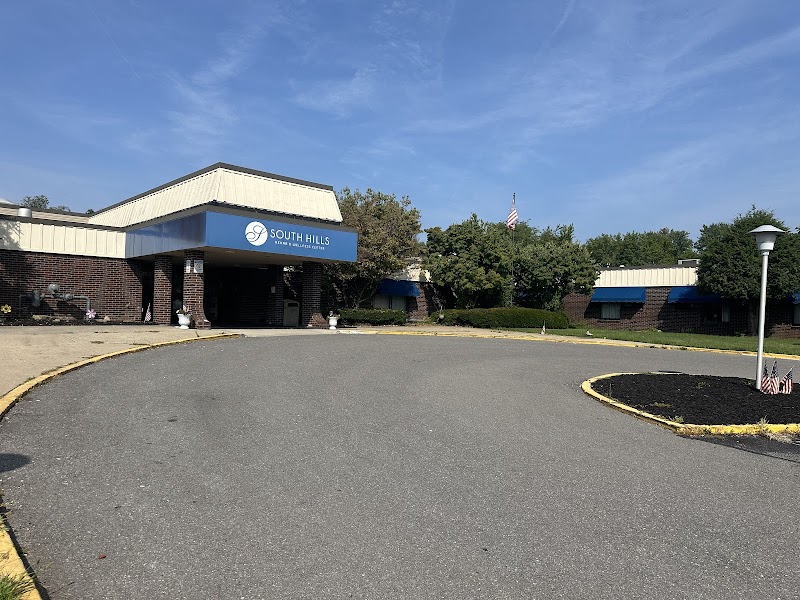
How is Wecare At South Hills Rehabilitation And Nrsg Ctr Staffed?

CMS rates WECARE AT SOUTH HILLS REHABILITATION AND NRSG CTR's staffing level at 2 out of 5 stars, which is below average compared to other nursing homes. Staff turnover is 77%, which is 30 percentage points above the Pennsylvania average of 46%. High turnover can affect care consistency as new staff learn residents' individual needs. RN turnover specifically is 79%, which is notably high. RNs provide skilled clinical oversight, so turnover in this role can affect medical care quality.

What Have Inspectors Found at Wecare At South Hills Rehabilitation And Nrsg Ctr?

State health inspectors documented 50 deficiencies at WECARE AT SOUTH HILLS REHABILITATION AND NRSG CTR during 2023 to 2025. These included: 3 Immediate Jeopardy (the most serious level, indicating potential for serious harm or death), 1 that caused actual resident harm, and 46 with potential for harm. Immediate Jeopardy findings are rare and represent the most serious regulatory concerns. They require immediate corrective action.
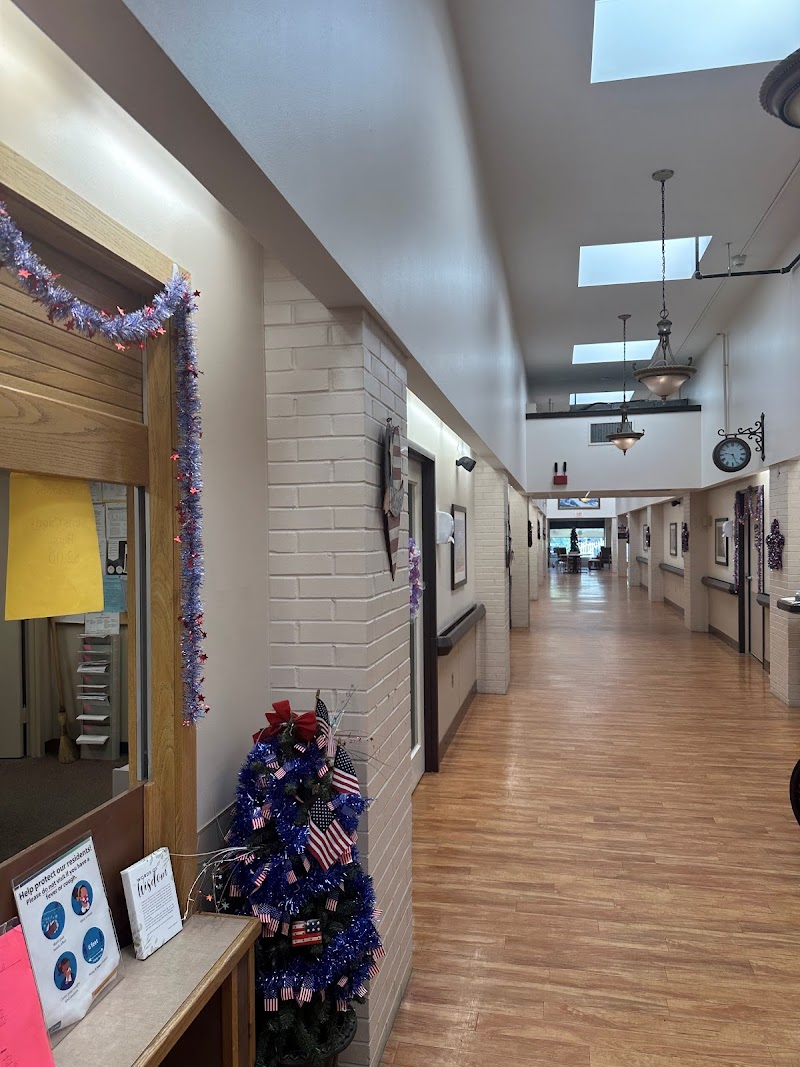
Who Owns and Operates Wecare At South Hills Rehabilitation And Nrsg Ctr?

WECARE AT SOUTH HILLS REHABILITATION AND NRSG CTR is owned by a for-profit company. For-profit facilities operate as businesses with obligations to shareholders or private owners. The facility is operated by WECARE CENTERS, a chain that manages multiple nursing homes. With 104 certified beds and approximately 67 residents (about 64% occupancy), it is a mid-sized facility located in CANONSBURG, Pennsylvania.
How Does Wecare At South Hills Rehabilitation And Nrsg Ctr Compare to Other Pennsylvania Nursing Homes?

Compared to the 100 nursing homes in Pennsylvania, WECARE AT SOUTH HILLS REHABILITATION AND NRSG CTR's overall rating (1 stars) is below the state average of 3.0, staff turnover (77%) is significantly higher than the state average of 46%, and health inspection rating (1 stars) is much below the national benchmark.

What Should Families Ask When Visiting Wecare At South Hills Rehabilitation And Nrsg Ctr?

Based on this facility's data, families visiting should ask: "What changes have been made since the serious inspection findings, and how are you preventing similar issues?" "What safeguards and monitoring systems are in place to protect residents from abuse or neglect?" "How do you ensure continuity of care given staff turnover, and what is your staff retention strategy?" "Can you walk me through typical staffing levels on day, evening, and night shifts?" These questions are particularly relevant given the facility's Immediate Jeopardy citations, the substantiated abuse finding on record, the facility's high staff turnover rate, and the below-average staffing rating.

Is Wecare At South Hills Rehabilitation And Nrsg Ctr Safe?

Based on CMS inspection data, WECARE AT SOUTH HILLS REHABILITATION AND NRSG CTR has documented safety concerns. The facility has 1 substantiated abuse finding (meaning confirmed case of resident harm by staff or other residents). Inspectors have issued 3 Immediate Jeopardy citations (the most serious violation level indicating risk of serious injury or death). The facility is currently on the Special Focus Facility watch list (a federal program monitoring the lowest-performing 1% of nursing homes nationwide). The facility has a 1-star overall rating and ranks #100 of 100 nursing homes in Pennsylvania. Families considering this facility should ask detailed questions about what corrective actions have been taken since these incidents.

Do Nurses at Wecare At South Hills Rehabilitation And Nrsg Ctr Stick Around?

Staff turnover at WECARE AT SOUTH HILLS REHABILITATION AND NRSG CTR is high. At 77%, the facility is 30 percentage points above the Pennsylvania average of 46%. Registered Nurse turnover is particularly concerning at 79%. RNs handle complex medical decisions and coordinate care — frequent RN changes can directly impact care quality. High turnover means new staff may not know residents' individual needs, medications, or preferences. It can also be disorienting for residents, especially those with dementia who rely on familiar faces. Families should ask: What is causing the turnover? What retention programs are in place? How do you ensure care continuity during staff transitions?

Was Wecare At South Hills Rehabilitation And Nrsg Ctr Ever Fined?

WECARE AT SOUTH HILLS REHABILITATION AND NRSG CTR has no federal fines on record. CMS issues fines when nursing homes fail to meet care standards or don't correct problems found during inspections. The absence of fines suggests the facility has either maintained compliance or corrected any issues before penalties were assessed. This is a positive indicator, though families should still review recent inspection reports for the full picture.

Is Wecare At South Hills Rehabilitation And Nrsg Ctr on Any Federal Watch List?

WECARE AT SOUTH HILLS REHABILITATION AND NRSG CTR is currently an SFF Candidate, meaning CMS has identified it as potentially qualifying for the Special Focus Facility watch list. SFF Candidates have a history of serious deficiencies but haven't yet reached the threshold for full SFF designation. The facility is being monitored more closely — if problems continue, it may be added to the official watch list. Families should ask what the facility is doing to address the issues that led to this status.