MOUNTAIN VIEW REHABILITATION AND SENIOR LIVING CTR


2050 TREVORTON ROAD, COAL TOWNSHIP, PA 17866 (570) 644-4400
For profit - Corporation 271 Beds ALLAIRE HEALTH SERVICES Data: November 2025
Trust Grade
3/100
#610 of 653 in PA
Last Inspection: May 2025

Inspected within the last 6 months. Data reflects current conditions.

Overview

Mountain View Rehabilitation and Senior Living Center has received a Trust Grade of F, indicating significant concerns about the quality of care provided. Ranking #610 out of 653 facilities in Pennsylvania places it in the bottom half of nursing homes in the state, and it is the lowest-ranked facility in Northumberland County. The trend is worsening, with issues increasing from 20 in 2024 to 33 in 2025, suggesting growing problems that families should be aware of. Staffing is a relative strength, with a turnover rate of 0%, well below the state average of 46%, but the facility has less registered nurse coverage than 90% of facilities in Pennsylvania, which is concerning. Specific incidents include a resident suffering a serious fall due to inadequate supervision and neglect in implementing fall prevention measures, as well as another resident experiencing an ankle fracture due to staff neglect, highlighting serious safety issues that families need to consider when evaluating this facility.

Trust Score
F
3/100
In Pennsylvania
#610/653
Bottom 7%
Safety Record
High Risk
Review needed
Inspections
Getting Worse
20 → 33 violations
Staff Stability
○ Average
Turnover data not reported for this facility.
Penalties
✓ Good
$16,675 in fines. Lower than most Pennsylvania facilities. Relatively clean record.
Skilled Nurses
⚠ Watch
Each resident gets only 27 minutes of Registered Nurse (RN) attention daily — below average for Pennsylvania. Fewer RN minutes means fewer trained eyes watching for problems.
Violations
⚠ Watch
66 deficiencies on record. Higher than average. Multiple issues found across inspections.
★☆☆☆☆
1.0
Overall Rating
★★☆☆☆
2.0
Staff Levels
★★☆☆☆
2.0
Care Quality
★☆☆☆☆
1.0
Inspection Score
Stable
2024: 20 issues
2025: 33 issues

The Good

  • Full Sprinkler Coverage · Fire safety systems throughout facility
  • No fines on record

Facility shows strength in fire safety.

The Bad

1-Star Overall Rating

Below Pennsylvania average (3.0)

Significant quality concerns identified by CMS

Federal Fines: $16,675

Below median ($33,413)

Minor penalties assessed

Chain: ALLAIRE HEALTH SERVICES

Part of a multi-facility chain

Ask about local staffing decisions and management

The Ugly 66 deficiencies on record

4 actual harm
Sept 2025 2 deficiencies 1 Harm
SERIOUS (G) 📢 Someone Reported This

A family member, employee, or ombudsman was alarmed enough to file a formal complaint

Actual Harm - a resident was hurt due to facility failures

Free from Abuse/Neglect (Tag F0600)

A resident was harmed · This affected 1 resident

**NOTE- TERMS IN BRACKETS HAVE BEEN EDITED TO PROTECT CONFIDENTIALITY** Based on clinical record review, review of facility documentation, and staff interview, it was determined that the facility fail...

Read full inspector narrative →
**NOTE- TERMS IN BRACKETS HAVE BEEN EDITED TO PROTECT CONFIDENTIALITY** Based on clinical record review, review of facility documentation, and staff interview, it was determined that the facility failed to protect residents from staff neglect resulting in a fall from a wheelchair with serious injury for one of seven residents reviewed (Resident CR1). This deficiency is cited as past noncomplianceFindings include: Closed clinical record review for Resident CR1 revealed a diagnosis list that included vascular dementia (a type of dementia caused by reduced blood flow to the brain and leading to cognitive impairments such as memory loss, loss of judgment, and loss of complex motor skills). Review of facility documentation titled, Fall Risk, dated July 18, 2025, at 1:09 PM revealed that the facility assessed Resident CR1 as a score of 11, which indicated a category of High Risk. Facility staff documented the resident's fall risk predictive factors that included the LOC (level of consciousness) as poor recall, judgement, and safety awareness. Review of Resident CR1s care plan revealed the resident had care plans that addressed the following: impaired cognitive function related to the medical history; a communication problem related to dementia; an activity of daily living (ADL) self-care deficit related to activity intolerance, impaired balance, and limited mobility; and a potential for falls related to deconditioning and gait/balance problems. Further clinical record review for Resident CR1 revealed a quarterly Minimum Data Set Assessment (MDS, an assessment completed at specific intervals to determine care needs) dated July 22, 2025, that noted facility staff assessed the resident as having a BIMS (Brief Interview for Mental Status) of 0, which indicated cognitive impairment. Further review of the MDS revealed that facility staff assessed the resident's functional status as follows: roll left and right (the ability to roll from lying on back to left and right side, and return to lying on back on the bed) as dependent on staff; sit to lying (the ability to move from sitting on side of bed to lying flat on the bed) as dependent; lying to sitting on side of bed (the ability to move from lying on the back to sitting on the side of the bed and with no back support) as dependent; sit to stand (the ability to come to a standing position from sitting in a chair, wheelchair, or on the side of the bed) as dependent on staff; chair/bed-to-chair transfer (the ability to transfer to and from a bed to a chair or wheelchair as dependent; and walking was marked as not applicable. Physical therapy documentation for Resident CR1 noted a PT (physical therapy) Evaluation and Plan of Treatment dated July 8, 2025. In the section titled, Initial Assessment/Current Level of Functioning and Underlying Impairments, therapy staff documented precautions as assist with two with arm-in-arm technique for transfers; out of bed to wheelchair with leg rests and foot buddy. Wheelchair mobility documented the resident as dependent on staff to wheel 50 feet with two turns. The bilateral lower extremity strength was documented as impaired. Further review of physical therapy documentation for Resident CR1 revealed a PT Discharge summary dated [DATE], that noted a functional reach assessment documented as two inches that therapy staff noted as predictive of falls, an elderly mobility scale documented as 0 out of 20 (an assessment that indicated the resident needs assistance from staff for mobility), standing balance with upper extremity support as poor to poor. The documentation further noted the resident was dependent on staff for bed mobility, transfers, sit to lying, lying to sitting on side of bed, chair/bed-to-chair transfer, and wheel 50 feet with two turns. The therapy tab in Resident CR1's electronic health record (EHR) noted precautions that included (PT) assist x2 with arm in arm technique for transfers, OOB (out of bed) to wheelchair with leg rests and foot buddy. An interview with the Director of Nursing on September 17, 2025, at 3:30 PM revealed that Resident CR1 did not self-propel in the wheelchair. Nursing documentation for Resident CR1 dated September 6, 2025, at 5:05 PM revealed that staff had notified the registered nurse that a resident had fallen out of her wheelchair. The resident was observed laying on her left side in the hallway. Bleeding was observed from a laceration on the left side of the resident's head above the eye. Emergency medical services (EMS) were called and the resident was transported to the hospital for evaluation. Review of the facility Incident/Accident form noted an Employee Statement with a date of event as September 6, 2025. The resident's name was noted as Resident CR1. The written and signed employee statement from Employee 2 (the staff members signature was identified by the Nursing Home Administrator), licensed practical nurse, noted in summary that Employee 1, nurse aide, came around the corner going very fast and flying the resident to the side and thrusted out of the wheelchair and onto the floor headfirst. The resident's head immediately started bleeding. Employee 2 noted the nurse aide was advised that she was going way too fast. Review of the facility documentation revealed a form titled, Employee Statement Regarding Knowledge of Resident Incident, that was dated September 6, 2025. The resident involved was noted as Resident CR1. Employee 3 noted they heard others stating, she had no leg rests, they were pushing with no leg rests, they always have to have leg rests. Employee 3 continued up the hall and noted the registered nurse was on the floor the resident with bloody towels. Employee 3 was asked to call 911. Review of the facility Incident/Accident form noted a written and signed statement from Employee 1 noted the employee proceeded to wheel resident CR1 back to her room. Employee 1 made a turn down the hallway and the resident fell face first. Employee 1 tried to grab the resident's cardigan and the resident fell. The resident's left side of her head started to bleed, and the employee applied pressure to the wound to stop the bleeding until the nursing staff stepped in. Hospital documentation for Resident CR1 dated September 6, 2025, at 8:47 PM revealed that the resident presented to the Emergency Department (ED) for evaluation of a fall at the nursing home. Documentation noted the resident fell and hit her forehead. The ED course noted a CT scan (computed tomography; a type of medical imaging test that creates a scan of the body using x-ray technology) of the head and brain that indicated few foci of intraparenchymal hemorrhage (IPH, bleeding that occurs within the brain) in the right frontal lobe most pronounced posteriorly; there was an associated small volume subarachnoid (a space located around the brain) component. Hospital documentation for Resident CR1 dated September 6, 2025, at 11:22 PM noted the resident was transferred for trauma evaluation from a previous hospital. The resident had a fall forward out of her wheelchair and was found to have a brain bleed. The CT was notable for intraparenchymal hemorrhage and subarachnoid hemorrhage. The physical exam noted a large left forehead laceration with notable frontal bone exposed. The resident was admitted to the hospital. Hospital Documentation for Resident CR1 dated September 8, 2025, at 6:14 AM documented, Injury Complex / Problems as the following: fall, scalp lac (laceration), subarachnoid hemorrhage, and intraparenchymal hemorrhage. The associated diagnosis list included the same as active problems. Information provided to the Department on September 7, 2025, noted the date of the event for Resident CR1 as September 6, 2025. The factual description noted the resident was being pushed by the nurse aide down the hallway when the resident planted her feet on the ground causing the resident to fall forward out of the wheelchair. The resident had sustained a laceration to the left side of the forehead and was transported to the ED. Initial whole house audit completed on all moveable chairs to ensure they have leg rests/leg rest bags. Education started for all staff regarding need for leg rests when transporting residents in moveable chairs. Review of the facility Incident/Accident form noted an Employee Statement with a date of event as September 5, 2025. The resident name was blank. The written and signed employee statement from Employee 4, licensed practical nurse, noted the staff member did not witness the event, but was told by other staff members that Employee 1 was involved with pushing a resident fast in a wheelchair. Employee 4 instructed Employee 1 to never push a resident without leg rests and never push a resident very fast. The documentation noted Employee 1 was instructed on giving care with caution and patience, transporting properly, and proper leg rests. Review of the facility Incident/Accident form noted a Statement from Employee 5, licensed practical nurse, that on September 5, 2025, the nurse aide was seen by staff running in the hallway with another resident in a wheelchair and the nurse spoke with the staff member about running with residents in a wheelchair and about them not having leg rests. An interview with the Nursing Home Administrator and Director of Nursing on September 17, 2025, at 12:31 PM revealed that Employee 1 was educated on September 5, 2025 (the day prior to Resident CR1's fall), by the licensed practical nurse, about using leg rests and not pushing residents fast. On September 6, 2025, Employee 1 was pushing Resident CR1 without leg rests on the wheelchair when she fell and sustained an injury. The facility failed to ensure that staff appropriately implemented resident interventions necessary to prevent falls or injury after staff members identified the initial concerns with Employee 1 on September 5, 2025. The facility identified the concern with Resident CR1 on September 6, 2025, and as a result, disciplinary action was taken against Employee 1. The facility conducted full house audits on each nursing unit on September 6, 2025. The facility provided full house education from September 6 to 7, 2025, to all staff regarding the use of leg rests when pushing a resident in a wheelchair. Follow-up audits were conducted on September 10 and September 16, 2025, by the facility to ensure leg rests are intact if a resident is being pushed by a staff member and does not self-propel, and foot rests are available on the back of the wheelchair or Broda chair if the resident does self-propel in case the resident is needed to be pushed in the chair by a staff member. The above information was reviewed in a meeting with the Nursing Home Administrator and Director of Nursing on September 17, 2025, at 3:40 PM. 28 Pa. Code 201.14(a) Responsibility of licensee 28 Pa. Code 201.29(a) Resident rights 28 Pa. Code 211.12(d)(1)(3)(5) Nursing services
CONCERN (D) 📢 Someone Reported This

A family member, employee, or ombudsman was alarmed enough to file a formal complaint

Potential for Harm - no one hurt, but risky conditions existed

Safe Environment (Tag F0584)

Could have caused harm · This affected 1 resident

Based on observations and staff interview, it was determined that the facility failed to provide a clean, comfortable, homelike environment on two of four nursing units (A and B Nursing Units), the fa...

Read full inspector narrative →
Based on observations and staff interview, it was determined that the facility failed to provide a clean, comfortable, homelike environment on two of four nursing units (A and B Nursing Units), the facility chapel area, a common dining area, and the main kitchen. Findings include: Observation of the facility chapel area on September 17, 2025, at 10:29 AM revealed the following: A blue colored carpeted area was heavily stained, especially where it abutted the tiled flooring. The black transition strip between the two floors was broken and also loose in areas. The personal laundry area had a build-up of lint on the floor, in a small sized plastic trash can, and on the walls surrounding the dryer. There were two large water stains on the ceiling tiles. There was a lidded trash can near the entrance to the chapel that had paper products sticking out from underneath the lid. A used linen cart next to it had a used maroon colored food bowl on top of it. A follow-up observation on September 17, 2025, at 1:57 PM revealed these items were still present. Observation of a common dining area off the main hallway leading to the chapel had a refrigerator that had three used and balled up gloves on top of it. A follow-up observation on September 17, 2025, at 1:57 PM revealed these items were still present. There were two garbage receptacles observed in this dining area. One garbage receptacle was almost full, and the garbage bag was not secured and falling into the receptacle. The second garbage bag had fallen down into the receptacle and there was trash piled on top of it. A follow-up observation on September 17, 2025, at 1:57 PM revealed these items were still present. Observation of the A Nursing Unit on September 17, 2025, at 10:59 AM revealed the following: A common area had an electrical receptacle that was starting to come out of the wall. A black colored plastic shelf was located inside of a pantry area that contained a microwave and storage cupboards. An interview with Employee 6, nurse aide, revealed that the shelf is where resident snacks are stored when brought in by visitors. The bottom shelf contained manufactured holes that covered the span of the shelf. The holes contained an extensive amount of dirt and debris. The surrounding floor in this pantry had an extensive build-up of dirt and debris. A storage unit off the main dining area of the A Nursing Unit had a refrigerator that Employee 6 indicated was sometimes used by activities staff to store resident related items. The refrigerator contained three aluminum foil items that were not labeled or dated, a large unlabeled and undated pitcher with an unidentified liquid, two uncovered food bowls open to the ambient environment that were unlabeled and undated that Employee 6 identified as puree peanut butter and jelly. There was an extensive amount of dirt and debris on the floor behind an ice machine in the corner. There was a large bag of pears in a tote that were open to the ambient air with no dates or labels and a tote of cookies that contained a package that was open to the ambient air. A cabinet under the sink in the main dining area had a damaged section on the exterior of the cabinet where a piece of the cabinet was missing near the floor. Observation of the B Nursing Unit on September 17, 2025, at 11:26 AM revealed a large, clear plastic tote on top of the refrigerator in front of the nurse's station. The tote contained various resident snacks. The bottom of the tote had a significant build-up of debris and food crumbs. The refrigerator top was dust covered, and snacks were observed discarded behind a potted plant on top of the refrigerator. Observation of the main kitchen on September 17, 2025, at 2:10 PM revealed a lidded receptacle near the locker area that contained various used linens from the kitchen. There was no bag, and the linens were placed directly into the bin. The above information was reviewed in a meeting with the Nursing Home Administrator and Director of Nursing on September 17, 2025, at 3:40 PM. 483.10(i)(1)-(7) Safe/clean/comfortable/homelike EnvironmentPreviously cited deficiency 5/2/2025 28 Pa. Code 201.18(b)(3)(e)(2.1) Management
Aug 2025 1 deficiency 1 Harm
SERIOUS (G) 📢 Someone Reported This

A family member, employee, or ombudsman was alarmed enough to file a formal complaint

Actual Harm - a resident was hurt due to facility failures

Accident Prevention (Tag F0689)

A resident was harmed · This affected 1 resident

Based on clinical record review, review of facility documentation, and staff interview, it was determined that the facility failed to implement interventions related to fall injury prevention and fail...

Read full inspector narrative →
Based on clinical record review, review of facility documentation, and staff interview, it was determined that the facility failed to implement interventions related to fall injury prevention and failed to provide adequate supervision resulting in a fall with injury for one of three residents reviewed (Resident CR1).This deficiency is cited as past noncomplianceFindings include: Closed clinical record review for Resident CR1 revealed a diagnosis list that included Alzheimer's Disease with Late Onset (a progressive brain disorder that affects memory, thinking, and language), the need for assistance with personal care, and lack of coordination. Review of facility documentation titled, Fall Risk, dated July 18, 2025, at 4:57 PM revealed that facility staff assessed the resident as a score of 10, which indicated a category of High Risk. Facility staff documented the resident's fall risk predictive factors that included the LOC (level of consciousness) as Poor recall, judgement, safety awareness. Review of Resident CR1's care plan revealed the resident had care plans that addressed the following: impaired cognitive function related to the medical history that was initiated on March 12, 2021; an activities of daily living (ADL) self-care deficit related to the medical history that was initiated on March 3, 2021; and resistive to care at times, will refuse medications, and hearing aids and will attempt to get out of bed and transfer independently if environment around her is not calm or quiet to remove herself from environment that was initiated November 23, 2021. Further review of Resident CR1's care plan revealed that the resident was at risk for falls related to the medical history dated as initiated on March 3, 2021. An intervention included having the bed in the lowest position at all times while in bed initiated on May 16, 2025 A review of the task list (located in the electronic health record where staff document specific care related events for a resident) for Resident CR1 revealed there was a Fall Prevention task. It included having the bed in the lowest position at all times while in bed and also included to reinforce the resident's toileting program. A K noted next to the task indicated that the task shows on the Kardex (documentation by nursing to note important information and care planning and facilitate resident care). Nurse aide staff were also noted as documenting under this specific task. Closed clinical record review for Resident CR1 revealed a quarterly Minimum Data Set Assessment (MDS, an assessment completed at specific intervals to determine care needs) dated May 19, 2025, that noted facility staff assessed the resident as rarely/never understood. Further review of the MDS noted that facility staff assessed the resident as needing substantial/maximal assistance to roll left and right (The ability to roll from lying on back to left and right side and return to lying on back on the bed); however, was not marked as dependent on staff to roll. Review of facility documentation revealed a form titled Incident/Accident and noted Employee Statement with a date of event noted as August 2, 2025, at 0650 [6:50 AM]. The resident name was noted as Resident CR1. The written and signed employee statement from Employee 1, nurse aide, noted the staff member was giving morning care to the resident who was a Hoyer lift (a mechanical lift used to transfer residents). After washing and dressing the resident, the staff member noted, .I went to get a Hoyer from the shower room. Upon return, Employee 1 found the resident on the floor, face down. Clinical nursing documentation for Resident CR1 dated August 2, 2025, at 10:20 AM from Employee 2, registered nurse, revealed Employee 2 was alerted to the resident's room by the nurse aide who entered the room to discover the resident lying face down on the floor. A three centimeter (cm) by two cm laceration was noted above the resident's right eye and a 1 cm laceration to the bridge of the resident's nose. The resident was unable to give a description of the event due to advanced dementia, per the documentation. The documentation further noted that the nurse aide who reported the fall, .stated he was providing care to the resident and left her room to get the Hoyer to transfer her out of bed after care was finished. Upon arrival to the room, it was noted by nursing staff that the bed was still in a high position, and it had been left in a high position when the aid left to obtain the Hoyer. The resident has a history of attempting to transfer herself from her bed and chair though she is not able to do so safely. The documentation noted, .it would appear likely she attempted to stand up from her bed and fell forward. The documentation noted the resident was sent to the hospital for evaluation and treatment. An interview with Employee 2 on August 26, 2025, at 1:28 PM revealed that Employee 2 was the nursing supervisor at the time. Employee 2 stated the licensed practical nurse (LPN) reported that the bed was in the high position. Employee 2 further reported that Resident CR1 was able to scoot around in bed. Review of the facility Incident/Accident form noted Employee Statement with a date of event as August 2, 2025, at 0650. The resident name was noted as Resident CR1. The written and signed employee statement from Employee 3, licensed practical nurse, indicated in part that, Hoyer lift was at the foot of the bed and bed was raised in high position. A phone interview with Employee 3 on August 26, 2025, at 1:50 PM revealed that the bed was in the high position and described as around three feet off the floor from the floor to the top of the mattress. This was observed post fall for Resident CR1. Hospital documentation for Resident CR1 dated August 2, 2025, at 7:58 AM revealed that the resident presented to the Emergency Department (ED) for evaluation of a fall and laceration to the nose and right forehead. The resident presented, .from nursing home after fall out of bed. The patient is unable to provide history. The physical examination documented a laceration to the forehead and bridge of nose. The documentation further noted, The patient underwent CT scans (computed tomography; a type of medical imaging test that creates a scan of the body using x-ray technology) that found a nasal bone (a bone of the nose) fracture and left intertrochanteric hip fracture (a type of fracture of the hip). Clinical impressions included trauma; closed intertrochanteric fracture of hip, left; open fractur of nasal bone; and laceration of forehead. The resident was admitted to the hospital. Nursing documentation for Resident CR1 dated August 5, 2025, at 4:33 PM revealed the resident returned to the facility via ambulance and litter (stretcher). Information provided to the Department on August 3, 2025, noted the date and time of the event for Resident CR1 occurred on August 2, 2025, at 6:55 AM. The factual description noted the resident had an unwitnessed fall out of bed and was found by the nurse aide lying face down on the floor. The resident was noted as non-compliant with transfer status due to advanced stage Alzheimer's Disease with poor safety awareness. The report noted that upon investigation it was found that the resident's bed was left in high bed state while Employee 1 left the room to get supplies while performing care. The facility failed to implement an intervention of a low bed related to fall injury prevention and failed to provide adequate supervision upon leaving the room. Resident CR1 then had a fall with sustained injury. The facility identified the concern with Resident CR1 on August 2, 2025, and as a result, disciplinary action was taken against Employee 1. A full house audit was conducted to identify if an order was in place for the bed to be in the lowest position for residents at all times while in bed and rounds completed to check if the beds were in the lowest position while the residents were in bed. The facility conducted staff education on August 2, 4, 5, and 8, 2025, that included Bed position. The facility conducted a whole house audit and checked the beds facility-wide on August 2, 2025. The above information was reviewed during an interview with the Nursing Home Administrator and Director of Nursing on August 26, 2025, at 4:45 PM. 483.25(d)(1)(2) Free of Accident Hazards/supervision/devicesPreviously cited deficiency 5/2/2025 28 Pa. Code 211.12(d)(1)(3)(5) Nursing services
Jul 2025 1 deficiency
CONCERN (D) 📢 Someone Reported This

A family member, employee, or ombudsman was alarmed enough to file a formal complaint

Potential for Harm - no one hurt, but risky conditions existed

Quality of Care (Tag F0684)

Could have caused harm · This affected 1 resident

Based on a review of select facility policies and procedures, clinical record review, and staff interview, it was determined that the facility failed to provide the highest practicable care regarding ...

Read full inspector narrative →
Based on a review of select facility policies and procedures, clinical record review, and staff interview, it was determined that the facility failed to provide the highest practicable care regarding elopements for one of one resident reviewed (Resident 1).Findings include: The current facility policy entitled Elopement/Missing Resident, revealed it is the policy of the facility to provide a safe environment for all residents regardless of orientation status and to supervise those residents at risk for elopement based upon the comprehensive assessment and specific care plan of each resident. Clinical record review revealed the facility admitted Resident 1 on December 16, 2024, with diagnosis including dementia, with behavior disturbance. Resident 1 resided on the locked memory care unit from December 16, 2024, to May 12, 2025, when Resident 1 was moved the F nursing unit. Review of Resident 1's most recent quarterly MDS (Minimum Data Set, an assessment completed at specific intervals to determine care needs) dated June 20, 2025, revealed nursing staff assessed Resident 1 as having a BIMS (Brief Interview for Mental Status) score of 4 (severe impaired cognition). Nursing documentation dated May 26, 2025, at 12:13 PM noted Resident 1 was at the front entrance wanting to leave. Documentation revealed staff made attempts to bring Resident 1 back to the nursing unit, but Resident 1 refused stating there is a bomb back there and my wife is here to get me. Nursing documentation dated June 24, 2025, at 10:56 PM revealed Resident 1 wanders frequently to other units. Nursing documentation dated July 7, 2025, at 6:46 PM noted Resident 1 had exit seeking behaviors. Documentation revealed Resident 1 was wearing his jacket at this time asking where the exit is, stating he is going home, and if they do not let him leave, he is calling the police. Resident 1 was retrieved from the main entrance twice this shift. Resident 1 was noted becoming angry when staff attempted to redirect him. Nursing documentation dated July 8, 2025, at 5:57 AM noted no exit seeking behaviors for this shift. Resident 1 remained in bed, and documentation indicated wander guard was replaced to Resident 1's right ankle. Nursing documentation dated July 9, 2025, at 8:50 PM revealed Resident 1 was outside with a staff member. Resident 1 is an elopement risk and was escorted back into the facility by staff. Documentation revealed Resident 1 was moved back to the locked memory care unit. Review of Resident 1's physician orders revealed an order dated December 16, 2024, for staff to check Resident 1's wander guard placement every shift. Review of Resident 1's Treatment Administration Record dated July 2025, confirmed staff were to be checking Resident 1's wander guard placement every shift. Review of Resident 1's plan of care initiated on December 17, 2024, and currently in place noted Resident 1 is an elopement risk/wanderer as evidenced by his disorientation to place, and impaired safety awareness. Interventions included staff identify wandering pattern, provide structured activities, and a wander alert. Interview with Employee 1 (dietary aide) on July 14, 2025, at 1:07 PM revealed that she was a new employee with her first day of work on July 9, 2025. She stated that her shift was over, and she was leaving the facility on July 9, 2025, at approximately 8:15 PM. Employee 1 stated she exited the building from the main entrance and a man followed her out, stating he was going to the police station to file a report. When she entered the parking lot a visitor asked her if the man was supposed to be outside. Employee 1 told the visitor she doesn't know as it is her first day of work. Employee 1 stated she asked the visitor to keep an eye on Resident 1 while she went back into the facility to get staff to help her. Employee 1 revealed when she returned outside the visitor remained in the parking lot and Resident 1 was walking down the road in front of the facility. Interview with Employee 2 (nurse aide) on July 14, 2025, at 11:41 AM revealed that she was working when Resident 1 eloped out of the facility. She stated that when Employee 1 came onto the unit she stated, I think I left a resident outside. Employee 2 stated that when she arrived outside Resident 1 was not with the visitor, but was down the hill, walking along the road. She stated it took herself and three other staff to get Resident 1 back into the facility. Employee 2 stated that Resident 1 did not have a wander guard on when he was brought back into the facility.The facility failed to provide the highest practical care related to Resident 1.28 Pa. Code 211.10(d) Resident care policies28 Pa. Code 211.12(d)(1)(3)(5) Nursing services
May 2025 1 deficiency
CONCERN (D) 📢 Someone Reported This

A family member, employee, or ombudsman was alarmed enough to file a formal complaint

Potential for Harm - no one hurt, but risky conditions existed

Medical Records (Tag F0842)

Could have caused harm · This affected 1 resident

Based on clinical record review, review of facility documentation, and staff interview, it was determined that the facility failed to maintain clinical records that were complete, accurate, and readil...

Read full inspector narrative →
Based on clinical record review, review of facility documentation, and staff interview, it was determined that the facility failed to maintain clinical records that were complete, accurate, and readily accessible for one of five residents reviewed (Resident 1). Findings include: Clinical record review for Resident 1 revealed a diagnoses list that included a pressure ulcer of the right heel. Further clinical record review for Resident 1 revealed current physician orders for treatment and wound care related to the pressure ulcer of the right heel. Resident 1's current care plan revealed the resident has actual and potential for pressure ulcer development related to immobility and an unstageable pressure ulcer right heel. A wound care consultation appointment for Resident 1 dated May 5, 2025, revealed the resident has an unstageable right heel pressure injury. The assessment and plan from the medical provider noted the following: Offloading; continue anterior wedge shoe to right for all weight bearing and hold off on weight bearing PT (physical therapy) for now until wound heals. A wound care consultation appointment for Resident 1 dated May 23, 2025, revealed that the resident was seen for follow-up. Documentation noted, Facility still having patient undergo wt (weight) bearing PT despite my recommendation at last visit to hold off on wt bearing exercises to improve offloading. The documentation further noted in bold lettering to Hold off on wt bearing PT for now until wound heals. Documentation also noted a PRAFO boot (a special type of medical device worn on the foot to help to control movement and/or reduce pressure) on right lower extremity while weight bearing and non-weight bearing (obtain today). Physical therapy documentation for Resident 1 dated May 6, 2025, noted a precaution as weight bearing as tolerated right lower extremity. Documentation further revealed that the resident reported that he was told by the doctor that he can't leave his bed for the next seven days and cannot put any weight on his right foot. The documentation also noted physical therapy staff spoke with nursing regarding the resident reports of being unable to get out of bed with nursing reporting that this is not the case. Physical therapy documentation for Resident 1 dated May 13, 2025, noted a precaution as weight bearing as tolerated right lower extremity. Documentation further noted the resident was able to ambulate 250 feet with a rolling walker and contact guard/minimal assistance wearing the heel off-loading shoe on his right foot approximately a week ago, but now reporting that he was told by his doctor that he needs to stay in bed for a week and not walk on his foot, but nursing staff reported no orders were received by the physician. Physical therapy documentation for Resident 1 dated May 16, 2025, noted a precaution as weight bearing as tolerated right lower extremity. The documentation revealed that the resident ambulated with a rolling walker and minimal assistance of one and chair follow. He utilized the heel off-loading shoe and tolerated distances up to 110 feet. Physical therapy documentation for Resident 1 dated May 21, 2025, noted a precaution as weight bearing as tolerated right lower extremity. Documentation further noted the resident ambulated with a rolling walker and minimal assistance of one with chair follow and tolerated distances up to 40 feet. The resident utilized a right heel off-loading shoe. Physical therapy documentation for Resident 1 dated May 22, 2025, noted a precaution as weight bearing as tolerated right lower extremity. The documentation revealed the resident had ambulation distances of 40-250 feet using a rolling walker and contact guard/minimal assistance. A complexity included that the resident continued reports of right heel pain. An interview with Employee 1, Director of Rehabilitation, on May 28, 2025, at 1:07 PM revealed that Resident 1 is non-weight bearing on the right foot per the wound care consultation appointments and the correspondence was just received today. Employee 1 further noted the resident was refusing the weight bearing exercises (such as ambulation) because he could not tolerate it, and the facility was using a wedge shoe to relieve pressure on the heel. Further clinical record review for Resident 1 revealed the following orders dated May 28, 2025: Utilize a wheelchair for stand pivot transfers to the toilet; PRAFO boot to be worn on the right lower extremity and regular shoe on the left foot for transfers and no ambulation at this time; and assist of one with rolling walker wearing PRAFO on right lower extremity for transfers only and no ambulation at this time. A review of Resident 1's task list (located in the electronic health record where staff document specific care related events for a resident) revealed the following tasks entered May 28, 2025: use wheelchair for stand/pivot transfers to toilet; no ambulation in room due to restrictions per the physician; assist of one with a rolling walker wearing PRAFO on right foot and regular shoe on the left foot; and special instructions/restrictions of no ambulation permitted at this time due to right heel pressure ulcer. Further review of Resident 1's care plan, tasks, and physician orders revealed no evidence that the recommendations made by the medical provider at the wound care consultation appointments were transcribed to the resident's medical record after the resident's appointments on May 5 and 23, 2025. Or that physical therapy staff were made aware of the recommendations until May 28, 2025, as per the interview with Employee 1. An interview with the Director of Nursing on May 28, 2025, at 2:45 PM revealed that there were no additional orders or tasks located in Resident 1's chart to indicate the recommendations from the wound care consultation appointments were transcribed from the consultation report to the electronic medical record, which should have been completed by nursing staff upon the resident returning from the appointments. The above information was reviewed in a meeting with the Nursing Home Administrator and Director of Nursing on May 28, 2025, at 3:45 PM. 28 Pa. Code 211.5(f) Medical records 28 Pa. Code 211.12(d)(1)(3)(5) Nursing services
May 2025 27 deficiencies
CONCERN (D)

Potential for Harm - no one hurt, but risky conditions existed

Deficiency F0627 (Tag F0627)

Could have caused harm · This affected 1 resident

Based on clinical record review and resident, and staff interview, it was determined that the facility failed to develop and implement a discharge planning process to align with the resident's goals f...

Read full inspector narrative →
Based on clinical record review and resident, and staff interview, it was determined that the facility failed to develop and implement a discharge planning process to align with the resident's goals for one of two residents reviewed (Resident 60). Findings include: Review of Resident 60's clinical record revealed that the facility admitted her on May 28, 2024. A minimum data set assessment (MDS, a form completed at specific intervals to determine care needs) dated June 4, 2024, indicated that Resident 60's goal was to discharge to another facility. The facility answered no to the question on the MDS regarding if active discharge planning is occurring for the resident to return to the community. There was no documented evidence that the facility developed a plan of care to align with Resident 60's goals to be transferred to another facility. Interview with Resident 60 on April 30, 2025, at 10:05 AM revealed that she wants to move closer to her family. Resident 60 indicated that she has wanted to transfer out to another facility since she was admitted . Resident 60 indicated that she has talked to staff about it but that nobody is doing anything. Social service documentation dated October 28, 2024, indicated that the facility told the resident they would put out her referrals again. There was no documented evidence in Resident 60's clinical record to indicate what referrals were completed, where the referrals were sent, or if any follow up was attempted or received. A social service noted dated March 17, 2025, indicated that by the request of the family and the resident, a referral was made to another facility for a transfer. There was no documented evidence in Resident 60's clinical record to indicate if any follow up was completed on its status. There was no evidence in Resident 60's clinical record that the facility followed up with the resident or the resident's family since March 18, 2025. Interview with Employee 4, social service director, on May 2, 2025, at 11:30 AM confirmed the above findings for Resident 60. 28 Pa. Code 201.18 (3)(e)(1) Management 28 Pa. Code 211.10(a) Resident care plan
CONCERN (D)

Potential for Harm - no one hurt, but risky conditions existed

Comprehensive Care Plan (Tag F0656)

Could have caused harm · This affected 1 resident

**NOTE- TERMS IN BRACKETS HAVE BEEN EDITED TO PROTECT CONFIDENTIALITY** Based on clinical record review and resident and staff interview, it was determined that the facility failed to implement a comp...

Read full inspector narrative →
**NOTE- TERMS IN BRACKETS HAVE BEEN EDITED TO PROTECT CONFIDENTIALITY** Based on clinical record review and resident and staff interview, it was determined that the facility failed to implement a comprehensive person-centered care plan regarding a pacemaker (Resident 112) and percutaneous endoscopic gastrostomy tube (Resident 81) out of 35 residents reviewed. Findings Include: Clinical record review for Resident 81 revealed a current physician's order for bolus tube feedings and water through a percutaneous endoscopic gastrostomy tube (PEG tube, a type of medical tubing passed through the abdominal wall and into the stomach to facilitate feeding and hydration). Observation of Resident 81 on May 1, 2025, at 12:42 PM revealed that he had a capped PEG tube present in his abdomen. Further review of Resident 81's clinical record revealed no evidence of a comprehensive care plan (a care plan addressing care such as the tube feedings, assessment, complications, and emergency procedures) related to the PEG tube. An interview with the Director of Nursing on May 2, 2025, at 12:40 PM confirmed the resident did not have a care plan related to the PEG tube and staff will develop one. Clinical record review for Resident 112 revealed they have a cardiac pacemaker (an electronic device to help regulate the beating of the heart). Hospital documentation dated March 23, 2025, at 8:34 AM revealed a past medical history that included a pacemaker placement in April 2024, due to tachy-[NAME] syndrome (a type of abnormal cardiac rhythm that alternates between slow and fast beating). An interview with Resident 112 on April 30, 2025, at 12:18 PM revealed the resident has an implanted pacemaker in the left chest. A medical device was noted on the resident's bedside stand that the resident reported talks with the pacemaker and transmits the data to the hospital. The resident further reported that the hospital will call if any problems are detected. Review of the current care plan for Resident 112 revealed the resident has an altered cardiovascular status related to the medical history. The care plan did not address the resident's pacemaker. There was no comprehensive care plan related to the pacemaker and transmittal device. The above information for Resident 112 was reviewed in a meeting with the Nursing Home Administrator and Director of Nursing on April 30, 2025, at 2:30 PM. The facility failed to implement comprehensive person-centered care plans for Residents 81 and 112. 28 Pa. Code 211.10 (a)(c)(d) Resident care policies 28 Pa. Code 211.12(d)(1)(3)(5) Nursing services
CONCERN (D)

Potential for Harm - no one hurt, but risky conditions existed

Deficiency F0657 (Tag F0657)

Could have caused harm · This affected 1 resident

**NOTE- TERMS IN BRACKETS HAVE BEEN EDITED TO PROTECT CONFIDENTIALITY** Based on clinical record review, observation, and staff interview, it was determined that the facility failed to revise a reside...

Read full inspector narrative →
**NOTE- TERMS IN BRACKETS HAVE BEEN EDITED TO PROTECT CONFIDENTIALITY** Based on clinical record review, observation, and staff interview, it was determined that the facility failed to revise a resident's comprehensive care plan for one of 35 residents reviewed (Resident 104). Findings include: Clinical record review for Resident 104 revealed that the facility completed a comprehensive significant change MDS (Minimum Data Set, an assessment tool completed at specific intervals to determine resident care needs) assessment dated [DATE]. Care areas that triggered for care plans included falls, pressure ulcers, and nutritional status (including feeding tube, a flexible tube inserted through the abdomen into the stomach for the purpose of administering fluids, nutrition, and medications). An active physician's order dated June 24, 2022, instructed staff to implement a low bed (bed positioned lower to the ground than a standard height). Review of Resident 104's plan of care to address her potential for falls revealed interventions that included a low bed (initiated June 24, 2022). Observation of Resident 104 on April 29, 2025, at 12:26 PM revealed she was in a bed that was not in a low position. The bed height was higher than a standard bed. Observation of Resident 104 on May 1, 2025, at 1:08 PM with Employee 19 (licensed practical nurse) revealed she was in a bed that was not in a low position. The bed remained at a height higher than a standard bed. Interview with Employee 19 on May 1, 2025, at 1:55 PM revealed that when the facility implemented a new bed for Resident 104 due to a change in facility ownership (estimated as several months ago, the beginning of 2025) and resulting change in durable medical equipment (DME) suppliers, the new bed was incapable of lowering to the floor as required for a low bed. Employee 19 confirmed that Resident 104's active physician orders and plan of care included the implementation of a low bed although this was not possible for Resident 104 due to the new DME suppliers. The surveyor reviewed the above discrepancy regarding Resident 104's bed height during an interview with the Nursing Home Administrator and the Director of Nursing on May 1, 2025, at 2:30 PM. Observation of Resident 104's bedside on April 29, 2025, at 12:21 PM revealed the feeding tube equipment at her bedside included a bag labeled Isosource 1.5 cal (a calorically dense complete liquid nutrition formula with fiber for increased calorie needs and/or limited fluid tolerance). Clinical record review of a nutritional progress note dated March 4, 2025, at 10:14 AM revealed that the dietitian indicated that due to supplier changes within the facility, Resident 104's enteral (administration of food or medication via the gastrointestinal tract) formula would change to match availability. The enteral formula physician order would be Isosource 1.5 at an increased rate due to trending weight loss, New order to read: Isosource 1.5 at 70 milliliters per hour times four hours. An active physician's order dated March 5, 2025, instructed staff to administer an enteral feeding two times a day of Isosource 1.5 at 70 milliliters per hour for four hours. Review of Resident 104's active plan of care to address her tube feeding related to dysphagia (abnormal swallowing ability), history of significant weight loss and gain, and mechanically altered diet, revealed instructions for staff to administer a tube feeding of Jevity 1.5 60 milliliters for four hours daily (noted as revised on February 7, 2025). The facility did not revise Resident 104's care plan to reflect the accurate type or amount of enteral feeding. The surveyor reviewed the above concern regarding Resident 104's nutritional plan of care during an interview with the Nursing Home Administrator and the Director of Nursing on May 2, 2025, at 12:15 PM. Observation of Resident 104 on April 29, 2025, at 12:24 PM revealed she was in a bariatric bed with a specialty mattress with a mechanical pump. The mechanical pump for the mattress included settings for a patient weight of 100 pounds, bariatric mode (350 to 1000 pounds) and maximum inflation off. Review of Resident 104's weight assessments dated March 4, 2025, to April 29, 2025, revealed that staff assessed her as ranging from 139.6 pounds to 133.1 pounds. Active physician orders for Resident 104 revealed a physician's order dated June 24, 2022, for staff to implement an alternating pressure air mattress to her bed. The order included instructions for staff to monitor settings every shift by, sliding forearm between two horizontal cells of mattress making sure resident is immersed 30 to 50 percent into mattress. Interview with Employee 19 (licensed practical nurse) on May 1, 2025, at 1:22 PM revealed that she attended wound care round assessments with the facility's contracted wound care specialists weekly. Employee 19 stated that she was not familiar with Resident 104's mattress pump settings; however, confirmed that the mattress did not appear to have an alternating pressure feature. Employee 19 also confirmed that Resident 104 would not be considered bariatric; nor did the setting of 100 pounds reflect Resident 104's current weight. Review of Resident 104's available plans of care failed to include specific mattress pump settings. A plan of care last revised March 26, 2025, to address Resident 104's pressure ulcers and potential for pressure ulcer development related to immobility listed interventions that included, PRM (pressure redistribution mattress) to bed/alternating pressure air mattress. Interview with Employee 19 on May 1, 2025, at 1:55 PM revealed that when the facility implemented a new bed for Resident 104 due to a change in facility ownership and resulting change in DME suppliers, the new bed likely no longer included an alternating pressure capability. Employee 19 confirmed that Resident 104's active physician orders and plan of care included the implementation of an alternating pressure mattress. The surveyor reviewed the concern regarding Resident 104's plan of care related to mattress type and settings during an interview with the Director of Nursing and Employee 2 (assistant director of nursing) on May 2, 2025, at 9:45 AM. 28 Pa. Code 211.12(d)(1)(3)(5) Nursing services
CONCERN (D)

Potential for Harm - no one hurt, but risky conditions existed

Deficiency F0676 (Tag F0676)

Could have caused harm · This affected 1 resident

**NOTE- TERMS IN BRACKETS HAVE BEEN EDITED TO PROTECT CONFIDENTIALITY** Based on clinical record review and resident and staff interview, it was determined that the facility failed to implement interv...

Read full inspector narrative →
**NOTE- TERMS IN BRACKETS HAVE BEEN EDITED TO PROTECT CONFIDENTIALITY** Based on clinical record review and resident and staff interview, it was determined that the facility failed to implement interventions to maintain mobility for one of one resident reviewed for rehabilitation concerns (Resident 61). Findings include: Interview with Resident 61 on [DATE], at 10:28 AM revealed that she no longer received skilled therapy services (e.g., physical therapy), and she believed that her ability to walk was getting worse because she was not walking. Resident 61 stated that she needed staff to follow behind her with a wheelchair in the event she grew tired when walking. Resident 61 stated, I was on a PT (physical therapy) and OT (occupational therapy) plan, but it expired on Friday. This other plan is supposed to take over according to the girl in the office, but not doing any this week. Clinical record review for Resident 61 revealed a PT Discharge summary dated (Thursday) [DATE]. The discharge recommendations included one staff to assist with a roller walker for transfers and ambulation and a restorative nursing program for ambulation and seated lower extremity. Ambulation program established/trained: restorative ambulation program, ambulate with roller walker up to 50 feet as able with the assistance of one staff and wheelchair to follow. Review of a plan of care developed by the facility to address Resident 61's activities of daily living self-care performance deficit related to impaired balance revealed interventions that included: Transfer/ambulate assistance of two with roller walker, revised on [DATE] Restorative nursing program for ambulation as ordered, initiated on [DATE] Review of restorative nursing documentation dated [DATE], revealed the intervention for staff to complete a restorative nursing ambulation program consisting of the assistance of one staff with a roller walker and wheelchair to follow in the room and corridor for up to 50 feet as able. Staff did not initial completion of the intervention on the following dates and shifts: Day and evening shifts [DATE], 28, and 29, 2025 Day shift [DATE] Evening shift [DATE] The surveyor reviewed the above concern regarding the incompletion of Resident 61's restorative nursing program during an interview with the Director of Nursing on [DATE], at 11:30 AM. 28 Pa. Code 211.12(d)(1)(3)(5) Nursing services
CONCERN (D)

Potential for Harm - no one hurt, but risky conditions existed

ADL Care (Tag F0677)

Could have caused harm · This affected 1 resident

**NOTE- TERMS IN BRACKETS HAVE BEEN EDITED TO PROTECT CONFIDENTIALITY** Based on observation, clinical record review, and resident and staff interview, it was determined that the facility failed to en...

Read full inspector narrative →
**NOTE- TERMS IN BRACKETS HAVE BEEN EDITED TO PROTECT CONFIDENTIALITY** Based on observation, clinical record review, and resident and staff interview, it was determined that the facility failed to ensure a dependent resident received assistance with shaving for one of four residents reviewed for activities of daily living concerns (Resident 129). Findings include: Interview with Resident 129 on April 30, 2025, at 9:33 AM revealed that he preferred not to have facial hair. Resident 129 stated that he preferred shaving, down to the skin. Resident 129 stated that he had not received staff assistance with shaving in three weeks. Observation of Resident 129 on the date and time of the interview revealed he had a full beard and mustache with hair along his neck below his chin and jaw line. Review of the identification picture in Resident 129's electronic medical record revealed he had a mustache, but no beard. Clinical record review of social services documentation dated April 18, 2025, at 2:36 AM revealed that the writer met with Resident 129 on April 8, 2025, for an MDS (Minimum Data Set, an assessment tool completed at specific intervals to determine resident care needs) assessment, and Resident 129 was cognitively intact. Review of a quarterly MDS dated [DATE], revealed that the facility assessed Resident 129 as requiring substantial/maximum assistance with personal hygiene (the ability to maintain personal hygiene, including combing hair, shaving, applying makeup, washing/drying face and hands). The surveyor reviewed the above concern regarding Resident 129's facial hair and his report that staff have not assisted him to shave in weeks during an interview with the Nursing Home Administrator and the Director of Nursing on April 30, 2025, at 1:30 PM. Nursing documentation dated April 30, 2025, at 5:30 PM (following the surveyor's questioning) revealed that staff spoke with Resident 129 at this time, and Resident 129 did not recall the last time that he was offered shaving assistance. Resident 129 requested to be clean shaved that evening. The writer indicated that the nurse aide and licensed practical nurse on the unit were made aware of Resident 129's request and were to perform the task that night. Observation of Resident 129 on May 2, 2025, at 9:14 AM revealed that he continued to have a full beard and mustache. Interview with the Director of Nursing on May 2, 2025, at 9:45 AM and 12:15 PM revealed that the facility could not provide additional information regarding Resident 129's continued facial hair and omission of shaving assistance as requested. The Director of Nursing stated that staff assured her that the task would be completed and did not report any issue with completing the task. 28 Pa Code 211.12(d)(1)(5) Nursing services
CONCERN (D)

Potential for Harm - no one hurt, but risky conditions existed

Quality of Care (Tag F0684)

Could have caused harm · This affected 1 resident

Based on observation, clinical record review, and staff interview, it was determined that the facility failed to implement a physician ordered positioning device for one of four residents reviewed for...

Read full inspector narrative →
Based on observation, clinical record review, and staff interview, it was determined that the facility failed to implement a physician ordered positioning device for one of four residents reviewed for range of motion concerns (Resident 104). Findings include: Clinical record review for Resident 104 revealed an active physician's order dated September 4, 2024, for staff to implement a left palm guard (device applied to the hand that is used to provide a barrier between fingers and the palm to prevent injury to the palm from severe finger flexion/contracture) at all times; remove for care and skin checks every shift. An active physician's order dated August 6, 2024, repeated the instruction for staff to apply a left palm guard at all times except for care and skin checks every shift. Observation of Resident 104 on the following dates and times revealed no device on her left hand: April 30, 2025, at 11:15 AM April 30, 2025, at 12:40 PM May 1, 2025, at 1:55 PM Interview with Employee 19 (licensed practical nurse) on May 1, 2025, at 1:55 PM confirmed that Resident 104 did not have any device on her left hand as ordered by the physician. The surveyor reviewed the above findings related to Resident 104's palm guard during an interview with the Nursing Home Administrator and the Director of Nursing on May 1, 2025, at 2:30 PM. 28 Pa. Code 211.12(d)(1)(5) Nursing services
CONCERN (D)

Potential for Harm - no one hurt, but risky conditions existed

Deficiency F0685 (Tag F0685)

Could have caused harm · This affected 1 resident

Based on clinical record review and resident and staff interview, it was determined that the facility failed to arrange vision practitioner services for one of three residents reviewed for vision and ...

Read full inspector narrative →
Based on clinical record review and resident and staff interview, it was determined that the facility failed to arrange vision practitioner services for one of three residents reviewed for vision and hearing concerns (Resident 129). Findings include: During an interview with Resident 129 on April 30, 2025, at 9:48 AM he stated, I should have a pair (of glasses), but I don't. Resident 129 claimed that he had not received services from a professional practitioner for eye exams or glasses in at least a year. Clinical record review of social services documentation dated April 18, 2025, at 2:36 AM revealed that the writer met with Resident 129 on April 8, 2025, for an MDS (Minimum Data Set, an assessment tool completed at specific intervals to determine resident care needs) assessment, and Resident 129 was cognitively intact. Social services documentation dated July 19, 2024, at 4:30 PM revealed that Resident 129 consented to the facility's consultant eye care provider for vision services. The writer indicated that a referral was sent to the facility's contracted eye care provider. The surveyor requested evidence of any professional eye care services provided to Resident 129 in the past year during an interview with the Nursing Home Administrator and the Director of Nursing on April 30, 2025, at 1:30 PM. Review of a handwritten note from the facility on May 1, 2025, revealed that the facility's contracted vision services provider did not come to the facility between July 19, 2024, and November 15, 2014. Resident 129 was not on the list for services for the November 15, 2024, visit. Per the facility's handwritten note, the facility's contracted vision services provider was at the facility March 7, 2025, and April 14, 2025; and Resident 129 refused services on April 14, 2025. Resident 129's clinical record did not contain documentation that Resident 129 refused vision services on March 7, 2025, or April 14, 2025. The facility failed to provide evidence of the provision of professional vision services for Resident 129. The surveyor reviewed the above concerns regarding Resident 129's professional vision services during an interview with the Director of Nursing on May 1, 2025, at 11:30 AM. 28 Pa. Code 211.12(d)(1)(3)(5) Nursing services
CONCERN (D)

Potential for Harm - no one hurt, but risky conditions existed

Pressure Ulcer Prevention (Tag F0686)

Could have caused harm · This affected 1 resident

Based on observation, clinical record review, and staff interview, it was determined that the facility failed to implement necessary treatment and services to promote healing for one of five residents...

Read full inspector narrative →
Based on observation, clinical record review, and staff interview, it was determined that the facility failed to implement necessary treatment and services to promote healing for one of five residents reviewed for pressure ulcer concerns (Resident 104). Findings include: Clinical record review for Resident 104 revealed skin/wound note documentation dated February 25, 2025, at 10:17 AM that staff noted an open area measuring 0.25 centimeters (cm) round to Resident 104's left elbow with redness noted to the area. Nursing staff notified the physician's assistant and initiated a treatment. Review of Resident 104's treatment administration record (TAR, electronic documentation of the completion of treatments) dated February and March 2025, revealed that staff implemented a topical treatment to Resident 104's left elbow of Bacitracin (antibacterial ointment) and a foam dressing (dry dressing used to absorb drainage and provide cushion) every three days. Staff initialed completion the treatment on the evening shift on February 25 and 28, 2025, and March 3, 2025. An incident investigation dated February 25, 2025, at 12:00 AM revealed interdisciplinary team notes dated February 26, 2025, that the wound nurse would follow Resident 104, and a referral was forwarded to the facility's contracted wound care specialists. Documentation by the contracted wound care specialists dated March 4, 2025, included an assessment of a Stage II (sore on a bony prominence that has broken through the top layer of the skin and part of the layer below, resulting in a shallow, open wound) wound on the left elbow, that measured 0.3 cm by 0.5 cm with an unmeasurable depth. The practitioner's plan for treatment included for staff to apply bacitracin and a sterile gauze sponge once daily for 30 days. Review of Resident 104's TAR dated March 2025, revealed that staff failed to implement the treatment change recommended by the facility's contracted wound care specialists. Staff continued to document the application of bacitracin and a foam dressing every three days on March 6, 9, 12, and 15, 2025. Documentation by the wound care specialists dated March 18, 2025, revealed that Resident 104's elbow pressure ulcer worsened to now include necrosis (death of a localized area of tissue due to disease or injury), a larger size of 1.6 cm by 1.5 cm by an unmeasurable depth. The wound presented as 30 percent black necrotic tissue and 70 percent thick necrotic tissue. The surveyor reviewed the above findings regarding the implementation of Resident 104's wound treatments during an interview with Employee 2 (assistant director of nursing) on May 1, 2025, at 10:35 AM and with the Nursing Home Administrator and the Director of Nursing on May 1, 2025, at 2:30 PM. Observation of Resident 104 on April 29, 2025, at 12:24 PM revealed she was in a bariatric bed with a specialty mattress with a mechanical pump. The mechanical pump for the mattress included settings for a patient weight of 100 pounds, bariatric mode (350 to 1000 pounds) and maximum inflation off. Review of Resident 104's weight assessments dated March 4, 2025, to April 29, 2025, revealed that staff assessed her as ranging from 139.6 pounds to 133.1 pounds. Active physician orders for Resident 104 revealed a physician's order dated June 24, 2022, for staff to implement an alternating pressure air mattress to her bed. The order included instructions for staff to monitor settings every shift by sliding forearm between two horizontal cells of mattress making sure resident is immersed 30 to 50 percent into mattress. Interview with Employee 19 (licensed practical nurse) on May 1, 2025, at 1:22 PM revealed that she attended wound care round assessments with the facility's contracted wound care specialists weekly. Employee 19 stated that she was not familiar with Resident 104's mattress pump settings; however, confirmed that the mattress did not appear to have an alternating pressure feature. Employee 19 also confirmed that Resident 104 would not be considered bariatric; nor did the setting of 100 pounds reflect Resident 104's current weight. Review of Resident 104's available plans of care failed to include specific mattress pump settings. A plan of care last revised March 26, 2025, to address Resident 104's pressure ulcers and potential for pressure ulcer development related to immobility, listed interventions that included, PRM (pressure redistribution mattress) to bed/alternating pressure air mattress. Interview with Employee 19 on May 1, 2025, at 1:55 PM revealed that when the facility implemented a new bed for Resident 104 due to a change in facility ownership and resulting change in durable medical equipment suppliers, the new bed likely no longer included an alternating pressure capability. Employee 19 confirmed that Resident 104's active physician orders and plan of care included the implementation of an alternating pressure mattress. The surveyor reviewed the concern regarding Resident 104's plan of care related to mattress type and settings during an interview with the Director of Nursing and Employee 2 on May 2, 2025, at 9:45 AM. 28 Pa. Code 211.12(d)(1)(3)(5) Nursing services
CONCERN (D)

Potential for Harm - no one hurt, but risky conditions existed

Accident Prevention (Tag F0689)

Could have caused harm · This affected 1 resident

Based on clinical record review, observation, and staff interview, it was determined that the facility failed to implement an intervention to prevent potential resident injury for one of eight residen...

Read full inspector narrative →
Based on clinical record review, observation, and staff interview, it was determined that the facility failed to implement an intervention to prevent potential resident injury for one of eight residents reviewed for falls (Resident 104). Findings include: Clinical record review for Resident 104 revealed a physician's order dated June 24, 2022, for staff to implement a low bed (approximate average bed height is 24 to 25 inches from the floor to the top of the mattress (about knee level); low-profile beds are 11 inches or less). A plan of care developed by the facility for Resident 104 because of her potential risk for falls listed interventions that included a low bed (last revised February 7, 2025). Observation of Resident 104 on April 29, 2025, at 12:26 PM revealed that she was in a bed that was not in a low position. The bed height was higher than a standard bed, approximately hip level. Observation of Resident 104 on May 1, 2025, at 1:08 PM with Employee 19 (licensed practical nurse) revealed that she was in a bed that was not in a low position. The bed remained at a height higher than a standard bed. Interview with Employee 19 on May 1, 2025, at 1:55 PM revealed that when the facility implemented a new bed for Resident 104 due to a change in facility ownership (estimated as several months ago, the beginning of 2025) and resulting change in durable medical equipment (DME) suppliers, the new bed was incapable of lowering to the floor as required for a low bed. Employee 19 confirmed that Resident 104's active physician orders and plan of care included the implementation of a low bed although this was not possible for Resident 104 due to the new DME suppliers. The surveyor reviewed the above discrepancy regarding Resident 104's bed height during an interview with the Nursing Home Administrator and the Director of Nursing on May 1, 2025, at 2:30 PM. 28 Pa. Code 211.12(d)(1)(3)(5) Nursing services
CONCERN (D)

Potential for Harm - no one hurt, but risky conditions existed

Deficiency F0692 (Tag F0692)

Could have caused harm · This affected 1 resident

**NOTE- TERMS IN BRACKETS HAVE BEEN EDITED TO PROTECT CONFIDENTIALITY** Based on clinical record review, review of select facility policies and procedures, and staff interview, it was determined that ...

Read full inspector narrative →
**NOTE- TERMS IN BRACKETS HAVE BEEN EDITED TO PROTECT CONFIDENTIALITY** Based on clinical record review, review of select facility policies and procedures, and staff interview, it was determined that the facility failed to implement interventions to promote acceptable parameters of nutrition for two of eight residents reviewed (Residents 181 and 104). Findings include: The policy entitled Impaired Nutrition/Unplanned Weight Loss- Clinical Protocol, last reviewed without changes on January 17, 2025, revealed the staff and physician will define residents current nutritional status, significant weight loss or gain, and high risk residents with acute symptoms that may be causing weight gain or increasing risk of weight loss. The staff will report to the physician significant weight gains or losses or any abrupt or persistent change from baseline appetite or food intake. The physician and staff will monitor nutritional status, the resident's response to interventions, and possible complications of such interventions. Clinical record review revealed the facility admitted Resident 181 on April 9, 2025. Further review of Resident 181's clinical record revealed the following weight assessments: April 9, 2025, 131.8 pounds April 10, 2025, 129.0 pounds April 15, 2025, 129.4 pounds April 22, 2025, 123.5 pounds April 23, 2025, 122.1 pounds April 29, 2025, 122.8 pounds (a nine pound, 6.82 percent severe weight loss in less than 30 days) Review of Resident 181's clinical record revealed an admission nutrition evaluation dated April 13, 2025, noting Resident 181 lost two pounds since admission. Assessments revealed Resident 181's medications were reviewed with no diuretics or edema noted on admission for potential weight changes. Assessments revealed Resident 181 will maintain her weight without significant changes through next review period. Further review of Resident 181's clinical record revealed an admission MDS (Minimum Data Set, an assessment completed at specific intervals to determine resident care needs) assessment dated [DATE], that revealed the facility determined that a care plan for nutrition would be developed. Review of Resident 181's care plan revealed there was no care plan addressing her nutritional status. Further review of Resident 181's clinical record revealed no assessment of Resident 181's severe weight loss, or any interventions addressing the severe weight loss. Interview with the Director of Nursing and Nursing Home Administrator on May 2, 2025, at 12:37 PM confirmed these findings. Clinical record review for Resident 104 revealed diagnoses that included: Gastrostomy (PEG, feeding tube, flexible tube inserted through the abdomen into the stomach to administer nutrition, fluids, and medications) Pressure ulcer of the left elbow Chronic kidney disease (insufficient ability of the kidneys to filter waste and fluids from the blood) Hyperlipidemia (increased lipids/fats in the blood) Gastro-esophageal reflux disease (abnormal stomach acid flow back into the esophagus) History of tracheostomy (surgically created opening in the windpipe to allow air to pass directly into the lungs) History of oropharyngeal dysphagia (difficulty in swallowing due to issues in the throat behind the mouth) History of muscle wasting and atrophy (wasting and thinning of muscle mass) A plan of care developed by the facility to address Resident 104's tube feeding listed interventions that included a PEG tube feed as ordered with water flushes: Jevity 1.5 60 milliliters per hour for four hours daily (last revised February 7, 2025); and supplements as ordered: Magic Cup (nutritional supplement) twice daily with lunch and dinner and liquid protein supplement twice daily (last revised February 7, 2025). Staff documented the following weight assessments for Resident 104: October 1, 2024, 152.5 pounds October 8, 2024, 151 pounds October 15, 2024, 150.9 pounds October 22, 2024, 145.6 pounds October 23, 2024, 148.7 pounds October 29, 2024, 147 pounds November 5, 2024, 147.2 pounds November 12, 2024, 149.8 pounds November 19, 2024, 147 pounds November 26, 2024, 146.4 pounds December 3, 2024, 143.6 pounds December 10, 2024, 142.2 pounds December 17, 2024, 143.3 pounds Documentation by the facility dietitian dated December 18, 2024, at 11:35 AM revealed that Resident 104 had a current significant weight loss of 7.6 pounds, 5.1 percent in one month. The documentation indicated that Resident 104's typical consumption of meals ranged between 25 and 75 percent. At the time of this documentation, Resident 104 had no pressure injuries (ulcers) noted. Goals included that Resident 104's weight would remain stable. Staff documented the following weight assessments for Resident 104: December 24, 2024, 145.6 pounds December 31, 2024, 146 pounds January 7, 2025, 144.3 pounds January 14, 2025, 146.2 pounds January 21, 2025, 140.6 pounds January 22, 2025, 141.8 pounds January 28, 2025, 141.4 pounds February 4, 2025, 143.8 pounds February 25, 2025, was 139.4 pounds (no weight assessments recorded between February 4 and 25, 2025) March 4, 2025, 138.4 pounds Documentation by the facility dietitian dated March 4, 2025, at 10:42 AM noted that Resident 104 was consuming 25 to 75 percent of her meals, she had a poor appetite, and that her needs were met with enteral nutrition; however, she had a weight loss noted over time. The dietitian noted a current weight of 139.4 pounds. The documentation indicated that due to supplier changes within the facility, Resident 104's enteral formula would change to match availability. The enteral formula order would now be Isosource 1.5. at an increased rate due to trending weight loss (at 70 milliliters per hour for four hours, 8:00 PM to midnight). The dietitian noted Resident 104's weight history as follows: One month (January 28, 2025), 141.8 pounds Three months (November 26, 2024), 146.4 pounds Six months (August 27, 2024), 154.7 pounds The dietitian noted that the weight assessments showed a loss over six months that was 9.9 percent, not significant per MDS parameters; however, borderline. The dietitian noted that weight loss was undesirable and that the goal was to maintain weight stability. The documentation indicated that Resident 104 had no pressure related breakdown; however, also noted that she had a new open area to her left elbow (pressure ulcer over a bony prominence). The writer indicated that she would continue to follow Resident 104. The facility did not revise Resident 104's tube feeding plan of care to reflect the change in her enteral feeding type and amount. Resident 104's weight assessments continued to show a decline: March 11, 2025, 139.6 pounds March 18, 2025, 138.9 pounds March 25, 2025, 135.1 (a 3.3-pound, 2.38 percent, loss since the change in her enteral feeding) Documentation by the facility dietitian dated March 28, 2025, at 12:53 PM revealed that she acknowledged Resident 104's weight was currently 135.1 pounds, down 17.5 pounds, 11.4 percent, in six months, which she noted as significant and undesirable. The dietitian noted that Resident 104's meal consumption varied from zero to 100 percent. The dietitian noted that Resident 104's needs were met with enteral nutrition; however, she had weight loss noted over time. The dietitian acknowledged that Resident 104 had an unstageable wound to her left elbow. The dietitian referenced the increase in Resident 104's enteral feeding (that occurred on March 4, 2025, more than three weeks earlier), that she would add weekly weights to check for accuracy (although recorded assessments indicated weekly weights in place since before January 2024) since she questioned the accuracy of the current weight. The dietitian did not request staff to re-weigh Resident 104 at the time of her assessment and documentation. The dietitian did not implement any new interventions despite Resident 104's continued weight loss since the change in her enteral feeding type and amount. Documentation by the facility dietitian dated April 6, 2025, at 10:31 PM indicated that Resident 104 was consuming 50 to 75 percent of most meals, that she had a poor appetite at times, that her needs were met with enteral nutrition; however, she had a weight loss noted over time. The dietitian noted that Resident 104 was at risk for malnutrition, had an unstageable wound to her left elbow, but that she had no recommendations or changes this review period. Staff assessed Resident 104's weight as 135.6 pounds on April 8, 2025. Interdisciplinary documentation (that noted the inclusion of Dietary) dated April 14, 2025, at 3:42 PM continued to note that Resident 104 was consuming 50 to 75 percent of most meals, that she had a poor appetite at times, that her needs were met with enteral nutrition; however, she had a weight loss noted over time. The documentation noted that Resident 104 was at risk for malnutrition, had an unstageable wound to her left elbow, but that there were no recommendations or changes for the review period. Weight assessments recorded for Resident 104 revealed a continued weight loss as follows: April 15, 2025, 134.4 pounds April 22, 2025, 134.5 pounds (14.2-pound, 9.54 percent, weight loss in six months) April 29, 2025, 133.1 pounds The April 29, 2025, weight assessment indicated a 5.3-pound, 3.82 percent, continued weight loss since the change in Resident 104's enteral feeding. There was no documentation to indicate that the dietitian continued to review Resident 104 after April 6, 2025, to evaluate the effectiveness of the interventions implemented to achieve her goal of weight stability. The surveyor reviewed the above findings regarding Resident 104's continued, insidious, weight loss during an interview with Director of Nursing and Employee 2 (assistant director of nursing) on May 2, 2025, at 9:45 AM and the Nursing Home Administrator, the Director of Nursing, and Employee 2 on May 2, 2025, at 12:15 PM. 28 Pa. Code 211.12(d)(1)(3)(5) Nursing services
CONCERN (D)

Potential for Harm - no one hurt, but risky conditions existed

Respiratory Care (Tag F0695)

Could have caused harm · This affected 1 resident

Based on clinical record review, observation, and staff interview, it was determined that the facility failed to provide respiratory, and tracheostomy care consistent with professional standards of pr...

Read full inspector narrative →
Based on clinical record review, observation, and staff interview, it was determined that the facility failed to provide respiratory, and tracheostomy care consistent with professional standards of practice for one of one resident reviewed with a tracheostomy (Resident 81) and one of four residents reviewed for respiratory concerns (Resident 435). Findings include: Clinical record review for Resident 81 revealed a diagnosis list that included a tracheostomy (trach, an artificial opening through which a medical tube is placed through the front of the neck into the airway to facilitate breathing). Review of the current physician orders for Resident 81 revealed orders for daily tracheostomy care that included changing the inner cannula. Resident 81's current care plan revealed that the resident has a tracheostomy, and one intervention included emergency procedures if the tracheostomy became dislodged. These emergency interventions included: Keep an extra trach tube and obturator (a curved device to help facilitate the placement of a trach) at the bedside If the tube is coughed out, open the stoma (the opening in the trachea or breathing tube of the body) with a hemostat (a type of surgical instrument). If the tube cannot be reinserted, then monitor and document for signs of respiratory distress. If able to breathe spontaneously then elevate the head of the bed 45 degrees and stay with the resident. Obtain medical help immediately. Observation of Resident 81's room with Employee 20, licensed practical nurse, on April 30, 2025, at 10:39 AM revealed that the resident did have a capped trach. There was no emergency kit or extra trach tube with the obturator, as indicated in the care plan, visible in the resident's room or that could be found by staff. The extra tracheostomy supplies were in a locked medication closet behind the main nurse's station on the nursing unit. Clinical record review for Resident 435 revealed a diagnosis list that included chronic obstructive pulmonary disease (COPD, a lung disease caused by obstructed airflow and breathing difficulties) and chronic systolic heart failure (the heart has difficulty pumping blood). Review of the current physician orders for Resident 435 revealed an order dated April 17, 2025, for supplemental oxygen via a nasal cannula (a type of medical tubing to deliver supplemental oxygen to the nose) at two liters per minute (LPM) every shift for shortness of breath and dyspnea on exertion (shortness of breath during physical activities) as needed for shortness of breath and dyspnea on exertion. Resident 435's current care plan revealed that the resident has an altered cardiovascular and respiratory status related to the medical history. An intervention included, Give oxygen as ordered by the physician. Observation of Resident 435 on April 29, 2025, at 12:46 PM revealed the resident was in bed and receiving supplemental oxygen via a nasal cannula attached to an oxygen compressor device at the bedside. The flow rate was set slightly above three LPM. Observation of Resident 435 on April 30, 2025, at 10:31 AM revealed the resident was sitting at the bedside in a wheelchair and was receiving supplemental oxygen via a nasal cannula attached to the oxygen compressor. The flow rate was set at just above three LPM. An interview with Employee 20 on April 30, 2025, at 10:34 AM revealed that the resident is on supplemental oxygen, but would have to check the orders to confirm the flow rate. The employee then proceeded to the room to adjust the flow rate to two LPM as indicated in the physician's order. The facility failed to provide respiratory, and tracheostomy care consistent with professional standards of practice. The above information for Residents 81 and 435 were reviewed in a meeting with the Nursing Home Administrator and Director of Nursing on April 30, 2025, at 2:30 PM. 28 Pa. Code 211.12(d)(1)(3)(5) Nursing services
CONCERN (D)

Potential for Harm - no one hurt, but risky conditions existed

Deficiency F0699 (Tag F0699)

Could have caused harm · This affected 1 resident

Based on clinical record review and staff and resident interview, it was determined that the facility failed to identify triggers related to a resident's diagnosis of Post-Traumatic Stress Disorder, t...

Read full inspector narrative →
Based on clinical record review and staff and resident interview, it was determined that the facility failed to identify triggers related to a resident's diagnosis of Post-Traumatic Stress Disorder, to provide culturally, competent, trauma-informed care, and to eliminate or mitigate re-traumatization for one of four residents reviewed for mood/behavior (Resident 165). Findings include: Clinical record review for Resident 165 revealed a diagnosis of Post Traumatic Stress Disorder (PTSD, a mental and behavioral disorder that develops related to a terrifying event) since her admission to the facility on October 14, 2024. Review of Resident 165's care plan revealed she uses psychotropic medications related to PTSD. There were no identified triggers (everyday situations that cause a person to re-experience the traumatic event as if it was reoccurring). The facility failed to identify and care plan triggers that may retraumatize Resident 165 related to her diagnosis of PTSD. These findings were reviewed with the Nursing Home Administrator and Director of Nursing on May 1, 2025, at 2:05 PM. 28 Pa Code 211.12 (d)(3)(5) Nursing services
CONCERN (D)

Potential for Harm - no one hurt, but risky conditions existed

Deficiency F0740 (Tag F0740)

Could have caused harm · This affected 1 resident

Based on clinical record review, observation, and resident and staff interview, it was determined that the facility failed to develop and implement behavior health interventions that were individualiz...

Read full inspector narrative →
Based on clinical record review, observation, and resident and staff interview, it was determined that the facility failed to develop and implement behavior health interventions that were individualized to attain or maintain the highest practical physical, mental, or psychosocial well-being for one of four residents reviewed for behavior concerns (Resident 135). Findings include: Observation of Resident 135 on April 29, 2025, at 11:59 AM revealed she was seated across from the nursing station yelling non-sensical things every few minutes. Observation of Resident 135 on April 30, 2025, at 9:54 AM revealed she was seated across from the nursing station yelling on and off things like Ow, oh my God, and just moaning loudly. Interview with Resident 60 on April 30, 2025, at 10:05 AM revealed that she is constantly hearing Resident 135 yell, and it's disruptive. During this same interview, Resident 76's daughter also voiced concerns over the constant yelling, saying it disrupts the homelike environment. Observation of Resident 135 on May 1, 2025, from 11:42 AM until 12:07 PM revealed that she screamed and yelled 26 times in a 25-minute timeframe. Interview with Employee 3, licensed practical nurse, on May 1, 2025, at 12:15 PM revealed that Resident 135 has been screaming like that since she was admitted , which was September 16, 2024. Resident 135 could be heard screaming from an adjacent nursing unit during this observation. Review of Resident 135's clinical record revealed no documented evidence that the facility developed a plan of care (care plan) or individualize interventions to address her behavior of constant screaming. There was no documented evidence that the facility implemented behavior tracking to determine patterns, causes, or interventions to alleviate the behavior. After the surveyor questioning, the facility initiated a psych consult. Review of the psych consult notes dated May 1, 2025, indicated that Resident 135 could be heard yelling from her Broda chair at the nurse's station on approach. The consult indicated that there was very little documentation to support ongoing behaviors. The consult requested the nursing document behaviors to establish if there is a pattern as well as monitor for pain control. Review of Resident 135's clinical record after the May 1, 2025, psych consult requesting that nursing staff document behaviors, revealed that there was still no documented evidence to indicate that the facility was monitoring her behavior of yelling. Interview with the Administrator and Director of Nursing on May 1, 2025, at 2:00 PM confirmed the above findings for Resident 135. 28 Pa. Code 211.12(d)(1)(5) Nursing services
CONCERN (D)

Potential for Harm - no one hurt, but risky conditions existed

Deficiency F0761 (Tag F0761)

Could have caused harm · This affected 1 resident

Based on review of select facility policies and procedures, observation, clinical record review, and staff interview, it was determined that the facility failed to ensure adequate storage of medicatio...

Read full inspector narrative →
Based on review of select facility policies and procedures, observation, clinical record review, and staff interview, it was determined that the facility failed to ensure adequate storage of medications and biologicals on one of four nursing units (F nursing unit); and failed to ensure accurate labeling of administered medication for one of nine residents observed during medication administration pass (Resident 101). Findings include: Observation of the F nursing unit on April 30, 2025, at 12:18 PM revealed an unlocked and unattended treatment cart. The treatment cart was sitting in a heavily occupied area across from the nursing station, which was accessible to non-licensed staff, visitors, and residents. The treatment cart contained items such as liquid betadine, Triamcinolone cream (a topical steroid cream), wound cleanser sprays, clotrimazole cream (for fungal infections), mupirocin (topical antibiotic), and zinc oxide (for skin rashes). The treatment cart remained unattended until an interview with Employee 1, licensed practical nurse, on April 30, 2025, at 12:24 PM, and she indicated that the treatment nurse left it unlocked. The findings were reviewed during an interview with the Director of Nursing on May 2, 2025, at 11:15 AM. The facility policy entitled, Administering Medications, last revised on February 5, 2025, revealed that the individual administering the medication must check the label three times to verify the right resident, right medication, right dosage, right time, and right method (route) of administration before giving the medication. Observation of a medication administration pass on April 30, 2025, at 12:35 PM revealed Employee 3 (licensed practical nurse) prepared medications for administration to Resident 101 that included potassium chloride (mineral supplement) 10 milliequivalents (mEq). The label on the potassium chloride supplement instructed staff to administer one tablet every two days. Clinical record review for Resident 101 revealed current physician orders (revised April 30, 2025) for staff to administer 10 mEq of potassium via an oral tablet one time a day. Employee 3 did not compare the medication label with the physician's order (via the electronic medication administration record, eMAR) to identify the discrepancy in the frequency stipulated for the supplement (one time a day versus every two days). Interview with Employee 23 (licensed practical nurse) on May 1, 2025, at 2:00 PM confirmed that the label on Resident 101's potassium supplement instructs staff to administer the supplement every two days (every other day). Employee 23 could not find the physician order in Resident 101's electronic medical record that matched the pharmacy instructions on the label to administer every two days. Review of Resident 101's MAR (Medication Administration Record, electronic documentation of the administration of medications) dated April 2025, revealed that staff did not administer a potassium supplement to Resident 101 daily or every other day during that month. Resident 101's MAR indicated that staff implemented a physician's order to administer 20 mEq of potassium twice a day for two administrations on April 22, 2025. Resident 101's MAR indicated that staff implemented a physician's order to administer 20 mEq of potassium one time only on April 25, 2025. Resident 101's MAR revealed that Employee 3 initialed the administration of 10 mEq of the potassium supplement as a one-time dose on April 30, 2025, at 1:15 PM. Interview with the Director of Nursing and Employee 2 (assistant director of nursing) on May 2, 2025, at 9:45 AM revealed that the physician's order to administer 10 mEq of potassium to Resident 101 every other day was in effect from February 16, 2025, to March 5, 2025; therefore, each licensed nurse who administered a potassium supplement from the supply available for Resident 101 failed to verify the label with the eMAR three times before administration. The interview indicated that Employee 19 (licensed practical nurse) provided Employee 23 a Medication Change, sticker (sticker applied to a medication label to indicate that the instructions on the medication label may not match the physician's order) following the surveyor's questioning. 483.45(h) Storage of Drugs and Biologicals Previously cited 6/7/24 28 Pa. Code 211.9 (k) Pharmacy services 28 Pa. Code 211.12 (c)(d)(1)(5) Nursing services
CONCERN (D)

Potential for Harm - no one hurt, but risky conditions existed

Infection Control (Tag F0880)

Could have caused harm · This affected 1 resident

Based on observation, clinical record review, and resident and staff interview, it was determined that the facility failed to implement transmission-based contact precautions for one of 35 residents r...

Read full inspector narrative →
Based on observation, clinical record review, and resident and staff interview, it was determined that the facility failed to implement transmission-based contact precautions for one of 35 residents reviewed (Resident 14) and failed to provide the highest practicable care regarding Enhanced Barrier Precautions for one of 35 residents reviewed (Resident 81). Findings include: Review of the memo entitled Enhanced Barrier Precautions (EBP, gown and glove use) in Nursing Homes to Prevent the Spread of Multi-drug Resistant Organisms released by the Center for Medicaid and Medicare Services (CMS) on March 20, 2024, with an implementation date of April 1, 2024, revealed that nursing care facilities are to use EBP for residents with chronic wounds or indwelling medical devices during high-contact resident care activities regardless of their multidrug-resistant organism status. High-contact activity would include things like dressing, transferring, changing linens, providing hygiene, changing briefs, wound care, or device care. Clinical record review for Resident 81 revealed a diagnosis list that included a tracheostomy (trach, an artificial opening through which a medical tube is placed through the front of the neck into the airway to facilitate breathing) and a percutaneous endoscopic gastrostomy tube (PEG tube, a type of medical tubing passed through the abdominal wall and into the stomach to facilitate feeding and hydration). Review of the current physician orders for Resident 81 revealed orders for daily tracheostomy care that included changing the inner cannula, bolus tube feeding, and water flushes through the resident's PEG tube. Resident 81's current care plan revealed that the resident has a tracheostomy. Observation of Resident 81 on May 1, 2025, at 12:42 PM revealed that resident had a capped PEG tube present in his abdomen and a capped tracheostomy. Observation of Resident 81's trach care on May 1, 2025, at 12:42 PM revealed a tote on the resident's door with various personal protective equipment (PPE) and a sign that noted the resident was on Enhanced Barrier Precautions. Employee 21, licensed practical nurse, confirmed that the resident was on EBPs and proceeded to don the appropriate PPE. Further review of Resident 81's clinical record revealed no evidence that the resident was on EBPs. The clinical record contained no order, no banner (a section near the top of the resident's electronic health record to indicate important care items) that noted EBPs, no care plan interventions, or tasks (located in the electronic health record where staff document specific care related events for a resident) that instructed staff to utilize EBPs. A new physician's order dated May 1, 2025, was now in the electronic health record that instructed staff to utilize EBPs for Resident 81 after surveyor discussion with the facility. The above information for Resident 81 was reviewed in a meeting with the Nursing Home Administrator and Director of Nursing on May 1, 2025, at 2:30 PM. On April 29, 2025, at 10:30 AM the Director of Nursing indicated one resident (Resident 14) in the facility was on transmission-based precautions as they had just returned from the hospital. An observation of Resident 14's room on April 29, 2025, at 12:36 PM revealed she was out of the room and the resident's visitor was waiting for her to return as he indicated she was in the dining room for lunch. A bag was observed over the door to the room with personal protective supplies, including gowns and gloves, with a sign indicating enhanced barrier precautions were in place for the room. Resident 14 resided in the room with two other residents. It was unclear who the enhanced barrier precautions were to be implemented for. There was no sign to indicate any of the residents in the room were on transmission-based precautions (contact, droplet, or airborne). As the above observation of Resident 14's room were being made, two staff were observed wheeling Resident 14 back to the room. Employee 16, registered nurse, began working with the resident and administered intravenous medication (medication administered utilizing a pump device, tubing, and needle directly into blood stream). Employee 16 was wearing gloves but not a gown. Clinical record review for Resident 14 revealed she returned to the facility from the hospital on April 28, 2025, after receiving treatment for a urinary tract infection. Further review of the resident's clinical record revealed she had special instructions flagging at the top of her electronic record indicating the resident was on enhanced barrier precautions for a history of ESBL (extended-spectrum beta-lactamase, a substance that makes bacteria resistant to many antibiotics). A physician's order was also present dated April 29, 2025, at 6:00 AM for the resident to have enhanced barrier precautions for her peripheral line (tubing line inserted into a vein) for 4 days. There was no order for transmission based precautions for the resident. In a follow up interview with the Director of Nursing on April 29, 2025, at 2:13 PM it was confirmed that Resident 14 was receiving active treatment for ESBL and was to be on transmission based precautions. Resident 14's physician orders were updated on April 29, 2025, at 2:42 PM to implement contact precautions every shift for four days due to actively being treated for ESBL. An observation of Resident 14's room on April 30, 2025, at 10:08 AM now revealed a contact precautions sign on the door to the room, which indicated Everyone must, clean hands before entering the room, put gloves on before room entry and discard before exit, and everyone must put on a gown before room entry and discard the gown before room exit. There were no doffing bins observed in the room for used gowns or gloves, or nearby in the hallway outside the resident's room. Observation of Resident 14 on April 30, 2025, at 12:20 PM revealed Resident 14's visitor and Employee 22, registered nurse, were in the room with the resident. Employee 22 was observed sitting on the edge of the resident's bed holding the resident's arm and administering IV medication. Neither Employee 22 or the resident's visitor were wearing a gown, and the visitor was not wearing gloves. Employee 22 was concurrently interviewed as the employee doffed their gloves and placed them in a garbage can in the room and exited the room after the above observation. Employee 22 was questioned if any special precautions were needed to enter Resident 14's room and if any additional protective equipment was to be worn when she administered the IV medication to the resident. Employee 22 indicated only if she was bathing or doing hands on care with the resident as the resident was on enhanced barrier precautions. Employee 22 was alerted to the contact precautions sign hanging on Resident 14's door, and then stated, maybe I should have gowned. Employee 22 confirmed there were no bins in Resident 14's room to place used gowns or gloves prior to exiting the room. Facility staff failed to implement contact isolation precautions for a resident with active ESBL, and bins were not available to place used personal protective equipment prior to exiting the room. The above findings were reviewed with the Nursing Home Administrator and Director of Nursing on April 30, 2025, at 2:15 PM. 28 Pa. Code 201.18(b)(1) Management 28 Pa. Code 211.10(d) Resident care policies 28 Pa. Code 211.12(d)(1)(3)(5) Nursing services
CONCERN (D)

Potential for Harm - no one hurt, but risky conditions existed

Deficiency F0883 (Tag F0883)

Could have caused harm · This affected 1 resident

Based on clinical record review, review of select facility policies and procedures, and staff interview, it was determined that the facility failed to provide recommended pneumococcal immunizations fo...

Read full inspector narrative →
Based on clinical record review, review of select facility policies and procedures, and staff interview, it was determined that the facility failed to provide recommended pneumococcal immunizations for one of five residents reviewed for immunizations (Resident 47). Findings include: The facility policy entitled Pneumococcal Vaccine, last reviewed without changes January 17, 2025, revealed all residents will be offered pneumococcal vaccines to aid in preventing pneumococcal infections. Prior to or upon admission, residents will be assessed for eligibility to receive the pneumococcal vaccine series, and when indicated, they will be offered the vaccine series within 30 days of admission to the facility unless medically contraindicated, or resident has already been vaccinated. Administration of the pneumococcal vaccines or revaccinations will be made in accordance with current Centers for Disease Control and Prevention (CDC) recommendations at the time of the vaccination. Clinical record review revealed the facility admitted Resident 47 on September 18, 2023. Documentation in Resident 47's clinical record revealed she received two pneumococcal vaccines prior to her admission (Pneumovax 23 and Pneumovax Dose 2). Review of Resident 47's pneumococcal consent dated May 3, 2024, revealed Resident 47's guardian wanted the facility to administer Resident 47 the pneumococcal vaccine. According to the CDC guidance entitled Pneumococcal Vaccine Timing for Adults dated October 2024, Resident 47's pneumococcal vaccinations would not be completed until she received a Prevnar 15, Prevnar 20 or Prevnar 21 at least one year after the last dose of Pneumococcal 23 vaccine. There was no documented evidence to indicate that the facility offered Resident 47 an updated pneumococcal vaccination. Interview with Employee 18, infection control preventionist, on May 2, 2025, at 12:14 PM confirmed the above findings for Resident 47. 28 Pa. Code 201.14(a) Responsibility of licensee 28 Pa. Code 201.18(b)(1) Management
CONCERN (D)

Potential for Harm - no one hurt, but risky conditions existed

Deficiency F0947 (Tag F0947)

Could have caused harm · This affected 1 resident

Based on a review of employee personnel and education records and staff interview, it was determined that the facility failed to ensure that each nurse aide received 12 hours of in-service training an...

Read full inspector narrative →
Based on a review of employee personnel and education records and staff interview, it was determined that the facility failed to ensure that each nurse aide received 12 hours of in-service training annually for one of one nurse aide reviewed (Employee 5). Findings include: Review of Employee 5's personnel record revealed that the facility hired her on February 20, 2015. The surveyor requested training records for Employee 5 during an interview with the Nursing Home Administrator and the Director of Nursing on April 30, 2025, at 1:30 PM. Review of training records provided by the facility for Employee 5 dated February 20, 2024, to February 19, 2025, revealed that Employee 5 completed only six hours of in-service education. The evidence provided indicated that Employee 5 completed only one hour of in-service education after March 27, 2024, to the date of the onsite survey. Interview with the Director of Nursing and the Nursing Home Administrator on May 2, 2025, at 12:33 PM confirmed the above findings for Employee 5. 28 Pa. Code 201.19(7) Personnel policies and procedures 28 Pa. Code 201.20(a)(6)(d) Staff development
CONCERN (E) 📢 Someone Reported This

A family member, employee, or ombudsman was alarmed enough to file a formal complaint

Potential for Harm - no one hurt, but risky conditions existed

Safe Environment (Tag F0584)

Could have caused harm · This affected multiple residents

Based on observation and staff and resident interview, it was determined that the facility failed to provide a clean, comfortable, homelike environment on two of four open nursing units (F Nursing Uni...

Read full inspector narrative →
Based on observation and staff and resident interview, it was determined that the facility failed to provide a clean, comfortable, homelike environment on two of four open nursing units (F Nursing Unit: Resident 114 and G Nursing Unit: Residents 148 and 131). Findings include: Observation of Resident 114's room on April 29, 2025, at 1:02 PM revealed brown spots and stains on the resident's privacy curtain. Concurrent observation of the resident's bathroom revealed the ceiling light cover contained several dead insects. The wall beside the toiled contained a dried brown substance, and the cold-water handle of the sink was covered in rust and a black substance from the base to the top. The hot water handle was covered in white buildup. The above information regarding Resident 114's room and bathroom was reviewed with the Nursing Home Administrator and Director of Nursing on April 30, 2025, at 2:20 PM. Observation of Resident 148's room on April 29, 2025, at 10:23 AM revealed his overbed table and bed was covered by unorganized newspapers. His bedside stand was covered with unorganized papers, two uncovered and unbagged respiratory masks, boxed food items, a boxed puzzle, plastic soda bottles, and other unidentified items that were stacked a foot high. A bedside commode was positioned between the window and Resident 148's bed. Interview with Resident 148 on the date and time of the observation revealed that he requested the facility remove the bedside commode since he was not using it and it was, in (his) road, it should have been moved last week. A roll of toilet paper was on the floor behind the head of Resident 148's bed. A mostly empty and unlabeled plastic bottle on his chest of drawers contained one-quarter inch of turquoise liquid. During the interview with Resident 148, a housekeeper entered the room and removed the bedside commode. The amount and organization of Resident 148's personal items rendered those areas inaccessible to effective housekeeping services. Observation of Resident 148's room on April 30, 2025, at 9:25 AM revealed that the toilet paper roll remained on the floor behind the head of his bed. Two oxygen humidification bottles were on the floor under his bed. A bag of incontinence briefs was stored under his bed. A banana with more than half the peel covered in spotted blackened areas was on the overbed table, which unorganized papers covered. The unorganized stack of papers, oxygen masks, puzzle box, soda bottles, and unidentified items remained on his bedside table. The amount and organization of Resident 148's personal items rendered those areas inaccessible to effective housekeeping services. Observation of Resident 148's room with Employee 19 (licensed practical nurse) on May 1, 2025, at 1:35 PM revealed that the toilet paper roll, incontinence briefs, and oxygen humidification bottles remained on the floor under Resident 148's bed. The unorganized stack of papers, oxygen masks, puzzle box, soda bottles, and unidentified items remained on his bedside stand. The blackened banana remained on his overbed table, which continued to be covered by unorganized papers. Interview with Employee 19 on the date and time of the observation confirmed that staff would be responsible for the oxygen masks and humidification bottles. Employee 19 was unable to identify the substance in the mostly empty plastic bottle on Resident 148's chest of drawers. Employee 19 confirmed that the amount and organization of Resident 148's personal items rendered those areas inaccessible to effective housekeeping services. Observation of Resident 131's room on April 29, 2025, at 11:27 AM revealed that his bedside stand and overbed table surfaces were covered with papers, empty beverage cups, several cereal boxes, and a used medical face mask. The unorganized items covering his bedside stand and a plastic storage container on the floor next to his bedside stand rose over one foot from the surface of the bedside stand. The amount and organization of Resident 131's personal items rendered those areas inaccessible to effective housekeeping services. Observation of Resident 131's room on May 1, 2025, at 1:39 PM with Employee 19 revealed that the areas of his overbed table and bedside stand remained unchanged with stacked papers, food items, and two bags of incontinence briefs. Resident 131 opened the lockable drawer of his bedside stand to show the surveyor and Employee 19 an item that he identified as a piece of fish that he kept in his room for months to show staff, residents, and visitors for, show and tell, while complaining about the facility's food quality. The surveyor reviewed the above concerns regarding Resident 148's and 131's room environment during an interview with the Nursing Home Administrator and the Director of Nursing on May 1, 2025, at 2:30 PM. 483.10(i)(1)-(7) Safe/clean/comfortable/homelike Environment Previously cited deficiency 6/7/2024 and 2/20/25 28 Pa. Code 201.18(b)(3)(e)(2.1) Management
CONCERN (E)

Potential for Harm - no one hurt, but risky conditions existed

Deficiency F0688 (Tag F0688)

Could have caused harm · This affected multiple residents

**NOTE- TERMS IN BRACKETS HAVE BEEN EDITED TO PROTECT CONFIDENTIALITY** Based on observation, clinical record review, and staff interview, it was determined that the facility failed to complete restor...

Read full inspector narrative →
**NOTE- TERMS IN BRACKETS HAVE BEEN EDITED TO PROTECT CONFIDENTIALITY** Based on observation, clinical record review, and staff interview, it was determined that the facility failed to complete restorative nursing programs related to range of motion for three of four residents reviewed (Residents 23, 47, and 151). Findings include: Review of Resident 23's clinical record revealed a minimum data set assessment (MDS, a form completed at specific intervals to determine care needs) dated January 13, 2025, indicated that the facility assessed her as having limited range of motion to one side of her upper extremities. A physician's order dated February 25, 2025, directed nursing staff to complete passive range of motion to Resident 23's upper extremities. There was no documented evidence in Resident 23's clinical record to indicate that nursing staff were completing the range of motion to Resident 23's upper extremities since February 2025. Interview with Employee 2, assistant director of nursing, on May 2, 2025, at 9:18 AM confirmed the above findings for Resident 23. Clinical record review for Resident 47 revealed a quarterly MDS dated [DATE], noting staff assessed Resident 47 as independent with bed mobility, transfers, and toilet use. Review of Resident 47s next quarterly assessment dated [DATE], noted staff assessed Resident 47 as now requiring the limited assistance of one staff member for bed mobility and transfers, and limited assistance of two staff members for toilet use. Review of Resident 47's physical therapy documentation revealed physical therapy treated Resident 47 from January 27 to February23, 2025. Further review of Resident 47's physical therapy documentation revealed her discharge summary recommended a restorative nursing program for staff to ambulate Resident 47 150 feet twice a day with handheld assistance of one staff member and seated active range of motion exercises 10 reps twice a day. A restorative referral form was sent to nursing on February 17, 2025. Further review of Resident 47's physical therapy discharge summary revealed her prognosis to maintain her current level of function would be excellent with consistent staff support and participation in the established restorative nursing program. Discharge summary noted treatment results were communicated to the interdisciplinary team and correspondence given to primary caregivers to facilitate development and follow through of Resident 47's plan of treatment. Review of Resident 47's occupational therapy documentation revealed occupational therapy treated Resident 47 from January 27 to March 27, 2025. Further review of Resident 47's physical therapy documentation revealed her discharge summary recommended staff continue Resident 47's restorative nursing program for her upper extremities range of motion and activities of daily living. Further review of Resident 47's occupational therapy discharge summary revealed her prognosis to maintain her current level of function would be good with consistent staff follow through. There was no documented evidence in Resident 47's clinical record to indicate nursing staff completed Resident 47's recommended restorative nursing program since February 2025. The findings for Resident 47 were reviewed with the Nursing Home Administrator and Director of Nursing during a meeting on May 2, 2025, at 12:06 PM. Clinical record review for Resident 151 revealed a diagnosis list that noted the resident needs assistance with personal care and has a lack of coordination. Review of the current physician orders for Resident 151 revealed that the resident requires assistance of one with a rolling walker for transfers and ambulation. Further review of the current physician orders for Resident 151 revealed an order dated April 8, 2025, for an occupational therapy evaluation and treatment. Review of the tasks list (located in the electronic health record where staff document specific care related events for a resident) for Resident 151 revealed a restorative nursing range of motion (ROM) program dated February 25, 2025, for bilateral lower extremities that included two sets of 10 reps of hip flexion, knee extension, and ankle pumps. Further review of the tasks list for Resident 151 revealed a restorative nursing active range of motion for bilateral upper extremities for two sets of 10 reps of flexion and extension of the resident's shoulders, elbows, wrists, and fingers. Review of the task documentation for Resident 151 for the lower and upper extremity program for February 2025, revealed no tasks documented as completed for the day shift and the task was documented as not applicable NA for the evening shift on February 25-28, 2025. Review of the task documentation for Resident 151 for the lower extremity program and upper extremity program for March 2025, revealed the task was documented as completed on March 1-4, 2025. The remaining days had no documentation that the task was completed, attempted, or the resident refused. The above information for Resident 151 was reviewed in a meeting on May 1, 2025, at 2:30 PM. There was no further documented evidence provided by the facility that staff were completing Resident 151's ROM program for the February and March dates. 28 Pa. Code 211.12 (d)(1)(5) Nursing services
CONCERN (E)

Potential for Harm - no one hurt, but risky conditions existed

Deficiency F0726 (Tag F0726)

Could have caused harm · This affected multiple residents

Based on a review of facility documentation, clinical record review, employee personnel record information, and staff and resident interview, it was determined that the facility failed to ensure that ...

Read full inspector narrative →
Based on a review of facility documentation, clinical record review, employee personnel record information, and staff and resident interview, it was determined that the facility failed to ensure that nursing staff possessed the specific competencies and skill sets related to medication administration, the care and assessment of residents with indwelling urinary catheters, gastrostomy tubes, and transfer techniques for two of three employees reviewed (Employees 3 and 5, G nursing unit: Residents 36, 104, 43, and 101). Findings include: The Centers for Medicare and Medicaid Services (CMS) QSO-24-13-NH memo dated June 18, 2024, noted that requirements specify that the facility assessment must include an evaluation of diseases, conditions, physical or cognitive limitations of the resident population, acuity (the level of severity of residents' illnesses, physical, mental, and cognitive limitations, and conditions) and any other pertinent information about the resident population as a whole that may affect the services the facility must provide. The assessment of the resident population should drive staffing decisions and inform the facility about what skills and competencies staff must possess to deliver the necessary care required by the residents being served. The Facility Assessment Tool reviewed during the onsite survey last updated February 21, 2024, revealed that all staff training and competencies needed by staff included activities of daily living (e.g., transfers and using mechanical lifts), medication administration, and specialized care (e.g., catheterization insertion/care and tube feedings). The assessment tool did not differentiate the training and competencies needed by the discipline title of the staff (e.g., registered nurse, licensed practical nurse, and/or nurse aide). A review of the facility Resident Matrix (CMS-802, form used to identify pertinent care categories for residents who reside in the facility) documentation revealed that the facility had a total of 12 residents with indwelling urinary catheters within the 184 resident facility census (6.52 percent). The facility had a total of six residents with tube feedings within the 184 resident facility census (3.26 percent). Interview with Resident 36 (who resided on the G nursing unit) on April 29, 2025, at 11:40 AM revealed that she had a PEG tube (a flexible tube inserted through the abdomen into the stomach for the purpose of administering nutrition, fluids, and medications) that staff flush with water periodically. Clinical record review for Resident 104 (who resided on the G nursing unit) revealed a diagnoses list that included a gastrostomy (PEG tube). Current physician orders for Resident 104 instructed staff to administer Isosource 1.5 cal (a calorically dense complete liquid nutrition formula with fiber for increased calorie needs and/or limited fluid) 70 milliliters per hour for four hours. Interview with Resident 43 (who resided on the G nursing unit) on April 30, 2025, at 11:20 AM revealed that he had a suprapubic urinary catheter (a flexible tube inserted through the lower abdomen directly into the bladder to drain urine), which is changed monthly. Review of Employee 3's (licensed practical nurse) personnel records revealed that the facility completed new hire orientation training on December 20, 2024. The orientation training list did not include evidence of any competencies completed with Employee 3 related to indwelling urinary catheters, PEG tubes, or medication administration. Observation of a medication administration pass on the G nursing unit on April 30, 2025, from 12:07 PM to 12:56 PM revealed Employee 3 administered medications to seven residents on the G nursing unit. Medications administered to Resident 101 included Potassium Chloride (mineral supplement) 10 milliequivalents. The label on the Potassium Chloride supplement instructed staff to administer one tablet every two days. Clinical record review for Resident 101 revealed current physician orders (revised April 30, 2025) for staff to administer 10 milliequivalents of potassium via an oral tablet one time a day. Employee 3 did not compare the medication label with the physician's order (via the electronic medication administration record, eMAR) to identify the discrepancy in the frequency stipulated for the supplement (one time a day versus every two days). The surveyor requested examples of competencies completed with Employee 3 (to include indwelling urinary catheters, feeding tubes, and medication administration) during interviews with the Nursing Home Administrator and the Director of Nursing on April 30, 2024, at 1:30 PM and May 1, 2024, at 2:30 PM. Interview with the Director of Nursing and Employee 2 (assistant director of nursing) on May 2, 2025, at 9:45 AM confirmed that the facility had no evidence of any competencies completed with Employee 3. The interview indicated that Employee 3 was agency/contracted staff, and the facility has not completed competency evaluations with staff in the facility through staffing agency contracts (neither licensed nor unlicensed/nurse aide staff). Interview with Employee 5 (nurse aide) on April 30, 2025, at 12:02 PM revealed that she was assigned to residents on the G nursing unit. The surveyor requested examples of competencies completed with Employee 5 (to include safe resident transfer techniques) during interviews with the Nursing Home Administrator and the Director of Nursing on April 30, 2024, at 1:30 PM and May 1, 2024, at 2:30 PM. Interview with the Director of Nursing and Employee 2 on May 2, 2025, at 9:45 AM confirmed that the facility had no evidence of any competencies related to safe resident transfer techniques completed with Employee 5. The facility failed to ensure staff exhibited the appropriate competencies and skill sets to provide nursing and related services necessary for each resident, as determined by individual resident care needs and in accordance with the Facility Assessment Tool. 28 Pa Code 201.20(a)(6)(d) Staff development
CONCERN (E)

Potential for Harm - no one hurt, but risky conditions existed

Drug Regimen Review (Tag F0756)

Could have caused harm · This affected multiple residents

Based on clinical record review and staff interview, it was determined that the facility failed to ensure that the resident's attending physician addressed and responded appropriately to pharmacy reco...

Read full inspector narrative →
Based on clinical record review and staff interview, it was determined that the facility failed to ensure that the resident's attending physician addressed and responded appropriately to pharmacy recommendations for three of five residents reviewed (Residents 30, 48, and 133). Findings include: Clinical record review for Resident 30 revealed a consultant pharmacy review dated December 30, 2024, noting Resident 30 has been receiving Ferrous Sulfate (iron supplement) 325 milligrams (mg) since October 2023. The consultant pharmacist requested Resident 30's physician evaluate for discontinuation of Resident 30's iron supplement. Clinical record review for Resident 48 revealed a consultant pharmacy review dated December 17, 2024, noting Resident 48 receives Colestipol (medication used to lower high cholesterol levels) for hyperlipidemia (condition with a high level of fats or lipids in the blood). The consultant pharmacist requested Resident 48's physician recheck her lipids and/or evaluate the use of her Colestipol. Clinical record review for Resident 133 revealed a consultant pharmacist review dated December 30, 2024, noting Resident 133 has an order for Depakote Sprinkles 500 mg twice a day for a diagnosis of seizure disorder. The consultant pharmacist indicated that Resident 133 did not have a diagnosis of seizure disorder. Interview with the Director of Nursing on May 2, 2025, at 12:22 PM confirmed that Residents 30, 48, and 133's physicians, did not address the December 2024 recommendations. 28 Pa. Code 211.9 (k) Pharmacy services 28 Pa. Code 211.12(d)(3)(5) Nursing services
CONCERN (E)

Potential for Harm - no one hurt, but risky conditions existed

Dental Services (Tag F0791)

Could have caused harm · This affected multiple residents

**NOTE- TERMS IN BRACKETS HAVE BEEN EDITED TO PROTECT CONFIDENTIALITY** Based on clinical record review, observation, and resident and staff interview, it was determined that the facility failed to ob...

Read full inspector narrative →
**NOTE- TERMS IN BRACKETS HAVE BEEN EDITED TO PROTECT CONFIDENTIALITY** Based on clinical record review, observation, and resident and staff interview, it was determined that the facility failed to obtain professional dental services for four of eight residents reviewed for dental concerns (Residents 43, 30, 47, and 133). Findings include: Interview with Resident 43 on April 30, 2025, at 11:02 AM revealed that he was edentulous (had no natural teeth). Resident 43 stated that he lost his dentures before his admission to his facility; and he would like to obtain dentures again. Clinical record review of social services documentation dated April 30, 2025, at 1:13 PM (following the surveyor's questioning) revealed that social services staff confirmed that Resident 43 stated that he needed new dentures, that the facility obtained Resident 43's consent for their contracted professional provider, and that the plan was for Resident 43 to receive services on May 16, 2025. Review of a significant change MDS (Minimum Data Set, an assessment tool completed at specific intervals to determine resident care needs) assessment dated [DATE], revealed that the facility assessed Resident 43 as edentulous, and the facility would proceed to care plan development regarding the dental care area concern. Review of a plan of care initiated by the facility on May 22, 2024 (revised February 7, 2025), revealed that due to Resident 43's self-care activities of daily living (ADL) performance deficits, he required assistance as needed with oral care daily, and he was edentulous. The surveyor requested any evidence that either Resident 43 received routine professional dental services or declined those services since his admission to the facility on May 24, 2024, during an interview with the Nursing Home Administrator and the Director of Nursing on April 30, 2025, at 1:30 PM. The facility did not provide any evidence that Resident 43 received or refused professional dental services since his admission to the facility. Observation of Resident 30 on April 29, 2025, at 2:37 PM revealed broken natural teeth. Clinical record review for Resident 30 revealed no evidence of professional dental services in the past year. Interview with the Director of Nursing on May 2, 2025, at 12:11 PM confirmed Resident 30 has not seen a dentist, or received routine professional dental cleanings in the last year. Clinical record review for Resident 47 revealed nursing documentation dated August 12, 2024, at 7:15 AM that staff noted a right front tooth loose but intact. The documentation indicated that Resident 47 had a dental appointment pending. Nursing documentation dated August 15, 2024, at 1:13 PM revealed that staff made multiple telephone calls to local dentists who were unable to schedule an appointment for Resident 47 due to not accepting Medicare. Review of census information for Resident 47 revealed that the facility began receiving Medicaid payment for services on July 1, 2024. Resident 47's clinical record contained no additional evidence that the facility attempted to obtain professional dental services for Resident 47. The surveyor requested any evidence of professional dental services for Resident 47 during an interview with the Nursing Home Administrator and the Director of Nursing on April 30, 2025, at 1:30 PM. Social services documentation dated April 30, 2025, at 6:32 PM (following the surveyor's questioning) revealed that staff telephoned and left a message with Resident 47's guardian regarding available in-facility contracted professional dental services. Interview with the Director of Nursing on May 2, 2025, at 9:28 AM confirmed that the facility had no documentation that Resident 47 received any professional dental care since admission to the facility on September 18, 2023, or her conversion to Medicaid payment for services in July 2024. Clinical record review for Resident 133 revealed that the facility began receiving Medicaid payment for services as of March 30, 2023. An active physician's order dated August 28, 2023, instructed staff to arrange routine care with the facility's contracted professional dental provider. Nursing documentation dated August 27, 2023, at 12:03 PM revealed that the nurse noted, very foul, odor from Resident 133's mouth when she was speaking. The nurse visualized, multiple black, rotten teeth, mostly the back molars. The documentation indicated that the staff referred Resident 133 for dental services. Nursing documentation dated January 30, 2024, at 3:56 PM revealed that the dental hygienist reported to the facility that Resident 133 was provided with a referral for full dental extractions of her remaining teeth. Nursing documentation dated August 5, 2024, at 4:11 PM revealed that Resident 133 returned from a dentist appointment. The transportation aide stated that Resident 133 would not cooperate, was agitated and aggressive during her time with the dentist and was grabbing at the dentist's equipment. The dentist recommended rescheduling Resident 133. Social services documentation dated August 8, 2024, at 2:55 PM revealed that the facility obtained consent from Resident 133's guardian for services from the facility's contracted professional dental provider. Documentation by the certified registered nurse practitioner dated January 4, 2025, noted that Resident 133 continued to need dental care, and she had a foul odor from her mouth. Interview with the Director of Nursing on May 2, 2025, at 9:28 AM revealed that the facility had no documentation that Resident 133 received professional dental care since August 5, 2024. The facility did not contact an oral surgeon or arrange for dental extractions with the facility's contracted professional dental provider as recommended. 28 Pa. Code 211.15 Dental services. 28 Pa. Code 211.12(d)(1)(3)(5) Nursing services
CONCERN (E) 📢 Someone Reported This

A family member, employee, or ombudsman was alarmed enough to file a formal complaint

Potential for Harm - no one hurt, but risky conditions existed

Deficiency F0804 (Tag F0804)

Could have caused harm · This affected multiple residents

Based on observation and resident and staff interview, it was determined that the facility failed to serve food that is palatable and attractive on three of four open nursing units (Nursing Units B, F...

Read full inspector narrative →
Based on observation and resident and staff interview, it was determined that the facility failed to serve food that is palatable and attractive on three of four open nursing units (Nursing Units B, F, and G; Residents 60, 76, 100, 131, 151, 157, 170, and 172) and in one of two dining areas reviewed (Cranberry Dining Room; Residents 106 and 148). Findings include: Review of facility grievance/concerns forms for February 2025, revealed several food concerns initiated from the resident council meeting on February 27, 2025, including concerns the food was different, the serving sizes were smaller, the temperature of all the foods served was the same, the quality of the food was terrible, the food comes burnt, and the fish was gross. The grievance response by facility staff on March 4, and 5, 2025, indicated the cooks would be educated on serving sizes, cooking times, and plate displays, and due to a change in food vendors the dietary director was working to find the best products. A review of facility grievance/concern forms dated March 21, 2025, revealed several concerns initiated from a resident council meeting held March 20, 2025, which indicated all residents at resident council agree that the food is terrible, but understand it is not the kitchen staff's fault. The facility's response to the grievance, dated March 26, 2025, indicated the action plan as, Thank you, we will continue to try to make things better. In an interview and observation of Resident 172 on April 29, 2025, he was lying in bed with his lunch tray at the side of the bed. The resident stated he had not started to eat yet. Resident 172 stated he doesn't like the vegetables served at the facility because they are always mushy. Two carrots were observed on the resident's lunch tray, and they looked very mushy. An observation of Resident 100 on April 30, 2025, at 12:30 PM revealed she was lying in bed with her lunch in front of her. A mix of vegetables on the tray appeared soft and mushy, with liquid from the vegetables pooled on the resident plate extending over to a pile of pasta with red sauce. The noodles appeared dry, the sauce was dry and clumped, (not smooth/runny), and dark brown burnt pieces surrounded the top of the pasta. The above concerns regarding Residents 100 and 172, and no initiation of follow up to resolve the resident complaints about food were reviewed with the Nursing Home Administrator and Director of Nursing on May 2, 2025, at 12:30 PM. Interview with Resident 151 on April 29, 2925, at 1:00 PM revealed concerns about the taste of the food served and that the food isn't good. Interview with Resident 170 on April 30, 2025, at 9:45 AM revealed the resident voiced concerns about the palatability of the food served and stated [the] Food don't taste good. Observation of the lunch dining service in the Cranberry Dining Room on May 1, 2025, revealed that food trays arrived on the food cart at 11:56 AM and staff began passing the food trays to the residents present in the dining area. A test tray obtained after staff had finished passing resident trays in the Cranberry Dining Room on May 1, 2025, at 12:11 PM revealed a regular tray with a slice of ham, sweet potatoes, and cabbage. The cabbage had an excessive amount of moisture in it and was noted to be pooling around the cabbage on the plate. The cabbage tasted watery upon sampling. An interview with Resident 148 present in the Cranberry Dining Room on May 1, 2025, at 12:15 PM revealed that the resident felt the cabbage tasted waterlogged and the sweet potatoes were a little dry. An interview with Resident 106 present in the Cranberry Dining Room on May 1, 2025, at 12:17 PM revealed the resident had not eaten her soup, which appeared to be chicken noodle soup and voiced, the noodles are mush. Interview with Resident 60 on April 30, 2025, at 10:06 AM revealed that she thinks the food is lousy, no fresh fruit, the meat is poor quality and tough, the mashed potatoes are runny, and that she sometimes goes to bed hungry because she can't eat any of the food. Observation of Resident 60's lunch tray on April 30, 2025, at 12:30 PM revealed that she was served a pasta dish with cheese that was burnt and hard on the edges. Resident 60 indicated that her mixed vegetables were mushy. During this observation, Resident 76 (Resident 60's roommate) indicated that her pasta dish was tough. Interview with Resident 157 on April 29, 2025, at 12:47 PM revealed that he had a lot of complaints about the food appearance and palatability. Resident 157 indicated that he gets burnt food, mushy vegetables, and runny mashed potatoes. The facility failed to provide food that was both palatable and attractive to ensure residents' satisfaction. The above findings regarding food palatability were reviewed in a meeting with the Nursing Home Administrator and Director of Nursing on May 1, 2025, at 1:45 PM. In an interview with Employee 7, director of dining services, on May 2, 2025, Employee 7 indicated the facility did not have a food committee, and facility staff had not been completing test trays to determine palatability/appearance of the food served at the point of service to the residents, despite ongoing complaints regarding the food quality in February and March 2025, which continued among the residents in the above noted interviews. Interview with Resident 131 (who resided on the G nursing unit) on April 29, 2025, at 10:51 AM revealed his opinion of the food provided by the facility was, .terrible, generic foods, powdered eggs. Resident 131 reported that he received fish that resembled beef jerky, and that it was hard enough that he could not eat it. Resident 131 approached the surveyor on April 29, 2025, at 12:30 PM to observe his lunch tray. Resident 131 stated that he was, not going to touch it, because he believed the food would not be edible. Resident 131 stated that he was going to eat his cereal in his room for his lunch meal. Observation of the G nursing unit on April 30, 2025, revealed the cart with lunch meal trays arrived on the unit at 12:09 PM. Staff began to pass trays immediately from the cart to resident rooms until the last tray remained on the cart at 12:22 PM. The surveyor observed the last tray with Employee 6 (licensed practical nurse) on April 30, 2025, at 12:27 PM for the following findings: Pasta noodles covered in red sauce were dry, clumped, and contained numerous blackened pieces indicative of burning. There was insufficient sauce to moisten the pasta. The pasta entree maximum temperature was 118 degrees Fahrenheit. Mixed vegetables were mushy and watery. The vegetables maximum temperature was 118 degrees Fahrenheit. Observation of Resident 131's room on May 1, 2025, at 1:39 PM with Employee 19 revealed Resident 131 opened the lockable drawer of his bedside stand to show the surveyor and Employee 19 an item that he identified as a piece of fish that he kept in his room for months to show staff, residents, and visitors for, show and tell, while complaining about the facility's food quality. The surveyor reviewed the above food concerns related to Resident 131 and the G nursing unit during an interview with the Nursing Home Administrator and the Director of Nursing on May 1, 2025, at 2:30 PM. The interview revealed that the facility had no policy or procedure regarding an expectation of food palatability temperatures at the point of service (upon arriving on the unit for resident consumption). 28 Pa. Code 201.14(a) Responsibility of licensee
CONCERN (E)

Potential for Harm - no one hurt, but risky conditions existed

Deficiency F0809 (Tag F0809)

Could have caused harm · This affected multiple residents

Based on observation, review of facility scheduled mealtimes, and resident and staff interview, it was determined that the facility failed to ensure the provision of a nourishing (satisfying to the re...

Read full inspector narrative →
Based on observation, review of facility scheduled mealtimes, and resident and staff interview, it was determined that the facility failed to ensure the provision of a nourishing (satisfying to the resident) evening snack when greater than 14 hours elapsed from the supper meal to breakfast on two of four open nursing units (F and G; Residents 8 and 43). Findings include: Review of the facility's Meal Cart Delivery Times document last revised May 26, 2023, revealed the supper meal service line is to start at 4:15 PM with service to the facility dining rooms and nursing units, and the breakfast service line is to start at 6:30 AM with service to the same areas, indicating a time span exceeding 14 hours. Further review of the meal cart delivery times revealed the facility does not have dining rooms open for breakfast meal service and dining room (Overlook, Chapel, and Cranberry) carts are to be delivered for supper at 4:15 PM, 5:00 PM, and 5:05 PM, and residents would be served breakfast from the hall cart in which they reside. Breakfast service for hall carts indicated the carts are delivered between 6:45 AM and 8:00 AM, indicating a time span of 14 hours and 30 minutes to 15 hours 45 minutes may occur depending on the hall in which the resident resides. Review of a facility provided snack list indicated that snacks are offered at 10 AM, 3 PM, and HS (evening), and are an assortment of the following: graham crackers, saltines, animal crackers, oatmeal cream pies, fudge rounds, and ice cream. In an interview with Resident 8 on April 30, 2025, at 10:00 AM she indicated she had to ask for any snacks, and if she did not ask, she did not receive a snack. Clinical record review for Resident 8 revealed the resident had diagnosis of diabetes (a condition that leads to high blood sugar levels), receives insulin (an injectable medication used to manage high blood sugar levels), and was tasked to receive a snack each evening. A review of Resident 8's evening snack documentation for April 2025, revealed the resident was marked not available on 19 days of the month, refused on two days, marked as task not completed on one day, and contained no documentation at all for the remaining days of the month. Resident 8 was not out of the facility at night to not be available for April 2025. There was no evidence Resident 8 was offered snacks at 10 AM or 3 PM. In an interview with the Nursing Home Administrator and Director of Nursing on May 1, 2025, at 2:30 PM they indicated prescribed snacks are offered to diabetic residents, further clarifying as diabetic residents who use insulin, in the evening, and there was a list that went to the nursing units, and all other residents could receive from the snacks in the pantry areas anytime they wanted one. An observation of the F wing nursing unit pantry area on April 30, 2025, at 10:18 AM revealed 10 cereal packs in the cabinet, a small plastic bin of assorted snacks such as graham crackers, sandwich crackers, fudge round cookies, and three small boxes of oatmeal round cookies on top of the refrigerator. The refrigerator contained two partially empty half gallon contains of milk, and four two quart open containers of assorted juice. There was no ice cream or items a pureed texture diet could tolerate stocked in the pantry. An observation of the G unit pantry on April 20, 2025, at 10:51 AM revealed a box of fudge round cookies and a small bin of assorted cookies and crackers in the cabinet. Three half gallon containers of milk were observed in the refrigerator with two of them partially empty. Four two quart containers of juice (two opened) were also observed in the refrigerator and four individual ice cream cups were in the freezer. In an interview with Employee 7, director of dining services, on May 2, 2025, at 11:20 AM, Employee 7 indicated the bins of crackers and cookies are delivered to the nursing units each day, and there is not a list of prescribed snacks for 10 AM or 3 PM, but there is a list for the HS (evening snack) for the diabetic residents. Any resident who wants a snack would get one from what is available and stocked on the unit. Review of the HS snack list provided by Employee 7 revealed the majority of the snacks listed in indicated snack of the day, and only 63 residents of the facility's current census of 184 were listed to receive a prescribed evening snack. The majority of the prescribed evening snacks were listed as snack of the day. Employee 7 indicated there was a rotating list of the snack of the day for each day of the week, which included a rotation of one of either a sugar free cookie, four ounce bowl of applesauce, half of a peanut butter and jelly sandwich, four ounce fruit bowl, or four ounce vanilla pudding. There was no nourishing beverage or other items listed to be provided with the snack. A review of the resident census revealed 54 residents resided on the F nursing unit and 57 on the G nursing unit. Review of facility diets also revealed 11 residents required a pureed texture resided on the F nursing unit and 10 on the G nursing unit. The above observations of the F and G nursing unit pantry areas revealed the supply of cookies/crackers, ice cream, cereals, milk, and juice, were not adequate in quantity to be offered to all residents residing on the unit, nor was there a supply of items to be offered to residents requiring a puree food texture modification residing on the units. The prescribed snacks listed also did not provide evidence a nourishing/satisfying snack was offered, as the snack was often just a sugar free cookie, or small bowl of fruit. The facility staff were not able to provide any evidence a nourishing/satisfying snack was offered to all residents in the facility each evening as the time span between supper and breakfast exceeds 14 hours. Interview with Resident 43 on April 30, 2025, at 11:05 AM revealed that he reported he has been refusing snacks since the facility converted to new administration (described by Resident 43 as over a month). The surveyor requested any evidence that staff offered or Resident 43 consumed snacks between meals or at bedtime (HS) during an interview with the Nursing Home Administrator and the Director of Nursing on April 30, 2025, at 2:00 PM and May 1, 2025, at 2:30 PM. Review of documentation provided by the facility revealed that from January 1, 2025, through February 17, 2025, staff documented the provision of HS snacks for Resident 43; however, no documentation of the offering of an HS snack existed after that time. Handwritten notations on the documentation indicated that, (Resident 43) HX (history) of HS Snack - 2/2 (February 2, 2025, transfer new task was not populating for CNAs (nurse aides) fixed now. The above information was reviewed with the Nursing Home Administrator and Director of Nursing on May 2, 2025, at 12:30 PM. 28 Pa. Code 201.14(a) Responsibility of licensee
CONCERN (E)

Potential for Harm - no one hurt, but risky conditions existed

Deficiency F0887 (Tag F0887)

Could have caused harm · This affected multiple residents

Based on a review of select facility policies and procedures, clinical record review, and staff interview, it was determined that the facility failed to offer and administer a COVID immunization for f...

Read full inspector narrative →
Based on a review of select facility policies and procedures, clinical record review, and staff interview, it was determined that the facility failed to offer and administer a COVID immunization for four of five residents reviewed for immunizations (Resident 47, 151, 31, and 133). Findings include: The policy entitled Coronavirus, Prevention, and Control, last reviewed without changes on January 17, 2025, revealed the facility follows current guidelines and recommendations for the prevention and control of coronavirus. Each resident and staff member will be educated about and offered an FDA (U.S. Food and Drug Administration) approved COVID vaccine unless the immunization is medically contraindicated, or the resident or staff member has already been fully immunized. Clinical record review revealed the facility admitted Resident 47 on September 18, 2023. Review of Resident 47's clinical record revealed she refused the COVID booster on December 21, 2023. Review of Resident 47's COVID 19 vaccine consent form dated May 3, 2024, revealed Resident 47's guardian requested the facility to administer the current CDC (Centers for Disease Control and Prevention) recommended COVID vaccine. There was no additional information in Resident 47's clinical record that the facility offered or administered Resident 47's COVID immunization after May 3, 2024. Clinical record review revealed the facility admitted Resident 151 on January 12, 2024. Review of Resident 151's clinical record revealed that she received her last COVID-19 vaccine on April 21, 2022. Review of Resident 151's COVID 19 vaccine consent form dated April 27, 2024, revealed Resident 151's responsible party requested the facility administer the current CDC recommended COVID vaccine. There was no additional information in Resident 151's clinical record that the facility offered or administered Resident 151's COVID immunization after April 21, 2024. Clinical record review revealed the facility admitted Resident 31 on April 5, 2012. Review of Resident 31's clinical record revealed that she received her last COVID- 19 vaccine on October 12, 2022. Review of Resident 31's COVID 19 vaccine consent form dated July 31, 2024, revealed the resident signed requesting the facility administer the current CDC recommended COVID vaccine. There was no additional information in Resident 31's clinical record that the facility offered or administered Resident 31's COVID immunization after July 31, 2024. Clinical record review revealed the facility admitted Resident 133 on February 7, 2023. Review of Resident 133's clinical record revealed no documentation of any COVID-19 vaccines. Review of Resident 133's COVID 19 vaccine consent form date May 6, 2024, revealed a signed consent requesting the facility administer the current CDC recommended COVID vaccine. There was no additional information in Resident 133's clinical record that the facility offered or administered Resident 133 a COVID immunization since admission February 7, 2023. Interview with Employee 18 (infection preventionist) on May 2, 2025, at 12:52 PM confirmed these findings. 28 Pa. Code 211.5(f) Medical records 28 Pa. Code 211.12(d)(1)(3)(5) Nursing services
CONCERN (E)

Potential for Harm - no one hurt, but risky conditions existed

Deficiency F0925 (Tag F0925)

Could have caused harm · This affected multiple residents

Based on observation and resident and staff interview, it was determined that the facility failed to ensure an effective pest control program to ensure a pest free environment on three of four nursing...

Read full inspector narrative →
Based on observation and resident and staff interview, it was determined that the facility failed to ensure an effective pest control program to ensure a pest free environment on three of four nursing units, and in the facility's main kitchen (Nursing Unit B, F and G; Residents 43, 60, 100, 114, 131, 148, 157, and 170). Findings include: During an interview with Resident 60 on April 30, 2025, at 10:19 AM revealed that she sees black winged insects (flies) in her room all the time. Observation of the F nursing unit shower room on April 30, 2025, at 10:45 AM revealed a flying blacked winged insect (fly). The shower room does not have any windows, and the door is kept closed. During an interview with Resident 157 on April 29, 2025, at 12:59 PM revealed that he sees flies all the time in his room and in his bathroom. Observation of the F nursing unit on April 30, 2025, at 10:20 AM revealed multiple flies at the nursing station and flies going in and out of the pantry area on the same nursing unit. An interview with Resident 170 on April 30, 2025, at 9:42 AM revealed that the resident had two flies in the room. Observation of Nursing Unit B on April 29, 2025, at 12:15 PM revealed two black colored, winged insects in the hallway. Observation of Nursing Unit B's main nurse station on April 30, 2025, at 10:43 AM revealed two black colored, winged insect flying around. Observation of the facility's main kitchen on April 29, 2024, at 9:30 AM revealed multiple winged insects (flies) in the food storage area, preparation area, service area, and dish room area. An observation of Resident 114 on April 19, 2025, at 1:02 PM revealed she was in her room with her half-eaten lunch tray sitting beside her. Two winged insects (flies) were observed flying in front of the resident's face and around the food tray. An observation of Resident 100 on April 30, 2025, at 12:30 PM revealed she was lying in bed in her room with her lunch tray sitting in front of her. A winged insect (fly) was observed flying around the food plate and landing on the food. An observation on April 30, 2025, at 12:45 PM on the G nursing unit revealed staff had passed the meal trays out of a food delivery cart sitting in the hallway. As the door to the cart was opened to observe the inside of the cart, two winged insects (flies) were observed flying inside the cart. One flew out of the cart as the door was completely opened. Observation of Resident 148's room on April 29, 2025, at 10:23 AM revealed a black, winged, insect (fly) repeatedly crossing between Resident 148 and the surveyor during an interview. Interview with Resident 148 on the date and time of the observation revealed that he was aware that flies can lay eggs on food and in wounds, which produce maggots. Observation of Resident 148's room on April 30, 2025, at 9:25 AM revealed a banana with more than half the peel covered in spotted blackened areas on the overbed table that unorganized papers covered. Observation of Resident 148's room with Employee 19 (licensed practical nurse) on May 1, 2025, at 1:35 PM revealed that the blackened banana remained on his overbed table, which continued to be covered by unorganized papers. Observation of Resident 131's room on April 29, 2025, at 11:27 AM revealed a fly in the room sporadically landing on surfaces during an interview with Resident 131. Resident 131's room was cluttered with personal items that included empty beverage cups and several boxes of cereal. Observation of Resident 131's room on May 1, 2025, at 1:39 PM with Employee 19 revealed that the area remained cluttered with personal items that included several boxes of cereal. Resident 131 opened the lockable drawer of his bedside stand to show the surveyor and Employee 19 an item that he identified as a piece of fish that he kept in his room for months to show staff, residents, and visitors for, show and tell, while complaining about the facility's food quality. Observation of Resident 43's room on May 2, 2025, at 9:13 AM revealed a fly in the room sporadically landing on surfaces while the surveyor interviewed Resident 43. Review of the facility's pest control logs revealed that the facility had no documented evidence that pest control was completed since January 2025. Interview with the Administrator and Director of Nursing on May 1, 2025, at 2:00 PM acknowledged the above findings. 28 Pa Code 201.14(a) Responsibility of licensee 28 Pa Code 201.18(b)(3) Management
CONCERN (F)

Potential for Harm - no one hurt, but risky conditions existed

Food Safety (Tag F0812)

Could have caused harm · This affected most or all residents

Based on observation and staff interview, it was determined that the facility failed to store food and maintain food service equipment in accordance with professional standards for food service safety...

Read full inspector narrative →
Based on observation and staff interview, it was determined that the facility failed to store food and maintain food service equipment in accordance with professional standards for food service safety in the facility's main kitchen, and two of four open nursing units (F, G, and B). Findings include: An observation in the facility's main kitchen on April 29, 2025, at 9:30 AM with Employee 7, director of dining services, revealed the following: Shelving units in the dishwashing area, with clean food service equipment stored on them, contained dust and debris on the shelves. The ceiling tiles surrounding the exhaust unit extending from the dish machine to the ceiling were bulging wet and stained. Employee 8, dietary aide, was observed with gloved hands taking racks of clean dishware from the clean end of the dish machine and putting the items away onto to clean carts. Employee 8 then retrieved a meal delivery cart from the other end of the machine in which other employees were removing dirty/used meal trays from and moved the cart to another area in the dish room. Employee 8 then proceeded to go back to removing clean items from the clean end of the dish machine and did not change their gloves or perform hand hygiene before returning to handle clean dishware items. A white cutting board like surface extending along the front of a sandwich bar station was observed with deep cuts on the surface and was blackened and stained. Three meal delivery carts were observed in the main area of the kitchen, Employee 7 indicated they were clean for use on the lunch service line. The carts contained cracked plastic handles, dried food on the outside and inside of the cart doors, and around the base of the cart. Dried spills/stains were observed on the interior of the cart doors. A clear plastic container was observed on a lower shelf in the main kitchen area with a tan colored powdery substance inside the container. The container was labeled as chicken broth. A plastic spoon was observed inside the container lying in the powdery substance. The flooring and wall area under the three-compartment sink contained significant dirt and debris, and black buildup. A chest freezer containing ice cream cups beside the tray service line was observed with multiple cracks and broken pieces on the interior. The interior of the lid was observed with the interior insulation of the lid exposed in multiple spots. A plate base warmer beside the chest freezer was observed with debris, and dust buildup on the wheel bumpers, and dried food splatter on exterior sides. A plastic rack with clean plate bases beside the warmer was also covered in dust. The flooring under the tray line belt area was dirty with a large collection of dirt/debris. Two steam tables positioned beside the tray service line were observed on and hot, with water in each of the steam wells. The base of the interior steam wells was observed with a brown film covering each base and food debris, including rice, was observed in the water of one of the wells. Employee 7 stated the steam wells were cleaned, drained and wiped out each day at the end of the night, although Employee 7 confirmed rice was not served at the breakfast meal and would have been from a prior lunch or dinner meal. A three-tier black cart between the two steam tables with clean adaptive plates stored on it was observed soiled with a significant amount of dried food and chunks of dried food sticking on the frame of the cart. A wheeled dolly by the steam tables holding multiple dish racks of clean bowls was extremely dusty and covered in dried food, and debris. A three-tier tan cart by the steam table was significantly worn with multiple cracks, stains, and food buildup. The front walk-in cooler was observed with food debris and dried spills on the lower shelf of the storage racks in the cooler where food products were stored. A black plastic storage shelf outside the back walk-in cooler and freezer units was observed with dust and debris buildup on the shelves. The walk-in freezer floor contained significant debris scattered around the flooring and under shelving units, including pieces of paper, pieces of cardboard, peas, carrots, cauliflower, and corn. A wide open box of fish filets was observed on a shelf in the walk-in freezer with the bag inside the box wide open exposing the product. A box of pizza and a box labeled flatbread were also observed wide open on the shelf with the bag inside the box wide open exposing the products. A bag of shrimp was observed sitting on a shelf with no evidence to indicate when the bag of shrimp was placed there or the use by date. Multiple packages of white bread loaves, wheat bread, hot dog buns, and hamburger buns were observed on shelving racks in the dry storage area. Employee 7 indicated all bread products are delivered to the facility frozen, and they are good for seven days once they are pulled from the freezer. There was no evidence when the products observed were removed from the freezer or when they needed to be used by. The lower shelves in the dry storage area where food products were stored were dust and dirty. A white plastic bin on a shelf in the dry storage area containing bags of pudding mix was observed with a buildup of dust and black debris inside the bin. A three tier black cart in the dry storage room that Employee 7 indicated staff use to transport items back and forth to the main kitchen area was dirty and dusty, with food crumbs and dust on the shelves and collected in the grooves of the handles. A large box labeled rainbow sprinkles was observed on a shelf with a quarter of the container remaining in the box, there was no date to indicate when the product was placed there, when it was opened, or when it needed used by. A metal rack holding a variety of large cans of food products in the dry storage area was observed with a significantly dented can of tomato paste, corn, and diced potatoes available for use. The interior of two lower convection oven units were observed with thick buildup of black debris on the interior base, door ledge, and interior doors. A tiered service cart holding multiple used cooking pans and utensils was observed sitting directly up against a storage shelving unit of clean kitchen equipment. The flooring under the toaster area extending around the corner under a two compartment sink was observed with think black debris buildup and splatter than extended up the wall tiles. A soap dispenser in the same area by the handwashing sink was covered in dust, and two knife racks containing multiple knives were covered in dust. Conduit extending from the ceiling to outlets, and fire alarm alert boxes along the wall were covered in thick dust buildup throughout the kitchen food preparation area. Laminated signs and large posters hanging on the wall were covered in thick dust on the tops of frames and front surfaces of the wall hangings. A small floor stand mixer located by the two-compartment sink, was observed not in use. The mixing bowl was uncovered, and a dead winged insect was observed lying the base of the bowl. The safety guard was covered in dried food debris and a white powdery substance. Foot pedal trash receptables located under two production tables were observed significantly soiled and blackened with dried food and splatter on the exterior and interior of the bins and lids. Ceiling light covers throughout the kitchen area were observed with dead insects in the light covers. A lower shelf of a production table where plastic wrap and other kitchen supplies were stored contained dust, debris, and dried food. A clear plastic bin by the tray line holding packages of clean plastic lids was observed with dried brown debris and spills on the bin. A service hallway where the ice machine was located and where all used meal carts are pulled through was observed with visible dirt/debris buildup on the flooring and along wall edges, another trash receptacle in the hallway was soiled and blackened on the exterior. A threshold from the service hallway into the main kitchen preparation area was observed with thick black buildup, which extended into the kitchen behind a service table and up along the wall behind the table. Black debris was observed hanging from the end of a drainage pipe from the ice machine to the floor drain. A large square exhaust unit hanging from the kitchen ceiling 2-3 feet above the meal service line was observed with thick dust buildup covering all sides four sides of the exhaust unit grid like covers. A portable cooler labeled as R2 was observed with duct tape covering a large portion of the exterior door to the unit surrounding the handle. Glass globe covers of the lights in the steamer area exhaust hood were observed with a brown substance covering the globes and collected in the interior of the globes. Flooring under the steamer area was covered in debris, dust, blackened buildup under the equipment, extending up the wall behind the equipment in the area. Wall tiles beside the equipment extending to the right side of the exit door to the hallway were broken, cracked, and covered in black buildup. A black tiered cart by the stove top with butter, granola, and a box of gloves stored on it, was soiled on all three tiers of the cart with dust, dried food, dried liquids, and debris was collected in the handles of the cart. A follow up observation in the main kitchen on May 1, 2025, revealed the following: Four dietary employees, Employee 9, dietary aide, Employee 10, cook, Employee 11, cook, and Employee 12, kitchen supervisor, working in the main area of the kitchen, preparing or serving food. The four dietary employees had significant facial hair and moustaches, each were wearing beard guards with only the hair on the lower portion of their chins covered, all other long facial hair and moustaches were exposed, their clothing appeared soiled and stained. A large white plastic bucket was observed on the lower shelf of a preparation table. The interior of the bucket was covered in brown splatter and debris with a plastic scoop sitting in the bucket. Employee 7 indicated the bucket was used to collect the drainage from the steam table. Multiple potholders were observed being obtained and utilized as staff worked in the kitchen serving lunch. The white potholder mitts were blackened and stained. A ceiling tile over the hood unit above the steamer area was liquid stained and brown. An ice cart utilized to obtain ice for resident beverages was observed on the F wing nursing unit on April 30, 2025, at 10:15 AM. The middle shelf of the cart was observed covered in dust and blackened. The lower shelf of the cart was dirty with dust, debris, and pieces of hair stuck to it. It also had a pink buildup observed on the shelf. An observation of the F nursing unit pantry on April 30, 2025, at 10:18 AM revealed the following: Dead insects in the ceiling light cover of the room. A bin containing a mix of ketchup, mustard, and dressing packets was observed in a cabinet with no date to indicate when it was placed there or when it needed used by. Bins in the cabinet containing tea bags, salt, pepper, creamers and margarine, were dusty and dirty. [NAME] paper bags were observed in the cabinet containing sweetener and sugar packets and two plastic bins with mixed jelly packets were observed on the counter in the room, there was no date to indicate when the items were placed there or when they needed used by. The microwave in the F nursing unit pantry was significantly soiled on the interior with dried food splatter and piles of food debris in the corners of the interior of the unit. A can of chicken and rice soup was observed in the cabinet with a manufacturer's best by date of September 18, 2024. A single serve container of oatmeal was observed in the cabinet with a manufacturer's best by date of October 14, 2023. A paper bag was stored in the cabinet from an outside food restaurant with an unidentified food item wrapped inside the bag. The bag was not labeled as to who it belonged to or when it was placed there. A metal tin half full of cookies was in the cabinet with no label or date when it was opened. A gallon plastic bag was observed on the shelf full of dry white rice. There was no label or date on the bag. The refrigerator in the pantry was observed with a large carboard box labeled with a resident's name as well as several plastic grocery bags. Multiple food items were observed packed in the box and bags. There was no date to indicate when the items were placed there or when they needed used by. Two unidentified items wrapped in foil were observed on a shelf in the refrigerator with no label or date. Two bowls of what appeared to be pudding or applesauce/pureed fruit were on the shelf with no label or date. A small container of prune juice was observed in bin in the refrigerator with no date. An observation of the G nursing unit pantry area on April 30, 2025, at 10:51 AM revealed the following: Multiple brown paper bags of items such as pancake syrup packets, sugar, and sweetener stored on the shelves inside cabinets in the area. There was no date as to when the items were placed there or when the needed used by. A plastic bin holding containers of ketchup, mustard, salt, and pepper was observed on the counter. There was no date as to when the items were placed there or when they needed used by. Two plastic bowls were observed in the refrigerator, which appeared to be pudding and applesauce/pureed fruit, were not labeled or dated as to when they were placed there or needed used by. A chef's salad was observed on a plate on the shelf in the refrigerator with no date. Observation of the ice cooler cart, which is used to obtain ice for resident beverages on the unit, on the B nursing unit on April 30, 2025, revealed significant dust/dirt collected on the lower shelf of the ice cart. The above findings in the main kitchen, and B, F, and G, nursing units were reviewed with the Nursing Home Administrator and Director of Nursing on May 1, 2025, at 2:50 PM. 483.60(i)(2) Store, prepare, food safe and sanitary Previously cited 6/7/24 28 Pa. Code 201.14 (a) Responsibility of Licensee
Feb 2025 1 deficiency
CONCERN (E) 📢 Someone Reported This

A family member, employee, or ombudsman was alarmed enough to file a formal complaint

Potential for Harm - no one hurt, but risky conditions existed

Safe Environment (Tag F0584)

Could have caused harm · This affected multiple residents

Based on observation and staff interview, it was determined that the facility failed to provide a clean, comfortable, homelike environment on three of four nursing units ( A, B, and F Wing Nursing Uni...

Read full inspector narrative →
Based on observation and staff interview, it was determined that the facility failed to provide a clean, comfortable, homelike environment on three of four nursing units ( A, B, and F Wing Nursing Units) and Chapel, (Residents 1, 7, 8, 9, and 10). Findings include: Observation on the F Wing Nursing Unit on February 20, 2025, at 12:15 PM revealed the following: The floor in the main hallway in front of the nurse's station was scuffed with a build-up of dirt. An indentation in the floor that spanned across the hallway contained various debris. A lidded garbage can in the hallway had an extensive build-up of dried liquid stains on the front. A dining/sitting area located across from the nurse's station was open and utilized by residents per an interview with Employee 1, licensed practical nurse, on February 20, 2025, at 12:26 PM. Observation of this area revealed the following: A vent on the wall under the window contained a significant amount of various debris. The windowsill contained a thermos and three clear, large-sized plastic cups from a fast-food restaurant each partially filled with liquids. A canned energy drink with a clear, plastic cup over the opening was observed on a piece of furniture on the perimeter of the room. There were multiple backpacks placed on the furniture around the room. A concurrent interview with Employee 1 revealed it was unclear who the cups or backpacks belonged to. Continued observation revealed several unidentified staff members in the area proceeded to remove the backpacks and drinks from the room. Three tables placed together in the center of the room had dried stains on the legs. The center table had damage to the edge, and on a corner, with the particle board showing. The floor under the tables had extensive scuffing, debris, and dried liquid spills spanning the length under the three tables. Observation on February 20, 2025, at 12:35 PM of the room for Residents 7, 8, 9, and 10, revealed an eight-inch section of the cove base peeling from the wall located under the sink just inside the entrance to the room. The underlying portion of concrete was visible. The Nursing Home Administrator was notified of the above findings on February 20, 2025, at 1:29 PM. Observation of the Chapel on February 20, 2025, at 4:30 PM revealed the following: Four sections of drop ceiling panels had large brown water stains on them. Three ceiling fans had an extensive build-up of black colored dust on each fan blade. A large, lidded garbage can had an extensive build-up of dried stains on the front of it. A dirty linen container had used medical gloves discarded on top of the lid. The above information was reviewed with the Nursing Home Administrator and Director of Nursing on February 20, 2025, at 4:45 PM. Observation of Resident's 1's room on February 20, 2025, at 12:01 PM revealed the resident was not in his room, and there was not a roommate residing in the room. A chair placed beside the resident's bed was observed with a green folded pad covering the seat portion of the chair. [NAME] smears were observed down the center of the pad. A bedside commode was observed pushed alongside the unoccupied bed in the room. The commode was sitting on top of a white folded pad on the floor. The pad had wet marks on it and brown colored debris. The commode had a plastic liner in the basin of it and it was full of feces and toilet paper. A small garbage can on the floor beside the commode contained an incontinence brief. Follow up observation in Resident 1's room at 12:30 PM on February 20, 2025, revealed the same observation as noted above and the resident was not in the room. Upon concurrent interview with staff members in the hallway as to the location of the resident, the staff indicated the resident had discharged from the facility at approximately 11:30 AM. An observation of the resident nourishment refrigerator located on the A nursing unit at 12:33 PM revealed soiled shelves on the interior of the refrigerator, debris and dried spills were observed through the clear shelving under the shelf liners. The bottom left interior drawer was broken with a yellow/orange colored sticky substance throughout the interior of the drawer. An observation of the resident nourishment refrigerator on the B nursing unit at 12:45 PM revealed soiled shelves on the interior of the refrigerator. In an interview with the Nursing Home Administrator and Director of Nursing on February 20, 2025, at 4:45 PM the findings regarding the refrigerators were reviewed and they indicated staff would have been present with Resident 1 as the resident was preparing for discharge from the facility and the commode should have been emptied. 483.10(i)(1)-(7) Safe/clean/comfortable/homelike Environment Previously cited deficiency 6/7/2024 28 Pa. Code 201.18(b)(3)(e)(2.1) Management
Nov 2024 1 deficiency 1 Harm
SERIOUS (G) 📢 Someone Reported This

A family member, employee, or ombudsman was alarmed enough to file a formal complaint

Actual Harm - a resident was hurt due to facility failures

Free from Abuse/Neglect (Tag F0600)

A resident was harmed · This affected 1 resident

Based on a review of select facility policies and procedures, clinical record review, and resident and staff interview, it was determined that the facility failed to protect a resident's right to be f...

Read full inspector narrative →
Based on a review of select facility policies and procedures, clinical record review, and resident and staff interview, it was determined that the facility failed to protect a resident's right to be free from neglect by staff that resulted in actual harm with a serious injury of an ankle fracture for one of 10 residents reviewed (Resident 1). Findings include: The facility policy entitled, Resident Abuse and Neglect Prevention Program, last reviewed July 24, 2024, revealed that each resident has the right to be free from verbal, sexual, physical, and mental abuse. Management and staff are jointly and individually responsible to ensure each resident will be free from abuse, neglect, and misappropriation of property. The facility has a plan in place to assure appropriate steps are taken to protect each resident from mistreatment, neglect, abuse, and misappropriation of property. The policy defines neglect as the failure to provide goods and services necessary to avoid physical harm. Clinical record review for Resident 1 revealed nursing documentation dated October 7, 2024, at 9:27 PM that she was lowered to the floor in the shower room. Resident 1 complained of left leg discomfort at this time. Nursing documentation dated October 9, 2024, at 2:52 PM revealed that Resident 1 was requesting to get an x-ray of her left foot. The facility received a physician's order for Resident 1 to get an x-ray on October 11, 2024, which showed a nondisplaced fracture of her left ankle. Nursing documentation dated October 16, 2024, at 10:34 PM revealed that Resident 1 returned from her orthopedic appointment with new orders to wear a left leg immobilizing boot. Resident 1 is to return for an orthopedic appointment in six weeks. Review of Resident 1's clinical record revealed that the facility admitted her on May 28, 2024. A Minimum Data Set Assessment (MDS, a form completed at specific intervals to determine care needs) dated September 2, 2024, indicated that the facility determined that she was cognitively intact. Review of Resident 1's task list (a list of care tasks to be performed) indicated that starting May 31, 2024, Resident 1 was assessed to require the assistance of two staff members for all care every shift. Review of Resident 1's plan of care dated June 3, 2024, indicated that Resident 1 required the assistance of two staff members for all care. Interview with Resident 1, on November 15, 2024, at 10:00 AM revealed that Employee 1, nurse aide, insisted on completing her shower by herself despite Resident 1 telling Employee 1 several times that she required the assistance of two caregivers. Resident 1 indicated that Employee 1 said, It will be okay, let's just get it done. Resident 1 indicated that Employee 1 transferred her to a shower chair by herself, and when the shower was completed, Employee 1 asked Resident 1 to stand to dry her off. Resident 1 indicated that as soon as she tried to stand, she fell to the ground. Resident 1 indicated that is when Employee 1 went to get help. Resident 1 also indicated that she feels like the pain in her ankle is getting worse and not better. Review of the facility's investigation into Resident 1's fall on October 7, 2024, revealed a witness statement by Employee 1 dated October 10, 2024, indicating that she was aware Resident 1 required the assistance of two staff members but provided Resident 1 a shower on her own anyway. Interview with the Director of Nursing and Employee 2 (assistant director of nursing) on November 15, 2024, at 12:45 PM confirmed that the facility could not provide evidence that the facility implemented any measures after Resident 1's incident that occurred on October 7, 2024, to ensure that staff received training on the number of staff members needed to ensure the physical health of all its residents. The facility only indicated that Employee 1 could not return to the facility for assignments. The facility failed to ensure care was provided in a safe manner to Resident 1, resulting in a fracture. 483.12 Freedom from Abuse, Neglect and Exploitation Previously cited 7/24/24 28 Pa. Code 201.14 (a) Responsibility of licensee 28 Pa. Code 201.18 (b)(1)(2)(e)(1) Management 28 Pa. Code 201.19(6)(7)(8) Personnel policies and procedures 28 Pa. Code 201.29 (a)(c) Resident rights 28 Pa. Code 211.12(c)(d)(1)(5) Nursing services
Jul 2024 2 deficiencies 1 Harm
SERIOUS (G) 📢 Someone Reported This

A family member, employee, or ombudsman was alarmed enough to file a formal complaint

Actual Harm - a resident was hurt due to facility failures

Free from Abuse/Neglect (Tag F0600)

A resident was harmed · This affected 1 resident

Based on a review of select facility policies and procedures, clinical record review, personnel record review, and staff interview, it was determined that the facility failed to protect a resident's r...

Read full inspector narrative →
Based on a review of select facility policies and procedures, clinical record review, personnel record review, and staff interview, it was determined that the facility failed to protect a resident's right to be free from physical abuse by staff that resulted in actual harm with a serious injury of a facial fracture for one of nine residents reviewed (Resident 1, Unit A). Findings include: The facility policy entitled, Resident Abuse and Neglect Prevention Program, last reviewed August 21, 2023, revealed that each resident has the right to be free from verbal, sexual, physical, and mental abuse. Management and staff are jointly and individually responsible to ensure each resident will be free from abuse, neglect, and misappropriation of property. The facility has a plan in place to assure appropriate steps are taken to protect each resident from mistreatment, neglect, abuse, and misappropriation of property. The facility has set forth the following policies and procedures, included in this Resident Abuse and Neglect Prevention Program are the components of: Screening, Training, Prevention, Identification, Investigation, Protection, Reporting, and Conclusion of the Investigation. The definitions of abuse include the willful infliction of injury with resulting physical harm, pain, or mental anguish. Physical abuse includes the use of physical force that may result in bodily injury, physical pain, or impairment. Employees are expected to provide appropriate and quality care to the residents according to training and facility policies/procedures. The component Screening of New/Potential Employees included that it is the policy of the facility to screen potential employees for a history of abuse, neglect, mistreatment, or misappropriation of property. A criminal background investigation will be conducted on all prospective employees utilizing the State Police, and FBI if required. The check will be initiated prior to the employee's date of hire. The component Employee Abuse Prevention and Training included that the facility has implemented a program of education designed to train employees in the prevention and recognition of resident abuse, neglect, and misappropriation. Orientation and annual training will include abuse prohibition practices such as appropriate interventions to deal with aggressive and/or catastrophic reactions of residents, how to recognize signs of burnout/frustration/stress, which may lead to abuse and violations of resident rights. All new employees are required to attend an orientation program, which includes a minimum of two hours of training related to Abuse and Neglect Prevention, Identification/Reporting of Abuse, and Techniques for Caring for the Cognitively Impaired Resident. Agency and/or contract staff will read and acknowledge receipt of the facility Abuse Prevention Program General Policy Statement and Allegation, Suspicion or Witnessed Abuse, Neglect or Misappropriation Intervention, and Reporting policies prior to the initiation of services. The employee signs a statement of receipt of education once completed, which is then maintained in the employee file. Clinical record review for Resident 1 revealed nursing documentation dated July 20, 2024, at 5:34 AM that staff observed fresh bruising, edema (swelling), and blood from an unknown origin. Resident 1's right eye was bruised and edematous, the left eye was bruised and edematous, she had nasal edema, and a very scant amount of blood noted from the nares (nasal passageway). Nursing documentation by Employee 5 (licensed practical nurse, LPN) dated July 20, 2024, at 5:49 AM revealed that the writer and another nurse heard this resident yelling while at the nurses' station. One nurse aide that was assigned to the room was seen entering the room at the time. Resident 1 was seen in the hallway by this writer with blood noted from the tip of her nose. Resident 1's bilateral eyes were swollen with fresh bruising noted. Nursing documentation dated July 20, 2024, at 8:00 AM revealed that the Director of Nursing, Area Agency on Aging, and the police were notified by the supervisor of Resident 1's injuries. Nursing documentation dated July 20, 2024, at 8:45 AM revealed that Resident 1 left via ambulance for evaluation. An Investigation of Incident Other Than Fall document dated July 20, 2024, at 6:53 AM for Resident 1, revealed that Resident 1 had swelling and bruising around her eyes and nose reported by Employee 5, that Employee 2 (nurse aide) was a witness, that potential abuse was a possible cause, and that a suspected staff member was asked to leave the facility. An unsigned incident/accident witness statement dated July 20, 2024, noted that the writer and another nurse on the Unit A nursing unit heard Resident 1 yelling and the writer saw Employee 1 (nurse aide) leave the resident's room around 4:40 AM. Within a few minutes, the writer was walking down the hall and observed Resident 1 walking with her head down with blood on the tip of her nose, blood coming out of her nose, and that her bilateral eyes were swollen with deep purple bruising to the right eye. The writer called the supervisor to the unit. The supervisor and the writer entered Resident 1's room and noted fresh blood on the bed linen next to the head of her bed. The writer was approached by Employee 2 (nurse aide) who asked to speak to the supervisor. Employee 2 was reportedly upset and almost in tears. Employee 2 stated that she witnessed Employee 1 forcefully grab Resident 1 by the arm, drag her into the room, shut the door, and throw (Resident 1) forcefully onto the bed face down and held her knees down on her. Interview with the Director of Nursing on July 24, 2024, at 4:27 PM indicated that the unsigned witness statement referenced above was written by Employee 5. A review of Employee 2's witness statement dated July 20, 2024, revealed that Employee 2 witnessed the aide that was assigned rooms one through eight (Employee 1) grab Resident 1 on her arm, drag her to her room, and put her face forward on the bed. An incident/accident witness statement dated July 20, 2024, by Employee 6 (LPN) revealed that during the medication pass at 4:30 AM, Resident 1 was walking in the hall. Employee 1 said, This is my fifth time getting her, something needs to be done. Employee 6 was at the cart at the nurses' station when Employee 6 reportedly heard yelling from Resident 1's room. Physician progress notes from the emergency department (ED) dated July 20, 2024, at 9:59 AM revealed that Resident 1 presented to the ED for evaluation of assault. EMS (Emergency Medical Services) stated that the patient was seen potentially being abused by a member of staff that morning. Imaging was positive for an acute, displaced, nasal bone fracture. Patient is suspected victim of an assault or aggressive behavior at her SNF (skilled nursing facility). Police are involved as is SNF administration. A nasal bone fracture was noted on CT imaging (CT, computed tomography, an imaging scan that uses a series of X-rays and a computer to create detailed images of bones and soft tissues). A CT imaging report dated July 20, 2024, for Resident 1, revealed an acute, displaced, nasal bone fracture. Review of Employee 1's personnel record revealed that she began employment at the facility on July 14, 2024. Employee 1's accounting of hours worked revealed that she worked on July 14, 15, 16, 17, 18, 19, and 20, 2024. Employee 1's personnel record provided by the facility revealed no evidence that the employee received training on the facility's abuse prevention program before providing care to Resident 1; or that the facility initiated a State criminal background check prior to Employee 1's date of hire. Interview with the Nursing Home Administrator and Employee 3 (human resources) on July 24, 2024, at 4:34 PM confirmed the above findings related to Employee 1's personnel record. The interview indicated that Employee 1 was a contracted agency employee. The contracted agency provides staffing who are often from other states in the country. Interview with the Nursing Home Administrator, the Director of Nursing, and Employee 4 (assistant director of nursing), on July 24, 2024, at 5:30 PM confirmed that the facility continues to utilize the contracted staffing company who provides employees who are often from other states in the country. The facility could not provide evidence that the facility implemented any measures before or after Resident 1's incident that occurred on July 20, 2024, to ensure that contracted staff receive training on the facility's abuse prevention program before providing care to its residents. 28 Pa. Code 201.14 (a) Responsibility of licensee 28 Pa. Code 201.18 (b)(1)(2)(e)(1) Management 28 Pa. Code 201.19(6)(7)(8) Personnel policies and procedures 28 Pa. Code 201.20(b)(d) Staff development 28 Pa. Code 201.29 (a)(c) Resident rights 28 Pa. Code 211.12(c)(d)(1)(5) Nursing services
CONCERN (D) 📢 Someone Reported This

A family member, employee, or ombudsman was alarmed enough to file a formal complaint

Potential for Harm - no one hurt, but risky conditions existed

Grievances (Tag F0585)

Could have caused harm · This affected 1 resident

Based on a review of select facility policies and procedures, facility grievance log documentation, and resident and staff interview, it was determined that the facility failed to make a prompt effort...

Read full inspector narrative →
Based on a review of select facility policies and procedures, facility grievance log documentation, and resident and staff interview, it was determined that the facility failed to make a prompt effort to resolve resident grievances for two of nine residents reviewed (Residents 8 and 9, Unit B). Findings include: The facility policy entitled, Grievance/Complaints - Residents, Resident Representatives, Family Members, or Resident Advocates, last reviewed August 21, 2023, revealed that as necessary, immediate action to prevent further potential violations of any resident rights will be taken by the facility while the alleged violation is being investigated. A grievance official will be appointed by the facility who will be responsible for overseeing the grievance process, receiving, and tracking grievances through to their conclusion, leading any necessary investigations by the facility, maintaining the confidentiality of all information associated with grievances, and issuing written grievance decisions to the resident or person filing the grievance. The resident or concerned person filing the concern must sign the written concerns. The investigating department will submit a written report of findings and resolutions to social services and administration within not more than five working days of receiving the concern. The resident or person filing the concern on behalf of the resident will be informed of the findings of the investigation and the actions taken to resolve the issue or problem. Review of the facility Grievance Log dated June and July 2024x, revealed that Residents 8 and 9 reported a nurse aide for, .disappearing and not answering call bells, on July 18, 2024. The log indicated that the grievance was resolved on July 18, 2024. Interview with Resident 8 on July 24, 2024, at 1:06 PM revealed that he identified Employee 7 (nurse aide) for concerns related to not answering call bells. Resident 8 stated that Employee 7 wears an earpiece and talks to someone on the phone while she is with him while he takes his shower and while she is on the nursing unit. He stated that Employee 7, disappears, and has had to be paged over the intercom system to return to the unit. Resident 8 stated that he reported these concerns to social services; however, no facility staff have apprised him of any interventions to resolve his concerns with Employee 7. During an interview with Resident 9 on July 24, 2024, at 12:53 PM Resident 9 pointed at Employee 7 and stated that she ignores her call bell. Resident 9 stated that when she activates her call bell, Employee 7 will enter the room across from hers (who does not have an activated call bell) and not respond to her call for help. Resident 9 stated that Employee 7 will, .just disappear into an empty room or somewhere, and that she empties garbage cans with little to no trash in them to avoid answering call bells. Resident 9 indicated that these issues were discussed during a resident council meeting and that she reported Employee 7 by name to another staff member; although, Resident 9 could not name the specific staff member who received the report. Resident 9 indicated that no facility staff have apprised her of any interventions to resolve her concerns with Employee 7. In response to the surveyor's questioning, the facility provided a Resident Concern/Compliment Form that indicated an employee filed the concern for an event that occurred on July 18, 2024, involving Residents 8 and 9. The nature of the issue included the report that Employee 7 disappears while the other nurse aide needs help, and that Employee 7 empties trash unnecessarily; but the information did not include Employee 7's personal cell phone use while on duty or her ignoring Resident 9's call bell. The investigation provided did not include evidence that facility staff obtained a statement from either Resident 8 or 9 regarding their specific concerns regarding the care and treatment, which had not been furnished, or the potentially inappropriate behavior of staff. Neither Resident 8 nor 9 signed the grievance investigation. The facility only obtained statements from five staff (that included Employee 7). There was no evidence that the facility obtained statements from any resident who resided on the Unit B nursing unit. Interview with the Nursing Home Administrator and Employee 3 (human resources) on July 24, 2024, at 4:34 PM confirmed that although the grievances were reported by two, cognitively intact, residents, staff did not obtain a witness statement from those residents who reported the concerns. Interview with the Nursing Home Administrator, Director of Nursing, and Employee 4 (assistant director of nursing) on July 24, 2024, at 5:30 PM confirmed that neither Residents 8 or 9 have cognitive deficits, and both would be capable of providing a signed statement regarding the nature of their concerns. The facility was unable to provide evidence that the concerns reported by Residents 8 and 9 were thoroughly investigated or reported to the appropriate agencies given the allegation included an issue that an identified staff member neglected to answer call bells. There was also no evidence that the facility kept Residents 8 and 9 appropriately apprised of the progress towards resolution of their concerns. 28 Pa. Code 201.14(a) Responsibility of licensee 28 Pa. Code 201.29(a) Resident rights 28 Pa. Code 211.12(d)(3)(5) Nursing services
Jul 2024 1 deficiency
CONCERN (D) 📢 Someone Reported This

A family member, employee, or ombudsman was alarmed enough to file a formal complaint

Potential for Harm - no one hurt, but risky conditions existed

Accident Prevention (Tag F0689)

Could have caused harm · This affected 1 resident

Based on clinical record review, review of facility documentation, and resident and staff interview, it was determined that the facility failed to ensure that the resident environment remains free of ...

Read full inspector narrative →
Based on clinical record review, review of facility documentation, and resident and staff interview, it was determined that the facility failed to ensure that the resident environment remains free of accident hazards for two of two residents reviewed (Residents 1 and 2). Findings include: Clinical record review for Resident 1 revealed a diagnosis list that indicated the resident is dependent on renal dialysis. Current physician orders for Resident 1 indicated the resident had a chair time for dialysis (a procedure to remove waste products and excess fluid from the blood when the kidneys stop working properly) at a dialysis center three days a week. The resident utilizes a wheelchair and is transported to and from these appointments by the facility. A quarterly Minimum Data Set Assessment (MDS, an assessment completed at specific intervals to determine care needs) for Resident 1 dated June 11, 2024, indicated that staff had assessed the resident as having a BIMS (Brief Interview for Mental Status) of 15, which indicated the resident was not cognitively impaired. An interview with Resident 1 on July 11, 2024, at 2:19 PM revealed the resident was being transported in the transport van and stated, I fell out of the wheelchair. When asked if he had a seatbelt on the resident stated, Nope. Review of the job position summary for the Transport Driver position revealed a position responsibility that included, Assist with resident transport within and outside the facility. Operates the lift, helps secures the residents in the van, and assists the Transportation Aide getting the residents into office buildings or hospitals. Facility documentation revealed an interview between Resident 1 and the Nursing Home Administrator (NHA) dated July 3, 2024, with no time stamp noted, that indicated the resident, .noted he fell out of his chair during transport and slid a few feet and top of head hit the chair in front of him. He stated he did not have his seatbelt on. The resident reported some pain in his lower back and some pain in his neck when he turned his head. The interview further asked if the resident thought to ask someone about his seatbelt and he said he knew something was different but did not think to ask. A witness statement with the date of event noted as July 3, 2024, from Employee 1, transport driver, reported the employee was transporting the resident back from dialysis at 11:36 AM, when the aide said he fell out of his chair. Employee 1 pulled over right away and called the supervisor before they picked the resident up. Facility documentation noted a follow-up interview with Employee 1 dated July 10, 2024, at 11:03 AM that revealed the employee did not know if Resident 1 was seat belted into the van. An employee telephone statement dated July 10, 2024, at 10:52 AM between Employee 2, Transport Aide, and facility administration regarding if Resident 1 was in his seat belt, and Employee 2 noted, I thought he was, but I don't know, I don't remember if he got buckled in. Facility documentation titled, Transport Investigation Questionnaire, with no date, revealed a question to Resident 1 that noted, During transport to your recent appointments were you secured in the vehicle with a seat belt? The resident reply was documented as, No, I noticed something was different, but it didn't register until she hit the brakes. Wheelchair was locked / strapped in, it's just I wasn't. A PB-22 form (report form for investigation of alleged abuse, neglect, and misappropriation of property) submitted on July 12, 2024, by the facility for Resident 1 revealed in Section V - Findings of Facility Investigation, that the seat belt was not attached to the resident. The facility staff failed to ensure Resident 1 was properly secured in his wheelchair with a seatbelt during transport from dialysis. Clinical record review for Resident 2 revealed a diagnosis list that included a Stage 4 pressure ulcer (full-thickness skin and tissue loss with exposed or directly palpable fascia, muscle, tendon, ligament, cartilage, or bone in the ulcer) to the sacrum (a bone in the lower back). Current physician orders dated June 28, 2024, indicated Resident 2 was ordered Dakin's half strength 0.25 % external solution (an antiseptic solution used to clean wounds) apply to sacral wound topically every shift for a Stage 4 pressure sacral ulcer. The order further noted to pack loosely with Dakin's moist rolled gauze. Review of Dakin's solution on webmd.com indicated under precautions that the solution is for external use only and do not swallow. An MDS for Resident 2 dated May 23, 2024, indicated that staff had assessed the resident as having a BIMS of 11, which indicated some cognitive impairment. An electronic Event Submission Report (ERS) submitted on July 10, 2024, noted that Resident 2 drank one sip of Dakin's solution, which was left on her bedside table by staff who completed her wound care. The date of the event was noted as July 9, 2024. The resident was transported to the emergency room (ER) for further evaluation. An interview with Resident 2 on July 11, 2024, at 2:25 PM indicated the resident remembered the event and had taken a sip of what looked like water that was in a white Styrofoam cup located on her bedside table. Resident 2 further reported she may have swallowed some of the solution and my mouth started to burn. The resident then realized it was not water in the cup. Nursing documentation for Resident 2 dated July 9, 2024, at 11:47 PM revealed that staff had reported the resident ingested Dakin's solution that was left at the bedside in a cup within resident reach. The resident was alert and noted to have mouth burning. It was unclear how much of the solution the resident ingested. The documentation noted the resident took a sip and noticed it tasted funny. Nursing documentation for Resident 2 dated July 10, 2024, at 12:00 AM revealed the resident left the facility and was going to the ER for evaluation. Nursing documentation dated July 10, 2024, at 10:42 AM revealed that upon review of the ER paperwork for Resident 2, no new orders were noted. Clinical documentation for Resident 2 from the ER dated July 10, 2024, revealed the resident presented from the facility after an accidental ingestion of Dakin's solution. The documentation noted the EMS report indicated that the resident was in bed and a Styrofoam cup of Dakin's solution was left at the bedside, which she mistook for a cup of water. The resident reported she took a small sip but did manage to swallow some of it. The clinical impression noted ingestion of corrosive chemical, accident or unintentional, initial encounter. The resident was discharged in stable condition. A witness statement dated July 9, 2024, at 11:26 PM from Employee 3, licensed practical nurse, noted that a nurse aide approached the staff member with a Styrofoam cup and stated that Resident 2 stated she took a sip of the liquid from the cup, and it tasted bad. Employee 3 noted it smelled like Dakin's solution. A witness statement dated July 9, 2024, no time stamp, from Employee 4, registered nurse (RN), noted that the RN was called to assess Resident 2. The RN noticed a bottle of Dakin's solution on the windowsill in the room. A witness statement dated June 9, 2024 (assumed to be a documentation error), no time stamp, from Employee 5, nurse aide, revealed that the resident had her call light on, and Employee 5 checked on the resident and Resident 2 stated, I drank the wrong thing, smell this. Employee 5 took the cup off the resident's tray and smelled it and noticed it was a chemical she drank. Employee 5 took the cup to the nurse and went back to the resident and gave her milk. The resident complained of her mouth burning. The facility staff failed to ensure that the residents environment remained free of accident hazards. The above information from Resident 1 and Resident 2 were reviewed during an interview with the Nursing Home Administrator and Employee 6, Assistant Director of Nursing, on July 11, 2024, at 2:45 PM. 28 Pa. Code 201.18 (e)(1) Management 28 Pa. Code 211.10(d) Resident care policies
Jun 2024 16 deficiencies
CONCERN (D) 📢 Someone Reported This

A family member, employee, or ombudsman was alarmed enough to file a formal complaint

Potential for Harm - no one hurt, but risky conditions existed

Deficiency F0558 (Tag F0558)

Could have caused harm · This affected 1 resident

Based on clinical record review, observation, and resident and staff interview, it was determined that the facility failed to accommodate resident needs regarding the accessibility to a call bell for ...

Read full inspector narrative →
Based on clinical record review, observation, and resident and staff interview, it was determined that the facility failed to accommodate resident needs regarding the accessibility to a call bell for two of 35 residents reviewed (Residents 17 and 54). Findings include: Clinical record review for Resident 54 revealed a diagnoses list that included: muscle weakness and hemiplegia (paralysis on one side of the body) and hemiparesis (weakness on one side of the body) following unspecified cerebrovascular disease affecting the left non-dominant side. A current care plan for Resident 54 revealed the resident has a communication problem related to a cerebrovascular accident (stroke). An intervention listed on the care plan included to ensure/provide a safe environment and have the call light in reach. Further review of the care plan for Resident 54 revealed the resident has activities of daily living self-care deficits related to the resident's medical history. An intervention included encouraging the resident to use the call bell to call for assistance. Another care plan for Resident 54 revealed the resident is at risk for falls and an intervention included keeping the call bell in reach and encouraging the resident to ring for assistance. Observation of Resident 54 on June 5, 2024, at 11:20 AM revealed the resident was sitting in a broda-chair at the foot of the bed. The resident was turned away from the bed. The call bell was observed at least five feet behind the resident near the head of the bed and out of reach of the resident. Observation of Resident 54 on June 5, 2024, at 2:09 PM revealed the resident was sitting in a broda-chair at the foot of the bed and positioned looking away from the bed. The resident's call bell was at least five feet away and clipped to near the head of the bed and out of reach of the resident. An interview with Employee 1, nurse aide, on June 5, 2024, at 2:11 PM confirmed the call bell was out of reach for Resident 54. A current care plan for Resident 17 revealed that the resident is at risk for falls related to gait/balance problems. An intervention included to be sure the call light is within reach and encourage the resident to use it for assistance as needed. An interview with Resident 17 on June 4, 2024, at 11:25 AM revealed the resident reported a history of decreased mobility. An interview and observation with Resident 17 on June 5, 2024, at 2:00 PM revealed the resident was sitting at the foot of the bed in a wheeled chair. The resident stated he was looking for staff to get back in bed and had asked two hours ago. Resident 17 further reported he would ring his call bell but was unable to reach it. The call bell was not obviously visible and was located about three feet away clipped to the side of the mattress on the other side of the bed from Resident 17. The above information for Residents 54 and 17 were reviewed with the Nursing Home Administrator and Director of Nursing on June 6, 2024, at 1:45 PM. 28 Pa. Code 211.12(d)(5) Nursing services
CONCERN (D) 📢 Someone Reported This

A family member, employee, or ombudsman was alarmed enough to file a formal complaint

Potential for Harm - no one hurt, but risky conditions existed

Deficiency F0578 (Tag F0578)

Could have caused harm · This affected 1 resident

**NOTE- TERMS IN BRACKETS HAVE BEEN EDITED TO PROTECT CONFIDENTIALITY** Based on clinical record review and staff interview, it was determined that the facility failed to establish clear and consisten...

Read full inspector narrative →
**NOTE- TERMS IN BRACKETS HAVE BEEN EDITED TO PROTECT CONFIDENTIALITY** Based on clinical record review and staff interview, it was determined that the facility failed to establish clear and consistent resident wishes regarding advance directives for one of seven residents reviewed (Resident 32). Findings include: Clinical record review revealed the facility admitted Resident 32 on [DATE]. A review of Resident 32's POLST (Physician Orders for Life-Sustaining Treatment, a document for specific medical orders to be honored by health care workers during a medical crisis) form dated [DATE], indicated Resident 32's responsible party chose CPR (cardiopulmonary resuscitation, a lifesaving procedure performed when the heart stops beating). An updated POLST dated [DATE], also indicated Resident 32's responsible party chose CPR. Review of Resident 32's physician orders revealed a current order dated [DATE], indicating that Resident 32 was a limited code, no CPR. A previous physician's order dated February 19, 2024, indicated that Resident 26 was a DNR (do not attempt resuscitation). The surveyor reviewed the findings for Resident 32 during an interview with the Director of Nursing on [DATE], at 8:14 AM. Interview with Employee 3 (assistant director of nursing) verified the POLST in Resident 32's medical record did not match Resident 32's physician orders. 28 Pa. Code 211.5(f) Clinical records 28 Pa. Code 211.12(d)(1)(3)(5) Nursing services
CONCERN (D) 📢 Someone Reported This

A family member, employee, or ombudsman was alarmed enough to file a formal complaint

Potential for Harm - no one hurt, but risky conditions existed

Deficiency F0583 (Tag F0583)

Could have caused harm · This affected 1 resident

Based on observations and staff interview, it was determined that the facility failed to ensure confidentiality of personal health information and a resident's right to privacy for one of five nursing...

Read full inspector narrative →
Based on observations and staff interview, it was determined that the facility failed to ensure confidentiality of personal health information and a resident's right to privacy for one of five nursing units reviewed (Nursing Unit F; Resident 23). Findings include: Observation on June 6, 2024, at 10:21 AM revealed the Nursing Unit F medication/supply room supplies were being restocked by Employee 4, supplies staff. Employee 5, licensed practical nurse (LPN), was also present. Further observation of the medication/supply room revealed a computer on top of a medication cart that was clearly visible to Employee 4 who was a non-clinical staff member. The computer was logged into Resident 23's medical record. An interview with Employee 5 revealed that the computer belonged to Employee 6, LPN, who was not present and currently on break. Employee 6's name was also visible on the screen confirming she was logged into the medical record. It was unclear how long the resident's chart was left unsecured. The above information for Resident 23 was reviewed in a meeting with the Nursing Home Administrator and Director of Nursing on June 6, 2024, at 1:45 PM. 28 Pa. Code 211.12(d)(1) Nursing services
CONCERN (D) 📢 Someone Reported This

A family member, employee, or ombudsman was alarmed enough to file a formal complaint

Potential for Harm - no one hurt, but risky conditions existed

Transfer Notice (Tag F0623)

Could have caused harm · This affected 1 resident

Based on clinical record review, written transfer and ombudsman notices, and staff interview, it was determined that the facility failed to ensure that a written notice of a facility initiated hospita...

Read full inspector narrative →
Based on clinical record review, written transfer and ombudsman notices, and staff interview, it was determined that the facility failed to ensure that a written notice of a facility initiated hospital transfer and discharge of the resident was provided to the resident, the resident's representative, and ombudsman for one of eight residents sampled (Resident 181). The findings include: Clinical record review revealed the facility admitted Resident 181 on January 12, 2024. Nursing documentation dated March 12, 2024, at 8:30 AM revealed that Resident 181 struck another resident five times in the face with his fist. The local police were notified of Resident 181's violent behavior and arrived at A-Wing for prevention of any further violence. Resident 181 was transferred to the hospital at this time for evaluation and treatment of Resident 181's aggressive behaviors with harm to others. The Nursing Home Administrator contacted the Department of Health on March 14, 2024, at 11:11 AM to report that the facility would not accept Resident 181 back for readmission due to the risk presented to other residents. When the facility decided to discharge Resident 181 while he was still hospitalized , the facility failed to send an updated notice of the discharge to the resident, resident's representative, and ombudsman Interview with the Nursing Home Administrator and Director of Nursing on June 7, 2024, at 10:07 AM confirmed these findings. 483.15(c)(3)-(6)(8) Notice Requirements Before Transfer/discharge Previously cited 07/14/23 28 Pa. Code 201.14(a) Responsibility of license 28 Pa. Code 201.29(a) Resident rights
CONCERN (D) 📢 Someone Reported This

A family member, employee, or ombudsman was alarmed enough to file a formal complaint

Potential for Harm - no one hurt, but risky conditions existed

Pressure Ulcer Prevention (Tag F0686)

Could have caused harm · This affected 1 resident

Based on observations, clinical record review, and staff interview, it was determined that the facility failed to provide the necessary treatment and services consistent with professional standards of...

Read full inspector narrative →
Based on observations, clinical record review, and staff interview, it was determined that the facility failed to provide the necessary treatment and services consistent with professional standards of practice regarding pressure ulcer treatment for one of four residents reviewed (Resident 6) Findings include: Clinical record review for Resident 6 revealed a nutrition progress note dated June 4, 2024, at 7:53 AM that indicated she is followed by a wound care consultant related to a Stage 4 pressure ulcer (an injury to the skin from prolonged pressure on an area that extends to the muscle, tendon, or bone) on the right ischium (a paired bone of the pelvis that forms the lower and back part of the hip bone). Review of a wound consultant progress note dated May 28, 2024, revealed that Resident 6 currently had a Stage 4 pressure ulcer on her right ischium that measured 0.3cm x 0.2 cm with no depth. Review of Resident 6's current physician orders revealed an order for a foam dressing with border to her Stage 4 pressure ulcer on her right ischium. Observation of wound care provided to Resident 6 on June 6, 2024, at 10:00 AM with Employee 11, Licensed practical nurse (LPN), revealed that she cleansed and applied a foam boarder dressing to an open area located on Resident 6's left buttocks. She did not complete a treatment on Resident 6's right ischium. Review of Resident 6's current physician orders noted the order was for a foam boarder dressing to the right ischium. There were no orders to an open area on Resident 6's left buttocks. Observation of Resident 6 at 12:10 PM with Employee 11 confirmed that she completed the treatment to an open area on the left buttock and not the right ischium. Interview with Employee 3, registered nurse, wound nurse, revealed that the area that the treatment is to be completed on is the right ischium, not the left buttock. Concurrent observation of Resident 6's pressure area revealed a pinpoint open area on the right ischium. Employee 3 confirmed that the treatment order is for the right ischium that is almost healed and that the areas on the left buttock are new areas. The Nursing Home Administrator and the Director of Nursing were made aware of concerns with Resident 6's pressure ulcer treatment during a meeting on June 6, 2024, at 2:14 PM. The facility failed to provide the necessary treatment and services consistent with professional standards of practice in regard to pressure ulcer treatments for Resident 6. 483.25(b)(1)(i)(ii) Treatment/svcs to Prevent/heal Pressure Ulcer Previously cited deficiency 8/29/23 28 Pa. Code 201.18(b)(1)(3) Management 28 Pa. Code 211.10(a)(d) Resident care policies 28 Pa. Code 211.12(d)(1)(3)(5) Nursing care services
CONCERN (D) 📢 Someone Reported This

A family member, employee, or ombudsman was alarmed enough to file a formal complaint

Potential for Harm - no one hurt, but risky conditions existed

Incontinence Care (Tag F0690)

Could have caused harm · This affected 1 resident

Based on clinical record review, review of select facility policies and procedures, and staff interview, it was determined that the facility failed to provide appropriate treatment and services regard...

Read full inspector narrative →
Based on clinical record review, review of select facility policies and procedures, and staff interview, it was determined that the facility failed to provide appropriate treatment and services regarding incontinence and catheter use for two of five residents reviewed (Residents 130 and 152). Findings include: The policy entitled Bladder and Bowel Screening and Assessment, last reviewed on August 21, 2023, indicated that a resident's bowel and bladder status will be evaluated and assessed at the time of admission. A plan of care is initiated based on the findings. The facility will develop a bowel/bladder program as indicated and if appropriate. Review of Resident 130's clinical record revealed a physician order dated October 4, 2023, for nursing staff to remove his catheter once his sacral wound healed and for nursing staff to do a voiding trial. Documentation was present to indicate that his sacral wound healed on January 23, 2024. There was no documented evidence to indicate that nursing staff removed his catheter after January 23, 2024, to initiate a voiding trial. Resident 130 still has his catheter as of June 7, 2024. Review of Resident 152's clinical record revealed the facility admitted him on April 22, 2024. A Minimum Data Set Assessment (MDS, an assessment completed at specific intervals to determine care needs) dated April 29, 2024, indicated that the facility assessed him as being occasionally incontinent of urine and frequently incontinent of bowel, and that a urinary or bowel toileting program had not been attempted. The facility also assessed Resident 152 as being able to understand others, be understood, having adequate vision and hearing. The MDS indicated that Resident 152 triggered for incontinence and that the facility would proceed to develop a plan of care to address his incontinence. There was no documented evidence in Resident 152's clinical record to indicate that the facility developed a bowel/bladder program or a plan of care to address his incontinence on April 29, 2024. Interview with the Director of Nursing on June 6, 2024, at 10:20 AM confirmed the above findings for Residents 130 and 152. 28 Pa. Code 201.18(b)(1) Management 28 Pa. Code 211.10(c)(d) Resident care policies 28 Pa. Code 211.12(d)(1)(5) Nursing services
CONCERN (D) 📢 Someone Reported This

A family member, employee, or ombudsman was alarmed enough to file a formal complaint

Potential for Harm - no one hurt, but risky conditions existed

Deficiency F0730 (Tag F0730)

Could have caused harm · This affected 1 resident

Based on employee personnel review and staff interview, it was determined that the facility failed to complete a performance evaluation of each nurse aide at least once every 12 months for three of th...

Read full inspector narrative →
Based on employee personnel review and staff interview, it was determined that the facility failed to complete a performance evaluation of each nurse aide at least once every 12 months for three of three nurse aides reviewed (Employees 1, 7, and 8). Findings Include: The facility noted the following hire dates for three employees reviewed for performance evaluations: Employee 1's hire date of April 18, 2023; Employee 7's hire date of March 22, 2023; and Employee 8's hire date of June 6, 2022. A request to review the annual performance evaluations revealed no documented evidence that the facility is completing the evaluations at least once every 12 months. Interview with the Director of Nursing on June 7, 2024, at 1:00 PM confirmed that performance evaluations were not completed on any staff. 28 Pa. Code 201.19 (2) Personnel policies and procedures
CONCERN (D) 📢 Someone Reported This

A family member, employee, or ombudsman was alarmed enough to file a formal complaint

Potential for Harm - no one hurt, but risky conditions existed

Deficiency F0761 (Tag F0761)

Could have caused harm · This affected 1 resident

Based on select facility policies and procedures, observation, and staff interview, it was determined that the facility failed to properly store resident medications on two of five nursing units (Unit...

Read full inspector narrative →
Based on select facility policies and procedures, observation, and staff interview, it was determined that the facility failed to properly store resident medications on two of five nursing units (Unit B and Unit F). Findings include: Review of the policy titled, Medication Storage in the Facility, last reviewed without changes on August 21, 2023, revealed that medications and biologicals are stored safely, securely, and properly, following manufacturer's recommendations, or those of the supplier. The section titled Temperature revealed that medications and biologicals are stored at the appropriate temperatures and humidity according to the United States Pharmacopeia guidelines for temperature ranges. Further review of this section revealed the facility should maintain a temperature log in the storage area to record temperatures at least once a day. Further review of the policy revealed a section titled Procedures that indicated only licensed nurses, pharmacy personnel, and those lawfully authorized to administer medications are permitted to access medications. Medication rooms, carts, and medication supplies are locked when not attended by persons with authorized access. Observation of the B unit on June 6, 2024, at 12:31 PM revealed an unlocked and unsupervised medication cart. The cart was full of prescription and over the counter medications accessible to visitors, unlicensed staff, and residents. The medication cart continued to be unlocked and accessible until 12:36 PM, when Employee 12, licensed practical nurse, walked around the corner of the hallway and said, It's not my cart, but I will lock it. Observation of the Unit F medication room on June 6, 2024, at 10:15 AM revealed a small refrigerator used to store medications that required refrigeration. The refrigerator held multiple insulin (a medication used to regulate the blood sugar) pens and suppositories (a medication designed to be inserted rectally to dissolve). A review of the document titled, Temperature Log for Refrigerator - Fahrenheit, revealed the following temperature documentation missing: April 6, 7, 9, 10, 13, 15, 16, 17, 19, 21, 22, 25, 27, 28, 29, 30, 2024. May 2, 3, 5, 8, 9, 14, 15, 17, 19, 21, 23, 25, 27, 28, 29, 30, 31, 2024. June 2, 4, 2024. Further review of the documentation noted to, Take action if temp is out of range - too warm (above 46 degrees Fahrenheit) or too cold (below 36 degrees Fahrenheit). Staff documented the temperature on April 18, 2024, as 34 degrees, which is two degrees below the acceptable range. A temperature below 36 degrees Fahrenheit noted, Danger! Temperatures below 36 degrees are too cold! Write any out-of-range temps and room temp on the lines below and call your state or local health department immediately. There were no notations by staff on the temperature documentation to indicate the low temperature was addressed further. The above information was reviewed in a meeting with the Nursing Home Administrator and Director of Nursing on June 6, 2024, at 1:45 PM. 28 Pa. Code 201.18(b)(1) Management 28 Pa. Code 211.9(a)(1) Pharmacy services 28 Pa. Code 211.12(d)(1)(3)(5) Nursing services
CONCERN (D) 📢 Someone Reported This

A family member, employee, or ombudsman was alarmed enough to file a formal complaint

Potential for Harm - no one hurt, but risky conditions existed

Deficiency F0883 (Tag F0883)

Could have caused harm · This affected 1 resident

Based on clinical record review and staff interview, it was determined that the facility failed to ensure a resident received or was offered pneumococcal conjugate vaccines for two of five residents r...

Read full inspector narrative →
Based on clinical record review and staff interview, it was determined that the facility failed to ensure a resident received or was offered pneumococcal conjugate vaccines for two of five residents reviewed for immunization concerns (Residents 7 and 89). Findings include: Clinical record review for Resident 7 revealed that the facility admitted her on August 7, 2020. Review of her immunizations in her clinical record revealed that there was no documentation related to the pneumococcal conjugate vaccines (vaccines administered to prevent pneumonia). Interview with Employee 10, Registered Nurse, Infection Preventionist, on June 7, 2024, at 12:45 PM revealed that she had received consent on May 1, 2024, for Resident 7 to have the pneumococcal vaccine but that the vaccine was not given to Resident 7. Clinical record review for Resident 89 revealed that the facility admitted her on July 18, 2017. The clinical record indicated that Resident 89 refused the pneumococcal vaccine because she already had it on September 14, 2016. There was no other documentation available to the surveyor in the clinical record to indicate that the facility offered Resident 89 any further pneumococcal vaccines. On June 7, 2024, at 11:30 AM Employee 10 provided a consent form signed by Resident 89's responsible party on April 30, 2024, indicating that she wanted her to have the pneumococcal vaccine as ordered by her attending physician. Interview with Employee 10 on June 7, 2024, at 12:50 PM revealed that she had received consent on April 30, 2024, for Resident 89 to have the pneumococcal vaccine, but that the vaccine was not given to her. Interview with Employee 10, on June 7, 2024, at 12:55 PM confirmed that Resident 89 and Resident 178 did not receive the pneumococcal vaccine even though consent was given to administer the vaccine. The Director of Nursing was made aware of concerns with Resident 7 and 89's pneumococcal vaccinations on June 7, 2024, at 1:00 PM. The facility failed to ensure the Residents 7 and 89 received the appropriate vaccinations as recommended. 483.80(d)(1)(2) Influenza and Pneumococcal Immunizations Previously cited deficiency 08/29/23 28 Pa. Code 201.14(a) Responsibility of licensee 28 Pa. Code 201.18(b)(1) Management 28 Pa. Code 211.12(d)(1)(3)(5) Nursing services
CONCERN (E) 📢 Someone Reported This

A family member, employee, or ombudsman was alarmed enough to file a formal complaint

Potential for Harm - no one hurt, but risky conditions existed

Safe Environment (Tag F0584)

Could have caused harm · This affected multiple residents

**NOTE- TERMS IN BRACKETS HAVE BEEN EDITED TO PROTECT CONFIDENTIALITY** Based on observation and resident and staff interview, it was determined that the facility failed to provide a clean, comfortabl...

Read full inspector narrative →
**NOTE- TERMS IN BRACKETS HAVE BEEN EDITED TO PROTECT CONFIDENTIALITY** Based on observation and resident and staff interview, it was determined that the facility failed to provide a clean, comfortable, and homelike environment on four of four nursing units reviewed (Nursing Units A, B, F, and G; Residents 54, 95, 122, and 163). Findings include: Observation of Resident 54's room on the F unit on June 5, 2024, at 2:11 PM revealed an eight inch by eight inch section of wall at the head of the resident's bed that was marred and damaged with the cove base separating from the wall. A pile of dust from the damaged wall was accumulating on the floor underneath the damaged section. A concurrent interview with Employee 1, nurse aide, about Resident 54's damaged wall revealed it was unclear how long the wall has been damaged. The above information for Resident 54 was reviewed with the Nursing Home Administrator and Director of Nursing on June 6, 2024, at 1:45 PM. Observation of G unit on June 4, 2024, at 12:00 PM noted the wall on both sides of the hallway between rooms 10-18 were patched in several areas but not painted. Interview with the Nursing Home Administrator on June 6, 2024, at 2:20 PM revealed that they have been working on the walls but did not get them finished. She was unsure when the walls were patched but did acknowledge that the patched areas were there the week before. Observation of Resident 122's room on the B unit on June 5, 2024, at 10:00 AM revealed that the wall separating the four beds into two beds on each side was severely marred and damaged to the point of the white drywall showing through. The cove basing at the bottom of the wall was either missing or peeling. Interview with Resident 122 at this time indicated that the wall has been like that since she was admitted on [DATE]. Observation of Resident 95 on the A unit on June 5, 2024, at 1:10 PM revealed that they were in bed with fall mats on both sides of the floor. Observation of the fall mat on the side of the bed closest to the window revealed there were multiple brown smears on the mat. Observation of Resident 95's room on June 7, 2024, at 10:10 AM revealed that Resident 95 was out of the room and his fall mats were folded up, leaning against the wall. The brown smears remained on the fall mat. It was also noted that the wall behind Resident 95's bed was marred in several areas. 483.10(i)(1)-(7) Safe/clean/comfortable/homelike Environment
CONCERN (E) 📢 Someone Reported This

A family member, employee, or ombudsman was alarmed enough to file a formal complaint

Potential for Harm - no one hurt, but risky conditions existed

Abuse Prevention Policies (Tag F0607)

Could have caused harm · This affected multiple residents

Based on clinical record review, review of select policies and procedures, and staff interview, it was determined that the facility failed to implement their abuse policy regarding completion of a tho...

Read full inspector narrative →
Based on clinical record review, review of select policies and procedures, and staff interview, it was determined that the facility failed to implement their abuse policy regarding completion of a thorough investigation and reporting for allegations of abuse for five of five residents reviewed (Residents 34, 64, 66, 80 and 102). Findings include: The policy entitled Resident Abuse and Neglect Prevention Program reviewed on August 21, 2023, indicates that upon discovery of an allegation of abuse or situation with the potential for abuse or harm, the facility will take all reasonable measures to separate the alleged perpetrator from access to the alleged victim. A written statement will be obtained from the suspect. The facility will investigate bruises/marks of unknown origin for investigation of possible abuse. The policy also indicates that as a part of the reporting requirements, the provider bulletin 22 (PB-22, am electronic form utilized for the submission and investigation for allegations of abuse to the Department of Health) will be completed and submitted within five working days of the incident. Interview with the Director of Nursing on June 6, 2024, at 10:00 AM revealed that the local county aging department sent a representative to the facility on May 29, 2024, indicating that they received an anonymous allegation of abuse that was taking place at the facility. The allegation indicated that Employee 2, nurse aide, was abusing Resident 34, Resident 64, and Resident 102, because they had bruises. The facility submitted a reportable event to the Department of Health on May 29, 2024, and was instructed to complete the PB-22 investigation within the required time frames. Interview with the Director of Nursing on June 7, 2024, at 11:38 AM confirmed that as of this date the facility has not submitted their PB-22 investigation regarding the above allegation brought to them by the county aging department. Review of a report dated January 27, 2024, at 5:30 AM revealed that Resident 66's roommate alleged that Employee 2 manhandled Resident 66 sometime yesterday when putting her to bed. Review of Resident 66's clinical record revealed a nursing note dated January 27, 2024, at 5:21 AM that indicated nursing staff assessed her as having two small areas of red discoloration under both her left and right arms around the pit (arm pit) area. Review of the facility's investigation into the allegation of abuse for Resident 66 dated January 26, 2024, revealed that the facility did obtain a statement from the perpetrator, Employee 2. Review of Employee 2's witness statement dated January 26, 2024, indicated that she did place the resident in bed yesterday by herself. Review of Resident 66's plan of care indicated that Resident 66 had been assessed by the facility as of April 6, 2022, to need the assistance of two caregivers for transfers. There was no documented evidence in the facility's investigation to indicate that the facility identified that Employee 2 was not following her plan of care for transfers or substantiated that neglect took place. The facility did not implement an educational action plan on Employee 2 until June 6, 2024, after the surveyor brought it to the attention of administration that Employee 2 was not following Resident 66's plan of care. The facility failed to complete reporting requirements in the required time for allegations of abuse, and thoroughly investigate allegations to substantiate neglect. Clinical record review for Resident 80 revealed a general progress noted dated May 22, 2024, at 8:00 AM that indicated the resident had a bruise to her left lower extremity described as fading and indurated (becoming hard or firm). The note indicated that the resident denied the area was caused by staff and suggested that it may have been bumped during transfers but that the resident cannot recall the event. Further clinical record review for Resident 80 revealed an MDS (Minimum Data Set, an assessment completed at intervals by the facility to determine care needs) assessment completed on May 6, 2024, that indicated her most recent BIMS (Brief Interview for Mental Status) was 4 suggesting severe impairment. Review of the facility's investigation into Resident 80's bruise to her left lower extremity revealed that the facility failed to interview staff to determine the cause of the bruise. An interview with the Director of Nursing on June 7, 2024, at 1:34 PM confirmed that the facility did not complete a full investigation into the cause of Resident 80's bruise on her left lower extremity. The facility failed to conduct a complete investigation into the bruise on Resident 80's left lower extremity, to rule out abuse or neglect. Clinical record review for Resident 34 revealed nursing documentation dated June 4, 2024, at 9:53 AM that licensed practical nurse (LPN) was made aware by the nurse aide providing care that Resident 34 had scattered bruising noted. The nurse visualized a yellow and purple bruise on Resident 34's right upper abdomen measuring 6 centimeters (cm) by 3 cm, a purple bruise on his left abdominal fold area measuring 6 cm by 3 cm, a purple bruise on Resident 34's left thigh measuring 5 cm by 3 cm, and a yellow and purple bruise on his right shoulder measuring 5 cm by 5 cm. The LPN noted she made the registered nurse supervisor aware, and assessed for potential causes and was unable to determine at this time. Nursing documentation by the registered nurse (RN) supervisor on June 4, 2024, at 9:53 AM revealed that the RN was notified by the LPN charge nurse that Resident 34 was noted to have both old and new bruises. There was no assessment in Resident 34's clinical record completed by the RN of Resident 34's bruises. Interview with the Director of Nursing on June 7, 2024, at 1:14 PM revealed that the facility had no investigation to rule out abuse. The Director of Nursing indicated that she had a witness statement from the nurse aide that found the bruises, but nothing else. The facility failed to conduct a timely investigation into Resident 34's bruises. Interview with the Administrator and Director of Nursing on June 7, 2024, at 11:40 AM acknowledged the above findings for Resident 34, 64, 66, and 102. 28 Pa. Code 201.18(b)(1) Management 28 Pa. Code 201.29(a)(c) Resident rights
CONCERN (E) 📢 Someone Reported This

A family member, employee, or ombudsman was alarmed enough to file a formal complaint

Potential for Harm - no one hurt, but risky conditions existed

Investigate Abuse (Tag F0610)

Could have caused harm · This affected multiple residents

Based on review of facility reported incident investigations, review of staff scheduling and timecards, and staff interview, it was determined that the facility failed to protect residents from an all...

Read full inspector narrative →
Based on review of facility reported incident investigations, review of staff scheduling and timecards, and staff interview, it was determined that the facility failed to protect residents from an alleged perpetrator of abuse during investigation for three of five residents reviewed (Resident 34, 64, and 102). Findings include: Review of the facility policy entitled Resident Abuse and Neglect Prevention Program reviewed on August 21, 2023, indicated that immediately upon discovery of an allegation of abuse or situation with the potential for abuse or harm, the facility will take all reasonable measures to separate the alleged perpetrator from access to the alleged victim. An abuse suspect will be informed of the accusation and will be ordered to leave the area immediately and escorted to a non-resident location. Any employee identified as the alleged perpetrator will be placed on immediate automatic suspension pending the outcome of the investigation. Upon notification of abuse, the staff member is immediately suspended pending the outcome of the investigation. If the alleged perpetrator is a contractor's employee, they should be ordered to leave the facility immediately. The facility is to notify the contractor that a replacement must be provided. Interview with the Director of Nursing on June 6, 2024, at 10:00 AM revealed that the local county aging department sent a representative to the facility on May 29, 2024, indicating that they received an anonymous allegation of abuse that was taking place at the facility. The allegation indicated that Employee 2, nurse aide, was abusing Resident 34, Resident 64, and Resident 102, because they had bruises. Interview with Employee 2, on June 6, 2024, at 11:40 AM revealed that she has been working every day in the facility since May 29, 2024, and working double shifts. Review of Employee 2's work schedule and timecards from May 29, 2024, until June 7, 2024, revealed that she has worked every day straight, for a total of 124 hours in 10 days. Review of the facility's investigation into the May 29, 2024, allegation of resident abuse, revealed that there was no documented evidence that the facility removed Employee 2 from having access to vulnerable residents during an investigation into alleged abuse. Interview with the Director of Nursing on June 7, 2024, at 11:38 AM confirmed the above findings. 28. Pa Code 201.14(a) Responsibility of licensee. 28. Pa Code 201.18(b)(1)(e)(1) Management. 28. Pa. Code 211.12(d)(1)(5) Nursing services.
CONCERN (E) 📢 Someone Reported This

A family member, employee, or ombudsman was alarmed enough to file a formal complaint

Potential for Harm - no one hurt, but risky conditions existed

Deficiency F0744 (Tag F0744)

Could have caused harm · This affected multiple residents

**NOTE- TERMS IN BRACKETS HAVE BEEN EDITED TO PROTECT CONFIDENTIALITY** Based on clinical record review and staff interview, it was determined that the facility failed to develop and implement individ...

Read full inspector narrative →
**NOTE- TERMS IN BRACKETS HAVE BEEN EDITED TO PROTECT CONFIDENTIALITY** Based on clinical record review and staff interview, it was determined that the facility failed to develop and implement individualized person-centered care plans to address dementia and cognitive loss displayed by three of three residents reviewed (Residents 32, 90, and 163). Findings include: Clinical record review for Resident 32 revealed that the facility admitted him on July 28, 2022, with diagnoses including dementia (loss of memory, language, problem-solving, and other thinking abilities that interfere with daily life) with other behavioral disturbances being added on March 7, 2023. A review of Resident 32's most recent Minimum Data Set Assessment (MDS, a form completed at specific intervals to determine care needs) dated April 8, 2024, indicated that the facility assessed Resident 32 as having a diagnosis of dementia. The facility determined that a care plan for dementia and cognitive loss would be developed. A review of Resident 32's care plan revealed that there was no indication that the facility had developed and implemented a person-centered care plan to address the resident's dementia and cognitive loss. Clinical record review for Resident 90 revealed that the facility admitted him on August 28, 2017, with diagnoses including dementia being added June 7, 2021. A review of Resident 32's most recent MDS dated [DATE], indicated that the facility assessed Resident 32 as having a diagnosis of dementia. The facility determined that a care plan for dementia and cognitive loss would be developed. A review of Resident 90's care plan revealed that there was no indication that the facility had developed and implemented a person-centered care plan to address the resident's dementia and cognitive loss. The findings were reviewed with the Director of Nursing on June 7, 2024, at 8:03 AM. She confirmed the facility had no further documentation that the facility developed and implemented an individualized person-centered care plan to address Residents 32 or 90's dementia and cognitive loss. Clinical record review for Resident 163 revealed that the facility admitted her on December 8, 2023. On February 29, 2024, her physician added a diagnosis of dementia to her medical diagnosis. A review of Resident 163's's most recent Significant change MDS dated [DATE], indicated that the facility assessed Resident 163 as having a diagnosis of dementia. The facility determined that a care plan for dementia and cognitive loss would be developed. A review of Resident 163's care plan revealed that there was no indication that the facility had developed and implemented a person-centered care plan to address the resident's dementia. The findings were reviewed with the Director of Nursing on June 6, 2024, at 2:17 PM. She confirmed the facility had no further documentation that the facility developed and implemented an individualized person-centered care plan to address Resident 163's dementia. 483.40(b)(3) Dementia Treatment and Services Previously cited 7/14/23. 28 Pa Code 211.12 (d)(1)(3)(5) Nursing services
CONCERN (E) 📢 Someone Reported This

A family member, employee, or ombudsman was alarmed enough to file a formal complaint

Potential for Harm - no one hurt, but risky conditions existed

Drug Regimen Review (Tag F0756)

Could have caused harm · This affected multiple residents

Based on clinical record review and staff interview, it was determined that the facility failed to ensure that the resident's attending physician addressed pharmacy recommendations for five of seven r...

Read full inspector narrative →
Based on clinical record review and staff interview, it was determined that the facility failed to ensure that the resident's attending physician addressed pharmacy recommendations for five of seven residents reviewed (Residents 32, 43, 55, 130, and 165). Findings include: Review of Resident 130's clinical record revealed that the pharmacist made recommendations to his physician on October 17, 2023, February 20, 2024, and March 27, 2024. There was no documented evidence in Resident 130's clinical record to indicate that the recommendations were acted upon. Interview with the Director of Nursing (DON) on June 7, 2024, at 12:13 PM confirmed the findings for Resident 130. The DON indicated that the facility cannot find the recommendations that were made by the pharmacist on those dates. Review of Resident 165's clinical record revealed a pharmacy recommendation dated February 19, 2024, that indicated Resident 130 is on Alprazolam 0.5 mg (milligrams) every six hour as needed for anxiety, and that all as needed psychoactive medications must have a stop date and a rationale. Resident 165's physician responded on February 29, 2024, indicating that he will use this dosage until she improves. Resident 165 continues to have an order for as needed Alprazolam as of June 7, 2024. There was no documented evidence that Resident 165's physician evaluated the effective use of her psychoactive medication, provided a stop date, or provided a medical rational for its extended use. Review of Resident 165's clinical record revealed a pharmacy recommendation dated March 18, 2024, that indicated Resident 165 is being treated with Cipro (medication used to treat a variety of infections) 500 mg for 10 days. The pharmacist indicated that the use of Cipro is being limited due to serious side effects including central nervous system effects. The pharmacist recommended to use the Cipro for a limited time or use Bactrim DS (another medication used to treat infections) for three to five days. Resident 165's physician responded to the pharmacy recommendation indicating to discontinue Keflex (a different medication used to treat infections). Resident 165 did not have a current order for Keflex at the time of the recommendation. There was no documented evidence that Resident 165's physician provided an appropriate response to the pharmacy recommendation for a change in antibiotic to treat her urinary infection. Interview with the Administrator and Director of Nursing on June 6, 2024, at 1:45 PM confirmed the above findings for Resident 130 and Resident 165. Review of Resident 43's clinical record revealed that the pharmacist made recommendations and noted see separate report, on May 30, 2024, and March 27, 2024. There was no documented evidence in Resident 43's clinical record to indicate that the recommendations were acted upon. Interview with the Director of Nursing on June 7, 2024, at 12:19 PM, confirmed the findings for Resident 43 and indicated that the facility was unable to find the recommendations. Review of Resident 32's clinical record revealed that the pharmacist made recommendations to her physician on September 29, 2023, November 20, 2023, December 20, 2023, January 19, 2024, February 19, 2024, and March 28, 2024. There was no documented evidence in Resident 32's clinical record to indicate that the recommendations were acted upon. An interview with the Director of Nursing on June 7, 2024, at 1:28 PM confirmed the findings for Resident 32 and indicated that the facility cannot find the recommendations that were made by the pharmacist on those dates. Review of Resident 55's clinical record revealed that the pharmacist made a recommendation to her physician on March 28, 2024. There was no documented evidence in Resident 55's clinical record to indicate that the recommendation was acted upon. An interview with the Director of Nursing on June 7, 2024, at 12:16 PM confirmed the findings for Resident 55 and indicated that the facility cannot find the recommendations that were made by the pharmacist on that date. 28 Pa. Code 211.9 (d)(k) Pharmacy services 28 Pa. Code 211.12(d)(3)(5) Nursing services
CONCERN (E) 📢 Someone Reported This

A family member, employee, or ombudsman was alarmed enough to file a formal complaint

Potential for Harm - no one hurt, but risky conditions existed

Medication Errors (Tag F0758)

Could have caused harm · This affected multiple residents

Based on clinical record review and staff interview, it was determined that the facility failed to ensure a resident's medication regime was free from potentially unnecessary medications for three of ...

Read full inspector narrative →
Based on clinical record review and staff interview, it was determined that the facility failed to ensure a resident's medication regime was free from potentially unnecessary medications for three of five residents reviewed (Residents 55, 130, and 163). Findings include: Review of Resident 130's clinical record revealed a physician's order dated October 16, 2023, for nursing staff to administer Haldol 2 mg (milligrams) every four hours as needed and Ativan 0.5 mg every four hours as needed, both are indicated to be used for agitation. There was no documented evidence in Resident 130's clinical record to indicate that Resident 130's orders for psychoactive as needed medications contained the required 14 day use limit, or that the facility clarified the orders regarding use of multiple medications for the same indication. Interview with the Director of Nursing on June 7, 2024, at 12:13 PM confirmed the above findings for Resident 130. Clinical record review for Resident 163 revealed that the facility admitted her on December 8, 2023, with diagnosis of anxiety (a feeling of fear, dread, and uneasiness), spinal stenosis (when the space around your spinal cord becomes to narrow), and hypertension (high blood pressure). A drug regimen review completed on December 11, 2023, noted an inappropriate diagnosis for Quetiapine (a medication used for the treatment of mental health conditions to include schizophrenia and bipolar disorder) for Resident 163. The inappropriate diagnosis was identified as anxiety. The form also indicated that done and was signed by the physician on December 22, 2023. Interview of the Director of Nursing on June 11, 2024, at 9:40 AM confirmed that done meant the physician took care of the inappropriate diagnosis. A pharmacy review note to the attending physician dated February 2, 2024, revealed that Resident 163 receives Quetiapine 200 mg twice a day for a listed diagnosis of Anxiety and suggested the physician change the diagnosis to an approved diagnosis. The physician agreed on February 29, 2024. An appropriate diagnosis for Quetiapine was never received until February 29, 2024. The facility failed to act on Resident 163's pharmacy recommendation from December 11, 2023, and an appropriate diagnosis for Resident 163's Quetiapine medication was never noted until February 29, 2024. The Director of Nursing was made aware of the concerns with Resident 163's pharmacy recommendation related to her Quetiapine medication during a meeting on June 6, 2024, at 2:15 PM. Clinical record review for Resident 55 revealed the facility admitted her on January 8, 2024. A review of the consultant pharmacist's recommendation dated January 19, 2024, revealed Resident 55 was receiving the antipsychotic agent Olanzapine (antipsychotic medication used to treat mental disorders) 2.5 mg three times a day. The consultant pharmacist requested the facility clarify the diagnosis, as the current diagnosis was listed as preventative measures. A review of the physician response dated February 5, 2024, noted Please add a diagnosis of schizoaffective disorder. Further review of Resident 55's clinical record revealed no evidence that Resident 55 was ever diagnosed with schizoaffective disorder by a qualified practitioner using evidence-based criteria and professional standards. Further review of Resident 55's clinical record revealed that the facility added the schizoaffective diagnosis on February 5, 2024. An interview with the Director of Nursing on June 7, 2024, at 10:12 AM confirmed these findings. 483.45(d)(e)(1)-(2) Drug Regimen is Free From Unnecessary Drugs Previously cited deficiency 8/29/23 28 Pa. Code 211.9(a)(1)(k) Pharmacy services 28 Pa. Code 211.10(a) Resident care policies 28 Pa. Code 211.12(c)(d)(1)(3)(5) Nursing services
CONCERN (E) 📢 Someone Reported This

A family member, employee, or ombudsman was alarmed enough to file a formal complaint

Potential for Harm - no one hurt, but risky conditions existed

Food Safety (Tag F0812)

Could have caused harm · This affected multiple residents

Based on observation, review of select facility policies and procedures, and staff interview, it was determined that the facility failed to store food and maintain equipment in a sanitary manner to pr...

Read full inspector narrative →
Based on observation, review of select facility policies and procedures, and staff interview, it was determined that the facility failed to store food and maintain equipment in a sanitary manner to prevent the potential spread of foodborne illness in the facility's main kitchen. Findings included: An observation of the facility's main kitchen with Employee 9 (certified dietary manager) on June 5, 2024, at 9:32 AM revealed the following: Observation of the spices rack revealed a container of parsley dated June 22, 2022, ground cumin dated March 2021, and a container of browning and seasoning sauce with no date. A review of the facility policy entitled Food Storage, last reviewed without changes on August 21, 2023, revealed that these spices should have been discarded six months after opening. Observation of the first oven revealed grease spills down the front of the oven. The second oven had water on the floor in front of it, with pink rags on the tray below. Observation of the dry storage room revealed two bags of egg noodles opened and undated. Observation of the walk-in freezer revealed scraps of trash and spilled peas on the floor. Observation of the juice machine revealed there was liquid on the counter in front of the machine, wet rags on the counter, and what appeared to be water on the floor. An interview with Employee 9 on June 5, 2024, confirmed these findings. He stated that whenever it is hot out, the machines produce condensation and leak as observed. The above information was reviewed with the Nursing Home Administrator on June 7, 2024, at 1:24 PM. 483.60 (i)(2) Food storage safe and sanitary Previously cited 7/14/23 28 Pa. Code 201.14(a) Responsibility of licensee
Jul 2023 13 deficiencies
CONCERN (D)

Potential for Harm - no one hurt, but risky conditions existed

Assessment Accuracy (Tag F0641)

Could have caused harm · This affected 1 resident

**NOTE- TERMS IN BRACKETS HAVE BEEN EDITED TO PROTECT CONFIDENTIALITY** Based on clinical record review and staff interview, it was determined that the facility failed to ensure accurate completion of...

Read full inspector narrative →
**NOTE- TERMS IN BRACKETS HAVE BEEN EDITED TO PROTECT CONFIDENTIALITY** Based on clinical record review and staff interview, it was determined that the facility failed to ensure accurate completion of a resident assessment for one of 32 residents reviewed (Resident 75). Findings include: Clinical record review for Resident 75 revealed a quarterly Minimum Data Set Assessment (MDS, an assessment completed at specific intervals by the facility to determine care needs of the resident) dated June 1, 2023, that indicated he had an active diagnosis of viral hepatitis. Further clinical record review revealed that the facility is not actively monitoring Resident 75 for symptoms of viral hepatitis, and he does not have any active symptoms. He is not receiving any medication or laboratory testing related to his diagnosis of viral hepatitis. Interview with the Director of Nursing on July 14, 2023, at 9:40 AM revealed that the facility considered this an active diagnosis because Resident 75 was getting laboratory testing every three months. The Director of Nursing was not able to provide laboratory testing results related to Resident 75's diagnosis of viral hepatitis. Interview with Employee 13, Registered Nurse Assessment Coordinator (RNAC), revealed that she indicated on Resident 75's MDS for June 1, 2023, that he had an active diagnosis of viral hepatitis because he was getting laboratory testing every three months. She confirmed that the lab testing Resident 75 was getting done every three months were not laboratory tests that monitored for viral hepatitis. The Director of Nursing confirmed on July 14, 2023, at 10:22 AM that Resident 75 did not have an active diagnosis of viral hepatitis and that the MDS assessment dated [DATE], was marked in error. The facility failed to complete and accurate MDS for Resident 75. 28 Pa. Code 211.5(f) Clinical Records 28 Pa. Code 211.12 (c)(d)(5) Nursing services
CONCERN (D)

Potential for Harm - no one hurt, but risky conditions existed

Deficiency F0676 (Tag F0676)

Could have caused harm · This affected 1 resident

**NOTE- TERMS IN BRACKETS HAVE BEEN EDITED TO PROTECT CONFIDENTIALITY** Based on clinical record review and staff interview, it was determined that the facility failed to identify and assess a residen...

Read full inspector narrative →
**NOTE- TERMS IN BRACKETS HAVE BEEN EDITED TO PROTECT CONFIDENTIALITY** Based on clinical record review and staff interview, it was determined that the facility failed to identify and assess a resident's decline in activities of daily living (ADL) for one of five residents reviewed for an ADL decline (Resident 72). Findings include: A review of Resident 72's MDS (Minimum Data Set, assessment completed at specific intervals to determine care needs) assessment dated [DATE], noted nursing staff assessed Resident 72 as requiring the supervision of one staff for bed mobility and transfers. Resident 72's next quarterly assessment dated [DATE], revealed nursing staff assessed Resident as declining and now requiring extensive assistance of one staff for bed mobility and transfers. There was no documented evidence in Resident 72's clinical record to indicate that the facility identified or assessed Resident 72's decline in her ability to perform these activities of daily living. The surveyor reviewed the above findings for Resident 72 during an interview with the Director of Nursing on July 13, 2023, at 12:38 PM. The facility was unable to provide any further documentation that the facility assessed Resident 72's decline in bed mobility and transfers. 483.24(a)(1)(b)(1)-(5)(i)-(iii) Activities Daily Living (ADLs)/Maintain Abilities Previously cited 7/21/22 28 Pa. Code 211.12(d)(1)(3)(5) Nursing services
CONCERN (D)

Potential for Harm - no one hurt, but risky conditions existed

ADL Care (Tag F0677)

Could have caused harm · This affected 1 resident

Based on clinical record review, observation, and staff and responsible party interview, it was determined that the facility failed to provide oral hygiene and bathing assistance for residents' depend...

Read full inspector narrative →
Based on clinical record review, observation, and staff and responsible party interview, it was determined that the facility failed to provide oral hygiene and bathing assistance for residents' dependent on staff assistance for two of three residents sampled for activities of daily living (Residents 98 and 105). Findings include: During an interview with the responsible party for Resident 98 on July 11, 2023, at 12:50 PM it was reported that Resident 98 only has a few teeth left and doubted that her teeth are ever brushed because the responsible party never saw a toothbrush in her room and the resident is unable to perform her own care. Observation of Resident 98 on June 13, 2023, at 11:04 AM revealed that the resident had a few bottom teeth that had a white build-up. During a concurrent interview with Employee 2, registered nurse, the condition of her teeth was confirmed, and it was also confirmed that a toothbrush or oral care items could not be found in the resident's room. During an interview with the Director of Nursing on June 13, 2023, at 12:10 PM the surveyor reviewed the above findings for Resident 98. Observation of Resident 105 on July 11, 2023, at 10:47 AM revealed he was in bed and his hair appeared long and unkempt. Observation of Resident 105 on July 12, 2023, at 1:47 PM revealed he was in bed and his hair was again unkempt and appeared unclean. Clinical record review for Resident 105 revealed a Minimum Data Set (MDS, an assessment completed at specific intervals to determine care needs) dated May 19, 2023, in which nursing staff assessed Resident 105 as requiring the physical help of two staff for bathing. A review of Resident 105's task documentation (ADL, activities of daily living charting) revealed he preferred a shower or bath one time a week. Further review revealed Resident 105 only received one shower since May 1, 2023. There was one documented shower refusal since May 1, 2023. An interview with the Director of Nursing on July 14, 2023, at 11:03 AM revealed that when a resident refuses care the staff notify the nurse to document a behavior note. A further review of Resident 105's clinical record revealed no behavioral notes relating to Resident 105 refusing showers. The Director of Nursing confirmed these findings. 28 Pa. Code 211.12 (d)(1)(2)(3)(5) Nursing services
CONCERN (D)

Potential for Harm - no one hurt, but risky conditions existed

Pressure Ulcer Prevention (Tag F0686)

Could have caused harm · This affected 1 resident

**NOTE- TERMS IN BRACKETS HAVE BEEN EDITED TO PROTECT CONFIDENTIALITY** Based on observation, clinical record review, and staff interview, it was determined that the facility failed to provide treatme...

Read full inspector narrative →
**NOTE- TERMS IN BRACKETS HAVE BEEN EDITED TO PROTECT CONFIDENTIALITY** Based on observation, clinical record review, and staff interview, it was determined that the facility failed to provide treatment and services to promote pressure ulcer healing for one of two residents reviewed for pressure ulcer concerns (Resident 6). Findings include: Clinical record review for Resident 6 revealed documentation by the facility's consulting wound specialist dated June 26, 2023, that noted wound assessments for a pressure ulcer of his coccyx/sacrum (tailbone) and superficial skin breakdown proximally (closer to the head) from that pressure ulcer. Instructions within the assessment/plan included to use one percent SSD (Silver sulfadiazine, sold under the brand Silvadene, a topical antibiotic used in partial thickness and full thickness wounds to prevent infection) and a dry sterile dressing to the superficial sacral ulcer positioned proximally to the tailbone pressure ulcer. The same documentation instructed staff to use soap and water to cleanse the wound. The documentation instructed staff to utilize one-half strength Dakin's solution moistened gauze packing to the tailbone ulcer. A review of Resident 6's physician orders pertaining to wound care revealed the primary care physician wanted staff to consult the local hospital wound specialist for coccyx and peri-area wounds. The active physician orders included the following wound treatments: Dakin's Solution, one-quarter strength, to sacral wound packing topically every day and evening shift Safe-gel (wound dressing gel designed to promote an optimal, moist environment for the healing process) and dressing to open area below [NAME] stitch (a piece of surgical thread that is left in a fistula (open pathway between two organs or vessels) for several weeks to keep it open to allow drainage and allow healing) every day and evening shift for wound care and as needed when soiled. Skin/Wound progress note documentation dated June 26, 2023, at 2:04 PM, stipulated that one-half strength Dakin's Solution would continue; and one percent SSD was ordered for a small area above that wound. There were no active physician orders in Resident 6's medical record to provide treatment to a wound proximal to the tailbone ulcer. The active physician orders did not reflect the wound consultant's plan to use one-half (not one-quarter) strength Dakin's solution. The active physician orders did not include the method for cleansing the wound (soap and water). Observation of Resident 6's wound treatments on July 13, 2023, at 11:10 AM revealed Employee 9 (licensed practical nurse) utilized normal saline to rinse both the tailbone ulcer and the proximal ulcer. Employee 9 utilized gauze soaked in one-quarter strength Dakin's solution to pack the tailbone ulcer. Employee 9 used her gloved hand to spread Calmoseptine cream (used to protect skin from wetness, urine, or stools) around the perimeter of the tailbone ulcer, over Resident 6's buttocks, and over the approximately quarter-sized, round, skin ulceration proximal to the tailbone ulcer. Interview with Employee 9 upon her completion of the treatments on July 13, 2023, at 11:16 AM revealed that she did not know the treatment plan for Resident 6's [NAME] stitch; and she performed no treatment to the site. Employee 9 stated that she reviewed the physician ordered treatments with Employee 2 (registered nurse, assistant director of nursing) prior to beginning care and that she would need Employee 2 to observe and explain Resident 6's [NAME] stitch care. Interview with Employees 2 and 9 during observation of Resident 6's wounds on July 13, 2023, at 11:19 AM revealed that the [NAME] stitch was inside Resident 6's buttocks, near his rectum, covered in bowel movement. The quarter-sized superficial proximal area was visible through the Calmoseptine cream and seeping drainage onto the dry dressing. Review of Resident 6's active physician orders for wound treatment and the documentation by the wound consultants with Employees 2 and 9 on July 13, 2023, at 11:29 AM confirmed that the active physician orders for Resident 6's treatment did not reflect the wound consultant's plan for treatment. The surveyor reviewed the above findings regarding Resident 6's wound treatments with the Nursing Home Administrator and the Director of Nursing on July 13, 2023, at 1:45 PM. 483.25(b)(1)(i)(ii) Pressure ulcers Previously cited deficiency 7/21/22 28 Pa. Code 211.12(d)(1)(3)(5) Nursing services
CONCERN (D)

Potential for Harm - no one hurt, but risky conditions existed

Respiratory Care (Tag F0695)

Could have caused harm · This affected 1 resident

Based on review of select facility policies and procedures, clinical record review, observation, and staff interview, it was determined that the facility failed to apply supplemental oxygen per physic...

Read full inspector narrative →
Based on review of select facility policies and procedures, clinical record review, observation, and staff interview, it was determined that the facility failed to apply supplemental oxygen per physician orders for one of two residents reviewed for oxygen concerns (Resident 64). Findings include: The facility policy entitled, Oxygen Therapy, last reviewed without changes on July 30, 2022, revealed that the facility would provide oxygen in accordance with the physician orders. Steps of the procedure included to set the liter flow as prescribed by the physician. Clinical record review for Resident 64 revealed an active physician order to administer supplemental oxygen at two liters per minute via a nasal cannula (flexible tubing with small prongs at one end inserted into the nostrils for the application of supplemental oxygen) continuously every shift. Observation of Resident 64's room on July 11, 2023, at 12:00 PM revealed that a room oxygen concentrator (medical device used to concentrate the oxygen available in room air to administer oxygen-enriched supply back to the resident) was running with the liter flow setting at five liters per minute. Resident 64 was not utilizing the oxygen supply from the room concentrator as he was using a portable tank stored on the back of his wheelchair, which was connected to his nasal cannula. The gauge of the wheelchair portable tank indicated that the portable tank was not on (the dial was turned off). Observation of Resident 64 on July 13, 2023, at 12:13 PM revealed he was in his bed wearing the nasal cannula for supplemental oxygen connected to the room concentrator. The liter flow setting on the room concentrator was five liters per minute. Observation of Resident 64 with Employee 4 (nurse aide trainee) on July 14, 2023, at 12:14 PM confirmed that Resident 64 was utilizing supplemental oxygen from the room concentrator with a liter flow setting of five liters per minute. Employee 4 went to the nurses' station and requested Employee 12 (licensed practical nurse) to assess Resident 64's supplemental oxygen use. Employee 12 assessed Resident 64 and returned to the nurses' station and confirmed that the supplemental oxygen liter flow did not reflect the active physician order for administration at two liters per minute. The surveyor reviewed the above concerns regarding Resident 64's supplemental oxygen use with the Director of Nursing on July 14, 2023, at 12:30 PM. 483.25(i) Respiratory/tracheostomy Care and Suctioning Previously cited deficiency 7/21/22 28 Pa. Code 211.10(c) Resident care policies 28 Pa. Code 211.12(d)(1)(5) Nursing services
CONCERN (D)

Potential for Harm - no one hurt, but risky conditions existed

Deficiency F0744 (Tag F0744)

Could have caused harm · This affected 1 resident

Based on clinical record review and staff interview, it was determined that the facility failed to develop and implement an individualized person-centered care plan to address dementia and cognitive l...

Read full inspector narrative →
Based on clinical record review and staff interview, it was determined that the facility failed to develop and implement an individualized person-centered care plan to address dementia and cognitive loss displayed by one of one resident reviewed (Resident 133). Findings include: Clinical record review revealed the facility admitted Resident 133 on November 22, 2022, with a diagnosis including Alzheimer's dementia. A review of a Minimum Data Set Assessment (MDS, a form completed at specific intervals to determine care needs) dated November 29, 2022, indicated that the facility assessed Resident 133 as having a diagnosis of dementia. The facility determined that a care plan for dementia and cognitive loss would be developed. A review of Resident 133's care plan revealed that there was no indication that the facility had developed and implemented a person-centered care plan to address the resident's dementia and cognitive loss. An interview with the Director of Nursing on July 13, 2023, at 2:00 PM confirmed the above findings for Resident 133. 28 Pa Code 211.12 (d)(1)(3)(5) Nursing services
CONCERN (D)

Potential for Harm - no one hurt, but risky conditions existed

Medication Errors (Tag F0758)

Could have caused harm · This affected 1 resident

Based on clinical record review, review of select facility policies and procedures, and staff and family interview, it was determined that the facility failed to ensure clinical justification for the ...

Read full inspector narrative →
Based on clinical record review, review of select facility policies and procedures, and staff and family interview, it was determined that the facility failed to ensure clinical justification for the addition and continued use of psychotropic medications for two of five residents selected for medication regimen review (Residents 133 and 158). Findings include: The policy entitled Psychotropic Medication Review Monitoring and Gradual Dose Reduction, reviewed February 2023, indicated that it is the policy of the facility to use psychotropic medications only within a structured program of physician diagnostic evaluation, medication management and behavioral review. Prior to the initialization of psychotropic medications, an evaluation of the resident will be completed to determine other potential causes that mimic a psychiatric disorder, as well as nonpharmacological interventions that may be effective. Initiation of a behavior care plan would also occur at this time. Review of Resident 158's clinical record revealed that the facility admitted him on June 16, 2023. A physician's order dated June 21, 2023, indicated that nursing staff were to start administering Seroquel (a medication used to treat certain mood or mental disorders) 25 mg (milligrams) at bedtime for dementia with behavioral disturbances. There was no documented evidence to indicate Resident 158 exhibited behaviors that warranted the use of an antipsychotic or that the facility conducted a behavioral review prior to the start of Resident 158's Seroquel. A physician's progress note dated June 21, 2023, indicated that a rationale for adding Seroquel to Resident 158's medication regimen was add Seroquel for night. There was no additional documentation of a rationale for the use of the antipsychotic. An interview with the Administrator and Director of Nursing on July 13, 2023, at 1:30 PM confirmed the above findings for Resident 158. Observation of Resident 133 on July 11, 2023, at 10:24 AM, 12:32 PM, and 1:03 PM revealed Resident 133 was in her Geri lounge chair (specialized seating solution designed specifically for residents with limited mobility) in the dining room sleeping. Observation of Resident 133 on July 12, 2023, at 9:38 AM and 11:04 AM revealed Resident 133 was in her Geri lounge chair in the dining room sleeping. At 11:56 AM staff were observed attempting to feed Resident 133 and she would not open her eyes but would respond verbally after numerous attempts. Clinical record review revealed the facility admitted Resident 133 on November 22, 2022. An interview with Resident 133's family on July 11, 2023, at 12:25 PM revealed that she is concerned with the facility administering her mother Zyprexa (an antipsychotic medication). She stated that her mother did not take any medications at home, and she feels the Zyprexa sedates her mother. She stated that Resident 133 no longer has behaviors due to her recent falls with fractures. Resident 133's family stated that Resident 133 was no longer able to ambulate, is sleeping all the time, and cannot even stay awake to eat. Further review of Resident 133's clinical record revealed an order initiated on May 2, 2023, for staff to administer Resident 133 Zyprexa 2.5 mg twice a day related to Alzheimer's Disease. The Zyprexa has a black box warning for increased mortality in elderly patients with dementia-related psychosis. Elderly residents with dementia-related psychosis treated with antipsychotic medications are at increased risk of death. A review of Resident 133's current physician orders revealed a new order on July 11, 2023, for Zyprexa 10 mg, one tablet one time a day. Further review of Resident 133's clinical record revealed that the facility has not monitored Resident 133's behaviors since June 21, 2023, when she was admitted to the hospital status post fall with a femur fracture. An interview with the Director of Nursing on July 14, 2023, at 12:37 PM confirmed these findings. The facility failed to ensure clinical justification for the continued use of Resident 133's psychotropic medications. 28 Pa. Code 211.9(a)(1)(k) Pharmacy services 28 Pa. Code 211.10(a) Resident care policies 28 Pa. Code 211.12(c)(d)(1)(3)(5) Nursing services
CONCERN (D)

Potential for Harm - no one hurt, but risky conditions existed

Infection Control (Tag F0880)

Could have caused harm · This affected 1 resident

Based on clinical record review, observation, and staff and resident interview, it was determined that the facility failed to implement an infection control program to prevent the potential spread of ...

Read full inspector narrative →
Based on clinical record review, observation, and staff and resident interview, it was determined that the facility failed to implement an infection control program to prevent the potential spread of infection for two of eight residents reviewed for infections (Residents 74 and 78) and one of four nursing units (G-wing). Findings include: Clinical record review for Resident 74 revealed that a urine culture (a lab test to check for bacteria or germs in a urine sample) contained ESBL (extended spectrum beta lactamase, chemicals produced due to certain type of bacteria, a person infected with ESBL can be a carrier and spread the bacteria to others which is difficult to treat with antibiotics) producing organism and the person may require isolation and directed the facility to contact infectious disease service for further recommendations. This urine culture was collected on May 17, 2023, and the results were reported on May 21, 2023. Review of a MAR (medication administration record) for Resident 74 dated May 2023, revealed that the resident was treated with Macrobid (antibiotic for urine infection) 100 milligrams orally for seven days starting May 17, 2023. Clinical record review for Resident 74 revealed no evidence in the physician orders, progress notes, MAR, or TAR (treatment administration record) that the resident was placed on isolation/contact precautions, or the facility contacted infectious disease services. A urine culture for Resident 74 was collected on July 4, 2023. The report revealed the urine contained an ESBL producing organism and the person may require isolation and directed the facility to contact infectious disease service for further recommendations. A physician order for Resident 74 dated July 6, 2023, revealed that contact precautions (isolation measures to prevent the spread of infection) were ordered due to ESBL of the urine. Observation on July 11, 2023, at 10:05 of the door outside of Resident 74's room revealed PPE (personal protective equipment, includes disposable gowns, gloves to prevent the spread of infection) was hanging in a caddy. A sign was posted to see nurse before entering. Concurrent interview with Resident 74 revealed that the resident used the toilet in the bathroom and so does another resident in the adjoining room. Resident 74 stated to the surveyor, Knock on the door before entering. During an interview with Employee 8, licensed practical nurse, it was revealed that Resident 74 wears incontinent briefs but also uses the bathroom shared by a resident in the adjoining room. The facility failed to prevent the spread of infection by not implementing contact precautions due to ESBL for Resident 74 until July 6, 2023, when the ESBL was identified on May 21, 2023 (47 days earlier) and prevent the potential for the spread of infection by not providing a separate toilet. Observation on July 11, 2023, at 10:50 AM on the same hallway (G-wing) across from Resident 74 was where Resident 77 resided in a room occupied by four residents. There was a caddy of PPE hanging on the door to Resident 77's room and a sign to see nurse before entering. Employee 8 revealed that Resident 77 also has ESBL. Employee 8 confirmed that Resident 77 also uses the toilet in the bathroom but no one else in the room uses the toilet. Employee 8 said she would contact the Infection Preventionist Nurse to see about obtaining a bedside commode for Residents 74 and 77. A urine culture for Resident 77 was collected on June 28, 2023. The report revealed the urine contained an ESBL producing organism and the person may require isolation and directed the facility to contact infectious disease service for further recommendations. A nursing progress note for Resident 77 dated June 30, 2023, at 12:42 PM revealed the facility received a fax showing the resident had greater than 100,00 colonies/milliliters of Klebsiella Pneumoniae (bacteria) ESBL producing organism. The registered nurse called and left a message with the physician for a call back due to the resident currently being on an antibiotic that will likely need to be changed. A nursing progress note for Resident 77 dated June 30, 2023, at 4:18 PM revealed that the medical doctor on call was notified of the resident's urine culture and sensitivity and will pass it on to the infectious disease department regarding the most appropriate antibiotic. This note did not reference the starting of contact precautions for ESBL. A physician's order dated July 5, 2023, revealed a sterile urine culture and sensitivity was ordered for Resident 77. A urine culture for Resident 77 was collected on July 5, 2023. The report revealed the urine contained an ESBL producing organism and the person may require isolation and directed the facility to contact infectious disease service for further recommendations. A nurse aide task list for July 2023, indicates that Contact Precautions for ESBL was initiated on July 5, 2023. Observation on July 13, 2023, at 11:24 revealed Employee 4, nurse aide trainee, brought Resident 77 into her room by wheelchair. Resident 77's hair was wet. The surveyor asked Employee 4 if she recently provided Resident 77 a shower and she confirmed this. The surveyor questioned Employee 4 if she wore PPE while providing Resident 77 a shower and pointed to the PPE hanging on the door. Employee 4 indicated that she did not wear PPE as she was unaware of the resident being on contact precautions. The facility failed to prevent the spread of infection by not implementing contact precautions due to ESBL for Resident 77 until July 5, 2023, when the facility was aware of the positive ESBL in the urine on June 30, 2023, and the facility failed to maintain contact precautions during direct care of the resident. During an interview with the Director of Nursing on July 13, 2023, at 12:10 PM it was confirmed that there was a delay in starting contact precautions for Residents 74 and 77, separate toilets should have been provided, and the nurse aide should have worn PPE during Resident 77's shower. The Director of Nursing explained that there were no private rooms available for the residents requiring contact precautions. 28 Pa. Code 211.10(a)(c)(d) 28 Pa. Code 211.12(d)(1)(2)(3)(5) Nursing services
CONCERN (D)

Potential for Harm - no one hurt, but risky conditions existed

Deficiency F0883 (Tag F0883)

Could have caused harm · This affected 1 resident

Based on review of select facility policies and procedures, clinical record review, and staff interview, it was determined that the facility failed to provide education for one of five residents revie...

Read full inspector narrative →
Based on review of select facility policies and procedures, clinical record review, and staff interview, it was determined that the facility failed to provide education for one of five residents reviewed for influenza immunizations (Resident 75). Findings include: The policy entitled Seasonal Influenza Immunization Program, last reviewed February 2023, indicates that the facility offers the seasonal influenza vaccine annually. The facility provides annual education information, including the risks and benefits of the vaccine, to the residents and/or their responsible party. Review of Resident 75's immunization listing revealed that the influenza vaccination was administered for the 2022-2023 season on December 29, 2022. There was no documented evidence in Resident 75's clinical record to indicate that the facility provided the resident or his responsible party education regarding the benefits of the vaccination. Interview with Employee 11, infection control preventionist, on July 14, 2023, at 10:30 AM confirmed the above findings. 28 Pa. Code 201.14(a) Responsibility of licensee 28 Pa. Code 201.18(b)(1) Management 28 Pa. Code 211.12(d)(1)(5) Nursing services
CONCERN (E)

Potential for Harm - no one hurt, but risky conditions existed

Safe Environment (Tag F0584)

Could have caused harm · This affected multiple residents

Based on observations and staff and resident interviews, it was determined that the facility failed to provide adequate housekeeping and maintenance services to maintain a clean and orderly environmen...

Read full inspector narrative →
Based on observations and staff and resident interviews, it was determined that the facility failed to provide adequate housekeeping and maintenance services to maintain a clean and orderly environment on three of four nursing units (A, F and G wing, Residents 26, 62, 74, 75, and 105). Findings include: Observation of the facility's F wing nursing unit on July 11, 2023, at 9:36 AM revealed the following environmental concerns: The hallway outside of Resident 62's room had an offensive odor. Resident 62's living quarters in the four-bed room had the same odor. The bathroom in this room had a toilet with plastic coverings on both grab bars of the toilet. The plastic coverings were cracked, which placed residents at risk for injury and the toilet bowl was extremely scratched and discolored. Further observation of the facility's F wing nursing unit on July 13, 2023, at 10:39 AM outside of Resident 62's room and his section of the room continued with an offensive odor. During a concurrent interview with Employee 6, registered nurse, who came to the resident's room indicated it was an ammonia smell. Employee 5, licensed practical nurse, revealed that a milk carton of urine was found in the resident's closet earlier that morning and the staff did not know when the carton of urine was placed in the closet. Employee 5 also indicated that Resident 62 does not like to leave his room so that no one goes through his belongings. Clinical record review for Resident 62 revealed a plan of care dated November 8, 2019, that revealed the resident has impaired cognitive (thinking) function and impaired thought processes and decision-making skills. Resident 62's plan of care dated November 25, 2022, revealed that he is incontinent of urine and staff provide incontinence care and he wears incontinent briefs. Review of the nurse aide task list from July 1 through July 13, 2023, revealed the resident did not walk and most often required assistance with transfers. During an interview with the Director of Nursing (DON) on July 13, 2023, at 2:30 PM they were informed of the continual odor in and outside of Resident 62's room and indicated that she asked the staff to conduct a bladder assessment of Resident 62 and to provide Resident 62 with a urinal. Observation of the facility's G wing nursing unit on July 11, 2023, at 10:19 AM revealed the following environmental concerns: Residents 74 and 98 shared a room. Resident 74's living quarters were cluttered with a wheelchair, Geri chair, two boxes of clothing, a plastic tub, and a suitcase. These items were in front of Resident 74's wardrobe and dresser blocking access to the furniture. Concurrent interview with Resident 74 revealed that she fell once trying to get into her closet. Resident 74 also indicated she uses the bathroom in the room. Observation of the bathroom in the above room revealed the base left of the sink faucet was cracked and jagged, placing residents at risk for injury. An unlabeled wash basin was on the floor. This bathroom was also shared with residents of the adjoining room. During an interview with the Nursing Home Administrator and DON on July12, 2023, at 1:45 PM the surveyor reviewed the findings for F and G wings. Observation of Resident 26's room on July 11, 2023, at 9:35 AM revealed a buildup of dirt around the cove base in the bathroom, around the toilet base, the wall around the sink in the room is dirty, and the cove base under the sink is dirty. Observation of Resident 75's room on July 11, 2023, at 9:50 AM revealed a dirty sticky floor and a strong foul odor in the room. The Nursing Home Administrator and DON were made aware of the concerns with Resident 26 and 75's rooms on July 12, 2023, at 2:02 PM. Observation of Resident 105's room (A Wing) on July 11, 2023, at 10:45 AM revealed that his floor mats were dirty with a sticky substance, and there were black round sticky areas on the floor. Observation of Resident 105's room on July 12, 2023, at 11:32 AM revealed that housekeeping had just completed cleaning Resident 105's room and the sticky spots were still on his floor and floor mats from the previous day. The Nursing Home Administrator and Director of Nursing were made aware of the concerns with Resident 105's room on July 13, 2023, at 2:14 PM. 28 Pa. Code 207.2(a) Administrators Responsibility
CONCERN (E)

Potential for Harm - no one hurt, but risky conditions existed

Unnecessary Medications (Tag F0759)

Could have caused harm · This affected multiple residents

Based on observation, clinical record review, and staff and resident interview, it was determined that the facility failed to ensure a medication error rate of less than five percent (Residents 16 and...

Read full inspector narrative →
Based on observation, clinical record review, and staff and resident interview, it was determined that the facility failed to ensure a medication error rate of less than five percent (Residents 16 and 138). Findings include: The facility's medication error rate was 6.67 percent based on 30 medication opportunities with two medication errors. Clinical record review for Resident 138 revealed physician orders that included Carbidopa-Levodopa (Sinemet, medication used to treat symptoms of Parkinson's disease such as shakiness and stiffness) tablet 25-100 milligrams (mg) three times a day, take one-half hour prior to food intake. Observation of Resident 138's medication administration pass on July 11, 2023, at 9:47 AM revealed Employee 10 (licensed practical nurse) prepared Sinemet 25 mg/100 mg for administration. The labeling on the Sinemet medication instructed the user to take the medication one-half hour before food. Observation and interview with Resident 138 during receipt of his medication on July 11, 2023, at 10:00 AM confirmed that there was no breakfast tray in his room. Resident 138 confirmed that he had already eaten breakfast. Interview with Employee 10 on July 11, 2023, at 11:04 AM confirmed that she administered Sinemet to Resident 138 at 10:00 AM; however, his breakfast would have been consumed approximately 9:00 AM and his lunch is scheduled at approximately 12:00 - 12:30 PM. Employee 10 confirmed that the medication label instructed the nurse to administer one-half hour before food. Clinical record review for Resident 16 revealed active physician orders that included Glargine insulin (Lantus, long-acting, man-made, insulin hormone used to control high blood sugar) pen-injector, inject 12 units one time a day with breakfast and inject 10 units one time a day with supper. Review of the Glargine insulin manufacturer's packaging insert revealed instructions for administration that included to always perform the safety test before each injection by attaching a new needle to the pen, selecting a dose of two units by turning the dose knob, tapping the cartridge so that any air bubbles rise up towards the needle, and pressing the purple injection button all the way in to check if insulin comes out of the needle tip before selecting the required dose of the medication. Observation of Resident 16's medication administration pass on July 11, 2023, at 10:59 AM revealed Employee 10 prepared Glargine insulin 12 units via a prefilled, single-patient-use, pen. Employee 10 applied a new Novofine disposable needle to the end of the pen and dialed the dose to 12 units; Employee 10 did not prime the needle with two units of insulin per the manufacturer's packaging instructions. Employee 10 administered the injection into Resident 16's abdomen at that time. Interview with Employee 10 on July 11, 2023, at 11:05 AM confirmed that she administered Resident 16's insulin, that was ordered for breakfast, hours after she finished her breakfast; and she failed to complete the priming procedure for the new needle before the medication administration to ensure Resident 16 received the appropriate dose safely. The surveyor reviewed the above medication error concerns with the Director of Nursing and the Nursing Home Administrator on July 12, 2023, at 1:45 PM. 28 Pa. Code 211.12(d)(1)(5) Nursing services
CONCERN (F)

Potential for Harm - no one hurt, but risky conditions existed

Food Safety (Tag F0812)

Could have caused harm · This affected most or all residents

Based on observation and staff interview, it was determined that the facility failed to prepare, store, and serve food, and maintain equipment in a safe and sanitary manner in the facility's main kitc...

Read full inspector narrative →
Based on observation and staff interview, it was determined that the facility failed to prepare, store, and serve food, and maintain equipment in a safe and sanitary manner in the facility's main kitchen. Findings include: An observation of the facility's main kitchen with Employee 1, CDM (certified dietary manager), on July 11, 2023, at 7:57 AM revealed the following: Observation of the tray line revealed the staff just completed serving breakfast and were cleaning the area. The surveyor requested the log of food temperatures monitored prior to serving breakfast and there were no temperatures written down. Concurrently, Employee 1, asked Employee 2, cook, for the temperatures. Employee 2 indicated that she had them in her head and didn't write them down. The walk-in freezer had an ice build-up on the door and plastic curtain. Inside the freezer was a plastic container of icing without the lid attached. The walk-in cooler outside of the kitchen, had three bags of green peppers that were soft and had mold. They were marked with an arrival date of July 4, 2023, and a use by date of August 4, 2023. Outside of the walk-in cooler was a bread rack that contained four bags of breadcrumbs with a use by date of May 16, 2023. Interview with the CDM revealed that the breadcrumbs were previously frozen, and the pull date was not marked. Dry food storage areas contained the following food items with expired or no dates recorded on the item: A bag of cheese puffs that expired April 24, 2023 A bag of noodles that expired March 8, 2023 Four bags of pancake/biscuit mix that expired March 30, 2023 Five bags of muffin mix with no dates Two bags of brownie mix with no dates A bag of chocolate cake mix that expired May 11, 2023 The walk-in cooler in the kitchen contained a box of individual containers of sour cream that expired June 21, 2023. Observation of the above walk-in cooler revealed debris on the floor. Observation of the wall panel to the right of the three-compartment sink revealed splashes of dried food. There was a greasy and dusty build-up on the outside and top of the following appliances: Southbend oven Steamer Vulcan oven Top of spice rack Observation of the dish room revealed the floors behind the dishwasher had a build-up of dirt and debris along the floor edges. Further observation on July 12, 2023, at 11:25 AM revealed some of the dome lids for the serving plates had peeled plastic placing food at risk for contamination. The above findings were reviewed with the Nursing Home Administrator and Director of Nursing on July 12, 2023, at 1:45 PM. 28 Pa. Code 211.6 (c) Dietary services
MINOR (C)

Minor Issue - procedural, no safety impact

Transfer Notice (Tag F0623)

Minor procedural issue · This affected most or all residents

**NOTE- TERMS IN BRACKETS HAVE BEEN EDITED TO PROTECT CONFIDENTIALITY** Based on clinical record review and staff interview, it was determined that the facility failed to notify the representative of ...

Read full inspector narrative →
**NOTE- TERMS IN BRACKETS HAVE BEEN EDITED TO PROTECT CONFIDENTIALITY** Based on clinical record review and staff interview, it was determined that the facility failed to notify the representative of the Office of the State Long-Term Care Ombudsman about resident transfers, for 10 of 10 residents reviewed for hospitalizations (Residents 48, 67, 75, 77, 84, 97, 98, 114, 133, and 153). Findings include: Nursing documentation for Resident 77 dated May 27, 2023, at 4:59 PM revealed the resident was transferred and admitted to the hospital with PNA (pneumonia, an infection of the lungs) and COPD (chronic obstructive pulmonary disease, a condition in which there is damage to the lungs, making it difficult to breathe). Nursing documentation for Resident 98 dated June 5, 2023, at 1:37 PM revealed that the nurse called the emergency room for an update and the resident was admitted to the hospital for hyponatremia (low sodium level) and pulmonary embolism (blood clot in the lung). Clinical record review for Resident 48 revealed that she was transferred to the hospital on March 30, 2023, for abnormal kidney functions, on April 14, 2023, for edema swellnig, on April 28, 2023, for face edema, and on June 18, 2023, for a fever and respiratory distress. Clinical record review for Resident 67 revealed that she was transferred to the hospital and admitted on [DATE], related to an unresponsive episode. Clinical record review for Resident 75 revealed that he was transferred to the hospital and admitted on [DATE], for an eleveted temperature, heart rate, and blood pressure. He was also noted to have an increased difficulty speaking. Clinical record review for Resident 97 revealed that she was transferred and admitted to the hospital on [DATE], and May 22, 2023, for altered mental status. Clinical record review for Resident 133 revealed that she was transferred and admitted to the hospital on [DATE], for evaluation and treatment status post a fall with injury. Further clinical record review for Residents 67, 75, 77, 97, 98, and 133 revealed no evidence that the Office of the State Long-Term Care Ombudsman was notified as required about the transfers to the hospital. Review of Resident 84's clinical record revealed that the facility sent her to the hospital on June 2, 2023, for abnormal laboratory values. There was no documented evidence in Resident 84's clinical record to indicate that the facility sent a notice of her transfer to the Office of the State Long Term Care Ombudsman's Office. Review of Resident 114's clinical record revealed that the facility sent him to the hospital on July 7, 2023, for stroke like symptoms. There was no documented evidence in Resident 114's clinical record to indicate that the facility sent a notice of his transfer to the Office of the State Long Term Care Ombudsman's Office. Review of Resident 153's clinical record revealed that the facility sent him to the hospital on June 9, 2023, for a fever, and again on June 26, 2023, for stroke like symptoms. There was no documented evidence in Resident 153's clinical record to indicate that the facility sent a notice of his transfers to the Office of the State Long Term Care Ombudsman's Office. During an interview with Employee 3, business office manager, on June 13, 2023, at 11:13 AM it was confirmed that the Office of the State Long-Term Care Ombudsman was not notified about the transfers for the above residents. 483.15(c)(3)(6)(8) Notice Requirements Before Transfer/Discharge Previously cited 7/21/22 28 Pa. Code 201.14(a) Responsibility of license 28 Pa. Code 201.29(a) Resident rights
Understanding Severity Codes (click to expand)
Life-Threatening (Immediate Jeopardy)
J - Isolated K - Pattern L - Widespread
Actual Harm
G - Isolated H - Pattern I - Widespread
Potential for Harm
D - Isolated E - Pattern F - Widespread
No Harm (Minor)
A - Isolated B - Pattern C - Widespread

Questions to Ask on Your Visit

  • "What safeguards are in place to prevent abuse and neglect?"
  • "Can I speak with families of current residents?"
  • "What's your RN coverage like on weekends and overnight?"

Our Honest Assessment

Strengths
  • • Licensed and certified facility. Meets minimum state requirements.
Concerns
  • • Multiple safety concerns identified: Federal abuse finding, 4 harm violation(s). Review inspection reports carefully.
  • • 66 deficiencies on record, including 4 serious (caused harm) violations. Ask about corrective actions taken.
  • • $16,675 in fines. Above average for Pennsylvania. Some compliance problems on record.
  • • Grade F (3/100). Below average facility with significant concerns.
Bottom line: This facility has a substantiated abuse finding. Extreme caution advised. Explore alternatives.

About This Facility

What is Mountain View Rehabilitation And Senior Living Ctr's CMS Rating?

CMS assigns MOUNTAIN VIEW REHABILITATION AND SENIOR LIVING CTR an overall rating of 1 out of 5 stars, which is considered much below average nationally. Within Pennsylvania, this rating places the facility higher than 0% of the state's 100 nursing homes. A rating at this level reflects concerns identified through health inspections, staffing assessments, or quality measures that families should carefully consider.
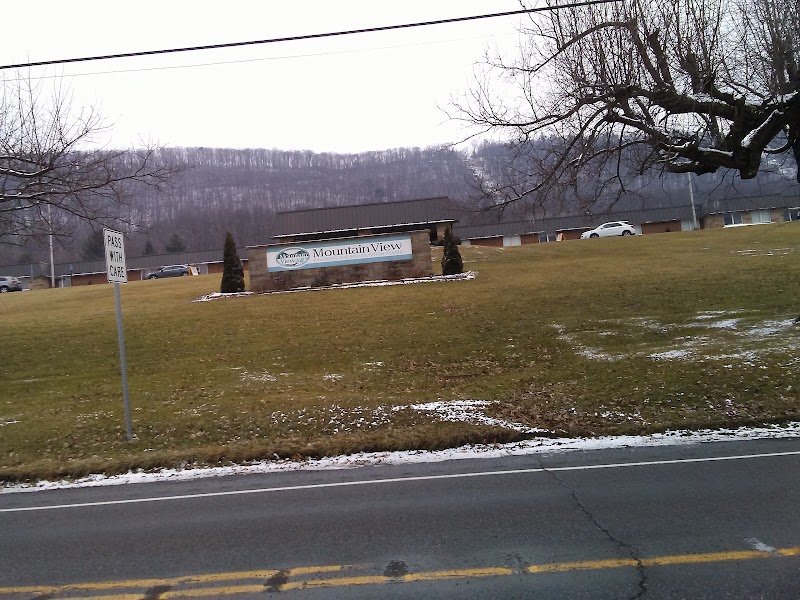
How is Mountain View Rehabilitation And Senior Living Ctr Staffed?

CMS rates MOUNTAIN VIEW REHABILITATION AND SENIOR LIVING CTR's staffing level at 2 out of 5 stars, which is below average compared to other nursing homes.

What Have Inspectors Found at Mountain View Rehabilitation And Senior Living Ctr?

State health inspectors documented 66 deficiencies at MOUNTAIN VIEW REHABILITATION AND SENIOR LIVING CTR during 2023 to 2025. These included: 4 that caused actual resident harm, 61 with potential for harm, and 1 minor or isolated issues. Deficiencies causing actual harm indicate documented cases where residents experienced negative health consequences.

Who Owns and Operates Mountain View Rehabilitation And Senior Living Ctr?

MOUNTAIN VIEW REHABILITATION AND SENIOR LIVING CTR is owned by a for-profit company. For-profit facilities operate as businesses with obligations to shareholders or private owners. The facility is operated by ALLAIRE HEALTH SERVICES, a chain that manages multiple nursing homes. With 271 certified beds and approximately 179 residents (about 66% occupancy), it is a large facility located in COAL TOWNSHIP, Pennsylvania.

How Does Mountain View Rehabilitation And Senior Living Ctr Compare to Other Pennsylvania Nursing Homes?

Compared to the 100 nursing homes in Pennsylvania, MOUNTAIN VIEW REHABILITATION AND SENIOR LIVING CTR's overall rating (1 stars) is below the state average of 3.0 and health inspection rating (1 stars) is much below the national benchmark.

What Should Families Ask When Visiting Mountain View Rehabilitation And Senior Living Ctr?

Based on this facility's data, families visiting should ask: "What safeguards and monitoring systems are in place to protect residents from abuse or neglect?" "Can you walk me through typical staffing levels on day, evening, and night shifts?" "Can I visit during a mealtime to observe dining assistance and food quality?" "How do you handle medical emergencies, and what is your hospital transfer rate?" These questions are particularly relevant given the substantiated abuse finding on record and the below-average staffing rating.

Is Mountain View Rehabilitation And Senior Living Ctr Safe?

Based on CMS inspection data, MOUNTAIN VIEW REHABILITATION AND SENIOR LIVING CTR has documented safety concerns. The facility has 1 substantiated abuse finding (meaning confirmed case of resident harm by staff or other residents). The facility has a 1-star overall rating and ranks #100 of 100 nursing homes in Pennsylvania. Families considering this facility should ask detailed questions about what corrective actions have been taken since these incidents.

Do Nurses at Mountain View Rehabilitation And Senior Living Ctr Stick Around?

MOUNTAIN VIEW REHABILITATION AND SENIOR LIVING CTR has not reported staff turnover data to CMS. Staff turnover matters because consistent caregivers learn residents' individual needs, medications, and preferences. When staff frequently change, this institutional knowledge is lost. Families should ask the facility directly about their staff retention rates and average employee tenure.

Was Mountain View Rehabilitation And Senior Living Ctr Ever Fined?

MOUNTAIN VIEW REHABILITATION AND SENIOR LIVING CTR has been fined $16,675 across 1 penalty action. This is below the Pennsylvania average of $33,246. While any fine indicates a compliance issue, fines under $50,000 are relatively common and typically reflect isolated problems that were subsequently corrected. Families should ask what specific issues led to these fines and confirm they've been resolved.

Is Mountain View Rehabilitation And Senior Living Ctr on Any Federal Watch List?

MOUNTAIN VIEW REHABILITATION AND SENIOR LIVING CTR is not on any federal watch list. The most significant is the Special Focus Facility (SFF) program, which identifies the bottom 1% of nursing homes nationally based on persistent, serious quality problems. Not being on this list means the facility has avoided the pattern of deficiencies that triggers enhanced federal oversight. This is a positive indicator, though families should still review the facility's inspection history directly.