INNERS CREEK SKILLED NURSING AND REHABILITATION CE
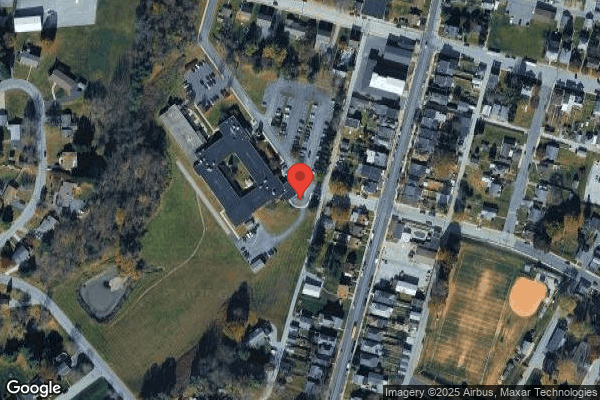
100 WEST QUEEN STREET, DALLASTOWN, PA 17313 (717) 246-1671
For profit - Corporation 202 Beds GENESIS HEALTHCARE Data: November 2025 1 Immediate Jeopardy citation
Trust Grade
3/100
#579 of 653 in PA
Last Inspection: October 2024

Within standard 12-15 month inspection cycle. Federal law requires annual inspections.

Overview

Inners Creek Skilled Nursing and Rehabilitation Center has received a Trust Grade of F, indicating significant concerns about its care quality. This facility ranks #579 out of 653 in Pennsylvania, placing it in the bottom half of nursing homes in the state, and #11 out of 14 in York County, suggesting only a few local options are better. While the facility is improving, with a reduction in reported issues from 23 in 2024 to 6 in 2025, it still faces serious challenges. Staffing is rated below average with a 2 out of 5 stars and a turnover rate of 49%, which is concerning for resident continuity of care. There have been alarming incidents, including a failure to provide necessary altered texture diets for multiple residents, leading to a high risk for severe health consequences, and a serious case of sexual abuse that resulted in actual harm to a resident. Overall, while there are some signs of improvement, prospective families should be cautious given the facility's poor ratings and serious past incidents.

Trust Score
F
3/100
In Pennsylvania
#579/653
Bottom 12%
Safety Record
High Risk
Review needed
Inspections
Getting Better
23 → 6 violations
Staff Stability
⚠ Watch
49% turnover. Above average. Higher turnover means staff may not know residents' routines.
Penalties
✓ Good
$32,679 in fines. Lower than most Pennsylvania facilities. Relatively clean record.
Skilled Nurses
⚠ Watch
Each resident gets only 26 minutes of Registered Nurse (RN) attention daily — below average for Pennsylvania. Fewer RN minutes means fewer trained eyes watching for problems.
Violations
⚠ Watch
52 deficiencies on record. Higher than average. Multiple issues found across inspections.
★☆☆☆☆
1.0
Overall Rating
★★☆☆☆
2.0
Staff Levels
★★☆☆☆
2.0
Care Quality
★☆☆☆☆
1.0
Inspection Score
Stable
2024: 23 issues
2025: 6 issues

The Good

  • Full Sprinkler Coverage · Fire safety systems throughout facility
  • No fines on record

Facility shows strength in fire safety.

The Bad

1-Star Overall Rating

Below Pennsylvania average (3.0)

Significant quality concerns identified by CMS

Staff Turnover: 49%

Near Pennsylvania avg (46%)

Higher turnover may affect care consistency

Federal Fines: $32,679

Below median ($33,413)

Moderate penalties - review what triggered them

Chain: GENESIS HEALTHCARE

Part of a multi-facility chain

Ask about local staffing decisions and management

The Ugly 52 deficiencies on record

1 life-threatening 1 actual harm
Sept 2025 1 deficiency 1 Harm
SERIOUS (G) 📢 Someone Reported This

A family member, employee, or ombudsman was alarmed enough to file a formal complaint

Actual Harm - a resident was hurt due to facility failures

Free from Abuse/Neglect (Tag F0600)

A resident was harmed · This affected 1 resident

Based on clinical record review, review of facility policy, and staff interview, it was determined that the facility failed to ensure that residents were free from sexual abuse, which resulted in actu...

Read full inspector narrative →
Based on clinical record review, review of facility policy, and staff interview, it was determined that the facility failed to ensure that residents were free from sexual abuse, which resulted in actual harm as evidenced by emotional distress and a vaginal wound for one of four residents reviewed for abuse (Resident 1). Findings include:Review of facility policy, Abuse Prohibition, revised October 24, 2022, revealed, Centers prohibit abuse, mistreatment, neglect, misappropriation of resident/patient property, and exploitation for all patients .Sexual abuse is a non-consensual sexual contact of any type with a patient. It includes but is not limited to sexual harassment, sexual coercion, or sexual assault.Review of Resident 1's clinical record revealed diagnoses that included Alzheimer's disease (gradual loss of memory, thinking skills, and self-care abilities) and heart failure (occurs when the heart doesn't pump blood as well as it should).Review of Resident 1's most recent BIMS score (Brief Interview for Mental Status) dated August 26, 2025, revealed a score of 3 out of 15, indicating severe cognitive impairment.Review of Resident 2's clinical record revealed diagnoses that included Parkinson's Disease (movement disorder that affects the nervous system and worsens over time) and dementia (decline in cognitive functioning that affects memory, thinking, and social abilities).Review of Resident 2's most recent BIMS score, dated July 7, 2025, revealed a score of 11 out of 15, indicating moderate cognitive impairment.Review of facility incident report dated September 13, 2025, at 6:15 AM, revealed that two nurse aides were in Resident 1's room giving care to Resident 1's roommate when they heard crying from behind the curtain. When the curtain was drawn, they found Resident 2 laying naked beside Resident 1 in her bed. Resident 1's brief had been removed. Staff observed that Resident 2 had one arm around Resident 1, and his fingers were inserted into Resident 1's vagina.Staff immediately addressed Resident 2 who removed himself and returned to his room across the hallway.Review of Employee 1's (Nurse Aide) witness statement, undated, revealed, I and another aide went to get [Resident 1's roommate] out of bed. I went to look behind the curtain because [Resident 1] was crying. We then saw [Resident 2's] clothes all the way off and him play with her private parts.Review of Employee 2's (Nurse Aide) witness statement, dated September 13, 2025, revealed, Me and another CNA [Certified Nurse Aide] went to get [Resident 1's roommate] out a bed. She went to look behind the curtain because [Resident 1] was crying. We then saw [Resident 2's] clothes all the way off and [Resident 1's] diaper off and him play with her private parts.Review of Employee 3's (Licensed Practical Nurse) witness statement, dated September 13, 2025, revealed, Around 0615 I was using the bathroom and heard someone yelling 'Nurse!' When I came down the hallway to assess the situation, 3 CNA's told me that [Resident 2] was found in [Resident 1's room] with his clothes off laying in bed with [Resident 1], [Resident 1's] clothes and brief were off of her and CNA stated [Resident 2] had his hand in [Resident 1's] genital area. CNA stated that [Resident 1] was crying while [Resident 2] was touching her. CNAs removed [Resident 2] from [Resident 1's room] and notified me when they saw me in the hallway. I immediately notified RN [Registered Nurse] supervisor.Resident 1 was transported to the emergency department following the incident and a forensic exam was performed. Review of hospital visit documentation dated September 13, 2025, revealed that, upon exam, a small tear on the outside of Resident 1's labia (part of the external female genitalia) was discovered.At the time of the incident, both Resident 1 and Resident 2 resided on the locked memory care unit.Resident 1 was moved to another nursing unit on September 13, 2025, and Resident 2 was placed on 1:1 supervision following the incident.During an interview with the Nursing Home Administrator on September 16, 2025, at 1:47 PM, he revealed that it's the facility's goal that residents are free from abuse.28 Pa. Code 201.18(b)(1)(e)(1) Management28 Pa. Code 201.14(a) Responsibility of licensee28 Pa. Code 211.12(d)(1) Nursing services
Aug 2025 1 deficiency
CONCERN (E) 📢 Someone Reported This

A family member, employee, or ombudsman was alarmed enough to file a formal complaint

Potential for Harm - no one hurt, but risky conditions existed

Deficiency F0692 (Tag F0692)

Could have caused harm · This affected multiple residents

**NOTE- TERMS IN BRACKETS HAVE BEEN EDITED TO PROTECT CONFIDENTIALITY** Based on facility document review, observations, clinical record review, and resident and staff interviews, it was determined th...

Read full inspector narrative →
**NOTE- TERMS IN BRACKETS HAVE BEEN EDITED TO PROTECT CONFIDENTIALITY** Based on facility document review, observations, clinical record review, and resident and staff interviews, it was determined that the facility failed to provide physician ordered enriched diet and nutritional supplements for four of five residents reviewed (Resident 1, 3, 4, and 5).Findings include: Review of Resident 1's clinical record documented diagnoses that included Alzheimer's disease (a progressive disease that destroys memory and other important [NAME] functions), dementia (a condition characterized by progressive loss of intellectual functioning, impairment of memory and abstract thinking), muscle weakness, psychosis (a health condition characterized by a loss of contact with reality), dysphagia (difficulty swallowing), and protein calorie malnutrition (a condition where a person's body doesn't get enough protein and calories to meet its needs). Review of Resident 1's physician orders included Regular/Liberalized diet, Dysphagia Advanced texture, thick liquids-Nectar consistency, initiated July 22, 2025, and nutritional treat 4 times a day, initiated July 31, 2025. Review of Resident 1's care plan included a focus area for nutritional risk related to dementia, high blood pressure, chronic kidney disease (kidneys don't function as they should), congestive heart failure (the heart doesn't pump blood as it should), and a history of stroke' diuretic therapy, chronic malnutrition related to ongoing non-significant weight loss, low body mass index (BMI - estimated body fat percentage based on height and weight) for age, initiated October 3, 2023, and revised on August 31, 2024. Interventions included the following: Provide and serve diet as ordered: Enhanced, dysphagia advanced texture, thin liquids, initiated October 3, 2023, and revised on May 13, 2024; provide extras on trays as ordered for additional nourishment, initiated October 13, 2023, and revised March 14, 2024; provide supplement as ordered: nutritional treat twice a day, initiated October 13, 2023, and revised on March 14, 2024. Resident 1's care plan did not include the nutritional treat four times a day per physician orders. Observations on August 7, 2025, at 12:15 PM, Resident 1 was feeding himself in the dining room, being observed by the Speech Therapist. Observation revealed he did not receive applesauce (his dessert for that meal) or a nutritional treat. Review of Resident 3's clinical record revealed diagnoses that included paraplegia (loss or impairment of motor and sensory functions in the lower half of the body), history of traumatic brain injury, and protein calorie malnutrition. Review of Resident 3's physician orders included regular/liberalized diet, regular texture, standard thin liquids consistency, initiated January 8, 2025, and house supplement three times a day, initiated February 13, 2025. Review of Resident 3's weight history (2025) documented 129.4 lb on May 6th; 130 lb on April 4th; 135.6 lb February 4th; and 145 lb January 3rd; significant loss noted in February. Review of Resident 3's care plan included a focus area related to history of traumatic brain injury, edema, schizoaffective disorder, dementia, moderate malnutrition, decreased nutrient needs due to paraplegia, likes to order delivery food; significant/ongoing weight loss requiring therapeutic supplementation, initiated December 12, 2018, revised March 29, 2025. Interventions included built up fork and spoon, scoop plate, initiated April 22, 2019, revised on April 26, 2021; enhanced, regular texture, thin liquids diet, initiated April 17, 2019, revised May 16, 2024. Observation on August 7, 2025, at 1:09 PM, revealed Resident 3 failed to receive the enhanced chocolate milk and house shake. Surveyor had asked for the guidelines for the Enriched food diet on August 7, 2025, at 3:00 PM. Per the Nursing Home Administrator (NHA), there wasn't written guidelines. When a resident is ordered enriched food diet, additional items are added to the resident's tray such as cookies, enhanced chocolate milk, or pudding. Review of Resident 4's clinical record documented diagnoses that included hemiplegia left nondominant side (paralysis or severe weakness on one side of the body) and vascular dementia. Review of Resident 4's physician orders included regular/liberalized diet, dysphagia advanced texture, standard thin liquids consistency, enhanced, may have breads, initiated October 29, 2024; fluid restriction-1920 cc daily: nursing provides day shift-240 ml, evening shift-240 ml, night shift-120 ml, and dietary provides breakfast-540 ml, lunch-480 ml, dinner-300 ml, initiated December 4, 2023. Review of Resident 4's care plan included a focus area for nutritional risk related to congestive heart failure (heart doesn't pump blood the way it should), diuretic use and frequent fluid shifts causing weight fluctuations; therapeutic diet was liberalized due to history of poor intake and texture modified diet; need for fluid restriction; significant weight loss x 1 year related to combination of declined intake/diuretic therapy, initiated November 4, 2022, and revised February 6, 2025. Interventions included nutritional treat at bedtime, initiated January 17, 2024, and revised March 1, 2024. Observations on August 7, 2025, at 1:15 PM, revealed Resident failed to receive the following items per the residents tray ticket: 8 ounces of Lactaid milk, cold cereal, and oatmeal cream cookie. Per physician order, the Resident should've received 480 ml fluid on her meal tray and she only received 240 ml (juice and Jello). Review of Resident 5's clinical record documented she was admitted to the facility on [DATE], and diagnoses that included multiple sclerosis (a disease in which the immune system eats away at the protective covering of nerves, disrupts the communication between the brain and the body), pressure ulcer sacral region and left heel, and protein calorie malnutrition. Review of Resident 5's physician orders included regular/liberalized diet, regular texture, standard thin liquids consistency for admission protocol, initiated August 2, 2025; Ensure plus with meals initiated August 6, 2025. Review of Resident 5's weight history documented 65 lb on August 2nd, 2025, and 73 lb on August 6th, 2025. Review of Resident 5's care plan included a focus area for nutritional risk related to severe malnutrition, anorexia, nutritional marasmus (a form of severe malnutrition caused by a lack of calories and protein- muscle wasting, fat depletion), initiated August 4, 2025, and created by Employee 4 (Registered Nurse). Interventions included honor food preferences within meal plan, monitor intake at all meals, offer alternate choices as needed, alert dietitian and physician to any decline in intake, initiated August 4, 2025. Progress note dated August 1, 2025, documented a change in appetite, Difficulty chewing, decreased fluid intake. Meal supplements ordered. Resident reported loss of appetite and difficulty chewing food, prefers soft food. Review of history and physical dated August 4, 2025, read, in part, malnutrition and multiple wounds, care plan regarding malnutrition included dietitian consult, vegetarian, nursing to encourage intake and start supplemental shakes with meals. Review of Psychiatry progress note dated August 4, 2025, read, in part, the Resident reports not wanting to eat much in the facility due to food choices and asked to speak with dietary and requested protein shakes. Resident decreased protein levels when in hospital, cachectic with severe muscle wasting, discussed dietary needs with dietitian and nurse, recommended protein supplements to dietitian. Review of note dated August 4th, 2025, documented the Resident, Resident Representative and Social Services were in attendance for the post-admission care plan, a copy of the medication list, and dietary instruction was provided. The care plan was reviewed and updated. Further review of the clinical record failed to document a progress note or an initial assessment by the Registered Dietitian as of August 7th, 2025; 7 days post admission. Observation on August 6, 2025, at 12:45 PM, revealed Resident 5 failed to receive the following items per the residents tray ticket: Stuffed shells, dessert of the day (diced pears), and diet fruit cup. The Resident received orzo with tomato sauce and cheese (the cheese was not visible and the orzo appeared dry), a side salad, hot tea and 4 ounces of apple juice, and 4-ounce mighty shake. Interview with the Resident 5 on August 6, 2025, at 12:45 PM, revealed that she is vegetarian, and had provided her preferences to staff but doesn't receive what she has requested, which included Greek yogurt vanilla or plain, and cottage cheese. She also noted that was the first time she had received a supplement of any kind, which was a mighty shake (contains 220 calories and 6 grams of protein). The Resident revealed she was to be on a high protein diet, and the facility had not provided high protein foods. While at home, she consumed a nutritional drink that contained 42 grams of protein for 12 ounces, which her husband has been providing, as well as Greek yogurt and cottage cheese. It was also revealed that the yogurt the facility has provided, nonfat plain yogurt, contained only 4 grams of protein. Interview with Employee 1 (Food Service Director) on August 6, 2025, at 1:10 PM, revealed she was on vacation the previous week when Resident 5 was admitted and obtained her preferences on August 4th, 2025. The Resident didn't receive the stuffed shells due to not being available. The stuffed shells were ordered and will be delivered that week. Employee 1 formulated a vegetarian meal plan based on Resident 5's preferences to enable dietary staff a guide on what to provide if the main and alternate menu items would not suffice. Items included: plain yogurt, toast with peanut butter, grilled cheese, tomato soup, peanut butter and jelly sandwich, chef salad with extra cheese (no meat or eggs), cottage cheese and fruit plate, macaroni and cheese, stuffed shells. Employee 3 (Registered Nurse) documented to Employee 1 that she reached out to the Dietitian regarding Resident 5, and the Dietitian thought the resident required extra calories and nutritional supplements and would submit a request for an order. Review of Resident 5's Medication Administration Record (MAR- documentation of administration of physician orders) documented ensure plus with meals was administered 12:00 PM on August 6th, 2025. Observation and interview on August 7, 2025 at 12:55 PM revealed Resident 5 did not receive the Ensure plus. Interview with The Director of Nursing on August 7, 2025, at 11:30 AM, it was revealed that there are two Registered Dietitians who work remotely to provide services to the facility. It was also revealed that they don't attend care plan meetings remotely. Nutrition recommendations are communicated to the Unit Managers and they will complete a request form and place it in the physician book to be reviewed. During an interview with the NHA on August 7, 2025, at 3:30 PM, the concern regarding items missing from four resident's trays to include enhanced meal items and nutritional supplements, and lack of a timely nutrition assessment and direct communication with Resident 5 by a Registered Dietitian were communicated. No further information was provided. The facility failed to ensure physician orders and care plan interventions were followed to maintain nutritional status of four residents. The facility failed to provide timely nutritional assessment, participation in a care conference, and have direct communication with Resident 5 to provide resident-centered care for a nutritionally compromised resident. 28 Pa, Code 201.18(b)(1) Management28 Pa. Code 211.12(d)(3) Nursing services
Jun 2025 2 deficiencies
CONCERN (D) 📢 Someone Reported This

A family member, employee, or ombudsman was alarmed enough to file a formal complaint

Potential for Harm - no one hurt, but risky conditions existed

Resident Rights (Tag F0550)

Could have caused harm · This affected 1 resident

Based on policy review, resident and staff interviews, and clinical record review, it was determined that the facility failed to ensure its residents the right to exercise his or her rights as a resid...

Read full inspector narrative →
Based on policy review, resident and staff interviews, and clinical record review, it was determined that the facility failed to ensure its residents the right to exercise his or her rights as a resident of the facility and as a citizen of the United States for voting in one election (local election) for three of four residents interested in voting (Residents 2, 5, and 6). Findings Include: Review of the facility's policy, titled Resident Rights Under Federal Law, revised February 1, 2023, revealed a purpose to Treat each resident with respect and dignity and care for each resident in a manner and in an environment that promotes maintenance or enhancement of his/her self-esteem and self-worth. To incorporate the resident's goals, preferences, and choices into care. To recognize each resident's individuality as well as honor and value his/her input. To protect and promote the rights of the resident. Review of Resident 2's interdisciplinary plan of care revealed an activity preference that read It is important for me to vote, and I prefer to vote by absentee ballot while in the facility. An interview with Resident 2 on June 9, 2025, at 12:46 PM, revealed she was informed that her option to vote absentee/by mail was not pursued or honored by the facility during the most recent election. Review of Resident 5's interdisciplinary plan of care revealed an activity preference that read It is important for me to vote, and I prefer to vote by absentee ballot while in the facility. An interview with Resident 5 on June 9, 2025, at 12:26 PM, revealed she wanted to vote in the most recent local election and was informed by staff that the deadline to vote absentee/by mail had been missed. Review of Resident 6's interdisciplinary plan of care revealed an activity preference that read It is important for me to vote, and I prefer to vote by absentee ballot while in the facility. An interview with Resident 6 on June 9, 2025, at 11:15 AM, revealed she is an active voter. Resident 6 stated she did not have the option to vote in the most recent election and was informed that her application for an absentee/mail-in ballot had been shredded by the facility. The interview also revealed Resident 6 requested to be transported to her polling place and was unable due to the facility not having a means to transport her on the day of the election. An interview with Employee 5 (Director of Therapeutic Recreation) on June 9, 2025, at 11:10 AM, revealed all resident applications for an absentee/mail in ballot were received in February 2025, placed in a basket and found by staff in May 2025, after the deadline for residents to apply for and/or vote absentee/mail in ballot. Employee 5 stated that when the applications were found, it was too late to return the applications for the residents interested in voting. The interview also revealed the facility does not have access to a van to transport residents to a polling place if requested. An interview with the Nursing Home Administrator (NHA) on June 9, 2025, at 1:29 PM, revealed an acknowledgement of the information provided by Employee 5 and confirmed that transportation to a polling place is not readily accessible. The NHA also stated that going forward, the facility would make arrangements for residents to exercise their right to vote either by mail or in person. 28 Pa. Code 201.14 (a) Responsibility of licensee
CONCERN (E) 📢 Someone Reported This

A family member, employee, or ombudsman was alarmed enough to file a formal complaint

Potential for Harm - no one hurt, but risky conditions existed

Deficiency F0804 (Tag F0804)

Could have caused harm · This affected multiple residents

Based on policy review, staff interview, and other documents review, it was determined that the facility failed to ensure food is served at a safe and appetizing temperature for one meal test tray com...

Read full inspector narrative →
Based on policy review, staff interview, and other documents review, it was determined that the facility failed to ensure food is served at a safe and appetizing temperature for one meal test tray completed (lunch meal). Findings Include: Review of the facility's policy, titled Food Handling, revised January 26, 2024, read, Foods are stored, prepared, and served in a safe and sanitary manner. The purpose of the policy read To prevent bacterial contamination and the possible spread of infection. The policy continued, food must remain at 135 [degrees] or above. Review of the facility's document titled Resident Council Minutes, dated May 1, 2025, revealed that residents reported concerns about the temperatures of food, and residents reported trays are cold. An interview with Employee 3 (Dietary Manager) on June 9, 2025, at 9:30 AM, revealed an awareness of the resident concerns regarding food temperatures. The interview revealed the facility has requested the replacement of a food/plate warmer to keep food at a safe and palatable temperature at delivery. An observation of a lunch meal test tray completed on June 9, 2025, at 12:16 PM, revealed the ham slices' temperature registered at 124 degrees Fahrenheit. An immediate interview with Employee 3 revealed the temperature of the ham was out of range per the facility's policy and expectation for safety and palatability. An interview with the Nursing Home Administrator on June 9, 2025, at 1:29 PM, revealed the facility is aware of resident complaints of cold food and the need to replace the food/plate warmer in the dining services department. 28 Pa. Code 201.14 (a) Responsibility of licensee
May 2025 1 deficiency
CONCERN (D) 📢 Someone Reported This

A family member, employee, or ombudsman was alarmed enough to file a formal complaint

Potential for Harm - no one hurt, but risky conditions existed

Deficiency F0658 (Tag F0658)

Could have caused harm · This affected 1 resident

Based on facility policy review, job description review, clinical record review, and staff interviews, it was determined that the facility failed to ensure care and services were provided in accordanc...

Read full inspector narrative →
Based on facility policy review, job description review, clinical record review, and staff interviews, it was determined that the facility failed to ensure care and services were provided in accordance with professional standards of practice for one of four residents reviewed (Resident 1). Findings Include: Review of facility policy, titled NSG122 Change in Condition: Notification of, revised July 1, 2024, revealed A center must immediately inform the patient, consult with the patient's physician, and notify, consistent with their authority, the patient's representative, where there is: .A significant change in the patient's physical mental, or psychosocial status (that is, a deterioration in health, mental or psychosocial status in either life-threatening conditions or clinical complications); . or A decision to transfer or discharge the patient from the Center. Review of facility job description for the Licensed Vocational Nurse (LVN), also known as the Licensed Practical Nurse (LPN), revealed Under the direction of a Registered Nurse (RN), the Licensed Vocational Nurse delivers efficient and effective nursing care while achieving positive clinical outcomes and patient/family satisfaction. He/she operates within the scope of practice defined by the State Nurse Practice Act. The LVN contributes to nursing assessments and care planning, provides direct patient care, and supervises patient care provided by unlicensed staff. The job description further states that the LPN Observes conditions and reports changes in condition to RN; . Communicates pertinent data to RN and/or physician; .Consults and seeks guidance from the RN as necessary; .Participates in shift-to-shift communication between incoming and outgoing nursing staff. Review of Resident 1's clinical record revealed diagnoses that included depression, anxiety, and hypertension (elevated blood pressure). Review of Resident 1's nursing progress notes revealed a note written by Employee 1 (Licensed Practical Nurse [LPN]), dated April 22, 2025, at 6:29 AM, stating that the Resident told the nurse aide she was having chest pain and that when the nurse arrived, the Resident's vital signs were within normal limits. The note further stated that the Resident said it wasn't really a pain. [Patient] said she was AFib [atrial fibrillation-an irregular, often rapid heart rate] at hospital and thought she was again. There was no indicator of AFib again all vitals are [within normal limits]. The note continued on, stating that the Resident told the nurse aide that the nurse is doing nothing to help her and that the nurse is concerned about possible increase in Resident's confusion. Review of Resident 1's clinical record revealed no evidence that Employee 1 notified the RN or the Resident's provider about Resident 1's complaint of chest pain. Further, there is no evidence of any diagnostic testing being done to determine if the Resident was or was not in AFib. The next progress note in Resident 1's clinical record was on April 22, 2025, at 8:52 AM, written by Employee 2 (RN). The note stated At about 0800 [8:00 AM] a CNA [nurse aide] stated the resident had called 911 and was sending herself to the hospital. The resident's friend was behind the CNA and stated she would explain what was happening while she had 911 on the phone with the operator stating to give the resident an aspirin. While this writer was attempting to find out what was happening, the friend stated the resident was having chest pain since 0530 [5:30 AM] and no one has done anything about it. This writer went into the resident's room and she was laying in the bed in no apparent distress .This writer began talking to the resident who stated she told the nurse this morning that she was having chest pain and she pointed to the left side of her chest. She stated it was more of a pressure at this time. The resident stated she was also having some SOB [shortness of breath]. The resident stated nothing was done when she first complained of the pain so she called her family who called 911. The note further stated that the Resident was transferred to the hospital and the physician was notified. Review of Resident 1's hospital records dated April 22, 2025, revealed that Resident 1 was admitted to the hospital with a pleural effusion (a buildup of fluid between the tissues that line the lungs and the chest) and lower extremity edema (swelling). During an interview with the Director of Nursing (DON) on May 7, 2025, at 12:45 PM, she was asked if the LPN notified the RN or the Resident's provider of Resident 1's complaint of chest pain, or if she passed the information along to the next nurse during change of shift. The DON stated she would look into it but stated that she looked at the change of shift report for that day and did not see anything about Resident 1's chest pain on the report. In a follow up interview with the Nursing Home Administrator (NHA) and DON on May 7, 2025, at 1:15 PM, the DON stated that if a Resident is complaining of chest pain, the provider should be notified for any new orders or guidance. In an email correspondence from the DON on May 8, 2025, at 2:20 PM, the DON stated that she spoke to the night shift RN supervisor from April 22, 2025, who stated she was not made aware from Employee 1 about Resident 1's complaints. The DON stated she also spoke to the day shift RN, who wrote the note at 8:52 AM. That RN also stated she was unaware of Resident 1's complaints until she was told by other staff that the Resident was complaining of not feeling well, which is when the day shift RN went to assess Resident 1. No additional information was provided. 28 Pa. Code 211.12(d)(1)(3)(5) Nursing services
May 2025 1 deficiency
CONCERN (D) 📢 Someone Reported This

A family member, employee, or ombudsman was alarmed enough to file a formal complaint

Potential for Harm - no one hurt, but risky conditions existed

Accident Prevention (Tag F0689)

Could have caused harm · This affected 1 resident

Based on policy review, clinical record review, and staff interviews, it was determined that the facility failed to ensure each resident recieves adequate supervision and assistance to prevent acciden...

Read full inspector narrative →
Based on policy review, clinical record review, and staff interviews, it was determined that the facility failed to ensure each resident recieves adequate supervision and assistance to prevent accidents and hazards for one of three residents reviewed (Resident 1). Findings Include: Review of the facililty's policy, titled Elopement of Patient, recently revised October 24, 2022, defined elopement as .any situation in which the patient leaves the premises without the facility's knowledge and supervison . Review of Resident 1's clinical record revealed diagnoses that inlcuded Post Traumatic Stress Disorder (PTSD - A disorder in which a person has difficulty recovering after experiencing or witnessing a terrifying event. The condition may last months or years, with triggers that can bring back memories of the trauma accompanied by intense emotional and physical reactions) and bipolar disorder (a mental illness characterized by extreme and unusual shifts in mood, energy, and activity levels). Review of Resident 1's clinical record revealed a progress note dated March 25, 2025, that read Resident continues with confusion. OOB [ out of bed] in his power wheelchair this shift. Continues to state he is leaving and waiting for his family to arrive to pick him up. Going though [through] things in bags. Offered to assist him to lay down and rest, he declined at this time . The progress notes continued, Resident remained in his room this shift- would not get into bed. Continued with packing his belongings stated he needed to be ready for when his ride arrived. Pleasant with writer but very difficult to redirect. Continued review of the interdisciplinary progress notes dated March 27, 2025, at 14:28 [2:28 PM], revealed Resident [Resident 1] exited the building in manual wheelchair. Receptionist was able to keep sight of resident at all times and staff was summoned to assist. Resident was hesitant to return inside facility, believes he is moving to Washington DC. Wander Guard was present on the left ankle, but did not alarm per staff report. Wander Guard was replaced on resident's wheelchair . A Wander Guard is defined as a system that relies on three components: bracelets that residents wear, sensors that monitor doors and a technology platform that sends safety alerts in real time. When a resident with a bracelet approaches a monitored door, the system alerts your caregivers. Additional review of Resident 1's progress notes revealed documentation on March 27, 2025, at 20:37 [8:37 PM], Resident 1 was found in the parking lot near the main entrance by an activities staff member (Employee 9). She was unable to coax him back into the building and had other staff get help from the supervisors present this evening . The administrator, was called and updated about this evenings events. An interview with the Director of Nursing (DON) on April 24, 2025, at 10:32 AM, revealed Resident 1 recently had a change in condition and caused physical damage to the building, including hallways. The interview revealed Resident 1 was difficult to redirect and was not exhibiting behaviors known to his personality. The interview also revealed that although Resident 1 was fitted with a Wander Guard, Resident 1 knew the code to exit the building. An additional interview with the Registered Nurse (Employee 1) on April 24, 2025, at approximately 11:00 AM, confirmed Resident 1 was found in parking lot, without staff knowledge, and had known the code to exit the building. A final interview with the Nursing Home Administrator and DON on May 2, 2025, at 1:41 PM, revealed no additional information or explanation regarding Resident 1 being found outside of the building without staff knowledge on March 27, 2025, by Employee 9 according to the facility's interdisciplinary progress notes. 28 Pa. Code 201.18 (b) (1) Management 28 Pa. Code 211. 12 (d) (1) (2) (5) Nursing services
Dec 2024 2 deficiencies
CONCERN (D) 📢 Someone Reported This

A family member, employee, or ombudsman was alarmed enough to file a formal complaint

Potential for Harm - no one hurt, but risky conditions existed

Deficiency F0711 (Tag F0711)

Could have caused harm · This affected 1 resident

**NOTE- TERMS IN BRACKETS HAVE BEEN EDITED TO PROTECT CONFIDENTIALITY** Based on clinical record review and staff interviews, it was determined that the facility failed to ensure the physician reviews...

Read full inspector narrative →
**NOTE- TERMS IN BRACKETS HAVE BEEN EDITED TO PROTECT CONFIDENTIALITY** Based on clinical record review and staff interviews, it was determined that the facility failed to ensure the physician reviews the resident's total program of care, including medications, for one of three residents reviewed (Resident 1). Findings Include: A review of Resident 1's clinical record revealed diagnoses that included bilateral knee osteoarthritis (a degenerative joint disease that causes the cartilage and bone in your joints to break down over time. It's the most common type of arthritis and can affect the hands, hips, knees, back, and other joints) and muscle weakness. A review of Resident 1's consultation form dated November 13, 2024, with an Orthopaedic Surgery Specialist ([NAME]), revealed recommendations that included a new order for Tylenol 1000 mg (milligrams) Q (every) 8 hours. A review of Resident 1's physician's orders revealed the Resident was already receiving Tylenol with an order that read Tylenol 8-hour oral tablet extended release three times a day for pain. Do not exceed [more than] 3 grams /24 hour. The order was dated October 15, 2024, and was 650 mg per day. An interview with Employee 1 (Registered Nurse) on December 23, 2024, at 9:59 AM, revealed she entered the new order for the 1000 mg of Tylenol for Resident 1 as the facility's Certified Nurse Practitioner (CRNP-Employee 2) signed off on the [NAME] consult and did not realize Resident 1 already had an order for the Tylenol 8 hour three times per day. Employee 2 is the provider working on behalf and in coordination with the Resident's attending physician. According to Employee 1, the Resident received over 15000 mg of Tylenol over three days, October 15-18, 2024. An interview with Employee 2 on December 23, 2024, at 10:51 AM, revealed the Resident should not have received more than 3000 mg per day due to concerns with liver damage. An interview with the Nursing Home Administrator on December 23, 2024, at 10:11 AM, revealed Resident 1 was placed on alert charting for five days, vital signs were monitored for five days, and blood testing was performed once for two weeks. An additional interview with Employee 2, at approximately 11:00 AM, revealed no concerns with a review of Resident 1's laboratory testing and no concerns with a change in the Resident's condition based on the excessive amount of Tylenol administered by the Nursing Staff. 28 Pa. Code 201. 18 (b) (1) Management 28 Pa. Code 211.12 (c) (d) (1) (2) (5) Nursing services
CONCERN (D) 📢 Someone Reported This

A family member, employee, or ombudsman was alarmed enough to file a formal complaint

Potential for Harm - no one hurt, but risky conditions existed

Deficiency F0726 (Tag F0726)

Could have caused harm · This affected 1 resident

**NOTE- TERMS IN BRACKETS HAVE BEEN EDITED TO PROTECT CONFIDENTIALITY** Based on clinical record review, policy review, and staff interviews, it was determined that the facility failed to ensure suffi...

Read full inspector narrative →
**NOTE- TERMS IN BRACKETS HAVE BEEN EDITED TO PROTECT CONFIDENTIALITY** Based on clinical record review, policy review, and staff interviews, it was determined that the facility failed to ensure sufficient nursing staff with the appropriate competencies and skills sets to provide nursing services to assure resident safety or maintain the highest practicable physical well-being of each resident for one of three residents reviewed (Resident 1). Findings Include: A review of the facility's Registered Nurse Job Description, revised June 16, 2017, read, in part, The Registered Nurse [RN] delivers efficient and effective nursing care while achieving positive clinical outcomes and patient/family satisfaction. He/she operates within the scope of practice defined by the State Nurse Practice Act . The RN manages patient care by performing nursing assessments and collaborating with the nursing team and other disciplines .to develop effective plans of care. A review of the facility's policy, titled Medication Administration, dated January 2024, read, in part, Medications are administered in accordance with written orders of the prescriber. If a dose seems excessive considering the resident's age and condition, or the medication order seems unrelated to the resident's current diagnosis or condition, the nurse calls the provider pharmacy for clarification prior to administration of the medication. A review of Resident 1's clinical record revealed diagnoses that included bilateral knee osteoarthritis (a degenerative joint disease that causes the cartilage and bone in your joints to break down over time. It's the most common type of arthritis and can affect the hands, hips, knees, back, and other joints) and muscle weakness. A review of Resident 1's consultation form dated November 13, 2024, with an Orthopaedic Surgery Specialist ([NAME]), revealed recommendations that included a new order for Tylenol 1000 mg (milligrams) Q (every) 8 hours. A review of Resident 1's physician's orders revealed the Resident was already receiving Tylenol with an order that read Tylenol 8-hour oral tablet extended release three times a day for pain. Do not exceed [more than] 3 grams /24 hour. The order was dated October 15, 2024, and was 650 mg per day. An interview with Employee 1 (Registered Nurse) on December 23, 2024, at 9:59 AM, revealed she entered the new order for the 1000 mg of Tylenol for Resident 1 as the facility's Certified Nurse Practitioner (CRNP-Employee 2) signed off on the [NAME] consult and did not realize Resident 1 already had an order for the Tylenol 8 hour three times per day. Review of the MAR (Medication Administration Record) revealed on November 15, 2024 Resident 1 received 650 mg of Tylenol at 8:00 AM, 12:00 PM and 4:00 PM. Resident 1 also received 1000 mg of Tylenol at 4:00 PM. On November 16, 2024 Resident 1 received 650 mg at 8:00 AM, 12:00 PM and 4:00 PM. Resident 1 also received 1000 mg of Tylenol at 12:00 AM, 8:00 AM and 4:00 PM. On November 17, 2024 Resident 1 received 650 mg at 8:00 AM, 12:00 PM and 4:00 PM. Resident 1 also received 1000 mg of Tylenol at 12:00 AM, 8:00 AM and 4:00 PM. On November 18, 2024 Resident 1 received 650 mg at 8:00 AM, 12:00 PM and 4:00 PM. Resident 1 also received 1000 mg of Tylenol at 12:00 AM and 8:00 AM. Further review of the MAR revealed a note under the Tylenol order that read .do not exceed >3gm/24hr. The nurses adminstered the Tylenol and did not question or clarify that the total dose of Tylenol was greater than 3 gm (3000 mg) in 24 hours. According to Employee 1, the Resident 1 received over 15000 mg of Tylenol over three days, November 15-18, 2024. An interview with Employee 2 on December 23, 2024, at 10:51 AM, revealed the Resident should not have received more than 3000 mg per day due to concerns with liver damage. An interview with the Nursing Home Administrator (NHA) on December 23, 2024, at 10:11 AM, revealed Resident 1 was placed on alert charting for five days, vital signs were monitored for five days, and blood testing was performed once for two weeks. An additional interview with Employee 2, at approximately 11:00 AM, revealed no concerns with a review of Resident 1's laboratory testing and no concerns with a change in the Resident's condition based on the excessive amount of Tylenol administered by the Nursing Staff. A final interview with the NHA confirmed Employee 1 should have consulted the physician or Employee 2 to clarify the additional 1000 mg of Tylenol ordered by the consultant physician visit and signed off by Employee 2 on October 15, 2024. 28 Pa. Code 201. 18 (b) (1) Management 28 Pa. Code 211.12 (c) (d) (1) (2) (5) Nursing services
Nov 2024 2 deficiencies
CONCERN (D) 📢 Someone Reported This

A family member, employee, or ombudsman was alarmed enough to file a formal complaint

Potential for Harm - no one hurt, but risky conditions existed

Deficiency F0776 (Tag F0776)

Could have caused harm · This affected 1 resident

**NOTE- TERMS IN BRACKETS HAVE BEEN EDITED TO PROTECT CONFIDENTIALITY** Based on facility contract review, clinical record review, and staff interviews, it was determined that the facility failed to e...

Read full inspector narrative →
**NOTE- TERMS IN BRACKETS HAVE BEEN EDITED TO PROTECT CONFIDENTIALITY** Based on facility contract review, clinical record review, and staff interviews, it was determined that the facility failed to ensure the radiological diagnostic studies were done in a timely manner consistent with physician's orders for two of three residents reviewed (Residents 1 and 2). Findings include: Review of facility contract with their selected radiology provider dated January 1, 2023, revealed A stat service is provided for critical situations requiring rapid results, and 'STAT' orders shall be honored by Provider only when requested by the physician or non-physician practitioner. Customer [the facility] shall use its best efforts to limit 'STAT' orders to urgent situations where the absence of such an order could reasonably be believed to place the Patient's health in serious jeopardy or resulting serious bodily impairment or dysfunction. Review of Resident 1's clinical record revealed that they were admitted to the facility on [DATE], with diagnoses that included surgical repair of a displaced intertrochanteric fracture (a specific type of hip fracture in which the fracture occurs between the bony protrusions on the femur [thighbone] where the muscles of the thigh and hip attach) and anxiety disorder (mental health disorder characterized by feelings of worry, anxiety, or fear that are strong enough to interfere with one's daily activities). Review of Resident 1's clinical record progress notes revealed a note dated October 26, 2024, at 12:30 AM, that indicated that Resident 1 thought their hip was broken again. The note indicated that the nurse noted no rotation of the Resident 1's right leg, but Resident 1 said they could not move the leg. The note further indicated that the on-call practitioner was called and updated about this Resident and an order was received to do a stat (with no delay) x-ray. Review of Resident 1's clinical record revealed a radiology report dated October 26, 2024, which indicated Examination Date: 10/26/2024 11:06, which was 10 hours and 36 minutes after the original stat order was given, and Reported Date: 10/26/2024 11:35. The x-ray determined that there was satisfactory alignment of the fixating hardware and bony structures of the right hip and that there was no acute fracture. Review of Resident 2's clinical record revealed they were admitted to the facility on [DATE], with diagnoses that included Alzheimer's Disease (a chronic disorder of the mental processes caused by brain disease, and marked by memory disorders, personality changes, and impaired reasoning), anxiety disorder, and unspecified abnormalities of gait and mobility. Review of Resident 2's clinical record progress notes revealed a note dated November 8, 2024, at 7:50 PM, that indicated Resident 2 was observed lying on the floor at the nursing station next to their wheelchair. The note also indicated that Resident 2 was very combative and swinging at staff, and was witnessed losing their balance and falling on the floor. The note further revealed that Resident 2 was complaining of pain to their right hip and that the on-call physician was called, and an order was given for x-rays of right hip and pelvic area. Review of Resident 2's facility provided incident report dated November 8, 2024, at 5:30 PM, revealed that Resident 2 was also noted on assessment by the nurse to have right leg extension at the time of the fall as well as the pain. The incident report further indicated that the on-call physician was notified of the fall at 5:50 PM. Review of Resident 2's physician orders revealed that the order for the x-rays of the right hip and pelvic areas was entered as a stat order. Review of Resident 2's clinical record revealed a radiology report dated November 8, 2024, which indicated Examination Date: 11/08/2024 22:42 [10:42 PM] which was four hours and 52 minutes after the original stat order was given, and Reported Date: 11/08/2024 23:02 [11:02 PM]. The x-ray determined that there was a displaced intertrochanteric fracture (a specific type of hip fracture in which the fracture occurs between the bony protrusions on the femur [thighbone] where the muscles of the thigh and hip attach) of the right femur. During a staff interview with the Director of Nursing (DON) on November 19, 2024, at 1:23 PM, the DON indicated that she was unsure of what the facility's radiology provider's contract said regarding time frame for obtaining stat x-rays, but in her experience, she would typically expect them to be done within 1-2 hours. The DON indicated that the nurse used her nursing judgment in requesting orders for x-rays for Resident 2 rather than sending Resident 2 to the hospital based on the assessment findings. She also indicated that Resident 2 had no other complaints of pain after the time of the actual fall. The DON later indicated in the same interview that, although there were long time lapses, she felt radiology services were appropriately provided for Resident 1 and 2. During a staff interview with the Nursing Home Administrator (NHA) on November 20, 2024, at 10:48 AM, the NHA indicated that he would expect stat x-rays to be obtained as soon as feasibly possible by the radiology provider. He indicated that turnaround time depends on the time of the day that stat x-rays are ordered as those tests ordered during normal business hours would be completed faster than those ordered outside normal business hours. He further indicated that once orders for x-rays are entered with the radiology provider, facility staff just wait for the tests to be completed as ordered. When asked if would have expected Residents 1 and 2 to have their x-rays completed sooner than the aforementioned timeframes, he indicated that it all depends on one's interpretation of timely. 28 Pa. Code 201.14(a) Responsibility of licensee 28 Pa. Code 201.18(b)(1) Management 28 Pa. Code 211.10(c)(d) Resident care policies 28 Pa. Code 211.12(c)(d)(1)(3)(5) Nursing services
CONCERN (D) 📢 Someone Reported This

A family member, employee, or ombudsman was alarmed enough to file a formal complaint

Potential for Harm - no one hurt, but risky conditions existed

Deficiency F0777 (Tag F0777)

Could have caused harm · This affected 1 resident

**NOTE- TERMS IN BRACKETS HAVE BEEN EDITED TO PROTECT CONFIDENTIALITY** Based on facility policy and procedures reviews, clinical record review, and staff interviews, it was determined that the facili...

Read full inspector narrative →
**NOTE- TERMS IN BRACKETS HAVE BEEN EDITED TO PROTECT CONFIDENTIALITY** Based on facility policy and procedures reviews, clinical record review, and staff interviews, it was determined that the facility failed to ensure that the physician was promptly notified of abnormal x-ray results for one of three residents reviewed (Resident 2). Findings include: Review of facility policy, titled 5.8 Physician Notification, dated December 1, 2006, indicated, in part, 3. If resident's condition indicates urgent physician notification; 3.1 Notify physician immediately; 3.1.2 Report all pertinent data. Review of facility policy, titled NSG115 Physician/Advanced Practice Provider (APP) Notification, with a last revised date of December 1, 2021, revealed Upon identification of a patient who has a change in condition, abnormal laboratory values, or abnormal diagnostics, a licensed nurse will report to physician/advanced practice provider (APP). Review of facility provided document, titled After Hour, Weekend and Holiday Calls to Physicians/Advanced Practice Provider Process Guidelines, dated May 30, 2018, indicated: 1. If laboratory and/or diagnostic results are received between the hours of 5 pm and 7am, weekends and holidays, the licensed nurse will refer to the Interact File Cards and How to Report Laboratory Data to the On-Call Practitioner to determine if results require immediate or non-immediate reporting; b. If the determination is determined to immediate the licensed nurse will notify the Supervisor and the Supervisor will coordinate the call to the provider. Review of facility provided document, titled How to Report Laboratory Results to On-Call Physicians/ Advanced Practice Providers, dated May 6, 2018, indicated, in part, 3. Be prepared to provide the following information when reporting specific results. Stat -call the provider immediately. Review of Resident 2's clinical record revealed they were admitted to the facility on [DATE], with diagnoses that included Alzheimer's Disease (a chronic disorder of the mental processes caused by brain disease, and marked by memory disorders, personality changes, and impaired reasoning), anxiety disorder (mental health disorder characterized by feelings of worry, anxiety, or fear that are strong enough to interfere with one's daily activities), and unspecified abnormalities of gait and mobility. Review of Resident 2's clinical record progress notes revealed a note dated November 8, 2024, at 7:50 PM, that indicated Resident 2 was observed lying on the floor at the nursing station next to their wheelchair. The note also indicated that Resident 2 was very combative and swinging at staff, and was witnessed losing their balance and falling on the floor. The note further revealed that Resident 2 was complaining of pain to their right hip and that the on-call physician was called, and an order was given for x-rays of the right hip and pelvic area. Review of Resident 2's facility provided incident report dated November 8, 2024, at 5:30 PM, revealed that Resident 2 was also noted on assessment by the nurse to have right leg extension at the time of the fall as well as the pain. The incident report further indicated that the on-call physician was notified of the fall at 5:50 PM. Review of Resident 2's physician orders revealed that the order for the x-rays of the right hip and pelvic area was entered as a stat order. Review of Resident 2's November medication administration record revealed that they received a dose of Tylenol for pain at 5:10 PM, that was recorded as effective. There were no other entries indicating that Resident 2 required or received additional pain medication. Review of Resident 2's clinical record revealed a radiology report dated November 8, 2024, which indicated Examination Date: 11/08/2024 22:42 [10:42 PM] which was 4 hours and 52 minutes after the original stat order was given, and Reported Date: 11/08/2024 23:02 [11:02 PM]. The x-ray determined that there was a displaced intertrochanteric fracture of the right femur. Review of Resident 2's progress notes revealed a note dated November 9, 2024, at 6:46 AM, that indicated Resident 2's X-ray results showed a right primal femur fracture, that their Representative and the Director of Nursing were made aware, and that Resident 2 did ok through the night. The note failed to reveal that Resident 2's physician was notified of the fracture at this time. Further review of Resident 2's progress notes revealed a note dated November 9, 2024, at 10:04 AM, that indicated On call for Lumina left a message regarding femur fracture and that resident was being transported to [hospital] at 10:00 AM due to a 30 day contract. During a staff interview with the Director of Nursing (DON) on November 19, 2024, at 1:23 PM, the DON confirmed that Resident 2's physician was not made aware of the abnormal x-ray results until approximately 10:00 AM. The DON indicated that the nurse had texted her to inform her of the positive x-ray results and that after she reviewed the text, she informed the nurse that they needed to notify the physician of the results. The DON also confirmed that the Supervisor should have notified Resident 2's physician at the time the abnormal results were received. The DON indicated that Resident 2 had no issues throughout the night and had a planned transfer back to the hospital at 10:00 AM secondary to a contractual agreement with the hospital at the time Resident 2 was admitted to the facility. When asked about the time lapse in the reported time indicated on the actual x-ray report (November 8, 2024, at 11:02 PM) and the time the nurse documented that the results were received (November 9, 2024, at 6:46 AM) a span of 7 hours and 44 minutes, the DON indicated that she was not sure what the reported time on the actual report referred to. She indicated that she did not know if that was when the radiologist would have read the x-ray or when the report was released to the facility. During a staff interview with the DON and Employee 1 (Registered Nurse Unit Manager) on November 19, 2024, at 1:39 PM, Employee 1 indicated that the radiology provider does not usually call the facility to report negative findings. Employee 1 indicated that they just watch the portal in the electronic health record when they know a result is pending. During a staff interview with the DON on November 19, 2024, at 2:33 PM, she confirmed that she had no additional information to provide regarding the receiving of the x-ray results or physician notification for Resident 2. During a staff interview with the Nursing Home Administrator (NHA) on November 20, 2024, at 10:48 AM, the NHA indicated that Resident 2 was kept comfortable and remained calm at the facility while x-ray results were pending, and that Resident 2 was transported to the hospital at the prearranged time as part of another arrangement. He indicated that it depends on one's interpretation of timely as to whether the physician was notified appropriately. The NHA confirmed that Resident 2's physician was not made aware of the abnormal x-ray results until at least a minimum of 3 hours and 28 minutes after the nurse documented they received the results. He further indicated that notification of the physician at the time the results were received would not have changed the outcome for Resident 2. The NHA acknowledged that this statement could not be specifically confirmed since the physician was not provided the results until the time that Resident 2 was in the process of being transferred from the facility based on the prior contractual agreement. 28 Pa. Code 201.14(a) Responsibility of licensee 28 Pa. Code 201.18(b)(1) Management 28 Pa. Code 211.10(c)(d) Resident care policies 28 Pa. Code 211.12(c)(d)(1)(2)(3)(5) Nursing services
Oct 2024 16 deficiencies 1 IJ (1 affecting multiple)
CRITICAL (K) 📢 Someone Reported This

A family member, employee, or ombudsman was alarmed enough to file a formal complaint

Immediate Jeopardy (IJ) - the most serious Medicare violation

Deficiency F0805 (Tag F0805)

Someone could have died · This affected multiple residents

Based on facility policy review, observations, clinical record review, review of facility master menu diet guide sheets, and staff and resident caregiver interviews, it was determined that the facilit...

Read full inspector narrative →
Based on facility policy review, observations, clinical record review, review of facility master menu diet guide sheets, and staff and resident caregiver interviews, it was determined that the facility failed to provide an altered texture diet, as prescribed by the physician, for nine residents (Resident's 37, 41, 57, 59, 78, 112, 155, 162, and 167) observed. This failure placed 31 residents that had similar diet needs at a high risk for death, and resulted in an Immediate Jeopardy (IJ) situation for Residents 1, 3, 4, 5, 6, 7, 9, 10, 13, 15, 16, 17, 18, 19, 21, 22, 23, 24, 26, 27, 30, 31, 32, 33, 34, 36, 38, 39, 58, and 92. Findings include: Review of facility policy, titled Consistency Alterations and Therapeutic Menus, dated May 1, 2023, read, in part, Purpose: To provide diets as ordered by the physician/advanced practice provider, chopped or ground meat modifications may be used in conjunction with any diet for individuals having difficulty chewing meat. Review of physician's orders revealed that Residents 37, 41, 57, 59, 78, 112, 155, 162, and 167 were ordered the dysphagia advanced texture diet or the dysphagia mechanically altered texture diet (special diets for people who have difficulty chewing and/or swallowing- dysphagia). According to the National Dysphagia Diet, for a dysphagia advanced texture diet, food needs to be moist and pieces need to be smaller than 1 inch (bite size). For the dysphagia mechanically altered texture diet, food should be moist and soft-textured. Meats should be ground or minced and be no larger than ¼ inch pieces. Review of the lunch menu on October 23, 2024, revealed residents were to be served meatloaf as their entrée and the alternate entrée item was baked fish. Review of facility master menu diet guide sheets revealed the dysphagia advanced and dysphagia mechanically altered diets should have been served ground meatloaf or fish. Observations during tray line meal service on October 23, 2024, between 11:58 AM and 12:30 PM, revealed Residents 37, 41, 57, 59, 78, 112, 155, 162, and 167 had notation on their meal tickets that they should be served ground meatloaf or fish, but they were served a regular piece of meatloaf or fish. Observations throughout the facility on October 23, 2024, between 12:10 PM and 12:46 PM, revealed Residents 37, 41, 57, 59, 78, 112, 155, 162, and 167, had been served the regular piece of meatloaf or fish. Observation of Resident 155 on October 23, 2024, at 12:32 PM, revealed he was served a whole piece of meatloaf and was receiving feeding assistance from his private caregiver. Interview with Resident 155's private caregiver on October 23, 2024, at 1:01 PM, revealed she provides feeding assistance to Resident 155 and whatever is served from dietary is what she believes he is allowed to have. Interview with Employee 3 (Speech Language Pathologist) on October 23, 2024, at 1:13 PM, revealed she would expect diets to be served from the kitchen staff at the appropriate textures, per the facility master menu diet guide sheets. Interview with Employee 1 (Dietary Manager) on October 23, 2024, at 1:18 PM, revealed they serve whole pieces of meatloaf to the dysphagia advanced and dysphagia mechanically altered texture diets as the meat is ground prior to being baked, and that has been the case since she has been employed at the facility and she never questioned it. Employee 1 also stated, since the fish is soft, they just serve it whole to those diets. She further revealed she had overlooked that the meatloaf and fish should have been ground for those texture diets. Review of physician's orders revealed Residents 1, 3, 4, 5, 6, 7, 9, 10, 13, 15, 16, 17, 18, 19, 21, 22, 23, 24, 26, 27, 30, 31, 32, 33, 34, 36, 38, 39, 58, and 92, were also ordered the dysphagia advanced texture diet or the dysphagia mechanically altered texture diet. Interview with the Nursing Home Administrator (NHA) on October 24, 2024, at 9:34 AM, revealed his expectation that the facility master menu diet guide sheets for mechanically altered diets should be followed. The NHA was notified of the IJ situation on October 23, 2024, at 2:28 PM, and was provided the IJ template. An Immediate Action Plan was requested. The Immediate Action Plan was provided by the NHA on October 23, 2024, at 4:24 PM, and approved at 4:35 PM. The approved plan included: 1. The facility cannot retroactively go back and fix the diet textures for the residents that were served. 2. Food Service Director will immediately re-educate the dietary and nursing team members that are currently working on following the master menu diet guide sheet in regards to altered texture diets. Remaining team members will be educated prior to the start of their next shift. Speech Language Pathologist will re-evaluate current residents on an altered texture diet to determine appropriateness. 3. Meal service will be audited for 7 days to assure the appropriate diet textures are being followed. 4. Results will be reported to QAPI (Quality Assurance and Performance Improvement) to further follow-up and recommendations. 5. Date of compliance: October 24, 2024. On October 24, 2024, between 7:56 AM and 9:12 AM, breakfast tray line meal service was observed to ensure all residents received the appropriate texture diet per their physician order. The audit of dinner service on October 23, 2024, as well as the audit of breakfast service on October 24, 2024, were reviewed without concern. Staff interviews revealed the facility had re-educated staff on mechanically altered diets and the master menu diet guide sheet. Interviews were conducted with three registered nurses, six licensed practical nurses, eight nursing assistants, three dietary employees, and the dietary manager; all were able to verbalize their role in providing appropriate diet textures. Interview with Employee 3 on October 24, 2024, at 9:18 AM, revealed she had evaluated Resident 59, 112, and 167, a call went out to Resident 155's hospice provider to get an order for an evaluation; and she plans to see Resident 41, 57, and 78 that day, as well as evaluate all other residents as per the action plan. On October 24, 2024, at 10:59 AM, the Immediate Jeopardy was lifted when the action plan implementation was verified. Observations on October 23, 2024, revealed that the facility failed to provide food in a form ordered by the physician to meet the individual needs of nine residents (Resident's 37, 41, 57, 59, 78, 112, 155, 162, 167). This failure placed 31 additional residents that had similar diet needs at a high risk for death and resulted in an Immediate Jeopardy situation for Residents 1, 3, 4, 5, 6, 7, 9, 10, 13, 15, 16, 17, 18, 19, 21, 22, 23, 24, 26, 27, 30, 31, 32, 33, 34, 36, 38, 39, 58, and 92. 28 Pa. Code 201.14(a) Responsibility of licensee 28 Pa. Code 201.18(b)(1)(3) Management 28 Pa. Code 211.12(c)(d)(1)(2)(3)(5) Nursing services
CONCERN (D)

Potential for Harm - no one hurt, but risky conditions existed

Safe Environment (Tag F0584)

Could have caused harm · This affected 1 resident

Based on observations and staff interview, it was determined that the facility failed to ensure a clean, comfortable, homelike environment, as evidenced by soiled wheelchairs, for three of 35 resident...

Read full inspector narrative →
Based on observations and staff interview, it was determined that the facility failed to ensure a clean, comfortable, homelike environment, as evidenced by soiled wheelchairs, for three of 35 residents reviewed (Residents 53, 72, and 96). Findings include: Observation on October 21, 2024, at 10:13 AM and on October 22, 2024, at 9:35 AM, revealed an accumulation of crumbs, pieces of food, and other dried debris on the rails of Resident 53's wheelchair. Observation on October 21, 2024, at 12:10 PM, revealed an accumulation of dried smears and crumbs on the seat, wheels, and rails of Resident 96's wheelchair. Observation on October 23, 2024, at 12:07 PM, revealed an accumulation of dried food and crumbs on the seat, handle, and rails of Resident 72's wheelchair. During an interview with the Director of Nursing on October 24, 2024, at 11:04 AM, she acknowledged that the aforementioned wheelchairs needed to be cleaned. 28 Pa. Code 207.2(a) Administrator's responsibility
CONCERN (D)

Potential for Harm - no one hurt, but risky conditions existed

Deficiency F0625 (Tag F0625)

Could have caused harm · This affected 1 resident

**NOTE- TERMS IN BRACKETS HAVE BEEN EDITED TO PROTECT CONFIDENTIALITY** Based on policy review, clinical record review, and staff interviews, it was determined that the facility failed to ensure that ...

Read full inspector narrative →
**NOTE- TERMS IN BRACKETS HAVE BEEN EDITED TO PROTECT CONFIDENTIALITY** Based on policy review, clinical record review, and staff interviews, it was determined that the facility failed to ensure that the resident and/or the resident's representative were provided the bed-hold notice upon transfer for two of five residents reviewed for hospitalizations (Residents 71 and 157). Findings include: Review of facility policy, titled Bed Hold Notice - Deliver Upon Transfer, last reviewed July 2024, stated, in part, Prior to a resident's transfer out of the center to a hospital or for therapeutic leave, the staff member conducting the transfer out will provide both the resident and representative, if applicable, with the bed hold policy notice and authorization form. Notice must be given regardless of payer. Review of Resident 71's clinical record revealed diagnoses that included injury of the cervical spinal cord (injury that affects the upper part of the spinal cord) and neuromuscular dysfunction of bladder (condition causing loss of bladder control). Further review of Resident 71's clinical record revealed that Resident 71 was hospitalized [DATE] - 22, 2024, and October 13 - 18, 2024. Additional review of Resident 71's clinical record failed to reveal documentation that the facility's bed-hold policy information was provided to Resident 71 or their Representative. During an interview with the Nursing Home Administrator (NHA) and the Director of Nursing (DON), it was revealed that the facility was not able to provide additional information regarding Resident 71 or their Representative receiving bed-hold information for either hospitalization. The NHA stated it was the facility's expectation that residents and/or representative be provided bed-hold information when hospitalized . Review of Resident 157's clinical record revealed diagnoses that included congestive heart failure (CHF - weakness of the heart that leads to buildup of fluid in the lungs and surrounding body tissues) and cerebral infarction (brain injury caused by a lack of oxygen to a group of brain cells). Further review of Resident 157's clinical record revealed she was transferred to the hospital on June 22, 2024, following a change in condition and was subsequently admitted . Additional review of Resident 157's record failed to reveal evidence that she or her Representative was provided with a copy of the facility's bed-hold notice upon transfer. During an interview with the DON on October 23, 2024, at 2:40 PM, she revealed that she had no additional information to provide. 28 Pa. Code 201.14(a) Administrator's responsibility 28 Pa. Code 211.12(d)(1)(3)(5) Nursing services
CONCERN (D)

Potential for Harm - no one hurt, but risky conditions existed

Pressure Ulcer Prevention (Tag F0686)

Could have caused harm · This affected 1 resident

Based on review of facility policy, record review, observation, and staff interviews, it was determined that the facility failed ensure the resident received care, consistent with professional standar...

Read full inspector narrative →
Based on review of facility policy, record review, observation, and staff interviews, it was determined that the facility failed ensure the resident received care, consistent with professional standards, to treat and prevent pressure ulcers for one of two residents reviewed with pressure injuries (Resident 91). Findings Include: Review of facility policy, titled Wound Dressings: Aseptic, Revised December 1, 2021, revealed in step 1. Verify order. Review of Resident 91's clinical record revealed diagnoses of pressure ulcer of left heel (localized area of damaged skin or tissue that occurs when pressure is applied to the skin for a prolonged period of time) and pressure ulcer of the left buttock (localized area of damaged skin or tissue that occurs when pressure is applied to the skin for a prolonged period of time). Review of Resident 91's current physician order on October 24, 2024, at 11:15 AM, revealed a physician's order to cleanse Resident 91's left ischium wound with Dakins (wound cleansing solution) every day and evening shift, then apply medihoney, finally apply Dakins soaked gauze and cover with a foam dressing, with an order date of August 28, 2024. Observation of Resident 91's dressing change to left ischium (lower buttock area) on October 24, 2024, at 11:36 AM, revealed Employee 16 (LPN - Licensed Practical Nurse) completed Resident 91's dressing change and failed to apply medihoney (wound medication) after cleansing the wound and prior to applying the new dressing as ordered. An interview with the Director of Nursing (DON) on October 24, 2024, at 12:45 AM, revealed that Resident 91 should have had the dressing changed as ordered by the physician. Review of Resident 91's October 2024 TAR (Treatment Administration Record - form used to document physician orders as well as when and how treatments are administered to a resident) revealed that it was not documented that the wound treatment for Resident 91's left ischium was completed the morning of October 22, 2024. During an interview with the DON on October 24, 2024, at 11:02 AM, she revealed she did not have any additional information regarding the missed treatment documentation. Review of Resident 91's physician orders revealed orders to cleanse her right heel wound with normal saline solution and apply a foam dressing daily, starting October 11, 2024. Review also revealed a second order for wound treatment to the right heel: cleanse with normal saline solution and apply skin prep (fast-drying sterile liquid that forms a waterproof, breathable barrier) every other day, starting September 29, 2024. Review of wound care consult reports dated September 24, 2024; October 7, 14, and 21, 2024, revealed wound care orders to cleanse Resident 91's right heel with normal saline solution and apply skin prep daily. Review of Resident 91's October 2024 TAR revealed that nursing staff were documenting that the wound treatment to Resident 91's right heel (normal saline solution and skin prep) was being completed every other day. The October 11, 2024, order to cleanse Resident 91's right heel with normal saline solution and apply a foam dressing did not appear on Resident 91's October 2024 TAR, therefore, was not being completed/documented by nursing staff. During an interview with the DON on October 24, 2024, at 1:52 PM, she revealed that the orders and treatment record would be corrected to reflect the newest order. 28 Pa. Code 211.12(c)(d)(1)(3)(5) Nursing services
CONCERN (D)

Potential for Harm - no one hurt, but risky conditions existed

Pharmacy Services (Tag F0755)

Could have caused harm · This affected 1 resident

**NOTE- TERMS IN BRACKETS HAVE BEEN EDITED TO PROTECT CONFIDENTIALITY** Based on clinical records review, policy review, facility document review, and resident and staff interviews, it was determined ...

Read full inspector narrative →
**NOTE- TERMS IN BRACKETS HAVE BEEN EDITED TO PROTECT CONFIDENTIALITY** Based on clinical records review, policy review, facility document review, and resident and staff interviews, it was determined that the facility failed to ensure that the medications ordered by the physician were available for one of 35 residents reviewed (Resident 229); and failed to provide documentation of disposition of medications for one of three closed records reviewed (Resident 170). Findings include: Review of facility policy, titled Disposal of Medication Waste, last revised October 24, 2022, read, in part, All medications will be disposed of in accordance with applicable federal, state, and local regulations for the disposal of chemical and potentially dangerous or hazardous pharmaceuticals. Medications for disposal include medications which are not taken with the patient upon discharge. Review of Resident 170's clinical record revealed diagnoses that included muscle weakness and hypertension (high blood pressure). Further review of Resident 170's clinical record revealed she was discharged from the facility on August 26, 2024. Review of Resident 170's closed record failed to include documentation of medication disposition for 11 medications. Interview with the Director of Nursing (DON) on October 24, 2024, at 11:08 AM, revealed they were unable to locate a medication disposition record for the 11 aforementioned medications, and she would expect a medication disposition form to be completed. Review of Resident 229's clinical record revealed diagnoses that includes congestive heart failure (CHF-a condition in which the heart doesn't pump blood efficiently), hypertension, and diabetes mellitus (condition in which the body has trouble controlling blood sugar). Review of Resident 229's admission Minimum Data Set (MDS-mandated assessment of a resident's abilities and care needs) dated June 17, 2024, and still in progress, indicated the Resident had a BIMS (brief interview of mental status) score of 13, indicating the Resident is cognitively intact. Review of the clinical record revealed that Resident 229 was admitted to the facility on [DATE], at 7:00 PM. During the survey screening process on October 21, 2024, the Resident informed this surveyor that her medications were not available on admission and some she didn't receive for two days. Physician orders dated October 19, 2024, revealed Resident 229 was to receive the following medication that was not available on October 19, 2024: Entresto to treat congestive heart failure, due at 8:00 PM Hydralazine to treat hypertension, due at 8:00 PM Diltiazem to treat hypertension, due at 9:00 PM Levemir insulin to treat diabetes, due at 8:00 PM The following medication was not available for ordered administrations on October 20, 2024: Allopurinol to treat gout (treats inflamed arthritis), due at 8:00 AM Entresto to treat congestive heart failure, due at 8:00 AM and 8:00 PM Bumex to treat congestive heart failure, due at 8:00 AM Hydralazine to treat hypertension, due at 8:00 AM, 2:00 PM, and 8:00 PM Diltiazem to treat hypertension, due at 9:00 PM The following medication was not available for ordered administration times on October 21, 2024: Entresto to treat congestive heart failure, due at 8:00 AM Hydralazine to treat hypertension, due at 8:00 AM, 2:00 PM A request for a list of the facility stock meds was requested but not provided. Documentation dated October 20, 2024, at 11:40 AM, revealed the pharmacy stated medications were being worked on and should be delivered that evening or the following evening. She stated she will put in a request for STAT delivery. There is no documentation that the physician was notified about the unavailability and missed doses of the medications. The facility provided a form that stipulated how staff are to escalate the process for receiving medications timely. There was no documentation to show that staff followed through with process to notify Administration and/or the DON about the unavailability of the medications. During an interview with the DON on October 23, 2024, at 2:00 PM, the DON confirmed the pharmacy should have provided the medications timely. 28 Pa. Code 201.14 (a) Responsibility of licensee 28 Pa. Code 211.9 (a)(1)(k)(l)(1)(2)(3)(4) Pharmacy services 28 Pa. Code 211.10 (c) Resident care policies 28 Pa. Code 211.12 (d)(1)(3)(5) Nursing services
CONCERN (D)

Potential for Harm - no one hurt, but risky conditions existed

Deficiency F0761 (Tag F0761)

Could have caused harm · This affected 1 resident

Based on observations, facility policy review, and staff interviews, it was determined that the facility failed to place opened dates on medications in one of four medication carts (100 hall) and one ...

Read full inspector narrative →
Based on observations, facility policy review, and staff interviews, it was determined that the facility failed to place opened dates on medications in one of four medication carts (100 hall) and one of two medication storage rooms (Station 1) observed. Findings Include: Review of facility policy, titled Section 4.1 Storage of Medication, last reviewed July 2024, read, in part, Medications and biologicals are stored properly, following manufacturers or provider pharmacy recommendations, to keep their integrity and to support safe, effective drug administration. Procedures 12.Note the date on the label for insulin vials and pens when first used. Review of facility policy, titled Section 9.10 Appendix of Resources Medication with Shortened Expiration Dates, last reviewed July 2024, stated, in part, Tuberculin PPD .discard vials in use after 30 days. Observation made on October 24, 2024, at 10:07 AM, with Employee 21 present, of the medication cart in the 100-hall revealed, revealed one open insulin glargine pen with no open date, one open Humalog Kwik pen, one open Lantus insulin pen with no open date, and two open Lantus insulin vials with no open dates. During an interview on October 24, 2024, at 10:07 AM, with Employee 21, it was revealed insulin pens and vials should be labeled with an open date when first opened. Observation made October 24, 2024, at 10:20 AM, with Employee 20 present, of the Station one medication storage room, revealed two open vials of tuberculin purified protein with no open date. During an interview on October 24, 2024, at 10:20 AM, with Employee 20, it was revealed that tuberculin solution should be dated with an open date when first opened. During an interview on October 24, 2024, at 12:00 PM, with the Director of Nursing, it was revealed that it is the expectation of the facility that insulins and tuberculin solutions be labeled with an open date when first opened. 28 Pa. Code 201.18(b)(1) Management 28 Pa. Code 211.9(a)(1) Pharmacy services
CONCERN (E)

Potential for Harm - no one hurt, but risky conditions existed

Resident Rights (Tag F0550)

Could have caused harm · This affected multiple residents

Based on observations, facility policy review, and staff interview, it was determined that the facility failed to ensure that care and services were provided in a manner which promoted resident dignit...

Read full inspector narrative →
Based on observations, facility policy review, and staff interview, it was determined that the facility failed to ensure that care and services were provided in a manner which promoted resident dignity in one of four dining areas (Station 3 Dining Room). Findings include: Review of facility policy, titled Resident Rights Under Federal Law, revised February 1, 2023, revealed, The resident has a right to be treated with respect and dignity. Observation in the Station 3 Dining Room on October 21, 2024, at 12:03 PM, revealed Employee 8 (Nurse Aide) standing while feeding Resident 115 several bites of food. Observation in the Station 3 Dining Room on October 22, 2024, at 12:16 PM, revealed Employee 10 (Nurse Aide) standing while feeding Resident 29; and observation at 12:21 PM, revealed Employee 9 (Nurse Aide) standing while feeding Resident 137. During an interview with the Director of Nursing on October 24, 2024, at 11:03 PM, she revealed the expectation that staff should be seated when assisting residents with eating. 28 Pa. Code 201.14(a) Responsibility of licensee 28 Pa. Code 211.12(d)(1) Nursing services
CONCERN (E)

Potential for Harm - no one hurt, but risky conditions existed

Deficiency F0604 (Tag F0604)

Could have caused harm · This affected multiple residents

Based on policy review, clinical record review, and staff interviews, it was determined that the facility failed to ensure proper monitoring for restraint use, including consent, physician orders, ini...

Read full inspector narrative →
Based on policy review, clinical record review, and staff interviews, it was determined that the facility failed to ensure proper monitoring for restraint use, including consent, physician orders, initial and ongoing evaluations, and scheduled removal, for one of one residents reviewed for restraints (Resident 126). Findings include: Review of facility policy, titled Restraints: Use of, revised June 15, 2022, revealed, When the use of restraints is indicated, the Center must use the least restrictive alternative for the least amount of time and document ongoing re-evaluation of the need for restraints .If the device cannot be easily removed by the patient and/or restricts freedom of movement or normal access to their body, the Restraint Evaluation/Reduction will be completed prior to the application of any restraint .Patients with a restraint will be re-assessed as follows or per state regulations: Monthly for three months, then quarterly, and with any significant change in condition .There must be documentation identifying the medical symptom being treated and an order for the use of the specific type of restraint .Consent must be obtained prior to the application of the restraint. Review of Resident 126's clinical record revealed diagnoses that included dementia with behavioral disturbance (loss of memory, language, problem-solving, and other thinking abilities that are severe enough to interfere with daily life) and unspecified psychosis (abnormal condition of the mind that involves a loss of contact with reality). Review of Resident 126's care plan revealed an intervention to place jump suit on resident daily as available and resident allows, initiated May 28, 2024. Review of Resident 126's nursing progress note dated May 15, 2024, revealed, Resident has been wandering through halls throughout the day. No complaints of pain voiced thus far this shift. No abnormal behaviors noted thus far. Residents new onesies arrived, sent down to laundry to be labeled. Will observe. Review of Resident 126's nursing progress note dated May 22, 2024, revealed, Resident found eating feces this morning. CNA [Certified Nurse Assistant] cleaned resident up and dressed her in her onesie to which resident looked at herself in the mirror and stated, 'oh look at you how lovely!' Further review of Resident 126's clinical record failed to reveal a physician order, initial assessment, or consent for use of the jump suit/onesie that corresponded with the initiation of its use. Review of physician orders revealed an order for application of jump suit/onesie as needed for behaviors, starting October 23, 2024. Review of Resident 126's restraint assessments revealed an evaluation was completed on July 12, 2024, which noted that use of the onesie/jumpsuit was indicated to prevent stool ingestion. Further review of Resident 126's clinical record failed to reveal evidence that the restraint was re-evaluated every 30 days since initiation, or that the restraint was removed every two hours while in use. During an interview with the Director of Nursing (DON) on October 23, 2024, at 10:34 AM, she revealed that an as-needed order for the restraint was added, but that Resident 126 has not needed the one piece suit since she became bed-bound in July 2024. During a subsequent interview with the DON on October 24, 2024, at 11:00 AM, she revealed the expectation that an initial order, ongoing evaluations, and other appropriate documentation should have been present for the use of Resident 126's restraint. 28 Pa. Code 201.14(a) Responsibility of licensee 28 Pa. Code 201.18(b)(1)(3) Management 28 Pa. Code 211.8(c.1)(1)(2)(3)(i)(d)(e)(f) Use of restraints 211.12(d)(1)(3)(5) Nursing services
CONCERN (E) 📢 Someone Reported This

A family member, employee, or ombudsman was alarmed enough to file a formal complaint

Potential for Harm - no one hurt, but risky conditions existed

Quality of Care (Tag F0684)

Could have caused harm · This affected multiple residents

**NOTE- TERMS IN BRACKETS HAVE BEEN EDITED TO PROTECT CONFIDENTIALITY** Based on clinical record review, policy review, and staff interviews, it was determined that the facility failed to ensure that ...

Read full inspector narrative →
**NOTE- TERMS IN BRACKETS HAVE BEEN EDITED TO PROTECT CONFIDENTIALITY** Based on clinical record review, policy review, and staff interviews, it was determined that the facility failed to ensure that physician's orders were implemented for one of 35 residents reviewed (Resident 49); and failed to ensure assessments were completed for three of 36 residents reviewed (Residents 162, 228, and 522). Findings include: Review of the facility policy, titled Skin Integrity and Wound Management, last revised October 15, 2024, stated a comprehensive initial and ongoing nursing assessment of intrinsic and extrinsic factors that influence skin health, skin/wound impairment, and the ability of a wound to heal will be performed. The plan of care for the patient will be reflective of assessment findings from the comprehensive patient assessment and wound evaluation. Staff will continually observe and monitor patients for changes and implement revisions to the plan of care as needed. Review of facility policy, titled OPS118 Hospice, last reviewed July 2024, stated, in part, 8. For Center patients being referred to hospice, the Center staff member responsible for initiating the hospice referral will: 8.1 Provide patient/representative with a list of all hospices under contract with the Center, including identification of the related investor's ownership in any of the contracted hospices; 8.2 Answer questions that patients and their representative may have regarding the available hospices . Review of Resident 49's clinical record revealed diagnoses that included chronic obstructive pulmonary disease (COPD - a group of lung diseases that cause damage to lung tissue and restricted airflow) and chronic kidney disease, stage 3 (CKD - moderate stage of kidney damage affecting the kidneys' ability to filter waste and fluid from the blood). Review of Resident 49's physician orders revealed an order for hospice eval and treat, with a start date of August 23, 2024. Further review of Resident 49's clinical record failed to reveal documentation that Resident 49 had been evaluated by hospice services. During an interview on October 24, 2024 at 12:37 PM, with the Nursing Home Administrator (NHA) and Director of Nursing (DON), it was revealed that the facility could not provide documentation that Resident 49 had been evaluated by hospice service. The NHA stated it was the expectation of the facility that physician orders be followed. Review of Resident 162's clinical record revealed diagnoses that included status post PEG ( percutaneous endoscopic gastrostomy) feeding tube removal from the stomach. The tube was in place due to the Resident's inability to eat food by mouth and cerebral infarction (stroke). During interview with Resident 162 on October 21, 2024, at approximately 11:50 AM, the Resident stated that on October 16, 2024, he returned from the hospital after removal of the PEG tube and that the dressing the hospital applied is still on his abdomen and that no one has looked at it. Resident also said the tape is starting to irritate his skin and shouldn't be on this long. On October 22, 2024, at 1:30 PM, surveyor requested Employee 2 (Infection Control Preventionist) to talk with Resident 162 regarding his concern. Employee 2 did speak with the Resident and looked at the bandage. The bandage was removed immediately, causing discomfort to the Resident as the tape was removed. The site and bandage had a moderate amount of dry, dark red drainage. Employee 2 informed the surveyor that staff should have called the physician for orders for the stoma (site where PEG tube was removed). Employee 2 also indicated staff should notify the wound team whenever a resident has a dressing on return from an outside facility. During an interview with the DON on October 23, 2024, at 11:30 AM, confirmed the stoma site should have been assessed by the wound team and the physician should have been notified for any additional treatment to the area. Review of the facility policy, titled Falls Management, last reviewed March 15, 2024, stated, Any patient who sustains an injury to the head from a fall and/or has a fall unwitnessed by staff will be observed for neurological abnormalities by performing neurological checks, per policy. The physician will be notified of any abnormal findings. A review of the neurological assessment form revealed it requires neurological assessments to be performed for 72 hours post fall, that includes an initial assessment, followed by every 15 minutes for 2 hours, every 30 minutes for 2 hours, every hour for 4 hours, then every 8 hours for the remainder of the 72-hour period. Review of Resident 228's clinical record revealed diagnoses that included transient cerebral ischemic attack (a brief stroke-like attack that, despite resolving within minutes to hours, still requires medical attention to rule out an actual stroke) and diabetes mellitus (condition in which the body has trouble controlling blood sugar). Review of Resident 228's admission Minimum Data Set (MDS - a mandated assessment of a resident's abilities and care needs) dated October 18, 2024, revealed a BIMS (brief interview of mental status) score of 6, indicating cognitive status is severely impaired. On October 9, 2024, Resident 228 had an unwitnessed fall resulting in a laceration to her left eyebrow area. The facility initiated neurological checks until the Resident was sent to the hospital. On return from the hospital, the facility failed to resume the neurological checks for the remaining 32 hours. Interview with the DON on October 24, 2024, at 11:30 AM, confirmed all neurological checks are to be completed for the 72-hour period. Resident 522's clinical record revealed diagnoses included diabetes mellitus type 2 (decreased ability of the body to utilize insulin for the transport of glucose from the blood stream into the cells for nourishment) and hypertension (elevated/high blood pressure). Review of Resident 522's clinical record revealed Resident 522 was admitted to the facility on [DATE]. Review of Resident 522's admission orders revealed an order for Lantus (insulin) three units via injection at bedtime and to hold for a blood sugar measurement of 150 millimoles per liter (mmol/L - metric unit of measure). The order was active between September 18, 2024, and still, upon discharge, on September 29, 2024. Resident 522's physician's orders also included orders an order to check Resident 522's blood sugar four times a day to include before meals and at bedtime. Review of Resident 522's clinical record revealed staff only documented checking Resident 522's blood sugar once on September 19, and 22, 2024; and four times on September 24, 2024. During an electronic communication on October 25, 2024, at 10:52 AM, DON revealed that the orders for blood sugar checks for Resident 522 were incorrectly added to the electronic health record and, as such, did not prompt staff to perform blood sugar checks within the Treatment Administration Record (TAR - documentation tool utilized to record when treatments are conducted). 28 Pa. Code 201.18 (b)(1) Management 28 Pa. Code 211.12(d)(1)(5) Nursing services
CONCERN (E)

Potential for Harm - no one hurt, but risky conditions existed

Deficiency F0692 (Tag F0692)

Could have caused harm · This affected multiple residents

Based on facility policy review, clinical record review, and staff interviews, it was determined that the facility failed to ensure proper monitoring for acceptable parameters of hydration and nutriti...

Read full inspector narrative →
Based on facility policy review, clinical record review, and staff interviews, it was determined that the facility failed to ensure proper monitoring for acceptable parameters of hydration and nutritional status for two of seven residents reviewed for nutrition or hydration (Residents 92 and 157); and failed to notify the physician of a significant weight loss for one of five residents reviewed for nutritional status (Resident 72). Findings include: Review of facility policy, titled Weights and Heights, revised February 1, 2023, revealed that significant weight changes will be reviewed by the licensed nurse for assessment. Significant weight change is defined as 5% in one month or 10% in six months. The licensed nurse will notify the physician and dietician of significant weight changes and document the notification in a progress note. The licensed nurse will notify the physician of the dietitian recommendations. Review of Resident 72's clinical record revealed diagnoses that included dementia (a chronic disorder of the mental processes caused by brain disease, marked by memory disorders, personality changes, and impaired reasoning), muscle weakness, and severe protein calorie malnutrition (an imbalance between the nutrients your body needs to function and the nutrients it gets). Review of Resident 72's clinical record revealed she had a 6.2% significant weight loss in one month from August 3 to September 3, 2024. Review of Resident 72's clinical record failed to reveal notation that the physician was made aware of the significant weight loss. During an interview with the Director of Nursing (DON) on October 24, 2024, at 10:58 AM, she revealed they were unable to locate documentation that the physician was notified of Resident 72's weight loss, and she would expect them to be notified. Review of facility policy, titled Fluid Restriction, effective December 1, 2006, revealed, Verify physician order .Notify Dietary Department of fluid restriction . Dietary to calculate amount of fluids to be provided during meals .Calculate remaining amount of fluids to be provided by resident. Review of Resident 92's clinical record revealed diagnoses that included congestive heart failure (CHF - weakness of the heart that leads to buildup of fluid in the lungs and surrounding body tissues) and edema (swelling caused by excess fluid accumulation in the body tissues). Review of Resident 92's orders revealed an order for 1920 cc fluid restriction daily: Nursing provides: day - 240 ml, evening - 240 ml, night - 120 ml, Dietary provides: breakfast - 540 ml; lunch - 480 ml; dinner - 300 mL, starting December 4, 2023. Review of Resident 92's October 2024 MAR (Medication Administration Record - form used to document physician orders as well as when and how medications are administered to a resident) revealed that on October 1, and 3-10, 2024, nursing staff documented that they gave Resident 92 240 ml of fluids on night shift, which, when tallied with the other amounts provided for those days, put Resident 92 over her allowable daily fluid amount. Review of Resident 92's meal ticket revealed that she is provided with 4 oz of assorted fruit juice, 6 oz of coffee, and 8 oz of Lactaid milk with breakfast, 8 oz of orange juice and 8 oz of Lactaid milk with lunch, and 4 oz of apple juice and 8 oz of Lactaid milk for dinner. This would equate to 540 ml of fluids for breakfast, 480 ml of fluids for lunch, and 360 ml of fluid for dinner; therefore, exceeding the daily ordered fluid amount to be provided by the dietary department. During an interview with the DON on October 24, 2024, at 11:02 AM, she revealed that she would expect Resident 92's fluid restriction orders to be followed, and that she would follow-up with nursing and dietary. Review of Resident 157's clinical record revealed diagnoses that included dementia and type II diabetes mellitus (impairment in the way the body regulates and uses sugar [glucose] as a fuel resulting in too much sugar circulating in the bloodstream). Review of Resident 157's nutrition progress note dated August 3, 2024, revealed that it was documented that she experienced a weight loss of greater than 5% in 30 days and 10.5% since June 2024. Further review of Resident 157's clinical record failed to reveal that a practitioner was notified of this significant weight loss. Review of Resident 157's recorded weights revealed she weighed 178.7 lbs on September 6, 2024, and 164.6 lbs on October 6, 2024, which equated to a loss of 7.89% in one month. Further review of Resident 157's clinical record revealed that as of October 24, 2024, this significant weight loss has not been addressed by nursing staff, the practitioner, or the dietician. During an interview with the DON on October 24, 2024, at 10:59 AM, she revealed that she had no additional information to provide and confirmed that she would follow-up regarding Resident 157's prior and current weight loss. 28 Pa. Code 211.12(d)(1)(3)(5) Nursing services
CONCERN (E)

Potential for Harm - no one hurt, but risky conditions existed

Deficiency F0730 (Tag F0730)

Could have caused harm · This affected multiple residents

Based on document review and staff interview, it was determined that the facility failed to complete a performance review of every nurse aide at least once every 12 months for five of five nurse aide ...

Read full inspector narrative →
Based on document review and staff interview, it was determined that the facility failed to complete a performance review of every nurse aide at least once every 12 months for five of five nurse aide documents reviewed (Employees 11, 12, 13, 14, and 15). Findings Include: A review of Employee 11's documents revealed a hire date of December 10, 2022. A continued review of Employee 11's information revealed no recent performance evaluation. A review of Employee 12's documents revealed a hire date of December 10, 2022. A continued review of Employee 12's information revealed no recent performance evaluation. A review of Employee 13's documents revealed a hire date of September 28, 2023. A continued review of Employee 13's information revealed no recent performance evaluation. A review of Employee 14's documents revealed a hire date of August 17, 2023. A continued review of Employee 14's information revealed no recent performance evaluation. A review of Employee 15's documents revealed a hire date of August 10, 2023. A continued review of Employee 15's information revealed no recent performance evaluation. An interview with the Nursing Home Administrator on October 22, 2024, at 12:05 PM, confirmed those employees had no recent performance evaluation completed by the facility. 28 Pa. Code 201.19 (2) Personnel policies and procedures
CONCERN (E)

Potential for Harm - no one hurt, but risky conditions existed

Drug Regimen Review (Tag F0756)

Could have caused harm · This affected multiple residents

Based on policy review, clinical record review, and staff interviews, it was determined that the facility failed to ensure Medication Regimen Reviews were completed by a consultant pharmacist and resp...

Read full inspector narrative →
Based on policy review, clinical record review, and staff interviews, it was determined that the facility failed to ensure Medication Regimen Reviews were completed by a consultant pharmacist and responded to in a timely manner by the attending physician or prescriber for four or five residents reviewed for unnecessary medications (Residents 12, 15, 25, and 72). Findings Include: Review of facility policy, titled Section 1.3 Organization Aspects Consultant Pharmacist Services Provider Requirements, last reviewed July 2024, read, in part, Regular and reliable consultant pharmacist services are provided to residents. 4. The consultant pharmacist or designee, provides pharmaceutical care services, including but not limited to the following: .d. Medication Regimen Reviews (MRR) for each Skilled Nursing (SNF) resident at least monthly, or more frequently under certain conditions, incorporating the federally mandated standards of care in addition to other applicable professional standards. e. Communicate to the responsible prescriber, the facility's medical director and the director of nursing potential or actual problems detected, and other findings related to medication therapy orders at least monthly. Communicate recommendations for changes in medication therapy and the monitoring of medication therapy. Review of Resident 12's clinical record revealed diagnoses that included type two diabetes mellitus (the body does not make enough insulin or cannot use it as well as it should) and vascular dementia (occurs when the brain's blood supply is interrupted, damaging brain tissue and causing a decline in thinking, memory, and behavior). Review of Resident 12's progress notes revealed notes on March 8, 2024; April 4, 2024; July 2, 2024; and August 31, 2024, indicating that a monthly medication regimen review was completed by the consultant pharmacist and recommendations were made. Further review of Resident 12's clinical record failed to reveal what aforementioned recommendations were made. During an interview on October 24, 2024, at 11:55 AM, with the Director of Nursing (DON), it was revealed that was unable to locate the aforementioned pharmacy recommendation and physician responses to the recommendation. Review of Resident 15's clinical record revealed diagnoses that included Alzheimer's disease (gradually progressive brain disorder that causes problems with memory, thinking and behavior) and major depressive disorder (mental disorder characterized by at least two weeks of low mood that is present across most situations). Review of Resident 15's Pharmacist Medication Regimen Review assessments revealed that the pharmacist completed a medication regimen review and that recommendations were made on March 7, 2024, and September 11, 2024. However, further review failed to reveal what the recommendations were. During an interview with the DON on October 24, 2024, at 10:56 AM, revealed that she was not able to locate any additional information regarding Resident 15's March 2024 and September 2024 pharmacy recommendations. Review of Resident 25's clinical record revealed diagnoses that included dementia (a chronic disorder of the mental processes caused by brain disease, marked by memory disorders, personality changes, and impaired reasoning), muscle weakness, and hypertension (high blood pressure). Review of Resident 25's clinical record revealed she had a Pharmacy MRR completed on July 5, 2024. Further review of Resident 25's clinical record failed to reveal documentation that she had a monthly MRR completed in April 2024. During an email correspondence with the Nursing Home Administrator (NHA) and DON on October 22, 2024, at 2:24 PM, the surveyor requested a copy of the aforementioned MRR's with the physician response. Interview with the DON on October 24, 2024, at 10:55 AM, revealed they were unable to locate the requested MRRs with physician response, and she would expect them to be available. Review of Resident 72's clinical record revealed diagnoses that included dementia, muscle weakness, and severe protein calorie malnutrition (an imbalance between the nutrients your body needs to function and the nutrients it gets). Review of Resident 72's clinical record revealed she had a Pharmacy MRR completed on May 6, 2024; July 5, 2024; and September 9, 2024. During an email correspondence with the NHA and DON on October 22, 2024, at 2:24 PM, the surveyor requested a copy of the aforementioned MRR's with the physician response. Interview with the DON on October 24, 2024, at 10:55 AM, revealed they were unable to locate the requested MRRs with physician response, and she would expect them to be available. Follow-up interview with the NHA on October 24, 2024, at 10:56 AM, revealed the record keeping and communication between pharmacy and the physician was the responsibility of the previous DON, and he was not following-up with the process properly. 28 Pa. Code 201.14(a) Responsibility of licensee 28 Pa. Code 201.18(b)(1) Management 28 Pa. Code 211.12(c)(d)(1)(3)(5) Nursing services
CONCERN (E)

Potential for Harm - no one hurt, but risky conditions existed

Medication Errors (Tag F0758)

Could have caused harm · This affected multiple residents

Based on policy review, clinical record review, and staff interview, it was determined that the facility failed to ensure adequate monitoring of psychotropic medications to ensure that resident were f...

Read full inspector narrative →
Based on policy review, clinical record review, and staff interview, it was determined that the facility failed to ensure adequate monitoring of psychotropic medications to ensure that resident were free from unnecessary medications for one of five residents reviewed for unnecessary medications (Resident 15). Findings include: Review of facility policy, titledAntipsychotic Medication Use, dated June 2022, revealed, Antipsychotic medications may be considered for elderly patients with dementia (those with behavioral or psychological symptoms) but ONLY after medical, physical, functional, psychological, emotional, social and environmental causes have been evaluated/addressed. Antipsychotic medications must be prescribed at the lowest possible dosage, for the shortest period of time. Review of Resident 15's clinical record revealed diagnoses that included dementia with behavioral disturbance (loss of memory, language, problem-solving, and other thinking abilities that are severe enough to interfere with daily life) and major depressive disorder (mental disorder characterized by at least two weeks of low mood that is present across most situations). Review of Resident 15's physician orders revealed an order for risperidone (antipsychotic medication) for dementia with psychosis, effective May 12, 2024. Review of Resident 15's clinical record failed to reveal evidence of side effect monitoring, including AIMS testing (Abnormal Involuntary Movement Scale - clinical test used to assess severity of dyskinesia [specifically, orificial movements and extremity and truncal movements] in patients taking neuroleptic medications), related to use of her antipsychotic medication. Further review failed to reveal evidence of routine behavioral monitoring to ensure the effectiveness of Resident 15's psychotropic medication. During an interview with the Clinical Resource Nurse on October 24, 2024, at 10:08 AM, she confirmed that she was not able to locate any information regarding side effect or behavioral monitoring related to Resident 15's antipsychotic use. 28 Pa. Code 211.12(d)(1)(3)(5) Nursing services
CONCERN (E)

Potential for Harm - no one hurt, but risky conditions existed

Food Safety (Tag F0812)

Could have caused harm · This affected multiple residents

Based on facility policy review, observations, and staff interviews, it was determined that the facility failed to store food and utilize equipment in accordance with professional standards for food s...

Read full inspector narrative →
Based on facility policy review, observations, and staff interviews, it was determined that the facility failed to store food and utilize equipment in accordance with professional standards for food service safety in the main kitchen and four of four pantry areas. Findings include: Review of facility policy, titled Refrigerated/Frozen Storage, dated May 1, 2023, read, in part, Food stored under refrigeration/freezer storage is maintained in a safe and sanitary matter. All foods are labeled with the name of the product and the date received and 'use by' dates are used until opened. Prepared foods are labeled and dated with the name of the product, date opened, and 'use by' date. Food and Nutrition Services employees observe and record equipment temperatures daily according to the Refrigeration/Freezer Temperature Standards. Foods are kept in their original containers. If removed from the original container, foods are completely covered and labeled with the name of the product and 'use by' date. Observation of the dry storage area on October 21, 2024, at 9:54 AM, revealed one open bag of pasta without an open date. Observation of the milk refrigerator on October 21, 2024, at 9:57 AM, revealed a crate of individual fat free milk cartons with expiration dates of October 19, 2024. Observation of the walk-in refrigerator on October 21, 2024, at 9:58 AM, revealed one can of energy drink, and one open container of chocolate topping not labeled with an open date. Further observation of the walk-in refrigerator on October 21, 2024, at 9:59 AM, revealed a box of green peppers and the peppers looked shriveled like they had gone bad. Interview with Employee 1 (Dietary Manager) on October 21, 2024, at 9:59 AM, revealed the energy drink belonged to a staff member and should not be stored in the facility walk-in refrigerator, and that the peppers were received on October 3, 2024. Observation of the walk-in freezer on October 21, 2024, at 10:01 AM, revealed two bags of spinach removed from their original container and not dated. Observation of the three-compartment sink on October 21, 2024, at 10:03 AM, revealed a large pot in the sanitizer water. The surveyor requested Employee 1 to test the concentration of the sanitizer water with the test strips and the test strips did not change color, indicating it was not at the appropriate concentration to sanitize. Interview with Employee 1 on October 21, 2024, at 10:03 AM, revealed there is no log to record the concentration of the sanitizer of the three-compartment sink when it is used to sanitize food preparation equipment. Observation in the main kitchen on October 21, 2024, at 10:05 AM, revealed a bin of breadcrumbs not dated and a scoop was stored inside. Interview with Employee 1 on October 21, 2024, at 10:07 AM, revealed the scoop should not be stored directly in the breadcrumbs and the bin should be dated. Observation of reach-in refrigerator 1 on October 21, 2024, at 10:09 AM, revealed one container of prepared pork labeled use by October 17, 2024; one bag of shredded carrots not dated; and one bag of shredded purple cabbage not dated. Observation of reach-in refrigerator 2 on October 21, 2024, at 10:11 AM, revealed two individual side salads not dated. Observation of the September 2024 dish machine temperature log on October 21, 2024, at 10:13 AM, revealed wash and rinse temperatures failed to be logged on September 6, 11, 12, and 30th, 2024, at dinner time. During an interview with Employee 1 on October 21, 2024, at 10:13 AM, revealed she is unable to locate any temperature logs for the dish machine prior to September 2024. Observation of the October 2024 dish machine temperature log on October 21, 2024, at 10:13 AM, revealed wash and rinse temperatures failed to be logged on October 1-8, 10-13, and 17-20, 2024, at breakfast, lunch, and dinner. Observation of the reach in freezer in the main dining room on October 21, 2024, at 10:17 AM, revealed a slushie with a plastic spoon inside. Interview with Employee 1 on October 21, 2024, at 10:18 AM, revealed the slushie likely belonged to a staff member and should not be stored in the reach-in freezer. Observation of the October 2024 Station 2 Refrigerator and Freezer Temperature Log on October 21, 2024, at 10:19 AM, revealed temperatures failed to be logged on October 1, 2, 8-14, and 16, 2024. Observation of the October 2024 Station 3 Refrigerator and Freezer Temperature Log on October 21, 2024, at 10:27 AM, revealed temperatures failed to be logged on October 8 and 14, 2024. Further observation of the Station 3 Refrigerator and Freezer Temperature Logs from April through September 2024 revealed temperatures failed to be logged on 31 days. Observation in the Station 3 Refrigerator on October 21, 2024, at 10:28 AM, revealed one container of thickened lemon water not labeled with an open date. Observation of the October 2024 Station 1 Refrigerator and Freezer Temperature Log on October 21, 2024, at 10:32 AM, revealed temperatures failed to be logged on October 5, 2024. Observation in the Station 1 Refrigerator on October 21, 2024, at 10:33 AM, revealed one container of thickened lemon water with an open date of October 13, 2024, and one container of thickened milk with an open date of October 12, 2024. Interview with Employee 1 on October 21, 2024, at 10:34 AM, revealed the aforementioned open containers should be discarded after seven days of being open. Observation of the October 2024 Station 4 Refrigerator and Freezer Temperature Log on October 21, 2024, at 10:45 AM, revealed temperatures failed to be logged on October 1, 2024. Further observation of the Station 4 Refrigerator and Freezer Temperature Logs from February 2024 through September 2024 revealed temperatures failed to be logged on 21 days. Observation in the Station 4 Refrigerator on October 21, 2024, at 10:46 AM, revealed one container of thickened lemon water not labeled with an open date, and one container of thickened orange juice not labeled with an open date. Interview with Employee 1 on October 21, 2024, at 10:51 AM, revealed her expectation that food items are labeled and dated per policy and discarded once expired; and food items and kitchen equipment are stored and utilized in accordance with professional standards. Interview with the Nursing Home Administrator (NHA) on October 22, 2024, at 1:06 PM, revealed it was the facility's expectation that food items and kitchen equipment are stored and utilized in accordance with professional standards. Follow-up interview with the NHA on October 23, 2024, at 11:10 AM, revealed they were unable to locate the refrigerator/freezer temperature logs for Station 1 and 2 from February through September 2024; or the kitchen dish machine temperature logs from February through August 2024. 28 Pa. Code 211.6(f) Dietary services
CONCERN (E)

Potential for Harm - no one hurt, but risky conditions existed

Infection Control (Tag F0880)

Could have caused harm · This affected multiple residents

Based on observations, facility policy review, and staff interviews, it was determined that the facility failed to ensure implementation of Enhanced Barrier Precautions to prevent the spread of infect...

Read full inspector narrative →
Based on observations, facility policy review, and staff interviews, it was determined that the facility failed to ensure implementation of Enhanced Barrier Precautions to prevent the spread of infection by wearing required PPE (personal protective equipment) and hanging correct signage for six of 37 residents observed (Residents 2, 47, 58, 71, 91, and 159). Findings Include: Review of facility policy, titled Enhanced Barrier Precautions, revised January 8, 2024, revealed that enhanced barrier precautions are to be used to reduce the risk of epidemiologically important microorganisms by direct or indirect contact. Additionally, Enhanced Barrier Precautions is based on the Centers for Disease Control & Prevention (CDC) guidance. Further review of the policy failed to reveal any expectation that residents with indwelling medical devices should be placed on Enhanced Barrier Precautions. Review of CDC guidance, Review of Implementation of Personal Protective Equipment (PPE) Use in Nursing Homes to Prevent Spread of Multidrug-resistant Organisms (MDROs), dated April 2, 2024, at cdc.gov revealed, Enhanced Barrier Precautions (EBP) are an infection control intervention designed to reduce transmission of resistant organisms that employs targeted gown and glove use during high contact resident care activities. EBP may be indicated (when Contact Precautions do not otherwise apply) for residents with any of the following: Wounds or indwelling medical devices, regardless of MDRO colonization status; Infection or colonization with an MDRO. Review of Resident 2's clinical record revealed diagnoses that included pressure ulcer of the sacral region, stage four (full thickness skin loss that extends into deeper tissues) and type two diabetes mellitus (when the body doesn't produce enough insulin or use it properly, resulting in high blood sugar). Observations of Resident 2's room door on October 21, 2024, at 10:15 AM, and October 24, 2024, at 11:11 AM, failed to reveal any signage or any other notification that Resident 2 was on enhanced barrier precautions. Review of Resident 2's physician orders failed to reveal any orders for Resident 2 to be on enhanced barrier precautions. Observation made on October 24, 2024, at 11:11 AM, revealed Employee 19 and Employee 22 failed to don gowns prior to performing Resident 2's wound care and dressing change. During an interview with the Director of Nursing (DON) on October 24, 2024, at 11:52 AM, it was revealed that Resident 2 should have been on enhanced barrier precautions, and that employees are expected to wear appropriate PPE. Review of Resident 47's clinical record revealed diagnoses that included benign prostatic hyperplasia (prostate enlargement) and obstructive uropathy (a disorder of the urinary tract that occurs due to obstructed urinary flow). Observation of Resident 47's room door on October 21, 2024, at 12:23 PM, failed to reveal any signage or any other notification that Resident 47 was on enhanced barrier precautions. Further observation of Resident 47 at that time revealed the Resident lying in his bed. It also revealed that Resident 47 had an indwelling catheter. Review of Resident 47's physician orders failed to reveal any orders for Resident 47 to be on enhanced barrier precautions. An interview with the DON on October 24, 2024, at 11:00 AM, revealed that Resident 47 should have been on enhanced barrier precautions because of his medical conditions. Review of Resident 58's clinical record revealed diagnoses that included vascular dementia (condition caused by the lack of blood that carries oxygen and nutrient to a part of the brain that causes problems with reasoning, planning, judgment, and memory) and obstructive uropathy. Observation of Resident 58 on October 21, 2024, at 10:08 AM, revealed she had a catheter (a hollow, partially flexible tube that collects urine from the bladder and leads to a drainage bag). No enhanced barrier precautions signage was present in or around Resident 58's room. Additional observations on October 22, 2024, at 9:35 AM, and on October 23, 2024, at 9:31 AM, also failed to reveal any enhanced barrier precautions signage. Review of Resident 58's care plan and physician orders failed to reveal any notation of enhanced barrier precautions. During an interview with the DON on October 23, 2024, at 2:44 PM, she revealed the expectation that Resident 58 should have been placed on enhanced barrier precautions due to her indwelling catheter. Review of Resident 71's clinical record revealed diagnoses that included urinary tract infection (UTI - bacterial infection in the urinary tract) and neuromuscular dysfunction of the bladder (condition causing loss of bladder control). Observations of Resident 71's room door on October 21, 2024, at 12:23 PM, and October 22, at 10:25 AM, failed to reveal any signage or any other notification that Resident 71 was on enhanced barrier precautions. Observation of Resident 71 on October 21, 2024, at 12:23 PM, revealed an indwelling catheter. Review of Resident 71's physician orders revealed orders for maintaining Resident 71's suprapubic catheter. Further review of Resident 71's physician orders failed to reveal any orders for Resident 71 to be on enhanced barrier precautions. During an interview with the DON on October 24, 2024, at 11:48 AM, it was revealed that Resident 71 should have been on enhanced barrier precautions. Review of Resident 91's clinical record revealed diagnoses that included stage 4 pressure ulcer of left buttock (wound caused by pressure that extends below the subcutaneous fat into deep tissue) and type 2 diabetes mellitus (impairment in the way the body regulates and uses sugar [glucose] as a fuel, resulting in too much sugar circulating in the bloodstream). Review of Resident 91's wound consult note dated October 21, 2024, revealed that she had an unhealed stage 4 pressure injury at that time. Observations on October 22, 2024, at 9:35 AM, and on October 23, 2024, at 9:31 AM, failed to reveal any enhanced barrier precautions signage on or near Resident 91's room. Review of Resident 91's care plan and physician orders failed to reveal any notation of enhanced barrier precautions. During an interview with the DON on October 23, 2024, at 2:44 PM, she revealed the expectation that Resident 91 should have been on enhanced barrier precautions due to her open wound. Review of Resident 159's clinical record revealed diagnoses that include benign prostatic hyperplasia (prostate enlargement) and obstructive uropathy. Observation of Resident 159's room door on October 23, 2024, at 12:23 PM, failed to reveal any signage or any other notification that Resident 159 was on enhanced barrier precautions. Further observation of Resident 159 at that time revealed the Resident lying in his bed. It also revealed that resident 159 had an indwelling catheter. Review of Resident 159's physician orders failed to reveal any orders for Resident 159 to be on enhanced barrier precautions. Interview with the DON on October 24, 2024, at 11:00 AM, revealed that Resident 159 should have been on enhanced barrier precautions because of his medical conditions. 28 Pa. Code 201.18(b)(1) Management 28 Pa. Code 211.12(d)(1)(3)(5) Nursing services
CONCERN (E)

Potential for Harm - no one hurt, but risky conditions existed

Deficiency F0947 (Tag F0947)

Could have caused harm · This affected multiple residents

Based on employee file review and staff interview, it was determined that the facility failed to ensure the required nurse aide in-service training be no less than 12 hours per year and include dement...

Read full inspector narrative →
Based on employee file review and staff interview, it was determined that the facility failed to ensure the required nurse aide in-service training be no less than 12 hours per year and include dementia management training and resident abuse prevention training for three of five nurse aide documents reviewed (Employees 12, 13, and 15). Findings Include: A review of Resident 12's training information revealed a total of 6:13 hours documented and did not include the required dementia management or resident abuse prevention training. A review of Resident 13's training information revealed a total of 9:00 hours documented and did not include the required resident abuse prevention training. A review of Resident 15's training information revealed a total of 3:08 hours documented and did not include the required dementia management training. An interview with the Nursing Home Administrator on October 22, 2024, at 12:05 PM, revealed an acknowledgment of those nurse aides not having completed the required trainings and meeting the required 12 hours of training. 28 Pa. Code 201.19 (7) Personnel policies and procedures
Sept 2024 1 deficiency
CONCERN (D) 📢 Someone Reported This

A family member, employee, or ombudsman was alarmed enough to file a formal complaint

Potential for Harm - no one hurt, but risky conditions existed

Deficiency F0658 (Tag F0658)

Could have caused harm · This affected 1 resident

Based on clinical record review and staff interviews, it was determined that the facility failed to ensure care and services were provided in accordance with professional standards of practice for one...

Read full inspector narrative →
Based on clinical record review and staff interviews, it was determined that the facility failed to ensure care and services were provided in accordance with professional standards of practice for one of nine residents reviewed (Resident 2). Findings Include: Review of Resident 2's clinical record revealed diagnoses that included end stage renal disease (ESRD- when the kidneys no longer work as they should to meet the body's needs) and idiopathic pulmonary fibrosis (a condition in which the lungs become scarred and breathing becomes increasingly difficult). Review of Resident 2's clinical record revealed a progress note, written by Employee 1 (Licensed Practical Nurse [LPN]) on August 10, 2024, at 1:14 AM, stating that Resident 2 was anxious, diaphoretic (excessive sweating), and was stating that he was not getting oxygen from his nasal cannula. Review of Resident 2's blood pressures, documented by Employee 1, revealed that on August 10, 2024, at 12:47 AM, Resident 2's blood pressure was 82/42 (normal is 120/80) and on August 10, 2024, at 1:22 AM, Resident 2's blood pressure was 84/47. Review of Resident 2's clinical record revealed no evidence that Employee 1 notified the registered nurse (RN) or the provider of Resident 2's condition or low blood pressures on August 10, 2024. During an interview with the Nursing Home Administrator (NHA) on September 10, 2024, at 2:23 PM, he stated that he spoke with Employee 1, who stated that she cannot remember if she notified the provider but stated she did notify the RN supervisor. During an interview with Employee 2 (RN) on September 11, 2024, at 9:02 AM, she stated that she assessed Resident 2 when he complained of oxygen not coming out of his nasal cannula, but stated she was not made aware of his blood pressures. Employee 2 stated that she did not document any assessment of Resident 2 but stated she should have. During an interview with the NHA on September 11, 2024, at 11:15 AM, he stated that notification of Resident 2's condition should have been made to the provider. He also stated that the RN assesment of Resident 2 should have been documented in Resident 2's clinical record. 28 Pa. Code 211.12(d)(1)(3)(5) Nursing services
Mar 2024 2 deficiencies
CONCERN (D) 📢 Someone Reported This

A family member, employee, or ombudsman was alarmed enough to file a formal complaint

Potential for Harm - no one hurt, but risky conditions existed

Pharmacy Services (Tag F0755)

Could have caused harm · This affected 1 resident

**NOTE- TERMS IN BRACKETS HAVE BEEN EDITED TO PROTECT CONFIDENTIALITY** Based on clinical record review, and staff interviews it was determined that the facility failed to provide pharmaceutical servi...

Read full inspector narrative →
**NOTE- TERMS IN BRACKETS HAVE BEEN EDITED TO PROTECT CONFIDENTIALITY** Based on clinical record review, and staff interviews it was determined that the facility failed to provide pharmaceutical services to assure the accurate acquiring, receiving, dispensing, and administration of drugs to meet the needs of each resident for one of 6 residents reviewed (Resident 4). Findings include: Review of Resident 4's clinical record revealed diagnoses that included: Parkinson's Disease (a progressive disease of the nervous system marked by tremor, muscular rigidity, and slow imprecise movement), hypertension (high blood pressure), and depression (feelings of severe despondency and dejection). Further clinical record review revealed Resident 4 was admitted to the facility on [DATE]. Review of Resident 4's physician orders, medication administration record and progress notes revealed the following medications weren't administered on the following dates and times: Carbidopa-Levodopa Oral Tablet 25-100 MG, 1 tablet by mouth four times a day (scheduled to be administered 7:30 AM, 11:30 AM, 4:30 PM, 9:30 PM and as needed) for Parkinson's, ordered on February 20, 2024, to start February 20, 2024. The medication was documented as administered on February 20, 2024 at 9:30 PM, however the subsequent dose on February 21, 2024 at 7:30 AM wasn't administered and was documented as pending pharmacy delivery; Carvedilol Oral Tablet 6.25 MG, 6.25 mg two times a day (scheduled to be administered 8:00 AM and 8:00 PM) for hypertension, ordered February 20, 2024, to start February 20, 2024. The medication was documented as not administered February 20, 2024, at 8:00 PM due to pending pharmacy delivery; and Mirtazapine Oral Tablet Disintegrating 15 mg by mouth one time a day (scheduled to be administered 8:00 PM) for depression, ordered on February 20, 2024, to start February 20, 2024. The medication was documented as not administered on February 20, 2024, at 8:00 PM due to pending pharmacy delivery. Review of the facility's stocked medications in Omnicell (on-site automated system for medication storage and dispensing) revealed it included the following medications: Mirtazapine (medication used to treat depression) 7.5 milligrams (mg-unit of measure); carvedilol (medication use to treat hypertension) 3.125 mg; and carbidopa-levodopa (medication used to treat Parkinson's) 25-100mg tablet. The facility failed to administer the aforementioned medications to Resident 4 that were available in the Omnicell. During an interview with the Nursing Home Administrator on March 7, 2024, at 2:00 PM it was revealed that the aforementioned medications should have been administered to Resident 4 utilizing the Omnicell stock. 28 Pa. Code 211.9(1) Pharmacy services. 28 Pa. Code 211.12(d)(1)(3)(5) Nursing services.
CONCERN (E) 📢 Someone Reported This

A family member, employee, or ombudsman was alarmed enough to file a formal complaint

Potential for Harm - no one hurt, but risky conditions existed

Deficiency F0804 (Tag F0804)

Could have caused harm · This affected multiple residents

Based on observation, review of facility policy, and staff interview it was determined that the facility failed to provide food and beverage that were at a safe and appetizing temperature for one of o...

Read full inspector narrative →
Based on observation, review of facility policy, and staff interview it was determined that the facility failed to provide food and beverage that were at a safe and appetizing temperature for one of one meal observed on the short-stay rehabilitation unit. Findings include: Food and Nutrition Services Policies and Procedures Food service Quality Indicators Policy, revised May 1, 2023, read, in part, foods are served at temperatures appropriate for food safety and palatability. Review of the Food and Nutrition Services Test Tray evaluation form, revised May 1, 2023, documented that hot entrées, starches ,vegetables and hot beverages should be greater than 140 degrees Fahrenheit, milk should be at or below 45 degrees Fahrenheit, and cold beverages and desserts should be at or below 55 degrees Fahrenheit. Review of the Resident Council meeting minutes for January and February 2024, revealed ongoing concerns with the quality and the temperature of food during mealtimes. A test tray was completed on March 6, 2024, on the short-stay rehabilitation unit. Test tray temperatures were taken by Registered Dietitian (RD) on March 6, 2024, at 12:35 PM, and revealed the following: Chicken breast - 139 degrees Fahrenheit, not acceptable temperature Mashed potatoes - 138 degrees Fahrenheit, not acceptable temperature Mixed vegetables - 129 degrees Fahrenheit, not acceptable temperature Ambrosia - 55 degrees Fahrenheit, palatable Orange juice - 55 degrees Fahrenheit, palatable Coffee - 124 degrees Fahrenheit, not acceptable temperature (coffee temperature tested in the kitchen during tray line service at 12:45 PM). During an interview with Employee 1 (Registered Dietitian (RD)) on March 6, 2024, at 12:40 PM and 1:30 PM it was revealed that the hot foods should be warmer and the cold items cooler. Observation in the kitchen on March 6, 2024, at 12:45 PM revealed the lunch meal was being served off the tray line. The middle well on the steam table was not functioning, and was utilized to hold the chicken during meal service. During an interview with the Nursing Home Administrator on March 6, 2024, at approximately 3:30 PM, it was revealed that the food and beverage temperatures during the test tray weren't acceptable, and that maintenance was informed about the steamtable well that wasn't functioning and was in the process of repairing it. 28 Pa. Code 201.18(b)(1)(3) Management. 28 Pa. Code 201.14(a) Responsibility of licensee.
Nov 2023 21 deficiencies
CONCERN (D)

Potential for Harm - no one hurt, but risky conditions existed

Notification of Changes (Tag F0580)

Could have caused harm · This affected 1 resident

Based on clinical record review and staff interview, it was determined that the facility failed to notify the listed emergency contact person (Resident's Representative) of the transfer to the hospita...

Read full inspector narrative →
Based on clinical record review and staff interview, it was determined that the facility failed to notify the listed emergency contact person (Resident's Representative) of the transfer to the hospital for one of four residents reviewed for hospitalizations (Resident 136). Findings include: Review of Resident 136's clinical record revealed diagnoses that included hypertension (elevated blood pressure) and anxiety disorder (a mental health disorder characterized by feelings of worry, anxiety, or fear that are strong enough to interfere with one's daily activities). Review of Resident 136's nursing progress notes revealed that on August 29, 2023, Resident 136 went to an outside orthopedic appointment and was then sent to the hospital from that appointment. Review of Resident 136's clinical record, to include progress notes, revealed no documented evidence that Resident 136's Resident Representative was notified of the transfer to the hospital. During an interview with the Nursing Home Administrator and Director of Nursing on November 29, 2023, at 1:59 PM, they stated they would reach out to the orthopedic office to see if they notified the Resident's Representative of the hospital transfer. As of November 30, 2023, at 2:00 PM, no additional information was provided. 28 Pa. Code 211.12(d)(1)(3)(5) Nursing services
CONCERN (D)

Potential for Harm - no one hurt, but risky conditions existed

Grievances (Tag F0585)

Could have caused harm · This affected 1 resident

Based on observations, review of facility policy, and staff interview, it was determined that the facility failed to post the required information of the Grievance Official for two of four identified ...

Read full inspector narrative →
Based on observations, review of facility policy, and staff interview, it was determined that the facility failed to post the required information of the Grievance Official for two of four identified areas (Station 4 nursing area and Station 2 lobby area) Findings include: Review of facility policy, titled OPS204 Grievance/Concern, last reviewed on July 19, 2023, revealed, The Administrator will serve as the Grievance Officer who is responsible for overseeing the grievance process . Also, A description of the procedure for voicing grievances/concerns will be on each unit in a prominent location and must include: .The contact information of the grievance official with whom a grievance can be filed, that is, their name, business address (mailing and email) and business phone number. Observation on November 29, 2023, at 10:03 AM, at Station 4 nursing area revealed the Grievance information posted included the previous Nursing Home Administrator's name and contact information. Observation on November 29, 2023, at approximately 10:05 AM, at Station 2 lobby area revealed the Grievance information posted included the previous Nursing Home Administrator's name and contact information. Interview with the Nursing Home Administrator (NHA) on November 29, 2023, at 2:21 PM, revealed that they expressed understanding regarding the previous NHA's contact information still posted and will update the posted grievance information to include to correct information. 28 Pa Code 201.18(b)(2)(3) Management 28 Pa code 201.29(a) Resident rights
CONCERN (D)

Potential for Harm - no one hurt, but risky conditions existed

Transfer Notice (Tag F0623)

Could have caused harm · This affected 1 resident

**NOTE- TERMS IN BRACKETS HAVE BEEN EDITED TO PROTECT CONFIDENTIALITY** Based on clinical record review and staff interviews, it was determined that the facility failed to notify the Resident/Resident...

Read full inspector narrative →
**NOTE- TERMS IN BRACKETS HAVE BEEN EDITED TO PROTECT CONFIDENTIALITY** Based on clinical record review and staff interviews, it was determined that the facility failed to notify the Resident/Resident Representative and the Representative of the Office of the State Long-Term Care Ombudsman of resident transfers, in writing, to include the following: the reason for the transfer or discharge, date of transfer, location of transfer, statement of the resident's appeal rights, and name, address (mailing and email), and telephone number of the Office of the State Long-Term Care Ombudsman for two of 34 resident records reviewed (Residents 40 and 136). Findings include: Review of Resident 40's clinical record revealed diagnoses that included diabetes mellitus (group of diseases that result in too much sugar in the blood [high blood glucose]) and major depressive disorder (a mental health disorder characterized by persistently depressed mood or loss of interest in activities, causing significant impairment in daily life). Review of nursing progress note dated June 24, 2023, revealed that Resident 40 was sent to the hospital via ambulance and subsequently admitted . Review of facility provided documents failed to reveal that the facility notified the Resident 40's Representative, in writing, the reason for the transfer or discharge, date of transfer, location of transfer, statement of the Resident's appeal rights, and name, address (mailing and email), and telephone number of the Office of the State Long-Term Care Ombudsman Interview with the Director of Nursing (DON) on November 29, 2023, at 10:35 AM, revealed that the facility did not notify Resident 40's Representative of the reason for the transfer or discharge, date of transfer, location of transfer, statement of the Resident's appeal rights, and name, address (mailing and email), and telephone number of the Office of the State Long-Term Care Ombudsman. Review of Resident 136's clinical record revealed diagnoses that included hypertension (elevated blood pressure) and anxiety disorder (a mental health disorder characterized by feelings of worry, anxiety, or fear that are strong enough to interfere with one's daily activities). Review of Resident 136's nursing progress notes revealed that on August 29, 2023, Resident 136 went to an outside orthopedic appointment and was then transferred to the hospital from that appointment. Resident 136 was admitted to the hospital on [DATE]. Review of Resident 136's clinical record failed to reveal evidence that the facility notified Resident 136 or their Representative, in writing, the reason for the transfer or discharge, date of transfer, location of transfer, statement of the Resident's appeal rights, and name, address (mailing and email), and telephone number of the Office of the State Long-Term Care Ombudsman. During an interview with the Nursing Home Administrator and DON on November 29, 2023, at 11:05 AM, they stated that since Resident 136 went to the hospital from the orthopedic office, the transfer notice was not provided to Resident 136 or their Representative, and the Ombudsman was not notified of the hospital transfer. 28 Pa. Code 201.14(a) Responsibility of licensee
CONCERN (D)

Potential for Harm - no one hurt, but risky conditions existed

Deficiency F0625 (Tag F0625)

Could have caused harm · This affected 1 resident

**NOTE- TERMS IN BRACKETS HAVE BEEN EDITED TO PROTECT CONFIDENTIALITY** Based on clinical record review and staff interview, it was determined that the facility failed to ensure that the Resident and/...

Read full inspector narrative →
**NOTE- TERMS IN BRACKETS HAVE BEEN EDITED TO PROTECT CONFIDENTIALITY** Based on clinical record review and staff interview, it was determined that the facility failed to ensure that the Resident and/or Resident Representative received written notice of the facility bed-hold policy at the time of transfer for one of four residents reviewed for hospitalizations (Resident 136). Findings Include: Review of Resident 136's clinical record revealed diagnoses that included hypertension (elevated blood pressure) and anxiety disorder (a mental health disorder characterized by feelings of worry, anxiety, or fear that are strong enough to interfere with one's daily activities). Review of Resident 136's nursing progress notes revealed that on August 29, 2023, Resident 136 went to an outside orthopedic appointment and was then transferred to the hospital from that appointment. Resident 136 was admitted to the hospital on [DATE]. Review of Resident 136's clinical record revealed no evidence that Resident 136 and/or her Representative received written notice of the facility's bed-hold policy. During an interview with the Nursing Home Administrator and Director of Nursing (DON) on November 29, 2023, at 1:24 PM, the DON stated they were still trying to locate evidence that the bed-hold policy was provided. As of November 30, 2023, at 2:00 PM, no additional information was provided. 28 Pa Code 201.18 (e)(1) Management
CONCERN (D)

Potential for Harm - no one hurt, but risky conditions existed

Assessment Accuracy (Tag F0641)

Could have caused harm · This affected 1 resident

**NOTE- TERMS IN BRACKETS HAVE BEEN EDITED TO PROTECT CONFIDENTIALITY** Based on clinical record review and staff interviews, it was determined that the facility failed to ensure that the resident ass...

Read full inspector narrative →
**NOTE- TERMS IN BRACKETS HAVE BEEN EDITED TO PROTECT CONFIDENTIALITY** Based on clinical record review and staff interviews, it was determined that the facility failed to ensure that the resident assessment accurately reflected the resident's status for one of 34 residents reviewed (Resident 25). Findings Include: Review of Resident 25's clinical record revealed diagnoses that included Alzheimer's disease (a progressive disease that destroys memory and other important mental functions) and major depressive disorder (a mood disorder that causes a persistent feeling of sadness and loss of interest). Review of a client coordination notes report from Memorial [NAME] Home Health and Hospice received on November 29, 2023, at 2:00 PM, revealed Resident 25 was discharged from hospice on November 7, 2023, and their last date of service was on November 3, 2023. Review of Resident 25's MDS (Minimum Data Set is part of the federally mandated process for clinical assessment of all Medicare and Medicaid certified nursing homes) dated November 16, 2023, revealed that Section O0110. Special Treatments, Procedures, and Programs, K1. Hospice Care (B. While a Resident) was marked No, indicating Resident 25 did not receive any hospice treatment in the previous 14 days. During an interview with the Registered Nursing Assessment Coordinator on November 29, 2023, at 2:32 PM, she confirmed that Resident 25's last day of receiving hospice services was on November 3, 2023, and that Section K1. Hospice Care (B. While a Resident) should have been marked Yes on the MDS assessment dated [DATE], and said she will go in and fix it. During an interview with the Nursing Home Administrator on November 30, 2023, at 10:31 AM, revealed she would have expected Resident 25's MDS to have marked correctly. 28 Pa. Code 211.5(f) Clinical records 28 Pa Code 211.12 (d)(3)(5) Nursing Services
CONCERN (D)

Potential for Harm - no one hurt, but risky conditions existed

Deficiency F0655 (Tag F0655)

Could have caused harm · This affected 1 resident

**NOTE- TERMS IN BRACKETS HAVE BEEN EDITED TO PROTECT CONFIDENTIALITY** Based on a review of facility policy, resident clinical records, and staff interviews, it was determined the facility failed to ...

Read full inspector narrative →
**NOTE- TERMS IN BRACKETS HAVE BEEN EDITED TO PROTECT CONFIDENTIALITY** Based on a review of facility policy, resident clinical records, and staff interviews, it was determined the facility failed to develop and implement a baseline care plan within 48 hours of the resident's admission that would include the instructions needed to provide effective and person-centered care of the resident and meet professional standards of quality of care for one of 34 residents reviewed (Resident 42). Findings include: Review of facility policy, titled Person Centered Care Plan, last reviewed October 24, 2022, revealed a baseline care plan must be developed within 48 hours of admission/readmission for each resident that includes the instructions needed to provide effective and person-centered care that meet professional standards of quality care. A comprehensive care plan must be developed by the Interdisciplinary Care Planning Team within seven days after the completion of the comprehensive assessment (Minimum Data Set (MDS) - a federally mandated process for clinical assessment of all residents in Medicare and Medicaid certified nursing homes that helps to identify a resident's functional capabilities and health problems). Review of Resident 42's clinical record revealed the Resident was admitted to the facility on [DATE], with diagnoses that included myocardial infarction (a blockage of blood flow to the heart muscle), type 2 diabetes mellitus (a chronic condition that affects the way the body processes blood sugar), atrial fibrillation (irregular rapid heart rate) requiring a cardiac pacemaker (an implanted device that sends out electrical impulses to regulate heart beats), anxiety (intense, excessive, and persistent worry and fear about everyday situations), and depression (persistent feeling of sadness or loss of interest that can interfere with daily activities). Review of Resident 42's admission MDS dated [DATE], indicated the diagnoses remained current. Review of Resident 42's clinical record revealed the baseline care plan was developed on November 2, 2023, and failed to include cardiac pacemaker, anxiety, or depression. Review of Resident 42's clinical record revealed Resident 42 was ordered his anti-anxiety and anti-depressant medication the day of admission to the facility. Review of Resident 42's clinical record revealed Resident 42 was requesting and receiving his anti-anxiety medication alprazolam, ordered every eight hours prn (as needed). Further review of Resident 42's Medication Administration record revealed Resident 42 began receiving the medication on November 2, 2023, and received 18 additional requested doses from November 3, 2023. through November 14, 2023. During an interview with the Director of Nursing and Nursing Home Administrator (NHA) on November 28, 2023, at 11:30 AM, they stated that the Registered Nurse Assessment Coordinator informed them that Resident 42's comprehensive care plan was currently being completed and would include the pacemaker, depression, and anxiety. A comprehensive care plan was dated November 29, 2023, was provided on November 29, 2023, that included cardiac pacemaker, anxiety, and depression. During an interview on November 30, 2023, at 12:23 PM, the NHA believed the cardiac pacemaker, anxiety, and depression was not necessary to be added to the baseline care plan but should be added to the comprehensive care plan. After discussion regarding the significance of a cardiac pacemaker, the NHA agreed it should have been included on the baseline care plan to provide effective person-centered care to Resident 42. The NHA made no additional comments regarding the anxiety or depression diagnoses for the baseline care plan. 28 Pa. Code 201.14(a)Responsibility of licensee 28 Pa. Code 211.12(d)(1)(5)Nursing services
CONCERN (D)

Potential for Harm - no one hurt, but risky conditions existed

Comprehensive Care Plan (Tag F0656)

Could have caused harm · This affected 1 resident

Based on clinical record review, policy review, and staff interview, it was determined the facility failed to develop and implement a comprehensive person-centered care plan that outlines resident goa...

Read full inspector narrative →
Based on clinical record review, policy review, and staff interview, it was determined the facility failed to develop and implement a comprehensive person-centered care plan that outlines resident goals for admission and desired outcomes for one of 34 resident records reviewed (Resident 25). Findings Include: Review of the facility's policy, titled OPS416 Person-Centered Care Plan, last reviewed and revised on October 24, 2022, reveals that care plans include measurable objectives and timetables to meet a patient's medical, nursing, nutrition, and mental and psychosocial needs that are identified in the comprehensive assessments. Review of Resident 25's clinical record revealed diagnoses that included Alzheimer's disease (a progressive disease that destroys memory and other important mental functions) and major depressive disorder (a mood disorder that causes a persistent feeling of sadness and loss of interest). Review of Resident 25's MDS (Minimum Data Set is part of the federally mandated process for clinical assessment of all Medicare and Medicaid certified nursing homes) dated November 16, 2023, revealed under Section N0415. High-Risk Drug Classes, it was documented that Resident 25 is taking Antipsychotic medications, Antidepressant medications, Anticoagulant medications, and Diuretic medications. Review of Resident 25's current comprehensive person-centered care plan on November 29, 2023, at 11:50 AM, failed to include documentation of individualized, non-pharmacological approaches regarding Resident 25's psychotropic medications. Review of correspondence received from the Nursing Home Administrator (NHA) on November 30, 2023, at 12:31 PM, revealed a progress note that was written January 11, 2019, with the following text: Psychiatry appointment on January 10, 2019, recommendations include: No pharmacological recommendations, monitor. Patient behaviors are likely due to enduring personality traits. Utilize non-pharmacological interventions for behavior management. During an interview with the NHA and Director of Nursing on November 30, 2023, at 12:36 PM, revealed they are not aware of any non-pharmacological interventions that have been put in place for Resident 25, and that they would expect Resident 25 to have non-pharmacological interventions in place. 28 Pa. Code 211.11 Resident care plan
CONCERN (D)

Potential for Harm - no one hurt, but risky conditions existed

Deficiency F0658 (Tag F0658)

Could have caused harm · This affected 1 resident

Based on clinical record review, document review, and resident and staff interviews, it was determined that the facility failed to provide services that meet professional standards of practice for thr...

Read full inspector narrative →
Based on clinical record review, document review, and resident and staff interviews, it was determined that the facility failed to provide services that meet professional standards of practice for three of 34 residents reviewed (Residents 25, 103, and 136). Findings include: Review of the facility's contracted job description for the Registered Dietician revealed the functions to include Work with the facility team as necessary to help provide best care to residents. The job description continued, Comprehensive Nutrition and Annual Assessment completion. Review of electronic mail correspondence, dated November 29, 2023, at 12:06 PM, between Employee 6 (Registered Dietician) and the Director of Nursing read, I assess all residents at a minimum quarterly . When assessing residents, I will speak directly to the resident via telephone or their [family member]. Review of Resident 25's clinical record revealed diagnoses that included Alzheimer's disease (a progressive disease that destroys memory and other important mental functions) and major depressive disorder (a mood disorder that causes a persistent feeling of sadness and loss of interest). During initial tour of the facility on November 17, 2023, interview with Resident 25, at approximately 11:00 AM, revealed they were not able to provide any accurate information or participate in the interview due to cognitive impairment. Review of a BIMS assessment (Brief Interview for Mental Status) completed on Resident 25 on August 17, 2023, revealed Resident 25 has a BIMS of 3, indicating they have severe impairment. Review of a Nutritional Assessment completed on Resident 25 on November 17, 2023, revealed that the person that was interviewed for the information was the patient (Resident 25). Interview with the Nursing Home Administrator (NHA) on November 29, 2023, at 2:25 PM, revealed the NHA expressed understanding that Resident 25 is not able to provide accurate information for an assessment due to having a BIMS of 3, and should not have been interviewed for the information. Review of Resident 103's clinical record revealed diagnoses that included hypertension (elevated blood pressure) and Diabetes Mellitus Type II (A chronic condition that affects the way the body processes blood sugar [glucose]). Review of Resident 103's nutrional assessment form, dated October 13, 2023, completed by Employee 6, revealed the person interviewed for the information was documented as patient, referring to Resident 103. An interview with Resident 103 on November 30, 2023, at 1:35 PM, revealed I've never spoken to [Employee 6] personally. Review of Resident 136's clinical record revealed diagnoses that included hypertension and anxiety disorder (a mental health disorder characterized by feelings of worry, anxiety, or fear that are strong enough to interfere with one's daily activities). Review of Resident 136's nutritional assessment form dated November 29, 2023, completed by Employee 6, revealed that the person interviewed for the information was documented as patient, meaning Resident 136. During an interview with Resident 136 on November 30, 2023, at 8:39 AM, Resident 136 was asked if she has ever spoken to Employee 6. Resident stated she never heard of Employee 6. Resident 136 denied ever speaking to Employee 6 in person or via phone, and did not speak to Employee 6 on November 29, 2023, the date of the nutritional assessment. During an interview with the NHA on November 30, 2023, at 10:25 AM, she stated that she spoke to Employee 6 and Employee 6 stated that she does talk to the residents and/or their families. The NHA was informed that Residents 103 and 136 denied ever speaking to Employee 6 or knowing who Employee 6 is. No additional information was provided. 28 Pa. Code 211.12 (d)(1)(5) Nursing services 28 Pa. Code 201.18 (b)(1)(3) Management
CONCERN (D)

Potential for Harm - no one hurt, but risky conditions existed

Deficiency F0675 (Tag F0675)

Could have caused harm · This affected 1 resident

Based on clinical record review, observations, and resident and staff interviews, it was determined that the facility failed to ensure residents receive the necessary care and services to attain or ma...

Read full inspector narrative →
Based on clinical record review, observations, and resident and staff interviews, it was determined that the facility failed to ensure residents receive the necessary care and services to attain or maintain the highest practicable physical, mental, and psychosocial well being for one of 34 residents reviewed (Resident 114). Findings Include: Review of Resident 114's clinical record revealed diagnoses that included retention of urine (difficulty urinating and completely emptying the bladder) and Stage 3 pressure ulcer to the sacrum (localized damage to the skin and/or underlying soft tissue usually over a bony prominence or related to a medical or other device; stage 3 is full-thickness skin loss; sacrum-a triangular bone located at the base of the spine). Review of Resident 114's current care plan revealed an intervention, dated November 10, 2023, to encourage the Resident to get out of bed to their wheelchair three times per week. Observation of Resident 114 on November 27, 2023, at 10:20 AM, revealed Resident 114 in bed. Observation of Resident 114 on November 28, 2023, at 11:08 AM, revealed Resident 114 in bed. During an interview with Resident 114 at that time, Resident 114 stated she has only been out of bed once, and pointed to the broda chair beside her bed. Resident 114 expressed a desire to get out of bed. Observation and interview with Resident 114 on November 29, 2023, at 10:16 AM, revealed Resident 114 in bed. Resident again stated she has only been out of bed once in the last week. Resident 114 stated that she heard there was an activity occuring at that time in the activity room that she would like to attend, but staff did not offer to get her out of bed to go. During an interview with Employee 14 (Nurse Aide) on November 29, 2023, at 10:17 AM, Employee 14 stated that in the past month Employee 14 has been employed at this facility, Resident 114 has not been out of bed that she is aware of. Employee 14 checked with Resident 114's nurse to confirm her transfer status and Resident 114 was then gotten out of bed to her chair. Review of Resident 114's transfer documentation over the past 30 days, dated October 31, 2023, through November 29, 2023, revealed it is documented as not applicable on 16 days; documented as refused on nine days; documented as total dependence on two days; documented as extensive assistance on one day; and there was no transfer documentation on two days. On November 29, 2023, at 2:22 PM, the Nursing Home Administrator (NHA) and Director of Nursing, were made aware of the observations and interviews with Resident 114 being in bed and her expressed desire to be out of bed. At that time, they were also questioned what not applicable means on the transfer documentation. On November 30, 2023, at 10:20 AM, the NHA stated therapy and nursing would screen Resident 114 for her preferences. The NHA was again notified of the concern that the documentation of not applicable doesn't reflect Resident 114's current care plan intervention or her expressed desire to get out of bed. No additional information was provided. 201.29(a) Resident Rights 28 Pa. Code 211.12(d)(1)(3)(5) Nursing services
CONCERN (D)

Potential for Harm - no one hurt, but risky conditions existed

Incontinence Care (Tag F0690)

Could have caused harm · This affected 1 resident

Based on observation, staff interviews, and record review, it was determined that the facility failed to provide appropriate urinary catheter (tubing inserted into the bladder or suprapubic area to dr...

Read full inspector narrative →
Based on observation, staff interviews, and record review, it was determined that the facility failed to provide appropriate urinary catheter (tubing inserted into the bladder or suprapubic area to drain urine into a bag) care for one of 34 residents reviewed (Residents 49 and 114). Findings include: Review of Resident 49's clinical record on November 28, 2023, revealed Resident 1 had diagnoses that included obstructive uropathy (obstructed urinary flow), suprapubic catheter insertion (inserted through a small cut in the abdomen above the pubic bone) into the bladder, and type 2 diabetes mellitus (chronic condition that affects the way the body processes blood sugar). Physician orders dated November 2023, identified that Resident 49 has an indwelling urinary catheter in place with a 16 French catheter and 10 milliliter filled balloon to maintain placement. Observation of Resident 49 on November 28, 2023, at 10:06 AM, revealed Resident 49's catheter tubing dangling on the top of his foot, but when he turned his wheelchair, the tubing would touch the wheel of his wheelchair. During an interview with Employee 12 (Licensed Practical Nurse) on November 29, 2023, at 10:06 AM, Employee 12 was informed of the dangling catheter tubing touching the wheel and agreed that the catheter tubing should be secure and not touching the wheel or floor. During an interview with the Nursing Home Administrator (NHA) on November 30, 2023, the NHA stated she would expect the catheter tubing to be secure and not touching the wheel that touches the floor. Review of Resident 114's clinical record revealed diagnoses that included retention of urine (difficulty urinating and completely emptying the bladder) and Stage 3 pressure ulcer to the sacrum (localized damage to the skin and/or underlying soft tissue usually over a bony prominence or related to a medical or other device; stage 3 is full-thickness skin loss; sacrum-a triangular bone located at the base of the spine). Observation of Resident 114 on November 18, 2023, at 10:39 AM, revealed Resident 114 in bed with her Foley catheter bag hanging off the side of her bed, and the Foley catheter tubing laying on the floor. On November 30, 2023, at 10:21 AM, the NHA was made aware of the observation of the Foley catheter tubing on the floor, and she stated that the tubing should not be touching the floor. 28 Pa. Code 211.12(d)(1)(5) Nursing services
CONCERN (D)

Potential for Harm - no one hurt, but risky conditions existed

Drug Regimen Review (Tag F0756)

Could have caused harm · This affected 1 resident

Based on clinical record review, facility policy review, and staff interview, it was determined that the facility failed to act on a pharmacy recommendation in a timely way, and failed to ensure that ...

Read full inspector narrative →
Based on clinical record review, facility policy review, and staff interview, it was determined that the facility failed to act on a pharmacy recommendation in a timely way, and failed to ensure that the physician documented a rationale for declination of a pharmacy review recommendation for one of 34 residents reviewed (Resident 25). Findings include: Review of the facility policy, titled Medication Regimen Reviews (MRR), last reviewed March 3, 2020, revealed, Facility should encourage Physician/Prescriber or other responsible parties receiving the MRR and the Director of Nursing to act upon the recommendations contained in the MRR. For those issues that require Physician/Prescriber intervention, facility should encourage Physician/Prescriber to either accept and act upon the recommendations contained within the MRR or reject all or some of the recommendations contained in the MRR and provide an explanation as to why the recommendation was rejected. The policy also revealed that The attending physician should address the consultant pharmacist's recommendation no later than their next scheduled visit to the facility to assess the resident, either 30 or 60 days per applicable regulation. Review of Resident 25's clinical record revealed diagnoses that included Alzheimer's disease (a progressive disease that destroys memory and other important mental functions) and major depressive disorder (a mood disorder that causes a persistent feeling of sadness and loss of interest). Review of Resident 25's January 2023 monthly medication regimen review revealed a recommendation was made by the consultant pharmacist on January 20, 2023. The recommendation was accepted and signed by MD 1 (Physician) on March 8, 2023. Review of Resident 25's February 2023 monthly medication regimen review revealed it was completed by the consultant pharmacist on February 24, 2023. Review of Resident 25's February 2023, monthly medication regimen review revealed the following recommendations made by the consultant pharmacist, Reevaluate the use of dual antipsychotics. Consider taper and discharge of haloperidol. Further review of the February 2023 monthly medication regimen review revealed that the MD 1 did not provide a response to the recommendation. An interview with the Nursing Home Administrator on November 29, 2023, at 12:36 PM, revealed the expectation that the physician should have signed the recommendation in a timely manner and should have provided a response to the recommendation. 28 Pa. Code 211.2(a) Physician services
CONCERN (E)

Potential for Harm - no one hurt, but risky conditions existed

Resident Rights (Tag F0550)

Could have caused harm · This affected multiple residents

**NOTE- TERMS IN BRACKETS HAVE BEEN EDITED TO PROTECT CONFIDENTIALITY** Based on review of facility policy, observations, and interviews with staff, it was determined that the facility failed to ensur...

Read full inspector narrative →
**NOTE- TERMS IN BRACKETS HAVE BEEN EDITED TO PROTECT CONFIDENTIALITY** Based on review of facility policy, observations, and interviews with staff, it was determined that the facility failed to ensure that care and services were provided in a manner that enhanced resident dignity for one of 34 residents reviewed (Resident 60) and one of three dining rooms observed (The Bread Basket). Findings include: Review of the facility's policy, titled OPS213 Treatment: Considerate and Respectful, last reviewed on August 7, 2023, the policy stated under Process section 1.9 Demeaning practices: Staff will refrain from practices that are demeaning to patients such as: 1.9.1 Keeping urinary catheter bags covered. Review of Resident 60's clinical record revealed diagnoses that included hyperlipidemia (a condition in which there are high levels of fat particles in the blood) and aphasia (a language disorder that affects a person's ability to communicate). On November 27, 2023, at 1:49 PM, Resident 60 was observed sitting in her Broda chair in the hallway beside nursing station 3 with no dignity bag on her catheter and clearly visible. On November 29, 2023, at 10:52 AM, Resident 60 was observed sitting in her Broda chair in the Bread Basket room with no dignity bag on her catheter and clearly visible. On November 30, 2023, at 12:15 PM, Resident 60 was observed sitting in her Broda chair beside nursing station 4 with no dignity bag on her catheter and clearly visible. During an interview with the Nursing Home Administrator (NHA) on November 29, 2023, at 2:11 PM, revealed she would have expected Resident 60 to have their catheter bag covered to respect their dignity. An observation on November 27, 2023, at 11:46 AM, revealed the first lunch meal cart arriving at the Bread Basket dining room and residents being served lunch. There were eight residents who were served a meal and eight residents who were still waiting to receive their meal. A second meal cart was observed arriving at the Bread Basket on November 27, 2023, at 12:36 PM, and the rest of the residents were served lunch. An observation on November 29, 2023, at 11:34 AM, revealed the first lunch meal cart arriving at the Bread Basket dining room with eight residents receiving their lunch tray, and eight residents still waiting to receive their lunch tray. A second meal cart was observed arriving at the Bread Basket dining room on November 29, 2023, at 12:24 PM, with the rest of the residents being served lunch. During and interview with the NHA on November 29, 2023, at 2:12 PM, revealed the dining room cart system needs to be rearranged, and that it is unknown why the carts were served in The Bread Basket dining room [ROOM NUMBER] minutes apart. NHA revealed they would expect residents in the dining room to be served at the same time. 28 Pa. Code 201.29(j) Resident rights 28 Pa. Code 211.12(d)(1)(5) Nursing services
CONCERN (E)

Potential for Harm - no one hurt, but risky conditions existed

Deficiency F0657 (Tag F0657)

Could have caused harm · This affected multiple residents

**NOTE- TERMS IN BRACKETS HAVE BEEN EDITED TO PROTECT CONFIDENTIALITY** Based on clinical record review, observation, and staff interviews, it was determined that the facility failed to ensure the car...

Read full inspector narrative →
**NOTE- TERMS IN BRACKETS HAVE BEEN EDITED TO PROTECT CONFIDENTIALITY** Based on clinical record review, observation, and staff interviews, it was determined that the facility failed to ensure the care plan was reviewed and revised for four of 34 residents reviewed (Residents 42, 98, 114, and 136); and failed to ensure the care plan was reviewed and revised by the interdisciplinary team after each assessment, including both the comprehensive and quarterly review assessments, for three of 34 residents reviewed (Residents 23, 81, and 103). Findings include: Review of Resident 23's clinical record revealed diagnoses that included osteoarthritis (a degenerative joint disease, in which the tissues in the joint break down over time) and dementia (a group of thinking and social symptoms that interferes with daily functioning). Review of Resident 23's care conference summary dated November 3, 2023, revealed the only interdisciplinary team members involved were activities and social services. There was no evidence that nursing or a member of the food and nutrition services staff were involved in Resident 23's care conference on this date. During an interview with the Nursing Home Administrator (NHA) on November 30, 2023, at 10:28 AM, she stated she would expect all members of the interdisciplinary team to participate in care plan meetings. Review of Resident 42's clinical record revealed the Resident was admitted to the facility on [DATE], with diagnoses that included myocardial infarction (a blockage of blood flow to the heart muscle) and anxiety (intense, excessive, and persistent worry and fear about everyday situations). Review of Resident 42's care plan, dated November 29, 2023, revealed an active care plan for anxiety, with a date created November 29, 2023. Review of Resident 42's clinical record revealed Resident 42 was requesting and receiving his anti-anxiety medication alprazolam as needed (every 8 hours prn). Further review of Resident 42's Medication Administration Record revealed Resident 42 began receiving the medication on November 2, 2023, and received 18 additional requested doses from November 3, 2023, through November 14, 2023. After an admission to the hospital November 15, 2023, to November 24, 2023, the Resident continued to receive the antianxiety med twice a day without any non-pharmacological interventions documented on the care plan or attempted per nursing progress notes. Further review of Resident 42's care plan failed to reveal any documented non-pharmacological interventions to relieve anxiety prior to administration of the anti-anxiety medication (alprazolam). Interview with the Director of Nursing (DON) on November 30, 2023, at 1:30 PM, revealed that Resident 42's care plan should have been revised to include non-pharmacological interventions. Review of Resident 81's clinical record revealed diagnoses that included dementia and post-traumatic stress disorder (PTSD - a disorder in which a person has difficulty recovering after experiencing or witnessing a terrifying event). Review of Resident 81's care conference summary dated October 27, 2023, revealed the only interdisciplinary team members involved were activities and social services. There is no evidence that nursing or a member of the food and nutrition services staff were involved in Resident 81's care conference on this date. Review of Resident 98's clinical record revealed diagnoses of muscle weakness (weakness of muscle movements) and diabetes mellitus (group of diseases that result in too much sugar in the blood [high blood glucose]). Review of a physician evaluation for Resident 98 from June 2, 2023, revealed that Resident 98 had a stage 4 pressure ulcer of the sacral region. Review of Resident 98's care plan on November 27, 2023, revealed an active care plan for Sacral Pressure wound, with a date initiated of July 10, 2023. Further review of Resident 98's nursing progress notes revealed a progress note from September 15, 2023, at 8:33 AM, that revealed that Resident 98's sacral pressure ulcer was resolved. Interview with the DON on November 30, 2023, at 1:20 PM, revealed that Resident 98's care plan should have been updated because she no longer has a stage 4 sacral pressure ulcer. Review of Resident 103's clinical record revealed diagnoses that included hypertension (elevated blood pressure) and Diabetes Mellitus Type II. Review of Resident 103's care conference summary dated October 24, 2023, revealed the only interdisciplinary team members involved were activities and social services. There is no evidence that nursing or a member of the food and nutrition services staff participated in Resident 103's care conference on that date. During an interview with the NHA on November 30, 2023, at 10:28 AM, she stated she would expect all members of the interdisciplinary team to participate in care plan meetings. Review of Resident 114's clinical record revealed diagnoses that included retention of urine (difficulty urinating and completely emptying the bladder) and Stage 3 pressure ulcer to the sacrum (localized damage to the skin and/or underlying soft tissue usually over a bony prominence or related to a medical or other device; stage 3 is full-thickness skin loss; sacrum-a triangular bone located at the base of the spine). Review of Resident 114's current care plan revealed a care plan in place for use of indwelling urinary catheter due to stage 4 pressure ulcer. Review of Resident 114's clinical record revealed Resident 114 with a stage 3 pressure ulcer and no evidence of a stage 4 pressure ulcer. During an interview with the NHA and DON on November 30, 2023, at 12:26 PM, they confirmed that Resident 114 has a stage 3 pressure ulcer and stated that the care plan is incorrect. Review of Resident 136's clinical record revealed diagnoses that included hypertension and anxiety disorder (a mental health disorder characterized by feelings of worry, anxiety, or fear that are strong enough to interfere with one's daily activities). Review of Resident 136's current care plan revealed a care plan in place, initiated April 25, 2023, for Patient shows potential for discharge and patient expresses wish for discharge, and also a care plan in place, initiated September 7, 2023, for Patient does not show potential for discharge to the community. Further review of Resident 136's current care plan revealed a care plan for a PICC (peripherally inserted central catheter-used for IV medications), initiated September 7, 2023, and a care plan, initiated August 18, 2023, for a pressure ulcer to the right knee. Observation of Resident 136 on November 27, 2023, at 1:59 PM, revealed no evidence Resident 136 currently had a PICC line in place. Review of Resident 136's progress notes revealed a note dated October 13, 2023, stating that Resident 136's PICC line had been removed. Further review of Resident 136's clinical record revealed no evidence of Resident 136 having a pressure ulcer. During an interview with the NHA on November 29, 2023, at 11:05 AM, she stated that Resident 136's care plan needs to be revised. 28 Pa. Code 211.12(d)(5) Nursing services
CONCERN (E)

Potential for Harm - no one hurt, but risky conditions existed

Pressure Ulcer Prevention (Tag F0686)

Could have caused harm · This affected multiple residents

**NOTE- TERMS IN BRACKETS HAVE BEEN EDITED TO PROTECT CONFIDENTIALITY** Based on facility policy review, clinical record review, and staff interviews, it was determined that the facility failed to pro...

Read full inspector narrative →
**NOTE- TERMS IN BRACKETS HAVE BEEN EDITED TO PROTECT CONFIDENTIALITY** Based on facility policy review, clinical record review, and staff interviews, it was determined that the facility failed to provide routine assessments of pressure ulcers for two of four residents reviewed for pressure ulcers (Residents 98 and 114). Findings Include: Review of facility policy, titled Skin Integrity and Wound Management, revised February 2023, revealed, Complete wound evaluation upon admission/readmission, new in-house acquired, weekly, and with unanticipated decline in wounds. Review of Resident 98's clinical record revealed diagnoses of muscle weakness (weakness of muscle movements) and diabetes mellitus (group of diseases that result in too much sugar in the blood [high blood glucose]). Review of a physician evaluation for Resident 98 from June 2, 2023, revealed that Resident 98 had a stage 4 pressure ulcer of the sacral region. Further review of Resident 98's nursing progress notes revealed a progress note from August 14, 2023, at 2:36 PM, that was an evaluation of Resident 98's sacral pressure ulcer. Further review of Resident 98's nursing progress notes revealed a progress note from September 15, 2023, at 8:33 AM, that revealed that Resident 98's sacral pressure ulcer was resolved. Further review of Resident 98's medical record revealed no further evaluations of the sacral pressure ulcer. Interview with the Director of Nursing on November 30, 2023, at 1:20 PM, revealed that Resident 98 should have had weekly wound evaluations from the time the pressure ulcer was identified until it was resolved. Review of Resident 114's clinical record revealed diagnoses that included retention of urine (difficulty urinating and completely emptying the bladder) and Stage 3 pressure ulcer to the sacrum (localized damage to the skin and/or underlying soft tissue usually over a bony prominence or related to a medical or other device; stage 3 is full-thickness skin loss; sacrum-a triangular bone located at the base of the spine). Further review of Resident 114's clinical record revealed that she was admitted to the facility on [DATE], with the stage 3 sacral pressure ulcer. Review of Resident 114's pressure ulcer assessments revealed that assessments were completed on the following dates in 2023: March 17 and 31; April 14, 21, and 28; August 17 and 31; September 8; October 6 and 23; and November 3. During an interview with the Nursing Home Administrator (NHA) on November 29, 2023, at 11:06 AM, she stated the facility is currently working to have an outside wound provider come into the facility. At that time, the NHA confirmed that the facility was not doing weekly wound assessments of Resident 114's pressure ulcer. In a follow-up interview with the NHA on November 29, 2023, at 2:24 PM, she stated that wound care assessments have not been completed per protocol, which she stated is weekly. 28 Pa. Code 211.12(c)(d)(1)(3)(5) Nursing services
CONCERN (E)

Potential for Harm - no one hurt, but risky conditions existed

Deficiency F0730 (Tag F0730)

Could have caused harm · This affected multiple residents

Based on document review and staff interview, it was determined that the facility failed to complete a performance review for nurse aide staff at least once every 12 months for five of five employee f...

Read full inspector narrative →
Based on document review and staff interview, it was determined that the facility failed to complete a performance review for nurse aide staff at least once every 12 months for five of five employee files reviewed (Employees 7, 8, 9, 10, and 11). Findings Include: Review of Employee 7's personnel record revealed a hire date of September 8, 2008, and no evidence of a recent annual performance review. Review of Employee 8's personnel record revealed a hire date of April 27, 2018, and no evidence of a recent annual performance review. Review of Employee 9's personnel record revealed a hire date of October 6, 2008, and no evidence of a recent annual performance review. Review of Employee 10's personnel record revealed a hire date of July 22, 2015, and no evidence of a recent annual performance review. Review of Employee 11's personnel record revealed a hire date of October 19, 2009, and no evidence of a recent annual performance review. An interview with the Nursing Home Administrator on November 28, 2023, at 9:15 AM, revealed she could not locate any annual performance reviews for the employees reviewed. 28 Pa. Code 201.14 (a) Responsibility of licensee
CONCERN (E)

Potential for Harm - no one hurt, but risky conditions existed

Medication Errors (Tag F0758)

Could have caused harm · This affected multiple residents

Based on clinical record review and staff interview, it was determined that the facility failed to ensure one of 34 residents reviewed were free of unnecessary psychotropic medications (Resident 25). ...

Read full inspector narrative →
Based on clinical record review and staff interview, it was determined that the facility failed to ensure one of 34 residents reviewed were free of unnecessary psychotropic medications (Resident 25). Findings include: Review of Resident 25's clinical record revealed diagnoses that included Alzheimer's disease (a progressive disease that destroys memory and other important mental functions) and major depressive disorder (a mood disorder that causes a persistent feeling of sadness and loss of interest). Review of Resident 25's clinical record revealed their current physician's orders to include and order for Haloperidol Oral Tablet (an antipsychotic which is a subcategory of psychotropic medication) 5 milligrams (mg) by mouth one time a day, with a start date of July 4, 2023, with the indication for the medication as psychosis. Review of Resident 25's clinical record also revealed on their current physician's orders, an order which included Abilify Oral Table (an antipsychotic which is a subcategory of psychotropic medication) 5 milligrams (mg) by mouth one time a day, with a start date of June 29, 2023, indicating the medication is used for dementia with behaviors. Review of Resident 25's November 2023 MAR (Medication Administration Record - used to document medications taken by each individual) revealed to monitor for side effects related to use of psychotropic medications - initial indicates absence of signs and symptoms of side effects, every shift. Review of Resident 25's current comprehensive centered care plan, last review completed on August 29, 2023, did not include any non-pharmacological interventions regarding Resident 25's antipsychotic medication use. Review of a document provided by the Nursing Home Administrator (NHA) on November 30, 2023, at 12:10 PM, revealed a progress note for Resident 25 entered on January 11, 2019, to include the following text: Psychiatry appointment on January 10, 2019, recommendations include: No pharmacological recommendations, monitor. Patient behaviors are likely due to enduring personality traits. Utilize non-pharmacological interventions for behavioral management. Interview with the NHA on November 30, 2023, at 12:36 PM, revealed they are not aware of any non-pharmacological interventions in place for Resident 25, and confirmed they would have expected Resident 25 to have them in place. 28 Pa. Code 211.12(d)(1)(3)(5) Nursing services
CONCERN (E)

Potential for Harm - no one hurt, but risky conditions existed

Food Safety (Tag F0812)

Could have caused harm · This affected multiple residents

Based on observation, review of facility policy, and staff interview, it was determined that the facility failed to store and serve food/beverages in accordance with professional standards for food sa...

Read full inspector narrative →
Based on observation, review of facility policy, and staff interview, it was determined that the facility failed to store and serve food/beverages in accordance with professional standards for food safety in one of four nourishment pantries (Station 4 nourishment pantry). Findings include: Review of 2021 International Plumbing Code (IPC) 802.3.1 Air Gap revealed, The air gap between the indirect waste pipe and the flood level rim of the waste receptor shall be not less than twice the effective opening of the indirect waste pipe. Observation in the Station 4 nourishment pantry on November 27, 2023, at 10:50 AM, revealed the wastewater drainpipe from the ice machine was extended into a funnel connected to the drain and there wasn't an air gap. Interview with the Nursing Home Administrator on November 30, 2023, at 12:15 PM, revealed that maintenance had removed the funnel from on top of the drain and cut back the drainage pipes of the ice machine in station 4 nourishment pantry to create an air gap, and that her expectation is that there would have been an air gap to prevent possible contamination. 28 Pa code 211.6(f) - Dietary Services
CONCERN (E)

Potential for Harm - no one hurt, but risky conditions existed

Deficiency F0849 (Tag F0849)

Could have caused harm · This affected multiple residents

**NOTE- TERMS IN BRACKETS HAVE BEEN EDITED TO PROTECT CONFIDENTIALITY** Based on clinical record review, document review, and staff interviews, it was determined the facility failed to ensure coordina...

Read full inspector narrative →
**NOTE- TERMS IN BRACKETS HAVE BEEN EDITED TO PROTECT CONFIDENTIALITY** Based on clinical record review, document review, and staff interviews, it was determined the facility failed to ensure coordination of necessary service for one out of two residents reviewed receiving Hospice services. (Resident 25) Findings include: Review of Resident 25's clinical record revealed diagnoses that included Alzheimer's disease (a progressive disease that destroys memory and other important mental functions) and major depressive disorder (a mood disorder that causes a persistent feeling of sadness and loss of interest). A review of Resident 25's clinical record revealed that the Resident was receiving Hospice services related to a diagnosis of end stage Chronic heart failure following a physician order admitting the Resident to Memorial [NAME] Hospice, effective June 14, 2023. Review of a client coordination notes report from Memorial [NAME] Home Health and Hospice received on November 29, 2023, at 2:00 PM, revealed Resident 25 was discharged from hospice on November 7, 2023. During an interview with the Registered Nursing Assessment Coordinator (RNAC) on November 29, 2023, at 1:05 PM, it was revealed that the facility does not have any correspondence from Memorial [NAME] Home Health and Hospice available on paper file or electronic file for Resident 25, and that she reached out to the hospice agency for information on Resident 25 and hasn't received a response yet, but is going to reach out again. A further interview with the RNAC on November 29, 2023, at 2:32 PM, revealed that Memorial [NAME] Home Health and Hospice faxed over all of the documents and correspondence regarding Resident 25, and confirmed that the facility now has it on file. Review of the contract agreement between the facility and Memorial [NAME] Home Health and Hospice revealed the following, 4.9 Medical record: facility and hospice will prepare and maintain complete medical records for Hospice patients receiving facility services in accordance with this agreement and will include all treatments, prog[[NAME]] notes, authorizations, physician orders and other pertinent info. documentation of care and services provided by hospice will be filed and maintained in the facility medical record. facility will provide hospice with a copy of the medical record and a copy of the d/c [discharge] summary. originals of all documents of services provided by hospice will each have access to the hospice patient's records maintained by the other party for verification of patient care and financial info pertinent to the agreement. access to hospice patients' records will be provided during routine hours of business and each party will give reasonable notice to the other of its intent to review such records. During an Interview with the Nursing Home Administrator on November 30, 2023, at 10:31 AM, it was revealed that she would have expected the facility to have hospice correspondence and records available in-house. 28 Pa. Code 211.12 (c)(d)(3)(5) Nursing services
CONCERN (E)

Potential for Harm - no one hurt, but risky conditions existed

Deficiency F0947 (Tag F0947)

Could have caused harm · This affected multiple residents

Based on document review and staff interview, it was determined that the facility failed to ensure nurse aides complete annual training, including dementia management and resident abuse prevention, an...

Read full inspector narrative →
Based on document review and staff interview, it was determined that the facility failed to ensure nurse aides complete annual training, including dementia management and resident abuse prevention, and all training hours be no less than 12 hours per year for four of five nurse aide files reviewed (Employees 7, 8, 9, and 11). Findings Include: Review of Employee 7's personnel file revealed no documentation of dementia management or resident abuse prevention training. The file also revealed Employee 7 did not receive the minimum 12 hours of required annual training. Review of Employee 8's personnel file revealed no documentation of dementia management or resident abuse prevention training. The file also revealed Employee 8 did not receive the minimum 12 hours of required annual training. Review of Employee 9's personnel file revealed no documentation of dementia management or resident abuse prevention training. The file also revealed Employee 9 did not receive the minimum 12 hours of required annual training. Review of Employee 11's personnel file revealed no documentation of dementia management or resident abuse prevention training. The file also revealed Employee 11 did not receive the minimum 12 hours of required annual training. An interview with the Nursing Home Administrator on November 28, 2023 at 9:15 AM, confirmed she was unable to locate the required training hours and course content information for the employees reviewed. 28 Pa. Code 201.14 (a) Responsibility of licensee
CONCERN (F)

Potential for Harm - no one hurt, but risky conditions existed

Deficiency F0838 (Tag F0838)

Could have caused harm · This affected most or all residents

Based on document review and staff interview, it was determined that the facility failed to ensure its Facility Assessment addresses the resources necessary to care for its residents, including staff ...

Read full inspector narrative →
Based on document review and staff interview, it was determined that the facility failed to ensure its Facility Assessment addresses the resources necessary to care for its residents, including staff competencies necessary to provide the level and types of care needed for its resident population, for one facility assessment reviewed (Dated November 16, 2023-December 7, 2023). Findings Include: The intent of the Facility Assessment is for the facility to evaluate its resident population and identify the resources needed to provide the necessary person-centered care and services the residents require. Review of the information documented in the Facility Assessment revealed no information outlining the staff competencies necessary to care for the facility's resident population. An interview with the Nursing Home Administrator, on November 30, 2023, at 12:50 PM, revealed the Facility Assessment has not been completed correctly and will be reviewed for compliance ongoing. 28 Pa. Code 201.18 (b) (1) Management
MINOR (C)

Minor Issue - procedural, no safety impact

Staffing Information (Tag F0732)

Minor procedural issue · This affected most or all residents

Based on observations and staff interviews, it was determined that the facility failed to post nurse staffing information on a daily basis, include the resident census and the total number of actual h...

Read full inspector narrative →
Based on observations and staff interviews, it was determined that the facility failed to post nurse staffing information on a daily basis, include the resident census and the total number of actual hours worked by licensed and unlicensed staff; and failed to maintain the posted daily nurse staffing data for a minimum of 18 months for one area observed (facility lobby) two days reviewed (November 27-28, 2023) and one week data requested (July 9-16, 2023). Findings Include: Review of the facility's daily nurse staffing information forms dated November 27-28, 2023, revealed the forms to not document the resident census on each shift and the actual hours that were worked on each shift to reflect any changes in the schedule. Observations in the facility lobby on November 29, 2023, at 9:26 AM, 10:05 AM, and 10:35 AM revealed the facility's nurse staffing information was not posted in the facility's designated area. A request made to the Nursing Home Administrator (NHA) on November 30, 2023, at 10:51 AM, for the facility's daily nurse staffing information for the days of July 9-16, 2023, revealed the facility could not locate those forms. An interview with the NHA on November 30, 2023, at 12:25 PM, revealed the nurse staffing information should be posted daily, accurate, and kept for a minimum of 18 months. 28 Pa. Code 201.14 (a) Responsibility of licensee
Dec 2022 2 deficiencies
CONCERN (E)

Potential for Harm - no one hurt, but risky conditions existed

Assessment Accuracy (Tag F0641)

Could have caused harm · This affected multiple residents

**NOTE- TERMS IN BRACKETS HAVE BEEN EDITED TO PROTECT CONFIDENTIALITY** Based on clinical record review and staff interview, it was determined that the facility failed to ensure that the resident asse...

Read full inspector narrative →
**NOTE- TERMS IN BRACKETS HAVE BEEN EDITED TO PROTECT CONFIDENTIALITY** Based on clinical record review and staff interview, it was determined that the facility failed to ensure that the resident assessment accurately reflected the resident's status for one of 29 residents reviewed (Resident 40). Findings Include: Review of Resident 40's clinical record revealed diagnoses that included chronic obstructive pulmonary disease (A group of lung diseases that block airflow and make it difficult to breathe) and Type 2 diabetes (a chronic condition that affects the way the body processes blood sugar). Review of Resident 40's Annual MDS (Minimum Data Set is part of the federally mandated process for clinical assessment of all Medicare and Medicaid certified nursing homes) dated October 14, 2022, revealed that Section O0100c, Oxygen was marked NO, signifying that Resident 40 did not receive supplemental oxygen during the 14-day look-back period. Review of Resident 40's Quarterly MDS dated [DATE], revealed that Section O0100c, Oxygen was marked NO, signifying that Resident 40 did not receive supplemental oxygen during the 14-day look-back period. Review of Resident 40's current physician orders dated December 6, 2022, revealed a physician's order for Resident 40 for Oxygen therapy via nasal canula at 2 liters per minute as needed to keep SPO2 (a measurement of how much oxygen your blood is carrying as a percentage of the maximum it could carry) at 92%. Review of Resident 40's vital signs flow sheet from the electronic medical record revealed that Resident 40 had his SP02 checked while receiving oxygen via nasal cannula on October 2, 2022, at 1:15 AM; October 2, 2022, at 11:44 PM; October 6, 2022, at 12:32 AM; October 7, 2022, at 1:51 AM; October 12,2022, at 3:27 AM; and October 13, 2022, at 10:29 AM, during the 14-day look-back period for Resident 40's annual MDS on October 14, 2022. Review of Resident 40's vital signs flow sheet from the electronic medical record revealed that Resident 40 had his SP02 checked while receiving oxygen via nasal cannula on July 1, 2022, at 3:22 AM; July 2, 2022, at 12:09 AM; July 5, 2022, at 12:50 AM; July 6, 2022, at 12:29 AM; July 6, 2022, at 11:35 PM; July 8, 2022, at 11:59 PM; July 10, 2022, at 12:38 AM; and July 11, 2022, at 12:58 AM, during the 14-day look-back period for Resident 40's quarterly MDS on July 14, 2022. Interview with the Director of Nursing on December 8, 2022, at 11:42 AM, revealed that the MDS was marked in error and that it will be corrected. 28 Pa. Code 211.5(f) Clinical records 28 Pa Code 211.12 (d)(3)(5) Nursing Services
CONCERN (E)

Potential for Harm - no one hurt, but risky conditions existed

Deficiency F0657 (Tag F0657)

Could have caused harm · This affected multiple residents

Based on observation, clinical record review, and staff interview, it was determined that the facility failed to ensure that the resident care plan was reviewed and revised to reflect the resident's c...

Read full inspector narrative →
Based on observation, clinical record review, and staff interview, it was determined that the facility failed to ensure that the resident care plan was reviewed and revised to reflect the resident's current status for two of 30 residents reviewed (Residents 29 and 107). Findings include Review of Resident 29's clinical record revealed diagnoses that included hemiplegia affecting right side (inability to move, severe weakness, or rigid movement on one side of the body) and cerebral infarction (area of dead tissue in the brain resulting from a blockage or narrowing in the arteries supplying blood and oxygen to the brain). Review of Resident 29's current plan of care revealed an active focus area related to the presence of an IV insertion site (intravenous - a procedure where a needle is inserted directly into a vein to deliver liquids to the blood stream.) Review of Resident 29's August 2022 MAR (electronic form used to document physician orders as well as when and how medications are administered to a resident) showed an order for Ampicillin-Sulbactam Sodium Solution (antibiotic) intravenously for pneumonia until August 25, 2022. Review of Resident 29's current physician orders revealed no present orders for intravenous medications. Review of nursing progress note dated August 26, 2022, revealed that Resident 29's PICC line (long, thin tube inserted through a vein that's generally used to give medications or liquid nutrition) was removed on that date. During an interview with the Director of Nursing (DON) on December 7, 2022, at 12:00 PM, she confirmed that information related to the presence of an IV insertion site should have been removed from Resident 29's care plan since it was no longer applicable. Review of Resident 107's clinical record revealed a diagnoses of Alzheimer's disease (gradually progressive brain disorder that causes problems with memory, thinking and behavior) and actinic keratosis (rough, scaly patch on the skin that develops from years of sun exposure). Observation of Resident 107 on December 5, 2022, at 11:05 AM, revealed the presence of a raised, darkened lesion on Resident's left cheek. Review of Resident 107's current physician orders revealed an order for Imiquimod cream (medication used to treat certain types of growths on the skin) to the left cheek for six weeks. Review of Resident 107's current care plan failed to reveal any information regarding the presence, care, or treatment of the lesion on Resident's face. During an interview with the DON on December 8, 2022, at 9:54 AM, she revealed that Resident 107's care plan should have included information about the skin concern on her face and confirmed that the care plan had been updated. 28 Pa. Code 211.5(f) Clinical records 28 Pa. Code 211.11(d) Resident care plan 28 Pa. Code 211.12(d)(1)(5) Nursing services
Understanding Severity Codes (click to expand)
Life-Threatening (Immediate Jeopardy)
J - Isolated K - Pattern L - Widespread
Actual Harm
G - Isolated H - Pattern I - Widespread
Potential for Harm
D - Isolated E - Pattern F - Widespread
No Harm (Minor)
A - Isolated B - Pattern C - Widespread

Questions to Ask on Your Visit

  • "What changes have you made since the serious inspection findings?"
  • "What safeguards are in place to prevent abuse and neglect?"
  • "Can I speak with families of current residents?"
  • "What's your RN coverage like on weekends and overnight?"

Our Honest Assessment

Strengths
  • • Licensed and certified facility. Meets minimum state requirements.
Concerns
  • • Multiple safety concerns identified: Federal abuse finding, 1 life-threatening violation(s), 1 harm violation(s), $32,679 in fines. Review inspection reports carefully.
  • • 52 deficiencies on record, including 1 critical (life-threatening) violation. These warrant careful review before choosing this facility.
  • • $32,679 in fines. Higher than 94% of Pennsylvania facilities, suggesting repeated compliance issues.
  • • Grade F (3/100). Below average facility with significant concerns.
Bottom line: This facility has a substantiated abuse finding. Extreme caution advised. Explore alternatives.

About This Facility

What is Inners Creek Skilled Nursing And Rehabilitation Ce's CMS Rating?

CMS assigns INNERS CREEK SKILLED NURSING AND REHABILITATION CE an overall rating of 1 out of 5 stars, which is considered much below average nationally. Within Pennsylvania, this rating places the facility higher than 0% of the state's 100 nursing homes. A rating at this level reflects concerns identified through health inspections, staffing assessments, or quality measures that families should carefully consider.

How is Inners Creek Skilled Nursing And Rehabilitation Ce Staffed?

CMS rates INNERS CREEK SKILLED NURSING AND REHABILITATION CE's staffing level at 2 out of 5 stars, which is below average compared to other nursing homes. Staff turnover is 49%, compared to the Pennsylvania average of 46%.

What Have Inspectors Found at Inners Creek Skilled Nursing And Rehabilitation Ce?

State health inspectors documented 52 deficiencies at INNERS CREEK SKILLED NURSING AND REHABILITATION CE during 2022 to 2025. These included: 1 Immediate Jeopardy (the most serious level, indicating potential for serious harm or death), 1 that caused actual resident harm, 49 with potential for harm, and 1 minor or isolated issues. Immediate Jeopardy findings are rare and represent the most serious regulatory concerns. They require immediate corrective action.

Who Owns and Operates Inners Creek Skilled Nursing And Rehabilitation Ce?

INNERS CREEK SKILLED NURSING AND REHABILITATION CE is owned by a for-profit company. For-profit facilities operate as businesses with obligations to shareholders or private owners. The facility is operated by GENESIS HEALTHCARE, a chain that manages multiple nursing homes. With 202 certified beds and approximately 188 residents (about 93% occupancy), it is a large facility located in DALLASTOWN, Pennsylvania.

How Does Inners Creek Skilled Nursing And Rehabilitation Ce Compare to Other Pennsylvania Nursing Homes?

Compared to the 100 nursing homes in Pennsylvania, INNERS CREEK SKILLED NURSING AND REHABILITATION CE's overall rating (1 stars) is below the state average of 3.0, staff turnover (49%) is near the state average of 46%, and health inspection rating (1 stars) is much below the national benchmark.

What Should Families Ask When Visiting Inners Creek Skilled Nursing And Rehabilitation Ce?

Based on this facility's data, families visiting should ask: "What changes have been made since the serious inspection findings, and how are you preventing similar issues?" "What safeguards and monitoring systems are in place to protect residents from abuse or neglect?" "Can you walk me through typical staffing levels on day, evening, and night shifts?" "Can I visit during a mealtime to observe dining assistance and food quality?" These questions are particularly relevant given the facility's Immediate Jeopardy citations, the substantiated abuse finding on record, and the below-average staffing rating.

Is Inners Creek Skilled Nursing And Rehabilitation Ce Safe?

Based on CMS inspection data, INNERS CREEK SKILLED NURSING AND REHABILITATION CE has documented safety concerns. The facility has 1 substantiated abuse finding (meaning confirmed case of resident harm by staff or other residents). Inspectors have issued 1 Immediate Jeopardy citation (the most serious violation level indicating risk of serious injury or death). The facility has a 1-star overall rating and ranks #100 of 100 nursing homes in Pennsylvania. Families considering this facility should ask detailed questions about what corrective actions have been taken since these incidents.

Do Nurses at Inners Creek Skilled Nursing And Rehabilitation Ce Stick Around?

INNERS CREEK SKILLED NURSING AND REHABILITATION CE has a staff turnover rate of 49%, which is about average for Pennsylvania nursing homes (state average: 46%). Moderate turnover is common in nursing homes, but families should still ask about staff tenure and how the facility maintains care continuity when employees leave.

Was Inners Creek Skilled Nursing And Rehabilitation Ce Ever Fined?

INNERS CREEK SKILLED NURSING AND REHABILITATION CE has been fined $32,679 across 1 penalty action. This is below the Pennsylvania average of $33,406. While any fine indicates a compliance issue, fines under $50,000 are relatively common and typically reflect isolated problems that were subsequently corrected. Families should ask what specific issues led to these fines and confirm they've been resolved.

Is Inners Creek Skilled Nursing And Rehabilitation Ce on Any Federal Watch List?

INNERS CREEK SKILLED NURSING AND REHABILITATION CE is not on any federal watch list. The most significant is the Special Focus Facility (SFF) program, which identifies the bottom 1% of nursing homes nationally based on persistent, serious quality problems. Not being on this list means the facility has avoided the pattern of deficiencies that triggers enhanced federal oversight. This is a positive indicator, though families should still review the facility's inspection history directly.