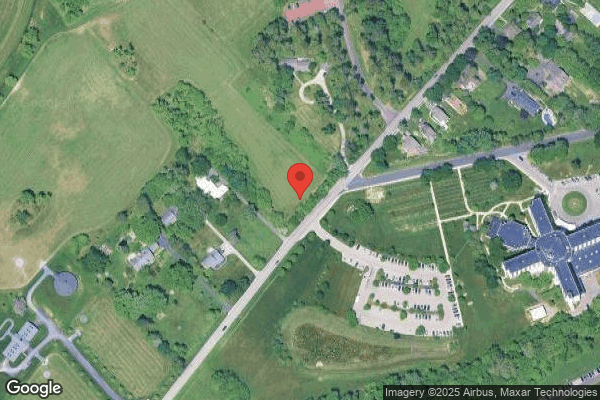
SAINT JOSEPH VILLA

110 WEST WISSAHICKON AVE, FLOURTOWN, PA 19031 (215) 836-4179
Non profit - Church related 106 Beds Independent Data: November 2025
Trust Grade
88/100
#115 of 653 in PA
Last Inspection: March 2025

Within standard 12-15 month inspection cycle. Federal law requires annual inspections.

Overview

Saint Joseph Villa has a Trust Grade of B+, which means it is above average and is recommended for families looking for care. It ranks #115 out of 653 facilities in Pennsylvania, placing it in the top half, and #14 out of 58 in Montgomery County, indicating only a few local options are better. However, the facility is experiencing a worsening trend, with issues increasing from 2 in 2024 to 4 in 2025. Staffing is a strong point, rated 5/5 stars with only an 18% turnover, significantly lower than the state average, and they have more RN coverage than 86% of Pennsylvania facilities, which is beneficial for resident care. On the downside, there have been incidents such as a resident suffering a burn during a hot pack treatment due to inadequate monitoring and a failure to provide snacks during long gaps between meals, raising concerns about food safety and resident nutrition.

Trust Score
B+
88/100
In Pennsylvania
#115/653
Top 17%
Safety Record
Moderate
Needs review
Inspections
Getting Worse
2 → 4 violations
Staff Stability
✓ Good
18% annual turnover. Excellent stability, 30 points below Pennsylvania's 48% average. Staff who stay learn residents' needs.
Penalties
✓ Good
$8,278 in fines. Lower than most Pennsylvania facilities. Relatively clean record.
Skilled Nurses
✓ Good
Each resident gets 85 minutes of Registered Nurse (RN) attention daily — more than 97% of Pennsylvania nursing homes. RNs are the most trained staff who catch health problems before they become serious.
Violations
○ Average
9 deficiencies on record. Average for a facility this size. Mostly minor or procedural issues.
★★★★★
5.0
Overall Rating
★★★★★
5.0
Staff Levels
★★★☆☆
3.0
Care Quality
★★★★☆
4.0
Inspection Score
Stable
2024: 2 issues
2025: 4 issues

The Good

  • 5-Star Staffing Rating · Excellent nurse staffing levels
  • Low Staff Turnover (18%) · Staff stability means consistent care
  • Full Sprinkler Coverage · Fire safety systems throughout facility
  • No fines on record
  • Staff turnover is low (18%)

    30 points below Pennsylvania average of 48%

Facility shows strength in staffing levels, staff retention, fire safety.

The Bad

Federal Fines: $8,278

Below median ($33,413)

Minor penalties assessed

The Ugly 9 deficiencies on record

1 actual harm
Mar 2025 4 deficiencies 1 Harm
SERIOUS (G)

Actual Harm - a resident was hurt due to facility failures

Accident Prevention (Tag F0689)

A resident was harmed · This affected 1 resident

**NOTE- TERMS IN BRACKETS HAVE BEEN EDITED TO PROTECT CONFIDENTIALITY** Based on staff interviews, review of the clinical record and facility documentation, it was determined the facility failed to en...

Read full inspector narrative →
**NOTE- TERMS IN BRACKETS HAVE BEEN EDITED TO PROTECT CONFIDENTIALITY** Based on staff interviews, review of the clinical record and facility documentation, it was determined the facility failed to ensure a resident was properly monitored and assessed during a hot pack treatment. This failure resulted in actual harm to Resident R302 who sustained a burn on the right shoulder (Resident R302). Findings include: Review of the facility's undated policy, Commercial Hot Packs/Thermal Agent Treatment, indicated the rehabilitation therapist will follow established techniques when applying commercial hot packs as a treatment modality. Further review of the policy indicated the packs are stored in a thermostatically controlled cabinet in water at a temperature of 150-170 degrees Fahrenheit. Continued review of the policy indicated that prior to the application of the commercial hot packs, a physician's order will be obtained and the resident will be evaluated for any contraindications or precautions, as well as all risk and benefits are clearly communicated to the resident. Continued review of the above policy stated the following: Check area every 5-10 minutes after moist heat pack has been applied j. Remove pack after treatment, dry gently and inspect area for any unusual signs k. Discard wet linen according to facility protocol and return moist heat pack to hydrocollator (stainless-steel therapeutic liquid heating device. It is used to heat bentonite-filled cloth heating pads, which are placed on patients to achieve rapid heat for specific body muscle groups. The hydrocollator heats the pads up to 175°F. The unit contains a wire rack to prevent contact of the packs with the bottom of the tank) l. Treatment time should be 15-25 minutes. Residents should be checked every 5-10 minutes for signs of skin irritation and burning. Consideration should be taken when using commercial hot packs with individuals who demonstrate: a) Sensory impairment (e.g., diabetes, CVA (cerebral vascular accident), neuropathies (damage to one or more nerves), nerve root impairment) b) Circulatory impairment (e.g., arteriosclerosis (the thickening and hardening of the walls of the arteries), venous insufficiency, phlebitis (inflammation of a vein) c) Cancer d) Very young/very old resident e) Skin rashes Review of the user manual for Hydrocollator M-2m Mobile Heating Unit utilized by the facility revealed under section titled Safety Precaution indicated, Treatment time should not exceed 30 minutes; Always wrap the HotPac with a towel or [NAME] cover before handling or applying to patient; Constantly monitor the HotPac application to ensure that the skin is not becoming too hot. The Safety Precaution' section also indicated that damage to an individual's skin can occur from exposure to extreme heat or cold, and that the individual applying the treatment should note instructions for proper use. Continued review of the Safety Precaution section indicated the HotPac should not be applied over sensitive skin or in the presence of poor circulation and that individuals with circulatory problems should consult with a physician before using this product. During observation conducted on February 25, 2025 at 2:30 p.m. the Hydrocollator was observed in a room in the therapy department. During the above observation accompanied by the Director of Rehabilitation (Employee E5), it was reported the rehabilitation department has not utilized the unit since November 2024. Review of Resident R302's November 2024 physician orders revealed the resident diagnoses of Anemia Hyperlipidemia (high cholesterol); Hypertension (high blood pressure), and Diabetes (disease characterized by high blood sugars). Review of Resident R302's physician documentation dated November 8, 2024 at 12:48 p.m. revealed Resident R302 was admitted into the facility on November 6, 2024, for rehabilitation services after being treated at a local hospital from [DATE] through November 6, 2024 for a right lower extremity hematoma. The resident was also treated for an elevated INR (International Normalized Ratio- a measure that of how long it takes for an individual's blood to clot). Review of Resident R302's nursing note dated November 22, 2024 at 3:03 p.m. revealed the resident was discharged home on the above referenced date. Review of information submitted to the State Survey Agency on November 13, 2024 revealed, on the morning of November 13, 2024, Resident R302 complained that his/hers shoulder was irritated. Continued review of the information submitted to the State Survey Agency indicated the resident notified the licensed nurse, (Employee E6), who found a burn-like area on (his/hers) right shoulder. The resident told the nurse that his/hers shoulder was stiff at therapy the day prior (November 12, 2024) and that he/she requested heat therapy, which was applied to him/her. Review of a written statement from licensed nurse, Employee E6 dated November 13, 2024 revealed the resident reported to the nurse that his/hers should has [sic] something irritating him. Employee E6 reported that he/she unsnapped the resident's gown and that she saw open skin area to his/hers right shoulder. Employee E6 reported in her statement that the resident told her that while he/she was at therapy the towel was to hot. Employee E6 statement indicated that she notified the wound nurse, unit manager and therapy. Made wound nurse UM (unit manager) Therapy aware. Review of Resident R302's nursing note by licensed nurse, Employee E6 dated November 13, 2024 at 12:38 p.m. indicated Nurse came to residents room to give morning medication today. Resident reported to nurse that (his/hers) right shoulder is irritated. Nurse asked to look at the shoulder. Upon unsnapping the hospital gown the nurse noticed open area to right shoulder and small blister side by side of each other. Resident explained yesterday 11/12/24 (he/she) felt a draft in his/her room while sitting in the recliner in (his/hers) room by the window, which made (his/hers) shoulder (right) achy. (He/she) goes on to explain (he/she) had therapy yesterday around 2pm where (he/she) rec'd heat to the right shoulder and that the towel was put on (his/hers) shoulder for the shoulder pain. Nurse ask was the towel hot. Resident said the towel was wet and started to get hot. Nurse said ok. Wound nurse, Unit manager and Therapy made aware. During an interview with licensed nurse, Employee E6 on March 3, 2025 at 12:45 p.m. Employee E6's statement and nursing notes regarding the incident were reviewed and confirmed. Review of a nursing note from the wound nurse, Employee E7 dated November 13, 2024, at 10:48 a.m. indicated that she was notified by nurse of injury to right shoulder. Resident was in therapy yesterday receiving heat therapy to right shoulder, nurse noted this morning a burn-like area. Area presents 2.5cm (centimeters) x 2.0cm, 100% pale pink tissue, no drainage, periwound intact, adjacent intact blister 0.3cm x 0.5cm, no drainage. Appears as scar tissue that experienced sensitivity to heat source and had mild reaction when heat was applied. Cleansed area with NSS (normal saline solution), applied Vaseline and covered with foam dressing. All appropriate parties notified. Orders and care plan updated. During an interview with the wound nurse, Employee E7 on March 3, 2025, at 12:39 p.m. Employee E7's notes, including the treatment provided, description of the injured areas, including the size of the injured areas, was reviewed and confirmed with the wound nurse. Review of an undated written statement from Employee E9 (Physical Therapy Assistant-PTA) indicated the resident requested the hot pack treatment to (his/hers) right shoulder at the end of physical therapy treatment due to pain, and the PTA attended to and observed the resident during the treatment. The PTA wrote in his statement that he asked the resident multiple times if the heat felt ok, and the resident reported that it felt fine and that (resident) was without complaints. The PTA reported the resident had two layers of clothing on (his/hers) shoulder and that the hot packs were covered in wrap plus one folded towel and one extra towel. Physical Therapy Assistant, Employee E8 was terminated on November 13, 2024, the day after the incident occurred, and was not available for an interview. During an interview with the physical therapist (Employee E10) on February 28, 2025 at 1:32 p.m. it was confirmed the incident occurred on November 12, 2024 and the treatment utilizing the hotpack took place in the therapy department. When asked if the treatment the resident received from Employee E9 was an authorized treatment, Employee E10 reported the treatment modality was not authorized in the resident's plan of care with the therapy department, and the PTA did not ask a physical therapist if it was permitted to provide Resident R302 with this treatment modality. Resident's plan of care was reviewed with the physical therapist and it did not include the use of the hotpacks. Continued interview with physical therapist, Employee E10 revealed the PTA did not document the treatment modality with the hotpacks, as required by therapy department. There was no documentation the PTA observed the skin areas that were being treated during the treatment or after the treatment, or how long the treatment actually occurred, due to the absence of clinical documentation. The facility failed to ensure that Resident R302 was properly monitored and assessed by physical therapist staff during the administration of a hot pack treatment which resulted in actual harm to Resident R302 who sustained a burn on the right shoulder. 28 Pa. Code 201.14(a) Responsibility of licensee 28 Pa. Code 201.18(b)(1) Management
CONCERN (D)

Potential for Harm - no one hurt, but risky conditions existed

Comprehensive Care Plan (Tag F0656)

Could have caused harm · This affected 1 resident

**NOTE- TERMS IN BRACKETS HAVE BEEN EDITED TO PROTECT CONFIDENTIALITY** Based on review of facility policy, review of clinical record, observations, and staff interviews, it was determined that the fa...

Read full inspector narrative →
**NOTE- TERMS IN BRACKETS HAVE BEEN EDITED TO PROTECT CONFIDENTIALITY** Based on review of facility policy, review of clinical record, observations, and staff interviews, it was determined that the facility failed to develop and implement interventions per the comprehensive care plan for two of 21 residents reviewed (Resident R306 and R67). Findings Include: Review of facility policy Care Plans, Comprehensive Person-Centered revised March 2022 revealed a comprehensive, person-centered care plan that includes measurable objectives and timetables to meet the resident's physical, psychosocial and functional needs is developed and implemented for each resident. The care plan interventions are derived from a thorough analysis of the information gathered as part of the comprehensive assessment. Review of Resident R306's clinical record revealed the resident was admitted to the facility on [DATE], status post a mechanical fall at home on February 12, 2025, resulting in a left hip fracture and subsequent left hip surgery on February 14, 2025. Continued review of Resident R306's clinical record revealed an admission summary dated [DATE], that revealed Resident R306 was weight bearing as tolerated (WBAT) with posterior hip precautions for six weeks. Review of Resident R306's comprehensive care plan dated February 18, 2025, revealed the resident had an activities of daily living self-care performance deficit related to deconditioning, limited mobility, limited range of motion, and status post left hip surgery. Intervention dated February 18, 2025, revealed Resident R306 should be transferred with assistance of two staff. Observations on February 25, 2025, at 1:27 p.m. revealed Resident R306 was assisted with one staff member, Nurse Aide Employee E8, from her recliner chair into a weighing chair scale in her room. Interview on February 25, 2025, at 1:30 p.m. with Nurse Aide, Employee E8, confirmed this employee transferred Resident R306 from the recliner into the weigh chair scale without assistance from another staff member. Observation on February 25, 2025, at 11:30 a.m. revealed resident R67 wearing a brace on his right lower leg and complaining that it was bothering him. He indicated that they had just fixed it, but all they did was glue it. Review of Resident R67's clinical record revealed that she was admitted on [DATE], with diagnoses of abnormalities of gait (pattern of walking) and mobility. Further review revealed a physical therapy note indicating a check on the right foot AFO (ankle foot orthidic, a support to control the position and motion of the ankle) due to complaints of irritation on the back of the resident's right lower leg. A review of the care plan for Resident R67 revealed no plan of care for the AFO. Interview with the Director of Nursing on February 27, 2025, at 2:35 p.m. confirmed that Resident R67 had no care plan for the AFO being used on his right foot. 28 Pa. Code 211.12(d)(5) Nursing services
CONCERN (D)

Potential for Harm - no one hurt, but risky conditions existed

Quality of Care (Tag F0684)

Could have caused harm · This affected 1 resident

**NOTE- TERMS IN BRACKETS HAVE BEEN EDITED TO PROTECT CONFIDENTIALITY** Based on observations, interviews with resident and staff and clinical record review, it was determined that the facility failed...

Read full inspector narrative →
**NOTE- TERMS IN BRACKETS HAVE BEEN EDITED TO PROTECT CONFIDENTIALITY** Based on observations, interviews with resident and staff and clinical record review, it was determined that the facility failed to obtain a physician's order regarding the use of an AFO (ankle foot orthidic, a support to control the position and motion of the ankle) and failed to clarify a physician's order pertaining to a resident's alcohol consuption for two of twenty- one residents reviewed (Resident R67 and R4). Findings include: Observation on February 25, 2025, at 11:30 a.m. revealed Resident R67 wearing a brace on his right lower leg and complaining that it was bothering him. He indicated that they had just fixed it, but all they did was glue it. He then pulled out an old brace that he said fit much better. Review of Resident R67's clinical record revealed that she was admitted on [DATE], with diagnoses of abnormalities of gait (pattern of walking) and mobility. Further review revealed a physical therapy note indicating a check on the right foot AFO due to complaints of irritation on the back of the resident's right lower leg. A review of physician orders for Resident R67 revealed no physician order for the AFO. Interview with the Director of Nursing on February 27, 2025, at 2:35 p.m. confirmed that Resident R67 had no physician order for the AFO being used on his right foot. Review of the facility's undated policy, Alcoholic Beverages, indicated that a physician's order obtained that residents may have alcoholic beverages, and that the Nurse Supervisor receiving the order must contact the pharmacist to determine if any of the resident's current medications would interact with alcohol. Continued review of the policy indicated that should there be a medication that would interact with the alcohol, the Nurse Supervisor must inform the physician of such medication. Review of the February 2025 physician orders for Resident R4 included diagnoses of hypertension (high blood pressure); history of falling; depression (major loss of intrest in pleasurable activities); multiple sclerosis (slow progressive diease of the central nervous system); heart failure. Review of February 2025 physician orders included a physician's order dated September 19, 2019, and every month thereafter stating that Resident R4 could have alcoholic beverages. ALCOHOLIC BEVERAGE - May have wine. Continued review of the physician's order did not indicate if there was a specific amount of wine the resident could have and how often she could have it. Continued review of the resident's Medical Administration Record (MAR-documentation by nursing staff when a medication has been administered), and Treatment Administration Record (TAR-documentation by nursing staff when a treatment has been administered to a resident) did not include a section on either of the administration records that where nursing staff would document that the resident had wine any time it was given to her by nursing staff. During an interview with Resident R302 on February 28, 2025 at 12:40 p.m. the resident reported that she is served wine at least once a week on Fridays. During an interview with Employee E11 (unit manager) on February 28, 2025 at 12:36 p.m., Employee E11 confirmed that the physician's order did not clarify that amount of wine that Resident R4 could have, and that she would check with the physician. 28 Pa. Code:201.18(b)(1)(3) Management 28 Pa. Code:211.12(d)(1)(5) Nursing services
CONCERN (D)

Potential for Harm - no one hurt, but risky conditions existed

Garbage Disposal (Tag F0814)

Could have caused harm · This affected 1 resident

Based on observations and interviews with staff, it was determined that the facility did not ensure that that trash and recyclables were properly disposed of in the receiving and dumpster area. Findin...

Read full inspector narrative →
Based on observations and interviews with staff, it was determined that the facility did not ensure that that trash and recyclables were properly disposed of in the receiving and dumpster area. Findings include: A tour of the Food Service Department was conducted on February 25, 2025, at 9:30 a.m. with Employee E3, Dining Operations Manager (DOM), revealed the following concerns: Observations in the receiving area revealed the trash compactor with the metal door ajar and the bags of trash inside exposed. Further observations revealed the cardboard recycling dumpster with two of the sliding doors open and the can recycling dumpster with both top doors open and the side sliding door open. Observation near the receiving door revealed four wooden pallets laying on the ground with broken pieces of splintered wood scattered around on the ground, three large grey trash cans laying on the ground, two large blue laundry bins half filled with rain water and trash including a broken hot holding pan warmer. Interview with the DOM on February 25, 2025, at 9:30 a.m. confirmed the above findings. 28 PA Code: 201.14(a) Responsibility of licensee. 28 Pa. Code 201.18(b)(3) Management
Apr 2024 2 deficiencies
CONCERN (D)

Potential for Harm - no one hurt, but risky conditions existed

Accident Prevention (Tag F0689)

Could have caused harm · This affected 1 resident

**NOTE- TERMS IN BRACKETS HAVE BEEN EDITED TO PROTECT CONFIDENTIALITY** Based on review of facility documentation, review of clinical record, and staff interview, it was determined that the facility f...

Read full inspector narrative →
**NOTE- TERMS IN BRACKETS HAVE BEEN EDITED TO PROTECT CONFIDENTIALITY** Based on review of facility documentation, review of clinical record, and staff interview, it was determined that the facility failed to maintain an environment free from hazards related to an unlocked bed wheel brake for one of 20 residents reviewed. (Resident R83) Findings include: A review of clinical record for Resident R83 revealed that the resident was admitted to the facility on [DATE], with diagnoses including anoxic brain damage, abnormal posture, and unspecified mental disorder due to known physiological condition. Review of Resident R83's quarterly Minimum Data Set (MDS- assessment of resident's care needs) date on April 9, 2024, revealed that the resident was assessed a requiring one-person physical assist for bed mobility. Review of Resident R83's care plan on May 5, 2023, revealed that Resident R83 was able to turn and reposition in bed with the assistance one person assist for bed mobility. Review of incident note dated on April 16, 2024, confirmed, and revealed that Resident R83 rolled off side of bed during care and hit head has a laceration to L (left)-forehead. Resident R83 has aphasia-unable to say what happened. Review of facility investigation dated, April 16, 2024, revealed that during incontinence care Resident 83 slid down between the bed and the wall to the floor while nurse aide, Employee E7 was turning resident to the right side to wash her back. Resident was transfer to the hospital. Review nurse aide, Employee E7, statement on April 16, 2024, stated that resident rolled out of bed due to bed moving as I was giving care. I immediately got the nurse and aide. Review of nursing documentation notes on April 16, 2024 3:26 p.m. revealed that Assessed forehead laceration, band-aid removed. 2.7cmx 2.5cm, 100% approximated with steri-strips, dried blood to medial aspect and upper right edge. No drainage, surrounding skin intact. Left open to air. Returned from ER at 12:15 p.m. assisted into bed. Forehead laceration with steri strips and band aid. Abrasion Left shoulder s/p fall. NO CT evidence for acute intracranial hemorrhage or mass effect Interview on April 24, 2024, at 1:41 p.m. with the Director of Nursing, Employee E2, revealed Resident R83 slid down between the wall and bed after nursing assistant turning resident to the right side to wash her back. The reason why resident slid down was because the bed wheels brakes were unlocked. Interview on April 25, 2024, at 10:49 a.m. with nursing assistant, Employee E7, revealed that assumed top brakes were lock but they were unlock. 28 Pa Code 211.10(c) Patient care policies 28 Pa. Code 211.12(c)(d)(1)(3)(5) Nursing services
CONCERN (E)

Potential for Harm - no one hurt, but risky conditions existed

Food Safety (Tag F0812)

Could have caused harm · This affected multiple residents

Based on observation, review of facility policy and staff interview, it was determined that the facility failed to maintain acceptable practices for the storage and service of food related to labeling...

Read full inspector narrative →
Based on observation, review of facility policy and staff interview, it was determined that the facility failed to maintain acceptable practices for the storage and service of food related to labeling and staorage of foods in the main kitchen. Findings include: Food safety and inspection standards for safe food handling indicate that everything that comes in contact with food must be kept clean and food that is mishandled can lead to foodborne illness. Safe steps in food handling, cooking, and storage are essential in preventing foodborne illness. You cannot always see, smell, or taste harmful bacteria that may cause illness according to the USDA (The United States Department of Agriculture, also known as the Agriculture Department, is the U.S. federal executive department responsible for developing and executing federal laws related to food). A review of a facility policies entitled Food and Supply Storage last reviewed by the facility on January, 2021, indicated that All food, non-food items and supplies used in food preparation shall be stored in such a manner as to prevent contamination to maintain the safety and wholesomeness of the food for human consumption. Under Procedures it further states,Cover, label and date unused portions and open packages. Complete all section on the . orange label or use the .Fresh date or other approved labeling system. Observations conducted during the initial tour of the kitchen with the facility's Dietary Manager, Employee E6 on April 23 , 2024, at 9:36 a.m., revealed the following: Walk in freezer had items such as frozen pies, chocolate cakes, chicken nuggets that were opened but not labeled. Walking in dairy refrigerator #1 had opened cheeses and slicing meats that were only dated with one date, and it was unclear if that was opened date or expiration date. Walk in refrigerator #2 had left over pasta that was not labeled. Dry Storage room had items such as dry peas, rice bags, spices whole poppy seeds, ground oregano, rosemary leaves, hollandaise mix, dry crispy onion, creamy rice and large containers of sugar, rice, flour, and thickener were all open and were not labeled with any dates. On April 26, 2024, at 9:41 a.m. more observations were made in the kitchen with Dining Manager, Employee E10 revealed refrigerator #2 had produce pasta left uncovered and unlabeled. Raw salmon packaged in the clear bag was stored on the middle shelf and there was veggie produce beneath. A cart full of ready to serve food which had a sheet of shrimp that was not covered or dated. Dry Storage room continued to have items peppermint pieces, pasta, sea food breading mix, granola, chips, thickener, sugar, flour, rice in large bins that were not labeled with any dates. 28 Pa. Code 201.18 (e)(2.1) Management 28 Pa. Code 211.6 (f) Dietary Services
Jul 2023 3 deficiencies
CONCERN (D)

Potential for Harm - no one hurt, but risky conditions existed

Medical Records (Tag F0842)

Could have caused harm · This affected 1 resident

**NOTE- TERMS IN BRACKETS HAVE BEEN EDITED TO PROTECT CONFIDENTIALITY** Based on clinical records review and staff interview, it was determined that the facility failed to ensure complete documentatio...

Read full inspector narrative →
**NOTE- TERMS IN BRACKETS HAVE BEEN EDITED TO PROTECT CONFIDENTIALITY** Based on clinical records review and staff interview, it was determined that the facility failed to ensure complete documentation related to blood sugar levels for one of 24 records reviewed. (Resident R33) Findings include: Review of Resident R33's Minimum Data Set (MDS- assessment of resident care needs) significant change assessment dated [DATE] indicated that the resident had an active diagnosis of diabetes mellitus (a disorder of carbohydrate metabolism, whereby, the body has an impaired ability to produce or respond to insulin and maintain proper blood glucose in the blood). Continued review of the MDS assessment revealed that this resident was using insulin injections regularly. Review of Resident R33's July 2023 physician's order indicated an order for Novolog (insulin) 5 units to be administered to Resident R33 at breakfast for a blood glucose reading of greater that 351. The physician's order for Resident R33 indicated that Novolog (insulin) 7 units was to be administered at mid-day and evening. Review of Resident R33's July 2023 Medication Administration Record revealed that on July 2, 2023 the blood glucose reading was 467, July 5, 2023 the blood glucose reading was 451 and July 8, 2023, blood glucose was 459. Clinical record review revealed that the physician had ordered the nursing staff to recheck to blood glucose after two hours; if the level obtained was greater than 400; which was indicative of hyperglycemia. Clinical record review for Resident R33 revealed that the nursing staff failed to document the rechecking of the blood glucose after two hours on July 2, 5 and 8, 2023. Interview with the Director of Nursing, Employee E2, and Licensed nurse, Employee E3 on July 13, 2023 at 2:00 p.m. confirmed that there was no documentation that the resident's blood sugar was recheck after 2 hours. 28 Pa. Code 211.12(c) Nursing services 28 Pa. Code 211,12(d)(1) Nursing services
CONCERN (D)

Potential for Harm - no one hurt, but risky conditions existed

Infection Control (Tag F0880)

Could have caused harm · This affected 1 resident

**NOTE- TERMS IN BRACKETS HAVE BEEN EDITED TO PROTECT CONFIDENTIALITY** Based on review of facility policy, clinical record review, observation, and interview with staff, it was determined that the fa...

Read full inspector narrative →
**NOTE- TERMS IN BRACKETS HAVE BEEN EDITED TO PROTECT CONFIDENTIALITY** Based on review of facility policy, clinical record review, observation, and interview with staff, it was determined that the facility failed to maintain proper infection control practices related to hand hygiene and wound care for one of 24 residents reviewed (Resident R39). Findings include: Review of facility policy titled Wound Care Policy and Procedure, dated May 2023, revealed that wound care is to be done following aseptic technique. Review of the Pennsylvania Department of Health document titled Wound Care Observation Checklist for Infection Control, dated April 2018, revelaed that gloves should be changed and hand hygiene performed when moving from dirty to clean wound care activities. Review of clinical documentation for Resident R39 revealed that she had an unstageable, facility acquired pressure ulcer on her right calf (an injury formed by pressure on the skin, classified into stages based on the depth of the wound and the layers of skin, fat and muscle involved; wounds are unstageable when they contain too much dead tissue to visualize the base of the wound) first identified on April 10, 2023. Other wounds present from admission included a stage 4 pressure ulcer (a wound that is completely through the skin and involving the underlying fat and muscle tissue) on her sacrum, unstageable pressure wounds to both of her heels, a deep tissue injury (a pressure related wound with intact skin) of the side of her left great toe, and a non-pressure related wound of her right second toe. Continued review revealed that Resident R39 was admitted on [DATE], and had diagnoses including, but not limited to, stage 4 pressure ulcer of sacral region, unspecified protein-calorie malnutrition, peripheral vascular disease, unspecified, and muscle weakness. Observation of wound care for Resident R39 was conducted on July 14, 2023, at 9:55 a.m. with Employee E14, the wound care Registered Nurse for the facility. Employee E14 prepared a clean field and assembled the wound care supplies for Resident R39. Supplies assembled included two open packages containing partial sheets of DermaGinate/Ag dressing (a highly absorbent dressing which is used for wounds with secretions, which is also infused with silver as an antimicrobial agent), normal saline solution, rolled gauze, skin prep pads (premedicated towelettes which are applied to create a barrier against moisture, adhesive or friction), two foam dressings with adhesive borders which had been labeled with the current date, several 2x2s (two cm long by two cm wide gauze pads), several 4x4s (four cm long by four cm wide gauze pads), cotton tipped applicators, and Santyl ointment (an ointment which is used to help breakdown dead tissue in a wound to allow the wound to heal). Interview with Employee E14 at this time of the observation revealed that the DermaGinate/Ag dressings had been opened and partially used during previous wound care, and that the remaining product had been saved for future use. She also stated that sacral wound treatment was performed by the prior shift. Employee E14 performed hand hygiene and put on clean gloves. She removed the soiled dressing from Resident R39's right calf, then she performed hand hygiene and put on clean gloves. She used a 4x4 soaked with saline to cleanse the wound. At this time, she did not perform hand hygiene and put on clean gloves. She used a cotton applicator to apply Santyl to the wound bed, applied a 2x2 soaked with saline, applied skin prep to the area around the wound, and covered it with a foam dressing. Employee E14 performed hand hygiene and put on clean gloves. She removed the soiled dressing from R39's right second toe, then she performed hand hygiene and put on clean gloves. She used a 4x4 soaked with saline to cleanse the wound. At this time, she did not perform hand hygiene and put on clean gloves. She used a cotton applicator to apply Santyl to the wound bed, applied a dry 2x2, and tape which had previously been labeled with the current date. E14 performed hand hygiene and put on clean gloves. She removed the soiled dressing from R39's right heel, then she performed hand hygiene and put on clean gloves. She used a 4x4 soaked with saline to cleanse the wound. At this time, she did not perform hand hygiene and put on clean gloves. She then applied DermaGinate/Ag to the wound, covered it with and ABD and wrapped it with rolled gauze and secured it with tape labeled with the current date. Employee E14 performed hand hygiene and put on clean gloves. She removed the soiled dressing from the base of R39's left great toe, then she performed hand hygiene and put on clean gloves. She applied skin prep to the area and covered it with a foam dressing. At this time, she did not perform hand hygiene and put on clean gloves. Employee E14 removed the soiled dressing from R39's left heel, then she performed hand hygiene and put on clean gloves. She used a 4x4 soaked with saline to cleanse the wound, then performed hand hygiene and put on clean gloves. She then applied DermaGinate/Ag to the wound, covered it with an ABD and wrapped it with rolled gauze and secured it with tape labeled with the current date. Employee E14 gathered the trash and placed it in the waste basket, removed her gloves and placed them in the waste basket as well. She then removed the bag from the room and placed it in an appropriate receptacle and performed hand hygiene. As noted above, Employee E14 did not perform hand hygiene at four separate opportunities during wound care for Resident R39. The DermaGinate/Ag that was used was residual product from a package that had been previously opened and exposed to air. Alginate dressings should not be saved after opening as they absorb moisture from the air which can compromise their integrity. Also, once a sealed, single use package has been opened, any remaining product should be disposed of as exposure to the air and other surfaces can potentially introduce infectious agents to the product. Following wound care observations, interview with Licensed staff, Employee E14 on July 14, 2023 at 10:15 a.m. confirmed that she did not perform hand hygiene at the opportunities noted above. Interview with the Director of Nursing on July 14, 2023, 10:45 a.m. confirmed that the missed opportunities for hand hygiene by E14, as well as the use of dressings from a previously opened package constituted a breach in infection control practices. 28 Pa. Code 201.14(a) Responsibility of licensee 28 Pa. Code 211.12(d)(1) Nursing services
CONCERN (E)

Potential for Harm - no one hurt, but risky conditions existed

Deficiency F0809 (Tag F0809)

Could have caused harm · This affected multiple residents

Based on resident council interview, staff interviews, review of facility policy and reviews of the established meal time schedule, it was determined that the facility failed to ensure a nourishing sn...

Read full inspector narrative →
Based on resident council interview, staff interviews, review of facility policy and reviews of the established meal time schedule, it was determined that the facility failed to ensure a nourishing snack was provided when 14 hours are between a substantial evening meal and breakfast in two of two nursing units. (3rd floor and 2nd floor unit). Findings include: A review of facility policy titled Snacks (between meal and bedtime), serving last revised September 2010 revealed The purpose of this procedure is to provide the resident with adequate nutrition it further states under Steps in the Procedure Place the snack on the overbed table or serving area. A review of the established meal schedule for the residents revealed that the supper meal was scheduled for 4:30 p.m., and that the breakfast meal the following morning was offered at 7:15 a.m This was a 15 hour meal span of time until breakfast the following day. An interview was conducted on July 14, 2023, at 10:30 a.m. during the resident council with alert and oriented Residents R6, R16, R34, R44, R82, R84, revealed that snacks were not offered at bedtime. Residents reported that they do eat dinner at 4:30 p.m. and get hungry at night time. An interview with Dietician, Employee E5 held on July 14, 2023, at 1:07 p.m. revealed that she learned from residents that they were not being given night snacks and was talking to unit managers to address it. An interview with license nurse, unit manager Employee E4 on July 17, 2023, at 9:41 a.m. revealed night snacks come up around 7:00 p.m. and distributed between 7-8 p.m. It a responsibility of the nursing aids to distribute snacks to residents and nursing staff responsible to distributed to resident who have a specific order for a snack. Employee E4 has seen a audit tool being developed to strengthen the night snack delivery to residents. Surveyor requested to see when the last night snack audit was performed and there was no documentation provided. An interview with nursing aide, Employee E25 on July 17, 2023, at 9:41 a.m. revelaed that night snacks were being left on the countertop in the dining room, some residents came up and got them. Employee E25 indicated that personally taking snacks to assigned residents, but not every staff did it. An interview with nursing aide, Employee E24 on July 17, 2023, at 9:56 a.m. reported that night snacks were crackers, juice, water, and goldfish crackers. 28 Pa. Code: 201.14(a) Responsibility of license
Understanding Severity Codes (click to expand)
Life-Threatening (Immediate Jeopardy)
J - Isolated K - Pattern L - Widespread
Actual Harm
G - Isolated H - Pattern I - Widespread
Potential for Harm
D - Isolated E - Pattern F - Widespread
No Harm (Minor)
A - Isolated B - Pattern C - Widespread

Questions to Ask on Your Visit

  • "Can I speak with families of current residents?"
  • "What's your RN coverage like on weekends and overnight?"

Our Honest Assessment

Strengths
  • • Grade B+ (88/100). Above average facility, better than most options in Pennsylvania.
  • • 18% annual turnover. Excellent stability, 30 points below Pennsylvania's 48% average. Staff who stay learn residents' needs.
Concerns
  • • 9 deficiencies on record, including 1 serious (caused harm) violation. Ask about corrective actions taken.
Bottom line: Generally positive indicators. Standard due diligence and a personal visit recommended.

About This Facility

What is Saint Joseph Villa's CMS Rating?

CMS assigns SAINT JOSEPH VILLA an overall rating of 5 out of 5 stars, which is considered much above average nationally. Within Pennsylvania, this rating places the facility higher than 99% of the state's 100 nursing homes. This rating reflects solid performance across the metrics CMS uses to evaluate nursing home quality.

How is Saint Joseph Villa Staffed?

CMS rates SAINT JOSEPH VILLA's staffing level at 5 out of 5 stars, which is much above average compared to other nursing homes. Staff turnover is 18%, compared to the Pennsylvania average of 46%. This relatively stable workforce can support continuity of care.

What Have Inspectors Found at Saint Joseph Villa?

State health inspectors documented 9 deficiencies at SAINT JOSEPH VILLA during 2023 to 2025. These included: 1 that caused actual resident harm and 8 with potential for harm. Deficiencies causing actual harm indicate documented cases where residents experienced negative health consequences.

Who Owns and Operates Saint Joseph Villa?

SAINT JOSEPH VILLA is owned by a non-profit organization. Non-profit facilities reinvest revenue into operations rather than distributing to shareholders. The facility operates independently rather than as part of a larger chain. With 106 certified beds and approximately 94 residents (about 89% occupancy), it is a mid-sized facility located in FLOURTOWN, Pennsylvania.

How Does Saint Joseph Villa Compare to Other Pennsylvania Nursing Homes?

Compared to the 100 nursing homes in Pennsylvania, SAINT JOSEPH VILLA's overall rating (5 stars) is above the state average of 3.0, staff turnover (18%) is significantly lower than the state average of 46%, and health inspection rating (4 stars) is above the national benchmark.

What Should Families Ask When Visiting Saint Joseph Villa?

Based on this facility's data, families visiting should ask: "Can I visit during a mealtime to observe dining assistance and food quality?" "How do you handle medical emergencies, and what is your hospital transfer rate?" "Can I speak with family members of current residents about their experience?"

Is Saint Joseph Villa Safe?

Based on CMS inspection data, SAINT JOSEPH VILLA has a clean safety record: no substantiated abuse findings (meaning no confirmed cases of resident harm), no Immediate Jeopardy citations (the most serious violation level indicating risk of serious injury or death), and is not on the Special Focus Facility watch list (a federal program monitoring the lowest-performing 1% of nursing homes). The facility has a 5-star overall rating and ranks #1 of 100 nursing homes in Pennsylvania. While no facility is perfect, families should still ask about staff-to-resident ratios and recent inspection results during their visit.

Do Nurses at Saint Joseph Villa Stick Around?

Staff at SAINT JOSEPH VILLA tend to stick around. With a turnover rate of 18%, the facility is 28 percentage points below the Pennsylvania average of 46%. Low turnover is a positive sign. It means caregivers have time to learn each resident's needs, medications, and personal preferences. Consistent staff also notice subtle changes in a resident's condition more quickly. Registered Nurse turnover is also low at 12%, meaning experienced RNs are available to handle complex medical needs.

Was Saint Joseph Villa Ever Fined?

SAINT JOSEPH VILLA has been fined $8,278 across 1 penalty action. This is below the Pennsylvania average of $33,162. While any fine indicates a compliance issue, fines under $50,000 are relatively common and typically reflect isolated problems that were subsequently corrected. Families should ask what specific issues led to these fines and confirm they've been resolved.

Is Saint Joseph Villa on Any Federal Watch List?

SAINT JOSEPH VILLA is not on any federal watch list. The most significant is the Special Focus Facility (SFF) program, which identifies the bottom 1% of nursing homes nationally based on persistent, serious quality problems. Not being on this list means the facility has avoided the pattern of deficiencies that triggers enhanced federal oversight. This is a positive indicator, though families should still review the facility's inspection history directly.