HANOVER HALL FOR NURSING AND REHABILITATION

267 FREDERICK STREET, HANOVER, PA 17331 (717) 637-8937
For profit - Limited Liability company 151 Beds Independent Data: November 2025
Trust Grade
38/100
#432 of 653 in PA
Last Inspection: February 2025

Within standard 12-15 month inspection cycle. Federal law requires annual inspections.

Overview

Hanover Hall for Nursing and Rehabilitation has received a Trust Grade of F, indicating significant concerns about the quality of care provided, placing it in the bottom tier of facilities. It ranks #432 out of 653 in Pennsylvania, meaning it is in the bottom half of all nursing homes in the state, and #8 out of 14 in York County, suggesting that only a few local options are better. The facility's trend is worsening, with reported issues increasing from 15 in 2024 to 18 in 2025. Staffing is rated at 2 out of 5 stars, with a turnover rate of 55%, which is around the state average but may indicate instability. Concerns include serious incidents where medication errors resulted in actual harm to residents, including low blood pressure and hospital transfers. Additionally, there were failures in wound management, leading to deterioration of a resident's condition requiring antibiotic treatment. Overall, while there is average RN coverage, the facility's numerous issues and low trust score suggest that families should carefully consider these factors when researching care options.

Trust Score
F
38/100
In Pennsylvania
#432/653
Bottom 34%
Safety Record
Moderate
Needs review
Inspections
Getting Worse
15 → 18 violations
Staff Stability
⚠ Watch
55% turnover. Above average. Higher turnover means staff may not know residents' routines.
Penalties
✓ Good
$8,190 in fines. Lower than most Pennsylvania facilities. Relatively clean record.
Skilled Nurses
⚠ Watch
Each resident gets only 29 minutes of Registered Nurse (RN) attention daily — below average for Pennsylvania. Fewer RN minutes means fewer trained eyes watching for problems.
Violations
⚠ Watch
58 deficiencies on record. Higher than average. Multiple issues found across inspections.
★★☆☆☆
2.0
Overall Rating
★★☆☆☆
2.0
Staff Levels
★★☆☆☆
2.0
Care Quality
★★☆☆☆
2.0
Inspection Score
Stable
2024: 15 issues
2025: 18 issues

The Good

  • Full Sprinkler Coverage · Fire safety systems throughout facility
  • No fines on record

Facility shows strength in fire safety.

The Bad

2-Star Overall Rating

Below Pennsylvania average (3.0)

Below average - review inspection findings carefully

Staff Turnover: 55%

Near Pennsylvania avg (46%)

Higher turnover may affect care consistency

Federal Fines: $8,190

Below median ($33,413)

Minor penalties assessed

The Ugly 58 deficiencies on record

2 actual harm
Jul 2025 1 deficiency 1 Harm
SERIOUS (G) 📢 Someone Reported This

A family member, employee, or ombudsman was alarmed enough to file a formal complaint

Actual Harm - a resident was hurt due to facility failures

Deficiency F0760 (Tag F0760)

A resident was harmed · This affected 1 resident

**NOTE- TERMS IN BRACKETS HAVE BEEN EDITED TO PROTECT CONFIDENTIALITY** Based on facility policy, clinical record review, facility document review, hospital record review, and resident and staff inter...

Read full inspector narrative →
**NOTE- TERMS IN BRACKETS HAVE BEEN EDITED TO PROTECT CONFIDENTIALITY** Based on facility policy, clinical record review, facility document review, hospital record review, and resident and staff interviews, it was determined the facility displayed past non-compliance by failing to ensure that residents were free from any significant medication errors, which resulted in actual harm, as evidenced by low blood pressure, low heart rate, sweating, lightheadedness, and hospital transfer, for one of two residents (Resident 1). Findings Include:Review of facility policy, titled Administering Medications, last revised April 2019, indicated medications are administered by licensed nurses or other staff who are legally authorized to do so in this state.The policy states:Medications are administered in accordance with prescriber orders, including any required time frame.The individual administering medications verifies the resident's identity before giving the resident his/her medications. Methods of identifying the resident include:a. Checking identification bandb. Checking photograph attached to medical record, andc. If necessary, verifying resident identification with other facility personnelThe policy also included, The individual administering the medication checks the label THREE (3) times to verify the right resident, right medication, right dosage, right time and right method (route) of administration before giving the medication. Review of the admission record indicated Resident 1 was admitted to the facility on [DATE], with diagnoses that included congestive heart failure (condition in which the heart doesn't pump blood as well as it should) and discitis (a rare and serious medical condition that involves inflammation and infection of the intervertebral discs in the spine).Review of Resident 1's quarterly MDS (minimum data set- standardized assessment tool to gather comprehensive information about residents' functional capabilities, health status, and care needs) dated June 2, 2025, revealed a BIMS (brief interview of mental status) of 14, indicating intact cognition.In a statement by Resident 1 on July 4, 2025, Resident 1 verbalized that he was given his roommate's medications in error after swallowing more than his normal number of tablets, and that the same nurse approached him with an inhaler and nasal spray that belonged to his roommate.During an interview with Resident 1 on July 21, 2025, at approximately 9:30 AM, Resident 1 was asked to share the medication event that occurred on July 4, 2025. Resident 1 stated it was approximately 9:00 AM on July 4, 2025, that the nurse brought a cup of pills and glass of water and sat them on my bedside table, then told me she had to go to the cart for additional medications. I usually take 6-7 pills but there were many more once I placed them in my mouth. I swallowed them and then the nurse returned with an inhaler and Flonase (nasal spray) and that's when I realized the nurse was giving me my roommates medications. I looked right at her and said, you gave me my roommates medications, and Employee 1 responded, no I didn't. Resident 1 replied back to the nurse, I'm telling you, you did, and Resident 1 said he refused the nasal spray and inhaler, knowing it was his roommates. Employee 1 replied, I have other pills to give, I will be back. Resident 1 stated that he wasn't sure Employee 1 would report the error. Resident 1 said he requested his Nurse Aide to dress him so that he could go to the 1st floor and speak with the Supervisor. Resident 1 said he sat in the lounge for a while on the first floor thinking about how to handle the situation. At approximately 11:00 AM Employee 2 approached him and ask him if he was feeling OK, and also told him he didn't look well, you look white as a sheet. Resident 1 said he was feeling OK at that point but explained to Employee 2 that he was sure he received his roommate's medications. Resident added, the nurse began to monitor me, I remember feeling very tired, and later they sent me to the hospital. Review of the clinical record revealed Employee 2 notified Employee 3 (Registered Nurse) to assess Resident 1. Employee 3 initiated monitoring of Resident 1, which included taking his blood pressure every 15 minutes. A review of Resident 1's clinical record revealed that Resident 1's normal blood pressures were Systolic range 108-135 and diastolic range 52-70. Resident 1's normal heart rate range per his clinical record was 64-71. The physician was notified on July 4, 2025, at 10:45 AM and informed that Resident 1 stated he was given the wrong medication. The physician advised to monitor the Resident and notify him with any changes.On July 4, 2025, at 11:58 AM, Resident 1's BP [blood pressure] was 86/50; at 12:07 PM BP was 77/40; and at 12:07 PM, BP was 77/32. Resident 1's heart rate at 10:56 AM was 57; at 11:58 AM was 57; at 12:07 PM was 44, and at 12:17 was 34. The physician was notified of the drop in blood pressure and low heart rate. The physician ordered Resident 1 to be sent to the hospital. EMS arrived at 12:30 PM. Resident 1 arrived in the ED on July 4, 2025, at 12:44 PM. The facility sent the roommate, Resident 2's medication list with EMS so that the hospital was aware that medications included two AM blood pressure medications (one being a beta blocker that lowers heart rate, reduces blood pressure, and relaxes blood vessels). Review of the hospital discharge summary revealed Resident 1 presented with a medication error resulting in hypotension (low blood pressure). One liter of fluids was administered intravenously (IV) with improvement observed in blood pressure. Resident 1 remained bradycardic (low heart rate) but gradually improved over the course of ED observation. An ECG (electrocardiogram) revealed sinus bradycardia. Resident 1 was maintained on telemetry (remote collection and transmission of data i.e. vital signs) throughout the 5- and 1/2-hour hospital stay. The hospital clinical impression was documented to be accidental overdose. Resident 1 was instructed by hospital staff not to take any meds the rest of the day and to confirm his medications every morning with the nurse as he is being given them.A written statement by Employee 1 stated that Resident 1 believed he was given the wrong medication, but Employee 1 did not admit to a medication error. Employee 1 was questioned by the Nursing Home Administrator (NHA) about identification of the Resident prior to administering medications. Employee 1 stated she recognized the Resident because he used to be on the first floor. A review of Resident 1's record and Resident 2's record revealed both residents were previously on the 1st floor and were moved to the 2nd floor, in the same room, within 24 hours of each other. The facility implemented a plan of correction that included the following: Resident 1 was assessed immediately by RN. Vitals stable at the time. When change in condition was noted, he was transferred to hospital. Resident 2 (Resident 1's Roommate) was also interviewed and assessed at the time of the concern. Every shift vital sign and alert charting being completed on both Residents for three days. Residents were reviewed on that floor to ensure no others received the wrong medication. No complaints noted. Facility completed education with the licensed nurse on medication administration policy at the time of the incident. Resident 1 also received education to ensure his meds are correct prior to taking them. Facility initiated education on medication administration to all licensed staff to ensure appropriate 6 rights of administration are followed, and medication administration policy is followed. Director of Nursing/designee completed observation of medication pass on 2 staff daily x 2 days, then 3 observations per week for 4 weeks to ensure medication administration policy is followed; completed 7/5/2025 and 7/6/2025, respectively. Then initiated 3 x week for 4 weeks to ensure medication administration policy is followed. Results were reviewed at QAPI (Quality Assurance Performance Improvement) Committee meeting to ensure compliance and quality of care on July 7, 2025. During a phone interview on July 2, 2025, at 10:25 AM, Employee 4 (Licensed Practical Nurse) verified that she had received education on Administering Medications and was able to verbalize understanding, and stated the 6 rights of medication administration, adding the use of 2 forms to identify to ensure she has the right resident.During a phone interview on July 2, 2025, at 10:20 AM, Employee 2 (Licensed Practical Nurse) verified that she had received education on Administering Medications and was able to verbalize understanding, and stated the 6 rights of medication administration, adding the use of 2 forms to identify to ensure she has the right resident.During a phone interview on July 2, 2025, at 10:30 AM Employee 5 (Licensed Practical Nurse) verified that she had received education on Administering Medications and was able to verbalize understanding, and stated the 6 rights of medication administration, adding the use of 2 forms to identify to ensure she has the right resident. The facility demonstrated compliance with the above since July 7, 2025. Information was verified via review of Plan of Correction documentation and staff interviews. During an interview on July 21, 2025, at 1:15 PM, with the NHA and review of the facility's immediate actions, education, and review of the QAPI monitoring process, it was verified that the facility had implemented a plan of correction and achieved compliance ensuring residents are provided adequate safety during medication administration.During an interview on July 22, 2025, at 1:30 PM, the NHA confirmed the facility failed to ensure that residents were free from any significant medication errors for one of two residents, which resulted in harm for Resident 1. 28 Pa Code: 201.18 (b)(1)(3) Management28 Pa Code: 211.10 (d) Resident care policies
Feb 2025 15 deficiencies
CONCERN (D)

Potential for Harm - no one hurt, but risky conditions existed

Assessment Accuracy (Tag F0641)

Could have caused harm · This affected 1 resident

**NOTE- TERMS IN BRACKETS HAVE BEEN EDITED TO PROTECT CONFIDENTIALITY** Based on clinical record review and staff interview, it was determined that the facility failed to ensure that the resident asse...

Read full inspector narrative →
**NOTE- TERMS IN BRACKETS HAVE BEEN EDITED TO PROTECT CONFIDENTIALITY** Based on clinical record review and staff interview, it was determined that the facility failed to ensure that the resident assessment accurately reflected the resident's status for three of 28 residents reviewed (Residents 6, 41, and 99). Findings include: Review of the clinical record for Resident 6 revealed diagnoses that included lymphedema (swelling in the legs caused by lymphatic system blockage) and peripheral vascular disease (circulatory condition which narrowed blood vessels reduce blood flow to the limbs). Review of Resident 6's physician orders revealed an order for Oxycodone 10 mg (opioid medication) twice a day for severe pain that was initiated July 14, 2023. Review of Resident 6's December 6, 2024, quarterly MDS (Minimum Data Set - an assessment tool to review all care areas specific to the resident such as a resident's physical, mental or psychosocial needs) revealed that the assessment was not coded to indicate that he received an opiod medication. During an interview with the Nursing Home Administrator (NHA) on February 26, 2025, at 11:40 AM, the NHA confirmed that Resident 6's MDS was coded incorrectly. Review of Resident 41's clinical record revealed diagnoses that included vascular dementia (problems with reasoning, planning, judgement, memory, and other thought processes caused by impaired blood flow to the brain) with agitation and anxiety disorder (excessive and persistent worry, fear, and nervousness that significantly interferes with daily life). Review of Resident 41's physician orders revealed an order for Seroquel 75 mg (milligrams) one time a day. Review of Resident 41's quarterly minimum data set (MDS - assessment tool utilized to identify a residents' physical, mental, and psychosocial needs) dated February 7, 2025, revealed section N was coded no, indicating a general dose reduction (GDR) had not been attempted. Review of Resident 41's psychotherapy notes dated December 30, 2024, revealed, Plan: reduce Seroquel 75mg daily. Further review of Resident 41's physician orders revealed that her dose of Seroquel had been reduced from 100 mg daily to 75 mg daily on January 4, 2025. During an interview with the NHA and Director of Nursing (DON), on February 27, 2025 at 11:15 AM, the NHA revealed that Resident 41's quarterly MDS dated [DATE], had been coded incorrectly and a modification had been done. The NHA stated it was her expectation that MDS assessments be coded correctly. Review of Resident 99's clinical record revealed diagnoses that included end stage renal disease (condition where one's kidneys are functioning below 10 percent of their normal function) and dependence on renal dialysis (treatment that removes extra fluid and waste products from the blood when the kidneys are not able to function properly). Review of Resident 99's physician orders revealed an order for dialysis services every Monday, Wednesday, and Friday, effective November 5, 2024. Review of Resident 99's December 31, 2024, quarterly MDS revealed that the assessment was not coded to indicate that he received dialysis services while a resident at the facility. During an interview with the NHA on February 26, 2025, at 11:40 AM, she confirmed that Resident 99's MDS was coded incorrectly. 28 Pa. Code 211.12 (d)(1)(3)(5) Nursing services
CONCERN (D)

Potential for Harm - no one hurt, but risky conditions existed

Deficiency F0655 (Tag F0655)

Could have caused harm · This affected 1 resident

**NOTE- TERMS IN BRACKETS HAVE BEEN EDITED TO PROTECT CONFIDENTIALITY** Based on clinical record review and staff interview, it was determined that the facility failed to develop and implement a basel...

Read full inspector narrative →
**NOTE- TERMS IN BRACKETS HAVE BEEN EDITED TO PROTECT CONFIDENTIALITY** Based on clinical record review and staff interview, it was determined that the facility failed to develop and implement a baseline care plan for each resident within 48 hours of the resident's admission for one of 28 residents reviewed (Resident 99). Findings include: Review of Resident 99's clinical record revealed diagnoses that included end stage renal disease (condition where one's kidneys are functioning below 10 percent of their normal function) and dependence on renal dialysis (treatment that removes extra fluid and waste products from the blood when the kidneys are not able to function properly). Further review of Resident 99's clinical record revealed that he was admitted to the facility on [DATE], was discharged home on October 3, 2024, then was readmitted to the facility on [DATE]. Review of Resident 99's order summary revealed an order for dialysis services three times per week, effective September 26, 2024. A second order for dialysis services three times per week was written upon his second admission and was effective October 16, 2024. Review of Resident 99's care plan failed to reveal that a baseline care plan addressing his need for dialysis services, with corresponding intervention/precautions was developed within 48 hours of his September 26, 2024, and October 15, 2024, admissions. Further review of Resident 99's care plan revealed that a dialysis care plan was not initiated until November 4, 2024. During an interview with the Nursing Home Administrator on February 26, 2025, at 1:38 PM, she revealed the expectation that Resident 99's need for dialysis services should have been included in his baseline care plan. 28 Pa. Code 211.12(d)(1)(3)(5) Nursing services
CONCERN (D) 📢 Someone Reported This

A family member, employee, or ombudsman was alarmed enough to file a formal complaint

Potential for Harm - no one hurt, but risky conditions existed

Pressure Ulcer Prevention (Tag F0686)

Could have caused harm · This affected 1 resident

Based on observation, policy review, staff interviews, and record review, it was determined that the facility failed to ensure that a resident with a pressure ulcer received care consistent with profe...

Read full inspector narrative →
Based on observation, policy review, staff interviews, and record review, it was determined that the facility failed to ensure that a resident with a pressure ulcer received care consistent with professional standards of practice for one of three Residents reviewed for pressure ulcers (Resident 8). Findings include: A review of the facility wound care policy, titled Dry/Clean Dressings, last reviewed July 2024, read, in part, 17. Apply the ordered dressing and secure with tape or bordered dressing per order. Review of Resident 8's clinical record revealed diagnoses that included unstageable pressure ulcer of left buttock (type of sore that occurs due to prolonged pressure on a specific area) and chronic kidney disease, stage 3 (moderate level of kidney damage where the kidney are not filtering waste effectively). Review of Resident 8's physician orders included an order to cleanse the left buttock wound with normal sterile saline and apply a hydrocolloid dressing (moisture retentive dressing) three times a week (Monday, Wednesday, Friday) on day shift and PRN (as needed). Observation of wound care on February 27, 2025, at 10:35 AM, revealed no dressing was in place to Resident 8's left buttock. An interview with Employee 10 (Registered Nurse) revealed a dressing should have been in place and that Resident 8's scheduled dressing change had been the previous day, but staff should notify the nurse if the dressing comes off during incontinence care and a PRN dressing should be done. During an interview with the Nursing Home Administrator and Director of Nursing (DON) on February 27, 2025, at 11:15 AM, the DON confirmed Resident 8 should have had a dressing in place. 28 Pa. Code 211.12(d)(1)(2)(5) Nursing services
CONCERN (D)

Potential for Harm - no one hurt, but risky conditions existed

Deficiency F0688 (Tag F0688)

Could have caused harm · This affected 1 resident

Based on observation, clinical record review, and resident and staff interviews, it was determined that the facility failed to ensure that residents with limited mobility received appropriate services...

Read full inspector narrative →
Based on observation, clinical record review, and resident and staff interviews, it was determined that the facility failed to ensure that residents with limited mobility received appropriate services, equipment, and assistance to maintain or improve mobility for one of three residents reviewed for mobility (Resident 63). Findings Include: Review of Resident 63's clinical record revealed diagnoses that included quadriplegia (partial or total loss of use of all four limbs) and muscle weakness. Review of Resident 63's physician orders revealed an order to cleanse both hands and check placement of cushion pad/brace that is worn at all times for contractures each shift, effective June 1, 2023. Observation of Resident 63 on February 24, 2025, at 12:20 PM, revealed that contractures (permanent shortening and tightening of muscle fibers that reduces flexibility and makes movement difficult) were present in both of his hands. Resident 63 was observed wearing a splinting device on his right hand. During an immediate interview with Resident 63, he confirmed he had contractures and utilized splinting devices to prevent further functional loss. He also revealed that he had concerns that staff did not consistently apply his splinting devices, especially on night shift, and he was worried that he would lose mobility, specifically in his left hand which he used to feed himself. Resident 63 also stated that, at times, nurse aide staff have told him that it was not their job to apply his splints. During an interview with Employee 8 (Nurse Aide) on February 26, 2025, at 2:21 PM, she confirmed that Resident 63 had reported concerns to her related to night shift staff not consistently applying his splints, and that she finds that all applicable splints are only on one to two days per week when she arrives to start her shift. Employee 8 revealed that, at these times, she has offered to apply Resident 63's missing splint(s) until breakfast (the left splint is then removed so Resident 63 can feed himself). Review of Resident 63's occupational therapy discharge summary (focuses on helping individuals perform everyday activities), dated December 18, 2024, revealed that the therapist educated and communicated with nursing staff on Resident 63's splint wearing schedule and the need to assess his skin. A corresponding undated education signature page was provided, which included specific information on Resident 63's splint types and schedule. During an interview with the Nursing Home Administrator on February 27, 2025, at 11:12 AM, she confirmed that the names signed on the aforementioned education form were all nurse aides. She also revealed the expectation that if nurse aides were the ones educated on application of Resident 63's splints, then they should be applying them. 28 Pa. Code 211.12(d)(1)(3)(5) Nursing services
CONCERN (D)

Potential for Harm - no one hurt, but risky conditions existed

Accident Prevention (Tag F0689)

Could have caused harm · This affected 1 resident

Based on clinical record review, policy review, and staff interview, it was determined that the facility failed to ensure the resident environment remains free of accident hazards and that each reside...

Read full inspector narrative →
Based on clinical record review, policy review, and staff interview, it was determined that the facility failed to ensure the resident environment remains free of accident hazards and that each resident receives adequate supervision and assessment for two of three residents reviewed for use of enabler bars (Residents 3 and 39). Findings Include: A review of the facility's policy, titled Use of Bed Rails, revised September 2022, read, in part, Facility staff, in conjunction with the Attending Physician, will assess and document the resident's risk for injury due to neurological disorders or other medical conditions. Also, The resident will be checked periodically for safety relative to bed rail use. According to the policy, examples of bed rails included, Grab bars and assist bars. A review of Resident 3's clinical record revealed diagnoses that included hypertension (elevated blood pressure) and quadriplegia (a condition characterized by the complete or partial loss of motor and sensory function in all four limbs [arms and legs]). A review of Resident 3's interdisciplinary plan of care revealed documentation for the use of bilateral enabler bars for impaired bed mobility. A review of the facility's form, titled Nursing Evaluation (Admit/Readmit/Quarterly/COC [change of condition], revealed a Quarterly assessment for Resident 3's use of bilateral enabler bars dated October 17, 2024. A review of Resident 39's clinical record revealed diagnoses that included hypertension and muscle weakness. A review of Resident 39's interdisciplinary plan of care revealed documentation for the use of bilateral enabler bars for bed mobility assistance. A review of the facility's Nursing Evaluation form revealed the most recent Quarterly assessment for the continued use of enabler bars was dated August 19, 2024. An interview with Nursing Home Administrator on February 26, 2025, at 1:36 PM, revealed Residents 3 and 39 did not have a recent Quarterly assessment for the continued use of the bilateral enabler bars. 28 Pa. Code 211.12 (d) (1) (2) (5) Nursing services
CONCERN (D)

Potential for Harm - no one hurt, but risky conditions existed

Respiratory Care (Tag F0695)

Could have caused harm · This affected 1 resident

Based on review observations, policy review, and resident and staff interviews, it was determined that the facility failed to provide respiratory services for one of 28 residents reviewed (Resident 90...

Read full inspector narrative →
Based on review observations, policy review, and resident and staff interviews, it was determined that the facility failed to provide respiratory services for one of 28 residents reviewed (Resident 90). Findings include: Review of facility provided policy, titled Oxygen Administration, last revised October 2010, revealed in a step called Preparation, 1. Verify that there is a physician's order for the procedure. Review the physician's orders or facility protocol for oxygen administration. Review of Resident 90's clinical record revealed diagnoses that included obstructive sleep apnea (a sleep disorder characterized by recurrent episodes of complete or partial blockage of the upper airway during sleep, leading to reduced or absent breathing) and diabetes mellitus (a group of diseases that result in too much sugar in the blood [high blood glucose]). Observation of Resident 90 on February 24, 2025, at 11:57 AM, revealed the Resident sitting in their bed. On the side of the bed was an oxygen concentrator and the oxygen concentrator, providing the Resident supplemental oxygen at 2 liters per minute. Review of Resident 90's physician's orders on February 24, 2025, at 12:35 PM, failed to reveal a current physician order for supplemental oxygen. Review of Resident 90's care plan on February 24, 2025, at 12:35 PM, revealed a care plan with a focus area of, the resident has oxygen therapy related to respiratory condition, with a revision date of February 20, 2025. Interview with Resident 90 on February 26, 2025, at 12:45 PM, revealed that she uses supplemental oxygen at night and when she is sleeping in bed. Interview with the Nursing Home Administrator on February 26, 2025, at 1:22 PM, revealed that Resident 90 needed supplemental oxygen and the order had ended when the Resident was at the hospital and should have been reordered upon return, but a new order was never entered. 28 Pa. Code 211.12(d)(3) Nursing services 28 Pa. Code 211.12(d)(5) Nursing services
CONCERN (D)

Potential for Harm - no one hurt, but risky conditions existed

Drug Regimen Review (Tag F0756)

Could have caused harm · This affected 1 resident

Based on facility policy review, clinical record reviews, and staff interview, it was determined that the facility failed to act upon the licensed pharmacist's report of a medication irregularity for ...

Read full inspector narrative →
Based on facility policy review, clinical record reviews, and staff interview, it was determined that the facility failed to act upon the licensed pharmacist's report of a medication irregularity for two of five residents reviewed for unnecessary medications (Residents 8 and 41). Findings Include: Review of facility policy, titled Antipsychotic Medication Use, last reviewed July 2024, read, in part, Antipsychotic medication will be prescribed at the lowest possible dosage for the shortest period of time and are subject to gradual dose reduction and re-review .18. The physician shall respond appropriately by changing or stopping problematic doses or medications, or clearly documenting (based on assessing the situation) why the benefits of the medication outweigh the risks or suspected or confirmed adverse consequences. Review of Resident 8's clinical record revealed diagnoses that included dementia (decline in cognitive abilities that interferes with daily life) and anxiety disorder (excessive and persistent worry, fear, and nervousness that significantly interferes with daily life). Review of the pharmacist medication regimen review document dated October 5, 2024, revealed a recommendation to evaluate if the PRN (as needed) lorazepam can be discontinued or add a stop/reassess date. Further review of the document revealed the physician had not responded to or signed the document. During an interview with the Nursing Home Administrator (NHA) and Director of Nursing (DON) on February 27, 2025, at 11:15 AM, the DON revealed no additional information could be provided as to why the physician did not respond. She stated it was the expectation of the facility that physicians respond to pharmacy recommendation timely. Review of Resident 41's clinical record revealed diagnoses that included vascular dementia (problems with reasoning, planning, judgement, memory, and other thought processes caused by impaired blood flow to the brain) with agitation and anxiety disorder (excessive and persistent worry, fear, and nervousness that significantly interferes with daily life). Review of Resident 41's physician orders revealed an order for Seroquel 75 mg (milligrams) one time a day. Review of the pharmacist medication regimen review document dated January 11, 2025, revealed a recommendation to consider an attempted dose reduction or trial discontinuation. Further review of the document revealed the physician had not responded to or signed the document. During an interview with the NHA and DON on February 27, 2025 at 11:15 AM, the DON revealed no additional information could be provided as to why the physician did not respond. She stated it was the expectation of the facility that physicians respond to pharmacy recommendation timely. 28 Pa. code 211.9 (a)(1) Pharmacy services 28 Pa. Code 211.12(c)(d)(3)(5) Nursing services
CONCERN (D)

Potential for Harm - no one hurt, but risky conditions existed

Deficiency F0761 (Tag F0761)

Could have caused harm · This affected 1 resident

Based on observation, facility policy review, product packaging review, and staff interview, it was determined that the facility failed to store medication in accordance with manufacture guidelines fo...

Read full inspector narrative →
Based on observation, facility policy review, product packaging review, and staff interview, it was determined that the facility failed to store medication in accordance with manufacture guidelines for one of three medication carts reviewed (D-2 medication cart). Findings Include: Review of facility provided policy, titled Medication Storage in the Facility, most recently reviewed July 2024, revealed, Medications requiring 'refrigeration' or 'temperatures between 2ºC (36ºF) and 8ºC (46ºF)' are kept in a refrigerator with a thermometer to allow temperature monitoring. Medications requiring storage 'in a cool place' are refrigerated unless otherwise directed on the label. And, Outdated, contaminated, or deteriorated medications and those in containers that are cracked, soiled, or without secure closures are immediately removed from stock, disposed of according to procedures for medication disposal and reordered from the pharmacy, if a current order exists. Observation of the C-2 medication cart on February 26, 2025, at 10:17 AM, revealed two Tresiba (insulin) pen unopened and not dated; one Lantus (insulin) Solostar pen with an open date of November 25, 2024; one Novolog (insulin) pen with no open date; and 2 Fiasp (insulin) pens unopened with no date removed from refrigeration. Review of Tresiba product packaging on February 26, 2025, revealed unopened medication should be stored in a refrigerator at a temperature between 36 to 46 degrees Fahrenheit (F) and should be discarded 8 weeks after removed from refrigeration. Review of Lantus product packaging on February 26, 2025, revealed when opened or removed from refrigeration Lantus should be discarded after 28 days. Review of Novolog product packaging on February 26, 2025, revealed unopened medication should be stored in a refrigerator at a temperature between 36 to 46 degrees F and should be discarded 28 days after removed from refrigeration. Review of Fiasp product packaging on February 26, 2025, revealed unopened medication should be stored in a refrigerator at a temperature between 36 to 46 degrees F and should be discarded 28 days after removed from refrigeration even if unopened. Interview with the Director of Nursing on February 26, 2025, at 1:35 PM, revealed an expectation that the product instructions would be followed, and the medication would be stored properly. 28 Pa. Code 201.18(b)(1) Management 28 Pa. Code 211.9(a)(1) Pharmacy services
CONCERN (E)

Potential for Harm - no one hurt, but risky conditions existed

Comprehensive Care Plan (Tag F0656)

Could have caused harm · This affected multiple residents

Based on observations, clinical record review, as well as resident and staff interviews, it was determined that the facility failed to ensure that a comprehensive, person-centered care plan was develo...

Read full inspector narrative →
Based on observations, clinical record review, as well as resident and staff interviews, it was determined that the facility failed to ensure that a comprehensive, person-centered care plan was developed for each resident for two of 28 residents reviewed (Residents 63 and 99). Findings include: Review of Resident 63's clinical record revealed diagnoses that included quadriplegia (partial or total loss of use of all four limbs) and muscle weakness. Observation of Resident 63 on February 24, 2025, at 12:20 PM, revealed that contractures (permanent shortening and tightening of muscle fibers that reduces flexibility and makes movement difficult) were present in both of his hands. Resident 63 was observed wearing a splinting device on his right hand. During an immediate interview with Resident 63, he confirmed he had contractures and utilized splinting devices to prevent further functional loss. Review of Resident 63's physician orders revealed an order to cleanse both hands and check placement of cushion pad/brace that is worn at all times for contractures each shift, effective June 1, 2023. Review of Resident 63's occupational therapy discharge summary (focuses on helping individuals perform everyday activities), dated December 18, 2024, revealed that the therapist educated and communicated with nursing staff on Resident 63's splint wearing schedule and the need to assess his skin. Review of Resident 63's care plan revealed that his use of splints for hand contractures and related interventions/precautions was not included in his plan of care until February 25, 2025. During an interview with the Nursing Home Administrator on February 27, 2025, at 12:09 PM, she revealed the expectation that this information should have been included in Resident 63's care plan prior to that date. Review of Resident 99's clinical record revealed diagnoses that included end stage renal disease (condition where one's kidneys are functioning below 10 percent of their normal function) and type II diabetes mellitus (impairment in the way the body regulates and uses sugar [glucose] as a fuel, resulting in too much sugar circulating in the bloodstream). Review of Resident 99's physician orders revealed an order for Novolin (insulin - hormone produced by the body which allows the body to use sugar) before each meal at at bed time for diabetes mellitus, effective December 2, 2024. Review of Resident 99's care plan failed to reveal any information related to his diagnosis of diabetes mellitus or his use of insulin. In an email received from the Director of Nursing on February 27, 2025, at 12:23 PM, she confirmed that there was no present or past care plan for Resident 99's diagnosis of diabetes or his use of insulin, but that his care plan would be updated with this information. 28 Pa. Code 211. 12(d)(1)(3)(5) Nursing services
CONCERN (E) 📢 Someone Reported This

A family member, employee, or ombudsman was alarmed enough to file a formal complaint

Potential for Harm - no one hurt, but risky conditions existed

ADL Care (Tag F0677)

Could have caused harm · This affected multiple residents

Based on observations, policy review, and staff and resident interviews, it was determined that the facility failed to ensure residents unable to carry out activities of daily living receive the neces...

Read full inspector narrative →
Based on observations, policy review, and staff and resident interviews, it was determined that the facility failed to ensure residents unable to carry out activities of daily living receive the necessary services to maintain good grooming and personal hygiene for four of 28 residents reviewed (Residents 3, 15, 17, and 93). Findings Include: Activities of Daily Living (ADLs) refer to basic self-care tasks that people typically perform daily. A review of the facility's policy, titled Activities of Daily Living (ADL's), revised March 2018, read, in part, Appropriate care and services will be provided for residents who are unable to carry out ADLs, including appropriate support and assistance with hygiene [bathing, dressing, grooming and oral care]. A review of Resident 3's clinical record revealed diagnoses that included hypertension (elevated blood pressure) and quadriplegia (a condition characterized by the complete or partial loss of motor and sensory function in all four limbs [arms and legs]). An observation of Resident 3, on February 24, 2025, at 1:10 PM, revealed facial hair including hair on her upper lip and chin areas. An immediate interview with Resident 3 revealed she does not like having hair on her face and would prefer to be assisted with shaving by staff. A review of Resident 3's interdisciplinary plan of care revealed the need for staff assistance with personal hygiene, including ADLs. An interview with the Social Services Director (Employee 4) and the Nursing Home Administrator (NHA) on February 26, 2025, at 11:00 AM, revealed Resident 3's family had been contacted regarding supplying an electric razor, and the facility has no documentation of such requests made to the family. Review of Resident 15's clinical record revealed diagnoses that included muscle weakness (decreased ability of muscles to generate force) and chronic obstructive pulmonary disease (a condition involving constriction of the airways and difficulty or discomfort in breathing). During an interview with Resident 15 on February 24, 2025 at 11:25 AM, Resident 15 stated that she is scheduled for showers twice a week, but staff only give her a bed bath and sometimes she goes weeks without having her hair washed. She stated that she is told that there are not enough staff to assist her with her showers. Review of Resident 15's clinical record revealed she is scheduled for showers on the 7 AM - 3 PM shift on Wednesdays and Saturdays. Review of Resident 15's shower documentation for August 2024 - February 2025 revealed Resident 15 is documented as receiving four showers since her admission in August 2024: September 9, 2024; October 5, 2024; December 28, 2024; and February 22, 2025. During an interview with the NHA and Director of Nursing (DON), on February 26, 2025 at 1:50 PM, the DON revealed she had no additional information as to why Resident 15 was not getting showers. A review of Resident 17's clinical record revealed diagnoses that included muscle weakness and dementia (a group of neurological disorders characterized by a progressive decline in cognitive abilities, such as memory, thinking, reasoning, and problem-solving). An observation of Resident 17, on February 24, 2025, at 1:23 PM, revealed a significant amount of facial hair covering her upper lip and chin areas. An immediate interview with Resident 17 revealed she does not like having facial hair and stated, It's like they can't do nothing about it. A continued review of Resident 17's clinical record revealed she requires, at times, limited, extensive, or total dependence with her hygiene care. An interview with the DON on February 25, 2025, at 1:03 PM, revealed the facility staff have been going back and forth with the family regarding supplying an electric razor. However, the facility could not produce documentation of such discussions with Resident 17's family. An additional observation of Resident 17 on February 27, 2025, at 10:39 AM, revealed no change in her facial hair. An interview with the Nurse Aide (Employee 7) on February 27, 2025, at approximately 10:45 AM, revealed she would assist Resident 17 today with shaving her facial hair. Review of Resident 93's clinical record revealed diagnoses that included peripheral vascular disease (narrowing of the arteries causing reduced blood flow to the limbs) and acquired absence of left foot (surgical removal of the foot). During an interview with Resident 93 on February 24, 2025, at 11:11 AM, Resident 11 stated that she is scheduled for showers twice a week but, usually only receives one shower a week. She stated she required staff assistance in the shower, and she is told that there are not enough staff to assist her with her showers. Review of Resident 93's clinical record revealed she is scheduled for showers on the 7 AM - 3 PM shift on Tuesdays and Fridays. Review of Resident 93's shower documentation for December 2024 - February 2025 revealed Resident 93 is documented as receiving a bed bath instead of a shower on the following dates: December 3 and 27, 2024; January 7, 10, 17, 21, 24, and 31, 2025; and February 7 and 25, 2025. Resident 93's shower is documented as not applicable on December 17, 2024, and January 28, 2025; and there is no documentation Resident 93 received a shower on December 6, 13, and 20, 2025; and February 14 and 18, 2025. During an interview with the NHA and DON on February 26, 2025, at 1:50 PM, the DON revealed she had no additional information as to why Resident 93 was not getting showers. 28 Pa. Code 211.12 (d) (1) (5) Nursing services
CONCERN (E)

Potential for Harm - no one hurt, but risky conditions existed

Quality of Care (Tag F0684)

Could have caused harm · This affected multiple residents

Based on clinical record review, and interviews with staff and residents, it was determined that the facility failed to provide care and services as ordered by the physician for two of 28 residents re...

Read full inspector narrative →
Based on clinical record review, and interviews with staff and residents, it was determined that the facility failed to provide care and services as ordered by the physician for two of 28 residents reviewed (Residents 6 and 99). Findings Include: Review of the clinical record for Resident 6 revealed diagnoses that included lymphedema (swelling in the legs caused by lymphatic system blockage) and peripheral vascular disease (circulatory condition which narrowed blood vessels reduce blood flow to the limbs). During an interview with Resident 6 on February 24, 2024, at 11:14 AM, the Resident was asked about his lymphedema pumps (pumps that use compressed air to apply pressure to the affected limb to force excess fluid out of the limb) that were lying in his room. Resident 6 stated that the pumps are to be applied twice a day but they are never done twice a day and sometimes goes a week without it being done. Review of Resident 6's physician orders dated February 2025, stated, lymphedema pumps to bilateral lower extremities: cover legs with pillowcases before putting boots on. To perform for 1 hour twice a day- can do three times a day. Pressure setting at 35 mmHg (millimeters of mercury-unit of measure for pressure) due to open wounds. Use foam wedge under legs. Further review of Resident 6's physician orders dated February 2025, required staff to cleanse both lower legs with soap and water, apply A&D ointment or Vaseline (per availability) twice a day and leave open to air every dayshift and evening shift. Review of Resident 6's TAR (Treatment Administration Record) for February 2024, revealed that the order for lymphedema pumps was not signed as administered on February 1, 5, 7, 10, 13, 14, 18, 19, and 22, 2025, on dayshift. Further review of the TAR for February 2025 revealed the order for cleansing the lower legs and applying A&D or Vaseline was not signed off as completed on dayshift February 1, 5, 6, 7, 10, 13, 14, and 19, 2025; and not signed off as completed February 24, 2025, evening shift. During an interview with the Director of Nursing (DON) on February 27, 2025, at 11:20 AM, the DON informed the surveyor that staff assigned to apply the lymphedema pumps and perform treatment to the lower legs, on the above dates, were unable to provide the treatment because they were too busy covering as house supervisor. Review of Resident 99's clinical record revealed diagnoses that included end stage renal disease (condition where one's kidneys are functioning below 10 percent of their normal function) and type II diabetes mellitus (impairment in the way the body regulates and uses sugar [glucose] as a fuel resulting in too much sugar circulating in the bloodstream). Review of Resident 99's physician orders revealed an order for Novolin (insulin - hormone produced by the body which allows the body to use sugar), inject per sliding scale before each meal and at bedtime related to diabetes mellitus, effective December 2, 2024. Further review of the order revealed instructions to notify the physician if Resident 99's blood sugar reading was greater than 351. Review of Resident 99's February 2025 MAR (Medication Administration Record - form used to document physician orders as well as when and how medications are administered to a resident) revealed that a blood sugar reading of 365 was recorded on February 17, 2025. Review of Resident 99's clinical record revealed no evidence that the physician was notified of this blood sugar reading on that date. During an interview with the DON on February 27, 2025, at 9:30 AM, she revealed that she was unable to locate evidence that the practitioner was notified of Resident 99's blood sugar reading on February 17, 2025. 28 Pa. Code 211.12(d)(3)(5) Nursing services
CONCERN (E)

Potential for Harm - no one hurt, but risky conditions existed

Deficiency F0698 (Tag F0698)

Could have caused harm · This affected multiple residents

Based on facility policy review, clinical record review, and staff interviews, it was determined that the facility failed to ensure that residents who required dialysis services received such services...

Read full inspector narrative →
Based on facility policy review, clinical record review, and staff interviews, it was determined that the facility failed to ensure that residents who required dialysis services received such services consistent with professional standards of practice for two of two residents reviewed for dialysis (Residents 80 and 99). Findings include: A review of facility policy, End-Stage Renal Disease, Care of a Resident with, revised September 2010, revealed, Agreements between this facility and the contracted ESRD [End Stage Renal Disease] facility include all aspects of how the resident's care will be managed and may include: how information will be exchanged between the facilities. A review of Resident 80's clinical record revealed diagnoses that included hypertension (elevated blood pressure) and chronic end-stage or end-stage kidney (a severe and irreversible condition where the kidneys lose their ability to function). A review of Resident 80's physician orders revealed an order for dialysis treatments every Monday, Wednesday, and Friday. A review of Resident 80's dialysis communication forms (documents pre-dialysis, dialysis center, and post-dialysis information and vitals) for February 2025 revealed either incomplete or non-existent communication forms with the dialysis center on February 3, 7, 19, 21, and 24, 2025. Continued review of Resident 80's physician orders revealed an order for daily weights for Health Monitoring Notify MD [Medical Doctor] if 4 lb. [pound] or greater weight gain. A review of Resident 80's Medication Administration Record for the month of February 2025 revealed missing weights on February 1, 3, 7, 9, 12, 17, 19, 25, and 26, 2025. Interviews with the Nursing Home Administrator (NHA) and the Director of Nursing (DON) on February 27, 2025, at 9:35 AM, confirmed the lack of completion of Resident 80's dialysis communication forms and confirmed staff had not documented the daily weights as ordered by the physician. A review of Resident 99's clinical record revealed diagnoses that included end-stage renal disease (a condition where one's kidneys are functioning below 10 percent of their normal function) and dependence on renal dialysis (treatment that removes extra fluid and waste products from the blood when the kidneys are not able to function properly). A review of Resident 99's physician orders revealed an order for dialysis every Monday, Wednesday, and Friday effective November 5, 2024. A review of dialysis communication forms revealed that forms were only present for the following dates: February 10, 12, 14, and 17, 2025; and that the forms were not completed in their entirety on February 12, 14, and 17, 2025. During an interview with the DON and NHA on February 27, 2025, at 9:39 AM, they confirmed that they could not locate any additional dialysis communication forms for Resident 99. They also revealed the expectation that the forms should have been fully completed each time Resident 99 received dialysis services. A review of Resident 99's physician orders also revealed an order for daily weights for health monitoring, effective October 19, 2024. A review of Resident 99's January 2025 and February 2025 MARs (Medication Administration Records - a form used to document physician orders as well as when and how medications are administered to a resident) revealed that daily weights (or refusal of) were not recorded on four dates in January 2025 and on six dates in February 2025. During an interview with the DON and NHA on February 26, 2025, at 1:20 PM, they revealed they were unable to locate any additional information about the missing weights. 28 Pa. Code 211.12(d)(1)(3)(5) Nursing services
CONCERN (E) 📢 Someone Reported This

A family member, employee, or ombudsman was alarmed enough to file a formal complaint

Potential for Harm - no one hurt, but risky conditions existed

Deficiency F0725 (Tag F0725)

Could have caused harm · This affected multiple residents

Based on resident and staff interviews, clinical record review, and policy review, it was determined that the facility failed to provide sufficient nursing staff to provide nursing and related service...

Read full inspector narrative →
Based on resident and staff interviews, clinical record review, and policy review, it was determined that the facility failed to provide sufficient nursing staff to provide nursing and related services for two of 26 residents reviewed (Residents 15 and 93). Review of the facility assessment and documentation determined that the facility failed to meet the staffing needs of their residents. Findings Include: Review of the facility's document, titled Facility Assessment, approved August 9, 2024, revealed its purpose is to determine what resources are necessary to care for our residents competently during both day-to-day operations (including nights and weekends) and emergencies. The document continued, This assessment addresses . The care required by the resident population using evidence-based, data driven methods that consider the types of diseases, conditions, physical and behavioral health needs, cognitive disabilities, overall acuity, and other pertinent facts that are present within that population, consistend with and informed by individual resident assessments. Also, The facility assessment will be used to inform staffing decisions to ensure there are a sufficient number of staff with the appropriate competencies and skill sets necessary to care for its residents' needs and consider specific staff needs for each resident unit in the facility and adjust as necessary based on any changes to its resident population. According to the section, titled Skilled Acuity .October-December 2024, the facility assessed its population to include 20 residents as Special Care High; 15 Clinically Complex residents; 13 Orthopedic residents; 4 Major Joint Replacement or Spinal Surgery residents; 51 Medical Management residents; 46 residents with a Function score between 10-23; and 13 Other Orthopedic residents. Resident acuity affecting the Nurse Aide staff revealed 97 residents Assistance Provided with Dressing and Bathing; 83 residents Assistance Provided with Transfers; 88 residents Assistance Provided with Toileting; and 72 residents Assistance with Mobility, to name a few. Review of the documented staffing needs per shift for Nurse Aide staff revealed 12 Nurse Aide staff required for the day shift. Review of day shift staffing information dated February 22, 2025, revealed there were 8.57 Nurse Aide staff working that day shift; 7.80 on February 23, 2025; and 7.37 on February 24, 2025. Therefore, based on the Facility Assessment, the facility was not meeting its assessed staffing needs of its residents. Review of facility policy, titled Activities of Daily Living (ADLs), Supporting, reviewed July 2024, revealed, Appropriate care and services will be provided for residents who are unable to carry out ADLs independently, with the consent of the resident and in accordance with the plan of care, including appropriate support and assistance with: a. Hygiene (bathing, dressing, grooming, and oral care). Review of Resident 15's clinical record revealed diagnoses that included muscle weakness (decreased ability of muscles to generate force) and chronic obstructive pulmonary disease (a condition involving constriction of the airways and difficulty or discomfort in breathing). During an interview with Resident 15 on February 24, 2025, at 11:25 AM, Resident 15 stated that she is scheduled for showers twice a week, but staff only give her a bed bath and sometimes she goes weeks without having her hair washed. She stated that she is told that there are not enough staff to assist her with her showers. Review of Resident 15's clinical record revealed she is scheduled for showers on the 7 AM - 3 PM shift on Wednesdays and Saturdays. Review of Resident 15's shower documentation for August 2024 - February 2025 revealed Resident 15 is documented as receiving four showers since her admission in August 2024: September 9, 2024; October 5, 2024; December 28, 2024; and February 22, 2025. During an interview with the Nursing Home Administrator (NHA) and Director of Nursing (DON), on February 26, 2025, at 1:50 PM, the DON revealed she had no additional information as to why Resident 15 was not getting showers. The NHA acknowledged that there have been staffing issues. Review of Resident 93's clinical record revealed diagnoses that included peripheral vascular disease (narrowing of the arteries causing reduced blood flow to the limbs) and acquired absence of left foot (surgical removal of the foot). During an interview with Resident 93 on February 24, 2025, at 11:11 AM, Resident 11 stated that she is scheduled for showers twice a week but, usually only receives one shower a week. She stated she requires staff assistance in the shower, and she is told that there are not enough staff to assist her with her showers. Review of Resident 93's clinical record revealed she is scheduled for showers on the 7 AM - 3 PM shift on Tuesdays and Fridays. Review of Resident 93's shower documentation for December 2024 - February 2025 revealed Resident 93 was documented as receiving a bed bath instead of a shower on the following dates: December 3 and 27, 2024; January 7,10, 17, 21, 24, and 31, 2025; and February 7 and 25, 2025. Resident 93's shower was documented as not applicable on December 17, 2024, and January 28, 2025; and there was no documentation Resident 93 received a shower on December 6, 13, and 20, 2025; and February 14 and 18, 2025. During an interview with the NHA and DON on February 26, 2025, at 1:50 PM, the DON revealed she had no additional information as to why Resident 93 was not getting showers. The NHA acknowledged that there have been staffing issues. During interviews with Employees 5, 6, and 7, on February 27, 2025, at approximately 12:30 PM, they stated that there are not enough staff to assist residents with care, especially showers and that typically there are only two nurse aides to cover the entire unit. 28 Pa code 211.12(d)(1)(5) Nursing services
CONCERN (E)

Potential for Harm - no one hurt, but risky conditions existed

Deficiency F0727 (Tag F0727)

Could have caused harm · This affected multiple residents

Based on observation, staff interviews, and Infection Control Preventionist (ICP) credential review, it was determined that in addition to the role of the Director of Nursing (DON), the DON was also t...

Read full inspector narrative →
Based on observation, staff interviews, and Infection Control Preventionist (ICP) credential review, it was determined that in addition to the role of the Director of Nursing (DON), the DON was also the ICP and worked on the unit caring for residents as the nursing supervisor. Findings include: Review of facilty staffing information revealed that the DON was serving as the ICP. Observation during the full health survey revealed four residents that required personal protective equipment (PPE) and signage for enhanced barrier precautions (EBP) due to wounds, dialysis, colostomy and catheter, no PPE or signage was present at the time of screening process. Additionally, two staff were observed entering a Resident's room who had signage designating contact precautions, and no PPE was worn while direct care was being provided. During an interview with the DON on February 25, 2025, at 1:00 PM, the DON confirmed that she should be functioning as the DON on a full-time basis. The DON has been doing the role of DON, ICP, and, on multiple occasions, covering as house supervisor with direct bedside care assignment since June 2024, due to the ICP leaving in May 2024. During an interview with the Nursing Home Administrator (NHA) on February 25, 2025, the NHA said she was unaware that the DON could not be the ICP and that, currently, there is no back-up ICP to share the functions of the ICP. On February 26, 2025, at 1:43 PM, both the NHA and DON agreed that the infection control program needs more focus. Pa Code 211.12(b)(c) Nursing services
CONCERN (E) 📢 Someone Reported This

A family member, employee, or ombudsman was alarmed enough to file a formal complaint

Potential for Harm - no one hurt, but risky conditions existed

Infection Control (Tag F0880)

Could have caused harm · This affected multiple residents

**NOTE- TERMS IN BRACKETS HAVE BEEN EDITED TO PROTECT CONFIDENTIALITY** Based on observations, facility policy review, clinical record review, and staff interviews, it was determined that the facility...

Read full inspector narrative →
**NOTE- TERMS IN BRACKETS HAVE BEEN EDITED TO PROTECT CONFIDENTIALITY** Based on observations, facility policy review, clinical record review, and staff interviews, it was determined that the facility failed to ensure staff implemented infection control policies and practices to prevent the spread of infection by using PPE (personal protective equipment) for four of 26 residents reviewed (Residents 32, 63, 96, and 99). Findings Include: Review of facility policy, titled Isolation- Multi Route Transmission-Based Precautions, last revised October 2018, revealed that staff and visitors will wear clean, disposable gloves and a disposable gown when entering the room of a resident on contact precautions. Review of Resident 96's clinical record revealed diagnoses that included clostridium difficile (bacterium that causes an infection of the colon) and chronic kidney disease (condition where the kidneys stop filtering waste from the blood). Observation on February 24, 2025, at 10:29 AM, revealed Employee 3 (Licensed Practical Nurse [LPN]) and Employee 2 entering Resident 96's room to help the Resident find their television remote and change the Resident's sheets. Neither Employee 3 or Employee 2 were wearing gloves or a gown when they entered the room to assist the Resident. Further observation at that time revealed a sign on the Resident's room door indicating that Resident 96 was on contact precautions. Review of Resident 96's physician orders on February 24, 2025 at 11:30 AM, failed to reveal a current physician's order for contact precautions. Review of Resident 96's care plan on February 24, 2025, at 11:30 AM, failed to reveal a current care plan for contact precautions due to clostridium difficile recurrent infections. Interview with Employee 1 on February 24, 2025, at 10:17 AM, revealed that the sign on Resident 96's room door indicated that Resident 96 was on contact precautions for recurrent clostridium difficile. Interview of the Director of Nursing on February 26, 2025, at 11:15 AM, revealed Resident 96 was on contact precautions at the time of the observation and that she would expect Employee 3 and Employee 2 to follow the facility policies and guidance regarding residents on contact precautions. She also revealed was that there should have been a current physician order and care plan for contact precautions. Review of facility policy, titled Enhanced Barrier Precautions, dated August 2022, revealed, Enhanced barrier precautions (EBPs) are used as an infection prevention and control intervention to reduce the spread of multi-drug resistant organisms (MDROs) to residents .EBPs are indicated (when contact precautions do not otherwise apply) for residents with wounds and/or indwelling medical devices .EBPs remain in place for the duration of the resident's stay or until resolution of the wound or discontinuation of the indwelling medical device that places them at increased risk .Communication related to EBP precautions will by by either signage, [NAME], or assignment sheets. PPE is available at the resident's room for use. Review of Resident 32's clinical record revealed diagnoses that included neuroleptic induced parkinsonism (movement disorder that is caused by taking medication that interferes with dopamine transmission in the brain) and asthma (condition in which the airways narrow and swell and may produce extra mucus). Review of Resident 32's physician orders and care plan revealed that she had an active wound to her left thumb requiring treatment and actively received nutrition through a feeding tube (tube passed into the stomach through the abdominal wall to provide a means of feeding when oral intake in not adequate). Further review of Resident 32's care plan and orders failed to reveal information regarding implementation of enhanced barrier precautions as a result of her wound and use of a feeding tube. Review of Resident 63's clinical record revealed diagnoses that included quadriplegia (partial or total loss of use of all four limbs) and neuromuscular dysfunction of bladder (urinary bladder problems due to disease or injury of the central nervous system or peripheral nerves involved in the control of urination). Review of Resident 63's physician orders and care plan revealed the presence of an indwelling catheter (small, flexible tube that can be inserted through the urethra and into the bladder, allowing urine to drain). Further review of Resident 63's care plan and orders failed to reveal information regarding implementation of enhanced barrier precautions as a result of his indwelling catheter. Review of Resident 99's clinical record revealed diagnoses that included end stage renal disease (condition where one's kidneys are functioning below 10 percent of their normal function) and dependence on renal dialysis (treatment that removes extra fluid and waste products from the blood when the kidneys are not able to function properly). Review of Resident 99's physician orders and care plan revealed that he actively received dialysis services three times per week. Further review of Resident 99's care plan and orders failed to reveal information regarding implementation of enhanced barrier precautions as a result of his indwelling dialysis access port. Observation on February 24, 2025, at 10:30 AM, revealed no enhanced barrier signage or PPE available for use in or around Resident 32, 63, or 99's rooms. Observation on February 24, 2025, at 2:06 PM, revealed that enhanced barrier signage and PPE bins were placed at Resident 32, 63, and 99's rooms. During an interview with Employee 9 (LPN) on February 24, 2025, at 2:06 PM, she confirmed that the bins and signage had just been placed. During an interview with the Nursing Home Administrator on February 26, 2025, at 1:43 PM, she stated that the enhanced barrier program was not where it needed to be. 28 Pa. Code 201.18(b)(1)(e)(1) Management 28 Pa. Code 211.12(d)(1)(3)(5) Nursing services
Feb 2025 2 deficiencies
CONCERN (D) 📢 Someone Reported This

A family member, employee, or ombudsman was alarmed enough to file a formal complaint

Potential for Harm - no one hurt, but risky conditions existed

Deficiency F0725 (Tag F0725)

Could have caused harm · This affected 1 resident

Based on document review, policy review, and resident and staff interviews, it was determined that the facility failed to ensure sufficient nursing staff to provided nursing and related services to as...

Read full inspector narrative →
Based on document review, policy review, and resident and staff interviews, it was determined that the facility failed to ensure sufficient nursing staff to provided nursing and related services to assure resident safety and maintain the highest practicable physical, mental, and psychosocial well-being of each resident as determined by individual plans of care for one of four residents reviewed (Resident 4). Findings Include: A review of the facility's policy, titled Care Plans-Comprehensive Person-Centered, revised September 2022, read, in part, A comprehensive, person-centered care plan that includes measurable objectives and timetables to meet the resident's physical, psychosocial and functional needs is developed and implemented for each resident. Review of the facility's policy, titled Resident Rights, revised October 2022, read, in part, Employees shall treat all residents with kindness, dignity and respect. The policy continued, residents have the right to have the facility respond to his or her grievances. Review of Resident 4's interdisciplinary plan of care revealed a shower scheduled on Tuesday and Friday during 7-3, day shift. A review of the facility's Grievance and Concern Form, dated December 12, 2024, revealed a documented concern initiated by Resident 4's daughter that he was not receiving his scheduled showers. According to documentation, Resident 4's shower days had been on the evening shift but were changed to the day shift and the nursing staff received education. An interview with Resident 4 on February 3, 2025, at 1:35 PM, revealed ongoing concerns with receiving showers and other hygienic cares. A review of Resident 4's bathing documentation x 30 days revealed a bed bath provided on January 7 and 28, 2025. The documentation also revealed no documentation of Resident 4 receiving neither a shower or bed bath on January 17 and 21, 2025. An interview with the Director of Nursing (DON) on February 3, 2025, at 2:15 PM, revealed an interview with the Nurse Aide (Employee 4), revealed she did not provide bathing to Resident 4 on January 17 or 21, 2025, due to being short staffed and unable to provide bathing to Resident 4 as per his person-centered plan of care. A continued interview with the DON confirmed the facility to be short-staffed on those dates and staff were unable to provide care to Resident 4 per his person-centered plan of care. 28 Pa. Code 201.18 (b) (1) Management 28 Pa. Code 211.12 (d) (2) (5) Nursing services
CONCERN (D) 📢 Someone Reported This

A family member, employee, or ombudsman was alarmed enough to file a formal complaint

Potential for Harm - no one hurt, but risky conditions existed

Deficiency F0887 (Tag F0887)

Could have caused harm · This affected 1 resident

Based on clinical record review, policy and document review, and staff interview, it was determined that the facility failed to implement policies and procedures to ensure that each resident is offere...

Read full inspector narrative →
Based on clinical record review, policy and document review, and staff interview, it was determined that the facility failed to implement policies and procedures to ensure that each resident is offered the COVID-19 vaccine, when available, and if the vaccination requires multiple doses, the resident and/or representative has the opportunity to accept or refuse the COVID-19 vaccine for one of four residents reviewed (Resident 2). Findings Include: A review of the facility's policy, titled Coronavirus (COVID-19) and COVID-19 Vaccine Policy, revised on February 18, 2022, read, in part, The vaccine will be offered and administered to residents per the most current Manufacturers', CDC [Centers for Disease Control], Federal, State, and/or local guidance. The policy continued, If a vaccine requires multiple doses, or an additional 3rd dose or more, or booster, educational information and consents will be completed for each dose administered. And Documentation of vaccination for residents: Acceptance or refusal of the vaccine. A review of electronic mail correspondence from the facility's pharmaceuticals provider dated October 4, 2024, read, Hello customers, we are pleased to announce that we have received the 2024-2025 Spikevax, a vaccine indicated for immunization to prevent COVID-19. Also, For individuals previously vaccinated with any COVID-19 vaccine, administer the dose of Spikevax at least 2 months after the last dose of COVID-19. A review of Resident 2's clinical record revealed diagnoses that included chronic obstructive pulmonary disease (COPD - a chronic lung condition that causes inflammation and narrowing of the airways, leading to ongoing breathing difficulties) and chronic kidney disease (CKD - long-term condition where the kidneys gradually lose their ability to filter waste products and excess fluid from the blood). A review of Resident 2's immunization documentation revealed the most recent COVID-19 vaccination was administered on February 29, 2024. A continued review of Resident 2's clinical record revealed no documentation of communication with the Resident and/or his Representative regarding the availability of the 2024-2025 Spikevax. Also, no documentation of Resident 2 receiving the most recent vaccine offered by the facility's pharmacy. Review of Resident 2's progress notes revealed he contracted the COVID-19 infection on December 8, 2024, and passed away on January 2, 2025. An interview with the Director of Nursing on February 3, 2025, at 1:10 PM, revealed the facility had not offered the most recent vaccine to Resident 2 or his Representative and stated, if the facility does not have enough resident or staff interest in the COVID-19 vaccine, the facility does not order it from the pharmacy due to cost and fear of waste of the vial of vaccine. 28 Pa. Code 201.18 (b) (1) Management 28 Pa. Code 211.12 (d) (2) (5) Nursing services
Aug 2024 2 deficiencies
CONCERN (D) 📢 Someone Reported This

A family member, employee, or ombudsman was alarmed enough to file a formal complaint

Potential for Harm - no one hurt, but risky conditions existed

Deficiency F0561 (Tag F0561)

Could have caused harm · This affected 1 resident

Based on record review and staff interviews, the facility failed to get a resident out of bed when requested for one of four residents reviewed (Resident 2). Findings included: A review of the clinica...

Read full inspector narrative →
Based on record review and staff interviews, the facility failed to get a resident out of bed when requested for one of four residents reviewed (Resident 2). Findings included: A review of the clinical record for Resident 2 revealed diagnoses that included diabetes mellitus (a form of diabetes that is characterized by high blood sugar, insulin resistance, and relative lack of insulin) and congestive obstructive pulmonary disease (COPD - disease process that causes decreased ability of the lungs to perform). A review of the care plan for Resident 2 dated July 2024, revealed that Resident 2 requires 2-person assist and his walker for transfers. Resident 2's care plan also had an intervention to keep Resident 2's routine consistent to decrease confusion due to Resident's fluctuating BIMs score (brief interview of mental status). A review of the nursing note for Resident 2 dated July 13, 2024, at 1:37 PM, stated, resident was unable to get out of bed before breakfast and was offered breakfast in bed but refused. Resident 2's wife (also his roommate) called a family member to complain, family member came in to complete care, and get resident up. Supervisor made aware of the situation. During an interview with the Director of Nursing (DON) on July 30, 2024, the DON informed the surveyor that she was covering as the dayshift supervisor on July 13, 2024, and revealed that she was informed that Resident 2 rang his call bell that morning so that he would be out of bed as usual for his breakfast. The DON confirmed that there was only one Nurse Aide (NA) working the unit on dayshift July 13, 2024. During an interview with the DON on July 30, 2024, the DON confirmed the NA staffing ratios did not meet regulation on July 13, 2024, and is aware of the staffing requirements. 28 Pa. Code 201.18(b)(1)(2)Management 28 Pa. Code 211.12(d)(1)(3)(4)(5)Nursing services
CONCERN (D) 📢 Someone Reported This

A family member, employee, or ombudsman was alarmed enough to file a formal complaint

Potential for Harm - no one hurt, but risky conditions existed

Deficiency F0725 (Tag F0725)

Could have caused harm · This affected 1 resident

Based on review of staffing schedules, facility documentation, and staff interview, it was determined that the facility failed to ensure sufficient nursing staff to assure residents attain or maintain...

Read full inspector narrative →
Based on review of staffing schedules, facility documentation, and staff interview, it was determined that the facility failed to ensure sufficient nursing staff to assure residents attain or maintain the highest practicable physical, mental, and psychosocial well-being for one of four residents reviewed (Residents 2). Findings include: A review of the clinical record for Resident 2 on July 30, 2024, revealed a nursing note that there was only one Nurse Aide (NA) working on Resident 2's unit, and when Resident 2 rang the call bell to get out of bed for breakfast, the Resident was offered to eat breakfast in bed because there was not a second NA working to assist in getting the Resident out of bed. Resident 2 requires 2-person assist with his walker for transfers. The spouse of Resident 2 had to call a family member in to the facility to dress and assist the Resident out of bed for the lunch meal. During an interview with the Nursing Home Administrator (NHA) on August 1, 2024, at 9:00 AM, the NHA confirmed the accuracy of the low staffing levels. 28 Pa Code 211.12 (d)(4) Nursing services 28 Pa Code 201.14(a) Responsibility of licensee 28 Pa Code 201.18(b)(1)(3) Management
Mar 2024 12 deficiencies
CONCERN (D)

Potential for Harm - no one hurt, but risky conditions existed

Respiratory Care (Tag F0695)

Could have caused harm · This affected 1 resident

Based on facility policy review, observations, record review, and staff interviews, it was determined that the facility failed to provide respiratory care consistent with professional standards of pra...

Read full inspector narrative →
Based on facility policy review, observations, record review, and staff interviews, it was determined that the facility failed to provide respiratory care consistent with professional standards of practice for one of 25 residents reviewed (Resident 49). Findings include: Review of facility policy, titled Equipment Management, last revised February 27, 2019, read, in part, All equipment must be wiped down between patient use with a disinfectant cleaning solution/wipe that is rated: bactericidal, fungicidal, virucidal, tuberculocidal or as per manufacturer instructions .CPAP Machine filters: Non disposable filters should be washed monthly. Disposable filters should be changed out monthly .Humidifier chambers: Recommend to use distilled water only. Water should be changed daily. Review of Resident 49's clinical record revealed diagnoses that included Obstructive Sleep Apnea (a common disorder that causes repeated breathing interruptions during sleep), Post-Traumatic Stress Disorder (PTSD - a mental and behavioral disorder that develops from experiencing a traumatic event, such as sexual assault, warfare, traffic collisions, child abuse, domestic violence, or other threats on a person's life or well-being), and Type 2 Diabetes Mellitus (a metabolic disorder in which the body has high sugar levels for prolonged periods of time). Review of Resident 49's physician orders revealed an order for AutoCpap 10 min, 20 max every evening and night shift, with a start date of August 27, 2022. Further review of Resident 49's physician orders on March 12, 2024, failed to reveal orders for cleaning his mask or changing the filter or humidifier water. Observation in Resident 49's room on March 12, 2024, at 10:55 AM, revealed his CPAP mask was laying out on his bedside table. Observation in Resident 49's room on March 13, 2024, at 9:45 AM, revealed his CPAP mask was laying out on his bedside table. During an interview with the Director of Nursing (DON) on March 13, 2024, at 1:33 PM, the surveyor inquired what the facility's process is for managing residents' CPAP. The DON revealed the Resident should have orders for cleaning the mask every morning, that they have bags for sanitary storage of equipment, and he should also have orders for changing the filter and humidifier water. A follow-up interview with the DON on March 14, 2024, at 10:07 AM, revealed Resident 49 now has orders for cleaning his mask and changing the filter and humidifier water, and she would have expected those to be in place. 28 Pa. Code 211.12(d)(1)(2)(5) Nursing services
CONCERN (D)

Potential for Harm - no one hurt, but risky conditions existed

Deficiency F0804 (Tag F0804)

Could have caused harm · This affected 1 resident

Based on completion of a test tray and resident and staff interviews, it was determined that the facility failed to provide foods that were at an appetizing temperature for one of one meals tested. F...

Read full inspector narrative →
Based on completion of a test tray and resident and staff interviews, it was determined that the facility failed to provide foods that were at an appetizing temperature for one of one meals tested. Findings include: An interview with Resident 408 on March 11, 2024, at 11:17 AM, revealed his food is not always served hot during meals. During the resident group interview completed on March 12, 2024, at 10:00 AM, multiple residents voiced concerns with the temperature of the food served during meal service. During an interview with Employee 3 on March 13, 2024, at 12:20 PM, he revealed that he conducts test trays monthly, and hot foods should be served at or above 135 degrees and chilled foods should be served at or below 40 degrees. A test tray was completed on March 13, 2024, at 12:26 PM, utilizing a lunch tray served from tray line in the main kitchen. A test tray was served and placed in a closed food cart for approximately two minutes prior to being delivered to the C1 unit (other trays for room service were being delivered here also at this time). The test tray included: a breaded chicken sandwich, chilled diced pears, a chocolate chip brownie bar, apple juice, and coffee. Temperatures taken by Employee 3 revealed the breaded chicken sandwich was 129 degrees and the chilled pears were 70 degrees, not palatable. An interview with the Nursing Home Administrator on March 13, 2024, at 1:45 PM, revealed she would expect food and beverages to be served at palatable temperatures. 28 Pa. Code 201.14(a) Responsibility of licensee.
CONCERN (D)

Potential for Harm - no one hurt, but risky conditions existed

Deficiency F0883 (Tag F0883)

Could have caused harm · This affected 1 resident

Based on facility record review, facility policy review, and staff interviews, it was determined that the facility failed to provide education regarding the benefits and risks of the influenza and pne...

Read full inspector narrative →
Based on facility record review, facility policy review, and staff interviews, it was determined that the facility failed to provide education regarding the benefits and risks of the influenza and pneumococcal vaccines for three of five residents reviewed for vaccination status (Residents 61, 90, and 92). Findings include: Review of facility policy, titled Influenza Vaccine, last reviewed August, 2023, revealed the policy statement included, The facility shall provide pertinent information about the significant risks and benefits of vaccines to staff and residents (or residents' legal representatives); for example, risk factors that have been identified for specific age groups or individuals with risk factors such as allergies or pregnancy. Review of subsection 4 of the policy revealed it stated, Prior to the vaccination, the resident (or residents' legal representative) or employee will be provided information and education regarding the benefits and potential side effects of the influenza vaccine. (See current vaccine information statements at [Centers for Disease Control's website] for educational materials.) Provisions of such education shall be documented in the resident's/employee's medical record. Review of subsection 3 of the facility's policy, titled Pneumococcal Vaccine, last reviewed August, 2024, revealed it stated, Before receiving a pneumococcal vaccine, the resident or legal representative shall receive information and education regarding the benefits and potential side effects of the pneumococcal vaccine. (See current vaccine information statements at [Centers for Disease Control's website] for educational materials.) Provision of such education shall be documented in the resident's medical record. Review of the facility's infection control's vaccination tracking data revealed that Residents 61, 90, and 92 had refused the 2023/2024 influenza vaccination. Further review revealed Resident 92's Resident Representative had refused the pneumococcal immunization. During a staff interview on March 14, 2024, at approximately 10:40 AM, Employee 2 (Facility Infection Control Nurse) was asked if Residents 61, 90, and 92 were provided education and risks and benefits of the vaccines via the identified Centers for Disease Control education material. Employee 2 stated that the Residents/Resident Representatives were not provided with the educational material at the time of refusal. During a staff interview on March 14, 2024, at approximately 1:00 PM, Nursing Home Administrator revealed it was the facility's expectation that Residents/Resident Representatives would be provided the Centers for Disease Control's educational information sheet on the influenza and pneumococcal vaccinations at the time of refusal of the vaccine. 28 Pa code 211.12(d)(1)(5) Nursing services
CONCERN (D)

Potential for Harm - no one hurt, but risky conditions existed

Deficiency F0942 (Tag F0942)

Could have caused harm · This affected 1 resident

Based on review of facility documentation, and interviews it was determined that the facility failed to ensure that direct care nursing staff completed training/demonstrated competency upon hire and a...

Read full inspector narrative →
Based on review of facility documentation, and interviews it was determined that the facility failed to ensure that direct care nursing staff completed training/demonstrated competency upon hire and annually thereafter related to resident rights for two of five direct care staff members reviewed (Employees 8 and 9). Findings include: Review of the annual Staff Education Reports for five direct care staff members revealed that Employees 8 and 9 (Nurse Aides) failed to complete annual training for resident rights in the past year. During an interview with the Nursing Home Administrator (NHA) on March 14, 2024, at 10:55 AM it was revealed that the facility scheduled in-person training lasting one hour in duration each month and covered a different topic. It was further revealed that all staff were expected to attend one of the two training sessions offered each month. The NHA acknowledged that at times a staff member doesn't attend the required monthly training, and the facility doesn't provide make-up sessions. 28 Pa. Code 201.18(b)(1)(3)(e)(1) Management. 28 Pa. Code 201.20(a)(d) Staff development.
CONCERN (E)

Potential for Harm - no one hurt, but risky conditions existed

Assessment Accuracy (Tag F0641)

Could have caused harm · This affected multiple residents

**NOTE- TERMS IN BRACKETS HAVE BEEN EDITED TO PROTECT CONFIDENTIALITY** Based on clinical record review and staff interviews, it was determined that the facility failed to ensure that resident assessm...

Read full inspector narrative →
**NOTE- TERMS IN BRACKETS HAVE BEEN EDITED TO PROTECT CONFIDENTIALITY** Based on clinical record review and staff interviews, it was determined that the facility failed to ensure that resident assessments accurately reflected the resident's status for three of 25 residents reviewed (Residents 53, 107, and 358). Finding include: Review of Resident 53's clinical record on March 12, 2024, at 11:47 AM, revealed diagnoses that included vascular dementia (decline in thinking skills caused by conditions that block or reduce blood flow to various regions of the brain) and heart failure (condition where the heart can't pump enough blood to meet the body's needs). Review of Resident 53's physician orders revealed Resident 53 was admitted to hospice services on February 27, 2023. Review of Resident 53's minimum data set (MDS - assessment tool utilized to identify a residents' physical, mental, and psychosocial needs), section O0110 special treatments, procedures, and programs, subsection K1 hospice, revealed the facility failed to indicate that Resident 53 was receiving hospice services while a Resident for three quarterly MDS assessments with the dates of May 31, 2023; August 30, 2023; and November 23, 2023. During an interview on March 13, 2024, at 9:50 AM, with the NHA, it was revealed that Resident 53's quarterly MDS assessments where coded incorrectly and corrections had been completed. The NHA stated it is the facility's expectation that MDS assessments would be completed accurately. Review of Resident 107's clinical record revealed she was admitted to the facility from the hospital on December 20, 2023, following a total knee replacement, and was discharged from the facility on December 26, 2023. Review of Resident 107's progress notes revealed a physician discharge note and summary on December 26, 2023, that stated, She progressed well with physical therapy and is comfortable to return home where she lives with her husband who helps provide care for her. On exam today patient is awake, alert and sitting in her wheelchair. She denies pain at present. Further review of Resident 107's progress notes revealed a note on December 26, 2023, at 4:54 PM, that stated, Discharge home. Review of Resident 107's Discharge Return Not Anticipated MDS with ARD (assessment reference date- last day of the assessment period) of December 26, 2023, revealed under Section A - Identification Information subsection A2105. Discharge Status Resident 107 was coded as being discharged to a Short-Term General Hospital. During an interview with Employee 5 (Nurse Assessment Coordinator) on March 14, 2024, at 12:26 PM, she revealed Resident 107 discharged home and not to a hospital, and her assessment was coded inaccurately. During an interview with the NHA on March 14, 2024, at 1:02 PM, she revealed she would expect resident 107's Discharge Return Not Anticipated MDS with ARD of December 26, 2023, to be coded accurately. Review of Resident 358's clinical record on March 12, 2024, at 12:33 PM, revealed diagnoses that included neuroleptic induced parkinsonism (condition caused by use of antipsychotic medication that causes slowed movements, stiffness, and tremors) and dysphagia (difficulty swallowing). Review of Resident 358's physician orders revealed Resident 358 was admitted to hospice services November 13, 2023. Review of Resident 358's significant change MDS dated [DATE], section O0110 special treatments, procedures, and programs, subsection K1 hospice, revealed the facility failed to indicate that Resident 358 was receiving hospice services while a Resident. During an interview with the NHA on March 13, 2024, at 9:50 AM, it was revealed Resident 358's significant change MDS assessment was incorrect, and that corrections had been completed. The NHA stated it is the facility's expectation that MDS assessments would be completed accurately. 28 Pa. Code 211.12(d)(5) Nursing services
CONCERN (E)

Potential for Harm - no one hurt, but risky conditions existed

Comprehensive Care Plan (Tag F0656)

Could have caused harm · This affected multiple residents

**NOTE- TERMS IN BRACKETS HAVE BEEN EDITED TO PROTECT CONFIDENTIALITY** Based on facility policy review, clinical record review, and staff interviews, it was determined the facility failed to develop ...

Read full inspector narrative →
**NOTE- TERMS IN BRACKETS HAVE BEEN EDITED TO PROTECT CONFIDENTIALITY** Based on facility policy review, clinical record review, and staff interviews, it was determined the facility failed to develop and implement a comprehensive person-centered care plan to attain or maintain the highest practicable level of physical and mental well-being for one of 25 residents reviewed (Resident 49). Findings include: Review of facility policy, titled Care Plans, Comprehensive Person-Centered, last revised September 2022, read, in part, A comprehensive, person-centered care plan that includes measurable objectives and timetables to meet the residents physical, psychosocial, and functional needs, is developed and implemented for each resident. The services provided or arranged by the facility, as per the comprehensive care plan, must be culturally-competent and trauma-informed .Trauma-informed Care is an approach to delivering care that involves understanding, recognizing, and responding to the effects of all types of trauma. A trauma-informed approach to care delivery recognizes the widespread impact, and signs and symptoms of trauma in residents, and incorporates knowledge about trauma into care plans, policies, procedures, and practices to avoid re-traumatization. Review of Resident 49's clinical record revealed diagnoses that included Post-Traumatic Stress Disorder (PTSD - a mental and behavioral disorder that develops from experiencing a traumatic event, such as sexual assault, warfare, traffic collisions, child abuse, domestic violence, or other threats on a person's life or well-being) and Type 2 Diabetes Mellitus (a metabolic disorder in which the body has high sugar levels for prolonged periods of time). Review of Resident 49's clinical record revealed a Nurse Practitioner Note on February 22, 2023, that stated Resident is a veteran of the [NAME] Corps and served in the Vietnam War. 2 Purple hearts and a bronze star. Review of Resident 49's care plan revealed a focus area of Richard has a mood problem related to history of PTSD and self-reported signs and symptoms of depression: history of feeling down/depressed, like a failure and has thoughts he would be better off dead (no plan to harm self), initiated August 13, 2020, and last revised December 6, 2022. The care plan failed to reveal what caused his PTSD or triggers related to PTSD. During an interview with Employee 4 (Director of Social Services) on March 12, 2024, at 2:33 PM, the surveyor inquired about Resident 49's diagnosis of PTSD. Employee 4 stated that Resident 49 has PTSD due to being a Vietnam Veteran, he has interventions in place for this, including that he follows with geri-psychiatric for talk therapy, and he goes out of the facility to the VFW (Veterans of Foreign Wars - war veterans service organization) to meet with other veterans and attend events such as flag burning ceremonies. Employee 4 further stated he used to sleep in a recliner, but stopped due sliding out of the recliner when he was having night terrors and flashbacks. She stated that those have gotten much better since he has been receiving geri-psychiatric services. Further review of Resident 49's care plan on March 12, 2024, failed to reveal his interventions of going out to the VFW, or him experiencing night terrors and flashbacks. Review of Resident 49's care plan on March 13, 2024, at 1:00 PM, revealed his focus area of his PTSD had been updated to state history of PTSD (Vietnam Vet) with interventions for be sure to approach from the front, calling out name, initiated on March 13, 2024, and does go out to VFW with friends on a regular basis, initiated on March 13, 2024. Further review of Resident 49's care plan on March 13, 2024, at 1:00 PM, revealed his activities care plan was updated to state He is a Vietnam Veteran with PTSD with interventions for Friends occasionally take him to the VFW with them, initiated on March 13, 2024, and monitor/record/report any changes in feeling down or behavior or depression (PTSD- Vietnam Veteran). An interview with the Nursing Home Administrator on March 13, 2024 at 1:32 PM, revealed she would expect Resident 49's care plan to be comprehensive to include the source of his PTSD as well as his triggers and interventions. 28 Pa. Code 211.12(d)(1)(2)(5) Nursing services
CONCERN (E)

Potential for Harm - no one hurt, but risky conditions existed

Deficiency F0685 (Tag F0685)

Could have caused harm · This affected multiple residents

Based on clinical record review and resident and staff interviews, it was determined that the facility failed to ensure each resident received proper treatment to maintain vision for one of 25 residen...

Read full inspector narrative →
Based on clinical record review and resident and staff interviews, it was determined that the facility failed to ensure each resident received proper treatment to maintain vision for one of 25 residents reviewed (Resident 90). Findings include: Review of Resident 90's clinical record revealed diagnoses that included adult failure to thrive (syndrome of weight loss, decreased appetite, depressive symptoms, and impaired immune function), hemiplegia (paralysis of one side of the body) following stroke effecting left dominant side, diabetes mellitus (the body's ability to produce or respond to the hormone insulin is impaired, resulting in abnormal metabolism of carbohydrates and elevated levels of glucose in the blood and urine), chronic kidney disease (CKD - the kidneys don't function as they should), and depressed mood. During an interview with Resident 90 on March 11, 2024, at 11:31 AM, it was revealed that he hasn't seen an eye doctor to get shots in his right eye for at least two months and that, according to the facility, this was due to the eye doctor not accepting his insurance. He also revealed that he is almost blind in his left eye. Review of Resident 90's physician orders revealed orders for Resident 90 to have routine ophthalmic consult and treatment as needed, effective March 1, 2024. Review of Resident 90's clinical record revealed that he was seen by a retinal specialist on August 25, 2023, and the next appointment was scheduled for November 10, 2023, at 10:30 AM. Review of progress note dated November 10, 2023, revealed that Resident 90 returned to the facility at 11:30 AM, but was not see by the retinal specialist due to them not accepting his new medical insurance. Progress notes dated November 11, 2023, documented Resident 90 was complaining of blurred vision in his right eye, and not being able to see out of his left eye. Resident was transferred to the hospital for evaluation due to history of stroke. Hospital discharge instructions dated November 12, 2023, read, in part, Resident presents to the emergency department for evaluation of left-sided vision loss. Resident also reported that the vision in his right eye is blurry. Resident 90 had a normal neurological exam and was evaluated multiple times over the past 6 months for acute stroke; stroke noted April 2023. Resident had minimally reactive left pupil and reports still can't see out of that eye, right pupil is normal with normal pupillary reflex. Recommendations included it is imperative for resident to follow up with your ophthalmologist upon discharge from the emergency department. Review of email communication between Employee 4 (Social Services Director) and the scheduling coordinator for in-house optometry services revealed on December 10, 2023, it was requested for Resident 90 to be seen for a vision evaluation the next time they are scheduled to be onsite which was to be January 15, 2024. On January 10, 2024, Employee 4 canceled Resident 90's vision appointment with the in-house optometry service due to Resident 90's vision requiring an evaluation at a doctor's office. Further review of Resident 90's clinical record revealed a consult report from an out-of-facility optometrist, dated February 8, 2024, for routine eye care and evaluation. Recommendations were made for Resident 90 to follow-up with a retinal specialist as soon as possible, and to follow-up with an out-of-facility doctor for ongoing treatment for glaucoma. A progress note dated February 9, 2024, documented that an appointment was scheduled with a retinal specialist for March 1, 2024, at 1:45 PM. A progress note dated February 12, 2024, documented that an appointment was scheduled with an out-of-facility doctor for glaucoma treatment. During an interview with the Nursing Home administrator on March 13, 2024, at 2:00 PM, it was revealed that the facility had made two appointments at different ophthalmology offices for Resident 90 to seen, and the resident was transported to both offices only to find out they didn't take his new insurance. When asked if the facility should've checked to see if the ophthalmology offices accepted the resident's insurance, it was revealed that the facility forwards that information at the time the appointment is made and, therefore, would expect the office to inform the facility if they don't accept the resident's insurance. It was revealed that the facility had asked the ophthalmologist's office to bill the facility; however, they wanted payment at time of service. It was revealed that the facility could provide payment at time of service if they are aware of that ahead of time. The facility failed to effectively managing routine eye appointments/treatments for Resident 90, resulting in a delay in required vision services and treatments from November 2023 through March 2024. 28 Pa. code 211.12(d)(5) Nursing Services
CONCERN (E)

Potential for Harm - no one hurt, but risky conditions existed

Drug Regimen Review (Tag F0756)

Could have caused harm · This affected multiple residents

Based on facility policy review, clinical record review, and staff interviews, it was determined the facility failed to ensure the monthly pharmacy medication regimen review recommendations were acted...

Read full inspector narrative →
Based on facility policy review, clinical record review, and staff interviews, it was determined the facility failed to ensure the monthly pharmacy medication regimen review recommendations were acted upon in a timely manner for two of 25 residents reviewed (Residents 37 and 49). Findings include: Review of facility policy, titled Medication Monitoring and Management, not dated, read, in part The consultant pharmacist reviews written record to determine that: 'Stop order' policies, where utilized, are observed .'Standing orders,' where utilized, are implemented appropriately. Review of Resident 37's clinical record revealed diagnoses that included pain in left knee, hypertension (high blood pressure), and osteoarthritis (a type of arthritis that affects the joints in your body). Review of Resident 37's monthly pharmacy medication regimen review recommendations revealed a recommendation from July 9, 2023, that stated Please add 'Do not exceed 3 grams in 24 hours from all sources' to the PRN [PRN- as needed] Acetaminophen order(s). Thank you. Review of Resident 37's monthly pharmacy medication regimen review recommendations revealed a recommendation from August 11, 2023, that stated Please add a specific temperature to the PRN Acetaminophen order. It should state a specific numerical level, not simply for fever/elevated temperature. Thank you. Review of Resident 37's physician orders revealed an order for Tylenol Extra Strength Oral Tablet (Acetaminophen) Give 1000 mg by mouth at bedtime for chronic pain, with a start date of June 26, 2023. The order failed to reflect the July 2023 pharmacy recommendation. Further review of Resident 37's physician orders revealed an order for Tylenol Oral Tablet (Acetaminophen) Give 650 mg by mouth every 6 hours as needed for elevated temp or mild pain may give suppository if unable to take orally, with a start date of June 26, 2023. The order failed to reflect the July 2023 and August 2023 pharmacy recommendations. An interview with the Director of Nursing (DON) on March 14, 2024, at 1:18 PM, revealed the pharmacy recommendations should have gone to nursing to get the orders updated, and the recommendations should be looked at and responded to timely. Review of Resident 49's clinical record revealed diagnoses that included Post-Traumatic Stress Disorder (PTSD - a mental and behavioral disorder that develops from experiencing a traumatic event, such as sexual assault, warfare, traffic collisions, child abuse, domestic violence, or other threats on a person's life or well-being) and diabetes mellitus (a metabolic disorder in which the body has high sugar levels for prolonged periods of time). Review of Resident 49's monthly pharmacy medication regimen review recommendations revealed pharmacy recommendations from July 9, 2023, that stated Please add 'Do not exceed 3 grams in 24 hours from all sources' to the PRN Acetaminophen order(s). Thank you . Please add a specific temperature to the PRN Acetaminophen order. It should state a specific numerical level, not simply for fever/elevated temperature. Thank you. Review of Resident 49's physician orders revealed an order for Tylenol Tablet (Acetaminophen) Give 650 mg by mouth every 6 hours as needed for fever, with a start date of August 26, 2022. The order failed to reflect the July 2023 pharmacy recommendations. Further review of Resident 49's physician orders revealed an order for Tylenol Tablet (Acetaminophen) Give 650 mg by mouth every 6 hours as needed for pain, with a start date of August 26, 2022. The order failed to reflect the July 2023 pharmacy recommendations. Review of Resident 49's monthly pharmacy medication regimen recommendations revealed a recommendation from November 4, 2023, that stated The resident has orders for Triamcinolone Compound. Please add a stop/reassess date, as topical corticosteroids are not intended for ongoing therapy. Thank you. Further review of Resident 49's monthly pharmacy medication regimen review recommendation from November 4, 2023, revealed it was signed by a nurse practitioner on January 31, 2024, with a notation of agreement and D/c [discontinue] Triamcinolone. Review of Resident 49's progress notes revealed a note on February 1, 2024, that stated [Employee 7] CRNP [Certified Registered Nurse Practitioner], agrees with consultant pharmacy recommendations to D/C Triamcinolone. Review of Resident 49's active physician orders revealed an order for 4:1 Cream (Zinc Oxide 20%oint.//Nystatin 1000U/gm//Triamcinolone 0.1 %//Lidocaine 3%) 60/30/30/30 GM, Apply to affected areas topically every day and evening shift for yeast; rash, with a start date of April 4, 2023. Review of Resident 49's monthly pharmacy medication regimen review recommendations revealed a recommendation from December 4, 2023, Please include the level of pain at which the PRN Tramadol is to be administered. Thank you. Review of Resident 49's physician orders revealed an order for Tramadol HCl Oral Tablet 50 MG (Tramadol HCl) give 50 mg, with a start date of March 8, 2023, and an end date of March 4, 2024. Further review of the order failed to reveal a level of pain at which the medication should be administered. During an interview with the DON on March 14, 2024, at 1:18 PM, she revealed the pharmacy recommendations should have gone to nursing to get the orders updated, and that recommendations should be looked at and responded to timely. During a follow-up interview with the DON on March 14, 2024, at 2:47 PM, she revealed there was a triamcinolone cream that was discontinued on March 4, 2024, but that was due to a wound that had resolved. The triamcinolone compound that was recommended to be discontinued appeared to be the one that was still an active order, with a start date of April 4, 2023. 28 Pa. Code 211.9(k) Pharmacy Services. 28 Pa. Code 211.12(d)(1)(3)(5) Nursing services.
CONCERN (E)

Potential for Harm - no one hurt, but risky conditions existed

Deficiency F0761 (Tag F0761)

Could have caused harm · This affected multiple residents

Based on observations, facility policy review, and staff interview, it was determined that the facility failed to ensure controlled substances were contained in a permanently affixed locked compartmen...

Read full inspector narrative →
Based on observations, facility policy review, and staff interview, it was determined that the facility failed to ensure controlled substances were contained in a permanently affixed locked compartment for two of two medication rooms observed (A1/B1 hall and C2/D2 hall); failed to ensure adherence to medication expiration dates for one of two medication storage rooms observed (A1/B1 hall); and failed to ensure appropriate labeling of medication when opened for one of two medication storage rooms observed (A1/B1 hall). Findings include: Review of facility policy, titled Medication Storage in the Facility, last reviewed August 24, 2023, stated, Medications and biologicals are stored safely, securely, and properly, following manufacturer's recommendations or those of the supplier. The medication supply is accessible only to licensed nursing personnel, pharmacy personnel, or staff members lawfully authorized to administer medications. Further review of the policy revealed a section titled Procedures subsection I stated, Controlled medications are stored separately from other medications in a locked drawer or compartment designated for that purpose. Subsection M stated, Outdated, contaminated, or deteriorated medications and those in containers that are cracked, soiled, or without secure closures are immediately removed from stock, disposed of according to procedures for medication disposal and reordered from the pharmacy, if a current order exists. Review of facility policy, titled Administering Medication, last reviewed August 24, 2023, section titled Policy Interpretation and Implementation, number 8 stated, in part, .When opening a multi-dose container, the date opened shall be recorded on the container. Further review of the policy revealed a section titled Injection Practices and Sharps Safety (Medications and Infusates) stated, Multi-dose vials which have been opened or accessed (e.g. needle-punctured) are dated and discarded within 28 days unless the manufacturer specifies a different (shorter or longer) date for the opened vial. Observation of the A1/B1 hall medication room on March 13, 2024, at 9:40 AM, revealed an unlocked medication refrigerator. Further observation of the medication refrigerator revealed one box of lorazepam (a schedule IV-controlled substance) containing a bottle with 30 milliliters (mL - Metric unit of measure) of lorazepam lying on a shelf in the refrigerator; one opened, partially used multi-dose vial of Aplisol (substance that's used to detect exposure to tuberculosis) with no open date documented on the vial; and one opened, partially used multi-dose vial of Energix-B (vaccine for immunization against Hepatitis B virus), with no open dated documented on the vial. Further review of the medication room revealed one house stock tube of Glutose 15 gel (used to treat low blood sugar) with a do not use after date of October 2022. Observation of the C2/D2 hall medication room on March 13, 2024, at 11:57 AM, revealed an unlocked medication refrigerator. Further review of the medication refrigerator revealed two boxes of lorazepam (a schedule IV-controlled substance) containing a total of 59 mL of lorazepam lying on a shelf in the refrigerator. During an interview on March 14, 2024, at 11:06 AM, with the Nursing Home Administrator (NHA) and Director of Nursing, after notifying them of the observations made in the medication rooms, the NHA stated it is the expectation of the facility that medication refrigerators are to be locked, multi-dose vials of medications are to be dated when opened, and expired medications are to be disposed of. 28 Pa. Code 201.18(b)(1) Management 28 Pa. Code 211.9(a)(1) Pharmacy services 28 Pa. Code 211.12 (d)(2)(5) Nursing services
CONCERN (E)

Potential for Harm - no one hurt, but risky conditions existed

Menu Adequacy (Tag F0803)

Could have caused harm · This affected multiple residents

Based on review of select facility documentation, observations, and staff interview, it was determined that the facility failed to follow appropriate portion sizes for residents prescribed double port...

Read full inspector narrative →
Based on review of select facility documentation, observations, and staff interview, it was determined that the facility failed to follow appropriate portion sizes for residents prescribed double portions for three of five residents observed (Residents 5, 7, and 32); and failed to provide therapeutic diet restrictions (a meal plan that controls the intake of certain foods or nutrients) for five of five residents observed on the carbohydrate controlled diet restriction (Residents 28, 58, 70, 83, and 409) during one of one tray line meal service observed. Findings include: Review of Document titled Carbohydrate Controlled Diet not dated, read, in part, Food Group: Desserts .Foods Allowed: Half portion of regular desserts. Review of the meal extension sheets revealed that residents on the carbohydrate controlled diet restriction should be served half of a 2 x 3 inch square of the chocolate chip brownie bar. Observation of lunch meal tray line service on March 13, 2024, between 11:10 AM and 12:07 PM, revealed Residents 28, 58, 70, 83, and 409's, tray tickets had notation that they were on the carbohydrate controlled diet restriction, and were served a whole square of the chocolate chip brownie bar. Review of Document titled Portion Sizes last revised July 2023, read, in part, Meal Category: Meat (Lunch), Double Portion: 6 oz (2svg-serving) Observation of lunch meal tray line service on March 13, 2024, between 11:10 AM and 12:07 PM, revealed Residents 5, 7, and 32's, tray tickets had notation that they should be provided double protein portions, and were served a single breaded chicken sandwich with one patty. Observation on the units on March 13, 2024, between 11:59 AM and 12:37 PM, confirmed Residents 5, 7, and 32, were not served double protein portions. During a staff interview on March 14, 2024, at 10:47 AM, the observations of the lunch meal tray line service from March 13, 2024, were discussed with the Nursing Home Administrator (NHA). The NHA revealed she would expect therapeutic diets and double protein portions to be followed. 28 Pa. Code 201.14(a) Responsibility of licensee.
CONCERN (E)

Potential for Harm - no one hurt, but risky conditions existed

Food Safety (Tag F0812)

Could have caused harm · This affected multiple residents

Based on facility policy review, observations, and staff interviews, it was determined that the facility failed to store food and beverages in accordance with professional standards for food service s...

Read full inspector narrative →
Based on facility policy review, observations, and staff interviews, it was determined that the facility failed to store food and beverages in accordance with professional standards for food service safety in the main kitchen and four of four nourishment areas. Findings include: Review of facility policy, titled Policy: Storage Areas, not dated, read, in part, Food should be dated as it is placed on the shelves. Date marking to indicate the date or day by which are ready to eat .Leftover food is stored in covered containers or wrapped carefully and securely. Each item is clearly labeled and dated before being refrigerated. Leftover food is used within 3 days or discarded .All foods should be covered, labeled, and dated. All foods will be checked to assure that foods (including leftovers) will be consumed by their safe use by dates, or frozen (where applicable) or discarded. Review of facility policy, titled Policy: Food from outside Sources, last revised July 2023, revealed, Visitors/family members will label food and beverages with the resident's name, room number, and date .Perishable foods with a 'use by' date which is 3 days from the date that it was brought into the facility. Observation in the main kitchen on March 11, 2024, at 10:07 AM, revealed a bag of hot dog buns, open and not dated; a bag of white bread open and not dated; and three bags of white bread not dated. Observation of the reach-in refrigerator on March 11, 2024, at 10:11 AM, revealed: one pan of bologna dated 2-29; one container of turkey salad dated 3-7; one bag of cheddar cheese not dated and left open to air; one case of hot dogs left open to air; one pan of melted margarine left open to air; three halves of tomatoes wrapped in plastic wrap not dated; one pan of gravy labeled 2-29; one carton of breakfast eggs open and dated 2-18; one pan of ground meat labeled 3-1; one pan of baked beans labeled 3-5; one whole tomato not dated; one boiled egg not dated; and a half of an onion wrapped in plastic wrap, not dated. An interview with Employee 3 (Dietary Manager) on March 11, 2024, at 10:12 AM, revealed all aforementioned items in the reach-in refrigerator should be thrown away, food items should be sealed properly and not left open to air, and a dietary staff member should be going through the reach-in refrigerators daily to ensure expired items are discarded. Observation of the walk-in refrigerator on March 11, 2024, at 10:13 AM, revealed two bags of mozzarella cheese labeled best by February 20, 2024. Observation in the main kitchen on March 11, 2024, at 10:14 AM, revealed: one bag of elbow macaroni noodles open and not dated; and one bag of breadcrumbs open and not dated. Observation of the preparation reach-in refrigerator in the main kitchen on March 11, 2024, at 10:17 AM, revealed: a bin containing peanut butter and jelly sandwiches all labeled 3-3; and seven turkey sandwiches all labeled 3-6. An interview with Employee 3 on March 11, 2024, at 10:18 AM, revealed the sandwiches should be thrown away. Observation during initial tour of the C1 Pantry Area on March 11, 2024, at 10:28 AM, revealed: two packages of fudge round cookies and two packages of oatmeal cookies, not dated. Observation of the refrigerator in the C1 Pantry Area on March 11, 2024, at 10:29 AM, revealed: one shelf of nutritional juice drinks not dated with a thawed date; four nutritional shakes not dated with a thawed date; one tray of nutritional juice drinks not dated with a thawed date; and one container of thickened cranberry juice open and not dated. An interview with Employee 3 on March 11, 2024, at 10:31 AM, revealed nutritional supplements that come in frozen should be labeled with a thawed date so staff knows the expiration date of two weeks after the thawed date, and open juices should be labeled with an open date and discarded after seven days. Observation during initial tour of the B1 Pantry Area on March 11, 2024, at 10:33 AM, revealed: one package of fudge round cookies and one package of oatmeal cookies not dated; and a bin of individual butter packets stored at room temperature with directions to be kept refrigerated. Observation of the refrigerator in the B1 Pantry Area on March 11, 2024, at 10:34 AM, revealed: one jar of pasta sauce from an outside source, open, and not labeled with a resident's name, room number, or date; one container of Italian dressing from an outside source, open, and not labeled with a resident's name, room number, or date; one bag of prepared chicken labeled with a resident's name and date of 3-3; one plastic bag containing food wrapped in foil from an outside source, not labeled with a resident's name, room number, or date; and one drawer of nutritional juice drinks not labeled with a thawed date. An interview with Employee 3 on March 11, 2024, at 10:36 AM, revealed it is the facility's process that perishable foods from outside sources are labeled with a resident's room number, name, and date, and discarded after three days. Observation during initial tour of the B2 Pantry Area on March 11, 2024, at 10:41 AM, revealed one bin of individually wrapped cookies, not dated. Observation of the refrigerator in the B2 Pantry Area on March 11, 2024, at 10:43 AM, revealed: one bin of nutritional juice drinks not labeled with a thawed date; one bag containing two packages of meat labeled John not labeled with resident's room number or date; one plastic storage container of salad dressing labeled Shirley 2-7 without a room number; and one bin of assorted individual condiments, not dated. Observation during initial tour of the C2 Pantry Area on March 11, 2024, at 10:47 AM, revealed: two packages of fudge round cookies and two packages of oatmeal cookies not dated. Observation of the refrigerator in the C2 Pantry Area on March 11, 2024, at 10:48 AM, revealed: one bag containing a rotten banana and another unidentified wrapped food item not labeled with a resident's room number, name, or date. Observation of the freezer in the C2 Pantry Area on March 11, 2024, at 10:49 AM, revealed two grocery bags full of individual popsicles from an outside source, not labeled with a resident's room number, name, or date. During an interview with Employee 3 on March 11, 2024, at 10:50 AM, the surveyor revealed the concerns with food and beverage storage in the main kitchen and four pantries. Employee 3 revealed his understanding and said We'll get all that fixed. An interview with the Nursing Home Administrator on March 12, 2024, at 1:36 PM, revealed it is the facility's expectation that expired items are discarded, foods items are labeled and dated per facility policy, and food and beverages are stored and utilized in accordance with professional standards. 28 Pa. Code 201.14(a) Responsibility of licensee. 28 Pa. Code 201.18(b)(1)(3) Management. 28 Pa. Code 211.6(f) Dietary services.
CONCERN (E)

Potential for Harm - no one hurt, but risky conditions existed

Deficiency F0947 (Tag F0947)

Could have caused harm · This affected multiple residents

Based on review of nurse aide in-service records and staff interview, it was determined that the facility failed to ensure that all nurse aide staff received a minimum of 12 hours of in-service educat...

Read full inspector narrative →
Based on review of nurse aide in-service records and staff interview, it was determined that the facility failed to ensure that all nurse aide staff received a minimum of 12 hours of in-service education training each year for five of five direct care staff members reviewed (Employees 8, 9, 10, 11, and 12). Findings include: Review of the facility's yearly mandatory in-service training failed to reveal documented evidence that Employees 8, 9, 10, 11, and 12 (Nurse Aides) met the yearly regulatory minimum training requirements. The following were documented hours of training for each employee: Employee 8 had 7 hours; Employee 9 had 6 hours; Employee 10 had 7 hours; Employee 11 had 7 hours; and Employee 12 had 7 hours. During an interview with the Nursing Home Administrator (NHA) on March 14, 2024, at 10:55 AM, it was revealed that the facility scheduled in-person training lasting one hour in duration each month and covered a different topic. It was further revealed that all staff are expected to attend one of the two training sessions offered each month; no make-up sessions were scheduled. The NHA acknowledged that training scheduled for August 2023 and December 2023 were canceled due to a COVID-19 outbreak, and the training schedule was revamped for the mandatory topics to be covered; however, the two missed hours weren't rescheduled. 28 Pa. Code 201.18(b)(3) Management. 28 Pa. Code 201.19(7) Personnel policies. 28 Pa. Code 201.20(a)(d) Staff development.
Mar 2024 1 deficiency
CONCERN (D) 📢 Someone Reported This

A family member, employee, or ombudsman was alarmed enough to file a formal complaint

Potential for Harm - no one hurt, but risky conditions existed

Safe Environment (Tag F0584)

Could have caused harm · This affected 1 resident

Based on observation as well as resident and staff interview it was determined that the facility failed to ensure each resident the right to a clean and comfortable homelike environment for two of thr...

Read full inspector narrative →
Based on observation as well as resident and staff interview it was determined that the facility failed to ensure each resident the right to a clean and comfortable homelike environment for two of three residents reviewed (Residents 3 and 4). Findings Include: An observation of Resident 3, on March 4, 2024, at 10:15 AM revealed him to be sitting in his wheelchair resting. A closer observation of Resident 3's wheelchair revealed multiple areas of dried liquid on the seat, as well as debris resembling crumbs and other materials located on the seat, arm rests and back of the wheelchair. An immediate interview with Resident 3 revealed he did not know how the stains or debris were deposited on his wheelchair but assumed them to be remnants of his meals. An observation of Resident 4, on March 4, 2024, at 10:18 AM revealed him to be resting in a geri-chair (a larger and padded, reclining chair to help seniors with limited mobility). A closer observation of the geri-chair revealed a significant amount of crumbs on the seat and stains on the linen placed under Resident 4. An interview with the Licensed Practical Nurse (Employee 3), on March 4, 2024, at 10:21 AM revealed she would request staff to clean the debris from the wheelchair and geri-chair as soon as possible. An interview with the Environmental Services Director (Employee 1), on March 4, 2024, at approximatley 12:00 PM revealed the housekeeping staff are responsible for cleaning one resident wheelchair daily. The interview also revealed she could not find any documentation on the facility's monthly cleaning form titled Wheelchair/Recliner to note the cleaning of Resident 3's wheelchair and Resident 4's geri-chair. A final interview with the Nursing Home Administrator, on March 4, 2024, at approximately 12:15 PM, confirmed the equipment would be cleaned, and an awareness of the interview with Employee 1 regarding the the lack of housekeeping staff documentation of cleaning the resident equipment. 28 Pa. Code 201.18(d)(2.1) Management.
Nov 2023 1 deficiency
CONCERN (D) 📢 Someone Reported This

A family member, employee, or ombudsman was alarmed enough to file a formal complaint

Potential for Harm - no one hurt, but risky conditions existed

Incontinence Care (Tag F0690)

Could have caused harm · This affected 1 resident

**NOTE- TERMS IN BRACKETS HAVE BEEN EDITED TO PROTECT CONFIDENTIALITY** Based on clinical record review, facility policy review, and staff interviews, it was determined that the facility failed to ens...

Read full inspector narrative →
**NOTE- TERMS IN BRACKETS HAVE BEEN EDITED TO PROTECT CONFIDENTIALITY** Based on clinical record review, facility policy review, and staff interviews, it was determined that the facility failed to ensure residents received appropriate treatment and services to prevent urinary tract infections and complications related to the use of a catheter (thin tube that can be inserted through the urethra and into the bladder, allowing urine to drain) by catheterizing more times than required and improper placement of a foley catheter, for one of three residents reviewed for use of a catheter (Resident 1). Findings Include: Review of facility policy, titled Catheterization, Intermittent, Female Resident, revised October 2010, revealed, Verify that there is a physician's order for this procedure. Review of Resident 1's clinical record revealed diagnoses that included obstructive and reflux uropathy (disorder where urine cannot flow through the urinary tract due to an obstruction) and retention of urine (condition where one is unable to empty urine from the bladder, which can cause urine to back up into the kidneys and damage them). Review of Resident 1's physician orders revealed an order for a foley catheter with 10 cc [cubic centimeter] balloon and drainage bag to gravity, may change as needed for leakage, dislodgement or occlusion (blockage), effective September 22, 2023. Review of Resident 1's nursing progress notes dated October 28, 2023, at 11:03 PM, revealed that no urine output was noted on evening shift so a bladder scan was done, which revealed 900 ml (milliliters) of urine in the bladder. The Foley Catheter was removed. A straight catheterization was done (soft, thin tube used to pass urine from the body that is inserted through the urethra and into the bladder, and removed after urination). 850 ml was drained. The nurse removed the straight catheter and inserted a new foley catheter at that time. Review of Resident 1's nursing progress notes dated October 29, 2023, at 6:03 AM, revealed, in part, No urine output noted for this shift as of this time. Review of Resident 1's nursing progress notes dated October 29, 2023, at 1:49 PM, revealed in part, Resident noted to have no urine output throughout this shift. Bladder scanned at 89 cc at 1315. At approximately 1340, resident's daughter approached writer, stating that resident was experiencing chills and was shaking. Upon assessment, resident noted to be increasingly pale. Vital signs were abnormal, BP [Blood Pressure]: 86/76, Temp: 101.6, Pulse: 132, O2 [Oxygen saturation]: 98% ra [room air], resp [respirations]: 24. Foley bag remained empty, re-scanned bladder at over 1000cc. TC [telephone call] to Dr. Peck, he advised resident to transported to [NAME] Hospital ED [Emergency Department] for evaluation and treatment. Resident transported via EMS [Emergency Medical Services] at 1355. Review of Resident 1's hospital emergency department notes dated October 29, 2023, revealed, Patient states that she has not made urine since yesterday evening despite the foley catheter being replaced by NH [Nursing Home] staff .Physical exam revealed Foley catheter balloon inflated within the vaginal canal. Review of grievance form dated October 30, 2023, revealed that Resident 1's spouse filed a grievance on that date regarding improper placement of Resident 1's foley catheter. Further review revealed the incident was investigated and Employee 1 received the following education on November 10, 2023: When foley was removed from resident and bladder scan showed urine in the bladder, another foley should have been inserted rather than a straight catheter. Resident was subjected to 2 catheter insertions instead of one, and when foley was inserted with empty bladder, there was no way to know if it was in bladder. Review of Resident 1's physician orders failed to reveal any orders to perform a straight catheterization. During an interview with the Nursing Home Administrator (NHA) on November 29, 2023, at 1:01 PM, she confirmed that the facility learned from hospital documentation that Resident 1's foley catheter was found to be improperly placed. During a later telephone interview with the NHA on November 30, 2023, at 2:40 PM, she agreed that Resident 1 should not have been straight catheterized without an order, and that she should not have been catheterized twice when not required. 28 Pa. Code 211.12(d)(1)(5) Nursing services
Sept 2023 1 deficiency
CONCERN (E) 📢 Someone Reported This

A family member, employee, or ombudsman was alarmed enough to file a formal complaint

Potential for Harm - no one hurt, but risky conditions existed

Deficiency F0725 (Tag F0725)

Could have caused harm · This affected multiple residents

Based on observation, clinical record review, and resident and staff interviews, it was determined that the facility failed to ensure sufficient staff to meet resident needs on two of four nursing uni...

Read full inspector narrative →
Based on observation, clinical record review, and resident and staff interviews, it was determined that the facility failed to ensure sufficient staff to meet resident needs on two of four nursing units (A1 and C2/D2). Findings include: Review of Resident 16's clinical record revealed diagnoses that included dementia (loss of memory, language, problem-solving, and other thinking abilities that are severe enough to interfere with daily life) and muscle weakness. Resident 16 resides on the A1 nursing unit. Review of Resident 16's care plan indicated she is at risk for falls and that staff are to provide a prompt response to all requests for assistance. Review of Resident 16's nursing progress notes dated September 16, 2023, revealed, Writer was notified by resident daughter via verbal that her mom was on the floor, writer walker [walked] to resident room, and found resident was on floor with supine position at 2045. Resident stated that she was sitting on her recliner, and she wanted to see something on her rollator walker pouch during that time she lost her balance . Review of a later entry dated the same date revealed, Resident and her husband stated that she was on the floor for 15 minutes. Resident daughter arrived in the building due to resident fall and notified staff. During an interview with Resident 16 on September 27, 2023, at approximately 3:15 PM, she revealed that she fell during the evening on September 16, 2023, and was unable to get up. Resident stated that her spouse put on the call light, and began calling out for help since he was physically unable to assist her. Resident stated, after waiting for assistance with no response, her spouse called their daughter who lived approximately five to ten minutes away to help. Resident stated that her daughter arrived, staff still had not come to assist, and her daughter picked her up off of the floor and placed her back into her recliner. Resident stated that she wears a watch at all times, so she was aware that she was on the floor waiting for assistance for 15-20 minutes with no staff response. A simultaneous interview with Resident 15, Resident 16's spouse, confirmed the aforementioned information was accurate. During an interview with the Nursing Home Administrator (NHA) on September 27, 2023, at 4:25 PM, she revealed that Resident 16's family made her aware of the concern. She revealed that there was one nurse aide and one licensed practical nurse working the unit that evening, care was being given to other residents further up the hallway, and staff were unable to hear Resident 15 calling out. She also confirmed that one staff member assigned to the unit had to leave early due to a family emergency. During an interview with the Assistant Director of Nursing (ADON) at that time, she revealed that ideally they would like to see call lights answered with 5-6 minutes. Observation on the C2/D2 nursing unit on September 27, 2023, at 11:41 AM, revealed a lunch cart was delivered for the C2 hallway. Staff were observed passing the first tray from this cart at 11:49 AM. Continued observation revealed that the last tray for the C2 hallway was pulled at 1:00 PM for Resident 13, who required assistance with eating. During an immediate interview with Employee 2 (Nurse Aide), Employee 2 confirmed that Resident 13 still needed to be fed. Employee 2 also revealed that lunch service took longer since a nurse aide was pulled from the C2/D2 assignment to work elsewhere, which put us behind. During an interview with the NHA and ADON on September 27, 2023, at 4:25 PM, they confirmed that a nurse aide was pulled from the C2/D2 unit to assist on another unit. They also revealed that there were five residents on that unit that required total assistance with eating, and that lunch service should not have taken as long as it did. Review of Resident 10's clinical record revealed diagnoses that included difficulty in walking and abnormalities of gait and mobility. Review of Resident 10's care plan revealed implementation of an ambulation restorative nursing program to maintain or improve ability to ambulate with a rolling walker and one person assist up to 200 feet two times a day, effective July 7, 2023. During an interview with Resident 10 on September 27, 2023, at 1:05 PM, she revealed that, due to staffing, she does not always receive her restorative nursing for ambulation. Review of Resident 10's restorative nursing documentation from August 29, 2023, through September 27, 2023, revealed nine dates where no restorative nursing was documented, and 10 dates where restorative nursing was documented as only being done once. During an interview with Employee 3 (Nurse Aide) on September 27, 2023, at approximately 1:15 PM, the Employee revealed that, due to staffing concerns, they are not always able to get anything done other than critical care, such as drying and changing residents, during a shift. During an interview with Employee 4 (Nurse Aide) on September 27, 2023, at 3:30 PM, the Employee revealed that staffing is unreliable during a shift due to frequent changes. Employee also revealed that staff are able to get urgent care done like drying residents and changing soiled beds, but sometimes they have to pass along some cares to another shift. In an email received from the NHA on September 28, 2023, at 1:59 PM, she confirmed that she did not have any additional information to provide regarding missing documentation of Resident 10's restorative nursing for ambulation. 28 Pa. Code 201.14(a) Responsibility of licensee 28 Pa. Code 211.12(d)(1)(3)(5) Nursing services
May 2023 2 deficiencies 1 Harm
SERIOUS (G) 📢 Someone Reported This

A family member, employee, or ombudsman was alarmed enough to file a formal complaint

Actual Harm - a resident was hurt due to facility failures

Quality of Care (Tag F0684)

A resident was harmed · This affected 1 resident

Based on observations, clinical record review, facility policy review, and resident and staff interviews, it was determined the facility failed to comprehensively assess and provide treatment to a wou...

Read full inspector narrative →
Based on observations, clinical record review, facility policy review, and resident and staff interviews, it was determined the facility failed to comprehensively assess and provide treatment to a wound resulting in harm, as evidenced by deterioration of the wound, pain, and a positive wound culture which required antibiotic administration for 10 days for one of five residents reviewed (Resident 1); failed to date a wound dressing for one of five residents reviewed (Resident 2); and failed to off-load heels per treatment order for one of five residents reviewed (Resident 3). Findings include: A review of the facility policy, titled Skin and Wound Management System, last revised April 2017, states, facility to identify and assess residents with wounds and/or pressure ulcers .provide appropriate treatment .ongoing monitoring and evaluation are then provided to ensure optimal resident outcomes. A review of the clinical record for Resident 1, revealed clinical diagnoses that included Dementia (irreversible, progressive degenerative disease of the brain, resulting in loss of reality contact and functioning ability) and Dysphagia (difficulty swallowing). Review of Resident 1's Quarterly Minimum Data Set (MDS-periodic assessment of resident needs) dated February 2, 2023, revealed a BIMS (brief interview of mental status) score of 4, indicating severe cognitive impairment. During an attempted interview with Resident 1 on May 6, 2023, at approximately 8:45 AM, a wound bandage was observed near the left clavicle region (between shoulder blade and the sternum) that continued down onto the left scapula area. Due to being unable to visualize the entire bandage, Employee 1 (Licensed Practical Nurse) was requested to reveal the bandage for surveyor observation. Employee 1 stated immediately the dressing is dated April 22, 2023, and that is unacceptable. Employee 1 initiated removing the dressing and a moderate amount of purulent drainage (yellowish/greenish/grayish thick drainage- a sign of infection) and a foul odor was noted. Employee 1 stopped removing the bandage because Resident 1 was yelling out with pain. Resident 1 requested pain medication and it was administered. Employee 1 immediately notified Employee 2 (Registered Nurse Supervisor), who then notified the Director of Nursing (DON) regarding the dressing and drainage. The DON also notified the physician for orders. Employee 2 and the DON removed the dressing completely. The wound was measured by Employee 2 and measured 5.0 centimeters by 4.0 centimeters by 0.1 centimeters. A wound culture was obtained at 9:55 AM from the bed of the wound per physician orders, followed by an ordered treatment to the area; which consisted of cleansing the wound with normal saline solution, applying calcium alginate, and a border dressing. After identifying the wound and lack of a dressing change, Resident 1's progress notes were reviewed. The progress notes dated April 21, 2023, at 5:19 PM, stated, late entry for 4/20/2023, resident has a known lesion on her left shoulder that prior to today has been closed. However, Nurse Aide found blood on her sheet and ask RN to look at it. There was a small open area measuring 0.2 centimeters x 0.2 centimeters that opened, most likely friction with fragile skin, cleansed with normal saline solution and covered with Optifoam [non-adhesive foam dressing]. Further review of the progress notes dated April 22, 2023, at 1:58 PM, stated, there is a small open area on residents left [no location noted] measuring 0.2 centimeters x 0.2 centimeters that has been cleansed with normal saline solution and covered with Optifoam. No complaints of pain. Will continue to monitor throughout shift. There were no additional progress notes for Resident 1 regarding the left shoulder area, and no notification to the physician or Resident Representative. A review of the clinical record for Resident 2, revealed diagnoses that included a stage 3 pressure ulcer (ulcer involving full thickness of skin loss, exposing tissue) on the right gluteus (buttock) and type 2 diabetes mellitus (a form of diabetes that is characterized by high blood sugar, insulin resistance, and relative lack of insulin). A review of the current physician orders for Resident 2, effective April 24, 2023, indicated a treatment as follows: cleanse area with normal saline solution, apply medi-honey patch, and cover with foam dressing daily and prn (as needed). Observation of Resident 2's dressing on May 6, 2023, at 10:55 AM, revealed the foam dressing was not dated. Employee 1 confirmed that the dressing was not initialed and dated and stated that the wound doctor was in to assess the wound. Review of the clinical record did reveal the Resident's wound was evaluated on May 5, 2023, by the wound care physician. A review of the clinical record for Resident 3 on May 6, 2023, at 10:46 PM, revealed diagnoses that included deep tissue injury (purple or maroon localized area of discolored intact skin or blood-filled blister due to damage of underlying soft tissue from pressure or shear) of the right heel and epilepsy (a disorder in which nerve cell activity in the brain is disturbed, causing seizures). A review of the current treatment orders for Resident 3 is to off-load heels while in bed. Observation on May 6, 2023, at 10:40 AM, revealed Resident 3's heels were touching the mattress. The mattress of the bed had slid down several inches and was propped on top of the bottom bed board that was applying additional pressure to the heels. Employee 3 was present and advised the Nurse Aide to immediately pull mattress into place and off-load pressure on Resident 3's heels. During an interview with the DON and Nursing Home Administrator (NHA) on May 6, 2023, at approximately 1:00 PM, the DON and NHA confirmed Resident 1's wound dressing should have been reported, the dressing should have been dated, and routine treatments should have been initiated on April 20, 2023, when the wound was identified. On May 6, 2023, all residents were evaluated for any unknown wounds. Residents with current dressings were assessed to make sure they were changed per physician order. The NHA and DON also agreed that Resident 2's dressing should have been dated, and Resident 3's heels should have been off-loaded. Resident 1's wound was identified and then the wound dressing was left in place for 14 days with no further assessment or treatment; which resulted in harm to the Resident who suffered with pain, had deterioration of the wound, a positive wound culture that revealed the wound was infected with two types of bacteria, and required antibiotic administration for 10 days. 28 Pa, Code 201.18(b)(2) Management 28 Pa. Code 211.11(a) Resident care plan 28 Pa. Code 211.12(c)(d)((1)(2)(5)(e)Nursing services
CONCERN (E) 📢 Someone Reported This

A family member, employee, or ombudsman was alarmed enough to file a formal complaint

Potential for Harm - no one hurt, but risky conditions existed

Notification of Changes (Tag F0580)

Could have caused harm · This affected multiple residents

Based on a review of facility policy, clinical record review, and staff interview, it was determined that the facility failed to timely consult with the physician or notify the resident's representati...

Read full inspector narrative →
Based on a review of facility policy, clinical record review, and staff interview, it was determined that the facility failed to timely consult with the physician or notify the resident's representative of a change in condition and open area to the skin for one of five residents reviewed (Resident 1). Findings include: A review of the facility policy, titled Change in a Residents Condition or Status, last revised May 17, 2023, states our facility shall promptly notify the resident, his or her attending physician, and representative (sponsor) of changes in the resident's medical/mental condition and/or status (e,g. changes in level of care, billing/payments, resident rights etc.) A review of the clinical record for Resident 1 on May 6, 2023, at approximately 9:00 AM, revealed clinical diagnoses that included Dementia (irreversible, progressive degenerative disease of the brain, resulting in loss of reality contact and functioning ability) and Dysphagia (difficulty swallowing). Review of Resident 1's Quarterly Minimum Data Set (MDS-periodic assessment of resident needs), dated February 2, 2023, revealed BIMS (brief interview of mental status) score of 4, indicating severe cognitive impairment. Review of the progress note dated April 21, 2023, at 5:19 PM, stated, late entry for 4/20/2023, resident has a known lesion on her left shoulder that prior to today has been closed. However, Nurse Aide found blood on her sheet and ask RN [Registered Nurse] to look at it. There was a small open area measuring 0.2 centimeters x 0.2 centimeters that opened, most likely friction with fragile skin, cleansed with normal saline solution and covered with Optifoam (non-adhesive foam dressing). Further review of the progress note dated April 22, 2023, at 1:58 PM, stated, there is a small open area on residents left [no location noted] measuring 0.2 centimeters x 0.2 centimeters that has been cleansed with normal saline solution and covered with Optifoam. No complaints of pain. Will continue to monitor throughout shift. There were no additional progress notes for Resident 1 regarding the left shoulder area, and no notification to the physician or Resident's Representative. The dressing applied to Resident 1 on April 22, 2023, remained in place until identified on May 6, 2023. The physician and Resident Representative were notified May 6, 2023. Interview with the Nursing Home Administrator on May 6, 2023, at approximately 1:00 PM, confirmed Resident 1 had a wound that was identified on April 20, 2022, and the facility failed to notify Resident 1's physician and Resident Representative of the wound. 28 Pa Code 211.12 (a)(c)(d)(3)(5) Nursing services 28 Pa Code 201.29(a)(l)(2) Resident rights
Mar 2023 21 deficiencies
CONCERN (D)

Potential for Harm - no one hurt, but risky conditions existed

Deficiency F0561 (Tag F0561)

Could have caused harm · This affected 1 resident

Based on clinical record review as well as staff and resident interviews, it was determined that the facility failed to accommodate resident's choice of activity for one of 22 residents reviewed (Resi...

Read full inspector narrative →
Based on clinical record review as well as staff and resident interviews, it was determined that the facility failed to accommodate resident's choice of activity for one of 22 residents reviewed (Resident 44). Findings include: Review of Resident 44's clinical record revealed diagnoses that included congestive heart failure (weakness of the heart that leads to buildup of fluid in the lungs and surrounding body tissues) and abnormalities of gait and mobility. Review of Resident 44's current care plan revealed that he does not ambulate and requires a mechanical lift with two persons assisting for transfers. During an interview with Resident 44 on March 27, 2023 at 11:34 AM, he revealed that he was upset because recently there was a musical program he wanted to attend, but by the time staff got him up and ready, the activity was over. He revealed that he let staff know that he wanted to go to the activity prior to the activity. During an interview with Employee 10 (Director of Therapeutic Recreation) on March 30, 2023, at 11:30 AM, he revealed that on March 20, 2023, Resident 44 told him early in the morning that he wished to attend the musical program scheduled for that afternoon at 2:00 PM. Employee 10 revealed that, at that time, he informed nursing staff on Resident 44's unit that he wanted to attend and would need to be up and ready to go. He revealed that activities staff began gathering Residents' for the 2:00 PM activity around 1:30 PM and Resident 44 was not ready. Employee 10 stated that nursing contacted activities at 2:55 PM to inform that Resident 44 was ready, but, by that time, the activity had already concluded. During an interview with the Nursing Home Administrator on March 30, 2023, at 1:27 PM, she revealed the expectation that Resident 44 should have been able to attend the musical program per preference. 28 Pa 201.18(b)(2) Management 28 Pa Code: 201.29(j) Resident rights
CONCERN (D)

Potential for Harm - no one hurt, but risky conditions existed

Deficiency F0582 (Tag F0582)

Could have caused harm · This affected 1 resident

Based on clinical record review, document review, and staff interview, it was determined that the facility failed to ensure each resident is notified of services available in the facility and charges ...

Read full inspector narrative →
Based on clinical record review, document review, and staff interview, it was determined that the facility failed to ensure each resident is notified of services available in the facility and charges for those services not covered under Medicare for two of three residents reviewed (Residents 88 and 92). Findings Include: Review of 88's clinical record revealed diagnoses that included anxiety (intense, excessive, and persistent worry and fear about everyday situations) and anemia (a condition in which the blood doesn't have enough healthy red blood cells) Review of Resident 88's payor source information revealed a last covered day of Medicare A services on October 14, 2022. Review of documentation provided by Employee 3 (Social Services Director), revealed Resident 88 was not issued the required the Skilled Nursing Facility-Advance Beneficiary Notice of Non-Coverage form (SNF-ABN-a form detailing the facility charges for services not covered by Medicare) at the conclusion of the covered Medicare services. Review of Resident 92's clinical record revealed diagnoses that included dementia (a condition characterized by progressive or persistent loss of intellectual functioning, especially with impairment of memory and abstract thinking, and often with personality change, resulting from organic disease of the brain) and hypertension (elevated blood pressure). Review of Resident 92's payor source information revealed a last covered day of Medicare A services on September 13, 2022. Review of documentation provided by Employee 3, revealed Resident 92 was not issued the required SNF-ABN form at the conclusion of the covered Medicare services. An interview with the Nursing Home Administrator, on March 28, 2023, at 1:06 PM, revealed Employee 3 was not providing residents the required SNF-ABN form and the facility has initiated a plan to issue the form to its residents going forward. 28 Pa. Code 201.14 (a) Responsibility of licensee
CONCERN (D)

Potential for Harm - no one hurt, but risky conditions existed

Free from Abuse/Neglect (Tag F0600)

Could have caused harm · This affected 1 resident

Based on review of facility policy, employee personnel files, and staff interviews, it was determined that the facility failed to complete a background review to ensure the facility doesn't employ an ...

Read full inspector narrative →
Based on review of facility policy, employee personnel files, and staff interviews, it was determined that the facility failed to complete a background review to ensure the facility doesn't employ an individual that has been convicted of abuse, neglect, or mistreatment of another individual for one of five employee files reviewed (Employee 12). Findings include: Review of the facility policy, titled Abuse Policy, revised November 28, 2020, read, in part, facility conducts employee background checks and will not knowingly employ any individual who has been convicted of abusing, neglecting, or mistreating individuals. Review of Employee 12's (Registered Nurse) personnel file it was documented that she was rehired on January 26, 2023, and her Pennsylvania State Police Criminal Record Check disseminated (completed) on March 27, 2023. Interview with Nursing Home Administrator on March 28, 2023, at 1:00 PM, revealed that Employee 12 resigned, due to not wanting to follow COVID-19 policy regarding use of N95 face mask. Because she was designated as a rehire, she went through an abbreviated on boarding process. It was revealed that her Criminal Record Check was not completed at time of rehire; and it should have been. During an interview with Employee 14 (Human Resource Director) on March 29, 2023, at 10:00 AM, revealed that Employee 12 was initially hired September 19, 2009, resigned August 1, 2022, and was rehired January 26, 2023. It was also revealed that the Pennsylvania State Police Criminal Record Check should have been completed upon rehire. 28 Pa. code 201.14(a) Responsibility of Licensee 28 Pa. code 201.18(b)(1) Management
CONCERN (D)

Potential for Harm - no one hurt, but risky conditions existed

Transfer Notice (Tag F0623)

Could have caused harm · This affected 1 resident

Based on clinical record review and staff interview, it was determined that the facility failed to notify the resident or resident's representative and the Office of the State Long-Term Care Ombudsman...

Read full inspector narrative →
Based on clinical record review and staff interview, it was determined that the facility failed to notify the resident or resident's representative and the Office of the State Long-Term Care Ombudsman of resident transfers, in writing, and with the required transfer information for one of two residents reviewed for hospitalizations (Resident 55). Findings include: Review of Resident 55's clinical record revealed diagnoses that included anemia (condition that develops when the blood lacks enough healthy red blood cells) and pressure ulcer of left buttock (localized injury to the skin and/or underlying tissue usually over a bony prominence, as a result or pressure, or pressure in combination with shear and/or friction). Further review revealed that Resident 55 was transferred to the hospital following a change in condition on September 12, 2022, and was subsequently admitted . An additional review of Resident 55's clinical record failed to reveal that written notification was provided to the Resident or her Representative regarding hers transfer to the hospital, which included the following required contents: reason for transfer, effective date of the transfer, location to which the Resident was transferred, a statement of the Resident's appeal rights, and contact information for the Office of the State Long-Term Care Ombudsman. During an interview with the Nursing Home Administrator on March 29, 2023, at 11:27 AM, she revealed that no notice of transfer was provided to the Resident, her Representative, or Office of the State Long-Term Care Ombudsman. 28 Pa. Code 201.14(a) Responsibility of licensee
CONCERN (D)

Potential for Harm - no one hurt, but risky conditions existed

Deficiency F0625 (Tag F0625)

Could have caused harm · This affected 1 resident

Based on clinical record review and staff interview, it was determined that the facility failed to ensure the resident and/or the resident's representative were provided the bed-hold notice upon trans...

Read full inspector narrative →
Based on clinical record review and staff interview, it was determined that the facility failed to ensure the resident and/or the resident's representative were provided the bed-hold notice upon transfer for one of two residents reviewed for hospitalizations (Resident 55). Findings Include: Review of Resident 55's clinical record revealed diagnoses that included anemia (condition that develops when the blood lacks enough healthy red blood cells) and pressure ulcer of left buttock (localized injury to the skin and/or underlying tissue usually over a bony prominence, as a result or pressure, or pressure in combination with shear and/or friction). Further review revealed that Resident 55 was transferred to the hospital following a change in condition on September 12, 2022, and was subsequently admitted . Further review of Resident 55's clinical record revealed no documentation of notification to the Resident and/or Resident Representative regarding the facility's bed-hold policy at the time of Resident's transfer to the hospital. During an interview with the Nursing Home Administrator on March 29, 2023, at 11:27 AM, she revealed that no notice of bed-hold was provided to the Resident or her Representative at the time of her hospitalization. 28 Pa. Code 201.14(a) Responsibility of license
CONCERN (D)

Potential for Harm - no one hurt, but risky conditions existed

Deficiency F0657 (Tag F0657)

Could have caused harm · This affected 1 resident

**NOTE- TERMS IN BRACKETS HAVE BEEN EDITED TO PROTECT CONFIDENTIALITY** Based on clinical record review and resident and staff interview, it was determined that the facility failed to ensure the timel...

Read full inspector narrative →
**NOTE- TERMS IN BRACKETS HAVE BEEN EDITED TO PROTECT CONFIDENTIALITY** Based on clinical record review and resident and staff interview, it was determined that the facility failed to ensure the timeliness of the resident's person-centered comprehensive plan of care is reviewed and revised by the interdisciplinary team for one of 20 residents reviewed (Resident 91). Findings Include: Review of Resident 91's clinical record revealed diagnoses that included muscle weakness and a history of falling. An interview with Resident 91, on [DATE], at 9:49 AM, revealed a desire to return to her apartment in the community and an understanding that she no longer is in need of skilled nursing facility care. Review of Resident 91's interdisciplinary plan of care revealed none related to discharge planning and Resident 91's short-term or long-term care goals. An interview with Employee 3 (Social Services Director) and the Nursing Home Administrator (NHA), on [DATE], at 1:36 PM, confirmed Resident 91 is considered a long-term Resident and confirmed no discharge planning goals were documented in the interdisciplinary plan of care. A subsequent interview with Employee 3 revealed a care plan related to Resident 91's needs and goals regarding discharge planning was immediately initiated. Review of Resident 91's [DATE], physician orders summary report revealed an order that read CPR (Cardiopulmonary Resuscitation) dated February 14, 2023. CPR is an emergency procedure consisting of chest compressions often combined with artificial ventilation in an effort to manually preserve intact brain function until further measures are taken to restore spontaneous blood circulation and breathing in a person who is in cardiac arrest. Continued review of Resident 91's interdisciplinary plan of care indicated the Resident's desire to be a DNR (Do Not Resuscitate) code status, with the most recent revision dated on [DATE]. DNR is a medical order, written or oral depending on country, indicating that a person should not receive cardiopulmonary resuscitation if that person's heart stops beating. An interview with Employee 3 on [DATE], at 10:44 AM, revealed the interdisciplinary plan of care and the physcian orders related to resident 91's code status were not in agreement. An interview with the NHA on [DATE], at 10:56 AM, confirmed there was a delay in updating Resident 91's preferred code status on the interdisciplinary plan of care. 28 Pa. Code 211.11 (d) Resident care plan 28 Pa. Code 211.12 (d) (5) Nursing services 28 Pa. Code 211.15 (f) Clinical records
CONCERN (D)

Potential for Harm - no one hurt, but risky conditions existed

Deficiency F0688 (Tag F0688)

Could have caused harm · This affected 1 resident

Based on clinical record and staff interview, it was determined that the facility failed to implement a restorative ambulation program, per the resident's plan of care, for one of 22 residents reviewe...

Read full inspector narrative →
Based on clinical record and staff interview, it was determined that the facility failed to implement a restorative ambulation program, per the resident's plan of care, for one of 22 residents reviewed (Resident 35). Findings include: Review of Resident 35's clinical record revealed diagnoses that included history of poliomyelitis (viral infection causing nerve injury, which leads to partial or full paralysis) and vascular dementia (condition caused by the lack of blood that carries oxygen and nutrient to a part of the brain that causes problems with reasoning, planning, judgment, and memory). Review of Resident 35's current care plan revealed the following focus area: Resident would benefit from a restorative ADL [Activities of Daily Living] program with a goal to perform body bathing and grooming after setup while supine in bed, last revised August 2, 2021. Review of Resident 35's current physician orders revealed an order to verify restoratives (for ADL/bathing) are offered, attempted, completed, and documented every day and evening shift, effective June 6, 2022. Review of Resident 35's restorative ambulation documentation for February 28, 2023, through March 29, 2023, revealed three days when restorative ambulation was not documented as having been completed twice daily. No refusals were noted. During an interview with the Director of Nursing on March 30, 2023, at 10:43 AM, she confirmed it was ordered and should have been done twice per day. She revealed she had no additional information on the missing documentation. 28 Pa. Code 211.12(d)(1)(5) Nursing services
CONCERN (D)

Potential for Harm - no one hurt, but risky conditions existed

Dental Services (Tag F0791)

Could have caused harm · This affected 1 resident

Based on clinical record review and resident and staff interview, it was determined that the facility failed to assist residents in obtaining routine dental care for one of 20 residents reviewed (Resi...

Read full inspector narrative →
Based on clinical record review and resident and staff interview, it was determined that the facility failed to assist residents in obtaining routine dental care for one of 20 residents reviewed (Resident 67). Findings Include: Review of Resident 67's clinical record revealed diagnoses that included muscle weakness and a history of falling. An interview with Resident 67 on March 27, 2023, at 10:44 AM, revealed concerns with eating his meals due to a lack of the bottom row of teeth. An interview with the Nursing Home Administrator and Employee 3 (Social Services Director), on March 29, 2023, at 1:20 PM, revealed Resident 67 had been scheduled to see the mobile dental provider on March 16, 2023; however, he was not seen and he was missed on the day the dentist visited the facility. The interview also revealed the facility plans to follow-up and reschedule Resident 67's dentist visit. 28 Pa. Code 211.5 (a) Dental services
CONCERN (D)

Potential for Harm - no one hurt, but risky conditions existed

Deficiency F0909 (Tag F0909)

Could have caused harm · This affected 1 resident

Based on observation, record review, and staff interview, it was determined that the facility failed to conduct regular inspections of bed rails/enabler bars to identify areas of possible entrapment f...

Read full inspector narrative →
Based on observation, record review, and staff interview, it was determined that the facility failed to conduct regular inspections of bed rails/enabler bars to identify areas of possible entrapment for three of 22 residents reviewed (Residents 16, 39, and 55). Findings include: Review of Resident 16's clinical record included muscle weakness (when your full effort doesn't produce a normal muscle contraction or movement) and diabetes mellitus (a disease characterized by high blood glucose). Observation of Resident 16's bed on March 28, 2023, at 11:30 AM, revealed the presence of a 1/2 side rails on the Resident's bed. Review of facility provided records failed to reveal any regular inspections or measurements to ensure that the rails fit correctly. Review of Resident 39's clinical record revealed diagnosis of type 2 diabetes (a chronic condition that affects the way the body processes blood sugar) and chronic kidney disease (longstanding disease of the kidneys leading to renal failure). Observation of Resident 39's bed on March 29, 2023, at 1:20 PM, revealed the presence of a 1/2 side rails on the Resident's bed. Review of Resident 55's clinical record revealed diagnoses that included morbid obesity (serious health condition that results from an abnormally high body mass) and difficulty in walking. Observation on March 27, 2023, at 10:17 AM, revealed bilateral enablers were present on Resident 55's bed. Review of facility provided records failed to reveal any regular inspections or measurements to ensure that the rails fit correctly. During an interview with the Nursing Home Administrator on March 30, 2023, at 11:36 AM, she confirmed that, during staff turnover in the summer of 2022, the staff member previously assigned to track enabler bar/mattress measurements discarded them. The new employee in that position was unaware of the responsibility, so measurements have not been completed since that time. 28 PA code 201.18(b)(1)(e)(1) Management
CONCERN (E)

Potential for Harm - no one hurt, but risky conditions existed

Deficiency F0558 (Tag F0558)

Could have caused harm · This affected multiple residents

Based on observations, clinical record review, and interviews, it was determined that the facility failed to ensure the environment meets the individual needs of each resident by providing adaptive eq...

Read full inspector narrative →
Based on observations, clinical record review, and interviews, it was determined that the facility failed to ensure the environment meets the individual needs of each resident by providing adaptive equipment needed to use the call bell system for four of 24 residents reviewed (Resident 21, 53, 71, and 89). Findings include: A facility policy on call bells was requested and none was provided. Review of Resident 21's clinical record revealed diagnoses that included muscle weakness (when your full effort doesn't produce a normal muscle contraction or movement) and peripheral vascular disease ( a progressive circulation disorder). Review of Resident 21's care plan on March 27, 2023, revealed a care plan with a focus area of: The Resident is at risk for falls, with a revision date of September 15, 2022; and an intervention of: Be sure the Resident's call light is within reach and encourage the Resident to use it for assistance as needed, with a date initiated of September 14, 2022. Observation of Resident 21 on March 27, 2023, at 1:16 PM, revealed Resident 21 lying in bed, and her call bell was lying on the floor on the right side of Resident 21's bed. Review of Resident 53's clinical record revealed diagnoses that included muscle weakness (when your full effort doesn't produce a normal muscle contraction or movement) and peripheral vascular disease (a progressive circulation disorder). Review of Resident 53's care plan on March 28, 2023, revealed a care plan with a focus area of: the Resident is at risk for falls, with a revision date of August 2, 2021; and an intervention of: Be sure the Resident's call light is within reach and encourage the Resident to use it as needed, with a revision date of November 2, 2021. Observation of Resident 53 on March 28, 2023, at 9:33 AM, revealed Resident 53 lying in bed, and her call bell was lying on the chair on the right side of the Resident's bed and out of the reach of the Resident. Review of Resident 71's clinical record revealed diagnoses that included muscle weakness (when your full effort doesn't produce a normal muscle contraction or movement) and diabetes mellitus (a disease characterized by high blood glucose). Review of Resident 71's care plan on March 28, 2023, revealed a care plan with a focus area of: the Resident is at risk for falls, with a revision date of June 1, 2021; and an intervention of: Be sure the Resident's call light is within reach and encourage the Resident to use it for assistance as needed, with a revision date of November 2, 2021. Observation of Resident 71 on March 28, 2023, at 9:35 AM, revealed Resident 71 lying in bed and her call bell clipped to the top of her bed above her head, out of the reach of the Resident. Review of Resident 89's clinical record revealed diagnoses that included unspecified dementia (decreased ability to think and remember) and anxiety (feeling nervous, restless, or tense). Review of Resident 89's care plan on March 28, 2023, revealed a care plan with a focus area of: the Resident is at risk for falls, with a revision date of March 21, 2022; and an intervention of: Be sure the Resident's call light is within reach and encourage the Resident to use it for assistance as needed, with a date initiated of March 15, 2022. Observation of Resident 89 on March 27, 2023, at 1:32 PM, revealed Resident 89 lying in bed and her call bell was lying on the chair on the right side of Resident 89's bed, out of the reach of Resident 89. Interview with the Nursing Home Administrator on March 30, 2023, at 1:30 AM, revealed that all Residents should have their call bells within their reach. Pa. Code 211.12(d)(1) Nursing Services
CONCERN (E)

Potential for Harm - no one hurt, but risky conditions existed

Deficiency F0575 (Tag F0575)

Could have caused harm · This affected multiple residents

Based on observations and staff interview, it was determined that the facility failed to ensure that informational postings located throughout the facility contained all pertinent state agency and res...

Read full inspector narrative →
Based on observations and staff interview, it was determined that the facility failed to ensure that informational postings located throughout the facility contained all pertinent state agency and resident advocacy contact information. Findings include: Observation of the informational postings on March 29 2023, at 10:22 AM, revealed the informational postings present at the main facility entrance did not contain the mailing and email addresses of the State Survey Agency, mailing and email addresses of the State Long-Term Care Ombudsman program, mailing and email addresses for the protection and advocacy network agency, contact information (name, phone number, mailing and email addresses) for home and community based service programs, as well as contact information (name, phone number, mailing and email addresses) for the Medicaid Fraud Control unit. It was also observed that required informational postings were not present on second floor nursing units. During an interview with the Nursing Home Administrator on March 29, 2023, at 11:35 AM, she revealed that she was in the process of revising the postings and creating a second bulletin board for the second floor nursing units. 28 Pa. Code 201.29(i) Resident rights
CONCERN (E)

Potential for Harm - no one hurt, but risky conditions existed

Deficiency F0577 (Tag F0577)

Could have caused harm · This affected multiple residents

Based on surveyor observation and staff interview, it was determined that the facility failed to ensure that the most recent survey results were posted in a place readily accessible to residents, fami...

Read full inspector narrative →
Based on surveyor observation and staff interview, it was determined that the facility failed to ensure that the most recent survey results were posted in a place readily accessible to residents, family members, and legal representatives of residents. Findings include: Observation on March 29, 2023, at 9:20 AM, revealed signage posted on a bulletin board at the main facility entrance indicating that the survey results book was located at reception. During an immediate interview with Employee 11 (Receptionist) she revealed that she knew where the book was kept, and went to a side room to retrieve it. The side room was behind the reception area and was not freely accessible to residents or their representatives. Consequently, they would be required to ask for the book in order to see it. During an interview with the Nursing Home Administrator on March 29, 2023, at 11:35 AM, she revealed that, in the past, the survey book was available in the lounge areas on upstairs and downstairs nursing units, and that she did not know why or when it had been moved to its current location. 28 Pa. Code 201.18(b)(2) Management 28 Pa. Code 201.29(a) Resident rights
CONCERN (E)

Potential for Harm - no one hurt, but risky conditions existed

Deficiency F0578 (Tag F0578)

Could have caused harm · This affected multiple residents

**NOTE- TERMS IN BRACKETS HAVE BEEN EDITED TO PROTECT CONFIDENTIALITY** Based on facility policy review, clinical record reviews, interviews, and resident rights, it was determined that the facility f...

Read full inspector narrative →
**NOTE- TERMS IN BRACKETS HAVE BEEN EDITED TO PROTECT CONFIDENTIALITY** Based on facility policy review, clinical record reviews, interviews, and resident rights, it was determined that the facility failed to offer the option to formulate an advance directive and provided no documentation pertaining to resident's choices for advance directives, or documenting how the resident was informed of his/her right to develop a living will or advance directive for four of 20 resident records reviewed (Residents 33, 59, 77, and 91). Findings include: Review of the facility's policy, titled Advance Directives, revised December 2016, reads, in part, Upon admission, the resident will be provided with written information concerning the right to refuse or accept medical or surgical treatment and to formulate an advance directive if he or she chooses to do so. Also, Prior to or upon admission of a resident, the Social Services Director or designee will inquire of the resident, his/her family members and/or his or her legal representative, about the existence of any written advance directives. The policy continues The Interdisciplinary Team will review annually with the resident his or her advance directive to ensure that such directives are still the wishes of the resident. An Advance Directive is defined as A written statement of a person's wishes regarding medical treatment, often including a living will, made to ensure those wishes are carried out should the person be unable to communicate them to a doctor. The directive is also defined as A living will, personal directive, advance directive, medical directive or advance decision, is a legal document in which a person specifies what actions should be taken for their health if they are no longer able to make decisions for themselves because of illness or incapacity Review of Resident 33's clinical record revealed an admission date of March 24, 2021. Continued review of Resident 33's clinical record revealed no advance directive document, nor any documentation of staff review on an annual basis. Interview with Employee 2 (Director of Admissions) on March 29, 2023, at 10:30 AM, revealed that Resident 59 was admitted [DATE], and didn't have an electronic form noting whether an advanced directive was available, or that Resident 59 was offered assistance with formulating an advanced directive. It was revealed that, if Resident 59 had an advanced directive, it would be on her hard chart, as it was not in the electronic record. Review of Resident 59's hard chart and electronic clinical record on March 29, 2023, failed to reveal an advanced directive, nor evidence that Resident 59 was offered an opportunity to create an advanced directive. During an interview with the Nursing Home Administrator (NHA) on March 29, 2023, at 11:30 AM, it was revealed that code status is reviewed quarterly during the care plan meeting. It was also revealed that for residents admitted prior to November 2021, when the facility was sold, there may not be documentation that a resident was offered assistance to formulate an advanced directive. It was requested that the facility provide documentation that Resident 59 was offered assistance to formulate an advanced directive if an advanced directive wasn't of file; no further information was provided. Review of Resident 77's clinical record revealed an admission date of January 6, 2021. Continued review of Resident 77's clinical record revealed no advance directive document, nor any documentation of staff review on an annual basis. Review of Resident 91's clinical record revealed an admission date of June 1, 2022. Continued review of Resident 91's clinical record revealed no documentation of the facility offering the Resident or Representative the opportunity to formulate an advance directive. An interview with the NHA on March 30, 2023, at 11:35 AM, revealed it is the responsibility of the Social Services Director to follow-up on the facility's advance directive policy and stated she would suspect no follow up by staff in regards to the resident's right to formulate an advance directive at admision and an ongoing basis. 28 Pa. Code 211.5 Clinical records 28 Pa. Code 211.10 (a) Resident care policies
CONCERN (E)

Potential for Harm - no one hurt, but risky conditions existed

Grievances (Tag F0585)

Could have caused harm · This affected multiple residents

Based on observation, facility policy review, and staff interview, it was determined that the facility failed to provide residents access to grievance forms in a manner that honors the right to file g...

Read full inspector narrative →
Based on observation, facility policy review, and staff interview, it was determined that the facility failed to provide residents access to grievance forms in a manner that honors the right to file grievances anonymously. Findings include: Review of facility policy, titled Grievance Policy, undated, revealed, The facility will make information on how to file a grievance or complaint available to the resident by notifying the resident individually or with prominent postings throughout the facility to include: The right to file a grievance in writing or orally (spoken); The right to file a grievance anonymously. Observation on March 28, 2023, at 9:55 AM, failed to reveal that grievance/concern forms were readily available to residents or resident representatives. During an interview with Employee 9 (Licensed Practical Nurse) on March 28, 2023, at 9:56 AM, she revealed that grievance forms are kept behind each nursing desk. Residents or family members can ask and staff will provide the form. The forms could then be handed back in and would be brought to the social service office. During an interview with Employee 3 (Social Services Director) on March 28, 2023, at 10:13 AM, she confirmed that grievance forms are kept at the nursing stations and in the social services office, and that residents can ask and get a form. During an interview with the Nursing Home Administrator on March 28, 2023 at 10:51 AM, she revealed that, at one point, the grievance information and forms were located on the wall near each nursing stations; however, the bulletin boards were updated and that information was removed. She also revealed that the plan is to purchase bulletin boards for each nursing station and to post the grievance information, provide access to the grievance forms, and provide a place to submit the forms anonymously. Finally, she revealed the expectation that the grievance forms should be readily available, and a process should be in place to submit a grievance anonymously. 28 Pa. Code 201.18(b)(2) Management 28 Pa. Code 201.29(a)(i) Resident rights
CONCERN (E)

Potential for Harm - no one hurt, but risky conditions existed

Quality of Care (Tag F0684)

Could have caused harm · This affected multiple residents

Based on review of policy review, clinical record review, facility reported incident, and staff interview, it was determined that the facility failed to ensure care and services are provided in accord...

Read full inspector narrative →
Based on review of policy review, clinical record review, facility reported incident, and staff interview, it was determined that the facility failed to ensure care and services are provided in accordance with professional standards of practice to meet each resident's physical, mental, and psychosocial needs for three of 23 residents reviewed (Residents 39, 55, and 246) Findings include: Review of facility policy, titled Dressings, Dry/Clean; with a revision date of September 2013, revealed in the section labeled Documentation, that upon completing a dressing change, the person completing the dressing change should document the date and time the dressing was changed, wound appearance, name and title of the individual changing the dressing, and type of dressing and wound care given. Also, review of the section of the policy Reporting, revealed that employees are to notify the supervisor if the Resident refuses a dressing change. Review of Resident 39's clinical record revealed diagnosis of type 2 diabetes (a chronic condition that affects the way the body processes blood sugar) and chronic kidney disease (longstanding disease of the kidneys leading to renal failure). Review of Resident 39's discontinued physician's orders revealed a physician's order with a start date of February 9, 2023, to cleanse ulcers on the Resident's right and left buttocks and apply a foam dressing on Tuesdays, Thursdays, Saturdays, and as needed. The order was discontinued on February 14, 2023. Review of Resident 39's Treatment Administration Record (TAR) for the month of February 2023 revealed that Resident 39 had her dressing changed on Tuesdays, Thursdays, and Saturdays from the time the order was created until it was discontinued. Further review of Resident 39's discontinued physician's orders revealed a physician's order with a start date of February 14, 2023, to apply 4-in-1 cream (medicated cream used to in dressings to relieve pain and prevent infection) to MASD (moisture associated skin damage) on the Resident's right and left buttocks daily and as needed. The order was active from February 14, 2023, until it was discontinued on March 22, 2023. Review of Resident 39's Treatment Administration Record (TAR) for the months of February 2023 and March 2023 failed to reveal that Resident 39 had her dressing changed as ordered from February 14, 2023, until March 22, 2023. Further review of Resident 39's current physician's orders revealed a physician's order with a start date of March 22, 2023, to apply 4-in-1 cream to MASD on the Resident's right and left buttocks daily and as needed every day shift. The order was active starting March 22, 2023, and it still active. Review of Resident 39's Treatment Administration Record (TAR) for the month of March 2023 revealed that Resident 39 had her dressing changed daily as ordered from March 22, 2023, until today, March 30, 2023. Interview with the Director of Nursing (DON), on March 30, 2023, at 1:05 PM, revealed that the facility was unable to find any documentation that would show that the dressing was changed daily, per physician order from February 14, 2023, until March 22, 2023. The DON also revealed that the order was entered incorrectly and did not alert the nursing staff to complete the dressing. The mistake was found on March 22, 2023, and that is why the new order was created to correct the problem. Review of Resident 55's clinical record revealed diagnoses that included anemia (condition that develops when the blood lacks enough healthy red blood cells) and pressure ulcer of left buttock (localized injury to the skin and/or underlying tissue usually over a bony prominence, as a result or pressure, or pressure in combination with shear and/or friction). Review of Resident 55's current physician orders revealed an order for Gelatein supplement twice a day, effective December 13, 2022. Review of dietician progress note dated March 16, 2023, revealed that Gelatein supplement (protein supplement) was ordered to aid in wound healing. Review of nursing progress notes dated March 23-27 and 29, 2023, revealed Gelatein was not provided to Resident 55 because it was unavailable. During an interview with the DON on March 30, 2023, at 12:35 PM, she revealed that Gelatein was available in the facility on the aforementioned dates, that nursing was aware of where it was stored, and that they should have asked a supervisor for assistance in locating it. Review of facility policy, titled Neurological Evaluation, revised July 2019, revealed, that neurological evaluations should be completed following an unwitnessed fall, and that the checks should be completed at the following intervals: every 15 minutes x one hour, every 30 minutes x 4 hours, every hour x 2 hours, then every shift x 72 hours unless otherwise specified by physician order. Review of Resident 246's clinical record revealed diagnoses that included metabolic encephalopathy (abnormalities of the water, electrolytes, vitamins, and other chemicals that adversely affect brain function) and history of falling. Review of incident report dated March 25, 2023, revealed that Resident 246 experienced an unwitnessed fall this date at 8:18 PM. Review of neurological evaluation flow record for Resident 246 revealed that no neurological evaluation checks were documented between 2:05 AM on March 26, 2023, and the 7 AM - 3 PM shift on March 27, 2023. During an interview with the DON on March 30, 2023, at 2:00 PM, she had no additional documentation that the neurological checks were completed or refused during that timeframe. 28 Pa. Code 201.14(a) Responsibility of licensee 28 Pa. Code 201.18(b)(1) Management 28 Pa. Code 201.18(b)(3)(e)(1) Management 28 Pa. Code 211.12(c)(d)(2) Nursing services 28 Pa. Code 211.12(d)(1)(5) Nursing services
CONCERN (E)

Potential for Harm - no one hurt, but risky conditions existed

Deficiency F0730 (Tag F0730)

Could have caused harm · This affected multiple residents

Based on document review and staff interview, it was determined that the facility failed to complete a performance review of every nurse aide at least once every 12 months for four of five nurse aide ...

Read full inspector narrative →
Based on document review and staff interview, it was determined that the facility failed to complete a performance review of every nurse aide at least once every 12 months for four of five nurse aide performance evaluations reviewed (Employees 5, 6, 7, and 8). Findings Include: Review of the facility's list of nurse aide staff revealed Employee 5 with a hire date in 2004; Employee 6 with a hire date in 2012; Employee 7 with a hire date in 2017; and Employee 8 with a hire date in 2019. Requests for the most recent yearly performance reviews revealed Employees 5, 6, 7, and 8 were last completed in 2020. An interview with the Nursing Home Administrator, on March 29, 2023, at 2:28 PM, confirmed the nurse aide performance evaluations had not been completed in the past year on the aforementioned nurse aides. 28 Pa. Code 201.19 Personnel policies and procedures
CONCERN (E)

Potential for Harm - no one hurt, but risky conditions existed

Menu Adequacy (Tag F0803)

Could have caused harm · This affected multiple residents

Based on observations, facility documentation, policy review, product label, United States Department of Agriculture Nutrient data base, and resident and staff interviews, it was determined that the f...

Read full inspector narrative →
Based on observations, facility documentation, policy review, product label, United States Department of Agriculture Nutrient data base, and resident and staff interviews, it was determined that the facility failed to provide a nutritionally adequate menu for one of one meals observed (March 28, 2023, lunch meal). Findings include: Interviews with residents during the initial pool process revealed concerns with the quality of the food. Review of the facility diet manual policy, not dated, read, in part, a regular diet provides approximately 2,200 to 2,400 calories, and 80-100 grams of protein. The policy also included a chart documenting the portions for a regular diet during the lunch meal, which read, in part, three ounce portion of meat or an eight ounce portion of a casserole, 1/2 cup starch, 1/2 cup vegetable, and 1/2 cup fruit. Review of the facility menu and diet spreadsheet (guide as to portion sizes and food items for all diets) for the lunch meal on March 28, 2023, read, in part, one stuffed green pepper, 1/2 cup cauliflower, one dinner roll, and 1/2 cup diced pears. Meal service observation on March 28, 2023, during the noon meal, revealed some residents were served cauliflower and others were served carrots; some residents were served pears and others were served peaches; and the portion of stuffed pepper was a half of pepper with a mounded scoop of filling. The stuffed pepper was observed to be smaller than eight ounces. Interview on March 28, 2023, at 12:35 PM, surveyor revealed to Employee 13 that the portion of the stuffed pepper looked to be less than the required serving size. Employee 13 revealed that the products available for purchase are regulated by the facility's corporate office. It was also revealed that budgetary constraints set by the facility's corporate office limit the amount of food that can be purchased. The stuffed pepper was a pre-portioned frozen premade product, that was heated and served. It was revealed that there wasn't enough cauliflower and pears to serve the entire facility; once those items were utilized the remaining residents were served carrots and peaches. Review of the stuffed pepper product specifications read, in part, a stuffed green bell pepper filled with seasoned ground beef, onions, rice, and topped with a tomato sauce. Review of the nutritional fact sheet read, in part, one pepper half weighed 6.91 ounces and contained 7 grams of protein. According to the United States Department of Agriculture Nutrient data base, three ounces of 90% lean, 10% fat ground beef contains 16.8 grams of protein. The facility failed to provide an ample portion of meat/protein at the noon meal on March 28, 2023. Interview with Employee 13 on March 29, 2023, 12:45 PM, revealed that sufficient cauliflower and pears were ordered, but the amount ordered wasn't delivered. Interview with the Nursing Home Administrator on March 29, 2023, at 2:11 PM, revealed that the expectation is the meal planning guide in the diet manual would be followed, and residents would be served the appropriate potions and planned menu items. Pa code 211.6(a)(b) - Dietary Services
CONCERN (E)

Potential for Harm - no one hurt, but risky conditions existed

Deficiency F0804 (Tag F0804)

Could have caused harm · This affected multiple residents

Based on observation, review of facility policy, and interviews, it was determined that the facility failed to provide food and beverage that are palatable and at a safe and appetizing temperature for...

Read full inspector narrative →
Based on observation, review of facility policy, and interviews, it was determined that the facility failed to provide food and beverage that are palatable and at a safe and appetizing temperature for one of one meal observed on the 100 hallway. Findings include: Interviews with residents during the initial pool process revealed concerns with the quality and temperature of the food. Review of facility policy, titled Serving of Food at Point of Service, revised December 9, 2021, read, in part, all hot food shall be held during service at or above 135 degrees Fahrenheit, and all cold food shall be held during service at or below 41 degrees Fahrenheit. Review of the facility form Culinary and Nutrition Test Tray, no date, read, in part, point of service temperatures: hot entree greater than 135 degrees Fahrenheit, cold entree/dessert less than 41 degrees Fahrenheit, and hot beverage greater than 135 degrees Fahrenheit. Test tray temps taken on March 28, 2023, at 12:29 PM, by Employee 13 (Director of Food Service) revealed the following: stuffed bell pepper: 150 degrees Fahrenheit carrots: 130 degrees Fahrenheit dinner roll: room temp peaches: 50 degrees Fahrenheit yogurt: 50 degrees Fahrenheit , should be colder temperature coffee: 126 degrees Fahrenheit , should be warmer temperature cranberry juice: 42 degrees Fahrenheit Interview with Employee 13 on March 28, 2023, at 12:35 PM, revealed that test trays are completed when there are noted concerns with meals, and there haven't been concerns voiced with meals recently. It was also noted that the yogurt is stored in a refrigerator on tray line during meal service. It was also revealed that residents could request their coffee to heated in the microwave if they preferred their coffee to be hotter. During an interview on March 29, 2023, at 11:00 AM, the Nursing Home Administrator was informed of the concerns with the test tray; and it was revealed that food and beverages should be served at appropriate temperatures. 28 Pa code 211.6(b)(d) - Dietary Services
CONCERN (E)

Potential for Harm - no one hurt, but risky conditions existed

Deficiency F0809 (Tag F0809)

Could have caused harm · This affected multiple residents

Based on review of facility documentation and staff and resident interviews, it was determined the facility failed to ensure the provision of a nourishing evening snack when more than 14 hours elapsed...

Read full inspector narrative →
Based on review of facility documentation and staff and resident interviews, it was determined the facility failed to ensure the provision of a nourishing evening snack when more than 14 hours elapsed from the evening meal to breakfast the following day. Findings include: A review of the facility's cart delivery times revealed 15 hours between dinner and breakfast. During an interview with Resident 83 on March 28, 2023, at 10:22 AM, he revealed that he was not always offered an evening snack, but that he wishes he was. During an interview with Employee 14 (Nurse Aide) on March 29, 2023, at 9:30 AM, she revealed that, at times, there are insufficient supplies of snack. She revealed that snacks are supposed to be stocked on the unit in the evening, but sometimes this does not happen. She also revealed that, consequently, staff have felt the need to purchase snacks and bring them in for the residents. During an interview with the Director of Food Service on March 29, 2023, at 9:57 AM, she revealed that they are only able to stock and offer evening snacks due to budgetary restrictions. She also revealed that they do not stock the nursing unit pantries based on par levels, but instead send a bag of miscellaneous snacks to the units on the dinner carts. During a later interview with the Director of Food Service on March 29, 2023, at 12:20 PM, she revealed that the facility is only able to purchase a limited amount of snacks due to budgetary constraints. A tour of the kitchen dry storage with the Director of Food Service at that time revealed chips, graham crackers, oatmeal pies, fudge rounds, Nilla wafers, and some peanut butter crackers. She stated that she would not consider these items to be a substantial snack. She also revealed that residents on an altered texture diet (pureed) would be provided with applesauce as a snack. When informed of the aforementioned concern on March 30, 2023, at 1:25 PM, the Nursing Home Administrator did not provide any additional information. 28 Pa. Code 201.14(a) Responsibility of licensee 28 Pa. Code 211.6(b) Dietary services
CONCERN (E)

Potential for Harm - no one hurt, but risky conditions existed

Medical Records (Tag F0842)

Could have caused harm · This affected multiple residents

Based on clinical record reviews and staff interviews, it was determined that the facility failed to ensure that residents' medical records were complete and accurately documented for one of 22 reside...

Read full inspector narrative →
Based on clinical record reviews and staff interviews, it was determined that the facility failed to ensure that residents' medical records were complete and accurately documented for one of 22 residents reviewed (Resident 55). Findings include: Review of Resident 55's clinical record revealed diagnoses that included anemia (condition that develops when the blood lacks enough healthy red blood cells) and pressure ulcer of left buttock (localized injury to the skin and/or underlying tissue usually over a bony prominence, as a result or pressure, or pressure in combination with shear and/or friction). Review of Resident 55's March 2023 TAR (Treatment Administration Record - form used to document physician orders as well as when and how treatments are administered to a resident) revealed the following orders were not documented as being completed on the dates noted: calcium alginate/foam dressing to right hip daily (not documented as completed on March 8, 17, and 27, 2023); flush foley catheter with normal saline every day shift to prevent blockage (not documented on March 17 and 27, 2023); cleanse right buttocks and right upper thigh wounds with normal saline then apply Xeroform and foam dressing daily (not documented on March 8, 17, and 27, 2023); and Calmoseptine paste to left buttocks and thigh twice a day (not documented on day shift March 8, 17, and 27, 2023). During an interview with the Assistant Director of Nursing on March 30, 2023, at 12:07 PM, she revealed that she was able to confirm with the nurse that all wound care was completed, but did not know why it was not documented. During an interview with the Director of Nursing on March 30, 2023, at approximately 12:30 PM, she revealed she had no additional information regarding the aformentioned missing foley catheter care documentation. 28 Pa. Code 211.5(f) Clinical records 28 Pa. Code 211.12(d)(1)(5) Nursing services
CONCERN (E)

Potential for Harm - no one hurt, but risky conditions existed

Deficiency F0947 (Tag F0947)

Could have caused harm · This affected multiple residents

Based on document review and staff interview, it was determined that the facility failed to ensure nurse aides receive the required in-service training to ensure continuing competence and be no less t...

Read full inspector narrative →
Based on document review and staff interview, it was determined that the facility failed to ensure nurse aides receive the required in-service training to ensure continuing competence and be no less than 12 hours per year for five of five nurse aide staff training information requested (Employees 4, 5, 6, 7, and 8). Findings Include: Review of requested training information to include hours and course content for five nurse aides (Employees 4, 5, 6, 7, and 8), revealed the facility could not produce any documentation of yearly in-service training to ensure continuing employee competence. An interview with the Nursing Home Administrator on March 29, 2023, at 11:38 AM, revealed the facility had no documents to support yearly in-service training for the aforementioned nurse aide staff. 28 Pa. Code 201.18 (b) (1) Management 28 Pa. Code 201.20 (a) (c) (d) Staff development
Understanding Severity Codes (click to expand)
Life-Threatening (Immediate Jeopardy)
J - Isolated K - Pattern L - Widespread
Actual Harm
G - Isolated H - Pattern I - Widespread
Potential for Harm
D - Isolated E - Pattern F - Widespread
No Harm (Minor)
A - Isolated B - Pattern C - Widespread

Questions to Ask on Your Visit

  • "Can I speak with families of current residents?"
  • "What's your RN coverage like on weekends and overnight?"

Our Honest Assessment

Strengths
  • • Licensed and certified facility. Meets minimum state requirements.
Concerns
  • • 58 deficiencies on record, including 2 serious (caused harm) violations. Ask about corrective actions taken.
  • • Grade F (38/100). Below average facility with significant concerns.
Bottom line: Trust Score of 38/100 indicates significant concerns. Thoroughly evaluate alternatives.

About This Facility

What is Hanover Hall For Nursing And Rehabilitation's CMS Rating?

CMS assigns HANOVER HALL FOR NURSING AND REHABILITATION an overall rating of 2 out of 5 stars, which is considered below average nationally. Within Pennsylvania, this rating places the facility higher than 0% of the state's 100 nursing homes. A rating at this level reflects concerns identified through health inspections, staffing assessments, or quality measures that families should carefully consider.

How is Hanover Hall For Nursing And Rehabilitation Staffed?

CMS rates HANOVER HALL FOR NURSING AND REHABILITATION's staffing level at 2 out of 5 stars, which is below average compared to other nursing homes. Staff turnover is 55%, compared to the Pennsylvania average of 46%. RN turnover specifically is 59%, which is notably high. RNs provide skilled clinical oversight, so turnover in this role can affect medical care quality.

What Have Inspectors Found at Hanover Hall For Nursing And Rehabilitation?

State health inspectors documented 58 deficiencies at HANOVER HALL FOR NURSING AND REHABILITATION during 2023 to 2025. These included: 2 that caused actual resident harm and 56 with potential for harm. Deficiencies causing actual harm indicate documented cases where residents experienced negative health consequences.
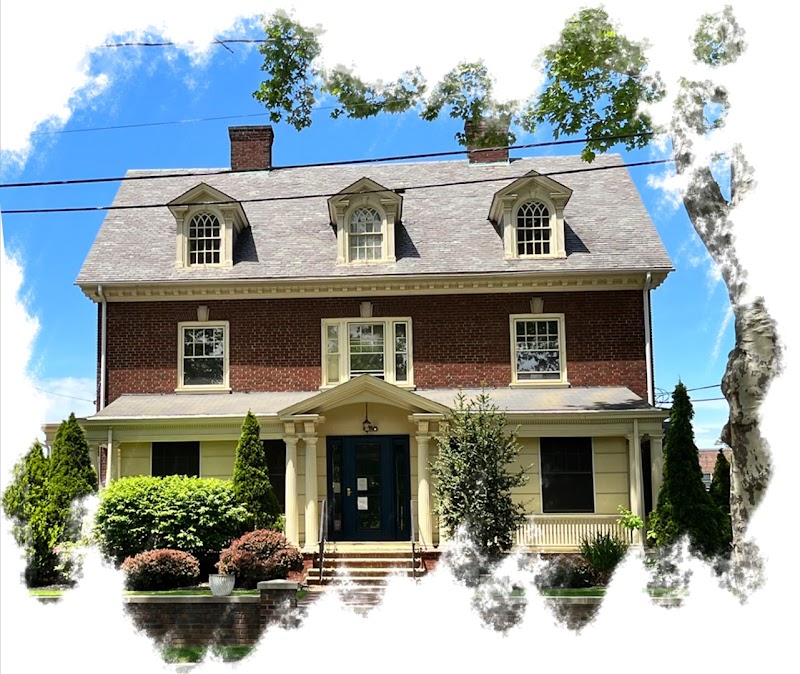
Who Owns and Operates Hanover Hall For Nursing And Rehabilitation?

HANOVER HALL FOR NURSING AND REHABILITATION is owned by a for-profit company. For-profit facilities operate as businesses with obligations to shareholders or private owners. The facility operates independently rather than as part of a larger chain. With 151 certified beds and approximately 113 residents (about 75% occupancy), it is a mid-sized facility located in HANOVER, Pennsylvania.
How Does Hanover Hall For Nursing And Rehabilitation Compare to Other Pennsylvania Nursing Homes?

Compared to the 100 nursing homes in Pennsylvania, HANOVER HALL FOR NURSING AND REHABILITATION's overall rating (2 stars) is below the state average of 3.0, staff turnover (55%) is near the state average of 46%, and health inspection rating (2 stars) is below the national benchmark.

What Should Families Ask When Visiting Hanover Hall For Nursing And Rehabilitation?

Based on this facility's data, families visiting should ask: "Can you walk me through typical staffing levels on day, evening, and night shifts?" "Can I visit during a mealtime to observe dining assistance and food quality?" "How do you handle medical emergencies, and what is your hospital transfer rate?" "Can I speak with family members of current residents about their experience?" These questions are particularly relevant given the below-average staffing rating.

Is Hanover Hall For Nursing And Rehabilitation Safe?

Based on CMS inspection data, HANOVER HALL FOR NURSING AND REHABILITATION has a clean safety record: no substantiated abuse findings (meaning no confirmed cases of resident harm), no Immediate Jeopardy citations (the most serious violation level indicating risk of serious injury or death), and is not on the Special Focus Facility watch list (a federal program monitoring the lowest-performing 1% of nursing homes). The facility has a 2-star overall rating and ranks #100 of 100 nursing homes in Pennsylvania. While no facility is perfect, families should still ask about staff-to-resident ratios and recent inspection results during their visit.

Do Nurses at Hanover Hall For Nursing And Rehabilitation Stick Around?

HANOVER HALL FOR NURSING AND REHABILITATION has a staff turnover rate of 55%, which is 9 percentage points above the Pennsylvania average of 46%. Moderate turnover is common in nursing homes, but families should still ask about staff tenure and how the facility maintains care continuity when employees leave.

Was Hanover Hall For Nursing And Rehabilitation Ever Fined?

HANOVER HALL FOR NURSING AND REHABILITATION has been fined $8,190 across 1 penalty action. This is below the Pennsylvania average of $33,161. While any fine indicates a compliance issue, fines under $50,000 are relatively common and typically reflect isolated problems that were subsequently corrected. Families should ask what specific issues led to these fines and confirm they've been resolved.

Is Hanover Hall For Nursing And Rehabilitation on Any Federal Watch List?

HANOVER HALL FOR NURSING AND REHABILITATION is not on any federal watch list. The most significant is the Special Focus Facility (SFF) program, which identifies the bottom 1% of nursing homes nationally based on persistent, serious quality problems. Not being on this list means the facility has avoided the pattern of deficiencies that triggers enhanced federal oversight. This is a positive indicator, though families should still review the facility's inspection history directly.