VALLEY VIEW REHAB AND NURSING CENTER
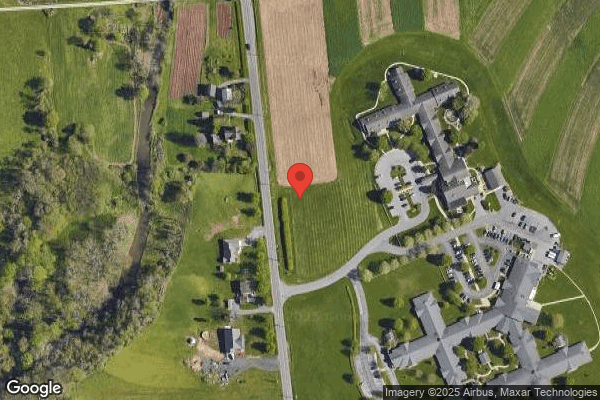
2140 WARRENSVILLE ROAD, MONTOURSVILLE, PA 17754 (570) 433-3161
Non profit - Corporation 163 Beds Independent Data: November 2025
Trust Grade
68/100
#243 of 653 in PA
Last Inspection: May 2025

Inspected within the last 6 months. Data reflects current conditions.

Overview

Valley View Rehab and Nursing Center has a Trust Grade of C+, indicating it is slightly above average but not without its issues. It ranks #243 out of 653 facilities in Pennsylvania, placing it in the top half, and #1 out of 8 in Lycoming County, showing it is the best option locally. The facility is improving overall, with the number of identified issues decreasing from 13 in 2024 to 8 in 2025. Staffing is a strong point, earning a 5-star rating with only 16% turnover, which is well below the state average. However, there are concerns with RN coverage, as it is below that of 82% of facilities in Pennsylvania. Recent inspections found serious issues, including a failure to properly identify and treat a pressure ulcer for a resident, which resulted in harm, as well as concerns about food safety and sanitation practices in the kitchen. Overall, while there are strengths in staffing, there are also critical areas that need improvement.

Trust Score
C+
68/100
In Pennsylvania
#243/653
Top 37%
Safety Record
Moderate
Needs review
Inspections
Getting Better
13 → 8 violations
Staff Stability
✓ Good
16% annual turnover. Excellent stability, 32 points below Pennsylvania's 48% average. Staff who stay learn residents' needs.
Penalties
⚠ Watch
$11,788 in fines. Higher than 80% of Pennsylvania facilities, suggesting repeated compliance issues.
Skilled Nurses
○ Average
Each resident gets 37 minutes of Registered Nurse (RN) attention daily — about average for Pennsylvania. RNs are the most trained staff who monitor for health changes.
Violations
⚠ Watch
26 deficiencies on record. Higher than average. Multiple issues found across inspections.
★★★★☆
4.0
Overall Rating
★★★★★
5.0
Staff Levels
★★★☆☆
3.0
Care Quality
★★★☆☆
3.0
Inspection Score
Stable
2024: 13 issues
2025: 8 issues

The Good

  • 5-Star Staffing Rating · Excellent nurse staffing levels
  • Low Staff Turnover (16%) · Staff stability means consistent care
  • Full Sprinkler Coverage · Fire safety systems throughout facility
  • No fines on record
  • Staff turnover is low (16%)

    32 points below Pennsylvania average of 48%

Facility shows strength in staffing levels, staff retention, fire safety.

The Bad

Federal Fines: $11,788

Below median ($33,413)

Minor penalties assessed

The Ugly 26 deficiencies on record

1 actual harm
May 2025 8 deficiencies
CONCERN (D)

Potential for Harm - no one hurt, but risky conditions existed

Deficiency F0605 (Tag F0605)

Could have caused harm · This affected 1 resident

Based on clinical record review and staff interview, it was determined that the facility failed to ensure a resident's medication regime was free from potentially unnecessary medications for two of fi...

Read full inspector narrative →
Based on clinical record review and staff interview, it was determined that the facility failed to ensure a resident's medication regime was free from potentially unnecessary medications for two of five residents reviewed (Residents 72 and 86). Findings include: Clinical record review revealed the facility admitted Resident 72 on January 24, 2025. Review of a consultant pharmacist recommendation dated April 12, 2025, revealed as needed Ativan (an antianxiety medication) is the most effective intervention for reducing Resident 72's anxiety. The pharmacist recommended Ativan 0.5 milligrams (mg) every 12 hours as needed for anxiety for 30 days with a re-evaluation of Resident 72's Ativan use in 30 days to determine if ongoing use is indicated. Review of Resident 72's clinical record revealed a physician's order dated April 16, 2025, for Ativan 0.5 mg, one tablet every 12 hours as needed for agitation. Further clinical record review revealed that Resident 72's order for Ativan did not have a 14 day stop date and there was no physician's progress note that provided a rationale for the medication extending past 14 days. Interview with the Director of Nursing on May 22, 2025, at 2:50 PM confirmed the above noted findings related to Resident 72's Ativan. Clinical record review for Resident 86 revealed a physician's order dated April 18, 2025, for Ativan 0.5 mg every six hours as needed for anxiety/agitation. Further clinical record review revealed that Resident 86's order for Ativan did not have a 14 day stop date and there was no physician's progress note that provided a rationale for the medication extending past 14 days. Interview with the Director of Nursing on May 21, 2025, at 2:47 PM confirmed the above noted findings related to Resident 86's Ativan. 28 Pa. Code 211.9(a)(1)(k) Pharmacy services 28 Pa. Code 211.12(c)(d)(1)(3)(5) Nursing services
CONCERN (D)

Potential for Harm - no one hurt, but risky conditions existed

Deficiency F0657 (Tag F0657)

Could have caused harm · This affected 1 resident

Based on clinical record review and staff interview, it was determined that the facility failed to revise the comprehensive care plan for one of 35 residents reviewed (Resident 11). Findings include: ...

Read full inspector narrative →
Based on clinical record review and staff interview, it was determined that the facility failed to revise the comprehensive care plan for one of 35 residents reviewed (Resident 11). Findings include: Observation of Resident 11 on May 21, 2025, at 9:10 AM revealed a urinary collection bag hanging from the left side of his bed. Clinical record review for Resident 11 revealed an active physician's order dated May 19, 2025, for the use of a Foley catheter (flexible tubing inserted through the penis into the bladder to drain urine) due to urinary retention related to bladder cancer. The order instructed staff to change the Foley as needed for obstruction, leaking, or if the closed system is compromised. Review of active plans of care for Resident 11 (including a care plan to address Resident 11's risk for urinary retention, incontinence, chronic kidney disease, and urinary tract infection) during the onsite survey revealed no plan of care that included the intervention of an indwelling Foley catheter. The surveyor reviewed the above concerns regarding Resident 11's care plans during an interview with the Director of Nursing on May 23, 2025, at 10:15 AM. 28 Pa. Code 211.12(d)(1)(5) Nursing services
CONCERN (D)

Potential for Harm - no one hurt, but risky conditions existed

Deficiency F0726 (Tag F0726)

Could have caused harm · This affected 1 resident

Based on a review of select facility policies and procedures, facility documentation, clinical record review, employee personnel record information, and staff interview, it was determined that the fac...

Read full inspector narrative →
Based on a review of select facility policies and procedures, facility documentation, clinical record review, employee personnel record information, and staff interview, it was determined that the facility failed to ensure that nursing staff possessed the specific competencies and skill sets related to obtaining verbal or telephone physician orders for one of one employee reviewed (Employee 3; Resident 40). Findings include: The Centers for Medicare and Medicaid Services (CMS) QSO-24-13-NH memo dated June 18, 2024, noted that requirements specify that the facility assessment must include an evaluation of diseases, conditions, physical or cognitive limitations of the resident population, acuity (the level of severity of residents' illnesses, physical, mental, and cognitive limitations, and conditions) and any other pertinent information about the resident population as a whole that may affect the services the facility must provide. The assessment of the resident population should drive staffing decisions and inform the facility about what skills and competencies staff must possess to deliver the necessary care required by the residents being served. The current Facility Assessment (noted as fourth quarter, April 2025) noted that staff receive yearly education and are assigned additional courses as needed. The Staff Development Coordinator maintains the current staff competencies and skill sets that are necessary to provide the level and types of care needed for the resident population. Additional competencies are developed as needed. The list entitled, LPN (licensed practical nurse) Staff Competencies, included, Documentation/Order writing, as one of the competencies completed by the facility for LPN staff. The facility policy entitled, Verbal, Telephone, and Written Physician Orders, last reviewed November 21, 2024, revealed that a physician's verbal or telephone order shall be given to a licensed nurse and shall be immediately recorded on the resident's medical record by that licensed nurse. Telephone orders for medical treatment should be accepted only under circumstances where it is impractical for the orders to be given in a written manner by the responsible practitioner, when the judgement of the professional nurse and the situation requires expedient action, or when the physician calls the facility and requests that a telephone order be accepted. Clinical record review for Resident 40 revealed nursing documentation by the registered nurse (RN) dated May 18, 2025, at 7:57 PM that his daughter noted blood on his pant leg. Staff assessed two skin tears on Resident 40's left leg, calf area. The staff cleansed the wound with wound wash and applied a Tegaderm dressing (transparent film dressing). The documentation did not indicate that the licensed nurse contacted Resident 40's physician or that Resident 40's physician provided an order for the wound treatment. Nursing documentation by Employee 3, licensed practical nurse (LPN), dated May 18, 2025, at 10:27 PM noted, N.O. (new order) Cleanse LLL (left lower extremity) skin tear with wound cleanser, pat dry, apply Tegaderm drsg. (dressing) Change drsg. Q (every) Friday 6-2 (6:00 AM to 2:00 PM) shift or prn (as needed) for soilage/dislodgement, check placement Q shift, measure Q Friday 6-2 shift. D/C (discontinue) when area healed. POA (power of attorney) aware of N.O. Nursing documentation by Employee 3 dated May 18, 2025, at 10:34 PM noted, N.O. Cleanse left calf skin tear with wound cleanser, pat dry, apply Tegaderm drsg. Change drsg. Q Friday 6-2 shift or prn for soilage/dislodgement, check placement Q shift, measure Q Friday 6-2 shift. D/C when area healed. POA aware of N.O. The documentation by Employee 3 did not indicate that the licensed nurse contacted Resident 40's physician. The documentation insinuated that Resident 40's physician provided an order for the wound treatment. Documentation by Resident 40's physician (Employee 4) dated May 19, 2025, at 8:17 AM noted that, Upon my return to work today, it appears that multiple messages were left on my work phone from RN (registered nurse) Supervisor regarding this resident from this past weekend. This number is to be used only if I am on call or with specific permission, neither of which were the circumstances this weekend. There was an on-call provider available. I will investigate further. Nurse leaving messages not in today. Interview with the Director of Nursing on May 22, 2025, at 11:20 AM confirmed that the facility had no evidence that either the RN or LPN spoke with a physician before documenting a treatment order for Resident 40's skin tear sites. The surveyor requested evidence of Employee 3's competency evaluations regarding obtaining and documenting verbal or telephone physician orders during an interview with the Nursing Home Administrator and Director of Nursing on May 22, 2025, at 2:30 PM. Documentation provided by the facility dated August 29, 2018, indicated that Employee 3 completed the facility's test regarding, Competency Test for Writing Orders. The facility failed to provide evidence that Employee 3 received any education after August 29, 2018, related to obtaining/documenting verbal or telephone physician orders although this competency was identified through the Facility Assessment as necessary to provide the level and types of care needed for the resident population. Cross Refer F684 28 Pa Code 201.20(a)(6)(d) Staff development
CONCERN (D)

Potential for Harm - no one hurt, but risky conditions existed

Deficiency F0744 (Tag F0744)

Could have caused harm · This affected 1 resident

**NOTE- TERMS IN BRACKETS HAVE BEEN EDITED TO PROTECT CONFIDENTIALITY** Based on clinical record review and staff interview, it was determined that the facility failed to develop and implement an indi...

Read full inspector narrative →
**NOTE- TERMS IN BRACKETS HAVE BEEN EDITED TO PROTECT CONFIDENTIALITY** Based on clinical record review and staff interview, it was determined that the facility failed to develop and implement an individualized person-centered care plan to address dementia and cognitive loss displayed by two of four residents reviewed (Residents 86 and 89). Findings include: Clinical record review for Resident 86 revealed that the facility admitted her on November 25, 2024, with diagnosis of Dementia (loss of memory, language, problem-solving, and other thinking abilities that interfere with daily life). A review of Resident 86's significant change minimum data set (MDS, a form completed at specific intervals to determine care needs) assessment dated [DATE], indicated that the facility assessed Resident 86 as having a diagnosis of dementia. The facility determined that a care plan for dementia and cognitive loss would be developed. A review of Resident 86's care plan entitled, Impaired cognitive function/dementia or impaired thought processes r/t (related to) Vascular Dementia initiated on December 3, 2024, failed to identify individualized person-centered interventions to address Resident 86's dementia and cognitive loss. Clinical record review for Resident 89 revealed that the facility admitted her on November 10, 2022, with a diagnosis of Dementia added on January 12, 2023. A review of Resident 89's annual MDS assessment dated [DATE], indicated that the facility assessed Resident 89 as having a diagnosis of dementia. The facility determined that a care plan for dementia and cognitive loss would be developed. A review of Resident 89's care plan entitled, Impaired cognitive function/impaired thought processes, moderately impaired per BIMS (brief interview for mental status, determines level of cognition); dementia with psychosis, dated August 7, 2023, failed to identify individualized person-centered interventions to address Resident 89's dementia and cognitive loss. The findings were reviewed with the Nursing Home Administrator and Director of Nursing on May 22, 2025, at 2:55 PM. 28 Pa Code 211.12 (d)(1)(3)(5) Nursing services
CONCERN (D)

Potential for Harm - no one hurt, but risky conditions existed

Dental Services (Tag F0791)

Could have caused harm · This affected 1 resident

Based on a review of select facility policies and procedures, clinical record review, and family and staff interview, it was determined that the facility failed to obtain routine dental services for o...

Read full inspector narrative →
Based on a review of select facility policies and procedures, clinical record review, and family and staff interview, it was determined that the facility failed to obtain routine dental services for one of three residents reviewed for dental concerns (Resident 67). Findings include: The facility policy entitled, Dental Exams, last reviewed November 21, 2024, revealed that each resident will receive, at a minimum, an annual oral examination with a dentist or his/her choice. In addition to the minimum oral examination, each resident will be offered dental services every six months as his/her insurance will allow. Any resident or resident's responsible party may elect to have the annual oral examination done with the contract dentist. Interview with Resident 67's daughter on May 20, 2025, at 10:10 AM revealed that Resident 67 has natural teeth; however, Resident 67's daughter did not know the last time Resident 67 received professional dental services. Resident 67's daughter stated that she, .would love to see that happen. Clinical record review for Resident 67 revealed that the facility admitted her on May 3, 2023, with Medicare as her primary payer source. Resident 67 began to pay privately for her care on June 1, 2023. Resident 67's primary payer source converted to Medicaid on May 1, 2024. A Dental Services form (document the facility utilized to obtain consent for contracted dental services) signed by Resident 67's daughter on May 3, 2023, (while Resident 67 did not receive Medicaid payment for services) indicated that Resident 67's daughter declined dental care. Annual MDS assessments (Minimum Data Set, an assessment tool completed at specific intervals to determine resident care needs) dated May 2, 2024, and May 3, 2025, assessed Resident 67 with obvious or likely cavities or broken natural teeth. The Care Area Assessment for Dental Care indicated that the facility would proceed to a care plan in May 2024; however, the facility decided to not proceed to a care plan in May 2025. Review of Resident 67's plans of care revealed no evidence that the facility developed a care plan to address the likelihood that Resident 67 had decayed or broken teeth or attempted an intervention for professional dental services following either the May 2, 2024, or May 3, 2025, MDS assessments. Care Conference Meeting documentation dated November 6, 2024, at 10:00 AM indicated that Resident 67's daughter attended the meeting. Care Conference Meeting documentation dated January 15, 2025, at 10:43 AM indicated that Resident 67's daughter attended via telephone. Care Conference Meeting documentation dated May 14, 2025, at 12:57 PM indicated that staff emailed updates to Resident 67's daughter because she was unable to attend. Resident 67's clinical record contained no evidence that the facility afforded Resident 67's daughter the opportunity to accept dental services provided under the Medicaid benefit in the year since her mother's payment source changed. The surveyor reviewed the above information regarding concerns related to Resident 67's dental needs during an interview with the Nursing Home Administrator and the Director of Nursing on May 21, 2025, at 2:30 PM and the Director of Nursing on May 22, 2025, at 11:20 AM. Nursing documentation dated May 22, 2025, at 11:32 AM (following the surveyor's questioning) revealed that staff contacted Resident 67's daughter regarding dental services now that Resident 67 is approved for medical assistance (Medicaid). Resident 67's daughter stated that she would be interested in services for her mother from the facility's contracted dental provider and asked that the forms be mailed to her for signature. 28 Pa. Code 211.15 Dental services 28 Pa. Code 211.12(d)(1)(3)(5) Nursing services
CONCERN (D)

Potential for Harm - no one hurt, but risky conditions existed

Infection Control (Tag F0880)

Could have caused harm · This affected 1 resident

Based on a review of select facility policies and procedures, observation, and staff interview, it was determined that the facility failed to ensure an environment free from the potential spread of in...

Read full inspector narrative →
Based on a review of select facility policies and procedures, observation, and staff interview, it was determined that the facility failed to ensure an environment free from the potential spread of infection on one of six residents reviewed for infection control (Resident 83). Findings include: The policy entitled Standard Precautions and Transmission-Based Precautions, last reviewed without changes March 18, 2025, revealed the CDC recommends two tiers of precautions. In the first tier are those precautions designed for the care of all residents, regardless of their diagnosis or presumed infection status. Implementation of these standard precautions is the primary strategy for successful infection prevention and control. The second tier of precautions are designed only for the care of specified residents on a case-by-case basis. Airborne, Contact, and Droplet precautions are used for persons known or suspected to be infected or colonized with highly transmissible pathogens. These precautions will be instituted for any resident who has an active infection and/or requires more extensive infection control measures. These precautions are to be used in addition to standard precautions. Contact precautions are used for residents known or suspected to be infected or colonized with microorganisms transmitted by direct contact with a resident or by indirect contact such as touching environmental surfaces. Examples of such illnesses include Vancomycin Resistant Enterococcus (VRE). Clinical record review revealed the facility admitted Resident 83 on February 21, 2025. A urine culture collected on April 23, 2025, noted with 10,000-50,000 cfu (colony forming unit)/mL (milliliter) of enterococcus faecium VRE. A physician's progress note dated April 25, 2025, at 10:35 AM indicated Resident 83's urine was positive for enterococcus faecalis and enterococcus faecium VRE. The physician noted they would start Macrobid 100 milligrams (mg) twice a day for five days but may need to change depending on pending sensitivities. Further review of Resident 83's clinical record revealed an order for contact precautions for VRE in her urine on April 27, 2025. Interview with Employee 1 (infection preventionist) on May 23, 2025, at 9:40 AM confirmed there was a delay in starting Resident 83's transmission-based precautions. Employee 1 stated the nurse supervisor did not implement contact precautions over the weekend. The surveyor reviewed the concerns related to transmission-based precautions during an interview with the Director of Nursing on May 23, 2025, at 10:31 AM. 483.80(a)(1)(2)(4)(e)(f) Infection Prevention and Control Previously cited deficiency 6/20/24 28 Pa. Code 211.10(a)(c) Resident care policies 28 Pa. Code 211.12(d)(1)(5) Nursing services
CONCERN (E)

Potential for Harm - no one hurt, but risky conditions existed

Quality of Care (Tag F0684)

Could have caused harm · This affected multiple residents

**NOTE- TERMS IN BRACKETS HAVE BEEN EDITED TO PROTECT CONFIDENTIALITY** Based on a review of select facility policies and procedures, clinical record review, and staff and resident interview it was de...

Read full inspector narrative →
**NOTE- TERMS IN BRACKETS HAVE BEEN EDITED TO PROTECT CONFIDENTIALITY** Based on a review of select facility policies and procedures, clinical record review, and staff and resident interview it was determined that the facility failed to ensure the highest practicable care for three of 35 residents reviewed (Residents 40, 230, and 94). Findings include: The facility policy entitled, Verbal, Telephone, and Written Physician Orders, last reviewed November 21, 2024, revealed that a physician's verbal or telephone order will be given to a licensed nurse and be immediately recorded on the resident's medical record by that licensed nurse. Telephone orders for medical treatment will be accepted only under circumstances where it is impractical for the orders to be given in a written manner by the responsible practitioner, when the judgement of the professional nurse and the situation requires expedient action, or when the physician calls the facility and requests that a telephone order be accepted. The facility policy entitled, Skin Tears, Risk Reduction, last reviewed November 21, 2024, revealed that treatment of existing skin tears will be outlined in the Risk Reduction/Wound Care Protocol or as ordered by the physician. Weekly skin checks will be completed by the licensed nursing staff in concert with the resident shower/bath. Identified areas of concern will be reported to the registered nurse. Protocol Two, Skin Tears, Cuts, Abrasions, stipulated that treatment would include a wound cleanser and an Aquacel foam dressing (dressing that has a soft absorbent foam pad that gels on contact with wound drainage to maintain a moist wound environment, a silicone adhesive, and a waterproof/bacteria barrier). Clinical record review for Resident 40 revealed nursing documentation by the registered nurse (RN) dated May 18, 2025, at 7:57 PM that his daughter noted blood on his pant leg. Staff assessed two skin tears on Resident 40's left leg, calf area. The staff cleansed the wound with wound wash and applied a Tegaderm dressing (transparent film dressing that does not have a foam pad or materials that would gel on contact with wound drainage). The documentation did not indicate that the licensed nurse contacted Resident 40's physician or that Resident 40's physician provided an order for the wound treatment that prompted nursing staff to implement a dressing different from that stipulated in the wound care protocol noted above. Nursing documentation by Employee 3, licensed practical nurse (LPN), dated May 18, 2025, at 10:27 PM noted, N.O. (new order) Cleanse LLL (left lower extremity) skin tear with wound cleanser, pat dry, apply Tegaderm drsg. (dressing) Change drsg. Q (every) Friday 6-2 (6:00 AM to 2:00 PM) shift or prn (as needed) for soilage/dislodgement, check placement Q shift, measure Q Friday 6-2 shift. D/C (discontinue) when area healed. POA (power of attorney) aware of N.O. Nursing documentation by Employee 3 dated May 18, 2025, at 10:34 PM noted, N.O. Cleanse left calf skin tear with wound cleanser, pat dry, apply Tegaderm drsg. Change drsg. Q Friday 6-2 shift or prn for soilage/dislodgement, check placement Q shift, measure Q Friday 6-2 shift. D/C when area healed. POA aware of N.O. The documentation by Employee 3 did not indicate that the licensed nurse contacted Resident 40's physician. The documentation insinuated that Resident 40's physician provided an order for the wound treatment that prompted nursing staff to implement a dressing different from that stipulated in the wound care protocol noted above. Documentation by Resident 40's physician (Employee 4) dated May 19, 2025, at 8:17 AM noted that, Upon my return to work today, it appears that multiple messages were left on my work phone from RN (registered nurse) Supervisor regarding this resident from this past weekend. This number is to be used only if I am on call or with specific permission, neither of which were the circumstances this weekend. There was an on-call provider available. I will investigate further. Nurse leaving messages not in today. The physician order recorded by Employee 3 dated May 18, 2025, at 10:31 PM for Resident 40's left calf skin tear treatment was electronically signed by Employee 4 on May 19, 2025, at 4:09 PM. The physician order for Resident 40's left lower extremity skin tear treatment was created by Employee 3 on May 18, 2025, at 10:25 PM as a verbal order from Employee 4 and was electronically signed by Employee 4 on May 19, 2025, at 4:09 PM. Interview with the Director of Nursing on May 22, 2025, at 11:20 AM confirmed that the facility had no evidence that either the RN or LPN spoke with a physician before implementing a treatment to Resident 40's skin tear sites. The interview indicated that licensed staff may implement a treatment per the facility's wound care protocol without speaking with a physician; however, the interview confirmed that the wound care protocol included a different dressing than the Tegaderm implemented for Resident 40 on May 18, 2025. Clinical record review for Resident 230 revealed that the facility admitted her on May 6, 2025. Diagnoses listed for Resident 230 upon her admission to the facility included the presence of a cardiac pacemaker (surgically inserted medical device with wires attached to the heart for the purpose of administering electrical impulses to regulate the heart rate). Review of Resident 230's baseline plan of care dated May 6, 2025, noted that Resident 230 had a pacemaker related to dysrhythmias (abnormal heart rhythms). The listed interventions included instructions to perform pacemaker checks; however, there was no intervention related to a pacemaker machine or method used to perform pacemaker checks. Interview with Resident 230 on May 21, 2025, at 10:42 AM revealed that she has had the cardiac pacemaker for three or four years. Resident 230 reported that she had one incident while she resided at her home when she went to bed when not feeling well and received a telephone call from her pacemaker monitoring company to inquire if she felt well. The pacemaker monitoring company instructed her to call emergency medical response services (911). Resident 230 stated that she was evaluated in the emergency room and diagnosed with a problem with her heart rate. Resident 230 confirmed that she had a machine in her home that is used to monitor her cardiac pacemaker. Resident 230 confirmed that she has not had this machine since her admission to the facility. Resident 230 stated, I didn't say anything, I just prayed a lot. The surveyor reviewed the concern regarding Resident 230's pacemaker monitoring during an interview with the Director of Nursing, the Nursing Home Administrator, Employee 1 (infection preventionist), and Employee 5 (assistant director of nursing), on May 21, 2025, at 2:30 PM. Nursing documentation dated May 21, 2025, at 4:29 PM (following the surveyor's questioning) revealed that Employee 5 spoke with Resident 230 regarding her home monitor for her cardiac pacemaker. Resident 230 verified that she had a machine at home and that she didn't think to bring it. Resident 230 suggested that Employee 5 call her daughter to bring the machine to the facility. Nursing documentation dated May 21, 2025, at 6:21 PM revealed Resident 230's family brought the cardiac pacemaker monitor to the facility. The surveyor reviewed the concern regarding Resident 230's baseline care plan and omission of a pacemaker monitoring machine during an interview with the Director of Nursing on May 22, 2025, at 11:20 AM. Clinical record review for Resident 94 revealed that she was admitted to the facility on [DATE], with hospice services related to her terminal diagnosis of senile degeneration of the brain/dementia (a group of thinking and social symptoms that interfere with daily functioning). Review of Resident 94's current care plan revealed that the facility failed to implement an integrated plan of care with hospice services. The plan of care did not include evidence of all services that hospice will provide for the management of Resident 94's terminal illness. Resident 94's current care plan failed to identify the hospice entity providing services, the hospice disciplines that would provide her care and services, and how often. . The findings were reviewed with the Director of Nursing during a meeting on May 22, 2025, at 2:45 PM. 483.25 Quality of Care Previously cited deficiency 6/20/24 28 Pa. Code 211.2(d)(3) Medical director 28 Pa. Code 211.3(a)(e)(2) Verbal and telephone orders 28 Pa. Code 211.10(c) Resident care policies 28 Pa. Code 211.12(d)(1)(3)(5) Nursing services
CONCERN (E)

Potential for Harm - no one hurt, but risky conditions existed

Deficiency F0700 (Tag F0700)

Could have caused harm · This affected multiple residents

Based on review of select facility policies, observation, clinical record review, and staff and resident interview, it was determined that the facility failed to assess for the risk of side rail entra...

Read full inspector narrative →
Based on review of select facility policies, observation, clinical record review, and staff and resident interview, it was determined that the facility failed to assess for the risk of side rail entrapment for 6 of 7 residents reviewed for accident hazards (Residents 14, 44, 85, 102, 113, and 230). Findings include: Review of the facility's current policy entitled Maintenance Enabler Bar Procedure last reviewed November 20, 2024, revealed it is the facility policy that maintenance will place assist bars on the resident's bed and immediately conduct a bed inspection for bed entrapment points using a bed measurement device following the manufacturer's test methods to inspect each zone. The zones were not specified. Observation of Resident 102's room on May 20, 2025, at 10:51 AM revealed an enabler bar attached to the right side of the resident's bed. Resident 102 stated it was put there to help her in bed because she had falls. Review of facility documents revealed facility staff completed an enabler bar entrapment evaluation for Resident 102 on March 14, 2025, which revealed facility staff assessed the resident's right side enabler bar indicating it passed for no potential entrapment for zones one (within the rail), two (between the bottom of the rail and top of compressed mattress), three (between the edge of the mattress and inside of the rail, and four (between the top of the compressed mattress and the bottom of the rail at the end of the rail). There was no documentation that the facility assessed zone six (between the end of the rail and the side edge of the head or foot board) for potential entrapment. Observation of Resident 44's room on May 21, 2025, at 8:28 AM revealed an enabler bar placed on the right side of the bed. The resident indicated it helped her get out of bed. Review of an enabler bar entrapment evaluation for Resident 44 dated March 14, 2025, revealed facility staff assessed and passed the resident's right side enabler bar for entrapment risk in zones 1-4, but they did not assess the resident's risk for entrapment at zone 6. In an interview with Employee 2 , director of facilities management, on May 22, 2025, at 10:45 AM revealed the maintenance staff assess the resident's risk of entrapment when enabler bars are placed assessing zones 1-4 with the bed rail measurement device tool, but did not specifically assess zone 6, the area between top of the bed end of the rail to the headboard of the bed for risk of entrapment. Facility staff updated Resident 102's entrapment zone risk assessment to include zone 6 as passing for any entrapment risk after the above interview with Employee 2. The above information was reviewed during an interview with the Nursing Home Director and the Director of Nursing on May 22, 2025, at 2:30 PM. Clinical record review for Resident 14 revealed a current physician's order dated May 15, 2025, (same day as her readmission from the hospital) for bilateral enabler bars to her bed. Observation of Resident 14 on May 20, 2025, 11:30 AM revealed she was sitting in a chair in her room beside her bed. Her bed was noted to have bilateral enabler bars on it. Resident 14 indicated that she had the enabler bars for a long time, and she uses them to help move in bed and to help her get out of bed. Review of an enabler bar entrapment evaluation for Resident 14 dated March 14, 2024, revealed facility staff assessed and passed the resident's right and left side enabler bar for entrapment risk in zones 1-4, but they did not assess the resident's risk for entrapment at zone 6. Interview with Nursing Home Administrator on May 22, 2025, at 2:45 PM confirmed that the facility does not measure zone 6. The FDA (The United States Food and Drug Administration) Hospital Bed System Dimensional and Assessment Guidance to Reduce Entrapment, is guidance that identifies key parts of the body at risk for entrapment, describes potential entrapment areas or zones, and recommends maximum and minimum dimensional limits of gaps or openings in hospital bed systems. Three key body parts at risk for life-threatening entrapment in the seven zones of a hospital bed system discussed in this guidance are the head, neck, and chest. To reduce the risk of head entrapment, openings in the bed system should not allow the widest part of a small head (head breadth measured across the face from ear to ear) to be trapped. The FDA is using a head breadth dimension of 120 mm (4.75 inches) as the basis for its dimensional limit recommendations. To reduce the risk of neck entrapment, openings in the bed system should not allow a small neck to become trapped. FDA is recommending 60 mm (two and three-eighths inches) as an appropriate dimension for neck diameter. The openings in a bed system should be wide enough not to trap a large chest through the opening between split rails. The FDA concurs with the dimension of 318 mm (12.5 inches) to represent chest depth for the population vulnerable to entrapment and has used this dimension as the basis for its recommended dimensional limits. This guidance describes seven zones in the hospital bed system where there is a potential for patient entrapment. Zone six is the space between the end of the rail and the side edge of the headboard or footboard. This space may present a risk of either neck entrapment or chest entrapment. Observation of Resident 85's room on May 20, 2025, at 1:11 PM revealed assist bar devices located bilaterally at the head of his bed. Resident 85's bed was equipped with a headboard and footboard. Clinical record review of an active physician's order dated June 3, 2024, instructed that Resident 85 may have bilateral enabler bars on his bed. Review of a Bed System Measurement Device Test Results Worksheet dated March 14, 2025, indicated that facility staff assessed zones one through four for entrapment risks. Resident 85's clinical record did not indicate that the facility assessed the gap between the edge of the assist bar and Resident 85's headboard (zone six) for possible entrapment risks. Observation of Resident 113's room on May 21, 2025, at 8:56 AM revealed assist bar devices located bilaterally at the head of his bed. Resident 113's bed was equipped with a headboard and footboard. Clinical record review for Resident 113 revealed an active physician's order dated April 25, 2025, for bilateral enabler bars to Resident 113's bed. Review of a Bed System Measurement Device Test Results Worksheet dated April 26, 2025, indicated that facility staff assessed zones one through four for entrapment risks. Resident 113's clinical record did not indicate that the facility assessed zone six for possible entrapment risks. Observation of Resident 230's room on May 21, 2025, at 10:41 AM revealed assist bar devices located bilaterally at the head of her bed. Resident 230's bed was equipped with a headboard and footboard. Clinical record review for Resident 230 revealed an active physician order dated May 9, 2025, for bilateral enabler bars to her bed. Review of a Bed System Measurement Device Test Results Worksheet dated May 9, 2025, indicated that facility staff assessed zones one through four for entrapment risks. Resident 230's clinical record did not indicate that the facility assessed zone six for possible entrapment risks. The surveyor reviewed the above concerns regarding the assist bar assessments for Residents 85, 113, and 230 during an interview with the Nursing Home Administrator, the Director of Nursing, Employee 5 (assistant director of nursing), and Employee 1 (infection preventionist), on May 22, 2025, at 2:30 PM. The surveyor requested the identification of the facility's bed and assist bar manufacturer. The facility did not provide the manufacturer's identification information during the onsite survey. 28 Pa. Code 211.12 (d)(5) Nursing services
Jun 2024 12 deficiencies
CONCERN (D)

Potential for Harm - no one hurt, but risky conditions existed

Free from Abuse/Neglect (Tag F0600)

Could have caused harm · This affected 1 resident

Based on clinical record review, review of facility documents, and staff interview, it was determined that the facility failed to ensure a resident was free from neglect resulting in injury for one of...

Read full inspector narrative →
Based on clinical record review, review of facility documents, and staff interview, it was determined that the facility failed to ensure a resident was free from neglect resulting in injury for one of two residents reviewed (Resident 26). Findings include: Clinical record review for Resident 26 revealed a progress note dated May 24, 2024, at 6:00 AM that indicated she was being transferred in a mechanical lift when the top of the sling came loose, and she fell to the floor. She was noted to have bleeding from the back of her head. Assessment of her injuries indicated that she had a 2.5-centimeter (cm) x 0.3 cm laceration to the mid back of her head and a smaller laceration measuring 0.5 cm x 0.5 cm just above the other one. Review of the facility's investigation into Resident 26's fall revealed a statement from Employee 5, nurse aide, dated May 24, 2024, that indicated the lift slipped and Resident 26 slipped out of the sling onto the floor. Further review of the facility's investigation into Resident 26's fall revealed a statement dated May 24, 2024, at 9:00 AM from Employee 6, Registered Nurse, that revealed she checked Resident 26's mechanical lift sling after the fall and there were no cracks or defects noted in the hooks, and no tears noted in the sling. An email to the Director of Nursing (DON) from Employee 7, director of facility management, dated May 24, 2024, at 12:58 PM revealed the mechanical lift was checked by maintenance with no concerns. Further review of the facility's investigation into Resident 26's fall revealed an interview conducted on May 28, 2024, at 9:45 AM with Employee 5 by the DON. The written interview summary indicated that Employee 5 put the sling under Resident 26, and hooked her up to the lift, but when she went to move her, the wheels of the lift were sticking, and it was hard to move. Employee 5 had to move it by pushing the lift. She indicated that she possibly bumped the sling attachment at that time, and the right upper part of the sling came loose causing Resident 26 to slide to the floor. She also indicated that she did not have anyone else in the room with her when this occurred. Clinical record review of Resident 26's care plan revealed an intervention dated July 9, 2020, that indicated she was a full body mechanical lift with the assist of two staff. A counseling action sheet dated May 28, 2024, revealed that Employee 5 was disciplined for neglect because she was operating a mechanical lift without a second person resulting in a resident falling from the lift to the floor. She received a final written warning, and any further incident would result in termination of employment. Review of the facility's corrective action was to conduct on the spot inservice to staff responsible for transferring residents with a mechanical lift. The inservice indicated that for the safety of the residents, when using a mechanical lift, two people must be present during the transfer, no exceptions. The inservice was a read and sign and was not initiated until May 30, 2024. Review of the signature sheets for the inservice revealed that only 46 staff members reviewed the information. Interview with the Director of Nursing on June 20, 2024, at 9:43 AM confirmed that as of this date all staff responsible for transferring residents with the mechanical lift did not acknowledge the information on the on-the-spot inservice. The facility failed to ensure that Resident 26 was free from neglect. 28 Pa. Code 201.18(e)(1) Management 28 Pa. Code 201.29(a) Resident rights
CONCERN (D)

Potential for Harm - no one hurt, but risky conditions existed

Abuse Prevention Policies (Tag F0607)

Could have caused harm · This affected 1 resident

Based on review of select facility policies, clinical record review, and staff interview, it was determined that the facility failed to develop and implement an abuse prohibition policy to ensure a co...

Read full inspector narrative →
Based on review of select facility policies, clinical record review, and staff interview, it was determined that the facility failed to develop and implement an abuse prohibition policy to ensure a complete and thorough investigation of an incident involving the potential for neglect for one of 27 residents reviewed (Residents 79). Findings include: The current facility policy entitled Abuse Prevention/Elder Justice Act Suspicious Crime Reporting, last reviewed without changes on December 5, 2023, revealed that all residents of the facility have the right to live without fear of abuse. The facility will ensure that all allegations of mistreatment, neglect, or abuse, as well as injuries of unknown source, are reported timely. The facility will prevent abuse and neglect through assessment and monitoring of residents, and educating employees, residents, and resident representatives. The facility will protect the rights of the residents, promptly report, and investigate incidents of alleged resident abuse, Clinical record review for Resident 79 revealed a care plan (a summary of resident's care needs) that identified as of April 22, 2021, Resident 79 utilizes two staff assistance for bed mobility. Resident 79's nursing documentation dated May 24, 2024, at 9:15 AM indicated that Employee 3, nurse aide, called staff to Resident 79's room. Employee 3 reported that while rolling Resident 79 to his left side to provide peri care, Resident 79 had a harsh coughing spell and rolled over off the bed to the floor. Resident 79 sustained 0.5 centimeters (cm) by 0.5 cm skin tear to the right elbow, a 1.5 cm by 1 cm abrasion on their right knee, and redness noted to their right side along the back and leg. Resident 79 indicated, I fell after coughing. Review of Resident 79's incident report dated May 24, 2024, confirmed the nursing documentation, but did not identify Resident 79's need for two staff members while moving in bed or the potential for neglect due to not having two staff members to assist Resident 79 in bed. The facility's intervention was to place a physical therapy screen. The facility provided Employee 3's statement with the incident report. There was no second staff statement involved with the incident provided. Review of Resident 79's May and June 2024, bed mobility documentation confirmed that staff only provided one staff assistance on May 24, 2024, day shift. Staff continued documenting one staff bed mobility assistance for 30 of the 74 shifts thereafter until identified by the surveyor. Review of a physical therapy screening completed on May 31, 2024, revealed that therapy staff determined that Resident 79 continues to be appropriate for assist x 2 (staff) for bed mobility. There was no documentation that indicated the facility identified the potential for neglect surrounding Resident 79's fall out of bed with only one staff present. The facility failed to report Resident 79's fall to the appropriate agencies. The facility failed to thoroughly investigate the incident to determine the presence of neglect, failed to complete a PB22 (abuse report), and failed to re-educate staff to utilize the correct number of staff either after the fall investigation and/or after therapy completed their screening. This information was reviewed during an interview with the Nursing Home Administrator and the Director of Nursing on June 18, 2024, at 10:50 AM. 28 Pa. Code 201.18(b)(1)(3) Management 28 Pa. Code 201.19 Personnel policies and procedures 28 Pa. Code 201.29(a) Resident rights 28 Pa. Code 211.12(d)(1)(5) Nursing services
CONCERN (D)

Potential for Harm - no one hurt, but risky conditions existed

Comprehensive Care Plan (Tag F0656)

Could have caused harm · This affected 1 resident

Based on clinical record review and staff interview, it was determined that the facility failed to develop and implement a comprehensive person-centered care plan to maintain the highest practicable c...

Read full inspector narrative →
Based on clinical record review and staff interview, it was determined that the facility failed to develop and implement a comprehensive person-centered care plan to maintain the highest practicable care for three of 27 residents reviewed (Residents 11, 116, and 119). Findings Include: Clinical record review for Resident 116 revealed that the facility admitted her on December 8, 2023, with a diagnosis of a prolapsed vaginal vault (the top of the vagina folds into the lower vagina) after a hysterectomy (a surgical procedure to remove the uterus). Clinical record review for Resident 116 revealed consultation reports dated March 13, 2024, and June 11, 2024, that indicated she was seen by a gynecology physician to have her pessary (a device that is inserted into the vagina to prevent or control a prolapse of the vaginal vault, bladder, or uterus) checked. Further clinical record review of Resident 116's care plan revealed the pessary was not noted on her plan of care. The Director of Nursing was made aware of the concern that there was no mention of Resident 116's pessary in her plan of care on June 18, 2024, at 10:45 AM. A care plan was provided to the surveyor on June 18, 2024, at 2:30 PM that revealed the facility added Resident 116's pessary use to her care plan on June 18, 2024, after the surveyor brought it to their attention. Clinical record review revealed the facility admitted Resident 11 on September 12, 2017. A review of Resident 11's current physician orders revealed an order dated January 13, 2021, indicating Resident 11's urine culture was positive for ESBL (extended-spectrum beta-lactamase, which is an enzyme found in some bacteria that makes them resistant to many antibiotics) and a new order to start contact precautions. A review of Resident 11's care plan on June 20, 2024, at 9:12 AM revealed there was no plan of care addressing Resident 11's ESBL in her urine or the need for contact precautions. Clinical record review revealed the facility admitted Resident 119 on September 23, 2023. A review of Resident 119's current physician orders revealed an order dated September 23, 2023, noting VRE (vancomycin-resistant enterococci, a type of bacteria that can cause serious infections in people who are already sick or have weakened immune systems) in Resident 119's urine and an order to start contact precautions. A review of Resident 119's care plan revealed there was no plan of care addressing Resident 119's VRE in her urine or the need for contact precautions. Interview with Employee 1 (infection preventionalist) on June 20, 2024, at 12:52 PM confirmed the findings for Residents 11 and 119. The facility failed to implement person-centered care plans to maintain the highest practicable care for Residents 116, 11, and 119. 28 Pa. Code 211.12(d)(5) Nursing services
CONCERN (D)

Potential for Harm - no one hurt, but risky conditions existed

Deficiency F0676 (Tag F0676)

Could have caused harm · This affected 1 resident

**NOTE- TERMS IN BRACKETS HAVE BEEN EDITED TO PROTECT CONFIDENTIALITY** Based on clinical record review and staff interview, it was determined that the facility failed to identify and assess a residen...

Read full inspector narrative →
**NOTE- TERMS IN BRACKETS HAVE BEEN EDITED TO PROTECT CONFIDENTIALITY** Based on clinical record review and staff interview, it was determined that the facility failed to identify and assess a resident's decline in activities of daily living (ADL) for two of two residents reviewed for an ADL decline (Residents 10 and 118). Findings include: A review of Resident 10's MDS (Minimum Data Set, assessment completed at specific intervals to determine care needs) assessment dated [DATE], noted nursing staff assessed Resident 10 as requiring the supervision of one staff for bed mobility. Resident 10's next quarterly assessment dated [DATE], revealed nursing staff assessed Resident 10 as declining and now requiring extensive assistance of one staff for bed mobility. There was no documented evidence in Resident 10's clinical record to indicate that the facility identified or assessed Resident 10's decline in her ability to perform this activity of daily living. A review of Resident 118's MDS assessment dated [DATE], noted nursing staff assessed Resident 118 as independent with bed mobility. A review of Resident 118's significant change MDS dated [DATE], revealed nursing staff assessed Resident 118 as declining and now requiring limited assistance of one staff for bed mobility. There was no documented evidence in Resident 118's clinical record to indicate that the facility identified or assessed Resident 118's decline in her ability to perform this activity of daily living. The surveyor reviewed the above findings for Residents 10 and 118 during an interview with Employee 4 (registered nurse assessment coordinator) on June 20, 2024, at 12:30 PM. The facility was unable to provide any further documentation that the facility assessed Residents 10 and 118's decline in bed mobility. 28 Pa. Code 211.12(d)(1)(3)(5) Nursing services
CONCERN (D)

Potential for Harm - no one hurt, but risky conditions existed

Quality of Care (Tag F0684)

Could have caused harm · This affected 1 resident

Based on clinical record review and staff interview, it was determined that the facility failed to provide the highest practicable care regarding physician ordered weights and feeding interventions fo...

Read full inspector narrative →
Based on clinical record review and staff interview, it was determined that the facility failed to provide the highest practicable care regarding physician ordered weights and feeding interventions for two of 27 residents (Residents 36 and 89). Findings include: Review of Resident 36's clinical documentation revealed the following physician orders: On January 17, 2024, and discontinued on March 1, 2024, staff were to complete a daily weight every day shift. Staff were to contact the physician if the weight increased by two-pounds in 24 hours or five-pounds in a week. On March 1, 2024, daily weights one time a day for CHF (Congestive Heart Failure, a heart condition that causes fluid build-up in the extremities and organs) for one week. On March 12, 2024, daily weights, make the physician aware if a two-pound weight gain in 24 hours or five pounds in one week, every day shift for CHF. Review of Resident 36's clinical documentation revealed no documented weights June 7, 2024. Further review of Resident 36's clinical documentation revealed that there was no physician notification regarding their weight change of two pounds in 24 hours or a five pounds in one week on the following dates: January 22, 2024, 161.8 pounds to January 23, 2024, 164.2 pounds, 2.4-pound increase May 7, 2024, 143.2 pounds to May 8, 2024, 145.4 pounds, 2.2-pound increase This information was reviewed during an interview on June 20, 2024, at 9:45 AM with the Director of Nursing. Clinical record review for Resident 89 revealed that she had a swallowing function study completed on June 12, 2024, at the request of her attending physician related to concerns with her reportedly choking often with eating and drinking. The results of the study indicated that the resident had mild dysphagia and her overall swallow was mildly unsafe. The recommendations related to the swallow study were for Resident 89 to sit fully upright for all intakes and at least 30 minutes after meals. There was no evidence in the clinical record to indicate that the recommendations from the swallowing evaluation were implemented. Interview with the Director of Nursing on June 20, 2024, at 11:15 AM revealed that the resident had remained on speech therapy services and that is why the recommendations were not implemented. She indicated that speech therapy was not present with Resident 89 at every meal and staff were feeding her the meals too. The facility failed to implement recommendations that were noted on the swallowing study completed on June 12, 2024, that would decrease the risk of choking for Resident 89. 483.25 Quality of Care Previously cited 7/28/23 28 Pa. Code 211.10(c) Resident care policies 28 Pa. Code 211.12(c)(d)(1)(3)(5) Nursing Services
CONCERN (D)

Potential for Harm - no one hurt, but risky conditions existed

Deficiency F0757 (Tag F0757)

Could have caused harm · This affected 1 resident

Based on clinical record review and staff interview, it was determined that the facility failed to ensure each resident's medication regimen was free of adverse medication reactions for one of five re...

Read full inspector narrative →
Based on clinical record review and staff interview, it was determined that the facility failed to ensure each resident's medication regimen was free of adverse medication reactions for one of five residents reviewed for unnecessary medications (Resident 50). Findings include: Clinical record review for Resident 50 revealed a pharmacy note to the physician dated March 12, 2024, informing the physician that the resident's concurrent use of the medications Omeprazole (a proton-pump inhibitor used to treat reflux disease) and Clopidogrel (a platelet inhibitor used to reduce the change of blood clot formation), may decrease the efficacy of the Clopidogrel, thus increasing the risk for clots. The pharmacist note questioned if the physician would like to switch the resident's proton pump inhibitor from Omeprazole to Pantoprazole (another proton pump inhibitor). Resident 50's physician responded to the pharmacist note on March 18, 2024, in agreement to change the resident's Omeprazole to Pantoprazole, and noted once the Pantoprazole arrives to discontinue the Omeprazole. Further review of Resident 50's clinical record revealed the resident had been ordered Omeprazole and Clopidogrel since March 5, 2022. A new order for Resident 50 to receive Pantoprazole was made on March 18, 2024, as well as to discontinue the Omeprazole on the same date. Resident 50's new order of Pantoprazole was discontinued the next day on March 19, 2024, and Omeprazole was again reordered for the resident. There was no documentation in Resident 50's clinical record to indicate why the new medication was discontinued and the resident was placed back on the old medication. Resident 50's active medication orders on June 20, 2024, included both the Omeprazole and the Clopidogrel. Review of email communication between the Director of Nursing and the facility pharmacy dated June 20, 2024, revealed the pharmacy indicated that the Pantoprazole was ordered for Resident 50 on March 18, 2024, but was flagged as a drug/drug interaction (DDI), but the pharmacy still approved the order and on March 19, 2024, the facility cancelled the Pantoprazole and entered the order for the Omeprazole. The email from the pharmacy response noted the Omeprazole is a stock medication for the facility so it was only a profile prescription and no paperwork for a DDI was identified, that the DDI was ever faxed to the facility, and the pharmacy should have faxed it. There was no evidence to indicate Resident 50's physician further addressed the DDI between the resident's Omeprazole and Clopidogrel after the medication was reordered when the Pantoprazole presented a DDI and was discontinued. There was no evidence the physician addressed the risk/benefits of continuing the Omeprazole and the Clopidogrel despite a DDI. There was no evidence the pharmacist addressed the DDI on any visit/review since the March 12, 2024, review. The above information was reviewed with the Director of Nursing on June 20, 2024, at 9:44 AM. 28 Pa. Code 211.9(k) Pharmacy services 28 Pa. Code 211.2(d)(3)(9) Medical director 28 Pa. Code 211.12(d)(1)(3)(5) Nursing services
CONCERN (D)

Potential for Harm - no one hurt, but risky conditions existed

Medication Errors (Tag F0758)

Could have caused harm · This affected 1 resident

Based on clinical record review and staff interview, it was determined that the facility failed to ensure a resident's medication regime was free from potentially unnecessary medications for one of fi...

Read full inspector narrative →
Based on clinical record review and staff interview, it was determined that the facility failed to ensure a resident's medication regime was free from potentially unnecessary medications for one of five residents reviewed (Resident 89). Findings include: Clinical record review for Resident 89 revealed a note to the attending physician/prescriber dated January 12, 2024, indicating that the following orders are due for a gradual dose reduction review, Buspirone (a medication used to treat anxiety) 5 milligrams (mg) in the morning and bedtime and 2.5 mg in the afternoon and Citalopram (a medication used to treat depression) 20 mg daily. Resident 89's physician checked the box on the form to indicate that she is benefitting from therapy without adverse effects and that the benefits of continued use outweigh risks. The prescriber did not indicate whether they agreed or disagreed to the recommendation or what benefit outweighed what the risk. Review of Resident 89's current physician orders revealed that there have been no changes to either of the medications. Interview with the Director of Nursing on June 20, 2024, at 11:53 AM revealed that the facility was unable to provide documentation of a previous dose reduction that failed, or justification for the continued use of the medication. The facility failed to ensure Resident 89's medication regimen was free from potentially unnecessary medications. 28 Pa. Code 211.9(a)(1)(k) Pharmacy services 28 Pa. Code 211.10(a) Resident care policies 28 Pa. Code 211.12(c)(d)(1)(3)(5) Nursing services
CONCERN (D)

Potential for Harm - no one hurt, but risky conditions existed

Infection Control (Tag F0880)

Could have caused harm · This affected 1 resident

Based on observation, review of a medication pass observation report, review of select facility policies and procedures, and staff interview, it was determined that the facility failed prevent the pot...

Read full inspector narrative →
Based on observation, review of a medication pass observation report, review of select facility policies and procedures, and staff interview, it was determined that the facility failed prevent the potential spread of infection during medication administration on 1 of 7 nursing units (600 hall, Resident 29). Findings include: The facility policy entitled, Specific Medication Administration Procedures Eye Drop Administration last reviewed on December 5, 2023, revealed the purpose was to administer ophthalmic solution/suspension into the eye in a safe, accurate, and effective manner. Review of the medication pass observation report for Employee 2, Licensed Practical Nurse (LPN), dated April 30, 2024, revealed that for ophthalmic (eye) medications gloves should be worn and a separate tissue should be used for each eye. Observation of Employee 2 during a medication administration pass to Resident 29 on June 17, 2024, at 8:32 AM revealed she administered one drop of Systane eye drops (used to relieve and prevent dry eyes) to each eye. She held the eye drops in her ungloved hand and pulled down the lower eye lid with her ungloved hand, administered a drop into Resident 29's left eye, used a tissue to wipe the eye. She then used her ungloved hand, pulled down the lower eye lid of Resident 29's right eye, administered one drop into the right eye, and wiped the right eye with the same tissue she used to wipe Resident 29's left eye. The above noted infection control concerns with medication administration were discussed with the Director of Nursing on June 20, 2024, at 9:55 AM. She confirmed that Employee 2 should have utilized gloves and used a different tissue for each eye when administering Resident 29's eye medication. 28 Pa. Code 201.18(b)(1) Management 28 Pa. Code 211.10(d) Resident care policies
CONCERN (E)

Potential for Harm - no one hurt, but risky conditions existed

Unnecessary Medications (Tag F0759)

Could have caused harm · This affected multiple residents

Based on observation, clinical record review, review of select facility policies and procedures, and staff interview, it was determined that the facility failed to ensure a medication error rate below...

Read full inspector narrative →
Based on observation, clinical record review, review of select facility policies and procedures, and staff interview, it was determined that the facility failed to ensure a medication error rate below five percent (Residents 29 and 82). Findings include: The facility's medication error rate was 17.95 percent based on 37 medication opportunities with 7 medication errors. Observation of Employee 2, Licensed Practical Nurse (LPN), during a medication administration pass on June 17, 2024, at 8:32 AM revealed she poured and crushed both Metoprolol Tartrate (a medication used to treat high blood pressure) 12.5 milligrams (mg) by mouth and Potassium Chloride Extended Release (ER) 20 milliequivalent (mEq, a unit of measure used for electrolytes) one tab by mouth and attempted to administer them to Resident 29, who refused them. Observation of Employee 2 during a medication administration pass on June 18, 2024, at 8:48 AM revealed she poured and crushed Metoprolol Tartrate 25 mg, Paroxetine (a medication used to treat depression) 20 mg and Potassium Chloride ER and administered them in pudding to Resident 82. Review of the facility's Medication Management Do Not Crush or Chew list dated February 2024, provided by their pharmacy provider, noted that Metoprolol Tartrate, Potassium Chloride ER, and Paroxetine were all on the list as medications that should not be crushed. The facility policy entitled Specific Medication Administration Procedures Oral Inhalation Administration, last reviewed December 5, 2023, revealed the purpose was to allow for safe and effective administration of medication using an oral inhaler. The procedure indicated to wait 1-2 minutes in between puffs or before administering a different inhalation medication. For steroid inhalers, after administration, provide the resident with a cup of water and instruct him/her to rinse mouth and spit water back into the cup. Observation of Employee 2 during a medication administration pass on June 17, 2024, at 8:48 AM with Resident 82, revealed she administered Albuterol Sulfate Inhaler (an inhaled medication used to treat breathing problems), two puffs, without waiting 1-2 minutes in between puffs and immediately after the second puff, she administered Fluticasone-Salmeterol (a steroid inhaled medication used to treat asthma) inhalation 250-50 mcg (micrograms) one puff. She then provided Resident 82 with a glass of water and Resident 82 took a drink and swallowed the water. Employee 2 did not direct her to rinse mouth and spit the water back into the cup. Concerns with the medication administration pass observations with Employee 2 were reviewed with the Director of Nursing on June 20, 2024, at 9:55 AM. She confirmed that Employee 2 should not have crushed the above noted medications and that she should have waited in between puffs and in between the two different inhalers. She also confirmed that Employee 2 should have directed Resident 82 to rinse and spit after administration of the Fluticasone-Salmeterol inhaler. The facility failed to ensure a medication error rate below 5 percent. 28 Pa. Code 211.12(c)(d)(1)(3)(5) Nursing services
CONCERN (E)

Potential for Harm - no one hurt, but risky conditions existed

Deficiency F0846 (Tag F0846)

Could have caused harm · This affected multiple residents

Based on a review of facility policies and procedures and staff interview, it was determined that the facility failed to have a policy and procedure in place to address facility closure or termination...

Read full inspector narrative →
Based on a review of facility policies and procedures and staff interview, it was determined that the facility failed to have a policy and procedure in place to address facility closure or termination of the facility's Medicare and/or Medicaid Provider Agreement. Findings include: During the entrance conference on June 17, 2024, at 8:35 AM the Nursing Home Administrator and Director of Nursing were asked to provide a copy of the facility's closure plan. The Director of Nursing revealed that the facility did not have a plan in the event of a facility closure. The Director of Nursing confirmed the facility was made aware of this during the previous full health survey in July of 2023. A follow-up interview with the Nursing Home Administrator on June 18, 2024, at 10:14 AM confirmed that the facility does not have a policy or procedure to address facility closure. 28 Pa Code 201.23 (c)(1) Closure of facility
CONCERN (E)

Potential for Harm - no one hurt, but risky conditions existed

Deficiency F0887 (Tag F0887)

Could have caused harm · This affected multiple residents

Based on a review of select facility policies and procedures, clinical record review, and staff and resident interview, it was determined that the facility failed to ensure the administration of a COV...

Read full inspector narrative →
Based on a review of select facility policies and procedures, clinical record review, and staff and resident interview, it was determined that the facility failed to ensure the administration of a COVID-19 immunization for four of five residents reviewed for immunization concerns (Residents 11, 109, 118, and 119). Findings include: The policy entitled COVID-19 Procedure for Testing, Quarantining, Source Control, and Vaccinations, last reviewed without changes on December 5, 2023, revealed the facility encourages everyone to remain up to date with all recommended COVID-19 vaccine doses. Residents, staff, and visitors will be offered COVID-19 vaccines through monthly booster clinics held at the facility. Clinical record review for Resident 119 revealed the facility admitted him on July 24, 2023. A review of Resident 119's immunization history information indicated that he received a COVID-19 immunization on March 4, 2021, April 1, 2021, and October 19, 2021. A review of facility documentation revealed that Resident 119's son gave permission on December 13, 2023, for the facility to administer the COVID-19 vaccination booster. There was no evidence in Resident 119's clinical record that he received a COVID-19 immunization booster. Further review of Resident 119's clinical record revealed nursing documentation dated February 9, 2024, at 10:43 AM indicating Resident 119 tested positive for COVID-19. Clinical record review for Resident 11 revealed the facility admitted her on September 12, 2017. A review of Resident 11's immunization history information indicated that she received a COVID-19 immunization on January 27, 2021, July 12, 2022, and March 21, 2023. A review of facility documentation revealed that Resident 11's responsible party gave permission on December 12, 2023, for the facility to administer the COVID-19 vaccination booster. There was no evidence in Resident 11's clinical record that he received a COVID-19 immunization booster. Further review of Resident 11's clinical record revealed nursing documentation dated February 21, 2024, at 8:55 AM indicating Resident 11 tested positive for COVID-19. Clinical record review for Resident 109 revealed that the facility admitted her on April 7, 2023. A review of Resident 109's immunization history information indicated that she received a COVID-19 immunization on March 9, 2023, and March 21, 2023. A review of facility documentation revealed that Resident 109's responsible party gave permission on May 10, 2023, for the facility to administer the COVID-19 vaccination booster. There was no evidence in Resident 109's clinical record that she received a COVID-19 immunization booster. Further review of Resident 109's clinical record revealed nursing documentation dated February 14, 2024, at 10:55 AM noting Resident 109 tested positive for COVID-19. Clinical record review for Resident 118 revealed the facility admitted her on July 18, 2023. A review of Resident 118's immunization history information indicated that she received a COVID-19 immunization on March 4, 2021, April 1, 2021, and November 10, 2021. A review of facility documentation revealed that the facility sent Resident 118's responsible party an email on December 12, 2023, asking if they wished for Resident 118 to receive a COVID-19 vaccination booster. The facility did not receive a response to the email and did not attempt a follow-up call or email. There was no evidence in Resident 118's clinical record that she received a COVID-19 immunization booster. Further review of Resident 118's clinical record revealed nursing documentation dated February 12, 2024, at 1:49 PM indicating Resident 118 tested positive for COVID-19. An interview with Employee 1 (infection preventionalist) on June 20, 2024, at 11:12 AM confirmed these findings. 28 Pa. Code 211.5(f) Medical records 28 Pa. Code 211.12(d)(1)(5) Nursing services
CONCERN (F)

Potential for Harm - no one hurt, but risky conditions existed

Food Safety (Tag F0812)

Could have caused harm · This affected most or all residents

Based on observation and staff interview, it was determined that the facility failed to store food in accordance with professional standards for food service safety and sanitation in the facility's ma...

Read full inspector narrative →
Based on observation and staff interview, it was determined that the facility failed to store food in accordance with professional standards for food service safety and sanitation in the facility's main kitchen and three of seven nursing units (100, 300, 800). Findings include: An observation of the facility's main kitchen on June 17, 2024, at 8:30 AM revealed the following: The coffee beverage station lower shelf contained several dried brown liquid spills along with dust and debris. A white blanket was balled up in the back corner of the shelf along the wall with dried brown and orange stains on it. The tubing on several flavors of bag in box juice concentrates connecting them to the juice dispenser were sticky and covered in dust. The flooring under the steam table, serving area, fryer, and cooking equipment contained dried food and debris. The wall area beside the plate warmers was covered in dried food splatter. The lower shelves of two production tables had dust and debris. The sides and control panel area of the steam kettle were covered in dried liquid spills. The lower shelves of the dry storage had a buildup of dust. An observation of the 100-hall nourishment area on June 17, 2024, at 10:14 AM revealed a storage cabinet with small plastic containers filled with hot chocolate packets, peanut butter packs, jelly packs, tartar sauce packets, along with a basket of saltine cracker packets, and packs of microwave popcorn. Foam cups filled with additional condiments such as ketchup packets, mustard packets, more jelly packs, as well as carboard trays of jelly and peanut butter packets were on the shelves. The refrigerator in the same area was observed to have a large bag of individual liquid coffee creamers, and a large bag of margarine packs. None of the items had any identification as to when they were placed there or when they expire. An observation of the 300-hall nourishment area on June 20, 2024, at 1:45 PM revealed a cabinet containing plastic containers of mustard packets, saltine cracker packs, pancake syrup cups, peanut butter packs, and jelly packs as well as foam cups filled with cocktail sauce packets, honey packs, and cardboard trays of jelly packs and peanut butter packs. There was no date on any of the products to indicate when they were placed there or when they expired. Observation of the 800-hall nourishment area on June 20, 2024, at 1:56 PM revealed a cabinet containing packets of brown sugar topping, foam cups of tartar sauce packets, ketchup packets, mustard packets, jelly packs, peanut butter packs, pancake syrup cups, and a large plastic bag with a mix of cocktail sauce packs, and sweet 'n sour packs. None of the items were dated as to when they were placed there or as to when they expire. The above findings were reviewed with the Nursing Home Administrator on June 20, 2024, at 2:02 PM. 28 Pa. Code 201.14 (a) Responsibility of licensee
Jun 2024 1 deficiency
CONCERN (E) 📢 Someone Reported This

A family member, employee, or ombudsman was alarmed enough to file a formal complaint

Potential for Harm - no one hurt, but risky conditions existed

Deficiency F0602 (Tag F0602)

Could have caused harm · This affected multiple residents

Based on clinical record review, review of facility documents, and staff interview, it was determined that the facility failed to thoroughly investigate and notify the appropriate agencies of an ident...

Read full inspector narrative →
Based on clinical record review, review of facility documents, and staff interview, it was determined that the facility failed to thoroughly investigate and notify the appropriate agencies of an identified incident of potential resident misappropriation of property (medication) for two of five residents reviewed (Residents 4 and 5). Findings include: In an interview with Employee 1, licensed practical nurse (LPN), on June 5, 2024, at 9:33 AM she stated she was aware of a recent discrepancy with Resident 5's liquid morphine in which the color of the medication was a dark purplish color and was normally blue. Employee 1 indicated the bottle had been opened. In an interview with Employee 2, LPN, on June 5, 2024, at 9:38 AM she stated there was a recent report of Resident 5's opened bottle of liquid morphine being a different color than others on the unit, where it appeared a grayish/brown color instead of blue and the bottle was discarded. Employee 2 also indicated there had been prior recent discrepancies in the controlled substance count of doses remaining of liquid Morphine for Resident 5, and Resident 4 who resided on the same hall and their counts on the controlled substance log were corrected. Clinical record review for Resident 5 revealed the resident was ordered Morphine Sulfate (concentrate) oral solution 20 milligrams/milliliter (mg/ml) to be given 0.25 ml (milliliters) by mouth every one hour as needed for pain or as needed for shortness of breath on January 19, 2024. A review of Resident 5's medication administration records for February through May 2024, revealed the resident was last documented as being administered the Morphine Sulfate on April 16, 2024, at 12:29 AM. Review of Resident 5's controlled medication record for the Morphine Sulfate revealed the bottle the dose was administered from on April 16, 2024, was received on January 20, 2024, with 15 ml as the amount received and the first dosage from the bottle was administered on February 2, 2024. The last dose was administered on April 16, 2024, and was documented on the controlled medication record as 0.25 ml given with 13.50 ml remaining in the bottle. No other doses were documented as administered after April 16, 2024. An April 20, 2024, entry on the same controlled medication log for Resident 5 noted count corrected with the amount on hand as 12 ml. A 1.5 ml (6 doses) decrease from the amount remaining logged on April 16, 2024, with a signature from a registered nurse and Employee 2. Clinical record review for Resident 4 revealed the resident had an active order for Morphine Sulfate (concentrate) oral solution 20 mg/ml to be given 0.25 ml via PEG-Tube every one hour as needed for pain of seven to 10, or every hour as needed for dyspnea (shortness of breath). A review of Resident 4's controlled medication record for the Morphine Sulfate revealed a discrepancy was identified in April 2024, after a dose was documented as administered on April 11, 2024, at 11:22 AM with 11 ml remaining in the bottle. The next entry on the controlled medication record was dated April 20, 2024, noting the count was corrected to 9 ml remaining on hand. A 2 ml (8 doses) decrease from the amount remaining on April 11, 2024, with a signature from a registered nurse and Employee 2. A review or Resident 4's April 2024, medication administration record did not indicate any doses of the Morphine Sulfate were administered between April 11 and April 20, 2024, when the discrepancy in the count was noted. A review of the facility staff's investigation into the discrepancy in the Morphine Sulfate counts for Residents 4 and 5 documented on April 20, 2024, or an investigation into the discoloration of Resident 5's bottle of Morphine Sulfate mentioned in the above interviews revealed the following: A registered nurse, Employee 3's, statement dated April 20, 2024, noted the registered nurse counted the narcotic drawer with Employee 4, LPN, on the 6 AM - 2 PM shift identifying the levels on Resident 5's bottle as 12 ml when the sheet read 13.5 ml. A note was on the bottom of the sheet indicating a dose was not checked on April 16, 2024, which was the last known dose, and a second bottle for Resident 4 was found with a content of 9 ml. The narcotic sheet was showing 11 ml with the last known dose charted on April 11, 2024. The statement noted Employee 4 wrote a statement and was given permission to leave by the administrator. Review of a statement from Employee 4 dated April 20, 2024, noted when counting narcotics with the 10 - 6 nurse (name not noted) prior to starting the 6-2 shift Employee 4 noted the Morphine levels were not compatible to the countdown sheets verses the actual bottles for two residents. The licensed nurse noted immediately reporting the discrepancy to a registered nurse (only listed by first name) who came to the floor and looked at the bottles and noted they did not match and that she would take care of it, and that that another 10-6 nurse found an error where another nurse had not marked it down when a dose was given. Employee 4 noted that the registered nurse placed a sticky note for the missed dose to be signed by the nurse that failed to do so on the sheet and that all was ok. Employee 4 noted both nurses left the floor without the sheets being corrected or initialed by the registered nurse it was reported to. Employee 4 then made the 6AM-2PM registered nurse supervisor aware (noted as Employee 3) of the two bottles of Morphine that had not been corrected, by the 10 PM - 6AM registered nurse. There was no additional documentation provided at the time of the survey into the investigation of the discrepancy of the counts of the Morphine doses in the counts for Residents 4 and 5 identified on April 20, 2024. There were no additional staff interviews provided for any staff with access to the medications between the last confirmed counts and the discrepancy, or the registered nurse Employee 4 noted was first made aware of the discrepancies. There was no evidence facility staff reported an alleged allegation of misappropriation with a completed investigation of Resident 4 or Resident 5's Morphine discrepancies to the Department of Health when the discrepancy in dosage counts were identified on April 20, 2024. A review of email communication between the Nursing Home Administrator and facility pharmacist dated May 23, 2024, at 12:22 PM revealed a discrepancy in the color of liquid Morphine Sulfate in a bottle was noted as brownish/clear instead of a light blue in color, and questioned if the color could change over time, and if it was safe to use. The pharmacist replied by email at 1:02 PM the same day noting the morphine concentrate should not change color over time, and the change in color reported likely indicates contamination and/or diversion and recommended a new supply be ordered for the resident, and to complete an investigation for possible diversion by inspecting the color of all morphine concentrate bottles in the facility, checking the controlled substance logs and signature sheets, monitor reports from residents of morphine doses being ineffective, document all findings and steps of the investigation, and contact authorities if indicated. In a follow up email to the pharmacist later the same day at 2:42 PM a picture of the discolored bottle beside five additional bottles was attached indicating the color is darker blue on the left, should we destroy? The pharmacist responded at 2:51 PM noting it may be destroyed per protocol once you have documented investigation findings to include the picture of the medication, lot number, expiration date, date opened, and any other notable aspects of the medication. An observation of the photo of the bottle of the discolored Morphine liquid was provided by the Director of Nursing with five additional bottles visible in the photo belonging to other residents on the same unit, which showed a discoloration compared to shades of light blue in the additional bottles. The date on the discolored bottle could be seen as 2/2 as the first parts of the date and the Director of Nursing confirmed the bottle belonged to Resident 5. There was no additional information provided as to any further investigation (i.e., staff interviews) to any prior notice of the resident's medication being a different color, or additional steps to the investigation as recommended by pharmacy prior to the disposal. Review of Resident 5's controlled medication record for the Morphine had not noted any entries of any administration of the medication since the dosage count was corrected as referenced above on April 20, 2024. In an interview with the Director of Nursing on June 5, 2024, at 2:30 PM the Director of Nursing indicated the discolored bottle of Morphine for Resident 5 was discarded and other than the photo comparing the color of the Morphine liquid to other bottles on the unit, there was no other investigation to rule out the potential diversion of the Resident's medication. In the same interview with the Director of Nursing on June 5, 2024, at 2:30 PM the Director of Nursing confirmed there were no additional staff interviews or investigation documentation available for the identified discrepancy in Morphine counts on April 20, 2024, for Resident 4 and Resident 5, to determine a justified reason for the discrepancy, or rule out misappropriation, or rule out potential diversion of the resident's medication. There was no rationale why the investigation was not conducted when it was first reported by Employee 5 to a prior shift registered nurse. The Director of Nursing stated the doses of Morphine liquid is hard to count due to the bottle being marked in 5 ml increments. The above findings were reviewed with the Nursing Home Administrator and Director of Nursing on June 5, 2024, at 3:20 PM. 28 Pa. Code 201.14 (a) Responsibility of licensee 28 Pa. Code 201.18 (e)(1) Management 28 Pa. Code 201.29 (a) Resident rights
Nov 2023 1 deficiency
CONCERN (D) 📢 Someone Reported This

A family member, employee, or ombudsman was alarmed enough to file a formal complaint

Potential for Harm - no one hurt, but risky conditions existed

Deficiency F0726 (Tag F0726)

Could have caused harm · This affected 1 resident

Based on a review of employee competencies and interviews with staff, it was determined that the facility failed to ensure that nursing staff completed competencies and skill sets necessary to care fo...

Read full inspector narrative →
Based on a review of employee competencies and interviews with staff, it was determined that the facility failed to ensure that nursing staff completed competencies and skill sets necessary to care for residents' needs for three of nine employees (Employees 1, 2, and 3; Residents 1, 2, and 3). Findings include: Review of Resident 1's clinical record revealed that the facility admitted him on October 25, 2023, with orders for nursing staff to use and care for a Peripherally Inserted Central Catheter (PICC) line (a catheter inserted into the upper arm that goes into the larger central veins near the heart). Nursing documentation dated October 26, 2023, at 5:30 AM revealed that Employee 1, registered nurse, used Resident 1's PICC line to draw blood. Resident 1 indicated that his PICC line was never used to draw blood at the hospital. Nursing documentation dated October 26, 2023, at 9:21 PM revealed that Employee 2, registered nurse, changed Resident 1's PICC line dressing. Employee 2 documented that he changed the caps on the ends of the PICC lines. Nursing documentation dated October 27, 2023, at 7:25 PM revealed that Employee 3, registered nurse, noted that after attempting to flush Resident 1's PICC line, Employee 3 indicated that one of the PICC line cap tips was lodged in the end of the PICC. Employee 3 attempted to dislodge the cap tip without success. Review of the facility's current resident population revealed that Resident 2 and Resident 3 require the use of a PICC line to deliver physician ordered antibiotics. The facility continues to have residents that require specific care needs that require a special skill set. Interview with Employee 4, staff development, on November 14, 2023, at 10:50 AM confirmed that the facility could not provide documented evidence to indicate that a PICC line care competency was completed for Employee 1, Employee 2, or Employee 3. Interview with the Administrator and Director of Nursing on November 14, 2023, at 11:15 AM acknowledged the above findings. 28 Pa Code 201.20(a) Staff development
Jul 2023 4 deficiencies 1 Harm
SERIOUS (G)

Actual Harm - a resident was hurt due to facility failures

Pressure Ulcer Prevention (Tag F0686)

A resident was harmed · This affected 1 resident

**NOTE- TERMS IN BRACKETS HAVE BEEN EDITED TO PROTECT CONFIDENTIALITY** Based on clinical record review, staff interview, and observation, it was determined that the facility failed to timely identify...

Read full inspector narrative →
**NOTE- TERMS IN BRACKETS HAVE BEEN EDITED TO PROTECT CONFIDENTIALITY** Based on clinical record review, staff interview, and observation, it was determined that the facility failed to timely identify and treat a pressure ulcer for one of six residents reviewed, which resulted in actual harm (Resident 38). Findings include: Resident 38's clinical record revealed the resident had a diagnosis of Type 2 Diabetes Mellitus (failure of the body to produce insulin to enable sugar to pass from the blood stream to the cells for nourishment) and unspecified dementia (a condition with memory loss, poor judgment, and confusion) and vascular dementia (dementia caused by impaired blood loss to the brain). Review of Resident 38's care plan dated September 14, 2019, identified the resident as being at risk for pressure injuries/ulcers and impaired skin integrity due to facial cancer with an intervention added, for the RN (registered nurse) to assess the skin weekly. Resident 38's care plan identified bowel incontinence (inability to control bowel movements resulting in soiling) as a problem on March 21, 2022. Resident 38's care plan identified a Stage IV pressure ulcer/injury (full thickness tissue with exposed bone, tendon, or muscle to the sacrum on December 27, 2022. Review of Resident 38's skin assessment dated [DATE], revealed that the resident had four surgical wounds on his abdomen. There was no documentation of a pressure ulcer/injury. Clinical record review for Resident 38 revealed an order dated September 23, 2022, for the staff to cleanse the sacrum (lower back) and buttocks with Remedy Wash (cleansing solution) then apply Calmoseptine ointment (a skin protectant containing zinc oxide that is used to treat diaper rash) every day and evening shift. Review of Resident 38's weekly Skin check completed by the LPN (licensed practical nurse) dated October 4, 2022, revealed the resident's bottom was red and remained so after 30 minutes of pressure reduction, and Calazime (another name for Calmoseptine ointment) was applied. Clinical record review for Resident 38 revealed that there was no corresponding RN assessment of the resident. Review of an RN progress note for Resident 38 dated October 7, 2022, at 1:24 PM revealed as per the LPN the resident was noted to have a sacral (bottom of the spine) slit (a long narrow open area) and a new physician's order was obtained to apply Optifoam (a foam dressing that is waterproof and has a high fluid-handling capacity) and change it on Tuesdays and Fridays and PRN (as needed) for dislodgement. The nurse was to check the placement of the dressing every shift. Clinical record review for Resident 38 revealed there was no documented assessment of the resident's sacral wound performed by an RN. The above progress note by the RN indicated that the information was relayed per LPN. Review of a Wound consultation (physician ordered wound care specialist that visits the facility to provide care and recommendations) for Resident 38 dated October 13, 2022, revealed the consultant assessed and provided treatment, and recommendations for the resident's surgical wound to his right abdomen. There was no mention of the provider evaluating or treating the sacral wound. The only assessment of the sacral slit was provided 13 days later on October 20, 2022, and described below. Review of a Wound consultation for Resident 38 dated October 20, 2022, revealed the consultant provided an initial evaluation of the resident's buttocks wounds. The staff reported the wound started as a coccyx (tailbone) slit. The wounds were assessed, and treatment recommendations were as follows: An unstageable (unable to identify staging or severity) pressure ulcer/injury of the right buttocks secondary to slough (dead tissue that needs to be removed for healing to occur) measured 3.0 cm (centimeters) length x 2.0 cm width x 0.2 cm depth. There was 20% granulation tissue (healing tissue) and 80% slough. The nurse was to cleanse the area with NSS (normal saline solution, similar to body fluid) or wound cleanser (special solution designated for wounds), apply Medihoney (a wound healing ointment that has antibacterial and anti-inflammatory properties that aides in removing dead tissue) to the wound base daily, cover with a bordered foam dressing, off-load pressure to affected areas, continue repositioning the resident, monitor for signs of infection such as bogginess, drainage, and erythema (redness). An unstageable pressure ulcer/injury due to a DTI (deep tissue injury, unable to see severity at this stage) of the left buttocks measured 1.5 cm x 1.5 cm x 0.0 cm. The nurse was to cleanse the affected area with NSS or wound cleanser, apply Skin prep (a protective barrier to help preserve the skin), cover with bordered foam dressing, off-load pressure, and continue to reposition the resident. Clinical record review of the TARs (forms for documenting treatments provided) dated October 2022 and November 2022, for Resident 38 revealed that the treatments to the buttocks recommended by the wound consultant was never implemented and the Optifoam dressing was applied though November 15, 2022. Review of a Wound consultation for Resident 38 dated November 10, 2022, revealed the right and left buttocks wounds merged and measured 3.0 cm x 2.5 cm x 0.2 cm, with 10% granulation and 90% slough. The wound was classified as unstageable. The treatment recommendations were changed to cleansing the affected area with NSS or wound cleanser, apply Medihoney to wound base daily, cover with bordered foam dressing, monitor for signs of infection, off-load pressure to affected areas, and continue to reposition in accordance to assessed needs. (The TAR dated November 2022 revealed this treatment was not applied.) Review of a Wound consultation for Resident 38 dated November 17, 2022, revealed the sacral wound measured 3.5 cm x 2.5 cm x 0.2 cm with 100% slough. The wound was classified as unstageable. The peri wound (the area surrounding the wound) was with erythema (redness). The consultant analysis was that the wound had larger measurements, the resident had poor mobility, and erythema to the peri wound. The Medihoney treatment was discontinued and Bactroban (antibiotic ointment) was ordered with a foam dressing daily. The consultant indicated that barriers to wound healing that can delay or impede wound healing were altered mobility, bowel and bladder incontinence, diabetes mellitus, and indicated the resident is at high risk for slow wound healing and secondary wound infection. (There was no documented evidence by the consultant that acknowledged that the previously ordered wound treatments were not provided as recommended for 26 days). Clinical record review of a TAR dated November 2022 for Resident 38 revealed that the Optifoam treatment was provided through November 15, 2022, and on November 16, 2022, the sacrum was cleansed with wound cleanser and Medihoney and a bordered dressing was applied. The sign-off area to complete this treatment for November 16 and 17, 2022, was blank indicating no documented evidence that the treatment was provided before being discontinued on November 18, 2022. Review of the November 2022 TAR revealed Mupirocin (generic name for Bactroban) was administered from November 18, 2022, through December 1, 2022. Clinical record review for Resident 38 revealed no weekly documented evidence of sacral wound assessments from November 17, 2022, until December 8, 2022 (two weeks without assessments). Review of a Wound consultation for Resident 38 dated December 8, 2022, revealed the sacral wound was larger in size, at 5.0 cm x 5.5 cm x 1.0 cm, with undermining (wound extends under the skin in all directions) from 8-12 o'clock, and 20% granulation tissue and 80% slough. The recommendation was to change the treatment to cleansing the area with NSS or wound cleanser, apply nickel thick size of Santyl (debriding agent to remove slough) to wound base, and gently packing the cavity with ¼ strength Dakin's (debriding agent) moistened gauze, and cover with bordered foam dressing. Review of the TARs indicated that this treatment was implemented through March 18, 2023. Review of a Wound consultation for Resident 38 dated December 15, 2022, revealed the sacral wound measured 7.0 cm x 6.0 cm x 3.0 cm, with undermining from 8-12 o'clock from 0.5 cm, and 20% granulation tissue and 80% slough. A foley catheter (tubing inserted in the bladder that drains urine into a collection bag, keeping the skin dry) was implemented to aide in wound healing. Clinical record review for Resident 38 revealed weekly Wound consultations with assessments of the sacral wound, and on January 12, 2023, the sacral wound measured 6.0 cm x 5.0 cm x 2.5 cm with undermining from 8-12 o'clock for 2.5 cm. A sacral Xray was recommended to rule out osteomyelitis (bone infection). Review of a Sacrum/coccyx Xray completed for Resident 38 on January 15, 2023, revealed no acute abnormalities and no definite evidence of osteomyelitis (bone infection). Should a clinical concern persist then consider follow up with a more sensitive CT scan (computer tomography, uses computer and x-rays). Review of a CT pelvis with contrast for Resident 38 completed on March 8, 2023, revealed the resident had Sacrococcygeal (sacral and coccyx area) osteomyelitis with tiny fluid collection/abscess. Clinical record review for Resident 38 revealed weekly Wound consultations with assessments of the sacral wound with their last consultation on March 9, 2023. The wound measured 4.5 cm x 4.5 cm x 2.5 cm. During a meeting with the Director of Nursing on July 27, 2023, at 11:30 AM the surveyor requested additional documentation of Resident 38's sacral wound as there was no documented evidence of wound assessments after March 9, 2023, to current. The Director of Nursing indicated that the resident's responsible party wanted to change consultants. Resident 38 was seen in the new Wound consultation office, and she indicated the facility had problems obtaining the written consultations. The new Wound consultations were provided to the surveyor after requested. Review of these documents revealed they were faxed to the facility on July 27, 2023. The first consultation by the Wound Center for Resident 38 was on March 2, 2023, and revealed a Stage IV (full thickness tissue with exposed bone, tendon, or muscle) pressure ulcer that measured 4.5 cm x 3.5 cm x 2.8 cm with 4 cm of undermining from 11-3 o'clock. The consultant indicated that the bone was exposed, and chronic osteomyelitis was suspected. A CT (computer tomography, uses computer and x-rays) scan was ordered. Review of a CT pelvis with contrast for Resident 38 completed on March 8, 2023, revealed the resident had Sacrococcygeal (sacral and coccyx area) osteomyelitis with tiny fluid collection/abscess. Review of a deep wound culture of Resident 38's sacral wound dated March 16, 2023, revealed Pseudomonas aeruginosa and Escherichia coli (both bacteria found in stool). Review of a physician's order for Resident 38 dated March 21, 2023, revealed the nurse was to administer Cefepime Hcl (hydrochloride; an antibiotic) 2 gram/100 milliliters intravenously twice daily for six weeks for sacral osteomyelitis. Review of Wound Center consultations revealed that Resident 38 was provided additional consultations on March 16 and 23, April 11, May 2 and 23, June 6, 27, and July 18, 2023. Review of a physician's order for Resident 38 dated June 7, 2023, to current, revealed that Z-guard (zinc ointment, protective barrier) was to be applied to the sacral peri wound with each dressing change twice daily. Review of a physician's order for Resident 38 dated June 27, 2023, revealed the current treatment ordered for the sacral wound was to wash the area with soap and water, pat dry, apply moistened Puracol plus (a collagen healing solution), cover with gauze and ABD (large abdominal size dressing), use Hypafix tape to sacrum, change every other day and PRN for soiling/dislodgement for sacral ulcer. Review of Wound Center consultation for Resident 38 dated July 18, 2023, revealed the Stage IV sacral wound was stable and smaller. The wound was debrided and measured 3.5 cm x 1.5 cm x 1.5 cm with undermining of 2.5 cm. During an interview with the Director of Nursing on July 28, 2023, at 8:20 AM it was confirmed that there were no weekly assessments done on the sacral wound from March 3, 2023, to current other that the dates assessed by the Wound Center as above. Observation of a sacral dressing change by Employee 1, LPN, on July 26, 2023, at 2:00 PM revealed the resident's sacral wound had scant active bleeding after the old dressing with brown drainage was removed. Employee 1 indicated that she did not need as much gauze to pack it. Employee 1 administered the treatment containing Puracol plus as ordered but did not apply Z-guard to the peri wound. During an interview with the Director of Nursing on July 28, 2023, at 8:20 AM the surveyor questioned how Z-guard could be applied to the sacral peri wound as the current dressing change was to be performed every other day and the dressing covers the peri wound and the Z-guard is ordered twice daily. The Director of Nursing indicated that she would clarify this order. Review of a nursing note dated July 28, 2023, at 12:15 PM revealed that the facility received a return call from the wound center and a new order was received to discontinue z-guard to peri wound BID with dressing change. The facility's failure to initially assess and treat Resident 38's buttocks wound resulted in harm. The facility failed to assess the reddened buttocks on October 4, 2022, which worsened to a sacral slit on October 7, 2022. The sacral slit was not assessed until 13 days later and then was classified as an unstageable pressure ulcer/injury. A new treatment recommendation was not provided for 26 days resulting in an infection requiring topical antibiotics. The pressure ulcer/injury enlarged to a Stage IV pressure ulcer/injury with undermining that resulted in osteomyelitis. The resident required intravenous antibiotics for six weeks and remains with a foley catheter to prevent urinary incontinence for optimal wound healing. Bone was observable in the sacral pressure ulcer/injury. These issues were discussed with the Director of Nursing on July 28, 2023, at 8:20 AM. 28 Pa. Code 201.14(a) Responsibility of licensee 28 Pa. Code 201.18(b)(1) Management 28 Pa. Code 211.5(f) Clinical records 28. Pa. Code 211.12(d)(1)(3)(5) Nursing services
CONCERN (D)

Potential for Harm - no one hurt, but risky conditions existed

Safe Environment (Tag F0584)

Could have caused harm · This affected 1 resident

**NOTE- TERMS IN BRACKETS HAVE BEEN EDITED TO PROTECT CONFIDENTIALITY** Based on observations and staff interview, it was determined that the facility failed to provide a clean, comfortable shower roo...

Read full inspector narrative →
**NOTE- TERMS IN BRACKETS HAVE BEEN EDITED TO PROTECT CONFIDENTIALITY** Based on observations and staff interview, it was determined that the facility failed to provide a clean, comfortable shower room environment on two of seven nursing units (Nursing Units 700 and 800). Findings include: Observation of the resident shower room located between the 700 and 800 nursing units on July 27, 2023, between 9:06 AM and 9:30 AM revealed the following: A hand-held shower wand in the shower stall was damaged. The stainless steel covering was starting to peel off the water hose near the base of the spray wand. The damaged area was jagged and sharp. A pink colored shower chair had several brown-colored stains on the cushioned seat. A window was partially open. There were small, dead flies accumulating on the screen. The windowsill was covered in these small, dead flies and a significant accumulation of dust. The base of the window has a significant accumulation of dust and small, dead flies. There was a shaving cream 1.5 oz dispenser with dust and a small, dead fly on the lid. The windowsill had a discarded glove and a balled-up used gauze bandage with a red blood-like stain visible. A fan forced heater in the wall has a significant accumulation of dust on the grates and the fan. The ceiling was cracking in a previously fixed area adjacent to a sprinkler head. The previously fixed area around the cracks had loose patching material. There were two large cracks that run the span of the ceiling at this area. Two operating ceiling vents that are both blowing air had a significant accumulation of dust on the vents. A used surgical mask was hanging on a hook in a shower stall along with a gait belt and a blue knitted scarf. There were two cracked and loose tiles on two of the interior wall corners. Small pieces of the tiles were missing, and the underlying wall was visible. There were two white foam positioning blocks noted on top of the spa tub. They were stuck together and the one foam block with multiple suction cups had debris, hair, and dust accumulated on it. A small four-inch drain in the floor near the spa tub had an accumulation of debris in the grates A cream-colored bucket noted on top of a plastic shower chair had broken and cracked handles. A section of the top perimeter of the bucket was cracked. The bucket has a strong urine-like odor. A sewer fly was noted on the mirror above the sink. The paper towel dispenser was empty with white and dried splash stains on it A large grey garbage can was empty and had no bag. There were multiple used gloves on the bottom of it. A [NAME] 3000 lift had a significant accumulation of unidentified debris on the blue colored foot area of the lift. A locked gray cabinet had a significant accumulation of dust on the top of it. The above findings were reviewed in a meeting with the Nursing Home Administrator and Director of Nursing on July 27, 2023, at 2:55 PM. 28 Pa. Code 201.18 (b)(1)(3) Management
CONCERN (D)

Potential for Harm - no one hurt, but risky conditions existed

Quality of Care (Tag F0684)

Could have caused harm · This affected 1 resident

**NOTE- TERMS IN BRACKETS HAVE BEEN EDITED TO PROTECT CONFIDENTIALITY** Based on observations, clinical record review, and staff interview, it was determined that the facility failed to provide the hi...

Read full inspector narrative →
**NOTE- TERMS IN BRACKETS HAVE BEEN EDITED TO PROTECT CONFIDENTIALITY** Based on observations, clinical record review, and staff interview, it was determined that the facility failed to provide the highest practicable care regarding physician orders for one of 27 residents reviewed (Resident 117). Findings include: Review of the current physician orders for Resident 117 revealed an order dated April 20, 2023, that instructed staff to always utilize a heel protector to the resident's right heel except for transfers due to a deep tissue injury. Review of the current care plan for Resident 117 revealed the resident has actual impaired skin integrity related to a Stage II (a partial-thickness loss of skin with exposed dermis (layer of skin), presenting as a shallow open ulcer) pressure ulcer to the right heel. An intervention dated April 20, 2023, indicated a heel protector should be applied to the resident's right heel at all times except for transfers. A review of the [NAME] (includes pertinent resident information used for care) for Resident 117 revealed the resident should always have a heel protector to the right heel except for transfers. Clinical documentation for Resident 117 dated July 11, 2023, at 2:17 PM revealed a physician's assistant note that indicated the resident had a deep tissue injury and is to float heels in bed and always use a right heel protector aside from transfer and care. Observation of Resident 117 on July 25, 2023, at 12:57 PM revealed he was sitting in his wheelchair with his feet resting on the floor. The right heel protector was not on. Observation of Resident 117 on July 26 2023, at 9:47 AM revealed he was sitting in his wheelchair with his feet resting on the floor. The right heel protector was not on. Observation of Resident 117 on July 26, 2023, at 11:00 AM revealed an unidentified staff member transported the resident to lunch in the Bistro. There was no heel protector on, or footrests observed on the wheelchair. Observation of Resident 117 on July 26, 2023, at 12:18 PM revealed the resident did not have the heel protector on. Interview with Employee 3, nurse aide, revealed the resident sometimes refuses, but should have the heel protector on. The heel protector was found on the resident's bedside chair in his room. Employee 3 proceeded to place the heel protector on the resident with no noted refusals from the resident. Observation of Resident 117 on July 27, 2023, at 9:38 AM revealed the resident was sitting in his wheelchair. The heel protector was on; however, it was on the resident's left heel. Employee 4, licensed practical nurse, confirmed the heel protector is supposed to be on the resident's right heel. A review of the clinical documentation for Resident 117 revealed no evidence of refusal of the heel protector or evidence that the resident removed the heel protector. The above findings were discussed in an interview with the Nursing Home Administrator and Director of Nursing on July 26, 2023, at 3:00 PM and July 27, 2023, at 2:45 PM. 483.25 Quality of Care Previously cited 6/3/22 28 Pa. Code 211.12(d)(1)(3)(5) Nursing services 28 Pa. Code 211.10(c)(d) Resident care policies
CONCERN (D)

Potential for Harm - no one hurt, but risky conditions existed

Deficiency F0700 (Tag F0700)

Could have caused harm · This affected 1 resident

Based on observation, clinical record review, and staff interview, it was determined that the facility failed to regularly assess a resident's entrapment risk from the use of bed rails for three of ni...

Read full inspector narrative →
Based on observation, clinical record review, and staff interview, it was determined that the facility failed to regularly assess a resident's entrapment risk from the use of bed rails for three of nine residents reviewed for accident hazards (Residents 26, 29, and 96). Findings include: Observation of Resident 29 on July 25, 2023, at 10:35 AM revealed the resident sitting on the edge of the bed. An enabler bar was observed on the right side of the bed. Clinical record review for Resident 29 revealed a physician's order for the right enabler bar to promote independence dated July 10, 2021. Updated consent and therapy assessments for continued need for the right enabler bar were completed in March 2023. There was no evidence of an assessment of the entrapment risk for the right enabler bar. Observation of Resident 26 on July 26, 2023, at 9:12 AM revealed the resident lying in bed with bilateral enabler bars observed on the bed. Clinical record review for Resident 26 revealed a physician's order for bilateral enabler bars to maximize independence with bed positioning in bed dated December 24, 2021. Updated consent and therapy assessments for continued need for the enabler bars were completed in October 2022. There was no evidence of an assessment of the entrapment risk for the bilateral enabler bars. Observation of Resident 96 on July 25, 2023, at 10:17 AM revealed that she was sitting in a chair next to her bed. Concurrent observation of her bed revealed bilateral enabler bars observed on the bed. Clinical record review for Resident 96 revealed a physician's order for bilateral enabler bars on the bed dated July 29, 2021. Updated consent and therapy assessments for continued need for the enabler bars were completed in July 2022, and June 2023, respectively. There was no evidence of an assessment of the entrapment risk for the bilateral enabler bars. In an interview with the Director of Nursing on July 27, 2023, at 9:48 AM the above information was reviewed for Resident 29 and evidence of the entrapment zone assessment of Resident 29's right enabler bar was requested, and the same information was requested for Residents 26's and 96 's bilateral enabler bars. The Director of Nursing indicated in an interview on July 27, 2023, at 2:39 PM that original assessments of the entrapment zones for the rails on the beds for Residents 26, 29, and 96, could not be located and were completed after being brought to the attention of the facility during the survey process. In an interview with Employee 2, director of maintenance, on July 28, 2023, at 1:45 PM, Employee 2 indicated entrapment zones assessments are completed on residents when rails are initially installed, when they change beds, or mattress surfaces, and not regularly reassessed unless one of those events occur. Employee 2 stated the initial assessments for Residents 26, 29, or 96 could not be located. There was no evidence Resident 26, 29, or 96 were assessed for the risk of entrapment from bed rails prior to the observations noted above. 28 Pa. Code 211.10(d) Resident care policies 28 Pa. Code 211.12(d)(1)(3)(5) Nursing services
Understanding Severity Codes (click to expand)
Life-Threatening (Immediate Jeopardy)
J - Isolated K - Pattern L - Widespread
Actual Harm
G - Isolated H - Pattern I - Widespread
Potential for Harm
D - Isolated E - Pattern F - Widespread
No Harm (Minor)
A - Isolated B - Pattern C - Widespread

Questions to Ask on Your Visit

  • "Can I speak with families of current residents?"
  • "What's your RN coverage like on weekends and overnight?"

Our Honest Assessment

Strengths
  • • 16% annual turnover. Excellent stability, 32 points below Pennsylvania's 48% average. Staff who stay learn residents' needs.
Concerns
  • • 26 deficiencies on record, including 1 serious (caused harm) violation. Ask about corrective actions taken.
  • • $11,788 in fines. Above average for Pennsylvania. Some compliance problems on record.
Bottom line: Mixed indicators with Trust Score of 68/100. Visit in person and ask pointed questions.

About This Facility

What is Valley View Rehab And Nursing Center's CMS Rating?

CMS assigns VALLEY VIEW REHAB AND NURSING CENTER an overall rating of 4 out of 5 stars, which is considered above average nationally. Within Pennsylvania, this rating places the facility higher than 99% of the state's 100 nursing homes. This rating reflects solid performance across the metrics CMS uses to evaluate nursing home quality.

How is Valley View Rehab And Nursing Center Staffed?

CMS rates VALLEY VIEW REHAB AND NURSING CENTER's staffing level at 5 out of 5 stars, which is much above average compared to other nursing homes. Staff turnover is 16%, compared to the Pennsylvania average of 46%. This relatively stable workforce can support continuity of care.

What Have Inspectors Found at Valley View Rehab And Nursing Center?

State health inspectors documented 26 deficiencies at VALLEY VIEW REHAB AND NURSING CENTER during 2023 to 2025. These included: 1 that caused actual resident harm and 25 with potential for harm. Deficiencies causing actual harm indicate documented cases where residents experienced negative health consequences.

Who Owns and Operates Valley View Rehab And Nursing Center?

VALLEY VIEW REHAB AND NURSING CENTER is owned by a non-profit organization. Non-profit facilities reinvest revenue into operations rather than distributing to shareholders. The facility operates independently rather than as part of a larger chain. With 163 certified beds and approximately 130 residents (about 80% occupancy), it is a mid-sized facility located in MONTOURSVILLE, Pennsylvania.

How Does Valley View Rehab And Nursing Center Compare to Other Pennsylvania Nursing Homes?

Compared to the 100 nursing homes in Pennsylvania, VALLEY VIEW REHAB AND NURSING CENTER's overall rating (4 stars) is above the state average of 3.0, staff turnover (16%) is significantly lower than the state average of 46%, and health inspection rating (3 stars) is at the national benchmark.

What Should Families Ask When Visiting Valley View Rehab And Nursing Center?

Based on this facility's data, families visiting should ask: "Can I visit during a mealtime to observe dining assistance and food quality?" "How do you handle medical emergencies, and what is your hospital transfer rate?" "Can I speak with family members of current residents about their experience?"

Is Valley View Rehab And Nursing Center Safe?

Based on CMS inspection data, VALLEY VIEW REHAB AND NURSING CENTER has a clean safety record: no substantiated abuse findings (meaning no confirmed cases of resident harm), no Immediate Jeopardy citations (the most serious violation level indicating risk of serious injury or death), and is not on the Special Focus Facility watch list (a federal program monitoring the lowest-performing 1% of nursing homes). The facility has a 4-star overall rating and ranks #1 of 100 nursing homes in Pennsylvania. While no facility is perfect, families should still ask about staff-to-resident ratios and recent inspection results during their visit.

Do Nurses at Valley View Rehab And Nursing Center Stick Around?

Staff at VALLEY VIEW REHAB AND NURSING CENTER tend to stick around. With a turnover rate of 16%, the facility is 29 percentage points below the Pennsylvania average of 46%. Low turnover is a positive sign. It means caregivers have time to learn each resident's needs, medications, and personal preferences. Consistent staff also notice subtle changes in a resident's condition more quickly. Registered Nurse turnover is also low at 21%, meaning experienced RNs are available to handle complex medical needs.

Was Valley View Rehab And Nursing Center Ever Fined?

VALLEY VIEW REHAB AND NURSING CENTER has been fined $11,788 across 1 penalty action. This is below the Pennsylvania average of $33,197. While any fine indicates a compliance issue, fines under $50,000 are relatively common and typically reflect isolated problems that were subsequently corrected. Families should ask what specific issues led to these fines and confirm they've been resolved.

Is Valley View Rehab And Nursing Center on Any Federal Watch List?

VALLEY VIEW REHAB AND NURSING CENTER is not on any federal watch list. The most significant is the Special Focus Facility (SFF) program, which identifies the bottom 1% of nursing homes nationally based on persistent, serious quality problems. Not being on this list means the facility has avoided the pattern of deficiencies that triggers enhanced federal oversight. This is a positive indicator, though families should still review the facility's inspection history directly.