MOUNT CARMEL SENIOR LIVING COMMUNITY

2616 LOCUST GAP HIGHWAY, MT CARMEL, PA 17851 (570) 339-2501
For profit - Limited Liability company 119 Beds GABRIEL SEBBAG & THE SAMARA FAMILY Data: November 2025
Trust Grade
35/100
#607 of 653 in PA
Last Inspection: July 2025

Inspected within the last 6 months. Data reflects current conditions.

Overview

Mount Carmel Senior Living Community has received an F grade, which indicates significant concerns regarding its quality of care. Ranking #607 out of 653 facilities in Pennsylvania places it in the bottom half of the state, and #6 out of 7 in Northumberland County means only one local option is better. Although there has been an improvement trend in recent years, with issues decreasing from 22 in 2024 to 19 in 2025, the facility still reports 51 total issues, including serious concerns about medication administration that led to a resident's hospitalization. Staffing is below average with a 2/5 rating, but the turnover rate is relatively good at 41%, indicating that some staff do remain. Notably, there have been no fines, which is a positive aspect, yet the facility has faced multiple concerning incidents, such as improper food storage and sanitation in the kitchen, risking the health and safety of residents.

Trust Score
F
35/100
In Pennsylvania
#607/653
Bottom 8%
Safety Record
Moderate
Needs review
Inspections
Getting Better
22 → 19 violations
Staff Stability
○ Average
41% turnover. Near Pennsylvania's 48% average. Typical for the industry.
Penalties
✓ Good
No fines on record. Clean compliance history, better than most Pennsylvania facilities.
Skilled Nurses
⚠ Watch
Each resident gets only 27 minutes of Registered Nurse (RN) attention daily — below average for Pennsylvania. Fewer RN minutes means fewer trained eyes watching for problems.
Violations
⚠ Watch
51 deficiencies on record. Higher than average. Multiple issues found across inspections.
★☆☆☆☆
1.0
Overall Rating
★★☆☆☆
2.0
Staff Levels
★★★☆☆
3.0
Care Quality
★☆☆☆☆
1.0
Inspection Score
Stable
2024: 22 issues
2025: 19 issues

The Good

  • Full Sprinkler Coverage · Fire safety systems throughout facility
  • No fines on record
  • Staff turnover below average (41%)

    7 points below Pennsylvania average of 48%

Facility shows strength in fire safety.

The Bad

1-Star Overall Rating

Below Pennsylvania average (3.0)

Significant quality concerns identified by CMS

Staff Turnover: 41%

Near Pennsylvania avg (46%)

Typical for the industry

Chain: GABRIEL SEBBAG & THE SAMARA FAMILY

Part of a multi-facility chain

Ask about local staffing decisions and management

The Ugly 51 deficiencies on record

1 actual harm
Jul 2025 15 deficiencies
CONCERN (D)

Potential for Harm - no one hurt, but risky conditions existed

Deficiency F0583 (Tag F0583)

Could have caused harm · This affected 1 resident

Based on observation and staff interview, it was determined that the facility failed to maintain confidentiality of residents' personal health information for four of four previous surveys reviewed th...

Read full inspector narrative →
Based on observation and staff interview, it was determined that the facility failed to maintain confidentiality of residents' personal health information for four of four previous surveys reviewed that were located in one of one survey results binder (main lobby of facility). Findings include: Observation of a seating area located in the main lobby of the facility on July 15, 2025, at 10:55 AM revealed a binder that contained the results of the most recent surveys of the facility conducted by Federal or State surveyors and any plan of correction in effect with respect to the facility. Review of the contents of the binders revealed that the facility placed the full health survey letters and complaint deficiency letters (letters sent to administration after a survey) along with the Statement of Deficiencies (Form CMS-2567) into the binder. The deficiency letters also noted the specific resident identifiers and associated resident names used for any cited deficiencies in the Statement of Deficiencies. The binder contained the following deficiency letters with the resident identifiers and the associated Statement of Deficiencies: A deficiency letter dated April 21, 2025, with the attached survey that ended April 18, 2025, and included two residents listed. A deficiency letter dated March 25, 2025, with the attached survey that ended March 18, 2025, and included four residents listed. A deficiency letter dated November 27, 2024, with the attached survey that ended November 25, 2024, and included ten residents listed. A deficiency letter dated August 28, 2024, with the attached survey that ended August 23, 2024, and included 23 residents listed. The information was reviewed with the Nursing Home Administrator on July 15, 2025, at 11:16 AM. 28 Pa. Code 201.14(a) Responsibility of licensee
CONCERN (D)

Potential for Harm - no one hurt, but risky conditions existed

Deficiency F0605 (Tag F0605)

Could have caused harm · This affected 1 resident

**NOTE- TERMS IN BRACKETS HAVE BEEN EDITED TO PROTECT CONFIDENTIALITY** Based on clinical record review and staff and resident interview, it was determined that the facility failed to ensure a residen...

Read full inspector narrative →
**NOTE- TERMS IN BRACKETS HAVE BEEN EDITED TO PROTECT CONFIDENTIALITY** Based on clinical record review and staff and resident interview, it was determined that the facility failed to ensure a resident's medication regime was free from potentially unnecessary medication for one of five residents reviewed for medication review (Resident 2). Findings include: Clinical record review for Resident 2 revealed her medication regime included the use of the antipsychotic medication, Loxapine Succinate, 10 milligrams daily, since her admission on [DATE], for a diagnosis of unspecified schizophrenia (serious mental health condition that affects how people think, feel and behave. It may result in a mix of hallucinations, delusions, and disorganized thinking and behavior. Review of progress notes from the facility's consulting psychiatric provider dated January 10, 2025, January 20, 2025, February 10, 2025, and April 28, 2025, revealed that Resident 2 had a history of depression for which she took the antidepressant medication, Fluoxetine, and that, pt (patient) with chronic psych illness, stable on current regimen. No psychiatric evaluations available in Resident 2's medical record included the diagnosis of schizophrenia or the use of the antipsychotic medication Loxapine Succinate. Review of the plans of care developed by the facility for Resident 2's care needs revealed a care plan to address her use of psychotropic medications related to schizophrenia (initiated January 8, 2025). The plan of care included no target behaviors exhibited by Resident 2 or monitored by the facility to support an adequate indication for the antipsychotic use. Review of behavior monitoring recorded on Resident 2's treatment administration records dated May, June, and July 2025, revealed the only target behavior tracked by the facility was if Resident 2 was, withdrawn. Interview with Resident 2 on July 18, 2025, at 11:30 AM revealed that she had no recollection of a practitioner diagnosing her with schizophrenia. Resident 2 stated that she developed deep depression after the death of her mother more than 30 years ago (when she was in her thirties) for which she received counseling and started taking an antidepressant. Resident 2 denied ever experiencing delusions, hallucinations, or disorganized thinking. Interview with Employee 1 (regional director of clinical) on July 17, 2025, at 3:35 PM confirmed that Resident 2's medical record did not contain supporting documentation regarding the history of Resident 2's schizophrenia diagnosis and that all documentation from the facility's consulting psychiatric provider only addressed Resident 2's diagnosis of depression. The interview with Employee 1 on July 18, 2025, at 9:41 AM confirmed that the facility did not monitor individual target behaviors related to Resident 2's diagnosis of schizophrenia or her use of the antipsychotic medication. 28 Pa. Code 211.12(d)(1)(3)(5) Nursing services
CONCERN (D)

Potential for Harm - no one hurt, but risky conditions existed

Assessment Accuracy (Tag F0641)

Could have caused harm · This affected 1 resident

Based on clinical record review and staff interview, it was determined that the facility failed to ensure assessments accurately reflected a resident's status for one of three closed records reviewed ...

Read full inspector narrative →
Based on clinical record review and staff interview, it was determined that the facility failed to ensure assessments accurately reflected a resident's status for one of three closed records reviewed (Resident 113).Findings include: Clinical record review for Resident 113 revealed a Discharge Return Not Anticipated Medicare MDS (Minimum Data Set, an assessment tool completed at specific intervals to determine resident care needs) dated June 30, 2025, in which facility staff assessed the resident as being discharged to a short-term general hospital. Further closed clinical record review for Resident 113 revealed the resident had signed out of the facility against medical advice and was not discharged to a hospital on June 30, 2025. Interview with Employee 10, Registered Nurse Assessment Coordinator (RNAC), on July 17, 2025, at 10:37 AM confirmed the MDS did not accurately reflect Resident 113's discharge status. The above information was reviewed with the Director of Nursing on July 17, 2025, at 2:00 PM. 483.20(g) Accuracy of AssessmentsPreviously cited 8/23/24 28 Pa. Code 211.12(d)(1)(3)(5) Nursing services
CONCERN (D)

Potential for Harm - no one hurt, but risky conditions existed

Deficiency F0657 (Tag F0657)

Could have caused harm · This affected 1 resident

Based on clinical record review, observation, and staff interview, it was determined that the facility failed to revise a resident's comprehensive care plan for one of 21 residents reviewed (Resident ...

Read full inspector narrative →
Based on clinical record review, observation, and staff interview, it was determined that the facility failed to revise a resident's comprehensive care plan for one of 21 residents reviewed (Resident 11).Findings include: Clinical record review for Resident 11 revealed a significant change MDS (Minimum Data Set, an assessment tool completed at specific intervals to determine resident care needs) dated June 26, 2025. The MDS indicated the resident was assessed as receiving oxygen therapy. A current physician's order for Resident 11 noted supplemental oxygen at two liters per minute (LPM) via nasal cannula (a type of medical tubing to deliver supplemental oxygen to the nose) every shift for shortness of breath; check oxygen saturation (a non-invasive measurement of the amount of oxygen in the blood usually measured through a medical device placed on a finger) every shift to keep saturation above 90 percent. Resident 11's current care plan revealed the resident is on oxygen therapy related to ineffective gas exchange. An intervention dated June 25, 2025, included oxygen settings that noted the resident has oxygen via nasal prongs/mask at two liters continuously. Another intervention included to Give medications as ordered by physician. Monitor/document side effects and effectiveness. Observation on July 15, 2025, at 2:25 PM revealed that Resident 11 was in bed. The resident did not have any supplemental oxygen being administered. Observation of Resident 11 on July 18, 2025, at 11:15 AM revealed the resident was in bed and did not have any supplemental oxygen being administered. A concurrent interview with Resident 11 revealed that the resident does not utilize the supplemental oxygen. An interview with the Director of Nursing and Employee 1, Regional Director of Clinical Services, on July 18, 2025, at 11:30 AM revealed that Resident 11's oxygen order is based on oxygen saturation and the resident has been greater than 95 percent. The facility failed to revise Resident 11's comprehensive care plan based on changing goals, preferences, and needs of the resident and in response to current interventions. The above information for Resident 11 was reviewed with the Director of Nursing on July 18, 2025, at 12:02 PM. 28 Pa. Code 211.12(d)(1)(5) Nursing services
CONCERN (D)

Potential for Harm - no one hurt, but risky conditions existed

ADL Care (Tag F0677)

Could have caused harm · This affected 1 resident

Based on clinical record review, observation, and resident and staff interview, it was determined that the facility failed to provide transfer and eating assistance to a dependent resident for one of ...

Read full inspector narrative →
Based on clinical record review, observation, and resident and staff interview, it was determined that the facility failed to provide transfer and eating assistance to a dependent resident for one of three residents reviewed for activities of daily living concerns (Resident 41).Findings include: Observation of Resident 41 on July 15, 2025, at 12:33 PM revealed she was in bed. Interview with Resident 41 on the date and time of the observation revealed that she stayed in bed due to physical limitations following her right leg surgery. Resident 41 stated that she was not out of bed yet on this date. During the observation and interview with Resident 41 on July 15, 2025, at 12:50 PM a nurse aide delivered her lunch. The nurse aide obtained assistance from a second staff person to reposition Resident 41 in bed; however, did not ask Resident 41 if she wanted to get out of bed. The nurse aide stayed to feed Resident 41 due to her reported loss of vision. Resident 41, in the presence of the nurse aide, stated that not all staff stay to assist her with her meal. Resident 41 stated that she has lost 40 pounds since her admission to the facility. Clinical record review for Resident 41 revealed an active physician's order dated May 6, 2025, for staff to get Resident 41 out of bed for all meals. Review of a plan of care developed by the facility to address Resident 41's deficits performing activities of daily living revealed interventions that included: Out of bed for all meals, initiated May 6, 2025The resident requires the assistance of two staff to reposition and turn in bed, initiated May 5, 2025 D (dependent) feed for eating, initiated May 6, 2025The resident requires total mechanical lift and the assistance of two staff for transfers Dietary documentation dated May 14, 2025, at 3:54 PM indicated that Resident 41 had lost 15.2 pounds and that Resident 41 was, .assisted with meals to ensure adequacy. Review of Resident 41's weight assessments revealed that she weighed 179.2 pounds on May 6, 2025, and 164 pounds on May 14, 2025 (a loss of 15.2 pounds). Observation of Resident 41 on July 16, 2025, at 12:42 PM revealed she was in bed. Interview with Resident 41 on the date and time of the observation revealed that she was not out of bed for her breakfast meal. Resident 41 stated that she has eaten all her meals while in bed and not once have staff gotten her out of bed for a meal. The surveyor reviewed the above observations and interviews with Resident 41 related to her assistance getting out of bed and eating her meals during an interview with the Nursing Home Administrator, Director of Nursing, and Employee 1 (regional director for clinical), on July 16, 2025, at 1:45 PM. A typewritten note provided by the facility the morning of July 17, 2025, revealed that the staff who obtained the physician's order to have Resident 41 out of bed for meals did not include it correctly within the tasks available for nurse aides to document, but that they updated the nurse aide task list. Observation of Resident 41 on July 18, 2025, at 11:28 AM revealed she was in bed. Resident 41 denied that staff asked her to get out of bed on this date. Interview with Employee 7 (nurse aide) on July 18, 2025, at 11:35 AM revealed that no staff documented morning care for Resident 41. Employee 7 confirmed that she was assigned to work the hall on which Resident 41 resided. Employee 7 confirmed that the instructions available to care for Resident 41 included that she needed the assistance of two staff for bed mobility, dressing, and transfers, and the assistance of one staff for feeding. Interview with Employee 8 (nurse aide) on July 18, 2025, at 11:38 AM revealed that she did not provide care to Resident 41. Employee 8 also confirmed that no staff documented care for Resident 41 for the morning on this date. Employee 8 confirmed that she did not ask Resident 41 if she wanted to get out of bed. Employee 8 stated that she believed staff from the overnight shift provided morning care to Resident 41; however, did not document that the care was provided. The interview indicated that overnight staff left the building, but that Employee 9 (nurse aide) documented Resident 41's breakfast meal intake for this date. Interview with Employee 9 on July 18, 2025, at 11:51 AM revealed that she worked on the hallway where Resident 41 resided until 10:00 AM and moved to another hallway assignment. Employee 9 confirmed that she charted Resident 41's breakfast meal percentage; but that she only gave Resident 41 ice water. Employee 9 questioned, is she a feed? Employee 9 reviewed task instructions for Resident 41 with the surveyor and confirmed that Resident 41 was assessed as dependent for feeding and that she should have had staff present during her breakfast meal. Employee 9 stated that she was not aware that Resident 41 needed to be out of bed for meals but then verified in the task directions that she was to be out of bed for all meals. The facility failed to provide Resident 41 necessary services for eating and transfer assistance. 483.24(a)(2) ADL Care Provided for Dependent ResidentsPreviously cited deficiency 11/25/24 28 Pa. Code 211.12(d)(1)(5) Nursing services
CONCERN (D)

Potential for Harm - no one hurt, but risky conditions existed

Quality of Care (Tag F0684)

Could have caused harm · This affected 1 resident

Based on clinical record review and staff interview, it was determined that the facility failed to provide the highest practicable care regarding physician ordered treatments and medications for two o...

Read full inspector narrative →
Based on clinical record review and staff interview, it was determined that the facility failed to provide the highest practicable care regarding physician ordered treatments and medications for two of 21 residents (Residents 11 and 48).Findings Include: Clinical record review for Resident 11 revealed a diagnosis list that included atrial fibrillation (an irregular and sometimes rapid heart rhythm that can lead to complications such as stroke and heart failure). Review of Resident 11’s current care plan revealed the resident has hypertension (high blood pressure) and an altered cardiovascular status related to atrial fibrillation. A review of the current physician orders for Resident 11 revealed an order dated June 25, 2025, for Metoprolol Succinate ER Extended Release (a medication that is used to treat high blood pressure and/or heartrate) 100 milligrams (mg) give one tablet by mouth one time a day related to unspecified atrial fibrillation. Hold for a systolic blood pressure (SBP, the top number of a blood pressure reading where the heart contracts) less than 100 or apical pulse less than 60 beats per minute. A review of the Medication Administration Record (MAR) for June and July 2025, for Resident 11 revealed that the Metoprolol was marked as administered outside of the physician specified parameters for the following dates: June 30, the resident’s pulse was documented as 59. July 1, the resident’s pulse was documented as 58.July 5, the resident’s pulse was documented as 55. There was no documentation for Resident 11 to indicate why the medication was administered outside of the specific stated parameters. The above information for Resident 11 was reviewed in a meeting with the Nursing Home Administrator and Director of Nursing on July 16, 2025, at 2:00 PM. A follow-up interview with the Director of Nursing on July 17, 2025, at 1:31 PM indicated there was no reason why Resident 11’s medication was administered outside of the specific stated parameters on the above dates. An observation of Resident 48 on July 15, 2025, at 11:47 AM revealed the resident was in bed with multiple small bruises on both of her arms, and a bandage on her upper right arm. The resident stated she bruises very easily and has her whole life. Resident 48 stated anytime she is touched by staff to move her or slightly bumps her arms she bruises, and the bandage on her upper right arm was covering a skin tear she recently got during care. Clinical record review or Resident 48 revealed an active physician’s order dated July 7, 2025, for the resident to have Geri-sleeves applied to her bilateral upper extremities for skin protection every shift. Resident 48 did not have Geri-sleeves on during the observation on July 15, 2025, noted above. A follow up observation of Resident 48 on July 16, 2025, at 9:32 AM revealed the resident was in bed with no Geri-sleeves applied to her arms. Resident 48 stated, “I got another bruise on my arm last night.” Resident 48 indicated she has not had any “sleeves” applied to her arm nor has she refused them for days. The above information regarding Resident 48 not having Geri-sleeves in place as ordered was reviewed with the Nursing Home Administrator and Director of Nursing on July 16, 2025, at 2:00 PM. Observation of Resident 48 on July 17, 2025, at 12:30 PM revealed the resident in bed with white tubi-grips (elastic tubular bandage) observed on both of her arms collected (slid down) around her wrists. Resident 48 stated, “This is not going to work, these are way too big and just slipped right down to my wrist.” Concurrent interview with the Director of Nursing indicated facility staff would find something that fit the resident better. 483.25 Quality of carePreviously cited 8/23/24, 11/25/25, and 3/18/25 28 Pa. Code 211.10(c) Resident care policies 28 Pa. Code 211.12(c)(d)(1)(3)(5) Nursing Services
CONCERN (D)

Potential for Harm - no one hurt, but risky conditions existed

Deficiency F0685 (Tag F0685)

Could have caused harm · This affected 1 resident

**NOTE- TERMS IN BRACKETS HAVE BEEN EDITED TO PROTECT CONFIDENTIALITY** Based on clinical record review, observation, and resident and staff interview, it was determined that the facility failed to en...

Read full inspector narrative →
**NOTE- TERMS IN BRACKETS HAVE BEEN EDITED TO PROTECT CONFIDENTIALITY** Based on clinical record review, observation, and resident and staff interview, it was determined that the facility failed to ensure that a resident received proper treatment and assistive devices to maintain hearing abilities for one of one resident reviewed for hearing concerns (Resident 36). Findings include: Interview with Resident 36 on July 15, 2025, at 1:19 PM revealed that he had difficulty hearing. Observation of Resident 36 revealed that he utilized a headphone amplifier device that he removed to answer his mobile phone, which decreased his ability to hear the person on the phone. Resident 36 stated, was just up to the VA (Veterans Administration), they take care of my hearing. Resident 36 denied knowing the status of his hearing aids. Clinical record review of nursing documentation dated March 21, 2025, at 10:38 AM revealed that staff notified Resident 36's daughter that his hearing aid was not working. Staff noted that a filter in the hearing aid was occluded, and that the battery was corroded. Nursing documentation dated March 24, 2025, at 1:25 PM noted that Resident 36's daughter was aware that Resident 36's hearing aid needed a filter and service due to battery corrosion. Resident 36's daughter questioned if the facility handled the service and was told that the facility was unable to, but she was encouraged to call, where the hearing aid came from. Nursing documentation dated May 15, 2025, at 10:03 AM revealed that Resident 36 had a hearing aid in his right ear that needed batteries. Nursing documentation dated May 20, 2025, at 7:16 PM revealed that Resident 36 stated that he was missing his hearing aid, and Resident 36, stated that someone took them to fix them but I'm not sure what is true. Resident is a poor historian. Nursing documentation dated May 20, 2025, at 8:24 PM revealed that Resident 36 stated that he was at an appointment that day, staff asked him for his hearing aid, and he left them with office staff. Review of a plan of care initiated by the facility on March 12, 2025, revealed that Resident 36 had an alteration in his neurological status related to Alzheimer's dementia (brain disease that results in a decline in mental abilities severe enough to interfere with daily life). Review of a consultation form dated May 20, 2025, for Resident 36's VA appointment revealed that Resident 36's left ear was impacted with cerumen (wax), that staff were to implement treatment for four days with an over-the-counter ear wax treatment solution (Debrox), flush the ear with warm water, continue medications and therapy, and to follow-up in 12 months with laboratory testing before his next appointment. The document did not include any information related to Resident 36's hearing aid(s), and there was no information on the provider's progress note regarding a repair plan for a hearing aid or that they had possession of the hearing aid(s). Resident 36's clinical record contained no evidence that facility staff contacted Resident 36's audiology services provider regarding services necessary for Resident 36's hearing deficit or to confirm that the provider took possession of Resident 36's hearing aid(s). Resident 36's clinical record contained no further communication regarding the status of his hearing aid(s). The surveyor requested information regarding facility staff communication with the VA since Resident 36's May 2025 appointment during an interview with the Nursing Home Administrator, Director of Nursing, and Employee 1 (regional director of clinical) on July 16, 2025, at 1:45 PM. Review of an admission MDS (Minimum Data Set, an assessment tool completed at specific intervals to determine resident care needs) dated March 13, 2025, revealed that Resident 36 had minimal difficulty hearing, and that no hearing aid was used when completing the assessment. Staff indicated that the facility would proceed to a care plan to address Resident 36's hearing problem due to his minimal difficulty hearing. Review of a plan of care initiated by the facility on March 17, 2025, to address Resident 36's potential communication problem related to a hearing deficit, revealed no intervention that indicated Resident 36 utilized a hearing aid. Instructions per the Resident Assessment Instrument (RAI) Manual noted that when completing the section (B0200, Hearing) staff were to ensure that the resident is using their normal hearing appliance if they have one. Hearing devices may not be as conventional as a hearing aid. Some residents by choice may use hearing amplifiers or a microphone and headphones as an alternative to hearing aids. Ensure the hearing appliance is operational. Review of a quarterly MDS assessment dated [DATE], revealed that Resident 36 had moderate difficulty hearing, but that no hearing aid was used when completing the assessment. The facility failed to accurately complete assessments, develop an individualized plan of care, and coordinate professional audiology services to assist Resident 36 to maintain his ability to hear. 28 Pa. Code 211.12(d)(1)(3)(5) Nursing services
CONCERN (D)

Potential for Harm - no one hurt, but risky conditions existed

Accident Prevention (Tag F0689)

Could have caused harm · This affected 1 resident

Based on observation, clinical record review, and resident and staff interview, it was determined that the facility failed to ensure a resident's environment remained free from accident hazards for on...

Read full inspector narrative →
Based on observation, clinical record review, and resident and staff interview, it was determined that the facility failed to ensure a resident's environment remained free from accident hazards for one of five residents reviewed for accident hazards (Resident 83). Findings include: Observation of Resident 83's room on July 16, 2025, at 9:37 AM revealed a countertop wooden block with large scissors and seven knives visible near his television. Interview with Resident 83 on the date and time of the observation confirmed that he leaves his room often during the day to go outside or on leaves of absence, and his room door does not lock. The surveyor reviewed the above concern regarding Resident 83's open storage of knives in his room during an interview with the Nursing Home Administrator and the Director of Nursing on July 16, 2025, at 1:45 PM. Clinical record review for Resident 83 revealed documentation by the business office manager dated July 16, 2025, at 4:55 PM (following the surveyor's questioning) that she and social services staff went to see Resident 83 regarding the block of knives in his room. Resident 83 was notified that he could not have the knives, and they were removed from his possession and placed in the Nursing Home Administrator's office. 483.25(d)(1)(2) Free of Accident Hazards/Supervision/Devices Previously cited deficiency 8/23/24 28 Pa. Code 201.18(e)(1) Management 28 Pa. Code 211.12(d)(1)(5) Nursing services
CONCERN (D)

Potential for Harm - no one hurt, but risky conditions existed

Deficiency F0744 (Tag F0744)

Could have caused harm · This affected 1 resident

**NOTE- TERMS IN BRACKETS HAVE BEEN EDITED TO PROTECT CONFIDENTIALITY** Based on clinical record review and staff interview, it was determined that the facility failed to develop and implement an indi...

Read full inspector narrative →
**NOTE- TERMS IN BRACKETS HAVE BEEN EDITED TO PROTECT CONFIDENTIALITY** Based on clinical record review and staff interview, it was determined that the facility failed to develop and implement an individualized person-centered care plan to address dementia and cognitive loss displayed by one of 21 residents reviewed (Resident 7). Findings include: Clinical record review for Resident 7 revealed the resident was admitted on [DATE], with a diagnosis of unspecified dementia (loss of memory, language, problem-solving, and other thinking abilities that interfere with daily life). A review of Resident 7's admission minimum data set (MDS, a form completed at specific intervals to determine care needs) assessment dated [DATE], indicated that facility staff assessed Resident 7 as having a diagnosis of dementia, and a BIMS (brief interview of mental status) score of three indicating severe cognitive impairment. A review of Resident 7's plan of care developed by facility staff revealed alteration in cognition, with general basic interventions such as cueing and reorienting, therapy staff as needed, and lab work as needed. There was no evidence of any individualized person-centered interventions to address Resident 7's dementia and cognitive loss, to aid in caring for the resident. The findings were reviewed with the Director of Nursing on July 17, 2025, at 1:55 PM 28 Pa Code 211.12 (d)(1)(3)(5) Nursing services
CONCERN (D)

Potential for Harm - no one hurt, but risky conditions existed

Deficiency F0761 (Tag F0761)

Could have caused harm · This affected 1 resident

Based on observation and staff interview, it was determined that the facility failed to ensure adequate storage of medications and biologicals on one of four hallways (Maple).Findings include: Observa...

Read full inspector narrative →
Based on observation and staff interview, it was determined that the facility failed to ensure adequate storage of medications and biologicals on one of four hallways (Maple).Findings include: Observation on July 17, 2025, at 12:00 PM of the Maple Hallway revealed an unlocked treatment cart against a wall, outside a resident's room. Opening drawers in the cart revealed multiple tubes of creams. Continued observation of the cart for five minutes revealed no employee attending the cart, and two residents were moving independently in the hallway. In an interview with the Director of Nursing (DON) on July 17, 2025, at 12:35 PM the unlocked cart was shown to the DON, who confirmed the cart should be locked. 28 Pa. Code 211.12 (c)(d)(1)(5) Nursing services
CONCERN (D)

Potential for Harm - no one hurt, but risky conditions existed

Deficiency F0914 (Tag F0914)

Could have caused harm · This affected 1 resident

**NOTE- TERMS IN BRACKETS HAVE BEEN EDITED TO PROTECT CONFIDENTIALITY** Based on observation, and resident and staff interview, it was determined that the facility failed to assure full visual privacy...

Read full inspector narrative →
**NOTE- TERMS IN BRACKETS HAVE BEEN EDITED TO PROTECT CONFIDENTIALITY** Based on observation, and resident and staff interview, it was determined that the facility failed to assure full visual privacy for one of 32 residents reviewed (Resident 11).Findings include: Observation of Resident 11 in his room on July 17, 2025, at 9:15 AM revealed that the privacy curtain did not extend around the bottom of the bed, preventing full visual privacy. Upon entering the room with Employe 5, Licensed Practical Nurse, to observe a medication pass for Resident 11's roommate, Resident 11 was receiving a brief change. Employee 5 waited until Resident 11 was no longer exposed before walking past, but he was observed in bed, uncovered, wearing only a brief and in a state of undress. Further observation revealed that the curtain was not large enough to extend around the bottom portion of Resident 11's bed. Interview with Resident 11 on July 17, 2025, at 11:15 AM revealed that the curtain has not extended around the bed since their admission on [DATE]. The surveyor discussed the above findings with the Director of Nursing on July 17, 2025, at 1 :45 PM.
CONCERN (E)

Potential for Harm - no one hurt, but risky conditions existed

Deficiency F0628 (Tag F0628)

Could have caused harm · This affected multiple residents

Based on clinical record review and staff interview, it was determined that the facility failed to ensure that the resident and/or their representative received written notice of transfer for one of f...

Read full inspector narrative →
Based on clinical record review and staff interview, it was determined that the facility failed to ensure that the resident and/or their representative received written notice of transfer for one of five residents reviewed for hospitalizations (Resident 41); and written notice of the facility bed-hold policy at the time of transfer for three of five residents reviewed for hospitalization (Residents 9, 11, 41).Findings include: Clinical record review for Resident 41 revealed nursing documentation dated June 6, 2025, at 2:22 PM that Resident 41 wanted to go to the hospital due to rectal pain. Nursing documentation dated June 6, 2025, at 2:35 PM revealed that staff called emergency medical services (911). Hospital documentation dated June 6, 2025, confirmed that Resident 41 presented to the emergency department for evaluation of rectal pain. There was no documented evidence that the facility provided Resident 41 or her responsible party with written information regarding the facility’s bed-hold policy. There was no documented evidence that the facility provided a written transfer notice to Resident 41's responsible party. The surveyor requested evidence that the facility provided Resident 41 and her responsible party written notice of transfer and written notice regarding the facility's bed-hold policy during an interview with the Nursing Home Administrator, Director of Nursing, and Employee 1 (regional director of clinical) on July 16, 2025, at 1:45 PM. Interview with Employee 11 (social services director) on July 17, 2025, at 10:46 AM revealed that although she created a transfer notice for Resident 41, she did not provide Resident 41's responsible party the written notification of transfer. Employee 11 also denied providing written notice of the facility's bed-hold policies to either Resident 41 or her responsible party. Interview with the Director of Nursing on July 17, 2025, at 11:38 AM confirmed that the facility did not have evidence that bed-hold and transfer notices were provided to Resident 41 and her responsible party. Nursing documentation for Resident 11 dated June 16, 2025, at 11:00 AM revealed that the resident had abdominal pain, and the medical provider wanted the resident sent to the Emergency Department for evaluation. Nursing documentation for Resident 11 dated June 16, 2025, at 2:59 PM revealed the resident was admitted to the hospital. Nursing documentation for Resident 11 dated June 24, 2025, at 1:29 PM revealed the resident returned to the nursing facility. Further clinical record review revealed no documentation to indicate that Resident 11 and/or their representative received a written notice of the facility bed-hold policy at the time of transfer. An interview on July 17, 2025, at 1:31 PM with the Director of Nursing and Employee 1, Regional Director of Clinical Services, confirmed that there was no evidence that a written notice of the facility bed-hold policy was provided to the Resident 11 and/or their representative at the time of transfer. Review of Resident 9’s clinical record revealed that the facility transferred him to the hospital on March 26, 2025, for hypotension (low blood pressure). There was no documented evidence that the facility provided Resident 9 with written information regarding the facility’s bed hold notice. Review of Resident 9’s clinical record revealed that the facility transferred him to the hospital on June 25, 2025, for hypotension. There was no documented evidence that that the facility attempted to provide Resident 9 with a transfer notice that included all the required contents: State long term care appeal agency or contact and address information for the Office of the State Long-Term Care Ombudsman including email address or provided Resident 9 with written information regarding the facility’s bed hold notice. Interview with the Director of Nursing on July 17, 2025, at 1:30 PM confirmed the above findings for Resident 9. 28 Pa. Code 201.14(a) Responsibility of license 28 Pa. Code 201.29(a) Resident rights
CONCERN (E)

Potential for Harm - no one hurt, but risky conditions existed

Deficiency F0699 (Tag F0699)

Could have caused harm · This affected multiple residents

Based on clinical record review and staff interview, it was determined that the facility failed to identify triggers related to a resident's diagnosis of Post-Traumatic Stress Disorder, to provide cul...

Read full inspector narrative →
Based on clinical record review and staff interview, it was determined that the facility failed to identify triggers related to a resident's diagnosis of Post-Traumatic Stress Disorder, to provide culturally, competent, trauma-informed care, and to eliminate or mitigate re-traumatization for two of two residents reviewed for mood and behaviors (Residents 9 and 63).Findings include: Clinical record review for Resident 9 revealed a diagnosis of Post Traumatic Stress Disorder (PTSD, a mental and behavioral disorder that develops related to a terrifying event) since his admission to the facility on November 27, 2023. Review of Resident 9's care plan revealed that there were no identified triggers (everyday situations that cause a person to re-experience the traumatic event as if it was reoccurring) or interventions to alleviate individualized triggers. There was no documented evidence that the facility completed a trauma assessment on Resident 9 regarding his PTSD diagnosis. Review of Resident 63's clinical record revealed that the facility initiated a diagnosis of PTSD on November 7, 2023. A review of a physician's progress note dated November 7, 2023, indicated that Resident 63's only two daughters were murdered. Review of Resident 63's plan of care revealed that the facility did not identify Resident 63's trauma, complete a trauma assessment, or develop a care plan related to her PTSD to identify triggers or interventions to alleviate them. The facility failed to identify and care plan triggers that may retraumatize Resident 9 and Resident 63 related to their diagnosis of PTSD. The above findings were reviewed during an interview with the Director of Nursing (DON) on July 18, 2025, at 12:30 PM for Resident 9 and 63 and confirmed that the DON was aware of Resident 63's daughters being murdered. 28 Pa Code 211.12 (d)(3)(5) Nursing services
CONCERN (E)

Potential for Harm - no one hurt, but risky conditions existed

Deficiency F0947 (Tag F0947)

Could have caused harm · This affected multiple residents

Based on review of employee education records and staff interview, it was determined that the facility failed to ensure that nurse aides received 12 hours of in-service training annually for three of ...

Read full inspector narrative →
Based on review of employee education records and staff interview, it was determined that the facility failed to ensure that nurse aides received 12 hours of in-service training annually for three of three nurse aides reviewed (Employees 2, 3, and 4). Findings include: Review of the active nurse aide hire list revealed that Employee 2, nurse aide, was hired on May 3, 2018. There was no documented evidence that Employee 2 completed 12 hours of in-service training annually. Employee 2 only had six hours of in-service training since January 2025. Employee 3, nurse aide, was hired by the facility on May 3, 2018. There was no documented evidence that Employee 3 completed 12 hours of in-service training annually. Employee 3 only had six hours of in-service training since January 2025. Employee 4, nurse aide, was hired by the facility on June 21, 2021. There was no documented evidence that Employee 4 completed 12 hours of in-service training annually. Employee 4 only had six hours of in-service training since January 2025. Interview with the Director of Nursing on July 17, 2025, at 11:40 AM confirmed that the facility has recently only started in-service trainings for nurse aides since January 2025. 28 Pa. Code 201.18 (b)(3) Management 28 Pa. Code 201.19 Personnel policies 28 Pa. Code 201.20 (a)(c)(d) Staff development 28 Pa. Code 211.12(c) Nursing services
CONCERN (F)

Potential for Harm - no one hurt, but risky conditions existed

Food Safety (Tag F0812)

Could have caused harm · This affected most or all residents

**NOTE- TERMS IN BRACKETS HAVE BEEN EDITED TO PROTECT CONFIDENTIALITY** Based on observation and staff interview, it was determined that the facility failed to store food and maintain food service equ...

Read full inspector narrative →
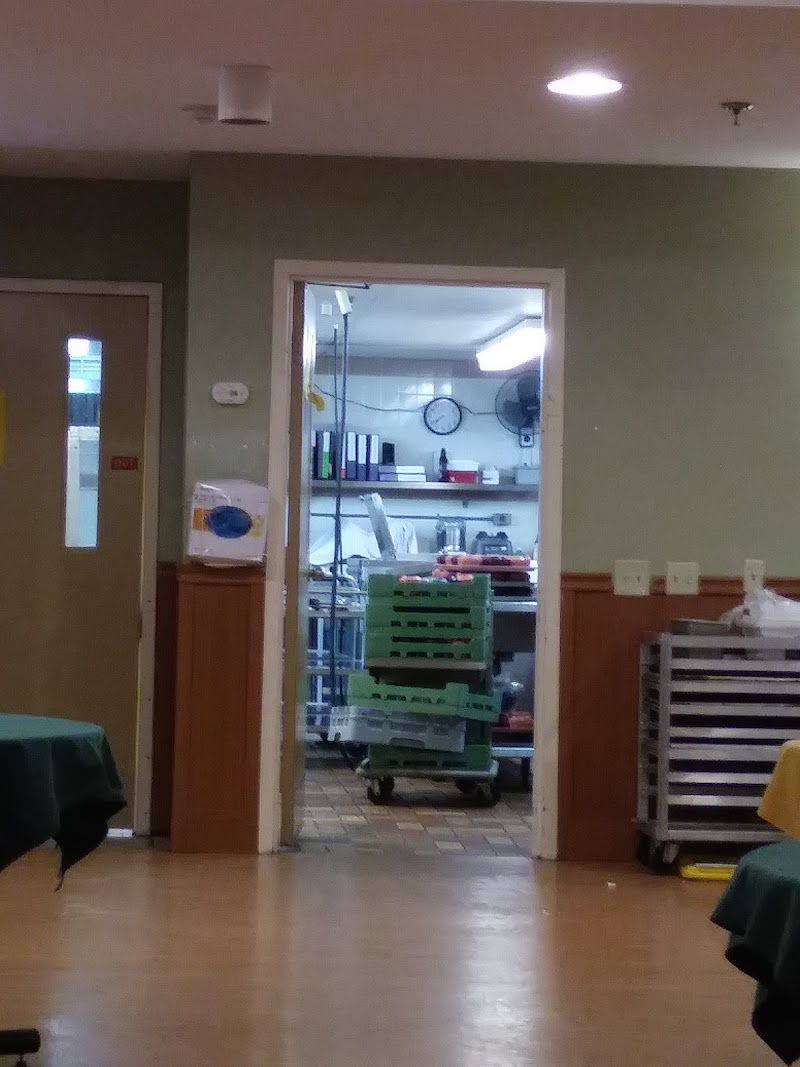
**NOTE- TERMS IN BRACKETS HAVE BEEN EDITED TO PROTECT CONFIDENTIALITY** Based on observation and staff interview, it was determined that the facility failed to store food and maintain food service equipment in accordance with professional standards for food service safety in the facility's main kitchen, and two of two nursing unit pantries (Oak/[NAME] and Marble/Maple). Findings include: An observation in the facility's main kitchen on July 15, 2025, at 9:22 AM revealed the following: Open wire rack shelving was observed in the walk-in cooler near the beverage station. Multiple wire shelves were observed rusty with the exterior finish worn off. The lower shelves located six to eight inches from the floor with food products stored on them contained no barrier from the potential for mop water splash or sweeping debris from the floor. A black plastic tub was observed on the lower shelf in the same walk-in cooler with multiple clear plastic bags of unidentified meat. The tub was full of a clear liquid. Employee 6, dietary manager, indicated the bags contained chicken thighs, which were in a tub of water thawing for the dinner meal. There was label to indicate what the product was, when it was placed there, or when it needed used by. A plate warmer located by the meal serving line contained a build of dust, and dried food debris on the lower corner protective bumpers of the unit. Bulk flour and sugar bins located under a prep table were soiled on the exteriors with dried brown spills and black smudges. The flooring under the bulk flour and sugar bins extending under the ovens, cooking equipment, and plastic storage units contained dirt and debris buildup under the equipment and along wall edges. An observation of the Oak/[NAME] pantry storage area on July 15, 2025, at 9:43 AM revealed an assorted bin of snacks in the corner cabinet containing individual packaged cookies. There was no date on the bin/cookies to indicate when they were placed there or when they needed used by. Review of the temperature monitoring log on the refrigerator/freezer in the Oak/[NAME] pantry revealed no temperatures were recorded for the refrigerator or freezer since July 11, 2025. An observation of the Marble/Maple pantry area on July 15, 2025, at 9:46 AM revealed two soiled plastic meal trays stored in the cabinet under the sink, with a package of graham crackers, soiled plate base, and used plastic lids. The interior base of the cabinet was observed with a large dried brown liquid spill. The rims of the doors to the cabinet were soiled with black and brown dried spills. Review of the temperature monitoring log on the refrigerator/freezer in the Marble/Maple pantry revealed no temperatures were recorded for the refrigerator or freezer since July 11, 2025. The interior of the refrigerator was observed with ice/frost buildup covering the back of the interior. The interior of the freezer above the refrigerator was covered in thick ice/frost buildup. The above information was reviewed during an interview with the Nursing Home Administrator and Director of Nursing on July 16, 2025, at 2:10 PM. 28 Pa. Code 201.14 (a) Responsibility of Licensee
Mar 2025 3 deficiencies 1 Harm
SERIOUS (G) 📢 Someone Reported This

A family member, employee, or ombudsman was alarmed enough to file a formal complaint

Actual Harm - a resident was hurt due to facility failures

Quality of Care (Tag F0684)

A resident was harmed · This affected 1 resident

**NOTE- TERMS IN BRACKETS HAVE BEEN EDITED TO PROTECT CONFIDENTIALITY** Based on a review of select facility policies and procedures, clinical record review, observation, and resident and staff interv...

Read full inspector narrative →
**NOTE- TERMS IN BRACKETS HAVE BEEN EDITED TO PROTECT CONFIDENTIALITY** Based on a review of select facility policies and procedures, clinical record review, observation, and resident and staff interview, it was determined that the facility failed to provide the highest practicable care regarding bowel protocol medication administration for three of seven residents reviewed (Residents 1, 2, and 4); and physician ordered blood sugar assessments and insulin administration for five of nine residents reviewed (Marble hallway: Residents 3, 7, and 8; Maple hallway: Resident 5; and [NAME] Hallway: Resident 4) resulting in hypoglycemia and hospitalization for one of nine residents reviewed (Maple hallway: Resident 1). Findings include: The facility policy entitled, Bowel Protocol, last reviewed January 17, 2025, revealed that the following protocol will be used for assessing all residents for constipation. Responsibility for this protocol is as follows: 3:00 PM - 11:00 PM shift runs bowel movement list from care tracker at the start of their shift and gives medications as appropriate. Results are to be followed up as per protocol on the next shift. The following protocol is to be ordered on admission unless the doctor specifies otherwise (renal patients will need alternate bowel management ordered by the physician): 1. MOM (Milk of Magnesia, a liquid laxative medication) 30 ml (milliliters) by mouth every three days on 3:00 PM to 11:00 PM shift if no bowel movement 2. Dulcolax suppository (laxative medication administered rectally) 10 milligrams (mg) rectally every fourth day on 3:00 PM to 11:00 PM shift if MOM ineffective 3. Fleet enema (liquid laxative medication administered rectally) rectally every fifth day if Dulcolax ineffective or no bowel movement 4. Notify physician if bowel regime is ineffective for bowel movement Bowel Protocol for renal patients: 1. Dulcolax tablets give one tablet every three days on 3:00 PM to 11:00 PM shift if no bowel movement 2. Dulcolax suppository (10 mg) rectally every fourth day on 3:00 PM to 11:00 PM shift if ineffective or no bowel movement 3. Give soap suds enema (combination of distilled water and a small amount of soap administered rectally to irritate the bowels and stimulate a bowel movement), one, rectally, every fifth day if Dulcolax suppository ineffective, give on 11:00 PM to 7:00 AM shift 4. Notify physician if bowel regime is ineffective for bowel movement Clinical record review for Resident 1 revealed physician orders for staff to administer a Bisacodyl (Dulcolax) 5 mg tablet as needed for constipation, give if there is no bowel movement by the third day on evening shift. Review of Resident 1's bowel movement records revealed that staff documented no bowel movement on March 1, 2, or 3, 2025. Resident 1's MAR (Medication Administration Record, electronic documentation of medication administration) dated March 2025 revealed that staff did not administer the Bisacodyl 5 mg tablet to Resident 1 on the evening shift day of the third day without a bowel movement. Clinical record review for Resident 2 revealed physician orders for staff to administer one enema rectally as needed for no bowel movement, administer on the 11:00 PM to 7:00 AM shift for no bowel movement for five days. The physician's order did not indicate if staff were to administer a Fleet enema or a soap suds enema. Resident 2's physician orders instructed staff to administer a Dulcolax 5 mg tablet every 24 hours as needed for constipation and a Dulcolax 10 mg rectal suppository as needed on the 3:00 PM to 11:00 PM shift for no bowel movement on the fourth day of no bowel movement. Review of Resident 2's bowel movement records revealed that staff documented no bowel movements on February 19, 20, 21, 22, 23, and 24, 2025. Review of Resident 2's MAR dated February 2025 revealed no evidence that staff administered any Dulcolax medications or enemas when Resident 2 failed to have bowel movements for four and five days. The surveyor reviewed the above concerns regarding the staff failure to administer Resident 1's and Resident 2's physician ordered laxative medications appropriately during an interview with the Nursing Home Administrator and Employee 1 (assistant director of nursing) on March 18, 2025, at 4:00 PM. Clinical record review for Resident 4 revealed that she did not have a bowel movement on February 20, 21, 22, or 23, 2025. Further clinical record review revealed physician orders for staff to administer Dulcolax tab 5 milligrams as needed if no bowel movement times three days and Bisacodyl suppository 10 mg give one suppository rectally as needed for constipation every fourth day on the evening shift if the Dulcolax oral tab is ineffective. Review of Resident 4's MAR revealed that she received Dulcolax tab 5 milligrams on February 22, 2025, at 5:46 PM, and it was documented as ineffective. There was no evidence in the clinical record that Resident 4 received the Bisacodyl suppository on the evening of the fourth day of no bowel movement. The facility failed to follow the physician ordered bowel protocol for Resident 4. The surveyor reviewed the above concerns regarding the staff failure to administer Resident 4's physician ordered bowel protocol appropriately during an interview with the Nursing Home Administrator and Employee 1 (assistant director of nursing) on March 18, 2025, at 4:15 PM. The facility policy entitled, Medication Administration - General Guidelines, last reviewed January 17, 2025, revealed that medications are administered as prescribed in accordance with good nursing principles and practices and only by persons legally authorized to do so. Personnel authorized to administer medications do so only after they have familiarized themselves with the medication. Medications are administered within 60 minutes of the scheduled time, except before or after meal orders, which are administered based on mealtimes. These orders, including blood sugar finger sticks (collection of a drop of blood from a fingertip needle prick onto a test strip and read by a medical meter device; normal ranges per Cleveland Clinic 70 to 99) must be completed within 30 minutes of the scheduled mealtime. Review of the facility's posted, Meal Service Times, revealed the following anticipated schedule for the breakfast meal: [NAME] hallway 7:05 AM Marble hallway 7:15 AM Oak hallway 7:25 AM Maple hallway 7:35 AM Interview with Employee 2 (licensed practical nurse, LPN) on March 18, 2025, at 7:35 AM, revealed that no breakfast trays arrived on either the Marble or Maple hallways. Further interview with Employee 2 revealed that the third shift LPN obtained a finger stick assessment for Resident 7 (who resided on the Marble hallway) at 6:21 AM. Interview with Resident 7 on March 18, 2025, at 7:57 AM, revealed that staff typically obtain a finger stick assessment between 5:30 AM and 6:00 AM (approximately more than an hour before the anticipated time of the arrival of her breakfast meal). Interview with Employee 2 on March 18, 2025, at 7:35 AM, revealed that the third shift LPN obtained a finger stick assessment for Resident 8 (who resided on the Marble hallway) at 6:22 AM. Observation of Resident 8 on March 18, 2025, at 8:11 AM (almost two hours after his finger stick assessment), revealed him to be in bed without a breakfast meal. Interview with Employee 2 on March 18, 2025, at 7:35 AM, revealed that the third shift LPN obtained a finger stick assessment for Resident 3 (who resided on the Marble hallway) at 6:25 AM; however, she did not receive insulin in response to her finger stick assessment of 144. Clinical record review for Resident 3 revealed active physician orders for staff to administer: Novolog mix 70/30 insulin (hormone injected to lower blood sugar; combination intermediate-acting insulin, the combination insulin starts to work within 10 to 20 minutes after injection, peaks in two hours, and keeps working for up to 24 hours) inject 24 units one time a day Fiasp (Insulin Aspart (with Niacinamide), hormone injected to lower blood sugar) inject as per sliding scale before meals and at bedtime Review of Resident 3's MAR (Medication Administration Record, documentation by licensed staff of the administration of medications) dated March 2025 revealed that the facility scheduled Resident 3's Fiasp medication daily at 6:30 AM (three-quarter hours before the anticipated delivery time of the Marble hallway breakfast meal) and the Novolog mix 70/30 insulin at 6:00 AM (more than one and one-quarter hours before the anticipated delivery time of the Marble hallway breakfast meal). Review of the medication administration documentation revealed that staff administered Resident 3's Novolog mix 70/30 insulin on March 18, 2025, at 6:24 AM (more than one hour before the delivery of her breakfast meal). The medication resource, Drugs.com, stipulated that when using Novolog mix 70/30 insulin, it is important to time your insulin use with meals. You should use this medicine within 15 minutes before or after the start of a meal. The same resource indicated that Fiasp insulin should be taken with the meal or within 20 minutes after. Interview with Employee 2 on March 18, 2025, at 8:32 AM, confirmed that the third shift licensed nursing staff administer Resident 3's morning insulin doses daily as needed because first shift licensed nursing staff would not have time to administer the medications due to the time their shift starts and the requirement to obtain verbal report for the shift. Resident 1's clinical record revealed that she had a diagnosis of Type 2 diabetes mellitus (a chronic condition characterized by insulin resistance and elevated blood sugar levels) with diabetic neuropathy (nerve damage that can occur when you have diabetes). Interview with Employee 5 (LPN) on March 18, 2025, at 7:50 AM, revealed that Resident 1 (who resided on the Maple hallway) did not have a breakfast tray yet because she lived on the hallway that received meals from the last food cart. Clinical record review of Resident 1's MAR dated March 2025, revealed that Employee 4 (LPN) administered 44 units of Lantus SoloStar insulin (a long-acting insulin that starts to work several hours after injection) on March 7, 2025, at 5:50 AM (one hour and 45 minutes before her anticipated breakfast meal). Employee 4 also administered two units of Insulin Aspart insulin (brand names of Fiasp or Novolog; a fast-acting insulin that starts to work about 15 minutes after injection and peaks in about one hour) on March 7, 2025, at 5:50 AM, for Resident 1's finger stick blood sugar assessment of 139. The medication resource, Drugs.com, stipulated that when using insulin aspart, after using Novolog, you should eat a meal within five to 10 minutes. Fiasp should be given at the start of a meal or within 20 minutes after starting a meal. Nursing documentation dated March 7, 2025, at 8:45 AM, revealed that staff found Resident 1 grunting, with her tongue, hanging out, she was unable to follow commands, and she was unable to swallow. Staff assessed her finger stick blood sugar assessment as 31 (normal 70 to 99). Staff administered intramuscular glucose (Glucagon injection, a hormone medication used to treat very low blood sugar (hypoglycemia). Nursing documentation dated March 7, 2025, at 11:35 AM, revealed that the facility called 911 (emergency medical response); and nursing documentation dated March 7, 2025, at 12:04 PM, revealed that the 911 medics transported Resident 1 to the hospital emergency room. Review of Resident 1's hospital discharge summary for her admission from March 7 to 10, 2025, revealed that the principal diagnosis for her stay was hypoglycemia. The documentation stipulated that the facility sent Resident 1 for evaluation of hypoglycemia and unresponsiveness. Per nursing home, they state that upon awakening this AM, her blood glucose was 32. She was given glucagon and glucose gel (over-the-counter medication used for hypoglycemia to raise the blood sugar when it becomes dangerously low) as well as breakfast however following breakfast her blood glucose was only 70 and the it (sic) was 31 around recheck at 11:30 AM. She was started on D5NS (intravenous fluid that contains a combination of a sugar and a salt to provide water, electrolytes, and calories) for her blood sugars. Resident 1, was admitted to the hospital due to hypoglycemic episode at skilled nursing facility with lows down to 32. Review of Resident 1's meal intake percentage for March 7, 2025, revealed that nurse aide staff documented at 9:48 AM that Resident 1 refused breakfast (which would not have arrived until more than one and one-half hour after her insulin administration). Interview with Employee 5 on March 18, 2025, at 7:50 AM, revealed that Resident 5 (who resided on the Maple hallway) did not have a breakfast tray yet. Employee 5 stated that the third shift LPN obtained a finger stick assessment for Resident 5 on March 18, 2025, at 6:30 AM (almost one and one-half hour earlier). Interview with Resident 5 on March 18, 2025, at 8:54 AM, revealed that staff obtain her morning finger stick blood sugar assessment around 6:00 AM every morning. Resident 5 stated that she received insulin at the time staff performed her finger stick that morning. Observation of Resident 5's breakfast meal tray on the date and time of the interview revealed that she did not eat more than 50 percent of her meal. Resident 5 stated that she ate, a piece of sausage. Clinical record review for Resident 5 revealed physician orders for staff to administer 12 units of insulin aspart with meals. Parameters included in the physician's order instruct staff to not give the medication when the blood sugar is less than 110 or poor oral intake (of food). Review of Resident 5's MAR dated March 2025 confirmed that staff documented the administration of Resident 5's insulin aspart on March 18, 2025, at 6:28 AM (more than one and one-half hours before the anticipated delivery time of her breakfast meal). The surveyor reviewed the above concerns regarding the scheduling of insulin administrations in relation to the anticipated breakfast meal delivery service during an interview with the Nursing Home Administrator and Employee 1 (assistant director of nursing) on March 18, 2025, at 4:00 PM. Observation on the [NAME] hallway on March 18, 2025, at 7:38 AM revealed staff starting to distribute breakfast trays to residents. Resident 4 received her breakfast tray at 7:43 AM. Interview of Resident 4 at 7:45 AM revealed that she receives insulin, and they monitor her blood sugar. She indicated that she had her blood sugar and insulin about an hour ago. She said her blood sugar was high, but she did not remember how high it was. Clinical record review of Resident 4's MAR dated March 2025 revealed physician orders for staff to administer 10 units of NovoLog insulin meals and she also had an order for NovoLog to be administered with coverage (insulin provided by a scale that is determined by what the blood sugar was) before meals and at bedtime. Her coverage parameters were as follows: 150-200- 2 units, 201-250- 4 units, 251-300- 6 units, 301-350- 8 units, 351-400- 10 units, and above 400 give 10 units and recheck the blood sugar in two hours. Further clinical record review revealed that Resident 4's NovoLog insulin, her blood sugar and her coverage were all documented that they were done at 6:30 AM, one hour and 13 minutes prior to Resident 4 receiving her breakfast. The surveyor reviewed the above concerns regarding the scheduling of insulin administrations in relation to the time Resident 4 received her breakfast meal during an interview with the Nursing Home Administrator and Employee 1 (assistant director of nursing) on March 18, 2025, at 4:20 PM 483.25 Quality of Care Previously cited deficiency 8/23/24 and 11/25/24 28 Pa. Code 211.10(d) Resident care policies 28 Pa. Code 211.12(d)(1)(3)(5) Nursing services
CONCERN (D) 📢 Someone Reported This

A family member, employee, or ombudsman was alarmed enough to file a formal complaint

Potential for Harm - no one hurt, but risky conditions existed

Infection Control (Tag F0880)

Could have caused harm · This affected 1 resident

Based on observation and staff and resident interview, it was determined that the facility failed to implement enhanced barrier precautions for one of eight residents reviewed (Resident 2). Findings i...

Read full inspector narrative →
Based on observation and staff and resident interview, it was determined that the facility failed to implement enhanced barrier precautions for one of eight residents reviewed (Resident 2). Findings include: Review of the Centers for Medicare and Medicaid Services (CMS) memo entitled, Enhanced Barrier Precautions in Nursing Homes, dated March 20, 2024, revealed that nursing care facilities are to use enhanced barrier precautions (EBP, gown and glove use) for residents with chronic wounds or indwelling medical devices (i.e., indwelling urinary catheters) during high-contact resident care activities regardless of their multidrug-resistant organism status. High-contact activity would include things like dressing, transferring, changing linens, providing hygiene, changing briefs, wound care, or device care. Interview with Resident 2 on March 18, 2025, at 9:13 AM, revealed that she had an indwelling urinary catheter (tube inserted into the bladder to drain urine). Observation of Resident 2's room door on the date and time of the interview revealed a sign to inform staff and visitors that enhanced barrier precautions were required to enter the room. Continued observation of Resident 2's room on March 18, 2025, at 9:14 AM revealed Employee 6 (nurse aide) emptied urine from Resident 2's indwelling urinary catheter collection bag into a graduated plastic container for disposal. Employee 6 wore gloves; however, did not don a gown during the device's care. Interview with Employee 6 on March 18, 2025, at 10:37 AM confirmed that she did not don a gown before providing care for Resident 2's indwelling urinary catheter; however, she had no extenuating circumstances that prevented her from doing so. The surveyor reviewed the above concern regarding the implementation of enhanced barrier precautions during an interview with the Nursing Home Administrator and Employee 1 (assistant director of nursing) on March 18, 2025, at 4:00 PM. 483.80(a)(1)(2)(4)(e)(f) Infection Prevention and Control Previously cited deficiency 8/23/24 28 Pa. Code 211.12(d)(1)(5) Nursing services
CONCERN (E) 📢 Someone Reported This

A family member, employee, or ombudsman was alarmed enough to file a formal complaint

Potential for Harm - no one hurt, but risky conditions existed

Safe Environment (Tag F0584)

Could have caused harm · This affected multiple residents

**NOTE- TERMS IN BRACKETS HAVE BEEN EDITED TO PROTECT CONFIDENTIALITY** Based on observation and staff interview, it was determined that the facility failed to provide a clean, comfortable, and homeli...

Read full inspector narrative →
**NOTE- TERMS IN BRACKETS HAVE BEEN EDITED TO PROTECT CONFIDENTIALITY** Based on observation and staff interview, it was determined that the facility failed to provide a clean, comfortable, and homelike environment on four of four nursing units reviewed ([NAME]; Oak: Resident 6; Marble: Resident 3; and Maple: Resident 1). Findings include: Observation on March 18, 2024, at 8:30 AM of the [NAME] nursing unit shower room revealed rust around the two doors to the left as you entered the shower room. The second door to the left as you entered the shower room was warped and splintered at the bottom. The floor had a brown substance and loose particles of dirt on it. The first shower stall had a black substance on the floor of the shower and on the wall tiles, and two shower chairs located in this stall were dirty around the base. The second shower stall had a black substance on the floor and wall tiles, the shower curtain was dirty around the bottom, and ripped, two shower chairs located in the stall were dirty, grab bars in the shower were noted to have rust on them, and the drain in the floor appeared to have hair build up on top of it. The third shower stall had a black substance on the floor and wall tiles, the cove base was dirty, the grab bars had rust on them, and a shower gurney that was in this stall was dirty. The floor was dirty under the wall sink, the cove base under the sink was dirty, the faucets around the sink were dirty, and there was a candy wrapper and a clump of hair in the sink. The dirty linen bins in the shower room were dirty around the base and on the handle. The bin labeled trash was dirty around the base. The curtains around the tub were dirty. The toilet was dirty around the base and behind it. There was a bucket on the floor to the left of the toilet (when you are looking at the toilet) that had a brown substance in it. Observation of Resident 6's room on March 18, 2025, at 8:08 AM revealed her overbed table was dirty around the base, the foot board under her bed was noted with black areas on the floor, loose dirt particles in front of the closet and bathroom door, and beside her dresser and nightstand. The privacy curtain located between the beds was dirty with brown areas. Observation of the same shower room and Resident 6's room, on March 18, 2024, at 3:12 PM with the Nursing Home Administrator and Employee 1, Assistant Director of Nursing, confirmed the above noted findings. Observation of Resident 3's room on March 18, 2025, at 8:14 AM revealed a box of instant coffee stored on the floor. The area under Resident 3's bed contained two baskets, a box, and six scattered slipper socks. The tabletop on the left side of Resident 3's bed stored a stack of loose papers and envelopes over approximately one foot high, an opened individual package of crackers, several clear unlabeled and undated sandwich-sized bags of chips and goldfish crackers, and hygiene items (e.g., deodorant). The amount and organization of Resident 3's personal items rendered those areas inaccessible to effective housekeeping services. Observation of Resident 1's room on March 18, 2025, at 8:51 AM revealed smearing of a brown substance, eight to 12 inches long by several inches wide, on the floor on the left side of her bed. Observation of Resident 1's room on March 18, 2025, at 10:40 AM and 12:54 PM revealed that the brown substance remained on the floor. Observation of Resident 1's room on March 18, 2025, at 1:12 PM revealed that the brown substance remained on Resident 1's floor; however, was now approximately six inches in length. Staff stood on the left side of Resident 1's bed to assist her with eating her lunch. Interview with Employee 3 (housekeeping) on March 18, 2025, at 1:16 PM confirmed that she was done providing services to the rooms on the Maple hallway. The surveyor made Employee 3 aware of the brown smearing on Resident 1's floor. Employee 3 utilized a wet mop to remove the substance from the floor at that time. Employee 3 stated that she may not have mopped that side of Resident 1's room if staff were present when she provided housekeeping services to that room. The above noted concerns related to the environment were reviewed with the Nursing Home Administrator and Employee 1 during a meeting on March 18, 2025, at 4:20 PM. 28 Pa. Code 201.18(e)(2.1) Management
Jan 2025 1 deficiency
MINOR (C) 📢 Someone Reported This

A family member, employee, or ombudsman was alarmed enough to file a formal complaint

Minor Issue - procedural, no safety impact

Staffing Information (Tag F0732)

Minor procedural issue · This affected most or all residents

Based on observation, review of posted daily nurse staffing data, and staff interview, it was determined that the facility failed to ensure daily nurse staff data was accurately posted. Findings inclu...

Read full inspector narrative →
Based on observation, review of posted daily nurse staffing data, and staff interview, it was determined that the facility failed to ensure daily nurse staff data was accurately posted. Findings include: Observation on January 2, 2024, at 12:52 PM revealed the facility's posted nursing time noted 11 nurse aides were working dayshift. Observation of the facility on January 2, 2024, revealed there were only 10 nurse aides working on the dayshift. Further review of the posted nursing time noted 88 nurse aide hours on the dayshift. Review of the facility's schedules for January 2, 2024, revealed there were only 70 actual nurse aide hours worked on the dayshift. Interview with the Director of Nursing on January 2, 2024, at 12:59 PM confirmed these findings. 28 Pa. Code 201.14(a) Responsibility of licensee
Nov 2024 3 deficiencies
CONCERN (D) 📢 Someone Reported This

A family member, employee, or ombudsman was alarmed enough to file a formal complaint

Potential for Harm - no one hurt, but risky conditions existed

ADL Care (Tag F0677)

Could have caused harm · This affected 1 resident

**NOTE- TERMS IN BRACKETS HAVE BEEN EDITED TO PROTECT CONFIDENTIALITY** Based on clinical record review and resident and staff interview, it was determined that the facility failed to provide bathing ...

Read full inspector narrative →
**NOTE- TERMS IN BRACKETS HAVE BEEN EDITED TO PROTECT CONFIDENTIALITY** Based on clinical record review and resident and staff interview, it was determined that the facility failed to provide bathing support for a resident requiring staff assistance for three of 10 residents sampled for activities of daily living (Residents 6, 5, and 7). Findings include: Clinical record review for Resident 6 revealed her most recent annual MDS (Minimum Data Set, an assessment completed at specific interval to determine care needs) dated November 15, 2024, noted staff assessed her as requiring supervision/touching assistance (helper provides verbal cues and/or touching/steadying and/or contact guard assistance as resident completes activity. Assistance may be provided throughout the activity or intermittently) for bathing. Clinical record for Resident 6 revealed her preference for bathing is to receive a shower/bed bath on Mondays and Thursdays. Review of Task documentation (electronic system of nurse aide documentation of activities of daily living care) for the last 30 days revealed nursing staff noted Resident 6 did not receive a shower from October 28 to November 18, 2024, (22 days). Nursing staff documented Resident 6 refused. During an interview with Resident 6 on November 25, 2024, at 12:07 PM she revealed that she does not refuse to get a shower. Clinical record for Resident 5 revealed the facility admitted him on November 11, 2024. Review of his admission MDS dated [DATE], noted staff assessed Resident 5 as requiring partial moderate assistance (helper does less than half the effort. Helper lifts, holds, or supports trunk or limbs, but provides less than half the effort) for bathing. Clinical record for Resident 5 revealed his preference for bathing is to receive a shower/bed bath on Wednesdays and Saturdays. Review of Task documentation since his admission revealed he only received two showers since admission. Interview with Resident 5 on November 25, 2024, at 12:15 PM revealed that he prefers a shower and is not sure why he received a bed bath instead of a shower on two of his shower days. Clinical record review for Resident 7 revealed her most recent MDS dated [DATE], noted staff assessed Resident 7 as dependent on staff for bathing. Staff assessed her as being able to make herself understood and understand others. Further review of Resident 7's clinical record revealed a plan of care last revised August 10, 2023, for her activities of daily living self-care performance deficit noting she requested a tub bath Tuesday mornings and shower on Friday mornings. Review of Resident 7's task documentation for the last 30 days revealed Resident 7 did not receive any showers or tub baths. There were only six documented bed baths. Interview with Resident 7 on November 25, 2024, at 12:04 PM revealed that Resident 7 wants showers but stated she is unable to walk. Resident 7 became emotional during the interview. The facility failed to provide assistance for residents requiring staff assistance for bathing. These findings were reviewed during a meeting with the Nursing Home Administrator and Director of Nursing on November 25, 2024, at 1:09 PM. 28 Pa. Code 211.12 (d)(1)(2)(3)(5) Nursing services
CONCERN (D) 📢 Someone Reported This

A family member, employee, or ombudsman was alarmed enough to file a formal complaint

Potential for Harm - no one hurt, but risky conditions existed

Pressure Ulcer Prevention (Tag F0686)

Could have caused harm · This affected 1 resident

Based on clinical record review, review of select facility policies and procedures, and staff interview, it was determined that the facility failed to promote the healing of pressure ulcers for one of...

Read full inspector narrative →
Based on clinical record review, review of select facility policies and procedures, and staff interview, it was determined that the facility failed to promote the healing of pressure ulcers for one of one resident reviewed for pressure ulcer concerns (Resident CR1). Findings include: The facility's current policy entitled Skin and Wound Management System, revealed it is the policy to identify and assess residents with wounds and/or pressure ulcers, as well as those at risk for skin compromise. Ongoing monitoring and evaluation are then provided to ensure optimal resident outcomes. An assessment of skin integrity is to be performed on each resident upon admission by completing a head-to-toe physical evaluation of skin condition and a risk evaluation for predicting pressure will be used to determine risk status, such as the Braden or Norton Scale. Ongoing weekly evaluations of resident skin will be completed and documented in Point Click Care. Closed clinical record review for Resident CR1 revealed the facility admitted him on September 6, 2024. Review of Resident CR1's initial nursing evaluation dated September 6, 2024, revealed a Braden score of 12, indicating Resident CR1 was high risk for skin break down. Nursing staff assessed Resident CR1's skin noting redness to his left buttock and an open area measuring 2 centimeters (cm) by 2 cm. Review of Resident CR1's nursing documentation revealed the last weekly skin assessment was completed on September 30, 2024, noting nursing staff assessed Resident CR1's left gluteal fold as unstageable slough (dead tissue within a wound, often appearing as a yellow, tan, or white fibrous material) and/or eschar (hardened, dry, black or brown dead tissue that forms a scab-like covering over deep wounds) measuring 2 cm by 3.8 cm with a scant amount of serous (clear to yellow) drainage. Nursing staff assessed Resident CR1's sacrum as unstageable slough and/or eschar measuring 4.8 by 2.6 cm with a scant amount of serous drainage. Further review of Resident CR1's closed clinical record revealed no further assessments of Resident CR1's wounds. Nursing documentation dated October 2, 2024, at 9:26 AM revealed Resident CR1 complained of his wound bleeding, and nursing staff received new orders for Resident CR1's sacral and left gluteal fold sacral injury. Nursing documentation dated October 16, 2024, at 8:28 AM revealed that Resident CR1's pressure ulcers resolved (16 days after the last assessment of Resident CR1's wounds). Interview with Employee 6 (licensed practical nurse, wound nurse) on November 25, 2024, at 11:02 AM confirmed these findings. The Nursing Home Administrator and Director of Nursing were made aware of concerns with Resident CR1's pressure ulcer concerns on November 25, 2024, at 1:05 PM. 28 Pa. Code 211.10(d) Resident care policies 28 Pa. Code 211.12 (d)(1)(3)(5) Nursing services
CONCERN (E) 📢 Someone Reported This

A family member, employee, or ombudsman was alarmed enough to file a formal complaint

Potential for Harm - no one hurt, but risky conditions existed

Quality of Care (Tag F0684)

Could have caused harm · This affected multiple residents

Based on a review of select facility policies and procedures, clinical record review, and staff and resident interview, it was determined that the facility failed to provide the highest practicable ca...

Read full inspector narrative →
Based on a review of select facility policies and procedures, clinical record review, and staff and resident interview, it was determined that the facility failed to provide the highest practicable care regarding physician ordered blood sugar assessments and insulin administration for five of nine residents reviewed (Residents 1, 2, 3, 8, and 9). Findings include: The facility policy entitled, Insulin Administration, last reviewed without changes on January 17, 2024, revealed that the purpose of the policy is to provide guidelines for the safe administration of insulin to residents with diabetes (high blood sugar). The nursing staff will have access to specific instructions (from the manufacturer if appropriate) on all forms of insulin delivery system(s) prior to their use. Characteristics and types of insulin note that the three key characteristics of insulin are the onset of action, peak effects, and the duration of effects. Rapid-acting insulin has an onset time of 10 to 15 minutes. The policy did not include instructions regarding the administration of insulin per professional standards of practice, such as the administration of fast-acting insulin with a meal. Interview with Employee 1 (licensed practical nurse, LPN) and Employee 7 (LPN) on November 25, 2024, at 7:33 AM revealed that no breakfast trays had been delivered to the Marble or Maple hallways on the nursing unit. The interview indicated that the Marble Hall meal schedule stipulated breakfast was at 7:15 AM; and the Maple Hall meal schedule stipulated breakfast was at 7:35 AM. Interview with Employee 1 on November 25, 2024, at 7:41 AM revealed that third shift (11:00 PM to 7:00 AM) staff obtained Resident 1's (who resided on the Maple Hall) blood sugar assessment and administered her insulin before leaving their shift. The interview indicated that staff documented the completion of care at 6:05 AM. The interview confirmed that Resident 1 received her insulin more than one hour ago without receiving her breakfast meal. The interview confirmed that physician orders for Resident 1 included the use of a sliding scale (physician orders for the administration of an amount of insulin based on the result of a blood glucose assessment) for insulin coverage based on a blood sugar assessment before meals. Interview with Employee 7 on November 25, 2024, at 7:33 AM revealed that third shift staff obtained blood glucose assessments for nine residents on the Marble Hall before the end of their shift. The nine residents identified included Residents 2, 3, 8, and 9. Employee 7 confirmed that if residents require insulin administration based on the blood glucose sliding scale, third shift staff administer the insulin. Interview with Resident 1 on November 25, 2024, at 11:52 AM revealed that staff typically assess her blood glucose at approximately 6:00 AM. Resident 1 stated that she may receive insulin at that time (based on the blood glucose result), and she eats her breakfast at approximately 7:30 AM. Resident 1 indicated that she may have low blood glucose results first thing in the morning for which staff will give her something sweet to eat, and staff will check the blood glucose again to determine if the number increases. Clinical record review for Resident 1 revealed a physician's order active since May 22, 2024, that instructed staff to obtain accuchecks (testing of a small amount of blood obtained through a prick of a finger) before meals and HS (hour of sleep). A physician's order active since May 22, 2024, instructed staff to inject six units of Insulin Aspart (Novolog FlexPen, fast acting insulin (artificially created hormone used to lower blood sugar) that begins to have an effect within 15 minutes of administration) for a blood glucose assessment of 201 to 250 before meals and at bedtime. Review of Resident 1's MAR (Medication Administration Record, electronic documentation of the administration of medications) dated November 2024, revealed that Employee 2 (LPN) initialed completion of an accucheck assessment scheduled for 7:00 AM, before meals and at bedtime, for Resident 1. The staff documented Resident 1's blood glucose was 220. Resident 1's MAR indicated that Employee 3 (LPN) administered six units of Insulin Aspart to Resident 1. The medical reference, Drugs.com, noted that Insulin Aspart is a fast-acting insulin that starts to work about 15 minutes after injection. Instructions included in the reference list that whenever you use Insulin Aspart, be sure to eat a meal within five to 10 minutes. Review of nurse staffing schedules indicated that Employees 2 and 3 worked November 24, 2024, at 11:00 PM to November 25, 2024, at 7:00 AM. Resident 1 received her accucheck assessment and fast-acting insulin more than one hour before her breakfast meal. Clinical record review for Resident 2 revealed active physician orders for staff to inject Fiasp (Insulin Aspart) per a sliding scale before meals and at bedtime that indicated no medication for a blood glucose less than 201. Review of Resident 2's MAR dated November 2024 revealed that Employee 2 documented a glucose assessment (scheduled for 6:00 AM) as 99. Employee 4 (LPN) documented that no insulin was administered, no insulin required, for Resident 2's 7:00 AM scheduled dose of Fiasp. Drugs.com noted that Fiasp insulin should be given as, Inject the dose within five to 10 minutes before a meal. Observation of Resident 2 on November 25, 2024, at 7:53 AM, revealed he was in bed, without a breakfast tray, appearing to be asleep. Review of nurse staffing schedules indicated that Employee 4 worked November 24, 2024, at 11:00 PM to November 25, 2024, at 7:00 AM. Staff obtained Resident 2's blood glucose assessment more than 53 minutes before his breakfast meal delivery service. Observation and interview with Resident 3 on November 25, 2024, at 8:03 AM revealed that she had not received her breakfast meal. Resident 3 stated that staff obtained her blood glucose assessment before her shower that morning. Interview with Employee 5 (nurse aide) in Resident 3's room on November 25, 2024, at 8:04 AM indicated that she gave Resident 3 her shower at approximately 6:35 AM that morning. Clinical record review for Resident 3 revealed a physician's order dated July 16, 2024, that instructed staff to inject 15 units of Novolog Mix 70/30 Suspension in the morning. Drugs.com indicated that Novolog 70/30 suspension is a combination of a fast-acting insulin and an intermediate-acting insulin. This combination insulin starts to work within 10 to 20 minutes after injection, peaks in two hours, and keeps working for up to 24 hours. The resource instructed to use this medicine within 15 minutes before or after the start of a meal. A physician's order dated March 14, 2024, instructed staff to inject Fiasp insulin per a sliding scale before meals and at bedtime. The sliding scale instructed staff to administer two units of Fiasp insulin for a blood glucose of 151 to 200. Review of Resident 3's MAR dated November 2024, revealed that Employee 4 documented the administration of the Novolog Mix 70/30, scheduled for 6:30 AM, with a blood glucose assessment of 185. Employee 4 also documented the administration of two units of Resident 3's Fiasp insulin per her sliding scale. Resident 3 received her blood glucose assessment and fast-acting insulin approximately one and one-half hours before her breakfast meal. Observation and interview with Resident 8 on November 25, 2024, at 8:00 AM revealed that he had not received his breakfast meal. Resident 8 stated that staff obtained his blood glucose assessment approximately 5:25 AM and his reading was 95. Resident 8 stated that he did not receive insulin in response to his blood glucose assessment. Clinical record review for Resident 8 revealed a physician's order dated October 31, 2024, that instructed staff to obtain a blood glucose assessment before meals and at bedtime. Staff are instructed to inject Insulin Aspart per a sliding scale for blood glucose assessments of 151 or greater. Review of Resident 8's November 2024, MAR indicated that Employee 4 initialed that no insulin was required for a blood glucose assessment of 95. The assessment and insulin administration were scheduled for 7:00 AM. Staff obtained Resident 8's blood glucose assessment and determined no need for administration of fast-acting insulin, greater than one hour before his breakfast meal. Interview with Resident 9 on November 25, 2024, at 7:49 AM revealed that staff obtain her first accucheck assessment at approximately 5:00 AM daily and then another one at approximately 11:00 AM daily. Resident 9 stated that her accucheck that morning was low, .91, or something like that, and she did not receive insulin per her sliding scale. Clinical record review for Resident 9 revealed an active physician's order for staff to inject Fiasp insulin per a sliding scale before meals and at bedtime for accuchecks of 151 or greater. Review of Resident 9's MAR dated November 2024, revealed that Employee 4 documented that no insulin (scheduled for 7:00 AM) was required for an accucheck assessment of 81. Staff obtained Resident 9's blood glucose assessment and determined no need for administration of fast-acting insulin, greater than one hour before her breakfast meal. Interview with the Director of Nursing on November 25, 2024, at 10:50 AM confirmed that third shift (11:00 PM to 7:00 AM) staff obtain accucheck assessments, but those staff are not to start obtaining those accucheck assessments earlier than 6:00 AM. The interview confirmed that the breakfast meal does not start until after 7:00 AM; therefore, the scheduling of accucheck assessments and meal delivery predispose residents to receive accucheck assessments and rapid-acting insulin more than one hour before receipt of the breakfast meal. The surveyor reviewed the concern that licensed staff were completing accuchecks and insulin administrations one or more hours before the breakfast meal (as evidenced above) during an interview with the Nursing Home Administrator and the Director of Nursing on November 25, 2024, at 1:15 PM. Interview with the Director of Nursing on November 25, 2024, at 12:48 PM ,November 26, 2024, at 7:23 AM, and November 26, 2024, at 12:55 PM, indicated that the facility had no policy or standard of practice that directed licensed staff how to implement physician orders that included a parameter for completion before a meal (e.g., provide the care within one-half hour of the meal). 483.25 Quality of Care Previously cited deficiency 8/23/24 28 Pa. Code 211.10(d) Resident care policies 28 Pa. Code 211.12(d)(1)(3)(5) Nursing services
Oct 2024 1 deficiency
CONCERN (E) 📢 Someone Reported This

A family member, employee, or ombudsman was alarmed enough to file a formal complaint

Potential for Harm - no one hurt, but risky conditions existed

Deficiency F0804 (Tag F0804)

Could have caused harm · This affected multiple residents

**NOTE- TERMS IN BRACKETS HAVE BEEN EDITED TO PROTECT CONFIDENTIALITY** Based on observation and staff interviews, it was determined that the facility failed to serve food timely and at a palatable te...

Read full inspector narrative →
**NOTE- TERMS IN BRACKETS HAVE BEEN EDITED TO PROTECT CONFIDENTIALITY** Based on observation and staff interviews, it was determined that the facility failed to serve food timely and at a palatable temperature on four of four resident hallways (Maple, Marble, Oak, and [NAME] hallways). Findings include: Observation of the posted meal serving times revealed the residents would receive their lunch trays at the following times: Early trays at 11:45 AM Marble Hall at 12:00 PM Oak Hall at 12:10 PM [NAME] Hall at 12:18 PM Maple Hall at 12:35 PM Observation of lunch meal on October 10, 2024, revealed that the meal carts arrived on the resident hallways at the following times: Early trays arrived at 12:30 PM (45 minutes late) Marble Hall trays arrived at 1:20 PM (an hour and 20 minutes late) [NAME] Hall trays arrived at 1:00 PM (42 minutes late) Oak Hall trays arrived at 1:35 PM (an hour and 25 minutes late) Maple Hall trays arrived at 1:42 PM (an hour and seven minutes late) Observation of meal service on the Maple Hall on October 10, 2024, at 12:30 PM revealed that the early tray cart arrived at 12:30 PM and staff began immediately serving meals. At 12:39 PM staff passed the last tray, and the surveyor pulled the test tray from the cart and began testing tray temperatures. The shepherd's pie was 122.7 degrees Fahrenheit and tasted lukewarm. The surveyor reviewed the above information during an interview with the Nursing Home Administrator and Director of Nursing on October 10, 2024, at 2:38 PM. 28 Pa. Code 211.6 (d) Dietary services
Aug 2024 15 deficiencies
CONCERN (D) 📢 Someone Reported This

A family member, employee, or ombudsman was alarmed enough to file a formal complaint

Potential for Harm - no one hurt, but risky conditions existed

Deficiency F0558 (Tag F0558)

Could have caused harm · This affected 1 resident

Based on clinical record review, observation, and staff interview, it was determined that the facility failed to accommodate resident needs regarding the accessibility of a call bell for one of 22 res...

Read full inspector narrative →
Based on clinical record review, observation, and staff interview, it was determined that the facility failed to accommodate resident needs regarding the accessibility of a call bell for one of 22 residents reviewed (Resident 74). Findings include: Clinical record review for Resident 74 revealed a diagnoses list that included unsteadiness on their feet, muscle weakness, abnormalities of gait and mobility, and dementia. A current care plan for Resident 74 revealed the resident is at risk for falls. An intervention listed on the care plan included to be sure the resident's call light is within reach and encourage the resident to use it for assistance as needed. Another intervention noted the resident needs a safe environment that included a working and reachable call light. Observation of Resident 74 on August 22, 2024, at 9:00 AM and 10:47 AM revealed the resident was in bed. The call bell was not within reach and located on the floor with the cord stuck under the wheel of the bed. Employee 9, nurse aide, was advised of the findings for Resident 74 on August 22, 2024, at 10:50 AM and proceeded to remove the call bell from underneath the wheel of the bed and placed it within reach of the resident. The above information for Resident 74 was reviewed with the Nursing Home Administrator and Director of Nursing on August 22, 2024, at 1:40 PM. 28 Pa. Code 211.12(d)(1)(5) Nursing services
CONCERN (D) 📢 Someone Reported This

A family member, employee, or ombudsman was alarmed enough to file a formal complaint

Potential for Harm - no one hurt, but risky conditions existed

Deficiency F0561 (Tag F0561)

Could have caused harm · This affected 1 resident

Based on review of select facility policies and procedures, clinical record review, and staff and resident interview, it was determined that the facility failed to ensure a resident's right to choose ...

Read full inspector narrative →
Based on review of select facility policies and procedures, clinical record review, and staff and resident interview, it was determined that the facility failed to ensure a resident's right to choose activities consistent with her interests for one of 22 residents reviewed (Resident 100). Findings include: The facility policy entitled, Smoking Policy, last reviewed without changes on January 17, 2024, revealed that on admission, the Safe Smoking Assessment Form must be completed on any resident requesting to smoke. Upon completion of the assessment form, the individualized care plan will be completed to reflect the appropriate interventions for each resident. The designated smoking area for residents is outside the front entrance door near the provided receptacles. Interview with Resident 100 on August 21, 2024, at 9:40 AM revealed that she was told that she could not go outside, unless someone was with her, even though she believed that she had no issues with safety. Resident 100 stated that she smoked cigarettes before her admission to the facility and was not told that smoking would be prohibited until after her admission to the facility. Resident 100 stated that she only goes outside when staff will accompany her and that several men are smoking within a few feet of her while she is outside. Resident 100 denied that she signed any agreement to stop smoking upon her admission to the facility. Clinical record review for Resident 100 revealed nursing documentation dated July 26, 2024, at 1:09 PM that noted Resident 100 was at the nurses' desk inquiring when would, .she be cleared to go outside to smoke. Resident 100, Stated she was on the patch and held off of smoke while she was sick but feels she is well enough now to smoke and insistent that she will be smoking. The staff documented that they explained that they would inform and discuss the issue with the physician. Nursing documentation dated July 26, 2024, at 9:55 PM revealed that Resident 100 was, .mad and she says she feels like a prisoner here. Would not take pills or insulin this evening. She wants to go home. Behavioral progress note documentation dated July 29, 2024, at 2:06 PM revealed that Resident 100 was not happy at the facility, she wanted to speak to someone since she would be at the facility permanently, and that she wanted to start smoking again. Resident 100 was on nicotine patches and finished the cycle. Resident 100 indicated that she, .told herself when she was getting out (of the facility) she would restart (smoking). Behavioral progress note documentation dated August 20, 2024, at 6:19 PM revealed that Resident 100 refused to take medication and insulin; Resident is protesting and is mad because family will not allow her to smoke . Behavioral progress note documentation dated August 20, 2024, at 9:11 PM indicated that Resident 100 expressed, .being mad at her family for putting her here. Still would like to smoke. Social services documentation dated August 21, 2024, at 9:44 AM indicated that Resident 100 asks about smoking or going home. The surveyor requested any evidence that the facility completed the Safe Smoking Assessment Form when Resident 100 requested to smoke during an interview with the Nursing Home Administrator, the Director of Nursing, and Employee 3 (registered nurse, infection control prevention coordinator), on August 21, 2024, at 2:30 PM. A Smoking/Electronic Cigarette Evaluation completed August 21, 2024, at 5:14 PM (after the surveyor's questioning), confirmed that Resident 100 requested to smoke, had a BIMS (Brief Interview for Mental Status, a scoring system to determine cognitive deficits; a score of 13 to 15 indicates no cognitive impairments) score of 15 and a SLUMS (St. Louis University Mental Status, an examination for detecting mild cognitive impairment; thought to be more sensitive than the mini-mental status examination) testing score of 27 out of 30 (normal). Staff offered, but Resident 100 declined, smoking cessation information and the nicotine patch. Resident 100 verbalized understanding of education and continued to request a smoking evaluation. The smoking evaluation was completed, Resident 100 was able to exit/enter the facility independently and was able to light and extinguish a cigarette safely. Resident 100 verbalized understanding of the facility smoking policy and materials are to be kept in the medication cart when not in use. Staff updated Resident 100's plan of care. Resident 100's responsible party was made aware and would provide smoking materials. The facility failed to facilitate Resident 100's self-determination of activities of her choice until after the surveyor's questioning. 28 Pa. Code 201.29(a) Resident rights 28 Pa. Code 209.3(a)(c) Smoking 28 Pa. Code 211.10(a)(d) Resident care policies 28 Pa. Code 211.12(d)(1)(3)(5) Nursing services
CONCERN (D) 📢 Someone Reported This

A family member, employee, or ombudsman was alarmed enough to file a formal complaint

Potential for Harm - no one hurt, but risky conditions existed

Deficiency F0578 (Tag F0578)

Could have caused harm · This affected 1 resident

**NOTE- TERMS IN BRACKETS HAVE BEEN EDITED TO PROTECT CONFIDENTIALITY** Based on clinical record review and staff interview, it was determined that the facility failed to establish clear and consisten...

Read full inspector narrative →
**NOTE- TERMS IN BRACKETS HAVE BEEN EDITED TO PROTECT CONFIDENTIALITY** Based on clinical record review and staff interview, it was determined that the facility failed to establish clear and consistent resident wishes regarding advance directives for three of 33 residents reviewed (Residents 16, 101, and 102). Findings include: Clinical record review for Resident 102 revealed a POLST (Physician Orders for Life-Sustaining Treatment, a document for specific medical orders to be honored by health care workers during a medical crisis) in the resident's record dated [DATE], indicating it was the resident's wish to have CPR (cardiopulmonary resuscitation, a lifesaving procedure performed when the heart stops beating). Further review of Resident 102's clinical record revealed a physician's order dated [DATE], indicating Resident 102 was a DNR (do not resuscitate, no lifesaving procedures performed when the heart stops beating). Resident 102's physician orders for life sustaining treatment did not match the wishes indicated on Resident 102's POLST. There was no evidence of any discussion or updated advance directives to indicate Resident 102 had changed his wishes regarding life sustaining treatment since the [DATE], POLST was completed. The above discrepancy was reviewed with the Nursing Home Administrator and Director of Nursing on [DATE], at 2:00 PM. Resident 102's physician orders were updated on [DATE], after the above interview to indicate the Resident was now ordered CPR in the event the resident's heart would stop beating, to match the resident wishes as desired upon completion of the POLST form dated [DATE]. Clinical record review for Resident 16 revealed that the facility admitted them on [DATE]. The responsible party signed a POLST on [DATE], indicating that their wishes were for Resident 16 to receive CPR (Cardiopulmonary Resuscitation). On [DATE], Resident 16's physician ordered staff to Do Not Resuscitate (DNR) Resident 16, which continued throughout the resident's stay until [DATE], after identified by the surveyor. There was no documentation that indicated Resident 16's responsible party changed or chose for them to become a DNR. Clinical record review for Resident 101 revealed that the facility admitted them on [DATE]. The resident signed a POLST form on [DATE], that indicated that their wishes were to be a DNR. On [DATE], Resident 101's physician ordered staff to provide CPR to Resident 101, which continued throughout the resident's stay until [DATE], after identified by the surveyor. There was no documentation indicating that Resident 101 changed or chose to receive CPR. The surveyor reviewed the above information during an interview on [DATE], at 2:12 PM with the Director of Nursing and the Nursing Home Administrator. 28 Pa. Code 211.5(f) Clinical records 28 Pa. Code 211.12(d)(1)(3)(5) Nursing services
CONCERN (D) 📢 Someone Reported This

A family member, employee, or ombudsman was alarmed enough to file a formal complaint

Potential for Harm - no one hurt, but risky conditions existed

Assessment Accuracy (Tag F0641)

Could have caused harm · This affected 1 resident

**NOTE- TERMS IN BRACKETS HAVE BEEN EDITED TO PROTECT CONFIDENTIALITY** Based on resident observation and interview and staff interview, it was determined that the facility failed to ensure assessment...

Read full inspector narrative →
**NOTE- TERMS IN BRACKETS HAVE BEEN EDITED TO PROTECT CONFIDENTIALITY** Based on resident observation and interview and staff interview, it was determined that the facility failed to ensure assessments accurately reflected a resident's status for one of 22 residents reviewed (Resident 23). Findings include: Interview with Resident 23 on August 21, 2024, at 10:30 AM revealed that she had not received the services of a professional dental provider, in a while. Resident 23 stated that she had broken and missing teeth. Resident 23 was reluctant to smile for the surveyor and stated that she was embarrassed of the condition of her teeth. Review of an admission MDS (Minimum Data Set, an assessment tool completed at specific intervals to determine resident care needs) dated January 17, 2024, revealed that staff assessed Resident 23 had no teeth (was edentulous). The assessment indicated that Resident 23 had no obvious or likely cavities or broken natural teeth. The assessment triggered staff to develop a plan of care due to Resident 23's edentulous status. There was no evidence in Resident 23's medical record that staff developed a plan of care regarding Resident 23's dental status. A significant change MDS dated [DATE], assessed that Resident 23 had natural teeth (was not edentulous) but that she had no obvious or likely cavities or broken natural teeth. Interview with Employee 14 (licensed practical nurse assessment coordinator) and Employee 4 (registered nurse assessment coordinator) on August 23, 2024, at 9:48 AM confirmed that both the admission and significant change MDS assessments for Resident 23 were incorrect regarding her dentition. The interview confirmed that Resident 23 was missing teeth and had natural teeth that were likely broken and/or had cavities. The interview confirmed that the facility could not provide a plan of care that addressed Resident 14's dental condition. 28 Pa. Code 211.5(f)(i)-(xi) Medical records 28 Pa. Code 211.12(d)(1)(5) Nursing services
CONCERN (D) 📢 Someone Reported This

A family member, employee, or ombudsman was alarmed enough to file a formal complaint

Potential for Harm - no one hurt, but risky conditions existed

Quality of Care (Tag F0684)

Could have caused harm · This affected 1 resident

Based on clinical record review and staff interview, it was determined that the facility failed to provide the highest practicable care regarding physician ordered medications for two of 22 residents ...

Read full inspector narrative →
Based on clinical record review and staff interview, it was determined that the facility failed to provide the highest practicable care regarding physician ordered medications for two of 22 residents reviewed (Residents 51 and 72). Findings include: Review of the current physician orders for Resident 51 dated May 21, 2024, instructed staff to monitor for side effects (that included constipation) of anti-anxiety medications. The other order instructed staff to monitor for side effects (that included constipation) of anti-depressant medications. Clinical record review for Resident 51 revealed a current care plan that revealed the resident has an alteration in gastrointestinal status. An intervention included to administer medications as ordered and observe for/document side effects and effectiveness. Clinical record review for Resident 51 revealed the following physician orders to promote bowel movements: Dulcolax Oral Tablet (a laxative medication used to relieve constipation) delayed release 5 milligrams (mg) give one tablet by mouth as needed for constipation every three days on evening shift. Biscolax Suppository (Bisacodyl, a medication used to relieve constipation) 10 mg; insert one suppository rectally as needed for constipation every fourth day on evening shift as needed for constipation and oral Dulcolax is ineffective. Soap suds enema (a method of administering a fluid and a mild soap into the rectum to help relieve constipation) rectally every five days on 11 - 7 shift as needed if the suppository is ineffective. Review of bowel elimination records for Resident 51 revealed that staff documented no bowel movements for July 30, 31, August 1-5, 2024. A review of the Medication Administration Record (MAR) for Resident 51 revealed staff attempted to administer a Biscolax Suppository on August 5, 2024, at 5:41 PM, which was documented as refused by the resident. There was no indication that staff offered (as per the physician orders and bowel management protocol) or Resident 51 refused, any other PRN medications. Clinical record review for Resident 72 revealed a current hospice care plan that instructed staff to notify the registered nurse if no bowel movement. Clinical record review for Resident 72 revealed the following physician orders to promote bowel movements: Bisacodyl tablet delayed release 5 mg give one tablet by mouth as needed for no bowel movement every three days, give on 3 - 11 shift. Biscolax suppository 10 mg; insert one suppository rectally as needed for constipation every fourth day as needed on evening shift for constipation if Bisacodyl tablet is ineffective. Soap suds enema rectally every five days give on 11 - 7 shift as needed for constipation if the suppository is ineffective. Review of bowel elimination records for Resident 72 revealed that staff documented no bowel movements for August 5, 6, 7, 8, and 9, 2024. A review of the Medication Administration Record (MAR) for Resident 72 revealed that staff administered a Bisacodyl tablet delayed release on day three (August 7, 2024, at 9:43 PM) of no bowel movement as per the physician orders. However, there was no indication that staff offered (as per physician orders), or Resident 72 refused any additional PRN bowel medications on day four and five with no bowel movement documented. The Nursing Home Administrator and Director of Nursing were informed of the findings for Residents 51 and 72 on August 23, 2024, at 1:45 PM. 483.25 Quality of Care Previously cited 9/22/2023 28 Pa. Code 211.10(c) Resident care policies 28 Pa. Code 211.12(d)(1)(3)(5) Nursing services
CONCERN (D) 📢 Someone Reported This

A family member, employee, or ombudsman was alarmed enough to file a formal complaint

Potential for Harm - no one hurt, but risky conditions existed

Respiratory Care (Tag F0695)

Could have caused harm · This affected 1 resident

Based on observation, clinical record review, and staff interview, it was determined that the facility failed to provide respiratory care consistent with professional standards of practice with the ad...

Read full inspector narrative →
Based on observation, clinical record review, and staff interview, it was determined that the facility failed to provide respiratory care consistent with professional standards of practice with the administration of supplemental oxygen for two of four residents reviewed for oxygen use (Residents 78 and 35). Findings include: An observation of Resident 78 on August 20, 2024, at 12:55 PM revealed the resident in bed with oxygen being administered via a nasal cannula (tubing piece inserted into the nostrils to administer supplemental oxygen). There was no evidence of any date on the resident oxygen tubing, or bag that hung on the side of the resident's oxygen concentrator where the tubing was attached to indicate when the tubing was placed there. There was no evidence in Resident 78's clinical record to indicate when the resident's oxygen tubing and nasal cannula was changed. An observation of Resident 35 on August 21, 2024, at 11:40 AM revealed the resident in bed with oxygen being administered via nasal cannula. There was no date on the oxygen tubing or oxygen concentrator to indicate when the tubing was placed there or last changed. A CPAP machine (a continuous positive airway pressure machine used to keep airways open while you sleep) was also observed on Resident 35's bedside stand with an unbagged mask lying on top of stacks of papers, and a pile of snack food bags. The above findings were reviewed with the Nursing Home Administrator and Director of Nursing on August 21, 2024, at 2:00 PM. 28 Pa. Code 211.12(d)(1)(5) Nursing services
CONCERN (D) 📢 Someone Reported This

A family member, employee, or ombudsman was alarmed enough to file a formal complaint

Potential for Harm - no one hurt, but risky conditions existed

Pharmacy Services (Tag F0755)

Could have caused harm · This affected 1 resident

Based on staff interview and clinical record review, it was determined that the facility failed to ensure that a medication was available in a timely manner for 3 of 3 residents reviewed for medicatio...

Read full inspector narrative →
Based on staff interview and clinical record review, it was determined that the facility failed to ensure that a medication was available in a timely manner for 3 of 3 residents reviewed for medication availability concerns (Residents 57, 24, and 50). Findings include: Clinical record review for Resident 57 revealed a physician's order dated March 14, 2024, indicating the resident was to receive phenobarbital tablets (a medication used to prevent and control seizures) every 12 hours for a diagnosis of unspecified convulsions. A review of Resident 57's August 2024, medication administration record (MAR) revealed Resident 57 did not receive the morning or evening dose of the phenobarbital on August 9, 2024. Further clinical record review revealed a nursing medication administration note dated August 9, 2024, at 8:11 AM noting that the resident's phenobarbital was not administered due to it being unavailable and awaiting delivery from the pharmacy. An additional nursing medication administration note dated August 9, 2024, at 8:59 PM noted the resident's evening dose of phenobarbital was not administered indicating that they were awaiting delivery. Resident 57 did not receive the phenobarbital until the next dose was due the morning of August 10, 2024. A review of a document provided by facility staff indicated a refill of the resident's phenobarbital was ordered from the pharmacy for the resident on August 7, 2024. In an interview with the Director of Nursing on August 23, 2024, at 9:30 AM she indicated she was unsure the reason the phenobarbital was not delivered to the facility in time to prevent Resident 57 from missing any doses of the medication. Clinical record review for Resident 24 revealed a physician's order dated September 26, 2023, that indicated the resident was to receive oxycodone HCl (a medication used to treat moderate to severe pain) 10 milligrams (mg) every eight hours related to chronic pain. Nursing documentation for Resident 24 dated July 15, 2024, at 11:09 PM revealed that the 10:00 PM dose of oxycodone was not given and did not arrive on the 10:45 PM pharmacy delivery. The documentation noted a new signed script did not come through and remains outstanding. The medication will not be filled until the script is received. A medication administration note for Resident 24 dated August 15, 2024, at 10:27 PM revealed staff were awaiting delivery of the oxycodone. The dose was not checked as administered as per physician order on the MAR. A medication administration note for Resident 24 dated August 16, 2024, at 5:55 AM revealed staff were awaiting pharmacy delivery of the oxycodone. The dose was not checked as administered as per physician order on the MAR. A medication administration note for Resident 24 dated August 19, 2024, at 1:17 PM revealed that the oxycodone was not available from pharmacy. The dose was not checked as administered as per physician order on the MAR. A medication administration note for Resident 24 dated August 19, 2024, at 9:21 PM revealed staff were, Awaiting for script. Dose not available. The dose was not checked as administered as per physician order on the MAR. The facility failed to obtain and maintain timely and appropriate pharmaceutical services that supported Resident 24's healthcare needs, goals, and quality of life that are consistent with current standards of practice. The Nursing Home Administrator and Director of Nursing were informed of the above information for Resident 24 on August 23, 2024, at 1:45 PM. Clinical record review for Resident 50 revealed current physician orders for the following: Physician signature authorizes a 30-day supply with five additional refills per prescription. Oxycodone Tablet 5 milligram (mg) one-half tablet (2.5 mg) by mouth (PO) at bedtime (HS) for bilateral osteoarthritis of the knee. Review of Resident 50's June and July 2024's MAR (medication administration record, a form to document medication administration) and Resident 50's Oxycodone narcotic controlled substance record revealed that the facility's contracted pharmacy did not provide her Oxycodone medication on June 29 and 30, 2024, and July 1, 2024. Review of Resident 50's nursing documentation and June and July 2024's MAR revealed the following: On June 29, 2024, at 9:28 PM, and June 30, 2024, at 8:19 PM staff documented that they could not administer Resident 50's Oxycodone because they were waiting for pharmacy delivery. On July 1, 2024, at 10:53 PM staff documented that they could not administer Resident 50's Oxycodone because it was on order. On July 2, 2024, at 11:17 PM staff documented that they administered Resident 50's Oxycodone medication at that time due to the medications late arrival from the pharmacy. There was no documentation that the pharmacy ensured that Resident 50 received her routine Oxycodone medication between June 29, 2024, and July 1, 2024. This surveyor reviewed the above information during an interview with the Director of Nursing on August 23, 2024, at 10:55 AM. 28 Pa. Code 211.9(a)(1)(k) Pharmacy services 28 Pa. Code 211.10(c) Resident care policies 28 Pa. Code 211.12 (d)(1)(3) Nursing services
CONCERN (D) 📢 Someone Reported This

A family member, employee, or ombudsman was alarmed enough to file a formal complaint

Potential for Harm - no one hurt, but risky conditions existed

Unnecessary Medications (Tag F0759)

Could have caused harm · This affected 1 resident

Based on observation, clinical record review, and staff interview, it was determined that the facility failed to ensure a medication error rate below five percent (Resident 91). Findings include: The...

Read full inspector narrative →
Based on observation, clinical record review, and staff interview, it was determined that the facility failed to ensure a medication error rate below five percent (Resident 91). Findings include: The facility's medication error rate was 6.06 percent based on 33 medication opportunities with two medication errors. Observation of a medication administration pass on August 20, 2024, at 10:02 AM revealed that Employee 1, licensed practical nurse, administered Dulera 200 mcg (micrograms) - 5 milligrams (mg) per actuation (puff), one puff orally to Resident 91. Employee 1 did not instruct and ensure Resident 91 rinsed her mouth with water after the administration. Further medication administration observation with Employee 1 revealed that she administered Spiriva Respimat Inhalation Aerosol solution 2.5 mcg per actuation (puff), two puffs orally to Resident 91. Employee 1 did not instruct and ensure Resident 91 rinsed her mouth with water after the administration. Clinical record review for Resident 91 revealed the following current physician orders: Dulera 200 mcg - 5 mg per actuation, two puffs orally every morning and at bedtime for chronic obstructive pulmonary disease. Rinse mouth after each use. Spiriva Respimat Inhalation Aerosol Solution 2.5 mcg per actuation, two puffs orally one time a day for chronic obstructive pulmonary disease and chronic respiratory failure with hypoxia. Rinse mouth with water after each use. Interview with Employee 1 on August 20, 2024, at 10:05 AM confirmed that she only administered one puff of Dulera, not two as ordered, to Resident 91 and failed to instruct and ensure that Resident 91 rinsed her mouth after both the Dulera and Spiriva medication administrations. The surveyor reviewed the above information during an interview on August 22, 2024, at 2:06 PM with the Director of Nursing and the Nursing Home Administrator. 483.45(f)(1) Free of Medication Error Rts 5 Prcnt Or More Previously cited 9/22/23 28 Pa. Code 211.9 (a)(1)(k) Pharmacy services 28 Pa. Code 211.10(a)(c) Resident care policies 28 Pa. Code 211.12(d)(1)(5) Nursing services
CONCERN (E) 📢 Someone Reported This

A family member, employee, or ombudsman was alarmed enough to file a formal complaint

Potential for Harm - no one hurt, but risky conditions existed

Deficiency F0688 (Tag F0688)

Could have caused harm · This affected multiple residents

Based on clinical record review and staff interview, it was determined that the facility failed to provide services to maintain a resident's range of motion for three of four residents reviewed (Resid...

Read full inspector narrative →
Based on clinical record review and staff interview, it was determined that the facility failed to provide services to maintain a resident's range of motion for three of four residents reviewed (Residents 16, 30, and 50). Findings include: Clinical record review for Resident 16 revealed a current care plan for staff to provide a restorative nursing program (RNP) to maintain the resident's range of motion (ROM, movement of the body to maintain a resident's ability) to ambulate for 20 feet with a rolling walker with assist of one and use of a gait belt. Review of task documentation for Resident 16 revealed that staff did not document completion or documented NA (Not Applicable) of the restorative task on the following dates: Day Shift: June 15, 25; July 1, 9; August 1, 2, 3, 4, and 6, 2024 Evening Shift: June 13, 22; July 15, 20; August 18, 2024 Staff documented several refusals by Resident 16 throughout June, July, and August 2024. There was no facility documentation that identified this CLOF (current level of function). Clinical record review for Resident 30 revealed a therapy evaluation dated March 12, 2024, for staff to provide a RNP to ambulate up to 40 feet daily with a platform walker with assist of one, use of a gait belt, and a wheelchair to follow. Review of task documentation for Resident 30 revealed that staff did not implement the therapy recommended RNP for ambulation until July 11, 2024, four months later. Further review of task documentation after July 11, 2024, for Resident 30 revealed that staff implemented the RNP ambulation for both day and evening shift staff to complete. Staff did not document completion or documented NA of the restorative task on the following dates: Day Shift: July 16, 23, and 29; August 1, 3, and 4, 2024 Evening Shift: July 15 and 20; August 17 and 18, 2024 Staff documented frequent refusals by Resident 30 throughout July and August 2024, to ambulate, especially on evening shifts. There was no facility documentation which identified this CLOF. Clinical record review for Resident 50 revealed a current care plan and task for staff to provide a RNP which included: Walk with supervision with a rolling walker, 60-100 feet with a wheelchair to follow for 15 minutes twice daily. Transfer with supervision and verbal cues for hand placement on the rolling walker. Practice 15 minutes daily. Review of task documentation for Resident 50 revealed that staff implemented the RNP ambulation and transfer for both day and evening shift staff to complete. Staff did not document completion or documented NA of the restorative task on the following dates: Walk with supervision with a rolling walker, 60-100 feet with a wheelchair to follow for 15 minutes twice daily. Day Shift: June 26 and 27; July 9, 10, 15, and 29; August 18, 2024 Evening Shift: June 13 and 22; July 5, 7, 8, 13, 14, 16, and 18; August 7, 2024 Transfer with supervision and verbal cues for hand placement on the rolling walker. Practice 15 minutes daily. Day Shift: July 9, 10, and 15; August 18, 2024 Evening Shift: June 15 and 22; July 5, 7, 8, 13, 14, 16, and 18; August 7, 2024 Staff documented frequent refusals by Resident 50 throughout July and August 2024, to ambulate, especially on evening shifts. There was no facility documentation that identified this CLOF. The surveyor reviewed the above information on August 22, 2024, at 2:10 PM with the Director of Nursing. 483.25(c)(1)-(3) Increase/prevent Decrease In Rom/mobility Previously cited 9/22/23 28 Pa. Code 211.10(a)(c)(d) Resident care policies 28 Pa. Code 211.12(c)(d)(1)(3)(5) Nursing services
CONCERN (E) 📢 Someone Reported This

A family member, employee, or ombudsman was alarmed enough to file a formal complaint

Potential for Harm - no one hurt, but risky conditions existed

Accident Prevention (Tag F0689)

Could have caused harm · This affected multiple residents

Based on clinical record review, review of facility documentation, and staff interview, it was determined that the facility failed to implement interventions to prevent falls and injuries for two of f...

Read full inspector narrative →
Based on clinical record review, review of facility documentation, and staff interview, it was determined that the facility failed to implement interventions to prevent falls and injuries for two of five residents reviewed for falls (Resident 16 and 103). Findings include: Clinical record review for Resident 16 revealed that the facility requested a therapy screen as a result of a fall on May 22, 2024. Physical and occupational therapy staff screened Resident 16 on May 23, 2024. Occupational therapy (OT) staff recommended patient in heavily supervised areas when OOB (out of bed) to prevent falls. There was no documentation available that indicated the facility implemented OT's recommendation dated May 23, 2024. Review of facility and nursing documentation revealed that Resident 16 fell and sustained injuries on the following dates: On July 14, 2024, at 2:44 PM Resident 16 was found in her room on her knees on the right side of the bed with her elbows resting on her wheelchair. Resident 16 was last observed by staff in her wheelchair. Resident 16 sustained a 1.0-centimeter (cm) by 3.0 cm laceration under her left fifth (pinkie) toe and a 0.1 cm x 2.0 cm laceration under her left nostril. The facility sent Resident 16 to the emergency room (ER) for evaluation. On August 16, 2024, at 1:42 PM Resident 16 was found in her room sitting upright on her buttocks with her head resting on the overbed tray behind her and the wheelchair in front of her. Staff indicated that they had picked up her meal tray and toileted her at 12:35 PM. Resident 16 sustained a 4 cm by 0.2 cm head laceration. The facility sent Resident 16 to the ER for evaluation. She returned with her head stapled to close the laceration. This surveyor reviewed this information during an interview with the Director of Nursing on August 23, 2024, at 11:00 AM Clinical record review for Resident 103 revealed nursing documentation dated April 30, 2023, at 11:30 PM that the nurse aide called the nursing supervisor to Resident 103's room where Resident 103 was found on a wet floor. The documentation indicated that a bed alarm was in place, turned on, but did not sound. The documentation indicated that staff changed the bed alarm pad. A review of nurse aide task documentation (electronic documentation completed by nurse aides) and medication and treatment administration records dated April 2024, did not include evidence that a bed alarm was an intervention in Resident 103's plan of care. No staff initialed the completion of a task related to ensuring the correct application of the device. Nursing documentation dated May 1, 2024, at 6:32 PM revealed that the nurse aide called the nursing supervisor to Resident 103's room where Resident 103 was found on the bathroom floor. A chair alarm did not sound due to the finding that there were no batteries in the alarm box. The documentation indicated that staff replaced the batteries in the alarm box and the bed/chair alarm was functioning. Review of the facility's investigation of Resident 103's fall on May 1, 2024, at 4:45 PM reiterated that the chair alarm did not sound due to the absence of batteries in the alarm box; however, no investigation determined when staff last verified the correct placement of the alarm. The investigation did not determine what happened to the batteries that should have been in the box (to ensure appropriate disposal of the batteries). A review of nurse aide task documentation and medication and treatment administration records dated May 2024, did not include evidence that a bed alarm was an intervention in Resident 103's plan of care on May 1, 2024. No staff initialed the completion of a task related to ensuring the correct application of the device. A physician's order revision dated May 2, 2024, discontinued a physician's order dated March 17, 2024, that instructed staff to apply a mat alarm to Resident 103's bed and wheelchair. Nursing documentation dated May 28, 2024, at 10:39 AM indicated that staff noted Resident 103 sitting on the floor. Review of the facility's investigation of Resident 103's fall on May 28, 2024, revealed that predisposing situation factors did not indicate the presence of a bed or chair alarm; however, a nurse aide staff witness statement indicated that an alarm activated. The physician orders, nurse aide task documentation, and medication and treatment administration records dated May 2024, did not include evidence that a bed or wheelchair alarm was an intervention in Resident 103's plan of care as of May 28, 2024. No staff initialed the completion of a task related to ensuring the correct application of the device. Nursing documentation dated July 3, 2024, at 9:03 AM revealed that an alarm activated at 8:40 AM and staff observed Resident 103 sitting on the floor, with his legs extended in front of the wheelchair. Review of the facility's investigation of Resident 103's fall on July 3, 2024, included a nurse aide witness statement that attested that an alarm activated. The physician orders, nurse aide task documentation, and medication and treatment administration records dated July 2024 did not include evidence that a bed or wheelchair alarm was an intervention in Resident 103's plan of care as of July 3, 2024. No staff initialed the completion of a task related to ensuring the correct application of the device. Nursing documentation dated July 9, 2024, at 8:27 PM revealed that staff found Resident 103 walking in the hallway, . and (he) fell on the floor on his left side. This was a witnessed (fall) via the LPN (licensed practical nurse) on the unit. The documentation indicated that Resident 103 complained of pain when his left leg moved or was palpated. The physician ordered an x-ray of the left leg. Nursing documentation dated July 10, 2024, at 9:48 AM revealed that the x-ray report was positive for a femur (large leg bone) fracture near his hip. Resident 103 left the facility for evaluation at the hospital emergency room. Review of the facility's investigation of Resident 103's fall on July 9, 2024, again included witness statements from two nurse aides that an alarm was correctly placed and activated; however, physician orders, nurse aide task documentation, and medication and treatment administration records dated July 2024, did not include evidence that a bed or wheelchair alarm was an intervention in Resident 103's plan of care as of July 9, 2024. No staff initialed the completion of a task related to ensuring the correct application of the device. A physician's order dated July 14, 2024, (upon Resident 103's readmission to the facility) instructed staff to utilize a pressure alarm to Resident 103's bed and chair. Staff were instructed to check placement and functioning every shift. Review of nurse aide task documentation dated July 2024, revealed that nurse aide staff began documenting the proper placement of a bed alarm and a chair alarm on July 14, 2024. Observation of Resident 103 on August 21, 2024, at 9:06 AM revealed he was seated in a low wheelchair leaning forward onto his bedside table. A loose cord dangled from the back of his wheelchair. Interview with Employee 8 (LPN) on August 21, 2024, at 9:17 AM revealed the loose cord dangling from Resident 103's wheelchair was for his chair alarm. Staff failed to insert the cord into the alarm box when Resident 103 was transferred out of bed to his wheelchair. Employee 8 activated Resident 103's chair alarm at that time. Interview with Employee 13 (nurse aide) on August 21, 2024, at 9:22 AM confirmed that she was Resident 103's assigned nurse aide and that she did not attach Resident 103's wheelchair alarm before the surveyor's observation. The surveyor reviewed the above findings regarding Resident 103's falls during an interview with the Director of Nursing and Employee 3 (registered nurse, infection control prevention coordinator) on August 23, 2024, at 1:15 PM. 28 Pa. Code 201.18(e)(1) Management 28 Pa. Code 211.10(d) Resident care policies 28 Pa. Code 211.12(d)(1)(3)(5) Nursing services
CONCERN (E) 📢 Someone Reported This

A family member, employee, or ombudsman was alarmed enough to file a formal complaint

Potential for Harm - no one hurt, but risky conditions existed

Deficiency F0700 (Tag F0700)

Could have caused harm · This affected multiple residents

Based on review of select facility policies and procedures, clinical record review, observation, and resident and staff interview, it was determined that the facility failed to assess the entrapment r...

Read full inspector narrative →
Based on review of select facility policies and procedures, clinical record review, observation, and resident and staff interview, it was determined that the facility failed to assess the entrapment risk of assist bar (side rail) use for eight of nine residents reviewed for accident concerns (Residents 23, 24, 26, 30, 37, 50, 51, and 78) Findings include: The facility policy titled, Enabler Bar Protocol, last reviewed without changes on January 17, 2024, revealed that it is the purpose of the facility to assist the resident in attaining and maintaining his or her highest practicable level of physical and psychosocial well-being. Some of the procedures regarding the use of enabler bars included the following: The Bed System Measurement Device Test, form will be completed upon admission or when initiated, and with any change in bed and/or mattress. If any zones do not pass the above test, the bed and/or mattress will be taken out of use immediately. The facility will complete the Bed System Measurement Device Test form upon admission, when initiated, and with any change in bed and/or mattress change. Clinical record review for Resident 24 revealed an active physician's order dated December 7, 2023, for the use of halo assist rings for bed mobility. Further review of the physician orders for Resident 24 revealed an order dated September 13, 2023, for an alternating air mattress. A Bed System Measurement Device Test Results Worksheet, dated August 27, 2023, indicated that the resident was utilizing a MedHealth Care bed with an air mattress. The entrapment zone measurement area to indicate if each zone (zone one through four) passed or failed the appropriate measurements had a large X drawn over it with no noted documentation of any zone passing or failing. Observation of Resident 24 on August 21, 2024, at 10:05 AM revealed the resident was in bed with an air mattress and bilateral halo bars were attached to the bed. A concurrent interview with the resident indicated the halo bars were used to assist with bed mobility. An interview with Employee 6, Maintenance Director, on August 23, 2024, at 10:20 AM revealed that beds with assistive devices that have an air mattress are not assessed for entrapment risks. Employee 6 was unable to provide documented evidence (such as evidence from the manufacturer) to indicate that the entrapment zone risk assessments were not necessary. Observation of Resident 51 on August 21, 2024, at 9:23 AM revealed the resident was in a larger bed with bilateral enabler bars. A concurrent interview with the resident revealed the bars are used to assist with repositioning and pulling herself up in bed. A current care plan for Resident 51 indicated an activities of daily living (ADL) self-care performance deficit. An intervention included utilizing a bariatric bed to facilitate bed mobility. A review of facility documentation (no date) titled BIG BOYZ Assist Bar, the type of enabler bar the facility indicated was on Resident 51's bed, revealed the bars have been .designed for those requiring help with standing, shifting or transferring in out of bed. The documentation further noted that the bars, .can be utilized in multiple positions without the fear of entrapment. The facility provided no further evidence to indicate that a risk assessment was completed to ensure that Resident 51's bed and the associated enabler bars were free from entrapment risks. An interview with Employee 6 on August 23, 2024, at 10:20 AM revealed that the bars are a permanent part of the bed and come attached to the bariatric bed. Employee 6 confirmed that entrapment zone measurements were not completed on the bed. The Nursing Home Administrator and Director of Nursing were informed of the findings for Residents 24 and 51 on August 23, 2024, at 1:45 PM. An observation of resident 78 on August 20, 2024, at 12:59 PM revealed the resident was in bed. Metal assist bars were observed on both sides of the resident's bed. An air mattress was observed on the bed. There was no evidence facility staff had completed an assessment of the entrapment zones of the assist bars and the resident's mattress to assure there was no risk of entrapment. In an interview with Employee 6 on August 23, 2024, at 10:23 AM Employee 6 indicated the entrapment zones are not measured on the bariatric bed due to the assist bars coming installed from the manufacturer for the bariatric bed. The manufacturer information for the assist bars indicated the assist bar can be utilized in multiple positions without the fear of entrapment, although no evidence was provided to indicate the entrapment zones should not be tested, or if the risk changes due to the type of mattress on the bed. The above information for Resident 78 was reviewed with the Director of Nursing on August 23, 2024, at 11:29 AM. Clinical record review for Resident 37 revealed a current physician order for her to utilize bilateral halo (circular) safety rings. A Bed System Measurement Test Results Worksheet (BSMTRW) dated September 21, 2020, revealed that the facility measured, assessed, and passed the halo enabler bars while Resident 37 was in a specific bed and room. Since the BSMTRW was completed Resident 37 had moved to several different rooms. There was no documentation that indicated another BSMTRW was completed or that the same bed and halo system was moved with Resident 37 with each room move. Observation of Resident 37 on August 20, 2024, at 9:34 AM and August 21, 2024, at 9:18 AM revealed that they were in bed and there were bilateral halo enabler bars observed on the bed. Clinical record review for Resident 50 revealed a current physician's order for her to utilize bilateral halo safety rings. A BSMTRW dated March 4, 2020, revealed that the facility measured, assessed, and passed the enabler bars while Resident 50 was in a specific room and bed. Since the BSMTRW was completed Resident 50 had moved to different rooms. There was no documentation that indicated another BSMTRW was completed or that the same bed and halo system was moved with Resident 50 with each room move. Observation of Resident 50 on August 21, 2024, at 9:16 AM revealed that they were in bed and there were bilateral halo enabler bars observed on the bed. Observation of Resident 30 on August 20, 2024, at 9:33 AM, August 21, 2024, at 9:13 AM, and on August 23, 2024, at 10:00 AM and 10:19 AM, revealed that they were in a bariatric bed and there were bilateral square waffle-like one-quarter side rails on the bed. Concurrent interview with Employee 2, licensed practical nurse, on August 23, 2024, at 10:19 AM confirmed the observation, and Employee 2 informed maintenance to complete a BSMTRW. She indicated that she was informed that any bariatric bed in the facility that included a side rail did not need to be evaluated. Clinical record review for Resident 30 revealed no documentation that the bilateral square waffle-like one-quarter side rails were assessed for the risk of entrapment. Interview with the Employee 6, maintenance director, on August 23, 2024, at 10:23 AM confirmed that he was informed that bariatric beds that included a side rail within the facility did not need a BSMTRW as the bariatric bed Big Boyz side rail was a factory installed complete package. Employee 6 confirmed that Resident 30 had a bariatric bed but did not have the factory installed Big Boyz side rail implemented. Employee 6 could not provide documentation that the facility completed a BSMTRW on Resident 30's bariatric bed and square waffle-like one-quarter side rails to ensure that the bariatric bed was free of entrapment zones. The surveyor reviewed the above information during an interview with the Nursing Home Director and the Director of Nursing on August 21, 2024, at 2:00 PM, and the Director of Nursing on August 23, 2024, at 10:05 AM revealed the facility did not evaluate bariatric beds with a side rail system as the bed is delivered with side rails as a package. The bed system was factory installed and indicated no entrapment risks. The DON confirmed that the facility followed their policy and will not reassess the bed and rail system applied to a resident's bed; however, could not provide documentation that the resident's bed and rail system assessed in 2020 was the current bed and rail system being utilized by the resident currently, especially with room moves that were required if a resident tested positive for COVID-19 during the COVID-19 outbreak. Observation of Resident 23's room on August 21, 2024, at 10:42 AM revealed that the head of her bed was equipped with Halo circular devices bilaterally. Clinical record review for Resident 23 revealed a BSMTRW dated January 30, 2024, that indicated Resident 23 utilized an air mattress. There was a large, handwritten, X, over the zone assessments that indicated that staff did not assess the zones for potential entrapment risks. Observation of Resident 26's room on August 21, 2024, at 9:57 AM revealed that the head of her bed was equipped with Halo circular devices bilaterally. A Comprehensive Enabler Bar(s) Assessment, dated September 19, 2023, indicated that Resident 26 required bilateral Halos for turning in bed. The document indicated that no Bed System Measurement Device Test, was completed with the explanation of, air mattress. An attached BSMTRW dated September 19, 2023, indicated Resident 26 utilized an air mattress. There was a large, handwritten, X, over the zone assessments that indicated that staff did not assess the zones for potential entrapment risks. The surveyor confirmed the above findings during an interview with the Director of Nursing and the Nursing Home Administrator on August 22, 2024, at 1:30 PM. Interview with Employee 2 (licensed practical nurse) on August 23, 2024, at 10:06 AM indicated that there is no resource material available from Halo (the manufacturer of Resident 23's assist devices) or the manufacturer of Resident 23's air mattress that indicated the devices have been evaluated for safe use when used together. Employee 2 stated that she does not complete the entrapment zone measurement assessments and maintenance staff document their assessments separately. Interview with Employee 6 (maintenance director) on August 23, 2024, at 10:20 AM revealed that he does not assess any bed system that includes an air mattress for entrapment zone risks. Employee 6 could not provide a resource that indicated that the use of an air mattress eliminated the risk for entrapment from an assistive device. Employee 6 stated that he was told verbally during part of his training. Employee 6 confirmed that he had no documentation from Halo, the air mattress manufacturer, or the FDA that indicated the Halo, and the air mattress devices could be utilized together safely. Information from the air mattress manufacturer stipulated that it is the responsibility of the facility to be in compliance with laws and to make the determination on the use of siderails on an individual patient basis. Information from Halo Safety Ring (https://www.halomobilitysolutions.com/products/halo-safety-ring) stipulated that the Halo Safety Ring is not intended to prevent bed entrapment or a user from inadvertently rolling out of bed. 28 Pa. Code 211.10(d) Resident care policies 28 Pa. Code 211.12(d)(1)(3)(5) Nursing services
CONCERN (E) 📢 Someone Reported This

A family member, employee, or ombudsman was alarmed enough to file a formal complaint

Potential for Harm - no one hurt, but risky conditions existed

Deficiency F0730 (Tag F0730)

Could have caused harm · This affected multiple residents

Based on employee personnel review and staff interview, it was determined that the facility failed to complete a performance evaluation of each nurse aide at least once every 12 months for three of th...

Read full inspector narrative →
Based on employee personnel review and staff interview, it was determined that the facility failed to complete a performance evaluation of each nurse aide at least once every 12 months for three of three nurse aides reviewed (Employees 10, 11, and 12). Findings include: The facility noted the following hire dates for three employees reviewed for performance evaluations: Employee 10's hire date of February 15, 2007 Employee 11's hire date of May 23, 2023 Employee 12's hire date of October 21, 2020. A request to review the annual performance evaluations revealed no documented evidence that the facility is completing the evaluations at least once every 12 months. Interview with the Nursing Home Administrator on August 23, 2024, at 12:40 PM confirmed that performance evaluations were not completed on the three employees. 28 Pa. Code 201.19 (2) Personnel policies and procedures
CONCERN (E) 📢 Someone Reported This

A family member, employee, or ombudsman was alarmed enough to file a formal complaint

Potential for Harm - no one hurt, but risky conditions existed

Deficiency F0848 (Tag F0848)

Could have caused harm · This affected multiple residents

Based on review of the facility's arbitration agreements and staff interview, it was determined that the facility's arbitration agreements failed to ensure a neutral and fair arbitration process by en...

Read full inspector narrative →
Based on review of the facility's arbitration agreements and staff interview, it was determined that the facility's arbitration agreements failed to ensure a neutral and fair arbitration process by ensuring the selection of a neutral arbitrator for three of three residents reviewed with a signed arbitration agreement (Residents 39, 52, and 103). Findings include: Review of a Mandatory Binding Arbitration Agreement (an agreement that the resident/resident's responsible party and the facility will resolve legal disputes through binding arbitration, waiving their right to a trial) signed by Resident 39's responsible party on March 28, 2023, revealed that the document stipulated that, All Arbitrations shall be administered by (name of arbitrator services company, which the facility utilized). The document also stipulated that if, . (name of arbitrator services company, which the facility utilized), is unable or unwilling to handle the Arbitration, the parties will work in good faith to agree on an alternative neutral arbitration service, and if the parties cannot reach an agreement within thirty (30) days, the Facility will select a neutral arbitrator to resolve the arbitration . The agreement afforded the facility the selection of the arbitrator (third-party decision-maker contracted to resolve a dispute) initially and/or if the parties cannot reach an agreement on a neutral arbitration service within 30 days. Review of an Arbitration Agreement signed by Resident 52's responsible party on June 27, 2023, revealed that the document stipulated that, By signing this Arbitration Agreement, the parties hereby agree that if the parties cannot agree on a neutral arbitrator after thirty days, then (name of arbitrator services company, which the facility utilized), will serve as neutral arbitrator in accordance with the (name of arbitrator services company, which the facility utilized) Rules of Procedure. The document afforded the facility the selection of the arbitrator if the parties (Resident 52/Resident 52's responsible party and the facility) cannot reach an agreement on a neutral arbitration service within 30 days. Review of an Arbitration Agreement signed by Resident 103's responsible party on March 12, 2024, revealed that the document stipulated the same verbiage as Resident 52's agreement; that if the parties cannot agree on a neutral arbitrator after 30 days, then (name of arbitrator services company, which the facility utilized), will serve as neutral arbitrator in accordance with the (name of arbitrator services company, which the facility utilized) Rules of Procedure. The surveyor reviewed the above concerns regarding arbitration agreements for Residents 39, 52, and 103 during an interview with the Nursing Home Administrator on August 21, 2024, at 11:50 AM. Interview with Employee 7 (admissions director) on August 23, 2024, at 11:08 AM confirmed that the agreements provided stipulate that, at some point, the facility could select the arbitrator; either initially and/or if the parties cannot reach an agreement on a neutral arbitration service within 30 days. Employee 7 stated that she believed the company is revising the agreement; however, the residents reviewed have not signed an updated agreement. 28 Pa. Code 201.14(a) Responsibility of licensee 28 Pa. Code 201.18(b)(2) Management. 28 Pa. Code 201.29(a)(j) Resident rights
CONCERN (E) 📢 Someone Reported This

A family member, employee, or ombudsman was alarmed enough to file a formal complaint

Potential for Harm - no one hurt, but risky conditions existed

Infection Control (Tag F0880)

Could have caused harm · This affected multiple residents

**NOTE- TERMS IN BRACKETS HAVE BEEN EDITED TO PROTECT CONFIDENTIALITY** Based on review of select facility policies and procedures, observation, clinical record review, and staff and resident intervie...

Read full inspector narrative →
**NOTE- TERMS IN BRACKETS HAVE BEEN EDITED TO PROTECT CONFIDENTIALITY** Based on review of select facility policies and procedures, observation, clinical record review, and staff and resident interview, it was determined that the facility failed to ensure the implementation of isolation precautions for two of three residents reviewed for transmission based precautions (Residents 28 and 30); implement enhanced barrier precautions for two of three residents reviewed for enhanced barrier precautions (Residents 103 and 107); enforce restriction-to-work guidelines for one of two staff that tested positive for COVID-19 (Employee 5); implement measures to monitor and prevent the growth of opportunistic pathogens within the facility's water system; and ensure an environment free from the potential spread of infection on one of four resident hallways (Maple hall, Resident 29). Findings include: Review of the Centers for Medicare and Medicaid Services (CMS) memo entitled, Enhanced Barrier Precautions in Nursing Homes, dated March 20, 2024, revealed that nursing care facilities are to use enhanced barrier precautions (EBP, gown and glove use) for residents with chronic wounds or indwelling medical devices (i.e., indwelling urinary catheters) during high-contact resident care activities regardless of their multidrug-resistant organism status. High-contact activity would include things like dressing, transferring, changing linens, providing hygiene, changing briefs, wound care, or device care. Clinical record review for Resident 103 revealed weekly pressure injury evaluation documentation dated August 20, 2024, that indicated Resident 103 had a pressure ulcer on his right heel. Observation of Resident 103's room on August 21, 2024, at 9:22 AM revealed an EBP sign before entering his room and a yellow PPE (personal protective equipment, gowns, and gloves) divider on his door. Interview with Employee 13 (nurse aide) on the date and time of the observation indicated that the EBP in place for Resident 103 were necessary because he had a leg wound. Clinical record review for Resident 103 revealed a new physician's order dated August 21, 2024, for staff to implement EBP related to a pressure ulcer of his right heel. Observation of Resident 103's wound treatment on August 22, 2024, at 9:27 AM revealed Employee 2 (licensed practical nurse) and Employee 4 (registered nurse assessment coordinator) performed hand hygiene and donned gloves to begin the treatment. Neither Employee 2 nor Employee 4 donned an isolation gown. Employees 2 and 4 completed all the steps of removing Resident 103's soiled dressings, wound cleansing, and new dressing application without wearing an isolation gown. Interview with Resident 107 on August 21, 2024, at 10:13 AM revealed that he had open wounds to his right lower extremity, and staff complete daily wound treatments. Resident 107 stated that staff wear gloves; however, staff do not don a gown when performing his wound care. Observation of Resident 107's room on the date and time of the observation revealed no evidence of the implementation of enhanced barrier precautions. Observation of Resident 107's wound treatments on August 22, 2024, at 9:41 AM revealed Employee 2 and Employee 4 donned gloves to begin Resident 107's wound care. Neither employee donned an isolation gown. Employees 2 and 4 performed the steps of removing Resident 107's soiled dressings, cleansing the wounds, and applying new dressings on August 22, 2024, from 9:41 AM through 10:16 AM, without donning an isolation gown. Interview with Employees 2 and 4 on August 22, 2024, at 10:16 AM confirmed that both Resident 103 and Resident 107 required EBP during their wound care; however, they did not gown for either resident to perform the wound care. The CDC (Centers for Disease Control) Guideline for Isolation Precautions: Preventing Transmission of Infectious Agents in Healthcare Settings (2007) revealed that contact (gown and glove use for all care) and standard (glove use only for care likely to contact bodily fluids) isolation precautions are required for multidrug-resistant organisms (MDROs, infections with bacteria that are resistant to multiple commonly used antibiotics; e.g., MRSA (Methicillin-resistant staphylococcus aureus), VRE (Vancomycin-resistant enterococcus), and ESBLs (bacteria that produces extended-spectrum beta-lactamase that is resistant to commonly used antibiotics), during active infection or colonization (presence of bacteria in the absence of symptoms). Observation of Resident 28's room on the Oak hallway on August 21, 2024, at 9:24 AM revealed a yellow PPE divider on the door with gowns and gloves, and a plastic bin in the hallway that contained an additional PPE supply. No visible sign indicated what precautions were necessary to enter Resident 28's room. No sign indicated that visitors should check with the nurse before entering Resident 28's room. Interview with Employee 8 (licensed practical nurse) on August 21, 2024, at 9:26 AM revealed that Resident 28 was diagnosed with ESBL in her urine and contact precautions were necessary for care. Employee 8 confirmed that there was no signage to indicate what level of isolation precautions was necessary for Resident 28. Observation of Resident 28's room doorway on August 21, 2024, at 9:31 AM (after the surveyor's questioning) revealed that the facility added a sign to indicate contact precautions were necessary. Clinical record review for Resident 28 revealed a laboratory report dated September 18, 2023, for a urine sample collected September 13, 2023, that indicated a urinary tract infection with ESBL Klebsiella Pneumoniae (bacteria resistant to commonly used antibiotics). The report stipulated that, This patient may require isolation. The laboratory report indicated that the bacteria in Resident 28's urine was resistant to cephalosporins (large group of antibiotics derived from a mold that kills bacteria). Nursing documentation dated September 18, 2023, at 5:16 PM revealed that the physician ordered oral Cefdinir (cephalosporin antibiotic), 300 milligrams (mg), twice daily, to treat Resident 28's urinary infection. The documentation indicated that Resident 28's family did not want the use of intravenous antibiotics. A physician's order active September 19, 2023, through October 19, 2023, instructed staff to implement contact transmission based precautions due to the ESBL in Resident 28's urine. There were no laboratory reports in Resident 28's clinical record that indicated her urine no longer presented ESBL infection before the discontinuation of contact isolation precautions. Urinalysis laboratory reports dated December 10, 2023, and December 13, 2023, indicated that the multiple organisms in the collected specimen suggested that the sample was likely contaminated; or the resident was likely considered colonized (infected without symptoms). A physician's order dated March 22, 2024, instructed staff to implement EBP. Interview with the Nursing Home Administrator, the Director of Nursing, and Employee 3 (registered nurse/infection control prevention coordinator) on August 22, 2024, at 1:30 PM confirmed that the facility had no policy or acceptable standard (e.g., CDC guideline) that warranted downgrading Resident 28's isolation precautions from contact to enhanced barrier precautions. The facility policy entitled, Clostridium Difficile last reviewed without changes on January 20, 2021, revealed that Clostridium Difficile (C. Diff) is transmitted the fecal oral route. Steps toward prevention and early intervention, which include ongoing surveillance and increase awareness of symptoms and risk factors among staff, resident, and visitors. Residents with diarrhea associated with C. Diff are placed on contact precautions. Residents with diarrhea and suspected C. Diff are placed on contact precautions while awaiting laboratory results. Residents with C. Diff are placed in a private room (if available). If a private room is not available, residents will be cohorted with a dedicated commode for each resident. Clinical record review for Resident 30 revealed the following physician orders: 16 French, 10 milliliter balloon Foley (urinary) catheter for a diagnosis of obstructive and reflux uropathy (blockage of the urinary system). Enhanced barrier precautions. Vancomycin 125 mg every 6 hours by mouth for Enterocolitis (bowel inflammation) due to Clostridium Difficile (C. Diff, bowel infection) from August 13, 2024, until August 20, 2024. Review of Resident 30's laboratory results dated [DATE], revealed that she was positive for C. Diff. Observation on August 20, 2024, at 9:32 AM and 12:30 PM and August 21, 2024, at 9:14 AM of the hallway outside Resident 30's room revealed that there was enhanced barrier precaution signage to indicate the need to utilize PPE (personal protective equipment, to prevent infectious disease transmission). There was no signage that indicated the need for contact isolation outside Resident 30's room. There was another resident located in Resident 30's room, but there was no commode noted in Resident 30's room for their individual use. This surveyor reviewed the above information during an interview on August 22, 2024, at 2:00 PM with the Nursing Home Administrator and the Director of Nursing. The CDC, Return to Work Criteria for HCP (health care personnel) with SARS-CoV-2 (COVID-19) Infection, stipulated that HCP who were asymptomatic throughout their infection and are not moderately to severely immunocompromised could return to work after the following criteria have been met: At least seven days have passed since the date of their first positive viral test if a negative viral test is obtained within 48 hours prior to returning to work (or 10 days if testing is not performed or if a positive test at day five through seven). Review of Employee 5's (licensed practical nurse) personnel records revealed that she tested positive for COVID-19 on December 25, 2023. Review of Employee 5's work schedule revealed that she worked regular hours on December 25, 26, 28, 29, 30, and 31, 2023. Interview with Employee 3 and the Director of Nursing on August 22, 2024, at 1:11 PM confirmed the payroll records for Employee 5 indicated that she worked regular hours immediately following her positive COVID-19 testing. The interview also confirmed that the facility could not provide evidence of contact tracing (investigation to determine what resident(s) or staff may have been in contact with Employee 5 while she was positive for COVID-19 infection) or COVID-19 testing completed on other staff or residents in response to Employee 5's positive result. The CDC current Water Management Program Toolkit, Practical Guide to Implementing Industry Standards, indicated that many buildings need a water management program to reduce the risk for Legionella (bacteria that can grow and spread in water systems and can cause a serious type of pneumonia (lung infection) known as Legionnaires' disease) growing and spreading within their water system and devices. Developing and maintaining a water management program is a multi-step process that requires continuous review. Steps to building an effective Legionella water management program include: A description of the building's water system using flow diagrams and a written description to include details like connections to the municipal water supply, how water is distributed, and location of water heaters/boilers. Identification of potentially hazardous conditions such as areas where water temperature could promote Legionella growth or where water flow might be low. Control measures (such as heating, adding disinfectant, or cleaning) that include where and how to monitor them. Control limits are the maximum value, minimum value, or range of values that are acceptable for the control measure. Determine what corrective actions or contingency responses to take when control measures are outside the control limits established. The facility's, Legionella Water Management Program, last reviewed without changes on January 17, 2024, revealed that the water management program was comprised of elements that included: specific measures used to control the introduction and/or spread of legionella (e.g., temperature, disinfectants); the control limits or parameters that are acceptable and that are monitored; a diagram of where control measures are applied; a system to monitor control limits and the effectiveness of control measures; a plan for when control limits are not met and/or control measures are not effective; and the documentation of the program. Interview with Employee 6 (maintenance director) on August 22, 2024, at 1:30 PM indicated that he had no documentation that the facility specified any control limits (e.g., water temperatures or concentration of disinfectants), that staff tested the effectiveness of any measures, or that the facility had a planned response should the findings indicate an ineffective water management program. The surveyor reviewed the concerns regarding the facility's water management program during an interview with the Nursing Home Administrator, the Director of Nursing, and Employee 3, on August 22, 2024, at 2:30 PM. An observation and interview of Resident 29 on August 20, 2024, at 9:24 AM revealed the resident lying in bed. An empty bed pan was observed directly on the floor, not covered, under the resident's bed. Resident 29 stated the bed pan was there exactly how she liked it. Resident 29 stated she is independent in taking herself to the bathroom with her walker, but at night she wants the bed pan there for emergencies. If she needs to use it, she reaches under the bed to get it, places it back on the floor, and then in the morning takes it into her bathroom to empty and clean it, stating she does not want to disturb anyone. Resident 29's care plan revealed an intervention for the use of diuretics noted that the resident may void in a basin, kept at bedside during the night per her preference, which was added on August 12, 2024, to the plan of care. Concerns of contamination with the bed pan being stored directly on the floor and proper cleaning of the used bed pan was reviewed with the Nursing Home Administrator and Director of Nursing on August 21, 2024, at 2:00 PM. Nursing documentation dated August 21, 2024, at 6:31 PM noted Resident 29 did not want to stray away from the routine of using the bed pan during the night and sliding it under her bed and the resident was educated on the potential infection control risk of storing the bed pan directly on the floor. It was noted the resident was given disposable pads to place the bed pan on top of and wrap over the top of the pan to limit contamination. A follow up observation of Resident 29 on August 22, 2024, at 12:22 PM revealed the resident was lying in bed. A disposable pad was observed folded in half on the floor in front of the resident's air conditioning unit. Resident 29's walker was parked on top of half the pad, with half sticking out in front of the walker toward the resident's bed. An empty bed pan was observed directly on the floor under the resident's bed. Upon interview, Resident 29 stated she did not know what the pad was for that was under her walker. When asked where she was keeping her bed pan, Resident 29 stated, Is it under the bed, Is it clean? I think I cleaned it. When Resident 29 was questioned if she was to put the bed pan on the pad, she the stated, I don't know, is that what I am supposed to do with it? There was no evidence staff was checking on the storage of Resident 29's bed pan, or assuring the bed pan was cleaned properly to prevent the potential for contamination/infection. The above findings regarding Resident 29 were reviewed with the Nursing Home Administrator and Director of Nursing on August 22, 2024, at 1:45 PM. 28 Pa. Code 201.14(a) Responsibility of licensee 28 Pa. Code 201.18(b)(1)(3)(e)(1)(2.1) Management 28 Pa. Code 211.12(d)(1)(3)(5) Nursing services
CONCERN (E) 📢 Someone Reported This

A family member, employee, or ombudsman was alarmed enough to file a formal complaint

Potential for Harm - no one hurt, but risky conditions existed

Deficiency F0887 (Tag F0887)

Could have caused harm · This affected multiple residents

**NOTE- TERMS IN BRACKETS HAVE BEEN EDITED TO PROTECT CONFIDENTIALITY** Based on review of select facility policies and procedures, clinical record review, and staff and family interview, it was deter...

Read full inspector narrative →
**NOTE- TERMS IN BRACKETS HAVE BEEN EDITED TO PROTECT CONFIDENTIALITY** Based on review of select facility policies and procedures, clinical record review, and staff and family interview, it was determined that the facility failed to ensure all residents who consented to the COVID-19 vaccine received the vaccine for three of five residents reviewed for immunizations (Residents 26, 28, and 107). Findings include: The facility policy entitled, Coronavirus Disease (COVID-19) - Infection Prevention and Control Measures, last reviewed without changes on January 17, 2024, revealed that the facility follows infection prevention and control (IPC) practices recommended by the Centers for Disease Control and Prevention to prevent the transmission of COVID-19 within the facility. Measures include encouraging staff, residents, and visitors to remain up to date with all COVID-19 vaccine doses. The CDC (Centers for Disease Control) recommendations for COVID-19 vaccines (https://www.cdc.gov/vaccines/covid-19/downloads/COVID-19-immunization-schedule-ages-6months-older.pdf) indicate that for people [AGE] years of age and older should have one additional dose administered at least four months following the last recommended dose of 2023-24 COVID-19 Vaccine. Interview with Employee 3 (registered nurse, infection control prevention coordinator) on August 22, 2024, at 11:59 AM indicated that documentation regarding informed consent (following education regarding immunization risks and benefits) should be found under the admission documentation in the electronic medical record. The facility also maintains a binder of residents' consents for the influenza, pneumococcal, and COVID-19 vaccines. Clinical record review for Resident 26 revealed immunization documentation that the influenza and pneumococcal immunizations were refused. The electronic medical record did not include information regarding the COVID-19 vaccine. An admission Document packet signed by Resident 26's son (power of attorney) on August 31, 2023, declined the administration of the influenza, pneumococcal, and COVID-19 vaccines. Documents signed by Resident 26's son on September 1, 2023 (the next day), consented to the administration of the pneumococcal and influenza vaccines. There was no documentation that Resident 26's son reviewed his decision to deny the administration of the COVID-19 vaccine when he changed his decision for the other vaccines. Interview with Employee 3 on August 22, 2024, at 12:17 PM, confirmed that there was no information for Resident 26 in the binder containing all facility residents' COVID-19 education and consent or declination to receive the vaccine. Telephone interview with Resident 26's son on August 22, 2024, at 12:52 PM confirmed that he initially did not want his mother to receive immunizations; however, the next day, when he had time to think about the admission documents he signed, he decided to allow his mother to receive immunizations as per the recommended schedule. He confirmed that the September 1, 2023, consents were intended to give the facility permission to follow the recommended immunization schedule for the influenza, pneumococcal, and COVID-19 vaccines. Hospital documentation provided to the facility on August 22, 2024, at 12:58 PM (following the surveyor's questioning) indicated that Resident 26 received her two-step Pfizer COVID-19 immunizations on April 30, 2021, and May 21, 2021. There was no evidence that she received any booster doses. The facility failed to ensure Resident 26 received a COVID-19 immunization as per her responsible party's wishes. Clinical record review for Resident 28 revealed an immunization history that she received her last COVID-19 booster on March 17, 2023. A COVID-19 SPIKEVAX Vaccine Consent signed by Resident 28's responsible party on August 1, 2024, indicated that the responsible party wanted Resident 28 to receive the COVID-19 vaccine. There was no evidence that Resident 28 received any COVID-19 immunizations for the 17 months after her March 17, 2023, COVID-19 booster. Clinical record review for Resident 107 revealed an immunization history that indicated he finished his COVID-19 two-step vaccination series on February 23, 2022. A COVID-19 SPIKEVAX Vaccine Consent signed by Resident 107 on June 19, 2024, indicated that he wanted to receive the COVID-19 vaccine. There was no evidence that Resident 107 received any COVID-19 booster immunizations after he consented to the immunization. Interview with Employee 3 on August 22, 2024, at 12:31 PM confirmed the above findings for Residents 28 and 107. 28 Pa. Code 211.12(d)(1)(3)(5) Nursing services
Apr 2024 1 deficiency
CONCERN (D) 📢 Someone Reported This

A family member, employee, or ombudsman was alarmed enough to file a formal complaint

Potential for Harm - no one hurt, but risky conditions existed

Notification of Changes (Tag F0580)

Could have caused harm · This affected 1 resident

Based on clinical record review and staff interview, it was determined that the facility failed to notify the responsible party of a resident's change in condition requiring interventions for one of f...

Read full inspector narrative →
Based on clinical record review and staff interview, it was determined that the facility failed to notify the responsible party of a resident's change in condition requiring interventions for one of five residents reviewed (Resident CR1). Findings include: Closed clinical record review for Resident CR1 revealed a progress note dated November 28, 2023, at 8:47 AM that indicated she was coughing with her meal, pocketing food, and a speech therapy consult was initiated. Review of the speech therapy screen completed on November 28, 2023, and signed by the speech therapist on November 29, 2023, at 11:30 AM, revealed that Resident CR1 was pocketing food, but she was not medically appropriate for skilled treatment due to increased lethargy (unusual decrease in consciousness/alertness). The speech therapist indicated to downgrade Resident CR1's diet to puree (smooth with no lumps) texture with nectar thick (easily to pour and are comparable to heavy syrup found in canned fruit) liquids. Further clinical record review revealed a nursing progress note dated November 29, 2024, at 5:26 AM that indicated the nurse could not safely administer Resident CR1's medications due to lethargy and her being slow to arouse. The note also indicated that Resident CR1 was pale and that her temperature was 101.7 degrees Fahrenheit, so she administered Tylenol (a fever-reducing medication). A physician's order dated December 1, 2023, at 9:54 AM revealed that the physician ordered for Resident CR1 to have the following labs STAT (immediately): Complete Blood Count (CBC, a measure of the number of red blood cells, white blood cells, and platelets in the blood in order to look at overall health), Basic Metabolic Panel (BMP, a test that measures important information regarding the body's chemical balance), and a Urinalysis with Culture and Sensitivity (UA C&S, a lab test to check for bacteria or other germs in the urine). A nursing progress note dated December 1, 2023, at 10:00 AM indicated that Resident CR1's daughter was called and updated on her increased lethargy, tremors, difficulty taking medications, having a fever, and new orders. The facility did not update Resident CR1's daughter about her change of condition that began on November 28, 2024, that required new interventions, until December 1, 2023. The surveyor confirmed the above findings during an interview with the Director of Nursing and Nursing Home Administrator on April 3, 2024, at 11:15 AM. 28 Pa. Code 211.12(d)(1)(3)(5) Nursing services
Jan 2024 2 deficiencies
CONCERN (D) 📢 Someone Reported This

A family member, employee, or ombudsman was alarmed enough to file a formal complaint

Potential for Harm - no one hurt, but risky conditions existed

Safe Environment (Tag F0584)

Could have caused harm · This affected 1 resident

Based on observation and staff interview, it was determined that the facility failed to provide a clean, comfortable, and homelike environment on one of four nursing units reviewed (Maple Nursing Unit...

Read full inspector narrative →
Based on observation and staff interview, it was determined that the facility failed to provide a clean, comfortable, and homelike environment on one of four nursing units reviewed (Maple Nursing Unit, Resident 1). Findings include: Observation of Resident 1's room on the Maple Nursing Unit on January 19, 2024, at 11:10 AM and 12:19 PM revealed the following: A significant accumulation of crumbs and debris under the bed especially near the foot of the bed. The perimeter of the floor where it met the wall near the egress door to the room had an accumulation of crumbs and debris. The floor mat next to the bed was covered with dirty footprints and had several white stains on it. There was a plastic bag filled with rocks that was propped against the door to keep it open. Resident 1's scoot chair had a significant accumulation of debris under the cushion of the chair. The above information was reviewed in a meeting with the Director of Nursing and Assistant Director of Nursing on January 19, 2024, at 4:05 PM. 28 Pa. Code 201.18(b)(3)(e)(2.1) Management
CONCERN (D) 📢 Someone Reported This

A family member, employee, or ombudsman was alarmed enough to file a formal complaint

Potential for Harm - no one hurt, but risky conditions existed

Deficiency F0692 (Tag F0692)

Could have caused harm · This affected 1 resident

Based on clinical record review, observation, and staff interview, it was determined that the facility failed to accurately document the nutritional status and ensure appropriate adaptive equipment wa...

Read full inspector narrative →
Based on clinical record review, observation, and staff interview, it was determined that the facility failed to accurately document the nutritional status and ensure appropriate adaptive equipment was utilized for one of one resident reviewed for nutrition concerns (Resident 1). Findings include: A current diagnoses list for Resident 1 included a history of dysphagia oral phase (a type of swallowing disorder) and feeding difficulties. A current physician's order for Resident 1 dated September 20, 2023, was to initiate dependent for feeding and other orders dated October 12, 2023, was to initiate a tall blue lidded cup with a straw at all meals and an early tray for all meals per family request. Clinical record review for Resident 1 revealed a current care plan that noted nutritional concerns related to the resident's history, therapeutic diet, and varied intake. An intervention noted was to utilize adaptive equipment that included a tall cup with lid and straw. Clinical documentation for Resident 1 revealed an MDS (Minimum Data Set, an assessment tool completed at specific intervals to determine resident care needs) that indicated the resident had a BIMS (Brief Interview for Mental Status) score of 5 indicating a moderately impaired cognitive level. A dietary note dated January 1, 2024, at 11:57 AM revealed the resident was a dependent feed and utilized a tall blue cup with a straw to aid with meal acts. Observation of Resident 1 on January 19, 2024, at 11:10 AM revealed the resident was in bed sleeping. Review of the meal percentage documentation (the amount of meal eaten) for Resident 1 revealed that Employee 1, nurse aide, on January 19, 2024, at 12:28 PM documented the resident ate 26 percent to 50 percent of her lunch. Observation of Resident 1 on January 19, 2024, at 12:38 PM revealed the resident was still in bed. The lunch meal tray was sitting untouched on a bedside table five feet from the resident with a floor mat between the bed and the bedside table. There were no staff present in the room. There was no adaptive cup with the food tray. Observation of Resident 1 on January 19, 2024, at 1:18 PM revealed that Employee 2, nurse aide, had attempted to feed the resident her lunch after getting the resident out of bed. Observation on January 19, 2024, at 1:22 PM revealed Employee 2 carrying Resident 1's meal tray from the room, which appeared to be uneaten. Employee 2 confirmed it was Resident 1's meal tray and advised the resident only ate two bites. Employee 2 was also unsure about adaptive equipment for Resident 1 and stated that it would be listed on the meal ticket with the tray if anything is needed. Observation of the meal ticket for Resident 1 with the tray indicated a tall cup with lid and straw, which was not present on the tray. An interview with Employee 1 on January 19, 2024, at 1:32 PM regarding the meal percent being documented as 26 percent to 50 percent of Resident 1's lunch being eaten revealed that she had documented putting a cereal left over from breakfast under the lunch meal percentage. However, Employee 1 could not verbalize the time this was given to the resident and further noted she could have documented it under an as needed meal instead. The facility failed to accurately document a lunch intake for Resident 1 and provide the appropriate adaptive equipment as noted in the care plan and physician's order. The above information was review with the Director of Nursing, Assistant Director of Nursing, and Dietitian on January 19, 2024, at 4:05 PM. 28 Pa. Code 211.12(d)(1)(3)(5) Nursing services
Sept 2023 9 deficiencies
CONCERN (D)

Potential for Harm - no one hurt, but risky conditions existed

Safe Environment (Tag F0584)

Could have caused harm · This affected 1 resident

Based on observation and staff and resident interview, it was determined that the facility failed to provide a clean, comfortable shower room environment, and a clean homelike environment on one of fo...

Read full inspector narrative →
Based on observation and staff and resident interview, it was determined that the facility failed to provide a clean, comfortable shower room environment, and a clean homelike environment on one of four nursing units (Oak Nursing Unit; Residents 43, 55, 66, 296, and 300). Findings include: Observation of Resident 55's room on September 20, 2023, at 10:27 AM revealed a damaged and marred section of wall measuring eight inches x six inches behind the resident's bed. Further observation of Resident 55's room on September 21, 2023, at 11:14 AM revealed multiple stains on Resident 55's privacy curtain. Observation of Resident 43 on September 20, 2023, at 10:23 AM revealed a bedside table that had stains and dried spills (a large white colored dried spill in one corner). The resident's right sided halo bar had a dried and brown colored stain observed on it. There was an accumulation of debris and dust noted under the heating/air conditioning unit. Further observation of Resident 43's room on September 21, 2023, at 11:17 AM revealed the same stains were observed on the bedside table and halo bar along with the debris under the heating/air conditioning unit. A dresser at the foot of the bed had a hard, rubber strip that was coming off the top perimeter of the dresser in two places. Observation of Resident 296's room on September 21, 2023, at 1:00 PM revealed a stained privacy curtain in the middle of the room with orange colored stains. The resident's bedside table had a damaged perimeter, and a damaged section of the table was repaired with several strips of what appeared to be clear packing tape. Observation of Resident 66's room on September 21, 2023, at 11:10 AM revealed an air vent in the ceiling of the bathroom. The vent had a significant accumulation of dust in the grates of the vent. Further observation of Resident 66's room on September 21, 2023, at 1:05 PM revealed a significant accumulation of dust and debris (including food debris) located under and behind the recliner next to the resident's bed. Observation of Resident 43 and Resident 300's bathroom on September 21, 2023, at 11:17 AM revealed an air vent in the ceiling of the bathroom. The vent had a significant accumulation of dust in the grates of the vent. The above findings were reviewed in a meeting with the Nursing Home Administrator and Director of Nursing on September 21, 2023, at 1:45 PM. 28 Pa. Code 201.18 (b)(1)(3) Management
CONCERN (D)

Potential for Harm - no one hurt, but risky conditions existed

Quality of Care (Tag F0684)

Could have caused harm · This affected 1 resident

Based on observation, clinical record review, and resident, family and staff interview it was determined the facility failed to ensure physician ordered devices for skin protection were implemented fo...

Read full inspector narrative →
Based on observation, clinical record review, and resident, family and staff interview it was determined the facility failed to ensure physician ordered devices for skin protection were implemented for two of eight residents reviewed for general concerns (Residents 1 and 4). Findings include: An observation of Resident 1 on September 19, 2023, at 2:00 PM revealed the resident was lying in bed. A small white bandage was observed on the resident's left lower arm with multiple purple areas observed on both arms. Clinical record review for Resident 1 revealed an active physician's order dated September 8, 2023, for the resident to have size G tubi grips (a fabric tube like covering placed on an extremity to aid in the management of strains, sprains, and swelling) to his bilateral upper extremities, wrists to upper arms on at all times, except hygiene. A follow up observation of Resident 1 on September 20, 2023, at 10:07 AM revealed he was in his room, in bed, with the small bandage visible on the left arm and no tubi-grips on either arm. In an interview with Employee 5, nurse aide on September 20, 2023, at 10:21 AM Employee 5 stated she was not aware of the resident having any tubi grips for his arms and hasn't seen him wearing any. Employee 5 looked around the resident's room on his bedside stand and chair and could not find any. There was no evidence as to why Resident 1 was not wearing the tubi grips to his arms as ordered or that the resident refused to wear them. The Nursing Home Administrator and Director of Nursing were made aware of the above observations of Resident 1 on September 20, 2023, at 2:20 PM. Clinical record review for Resident 4 revealed an active physician's order dated July 31, 2023, for the resident to always have Geri sleeves (skin protectors) to bilateral upper extremities except hygiene. An observation of Resident 4 on September 19, 2023, at 2:00 PM revealed she was sitting in her wheelchair and no Geri sleeves were present on her arms. An observation of Resident 4 on September 22, 2023, at 11:40 AM revealed she was in her room sitting in her wheelchair visiting with a family member. Resident 4 was not wearing Geri sleeves on either of her arms. Resident 4 denied staff ever placing any Geri sleeves on her arms. The family member present stated they also had not seen any on the resident's arms. There was no evidence Resident 4 refused to allow staff to place the Geri sleeves on her or why the Geri sleeves were not on the resident as ordered. The information regarding Resident 4 was reviewed with the Nursing Home Administrator and Director of Nursing on September 22, 2023, at 11:43 AM. 28 Pa. Code 211.12(d)(1)(3)(5) Nursing services
CONCERN (D)

Potential for Harm - no one hurt, but risky conditions existed

Medication Errors (Tag F0758)

Could have caused harm · This affected 1 resident

**NOTE- TERMS IN BRACKETS HAVE BEEN EDITED TO PROTECT CONFIDENTIALITY** Based on clinical record review, review of facility documentation, and staff interview, it was determined that the facility fail...

Read full inspector narrative →
**NOTE- TERMS IN BRACKETS HAVE BEEN EDITED TO PROTECT CONFIDENTIALITY** Based on clinical record review, review of facility documentation, and staff interview, it was determined that the facility failed to ensure a resident's medication regimen was free from potentially unnecessary medications for one of five residents reviewed for potentially unnecessary medications (Resident 11). Findings include: Clinical record review for Resident 11 revealed that the resident was admitted to the facility on [DATE], with anxiety, unspecified dementia (a disorder in which the person loses the ability to think, remember, and solve problems), hypertension (high blood pressure), and osteoarthritis (a type of arthritis in which tissues at the ends of bones wears down). A physician's order on February 24, 2022, directed the nurse to administer duloxetine (medication to treat depression and anxiety) delayed release 60 mg (milligrams) one capsule daily. A physician's order on October 4, 2021, directed the nurse to administer lorazepam (a controlled substance to treat anxiety) 1 mg tablet orally three times daily. Review of a consultant pharmacist recommendation for Resident 11 dated April 5. 2023, indicted the resident has been receiving Duloxetine 60 mg daily and Lorazepam 1 mg three times daily. The pharmacy requested a reduction or trial discontinuation, as the physician deemed appropriate. If the gradual dose reduction is clinically contraindicated at the time, the physician was to document the clinical rationale below on the form. The rationale must address the reason(s) why an attempted gradual dose reduction would likely impair the resident's function or cause psychiatric instability, or by exacerbating an underlying medical or psychiatric disorder. Review of the above pharmacist recommendation for Resident 11 was signed by the physician on April 6, 2023, and no-no was written in the response section. Clinical record review for Resident 11 revealed there were no physician documented rationales for the above pharmacy request in April 2023 as to why a gradual dose reduction of the duloxetine and lorazepam was not indicated. During an interview with the Director of Nursing on September 22, 2023, at 12:48 PM confirmed the above findings for Resident 11. 28 Pa. Code 211.2(d)(3)(9) Medical Director 28 Pa. Code 211.9(k) Pharmacy services 28 Pa. Code 211.12(d)(1)(3)(5) Nursing services
CONCERN (D)

Potential for Harm - no one hurt, but risky conditions existed

Unnecessary Medications (Tag F0759)

Could have caused harm · This affected 1 resident

Based on observation, clinical record review, and staff interview, it was determined that the facility failed to ensure a medication error rate of less than five percent (Residents 58 and 296). Findin...

Read full inspector narrative →
Based on observation, clinical record review, and staff interview, it was determined that the facility failed to ensure a medication error rate of less than five percent (Residents 58 and 296). Findings include: The facility's medication error rate was 7.41 percent based on 27 medication opportunities with two medication errors. Review of Tylenol 8 Hour Extended-Release Pain Tablet (medication to relieve pain made in two layers, the first layer dissolves fast and the second layer lasts up to eight hours) label instructs the user to swallow the tablet whole and do not crush, chew, split, or dissolve. Review of a physician's order dated September 14, 2022, for Resident 58 revealed the nurse was to administer Tylenol 8 Hour Arthritis Pain Tablet Extended Release 650 mg (milligrams) one tablet by mouth three times a day for arthritis (inflammation of joints causing pain and stiffness). Review of a physician's ordered dated May 3, 2022, for Resident 58 revealed the nurse may crush all crushable medications or substitute liquid equivalents as needed. Observation of Employee 1, licensed practical nurse, on September 21, 2023, at 9:10 AM revealed Employee 1 crushed the Tylenol 8 Hour Extended-Release tablet prior to administering it in applesauce to Resident 58. During an interview with Employee 1 on September 21, 2023, at 10:14 AM it was confirmed that the medication should not be crushed as it is an extended-release tablet. The above information for Resident 58 was reviewed in a meeting with the Nursing Home Administrator and Director of Nursing on September 21, 2023, at 2:15 PM. Review of the Novolog FlexPen instructions advised the user for each injection to screw a new needle tightly onto the FlexPen. Before each injection small amounts of air may collect in the cartridge during normal use. Select a dose of two units. With the pen pointing up, tap the insulin to move the air bubbles to the top. Press the button all the way in and make sure insulin comes out of the needle and the dose counter shows zero. Then the user is instructed to turn the dose counter to the number of units that equals the dose prescribed by the physician. Clinical record review for Resident 296 revealed a physician's order dated September 15, 2023, that noted Novolog FlexPen Subcutaneous Solution Pen-injector 100 unit/milliliter (insulin Aspart) inject 2 units subcutaneously before meals. A second physician's order dated September 15, 2023, instructed staff to inject Novolog FlexPen Subcutaneous Solution Pen-injector 100 unit/milliliter (insulin Aspart) inject a dose based on a provided sliding scale subcutaneously before meals and at bedtime. Observation of the medication administration pass for Resident 296 on September 21, 2023, at 11:25 AM revealed Employee 2, licensed practical nurse, secured a new needle to Resident 296's Novolog FlexPen device and turned the dose counter to 8 units based on the physician orders and a blood glucose check. Employee 2 did not prime the needle or pen device before turning the dose counter to the prescribed dose before injecting the medication into Resident 296's abdomen. Interview with Employee 2 on September 21, 2023, at 11:30 AM revealed that she believed Resident 296's FlexPen did not need to be primed since it was not a brand new FlexPen. Interview with Employee 3, registered nurse, on September 21, 2023, at 12:06 PM confirmed that after checking various sources, the pen should be primed each time with at least two units of insulin before giving insulin Aspart via the Novolog FlexPen. The above information for Resident 296 was reviewed in a meeting with the Nursing Home Administrator and Director of Nursing on September 21, 2023, at 1:45 PM. 28 Pa. Code 211.9(a)(1) Pharmacy services 28 Pa. Code 211.12(d)(1)(3)(5) Nursing services 28 Pa. Code 211.12(d)(1)(3)(5) Nursing services
CONCERN (D)

Potential for Harm - no one hurt, but risky conditions existed

Deficiency F0836 (Tag F0836)

Could have caused harm · This affected 1 resident

**NOTE- TERMS IN BRACKETS HAVE BEEN EDITED TO PROTECT CONFIDENTIALITY** Based on observation, review of facility documents, and resident and staff interviews, it was determined that the facility faile...

Read full inspector narrative →
**NOTE- TERMS IN BRACKETS HAVE BEEN EDITED TO PROTECT CONFIDENTIALITY** Based on observation, review of facility documents, and resident and staff interviews, it was determined that the facility failed to ensure sufficient nursing staff to meet resident needs on two of four nursing units and failed to comply with state laws regarding staffing (Maple and [NAME], Residents 73 and 39). Findings include: A review of resident council minutes from June 6, 2023, revealed residents were concerned that they do not always get two showers per week and the nurse aides tell them they only have two nurse aides per hall, and they can't do them. A review of the August 1, 2023, resident council minutes revealed the residents had concerns of not getting two showers per week and they were concerned about staffing. In an observation and interview with Maple Hall Resident 73 on September 19, 2023, at 12:15 PM, the resident stated she wasn't getting her shower twice a week on Wednesdays and Saturdays as scheduled. Resident 73 stated she thought it was her fault because the aide came in her room and just washed her up in bed, and she should have told her she is supposed to get a shower on those days but didn't realize what day it was when the aide was just giving her a bed bath until it was already done. Resident 73 stated the aide never asked her if she wanted a shower. Resident 73 stated when there is only one aide, they can't be taken off the halls to do showers. Clinical record review for Resident 73 revealed the resident had a scheduled bathing task of shower/bed bath Wednesdays and Saturdays on day shift. A review of Resident 73's significant change MDS (Minimum Data Set, an assessment completed at periodic intervals of time to assess resident care needs) dated September 6, 2023, revealed the resident was assessed as having a BIMS (brief interview of mental status) score of 15, indicating the resident is cognitively intact, requiring extensive assistance of one person physical assist for transfers, total dependence of one person physical assistance for bathing, and that is was very important to the resident to choose between a tub bath, shower, bed bath, or sponge bath. Further review of Resident 73's bathing record from August 23 to September 20, 2023, revealed the resident received a bed bath instead of a shower on September 2, 13, 16, 2023, with no evidence to indicate the was offered a shower instead of a bed bath, per her preference or that the resident refused a shower. A review of nurse staffing for the facility for September 2, 13, and 16, 2023, (the days Resident 73 indicated she was not offered a shower and provided a bed bath)revealed the facility did not meet state minimum staffing requirements of 2.87 nursing hours per patient day as follows: September 2, 2023, 2.52 nursing hours per patient day, below the state required 2.87. September 13, 2023, 2.74 nursing hours per patient day, 2.87 required. September 16, 2023, 2.61 nursing hours per patient day, required 2.87. On September 19, 2023, at 12:00 PM Resident 39 requested to speak to this surveyor. She indicated that she needed two staff to assist her with transferring into a wheelchair and/or a shower chair. She revealed that she had not received a shower from September 1, 2023, to September 12, 2023, due to staff informing her that they did not have enough staff available on her shower days to transfer her to a shower chair and/or provide her a shower. She indicated that she was given a bed bath instead of a shower on her assigned shower days, though she preferred a shower. Clinical record review for Resident 39 revealed an initial MDS assessment completed on April 11, 2023, which indicated that she was cognitively intact, that it was very important for her to choose between a bed bath and a shower and confirmed that she totally dependent on two staff for transfers and bathing. Review of Resident 39's September 2023 task documentation confirmed that her shower days were on Tuesdays and Fridays during day shift, that staff showered her on Friday, September 1, 2023, and Tuesday, September 12, 2023, and she received a bed bath on Tuesday, September 5, 2023, and Friday, September 8, 2023. Review of facility nurse staffing for September 5 and 12, 2023, revealed the facility did not meet state minimum staffing requirements of 2.87 nursing hours per patient day or meet the state minimum nurse aid (NA) to resident ratio of one NA to 12 residents: September 5, 2023, 2.62 nursing hours per patient day, below the state required 2.87. September 12, 2023, 2023, 2.86 nursing hours per patient day, 2.87 required. September 5, 2023, seven NA's for a resident census of 97, requires 9 NA's. In an interview with the Director of Nursing on September 21, 2023, at 2:13 PM she indicated staff were to ask the resident if they wanted to receive a bed bath or a shower if they were cognitively intact. The above findings were reviewed with the Nursing Home Administrator and Director of Nursing on September 22, 2023, at 12:05 PM who confirmed nurse staffing was below state requirements for the days indicated. 28 Pa. Code 201.18(b)(1)(3) Management 28 Pa. Code 211.12(d)(1)(3)(4)(5) Nursing services
CONCERN (E)

Potential for Harm - no one hurt, but risky conditions existed

Deficiency F0679 (Tag F0679)

Could have caused harm · This affected multiple residents

Based on observation, clinical record review, review of select facility documents, and staff and resident interview, it was determined that the facility failed to provide resident assistance to attend...

Read full inspector narrative →
Based on observation, clinical record review, review of select facility documents, and staff and resident interview, it was determined that the facility failed to provide resident assistance to attend activities of interest for one of one resident reviewed for activities (Resident 28). Findings include: An observation of Resident 28 on September 19, 2023, at 2:04 PM revealed she was lying in bed with her eyes closed. Concurrently, residents were observed playing bingo in the main dining room. An observation and interview with Resident 28 on September 20, 2023, at 9:34 AM revealed she was awake lying in bed and she stated that she likes to attend bingo. A wheelchair was observed in front of the resident's bed along the wall. Resident 28 stated she only gets in the wheelchair to go to bingo, but she hasn't been able to attend bingo because the staff don't get her out of bed and ready to go to bingo and she doesn't want to show up for it late. Resident 28 stated she only has one leg and staff have to get pants on her and get her out of bed to the wheelchair to go to bingo. Resident 28 stated bingo is the only activity she likes to attend. A review of facility activity calendars for August and September 2023, revealed bingo was offered on multiple days during each month including August 2, 4, 8, 11, 14, 15, 18, 22, 31; and September 1, 8, 11, 15, 19, 2023. A review of Resident 28's activity participation log from May 2023 to September 2023, revealed Resident 28 participated in bingo five times during May 2023, and was marked resident not available, for bingo three times during the month. A review of the June 2023 group activity log for Resident 28 revealed she attended bingo three times and was documented as resident unavailable, for bingo four times. The resident was not documented as participating or refusing any other group activities during June 2023. A review of the July 2023 activity log revealed she refused church on July 5, and participated in bingo and a traveling cart on July 27, 2023, but there was no evidence the resident was offered or refused any other group activities during July 2023. A review of the August and September 2023 activity group participation logs for Resident 28 revealed she was documented as resident not available, for bingo on August 2, 4, 8, 11, 18, 31, September 1, and 19, 2023. There was no evidence Resident 28 was offered, refused, or not available for bingo on September 8, 11, or the 15th. Review indicated the resident had participated in bingo in the past and participation had declined in bingo and other group activities since May 2023. Clinical record review for Resident 28 revealed a quarterly MDS (Minimum Data Det, an assessment completed at periodic intervals of time to assess resident care needs) dated September 5, 2023, revealed facility staff assessed the resident as requiring extensive assistance of two plus person physical assistance for dressing and transfers. A review of Resident 28's plan of care focus revised on March 18, 2020, revealed the resident is dependent on staff for meeting emotional, intellectual, physical, and social needs related to her physical limitations, and an intervention created on June 20, 2023, indicated the resident requests to be out of bed on bingo days and for parties/socials. In an interview with the Nursing Home Administrator and Director of Nursing on September 21, 2023, at 2:20 PM the above information regarding Resident 28 was reviewed. In an interview with Employee 4, activity director, on September 22, 2023, at 10:36 AM revealed that resident not available, identified on the group activity participation log for Resident 28 indicated the resident was not up and out of bed to her wheelchair to be transported to bingo. Employee 4 stated Resident 28 does enjoy attending bingo, and Resident 28 was in bed when bingo was occurring in the facility on observation September 19, 2023. 28 Pa. Code 201.29 (a) Resident rights 28 Pa. Code 201.18 (b)(1)(e)(1) Management
CONCERN (E)

Potential for Harm - no one hurt, but risky conditions existed

Deficiency F0688 (Tag F0688)

Could have caused harm · This affected multiple residents

Based on clinical record review and staff interview, it was determined that the facility failed to provide services to maintain a resident's range of motion (ROM, movement of the body to maintain a re...

Read full inspector narrative →
Based on clinical record review and staff interview, it was determined that the facility failed to provide services to maintain a resident's range of motion (ROM, movement of the body to maintain a resident's ability) for eight of 10 residents reviewed (Residents 6, 26, 36, 39, 43, 46, 66, and 88). Findings include: Clinical record review for Resident 6 revealed a current care plan for staff to provide restorative transfers with assist of one staff with a gait belt and squat, pivot technique for 15 minutes daily. Review of task documentation for Resident 6 for July, August, and September 2023, revealed that staff did not document completion of the restorative task on the following dates: July 1, 5, 14, 17, and 31, 2023 August 1, 10, 11, 15, and 25, 2023 September 9 and 10, 2023 Clinical record review for Resident 26 revealed a current care plan for staff to provide a restorative active ROM (range of motion) to their bilateral upper extremities (arms, BUE), right lower extremity (leg, RLE), and left hip three times of 10 repetitions, twice daily (BID). Review of task documentation for Resident 26 from July, August, and September 2023, revealed that staff documented not applicable or did not document completion of the restorative task on the following dates: Day shift- July 1, 5, 14, 17, and 31, 2023 August 1 and 25, 2023 September 9 and 10, 2023 Evening shift- July 2, 7, 8, 11, and 15, 2023 August 5, 14, 15, 21, 23, and 24, 2023 September 17, 2023 Clinical record review for Resident 36 revealed a current care plan and restorative notes dated August 4, 2023, and September 8, 2023, for staff to provide restorative active ROM to their BUE for three sets of 10 repetitions BID. Review of task documentation for Resident 36 from July, August, and September 2023, revealed that there was no documentation that staff completed the AROM program. Further review of Resident 36's care plan revealed that staff were to provide restorative ambulation with a rolling walker and gait belt to and from the bathroom and in the hallway for up to 150 feet. Review of task documentation for Resident 36 from July, August, and September 2023, revealed that staff documented not applicable or did not document completion of the restorative task on the following dates: July 31, 2023 August 8 and 15, 2023 September 5, and 9, 2023 Clinical record review for Resident 39 revealed a current care plan and a restorative note dated July 17, 2023, for staff to provide restorative active ROM to their BUE and bilateral lower extremities (legs, BLE) for three sets of 10 repetitions BID. Review of task documentation for Resident 39 from July, August, and September 2023, revealed that there was no documentation that staff completed the AROM program. Further review for Resident 39 revealed a current care plan for staff to provide restorative transfers with assist of two staff with a rolling walker and gait belt for 15 minutes daily. Review of task documentation for Resident 39 for July, August, and September 2023, revealed that staff did not document completion of the restorative task on the following dates: July 17 and 31, 2023 August 1, 25, 29, and 31, 2023 September 9 and 10, 2023 Clinical record review for Resident 46 revealed a current care plan and restorative notes dated May 14, 2023, and August 16, 2023, for staff to provide restorative active ROM to their BUE and BLE for three sets of 10 repetitions BID. Review of task documentation for Resident 46 from July, August, and September 2023, revealed that there was no documentation that staff completed the AROM program. Further review for Resident 46 revealed a current care plan for staff to provide restorative transfers with assist of two staff with arm under arm technique for 15 minutes daily. Review of task documentation for Resident 46 for July, August, and September 2023, revealed that staff did not document completion of the restorative task on the following dates: July 1, 4, 5, 7, 14, 17, and 31, 2023 August 1, 25, 29, and 31, 2023 September 5, 9, 10, and 20, 2023 The surveyor reviewed the above information on September 22, 2023, at 12:00 PM, with the Nursing Home Administrator and Director of Nursing. Clinical record review for Resident 43 revealed care plan notes dated October 17, 2022, at 8:30 AM; January 17, 2023, at 7:59 AM; May 11, 2023, at 2:05 PM; August 11, 2023, at 12:26 PM; and August 29, 2023, at 10:48 AM, that revealed documentation that referred to an active range of motion (AROM) to the bilateral lower extremities 3 x 15 reps twice a day. Clinical record review for Resident 43 revealed a current care plan that indicated the resident had an activities of daily living (ADL) self care performance deficit related to the resident's disease process, hip fracture, and weakness. An intervention included an active assistive range of motion (AAROM) program to the bilateral lower extremities 3 x 15 reps twice a day. Review of the facility documentation for Resident 43 revealed no evidence that the range of motion to the bilateral lower extremities program was being completed as noted in the care plan notes and care plan. Clinical record review for Resident 43 revealed a current physician's order dated February 23, 2023, that noted a restorative nursing program (RNP) and indicated active range of motion to bilateral upper extremities 3x10 reps twice a day. The current care plan for Resident 43 revealed the resident was at risk for a decline in ability to complete an AROM due to immobility. An intervention included an AROM to bilateral upper extremities 3 x 10 reps twice a day through the next review. A review of the task completion for Resident 43 for August and September 2023 revealed no documentation on the following days that indicated the upper extremity program was completed by staff or the resident refused: Day shift on September 2, 3, 5, 7, 9, 15, and 20. Day shift on August 1, 4, 6, 7, 12, 14, and 16. Evening shift on August 13 and 19 Clinical record review for Resident 66 revealed a care plan note dated June 26, 2023, at 9:48 AM that revealed documentation that referred to an AROM to bilateral upper extremities 3 x 10 reps twice a day. Clinical record review for Resident 66 revealed a current care plan that indicated the resident had an ADL self-care performance deficit related to limited mobility. An intervention included an AROM to bilateral upper extremities 3 x 10 reps twice a day. Review of the facility documentation for Resident 66 revealed no evidence that the range of motion to the bilateral upper extremities program was being completed as noted in the care plan note and care plan. Clinical record review for Resident 88 revealed a care plan note dated July 24, 2023, at 12:17 PM that revealed documentation that referred to an AROM to the right upper extremity 3 x 10 reps twice a day. The note also indicated a passive range of motion (PROM) to the left lower extremity 2 x 10 reps twice a day and a PROM to the left upper extremity 3 x 10 reps twice a day. The current care plan for Resident 88 revealed she was unable to independently move her joints and is at risk for or has contractures related to a stroke. Interventions included a PROM to the left lower extremity 2 x 10 reps twice a day and a PROM to the left upper extremity 3 x 10 reps twice a day. Further review of the current care plan revealed that Resident 88 has an ADL self care performance deficit related to a stroke and impaired balance. Interventions included an AAROM to the right lower extremity 2 x 10 reps twice a day and AROM to the right upper extremity 3 x 10 reps twice a day. A review of the tasks for Resident 88 for August and September 2023, revealed that staff were documenting the PROM program only. Further review of that documentation revealed no documentation for the following days that indicated the resident was completing or refusing the program. September 2, 5, 7, 10, and 20 August 1, 4, 6, 7, 10, 11, 12, 14, 16, and 18. The above information for Residents 43, 66, and 88 were reviewed in an interview with the Nursing Home Administrator and Director of Nursing on September 21, 2023, at 1:45 PM. 28 Pa. Code 211.10(a)(c)(d) Resident care policies 28 Pa. Code 211.12(c)(d)(1)(3)(5) Nursing services
CONCERN (E)

Potential for Harm - no one hurt, but risky conditions existed

Medical Records (Tag F0842)

Could have caused harm · This affected multiple residents

Based on clinical record review and resident and staff interview, it was determined that the facility failed to ensure complete and accurate clinical documentation for four of 19 residents reviewed (R...

Read full inspector narrative →
Based on clinical record review and resident and staff interview, it was determined that the facility failed to ensure complete and accurate clinical documentation for four of 19 residents reviewed (Residents 26, 36, 39, and 46). Findings include: Clinical record review for Residents 26, 36, 39, and 46 revealed that staff failed to document on their ADL Task Documentation form (Activities of Daily Living, a document staff use to indicate the Resident's self-performance and staff support needed while completing a task and/or receiving care) indicating that staff provided ADL care, such as bed mobility, transfers, skin care, eating, continence care, and turning and repositioning, on September 5, 9, and 10, 2023. Interviews with Resident 36 on September 19, 2023, at 11:40 AM and September 20, 2023, at 9:15 AM and with Resident 26 on September 19, 2023, at 11:30 AM and September 20, 2023, at 9:18 AM revealed that they had no concerns with the care staff provided. Interview with Resident 39 on September 19, 2023, at 12:00 PM revealed that she had no care concerns except not receiving a shower from September 1, 2023, through September 12, 2023. This surveyor reviewed the above information during an interview on September 20, 2023, at 1:45 PM with the Nursing Home Administrator and Director of Nursing. The Director of Nursing revealed that the Residents received care and confirmed that staff failed to document the provision of ADL care. 28 Pa. Code 211.5 (f) Medical records 28 Pa. Code 211.12(d)(1)(5) Nursing Services
CONCERN (F)

Potential for Harm - no one hurt, but risky conditions existed

Food Safety (Tag F0812)

Could have caused harm · This affected most or all residents

Based on observation and staff interview, it was determined that the facility failed to store and prepare food in a safe and sanitary environment in the facility's main kitchen. Findings include: An ...

Read full inspector narrative →
Based on observation and staff interview, it was determined that the facility failed to store and prepare food in a safe and sanitary environment in the facility's main kitchen. Findings include: An observation of the facility's main kitchen on September 19, 2023, at 9:37 AM revealed the following: The ice machine was leaking water from the back right corner base of the machine directly on to the flooring, a large puddle of water was observed on the floor, no water was observed entering the floor drain from the machine. The flooring in the dry storage room contained a buildup of dust, debris, condiments, lids, and papers under the shelving units, along the walls, and corners of the room. Some condiment packets were observed discolored and stuck to the floor along the wall. A lower shelf in the dry storage room contained multiple plastic storage bins with lids, the bins contained plates and other food service equipment. The lids to the bins were covered in dust and debris. A plastic cabinet located in the kitchen production area next to the ovens contained a box of sheet tray liners, two cookie sheets and two uncovered industrial mixer attachments on the top of the cabinet. The top of the cabinet was covered in thick dust. The interior of the cabinet contained pan lids and other food production equipment, the interior shelves contained dust buildup and dried food debris. A long metal shelf over a production table contained multiple binders, tape dispenser, box of band aids, container of peanut butter, and a food scale. The shelf was covered in a thick layer of dust. The vent of an air conditioning unit beside the metal shelf was covered in dust. A tile wall located in the dish room area was observed with three missing tiles from the wall. A meal delivery cart washing area located off the dishwashing area was observed with a tile floor and tile wall. The tiles on the walls contained multiple broken/cracked tiles. The tile flooring was observed with deep grooves in between the floor tiles where grout was no longer present with food debris observed in the areas. The above observations were reviewed with the Nursing Home Administrator and Director of Nursing on September 20, 2023, at 2:30 PM. 28 Pa. Code 201.14(a) Responsibility of licensee
Feb 2023 1 deficiency
CONCERN (D) 📢 Someone Reported This

A family member, employee, or ombudsman was alarmed enough to file a formal complaint

Potential for Harm - no one hurt, but risky conditions existed

Quality of Care (Tag F0684)

Could have caused harm · This affected 1 resident

**NOTE- TERMS IN BRACKETS HAVE BEEN EDITED TO PROTECT CONFIDENTIALITY** Based on clinical record review, and staff and resident interview, it was determined that the facility failed to provide the hig...

Read full inspector narrative →
**NOTE- TERMS IN BRACKETS HAVE BEEN EDITED TO PROTECT CONFIDENTIALITY** Based on clinical record review, and staff and resident interview, it was determined that the facility failed to provide the highest practicable care regarding a physician ordered treatment for one of three residents reviewed (Resident 2). Findings include: Clinical record review revealed the facility admitted Resident 2 on October 19, 2022. Review of a consult for Resident 2 from Gynecology at [NAME] Medical Center on October 7, 2022, revealed an order for Clobetasol 0.05 percent (topical medication used to treat redness, or itching) twice a day for six weeks (November 18, 2022). Review of Resident 2's treatment administration record for October 19 to November 18, 2022, revealed that staff failed to administer Resident 2's Clobetasol October 30, 2022, in the morning, November 8, 12, and 13, 2022, in the morning, and November 17 and 18, 2022 in the morning and evening. Review of Weekly Skin reviews starting November 14, 2022, revealed Resident 2's vaginal area remained reddened. Interview with Resident 2 on February 23, 2023, at 10:28 AM revealed that the treatment was not always applied twice a day due to staff being busy. Resident 2 stated that the treatment relieves the burning and itching. These findings were reviewed during an interview with the Director of Nursing on February 23, 2023, at 11:10 AM. 28 Pa. Code 211.10(c) Resident care policies 28 Pa. Code 211.12(d)(1)(5) Nursing services
Understanding Severity Codes (click to expand)
Life-Threatening (Immediate Jeopardy)
J - Isolated K - Pattern L - Widespread
Actual Harm
G - Isolated H - Pattern I - Widespread
Potential for Harm
D - Isolated E - Pattern F - Widespread
No Harm (Minor)
A - Isolated B - Pattern C - Widespread

Questions to Ask on Your Visit

  • "Can I speak with families of current residents?"
  • "What's your RN coverage like on weekends and overnight?"

Our Honest Assessment

Strengths
  • • No fines on record. Clean compliance history, better than most Pennsylvania facilities.
  • • 41% turnover. Below Pennsylvania's 48% average. Good staff retention means consistent care.
Concerns
  • • 51 deficiencies on record, including 1 serious (caused harm) violation. Ask about corrective actions taken.
  • • Grade F (35/100). Below average facility with significant concerns.
Bottom line: Trust Score of 35/100 indicates significant concerns. Thoroughly evaluate alternatives.

About This Facility

What is Mount Carmel Senior Living Community's CMS Rating?

CMS assigns MOUNT CARMEL SENIOR LIVING COMMUNITY an overall rating of 1 out of 5 stars, which is considered much below average nationally. Within Pennsylvania, this rating places the facility higher than 0% of the state's 100 nursing homes. A rating at this level reflects concerns identified through health inspections, staffing assessments, or quality measures that families should carefully consider.
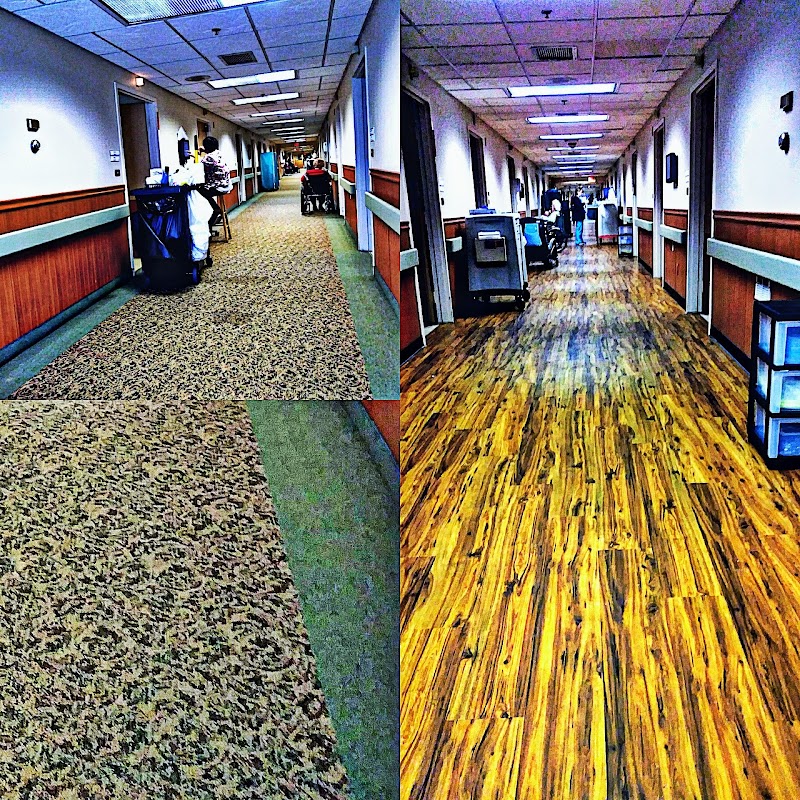
How is Mount Carmel Senior Living Community Staffed?

CMS rates MOUNT CARMEL SENIOR LIVING COMMUNITY's staffing level at 2 out of 5 stars, which is below average compared to other nursing homes. Staff turnover is 41%, compared to the Pennsylvania average of 46%. This relatively stable workforce can support continuity of care. RN turnover specifically is 60%, which is notably high. RNs provide skilled clinical oversight, so turnover in this role can affect medical care quality.

What Have Inspectors Found at Mount Carmel Senior Living Community?

State health inspectors documented 51 deficiencies at MOUNT CARMEL SENIOR LIVING COMMUNITY during 2023 to 2025. These included: 1 that caused actual resident harm, 49 with potential for harm, and 1 minor or isolated issues. Deficiencies causing actual harm indicate documented cases where residents experienced negative health consequences.
Who Owns and Operates Mount Carmel Senior Living Community?

MOUNT CARMEL SENIOR LIVING COMMUNITY is owned by a for-profit company. For-profit facilities operate as businesses with obligations to shareholders or private owners. The facility is operated by GABRIEL SEBBAG & THE SAMARA FAMILY, a chain that manages multiple nursing homes. With 119 certified beds and approximately 106 residents (about 89% occupancy), it is a mid-sized facility located in MT CARMEL, Pennsylvania.

How Does Mount Carmel Senior Living Community Compare to Other Pennsylvania Nursing Homes?

Compared to the 100 nursing homes in Pennsylvania, MOUNT CARMEL SENIOR LIVING COMMUNITY's overall rating (1 stars) is below the state average of 3.0, staff turnover (41%) is near the state average of 46%, and health inspection rating (1 stars) is much below the national benchmark.

What Should Families Ask When Visiting Mount Carmel Senior Living Community?

Based on this facility's data, families visiting should ask: "Can you walk me through typical staffing levels on day, evening, and night shifts?" "Can I visit during a mealtime to observe dining assistance and food quality?" "How do you handle medical emergencies, and what is your hospital transfer rate?" "Can I speak with family members of current residents about their experience?" These questions are particularly relevant given the below-average staffing rating.

Is Mount Carmel Senior Living Community Safe?

Based on CMS inspection data, MOUNT CARMEL SENIOR LIVING COMMUNITY has a clean safety record: no substantiated abuse findings (meaning no confirmed cases of resident harm), no Immediate Jeopardy citations (the most serious violation level indicating risk of serious injury or death), and is not on the Special Focus Facility watch list (a federal program monitoring the lowest-performing 1% of nursing homes). The facility has a 1-star overall rating and ranks #100 of 100 nursing homes in Pennsylvania. While no facility is perfect, families should still ask about staff-to-resident ratios and recent inspection results during their visit.

Do Nurses at Mount Carmel Senior Living Community Stick Around?

MOUNT CARMEL SENIOR LIVING COMMUNITY has a staff turnover rate of 41%, which is about average for Pennsylvania nursing homes (state average: 46%). Moderate turnover is common in nursing homes, but families should still ask about staff tenure and how the facility maintains care continuity when employees leave.

Was Mount Carmel Senior Living Community Ever Fined?

MOUNT CARMEL SENIOR LIVING COMMUNITY has no federal fines on record. CMS issues fines when nursing homes fail to meet care standards or don't correct problems found during inspections. The absence of fines suggests the facility has either maintained compliance or corrected any issues before penalties were assessed. This is a positive indicator, though families should still review recent inspection reports for the full picture.

Is Mount Carmel Senior Living Community on Any Federal Watch List?

MOUNT CARMEL SENIOR LIVING COMMUNITY is not on any federal watch list. The most significant is the Special Focus Facility (SFF) program, which identifies the bottom 1% of nursing homes nationally based on persistent, serious quality problems. Not being on this list means the facility has avoided the pattern of deficiencies that triggers enhanced federal oversight. This is a positive indicator, though families should still review the facility's inspection history directly.