WATSONTOWN REHABILITATION AND NURSING CENTER
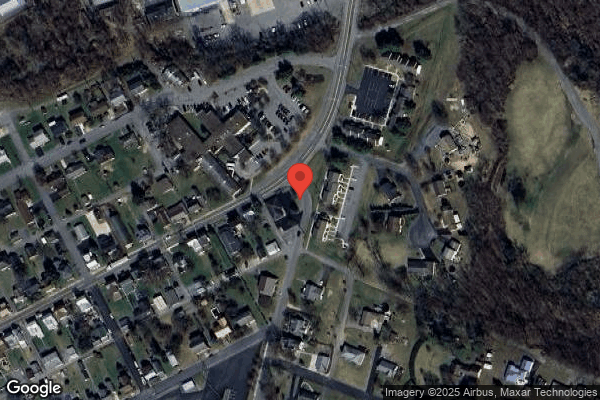
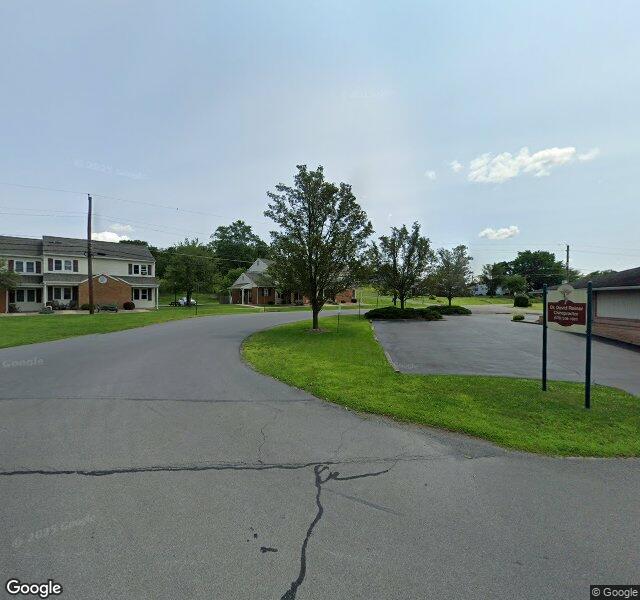
245 EAST EIGHTH STREET, WATSONTOWN, PA 17777 (570) 538-2561
For profit - Corporation 125 Beds PRIORITY HEALTHCARE GROUP Data: November 2025
Trust Grade
35/100
#506 of 653 in PA
Last Inspection: September 2025

Inspected within the last 6 months. Data reflects current conditions.

Overview

Watsontown Rehabilitation and Nursing Center has a Trust Grade of F, which indicates significant concerns and means the facility is performing poorly overall. It ranks #506 out of 653 nursing homes in Pennsylvania, placing it in the bottom half of facilities in the state, and #5 out of 7 in Northumberland County, suggesting only two local options are worse. The facility is showing an improving trend, with the number of issues decreasing from 21 in 2024 to 15 in 2025. Staffing is a weakness here, with a rating of 2 out of 5 stars and a turnover rate of 49%, which is average for Pennsylvania. Additionally, the facility has $38,958 in fines, indicating compliance problems that are higher than 81% of Pennsylvania facilities, and there is less RN coverage than 91% of state facilities, which raises concerns about adequate oversight. There have been serious incidents, including a resident suffering a fracture due to improper handling and another resident being at risk for entrapment in bed rails, highlighting potential safety issues that families should consider. Overall, while there are some signs of improvement, the facility has significant weaknesses that families should weigh carefully.

Trust Score
F
35/100
In Pennsylvania
#506/653
Bottom 23%
Safety Record
Moderate
Needs review
Inspections
Getting Better
21 → 15 violations
Staff Stability
⚠ Watch
49% turnover. Above average. Higher turnover means staff may not know residents' routines.
Penalties
○ Average
$38,958 in fines. Higher than 74% of Pennsylvania facilities. Some compliance issues.
Skilled Nurses
⚠ Watch
Each resident gets only 23 minutes of Registered Nurse (RN) attention daily — below average for Pennsylvania. Fewer RN minutes means fewer trained eyes watching for problems.
Violations
⚠ Watch
59 deficiencies on record. Higher than average. Multiple issues found across inspections.
★★☆☆☆
2.0
Overall Rating
★★☆☆☆
2.0
Staff Levels
★★☆☆☆
2.0
Care Quality
★★☆☆☆
2.0
Inspection Score
Stable
2024: 21 issues
2025: 15 issues

The Good

  • Full Sprinkler Coverage · Fire safety systems throughout facility
  • No fines on record

Facility shows strength in fire safety.

The Bad

2-Star Overall Rating

Below Pennsylvania average (3.0)

Below average - review inspection findings carefully

Staff Turnover: 49%

Near Pennsylvania avg (46%)

Higher turnover may affect care consistency

Federal Fines: $38,958

Above median ($33,413)

Moderate penalties - review what triggered them

Chain: PRIORITY HEALTHCARE GROUP

Part of a multi-facility chain

Ask about local staffing decisions and management

The Ugly 59 deficiencies on record

2 actual harm
Sept 2025 13 deficiencies
CONCERN (D)

Potential for Harm - no one hurt, but risky conditions existed

Comprehensive Care Plan (Tag F0656)

Could have caused harm · This affected 1 resident

Based on clinical record review and staff interview it was determined that the facility failed to implement a comprehensive person-centered care plan regarding a cardiac pacemaker for one of 24 reside...

Read full inspector narrative →
Based on clinical record review and staff interview it was determined that the facility failed to implement a comprehensive person-centered care plan regarding a cardiac pacemaker for one of 24 residents reviewed (Resident 38) and develop a comprehensive and person-centered care plan for one of two residents reviewed with a tracheostomy (Resident 42).Findings Include: Clinical record review for Resident 38 revealed a diagnosis list that included the presence of a cardiac pacemaker (an electronic device to help regulate the beating of the heart) and sick sinus syndrome (a disorder that causes the heart to beat abnormally). Nursing documentation for Resident 38 on admission to the facility on August 20, 2025, at 5:07 PM revealed that the resident had a cardiac pacemaker. Hospital documentation for Resident 38 dated August 14, 2025, noted a problem list for the resident that included a history of a cardiac pacemaker. Review of Resident 38's care plan revealed no current comprehensive, person-centered care plan that addressed the resident's pacemaker, any associated pacemaker checks, assessments, and/or precautions. The above information for Resident 38 was reviewed in a meeting with the Nursing Home Administrator and Director of Nursing on September 10, 2025, at 2:30 PM. Review of the policy titled, Tracheostomy Care Policy, last reviewed without changes on June 4, 2025, revealed a purpose to guide tracheostomy care and the cleaning of reusable tracheostomy findings. Under the section titled, General Guidelines, the policy noted that a replacement tracheostomy tube must be available at the bedside at all times. Clinical record review for Resident 42 revealed a diagnosis list that included a tracheostomy (trach, an artificial opening through which a medical tube is placed through the front of the neck into the airway to facilitate breathing). Review of the current physician orders for Resident 42 revealed orders for daily and as needed tracheostomy care that included changing the inner cannula. Further review of the physician orders revealed an order that instructed staff to perform trach care as per policy and check skin integrity around the trach site and neck. Resident 42's care plan revealed the resident has a tracheostomy related to the medical history. The care plan interventions included the following: ensure that trach ties are secured at all times, head of bed is elevated to prevent any shortness of breath while flat, provide good oral care daily and as needed, and suction as necessary. Further clinical record review for Resident 42 revealed a quarterly Minimum Data Set Assessment (MDS, an assessment completed at specific intervals to determine care needs) dated August 11, 2025, that noted facility staff assessed the resident as having a BIMS (Brief Interview for Mental Status) of 3, which indicated cognitive impairment. The care plan also noted a tracheostomy. Observation of Resident 42 on September 9, 2025, at 10:30 AM and September 12, 2025, at 10:16 AM revealed the resident had a tracheostomy present. Further review of Resident 42's tracheostomy care plan revealed the current care plan did not address possible complications (such as unplanned extubation or unplanned removal of the tracheostomy, or any other type of potential airway complication). The care plan did not address any emergency kit as indicated by staff or having an emergency tracheostomy tube at the bedside at all times as indicated in the policy. The above information for Resident 42 was reviewed in a meeting with the Nursing Home Administrator and Director of Nursing on September 12, 2025, at 12:28 PM 28 Pa. Code 211.12(d)(1)(3)(5) Nursing services
CONCERN (D)

Potential for Harm - no one hurt, but risky conditions existed

Quality of Care (Tag F0684)

Could have caused harm · This affected 1 resident

Based on observation, clinical record review, and staff interview, it was determined that the facility failed to coordinate hospice services per a coordinated plan of care for one of one resident revi...

Read full inspector narrative →
Based on observation, clinical record review, and staff interview, it was determined that the facility failed to coordinate hospice services per a coordinated plan of care for one of one resident reviewed for hospice care concerns (Resident 13).Findings include: Clinical record review for Resident 13 revealed nursing documentation dated April 1, 2025, at 3:17 PM that Resident 13 was admitted to a contracted hospice provider. Observation of Resident 13 on September 9, 2025, at 1:43 PM revealed that the registered nurse from the contracted hospice provider was at his bedside. The registered nurse explained to Resident 13 that he was not receiving services from the hospice aide because the contracted hospice provider did not have enough nurse aides currently on the schedule. The registered nurse explained to Resident 13 that people receiving hospice services in the community would get preference when assigning nurse aide services. Interview with Employee 9 (registered nurse from the facility's contracted hospice provider) on September 9, 2025, at 2:29 PM confirmed that according to her electronic hospice medical record (accessed via a small electronic tablet carried by her) Resident 13 was to receive nurse aide services three times a week on Mondays, Wednesdays, and Fridays; however, he had not received nurse aide services in at least two weeks. Employee 9 reviewed a binder of information available at the Lower-Level nurses' station that contained all communication and documentation for Resident 13 that pertained to his hospice services and confirmed that the last documentation completed by a hospice nurse aide was dated June 27, 2025. The interview confirmed that the facility's contracted hospice provider lost the nurse aide assigned to Resident 13 and the service area he resided in. Although the binder of handwritten documentation available at the facility did not include evidence of nurse aide services provided, Employee 9 stated that the electronic documentation available to her (not the facility) indicated that a nurse aide last provided services on August 29, 2025 (a Friday, 11 days earlier). The interview with Employee 9 confirmed that the information contained in Resident 13's binder did not include a plan of care that provided the information regarding what, and how often, hospice disciplines provided services to Resident 13 (e.g., frequency of visits from a hospice registered nurse or nurse aide or what days the facility could anticipate those services). The interview indicated that the hospice registered nurse visited the facility two days a week on Tuesdays and Thursdays. The interview indicated that the registered nurse completes a brief handwritten note (documented on the blank space on the back of a blank hospice nurse aide documentation form) in the hospice binder at the facility but the registered nurse completes a more comprehensive electronic note for the hospice provider's medical record, which is not supplied to the facility or incorporated into Resident 13's medical record at the facility. Previous electronic entries by the registered nurse were not in the hospice provider's binder or in the electronic medical record for Resident 13. The interview confirmed that four handwritten notes on the back of the nurse aide form was the only evidence of registered nurse visits at the facility. The handwritten notes did not include a full date (missing year) or staff name, signature, or discipline (e.g. RN' or registered nurse). Interview with Employee 8 (licensed practical nurse) on September 9, 2025, at 2:29 PM with Employee 9 revealed that the facility's second contracted hospice provider (different company) utilized pre-printed forms for registered nurses to document onsite visits (not the back of a blank nurse aide form). Review of Resident 13's electronic medical record at the facility revealed a scanned document from the contracted hospice provider entitled, Hospice Comprehensive Assessment, for a certification period of May 31, 2025, to July 29, 2025, that indicated, Coordination of Care with Facility, included that facility staff would be knowledgeable and involved in the hospice plan of care at initiation of hospice services/facility placement and with any update to the plan of care, and Resident 13 would receive, aide services, specific to patient care needs by April 2, 2025. The document included that the skilled nurse would initiate hospice aide services via physician's order and aide plan of care. The plan of care available in Resident 13's medical record at the facility initiated July 9, 2025, to address that he received hospice services noted only that a hospice aide would assist with care as needed (PRN) and that the facility would work cooperatively with the hospice team to ensure the resident's spiritual; emotional; intellectual; physical and social needs are met. The plan of care did not include that a registered nurse from the hospice provider would provide services or the frequency/days the hospice aide or hospice nurse would provide services. Neither Resident 13's facility medical record nor the hospice provider binder included a Hospice Comprehensive Assessment, for a certification period in effect after July 29, 2025. The surveyor reviewed the above concerns regarding the coordination of Resident 13's hospice services during an interview with the Nursing Home Administrator and the Director of Nursing on September 10, 2025, at 2:30 PM. On September 11, 2025, the facility provided a plan of care documented on a Hospice IDG Comprehensive Assessment and Plan of Care Update Report, for benefit period dates from July 30, 2025, to September 27, 2025, that noted, Please Add HHA Visits to M-W-F (please add home health aide visits to Monday, Wednesday, and Friday). Interview with the Nursing Home Administrator on September 12, 2025, at 11:15 AM confirmed that the facility had no evidence that staff revised Resident 13's facility plan of care to include the initiation of hospice services until July 9, 2025; although he began those services on April 1, 2025. The facility did not provide additional documentation to evidence that Resident 13 received hospice aide services three times a week per his plan of care. The facility failed to ensure the coordination of hospice services with facility services for Resident 13. 483.25 Quality of CarePreviously cited deficiency 10/25/24 28 Pa. Code 211.12(d)(1)(3)(5) Nursing services
CONCERN (D)

Potential for Harm - no one hurt, but risky conditions existed

Deficiency F0685 (Tag F0685)

Could have caused harm · This affected 1 resident

Based on clinical record review and resident and staff interview, it was determined that the facility failed to obtain routine services from an eye care professional for one of one resident reviewed f...

Read full inspector narrative →
Based on clinical record review and resident and staff interview, it was determined that the facility failed to obtain routine services from an eye care professional for one of one resident reviewed for vision concerns (Resident 31).Findings include: Interview with Resident 31 on September 10, 2025, at 10:34 AM revealed that she used eyeglasses only for reading. Resident 31 stated that she could not recall when the last time was she saw a doctor or eye care professional for vision services. Resident 31 stated, I need stronger ones (glasses). Clinical record review for Resident 31 revealed that the facility admitted her on February 17, 2022. Resident 31's diagnoses list included diagnoses known to create the potential for eye health concerns as follows: Diabetes (high blood sugar)Long-term use of non-steroidal anti-inflammatories (long term use of medications that can cause complications of the cornea, or outer surface of the eye)Hypertension (high blood pressure)Hyperlipidemia (high levels of fats/cholesterol in the blood) Documentation by the facility's contracted eye care professional dated April 23, 2025, indicated that Resident 31's appointment for services was cancelled. The, Reason for Cancelled Visit: Time Constraint; Comments: ran out of time; will reschedule. Documentation by the facility's contracted eye care professional dated June 17, 2025, indicated that Resident 31's appointment for services was cancelled. The Reason for Cancelled Visit: Refused. Resident 31's clinical record contained no evidence of any attempt to obtain professional eye care services in the last 12 months before April 23, 2025, or after June 17, 2025. The surveyor reviewed the above concerns regarding Resident 31's eye care services during an interview with the Nursing Home Administrator on September 12, 2025, at 11:15 AM. 28 Pa. Code 211.12(d)(3) Nursing services
CONCERN (D)

Potential for Harm - no one hurt, but risky conditions existed

Deficiency F0687 (Tag F0687)

Could have caused harm · This affected 1 resident

Based on clinical record review, observation, and resident and staff interview, it was determined that the facility failed to obtain professional podiatry services for one of two residents reviewed fo...

Read full inspector narrative →
Based on clinical record review, observation, and resident and staff interview, it was determined that the facility failed to obtain professional podiatry services for one of two residents reviewed for skin conditions (Resident 76).Findings include: Clinical record review for Resident 76 revealed her diagnoses list included diabetes (high blood sugar) and polyneuropathy (nerve damage that can include pain, numbness, weakness, and coordination issues, often affecting the hands and feet). Documentation by the facility's contracted podiatry provider dated January 16, 2025, revealed that the practitioner assessed Resident 76's nails as thickened, that she had complaints of burning in both of her feet, and that her diagnoses included peripheral angiopathy (diseased blood vessels) and diabetes. Documentation by the facility's contracted podiatry provider dated May 27, 2025, revealed that the practitioner continued to assess Resident 76's nails as thickened, that she had complaints of burning in both of her feet, and that her diagnoses included peripheral angiopathy and diabetes. The documentation indicated that Resident 76 had extensive symptomatic dry skin involving the feet, and the practitioner ordered lotion daily to affected areas. The documentation included that Resident 76 had underlying systemic risk factors for wound development if left untreated or unresolved. A physician's order dated March 26, 2025, instructed staff to apply Ketoconazole cream (antifungal medicated lotion) to Resident 76's bilateral feet every day. Review of Resident 76's treatment administration records dated July, August, and September 2025 revealed that licensed nursing staff initialed the completion of the foot lotion daily. There was no evidence in Resident 76's medical record that a foot care professional provided services in more than three months since May 27, 2025. Interview with Resident 76 on September 9, 2025, at 12:36 PM revealed that she believed that she had a raised area on her right foot, believed to be a callous, that was painful when she pressed on it in a certain way. Resident 76 could not recall the last time a podiatrist provided her care. The surveyor requested evidence of professional podiatry services for Resident 76 in the last 12 months during an interview with the Nursing Home Administrator and Director of Nursing on September 10, 2025, at 2:30 PM due to her complaints of a painful site on her right foot. Nursing documentation dated September 11, 2025, at 3:23 PM (following the surveyor's questioning) revealed that a physician assessed Resident 76 and provided a new order, for podiatry asap for corn on bottom of right foot. Observation of Resident 76 on September 12, 2025, at 1:31 PM with Employee 12 (licensed practical nurse) revealed a hardened, calloused, and dry area that was the size of an eraser head to dime-sized in diameter that was raised several millimeters from the surface of the skin on the right lateral side of Resident 76's right foot. Resident 76's feet appeared dry and scaley. Interview with Employee 12 at the time of the observation confirmed that the area of concern did not appear to have developed quickly; but had developed over some time. Interview with the Nursing Home Administrator on September 12, 2025, at 1:37 PM confirmed that Resident 76 had not received podiatry services in more than three months. The facility was unable to provide evidence that any staff identified the change in Resident 76's foot, notified the physician, or obtained professional podiatry services timely to address the issue before the surveyor's questioning although physician-ordered treatment required licensed staff to look at Resident 76's feet daily. 28 Pa. Code 211.12(d)(1)(3)(5) Nursing services
CONCERN (D)

Potential for Harm - no one hurt, but risky conditions existed

Incontinence Care (Tag F0690)

Could have caused harm · This affected 1 resident

**NOTE- TERMS IN BRACKETS HAVE BEEN EDITED TO PROTECT CONFIDENTIALITY** Based on clinical record review and resident and staff interview, it was determined that the facility failed to assess and imple...

Read full inspector narrative →
**NOTE- TERMS IN BRACKETS HAVE BEEN EDITED TO PROTECT CONFIDENTIALITY** Based on clinical record review and resident and staff interview, it was determined that the facility failed to assess and implement interventions to maintain a resident's continence status for one of one resident reviewed (Resident 19).Findings include: In an interview with Resident 19 on September 10, 2025, at 10:21 AM the resident indicated she was admitted to the facility without any history of being incontinent of her bowel or bladder and knows when she needs go to the bathroom but has since had several instances of being incontinent of bladder since her admission to the facility. Resident 19 indicated she has to wait a long time for staff at times on the evening or night shift to assist her to the bathroom and even started to ring her bell early to give the staff more time to get to her, but they don't always make it to her in time. Resident 19 also stated sometimes the staff come in and shut off her bell and say they will be back, but they don't come back and she pees the bed because of waiting. Resident 19 stated she sometimes can get up from her bed herself, but when she can't she rings the bell for staff to help her. Clinical record review for Resident 19 revealed the resident was admitted to the facility on [DATE]. A modified admission MDS assessment (Minimum Data Set, an assessment tool completed at specific intervals to determine resident care needs) dated July 24, 2025, revealed facility staff assessed the resident as always continent of urine and bowel. The resident was also assessed as requiring partial/moderate assistance for a toilet transfer and to walk 10 feet. A review of Resident 19's documentation of bowel and bladder continence records for July 2025 through September 10, 2025, revealed the following: Resident 19 was documented as not having any incontinent episodes of bowel or bladder from July 17, 2025, (admission) until the evening shift on July 27, 2025. The resident was documented as being incontinent of urine on the night shift on July 28 and 31, 2025. Review of the August 2025 bladder elimination record revealed the resident was documented as being continent of urine August 1-19, 2025, and then incontinent on evening shift August 20, 21, 27, and the day shift (documented at 6:23 AM) on August 28, 2025. Review of the September 2025 bladder elimination records revealed the resident was documented as being incontinent on the evening shift on September 2, 5 and 10, 2025. Resident 19 had one episode of bowel incontinence documented on August 29, 2025, on day shift (documented at 6:23 AM). There was no ability to review call bell log activations to potentially correlate with the resident shifts of incontinence. There was no evidence facility staff evaluated or assessed Resident 19's episodes of incontinence primarily on the evening and night shift as noted above or developed any toileting plans to help the resident remain continent. The above information was reviewed with the Nursing Home Administrator and Director of Nursing on September 11, 2025, at 3:00 PM. 28 Pa. Code 201.18(b)(1) Management 28 Pa. Code 211.10(c)(d) Resident care policies 28 Pa. Code 211.12(d)(1)(5) Nursing services
CONCERN (D)

Potential for Harm - no one hurt, but risky conditions existed

Respiratory Care (Tag F0695)

Could have caused harm · This affected 1 resident

Based on clinical record review, observation, and staff interview, it was determined that the facility failed to provide respiratory and tracheostomy care consistent with professional standards of pra...

Read full inspector narrative →
Based on clinical record review, observation, and staff interview, it was determined that the facility failed to provide respiratory and tracheostomy care consistent with professional standards of practice for one of two residents reviewed with a tracheostomy (Resident 42).Findings include: Review of the policy titled, Tracheostomy Care Policy, last reviewed without changes on June 4, 2025, revealed a purpose to guide tracheostomy care and the cleaning of reusable tracheostomy findings. Under the section titled, General Guidelines, the policy noted that a replacement tracheostomy tube must be available at the bedside at all times. Clinical record review for Resident 42 revealed a diagnosis list that included a tracheostomy (trach, an artificial opening through which a medical tube is placed through the front of the neck into the airway to facilitate breathing). Review of the current physician orders for Resident 42 revealed orders for daily and as needed tracheostomy care that included changing the inner cannula. Further review of the physician orders revealed an order that instructed staff to perform trach care as per policy and check skin integrity around the trach site and neck. Resident 42's care plan revealed the resident has a tracheostomy related to the medical history. The care plan interventions included the following: ensure that trach ties are secured at all times, head of bed is elevated to prevent any shortness of breath while flat, provide good oral care daily and as needed, and suction as necessary. Further clinical record review for Resident 42 revealed a quarterly Minimum Data Set Assessment (MDS, an assessment completed at specific intervals to determine care needs) dated August 11, 2025, that noted facility staff assessed the resident as having a BIMS (Brief Interview for Mental Status) of 3, which indicated cognitive impairment. The care plan also noted a tracheostomy. Observation of Resident 42 on September 9, 2025, at 10:30 AM and September 12, 2025, at 10:16 AM revealed the resident had a tracheostomy present. Observation of Resident 42's room and concurrent interview with Employee 10, licensed practical nurse (LPN), on September 12, 2025, at 10:22 AM revealed that the facility keeps an emergency kit at the bedside; however, Employee 10 was unable to locate a kit or replacement tracheostomy tube at the bedside. Employee 10 reported that the resident sometimes will carry the items off and voiced it may be at the nurse's station. Employee 10 was unable to locate an emergency kit after searching the nursing station. A second LPN present was also unable to locate the items. The above information was reviewed in a meeting with the Nursing Home Administrator and Director of Nursing on September 12, 2025, at 12:28 PM. 483.25(i) Respiratory/tracheostomy Care and SuctioningPreviously cited deficiency 10/25/2024 28 Pa. Code 211.12(d)(1)(3)(5) Nursing services
CONCERN (D)

Potential for Harm - no one hurt, but risky conditions existed

Deficiency F0745 (Tag F0745)

Could have caused harm · This affected 1 resident

Based on a review of financial accounting records, clinical record review, and resident and staff interview, it was determined that the facility failed to provide medically-related social services to ...

Read full inspector narrative →
Based on a review of financial accounting records, clinical record review, and resident and staff interview, it was determined that the facility failed to provide medically-related social services to assist a resident with financial matters for one of 24 residents reviewed (Resident 22).Findings include: Interview with Resident 22 on September 9, 2025, at 12:49 PM revealed that he did not believe that he had any money in a personal account, that he did not receive a statement, and that he did not know where any personal allowance funds were maintained. An interview with the Nursing Home Administrator on September 10, 2025, at 2:30 PM confirmed that Resident 22 entered the facility following his release from prison, and the facility determined that he had no resources. The surveyor requested Resident 22's financial accounting (e.g., monthly charges and payments for those charges) since his admission to the facility. The interview confirmed that Resident 22 had no designated responsible party. Resident 22 was his own responsible party; therefore, there would be no other individual that would receive a monthly personal fund statement. The interview indicated that because the facility believed that he had no monetary resource, he had no monthly personal allowance; therefore, he had no resident fund statement to provide. Clinical record review of census information for Resident 22 revealed that the facility admitted him on December 16, 2024, for Medicaid-provided services. Interview with Employee 11, assistant business office manager, on September 11, 2025, at 1:00 PM confirmed that Resident 22 arrived directly from incarceration at a prison in December 2024. The facility staff believed that the prison staff submitted documentation to have Resident 22's social security and Medicare benefits reinstated; however, the facility had no documented evidence (communication) between the prison and the facility to support that. The interview confirmed that the facility submitted the required documentation in January 2025 to obtain Medicaid payment for Resident 22's stay in the facility by entering that Resident 22 had no income. The facility did not assist Resident 22 to contact the Social Security Administration (SSA, United States government agency that administers monetary benefits to retired or disabled individuals) to have Resident 22's benefits (including monthly income) reinstated immediately after his incarceration. The interview indicated that the facility determined in May 2025 (five months after his admission) that the prison staff likely did not submit the necessary documentation to have Resident 22's benefits reinstated; therefore, the facility staff assisted Resident 22 at that time. The interview indicated that outside providers contacted the facility due to the Medicare non-payment of services during the time from December 2024 to May 2025. The interview with Employee 11 on September 11, 2025, at 1:00 PM revealed that, on this date, Employee 11 contacted the SSA to inquire about the backpay of Resident 22's social security benefits that he was entitled to from December 2024 to May 2025. Employee 11 discovered that the SSA deposited Resident 22's money in an account that he no longer had a banking access card to obtain. Employee 11 then assisted Resident 22 to obtain a new banking card to access the more than $1700.00 (seventeen hundred dollars) deposited into his account. The interview indicated that it would take several business days to receive the new banking card. A review of a Health and Human Service Benefits application dated January 7, 2025, indicated that the facility's contracted provider applied for Medicaid benefits for Resident 22 for a requested effective date of December 16, 2024. The application indicated that Resident 22 had a checking or savings account with an estimated resource value of $1,654.94 (one thousand six hundred fifty-four dollars and 94 cents). The application indicated that Resident 22 received money from one or more sources other than a job; and that source was supplemental security income (SSI, a federal program that helps people with disabilities and older adults who have low income and few resources) of $985.10 monthly. The facility, who had reasonable knowledge to determine Resident 22 was entitled to monthly monetary benefits, failed to assist Resident 22 to obtain financial assistance timely. The surveyor confirmed the above findings with the Nursing Home Administrator on September 11, 2025, at 1:45 PM. 28 Pa. Code 201.18(b)(2)(e)(1) Management 28 Pa. Code 201.29(a) Resident rights
CONCERN (D)

Potential for Harm - no one hurt, but risky conditions existed

Medical Records (Tag F0842)

Could have caused harm · This affected 1 resident

Based on clinical record review and staff interview, it was determined that the facility failed to ensure accurate clinical documentation for one of 24 residents reviewed for clinical documentation is...

Read full inspector narrative →
Based on clinical record review and staff interview, it was determined that the facility failed to ensure accurate clinical documentation for one of 24 residents reviewed for clinical documentation issues (Resident 44; Residents 34 and 122).Findings include: Review of Resident 44's clinical record revealed a section of the electronic health record (EHR) where various documents are uploaded to the medical record for staff to review as needed. Further review of this section for Resident 44 revealed that scans for two other residents, Residents 34 and 122, were uploaded to Resident 44's clinical record. The following documents were erroneously uploaded to Resident 44's medical record: A POLST (Physician Orders for Life-Sustaining Treatment) form for Resident 122 that had an upload and effective date of July 21, 2025. A medication clarification notice for Resident 34 that was dated July 25, 2025. The Nursing Home Administrator and Director of Nursing were informed of the findings on September 10, 2025, at 2:30 PM. The facility failed to ensure an accurate clinical record for Resident 44. 483.70(h) Medical RecordsPreviously cited deficiency 3/6/2025 28 Pa. Code 211.5(i) Medical records 28 Pa. Code 211.12(d)(1)(3)(5) Nursing services
CONCERN (E)

Potential for Harm - no one hurt, but risky conditions existed

Deficiency F0700 (Tag F0700)

Could have caused harm · This affected multiple residents

Based on review of select facility policies, observation, clinical record review, and staff and resident interview, it was determined that the facility failed to assess for the risk of side rail entra...

Read full inspector narrative →
Based on review of select facility policies, observation, clinical record review, and staff and resident interview, it was determined that the facility failed to assess for the risk of side rail entrapment for 6 of 7 residents reviewed for accident hazards (Residents 2, 6, 8, 22, and 64). Findings include: The FDA (The United States Food and Drug Administration) Hospital Bed System Dimensional and Assessment Guidance to Reduce Entrapment, is guidance that identifies key parts of the body at risk for entrapment, describes potential entrapment areas or zones, and recommends maximum and minimum dimensional limits of gaps or openings in hospital bed systems. Three key body parts at risk for life-threatening entrapment in the seven zones of a hospital bed system discussed in this guidance are the head, neck, and chest. To reduce the risk of head entrapment, openings in the bed system should not allow the widest part of a small head (head breadth measured across the face from ear to ear) to be trapped. The FDA is using a head breadth dimension of 120 mm (4.75 inches) as the basis for its dimensional limit recommendations. To reduce the risk of neck entrapment, openings in the bed system should not allow a small neck to become trapped. FDA is recommending 60 mm (two and three-eighths inches) as an appropriate dimension for neck diameter. The openings in a bed system should be wide enough not to trap a large chest through the opening between split rails. The FDA concurs with the dimension of 318 mm (12.5 inches) to represent chest depth for the population vulnerable to entrapment and has used this dimension as the basis for its recommended dimensional limits. This guidance describes seven zones in the hospital bed system where there is potential for patient entrapment. Zone six is the space between the end of the rail and the side edge of the headboard or footboard. This space may present a risk of either neck entrapment or chest entrapment. Review of the facility's current policy entitled Bed Safety, last reviewed June 4, 2025, revealed it is the facility's policy when using side rails for any reason, the staff shall take measures to reduce related risks. A Bed Entrapment Grid attached to the policy revealed areas of entrapment risk include zone one (within the rail), two (between the top of compressed mattress to the bottom of the rail, between rail and supports), three (in the horizontal space between rail and mattress), four (between the top of the compressed mattress and the bottom of the rail at the end of the rail), and zone 6 (entrapment between the rail and the edge of the head/foot board). Observation of Resident 8 on September 10, 2025, at 11:08 AM revealed she was in bed. Her bed was equipped with a headboard, footboard, and an assist rail on the right side of her bed. Clinical record review for Resident 8 revealed an active physician's order dated October 20, 2023, for her to have a right bed rail to assist her with increased mobility in bed and with transfers as able. A Bed System Measurement Device Test Results Worksheet dated September 3, 2025, indicated that the bed rail installed for Resident 8 passed inspection for zones one through four; however, zone four was only assessed at the proximal edge of the rail (closest to the headboard). Zone four was not assessed at the distal end (closest to the footboard). There was no evidence that other potential risks were assessed such as the area between her mattress and her headboard/footboard (zone seven) or the area between the edge of the siderail and the headboard (zone six). Observation of Resident 22's room on September 9, 2025, at 1:26 PM revealed a right-sided bed rail installed on his bed. Clinical record review for Resident 22 revealed an active physician's order dated September 1, 2025, for the use of a right-sided bed rail to increase bed mobility. A Bed System Measurement Device Test Results Worksheet dated September 3, 2025, indicated that the bed rail installed for Resident 22 passed inspection for zones one through four; however, zone four was only assessed at the proximal edge of the rail. Zone four was not assessed at the distal end. There was no evidence that other potential risks were assessed such as the area between her mattress and her headboard/footboard (zone seven) or the area between the edge of the siderail and the headboard (zone six). Interview with Employee 3 on September 11, 2025, at 12:25 PM revealed that he was told by someone, that zone four for the distal part of the rail was not assessed because there were no split rails on the bed; however, he confirmed that his directions indicate that zone four is the distance between the bottom of the rail and the mattress, which was applicable for Resident 8's and Resident 22's rails. The surveyor reviewed the above concerns regarding Resident 8's and Resident 22's bed rails during an interview with the Nursing Home Administrator and the Director of Nursing on September 11, 2025, at 2:30 PM. Observation of Resident 2 on September 9, 2024, at 12:10 PM revealed she was in bed sleeping. Bilateral enabler bars were observed on her bed. In a follow up interview with Resident 2 on September 10, 2025, at 10:41 AM she stated she uses the enabler bars to move in bed and hold herself to her side during care. Review of a Bed System Measurement Device Test Results Worksheet dated September 3, 2025, revealed facility staff assessed Resident 2 for the risk of entrapment for zones one through four. There was no evidence that the resident was assessed for the zone 6 the area between the rail and the headboard. Observation of Resident 64's bed on September 10, 2025, at 10:18 AM revealed an enabler bar on the left side of her bed. Resident 64 indicated she used the enabler bar to move around in bed. In an interview with Employee 3, maintenance director, on September 11, 2025, at 12:24 PM, Employee 3 confirmed zone 6 was identified in the facility's policy for bed entrapment zones as a potential risk of entrapment. Employee 3 also confirmed there was no evidence zone 6 was assessed for Residents 2 and 62. Observation of Resident 6's bed on September 10, 2025, at 9:14 AM revealed an enabler bar on the left side of his bed. Resident 6 indicated he uses the enabler bar to move around in bed. Review of a Bed System Measurement Device Test Results Worksheet dated September 3, 2025, revealed facility staff assessed Resident 6 for the risk of entrapment for zones one through four. There was no evidence the resident was assessed for the risk a zone 6 between the rail and the headboard. The above information was reviewed with the Nursing Home Administrator and Director of Nursing on September 11, 2025, at 2:45 PM. 483.25 (n) (1) (3) (4) Bed railsPreviously cited 10/25/24 28 Pa. Code 211.12 (d)(5) Nursing services
CONCERN (E)

Potential for Harm - no one hurt, but risky conditions existed

Dental Services (Tag F0791)

Could have caused harm · This affected multiple residents

**NOTE- TERMS IN BRACKETS HAVE BEEN EDITED TO PROTECT CONFIDENTIALITY** Based on observation, review of facility documentation, clinical record review, and staff and resident interviews, it was determ...

Read full inspector narrative →
**NOTE- TERMS IN BRACKETS HAVE BEEN EDITED TO PROTECT CONFIDENTIALITY** Based on observation, review of facility documentation, clinical record review, and staff and resident interviews, it was determined that the facility failed to provide professional dental services for three of three residents reviewed for dental concerns (Residents 8, 31, and 56).Findings include: Interview with Resident 31 on September 10, 2025, at 10:32 AM revealed that she had natural teeth; however, she was missing some teeth. Observation of Resident 31 on the date and time of the interview confirmed that she had natural teeth with noticeable gaps from missing teeth. Clinical record review for Resident 31 revealed documentation by the facility's consultant dentist dated March 13, 2024, that recommended a treatment plan that included an annual exam. Resident 31's clinical record contained no evidence of additional services from the consultant dentist in the 18 months since March 13, 2024. Interview with Resident 8 on September 10, 2025, at 10:57 AM revealed that she had no teeth or dentures in her top jaw and had some natural teeth on her bottom jaw. Resident 8 stated that she was missing teeth in her bottom jaw. Resident 8 stated that she had services to obtain impressions for dentures two months ago; however, she had no indication when she would receive them. Clinical record review for Resident 8 revealed an annual MDS (Minimum Data Set, an assessment tool completed at specific intervals to determine resident care needs) assessment dated [DATE]; an admission MDS following a hospitalization dated July 24, 2024; and an annual MDS dated [DATE], that assessed Resident 8 as having obvious or likely cavities or broken natural teeth. Documentation by the facility's contracted dental provider dated July 19, 2022, and December 20, 2023, revealed that Resident 8 expressed a desire to have a full upper denture and a partial lower denture. Documentation on both dates indicated that the provider would apply to Medicaid for the fabrication of the upper and lower appliances. Documentation by the facility's contracted dental provider dated October 22, 2024, confirmed that Resident 8 had no upper teeth and numerous missing lower teeth. The documentation revealed that the plan of treatment included a recall for an annual exam on April 22, 2025, and Fabrication of full upper denture (DFU); Fabrication of partial lower denture (DPL). The documentation indicated that the provider Refiled [NAME] (Pennsylvania Medicaid) today for F/P (full/partial). Resident 8's clinical record contained no evidence of a recall visit with the dentist in April 2025. Documentation by the facility's contracted dental provider dated July 7, 2025, noted Resident 8's partial dentition, and she would like an upper denture and a lower partial denture. The documentation indicated that impressions for dentures occurred; but again, noted that a dental recall would be based on the pay source frequency. Resident 8's clinical record contained no evidence of a recall visit with the dentist after July 7, 2025. Clinical record review for Resident 56 revealed a diagnosis list that included dementia (general term to describe a group of symptoms related to loss of memory, judgment, language, complex motor skills, and other intellectual function, caused by the permanent damage or death of the brain's nerve cells, or neurons), and a need for assistance with personal care. Further clinical record review for Resident 56 revealed a quarterly Minimum Data Set Assessment (MDS, an assessment completed at specific intervals to determine care needs) dated July 17, 2025, that noted facility staff assessed the resident as having a BIMS (Brief Interview for Mental Status) of 3, which indicated cognitive impairment. Resident 56's care plan initiated on December 12, 2024, noted the resident has oral/dental health problems and upper and lower dentures were noted under interventions. Clinical documentation for Resident 56 dated December 12, 2024, at 11:00 AM titled, admission Nursing Evaluation, documented the resident as having upper and lower dentures. Nursing documentation for Resident 56 dated December 12, 2024, at 11:26 AM revealed that the resident arrived at the facility and staff documented Upper/Lower dentures. Nursing documentation for Resident 56 dated July 6, 2025, at 2:27 PM revealed that the resident's family made the nurse aware that the resident's bottom dentures are missing and have been missing since Friday. The documentation noted that the nurse looked through the resident's room and did not find the dentures. Care plan meeting documentation for Resident 56 dated August 12, 2025, at 2:34 PM revealed that the family brought to nursing's attention of missing dentures and a .concern form filed with social services. The above information for Resident 56 was reviewed in a meeting with the Nursing Home Administrator and Director of Nursing on September 10, 2025, at 2:30 PM and September 11, 2025, at 2:30 PM. The Nursing Home Administrator reported during the meeting on September 11, 2025, that he confirmed with the resident that he did not have any lower dentures. An interview with Resident 56 on September 12, 2025, at 10:22 AM revealed the resident is unsure what happened to the dentures. The resident pulled down his lower lip to reveal no bottom dentures were present. A review of facility documentation concern logs from February 2025 to September 2025, revealed no concern forms for Resident 56. It was confirmed with the Nursing Home Administrator on September 12, 2025, at 12:28 PM that there was no concern log related to Resident 56's dentures. A review of the dental visits for Resident 56 revealed the following: September 2, 2025, the resident declined dental hygiene treatment; June 3, 2025, dental hygiene practitioner was seen, and upper denture was cleaned; March 6, 2025, the dental provider documented the resident was not seen and to reschedule. The documentation did not mention anything about missing dentures for the visits. An interview with Employee 7, social services, on September 12, 2025, at 11:36 AM revealed that Resident 56 is on the dental list for this month. Employee 7 reported he was not aware of any concern form submitted or missing dentures despite the documentation from the care plan meeting on August 12, 2025, at 2:34 PM. The facility failed to provide any further documentation or evidence that Resident 56's missing dentures were addressed by the facility. The above information for Resident 56 was reviewed in a meeting with the Nursing Home Administrator on September 12, 2025, at 12:28 PM. 483.55(b)(1)(3)(5) Routine/emergency Dental ServicesPreviously cited deficiency 10/25/2024 28 Pa. Code 211.12(d)(1)(3)(5) Nursing services 28 Pa. Code 211.15. Dental services
CONCERN (E)

Potential for Harm - no one hurt, but risky conditions existed

Food Safety (Tag F0812)

Could have caused harm · This affected multiple residents

Based on observation and staff interview, it was determined the facility failed to maintain a safe and sanitary environment in the facility's main kitchen. Findings include: Observation of the facilit...

Read full inspector narrative →
Based on observation and staff interview, it was determined the facility failed to maintain a safe and sanitary environment in the facility's main kitchen. Findings include: Observation of the facility's main kitchen on September 9, 2025, at 10:12 AM revealed flooring throughout the main kitchen was blackened. Dirt/debris buildup was observed in several areas of the grout and under equipment. Significant black buildup was observed under the dish machine area, which was covered in water as staff were washing breakfast dishes during the observation. The cove base molding surrounding the kitchen contained black buildup. Several broken and cracked floor tiles were also observed in the area outside the dry storage room and corridor to the receiving dock. Employee 6, dietary manager, indicated during the observation that the flooring and cove base has been a repeated issue, and he has tried scrubbing it but has not been able to get it clean. The above findings were reviewed with the Nursing Home Administrator on September 10, 2025, at 2:30 PM. 28 Pa. Code 201.14 (a) Responsibility of Licensee
CONCERN (E)

Potential for Harm - no one hurt, but risky conditions existed

Infection Control (Tag F0880)

Could have caused harm · This affected multiple residents

Based on a review of select facility policies and procedures, clinical record review, observation, and staff interview, it was determined that the facility failed to maintain an infection prevention a...

Read full inspector narrative →
Based on a review of select facility policies and procedures, clinical record review, observation, and staff interview, it was determined that the facility failed to maintain an infection prevention and control and water management program to provide an environment to help prevent the development and transmission of communicable diseases and infections on two of two nursing units (Upper Level, Residents 4, 6, 19, 32, 57, 59, 64, 78, 123; and Lower Level, Residents 45 and 70). Findings include: The facility policy entitled, Infection Prevention and Control Program, last revised June 1, 2025 revealed that the elements of the infection prevention and control program consist of items that included coordination/oversight, policies, surveillance, and outbreak management. The infection prevention and control program is coordinated and overseen by an infection prevention specialist (infection preventionist) or designee. Surveillance data and reporting information is used to inform the committee of potential issues and trends. Surveillance tools are used for recognizing the occurrence of infections, recording their number and frequency, detecting outbreaks and epidemics, monitoring employee infections, and detecting unusual pathogens with infection control implications. Data gathered during surveillance is used to oversee infections and spot trends. Outbreak management is a process that includes determining the presence of an outbreak, managing affected residents, preventing the spread to other residents, and monitoring for recurrences. The facility policy entitled, Infection Surveillance, last reviewed without changes on June 4, 2025, indicated that the infection preventionist will conduct ongoing surveillance for Healthcare-Associated Infections (HAIs) and other epidemiologically significant infections that may require transmission-based precautions and other preventative measures. The facility's Infection Control Plan dated August 4, 2025, indicated that the plan outlined the infection prevention and control strategies implemented at the facility to prevent the spread of infectious diseases within the facility; and that the facility would adhere to federal guidelines established by the Centers for Disease Control and Prevention (CDC). Infection preventionist duties include ongoing facility-wide surveillance and reporting of HAI (Health Acquired Infections) and outbreaks. Surveillance is an ongoing process to identify MDROs (multi-drug-resistant organisms, bacteria or viruses that are resistant to many commonly used medications/antibiotics that can cause infections), communicable diseases, outbreaks, infection control practice breaches, and potential HAIs resulting from or involving any service rendered at the facility. Sources for surveillance data include, but are not limited to, laboratory records, infection control rounds and/or interviews, verbal reports from staff, infection document records, pharmacy records, antibiotic review, and transfer logs/summaries. Transmission-based precautions (TBPs) are a set of additional infection control practices used in healthcare settings to prevent the spread of infectious agents that can be transmitted through direct contact, droplets, or airborne particles. These precautions are implemented when a resident is known or suspected to be infected with a highly contagious pathogen and are used in conjunction with standard precautions (which are applied to all residents regardless of infection status). The type and duration of TBPs used at the facility are based on CDC's Guideline for Isolation Precautions: Preventing Transmission of Infectious Agents in Healthcare Settings (2007). The use of isolation signage, medical record flag, and chart documentation is used to ensure the healthcare personnel are aware of the precautions in place. The facility can use the CDC-approved signs for all three types of isolation (contact, droplet, and airborne). Enhanced Barrier Precautions (EBP) is an approach to target gown and glove use during high-contact resident care activities, designed to reduce the transmission of an MDRO. EBP may be applied to residents with wounds or indwelling medical devices, regardless of MDRO colonization status; or to resident with infection or colonization with an MDRO. The facility has a Water Management Plan (WMP) to mitigate waterborne pathogens transmission risks. The facility's Legionella Water Management Pan, last reviewed June 19, 2025, defined Legionnaires' disease as an uncommon form of pneumonia caused by the legionella bacterium. Infection occurs when legionella bacteria has been released into the air from a contaminated source. Bacteria can live in all types of water (including water sources such as hot and cold water systems). Control and prevention includes good design and maintenance to prevent growth. Control Measures and Corrective Actions included identify the routine process of monitoring control measures, complete a flow diagram that can be easily understood by all members of the team, describe where control measures should be applied, describe how to monitor your control measure, and establish ways to intervene when control limits are not met. The facility will utilize the CDC Legionella Control Toolkit (included in the program packet). The facility will clean and maintain water system components weekly. The facility flow diagram for monitoring and controls indicated that temperatures were monitored for five water heaters in the basement. The CDC Toolkit for Controlling Legionella defined control limits as the maximum value, minimum value, or range of values acceptable for the control measures being monitored to reduce risk for Legionella growth and spread. Design recommendations include to install thermostatic mixing valves as close as possible to fixtures to prevent scalding while permitting circulating hot water temperatures above 120 degrees Fahrenheit. Store hot water at temperatures above 140 degrees Fahrenheit and ensure hot water in circulation does not fall below 120 degrees Fahrenheit. Store and circulate cold water at temperatures below the favorable range for Legionella (77 to 113 degrees Fahrenheit). During an interview with the Nursing Home Administrator and the Director of Nursing on September 9, 2025, at 9:30 AM the onsite survey team requested that the facility provide the following information within four hours of entrance:Infection prevention and control program standards, including evidence of the facility's infection surveillance plan and an accurate, complete, matrix for all residents. An observation of Resident 4's room on September 9, 2025, at 12:03 PM revealed a sign outside the resident's door indicating contact precautions (infection control practices used to prevent the spread of diseases transmitted through direct or indirect contact with a patient or their environment). The sign indicated that before entering the room that hand hygiene and putting on a gown and gloves was required and upon leaving the room disposing of the gloves, and gown was required along with performing hand hygiene. In a concurrent interview with Resident 4, the resident indicated the precautions were in place due to a urinary tract infection, which the resident indicated was ESBL (extended-spectrum beta-Lactamase, a highly resistant bacteria that required strict hygiene practices to prevent spread). Resident 4 stated she was still taking an antibiotic but was feeling better. Resident 4 also indicated she shared a bathroom with her roommate and residents in an adjoining room. Upon exit of Resident 4's room, there were no bins to place the used gown or gloves nor any bags to place the items in to remove them from the room. Resident 4 indicated staff sometimes place bins in the front of the room, but they didn't this time because they get in her and her roommates' way. Continued observations on the upper nursing unit revealed a contact precaution sign as noted above on the door where Residents 32 and 78 resided and the door where Residents 123 and 59 resided. Red disposal bins were noted at the front of both rooms near the bathroom. A review of the facility matrix provided to the survey team on September 9, 2025, between 9:30 and 12:20 PM revealed no residents were identified on the matrix as requiring transmission-based precautions even though the contact precautions signs were observed posted for residents above. At 12:20 PM on September 9, 2025, the Director of Nursing was made aware of the conflicting information between the facility matrix and postings on resident doors on the upper level and was shown the posting on the rooms of the residents noted above (Residents 4, 32, 59, 78 and 123). The Director of Nursing was not sure why the resident rooms were labeled with contact precautions or why they were not identified on the matrix. At 1:00 PM on September 9, 2025, Employee 1 (regional director of clinical services) was made aware of the conflicting information regarding the transmission-based precautions on the facility matrix and what was observed on the upper nursing level unit as well as the lack of bins/bags to dispose of used personal protective equipment in Resident 4's room. Interview with Employee 1 and the Nursing Home Administrator on September 9, 2025, at 2:50 PM again reviewed discrepancies between the facility matrix provided versus observations on the nursing units related to residents identified on transmission-based precautions. The survey team reiterated a request for an accurate resident matrix that included residents on TBP. Clinical record review for Resident 4 revealed a physician's order dated September 4, 2025, for the resident to be on contact precautions for E. Coli (Escherichia coli, a common bacterium found in the gastrointestinal tract, and urinary tract infections), for 10 days. Results of a lab urine test for the resident obtained on August 28, 2025, due to the resident complaining of burning with urination revealed the resident tested positive for E. Coli in her urine and was ordered Macrobid (antibiotic) on September 2, 2025, to be administered for seven days. In a follow up interview with Employee 1 on September 10, 2025, at 8:50 AM, Employee 1 provided the survey team with an updated matrix. Resident 4, nor the rooms where Residents 32, 78, 123, or 59 were identified as having contact precautions. Employee 1 indicated the contact precautions signage was not needed outside the rooms where residents 32, 78, 123, or 59 resided and were removed, and Resident 4's contact precautions were removed because the resident completed her antibiotic treatment on September 9, 2025. Employee 1 also indicated the prior concerns for Resident 4 of no personal protective equipment bins to dispose of used items or the resident using the bathroom with others was not a concern because it was determined the resident did not need contact precautions for her urinary tract infection because it was E. Coli and not ESBL. Employee 1 provided a note from Resident 4's physician dated September 8, 2025, (but signed on September 9, 2025, at 11:50 PM, after it was brought to the facility staff's attention), that due to Resident 4 having E. Coli, not ESBL, and having minimal symptoms, contact precautions were not definitively indicated. However, Resident 4's order for contact precautions dated September 4, 2025, was signed by the same physician. Further clinical record review revealed Resident's 4's order for contact precautions had been discontinued on September 9, 2025. Further review of the updated matrix provided by Employee 1 on September 10, 2025, at 8:50 AM revealed the matrix now indicated a resident on the upper level (Resident 52) as being on transmission-based precautions. Observation of Resident 52's room on September 10, 2025, at 9:30 AM revealed no evidence of signage on the resident's door to indicate transmission-based precautions were required to enter the resident's room. Clinical record review did not reveal any transmission-based precautions were ordered for this resident. Employee 1 indicated Resident 52 should not have been added to the matrix as being on transmission-based precautions. The surveyor requested evidence of the facility's surveillance of resident infections in the building (e.g., line listing, tracking of infectious organisms that may or may not require TBP used to identify and address potential outbreaks or patterned clusters of infections in the facility) during an interview with the Nursing Home Administrator and the Director of Nursing on September 10, 2025, at 2:30 PM. The surveyor reiterated the request for the facility's surveillance of resident infections in the building during an interview with Employee 2 (registered nurse, infection preventionist) on September 11, 2025, at 11:39 AM. Employee 2 confirmed that the facility had a line listing and map of resident infections in the facility. Interview with the Nursing Home Administrator and the Director of Nursing on September 11, 2025, at 2:30 PM confirmed that the facility's infection surveillance line listing provided did not match the facility roster matrix or observations on the nursing units. Interview with the Director of Nursing on September 12, 2025, at 9:01 AM confirmed that the facility roster matrix used by the onsite survey team for the first three days of the survey was incorrect related to residents who required TBP. The interview confirmed that staff required clarification related to the implementation of TBP versus the implementation of EBP (enhanced barrier precautions). The interview indicated that the facility could not provide a list of residents residing in the building who met the criteria for the implementation of TBP. Interview with Employee 2 on September 12, 2025, at 12:25 PM revealed that she assumed the role of infection preventionist in the past four to six weeks. Employee 2 stated that she may review information regarding the new onset of resident infection and/or new physician orders for antibiotic use daily, every other day, or weekly, depending on time constraints. Employee 2 stated that the staff who previously held the infection preventionist position converted to per diem employment and assists in implementing the infection surveillance in the building sporadically. The surveyor requested evidence of the facility's implementation and monitoring of control measures (e.g., water temperature testing of hot water tanks in the basement) during interviews with the Nursing Home Administrator on September 10, 2025, at 2:30 PM September 11, 2025, at 2:30 PM and September 12, 2025, at 9:14 AM. Interview with the Nursing Home Administrator on September 12, 2025, at 9:14 AM confirmed that the only evidence of monitoring water temperatures indicated that the facility completed water temperature monitoring for resident safety (which indicated that water temperatures were less than 110 degrees Fahrenheit besides those taken from the laundry and kitchen dishwasher supply). Interview with Employee 3 (maintenance director) on September 12, 2025, at 11:59 AM indicated that the facility monitors hot water heater temperatures daily, which were greater than 113 degrees. The interview did not provide evidence that the facility ensures hot water temperatures are 140 degrees Fahrenheit at storage sites (hot water heaters in the basement) per CDC guidelines. Interview with Employee 3 on September 12, 2025, at 1:11 PM revealed that the facility could provide temperature monitoring logs for four hot water heaters; however, only one of the five hot water heaters indicated temperatures that ranged greater than 140 degrees Fahrenheit. The logs indicated that three of the four hot water tanks tested for temperatures that ranged less than 130 degrees Fahrenheit. The facility was unable to provide evidence of any corrective actions taken in response to the water temperature findings. An observation of the upper-level nourishment room on September 9, 2025, at 12:21 PM revealed two gel type ice packs in the resident food freezer labeled with Resident 64's name, and one gel type ice pack with Resident 19's name. Upon further observation as to the use of the ice packs noted, Employee 4, registered nurse, and Employee 3, licensed practical nurse (LPN), indicated at 12:37 PM that the ice packs were used for Resident 19's left shoulder pain, and Resident 64's were used for leg pain. Concerns regarding the ice packs being stored in the resident food freezer with ice cream and other frozen food items were concurrently reviewed with Employees 3 and 4. An observation of the upper-level nourishment room on September 10, 2025, at 12:00 PM revealed one ice pack remained in the freezer for Resident 64, and one ice pack for Resident 19. The above observations of ice packs being used for medical use being stored in the resident food freezer were reviewed with the Nursing Home Administrator and Director of Nursing on September 10, 2025, at 3:00 PM. Observation on September 11, 2025, at 12:15 PM of a dressing change for Resident 6 with Employee 4, LPN, revealed Employee 4 donned a gown and gloves. The gown was noted to have thumb loops which Employee 4 placed over the gloves. Employee 4 entered Resident 6's room and cleansed the wound on the Resident 6's buttocks and performed incontinence care, while the thumb loops were over their thumb and around the palm of their hand. Employee 4 then removed the thumb loops, removed the gloves, and performed hand hygiene. Employee 4 donned clean gloves and used their gloved hands to replace the thumb loops back on top of their newly gloved hands. Employee 4 continued to complete the dressing change with the contaminated thumb loops on the exterior of the gloves. Employee 4 indicated she was not aware of how to utilize the thumb loops on the gown. The above information was relayed to the Nursing Home Administrator and the Director of Nursing on September 11, 2025, at 3:05 PM. Review of the facility policy titled, Infection Control; Transmission Based Precautions, last reviewed without changes on June 4, 2025, revealed that transmission-based precautions are to be used in addition to standard precautions for residents who may be infected or colonized with certain infectious agents for which additional precautions are needed to prevent infection transmission. The facility will make every effort to use the least restrictive approach to managing individuals with potentially communicable infections. Further review of the policy revealed a section titled, Contact Precautions, that noted in addition to standard precautions, implement contact precautions for residents known or suspected to be infected with microorganisms that can be transmitted by direct contact with the resident or indirect contact with the environmental surfaces or resident-care items in the resident's environment. The decision on whether precautions are necessary is evaluated on a case-by-case basis. Clinical record review for Resident 70 revealed a current order dated October 24, 2024, that indicated the resident was on enhanced barrier precautions and the reason indicated a history of ESBL. Clinical record review for Resident 70 revealed a urinalysis (laboratory test of the urine) and associated culture completed on April 18, 2025, that indicated the resident had Escherichia coli ESBL in the urine and was treated with antibiotics. Resident 70's care plan revealed the resident is on EBP that was initiated on October 24, 2024, and interventions included: EBP, ensure immunizations are up to date, and maintain transmission-based precautions when providing resident care. Observation of Resident 70's room on September 9, 2025, at 10:23 AM and 1:05 PM revealed the resident had a sign on the door along with a tote holding various personal protective equipment (PPE). The sign indicated the resident was on contact precautions. An interview with Employee 13, licensed practical nurse, on September 9, 2025, at 1:08 PM revealed that staff utilize the orders section of the chart to view if the resident is on any isolation precautions. Employee 13 confirmed that Resident 70 is on enhanced barrier precautions, and it was unclear why the contact isolation precautions sign was on the resident's door and not EBP signage as noted in the current physician orders. Clinical record review for Resident 45 revealed a diagnosis list that included a pressure ulcer on the resident's back. Clinical record review for Resident 45 revealed a current physician's order for contact precautions dated September 9, 2025, for a wound infection until September 17, 2025. Review of the current physician orders for Resident 45 revealed orders for wound care and dressings every day shift every three days related to a pressure ulcer of the back. There was also an order for an antibiotic for this pressure ulcer. Observation during a medication pass on September 11, 2025, at 8:33 AM revealed a sign hanging next to Resident 45's door, outside of the room, that indicated contact precautions. There was also an associated tote that held PPE hanging next to the door outside of the resident's room. Continued observation of Resident 45's room revealed that Employees 10 and 14, LPN's, entered the resident's room during medication pass without donning (putting on) full PPE (gown and gloves) and proceeded to administer medications to the resident while utilizing only gloves. The staff members then proceeded to reposition the resident as she sat in a chair so they could place a medicated topical patch on the resident's back for pain relief. A follow-up interview with Employee 10 on September 11, 2025, at 9:05 AM revealed that Resident 45 is on contact isolation per the signage and physician orders. Employee 10 reported she did not initially see the sign upon entry into Resident 45's room. An interview with the Nursing Home Administrator and Director of Nursing on September 12, 2025, at 2:30 PM revealed that there are no associated cultures for Resident 45's wound. The physician wanted to treat the wound and ordered antibiotics. Per the Director of Nursing, the expectation would be for staff to utilize a gown and gloves if anticipated to come into direct contact with the resident or the resident's environment for a resident that is on contact precautions. 483.80(a)(1)(2)(4)(e)(f) Infection Prevention and ControlPreviously cited deficiency 10/25/24 28 Pa. Code 201.14(a) Responsibility of licensee 28 Pa. Code 201.18(b)(1)(3)(e)(2.1) Management 28 Pa. Code 211.12(d)(1)(3)(5) Nursing services
CONCERN (E)

Potential for Harm - no one hurt, but risky conditions existed

Deficiency F0883 (Tag F0883)

Could have caused harm · This affected multiple residents

Based on review of select facility policies and procedures, clinical record review, and staff interview, it was determined that the facility failed to offer residents pneumococcal immunizations for fo...

Read full inspector narrative →
Based on review of select facility policies and procedures, clinical record review, and staff interview, it was determined that the facility failed to offer residents pneumococcal immunizations for four of five residents reviewed for immunizations (Residents 3, 8, 31, and 76).Findings include: Review of the policy entitled Pneumococcal Vaccine Guidelines, last revised March 10, 2025, revealed that the facility will offer residents the pneumococcal vaccine to aid in preventing pneumococcal infections as applicable per physician order. The procedure noted that previous immunization information will be requested during the pre-admission process. A representative from the admissions office/designee will obtain and forward copies of the immunization records to the admitting nurse. Staff will verify the data with the resident and/or authorized representative when applicable. The pre-admission immunizations will be added to the electronic immunization record/EMR. The immunization record/EMR will be updated with each offer (administrations and refusals) of the pneumococcal vaccine. Each age-appropriate and/or diagnosis appropriate resident will be offered a pneumococcal vaccination per physician order, to minimize the risk of acquiring, transmitting, or experiencing complications from pneumococcal pneumonia; unless the vaccine is medically contraindicated, or the resident has already been vaccinated within the designated timeframe. Pneumococcal vaccines recommended for adults (refer to CDC, Centers for Disease Control, pneumococcal vaccine timing for adults) include: 13-valent pneumococcal conjugate vaccine (PCV13, Prevnar 13)15-valent pneumococcal conjugate vaccine (PCV15, Vaxneuvance)20-valent pneumococcal conjugate vaccine (PCV20, Prevnar 20)23-valent pneumococcal conjugate vaccine (PPSV23, Pneumovax 23) The nurse will document the administration of the vaccine in the electronic medical record (EMR). Facility and physicians will refer to CDC Pneumococcal Vaccine Timing for Adults along with resident's pneumococcal vaccine history prior to obtaining/writing physician orders for pneumococcal vaccines. The resident or resident's representative can refuse the vaccination. Declinations must be uploaded into the resident's electronic health record. The surveyor requested the availability of immunization information beyond what was available in the residents' electronic medical records (e.g., a binder of consents or evidence of education provided) during interviews with the Nursing Home Administrator and Director of Nursing on September 10, 2025, at 2:30 PM and September 11, 2025, at 2:30 PM. Clinical record review for Resident 8 revealed that the facility admitted her on October 31, 2017. Resident 8's clinical record indicated that she received a PPSV23 (pneumococcal, pneumovax) immunization on October 1, 2011 (at the age of 64 years), January 1, 2014 (at the age of 68 years), February 3, 2022 (at the age of 75 years), and April 13, 2023 (at the age of 77 years). Resident 8's clinical record contained no evidence of any pneumococcal immunizations except the PPSV23 vaccine. Clinical record review for Resident 3 revealed that the facility admitted him on January 29, 2018. Resident 3's clinical record indicated that he received the PPSV23 immunization on April 3, 2012 (at the age of 51 years). Resident 3's clinical record contained no evidence of any pneumococcal immunizations while a resident at the facility. Clinical record review for Resident 31 revealed that the facility admitted him on February 17, 2022. Resident 31's clinical record indicated that he received the PPSV23 immunization on February 24, 2022 (at the age of 73 years). Resident 31's clinical record contained no evidence of any pneumococcal immunizations except the PPSV23 vaccine. Clinical record review for Resident 76 revealed that the facility admitted her on February 22, 2022. Resident 76's clinical record indicated that she received the PPSV23 immunization on June 22, 2010 (at the age of 64 years), February 28, 2022 (at the age of 75 years), and on April 11, 2023 (at the age of 76 years). Resident 76's clinical record contained no evidence of any pneumococcal immunizations except the PPSV23 vaccine. Resident 76's clinical record indicated that Resident 76's responsible party refused a Prevnar 20 (pneumococcal) immunization May 20, 2025; however, the same documentation indicated that the facility did not provide education regarding the risks and benefits of the vaccine. The surveyor reiterated to the Director of Nursing that the facility had yet to provide additional immunization information beyond what was available in the residents' electronic medical records as requested during the afternoon meetings on September 10 and 11, 2025, during an interview on September 12, 2025, at 9:01 AM. The Director of Nursing instructed the surveyor to email resident immunization concerns to her for review. Email communication to the Director of Nursing on September 12, 2025, at 10:11 AM reported the above immunization concerns for Residents 8, 3, 31, and 76. Interview with the Director of Nursing on September 12, 2025, at 11:35 AM indicated that the facility administered no pneumococcal immunizations in the past year. The facility had no evidence that the four residents were offered the vaccines even though they met CDC criteria for additional immunizations. 483.80(d)(1)(2) Influenza and Pneumococcal ImmunizationsPreviously cited deficiency 10/25/24 28 Pa. Code 211.12(d)(1)(5) Nursing services
Mar 2025 2 deficiencies
CONCERN (D) 📢 Someone Reported This

A family member, employee, or ombudsman was alarmed enough to file a formal complaint

Potential for Harm - no one hurt, but risky conditions existed

Notification of Changes (Tag F0580)

Could have caused harm · This affected 1 resident

Based on clinical record review and staff interview, it was determined that the facility failed to notify the physician of a resident's change in condition requiring interventions for one of five resi...

Read full inspector narrative →
Based on clinical record review and staff interview, it was determined that the facility failed to notify the physician of a resident's change in condition requiring interventions for one of five residents reviewed (Resident CR1). Findings include: Closed clinical record review for Resident CR1 revealed nursing documentation dated March 1, 2025, at 9:35 PM that indicated he was unable to swallow. A nursing progress note dated March 2, 2025, at 10:11 AM indicated that Resident CR1's medications were not given because it was not safe due to him not responding. A nursing progress note dated March 2, 2025, at 11:32 AM revealed that Resident CR1's daughter called and wanted updates on the resident. The resident was assessed by the documenting nurse and indicated his vital signs were within normal limits, his heart rate (HR) was regular, and he had no edema. His feet were cool to touch, and he had coarse lung sounds. He was mouth breathing. His HR was 98 beats per minute, his temperature was 96.6 degrees Fahrenheit, and his blood pressure was unable to be obtained. The daughter declined for Resident CR1 to go to the emergency room at this time and said she would be coming in. A nursing progress note for Resident CR1 dated March 2, 2025, at 12:36 PM revealed that he was not responding and was dead weight. He had no response to a drink or spoon touching his mouth. A nursing progress note for Resident CR1 dated March 2, 2025, at 12:41 PM indicated the resident was in no distress, he was breathing even, his pulse was thready (weak and difficult to feel), and his blood pressure was not able to be obtained. A nursing progress note for Resident CR1 dated March 2, 2025, at 12:45 PM revealed that Resident CR1's blood sugar was checked per the daughter's request. His blood sugar was 374 mg/dL (milligrams per deciliter; normal range is between 70 to 100 mg/dL). The daughter requested the resident be sent to the emergency room. A progress note for Resident CR1 dated March 2, 2025, at 1:06 PM revealed that Resident CR1 left for the ER due to being lethargic, arousable only to physical stimuli, unable to administer meds, no intake by mouth, and a blood sugar of 374 mg/dL. Further clinical record review revealed that the only notification to the physician during Resident CR1's change of condition occurred on March 2, 2025, at 12:39 PM when the facility faxed a form entitled Physician Call Report (a form used to communicate with physicians) to the physician's office. The form indicated that Resident CR1 was lethargic, responding to physical stimuli, vital signs were within normal limits, blood sugar was 374 mg/dL, staff were unable to give morning medications, resident had coarse lung sounds, his apical pulse was regular, positive bowel sounds, and he had no intake by mouth. The form was faxed back to the facility signed and dated by the physician on March 2, 2025, at 2:30 PM. The form indicated to send Resident CR1 to the emergency room, which the nurse had already done at 1:06 PM the same day. Closed clinical documentation for Resident CR1 revealed that he had a change in condition that started March 1, 2025, at 9:35 PM that required interventions, and the facility failed to notify his physician in a timely. Interview with the Nursing Home Administrator on March 6, 2025, at 12:15 PM confirmed the above noted findings related to physician notification for Resident CR1's change in condition that required intervention. 28 Pa. Code 211.12(d)(1)(3)(5) Nursing services
CONCERN (D) 📢 Someone Reported This

A family member, employee, or ombudsman was alarmed enough to file a formal complaint

Potential for Harm - no one hurt, but risky conditions existed

Medical Records (Tag F0842)

Could have caused harm · This affected 1 resident

Based on clinical record review and staff interview, it was determined that the facility failed to ensure complete and accurate clinical records for one of five residents reviewed (Resident CR1). Find...

Read full inspector narrative →
Based on clinical record review and staff interview, it was determined that the facility failed to ensure complete and accurate clinical records for one of five residents reviewed (Resident CR1). Findings include: Clinical record review revealed the facility admitted Resident CR1 on February 14, 2025, for a respite (a short stay to give his caregiver a break from their responsibility) stay. Review of the admission orders provided by Resident CR1's physician from the community, revealed that he was to have his blood sugar monitored four to five times a day. Review of Resident CR1's physician orders revealed that the order for his blood sugar checks never got transcribed to his physician orders on admission and his blood sugars were not being monitored. Interview with the Nursing Home Administrator on March 6, 2025, at 12:30 PM confirmed the above noted findings related to Resident CR1's order to monitor his blood sugars. The facility failed to ensure a complete and accurate clinical record for Resident CR1. 28 Pa. Code 211.12(d)(1)(5) Nursing services
Oct 2024 20 deficiencies
CONCERN (D) 📢 Someone Reported This

A family member, employee, or ombudsman was alarmed enough to file a formal complaint

Potential for Harm - no one hurt, but risky conditions existed

Deficiency F0578 (Tag F0578)

Could have caused harm · This affected 1 resident

Based on clinical record review and staff interview, it was determined that the facility failed to ensure a resident's right to refuse or discontinue advance directive treatment for one of four reside...

Read full inspector narrative →
Based on clinical record review and staff interview, it was determined that the facility failed to ensure a resident's right to refuse or discontinue advance directive treatment for one of four residents reviewed for advance directive concerns (Resident 80). Findings include: Clinical record review for Resident 80 revealed a POLST (Physician Orders for Life-Sustaining Treatment, portable medical order form that records patients' treatment wishes so that emergency personnel know what treatments the patient wants in the event of a medical emergency) signed by a physician on August 18, 2022, that indicated Resident 80 wanted comfort measures only and should not have hydration or nutrition via a tube. The form did not include a resident or resident representative signature but indicated that verbal consent was obtained via telephone conversation with Resident 80's responsible party. A living will document scanned into Resident 80's electronic medical record signed by Resident 80 on December 1, 2005, designated his responsible party as the agent to carry out his wishes as necessary. The document stipulated that Resident 80 did not want life-sustaining treatment if it prolonged the process of dying, to limit measures to keep him comfortable, and that he did not want tube feeding or any other artificial or invasive form of nutrition or hydration. A physician's order dated August 16, 2022, instructed staff to provide Resident 80 nothing by mouth for dietary intake. A physician's order dated October 18, 2024, instructed staff to feed Resident 80 enterally (via a tube inserted through the abdominal skin into the stomach) every morning and at bedtime for nutrition support. The surveyor reviewed the discrepancy regarding Resident 80's wishes for no artificial nutritional support when his physician ordered enteral feeding during an interview with the Director of Nursing and the Nursing Home Administrator on October 23, 2024, at 2:15 PM. Social services documentation dated October 24, 2024, at 8:25 AM (following the surveyor's questioning) indicated that staff called Resident 80's responsible party to confirm his POLST form decisions. The documentation indicated that staff were unable to reach the responsible party and left a voicemail. Interview with the Nursing Home Administrator on October 24, 2024, at 2:20 PM indicated that the facility staff began the process of obtaining an updated POLST for Resident 80 to clarify the use of artificial hydration/nutrition via tube. The facility did not provide an updated document as of the conclusion of the onsite survey. 28 Pa. Code 211.5(f) Clinical records 28 Pa. Code 211.12(d)(1)(3)(5) Nursing services
CONCERN (D) 📢 Someone Reported This

A family member, employee, or ombudsman was alarmed enough to file a formal complaint

Potential for Harm - no one hurt, but risky conditions existed

Deficiency F0582 (Tag F0582)

Could have caused harm · This affected 1 resident

Based on clinical record review and staff interview it was determined that the facility failed to provide the required notification timely to a resident whose payment coverage changed for one of three...

Read full inspector narrative →
Based on clinical record review and staff interview it was determined that the facility failed to provide the required notification timely to a resident whose payment coverage changed for one of three residents reviewed (Resident 65). Findings include: A review of the form Instructions for the Notice of Medicare Non-Coverage (NOMNC) CMS-10123, (a notice that informs the recipient when care received from the skilled nursing facility is ending; and how to contact a Quality Improvement Organization (QIO) to appeal) revealed instructions that a Medicare provider must ensure that the notice is delivered at least two calendar days before Medicare covered services end. The provider must ensure that the beneficiary or their representative signs and dates the NOMNC to demonstrate that the beneficiary or their representative received the notice and understands the termination of services can be disputed. If the provider is personally unable to deliver a NOMNC to a person acting on behalf of an enrollee, then the provider should telephone the representative to advise him or her when the enrollee's services are no longer covered. Confirm the telephone contact by written notice mailed on that same date. A review of the Form Instructions Skilled Nursing Facility (SNF) Advanced Beneficiary Notice of Non-coverage (SNFABN) Form CMS-10055 revealed that examples of the common reasons why an extended care stay, or services may not be covered under Medicare might include the beneficiary no longer requires daily skilled care for a medical condition but wants to continue residing in the skilled nursing facility (SNF). The SNF enters a good faith estimate of the cost of the corresponding care that may not be covered by Medicare. In the blank that follows Beginning on ., the skilled nursing facility enters the date on which the beneficiary may be responsible for paying for care that Medicare is not expected to cover. The beneficiary selects an option box to indicate a desire to continue to receive the care or not to continue to receive the care and if there is a desire to have the bill submitted to Medicare for consideration. The beneficiary or their authorized representative must sign the signature box to acknowledge that they read and understood the notice. The SNF must issue this notice when there is a termination of all Medicare Part A services for coverage reasons. If after issuing the NOMNC, the SNF expects the beneficiary to remain in the facility in a non-covered stay, the SNFABN must be issued to inform the beneficiary of potential liability for the non-covered stay. Clinical record review for Resident 65 revealed census documentation that confirmed Resident 65's last covered day of Medicare A services ended September 20, 2024. Resident 65 remained in the facility under a different payment source beginning September 21, 2024. A review of a CMS-10123 form provided by the facility confirmed that Resident 65's last covered day of Medicare A services ended September 20, 2024. The form indicated a conversation with Resident 65's responsible party on September 18, 2024; however, the form did not include any indication that a written copy of the notice was mailed or provided to Resident 65's responsible party. The section of the form that would include a resident or resident representative dated signature was blank. A review of a CMS-10055 form provided by the facility confirmed that Resident 65's last covered day of Medicare A services ended September 20, 2024, and that financial liability would begin September 21, 2024. The section of the form that would include a resident or resident representative dated signature that the notice was received and understood was blank. The surveyor reviewed the concern that the facility did not provide a signed CMS-10123 or CMS-10055 for Resident 65 during an interview with the Nursing Home Administrator and the Director of Nursing on October 23, 2024, at 3:15 PM. The facility did not provide CMS-10123 or CMS-10055 notices that were signed by the resident's responsible party, evidence that the notices were mailed, or evidence that attempts were made to obtain the necessary signatures on the notices during the onsite survey. 28 Pa. Code 201.18(b)(2)(e)(1) Management 28 Pa. Code 201.29(a) Resident rights
CONCERN (D) 📢 Someone Reported This

A family member, employee, or ombudsman was alarmed enough to file a formal complaint

Potential for Harm - no one hurt, but risky conditions existed

Comprehensive Care Plan (Tag F0656)

Could have caused harm · This affected 1 resident

**NOTE- TERMS IN BRACKETS HAVE BEEN EDITED TO PROTECT CONFIDENTIALITY** Based on clinical record review and staff and resident interview, it was determined that the facility failed to implement a comp...

Read full inspector narrative →
**NOTE- TERMS IN BRACKETS HAVE BEEN EDITED TO PROTECT CONFIDENTIALITY** Based on clinical record review and staff and resident interview, it was determined that the facility failed to implement a comprehensive person-centered care plan to maintain the highest practicable well-being for two of 20 residents reviewed (Residents 68 and 98). Findings Include: Observation and concurrent interview of Resident 68 on [DATE], at 2:10 PM revealed the resident had an indwelling foley catheter (a device that is inserted into the bladder and drains urine to an external collection bag). The resident's foley catheter drainage collection bag was observed hanging off the dresser located next to the resident's bed. Physician documentation for Resident 68 dated [DATE], revealed the resident had chronic retention of urine with a foley catheter. Current physician orders for Resident 68 revealed the following orders related to the foley catheter: Change the foley catheter and drainage bag monthly and as needed every night shift every one month starting on the 18th and as needed for leaking dated [DATE]. Flush the foley catheter with 50 milliliters (ml) of acetic acid (an irrigation solution to help prevent infections) dated [DATE]. Document foley output every shift dated [DATE]. Review of the current care plan for Resident 68 revealed the resident has bladder incontinence related to dementia and an intervention noted the resident declines to have the foley leg bag switched to a drainage bag overnight with bedtime care. There was no care plan noted for Resident 68 to address the specific care needs associated with the resident's indwelling foley catheter to maintain the highest practicable physical, mental, and psychosocial well-being. The above information for Resident 68 was reviewed with the Nursing Home Administrator on [DATE], at 1:39 PM. Current physician orders for Resident 98 revealed an order dated [DATE], that indicated an advance directive/code status that the resident is a DNR (do not attempt resuscitation and CPR when the person has no pulse and is not breathing) and comfort measures only. The current POLST form (Physician Orders for Life Sustaining Treatment, a legal document that specifies the type of care a person would like in an emergency medical situation) for Resident 98 dated [DATE], indicated the resident was a DNR and specified comfort measures only. Nursing documentation for Resident 98 dated [DATE], at 10:00 AM revealed a new POLST was completed and documented the resident as DNR Comfort Measures Only. Review of the current care plan for Resident 98 revealed an Advance Directive care plan that indicated the resident was a full code (attempt resuscitation and CPR when the person has no pulse and is not breathing). The documentation noted, Advanced Directives and/or POLST must be current and reflect the resident/family/ Responsible Party's decisions. The resident's current decisions are: FULL CODE, no artificial hydration/nutrition. The above information for Resident 98 was reviewed in a meeting with the Nursing Home Administrator and Director of Nursing on [DATE], at 2:15 PM. The care plan was not updated to reflect the resident's/responsible party's wishes regarding code status of Resident 98 until the care plan was questioned by the surveyor. 28 Pa. Code 211.10 (a)(c)(d) Resident care policies 28 Pa. Code 211.12(d)(1)(3)(5) Nursing services
CONCERN (D) 📢 Someone Reported This

A family member, employee, or ombudsman was alarmed enough to file a formal complaint

Potential for Harm - no one hurt, but risky conditions existed

ADL Care (Tag F0677)

Could have caused harm · This affected 1 resident

Deficiency Text Not Available

Read full inspector narrative →
Deficiency Text Not Available
CONCERN (D) 📢 Someone Reported This

A family member, employee, or ombudsman was alarmed enough to file a formal complaint

Potential for Harm - no one hurt, but risky conditions existed

Deficiency F0688 (Tag F0688)

Could have caused harm · This affected 1 resident

Based on clinical record review, observation, and staff interview, it was determined that the facility failed to apply a physician ordered splint for one of two residents reviewed for range of motion ...

Read full inspector narrative →
Based on clinical record review, observation, and staff interview, it was determined that the facility failed to apply a physician ordered splint for one of two residents reviewed for range of motion concerns (Resident 47). Findings include: Clinical record review for Resident 47 revealed an active physician order dated June 28, 2024, that instructed staff to apply a left grip splint in the morning and remove the splint in the evening. A plan of care initiated by the facility on July 22, 2019, to address Resident 47's inability to perform activities of daily living independently related to intellectual disabilities, cerebral palsy (a group of conditions that affect movement and posture caused by brain damage that occurs most often before birth), and impaired mobility, indicated that Resident 47 had contractures (abnormal positioning of a joint) of the left wrist and fingers for which staff were to apply a left grip splint with morning care and remove with evening care. Observation of Resident 47 on the following dates and times revealed that staff did not apply the left-hand splint. The left-hand splint was stored on the bedside furniture in Resident 47's room: October 23, 2024, at 10:38 AM October 24, 2024, at 9:48 AM October 24, 2024, at 11:47 AM Review of Resident 47's treatment administration record (TAR, electronic documentation used by staff to record the completion of treatments) dated October 2024, revealed that staff initialed the application of Resident 47's splint on October 23, 2024, at 9:00 AM, and October 24, 2024, at 9:00 AM. Interview with Employee 6 (licensed practical nurse) during the observation on October 24, 2024, at 11:47 AM revealed that she assumed skilled therapy staff applied Resident 47's left hand splint. Resident 47's clinical record indicated that the left-hand splint was assigned to nursing staff per the TAR documentation. The surveyor reviewed the above concerns regarding Resident 47's left hand splint during an interview with the Nursing Home Administrator and the Director of Nursing on October 24, 2024, at 2:15 PM. 28 Pa. Code 211.5(f) Medical records 28 Pa. Code 211.12(d)(1)(3)(5) Nursing services
CONCERN (D) 📢 Someone Reported This

A family member, employee, or ombudsman was alarmed enough to file a formal complaint

Potential for Harm - no one hurt, but risky conditions existed

Deficiency F0700 (Tag F0700)

Could have caused harm · This affected 1 resident

Based on review of select facility policies and procedures, clinical record review, observation, and staff interview, it was determined that the facility failed to assess a residents' need for bed rai...

Read full inspector narrative →
Based on review of select facility policies and procedures, clinical record review, observation, and staff interview, it was determined that the facility failed to assess a residents' need for bed rails, assess risk for entrapment from bed rails, and obtain informed consent before installation of bed rails for two of five residents reviewed for potential accident hazards (Residents 60 and 80). Findings include: The surveyor requested the facility's policies and procedures related to the use of bed rails during an interview with the Nursing Home Administrator and the Director of Nursing on October 24, 2024, at 2:15 PM. The two-page information provided by the facility on October 25, 2024, included a Bed Safety Audit procedure that indicated nursing and maintenance are responsible for conducting Bed Safety Audits. Nursing will follow policy and associated procedures to determine if side rails are clinically indicated. A Bed Entrapment Grid document indicated that the facility identified seven zones of potential resident entrapment as follows: Zone 1, within the rail Zone 2, between the top of a compressed mattress to the bottom of the rail, between rail and supports Zone 3, horizontal space between rail and mattress Zone 4, between top of compressed mattress and bottom of rail at the end of the rail Zone 5, between split rails Zone 6, between rail and edge of head/foot board Zone 7, between head or foot board and mattress The policy/procedure information provided did not include procedures taken to obtain informed consent at the time of the application of bed rails. Clinical record review for Resident 60 revealed a plan of care developed by the facility on September 13, 2024, to address his high risk for falls related to his memory impairment and physical decline that listed interventions that included to offer to place him in bed at 9:00 PM. This intervention was added to Resident 60's plan of care on October 13, 2024, after staff found Resident 60 on the floor following his attempt to self-transfer from his bed to his chair. Review of physician orders for Resident 60 revealed no instruction to utilize a bed rail on his bed. Observation of Resident 60's room on October 23, 2024, at 10:45 AM revealed a right-sided bed rail device on his bed. The right side of his bed was positioned against the wall. His bed was equipped with a headboard and a footboard. The surveyor requested the informed consent, assessment for need, and assessment for entrapment risks that the facility completed before installing Resident 60's bed rail during an interview with the Nursing Home Administrator and the Director of Nursing on October 23, 2024, at 2:15 PM. Interview with the Director of Nursing on October 25, 2024, at 12:41 PM revealed that the facility had no evidence that staff obtained consent, or completed assessments for Resident 60's need for, or entrapment risks from, the right-side bed rail on Resident 60's bed. The interview also confirmed that the facility did not obtain a physician's order to utilize a bed rail on Resident 60's bed. Observation of Resident 80's room on October 23, 2024, at 9:18 AM revealed that the bed was equipped with a right-sided bed rail that presented with five openings within the rail. Resident 80's bed was equipped with a footboard and a headboard. Clinical record review for Resident 80 revealed a physician's order dated June 27, 2024, that instructed staff to issue a right-side bed rail for increased independence with bed mobility. Review of a Bed System Measurement Device assessment (worksheet utilized by the facility to document the measurements of applicable potential entrapment zones from the use of a bed rail) dated October 22, 2024, revealed that a bed located on Resident 80's side of his room passed zones two, three, and four for a right-sided bed rail (Resident 80's name was not included on the documentation). The assessment did not include a determination for zone one although there were spaces within the rail mounted on Resident 80's bed. The assessment did not include determinations for zones six and seven although Resident 80's bed was equipped with a headboard and a footboard in combination with a bed rail. Interview with the Nursing Home Administrator and the Director of Nursing on October 24, 2024, at 2:15 PM confirmed the above findings for Resident 80. 28 Pa. Code 211.10(d) Resident care policies 28 Pa. Code 211.12(d)(1)(3)(5) Nursing services
CONCERN (D) 📢 Someone Reported This

A family member, employee, or ombudsman was alarmed enough to file a formal complaint

Potential for Harm - no one hurt, but risky conditions existed

Deficiency F0744 (Tag F0744)

Could have caused harm · This affected 1 resident

**NOTE- TERMS IN BRACKETS HAVE BEEN EDITED TO PROTECT CONFIDENTIALITY** Based on clinical record review and staff interview, it was determined that the facility failed to develop and implement individ...

Read full inspector narrative →
**NOTE- TERMS IN BRACKETS HAVE BEEN EDITED TO PROTECT CONFIDENTIALITY** Based on clinical record review and staff interview, it was determined that the facility failed to develop and implement individualized person-centered care plans to address dementia and cognitive loss displayed by two of three residents reviewed (Residents 45 and 65). Findings include: Clinical record review for Resident 45 revealed the facility admitted her on July 26, 2022, with a diagnosis of Alzheimer's dementia (loss of memory, language, problem-solving, and other thinking abilities that interfere with daily life). A review of Resident 45's most recent significant change Minimum Data Set Assessment (MDS, a form completed at specific intervals to determine care needs) dated December 1, 2023, indicated that the facility assessed Resident 78 as having a diagnosis of dementia. The facility determined that a care plan for dementia and cognitive loss would be developed. A review of Resident 45's care plan revealed that there was no indication that the facility had developed and implemented a person-centered care plan to address the resident's dementia and cognitive loss. Clinical record review for Resident 65 revealed that the facility admitted him on November 18, 2022, with diagnoses including dementia with behavioral disturbance. A review of Resident 65's most recent annual MDS dated [DATE], indicated that the facility assessed Resident 65 as having a diagnosis of dementia. The facility determined that a care plan for dementia and cognitive loss would be developed. A review of Resident 65's care plan revealed that there was no indication that the facility had developed and implemented a person-centered care plan to address the resident's dementia and cognitive loss. The findings were reviewed with the Nursing Home Administrator and Director of Nursing on October 24, 2024, at 2:25 PM. They confirmed that the facility had no further documentation that the facility developed and implemented an individualized person- centered care plan to address Residents 45 and 65's dementia. 28 Pa Code 211.12 (d)(1)(3)(5) Nursing services
CONCERN (D) 📢 Someone Reported This

A family member, employee, or ombudsman was alarmed enough to file a formal complaint

Potential for Harm - no one hurt, but risky conditions existed

Drug Regimen Review (Tag F0756)

Could have caused harm · This affected 1 resident

Based on clinical record review and staff interview, it was determined that the facility failed to ensure an appropriate response to consultant pharmacist recommendations for one of five residents rev...

Read full inspector narrative →
Based on clinical record review and staff interview, it was determined that the facility failed to ensure an appropriate response to consultant pharmacist recommendations for one of five residents reviewed for potentially unnecessary medications (Resident 65). Findings include: Clinical record review for Resident 65 revealed a consultant pharmacist report dated December 4, 2023, requesting the facility evaluate if Resident 65's as needed (PRN) Atarax (antihistamine medication) could be discontinued due to nonuse. Resident 65's physician agreed to the recommendation and staff noted the change on December 6, 2024. Review of Resident 65's physician orders revealed an active order since January 30, 2023, for Atarax 25 milligrams(mg), one tablet every eight hours as needed for itching. Interview with the Director of Nursing on October 25, 2024, at 9:08 AM confirmed the facility failed to respond appropriately to Resident 65's December 4, 2023, pharmacy recommendation, and discontinued his Atarax only after surveyor's questioning. 28 Pa. Code 211.9 (k) Pharmacy services 28 Pa. Code 211.12(d)(3)(5) Nursing services
CONCERN (D)

Potential for Harm - no one hurt, but risky conditions existed

Deficiency F0761 (Tag F0761)

Could have caused harm · This affected 1 resident

Based on observation and resident and staff interview, it was determined that the facility failed to properly secure and account for resident medications and biologicals on one of two nursing units (U...

Read full inspector narrative →
Based on observation and resident and staff interview, it was determined that the facility failed to properly secure and account for resident medications and biologicals on one of two nursing units (Upper Level Nursing Unit, Resident 68). Findings include: Observation of Resident 68's room on October 22, 2024, at 2:06 PM revealed the resident was sitting on the edge of the bed. A white, round pill was observed on the floor next to the resident's bed. The resident was unsure where the pill had come from. An interview with Employee 5, licensed practical nurse (LPN), on October 22, 2024, at 2:14 PM revealed the LPN was unable to identify the pill other than the pill was scored. The LPN proceeded to dispose of the medication found on Resident 68's floor. The facility failed to properly secure resident medications as evidenced by an unknown pill found on Resident 68's floor. The above information was reviewed in a meeting with the Nursing Home Administrator and Director of Nursing on October 23, 2024, at 3:16 PM. Observation of a medication administration pass with Employee 5 on October 23, 2024, at 8:38 AM revealed the following: Employee 5 retrieved Resident 68's Tramadol 50 milligrams (a controlled mediation for pain) from the medication cart, poured the physician ordered dose, and returned the Tramadol medication card to the medication cart. Employee 5 did not verify Resident 68's current Tramadol controlled medication count prior to and after pouring the Tramadol dose with Resident 68's Tramadol controlled medication count log. Interview at 8:45 AM with Employee 5 acknowledged that she was not aware of the facility's-controlled medication policy and procedures, that the facility utilized an electronic controlled medication count, and that the electronic count would change as staff mark administer of the medication upon return to the medication cart. At 8:48 AM, Employee 5 then revealed that there were two Tramadol medication cards for Resident 68 with a total of 34 tablets (4 tablets in one card and 30 tablets in the second card). Employee 5 did not verify Resident 68's Tramadol controlled medication count prior to preparing/pouring the medication to ensure the correct controlled medication count prior to administration. Interview on October 25, 2024, at 1:03 PM with the Director of Nursing acknowledged the above findings and confirmed that nursing staff are to verify the controlled medication (narcotic) count when preparing the medication for administration. 483.45(g)(h)(1)(2) Label/store Drugs and Biologicals Previously cited deficiency 11/17/23 28 Pa. Code 211.9(k) Pharmacy services 28 Pa. Code 201.18(b)(1) Management 28 Pa. Code 211.12(d)(1)(3)(5) Nursing services
CONCERN (D)

Potential for Harm - no one hurt, but risky conditions existed

Dental Services (Tag F0791)

Could have caused harm · This affected 1 resident

Based on clinical record review and resident and staff interview, it was determined that the facility failed to assist a resident in obtaining routine dental services for two of five residents reviewe...

Read full inspector narrative →
Based on clinical record review and resident and staff interview, it was determined that the facility failed to assist a resident in obtaining routine dental services for two of five residents reviewed for dental concerns (Residents 65 and 80). Findings include: Observation of Resident 65 on October 22, 2024, at 11:20 AM revealed that Resident 65 had several broken teeth. Resident 65 was unable to be interviewed due to his current cognitive status. Clinical record review revealed the facility admitted him November 18, 2022, with payment sources that included the state Medicaid benefit. Further review of Resident 65's clinical record revealed that he last saw a dentist on January 10, 2024. A review of this progress note revealed that Resident 65's broken teeth were asymptomatic at that time, and he would be due for his next visit for prophylactic dental cleaning in six months. An interview with Employee 8 (social worker) on October 25, 2024, at 10:46 AM confirmed these findings for Resident 65 and had no further information to indicate that Resident 65 was offered routine dental services every six months as the State plan allows. Interview with Resident 80 on October 23, 2024, at 9:08 AM revealed that he had natural teeth, and he believed that he might have to have a tooth pulled. Clinical record review for Resident 80 revealed a plan of care initiated by the facility on February 17, 2023, to address his oral/dental health problems related to natural dentition, that listed interventions that included: Coordinate arrangements for dental care, transportation as needed/as ordered Resident has natural/own teeth with cavity The surveyor requested any evidence that Resident 80 either received professional dental services since the last standard survey or had refused available dental services during interviews with the Nursing Home Administrator and the Director of Nursing on October 23, 2024, at 2:15 PM, and October 24, 2024, at 2:15 PM. Interview with Employee 8 (director of social services) on October 24, 2024, at 3:01 PM indicated that she would obtain any evidence that Resident 80 received professional dental services. Evidence provided by facility on October 25, 2024, indicated that facility staff forwarded a referral to request dental services for Resident 80 on June 24, 2024; however, the facility provided no evidence that Resident 80 received any professional dental services in the more than 11 months since the facility's last standard survey. Interview with Employee 8 on October 25, 2024, at 10:45 AM confirmed that the facility had no evidence that Resident 80 received professional dental services, or refused those services, in the past year. 28 Pa. Code 211.12(d)(1)(3)(5) Nursing services 28 Pa. Code 211.15. Dental services
CONCERN (D)

Potential for Harm - no one hurt, but risky conditions existed

Deficiency F0883 (Tag F0883)

Could have caused harm · This affected 1 resident

**NOTE- TERMS IN BRACKETS HAVE BEEN EDITED TO PROTECT CONFIDENTIALITY** Based on review of select facility policies and procedures, clinical record review, and staff interview, it was determined that ...

Read full inspector narrative →
**NOTE- TERMS IN BRACKETS HAVE BEEN EDITED TO PROTECT CONFIDENTIALITY** Based on review of select facility policies and procedures, clinical record review, and staff interview, it was determined that the facility failed to ensure a resident received the pneumococcal immunization for one of five residents reviewed for immunization concerns (Resident 96). Findings include: Review of the policy entitled Pneumococcal Vaccine Guidelines, last reviewed without changes in August 2024, revealed that the facility will offer residents the pneumococcal vaccine to aid in preventing pneumococcal infections as applicable per physician order. The procedure noted that previous immunization information will be requested during the pre-admission process. A representative from the admissions office/designee will obtain and forward copies of the immunization records to the admitting nurse. Verify the data with the resident and/or authorized representative when applicable. The pre-admission immunizations will be added to the electronic immunization record/EMR. The immunization record/EMR will be updated with each offer (administrations and refusals) of the pneumococcal vaccine. Each age-appropriate and/or diagnosis appropriate resident will be offered a pneumococcal vaccination per physician order, to minimize the risk of acquiring, transmitting, or experiencing complications from pneumococcal pneumonia; unless the vaccine is medically contraindicated, or the resident has already been vaccinated within the designated timeframe. Clinical record review for Resident 96 revealed the resident was admitted to the facility on [DATE]. Facility documentation titled, Resident Pneumococcal and Influenza Immunization Consent/Declination, noted that the pneumococcal immunization status of all residents will be determined on admission regardless of date of admission. Vaccination will be offered to residents who cannot provide documentation of previous vaccination. Those who are unsure of their vaccination status and consent to the vaccine will receive the vaccine. The form was signed by Resident 96's responsible party and dated July 11, 2024. However, there were no documented previous immunizations noted in the designated section on the form. The areas marked for consent or declination of the vaccine were not marked as the resident/responsible party either consenting to or refusing the vaccine. Review of the immunizations for Resident 96 revealed no evidence of a pneumococcal immunization for the resident, pneumococcal vaccination history, or any offers/refusals/contraindications to the vaccination. A request for any information relating to Resident 96's pneumococcal vaccination was made by the surveyor to Employee 7, Infection Preventionist, on October 24, 2024, at 12:30 PM and revealed no further documentation (such as any refusals, consents, vaccine history) was provided. An interview with the Director of Nursing on October 25, 2024, at 1:15 PM regarding Resident 96's immunizations revealed that there is an upcoming immunization clinic, and the facility is in the process of making phone calls to determine how many residents want the offered immunizations. However, the facility was unable to provide any type of written consent, refusals, or vaccine history for Resident 96. 28 Pa. Code 201.14(a) Responsibility of licensee 28 Pa. Code 201.18(b)(1) Management 28 Pa. Code 211.12(d)(1)(3)(5) Nursing services
CONCERN (D)

Potential for Harm - no one hurt, but risky conditions existed

Deficiency F0887 (Tag F0887)

Could have caused harm · This affected 1 resident

**NOTE- TERMS IN BRACKETS HAVE BEEN EDITED TO PROTECT CONFIDENTIALITY** Based on clinical record review, review of select facility policies and procedures, and staff interview, it was determined that ...

Read full inspector narrative →
**NOTE- TERMS IN BRACKETS HAVE BEEN EDITED TO PROTECT CONFIDENTIALITY** Based on clinical record review, review of select facility policies and procedures, and staff interview, it was determined that the facility failed to offer, or provide education regarding the benefits, risks, and potential side effects with the COVID vaccine for one of five residents reviewed for immunizations (Resident 96). Findings include: Review of the policy titled COVID-19 Vaccination Administration, last reviewed in August 2024, indicated that, The facility will offer and administer COVID-19 vaccinations in accordance with state and federal guidelines. The vaccination schedule in the policy noted, The COVID vaccination schedules for people who are not moderately or severely immunocompromised and people who are moderately or severely immunocompromised should be consulted for age-specific information. Clinical record review for Resident 96 revealed the resident was admitted to the facility on [DATE]. Review of the immunizations for Resident 96 revealed no evidence of a COVID vaccination for the resident, vaccination history, or any offers/refusals/contraindications to the vaccination. A request for any information relating to Resident 96's COVID vaccination was made by the surveyor to Employee 7, Infection Preventionist, on October 24, 2024, at 12:30 PM revealed no further documentation (such as any refusals, consents, vaccine history) was provided. An interview with the Director of Nursing on October 25, 2024, at 1:15 PM regarding Resident 96's immunizations revealed that there is an upcoming immunization clinic, and the facility is in the process of making phone calls to determine how many residents want the offered immunizations. However, the facility was unable to provide any type of written consent, refusals, or vaccine history for Resident 96. 28 Pa. Code 201.14(a) Responsibility of licensee 28 Pa. Code 201.18(b)(1) Management 28 Pa. Code 211.12(d)(1)(3)(5) Nursing services
CONCERN (D)

Potential for Harm - no one hurt, but risky conditions existed

Safe Environment (Tag F0921)

Could have caused harm · This affected 1 resident

Based on observation and staff interview, it was determined that the facility failed to ensure a safe and clean environment in the facility main laundry area located on the lower level. Findings incl...

Read full inspector narrative →
Based on observation and staff interview, it was determined that the facility failed to ensure a safe and clean environment in the facility main laundry area located on the lower level. Findings include: Observation of the facility's main laundry area on October 25, 2024, between 8:40 AM to 8:55 AM revealed the following: A soiled linen room that contained a large laundry bin on wheels with an extensive build-up of debris in the bottom that included paper products, dirt, balled up gloves, and at least two washcloths. An active vent blowing air into the soiled area had an extensive build-up of dust on it. A commode with no lid on the bowl had debris and paper products discarded in the bowl. Three pillows and other items were set on top of the lidless bowl. There were multiple cobwebs hanging from the ceiling at the perimeter where the ceiling met the wall. The clean linen area of the laundry had a ceiling tile missing next to a fluorescent light fixture that was powered off. There were multiple pipes and wires visible. At least three ceiling tiles had large brown colored water stains on them. A large plastic garbage container and a bucket were underneath the area and partially filled with water that dripped from the ceiling. Three blankets were also on the floor to collect the water. A concurrent interview with Employee 9, laundry aide, revealed the ceiling has been leaking for one month when residents utilize the showers, which are located above the area. Observation of the area where the clothes are washed and dried revealed the following: An electric heater affixed to the ceiling in the corner of the room had a large black/brown colored stain above it on the ceiling tile that had white fuzzy areas throughout the stained portion. A blood spill compliance center attached to the wall had various kits labeled protective packs. There was an extensive build-up of dust on both the plastic container and the kits. An insect glue trap located on the electrical box was covered with a significant amount of dust. The findings for the laundry area were reviewed with the Nursing Home Administrator (NHA) on October 25, 2024, at 12:09 PM. The NHA further noted the facility is attempting to obtain a quote for repairs for the leak, but the quote has not been acquired yet. 28 Pa. Code 201.18 (b)(1)(3) Management
CONCERN (E) 📢 Someone Reported This

A family member, employee, or ombudsman was alarmed enough to file a formal complaint

Potential for Harm - no one hurt, but risky conditions existed

Safe Environment (Tag F0584)

Could have caused harm · This affected multiple residents

**NOTE- TERMS IN BRACKETS HAVE BEEN EDITED TO PROTECT CONFIDENTIALITY** Based on a review of select facility policies and procedures, clinical record review, observations, and resident and staff inter...

Read full inspector narrative →
**NOTE- TERMS IN BRACKETS HAVE BEEN EDITED TO PROTECT CONFIDENTIALITY** Based on a review of select facility policies and procedures, clinical record review, observations, and resident and staff interview, it was determined that the facility failed to provide a clean, comfortable, homelike environment on two of two nursing units (upper level nursing unit and lower level nursing unit; Resident 53) and failed to exercise reasonable care for the protection of the resident's property from loss for two of 20 residents reviewed (Residents 60 and 102). Findings include: Observation of the upper-level nursing unit shower room on October 25, 2024, at 8:30 AM revealed the following: A shower gurney had a build-up of a dry, white substance and a used resident brief underneath the layer of padding. A handrail located in a resident shower stall was loose and the wall tile was cracked where the handrail met the wall. The above information for the upper-level nursing unit shower room was reviewed with the Nursing Home Administrator on October 25, 2024, at 12:06 PM. Observation of the lower-level nursing unit on October 22, 2024, at 11:10 AM revealed the cove base was off the wall outside of Resident room [ROOM NUMBER]. Observation revealed there were screws exposed. Observation of the locked brief room on the lower-level east nursing unit on October 23, 2024, at 10:03 AM with Employee 1 (licensed practical nurse) revealed that the ceiling tiles were stained with large black areas. Interview with the Nursing Home Administrator on October 23, 2024, at 2:26 PM revealed the black spots appeared to be mold. He stated the kitchen's walk-in freezer is above the brief room and in the spring Department of Safety Inspection (DSI) made the facility remove spray foam under the walk-in freezer, thus causing moisture to accumulate in that area. The above information for the lower-level nursing unit brief room and cove base was reviewed with the Nursing Home Administrator and Director of Nursing during a meeting on October 23, 2024, at 2:06 PM. Review of the facility's active policy entitled, Inventory of Resident Personal Belongings/Property, revealed that the facility will inventory and record all personal clothing and property belonging to each resident. The purpose of the policy is to identify and record resident belongings at the time of admission and throughout the residents' stay at the facility and assure that the personal belongings are returned to the resident/family upon discharge. The procedures noted in the policy included that all items brought in for the resident must be taken to the receptionist. The receptionist/designee will complete an inventory witnessed by the resident/responsible party (if possible). If the resident or responsible party are unable to witness, two employees will witness the recording via the software. This will be documented in the note section in the software. If the responsible party is not present during inventory an email will be sent to them with the inventory of each item that is logged. The admitting nurse/designee will ensure that any medical assistive devices (i.e., dentures, glasses, hearing aids, etc.) are labeled with the resident's name. When preparing a resident for discharge from the facility, social service/nursing will review the items listed with the resident/responsible party to ensure the belongings/valuables are accounted for. All inventory forms must be reviewed and signed for via the electronic tracking system. Clinical record review for Resident 60 revealed nursing documentation dated September 13, 2024, at 7:37 PM that Resident 60 arrived at the facility, was hard of hearing, and had, .hearing aids in place, can hear with mild difficulty. Wears glasses for reading . A plan of care initiated by the facility on September 13, 2024, to address Resident 60's communication problem and difficulty hearing indicated that he utilized a hearing aid in his left and right ears. A plan of care initiated by the facility on September 13, 2024, to address Resident 60's impaired vision indicated that he wore glasses. Activity staff documentation dated September 18, 2024, at 1:46 PM noted that Resident 60 wore glasses and hearing aids. Nursing documentation dated October 15, 2024, at 12:15 PM indicated that Resident 60 was, .missing his hearing aids on a string and his second pair of eyeglasses. Nursing staff has been instructed to go look through the room with a fine tooth comb. His roommate is agreeable to allow staff to clean the room and go through his things as well in order to be thorough. There was no further documentation in Resident 60's medical record regarding his hearing aids or glasses. Observation and interview with Resident 60 on October 23, 2024, at 10:57 AM revealed he was without his hearing aids. Resident 60 originally stated that he was wearing one in each ear; however, upon further questioning, he confirmed that he did not have them in. Social services late documentation created October 24, 2024, at 9:22 AM (for October 23, 2024, at 9:20 AM) revealed that another skilled nursing facility reported that they had an available bed for Resident 60's admission. The documentation indicated that Resident 60's family would transport him on October 24, 2024, at 8:30 AM. An attempt to observe Resident 60 on October 24, 2024, at 9:48 AM revealed that he was already discharged from the facility. Interview with Employee 7 (registered nurse/assistant director of nursing/infection preventionist) on October 24, 2024, at 10:35 AM revealed that the facility could not locate Resident 60's personal property documentation. The surveyor reviewed the missing property concerns for Resident 60 during an interview with the Nursing Home Administrator and the Director of Nursing on October 24, 2024, at 2:15 PM. The facility was unable to provide evidence that measures contained in the facility policy to protect resident property from loss or theft were followed for Resident 60 (e.g., evidence that staff inventoried Resident 60's property on admission or upon discharge or investigated and acted upon the report of lost items). Closed clinical record review for Resident 102 revealed that the facility admitted her on July 15, 2024, and discharged her on August 3, 2024. Nursing documentation dated August 3, 2024, at 10:05 AM revealed that staff provided discharge instructions to the resident and her husband and indicated that there was, No inventory sheet to be signed. Interview with the Nursing Home Administrator and the Director of Nursing on October 24, 2024, at 2:15 PM confirmed that the facility had no evidence that staff inventoried Resident 102's personal property on admission or upon discharge as required by the facility policy to assure that personal belongings are returned to the resident/family upon discharge. 483.10(i)(1)-(7) Safe/clean/comfortable/homelike Environment Previously cited deficiency 11/17/23 28 Pa. Code 201.18(b)(3)(e)(2.1) Management
CONCERN (E) 📢 Someone Reported This

A family member, employee, or ombudsman was alarmed enough to file a formal complaint

Potential for Harm - no one hurt, but risky conditions existed

Deficiency F0625 (Tag F0625)

Could have caused harm · This affected multiple residents

Based on clinical record review and staff interview, it was determined that the facility failed to provide a written notice of the facility's bed-hold policy to residents or the residents' responsible...

Read full inspector narrative →
Based on clinical record review and staff interview, it was determined that the facility failed to provide a written notice of the facility's bed-hold policy to residents or the residents' responsible parties for five of 13 residents reviewed for hospitalization concerns (Residents 17, 65, 62, 80, and 83). Findings include: Clinical record review revealed that Resident 17 was transferred to the hospital on September 28, 2024, after she had a change in condition. There was no documentation available that the facility provided written notice regarding a bed hold to the resident and the resident's responsible party upon transfer out to the hospital. Clinical record review revealed that Resident 65 was transferred to the hospital on September 8, 2024, after he had a change in condition. There was no documentation available that the facility provided written notice regarding a bed hold to the resident and the resident's responsible party upon transfer out to the hospital. The Nursing Home Administrator and Director of Nursing confirmed these findings for Residents 17 and 65 on October 25, 2024, at 10:07 AM. Clinical record review for Resident 62 revealed nursing documentation dated July 9, 2024, at 4:43 PM that he continued with hematuria (blood in the urine), that the certified registered nurse practitioner was made aware, and provided an order to send Resident 62 to the emergency room for evaluation. Nursing documentation dated June 29, 2024, at 4:57 PM indicated that Resident 62 was sent to the emergency room due to hematuria and pain. Nursing documentation dated June 12, 2024, at 11:17 PM revealed that Resident 62 complained of chest pain. Resident 62 requested a transfer to the emergency room for evaluation. Nursing documentation dated June 13, 2024, at 2:19 AM indicated that the hospital admitted Resident 62 for congestive heart failure (insufficient pumping of the heart that affects the body's ability to circulate blood effectively). The surveyor requested evidence that the facility provided the required bed-hold notices to Resident 62's responsible party on the dates of the above noted hospitalizations during an interview with the Nursing Home Administrator and the Director of Nursing on October 24, 2024, at 2:15 PM. Clinical record review for Resident 80 revealed nursing documentation dated September 24, 2024, at 7:51 AM that indicated Resident 80 was having difficulty breathing, had an elevated temperature, and an increased heart rate. The certified registered nurse practitioner provided an order to send Resident 80 to the emergency room for evaluation. Nursing documentation dated September 28, 2024, at 4:46 PM revealed that Resident 80 returned to the facility from the hospital. The surveyor requested evidence that the facility provided the required bed-hold notice to Resident 80's responsible party for the above noted hospitalization during an interview with the Nursing Home Administrator and the Director of Nursing on October 24, 2024, at 2:15 PM. Clinical record review for Resident 83 revealed nursing documentation dated August 7, 2024, at 10:50 AM that indicated Resident 83 was short of breath, holding her chest and right flank, was yelling out, and was visibly upset. The facility sent Resident 83 to the emergency room for evaluation. Nursing documentation dated August 7, 2024, at 5:56 PM indicated that Resident 83 returned to the facility with a new diagnosis of a urinary tract infection. Nursing documentation dated July 27, 2024, at 3:45 PM revealed that Resident 83 was experiencing seizure-like activity (spasmic movements of extremities and head) and difficulty maintaining her airway. The facility transferred Resident 83 to the emergency room for evaluation. Nursing documentation dated July 28, 2024, at 12:01 AM revealed that the hospital admitted Resident 83 with a diagnosis of seizures (neurological condition that often results in a temporary loss of consciousness/altered mental status, and spasmic jerking motions of limbs). Nursing documentation dated July 30, 2024, at 3:57 PM indicated that the facility re-admitted Resident 83 with diagnoses of a urinary tract infection and seizures. Nursing documentation dated July 31, 2024, at 9:37 AM revealed that staff notified Resident 83's physician that she showed signs of difficulty breathing and her oxygenation assessments were low (percentages in the mid 60's to 70's, normal is greater than 90 percent). She was pale and felt clammy. The facility sent Resident 83 to the emergency room for evaluation. Nursing documentation dated July 31, 2024, at 10:05 PM indicated that the hospital admitted Resident 83 with a diagnosis of syncope (fainting, often caused by a drop in blood pressure). The surveyor requested evidence that the facility provided the required bed-hold notices to Resident 83's responsible party for the above noted hospitalizations during an interview with the Nursing Home Administrator and the Director of Nursing on October 24, 2024, at 2:15 PM. Interview with the Nursing Home Administrator on October 25, 2024, at 8:35 AM, revealed that the facility had no further information regarding the provision of written bed-hold notices to Resident 62, 80, or 83's responsible party. 28 Pa. Code 201.14(a) Responsibility of licensee 28 Pa. Code 201.29(f) Resident rights
CONCERN (E)

Potential for Harm - no one hurt, but risky conditions existed

Quality of Care (Tag F0684)

Could have caused harm · This affected multiple residents

Based on clinical record review and staff interview, it was determined that the facility failed to provide the highest practicable care regarding physician ordered weights and medications for three of...

Read full inspector narrative →
Based on clinical record review and staff interview, it was determined that the facility failed to provide the highest practicable care regarding physician ordered weights and medications for three of 20 residents (Residents 22, 72, and 75). Findings include: Clinical record review for Resident 22 revealed physician orders for staff to administer and complete the following: From August 4, 2023, to September 14, 2024, daily weight every night shift for weight monitoring. Notify physician if given or if weight was greater than 213 (pounds). On September 14, 2024, daily weight every night shift for weight monitoring. Notify physician if given or if weight was greater than 186 (pounds). Both of Resident 22's weight orders indicated that if there was a weight change of greater than 2 pounds in 24 hours or greater than 5 pounds in a week staff were to refer to Resident 22's as needed (PRN) Bumex order for administration. Further review of Resident 22's physician orders revealed the following: From June 13, 2024, to August 12, 2024, Bumex 2 mg (milligrams) PO every 24 hours PRN for weight gain greater than 2 pounds or greater than 5 pounds in a week. Notify physician if given. From August 16, 2024, to September 9, 2024, Bumex 2 mg PO every 24 hours PRN for weight gain greater than 2 pounds or greater than 5 pounds in a week. Notify physician if given. Resident 22's weight orders indicated/referred staff to administer PRN Bumex with weight changes outside the ordered weight parameters, however, there was no PRN Bumex ordered for staff to administer from August 12, 2024, to August 16, 2024, and after September 9, 2024. Review of Resident 22's August, September, and October 2024 MAR (medication administration record, a form to document medication administration) revealed the following: On August 13, 2024, staff documented Resident 22's weight as 198.4 pounds. On August 14, 2024, staff documented Resident 22's weight 204.4 pounds, a six-pound increase in 24 hours. On September 15, 2024, staff documented Resident 22's weight as 176.8 pounds. On September16, 2024, staff documented Resident 22's weight 178.8 pounds, a two-pound increase in 24 hours. On October 9, 2024, staff documented Resident 22's weight as 167 pounds. On October 10, 2024, staff documented Resident 22, weight as 175.2 pounds, an 8.2-pound increase in 24 hours. There was no documentation that staff identified that there was no PRN Bumex order available when Resident 22 had an identified weight gain on August 14, 2024, September 16, 2024, and October 10, 2024. Review of Resident 22's nursing documentation revealed that staff failed to notify the physician as ordered with a 2 pound in 24 hours or a 5 pound in one week increase in the resident's weight on August 14, 2024, September 16, 2024, and October 10, 2024. The surveyor reviewed the above information during an interview on October 25, 2024, at 8:45 AM with the Director of Nursing. Physician orders for Resident 72 dated April 29, 2024, at 9:00 AM instructed staff to apply a Lidocaine Pain Relief Max St four percent patch to the neck topically in the morning related to cervicalgia (a type of neck pain). Review of the October 2024, Medication Administration Record / Treatment Administration Record (MAR/TAR, for Resident 72 revealed that staff had not documented the resident as having received the medication as ordered on October 2, 5 - 21. Review of the clinical documentation for Resident 72 revealed the following MAR and TAR (treatment administration record) notes for the Lidocaine patch: October 2, 2024, at 10:44 AM: Not available October 2, 2024, at 9:22 PM: Not in place October 5, 2024, at 10:33 AM: House stock, not available October 6, 2024, at 10:23 AM: Not available October 7, 2024, at 10:09 AM: Not available October 8, 2024, at 10:54 AM: Not available October 9, 2024, at 10:15 AM: Not available October 9, 2024, at 10:05 PM: Not in place October 10, 2024, at 10:49 AM: on order October 11, 2024, at 10:42 AM: on order October 12, 2024, at 11:29 AM: unavailable October 13, 2024, at 10:06 AM: Not available October 13, 2024, at 9:19 PM: No patch in place due to not available. October 14, 2024, at 10:19 AM: Not available October 15, 2024, at 12:56 PM: waiting for delivery October 16, 2024, at 10:20 AM: Not available October 18, 2024, at 10:43 AM: Not available October 19, 2024, at 10:24 AM: Not available October 20, 2024, at 9:27 PM: Awaiting on delivery for supply room. October 21, 2024, at 9:35 PM: Wasn't in place to remove. There was no documentation noted in the clinical record or provided by the facility that indicated why the medication for Resident 72 was not available for administration or that the medical provider was made aware that the medication was not being administered as per the order. Physician documentation for Resident 75 dated October 1, 2024, revealed an assessment that noted chronic pain syndrome. Physician orders for Resident 75 revealed an order dated July 27, 2024, at 9:00 AM that instructed staff to apply a Lidocaine External five percent patch to the back topically in the morning for pain. Review of the October 2024, MAR/TAR for Resident 75 revealed that staff had not documented the resident as having received the medication as ordered on October 2, and 5-21. Review of the clinical documentation for Resident 75 revealed the following MAR/TAR notes for the Lidocaine patch: October 5, 2024, at 10:34 AM: House stock, not available October 6, 2024, at 10:24 AM: Not available October 7, 2024, at 10:08 AM: Not available October 8, 2024, at 11:02 AM: Not available October 9, 2024, at 10:16 AM: Not available October 10, 2024, at 10:59 AM: on order October 11, 2024, at 10:40 AM: on order October 12, 2024, at 11:27 AM: unavailable October 13, 2024, at 10:07 AM: Not available October 14, 2024, at 10:20 AM: Not available October 15, 2024, at 12:55 PM: waiting for delivery October 16, 2024, at 10:20 AM: Not available October 17, 2024, at 12:32 PM: on order October 18, 2024, at 10:44 AM: Not available October 19, 2024, at 10:25 AM: Not available October 21, 2024, at 10:08 AM: Not available An interview with the Director of Nursing (DON) on October 25, 2024, at 9:15 AM revealed that the facility will have to investigate further to ascertain why the patch for Resident's 72 and 75 was not available for administration as per the physician's order. The above information for Resident's 72 and 75 was reviewed in a meeting with the Nursing Home Administrator on October 25, 2024, at 12:06 PM. 28 Pa. Code 211.10(c) Resident care policies 28 Pa. Code 211.12(c)(d)(1)(3)(5) Nursing Services
CONCERN (E)

Potential for Harm - no one hurt, but risky conditions existed

Respiratory Care (Tag F0695)

Could have caused harm · This affected multiple residents

Based on clinical record review, observation, and staff interview, it was determined that the facility failed to ensure the application of physician ordered supplemental oxygen consistent with profess...

Read full inspector narrative →
Based on clinical record review, observation, and staff interview, it was determined that the facility failed to ensure the application of physician ordered supplemental oxygen consistent with professional standards of practice and the resident's plan of care, for two of two residents reviewed for supplemental oxygen concerns (Residents 47 and 83). Findings include: Clinical record review for Resident 47 revealed an active physician order dated September 12, 2023, for staff to apply supplemental oxygen at 5 liters per minute (lpm) via a cool mist trach collar (air compressor pushes room or oxygenated air through a bottle of sterile water to add moisture to the administered air that is administered through the collar over the tracheostomy tube (artificial opening through which a tube is placed through the front of the neck into the airway to facilitate breathing) to help thin secretions and improve the ability to breathe), titrate (adjust the liter flow) for SPO2 (pulse oximeter, or pulse ox, works by shining a light through the skin and determining the amount of oxygen based on how the light travels through the skin and blood vessels) greater than 93 percent. Obtain SPO2 assessments every shift, every eight hours, for hypoxia (too little oxygen delivered to body tissues). Observation of Resident 47 on the following dates and times revealed he was without a trach collar or supplemental oxygen: October 23, 2024, at 10:39 AM October 23, 2024, at 10:43 AM October 24, 2024, at 9:48 AM October 24, 2024, at 11:44 AM October 25, 2024, at 11:55 AM Review of Resident 47's MAR/TAR dated October 2024, revealed that staff documented his SPO2 was 92 percent (below the 93 percent required per his physician order) on October 23, 2024, at 8:00 AM (day shift). There was only one SPO2 assessment documented on the day shift on October 23, 2024 Interview with Employee 6 (licensed practical nurse) on October 24, 2024, at 12:29 PM confirmed that the active physician orders for Resident 47 did not instruct staff to discontinue supplemental oxygen administration if his SPO2 was greater than 93 percent but instructed staff to administer supplemental oxygen at 5 lpm and to titrate (or adjust) the oxygen liter flow to keep oxygen saturations greater than 93 percent. Interview with the Director of Nursing on October 25, 2024, at 1:22 PM confirmed that Resident 47's medication and treatment administration records (MAR and TAR, electronic documentation completed by staff to record the completion of medications and treatments) dated October 2024, indicated that staff completed the supplemental oxygen treatment as ordered by the physician on October 23 and 24, 2024. The documentation included that the treatment was implemented for eight hours on the first shift on each day. The surveyor reviewed the finding that staff documented Resident 47's SPO2 was below 93 percent on the day shift on October 23, 2024; however, staff did not apply supplemental oxygen. Interview with Employee 6 on October 25, 2024, at 1:23 PM indicated that the eight hours documented on Resident 47's MAR/TAR would indicate the application of supplemental oxygen for eight hours on the shift. When asked to clarify the documentation of the application of supplemental oxygen during hours when Resident 47 did not utilize supplemental oxygen, Employee 6 stated that the eight hours documented could indicate that Resident 47's SPO2 for the eight hours was greater than 93 percent (and not related to how many hours he received supplemental oxygen). Nursing documentation dated October 25, 2024, at 1:09 PM revealed that staff contacted the certified registered nurse practitioner to clarify Resident 47's supplemental oxygen orders. The practitioner changed the order from routine supplemental oxygen to as needed supplemental oxygen that required staff to assess Resident 47's SPO2 every four hours. Clinical record review for Resident 83 revealed an active physician order dated July 30, 2024, for staff to administer supplemental oxygen at 2 lpm as needed for an SPO2 less than 92 percent. Staff were instructed to titrate the oxygen liter flow up or down by one liter as needed to maintain an SPO2 greater than 92 percent. The diagnosis included in the physician order was acute respiratory failure with hypoxia. Review of Resident 83 plans of care developed by the facility to reflect her care needs revealed no focus area pertaining to respiratory failure with hypoxia or interventions that pertained to the use of supplemental oxygen. Review of Resident 83's MAR/TAR dated September and October 2024, revealed that staff did not document an assessment of Resident 83's SPO2 or the administration of supplemental oxygen. Review of vital sign documentation in Resident 83's electronic medical record revealed that staff documented one assessment, on October 16, 2024, at 11:11 AM for September and October 2024. Interview with the Director of Nursing on October 25, 2024, at 1:53 PM confirmed that Resident 83's as needed supplemental oxygen order was based on an assessment of her SPO2; however, there was no evidence that staff obtained SPO2 assessments to determine her potential need for supplemental oxygen as noted above. 483.25(i) Respiratory/tracheostomy Care and Suctioning Previously cited deficiency 11/17/23 28 Pa. Code 211.12(d)(1)(3)(5) Nursing services
CONCERN (E)

Potential for Harm - no one hurt, but risky conditions existed

Deficiency F0726 (Tag F0726)

Could have caused harm · This affected multiple residents

Based on review of facility documentation, employee files, and staff interviews, it was determined that the facility failed to ensure that nursing staff possessed the appropriate competencies and skil...

Read full inspector narrative →
Based on review of facility documentation, employee files, and staff interviews, it was determined that the facility failed to ensure that nursing staff possessed the appropriate competencies and skill sets related to the care and assessment of resident tracheostomy, peg tube, and catheter care for four of five employees reviewed (Employees 12, 13, 14, and 15). Findings include: A review of the facility documentation revealed that the facility had five residents with urinary catheters (insertion of a tube into the bladder to remove urine), one resident with a tracheostomy (a surgical airway management procedure that consists of making an incision on the anterior aspect of the neck and opening a direct airway through an incision in the trachea), and two residents with peg tubes (medical procedure in which a tube is passed into resident's stomach through the abdominal wall, most commonly to provide a means of feeding). A request for staff competencies for tracheostomy, peg tube, and catheter care revealed the facility was unable to provide them. Further interview with the Nursing Home Administrator on October 25, 2024, at 11:57 AM revealed that the facility could provide no documentation that ensured Employees 12 (registered nurse), Employee 13 (registered nurse), Employee 14 (licensed practical nurse), and Employee 15 (licensed practical nurse) have the specific competencies and skill sets to care for the residents' needs listed above, or any other competencies. 28 Pa Code 201.19(7) Personnel policies and procedures 28 Pa Code 211.12 (c)(d)(1)(5) Nursing services
CONCERN (E)

Potential for Harm - no one hurt, but risky conditions existed

Infection Control (Tag F0880)

Could have caused harm · This affected multiple residents

**NOTE- TERMS IN BRACKETS HAVE BEEN EDITED TO PROTECT CONFIDENTIALITY** Based on observation and staff interview, it was determined that the facility failed to ensure an environment free from the pote...

Read full inspector narrative →
**NOTE- TERMS IN BRACKETS HAVE BEEN EDITED TO PROTECT CONFIDENTIALITY** Based on observation and staff interview, it was determined that the facility failed to ensure an environment free from the potential spread of infection for two of two nursing units (Upper and Lower nursing units, Residents 5, 22, 31, 77, 54, 80, 85, and 47) Findings include: Review of the Centers for Medicare and Medicaid Services (CMS) Quality, Safety, and Oversight Group memo QSO-24-08-NH dated March 20, 2024, entitled Enhanced Barrier Precautions (EBP) in Nursing Homes (NH), revealed the following: EBP refers to an infection control intervention designed to reduce transmission of multidrug-resistant organisms that employs targeted gown and glove use during high contact resident activities, EBP are indicated for residents with an infection or colonization with a CDC (Centers for Disease Control) targeted MDRO (multi-drug resistant organism) when contact precautions do not otherwise apply or any wounds and/or indwelling medical devices (a pathway of pathogens in the environment to enter the body and cause infection, such as a urinary catheter) even if the resident is not known to be infected or colonized with a MDRO. Residents identified with EBP needs should have EBP when receiving high-contact resident care activities, such as dressing, bathing/showering, transferring, providing hygiene, changing linens, changing briefs or assist with toileting, device care or use (central line, urinary catheter, feeding tube, tracheostomy/ventilator), wound care, and/or any skin opening requiring a dressing, regardless of their multidrug-resistant organism status. Clinical record review for Resident 22 revealed the following physician orders: Enhanced barrier precautions in place every shift for ESBL (extended-spectrum beta-lactamase, an enzyme that makes them resistant to many antibiotics)/Enterococcus coli (E-coli)/Enterococcus in urine. Review of Resident 22's laboratory results dated [DATE], revealed that they were positive for Klebsiella pneumoniae ESBL (severe infection that produces enzymes that break down beta-lactam antibiotics, making them ineffective.) Observation on October 23, 2024, at 12:16 PM of the hallway outside Resident 22's room revealed that there was enhanced barrier precaution signage to indicate the need to utilize PPE (personal protective equipment, to prevent infectious disease transmission) and signage, which indicated the need for EBP. Resident 22 was in a four person bedroom and there were two additional residents (Residents 5 and 31) also located in Resident 22's room. There was no portable commode noted in Resident 22's room or near Resident 22's bed area for their individual use and to mitigate potential transmission of the ESBL identified in her urine. This surveyor reviewed the above information during an interview on October 25, 2024, at 8:45 AM with the Director of Nursing. The CDC Guideline for Isolation Precautions: Preventing Transmission of Infectious Agents in Healthcare Settings (2007) revealed that contact (gown and glove use for all care) and standard (glove use only for care likely to contact bodily fluids) isolation precautions are required for multidrug-resistant organisms (MDROs, infections with bacteria that are resistant to multiple commonly used antibiotics; e.g., MRSA (Methicillin-resistant staphylococcus aureus), and ESBLs (bacteria that produces extended-spectrum beta-lactamase that is resistant to commonly used antibiotics), during active infection or colonization (presence of bacteria in the absence of symptoms). Clinical record review for Resident 77 revealed hospital discharge documentation dated March 24, 2024, that indicated that Resident 77 required contact isolation (infection control isolation precautions used to prevent the transmission of infection by contact with potentially infectious surfaces and substances) for ESBL Klebsiella pneumonia in her urine. Documentation of a urine specimen collected March 21, 2024, confirmed that Resident 77's urine was positive for greater than 100,000 colonies of Klebsiella pneumoniae ESBL producing organism. The document specified that, This patient may require isolation. A physician's order dated March 15, 2024, instructed staff to implement droplet/air-borne isolation precautions (isolation precautions that require a gown, gloves, mask, and eye protection for entry into the room) every shift for human metapneumovirus (virus that can cause infections as mild as the common cold or as severe as pneumonia). The order was discontinued on April 1, 2024. A physician's order dated April 15, 2024, (two weeks after the discontinuation of droplet/air-borne isolation), implemented Enhanced Barrier Precautions every shift due to ESBL in Resident 77's urine. The facility discontinued the order on May 29, 2024. A physician's order dated May 29, 2024, reinstated instructions to implement Enhanced Barrier Precautions every shift due to colonization of ESBL in her urine. A Quarterly MDS assessment dated [DATE], assessed Resident 77 as independent with ambulation of 10 to 150 feet, that she utilized a walker, that she was not on a toileting program, but was frequently incontinent of urine. Interview with Resident 77 on October 23, 2024, at 9:44 AM revealed that she takes herself to the bathroom. Resident 77 resided in a room with three other female residents. Interview with Employee 10 (licensed practical nurse, LPN) on October 23, 2024, at 9:42 AM confirmed that Resident 77 required EBP because of noted ESBL in her urine. Employee 10 stated that Resident 77's roommate, Resident 54, uses the bathroom as well as Resident 77. A quarterly MDS assessment dated [DATE], assessed Resident 54 as independent with toileting and ambulation of 10 to 150 feet, that she was occasionally incontinent of urine, but not on a toileting program. The surveyor requested any laboratory testing that indicated Resident 77 no longer had urinary contamination with the ESBL bacteria during an interview with the Nursing Home Administrator and the Director of Nursing on October 23, 2024, at 2:15 PM. The surveyor repeated the request for information the facility utilized to discontinue the contact isolation precautions for Resident 77 before allowing the use of bathroom facilities for Resident 77 and her potential roommates during an interview with the Nursing Home Administrator and Director of Nursing on October 24, 2024, at 2:15 PM. The facility failed to provide evidence that laboratory testing cleared Resident 77 of ESBL in her urine. The facility was unable to provide evidence that EBP for Resident 77 protected her roommate (Resident 54) from potential exposure to Resident 77's potentially infectious urine. There was no evidence that Resident 54 was also colonized with ESBL to support the cohorting room assignment. Clinical record review for Resident 47 revealed a physician's order dated May 29, 2024, for EBP due to his tracheostomy tube (tube inserted through the neck into the airway to facilitate breathing) and peg tube (tube inserted through the abdominal skin into the stomach for the purposes of instilling fluids, nutrition, and medications). Observation of Resident 47's room on October 23, 2024, at 10:35 AM revealed EBP signage and PPE positioned next to the door to his room. Observation of Resident 47's skin alteration wound treatment on October 25, 2024, at 11:25 AM revealed Employee 6 (LPN) and Employee 11 (nurse aide) donned gloves and entered Resident 47's room to begin care. Neither Employee 6 nor Employee 11 donned an isolation gown. Employees 6 and 11 repositioned Resident 47 several times in his bed to access the wound site of his right lower buttock/upper right leg. Employee 6 and Employee 11 completed all steps of cleansing the wound site, the application of new treatments, the application of an incontinence brief, and repositioning Resident 47 without donning an isolation gown. Interview with Employee 6 on October 25, 2024, at 11:46 AM, confirmed that although she was aware of Resident 47's EBP, she did not don an isolation gown to perform high-contact care. Interview with Employee 11 on October 25, 2024, at 12:38 PM confirmed that although she was also aware of Resident 47's EBP, she did not don an isolation gown to perform high-contact care. The surveyor reviewed the above concerns regarding the maintenance of Resident 47's EBP during an interview with the Director of Nursing on October 25, 2024, at 12:41 PM. Review of the facility's current wound care procedural steps used to complete skilled nursing competency assessments revealed that the procedure included the following: Prepare resident properly for treatment Perform hand hygiene and don gloves Remove soiled dressings Remove gloves, perform hand hygiene, and don gloves Cleanse site Remove gloves, perform hand hygiene, don gloves Apply treatment, dressings, secure in place Remove gloves and perform hand hygiene Clinical record review for Resident 80 revealed a physician's order dated October 13, 2024, for staff to administer Doxycycline Hyclate (antibiotic), 100 mg (milligrams), two times a day for a left knee wound infection for 10 days. Resident 80's active physician orders instructed staff to implement Enhanced Barrier Precautions related to a peg tube and a wound every shift since May 29, 2024. Observation of Resident 80's room on October 22, 2024, at 12:58 PM revealed that the doorway to his room had signage for both EBP and Contact Precautions. Interview with Employee 10 (LPN) on October 22, 2024, at 1:02 PM indicated that Resident 80 had a peg tube and a wound, so EBP were always in place; however, he currently required Contact Precautions because he was diagnosed with a knee wound infection. Nursing documentation dated July 27, 2024, at 2:11 PM revealed that the physician ordered Doxycycline Hyclate, 100 mg, two times a day for a wound infected with MRSA (Methicillin-Resistant Staphylococcus Aureus, a bacteria that is resistant to commonly used antibiotics). Observation of Resident 80's left knee wound treatment on October 25, 2024, at 11:12 AM revealed Employee 10 donned PPE (to include gloves) to remove the soiled dressings from Resident 80's left knee. The dressing that was removed contained an approximately eraser head-sized area of yellow wound drainage. Employee 10 utilized a spray bottle of wound cleanser to cleanse the wound, applied skin prep (fast-drying sterile liquid that forms a waterproof, breathable barrier on intact or damaged skin) over the wound area, applied an ABD (cushioning gauze that is capable of absorbing increased amounts of drainage) over the wound bed, and secured the dressing with rolled gauze. Employee 10 did not remove her soiled gloves or perform hand hygiene throughout the steps of removing the soiled dressings, cleansing the wound, or applying the new dressings. Interview with Employee 10 on October 25, 2024, at 11:23 AM confirmed that she was to perform hand hygiene between the steps of the wound care; however, she forgot to do so. The surveyor reviewed the above concerns regarding Resident 80's wound care during an interview with the Director of Nursing on October 25, 2024, at 12:41 PM. Clinical record review revealed the facility admitted Resident 85 on September 13, 2004, with a suprapubic catheter. Review of Resident 85's physician orders revealed an order for enhanced barrier precautions initiated September 13, 2024. Observation of Resident 85 on October 22, 2024, at 9:47 AM and October 23, 2024, at 10:30 AM revealed that he was in his room and there was no signage for enhanced barrier precautions or PPE outside of his room. Findings for Resident 85 were reviewed with the Nursing Home Administrator and Director of Nursing during a meeting on October 23, 2024, at 2:08 PM. They confirmed these findings for Resident 85. 483.80(a)(1)(2)(4)(e)(f) Infection Prevention & Control Previously cited deficiency 1/24/24 and 11/17/23 28 Pa. Code 211.10(d) Resident care policies 28 Pa. Code 211.12(d)(1) Nursing services
CONCERN (E)

Potential for Harm - no one hurt, but risky conditions existed

Deficiency F0947 (Tag F0947)

Could have caused harm · This affected multiple residents

Based on review of employee education records and staff interview, it was determined that the facility failed to ensure that nurse aides received 12 hours of in-service training annually for three of ...

Read full inspector narrative →
Based on review of employee education records and staff interview, it was determined that the facility failed to ensure that nurse aides received 12 hours of in-service training annually for three of three nurse aides reviewed (Employees 2, 3, and 4). Findings include: During a meeting with the Nursing Home Administrator and Director of Nursing on October 23, 2024, at 2:21 PM the surveyor asked for training records to indicate that nurse aides had received at least 12 hours of in-service training in the last year for Employees 2, 3, and 4 (nurse aides). Interview with the Nursing Home Administrator on October 25, 2023, at 11:41 AM confirmed there was no documented evidence that the above employees received the required 12 hours of annual in-service training. 483.95(g) Required in-service training for nurse aides. Previously cited deficiency 11/17/23 28 Pa. Code 201.19 (7) Personnel policies and procedures
Jan 2024 1 deficiency
CONCERN (D) 📢 Someone Reported This

A family member, employee, or ombudsman was alarmed enough to file a formal complaint

Potential for Harm - no one hurt, but risky conditions existed

Grievances (Tag F0585)

Could have caused harm · This affected 1 resident

Based on review of facility documentation and resident responsible party and staff interview, it was determined that the facility failed to resolve resident grievances related to respect, incontinence...

Read full inspector narrative →
Based on review of facility documentation and resident responsible party and staff interview, it was determined that the facility failed to resolve resident grievances related to respect, incontinence issues, and resident safety for one of five residents reviewed (Resident 1). Findings include: Review of the facility Concern Forms for the month of December 2023, revealed the Log for December 2023, had 5 concern forms submitted related to Resident 1. Review of the Resident Concern reports related to Resident 1 revealed that all 5 were filed by her daughter/responsible party. Review of the concern forms for Resident 1, filed by her daughter/responsible party revealed the following: December 12, 2023, Concern form filed related to the resident being in pants all day that had a dried urine mark on them suggesting that they did not put her in dry pants all day. The form indicated the findings and disposition that a toileting program would be evaluated, and a family meeting scheduled. The investigation was completed by Employee 1 (Social services) on December 14, 2023. The form was incomplete as the following information was left blank: was concern confirmed or not, was the responsible party notified and how the responsible party was notified, was a written concern follow-up requested, any follow-up (if applicable), and the Administrator's signature and date. December 12, 2023, Concern form filed related to the resident not being changed timely on December 7, 2023, and her clothes from that date were found in a plastic bag soaked on December 8, 2023, when the daughter came into the facility. Findings and disposition indicated that a family meeting was held with the daughter and Resident documentation was reviewed related to toileting and staff educated. The investigation was completed by Employee 1 (Social services) on December 13, 2023. The form was incomplete as the following information was left blank: was concern confirmed or not, was the responsible party notified and how the responsible party was notified, was a written concern follow-up requested, any follow-up (if applicable), and the Administrator's signature and date. December 17, 2023, Concern form filed related to a nurse aide and a supervisor being disrespectful to Resident 1's daughter/responsible party. There was no signature to indicate indicating what employee was investigating the concern. There were no findings/disposition noted on the form. The form was incomplete as the following information was left blank: was concern confirmed or not, was the responsible party notified and how the responsible party was notified, was a written concern follow-up requested, any follow-up (if applicable), and the Administrator's signature and date. December 17, 2023, Concern form filed related to the resident being saturated with urine on the morning of December 16, 2023, a discolored area noted on her back her mother was missing another tooth on her bottom right. Employee 1 signed as the employee who investigated the concern on December 18, 2023. She indicated in findings that staff were educated, and interdisciplinary review was done. The form was incomplete as the following information was left blank: was concern confirmed or not, was the responsible party notified and how the responsible party was notified, was a written concern follow-up requested, any follow-up (if applicable), and the Administrator's signature and date. December 17, 2023, Concern form filed related to the front door of the facility was propped open with a wet floor sign. The concern form was related to Resident 1's daughter/responsible party noting that the front door to the facility was propped open with a wet floor sign on at least three occasions. There was no signature to indicate what employee was investigating the concern. The findings indicated that a family meeting was completed with the Administrator and Director of Nursing. The form was incomplete as the following information was left blank: was concern confirmed or not, was the responsible party notified and how the responsible party was notified, was a written concern follow-up requested, any follow-up (if applicable), and the Administrator's signature and date Interview with Employee 1 on January 4, 2023, at 10:40 AM revealed that she was the grievance officer responsible for the concern form process. She indicated that she did not follow-up with Resident 1's daughter/responsible party related to the grievances filed on December 12, 2023, or December 17, 2023. Employee 1 indicated that there was a meeting scheduled with the daughter but that the employee did not attend the meeting. She also indicated that she had no written documentation related to the findings and disposition of the above noted grievances and that she did not ask Resident 1's daughter if she wanted a written concern form follow-up. On January 4, 2024, at 11:00 AM Employee 1 provided the surveyor with a copy of a progress note with an effective date of December 18, 2023, at 4:38 PM that was completed by the Nursing Home Administrator on January 4, 2024, at 10:58 AM (after the surveyor addressed the issues with the concern forms with Employee 1), that indicated a meeting was held with Resident 1's daughter related to her yelling at the staff and being disruptive and they discussed the concerns with incontinence care at the meeting. Interview with Resident 1's daughter/responsible party on January 4, 2024, at 12:40 PM revealed that she did not receive a response to her grievances that she filed on December 12, 2023, or December 17, 2023. She indicated that a meeting was held on December 18, 2023, concerning the altercation she had with two staff members on December 17, 2023, but the Nursing Home Administrator did not want to hear her side. He just indicated that he did not ever want to hear of another weekend like this past one again. Interview with the Nursing Home Administrator on January 4, 2023, at 1:20 PM confirmed that the facility failed to provide follow-up to concern forms filed by Resident 1's daughter/responsible party or to offer a written concern form follow-up to the concern forms. 28 Pa. Code: 201.14 (a) Responsibility of licensee 28 Pa. Code: 201.18 (b)(3) Management
Dec 2023 1 deficiency 1 Harm
SERIOUS (G) 📢 Someone Reported This

A family member, employee, or ombudsman was alarmed enough to file a formal complaint

Actual Harm - a resident was hurt due to facility failures

Free from Abuse/Neglect (Tag F0600)

A resident was harmed · This affected 1 resident

**NOTE- TERMS IN BRACKETS HAVE BEEN EDITED TO PROTECT CONFIDENTIALITY** Based on observation, clinical record review, review of facility documents, and resident and staff interview, it was determined ...

Read full inspector narrative →
**NOTE- TERMS IN BRACKETS HAVE BEEN EDITED TO PROTECT CONFIDENTIALITY** Based on observation, clinical record review, review of facility documents, and resident and staff interview, it was determined that the facility failed to protect the rights of a resident to be free from neglect by not providing the services necessary to avoid actual harm related to a fracture on one of two nursing units (Upper level, Resident 1). Findings include: An observation of Resident 1 on December 11, 2023, at 12:16 PM revealed the resident sitting in a wheelchair in front of his bed. A brace was observed on his right leg. When Resident 1 was asked why he was wearing the brace on his leg he stated, one person, (as he held up one finger), tried to put me in bed and didn't use the disc thing. Resident 1 stated it was immediate pain. Resident 1 stated it was the staff members first time working with him, and he has not seen her since. Resident 1 did not know the staff member's name. Resident 1 pointed to an electric wheelchair sitting by his door and stated, I can't use that now, and indicated he had to wear the brace for six weeks. Clinical record review for Resident 1 revealed a nursing progress note dated November 18, 2023, at 4:38 AM noting the staff member was called to the resident's room to evaluate new onset right knee pain, noting the resident was reporting that when he was placed into bed the prior evening, he felt pain in his right leg. It was noted the resident's right knee was swollen and he was reporting a 10 out of 10 pain. Further review for Resident 1 revealed an in-house x-ray was ordered and completed at the facility on November 18, 2023. A nursing note dated November 18, 2023, at 11:54 PM noted the X-ray results were received and there was no acute right knee pathology/trauma. A review of the X-ray report of Resident 1's right knee completed in the facility dated November 18, 2023, confirmed the report findings were of no acute fracture or dislocation. A nursing note dated November 19, 2023, at 6:14 AM indicated the resident had utilized as needed pain medications during the shift related to right knee pain along with a topical pain relief gel and ice throughout the shift and noted noticeable swelling/edema to the right knee. A follow up note on November 19, 2023, at 1:30 PM noted the resident's son was at the facility and requested Resident 1 be sent to the hospital. An order was obtained, and the resident was noted to be at the hospital on November 19, 2023, at 2:08 PM. Nursing documentation dated November 19, 2023, at 7:46 PM noted Resident 1 returned to the facility with a diagnosis of closed fracture of the right tibial plateau and had a knee immobilizer to be on at all times, with an appointment scheduled with orthopedics. Review of Resident 1's Results History from the hospital dated November 19, 2023, at 4:40 PM revealed and X-ray of the right knee confirmed findings of a nondisplaced fracture of the lateral tibial plateau as noted in the nursing note above. Resident 1 was seen by orthopedics on November 21, 2022, at 10:30 AM with recommendations to continue the knee immobilizer for six weeks. A review of Resident 1's clinical record task/[NAME] revealed Resident 1 was noted to have a transfer status of maximum assistance of two, with pivot disc due to right lower extremity limited mobility from April 14, 2023, to November 22, 2023, after the incident at which time the resident was changed to a Hoyer lift for transfers. An annual MDS (Minimum Data Set, an assessment completed at periodic intervals of time to determine resident care needs) dated November 16, 2023, revealed facility staff assessed the resident as having a BIMS (brief interview of mental status), score of 13, indicating the resident is cognitively intact, and requiring extensive assistance of two persons plus physical assistance for transfers. A resident concern form dated November 17, 2023, completed by a licensed practical nurse with initials matching Employee 3, licensed practical nurse, for Resident 1 noted a concern the resident was transferred with only one nurse aide on November 17 at 8:15 PM and the resident complains of pain in right leg and lower knee. A review of the facility's staff deployment sheet for November 17, 2023, revealed Employee 1, nurse aide, was scheduled on the upper-level north hall where Resident 1 resided and Employee 2, nurse aide was scheduled on the upper-level south hall and Employees 1 and 2 were doing the north and south hall together. Employee 3, licensed practical nurse, was also scheduled on the upper-level north hall with Resident 1. A review of a witness statement completed by Employee 3, licensed practical nurse, which was not dated, noted an incident date of November 17, 2023, at 8:00 PM stating Resident 1 was injured during transfer and the resident was transferred with one nurse aide. The statement indicated the resident told Employee 3 his leg was twisted, and he felt instant pain and a nurse aide told her she did transfer the resident alone. The statement did not indicate a name for the nurse aide. In an interview with Employee 3 during the onsite investigation on December 11, 2023, at 10:33 AM, regarding the evening shift of November 17, 2023, Employee 3 indicated the statement referenced above was written by her, and she did forget to sign the statement. Employee 3 indicated she completed the statement before she left for her shift at 9:00 PM. Upon interview Employee 3 stated Employee 1 was scheduled on the north hall where Resident 1 resided and close to when she was getting ready to leave her shift Employee 1 came to her and said Resident 1 was having pain in his leg, probably because I had to transfer him myself. Employee 3 stated Employee 1's reason for transferring the resident herself was because they were short staffed. Employee 3 stated Employee 2, and herself were scheduled on the north and south hall and all work together to help each other for transfers. Employee 3 stated she was getting ready to leave for the night, but she went to check on Resident 1 and did not see any apparent injury and asked him what his pain level was which she indicated he stated a 3. Resident 1 declined need for any pain medication and then Employee 3 stated she reported off to the registered nurse, wrote a statement, and left for the night. There was no evidence of any documentation in Resident 1's record dated November 17 ,2023, regarding an assessment of the resident by Employee 3, or any registered nurse assessment of the resident until the nursing note referenced above dated November 18, 2023, at 4:38 AM, which noted the new onset of pain and per the facility staffing deployment sheet for November 17, 2023, was the night shift registered nurse. The registered nurse scheduled for the evening shift on November 17, 2023, was attempted to be reached by telephone by the surveyor during the onsite investigation and was not able to be reached. Employee 3's documentation in Resident 1's record dated November 18, 2023, at 1:33 PM noted while administering 2100 medications to the resident he told this nurse that he was having right knee pain, and when asked what happened, the resident stated he was transferred with one assist and his knee twisted, RN was notified. Employee 3 then documented on November 18, 2023, at 1:52 PM that the facility attempted to call the son last evening regarding injury and the son was unable to be reached due to his number being disconnected and the nurse supervisor spoke with the son today. In an interview with Employee 3 at 11:41 AM on December 11, 2023, she stated she did not provide documentation in Resident 1's record on November 17, 2023, because she was in a hurry to get out of the facility and just forgot to document that night. There was no evidence an investigation into Employee 1 who was assigned to Resident 1 on the evening shift on November 17, 2023, was completed until November 20, 2023. Employee 3 stated Employee 1 reported to her that she transferred him by herself, and the resident was having leg pain before Employee 3 left for the end of her shift at 9:03 PM, which was verified upon observation of Employee 3's time card. Review of a timecard for Employee 1, the alleged nurse aide, revealed she continued to work on the evening shift through the night shift for November 17, 2023, until 2:00 AM. In an interview with the Nursing Home Administrator and Director of Nursing on December 11, 2023, at 3:00 PM they indicated they were not aware of the incident or allegation regarding Resident 1 until they returned to work after the weekend on Monday, November 20, 2023, and began the investigation into the incident. A statement from Employee 1, nurse aide, dated November 20, 2023, stated the gentleman was ready to go to bed, but she was the only aide down the north hall and she asked another aide down the other hallway if she could help her and she said he was a one person and she does him by herself, and a nurse said, no, he is not, he is a two person, so the lady helped her put him in bed, but when they were standing him up he said his leg was hurting. Employee 1 stated the lady helped her change him in bed. Employee 1 stated she let the nurse know he was in pain. Employee 1 stated she did not remember the lady's name and assumed it was the regular nurse that works the north hallway. Further interviews conducted by facility administration revealed Employee 2 who was working the south hall and who was to help Employee 1 on north hall, stated she was not in the room during Resident 1's transfer into bed and was called to help roll him in bed after the resident was already in the bed, and Employee 3, the licensed practical nurse on the unit also did not assist Employee 1, or have any recollection of a conversation about transferring Resident 1 to bed as Employee 1 indicated in her statement. A review of a report submitted by the facility on November 29, 2023, indicated Employee 1 stated she did transfer Resident 1 appropriately with two assist, but all other staff involved stated this was false and no one was in the room with Employee 1 at the time of the injury. Resident 1 was noted in that report as competent and confirmed he was transferred by one person and neglect was substantiated. Employee 1 was noted in the above mentioned report to be agency nursing staff and was placed on a do not return list for the facility and the employee's agency was contacted. There was no evidence the facility conducted any plan of correction to the facility staff regarding timely reporting and timely investigation of allegations of abuse/neglect and protecting other residents from the potential of abuse/neglect upon report of an allegation as Employee 1 continued to work in the facility until 2:00 AM after Employee 3 indicated she reported the incident prior to leaving for her shift at 9:03 PM. The above findings were reviewed with the Nursing Home Administrator and Director of Nursing on December 11, 2023, at 3:00 PM who confirmed neglect was substantiated regarding the incident above with Resident 1, resulting in a fracture. 28 Pa. Code 201.18(e)(1) Management 28 Pa. Code 201.29(a) Resident rights
Nov 2023 15 deficiencies
CONCERN (D) 📢 Someone Reported This

A family member, employee, or ombudsman was alarmed enough to file a formal complaint

Potential for Harm - no one hurt, but risky conditions existed

Deficiency F0637 (Tag F0637)

Could have caused harm · This affected 1 resident

**NOTE- TERMS IN BRACKETS HAVE BEEN EDITED TO PROTECT CONFIDENTIALITY** Based on clinical record review and staff interview, it was determined that the facility failed to complete a significant change...

Read full inspector narrative →
**NOTE- TERMS IN BRACKETS HAVE BEEN EDITED TO PROTECT CONFIDENTIALITY** Based on clinical record review and staff interview, it was determined that the facility failed to complete a significant change Minimum Data Set assessment for one of two residents reviewed (Resident 85). Findings include: Interview with Employee 14, Registered Nurse assessment Coordinator (RNAC), on November 16, 2023, at 2:37 PM confirmed that the facility follows the guidelines from the Centers for Medicare and Medicaid's (CMS) Resident Assessment Instruction (RAI) for completing the Minimum Data Set assessment (MDS, an assessment tool utilized to determine resident care needs). Review of the Resident Assessment Instrument 3.0 User's Manual (reference used to complete an MDS) revealed that the facility must conduct a comprehensive assessment of a resident within 14 days after the facility determines, or should have determined, that there has been a significant change in the resident's physical or mental condition. Clinical record review for Resident 85 revealed a quarterly MDS dated [DATE], that indicated she required limited assistance with bed mobility, transfers, dressing, and toilet use. Review of Resident 85's annual MDS assessment dated [DATE], indicated that she now required extensive assistance with bed mobility, transfers, dressing, and toilet use. Review of the RAI revealed that the staff should complete a significant change MDS when a resident has a decline or improvement that will not normally resolve itself without interventions by staff, impacts more than one area of the resident's health status, and requires interdisciplinary review and or revision of the care plan. Interview with Employee 14, on November 16, 2023, at 2:37 PM confirmed that a significant change MDS should have been completed on Resident 85. The Director of Nursing was made aware of the concerns related to a significant change MDS not being completed on Resident 85 on November 17, 2023, at 9:42 AM. 483.20(b)(2)(ii) Comprehensive assessments and timing Previously cited 12/09/2022 28 Pa. Code 211.12(d)(5) Nursing services
CONCERN (D) 📢 Someone Reported This

A family member, employee, or ombudsman was alarmed enough to file a formal complaint

Potential for Harm - no one hurt, but risky conditions existed

Pressure Ulcer Prevention (Tag F0686)

Could have caused harm · This affected 1 resident

Based on observation, clinical record review, review of select facility policies and procedures, and staff interview, it was determined that the facility failed to provide treatment and services, cons...

Read full inspector narrative →
Based on observation, clinical record review, review of select facility policies and procedures, and staff interview, it was determined that the facility failed to provide treatment and services, consistent with professional standards of practice, regarding skin assessments, for two of five residents reviewed (Residents 40 and 110). Findings include: The policy entitled Skin Integrity, last reviewed July 21, 2023, revealed the facility will develop a routine to review residents with wounds, or if they are at risk on a weekly basis. Clinical record review for Resident 40 revealed nursing documentation dated November 1, 2023, at 3:30 PM indicating staff noted an open area to her right buttock measuring 1.5 centimeters (cm) by 1.5 cm. There was no documentation that the facility assessed Resident 40's wound weekly until the surveyor questioned them on November 15, 2023. Clinical record review for Resident 110 revealed wound physician documentation dated November 2, 2023, noting Resident 110's pressure wound of the right heel measured 0.6 cm by 1.0 cm. There was no further documentation that the facility assessed Resident 110's wound after November 2, 2023. Observation of Resident 110's right heel with the Director of Nursing on November 17, 2023, at 11:10 AM revealed a healing Stage II (partial thickness loss of dermis presenting as a shallow open ulcer with a red or pink wound bed, without slough or bruising). There was loose skin remaining attached to the healing skin. These findings for Residents 40 and 110 were reviewed with the Director of Nursing on November 17, 2023, at 11:50 AM. 483.25(b)(1)(i)(ii) Treatment/svcs to Prevent/heal Pressure Ulcer Previously cited deficiency 12/09/22 and 08/09/23 28 Pa. Code 201.18(b)(1)(3) Management 28 Pa. Code 211.5(f)(ii)(iv)(ix) Medical records 28 Pa. Code 211.10(a)(d) Resident care policies 28 Pa. Code 211.12(d)(1)(5) Nursing services
CONCERN (D) 📢 Someone Reported This

A family member, employee, or ombudsman was alarmed enough to file a formal complaint

Potential for Harm - no one hurt, but risky conditions existed

Accident Prevention (Tag F0689)

Could have caused harm · This affected 1 resident

Based on review of select facility policies and procedures, clinical record review, and staff interview, it was determined that the facility failed to assess and evaluate interventions to prevent fall...

Read full inspector narrative →
Based on review of select facility policies and procedures, clinical record review, and staff interview, it was determined that the facility failed to assess and evaluate interventions to prevent fall reoccurrence for one of nine residents reviewed for falls (Resident 82). Findings include: The facility policy entitled, Resident Accidents and Injuries, last reviewed without changes on July 21, 2023, revealed a purpose to ensure all incidents involving a resident are reported, documented, and an investigation initiated after the incident is identified. An incident is defined in the policy as .any happening that is not consistent with the routine operation of the facility or the routine care of a particular resident. It may be an accident or a situation that could result in an accident. Clinical documentation for Resident 82 dated November 2, 2023, at 2:35 PM revealed a BIMS (Brief Interview for Mental Status) assessment was completed on October 23, 2023, that indicated the resident scored a score of six out of 15 and was not capable. Current care plan review revealed the resident was at a high risk for falls related to a history of falls and a high fall score. Several interventions were dated October 16, 2023: Occupational Therapy consult, Physical Therapy evaluate and treat as ordered, non-skid socks, call light and frequently used items within reach, and orient the resident to surroundings. One intervention was dated October 30, 2023: a sign to remind resident to use the call bell for assistance. Clinical record review for Resident 82 revealed nursing documentation dated October 19, 2023, at 6:35 AM that revealed the nurse was alerted at 5:15 AM that the resident was on the floor. The documentation noted the resident was lying on the right side of the bed with his head at the foot of the bed. The resident was in the supine position with his head resting on a gown that the nurse aide stated that she had placed for comfort. The resident reported right hip pain. The nurse initiated neurological checks and assisted other staff with getting the resident back into bed. The nurse aide was then advised to get the resident washed up for the day and to place the resident into his wheelchair per the documentation. Nursing documentation for Resident 82 dated October 19, 2023, at 7:46 AM revealed that it was reported that the resident had a fall this AM. The documentation noted the resident currently denied any discomfort. Neurological checks (a physical assessment to determine if an injury such as a fall impacted the brain, spinal cord, or nerves) were put into place due to the fall. Clinical record review for Resident 82 revealed nursing documentation dated November 2, 2023, at 5:48 PM that noted the resident was observed lying on his back on the floor by the night stand due to an unwitnessed fall. The resident was unable to state what happened. There was a skin tear to the left elbow being treated by the licensed practical nurse. The resident was transferred to the wheelchair by staff. The resident's neurological exam was intact and neurological checks were put into place. The vital signs were normal, and the responsible party and physician were made aware of the fall by the licensed practical nurse. Clinical record review for Resident 82 revealed no evidence that there was an investigation to determine a potential cause of the incident or any evidence that interventions were placed at the time after the falls on October 19, 2023, and November 2, 2023, to prevent future occurrences of falls. An interview with the Nursing Home Administrator on November 17, 2023, at 2:21 PM revealed that there was no evidence that the facility investigated the falls for Resident 82 on October 19, 2023, and November 2, 2023, and no evidence that further interventions were implemented to prevent future falls. 28 Pa. Code 211.12(d)(1)(3)(5) Nursing services
CONCERN (D) 📢 Someone Reported This

A family member, employee, or ombudsman was alarmed enough to file a formal complaint

Potential for Harm - no one hurt, but risky conditions existed

Respiratory Care (Tag F0695)

Could have caused harm · This affected 1 resident

Based on clinical record review, observation, and staff interview, it was determined that the facility failed to store supplemental oxygen equipment per professional standards of practice for one of t...

Read full inspector narrative →
Based on clinical record review, observation, and staff interview, it was determined that the facility failed to store supplemental oxygen equipment per professional standards of practice for one of three residents reviewed (Resident 25). Findings include: A review of a current diagnoses list for Resident 25 revealed the resident is dependent on supplemental oxygen. A current physician's order for Resident 25 dated May 10, 2023, instructed staff to administer oxygen via nasal cannula (medical tubing with two nasal prongs used to deliver supplemental oxygen into the nose) continuously at two liters per minute. The current care plan for Resident 25 revealed that the resident is at risk for respiratory failure due to the medical history. Observation of Resident 25 on November 14, 2023, at 11:00 AM revealed the resident's electric wheelchair was in the hallway outside of the resident's room. A nasal cannula was draped over the back of the wheelchair. The nasal cannula was not bagged or protected from the ambient environment. Observation of Resident 25 on November 14, 2023, at 1:33 PM revealed the nasal cannula remained draped over the back of the electric wheelchair located in the hallway. The nasal cannula remained unbagged and unprotected from the ambient environment. An interview with Employee 11, licensed practical nurse, on November 14, 2203, at 1:44 PM regarding Resident 25's oxygen cannula revealed that it should be bagged. Observation of Resident 25's room on November 15, 2023, at 2:20 PM revealed an unused nasal cannula and nebulizer mask laying unprotected on the bed. The resident was not in the room at the time. The above information for Resident 25 was reviewed in a meeting with the Nursing Home Administrator and Director of Nursing on November 15, 2023, at 2:30 PM. 483.25(i) Respiratory/tracheostomy Care and Suctioning Previously cited 12/09/22 28 Pa. Code 211.10(a) Resident care policies 28 Pa. Code 211.12(d)(1)(5) Nursing services
CONCERN (D) 📢 Someone Reported This

A family member, employee, or ombudsman was alarmed enough to file a formal complaint

Potential for Harm - no one hurt, but risky conditions existed

Deficiency F0730 (Tag F0730)

Could have caused harm · This affected 1 resident

Based on staff interview and review of facility documentation, it was determined that the facility failed to ensure that nurse aides received an annual performance review for three of three nurse aide...

Read full inspector narrative →
Based on staff interview and review of facility documentation, it was determined that the facility failed to ensure that nurse aides received an annual performance review for three of three nurse aides reviewed (Employees 3, 4 and 5). Findings Include: During a meeting with the Nursing Home Administrator and Director of Nursing on November 15, 2023, at 3:00 PM the surveyor asked for annual performance reviews for Employees 3, 4, and 5. The Director of Nursing confirmed that the employees have been employed for at least a year. Interview with the Nursing Home Administrator on November 17, 2023, at 11:15 AM confirmed there was no documented evidence that annual performance reviews were completed for the above employees. 28 Pa. Code 201.19 (2) Personnel policies and procedures
CONCERN (D) 📢 Someone Reported This

A family member, employee, or ombudsman was alarmed enough to file a formal complaint

Potential for Harm - no one hurt, but risky conditions existed

Deficiency F0761 (Tag F0761)

Could have caused harm · This affected 1 resident

Based on observations, clinical record review, and staff and family interview, it was determined that the facility failed to ensure proper medication storage and labeling for two of two residents revi...

Read full inspector narrative →
Based on observations, clinical record review, and staff and family interview, it was determined that the facility failed to ensure proper medication storage and labeling for two of two residents reviewed (Residents 40 and 113). Findings include: Observation of a medication administration pass on November 16, 2023, at 8:35 AM revealed Employee 12, Licensed Practical Nurse, administered Vitamin D 50 micrograms (mcg) one tablet to Resident 113. Clinical record review for Resident 113 revealed his current order was for Vitamin D 25 mcg, not 50 mcg. Interview with Employee 12 on November 16, 2023, at 10:09 AM confirmed that Resident 113 should have only received 25 mcg of Vitamin D. She indicated that she did give 50 mcg because the lids on the stock bottles of Vitamin D, the 25 mcg and the 50 mcg, got switched. Observation of both bottles of Vitamin D, at this time, revealed that the bottle of Vitamin D 25 mcg had 1000 written with black marker on the lid of the bottle and the Vitamin D 50 mcg had 2000 written on the lid in black marker. Employee 12 confirmed that staff labeled the Vitamin D bottles for easier identification during medication administration. She also acknowledged at this time that she knows she should be reading the labels. The Nursing Home Administrator and the Director of Nursing were made aware of concerns with medication labeling during a meeting on November 16, 2023, at 2:20 PM. During a family interview with Resident 40's representative on November 14, 2023, at 11:54 AM it was noted that there was a bottle of zinc oxide (preventative skin care treatment) on Resident 40's bedside dresser. Resident 40's representative stated that the staff apply that treatment to Resident 40's groin area. Further observation on November 15, 2023, at 11:19 AM revealed that the zinc oxide remained on Resident 40's bedside dresser. Interview with the Director of Nursing on November 15, 2023, at 2:55 PM revealed that Resident 40's zinc oxide should be stored in the locked treatment cart. 28 Pa. Code 211.9(l)(1) Pharmacy services
CONCERN (D) 📢 Someone Reported This

A family member, employee, or ombudsman was alarmed enough to file a formal complaint

Potential for Harm - no one hurt, but risky conditions existed

Deficiency F0840 (Tag F0840)

Could have caused harm · This affected 1 resident

Based on observation and resident and staff interview, it was determined that the facility failed to arrange for timely podiatry (foot doctor) services for three of four residents reviewed for podiatr...

Read full inspector narrative →
Based on observation and resident and staff interview, it was determined that the facility failed to arrange for timely podiatry (foot doctor) services for three of four residents reviewed for podiatry services (Residents 35, 63, and 107). Findings include: Observation of Resident 35 on November 15, 2023, at 8:59 AM revealed he was lying in bed. His toenails were of unequal length, discolored, and a nail on the right foot was long. Review of a podiatry consultation for Resident 35 dated August 11, 2023, revealed that the resident has onychomycosis (thickened and discolored nails from a fungal infection, trimming nails is often a treatment). His toenails were trimmed and debrided (removal of diseased toenail bed). The resident was to have a podiatry follow up in nine weeks. There was no documented evidence that another podiatry consultation was completed on or after October 13, 2023 (nine weeks). Observation and interview with Resident 63 on November 15, 2023, at 2:10 PM revealed that his toenails were very long over the edges of his toes. Review of a podiatry consultation for Resident 63 dated July 5, 2023, revealed the resident has onychomycosis and peripheral vascular disease (poor circulation to the limbs). His toenails were trimmed and debrided. The resident was to have a podiatry follow up in nine weeks. There was no documented evidence that another podiatry consultation was completed on or after September 6, 2023 (nine weeks). Review of a podiatry consultation for Resident 107 dated July 5, 2023, revealed the resident had onychomycosis and peripheral vascular disease. Her nails were trimmed and debrided. The resident was to have a podiatry follow up in nine weeks. There was no documented evidence that another podiatry consultation was completed on or after September 6, 2023 (nine weeks). Interview with the Nursing Home Administrator and Director of Nursing on November 16, 2023, at 2:30 PM revealed the facility is currently in the process of obtaining a new podiatrist. The Director of Nursing indicated that the facility does not permit staff to trim toenails. The facility failed to provide evidence that outside resources for podiatry services was arranged for Residents 35, 63, and 107. 28 Pa. Code 201.21(c) Use of outside resources 28 Pa. Code 211.12(d)(3) Nursing services
CONCERN (D) 📢 Someone Reported This

A family member, employee, or ombudsman was alarmed enough to file a formal complaint

Potential for Harm - no one hurt, but risky conditions existed

Deficiency F0849 (Tag F0849)

Could have caused harm · This affected 1 resident

Based on clinical record review and staff interview, it was determined that the facility failed to ensure an integrated care plan that included services provided by Hospice and those provided by the f...

Read full inspector narrative →
Based on clinical record review and staff interview, it was determined that the facility failed to ensure an integrated care plan that included services provided by Hospice and those provided by the facility for two of two residents reviewed for Hospice concerns (Residents 9 and 30). Findings include: Clinical record review for Resident 9 revealed the facility admitted her to hospice services on October 16, 2023. During an interview with the Nursing Home Administrator and Director of Nursing on November 15, 2023, at 3:00 PM the surveyor was informed that Hospice documentation was located in binders at the nursing stations. During an interview with Employee 13, licensed practical nurse, and Employee 15, nurse aide, on November 16, 2023, at 12:03 PM it was revealed that they never know in advance when Hospice staff visits and provides care for Resident 9 and that the resident could have been washed by facility staff for the day and then the Hospice aide comes in and does it again. Review of the Hospice binder for Resident 9 revealed a calendar in the front of the notebook that was blank. Clinical record review for Resident 9 revealed her hospice care plan dated March 24, 2023, and November 14, 2023, did not include a delineation of who (the facility or the hospice service) would provide specific services and when the services would be provided for nurse aides, social worker, and clergy. Further clinical record review for Resident 9 revealed that she was on Hospice services previously and they were discontinued and restarted. During a meeting with the Nursing Home Administrator and Director of Nursing on November 16, 2023, at 3:05 PM it was confirmed that Resident 9's care plan did not include a delineation of services. Clinical record review for Resident 30 revealed the facility admitted him to hospice on October 26, 2023. The facility did not implement an integrated plan of care with Hospice until November 14, 2023. The facility failed to ensure the coordination of hospice services with facility services to meet the needs of Resident 30 for end-of-life care. An interview with the Director of Nursing on November 17, 2023, at 10:12 AM confirmed these findings. 28 Pa. Code 211.12(d)(1)(3)(5) Nursing services
CONCERN (D) 📢 Someone Reported This

A family member, employee, or ombudsman was alarmed enough to file a formal complaint

Potential for Harm - no one hurt, but risky conditions existed

Deficiency F0947 (Tag F0947)

Could have caused harm · This affected 1 resident

Based on review of employee education records and staff interview, it was determined that the facility failed to ensure that nurse aides received 12 hours of in-service training annually for three of ...

Read full inspector narrative →
Based on review of employee education records and staff interview, it was determined that the facility failed to ensure that nurse aides received 12 hours of in-service training annually for three of three nurse aides reviewed (Employees 3, 4, and 5). Findings include: During a meeting with the Nursing Home Administrator and Director of Nursing on November 15, 2023, at 3:00 PM the surveyor asked for training records to indicate that nurse aides had received at least 12 hours of in-service training in the last year for Employees 3, 4, and 5. Interview with the Nursing Home Administrator on November 17, 2023, at 11:15 AM confirmed there was no documented evidence that the above employees received the required 12 hours of annual in-service training. 28 Pa. Code 201.20(a)(1-6)(d) Staff development
CONCERN (E) 📢 Someone Reported This

A family member, employee, or ombudsman was alarmed enough to file a formal complaint

Potential for Harm - no one hurt, but risky conditions existed

Safe Environment (Tag F0584)

Could have caused harm · This affected multiple residents

**NOTE- TERMS IN BRACKETS HAVE BEEN EDITED TO PROTECT CONFIDENTIALITY** Based on observation and resident and staff interview, it was determined that the facility failed to provide a clean, comfortabl...

Read full inspector narrative →
**NOTE- TERMS IN BRACKETS HAVE BEEN EDITED TO PROTECT CONFIDENTIALITY** Based on observation and resident and staff interview, it was determined that the facility failed to provide a clean, comfortable, and homelike environment on two of two nursing units reviewed (Upper and Lower Nursing Units; Residents 18, 25, 35, 47, 63, 68, 72, 85, 86, 97, 101, 102, and 112). Findings include: Observation of the Upper Nursing Unit on November 14, 2023, at 9:50 AM in the hallway where north and south halls intersect revealed the floor had gray and tan stains. The lower section of north hall revealed the walls had scuff marks. A build-up of debris was on the floor edges and continued there when observed at 11:30 AM. Observation and interview with Resident 63 on November 14, 2023, at 11:11 AM revealed the resident reporting having the coldest room in the home. There was a draft from his window. The surveyor informed Employee 3, nurse aide, who put a sweatshirt on Resident 63. Employee 3 indicated that this room is often colder. Concurrent observation of Resident 63's nightstand revealed the side trim edges were peeled off in some sections exposing the raw material underneath. Resident 63's wheelchair arms had holes in the covering exposing the padding. Resident 68's roommate agreed the room felt cold. Observation on November 15, 2023, at 9:05 AM revealed Residents 63 was returning from breakfast by wheelchair. Employee 3 put a sweatshirt on him after asking the resident if he wanted to wear one. The surveyor found Employee 1, director of maintenance, and asked him to bring a thermometer to check room temperatures on north hall. On November 15, 2023, starting at 9:14 AM the surveyor observed Employee 1 take temperatures of some rooms on north hall with the facility's thermometer. The following temperatures were taken in degrees Fahrenheit. Resident 63 at the head of bed, 68.5 degrees (Residents 63 and 68 were roommates) Resident 68, at the head of bed, 69.4 degrees Resident 97, above heater and below window, 61.1 degrees; 65.8 degrees wall closest to hallway Resident 102, at head of bed, 65.4 degrees (Residents 101 and 102 were roommates and this is the room next to Residents 63 and 68) Resident 101, at head of bed, 67.1 degrees (Room across hall from previous two rooms) Review of temperature logs taken by Employee 1 for October and November 2023, revealed that the temperatures of the rooms were 70 degrees or above. The audit form did not include specific rooms and only one temperature was taken on each hallway. Review of outdoor temperatures for Watsontown, PA on November 15, 2023, revealed that at 8:15 AM the temperature was 28.4 degrees Fahrenheit and at 9:05 AM, the temperature was 30.2 degrees Fahrenheit. Observation and interview with Resident 86 on November 15, 2023, at 11:42 AM revealed that her bed never gets made. The bed was not made at the time. The floor in front of Resident 86's chair had dirt spots that the surveyor was able to clean with a wet paper towel. Resident 86 indicated that her room was swept today, and a dustpan was used. A pretzel and other crumbs were found at the floor edges. Resident 86 had a pillow on her bed with a pillowcase that was partially removed and the plastic covering of the pillow was cracked throughout. Observation of the nightstand revealed that a nebulizer (machine to administer breathing treatments into the lungs) was present with the mouthpiece uncovered. Resident 86 indicated that she has not used the nebulizer in a while, and it didn't need to be there. Observation of Resident 86's bathroom which was shared with three other residents has a urinary collection bag for a catheter (a drainage bag that collects urine for when a person has a tube inserted in the bladder to drain urine) and a urinal hanging on a towel rack. Resident 86 said she no longer has a catheter. Observation on November 16, 2023, at 9:00 AM with Employee 13, licensed practical nurse, revealed the privacy curtain around Resident 18's bed did not close at the foot of her bed. Resident 18 resided in a four-bed room. The privacy curtain was hanging off the tracks at the foot of the bed. Observation on November 16, 2023, at 12:09 PM with Employee 13 revealed that the privacy curtain was off the tracks and did not close near Resident 35's right lower side of the bed and the foot of the bed. Resident 35 was in a semi-private room. Follow up observation of Resident 86's bed on November 16, 2023, at 1:26 PM revealed her bed was not made. The above information was reviewed in an interview with the Nursing Home Administrator and Director of Nursing on November 16, 2023, at 2:30 PM. Observation of Resident 72's room on November 14, 2023, at 11:10 AM revealed the lower portion of the door to his room and all marred. Observation of Resident 112's room on November 14, 2023, at 11:18 AM revealed that the door to her room is all marred. The left wall (as you look at her bed) had spillage on it and was all marred. To the right of the bulletin board on the same wall there was an area noted where the paint had been pulled off. The cove base between the nightstand and the bed was coming off. Observation of Resident 85's room on November 14, 2023, at 11:22 AM revealed her wheelchair was dirty and the wheelchair cushion was dirty with spillage. When looking at the window in the room, there was an area of the wall on the right side near the windowsill that was missing paint and down to the drywall. The wall to the left of the bathroom door was marred with an area that was patched but not painted. In the bathroom, the wall to the left of the sink was patched but not painted. The wall under the mirror was starting to peel. The outer edges of the night light were dirty, and the floor around the toilet base was dirty. Observation of Resident 47's room on November 15, 2023, at 11:55 AM revealed the wall to the right side of the bed was marred. Observation of the lower-level east hallway revealed the cove base was missing to the left side of the clean utility room and both sides of the hallway below the handrail were marred with black marks and paint chipped in areas. Observation of the lower-level east hallway 44-49 revealed that the wall on both sides of the hallway below the handrail have chipped paint and were marred with black marks. Observation of the lower-level east hallway 44-49 revealed the dining room door to be marred with black marks and some of the wood finish was missing. The cove base in the dining room was chipped and cracked and the left wall as you enter the dining room had an area that was patched but not painted. The above information was reviewed in an interview with the Nursing Home Administrator and Director of Nursing on November 15, 2023, at 3:10 PM. Observation of the Lower Level hallway on November 14, 2023, at 10:56 AM and November 15, 2023, at 8:40 AM revealed an entrance to the main resident hallway that had an accumulation of dead leaves on the floor. There were two test strips for measuring blood glucose discarded on the floor. Observation on November 14, 2023, at 11:02 AM of the Lower Level dining room/lounge located at the end of the hall had an accumulation of debris in corners of the room. There was a brown, small sized table that had food debris on it. Observation on November 14, 2023, at 1:47 PM revealed the Lower Level tub room had the following findings: two posters on the wall titled, Saf-Lift / Saf-[NAME], were discolored yellow, had various tears, and were curled. There was a large brown stain on a ceiling tile. A Conair hairdryer unit was loose and started to detach from the wall. There was a golf-ball sized hole in the wall of a previously patched area outside of the tub room in the main hallway area just before the double doors that led to the other resident rooms. Observation on November 15, 2023, at 8:40 AM and again at 12:38 PM of the main entrance to the facility revealed a portable table with a container of hand sanitizer, the table was covered in dust. There was a sign on the wall that indicated the facility was smoke-free that had an accumulation of dust, cobwebs, and dead bugs on the top of it. There was an accumulation of debris on the floor. A wall mounted hand sanitizer dispenser had an accumulation of dead bugs on the drip tray. Observation of the Lower Level on November 15, 2023, at 9:44 AM revealed a resident lift in the hallway. There was a gray and black canvas bag attached to the lift that had a large brown stain on the outside of it. The interior of the bag held a charging plug with a significant build-up of hair. There were several pieces of paper trash discarded in the bottom of the canvas bag. There was a brown stain on the ceiling tile above where the lifts were being kept. Observation of Resident 25's room on November 14, 203, at 1:23 PM and November 15, 2023, at 9:28 AM revealed crumbs, debris, and a tissue under the resident's bed. The above information for the Lower Level and Resident 25's room was reviewed with the Nursing Home Administrator and Director of Nursing on November 15, 2023, at 2:30 PM. 483.10(i)(1)-(7) Safe/clean/comfortable/Homelike Environment Previously cited 4/12/23 and 12/9/22 28 Pa. Code 201.18(b)(3)(e)(2.1) Management
CONCERN (E) 📢 Someone Reported This

A family member, employee, or ombudsman was alarmed enough to file a formal complaint

Potential for Harm - no one hurt, but risky conditions existed

Abuse Prevention Policies (Tag F0607)

Could have caused harm · This affected multiple residents

Based on a review of select facility policies and procedures, employee personnel records, and staff interview, it was determined that the facility failed to implement its abuse prohibition policy pert...

Read full inspector narrative →
Based on a review of select facility policies and procedures, employee personnel records, and staff interview, it was determined that the facility failed to implement its abuse prohibition policy pertaining to screening for five of five newly hired employees reviewed (Employees 1, 6, 7, 8, and 9). Findings include: A review of the facility policy entitled Employment Screenings for Potential Hires: Pennsylvania, last reviewed July 21, 2023, revealed for applicants who have not resided in Pennsylvania for the two years prior to the application or who currently live in another state, the facilty will obtain a report from the FBI using the FBI fingerprint card criminal history check process. This will be completed within 90 days of hire. A review of Employee 1's, maintenance director, personnel record revealed that the facility hired him on July 25, 2023. There was no documented evidence in Employee 1's personnel record that the facility obtained an attestation of Pennsylvania residency or completed an FBI check. A review of Employee 6's, activities, personnel record revealed that the facility hired her on July 18, 2023. There was no documented evidence in Employee 6's personnel record that the facility obtained an attestation of Pennsylvania residency or completed an FBI check. A review of Employee 7's, receptionist, personnel record revealed that the facility hired her on July 18, 2023. There was no documented evidence in Employee 7's personnel record that the facility obtained an attestation of Pennsylvania residency or completed an FBI check. A review of Employee 8's, dietary aide, personnel record revealed that the facility hired her on August 22, 2023. There was no documented evidence in Employee 8's personnel record that the facility obtained an attestation of Pennsylvania residency or completed an FBI check. A review of Employee 9's, nurse aide, personnel record revealed that the facility hired her on October 3, 2023. There was no documented evidence in Employee 9's personnel record that the facility obtained an attestation of Pennsylvania residency or completed an FBI check. An interview with the Nursing Home Administrator on November 17, 2023, at 1:15 PM, confirmed these findings. 28 Pa. Code 201.18(e)(1) Management 28 Pa. Code 201.19(6)(8) Personnel policies and procedures
CONCERN (E) 📢 Someone Reported This

A family member, employee, or ombudsman was alarmed enough to file a formal complaint

Potential for Harm - no one hurt, but risky conditions existed

Deficiency F0661 (Tag F0661)

Could have caused harm · This affected multiple residents

**NOTE- TERMS IN BRACKETS HAVE BEEN EDITED TO PROTECT CONFIDENTIALITY** Based on closed clinical record review and staff interview, it was determined that the facility failed to ensure a discharge sum...

Read full inspector narrative →
**NOTE- TERMS IN BRACKETS HAVE BEEN EDITED TO PROTECT CONFIDENTIALITY** Based on closed clinical record review and staff interview, it was determined that the facility failed to ensure a discharge summary for two of three discharged residents reviewed (Residents 114 and 117). Findings include: Closed clinical record review for Resident 114 revealed nursing documentation dated [DATE], at 9:08 AM that indicated she was discharged to the hospital as of [DATE]. Further clinical record review revealed that Resident 114 was discharged to the hospital because she returned from a leave of absence with family on [DATE], at 3:21 PM and they indicated that she had a fall and complained of right hip pain. A new order was received at 3:47 PM for an X-ray to be completed as soon as possible on the right hip and pelvis. A progress note dated [DATE], at 11:29 PM indicated that the X-ray results revealed an acute right femoral neck fracture. An order was received to transfer her to the ER. Interview with the Director of Nursing on [DATE], at 2:45 PM revealed that Resident 114 was discharged to the hospital on [DATE], and since then was discharged from the hospital but did not return to the facility. Further clinical record review for Resident 114 revealed a physician's Discharge summary dated [DATE], that only noted that Resident 114 was discharged related to heart failure. Resident 114's closed clinical record did not include a recapitulation of her stay in the facility that included her response to treatments or therapy; pertinent lab, radiology, and consultation results; or the course of illnesses listed in her admission diagnoses list: metabolic encephalopathy (an alteration in consciousness caused by a brain dysfunction causing a change in mental state), Acute kidney failure (a condition in which the kidneys suddenly can't filter waste from the blood), Arterial sclerotic heart disease (damage of the blood vessels carrying oxygen away from the heart), and heart failure (the heart does not pump blood as it should). The facility failed to ensure a discharge summary that included a recapitulation of Resident 114's stay at the facility that included the required components listed above. Closed clinical record review for Resident 117 revealed the facility admitted him on [DATE]. Nursing documentation dated [DATE], at 8:24 AM revealed Resident 117 ceased to breathe at 8:10 AM. Resident 117's physician Discharge summary dated [DATE], only listed his discharge diagnosis as deceased . The facility failed to ensure a discharge summary that included a recapitulation of Resident 117's stay at the facility that included the required components listed above. The above-noted findings related to the discharge summaries not being complete for Residents 114 and 117 were reviewed with the Director of Nursing on [DATE], at 10:15 AM. 28 Pa. Code 211.5(f) Clinical records 28 Pa. Code 211.12(d)(1)(3)(5) Nursing services
CONCERN (E) 📢 Someone Reported This

A family member, employee, or ombudsman was alarmed enough to file a formal complaint

Potential for Harm - no one hurt, but risky conditions existed

Food Safety (Tag F0812)

Could have caused harm · This affected multiple residents

Based on observation and staff interview, it was determined that the facility failed to store food items in a safe and sanitary manner and maintain equipment in a safe and sanitary condition in the ma...

Read full inspector narrative →
Based on observation and staff interview, it was determined that the facility failed to store food items in a safe and sanitary manner and maintain equipment in a safe and sanitary condition in the main kitchen and lower level pantry. Findings include: An observation of the facility's main kitchen on November 14, 2023, at 9:12 AM with Employee 10 (food service director) revealed the following: The floor in the kitchen was dirty with numerous black sticky spots from spillage, dried food messes, and trash on the floor. The sink in the food prep area had the following items stored underneath: a tub of peanut butter, a box of potato pearls, a container of jelly, a jug of vinegar and Worcestershire sauce, a container of vanilla, and two trays of spices. The jug of Worcestershire sauce expired on August 26, 2023. There was no date on the container of vanilla. There was a dirty towel on the floor in the dish room. There was a tray with dirty oatmeal bowls in the food prep area. The trash can by the paper products was overflowing and had no lid on it. The above findings were reviewed with the Nursing Home Administrator and Director of Nursing on November 15, 2023, at 3:00 PM. Observation of the Lower Level pantry area on November 15, 2023, at 9:03 AM revealed the following: a microwave with a significant accumulation of stains and crusted food on each side of the interior of the microwave, there was a hair on the back interior wall of the microwave, there was an accumulation of debris on the bottom of a plastic container in the freezer, the floor of the freezer had an accumulation of debris, four milk chocolate packets in a cupboard had brown stains, there were multiple dried brown colored drip stains on the wall under the area below the microwave. Observation of the Lower Level pantry area on November 15, 2023, at 2:08 PM revealed the same findings as above. There was now a significant accumulation of very fine, hairlike fibers covering the front exterior of the microwave. The above findings for the Lower Level pantry were reviewed with the Nursing Home Administrator and Director of Nursing on November 15, 2023, at 2:30 PM. 28 Pa. Code 201.14(a) Responsibility of licensee
CONCERN (E) 📢 Someone Reported This

A family member, employee, or ombudsman was alarmed enough to file a formal complaint

Potential for Harm - no one hurt, but risky conditions existed

Infection Control (Tag F0880)

Could have caused harm · This affected multiple residents

Based on observation and staff interview, it was determined that the facility failed to implement proper infection control practices during medication administration to prevent potential spread of inf...

Read full inspector narrative →
Based on observation and staff interview, it was determined that the facility failed to implement proper infection control practices during medication administration to prevent potential spread of infection on one of three residents observed for medication administration (Resident 113) Findings include: Observation of a medication administration pass on November 16, 2023, at 8:35 AM with Employee 12, Licensed Practical Nurse, revealed her administering Systane ophthalmic drops (eye drops used to treat dry eyes) 0.6%, one drop in each eye to Resident 113. Employee 12 administered Resident 113's oral medications and then proceeded to administer the eye drops. She administered the eye drops with no gloves on. Concurrent interview with Employee 12 confirmed the above noted findings that she did not don gloves prior to administering Resident 113's eye drops. Interview with the Director of Nursing on November 16, 2023, at 12:50 PM confirmed that Employee 12 should have donned gloves to administer Resident 113's eye drops. The facility failed to implement proper infection control practices during medication administration to prevent potential spread of infection for Resident 113. 483.80(a)(1)(2)(4)(e)(f) Infection Prevention & Control Previously cited 12/09/2022 28 Pa. Code 211.12(d)(1)(3)(5) Nursing services
MINOR (B) 📢 Someone Reported This

A family member, employee, or ombudsman was alarmed enough to file a formal complaint

Minor Issue - procedural, no safety impact

Transfer Notice (Tag F0623)

Minor procedural issue · This affected multiple residents

**NOTE- TERMS IN BRACKETS HAVE BEEN EDITED TO PROTECT CONFIDENTIALITY** Based on clinical record review and staff interview, it was determined that the facility failed to notify a resident and/or thei...

Read full inspector narrative →
**NOTE- TERMS IN BRACKETS HAVE BEEN EDITED TO PROTECT CONFIDENTIALITY** Based on clinical record review and staff interview, it was determined that the facility failed to notify a resident and/or their responsible party in writing that included the required contents, of a transfer to the hospital for six out of 10 residents reviewed (Residents 40, 67, 72, 110, 112, and 114). Findings include: A review of Resident 110's clinical record revealed that the facility transferred her to the hospital on May 10, 2023, due to sepsis (an infection of the blood stream). There was no documented evidence to indicate that the facility provided a written notice to Resident 110's responsible party regarding his transfer to the hospital that included the required contents: reason for the transfer, effective date of the transfer, location to which the resident was transferred to, contact and address (mailing and email) information for the Office of the State Long-Term Care Ombudsman, and information (mailing and email address and telephone number) for the agency responsible for the protection and advocacy of individuals with developmental disabilities, and a statement of resident's appeal rights, including name, address (mailing and email) and telephone number of entity, which receives requests. Clinical record review for Resident 40 revealed that she was transferred to the hospital from [DATE] to October 3, 2023, due to her altered mental status. There was no evidence to indicate that Resident 40's responsible party was provided written notification to include the above required contents. Clinical record review for Resident 67 revealed that the resident was transferred to the hospital on October 12, 2023, due to critical lab values. There was no documentation that the facility provided written notification to the resident or their responsible party regarding the above required contents. Clinical record review for Resident 72 revealed that the resident was transferred to the hospital on October 5, 2023, due to becoming unresponsive in his wheelchair. There was no documentation that the facility provided written notification to the resident or their responsible party regarding the transfer that included the above required contents. Clinical record review for Resident 112 revealed that the resident was transferred to the hospital on July 25, 2023, related to altered mental status and instability after a fall earlier in the day, and on August 30, 2023, related to nausea and dizziness with complaints of the room spinning. There was no documentation that the facility provided written notification to the resident or their responsible party regarding the above required contents. Clinical record review for Resident 114 revealed that the resident was transferred to the hospital on October 12, 2023, related to a fall with right hip pain with X-rays indicating a fractured hip. There was no documentation that the facility provided written notification to the resident or their responsible party regarding the transfer that included the above required contents. The above information for these residents was reviewed with the Nursing Home Administrator on November 17, 2023, at 10:00 AM who confirmed that the transfer notices do not have all the required components that are identified in the regulation. 28 Pa. Code 201.14(a) Responsibility of license 28 Pa. Code 201.29(a) Resident rights
Aug 2023 4 deficiencies
CONCERN (D) 📢 Someone Reported This

A family member, employee, or ombudsman was alarmed enough to file a formal complaint

Potential for Harm - no one hurt, but risky conditions existed

Deficiency F0558 (Tag F0558)

Could have caused harm · This affected 1 resident

Based on observation and staff interview, it was determined that the facility failed to accommodate resident needs regarding the accessibility to a call bell for one of 10 residents reviewed (Resident...

Read full inspector narrative →
Based on observation and staff interview, it was determined that the facility failed to accommodate resident needs regarding the accessibility to a call bell for one of 10 residents reviewed (Resident 1). Findings include: Observation on August 8, 2023, at 2:25 PM revealed Resident 1 was sitting in the middle of her room in her wheelchair. The call bell cord was draped across the bed in the opposite direction of Resident 1, with the call bell button facing the window. The call bell was out of Resident 1's reach. Interview with the Director of Nursing on August 8, 2023, at 2:27 PM confirmed the above observation. The Director of Nursing repositioned the call bell in Resident 1's reach and asked her to demonstrate how to use the call bell. Resident 1 was able to grasp the call bell and push the red button, which activated her call light. 28 Pa. Code 211.12(d)(1)(5) Nursing services
CONCERN (D) 📢 Someone Reported This

A family member, employee, or ombudsman was alarmed enough to file a formal complaint

Potential for Harm - no one hurt, but risky conditions existed

Abuse Prevention Policies (Tag F0607)

Could have caused harm · This affected 1 resident

Based on review of select facility policies and procedures, review of clinical records, and staff interview, it was determined that the facility failed to implement an abuse prohibition policy pertain...

Read full inspector narrative →
Based on review of select facility policies and procedures, review of clinical records, and staff interview, it was determined that the facility failed to implement an abuse prohibition policy pertaining to investigation of potential neglect for one of 10 residents reviewed (Resident 2). Findings include: The policy entitled Freedom from Abuse, Neglect and Exploitation, last reviewed on June 23, 2023, indicates that the facility will conduct a thorough investigation of an allegation. The policy defines neglect as failure to provide goods or services that is required for a resident. Review of Resident 2's clinical record revealed a Minimum Data Set Assessment (MDS, an assessment completed at specific intervals to determine care needs) dated April 25, 2023, indicated that the facility assessed Resident 2 as needing the extensive assistance of two caregivers for transferring. Nursing documentation dated May 9, 2023, at 2:18 PM indicated that Resident 2 is using a stand up lift for transfers. Nursing documentation dated May 12, 2023, at 11:37 AM indicated that nursing staff was heard yelling from the shower room. The writer entered the shower room to find Employee 1, nurse aide, holding on to Resident 2's waist to prevent her from falling on the floor. The documentation indicated that Resident 2 let go of the lift handles and started slipping out of the sling attached to the lift. Two nursing staff had to obtain a wheelchair and place it under the resident. Review of the documentation provided by the facility regarding the incident included the nursing note as described above and a statement from Employee 1 who was involved in the incident. The witness statement from Employee 1 indicated that he was performing shower duties and was placing Resident 2 into stand up lift when he noticed Resident 2 was slipping out of the lift. Employee 1 indicated he had to put his hands around her waist to ensure that she did not fall. Employee 1 indicated he yelled for help. There was no documented evidence that the facility completed an investigation into the incident to rule out the possibility of potential neglect and not following the residents plan of care. Interview with the Director of Nursing on August 8, 2023, at 3:05 PM confirmed the above findings. 28 Pa. Code 201.18(e)(1) Management 28 Pa. Code 201.29(a)(c) Resident rights
CONCERN (D) 📢 Someone Reported This

A family member, employee, or ombudsman was alarmed enough to file a formal complaint

Potential for Harm - no one hurt, but risky conditions existed

Pressure Ulcer Prevention (Tag F0686)

Could have caused harm · This affected 1 resident

Based on observation, clinical record review, review of select facility policies and procedures, and staff interview, it was determined that the facility failed to provide treatment and services, cons...

Read full inspector narrative →
Based on observation, clinical record review, review of select facility policies and procedures, and staff interview, it was determined that the facility failed to provide treatment and services, consistent with professional standards of practice, regarding skin assessments, interventions, and treatments for two of 10 residents reviewed (Residents 1 and 2). Findings include: The policy entitled Pressure Injury Prevention Guidelines, last reviewed on June 23, 2023, indicates that the facility will implement evidence-based interventions for residents who are assessed at being at risk of developing pressure sores. Interventions will be documented in the care plan. Review of Resident 1's clinical record revealed that the facility admitted her on June 26, 2023. Nursing documentation dated June 26, 2023, indicated that nursing staff assessed her bilateral heels as being boggy, possibly indicating pressure damage. There was no documented evidence to indicate the facility implemented an intervention to address Resident 1's boggy heels. A Minimum Data Set Assessment (MDS, an assessment completed at specific intervals to determine care needs) dated July 3, 2023, indicated that the facility assessed Resident 1 as being at risk for developing pressure ulcers. The facility indicated that a care plan would be implemented at this time to address Resident 1's risk of developing pressure areas. There was no documented evidence to indicate that the facility implemented a plan of care or implemented interventions to address Resident 1's risk for developing pressure areas. Nursing documentation dated July 28, 2023, at 11:26 AM indicated that the facility received a phone call from Resident 1's responsible party, notifying the facility that while Resident 1 was getting an outpatient procedure, the hospital staff found wounds on both of Resident 1's heels that were black with eschar (a collection of dead hard tissue that is flush with the healthy skin). There was no documented evidence to indicate the facility assessed Resident 1's heels as having any alterations in skin integrity prior to the hospital identifying the unstageable pressure wounds. Nursing documentation dated July 28, 2023, at 3:00 PM indicated the facility assessed Resident 1's left heel wound as being black with eschar and measuring 3 cm (centimeters) round, and her right heel as being black with eschar and measuring 2 cm in diameter. There was no further documented evidence that the facility measured Resident 1's heel wounds until after the surveyor brought up the concern. Observation of Resident 1's wound care on August 8, 2023, at 11:00 AM revealed that Employee 2, licensed practical nurse, propped both of Resident 1's heels onto her blue foam wedges that she uses for bed positioning. Employee 2 did not use a barrier between the foam wedges and Resident 1's feet making her heel wounds touch the blue foam wedges during the wound care process. Employee 2 sprayed both of Resident 1's heels with a wound cleanser, some of which seeped into the blue foam wedge since there was no barrier. Employee 2 used the same facial tissue to wipe both wounds dry from the wound cleanser. Review of Resident 1's clinical record revealed no physician order for the use of the wound cleanser. Interview with Employee 2 after the above observations indicated that she likes to use the wound cleanser because she thinks the wounds need cleaned. Observation of Resident 1's heels on August 8, 2023, at 11:00 AM revealed her right heel wound to be larger than previously measured, at least 4 cm in diameter. After this surveyor brought up the concerns, the Director of Nursing assessed Resident 1's right heel and documented Resident 1's right heel measurement as being 3 cm by 4 cm, with no differentiation between length or width. Review of Resident 2's clinical record revealed nursing documentation dated June 27, 2023, at 11:19 PM indicating that an open area measuring 4 cm by 4.5 cm by 0.2 cm was observed on her right heel. Review of the weekly assessments completed by nursing staff revealed that Resident 2's right heel wound was assessed and measured on July 13, 2023, and then not again until July 27, 2023. Nursing documentation dated August 3, 2023, at 3:11 PM indicated that nursing staff assessed Resident 2's right heel as being resolved with 100 percent granulation tissue (red connective tissue that forms on a wound in the healing process). Observation of Resident 2's right heel on August 8, 2023, at 10:00 AM revealed her right heel had intact yellow eschar, approximately 1.5 to 2 cm in diameter. Resident 2's right heel wound did not have any granulation tissue. Observation of Resident 2's left heel during this same time revealed a Stage II (shallow open area in the skin) pressure ulcer measuring approximately 2 cm in diameter. Interview with Employee 3, registered nurse, at this time, confirmed the above observations. The documentation noted in Resident 2's clinical record regarding the assessments of her right heel wound did not correlate with what was being observed. There was no documented evidence to indicate the facility assessed Resident 2's left heel as having any alterations in skin integrity prior to the surveyor observations. Interview with the Administrator and Director of Nursing on August 8, 2023, at 3:10 PM acknowledged the above findings for Resident 1 and Resident 2. 28 Pa. Code 211.10(d) Resident care policies 28 Pa. Code 211.12 (c)(d)(1)(5) Nursing services
CONCERN (D) 📢 Someone Reported This

A family member, employee, or ombudsman was alarmed enough to file a formal complaint

Potential for Harm - no one hurt, but risky conditions existed

Laboratory Services (Tag F0770)

Could have caused harm · This affected 1 resident

Based on clinical record review and staff interview, it was determined the facility failed to obtain lab services as ordered by the physician for one of 10 residents reviewed (Resident 1). Findings in...

Read full inspector narrative →
Based on clinical record review and staff interview, it was determined the facility failed to obtain lab services as ordered by the physician for one of 10 residents reviewed (Resident 1). Findings include: Nursing documentation dated July 8, 2023, at 5:47 PM indicated that Resident 1's responsible party wanted Resident 1's urine tested for an infection. The facility contacted Resident 1's physician and obtained an order for a urine culture and for Resident 1 to start an antibiotic while the culture was pending. Review of Resident 1's urine culture dated July 10, 2023, indicated that the lab noted Resident 1's urine was growing multiple organisms and that the culture was most likely contaminated. The laboratory recommended the facility obtain another urine sample from Resident 1 for testing. Resident 1's culture results dated July 10, 2023, had writing on it indicating urine to be collected for culture only today dated July 10, 2023. There was no signature as to who wrote it. A physician's order was obtained and entered into Resident 1's clinical record on July 10, 2023, for nursing staff to collect urine for culture, first specimen contaminated. Resident 1's second urine was not collected for a culture until July 12, 2022, two days after the order was obtained. Review of Resident 1's second urine lab testing dated July 12, 2023, revealed that only a urinalysis was completed. There was no documented evidence that Resident 1's urine was tested for a culture. The facility contacted Resident 1's physician to report that a culture was not done on Resident 1's urine, then Resident 1's physician indicated to have the facility obtain blood work on July 14, 2023. Resident 1's blood work was not obtained for testing until July 18, 2023, four days after the physician order. Interview with the Director of Nursing on August 8, 2023, at 2:00 PM revealed that nursing staff did not fill out the lab requisition correctly and did not request the urine culture to be completed when sending out Resident 1's urine sample. The Director of Nursing confirmed that Resident 1's bloodwork was not obtained for four days because the facility only has access to their phlebotomy services on certain days. 28 Pa. Code 211.12(c)(d) (1)(3)(5) Nursing services
Jul 2023 1 deficiency 1 Harm
SERIOUS (G) 📢 Someone Reported This

A family member, employee, or ombudsman was alarmed enough to file a formal complaint

Actual Harm - a resident was hurt due to facility failures

Accident Prevention (Tag F0689)

A resident was harmed · This affected 1 resident

**NOTE- TERMS IN BRACKETS HAVE BEEN EDITED TO PROTECT CONFIDENTIALITY** Based on closed clinical record review, review of facility documentation, and staff interview, it was determined that the facili...

Read full inspector narrative →
**NOTE- TERMS IN BRACKETS HAVE BEEN EDITED TO PROTECT CONFIDENTIALITY** Based on closed clinical record review, review of facility documentation, and staff interview, it was determined that the facility failed to implement interventions and assure equipment was in working order to prevent accidents for one of six residents reviewed resulting in harm with a fracture (Resident 1). This deficiency is cited as past non-compliance. Findings include: Closed clinical record review for Resident 1 revealed the resident was admitted to the facility on [DATE], from the hospital emergency room. An admission nursing assessment completed on June 29, 2023, revealed the resident was assessed as an elopement risk and was ordered a wander guard device (a device worn on a resident, which activates wander guard equipped doors to alarm/not open for resident safety), on the day of admission. Resident 1 was also listed as having a diagnosis of Alzheimer's disease and dementia. Review of nursing notes dated June 30, 2023, at 8:01 PM noted Resident 1 was exit seeking, trying to open several doors to closets, and entering other resident rooms on the upper level, and noted to be wandering the hallways asking which door will get him outside. An additional note at 10:44 PM noted the resident wandered the halls this evening, redirected out of other resident rooms. A progress note for Resident 1 dated July 2, 2023, at 1:46 AM noted a nurse went around approximately 9:15 PM to administer meds, resident was found at approximately 9:30 PM outside leaning against the fence. Resident 1 was not able to definitively indicate if he fell or not. An immediate assessment of Resident 1 revealed the resident was guarding his right hip but able to move all extremities, and abrasions and skin tears were noted on the resident's arms, elbows, and hand. An x-ray was ordered of the right hip. Results of the x-ray noted on July 2, 2023, at 11:09 AM indicated the resident had a mildly displaced right femoral head fracture. Resident 1 was transferred to the emergency room on July 2, 2023, and discharged from the facility. Review of the facility's investigation of the incident based on staff interview and review of security camera surveillance revealed that Resident 1, unwitnessed, entered one of the facility's main kitchen doors located in the upper-level dining room at 9:10 PM, after dietary staff had left for the night. It was noted the resident was last seen in his hall (South Hall), which is located at the opposite side of the building, at 9:00 PM. The resident continued through the kitchen and directly out an exit door straight ahead to the kitchen delivery/loading dock. Resident 1 was viewed on the surveillance video at 9:11 PM exiting the dock door, closing it behind him and standing on the dock looking around, turning to the right and proceeded to step off the dock and out of the cameras view. In an interview with the Nursing Home Administrator on July 10, 2023, at 11:31 AM she indicated Resident 1 was able to enter the kitchen after hours through an unlocked door, and then exit the facility from the kitchen through a failed keypad magnetic lock door to the dock area. The investigation revealed a cook locked the doors to/from the kitchen/dining room area at 8:04 PM. At 8:19 PM Employees 1 and 2, dietary aides, attempted to exit the kitchen from one of the doors and pushed on the door and it did not open. Employee 1 was seen turning the latch to unlock the door and trying to push the door open and it did not open as it was a pull door. Employee 1 was seen pushing, not pulling, on the door. Employees 1 and 2 then exited the kitchen to the dining room via another door equipped with a keypad to leave for the night, unknowingly leaving the door to the kitchen from the dining room unlocked. At 8:20 PM the cook was observed leaving for the night via the keypad door to the dining room, which the Nursing Home Administrator indicated was the appropriate exit at the end of the night, bypassing the push/pull doors as the cook had locked them prior. Further review at 10:30 PM on July 1, 2023, revealed the kitchen loading dock door is key padded with a magnetic lock and the lock was not connecting, allowing the door to be opened without the key code entered. There was no evidence to indicated failure of the key padded magnetic lock door to the loading dock prior to the incident. Observation of the kitchen loading dock area on July 10, 2023, at 8:30 AM revealed a concrete area four to five foot in height surrounded by metal railings on each side and down a set of stairs. A yellow chain was observed connected from the stair railing to the opposite side of the dock over the open area for loading. Fresh yellow paint was observed on the edges of each step on the stairs. An interview with Employee 3, dietary manager on July 10, 2023, at 1:49 PM revealed the yellow chain and painted step edges were implemented after the incident on July 1, 2023, as a safety measure. Review of facility documentation revealed the magnetic lock on the kitchen dock door was repaired on July 1, 2023. All wander guard doors and magnetic lock doors were audited for appropriate function on July 1, 2023. All residents determined at risk for elopement were audited for appropriate safety measures on July 1, 2023. All staff education on the elopement policy was initiated on July 2, 2023. Audio door alarms were installed on the kitchen dock door, and the set of push/pull doors to the kitchen from the dining room (activated after kitchen hours) on July 3, 2023. Dietary and nursing staff education on the operation of the alarms, and dietary staff education of kitchen opening and closing procedures checklist, which includes activation of the door alarms and locking of the kitchen/dining room doors was completed on July 3, 2023. Audits of kitchen staff closing, and proper entry and exit were initiated and continue. Employees 1 and 2 were educated and received disciplinary action. Review of facility documents revealed the demonstration and evidence of compliance audits and education as of July 4, 2023. 28 Pa. Code 201.18(b)(2)(e)(1) Management 28 Pa. Code 211.10(c)(d) Resident care policies 28 Pa. Code 211.12(c)(d)(1)(3)(5) Nursing services
Apr 2023 2 deficiencies
CONCERN (D) 📢 Someone Reported This

A family member, employee, or ombudsman was alarmed enough to file a formal complaint

Potential for Harm - no one hurt, but risky conditions existed

Safe Environment (Tag F0584)

Could have caused harm · This affected 1 resident

Based on observation and staff interview, it was determined that the facility failed to provide a clean, comfortable, homelike environment, and maintain the facility free of disrepair on one of two nu...

Read full inspector narrative →
Based on observation and staff interview, it was determined that the facility failed to provide a clean, comfortable, homelike environment, and maintain the facility free of disrepair on one of two nursing units (Upper Level Nursing Unit, Resident 1, 2, 3, 4, and 5). Findings include: Observation of the facility's Upper Level Nursing Unit on April 12, 2023, from 8:50 AM to 9:58 AM revealed the following: A large plastic piece of pipe covering that was supposed to be attached to the drain pipe of the sink was observed on the floor in Resident 1's bathroom. A concurrent interview on April 12, 2023, with Employee 1, nurse aide, revealed the staff member was unsure of how long the pipe had been on the floor. A broken floor tile was observed at the entryway to Resident 2's room. The corner was broken off and missing with the subfloor visible and the remaining tile piece was cracked. A plastic wall pocket hanging on the wall in the South Upper Level hallway contained a used oatmeal cream pie wrapper with remnants of the food still on the wrapper, a discarded pink candy wrapper, a balled up surgical mask, packaged oxygen tubing, and goggles. The South Upper Level hallway contained an area of brown-colored splash stains on the wall. A concurrent interview on April 12, 2023, at 8:59 AM, with Employee 2, licensed practical nurse, revealed the staff member was unsure how long the stains had been there. Additional large, brown-colored stains with drip trails were observed on the walls between Resident 4 and Resident 5's rooms. The entire length of the Upper Level hallway carpet contained large visible debris including paper products, unidentified materials, a smashed, orange-colored cracker, a discarded plastic medicine cup, and a glucose test strip. The edges of the carpeting where it met the wall contained a build-up of debris. The glucose test strip was removed by an unidentified staff member after the surveyor pointed it out. A clean linen cart located on the Upper Level hallway was covered with a pink protective cover. The top of the cover contained a build-up of black-colored unidentified debris, a balled-up bedsheet, and two towels. It was unknown if the bedsheet and towels were used. At the arch of the South Upper hallway in front of the administrative offices, there was a build-up in the corner of a dust-like substance. The North Lounge contained two York air conditioning/heating units built into the walls. Both units had a black-colored substance accumulating on the vents. The North Lounge contained a wheelchair with a seat cushion. There was a fold in the middle of the cushion that contained a significant build-up of debris. A concurrent interview on April 12, 2023, at 9:11 AM with the Nursing Home Administrator (NHA) revealed the NHA believed the wheelchair belonged to a discharged resident. There was a significant accumulation of cobwebs in the North Lounge in a corner above the entranceway. The wall across from the Upper Level nurse station contained multiple brown-colored and dried splash stains. Observation on April 12, 2023, at 9:16 AM of the main nurse's station on the Upper Level identified a bin that held private health information to be shredded per a concurrent interview with Employee 3, registered nurse. There was no access door to enter/exit the main nurse's station and the bin was easily accessible. The bin was observed scotch-taped with multiple pieces of tape at the lock to keep it closed. The lock was believed to be broken per Employee 3, and it was unknown how long the lock had been broken. There was a fabric type bag inside the bin that contained multiple papers that was so heavy the surveyor could not lift it. The bottom of the bag was protruding out of the bin and the door was not able to be fully closed. Additional debris and a discarded paperclip were on the floor under the section of the protruding bag. A wheelchair was observed in the Upper Level hallway that was not labeled. A concurrent interview with Employee 4, transportation, revealed the wheelchair belonged to Resident 3. The top cushion to support the back was observed worn and frayed with two pieces of hair stuck to the frayed areas. The seat cushion had a brown-colored and dried stain on the back edge of the cushion. The Upper Level East hallway had a wall pocket that had two balled-up gloves, a build-up of debris on the bottom, a used gum wrapper, unwrapped medical tubing, and a partially used bottle of fresh-mint mouthwash. The shower room for the Upper Level East hallway contained a white-colored vent in the ceiling. There was a significant build-up in the grates and on the perimeter of the vent was a black-colored substance. An adjacent smaller vent contained a significant build-up of dust and cobwebs on the grates of the vent. Further observation of this shower room revealed a wooden cabinet. There was a sign posted on the cabinet that read: Please keep all articles locked in the cabinet when not in use! Thanks. Another sign next to the door read, ATTENTION! Remember to secure storage cabinets before leaving this room! Thank you! The door to the cabinet was observed partially hanging open. Inside the cabinet was the following: a rolled-up elastic bandage, wood debris on the bottom shelf, a urinal with dust accumulated inside of it and a hair stuck to the outside, two discarded bottle caps, a shelf with a significant build-up of white colored debris, a discarded plastic razor protector, three empty spray bottles (two were labeled as a type of disinfectant cleaner). The top of the cabinet had a significant build-up of dust, a washing brush, a plastic clothes hangar, a key, and two bundles of brown-colored paper napkins. An interview with Employee 5, licensed practical nurse, on April 12, 2023, at 9:45 AM revealed the cabinet should be locked. Further observation of this shower room revealed a large poster on the wall titled, Procedure Chart SAF-LIFT. The poster was curled at the bottom, wrinkled, and discolored at the bottom edge. The poster had a greasy-like coating. An observation in the main dining room of the Upper Level revealed all 10 vents in the ceiling contained varying degrees of a black-colored substance accumulating on the grates. There were also four ceiling tiles with large, brown-colored stains. A wheelchair located on the Upper Level North hallway contained a foot pad that had the right edge ripped and frayed. The foam underpadding was visible. The foot side of the padding contained a significant build-up of white-colored debris stuck to this padding. The oxygen storage room had green-colored oxygen washers for the regulators visible under the door. Observation inside the room revealed multiple plastic pieces that protect the top of the cylinders discarded on the floor. The surveyor counted 31 of these pieces in one corner of the room with additional discarded on the remaining floor of the room (too numerous to count). Green-colored oxygen washers for the regulators were also found discarded on the floor (too numerous to count). The room also contained shelving with unprotected oxygen flow regulators. There was a small vent in the ceiling of the room that measured 4 inches by 4 inches with a significant build-up of dust. Further observations of the carpeted floor of the Upper Level South hallway on April 12, 2023, at 1:27 PM revealed the previous debris still remained. The linen cart on the Upper Level South hallway still contained the discarded bedsheet and two towels on the top of the cart. The above findings were reviewed in an interview with the Nursing Home Administrator and Director of Nursing on April 12, 2023, at 3:05 PM. 483.10(i)(1)-(7) Safe/clean/comfortable/homelike Environment Previously cited 12/9/22 28 Pa. Code 201.18 (b) (1) (3) Management 28 Pa. Code 207.2 (a) Administrator's responsibility
CONCERN (D) 📢 Someone Reported This

A family member, employee, or ombudsman was alarmed enough to file a formal complaint

Potential for Harm - no one hurt, but risky conditions existed

Quality of Care (Tag F0684)

Could have caused harm · This affected 1 resident

Based on clinical record review and staff and resident interview, it was determined that the facility failed to provide the highest practicable care regarding the medical provider orders for one of si...

Read full inspector narrative →
Based on clinical record review and staff and resident interview, it was determined that the facility failed to provide the highest practicable care regarding the medical provider orders for one of six residents reviewed (Resident 1). Findings include: Interview with Resident 1 on April 12, 2023, at 8:52 AM revealed the resident reported a concern that he had not received a prescription for oil for my hair. Resident 1 further reported it was prescribed, by the dermatologist two months ago. Clinical record review for Resident 1 revealed a Dermatology Consultation dated January 30, 2023, from the Certified Registered Nurse Practitioner (CRNP), that indicated the resident had a greasy red flaking rash on the scalp. The CRNP made a recommendation to use Fluocinolone (a medication used to treat certain skin conditions) 0.01 percent topical oil daily at bed, apply to the resident's scalp, let sit overnight, and rinse in the morning. There were also dry, flaking, excoriated areas noted on the back and chest. Clinical documentation dated February 1, 2023, at 8:09 PM revealed a CRNP note that instructed staff to please start the Fluocinolone 0.01 percent topical oil daily at bedtime to the scalp. Apply at night and let sit overnight and rinse off in the morning for two weeks. Further review of the clinical documentation revealed no evidence that this medication was administered as ordered by the CRNP. A follow-up Dermatology Consultation for Resident 1 dated February 28, 2023, revealed multiple, red raised areas and excoriations with dry, flaking skin on bilateral upper extremities, chest, back, and scalp. Additional treatments were ordered. There was no evidence to indicate the CRNP was aware that the previous treatment was not administered. A follow-up Dermatology Consultation for Resident 1 dated March 28, 2023, revealed the resident continued with dry flaking areas on the scalp and dry, flaking areas on the bilateral upper extremities and back. No rash was noted. An interview with the Director of Nursing on April 12, 2023, at 12:25 PM confirmed the resident did not receive the Fluocinolone medication and, It was overlooked. This information was reviewed in a meeting with the Director of Nursing and the Nursing Home Administrator on April 12, 2023, at 3:05 PM. The Director of Nursing further reported that the CRNP was made aware the medication was not given and placed a new order. 483.25 Quality of Care Previously Cited 12/9/22 28 Pa. Code 211.12(d)(1)(3)(5) Nursing services 28 Pa. Code 211.10(c)(d) Resident care policies
Understanding Severity Codes (click to expand)
Life-Threatening (Immediate Jeopardy)
J - Isolated K - Pattern L - Widespread
Actual Harm
G - Isolated H - Pattern I - Widespread
Potential for Harm
D - Isolated E - Pattern F - Widespread
No Harm (Minor)
A - Isolated B - Pattern C - Widespread

Questions to Ask on Your Visit

  • "Can I speak with families of current residents?"
  • "What's your RN coverage like on weekends and overnight?"

Our Honest Assessment

Strengths
  • • Licensed and certified facility. Meets minimum state requirements.
Concerns
  • • 59 deficiencies on record, including 2 serious (caused harm) violations. Ask about corrective actions taken.
  • • $38,958 in fines. Higher than 94% of Pennsylvania facilities, suggesting repeated compliance issues.
  • • Grade F (35/100). Below average facility with significant concerns.
Bottom line: Trust Score of 35/100 indicates significant concerns. Thoroughly evaluate alternatives.

About This Facility

What is Watsontown Rehabilitation And Nursing Center's CMS Rating?

CMS assigns WATSONTOWN REHABILITATION AND NURSING CENTER an overall rating of 2 out of 5 stars, which is considered below average nationally. Within Pennsylvania, this rating places the facility higher than 0% of the state's 100 nursing homes. A rating at this level reflects concerns identified through health inspections, staffing assessments, or quality measures that families should carefully consider.

How is Watsontown Rehabilitation And Nursing Center Staffed?

CMS rates WATSONTOWN REHABILITATION AND NURSING CENTER's staffing level at 2 out of 5 stars, which is below average compared to other nursing homes. Staff turnover is 49%, compared to the Pennsylvania average of 46%.

What Have Inspectors Found at Watsontown Rehabilitation And Nursing Center?

State health inspectors documented 59 deficiencies at WATSONTOWN REHABILITATION AND NURSING CENTER during 2023 to 2025. These included: 2 that caused actual resident harm, 56 with potential for harm, and 1 minor or isolated issues. Deficiencies causing actual harm indicate documented cases where residents experienced negative health consequences.

Who Owns and Operates Watsontown Rehabilitation And Nursing Center?

WATSONTOWN REHABILITATION AND NURSING CENTER is owned by a for-profit company. For-profit facilities operate as businesses with obligations to shareholders or private owners. The facility is operated by PRIORITY HEALTHCARE GROUP, a chain that manages multiple nursing homes. With 125 certified beds and approximately 110 residents (about 88% occupancy), it is a mid-sized facility located in WATSONTOWN, Pennsylvania.

How Does Watsontown Rehabilitation And Nursing Center Compare to Other Pennsylvania Nursing Homes?

Compared to the 100 nursing homes in Pennsylvania, WATSONTOWN REHABILITATION AND NURSING CENTER's overall rating (2 stars) is below the state average of 3.0, staff turnover (49%) is near the state average of 46%, and health inspection rating (2 stars) is below the national benchmark.

What Should Families Ask When Visiting Watsontown Rehabilitation And Nursing Center?

Based on this facility's data, families visiting should ask: "Can you walk me through typical staffing levels on day, evening, and night shifts?" "Can I visit during a mealtime to observe dining assistance and food quality?" "How do you handle medical emergencies, and what is your hospital transfer rate?" "Can I speak with family members of current residents about their experience?" These questions are particularly relevant given the below-average staffing rating.

Is Watsontown Rehabilitation And Nursing Center Safe?

Based on CMS inspection data, WATSONTOWN REHABILITATION AND NURSING CENTER has a clean safety record: no substantiated abuse findings (meaning no confirmed cases of resident harm), no Immediate Jeopardy citations (the most serious violation level indicating risk of serious injury or death), and is not on the Special Focus Facility watch list (a federal program monitoring the lowest-performing 1% of nursing homes). The facility has a 2-star overall rating and ranks #100 of 100 nursing homes in Pennsylvania. While no facility is perfect, families should still ask about staff-to-resident ratios and recent inspection results during their visit.

Do Nurses at Watsontown Rehabilitation And Nursing Center Stick Around?

WATSONTOWN REHABILITATION AND NURSING CENTER has a staff turnover rate of 49%, which is about average for Pennsylvania nursing homes (state average: 46%). Moderate turnover is common in nursing homes, but families should still ask about staff tenure and how the facility maintains care continuity when employees leave.

Was Watsontown Rehabilitation And Nursing Center Ever Fined?

WATSONTOWN REHABILITATION AND NURSING CENTER has been fined $38,958 across 4 penalty actions. The Pennsylvania average is $33,468. While any fine indicates a compliance issue, fines under $50,000 are relatively common and typically reflect isolated problems that were subsequently corrected. Families should ask what specific issues led to these fines and confirm they've been resolved.

Is Watsontown Rehabilitation And Nursing Center on Any Federal Watch List?

WATSONTOWN REHABILITATION AND NURSING CENTER is not on any federal watch list. The most significant is the Special Focus Facility (SFF) program, which identifies the bottom 1% of nursing homes nationally based on persistent, serious quality problems. Not being on this list means the facility has avoided the pattern of deficiencies that triggers enhanced federal oversight. This is a positive indicator, though families should still review the facility's inspection history directly.