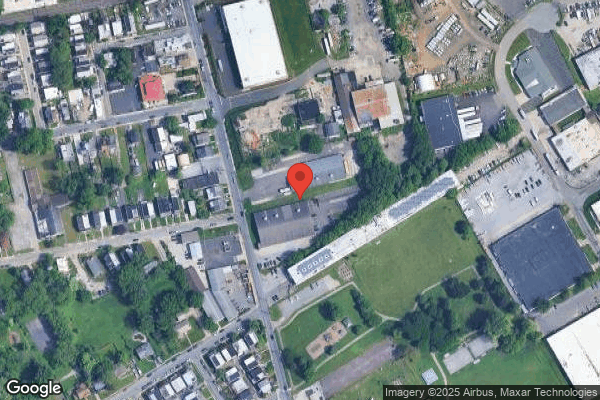
EDENBROOK OF YEADON

LANSDOWNE AND LINCOLN AVE, YEADON, PA 19050 (610) 626-7700
For profit - Limited Liability company 190 Beds EDEN EAST HEALTHCARE MANAGEMENT Data: November 2025 2 Immediate Jeopardy citations
Trust Grade
1/100
#552 of 653 in PA
Last Inspection: May 2025

Inspected within the last 6 months. Data reflects current conditions.

Overview

Edenbrook of Yeadon has received a Trust Grade of F, indicating significant concerns about the quality of care provided. Ranking #552 out of 653 facilities in Pennsylvania places it in the bottom half of all nursing homes in the state, and at #26 out of 28 in Delaware County, it has very few local competitors that perform better. The facility's trend is worsening, with issues increasing from 14 in 2024 to 25 in 2025, which is alarming. While staffing has a moderate rating of 3 out of 5, with a turnover rate of 43% that is slightly below the state average, RN coverage is concerning, being lower than 89% of Pennsylvania facilities. Families should be aware of serious incidents, such as a resident suffering a fracture due to neglect, and critical failures in providing tracheostomy care that placed residents at risk of severe harm. Overall, while there are some staffing strengths, the issues raised in health inspections and the facility's low rankings suggest significant areas for improvement.

Trust Score
F
1/100
In Pennsylvania
#552/653
Bottom 16%
Safety Record
High Risk
Review needed
Inspections
Getting Worse
14 → 25 violations
Staff Stability
○ Average
43% turnover. Near Pennsylvania's 48% average. Typical for the industry.
Penalties
✓ Good
$34,298 in fines. Lower than most Pennsylvania facilities. Relatively clean record.
Skilled Nurses
⚠ Watch
Each resident gets only 25 minutes of Registered Nurse (RN) attention daily — below average for Pennsylvania. Fewer RN minutes means fewer trained eyes watching for problems.
Violations
⚠ Watch
56 deficiencies on record. Higher than average. Multiple issues found across inspections.
★☆☆☆☆
1.0
Overall Rating
★★★☆☆
3.0
Staff Levels
★★☆☆☆
2.0
Care Quality
★☆☆☆☆
1.0
Inspection Score
Stable
2024: 14 issues
2025: 25 issues

The Good

  • Full Sprinkler Coverage · Fire safety systems throughout facility
  • No fines on record
  • Staff turnover below average (43%)

    5 points below Pennsylvania average of 48%

Facility shows strength in fire safety.

The Bad

1-Star Overall Rating

Below Pennsylvania average (3.0)

Significant quality concerns identified by CMS

Staff Turnover: 43%

Near Pennsylvania avg (46%)

Typical for the industry

Federal Fines: $34,298

Above median ($33,413)

Moderate penalties - review what triggered them

Chain: EDEN EAST HEALTHCARE MANAGEMENT

Part of a multi-facility chain

Ask about local staffing decisions and management

The Ugly 56 deficiencies on record

2 life-threatening 2 actual harm
Aug 2025 1 deficiency
CONCERN (D) 📢 Someone Reported This

A family member, employee, or ombudsman was alarmed enough to file a formal complaint

Potential for Harm - no one hurt, but risky conditions existed

Safe Environment (Tag F0921)

Could have caused harm · This affected 1 resident

**NOTE- TERMS IN BRACKETS HAVE BEEN EDITED TO PROTECT CONFIDENTIALITY** Based on observation and interview with staff, it was determined that the facility failed to maintain sanitary, and comfortable ...

Read full inspector narrative →
**NOTE- TERMS IN BRACKETS HAVE BEEN EDITED TO PROTECT CONFIDENTIALITY** Based on observation and interview with staff, it was determined that the facility failed to maintain sanitary, and comfortable environment on one of two nursing floors observed. (1st Floor) Findings include:Review of Resident R1's clinical record revealed that Resident R1 was admitted to the facility on [DATE], with diagnosis of but not limited to Schizophrenia (mental disease characterized by loss of reality). Review of Resident R1's MDS section C0500 BIMS (brief interview of mental status) revealed a score of 11 suggesting that Resident R1 had moderately impaired cognition. Observation of the first-floor unit conducted on August 6, 2025, at 9:10 AM reveled that the ice machine located between the nurse's station and room [ROOM NUMBER] had water leaking on the floor. Further, a white towel and a blue gown was on the floor in front of the ice machine. Further observation revealed that parts of the flooring in front of the ice machine had been peeled off with the understructure exposed. Observation of the back of the ice machine revealed that the floor behind the ice machine had water pooling. Further, specks of black substance on the floor and on the wall to the right of the ice machine was also observed. Observation conducted in room [ROOM NUMBER] revealed that Resident R1 was in the room sitting next to his bed wearing a gown. Observation of the environment inside room [ROOM NUMBER] reveled that, immediately next to the door to the right was a plastic drawer containing PPE (personal protective equipment). Next to the drawer containing PPE's was the yellow attention/caution sign which was propped against the wall. Further observation revealed that the floor to the right next to the doorway where the plastic bin containing PPE was located extending to the middle half of the length of the wall was wet. Further, the wet floor was covered with white sheets. Observation of the bathroom in room [ROOM NUMBER] revealed that the toilet water tank did not have a cover. Further observation revealed dried up dark brown (dark chocolate colored) substance caked on the toilet seat. Further the toilet bowl was filled with feces and tissue paper. Interview with Resident R1 conducted at the time of observation revealed that Resident R1 did not respond to surveyor.Interview with Director of Environmental Services, Employee E3 conducted on August 5, 2025, at 10:06 AM revealed that he was just made aware that the ice machine on the first floor was broken again. Further interview with Director of Environmental Services, Employee E3 confirmed that the first-floor ice machine has been leaking periodically since he started working here 3 months ago. Further Employee E3 revealed that on June 13, 2025, it was reported that the ice machine was leaking and was fixed the same day and on July 23, 2025, a work order was in place due to ice machine leaking again and was fixed on July 28, 2025. Interview with interview with unit manager Employee E4 conducted on August 5, 2025, at 10:17AM revealed that the ice machine on the first floor has been leaking on and off for the past 2 months. Further, Employee E4 was also aware that the water has seeped into room [ROOM NUMBER]. 28 Pa. Code 202.28(b)(3) Management
May 2025 19 deficiencies
CONCERN (D)

Potential for Harm - no one hurt, but risky conditions existed

Deficiency F0553 (Tag F0553)

Could have caused harm · This affected 1 resident

Based on review of facility policy, review of clinical records, and staff and family interviews, it was determined that the facility failed to ensure resident representatives had the opportunity to pa...

Read full inspector narrative →
Based on review of facility policy, review of clinical records, and staff and family interviews, it was determined that the facility failed to ensure resident representatives had the opportunity to participate in the care planning process for one of 35 residents reviewed (Resident R31). Findings Include: Review of facility policy Care Conference revised June 20, 2023, revealed the purpose of the policy is to provide interdisciplinary communication with the resident and/or legal representative for purposes of the development of an individualized comprehensive plan of care. The resident and/or their representative will receive communication in advance of the scheduled care conference. Review of Resident R31's quarterly Minimum Data Set (MDS - federally mandated resident assessment and care screening) dated January 15, 2025, revealed the resident had diagnoses of dementia (decline in memory or other thinking skills severe enough to reduce a person's ability to perform everyday activities), anxiety (intense, excessive, persistent worry or fear), and depression (mood disorder characterized by low mood, a feeling of sadness, and a general loss of interest in things). Continued review of the MDS revealed Resident R31 scored a 7 on the Brief Interview for Mental Status (BIMS - used to assess cognitive function) assessment, reflecting severe cognitive impairment. Review of Resident R31's comprehensive care plan revised April 8, 2025, revealed Resident R31 was alert and oriented x 1 (oriented to person) and was totally dependent on staff to anticipate her needs for socialization and activities involvement related, but not limited, to dementia, physical limitation, and hearing impairment. Interview on April 29, 2025, at 1:30 p.m. with Resident R31's representative revealed this individual had concerns regarding social stimulation/activities for Resident R31. Further interview revealed Resident R31's representative was not invited to participate in the care planning process and was subsequently not provided with a copy of Resident R31's comprehensive care plan. Review of Resident R31's clinical record revealed a care plan note dated January 3, 2025, that a care review was completed for Resident R31. The care plan note indicated that Resident R31 refused to participate and that Resident R31's daughter had been in to visit on January 2, 2025. Further review of Resident R31's care plan note dated January 3, 2025, revealed no documented evidence that Resident R31's representative was given advanced notice of the care plan meeting, was invited to participate, or was given a copy of Resident R31's care plan. Interview on May 1, 2025, at 9:35 a.m. with Social Services Director, Employee E26, confirmed there was no documented evidence that Resident R31's representative was invited to participate in the care plan meeting and further confirmed there was no documented evidence that Resident R31's representative was provided with a copy of the care plan. 28 Pa. Code 211.10 (a) Resident care policies.
CONCERN (D) 📢 Someone Reported This

A family member, employee, or ombudsman was alarmed enough to file a formal complaint

Potential for Harm - no one hurt, but risky conditions existed

Safe Environment (Tag F0584)

Could have caused harm · This affected 1 resident

Based on observations and staff interview, it was determined that the facility failed to maintain a clean and homelike environment in resident care areas and dining experience for one of four nursing ...

Read full inspector narrative →
Based on observations and staff interview, it was determined that the facility failed to maintain a clean and homelike environment in resident care areas and dining experience for one of four nursing units observed (Main Unit). Findings Include: Observations on April 28, 2025, at 11:08 a.m. revealed Resident R95's breakfast tray, with leftover food on the tray, was left on the windowsill in the dining room on the Main Unit. Continued observations in the dining room on the Main Unit revealed the railing on the wall was broken. Further observations on April 28, 2025, at 12:35 p.m. as resident's gathered in the dining room to have lunch on the Main Unit revealed Resident R95's breakfast tray was still left on the windowsill. Observations were confirmed by Registered Nurse, Employee E6. Observations on April 28, 2025, at 12:45 p.m. revealed broken floor tiles in the shower room on the Main Unit. Observations on April 28, 2025, at 12:49 p.m. in Resident R16's room revealed the wallpaper behind the bed was peeling, the privacy curtain was stained, and there was a brown substance splattered in the corner behind the bed where the baseboard and wall meets. Observations on April 28, 2025, at 1:39 p.m. revealed Resident R4's headboard was broken off and propped on the floor next to the resident's bed. Observations on April 29, 2025, at 12:42 p.m. revealed the first food truck with meal trays was delivered to the Main Unit. Observations revealed staff did not begin to set residents up for lunch (setting out place mats, applying clothing protectors) until 12:49 p.m. Continued observations revealed staff did not begin to pass lunch trays until 12:55 p.m., 13 minutes after lunch was delivered to the unit. Continued observations on April 29, 2025, at 12:55 p.m. revealed the floors were dirty with food items spilled from breakfast. Resident R150 was observed to be sitting barefoot in the dining room with scrambled eggs beneath her feet. Further observations on April 29, 2025, during the lunch time meal in the dining room on the Main Unit revealed residents were served individual milk cartons on the lunch trays. Nursing staff was observed to be pouring the contents of the milk cartons into small, plastic, disposable cups. Observations made during the lunch time meal service on April 29, 2025, were confirmed by Registered Nurse, Employee E6. 28 Pa. Code 201.14 (a) Responsibility of licensee.
CONCERN (D) 📢 Someone Reported This

A family member, employee, or ombudsman was alarmed enough to file a formal complaint

Potential for Harm - no one hurt, but risky conditions existed

Free from Abuse/Neglect (Tag F0600)

Could have caused harm · This affected 1 resident

**NOTE- TERMS IN BRACKETS HAVE BEEN EDITED TO PROTECT CONFIDENTIALITY** Based on review of facility policies, review of facility documentation, clinical record review and interviews with residents and...

Read full inspector narrative →
**NOTE- TERMS IN BRACKETS HAVE BEEN EDITED TO PROTECT CONFIDENTIALITY** Based on review of facility policies, review of facility documentation, clinical record review and interviews with residents and staff, it was determined that the facility failed to ensure that residents were free from verbal abuse, for two of four residents reviewed for abuse (Residents R135 and R361). Findings include: Review of facility policy, Vulnerable Adult Abuse and Neglect Prevention dated revised February 25, 2025, revealed that abuse includes, Conduct which is not an accident or therapeutic conduct as defined in this section, which produces or could reasonably be expected to produce physical pain or injury or emotional distress including, but not limited to, the following . use of repeated or malicious oral, written, or gestured language toward a vulnerable adult or the treatment of a vulnerable adult which would be considered by a reasonable person to be disparaging, use of repeated or malicious oral, written, or derogatory, humiliating, harassing, or threatening language. Review of Resident R135's Quarterly MDS (Minimum Data Set - a mandatory periodic resident assessment tool) dated October 21, 2024, revealed that the resident was admitted to the facility on [DATE], and had diagnoses including epilepsy (a disorder in which nerve cell activity in the brain is disturbed, causing seizures), encephalopathy (damage or disease that affects the brain) and contractures (permanent shortening of a muscle or joint). Continued review revealed that the resident required substantial/maximal assistance with toileting hygiene, personal hygiene and rolling in bed. Further review revealed that the resident was occasionally incontinent of bowel and bladder. Interview on April 28, 2025, at 10:28 a.m. Resident R135 stated that he needs help with toileting and that staff used profanity towards him when he asked for help. Review of facility documentation submitted to the Pennsylvania Department of Health on December 16, 2024, revealed that a nurse aide went into Resident R135's room and that the resident and the staff member had a verbal altercation. The facility substantiated the verbal altercation as an allegation of abuse. Review of grievances revealed a grievance, filed by Resident R105, undated, which indicated that he witnessed that a staff member did not want to assist Resident R135 with continence care and that the staff member and Resident R135 used profanity towards each other. Review of facility documentation related to the incident revealed a witness statement, written by Resident R105, undated, which stated, 11-7 shift aide came in to change [Resident R135]. She told resident he was not wet. Resident said he knows his body and he was wet. I know when I'm wet (he said again). Aide showed resident his brief. That he was not wet. That's when the argument started. They was cussing at each other going back and forth. She said she was going to get her husband. Resident was gonna get his people (somebody). Using profanity to each other motherf***, kiss my ***, etc. The nurse came in afterwards. Said he wasn't wet. And resident got mad about that also. A lot of profanity going around. But staff member did use offensive words (cursing) at resident. Continued review of facility documentation related to the incident revealed a written statement from Resident R135, undated, which stated, On Monday December 16, 2024, around 4am he asked [Employee E12, nurse aide] to change his brief, she responded that it has already been changed. They had a verbal altercation with curse words and she threatened to get her husband to come to the facility. Continued review of facility documentation related to the incident revealed an interview witness statement from Resident R135, dated December 16, 2024, which stated, Resident stated that around 4am during the 11pm-7am shift, he was involved in a verbal altercation with [Employee E12, nurse aide] the nurse aide assigned to his room. Resident stated the when the nurse aide came into his room, she said 'I've already changed you 3 or 4 times.' The resident then told her that he knows when he has urinated and has a bowel movement and he needed to be changed again. He also said that sometimes he sweats a lot and need to be changed head to toe for that reason. According to the resident, the nurse aide checked him and stated, 'you're not wet.' The resident said that he told the nurse aide that he was wet and needed to be changed. The nurse aide then responded with 'you peed in the bed.' The resident went on to tell her that he did not urinate in the bed because he has a urinal that he uses. The resident stated that at that point, that is when the nurse aide started cursing at him and told him, 'I'm from South Philly' and 'I will get my man to beat your a**.' The resident then said that he replied with 'I don't care where you're from, but I am from North Philly and I will beat you and your man the f*** up.' There was some more back and forth arguing and cursing from both parties and eventually the nurse aide left. Interview on April 30, 205, at 11:22 a.m. Resident R105 stated that he remembered the incident that occurred on December 16, 2024. Resident R105 reviewed his grievance and written statement and confirmed these documents to be true as written. Resident R105 confirmed that he heard Employee E12, nurse aide, curse and threaten Resident R135. Interview on April 30, 2025, at 11:46 a.m. the Nursing Home Administrator confirmed that the allegation of verbal abuse by Employee E12, nurse aide, towards Resident R135, was substantiated based on Resident R105's statement and the resident is a credible witness. Continued interview revealed that Employee E12, nurse aide, was terminated from employment at the facility due to the substantiated allegation. Review of Resident R361's Quarterly MDS (Minimum Data Set - a mandatory periodic resident assessment tool) dated February 12, 2025 , revealed that the resident was admitted to the facility on [DATE] , and had diagnoses including cerebrovascular accident( stroke , when blood flow to the brain is interrupted, leading to brain damage) heart failure (chronic condition when the heart does not pump enough blood to meet the body's needs) and depression (a mental health is what our characterized by persistently depressed mood or loss of interest and activities, causing significant impairment in daily life). Continued review revealed that the resident required minimal assistance with toileting hygiene, personal hygiene and rolling in bed. Further review revealed that the resident was occasionally incontinent of bowel. Resident R361 has a Bims (Brief interview of mental status) Score of 15 indicating intact cognition. Review of facility documentation submitted to the Pennsylvania Department of Health on April 25, 2025, revealed that a nurse aide went into Resident R361's, the resident asked the aide to help clean him, the aide refused with verbal altercation. The facility substantiated the verbal altercation as an allegation of abuse. Continued review of facility documentation related to the incident revealed an interview witness statement from Resident R361, dated April 20, 2025, which stated, I had a bm (bowel movement) accident. I asked my aide to help clean me up. She replied, I'm not wiping you're a**. Another aide overheard the comment, and she came in and cleaned me out I also informed the nurse of what happened. Interview on April 30, 2025, at 11:46 a.m. the Nursing Home Administrator confirmed that the allegation of verbal abuse by Employee E21, nurse aide, towards Resident R361, was substantiated. Continued interview revealed that Employee E21, nurse aide, was terminated from employment at the facility due to the substantiated allegation. 28 Pa Code 201.18(b)(1) Management 28 Pa Code 201.29(a)(c) Resident rights 28 Pa Code 211.10(c) Resident care policies 28 Pa Code 211.12(c) Nursing services 28 Pa Code 211.12(d)(1)(5) Nursing services
CONCERN (D)

Potential for Harm - no one hurt, but risky conditions existed

Deficiency F0604 (Tag F0604)

Could have caused harm · This affected 1 resident

**NOTE- TERMS IN BRACKETS HAVE BEEN EDITED TO PROTECT CONFIDENTIALITY** Based on review of facility policy, review of clinical records, observations, and staff interview, it was determined that the fa...

Read full inspector narrative →
**NOTE- TERMS IN BRACKETS HAVE BEEN EDITED TO PROTECT CONFIDENTIALITY** Based on review of facility policy, review of clinical records, observations, and staff interview, it was determined that the facility failed to ensure residents were free from physical restraint for one of 34 residents reviewed (Resident R310). Findings Include: Review of facility policy Physical Restraints revealed physical restraints are only used when they are used appropriately to treat the resident's medical symptoms and to promote an optimal level of function for the resident. A restraint may never be used for the purpose of discipline or staff convenience. Per the facility policy, a physical restraint includes all devices and practices that restrict freedom of movement or normal access to one's body. Review of Resident R310's quarterly Minimum Data Set (MDS - federally mandated resident assessment and care screening) dated March 2, 2025, revealed the resident had severe cognitive impairment, had impairment in functional limitation in range of motion to the upper and lower extremities, and required substantial/maximal assistance with mobility to roll left and right. Further review of Resident R310's quarterly MDS dated [DATE], revealed the resident had diagnoses of dementia (decline in memory or other thinking skills severe enough to reduce a person's ability to perform everyday activities), hemiplegia (weakness) or hemiparesis (paralysis), and difficulty in walking. Review of Resident R310's comprehensive care plan revised September 11, 2024, revealed the resident was at high risk for falls related to confusion and gait dysfunction. Observations on April 28, 2025, at 11:15 a.m. revealed Resident R310 was in bed with a wedge positioned under the sheets on the resident's right side and the left side of the bed was pushed up against the wall. Observations of Resident R310's positioning was confirmed on April 28, 2025, at 11:23 a.m. by Registered Nurse, Employee E6. Interview on April 28, 2025, at 11:23 a.m. with Registered Nurse, Employee E6, revealed the wedge was used to help position the resident and offload pressure from the sacrum. Further interview with Registered Nurse, Employee E6, confirmed Resident R310's bed should not have been pushed against the wall as it can act as a restraint. Review of Resident R310's entire clinical record revealed no documented evidence the resident had a physical restraint assessment or an order by the physician to push Resident R310's bed against the wall. 28 Pa. Code 211.10 (d) Resident care policies.
CONCERN (D)

Potential for Harm - no one hurt, but risky conditions existed

Transfer Notice (Tag F0623)

Could have caused harm · This affected 1 resident

**NOTE- TERMS IN BRACKETS HAVE BEEN EDITED TO PROTECT CONFIDENTIALITY** Based on review of facility documentation, review of clinical records, and interviews with staff, it was determined that the fac...

Read full inspector narrative →
**NOTE- TERMS IN BRACKETS HAVE BEEN EDITED TO PROTECT CONFIDENTIALITY** Based on review of facility documentation, review of clinical records, and interviews with staff, it was determined that the facility failed to notify the Office of the State Long-Term Care Ombudsman of facility-initiated transfers to the hospital and that a resident's representative was made aware of a facility-initiated transfer in writing, for two of two clinical records reviewed. Resident R37 and Resident R119. Findings Include: Interview with Facility Administrator Employee E1 conducted on May 1, 2025 at 2:24pm revealed that the facility does not have a policy on discharge notification. Review of Resident R119's clinical record revealed that resident was admitted to the facility on [DATE], with diagnoses of but not limited to Cerebral Atherosclerosis, Poly-osteoarthritis. Further review of Resident R119's clinical record revealed that Resident R119 was transferred to a local hospital on February 9, 2025, and was readmitted to the facility on [DATE]. Review of Resident R37's clinical record revealed that resident was admitted to the facility on [DATE], with diagnoses of but not limited to cardiovascular disease, gastrostomy status. Further review of resident R37's clinical record revealed that Resident R37 was transferred to a local hospital on February 9, 2025, and was readmitted to the facility on [DATE]. Upon request, the facility was not able to produce a copy of a written notification to resident and the resident's representative(s) of Resident R37's transfer to the hospital and the reasons for the move in a language and manner they understand and proof that the facility sent a copy of the notice to a representative of the Office of the State Long-Term Care Ombudsman. Interview with Employee E18 Medical Records Director conducted on April 1, 2025, at 11:03 a.m. revealed that the facility did not send a written notification to the resident and the resident's representative(s) of transfers or discharges and the reasons for the move. Employee E18 further revealed that she did not send letters to the Office of the State Long-Term Care Ombudsman. Interview with Employee E4 ADON (Assistant Director of Nursing) conducted on May 1, 2025, at 11:29 a.m. revealed she did not send letters to the family/resident representatives notifying them of transfers or discharges. 28 Pa. Code 201.14(a) Responsibility of licensee 28 Pa. Code 201.18(b)(2) Management
CONCERN (D) 📢 Someone Reported This

A family member, employee, or ombudsman was alarmed enough to file a formal complaint

Potential for Harm - no one hurt, but risky conditions existed

Comprehensive Care Plan (Tag F0656)

Could have caused harm · This affected 1 resident

**NOTE- TERMS IN BRACKETS HAVE BEEN EDITED TO PROTECT CONFIDENTIALITY** Based on review of facility policies, clinical record reviews and interviews with staff, it was determined that the facility fai...

Read full inspector narrative →
**NOTE- TERMS IN BRACKETS HAVE BEEN EDITED TO PROTECT CONFIDENTIALITY** Based on review of facility policies, clinical record reviews and interviews with staff, it was determined that the facility failed to develop a person-centered comprehensive care plan related to behaviors for one of 35 residents reviewed (Resident R135). Findings include: Review of facility policy, Care Plan - Baseline and Comprehensive dated revised June 20, 203, revealed that care plans will be developed to ensure that each resident receives care individualized to him or herself and that goals and approaches for care are communicated to all parties including caregivers, the resident, and the resident's representative. Review of Resident R135's Quarterly MDS (Minimum Data Set - a mandatory periodic resident assessment tool) dated October 21, 2024, revealed that the resident was admitted to the facility on [DATE], and had diagnoses including epilepsy (a disorder in which nerve cell activity in the brain is disturbed, causing seizures) and encephalopathy (damage or disease that affects the brain). Review of progress notes for Resident R135 revealed a behavior note, dated January 23, 2025, at 3:02 p.m. which indicated that the resident began yelling, screaming and using foul language. The note continued that the resident acted like he wanted to jump out of bed. Continued review of progress notes for Resident R135 revealed a psychiatric (mental health) provider note, dated January 27, 2025, at 8:58 a.m. for follow up on mood and behavior. The resident was reported to have increased anxiety and agitation. The mental health provider recommended to start Hydroxyzine three times per day for anxiety/agitation and to monitor the resident for increased anxiety. Continued review of progress notes for Resident R135 revealed a mood/behavior note, dated January 28, 2025, at 12:49 p.m. which indicated that the resident got upset with staff was using foul language and threatening to get everyone fired. The note continued that the resident and staff remained safe during the situation. Continued review of progress notes for Resident R135 revealed a behavior monitoring note, dated February 7, 2025, at 6:48 p.m. which indicated that the resident had multiple behaviors noted and was observed yelling obscenities. Review of nurse aide documentation of behavior monitoring from April 1, 2024, through April 30, 2025, for Resident R135 revealed the that resident exhibited behaviors on five days, and included attention seeking, screaming at others and yelling out. The documentation revealed that the resident's behaviors interfered with providing care to the resident and created a disruptive environment. Continued review revealed that on one of the days with behaviors, staff implemented an intervention of redirection and that the resident's behavior was unchanged despite the intervention. On three of the days when the resident exhibited behaviors, interventions were not implemented and were documented as not applicable. Review of Resident R135's care plan, dated April 17, 2025, revealed that no care plan was developed related the resident's behaviors and that no interventions for staff to use when the resident exhibits behaviors were developed. Interview on April 30, 2025, at 11:35 a.m. Employee E14, nurse aide, revealed that she frequently provides care to Resident R135 and that the resident cusses me out everyday. Employee E14, nurse aide, stated that she has to wait for the resident to calm down and reapproaches the resident at a later time to provide care. Interview on April 30, 2025, at 2:20 p.m. Employee E15, licensed nurse, confirmed that no care plan was developed for Resident R135 related to his behaviors. Continued interview confirmed that nurse aide documentation noted that the resident has ongoing behaviors and that no interventions in response to the resident's behaviors were implemented. 28 Pa Code 211.10(d) Resident care policies 28 Pa Code 211.12(d)(5) Nursing services
CONCERN (D) 📢 Someone Reported This

A family member, employee, or ombudsman was alarmed enough to file a formal complaint

Potential for Harm - no one hurt, but risky conditions existed

ADL Care (Tag F0677)

Could have caused harm · This affected 1 resident

Based on review of facility policy, review of clinical records, observations, and staff interview, it was determined that the facility failed to timely provide feeding assistance for a dependent resid...

Read full inspector narrative →
Based on review of facility policy, review of clinical records, observations, and staff interview, it was determined that the facility failed to timely provide feeding assistance for a dependent resident for one of 34 residents reviewed (Resident R78). Findings Include: Review of facility policy Activities of Daily Living (ADLs) revealed the facility will provide care and services for eating, assistance with feeding or preparation of meals. Based on the assessments, a personalized care plan is created and outlines the level of assistance needed for activities of daily living. Review of Resident R78's quarterly Minimum Data Set (MDS - federally mandated resident assessment and care screening) dated March 7, 2025, revealed the resident had severe cognitive impairment and required substantial/maximal (helper does more than half the effort) assistance with eating (the ability to bring food to mouth). Review of Resident R78's comprehensive care plan revised May 1, 2025, revealed the resident had an activities of daily living self-care performance deficit related to contractures to the left upper and lower extremities, communication deficit, and impaired mobility. Continued review of Resident R78's comprehensive care plan revised May 1, 2025, revealed the resident had potential for altered nutritional status related to need for assistance with eating. Observations on April 28, 2025, revealed food carts with the lunch trays were delivered from the kitchen to the Main Unit from 1:00 p.m. to 1:12 p.m. Interview on April 28, 2025, at 1:40 p.m. with nurse aide, Employee E30, confirmed Resident R78 required 1:1 feeding assistance and staff were just beginning to feed the resident at 1:40 p.m., 30-40 minutes after the lunch trays were delivered. Observations on April 29, 2025, revealed food carts with the lunch trays were delivered from the kitchen to the Main Unit from 12:45 p.m. to 1:00 p.m. Observations on April 29, 2025, at 1:34 p.m. revealed Resident R78 was in bed and the resident's lunch tray was placed on the tv stand across the room. Observations revealed the lunch tray was untouched at this time. Observations on April 29, 2025, at 1:50 p.m. revealed nursing staff just began to assist Resident R78 with eating, 50-60 minutes after the lunch trays were delivered. Observations on April 30, 2025, revealed food carts with the lunch trays were delivered from the kitchen to the Main Unit from 1:00 to 1:15 p.m. Interview on April 30, 2025, at 1:30 p.m. with nurse aide, Employee E30, revealed Resident R78 was still waiting to be fed. Further observations on April 30, 2025, at 1:57 p.m. revealed Resident R78 was in bed and was still waiting to be assisted with lunch. Interview on April 30, 2025, at 1:57 p.m. with Unit Manager, Employee E5, confirmed Resident R78 had still not yet been assisted with lunch. 28 Pa. Code 211.10 (d) Resident care policies 28 Pa. Code 211.12(d)(1) Nursing services
CONCERN (D)

Potential for Harm - no one hurt, but risky conditions existed

Deficiency F0679 (Tag F0679)

Could have caused harm · This affected 1 resident

**NOTE- TERMS IN BRACKETS HAVE BEEN EDITED TO PROTECT CONFIDENTIALITY** Based on review of facility documents, review of clinical records, observations, and staff interviews, it was determined that th...

Read full inspector narrative →
**NOTE- TERMS IN BRACKETS HAVE BEEN EDITED TO PROTECT CONFIDENTIALITY** Based on review of facility documents, review of clinical records, observations, and staff interviews, it was determined that the facility failed to implement both group and individual activities to meet the needs of each resident for 15 of 39 residents on the Main Nursing Unit (Resident R31, R78, R51, R71, R21, R142, R88, R4, R111, R133, R125, R131, R117, R64, and R150). Findings Include: Review of the April 2025 Activities Calendar revealed on April 29, 2025, Coffee & Chat was scheduled for 10:00 a.m. and Fun & Fit Exercise was scheduled for 11:15 a.m. on the Main Nursing Unit. Observations on April 29, 2025, at 9:45 a.m. revealed Resident R21, R88, R125, R64, and R131 were sitting in the dining room with no music and no television. These residents were observed to be sitting quietly with no stimulation. Follow up observations on April 29, 2025, at 11:45 a.m. revealed Residents R51, R71, R21, R142, R88, R4, R111, R133, R125, R131, R117, R64, and R150 were sitting in the dining room with only the television on and no stimulating/engaging activities. Interview on April 29, 2025, at 12:11 p.m. with nurse aide, Employee E31, revealed the Coffee & Chat activity scheduled for 10:00 a.m. consisted of just passing coffee out to the residents and leaving the room. Continued interview revealed the Fun & Fit Exercise was not held at 11:15 a.m. as scheduled on the activities calendar. Review of Resident R31's quarterly activities assessment dated [DATE], revealed the resident was totally dependent on staff to anticipate her needs for socialization and activities involvement related to dementia and physical limitations. Further review of the activities assessment revealed Resident R31 would benefit in having one to one beside activity for sensory stimulation. Review of Resident R78's quarterly activities assessment dated [DATE], revealed the resident was totally dependent on staff to anticipate all his needs related to dementia and physical limitations. Further review of the activities assessment revealed Resident R78 would benefit in having one to one bedside visit 2 times per week with staff from the activity department for 20-30 minutes, or as tolerated by the resident. Interview on May 1, 2025, at 12:26 p.m. with Activities Director, Employee E32, confirmed Resident R31 and R78 required one to one bedside visits for activity and sensory stimulation as the resident's are mostly bed bound and do not attend group activities. Review of one-to-one activity documentation provided by the Activities Director, Employee E32, revealed Resident R78 only had three documented one- to one bedside activity documented for the month of April 2024. There was no documented evidence that one- to- one beside activities were completed prior to April 2025. Continued review of one-to-one activity documentation provided by the Activities Director, Employee E32, revealed no documented one-to-one bedside activity for Resident R31 prior to March 2025. 28 Pa. Code 201.14 (a) Responsibility of licensee.
CONCERN (D)

Potential for Harm - no one hurt, but risky conditions existed

Deficiency F0688 (Tag F0688)

Could have caused harm · This affected 1 resident

**NOTE- TERMS IN BRACKETS HAVE BEEN EDITED TO PROTECT CONFIDENTIALITY** Based on observations, review of clinical records, review of facility policy and staff interview, it was determined that the fac...

Read full inspector narrative →
**NOTE- TERMS IN BRACKETS HAVE BEEN EDITED TO PROTECT CONFIDENTIALITY** Based on observations, review of clinical records, review of facility policy and staff interview, it was determined that the facility failed to ensure residents with limited range of motion received treatment and services to maintain or improve range of motion/mobility for one of one resident reviewed with limited range of motion (Resident R101). Findings include: Review of the facility policy, Specialized Rehabilitative and Restorative Services, dated April 1, 2022 indicated that the facility will provide restorative services, such as, but no limited to walking, transfer training, bowel and/or bladder training, bed mobility, range of motion, splint and brace, eating and/or swallowing, amputation/prostheses care and communication, when necessary, as indicted by the assessment of the interdisciplinary team. Review of Resident R101's clinical record revealed that Resident R101 was most recently admitted to the facility on [DATE]. Resident R101's current diagnoses were but not limited to Rheumatoid arthritis, COPD, (Chronic Obstructive Pulmonary Disease), Generalized Muscle Weakness, Poly-osteoarthritis Review of Resident R101's Quarterly MDS (minimum data set- a federally required resident assessment completed at a specific interval) dated February 25, 2025, Section GG015 (Functional Limitation of Range of Motion) revealed that Resident RF101 was impaired in ROM (range of motion) on both sides of the upper extremity and on both sides of the lower extremity. Observation of Resident R101 conducted on April 28, 2025, at 10:44 a.m. during tour of the first floor unit of the facility revealed that Resident R101 was in bed. Further observation revealed that resident's both hands had limited movement. Interview with Resident R101 conducted at the time of the observation, confirmed that he was not able to fully use both of his hands, Further Resident R101 revealed that he is no longer on physical therapy and occupational therapy. Review of Physical Therapy discharge recommendation dated February 3, 2025, revealed a rehab recommendation for Restorative Nursing Program for Range of Motion. Further review of Resident R101's clinical record revealed no documented evidence that a Range of Motion was provided to Resident R101. Interview with Employee E21 Rehab Director revealed that the therapist who wrote the recommendation did not communicate the recommendation to the nursing department resulting in the recommendation not followed through by nursing. Further Employee E21 and Employee E2, DON (Director of Nursing) confirmed that Resident R101 did not receive services to prevent further deterioration of his limitations. 28 Pa. Code 211.12 (d)(3) Nursing services. 28 Pa. Code 211.12 (d)(5) Nursing services.
CONCERN (D)

Potential for Harm - no one hurt, but risky conditions existed

Respiratory Care (Tag F0695)

Could have caused harm · This affected 1 resident

**NOTE- TERMS IN BRACKETS HAVE BEEN EDITED TO PROTECT CONFIDENTIALITY** Based on clinical record review and interviews with staff, it was determined that the facility failed to obtain orders for oxyge...

Read full inspector narrative →
**NOTE- TERMS IN BRACKETS HAVE BEEN EDITED TO PROTECT CONFIDENTIALITY** Based on clinical record review and interviews with staff, it was determined that the facility failed to obtain orders for oxygen for one of three residents reviewed who was receiving oxygen therary (Resident R410). Findings include: Review of Resident R410 clinical record revealed that Resident R410 was admitted to the facility on [DATE], with diagnoses of but not limited to Chronic Respiratory Failure with Hypoxia, Pleural Effusion Further review of Resident R410's clinical record revealed that Resident R410 was transferred to a local hospital on April 14, 2025, and was readmitted to the facility on [DATE]. Review of Resident R410's physician order revealed an order for Oxygen humidification: O2 (oxygen) liters via trach collar at 4LPM (liters per minute) every shift related to Trachesotomy status. Order Date-03/18/2025 . Further, there was no order for O2(Oxygen) upon return on April 23, 2025. Review of Resident R410's April 2025 Treatment Administration Record (TAR) revealed that resident was on Oxygen humidification: O2 liters via trach collar at 4LPM (liters per minute) every shift Hold Date from 04/14/2025 to 04/15/2025 -D/C Date-04/15/2025. Further review of Resident R410's TAR revealed no documented evidence that Resident R410 received Oxygen upon his readmission to the facility on April 23, 2025. Review of Resident R410's care plan revealed a care plan for oxygen therapy via trach r/t r(related to) espiratory failure with hypoxia, pleural effusion history and hyper secretions. Date Initiated: 12/26/2023. Observation of Resident R410 conducted on April 28, 2025, at 11:13 a.m. during the initial tour of the first-floor unit of the facility revealed that Resident R410 was in bed, on O2 (Oxygen) concentrator at 3.5 liters/minute. Follow-up observation conducted on April 30, 2025, at 8:44 a.m. revealed that Resident R410 was O2 concentrator at 3.5 liters/ minute. Review of medical record revealed no current orders for the administration of oxygen therapy. Interview with Unit Manager Employee E5 and Licensed Nurse Employee E22 conducted on April 30, 2025, at 8:35 a.m. confirmed that Resident R410 was receiving Oxygen at 3.5 liters/minute. Further, Employee E5 and Employee E22 confirmed that there was no physician's order for oxygen for Resident R410. Further, Employee E22 also confirmed that Resident R410 had an order for oxygen but was discontinue when he was transferred to the hospital. 28 Pa Code 211.12(d)(1) Nursing services 28 Pa Code 211.12(d)(5) Nursing services
CONCERN (D)

Potential for Harm - no one hurt, but risky conditions existed

Deficiency F0726 (Tag F0726)

Could have caused harm · This affected 1 resident

Based on review of personnel files, review of facility documentation and interviews with staff, it was determined that the facility failed to ensure that nurse aides were able to demonstrate competenc...

Read full inspector narrative →
Based on review of personnel files, review of facility documentation and interviews with staff, it was determined that the facility failed to ensure that nurse aides were able to demonstrate competency in skills and techniques necessary to care for residents' needs for two of five newly hired personnel files reviewed (Employees E16 and E17). Findings include: Review of the facility's job description for nurse aides, dated May 5, 2015, revealed that nurse aides provide care to residents including: bathing, dressing, grooming, toileting, feeding, incontinence care, transferring, ambulation, range of motion, turning, repositioning, obtaining vital signs, weights, applying creams and collecting specimens. Review of facility documentation revealed that Employees E16 and E17 were hired by the facility as nurse aides on March 25, 2025. Personnel files, including documentation of skills competencies evaluations, for Employees E16 and E17, nurse aides, were requested on April 29 and 30, 2025. Personnel files were provided for review on May 1, 2025. There was no evidence of any skills competencies evaluations conducted for Employees E16 and E17, nurse aides. Documentation of skills competencies evaluations of hands-on direct patient care skills was requested again on May 1, 2025 at 9:15 a.m. No skills competency evaluations of hand-on direct patient care skills for Employees E16 and E17, nurse aides, were provided for review at any time during the survey. 28 Pa Code 201.19(6)(7) Personnel policies and procedures 28 Pa Code 201.20(b)(d) Staff development
CONCERN (D) 📢 Someone Reported This

A family member, employee, or ombudsman was alarmed enough to file a formal complaint

Potential for Harm - no one hurt, but risky conditions existed

Garbage Disposal (Tag F0814)

Could have caused harm · This affected 1 resident

Based on observations and interviews with staff, it was determined that the facility did not ensure that that trash was properly disposed of in the receiving and dumpster area. Findings Include: A to...

Read full inspector narrative →
Based on observations and interviews with staff, it was determined that the facility did not ensure that that trash was properly disposed of in the receiving and dumpster area. Findings Include: A tour of the main kitchen was conducted on April 28, 2025, at 9:32 a.m. with the Food Service Director, Employee E13. The tour included observations of the outside area where food deliveries are accepted and where the dumpsters are stored. Observations in the receiving area outside revealed trash, food, and debris on the ground surrounding the dumpsters. On one dumpster, the door on the back was open, and trash was exposed. 28 PA Code: 201.14(a) Responsibility of licensee.
CONCERN (D) 📢 Someone Reported This

A family member, employee, or ombudsman was alarmed enough to file a formal complaint

Potential for Harm - no one hurt, but risky conditions existed

Deficiency F0839 (Tag F0839)

Could have caused harm · This affected 1 resident

Based on review of personnel files, observations, and staff interview it was determined that the facility failed to ensure staff were qualified to provide feeding assistance for one of one employee re...

Read full inspector narrative →
Based on review of personnel files, observations, and staff interview it was determined that the facility failed to ensure staff were qualified to provide feeding assistance for one of one employee reviewed (Employee E27). Findings Include: Review of Resident R124's comprehensive care plan revised December 30, 2024, revealed the resident exhibited dysphagia (swallowing difficulties) when consuming foods by mouth putting the resident at risk for aspiration (inhaling food or saliva into the airway or lungs) and weight loss. Continued review of Resident R124's comprehensive care plan revised June 30, 2023, revealed the resident had an activities of daily living self-care performance deficit and required supervision assistance with eating. Review of Resident R125's comprehensive care plan revised April 10, 2025, revealed the resident had an activities of daily living self-care performance deficit and required set-up/assistance with eating. Review of Resident R125's physician order summary revealed a diet order dated April 24, 2025, that the resident required a mechanically altered diet (texture modified diet for individuals who have difficulty chewing or swallowing). Review of Employee E27's personnel file revealed the employee was hired as a receptionist effective March 4, 2024. Further review of Employee E27's personnel file revealed the employee transferred departments and was hired as an activity aide effective February 17, 2025. Observations on April 30, 2025, at 1:30 p.m. revealed Activity Aide, Employee E27, was providing hands on feeding assistance during the lunch time meal for Residents R124 and R125. Observations on April 30, 2025, at 1:30 p.m. revealed Resident R124 and R125 were seated next to each other at a table in the dining room during lunch on the Main Unit. Activity Aide, Employee E27, was observed to be standing between Resident R124 and R125 and alternated between the two residents to feed/guide food into their mouths. Interview on April 30, 2025, at 2:45 p.m. with Employee E1, Nursing Home Administrator, revealed nursing staff are responsible for providing feeding assistance to residents who require help. Review of Activity Aide, Employee E27, job descriptions for receptionist and activity aide revealed no evidence it included the job duties of providing feeding assistance for residents. Further review of Activity Aide, Employee E27, personnel file revealed no evidence the employee had any training to provide hands on feeding assistance for residents. 28 Pa. Code 201.14 (a) Responsibility of licensee. 28 Pa. Code 211.10 (d) Resident care policies.
CONCERN (D)

Potential for Harm - no one hurt, but risky conditions existed

Infection Control (Tag F0880)

Could have caused harm · This affected 1 resident

**NOTE- TERMS IN BRACKETS HAVE BEEN EDITED TO PROTECT CONFIDENTIALITY** Based on review of facility policy, observations, and staff interviews, it was determined that the facility failed to implement ...

Read full inspector narrative →
**NOTE- TERMS IN BRACKETS HAVE BEEN EDITED TO PROTECT CONFIDENTIALITY** Based on review of facility policy, observations, and staff interviews, it was determined that the facility failed to implement enhanced barrier precautions for one of five residents on enhance barrier precaution observed (Residents R410). Findings Include: Review of facility Policy on Enhanced Barrier Precaution with an issue date of March 26, 2024 revealed that under section Policy, It is the Policy of this facility that Enhanced barrier Precautions, in addition to Standard and Contact Precautions will be implemented during high0contact resident activities when caring for residents that have an increased risk for acquiring a multidrug-resistant organism (MDRO) such as residents with Chronic wounds requiring a dressing, indwelling medical device or residents with infection or colonization with an MDRO. Under section Definition, Enhanced Barrier Precaution (EBP) refer to an infect ion control intervention designed to reduce transmission of multidrug-resistant organism that employs targeted gown and glove use during high contact resident care activities. High contact resident care activities include Dressing, Bathing, transferring, providing hygiene, changing linens, changing briefs or assisting with toileting, decide care or use: Central line, urinary catheter, feeding tube, tracheostomy, wound care (any skin opening that requires dressing). Review of Resident R410's clinical record revealed that Resident R410 was admitted to the facility on [DATE] with diagnoses of but not limited to Intracranial injury, Respiratory Failure, Left Basilar Infiltrate, Aspiration Pneumonia Review of Resident R410's physician's orders revealed an order for Meropenem Intravenous Solution Reconstituted 1 GM (Meropenem) Use 1 gram intravenously every 8 hours 10 Days-Order Date-04/24/2025 Observation conducted on April 28, 2025, at 11:13AM revealed that Resident R410 was in bed. Further observation revealed that Resident R410 had an IV (intravenous-through the vein) line to his right arm, partially covered with his blanket. Further observation revealed that Licensed nurse, Employee E20 came into the room with a vial and a 50cc IV bag in her hand. Further, Licensed nurse, Employee E20 put on a pair of gloves, but did not wear any other PPE required for EBP. Licensed nurse, Employee E20 then initiated the IV set up using the same gloved hand and primed the IV tubing using the same gloved hand. Further observation revealed that Licensed nurse, Employee E20 proceeded to administer the IV medication without washing her hands or changing gloves. Licensed nurse, Employee E20 did not respond to interview and left the room. 28 Pa. Code 211.10 (d) Resident care policies. 28 Pa. Code 211.12 (d)(5) Nursing services.
CONCERN (D) 📢 Someone Reported This

A family member, employee, or ombudsman was alarmed enough to file a formal complaint

Potential for Harm - no one hurt, but risky conditions existed

Deficiency F0925 (Tag F0925)

Could have caused harm · This affected 1 resident

**NOTE- TERMS IN BRACKETS HAVE BEEN EDITED TO PROTECT CONFIDENTIALITY** Based on observations of the physical environment, interviews with staff and residents, it was determined that the facility fail...

Read full inspector narrative →
**NOTE- TERMS IN BRACKETS HAVE BEEN EDITED TO PROTECT CONFIDENTIALITY** Based on observations of the physical environment, interviews with staff and residents, it was determined that the facility failed to maintain an effective pest control program. Findings include: Review of Resident R37's clinical record revealed that resident was admitted to the facility on [DATE], with diagnoses of but not limited to cardiovascular disease, and gastrostomy status. Observation conducted on April 28, 2025, at 11:13 a.m. during the tour of the first-floor unit revealed that Resident R37 was in bed asleep. Further observation revealed that Resident R37 was on tube feeding with feeding bag of Jevity 100 cc hanging on a pole, the tubing was primed (feeding formula was in the tubing) but not connected to the pump. Further observation revealed a fly on Resident R'37's sheet. Further, three other flies were observed flying about Resident R37. Further observation of Resident R37's bedroom revealed that the screen on one of the windows in her room had a hole. Interview with unit manager Employee E5 conducted on April 28, 2025, at 11:13 a.m., confirmed that there were flies in the room and that the screen on one of the windows had a hole in it. Employee E5 stated that she will immediately get someone to replace the screen. Interview with Resident R37's roommate Resident R52, conducted on April 28, 2025 at 11:30 a.m. confirmed that that there were flies in their room. Further Resident R52 revealed that she observed the flies since a few days ago. Further Resident R52 revealed that she doesn't know where flies came from. Further interview with Resident R52 also revealed that she opens the window of the room sometimes. 28 Pa Code 201.18(a)(b)(1) Management
CONCERN (E) 📢 Someone Reported This

A family member, employee, or ombudsman was alarmed enough to file a formal complaint

Potential for Harm - no one hurt, but risky conditions existed

Quality of Care (Tag F0684)

Could have caused harm · This affected multiple residents

**NOTE- TERMS IN BRACKETS HAVE BEEN EDITED TO PROTECT CONFIDENTIALITY** Based on review of facility policy, review of clinical records, obsesrvations, and staff interviews, it was determined that the ...

Read full inspector narrative →
**NOTE- TERMS IN BRACKETS HAVE BEEN EDITED TO PROTECT CONFIDENTIALITY** Based on review of facility policy, review of clinical records, obsesrvations, and staff interviews, it was determined that the facility failed to obtain, follow, and clarify physician orders related to medications and skin checks for two of 34 residents reviewed (Resident R84 and R64). Findings Include: Review of facility document titled Administering Medications revised January 22, 2024, revealed medications shall be administered per providers written or verbal orders upon verification of the right medication, dose, root, time and positive verification of resident's identity. Medications may only be administered to the individual in which the medication was prescribed. Review of facility policy titled Physician Orders last revised November 13,2024, revealed the policy is to provide guidance to ensure physician orders are transcribed and implemented in accordance with professional standards. Clear and complete orders will be transcribed to the appropriate administration record medication administration record (MAR). Review of Resident 84's Quarterly MDS (Minimum Data Set - a mandatory periodic resident assessment tool) dated February 5, 2025, revealed that the resident was admitted to the facility on [DATE] , and had diagnoses including cerebrovascular accident (stroke, when blood flow to the brain is interrupted, leading to brain damage) heart failure (chronic condition when the heart does not pump enough blood to meet the body's needs), hypertension (high blood pressure, medical condition where the pressure in the blood vessels is too high) and depression ( a mental health is what our characterized by persistently depressed mood or loss of interest and activities, causing significant impairment in daily life). Review of Resident R84's physician orders revealed an order dated January 10, 2025, for the medication MIDODRINE HCL (medication used to treat low blood pressure) oral tablet 2.5 milligrams with directions to give one tablet by mouth every eight hours for hypotension hold for SBP (systolic blood pressure, the force of blood pushing against your artery walls during the hearts contraction. A normal systolic blood pressure is generally considered to be less than 120 mm hg.) greater than 90. Review of Resident R84's medication administration record and nursing notes revealed that although the order specifically instructed to hold for blood pressure greater then 90, the medication administration record revealed that the medication was administered with documented blood pressure recorded as over 90 SBP (systolic blood pressure). Review of residen'ts MAR for the month of March 2025 revealed the medication order for Midodrine HCL 2.5 to be given every eight hours HOLD for SBP (systolic blood pressure) greater then 90, revealed the following recorded dates that the blood pressures were record above 90 SBP and the medication was administered, not following physician orders. March 11, 2025, Residents 84's blood pressure was recorded at 1:00 a.m. as 120/64, at 9:00 a.m. as 120/64 and at 5:00 p.m. as 110/68; the medication Midodrine was administered at all three times. March 14, 2025, Resident R 84's blood pressure was recorded at 1:00 a.m. as 112/64; the medication Midodrine was administered. March 15, 2025, Resident R84's blood pressure was recorded at 1:00 a.m. as 111/62 and at 9:00 a.m. 110/81 the medication Midodrine was administered at both times. March 16, 2025, Resident R 84's blood pressure was recorded at 9:00 am as 118/94 and the medication Midodrine was administered. March 17, 2025, Resident R84's blood pressure was recorded at 9:00 a.m. as 102/59 and at 5:00 pm as 105/69; the medication Midodrine was administered both times. March 18, 2025, Resident R84's blood pressure was recorded as 110/68, the medication Midodrine was administered. March 19, 2025, Resident R84's blood pressure was recorded at 1:00 am as 127/69 and at 9:00 a.m. as 122/94. The medication Midodrine was administered both times. March 24, 2025, Resident R84's blood pressure was recorded as 112/68 the medication Midodrine was administered. Review of residents MAR for the month of April 2025 revealed the medication order for Midodrine HCL 2.5 to be given every eight hours HOLD for SBP (systolic blood pressure) greater then 90, reveal the following recorded dated that the blood pressures were record above 90 SBP and the medication was administered, not following physician orders April 5, 2025, Resident R84's blood pressure was recorded at 9:00 am as 104/90 and at 5:00pm as 130/81 the medication Midodrine was administered both times. April 6, 2025, Resident R84's blood pressure was recorded at 9:00 am as 125/74 the medication Midodrine was administered. April 7, 2025, Resident R84's blood pressure was recorded at 9:00 am as 104/90, the medication Midodrine was administered. April 12, 2025 Resident R84's blood pressure was recorded at 1:00 am as 112/67and at 09:00 am as 104/90, the medication Midodrine was administered both times. April 14, 2025, Resident R84's blood pressure was recorded at 9:00 am as 122/66, the medication Midodrine was administered. April 18, 2025, 4/18 Resident R84's blood pressure was recorded at 1:00 am as 108/79 and at 9:00 am as 104/90 the medication Midodrine was administered both times. April 19, 2025 Resident R84's blood pressure was recorded at 1:00 am as 117/69 and at 9:00am as 104/90 and at 5:00 pm as 100/69 the medication Midodrine was administered all times. April 23, 2025, Resident R84's blood pressure was recorded at 1:00a.m. as 110/70, and at 9:00 am as 128/69 the medication Midodrine was administered both times. April 24, 2025, Resident R84's blood pressure was recorded at 1:00 am as 118/76, the medication Midodrine was administered. Interview with the Director of Nursing Employee E2, on April 30, 2025, confirmed that the medication was given incorrectly. Continued interview with Employee E2 revealed that the physician has been notified and has acknowledge that the order was entered incorrectly, the order should be HOLD for SBP (systolic blood pressure) greater then 130, greater then 130, reveal the following recorded dated that the blood pressures were record above 90 SBP and the medication was administered, not following physician orders. Review of Resident R64's comprehensive care plan revised April 17, 2025, revealed the resident was at risk for alteration in skin integrity. Further review of Resident R64's comprehensive care plan revised April 17, 2025, revealed the resident was an elopement risk with interventions to apply a wanderguard (safety device place at the ankle) and check per facility policy. Review of Resident R64's physician order summary revealed an order dated May 28, 2024, to check skin integrity of skin surrounding/under roam alert bracelet to ensure there was no breakdown every shift and to further document impairments in a progress note. Observations on April 30, 2025, at 1:30 p.m. revealed Resident R64 had a wanderguard applied to the right ankle. The wander guard appeared to be tight fitting around the resident 's ankle. Observations on April 30, 2025, at 1:45 p.m. with Licensed Nurse, Employee E28, revealed the wanderguard applied to Resident R64's left ankle was too tight to see the skin beneath the wanderguard. Licensed Nurse, Employee E28, needed to cut Resident R64's wander guard off to adequately assess the area under the wander guard. Review of Resident R64's treatment administration record revealed the order to check skin integrity of skin surrounding/under roam alert bracelet was signed out as completed by Licensed nurse, Employee E29. Interview on April 30, 2025, at 2:25 p.m. with Licensed Nurse, Employee E29, confirmed the employee signed out the skin check as completed but was unable to adequately assess the area under the wanderguard because the medical device was too tight due to swelling of Resident R64's ankle. 28 Pa. Code 211.10 (d) Resident care policies.
CONCERN (E)

Potential for Harm - no one hurt, but risky conditions existed

Deficiency F0697 (Tag F0697)

Could have caused harm · This affected multiple residents

**NOTE- TERMS IN BRACKETS HAVE BEEN EDITED TO PROTECT CONFIDENTIALITY** Based on review of facility policies, clinical record reviews and interviews with residents and staff, it was determined that th...

Read full inspector narrative →
**NOTE- TERMS IN BRACKETS HAVE BEEN EDITED TO PROTECT CONFIDENTIALITY** Based on review of facility policies, clinical record reviews and interviews with residents and staff, it was determined that the facility failed to ensure professional practice standards related to pain management for one of 35 residents reviewed (Resident R260). Findings include: Review of facility policy, Pain Management and Assessment dated revised April 27, 2022, revealed that the purpose of the policy is to develop a standardized method for assessing, monitoring, evaluating, managing and documenting pain. Continued review revealed that staff should, Assess and document pain including onset and duration, location, severity, alleviating and aggravating factors, possible causes, and accompanying signs and symptoms. Further review revealed, Non-pharmacological interventions will be attempted prior to use of PRN [as needed] analgesics whenever appropriate. Use of interventions and effectiveness will be documented. Interview on April 28, 2025, at 12:44 p.m. Resident R260 stated that she frequently has pain. Review of Resident R260's care plan, dated April 23, 2025, revealed that the resident was admitted to the facility on [DATE], and has chronic back pain. Review of progress notes for Resident R260 revealed a physician's note, dated April 25, 2025, at 6:11 p.m. which indicated that the resident complains of 8/10 (pain scale of 0 to 10, where 0 is no pain and 10 is the worst pain imaginable) low back pain. The physician conducted a pain and opioid management evaluation and recommended to continue Percocet (opioid pain medication), Tylenol (pain medication) and to monitor for pain and effect on therapy progress. The physician also recommended medication weaning as tolerated and in accordance with current pain management guidelines Review of Resident R260's Medication Administration Records (MARs) for April 2025, revealed a physician's order, dated April 22, 2025, for Tylenol, give 650m.g every six hours as needed for generalized pain. The MAR indicated that no doses were administered. Further review of Resident R260's MARs for April 2025, revealed a physician's order, dated April 22, 2025, for Percocet, 5-325 m.g, give one tablet every six hours as needed for pain. The MAR indicated that the resident received ten doses between April 22 through 29, 2025. Review of eMAR (electronic MAR) notes for Resident R260 revealed that Percocet was administered on April 22, 2025, at 6:45 p.m. There was no indication of onset and duration, location, severity, alleviating and aggravating factors, possible causes, and accompanying signs and symptoms, nor any indication of any non-pharmacological interventions attempted. Continued review of eMAR (electronic MAR) notes for Resident R260 revealed that Percocet was administered on April 23, 2025, at 3:53 p.m. There was no indication of onset and duration, location, severity, alleviating and aggravating factors, possible causes, and accompanying signs and symptoms, nor any indication of any non-pharmacological interventions attempted. Continued review of eMAR (electronic MAR) notes for Resident R260 revealed that Percocet was administered on April 24, 2025, at 12:39 p.m. and 6:41 p.m. There was no indication of onset and duration, location, severity, alleviating and aggravating factors, possible causes, and accompanying signs and symptoms, nor any indication of any non-pharmacological interventions attempted. Continued review of eMAR (electronic MAR) notes for Resident R260 revealed that Percocet was administered on April 25, 2025, at 1:53 p.m. There was no indication of onset and duration, location, severity, alleviating and aggravating factors, possible causes, and accompanying signs and symptoms, nor any indication of any non-pharmacological interventions attempted. Continued review of eMAR (electronic MAR) notes for Resident R260 revealed that Percocet was administered on April 26, 2025, at 7:32 p.m. There was no indication of onset and duration, location, severity, alleviating and aggravating factors, possible causes, and accompanying signs and symptoms, nor any indication of any non-pharmacological interventions attempted. Continued review of eMAR (electronic MAR) notes for Resident R260 revealed that Percocet was administered on April 27, 2025, at 9:03 p.m. There was no indication of onset and duration, location, severity, alleviating and aggravating factors, possible causes, and accompanying signs and symptoms, nor any indication of any non-pharmacological interventions attempted. Continued review of eMAR (electronic MAR) notes for Resident R260 revealed that Percocet was administered on April 28, 2025, at 6:24 p.m. There was no indication of onset and duration, location, severity, alleviating and aggravating factors, possible causes, and accompanying signs and symptoms, nor any indication of any non-pharmacological interventions attempted. Further review of eMAR (electronic MAR) notes for Resident R260 revealed that Percocet was administered on April 29, 2025, at 5:55 p.m. There was no indication of onset and duration, location, severity, alleviating and aggravating factors, possible causes, and accompanying signs and symptoms, nor any indication of any non-pharmacological interventions attempted. Interview on May 1, 2025, at 9:07 a.m. the Director of Nursing revealed that pain location as well as a pain scale for appropriate administration of medications, such as mild, moderate and severe pain with corresponding numeric values, should be included in the physician orders for pain medications and that physician orders should also include non-pharmacological interventions for pain. The Director of Nursing confirmed that Resident R260 orders for pain medications did not include any of the above pain medication standards of practice. 28 Pa Code 211.2(9) Medical Director 28 Pa Code 211.9(a)(1) Pharmacy services 28 Pa Code 211.10(c) Resident care policies 28 Pa Code 211.12 (d)(5) Nursing services
CONCERN (E)

Potential for Harm - no one hurt, but risky conditions existed

Deficiency F0698 (Tag F0698)

Could have caused harm · This affected multiple residents

**NOTE- TERMS IN BRACKETS HAVE BEEN EDITED TO PROTECT CONFIDENTIALITY** Based on clinical record review and interviews with staff, it was determined that the facility failed to maintain effective comm...

Read full inspector narrative →
**NOTE- TERMS IN BRACKETS HAVE BEEN EDITED TO PROTECT CONFIDENTIALITY** Based on clinical record review and interviews with staff, it was determined that the facility failed to maintain effective communication with a dialysis provider for two of two resident reviewed. (Residents R138, and R38) Findings include: Review of facility policy titled Care of Hemodialysis Resident revised January 28, 2025, revealed the facility will provide an ongoing assessment of residents' condition and will monitor for complication before and after each dialysis treatment. Continued review of this policy revealed that the facility will have an ongoing communication and collaboration with the dialysis facility. Review of Resident R138's Quarterly MDS (Minimum Data Set - a mandatory periodic resident assessment tool) dated February 1, 2025, revealed that the resident reentered the facility on January 28, 2025, and had diagnoses' including kidney disease (nephropathy-the kidneys are damaged and cant filter waste, fluids, and toxins from the body), diabetes(chronic disease characterized by abnormal high levels of glucose), and malnutrition (the body does not receive enough nutrients to maintain health). Continued review revealed that the resident required medication insulin, antipsychotics diuretics. Resident 138 was dependent on dialysis (a life sustaining treatment used when the kidneys can no longer filter waste from the blood). On May 1, 2025, Resident R138's communication binder was requested, the binder that contains the resident's information and communication pages between the facility and the dialysis team. Facility staff was unable to be located the communication binder on the nursing unit. Interview with licensed nurse, Employee E25 on May 1, 2025 at 08:24 a.m. revealed that the communication binder was not available, cannot be found on the unit. The communication binder is usually kept with the residents, Employee E25 confirmed that Resident R138's communication binder was not with Resident 138. Review of Resident R38's Quarterly MDS (Minimum Data Set - a mandatory periodic resident assessment tool) dated February 26, 2025, revealed that the resident was admitted to the facility on [DATE] , and had diagnoses including kidney failure (renal failure- when your kidneys no longer function), diabetes, and hypertension (high blood pressure). Continued review revealed that the resident required dialysis (a life sustaining treatment used when the kidneys can no longer filter waste from the blood). Review of Resident R38's communication binder on May 1, 2025, at 08:29 a.m. revealed that there was information that needed to be completed on every day of dialysis. The information needed is pretreatment, to be complete by facility nurse which includes resident vitals, medication, labs, any pertinent information signed and dated by facility unit nurse. Continued review revealed that the next part of the communication sheet was to be completed by the dialysis center nurse including any pertinent information, any labs, any medical concerns and to be signed and dated by the dialysis nurse. Further review of this document revealed the final part of communication to be completed by the facility unit nurse with information of post treatment vitals, and symptoms resident may be experiencing and to be signed and dated. Review of Resident 38's dialysis communication binder revealed that on the following days the pages were found to be incomplete, only the pre dialysis was completed with vitals and signature, the dialysis nurse did not complete the form, nor was the form completed after the resident returned to the facility of post dialysis evaluation on April 3, 2025; April 14, 2025; April 22, 2025; April 24, 2025 and April 29, 2025. Interview with Licensed nurse, Employee E25 confirmed the dialysis binder was incomplete with resident assessment information. Employee E25 described the protocol of a resident to leave for dialysis, the nurse will take vitals, document the dialysis communication binder and send the resident with the communication binder to transfer, when the resident returns, the nurse is then to assess the resident, take vitals and document the communication binder. 28 Pa. Code 211.(5)(f )Clinical records 28 Pa. Code code 211.12 (d)(1) Nursing services
CONCERN (E)

Potential for Harm - no one hurt, but risky conditions existed

Deficiency F0847 (Tag F0847)

Could have caused harm · This affected multiple residents

Based on review of facility documentation, clinical record reviews and interviews with staff, it was determined that the facility failed to maintain accurate documentation of arbitration agreements fo...

Read full inspector narrative →
Based on review of facility documentation, clinical record reviews and interviews with staff, it was determined that the facility failed to maintain accurate documentation of arbitration agreements for five of six arbitration agreements reviewed (Residents R37, R122, R48, R136 and R410). Findings include: Binding Arbitration Agreements are agreements by which the parties agree to submit to arbitration (private process where disputing parties agree that another individual can make a decision about the dispute after receiving evidence and hearing arguments) to resolve disputes between them within a defined legal relationship. The decision is final and can be enforced by court. Review of facility documentation dated March 20, 2025, revealed a list of Residents who are currently residing in the facility that have entered into a binding arbitration agreement on or after 9/16/2019: Residents R150, R37, R122, R48, R136 and R410 were selected for review from the list. On May 1, 2025, at 10:30 a.m. arbitration agreements for Residents R150, R37, R122 and R410 were provided for review. The Nursing Home Administrator revealed that arbitration agreements for Residents R48 and R136 were not available because those residents did not have signed arbitration agreements. Review of arbitration agreements for Residents R37, R122 and R410 revealed that none of the agreements were dated and that all three had initials from the residents' family members in the signatures section of the agreement. The rest of the forms for Residents R37, R122 and R410 were blank/incomplete. Interview on May 1, 2025, at 10:20 a.m. Employee E3, assistant administrator, stated that the arbitration agreements for Residents R37, R122 and R410 were completed by her in person with the resident's family members present. Employee E3, assistant administrator, stated that Residents R37, R122 and R410's family members all agreed to the arbitration agreements. Employee E3, assistant administrator, confirmed that there were no dates or signatures on the forms and was unable to explain why the forms were not filled out properly. Interview on May 1, 2025, at 10:48 a.m. the Nursing Home Administrator stated that Residents R37, R122 and R410 did not have binding arbitration agreements with the facility. The Nursing Home Administrator stated that the provided list of residents who have entered into binding arbitration agreements with the facility was incorrect, that the facility's tracking system was wrong and that she needed to create a new list. Employee E3, assistant administrator, stated that she misspoke during her earlier interview and was unable to explain why she stated that she reviewed the arbitration agreements in person with Residents R37, R122 and R410's family members, that she said they agreed to the arbitration agreements and that now she did not know if they agreed to the arbitration agreements. The Nursing Home Administrator confirmed that it was unclear if the arbitration agreements for Residents R37, R122 and R410 were agreed to or not and that the forms were incomplete. 28 Pa Code 201.14(a) Responsibility of licensee
Apr 2025 1 deficiency
CONCERN (D) 📢 Someone Reported This

A family member, employee, or ombudsman was alarmed enough to file a formal complaint

Potential for Harm - no one hurt, but risky conditions existed

Medical Records (Tag F0842)

Could have caused harm · This affected 1 resident

**NOTE- TERMS IN BRACKETS HAVE BEEN EDITED TO PROTECT CONFIDENTIALITY** Based on clinical record review, facility policy, resident and staff interview, it was determined that the facility failed to en...

Read full inspector narrative →
**NOTE- TERMS IN BRACKETS HAVE BEEN EDITED TO PROTECT CONFIDENTIALITY** Based on clinical record review, facility policy, resident and staff interview, it was determined that the facility failed to ensure complete and accurate treatment administration for one of 10 residents reviewed (Resident CL1). Findings include: Review of CL1's clinical record revealed that the resident was admitted to the facility on [DATE], with diagnoses including cognitive communication deficit, and a chest surgical incision related to severe aortic valve stenosis; Resident CL1 underwent arctic valve replacement and CABG (Coronary Artery Bipass Surgery). Review of Resident CL1's physician orders revealed an order dates January 22, 2025, which indicated, Wash all incisions with mild soap as Dove or Ivory. No lotions, ointments, creams, gel, colognes or powder at the sites. DO NOT emerge incision into water; every day and evening shift for 4 Weeks. Review of the Treatment administration record revealed that incision care was completed on January 23, 2025, through January 31, 2025. Further review revealed February 1, 2025, through February 2, 2025, was left blank. Interview with the Director of Nursing and Administrator conducted on April 9, 2025, at 1:00 p.m. revealed that the facility was transitioned to paper documentation due to transition to the Electronic Administration Record on February 1, 2025, through February 2, 2025. 28 Pa. Code 211.12(d)(1)(5) Nursing services
Mar 2025 4 deficiencies 1 IJ (1 affecting multiple)
CRITICAL (K) 📢 Someone Reported This

A family member, employee, or ombudsman was alarmed enough to file a formal complaint

Immediate Jeopardy (IJ) - the most serious Medicare violation

Accident Prevention (Tag F0689)

Someone could have died · This affected multiple residents

**NOTE- TERMS IN BRACKETS HAVE BEEN EDITED TO PROTECT CONFIDENTIALITY** Based on observations, review of facility policies, facility documentation and interviews with staff, it was determined the faci...

Read full inspector narrative →
**NOTE- TERMS IN BRACKETS HAVE BEEN EDITED TO PROTECT CONFIDENTIALITY** Based on observations, review of facility policies, facility documentation and interviews with staff, it was determined the facility failed to ensure water temperatures in the central shower room and resident bathroom sinks were maintained at a safe temperature for one of four nursing units observed (TCU Nursing Unit). This failure placed residents on the TCU Nursing Unit at risk for serious injury from a burn and resulted in an Immediate Jeopardy situation. Findings include: Review of facility policy titled, Water Temps - Bathing dated February 1, 2025, revealed, It is the policy of this facility to provide a safe and comfortable temperature for residents during bathing and procedures to protect them from avoidable injury whenever possible. The facility will monitor domestic hot water temperatures prior to bathing/showering residents and testing will be conducted on a routine basis by the Maintenance Department. Domestic hot water ideally will be maintained at 105 degrees to 110 degrees Fahrenheit. Acceptable range is 100-110 degrees. Continued review of the facility policy, under subsection titled, Procedure revealed, Water temperature will be checked using the digital bath temperature reading prior to immersing a resident in water, using water from a shower, or using hot water for the purpose of bathing or soaking. Hot water temperatures exceeding 110 degrees Fahrenheit or less than 100 degrees Fahrenheit will be reported immediately to the Charge Nurse or designee. The Charge Nurse or designee will notify the Maintenance Department and communicate the situation to all unit staff. Signs should be posted in the affected areas, such as 'Caution-Hot Water' or 'Do Not Use-Hot Water', until the situation has been corrected. Observation of the TCU Nursing Unit, on March 5, 2025, at 10:45 a.m. with Employee E6, Maintenance Assistant, revealed hot water from the hand sink in the Central Shower Room was 121.2 degrees Fahrenheit and hot water from the shower stall was 121.1 degrees Fahrenheit. Employee E6, Maintenance Assistant, immediately left the TCU Nursing Unit to check the hot water tank in the boiler room. Observation conducted on March 5, 2025 at 10:50 a.m. revealed in room [ROOM NUMBER] on the TCU Nursing Unit, the hot water from the resident hand sink in the bathroom was 123.8 degrees Fahrenheit. Observation of the boiler room on March 5, 2025, at 10:53 a.m. with Employee E6, Maintenance Assistant, revealed the thermostat on the hot water tank that supplies water to the TCU Nursing Unit was set to 135 degrees Fahrenheit and the temperature of the water inside the hot water tank was 160 degrees Fahrenheit. Interview conducted at the time of the observation, with Employee E6, Maintenance Assistant, revealed when Employee E6 first came down to check the hot water tank, that the thermostat was set at 150 degrees Fahrenheit and he turned it down to 135 degrees Fahrenheit. Employee E6, Maintenance Assistant, stated that this hot water tank supplies hot water to all of the resident rooms, shower room, and care areas on the TCU Nursing Unit. Interview on March 5, 2025, at 11:14 a.m. Employee E8, agency nurse aide, revealed that she gave Resident R4 a shower in the TCU Central Shower Room that morning. Continued interview revealed that she did not use a thermometer to check the water temperature prior to giving the resident a shower. Further interview revealed that Employee E8, agency nurse aide, was unable to state what the safe water temperature range should be when bathing a resident. Interview on March 5, 2025, at 11:16 a.m. Employee E9, nurse aide, revealed that she gave Resident R5 a shower in the TCU Central Shower Room that morning. Continued interview revealed Employee E9 did not use a thermometer to check the water temperature prior to giving the resident a shower. Further interview revealed Employee E9, nurse aide, was unable to state what the safe water temperature range should be when bathing a resident. Interview on March 5, 2025, at 11:20 a.m. Employee E10, nurse aide, revealed that she gave Resident R6 a shower in the TCU Central Shower Room that morning. Employee E10, nurse aide, proceeded to enter the TCU Central Shower Room and provide a demonstration of how to use the thermometer in the shower stall. Employee E10, nurse aide, stated that she adjusted the water temperature for comfort and that she did not put the hot water on all the way, so she was unaware the hot water was excessively hot. Observation conducted at the time of the interview, revealed the hot water temperature reading from the shower stall in the TCU Central Shower Room was 122.3 degrees Fahrenheit. Further interview with Employee E10, nurse aide, revealed that she was assigned to work on the TCU Nursing Unit that shift. Employee E10, nurse aide, stated that four residents in her assignment, Residents R7, R8, R6 and R9, were able to independently use the hand sinks in their rooms. Interview on March 5, 2025, at 11:30 a.m. with Employee E11, nurse aide, revealed that she was assigned to work on the TCU Nursing Unit that shift. Continued interview revealed Employee E11 was unable to state what the safe water temperature range should be when bathing a resident. Further interview, Employee E11, nurse aide, stated that three residents in her assignment, Residents R10, R11 and R12, were able to independently use the hand sinks in their rooms. Based on the above findings, Immediate Jeopardy to the safety of the residents on the TCU Nursing Unit, was identified to the Nursing Home Administrator on March 5, 2025, at 1:18 p.m. for failure to ensure that safe hot water temperatures were maintained not to exceed 110 degrees Fahrenheit. The Nursing Home Administrator was provided with the Immediate Jeopardy Template (document which included information necessary to establish each of the key components of immediate jeopardy) and an immediate action plan was requested. On March 5, 2025, at 4:55 p.m. the facility provided the following corrective action plan: - At 11:52 a.m. the facility turned off the hot water valve to TCU unit when they were alerted about the high temperatures on TCU. - Adjustments were made after the system was flushed. Hot water maintained and did not exceed 110 degrees. The plumber who was onsite assisting with a different work order and was called to assess and make recommendations. - The facility checked the sink temperature in every room on the TCU after the hot water valve was turned back on. - There were no additional high temps identified. -The facility water temperature policy will be reviewed to ensure that safe processes for monitoring water temperatures have been fully developed. - 80% of employee list that were working on the day and evening shift were educated on the water temperature policy including acceptable water temperature ranges (100-110 degrees) and appropriate methods to check water temps. Methods include: - Water temperature will be checked using a thermometer reading prior to immersing a resident in water, using water from a shower, or using hot water for the purpose of bathing or soaking. - Hot water temperatures exceeding 110 degrees Fahrenheit or less than 100 degrees Fahrenheit will be reported immediately to the Charge Nurse or designee. - If the water feels excessively warm or out of range. - Regular maintenance checks to ensure the plumbing system is functioning properly and temperature limits are being adhered to. - Staff for future shift (11-7) will be educated at the beginning of shift. Additional 10% staff will be virtually educated to total of 100% staff education compliance by March 6, 2025. - The plumber is scheduled for a follow-up visit on March 6, 2025, proactively to ensure the adjustments that were made were effective. - The Maintenance staff or designee will complete temp audits hourly for the next 24 hours. The team will continue to monitor water temps daily until further direction of QAPI Committee. - A random sampling of employee interviews to ensure that they are knowledgeable on how to identify and respond to elevated water temperatures. Audits will occur daily until further direction of the QAPI Committee. - The Medical Director was updated on this Correction and Removal-Abatement Plan as well as occurrences of which this plan pertains. Monitoring will be initiated and completed by the Administrator and/or designee as indicated above. Any discrepancies identified during completion of these audits will be immediately addressed. All audits, reviews and interviews will be forwarded to the Center's QAPI (Quality Assurance Performance Improvement) Committee to identify patterns and trends of noncompliance and to determine if further action is necessary. Frequency of continued audits will be determined at that time. If issues are identified, re-education will be completed. If any trends are identified, systems will be assessed to determine effectiveness. A plan will be developed, and revision will be made as deemed necessary. Interviews conducted on March 5, 2025, between 2:06 p.m. and 2:46 p.m. with day shift nursing staff, and between 4:21 p.m. and 4:44 p.m. with evening shift nursing staff, verifying the implementation of the immediate action plan. Nursing staff were able to verbalize the facility's water policy, including that water temperatures should not exceed 110 degrees Fahrenheit, what to do if water temperatures were found to be too hot, and how to check water temperatures. The hot water on the TCU Nursing Unit at residents' hand sinks and in the Central Shower Room were tested and verified that they did not exceed 110 degrees Fahrenheit. Maintenance and Supervisory staff were observed checking water temperatures and completing audit logs. Water temperature logs were reviewed and revealed appropriate water temperatures. Following verification of the implementation of the immediate action plan, review of water temperature logs and review of staff education documentation, the Immediate Jeopardy was lifted on March 5, 2025, at 5:20 p.m. 28 Pa Code 201.14(a) Responsibility of licensee 28 Pa Code 201.18(b)(1) Management 28 Pa Code 201.18(b)(3) Management 28 Pa Code 205.63(c) Plumbing and piping systems required for existing and new construction 28 Pa Code 211.12(d)(5) Nursing services
CONCERN (D) 📢 Someone Reported This

A family member, employee, or ombudsman was alarmed enough to file a formal complaint

Potential for Harm - no one hurt, but risky conditions existed

Safe Environment (Tag F0584)

Could have caused harm · This affected 1 resident

**NOTE- TERMS IN BRACKETS HAVE BEEN EDITED TO PROTECT CONFIDENTIALITY** Based on observations, review of facility policies and interviews with residents and staff, it was determined that the facility ...

Read full inspector narrative →
**NOTE- TERMS IN BRACKETS HAVE BEEN EDITED TO PROTECT CONFIDENTIALITY** Based on observations, review of facility policies and interviews with residents and staff, it was determined that the facility failed to provide a comfortable environment related to water temperatures for two of four nursing units observed (First and Second Floor Nursing Units). Findings include: Review of facility policy, Water Temps - Bathing dated February 1, 2025, revealed, It is the policy of this facility to provide a safe and comfortable temperature for residents during bathing and procedures to protect them from avoidable injury whenever possible. The facility will monitor domestic hot water temperatures prior to bathing/showering residents and testing will be conducted on a routine basis by the Maintenance Department. Domestic hot water ideally will be maintained at 105 degrees to 110 degrees Fahrenheit. Acceptable range is 100-110 degrees. Interview on March 5, 2025, at 10:22 a.m. Resident R13 stated that there was no hot water in her bathroom sink. Observation on March 5, 2025, at 10:24 a.m. in room [ROOM NUMBER] on the First Floor Nursing Unit with Employee E6, Maintenance Assistant, revealed that the hot water from the resident hand sink in the bathroom was 45.3 degrees Fahrenheit. Employee E6, Maintenance Assistant, immediately went down the hall to check the hot water tank that supplies hot water to the Long Hall of the First and Second Floor Nursing Units. Continued observation revealed that the water from the hot water tank was pouring out of the tank through its emergency overflow line onto the floor and into a floor drain. Employee E6, Maintenance Assistant, proceeded to turn off the water supply line to the hot water heater. Employee E6, Maintenance Assistant, confirmed that the hot water tank supplies hot water to the Long Hall of the First and Second Floor Nursing Units and stated that the hot water had to be turned off until repairs could be made. Hot water temperatures of the Long Hall of the Second Floor Nursing Unit were unable to be obtained due to the hot water tank being shut off. Continued observation of the First Floor Nursing Unit, on March 5, 2025, at 11:00 a.m. with Employee E6, Maintenance Assistant, revealed that the hot water from the hand sink in the Central Shower Room on the Short Hall was 90.1 degrees Fahrenheit and that the hot water from the shower stall was 81 degrees Fahrenheit. Employee E6, Maintenance Assistant, was unable to explain why comfortable water temperatures were not maintained. 28 Pa Code 201.18(b)(1) Management 28 Pa Code 201.18(b)(3) Management 28 Pa Code 205.63(b) Plumbing and piping systems required for existing and new construction
CONCERN (D) 📢 Someone Reported This

A family member, employee, or ombudsman was alarmed enough to file a formal complaint

Potential for Harm - no one hurt, but risky conditions existed

Administration (Tag F0835)

Could have caused harm · This affected 1 resident

**NOTE- TERMS IN BRACKETS HAVE BEEN EDITED TO PROTECT CONFIDENTIALITY** Based on review of facility records, job description, and staff interviews, it was determined that the Nursing Home Administrato...

Read full inspector narrative →
**NOTE- TERMS IN BRACKETS HAVE BEEN EDITED TO PROTECT CONFIDENTIALITY** Based on review of facility records, job description, and staff interviews, it was determined that the Nursing Home Administrator (NHA) did not effectively manage the facility to ensure that water temperatures in the central shower room and resident bathroom sinks were maintained at a safe temperature for one of four nursing units observed (TCU Nursing Unit). This failure placed residents on the TCU Nursing Unit at risk for serious injury from a burn and resulted in an Immediate Jeopardy situation. Findings include: Review of the job description of the nursing home administrator indicated that the Nursing Home Administrator manages all business-related activity to achieve the faciltiy's vision and supporting strategies and assures that the company image as an ethical and high quality provider of health services is maintained. Safety and Sanitation included to follow established safety policies and procedures. Ensures potential safety/health hazards are eliminated. Under Administrator Provision of Services Responsiblities it included to complete rounds to assess resident climate and to address complaints or other issues; refers these issues to appropriate department head or other personnel. Under Administrator Human Resources Management Responsibility it included to manage safety according to [corporation] procedures/guidelines; ensures that potential safety/health hazards are eliminated or controlled through regular reviews of work activities materials and facilities. Observation of the TCU Nursing Unit, on March 5, 2025, at 10:45 a.m. with Employee E6, Maintenance Assistant, revealed hot water from the hand sink in the Central Shower Room was 121.2 degrees Fahrenheit and hot water from the shower stall was 121.1 degrees Fahrenheit. Employee E6, Maintenance Assistant, immediately left the TCU Nursing Unit to check the hot water tank in the boiler room. Observation conducted on March 5, 2025 at 10:50 a.m. revealed in room [ROOM NUMBER] on the TCU Nursing Unit, the hot water from the resident hand sink in the bathroom was 123.8 degrees Fahrenheit. Observation of the boiler room on March 5, 2025, at 10:53 a.m. with Employee E6, Maintenance Assistant, revealed the thermostat on the hot water tank that supplies water to the TCU Nursing Unit was set to 135 degrees Fahrenheit and the temperature of the water inside the hot water tank was 160 degrees Fahrenheit. Interview conducted at the time of the observation, with Employee E6, Maintenance Assistant, revealed when Employee E6 first came down to check the hot water tank, that the thermostat was set at 150 degrees Fahrenheit and he turned it down to 135 degrees Fahrenheit. Employee E6, Maintenance Assistant, stated that this hot water tank supplies hot water to all of the resident rooms, shower room, and care areas on the TCU Nursing Unit. Interview on March 5, 2025, at 11:14 a.m. Employee E8, agency nurse aide, revealed that she gave Resident R4 a shower in the TCU Central Shower Room that morning. Continued interview revealed that she did not use a thermometer to check the water temperature prior to giving the resident a shower. Further interview revealed that Employee E8, agency nurse aide, was unable to state what the safe water temperature range should be when bathing a resident. Interview on March 5, 2025, at 11:16 a.m. Employee E9, nurse aide, revealed that she gave Resident R5 a shower in the TCU Central Shower Room that morning. Continued interview revealed Employee E9 did not use a thermometer to check the water temperature prior to giving the resident a shower. Further interview revealed Employee E9, nurse aide, was unable to state what the safe water temperature range should be when bathing a resident. Interview on March 5, 2025, at 11:20 a.m. Employee E10, nurse aide, revealed that she gave Resident R6 a shower in the TCU Central Shower Room that morning. Employee E10, nurse aide, proceeded to enter the TCU Central Shower Room and provide a demonstration of how to use the thermometer in the shower stall. Employee E10, nurse aide, stated that she adjusted the water temperature for comfort and that she did not put the hot water on all the way, so she was unaware the hot water was excessively hot. Observation conducted at the time of the interview, revealed the hot water temperature reading from the shower stall in the TCU Central Shower Room was 122.3 degrees Fahrenheit. Further interview with Employee E10, nurse aide, revealed that she was assigned to work on the TCU Nursing Unit that shift. Employee E10, nurse aide, stated that four residents in her assignment, Residents R7, R8, R6 and R9, were able to independently use the hand sinks in their rooms. Interview on March 5, 2025, at 11:30 a.m. with Employee E11, nurse aide, revealed that she was assigned to work on the TCU Nursing Unit that shift. Continued interview revealed Employee E11 was unable to state what the safe water temperature range should be when bathing a resident. Further interview, Employee E11, nurse aide, stated that three residents in her assignment, Residents R10, R11 and R12, were able to independently use the hand sinks in their rooms. Based on the deficiencies identified in this report, the NHA failed to fulfill essential duties and responsibilities of their position, contributing to the Immediate Jeopardy situation. Refer to F689. 28 Pa. Code 201.14(a) Responsibility of licensee 28 Pa Code 201.18(b)(1) Management
CONCERN (E) 📢 Someone Reported This

A family member, employee, or ombudsman was alarmed enough to file a formal complaint

Potential for Harm - no one hurt, but risky conditions existed

Infection Control (Tag F0880)

Could have caused harm · This affected multiple residents

Based on observations, review of facility policies, clinical record reviews and interviews with staff, it was determined that the facility failed to maintain an effective infection control program rel...

Read full inspector narrative →
Based on observations, review of facility policies, clinical record reviews and interviews with staff, it was determined that the facility failed to maintain an effective infection control program related to Enhanced Barrier Precautions for three of three residents with sacral wounds observed (Residents R1, R2 and R3). Findings include: Review of facility policy, Enhanced Barrier Precautions dated March 6, 2024, revealed, It is the policy of this facility that Enhanced Barrier Precautions, in addition to Standard and Contact Precautions will be implemented during high-contact resident care activities when caring for residents that have an increased risk for acquiring a multidrug-resistant organisms (MDRO) such as a resident with chronic wounds requiring a dressing, indwelling medical devices or residents with 'infection or colonization with an MDRO'. Enhanced Barrier Precautions (EBP) refer to an infection control intervention designed to reduce transmission of multidrug-resistant organisms that employs targeted gown and glove use during high contact resident care activities. Continued review revealed, High-Contact Resident Care Activities include: dressing; bathing/showering; transferring; providing hygiene; changing linens; changing briefs or assisting with toileting; device care or use: central line, urinary catheter, feeding tube, tracheostomy/ventilator; wound care: any skin opening requiring a dressing. EBP are used in conjunction with standard precautions and expand the use of PPE [Personal Protective Equipment] to donning of gown and gloves during high-contact resident care activities that provide opportunities for transfer of MDROs to staff hands and clothing. Further review revealed, Post clear signage on the door/wall outside resident room. Review of Resident R1's care plan, dated initiated December 9, 2021, revealed that the resident had a stage IV pressure ulcer (most severe stage of a pressure sore, wound extends deep into muscle, tendon or bone) to her sacrum. Continued review revealed another care plan, dated initiated April 9, 2024, for Enhanced Barrier Precautions related to the open wound on the resident's sacrum. Observation on March 5, 2025, at 9:38 a.m. revealed Employee E4, licensed nurse, provide wound care to Resident R1's sacrum, which included removing the old dressing, cleansing the wound and application of a new dressing. Employee E3, unit manager, provided assistance to Employee E4, licensed nurse, while the wound care was being performed. Both employees were observed wearing only gloves while providing care. Review of Resident R2's care plan, dated initiated February 5, 2025, revealed that the resident had a pressure wound. Continued review revealed another care plan, dated initiated March 5, 2025, for Enhanced Barrier Precautions related to the resident's sacral wound. Observation on March 5, 2025, at 10:07 a.m. revealed Employee E5, licensed nurse, provide wound care to Resident R2's sacrum, which included removing the old dressing, cleansing the wound and application of a new dressing. Employee E3, unit manager, provided assistance to Employee E5, licensed nurse, while the wound care was being performed. Both employees were observed wearing only gloves while providing care. Review of Resident R3's care plan, dated initiated April 4, 2024, revealed that the resident had a stage IV pressure ulcer to her sacrum. Continued review revealed another care plan, dated initiated April 9, 2024, for Enhanced Barrier Precautions. Observation on March 5, 2025, at 10:01 a.m. revealed Employee E5, licensed nurse, turned Resident R3 on her side to assess her sacral wound dressing. Employee E3, unit manager, then provided assistance to Employee E5, licensed nurse, to reposition Resident R3 in bed. Both employees were observed wearing only gloves while providing care. Continued observation of the doors and walls for Residents R1, R2 and R3 revealed that there was no signage posted to indicate that the residents required Enhanced Barrier Precautions. Interview on March 5, 2025, at 10:15 a.m. Employee E3, unit manager, confirmed that Enhanced Barrier Precautions were not maintained while care was being provided by nursing staff to Residents R1, R2 and R3. Employee E3, unit manager, also confirmed that there was no signage posted to indicate that the residents required Enhanced Barrier Precautions. 28 Pa Code 211.10(d) Resident care policies 28 Pa Code 211.12(d)(5) Nursing services
Aug 2024 1 deficiency
CONCERN (D) 📢 Someone Reported This

A family member, employee, or ombudsman was alarmed enough to file a formal complaint

Potential for Harm - no one hurt, but risky conditions existed

Medical Records (Tag F0842)

Could have caused harm · This affected 1 resident

Based on staff interviews and the review of clinical records, it was determined that the facility failed to obtaining medical records in a timely manner for 1 out of 2 residents reviewed (Resident R1)...

Read full inspector narrative →
Based on staff interviews and the review of clinical records, it was determined that the facility failed to obtaining medical records in a timely manner for 1 out of 2 residents reviewed (Resident R1). Findings include: Review of the resident's August 2024 indicated that the resident was admitted into the facility on April 23 2023, with the diagnose of viral hepatitis; psychoactive substance dependence, depression and dysphasia (difficulty swallowing). Review of the resident's clinical notes indicated that in March 2023, the resident fell six stories from a window and sustained multiple injuries and fractures as a result and was transferred to the facility for rehabilitation services. Review of an orthopedic consultation visit dated June 3, 2024 where the resident was seen for follow up for ankle and foot treatment/care related to his fall from March 2023. Review of the consultation from the resident's current orthopedic physician who treated the resident's on June 3, 2024, documented that the medical records were needed from a 1st named local hospital/physician prior to the resident's next appointment so that the resident would be able to bring those medical records with him during his follow-up appointment with his current orthopedic physician on June 19, 2024: Must obtain all records from [named hospital] and follow up with [named physician] on June 19th The consultation also indicted that the had equinovarus acquired deformity (adult club foot) on his right foot and had come into the office with complaints of pain of his right foot and ankle. Review of the resident's current orthopedic physician visit on June 19, 2024, indicated that medical records were also needed from a 2nd named orthopedic hospital/orthopedic physician who provided treatment. The consult indicated that the resident may need possible foot right surgery. Review of a note from the nurse practitioner dated August 27, 2024 at 2:51 p.m. indicated that the resident was examined by the nurse practioner on the above referenced day. During the resident's visit, the nurse practitioner documented that she spoke with the resident and the social worker regarding the delay in the resident getting the surgery that the current orthopedic physician office is recommending for the resident to have to treat his right foot/ankle. Continued review of the note indicated that the nurse practioner reported that the 2nd named physician needed to be contacted so that the resident's medical record could be sent to the resident's current orthopedic physician. During an interview with Employee E3 (licensed nurse) on August 29, 2024, at 2:46 p.m. the consultations from June 3, 2024 and June 19, 2024 were reviewed with the licensed nurse. Licensed nurse, Employee E3 reported that she, in addition to the previous unit clerks who worked at the facility made attempts to obtain the needed medical records but were not able to. As of August 29, 2024 the requested medical records have not been sent to the resident's current orthopedic physician for review. 28 Pa. Code 211.12(d)(1) Nursing services 28 Pa. Code 211.12(d)(3) Nursing services 28 Pa Code 211.12(d)(5) Nursing services
Aug 2024 1 deficiency
CONCERN (D) 📢 Someone Reported This

A family member, employee, or ombudsman was alarmed enough to file a formal complaint

Potential for Harm - no one hurt, but risky conditions existed

Safe Transfer (Tag F0626)

Could have caused harm · This affected 1 resident

Based on clinical record reviews, interviews with staff, reviews of hospital records and facility policies and procedures, it was determined that the facility failed to permit one of three residents r...

Read full inspector narrative →
Based on clinical record reviews, interviews with staff, reviews of hospital records and facility policies and procedures, it was determined that the facility failed to permit one of three residents reviewed to return to the facility after they were hospitalized . (Resident R1) Findings include: Review of the undated policy titled Bed Hold and readmission Policy revealed that for those residents that are transferred with an expectation of returning to the facility, the facility must comply with the requirements related to discharge. Clinical record review for Resident R1 revealed that this resident was admitted from the hospital on July 12, 2024, with diagnoses to include adjustment disorder with mixed anxiety and depressed mood (a stressor-induced disorder that creates personal distress through symptoms of both anxiety and depression). The nursing note dated July 14, 2024, written by the nursing supervisor, Employee E11, indicated, Myself, nurse and CNA went into resident's room to give care. During incontinent care, resident hit CNA in her stomach. Md made aware, new order to send resident out to ER for evaluation for change in mental status and behavior. Further review of Resident R1's record revealed a nurses progress note dated July 14, 2024, indicating that the resident was transported from the facility to the hospital at 5:35 p.m. for change in mental status. Interview with Social Service Director on August 19, 2024, at 1:00 p.m. revealed that she was away from the facility on Sunday, July 14, 2024, and was not involved with the hospital's subsequent inquiries for the resident's readmission. Interview with the Director of Nursing on August 19, 2024, at 1:05 p.m. revealed that Resident R1 did not have any behaviors prior to him hitting the CNA on July 14, 2024, and that their admissions liaison was working with the social worker at the hospital and had told the hospital that the facility did not have the ability to care for the resident. Interview on August 19, 2024, at 1:15 p.m. with the Regional Director of Business Development (RDBD), who job duties include being liaison between their facilities and the hospitals to facilitate admissions and readmissions. The RDBD indicated that when Resident R1 was admitted on Friday, he was fine, and then Sunday he had the behavior and was sent to the hospital. The RDBD indicated her continued involvement with her following statements. The DON called me to let me know that Resident R1 had been sent out, and I called the emergency room and spoke to the attending physician and told him that we could not handle the resident's behavior. I then asked to speak to a social worker and was told no one would be available until Monday. On Monday, I reached out to the social worker at the hospital, Employee E 12, and said that we could not accommodate the resident, and she was sympathetic about the situation. And that was it. Then about a week later I spoke to the hospital social worker who asked about placement for Resident R1 asking if he would be able to return to our sister facility where he had originally discharged . I told her that since his recent behavior they would not take him either, and said that typically they would not pass a resident with such behaviors along to a sister facility. Review of the MDS (Minimum Data Set, a comprehensive resident assessment) dated July 14, 2024, Section A 310 F was coded 11 to indicate discharge assessment return anticipated. The facility did not allow Resident R1, who transferred with the expectation of returning to the facility, to return to the facility in a timely manner. 28 PA. Code 201.14(a)(b) Responsibility of licensee 28 PA. Code 201.29(c.3)(4) Resident rights 28 PA. Code 211.12(d)(1) Nursing services
Jul 2024 10 deficiencies 1 IJ
CRITICAL (J)

Immediate Jeopardy (IJ) - the most serious Medicare violation

Respiratory Care (Tag F0695)

Someone could have died · This affected 1 resident

**NOTE- TERMS IN BRACKETS HAVE BEEN EDITED TO PROTECT CONFIDENTIALITY** Based on observation, review of clinical record, review of facility policies, interview with staff and resident, it was determin...

Read full inspector narrative →
**NOTE- TERMS IN BRACKETS HAVE BEEN EDITED TO PROTECT CONFIDENTIALITY** Based on observation, review of clinical record, review of facility policies, interview with staff and resident, it was determined the facility failed provide tracheostomy care consistent with professional standards of practice for one of one resident observed. This failure resulted in an Immediate Jeopardy situation for Resident R130 who was decannulated, experienced respiratory and emotional distress and potential death. (Resident R130) Findings include: Review facility, policy title Tracheostomy dated April 1, 2022, revealed that under section Policy Statement it was stated that it was the policy of the corporation to establish standards for the care and maintenance of tracheostomy tubes. Following these standards will assist in maintaining a patent airway, reduce the risk of this for nosocomial infection, and help to prevent excoriation, breakdown, and infection of surrounding skin. Under section Procedure Trach care is performed every shift (TID-three times a day) and as needed. Partial trach care does not include inner cannula changes. Inner cannulas are changed during trach care every night shift. #3. Daily trach care does not include trach tie changes unless needed. Trach ties are routinely changed every Tuesday (day shift) and Friday (night shift) and as needed. #5. e. Clean the top surface of the faceplate as necessary using sterile NSS (normal saline solution) and 4x4's, f. Remove the inner cannula, g. Place new sterile inner cannula into trach. h. place new drainage sponge under trach flanges. Review of the undated facility policy and procedure for Accidental Decannulation Responsestated under the section purpose: establish a standardized procedure for responding to accidental decannulation to ensure patient safety and effective management of the situation. Under section Scope: This policy applies to all healthcare professionals involved in the care of patients with tracheostomies within the facility. Under section Policy: Healthcare professionals must follow the outlined procedure to ensure the patient is stabilized and the tracheostomy tube is reinserted promptly and safely. Under section procedure. #1. Visualize Tracheal Stoma: Ensure the stoma is patent if the stoma has closed. All oxygen and other inhaled therapies must be delivered via mask to the nose and or mouth. #2 Determine Trach Tube Size: Establish if the same size or smaller trach tube must be inserted. #3. Stabilize Patient: Ensure the patient is stabilized from a respiratory standpoint. Administer oxygen ventilation via patent airway (stoma, mask, etcetera) if the patient is in distress. #4. Alert Additional Staff. Call for additional assistance from staff. #10. Insert Obturator: Remove the inner cannula from the trach tube and insert the obturator. #11 Apply Lubricating Gel: Apply water based lubricating gel to the tip of the obturator and distal end of the tracheostomy tube. #18 Accompany the Patient: Accompany that patient until stabilized, ensuring good oxygen saturation, respiratory rate, heart rate, and assessment of any respiratory or cardiovascular distress. Review the facilities tracheostomy care competency checklist reveal that The employee demonstrates skills and competence in the following: #1 physicians order is checked prior to beginning of treatment. #2 Privacy is provided to resident. #3. Explain procedure to resident even if unresponsive. #4 Perform hand hygiene. #5 Apply pulse oximetry and monitor as needed. Number six. Dawn face mask, gown and goggles and splashing is anticipated. #7 [NAME] sterile gloves. #8 Suction inner cannula. #9 Remove. Oxygen source #12. Remove and dispose gloves. #14 Perform hand hygiene. #15 Don's sterile gloves. #16 Clean stoma site and face plate, swivel neck plate of outer cannula with cotton tip applicator and sterile gauze 4X4's moistened with normal saline. Using each applicator once moving from the stoma outward. Disposable inner cannulas should not be cleaned and reused as per manufacturer's recommendations. Disposable inner cannulas should be replaced every shift with tracheostomy care. Review of Resident R130's clinical record revealed that Resident R130 was admitted to the facility on [DATE], with diagnoses of Cerebral Infarction due to unspecified occlusion or stenosis of the left middle cerebral artery, Cognitive Communication Deficit, Hemiplegia and Hemiparesis (weakness to one side of the body) following Cerebral Infarction (stroke) affecting right dominant side, aphasia (disorder that affects communication) following cerebral infarction, Chronic respiratory failure with hypoxia (low oxygen), chronic respiratory failure with hypercapnia (elevated carbon dioxide levels), chronic obstructive pulmonary disease (process that causes decreased ability of the lungs to perform), obesity and tracheostomy (tube inserted through the neck to assist breathing) status. Review of Resident R130's quarterly Minimum Data Set (MDS- assessment of resident's care needs) dated May 3, 2024, section C0500 BIMS (Brief interview for mental status) revealed that Resident R130 scored 12 which indicated that Resident R130 was moderately impaired in cognition. Review of section O (Special treatments and procedures) 0110, C1(oxygen), D1(suctioning), E1(tracheostomy care) confirmed that Resident R1 received oxygen, was suctioned, and received tracheostomy care. Review of Section G (ADL-activities of daily living) reveled that Resident R130 required extensive assistance in bed mobility and transfer and required supervision with eating. Review of Resident R130's February 2024 physician's order revealed an order obtained February 6, 2024 for Shiley#8 (a tracheostomy tube) IC85 cuffed DIC (disposable inner cannula) obtained on March 28, 2024, order for Trach care daily and PRN (as needed), remove and dispose of inner cannula. Replace with new inner cannula every day shift for reduce risk of infection and as needed. Continued review of physician's orders revealed an order obtained on February 8, 2024 to change O2 (oxygen) and trach tubing weekly every night shift every Wednesday and to check and change trach ties during 11-7 shift on Monday and Thursday, every night shift. Further review of Resident R130's physician orders revealed an order for the following respiratory treatments: Pulmicort Suspension 0.5 MG/2ML (Budesonide) 3 ml (milliliters) inhale orally via nebulizer every 12 hours for SOB (shortness of breath) supplementary. Documentation Codes: Pre and Post Tx (treatment) Lung Sounds C = Clear O = Other (see progress note) Pre and Post Tx - P, R and O2 Sat results MNS -Rinse and expectorate after each use -Start Date-June 12, 2024. Ipratropium-Albuterol Solution 0.5-2.5 (3) MG/3ML1 application inhale orally every 6 hours for SOB-Start Date-February 7, 2024. Acetylcysteine Inhalation Solution 20 % (Acetylcysteine) 4 ml via trach every 6 hours as needed for SOB-Start Date-February 6, 2024. Tracheostomy care observation conducted on June 25, 2024, at 12:36 p.m. with Licensed nurse, Employee E14 and Unit Manager, Employee E15, with Resident R130's husband in the room, revealed that Employee E14 started to set-up the tracheostomy care supplies on top of Resident R130's overbed table. After setting up the overbed table with the tracheostomy care supplies, Employee E14, proceeded to remove the gauze from around Resident R130's stoma. Employee E14 then proceeded to untie the tracheostomy tie from the flange, discarded the trach tie and proceeded to remove the entire tracheostomy tube out. Employee E14 proceeded to remove the inner cannula from the tracheostomy tube and place the tracheostomy tube on a gauze on top of the overbed table. Employee E14 proceeded to wipe off secretions from the inner cannula. Nurse Manager Employee E15 was talking to Resident R130's husband who was standing close to the door. Further observation revealed that the privacy curtain was not drawn and Resident R130 was visible from where the husband and Nurse Manager, Employee E15 were standing. Observation of Resident R130 after she was decannulated revealed that Resident R130 started to slowly raise her hand started waving while looking towards the Employee E14, then towards Employee E15 and to the observing surveyor. Resident R130 then started to frantically waive her hand and repeatedly hit her chest with her hand, started to flail her hand around and started to appear in distress. The resident's face was in a panic state, eyes wide open and started mouth something. Further Resident R130's started to become flushed. (Resident R130 could not make any vocal sounds). Surveyor then informed Licensed nurse, Employee E14 and Nurse Manager, Employee E15 that Resident R130 looked like she was not able to breathe. Nurse Manager, Employee E15 asked Resident R130 if she was OK and if she could breathe. The resident shook her head and continued to flail her hands around. Nurse manager, Employee E15 then instructed Licensed nurse, Employee E14 to re-insert the tracheostomy tube. Licensed nurse, Employee E14 then picked up the trach tube and said: I have to clean this first. Nurse Manager, Employee E15 instructed Licensed nurse, Employee E14 again to insert tracheostomy tube back. Licensed nurse, Employee E14 then proceeded to re-insert the trach tube into the stoma. Further observation revealed that the tracheostomy tube was re-inserted without using an obturator, but Licensed nurse, Employee E14 was able to successfully re-insert the tracheostomy tube. Immediately after the tracheostomy tube was re-inserted into the stoma, Resident R130 started coughing violently. Resident R130 started to slowly calm down and stopped flailing her hands around after the tube was re-inserted but continued to cough for several minutes. Licensed nurse, Employee E14 then suctioned Resident R130 and wiped off copious secretions coming from the trach. Licensed nurse, Employee E14 then started preparing a respiratory treatment for Resident R130's, administered Resident R130's respiratory treatment via nebulizer without changing her gloves. Further, Licensed nurse, Employee E14 was then observed rummaging through Resident R130's drawers without changing her gloves. Interview with Licensed nurse, Employee E14 revealed that she was looking for tracheostomy tie. Licensed nurse, Employee E14 eventually found the tracheostomy tie and secured the tracheostomy tube. Licensed nurse, Employee E14, then adjusted Resident R130's bed by pressing on the panel at the foot of the bed without changing her gloves. Licensed nurse, Employee E14 then changed the gloves and continued to clean the inner cannula with a wet gauze and re-inserted the inner cannula. Interview conducted at the time of the observation with Licensed nurse, Employee E14 revealed that this was not the first time she performed a trach care and that she was just nervous and does not like to be watched which caused her to make the mistakes. Interview with Director of Nursing, Employee E2 conducted on June 25, 2024, at 2:05 p.m. revealed that only the Respiratory Therapist and the Pulmonologist can remove the tracheostomy tube and that Licensed nurse, Employee E14 was only supposed to clean the outside of the trach and change the dressing and should not have removed the tracheostomy tube. Further, Licensed nurse, Employee E14 revealed that Resident R130's inner cannula was disposable and should have been discarded and replaced with a new one instead of being re-inserted. Interview with Resident R130 conducted on June 27, 2024, at 11:12 a.m. revealed that resident did not have a Passy Muir (speaking valve) on and was not able to speak. When asked where the Passy Muir was, she shook her head and pointed at her trach. When asked if she remembered what happened the day before, Resident R130 nodded her head. When asked if she was scared, Resident R130 nodded her head. Follow-up interview with Resident R130 conducted on June 27, 2024, at 11:32 a.m. with Speech therapist, Employee E23 confirmed that Resident R130 did not have her Passy Muir on, and that resident was not able to produce a vocal sound and not able to speak. Observation of Resident R130's bedside tabletop drawer revealed an unopened plastic containing a Passy Muir. Resident R130 was asked if she remembered what happened the other day, she nodded, when asked if she was scared during the incident the other day resident nodded. Based on the above findings an Immediate Jeopardy situation was identified to the Nursing Home Administrator on July 3, 2024 at 11:08 a.m. for the failure of the faciltiy to provide tracheostomy care to a resident in accordance with professional standards of practice. This failure resulted in Resident R130 being decannulated and experiencing respiratory and emotional distress An Immediate Jeopardy template was provided to the Nursing Home Administrator. The facility developed the following approved action plan: -The tracheostomy appliance was reinserted on June 25, 2024. Resident was assessed by Nurse Practitioner and Pulmonologist on June 25, 2024. Resident was stable with no physical distress noted. - Employee involved in the incident was suspended pending investigation on June 25, 2024. -Current residents with tracheostomy care needs were assessed on June 25, 2024, to ensure equipment was present and tracheostomy was in place and stable. -In service was initiated on June 25, 2024, with licensed staff in the building and is ongoing. Facility is at 84%. 100% staff educated will be completed on July 3, 2024. -The facility has been conducting 5 weekly observations of tracheostomy care being completed. Facility will review during facility's monthly QAPI (quality assurance performance improvement). Facility conducted observations of five residents on June 25, 2024, with no negative findings noted. Facility conducted observations of five residents on June 27, 2024 with no negative findings noted. Facility conducted observations of five residents on July 1, 2024, with no negative findings noted. -Facility Policy titled Tracheostomy Care was reviewed and revised on July 3, 2024. Review of the facility documentation revealed the facility's action plan was immediately initiated, observation of tracheostomy care on three residents with tracheostomy (Residents R5, R81, R167) revealed that the physician's orders were followed, and tracheostomy care was performed according to standard of practice. Interview with nine day shift nursing staff and five evening shift nursing staff conducted on July 3, 2024, from 2:52 p.m. to 4:10 p.m. to assess staff knowledge on tracheostomy care and responses to an emergency decannulation revealed that all fourteen staff interviewed were knowledgeable on tracheostomy care, responses to an emergency decannulation. Immediate Jeopardy was lifted on July 3, 2024, at 4:20 p.m. 28 Pa. Code 201.14(a) Responsibility of licensee 28 PA. Code 210.18(1) Management 28 Pa. 211.10 (c)(d) Resident care policies 28 Pa. Code 211.12(c) Nursing services 28 Pa. Code 211.12(d)(1) Nursing services 28 Pa. Code 211.12(d)(5) Nursing services
CONCERN (D)

Potential for Harm - no one hurt, but risky conditions existed

Deficiency F0583 (Tag F0583)

Could have caused harm · This affected 1 resident

Based on observation, staff interview and review of facility policy, it was determined that the facility failed to ensure that personal privacy was maintained related to patient care and tracheostomy ...

Read full inspector narrative →
Based on observation, staff interview and review of facility policy, it was determined that the facility failed to ensure that personal privacy was maintained related to patient care and tracheostomy care for one of 35 residents observed. (Resident R130) Findings include: Review of facility policy on Dignity dated April 1, 2022, reveal that under section Policy: each resident shall be cared for in a manner that promotes and enhances quality of life, dignity, respect, and individuality. Under section Policy Interpretation and Implementation #11. Staff shall promote, maintain, and protect residents' privacy, including bodily privacy, during assistance with personal care and during treatment procedures. Observation of tracheostomy care conducted on June 25, 2024, at 12:36 p.m. with Licensed nurse, Employee E14 and Unit Manager, Employee E15 and in the presence of Resident R130's husband revealed that Resident R130's bed was located close to the door and her roommate's bed was located closest to the window. Further observation revealed that Resident R130's privacy curtain on the side of her bed facing the door (Resident R130's right side) was open and the curtain on the side of her bed facing the window (Resident R130's left side) was half closed. Resident R130's roommate was in bed and awake at the time of the observation. Employee E15 and resident's husband were standing talking to each other inside the room close to the door. Employee E14 was standing on the side of the bed closest to the window (Resident R130's left side). She was facing the door and Surveyor was standing at the foot of the bed facing Resident R130. Further observation revealed that, Licensed nurse, Employee E14 started preparing the tracheostomy supplies in Resident R130 overhead table located on the side of the bed closest to the window (Resident R130's left side) and started the tracheostomy care without closing the privacy curtain. Further, Resident R130's door was open, and Resident can be seen from the hallway through the open door. Interview with Licensed nurse, Employee E14 conducted at the time of the observation revealed that she was extremely nervous, which made her make the mistakes. Further, Licensed nurse, Employee E14 revealed that this was not the first time she performed a trach care and that she was just nervous and does not like to be watched which caused her to make the mistakes. 28 Pa. Code 210.29(i) Residents right 28 Pa. Code 211.12(d)(1)(3) Nursing services
CONCERN (D)

Potential for Harm - no one hurt, but risky conditions existed

MDS Data Transmission (Tag F0640)

Could have caused harm · This affected 1 resident

Based on closed clinical record review, review of facility policy and interviews with staff, it was determined that the facility failed to ensure that resident assessments were completed in a timely m...

Read full inspector narrative →
Based on closed clinical record review, review of facility policy and interviews with staff, it was determined that the facility failed to ensure that resident assessments were completed in a timely manner for one of three discharged records reviewed (Residents R77). Findings include: Review of the undated facility policy titled MDS 3.0 Completion revealed that, According to federal regulations, the facility conducts initially and periodically a comprehensive, accurate and standardized assessment of each resident's functional capacity, using the RAI (Resident Assessment Instrument) specified by the State. Clinical record review for Resident R77 revealed a nursing note written on April 2, 2024, indicating that the resident was discharged in stable condition ambulating independently with daughter, with all belongings, scripts, paperwork and medications. Further review of the clinical record for Resident R77 revealed an April 2, 2024, MDS (Minimum Data Set, comprehensive assessment of resident) that indicated the discharge status as 04 - Short-Term General Hospital. Interview on June 27, 2024, at 11:38 a.m., with Employee E16, Resident Assessment Coordinator, confirmed that the resident was discharged with her daughter and the MDS was coded in error. 28 Pa. Code 201.2(a) Requirements 28 Pa. Code 211.5(f) Clinical records
CONCERN (D)

Potential for Harm - no one hurt, but risky conditions existed

PASARR Coordination (Tag F0644)

Could have caused harm · This affected 1 resident

Based on review of clinical records, interview with staff and review of facility policy, it was revealed that the facility failed to revise a resident's PASARR (Pre-admission Screening and Resident Re...

Read full inspector narrative →
Based on review of clinical records, interview with staff and review of facility policy, it was revealed that the facility failed to revise a resident's PASARR (Pre-admission Screening and Resident Review) with mental health diagnosis for one of 35 resident's records reviewed (Resident R77). Findings include: Review of the facility policy titled, PASARR date on April 1, 2022, stated the facility will coordinate assessment with the pre-admission screening and resident (PASARR) program. Referring all level II residents and all residents with newly evident or possible serious mental disorder, intellectual disability, or a related condition for level II residents review upon a significant change in status assessment. Review of the clinical record on June 25, 2024 for Resident R77 revealed diagnoses that included schizoaffective disorder (schizoaffective -a mental disorder condition mix schizophrenia symptoms by delusions, hallucinations and mood disorder); major depressive disorder (depression-a mood disorder that causes a persistent feeling of sadness and loss of interest); anxiety (anxiety-intense, excessive and persistent worry and fear about everyday situations) and psychotic (psychotic -a mental disorder form of thinking, hallucinations means seeing). Review of Resident R77's PASARR Level I screen completed on August 15, 2019, failed to indicate the resident's mental health diagnosis. Section III- (Mental Health) indicated serious mental illness diagnoses that include Schizophrenia, Anxiety Disorder, Bipolar disorder Depressive Disorder may lead to chronic disability. Section III-A (related questions related to the resident's diagnoses) answered No that the resident does not have a mental health condition or suspect dental health condition that may lead to a chronic disability. Review resident's new diagnoses schizoaffective disorder, depressive that was add on January 25, 2022, facility failed to update resident's R77 PASSARR with a newly mental disorder and do a significant change in status assessment. Interview with Social Worker, Employee E4 on June 26, 2024, at 1:40 p.m. confirmed that resident's PASSARR was not update with the new diagnoses. 28 Pa. Code 211.5(f)(iv)(vi) Medical records
CONCERN (D)

Potential for Harm - no one hurt, but risky conditions existed

Deficiency F0655 (Tag F0655)

Could have caused harm · This affected 1 resident

Based on observation, record review and interview with staff, it was determined that the facility failed to develop a resident's care plan related to oxygen therapy for one of 35 clinical records rev...

Read full inspector narrative →
Based on observation, record review and interview with staff, it was determined that the facility failed to develop a resident's care plan related to oxygen therapy for one of 35 clinical records reviewed. (Resident R112). Findings include: Observation on June 24, 2024 at 11:00 a.m. revealed Resident R112 in bed receiving oxygen therapy via nasal cannula. Observation of the oxygen concentrator revealed that it was set at 2 liters per minute. Review of Resident R112's current care plan revealed that there was no care developed for oxygen therapy. Interview on June 25, 2024 at 2:20 p.m. with Licensed nurse, Employee E19 confirmed that Resident R112's care plan was not updated to include oxygen administration. 28 Pa. Code 211.12(d)(1) Nursing services
CONCERN (D)

Potential for Harm - no one hurt, but risky conditions existed

Quality of Care (Tag F0684)

Could have caused harm · This affected 1 resident

Based on observation, record review and interviews with staff and resident, it was determined that the facility failed to ensure a physician order was obtained realated to oxygen therapy for one of 35...

Read full inspector narrative →
Based on observation, record review and interviews with staff and resident, it was determined that the facility failed to ensure a physician order was obtained realated to oxygen therapy for one of 35 clinical records reviewed. (Resident R112). Findings include: Observation on June 24, 2024 at 11:00 a.m. revealed Resident R112 was in bed and receiving oxygen therapy via nasal cannula. Review of Resident R112's clinical record did not reveal oxygen therapy was included with physician orders. Interview on June 25, 2024 at 2:20 p.m. with Employee E19 confirmed that Resident R112 was receiving oxygen therapy without a physician order. 28 Pa Code 211.3(b) Oral and telephone orders 28 Pa Code 211.5(f)(i) Clinical records
CONCERN (D)

Potential for Harm - no one hurt, but risky conditions existed

Incontinence Care (Tag F0690)

Could have caused harm · This affected 1 resident

Based on observations, review of clinical records and interview with staff, it was determined that facility did not ensure to provide sufficient services to restore bladder function for one of 35 resi...

Read full inspector narrative →
Based on observations, review of clinical records and interview with staff, it was determined that facility did not ensure to provide sufficient services to restore bladder function for one of 35 residents reviewed. (Resident R61) Findings include: Review of Residents R61's clinical record revealed a medical history of calculus of ureter (kidney stones), benign prostatic hyperplasia with lower urinary tract symptoms, neuromuscular dysfunction of bladder, presence of urogenital implants, urinary tract infections, colostomy status. During observations of wound care treatment on June 25, 2024, at 10:45 a.m., Resident R61 had bloody urine in the suprapubic catheter. Interview conducted with Licensed nurse, Employee 12 was assigned to care for Resident R61 stated that it's always been like that . Review of R61's nursing notes, dated June 6, 2024, at 3:17 p.m. and June 3, 2024 at 8:33 a.m. indicate that some sm (small) blood strands noted in urine; unit mgr (manager) aware-will obtain C&S (culture and sensitivity). Already on abt. (antibiotic). Review of R61's care plan included interventions for neurogenic bladder status post suprapubic catheter, monitor/record/report to MD (physician) for s/s (signs and symptoms) UTI (urinary track infection): pain, burning, blood tinged urine, cloudiness, no output, deepening of urine color, increased pulse, increased temp, foul smelling urine, Review of consult request documentation completed by Unit Manager, Employee E18, states . Is the nephrostomy tube permanent? If not what needs to be done to have it removed? If it is permanent how often does it need to be replaced? Also, is the hematuria normal with this condition? Further review of progress notes, dated June 17, 2024 at 4:10 p.m revealed urology appointment canceled related to transportation issues. Interview with Regional Nurse, Employee E17, on June 27, 2024 revealed that Unit Clerk, Employee E10, had miscommunication when scheduling for Resident R61's appointment and requested resident to be transported via wheelchair instead of a stretcher resulting in cancelled appointment to see urologist. 28 Pa Code 211.12(d)(1)(3)(5)Nursing services
CONCERN (D)

Potential for Harm - no one hurt, but risky conditions existed

Deficiency F0694 (Tag F0694)

Could have caused harm · This affected 1 resident

**NOTE- TERMS IN BRACKETS HAVE BEEN EDITED TO PROTECT CONFIDENTIALITY** Based on clinical record review, review of professional literature, review of facility policies and interviews with staff, it wa...

Read full inspector narrative →
**NOTE- TERMS IN BRACKETS HAVE BEEN EDITED TO PROTECT CONFIDENTIALITY** Based on clinical record review, review of professional literature, review of facility policies and interviews with staff, it was determined that the facility failed to assess a PICC line in accordance with professional practice standards for two of four residents with peripheral central cathether lines (Resident R179). Findings include: Review of the undated facility policy, Documentation Guidelines for Infusion Therapy revealed that Midline Catheters and PICCs (Peripherally Inserted Central Catheter Line) documentation at established intervals, including the external length of the catheter and the original length of the catheter inserted, and arm circumference to check for edema and rule out deep vein thrombosis. According to the standards of nursing practice guidelines in the Journal of the American Nurse's Association, dated November 2013, complications of a PICC line (Peripherally Inserted Central Catheter Line, type of IV used for long term use) includes, but is not limited to catheter-tip migration (assessed by external length of the catheter-amount of catheter tubing that is visible outside of the vein moves from original insertion and may cause medical complications). Clinical record review for Resident R179 revealed that the resident was admitted on [DATE], with a right upper arm PICC Line to be used for IV antibiotic therapy. Further review of the clinical record revealed a June 13, 2024 order for central line/midline change dressing weekly on Thursday; measure external catheter length with each dressing change; measure arm circumference on admission and as needed. Continued review of the clinical progress notes revealed no documentation of external catheter length or arm circumference. Interview with the Unit Manager on the Transitional Care Unit, Employee E8, on June 2, 2024, at 10:47 a.m. confirmed that the external catheter length and arm circumference should be measured weekly with the dressing change and that it should be documented in the progress notes, and that Resident R179's progress notes do not include this documentation. Interview with LPN on unit, Employee E9, on June 2, 2024, at 11:25 a.m. confirmed that she did not document the measurements of the arm circumference or the external catheter length since Resident R179 was admitted . The facility failed to assess a PICC line catheters as ordered by the physician and in accordance with professional practice standards. 28 Pa Code 211.5(f) Clinical records. 28 Pa Code 211.12(d)(5) Nursing services.
CONCERN (D)

Potential for Harm - no one hurt, but risky conditions existed

Food Safety (Tag F0812)

Could have caused harm · This affected 1 resident

Based on observations, interviews with staff, and a review of facility policies and documentation, it was determined that the facility did not ensure that food was stored, prepared, distributed, and s...

Read full inspector narrative →
Based on observations, interviews with staff, and a review of facility policies and documentation, it was determined that the facility did not ensure that food was stored, prepared, distributed, and served in accordance with professional standards for food service safety. Findings include: The Policy: Food Storage, which was dated January 17, 2019, states, All foods should be covered, labeled and dated and Frozen food must be maintained at a temperature to keep the food frozen solid. An initial tour of the Food Service Department was conducted on June 24, 2024, at 9:45 a.m. with Employee E3, Food Service Director (FSD), which revealed the following: Observation in the walk-in refrigerator revealed an open box of hot dogs with the inner plastic lining open to the air and no date when product was open. Observation in the walk-in freezer revealed an internal thermometer reading 17 degrees above zero and there were several food items not frozen solid including donut holes, sausage links and tater tots. Interview with the FSD on June 24, 2024, at 9:55 a.m. confirmed that these food items should be frozen solid, and that they had recently had a problem with the freezer and had to call a repairman. A review of the Freezer Temperature Log for June 2024, revealed that on June 19, 2024, the A.M. freezer temperature was 30 degrees and the P.M. freezer temperature was 32 degrees, and the comments section read, call fridge tech. Observations in the hot production area of the kitchen near the steamer revealed debris on the floor in the corner and the baseboards were soiled and dirty. Observations in the dish room revealed a film of dirt on the wall behind the dish counter and under the counter including debris on the floor in the corners and dirty baseboards. Interview with FSD at 10:15 a.m. on June 24, 2024, confirmed the above findings. Observations during a follow-up visit on June 26, 2024, at 10:10 a.m. revealed a white PVC pipe above the prep sink covered in a thick layer of dust. Observation in the walk-in freezer revealed that the inside thermometer was reading 9 degrees above zero and the whipped cream was soft as was the donuts and French fries, and there was an open box of beef liver which was open to the air. Observation in the kitchen near the toaster revealed a fan with a heavy accumulation of dust and dirt on the surface of the fan blades and grill. Interview with FSD at 10:25 a.m. on June 24, 2024, confirmed the above findings. 28 PA Code: 201.14(a) Responsibility of licensee. 28 PA Code: 201.18(e)(1) Management. 28 Pa. Code 201.18(b)(3) Management
CONCERN (D)

Potential for Harm - no one hurt, but risky conditions existed

Infection Control (Tag F0880)

Could have caused harm · This affected 1 resident

Based on observation, interview with staff and review of facility policy, it was determined that the facility failed to ensure proper infection control procedures during tracheostomy care for one of o...

Read full inspector narrative →
Based on observation, interview with staff and review of facility policy, it was determined that the facility failed to ensure proper infection control procedures during tracheostomy care for one of one resident observed with a tracheostomy. The facility failed to ensure the proper processing of lines and accessibility to hand washing station in the laundry. (Resident R130) Findings include: Review of Facility Policy on Infection Control Program Overview dated October 24, 2022, revealed that under section Purpose: The facility must establish and maintain an infection prevention and control program designed to provide a safe, sanitary, and comfortable environment and to help prevent the development and transmission of communicable diseases and infections. Under section Goals: The goal of the infection control program are to provide a safe, sanitary and comfortable environment, prevent the development and transmission of communicable diseases and infections, ensure compliance with state and federal regulations relating to infection control. Under sections Scope of the infection control program: The infection control program is comprehensive and that it addresses detection, prevention and control of infections among residents, staff, volunteers, visitors and others. Major activities of the program are preventing, identifying, reporting, investigating and controlling infections and communicable diseases for residents, staff volunteers, visitors and others. Under section Division of responsibilities for infection control activities: The governing body is responsible for the infection control program. Infection Preventionist is responsible to carry out the daily functions of the infection control program. Those functions are described in the Infection prevention is job description. The infection prevention is the required state and federal training. Observation of tracheostomy care conducted on June 25, 2024, at 12:36 p.m. with Licensed nurse, Employee E14 and Unit Manager, Employee E15, revealed that Licensed nurse, Employee E14 and Unit Manager, Employee E15 had put on personal protective equipment (face shield, gown, and gloves) prior to entering Resident R130's room. Further observation revealed that Resident R130 had just finished eating lunch. Further, an overhead table with half eaten food, a plastic cup labelled McDonald's and a small item wrapped in McDonald's wrapper on it was next to Resident R130's bed. Licensed nurse, Employee E14 proceeded to remove the plate with half eaten food, leaving the Mc Donald's drink and the item in McDonald's wrapper on the table. Employee E14 then proceeded to wipe the half part of the top of the overhead table with sanitizing wipes but did not wipe the the other half top of the overhead table where the McDonald's drink and the item wrapped in McDonald's wrapper was. Further, Employee E14 started to set-up the tracheostomy care supplies on top of Resident R130's overhead table, next to the Mc Donald's food items. After setting up the tracheostomy care supplies, Employee E14 then asked Resident R130 if she could remove the Mc Donald's items from the overhead table. With Resident R130's permission, she removed the McDonald's items but did not sanitize the area. Employee E14 then changes her gloves with a pair coming from the tracheostomy care kit and proceeded to remove the gauze from around Resident R130's stoma. Employee E14 then proceeded to untie the tracheostomy tie from the flange, discarded the trach tie and proceeded to remove the entire tracheostomy tube out. Employee E14 proceeded to remove the inner cannula from the trach tube and place the trach tube on a gauze on top of the overhead table and wiped off secretions from the inner cannula. Interview with Licensed nurse, Employee E14 conducted at the time of the observation revealed that she was extremely nervous, which made her make the mistakes. Further Employee E14 revealed that this was not the first time she performed a trach care and that she was just nervous and does not like to be watched which caused her to make the mistakes. Observation of the laundry department conducted on June 25, 2024, at 8:12 am with Facility Administrator Employee E1 and Director of Housekeeping, Employee E21 revealed that, upon entering the soiled area of the laundry room, a pile of soiled clothing was observed on the floor next to two large bins filled with resident clothing. Further observation of the soiled area of the laundry room revealed a sink for washing employee's hands located in far end to the right corner of the soiled area of the laundry room. Further, a soap dispenser was affixed to the wall above the sink. Further observation revealed that the sink was surrounded by large plastic containers of laundry detergents and other laundry chemicals which rendered the sink and the hand soap inaccessible to anyone. Further observation of the laundry room revealed that there was no hand sanitizer and sink available anywhere else in the laundry area. Interview with Director of Housekeeping, Employee E21 revealed that the sink was not working. Further, Employee E21 confirmed that large containers of laundry chemicals like laundry detergents and fabric softener were stored around the sink making it inaccessible to the laundry personnel. Refer to F695 28 Pa. Code 201.14(a)Responsibility of licensee 28 Pa. Code 211.12(d)(1)(5) Nursing services
Mar 2024 2 deficiencies
CONCERN (D) 📢 Someone Reported This

A family member, employee, or ombudsman was alarmed enough to file a formal complaint

Potential for Harm - no one hurt, but risky conditions existed

Grievances (Tag F0585)

Could have caused harm · This affected 1 resident

Based on review of facility policy, and interviews with residents and staff, it was determined that the facility failed to establish grievance policies and procedures that include the right to file a ...

Read full inspector narrative →
Based on review of facility policy, and interviews with residents and staff, it was determined that the facility failed to establish grievance policies and procedures that include the right to file a grievance for 2 of 13 residents reviewed. Findings include: Review of facility policy titled Grievance Policy revealed each resident has the right to voice grievances to the facility or other agency or entity that hears grievances without discrimination or reprisal and without fear of discrimination or reprisal . Interview with Resident R2 on March 15, 2024, at 10:41 a.m. revealed that call bell response being a problem, last weekend it took two hours to get a response. Resident R2 did notify administration and he reported that I'll take care of it. Interview with Resident R1 on March 15, 2024, at 10:43 a.m. revealed that call bell response being a problem and last weekend it took couple of hours for her call bell to be answered. The call bell response is the worse during the shift form 3PM-11PM, 11PM-7AM and weekends. Resident R1 also complained about food taste being horrible and that no menus are provided to make preference for meals. Resident R1 did inform the nurse supervisor and administration and was told by the administrator I'll take care of it. During a tour with Unit Manager, Employee E3, on March 15, 2024, at 11:48 a.m. Resident R13 filed a grievance with the Unit Manager, Employee E3 as the Resident's R13's call bell response was 1.5 hours. Employee E3 reported that she had a meeting with her staff to address the response time, but it was not documented as a grievance, nor was it communicated to the Resident R13 the resolution of the outcome of his grievances. Three months from December 2023, January -March 2024 were reviewed and the above grievances were not documented nor reflected in the grievance log for those dates. Three grievances were pulled that had a call bell, dietary and care issues which the forms reveled that residents or resident representatives were not contacted to share the resolution of the grievance. Interview with the Nursing Home Administrator on March 15, 2024, at 2:43 p.m. confirmed that the results of the grievances were not communicated to residents or resident representatives. The Nursing Home Administrator shared that they implemented call bell audit program of doing audits three times a week as on the last Resident Council meeting notes which occurred on February 29, 2024, residents expressed a concern with call bell of lack of response. 28 Pa. Code 201.18(b)(3) Management
CONCERN (E) 📢 Someone Reported This

A family member, employee, or ombudsman was alarmed enough to file a formal complaint

Potential for Harm - no one hurt, but risky conditions existed

Safe Environment (Tag F0921)

Could have caused harm · This affected multiple residents

**NOTE- TERMS IN BRACKETS HAVE BEEN EDITED TO PROTECT CONFIDENTIALITY** Based on observations and interviews with resident and staff, it was determined that the facility failed to ensure a safe sanita...

Read full inspector narrative →
**NOTE- TERMS IN BRACKETS HAVE BEEN EDITED TO PROTECT CONFIDENTIALITY** Based on observations and interviews with resident and staff, it was determined that the facility failed to ensure a safe sanitary and functional environment for 6 residents and 15 residents rooms of two floors (Resident R1, R2, R3, R10, R14, R15; First, A, B, C and Second floor nursing units). Finding Include: Interview with Resident R1 on March 15, 2024, at 10:41 a.m. observations were made a dirty left over breakfast and of a take out order of scrambled eggs, steak and pasta . Resident R1 reported that it has been on her bedside dresser for two days and it's still here. Observations of Resident R1's restroom revealed a takeout container with dirty water being soaked on the top the toilet lid. Resident R1 reported that that container belonged to her roommate, Resident R2 who was interviewed at this time and reported that she does not desire to keep that container and is unsure why it's on the toilet. The restroom also had two basins on the floor. Interview and observations were completed on March 15, 2024, at 11: 40 a.m. with license nurse Employee E4 at the nursing station that has a refrigerator where residents are allow to store left over food. The inspection revealed a package for Resident R3 which was dated February 29, 2024, which was unopened. Interview was held in the Resident R3 room [ROOM NUMBER] which revealed dirty window shades and privacy curtain with large brown spots, window ceil had crumps, all over the ceil, brown and dark liquid spills, ants crawling on the window ceil, two large dirty containers and one large animal cracker container that was empty on the window sill. Resident also confirmed that he had his toothbrush and tooth paste on the same unsanitary window sill which belonged to him. Resident R3 reported that he doesn't want any containers saved and all container to be removed and thrown away. During a tour with Unit Manager, Employee E3, on March 15, 2024, at 11:48 a.m., confirmed the above findings and revealed a broken toilet paper holder in room [ROOM NUMBER]. A large pile of dirty pile of clothing on the Resident's chair which was across the Resident's R3 bed which needed to be washed by the facility. room [ROOM NUMBER] was cleaned by the housekeeping staff, Employee E10; however, unit manager confirmed that B bed had dirty napkins underneath the bed, crumbs, bag of clothing. Bed C had pumpkin seeds on the edges of the walls, dirty hair, and grey dirt on the wet floor. Resident R10 who was located in bed C also had black 4-5 large bags against the wall that were on the floor of resident's belonging. On March 15, 2024, at 2:19 p.m. on the second-floor room [ROOM NUMBER] with Resident R15 and Resident R14's lunch trays were still at the bedside. Resident R15 reported that he/she was done with his lunch an hour ago and prefers for his tray to be removed much more sooner. On March 15, 2024, at 2:32 p.m. unit manger on the second floor, Employee E11 confirmed that staff are just collecting lunch trays from the second floor including trays from room [ROOM NUMBER]. On March 15, 2024, at 2:40 p.m. a strong urine smell was confirmed by the Administrator and Director of Nursing, Employee E2 on the first floor after you enter the A unit. 28 Pa. Code 201.14 (a) Responsibility of licensee. 28 Pa. Code 201.18 (b)(1) Management.
Oct 2023 2 deficiencies 2 Harm
SERIOUS (G) 📢 Someone Reported This

A family member, employee, or ombudsman was alarmed enough to file a formal complaint

Actual Harm - a resident was hurt due to facility failures

Free from Abuse/Neglect (Tag F0600)

A resident was harmed · This affected 1 resident

**NOTE- TERMS IN BRACKETS HAVE BEEN EDITED TO PROTECT CONFIDENTIALITY** Based on observation, review of clinical record, review of facility documentation, review of facility policies and interviews wi...

Read full inspector narrative →
**NOTE- TERMS IN BRACKETS HAVE BEEN EDITED TO PROTECT CONFIDENTIALITY** Based on observation, review of clinical record, review of facility documentation, review of facility policies and interviews with resident and staff, it was determined that the facility failed to ensure that residents were free from neglect during provision of care for one of nine residents reviewed. (Resident R1). This failure resulted in actual harm to Resident R1, who sustained a fall resulting in actual harm, transfer to the hospital and was diagnosed with a left femur fracture. (Resident R1) Findings Include: Review of the facility's policy titled Abuse revised October 24, 2022, revealed that abuse is the willful infliction of injury, unreasonable confinement, intimidation, or punishment with resulting physical harm, pain or mental anguish. Abuse also includes the deprivation by an individual, including a caretaker, of goods or services that are necessary to attain or maintain physical, mental, and psychological well-being. Instances of abuse of all residents, irrespective of any mental or physical condition cause physical harm, pain or mental anguish. Review of Resident R1's clinical record revealed that the resident was admitted to the facility on [DATE], with diagnoses, including Muscle Wasting and Atrophy (the decrease in size and wasting of muscle tissue), Post-Traumatic Hydrocephalus (a serious complication that follows a traumatic brain injury), History of Falling, and Idiopathic Neuropathy (Nerve damage interferes with the functioning of the peripheral nervous system; when the cause cannot be determined, it is called idiopathic neuropathy). A review of the Comprehensive Minimum Data Set ( MDS-a periodic review of a resident's assessment and care needs), dated September 3, 2023, revealed a BIMS (Brief Interview for Mental Status- a brief screening tool that aids in detecting cognitive impairment) Score of 15, indicating that Resident R1's cognition was intact. Further review of the MDS revealed that R1 needed two persons' physical assistance with staff for transfer to move between surfaces including to and from bed, chair, wheelchair, and some aspects of toilet use. A review of R1's care plan, revised on September 7, 2023, revealed that Resident R1 had limited physical mobility, and that Resident R1 needed two person assist via Hoyer Lift (mechanical device that is utilize to move a person from one surface to another). Review of information submitted to the Department of Health on October 19, 2023, revealed that Resident R1 was lowered to the floor while transferring into the shower chair. Residents stated her left leg twisted and she heard a pop as she was being assisted into the chair .Resident was assessed; pain identified to left lower extremity. 911(Emergency Medical Services) was called and resident was taken to ED (Emergency Department) where she was diagnosed with a left femur fracture. Interview on October 30, 2023, at 11:14 a.m., Resident R1 stated that on October 17, 2023, she was assisted by one nurse aide to the shower chair, and she was placed at the tip of the chair, then she tipped to the floor and fell. Review of Resident R1's nursing notes completed by Employee E7, a Registered Nurse, dated October 17, 2023, indicated as follows: At 17:25 (5:25 p.m.), my attention was called to this resident room regarding incident. On arrival, resident met lying in bed in semi-Fowler_position but appears to be in pain/discomfort. On inquiry, resident verbalized, 'I fell while being transferred from wheelchair to shower chair in the shower room while about taking shower, my left knee twisted and heard a pop, it's no one's fault, I'm in pain, I want to go to the hospital'; transfer was being carried out by a Certified Nursing Assistant (CNA) with a sit to stand Hoyer. On assessment, pain 10/10, resident denied hitting her head, no skin alteration noted, left knee appear swollen. Vital signs Within Normal limits. 911 called. MD made aware, Responsible Party self. Resident transferred to ER (emergency room). Review of witness statement dated October 17, 2023, by a Nurse Aide, Employee E8, on October 17, 2023, revealed that Employee E8 was transferring Resident R1 to the shower chair in the shower room was with another aide. The Patient in the shower room. The other aide got a call about her patient needing help. I felt I was okay to finish helping the patient [Resident R1] transfer. So, I told her (the other CNA), it was okay and that I would be fine. When I continued to transfer the patient [Resident R1], the shower chair tilted, and the patient was in an awkward position. So, I called for help from a nurse aide, and he came into help get her [Resident R1] upright, and more comfortable, but the lift had her leg struck, and she [Resident R1] complained that her knee hurt. Then we called for more assistance and the Nurse came in along with another staff member. Review of witness statement dated October 17, 2023, by Employee E9, Nurse aide, indicated as follows: I was standing at the door of the shower room and asked if the CNA needed help; the CNA said 'No, I don't'. Interview conducted with Nurse aide, Employee E9, on October 30, 2023, at 12:34 p.m., revealed the same information: I was standing at the door of the shower room and asked if the CNA needed help; the CNA said 'No, I don't'; and that she did not witness the fall. Review of witness statement dated October 17, 2023, by Nurse aide, Employee E10, revealed My coworker called me for help, to get [Resident R1] off the floor in the shower room. My coworker and charge nurse assisted with the transfer to the wheelchair to the room. Review of hospital records of Resident R1, dated October 19, 2023, indicated an X-ray result of medially displaced angulated comminuted left femoral distal shaft fracture. Review of Medical Practitioner's note, dated October 29, 2023, indicated [Resident R1] was admitted to hospital status post fall, had a closed comminuted intertrochanteric fracture of left femur. Underwent left femur fracture repair. An interview with the Director of Nursing on October 30, 2023, at 2:20 p.m., confirmed that the facility failed to provide adequate supervision and assistance to prevent fall to Resident R1. The facility failed to ensure a resident was free from neglect during the provision of care by transferring the resident from the wheelchair to the shower chair with the assistance of one staff. This failure resulted in actual harm to Resident R1 who sustained a fall resulting in actual harm, transfer to the hospital and was diagnosed with a left femur fracture. (Resident R1) 28 Pa Code 211.10(d) Patient care policies 28 Pa Code 211.12 (c) Nursing Services 28 Pa Code 211.12 (d)(3) Nursing Services 28 Pa Code 211.12 (d)(5) Nursing Services
SERIOUS (G) 📢 Someone Reported This

A family member, employee, or ombudsman was alarmed enough to file a formal complaint

Actual Harm - a resident was hurt due to facility failures

Accident Prevention (Tag F0689)

A resident was harmed · This affected 1 resident

**NOTE- TERMS IN BRACKETS HAVE BEEN EDITED TO PROTECT CONFIDENTIALITY** Based on observations, clinical record review, and interviews with residents and staff, it was determined that the facility fail...

Read full inspector narrative →
**NOTE- TERMS IN BRACKETS HAVE BEEN EDITED TO PROTECT CONFIDENTIALITY** Based on observations, clinical record review, and interviews with residents and staff, it was determined that the facility failed to provide adequate supervision to prevent accident hazards for one of nine residents reviewed (Resident R1) who sustained a fall resulting in actual harm, transfer to the hospital and diagnosed with a left femur fracture. (Resident R1) Findings Include: Review of Resident R1's clinical record revealed that the resident was admitted to the facility on [DATE], with diagnoses, including Muscle Wasting and Atrophy (the decrease in size and wasting of muscle tissue), Post-Traumatic Hydrocephalus (a serious complication that follows a traumatic brain injury), History of Falling, and Idiopathic Neuropathy (Nerve damage interferes with the functioning of the peripheral nervous system; when the cause cannot be determined, it is called idiopathic neuropathy). A review of the Comprehensive Minimum Data Set ( MDS-a periodic review of a resident's assessment and care needs), dated September 3, 2023, revealed a BIMS (Brief Interview for Mental Status- a brief screening tool that aids in detecting cognitive impairment) Score of 15, indicating that Resident R1's cognition was intact. Further review of the MDS revealed that R1 needed two persons' physical assistance with staff for transfer to move between surfaces including to and from bed, chair, wheelchair, and some aspects of toilet use. A review of R1's care plan, revised on September 7, 2023, revealed that R1 had limited physical mobility, and that Resident R1 needed two person assist via Hoyer Lift. Interview on October 30, 2023, at 11:14 a.m., Resident R1 stated that on October 17, 2023, she was assisted by one nurse aide to the shower chair, and she was placed at the tip of the chair, then she tipped to the floor and fell. Review of Resident R1's nursing notes completed by Employee E7, a Registered Nurse, dated October 17, 2023, indicated as follows: At 17:25 (5:25 p.m.), my attention was called to this resident room regarding incident. On arrival, resident met lying in bed in semi-Fowler_position but appears to be in pain/discomfort. On inquiry, resident verbalized, 'I fell while being transferred from wheelchair to shower chair in the shower room while about taking shower, my left knee twisted and heard a pop, it's no one's fault, I'm in pain, I want to go to the hospital'; transfer was being carried out by a Certified Nursing Assistant (CNA) with a sit to stand Hoyer. On assessment, pain 10/10, resident denied hitting her head, no skin alteration noted, left knee appear swollen. Vital signs Within Normal limits. 911 called. MD made aware, Responsible Party self. Resident transferred to ER (emergency room). Review of witness statement, dated October 17, 2023, by a Nurse Aide, Employee E8, on October 17, 2023, revealed that Employee E8 was transferring Resident R1 to the shower chair in the shower room was with another aide. The Patient in the shower room. The other aide got a call about her patient needing help. I felt I was okay to finish helping the patient [Resident R1] transfer. So, I told her (the other CNA), it was okay and that I would be fine. When I continued to transfer the patient [Resident R1], the shower chair tilted, and the patient was in an awkward position. So, I called for help from a nurse aide, and he came into help get her [Resident R1] upright, and more comfortable, but the lift had her leg struck, and she [Resident R1] complained that her knee hurt. Then we called for more assistance and the Nurse came in along with another staff member. Review of witness statement dated October 17, 2023, by Employee E9, Nurse aide, indicated as follows: I was standing at the door of the shower room and asked if the CNA needed help; the CNA said 'No, I don't'. Interview conducted with Nurse aide, Employee E9, on October 30, 2023, at 12:34 p.m., revealed the same information: I was standing at the door of the shower room and asked if the CNA needed help; the CNA said 'No, I don't'; and that she did not witness the fall. Review of witness statement dated October 17, 2023, by Nurse aide, Employee E10, revealed My coworker called me for help, to get [Resident R1] off the floor in the shower room. My coworker and charge nurse assisted with the transfer to the wheelchair to the room. Review of hospital records of Resident R1, dated October 19, 2023, indicated an X-ray result of medially displaced angulated comminuted left femoral distal shaft fracture. Review of Medical Practitioner's note, dated October 29, 2023, indicated [Resident R1] was admitted to hospital status post fall, had a closed comminuted intertrochanteric fracture of left femur. Underwent left femur fracture repair. An interview with the Director of Nursing on October 30, 2023, at 2:20 p.m., confirmed that the facility failed to provide adequate supervision and assistance to prevent fall to Resident R1. The facility failed to provide adequate supervision for one resident who sustained a fall that resulted in the left femur fracture. 28 Pa Code 211.10(d) Patient care policies 28 Pa Code 211.12 (c) Nursing Services 28 Pa Code 211.12 (d)(3) Nursing Services 28 Pa Code 211.12 (d)(5) Nursing Services
Sept 2023 13 deficiencies
CONCERN (D) 📢 Someone Reported This

A family member, employee, or ombudsman was alarmed enough to file a formal complaint

Potential for Harm - no one hurt, but risky conditions existed

Deficiency F0559 (Tag F0559)

Could have caused harm · This affected 1 resident

**NOTE- TERMS IN BRACKETS HAVE BEEN EDITED TO PROTECT CONFIDENTIALITY** Based on review of facility policies, clinical record reviews and interviews with staff, it was determined that the facility fai...

Read full inspector narrative →
**NOTE- TERMS IN BRACKETS HAVE BEEN EDITED TO PROTECT CONFIDENTIALITY** Based on review of facility policies, clinical record reviews and interviews with staff, it was determined that the facility failed to provide written notice, including reason for the change, prior to moving a resident to another room, for one of 38 residents reviewed (Resident R40). Findings include: Review of facility policy, Room change/Roommate Assignment dated April 1, 2022, revealed, Prior to changing a room or roommate assignment all parties involved in the change/assignment will be given advance notice of such change. Continued review revealed, The notice of a change in room or roommate assignment may be oral or in writing, or both, and will include the reason(s) for such change. Further review revealed, Information regarding transfers will be documented in the resident's medical record. Review of Resident R40's care plan revealed that he was admitted to the facility on [DATE], and that he had impaired visual function, hearing deficits and ambulation deficits. Continued review of Resident R40's care plan, initiated on June 14, 2023, revealed that he was identified by the facility as being at high risk for falls, with interventions including to orient the resident to his surroundings on admission and as needed. Review of Resident R40's census information revealed that on July 21, 2023, he was moved from room TCU 41-A to room [ROOM NUMBER]-C. Review of progress notes for Resident R40 revealed a nursing note, dated July 21, 2023, at 2:31 p.m. which indicated, Resident transferred to 224c in stable condition via wheelchair with all belongings, medications, pulse form and baseline care plan, Resident own rp [responsible party]. Continued review of progress notes revealed a nurses note later that night, dated July 22, 2023, at 4:48 a.m. which indicated, Caregiver in charge of [Resident R40] informed this nurse that she observed [Resident R40] laying on his side on the floor. Upon assessment, resident was observed sustained hematoma [collection of blood under the skin] on the left side of his head and a skin tear on his left elbow. Resident unable to describe the event. Resident R40 was subsequently transferred to the hospital for evaluation. Further review of Resident R40's clinical record revealed no documented evidence of the reason for the room change, if the resident was notified prior to the room change or if the resident was agreeable or given the opportunity to refuse the room change. There was also no documentation to indicate if the resident received any orientation to his new room. Interview on September 13, 2023, at 2:57 p.m. the Nursing Home Administrator confirmed that there was no documentation in Resident R40's clinical record available for review at the time of the survey to indicate why the resident's room was changed, if he was informed in writing prior to the change, or if the resident received orientation to his new room. 28 Pa. Code 201.14(a) Responsibility of licensee 28 Pa. Code 201.18(b)(2) Management 28 Pa. Code 201.18(e)(1) Management
CONCERN (D) 📢 Someone Reported This

A family member, employee, or ombudsman was alarmed enough to file a formal complaint

Potential for Harm - no one hurt, but risky conditions existed

Employment Screening (Tag F0606)

Could have caused harm · This affected 1 resident

Based on employee record reviews of newly hired employees, interviews with staff and reviews of facility policies and procedures, it was determined that for one of five employee records reviewed that ...

Read full inspector narrative →
Based on employee record reviews of newly hired employees, interviews with staff and reviews of facility policies and procedures, it was determined that for one of five employee records reviewed that the facility failed to initiate and complete a federal criminal back ground check. Finding include: A review of the policy titled abuse revealed that it was the facility's responsibility to ensure that each resident was free from abuse. The policy also indicated that the residents will be protected from abuse, neglect and harm by the facility's implementation of abuse and neglect detection and prevention by prescreening of newly hired employees. The procedure for employee screening included a criminal background check for prospective employee in accordance with State and Federal Regulations. A review of the employee E7's personnel file revealed that this employee was hired on August 16, 2023, as a licensed practical nurse. The file indicated that Employee E7 had lived out of Pennsylvania during the prior two years before employement at the facility. There was no documented federal background check initiated or completed for this employee prior to hire as required by the abuse screening process at the facility. Interview with the administrator, Employee E1, at 1:00 p.m., on September 14, 2023 confirmed the lack of documentation to indicate that a federal criminal background check had been done for Employee E7 as part of the screening process for newly hired employees. 28 Pa. Code 201.18(b)(1)(3)(d) Management 28 Pa. Code 201.19(8)(9)(10) Personnel policies and procedures 28 Pa. Code 201.29(a)(b)(c)(c.3) Resident rights
CONCERN (D) 📢 Someone Reported This

A family member, employee, or ombudsman was alarmed enough to file a formal complaint

Potential for Harm - no one hurt, but risky conditions existed

Investigate Abuse (Tag F0610)

Could have caused harm · This affected 1 resident

Based on interviews and the review of clinical record, it was determined that the facility failed to ensure a complete and through investigation for an injury of unknown origin for 1 out of 39 residen...

Read full inspector narrative →
Based on interviews and the review of clinical record, it was determined that the facility failed to ensure a complete and through investigation for an injury of unknown origin for 1 out of 39 residents reviewed (Resident R17). Findings include: Review of the facility's abuse policy with a revision date of October 24, 2022, indicated that reports of abuse are promptly and thoroughly investigated. Review of the September 2023 physician orders for Resident R17 included the following diagnosis: chronic kidney disease (a gradual loss of kidney function occurs over a period); diabetes (a chronic health condition that is characterized by sustained high blood sugar levels); dementia (the loss of cognitive functioning such as thinking, remembering, and reasoning); osteoarthritis and osteopenia (an individual's bones are weaker than normal, but not so far gone that they break easily). Review of the resident's Significant Change Minimum Data Set (MDS- a periodic assessment of a resident's needs) dated, April 26, 2023 indicated that the resident was severely cognitively impaired. Review of the resident's person-centered plan of care for activities of daily living dated August 29, 2023, indicated that Resident R17 was totally dependent on staff for his activities of daily living (e.g., dressing, eating, bathing, repositioning in the bed, and all transfers in and out of the bed). Review of X-ray results dated April 11, 2023 indicated that the resident had fractures to his rght tibia and fibula (a fracture to the resident's right leg). Acute depressed latereal tibia plateau fracture and Acute, mildly displaced fractures of the mid tibia and fibula. Review of information submitted to the state survey agency indicated that on during the 11:00 p.m. through 7:00 a.m. nursing shift (Starting April 10, 2023 and into April 11, 2023), Employee E27 (licensed nursing staff) documented on a Witness Statement, form dated April 11, 2023 that while providing the resident with care on his left heel, she noticed that his right leg appeared to be swollen. Additional witness statements were provided and indicated that the identified employee interiewedvwas not assigned to the resident and/or did not notice anything as related to his swollen right leg when interviewed. Review of a statement from Employee E28 (nurse aide) who was assigned to Resident R17 on April 10, 2023 during the 7:00 a.m. through the 3:00 p.m. nursing shift, Employee E28 stated that the resident was sitting in his Geri chair in the morning, and that she put him back in his bed at 1:30 p.m. with the help of Employee E29 (nurse aide). Employee E28 stated that a mechanical lift was utilized to put the resident back in the bed. Review of a witness statement dated April 12, 2023 and written by Employee E29 dated April 12, 2023 stated that the resident was not assigned to her on the 7-3 shift or the 3-11 shift. Employee E29 stated that she did not assist any staff in getting him out of bed. Continued review of the statement by Employee E29 did not show evidence that that the facility verified with Employee E29 that she assisted Employee E28 with transferring the resident from his Geri chair to his bed on April 10, 2023, as written by Employee E28 in her statement to ensure that proper care was provided during the transfer, and to ensure that abuse/neglect was ruled out when investgating the resident's leg fracture, despite the resident's diagnosis of osteopenia. Review of a witness statement dated April 13, 2023 written by Employee E31 (nurse aide) who was assigned to the resident on the 3-11 p.m. nursing shift on April 10, 2023 stated that she worked with the resident on the referenced shift stated that when she helped him with care on her shift, she called (Employee E32, nurse aide) to assist her with turning the resident and that there were no issues. A witness statement dated April 12, 2023 written by Employee E32 stated that she worked with the resident on April 11, 2023, and that she saw swelling to the resident's lower right leg and notified the unit manager who was already aware of it. Employee E32 also stated that she did was not assigned the resident until April 11, 2023. Employee E32 also stated that she did not assist with getting him back to back in the bed. Continued review of the statement by Employee E32 did not show evidence that that the facility verified with Employee E32 that she assisted Employee E31 with turning the resident, as stated by Employee E31 in her statement to ensure that proper care was provided during the transfer, and to ensure that abuse/neglect was ruled out when investgating the resident's leg fracture, despite the resident's diagnosis of osteopenia. During an interview with the Director of Nursing (DON) on September 14, 2023, at 10:30 a.m. a discussion of the above discrepancies in the interviews, and no evidence of the clarification of the discrepancies during the investigation was addressed with the DON. Continued review of the investigation did not show evidence that the facility ensured an interview was conducted with Employee E30 (nurse aide) who was the assigned to Resident R17 on the 11:00 p.m. through the 7:00 a.m. shift on April 10, 2023 when the swollen right leg was discovered by Employee E27 to see if she had any information related to the resident's fractured right let (e.g. if she noticed anything during the beginning of her shift, or if she had to transfer/resposition the resident for any reason and if so, if she received help from any staff while providing this care). During an interview with the Director of Nursing (DON) on September 14, 2023 at 2:15 p.m. the absence of the interview for Employee E30 who was assigned to the resident during the 11 p.m. -7 a.m. nursing shift on April 10, 2023. 28 Pa. Code 201.14(a)(e) Responsibility of licensee 28 Pa. Code 201.18(b)(1)(3)(e)(1) Management 28 Pa. Code 201.29(c) Resident rights 28 Pa. Code 211.10(d) Resident care policies
CONCERN (D) 📢 Someone Reported This

A family member, employee, or ombudsman was alarmed enough to file a formal complaint

Potential for Harm - no one hurt, but risky conditions existed

Comprehensive Care Plan (Tag F0656)

Could have caused harm · This affected 1 resident

**NOTE- TERMS IN BRACKETS HAVE BEEN EDITED TO PROTECT CONFIDENTIALITY** Based on review of facility policies and documentation, clinical record reviews and interviews with staff, it was determined tha...

Read full inspector narrative →
**NOTE- TERMS IN BRACKETS HAVE BEEN EDITED TO PROTECT CONFIDENTIALITY** Based on review of facility policies and documentation, clinical record reviews and interviews with staff, it was determined that the facility failed to develop and implement comprehensive person-centered care plans related to caregiver preferences, and substance use disorder for two of 38 residents reviewed (Residents R9 and R183). Findings include: Review of facility policy, Baseline Care Plan, Comprehensive Care Plan and Ongoing Care Plan Updates dated April 1, 2022, revealed, The facility will develop and implement a comprehensive person-centered care plan for each resident, consistent with the resident rights that includes measurable objectives and timeframes to meet a resident's medical, nursing, an mental and psychosocial needs that are identified in the comprehensive assessment. Review of Resident R9's care plan, dated last revised May 3, 2023, revealed that the resident had an activities of daily living self-care performance deficit related to a right leg amputation (surgical removal or part of the leg), cerebrovascular accident (damage to the brain from interruption of its blood supply) and left sided weakness. Interventions include that the resident does not want male nurse aide staff to provide care to him. Review of Resident R9's [NAME] (plan of care instructions for nurse aide staff), dated printed on September 13, 2023, revealed that the resident does not want male nurse aide staff to provide care to him. Review of facility documentation submitted to the Department of Health on August 30, 2023, revealed that on August 29, 2023, Resident R9 alleged that Employee E15, a male nurse aide, struck him in the face while he was being transferred from his wheelchair to bed via Hoyer (mechanical) lift. Review of facility documentation related to the incident revealed a witness statement, undated, written by Employee E15, nurse aide, which indicated, I was putting [Resident R9] into bed. He was really upset about his new roommate. He punched me in the face and as we was I left the room and called the nurse. Continued review of facility documentation revealed a witness statement from Employee E17, nurse aide, dated August 29, 2023, which indicated, I went back into the room to get [Resident R9] back in bed and I called [Employee E15, nurse aide] to help. [Resident R9] was on the Hoyer lift when he started yelling and swinging at [Employee E15, nurse aide]. He punched [Employee E15, nurse aide] in the face and his arms were flailing everywhere . [Employee E15, nurse aide] did not retaliate or touch him back. Further review of facility documentation revealed a witness statement from Resident R9, dated August 29, 2023, which indicated, I told them I don't want a male CNA [nurse aide] caring for me. When the two aides had me in the sling I started pushing and shoving the male CNA. Interview on September 13, 2023, at 10:25 a.m. the Nursing Home Administrator confirmed that several female staff were on duty during the shift on August 29, 2023, that would have been able to provide care for Resident R9. Interview on September 13, 2023, at 3:53 p.m. Employee E15, male nurse aide, confirmed that he knew that Resident R9 did not want male nurse aide staff and that he regularly provided care to that resident. Review of Resident R183's July 2023 physician orders indicated that the resident was admitted into the facility from the hospital on June 15, 2023 for rehabilitation services, with diagnosis that included the following: substance dependence; cocaine abuse; alcohol abuse; cerebral infarction (a stroke); and hypertension (high blood pressure). Review of an admission notes dated June 16, 2023, at 3:27 p.m. by the nurse practitioner stated that the resident was found unresponsive in his home on May 24, 2023, and tested positive for cocaine, marijuana, suffered a stroke. Review of the resident's person-centered plan of care did not included a plan of care for the resident's substance abuse disorders which consisted of the use of drugs and alcohol to ensure that the disorders are identified by staff, and appropriate care, services and interventions are in place for the resident. During an interview with the Director of Nursing (DON) on September 14, 2023 at 3:00 p.m. it was confirmed that there was no plan of care for the resident's substance abuse diagnosis. 28 Pa Code 211.10(a) Resident care policies
CONCERN (D) 📢 Someone Reported This

A family member, employee, or ombudsman was alarmed enough to file a formal complaint

Potential for Harm - no one hurt, but risky conditions existed

Quality of Care (Tag F0684)

Could have caused harm · This affected 1 resident

**NOTE- TERMS IN BRACKETS HAVE BEEN EDITED TO PROTECT CONFIDENTIALITY** Based on observations, clinical record reviews and interviews with staff, it was determined that the facility failed to obtain p...

Read full inspector narrative →
**NOTE- TERMS IN BRACKETS HAVE BEEN EDITED TO PROTECT CONFIDENTIALITY** Based on observations, clinical record reviews and interviews with staff, it was determined that the facility failed to obtain physician orders related to blood sugar monitoring (Resident R9) and failed to follow physician orders related to weights (Resident R22) for two of 38 residents reviewed. Findings include: Observation of morning medication pass, on September 12, 2023, at 10:04 a.m. revealed Employee E13, licensed nurse, obtained Resident R9's blood sugar. Review of Resident R9's active physician orders on September 12, 2023, at 12:22 p.m. revealed that the resident was not prescribed any blood sugar checks. Review of progress notes for Resident R9 revealed a nurse practitioner note, dated September 11, 2023, at 2:29 p.m. which indicated that the resident had a diagnoses of diabetes (ability to produce or respond to the hormone insulin is impaired, resulting in abnormal metabolism of carbohydrates and elevated levels of glucose), was prescribed diabetes medications including Januvia, metformin and glipizide and that the resident should receive ongoing blood sugar monitoring for the management of his diabetes. The note also indicated that the resident had a hospitalization from August 31, 2023, through September 2, 2023, due to a seizure. Review of Resident R9's clinical record revealed that no blood sugar readings had been documented since August 31, 2023. Interview on September 13, 2023, at 11:18 a.m. the Director of Nursing confirmed that when Resident R9 went to the hospital on August 31, 2023, all of his orders were discontinued as per facility practice. Upon the resident's readmission on [DATE], the order for blood sugar monitoring should have been entered but was missed by nursing staff. Review of Resident R22's clinical health record on September 12, 2023 at 11:00 a.m. revealed Resident R22 was admitted to the facility on [DATE]. Review of physician orders included: weigh weekly X four weeks. Further review revealed documentation of an admission weight and no additional weights recorded. Interview on September 13, 2023 at 1:30 p.m. with Employee E6, consulting dietician, confirmed that physician orders were not followed related to weekly weights. 28 Pa Code 211.12(1) Nursing services 28 Pa Code 211.12(5) Nursing services
CONCERN (D) 📢 Someone Reported This

A family member, employee, or ombudsman was alarmed enough to file a formal complaint

Potential for Harm - no one hurt, but risky conditions existed

Deficiency F0688 (Tag F0688)

Could have caused harm · This affected 1 resident

Basedoninterviewswithresidentsandstaffandreviewofclinicalrecords itwasdeterminedthatthefacilityfailedtoensurethatoneresidentparticipatedintherestorativecarenursingprogramtomaintain improve orpreventav...

Read full inspector narrative →
Basedoninterviewswithresidentsandstaffandreviewofclinicalrecords itwasdeterminedthatthefacilityfailedtoensurethatoneresidentparticipatedintherestorativecarenursingprogramtomaintain improve orpreventavoidabledeclineinrangeofmotionandmobilityfor2 outof38 reviewed(ResidentR6 andR61). Findingsinclude Reviewofthefacilitypolicy SpecializedRehabilitativeandRestorativeServices datedApril1, 2022 indicatedthatthefacilitywillproviderestorativeservices suchas butnolimitedtowalking transfertraining bowelandorbladdertraining bedmobility rangeofmotion splintandbrace eatingandorswallowing amputationprosthesescareandcommunication whennecessary asindictedbytheassessmentoftheinterdisciplinaryteam ReviewoftheSeptember2023 physicianordersforResidentR61 includedthefollowingdiagnosis hypertension(highbloodpressure; seizures(asudden uncontrolledburstofelectricalactivityinthebrainthatcancausechangesinbehavior movements feelingsandlevelsofconsciousness; schizophrenia(amentaldisordercharacterizedbyfalsebeliefs sensingsomethingthatisnotreallypresent disorganizedthoughts speechandbehavior; dysphasia(difficultyswallowing, andotherabnormalitiesofgaitandmobility(difficultywithwalkingandmoving. ReviewoftheresidentsQuarterlyMinimumDataSetAssessment(MDSaperiodicassessmentofaresidentsneeds datedJune30, 2023 indicatedthattheresidentwascognitivelyintact DuringaninterviewwithResidentR61 onSeptember12, 2023 at11:00 am theresidentstatedno whenhewasaskedifheparticipatedintherapywithstaffmembersthatincludedwalkingwithhiswalkeronanydaysduringtheweek ReviewoftheresidentspersoncenteredplanofcaredatedMarch1, 2023 includedaplanofcarestatedResidentrequiresrestorativeprograms(variousactivitiesthatpreserveapersonsoptimumleveloffunctioningandindependence relatedtoimmobilitysothattheresidentwouldbeabletomaintainhiscurrentleveloffunctioningrelatedtohisactivitiesofdailyliving(eg bathing dressing grooming transferring. Continuedreviewoftheresidentspersoncenteredplanofcareindicatedthathisrestorativeprogramincludedambulating30-100 feetwithhisrollingwalkerwithsupervision whileensuringthathiswheelchairwasclosewhilefollowinghimduringthistask ReviewoftheresidentsRestorativeNursingProgramInstructions sheetindicatedtheabove identifiedthestartdateoftheresidentsrestorativecareprogramasbeingFebruary25, 2023. Reviewoftheresidentselectronicclinicalrecorddidnotshowevidencethattheresidentwasreceivingrestorativecarenursingservicesasdocumented DuringaninterviewwiththeUnitManger(EmployeeE6) onSeptember14, 2023 at2:50 pm confirmedthattherewasnodocumentationfromnursingstaffthatresidentisreceivingrestorativecareservicesfromthefacility ReviewoftheSeptember2023 physicianordersforResidentR6 includedthefollowingdiagnosis depression(amooddisorderthatcausesapersistentfeelingofsadnessandlossofinterest; diabetes(agroupofcommonendocrinediseasescharacterizedbysustainedhighbloodsugarlevels; chronickidneydisease(whenanindividualhasagraduallossofkidneyfunctionovertime anddementia(thelossofcognitivefunctioningthatincludethinking remembering andreasoning. ReviewoftheresidentsQuarterlyMinimumDataSetAssessment(MDSaperiodicassessmentofaresidentsneeds datedJuly4, 2023 indicatedthattheresidentwascognitivelyimpaired Reviewoftheresidentspersoncenteredplanofcareincludedaplanofcaredated September21, 2023, statingthattheresidentneededrestorativeprogramsrelatetoambulation(walkingandmovingabout withagoaltoimproveinhisactivityofdailylivingfunctions ReviewoftheresidentsRestorativeNursingProgramInstructions witharestorativeprogramstartdateofMarch16, 2023 includedaprogramgoalofhavingtheresidentambulate100 feetwithhisrollingwalkerwithsupervision whileensuringthathiswheelchairwasclosewhilefollowinghimduringthistask Reviewoftheresidentselectronicclinicalrecorddidnotshowevidencethattheresidentwasreceivingrestorativecarenursingservicesasdocumented DuringaninterviewwiththeUnitManger(EmployeeE6) onSeptember14, 2023 at2:50 pm confirmedthattherewasnodocumentationfromnursingstaffthatresidentisreceivingrestorativecareservicesfromthefacility 28 PaCode211.12 (a(c(d(5) Nursingservices 8 Pa Code 211.5(f Clinicalrecords
CONCERN (D) 📢 Someone Reported This

A family member, employee, or ombudsman was alarmed enough to file a formal complaint

Potential for Harm - no one hurt, but risky conditions existed

Accident Prevention (Tag F0689)

Could have caused harm · This affected 1 resident

**NOTE- TERMS IN BRACKETS HAVE BEEN EDITED TO PROTECT CONFIDENTIALITY** Based on observation, interview with staff and residents, and review of clinical record, it was determined that the facility did...

Read full inspector narrative →
**NOTE- TERMS IN BRACKETS HAVE BEEN EDITED TO PROTECT CONFIDENTIALITY** Based on observation, interview with staff and residents, and review of clinical record, it was determined that the facility did not provide a safe environment related to possession of disposable razors for one of 38 residents (Resident R133). Findings include: An observation on September 13, 2023 at 2:30 p.m. revealed a disposable razor on top of a dresser in Resident R133's room. Interview on September 13, 2023 at 2:30 p.m. with Resident R133 revealed, That is my razor. I shaved myself today. Nobody is going to put a razor to my face except me. Review of Resident R133's clinical health record revealed Resident R133 was admitted to the facility on [DATE] with the following diagnoses: arthritis due to bacteria right knee; chronic pain syndrome; type 2 diabetes mellitus; major depressive disorder, recurrent; post-traumatic stress disorder; other psychoactive substance dependence; gastro-esophageal reflux disease; nicotine dependence, cigarettes; unspecified abnormalities of gait and mobility; nontraumatic intracerebral hemorrhage; hypertensive heart disease without heart failure; iron deficiency anemia; mixed hyperlipidemia; seizures; unspecified mood (affective) disorder; muscle wasting and atrophy. Further review of Resident R133's clinical health record revealed an admission Minimum Data Set Assessment (MDS_periodic assessment of needs) with a BIMS (Brief Interview for Mental Status)score of 12, indicating moderate cognitive impairment. Review of Resident R133's care plan revealed ADL (Activity of Daily Living) deficit related to activity intolerance, aggressive behavior, confusion, impaired balance, limited mobility and limited range of motion. Interview on September 13, 2023 at 3:00 p.m. with Employee E6, licensed nurse,confirmed that Resident R133 resides on a Memory Care Unit. Employee E6 removed the disposable razor and opened the top bureau drawer and removed four additional razors. 28 Pa Code 201.14 (a) Responsibility of licensee 28 Pa Code 201.18 (b) (1)Management 28 Pa Code 211.10 (c) Resident Care Policies 28 Pa Code 211.12 (d)(1)(5) Nursing Services
CONCERN (D) 📢 Someone Reported This

A family member, employee, or ombudsman was alarmed enough to file a formal complaint

Potential for Harm - no one hurt, but risky conditions existed

Deficiency F0692 (Tag F0692)

Could have caused harm · This affected 1 resident

**NOTE- TERMS IN BRACKETS HAVE BEEN EDITED TO PROTECT CONFIDENTIALITY** Based on clinical record reviews, interviews with staff and residents and reviews of policies and procedures, it was determined ...

Read full inspector narrative →
**NOTE- TERMS IN BRACKETS HAVE BEEN EDITED TO PROTECT CONFIDENTIALITY** Based on clinical record reviews, interviews with staff and residents and reviews of policies and procedures, it was determined that the facility failed to ensure that each resident maintained acceptable parameters of nutritional status for body weight and laboratory values for two of eight residents reviewed. (Residents R96 and R97) Findings include: A review of the undated policy titled nutritional assessment revealed that the registered dietitian was responsible for documentation of the assessment of each resident's nutritional status upon admission and during the resident's stay. The registered dietitian was also responsible for the implementation of nutrition interventions, monitoring and evaluations to ensure that the optimal, resident centered care was provided for each resident. Clinical record review for Resident R96 revealed a quarterly comprehensive assessment dated [DATE] that indicated this resident was cognitively impaired This assessment also indicated that Resident R96 was not on a physician prescribed weight loss regimen. Clinical record review for Resident R96 revealed that this resident experienced a significant weight 5% loss over one month . The weight recorded for resident R96 for August 4, 2023 was 168 pounds and the weight for September 8, 2023 was recorded at 158 pounds. On July 28, 2023 laboratory values for albumin (a blood protein) indicated a low level that was below normal parameters (Lower levels of albumin in the blood indicate malnutrition, liver disease, infection or inflammation). Clinical record review for resident R96 revealed a nursing progress note dated July 6, 2023 that indicated this resident had developed a stage III (an ulcer that affects the top two layers of skin as well as fatty tissue) sacral pressure ulcer. Observations of Resident R96 at 11:30 a.m., on September 13, 2023 confirmed a sacral pressure ulcer. A review of nursing staff documentation for August 16, 2023 through September 14, 2023 indicated that there were 23 days of fair (51% ) to poor (26%) food and fluid consumption's, during the breakfast, lunch and dinner meals for Resident R96. Clinical record review for Resident R96 revealed a nutritional care plan that said the dietitian was responsible to monitor and assess the resident's food and fluid intake, weight loss and laboratory values for nutritional body stores of protein and hydration. There was no documentation to indicate that assessment, monitoring of food and fluid consumption or and screening of laboratory values for Resident R96 had been completed, along with care plan revision to ensure that the nutritional needs for protein stores, hydration and skin care were met. Interview with the dietitian, Employee E6, at 10:00 a.m., on September 14, 2023 confirmed that Resident R96's ten pound significant weight loss, inadequate food and fluid intake during meals, and lack of nutrition related laboratory studies were not completed. The dietitian reported being unaware of the weight loss and poor food consumption during meals, for Resident R96, during the months of August and September, 2023. Clinical record review for Resident R97 revealed a nutrition progress note dated September 12, 2023 that indicated this resident's usual body weight was 108 pounds. Weight records indicated a significant weight loss of 5% over one month, August 18, 2023 a weight of 109 pounds and September 8, 2023 a weight of 98 pounds. A review of the daily nutritional supplement intake for September 1, 2023 through September 13, 2023 for resident R97 revealed that the 5:00 p.m., consumption's were poor or 26%. A review of the daily nutritional supplement intake for 8:00 a.m., 12:00 p.m., for September 1 through September 13, 2023 revealed fair or 51% consumption for Resident R97. Clinical record review for Resident R97 revealed a nutrition progress note dated September 5, 2023 that indicated that Resident R97 does not like the food being prepared and served to her at the facility. Clinical record review for Resident R97 revealed a quarterly comprehensive assessment dated [DATE] that indicated this resident was cognitively intact. This assessment also indicated that Resident R97 was not on a physician prescribed weight loss regimen. There was no documentation to indicate that food preferences had been updated with Resident R97, who was cognitively intact. There was also no documentation to indicate that this resident's nutritional supplement intake for September 2023 had been evaluated by the dietitian; despite the fact that Resident R97 was not consumming adequate amounts on a daily basis. During an interview with Resident R97 at 10:30 a.m., on September 11, 2023 this resident reported being fond of sweets. She also liked fried chicken, barbecued ribs, corn bread and collard greens. Interview with the dietitian, Employee E6 at 11:00 a.m., on September 14, 2023 confirmed the lack of nutritional assessment, monitoring and care planning to meet the needs of Resident R97 to prevent further weight loss; since the resident was below her established usual body weight of 108 pounds. 28 Pa. Code 211.12(b)(c)(d)(3)(5) Nursing services 28 Pa. Code 211.5(ii)(ix) Clinical records 28 Pa. Code 211.10(a)(b)(c)(d) resident care policies 28 Pa. Code 201.18(b)(1)(3)(d)(e)(1) Management
CONCERN (D) 📢 Someone Reported This

A family member, employee, or ombudsman was alarmed enough to file a formal complaint

Potential for Harm - no one hurt, but risky conditions existed

Unnecessary Medications (Tag F0759)

Could have caused harm · This affected 1 resident

Based on observation of medication administration, review of clinical records, facility policies and procedures, and interviews with staff, it was determined that the facility failed to ensure the med...

Read full inspector narrative →
Based on observation of medication administration, review of clinical records, facility policies and procedures, and interviews with staff, it was determined that the facility failed to ensure the medication error rate was less than five percent. Findings include: The facility's medication error rate was 6.45 percent based on observation of 31 medication administration opportunities with two medication errors observed. Review of facility policy, Administering Medications dated April 1, 2022, revealed, The individual administering the medication must check the label to verify the right medication, right dosage, right time and right method of administration before giving the medication. Observation of the morning medication pass on September 12, 2023, at 9:26 a.m. revealed Employee E12, licensed nurse, prepared one tablet of enteric coated aspirin (a medication to prevent and to treat heart attacks, to prevent strokes, and to treat inflammation) 81 mg (milligrams) and one tablet of omeprazole (medication used to treat acid reflux) delayed release 20 mg for Resident R18. Employee E12, licensed nurse, crushed both tablets, mixed them in applesauce and then administered them by mouth to Resident R18. Review of Resident R18's medication administration records revealed an order for chewable aspirin tablet 81 mg. Continued observation on September 12, 2023, at 11:18 a.m. of the medication cart with Employee E12, licensed nurse, revealed that the package of omeprazole delayed release 20mg tablets stated not to crush the medication. Interview, at the time of the observation, Employee E12, licensed nurse, confirmed that she crushed Resident R18's omeprazole and that she administered the wrong type of aspirin. 28 Pa Code 211.9(a)(1) Pharmacy services 28 Pa Code 211.12(5) Nursing services
CONCERN (D) 📢 Someone Reported This

A family member, employee, or ombudsman was alarmed enough to file a formal complaint

Potential for Harm - no one hurt, but risky conditions existed

Deficiency F0761 (Tag F0761)

Could have caused harm · This affected 1 resident

Based on observation, review of facility policies, and interviews with staff, it was determined that the facility failed to ensure that medications were properly stored and labeled in two of five medi...

Read full inspector narrative →
Based on observation, review of facility policies, and interviews with staff, it was determined that the facility failed to ensure that medications were properly stored and labeled in two of five medication carts reviewed (Second floor B and C Wing medication carts). Findings include: Review of facility policy, Medication Storage dated September 6, 2019, revealed, All medications will be stored in a locked cabinet, cart or medication room that is accessible only to authorized personnel. Review of facility policy, Administering Medications dated April 1, 2022, revealed, When opening a multi-dose container, place the date on the container. Review of facility policy, Insulin (injectable medication used to lower blood sugar levels) vials - Expiration Dates After Opening dated July 6, 2023, revealed: Vials of Lantus insulin expire 28 days after opened; Vials of Novolog insulin expire 28 days after opened; Vials of Humalog insulin expire 28 days after opened; Vials of Humulin 70/30 insulin expire 31 days after opened; Vials of Lispro insulin expire 28 days after opened. Review of pharmaceutical instructions for Basaglar insulin pens revealed that the medication should be discarded 28 days after it is opened. Observation, on September 12, 2023, at 9:39 a.m. of the second floor B Wing medication cart with Employee E12, licensed nurse, revealed the following: An opened vial of Lantus insulin that was unlabeled and undated; A vial of Novolog insulin that was unlabeled and dated as opened on August 7, 2023; An opened Basaglar insulin pen for Resident R56 that was undated; An opened vial of Humalog insulin for Resident R56 that was undated; An opened vial of Humulin 70/30 insulin for Resident R134 that was undated; An opened vial of Lispro insulin for Resident R164 that was undated. Interview at the time of the observation, Employee E12, licensed nurse, confirmed that the above medications were not properly labeled and dated. Observation, on September 12, 2023, at 10:04 a.m. of morning medication pass on the second floor C Wing medication cart revealed Employee E13, licensed nurse, had prepared medications for Resident R9 and entered the resident's room in order to administer them. Employee E13, licensed nurse, placed the medications on Resident R9's bedside table and then attempted to obtain the resident's blood pressure. Due to the blood pressure cuff being torn, Employee E13, licensed nurse, was unable to obtain the resident's blood pressure. Employee E13, licensed nurse, left the medications on the resident's bedside table and left the room to obtain a new blood pressure cuff. At 10:20 a.m. Employee E13, licensed nurse, re-entered Resident R9's room and the medications were no longer on the resident's bedside table. Resident R9 stated that someone came into his room and took the medications. Employee E13, licensed nurse, went back to the medication cart and unlocked it. At 10:22 a.m. Employee E14, Activities Director, informed Employee E13, licensed nurse, that she removed Resident R9's medications because they were left unattended. Employee E13, licensed nurse, walked away from the medication cart, leaving it unlocked, and retrieved Resident R9's medications. At 10:25 a.m. Employee E13, licensed nurse, placed Resident's medications on his bedside table and then left the room to continue her morning medication pass. Resident R9 stated that he was waiting for ice water and would not take his medications until he received fresh ice water. The medications were left unattended on the resident's bedside table until 10:38 a.m. when a nurse aide entered to room to provide the ice water, at which time the resident took his medications. 28 Pa Code 211.9(a)(1) Pharmacy services 28 Pa Code 211.12(5) Nursing services
CONCERN (D) 📢 Someone Reported This

A family member, employee, or ombudsman was alarmed enough to file a formal complaint

Potential for Harm - no one hurt, but risky conditions existed

Deficiency F0800 (Tag F0800)

Could have caused harm · This affected 1 resident

Based on clinical record reviews, observations of the food and nutrition department, reviews of food committee meeting minutes and interviews with residents and staff, it was determined that the facil...

Read full inspector narrative →
Based on clinical record reviews, observations of the food and nutrition department, reviews of food committee meeting minutes and interviews with residents and staff, it was determined that the facility failed to provide residents with nourishing, palatable, well-balanced diets that met their daily nutritional and special dietary needs for 2 of four nursing units observed (first floor nursing and second floor nursing unit ). Findings include: Interview on September 11, 2023, at 11:13 a.m. Resident R164 stated that the food was not good, juice and condiments were not served at meals and that milk products served were not consistent. Interview on September 11, 2023, at 12:24 p.m. Resident R61 stated that the food was terrible, that meals were often served late, that milk and other meal items were often missing and that foods served do not match the menus. Observation of the second floor unit B wing hallway revealed that the food truck of lunch trays arrived at 12:11 p.m. Staff began distributing the trays to residents at 12:18 p.m., seven minutes after the trays had arrived. Observation of the second floor dining room on September 11, 2023, at 12:36 p.m. revealed Resident R149 eating his lunch. Review of Resident R149's meal ticket revealed that the resident was supposed to receive eight ounces (one cup) of whole milk and a health shake with his meal. Observation of the resident's meal tray revealed that he received four ounces (half a cup) of skim milk and no health shake. Interview, at the time of the observation, Resident R149 stated They never give it to me. Employee E18, agency nurse aide, confirmed that Resident R149 did not receive his health shake and that he received the incorrect type and portion of milk. Observation of the luncheon meal on the Second floor unit C wing hallway revealed that the first truck of lunch trays arrived at 12:51 p.m. A second food truck of meal trays arrived at 12:52 p.m. Employee E10, unit manager, began distributing meal trays from the second food truck at 1:07 p.m., 15 minutes after they arrived. Additional staff members did not begin distributing trays from the first food truck until 1:17 p.m., 26 minutes after it had arrived on the nursing unit. Observation, on September 11, 2023, at 1:14 p.m. Residents R83 and R61 were eating lunch in their room. Both residents had pears listed on the meal slip, however, both residents were given applesauce instead of the pears. Continued observation, on September 11, 2023, at 1:19 p.m. Residents R66 and R159 were eating lunch in their room. Resident R66 stated that the chicken appeared pink and undercooked, that it made him feel nauseated and that he refused to eat the entire entrée. Resident R66 stated that he would have to wait until the next meal to eat. Resident R159 also stated that the chicken appeared unappealing, undercooked, and refused to eat the meal. Review of Resident R159's meal ticket revealed that he was supposed to receive eight ounces of whole milk and pears with his meal. Observation of the resident's meal tray revealed that he received four ounces of skim milk and applesauce instead of pears. Clinical record review revealed a quarterly comprehensive assessment (MDS-an assessment of care needs) dated July 20, 2023 for Resident R95 that indicated this resident was cognitively intact. Observations of the noon meal service on the first floor nursing unit on September 11, 2023 revealed that Resident R95 was upset and unwilling to eat the chicken cacciatore with tomatoes, peppers and mushrooms that was served as the main dish. The resident's chief complaint was that the chicken served to him was undercooked. Observations of the chicken (meat) portion appeared pink and rubbery. Continued observation, on September 11, 2023, at 1:22 p.m. Residents R79, R59 and R89 were eating lunch in their room. Resident R79's meal ticket revealed that he was supposed to receive eight ounces of whole milk, a health shake and pears with his lunch. Observation of the resident's meal tray revealed that he received four ounces of skim milk, no health shake and applesauce instead of pears. Resident R59's meal ticket revealed that he was supposed to receive apple juice and pears with his lunch. Observation of the resident's meal tray revealed that he did not receive any juice and that he received applesauce instead of pears. Review of Resident R89's meal ticket revealed that he was supposed to receive eight ounces of whole milk, a health shake and pears with his lunch. Observation of the resident's meal tray revealed that he received four ounces of skim milk, no health shake and applesauce instead of pears. Continued observation, on September 11, 2023, at 1:26 p.m. Residents R125 and R5 were eating lunch in their room. Both residents had pears listed on the meal slip, however, both residents were given applesauce instead of the pears. Continued observation, on September 11, 2023, at 1:29 p.m. Resident R157 was eating lunch in his room. Resident R175's meal ticket revealed that he was supposed to receive eight ounces of whole milk and pears with his lunch. Observation of the resident's meal tray revealed that he received four ounces of skim milk and applesauce instead of pears. Continued observation on September 11, 2023, at 1:34 p.m. of the second floor nursing unit with Employee E10, unit manager, revealed that the menu was not posted on the unit and that she was not sure what the planned meal was supposed to be. Observation of the second floor dining room on September 12, 2023, at 12:34 p.m. revealed Resident R149 eating his lunch. Review of Resident R149's meal ticket revealed that the resident was supposed to receive enhanced pudding, eight ounces of whole milk and a health shake with his meal. Observation of the resident's meal tray revealed that he received four ounces of whole milk, no pudding and no health shake. Continued observation of the second floor dining room on September 12, 2023, at 12:34 p.m. revealed that Employee E10, unit manager was providing feeding assistance to Resident R111 and Employee E19, nurse aide, was providing feeding assistance to Resident R134. Resident R100 was also seated at the table eating lunch. Review of Resident R111's meal ticket revealed that she was supposed to receive a health shake and eight ounces of whole milk with her meal. Observation of the resident's meal tray revealed that she received four ounces of whole milk and no health shake. Review of Residents R134 and R100 meal tickets revealed that they were supposed to receive eight ounces of whole milk with their meals. Observation of the residents' meal trays revealed that they only received four ounces of whole milk. Interview on September 12, 2023, at 12:49 p.m. Employee E4, dietary manager, stated that if residents did not have puddings, juices or health shakes on their meal trays that the items were missed by staff during tray line assembly. Employee E4, dietary manager, confirmed that residents did not receive the preplanned potion size of milks on September 11, 2023, because the facility was out of whole milk. Dietary staff decided to give the residents four ounces of milk; because that was the only preportioned milk on hand, stored and available in the kitchen on September 12, 2023. Further interviews with Employee E4, dietary manager, revealed that was scheduled off of work over the weekend. This he said was why the menus were not posted on the nursing units for residents and staff information on Monday, September 11 , 2023. Employee E4, dietary manager, was unable to explain why residents received applesauce instead of pears as indicated on the menus for September 11, 2023. Reviews of the food committee meeting minutes for April, June and August, 2023 revealed that the residents had been complaining about the foods being served from the food and nutrition department. On April 26, 2023 the food committee meeting held with alert and oriented residents revealed that one resident was complaining about disliking the chicken dishes that were being offered at the facility. Another resident that attended this meeting complained about the lack of variety of foods planned for the resident menus. During this meeting another resident said that the menu was monotonous and repetitive which forces this resident to have foods delivered to the facility from the outside. Reviews of the food committee meeting minutes for June 29, 2023 revealed that alert and oriented residents reported that they were being served undercooked rice. The residents said that the undercooked rice was unappetizing. During this food committee meeting the residents requested that the dietary staff post the daily menus on the units so that they would know what to expect for breakfast, lunch and dinner meals. The residents also said that they would be able to request alternate food items, if they knew what foods and beverages were planned on the menus daily. Reviews of the food committee meeting minutes dated July 27, 2023 revealed that the residents were letting the facility know that the fish that they were being served was dry and unappetizing. Reviews of the food committee meeting minutes dated August 31, 2023 revealed that the alert and oriented residents were requesting dietary staff to serve coffee at all three meals. One resident who attending this meeting was requesting to have orange juice at breakfast, lunch and dinner. Interview with the dietary manager, Employee E4, at 2:00 p.m., on September 12, 2023 confirmed that there have been no changes to the menus over the past six months. The dietary manager reported on September, 12, 2023 that he was planning to train and over seeing the food preparation methods with the dietary cooks. During a group meeting with residents on September 13, 2023 at 11:00 a.m. Resident R57 reported that when chicken is served at the facility, it is raw and you can see the pink. Resident R91 also reported that the chicken we get is pink on the inside. Resident R57, Resident R10 and Resident R28 reported that the food items on their meal ticket are not the same items served on their actual meal plate. 28 Pa. Code 201.14(a) Responsibility of licensee
CONCERN (D) 📢 Someone Reported This

A family member, employee, or ombudsman was alarmed enough to file a formal complaint

Potential for Harm - no one hurt, but risky conditions existed

Infection Control (Tag F0880)

Could have caused harm · This affected 1 resident

Based on observation, interview with staff and review of facility policy and procedures revealed that the facility failed to maintain infection control practices related to hand hygiene for one of 38 ...

Read full inspector narrative →
Based on observation, interview with staff and review of facility policy and procedures revealed that the facility failed to maintain infection control practices related to hand hygiene for one of 38 residents (Resident R285). Findings include: Review of Hand Hygiene Policy dated April 1, 2022 revealed, It is the policy of the facility that handwashing/hand hygiene be regarded as the single most important means of preventing the spread of infections. All employees will wash their hands and any other skin with antimicrobial soap and, or flush mucous membranes immediately or as soon as feasible following contact of such body areas with blood or other potentially infectious materials. Purpose: To prevent and to control the spread of infectious disease. To provide guidelines to staff for proper and appropriate handwashing and hygiene techniques that will aid in the prevention of the transmission of infections. When: 1. Employees must perform at least appropriate twenty second hand washing procedures using antimicrobial or non-antimicrobial soap and water under the following conditions: After contact with blood, body fluids, secretions, mucous membranes, wounds or non-intact skin. After handling items potentially contaminated with blood, body fluids or secretions. 2. If hands are not visibly dirty or soiled, use an alcohol-based rub for the following situations: before donning gloves, before handling clean dressings, after the removal of gloves including between glove changes during procedures. 3. The use of gloves does not replace or eliminate the need for handwashing/hand hygiene. Use of Alcohol Based Hand Gel: In most situations, the preferred method of hand hygiene is with an alcohol-based hand rub. If hands are not visibly soiled, use an alcohol based hand rub containing 60-95% ethanol or isopropyl is acceptable. However, if alcohol-based hand rub is routinely used alternatively wash hands with an antimicrobial soap and water. Observation of wound care on September 13, 2023 at 11:00 a.m. revealed Employee E7, licensed nurse, gather materials for wound treatment for Resident R285. Employee E7, Licensed Nurse, donned gloves and proceeded to remove dressing and place dressing in trash bag. Employee E7 doffed her gloves and donned a new pair of gloves. Employee E7 cleansed the wound and removed her gloves. Employee E7 donned new gloves and applied a treatment and dressing. Interview on September 13, 2023 at 11:20 with Employee E7 confirmed that opportunities for hand hygiene were missed and that hands were not washed and no alcohol-based hand sanitizer was used. 28 Pa Code 201.14(a) Responsibility of Licensee 28 Pa Code 211.12(d)(1)(5) Nursing Services
CONCERN (D) 📢 Someone Reported This

A family member, employee, or ombudsman was alarmed enough to file a formal complaint

Potential for Harm - no one hurt, but risky conditions existed

Deficiency F0943 (Tag F0943)

Could have caused harm · This affected 1 resident

Based on review of personnel files, review of facility polices and interviews with staff, it was determined that the facility failed to provide annual abuse training for two of four employees reviewed...

Read full inspector narrative →
Based on review of personnel files, review of facility polices and interviews with staff, it was determined that the facility failed to provide annual abuse training for two of four employees reviewed for abuse training (Employee E11 and E16). Findings include: Review of facility policy, Abuse dated October 24, 2022, revealed, A yearly in-service on the Abuse Policy and on Resident Rights is mandatory for all employees. Review of Employee E11, registered nurse, personnel file revealed that the employee received abuse training on May 13, 2021. Review of Employee E16, nurse aide, personnel file revealed that the employee received abuse training on May 13, 2021. Continued review of Employee E11 and E16 personnel files revealed that there were no additional training records related to abuse training available for review at the time of the survey. Interview, on September 13, 2023, at 3:41 p.m. the Nursing Home Administrator confirmed that Employees E11 and E16 had not received abuse training since 2021. The Nursing Home Administrator stated that he in-serviced those two employees on September 13, 2023, in response to the State Agent's request for training records. 28 Pa Code 201.20(a) Staff development
May 2023 1 deficiency
CONCERN (D) 📢 Someone Reported This

A family member, employee, or ombudsman was alarmed enough to file a formal complaint

Potential for Harm - no one hurt, but risky conditions existed

Quality of Care (Tag F0684)

Could have caused harm · This affected 1 resident

Based on review of clinical records and facility documentation, it was determined that the facility did not clarify and/or follow physican orders related to sliding scale coverage for the administrati...

Read full inspector narrative →
Based on review of clinical records and facility documentation, it was determined that the facility did not clarify and/or follow physican orders related to sliding scale coverage for the administration of insulin for one of five clinical records reviewed (Resident R2). Findings include: Review of the clinical record for Resident R2 rvealed that the resident was diagnosed with Type 2 diabetes (a disease in which the body in unable to produce sufficient insulin to break down sugars and starches for the body to use as energy). Review of Resident R2's May 2023 physician orders revealed an order for Humalog subcutaneous solution (insulin Lispro) to be administered on a sliding scale based on the blood sugar readings. Further review of the physician order contained instructions to contact the physician when the blood sugar reading exceeded 400. Review of Resident R2's May 2023 Medication Administration Record revealed that the resident blood sugar reading was over 400 on May 3, 2023, May 11, 2023, and May 16, 2023. The resident was administered the prescribed insulin coverage each date but there was no documented evidence that the physician was notified of the high blood sugar reading as indicated in the physician order. An interview was conducted with the Director of Nursing on May 18, 2023, at 12:30 p.m. confirmed that there was no documentation of the physician being notified of the high blood sugar readings obtained on the dates above. 28 Pa Code: 211.5(f) Clinical records 28 Pa Code: 211.12(d)(1) Nursing services
Nov 2022 1 deficiency
CONCERN (D) 📢 Someone Reported This

A family member, employee, or ombudsman was alarmed enough to file a formal complaint

Potential for Harm - no one hurt, but risky conditions existed

Accident Prevention (Tag F0689)

Could have caused harm · This affected 1 resident

**NOTE- TERMS IN BRACKETS HAVE BEEN EDITED TO PROTECT CONFIDENTIALITY** Based on observations, interviews, and review of clinical records, it was determined that the facility did not ensure that resid...

Read full inspector narrative →
**NOTE- TERMS IN BRACKETS HAVE BEEN EDITED TO PROTECT CONFIDENTIALITY** Based on observations, interviews, and review of clinical records, it was determined that the facility did not ensure that residents were protected from accidents, hazards, and proper supervision related to activities of daily living, and failed to protect one resident from threats of physical violence from another resident for two out of 35 residents reviewed (Resident R13, Resident R141 and Resident R143). Findings include: Review of the facility policy, Abuse with a revision date of October 24, 2022 stated explained verbal abuse as being defined as the use of oral, written or gestured language that willfully includes disparaging and derogatory terms to residents or their families, or within their hearing distance, regardless of their age, ability to comprehend, or disability. The policy provided examples of verbal abuse which included, saying things to frighten a resident, such as telling a resident that he/she will never be able to see his/her family again, in addition to threats of harm towards a resident. The facility policy also stated that while the investigation into abuse is being conducted, the accused individual who is not employed by the facility will be denied unsupervised access to the resident and that it was the policy of the facility that the resident(s) would be protected from the alleged offender(s). The policy also stated that the Administrator will keep the resident or his/her resident representative informed of the progress of the investigation. The policy further explained that if the alleged perpetrator is a facility resident, the staff member will immediately remove the perpetrator from the situation and another staff member will stay with the alleged perpetrator and wait for further instruction from administration, if possible. If the situation is an emergent danger to the other residents or staff, dial 911 for immediate assistance. Review of Resident R143's November 2022 physician orders included physician orders for dysphagia (difficulty swallowing), cerebrovascular disease (a stroke), depression and post-traumatic stress disorder. Review of nursing notes written by Employee E101(licensed nurse) dated November 8, 2022 at 11:02 p.m. stated that Resident R143 informed (Employee 101) that he was going to kill his roommate (Resident R141), and that he (Resident R143) had a sharp object. The nursing note from Employee E101 also stated that the resident would blow up the facility if he did not get his room change. The nursing notes stated that a small broom was removed from Resident R143. The nursing note written by Employee E101 stated that the resident's room would be changed on November 9, 2022, the next day. During an observation on November 9, 2022, both residents were observed in the same room at 12:34 p.m. on November 9th, and 2:00 p.m. on November 9th. During an interview on November 9, 2022, at approximately 4:30 p.m. Employee E101 reported that she went to administer medications to Resident R143 and stated that Resident R143 was agitated and made threats to kill Resident R141. Employee E101 reported that Resident R143 told her that Resident R141 was up all-night swinging and fighting the air. Employee E101 also stated that Resident R143 told her that he asked for a room change six weeks ago. Employee E101 also reported that Resident R143 stated that he was going to kill his roommate, and that before staff could get to the room, they (staff) would be mopping up Resident R141's blood. Employee101 reported that she stayed in the room and waited until the nursing supervisor (Employee E102) came to the room. Employee E101 reported that the nursing supervisor was able to de-escalate the situation. Employee E101 reported that the room change was offered to Resident R143, but he did not want to change his room. It was confirmed during this time that both residents remained in the room after Resident R143's verbal threats of violence against Resident R141. Review of the November 2022 physician orders for Resident R141 included the following diagnosis: intellectual disabilities, epilepsy (seizures), intermittent explosive disorder (explosive outbursts of anger and violence) and Tourette's syndrome (a neurological condition that causes unwanted, involuntary muscle movements and sounds). Review of the residents Quarterly Minimum Data Set Assessment (MDS) dated [DATE], indicated that the resident was cognitively impaired. During an interview on November 9, 2022 at approximately 4:30 p.m. Employee E101 was asked why Resident R141 was not removed from the room since Resident R143 did not want to leave the room, Employee 101 reported that she felt that Employee E141 was safe with 30 minutes checks from nursing staff. Review of Resident R13's physician's orders for November 2022 indicated that the resident was admitted into the facility on April 20, 2022 with the diagnosis that included: history of suicidal behavioral, respiratory failure, seizures, diabetes and obesity. During an interview with Resident R13 on November 8, 2022, at approximately 11:00 a.m. the resident reported that she fell in the shower room on October 29, 2022. Resident R13 reported during the interview that the shower room drain was full of feces and that she had feces all over her. Review of a nursing notes dated October 29, 2022, at 8:06 a.m. stated that staff heard screams and found Resident R13 in the shower room covered with feces and water all over the bathroom floor. The nursing notes also stated that there was blood found coming from her perineal area (area between the buttocks and vagina). Nursing notes documented that the resident continued to scream out in pain, on her lower back, buttocks and legs, and that the resident rated her pain level a 10 out of 10. The nursing note stated that 911 was contacted, and the resident was discharged to the hospital. Review of the resident's hospital discharge summary indicate that Resident R13 was administered Fentanyl (a medication used to relieve ongoing pain) at 8:53 a.m. and at 12:12 p.m. while at the hospital. Review of the resident's Quarterly Minimum Data Set Assessment (MDS) dated [DATE] indicated that Resident R13 required supervision for activities of daily living such as showering/bathing indicated that the resident required the assistance of one person. Review of the resident's person-centered plan of care indicated a person-centered plan of care for the resident's activities of daily living which indicated that the resident had a deficit in this area related to her impaired balance, mobility and her dependence on oxygen. Continued review of the resident's person-centered plan of care for activities of daily living indicated that the resident required the resident requires the assistance of 1 staff member for bathing/showering. During an interview with the Director of Nursing (DON) on November 9, 2022, at approximately 11:50 a.m. resident's fall on October 29, 2022 was discussed, and confirmed that the resident was covered in feces, and was bleeding from her rectum. It was also confirmed during the discussion that the shower door is left open for residents to enter and exit freely. It was also discussed and confirmed that the door does not have a lock to prevent further accidents/falls from occurring for should a resident from enter the shower room unsupervised by staff. 28 Pa. Code 211.10(d) Resident care policies 28 Pa Code 211.12(d)(1) Nursing services 28 Pa Code 211.12(d)(5) Nursing services
Understanding Severity Codes (click to expand)
Life-Threatening (Immediate Jeopardy)
J - Isolated K - Pattern L - Widespread
Actual Harm
G - Isolated H - Pattern I - Widespread
Potential for Harm
D - Isolated E - Pattern F - Widespread
No Harm (Minor)
A - Isolated B - Pattern C - Widespread

Questions to Ask on Your Visit

  • "What changes have you made since the serious inspection findings?"
  • "Can I speak with families of current residents?"
  • "What's your RN coverage like on weekends and overnight?"

Our Honest Assessment

Strengths
  • • 43% turnover. Below Pennsylvania's 48% average. Good staff retention means consistent care.
Concerns
  • • Multiple safety concerns identified: 2 life-threatening violation(s), 2 harm violation(s), $34,298 in fines. Review inspection reports carefully.
  • • 56 deficiencies on record, including 2 critical (life-threatening) violations. These warrant careful review before choosing this facility.
  • • $34,298 in fines. Higher than 94% of Pennsylvania facilities, suggesting repeated compliance issues.
  • • Grade F (1/100). Below average facility with significant concerns.
Bottom line: Trust Score of 1/100 indicates significant concerns. Thoroughly evaluate alternatives.

About This Facility

What is Edenbrook Of Yeadon's CMS Rating?

CMS assigns EDENBROOK OF YEADON an overall rating of 1 out of 5 stars, which is considered much below average nationally. Within Pennsylvania, this rating places the facility higher than 0% of the state's 100 nursing homes. A rating at this level reflects concerns identified through health inspections, staffing assessments, or quality measures that families should carefully consider.

How is Edenbrook Of Yeadon Staffed?

CMS rates EDENBROOK OF YEADON's staffing level at 3 out of 5 stars, which is average compared to other nursing homes. Staff turnover is 43%, compared to the Pennsylvania average of 46%. This relatively stable workforce can support continuity of care.

What Have Inspectors Found at Edenbrook Of Yeadon?

State health inspectors documented 56 deficiencies at EDENBROOK OF YEADON during 2022 to 2025. These included: 2 Immediate Jeopardy (the most serious level, indicating potential for serious harm or death), 2 that caused actual resident harm, and 52 with potential for harm. Immediate Jeopardy findings are rare and represent the most serious regulatory concerns. They require immediate corrective action.

Who Owns and Operates Edenbrook Of Yeadon?

EDENBROOK OF YEADON is owned by a for-profit company. For-profit facilities operate as businesses with obligations to shareholders or private owners. The facility is operated by EDEN EAST HEALTHCARE MANAGEMENT, a chain that manages multiple nursing homes. With 190 certified beds and approximately 154 residents (about 81% occupancy), it is a mid-sized facility located in YEADON, Pennsylvania.

How Does Edenbrook Of Yeadon Compare to Other Pennsylvania Nursing Homes?

Compared to the 100 nursing homes in Pennsylvania, EDENBROOK OF YEADON's overall rating (1 stars) is below the state average of 3.0, staff turnover (43%) is near the state average of 46%, and health inspection rating (1 stars) is much below the national benchmark.

What Should Families Ask When Visiting Edenbrook Of Yeadon?

Based on this facility's data, families visiting should ask: "What changes have been made since the serious inspection findings, and how are you preventing similar issues?" "Can I visit during a mealtime to observe dining assistance and food quality?" "How do you handle medical emergencies, and what is your hospital transfer rate?" "Can I speak with family members of current residents about their experience?" These questions are particularly relevant given the facility's Immediate Jeopardy citations.

Is Edenbrook Of Yeadon Safe?

Based on CMS inspection data, EDENBROOK OF YEADON has documented safety concerns. Inspectors have issued 2 Immediate Jeopardy citations (the most serious violation level indicating risk of serious injury or death). The facility has a 1-star overall rating and ranks #100 of 100 nursing homes in Pennsylvania. Families considering this facility should ask detailed questions about what corrective actions have been taken since these incidents.

Do Nurses at Edenbrook Of Yeadon Stick Around?

EDENBROOK OF YEADON has a staff turnover rate of 43%, which is about average for Pennsylvania nursing homes (state average: 46%). Moderate turnover is common in nursing homes, but families should still ask about staff tenure and how the facility maintains care continuity when employees leave.

Was Edenbrook Of Yeadon Ever Fined?

EDENBROOK OF YEADON has been fined $34,298 across 4 penalty actions. The Pennsylvania average is $33,422. While any fine indicates a compliance issue, fines under $50,000 are relatively common and typically reflect isolated problems that were subsequently corrected. Families should ask what specific issues led to these fines and confirm they've been resolved.

Is Edenbrook Of Yeadon on Any Federal Watch List?

EDENBROOK OF YEADON is not on any federal watch list. The most significant is the Special Focus Facility (SFF) program, which identifies the bottom 1% of nursing homes nationally based on persistent, serious quality problems. Not being on this list means the facility has avoided the pattern of deficiencies that triggers enhanced federal oversight. This is a positive indicator, though families should still review the facility's inspection history directly.