KINGSTON COURT SKILLED NURSING AND REHABILITATION
2400 KINGSTON COURT, YORK, PA 17402 (717) 755-8811
For profit - Limited Liability company 151 Beds GENESIS HEALTHCARE Data: November 2025 1 Immediate Jeopardy citation
Trust Grade
0/100
#592 of 653 in PA
Last Inspection: September 2025

Inspected within the last 6 months. Data reflects current conditions.

Overview

Kingston Court Skilled Nursing and Rehabilitation has received a Trust Grade of F, indicating significant concerns about the quality of care provided. They rank #592 out of 653 facilities in Pennsylvania, placing them in the bottom half, and #12 out of 14 in York County, meaning only one local option is better. While the facility is showing improvement in the number of issues reported, dropping from 20 in 2024 to 11 in 2025, there are still serious problems, including a critical incident where seven discharged residents did not receive necessary post-discharge services, placing others at risk. Staffing is rated as average with a 3/5 star rating, though the turnover is slightly higher than the state average at 52%. Additionally, the facility has incurred $59,314 in fines, which is concerning as it is higher than 83% of Pennsylvania facilities, suggesting ongoing compliance issues. Specific incidents include residents experiencing uncontrolled pain due to inadequate pain management and medication errors, which resulted in harm. Overall, while there are some strengths in staffing, the serious deficiencies and poor trust grade raise significant red flags for potential residents and their families.

Trust Score
F
0/100
In Pennsylvania
#592/653
Bottom 10%
Safety Record
High Risk
Review needed
Inspections
Getting Better
20 → 11 violations
Staff Stability
⚠ Watch
52% turnover. Above average. Higher turnover means staff may not know residents' routines.
Penalties
✓ Good
$59,314 in fines. Lower than most Pennsylvania facilities. Relatively clean record.
Skilled Nurses
○ Average
Each resident gets 36 minutes of Registered Nurse (RN) attention daily — about average for Pennsylvania. RNs are the most trained staff who monitor for health changes.
Violations
⚠ Watch
59 deficiencies on record. Higher than average. Multiple issues found across inspections.
★☆☆☆☆
1.0
Overall Rating
★★★☆☆
3.0
Staff Levels
★★★☆☆
3.0
Care Quality
★☆☆☆☆
1.0
Inspection Score
Stable
2024: 20 issues
2025: 11 issues

The Good

  • Full Sprinkler Coverage · Fire safety systems throughout facility
  • No fines on record

Facility shows strength in fire safety.

The Bad

1-Star Overall Rating

Below Pennsylvania average (3.0)

Significant quality concerns identified by CMS

Staff Turnover: 52%

Near Pennsylvania avg (46%)

Higher turnover may affect care consistency

Federal Fines: $59,314

Above median ($33,413)

Moderate penalties - review what triggered them

Chain: GENESIS HEALTHCARE

Part of a multi-facility chain

Ask about local staffing decisions and management

The Ugly 59 deficiencies on record

1 life-threatening 4 actual harm
Sept 2025 7 deficiencies
CONCERN (D)

Potential for Harm - no one hurt, but risky conditions existed

Quality of Care (Tag F0684)

Could have caused harm · This affected 1 resident

Based on facility policy, review of the clinical record, and resident and staff interviews, it was determined that the facility failed to ensure care and services were provided in accordance with prof...

Read full inspector narrative →
Based on facility policy, review of the clinical record, and resident and staff interviews, it was determined that the facility failed to ensure care and services were provided in accordance with professional standards of practice that meet each resident's physical, mental, and psychosocial needs for one of 27 residents reviewed (Resident 101).Findings include: Review of facility policy, Administration of Medications and Treatments, revised August 1, 2016, read, in part, residents shall receive medication ordered by an authorized licensed practitioner at the correct time. Review of Resident 101's clinical record documented diagnoses that included diabetes mellitus (the body's ability to produce or respond to the hormone insulin is impaired, resulting in abnormal metabolism of carbohydrates and elevated levels of glucose in the blood and urine). Interview with Resident 101 on September 9, 2025, at 10:24 AM, revealed at times, she received insulin and, at times, her blood sugar is checked after meals. Review of resident 101's physician orders included Humulin (long-acting insulin) 20 units one time a day, started August 29, 2025 and Humulin 16 units one time a day, started July 9, 2025, and discontinued August 28, 2025. Review of Resident 101's Medication Administration Record 2025 documented Humulin was scheduled to be administered at 8:00 AM, and on the following dates the medication was administered late: September 10th at 9:59 AM; August 3rd at 10:14 AM; August 10th at 10:30 AM; August 16th at 10:00 AM; August 24th at 9:34 AM; August 31st at 10:19 AM; July 12th at 10:37 AM; July 13th at 9:29 AM; and July 21st at 11:08 AM. Interview with the Director of Nursing (DON) on September 11, 2025, at 11:30 AM, it was revealed that she should expect the medication would be administered on hour before or an hour after the medication was scheduled to be administered. Email communication with the DON on September 11, 2025, at 12:33 PM, revealed no rational for the late administration of Humulin. 28 Pa. Code 201.18(b)(1) Management. 28 Pa. Code 211.10(a)(c) Resident care policies
CONCERN (D) 📢 Someone Reported This

A family member, employee, or ombudsman was alarmed enough to file a formal complaint

Potential for Harm - no one hurt, but risky conditions existed

Deficiency F0697 (Tag F0697)

Could have caused harm · This affected 1 resident

Based on review of the clinical record, policy review, and resident and staff interviews, it was determined that the facility failed to ensure pain management is provided in accordance with profession...

Read full inspector narrative →
Based on review of the clinical record, policy review, and resident and staff interviews, it was determined that the facility failed to ensure pain management is provided in accordance with professional standards of practice, the comprehensive person-centered care plan, and the residents' goals and preferences for one of 30 residents reviewed (Resident 143).Findings include:Review of facility policy, administration of medications and treatments, last revised August 1, 2016, failed to reveal any expectation for a timeframe when meds are to be given around the time that they are ordered.Review of Resident 143's clinical record revealed diagnoses that included displaced fracture of lateral malleolus of right fibula (fracture of the ankle) and unspecified fracture of the upper end of the right tibia (fracture of the shin bone).Review of Resident 143's physician orders revealed an order for Gabapentin (medication used to treat nerve pain) 800 mg four times daily at 8:00 AM, 12:00 PM, 4:00 PM, and 8:00 PM for neuropathy (pain caused by nerve damage).Review of Resident 143's care plan revealed a focus area of, Resident exhibits or is at risk for alterations in comfort related to multiple fractures and a history or migraines, with an intervention of, medicate Resident as ordered for pain and monitor for effectiveness and monitor of side effects.Review of Resident 143's electronic medical record revealed that on September 6, 2025, her 8:00 AM dose of Gabapentin 800 mg was given at 10:50 AM, and the 12:00 PM dose of Gabapentin was given at 2:28 PM. Further review revealed that on September 7, 2025, her 8:00 AM dose of Gabapentin 800 mg was given at 10:32 AM, and the 12:00 PM dose of Gabapentin was given at 2:26 PM.Interview with Resident 143 on September 8, 2025, at 9:45 AM, revealed that over the weekend on September 6 and 7, 2025, she had received her morning pain medication over 2 hours late even though she was ringing her call bell to notify staff that she was in pain and needed her medication and that it was late.Interview with the Director of Nursing on September 11, 2025, at 11:30 AM, revealed that they don't have a policy regarding what timeframe that meds should be given, but she would expect them to be given in the timeframe an hour before until an hour after they are ordered to be given.28 Pa. Code 211.12(d)(1) Nursing services.28 Pa. Code 211.12(d)(3) Nursing services.28 Pa. Code 211.12(d)(5) Nursing services.
CONCERN (D)

Potential for Harm - no one hurt, but risky conditions existed

Deficiency F0804 (Tag F0804)

Could have caused harm · This affected 1 resident

Based on review of select food service committee meeting minutes, staff and resident interviews, observation, and completion of one meal test tray, it was determined that the facility failed to provid...

Read full inspector narrative →
Based on review of select food service committee meeting minutes, staff and resident interviews, observation, and completion of one meal test tray, it was determined that the facility failed to provide foods that are palatable, attractive, and at appetizing temperatures. Findings include: Review of resident council meeting minute dated July 8, 2025, revealed condiments were missing from select menu options, items being missed on resident trays, cooks are inconsistent with cooking the meals, hamburgers were hard, baked ziti was dry, and portion sizes are small for some items. Review of the Resident Council Meeting minutes dated August 12, 2025, revealed concerns with hot food temperatures, vegetables not fully cooked, tough meat, and portion of soup is a half bowl. Interviews with Residents 3, 68, and 101 during the initial pool process revealed concerns regarding the quality, flavor, texture, and temperature of food. During an interview with Resident 3 on September 8, 2025, at 10:58 AM, she revealed the food was terrible and lacks flavor. During a resident interview conducted on September 9, 2025, at approximately 9:30 AM, Resident 68 provided that she felt the food was often cold and not palatable. Interview with Resident 101 on September 9, 2025, at 10:19 AM, it was revealed concerns with the temperature of the hot food, small portion sizes of toast, not receiving items per her request that are listed on her tray ticket, and that the meat is tough. Review of facility provided Test tray evaluation form, not dated, read, in part, hot entree, starch and vegetable should be greater than 140 degrees Fahrenheit (F). A test tray completed on September 9, 2025, revealed the temperature of the turkey, brussels sprouts and mashed potatoes weren't palatable for temperature. The test tray was placed on a meal cart and delivered to 300 unit with other trays being delivered at that time; 19 minutes had elapsed between the time the test tray was prepared from the service line and presented for evaluation. Employee 1 (Food Service Manager) took temperatures of the food items at the time the test tray was served for evaluation (12:35 PM). The following were the recorded highest temperatures: roast turkey 136 Fmashed potatoes 139 Fbrussels sprouts 125.6 F peach cobbler was missing from the tray, but was served to residents at room temperatureiced tea 50.5 F Interview with Employee 1 revealed that the hot food items should be above 140 F, and the cold beverage should be less than 55 F. It was also noted that there should've been a dessert on the meal tray. During an interview with the Nursing Home Administrator on September 10, 2025, at 1:50 PM, it was revealed that meal temperatures would be acceptable and tray tickets should be followed. 28 Pa. Code 201.14(a). Responsibility of licensee
CONCERN (E)

Potential for Harm - no one hurt, but risky conditions existed

Resident Rights (Tag F0550)

Could have caused harm · This affected multiple residents

Based on observations and staff interviews, it was determined that the facility failed to ensure residents are treated with respect and dignity and cared for in a manner and in an environment that pro...

Read full inspector narrative →
Based on observations and staff interviews, it was determined that the facility failed to ensure residents are treated with respect and dignity and cared for in a manner and in an environment that promotes dignity for one of one meals observed (lunch on September 9, 2025).Findings include: Observation of tray line service on September 9, 2025, at 11:56 AM, some residents were served the peach cobbler in plastic thermal bowls and others in Styrofoam bowls. Additionally, some residents were provided with reusable plastic tumblers while other residents were served a disposable plastic cup. During an interview with the Employee 1 (Food Service Director) on September 9, 2025, at 12:11 PM, it was revealed there aren't enough bowls and cups to serve all residents during the meal and, therefore, they utilize Styrofoam bowls and disposable plastic cups for some residents. During an interview with the Nursing Home Administrator (NHA) on September 10, 2025, at 1:50 PM, it was revealed that reusable thermal bowls were ordered, however, the order needed to be submitted to a different purveyor, and she had to verify the cups were ordered. During an interview with the NHA on September 11, 2025, at 11:30 AM, it was revealed that the facility should have enough bowls and cups to serve all residents. 28 Pa code 201.29(d) - Resident Rights
CONCERN (E)

Potential for Harm - no one hurt, but risky conditions existed

Safe Environment (Tag F0584)

Could have caused harm · This affected multiple residents

Based on observations, policy review, and resident and staff interviews, it was determined that the facility failed to maintain a safe, clean, comfortable, and home-like environment in resident rooms ...

Read full inspector narrative →
Based on observations, policy review, and resident and staff interviews, it was determined that the facility failed to maintain a safe, clean, comfortable, and home-like environment in resident rooms on two of six nursing units (Heritage and A station).Findings include:Review of facility policy, titled Environmental Services Policies and Procedures, last reviewed June 18, 2025, read, in part, All resident/patient areas are cleaned at least daily and include resident/patient rooms.Review of July 2025 Resident Council Minutes revealed there were resident complaints of dirty rooms. Review of the April 2025 facility grievance log listed concerns from three residents (Residents 103, 138, and 144) that had housekeeping concerns regarding resident rooms not being clean and floors in resident rooms and bathrooms not being clean.Observation in Resident 3's room on September 8, 2025, at 10:48 AM, revealed the floor in her room was dirty, the floor under her bed was dirty, there was a collection of grey fuzzy substance in the corner under a chair, and there was a piece of cereal in the corner. Observation in Resident 3's room on September 9, 2025, at 10:08 AM, revealed the floor in her room was dirty, the floor under her bed was dirty, there was a collection of grey fuzzy substance in the corner under a chair, and there was a piece of toasted o cereal and an empty medicine cup in the corner. Observation in Resident 3's room on September 10, 2025, at 10:04 AM, revealed the floor in her room was dirty, the floor under her bed was dirty, there was a collection of grey fuzzy substance in the corner under a chair, and there was a piece of cereal in the corner. During an interview with Resident 3 on September 10, 2025, at 10:04 AM, she revealed the facility staff does not clean her room as well as she would like them to, and they never move the chair in the corner to clean underneath the chair.During an interview with the Nursing Home Administrator (NHA) on September 10, 2025, at 2:10 PM, the surveyor revealed the observations and concerns with Resident 3's room.Interview with the NHA on September 11, 2025, at 11:14 AM, it was revealed Resident 3's room had been cleaned, and she would expect residents to have a clean, comfortable, homelike environment. During an interview with Resident 101 on September 9, 2025, at 10:20 AM, it was revealed the room is not cleaned routinely. The floors and the bathroom are only cleaned twice a week, and they never clean under the dresser or dust the tops of the dresser. When cleaning the bathroom, it takes them less than five minutes to clean it.Observation on September 9, 2025, at 10:28 AM, and September 10, 2025, at 10:30 AM, revealed the bathroom walls contained a dark grey fuzzy substance that was able to be wiped with a paper towel, the floor along the baseboard had a brown film, the wall above the towel bar had two patches on the wall that were not smooth and lacking paint, the fan vent on the ceiling had a dark grey fuzzy substance, and a white streak on the wall tile to the right of the toilet which was able to be wiped with a moist paper towel. In the resident room the television contained a dark grey fuzzy substance, and under the dressers the floor contained a thick black film. The privacy curtain had several areas of dried light brown liquid on the curtain.During an interview with the NHA on September 10, 2025, at 2:09 PM, the surveyor revealed the observations and concerns with Resident 101's room.During an interview with the NHA on September 11, 2025, at 11:15 AM, it was revealed Resident 101's room had been cleaned. It was further revealed that she would expect a clean and comfortable home-like environment. Observation in Resident 135's room on September 8, 2025, at 10:57 AM; September 9, 2025, at 10:09 AM; and September 10, 2025, at 10:05 AM, revealed the floor in her room was dirty, and the wallpaper behind her bed was ripped. During an interview with the NHA on September 10, 2025, at 2:10 PM, the surveyor revealed the observations and concerns with Resident 135's room.Interview with the NHA on September 11, 2025, at 11:14 AM, she revealed Resident 135's room had been cleaned and the wallpaper was being repaired by maintenance staff, and she would expect residents to have a clean, comfortable, homelike environment. 28 Pa. Code 201.18 (e)(2.1) Management
CONCERN (E)

Potential for Harm - no one hurt, but risky conditions existed

Deficiency F0657 (Tag F0657)

Could have caused harm · This affected multiple residents

Based on facility policy review, clinical record review, and staff interviews, it was determined that the facility failed to review and revise the care plan for two of 27 residents reviewed (Resident ...

Read full inspector narrative →
Based on facility policy review, clinical record review, and staff interviews, it was determined that the facility failed to review and revise the care plan for two of 27 residents reviewed (Resident 7 and 135).Findings include:Review of facility policy, titled Person-Centered Care Plan, last reviewed June 18, 2025, read, in part, The care plan will be reviewed and revised by the interdisciplinary team after each assessment.Review of Resident 7's clinical record revealed diagnoses that included congestive heart failure (a chronic condition in which heart doesn't pump blood as well as it should) and gastroesophageal reflux disease (GERD-a digestive disease in which stomach acid or bile irritates the food pipe lining).Review of Resident 7's care plan under the focus area for gastrointestinal symptoms revealed an intervention that stated, encourage resident to discuss feelings regarding ostomy (a surgically created opening in the abdomen that reroutes bodily waste, like urine or stool, from its usual path into a prosthetic pouch on the outside of the body).Further review of Resident 7's clinical record revealed the Resident never had an ostomy or had any risk of having an ostomy.During an interview with the Director of Nursing (DON) on September 11, 2025, at 11:30 AM, the DON confirmed Resident 7 never had an ostomy and that the care plan should have been revised to remove this intervention that was entered erroneously on July 7, 2024.Review of Resident 135's clinical record revealed diagnoses that included type 2 diabetes mellitus with hyperglycemia (DM- a metabolic disorder in which the body has high sugar levels for prolonged periods of time), cerebrovascular accident (CVA- occurs when blood flow to a part of the brain is disrupted, either by a blockage or bleeding), and localized edema (fluid retention). Review of Resident 135's physician orders revealed the following orders that had been discontinued: Clopidogrel Bisulfate (Plavix) Oral Tablet 75 MG, Give 75 mg by mouth one time a day, with a discontinued date of December 13, 2022. Lantus SoloStar Subcutaneous Solution Pen-injector 100 UNIT/ML (Insulin Glargine) Inject 5 unit subcutaneously at bedtime for DM, with a discontinued date of October 10, 2023.Review of Resident 135's care plan revealed focus areas of The resident is on insulin related to diabetes and The resident is on Anticoagulant therapy related to CVA- Plavix, both with a start date of April 30, 2018.Interview with the DON on September 10, 2025, at 2:11 PM, the surveyor questioned the active care plans for insulin and Plavix, as Resident 135 is no longer receiving those medications. During an interview with the DON on September 11, 2025, at 11:12 AM, she revealed she revised the care plan for Resident 135 to indicate she does not receive insulin or Plavix. 28 Pa. Code 211.10(a) Resident Care Policies
CONCERN (E)

Potential for Harm - no one hurt, but risky conditions existed

Food Safety (Tag F0812)

Could have caused harm · This affected multiple residents

Based on observations, review of facility policy, and staff interviews, it was determined that the facility failed to store and serve food/beverages in accordance with professional standards for food ...

Read full inspector narrative →
Based on observations, review of facility policy, and staff interviews, it was determined that the facility failed to store and serve food/beverages in accordance with professional standards for food safety in the kitchen area and two of three nourishment pantries (stations A and B).Findings include: Review of facility policies, Dry Storage and Refrigeration/Frozen storage, dated May 1, 2023, read, in part, routine cleaning procedures are followed. Food stock is dated on the day of receipt. items removed from the original box are individually dated. Dry bulk items are labeled with product name and date opened. Open packages are stored in closed containers, tightly secured with ties or in food quality storage bags. All foods are labeled with the name of the product, date received and use by date once opened. Individual shakes are labeled with sell by date when removed from the original container. Observation in the walk-in refrigerator on September 8, 2025, at 6:35 AM, revealed sliced turkey wrapped in plastic wrap not labeled or dated; and one bag grated cheese open and not securely closed or dated . In plastic thermal bowls that were not covered or dated were 2 tossed salads and 3 bowls puree red substance. Interview with Employee 1 (Food Service Director) on September 8, 2025, at 7:00 AM, it was revealed that the aforementioned items should be labeled and date marked. Observation in the prep area on September 8, 2025, at 6:37 AM, revealed: plastic container of bulk brown sugar not date marked, and the shelf with the bulk bins splattered with dried food. Under the toaster, one bag raisin bread not securely closed. The blender base was caked with dried food, and the oven contained a thick layer of a charred black substance on the inside. The three top covers to the plate warmer were broken (just laying on top). The shelf under the flat top grill contained one fry pan, one deep full pan and two lids that were visibly dirty with dried food and coagulated oil. Observation on the baker's rack was a pan 1/4 full of coffee cake dated September 8th that wasn't securely covered, one sheet of parchment paper was lying across the top. Additional observation September 9th, 2025, at 11:56 AM, revealed the ceiling above the tray line the vents and frame around the light contained a black fuzzy substance. Interview with Employee 1 on September 8, 2025, at 7:09 AM, it was revealed that bulk items should be date marked, the aforementioned areas are on a cleaning schedule, the top covers to the plate warmer have been broken for a while and Employee 1 was unsure if a maintenance request was submitted. It was also revealed that the items below the flat top should be cleaned. Observation on September 8, 2025, at 6:40 AM, revealed several baseboard tiles missing, grout missing on the floor in several areas, and the ceiling contained a dark grey fuzzy substance. Interview with Employee 1 on September 8, 2025, at 7:12 AM, it was revealed she wasn't sure who's job it was to clean the ceiling, and that she wasn't sure if the floor tiles are grout were scheduled to be repaired. Observation of the steam table on September 8, 2025, at 6:42 AM, revealed dried food dripped down the front of the unit and a potato wedge was on the bottom shelf. Observation in the reach-in refrigerator on September 8, 2025, at 6:43 AM revealed five Styrofoam bowls of diced peaches, one thermal bowl of diced peaches and seven portion-controlled cups of brown sugar weren't dated; and a second bowl of pudding not securely closed dated September 2nd, 2025, with no use by date. Two 46 oz mild thick lemon water and two 46 oz moderately thick lemon water were open with contents partially removed and not dated when opened or with a use by date. Interview with Employee 2 (Diet Aide) revealed there should be a sticker on the aforementioned items, marked when open and with a use by date. Interview with Employee 1 on September 8, 2025, at 7:14 AM, revealed the aforementioned items should be securely closed and date marked. Observation in B station nourishment pantry on September 8, 2025, at 7:36 AM, revealed 1 vanilla mighty shake was thawed and not date marked (the product should be used within 14 days of thawing). Interview with Employee 1 revealed the shake should have a snack label on it with a date. Observation in A station nourishment pantry on September 8, 2025, at 7:40 AM, revealed the inside of the microwave contained dried splattered brown substance. A direct interview with Employee 1 revealed the microwave should be cleaned or replaced and was unsure who was responsible for cleaning it. During an interview with the Nursing Home Administrator (NHA) on September 10, 2025, at 1:50 PM, it was revealed that items should be date marked when opened or pulled from the freezer, items should be stored off the floor and covered, and equipment should be clean. It was also stated that the plastic thermal bowls were ordered, however, the order needed to be submitted to a different purveyor, and she had to verify the cups were ordered. The tile and grout were in house to replace the floor in the dish room. The facility needed to schedule an evening/night to replace the floor. The facility anticipated that it would take one night and expect that the dish room would be utilized the next day as they are utilizing quick dry grout. 28 Pa code 211.6(f) - Dietary Services
Jan 2025 4 deficiencies 2 Harm
SERIOUS (G) 📢 Someone Reported This

A family member, employee, or ombudsman was alarmed enough to file a formal complaint

Actual Harm - a resident was hurt due to facility failures

Deficiency F0697 (Tag F0697)

A resident was harmed · This affected 1 resident

Based on clinical record review and staff interviews, it was determined the facility failed to ensure pain management was provided that was consistent with professional standards of practice for two o...

Read full inspector narrative →
Based on clinical record review and staff interviews, it was determined the facility failed to ensure pain management was provided that was consistent with professional standards of practice for two of 23 residents reviewed (Residents 9 and 14). This failure resulted in actual harm to Residents 9 and 14, whose pain was not properly relieved and managed and continued to experience uncontrolled pain. Findings include: Review of the clinical for Resident 9 revealed diagnoses that included Polyneuropathy (peripheral nerve disorder that affects multiple nerves throughout the body simultaneously) and Chronic Pain Syndrome (persistent pain that lasts for weeks to years). Review of Resident 9's quarterly Minimum Data Set (MDS-periodic assessment of needs) revealed a BIMS score (brief interview of cognitive status) of 12, indicating moderate cognitive impairment. Review of Resident 9's care plan, last review date December 1, 2024, revealed a focus area to receive narcotics related to chronic pain syndrome with an intervention to administer pain medications as ordered. In a grievance filed by Resident 9 on December 28, 2024, Resident 9 stated that he/she had to request their routine morning pain medications. Resident 9 stated that he/she laid in pain all day. Clinical record review for Resident 9 revealed a physician's order dated December 20, 2024, for the Resident to be administered Methadone (a medication used to treat moderate to severe pain) 10 milligrams (mg), two tablets twice a day. On December 28, 2024, Methadone was ordered to be administered at 8:30 AM, but the Resident didn't receive the medication until 4:50 PM based on the medication administration audit (time medication administered in electronic health record). Clinical record review for Resident 9 revealed a physician order dated December 13, 2024, for Lyrica (anticonvulsant that is used to treat nerve pain) 75 mg, two tablets twice a day. On December 28, 2024, Resident 9 was to receive the Lyrica at 9:00 AM, but didn't receive it until 4:51 PM based on the medication administration audit. Clinical record review for Resident 14 on January 7, 2025, revealed diagnoses that included Hypertension (high blood pressure) and Chronic Pain (persistent pain that lasts for weeks or years). Review of Resident 14's quarterly MDS revealed a BIMS score of 15, indicating cognition is intact. Review of Resident 14's care plan, last review date November 26, 2024, revealed a focus area of at risk for alterations in comfort with interventions to advise Resident to request pain medication before pain becomes severe; evaluate pain characteristics, quality, severity, location, precipitating/relieving factor; medicate Resident as ordered for pain and monitor for effectiveness, side effects, report to physician as indicated. Clinical record review for Resident 14 revealed a physician order dated December 3, 2024, for Tramadol 50 mg (opioid to treat moderately severe pain) that may be administered every 8 hours as needed for pain level 4-10. In a written statement filed by Resident 14 on December 28, 2024, the Resident requested her pain medication at 12:00 PM, and, when not provided, she requested them again 2 hours later. A third request was made to another staff person who administered the pain medication upon request at 4:05 PM. The administration time was signed out at 4:05 PM on the controlled medication record. Resident 14's written statement included the following comment, I was considering going to the hospital since my pain was so bad. During an interview with the Director of Nursing (DON) on January 7, 2025, the grievances regarding pain were discussed with the DON and she agreed that pain medication should be administered timely. During an interview with the DON on January 8, 2025, the DON revealed that the Nurse Practitioner/Physician wasn't informed of the late administrations until Monday December 30, 2024. The nurse that delayed administrations of medications as prescribed was terminated as of December 28, 2024. The facility failed to ensure pain medications were administered at the prescribed time, resulting in pain and suffering for Resident 9 and Resident 14 on December 28, 2024. 28 Pa. Code 211.2 (d)(9)(10) Medical director 28 Pa. Code 201.18(b)(1) Management 28 Pa Code 211.10(c) Resident care policies 28 Pa Code 211.12(d)(1)(3)(5) Nursing services
SERIOUS (G) 📢 Someone Reported This

A family member, employee, or ombudsman was alarmed enough to file a formal complaint

Actual Harm - a resident was hurt due to facility failures

Deficiency F0760 (Tag F0760)

A resident was harmed · This affected 1 resident

Based on clinical record review, staff interview, and Resident's written statement, it was determined that the facility failed to follow accepted professional standards and principles for administerin...

Read full inspector narrative →
Based on clinical record review, staff interview, and Resident's written statement, it was determined that the facility failed to follow accepted professional standards and principles for administering medications to ensure the prevention of significant medication errors for three of 24 residents reviewed (Resident 9, 10 and 14). This failure resulted in harm to Resident 9 and 14 who suffered pain from the omission of mediations. Findings include: Review of Resident 9's quarterly Minimum Data Set (MDS-periodic assessment of needs) revealed a BIMS score (brief interview of cognitive status) of 12 indicating moderate cognitive impairment. In a grievance filed by Resident 9 on December 28, 2024, Resident 9 stated that he/she had to request his/he routine morning pain medications. Resident 9 stated that he/she laid in pain all day. Clinical record review for Resident 9 revealed a physician's order dated December 20, 2024, for the Resident to be administered Methadone (a medication used to treat moderate to severe pain) 10 milligrams (mg), two tablets twice a day. On December 28, 2024, Methadone was ordered to be administered at 8:30 AM, but the Resident didn't receive the medication until 4:50 PM based on the medication administration audit (time medication administered in electronic health record). Clinical record review for Resident 9 revealed a physician order dated December 13, 2024, for Lyrica (anticonvulsant that is used to treat nerve pain) 75 mg, two tablets twice a day. On December 28, 2024, Resident 9 was to receive the Lyrica at 9:00 AM, but didn't receive it until 4:51 PM based on the medication administration audit (time medication administered in electronic health record). Review of Resident 10's clinical record revealed diagnoses that included epilepsy (neurological disorders that cause brief episodes of spasms, unresponsiveness a.k.a. seizures) and hypertension (high blood pressure). Review of Resident 10's physician orders included Phenobarbital tablets 16.2 mg (milligrams), take four tablets daily for seizures. The Resident also received Phenytoin 100 mg tabs, and two tabs are to be administered daily for epilepsy. Review of controlled drug record revealed that Resident 10 was not administered the phenobarbital medication on December 28, 2024. Resident 10 did receive the phenytoin on December 28, 2024. During an interview with the Director of Nursing (DON) on January 7, 2024, at approximately 11:00 AM, the DON informed the surveyor that the Phenobarbital was signed off as administered on the Medication Administration Record; however, the surveyor reviewed the controlled drug record count sheet that confirmed that the medication was never administered on December 28, 2024. Clinical record review for Resident 14 on January 7, 2025, revealed diagnoses that included Hypertension (high blood pressure) and Chronic Pain (persistent pain that lasts for weeks or years). Review of Resident 14's quarterly Minimum Data Set (MDS-periodic assessment of needs) revealed a BIMS score (brief interview of cognitive status) of 15 indicating cognition is intact. Clinical record review for Resident 14 revealed a physician order dated December 3, 2024, for Tramadol 50 mg (opioid to treat moderately severe pain) that may be administered every 8 hours as needed for pain level 4-10. In a written statement filed by Resident 14 on December 28, 2024, the Resident requested her pain medication at 12:00 PM, and, when not provided, she requested them again 2 hours later. A third request was made to another staff person who administered the pain medication upon request at 4:05 PM. The administration time was signed out at 4:05 PM on the controlled medication record. Resident 14's written statement included the following comment, I was considering going to the hospital since my pain was so bad. The Medication Administration Record revealed Resident 14 received the Tramadol on December 28, 2024, at 4:06 PM. During an interview with the Director of Nursing (DON) on January 7, 2025, she agreed that pain medication should be administered timely. The facility failed to administer scheduled pain medications per physcian order resulting in Resident 9 and 14 experiencing pain. 28 Pa. Code 211.12(d)(1)(5) Nursing services 28 Pa. Code 201.14(a) Responsibility of licensee 28 Pa. Code 201.18(b)(3) Management 28 Pa. Code 211.9(c) Pharmacy services
CONCERN (D) 📢 Someone Reported This

A family member, employee, or ombudsman was alarmed enough to file a formal complaint

Potential for Harm - no one hurt, but risky conditions existed

ADL Care (Tag F0677)

Could have caused harm · This affected 1 resident

**NOTE- TERMS IN BRACKETS HAVE BEEN EDITED TO PROTECT CONFIDENTIALITY** Based upon clinical record review and staff and resident interviews, it was determined the facility failed to provide transfer o...

Read full inspector narrative →
**NOTE- TERMS IN BRACKETS HAVE BEEN EDITED TO PROTECT CONFIDENTIALITY** Based upon clinical record review and staff and resident interviews, it was determined the facility failed to provide transfer out of bed services per preference for one of 23 residents reviewed (Resident 1). Findings include: Review of the clinical record revealed that Resident 1 had diagnoses that included multiple sclerosis (a disease in which the immune system eats away at the protective covering of the nerves) and atrial fibrillation (an irregular, often rapid heart rate). Resident 1 was admitted to the facility on [DATE], for long term stay at the facility. A review of Resident 1's Quarterly Minimum Data Set (periodic assessment of needs) dated November 8, 2024, revealed the Resident required extensive assist of 2-persons for transfer out of bed. Resident 1's BIM score (brief interview of mental status) was 15, indicating she is cognitively intact. During an interview with Resident 1 on January 7, 2024, at approximately 11:30 AM, she confirmed that she had placed her call bell on to get out of bed in the morning, but no one transferred her out of bed until 4:30 PM. Resident confirmed that she is usually out of bed by lunch time. Resident stated that she is transferred via a lift, and stated sometimes it's not working, then I have to wait for another lift. Resident 13, who is Resident 1's roommate, confirmed that staff did not respond to the Resident's request to get out of bed until 4:30 PM. Resident 13's BIMS score (brief interview of mental status) was 15, indicating she was cognitively intact. Roommate also confirmed that Resident 1 is typically out of bed by noon. During an interview with Employee 1 (Nurse Aide) on January 7, 2024, she stated that Resident 1 was washed and changed in the AM on December 28, 2024, she added that the Resident gets out of bed at different times. The Employee was unable to explain the delay in getting the Resident out of bed. Interview with the Director of Nursing (DON) on January 7, 2025, at 1:00 PM, agreed that residents should be transferred out of bed upon request and timely. The DON also confirmed that there is no non-functional Hoyer lifts or sit to stand-lifts, and the only time one of the lifts is not available is when they are being charged. 28 Pa. Code 211.12(c)(d)(1)(5) Nursing Services
CONCERN (D) 📢 Someone Reported This

A family member, employee, or ombudsman was alarmed enough to file a formal complaint

Potential for Harm - no one hurt, but risky conditions existed

Quality of Care (Tag F0684)

Could have caused harm · This affected 1 resident

Based on clinical record review, policy review, and staff interview, it was determined that the facility failed to provide the highest practicable care and follow professional standards of practice fo...

Read full inspector narrative →
Based on clinical record review, policy review, and staff interview, it was determined that the facility failed to provide the highest practicable care and follow professional standards of practice for wound care for one of 23 residents reviewed (Resident 9), and failed to follow scheduled medication times based on the documented administration time for 21 of 23 residents reviewed (Residents 1, 2, 4, 5, 6, 7, 8, 9, 10, 11, 12, 13, 14, 15, 16, 17, 18, 19, 20, 22, and 23). Findings include: A review of the facility policy, titled Skin Integrity and Wound Management, last revised October 15, 2024, stated implement wound care treatments, as indicated and ordered. On December 28, 2024, Employee 2 (Registered Nurse) reviewed wound care treatments for the dayshift (7AM to 3PM), due to the dayshift nurse delay in medication pass. Employee 2 provided a written statement to the Director of Nursing (DON) that stated, there were treatments that were signed off completed but the date on the treatment was 12/27/24. I completed the treatment on the evening shift. The wound care that was signed off as completed on dayshift December 28, 2024, but was not completed until evening shift involved Resident 9. Review of Resident 9's clinical record revealed that the Resident had a lateral right ankle vascular ulcer that was ordered to have cleansing, then apply medihoney and alginate (wound dressings) to the wound base, and cover with a foam dressing every dayshift and PRN (as needed). A review of the facility policy, titled medication Administration, last reviewed January 2024, stated, medications are administered within 60 minutes of the scheduled time .the individual who administers the medications records the administration on the residents Medication Administration Record (MAR) immediately for all medications administered. A review of the clinical record for Resident 1 revealed on December 28, 2024, her medications were administered late. Resident 1 was scheduled to receive 13 medications between 7:15 AM and 9:00 AM. Resident received medications 3 to 8 1/2 hours later than scheduled per documentation in the MAR. A review of the clinical record for Resident 2 revealed on December 28, 2024, medications were administered late. Resident 2 was scheduled to receive 15 medications between 7:15 AM and 9:00 AM. Resident received medications 1 1/2 to 5 1/2 hours later than scheduled per documentation in the MAR. A review of the clinical record for Resident 4 revealed on December 28, 2024, medications were administered late. Resident 4 was scheduled to receive 14 medications between 7:15 AM and 9:00 AM. Resident received medications 5 1/2 to 9 hours later than scheduled per documentation in the MAR. A review of the clinical record for Resident 5 revealed on December 28, 2024, medications were administered late. Resident 5 was scheduled to receive 9 medications between 7:00 AM and 10:00 AM. Resident received medications 6 to 8 hours later than scheduled per documentation in the MAR. A review of the clinical record for Resident 6 revealed on December 28, 2024, medications were administered late. Resident 6 was scheduled to receive 7 medications between 8:00 AM and 2:00 PM. Resident received medications 1 to 3 hours later than scheduled per documentation in the MAR. A review of the clinical record for Resident 7 revealed on December 28, 2024, medications were administered late. Resident 7 was scheduled to receive 18 medications between 8:00 AM and 10:00 AM. Resident received medications 4 to 6 hours later than scheduled per documentation in the MAR. A review of the clinical record for Resident 8 revealed on December 28, 2024, medications were administered late. Resident 8 was scheduled to receive 8 medications at 8:00 AM. Resident received medications 8 1/2 hours later than scheduled per documentation in the MAR. A review of the clinical record for Resident 9 revealed on December 28, 2024, medications were administered late. Resident 9 was scheduled to receive 19 medications between 8:00 AM and 10:00 AM. Resident received medications 4 to 6 hours later than scheduled per documentation in the MAR. A review of the clinical record for Resident 10 revealed on December 28, 2024, medications were administered late. Resident 10 was scheduled to receive 12 medications between 8:00 AM and 12:00 PM. Resident received medications 2 to 5 hours later than scheduled per documentation in the MAR. A review of the clinical record for Resident 11 revealed on December 28, 2024, medications were administered late. Resident 11 was scheduled to receive 5 medications at 8:00 AM. Resident received medications 6 hours later than scheduled per documentation in the MAR. A review of the clinical record for Resident 12 revealed on December 28, 2024, medications were administered late. Resident 12 was scheduled to receive 11 medications between 8:00 AM and 9:00 AM. Resident received medications 8 hours later than scheduled per documentation in the MAR. A review of the clinical record for Resident 13 revealed on December 28, 2024, medications were administered late. Resident 13 was scheduled to receive 13 medications between 8:00 AM and 12:00 PM. Resident received medications 3 to 8 hours later than scheduled per documentation in the MAR. A review of the clinical record for Resident 14 revealed on December 28, 2024, medications were administered late. Resident 14 was scheduled to receive 20 medications between 8:00 AM and 12:00 PM. Resident received medications 2 to 7 hours later than scheduled per documentation in the MAR. A review of the clinical record for Resident 15 revealed on December 28, 2024, medications were administered late. Resident 15 was scheduled to receive 11 medications between 8:00 AM and 9:00 AM. Resident received medications 4 to 5 hours later than scheduled per documentation in the MAR. A review of the clinical record for Resident 16 revealed on December 28, 2024, medications were administered late. Resident 16 was scheduled to receive 6 medications between 8:00 AM and 9:00 AM. Resident received medications 8 hours later than scheduled per documentation in the MAR. A review of the clinical record for Resident 17 revealed on December 28, 2024, medications were administered late. Resident 17 was scheduled to receive 12 medications between 8:00 AM and 12:00 PM. Resident received medications 4 to 5 hours later than scheduled per documentation in the MAR. A review of the clinical record for Resident 18 revealed on December 28, 2024, medications were administered late. Resident 18 was scheduled to receive 7 medications at 8:00 AM. Resident received medications 4 to 5 hours later than scheduled per documentation in the MAR. A review of the clinical record for Resident 19 revealed on December 28, 2024, medications were administered late. Resident 19 was scheduled to receive 13 medications between 8:00 AM and 12:00 PM. Resident received medications 3 to 8 hours later than scheduled per documentation in the MAR. A review of the clinical record for Resident 20 revealed on December 28, 2024, medications were administered late. Resident 20 was scheduled to receive 4 medications at 8:00 AM. Resident received medications 2 1/2 hours later than scheduled per documentation in the MAR. A review of the clinical record for Resident 22 revealed on December 28, 2024, medications were administered late. Resident 22 was scheduled to receive 19 medications at 8:00 AM. Resident received medications 3 to 3 1/2 hours later than scheduled per documentation in the MAR. A review of the clinical record for Resident 23 revealed on December 28, 2024, medications were administered late. Resident 23 was scheduled to receive 5 medications between 8:00 AM and 2:00 PM. Resident received medications 2 to 6 hours later than scheduled per documentation in the MAR. The Nurse Practitioner was notified regarding the late medication administrations on December 30, 2024, but was not notified on December 28, 2024. The following is a written statement from the Nurse Practitioner, On Monday, 10/30/2024, I was informed that an incident at the facility occurred on 10/28/2024 of possible medications not being administered to residents. All residents had no adverse reactions, therefore no further adjustments to treatment was required. During an interview with the Director of Nursing and Nursing Home Administrator (NHA) on January 7, 2024, both agreed that treatments and medications should be administered as ordered and that medications should not be signed off until completed. The NHA did inform the surveyor that the nurse who was assigned to the residents was terminated. 28 Pa. Code 211.12(c)(d)(1)(5) Nursing services
Dec 2024 2 deficiencies
CONCERN (D) 📢 Someone Reported This

A family member, employee, or ombudsman was alarmed enough to file a formal complaint

Potential for Harm - no one hurt, but risky conditions existed

Quality of Care (Tag F0684)

Could have caused harm · This affected 1 resident

Based on policy review, clinical record review, and resident and staff interviews, it was determined that the facility failed to ensure residents receive treatment and care in accordance with professi...

Read full inspector narrative →
Based on policy review, clinical record review, and resident and staff interviews, it was determined that the facility failed to ensure residents receive treatment and care in accordance with professional standards of practice for one of five residents reviewed (Resident 5). Findings Include: A review of the facility's policy, titled Transportation and Escort: Patient, effective April 1, 2003, read, in part, Centers will arrange for ambulance and other appropriate transportation services to provide transportation of patients/residents (hereinafter 'patient') for scheduled appointments as well as emergencies. The policy continued, Center staff will provide assistance in scheduling transportation for patients who need transportation outside of the Center (doctor's appointments, etc.). A review of Resident 5's clinical record revealed diagnoses that included muscle weakness and ileus (also known as paralytic ileus or pseudo-obstruction, is a condition where the intestines are blocked and stop working properly. It occurs when the muscles in the intestines stop squeezing to move food and waste through the body). A review of Resident 5's physician's orders revealed a documented telephone order dated October 11, 2024, that read .Gastroenterology Associates 11/15/2024 @ 1400 [2:00 PM]. A review of Resident 5's progress notes revealed a note dated November 18, 2024, written by the Certified Registered Nurse Practitioner (CRNP), that read Of note she [Resident 5] was scheduled to . GI [Gastrointestinal] on 11/15/2024, however, transportation was not set up and the appointment was rescheduled in December. An interview with Resident 5 on December 2, 2024, at 11:01 AM, revealed the CRNP was able to reschedule the appointment on November 22, 2024, instead of waiting until December 2024. An interview with the Nursing Home Administrator on December 2, 2024, at 11:35 AM, confirmed the facility missed scheduling transportation to Resident 5's appointment on November 15, 2024. 28 Pa. Code 211.12 (d) (1) (5) Nursing services
CONCERN (D) 📢 Someone Reported This

A family member, employee, or ombudsman was alarmed enough to file a formal complaint

Potential for Harm - no one hurt, but risky conditions existed

Accident Prevention (Tag F0689)

Could have caused harm · This affected 1 resident

Based on policy review, clinical record review, and staff interview, it was determined that the facility failed to ensure each resident receives adequate supervision to prevent accidents for one of fi...

Read full inspector narrative →
Based on policy review, clinical record review, and staff interview, it was determined that the facility failed to ensure each resident receives adequate supervision to prevent accidents for one of five residents reviewed (Resident 2). Findings Include: A review of the facility's policy, titled Transportation and Escort: Patient, effective April 1, 2003, read, in part, Centers will arrange for ambulance and other appropriate transportation services to provide transportation of patients/residents (hereinafter 'patient') for scheduled appointments as well as emergencies. The policy continued, Center staff will provide assistance in scheduling transportation for patients who need transportation outside of the Center (doctor's appointments, etc.). Staff may escort patients, if needed . A review of Resident 2's clinical record revealed diagnoses that included obstructive uropathy (a condition that occurs when urine is unable to drain normally through the urinary tract, resulting in a backup of urine and potential kidney damage) and chronic kidney disease (a condition where the kidneys gradually lose their ability to filter blood properly). A review of Resident 2's interdisciplinary plan of care revealed a problem area, initiated on October 16, 2024, that read, Resident/patient is at risk for elopement related to wandering. Also, Resident/patient will not attempt to leave the facility without an escort . Continued review of Resident 2's plan of care revealed a problem area, initiated October 10, 2024, that read, Resident is at risk for falls: cognitive loss, lack of safety awareness. A review of Resident 2's physician orders summary revealed an order dated October 14, 2024, that read, Wander Guard/Wander Elopement device due to poor safety awareness. A Wander Guard is described as a technology platform that helps keep at-risk patients and residents safe while allowing them to move around freely. It uses a combination of bracelets, sensors, and a technology platform to monitor and alert staff if a patient or resident tries to leave a safe area. A review of Resident 2's interdisciplinary progress notes revealed documentation of an out-of-facility urology consult appointment dated October 7, 2024. An interview with the Nursing Home Administrator on December 2, 2024, at 1:25 PM, revealed Resident 2 was not accompanied or escorted by facility staff for the out-of-facility urology appointment. The interview revealed the Nurse Aide (Employee 3) assigned to be the escort remained at the facility due to a miscommunication. The interview also revealed Resident 2 should not have been left unattended at the appointment and without a staff escort. 28 Pa. Code 201.18 (b) (1) Management 28 Pa. Code 211.12 (d) (1) (5) Nursing services
Aug 2024 13 deficiencies 1 Harm
SERIOUS (G)

Actual Harm - a resident was hurt due to facility failures

Accident Prevention (Tag F0689)

A resident was harmed · This affected 1 resident

**NOTE- TERMS IN BRACKETS HAVE BEEN EDITED TO PROTECT CONFIDENTIALITY** Based on observation, clinical record review, review of facility investigation documentation, and staff interviews, it was deter...

Read full inspector narrative →
**NOTE- TERMS IN BRACKETS HAVE BEEN EDITED TO PROTECT CONFIDENTIALITY** Based on observation, clinical record review, review of facility investigation documentation, and staff interviews, it was determined that the facility failed to ensure that each resident received adequate supervision and assistance to prevent accidents, which resulted in actual harm, as evidenced by a skin tear to the posterior right lower extremity for one of 27 residents reviewed (Resident 46). Findings Include: Review of Resident 46's clinical record revealed diagnoses that included multiple sclerosis (a chronic progressive disease involving damage to the sheaths of nerve cells in the brain and spinal cord; symptoms include numbness, impaired speech, muscle coordination, blurred vision, and severe fatigue), muscle weakness, and unsteadiness on feet. Review of select facility report detailing the incident that occurred on August 5, 2024, read, in part; that during care last evening the resident was being assisted to the toilet via sit to stand (STS) lift with one assist by [Employee 4 (Nurse Aide)]. A nurse [Employee 5 (Licensed Practical Nurse- LPN)] was present but not assisting due to a lack of room in the bathroom. When STS lift was removed and care started, nurse aide noticed the resident leg developed a bubble of blood under her hand which popped causing a skin tear. LPN evaluated the area and called for [Employee 3 (Registered Nurse- RN Supervisor)] who decided to send the resident out for further treatment. Review of the facility investigation revealed a statement from Employee 4: [Resident 46] is a stand to sit lift, I was using the lift by myself, but my nurse was in the front of the door .When [Resident 46] was ready to go to bed, I was ready to use the lift again, I saw her leg wasn't straight, she was sitting on the toilet, I tried to put her legs straight with my hands, at this time, I felt her skin broken under my hands, I called my nurse over. Employee 5 wrote a statement that said: Writer in doorway of [Resident 46's] bathroom when [Employee 4] transferring [Resident 46] to the toilet using the STS lift. Bathroom too small to accommodate all three of us so writer did not enter the bathroom with nurse aide. Residents foot got caught in the lift second to her lack of flexibility and nurse aide bent down to assist residents foot positioning by lifting her lower leg in an effort to not have resident injure her leg on the lift itself. As she moved lower leg forward she realized that she felt a 'spongy type feeling' and released residents leg. Skin tear visible to right inner calf area. Writer stepped in to apply pressure and assess the wound. Supervisor made aware and she followed up with her own assessment and called the on call [provider]. Review of Resident 46's clinical record revealed the following telehealth nurse practitioner note on August 5, 2024, at 10:50 PM, that stated, Chief complaint: Skin tear to right calf. History of Present Illness: [Resident 46] is [AGE] year-old, female who is being seen today for skin tear to right calf during care. Observed with some bleeding during video visit. Currently prescribed Eliquis. Appears to need stitches with a deep cut during video visit. Resident reported pain of leg. Was given [medicine for pain] recently. Review of Resident 46's progress notes revealed a note that stated the resident was sent to Hospital via ambulance on August 5, 2024, at 11:55 PM, for evaluation of laceration to right inner calf. Further review of progress notes revealed that Resident 46 returned from the hospital on August 6, 2024 at 7:30 AM with Steristrips (thin adhesive bandage to help close wounds as they heal) to the laceration and new treatment orders. Review of Resident 46's physician orders revealed the following: Cleanse skin tear to RLE (right lower extremity) with wound cleanser and apply rolled gauze QD (once daily) and PRN (as needed) for dislodgement, every evening shift and PRN, with a start date of August 6, 2024, and an end date of August 15, 2024. Cleanse skin tear to RLE with wound cleanser and apply Xeroform and wrap with rolled gauze QD and PRN for dislodgement every evening shift and as needed, with a start date of August 15, 2024, and an end date of August 16, 2024. Cleanse to RLE with wound cleanser and apply medihoney and cover with telfa and wrap with kling daily every evening shift for wound care, with a start date of August 17, 2024. During an interview with the Nursing Home Administrator (NHA) on August 28, 2024, at 9:26 AM, he revealed the facility suspended Employee 4 during the investigation, and brought her back after disciplinary action and education was provided. He stated that two nurses should have been utilizing the STS lift together during the transfer and that education was provided to all nursing staff; and that if they feel there is not enough room to use the STS lift in personal bathrooms, the common bathroom on the unit should be used. Review of the facility education revealed the subject of the education said, Every lift requires 2 people at all times. Observation of the STS lift on the unit on August 28, 2024, at 12:37 PM, failed to reveal leg straps or that it makes contact with the posterior calf area during normal use. During a phone interview with Employee 4 on August 28, 2024, at 3:20 PM, she revealed she placed Resident 46 on the toilet and when the Resident was ready to transfer back off of the toilet, Resident 46 told the aide her foot was numb and she needed assistance with her placement on the sit to stand lift. When Employee 4 placed her hand on the Resident's leg to help her position it on the lift, she felt her skin break under her hand, and that is when she called for the RN Supervisor to come and assess Resident 46's wound. She further revealed she knows the lift should be operated by two people and she was operating it by herself at the time due to limited space in the bathroom. She revealed she is able to successfully utilize the lift with two people despite tight space and has done so moving forward. During a follow-up interview with the NHA on August 29, 2024, at 10:40 AM, the surveyor revealed the concern with the lack of two person assist using the STS lift during care on August 5, 2024. No further information was provided. 28 Pa. Code 201.14(a) Responsibility of licensee. 28 Pa. Code 201.18(b)(1) Management. 28 Pa. Code 211.12(d)(1)(3)(5) Nursing services.
CONCERN (D)

Potential for Harm - no one hurt, but risky conditions existed

Deficiency F0582 (Tag F0582)

Could have caused harm · This affected 1 resident

**NOTE- TERMS IN BRACKETS HAVE BEEN EDITED TO PROTECT CONFIDENTIALITY** Based on review of clinical records and staff interview, it was determined that the facility failed to provide the required Skil...

Read full inspector narrative →
**NOTE- TERMS IN BRACKETS HAVE BEEN EDITED TO PROTECT CONFIDENTIALITY** Based on review of clinical records and staff interview, it was determined that the facility failed to provide the required Skilled Nursing Facility Advanced Beneficiary Notice of Non-coverage appropriately, in advance of changes for Medicare covered services, to one of three residents reviewed whose Medicare coverage was discontinued (Resident 341). Findings include: Review of Resident 341's clinical record revealed the Resident was readmitted to the facility on [DATE], after a hospital stay and that their payor source was Medicare A. Skilled services ended on April 14, 2024, and Resident 341's payor source changed to Medicaid at that time, and Resident 341 remained in the facility. Resident 341 was issued a Notice of Medicare Non-Coverage (NOMNC- indicates when your coverage for care is set to end) on April 16, 2024. The Skilled Nursing Facility Advanced Beneficiary Notice of Non-coverage (SNF ABN, a form provides information that as of a specific date Medicare coverage ends and the specific amount of financial liability passed onto the resident) could not be provided by facility to show that it was provided to Resident 341. During an interview with the Nursing Home Administrator on August 29, 2024, at 1:19 PM, he confirmed that the facility could not provide a copy of the SNF ABN for Resident 341, and confirmed that he would expect that to have been completed and kept on file in Resident 341's medical record. 28 Pa. Code 201.29(c.3)(1) Resident rights
CONCERN (D)

Potential for Harm - no one hurt, but risky conditions existed

Safe Environment (Tag F0584)

Could have caused harm · This affected 1 resident

Based on observations and staff interviews, it was determined that the facility failed to maintain a safe, clean, comfortable, and home-like environment for one of three dining areas and four of 77 re...

Read full inspector narrative →
Based on observations and staff interviews, it was determined that the facility failed to maintain a safe, clean, comfortable, and home-like environment for one of three dining areas and four of 77 resident rooms observed (Resident 60, 71, 94, and 114). Findings include: Observation of Resident 60's room on August 26, 2024, at approximately 11:20 AM, revealed that the plastic molding was peeling away from the wall and hanging under the heating/ air conditioning unit. Observation of Resident 71's room on August 26, 2024, at approximately 11:00 AM, revealed that the plastic molding was missing from the wall at the head of their bed. Observation of Resident 114's room on August 26, 2024, at approximately 11:45 AM, revealed gouges in the wall near the head of their bed. Observation of Heritage Dining Room on August 26, 2024, at approximately 12:25 PM, revealed a stationary dining chair that had a missing piece of vinyl from the seating surface. During an interview with the Nursing Home Administrator (NHA) on August 29, 2024, at 10:48 AM, the NHA indicated the necessary repairs or actions had been completed for Residents 60, 71, and 114, and that the chair had been removed from the Heritage dining room. During a final interview with the NHA on August 29, 2024, at 1:30 PM, the NHA indicated that there were no prior work orders entered for the identified concerns for Residents 60, 71, and 114, or the Heritage dining room chair. He said that he would expect maintenance to identify environmental concerns on their rounds. Observation in Resident 94's room on August 26, 2024, at 10:08 AM, revealed he had nails sticking out of his wall between the windows in his room. During an interview with the NHA on August 28, 2024, at 10:21 AM, the surveyor revealed the environmental concern of nails sticking out of the wall in Resident 94's room. Follow-up interview with the NHA on August 29, 2024, at 10:39 AM, revealed the nails in the wall had been removed and that they were there from a previous resident who resided in that room. He further revealed he was unable to locate documentation to indicate a work order was submitted to remove the nails from the wall prior to surveyor inquiry. 28 Pa. Code 201.18(e)(2.1) Management
CONCERN (D)

Potential for Harm - no one hurt, but risky conditions existed

Assessment Accuracy (Tag F0641)

Could have caused harm · This affected 1 resident

Based on clinical record review and staff interviews, it was determined that the facility failed to ensure that the resident assessment accurately reflected the resident's status for two of 30 residen...

Read full inspector narrative →
Based on clinical record review and staff interviews, it was determined that the facility failed to ensure that the resident assessment accurately reflected the resident's status for two of 30 residents reviewed (Residents 36 and 119). Findings include: Review of Resident 36's clinical record revealed diagnoses that included cerebral infarction (a stroke-damage to the brain from interruption of its blood supply) and dementia (a chronic disorder of the mental processes caused by brain disease, and marked by memory disorders, personality changes, and impaired reasoning). Review of Resident 36's Annual MDS (Minimum Data Set - an assessment tool to review all care areas specific to the resident such as a resident's physical, mental or psychosocial needs) with the assessment reference date (last day of the assessment period) of August 14, 2024, revealed in Section P. Restraints and Alarms that Resident 36 was coded as receiving a limb restraint when in bed on a daily basis. Review of Resident 36's current physician orders failed to reveal an order for a limb restraint. During an interview with Employee 2 and the Nursing Home Administrator (NHA) on August 28, 2024, at 1:46 PM, Employee 2 confirmed that Resident 36 does not have an order for a limb restraint and that the MDS was coded in error. During a final interview with Employee 2 and the NHA on August 29, 2024, at 11:12 AM, the NHA confirmed that he would expect a resident's MDS to be coded accurately. Review of Resident 119's clinical record revealed diagnoses that included dementia (the loss of cognitive functioning, thinking, remembering, and reasoning that it interferes with a person's daily life and activities) and dysphagia (difficulty swallowing). Review of Resident 119's Quarterly MDS, with an assessment reference date of June 18, 2024, revealed in section K0300. Weight loss - loss of 5% or more in the last month or loss of 10% or more in the last 6 months, was marked no, indicating that weight loss did not occur. Review of Resident 119's clinical record revealed monthly weights to include Resident 119 weighing 111 pounds on June 17, 2024, and on May 6, 2024, Resident 119 weighed 121 pounds, which is a 9.01 % weight loss. On December 8, 2023, Resident 119 weighed 135.4 pounds, which is an 18.02 % weight loss compared to their weight of 111 pounds on June 17, 2024. During an interview with the NHA on August 29, 2024, at approximately 10:00 AM, revealed the Quarterly MDS for Resident 119 on June 18, 2024, was coded inaccurately and should have reflected their significant weight loss. 28 Pa. Code 211.5(f) Clinical records
CONCERN (D)

Potential for Harm - no one hurt, but risky conditions existed

Deficiency F0642 (Tag F0642)

Could have caused harm · This affected 1 resident

**NOTE- TERMS IN BRACKETS HAVE BEEN EDITED TO PROTECT CONFIDENTIALITY** Based on clinical record review and staff interviews, it was determined that the facility failed to coordinate the resident asse...

Read full inspector narrative →
**NOTE- TERMS IN BRACKETS HAVE BEEN EDITED TO PROTECT CONFIDENTIALITY** Based on clinical record review and staff interviews, it was determined that the facility failed to coordinate the resident assessment for one of four discharged residents reviewed (Resident 110). Findings include: Review of Resident 110's clinical record revealed diagnoses that included hypertension (elevated/high blood pressure) and multiple sclerosis (disease of the central nervous system that damages the nerves, resulting in possible vision loss, pain, fatigue, loss of ability to speak, walk, and control motor movements). Review of Resident 110's clinical record revealed Resident 110 was admitted to the facility on [DATE]. Review of Resident 110's clinical record revealed that on May 31, 2024, Resident 110 left the facility against medical advice (AMA). Review of the history of Minimum Data Set (MDS - standardized assessment tool utilized to identify a residents physical, cognitive and psychosocial needs) revealed that as of August 26, 2024, the facility did not complete a Discharge MDS. During a staff interview on August 29, 2024, at approximately 12:15 PM, Employee 11 (Registered Nurse Assessment Coordinator) confirmed that the Discharge MDS was not completed and that it was Missed. During a staff interview on August 29, 2024, at approximately 1:15 PM, Acting Director of Nursing revealed the Discharge MDS should have been completed for Resident 110 as a result of Resident 110 leaving the facility AMA on May 31, 2024. 28 Pa code 211.12(d)(3) Nursing services
CONCERN (D)

Potential for Harm - no one hurt, but risky conditions existed

Quality of Care (Tag F0684)

Could have caused harm · This affected 1 resident

Based on facility policy review, observations, clinical record review, and resident and staff interviews, it was determined that the facility failed to ensure care and services are provided in accorda...

Read full inspector narrative →
Based on facility policy review, observations, clinical record review, and resident and staff interviews, it was determined that the facility failed to ensure care and services are provided in accordance with professional standards of practice that will meet each resident's physical, mental, and psychosocial needs for two of 27 residents reviewed (Residents 6 and 94). Findings include: Review of facility policy, titled OPS214 Treatment: Refusal of, with a last revision date of March 1, 2022, revealed, in part: 1. If the patient refuses treatment, staff will determine what the patient is refusing and why. Staff will: 1.1 Try to address the patient's concern(s); 1.2 Consult his /her supervisor; 3. Notify physician of the refusal of the treatment; 4. Staff will 4.1 Determine and document what the patient is refusing; 4.2 Assess the reasons for the refusal; 4.3 Advise patient/HCDM [health care decision maker] of consequences of refusal; 4.4 Offer alternative treatments; and 6. Document discussions with the patient/HCDM, physician, and other involved persons. Review of Resident 6's clinical record revealed diagnoses that included bipolar disorder (a lifelong mood disorder and mental health condition that causes intense shifts in mood, energy levels, thinking patterns, and behaviors) and peripheral vascular disease (disease of the vascular system that results in decreased blood flow to the extremities). Review of Resident 6's current physician orders revealed an order to apply triple antibiotic to right lower leg and cover with border dressing one time a day for open wounds, dated August 18, 2024. Observation of Resident 6 on August 26, 2024, at 10:09 AM, revealed the presence of a dressing to their right lower leg that was dated August 19, 2024. The dressing had a moderate size area of a dark brown coloration noted. Observation of Resident 6 on August 27, 2024, at 9:51 AM, continued to reveal the presence of a dressing to their right lower leg that was dated August 19, 2024. The dressing had a moderate size area of a dark brown coloration noted. During an interview with Resident 6 during the observation, Resident 6 indicated that the Resident was having sharp pain there. Review of Resident 6's August Treatment Administration Record revealed that the treatment to their right lower leg was documented as being completed on August 19 and 20, 2024; and was documented as refused on August 21, 22, 23, 24, 25, and 26, 2024. During an observation of Resident 6 with Employee 1 (RN Supervisor/Unit Manager) on August 27, 2024, at 10:35 AM, Employee 1 confirmed that the dressing was dated August 19, 2024. Employee 1 was made aware that Resident 6 had voiced complaints of sharp pain to the area during surveyor's earlier observation. Employee 1 was also made aware that the treatment was documented as being last completed on August 20, 2024, and was documented as refusing on August 21-26, 2024. Employee 1 indicated that they would investigate the concern. Review of Resident 6's clinical record progress notes failed to reveal any documentation that the staff nurse that had documented on the Treatment Administration Record as refused on August 21-26, 2024, had notified their supervisor. The progress notes also failed to reveal any documentation that Resident 6's physician had been made aware of their treatment refusals. During a follow-up interview with Employee 1 on August 27, 2024, at 10:45 AM, Employee 1 indicated that the Resident frequently refuses care and that they cannot make her agree to get dressing change. Employee 1 was made aware of the concerns that the current dressing had been in place for 8 days; Resident 6 was now complaining of pain to their right lower leg; there was no documentation of actions taken to address the treatment refusals or that Resident 6's physician was made aware of their refusals of the treatment; and the treatment was documented as completed on August 20, 2024, when it was not done as evidenced by the date on the current dressing. Employee 1 then indicated that Resident 6 also refuses medications at times as well. Surveyor again reiterated all identified concerns. During an interview with the Nursing Home Administrator (NHA) and Employee 2 (Registered Nurse Unit Manager/Acting Director of Nursing) on August 28, 2024, at 10:50 AM, the identified concerns for Resident 6 were shared for further follow-up. During a follow-up interview with the NHA and Employee 2 on August 28, 2024, at 1:44 PM, the NHA confirmed that he would expect clinical documentation to be accurate. He indicated that the Resident has a known history of refusing care and is care planned for such. He confirmed that the Resident 6's physician should have been made aware of their refusals of the ordered treatment. Employee 2 indicated that they should follow-up with Resident 6's physician to identify what time frame they would want notified of refusals of treatments and medications since this is a daily occurrence for this Resident. Review of Resident 94's clinical record revealed diagnoses that included include type 2 diabetes with hyperglycemia (a metabolic disorder in which the body has high sugar levels for prolonged periods of time), major depressive disorder (a mood disorder that causes a persistent feeling of sadness and loss of interest in things), and muscle weakness. Review of Resident 94's physician orders revealed the following: Insulin Glargine-yfgn Subcutaneous Solution Peninjector 100 UNIT/ML (Insulin Glargine-yfgn) Inject 30 unit subcutaneously every morning and at bedtime for diabetes, with a start date of March 15, 2024, and discontinued on May 7, 2024. HumaLOG Solution 100 UNIT/ML Inject as per sliding scale: if 0 - 150 = 0 units (If blood glucose is less than 70, call MD); 151 - 200 = 2 units; 201 - 250 = 4 units; 251 - 300 = 6 units; 301 - 350 = 8 units; 351+ = 10 units and (if blood glucose is greater than 400,call MD immediately for further instruction), subcutaneously with meals for sliding scale insulin coverage for diabetes, must take finger stick blood glucose prior to administration, with a start date of May 30, 2024, and discontinued on July 17, 2024. HumaLOG Injection Solution 100 UNIT/ML (Insulin Lispro) Inject 5 unit subcutaneously three times a day for Dm use dexcom G7 continuous monitoring system sensor, with a start date of August 10, 2024. Interview with Resident 94 on August 26, 2024, at 11:28 AM, revealed he is supposed to be on insulin, but it is not always received. Review of Resident 94's care plan revealed a focus area of, Risk for low cardiac out put related to history of Diabetes Mellitus, initiated March 26, 2024, with an intervention for Administer hypoglycemic medications as ordered, initiated March 26, 2024. Review of Resident 94's May 2024 MAR (Medication Administration Record- documentation for treatments/medication administered or monitored) revealed his morning dose of insulin glargine was not administered on May 5, 2024, with a reason that stated NN- No / See Nurse Notes. Review of Resident 94's clinical record failed to reveal a nurse's note indicating the rationale for why his aforementioned insulin was not administered. Review of Resident 94's June 2024 MAR revealed his 11:30 AM dose of Humalog was held on June 8, with a reason noting just gave insulin one hour ago. Review of Resident 94's July 2024 MAR revealed his 7:30 AM and 11:30 AM Humalog doses on July 4 were not documented as administered. Review of Resident 94's August 2024 MAR revealed his 12:30 PM Humalog dose on August 17 was not documented as administered. During an interview with Employee 2, in the presence of the NHA, on August 28, 2024, at 10:03 AM, the surveyor questioned why the 7:30 AM dose of insulin was just given prior to the 11:30 AM dose on June 8, and why Resident 94's insulin was not documented as administered at aforementioned times on May 5, July 4, and August 17. Follow-up interview with the Employee 2 on August 29, 2024, at 10:07 AM, revealed she was unable to provide rationale for why the insulin was administered late on June 8 and not documented as administered on the other aforementioned dates and times. No further information was provided. 28 Pa. Code 201.14(a) Responsibility of licensee 28 Pa. Code 201.18(b)(1) Management 28 Pa. Code 211.10(c) Resident care policies 28 Pa. Code 211.12(c)(d)(1)(2)(5) Nursing services
CONCERN (D)

Potential for Harm - no one hurt, but risky conditions existed

Respiratory Care (Tag F0695)

Could have caused harm · This affected 1 resident

Based on facility policy review, observations, clinical record review, and staff interviews, it was determined that the facility failed to provide respiratory care and services consistent with profess...

Read full inspector narrative →
Based on facility policy review, observations, clinical record review, and staff interviews, it was determined that the facility failed to provide respiratory care and services consistent with professional standards of practice for one of five residents reviewed for respiratory care/oxygen services (Resident 58). Findings include: Review of facility policy, titled Respiratory Equipment/Supply Cleaning/Disinfection, last revised June 1, 2021, revealed Policy: Cleaning and disinfection of respiratory equipment is performed by a respiratory therapist, licensed nurse, or equipment technician. All respiratory equipment which cannot be immersed in water is cleaned with a disinfecting solution and allowed to dry. Disinfection is performed on all equipment on a scheduled basis and upon discontinuation from service and between patients. Purpose: To remove microorganisms from the surfaces of equipment. Review of Resident 58's clinical record revealed diagnoses that included obstructive sleep apnea (OSA- a sleep-related breathing disorder that causes repeated disruptions in breathing during sleep), chronic kidney disease (a condition characterized by a gradual loss of kidney function), and muscle weakness. Review of Resident 58's physician orders revealed an order for CPAP at bedtime for sleep apnea, document if refused, with a start date of March 8, 2024. Observation in Resident 58's room on August 26, 2024, at 10:22 AM, revealed his CPAP mask was laying on the floor next to his bedside table. Observation in Resident 58's room on August 28, 2024, at 9:21 AM, revealed his CPAP mask was laying out on his bedside table. Review of Resident 58's TAR (Treatment Administration Record- documentation for treatments/medication administered or monitored), revealed documentation to indicate that he utilized his CPAP machine overnight prior to the mornings of August 26 and 28, 2024. Review of Resident 58's care plan on August 28, 2024, at 9:58 AM, failed to reveal notation that Resident 58 utilizes a CPAP machine. During a meeting with the acting Director of Nursing (DON) in the presence of the Nursing Home Administrator (NHA) on August 28, 2024, at 10:30 AM, the surveyor revealed the observations of Resident 58's CPAP mask on the floor and on the bedside table, not bagged or stored in a sanitary manner after use, and that his care plan failed to indicate he uses a CPAP machine. During a follow-up interview with the acting DON, in the presence of the NHA, on August 28, 2024, at 1:29 PM, she revealed that Resident 58's mask has been cleansed and bagged and she would expect it to be cleansed and bagged after each use. She further revealed she would expect him to have a care plan regarding his diagnosis of OSA with the need for CPAP machine use. 28 Pa Code 211.12 (d)(1)(2)(5) Nursing services
CONCERN (D)

Potential for Harm - no one hurt, but risky conditions existed

Drug Regimen Review (Tag F0756)

Could have caused harm · This affected 1 resident

Based on clinical record review, facility policy review, and staff interviews, it was determined that the facility failed to provide a record of the pharmacist's recommendation along with the physicia...

Read full inspector narrative →
Based on clinical record review, facility policy review, and staff interviews, it was determined that the facility failed to provide a record of the pharmacist's recommendation along with the physician's response for one of five residents reviewed for unnecessary medications (Resident 119), and failed to act upon a pharmacy recommendation appropriately or in a timely manner for one of five residents reviewed for unnecessary medications (Resident 46). Findings include: Review of the facility policy, titled Medication Regimen Review (MRR) and Reporting, last reviewed January 2024, read, in part, Resident-specific MRR recommendations and findings are documented and acted upon by the nursing care center and/or physician. A record of the consultant pharmacist's observations and recommendations is made available in an easily retrievable format to nurses, physicians, and the care planning team within 48 hours of MRR completion. The nursing care center follows up on the recommendations to verify that appropriate action has been taken. Recommendations should be acted upon within 30 calendar days or per facility specific protocols. For recommendations that do not require physician intervention, the director of nursing or licensed designee will address the recommendations. Review of Resident 46's clinical record revealed diagnoses that included adjustment disorder with mixed disturbance of emotions and conduct (a disorder that causes excessive reactions to stress that involve negative thoughts, strong emotions, and changes in behavior), multiple sclerosis (a chronic progressive disease involving damage to the sheaths of nerve cells in the brain and spinal cord; symptoms include numbness, impaired speech, muscle coordination, blurred vision, and severe fatigue), and muscle weakness. Review of Resident 46's physician orders revealed the following: Abilify Oral Tablet 15 MG (Aripiprazole) Give one tablet by mouth at bedtime, with a start date of September 22, 2023, and discontinued June 26, 2024. Abilify Oral Tablet 15 MG (Aripiprazole) Give one tablet by mouth at bedtime, with a start date of June 26, 2024, and discontinued July 2, 2024. Abilify Oral Tablet 15 MG (Aripiprazole) Give 1 tablet by mouth at bedtime, with a start date of July 2, 2024, and discontinued August 6, 2024. Abilify Oral Tablet 10 MG (Aripiprazole) Give 10 mg by mouth at bedtime, with a start date of August 6, 2024, and discontinued August 8, 2024. Abilify Oral Tablet 10 MG (Aripiprazole) Give 10 mg by mouth at bedtime, with a start date of August 8, 2024, and completed date of August 29, 2024. Review of MRR dated February 27, 2024, revealed Recommendation: Please reevaluate continued use [of antipsychotics] and consider a gradual dose reduction (GDR), under Please provide CMS required patient-specific rationale describing why a GDR attempt is likely to impair function or cause psychiatric instability in this individual, the physician responded Following with Meditelecare, they will determine if GDR is advisable. Review of Resident 46's clinical record failed to reveal a GDR of her antipsychotic medication had been implemented since the pharmacy recommendation on February 27, 2024, until July 31, 2024, following an interdisciplinary meeting. Review of MRR dated June 22, 2024, revealed Recommendation category: Clinical monitoring request to follow prescription therapy. Please add antipsychotic monitoring to patient MAR. (MAR - Medication Administration Record- documentation for treatments/medication administered or monitored) The document failed to reveal the physician had reviewed the recommendation. Review of Resident 46's physician orders and MAR on August 27, 2024, failed to reveal an order for antipsychotic monitoring. During an interview with the Employee 2 (Registered Nurse Unit Manager/Acting DON), in the presence of the Nursing Home Administrator, on August 28, 2024, at 1:25 PM, she revealed the antipsychotic monitoring on the MAR is a newer process and they are working on that process, but she would expect the recommendation from pharmacy to be responded to and implemented timely. During an interview with Employee 2 on August 29, 2024, at 10:38 AM, she revealed Resident 46 was never followed by Meditelecare. The surveyor revealed the concern related to the February 27, 2024, pharmacy recommendation signed by the physician, indicating Meditelecare will determine if a GDR is advisable. No further information was provided. Review of Resident 119's clinical record revealed diagnoses that included dementia (the loss of cognitive functioning, thinking, remembering, and reasoning that it interferes with a person's daily life and activities) and dysphagia (difficulty swallowing). Review of Resident 119's clinical record revealed a medication regimen review completed by the pharmacist on February 27, 2024, that stated there were comment/recommendations noted by the pharmacist. Further review of Resident 119's record failed to reveal evidence of the recommendations made by the pharmacist on February 27, 2024, as well as evidence the physician responded to the recommendations. Interview with the acting Director of Nursing on August 28, 2024, at approximately 2:00 PM, revealed they were unable to locate the pharmacy recommendations or the physician's response from the MRR that was completed on Resident 119 on February 27, 2024. 28 Pa Code 211.9(a)(1) Pharmacy Services 28 Pa Code 211.12(d)(3)(5) Nursing Services
CONCERN (D)

Potential for Harm - no one hurt, but risky conditions existed

Deficiency F0761 (Tag F0761)

Could have caused harm · This affected 1 resident

**NOTE- TERMS IN BRACKETS HAVE BEEN EDITED TO PROTECT CONFIDENTIALITY** Based on observation, facility policy, product information, and staff interviews, it was determined that the facility failed to ...

Read full inspector narrative →
**NOTE- TERMS IN BRACKETS HAVE BEEN EDITED TO PROTECT CONFIDENTIALITY** Based on observation, facility policy, product information, and staff interviews, it was determined that the facility failed to store medication in accordance with professional principles for one of three medication storage rooms observed (Heritage Medication Storage Room). Findings Include: Review of facility provided policy, Medication Administration General Guidelines, effective [DATE], revealed, No expired medication will be administered to a resident. Observation of the Heritage Medication Storage Room on [DATE], at 9:15 AM, revealed one single-dose vial of Aranesp (medication used to treat low red blood cell count) 40mcg/1ml. The vial was open with the cap removed and no opened date on the vial. Review of Aranesp product information on [DATE], revealed that Aranesp is only available in single dose vials. Further review revealed once opened Aranesp should only be used one time. Throw the vial away after use even if there is medicine left in the vial. Interview with Employee 1 (Registered Nurse Supervisor) on [DATE], at 10:15 AM, in response to the question of how long the medication is good after it is opened, revealed that the facility uses the medication until the bottle is empty, as long as it is not past the expiration date on the bottle, because the Aranesp is too expensive to waste. Interview with Nursing Home Administrator on [DATE], at 1:35 PM, revealed an expectation that the medication would have disposed of after a single use and the manufacture guidelines should have been followed. 28 Pa. Code 201.18(b)(1) Management 28 Pa. Code 211.9(a)(1) Pharmacy services
CONCERN (D)

Potential for Harm - no one hurt, but risky conditions existed

Deficiency F0883 (Tag F0883)

Could have caused harm · This affected 1 resident

Based on clinical record review, facility document review, and staff interviews, it was determined that the facility failed to document education regarding the influenza vaccination at the time of ref...

Read full inspector narrative →
Based on clinical record review, facility document review, and staff interviews, it was determined that the facility failed to document education regarding the influenza vaccination at the time of refusal for two of five residents reviewed for immunizations (Residents 46 and 85). Findings include: Review of facility influenza vaccination tracking revealed that Residents 46 and 85 had refused the 2023/2024 influenza vaccine. Review of available information revealed that the facility was unable to provide documentation that the facility provided education of the benefits and potential risks of not accepting the 2023/2024 influenza vaccination to Residents (or Resident Representative) 46 and 86. During an interview with the facility's Infection Preventionist on August 29, 2024, at approximately 1:00 PM, it was revealed that the facility could not locate documentation that education was provided to Resident 46. Further, it was revealed that the facility employee that documented Resident 85's influenza vaccination refusal was not aware that the Resident and/or Resident Representative was to receive education regarding the risks and benefits regarding the influenza vaccination or refusal thereof. During a staff interview on August 29, 2024, the Acting Director of Nursing revealed there should have been documented evidence that Residents/Resident Representative 46 and 85 were provided education at the time of the influenza vaccine refusal. 28 Pa code 211.12(d)(1)(5) Nursing services
CONCERN (E)

Potential for Harm - no one hurt, but risky conditions existed

Deficiency F0688 (Tag F0688)

Could have caused harm · This affected multiple residents

**NOTE- TERMS IN BRACKETS HAVE BEEN EDITED TO PROTECT CONFIDENTIALITY** Based on facility policy review, clinical record review, observations, and resident and staff interviews, it was determined that...

Read full inspector narrative →
**NOTE- TERMS IN BRACKETS HAVE BEEN EDITED TO PROTECT CONFIDENTIALITY** Based on facility policy review, clinical record review, observations, and resident and staff interviews, it was determined that the facility failed to ensure a resident with limited mobility received appropriate services, equipment, and assistance to maintain or improve mobility for two of three residents reviewed (Residents 8 and 60). Findings include: Review of facility policy, titled Restorative Nursing, last revised on August 7, 2023, read, in part, Restorative programs are coordinated by nursing or in collaboration with rehabilitation and are patient specific based on individual patient needs. A licensed nurse must supervise the activities in the restorative nursing program. Purpose: to help the patient attain and maintain optimal physical, mental, and psychosocial functioning. Implement the restorative nursing program according to the specifics on the care plan. Document daily on restorative nursing record in PointClickCare ADL Point of Care. Review of Resident 8's clinical record revealed diagnoses that included muscle weakness, lack of coordination, and dementia (a chronic disorder of the mental processes caused by brain disease, marked by memory disorders, personality changes, and impaired reasoning). Interview with Resident 8 on August 26, 2024, at 9:58 AM, revealed he doesn't get out of bed much and he wishes he could get more therapy. Review of Resident 8's care plan revealed a focus area Restorative Range of Motion: Patient demonstrates loss of sitting tolerance cognitive loss/dementia, functional deterioration, last revised July 29, 2024, with an intervention for Have resident get up out of bed everyday in the AM for lunch for up to 4 hours using a hoyer lift, initiated on July 29, 2024. Further review of Resident 8's care plan revealed a focus area of Activities of daily living self-care deficit as evidenced by physical limitations related to traumatic brain injury post motorcycle accident, last revised August 29, 2023, with an intervention for Restorative Nursing: Upper body strengthening exercises to all planes of motion using Yellow Theraband; 10 reps 2x/day, initiated on December 7, 2023. Observations of Resident 8 on August 26, 2024, at 9:58 AM; August 27, 2024, at 11:27 AM; and August 28, 2024, at 9:16 AM and 11:16 AM; revealed he was not up out of bed. Review of Resident 8's nurse aid task, titled Restorative Program Bed Mobility: (Record self perform / support under Bed Mobility task) See care plan/[NAME] for program, failed to reveal documentation to indicate tolerance to the program or minutes captured. During an interview with Employee 13 (Clinical Lead/Resource Nurse), in the presence of the Nursing Home Administrator (NHA), on August 28, 2024, at 10:26 AM, she revealed the nurse aide task was entered into the system incorrectly, so the nurse aides were unable to document minutes and tolerance of the program, but it has been fixed. During a follow-up interview with Employee 2 (Registered Nurse Unit Manager/Acting DON), in the presence of the NHA, on August 28, 2024, at 1:29 PM, she revealed she would expect restorative minutes and tolerance to the program to be documented. Review of Resident 60's clinical record revealed diagnoses that included hemiplegia (paralysis of one side of body) and hemiparesis (muscle weakness on one side of the body) following cerebral infarction (a stroke-damage to the brain from interruption of its blood supply) affecting the left dominant side and muscle wasting. Review of Resident 60's Occupational Therapy Discharge summary dated [DATE], indicated that Resident 60 was to be on a Restorative Nursing Program for Range of Motion to bilateral upper and lower extremities (both arms and legs) during AM and PM cares. Review of Resident 60's care plan and [NAME] revealed the following intervention: Restorative Program ROM Active #1: See care plan/[NAME] for program description, undated, and Monitor for independence for BLE 3 sets x 10 reps for 3-4 times per week, dated July 25, 2024. Further review of Resident 60's clinical record and care plan/[NAME] failed to identify the actual program description that was indicated on Resident 60's Occupational Therapy Discharge Summary. Review of Resident 60's clinical record nurse aide task documentation failed to reveal any documentation that the Resident had received their Restorative Nursing Programs or how the Resident tolerated the programs. During an interview with the NHA and Employee 2 on August 29, 2024, at 1:24 PM, the NHA indicated that there was an error in how the restorative program was entered in the electronic health record and, therefore, the task did not trigger for staff to document the provision of the restorative nursing program. He confirmed that he would expect restorative nursing care measures to be provided as recommended and documented accordingly. 28 Pa. Code 211.10(c) Resident care policies 28 Pa. Code 211.12(d)(3)(5) Nursing services
CONCERN (E)

Potential for Harm - no one hurt, but risky conditions existed

Deficiency F0698 (Tag F0698)

Could have caused harm · This affected multiple residents

Based on facility policy review, clinical record review, and resident and staff interviews, it was determined that the facility failed to ensure that residents who require dialysis receive such servic...

Read full inspector narrative →
Based on facility policy review, clinical record review, and resident and staff interviews, it was determined that the facility failed to ensure that residents who require dialysis receive such services consistent with professional standards, and failed to maintain complete and accurate records related to dialysis communication for one of three residents reviewed for dialysis (Resident 93). Findings include: Review of facility policy, titled Procedure: Dialysis: Home Hemodialysis (HHD), last revised January 8, 2024, read, in part, At completion of HHD, Center staff will report and document: Vital signs; Documentation will include: Pre-HHD assessment and vital signs; Condition of AV access site or catheter insertion site with date and time of dressing change; Dialysis facility staff will report to Center staff upon completion of HHD. Review of Resident 93's clinical record revealed diagnoses that included dependence on renal dialysis (a treatment for kidney failure that filters your blood and removes toxins, waste, and excess fluids), hypertension (high blood pressure), and hyperkalemia (high blood potassium). Review of Resident 93's physician orders revealed an order for Hemodialysis with a chair time: 10:30am Tues-Thurs-Sat Transportation via ambulance every night shift every Mon, Wed, Fri for Dialysis, with a start date of July 19, 2024. During an interview with Resident 93 on August 26, 2024, at 11:47 AM, she revealed she does not believe she has an emergency kit related to dialysis at her bedside. Interview with Employee 14 (Licensed Practical Nurse) on August 26, 2024, at 12:52 PM, revealed she is not aware of Resident 93 having an emergency dialysis kit at her bedside. Interview with Employee 2 (Registered Nurse Unit Manager/Acting DON) on August 26, 2024, at 1:25 PM, she revealed the facility policy only speaks to having hemostats (tools used to control bleeding) at bedside for residents with external chest port access; however, Resident 93 now has a hemostat by her bedside, and they will look into changing that process. During an interview with Employee 15 (Physician Assistant) on August 28, 2024, at 11:04 AM, the surveyor questioned where Resident 93's dialysis book with her communication sheets could be found, her response was that she didn't think she had one. Review of select facility dialysis communication sheets revealed the following: Dialysis communication sheet on June 1, 2024, failed to reveal documentation related to her AV shunt assessment at the facility post-dialysis. Dialysis communication sheet on June 4, 2024, revealed the dialysis center had failed to fill their section of the communication sheet. Dialysis communication sheet on June 6, 2024, failed to reveal documentation that vital signs were assessed at the facility pre-dialysis. Dialysis communication sheet on June 8, 2024, failed to reveal documentation that pre-dialysis temperature or pulse were assessed at the facility; and the dialysis center had failed to fill their section of the communication sheet. Dialysis communication sheet on June 11, 2024, failed to reveal facility documentation related to her AV shunt assessment pre-dialysis. Dialysis communication sheet on June 22, 2024, failed to reveal facility documentation that pre-dialysis temperature or pulse were assessed. Dialysis communication sheet on July 23, 2024, revealed the facility post-dialysis assessment data was dated July 25, 2024, and had the same information as her dialysis communication sheet from July 25, 2024. Dialysis communication sheet on July 25, 2024, failed to reveal documentation that pre-dialysis temperature or pulse were assessed at the facility. Dialysis communication sheet on July 30, 2024, failed to reveal pre or post-dialysis assessments at the facility. Dialysis communication sheet on August 8, 2024, failed to reveal documentation that pre-dialysis temperature or pulse were assessed at the facility. Dialysis communication sheet on August 10, 2024, revealed the dialysis center had failed to fill their section of the communication sheet. Dialysis communication sheet on August 15, 2024, failed to reveal facility documentation related to her AV shunt assessment post-dialysis, and the dialysis center had failed to fill their section of the communication sheet. Dialysis communication sheet on August 20, 2024, failed to reveal a facility post-dialysis assessment. Dialysis communication sheet on August 22, 2024, failed to reveal facility obtained pre-dialysis vital signs or a facility obtained post-dialysis assessment. Dialysis communication sheet on August 24, 2024, revealed the dialysis center had failed to fill their section of the communication sheet. During an interview with Employee 2, in the presence of the Nursing Home Administrator (NHA), on August 28, 2024, at 1:27 PM, she revealed if dialysis does not fill their section of the communication sheet, she would call them and have them email the facility the results. Follow-up interview with Employee 2, in the presence of the NHA, August 29, 2024, at 1:12 PM, revealed they were unable to locate the missing documentation from the communication sheets or that dialysis was contacted to email results of their part of the communication sheet on the aforementioned dates. No further information was provided. 28 Pa code 211.5(f) Medical Records 28 Pa Code 211.12(d)(1)(3)(5) Nursing Services
CONCERN (E)

Potential for Harm - no one hurt, but risky conditions existed

Deficiency F0947 (Tag F0947)

Could have caused harm · This affected multiple residents

Based on review of personnel training records and staff interview, it was determined that the facility failed to ensure each nurse aide was provided with the required in-service training consisting of...

Read full inspector narrative →
Based on review of personnel training records and staff interview, it was determined that the facility failed to ensure each nurse aide was provided with the required in-service training consisting of no less than 12 hours per year for five of five nurse aide employee records reviewed (Employees 6, 7, 8, 9, and 10); failed to provide annual training that included dementia management and resident abuse prevention for one of five nurse aide employee records reviewed (Employee 7); and failed to provide annual training that included abuse prevention for one of five nurse aide employee records reviewed (Employee 6). Findings Include: Review of personnel information revealed Employee 6's hire date was November 28, 2014; Employee 7's hire date was March 9, 2023; Employee 8's hire date was February 1, 2023; Employee 9's hire date was April 4, 2023; and Employee 10's hire date was December 10, 2022. Review of facility training records failed to reveal that the aforementioned Employees completed 12 hours of required annual training in the past 12 months. Further review of facility training records failed to reveal evidence that dementia management or abuse prevention training was completed by Employee 7 within the past 12 months. Further review of facility training records failed to reveal evidence that dementia management training was completed by Employee 6 within the past 12 months. During an interview with the Nursing Home Administrator (NHA) on August 29, 2024, at 12:48 PM, the NHA indicated that the former Director of Nursing used to keep copies of staff education files in a binder, but he could not locate the binders. He confirmed that he had no additional information to provide other than the corporate reports of staff education completion, and he confirmed that he would expect nurse aides to complete their annual required training topics and hours. 28 Pa. Code 201.14(a) Responsibility of licensee 28 Pa. Code 201.18(b)(1)(3)(e)(1) Management 28 Pa. Code 201.19 (7) Personnel policies and procedures 28 Pa. Code 201.20(a)(d) Staff development
Mar 2024 1 deficiency
CONCERN (E) 📢 Someone Reported This

A family member, employee, or ombudsman was alarmed enough to file a formal complaint

Potential for Harm - no one hurt, but risky conditions existed

Deficiency F0658 (Tag F0658)

Could have caused harm · This affected multiple residents

**NOTE- TERMS IN BRACKETS HAVE BEEN EDITED TO PROTECT CONFIDENTIALITY** Based on review of facility policy, clinical record review and staff interview, it was determined that the facility failed to en...

Read full inspector narrative →
**NOTE- TERMS IN BRACKETS HAVE BEEN EDITED TO PROTECT CONFIDENTIALITY** Based on review of facility policy, clinical record review and staff interview, it was determined that the facility failed to ensure care and services were provided in accordance with professional standards for three of 5 residents reviewed (Residents 1, 3, and 4). Findings include: Review of facility policy, Central Vascular Access Device Dressing Change policy, revised August 1, 2021, read, in part, upon admission, if a resident has a transparent dressing, and the dressing is clean and dated it may be changed in 7 days from the date on the dressing and completed at least weekly thereafter; if the dressing is a gauze dressing it is to be changed upon admission and at least every two days thereafter. Assessment of the vascular cite is completed upon admission and during dressing changes, prior to and after intermittent infusions. Assessment for signs and symptoms of infusion related complications should also be completed. Length of external catheter should be obtained upon admission, during dressing changes, if there are signs and symptoms of complications. For peripherally inserted central catheter (PICC- central line is an intravenous (IV) line that is longer than a regular IV and goes all the way up to a vein near the heart) upper arm circumference is completed upon admission then weekly, and if there are signs and symptoms of complications. Documentation in the medical record is not limited to date and time the site was assessed, length of external catheter, arm circumference, reason for dressing change, resident response to procedure and education provided. Review of facility policy, Administration of an Intermittent Infusion, revised June 1, 2021, read, in part, vascular access devices are to be flushed per physician orders. Prior to medication administration, flush with prescribed flushing agent. When infusion is complete flush vascular access device with prescribed flushing agent to maintain patency between intermittent infusions. Review of resident 1's clinical record revealed diagnoses that included: diabetes mellitus (the body's ability to produce or respond to the hormone insulin is impaired, resulting in abnormal metabolism of carbohydrates and elevated levels of glucose in the blood and urine), osteomyelitis (infection of the bone), and chronic kidney disease (kidney doesn't function as it should). Further review of Resident 1's clinical record revealed he was admitted to the facility on Tuesday, January 30, 2024. Review of Resident 1's hospital Discharge summary dated [DATE], revealed it included instructions for Cefazolin (medication used to treat bacterial infection) to be administered via IV twice a day until February 15, 2024. Review of pharmacy delivery documentation for Resident 1 revealed Cefazolin was filled on January 31, 2024. Review of Resident 1's physician orders revealed orders for: Cefazolin 2 gram (gm- unit of measure) intravenously every 12 hours until February 15, 2024, ordered and to start on January 30, 2024; sodium chloride flush 5 cubic centimeter (cc- unit of measure) intravenously every shift and 50cc before and after medication administration, order dated February 8, 2024; and central line dressing change weekly and as needed every day shift every Wednesday, order dated February 6, 2024, to start on February 7, 2024. Review of Resident 1's Medication and Treatment Administration Record revealed it documented that a sodium chloride flush was administered for the first time on February 8, 2024, at 3:15PM; and the central line dressing change was due to be changed on February 7, 2024, but there was no documentation that it was changed (the treatment record was blank). The facility failed to flush Resident 1's IV line January 30, 2024 through February 7, 2024, and failed to change Resident 1's central line site dressing weekly, which was due February 7, 2024. Electronic mail communication with the Director of Nursing on March 5, 2024, at 10:54 AM revealed Resident 1's IV flushes should have occurred prior to February 8, 2024, and a dressing change to the central line site should have occurred every 7 days. Review of Resident 3's clinical record revealed an admission date of February 27, 2024. Further review revealed diagnoses that included sepsis (infection in the blood), methicillin-resistant staphylococcus aureus (staph bacteria resistant to common antibiotics), and diabetes mellitus. Review of Resident 3's physician orders revealed orders for Cefazolin 2 gm intravenously every 8 hours (12:00 PM, 8:00 AM, 4:00PM) for sepsis until March 25, 2024, start date February 27, 2024. Further review of Resident 3's physician orders on March 4, 2024, at 10:30 AM failed to reveal an order for a central line dressing change. Review of Resident 3's Medication and Treatment Administration Record on March 4, 2024, at 10:35 AM also failed to reveal a scheduled central line dressing change. Per facility policy the central line dressing should have been changed on March 5, 2024. Review of Resident 3's Medication and Treatment Administration Record on March 5, 2024, at 12:00 PM revealed it included orders for IV: change catheter site transparent dressing right upper extremity every evening shift every 7 days for decrease [NAME] of infection. Further review revealed it was documented as completed March 4, 2024. Electronic mail communication with the Director of Nursing on March 4, 2024, at 4:00 PM confirmed that Resident 3 didn't have an order to change the central line dressing weekly. It was also stated that an order was obtained and was scheduled to be completed on the 3 to 11 shift. Electronic mail communication with the Director of Nursing on March 5, 2024, at 10:54 AM revealed Resident 3 should have had a central line dressing change order prior to March 4, 2024. Review of Resident 4's clinical record revealed an admission date of February 5, 2024. Further review revealed diagnoses that included osteomyelitis to the left hand and diabetes mellitus. Review of Resident 4's physician orders revealed orders for: ertapenem sodium (medication used to treat bacterial infection) 1 gm intravenously one time a day for osteomyelitis until March 8, 2024, start date February 6, 2024; PICC/Midline change dressing every week on Monday one time a day for IV maintenance, order date February 6, 2024, start date February 12, 2024. Review of Resident 4's Medication and Treatment Administration Record revealed that the weekly PICC/Midline change dressing was not documented as being completed on February 12, 2024. Electronic mail communication with the Director of Nursing on March 5, 2024, at 10:54 AM revealed Resident 4's central line site dressing should have been changed on February 12, 2024. During an interview on March 5, 2024, at 12:45 PM with the Nursing Home Administrator (NHA), the surveyor made NHA aware of the concerns regarding IV dressing changes for 3 residents and the lack of flushes to one resident's IV line; no further information was provided. 28 Pa. Code 211.12(d)(1)(3)(5) Nursing services.
Feb 2024 3 deficiencies 1 IJ (1 affecting multiple)
CRITICAL (K) 📢 Someone Reported This

A family member, employee, or ombudsman was alarmed enough to file a formal complaint

Immediate Jeopardy (IJ) - the most serious Medicare violation

Deficiency F0745 (Tag F0745)

Someone could have died · This affected multiple residents

**NOTE- TERMS IN BRACKETS HAVE BEEN EDITED TO PROTECT CONFIDENTIALITY** Based on facility policy review, job description review, staff and resident interviews, and clinical record review, it was deter...

Read full inspector narrative →
**NOTE- TERMS IN BRACKETS HAVE BEEN EDITED TO PROTECT CONFIDENTIALITY** Based on facility policy review, job description review, staff and resident interviews, and clinical record review, it was determined that the facility failed to implement post-discharge needs, including therapy services, nursing services, and medical equipment. This failure resulted in a lack of post-discharge services provided in the community for seven out of 15 discharged residents reviewed (Residents 1, 2, 4, 6, 10, 12, and 15) and placed current residents with active discharge plans in an immediate jeopardy situation (Residents 16-20). Findings Include: Review of the facility's policy, titled Discharge Planning Process, revised November 15, 2022, read, in part, The Center must develop and implement an effective discharge planning process that focuses on the patient's/resident's .discharge goals . and effectively transfer them to post-discharge care. Under the section titled Discharge Planning, the policy continued: Works with patient/resident, family members/significant others and interdisciplinary care team through care planning and utilization management throughout the course of the stay to identify strengths and needs to ensure an appropriate discharge plan is formulated. Develops a system of communication, referral, and collaboration with community-based providers e.g., home health, behavioral health, DME [durable medical equipment] providers, etc. to ensure continuity of care. The Discharge Transition Plan must include a post-discharge plan of care that is developed with the participation of the patient . Where the patient plans to reside, any arrangements that have been made for the patient's follow-up care and any post-discharge medical and non-medical services, also, Liaise with community agencies and care facilities to promote patient access and to address gaps in service. Review of the facility's job description, titled Social Services Specialist 1, revised November 17, 2020, revealed the Social Services Specialist, via discharge planning, Develops a system of communication, referral, and collaboration with community-based providers e.g., home health, behavioral health, DME [durable medical equipment] to assure continuity of care. Based on review of the education and qualifications of the staff person identified as the Social Services Coordinator (Employee 1) it was determined Employee 1 did not meet the requirements to perform those duties, including discharge planning. Review of Resident 1's clinical record revealed diagnoses that included essential hypertension (elevated blood pressure) and dysphagia (difficulty swallowing foods or liquids, arising from the throat or esophagus, ranging from mild difficulty to complete and painful blockage). According to documentation, Resident 1 was admitted to the facility on [DATE], and discharged home on January 13, 2024. Review of Resident 1's interdisciplinary progress notes revealed a Social Services note, dated December 21, 2023, that read He [Resident 1] plans to d/c [discharge] to home after skilled nursing and rehab. Will assist with discharge planning needs. The notes continued, He has no current DME [durable medical equipment-Durable medical equipment is any medical equipment used in the home to aid in a better quality of living] and will need all of that set up for him at home. Review of Resident 1's interdisciplinary plan of care revealed the use of a feeding tube (is a medical device used to provide nutrition to people who cannot obtain nutrition by mouth, are unable to swallow safely, or need nutritional supplementation), based on increased nutrient needs related to a diagnosis of Severe Protein-calorie Malnutrition and presence of Pressure Injury. Review of Resident 1's document, titled My Transition Home, revealed a nutrition recommendation to continue education to eat high calorie & protein food for wound healing. Also, recommended feeding tube nutrition for a total of 510 ml (milliliters) per day. The My Transition Home document areas titled My Home Care Agency, My Equipment Provider and My Community Resources and My Primary Care Physician were not completed to detail the after-care agencies set up in the community to include durable medical equipment and other home health services recommended by the interdisciplinary team, including set up and use of the feeding tube. An interview with the staff person identified as the Social Services Coordinator (Employee 1), on January 31, 2024, at 10:19 AM, revealed Resident 1 had been recommended home health services (Health care services given for an illness or injury. Home Health services typically include physical and occupational therapies and nursing services) and follow-up orders for the feeding tube care and supplies; however, those were not set up. Employee 1 stated that Resident 1 refused. Further review of the clinical record revealed no documentation that Resident 1 refused. An interview with the Registered Dietician (Employee 3) on January 31, 2024, at 12:13 PM, revealed the tube feeding was recommended to be continued at home, ordered by the physician due to the Resident's wound healing needs and a lack of sufficient caloric intake. An additional interview with Employee 1 on January 31, 2024, at 12:19 PM, revealed Resident 1 communicated a desire to meet with his Primary Care Physician upon discharge and discuss the facility's recommended home health services and feeding tube orders/supplies. The interview also revealed Employee 1 had not assisted Resident 1 with setting up services, scheduling and documenting an after-care appointment with his Primary Care Physician, providing education on the consequences of not following the recommended discharge planning services, nor communicating this information to the facility's interdisciplinary team, including the physician for continued review and/or evaluation. Review of Resident 2's clinical record revealed diagnoses that included hypertension and chronic kidney disease (a gradual loss of kidney function over time). According to documentation, Resident 2 was admitted to the facility on [DATE], and discharged on January 13, 2024. Review of the facility's Physical Therapy discharge recommendations revealed Resident 2 to be discharged home with support from others. Also, limited caregiver availability in the morning. Discharge Recommendations included Home with [home health] and family support. Review of Resident 2's My Transition Home document, dated January 13, 2024, revealed no after care instructions or information regarding a Home Care Agency and My Community Resources. Review of a signed physician's order dated January 12, 2024, read, Resident 2 discharged to home on [DATE] .Son to set up home health. Review of Resident 2's interdisciplinary progress notes revealed a general note dated January 13, 2024, that read social services to call son about home health referral on Monday. An interview with Employee 1 on January 31, 2024, at 12:19 PM, revealed she doesn't know why home health wasn't set up prior to discharge. The interview revealed an attempt to reach the son post-discharge, however, Employee 1 has not spoken to the son to determine whether the recommended home health and in home services were in place for Resident 2 post-discharge. Review of Resident 4's clinical record revealed diagnoses that included heart failure (a lifelong condition in which the heart muscle can't pump enough blood to meet the body's needs for blood and oxygen and cellulitis [A common and potentially serious bacterial skin infection]) to the right lower limb and cellulitis to the left lower limb. According to documentation, Resident 4 was admitted to the facility on [DATE], and discharged to home on January 17, 2024. Review of Resident 4's Physical Therapy discharge recommendations read Home with HH [home health] services. Review of Resident 4's progress notes dated January 17, 2024, revealed a general note stating the Resident was referred for home health services for physical therapy, occupational therapy, and nursing services. A phone call placed to the Resident 4 and Resident 4's Representative on February 2, 2024, at 12:21 PM, revealed at discharge they were informed Resident 4 would be provided home health nursing services to include dressing changes for the wounds on Residents 4's leg; however, no home health providers presented to the home post discharge from the facility. According to the follow-up contact with Resident 4's significant other, Resident 4 was readmitted to the hospital and subsequently passed away on January 26, 2024, due to heart failure. Review of Resident 6's clinical record revealed diagnoses that included hypertension and kidney disease. According to documentation, Resident 6 was admitted to the facility on [DATE], and discharged on January 3, 2024. Review of Resident 6's discharge assessment plan revealed recommendations including: PT/OT (physical therapy and occupational therapy); follow-up with primary care physician in the community; follow-up with outpatient cardiology due to new onset of AFIB (Atrial Fibrillation-An irregular, often rapid heart rate that commonly causes poor blood flow) diagnosis; start Eliquis (Apixaban, sold under the brand name Eliquis, is an anticoagulant medication used to treat and prevent blood clots and to prevent stroke in people with nonvalvular atrial fibrillation); and repeat BMP (basic metabolic panel- a blood test that measures several important aspects of the blood) with primary care physician. Review of Resident 6's clinical record revealed, upon discharge, no evidence of any referrals for home health to include PT/OT services. Also, no evidence of any scheduled appointment or timeframe for an appointment with the primary care physician regarding her laboratory services and medications. Finally, no evidence the Resident was made aware of the necessity of a follow-up with a cardiologist due to the new diagnosis of AFIB and start of an anticoagulant medication. Review of Resident 10's clinical record revealed diagnoses that included chronic pain, opioid dependance, panic disorder and heart disease. According to documentation, Resident 10 was admitted to the facility on [DATE], and discharged to his home on January 9, 2024. Review of a provider note, Resident 10 was recommended to follow-up with his PCP (primary care physician) post-discharge. Review of the provider Discharge summary dated [DATE], revealed Meds sent home with patient, states he does not need scripts [prescriptions] sent to pharmacy as he will be following up with PCP soon as has enough to get him to appointment. Review of Resident 10's Transition Home, section H, showed information instructing Resident 10 to follow-up with PCP in one week; however, no date or time for an appointment documented. Therefore, there was no evidence of a follow-up appointment scheduled for Resident 10 to refill his prescriptions upon his return to the community. Review of Resident 12's clinical record revealed diagnoses that included depression (an illness characterized by persistent sadness and a loss of interest in activities that you normally enjoy, accompanied by an inability to carry out daily activities) and secondary malignant neoplasm of the liver (Cancer that begins in the cells of the liver). According to documentation, Resident 12 was admitted to the facility on [DATE] and discharged home on January 26, 2024. Review of Resident 12's progress note revealed documentation by Employee 1 that read Resident's niece requested hospice and a referral was made to a community hospice provider. Additional review of Resident 12's clinical record revealed no documentation of evidence of community hospice services set up for Resident 12 upon discharge. Review of Resident 12's Transition Home document, under Section D, under hospice, read referral made, but failed to include the hospice agency or any contact information for Resident 12 and/or family information upon discharge. Review of Resident 15's clinical record revealed diagnoses that included hypertension and dementia (a condition characterized by progressive or persistent loss of intellectual functioning). According to documentation Resident 15 was admitted to the facility on [DATE], and discharged home on January 31, 2024. Review of Resident 15's progress notes revealed recommendations for home health services as well as a Hoyer lift (an assistive device that allows patients in hospitals and nursing homes and people receiving home health care to be transferred between a bed and a chair or other similar resting places, by the use of electrical or hydraulic power). According to documentation, the Hoyer lift was ordered, however, there was no documentation of when the Hoyer would be arriving at the Resident's home. Continued review of the clinical record revealed home health services were set up on January 29, 2024. According to a progress note post Resident 15's discharge, the selected home health agency did not accept Resident 15's insurance. A social service note dated February 1, 2024, revealed additional home health agency referral, however, Resident 15 was again denied based on his insurance. A final note dated on February 1, 2024, revealed a referral to another home health agency for physical and occupational therapy services. It is not clear if Resident 15 received the recommended home health services or the recommended equipment. An interview with the Nursing Home Administrator (NHA) on January 31, 2024, at 2:15 PM, revealed an acknowledgement of the lack of documentation of aftercare services regarding Resident discharge needs by Employee 1 in the clinical record. An interview with Employee 2 (Director of Rehabilitation) on February 2, 2024, at 10:47 AM revealed that Residents 16 to 20 were anticipating an upcoming discharge to home from the facility at the end of their therapy services. Based on the above-mentioned findings, an Immediate Jeopardy to the situation was identified to the NHA on February 2, 2024, at 10:37 AM, for failure to ensure that residents were provided medically related social work services, specifically, discharge planning. The Immediate Jeopardy template was provided to the NHA, and an Immediate action plan was requested. On February 2, 2024, the facility provided the following action plan at 2:04 PM: * The facility will employ a full-time Social Worker. * Social Worker 1 (Employee 6) will be on site 3 days a week. * Social Worker 2 (Employee 7) will be on site 2 days a week. * Residents who were discharged home from January 1st, 2024, to current will be contacted by Employee 6 to ensure their post-discharge nursing and therapy needs and their physical, mental, and psychosocial well-being are being met. * All residents with active discharge planning to home will be reviewed by the social worker to ensure medical equipment, nursing, and therapy services have been arranged, if needed, and accepted by residents for discharge home. * Audits by NHA/Designee will be done daily for one week, and then weekly for one month during interdisciplinary team meetings to ensure medical equipment, nursing, and therapy services have been arranged, if needed, and accepted by residents for residents discharging home. * The social service staff will be educated by the NHA on their responsibility to ensure the physical, mental, and psychosocial needs, as well as equipment and nursing and therapy services, have been arranged upon discharge to home. The implementation of the action plan was verified on February 2, 2024, at 2:19 PM, which included: Acknowledgement of job responsibilities by Employees 6 and 7; Education confirmed with Employees 6 and 7; Employee 6 began contacting all residents discharged [DATE], through current; and Employee 7 began interviewing residents slated for discharge over the weekend to ensure services would be in place. The Immediate Jeopardy was lifted on February 2, 2024, at 3:37 PM. The facility failed to implement post-discharge needs, including therapy services, nursing services, and medical equipment, for three of five discharged residents, resulting in a lack of post-discharge services provided and placed residents with discharge plans requiring medically related social services in an immediate jeopardy situation. 28 Pa. Code 201.14 (a) Responsibility of licensee 28 Pa. Code 201.18 (b) (1) Management 28 Pa. Code 211.10 (d) Resident care policies 28 Pa. Code 211.12 (d) (1) (2) (5) Nursing services
CONCERN (F) 📢 Someone Reported This

A family member, employee, or ombudsman was alarmed enough to file a formal complaint

Potential for Harm - no one hurt, but risky conditions existed

Administration (Tag F0835)

Could have caused harm · This affected most or all residents

Based on document review and staff and other interviews, it was determined that the facility failed to be administered in a manner that enables it to use its resources effectively and efficiently to a...

Read full inspector narrative →
Based on document review and staff and other interviews, it was determined that the facility failed to be administered in a manner that enables it to use its resources effectively and efficiently to attain or maintain the highest practicable physical, mental, and psychological well-being of each resident by failing to employ a qualified Social Worker to deliver medically related social services to all its residents for one of one employee record review (Employee 1). Findings Include: Review of the facility's Job Description titled Social Services Specialist 1, revised November 17, 2020, described the position as non-exempt and Bachelor's Degree in Social Work or Human Services required. The Job Description continued, Special Educational and Vocational Requirements: * Must possess any certifications/licensure's as required by State of employment to practice in long term care. * 1-3 years of supervised social work experience in health care setting working directly with individuals preferred. * Additional certification such as Geriatric Case Management, Hospice and Palliative Care, Gerontology, Clinical Social Work, Health Care, Nephrology, Mental Health and/or Substance Use preferred. Review of Employee 1's personnel file revealed qualifications earned and completed to perform Nurse Aide duties as registered with the state of Pennsylvania. Continued review of Employee 1's personnel file revealed a signed Social Services Specialist 1 Job Description, dated December 27, 2023, by Employee 1 and a signature date of December 28, 2023, by the Nursing Home Administrator (NHA). Review of Employee 1's resume, revealed under Education Bachelor's in Contract Major Social Work and Social Justice, August 2014-December 2017. An telephone interview on February 2, 2024, a 12:00 PM, with the University's Registrar's office revealed Employee 1's Bachelor's in Contract Major is not considered a Social Work degree. The interview revealed the University offers a Social Work degree program, however, Employee 1's degree is not equivalent. An interview with Employee 4 (Human Resources Director) on February 2, 2024, at 11:53 AM, revealed she did not review Employee 1's credentials prior to hire and stated she only checks credentials for the nursing staff. The interview also revealed the facility had no copy of Employee 1's degree. This information was also confirmed with the NHA at the time of the interview with Employee 4. An interview with Employee 1 on February 2, 2024, at 12:49 PM, revealed she did not know her degree was not a Social Work degree. The interview also revealed she had no prior long-term care employment in the Social Work capacity. An interview with the NHA on February 2, 2024, at approximately 1:00 PM, revealed he was unaware Employee 1 had no Social Work degree as documented on her resume. 28 Pa. Code 201.14 (a) Responsibility of licensee 28 Pa. Code 201.18 (b) (1) Management 28 Pa. Code 211.16 (a) Social services
CONCERN (F) 📢 Someone Reported This

A family member, employee, or ombudsman was alarmed enough to file a formal complaint

Potential for Harm - no one hurt, but risky conditions existed

Social Worker (Tag F0850)

Could have caused harm · This affected most or all residents

Based on document review, interviews with staff, and other interviews, it was determined that the facility with more than 120 beds failed to employ a qualified social worker on a full-time basis for o...

Read full inspector narrative →
Based on document review, interviews with staff, and other interviews, it was determined that the facility with more than 120 beds failed to employ a qualified social worker on a full-time basis for one of one staff person's credentials reviewed (Employee 1). Findings Include: Review of the facility's Job Description, titled Social Services Specialist 1, revised November 17, 2020, described the position as non-exempt and Bachelor's Degree in Social Work or Human Services required. The Job Description continued, Special Educational and Vocational Requirements: * Must possess any certifications/licensure's as required by State of employment to practice in long term care. * 1-3 years of supervised social work experience in health care setting working directly with individuals preferred. * Additional certification such as Geriatric Case Management, Hospice and Palliative Care, Gerontology, Clinical Social Work, Health Care, Nephrology, Mental Health and/or Substance Use preferred. Review of Employee 1's personnel file revealed a signed Job Description dated December 27, 2023, by Employee 1 and a signature date of December 28, 2023 by the Nursing Home Administrator (NHA). Review of Employee 1's resume, revealed under Education Bachelor's in Contract Major Social Work and Social Justice, August 2014-December 2017. An telephone interview on February 2, 2024, a 12:00 PM, with the University's Registrar's office, revealed Employee 1's Bachelor's in Contact Major is not considered a Social Work degree. The interview revealed the University offers a Social Work degree program, however, Employee 1's degree is not equivalent. An interview with Employee 4 (Human Resources Director) on February 2, 2024, at 11:53 AM, revealed she did not review Employee 1's credentials prior to hire and stated she only checks credentials for the nursing staff. An interview with Employee 1 on February 2, 2024, at 12:49 PM, revealed she did not know her degree was not a Social Work degree. The interview also revealed she had no prior long-term care employment in the Social Work capacity. An interview with the NHA on February 2, 2024, at approximately 1:00 PM, revealed he was unaware Employee 1 had no Social Work degree as documented on her resume. 28 Pa. Code 201.14 (a) Responsibility of licensee 28 Pa. Code 201.18 (b) (1) Management 28 Pa. Code 211.16 (a) Social services
Jan 2024 1 deficiency
CONCERN (E) 📢 Someone Reported This

A family member, employee, or ombudsman was alarmed enough to file a formal complaint

Potential for Harm - no one hurt, but risky conditions existed

Deficiency F0725 (Tag F0725)

Could have caused harm · This affected multiple residents

Based on policy review, observation, resident and staff interviews, clinical record review, and other document review, it was determined that the facility failed to ensure sufficient nursing staff to ...

Read full inspector narrative →
Based on policy review, observation, resident and staff interviews, clinical record review, and other document review, it was determined that the facility failed to ensure sufficient nursing staff to provide nursing care to all residents in accordance with the resident care plans to attain and maintain the highest practicable physicial, mental, and psychosocial well-being of each resident for two of seven residents reviewed (Residents 1 and 7), two Grievance Forms reviewed (December 18 and 21, 2023), and review of two months of Resident Council Meeting Minutes (December 2023-January 2024). Findings Include: Review of the facility's policy, titled Resident Rights Under Federal Law, recently revised February 1, 2023, defines its purpose is To treat each resident with respect and dignity and care for each resident in a manner and in an environment that promotes maintenance or enhancement of his/ her self-esteem and self-worth. Also, To incorporate the resident's goals, preferences, and choices into care. Review of the facility's Resident Council Meeting minutes dated December 5, 2023, revealed residents in participation reported nursing concerns regarding Call bell not answered in a timely manner. Review of the Resident Council Meeting minutes dated January 2, 2024, revealed Suggestions from residents to hire more staff. Review of Resident 7's clinical record revealed diagnoses that included morbid obesity (individuals are usually considered morbidly obese if their weight is more than 80 to 100 pounds above their ideal body weight) and hypertension (elevated blood pressure). Review of Resident 7's interdisciplinary plan of care, revealed the Resident to require the assistance of one-staff person for activites of daily living (ADL's - include bathing or showering, dressing, getting in and out of bed or a chair, walking, using the toilet, and eating). An observation on January 16, 2024, beginning at 11:40 AM, revealed the Resident 7's call light to be activated, indicating a need for staff assistance. Continued observation outside of Resident 7's room revealed Employee 6 (Nurse Aide) responding to the call bell at 11:53 AM. An interview with Employee 6 at 11:56 AM, revealed staff often work short staffed, which takes longer to respond to resident call bells to provide assistance and care to residents. An interview with Resident 7 at approximately 12:00 PM, revealed he often waits longer than 13 minutes for staff to respond to his call bell. The interview also revealed Resident 7 felt waiting from 11:40 AM -11:53 AM for staff assistance to be uncomfortable. An interview with the Nursing Home Administrator (NHA) on January 16, 2023, at 2:44 PM, did not reveal any additional information regarding the observed 13 minute call bell wait time for Resident 7. Review of the facility's grievance log during the months of December 2023-January 2024, revealed a Concern Form dated December 18, 2023, on behalf of Resident 1 that read 12/15 @ 5:42 [Resident 1] put light on because his bottom was really sore. An Aide [nurse aide] came in , turned his light off and told him they were too busy and understaffed to do anything. The Concern Form provided during the survey did not detail a resolution documented on the form. According to the Concern Form, Resident 1's niece reported a concern to the Assistant Business Office Manager. Continued review of the facility's grievance log during the months of December 2023-January 16, 2024, revealed a Concern Form dated December 21, 2023, on behalf of Resident 1. According to the Concern Form, Resident 1's niece reported to the Business Office Manager the following, her Uncle [Resident 1] had called at 4, 5 & 6 AM on the morning of 12/21/23 to inform her that he was soiled & no one was changing him. She came in @ 7 AM and found him still wet. According to [niece] she went to the nurses station to see about getting him changed but staff did not seem attentive to her request due to shift change. The Concern Form continued, Nursing Unit Manager made aware of family concern regarding [Resident 1]. Final review of the Concern Form revealed the following documented by Employee 5 (Registered Nurse) on December 21, 2023, Spoke [with] staff regarding concern from niece. Staff educated on answering lights in a timely manner. [Niece] updated. No further concerns. The aforementioned concerns were discussed with the NHA on January 19, 2024, at 4:10 PM, with no additional information provided by the facility. 28 Pa. Code 201.18 (b) (1) Management 28 Pa. Code 201.14 (a) Responsibility of licensee 28 Pa. Code 211.12 (c) (d) (1) (5) Nursing services
Oct 2023 23 deficiencies 1 Harm
SERIOUS (G) 📢 Someone Reported This

A family member, employee, or ombudsman was alarmed enough to file a formal complaint

Actual Harm - a resident was hurt due to facility failures

Pressure Ulcer Prevention (Tag F0686)

A resident was harmed · This affected 1 resident

**NOTE- TERMS IN BRACKETS HAVE BEEN EDITED TO PROTECT CONFIDENTIALITY** Based on clinical record review, facility policy review, hospital document review, and staff interviews, it was determined that ...

Read full inspector narrative →
**NOTE- TERMS IN BRACKETS HAVE BEEN EDITED TO PROTECT CONFIDENTIALITY** Based on clinical record review, facility policy review, hospital document review, and staff interviews, it was determined that the facility failed to initiate interventions to prevent wound deterioration and promote wound healing, failed to ensure a wound assessment was conducted weekly, and failed to ensure a worsening wound was assessed by a physician in a timely manner, resulting in harm as evidenced by the worsening of a pressure ulcer for one of four residents reviewed for pressure ulcers (Resident 44). Further, based on observation, clinical record review, facility policy review, and staff interviews, it was determined that the facility failed to provide care and services to promote healing and prevent infections for one of four residents reviewed for pressure ulcers (Resident 74). Findings include: Review of facility policy, titled NSG236 Skin Integrity and Wound Management, last reviewed February 1, 2023, revealed the policy stated, A comprehensive initial and ongoing nursing assessment of intrinsic and extrinsic factors that influence skin health, skin/wound impairment, and the ability of a wound to heal will be performed. The plan of care for the patient will be reflective of assessment findings from the comprehensive patient assessment and wound evaluation. Staff will continually observe and monitor patients for changes and implement revisions to the plan of care as needed . Further review of the policy revealed subsection 6.5 stated, Complete wound evaluation upon admission/readmission, new in-house acquired, weekly, and with unanticipated decline in wounds. Review of Resident 44's clinical record on October 17, 2023, at approximately 10:30 AM, revealed diagnoses that included central cord syndrome (injury to the spine that results in decreased nerve function for motor and sensory function of the body) and Guillain-Barre syndrome (neurological disorder caused by the immune system attacking the peripheral nervous system that results in possible weakness, paralysis, and sensory deficit). Review of Resident 44's clinical record revealed that, upon admission on [DATE], the Resident was assessed as having a stage I pressure injury (injury to the skin characterized an intact area of skin that is non-blanching redness [turning white when the skin is pressed] caused by pressure over a bony prominence) to the left buttock. Review of Resident 44's comprehensive plan of care revealed Resident 44's plan of care for skin integrity had an incomplete focus and read, At risk for alteration in skin integrity related to [blank]. The care plan was initiated August 28, 2023, and did not identify the actual skin impairment of a stage I pressure injury identified upon admission. Review of the interventions for the plan of care, including any cancelled or resolved interventions, revealed only one intervention of, Pressure redistributing device on bed/chair, which was initiated on September 7, 2023. Review of Resident 44's Bed Mobility (How a resident changes position to and from lying, turning from side to side in bed, and positioning the body) documentation completed by nurse aides, revealed Resident 44 needed extensive staff assistance of one, and sometimes two, staff members and, at times, was totally dependent on staff for bed mobility. Review of Resident 44's [NAME] (document that specifies care required for a resident) and nurse aide tasks revealed no turning and repositioning program was in place for Resident 44 during the entirety of Resident 44's stay at the facility. Review of Resident 44's physician orders revealed a treatment ordered for the sacral wound, dated August 28, 2023, to cleanse with normal saline solution, apply Opticell AG (antibacterial dressing used to help control bleeding), and cover with a dressing. Review of a wound assessment conducted by the wound nurse on August 31, 2023, revealed that the pressure ulcer was assessed as a stage II (the wound has loss of skin tissue that extends below the top layer of skin), which was measured at 0.8 centimeters (cm - metric unit of measure) long by 0.8 cm wide and no measurable depth. Review of the assessments Progress section revealed the wound was identified as, New. Review of Resident 44's clinical record revealed no wound assessment (identifying wound/periwound characteristic and/or size) was documented during the following week. Review of a wound assessment dated [DATE], 15 days after the prior wound assessment, revealed the wound had worsened to a Stage III pressure ulcer (wound that extends through the skin into deeper tissue and fat, but does not reach underlying connective tissue of bone, muscle, and/or tendon). Further review of the assessment revealed the wound size had also increased to 2.3 cm in length, 2.2 cm in width, no depth, and 100% slough (dead, moist tissue) at the wound bed. The wound was also assessed as having a moderate amount of serous (clear, thin) drainage. Progress of the wound in the assessment was identified as Deteriorating. Review of Resident 44's wound assessment conducted during the following week on September 20, 2023, revealed the wound had worsened to an unstageable (excessive layer of dead tissue at the wound bed that obstructs the ability to visualize the how deep the wound extends into the body). Review of the assessment revealed the size of the wound increased to 2.6 cm in length, 3.4 cm in width, and no depth. Review of Resident 44's physician orders revealed a change in the pressure ulcer wound dressing to plurogel (gel used on the wound bed to help decrease slough) instead of Opticell Ag on September 20, 2023. Review of physician progress note from September 21, 2023, revealed the physician was assessing Resident 44 for respiratory symptoms. Further review of the physician progress note revealed no physician assessment of Resident 44's worsening pressure ulcer. Review of a physician communication form dated September 21, 2023, completed by facility wound nurse, revealed a request to add a multivitamin, vitamin C, oral zinc supplement, and Prosource 30 milliliters (mL - metric unit of measure) to Resident 44's medication regimen for wound healing. Review of the communication revealed the physician orders were provided on September 25, 2023. Review of wound assessments revealed no wound assessment during the week after the September 20, 2023, wound assessment. Review of Resident 44's clinical record revealed a physician visit conducted by the physician's assistant on October 2, 2023. Review of the progress note by the physician's assistant revealed it was a follow-up visit to the September 21, 2023, visit for respiratory symptoms. Review of the progress note revealed it did not identify or address Resident 44's worsening pressure ulcer. Review of Resident 44's clinical record revealed a referral dated October 3, 2023, referring Resident 44 to Wound Healing Center due to the wound deteriorating. Review of Resident 44's wound assessment conducted on October 5, 2023, 15 days after the prior assessment, revealed the wound continued to be unstageable. The wound also increased in size and was measured at 4.2 cm long, 4.8 cm wide, and 5.0 cm deep. At the time of the assessment, the wound nurse documented tunneling (loss of tissue under the skin from the wound) that was 3.0 cm. The wound also showed signs of infection as evidenced by purulent drainage (white, yellow, or brown thick drainage comprised of white blood cells and bacteria) which was documented as having a strong (foul) odor. Review of Resident 44's physician orders revealed that on October 5, 2023, Resident 44's pressure ulcer dressing treatment was changed to a normal saline wash, soak kerlix with dakins and pack wound, and cover. On October 5, 2023, Resident 44 was also ordered blood work and an x-ray of the wound area to determine the extent of the infection. The x-ray revealed no indication that the infection had spread to Resident 44's bone. Review of Resident 44's clinical record revealed a physician progress note completed by the physician assistant for an assessment conducted on October 6, 2023, which identified Resident 44's sacral wound was assessed by the physician assistant. Review of Resident 44's physician orders revealed that on October 6, 2023, an order was provided to start Resident 44 on Doxycycline 100 mg by mouth (antibiotic) for wound infection. Review of Resident 44's progress notes revealed that on October 12, 2023, during a Wound Healing Clinical outside visit, physicians at the consultative wound clinical sent Resident 44 to the hospital for treatment of pressure ulcer. Review of Resident 44's hospital records revealed evidence that the infection of Resident 44's sacral wound had extended to the bone (osteomyelitis). Review of the hospital interview with Resident 44 revealed that Resident 44 reported lying flat on back without turning for several hours. Review of Resident 44's clinical record revealed physician visits conducted on August 29 and 30, 2023; September 1, 3, 7, 11, 21, and 29, 2023; and October 2, 2023. Review of the physician visit progress notes revealed no assessment or plan for Resident 44's deteriorating sacral pressure ulcer was documented in the progress notes. During a staff interview on October 18, 2023, at approximately 2:35 PM, Director of Nursing (DON) revealed that it was the facility's expectation wound assessments would be conducted weekly. As of October 19, 2023, at 1:00 PM, the facility was unable to provide assessments for the weeks between August 31, 2023, and September 15, 2023; between September 20, 2023 and October 5, 2023; and after October 5, 2023, to transfer out of the facility on October 12, 2023. During the staff interview, the DON revealed it was the facility's expectation that a turning and repositioning program wound be detailed in the Resident's plan of care, nurse aide tasks, and on the Resident's [NAME]. As of October 19, 2023, at 1:00 PM, the facility was unable to provide any evidence that a turning and repositioning program was initiated for Resident 44. During the staff interview, the DON was asked what the facility's procedure was regarding when to consult a wound specialist for wound evaluation and care. The DON stated that when a Resident's wound deteriorates and that it is different for each wound and/or Resident. Review of the facility wound management policy revealed no guidance on requesting wound specialist treatment for the management of wounds. Review of facility policy, titled Wound Dressing: Aseptic, last reviewed April 2023, revealed that subsection 27 stated to, Apply prepared label to a clean dressing after applying and securing the dressing to a resident wound. Review of Resident 74's clinical record on October 19, 2023, at approximately 11:00 AM, revealed diagnoses including diabetes mellitus type II (decreased ability of the body to utilize insulin for the transport of glucose from the blood stream into the cells for nourishment) and cerebral infarction (stroke - sudden loss of blood supply to the brain). During wound dressing observation on October 18, 2023, at approximately 1:48 PM, Employee 21 (Facility Wound Nurse) was observed removing the old dressing from Resident 74's sacral pressure ulcer. Observation of the old dressing revealed it did not contain a label, was not dated, and did not have initials of the nurse that applied the dressing. During the observation, Employee 21 confirmed that there was no label, initials, or date on the prior dressing. Further, Employee 21 revealed that it was the facility's policy to label a wound dressing with initials and date it was applied. During a staff interview on October 19, 2023, at approximately 10:30 AM, DON revealed it was the facility's expectation that wound dressings are labeled. 28 Pa code 201.14(a) Responsibilities of licensee 28 Pa code 201.18(b)(1) Management 28 Pa code 211.2(d)(3) Medical director 28 Pa code 211.12(d)(1)(3)(5) Nursing services
CONCERN (D) 📢 Someone Reported This

A family member, employee, or ombudsman was alarmed enough to file a formal complaint

Potential for Harm - no one hurt, but risky conditions existed

Safe Environment (Tag F0584)

Could have caused harm · This affected 1 resident

Based on observations, facility policy review, and resident and staff interviews, it was determined that the facility failed to maintain a safe, clean, and home-like environment for six of 35 resident...

Read full inspector narrative →
Based on observations, facility policy review, and resident and staff interviews, it was determined that the facility failed to maintain a safe, clean, and home-like environment for six of 35 residents reviewed and one of four shower rooms observed (Residents 8, 20, 27, 68, 71, and 110). Findings include: Review of facility policy, titled Cleaning: Resident/Patient Areas, with a last review date of April 2023, indicated the following: 3. Cleaning is accomplished using the Seven-Step Cleaning Procedure which includes the following cleaning procedures: 3.1 High Dusting; 3.2 Spot cleaning and surface sanitizing; 3.3 Bathroom cleaning; 3.4 Waste collection; 3.5 Floor dust mopping, floor wet mopping; and 3.7 Room inspection- visually inspect room after completing all tasks and correct any issues before leaving the room. Observation of Resident 8's bathroom on October 16, 2023, at 10:18 AM, revealed the presence of a dried brown substance on the floor and down the side of the toilet. Observation of Resident 8's bathroom on October 17, 2023, at 9:36 AM, continued to reveal the presence of a dried brown substance on the floor and down the side of the toilet. During an observation of Resident 8's bathroom with Employee 16 on October 17, 2023, at 12:57 PM, Employee 16 indicated that they had been passing medications earlier and that she had noted Employee 17 in the room cleaning. Employee 16 immediately went to locate Employee 17. During an interview with Employee 17 on October 17, 2023, at 1:05 PM, Employee 17 indicated that they had been in the room to clean, but then the Resident came back in the room for lunch so she left the room. During a follow-up observation of Resident 8's bathroom with Employee 17 on October 17, 2023, at 1:22 PM, it was noted that the bathroom had been cleaned. Immediate interview with Employee 17 revealed that her Employee 15 had helped clean the bathroom, and that Employee 15 indicated that nursing staff are supposed to clean up if they make a mess and then call housekeeping to sanitize and do a more thorough cleaning. During an interview with the Nursing Home Administrator (NHA) and Director of Nursing (DON) on October 17, 2023, at 2:20 PM, observations were shared and the NHA confirmed that he would expect Resident rooms and bathrooms be cleaned in a thorough and timely manner. During an interview with Employee 15 on October 18, 2023, at 1:20 PM, Employee 15 indicated that they had to get on their hands and knees and scrape the floor to free the dried brown debris from the floor. Observation on October 16, 2023, at 11:38 AM, in Resident 20's room his mattress was covered with a fitted sheet (no top sheet or blanket), and the fitted sheet was covered with food crumbs. His over-the-bed table contained a black substance. The floor behind his wheelchair contained several empty food wrappers and beverage containers, along with an opened gallon of water with a missing lid. During an interview with Resident 20 on October 16, 2023, at 11:38 AM, it was revealed that his sheets may be changed once a week, but not always on his scheduled shower day. It was also revealed that his over-the-bed table doesn't always get cleaned. Observation with Employee 9 (Licensed Practical Nurse) on October 17, 2023, at 12:55 PM, revealed there were food crumbs on Resident 20's bed and on the floor to the door side of the bed. During an interview with Employee 9 on October 17, 2023, at 12:55 PM, it was revealed that Resident 20's bed should be changed and the floor should be cleaned. Observation on October 18, 2023, at 12:30 PM, with Employee 8 (Registered Nurse Unit Manager), revealed there were food crumbs noted on Resident 20's fitted sheet. During an interview with Employee 8 on October 18, 2023, at 12:30 PM, it was revealed that Resident 20 can be messy when he eats, and his room and bed may need to be cleaned more frequently. Observation of Resident 27's room on October 16, 2023, at 10:28 AM, revealed a brown discoloration on the wall that had the appearance of a spill that had ran down the wall. There was also a red item, possibly a food item, on the floor beside the bed on the left hand side. Observation of Resident 27's room on October 17, 2023, at 9:32 AM, continued to reveal the brown discoloration on the wall that had the appearance of a spill and the red item on the floor. During an interview with the NHA and DON on October 17, 2023, at 2:20 PM, observations were shared for further follow-up. Observation of Resident 27's room on October 18, 2023, at 1:23 PM, revealed that the brown discoloration had been cleaned from the wall, but that the red item was still present on the floor beside the bed on the left hand side. During an interview with the NHA and DON on October 18, 2023, at 2:15 PM, the NHA revealed that he would expect Resident rooms and bathrooms be cleaned in a thorough and timely manner. Observation in Resident 68's room on October 16, 2023, at 11:02 AM, revealed the fitted sheet was observed to be soiled with a brown and reddish substance, and the floor to the left of the bed contained food crumbs and a dried white substance. During an interview with Resident 68's daughter on October 16, 2023, at 11:02 AM, it was revealed that her father's sheet are often soiled, and she often changes his sheets when she visits her father. She also revealed that her father is blind and does spill food and beverages when he eats. During an interview with Employee 8 on October 18, 2023, at 12:30 PM, it was revealed that Resident 68 has poor vision and, at times, there is food on the his floor. Observation of Resident 71's electric wheelchair on October 17, 2023, at 10:42 AM, revealed the seat cushion and top of the foot rest contained white crumbs and a dried white liquid is several spots. Observation with Employee 9 on October 17, 2023, at 12:50 PM, revealed Resident 71's wheelchair seat cushion and top of the foot rest contained white crumbs and a dried white liquid is several spots. During an interview with Employee 9 on October 17, 2023, at 12:50 PM, it was revealed that his wheelchair needed to be cleaned. Observation on in Resident 110's room on October 18, 2023, at 11:58 AM, revealed the bed was made and the blanket on his bed contained reddish brown streaks; and the privacy curtain contained reddish brown spots. Observation in the A/C unit shower room on October 16, 2023, at 11:56 AM, revealed the following: both showers contained a black substance on all three sides at that base of the wall on floor, one white pair of sneakers under the shower bed, two hangers on the floor, urine in the toilet, brown substance on the floor near the toilet and on the toilet seat, a brown substance on shower chair seat, one used brief in the trash can near the hand sink, and there were no paper towels in dispenser at hand sink. Observation with Employee 8 on October 16, 2023, at 12:06 PM, in the A/C unit shower room the aforementioned concerns were observed. During an interview with Employee 8 on October 16, 2023, it was revealed that the floors in the showers need to be cleaned. Further, Employee 8 revealed she wasn't sure who the sneakers belong to (were not labeled), the toilet and shower chair should be cleaned, the trash can should contain a bag and soiled brief shouldn't be left in the shower room, and paper towels need to be replaced. Interview with NHA on October 18, 2023, at 2:45 PM, the surveyor discussed housekeeping concerns in the A/C shower room, in Residents' 20, 68, and 110 rooms, and Resident 71's wheel chair. It was revealed that housekeeping changes the privacy curtains on as needed basis, wheelchairs should be cleaned on a routine schedule and as needed, and the grout in the shower room does turn black. Pa. Code 207.2(a) Administration responsibility
CONCERN (D)

Potential for Harm - no one hurt, but risky conditions existed

Deficiency F0604 (Tag F0604)

Could have caused harm · This affected 1 resident

Based on facility policy review, observations, clinical record review, and staff interviews, it was determined that the facility failed to identify and monitor a device as a restraint for one of 35 re...

Read full inspector narrative →
Based on facility policy review, observations, clinical record review, and staff interviews, it was determined that the facility failed to identify and monitor a device as a restraint for one of 35 residents reviewed (Resident 71). Findings include: During a review of facility policy, titled Procedure: Use Of Restraints, revised June 1, 2021, revealed the interdisciplinary team will review restraint use monthly for three months and then quarterly and with significant change in condition or in accordance with state regulations. Review of Resident 71's clinical record included diagnoses that included stroke, diabetes mellitus (the body's ability to produce or respond to the hormone insulin is impaired, resulting in abnormal metabolism of carbohydrates and elevated levels of glucose in the blood and urine), peripheral vascular disease (a circulatory condition in which narrowed blood vessels reduce blood flow to the limbs), left leg above the knee amputation, right leg partial foot amputation, and obstructive sleep apnea (intermittent airflow blockage during sleep). Observation on October 17, 2023, at 11:00 AM, revealed Resident 71 was seated in his electric wheelchair with a seatbelt on. Observation on October 17, 2023, at 12:52 PM, with Employee 9 (Licensed Practical Nurse), revealed Resident 71 was seated in his electric wheelchair and was unable to release his seatbelt. During an interview with Employee 9 on October 17, 2023, at 12:52 PM, it was revealed that Resident 71 utilizes the seatbelt to maintain safe positioning in his wheelchair. Review of Resident 71's clinical record failed to contain a physician's order for a seatbelt as a positioning device, and the care plan failed to document use of a seatbelt for positioning. Review of Resident 71's quarterly MDS (Minimum Data Set - an assessment tool to review all care areas specific to the resident, such as a resident's physical, mental, or psychosocial needs) dated September 21, 2023, failed to document the use of a trunk restraint used in a chair. During an interview with the Director of Nursing (DON) on October 17, 2023, at 2:15 PM, it was revealed that she thought Resident 71 was able to remove his seatbelt and, therefore, wasn't considering it a restraint. It was also revealed that the facility had not performed assessments periodically to ensure Resident 71 was able to remove the seatbelt by himself. During an interview with the DON on October 19, 2023, at 10:45 AM, revealed that the seatbelt was not considered a restraint because the Resident was previously able to self-release the seatbelt. It was revealed that routine assessment weren't completed to evaluate the Resident 71's ability to self-release the seatbelt. It was confirmed that on October 18, 2023, the Resident was unable to self- release the seatbelt. The facility is looking at getting a new seatbelt that is easier to release. DON stated they would not expect restraint would be reflected on the MDS or care plan. 28 Pa. Code: 211.8(d)(e)(f) Restraints 28 Pa. Code:211.10(d) Resident care policies 28 Pa. Code:211.12(d)(1)(5)Nursing services
CONCERN (D)

Potential for Harm - no one hurt, but risky conditions existed

Employment Screening (Tag F0606)

Could have caused harm · This affected 1 resident

Based on facility policy review, personnel file review, and staff interviews, it was determined that the facility failed to ensure that residents were protected from the potential for abuse by failing...

Read full inspector narrative →
Based on facility policy review, personnel file review, and staff interviews, it was determined that the facility failed to ensure that residents were protected from the potential for abuse by failing to verify the standing of professional license prior to hire for one of five personnel files reviewed (Employee 13). Findings Include: Review of facility policy, titled OPS300 Abuse Prohibition, with a revision date of October 24, 2022, revealed, 3. The Center will screen potential employees for a history of abuse, neglect, or mistreating patients, including attempting to obtain information from previous employers and/or current employers, and checking with the appropriate licensing boards and registries. Review of personnel file for Employee 13 (Licensed Practical Nurse [LPN]) revealed license verification with the Licensing board was completed October 17, 2023; indicating license verification was not completed prior to Employee 13's date of hire on September 12, 2023. Further review of Employee 13's timecard revealed hours worked September 12, 2023, from 9:00 AM to 3:30 PM, labeled OrientClass 0-40 OT. Further, September 13, 2023, from 2:30 PM to 7:00 PM; September 14, 2023, from 3:00 PM to 11:15 PM; September 19, 2023, from 2:45 PM - 11:00 PM; and October 3, 2023, from 2:45 PM - 11:15 PM was labeled direct care/heritage/lpn. Employee 13's timecard indicated the hours worked September 13, 14, and 19, 2023, were coded as Regular W. During an interview with the Nursing Home Administration (NHA) on October 18, 2023, at 2:20 PM, it was revealed Human Resources (HR) verified the wrong license for Employee 13. They verified her Nurse Aid registration rather than her LPN license. The NHA stated that Employee 13 completed online orientation in a classroom at the facility, for the hours previously mentioned on September 13, 14, and 19, 2023. An additional interview with the NHA on October 19, 2023, at 10:45 AM, revealed that Employee 13 worked on the floor one shift October 3, 2023. It was also revealed that he talked with corporate HR, who stated that she did run the license verification prior to employment, but did not print it to verify the task was completed. 28 Pa Code 201.18(e)(6) Management 28 Pa Code 201.19 Personnel policy and procedures
CONCERN (D)

Potential for Harm - no one hurt, but risky conditions existed

Deficiency F0625 (Tag F0625)

Could have caused harm · This affected 1 resident

**NOTE- TERMS IN BRACKETS HAVE BEEN EDITED TO PROTECT CONFIDENTIALITY** Based on clinical record review, facility policy review, and staff interview, it was determined that the facility failed to ensu...

Read full inspector narrative →
**NOTE- TERMS IN BRACKETS HAVE BEEN EDITED TO PROTECT CONFIDENTIALITY** Based on clinical record review, facility policy review, and staff interview, it was determined that the facility failed to ensure that the resident and resident representative received written notice of the facility bed-hold policy at the time of transfer for one of 35 residents reviewed (Resident 23). Findings include: Review of facility policy, titled Bed Hold Policy Notice & Authorization, last reviewed April 2023, failed to include that residents are to receive a bed-hold notice upon transfer. Review of Resident 23's clinical record revealed diagnoses that included type 1 diabetes (a chronic condition in which the pancreas produces little or no insulin) and hypertension (high blood pressure). Review of a nursing progress note in Resident 23's clinical record dated August 20, 2023, at 1:46 PM, revealed that Resident 23 left for Well Span [NAME] Hospital and has subsequently been admitted to the hospital. An interview with the Director of Nursing (DON) on October 18, 2023, at 2:21 PM, revealed that they were unable to provide a copy of the bed-hold notice for Resident 23, and that it should have been documented in a progress note if one was sent. The DON was not able to find documentation in any progress notes reflecting that a bed-hold was sent with the Resident. The DON said they would expect a bed-hold to have gone with the Resident at the time of the transfer to the hospital on August 20, 2023. 28 Pa. Code 201.14(a) Responsibility of Licensee
CONCERN (D)

Potential for Harm - no one hurt, but risky conditions existed

Deficiency F0657 (Tag F0657)

Could have caused harm · This affected 1 resident

**NOTE- TERMS IN BRACKETS HAVE BEEN EDITED TO PROTECT CONFIDENTIALITY** Based on facility policy review, clinical record review, and staff interviews, it was determined that the facility failed to rev...

Read full inspector narrative →
**NOTE- TERMS IN BRACKETS HAVE BEEN EDITED TO PROTECT CONFIDENTIALITY** Based on facility policy review, clinical record review, and staff interviews, it was determined that the facility failed to review and revise the resident plan of care for one of 35 residents reviewed (Resident 8). Findings include: Review of facility policy, titled Person Centered Care Plan, with a last review date of April 2023, revealed 7. Care plans will be: 7.2 (in part) reviewed and revised by the interdisciplinary team .as needed to reflect the response to care and changing needs and goals. Review of Resident 8's clinical record revealed diagnoses that included muscle wasting, dementia (a chronic disorder of the mental processes caused by brain disease, and marked by memory disorders, personality changes, and impaired reasoning), benign prostatic hyperplasia (age associated prostate gland enlargement that can cause difficulty with urinating), and chronic diastolic heart failure (heart failure that occurs when the heart does not relax properly between beats, causing the heart to be unable to pump an adequate amount of blood to the body). Review of Resident 8's care plan revealed a care plan focus of at risk for falls due to weakness, muscle wasting and atrophy, and history of a right hip fracture resulting in arthroplasty, with a revision date of June 28, 2023. Interventions included independent with walker to the bathroom, with a revision date of October 5, 2023. Further review of Resident 8's care plan revealed a care plan focus of activities of daily living self-care deficit as evidenced by decreased stamina related to disease process, recent fall resulting in nondisplaced right hip fracture, with a revision date of June 29, 2023. Interventions included one assist with sit-to-stand transfers and contact guard with ambulation to bathroom with rolling walker, with a revision date of September 14, 2023. During an interview with the Nursing Home Administrator (NHA) and Director of Nursing (DON) on October 18, 2023, at 2:15 PM, the concern was shared regarding Resident 8 having two different ambulation statuses on their care plan. The DON indicated that she would look into the concern. Review of facility provided Resident 8's Physical Therapy Discharge summary dated [DATE], indicated Resident 8's mobility status was modified independence to walk from bed to bathroom with rolling walker for toileting; but required supervision/stand by assistance for ambulation greater than 15 feet with rolling walker for decreased risks for falls with wheelchair follow. During a follow-up interview with the NHA and DON on October 19, 2023, at 10:05 AM, the DON confirmed that Resident 8's care plan should have been updated with therapy's most recent recommendations to provide safety and reduce risk of falls. 42 CFR 483.21(b) Comprehensive Care Plans 28 Pa. Code 211.11(d)(e) Resident care plan 28 Pa. Code 211.12(d)(5) Nursing services
CONCERN (D)

Potential for Harm - no one hurt, but risky conditions existed

Deficiency F0658 (Tag F0658)

Could have caused harm · This affected 1 resident

Based on clinical record review and staff interviews, it was determined that the facility failed to ensure care and services were provided in accordance with professional standards for one of 35 resid...

Read full inspector narrative →
Based on clinical record review and staff interviews, it was determined that the facility failed to ensure care and services were provided in accordance with professional standards for one of 35 residents reviewed (Resident 68). Findings Include: Review of Resident 68's clinical record included diagnoses that included diabetes mellitus (the body's ability to produce or respond to the hormone insulin is impaired, resulting in abnormal metabolism of carbohydrates and elevated levels of glucose in the blood and urine), congestive heart failure (CHF - the heart doesn't pump blood as it should), hypertension (high blood pressure), and dementia (a condition characterized by progressive loss of intellectual functioning, impairment of memory and abstract thinking). Review of Resident 68's October 2023 physician orders included to check blood pressure and heart rate and to call Physician if systolic blood pressure (SBP-the top number when documenting blood pressure-measures the force the heart exerts on the walls of the arteries each time it beats, normal is less than 120 millimeters of mercury [mmHg]) is greater than 150 mmHg, one time a day for monitoring, start date of August 25, 2022. Review of Resident 68's October 2023 Medication Administration Record, revealed it was documented a SBP greater than 150 mmHg at 1:00 PM on October 1, 6, 11, 12, 13, 14, and 15, 2023. Review of Resident 68's progress notes failed to revealed documentation that the physician was notified of SBP greater than 150 mmHg on the aforementioned dates. Written communication from Director Of Nursing (DON) on October 19, 2023, at 8:46 AM, revealed, during the month of October 2023, for the seven instances when Resident 68's SBP was above 150 mmHg, the physician wasn't notified per the physician orders. During an interview with the DON on October 19, 2023, at 10:45 AM, revealed the expectation that the physician should've been made aware Resident 68's SBP was above 150 mmHg. 28 Pa. Code 201.18(b)(1) Management 28 Pa. Code 211.12(d)(1)(5) Nursing services
CONCERN (D)

Potential for Harm - no one hurt, but risky conditions existed

ADL Care (Tag F0677)

Could have caused harm · This affected 1 resident

Based on facility policy review, clinical record review, observations, and resident and staff interviews, it was determined that the facility failed to maintain adequate personal hygiene and grooming ...

Read full inspector narrative →
Based on facility policy review, clinical record review, observations, and resident and staff interviews, it was determined that the facility failed to maintain adequate personal hygiene and grooming of residents dependent on staff for assistance with these activities of daily living (ADL) for one of 35 resident s reviewed (Resident 71). Findings include: Review of facility policy, titled Activities Of Daily Living, revision May 1, 2023, read, in part, a resident who is unable to carry out ADLs will receive the necessary level of ADL assistance to maintain food grooming. ADLs are provided in accordance with accepted standards of practice, the care plan, and resident's choices and preferences. Review of Resident 71's clinical record included diagnoses that included stroke, diabetes mellitus (the body's ability to produce or respond to the hormone insulin is impaired, resulting in abnormal metabolism of carbohydrates and elevated levels of glucose in the blood and urine), peripheral vascular disease (a circulatory condition in which narrowed blood vessels reduce blood flow to the limbs), left leg above the knee amputation, right leg partial foot amputation, and obstructive sleep apnea (intermittent airflow blockage during sleep). Observation on October 17, 2023, at 11:03 AM, revealed Resident 71's left hand was contracted; it was tightly closed in a fist. Interview with Resident 71 on October 17, 2023, at 11:03 AM, revealed that he doesn't wear any splints or braces. He also revealed that his left hand has been contracted for quite a while, and that he is unable to move his left arm independently. Resident 71 stated that he would like someone to trim his finger nails on his left hand, and that he has asked staff to do so, but his nails on his left hand haven't been trimmed in a long time. Observation on October 17, 2023, at 12:52 PM, with Employee 9 (Licensed Practical Nurse), she was able to open Resident 71's left hand slightly. Resident 71's nails were long, curved to the right (towards his pinky finger) and contained a black substance underneath. Surveyor also observed a dark purple area on Resident 71's third finger where the third (middle) finger distal interphalangeal joint (the joint located at the tip of the finger before the finger nail starts) was pressing. Interview with Employee 9 on October 17, 2023, at 12:52 PM, revealed that Resident 71's finger nails need to be trimmed, and that it was beyond the scope of a Nursing Assistant. It was also revealed that therapy should assess Resident 71's left hand. Observation on October 18, 2023, at 12:00 PM, Resident 71 was sitting in the hallway in his electric wheelchair with a rolled wash cloth inside his left hand. During an interview with Resident 71 on October 18, 2023, at 12:00 PM, it was revealed that his nails were trimmed yesterday, and they felt much better. During an interview with Employee 8 (Registered Nurse Unit Manager) on October 18, 2023, at 2:50 PM, it was revealed that Resident 71's finger nails on his left hand were trimmed yesterday. It was also revealed that Resident 71 had a yeast-like rash on his left palm, and confirmed he had no open areas. Employee 8 stated that a physician order was requested for a therapy screen to evaluate Resident 71's left hand. Review of Physician Assistant progress note dated October 18, 2023, read, in part, chief complaint left hand contracture, per nursing, Resident's nails were digging into left hand and had yeast-like rash to left hand. Fingernails were trimmed and had a white smelly substance beneath fingernails. New order for occupational therapy consult for possible brace, continue with washcloth for now. Difficult to assess hand due to contracture, appears candidiasis on hand from nursing report, new order nystatin powder to hand twice a day for 14 days. During an interview with the Director of Nursing on October 19, 2023, at 10:45 AM, revealed the expectation that, if a Nursing Assistant, was unable to provide nail care or hand hygiene on a resident, licensed nursing staff should be made aware. PA code 211.12(d)(5) Nursing Services
CONCERN (D)

Potential for Harm - no one hurt, but risky conditions existed

Quality of Care (Tag F0684)

Could have caused harm · This affected 1 resident

Based on facility policy, review of the clinical record, and resident and staff interviews, it was determined that the facility failed to ensure care and services are provided in accordance with profe...

Read full inspector narrative →
Based on facility policy, review of the clinical record, and resident and staff interviews, it was determined that the facility failed to ensure care and services are provided in accordance with professional standards of practice that will meet each resident's physical, mental, and psychosocial needs for one of 35 residents reviewed (Residents 71). Findings include: Review of Resident 71's clinical record included diagnoses that included stroke, diabetes mellitus (the body's ability to produce or respond to the hormone insulin is impaired, resulting in abnormal metabolism of carbohydrates and elevated levels of glucose in the blood and urine), peripheral vascular disease (a circulatory condition in which narrowed blood vessels reduce blood flow to the limbs), left leg above the knee amputation, right leg partial foot amputation, and obstructive sleep apnea (intermittent airflow blockage during sleep). Observation on October 17, 2023, at 11:03 AM, revealed Resident 71's left hand was contracted; it was tightly closed in a fist. Interview with Resident 71 on October 17, 2023, at 11:03 AM, revealed that he doesn't wear any splints or braces. He also revealed that his left hand has been contracted for quite a while, and that he is unable to move his left arm independently. Observation on October 17, 2023, at 12:52 PM, with Employee 9 (Licensed Practical Nurse), she was able to open Resident 71's left hand slightly. Resident 71's nails were long, curved to the right (towards his pinky finger) and contained a black substance underneath. Surveyor also observed a dark purple area on Resident 71's third finger where the third (middle) finger distal interphalangeal joint (the joint located at the tip of the finger before the finger nail starts) was pressing. Interview with Employee 9 on October 17, 2023, at 12:52 PM, revealed that therapy should assess Resident 71's left hand. Observation on October 18, 2023, at 12:00 PM, revealed Resident 71 was sitting in the hallway in his electric wheelchair with a rolled wash cloth inside his left hand. During an interview with Resident 71 on October 18, 2023, at 12:00 PM, it was revealed that his nails were trimmed yesterday, and they felt much better. During an interview with Employee 8 (Registered Nurse Unit Manager) on October 18, 2023, at 2:50 PM, it was revealed that Resident 71 had a yeast-like rash on his left palm, and confirmed he had no open areas. Employee 8 stated that a physician order was requested for a therapy screen to evaluate Resident 71's left hand. Review of Physician Assistant progress note dated October 18, 2023, read, in part, chief complaint left hand contracture, per nursing, Resident's nails were digging into left hand and had yeast-like rash to left hand. Fingernails were trimmed and had a white smelly substance beneath fingernails. New order for occupational therapy consult for possible brace, continue with washcloth for now. Difficult to assess hand due to contracture, appears candidiasis on hand from nursing report, new order nystatin powder to hand twice a day for 14 days. Review of Occupational Therapy evaluation dated October 19, 2023, documented Resident 71 was referred by nursing due to decreased range of motion in left hand. Assessment revealed functional limitations requiring orthotic intervention for grasp/release and hygiene/grooming. A modified towel roll was appropriate in order to provide prolonged stretch and facilitate functional positioning in left hand. Treatments may include manual therapy, diathermy (generation of heat in tissue by electric currents), and orthotic management. Objective of therapy is to increase passive range of motion to left hand/finger to increase care giver access for hygiene, decrease risk of contracture, and achieve functional hand position in order to be able to tolerate resting hand splint. During an interview with the Director of Nursing on October 19, 2023, at 10:45 AM, revealed the expectation that, if a Nursing Assistant is aware of an increase in contracture or if contracture impedes hand hygiene, licensed nursing staff should be made aware. 28 Pa. Code 201.18(b)(1) Management 28 Pa. Code 211.12(d)(1)(5) Nursing services
CONCERN (D)

Potential for Harm - no one hurt, but risky conditions existed

Accident Prevention (Tag F0689)

Could have caused harm · This affected 1 resident

Based on clinical record review, policy review, and staff interviews, it was determined that the facility failed to ensure the resident environment is free from accident hazards for two of 35 resident...

Read full inspector narrative →
Based on clinical record review, policy review, and staff interviews, it was determined that the facility failed to ensure the resident environment is free from accident hazards for two of 35 residents reviewed (Resident 8 and 23). Findings Include: Review of Resident 8's clinical record revealed diagnoses that included muscle wasting, dementia (a chronic disorder of the mental processes caused by brain disease, and marked by memory disorders, personality changes, and impaired reasoning), benign prostatic hyperplasia (age associated prostate gland enlargement that can cause difficulty with urinating), and chronic diastolic heart failure (heart failure that occurs when the heart does not relax properly between beats causing the heart to be unable to pump an adequate amount of blood to the body). Review of Resident 8's clinical record progress notes revealed that they had experienced a fall on August 5, 2023, at 8:30 AM. The progress note indicated that Resident 8 was found on the floor in their room, and that they had transferred their self out of bed into their wheelchair, and then stood by bathroom door and fell. Review of Resident 8's facility provided incident report dated August 5, 2023, indicated that Resident 8 had no injuries as a result of the fall, was ambulating without assistance, has history of falls, and was last observed by Employee 14 at 8:00 AM. Employee 14's witness statement indicated that Resident 8 was in bed with their eyes closed and their wheelchair was located by the bathroom door. Review of Resident 8's August 5, 2023, progress note and incident report failed to include any documentation of a new fall prevention intervention being implemented. Review of Resident 8's care plan revealed a care plan focus of at risk for falls due to weakness, muscle wasting and atrophy, and history of a right hip fracture resulting in arthroplasty. There were no revisions of new interventions notated for August 5, 2023. Further review of Resident 8's clinical record progress notes revealed that they had experienced a fall on August 29, 2023, at 6:45 PM. The progress note indicated that Resident 8 was found sitting upright on the floor next to their upright wheelchair and was between the wheelchair and the wall, close to the bathroom, and that Resident 8 said that they were attempting to reach the doorknob. The note further indicated that Resident 8's Roommate initially said that Resident 8 was trying to go to the toilet and then came out and tried to sit down and fell, but that when the Roommate was questioned a second time, they indicated that they did not know and that they did not see it happen. The progress note indicated that there were no injuries noted. Review of Resident 8's facility provided incident report dated August 29, 2023, indicated that Resident 8 had no injuries as a result of the fall, that Resident 8 said they tried to hold on to the toilet doorknob, was ambulating without assistance, and has history of falls. The incident report investigation did not state when and where Resident 8 was last observed. Review of Resident 8's August 29, 2023, progress note and incident report failed to include any documentation of a new fall prevention intervention being implemented. Review of Resident 8's care plan revealed a care plan focus of at risk for falls due to weakness, muscle wasting and atrophy, and history of a right hip fracture resulting in arthroplasty. There were no revisions of new interventions notated for August 29, 2023. During an interview on October 18, 2023, at 2:20 PM, with the Nursing Home Administrator (NHA) and Director of Nursing (DON), it was shared that there were no new fall prevention interventions noted for Resident 8's falls on August 5 and 29, 2023. The DON indicated that she would look into the concern. During a follow-up interview on October 19, 2023, at 10:05 AM, with the NHA and DON, the DON confirmed that she could not find where any interventions were implemented after the Resident's fall on August 5, 2023, or August 29, 2023. She confirmed that she would expect new interventions to be implemented post fall to help prevent accidents. Review of the facility's policy, titled Medication Administration: Oral, revealed under section 3. Administer Medication, specifically section 3.4 Stay with patient until the drug has been swallowed. Ask patient to open mouth if uncertain whether medication has been swallowed. Review of Resident 23's clinical record revealed diagnoses that included type 1 diabetes (a chronic condition in which the pancreas produces little or no insulin) and hypertension (high blood pressure). Review of a nursing progress note dated August 23, 2023, at 7:02 PM, revealed that the following medications were found in Resident 23's top drawer in the night stand: five 20 milligram Lasix tabs; four 40 milligram Lasix tabs; four 325 milligram Tylenol tabs; one 4 milligram Zofran tabs; five 25 milligram Metoprolol tabs; one 500 milligram Metformin tab; one Senna tab; seven 5 milligram Amlodipine besylate tabs; one 15 milligram Buspar tab; four 80 milligram Simvastatin tabs; three Tums; six 10 milligram Lisinopril tabs; two 200 milligram Kapspargo capsules; four 100 milligram Kapspargo capsules; and one 875-125 milligram Amoxicillin tab. During an interview with the NHA and DON on October 19, 2023, at 10:58 AM, revealed that no investigation or incident report has been completed regarding the medications that were found in Resident 23's drawer on August 23, 2023. The DON revealed they would have expected Resident 23 to be supervised by staff while taking medications. The NHA believes the medication was disposed of after it was found in the drawer. 28 Pa. Code 201.18(b)(1)(2)Management 28 Pa. Code 211.12(d)(1)(3)(5) Nursing services
CONCERN (D)

Potential for Harm - no one hurt, but risky conditions existed

Deficiency F0698 (Tag F0698)

Could have caused harm · This affected 1 resident

Based on facility policy review, clinical record review, and staff interview, it was determined that the facility failed to ensure residents requiring dialysis services receive such services consisten...

Read full inspector narrative →
Based on facility policy review, clinical record review, and staff interview, it was determined that the facility failed to ensure residents requiring dialysis services receive such services consistent with professional standards of practice for one of two residents reviewed for dialysis services (Resident 122). Findings Include: Review of Resident 122's clinical record revealed diagnoses that included hypertension (elevated blood pressure) and end stage renal disease (a medical condition in which a person's kidneys cease functioning on a permanent basis, leading to the need for a regular course of long-term dialysis or a kidney transplant to maintain life). Review of Resident 122's physician orders revealed an order dated July 12, 2023, that read, Dialysis Tuesday, Thursday and Saturday @ 11:00 AM. Dialysis is defined as the process of removing excess water, solutes, and toxins from the blood in people whose kidneys can no longer perform these functions naturally. Review of the facility's policy, titled Dialysis Guidelines, reviewed April 2023, read, in part, Both the center [facility] and the dialysis facility are responsible for shared communication regarding patients receiving dialysis services. The policy continued, The Hemodialysis Communication Form is to be used. Review of the facility's Hemodialysis Communication Form revealed the form is to be completed by facility staff prior to the resident's transfer to the dialysis center, completed by the dialysis facility staff during the resident's treatment, and completed post-dialysis services upon return to the facility by the Licensed Nurse. Review of Resident 122's Hemodialysis Communication Forms, dated August 15 and 17, 2023; October 3, 5, 7, and 14, 2023, revealed the facility's Licensed Nurse had not completed the form to document the Resident's condition post-dialysis treatment services. An interview with the Director of Nursing on October 19, 2023, at 12:29 PM, revealed facility staff should be completing the dialysis communication forms upon the Resident's return from dialysis treatment services. 28 Pa. Code 201.18 (b) (1) Management 28 Pa. Code 211.5 (f) (ii) (viii) Medical records 28 Pa. Code 211.12 (d) (2) (5) Nursing services
CONCERN (D)

Potential for Harm - no one hurt, but risky conditions existed

Drug Regimen Review (Tag F0756)

Could have caused harm · This affected 1 resident

Based on clinical record review, policy review, and staff interview, it was determined that the facility failed to act upon the licensed pharmacist's report of a medication irregularity for one of 35 ...

Read full inspector narrative →
Based on clinical record review, policy review, and staff interview, it was determined that the facility failed to act upon the licensed pharmacist's report of a medication irregularity for one of 35 residents reviewed (Resident 23). Findings include: Review of the facility's policy, titled Medication Regimen Review Policy, last reviewed April 2023, indicated that the facility should encourage the physician/prescriber or other responsible parties receiving the Medication Regimen Review (MRR) and the Director of Nursing (DON) to act upon the recommendations contained in the MRR. For those issues that require physician/prescriber intervention, facility should encourage physician/prescriber to either accept and act upon the recommendations contained within the MRR or reject all or some of the recommendations contained in the MRR and provide an explanation as to why the recommendation was rejected. Review of Resident 23's clinical record revealed diagnoses that included type 1 diabetes (a chronic condition in which the pancreas produces little or no insulin) and hypertension (high blood pressure). Review of Resident 23's clinical record revealed that on June 14, 2023, at 5:48 PM, a MRR has been performed and the Pharmacist made comments/recommendations for the physician to act upon. Further review of Resident 23's clinical record revealed that on September 23, 2023, at 11:28 AM, a MRR has been performed and there were comments/recommendations made by the pharmacist for the physician to review. Further review of the clinical record failed to reveal evidence that the physician was aware of or responded to this pharmacy recommendation. An interview with the DON on October 19, 2023, at 11:02 AM, revealed that they are not able to provide the pharmacy recommendations written by the pharmacist from June 14, 2023, and September 23, 2023. 42 CFR 483.45 Drug Regimen Review 28 Pa. Code 211.9 (a)(1) Pharmacy services 28 Pa. Code 211.12 (d)(1) Nursing services 28 Pa. Code 211.12(d)(3) Nursing services 28 Pa. Code 211.12 (d)(5) Nursing services
CONCERN (D)

Potential for Harm - no one hurt, but risky conditions existed

Medication Errors (Tag F0758)

Could have caused harm · This affected 1 resident

**NOTE- TERMS IN BRACKETS HAVE BEEN EDITED TO PROTECT CONFIDENTIALITY** Based on clinical record review and staff interviews, it was determined that the facility failed to ensure that residents were f...

Read full inspector narrative →
**NOTE- TERMS IN BRACKETS HAVE BEEN EDITED TO PROTECT CONFIDENTIALITY** Based on clinical record review and staff interviews, it was determined that the facility failed to ensure that residents were free of unnecessary psychotropic medications for one of five residents reviewed for unnecessary medications (Resident 48). Findings include: Review of Resident 48's clinical record revealed that they were admitted to the facility on [DATE], with diagnoses that included anxiety disorder (mental health disorder characterized by feelings of worry, anxiety, or fear that are strong enough to interfere with one's daily activities), major depressive disorder (a mood disorder that causes a persistent feeling of sadness and loss of interest in things), and hypertension (high blood pressure). Review of Resident 48's physician's orders revealed an order for Ativan oral tablet one milligram (lorazepam), give one tablet by mouth every eight hours as needed for anxiety for 14 days, dated October 4, 2023. Review of Resident 48's physician order history revealed that the Ativan (lorazepam) had been ordered originally on September 15, 2023. Review of Resident 48's September 2023 Medication Administration Record revealed that they had received a total of 19 doses. Of the 19 doses received, three doses (September 20, 2023, at 8:28 AM; September 21, 2023, at 5:24 AM; and September 17, 2023, at 9:01 PM) were documented that the effectiveness of the medication was unknown. Review of Resident 48's progress notes for the aforementioned September 2023 dates failed to reveal any documentation as to the effectiveness of the medication. Review of Resident 48's October 2023 Medication Administration Record revealed that they had received a total of 23 doses as of October 19, 2023, at 10:00 AM. Of the 23 doses received, four doses (October 10, 2023, at 8:24 AM; October 13, 2023, 8:23 AM; October 15, 2023, 7:53 AM; and October 16, 2023, at 8:42 AM) had no documentation as to the effectiveness of the medication. Review of Resident 48's progress notes for the aforementioned October 2023 dates failed to reveal any documentation as to the effectiveness of the medication. Further review of Resident 48's progress notes from September 15, 2023, through October 18, 2023, revealed only one note dated September 20, 2023, at 8:28 AM, that indicated behaviors being exhibited by Resident 48 at time of the Ativan (lorazepam) medication administration. The note indicated, Resident is restless, attempting to crawl out of bed, taking neck brace off. States she is antsy and uncomfortable. In addition, there was a progress note dated September 20, 2023, at 8:52 PM, that indicated the Ativan (lorazepam) medication administration was for complaints of generalized pain. Further review of Resident 48's clinical record failed to reveal the identification of target behaviors exhibited by the Resident or any documentation of behavior monitoring on a routine basis for which the doses of Ativan (lorazepam) were administered. Review of Resident 48's care plan failed to reveal the identification of target behaviors exhibited by Resident 48. During an interview on October 18, 2023, at 2:20 PM, with the Nursing Home Administrator (NHA) and Director of Nursing (DON), the DON indicated that they do not complete any behavior monitoring unless there is a dosage change. She further indicated that behavior monitoring was not initiated on admission since Resident 48 had been on the lorazepam long term prior to admission to the facility. She confirmed that there was no behavior monitoring in place for Resident 48's Ativan (lorazepam). During a follow-up interview on October 19, 2023, at 10:07 AM, with the NHA and DON, the DON confirmed that she could provide no additional information to show identification of target behaviors or documentation of monitoring of the target behaviors. 28 Pa. Code 211.12(d)(1)(3)(5) Nursing services
CONCERN (D) 📢 Someone Reported This

A family member, employee, or ombudsman was alarmed enough to file a formal complaint

Potential for Harm - no one hurt, but risky conditions existed

Unnecessary Medications (Tag F0759)

Could have caused harm · This affected 1 resident

Based on observations, policy review, clinical record review, and staff interview, it was determined that the facility failed to ensure that it was free from a medication error rate of five percent or...

Read full inspector narrative →
Based on observations, policy review, clinical record review, and staff interview, it was determined that the facility failed to ensure that it was free from a medication error rate of five percent or greater based on four medication errors out of 28 opportunities, which equated to an error rate of 14.29 percent. Findings include: Review of facility policy, titled Medication Administration: Oral, last reviewed April, 2023, revealed that when preparing medications for administration, staff should, Verify medication order on Medication Administration Record (MAR) with medication label for correct patient, drug, dose, route and time .If [there are] discrepancies, notify physician/advanced practice provider (APP) and/or pharmacy as indicated . During medication administration observations on October 18, 2023, at approximately 9:16 AM, Employee 18 was observed preparing and administering medications to Resident 109. Review of Resident 109's clinical record on October 18, 2023, at approximately 10:30 AM, revealed Resident 109 was ordered Ocuvite-Lutein (multiple vitamins with minerals) one capsule by mouth once a day, dated April 18, 2023. During the medication administration observations on October 18, 2023, at approximately 9:16 AM, Employee 18 was not observed administering the Ocuvite-Lutein. Further review of Resident 109's clinical record revealed Resident 109 was also ordered Calcium Carbonate-Vitamin D 600 milligrams (mg - metric unit of measure) and 10 micrograms (mcg - metric unit of measure) respectively. During the medication administration observations on October 18, 2023, at approximately 9:16 AM, Employee 18 was not observed administering the Calcium Carbonate-Vitamin D 600 mg-10 mcg. During medication administration observations on October 18, 2023, at approximately 9:36 AM, Employee 14 was observed preparing and administering medications to Resident 75. During the medication administration observation for Resident 75, Employee 14 was observed administering one ferrous sulfate (supplemental iron) 65 mg (325 mg) tablet. Review of Resident 75's physician orders and medication administration record on October 18, 2023, at approximately 10:40 AM, revealed that the physician's order for ferrous sulfate did not include a dose of medication. Review of Resident 75's clinical record on October 18, 2023, at approximately 10:40 AM, revealed Resident 75 was ordered Symbicort (combination of budesonide and formoterol medicines used to treat chronic obstructive pulmonary disease) inhaler 160-4.5 mcg/actuation two puffs twice a day. During the medication administration observation on October 18, 2023, at approximately 9:36 AM, Employee 14 was not observed administering the Symbicort inhalation medication. During a staff interview on October 19, 2023, Director of Nursing (DON) confirmed that Resident 75's ferrous sulfate did not have a dose listed in the physician's order. During the staff interview, DON revealed the order was clarified to include a dose. 28 Pa code 211.12(d)(1)(5) Nursing services
CONCERN (D)

Potential for Harm - no one hurt, but risky conditions existed

Deficiency F0761 (Tag F0761)

Could have caused harm · This affected 1 resident

Based on observations, facility policy review, and staff interview, it was determined that the facility failed to ensure medications were stored in a secure manner for one of three medication carts ob...

Read full inspector narrative →
Based on observations, facility policy review, and staff interview, it was determined that the facility failed to ensure medications were stored in a secure manner for one of three medication carts observed. Findings include: Review of facility policy, titled Storage and Expiration Dating of Medication, last revised August 7, 2023, revealed subsection 3.3 stated, Facility should ensure that all medications and biologicals, including treatment items, are securely stored in a locked cabinet/cart or locked medication room that is inaccessible by residents and visitors. During medication administration observations on October 18, 2023, it was revealed that Employee 14 was utilizing the 300 hall medication cart while preparing and administering medications to residents on the 300 hall. During observations at approximately 9:30 AM, it was observed that on top of the 300 hall medication cart were four multi-dose medication containers, one containing aspirin 81 milligrams (mg - metric unit of measure), one iron sulfate tablet, one vitamin B12 tablet, and one vitamin D3 tablet. During medication administration at approximately 9:36 AM and approximately 9:50 AM, Employee 14 was observed leaving the medication containers on the medication cart while entering the residents' rooms to administer medications. During the time Employee 14 was in the residents' rooms administering medications, the 300 hall medication cart was not visible to Employee 14. During a staff interview on October 18, 2023, at approximately 2:35 PM, Director of Nursing revealed it was the facility's expectation that medications are stored in the medicine cart when the nurse it not at the medicine cart. 28 Pa code 211.12(d)(1)(5) Nursing services
CONCERN (D)

Potential for Harm - no one hurt, but risky conditions existed

Laboratory Services (Tag F0770)

Could have caused harm · This affected 1 resident

Based on clinical record reviews and staff interviews, it was determined that the facility failed to ensure that laboratory specimens were obtained/processed timely as ordered by the physician for one...

Read full inspector narrative →
Based on clinical record reviews and staff interviews, it was determined that the facility failed to ensure that laboratory specimens were obtained/processed timely as ordered by the physician for one of 35 residents reviewed (Resident 102). Findings include: Review of Resident 102's clinical record revealed diagnoses that included enterocolitis (inflammation of the digestive tract due to clostridium difficile [c-diff - a bacteria]) and malignant neoplasm of lung (cancer of the lung). Review of Resident 102's physician orders revealed an order to check a stool sample for clostridium difficile, dated October 12, 2023. Review of Resident 102's progress notes revealed a note dated October 14, 2023, at 2:56 AM, that indicated Attempted to find the results of the stool sample collected on 10/12/23. The stool was found in the refrigerator. It was not picked up by the lab. It is now too old and was disposed of. Will collect a new sample. Further review of Resident 102's progress notes revealed a note dated October 15, 2023, at 11:39 AM, that indicated, in part, the lab just called for a positive result of his clostridium difficile test, and that the Certified Registered Nurse Practitioner ordered Vancomycin 125 milligrams by mouth four times a day for 10 days. During an interview with the Nursing Home Administrator (NHA) and Director of Nursing (DON) on October 17, 2023, at 2:25 PM, additional information was requested regarding the delay in the lab picking up the collected stool sample and the staff delay in checking for results or realizing the specimen had not been picked up by the lab for two days. On October 18, 2023, at 10:21 AM, the DON provided a statement written by Employee 20 that indicated Resident 102's stool sample for clostridium difficile was collected on October 12, 2023, and that they notified lab for specimen pick up. During an interview with the NHA and DON on October 18, 2023, at 11:35 AM. The DON indicated that the nurse was following-up on the clostridium difficile results when she found that there were no results, and then found the sample in the refrigerator because the lab did not pick it up. She said that another specimen was then collected. She indicated that she had no other information as to why the specimen was not picked up. She said that it usually takes 2-3 days to get the results for any type of culture report. Review of Resident 102's laboratory results revealed that the stool for Clostridium Difficile dated October 15, 2023, revealed that the specimen was collected on October 15, 2023, at 06:00 AM; was received at the lab on October 15, 2023, at 9:50 AM; and results were reported on October 15, 2023, at 10:58 AM. Further review of Resident 102's laboratory results revealed a Clostridium Difficile test result dated September 16, 2023. This laboratory result indicated that the specimen was collected on September 16, 2023, at 12:50 PM; was received at the lab on September 16, 2023, at 1:34 PM; and that results were reported on September 16, 2023, at 2:40 PM. Review of the aforementioned Clostridium Difficile test results confirmed that the clostridium difficile tests were completed by the lab the same day specimens received at the lab. Follow-up interview with the NHA and DON on October 19, 2023, at 10:12 AM, again the concern regarding the delay in the specimen being picked up by the lab and the delay in staff not identifying results had not been received until two days later when the results appear to return same day specimen received at lab. DON confirmed that the lab should have picked up the stool sample on October 12, 2023, when they were notified that the specimen had been collected. The facility failed to ensure a physician ordered stool for Clostridium difficile test was submitted to the laboratory timely, resulting in a delay in treatment for Resident 102. 28 Pa. Code 211.12(d)(5) Nursing services
CONCERN (E) 📢 Someone Reported This

A family member, employee, or ombudsman was alarmed enough to file a formal complaint

Potential for Harm - no one hurt, but risky conditions existed

Deficiency F0567 (Tag F0567)

Could have caused harm · This affected multiple residents

**NOTE- TERMS IN BRACKETS HAVE BEEN EDITED TO PROTECT CONFIDENTIALITY** Based on document review and resident and staff interviews, it was determined that the facility failed to ensure each resident t...

Read full inspector narrative →
**NOTE- TERMS IN BRACKETS HAVE BEEN EDITED TO PROTECT CONFIDENTIALITY** Based on document review and resident and staff interviews, it was determined that the facility failed to ensure each resident the right to manage his or her financial affairs for three of four residents reviewed for personal funds (Residents 66, 121, and 126). Findings Include: Review of Resident 66's clinical record revealed diagnoses that included Diabetes Mellitus Type II (A chronic condition that affects the way the body processes blood sugar [glucose]) and anemia (condition in which the blood doesn't have enough healthy red blood cells). Review of Resident 66's Quarterly Minimum Data Set (MDS - a tool used to assess all care areas specific to the resident), dated September 15, 2023, revealed under Section C- Cognitive Patterns, the Brief Interview for Mental Status (BIMS). Review of the BIMS revealed Resident 66 scored 15/15. This score denotes an intact cognitive status. Review of the facility provided document, titled Medical Source Opinion of Patient's Capability to Manage Benefits provided by the Social Security Administration, a Federal Agency, revealed documentation by Employee 22 (Resident's Physician) including a diagnosis of dementia and a description of Resident 66 as Bedbound. Continued review of Resident 66's clinical record revealed no documentation of a diagnosis of dementia. An interview with Resident 66 on October 18, 2023, at 9:55 AM, revealed knowledge of the facility attempting to access the Resident's social security benefits due to billing concerns. The interview also revealed Resident 66 had not agreed with the facility accessing those funds. Review of correspondence from the Social Security Administration, dated October 12, 2023, addressed to the facility revealed the Administration declined the facility's application to receive Resident 66's benefits and selected another payee for those funds. Review of Resident 121' clinical record revealed diagnoses that included hypertension (elevated blood pressure) and anemia. Review of Resident 121's Quarterly MDS, dated [DATE], revealed a BIMS score of 13/15. This score denotes an intact cognitive status. Review of the facility provided Medical Source Opinion of Patient's Capability to Manage Benefits form revealed documentation by Employee 22, including a diagnosis of dementia and a description of Resident 121 as Bedbound. An interview with Resident 121 on October 16, 2023, at 11:30 AM, revealed her daughter manages her finances and no desire or request of the facility to obtain access to her personal funds and/or her payments from the social security administration. Review of Resident 126's clinical record revealed revealed diagnoses that included dysphagia and difficulty in walking. Review of Resident 126's Quarterly MDS, dated [DATE], revealed a BIMS score of 13/15. This score denotes an intact cognitive status. Review of the facility provided Medical Source Opinion of Patient's Capability to Manage Benefits form revealed documentation by Employee 22 including a diagnosis of dementia. An interview with Resident 126 on October 16, 2023, at 1:45 PM, revealed no desire or request of the facility to obtain his personal funds and/or his payments from the social security administration. The interview revealed the facility had attempted to gain access without his knowledge. An interview with the Nursing Home Administrator (NHA) on October 17, 2023, at 1:28 PM, revealed applications for representative payee to the Social Security Administration are on a case by case basis, in coordination with the resident's physician, and at the request of the business office or administration when a resident has an outstanding balance or refusing to pay their bill with the facility. The interview also revealed it appeared Employee 22 was found to have written inaccurate diagnoses for residents who had not been diagnosed with dementia and/or any cognitive impairment as it relates to managing ones own personal finances. An interview with Employee 11 (Business Office Manager) on October 17, 2023, at 1:29 PM, revealed applications for representative payee for Residents 66, 121, and 126, signed by Employee 22 and the NHA were mailed to the Social Security Administration on September 21, 2023. A Representative Payee is defined as A person who acts as the receiver of United States Social Security Disability or Supplemental Security Income for a person who is not fully capable of managing their own benefits. 28 Pa. Code 201.14 (a) Responsibility of licensee
CONCERN (E)

Potential for Harm - no one hurt, but risky conditions existed

Assessment Accuracy (Tag F0641)

Could have caused harm · This affected multiple residents

**NOTE- TERMS IN BRACKETS HAVE BEEN EDITED TO PROTECT CONFIDENTIALITY** Based on clinical record review and staff interviews, it was determined that the facility failed to ensure the resident assessme...

Read full inspector narrative →
**NOTE- TERMS IN BRACKETS HAVE BEEN EDITED TO PROTECT CONFIDENTIALITY** Based on clinical record review and staff interviews, it was determined that the facility failed to ensure the resident assessment accurately reflects the resident status for four of 35 residents reviewed (Residents 44, 48, 70, and 135). Findings Include: Review of Resident 44's clinical record on October 17, 2023, at approximately 10:30 AM, revealed diagnoses including central cord syndrome (injury to the spine that results in decreased nerve function for motor and sensory function of the body), and Guillain-Barre syndrome (neurological disorder caused by the immune system attacking the peripheral nervous system that results possible weakness, paralysis, and sensory deficit). Review of Resident 44's admission Minimum Data Set (MDS - assessment tool utilized to identify a resident's physical, mental, and psychosocial need), with an assessment reference date of September 3, 2023, revealed that section N0410. Medications Received, subsection D was coded to reflect that Resident 44 had received a hypnotic medication for six out of seven day prior to the assessment reference date. Review of Resident 44's clinical record revealed no history of use of a hypnotic medication during the admission MDS assessment reference date. During a staff interview on October 18, 2023, at approximately 2:35 PM, Nursing Home Administrator confirmed that Resident 44's admission MDS was coded incorrectly. Review of Resident 48's clinical record revealed that they were admitted to the facility on [DATE], with diagnoses that included anxiety disorder (mental health disorder characterized by feelings of worry, anxiety, or fear that are strong enough to interfere with one's daily activities), major depressive disorder (a mood disorder that causes a persistent feeling of sadness and loss of interest in things), heart failure, diabetes, and healing fracture of the right tibia (a bone located in the lower half of the leg). Review of Resident 48's physician orders revealed the following orders: Ativan Oral Tablet 1 milligrams (Lorazepam) (anti-anxiety medication), give one tablet by mouth every eight hours as needed for anxiety for 14 Days, ordered October 4, 2023, (per order history this medication was originally ordered on September 15, 2023); Insulin Lispro Injection Solution (Insulin Lispro) (injectable medication used to treat diabetes) Inject as per sliding scale: if 200 - 250 = 2 units; 251 - 300 =4 units; 301 - 400 = 6 units, subcutaneously before meals and at bedtime for Diabetes Mellitus, dated September 15, 2023; Lasix Oral Tablet 40 milligrams (Furosemide) (diuretic medication which increases the production of urine to reduce fluid retention) give one tablet by mouth one time a day for edema, dated September 15, 2023; Lovenox Injection Solution Prefilled Syringe 60 milligrams/0.6 milliliters (Enoxaparin Sodium) (anticoagulant medication used to prevent the formation of blood clots) Inject 0.49 cubic centimeters subcutaneously every 12 hours for prevent blood clot, dated September 15, 2023; Prozac Oral Capsule 20 milligrams (Fluoxetine HCl) (antidepressant medication) give three capsules by mouth one time a day for antidepressant, dated September 15, 2023; Tramadol HCl Oral Tablet 50 milligrams (Tramadol HCl) (an opioid medication used to treat pain) give one tablet by mouth every six hours as needed for pain for 30 Days, dated September 19, 2023; Trazodone HCl Oral Tablet 100 milligrams (Trazodone HCl) (antidepressant medication) give one tablet by mouth at bedtime for sleep aid, dated September 15, 2023; Venlafaxine HCl Oral Tablet Extended Release 24 Hour 75 MG (Venlafaxine HCl) (antidepressant medication) give one capsule by mouth one time a day for antidepressant, dated September 15, 2023; and Wellbutrin Oral Tablet Extended Release 12 Hour 150 milligrams (Bupropion HCl) (antidepressant medication) give two tablets by mouth one time a day for antidepressant, dated September 15, 2023. Review of Resident 48's admission 5 Day Minimum Data Set (MDS - Assessment tool utilized to identify a resident's physical, mental, and psychosocial needs), with an assessment reference date (last day of the assessment period) of September 20, 2023, 2023, revealed that in Section N Medications, Resident 48 was coded as receiving a hypnotic (a sleep inducing medication) medication for five days and receiving an antianxiety medication for five days. Review of Resident 48's September 2023 Medication Administration Record revealed that they had received an antianxiety medication on three days (September 17, 18, and 20, 2023), and they had not received any hypnotic medications as none were ordered for Resident 48. Review of Resident 48's 14 Day MDS with an assessment reference date of September 27, 2023, 2023, revealed that in Section N Medications, Resident 48 was coded as receiving a hypnotic medication on five days; receiving an antianxiety medication on seven days; and receiving an anticoagulant on seven days. Review of Resident 48's September 2023 Medication Administration Record revealed that they had not received any hypnotic medications as none were ordered; received an antianxiety medication on five days (September 21, 22, 23, 24, and 25, 2023); and received an anticoagulant medication on six days (September 21, 22, 23, 24, 25, and 27, 2023). During an interview with the Nursing Home Administrator (NHA) and Director of Nursing (DON) on October 17, 2023, at 2:15 PM, the aforementioned MDS coding concerns were shared for further follow-up. During an interview with Employee 3 (Registered Nurse Assessment Coordinator) on October 18, 2023, at 11:52 AM, Employee 3 confirmed that she had miscounted and both the MDSs were coded inaccurately in regards to the days medications were received. She further indicated that she had coded the lorazepam as an antianxiety and a hypnotic because the drug book indicates that it has sedative hypnotic effects. During an interview on October 18, 2023, at 2:20 PM, with the NHA and DON, the NHA confirmed that he would expect the MDSs to be coded accurately. Review of Resident 70's clinical record revealed diagnoses that included hypertension (elevated blood pressure) and psychosis (a collection of symptoms that affect the mind, where there has been some loss of contact with reality). Review of Resident 70's interdisciplinary plan of care revealed the need for the use of a hand mitt due to the Resident's behavior of chewing and biting at her left hand, causing damage to the hand. Review of Resident 70's Quarterly MDS, dated [DATE], revealed under Section P (Restraints and Alarms), documentation the Resident used a Limb Restraint daily. An interview with Employee 3 on October 18, 2023, at 12:12 PM, revealed an error in the coding of the Limb Restraint as Resident 70's hand mitt is not considered a Limb Restraint according to the MDS coding instructions. Review of Resident 135's clinical record revealed diagnoses that included spinal stenosis (a narrowing of the spinal canal in the lower part of your back) and secondary malignant neoplasm of bone (a cancer that has started in another part of the body and has spread to the bone via the bloodstream or lymph nodes). Review of Resident 135's Discharge MDS dated [DATE], revealed that Section A2100, Discharge Status was marked 03. Acute hospital, signifying that Resident 135 had been discharged to an acute care hospital. Review of a Nursing Progress Note dated September 29, 2023, at 1:47 PM, revealed that Resident 135 was discharged home, and was sent home with their belongings and medications. Interview with Employee 3 on October 19, 2023, at 12:17 PM, revealed that the MDS was marked in error and should have reflected that Resident 135 was discharged to the community. Interview with the NHA on October 19, 2023, at 12:43 PM, revealed that he expressed understanding on the errors and would expect the MDS to be coded correctly. 28 Pa. Code 211.5(f) Clinical records 28 Pa Code 211.12 (d)(3)(5) Nursing Services
CONCERN (E)

Potential for Harm - no one hurt, but risky conditions existed

Comprehensive Care Plan (Tag F0656)

Could have caused harm · This affected multiple residents

Based on observations, record review, policy review, and resident and staff interviews, it was determined the facility failed to implement a comprehensive person-centered care plan to maintain the hig...

Read full inspector narrative →
Based on observations, record review, policy review, and resident and staff interviews, it was determined the facility failed to implement a comprehensive person-centered care plan to maintain the highest practicable well-being for five of 35 residents reviewed (Residents 15, 71, 97, 99, and 122). Findings Include: Review of the facility's policy, titled OPS416 Person-Centered Care Plan, last revised April 2023, revealed that the care plan includes measurable objectives and timetables to meet a patient's medical, nursing, nutrition, and mental and psychosocial needs that are identified in the comprehensive assessments. Review of Resident 15's clinical record reveals diagnoses that included peripheral vascular disease (a slow and progressive circulation disorder caused by narrowing, blockage or spasms) and major depressive disorder (a mental health disorder characterized by persistently depressed mood or loss of interest in activities, causing significant impairment in daily life). Review of Resident 15's current physician orders revealed an order for a hand splint to bilateral hands on at bedtime and off in morning, with a start date of August 27, 2023. Review of Resident 15's Physical Therapy Discharge Summary, completed on September 4, 2023, revealed a discharge recommendation for the Resident to sit-up in the Broda chair for 3-4 hours per day. Review of Resident 15's current comprehensive centered care plan on October 18, 2023, failed to include the therapy recommendation for Resident 15 to sit up in the Broda chair for 3-4 hours per day, and also failed to include the physician's order for Resident 15's hand splints. An interview with the Director of Nursing (DON) on October 19, 2023, at 1:51 PM, revealed that she would have expected the order for Resident 15's hand splints as well as the therapy recommendation for Resident 15 sitting up in the Broda chair daily to have been implemented on the comprehensive centered care plan. Review of Resident 71's clinical record included diagnoses that included stroke, diabetes mellitus (the body's ability to produce or respond to the hormone insulin is impaired, resulting in abnormal metabolism of carbohydrates and elevated levels of glucose in the blood and urine), peripheral vascular disease, left leg above the knee amputation, right leg partial foot amputation, and obstructive sleep apnea (intermittent airflow blockage during sleep). Observation on October 17, 2023, at 10:43 AM, revealed Resident 71's left hand was contracted; it was tightly closed in a fist. During an interview with Resident 71 on October 17, 2023, at 10:43 AM, it was revealed that he is to wear oxygen and a Bi-Level Positive Airway Pressure (BIPAP- non-invasive ventilation or breathing support administered through a face or nasal mask in which air usually with added oxygen is given under positive pressure ) machine at night. He also stated that his oxygen is hooked up and he has been receiving that, but his BiPAP has not been set-up since he returned from the hospital; it is in a bag on a chair in his room. He also revealed that his left hand has been contracted for quite a while, and that he is unable to move his left arm independently, and doesn't wear a splint or a brace. Observation in Resident 71's room on October 17, 2023, at 10:51 AM, the oxygen tubing was draped over the back of the concentrator and the nasal canula was touching the floor. It was also observed that the BiPAP was in a bag with other items on a chair to the left of the bed, in front of the window. Review of Resident 71's plan of care on October 17, 2023, failed to document left had contracture and use of oxygen and BiPAP machine. Further review of Review of Resident 71's plan of care on October 18, 2023, documented a focus area for activities of daily living self-care deficit, initiated date of May 17, 2019; and interventions that included left arm weakness and left hand contracture, initiated date October 18, 2023. During interview with the DON on October 19, 2023, at 10:45 AM, it was revealed that there should be a respiratory care plan to include the oxygen and the BiPAP machine. It was also revealed that the contracture and left upper extremity weakness was added to the care plan on October 18, 2023, and should've been on the care plan prior to that. Review of Resident 97's clinical record revealed diagnoses that included chronic obstructive pulmonary disease (COPD - a group of lung diseases that block airflow and make it difficult to breathe) and chronic respiratory failure (shortness of breath or feeling like you can't get enough air). Review of Resident 97's current physician orders reveal and order for oxygen at 2 liters per minute via nasal cannula every shift for COPD. Observations made of Resident 97 on October 16, 2023, at 9:50 AM; October 17, 2023, at 10:14 AM; and October 18, 2023, at 10:24 AM, revealed the Resident was using oxygen during all of those times. Review of Resident 97's comprehensive centered care plan on October 18, 223, failed to include any mention of oxygen therapy on the focus, goal, or intervention areas. A document received from the DON on October 18, 2023, at 1:45 PM, revealed that there is no care plan for Resident 97 relating to oxygen therapy, and that a care plan will be placed. Review of another document received from the DON on October 19, 2023, at 10:03 AM, revealed Resident 97's care plan has been updated to include oxygen therapy. Review of Resident 99's clinical record on October 16, 2023, at approximately 1:00 PM, revealed diagnoses that included dementia (progressive, irreversible degenerative brain disease that results in decreased contact with reality and decreased ability to perform activities of daily living) and diabetes mellitus type II (decreased ability of the body to utilize insulin for the transport of glucose from the blood stream into the cells for nourishment). Review of Resident 99's clinical record revealed that Resident 99 was started on Seroquel (an antipsychotic medication) on June 28, 2023. Review of the physician orders revealed that Resident 99 had two increases of the Seroquel medication and, as of October 16, 2023, Resident 99 was receiving 25 milligrams (mg - metric unit of measure) twice a day and 50 mg at bedtime. Review of Resident 99's comprehensive plan of care revealed Resident 99 did not have a care plan developed that addressed the use of an antipsychotic medication. During a staff interview on October 19, 2023, at approximately 10:30 AM, DON confirmed that Resident 99 did not have a care plan for an antipsychotic medication. Review of Resident 122's clinical record revealed diagnoses that included hypertension (elevated blood pressure) and end stage renal disease (a medical condition in which a person's kidneys cease functioning on a permanent basis, leading to the need for a regular course of long-term dialysis or a kidney transplant to maintain life). Review of Resident 122's physician orders revealed an order dated July 12, 2023, that read, Dialysis Tuesday, Thursday and Saturday @ 11:00 AM. Dialysis is defined as the process of removing excess water, solutes, and toxins from the blood in people whose kidneys can no longer perform these functions naturally. Review of Resident 122's interdisciplinary plan of care revealed none developed to address the Resident's need for dialysis treatments and any interventions related to those treatments and services. An interview with the Nursing Home Administrator on October 18, 2023, at 1:40 PM, revealed no care plan regarding dialysis had been developed, however, a care plan would be created and added to Resident 122's clinical record. 28 Pa. Code 211.11 (d) Resident care plan
CONCERN (E)

Potential for Harm - no one hurt, but risky conditions existed

Respiratory Care (Tag F0695)

Could have caused harm · This affected multiple residents

**NOTE- TERMS IN BRACKETS HAVE BEEN EDITED TO PROTECT CONFIDENTIALITY** Based on review of facility policy and procedure, review of product user manuals, observations, record reviews, and resident and...

Read full inspector narrative →
**NOTE- TERMS IN BRACKETS HAVE BEEN EDITED TO PROTECT CONFIDENTIALITY** Based on review of facility policy and procedure, review of product user manuals, observations, record reviews, and resident and staff interviews, it was determined that the facility failed to provide respiratory care/oxygen services consistent with professional standards of practice of five of 35 residents reviewed (Resident 20, 71, 102, 110, and 391). Findings include: Review of facility procedure, Bi-Level Positive Airway Pressure (BIPAP- non-invasive ventilation or breathing support administered through a face or nasal mask in which air usually with added oxygen is given under positive pressure )/Continuous Positive Airway Pressure (CPAP- respiratory therapy in which air is pumped into the lungs through the nose or nose and mouth during spontaneous breathing), revision date July 15, 202, read, in part, if oxygen is ordered for patient, connect one end of the oxygen tubing to the oxygen enrichment adapter and the other end to the oxygen source. Cleaning the system: clean reservoir daily, clean the unit weekly, clean mask as needed per manufacturer's guidelines for soiling, if using humidifier system clean weekly by washing all items in a solution of warm water and mild detergent, rinse well and air dry; and change or clean tubing per manufacturer's guidelines or as needed if soiled. Document: settings, mask size, date and time initiated, supplemental oxygen, education to patient/staff/family, evaluate patient. Review of Resident 20's clinical record documented diagnoses that included COVID-19 (September 21, 2023), obstructive sleep apnea (intermittent airflow blockage during sleep), and ataxia (poor muscle control that causes clumsy voluntary movements). Observation in Resident 20's room on October 16. 2023, at 11:40 AM, revealed a CPAP mask was hung on the side of bed, not securely covered. The inside of the mask was covered in a white residue. Further observation in Resident 20's room revealed an open gallon of water on the floor that wasn't securely covered. During an interview with Resident 20 on October 16, 2023, at 11:40 AM, it was revealed that he adds water to the CPAP himself and confirmed he utilizes the gallon of water observed on the floor, but has to ask for mask to be cleaned. Observation on October 17, 2023, at 12:57 PM, with Employee 9 (Licensed Practical Nurse) in Resident 20's room, revealed that the inside of the CPAP mask was covered in a white residue. During an interview with Employee 9 on October 17, 2023, at 12:57 PM, it was revealed that the CPAP mask needed to be cleaned. Review of Resident 20's October 2023 physician orders included: CPAP Medium Full Face Mask; Humidifier: Heated Humidity; Oxygen: Room Air; Pressure Settings:+8-20 cm H2O for sleep apnea, with a start date of August 18, 2022. Review of respiratory therapy note dated March 15, 2023, at 2:04 PM, documented follow-up for change out of CPAP and all supplies to new durable medical equipment company. Observation on October 18, 2023, at 12: 50 PM, revealed Resident 20's CPAP mask was clean. Review of Resident 71's clinical record included diagnoses that included stroke, diabetes mellitus (the body's ability to produce or respond to the hormone insulin is impaired, resulting in abnormal metabolism of carbohydrates and elevated levels of glucose in the blood and urine), peripheral vascular disease (a circulatory condition in which narrowed blood vessels reduce blood flow to the limbs), left leg above the knee amputation, right leg partial foot amputation, and obstructive sleep apnea (intermittent airflow blockage during sleep). During an interview with Resident 71 on October 17, 2023, at 10:43 AM, it was revealed that he is to wear oxygen and a BiPAP machine at night. He also stated that his oxygen is hooked up and he has been receiving that, but his BiPAP has not been set up since he returned from the hospital; it is in a bag on a chair in his room. Observation in Resident 71's room on October 17, 2023, at 10:51 AM, revealed the oxygen tubing was draped over the back of the concentrator and the nasal canula was touching the floor. It was also observed that the BiPAP was in a bag with other items on a chair to the left of the bed, in front of the window. Observation in Resident 71's room on October 17, 2023, at 12:52 PM, with Employee 9, revealed the oxygen tubing was draped over the back of the concentrator, touching the floor, and the BiPAP machine was in a bag on a chair to the left of the bed. During an interview on October 17, 2023, at 12:52 PM, with Employee 9, it was revealed that the oxygen tubing shouldn't be on the floor and that it would be replaced. It was also revealed that she would talk with the respiratory therapist regarding Resident 71's BiPAP. Clinical record review revealed Resident 71 was hospitalized [DATE]th through the 14th, 2023. Further clinical record review revealed that Resident 71 moved from a room on B station to a room on C station on October 11, 2023. Review of Resident 71's hospital Discharge summary dated [DATE], revealed hospital problems included aspiration pneumonia of both lower lobes due to vomit, acute hypercapnic respiratory failure (an increase in carbon dioxide in the blood) treated with BiPAP, and obstructed sleep apnea; recommend to use BiPAP nightly. Review of progress notes dated September 9, 2023, at 10:47 PM, and September 14, 2023, at 7:10 PM, documented oxygen usage at 2 liters/minute. Review of progress note dated October 2, 2023, at 3:56 AM, documented oxygen usage at 3 liters/minute. Review of respiratory therapy note dated September 19, 2023, at 2:10 PM, read, this resident was fitted for his BiPAP at 20cm h20/8cm h20 (pressure of oxygen flow) with nasal mask and oxygen bleed-in. Insp pressure decreased to 18cm h 20 per resident tolerance. When rechecked, resident tolerated it well. Will follow up with resident tomorrow. Further review of progress notes failed to revealed further documentation from the respiratory therapist. Review of Resident 71's September 2023 and October 2023 physician orders and Medication and Treatment Administration Records failed to document use of oxygen or a BiPAP. During interview with the Director of Nursing (DON) on October 19, 2023, at 10:45 AM, it was revealed that there wasn't an order for the BiPAP or the oxygen. It was revealed that Resident 71 utilized a BiPAP prior to hospitalization; however, she was unable to locate the orders for the oxygen and the BiPAP and confirmed that there should be physician orders. During an interview with Employee 12 (Respiratory Therapist) on October 19, 2023, at 12:20 PM, it was revealed that he has been coming to this facility for the past three months, and works Monday through Friday for approximately three and a half hours at this facility. He also revealed that he is responsible for cleaning and replacing parts on the CAP and BiPAP machines. He didn't have a cleaning or maintenance schedule for the respiratory equipment. It was revealed that sometimes there are physician orders for the settings on the CPAP/BiPAP machines, otherwise he determines the appropriate setting. He did remember setting up Resident 71's machine and explaining to Resident 71 that he would require oxygen bleed; he was not aware that Resident 71's BiPAP wasn't being utilized. Review of Resident 102's clinical record revealed diagnoses that included obstructive sleep apnea (intermittent airflow blockage during sleep) and malignant neoplasm of lung (cancer of the lung). Review of Resident 102's physician orders revealed an order for CPAP (Continuous Positive Airway Pressure - a machine that uses mild air pressure to keep breathing airways open while one sleeps) 5-20 centimeters water at HS (hours of sleep-bedtime) off in morning, every evening and night shift, dated September 11, 2023. Observations of Resident 102's room on October 16, 2023, at 12:20 PM, and October 17, 2023, at 10:32 AM, revealed that there was no CPAP machine located in their room. During an interview with Resident 102 on October 18, 2023, at 10:05 AM, Resident 102 was voicing that they were upset because someone brought in a new machine yesterday and sat it on the floor. Resident 102 indicated that the person who brought it in never took out of the box and that they were now paying for something that they were not using. Observation at the time of the interview, revealed a CPAP machine with hose and mask still in their packaging to be in a box sitting on the floor. Review of Resident 102's October 2023 Treatment Administration Record revealed that from October 5th through 13th, 2023, staff were documenting that the CPAP was not administered. Review of Resident 102's progress notes from October 5th through 13th, 2023, indicated that the CPAP was not administered because there was no machine. Further review of Resident 102's October 2023 Treatment Administration Record revealed that the CPAP was administered on October 14th through 16th, 2023, and that the CPAP was refused on October 17, 2023. Although, observations of the Resident 102's room on October 16 and 17, 2023, revealed that no CPAP was present in the room, and interview with Resident 102 on October 18, 2023, at 10:05 AM, being visibly and vocally upset that the machine had been delivered to his room and left in the box unused. During an interview with the Nursing Home Administrator (NHA) and DON on October 18, 2023, at 11:35 AM, the concern was shared about the CPAP machine being in room in a box and that, in reviewing his October 2023 Treatment Administration Records and progress notes, that the machine was being documented as not available. The DON indicated that she had noted in a recent meeting that the notes were showing that the machine was not available, and that she asked staff to see if it was in his other room. It was discussed that Resident 102 did not change rooms until October 12, 2023. The DON indicated that she would look into it further. Observation of Resident 102's room on October 18, 2023, at 1:52 PM, revealed that the CPAP machine and attachments were still in the box sitting on the floor. During a follow-up interview with the NHA and DON on October 18, 2023, at 2:15 PM, information regarding Resident 102's CPAP was again requested. Observation of Resident 102's room on October 19, 2023, at 8:56 AM, revealed that the CPAP was set-up at the bedside with the tubing and mask attached, and the mask was enclosed in a plastic see-through bag. During a follow-up interview with the NHA and DON on October 19, 2023, at 10:09 AM, the DON confirmed that there were multiple instances between October 5th through 13th, 2023, where it was documented that there was no machine. She also confirmed that staff had signed that the CPAP had been administered on October 14th through 16th, 2023, and documented as refused on October 17, 2023, even though observations and interviews earlier indicated that the CPAP machine was not present in his room. DON indicated that she had spoken to ancillary services to make sure that there was not an order to discontinue the CPAP since Resident 102 had refused it for most of the month of September 2023. She said that she had decided to leave it in place as a precautionary measure should the Resident develop respiratory issues that he would require the uses of the CPAP. She confirmed that Resident 102 should have had a CPAP per their physician orders. Review of Resident 110's clinical record included diagnoses that included chronic obstructive pulmonary disease (COPD - a group of lung disease that block airflow and make it difficult to breathe) and obstructive sleep apnea. Observation on October 17, 2023, at 10:34 AM, in Resident 110's room, revealed the inside of the CPAP mask was covered in a white residue. During an interview with Resident 110 on October 17, 2023, at 10:34 AM, it was revealed that he manages and cleans his CPAP machine himself. Review of Resident 110's October 2023 Physician orders included Auto CPAP @ +5-20cmh2o with heated humidity and medium full face mask to be worn at HS (at night) and remove in morning, add o2 a 3L via CPAP, Check SpO2 every shift and notify provider if spo2 is less than 89% every shift, with a start date of April 28, 2022. Observation on October 17, 2023, at 12:56 PM, with Employee 9 in Resident 110's room, revealed the inside of the CPAP mask was observed to contain a white residue. During an interview with Employee 9 on October 17, 2023, at 12:56 PM, it was revealed that the CPAP mask needed to be cleaned. It was also revealed that she noticed a female Resident's mask needed to be cleaned and she was planning on contacting the respiratory therapist to do so. During an interview with the DON on October 17, 2023, at 2:00 PM, it was revealed that, with the old company, the respiratory therapist would routinely clean the CPAP and BiPAP equipment and replace the mask and tubing. Observation on October 18, 2023, at 12: 50 PM, revealed Resident 110's CPAP mask was clean. Review of Resident 391's clinical record revealed that they were admitted to the facility on [DATE], with diagnoses that included obstructive sleep apnea (intermittent airflow blockage during sleep), hypertension (high blood pressure), and difficulty walking. Review of Resident 391's physician orders revealed an order for CPAP AUTO: Pressure Settings: Minimum 4/ Maximum 20 Hours of Usage while sleeping at night at bedtime for sleep apnea, dated August 15, 2023. Observation of Resident 391's room on October 16, 2023, at 11:00 AM, revealed their CPAP mask laying on bedside nightstand with an oily residue noted inside the mask. During a simultaneous interview with Resident 391, they reported that staff do not clean his mask or machine. Observation Resident 391's room on October 17, 2023, at 9:30 AM, revealed their CPAP mask laying on bedside nightstand with an oily residue noted inside the mask. The filter was noted to have a gray colored fuzzy substance present. Resident 139 again stated that the mask nor the machine has been cleaned since he has been here. During an interview with Employee 19 (Licensed Practical Nurse) on October 17, 2023, at 12:51 PM, Employee 19 indicated that they have not had to work with the CPAPs. They indicated that evening shift usually starts the machine, and that the mask and machine are usually already off when they arrive to work. During an interview with the NHA and DON on October 17, 2023, at 2:10 PM, the aforementioned CPAP concerns were discussed. The DON indicated that respiratory therapy sets up the CPAPs and determines the frequency of follow-up. Review of Resident 391's progress notes revealed only one note from respiratory therapy dated August 28, 2023, 2:15 PM, which indicated, Resident was concerned about his CPAP machine. I [writer] checked to make the machine's settings and had the resident try wearing his mask. Subsequently, he was satisfied with how his machine functioned. Observation of Resident 391's room on October 18, 2023, at 10:36 AM, revealed their mask was laying on bedside nightstand with an oily residue noted inside mask, and the filter still contained the gray substance noted. Resident 391 again reported that the staff do not clean it. Review of the user's guide, titled F&P Vitera Full Face Mask Use and Care Guide, dated February 2021, located on Resident 391's bedside nightstand by the CPAP machine indicated: Wash the mask after each use by 1. Hand-wash your mask in soap dissolved in lukewarm water. Do not soak for more than 10 minutes; 2. Rinse thoroughly in fresh water, ensuring that all soap residue has been removed; 3. Inspect all parts to ensure they are visually clean; and 4. Leave all parts to dry out of direct sunlight before reassembling. During an interview with the NHA and DON on October 18, 2023, at 2:15 PM, the manufacturer's guide for Resident 391's CPAP machine ([NAME] G3) was requested. The DON indicated that she would not necessarily expect staff to document the cleaning of the CPAP, and there was no documentation to show the cleaning of the system. She indicated that she would follow-up with the Respiratory Therapist to get additional information. On October 19, 2023, at 9:00 AM, the facility provided copy of the User Manual for the [NAME] G3 CPAP. Review of the user manual revealed: 18. Cleaning-Regular cleaning of the device and its accessories is very important for the prevention of respiratory infections. No specific frequency of cleaning was noted in the manual. During a follow-up interview with NHA and DON on October 19, 2023, at 10:08 AM, the DON confirmed that the mask should have been cleaned on a daily basis and routine cleaning of the machine, tubing, and filter should have occurred. 28 Pa code 211.12(d)(1)(2)-Nursing Services
CONCERN (E)

Potential for Harm - no one hurt, but risky conditions existed

Food Safety (Tag F0812)

Could have caused harm · This affected multiple residents

**NOTE- TERMS IN BRACKETS HAVE BEEN EDITED TO PROTECT CONFIDENTIALITY** Based on observation, review of facility policy, product packaging review, and staff interviews, it was determined that the faci...

Read full inspector narrative →
**NOTE- TERMS IN BRACKETS HAVE BEEN EDITED TO PROTECT CONFIDENTIALITY** Based on observation, review of facility policy, product packaging review, and staff interviews, it was determined that the facility failed to store and serve food/beverages in accordance with professional standards for food safety in the main kitchen and for two of three nourishment pantries. Findings include: Review of facility policy, titled Food Brought In For Residents, dated May 2023, read, in part, food brought to residents by family or visitors will be handled and stored in a safe and sanitary manner. Food items that require refrigeration must be labeled with the resident's name and date the food was brought in. Review of facility policy, titled Dry Food Storage, dated May 1, 2023, read, in part, open packages should contain a used by date, all shelved/storage racks should be 18 inches below the sprinkler head, foods removed from initial packaging should be dated with the received date, bulk items should be clearly marked with the product name and date opened. Observation in the preparation area on October 16, 2023, at 9:32 AM, revealed one bulk storage bin contained 2 pounds of brown sugar not labeled or date marked. During an interview with Employee 7 (Registered Dietitian) on October 16, 2023, at 9:32 AM, it was revealed that the bulk container of brown sugar should be labeled and date marked. Observation in the main kitchen on October 16, 2023, at 9:35 AM, revealed the outside of the microwave contained dried on food residue. During an interview with Employee 7 on October 16, 2023, at 9:35 AM, it was revealed that the microwave needs to be cleaned. Observation on October 16, 2023, at 9:38 AM, in the dry storeroom, revealed there was one case of chicken stuffing mix and one case potato chips that where less than 18 inches from the sprinkler head. The top of both boxes were above the black line on the wall. It was also observed one bag of [NAME] pasta was open with contents partially removed and was not date marked. During an interview with Employee 7, on October 16, 2023, at 9:38 AM, it was revealed that both of the aforementioned boxes should be below the black line on the wall. It was also revealed that the [NAME] pasta should be date marked when opened. Observation of the ceiling around two ceiling vents in the preparation area, two ceiling vents above the steamtable, and one ceiling vent in the dish room contained a black fuzzy substance; the dish room and preparation areas were in use. Further observation of the aforementioned areas on October 17, 2023, at 12:00 PM, during meal service, revealed the areas were in the same condition; the preparation and the steamtable areas were in use. During an interview with Employee 6 (Dietary Manager) on October 16, 2023, at 9:50 AM, it was revealed that the walls in the kitchen were just painted and the ceilings were to be cleaned. Observation in the A/C nourishment pantry on October 16, 2023, at 9:56 AM, revealed there was one vanilla and one chocolate nourishment shake that was thawed and not date marked with a thaw or use by date. The aforementioned product is to be used within 14 days of thawing. Further, it was observed that the inside of the microwave contained dried food debris. During an interview with Employee 6 on October 16, 2023, 9:56 AM, revealed that the aforementioned shakes had a snack label on them that contained the use by date, and the labels have been removed. It was also revealed that the microwave needed to be cleaned. Observation in the Heritage unit nourishment pantry on October 16, 2023, at 9:59 AM, revealed in the freezer was one box Taipei vegetable egg rolls, one isotonic sports frozen popsicle, and two pineapple/coconut freezer pops not marked with a resident name or date. Observation inside the refrigerator revealed there was one container of ranch dip that was open with contents partially removed, one bottle of caramel macchiato beverage, one box of thawed chicken egg rolls (product box stated to cook from a frozen state), one box of thawed steak pot roast dinner (product box stated to cook from a frozen state) that wasn't marked with a resident identifier or a date. During an interview with Employee 6 on October 16, 2023, 9:59 AM, revealed that the aforementioned items in the Heritage nourishment pantry should be marked with a resident identifier and date. It was also revealed that the chicken egg rolls and the pot roast dinner should've been stored in the freezer. During an interview with the Nursing Home Administrator (NHA) on October 19, 2023, at 10:45 AM, the NHA was informed of the aforementioned concerns with food storage, equipment cleanliness, and the ceiling in the kitchen. It was revealed that housekeeping is responsible for cleaning the nourishment pantries, and that maintenance cleans the ceiling in the kitchen on an as needed basis. 28 Pa code 211.6(f) - Dietary Services
CONCERN (E)

Potential for Harm - no one hurt, but risky conditions existed

Infection Control (Tag F0880)

Could have caused harm · This affected multiple residents

Based on observation, policy review, and staff interviews, it was determined that the facility failed to prepare and administer medications to residents in a manner that promoted infection control pra...

Read full inspector narrative →
Based on observation, policy review, and staff interviews, it was determined that the facility failed to prepare and administer medications to residents in a manner that promoted infection control practices for one of three residents observed for medication administration (Resident 75); and failed to implement their Water Management Program for the prevention, detection, and control of water-borne contaminants, such as Legionella, a bacteria that may cause Legionnaires' Disease (a serious type of pneumonia). Findings include: Review of facility policy, titled Medication Administration: Oral, last reviewed April 2023, revealed the policy did not address handling medications with a bare hand nor how to handle a dropped medicine tablet. Review of the facility Water Management Program, indicated that the plan was last reviewed in June 2023, but failed to identify members of the Water Management Plan Committee. During medication administration observations on October 18, 2023, at approximately 9:36 AM, Employee 14 was observed preparing to administer medication to Resident 75. During the preparation of medications two medication tablets were observed falling onto the medication cart. It was observed that Employee 14 proceeded to pick up the tablets with an ungloved hand, and placed them in the medicine cup with the rest of Resident 75's prepared medications. Employee 14 was then observed administering the medications to Resident 75. During a staff interview on October 18, 2023, at approximately 2:30 PM, Director of Nursing (DON) revealed that staff should not handle medications with an ungloved hand. Review of the facility provided Water Management Program Control Measures Log: Emergency Eyewash and Shower Flushing Log, indicated that the facility requirement was to flush each eyewash and emergency shower fixture once per month. Further review of the log revealed that there was no documentation prior to June 15, 2023, that this occurred. Review of facility provided Water Management Program Control Measures Log/ Hot Water System Temperature Log revealed that the facility requirement was to measure the hot water tank, mixing valve, and loop return water temperature weekly. Further review of the log revealed that there was no documentation prior to June 15, 2023, that this occurred. Review of facility provided Water Management Program Control Measures Log/ Incoming Water Service Main Pressure, Temperature, and Residual Disinfectant Log revealed that the facility requirement was to record the main water pressure, temperature, and residual disinfectant once per month. Further review of the log revealed that there was no documentation prior to June 15, 2023, that this occurred. Review of facility provided Water Management Program Control Measures Log/ Unoccupied Area Fixture Flushing Log revealed that the facility requirement was to flush fixtures in unused areas twice per week. Further review of the log revealed that there was no documentation that this occurred between November 21, 2022, and June 28, 2023. In addition, it was also noted that, when the requirement was resumed on June 28, 2023, it was documented as only occurring once a week. Review of facility provided Water Management Program Control Measures Log/ Mixing Valve Cleaning Log revealed that the facility requirement was to clean mixing valve strainers and internal components per manufacturer's instructions. The facility could not provide any documentation that this has occurred. Review of facility provided Water Management Team Meeting Minutes revealed that the meeting is to occur quarterly, and that the facility could only provide a sign-in sheet that this meeting had occurred on September 8, 2023, and attendees were the Nursing Home Administrator (NHA), the DON, and the Maintenance Director. During an interview with the NHA and DON on October 18, 2023, at 11:30 AM, concerns regarding the Water Management Program were shared. NHA indicated he would look into the concerns and would discuss with the Maintenance Director. During an interview with Employee 15 (Maintenance Director) on October 19, 2023, at 11:47 AM, Employee 15 indicated that they had taken their position in June 2023. Employee 15 indicated that he could not provide any other information regarding the quarterly meetings. He further stated that the facility has not completed any Legionella testing. Employee 15 said that he was told when he started that he just needed to make sure water is mixing and temperatures are good and to flush weekly and watch for lime build-up. He also said he was told that the facility does not test the water and that they were to just to do measures, such as flushing, once a week. During an interview with the NHA on October 19, 2023, at approximately 1:26 PM, the NHA indicated that he had no additional information to provide regarding facility control measures and that the legionella testing was completed by an outside company, and that he had called for results, but at present time, he had nothing to provide. The facility was unable to show control measures to prevent growth and spread of water-borne contaminants, no water quality parameter measurements, no validation for routine environmental sample results of Legionella, no monitoring of high risk areas, and no plan for when control limits are not met and/or control measures are not effective for the full past year. 28 Pa. Code 211.12(d)(1)(3)(5) Nursing services
CONCERN (E) 📢 Someone Reported This

A family member, employee, or ombudsman was alarmed enough to file a formal complaint

Potential for Harm - no one hurt, but risky conditions existed

Deficiency F0895 (Tag F0895)

Could have caused harm · This affected multiple residents

**NOTE- TERMS IN BRACKETS HAVE BEEN EDITED TO PROTECT CONFIDENTIALITY** Based on policy review, resident clinical record review, and resident and staff interviews, it was determined that the facility ...

Read full inspector narrative →
**NOTE- TERMS IN BRACKETS HAVE BEEN EDITED TO PROTECT CONFIDENTIALITY** Based on policy review, resident clinical record review, and resident and staff interviews, it was determined that the facility failed to ensure an effective compliance and ethics program that has been reasonably designed, implemented, and enforced so that it is likely to be effective in preventing and detecting criminal, civil, and administrative violations under the Act and in promoting quality of care for three of four residents reviewed for personal funds and the application for resident Social Security benefits (Residents 66, 121, and 126). Findings include: Review of the facility's policy, titled Compliance and Ethics Program, Doing the Right Thing dated October 2022, read under Standard of Conduct Corporation [company] is committed to the delivery of high quality healthcare services. To achieve that goal it is the policy of Corporation to conduct all business affairs with the highest level of integrity. Corporation requires that every employee strictly complies with all applicable laws and regulations. The Corporation Standard of Conduct applies to all aspects of its operations including patient care, billing, maintenance of accurate corporate records, business conduct and all other facets of operations. The policy continued, Corporation is committed to advancing the state of healthcare services for the elderly, and to patients needing rehabilitation therapy. We are in the business of providing cost-effective, outcome oriented services and continuously strive to provide quality care and services consistent with ethical and lawful standards. Review of the document, titled Medical Source Opinion of Patient's Capability to Manage Benefits, provided to the public by the Social Security Administration, defines a Representative Payee as someone who manages the patient's SSA [Social Security Administration] benefits to make sure the patient's basic needs are met. The payee has a strong and continuing interest in the patient's well-being and is usually a family member or close friend. The document also described, under Who Needs a Representative Payee, as follows: Some individuals age [AGE] and older who have mental or physician impairments are not capable of managing their SSA benefits or directing others to manage them to meet their basic needs, so we select a representative payee to receive their benefits on their behalf. Examples of impairments that may cause incapability are dementia, brain damage or chronic schizophrenia. However, a person's need for some assistance with financial tasks such as bill paying, etc,. does not necessarily mean he or she cannot make decisions concerning baisc needs and is incapable of managing his or her own benefits. If the individual is able to direct the management of his or her own benefits , then will consider the individual capable. Review of Resident 66's clinical record revealed diagnoses that included Diabetes Mellitus Type II (A chronic condition that affects the way the body processes blood sugar [glucose]) and anemia (condition in which the blood doesn't have enough healthy red blood cells). Review of Resident 66's Quarterly Minimum Data Set (MDS- a tool used to assess all care areas specific to the resident), dated September 15, 2023, revealed under Section C- Cognitive Patterns, the Brief Interview for Mental Status (BIMS). Review of the BIMS revealed Resident 66 scored 15/15. This score denotes an intact cognitive status. Review of the facility provided document, titled Medical Source Opinion of Patient's Capability to Manage Benefits, provided by the Social Security Administration, a Federal Agency, revealed documentation by Employee 22 (Physician), including a diagnosis of dementia and a description of Resident 66 as Bedbound. Continued review of Resident 66's clinical record revealed no documentation of a diagnosis of dementia. An interview with Resident 66 on October 18, 2023, at 9:55 AM, revealed knowledge of the facility attempting to access the Resident's social security benefits due to billing concerns. The interview also revealed Resident 66 had not been in agreement with the facility accessing those funds. Review of Resident 121' clinical record revealed diagnoses that included hypertension (elevated blood pressure) and anemia. Review of Resident 121's Quarterly MDS, dated [DATE], revealed a BIMS score of 13/15. This score denotes an intact cognitive status. Review of the facility provided Medical Source Opinion of Patient's Capability to Manage Benefits form revealed documentation by Employee 22, including a diagnosis of dementia and a description of Resident 121 as Bedbound. An interview with Resident 121 on October 16, 2023, at 11:30 AM, revealed her daughter manages her finances and no desire or request of the facility to obtain access to her personal funds and/or her payments from the social security administration. Review of Resident 126's clinical record revealed revealed diagnoses that included dysphagia and difficulty in walking. Review of Resident 126's Quarterly MDS, dated [DATE], revealed a BIMS score of 13/15. This score denotes an intact cognitive status. Review of the facility provided Medical Source Opinion of Patient's Capability to Manage Benefits form revealed documentation by Employee 22., including a diagnosis of dementia. An interview with Resident 126 on October 16, 2023, at 1:45 PM, revealed no desire or request of the facility to obtain his personal funds and/or his payments from the social security administration. The interview revealed the facility had attempted to gain access without his knowledge. An interview with the Nursing Home Administrator (NHA) on October 17, 2023, at 1:28 PM, revealed applications for representative payee to the Social Security Administration are on a case by case basis, in coordination with the resident's physician, and at the request of the business office or administration when a resident has an outstanding balance or refusing to pay their bill with the facility. The interview also revealed it appeared the facility's physician (Employee 22) was found to have written inaccurate diagnoses for residents who had not been diagnosed with dementia and/or any cognitive impairment as it relates to managing ones own personal finances. An interview with Employee 11 (Business Office Manager) on October 17, 2023, at 1:29 PM, revealed applications for representative payee for Residents 66, 121, and 126, signed by Employee 22 and the NHA were mailed to the Social Security Administration on September 21, 2023. An additional interview with the NHA on October 19, 2023, at 10:31 AM, revealed the facility's Compliance and Ethics Program is under his management. The interview also revealed no additional information regarding Employee 22 completing Representative Payee applications for resident with no documented diagnoses of dementia or documentation of Residents 66, 121, and 126 deemed incompetent to manage their funds based on cognitive status. A final interview with the NHA on October 19, 2023, at 11:15 AM, confirmed the facility was cited during a prior survey involving Employee 22 and the process of application for representative payee for residents without cognitive deficits. The NHA revealed that hasn't happened in a long time. 28 Pa. Code 201.14 (a) Responsibility of licensee
Sept 2023 1 deficiency
CONCERN (D) 📢 Someone Reported This

A family member, employee, or ombudsman was alarmed enough to file a formal complaint

Potential for Harm - no one hurt, but risky conditions existed

Deficiency F0676 (Tag F0676)

Could have caused harm · This affected 1 resident

**NOTE- TERMS IN BRACKETS HAVE BEEN EDITED TO PROTECT CONFIDENTIALITY** Based on clinical record review, resident interview and staff interviews, and policy review, it was determined that the facility...

Read full inspector narrative →
**NOTE- TERMS IN BRACKETS HAVE BEEN EDITED TO PROTECT CONFIDENTIALITY** Based on clinical record review, resident interview and staff interviews, and policy review, it was determined that the facility failed to ensure four of seven residents reviewed were provided care and services regarding hygiene and bathing (Residents 1, 2, 3, and 4). Findings include: Review of the facility's Activities of Daily Living (ADLs) (daily self-care activities) policy, titled NSG200 Activities of Daily Living, last reviewed and revised on May 1, 2023, under the Practice Standards section, indicated that a patient who is unable to carry out ADLs will receive the necessary level of ADL assistance to maintain good nutrition, grooming, and personal and oral hygiene. Review of Resident 1's clinical record revealed diagnoses that included chronic obstructive pulmonary disease (COPD - a group of diseases that cause airflow blockage and breathing-related problems) and atrial fibrillation (an irregular, often rapid heart rate that commonly causes poor blood flow). Resident 1's clinical record also revealed they were admitted to the facility on [DATE]. Review of Resident 1's clinical record revealed that Resident 1 is scheduled to have showers provided by staff on Monday and Thursday evenings. Review of Resident 1's shower/bath task sheet documentation for the past 30 days revealed 'No data found', indicating Resident 1 has not received a shower since they have been admitted to the facility. Review of Resident 1's admission Minimum Data Set (MDS) (a core set of screening, clinical and functional status elements, including common definitions and coding categories, which forms the foundation of a comprehensive assessment) that was completed on September 10, 2023, under section G0120. Bathing, indicated that Resident 1 requires total dependence for bathing with a one person physical assist. During an interview with the Nursing Home Administrator (NHA) on September 18, 2023, at approximately 1:37 PM, revealed that it would be their expectation for residents to receive showers on their scheduled shower days, and for staff to document under the shower/bath task sheet when a resident has been given a shower. Review of Resident 2's clinical record revealed diagnoses that included hyperlipidemia (a condition in which there are high levels of fat particles in the blood) and anxiety disorder (persistent and excessive worry that interferes with daily activities). During an interview with Resident 2 on September 18, 2023, at approximately 10:55 AM, it was revealed that Resident 2 did not receive a shower on their scheduled shower day on September 16, 2023, due to the hoyer lift not working. Review of Resident 2's clinical record revealed that Resident 2 is scheduled to have showers provided by staff on Wednesdays and Saturdays during day shift. Review of Resident 2's shower/bath task sheet documentation for the past 30 days revealed 'No data found', indicating Resident 2 has not received a shower since they have been admitted to the facility. Review of Resident 2's admission MDS that was completed on September 3, 2023, under section G0120. Bathing, indicated that Resident 2 requires physical help in part of bathing activity with a one person physical assist. Review of a grievance form filed on behalf of Resident 2 on September 1, 2023, indicated that a grievance has been filed with a concern that Resident 2 was not receiving showers. Further review of the grievance filed revealed that it has been resolved; although documentation failed to reflect that Resident 2 was given a shower after the grievance was received and resolved. During a staff interview on September 18, 2023, at approximately 11:17 AM, with the NHA, revealed that the facility has three hoyer lifts, so there are spare ones to use if one of them is not working. Interview with the NHA on September 18, 2023, at approximately 1:37 PM, revealed that it would be their expectation for residents to receive showers on their scheduled shower days and for staff to document under the shower/bath task sheet when a resident has been given a shower. Review of Resident 3's clinical record revealed diagnoses that included type 2 diabetes (a chronic condition that affects the way the body processes blood sugar) and hypertension (high blood pressure). During an interview with Resident 3 on September 18, 2023, at approximately 10:30 AM, it was revealed that Resident 3 prefers to receive showers. Review of Resident 3's clinical record revealed that Resident 3 is scheduled to have showers provided by staff on Wednesdays and Saturdays during day shift. Review of Resident 3's shower/bath task sheet documentation revealed that Resident 3 was given a bed bath on the following days: August 23, 26, and 30, 2023; September 2, 13, and 16, 2023. Documentation revealed that Resident 3 has not received a shower in the past 30 days. Review of Resident 3's admission MDS that was completed on August 17, 2023, under section G0120. Bathing, indicated that Resident 3 requires physical help in part of bathing activity with a one person physical assist. During an interview with the NHA on September 18, 2023, at approximately 1:37 PM, revealed that it would be their expectation for residents to receive showers on their scheduled shower days, and for staff to document under the shower/bath task sheet when a resident has been given a shower. Review of Resident 4's clinical record revealed diagnoses that included type 2 diabetes (a chronic condition that affects the way the body processes blood sugar) and cellulitis (a common bacterial skin infection that causes redness, swelling, and pain in the infected area of the skin). Review of Resident 4's clinical record revealed that Resident 4 is scheduled to have showers provided by staff on Mondays and Thursdays during day shift. Review of Resident 4's shower/bath task sheet documentation for the past 30 days revealed 'No data found', indicating Resident 4 has not received a shower in the past 30 days. Review of Resident 4's Quarterly MDS that was completed on August 31, 2023, under section G0120. Bathing, indicated that Resident 3 requires total dependence for bathing with a one person physical assist. During an interview with the NHA on September 18, 2023, at approximately 1:37 PM, revealed that it would be their expectation for residents to receive showers on their scheduled shower days, and for staff to document under the shower/bath task sheet when a resident has been given a shower. 28 Pa code 211.12(d)(1)(5) Nursing services
May 2023 3 deficiencies
CONCERN (D) 📢 Someone Reported This

A family member, employee, or ombudsman was alarmed enough to file a formal complaint

Potential for Harm - no one hurt, but risky conditions existed

Quality of Care (Tag F0684)

Could have caused harm · This affected 1 resident

**NOTE- TERMS IN BRACKETS HAVE BEEN EDITED TO PROTECT CONFIDENTIALITY** Based on clinical record review and staff interview, it was determined that the facility failed to ensure care and services were...

Read full inspector narrative →
**NOTE- TERMS IN BRACKETS HAVE BEEN EDITED TO PROTECT CONFIDENTIALITY** Based on clinical record review and staff interview, it was determined that the facility failed to ensure care and services were provided in accordance with professional standards of practice to meet each resident's physical, mental, and psychosocial needs for two of three residents reviewed (Residents 2 and 3). Findings Include: Review of Resident 2's clinical record revealed that Resident 2 was admitted to the facility on [DATE], with diagnoses that included congestive heart failure (CHF- a chronic condition in which the heart doesn't pump blood as well as it should) and gastroesophageal reflux disease (GERD- acid reflux). Review of Resident 2's physician orders revealed an order for Digoxin 125 mcg (micrograms), one time a day for heart failure, with a start date of May 19, 2023, at 8:00 AM; and Famotidine 20 mg (milligrams), once daily every other day for GERD, with a start date of May 19, 2023, at 8:00 AM. Review of Resident 2's Medication Administration Record (MAR) dated May 2023, revealed that on May 19, 2023, at 8:00 AM, the Digoxin and Famotidine were both signed off as 9, meaning other/see nurse notes. Review of the corresponding nursing notes for the Digoxin and Famotidine revealed no indication why the medications were not given. Review of Resident 2's pharmacy shipment summary revealed that the Digoxin and Famotidine were delivered on May 19, 2023, at 4:54 PM. Review of the facility's emergency medication box list revealed that Digoxin 125 mcg and Famotidine 20 mg tablet were both available in the emergency medication box. During an interview with the Nursing Home Administrator (NHA) and Director of Nursing (DON) on May 24, 2023, at 3:34 PM, the DON stated that the Digoxin and Famotidine, which were available in the emergency medication box, should have been given to Resident 2 on May 19, 2023. Review of Resident 2's physician orders revealed an order for Midodrine 5 mg, give one tablet three times a day before meals, related to hypotension (low blood pressure). Review of Resident 2's MAR revealed that on May 22, 2023, at 8:00 AM, the Midodrine is signed off as 9, meaning other/see nurse notes. Review of Resident 2's corresponding nursing note revealed no indication why the Midodrine was not given. On May 24, 2023, at 2:18 PM, the DON stated that the Midodrine was not given because Resident 2's blood pressure was 141/68. Review of Resident 2's physician order for the Midodrine revealed that no hold parameters were ordered. On May 24, 2023, at 3:14 PM, the DON confirmed that the Midodrine had no hold parameters ordered. No additional information was provided. Review of Resident 2's clinical record revealed no evidence that the physician was made aware that the Digoxin, Famotidine, and Midodrine were not given to Resident 2 on the aforementioned dates and times. On May 24, 2023, at 3:34 PM, during an interview with the NHA and DON, the DON confirmed there was no evidence that the physician was made aware that the medications were not given to Resident 2. Review of Resident 3's clinical record revealed that Resident 3 was admitted to the facility on [DATE], with diagnoses that included Type 2 Diabetes Mellitus and hypertension. Review of Resident 3's physician orders revealed an order for Omega-3 Fatty Acids, 180 mg, give one capsule once a day, to start on May 9, 2023. Review of Resident 3's MAR, dated May 2023, revealed the medication was signed off as 9, on May 9, 10, 11, 13, 14, 15, 16, 17, 18, 19, 20, and 22, 2023. Review of the corresponding progress notes revealed no indication why the medication was not given, except on May 11, 2023, the progress note stated awaiting pharmacy delivery. On May 24, 2023, at 2:18 PM, the DON stated that the Omega-3 Fatty Acid was a stock medication, but not the correct dose. Review of Resident 3's clinical record revealed no evidence that the facility attempted to obtain the correct dose and no evidence that the physician was made aware. No additional information was provided. 28 Pa. Code 211.12(d)(1)(3)(5) Nursing services
CONCERN (D) 📢 Someone Reported This

A family member, employee, or ombudsman was alarmed enough to file a formal complaint

Potential for Harm - no one hurt, but risky conditions existed

Pharmacy Services (Tag F0755)

Could have caused harm · This affected 1 resident

**NOTE- TERMS IN BRACKETS HAVE BEEN EDITED TO PROTECT CONFIDENTIALITY** Based on clinical record review and staff interview, it was determined that the facility failed to provide routine drugs to its ...

Read full inspector narrative →
**NOTE- TERMS IN BRACKETS HAVE BEEN EDITED TO PROTECT CONFIDENTIALITY** Based on clinical record review and staff interview, it was determined that the facility failed to provide routine drugs to its residents and ensure procedures to assure the accurate acquiring, receiving, dispensing, and administering of all drugs to meet the needs of each resident for two of three residents reviewed (Residents 2 and 3). Findings Include: Review of Resident 2's clinical record revealed that Resident 2 was admitted to the facility on [DATE], with diagnoses that included congestive heart failure (CHF- a chronic condition in which the heart doesn't pump blood as well as it should) and gastroesophageal reflux disease (GERD- acid reflux). Review of Resident 2's Medication Administration Record (MAR) dated May 2023, revealed that Resident 2 was ordered Dronabinol, 2.5 mg, give one capsule two tines a day for nausea and vomiting. Further review of the MAR revealed Resident 2 was also ordered Nystatin Suspension, 100,000 unit/ml, give 5 ml (milliliters) orally four times a day for Candida fungus, for seven days. Further review of Resident 2's MAR revealed that on May 19, 2023, at 8:00 AM; May 19, 2023, at 4:00 PM; and May 20, 2023, at 8:00 AM, the Dronabinol was signed off as 9, meaning other/see nurse notes. On May 19, 2023, at 8:00 AM; May 19, 2023, at 12:00 PM; and May 22, 2023, at 8:00 AM, the Nystatin was signed off as 9. Review of corresponding nursing notes revealed no indication why the Dronabinol or Nystatin were not given on the aforementioned dates and times. On May 24, 2023, at 2:18 PM, the Director of Nursing (DON) stated that the Dronabinol and Nystatin were not available on those dates and times. Review of Resident 3's clinical record revealed that Resident 3 was admitted to the facility on [DATE], with diagnoses that included Type 2 Diabetes Mellitus and hypertension. Review of Resident 3's MAR dated May 2023, revealed an order for NovoLIN 70/30 (insulin), 100 units/ml, inject 20 units subcutaneously in the morning 15 minutes before breakfast, and an order for NovoLIN 70/30, 100 units/ml, inject 10 units subcutaneously 15 minutes before dinner. Review of Resident 3's MAR revealed that on May 7, 2023, at 8:00 AM, the NovoLIN 20 units is signed off as 9; and on May 7, 2023, at 5:30 PM, there is no documentation for the NovoLIN 10 units. Review of the corresponding note for the May 7, 2023, at 8:00 AM, NovoLIN revealed awaiting delivery. Further review of Resident 3's MAR revealed an order for Enoxaparin Sodium Injection (medication used to prevent blood clots), 30 mg/0.3 ml, inject 0.3 mg/ml subcutaneously every 12 hours. Review of Resident 3's MAR revealed that on May 21, 2023, at 8:00 AM and 8:00 PM; and on May 22, 2023, at 8:00 AM and 8:00 PM, the Enoxaparin is signed off as 9. Review of corresponding nursing note for the Enoxaparin on May 21, 2023, at 8:00 AM, revealed awaiting delivery. Review of corresponding nursing note for the Enoxaparin on May 21, 2023, at 8:00 PM, revealed on order. Review of the corresponding nursing note for the Enoxaparin on May 22, 2023, at 8:00 PM, revealed unavailable. On May 24, 2023, at 2:18 PM, the DON stated that the NovoLIN and Enoxaparin were unavailable to be given on the aforementioned dates and times. No additional information was provided. 28 Pa. Code 201.14 (a) Responsibility of licensee 28 Pa. Code 201.18 (b) (1) Management 28 Pa. Code 211.9 ((f) (2) Pharmacy services 28 Pa. Code 211.12 (d) (5) Nursing services
CONCERN (D) 📢 Someone Reported This

A family member, employee, or ombudsman was alarmed enough to file a formal complaint

Potential for Harm - no one hurt, but risky conditions existed

Deficiency F0760 (Tag F0760)

Could have caused harm · This affected 1 resident

**NOTE- TERMS IN BRACKETS HAVE BEEN EDITED TO PROTECT CONFIDENTIALITY** Based on clinical record review, review of facility grievance form, product manufacturer information, and staff interview, it wa...

Read full inspector narrative →
**NOTE- TERMS IN BRACKETS HAVE BEEN EDITED TO PROTECT CONFIDENTIALITY** Based on clinical record review, review of facility grievance form, product manufacturer information, and staff interview, it was determined that the facility failed to ensure that residents were free from significant medication errors for one of three residents reviewed (Resident 1). Findings Include: Review of Resident 1's clinical record revealed that Resident 1 was admitted to the facility on [DATE], with diagnoses that included Glioblastoma (brain cancer) and hypertension (elevated blood pressure). Review of Resident 1's physician orders revealed an order dated May 15, 2023, for radiation every day, Monday through Friday at 3:45 PM, wife to transport. Resident needs lunch by 12:00 PM, so he can be NPO (nothing by mouth) three hours prior to radiation appointment. Resident requires two medications prior to the appointment. Wife has these and will bring and administer them to him. Further review of the order, as well as Resident 1's clinical record, revealed that the name of the medications and dose that Resident 1's wife was to administer to him prior to radiation were not listed. Review of Resident 1's Medication Administration Record (MAR) dated May 2023, revealed that on May 15th through 19th, 2023, nursing staff signed off, acknowledging the aforementioned order. Further review revealed no evidence of what the medications were to be administered by the wife and no evidence that the order was ever clarified to determine the medications. Review of Resident 1's physician order dated May 12, 2023, revealed temozolomide (chemotherapy drug, brand name Temodar) oral capsule, 140 mg (milligrams), give one capsule by mouth one time a day for 42 days, with a start date of May 15, 2023. Review of Resident 1's MAR, dated May 2023, revealed that Resident 1 received the temozolomide on May 17, 2023, and May 18, 2023. Review of facility grievance form, dated May 18, 2023, revealed a concern filed by Resident 1's family member stating that Resident 1's family was told the facility would not be giving Resident 1 his chemotherapy pill (temozolomide) prior to his radiation appointments and that the family would need to do this. The family was giving Resident 1 his temozolomide prior to his appointments and it was discovered that the facility was also administering the temozolomide. Further review of the grievance form revealed that Resident 1 received two additional doses of the temozolomide. Review of the patient information for temozolomide (Temodar) revealed Do not take more TEMODAR than prescribed, and If you take more TEMODAR than prescribed, call your doctor or get emergency help right away. During an interview with the Director of Nursing (DON) on May 23, 2023, at 11:40 AM, she stated that Resident 1 did receive two extra doses of the temozolomide, on May 17, 2023, and May 18, 2023. She stated that she spoke with Resident 1's cancer treatment facility regarding this and labs were ordered and drawn. On May 23, 2023, at 12:36 PM, the DON stated that the facility was made aware of the double dosing of temozolomide and made aware that Resident 1's family was giving this medication only after the grievance was filed. When asked about the physician order stating that Resident 1's wife will administer two medications to Resident 1 prior to his radiation treatment and how staff were to know what those medications were, the DON was unable to answer. In a follow-up interview with the DON, along with the Nursing Home Administrator, on May 23, 2023, at 12:44 PM, the DON stated that a medication error report has not yet been done. She stated that the error was caught on May 18, 2023, after a discussion with Resident 1's cancer treatment facility, after the grievance was filed. Resident 1's physician order did not state which medications Resident 1's wife was to administer to him and there is no evidence that the order was clarified to obtain this information, resulting in Resident 1 receiving a double dose of temozolomide on two days. 28 Pa. Code 201.14(a) Responsibility of licensee 28 Pa. Code 201.18(b)(1) Management 28 Pa. Code 211.12(d)(1)(2)(3)(5) Nursing services
Apr 2023 1 deficiency
CONCERN (D) 📢 Someone Reported This

A family member, employee, or ombudsman was alarmed enough to file a formal complaint

Potential for Harm - no one hurt, but risky conditions existed

Pharmacy Services (Tag F0755)

Could have caused harm · This affected 1 resident

Based on policy review, clinical record review, and staff interview, it was determined that the facility failed to provide routine drugs to its residents and ensure procedures to assure the accurate a...

Read full inspector narrative →
Based on policy review, clinical record review, and staff interview, it was determined that the facility failed to provide routine drugs to its residents and ensure procedures to assure the accurate acquiring, receiving, dispensing, and administering of all drugs to meet the needs of each residents's for one of four residents reviewed (Resident 4). Findings Include: Review of the facility's document, titled Pharmacy Products and Services Agreement, dated April 1, 2019, reads in part, Pharmacy shall . provide Pharmacy Products to the Facility and its residents in a prompt and timely manner in Accordance with Applicable Law and consistent with the needs of each Facility's residents. Review of Resident 4's March 2023 physician orders revealed diagnoses that included chronic pain (Chronic pain is long standing pain that persists beyond the usual recovery period or occurs along with a chronic health condition) and osteoarthritis (A type of arthritis that occurs when flexible tissue at the ends of bones wears down). Review of Resident 4's clinical record revealed an admission date to the facility on February 28, 2023, at 5:08 PM. Electronic mail correspondence with the Nursing Home Administrator (NHA), on March 22, 2023, confirmed the Resident 4's admission date and time. Review of Resident 4's admission verbal telephone orders, dated February 28, 2023, revealed the following medication order: Tramadol HCl Oral Tablet 50 MG .Give 50 mg by mouth three times a day for pain. Tramadol is described as a drug used to relieve moderate to moderately severe pain. According to the facility's Medication Administration Record (MAR) documentation, the administration times for the Tramadol are record as 8:00 AM, 2:00 PM, and 8:00 PM. Review of Resident 4's MAR, dated February 28, 2023, at 8:00 PM, revealed documentation linked to a nursing progress note that read Tramadol .unavailable no script sent for auth [authorization] to pull. Review of Resident 4's MAR, dated March 1, 2023, at 8:00 AM, revealed documentation linked to a nursing progress note that read Tramadol . not here waiting on pharmacy no auth to pull. An interview with the NHA, as well as the Director of Nursing, on April 6, 2023, at 12:46 PM, confirmed Resident 4 had not received the pain medication on those dates and at those times. It was also revealed the facility did not possess Resident 4's medication at admission while awaiting Resident 4's physician to authorize the facility to access the medication from its emergency box of medication. Further, the interview revealed the facility's pharmacy had already delivered medications for the day prior to Resident 4's admission time. 28 Pa. Code 201.14 (a) Responsibility of licensee 28 Pa. Code 201.18 (b) (1) Management 28 Pa. Code 211.9 ((f) (2) Pharmacy services 28 Pa. Code 211.12 (d) (5) Nursing services
Understanding Severity Codes (click to expand)
Life-Threatening (Immediate Jeopardy)
J - Isolated K - Pattern L - Widespread
Actual Harm
G - Isolated H - Pattern I - Widespread
Potential for Harm
D - Isolated E - Pattern F - Widespread
No Harm (Minor)
A - Isolated B - Pattern C - Widespread

Questions to Ask on Your Visit

  • "What changes have you made since the serious inspection findings?"
  • "Can I speak with families of current residents?"
  • "What's your RN coverage like on weekends and overnight?"

Our Honest Assessment

Strengths
  • • Licensed and certified facility. Meets minimum state requirements.
Concerns
  • • Multiple safety concerns identified: 1 life-threatening violation(s), 4 harm violation(s), $59,314 in fines. Review inspection reports carefully.
  • • 59 deficiencies on record, including 1 critical (life-threatening) violation. These warrant careful review before choosing this facility.
  • • $59,314 in fines. Extremely high, among the most fined facilities in Pennsylvania. Major compliance failures.
  • • Grade F (0/100). Below average facility with significant concerns.
Bottom line: Trust Score of 0/100 indicates significant concerns. Thoroughly evaluate alternatives.

About This Facility

What is Kingston Court Skilled Nursing And Rehabilitation's CMS Rating?

CMS assigns KINGSTON COURT SKILLED NURSING AND REHABILITATION an overall rating of 1 out of 5 stars, which is considered much below average nationally. Within Pennsylvania, this rating places the facility higher than 0% of the state's 100 nursing homes. A rating at this level reflects concerns identified through health inspections, staffing assessments, or quality measures that families should carefully consider.

How is Kingston Court Skilled Nursing And Rehabilitation Staffed?

CMS rates KINGSTON COURT SKILLED NURSING AND REHABILITATION's staffing level at 3 out of 5 stars, which is average compared to other nursing homes. Staff turnover is 52%, compared to the Pennsylvania average of 46%.

What Have Inspectors Found at Kingston Court Skilled Nursing And Rehabilitation?

State health inspectors documented 59 deficiencies at KINGSTON COURT SKILLED NURSING AND REHABILITATION during 2023 to 2025. These included: 1 Immediate Jeopardy (the most serious level, indicating potential for serious harm or death), 4 that caused actual resident harm, and 54 with potential for harm. Immediate Jeopardy findings are rare and represent the most serious regulatory concerns. They require immediate corrective action.

Who Owns and Operates Kingston Court Skilled Nursing And Rehabilitation?

KINGSTON COURT SKILLED NURSING AND REHABILITATION is owned by a for-profit company. For-profit facilities operate as businesses with obligations to shareholders or private owners. The facility is operated by GENESIS HEALTHCARE, a chain that manages multiple nursing homes. With 151 certified beds and approximately 139 residents (about 92% occupancy), it is a mid-sized facility located in YORK, Pennsylvania.
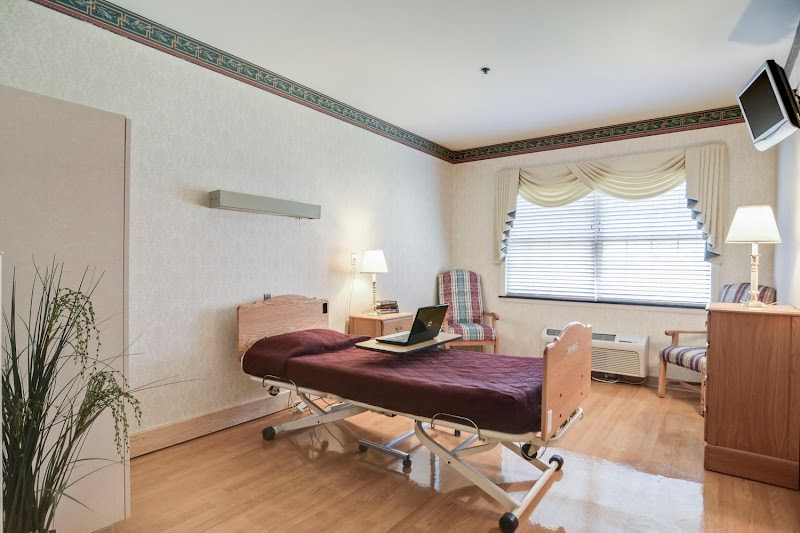
How Does Kingston Court Skilled Nursing And Rehabilitation Compare to Other Pennsylvania Nursing Homes?

Compared to the 100 nursing homes in Pennsylvania, KINGSTON COURT SKILLED NURSING AND REHABILITATION's overall rating (1 stars) is below the state average of 3.0, staff turnover (52%) is near the state average of 46%, and health inspection rating (1 stars) is much below the national benchmark.

What Should Families Ask When Visiting Kingston Court Skilled Nursing And Rehabilitation?

Based on this facility's data, families visiting should ask: "What changes have been made since the serious inspection findings, and how are you preventing similar issues?" "Can I visit during a mealtime to observe dining assistance and food quality?" "How do you handle medical emergencies, and what is your hospital transfer rate?" "Can I speak with family members of current residents about their experience?" These questions are particularly relevant given the facility's Immediate Jeopardy citations.

Is Kingston Court Skilled Nursing And Rehabilitation Safe?

Based on CMS inspection data, KINGSTON COURT SKILLED NURSING AND REHABILITATION has documented safety concerns. Inspectors have issued 1 Immediate Jeopardy citation (the most serious violation level indicating risk of serious injury or death). The facility has a 1-star overall rating and ranks #100 of 100 nursing homes in Pennsylvania. Families considering this facility should ask detailed questions about what corrective actions have been taken since these incidents.

Do Nurses at Kingston Court Skilled Nursing And Rehabilitation Stick Around?

KINGSTON COURT SKILLED NURSING AND REHABILITATION has a staff turnover rate of 52%, which is 6 percentage points above the Pennsylvania average of 46%. Moderate turnover is common in nursing homes, but families should still ask about staff tenure and how the facility maintains care continuity when employees leave.

Was Kingston Court Skilled Nursing And Rehabilitation Ever Fined?

KINGSTON COURT SKILLED NURSING AND REHABILITATION has been fined $59,314 across 3 penalty actions. This is above the Pennsylvania average of $33,672. Fines in this range indicate compliance issues significant enough for CMS to impose meaningful financial consequences. Common causes include delayed correction of deficiencies, repeat violations, or care failures affecting resident safety. Families should ask facility leadership what changes have been made since these penalties.

Is Kingston Court Skilled Nursing And Rehabilitation on Any Federal Watch List?

KINGSTON COURT SKILLED NURSING AND REHABILITATION is not on any federal watch list. The most significant is the Special Focus Facility (SFF) program, which identifies the bottom 1% of nursing homes nationally based on persistent, serious quality problems. Not being on this list means the facility has avoided the pattern of deficiencies that triggers enhanced federal oversight. This is a positive indicator, though families should still review the facility's inspection history directly.