



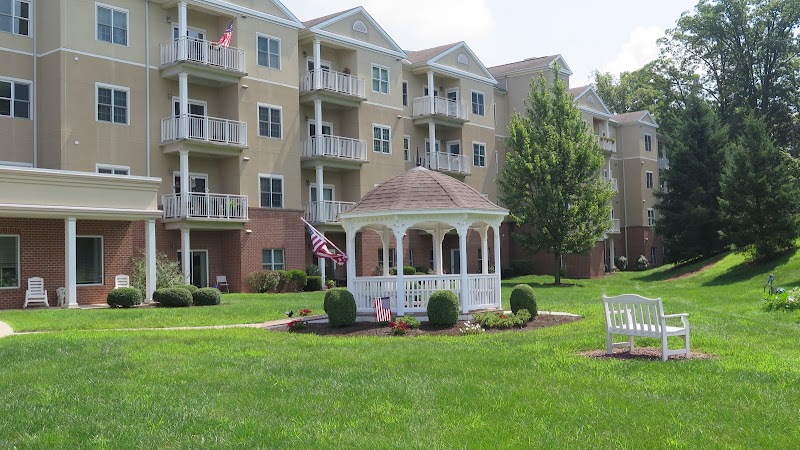
Normandie Ridge

1700 NORMANDIE DRIVE, YORK, PA 17404 (717) 764-6262
Non profit - Corporation 64 Beds ASBURY COMMUNITIES Data: November 2025
Trust Grade
55/100
#324 of 653 in PA
Last Inspection: August 2024

Within standard 12-15 month inspection cycle. Federal law requires annual inspections.

Overview

Normandie Ridge in York, Pennsylvania has a Trust Grade of C, which means it is average and sits in the middle of the pack among nursing homes. It ranks #324 out of 653 facilities in Pennsylvania, placing it in the top half, and #5 out of 14 in York County, indicating that only four local options are better. The facility has shown improvement over time, reducing its issues from 8 in 2024 to just 1 in 2025. Staffing is rated at 4 out of 5 stars, which is good, but the turnover rate is concerning at 58%, higher than the state average of 46%. While there have been no fines reported, some specific concerns include failures to accurately assess resident needs and to ensure adequate staff support for daily activities, which could impact resident well-being. Overall, while Normandie Ridge has strengths like good staffing ratings and no fines, families should be aware of the highlighted issues in resident care.

Trust Score
C
55/100
In Pennsylvania
#324/653
Top 49%
Safety Record
Low Risk
No red flags
Inspections
Getting Better
8 → 1 violations
Staff Stability
⚠ Watch
58% turnover. Above average. Higher turnover means staff may not know residents' routines.
Penalties
✓ Good
No fines on record. Clean compliance history, better than most Pennsylvania facilities.
Skilled Nurses
✓ Good
Each resident gets 51 minutes of Registered Nurse (RN) attention daily — more than average for Pennsylvania. RNs are trained to catch health problems early.
Violations
⚠ Watch
22 deficiencies on record. Higher than average. Multiple issues found across inspections.
★★★☆☆
3.0
Overall Rating
★★★★☆
4.0
Staff Levels
★★★★☆
4.0
Care Quality
★★★☆☆
3.0
Inspection Score
Stable
2024: 8 issues
2025: 1 issues

The Good

  • 4-Star Staffing Rating · Above-average nurse staffing levels
  • 4-Star Quality Measures · Strong clinical quality outcomes
  • Full Sprinkler Coverage · Fire safety systems throughout facility
  • No fines on record

Facility shows strength in staffing levels, quality measures, fire safety.

The Bad

3-Star Overall Rating

Near Pennsylvania average (3.0)

Meets federal standards, typical of most facilities

Staff Turnover: 58%

12pts above Pennsylvania avg (46%)

Frequent staff changes - ask about care continuity

Chain: ASBURY COMMUNITIES

Part of a multi-facility chain

Ask about local staffing decisions and management

Staff turnover is elevated (58%)

10 points above Pennsylvania average of 48%

The Ugly 22 deficiencies on record

Sept 2025 1 deficiency
CONCERN (D) 📢 Someone Reported This

A family member, employee, or ombudsman was alarmed enough to file a formal complaint

Potential for Harm - no one hurt, but risky conditions existed

Pressure Ulcer Prevention (Tag F0686)

Could have caused harm · This affected 1 resident

Based on clinical record review, facility policy review, and staff interviews, it was determined that the facility failed to provide care and services consistent with professional standards to promote...

Read full inspector narrative →
Based on clinical record review, facility policy review, and staff interviews, it was determined that the facility failed to provide care and services consistent with professional standards to promote healing and prevent worsening of pressure injuries for one of two residents reviewed for pressure injuries (Resident 71).Findings include:Review of facility policy, titled Skin Management and Injury and Prevention, last reviewed July 30, 2025, revealed the policy statement was, B. A resident with impaired skin integrity receives necessary treatment and services, consistent with professional standards of practice, to promote healing, prevent infection and prevent avoidable skin integrity issues from developing. Subsection I. stated, All resident alterations in skin integrity will be tracked weekly in the [Electronic Medical Record] and reviewed and documented weekly until resolved.Review of Resident 71's clinical record revealed diagnoses that included acute congestive heart failure (decreased ability of the heart to effectively pump blood throughout the body) and unspecified atrial flutter (irregular heart rate).Review of Resident 71's clinical record revealed that upon re-admission to the facility from a hospital stay on August 8, 2025, Resident 71's sacral area was identified as having intact, dry skin.Review of Resident 71's interdisciplinary progress notes revealed that on August 16, 2025, at 2:48 PM, Employee 4 (Licensed Practical Nurse [LPN]) documented Resident 71 had an open area to left upper buttocks that was approximately 1.0 centimeter (cm - metric unit of measure) by 0.7 cm. The wound bed was documented as having yellow slough (dead cells and/or tissue). The progress note stated that the supervisor was made aware. Further review of the clinical record revealed no progress note or assessment of the newly identified wound was completed by a Registered Nurse. Resident 71's physician's orders, revealed that an order was started to cleanse the wound with Normal Saline Solution (NSS), apply medical honey and cover with boarder gauze.Review of Resident 71's clinical record revealed that the electronic skin/wound assessment tracking form was not initiated until August 25, 2025. Review of Resident 71's clinical record failed to reveal a documented wound assessment (including but not limited to wound size, characteristics, or changes and or improvement) for Resident 71's sacral wound between August 16 and 25, 2025 (total of 9 days).Between the dates of August 16 and 25, 2025, Resident 71 was transferred to a hospital emergency department on August 21, 2025, at approximately 1:04 PM due to abnormal blood laboratory values, and returned to the facility on August 21, 2025, at approximately 7:50 PM. Review of Resident 71's clinical record revealed no reassessment of Resident 71's skin upon return to the facility.On August 25, 2025, at 11:24 AM, Employee 5 (Registered Nurse) documented a wound assessment. According to the wound assessment, Resident 71's sacral wound measured 5.33 cm in length by 1.42 cm in width.During a staff interview on September 26, 2025, at approximately 2:30 PM, the Nursing Home Administrator confirmed that there was no documented wound assessment completed for Resident 71's sacral wound between August 16 and 25, 2025. As of the interview, the facility had no further information to provide.28 Pa code 211.12(d)(1)(3)(5) Nursing services.
Aug 2024 8 deficiencies
CONCERN (D)

Potential for Harm - no one hurt, but risky conditions existed

Comprehensive Care Plan (Tag F0656)

Could have caused harm · This affected 1 resident

Based on facility policy review, record review, and staff interview, it was determined the facility failed to implement a comprehensive person-centered care plan to maintain the highest practicable we...

Read full inspector narrative →
Based on facility policy review, record review, and staff interview, it was determined the facility failed to implement a comprehensive person-centered care plan to maintain the highest practicable well-being for one of 21 residents reviewed (Resident 56). Findings include: Review of the facility policy, titled Care Plans, Comprehensive Person-Centered, last revised in March 2022, revealed that the comprehensive, person-centered care plan describes the services that are to be furnished to attain or maintain the resident's highest practicable physical, mental, and psychosocial well-being. Review of Resident 56's clinical record revealed diagnoses that included Alzheimer's disease (a progressive disease that destroys memory and other important mental functions) and hypothyroidism (a condition in which the thyroid gland does not produce enough thyroid hormone). Review of Resident 56's clinical record revealed an active physician's order for Haloperidol 0.5 milliliters orally two times a day for terminal agitation, with an active date of May 2, 2024. Review of Resident 56's current comprehensive person-centered care plan failed to reveal a care plan focus area or intervention area for their use of an antipsychotic medication. During an interview with the Nursing Home Administrator on August 8, 2024, at 12:13 PM, revealed that Resident 56's care plan now included a focus area for their use of an antipsychotic medication, and that she would have been expected the care plan to have been implemented prior to this day. 28 Pa. Code 211.11 (d) Resident care plan
CONCERN (D)

Potential for Harm - no one hurt, but risky conditions existed

Pressure Ulcer Prevention (Tag F0686)

Could have caused harm · This affected 1 resident

Based on clinical record review and staff interviews, it was determined that the facility failed to ensure that residents receive necessary treatment and services, consistent with professional standar...

Read full inspector narrative →
Based on clinical record review and staff interviews, it was determined that the facility failed to ensure that residents receive necessary treatment and services, consistent with professional standards of practice, to promote healing for one of two residents reviewed (Resident 42). Findings include: Review of Resident 42's clinical record revealed diagnoses that included hypertension (high blood pressure) and chronic atrial fibrillation (when the abnormal heart rhythm lasts for more than a week). Review of Resident 42's July 2024 TAR (Treatment Administration Record) revealed an order for mid back wound: cleanse with normal saline, allow to dry, apply skin prep to peri wound, apply medi honey to a piece of calcium alginate and place directly to wound bed, secure with foam dressing every day shift for wound care, with a start date of July 26, 2024. Further review of Resident 42's July 2024 TAR revealed that the treatment for the mid back wound was blank on July 27, 30, and 31, 2024, indicating that it was not completed on those days. Review of Resident 42's July 2024 TAR also revealed an order for right back wound: cleanse with normal saline, allow to dry, apply skin prep to peri wound, apply double layer of xeroform, secure with dry sterile dressing, every day shift every 2 days for wound care, with a start date of July 25, 2024. Further review of Resident 42's July 2024 TAR revealed that the treatment for the right back wound was blank on July 27 and 31, 2024, indicating that it was not completed on those days. Review of Resident 42's clinical record revealed no progress notes indicating why the wound treatment was not completed for their mid back wound on July 27, 30, and 31, 2024, and for their right back wound on July 27 and 31, 2024. Interview with the Nursing Home Administrator and the Director of Nursing on August 8, 2024, at 9:59 AM, revealed they would expect staff to document on the TAR once the treatment is completed, and to write a progress note in their clinical record documenting if the resident is refusing care. 28 Pa. Code 211.12(d)(1)(3)(5) Nursing services
CONCERN (D)

Potential for Harm - no one hurt, but risky conditions existed

Deficiency F0810 (Tag F0810)

Could have caused harm · This affected 1 resident

Based on policy review, observations, clinical record review, and staff interviews, it was determined that the facility failed to provide adaptive feeding devices for two of two residents reviewed (Re...

Read full inspector narrative →
Based on policy review, observations, clinical record review, and staff interviews, it was determined that the facility failed to provide adaptive feeding devices for two of two residents reviewed (Residents 19 and 27). Findings include: Review of facility policy, titled Adaptive Feeding Devices, dated January 2016, revealed, Adaptive feeding equipment will be provided to residents to enhance resident independence and comfort . The Food & Nutrition Services Department will store the adaptive equipment and provide to resident for use during meals and snacks. Review of Resident 19's clinical record revealed diagnoses that included atrial fibrillation (irregular heart beat) and GERD (gastroesophageal reflux disease - digestive disease where the muscle rings between the stomach and esophagus become weak or relax inappropriately allowing the stomach's contents to flow up into the esophagus). Review of Resident 19's current orders revealed an order for adaptive equipment during meals, including dycem (non-slip mat) under her plate, starting April 1, 2024. Review of Resident 19's current care plan revealed that she had a self-care performance deficit related to confusion, general weakness, immobility, and cognitive impairment, and that she required adaptive equipment while eating including dycem under her plate at the table. Observation on August 5, 2024, at 12:09 PM, revealed Resident 19 eating her meal. No dycem was present under her plate. Several times her plate slid when she took a scoop of food, causing her to reposition it before taking another bite. Observation of Resident 19's meal ticket at that time revealed it was notated that she should have dycem under her plate during meals. During an interview with Employee 3 (Nurse Aide) at the time of observation, she stated that she inquired about Resident 19's dycem and was told by dietary staff that they did not have any on hand in the dining room, but that someone would go get it. Resident 19 was provided with a piece of dycem at 12:19 PM. During an interview with the Nursing Home Administrator (NHA) on August 8, 2024, at 12:20 PM, she revealed the expectation that Resident 19 should have had all required adaptive equipment. Review of Resident 27's clinical record revealed diagnoses that included Parkinson's disease (a long-term degenerative disorder of the central nervous system that mainly affects the motor system) and muscle weakness. Review of Resident 27's physician orders revealed an order for a Kennedy cup dated March 3, 2024. Review of Resident 27's care plan revealed a care plan focus for being at risk for alterations in nutrition and hydration and at risk for aspiration, with an intervention to provide adaptive equipment as ordered, with a revision date of July 1, 2024. Observation of Resident 27 at lunch on August 5, 2024, at 12:18 PM, revealed that the Resident had a two handled sippy cup with a straw. During an interview with Employee 2 on August 5, 2024, at 12:19 PM, Employee 2 indicated that Resident 27 did not have a Kennedy cup because they are all upstairs. Observation of Resident 27 at lunch on August 7, 2024, at 12:12 PM, revealed that the Resident had a two handled sippy cup with a straw and no Kennedy cup. Observation of Resident 27 at breakfast on August 8, 2024, at 9:00 AM, revealed that the Resident had a two handled sippy cup with a straw and no Kennedy cup. During an interview with the NHA and Director of Nursing on August 8, 2024, at 9:40 AM, the NHA confirmed that she would expect residents to receive their adaptive equipment as ordered. 28 Pa. Code 201.18(b)(1) Management 28 Pa. Code 211.10(d) Resident care policies 28 Pa. Code 211.12(d)(1)(3)(5) Nursing services
CONCERN (E)

Potential for Harm - no one hurt, but risky conditions existed

Assessment Accuracy (Tag F0641)

Could have caused harm · This affected multiple residents

**NOTE- TERMS IN BRACKETS HAVE BEEN EDITED TO PROTECT CONFIDENTIALITY** Based on clinical record review and staff interviews, it was determined that the facility failed to ensure that the resident ass...

Read full inspector narrative →
**NOTE- TERMS IN BRACKETS HAVE BEEN EDITED TO PROTECT CONFIDENTIALITY** Based on clinical record review and staff interviews, it was determined that the facility failed to ensure that the resident assessment accurately reflected the resident's status for five of 21 residents reviewed (Residents 20, 27, 29, 49, and 56). Findings Include: Review of Resident 20's clinical record revealed diagnoses that included osteomyelitis (inflammation or swelling that occurs in the bone) and chronic kidney disease (CKD - when the kidneys have become damaged and cannot filter blood the way they should). Review of Resident 20's quarterly MDS (Minimum Data Set is part of federally mandated process for clinical assessment of all Medicare and Medicaid certified nursing homes) dated June 14, 2024, revealed in Section H. Bladder and Bowel, H0100. Appliances, A. Indwelling catheter, that Resident 20 had a catheter while a Resident during the previous 14 days. Review of Resident 20's clinical record failed to reveal any evidence of Resident 20 having a catheter while a Resident during the 14 days prior to the June 14, 2024, MDS. Interview with the Nursing Home Administrator (NHA) on August 6, 2024, at 1:40 PM, revealed that the MDS completed on June 14, 2024, was marked in error and should not have been coded to reveal that Resident 20 had a catheter while a Resident during the previous 14 days. Review of Resident 27's clinical record revealed diagnoses that included depression, congestive heart failure (CHF - disease process of the heart that results in decreased ability of the heart to pump blood through the body), presence of an automatic (implanted) cardiac defibrillator (a pacemaker-an artificial device for stimulating the heart muscle and regulating its contractions), and history of diabetic ulcer. Review of Resident 27's quarterly MDS dated [DATE], revealed in Section I. Diagnoses that the Resident was not coded as having heart failure or depression, but were coded in Section N. Medications as receiving medications for these diagnoses. Review of Resident 27's quarterly MDS dated [DATE], revealed in Section I. Diagnoses that the Resident was not coded as having heart failure or depression, but were coded in Section N. Medications as receiving medications for these diagnoses. Review of Resident 27's Significant Change MDS dated [DATE], in Section I. Diagnoses, Resident 27 was not coded as having an automatic (implanted) cardiac defibrillator or depression but was coded in Section N. Medications as receiving medication to treat their depression. Review of Resident 27's modified quarterly MDS dated [DATE], revealed in Section I. Diagnoses that Resident 27 was not coded as having heart failure or depression. In addition, in Section M. Skin Conditions at question M1040. Other Ulcers, Wounds and Skin Problems, Resident 27 was not coded as having a diabetic foot ulcer. Resident 27 was coded in Section N. Medications as receiving medication to treat their heart failure and depression. Review of Resident 27's quarterly MDS dated [DATE], revealed in Section I. Diagnoses that Resident 27 was not coded as having heart failure or depression. In addition, in Section M. Skin Conditions at question M1040. Other Ulcers, Wounds and Skin Problems, Resident 27 was not coded as having a diabetic foot ulcer. Resident 27 was coded in Section N. Medications as receiving medication to treat their heart failure and depression. Review of Resident 27's clinical record revealed that the Resident was identified as having a diabetic ulcer on June 13, 2024, and continued to have the diabetic ulcer until it was reclassified as a pressure ulcer on July 11, 2024. During an interview with the NHA and Director of Nursing (DON) on August 8, 2024, at 12:23 PM, the NHA confirmed that all Resident 27's MDSs were coded in error, and that she would expect MDSs to be coded to represent an accurate reflection of the resident's status at the time the assessment was completed. Review of Resident 29's clinical record revealed diagnoses that included spinal stenosis (narrowing of the spinal canal which may result in pain, numbness and loss of motor control) and chronic kidney disease stage 4 (when the kidneys are moderately or severely damaged and are not working as well as they should to filter waste from your blood). Review of Resident 29's May 23, 2024, quarterly MDS revealed that the assessment was coded to indicate that she received an anticoagulant medication (blood thinner) during the look back period (seven days prior to the assessment date). Review of Resident 29's May 2024 MAR (Medication Administration Record - form used to document physician orders as well as when and how medications are administered to a resident) failed to reveal that Resident 29 had any orders for, or received any anticoagulant medications during the month. In email correspondence received from the NHA on August 6, 2024, at 1:24 PM, she confirmed that Resident 29's May 23, 2024, MDS assessment was coded in error. Review of Resident 49's clinical record revealed diagnoses that included nephritis (a condition in which the tissues in the kidney become inflamed and have problems filtering waste from the blood) and chronic kidney disease stage 4. Review of Resident 49's quarterly MDS dated [DATE], revealed in Section O0110. Special Treatments, Procedures, and Programs, J1. Dialysis, that Resident 49 received dialysis while a resident during the previous 14 days. Review of Resident 49's electronic medical record failed to reveal any instance of Resident 49 receiving dialysis while a resident during the 14 days prior to the July 25, 2024, MDS. Interview with the DON on August 8, 2024, at 9:35 AM, revealed that the MDS completed on July 25, 2024, should have not been coded to reveal that Resident 49 received dialysis while a resident during the previous 14 days. Review of Resident 56's clinical record revealed diagnoses that included Alzheimer's disease (a progressive disease that destroys memory and other important mental functions) and hypothyroidism (a condition in which the thyroid gland does not produce enough thyroid hormone). Review of Resident 56's quarterly MDS dated [DATE], as well as their quarterly MD dated June 2, 2024, revealed in Section N. Medications, N0415. High-Risk Drug Classes: Use and Indication, that Resident 56 was prescribed antianxiety medications and antidepressant medications while a resident during the previous 14 days. Further review of Resident 56's quarterly MDS dated [DATE], as well as their quarterly MDS dated [DATE], revealed in Section I. Active Diagnosis, Psychiatric/Mood Disorder, that anxiety disorder was marked No, as well as depression (other than bipolar) was marked no, indicating Resident 56 does not have a diagnosis of anxiety or depression while a resident during the previous 14 days. Interview with the NHA on August 8, 2024, at 12:13 PM, she confirmed that Resident 56's quarterly MDS's on March 6, 2024, and June 2, 2024, were errors and should have been coded to reflect Resident 56 has an anxiety and depression diagnosis. 28 Pa. Code 211.12(d)(3)(5) Nursing services
CONCERN (E)

Potential for Harm - no one hurt, but risky conditions existed

Deficiency F0657 (Tag F0657)

Could have caused harm · This affected multiple residents

**NOTE- TERMS IN BRACKETS HAVE BEEN EDITED TO PROTECT CONFIDENTIALITY** Based on observations, clinical record review, and staff interviews, it was determined that the facility failed to review and re...

Read full inspector narrative →
**NOTE- TERMS IN BRACKETS HAVE BEEN EDITED TO PROTECT CONFIDENTIALITY** Based on observations, clinical record review, and staff interviews, it was determined that the facility failed to review and revise the resident plan of care for three of 21 residents reviewed (Residents 19, 20, and 27). Findings include: Review of Resident 19's clinical record revealed diagnoses that included atrial fibrillation (irregular heart beat) and congestive heart failure (CHF - weakness of the heart that leads to buildup of fluid in the lungs and surrounding body tissues). Observation on [DATE], at 10:19 AM, revealed a monitor for a pacemaker (an artificial device for stimulating the heart muscle and regulating its contractions) was present on Resident 19's bedside stand. Review of Resident 19's current orders revealed an order to make sure her [NAME] (transmitter that reads and sends data from an implanted device to the doctor or clinic without having to visit the office) was plugged in and operating every shift for her pacemaker check, starting [DATE]. Review of Resident 19's current care plan revealed a focus area for decreased cardiac output, which included interventions of pacemaker checks as ordered, and monitor [NAME] as ordered, but failed to include any safety interventions associated with the presence of the pacemaker. During an interview with the Nursing Home Administrator (NHA) and the Director of Nursing (DON) on [DATE], at 9:54 AM, the NHA indicated that it would be a good idea to have the safety measures care planned, but she would expect staff to use their professional judgement when they noted the presence of a cardiac pacemaker. During a follow-up interview with the NHA and DON on [DATE], at 12:19 PM, the NHA confirmed that Resident 19's care plan had been revised and confirmed that she would expect pacemaker safety precautions to be included in the care plan. Review of Resident 20's clinical record revealed diagnoses that included osteomyelitis (inflammation or swelling that occurs in the bone) and chronic kidney disease (CKD - when the kidneys have become damaged and cannot filter blood the way they should). Review of Resident 20's current active physician orders revealed an order for Full Code, with a revision date of [DATE]. Review of Resident 20's POLST (Pennsylvania Orders for Life-Sustaining Treatment) form, completed on [DATE], revealed Resident 20 wishes to receive CPR (cardiopulmonary resuscitation) and full treatment. Review of Resident 20's current care plan revealed a focus area for Resident wishes to remain a DNR (do not resuscitate) status will be upheld at all times, with an initiation date of [DATE], and a revision date of [DATE]. Documentation provided on [DATE], at 1:46 PM, by the NHA revealed that Resident 20's care plan was updated to reflect that Resident 20 wishes to remain a full code status. Interview with the NHA and DON on [DATE], at 9:58 AM, revealed that they would expect Resident 20's care plan to match their physician orders. Review of Resident 27's clinical record revealed diagnoses that included type 2 diabetes mellitus (a long-term condition in which the body has trouble controlling blood sugar and using it for energy), a stage 3 pressure ulcer (a full-thickness tissue loss wound where the tissue just under the skin may be visible, but no bone, tendon, or muscle is exposed), and the presence of an automatic (implanted) cardiac defibrillator (a pacemaker-an artificial device for stimulating the heart muscle and regulating its contractions). Observation of Resident 27 on [DATE], at 10:33 AM, revealed a monitor for a pacemaker at the bedside. Review of Resident 27's clinical record revealed that the Resident developed a diabetic ulcer on [DATE], and that the diabetic ulcer was reclassified as a stage 3 pressure ulcer on [DATE]. Review of Resident 27's care plan revealed an active care plan focus for diabetic ulcer of the left foot, dated [DATE]. Further review of the care plan failed to identify a care plan focus for their stage 3 pressure ulcer. During an interview with the NHA and DON on [DATE], at 9:39 AM, the NHA confirmed that Resident 27's care plan should have been revised when the change in the wound occurred. Further review of Resident 27's care plan revealed a care plan focus for altered cardiovascular status, which included interventions for the presence of an implanted pacemaker and pacemaker checks as ordered, with an initiated date of [DATE], but failed to include any safety interventions associated with the presence of the pacemaker. During an interview with the NHA and the DON on [DATE], at 9:54 AM, the NHA indicated that it would be a good idea to have the safety measures care planned, but she would expect staff to use their professional judgement when they noted that Resident 27 had a pacemaker. During a follow-up interview with the NHA and DON on [DATE], at 12:19 PM, the NHA confirmed that Resident 27's care plan had been revised and confirmed that she would expect pacemaker safety precautions to be included in the care plan. 28 Pa. Code 211.12(d)(1)(5) Nursing services
CONCERN (E)

Potential for Harm - no one hurt, but risky conditions existed

Deficiency F0725 (Tag F0725)

Could have caused harm · This affected multiple residents

Based on clinical record review, review of facility provided documentation and reports, and resident and staff interviews, it was determined that the facility failed to ensure sufficient staff to assu...

Read full inspector narrative →
Based on clinical record review, review of facility provided documentation and reports, and resident and staff interviews, it was determined that the facility failed to ensure sufficient staff to assure residents attain or maintain the highest practicable physical, mental, and psychosocial well-being for one of 19 residents reviewed (Resident 213). Findings include: Review of Resident 213's clinical record revealed diagnoses that included obesity and urinary tract infection. Review of Resident 213's care plan revealed a focus for activities of daily living self-care performance deficit related to impaired balance and fatigue with an intervention for limited assistance of one person for toileting, dated July 31, 2024. In addition, the care plan revealed a focus for limited physical mobility related to weakness and acute hospitalization with an intervention for assist of one person with a rolling walker for ambulation, dated July 31, 2024. During an interview with Resident 213 on August 5, 2024, at 12:37 PM, Resident 213 indicated that the Resident cannot get out of bed without staff assistance to go to the bathroom, often wait a long time to get their call bell answered, and the Resident soiled themselves this morning while waiting for someone to come and answer the call light. Review of facility provided report, titled Device Activity Report, from August 5-7, 2024, for Resident 213 revealed the following: 1) on August 5, 2024, at 8:28:50 AM, their call bell alarmed and was cleared at 9:00:22 AM, a total of 31 minutes and 32 seconds; 2) on August 5, 2024, at 6:33:07 PM, their call bell alarmed and was cleared at 6:58:58 PM, a total of 25 minutes and 51 seconds; 3) on August 7, 2024, at 1:57:30 PM, their call bell alarmed and was cleared at 2:48:17 PM, a total of 50 minutes and 47 seconds; and 4) on August 7, 2024, at 6:51:22 PM, their call bell alarmed and was cleared at 7:24:16 PM, a total of 32 minutes and 54 seconds. Review of facility provided staffing information from August 1-7, 2024, revealed that on August 5, 2024, for day shift the census was 62 and that the facility needed a minimum of 49.60 hours for nurse aides, and they provided a total of 48 hours; therefore, not meeting the minimum hours needed based on the facility census. In addition, the facility needed a minimum nurse aide ratio of 6.20 and provided 6.00; therefore, not meeting the required ratio of nurse aides based on facility census. During an interview with the Nursing Home Administrator (NHA) and Director of Nursing (DON) on August 8, 2024, at 10:04 AM, the NHA confirmed they were not able to meet staffing ratios on August 5, 2024, for day shift. In an email communication received from the NHA on August 8, 2024, at 12:39 PM, she indicated, I would expect [Resident 213's] light to be answered sooner. No other information was provided for review. 28 Pa. Code 201.14(a) Responsibility of licensee 28 Pa. Code 201.18(b)(1)(3) Management 28 Pa. Code 211.12(d)(5)(f.1)(3) Nursing services
CONCERN (E)

Potential for Harm - no one hurt, but risky conditions existed

Medication Errors (Tag F0758)

Could have caused harm · This affected multiple residents

Based on clinical record review, policy review, and staff interviews, it was determined that the facility failed ensure as needed psychotropic drugs are limited to 14 days or have documented rationale...

Read full inspector narrative →
Based on clinical record review, policy review, and staff interviews, it was determined that the facility failed ensure as needed psychotropic drugs are limited to 14 days or have documented rationale and duration for one of five residents reviewed (Resident 1); and failed to ensure effects and side effects of psychotropic medications were being monitored for one of five residents reviewed (Resident 56). Findings include: Review of facility policy, Psychotropic Medications, revised December 4, 2023, revealed, PRN [as needed] orders for psychotropic medications will be limited to 14 days unless the physician identifies the rationale to extend the medication beyond 14 days. Review of Resident 1's clinical record revealed diagnoses that included anxiety (a feeling of fear, dread, and uneasiness) and depression (major loss of interest in pleasurable activities, characterized by change in sleep patterns, appetite, and/or daily routine). Review of Resident 1's physician's orders dated August 5, 2024, revealed a current order for Lorazepam (antianxiety/psychotropic medication) 0.5 mg to be given every eight hours, as needed, that was ordered on July 11, 2024, without stop date. Review of Resident 1's clinical record on August 7, 2024, failed to reveal a rationale and duration, documented by the physician, for the PRN psychotropic medication to extended beyond 14 days. Interview with the Nursing Home Administrator (NHA) on August 7, 2024, at 11:32 AM, revealed that the expectation is that the physician would limit the use of the PRN psychotropic medications to 14 days or document the rationale for the extended order, as stated in the facility policy. Review of Resident 56's clinical record revealed diagnoses that included Alzheimer's disease (a progressive disease that destroys memory and other important mental functions) and hypothyroidism (a condition in which the thyroid gland does not produce enough thyroid hormone). Review of Resident 56's clinical record revealed an active physician's order for Haloperidol 0.5 milliliters orally two times a day for terminal agitation, with an active date of May 2, 2024; an order for Lorazepam Oral Tablet 0.5 milligram one tablet by mouth at bedtime for anxiety, with an active date of April 1, 2024; an order for Duloxetine 30 milligram capsule one time a day for depression, with an active date of April 1, 2024; and an order for Bupropion 75 milligram tablet, two tablet orally two times a day for depression, with an active date of April 1, 2024. Further review of Resident 56's physician's orders also reveal an order to observe closely for significant side effects of anti-anxiety medication including drowsiness, slurred speech, dizziness, nausea, aggressive or impulsive behavior every shift document: 'Y' if monitored and none of the above observed, 'N' if monitored and any of the above was observed, select chart code 'Other/See Nurses Notes' and progress note findings, with a start date of April 1, 2024. Review of Resident 56's physician's order also reveal an order to observe closely for side effects of antipsychotic medication including dry mouth, constipation, blurred vision, disorientation or confusion, difficulty urinating, hypotension, dark urine, yellow skin, nausea or vomiting, lethargy, drooling, extrapyramidal symptoms (tremors, disturbed gait, increased agitation, restlessness, involuntary movement of mouth or tongue) every shift documents: 'Y' if monitored and none of the above are observed, 'N' if monitored and any of the above was observed, select chart code 'Other/See Nurses Notes' and progress note findings, with a start date of April 1, 2024. Review of Resident 56's May 2024 TAR (Treatment Administration Record), June 2024 TAR, July 2024 TAR, and August 2024 TAR revealed that staff documented a check mark during day, evening, and night shift for the entire month for the observation orders above, which does not accurately reflect if Resident 56 is displaying any side effects from the psychotropic medications the Resident is being administered. Review of Resident 56's clinical record revealed no nurses' progress notes indicating if Resident 56 is displaying any behaviors from the psychotropic medications they are being administered. During an interview with the NHA and the Director of Nursing on August 8, 2024, at 12:13 PM, revealed that staff have been documenting Resident 56's May 2024, June 2024, July 2024, and August 2024 TARs incorrectly and they would expect them to follow the physician's order for documentation. 28 Pa. Code 211.12(d)(5) Nursing services
CONCERN (E)

Potential for Harm - no one hurt, but risky conditions existed

Food Safety (Tag F0812)

Could have caused harm · This affected multiple residents

Based on facility policy review, observations, facility documentation review, and staff interviews, it was determined that the facility failed to store, prepare, distribute, and serve food in accordan...

Read full inspector narrative →
Based on facility policy review, observations, facility documentation review, and staff interviews, it was determined that the facility failed to store, prepare, distribute, and serve food in accordance with professional standards for food safety in the kitchen in two of two kitchenettes, on tray service line, and in one of two ice machines (Tulip kitchenette). Findings include: Review of facility policy, titled Labeling & Dating, dated January 2016, revealed All foods will be appropriately wrapped, labeled and dated based on food storage guidelines. Appropriate storage temperatures and food rotation procedures are followed. All foods are labeled, dated, and securely covered and use-by-dates are monitored and followed. Review of facility policy, titled Receiving & Storage, dated January 2016, revealed 5. All items are dated when received to ensure correct product rotation and 6. Products must be checked to detect unacceptable items, i.e. dented, swollen or rusted cans Review of facility policy, titled Outside Food, dated March 2018, revealed that any food that is brought in for residents by visitors will be labeled, dated, and discarded according to procedure; 2. Labels should include the resident name, room number, date the food was brought in, date it was opened and the date it should be discarded by. Tour of the kitchen with Employee 4 (Director of Dining Services) on August 5, 2024, at 9:46 AM, revealed the following concerns: 1) The walk-in production cooler contained a large plastic container of toasted sesame dressing and mayonnaise that were not dated. An immediate interview with Employee 4 revealed that the items should have been dated when opened and should be discarded if not used in within six months of the open date. 2) The walk-in freezer contained a bag of French fries, a bag of frozen fish filets, and a bag of garlic bread that were not sealed closed, a package of waffles (not in a shipment case) that had not been opened but had no dates indicated on the packaging, and a bag of frozen mixed vegetables (not in a shipment case) that had not been opened but had no dates indicated on the packaging. An immediate interview with Employee 4 revealed that they go by the shipment date on the label, which is located on the case, to determine expiration dates, and confirmed that there was no date on the waffles or mixed vegetables as they were no longer contained in the shipment case. Employee 4 also confirmed that the fries, fish, and garlic bread were not sealed closed. 3) The dry storage room contained an opened case of oatmeal crème pie snack cakes with no shipment date noted on the case; an open package of spiral noodles, open package of spaghetti noodles, and an open bottle of barbecue sauce that had no open dates indicated. An immediate interview with Employee 4 indicated that they do not date the boxes of snack cakes. The facility goes by the shipment date on the case and that they are discarded if not used in within six months of the shipment date unless there is use by date specifically indicated on the packaging by the manufacturer. Employee 4 confirmed that the case of oatmeal crème pie snack cakes had no shipment label and stated, it vanished. Employee 4 also confirmed that the pasta noodles and barbecue sauce were not dated with an open date. 4) The produce cooler contained a plastic manufacturer container of strawberries with gray fuzz noted on the strawberries. None of the produce was noted to be dated. An immediate interview with Employee 4 revealed that they do not date produce and that they go by appearance of the fruit and vegetables to determine when it should be discarded. 5) The canned goods rack contained a dented can of apple pie filling and fruit cocktail, and butterscotch pudding; and the banana pudding, diced apples, and caramel topping cans contained no dates. An immediate interview with Employee 4 revealed that the dented cans should not have been placed on the rack when received dented. In addition, Employee 4 confirmed that there were no dates on banana pudding, diced apples, and caramel topping. 6) In the prep area there was an open container of molasses that indicated by the manufacturer to use by May 4, 2024; an open container of mustard and soy sauce with no dates noted; and a box of corn starch that was not sealed closed. Employee 4 confirmed that the molasses should have discarded, the mustard and soy sauce should have been dated, and that the corn starch should have been sealed closed. Observation of the cooking area revealed a metal shelving unit that had 19 servings ladles stored with scoop side up hanging off the side of the shelf near a passageway through the kitchen. Employee 4 offered no information as to why these would be stored in this manner. During an interview with Employee 4 on August 5, 2024, at 10:14 AM, Employee 4 confirmed that he would expect items to be labeled, dated, and stored properly. Observation of the [NAME] Unit Kitchenette on August 5, 2024, at 10:20 AM, revealed in the cupboard an open plastic container of ketchup and mustard that were not dated with an opened date. In the refrigerator, there was a clear plastic manufacturer container of hummus and a clear plastic manufacturer container of cherry tomatoes with no name or date noted. Observation of tray line in the Tulip kitchenette on August 6, 2024, at 11:56 AM, revealed that Employee 1 was serving food on the tray line with clear gloves present on both hands. Employee 1 left the tray line and used their right gloved hand to open the refrigerator door handle, and then used both of their gloved hands to retrieve a package of tortilla wraps and a chilled plate. Employee 1 proceeded to go to the counter, open the package of tortillas, remove one, fill it with a meat salad, used both of their gloved hands to roll the wrap and hold it while cutting it in half, and then Employee 1 placed the wrap on the plate and handed it to another employee to serve. Employee 1 then removed their gloves and applied a new pair of gloves. Employee 1 was then witnessed to again leave the tray line and, with their right gloved hand, retrieved a chilled plate and took it to Employee 5. Employee 1 then returned to the tray line and continued to plate food. Employee 1 used their left gloved hand to move the mixed vegetables over on the plate that they had placed too close to the edge of the plate with the scoop. Employee 1 was then observed to place a scoop of chopped meat onto a plate. Employee 1 then realized that they had placed the meat on the wrong type of plate. Employee 1 then used her right gloved hand, which they had previously used to touch the refrigerator door handle, and scraped the meat off the plate onto the correct plate. During an interview with Employee 1 on August 6, 2024, at approximately 12:15 PM, Employee 1 confirmed that they had touched the door handle of the refrigerator and then touched food that was served to residents without changing their gloves. Observation of the Tulip kitchenette on August 7, 2024, at 10:16 AM, revealed a plastic storage container of brown sugar that had a small scoop stored inside of the container. The ice machine had a serving scoop stored inside of the ice machine on the right-hand side in a metal type rack. An employee dressed in scrubs was observed to come in and retrieve ice from the machine and place it in a clear water pitcher. This employee was not observed to have washed their hands prior to using the scoop in the ice machine. In addition, it was noted that there were two stacks of divided plates and lip plates on the counter with the service side being upright; a large plastic bin of coffee cups sitting out on the counter with approximately 20 cups sitting with the service side being upright; and there were approximately seven stacks of plate domes on the counter with the service side being upright. During an interview with the Nursing Home Administrator (NHA) and the Director of Nursing (DON) on August 7, 2024, at 11:06 AM, all observations were shared. The NHA confirmed that she would expect items to be labeled, dated, and stored properly and that food should be served in a sanitary manner. Review of facility provided Refrigerator Temperature Log indicated maintain refrigerator temperature at 40 degrees Fahrenheit or below and to complete the corrective action column if temperatures are not in proper ranges. Review of recorded temperatures for the Tulip dining room kitchenette refrigerator for June 2024, revealed the following temperature concerns: 1) June 3, at 4:30 PM, the temperature was logged as 44 and no information was included in the corrective action/comments column; 2) June 4, at 4:30 PM, the temperature was logged as 42 and no information was included in the corrective action/comment's column; 3) June 5, at 4:30 PM, the temperature was logged as 45 and no information was included in the corrective action/comment's column; 4) June 9, at 4:45 PM, the temperature was logged as 45 and in the corrective action column it stated staff restocked reach-in; 5) June 11, at 11:45 AM, the temperature was logged as 47 and in the corrective action column it stated door opened; 6) June 12, at 11:36 AM, the temperature was logged as 48 and in the corrective action column it stated refrigerator defrosting; 7) June 14, at 11:18 AM, the temperature was logged as 50 and in the corrective action column it stated door opened; 8) June 15, at 11:30 AM, the temperature was logged as 50 and in the corrective action column it stated door opened; 9) June 16, at 11:20 AM, the temperature was logged as 49 and in the corrective action column it stated door opened notified maintenance; 10) June 18, at 11:50 AM, the temperature was logged as 43 and no information was included in the corrective action/comments column; 11) June 22, at 5:40 PM, the temperature was logged as 43 and no information was included in the corrective action/comments column; and 12) June 23, at 5:35 PM, the temperature was logged as 43 and no information was included in the corrective action/comments column. During an interview with the NHA and DON on August 8, 2024, at 12:22 PM, the NHA indicated that she had spoken to Employee 5 and that they indicated that if staff were to check a refrigerator temperature and it was noted to be high, that they would recheck it in an hour and then, if it was still elevated, they would notify maintenance. NHA confirmed that they had no additional information to provide and that she would expect staff to have followed the process and food would be stored at appropriate temperatures. 28 Pa. Code 211.6(f) Dietary services
Oct 2023 6 deficiencies
CONCERN (D)

Potential for Harm - no one hurt, but risky conditions existed

Accident Prevention (Tag F0689)

Could have caused harm · This affected 1 resident

Based on record review and staff interview, it was determined that the facility failed to prevent accident and hazards for one of 16 residents reviewed (Resident 42). Findings include: Review of Resid...

Read full inspector narrative →
Based on record review and staff interview, it was determined that the facility failed to prevent accident and hazards for one of 16 residents reviewed (Resident 42). Findings include: Review of Resident 42's clinical record revealed diagnoses that included anxiety disorder (persistent and excessive worry that interferes with daily activities) and dysphasia (swallowing difficulties). Review of a progress note in Resident 42's clinical record dated September 5, 2023, at 9:05 AM, revealed that a nurse's aid was assisting Resident 42 in a transfer and, during that time, Resident 42 did not remain standing to complete the transfer and was lowered to the floor. No injury occurred during the transfer. Review of Resident 42's fall occurrence report on September 5, 2023, revealed that the gait belt was not used on the Resident during the time of the transfer. Review of Resident 42's Resident Care Summary provided by the Nursing Home Administrator (NHA) on October 5, 2023, at 12:19 PM, revealed that Resident 42 was a one-person transfer assist with gait belt during the time the transfer occurred. Review of a document completed by physical therapy on June 7, 2023, revealed that Resident 42 is an extensive one-person assist using gait belt during transfers from the bed or wheelchair. Review of Resident 42's significant change MDS (Minimum Data Set - part of the federally mandated process for clinical assessment of all Medicare and Medicaid certified nursing homes) created on July 31, 2023, under section G. Functional Status Subsection B. Transfer, revealed that the Resident requires extensive assistance with two plus persons physical assist during transfers. Interview with the Director of Nursing (DON) on October 5, 2023, at 12:55 PM, revealed that the gait belt should have been utilized during the time of Resident 42's transfer and subsequent fall that occurred on September 5, 2023, and that staff have been educated. 28 Pa. Code 201.18(b)(1)(2)Management 28 Pa. Code 211.12(d)(3)(5)Nursing services
CONCERN (E)

Potential for Harm - no one hurt, but risky conditions existed

Resident Rights (Tag F0550)

Could have caused harm · This affected multiple residents

Based on observations, review of select facility forms, and staff interviews, it was determined that the facility failed to ensure that six residents have the right to a dignified existence during mea...

Read full inspector narrative →
Based on observations, review of select facility forms, and staff interviews, it was determined that the facility failed to ensure that six residents have the right to a dignified existence during meal service for one of one meals observed (Residents 39, 42, 47, 51, 213, and 219). Findings include: Observation of tray line meal service in the Skilled Dining Room on October 3, 2023, at 12:30 PM, revealed Resident 213 was served pureed food on a divided plate, and the entrée portion of the meal was served on the upper left corner of the divided plate. Further observation in the Skilled Dining Room during lunch meal service on October 3, 2023, at 12:39 PM, revealed that six residents (Residents 39, 42, 47, 51, 213, and 219) on pureed diet texture were served meals on divided plates. Review of select facility forms provided on October 5, 2023, at 10:14 AM, revealed Residents 39, 42, 47, 51, 213, and 219 were ordered pureed diet textures and not ordered divided plates. Interview with Employee 2 (Dietary Manager) on October 3, 2023, at 12:51 PM, revealed nursing staff recommended all residents on pureed diets to be served on divided plates. Interview with the Nursing Home Administrator (NHA) on October 4, 2023, at 12:31 PM, revealed there were no meetings of formal decisions with management regarding pureed diet textures served on divided plates, and she would not expect that to occur. During a follow-up interview with the NHA on October 5, 2023, at 11:33 AM, revealed she had a meeting with dietary staff to serve residents on pureed diet texture on regular plates, unless adaptive equipment is ordered and indicated. 28 Pa Code 201.29(d) Resident Rights
CONCERN (E)

Potential for Harm - no one hurt, but risky conditions existed

Grievances (Tag F0585)

Could have caused harm · This affected multiple residents

Based on observations, review of facility policy, and staff interview, it was determined that the facility failed to post the required information on how to file a grievance, failed to post the grieva...

Read full inspector narrative →
Based on observations, review of facility policy, and staff interview, it was determined that the facility failed to post the required information on how to file a grievance, failed to post the grievance policy, failed to provide the right to file grievances anonymously, and failed to post the name of the Grievance Official for residents to file a grievance orally (meaning spoken) for three out of three resident units in the facility. Findings include: Review of facility policy, titled Grievance/Complaint Process, last revised September 20, 2023, revealed section titled Procedure/Process, stated, .A copy of our grievance/complaint procedures is posted in prominent locations throughout the facility and provided to residents, representatives, family members and sponsors as requested. The policy failed to include how to file a grievance anonymously, and failed to identify who the Grievance Official is and their contact information including their name, business address, and phone number. Observations of all resident areas on October 3, 2023, at 10:00 AM; October 4, 2023, at 1:00 PM; and October 5, 2023, at 9:15 AM, revealed the facility failed to post written information on the grievance policy and procedure, and failed to post information that identified the facility's Grievance Official, the Grievance Official's business mailing and email address, and phone number. During an interview with the Nursing Home Administrator (NHA) on October 5, 2023, at 11:48 AM, she confirmed that they go over the grievance policy during admission, and there is a mailbox outside of the Social Workers office to put the forms in if the residents would choose to file anonymously. The NHA confirmed they will post the required information, including information on who the grievance official is and the written grievance policy and procedure. 28 Pa Code 201.18(b)(2)(3)Management 28 Pa code 201.29(a) Resident rights
CONCERN (E)

Potential for Harm - no one hurt, but risky conditions existed

Assessment Accuracy (Tag F0641)

Could have caused harm · This affected multiple residents

Based on clinical record review and staff interviews, it was determined that the facility failed to ensure that the resident assessment accurately reflected the resident's status for two of 16 residen...

Read full inspector narrative →
Based on clinical record review and staff interviews, it was determined that the facility failed to ensure that the resident assessment accurately reflected the resident's status for two of 16 residents reviewed (Resident 42 and Resident 47). Findings Include: Review of Resident 42's clinical record revealed diagnoses that included anxiety disorder (persistent and excessive worry that interferes with daily activities) and dysphasia (swallowing difficulties). Review of Resident 42's physician's orders revealed an order dated July 20, 2023, for hospice evaluation and treatment. Review of an electronic mail document provided by the Nursing Home Administrator (NHA) revealed confirmation from the Social Worker 1, that Resident 42 has been admitted to Hospice effective July 20, 2023, due to protein calorie malnutrition. Review of Resident 42's significant change MDS (Minimum Data Set is part of the federally mandated process for clinical assessment of all Medicare and Medicaid certified nursing homes) dated July 31, 2023, revealed that Section O0100k. Hospice Care was not checked, indicating that Resident 42 had not received hospice care in the previous 14 days, while a Resident or while not a Resident. Interview with the NHA on October 5, 2023, at 11:07 AM, revealed that Resident 42 had received hospice services during the 14-day look-back prior to the July 31, 2023, MDS and should have been marked accordingly. Review of Resident 47's clinical record revealed diagnoses that included cerebral infarction (stroke - damage to the brain from interruption of its blood supply), dementia (a chronic disorder of the mental processes caused by brain disease, and marked by memory disorders, personality changes, and impaired reasoning), and depression. Review of Resident 47's physician's orders revealed orders for quetiapine (Seroquel-an antipsychotic medication) 25 milligram tablet, give one tablet daily at bedtime for dementia with delusions, hold for increased lethargy, dated September 30, 2023; trazodone (an antidepressant) 50 milligram tablet give one tablet daily at bedtime, dated May 19, 2023; and duloxetine (Cymbalta-an antidepressant) 60 milligram capsule delayed release daily, dated April 28, 2023. Review of Resident 47's order history revealed that they had been on quetiapine since April 17, 2023; trazodone since May 17, 2023; and duloxetine since April 17, 2023. Review of Resident 47's admission MDS with the assessment reference date (last day of the assessment period) of April 21, 2023, failed to include in Section I: Active Diagnoses the diagnosis of depression. Review of Resident 47's physician's progress notes revealed a note dated April 26, 2023, which indicated the presence of right sided weakness and continue with current dose of Seroquel and Cymbalta. Review of Resident 47's clinical record revealed a form, titled Note to Attending Physician/Prescriber, completed by the pharmacist requesting the ongoing use of quetiapine be evaluated, dated April 19, 2023; on which the physician documented benefits were greater than risks; no change on April 21, 2023. Review of Resident 47's Significant Change MDS with the assessment reference date of May 27, 2023, failed to include in Section I: Active Diagnoses the diagnosis of depression. Further review of Resident 47's Significant Change MDS with the assessment reference date of May 27, 2023, indicated in Section N: Medications at subsection N0450 Antipsychotic Medication Review, that the physician had not documented that a gradual dose reduction was clinically contraindicated. Further review of Resident 47's form, titled Note to Attending Physician/Prescriber, completed by the pharmacist requesting the ongoing use of two antidepressants be evaluated dated June 3, 2023; on which the physician documented no change due to ongoing indicated to continue current doses due to ongoing behavior on June 7, 2023. Review of Resident 47's physician progress notes revealed a note dated June 7, 2023, in which the physician documented diagnoses of left sided weakness, dementia, and depression; to continue current medications; and that at the present time benefit seems to outweigh any potential risks. Review of Resident 47's Quarterly MDS with the assessment reference date of August 25, 2023, 2023, failed to include in Section I: Active Diagnoses the diagnosis of hemiplegia (paralysis of one side of body)/hemiparesis (muscle weakness on one side of the body) or depression. Further review of Resident 47's Quarterly MDS with the assessment reference date of August 25, 2023, indicated in Section N: Medications at subsection N0450 Antipsychotic Medication Review that the physician had not documented that a gradual dose reduction was clinically contraindicated. During an interview with Employee 1 (Registered Nurse Assessment Coordinator) on October 4, 2023, at 1:31 PM, Employee 1 indicated that the MDSs were coded inaccurately in Section N. Medications because there was supporting physician documentation that a gradual dose reduction was clinically contraindicated. During a follow-up interview with Employee 1 on October 5, 2023, at 11:06 AM, Employee 1 confirmed that hemiplegia/hemiparesis should have been coded on the MDS with the assessment reference date of August 25, 2023, and that depression should have been included as an active diagnosis on all of Resident 47's MDSs. During an interview with the NHA and Director of Nursing on October 5, 2023, at 11:51 AM, the NHA confirmed that she would expect Resident MDSs to be coded accurately. 28 Pa. Code 211.5(f) Clinical records 28 Pa Code 211.12 (d)(3)(5) Nursing Services
CONCERN (E)

Potential for Harm - no one hurt, but risky conditions existed

Pharmacy Services (Tag F0755)

Could have caused harm · This affected multiple residents

Based on facility policy review, clinical record review, and staff interview, it was determined that the facility failed to provide pharmaceutical services to accurately acquire, receive, dispense, an...

Read full inspector narrative →
Based on facility policy review, clinical record review, and staff interview, it was determined that the facility failed to provide pharmaceutical services to accurately acquire, receive, dispense, and administer drugs to meet the needs of each resident for one of 19 residents reviewed (Resident 47). Findings include: Review of facility policy, titled Physician's Orders, with a last review date of January 11, 2023, revealed the following: Standard of Care: All physician's orders shall be obtained, transcribed, and administered according to the physician's order; 1) The charge nurse will review the medical records for new orders written by the physician/provider immediately following the physician's visit; 5) The charge nurse/ nurse manager/ designee shall be responsible for transcribing orders; and 11) It is the responsibility of the nurse receiving this order to follow through with documentation and transcription to ensure that orders are changed and administered in a timely and accurate manner. Review of Resident 47's clinical record revealed diagnoses that included dementia (a chronic disorder of the mental processes caused by brain disease, and marked by memory disorders, personality changes, and impaired reasoning), peptic ulcer disease (a sore that develops on the lining of the esophagus, stomach, or small intestine), systolic congestive heart failure (heart failure that occurs when the left ventricle in the heart cannot pump enough blood), and atrial fibrillation (an irregular, often rapid heart rate that commonly causes poor blood flow). Review of Resident 47's clinical record revealed a form, titled Note to Attending Physician/Prescriber, dated April 19, 2023, on which the physician documented an order to decrease Protonix (pantoprazole - a medication used to treat high levels of stomach acid or a damaged stomach) to 20 milligrams daily, with a signature date of April 21, 2023. There was additional notation on the form by facility nursing staff indicating the order was completed on April 24, 2023. Review of the order history for Resident 47 confirmed that the entered start date for this order was April 24, 2023, three days after the order was written by the physician. Further review of Resident 47's clinical record revealed a form, titled Note to Attending Physician/Prescriber, dated August 13, 2023, which the physician documented an order to decrease Protonix (pantoprazole- a medication used to treat high levels of stomach acid or a damaged stomach) to 20 milligrams every two days, with a signature date of August 24, 2023. There was additional notation on the form by facility nursing staff indicating the order was completed on September 5, 2023. Review of the order history for Resident 47 confirmed that the entered start date for this order was September 5, 2023, 13 days after the order was written by the physician. During an interview with the Nursing Home Administrator (NHA) and Director of Nursing on October 5, 2023, at 1:08 PM, the NHA confirmed that she would expect physician orders to be implemented in a timely manner. 28 Pa. Code 211.12(d)(1)(3)(5) Nursing services 28 Pa. Code 211.10(c) Resident Care Policies
CONCERN (E)

Potential for Harm - no one hurt, but risky conditions existed

Food Safety (Tag F0812)

Could have caused harm · This affected multiple residents

Based on facility policy review, observations, and staff interviews, it was determined that the facility failed to store food and equipment in accordance with professional standards for food service s...

Read full inspector narrative →
Based on facility policy review, observations, and staff interviews, it was determined that the facility failed to store food and equipment in accordance with professional standards for food service safety in the main kitchen and two of two nourishment areas. Findings include: Review of facility policy, titled Section 11: Sanitation & Infection Control Labeling & Dating, last revised January, 2016, revealed, Policy: All foods will be appropriately wrapped, labeled and dated based on food storage guidelines .Procedure: All foods are labeled, dated, and securely covered and use-by dates are monitored and followed. Review of facility policy, titled Food Safety Management System, last revised January 28, 2022, revealed, liquid pasteurized eggs and egg substitutes have a shelf life of 3 days once opened, dried herbs and opened spices have a shelf life of 6-12 months, and fresh herbs have a shelf life of one week. Observation of the dry storage area on October 2, 2023, at 9:42 AM, revealed: two trays of individual peanut butter packets not dated; one container of individual jellies not dated; five boxes of cream of wheat not dated; three packages of barley with a use by date of August 22, 2023; two containers of rice pilaf open and not dated; two packages of tempura batter open and not dated; two containers of maraschino cherries not dated; two packages of cornbread and muffin mix, one open, both not dated; one container of poppy seeds with a use by date of April 19, 2023; one container of black sesame seeds with a received date of October 18, 2019; one container of baking powder with a use by date of September 1, 2023; one container of corn meal with a scoop stored inside; one package of almonds with a use by date of February 20, 2023; and one package of oven ready lasagna with a use by date of February 19, 2023. Interview with Employee 2 (Dietary Manager) on October 2, 2023, at 9:49 AM, revealed foods should be labeled and dated per facility policy. Observation in the main kitchen on October 2, 2023, at 10:00 AM, revealed: one container of chipotle powder with a use by date of December 30, 2021; one container of dried basil leaves with a use by date of July 11, 2023; one bin of flour not dated with a scoop inside; one bin of sugar not dated; and nine bowls stored right-side up on a shelf. Observation of the walk-in refrigerator on October 2, 2023, at 10:07 AM, revealed: one package of shredded cheddar cheese open not dated; one pack of turkey bacon not dated; one container of Italian dressing not dated; and one container of dill pickles open and not dated. Observation of the produce walk-in refrigerator on October 2, 2023, at 10:11 AM, revealed: one container of cilantro dated September 18, 2023, with wilted herbs; one bin of white onions not dated; one box of sweet potatoes not dated; two heads of cabbage on a shelf not dated; one open container of broccoli not dated; and two bags of russet potatoes not dated. Observation in walk-in freezer unit on October 2, 2023, at 10:14 AM, revealed: one bag of French bread pizzas not dated, and the bag was open to air; one package of beef roast not dated; two packages of french fries, one open, both not dated; and one pan of biscuits not dated. Observation of the reach-in refrigerator in the main kitchen on October 2, 2023, at 10:17 AM, revealed: one open bag of minced onions not dated, and the onions appeared to be spoiled. Observation during initial tour of the skilled dining area refrigerator on October 2, 2023, at 10:21 AM, revealed: one container of labeled butter packets with a use by date of September 14, 2023, and the container had margarine packets stored inside; and one container of liquid eggs open without an open date. Observation of the ice machine in the skilled dining area on October 2, 2023, at 10:22 AM, revealed a brown substance on the inside door of the ice machine. Further observation of the ice machine revealed there was no air gap between the drain of the ice machine and the floor drain. Observation of the pantry in the skilled dining area on October 2, 2023, at 10:24 AM, revealed: a microwave on the counter that was dirty inside; one bag of corn flakes cereal with a use by date of September 1, 2023; one bag of ketchup packets not dated; one bag of mustard packets not dated; and one container of mustard and mayonnaise packets not dated. Observation during initial tour of the rehabilitation unit dining area refrigerator on October 2, 2023, at 10:28 AM, revealed: one container of individual butter packets and one container of individual creamer packets not dated. Observation of the ice machine in the rehabilitation unit dining area on October 2, 2023, at 10:29 AM, revealed a black substance on the sides of the inside of the ice machine. Further observation of the ice machine revealed there was no air gap between the drain of the ice machine and the floor drain. Observation of the pantry in the rehabilitation unit dining area on October 2, 2023, at 10:34 AM, revealed: a microwave on the counter that was dirty inside; one container of butter packets on the counter not dated; three granola bars not dated; four packets of salad dressing not dated; one container of saltine crackers not dated; and one container of individual syrup packets not dated. Interview with the Nursing Home Administrator on October 4, 2023, at 12:28 PM, revealed it was the facility's expectation that expired items are discarded, foods items are labeled and dated per facility policy, and food items and kitchen equipment are stored, cleaned, and utilized in accordance with professional standards. 28 Pa. Code 211.6(f) Dietary services
Oct 2022 7 deficiencies
CONCERN (D)

Potential for Harm - no one hurt, but risky conditions existed

Deficiency F0558 (Tag F0558)

Could have caused harm · This affected 1 resident

Based on observations, interviews, and record reviews, it was determined that the facility failed to ensure resident call bells were within reach for residents who required assistance for one of 15 re...

Read full inspector narrative →
Based on observations, interviews, and record reviews, it was determined that the facility failed to ensure resident call bells were within reach for residents who required assistance for one of 15 residents reviewed (Resident 29). Findings include: Review of Resident 29's clinical record revealed diagnoses including Parkinson's (long-term movement disorder where the brain cells that control movement start to die and cause changes in how one moves, feels and acts) and dementia (loss of memory, language, problem-solving, and other thinking abilities that are severe enough to interfere with daily life). Review of Resident 29's current care plan revealed a concern area related to potential for falls, with the intervention to keep Resident's call bell within reach. Observation on October 11, 2022, at 10:52 AM, revealed Resident 29 in bed. Further observation revealed his call bell cord was looped around the bed's enabler bar, above and behind his head and pillow, out of his reach. An additional observation on October 11, 2022, at 12:00 PM, revealed Resident 29 and his call bell in the same position. During an immediate interview with Employee 5 (Licensed Practical Nurse), she revealed that Resident 29 is able to use his call bell at times. Employee 5 then unwound the call bell cord and placed it within Resident 29's reach. During an interview with the Nursing Home Administrator on October 12, 2022, at 2:40 PM, she revealed the expectation that Resident 29's call bell should have been within his reach. 28 Pa. Code 201.18(e)(1) Management 28 Pa. Code 211.12(d)(1)(5) Nursing services
CONCERN (D)

Potential for Harm - no one hurt, but risky conditions existed

Deficiency F0657 (Tag F0657)

Could have caused harm · This affected 1 resident

Based on observation, clinical record review, and staff interview, it was determined that the facility failed to ensure that the resident care plan was reviewed and revised to reflect the resident's c...

Read full inspector narrative →
Based on observation, clinical record review, and staff interview, it was determined that the facility failed to ensure that the resident care plan was reviewed and revised to reflect the resident's current status for two of 17 residents reviewed (Residents 7 and 29). Findings include: Review of Resident 7's clinical record revealed diagnoses that included Alzheimer's (gradually progressive brain disorder that causes problems with memory, thinking, and behavior) and heart failure (heart's inability to pump an adequate supply of blood). Observation of Resident 7 on October 11, 2022, at 11:16 AM, revealed scabbed areas on his nose and right cheek. Review of physician progress notes dated August 24, 2022; August 31, 2022; and September 7, 2022, revealed that the physician documented that Resident 7 had a non-healing scabbed area on his nose that was suspicious for skin cancer. Review of the August 31, 2022 note also revealed that the physician documented the area was non-healing likely related to Resident picking at the scab. During an interview with Employee 5 (Licensed Practical Nurse) on October 13, 2022, at 12:06 PM, she confirmed that Resident 7 picks open areas on his face. Review of Resident 7's care plan failed to reveal any information regarding the non-healing areas on his face, nor his behavior of picking the open areas. During an interview with the Nursing Home Administrator (NHA) on October 13, 2022, at 1:56 PM, she revealed the expectation that this information should be included in Resident 7's plan of care. Review of Resident 29's clinical record revealed diagnoses including Parkinson's (long-term movement disorder where the brain cells that control movement start to die and cause changes in how one moves, feels, and acts) and dementia (loss of memory, language, problem-solving, and other thinking abilities that are severe enough to interfere with daily life). Observation on October 11, 2022, at 10:52 AM, revealed Resident in bed. Bilateral enablers/bed canes were present on Resident's bed. Review of Resident 29's care plan failed to reveal his use of enablers/bed canes for bed mobility. During an interview with the NHA on October 13, 2022, at 1:49 PM, she revealed that Resident 29's use of enablers/bed canes should be included on his care plan. 28 Pa. Code 211.5(f) Clinical records 28 Pa. Code 211.11(d) Resident care plan 28 Pa. Code 211.12(d)(1)(5) Nursing services
CONCERN (D)

Potential for Harm - no one hurt, but risky conditions existed

Deficiency F0688 (Tag F0688)

Could have caused harm · This affected 1 resident

Based on observations, clinical record review, and interviews, it was determined that the facility failed to ensure residents with limited mobility received appropriate services, equipment, and assist...

Read full inspector narrative →
Based on observations, clinical record review, and interviews, it was determined that the facility failed to ensure residents with limited mobility received appropriate services, equipment, and assistance to maintain or improve mobility for one of 16 residents reviewed (Resident 10). Findings include: Review of Resident 10's clinical record revealed diagnoses that included: cerebral vascular accident with left hemiparesis (stroke with left sided paralysis), diabetes mellitus (the body's ability to produce or respond to the hormone insulin is impaired, resulting in abnormal metabolism of carbohydrates), anxiety (a feeling of worry, nervousness, or unease), and depression (feelings of severe despondency and dejection). Observation on October 11, 2022, at approximately 11:46 AM, there was a white paper sign on the side of Resident 10's closet that read, in part, left hand splint on in AM off in PM, store in drawer so it won't be lost. Further observation revealed that Resident 10 was in bed, his left hand was folded closed, and resting on his abdomen. Interview with Resident 10 on October 11, 2022, at approximately 11:47 AM, Resident 10 pointed with his right had to his left hand indicating that the left hand splint was not on. He then shook head shook his head up and down to convey yes, that he wishes to wear the left hand splint. Interview with Employee 6 (Nursing Assistant) on October 11, 2022, at 11:50 AM, it was revealed that Resident 10 developed a sore on his left hand, and the use of the splint is on hold. Review or Resident 10's clinical record failed to reveal documentation of Resident 10's left hand being sore or having a skin alteration, or that the use of the left hand splint was on hold. Observation on October 12, 2022, at 11:37 AM, Resident 10 was in bed and his left hand splint wasn't on. Observation October 12, 2022, at 11:40 AM, in Resident 10's room with Employee 6, the left hand splint couldn't be located. At that point, Employee 6 revealed that therapy was ordering a new splint because the previous splint became uncomfortable to the Resident. Review of Resident 10's October 2022 physician orders: apply left hand splint with AM care, start date March 2, 2022, and remove left hand splint with PM care, start date March 2, 2022; weekly skin check, start date February 9, 2022. Review of Resident 10's October 2022, treatment administration record (TAR- documentation of treatments that were ordered/provided) documented day shift for the left hand splint: nursing staff initials were present for October 1, 2022, through October 12, 2022; and notes documented the left hand splint wasn't available October 1, 2022, through October 5, 2022, October 7, 2022, through October 9, 2022, and October 12, 2022; and documented as Resident refused on October 11, 2022. Further review of the October 2022 TAR documented evening shift for the left hand splint: nursing staff initials were present for October 1, 2022 through October 11, 2022; and notes documented the left hand splint wasn't available on October 4, 2022 and October 11, 2022. Review of the therapy communication form revealed that therapy services were recommended on October 7, 2022, for splinting and out of bed tolerance, and was approved by verbal order on October 10, 2022. Interview with Employee 4 (Director of Therapy) on October 12, 2022, at 3:03 PM, it was revealed that therapy was notified on Friday, October 7, 2022, that Resident 10's hand splint was missing. Employee 4 wasn't aware of the length of time the splint was missing. It was revealed that therapy doesn't maintain a supply of hand splints. Employee 4 acknowledged that Resident 10 would be evaluated on October 13, 2022, for the use of a left hand splint, to determine the style or type of splint that would be appropriate, and a new splint would be ordered. Interview with the Director of Nursing on October 13, 2022, at approximately 12:30 PM, it was revealed that the beginning of October 2022, Resident 10's left hand splint was laundered in house, and, after that, Resident 10 complained that is was uncomfortable. It was at that time a request was submitted to therapy to evaluate for a new hand splint. It was revealed that therapy had completed the evaluation and ordered another hand splint. Surveyor asked for documentation of the therapy screen/evaluation and a copy of the purchase order, and neither was provided. It was then acknowledged on October 13, 2022, at approximately 2:00 PM, that Occupational Therapy would be evaluating Resident 10 that afternoon for a left hand splint. 28 Pa. Code 211.11(a) Resident care plan 28 Pa. Code 211.12(a)(b)(1)(3)(5) Nursing services
CONCERN (D)

Potential for Harm - no one hurt, but risky conditions existed

Drug Regimen Review (Tag F0756)

Could have caused harm · This affected 1 resident

Based on interview, record review, and the facility policy review, it was determined the facility failed to act on a pharmacy recommendation in a timely manner for one of 16 residents reviewed (Reside...

Read full inspector narrative →
Based on interview, record review, and the facility policy review, it was determined the facility failed to act on a pharmacy recommendation in a timely manner for one of 16 residents reviewed (Resident 51). Findings include: A review of the clinical record for Resident 51 on October 13, 2022, revealed clinical diagnoses that include anxiety disorder (a mental health disorder characterized by feelings of worry, anxiety, or fear that may interfere with one's daily activities) and osteoarthritis (a type of arthritis that occurs when flexible tissue at the ends of bones wears down). A review of the monthly medication regimen reviews by pharmacy for Resident 51 revealed a recommendation dated July 18, 2022, to discontinue a prn (as needed) Senna S (a medication used for bowel management). Based on facility policy titled Drug Regimen Review, last reviewed January 2022, the physician is to respond to the recommendation within 30 days. The physician response and discontinuation of the Senna S occurred on October 9, 2022; 53 days after the required response time. During an interview with the Nursing Home Administrator (NHA) on October 13, 2022, at 2:50 PM, the NHA agreed the recommendation should have been responded to within 30 days. 28 Pa. Code 201.18(3) Management 28 Pa. Code 211.9(1) Pharmacy services
CONCERN (D)

Potential for Harm - no one hurt, but risky conditions existed

Medication Errors (Tag F0758)

Could have caused harm · This affected 1 resident

Based on clinical record review, facility policy review, and staff interview, it was determined that the facility failed to ensure as needed anti-psychotic drugs were evaluated and renewed every 14 da...

Read full inspector narrative →
Based on clinical record review, facility policy review, and staff interview, it was determined that the facility failed to ensure as needed anti-psychotic drugs were evaluated and renewed every 14 days, and that other as needed psychotropic medications were limited to 14 days, unless the prescribing practitioner documented rationale and duration for continued use, for one of five resident records reviewed for unnecessary medications (Resident 29). Findings include: Review of facility policy, Behavior Management Program, revised December 2018, revealed that prn (as needed) psychoactive medications will be evaluated in accordance with CMS (Centers for Medicare & Medicaid Services) guidelines. Review of Resident 29's clinical record revealed diagnoses that included Parkinson's disease (long-term movement disorder where the brain cells that control movement start to die and cause changes in how one moves, feels, and acts), dementia (loss of memory, language, problem-solving, and other thinking abilities that are severe enough to interfere with daily life), and anxiety disorder (mental disorder characterized by feelings of worry about future events and/or fear in reaction to current events). Review of Resident 29's current active physician orders revealed an order for Haloperidol oral concentrate (antipsychotic medication) every six hours as needed for agitation, effective August 29, 2022; as well as an order for Lorazepam oral concentrate (antianxiety medication) every four hours for restlessness and anxiety, effective October 10, 2022. Further review of the orders failed to reveal an end date for either order. Review of Resident 29's clinical record failed to reveal evidence that the order for Haloperidol was reviewed for appropriateness after 14 days, or that duration of use was documented for the current Lorazepam order. During an interview with the Director of Nursing on October 13, 2022, at 2:47 PM, she confirmed that she was not able to locate the aforementioned documentation. 28 Pa. Code 211.2(a) Physician services 28 Pa. Code 211.12(d)(1)(3)(5) Nursing services
CONCERN (D)

Potential for Harm - no one hurt, but risky conditions existed

Food Safety (Tag F0812)

Could have caused harm · This affected 1 resident

Based on observation, review of facility policy, and interviews, it was determined that the facility failed to store and serve food/beverage in accordance with professional standards for food safety f...

Read full inspector narrative →
Based on observation, review of facility policy, and interviews, it was determined that the facility failed to store and serve food/beverage in accordance with professional standards for food safety for one of two nourishment pantry refrigerators (in the main dining room). Findings include: Review of facility policy titled Snacks/Nourishments dated March 2017, read, in part, frozen nourishments/supplements will follow the manufacturer's recommendations for pull, thaw, and use by. Frozen supplements are pulled from the freezer and placed in the refrigerator to thaw, box or storage tray is dated with the pull/thaw date and use by date before being placed in the refrigerator, product is discarded 14 days after the date pulled from the freezer. Review of food storage policy dated January 2016, read, in part, all foods are labeled, dated, securely covered, and use by dates are monitored and followed. Observation on October 11. 2022, at 10:32 AM, in the nourishment refrigerator in the main dining room revealed the following: nutritional beverages were thawed, not marked with a pull/thaw date or a use by date: nine 8 oz (ounce, unit of measure) and two 4 oz vanilla nutritional beverages, 15 8 oz orange nutritional beverages, and 12 4 oz strawberry nutrition beverages. Further observation in the aforementioned refrigerator, the bottom shelf of the refrigerator contained a dried orange/brown liquid, and one thawed 90 oz plastic container of cranberry juice concentrate opened with contents partially removed, not securely covered, and was not marked with an open or use by date. Interview with Employee 2 (Certified Dietary Manager) on October 11, 2022, at approximately 10:40 AM, revealed that the dietary department is responsible for cleaning the refrigerator as needed, and it was confirmed that the refrigerator needed to be cleaned. It was also revealed that the cranberry juice concentrate should be dated when opened, and shouldn't have been in the nourishment refrigerator. Employee 2 explained that the procedure for the nourishment drinks is for the case to be labeled with the date it was pulled from the freezer, and that the supply in the nourishment refrigerator should be consumed daily. Observation on October 12, 2022, at 9:06 AM, dried orange liquid remains on the bottom shelf, under the glass where the glass rests on the plastic frame of the bins below. It was also observed that the metal bins with the nutritional beverages had date stickers as follows: two 4 oz vanilla nutritional beverages open date October 11, 2022, and use by October 24, 2022; seven 8 oz vanilla beverages open October 11, 2022, and use by October 24, 2022; 15 8 oz orange nutritional beverages open October 14, 2022, and use by October 27, 2022; 12 4 oz strawberry nutritional beverages open October 14, 2022, and use by October 31, 2022. Interview with the Nursing Home Administrator on October 12, 2022, at approximately 2:40 PM, revealed items should be dated once opened or thawed. 28 Pa. Code 211.6(b)(d)- Dietary Services
CONCERN (E)

Potential for Harm - no one hurt, but risky conditions existed

Deficiency F0575 (Tag F0575)

Could have caused harm · This affected multiple residents

Based on observation and resident group and staff interview, it was determined that the facility failed to ensure that informational postings located throughout the facility contained all pertinent st...

Read full inspector narrative →
Based on observation and resident group and staff interview, it was determined that the facility failed to ensure that informational postings located throughout the facility contained all pertinent state agency and resident advocacy contact information. Findings include: During resident group interview on October 12, 2022, at 9:30 AM, five Residents in attendance revealed that they were unaware of where to locate information regarding how to contact the State Survey Agency to file a complaint. Observation of the informational postings, in the presence of the Nursing Home Administrator (NHA), on October 12, 2022, at 10:52 AM, revealed the informational postings present in the Nursing Center did not contain the contact information, including the phone number and mailing and email addresses of the State Survey Agency, State Long-Term Care Ombudsman program, or protection and advocacy network agency. During an interview with the NHA at the time of the observation, she confirmed that she was not able to locate the aforementioned information in the notices that were posted. During an additional interview with the NHA on October 12, 2022, at 2:40 PM, she revealed that the social worker was updating the informational postings. 28 Pa. Code 201.29(i) Resident rights
Understanding Severity Codes (click to expand)
Life-Threatening (Immediate Jeopardy)
J - Isolated K - Pattern L - Widespread
Actual Harm
G - Isolated H - Pattern I - Widespread
Potential for Harm
D - Isolated E - Pattern F - Widespread
No Harm (Minor)
A - Isolated B - Pattern C - Widespread

Questions to Ask on Your Visit

  • "Why is there high staff turnover? How do you retain staff?"
  • "Can I speak with families of current residents?"
  • "What's your RN coverage like on weekends and overnight?"

Our Honest Assessment

Strengths
  • • No major safety red flags. No abuse findings, life-threatening violations, or SFF status.
  • • No fines on record. Clean compliance history, better than most Pennsylvania facilities.
Concerns
  • • 22 deficiencies on record. Higher than average. Multiple issues found across inspections.
  • • Grade C (55/100). Below average facility with significant concerns.
  • • 58% turnover. Above average. Higher turnover means staff may not know residents' routines.
Bottom line: Mixed indicators with Trust Score of 55/100. Visit in person and ask pointed questions.

About This Facility

What is Normandie Ridge's CMS Rating?

CMS assigns Normandie Ridge an overall rating of 3 out of 5 stars, which is considered average nationally. Within Pennsylvania, this rating places the facility higher than 0% of the state's 100 nursing homes. This mid-range rating indicates the facility meets federal standards but may have areas for improvement.

How is Normandie Ridge Staffed?

CMS rates Normandie Ridge's staffing level at 4 out of 5 stars, which is above average compared to other nursing homes. Staff turnover is 58%, which is 12 percentage points above the Pennsylvania average of 46%. High turnover can affect care consistency as new staff learn residents' individual needs.

What Have Inspectors Found at Normandie Ridge?

State health inspectors documented 22 deficiencies at Normandie Ridge during 2022 to 2025. These included: 22 with potential for harm.

Who Owns and Operates Normandie Ridge?

Normandie Ridge is owned by a non-profit organization. Non-profit facilities reinvest revenue into operations rather than distributing to shareholders. The facility is operated by ASBURY COMMUNITIES, a chain that manages multiple nursing homes. With 64 certified beds and approximately 60 residents (about 94% occupancy), it is a smaller facility located in YORK, Pennsylvania.

How Does Normandie Ridge Compare to Other Pennsylvania Nursing Homes?

Compared to the 100 nursing homes in Pennsylvania, Normandie Ridge's overall rating (3 stars) matches the state average, staff turnover (58%) is significantly higher than the state average of 46%, and health inspection rating (3 stars) is at the national benchmark.

What Should Families Ask When Visiting Normandie Ridge?

Based on this facility's data, families visiting should ask: "How do you ensure continuity of care given staff turnover, and what is your staff retention strategy?" "Can I visit during a mealtime to observe dining assistance and food quality?" "How do you handle medical emergencies, and what is your hospital transfer rate?" "Can I speak with family members of current residents about their experience?" These questions are particularly relevant given the facility's high staff turnover rate.

Is Normandie Ridge Safe?

Based on CMS inspection data, Normandie Ridge has a clean safety record: no substantiated abuse findings (meaning no confirmed cases of resident harm), no Immediate Jeopardy citations (the most serious violation level indicating risk of serious injury or death), and is not on the Special Focus Facility watch list (a federal program monitoring the lowest-performing 1% of nursing homes). The facility has a 3-star overall rating and ranks #1 of 100 nursing homes in Pennsylvania. While no facility is perfect, families should still ask about staff-to-resident ratios and recent inspection results during their visit.

Do Nurses at Normandie Ridge Stick Around?

Staff turnover at Normandie Ridge is high. At 58%, the facility is 12 percentage points above the Pennsylvania average of 46%. High turnover means new staff may not know residents' individual needs, medications, or preferences. It can also be disorienting for residents, especially those with dementia who rely on familiar faces. Families should ask: What is causing the turnover? What retention programs are in place? How do you ensure care continuity during staff transitions?

Was Normandie Ridge Ever Fined?

Normandie Ridge has no federal fines on record. CMS issues fines when nursing homes fail to meet care standards or don't correct problems found during inspections. The absence of fines suggests the facility has either maintained compliance or corrected any issues before penalties were assessed. This is a positive indicator, though families should still review recent inspection reports for the full picture.

Is Normandie Ridge on Any Federal Watch List?

Normandie Ridge is not on any federal watch list. The most significant is the Special Focus Facility (SFF) program, which identifies the bottom 1% of nursing homes nationally based on persistent, serious quality problems. Not being on this list means the facility has avoided the pattern of deficiencies that triggers enhanced federal oversight. This is a positive indicator, though families should still review the facility's inspection history directly.