YORK NORTH SKILLED NURSING AND REHABILITATION CTR
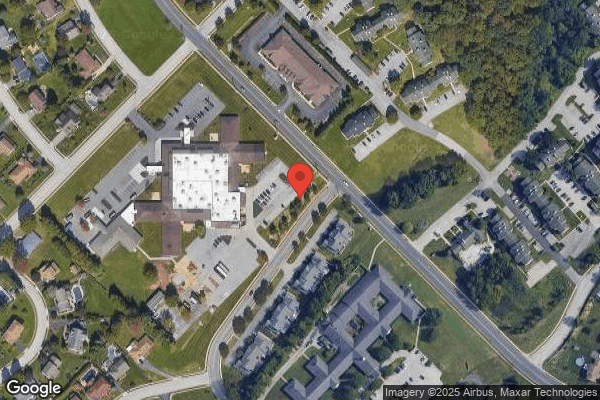

1770 BARLEY ROAD, YORK, PA 17408 (717) 767-6530
For profit - Corporation 161 Beds GENESIS HEALTHCARE Data: November 2025
Trust Grade
50/100
#518 of 653 in PA
Last Inspection: February 2025

Within standard 12-15 month inspection cycle. Federal law requires annual inspections.

Overview

York North Skilled Nursing and Rehabilitation Center holds a Trust Grade of C, which means it is average compared to other facilities. It ranks #518 out of 653 in Pennsylvania, placing it in the bottom half of nursing homes in the state, and #9 out of 14 in York County, indicating only a few local options are better. The facility is on an improving trend, with the number of issues decreasing from 20 in 2024 to 18 in 2025. Staffing is rated average with a turnover of 43%, which is slightly better than the state average, and there have been no fines reported, a positive sign. However, there are significant concerns, including failures to properly notify residents about transfers, lack of comprehensive care plans for some residents, and inadequate personal hygiene for those dependent on staff, suggesting areas needing urgent attention.

Trust Score
C
50/100
In Pennsylvania
#518/653
Bottom 21%
Safety Record
Low Risk
No red flags
Inspections
Getting Better
20 → 18 violations
Staff Stability
○ Average
43% turnover. Near Pennsylvania's 48% average. Typical for the industry.
Penalties
✓ Good
No fines on record. Clean compliance history, better than most Pennsylvania facilities.
Skilled Nurses
○ Average
Each resident gets 32 minutes of Registered Nurse (RN) attention daily — about average for Pennsylvania. RNs are the most trained staff who monitor for health changes.
Violations
⚠ Watch
52 deficiencies on record. Higher than average. Multiple issues found across inspections.
★★☆☆☆
2.0
Overall Rating
★★★☆☆
3.0
Staff Levels
★★★★☆
4.0
Care Quality
★★☆☆☆
2.0
Inspection Score
Stable
2024: 20 issues
2025: 18 issues

The Good

  • 4-Star Quality Measures · Strong clinical quality outcomes
  • Full Sprinkler Coverage · Fire safety systems throughout facility
  • No fines on record
  • Staff turnover below average (43%)

    5 points below Pennsylvania average of 48%

Facility shows strength in quality measures, fire safety.

The Bad

2-Star Overall Rating

Below Pennsylvania average (3.0)

Below average - review inspection findings carefully

Staff Turnover: 43%

Near Pennsylvania avg (46%)

Typical for the industry

Chain: GENESIS HEALTHCARE

Part of a multi-facility chain

Ask about local staffing decisions and management

The Ugly 52 deficiencies on record

Feb 2025 18 deficiencies
CONCERN (D)

Potential for Harm - no one hurt, but risky conditions existed

Deficiency F0576 (Tag F0576)

Could have caused harm · This affected 1 resident

Based on resident and staff interviews, policy review, clinical record record review, and facility document review, it was determined that the facility failed to ensure the resident right to receive m...

Read full inspector narrative →
Based on resident and staff interviews, policy review, clinical record record review, and facility document review, it was determined that the facility failed to ensure the resident right to receive mail, including packages, in a timely manner for one of one resident reviewed for personal property (Resident 19). Findings include: Review of the facility policy, titled OPS206 Resident Rights Under Federal Law, last reviewed December, 2024, revealed subsection 7.2.8 stated, The resident has the right to send and receive mail, and to receive letters, packages and other materials delivered to the facility for the resident through a means other than a postal service . Further, subsection 8.2 stated, The facility must respect the residents' right to personal privacy .including the right to send and promptly receive unopened mail and other letters, packages and other materials delivered to the facility for the resident . Review of Resident 19's clinical record revealed diagnoses that included anxiety disorder (mental health disorder characterized by excessive fear or worry) and congestive heart failure (decreased ability of the heart to pump blood through the body resulting in poor circulation and fluid overload). During an interview with Resident 19 on February 11, 2025, the Resident expressed concern that a package that was not provided to her timely. During the interview, Resident 19 stated that she had been expecting a package, approximately two to three months prior. Once Resident 19 had not receive the package on the expected date, Resident 19 asked Employee 12 about the package being delivered. Resident 19 stated that Employee 12 stated Employee 12 had no knowledge of the package being delivered. Resident 19 then stated she called and confirmed with the post office that the package was delivered. At which time, Resident 19 reapproached Employee 12. Resident 19 stated that Employee 12 then told her that the package was given to the Director of Nursing (DON) due to concerns that the package may have contained items that aren't appropriate for the facility. Resident 19 stated that the package was eventually provided by the Nursing Home Administrator (NHA), but had been delayed approximately one week. During an interview with Employee 12, confirmed that she had received a package for Resident 19 in November 2024. Employee 12 revealed that the package sounded like it contained pills. Upon hearing the package, Employee 12 gave it to the DON. Employee 12 could not recall the date that the package was received by the facility. Review of Resident 19's clinical record revealed no documentation regarding Resident 19's package. Review of handwritten document written by Employee 12 revealed a documented entry on November 14, 2024, which stated, [Resident 19] came to my office about her missing package and accused me of lying to her about the package. I explained that when I spoke to her - I didn't remember the package that came in last week and was given to [Director of Nursing] due to it feeling and sounded like pills/supplements . During a staff interview on February 13, 2025, at approximately 10:50 AM, the DON confirmed that she was given the package by Employee 12, however, could not remember when it was provided. During the interview, the DON stated that she was subsequently out sick which contributed to Resident 19 not receiving her package timely. During the staff interview, the NHA confirmed that Resident 19's package was not provided timely, and that the NHA provided education to Resident 19 upon identifying the package contents (pills) regarding the safety concerns regarding having medications shipped to the facility. The NHA was unable to provide a length in time that Resident 19's package was delayed. Review of Resident 19's clinical record revealed no documentation regarding concerns with Resident 19's package, nor the education provided. During the staff interview, the NHA confirmed that Resident 19's package was delayed and that there was no documentation regarding Resident 19's package being delayed. Review of available information revealed the facility had no policy developed regarding process or procedure to follow when a package, addressed to a resident and delivered to the facility, is identified as possibly containing items that could pose a safety concern. As of February 13, 2025, at 1:00 PM, the facility did not provide a policy regarding the facility procedure for concerns with resident packages being delivered at the facility. 28 Pa code 201.18(b)(2) Management
CONCERN (D)

Potential for Harm - no one hurt, but risky conditions existed

Deficiency F0578 (Tag F0578)

Could have caused harm · This affected 1 resident

Based on clinical record review, policy review, and staff interview, it was determined that the facility failed to ensure each resident and/or representative the right to formulate an Advance Directiv...

Read full inspector narrative →
Based on clinical record review, policy review, and staff interview, it was determined that the facility failed to ensure each resident and/or representative the right to formulate an Advance Directive for one of two residents reviewed for Advance Directives (Resident 57). Findings Include: An Advance Directive is defined as a written statement of a person's wishes regarding medical treatment, often including a living will, made to ensure those wishes are carried out should the person be unable to communicate them to a doctor. A review of the facility's policy, titled Health Care Decision Making, revised January 8, 2024, read, It is the right of all patients/residents to participate in their own health care decision making .including the right to formulate or not formulate an advance directive. The policy continued, Approach a capable patient who does not have an advance directive upon admission; the patient will be approached by the Social Worker or another designated staff person on admission, quarterly, and with change in condition to discuss whether he/she wishes to consider developing an advance directive. Also, Establish mechanisms for documenting and communicating the patient's choices to the interprofessional team and staff responsible for the patient's care. A review of Resident 57's clinical record revealed diagnoses that included chronic kidney disease (CKD-a condition in which the kidneys gradually lose their ability to filter waste products from the blood. This leads to a buildup of toxins in the body, which can damage other organs and affect overall health.) and chronic pain syndrome (a condition characterized by persistent or recurring pain that lasts for more than 3 months. It is not a specific disease but rather a symptom that can result from various underlying causes). A review of Resident 57's Quarterly Minimum Data Set (MDS- a tool used to assess all care areas specific to the resident) revealed under Section C- Cognitive Patterns, a Brief Interview for Mental Status (BIMS) score of 15/15. This score denotes intact cognitive status. A review of Resident 57's interdisciplinary progress notes revealed documentation of an interdisciplinary plan of care meeting held on January 30, 2025. The progress notes revealed under the heading Advance Directives Reviewed: No. A continued review of Resident 57's clinical record revealed no documentation of the facility offering the Resident and/or Representative information regarding the right to formulate an advance directive. An interview with the Social Services Director (Employee 1) on February 12, 2025, at 2:34 PM, revealed he does not discuss Advance Directives with any residents and/or representatives. 28 Pa. Code 201.14 (a) Responsibility of licensee 28 Pa. Code 211.12 (d) (5) Nursing services
CONCERN (D)

Potential for Harm - no one hurt, but risky conditions existed

Deficiency F0605 (Tag F0605)

Could have caused harm · This affected 1 resident

Based on clinical record review, facility document and policy reivew, and staff interviews, it was determined that the facility failed to ensure residents were free from chemical restraints for one of...

Read full inspector narrative →
Based on clinical record review, facility document and policy reivew, and staff interviews, it was determined that the facility failed to ensure residents were free from chemical restraints for one of five residents reviewed for unnecessary medication (Resident 143). Findings include: Review of facility policy, titled NSG233 Restraints: Use of, last reviewed December, 2024, revealed it stated it was the facility's policy that, Patients have the right to be free from any physical or chemical restraints imposed for the purposes of discipline or convenience, and not required to treat the patient's medical symptoms. Review of facility document, titled Un[n]ecessary Psychotropic Medications, not dated, revealed subsection titled, Chemical Restraints, stated, Facilities are responsible for knowing the effects medications have on their patients. If a medication has a sedating or subduing effect, and is not administered to treat a medical symptom, the medication acts as a chemical restraint. The sedating/subduing effects to the patient may have been caused intentionally or unintentionally by staff and would indicate an action of discipline or convenience .When any medication restricts the patient's movement or cognition, or sedates or subdues the patient, and is not an acceptable standard of practice for a patient's medical or psychiatric condition, the medication may be a chemical restraint. Even if use of the medication follows accepted standards of practice, it may be a chemical restraint if there was a less restrictive alternative treatment that could have been given that would meet the patient's needs and preferences or if the medical symptom justifying its use as subsided. Review of Resident 143's clinical record revealed diagnoses that included Alzheimer's disease (irreversible, progressive degenerative disease of the brain that results in decreased contact with reality and decreased ability to perform activities of daily living) and hypertension (elevated/high blood pressure). Review of Resident 143's comprehensive plan of care revealed a care plan for behaviors, which included being physically aggressive towards staff with care, resistant to care, refusals to eat related to cognitive loss/dementia. Review of the interventions of the care plan revealed staff were to attempt non-pharmacological interventions and document effectiveness; utilize diversional techniques such as snacks, hydration, toileting, magazines, and television. Review of Resident 143's physician orders revealed an order for Ativan (psychotropic medication used to treat anxiety - excessive worry or fear) 0.5 milligrams (mg - metric unit of measure) one, by mouth, as-needed every four hours. Review of Resident 143's physician orders revealed Resident 143's as needed Ativan order was revised on January 21, 2025. The revised order was for Ativan 0.5 mg to give 0.5 mg very four hours as-needed for dementia with behaviors. Review of Resident 143's January 2025, medication administration record (MAR - documentation tool utilized to record when physician orders for medications or treatments are provided) and interdisciplinary progress notes, revealed multiple administrations that: did not contain an indication as to why the as needed Ativan was administered, provided indications that were not associated with stated behaviors, was administered in response to Resident 143 not remaining in his chair or bed, and/or administered due to Resident 143 experiencing insomnia (inability to sleep). Review of Resident 143's MAR and progress notes revealed the following, but not limited to: January 3, 2025, at 11:49 PM, administration with no indication documented; however, approximately 2 hours later at 1:31 AM, staff noted that the as-needed administration was ineffective due to, Resident still claiming out of bed and needing continuous redirection. January 4, 2025, at 4:03 AM, with documented indication as, Resident is restless. January 9, 2025, at 2:47 AM, documented indication was, Patient awake, trying to get out of bed several times despite snack given. Ativan 0.5 mg administered. As-needed medication effectiveness documented at 5:51 AM, as Ineffective, due to patient still awake. January 10, 2025, at 12:28 AM, noted indication for as-needed Ativan was that Resident 143 was noted awake, trying to get out of bed. February 1, 2025, at 8:27 PM, administration of the as-needed Ativan had no documented indication for the time of administration; however, approximately three hours later, staff documented that the Ativan administration was ineffective as evidenced by, resident by nursing station, attempting to stand up out of [wheelchair]. February 6, 2025, at 5:31 AM, staff behaviors as, Resident restless overnight-up for most of 11-7 shift. [As-needed] [A]tivan effective in calming resident to stay at nurses station[ in] his chair. February 13, 2025, at 3:30 AM, staff administered the as-needed Ativan with the documented indication of, Very restless. Still awake. Difficult to re-direct at times. Will re-attempt to lay resident down again. During a staff interview on February 13, 2025, at approximately 10:50 AM, Director of Nursing (DON) stated that Resident 143 was as risk for physical harm when attempting to get out of his chair and/or bed and ambulate on the unit (e.g., falling); however, review of Resident 143's clinical record revealed Resident 143 had no falls identified for the three month period prior to admission to the facility and had no falls while a resident at the facility. Review of Resident 143's physical therapy discharge notes, dated December 26, 2024, revealed the Resident was able to ambulate with hand-held assistance. During a staff interview on February 13, 2025 at approximately 12:25 PM, the Rehabilitation Director (RD) revealed that as a result of working with Resident 143, she felt that Resident 143 did not pose a risk of falls with ambulation. Further, that Resident 143 required hand-held assistance due to cognitive decline, needing cueing as to where to go, or to achieve was Resident 143 was attempting to achieve. When RD was asked if she felt Resident 143 was physically safe when ambulating, RD responded, Yes, [Resident 143] did well for us walking. He walked for 200 feet. [Hand-held assistance] just more for direction. As of February 13, 2025, at 1:00 PM, the facility had no further information to provide regarding staff administering as needed Ativan to Resident 143 for reasons outside the indicated behaviors. 28 Pa code 211.12(d)(1)(5) Nursing services
CONCERN (D)

Potential for Harm - no one hurt, but risky conditions existed

Assessment Accuracy (Tag F0641)

Could have caused harm · This affected 1 resident

Based on review of the Resident Assessment Instrument (RAI- a standardized approach for applying a problem identification process in nursing homes, adopted to examine nursing home quality and to impro...

Read full inspector narrative →
Based on review of the Resident Assessment Instrument (RAI- a standardized approach for applying a problem identification process in nursing homes, adopted to examine nursing home quality and to improve nursing home regulation), clinical record reviews, and staff interviews, it was determined that the facility failed to ensure that each resident received an accurate assessment, reflective of the resident's status at the time of the assessment, by staff who are qualified to assess relevant care areas for two of 37 residents reviewed (Residents 10 and 118). Findings include: Review of the RAI Version 3.0 v1.20.1 dated October 1, 2024, section O - special treatments, Coding Instructions for Column b. While a Resident Check all treatments, procedures, and programs that the resident received or performed after admission/entry or reentry to the facility and within the last 14 days. If no treatments, procedures or programs were received by, performed on, or participated in by the resident within the last 14 days or since admission/entry or reentry, check Z, None of the above. Review of the clinical record for Resident 10 on February 11, 2025, revealed clinical diagnoses that included diabetes mellitus (the body has trouble controlling blood sugar), pneumonia (lung infection), and three Stage 4 chronic pressure ulcers (wounds that extend deep in the tissue, exposing muscle, tendon, or bone and a high risk of infection). Review of the clinical record for Resident 10 revealed the presence of three Stage 4 pressure ulcers. Review of Resident 10's Quarterly MDS (Minimum Data Set - an assessment tool to review all care areas specific to the resident such as a resident's physical, mental or psychosocial needs) dated February 7, 2025, revealed Section M, Skin Conditions, marked with two Stage 4 pressure ulcers instead of three Stage 4 pressure ulcers. On February 13, 2025, Employee 9 (Registered Nurse Assessment Coordinator) provided a modified MDS for Section M that accurately reflected Resident 10's thee Stage 4 pressure ulcers. During an interview with the Nursing Home Administrator (NHA) on February 13, 2025, at 11:00 AM , the NHA confirmed that section M of the MDS should accurately reflect the number of pressure ulcers. Review of Resident 118's clinical record revealed diagnoses that included chronic kidney disease (the kidneys are damaged and can't filter blood properly). Review of Resident 118's discharge-return anticipated MDS with the assessment reference date of October 14, 2024, revealed in section O - special treatments, procedures, and programs, K1- hospice care was documented as no. During an interview with the NHA on February 13, 2025, at 1:00 PM, revealed that Resident 118 was discharged from hospice services on October 3, 2024. During an interview with Employee 9 on February 13, 2025, at 1:20 PM, it was revealed the Resident 118's discharge MDS should've been documented as yes for hospice services while a resident and that an amendment would be completed. 28 Pa. Code 211.5 Medical records
CONCERN (D)

Potential for Harm - no one hurt, but risky conditions existed

Deficiency F0655 (Tag F0655)

Could have caused harm · This affected 1 resident

**NOTE- TERMS IN BRACKETS HAVE BEEN EDITED TO PROTECT CONFIDENTIALITY** Based on clinical record review, facility policy review, and staff interview, it was determined that the facility failed to deve...

Read full inspector narrative →
**NOTE- TERMS IN BRACKETS HAVE BEEN EDITED TO PROTECT CONFIDENTIALITY** Based on clinical record review, facility policy review, and staff interview, it was determined that the facility failed to develop and implement a baseline care plan for one of one resident reviewed for baseline care plans (Resident 252). Findings include: Review of facility policy, titled OPS416 Person-Center Care Plan, last reviewed December 2024, revealed, it stated, The [Facility] must develop and implement a baseline person-centered care plan within 48 hours of admission/readmission for each patient/resident [sic] that includes the instructions needed to provide effective and person-centered care that meet professional standards of quality care . Further review of the aforementioned policy revealed subsection Practice Standards, stated, 1. A baseline care plan must be developed within 48 hours and include the minimum healthcare information necessary to properly care for a patient including, but not limited to: 1.1 Initial goals based on admission orders; 1.2 Physician orders; 1.3 Dietary orders; 1.4 therapy services; 1.5 Social services; 1.6 PASRR recommendations, if applicable .3. The [Facility] must provide the patient and his/her resident representative with a summary of the baseline care plan that includes, but is not limited to: 3.1 Initial goals of the patient; 3.2 Medications and dietary instruction; 3.3 Any services and treatments to be administered by the [Facility] and personnel acting on behalf of the [Facility]; and 3.4 Any updated information based on the details of the comprehensive care plan, as necessary, if the comprehensive care plan is developed within 48 hours . Review of Resident 252's clinical record revealed diagnoses that included type two diabetes mellitus (decreased ability of the body to utilize insulin for the transport of glucose from the blood into the cells for nourishment) and chronic pain syndrome (condition that is characterized by persistent pain that last more than three to six months). Review of Resident 252's clinical record revealed that Resident 252 was admitted to the facility on [DATE]. Review of Resident 252's clinical record revealed that the baseline care plan, initiated on January 31, 2025, only identified and included two Focus areas, including: Resident 252's code status (identification of resident/representative preference for intervention if the resident stops breathing or is assessed as pulseless) and Resident 252's needs for completing activities of daily living (hygiene, bathing, oral care, etc.). Review of Resident 252's baseline care plan revealed it did not include focus areas and interventions to address concerns, including but not limited to, falls, cardiovascular health condition which Resident 252 was receiving medications to treat, dietary needs including the use of insulin, incontinence, nor the use and monitoring of psychotropic medications as identified on the physician orders upon Resident 252's admission to the facility. Review of Resident 252's comprehensive plan of care revealed it was created and initiated on February 3, 2025, after the 48 hour requirement of the baseline care plan. During a staff interview on February 12, 2025, at approximately 12:10 PM, Director of Nursing confirmed that Resident 252's baseline care plan did not include items that the facility would expect to be included. 28 Pa code 211.12(d)(1)(3)(5) Nursing services
CONCERN (D)

Potential for Harm - no one hurt, but risky conditions existed

Deficiency F0657 (Tag F0657)

Could have caused harm · This affected 1 resident

Based on observation, clinical record review, and staff interviews, it was determined that the facility failed to ensure the care plan was reviewed and revised for two of 37 residents reviewed (Reside...

Read full inspector narrative →
Based on observation, clinical record review, and staff interviews, it was determined that the facility failed to ensure the care plan was reviewed and revised for two of 37 residents reviewed (Residents 59 and 118). Findings Include: Review of Resident 59's clinical record revealed diagnoses that included malignant neoplasm of colon (a cancerous tumor in the colon) and congestive heart failure (a serious condition that occurs when the heart can't pump blood efficiently enough to meet the body's needs). Review of Resident 59's care plan revealed a focus area of, Resident 59 requires indwelling catheter due to terminal illness/comfort measures, with a revision date of December 15, 2024. Observation of Resident 59 on February 10, 2025, at 10:30 AM, revealed Resident 59 lying in bed and no catheter was present. Review of Resident 59's clinical admission assessment (readmission assessment completed at the facility after Resident 59's hospital stay), dated January 6, 2025, revealed that Resident 59's catheter was removed during Resident 59's hospital stay from January 2-6, 2025. Interview with the Director of Nursing (DON) on February 13, 2025, at 11:30 AM, revealed that her expectation would be that the catheter focus area would have been removed from Resident 59's care plan. Review of Resident 118's clinical record revealed diagnoses that included chronic kidney disease (the kidneys are damaged and can't filter blood properly). During an interview with the Nursing Home Administrator (NHA) on February 13, 2025, at 1:00 PM, revealed that Resident 118 was discharged from hospice services on October 3, 2024. Review of Resident 118's care plan documented hospice as a position responsible for interventions listed on care plan for the following focus areas: pain, requires assistance/potential to restore function for transferring from one position to another; urinary incontinence; and activities of daily living self-care deficit. During an interview with the NHA and DON on February 13, 2025, at 11:00 AM, they were informed the care plan included hospice services responsible for interventions. During an interview with the NHA and DON on February 13, 2025, at 1:00 PM, it was revealed that the care plan would be updated to remove hospice. 28 Pa. Code 211.12(d)(5) Nursing services
CONCERN (D)

Potential for Harm - no one hurt, but risky conditions existed

Respiratory Care (Tag F0695)

Could have caused harm · This affected 1 resident

Based on review of facility policy, observations, record reviews, and resident and staff interviews, it was determined that the facility failed to provide respiratory care/oxygen services consistent w...

Read full inspector narrative →
Based on review of facility policy, observations, record reviews, and resident and staff interviews, it was determined that the facility failed to provide respiratory care/oxygen services consistent with professional standards of practice for two of 37 residents reviewed (Residents 48 and 77). Findings include: Review of facility policy, Nebulizer: Small Volume, revised November 1, 2023, read, in part, rinse mouthpiece and T piece with sterile water and dry. Place in treatment bag, labeled with patient name and date. Review of Resident 48's clinical record contained diagnoses that included congestive heart failure (the heart doesn't pump blood as well as it should) and chronic obstructive pulmonary disease (COPD-a group of lung disease that block airflow and make it difficult to breathe) Resident 48's physician orders included: Ipratropium-Albuterol (medication used to control symptoms of lung disease) Solution 0.5-2.5 (3) MG/3ML 1 dose inhale orally three times a day for COPD, with a start date January 13, 2025; and Ipratropium-Albuterol Solution 0.5-2.5 (3) MG/3ML 1 dose inhale orally every 6 hours as needed for shortness of breath, with a start date January 13, 2025. Observation on February 10, 2025, at 11:07 AM, in Resident 48's room, revealed a nebulizer mask was uncovered on the seat of his wheelchair. Observation on February 12, 2025, at 12:17 PM, in Resident 48's room, revealed the nebulizer machine was running and the tubing with the medication canister was laying on top of the corner of the trash can and the mask was on top of Resident 48's mattress. During an interview with Resident 48 on February 12, 2025, at 12:17 PM, it was revealed he just took the mask off. Observation with Employee 10 (Licensed Practical Nurse) on February 12, 2025, at 12:29 PM, Employee 10 turned off the nebulizer machine, removed the mask from Resident 48's mattress and medication canister off the trash can, rinsed mask with tap water from the bathroom sink and placed the mask and canister in the plastic bag and placed it on the Resident's nightstand. It was also revealed that the mask became separated from the medication canister and, therefore, the Resident's treatment lasted longer than it normally does, and she went on break and forgot to check the Resident prior to leaving. She stated the Resident is able to remove the mask and turn off the machine himself. Surveyor mentioned previous observation of the mask not being securely stored. It was revealed that weekly an employee working in central supply distributes a new bag, required nebulizer/oxygen equipment, and dates the new supplies. Review of resident 77's clinical record revealed diagnoses that included: hemiplegia left non-dominant side (muscle weakness or partial paralysis on one side of the body that can affect the arms, legs and facial muscles), dementia (a condition characterized by progressive loss of intellectual functioning, impairment of memory and abstract thinking), congestive heart failure (the heart doesn't pump blood the way it should), and chronic obstructive pulmonary disease (a lung condition characterized by inflammation and narrowing of the airways, leading to difficult breathing). Resident 77's physician orders documented: Ipratropium-Albuterol Solution 0.5-2.5 (3) MG/3ML - 1 vial inhale orally every 4 hours for worsening cough with a start date 1/30/2025, and discontinued date 2/07/2025; and Ipratropium-Albuterol Solution 0.5-2.5 (3) MG/3ML - 1 vial inhale orally every 4 hours as needed for worsening cough with a start date 1/30/2025, and discontinued date 2/07/2025. Observations in Resident 77's room on February 10, 2025, at 11:23 AM, and February 11, 2025, at 11:27 AM, a nebulizer mask and medication canister were on the nightstand not covered, and a plastic bag wasn't observed. Additional observation in Resident 77's room on February 12, 2025, at 12:21 PM, revealed the nebulizer mask and medication canister were in a bag on the nightstand. During an interview with the Director of Nursing (DON) on February 13, 2025, at 11:00 AM, it was revealed that central supply distributes bags, nebulizer supplies, and retrieves equipment that is no longer required/discontinued on a weekly basis. It was also revealed that the facility has distilled water, and it should be utilized to clean the equipment. Surveyor informed the DON of the concern regarding the mask being stored uncovered. No further information provided. 28 Pa code 211.12(d)(1)(2)-Nursing Services
CONCERN (D)

Potential for Harm - no one hurt, but risky conditions existed

Deficiency F0698 (Tag F0698)

Could have caused harm · This affected 1 resident

Based on clinical record review, facility policy review, and staff interview, it was determined that the facility failed to maintain complete and accurate records related to dialysis communication for...

Read full inspector narrative →
Based on clinical record review, facility policy review, and staff interview, it was determined that the facility failed to maintain complete and accurate records related to dialysis communication for one of two residents reviewed for dialysis (Resident 88). Findings include: Review of the facility policy, titled Dialysis Guidelines with a last review date of December 2024, revealed, in part, that collaborative communication forms must be used and include the following information regarding: nutritional/fluid management including documentation of weights, patient compliance with food/fluid restrictions or the provision of meals before, during, and after dialysis, and monitoring intake and output measurements as ordered. Review of Resident 88's clinical record revealed diagnoses that included discitis (an inflammation of the intervertebral discs) and chronic obstructive pulmonary disease (a group of lung diseases that block airflow and make it difficult to breathe). Review of Resident 88's comprehensive care plan revealed a focus area that Resident 88 is at risk for impaired renal function and is at risk for complications related to hemodialysis, with an intervention to request pre and post weights from dialysis center, with an initiation date of August 13, 2024. Review of Resident 88's Hemodialysis Communication Record forms from January 2, 2025, through February 6, 2025, revealed there were no communication forms completed for Resident 88 on January 4, 7, 11, and 16, 2025, or February 4, 2025. Further Review of Resident 88's Hemodialysis Communication Record forms that were completed between January 2, 2025, through February 6, 2025, revealed on January 14, 18, 23, 25, and 28, 2025, there was no post-dialysis weight recorded. On January 21, 2025, and February 6, 2025, there was no pre-dialysis weight or post-dialysis weight recorded. During an interview with the Director of Nursing on February 12, 2025, at 1:54 PM, revealed she would have expected Resident 88's Hemodialysis Communication Record forms to have been completed and would have expected pre and post weights to have been recorded. 28 Pa Code 211.5(f) Clinical records 28 Pa. Code 211.12 (d)(1)(3)(5) Nursing services
CONCERN (D)

Potential for Harm - no one hurt, but risky conditions existed

Pharmacy Services (Tag F0755)

Could have caused harm · This affected 1 resident

Based on clinical record review, facility document review, pharmacy statement review, and staff interviews, it was determined that the facility failed to ensure pharmaceutical services that assured th...

Read full inspector narrative →
Based on clinical record review, facility document review, pharmacy statement review, and staff interviews, it was determined that the facility failed to ensure pharmaceutical services that assured the accurate acquiring and administration of medications were provided that met the needs of each resident for one of 33 resident records reviewed (Resident 252). Findings include: Review of Resident 252's clinical record revealed diagnoses that included type two diabetes mellitus (decreased ability of the body to utilize insulin for the transport of glucose from the blood into the cells for nourishment) and chronic pain syndrome (condition that is characterized by persistent pain that last more than three to six months). Review of Resident 252's admission medication orders revealed an order for benazepril (medication used to treat high/elevated blood pressure) 20 mg (milligrams - metric unit of measure), once a day, which was dated January 30, 2025, with a start date of January 31, 2025. Review of the facility pharmacy medication delivery manifest revealed that on January 31, 2025 (no time recorded) the pharmacy delivered a total of five tablets of the benazepril 20 mg; however, review of Resident 252's Medication Administration Record (MAR - documentation tool utilized to record when medications are administered) revealed that staff documented administration of the benazpril 20 mg, as ordered, between January 31, 2025, and February 5, 2025 for a total of six administrations (January 31, 2025; February 1, 2, 3, 4, and 5, 2025). As of February 13, 2025, at approximately 1:30 PM, Director of Nursing (DON) was unable to provide an explanation as to how the facility staff were able to administer six tablets of medication when the pharmacy documentation showed only five tablets were delivered. According to Resident 252's clinical record, including the MAR, on the morning of February 6, 2025, the facility did not have the benazepril 20 mg to administer Resident 252. Review of a communication form to the physician from facility staff, dated February 6, 2025, revealed staff notified the physician that the medication was unavailable and that it was reordered from the pharmacy. No changes to Resident 252's plan of care were ordered as a result. Review of documentation provided to the facility by the consultative pharmacy revealed the pharmacy received an electronic refill request for Resident 252's medication on February 6, 2025, at 8:23 AM. According to the statement from the pharmacy, the order was filled with only five tablets on February 7, 2025, and was sent out for delivery at 5:00 PM. The delay between the submitted a medication refill request by facility staff on February 6, 2025, at 8:23 AM, and filling the medication on the following day to be sent for delivery at 5:00 PM by the pharmacy (approximately 31 and a half hours) resulted in Resident 252 missing a second dose of the medication. During a staff interview on February 13, 2025, at approximately 12:50 PM, the DON confirmed it was the facility's expectation that the facility have medications ready for administration for the residents. As of February 13, 2025, at approximately 1:30 PM, the facility was unable to provide a justification as to why the medication was not reordered when the supplied amount was depleted. Due to a discrepancy between the initial amount delivered by pharmacy (five) and the documented medication tablets administered (six), the date that the medication supply was depleted prior to the administration time on February 6, 2025, was unable to be determined. In an electronic communication from the DON, it was confirmed that the facility had an alternative pharmacy to secure medication from in the case the contracted pharmacy did not have the ordered medications or could not provide adequate delivery times. 28 Pa code 211.9(k) Pharmacy services 28 Pa code 211.12(d)(1)(3)(5) Nursing services
CONCERN (D)

Potential for Harm - no one hurt, but risky conditions existed

Deficiency F0825 (Tag F0825)

Could have caused harm · This affected 1 resident

Based on observation, record review, and resident and staff interviews, the facility failed provide therapy services to ensure residents receive specialized rehabilitative services to assist them to a...

Read full inspector narrative →
Based on observation, record review, and resident and staff interviews, the facility failed provide therapy services to ensure residents receive specialized rehabilitative services to assist them to attain, maintain, or restore their highest practical level of physical, mental, functional, and psycho-social well-being for one of 37 residents reviewed (Resident 23). Findings include: Review of Resident 23's clinical record documented diagnoses that included artificial right shoulder joint. Interview with Resident 23 on February 10, 2025, at 10:48 AM, revealed she had right shoulder surgery and was in a sling, but was released from using the sling last Monday (February 3rd, 2025) and was to start therapy to increase range of motion to her right arm and shoulder, and that she is restricted to 1 pound weight limit. She stated that she would like to receive therapy services because she was unsure what stretching exercises were appropriate, however, she wasn't on therapy case load. She also noted that she has had muscle atrophy and wanted to prevent it from getting worse. Review of Resident 23's physician orders included: weight bearing as tolerated right arm, with a start date of February 3, 2025; Physical Therapy for gentle stretching only, no directions specified for order, with a start date of February 3, 2025; activity as tolerated to right arm, with a start date of February 3, 2025; 1 pound lifting restriction-right arm/no shoulder extension, with a start date of January 7, 2025, Physical Therapy (PT)- Evaluation & treatment as recommended & as needed, with a start date of December 20, 2024. Review of Orthopedic follow-up visit for after care following joint replacement surgery, dated February 3, 2025, read, in part, okay to discontinue sling, activity as tolerated right arm, weight bearing as tolerated right arm, Physical Therapy for gentle stretching only. The consult was initialed by the facility Doctor on February 4, 2025. Review of Resident 23's Physical Therapy discharge summary read, in part, services December 21, 2024, to January 17, 2025, for ambulation functional mobility, transfers, and to reassess when non-weight bearing to upper extremity is lifted. Review of Resident 23's Occupational Therapy discharge summary read, in part, services December 24, 2024, to January 17, 2025, for sit at edge of bed, ambulate to bathroom, left shoulder active range of motion, bath/dress/toilet, recommended functional maintenance program for passive range of motion to right shoulder, active range of motion to right elbow/wrist/hand. During an interview with Employee 8 (Occupational Therapist) on February 13, 2025, at 9:28 AM, it was revealed that he spoke with the Resident shortly after her follow-up appointment and discussed with her about doing gentle stretching on her own. It was explained that the Resident can stretch her arm at least to a 90 degree angle, which is sufficient to accomplish the majority of activities of daily living (basic tasks such as bathing, dressing, toileting, eating) and that is why a restorative nursing program (RNP- a structured plan designed to help residents maintain or regain their independence by providing nursing interventions that focus on improving fictional abilities) wasn't initiated. It was also revealed that therapy will follow-up with the Resident after her next orthopedic follow-up and would pick her up once she can tolerate resistance exercise. Surveyor informed the Nursing Home Administrator (NHA) and Director of Nursing on February 13, 2025, at 11:00 AM, regarding lack of therapy services or an RNP program for Resident 23. During an interview with the NHA on February 13, 2025, at 12:49 PM, it was revealed that Employee 8 had completed a therapy screen and felt Resident 23 could complete stretching exercises independently and didn't require therapy services or an RNP program, however, he didn't document the official therapy screen. 28 Pa Code 210.27 Advertisement of special services
CONCERN (E)

Potential for Harm - no one hurt, but risky conditions existed

Transfer Notice (Tag F0623)

Could have caused harm · This affected multiple residents

Based on clinical record review and staff interviews, it was determined that the facility failed to notify the resident/resident representative and the representative of the Office of the State Long-T...

Read full inspector narrative →
Based on clinical record review and staff interviews, it was determined that the facility failed to notify the resident/resident representative and the representative of the Office of the State Long-Term Care Ombudsman of resident transfers in writing to include the following: the reason for the transfer or discharge, date of transfer, location of transfer, statement of the resident's appeal rights, and name, address (mailing and email) and telephone number of the Office of the State Long-Term Care Ombudsman for three of four resident records reviewed regarding hospitalizations (Residents 37, 66, and 121). Findings include: Review of the clinical record for Resident 37 on February 11, 2025, revealed clinical diagnoses that included obstructive uropathy (a condition that causes a retention of urine), diabetes mellitus (the body has trouble controlling blood sugar). Further review of Resident 37's clinical record revealed transfers to the hospital on June 20, 2024, and October 24, 2024. The surveyor requested copies of the transfer, bed hold, and Ombudsman notification. The Ombudsman notification and bed hold notices were provided, however, the transfer notice provided failed to include a statement of the resident's appeal rights and the name, address (mailing and email), and telephone number of the Office of the State Long-Term Care Ombudsman. During an interview on February 13, 2025, at 11:00 AM, with the NHA, the NHA revealed that the facility changed transfer forms and failed to include all of the required information on the current form being used for transfer notice. Review of Resident 66's clinical record revealed diagnoses that included congestive heart failure (the heart doesn't pump blood as well as it should). Further review of Resident 66's clinical record revealed a transfer to the hospital on May 27, 2024. Surveyor requested a copy of the transfer notice on February 11th and 12th, 2025, it wasn't provided. During an interview on February 13, 2025, at 11:00 AM, with the NHA, it was revealed that the facility didn't have the transfer form for Resident 66 transfer. Review of Resident 121's clinical record revealed diagnoses that included type two diabetes mellitus (decreased ability of the body to utilize insulin for the transport of glucose from the blood stream into the cells for nourishment) and hypertension (elevated/high blood pressure). Review of Resident 121's clinical record revealed that on September 18, 2024, and February 7, 2025, Resident 121 was transferred to the hospital due to acute medical changes. Review of Resident 121's clinical record revealed no evidence that the Resident and/or Resident's Representative was provided with a written notice of transfer for the hospital transfers on September 18, 2024, and February 7, 2025. Review of an electronic communication from the NHA on February 12, 2025, at 1:26 PM, revealed that NHA confirmed the facility staff did not provide Resident 121 nor Resident 21's Representative with a written notice of transfer. During a staff interview on February 13, 2025, at approximately 12:50 PM, the NHA revealed it was the facility's expectation to provide a written notice of transfer when they are transferred to the hospital. Review of submitted example of the facility's written transfer notice revealed that the transfer notice did not include the following required elements: A statement of the resident's appeal rights, nor the required contact information for the entity responsible for receiving such requests. Information on how to obtain an appeal form, assistance with completing the form and assistance with submitting the appeal hearing request. The required contact information for the Office of the State Long-Term Care Ombudsman. The required contact information for the agency responsible for the protection and advocacy of individuals with developmental disabilities. The required contact information for the agency responsible for the protection and advocacy of individuals with mental disorder(s). During a staff interview on February 13, 2025, at approximately 12:50 PM, the NHA confirmed that the written transfer notice should include information that is required. 28 Pa. Code 201.14(a) Responsibility of Licensee
CONCERN (E)

Potential for Harm - no one hurt, but risky conditions existed

Comprehensive Care Plan (Tag F0656)

Could have caused harm · This affected multiple residents

Based on clinical record review, policy review, and staff interviews, it was determined that the facility failed to develop and implement a comprehensive person-centered care plan for three of 37 resi...

Read full inspector narrative →
Based on clinical record review, policy review, and staff interviews, it was determined that the facility failed to develop and implement a comprehensive person-centered care plan for three of 37 residents reviewed (Residents 10, 14, and 57). Findings Include: Review of the facility's policy, titled Person-Centered Care Plan, revised October 24, 2022, read, A comprehensive person-centered care plan must be developed for each patient. Review of the clinical record for Resident 10, revealed clinical diagnoses that included neurogenic bladder (a condition that occurs when the nervous system's connection to the bladder is disrupted), diabetes mellitus (the body has trouble controlling blood sugar), pneumonia (lung infection), and three Stage 4 chronic pressure ulcers (wounds that extend deep in the tissue, exposing muscle, tendon, or bone and a high risk of infection). Further review of Resident 10's clinical record revealed Resident 10 was required to have enhanced barrier precautions (EBP-infection control precaution measures) due to his internal devices supra pubic catheter (external bladder catheter), ostomy (abdominal site for excretion of waste), and chronic wounds. On February 11, 2025, there was no care plan to indicate EBP for Resident 10. An interview with the Director of Nursing (DON) on February 12, 2025, at 11:58 AM, confirmed that Resident 10 should have a care plan for EBP. Review of the clinical record for Resident 14 on February 11, 2025, revealed diagnoses that included hospice status (end of life) and chronic diastolic congestive heart failure (a condition where the heart muscle becomes stiff, preventing it from properly filling with blood during the resting phase [diastole]). Review of Resident 14's interdisciplinary plan of care revealed no hospice care plan was developed for hospice care and services when services were implemented on January 17, 2025. During an interview with the DON on February 12, 2025, at 11:58 AM, the DON agreed that a care plan for hospice should have been developed. A review of Resident 57's clinical record revealed diagnoses that included chronic kidney disease (CKD-a condition in which the kidneys gradually lose their ability to filter waste products from the blood. This leads to a buildup of toxins in the body, which can damage other organs and affect overall health.) and chronic pain syndrome (a condition characterized by persistent or recurring pain that lasts for more than 3 months. It is not a specific disease but rather a symptom that can result from various underlying causes). Review of Resident 57's physician orders revealed an order for hospice services dated August 26, 2024. Review of Resident 57's interdisciplinary plan of care revealed none developed or implemented regarding Resident 57's hospice care and services. An interview with the DON on February 12, 2025, at 11:58 AM, revealed Resident 57's interdisciplinary plan of care was fixed and a hospice care plan was developed and added to the plan of care. 28 Pa. Code 211.12(d)(1)(3)Nursing services
CONCERN (E)

Potential for Harm - no one hurt, but risky conditions existed

ADL Care (Tag F0677)

Could have caused harm · This affected multiple residents

**NOTE- TERMS IN BRACKETS HAVE BEEN EDITED TO PROTECT CONFIDENTIALITY** Based on clinical record review and resident and staff interviews, it was determined that the facility failed to maintain adequa...

Read full inspector narrative →
**NOTE- TERMS IN BRACKETS HAVE BEEN EDITED TO PROTECT CONFIDENTIALITY** Based on clinical record review and resident and staff interviews, it was determined that the facility failed to maintain adequate personal hygiene and grooming of residents' dependent on staff for assistance with these activities of daily living for two of two residents reviewed for activities of daily living (Residents 112 and 117). Findings include: Review of Resident 112's clinical record revealed diagnoses that included chronic obstructive pulmonary disease (a group of lung diseases that block airflow and make it difficult to breathe) and chronic heart failure (when the heart muscle does not pump blood as well as it should). During an interview with Resident 112 on February 10, 2025, at 9:51 AM, revealed the Resident does not always receive showers on their shower days. Resident 112 revealed her shower days are on Wednesdays and Saturdays, but due to short staff, Saturday showers often get missed. Resident 112 revealed she did not receive a shower as scheduled for this previous Saturday (February 8, 2025). Review of the facility's grievance log revealed Resident 112 filed a grievance on January 6, 2025, relating to not receiving showers. Further review of the grievance revealed the full concern was that Resident 112 was not receiving showers, especially on Saturdays. The grievance was marked as confirmed, and the correction action included staff education. The grievance was resolved on January 21, 2025, with the Resident being satisfied with the corrective action taken and included a statement that Resident 112 has seen an improvement with receiving showers. Review of Resident 112's comprehensive care plan revealed an ADL (Activities of Daily Living) focus area with an intervention to assist to bathe/shower as needed, initiated on March 14, 2024, and an intervention that she prefers early AM shower, initiated on March 14, 2024. Review of Resident 112's [NAME] (a tool for organizing and providing a readily accessible summary of patient information) revealed a bathing section that included Resident 112's tub/shower schedule is on Saturday and Wednesdays during the day, she prefers early AM showers, and she requires setup assistance. Review of Resident 112's tub/shower task for the past 30 days revealed she did not receive a shower on January 18 and 22, 2025; and February 8, 2025. Review of Resident 117's clinical record revealed diagnoses that included syncope (fainting) and cardiomyopathy (a disease of the heart muscle). During an interview with Resident 117 on February 10, at 10:10 AM, revealed she does not always receive showers on their scheduled shower day. Resident 117 revealed that she prefers to take showers, and that staff do not ask what her preference is. Review of Resident 117's comprehensive care plan revealed an ADL focus area with an intervention to assist to bathe/shower as needed, with an initiation date of August 25, 2023, and an intervention that it is important to the resident to choose between a tub bath, shower, bed bath, or sponge bath and to please ask her, with an initiation date of December 31, 2024. Review of Resident 117's tub/shower task revealed her shower schedule is on Mondays and Thursdays. Further review of Resident 117's tub/shower task for the past 30 days revealed she did not receive a shower on February 3, 6, and 10, 2025. Review of Resident 117's GG-bathing task for the past 30 days revealed she received a bed bath on February 3, 6, and 10, 2025. During an interview with the Director of Nursing on February 13, 2025, at 10:40 AM, revealed she would have expected Resident 112 and Resident 117 to have received showers to their preference, as scheduled. 28 Pa. Code 211.12(d)(1)(3)(5) Nursing services
CONCERN (E)

Potential for Harm - no one hurt, but risky conditions existed

Quality of Care (Tag F0684)

Could have caused harm · This affected multiple residents

**NOTE- TERMS IN BRACKETS HAVE BEEN EDITED TO PROTECT CONFIDENTIALITY** Based on observations, review of the clinical record, and staff interviews, it was determined that the facility failed to ensure...

Read full inspector narrative →
**NOTE- TERMS IN BRACKETS HAVE BEEN EDITED TO PROTECT CONFIDENTIALITY** Based on observations, review of the clinical record, and staff interviews, it was determined that the facility failed to ensure care and services are provided in accordance with professional standards of practice that will meet each resident's physical, mental, and psychosocial needs for three of 33 residents reviewed (Residents 14, 90, and 252). Findings include: Review of the clinical record for Resident 14 revealed diagnoses that included hospice status (end of life) and chronic diastolic congestive heart failure (a condition where the heart muscle becomes stiff, preventing it from properly filling during the resting phase [diastole]). Further review of the clinical record for Resident 14 revealed hospice status was initiated January 17, 2025, and the physician orders dated February 2025, failed to reveal a physician order for hospice status. During an interview with the Director of Nursing (DON) on February 12, 2025, 10:00 AM, the DON was informed there was no physician order for hospice status upon review of all orders for January 2025 and February 2025. The DON stated the Resident contacted hospice herself to enroll. The DON was questioned about the requirement for the physician to write an order for hospice status, but the DON was unable to provide that information. During an interview on February 12, 2025, at approximately 1:00 PM, the DON was able to provide a fax, dated February 11, 2025, and timed 10:27 AM, that was obtained from the hospice service that provided an order for hospice and certification of hospice status. The DON confirmed that the order and certification was sent to hospice from the Attending physician but the facility never received a copy. The DON agreed that the hospice orders should have been entered on January 17, 2025, when hospice status was effective. Review of Resident 90's clinical record revealed diagnoses that included hypertension (high blood pressure) and Alzheimer's disease (a progressive disease that destroys memory and other important mental functions). Review of Resident 90's comprehensive care plan revealed a focus area that she is at risk for alteration in skin integrity and potential for skin tears, bruises, abrasions, excoriation, and pressure ulcers, with a revision date of June 27, 2023; and the following interventions: Geri-leg to left lower extremity, revised on June 10, 2024, and Geri-sleeve to right arm, revised on June 10, 2024. Review of Resident 90's [NAME] (a tool for organizing and providing a readily accessible summary of patient information) revealed a skin care section that included Geri-leg to left lower extremity and Geri-sleeve to right arm. Observation of Resident 90 on February 11, 2025, at 12:58 AM, revealed her sitting in the Activities Dining Hall on the 200's hall, sitting in her wheelchair, not wearing a Geri-leg on their left lower extremity or a Geri-sleeve on their right arm. Observation of Resident 90 on February 12, 2025, at 11:13 AM, revealed her sitting in the Activities Dining Hall on the 200's hall, sitting in her wheelchair, not wearing a Geri-leg on her left lower extremity or a Geri-sleeve on her right arm. During an interview with the DON on February 13, 2025, at 10:32 AM, revealed Resident 90's Geri-sleeves were in the wash and new ones were obtained. DON revealed she would have expected Geri-leg and Geri-sleeve to have been worn on Resident 90 as care planned. Review of Resident 252's clinical record revealed diagnoses that included type two diabetes mellitus (decreased ability of the body to utilize insulin for the transport of glucose from the blood into the cells for nourishment) and chronic pain syndrome (condition that is characterized by persistent pain that last more than three to six months). Review of Resident 252's physician orders revealed that upon admission Resident 252, an order for Percocet (combination drug that contains oxycodone and acetaminophen) 5-325 mg (five milligrams of oxycodone and 325 milligrams of acetaminophen) one tablet as-needed every four hours as needed for pain for one day (until January 31, 2025). Starting on January 31, 2025, Resident 252's as-needed Percocet 5-325 mg order was one tablet by mouth every 12 hours as-needed for pain. Review of Resident 252's Medication Administration Record (MAR - documentation tool utilized to record when physician orders were performed and by whom) revealed that staff documented the following: January 30, 2025, at 6:51 PM, staff documented administration of the as needed Percocet 5-325 mg for a documented pain level of 0 (no pain). February 1, 2025, at 7:53 PM, staff documented administration of the as needed Percocet 5-325 mg for a documented pain level of 0 (no pain). February 2, 2025, at 9:25 PM, staff documented administration of the as needed Percocet 5-325 mg for a documented pain level of 0 (no pain). February 4, 2025, at 5:15 PM, staff documented administration of the as needed Percocet 5-325 mg for a documented pain level of 0 (no pain). February 8, 2025, at 4:00 PM, staff documented administration of the as needed Percocet 5-325 mg for a documented pain level of 0 (no pain). Review of Resident 252's clinical record for the administrations failed to reveal documented rationale(s) for administering the as-needed Percocet when it was documented that Resident 252 was not experiencing pain at the time of administration. During a staff interview on February 13, 2025, at approximately 10:50 AM, the DON revealed that it was the facility's expectation that staff administer as needed medications in accordance with the physician's order and physician ordered indication. 28 Pa. Code 211.12(d)(1) Nursing services 28 Pa. Code 211.12(d)(3) Nursing services 28 Pa. Code 211.12(d)(5) Nursing services
CONCERN (E)

Potential for Harm - no one hurt, but risky conditions existed

Deficiency F0692 (Tag F0692)

Could have caused harm · This affected multiple residents

**NOTE- TERMS IN BRACKETS HAVE BEEN EDITED TO PROTECT CONFIDENTIALITY** Based on clinical record review, policy review, and staff interviews, it was determined that the facility failed to monitor the ...

Read full inspector narrative →
**NOTE- TERMS IN BRACKETS HAVE BEEN EDITED TO PROTECT CONFIDENTIALITY** Based on clinical record review, policy review, and staff interviews, it was determined that the facility failed to monitor the resident's nutritional status for four of seven residents reviewed for nutrition (Residents 90, 117, 131, and 252). Findings include: Review of the facility policy, titled NSG244 Weights and Heights last reviewed December 2024, revealed that patients are weighed upon admission and/or re-admission, then weekly for four weeks and monthly thereafter. Review of Resident 90's clinical record revealed diagnoses that included hypertension (high blood pressure) and Alzheimer's disease (a progressive disease that destroys memory and other important mental functions). Review of Resident 90's weights summary task revealed the Resident was not weighed in September 2024, October 2024, November 2024, and January 2025. Review of Resident 90's September 2024 MAR (Medication Administration Record) revealed the monthly weights order was marked as completed, however, no weight was recorded. Review of Resident 90's October 2024 MAR revealed the monthly weights order was marked as refused. Review of Resident 90's November 2024 MAR revealed the monthly weights order was marked as completed, however, no weight was recorded. Review of Resident 90's December 2024 MAR revealed there were no weights obtained as ordered for monthly weights starting on the 1st for 7 days, with an active date of December 1, 2024. Review of Resident 90's January 2025 MAR revealed there were no weights obtained as ordered for monthly weights starting on the 1st for 7 days, with an active date of December 1, 2024. Review of Resident 117's clinical record revealed diagnoses that included syncope (fainting) and cardiomyopathy (a disease of the heart muscle). Review of Resident 117's clinical record revealed a discontinued physician's order to weigh every day shift every 1 month starting on the 1st for 7 days, with a start date of November 1, 2024, and discontinued date of December 8, 2024. Review of Resident 117's clinical record revealed a current physician's order to weigh every day shift every 1 month starting on the 1st for 7 days and every day shift every Monday for 4 weeks, with an active date of December 9, 2024. Review of Resident 117's December 2024 MAR revealed Resident 117 was not weighed on December 1, 2, 3, 4, 5, or 7th, 2024, per physician's order. Review of Resident 117's December 2024 MAR revealed Resident 117 was not weighed on December 9, December 16 or 23, 2024, per physician's order. Review of Resident 117's weight summary task revealed there was not a weight obtained for Resident 117 in January 2025 or February 2025. Review of Resident 117's clinical record revealed a Progress note written by the Dietitian on January 2, 2025, at 3:23 PM, that stated, in part, Resident 117 had a significant weight gain noted of 10% in the past 6 months. No weight comparison available for the past 3 months. Review of Resident 131's clinical record revealed diagnoses that included hypertension (high blood pressure) and type 2 diabetes (occurs when your blood sugar is too high). Review of Resident 131's clinical record revealed the Resident was admitted to the facility on [DATE]. Review of Resident 131's clinical record revealed a current physician's order to be weighed every evening shift every Saturday for 4 weeks and every evening shift every 1 month starting on the 1st for 1 day, with an active date of January 4, 2025. Review of Resident 131's January 2025 MAR revealed the Resident was not weighed on January 4, 2025, and was marked as a refusal on January 11, 2025. Review of Resident 131's February 2025 MAR revealed no weight has been obtained. Review of Resident 131's comprehensive care plan revealed a focus area that the Resident is at nutritional risk, with an intervention to weigh per facility policy/orders and alert dietitian and physician to any significant loss or gain, with an initiated date of January 3, 2025. During an interview with the Director of Nursing (DON) on February 13, 2025, at 10:40 AM, she revealed she would have expected Residents 90, 117, and 131 to have been weighed as ordered per the physician's orders. Review of Resident 252's clinical record revealed diagnoses that included type two diabetes mellitus (decreased ability of the body to utilize insulin for the transport of glucose from the blood into the cells for nourishment) and chronic pain syndrome (condition that is characterized by persistent pain that last more than three to six months). Review of Resident 252's clinical record revealed that Resident 252 was admitted to the facility from the hospital on January 30, 2025. Review of Resident 252's physician orders revealed an order dated January 30, 2025, for staff to, Weigh every evening shift every [Monday] for 4 weeks. Review of Resident 252's clinical record revealed that the only documented weight that was obtained by facility staff was on January 30, 2025. Review of Resident 252's Medication Administration Record (MAR - documentation tool utilized to record when physician orders were performed and by whom) revealed there was no documentation by facility staff that Resident 252's weight was obtained for Monday, February 3, 2025, nor Monday, February 10, 2025, as provided in the MAR. During a staff interview on February 13, 2025, at approximately 10:50 AM, the DON revealed staff should have been completing and documenting a weight assessment for Resident 252 as ordered by the physician. 28 Pa code 211.12(d)(1)(3)(5) Nursing services
CONCERN (E)

Potential for Harm - no one hurt, but risky conditions existed

Deficiency F0802 (Tag F0802)

Could have caused harm · This affected multiple residents

Based on observation, policy review, review of facility documentation, and resident and staff interviews, it was determined that the facility failed to provide sufficient dining services staff to ensu...

Read full inspector narrative →
Based on observation, policy review, review of facility documentation, and resident and staff interviews, it was determined that the facility failed to provide sufficient dining services staff to ensure that resident meals and nourishments were served timely during two of three meals observed (February 11 and 12, 2025). Findings include: Review of facility policy Snacks, Nourishments, Supplements, and Pantry Stock, effective May 1, 2023, read, in part, Food and Nutrition Services delivers snacks to nursing stations at specified times. Resident interviews during the initial pool process revealed resident concerns with meals being served late. Review of Food Committee meeting minutes for October 2024 and November 2024, revealed concerns for meals being served late especially on the weekends, and that the food cart may sit in the hallway for 20 minutes before trays are being passed out. There were concerns with snacks not being offered at the November 2024 meeting. Documented meal service times are as follows: breakfast 7:10 AM - 8:20, lunch 11:35 AM - 12:45 PM, dinner 5:00 PM - 6:15PM. Observation of lunch meal service on February 11, 2025, the A nursing unit first food cart was delivered 45 minutes late, scheduled 12:25 PM and delivered at 1:13 PM, tray pass started at 1:18 PM. Employee 5 went to Heritage unit to request nursing staff from that unit pass trays on A nursing unit. During an interview with Employee 5 on February 11, 2025, at 12:00 PM, it was revealed that three employees called off for day shift in Dietary. Review of cart delivery time records revealed the following dates the last meal cart was delivered late to the unit 55 minutes or more: February 1, 2025, breakfast; February 2, 2025, breakfast and lunch; February 5, 2025, dinner; February 6, 2025, dinner; and February 11, 2025, lunch and dinner. Observation on February 12, 2025, the 10:00 AM, snacks/nutritional supplements were delivered as followed: C nursing station 12:35 PM - nutritional supplements for the following residents: 17, 60, 80, 83, 96, 109 , and 128. B nursing station 12:37 PM - nutritional shakes for the following residents: 22, 29, 78, 116, 119, and 132, resident 57 an oatmeal cookie. A nursing station 12:43 PM - nutritional shake for resident 27, and milk and fruits for Resident 8. During an interview with Employee 7 (Licensed Practical Nurse) on February 12, 2025, at 12:43 PM, it was revealed that Dietary was notified that the 10:00 AM snacks/nourishments weren't delivered, and they were just delivered to the units. During an interview with the Nursing Home Administrator (NHA) on February 13, 2025, at 1:00PM, it was revealed that the number of staff scheduled to work in Dietary daily depends on the number of staff available. It also was revealed that in previous months there were multiple open Dietary positions, and within the past several weeks many positions have been filled. Surveyor informed the NHA that 10:00 AM snacks/nourishments were delivered to the nursing stations late on February 12, 2025. 28 Pa code 201.18(b)(3)(e)(6) Management
CONCERN (E)

Potential for Harm - no one hurt, but risky conditions existed

Food Safety (Tag F0812)

Could have caused harm · This affected multiple residents

Based on review of facility policy, observations, and staff interviews, it was determined that the facility failed to store and serve food/beverages in accordance with professional standards for food ...

Read full inspector narrative →
Based on review of facility policy, observations, and staff interviews, it was determined that the facility failed to store and serve food/beverages in accordance with professional standards for food safety in the kitchen. Findings include: Review of facility policy, Food and Nutrition Services Use By Dating Guidelines, dated May 1, 2023, read, in part, frozen shakes use by date of 14 days once thawed - use labels for individual items when removed from the carton. Bulk items in large quantities such as flour, sugar and food thickener - use by date six months when opened and transferred to a storage bin. Review of facility policy, Food and Nutritional Services Personal Hygiene, effective date May 1, 2023, read, in part, facial hair coverings are used to cover all facial hair. Observations at the three-compartment sink on February 10, 2025, at 9:30 AM, the test strips expired October 2022. Upon testing sanitizer solution in the third sink, which was in use, it registered 0. The temperature log at the three-compartment sink was documentation of dish machine temperatures for wash and rinse water, and didn't contain documentation of pH levels for sanitizer. During an interview with Employee 6 on February 10, 2025, at 9:30 AM, it was revealed that the test strip was the incorrect type of strip, and that the facility had ordered the correct test strips. Observation at the three-compartment sing on February 11, 2025, at 12:00 PM, revealed a new container of test strips. The sanitizer solution in the third sink was tested and registered 0. The temperature log at the three-compartment sinks documented dish machine temperatures. During an interview with Employee 5 on February 11, 2025, at 12:00 PM, it was revealed there should be a log for the three-compartment sink. Observation in the dry storeroom on February 10, 2025, at 9:18 AM, the following cereal was stored in bulk containers and wasn't date marked: corn flakes, raisin bran, cheerios, and rice Krispies. During an interview with Employee 6 on February 10, 2025, at 9:18 AM, it was revealed the containers of cereal should be date marked. Observation in the reach-in refrigerator near the receiving area on February 10, 2025, at 9:26 AM, the following nutritional shakes were thawed and not date marked with a thaw or pulled date: 20 vanilla, 43 strawberry. The nutritional shake product is delivered frozen and are to be used within 14 days of thawing. During an interview with Employee 6 on February 10, 2025, at 9:26 AM, it was revealed that the aforementioned nutritional shakes were delivered Thursday (February 6th, 2025), the case was put in the refrigerator when they are delivered, and the facility goes through them by the next delivery. Observation on February 11, 2025, at 11:58 AM, in the reach-in refrigerator near the receiving area, 3 vanilla nutritional shakes not date marked. Observation on February 10, 2025, at 9:21 AM, the ceiling and vent over the prep area and tray line, grate on the front of the vent hood over the grill, and the wall fan on the clean side of the dish room contained a black fuzzy substance. During an interview with Employee 6 on February 10, 2025, at 9:22 AM, it was revealed that maintenance is responsible for cleaning the aforementioned areas. Observation in the prep area on February 10, 2025, at 9:32 AM, there were three plastic bags that contained the ends of white sliced bread that were not date marked. During an interview with Employee 6 on February 10, 2025, at 9:32 AM, it was revealed that the bags of bread should be date marked. Observation in the prep area on February 11, 2025, at 12:03 PM, the bulk container of sugar was not date marked, had a scoop stored inside the bin and the lid to the bin was not securely closed; the bulk container of flour was not date marked and the lid wasn't securely closed; and the bag of thickener inside the cardboard box was not securely closed. During an interview with Employee 5 on February 11, 2025, at 12:07 PM, it was revealed that the scoop shouldn't be stored in the sugar, the flour and sugar should be date marked, and the aforementioned containers should be securely closed. Observation on tray line February 11, 2025, at 11:50 AM, three male employees had a beard and mustache that were working on tray line without a facial hair restraint. During an interview with Employee 5 on February 11, 2025, at 11:50 AM, it was revealed he was unsure of the facial hair restraint policy at the facility. Interview with the Nursing Home Administrator on February 12, 2025, at 1:51 PM, revealed the aforementioned items should be date marked, the scoop not stored in the container of sugar, a log of the three-compartment sink is required to include use of the correct test strips, staff should wear correct hair restraints, and the ceiling and vents and fan should be clean. 28 Pa code 211.6(f) - Dietary Services
CONCERN (E)

Potential for Harm - no one hurt, but risky conditions existed

Infection Control (Tag F0880)

Could have caused harm · This affected multiple residents

Based on observation, policy review, and staff interviews, it was determined that the facility failed to maintain a safe environment that supports infection prevention and control for five of 33 resid...

Read full inspector narrative →
Based on observation, policy review, and staff interviews, it was determined that the facility failed to maintain a safe environment that supports infection prevention and control for five of 33 residents reviewed (Residents 10, 37, 108, 113, and 119). Findings include: Review of the facility's infection control policy required residents colonized or infected with multi-resistant drug organisms (MDRO), have chronic wounds, or an internal device require enhanced barrier precautions (EBP). EBP is an infection control intervention designed to reduce the transmission of novel or multi-drug resistant organisms. The facility requires EBP signage be placed that directs staff to wear personal protective equipment (PPE) during high contact resident activities. Review of the clinical record for Resident 10 on February 11, 2025, revealed clinical diagnoses that included neurogenic bladder (a condition that occurs when the nervous system's connection to the bladder is disrupted), diabetes mellitus (the body has trouble controlling blood sugar), pneumonia (lung infection), and three Stage 4 chronic pressure ulcers (wounds that extend deep in the tissue, exposing muscle, tendon, or bone and a high risk of infection). Further review of Resident 10's clinical record revealed he had internal devices that include an ostomy (prosthetic device that collects waste from a surgically created opening in the abdomen, called a stoma) and a supra pubic catheter (medical device that drains urine from the bladder through the abdominal wall. Observation on February 11, 2025, failed to reveal any PPE cart or signage to indicate the Resident was required to have EBP. There was one PPE cart sitting in a small alcove in the hall where Resident 10 resides with a droplet precautions sign laying on the top of the cart. There was no droplet precautions signage posted. During interview with the Director of Nursing (DON) and Nursing Home Administrator (NHA) on February 12, 2025, at 12:30 PM, both agreed that both EBP and droplet precautions signage should be posted and PPE should be immediately available. When this surveyor ask about the cart location and droplet signage, the DON responded that Resident 10 was on droplet precautions due to a diagnoses of pneumonia (lung infection). A review of Resident 10's clinical record revealed he was receiving an antibiotic for the pneumonia until February 12, 2025. Review of the clinical record for Resident 37 on February 11, 2025, revealed clinical diagnoses that included obstructive uropathy (a condition that causes a retention of urine) and diabetes mellitus (the body has trouble controlling blood sugar). Further review of Resident 37's clinical record and observation revealed presence of a supra pubic catheter (an internal medical device that drains urine from the bladder through the abdominal wall). Observation on February 11, 2025, at 10:30 AM, failed to reveal any PPE cart or signage to indicate the Resident was required to have EBP. There was one PPE cart sitting in a small alcove in the hall where Resident 37 resides, with a droplet precautions sign laying on the top of the cart. This cart was 4 rooms away from Resident 37's room. During interview with the NHA and DON on February 12, 2025, at 12:30 PM, both agreed that both EBP signage should be posted and PPE should be immediately available. Review of Resident 108's clinical record revealed diagnoses that included discitis (inflammation of the of the soft tissue between vertebrae of the back typically caused by a bacterial infection) and hypertension (elevated/high blood pressure). Review of Resident 108's clinical record revealed that Resident 108 had the following health related concerns, which indicated the need for enhanced barrier precautions: A non-healing pressure ulcer (wound of the skin) of the left ischium (part of the bone that makes up the hip). Placement of a PICC line (peripherally inserted central catheter - tube inserted into a large vein of the upper arm that travels and terminates in the large vein above the heart). Indwelling internal urinary catheter (tube inserted into the body and to the bladder to facilitate the evacuation of urine). Observations of Resident 108's room on February 10, 11, and 12, 2025, revealed Resident 108's rooom had no indication that Resident 108 was on enhanced barrier precautions, nor was PPE made available at Resident 108's room. During a staff interview on February 13, 2025, at approximately 10:50 AM, the DON revealed that Resident 108 should have been placed on enhanced barrier precautions. Review of Resident 113's clinical record revealed diagnoses that included hypertension and history of VRE (Vancomycin-resistant enterococci) in urine (a type of bacteria called enterococci that have developed resistance to many antibiotic). Review of Resident 113's comprehensive care plan revealed a focus area relating to history of VRE in urine, initiated on April 12, 2024, with an intervention for Infection precautions: enhanced barrier precautions (contact/gloves), initiated on April 12, 2024. Observation on February 10, 2025, at 10;35 AM, and February 11, 2025, at 9:54 AM, failed to reveal an PPE signage to indicate Resident 113 was required to have EBP. During an interview with the DON on February 11, 2025, at 1:50 PM, revealed that Resident 113 should have a sign posted outside of their door to indicate the Resident was on EBP. Review of Resident 119's clinical record revealed diagnoses that included type II diabetes mellitus (decreased ability of the body to utilize insulin for the transport of glucose from the blood stream into the cells for nourishment) and atrial fibrillation (irregular heart beat). Review of Resident 119's clinical record revealed that Resident 119 had the following health related concerns, which indicated the need for enhanced barrier precautions: Suprapubic urinary catheter (tube surgically inserted through an opening of the abdomen that is placed into the bladder to facilitate the removal of urine). Multiple wounds to Resident 119's left great toe and left second toe. Observations of Resident 119's room on February 10, 11, and 12, 2025, revealed Resident 119's room had no indication that Resident 108 was on enhanced barrier precautions, nor was PPE made available at Resident 119's room. During a staff interview on February 13, 2025, at approximately 10:50 AM, the DON revealed that Resident 119 should have been placed on enhanced barrier precautions. 28 Pa. Code 201.18(b)(1)(3) Management 28 Pa code 211.12(d)(1)(3)(5) Nursing services
Jun 2024 2 deficiencies
CONCERN (E) 📢 Someone Reported This

A family member, employee, or ombudsman was alarmed enough to file a formal complaint

Potential for Harm - no one hurt, but risky conditions existed

Quality of Care (Tag F0684)

Could have caused harm · This affected multiple residents

Based on policy review, clinical record review, and staff interviews, it was determined that the facility failed to ensure all residents receive treatment and care in accordance with professional stan...

Read full inspector narrative →
Based on policy review, clinical record review, and staff interviews, it was determined that the facility failed to ensure all residents receive treatment and care in accordance with professional standards of practice for one of three residents reviewed (Resident 2). Findings Include: A review of the facility's policy, titled Medication Regimen Review, recently reviewed June 1, 2024, read, in part, The consultant pharmacist will conduct MRR's [Medication Regimen Reviews] .and will make recommendations based on the information made available in the resident's health record. The policy continued, Facility should independently review each resident's medication regimen directly from the resident's medical chart and with interdisciplinary care team member, resident, or responsible party, as needed. A review of Resident 2's clinical record revealed diagnoses that included Diabetes Mellitus Type II (A long-term condition in which the body has trouble controlling blood sugar and using it for energy) and hypercholesterolemia (High amounts of cholesterol in the blood). A review of Resident 2's hospital discharge information revealed a discharge from the hospital, admission to the facility on April 29, 2024, and discharge home on May 17, 2024. A review of the hospital discharge summary revealed Resident 2's allergies included spider venom, honey-bee venom, and Atorvastatin (also known as Lipitor - a medication to lower cholesterol). A continued review of the hospital discharge summary revealed Resident 2 had received the medication Metformin 500 mg tablet. The medication order read Take 1 tablet (500 mg total) by mouth every evening. Metformin is a medication used to treat high blood sugar levels that are caused by a type of diabetes mellitus or sugar diabetes called type 2 diabetes. A review of Resident 2's facility's clinical record revealed the Resident's allergens information dated April 29, 2024, to include Atorvastatin and Reaction Manifestation listed as Rash. Review Resident 2's facility medication order audit report, revealed Metformin .500 mg. Give 500 mg by mouth two times a day for DM [Diabetes Mellitus], dated April 30, 2024. An interview with Employee 6 (Registered Nurse/Unit Manager) on June 18, 2024, at 1:37 PM, revealed Resident 2 was prescribed and administered the Atorvastatin despite having an allergy to the medication, documented to produce a rash. The interview also revealed Resident 2 was prescribed and administered the Metformin two times per day instead of once per day as documented on the hospital discharge summary. Further, Employee 6 revealed that neither the facility's pharmacy representative nor the facility's interdisciplinary team caught the medication errors for Resident 2. Electronic mail correspondence with the Nursing Home Administrator on June 20, 2024, at 11:31 AM, revealed an understanding of the concerns regarding the medications ordered and administered to Resident 2 during her stay. 28 Pa. Code 201.18 ( b) (1) Management 28 Pa. Code 211.9 (a) (1) Pharmacy Services 28 Pa. Code 211.12 (d) (1) (2) (5) Nursing services
CONCERN (E) 📢 Someone Reported This

A family member, employee, or ombudsman was alarmed enough to file a formal complaint

Potential for Harm - no one hurt, but risky conditions existed

Deficiency F0809 (Tag F0809)

Could have caused harm · This affected multiple residents

Based on observation, facility-provided documentation, and resident and staff interviews, it was determined that the facility failed to provide meals at regular times and in accordance with resident n...

Read full inspector narrative →
Based on observation, facility-provided documentation, and resident and staff interviews, it was determined that the facility failed to provide meals at regular times and in accordance with resident needs, preferences, and requests for five of 10 resident areas reviewed for mealtimes and one of three residents reviewed (Resident 1). Findings Include: A review of the facility's document, titled Time Sheet for Cart Services to Stations, dated June 4, 2024, revealed the posted arrival time for the dinner meal on Medbridge #2 at 5:20 PM. A review of the document also revealed the cart left the kitchen at 6:05 PM. The document also revealed the posted arrival time on the C-1 Station at 5:30 PM, and the cart arrival at 6:15 PM; the posted arrival time on the C-2 Station at 5:40 PM, and the cart arrival time at 6:22 PM; and the posted arrival time on the A Station-1 at 5:55 PM, and the cart arrival time at 6:34 PM. An interview and observation with Resident 1 on June 18, 2024, at 1:20 PM, revealed the arrival of the lunch meal cart on the Heritage -1 hall. According to the facility's posted lunch arrival time, Resident 1's hall should have received its meal cart at 12:35 PM. Resident 1 was served his lunch meal at 1:23 PM; therefore, making the lunch meal for Resident 1 approximately 48 minutes late. An interview with the Employee 3 (Food Services Director) on June 18, 2024, at 1:45 PM, revealed the facility has hired seven new staff members and is aware of residents not receiving meals as posted from the kitchen. Electronic mail correspondence with the Nursing Home Administrator on June 20, 2024, at 11:31 AM, revealed an understanding of the concerns regarding the delay in the resident meals arriving in resident areas and being served to residents. 28 Pa. Code 201.14 (a) Responsibility of licensee
Apr 2024 1 deficiency
CONCERN (D) 📢 Someone Reported This

A family member, employee, or ombudsman was alarmed enough to file a formal complaint

Potential for Harm - no one hurt, but risky conditions existed

Deficiency F0725 (Tag F0725)

Could have caused harm · This affected 1 resident

Based on observations, policy review, and resident and staff interviews, it was determined that the facility failed to have sufficient nursing staff to provide nursing and related services to attain o...

Read full inspector narrative →
Based on observations, policy review, and resident and staff interviews, it was determined that the facility failed to have sufficient nursing staff to provide nursing and related services to attain or maintain the highest practicable physical, mental, and psychosocial well-being of each resident for one out of five nursing units (Medbridge). Findings Include: Review of the facility's policy, titled NSG101 Call Lights, last review date February 1, 2023, revealed the following: Staff will respond to call lights and communication devices promptly. During an observation on April 23, 2024, at 10:47 AM, Resident 1's call light was noted to be on. The call light remained on until a staff member entered the room at 11:33 AM. During an interview with Resident 1, she stated that her call light was on because she needed to be toileted and expressed concern regarding the wait time for staff response. During an observation on April 23, 2024, at 10:47 AM, Resident 3's call light was noted to be on. On April 23, 2024, at 11:17 AM, a Nurse Aide entered Resident 3's room and proceeded to answer the Resident's call light. During an interview with Resident 3 on April 23, 2024, at 10:55 AM, he revealed that his call light was on because he had to use the rest room, and that staff always take a long time to answer his call light. Resident 3 revealed that he is not incontinent, but is often wet by the time staff arrive to answer his call light. During an observation on April 23, 2024, at 10:49 AM, Resident 8's call light was noted to be on. The call light remained on until a staff member entered the room at 11:23 AM. During an observation on April 23, 2024, at 10:47 AM, Resident 10's call light was noted to be on. On April 23, 2024, at 11:33 AM, a Nurse Aide entered Resident 10's room and proceeded to answer the Resident's call light. During an interview with the Nursing Home Administrator and the Director of Nursing on April 23, 2024, at 2:00 PM, they revealed that the call bell response times noted above were not appropriate and would have expected them to have been answered sooner. 28 Pa. Code 211.12 (a)(c)(d)(4)(5) Nursing Services 28 Pa. Code 201.18 (e)(1)(2)(3)(6) Management
Mar 2024 16 deficiencies
CONCERN (D)

Potential for Harm - no one hurt, but risky conditions existed

ADL Care (Tag F0677)

Could have caused harm · This affected 1 resident

**NOTE- TERMS IN BRACKETS HAVE BEEN EDITED TO PROTECT CONFIDENTIALITY** Based on observations, clinical record review, and staff interviews, it was determined that the facility failed to maintain adeq...

Read full inspector narrative →
**NOTE- TERMS IN BRACKETS HAVE BEEN EDITED TO PROTECT CONFIDENTIALITY** Based on observations, clinical record review, and staff interviews, it was determined that the facility failed to maintain adequate personal hygiene and grooming, transfers, and meal assistance for residents dependent on staff for assistance with these activities of daily living (ADL) for two of 33 residents reviewed (Residents 33 and 241). Findings include: Review of Resident 33's clinical record documented diagnoses that included polyneuropathy (multiple peripheral nerve become damaged; symptoms include problems with sensation and coordination), congestive heart failure (CHF - the heart doesn't pump blood as it should), cognitive loss, and chronic obstructive pulmonary disease (COPD - lung diseases that block airflow and make it difficult to breathe). Review of Resident 33's care plan included a focus area for activities of daily living self-care deficit, as evidenced by ambulatory dysfunction related to COPD and shortness of breath, initiation date November 9, 2021. Interventions included one-person physical assist with bathing and grooming, initiation date November 9, 2021. Observation on March 25, 2024, at 10:22 AM, revealed Resident 33's finger nails were long and contained a brown substance underneath. Observation on March 26, 2024, at 11:59 AM, revealed Resident 33's finger nails were long. Observation on March 26, 2024, at 1:50 PM, with the Director of Nursing (DON), revealed Resident 33's fingernails were long and his right thumb and pointer finger nail contained a brown substance underneath. During an interview with the DON on March 26, 2024, at 1:50 PM, it was revealed that Resident 33's finger nails need to be trimmed. At that time, the DON asked Resident 33 if staff could trim his finger nails, and the Resident nodded his head yes in agreement of having his finger nails trimmed. Review of Resident 241's clinical record revealed they were admitted to the facility on [DATE], and were discharged on February 25, 2024. Their diagnoses included chronic diastolic congestive heart failure (heart failure that occurs when the heart does not relax properly between beats causing the heart to be unable to pump an adequate amount of blood to the body), chronic kidney disease stage 4 severe (longstanding disease of the kidneys leading to renal failure), and diabetes mellitus (disease that occurs when your blood glucose, also called blood sugar, is too high). Review of Resident 241's care plan revealed a focus area for ADL self-care deficit, as evidenced by need for assistance related to physical limitations, with an initiation date of February 13, 2024. Interventions included two-person physical assist, with an initiation date of February 15, 2024; and to assist with daily hygiene, grooming, dressing, oral care, and eating as needed, with an initiation date of February 13, 2024. Further review of Resident 241's care plan revealed a focus area for requires assistance with transferring from one position to another, as evidenced by need for assistance related to physical limitations, with an initiation date of February 13, 2024. Interventions included two-person assist for transfers with gait belt and rolling walker, with an initiation date of February 15, 2024. Review of Resident 241's February ADL and transfer documentation revealed the following: 1) Bed mobility documentation was blank on the 17th and 22nd for evening shift and on the 23rd for night shift; 2) Dressing was blank on the 20th and 21st for day shift and 17th and 22nd for evening shift; and documented as N/A (Non-Applicable) on the 22nd and 23rd for day shift and on the 23rd for evening shift; 3) Personal hygiene was blank on the 17th, 20th, 21st, and 23rd for day shift, on the 17th and 22nd for evening shift, and on the 23rd for night shift; and was documented as N/A on the 15th and 26th for day shift, on the 23rd for evening shift and on the 18th, 19th, 21st, and 22nd for night shift; 4) Toileting was blank for the 20th and 21st on day shift and the 17th and 22nd for evening shift, and the 23rd for night shift; 5)Meal/Eating was blank for all meals on the 17th and 23rd, on the 25th for breakfast, and on the 22nd for supper; and 6)Transfers was blank on the 13th and 20th for day shift and on the 17th and 22nd for evening shift; and coded as N/A on the 15th, 21st, 23rd, and 24th for day shift and on the 13th, 21st, 23rd, and 24th evening shift. During an interview with the Nursing Home Administrator (NHA) and DON on March 28, 2024, at 10:46 AM, ADL documentation concerns with staff documenting N/A or leaving blank was shared. It was indicated that they have had a lot of issues with documentation because they were switching to a new documentation system, and that only the aides had access to this documentation. She further indicated she would review for follow-up. During an interview with Employee 12 (Registered Nurse Unit Manager) on March 28, 2024, at 12:00 PM, she indicated that she had no additional documentation or information to provide regarding Resident 241's ADL care being provided. During a final interview with the NHA and DON on March 28, 2024, at 12:50 PM, the DON confirmed that they had no additional information to provide regarding Resident 241's ADL care provision and that she would expect care to be provided and documented accordingly. 28 PA Code 211.10(d) Resident Care Policies 28 PA code 211.12(d)(1)(5) Nursing Services
CONCERN (D)

Potential for Harm - no one hurt, but risky conditions existed

Quality of Care (Tag F0684)

Could have caused harm · This affected 1 resident

**NOTE- TERMS IN BRACKETS HAVE BEEN EDITED TO PROTECT CONFIDENTIALITY** Based on facility policy review, observations, clinical record review, and staff interviews, it was determined that the facility...

Read full inspector narrative →
**NOTE- TERMS IN BRACKETS HAVE BEEN EDITED TO PROTECT CONFIDENTIALITY** Based on facility policy review, observations, clinical record review, and staff interviews, it was determined that the facility failed to ensure care and services are provided in accordance with professional standards of practice that will meet each resident's physical, mental, and psychosocial needs for two of 33 residents reviewed (Residents 11 and 241). Findings include: Review of facility policy, titled NSG236 Skin Integrity and Wound Management, with a last revision date of February 1, 2023, and a last review date of December 29, 2023, revealed, in part: 4. Identify patient's skin integrity status and need for prevention or treatment interventions through review of all appropriate assessment information. 5. The nursing assistant will observe skin daily and report any changes or concerns to the nurse. 6. The licensed nurse will: 6.1 Evaluate any reported or suspected skin changes or wounds;6.2 Document newly identified skin/wound impairments as a change in condition; 6.3 Document skin/wound findings on the 24-hour Report; 6.4 Perform and document skin inspection on all newly admitted /readmitted patients weekly thereafter and with any significant change of condition. 6.5 Complete wound evaluation upon admission/readmission, new in-house acquired, weekly, and with unanticipated decline in wounds. 6.6 Perform daily monitoring of wounds or dressings for presence of complications or declines. 6.6.1 Document daily monitoring of ulcer/wound site with or without dressing. Monitor: 6.6.1.1 Status of the dressing (e.g., intact and clean); 6.6.1.2 Status of the tissue surrounding the dressing (e.g., free of new redness or swelling); 6.6.1.3 Adequate control of wound associated pain; 6.6.1.4 Signs of decline in wound status. 6.6.1.4.1 If unanticipated decline in wound, surrounding tissue, or new or increased wound associated pain, complete a wound re-evaluation, change in condition. Review of Resident 11's clinical record revealed diagnoses that included cerebral infarction (a stroke-damage to the brain from interruption of its blood supply), dementia (a chronic disorder of the mental processes caused by brain disease, and marked by memory disorders, personality changes, and impaired reasoning), and localized infection of the skin and subcutaneous tissue (tissue just under the skin). Observation of Resident 11 on March 25, 2024, at 10:42 AM, revealed a dark colored area to left great toe. Observation of Resident 11 on March 27, 2024, at 11:10 AM, revealed the dark colored area to their left great toe, as well as a pinpoint dark colored area to the outer aspect of left second toe. Review of Resident 11's clinical record progress notes revealed a note dated February 1, 2024, at 1:49 PM, by the Certified Registered Nurse Practitioner (CRNP - a registered nurse who has advanced education and clinical training in a health care specialty area) that indicated they had seen Resident 11 for evaluation of their great toe for a possible infection, which was described as great toe red, warm to touch, and very tender. there is an open area with some bleeding and purulent drainage. unable to express anymore drainage at this time. toenails are thick. no other open areas noted at this time. Further review of Resident 11's clinical record progress notes revealed a nurses note dated February 1, 2024, at 2:39 PM, that stated the CRNP assessed Resident 11's left great toe and gave treatment orders that the bacitracin was to be discontinued when the area was resolved, and for Resident 11 to be seen by the podiatrist. Review of Resident 11's physician order history revealed orders for Keflex (antibiotic) oral capsule 500 mg (milligrams) give one capsule twice daily by mouth for infected left great toe for seven days, and bacitracin external ointment 500 units/gram apply to left great toe topically daily until infection resolved and as needed for infection until healed, both dated February 1, 2024. Review of Resident 11's Medication Administration Record for February 2024, revealed that the Resident completed their ordered Keflex on February 8, 2024. Review of Resident 11's Treatment Administration Record (TAR) for February 2024, revealed that they had received the ordered bacitracin ointment from February 2, 2024, through February 20, 2024. Review of the podiatry visit note dated February 15, 2024, revealed that there was a scabbed lesion to the tip of the left great toe with subungual (situated or occurring under a fingernail or toenail) hematoma (blood clot), that the Resident had been on Keflex, and that the podiatrist questioned if the area was from an injury and that the scab was left intact. No new orders were given by podiatrist. Further review of Resident 11's clinical record progress notes and assessments failed to reveal any further documentation of an assessment or evaluation of the Resident's left great toe after February 1, 2024. During an interview with the Nursing Home Administrator (NHA) and Director of Nursing (DON) on March 27, 2024, at 11:42 AM, observations of Resident 11's toes and the lack of documentation of an assessment of Resident 11's ongoing issues with the left great toe were shared. The DON indicated that she would look into the concern. During an interview with Employee 7 (Registered Nurse Unit Manager) on March 27, 2024, at 2:21 PM, she indicated that she reassessed the areas on Resident 11's toes and obtained a new treatment order today. During a final interview with the NHA and DON on March 28, 2024, at 12:49 PM, the DON again confirmed that she would expect ongoing evaluations/assessments to have been completed and documented for Resident 11's ongoing identified toe issue. Review of Resident 241's clinical record revealed they were admitted to the facility on [DATE], and were discharged on February 25, 2024. Their diagnoses included chronic diastolic congestive heart failure (heart failure that occurs when the heart does not relax properly between beats causing the heart to be unable to pump an adequate amount of blood to the body), chronic kidney disease stage 4 severe (longstanding disease of the kidneys leading to renal failure), and diabetes mellitus (disease that occurs when your blood glucose, also called blood sugar, is too high). Review of Resident 241's progress notes revealed a note dated February 20, 2024, at 10:08 AM, that indicated that the Resident was lethargic (sluggish) but responded to verbal stimuli, their color was pale gray, that their skin turgor (the elasticity of the skin-method used to determine hydration status) was poor, their mouth was dry, that the Resident was seen by the CRNP with orders given for lab work. Review of the CRNP visit note dated February 20, 2024, at 10:13 AM, indicated that the CRNP saw Resident 241 for reports of lethargy and not acting like themselves, had not eaten breakfast, and their blood sugar was on the low side for them, but that the Resident was able to answer questions appropriately. The note further indicated that Resident 241 was on fluid restrictions and taking diuretics. The note indicated that orders were given for labs, to discontinue the fluid restrictions, and to hold the evening dose of the diuretic. Review of Resident 241's physician order history revealed a verbal order for Hypodermoclysis Subcutaneous (method of administering fluids under the skin): 0.45% Normal saline at 75 milliliters an hour for a 1000 milliliters every shift for hydration for 2 Days, dated February 21, 2024, and completed on February 23, 2024. Review of facility policy, titled 6.3 Hypodermoclysis, with a last revision date of June 1, 2021, and a last review date of December 29, 2023, revealed the following, in part: 1. Hypodermoclysis is the subcutaneous administration of fluid for short term fluid deficits. It is indicated for mild to moderate dehydration. (For subcutaneous medication administration, refer to procedure 6.1 Initiating a Subcutaneous Infusion) 8. Subcutaneous infusion sites with a continuous infusion will be observed at least every 2 hours for redness, prominent swelling, leaking, or discomfort. 24. Documentation in the medical record includes, but is not limited to: Date and time, Solution, Rate and method of infusion, Site location/assessment, Complications and interventions and Patient response to procedure and/or solution. Review of Resident 241's clinical record failed to reveal any documentation of the rationale for the hypodermoclysis order, order details, administering, tolerance, or the completion of the hypodermoclysis. This review revealed one eMAR (electronic medication administration record) note dated February 21, 2024, at 5:17 PM, that indicated Clysis continue to run no s/s [signs/symptoms] of complications. Review of Resident 241's February 2024 Medication Administration Record (MAR) failed to reveal any entries regarding the administration of the ordered hypodermoclysis. During an interview with the NHA and DON on March 28, 2024, at 10:46 AM, the DON indicated that the hypodermoclysis order was entered into Resident 241's physician orders under the category other and, therefore, it did not populate onto their MAR for proper documentation. She said she would expect the order to have been put in properly so it would show on the MAR for proper administration documentation. She confirmed that she had no additional information to offer regarding the hypodermoclysis administration for Resident 241 (when started; where placed; tolerance; monitoring of the administration site; amount of fluid infused; discontinuation of the site; or any additional follow-up). She further indicated that she would be educating nurses on proper order entry. 28 Pa. Code 201.18(b)(1) Management 28 Pa. Code 211.10(d) Resident Care Policies 28 Pa. Code 211.12(d)(1)(2)(3)(5) Nursing services
CONCERN (D)

Potential for Harm - no one hurt, but risky conditions existed

Accident Prevention (Tag F0689)

Could have caused harm · This affected 1 resident

Based on facility policy review, clinical record review, facility incident report review, and staff interviews, it was determined that the facility failed to ensure that a thorough investigation was c...

Read full inspector narrative →
Based on facility policy review, clinical record review, facility incident report review, and staff interviews, it was determined that the facility failed to ensure that a thorough investigation was conducted following resident falls, and failed to ensure that residents received adequate assistance to prevent accidents for one of four residents reviewed for falls (Resident 3). Findings include: Review of facility policy, titled OPS100 Accidents/Incidents, with a last review date of December 29, 2023, revealed, in part, in section titled Policy, that Center staff will report, review, and investigate all accidents/incidents which occurred. The policy further indicated in section titled Follow-up/Investigation, the following: 4.2 that the Administrator, DON [Director of Nursing], or designee will review all accidents/incidents to determine if: [in part] 4.2.2. Required documentation has been completed; 4.2.3 Accident/Incident has been investigated; 4.4 When conducting an investigation, the Administrator, DON, or designee will 4.4.1 Make every effort to ascertain the cause of the accident/incident; 4.4.4 Conduct witness interviews from all staff and visitors who may have knowledge of the accident/incident; 4.4.5 Document the root cause and initiate actions to prevent or reduce recurrence of further accident/incident; and 4.4.7 Complete the investigation within 5 working days. Review of Resident 3's clinical record revealed diagnoses that included dementia (a chronic disorder of the mental processes caused by brain disease, and marked by memory disorders, personality changes, and impaired reasoning), atrial fibrillation (an irregular, often rapid heart rate that commonly causes poor blood flow), vertebral disc degeneration (wearing down of spinal discs-normal part of aging process), and abnormalities of gait (manner of walking) and mobility (ability to move). Review of Resident 3's clinical record revealed that they had experienced falls on October 15, 2023, and December 10, 2023. Review of Resident 3's care plan revealed that they had a focus for at risk for falls due to weakness, pain, and difficulty walking, with a last revision date of December 29, 2022. Interventions included, but were not limited to, provide assist to transfer and ambulate as needed, dated December 15, 2022; offer toileting before supper, dated September 16, 2023; and offer toileting before lunch, dated December 11, 2023. Review of Resident 3's facility incident report dated October 15, 2023, at 12:45 PM, revealed that the Resident was found on the floor at the foot end of their bed, that the Resident had been incontinent of bowel, had no injuries, and that the new intervention would be to offer toileting before lunch. The incident report packet contained one investigation witness statement, which was completed by a Nurse Aide. This witness statement indicated at the question Were you assigned to the patient at the time of the event? that they didn't divide assignments as there was only 2 aides working on the floor. The questions When did you last provide care for the patient and what care did you provide were both blank. Further review of the facility incident report failed to reveal any investigation into the witness statement, indicating that Resident 3 was not assigned to anyone specifically or that no care was documented as being provided prior to Resident 3's fall at 12:45 PM. Review of Resident 3's facility incident report dated December 10, 2023, at 11:45 AM, revealed that the Resident was attempting to toilet themselves in their bathroom because the Resident had to go to the bathroom and could not wait; the Resident had no visible injuries, but were experiencing back pain. The incident report packet contained one investigation witness statement, which was completed by a Nurse Aide, which indicated that the Nurse Aide was assigned to Resident 3. Review of this witness statement revealed that the Employee had last provided wash-up for Resident 3 at 8:05 AM, last observed Resident 3 in the dining room (no time given), and that they heard Resident 3 screaming for help and the Employee responded. Further review of the facility incident report failed to reveal any investigation into the witness statement, indicating that Resident 3 was last provided care at 8:05 AM, approximately 4 hours and 40 minutes prior to their fall. During an interview with the Nursing Home Administrator (NHA) and DON on March 27, 2024, at 11:50 AM, the aforementioned concerns were shared for further follow-up. During a follow-up interview with the NHA and DON on March 28, 2024, at 10:40 AM, the DON indicated that she had no additional information to offer. She confirmed that a thorough investigation should have been completed at the time of Resident 3's aforementioned falls. During an interview with Employee 7 (Registered Nurse Unit Manager) on March 28, 2024, at 12:10 PM, she confirmed that she could find no additional information regarding Resident 3's toileting and care for the aforementioned dates. During a final interview with the NHA and DON on March 28, 2024, at 12:56 PM, the DON confirmed that there was no additional information regarding Resident 3's toileting and care for the aforementioned dates. 28 Pa Code 201.18(b)(1) Management 28 Pa Code 211.10(d) Resident Care Policies 28 Pa Code 211.12(d)(1)(2)(3)(4)(5) Nursing Services
CONCERN (D)

Potential for Harm - no one hurt, but risky conditions existed

Deficiency F0692 (Tag F0692)

Could have caused harm · This affected 1 resident

Based on clinical record review, facility policy review, and staff interview, it was determined that the facility failed to monitor the resident's clinical condition after a significant weight loss wa...

Read full inspector narrative →
Based on clinical record review, facility policy review, and staff interview, it was determined that the facility failed to monitor the resident's clinical condition after a significant weight loss was identified for two of five residents reviewed for nutrition (Residents 93 and 129). Findings include: Review of facility policy, titled NSG244 Weights and Heights, last revised June 15, 2022, revealed it stated, Patients are weighed upon admission and/or re-admission, then weekly for four weeks and monthly thereafter. Additional weights may be obtained at the discretion of the interdisciplinary care team . During an interview with Resident 93 on March 25, 2024, at 10:54 AM it was revealed that she has had weight loss. Clinical record review of Resident 93 documented diagnoses that included: diabetes mellitus (the body's ability to produce or respond to the hormone insulin is impaired, resulting in abnormal metabolism of carbohydrates and elevated levels of glucose in the blood and urine), edema (swelling in extremities), and pressure ulcer (an open area of the skin caused by pressure). Review of Resident 93's weight history revealed an 11 pound weight loss between August 2023, and March 2024, greater than 10%, in six months. Weights were obtained: August 1st, September 2nd, October 5th, November 1st, and 15th; December 6th, January 4th, February10th, and March 3rd. Review of Resident 93's nutrition progress notes documented on November 2, 2023 a significant weight loss of 5% from the previous month, and recommended to re-weigh to verify accuracy of the weight. Nutrition note dated November 15, 2023, revealed re-weight obtained and weight loss was confirmed, requested weekly weight monitoring. December 6, 2024, documented significant weight loss in three and six months, noting weight stable over the past month and monitoring weekly weights. Nutrition note dated January 5, 2024 documented significant weight loss of 9% in three months, weight stable over the past month, and monitoring weekly weights. February 12, 2024, nutrition note documented a significant weight loss of 11% in six months, weight stable over the past three months. Review of Resident 93's Medical Practitioner Notes dated: November 1, 2023 for a wound evaluation, December 27, 2023 for routine follow up, February 20, 2024 for routine follow up, and March 7, 2024 an acute visit for sacral wound; all aforementioned notes filed to document acknowledgement of significant weight loss. During a staff interview on March 28, 2024, at approximately 11:30 AM, Director of Nursing revealed it was the facility's expectation that Resident 93's weight would have been monitored per policy. Review of Resident 129's clinical record on March 26, 2024, at approximately 9:15 AM, revealed diagnoses that included stage 4 pressure injury of the sacral region (wound of the skin caused by pressure over a bony prominence that extends through the layers of skin to the underlying connective tissue and/or bone) and paraplegia (paralysis of both lower limbs). Review of Resident 129's clinical record revealed upon admission to the facility on January 10, 2024, Resident 129 was documented as weighing 220.0 pounds (lbs). Review of Resident 129's clinical record revealed weekly weights were not performed upon admission. Review of Resident 129's clinical record revealed that the next documented weight following admission was 24 days later on February 3, 2024. On February 3, 2024, Resident 129's documented weight was 218.0 lbs. Review of Resident 129's clinical record revealed that on February 22, 2024, a weight of 186.6 lbs was documented at 10:31 PM, and again approximately two hours later at 12:32 AM on February 23, 2024, a weight was documented as 186.6 lbs. Resident 129 demonstrated a significant weight loss of 14.4% between February 3, 2024, and February 23, 2024. Review of Resident 129's interdisciplinary progress notes revealed that on February 28, 2024, at 2:50 PM, Employee 14 (Registered Dietician) entered a progress note which included, [Current body weight] captured on 186.6 lbs. This [weight] triggers for significant [weight] loss of 15.2% x 1 month. Though unsure of [usual body weight] and no other [weight history] available. Will cont[inue] to monitor weekly [weights] to better assess [weight] trends. Review of Resident 129's clinical record revealed that on March 7, 2024, Employee 12 (Registered Nurse Unit Manager) entered a Nurse Aide task for Resident 129 to be weighed weekly. Review of Resident 129's clinical record on March 27, 2024, at approximately 10:00 AM, revealed no documented weights for Resident 129 after February 23, 2024. During a staff interview on March 28, 2024, at approximately 11:30 AM, Director of Nursing revealed it was the facility's expectation that Resident 129's weight would have been monitored per policy. 28 Pa. Code 201.18(b)(1) Management. 28 Pa. Code 211.12(d)(1)(3)(5) Nursing services.
CONCERN (D)

Potential for Harm - no one hurt, but risky conditions existed

Respiratory Care (Tag F0695)

Could have caused harm · This affected 1 resident

Based on review of facility policy, observations, record review, and staff interviews, it was determined that the facility failed to provide respiratory care/oxygen services consistent with profession...

Read full inspector narrative →
Based on review of facility policy, observations, record review, and staff interviews, it was determined that the facility failed to provide respiratory care/oxygen services consistent with professional standards of practice of one of 33 residents reviewed (Resident 73). Findings include: Review of facility policy, Bi-level Positive Airway Pressure/Continuous Positive Airway Pressure (CPAP- a method of respiratory therapy in which air is pumped into the lungs through the nose or nose and mouth during spontaneous breathing), revised April 1, 2022, read, in part, orders for C-PAP must include pressure and hours of use. Review of Resident 73's clinical record revealed diagnoses that included diabetes mellitus (the body's ability to produce or respond to the hormone insulin is impaired, resulting in abnormal metabolism of carbohydrates and elevated levels of glucose in the blood and urine), sleep apnea (a potentially serious sleep disorder in which breathing repeatedly stops and starts), and Parkinson's disease (a progressive disease of the nervous system marked by tremor, muscular rigidity, and slow imprecise movement). Observation on March 25, 2024, at 11:59 AM, revealed Resident 73 was sleeping in bed, the CPAP nasal mask was on the night stand on top of the machine, and it was not covered. Observation on March 26, 2024, at 12:03 PM, revealed the CPAP nasal mask was on the night stand on top of the machine and was not covered. Observation on March 26, 2024, at 1:50 PM, with the Director Of Nursing (DON), revealed Resident 73's CPAP nasal mask was stored on the night stand on top of the machine, not covered. During an interview with the DON on March 26, 2024, at 1:50 PM, it was revealed that the nasal mask should be stored in the plastic bag that was behind the machine. It was also revealed that the resident was unable to remove and store the nasal mask independently. Review of Resident 73's physician orders on March 26, 2023, revealed CPAP: Nasal Mask; Humidifier: Yes Pressure Settings: (left blank) every evening and night shift for Sleep Apnea and as needed, order date February 14, 2024. This order did not include any pressure settings for Resident 73's CPAP machine nor did it specify hours of use. Further review of Resident 73's physician orders on March 27, 2024, documented a new order CPAP: Nasal Mask; humidifier: yes, pressure settings: RAMP time 0.20, RAMP 4.0, CMh20 4, flex 2 with humidify as needed for sleep and every evening and night shift for sleep apnea, order date March 27, 2024. During an interview with Employee 9 (Registered Nurse Supervisor) on March 27, 2024, at 1:30 PM, Employee 9 revealed that Resident 73's physician orders should contain information pertaining to pressure and time, and the care plan should contain an intervention for the CPAP. During an interview with the DON on March 28, 2024, at 10:50 PM, it was revealed that Resident 73's initial Physician order should have contained pressure settings and hours of use. 28 Pa. Code 211.12(d)(1)(2) Nursing services.
CONCERN (D)

Potential for Harm - no one hurt, but risky conditions existed

Deficiency F0710 (Tag F0710)

Could have caused harm · This affected 1 resident

Based on clinical record review and resident and staff interviews, it was determined that the facility failed to ensure that the physician addressed a significant weight loss in a timely manner for tw...

Read full inspector narrative →
Based on clinical record review and resident and staff interviews, it was determined that the facility failed to ensure that the physician addressed a significant weight loss in a timely manner for two of four residents reviewed for nutritional concerns related to weight loss (Residents 93 and 129). Findings include: Review of Resident 93's clinical record revealed diagnoses that included diabetes mellitus (the body's ability to produce or respond to the hormone insulin is impaired, resulting in abnormal metabolism of carbohydrates and elevated levels of glucose in the blood and urine), edema (swelling in extremities), and pressure ulcer (an open area of the skin caused by pressure). During an interview with Resident 93 on March 25, 2024, at 10:54 AM, it was revealed that she had weight loss. Review of Resident 93's weight history revealed an 11 pound (lb) weight loss between August 2023 and March 2024, equating to greater than 10% in six months. Review of nutrition progress notes dated November 2, 2023, revealed a significant weight loss of 5% from the previous month, and a recommendation to re-weigh the resident to verify accuracy of the weight. Review of nutrition note dated November 15, 2023, revealed that a re-weight was obtained, and weight loss was confirmed. Weekly weight monitoring was requested. Notes dated December 6, 2024, documented significant weight loss in three and six months. A nutrition note dated January 5, 2024, documented significant weight loss of 9% in three months. On February 12, 2024, a nutrition note documented a significant weight loss of 11% in six months. During an interview with the Director Of Nursing (DON) on March 27, 2024, at 12:30 PM, it was revealed that the Registered Dietitian works remotely. During an interview with the DON on March 28, 2024, at 10:50 AM, it was revealed there was no documentation that the Physician was notified of Resident 93's significant weight loss. Review of Resident 129's clinical record on March 26, 2024, at approximately 9:15 AM, revealed diagnoses that included stage 4 pressure injury of the sacral region (wound of the skin caused by pressure over a bony prominence that extends through the layers of skin to the underlying connective tissue and/or bone) and paraplegia (paralysis of both lower limbs). Review of Resident 129's clinical record revealed upon admission to the facility on January 10, 2024, Resident 129 was documented as weighing 220.0 lbs. Review of Resident 129's clinical record revealed weekly weights were not performed upon admission. Review of Resident 129's clinical record revealed that the next documented weight following admission was 24 days later on February 3, 2024. On February 3, 2024, Resident 129's documented weight was 218.0 lbs. Review of Resident 129's clinical record revealed that on February 22, 2024, a weight of 186.6 lbs was documented at 10:31 PM, and again approximately two hours later at 12:32 AM on February 23, 2024 a weight was documented as 186.6 lbs. Resident 129 demonstrated a significant weight loss of 14.4% between February 3, 2024, and February 23, 2024. Review of Resident 129's interdisciplinary progress notes revealed that on February 28, 2024, at 2:50 PM, Employee 14 (Registered Dietician) entered a progress note which included, [Current body weight] captured on 186.6 lbs. This [weight] triggers for significant [weight] loss of 15.2% x 1 month. Though unsure of [usual body weight] and no other [weight history] available. Will cont[inue] to monitor weekly [weights] to better assess [weight] trends. Review of the progress note revealed there was no documentation that the attending physician was notified of the significant weight loss. Review of Resident 129's clinical record revealed that on March 20, 2024, at 1:15 PM, Certified Registered Nurse Practitioner (CRNP) 1 entered a Medical Practitioner Note, which was identified as a routine medical follow-up visit. Review of CRNP 1's progress note revealed it did not address Resident 129's significant weight loss. As of March 28, 2024, at 2:00 PM, the facility was unable to provide documentation that the attending physician was notified of Resident 129's significant weight loss. 28 Pa. Code 211.12(d)(3)(5) Nursing services.
CONCERN (D)

Potential for Harm - no one hurt, but risky conditions existed

Dental Services (Tag F0791)

Could have caused harm · This affected 1 resident

Based on observation, staff and resident interviews, and record review, it was determined that the facility failed to provide routine and/or emergency dental services for one of 33 residents reviewed ...

Read full inspector narrative →
Based on observation, staff and resident interviews, and record review, it was determined that the facility failed to provide routine and/or emergency dental services for one of 33 residents reviewed (Resident 67). Findings: Review of Resident 67's clinical record revealed diagnoses that included anxiety (a feeling of worry, nervousness, or unease), chronic obstructive pulmonary disease (COPD - a group of lung disease that block airflow and make it difficult to breathe), and epilepsy (a disorder in which nerve cell activity in the brain is disturbed, causing seizures). During an interview with Resident 67 on March 25, 2024, at 11:04 AM, it was revealed that she saw the dentist several months ago, and it was recommended that her full upper denture be replaced and that she be fitted for a partial lower denture; however, the dentist never came back and the Resident hasn't heard anything. It was also revealed that her upper denture is loose, but that it didn't hinder her ability to eat. Observation on March 25, 2024, at 11:04 AM, revealed Resident 67's upper denture was noted to be loose. Further review of Resident 67's clinical record documented Medicaid as the Resident's payor source. Review of Resident 67's dental consult dated January 18, 2024, read, in part, full-upper dentures were loose fitting. Recommended full mouth x-ray to evaluate dentition for possible fabrication of a new upper complete denture and partial lower denture, along with a six month dental cleaning. Follow-up with Resident following dental x-ray. Review of the dental hygienist schedule for March 25, 2024, revealed Resident 67 was added to be seen on that date for a full mouth x-ray to evaluate dentition and possible pre-authorization. The request to be seen was submitted on January 19, 2024. During an interview with Resident 67 on March 26, 2025, at 1:45 PM, it was revealed that she wasn't seen by the dental hygienist on March 25, 2024. During an interview with Employee 6 (Director of Social Work), he revealed that Resident 67 should have been seen by the hygienist on March 25, 2024. Employee 6 stated he spoke with the contracted dental group and wasn't given an explanation as to why Resident 67 wasn't seen on March 25th, 2024, but that she was scheduled to be seen in April 2024. Per Employee 6, he wasn't given a date when the dental group would be at the facility in April 2024. During an interview with the Director of Nursing on March 28, 2024, at 11:00 AM, it was confirmed that Resident 67 was scheduled to receive an x-ray for denture fitting, which is the first step, and was rescheduled for April 2024. The Resident uses poly-grip for the loose fitting denture. It was also revealed that the interdisciplinary team felt that completion of the x-ray in April 2024 for new dentures would be fine since Resident 67 has had no ill effects. 28 Pa Code 211.15 Dental services
CONCERN (E)

Potential for Harm - no one hurt, but risky conditions existed

Assessment Accuracy (Tag F0641)

Could have caused harm · This affected multiple residents

**NOTE- TERMS IN BRACKETS HAVE BEEN EDITED TO PROTECT CONFIDENTIALITY** Based on clinical record review, observations, and resident and staff interviews, it was determined that the facility failed to ...

Read full inspector narrative →
**NOTE- TERMS IN BRACKETS HAVE BEEN EDITED TO PROTECT CONFIDENTIALITY** Based on clinical record review, observations, and resident and staff interviews, it was determined that the facility failed to ensure that the resident assessment accurately reflected the resident's status for six of 33 residents reviewed (Resident 3, 10, 67, 111, 118, and 127). Findings Include: Review of the Resident Assessment Instrument, Version 3.0, dated October 2023, Chapter 3, Section L, read, in part, if resident has dentures examine for loose fit. Ask resident to remove denture to examine and complete exam of lips and oral cavity. Review of Resident 3's clinical record revealed diagnoses that included low back pain, depression, and dementia (a chronic disorder of the mental processes caused by brain disease, and marked by memory disorders, personality changes, and impaired reasoning). Review of Resident 3's Quarterly MDS (Minimum Data Set - an assessment tool to review all care areas specific to the resident such as a resident's physical, mental or psychosocial needs) with the assessment reference date (last day of the assessment period) of February 2, 2024, revealed in Section N. Medications that the Resident was coded as not receiving an opioid medication (a class of medications used to treat pain) during the assessment reference period. Review of Resident 3's January 2024 and February 2024 Medication Administration Record, revealed that the Resident had received an opioid medication on January 29, 2024, and February 1 and 2, 2024. During an interview with the Nursing Home Administrator (NHA) and Director of Nursing (DON) on March 27, 2024, at 11:40 AM, the MDS coding concern was shared for further follow-up. During an interview with Employee 4 (RNAC - Registered Nurse Assessment Coordinator) on March 27, 2024, at 1:09 PM, Employee 4 confirmed that Resident 3's MDS was coded inaccurately for their opioid medication and that they had completed a modification. During a follow-up interview with the NHA and DON on March 27, 2024, at 1:20 PM, the DON confirmed that she would expect the MDS to have been coded accurately. Review of Resident 10's clinical record revealed diagnoses that included hemiplegia (paralysis of one side of body) and hemiparesis (muscle weakness on one side of the body) following a cerebral infarction (a stroke - damage to the brain from interruption of its blood supply) affecting left non-dominant side, Alzheimer's dementia (a chronic disorder of the mental processes caused by brain disease, and marked by memory disorders, personality changes, and impaired reasoning), and heart failure (condition that develops when your heart doesn't pump enough blood for your body's needs). Review of Resident 10's Annual MDS with the assessment reference date of December 28, 2023, revealed in Section N. Medications that the Resident was not coded as receiving an antiplatelet medication (a medication that helps prevent blood cells from sticking together and forming a blood clot) during the assessment period. Review of Resident 10's December 2023 Medication Administration Record, revealed that the Resident had received an antiplatelet medication daily during the assessment period. Review of Resident 10's Quarterly MDS with the assessment reference date of February 22, 2024, revealed in Section N. Medications that the Resident was not coded as receiving an antiplatelet medication during the assessment period. Review of Resident 10's February 2024 Medication Administration Record, revealed that the Resident had received an antiplatelet medication daily during the assessment period. During an interview with the NHA and DON on March 26, 2024, at 1:15 PM, the MDS coding concern was shared for further follow-up. During an interview with Employee 4 on March 27, 2024, at 11:07 AM, Employee 4 confirmed that both of Resident 10's MDS's were coded inaccurately, that the antiplatelet medication should have been coded, and that they had completed a modification to the assessments. During a follow-up interview with the NHA and DON on March 27, 2024, at 11:38 AM, the DON confirmed that she would expect the MDSs to have been coded accurately. Review of Resident 67's clinical record documented diagnoses that included anxiety (a feeling of worry, nervousness, or unease), chronic obstructive pulmonary disease (COPD - a group of lung disease that block airflow and make it difficult to breathe), and epilepsy (a disorder in which nerve cell activity in the brain is disturbed, causing seizures). During an interview with Resident 67 on March 25, 2024, at 11:04 AM, it was revealed that she saw the Dentist several months ago and it was recommended that her full upper denture be replaced and that she be fitted for a partial lower denture, but the dentist never came back and she hasn't heard anything. It was also revealed that her upper denture is loose, and that it didn't hinder her ability to eat. Observation on March 25, 2024, at 11:04 AM, Resident 67's upper denture was noted to be loose. Review of Resident 67's dental consult dated January 18, 2024, read, in part, full-upper dentures were loose fitting. Recommended full mouth x-ray to evaluate dentition for possible fabrication of a new upper complete denture and partial lower denture, along with a six month dental cleaning, and follow-up with Resident following dental x-ray. Review of Resident 67's quarterly MDS dated [DATE], documented NO for loose fitting full or partial denture. During an interview with the NHA and DON on March 28, 2024, at 10:50 PM, the Surveyor informed them of the concern regarding Resident 67's loose denture not documented on the February 22, 2024, MDS. No further information was provided. During an interview with Employee 4 on March 28, 2024, at 1:00 PM, revealed that the dental assessment portion on the aforementioned quarterly MDS is completed via a clinical record review and a visual dental assessment isn't completed. Clinical record review revealed a dental consult on January 18, 2024, and did reveal loose denture. There was no follow-up from the dentist and the condition was past the look back period; therefore, not coded. Review of Resident 111's clinical record revealed diagnoses that included chronic respiratory failure (when your blood has too much carbon dioxide or not enough oxygen) and dependence on supplemental oxygen (cannot live with supplemental oxygen). Review of Resident 111's quarterly MDS dated [DATE], Section O0100. Special Treatments, Procedures, and Programs, C1. Oxygen Therapy, revealed that Resident 111 did not receive oxygen therapy during the previous 14 days. Review of Resident 111's Treatment Administration Record (TAR) for the month of March 2024, revealed that Resident 111 received supplemental oxygen at 3 liters per minute via nasal canula daily from March 6-11, 2024. Interview with the Employee 4 on March 28, 2024, at 11:35 AM, revealed that the MDS completed on March 11, 2024, should have been coded to reveal that the Resident received oxygen therapy. Review of Resident 118's clinical record on March 27, 2024, at 2:02 PM, revealed diagnoses that included cellulitis (bacterial skin infection) of the left lower limb and open wound (a break in the skin that leaves internal tissue exposed) left lower leg. Review of Resident 118's progress notes revealed Resident 118 had been continuously receiving treatment of an open wound on the left lower extremity since admission on [DATE]. Review of Resident 118's quarterly Minimum Data Set, dated [DATE], revealed that section M1040 other ulcers, wounds, and skin problems, subsection D open lesions(s) other than ulcers, rashes, cuts (e.g., cancer lesion) was coded no. During an additional interview on March 28, 2024 at 1:39 PM, with the DON, it was revealed that section M1040 on Resident 118's MDS dated [DATE], had been incorrectly coded. The DON stated it was the facility's expectation that MDS assessments be completed accurately. Review of Resident 127's clinical record on March 27, 2024, at 9:59 AM, revealed diagnoses that included end stage renal disease (condition in which kidneys cease functioning leading to the need for long-term dialysis) and methicillin resistant staphylococcus aureus infection (MRSA- infection that is difficult to treat because of resistance to multiple antibiotics). Review of Resident 127's physician orders revealed an order for dialysis (treatment that removes extra fluid and waste products from the blood when the kidneys are not able to) on Monday, Wednesday, and Friday. Review of Resident 127's quarterly Minimum Data Set, dated [DATE], revealed that section O0110. special treatments, procedures, and programs, subsection J1 dialysis was coded no while a resident. Further review revealed section I active diagnosis, subsection I1700 multidrug-resistant organism (MDRO) was coded no. During an additional interview on March 28, 2024 at 10:57 AM, with the NHA and DON, it was revealed that sections O0110 and I1700 on Resident 127's MDS dated [DATE], had been coded incorrectly and a modification had been made. The DON, in the presence of the NHA, stated it was the facility's expectation that MDS assessments be completed accurately. 28 Pa Code 211.12 (d)(3)(5) Nursing Services
CONCERN (E)

Potential for Harm - no one hurt, but risky conditions existed

Deficiency F0657 (Tag F0657)

Could have caused harm · This affected multiple residents

Based on clinical record review, observations, facility policy reivew, and staff interviews, it was determined that the facility failed to revise and/or update the resident comprehensive plan of care ...

Read full inspector narrative →
Based on clinical record review, observations, facility policy reivew, and staff interviews, it was determined that the facility failed to revise and/or update the resident comprehensive plan of care for six of 30 residents reviewed (Residents 10, 11, 73, 93, 118, and 129). The facility also failed to ensure that care plan meetings included representation from the interdisciplinary team for four of 33 residents reviewed (Residents 10, 11, 93, and 129). Findings include: Review of facility policy, titled Person Centered Care Plan, with a last review date of December 29, 2023, revealed the following: 1) in the section titled Policy, in part, The interdisciplinary team, in conjunction with the patient and/or representative, as appropriate, will establish the expected goals and outcomes of care, the type, amount, frequency, and duration of care, and any other factors related to the effectiveness of the plan of care; 2) in the section titled Purpose that to promote positive communication between patient, patient representative, and team to obtain the patients and resident representative input into the plan of care, ensure effective communication, and optimize clinical outcomes; and 3) in the section titled Practice Standards at 7. 2 Care plans will be reviewed and revised by the interdisciplinary team after each assessment and as needed to reflect the response to care and changing needs and goals. Review of Resident 10's clinical record revealed diagnoses that included hemiplegia (paralysis of one side of body) and hemiparesis (muscle weakness on one side of the body) following a cerebral infarction (a stroke - damage to the brain from interruption of its blood supply) affecting left non-dominant side, Alzheimer's dementia (a chronic disorder of the mental processes caused by brain disease, and marked by memory disorders, personality changes, and impaired reasoning), mild intellectual disabilities, and heart failure (condition that develops when your heart doesn't pump enough blood for your body's needs). Review of Resident 10's clinical record revealed Dietician progress note dated October 3, 2023, at 10:09 AM, that the Resident had a confirmed weight loss of 14.6% in one month and a 12% loss in six months. This note further indicated that the current plan would be continued and recommendation was given for weekly weights. Another note dated December 4, 2023, at 10:48 AM, that indicated the Resident was triggering for a significant weight loss of 15.6% in six months, but that their weight had been stable over the past month, and no changes to plan. Another progress note dated March 11, 2024, at 10:33 AM, that indicated the Resident was triggering for significant weight loss of 13.1% in six months and were stable at one month. Review of Resident 10's care plan revealed that the Resident had a focus for nutritional status: at risk for weight changes, with a date initiated of July 20, 2016, and last revised date on November 22, 2021. The care plan did not reflect Resident 10's actual significant weight loss that started on October 3, 2023. During an interview with the Nursing Home Administrator (NHA) and Director of Nursing (DON) on March 27, 2024, at 1:10 PM, the concern was shared regarding Resident 10's actual weight loss was not being care planned. The DON indicated that she would look into the concern. Review of Resident 10's care plan conference notes revealed that their last care plan conference was on October 10, 2023, and that the only attendees were Resident 10 and a representative from Social Services, Employee 13. During an interview with Employee 6 (Social Services Director) and Employee 13 on March 28, 2024, at 11:35 AM, Employee 13 confirmed that she has no social work credentials and indicated that usually the only attendees to the care conferences are the Resident, the Activity Director, and herself. She further indicated that occasionally therapy might attend. Employee 6 indicated that he only attends the care plan meetings for difficult residents, and that nursing staff and therapy occasionally attend. During an interview with the Employee 7 on March 28, 2023, at 12:08 PM, she indicated that they would not have revised Resident 10's care plan to include the actual significant weight loss because he was being followed by the Dietician, and the Dietician indicated that there were no changes in his plan of care. During a final interview with the NHA and DON on March 28, 2024, at 12:48 PM, the DON indicated that she was in agreement with Employee 7 that Resident 10 did not need their care plan revised to reflect the actual significant weight loss because their plan of care had not changed. It was shared that a resident's care plan should be an accurate direct reflection of the resident's current status. It was also shared that Resident 10 had not had a care plan conference since October 10, 2023, and that the only attendees were the Resident and Employee 13. The DON confirmed that she would expect care conferences to occur at a minimum of quarterly and that all members of the interdisciplinary team would attend these conferences. Review of Resident 11's clinical record revealed diagnoses that included cerebral infarction (a stroke - damage to the brain from interruption of its blood supply), dementia (a chronic disorder of the mental processes caused by brain disease, and marked by memory disorders, personality changes, and impaired reasoning), and localized infection of the skin and subcutaneous tissue (tissue just under the skin). Observation of Resident 11 on March 25, 2024, at 10:42 AM, revealed a dark colored area to their left great toe. Observation of Resident 11 on March 27, 2024, at 11:10 AM, continued to reveal the dark colored area to their left great toe, as well as a pinpoint dark colored area to the outer aspect of their left second toe. Review of Resident 11's clinical record progress notes revealed a note dated February 1, 2024, at 1:49 PM, by the Certified Registered Nurse Practitioner (CRNP - a registered nurse who has advanced education and clinical training in a health care specialty area) that indicated they had seen Resident 11 for evaluation of their great toe for a possible infection which was described as great toe red, warm to touch, and very tender. there is an open area with some bleeding and purulent drainage. unable to express anymore drainage at this time. toenails are thick. no other open areas noted at this time. Orders were given for an antibiotic, a local treatment of bacitracin, and a band aide to be administered daily and as needed. Further review of Resident 11's clinical record progress notes revealed a note dated February 1, 2024, at 2:39 PM, by a nurse, which indicated the area was on Resident 11's left great toe, that the CRNP assessed the area and gave treatment orders, that the bacitracin was to be discontinued when the area was resolved, and requested Resident 11 be seen by podiatrist. Review of podiatry visit note dated February 15, 2024, revealed that there was a scabbed lesion to the tip of the left great toe with subungual (situated or occurring under a fingernail or toenail) hematoma (blood clot), that the Resident had been on Keflex, and that the podiatrist questioned if the area was from an injury and that the scab was left intact. No new orders were given by podiatrist. Review of Resident 11's care plan revealed that the Resident was care planned at risk for alteration in skin integrity and potential for skin tears, bruises, abrasions, and pressure ulcers, with a last revision date of May 10, 2023. This review of Resident 11's care plan failed to reveal the presence of the skin issue noted on their left great toe or second toe. During an interview with the NHA and DON on March 27, 2024, at 11:42 AM, observations of Resident 11's toes were shared and that the care plan did not include these identified actual skin concerns. During an interview with Employee 7 (Registered Nurse Unit Manager) on March 27, 2024, at 2:21 PM, she indicated that she reassessed areas on Resident 11's toes and obtained a new treatment order today. She confirmed that the area should have been care planned when originally found. She also provided a copy of revised care plan that included both areas on Resident 11's toes. During an interview with the NHA and DON on March 28, 2024, at 10:43 AM, the DON confirmed that she would expect staff to complete body audits weekly. She indicated that if any skin issues are identified during the body audit completion, it would be documented in the progress notes and all follow-up would be completed as indicated. She further indicated that she would expect documentation to have been completed for this Resident's ongoing toe issue. and that she would expect staff to have care planned the area when it was first identified. Review of Resident 11's care plan conference notes revealed that the Resident had care plan conferences on December 5, 2023, and March 5, 2024. The only attendees at both of these conferences were Resident 11 and Employee 13. During an interview with Employee 6 and Employee 13 on March 28, 2024, at 11:35 AM, Employee 13 confirmed that she has no social work credentials, and indicated that usually the only attendees to the care conferences are the Resident, the Activity Director, and herself. She further indicated that occasionally therapy might attend. Employee 6 indicated that he only attends the care plan meetings for difficult residents, and that nursing staff and therapy occasionally attend. During a final interview with the NHA and DON on March 28, 2024, at 12:49 PM, the DON confirmed that Resident 11's care plan should have been revised when the skin issue was discovered. It was also shared that the only attendees as Resident 11's care conferences on December 5, 2023, and March 5, 2024, were the Resident and Employee 13. The DON confirmed that she would expect all members of the interdisciplinary team to attend these conferences. Review of Resident 73's clinical record documented diagnoses that included diabetes mellitus (the body's ability to produce or respond to the hormone insulin is impaired, resulting in abnormal metabolism of carbohydrates and elevated levels of glucose in the blood and urine), sleep apnea (a potentially serious sleep disorder in which breathing repeatedly stops and starts), and Parkinson's Disease (a progressive disease of the nervous system marked by tremor, muscular rigidity, and slow imprecise movement). Review of Resident 73's physician orders on March 26, 2024, documented CPAP (Continuous Positive Airway Pressure - a method of respiratory therapy in which air is pumped into the lungs through the nose or nose and mouth during spontaneous breathing): Nasal Mask; Humidifier: every evening and night shift for Sleep Apnea and as needed, order date February 14, 2024, but there were no pressure settings indicated on the order. Further review of Resident 73's physician orders on March 27, 2024, documented a new order CPAP: Nasal Mask; humidifier: yes, pressure settings: RAMP time 0.20, RAMP 4.0, CMh20 4, flex 2 with humidify as needed for sleep and every evening and night shift for sleep apnea, dated March 27, 2024. Review of Resident 73's care plan documented a focus area for at risk for respiratory impairment related to shortness of breath while lying flat, initiated February 8, 2024. Interventions included administer medications/treatments per physician orders, initiated February 8, 2024. Further review of Resident 73's care plan on March 27, 2024, revealed the respiratory impairment care plan contained an intervention for CPAP use per physician order. During an interview with Employee 9 (Registered Nurse Supervisor) on March 27, 2024, at 1:30 PM, it was revealed that Resident 73's care plan should've contain an intervention for the CPAP machine. Clinical record review of Resident 93's revealed diagnoses that included diabetes mellitus, edema (swelling in extremities), and pressure ulcer (an open area of the skin caused by pressure). Review of Resident 93's weight history revealed an 11 pound weight loss between August 2023 and March 2024; greater than 10% in six months. Review of nutrition progress notes documented on November 2, 2023, revealed a significant weight loss of 5% from the previous month, and recommended to re-weigh to verify accuracy of the weight. Review of nutrition note dated November 15, 2023, revealed re-weight obtained and weight loss was confirmed, requested weekly weight monitoring. Nutrition note dated January 5, 2024, documented significant weight loss of 9% in three months and monitoring weekly weights. On February 12, 2024, nutrition note documented a significant weight loss of 11% in six months. Review of Resident 93's care plan documented a focus area for at nutritional risk related to diabetes, heart disease, hypertension (high blood pressure), and a history of significant weight gain, Now weight is stable. initiated December 9, 2020, revised July 5, 2023. Interventions included to review weights and notify physician and Responsible Party of significant weight change, initiated December 9, 2020. Further review of Resident 93's care plan failed to document significant weight loss. Review of care plan progress notes dated November 28, 2023, and February 22, 2024, read, in part, attendees included Social Services and the Resident. During an interview with the DON on March 28, 2024, at 10:50 PM, it was revealed that it is expected that care plan meetings are attended by Social Services, Activities, Nursing, and Dietary. It was confirmed that Dietary doesn't attend care plan meetings. It was also revealed that Resident 93's care plan should've been updated to include the significant weight loss. During an interview with the NHA and DON on March 27, 2024, at 12:30 PM, it was revealed that the registered Dietitian works remotely and doesn't attend care plan meetings in person or remotely. It was also revealed that the facility has attempted to hire a Registered Dietitian who is willing to work at the facility and hasn't been successful. During an interview with Employee 6 and Employee 9 on March 28, 2024, at 11:45 AM, it was revealed that Employee 9 runs the care plan meeting, Employee 6 doesn't attend routinely, at times a representative from the Activities Department and Therapy Department will attend, and there is no representation from dietary. Review of Resident 118's clinical record on March 27, 2024 at 2:02 PM, revealed diagnoses that included cellulitis (bacterial skin infection) of the left lower limb and open wound (a break in the skin that leaves internal tissue exposed) on left lower leg. An observation made on March 25, 2024, at 2:06 PM, of Resident 118's room, revealed a sign on the door that stated enhanced barrier precautions and a caddy containing personal protective equipment, which included gowns and gloves, in the hallway by the door. Review of the facility's list of residents on transmission-based precautions on March 27, 2024 at 1:52 PM, revealed Resident 118 was on precautions for VRE (vancomycin-resistant enterococci - a type of bacteria resistant to multiple antibiotics) Further review of Resident 118's clinical record revealed an admission progress note dated July 26, 2023, at 5:24 PM, that indicated Resident 118 had a history of VRE. Review of Resident 118's comprehensive plan of care on March 28, 2024, at 1:23 PM, revealed a focus area for infection of urinary tract, history of VRE, initiated March 13, 2024. Further review of Resident 118's resolved care plans a focus area for VRE, with a resolved date of November 21, 2023. During an interview on March 28, 2024, at 1:39 PM, with the DON, the surveyor requested additional information regarding the resolutions of the aforementioned care plan focus area. The DON stated the focus area for VRE should not have been resolved, and it is the facility's expectations that care plan revisions are accurate. Review of Resident 129's clinical record on March 26, 2024, at approximately 9:15 AM, revealed diagnoses including stage 4 pressure injury of the sacral region (wound of the skin caused by pressure over a bony prominence that extends through the layers of skin to the underlying connective tissue and/or bone) and paraplegia (paralysis of both lower limbs). Review of Resident 129's comprehensive plan of care revealed a care plan with a focus of, The Patient is at risk for alteration in nutritional status [related to] increased needs for wound healing, which was initiated on January 10, 2024, and last revised on January 12, 2024. Review of Resident 129's clinical record revealed upon admission to the facility on January 10, 2024, Resident 129 was documented as weighing 220.0 pounds. Review of Resident 129's clinical record revealed weekly weights were not performed upon admission. Review of Resident 129's clinical record revealed that the next documented weight was 24 days later on February 3, 2024. On February 3, 2024, Resident 129's documented weight was 218.0 pounds. On February 16, 2024, Resident 129 was transferred to the hospital due to an emergency medical situation. Resident 129 returned to the facility on February 22, 2024. Review of Resident 129's clinical record revealed that on February 22, 2024, a weight of 186.6 pounds was documented at 10:31 PM, and again approximately two hours later at 12:32 AM on February 23, 2024, a weight was documented as 186.6. Resident 129 demonstrated a significant weight loss of 14.4% between February 3, 2024, and February 23, 2024. Review of Resident 129's interdisciplinary progress notes revealed that on February 28, 2024, at 2:50 PM, Employee 14 (Registered Dietician) entered a progress note which included, [Current body weight] captured on 186.6 lbs. This [weight] triggers for significant [weight] loss of 15.2% x 1 month. Though unsure of [usual body weight] and no other [weight history] available. Will cont[inue] to monitor weekly [weights] to better assess [weight] trends. Review of the care plan goals and interventions revealed the care plan was not updated to reflect the significant weight loss identified on February 23, 2024. During a staff interview on March 28, 2024, at approximately 11:30 AM, DON revealed she would expect Resident 129's care plan to be updated to reflect an actual significant weight loss. 42 CFR 483.21(b) Comprehensive Care Plans 28 Pa. Code 211.12(d)(5) Nursing services
CONCERN (E)

Potential for Harm - no one hurt, but risky conditions existed

Deficiency F0679 (Tag F0679)

Could have caused harm · This affected multiple residents

Based on staff and resident interviews, facility policy review, and review of facility documents, it was determined that the facility failed to provide an ongoing program of activities designed to mee...

Read full inspector narrative →
Based on staff and resident interviews, facility policy review, and review of facility documents, it was determined that the facility failed to provide an ongoing program of activities designed to meet the needs, interests, and functional abilities for seven of seven months reviewed (September 2023-March 2024) and for five of five residents interviewed (Residents 39, 54, 77, 109, and 132). Findings include: Review of facility policy, Recreation Services Policies and Procedures, Rec202 Program Design, revised August 7, 2023, revealed in step 6, Opportunities for evening entertainment and leisure opportunities are provided. Structured programs are offered a minimum of two times weekly during waking hours, following the dinner meal unless specified as more frequent due to designation as a special care unit. Interviews with five residents (Residents 39, 54, 77, 109, and 132) present at the resident council meeting on March 26, 2024, at 10:20 AM, revealed that the facility didn't provide any activities for the residents in the evening hours, and they were wondering if it was a possibility. Review of facility-provided activity calendars for the months of September 2023-March 2024 failed to reveal any structured programs offered during waking hours following the dinner meal. An interview with Employee 8 on March 27, 2024, at 10:00 AM, revealed that none of the activities department staff work the evening shift and that there used to be an activities department staff member who worked in the evenings, but that employee left the department in 2022 to pursue other employment. An interview with the Nursing Home Administrator on March 28, 2024, at 11:15 AM, revealed that she would expect evening activities to be offered for the residents. 28 Pa. Code 201.14(a) Responsibility of licensee. 28 Pa. Code 211.10(d) Resident care policies.
CONCERN (E)

Potential for Harm - no one hurt, but risky conditions existed

Incontinence Care (Tag F0690)

Could have caused harm · This affected multiple residents

Based on clinical record review, policy review, and staff interview, it was determined that the facility failed to ensure physician orders were followed for catheter care for one of four residents rev...

Read full inspector narrative →
Based on clinical record review, policy review, and staff interview, it was determined that the facility failed to ensure physician orders were followed for catheter care for one of four residents reviewed for catheters (Resident 127). Findings include: Review of facility policy, titled Catheter: Indwelling urinary - care of, with a review date of December 29, 2023, revealed 1. Perform catheter care twice a day and PRN (as needed). Section 10. Provide routine hygiene for meatal care, 22. Document, and 22.1 catheter care provided. Review of Resident 127's clinical record on March 27, 2024, at 11:26 AM, revealed diagnoses that included end stage renal disease (condition in which kidneys cease functioning) and obstructive and reflux uropathy (blockage of the urinary tract that causes urine to back up into one or both kidneys). Review of Resident 127's comprehensive plan of care revealed a focus area for use of indwelling urinary catheter needed due to obstructive uropathy/benign prostatic hyperplasia (noncancerous enlargement of the prostate gland), with an intervention for catheter care every shift. Review of Resident 127's physician orders revealed an order for, maintain: 18F 10cc indwelling foley catheter every shift for obstructive uropathy. Review of Resident 127's TAR (Treatment Administration Record - documentation for treatment administered or monitored) failed to reveal documentation to indicate Resident 127's aforementioned catheter order was completed on day shift January 3, 8, 9, 11, 18, 23, and 29, 2024; February 1, 6 ,12, 21, 23, and 29, 2024; and March 6, 10, 11, 12, 20, and 22, 2024; failed to reveal documentation the catheter order was completed on evening shift January 14, 2024; and failed to reveal documentation the catheter order was completed on night shift January 27, 2024; February 3, 13, and 22, 2024; and March 19, 2024. During an interview on March 28, 2024 at 10:57 AM, with the Nursing Home Administrator and Director of Nursing (DON), the DON revealed it was the facility's expectation that physician orders be followed and documented as completed. 28 Pa. Code 211.12(d)(1)(3)(5) Nursing services
CONCERN (E)

Potential for Harm - no one hurt, but risky conditions existed

Deficiency F0691 (Tag F0691)

Could have caused harm · This affected multiple residents

Based on clinical record review and staff interview it was determined that the facility failed to ensure residents requiring urostomy services receive care consistent with professional standards of pr...

Read full inspector narrative →
Based on clinical record review and staff interview it was determined that the facility failed to ensure residents requiring urostomy services receive care consistent with professional standards of practice and based on the comprehensive person-centered plan of care for one of one resident reviewed needing nephrostomy care (Resident 53). Findings Include: A urostomy is defined as an opening in the belly (abdominal wall) that's made during surgery. It re-directs urine away from a bladder that's diseased, has been injured, or isn't working as it should. Review of Resident 53's clinical record revealed diagnoses that included obstructive and reflux uropathy (a disorder of the urinary tract that occurs due to obstructed urinary flow) and a history of urinary tract infection (UTI-An illness in any part of the urinary tract, the system of organs that makes urine and often start when bacteria get into the tube through which urine leaves the body, the urethra). Review of Resident 53's March 2024 physician orders revealed documentation that read Nephrostomy Right-maintain monitor for s/s [signs and symptoms] of complications, empty Q [every] shift. A Nephrostomy tube is defined as a tube that lets urine drain from the kidney through an opening in the skin on the back. A thin, flexible tube goes through the opening and into the kidney. The tube is often used if something is blocking the normal flow of urine from the kidney to the bladder. Review of Resident 53's February 2024 Treatment Administration Record (TAR) revealed the nephrostomy care to included documentation of the color of the urine, the amount of urine present and emptied and the time of day the care was provided to the nephrostomy (day, evening and night shifts). Continued reivew of the February TAR revealed staff did not document the color of the urine nor the amount of urine during the evening shift on February 3rd , during the night shift on February 6th , February 8th and February 15th, during the day and night shifts on February 22 nd, during the day shift on February 23rd, and during the day and night shifts on February 26th. Review of Resident 53's March 2024 TAR revealed staff did not document the color of the urine nor the amount of the urine during the night shift on March 1st, during the evening shift on March 11th, during the day shift on March 17th, during the night shift on March 20th and during the day shift on March 26th. An interview with the Director of Nursing, on March 28, 2024, at 10:55 AM confirmed her awareness of the staff not documenting providing the care to Resident 53's nephrostomy during those shifts. 28 Pa. Code 211.12 (d) (1) (5) Nursing services
CONCERN (E)

Potential for Harm - no one hurt, but risky conditions existed

Deficiency F0698 (Tag F0698)

Could have caused harm · This affected multiple residents

Based on review of facility policy, clinical record review, and interviews with staff, it was determined that the facility failed to ensure that residents who require dialysis receive such services co...

Read full inspector narrative →
Based on review of facility policy, clinical record review, and interviews with staff, it was determined that the facility failed to ensure that residents who require dialysis receive such services consistent with professional standards of practice for one of one residents reviewed for dialysis (Resident 127). Findings include: Review of facility policy, titled Dialysis: Hemodialysis (HD) - External Catheter Evaluation and Maintenance, with a review date of December 29, 2023, revealed section 11. Document, 11.1 Catheter/Site observation q shift. Review of facility policy, titled NSG253 Dialysis: Hemodialysis (HD) - Communication and Documentation, with a review date of December 29, 2023, revealed center staff will communicate with the certified dialysis facility regarding the ongoing assessment of the patient's condition by monitoring for complications before and after hemodialysis (HD) treatments received at a certified dialysis facility. Section titled Practice Standards revealed 1. Prior to a patient leaving the Center for HD, a licensed nurse will complete the top portions of the Hemodialysis Communication Record or the state required form and send with the patient to his/her HD facility visit. 3. Upon return of the patient to the Center, a licensed nurse will: 3.3 Complete the post-hemodialysis treatment section on the Hemodialysis Communication Record or state required form. Review of Resident 127's clinical record on March 27, 2024, at 9:59 AM, revealed diagnoses that included end stage renal disease (condition in which kidneys cease functioning leading to the need for long-term dialysis) and dependence on renal dialysis (remove waste products and excess fluid from the blood when the kidneys stop working properly). Review of Resident 127's physician orders revealed an order for dialysis Monday, Wednesday, and Friday. Further review of Resident 127's physician orders failed to reveal an active order for dialysis site monitoring. Review of Resident 127's discontinued physician orders revealed an order for Quinton Dialysis cathlon RCW: Monitor Hemodialysis site for signs/symptoms of complications (e.g. bleeding, swelling, pain, drainage, odor, hardness or redness at site). Notify the physician and dialysis center immediately with any urgent problems, with a discontinued date of December 14, 2023. Review of Resident 127's TAR (treatment administration record) and MAR (medication administration record) for January 2024, February 2024, and March 2024 failed to reveal documentation of dialysis site monitoring. Review of Resident 127's hard chart revealed dialysis communication forms with only pre-dialysis vital signs documented. During an interview with staff on March 27, 2024, at 11:09 AM, Employee 21 revealed it was the responsibility of night shift nursing staff to complete the pre-dialysis section of the form, but it was not being done. Employee 21 also revealed the post-dialysis section of the form is not being completed because the dialysis center sends their summary post-dialysis. During an interview with the Nursing Home Administrator (NHA) and Director of Nursing (DON) on March 27, 2024, at 12:02 PM, the surveyor requested additional information regarding the dialysis catheter monitoring and incomplete dialysis communication forms. During an additional interview on March 28, 2024 at 11:00 AM, with the NHA and DON, the DON revealed that physician orders had been entered to monitor Resident 127's dialysis catheter site and confirmed nursing staff had not been completing the dialysis communication forms. The DON also revealed that is was the expectation of the facility that dialysis site monitoring was completed and documented, and dialysis communication forms were completed pre- and post- dialysis. 28 Pa Code 211.5(f) Clinical records 28 Pa. Code 211.12 (d)(1)(3)(5) Nursing services
CONCERN (E)

Potential for Harm - no one hurt, but risky conditions existed

Deficiency F0804 (Tag F0804)

Could have caused harm · This affected multiple residents

Based on observation, review of facility policy, and resident and staff interviews, it was determined that the facility failed to provide food and beverage that were at a safe and appetizing temperatu...

Read full inspector narrative →
Based on observation, review of facility policy, and resident and staff interviews, it was determined that the facility failed to provide food and beverage that were at a safe and appetizing temperature for one of one meals observed on the Heritage Nursing Unit. Findings include: Review of the Food And Nutrition Services Test Tray Evaluation form, not dated, read, in part, hot entrée, starch, and vegetable should be greater than 140 degrees Fahrenheit; and the cold food and beverage should be less than 55 degrees Fahrenheit (F) Interviews with several residents (Residents 3, 36, and 65) during the initial pool process on March 25, 2024, revealed concerns with the temperature and the quality of the food. A test tray was completed on March 26, 2024, on the Heritage Nursing Unit. Test tray temperatures were taken by Employee 2 (Food Service Director 1) on March 26, 2024, at 1:07 PM, and revealed the following: Roast Pork 127 degrees F, not palatable temperature; Green Peas 136 degrees F, not palatable temperature and texture; Mashed Potatoes 146 degrees F, palatable; Vanilla Ice Cream 27, degrees F, palatable; Apple Juice 59 degrees F, not palatable; Milk 49 degrees F, palatable; Coffee 152 degrees F, palatable. During an interview with Employee 2 on March 26, 2024, at 1:10 PM, it was revealed that she would have expected the hot food to be warmer and the cold food to be cooler. During an interview with the Nursing Home Administrator on March 27, 2024, at 2:00 PM, the surveyor informed the NHA of the temperature and texture concerns regarding the test tray completed on March 26, 2024. No further information was provided. 28 Pa Code 201.14(a) Responsibility of licensee. 28 Pa. Code 201.18(b)(1)(3) Management.
CONCERN (E)

Potential for Harm - no one hurt, but risky conditions existed

Food Safety (Tag F0812)

Could have caused harm · This affected multiple residents

Based on observations, review of facility policy, and staff interviews, it was determined that the facility failed to store and serve food/beverages in accordance with professional standards for food ...

Read full inspector narrative →
Based on observations, review of facility policy, and staff interviews, it was determined that the facility failed to store and serve food/beverages in accordance with professional standards for food safety in the kitchen area. Findings include: Review of facility policy, Food And Nutrition Services Use By Dating Guidelines, dated May 1, 2023, read, in part, use manufacture's expiration date, when available, is the use by for unopened items. Ready-to-eat foods, including thickened liquids, are to be used by seven days after opening; frozen foods stored in the freezer use by date within 45 days. Observation in the reach-in refrigerator in the receiving area revealed there were two 46 ounce containers of nectar thickened apple juice, dated received on March 9th; one 46 ounce container of nectar thickened cranberry juice, dated received on March 9th; and one 32 ounce container of nectar thick milk, dated received on March 9th. All aforementioned items were open with contents partially removed and were not date marked with an open or use by date. During an interview with Employee 2 (Food Service Director), it was revealed that each of the aforementioned containers were marked with a manufacturers' use by date. Employee 2 wasn't aware that items should be dated once opened, and wasn't sure how soon the aforementioned thickened beverages should be used by once opened. Observation in the walk-in freezer with Employee 2 on March 25, 2024, at 9:34 AM, revealed there were three 1 gallon plastic bags of sloppy joes that were not labeled or date marked; and one plastic container containing 14 quarts of chili was not labeled or date marked. During an interview with Employee 2 on March 26, 2024, at 9:34 AM, it was revealed that the gallon bags contained sloppy joes, and the plastic container contained chili. It was also revealed that when leftovers are stored, they should be labeled and date marked. Observation in the preparation area of the kitchen on March 25, 2024, at 9:41 AM, revealed the following spices were opened with contents partially removed and weren't date marked with an open or use by date: curry, thyme, Italian seasoning, ground cumin, and two containers of chili powder. During an interview with Employee 2 on March 25, 2024, at 9:41 AM, it was revealed that the spices should be date marked once opened. During an interview with the Nursing Home Administrator on March 27, 2024, at 2:00 PM, the surveyor shared concerns regarding the aforementioned items in the kitchen not being labeled and/or date marked. No further information was provided. 28 Pa. Code 201.14(a) Responsibility of licensee. 28 Pa. Code 201.18(b)(1)(3) Management.
CONCERN (E)

Potential for Harm - no one hurt, but risky conditions existed

Deficiency F0947 (Tag F0947)

Could have caused harm · This affected multiple residents

Based on document review and staff interview, it was determined that the facility failed to ensure nurse-aides are sufficient with in-service training, continuing education competencies to include dem...

Read full inspector narrative →
Based on document review and staff interview, it was determined that the facility failed to ensure nurse-aides are sufficient with in-service training, continuing education competencies to include dementia and resident abuse prevention training, and the training be no less than 12 hours per year for five of five nurse aide training documents reviewed (Employees 16-20). Findings Include: Review of Employee 16's employment documentation revealed a hire date of December 10, 2022. Continued review of the documentation revealed Employee 16 to have no annual dementia or abuse prevention training and annual training hours to total 4.5 hours. Review of Employee 17's employment documentation revealed a hire date of December 10, 2022. Continued review of the documentation revealed Employee 16's annual training hours to total 10:44. Review of Employee 18's employment documentation revealed a hire date of December 10, 2022. Continued review of the documentation revealed Employee 16 to have no annual dementia or abuse prevention training and annual training hours to total 1:26 hours. Review of Employee 19's employment documentation revealed a hire date of December 10, 2022. Continued review of the documentation revealed Employee 19 to have no annual dementia or abuse preventions training and 0 annual training hours. Review of Employee 20's employment documentation revelaed a hire date of January 9, 2023. Continued review of the documentation revealed Employee 20 to have no annual dementia or abuse prevention training and annual training hours to total 4:58. An interview with the Director of Nursing on March 28, 2024, at 10:59 AM, revealed the facility could not access the Nurse Aide training documentation, and a new Registered Nurse Educator will be addressing the lack of nurse-aide training requirements going forward. 28 Pa. Code 201.14 (a) Responsibility of licensee
Jan 2024 1 deficiency
CONCERN (D) 📢 Someone Reported This

A family member, employee, or ombudsman was alarmed enough to file a formal complaint

Potential for Harm - no one hurt, but risky conditions existed

Safe Environment (Tag F0584)

Could have caused harm · This affected 1 resident

Based on observations, and resident and staff interviews, it was determined that the facility failed to provide sufficient maintenance services necessary to maintain a safe, sanitary, comfortable, and...

Read full inspector narrative →
Based on observations, and resident and staff interviews, it was determined that the facility failed to provide sufficient maintenance services necessary to maintain a safe, sanitary, comfortable, and home-like interior on three of five nursing units (Heritage, A, and Mebridge units). Findings include: Interview with Resident 1 on January 18, 2024, at 9:24 AM, revealed that the grab bars on both sides of the toilet were loose. The Resident stated he is unable to use them due to fear they will break and/or not steady him. Observation in Resident 1's room on January 18, 2024, at 9:24 AM, revealed the a portion of the drywall to the right of the toilet had been replaced. There was a hole in the aforementioned drywall where the drywall touches the floor, and the drywall wasn't patched or painted. Additionally, the grab bars on both sides of the toilet were loose, the foot on each bar was able to fluctuate 2 inches. Interview with the Nursing Home Administrator (NHA) January 18, 2024, at 10:45 AM, revealed there was a clog in the sewer line January 8, 2024, causing several toilets to overflow. Observation on the Heritage unit outside of the lounge January 18, 2024, at 9:25 AM, revealed there were three areas on the ceiling with dried, light brown stains, and the ceiling was bubbled in two areas. Observation on A unit on January 18, 2024, at 9:24 AM, revealed the ceiling in the hallway in front of the nursing station contained light brown stains and was bubbled. Observation with the NHA on January 18, 2024, at 10:45 AM, revealed the ceilings on the Heritage and A units contained light brown stains and were bubbled. Interview with the NHA on January 18, 2024, at 10:48 AM, revealed there was a broken pipe in the attic on the Heritage unit causing water to travel into resident rooms through the wall. Further, the NHA stated the two other stains on the Heritage unit and the stain on A unit were from previous leaks. It was also revealed that the facility had one maintenance staff member who is capable of repairing the ceilings; however, that Employee is required to care for the inside and outside of the building, as well as all routine maintenance/monitoring programs. Observation in Resident 2's room on January 18, 2024, a 9:27 AM, revealed the drywall was patched but not painted. Observation and interview with the NHA on January 18, 2024, at 10:40 AM, revealed the patched drywall should be painted, and that it is difficult for one staff member to keep up with small and large repairs, as well as clear the snow. Observation in Resident 3's room on January 18, 2024, at 9:31 AM, revealed the front cover of the soap dispenser in the bathroom was removed and was on top of the sharps container. Interview with Resident 3 on January 18, 2024, at 9:31 AM, revealed the soap dispenser in the bathroom had been broken for a couple of weeks. Observation with the NHA on January 18, 2023, at 10:49 AM, revealed the cover of the soap dispenser was off, and the NHA was unable to reattach the cover. Immediate interview with the NHA revealed she would report the soap dispenser to housekeeping and maintenance for repair. Observation in Resident 4's room on January 18, 2023, at 10:14 AM, revealed the wallpaper seam on the wall at the foot of the bed was separated, and there was a black substance one foot long on both sides of the seam. During an interview with Resident 4 on January 18, 2023, at 10:14 AM, revealed that the black substance had been there since he was admitted . Observation and interview with the NHA on January 18, 2023, at 11:00 AM, revealed the black substance along the seam of the wallpaper was residue from drywall glue. Observation in Resident 5's room on January 18, 2024, at 10:00 AM, in the bathroom, revealed on the wall to the left of the sink the seam in the wallpaper was stapled to the wall, and the wall to the right of the toilet wallpaper was peeling away from the wall. Observation in Resident 6's room on January 18, 2024, at 10:05 AM, revealed the drywall was patched but not painted. Observation in Resident 7's room on January 18, 2024, at 10:20 AM, revealed the wall behind Resident's bed was patched but not painted. Observation and interview with NHA on January 18, 2024, at 11:00 AM, in Residents' 5, 6, and 7 rooms revealed that the facility is attempting to complete repairs to the walls in resident rooms, with the ultimate goal of removing the wallpaper and painting the room. Further, the NHA stated wallpaper removal and painting a room is time-consuming, and progress has been slow due to limited manpower. During an interview with the NHA on January 18, 2024, at 11:35 AM, revealed needed repairs should be reported to maintenance. It was also revealed that the projects that require a longer timeframe to complete haven't been completed due to time constraints. It was confirmed that labor intensive repairs are unable to be completed timely due to insufficient labor hours. The facility failed to provide sufficient maintenance services to maintain a safe, sanitary, and home-like interior for a facility with 71 resident rooms. 28 Pa. Code 201.18 (e)(1)(2.1)Management
Dec 2023 1 deficiency
CONCERN (D) 📢 Someone Reported This

A family member, employee, or ombudsman was alarmed enough to file a formal complaint

Potential for Harm - no one hurt, but risky conditions existed

Medical Records (Tag F0842)

Could have caused harm · This affected 1 resident

Based on clinical record review, staff interview, and policy review, it was determined that the facility failed to ensure accurate clinical record documentation for one of eight residents reviewed (Re...

Read full inspector narrative →
Based on clinical record review, staff interview, and policy review, it was determined that the facility failed to ensure accurate clinical record documentation for one of eight residents reviewed (Resident 1). Findings include: A review of the facility policy, titled Neurological Evaluation, last reviewed February 1, 2023, revealed neurological evaluation (assessment of level of consciousness, orientation, follow simple commands, sensation/response to pain, pupil check for equal, round and reactive to light, motor function, vital signs, and any change in baseline) will be performed as indicated or ordered. When a patient sustains an injury to the head or face and/or has an unwitnessed fall, neurological evaluation will be performed; every 30 minutes x two hours; every 60 minutes x four hours; every 8 hours until at least 72 hours has elapsed. A review of the clinical record for Resident 1 on December 19, 2023, revealed clinical diagnoses that included osteomyelitis of the right foot (inflammation of the bone caused by infection) and insomnia (difficulty falling asleep). The clinical record revealed that Resident 1 experienced an unwitnessed fall on December 10, 2023, without any visible injury. The neurological evaluation form was completed with the time all neurological checks were to be completed, but only every eight hour documentation was performed. During an interview with the Nursing Home Administrator (NHA) on December 13, 2023, at 1:30 PM, the NHA stated her expectations for staff to follow the policy and document the required frequency of the neurological checks. 28 Pa. Code 211.5(f)(ii)(iv) Medical records 28 Pa. Code 211.12(d)(1)(3)(5) Nursing services
Aug 2023 1 deficiency
CONCERN (D) 📢 Someone Reported This

A family member, employee, or ombudsman was alarmed enough to file a formal complaint

Potential for Harm - no one hurt, but risky conditions existed

Deficiency F0804 (Tag F0804)

Could have caused harm · This affected 1 resident

Based on observation, document review, and resident and staff interviews, it was determined that the facility failed to provide food at a safe temperature for one of one lunch meal observed on the 600...

Read full inspector narrative →
Based on observation, document review, and resident and staff interviews, it was determined that the facility failed to provide food at a safe temperature for one of one lunch meal observed on the 600 hallway. Findings include: Review of Resident Council meeting minutes dated August 2, 2023, revealed that sometimes the food isn't served at the proper temperatures. During an interview with Resident 7 on August 29, 2023, at 11:15 AM, it was revealed a concern that hot food and beverages are being served cold. A test tray was completed during the lunch meal, on the 600 unit. Test tray temperatures were taken by Employee 2 (Registered Dietitian) in the 600 unit dining room, on August 29, 2023, at 12:43 PM, and revealed the following: Turkey 129 degrees Fahrenheit, not an adequate temperature Mashed Potatoes 140 degrees Fahrenheit, acceptable Broccoli 132 degrees Fahrenheit, acceptable Peach cobbler 65 degrees Fahrenheit, acceptable Coffee 142 degrees Fahrenheit, acceptable Milk 48 degrees Fahrenheit, acceptable. During an interview with Employee 2 on August 29, 2023, at 1:00 PM, it was revealed that the turkey could be warmer. It was also revealed that the facility's test tray evaluation forms don't specify temperatures at point of service, and evaluation of food and beverages is based on palatability. Review of temperature monitoring form dated August 29, 2023, documented that the temperature of the turkey at the beginning of tray line was 198 degrees Fahrenheit, and midway through tray line was 168 degrees Fahrenheit. During an interview with the Nursing Home Administrator on August 30, 2023, at 9:50 AM, the surveyor revealed concern with the temperature of the turkey at point of service on August 29, 2023, and no further information was provided. 28 Pa code 211.6(a) - Dietary Services
Aug 2023 1 deficiency
CONCERN (D) 📢 Someone Reported This

A family member, employee, or ombudsman was alarmed enough to file a formal complaint

Potential for Harm - no one hurt, but risky conditions existed

Deficiency F0698 (Tag F0698)

Could have caused harm · This affected 1 resident

**NOTE- TERMS IN BRACKETS HAVE BEEN EDITED TO PROTECT CONFIDENTIALITY** Based on observation, staff and resident interviews, clinical record review, and policy review, it was determined that the facil...

Read full inspector narrative →
**NOTE- TERMS IN BRACKETS HAVE BEEN EDITED TO PROTECT CONFIDENTIALITY** Based on observation, staff and resident interviews, clinical record review, and policy review, it was determined that the facility failed to provide standards of practice to ensure the provision of meals when receiving dialysis for one of three residents reviewed (Resident 1). Findings include: A review of the facility policy, titled Dialysis: Hemodialysis (HD) Communication and Documentation, does not address the provision of meals before, during, and/or after dialysis. A review of Resident 1's care plan revealed diagnoses of end stage renal disease (ESRD - failure of kidney function to remove toxins from blood) and atrial fibrillation (irregular and rapid heartbeat), with interventions that included sending the Resident for dialysis every Monday, Wednesday, and Friday. Further review revealed an admission to the facility on August 4, 2023, with clinical diagnoses that included ESRD. Review of the [NAME] (brief overview of each resident for quick access) states that Resident 1 is to have a bag meal sent with him to dialysis. During an interview with Resident 1 on August 18, 2023, at approximately 9:30 AM, regarding his dialysis visits, Resident 1 stated that he leaves the facility around 10:00 AM and returns around 4:10 PM. Resident 1 was asked if the facility is sending a bag meal with him to dialysis for lunch, and he replied, no, but sometimes they send some pretzels with me. Resident 1 confirmed that he only receives breakfast and supper meals on the days that he goes to dialysis. During the interview with Resident 1 on August 18, 2023, at approximately 9:50 AM, Employee 1 (Nurse Aide) entered Resident 1's room to transport him to the area where the transport bus picks him up for dialysis. When Employee 1 was asked if there was a bag lunch for Resident 1 to take to dialysis, she replied no, but we can send a snack and some juice. Employee 1 was asked if Resident 1 will miss his lunch meal; which, in response, Employee 1 asked Resident 1 if he wanted a bag meal to take with him to dialysis, and he replied, yes, I would like a sandwich and juice, but not apple juice, I hate apple juice. Employee 1 called the dietary department to request a bag meal to send with Resident 1 to dialysis. During an interview with the Director of Nursing (DON) on August 18, 2023, at approximately 11:15 AM, the DON confirmed that a bag meal should be sent with residents when they are at dialysis during a scheduled meal. 28 Pa. Code 211.10(c)(d) Resident care policies 28 Pa. Code 211.12(d)(1)(2)(3)(5)Nursing services
Jul 2023 1 deficiency
CONCERN (D) 📢 Someone Reported This

A family member, employee, or ombudsman was alarmed enough to file a formal complaint

Potential for Harm - no one hurt, but risky conditions existed

Deficiency F0726 (Tag F0726)

Could have caused harm · This affected 1 resident

Based on document review and staff interview, it was determined that the facility failed to ensure nurse aides are proficient and competent in skills and techniques necessary to care for residents' ne...

Read full inspector narrative →
Based on document review and staff interview, it was determined that the facility failed to ensure nurse aides are proficient and competent in skills and techniques necessary to care for residents' needs for one of one nurse aide trainee personnel file review (Employee 1). Findings Include: Review of the facility's job description, titled Non-Certified Nursing Aide effective January 15, 2002, reads Under the direction of a licensed nurse, the Non-Certified Nursing Aide .will perform various patient care activities and related non- professional services essential to caring for personal needs and comfort of patients. The job description continues, The Non-Certified Aide is required to obtain Certification from a state approved certified nursing assistant program within four months of hire. Review of the facility provided document, titled Nurse Aide Training Enrollment Form revealed Employee 1 participated in a classroom course on May 8, 2023. An interview with the Nursing Home Administrator (NHA) on July 3, 2023, at 10:34 AM, revealed Employee 1 was training with nurse aide staff on June 29, 2023, during the hours of 7:00 AM - 3:00 PM. According to the NHA, while training, Employee 1 could not provide direct, unaccompanied resident care, however, would be expected to only assist other nursing staff with all resident care activities. Employee 1 would be expected to perform tasks such as providing residents water and assistance with passing meal trays. The interview also revealed Employee 1 contacted the NHA and Director of Nursing after that shift and reported training staff had allowed Employee 1 to have direct assignments and provide unaccompanied care to residents. An interview with the Human Resources Director on July 3, 2023, at 12:55 PM, confirmed Employee 1 to have participated in the classroom nurse aide training course. The interview also revealed knowledge of Employee 1 providing direct resident care while training and has not yet completed her nurse aide program requirements. A final interview with the NHA confirmed Employee 1 was not competent to provide direct resident care as she had not yet finalized her state approved nurse aide training course and testing. 28 Pa. Code 201.14 (a) Responsibility of licensee 28 Pa. Code 201.18 (b) (1) Management 28 Pa. Code 211.12 (d) (1) (2) Nursing services
Apr 2023 10 deficiencies
CONCERN (D)

Potential for Harm - no one hurt, but risky conditions existed

Deficiency F0583 (Tag F0583)

Could have caused harm · This affected 1 resident

Based on observation, staff interview, and facility policy review, it was determined that the facility failed to ensure each resident the right to confidentiality of his or her medical record for one ...

Read full inspector narrative →
Based on observation, staff interview, and facility policy review, it was determined that the facility failed to ensure each resident the right to confidentiality of his or her medical record for one of seven resident halls reviewed (200 Hall). Findings Include: Review of the facility's policy, titled Privacy Rights:Patient , revised December 5, 2019, revealed The patient has a right to personal privacy and confidentiality of his/her personal and medical records. The policy continues Personal privacy includes .medical treatment . An observation in the 200 Hall, on April 17, 2023, at 12:34 PM, revealed a medication cart unattended by staff and to display resident medical record information on the computer screen. An immediate observation and interview with the assigned Employee 3 (Licensed Practical Nurse), found to be standing at the nurse's station, behind the desk area, revealed she stepped away to get my pen. The observation also revealed Employee 3 in conversation with other staff members. An interview with the Director of Nursing on April 18, 2023, at 11:44 AM, revealed an agreement the medication cart should not have been unattended and resident medical record information should not be displayed. 28 Pa. Code 211.5 (b) Clinical records
CONCERN (D)

Potential for Harm - no one hurt, but risky conditions existed

Assessment Accuracy (Tag F0641)

Could have caused harm · This affected 1 resident

Based on clinical record review and staff interview, it was determined that the facility failed to ensure that the resident assessment accurately reflected the resident's status for one of 30 resident...

Read full inspector narrative →
Based on clinical record review and staff interview, it was determined that the facility failed to ensure that the resident assessment accurately reflected the resident's status for one of 30 residents reviewed (Resident 139). Findings Include: Review of Resident 139's clinical record revealed diagnoses that included chronic obstructive pulmonary disease (a group of lung diseases that block airflow and make it difficult to breathe) and gastro esophageal reflux disease (a digestive disease in which stomach acid or bile irritates the food pipe lining). Review of Resident 139's MDS (Minimum Data Set is part of the federally mandated process for clinical assessment of all Medicare and Medicaid certified nursing homes) dated January 28, 2023, revealed that Section A2100 Discharge Status was marked 03. Acute hospital, signifying that Resident 139 had been discharged to an acute care hospital. Review of a nursing progress note dated January 28, 2023, at 1:02 PM, revealed that Resident 139 was discharged home with her husband. Interview with the Director of Nursing on April 20, 2023, at 8:32 AM, revealed that the MDS was marked in error and that it will be corrected. 28 Pa. Code 211.5(f) Clinical records 28 Pa Code 211.12 (d)(3)(5) Nursing Services
CONCERN (D)

Potential for Harm - no one hurt, but risky conditions existed

Pressure Ulcer Prevention (Tag F0686)

Could have caused harm · This affected 1 resident

Based on clinical record review, observation, staff interview, and facility policy review, it was determined that the facility failed to ensure necessary treatment and services to promote healing and ...

Read full inspector narrative →
Based on clinical record review, observation, staff interview, and facility policy review, it was determined that the facility failed to ensure necessary treatment and services to promote healing and prevent infection were provided to one of one residents observed for wound dressing changes (Resident 106). Findings include: Review of facility policy, titled NSG241 Treatments, last revised June 1, 2021, revealed it was the facility's policy that, A licensed nurse or medical technician, per state regulations, will perform ordered treatments. Accepted standards of practice will be followed. And that the Policy's purpose was, To provide a safe and effective administration of treatments. Review of Resident 106's clinical record on April 18, 2023, at approximately 9:30 AM, revealed diagnoses including dementia (irreversible, progressive degenerative disease of the brain that results in decreased contact with reality and decreased ability to perform activities of daily living) and a stage 4 pressure ulcer (injury of the skin that extends to the underlying bone and/or connective tissue, which is the result of pressure over a bony area). During wound treatment observation on April 19, 2023, at approximately 1:00 PM, Employee 4 was observed preparing Resident 106's treatment supplies at the treatment cart located in the hallway. After Employee 4 had all the treatment supplies prepared, Employee 4 was observed donning gloves, after which, Employee 4 picked up the supplies and started to walk towards Resident 106's room. While walking to Resident 106's room Employee 4 was observed dropping an extra pair of gloves on the floor. Employee 4 then used her gloved hands to pick up the extra pair of gloves off the floor and discarded them into a trash can. Employee 4 then proceeded to enter Resident 106's room. Once at Resident 106's bedside, Employee 4 removed Resident 106's prior stage 4 pressure ulcer wound dressing, and cleansed the wound without performing hand hygiene nor changing the gloves that were donned in the hallway. After removing the prior stage 4 pressure ulcer wound dressing and cleansing the wound, Employee 4 doffed and donned a new pair of gloves; however, Employee 4 did not perform hand hygiene between glove changes. Employee 4 was then observed preparing to apply ordered cream to the peri-wound (skin directly around the stage 4 pressure ulcer) area. Just prior to dispensing the ordered barrier cream to her right index finger, Employee 4 was observed adjusting her glasses, located on her face, with her right hand. Employee then dispensed the ordered barrier cream to the right index finger and proceeded to apply the cream to the peri-wound area. After touching her glasses and applying the peri-wound barrier cream and without changing gloves or performing hand hygiene, Employee 4 was observed handling and cutting a collagen wound dressing with her right gloved hand. Employee 4 subsequently inserted the collagen wound dressing into Resident 106's stage 4 pressure ulcer. After applying a foam dressing to the wound, Employee 4 removed her gloves and confirmed that she was finished with the dressing change. During a staff interview on April 20, 2023, at approximately 11:30 AM, Director of Nursing revealed it was the facility's expectation that staff perform hand hygiene and don new gloves prior to accessing a resident's wound and between removal of a dressing, cleansing a wound, and prior to applying a new dressing. 28 Pa. Code 211.12(d)(1)(3)(5) Nursing services
CONCERN (D)

Potential for Harm - no one hurt, but risky conditions existed

Accident Prevention (Tag F0689)

Could have caused harm · This affected 1 resident

Based on observation, facility policy review, and staff interview, it was determined that the facility failed to ensure a resident environment remains free of accident hazards for one of seven residen...

Read full inspector narrative →
Based on observation, facility policy review, and staff interview, it was determined that the facility failed to ensure a resident environment remains free of accident hazards for one of seven resident halls reviewed (200 Hall). Findings Include: Review of the facility's policy, titled General Dose Preparation and Medication Administration, recently revised January 1, 2022, reads, in part, Facility staff shall not leave medications or chemicals unattended. An observation on April 17, 2023, at 12:34 PM, revealed an unattended medication cart in the 200 Hall with several insulin pens and one cup containing medication. An immediate observation and interview with the assigned Employee 3 (Licensed Practical Nurse), found to be standing at the nurse's station, behind the desk area, revealed she stepped away to get my pen. The observation also revealed Employee 3 in conversation with other staff members. An interview with the Director of Nursing, on April 18, 2023, at 11:44 AM, revealed an agreement the medication cart, with medications present, should not have been unattended by Employee 3. 211.12 (d) (1) (2) Nursing services
CONCERN (D)

Potential for Harm - no one hurt, but risky conditions existed

Infection Control (Tag F0880)

Could have caused harm · This affected 1 resident

Based on observation and staff interview, it was determined that the facility failed to maintain proper infection control hand hygiene practices to help prevent the development of and transmission of ...

Read full inspector narrative →
Based on observation and staff interview, it was determined that the facility failed to maintain proper infection control hand hygiene practices to help prevent the development of and transmission of communicable disease and infections for one of one treatment carts observed (600 Hall treatment cart). Findings include: After observing Employee 4 perform a wound dressing change on April 19, 2023, at approximately 1:00 PM, Employee 4 was observed exiting the resident room with a plastic bag containing treatment supplies, a plastic bag containing soiled used dressing material, and a small cloth towel. Employee 4 was observed holding the bag of soiled dressing material and treatment supplies in her left hand and the used cloth towel in her right hand. Employee 4 was observed entering the unit's soiled utility room. Employee 4 discarded the small cloth towel in a laundry bin and exited the soiled utility room. Employee 4 still possessed the bag of soiled dressing material and bag of treatment supplies in her left hand as she was observed exiting the soiled utility room. Employee 4 was then observed accessing the bag with treatment supplies, removing an open collagen dressing packet, and placing the open collagen dressing packet in the bottom drawer. Employee 4 was then observed placing the bag of the remaining treatment supplies in a separate drawer. Employee then accessed the bottom drawer to remove the open collagen dressing packet and placed it inside the bag with treatment supplies in the separate drawer. Employee 4 was observed accessing the treatment cart and handling the treatment supplies after entering and exiting the soiled utility room, without performing hand hygiene, and also while holding a bag of soiled treatment supplies. During a staff interview on April 20, 2023, at approximately 11:00 AM, Director of Nursing revealed it was the facility's expectation that Employee 4 should have performed hand hygiene after accessing the soiled utility room and then accessing the treatment cart. 28 Pa. Code 211.12(d)(1)(3)(5) Nursing services
CONCERN (E)

Potential for Harm - no one hurt, but risky conditions existed

Deficiency F0578 (Tag F0578)

Could have caused harm · This affected multiple residents

**NOTE- TERMS IN BRACKETS HAVE BEEN EDITED TO PROTECT CONFIDENTIALITY** Based on policy review, clinical record review, and staff interview, it was determined that the facility failed to ensure each r...

Read full inspector narrative →
**NOTE- TERMS IN BRACKETS HAVE BEEN EDITED TO PROTECT CONFIDENTIALITY** Based on policy review, clinical record review, and staff interview, it was determined that the facility failed to ensure each resident the right to formulate an advanced directive for three of 30 residents reviewed (Residents 41, 70, and 130). Findings include: An advanced directive is defined as a written statement of a person's wishes regarding medical treatment, often including a living will, made to ensure those wishes are carried out should the person be unable to communicate them to a doctor. Review of facility policy, titled Health Care Decision making, revision date March 1, 2022, read, in part, inquire with the individual's patient representative if the patient is incapacitated at the time of admission as to whether an advanced directive had been completed/executed in accordance with state law. Inform the patient/patient representative of their rights, include the right to prepare advance directives, and ask whether they wish to formulate an advance directive. Provide advanced directive information and document that information had been provided to the patient/patient representative. Review of Resident 41's clinical record revealed the Resident was admitted to the facility on [DATE], with diagnosis that include rhabdomyolysis (a breakdown of muscle tissue that releases a protein into the blood that can damage he kidneys), chronic obstructive pulmonary disease (a group of lung disease that block airflow and make it difficult to breathe), and seizure disorder. Review of Resident 41's clinical record revealed a Pennsylvania Orders for Life Sustaining Treatment (POLST- a written medical order that helps give people more control over their own care by specifying the types of medical treatment they want to receive during serious illness) was dated March 21, 2023. Further review of Resident 41's clinical record failed to reveal an advanced directive. Review of Resident 70's April 2022 physician orders revealed diagnoses that included heart failure (a lifelong condition in which the heart muscle can't pump enough blood to meet the body's needs for blood and oxygen) and Diabetes Mellitus Type II (A chronic condition that affects the way the body processes blood sugar [glucose], With type 2 diabetes, the body either doesn't produce enough insulin, or it resists insulin). Review of Resident 70's clinical record revealed an admission date of March 24, 2023. Continued review of Resident 70's clinical record revealed no information regarding the facility offering the Resident and/or Representative the opportunity to formulate an advanced directive at admission or after. Review of Resident 130's April 2023 physician orders revealed diagnoses that included hypertension (elevated blood pressure) and anemia (a condition in which you lack enough healthy red blood cells to carry adequate oxygen to your body's tissues). Review of Resident 130's clinical record revealed an admission date of February 6, 2023. Continued review of Resident 70's clinical record revealed no information regarding the facility offering the Resident and/or Representative the opportunity to formulate an advanced directive at admission or after. Interview on April 19, 2023, at 11:15 AM, with the Director Of Nursing (DON) revealed that information pertaining to formulating an advanced directive is not reviewed during the admission process. Interview on April 20, 2023, at 10:45 AM, the DON was informed of the concern regarding Resident 41 not being afforded the opportunity during the admission process to formulate an advanced directive; no further information was provided. 28 Pa. Code 211.5 (f) Clinical records. 28 Pa. Code 201.18(a)(b)(1)(d)Management 28 Pa. Code 201.29(a) Resident Rights
CONCERN (E)

Potential for Harm - no one hurt, but risky conditions existed

Quality of Care (Tag F0684)

Could have caused harm · This affected multiple residents

**NOTE- TERMS IN BRACKETS HAVE BEEN EDITED TO PROTECT CONFIDENTIALITY** Based on review of the clinical record, observations, and staff interview, it was determined that the facility failed to ensure ...

Read full inspector narrative →
**NOTE- TERMS IN BRACKETS HAVE BEEN EDITED TO PROTECT CONFIDENTIALITY** Based on review of the clinical record, observations, and staff interview, it was determined that the facility failed to ensure care and services were provided in accordance with professional standards of practice that will meet each resident's physical, mental, and psychosocial needs for one of 30 residents reviewed (Resident 109). Findings include: Review of Resident 109's clinical record documented diagnoses that included cerebral vascular accident (CVA- stroke damage to the brain from interruption of its blood supply) and hemiparesis (muscle weakness or partial paralysis on one side of the body that can affect the arms, legs, and facial muscles) following CVA on the right, dominant side. Observation of Resident 109 on April 17th, 2023, at 11:47 AM; April 18th, 2023, at 12:30 PM; and April 19th, 2023, at 10:30 AM revealed Resident 109 was wearing a right palm protector. Review of Resident 109's February 2023 and April 2023 medication and treatment administration records (a record of medications and treatments that were administered) failed to document use of a palm protector and/or skin evaluations of the right hand. Review of tasks documentation revealed a restorative program for ambulation; however, there wasn't documentation for use of the palm protector/splinting program. Review of Resident 109's care plan read, in part, activities of daily living self-care deficit due to CVA, with an initiated date of February 11, 2022. Interventions included a right palm protector may remove for hygiene, with an initiated date of February 18, 2022; ambulate up to 50 feet with rolling walker, gait belt, and one person assist, with an initiated date of December 29, 2022; and active range of motion of upper and lower extremities 10 repetitions each during activities of daily living twice daily, with an initiated date of March 2, 2022. Review of Resident 109's [NAME] (a quick reference of a resident's care needs) read, in part, restorative active range of motion of upper and lower extremities (10 repetitions each) during activities of daily living twice daily; restorative ambulation up to 50 feet with a rolling walker, gait belt, and one person assist; and right hand palm protector, may remove for hygiene. Review of Resident 109's Restorative Nursing Status assessment dated [DATE], documented range of motion and ambulation as restorative care needs, and no documentation of splint or brace assistance. Interview on April 20, 2023, at 10:30 AM, the Director of Nursing (DON) was informed of the concerns that Resident 109 failed to have a physician order for the palm protector, or a system in place to monitor for application of the palm protector, monitoring for skin integrity, and the restorative assessment not incorporating the use of the palm protector. DON stated that therapy would assess the Resident for use of the palm protector and provide nursing guidance; an order would be obtained and monitoring would be initiated for nursing to complete. Interview of April 20, 2023, at 11:51 AM, with the DON revealed that, as of March 2, 2022, Resident 109 was care planned for the use of the palm protector, and that there should've been a physician order for use of the palm protector and monitoring for skin integrity. 28 Pa. Code 201.18(b)(1) Management 28 Pa. Code 211.12(d)(1)(5) Nursing services
CONCERN (E)

Potential for Harm - no one hurt, but risky conditions existed

Deficiency F0730 (Tag F0730)

Could have caused harm · This affected multiple residents

Based on document review and staff interview, it was determined that the facility failed to ensure an annual performance review is completed for each nurse aide for three of five nurse aide performanc...

Read full inspector narrative →
Based on document review and staff interview, it was determined that the facility failed to ensure an annual performance review is completed for each nurse aide for three of five nurse aide performance reviews documented (Employees 5, 6, and 7). Findings Include: Review of Employee 5's most recent performance review revealed a date of January 13, 2022. Review of Employees 6's most recent performance review revealed a date of October 14, 2021. Review of Employee 7's most recent performance review revealed a date of October 14, 2021. An interview with the Director of Nursing, on April 19, 2023, at 2:07 PM, confirmed the annual performance reviews for the aforementioned employees were not completed on an annual basis. 28 Pa. Code 201.14 (a) Responsibility of licensee
CONCERN (E)

Potential for Harm - no one hurt, but risky conditions existed

Menu Adequacy (Tag F0803)

Could have caused harm · This affected multiple residents

Based on observations, policy review, select facility document review, and staff interviews, it was determined that the facility failed to provide a nutritionally adequate menu substitution for one of...

Read full inspector narrative →
Based on observations, policy review, select facility document review, and staff interviews, it was determined that the facility failed to provide a nutritionally adequate menu substitution for one of one meals observed (April 18, 2023, lunch meal). Findings include: Review of facility policy, titled Diet Order Production Sheets, dated January 2016, read, in part, production sheets (number of servings to prepare for each menu item) are completed daily and are guides used for daily production of menu items. Review of the diet extensions sheet (documentation of what food items each mechanically altered and therapeutic diet are to receive for each meal) for lunch on April 18th, 2023, documented the following diets were to be served garlic bread: regular, dysphagia mechanically altered, puree. Further, sliced bread should've been served to Residents on the following diets: mechanical soft, 2 gm sodium, cardiac/heart healthy, and renal. Observation during lunch meal service on April 18, 2023, revealed that the menu was not followed; residents were not served garlic bread or white sliced bread per the extension sheet. Review of the Diet Order Tally report for April 18th, 2023, documented: 105 resident should've been served garlic bread or sliced bread. Review of the production sheet for April 18th, 2023, lunch meal documented garlic bread, and puree bread; however, the production estimates weren't calculated or documented. Interview with Employee 2 (Registered Dietitian) on April 18, 2023, at 1:33 PM, revealed that the garlic bread was in the facility, it was a frozen product, but was not made and served and it should have been. Interview with Employee 2 on April 20, 2023, at 11:30 AM, revealed the garlic bread and the puree bread are on the production sheet, the cook utilizes the diet order tally report to estimate production amounts. Interview on April 19, 2023, at 11:15 AM, the Director of Nursing was informed of the concern that garlic bread and sliced bread wasn't served April 18th, 2023, for the lunch meal per the menu. Pa code 211.6(a)(b) - Dietary Services
CONCERN (E)

Potential for Harm - no one hurt, but risky conditions existed

Deficiency F0947 (Tag F0947)

Could have caused harm · This affected multiple residents

Based on document review and staff interview, it was determined that the facility failed to ensure the required in-service training for nurse aides is no less than 12 hours per year for two of five nu...

Read full inspector narrative →
Based on document review and staff interview, it was determined that the facility failed to ensure the required in-service training for nurse aides is no less than 12 hours per year for two of five nurse aide training hours reviewed (Employees 8 and 9). Findings Include: Review of the facility's documented annual nurse aide training hours for Employee 8 and Employee 9 revealed the total number to be less than the required 12 hours. An interview with the Director of Nursing, on April 20, 2023, at 8:54 AM, confirmed Employees 8 and 9 did not complete the required 12 hours of annual training. 28 Pa. Code 201.20 (c) Staff development
Understanding Severity Codes (click to expand)
Life-Threatening (Immediate Jeopardy)
J - Isolated K - Pattern L - Widespread
Actual Harm
G - Isolated H - Pattern I - Widespread
Potential for Harm
D - Isolated E - Pattern F - Widespread
No Harm (Minor)
A - Isolated B - Pattern C - Widespread

Questions to Ask on Your Visit

  • "Can I speak with families of current residents?"
  • "What's your RN coverage like on weekends and overnight?"

Our Honest Assessment

Strengths
  • • No major safety red flags. No abuse findings, life-threatening violations, or SFF status.
  • • No fines on record. Clean compliance history, better than most Pennsylvania facilities.
  • • 43% turnover. Below Pennsylvania's 48% average. Good staff retention means consistent care.
Concerns
  • • 52 deficiencies on record. Higher than average. Multiple issues found across inspections.
  • • Grade C (50/100). Below average facility with significant concerns.
Bottom line: Mixed indicators with Trust Score of 50/100. Visit in person and ask pointed questions.

About This Facility

What is York North Skilled Nursing And Rehabilitation Ctr's CMS Rating?

CMS assigns YORK NORTH SKILLED NURSING AND REHABILITATION CTR an overall rating of 2 out of 5 stars, which is considered below average nationally. Within Pennsylvania, this rating places the facility higher than 0% of the state's 100 nursing homes. A rating at this level reflects concerns identified through health inspections, staffing assessments, or quality measures that families should carefully consider.
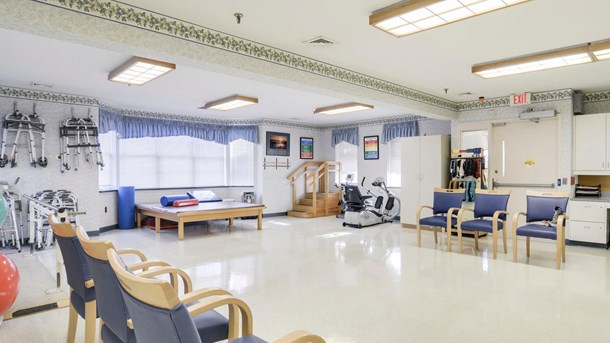
How is York North Skilled Nursing And Rehabilitation Ctr Staffed?

CMS rates YORK NORTH SKILLED NURSING AND REHABILITATION CTR's staffing level at 3 out of 5 stars, which is average compared to other nursing homes. Staff turnover is 43%, compared to the Pennsylvania average of 46%. This relatively stable workforce can support continuity of care.

What Have Inspectors Found at York North Skilled Nursing And Rehabilitation Ctr?

State health inspectors documented 52 deficiencies at YORK NORTH SKILLED NURSING AND REHABILITATION CTR during 2023 to 2025. These included: 52 with potential for harm. While no single deficiency reached the most serious levels, the total volume warrants attention from prospective families.
Who Owns and Operates York North Skilled Nursing And Rehabilitation Ctr?

YORK NORTH SKILLED NURSING AND REHABILITATION CTR is owned by a for-profit company. For-profit facilities operate as businesses with obligations to shareholders or private owners. The facility is operated by GENESIS HEALTHCARE, a chain that manages multiple nursing homes. With 161 certified beds and approximately 153 residents (about 95% occupancy), it is a mid-sized facility located in YORK, Pennsylvania.

How Does York North Skilled Nursing And Rehabilitation Ctr Compare to Other Pennsylvania Nursing Homes?

Compared to the 100 nursing homes in Pennsylvania, YORK NORTH SKILLED NURSING AND REHABILITATION CTR's overall rating (2 stars) is below the state average of 3.0, staff turnover (43%) is near the state average of 46%, and health inspection rating (2 stars) is below the national benchmark.

What Should Families Ask When Visiting York North Skilled Nursing And Rehabilitation Ctr?

Based on this facility's data, families visiting should ask: "Can I visit during a mealtime to observe dining assistance and food quality?" "How do you handle medical emergencies, and what is your hospital transfer rate?" "Can I speak with family members of current residents about their experience?"

Is York North Skilled Nursing And Rehabilitation Ctr Safe?

Based on CMS inspection data, YORK NORTH SKILLED NURSING AND REHABILITATION CTR has a clean safety record: no substantiated abuse findings (meaning no confirmed cases of resident harm), no Immediate Jeopardy citations (the most serious violation level indicating risk of serious injury or death), and is not on the Special Focus Facility watch list (a federal program monitoring the lowest-performing 1% of nursing homes). The facility has a 2-star overall rating and ranks #100 of 100 nursing homes in Pennsylvania. While no facility is perfect, families should still ask about staff-to-resident ratios and recent inspection results during their visit.

Do Nurses at York North Skilled Nursing And Rehabilitation Ctr Stick Around?

YORK NORTH SKILLED NURSING AND REHABILITATION CTR has a staff turnover rate of 43%, which is about average for Pennsylvania nursing homes (state average: 46%). Moderate turnover is common in nursing homes, but families should still ask about staff tenure and how the facility maintains care continuity when employees leave.

Was York North Skilled Nursing And Rehabilitation Ctr Ever Fined?

YORK NORTH SKILLED NURSING AND REHABILITATION CTR has no federal fines on record. CMS issues fines when nursing homes fail to meet care standards or don't correct problems found during inspections. The absence of fines suggests the facility has either maintained compliance or corrected any issues before penalties were assessed. This is a positive indicator, though families should still review recent inspection reports for the full picture.

Is York North Skilled Nursing And Rehabilitation Ctr on Any Federal Watch List?

YORK NORTH SKILLED NURSING AND REHABILITATION CTR is not on any federal watch list. The most significant is the Special Focus Facility (SFF) program, which identifies the bottom 1% of nursing homes nationally based on persistent, serious quality problems. Not being on this list means the facility has avoided the pattern of deficiencies that triggers enhanced federal oversight. This is a positive indicator, though families should still review the facility's inspection history directly.