YORKVIEW NURSING AND REHABILITATION
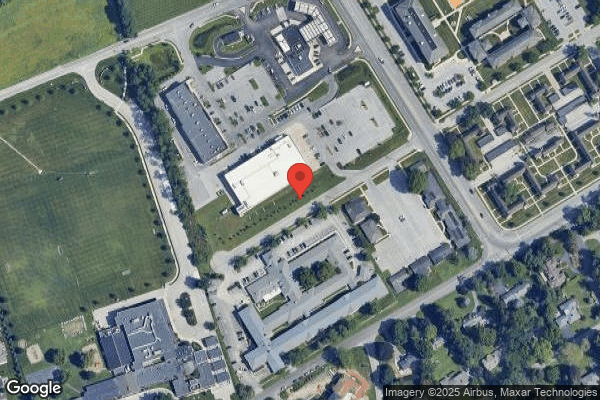
970 COLONIAL AVENUE, YORK, PA 17403 (717) 845-2661
For profit - Limited Liability company 270 Beds Independent Data: November 2025
Trust Grade
40/100
#653 of 653 in PA
Last Inspection: May 2025

Inspected within the last 6 months. Data reflects current conditions.

Overview

Yorkview Nursing and Rehabilitation has a Trust Grade of D, which indicates that it is below average and raises some concerns about the quality of care provided. It ranks #653 out of 653 facilities in Pennsylvania, placing it in the bottom tier statewide, and #14 out of 14 in York County, meaning there are no better options nearby. The facility is showing signs of improvement, as the number of issues identified dropped from 19 in 2024 to 18 in 2025. Staffing is rated average with a turnover rate of 51%, which is close to the state average, indicating that staff may not stay long-term. While there have been no fines, which is a positive aspect, specific incidents include residents complaining about being too cold in their rooms and failures to implement proper nutrition plans for some residents, highlighting significant areas that need attention.

Trust Score
D
40/100
In Pennsylvania
#653/653
Bottom 1%
Safety Record
Low Risk
No red flags
Inspections
Getting Better
19 → 18 violations
Staff Stability
⚠ Watch
51% turnover. Above average. Higher turnover means staff may not know residents' routines.
Penalties
✓ Good
No fines on record. Clean compliance history, better than most Pennsylvania facilities.
Skilled Nurses
○ Average
Each resident gets 35 minutes of Registered Nurse (RN) attention daily — about average for Pennsylvania. RNs are the most trained staff who monitor for health changes.
Violations
⚠ Watch
61 deficiencies on record. Higher than average. Multiple issues found across inspections.
★☆☆☆☆
1.0
Overall Rating
★★★☆☆
3.0
Staff Levels
★★★★☆
4.0
Care Quality
★☆☆☆☆
1.0
Inspection Score
Stable
2024: 19 issues
2025: 18 issues

The Good

  • 4-Star Quality Measures · Strong clinical quality outcomes
  • Full Sprinkler Coverage · Fire safety systems throughout facility
  • No fines on record

Facility shows strength in quality measures, fire safety.

The Bad

1-Star Overall Rating

Below Pennsylvania average (3.0)

Significant quality concerns identified by CMS

Staff Turnover: 51%

Near Pennsylvania avg (46%)

Higher turnover may affect care consistency

The Ugly 61 deficiencies on record

Sept 2025 1 deficiency
CONCERN (D) 📢 Someone Reported This

A family member, employee, or ombudsman was alarmed enough to file a formal complaint

Potential for Harm - no one hurt, but risky conditions existed

Deficiency F0557 (Tag F0557)

Could have caused harm · This affected 1 resident

Based on facility policy, investigation reports, clinical records, and staff interviews, it was determined the facility failed to ensure residents are treated with respect and dignity for one of three...

Read full inspector narrative →
Based on facility policy, investigation reports, clinical records, and staff interviews, it was determined the facility failed to ensure residents are treated with respect and dignity for one of three residents reviewed (Resident 1).Findings include: Review of facility policy, titled Quality of life -Dignity, with revision date of August 2009, indicated; Residents shall be treated with dignity and respect at all times. Treated with dignity means the resident will be assisted in maintaining and enhancing his or her self-esteem and self-worth. Review of the clinical record for Resident 1 reveled diagnoses that included dementia (a group of conditions characterized by impairment of at least two brain functions, such as memory loss and judgement) with behavioral disturbance and adult failure to thrive (a syndrome characterized by unexplained weight loss, muscle wasting, and functional decline). Review of Resident 1 Quarterly MDS (periodic assessment of resident health, functional status, and needs) dated July 16, 2025, revealed the Resident had a brief interview of mental status (BIMS) and scored a 10, indicating moderately impaired cognitive status. Review of Resident 1's care plan had a focus area that stated the Resident had the potential to demonstrate verbally abusive behaviors related to dementia with behaviors and paranoia (an unrealistic trust of others or a feeling of being persecuted). A review of the facility reported event dated August 26, 2025, revealed Employee 1 went into Resident 1's room to provide incontinence care. Employee 3 was not present in the room, but could hear Resident 1 yelling at Employee 1 and requested Employee 2 to assist Employee 1. Employee 2 (Nurse Aide) provided a written statement to Administration stating that when he entered Resident 1's room, the Resident was scratching and hitting Employee 1. Employee 2 added that Employee 1 (Nurse Aide) had her hand raised above her head as if to strike Resident 1. Employee 2 added that Employee 1 lowered her hand when he entered the room. Employee 2 also added in the written statement that Resident 1 said to Employee 1 go ahead and hit me. Employee 2 stated that he assisted Employee 1 to secure Resident 1's brief and both staff left Resident 1's room. Employee 2 reported the event to Administration on August 26, 2025, immediately upon leaving Resident 1's room. The Registered Nurse assessed Resident 1, no new skin issues were identified. Employee 4 also notified the Resident Representative and physician. The facility did report the event to the appropriate agencies. Employee 1 was terminated from the facility due to being within her 90 days of hire and during interview with Nursing Home Administrator (NHA) was not receptive of reapproaching a resident later who is combative. Resident 1 was unable to be interviewed by NHA regarding the event due to periods of confusion and a cognitive communication deficit. The surveyor attempted to interview Resident 1on September 4, 2025, at 11:30 AM, regarding the event but Resident 1 just stared and then closed her eyes. A response from the Director of Nursing on September 4, 2025, was there was no physical abuse. The said employee did not actually hit the resident; there was no mental anguish or anything. During an interview with the NHA on September 5, 2025, at 2:00 PM, the NHA agreed that when Resident 1 became combative during care, Employee 1 should have left the room and reapproached at a later time. 28 Pa Code 211.12(d)(1) Nursing services
May 2025 17 deficiencies
CONCERN (D)

Potential for Harm - no one hurt, but risky conditions existed

Resident Rights (Tag F0550)

Could have caused harm · This affected 1 resident

Based on observations and staff interviews, it was determined that the facility failed to ensure that a resident right to a dignified existence during two of three meals observed (breakfast and lunch ...

Read full inspector narrative →
Based on observations and staff interviews, it was determined that the facility failed to ensure that a resident right to a dignified existence during two of three meals observed (breakfast and lunch May 19, 2025). Findings include: Observations during breakfast on May 19, 2025, on unit A, revealed Residents 117 and 158 received their breakfast in a Styrofoam container. Further observation revealed the swirl hot beverage carafes and the cold beverage 2-quart pitchers were covered with plastic wrap and not the coordinating lid. During an interview with Employee 3 (Food Service Director) on May 19, 2025, at 1:41 PM, it was revealed that Styrofoam containers were utilized for several residents at breakfast because there weren't enough plates. When Employee 3 was questioned further, it was revealed that the facility was also short scoop plates, lids for the hot beverage swirl carafes, and the 2- quart cold beverage pitchers. During an interview with the Nursing Home Administrator (NHA) on May 22, 2025, at 10:30 AM, it was revealed that Employee 3 is in the process of ordering necessary serving supplies. Observation during the lunch meal on the 700 unit on May 19, 2025, at 12:00 PM, revealed the swirl hot beverage carafes and the cold beverage 2-quart pitchers were covered with plastic wrap and not the coordinating lid. The three bean salad (main menu item) and pudding (dessert for alternate texture diets) was served in a Styrofoam bowl. Further observation during the lunch meal on May 19, 2025, at 12:58 PM, revealed Residents 85 and 87 didn't receive a knife on their meal tray. Both Residents stated they would've liked to cut the ham and cheese sandwich in half. Resident 85 removed the crust from the sandwich with her fingers. Both Residents spread the condiment on their sandwich with a fork. During an interview with Employee 3 on May 19, 2025, at 1:41 PM, it was revealed that he wasn't aware a knife wasn't included on Resident meal trays. During an interview with the NHA on May 22, 2025, at 10:30 AM, it was revealed that required utensils should be provided to residents on their meal tray. 28 Pa code 201.29 - Resident Rights 28 Pa code 205.75 Supplies
CONCERN (D)

Potential for Harm - no one hurt, but risky conditions existed

Deficiency F0554 (Tag F0554)

Could have caused harm · This affected 1 resident

Based on facility policy review, clinical record review, observation, and staff interview, it was determined that the facility failed to determine a resident's right to self-administer medications was...

Read full inspector narrative →
Based on facility policy review, clinical record review, observation, and staff interview, it was determined that the facility failed to determine a resident's right to self-administer medications was clinically appropriate for one of 35 residents reviewed (Resident 97). Findings include: Review of facility policy, titled Self-Administration of Medications with a last review date of January 2025, revealed the following, in part, Residents have the right to self-administer medications if the interdisciplinary team has determined that it is clinically appropriate and safe for the resident to do so; 1. As part of the evaluation comprehensive assessment, the interdisciplinary team (IDT) assesses each resident's cognitive and physical abilities to determine whether self-administering medications is clinically appropriate for the resident. Review of Resident 97's clinical record revealed diagnoses that included lung cancer, hypertension (high blood pressure), and chronic obstructive pulmonary disorder (COPD-a type of progressive lung disease characterized by long term respiratory symptoms and airflow limitations). Observation of Resident 97 on May 19, 2025, at 10:21 AM, revealed the presence of a Combivent Respimat inhaler on his overbed table. Review of Resident 97's physician orders revealed an order for Combivent Respimat Inhalation Aerosol Solution 20-100 MCG/ACT (Ipratropium-Albuterol-an inhaled medication used to open airways) one puff inhale orally every 4 hours as needed for wheezing may keep at bedside, dated March 3, 2025. Further review of Resident 97's clinical record failed to reveal any assessment of his cognitive and physical ability to self-administer the medication or that it had been determined to be clinically appropriate. Review of Resident 97's Medication Administration Records from March 3, 2025, to May 21, 2025, revealed that there were no documented administrations of the Combivent Respimat inhaler. During a staff interview with the Nursing Home Administrator and the Director of Nursing (DON) on May 21, 2025, at 11:47 AM, the DON confirmed that there was no assessment completed to determine Resident 97's cognitive and physical ability to self-administer the medication, or that it had been determined to be clinically appropriate for him to self-administer the inhaler. She indicated that the order was changed for the nurse to now administer the inhaler when needed. 28 Pa. Code 201.18(b)(1) Management 28 Pa. Code 211.10(d) Resident Care Policies 28 Pa. Code 211.12(d)(1)(2)(5) Nursing Services
CONCERN (D)

Potential for Harm - no one hurt, but risky conditions existed

Deficiency F0605 (Tag F0605)

Could have caused harm · This affected 1 resident

**NOTE- TERMS IN BRACKETS HAVE BEEN EDITED TO PROTECT CONFIDENTIALITY** Based on facility policy review, clinical record reviews, and staff interviews, it was determined that the facility failed to en...

Read full inspector narrative →
**NOTE- TERMS IN BRACKETS HAVE BEEN EDITED TO PROTECT CONFIDENTIALITY** Based on facility policy review, clinical record reviews, and staff interviews, it was determined that the facility failed to ensure residents received adequate monitoring to ensure the right to be free from chemical restraints for two of five residents reviewed for unnecessary medications (Residents 19 and 166). Findings include: Review of facility policy, titled Psychotropic Medication Use, last revised February 2025, revealed subsection titled Policy Interpretation and Implementation, stated, 2. Medications in the following categories are considered psychotropic medications and are subject to prescribing, monitoring, and review requirements specific to psychotropic medications: a. Anti-psychotics .3. Psychotropic medication management is an interdisciplinary process that involves the resident, family, and/or the representative and includes [sic] c. adequate monitoring for efficacy and adverse consequences . Review of subsection, titled Monitoring and Adverse Consequences, of the aforementioned policy revealed it included, 2. Residents receiving psychotropic medications are monitored and the response to treatment is documented. 3. Monitoring may include lab results, vital signs, progress notes, behavior flow sheets, medication administration records, and the drug regimen review from the consultant pharmacist. 4. In addition, residents are monitored for adverse consequences associated with psychotropic medications including .anticholinergic effects .cardiovascular effects .metabolic effects .neurologic effects .psychosocial effects . Review of Resident 19's clinical record revealed diagnoses that included diabetes mellitus type 2 (decreased ability of the body to utilize insulin) and hypertension (elevated/high blood pressure). Review of Resident 19's physician's orders revealed an order dated September 19, 2024, for Seroquel (an atypical antipsychotic medication used to treat a variety of mental health disorders) 100 mg (milligrams - metric unit of measure) once a day at bed time. Review of Resident 19's clinical record revealed no evidence that the facility had implemented side effect monitoring, which can include serious, irreversible psychomotor dysfunction, for the antipsychotic medication. It was also revealed that Resident 19 did not have behavior monitoring in place to monitor Resident 19's targeted behaviors for the use of the antipsychotic medication. During a staff interview on May 22, 2025, at approximately 11:15 AM, Director of Nursing (DON) confirmed that Resident 19 did not have side effect monitoring nor behavior monitoring in place for the safe and effective use of Resident 19's antipsychotic medication. Review of 166's clinical record revealed that she was admitted to the facility on [DATE], with diagnoses that included dementia (a chronic disorder of the mental processes caused by brain disease, marked by memory disorders, personality changes, and impaired reasoning) and adjustment disorder with mixed anxiety and depressed mood (reaction to a life change or another type of stressor which leads to a subjective, personal experience of mixed anxiety, and depression). Review of Resident 166's current physician orders revealed an order for Risperdal Oral Tablet (Risperidone-an antipsychotic medication) Give 0. 25mg (milligrams) by mouth every morning and at bedtime for schizophrenia (a mental health disorder characterized by thoughts or experiences that seem out of touch with reality, disorganized speech or behavior, and decreased participation in daily activities; difficulty with concentration and memory may also be present), dated April 9, 2025. Review of Resident 166's order history revealed that the Risperdal was originally ordered on March 6, 2025, for a diagnosis of anxiety/agitation/combative. Review of Resident 166's clinical record to include physician progress notes and psychiatry consult notes from her admission to the facility on January 25, 2025, through current, and hospital records from January 18-25, 2025, failed to indicate a diagnosis of schizophrenia. Review of Resident 166's clinical record failed to reveal Resident 166's identified behaviors or any ongoing behavior monitoring. In addition, the review failed to reveal any side effect monitoring of the Risperdal. Review of a pharmacist medication regimen review nursing recommendation for Resident 166 dated April 11, 2025, revealed the following recommendation Please provide an appropriate indication for the risperidone order. This medication is typically used to treat Schizophrenia or Bipolar Disorder. During a staff interview with the Nursing Home Administrator (NHA) and the DON on May 22, 2025, at 10:41 AM, the DON indicated that nursing staff should not have revised Resident 166's Risperdal order to include a diagnosis of schizophrenia with no supporting documentation by a physician. She further indicated that the order had been corrected to Resident 166's diagnosis of adjustment disorder with mixed anxiety and depressed mood. During a staff interview with the NHA and the DON on May 22, 2025, at 1:03 PM, both confirmed that Resident 166's care plan should have been revised, and that behavior and side effect monitoring should have been initiated at the time the Risperdal was originally ordered. 28 Pa. Code 201.18(b)(1) Management 28 Pa. Code 211.12(d)(1)(2)(3)(5) Nursing services
CONCERN (D)

Potential for Harm - no one hurt, but risky conditions existed

Employment Screening (Tag F0606)

Could have caused harm · This affected 1 resident

Based on facility policy review, personnel file review, and staff interviews, it was determined that the facility failed to ensure that residents were protected from the potential for abuse by failing...

Read full inspector narrative →
Based on facility policy review, personnel file review, and staff interviews, it was determined that the facility failed to ensure that residents were protected from the potential for abuse by failing to determine and complete appropriate criminal history background checks for three of five personnel files reviewed (Employees 13, 15, and 16); failing to complete a license or registry verification at time of hire for two of three nursing staff reviewed (Employees 15 and 16); and by failing to perform a FBI (Federal) criminal history background check prior to hire for one of five personnel files reviewed (Employee 17). Findings include: Review of facility policy, titled Abuse Policy, undated, with a last review date of January 2025, revealed Our abuse prevention program as a minimum provides: screening for conducting employment background checks; background checks include State Criminal, Federal Criminal (if applicable), reference checks, OIG check, Sex Offender check, and any other review required under State or Federal regulation. Review of personnel files for Employees 13, 15, and 16 revealed that each completed a form with their employment application which indicated they had not resided in the state of Pennsylvania for the past two consecutive years. Further review of their personnel files revealed that the facility had only completed a State criminal background check for Employees 13, 15, and 16 at time of hire. Further review of personnel file for Employee 15 revealed that her hire date was March 31, 2025, and that her Nurse Aide registry verification was not completed by the facility until May 8, 2025. Further review of personnel file for Employee 16 revealed that her hire date was February 17, 2025, and that her Registered Nurse license verification was not completed by the facility until May 19, 2025. Review of personnel file for Employee 17 revealed that her date of hire was April 15, 2025. Further review of the personnel file revealed that the facility had completed the State criminal background check on April 15, 2025. No residency information for Employee 17 was provided by facility for surveyor review. During a staff interview with Employee 18 (Human Resources Director) on May 22, 2025, at 12:51 PM, Employee 18 indicated that, although the residency portion of the application says to only complete only if the applicant has not lived in the state for the last two consecutive years, most applicants still fill it out. Employee 18 further indicated that, to her knowledge, the only applicant that needed a Federal criminal background check completed was Employee 17. Employee 18 confirmed that she had not completed the Federal background check for Employee 17 yet because she thought she had 30 days to initiate it. Employee 18 confirmed that Employee 18's date of hire was April 15, 2025. During a staff interview with the Nursing Home Administrator (NHA) and the Director of Nursing on May 22, 2025, at 1:19 PM, the NHA indicated she had no additional information to provide for review. She confirmed that background checks should be completed at time of hire and appropriate background checks should be completed based on the residency status of the applicant. She indicated that license verifications were usually completed by the company's recruiter as part of the recruiting process instead of the facility. She confirmed that the facility had not completed a license verification for Employee 16 utilizing the state licensing board prior to or at time of hire. 28 Pa. Code 201.14(a) Responsibility of licensee 28 Pa. Code 201.18(b)(1) Management 28 Pa. Code 201.19(3)(8) Personnel policies and procedures
CONCERN (D)

Potential for Harm - no one hurt, but risky conditions existed

Assessment Accuracy (Tag F0641)

Could have caused harm · This affected 1 resident

Based on review of facility policy, clinical record reviews, and staff interviews, it was determined that the facility failed to ensure that the resident assessment accurately reflected the resident s...

Read full inspector narrative →
Based on review of facility policy, clinical record reviews, and staff interviews, it was determined that the facility failed to ensure that the resident assessment accurately reflected the resident status for three of 35 residents reviewed (Residents 11, 24, and 26). Findings include: Review of facility policy, titled Resident Assessments, with the last revised date of October 2023, and a last review date of January 2025, revealed 12. Information in the MDS assessments will consistently reflect information in the progress notes, plans of care, and resident observations/interviews. Review of Resident 11's clinical record revealed diagnoses that included hypertension (high blood pressure), chronic diastolic heart failure (heart failure that occurs when the heart does not relax properly between beats causing the heart to be unable to pump an adequate amount of blood to the body), and diabetes mellitus type II (disease that occurs when your blood glucose, also called blood sugar, is too high, but does not require the use of insulin). Review of Resident 11's clinical record revealed a dental consult dated October 22, 2024, that indicated that she was edentulous (without natural teeth). Review of Resident 11's Annual Comprehensive MDS (Minimum Data Set - an assessment tool to review all care areas specific to the resident such as a resident's physical, mental or psychosocial needs) with the assessment reference date (last day of the assessment period) of November 6, 2024, revealed in Section L. Oral and Dental Status that she was not coded as being edentulous. During a staff interview with the Nursing Home Administrator (NHA) and the Director of Nursing (DON) on May 22, 2025, at 1:11 PM, the NHA confirmed the MDS was coded in error and a correction would be completed. She further indicated that she would expect a resident's MDS assessment to be an accurate reflection of the resident. Review of Resident 24's clinical record revealed diagnoses that included dementia (a chronic disorder of the mental processes caused by brain disease, marked by memory disorders, personality changes, and impaired reasoning), moderate protein calorie malnutrition (malnutrition caused when not enough proteins and calories are consumed), and cerebral infarction (a stroke-damage to the brain from interruption of its blood supply) affecting right dominant side. Review of Resident 24's clinical record progress notes revealed a note dated February 7, 2025, that indicated a Significant Change Assessment was scheduled for February 17, 2025, related to Resident 24 signing onto hospice services. Review of Resident 24's Significant Change MDS with the assessment reference date of February 17, 2025, revealed in Section O. Special Treatments/Programs/Procedures that she was coded as No for hospice care. During a staff interview with the NHA and the DON on May 22, 2025, at 10:38 AM, the NHA confirmed that the MDS was coded incorrectly, and a modification had been completed. She said she would expect a resident's MDS assessment to be an accurate reflection of the resident. Review of Resident 26's clinical record revealed diagnoses that included Alzheimer's disease (irreversible, progressive degenerative disease that results in decreased contact with reality and decreased ability to perform activities of daily living) and schizoaffective disorder, bipolar type (mental health disorder that has combined symptoms of schizophrenia [hallucinations, delusions, false beliefs] and mood disorder). Review of Resident 26's Quarterly MDS's, with assessment reference dates of July 25, 2024, and August 6, 2024, revealed that Resident 26's assessments did not reflect that Resident 26 had a schizophrenia diagnosis. During a staff interview on May 22, 2025, at approximately 11:15 AM, the DON revealed that Resident 26's MDS assessments should have included the diagnosis of schizophrenia. 28 Pa code 211.12(d)(1)(3)(5) Nursing services
CONCERN (D)

Potential for Harm - no one hurt, but risky conditions existed

Comprehensive Care Plan (Tag F0656)

Could have caused harm · This affected 1 resident

Based on observation, resident and staff interviews, and record review, the facility failed to develop and implement a comprehensive person-centered care plan for one of 35 records reviewed (Resident ...

Read full inspector narrative →
Based on observation, resident and staff interviews, and record review, the facility failed to develop and implement a comprehensive person-centered care plan for one of 35 records reviewed (Resident 122). Findings include: Review of Resident 122's clinical record revealed diagnoses that included cerebral infarction (stroke - sudden loss of blood flow to the brain, leading to brain damage), hemiplegia (paralysis or severe weakness on one side of the body), contracture right lower leg, muscle weakness, vascular dementia (a condition characterized by progressive loss of intellectual functioning, impairment of memory, and abstract thinking), and pain in joints of right hand. Observation on May 19, 2025, at 11:52 AM, revealed Resident 122's right hand was slightly contracted. In an interview with Resident 122 she stated that she wears a splint on her right hand at night, and that it is helping her hand to not become contracted. Resident 12's physician orders included a right resting hand splint, apply on night shift and remove in AM due to hemiplegia, start date March 19, 2024. Review of the Medication Administration Record (MAR- medications and treatments administered) documented the right resting hand splint was donned at 11:00 PM and removed at 6:30 AM. Review of Resident 122's care plan prior to May 22, 2025, revealed no care plan for right sided hemiplegia, use of right-hand splint, or pain management. During an interview with the Director of Nursing on May 22, 2025, at 1:10 PM, it was revealed that there should've been a care plan for right sided hemiplegia with use of a right-hand splint. 28 Pa. Code 211.12(d) Nursing Services
CONCERN (D)

Potential for Harm - no one hurt, but risky conditions existed

ADL Care (Tag F0677)

Could have caused harm · This affected 1 resident

**NOTE- TERMS IN BRACKETS HAVE BEEN EDITED TO PROTECT CONFIDENTIALITY** Based on clinical record review, resident and staff interviews, and facility documentation review, it was determined that the fa...

Read full inspector narrative →
**NOTE- TERMS IN BRACKETS HAVE BEEN EDITED TO PROTECT CONFIDENTIALITY** Based on clinical record review, resident and staff interviews, and facility documentation review, it was determined that the facility failed to maintain adequate personal hygiene and grooming per resident preference for residents dependent on staff for assistance with these activities of daily living for two of 35 residents reviewed (Residents 11 and 122 ). Findings include: Review of Resident 11's clinical record revealed diagnoses that included muscle weakness, chronic diastolic heart failure (heart failure that occurs when the heart does not relax properly between beats causing the heart to be unable to pump an adequate amount of blood to the body), and diabetes mellitus type II (disease that occurs when your blood glucose, also called blood sugar, is too high, but does not require the use of insulin). During an interview with Resident 11 on May 19, 2025, at 10:57 AM, she indicated that on occasion she has not received her showers on her scheduled days. Review of Resident 11's care plan revealed that her shower days were Monday and Thursday on day shift, dated March 18, 2025. Review of Resident 11's shower documentation for 2025 revealed no evidence of a shower on the following days: January 6, 9, 13, 16, and 20; February 20; March 3 and 10 and 13 was marked not applicable; April 21 and 24; and May 8, 15, and 19. Review of facility grievance log revealed that Resident 11 had filed a grievance on March 14, 2025, and April 28, 2025, indicating that she had not received her showers. Review of facility provided grievance form dated March 14, 2025, revealed that Resident 11 was reporting she did not get her shower on March 10 or 13, 2025. The investigation revealed a nurse aide's statement, which indicated that she did not provide care because they were short of staff and the nurse did not help. Review of facility provided grievance form dated April 28, 2025, revealed that Resident 11 was reporting that she did not receive a shower the week of April 21, 2025. The investigation revealed that the electronic kiosk was not working all morning, but the paper [NAME] indicated that Resident 11's shower schedule was Monday and Thursday evening shift. The investigation also indicated that the new [NAME] was printed but never hung, which showed that Resident 11's shower was to be Monday and Thursday day shift. During a staff interview with the Nursing Home Administrator (NHA) and the Director of Nursing (DON) on May 21, 2025, at 12:12 PM, the NHA confirmed that she would expect staff to provide care unless Resident 11 refuses and that care would be documented accordingly. Review of Resident 122 ' s clinical record revealed diagnoses that included cerebral infarction (stroke occurs when blood flow to the brain is blocked leading to tissue death), chronic obstructive pulmonary disease (lung disease that block airflow and make it difficult to breathe), diabetes mellitus (the body's ability to produce or respond to the hormone insulin is impaired, resulting in abnormal metabolism of carbohydrates and elevated levels of glucose in the blood and urine), contracture (a condition of shortening and hardening of muscles, tendons often leading to deformity and rigidity of joints) right lower leg, muscle weakness, vascular dementia (a condition characterized by progressive loss of intellectual functioning, impairment of memory and abstract thinking), and cognitive communication deficit (difficulty with communication caused by problems with cognitive processes like attention memory and problem-solving). Interview with Resident 122 on May 19, 2025, at 12:12 PM, the Resident stated she prefers a shower over a bed bath. She also revealed that a Hoyer lift is used to transfer her to the shower chair, and she requires assistance. Her family had to push for her to get a shower, not a bed bath. She revealed that the prior Thursday, May 15th, 2025, she received a bed bath and not a shower because there was not enough staff. Review of Resident 122's bathing documentation revealed she is scheduled for showers Thursday on dayshift. The clinical record documented a shower was provided on April 24, 2025, and May 8, 2025; and a bed bath was provided May 1 and 15, 2025. Interview with Employee 6 (Nursing Assistant) on May 21, 2025, at 2:35 PM, it was revealed that she gave Resident 122 a shower two weeks before and stated the Resident does like her showers. Interview with Employee 7 (Registered Nurse) revealed it was mentioned in a care plan meeting that the family and Resident prefer for her to have a shower vice a bed bath. Review of Resident 122's care plan documented that the Resident requires assistance with dressing, personal hygiene, walking, transferring, toileting, changing position in bed and eating related to decline, date initiated September 15, 2023. Review of Resident 122's annual Minimum Data Set (MDS- periodic assessment of resident needs), dated August 12, 2024, documented that it was very important to choose between a tub bath, shower, bed bath, or sponge bath. During an interview with the DON and NHA on May 22, 2025, at 1:30 AM and 1:10 PM, the concern regarding Resident 122 preferring a shower and being given a bed bath. No further information was provided. 28 Pa code 211.12.(d)(1)(5) Nursing services
CONCERN (D)

Potential for Harm - no one hurt, but risky conditions existed

Quality of Care (Tag F0684)

Could have caused harm · This affected 1 resident

Based on review of the clinical record and resident and staff interviews, it was determined that the facility failed to ensure care and services were provided in accordance with professional standards...

Read full inspector narrative →
Based on review of the clinical record and resident and staff interviews, it was determined that the facility failed to ensure care and services were provided in accordance with professional standards of practice that met each resident's physical, mental, and psychosocial needs for two of 35 residents reviewed (Residents 43 and 78). Findings include: Review of Resident 43's clinical record documented diagnoses that included diabetes mellitus (the body's ability to produce or respond to the hormone insulin is impaired, resulting in abnormal metabolism of carbohydrates and elevated levels of glucose in the blood and urine). Resident 43's Medication Administration Record (MAR - documentation of physician prescribed medication and administration schedule) failed to document administration on May 12th and 18th, 2025, of Lantus SoloStar Solution Pen-injector (Insulin Glargine - long-acting insulin use to manage diabetes mellitus) inject 42 units subcutaneously (under the skin) at bedtime/ 8:00 PM. Resident 43's May Medication Administration Record (MAR - documentation of physician prescribed medication and administration schedule) revealed an order for Lantus SoloStar Solution Pen-injector (Insulin Glargine - long-acting insulin use to manage diabetes mellitus) inject 42 units subcutaneously (under the skin) at bedtime/ 8:00 PM. Further review of the MAR revealed no evidence of administration on May 12th and 18th, 2025. Review of Resident 78's clinical record documented diagnoses that included diabetes mellitus with foot ulcer (the body's ability to produce or respond to the hormone insulin is impaired, resulting in abnormal metabolism of carbohydrates and elevated levels of glucose in the blood and urine), congestive heart failure (the heart doesn't pump blood as well as it should), acquired absence of left foot, peripheral vascular disease (circulatory condition in which narrowed blood vessels reduce blood flow to the limbs), lymphedema (build-up of lymph fluid in the tissues, leading to swelling usually in a limb), non-pressure chronic ulcer of left foot, and Methicillin-Resistant Staphylococcus Aureus (MRSA- bacterial infection resistant to Methicillin and other antibiotics) right great toe. Interview with Resident 78 on May 20, 2025, at 9:26 AM, revealed he had a wound vacuum on his foot due to having two toes amputated. It was not healing because his blood count was low and low blood flow. It was also revealed that agency nurses won't change the wound vacuum or complete dressing changes. Resident 78's physician orders included: Left foot Trans Metatarsal Amputation (TMA- surgical procedure where part of the foot, specifically the bones between the toes and ankle ore removed to treat severe foot issues line infections or poor blood flow) site every day shift, every Monday, Wednesday, Friday, and as needed for wound healing , cleanse left foot TMA site with normal saline solution (NSS), skin prep on peri wound (area of tissue surrounding a wound), apply black foam to wound bed and place wound vacuum, start December 30, 2024; wound vacuum in place to Left foot TMA site at -100 mmHg (millimeters of mercury) if increased bloody drainage can decrease to 75 mmHg every shift, start December 30, 2024; Left heel every day shift cleanse with NSS, apply betadine to wound bed, thera-honey to wound bed, cover with dry dressing, start December 30, 2024; right great toe cleanse with betadine-apply xeroform followed by and wet to dry dressing and wrap with cling every day and evening shift, start April 11, 2025; right lateral lower leg every day shift cleanse with NSS, apply xeroform to wound base and cover with gauze or abdominal pad and wrap with cling, start April 11, 2025. Review of May 2025, MAR/TAR (treatment administration record) revealed: treatment to Left foot TMA site - no documentation (blank) 19th; wound care left heel day shift, right lower lateral leg, and right great toe no documentation (blank )11th & 19th day shift. Review of April 2025, MAR/TAR: treatments to Left foot TMA site, left heel, right lateral lower leg, and right great toe documented as 16 (see nursing notes) on 28th and 30th. Review of progress notes failed to document information regarding wound treatments on May 11th and 19th, 2025; and April 28th and 30th, 2025. Interview with the Director of Nursing on May 22, 2025, at 10:30 AM, it was revealed that documentation on the MAR and TAR should be completed when medications or treatments are administered. 28 Pa. Code 201.18(b)(1) Management 28 Pa. Code 211.12(d)(1) Nursing Services
CONCERN (D)

Potential for Harm - no one hurt, but risky conditions existed

Deficiency F0685 (Tag F0685)

Could have caused harm · This affected 1 resident

Based on clinical record review and resident and staff interviews, it was determined that the facility failed to ensure each resident receives proper treatment to maintain vision for one of two reside...

Read full inspector narrative →
Based on clinical record review and resident and staff interviews, it was determined that the facility failed to ensure each resident receives proper treatment to maintain vision for one of two residents reviewed (Resident 11). Findings include: Review of Resident 11's clinical record revealed diagnoses that included hypertension (high blood pressure), chronic diastolic heart failure (heart failure that occurs when the heart does not relax properly between beats, causing the heart to be unable to pump an adequate amount of blood to the body), and diabetes mellitus type II (disease that occurs when your blood glucose, also called blood sugar, is too high, but does not require the use of insulin). During an interview with Resident 11 on May 19, 2025, at 10:58 AM, she indicated that she saw the eye doctor who had recommended eye drops for her eyes and that she has been waiting a couple of weeks to get them. Review of Resident 11's vision consult dated May 1, 2025, revealed that she was diagnosed with dry eye syndrome of both eyes and recommendation was given for artificial tears twice a day for both eyes. Review of Resident 11's physician orders failed to reveal any order for artificial tears. Review of Resident 11's progress notes revealed a social services note dated May 6, 2025, that indicated a care plan meeting was held, and that Resident 11 was being followed by eye doctor who recommended eye drops to aid with vision. During a staff interview with Employee 5 (Assistant Director of Nursing) on May 22, 2025, at 12:22 PM, she indicated that the Resident 11's physician had signed off on the consult, but it was not dated. Employee 5 indicated that she had just put the order in and that the order should have been completed when the physician signed off on the consult. During a staff interview with the Nursing Home Administrator (NHA) and the Director of Nursing on May 22, 2025, at 1:05 PM, the NHA confirmed that the order for Resident 11's eye drops should have been entered when the physician signed off on the consult. 28 Pa code 211.12(d)(1)(3)(5) Nursing Services
CONCERN (D)

Potential for Harm - no one hurt, but risky conditions existed

Deficiency F0697 (Tag F0697)

Could have caused harm · This affected 1 resident

Based on clinical record review and resident and staff interviews, it was determined that the facility failed to provide pain management consistent with professional standards of practice for one of t...

Read full inspector narrative →
Based on clinical record review and resident and staff interviews, it was determined that the facility failed to provide pain management consistent with professional standards of practice for one of two residents reviewed for pain (Resident 143). Findings include: Review of Resident 143's clinical record revealed diagnoses that included history of fracture of thoracic 11-12 vertebra (fracture in bones that make up the spine) and polyneuropathy (pain in various places of the body as a result of neurological dysfunction). Review of Resident 143's clinical record revealed that Resident 143 had an order dated January 17, 2025, for Oxycodone (opioid medication used to treat pain) 5 mg (milligrams - metric unit of measure) one tablet by mouth one time a day for chronic pain. During a Resident interview with Resident 143, she expressed there had been times that she did not receive her scheduled pain medication as ordered. Review of Resident 143's medication administration record, progress notes, and the controlled substance declining count sheet for Resident 143's Oxycodone revealed that Resident 143 did not receive her scheduled pain medication on November 12 to 15, 2024, due to it being unavailable. Further, based on the declining count sheet for the Oxycodone, it was determined that staff did not administer the medication on November 21, 2024; December 1, 2024; and January 11, 2025; and no administration for the morning dose of February 1, 2025; April 22, 2025; and May 6, 2025. During a staff interview on May 22, 2025, Director of Nursing revealed it was the facility's expectation that staff administer Resident 143's pain medication as ordered. 28 Pa code 211.12(d)(1)(5) Nursing services
CONCERN (D)

Potential for Harm - no one hurt, but risky conditions existed

Deficiency F0698 (Tag F0698)

Could have caused harm · This affected 1 resident

**NOTE- TERMS IN BRACKETS HAVE BEEN EDITED TO PROTECT CONFIDENTIALITY** Based on facility policy review, clinical record review, observation, and staff interviews, it was determined that the facility ...

Read full inspector narrative →
**NOTE- TERMS IN BRACKETS HAVE BEEN EDITED TO PROTECT CONFIDENTIALITY** Based on facility policy review, clinical record review, observation, and staff interviews, it was determined that the facility failed to maintain complete and accurate records related to dialysis communication, and failed to provide professional standards of practice for the care of a dialysis resident for one of two residents reviewed (Resident 181). Findings Include: Review of facility policy, titled End-Stage Renal Disease, Care of a Resident with with a revision date of September 2010, and a last review date of January 2025, revealed, in part, 4. Agreements between this facility and the contracted ESRD facility include all aspects of how the resident's care will be managed, including: b. how information will be exchanged between the facilities. Review of Resident's 181's clinical record revealed that she was admitted to the facility on [DATE], with diagnoses that included end stage renal disease (ESRD-condition in which a person's kidneys cease functioning on a permanent basis), chronic systolic congestive heart failure (a specific type of heart failure that occurs in the left ventricle and the ventricle cannot contract normally when the heart beats), and diabetes mellitus type II (disease that occurs when your blood glucose, also called blood sugar, is too high, but does not require the use of insulin). Review of Resident 181's physician orders revealed the following orders for dialysis treatments three times a week on Monday/Wednesday/Friday, dated May 2, 2025; dialysis limb precautions no blood pressure, no lab draws; blood sugar checks, or intravenous lines to the right arm, dated May 1, 2025; and monitor dialysis catheter to right chest for signs and symptoms of infection, dated May 1, 2025. Review of Resident 181's care plan revealed a care plan focus for dialysis with interventions that included keep open communication with dialysis center, dated April 29, 2025. The care plan failed to include that an emergency kit would be present at the bedside should bleeding occur or the dialysis catheter become dislodged. Observation of Resident 181's room on May 19, 2025, at approximately 10:00 AM, revealed that there was no emergency equipment present. Review of Resident 181's Medication Administration Record for May 2025 revealed that she went to dialysis on May 2, 5, 7, 9, 12, 14, 16, 19, and 21, 2025. Review of consult sheets for dialysis treatments revealed there was one dated May 2, 2025, which was completed; one dated May 5, 2025, that was blank; and two other forms that were completed, but not dated. During a staff interview with Employee 8 (Registered Nurse) on May 22, 2025, at 9:35 AM, she indicated the facility sends the consult sheet to dialysis with Resident 181, and that sometimes they get them back but sometimes they do not. Employee 8 also indicated that they do not keep emergency equipment at the bedside. Review of Resident 181's blood pressure documentation for April 2025 and May 2025 revealed that on 15 occasions her blood pressure was documented as being obtained in her right arm: April 28 and 30; and May 1, 2, 4, 9, 12, 14, 15, 16, 19, and 21. During a staff interview with the Nursing Home Administrator and the Director of Nursing (DON) on May 22, 2025, at 1:02 PM, the DON indicated that nursing staff said they were not getting Resident 181's blood pressure in her right arm. She indicated that staff were just clicking when entering the blood pressure reading and not ensuring correct location was being documented. The DON confirmed that there was no emergency equipment at the bedside and that dialysis consult sheets should be completed with each dialysis treatment and kept in the clinical record. 28 Pa. Code 201.18(b) Management 28 Pa Code 211.5(f) Medical records 28 Pa. Code 211.12 (d)(1)(2)(3)(5) Nursing services
CONCERN (E)

Potential for Harm - no one hurt, but risky conditions existed

Safe Environment (Tag F0584)

Could have caused harm · This affected multiple residents

Based on observations and staff and resident interviews, it was determined that the facility failed to provide a comfortable and homelike environment on two of nine nursing units (100 and 200 hall). ...

Read full inspector narrative →
Based on observations and staff and resident interviews, it was determined that the facility failed to provide a comfortable and homelike environment on two of nine nursing units (100 and 200 hall). Findings include: On May 19, 2025, between 10:30 AM and 11:00 AM, during an interview with Resident 63, the Resident stated that she was very cold. Cold air was felt blowing across the room. Resident 63 stated only maintenance can change the temperature by using pliers. During an interview with Resident 108, the Resident complained of being cold and was covered with 3 blankets. On May 19, 2025, at approximately 11:00 AM, Employee 1 (Director of Maintenance) was requested to come to the 200's hall to obtain temperatures. Employee 1 utilized an infrared thermometer. Resident 63's room temperature was 64 degrees Fahrenheit (F). Resident 108's room temperature was 69.8 degrees F. Four additional rooms on the unit were 67 degrees, 69.5 degrees, 70.0 degrees, and 70.8 degrees F. The remaining rooms on the unit and other units and halls had recorded temperatures between 71 and 81 degrees F. Employee 1 stated, the 200's hall hasn't been updated yet with the new split units. During an interview with the Nursing Home Administrator (NHA) on May 20, 2024, the NHA agreed that temperatures within resident areas should be 71-81 degrees F. Observations on May 19, 2025, during the initial tour, revealed the window blinds in 5 of 20 rooms on the 200's hall in disrepair. Blind slats are broken, some missing, and some dangling from the blind. Observations of the windows outside the front of the building revealed the window blinds are in disrepair on the 100's hall. During an interview with the NHA on March 21, 2024, at approximately 2:00 PM, the NHA was aware that many window blinds need replaced, and revealed there are an additional 27 window blinds within the facility that need to be replaced. 28 Pa. Code 201.14(a) Responsibility of licensee 28 Pa. Code 201.18(b)(1)(e)(2.1) Management
CONCERN (E)

Potential for Harm - no one hurt, but risky conditions existed

Deficiency F0657 (Tag F0657)

Could have caused harm · This affected multiple residents

**NOTE- TERMS IN BRACKETS HAVE BEEN EDITED TO PROTECT CONFIDENTIALITY** Based on review of facility policy, clinical record reviews, and staff interviews, it was determined that the facility failed to...

Read full inspector narrative →
**NOTE- TERMS IN BRACKETS HAVE BEEN EDITED TO PROTECT CONFIDENTIALITY** Based on review of facility policy, clinical record reviews, and staff interviews, it was determined that the facility failed to ensure that the comprehensive care plan is reviewed and revised for three of 35 residents reviewed (Residents 43,108, and 166). Findings include: Review of facility policy, titled Care Plans, Comprehensive Person-Centered with a last revision date of March 2022, and a last review date of January 2025, revealed, in part, 11. Assessments of residents are ongoing and care plans are revised as information about the residents and the resident's condition change; and 12. The interdisciplinary team reviews and updates the care plan a. when there is a significant change in the resident's condition; and d. at least quarterly, in conjunction with the required quarterly MDS [Minimum Data Set - an assessment tool to review all care areas specific to the resident such as a resident's physical, mental or psychosocial needs] assessment. Review of Resident 43's clinical record documented diagnoses that included diabetes mellitus (the body's ability to produce or respond to the hormone insulin is impaired, resulting in abnormal metabolism of carbohydrates and elevated levels of glucose in the blood and urine), chronic kidney disease (CKD-the kidneys don't function as they should), and peripheral vascular disease (a circulator condition in which narrowed blood vessels reduce blood flow to the limbs). Review of Resident 43's wound assessment dated [DATE], read, in part, pressure ulcer stage 2 sacral region, acquired in house April 15, 2025, resolved April 28, 2025. Review of Resident 43's care plan included skin breakdown related to weight loss, medical changes, CKD, incontinence, history of skin tears and bruising due to mobility issues; open area on sacrum, date initiated March 25, 2025, revised on April 13, 2025. Interventions included pressure injury to sacrum, wound care as ordered, date initiated April 13, 2025. Review of Resident 43's quarterly Minimum Data Set (MDS- periodic assessment of resident needs), dated May 2, 2025, documented No to a pressure ulcer over a bony prominence, no unhealed pressure ulcers. During an interview with the Director of Nursing (DON) on May 22, 2025, at 10:40 AM, it was discussed the concern with the care plan not being revised. No further information provided. Review of the clinical record for Resident 108 revealed diagnoses that include prothrombin gene mutation (inherited genetic condition that leads to too much production of prothrombin, increasing the risk of blood clots) and hypertension (elevated blood pressure). Review of Resident 108's care plan failed to list prothrombin gene mutation as the diagnosis for the use of the anticoagulant (medication to prevent blood clots) and instead placed a risk factor of the diagnosis (pulmonary embolism). Based on record review Resident 108 has never had a pulmonary embolism. During an interview with the Nursing Home Administrator (NHA) on May 20, 2025, the NHA stated they would review older medical records for any previous diagnoses of pulmonary embolism. During an interview with the NHA on May 22, 2025, the NHA said there was no diagnoses of pulmonary embolism found in the medical records, and agreed that the care plan should have been revised to reveal a diagnosis of prothrombin gene mutation for use of the anticoagulation medication. Review of 166's clinical record revealed that she was admitted to the facility on [DATE], with diagnoses that included repeated falls, dementia (a chronic disorder of the mental processes caused by brain disease, marked by memory disorders, personality changes, and impaired reasoning), and cervical spondylosis (the degeneration of the bones and disks in the neck). Review of Resident 166's clinical record revealed that she had utilized a neck collar from January 25, 2025 -April 1, 2025. Further review of Resident 166's clinical record revealed that she had started experiencing behaviors and was started on an antipsychotic medication on March 6, 2025. Review of Resident 166's MDS assessments revealed that she had a quarterly assessment completed on April 3, 2025, and May 5, 2025. Review of Resident 166's current care plan revealed an intervention for the use of a Vista neck collar, dated January 28, 2025, and failed to reveal that her antipsychotic medication or her identified behaviors had been added to her care plan. During a staff interview with the NHA and DON on May 22, 2025, at 1:03 PM, they both confirmed that Resident 166's care plan should have been revised at the time the changes or assessments occurred. 42 CFR 483.21(b)(2) Comprehensive Care Plans 28 Pa. Code 211.12(d)(2)(3)(5) Nursing services
CONCERN (E)

Potential for Harm - no one hurt, but risky conditions existed

Deficiency F0692 (Tag F0692)

Could have caused harm · This affected multiple residents

Based on review of facility procedure for fortified foods, observations, clinical record reviews, and resident and staff interviews, it was determined that the facility failed to provide physician ord...

Read full inspector narrative →
Based on review of facility procedure for fortified foods, observations, clinical record reviews, and resident and staff interviews, it was determined that the facility failed to provide physician ordered fortified food program for three of 35 residents reviewed (Resident 28, 85, and 99); and failed to ensure proper monitoring for acceptable parameters of nutritional status for one of seven residents reviewed for nutrition (Resident 166). Findings include: Review of facility provided document, Diet Type Report, generated May 22, 2025, revealed 51 residents were to receive a fortified food diet. Review of facility provided fortified foods procedure, not dated, read in part, physician orders must be obtained for residents who are deemed appropriate for the fortified food program, order should read Fortified Diet. The fortified diet differs from the regular diet, some examples are: cereals at breakfast are replaced with super cereal, starch at lunch is replaced with super mashed potatoes, super pudding is added to dinner, and 8 ounces of whole milk provided with each meal. Staff should encourage consumption of the fortified items at meals. Recipe for the fortified cereal included: nonfat dry milk, evaporated milk, oatmeal, margarine, brown sugar, granulated sugar. Recipe for the super potatoes included: whole milk, margarine, nonfat dry milk, water, salt, potato pearls. Recipe for the fortified pudding included: pudding mix, nonfat dry milk, whole milk, frozen nondairy whipped topping. Review of Resident 28's clinical record revealed diagnoses that included schizoaffective disorder (a mental health condition marked by mix of hallucinations and delusions, depression, and mania), hemiplegia (muscle weakness or partial paralysis on one side) following a stroke affecting right dominant side, and history of alcohol dependance. Review of Resident 28's physician orders included: fortified foods diet, regular texture, thin consistency liquids for calorie promotion, start date January 15, 2025; nutritious juice three times a day for calorie promotion, 180 milliliters at breakfast, dinner, 8:00 PM, start date May 16, 2025. Review of resident 28's weight history revealed 179 pounds on November 3, 2024, and 163 pounds on May 10, 2025; a 16-pound weight loss in six months; however, stable over the past month. Registered Dietitian note dated May 16, 2025, read, in part, recommendation to discontinue lunch time nutritious juice and change order to nutritious juice at breakfast, dinner, and before sleep. Resident was having frequent refusals of the noon supplement with complaints of it giving his gastroesophageal reflux disease (a condition where stomach contents back up into the esophagus leading to symptoms of heart burn) symptoms. He is ordered a fortified diet and receives 16 oz of milk at all meals and chicken noodle soup added to lunch meals for additional calories/protein. Weight has been stable since December 2024. Review of Resident 28's care plan read, in part, at risk for altered nutrition status related to schizoaffective disorder, alcohol dependence, mood disorder, weight loss, therapeutic diet, date initiated March 27, 2024, and revised on April 3, 2025. Interventions included to provide supplement as ordered: Nutritious juice four times a day, date-initiated November 6, 2024, revised January 6, 2025; and serve diet as ordered: Fortified foods, regular texture, date initiated: March 27, 2024, revised January 16, 2025. Observation of Resident 28 in his room eating lunch on May 19, 2025, at 1:04 PM, revealed he was a served ham and cheese sandwich, three bean salad, milk, and fruit punch. Per Resident 28's tray ticket, he should have also been served fortified foods, chicken noodle soup, and fruit cocktail. Review of Resident 85's clinical record documented diagnoses that included diabetes mellitus (the body's ability to produce or respond to the hormone insulin is impaired, resulting in abnormal metabolism of carbohydrates and elevated levels of glucose in the blood and urine) and dysphagia (difficulty swallowing). Review of Resident 85's physician orders included: fortified foods diet, regular texture, thin liquid consistency, start date February 17, 2025. During interview with Resident 85 on May 19, 2025, at 12:33 PM, it was revealed that the facility is always out of food, sometimes a substitute will be provided, but at times you just don't get the item. The facility is frequently out of: milk, condiments, sugar, and salad dressing. Observation of Resident 85 in her room eating lunch on May 8, 2025, at 12:52 PM, revealed she was served a ham and cheese sand, three bean salad, milk, water, and fruit punch. Per Resident 85's tray ticket, she should have also been served fortified foods, chocolate milk, iced tea, and fruit cocktail. Additional observation on May 21, 2025, at 1:16 PM, revealed the Resident did not receive mandarin oranges, chocolate milk, iced tea (iced tea was not available), or fortified mashed potatoes. Review of Resident 85's care plan included: At risk for altered nutrition related to need for calorie promotion, date-initiated May 13, 2024, revised on September 26, 2024. Interventions included to serve diet as ordered: fortified foods, regular texture, thin liquids, liberalized from no added salt diet June 4, 2024, date-initiated May 15, 2024, revised on November 2, 2024. Review of Resident 99's clinical record revealed diagnoses that included vascular dementia (a condition characterized by progressive loss of intellectual functioning, impairment of memory, and abstract thinking). Review of Resident 99's physician orders included: fortified foods diet, regular texture, thin consistency liquids, start date May 22, 2024. Review of Resident 99's care plan read, in part, at risk for self-feeding difficulty related to history of stroke as evidenced by left sided weakness (hemiplegia) and won't allow staff to feed her, date initiated April 6, 2021, revised on October 14, 2024. Interventions included diet as ordered: fortified foods, regular texture, thin liquids and tray extras of Resident preference, date initiated July 22, 2021, revised June 10, 2024. Resident is a total assist for meals, needs to be fed. Give resident two cups of coffee with each meal when asked, date initiated February 4, 2025; and supplements as ordered, date initiated June 10, 2024. Review of Resident 99's tray ticket included fortified foods. Interview with Employee 3 (Food Service Director) on May 21, 2025, at 12:25 PM, it was revealed that prior to that day, fortified foods were not being prepared/served. It was confirmed that the products are in house to prepare the fortified foods. During a staff interview with Employee 2 (Registered Dietitian) on May 21, 2025, at 11:04 AM, it was revealed that she wasn't aware that the fortified foods weren't being prepared. It was confirmed that there were recipes for the super foods, and super cereal should be served at breakfast, super potatoes at lunch, and super pudding at dinner. Intake of super foods isn't documented in the medical record; however, she communicates with the staff to determine intake and completes meal observations. During an interview with the Nursing Home Administrator (NHA) on May 22, 2025, at 10:30 AM, it was revealed that the fortified food program should have been provided to residents with physician orders. Review of Resident 166's clinical record revealed diagnoses that included dementia (a chronic disorder of the mental processes caused by brain disease, marked by memory disorders, personality changes, and impaired reasoning), muscle weakness, and lack of coordination. Review of Resident 166's care plan revealed a focus for potential altered nutrition with interventions that included, but were not limited to, monitor and record intakes and directly assist with meals as needed, dated January 28, 2025; unable to successfully feed herself, dated March 19, 2025; and fortified foods diet, dated April 1, 2025. Review of Resident 166's task documentation for meal intake and assistance provided for February 2025, revealed that there was no documentation of meal intake or assistance provided as follows: Breakfast: 1, 2, 8, 9, 15, 16, 20, 21, 23, 24, 25, and 26; Lunch: 1, 2, 8, 9, 15, 16, 20, 21, 23, 24, 25, and 26; and Supper: 1, 2, 4, 6, 9, 11, 14, 15, 16, 18, 19, 21, 24, 25, 26, and 28. In addition, Resident 166 was coded as refusing or consuming no intake of meals as follows: Breakfast: 3, 4, 5, 6, 9, 10, 11, 12, 13, 18, 19, 22, and 27; Lunch: 3, 5, 6, 7, 11, 12, 13, 19, 22, Supper: 3, 8, 10, 13, 17, 20, and 27. Review of Resident 166's task documentation for meal intake and assistance provided for March 2025, revealed that there was no documentation of meal intake or assistance provided as follows: Breakfast: 6 and 23; Lunch: 6, 8, and 23; and Supper: 1, 4, 6, 13, 23. In addition, Resident 166 was coded as refusing or consuming no intake of meals as follows: Breakfast: 4, 7, 11, 12, 13, 14, 15, 16, 24, and 25; Lunch: 2, 3, 4, 7, 9, 10, 11, 12, 16, 17, 20, and 25; Supper: 3, 5, 7, 16, 19, and 25. Review of Resident 166's clinical record revealed that she experienced a significant weight loss of 27 pounds (15.4%) over 30 days on March 15, 2025. Review of Resident 166's clinical record revealed a dietician note dated March 17, 2025, that indicated Resident 166 needed varying amounts of assistance with po intakes and that the new interventions for Resident 166's weight loss would be to liberalize therapeutic diet, add fortified diet for nutrition support. Weekly weights x 4 weeks. Review of Resident 166's April Medication Administration Record revealed that her weekly weight for week 4 was documented as N/A [non-applicable]. Review of Resident 166's task documentation for meal intake and assistance provided for April 2025, revealed that there was no documentation of meal intake or assistance provided as follows: Breakfast: 7, 15, 20, and 21; Lunch: 7, 8, 15, 20, and 21; Supper: 6, 7, 16, 17, 19, 24, and 30. Review of Resident 166's task documentation for meal intake and assistance provided for May 2025, revealed that there was no documentation of meal intake or assistance provided as follows: Breakfast: 7, 9, 10, 12, and 14; Lunch: 5, 7, 9, 10, 12, and 14; and Supper: 2, 3, 4, 6, 7, 8, 9, 12, and 13. During a staff interview with Employee 2 on May 22, 2025, at 11:47 AM, she indicated that she was unsure why Resident 166 had such a significant weight loss. She said that Resident 166 frequently sat in her chair outside her office during this timeframe. She said that there were days when Resident 166 would have nothing to do with eating, some days she would feed herself, and other days she would allow staff to assist her. Employee 2 indicated that this was Resident 166's baseline since admission. Employee 2 confirmed that Resident 166 was consuming 100% of her nutritional supplement even though her meal intakes were poor. Employee 2 acknowledged that there were multiple missing entries regarding Resident 166's meal intakes and that her assessment of Resident 166 was based on what documentation was available. During a staff interview with the NHA and the Director of Nursing on May 22, 2025, at 11:55 AM, the NHA confirmed she would expect staff to have followed Resident 166's care plan and document her meal intakes and assistance provided, and to complete weights as ordered. 28 Pa. Code 211.10(c) Resident care policies 28 Pa. Code 211.12(d)(1)(3)(5) Nursing services
CONCERN (E)

Potential for Harm - no one hurt, but risky conditions existed

Menu Adequacy (Tag F0803)

Could have caused harm · This affected multiple residents

**NOTE- TERMS IN BRACKETS HAVE BEEN EDITED TO PROTECT CONFIDENTIALITY** Based on policy review, review of the facility provided diet manual, observations, and resident and staff interviews, it was det...

Read full inspector narrative →
**NOTE- TERMS IN BRACKETS HAVE BEEN EDITED TO PROTECT CONFIDENTIALITY** Based on policy review, review of the facility provided diet manual, observations, and resident and staff interviews, it was determined that the facility failed to note or update menu changes and notify Residents of a change to the posted menu; and failed to provide a nutritionally adequate menu substitution for two of two meals observed (lunch meal on May 19th, and 21st, 2025). Findings include: Review of facility policy, Menu, revised July 2023, read, in part, standardized seasonal cycle menus are prepared by the Corporate Menu Team. The menu will meet all resident's nutritional and therapeutic diet needs. Standardized menus are based on guidelines set forth by the approved facility diet manual dictated by state and federal regulations. Facility posting of menus will be done on a daily and/or weekly basis. Temporary changes in the menu are noted on the Menu Substitution Log. Review of facility policy, Menu Substitutions, revised July 2023, read, in part, the Substitution Log is utilized when changes are necessary to the posted menu of the day. On a daily basis the menu is served as written. Food Service Director will consult with the kitchen staff on any needed menu substitutions. All changes to the menu will be recorded on the menu Substitution Log. Menu substitutions should be of similar caloric and nutritive value and is selected from the same food group as the original item. All substitutions will be signed off on the Substitution Log by the dietitian. Review of facility Diet Manual Regular Diet, last reviewed February 27, 2025, read, in part, regular diet includes three meals, and a snack provided daily to meet the following pattern of minimum daily servings: two fruit, six grains/rice/pasta/cereal, five meat or equivalent, three milk, and three vegetables. Review of the substitution log revealed the last documented substitution dated April 16, 2025; Jello was substituted for mandarin oranges for the lunch meal. Review of the menu for April 16, 2025, with the substitution of Jello, there was only one serving of fruit served that day; not meeting the nutritional guidelines for a regular diet. Observation in unit A rear dining room on May 19, 2025, at 10:13 AM, revealed Resident 169 was provided a peanut butter and jelly sandwich, vice French toast, which was listed on her tray ticket. Observation in Resident 28's room on May 19, 2025, at 1:04 PM, revealed the Resident was served a ham and cheese sandwich, three bean salad, milk, and fruit punch. Review of the Resident's tray ticket documented he should've received chicken noodle soup and fruit cocktail (main menu dessert item). Interview with Residents 85 and 87 on May 19, 2025, at 12:33 PM, it was revealed that the facility is always out of food, sometimes will offer a substitute but at times they just don't get the food item. Also, often the menu that is posted isn't the menu that is served. Observation in Resident 85's room on May 19, 2025, at 12:52 PM, revealed the Resident was served a ham and cheese sandwich, three bean salad, milk, water, and fruit punch. Review of the Resident's tray ticket documented she should've received chocolate milk, iced tea, and fruit cocktail. Additional meal observation on May 21, 2025, at 1:16 PM, revealed the Resident 85 didn't receive mandarin oranges, chocolate milk, iced tea or fortified mashed potatoes. The Resident requested the mandarin oranges and mashed potato. Observation in Resident 87's room on May 19, 2025, at 12:52 PM, revealed the resident was served a ham and cheese sandwich, three bean salad, milk, coffee, and fruit punch. Review of the Resident's tray ticket documented tossed salad with dressing, iced tea and fruit cocktail, and no fruit punch. Additional meal observation on May 21, 2025, at 1:16 PM, revealed the Resident 87 didn't receive milk and tossed salad. The Resident requested both items. Observation in Resident 122's room of lunch meal on May 19, 2025, at 1:14 PM, revealed the Resident was served ham salad sandwich on a hamburger bun, California blend vegetable, chocolate pudding, milk and fruit punch. Review of the Resident's tray ticket documented she was to receive, green and wax beans, coffee. Additional meal observation on May 21, 2025, at 1:11 PM, revealed the Resident 122 didn't receive milk or mandarin oranges per her meal ticket. The Resident requested both items. Interview with Resident 78 on May 20, 2025, at 9:22 AM, it was revealed that the dinner meal served on May 19th, 2025, was turkey, mashed potato, broccoli, and pudding. The posted menu was vegetable pasta [NAME], bread stick and apple [NAME]. It was also revealed that lunch on May 19, 2025, he didn't receive fruit cocktail or a substitute for the fruit cocktail. He received the ham and cheese sandwich, three bean salad and beverages. Observation on May 21, 2025, at 1:20 PM, revealed Resident 78 didn't receive mandarin oranges. The Resident requested the oranges. Observation on A unit during the lunch meal on May 19, 2025, at 1:20 PM, revealed Resident 177 didn't receive fruit cocktail, coffee, or skim milk per his tray ticket; and Resident 140 didn't receive fruit cocktail. During an interview with the Employee 3 (Food Service Director) on May 19, 2025, at 1:41 PM, it was revealed that the fruit cocktail was the dessert on the menu for lunch, however, it was used for a prior meal and shouldn't have been, and that a substitution should've been provided. It was revealed that the facility's corporate office reviews food orders, and he had be asked to remove items from the order in an effort to meet the budget. During an interview with Employee 3 on May 20, 2025, at 9:51 AM, it was revealed that the turkey wasn't pulled from the freezer and was not able to be utilized, therefore, the Monday dinner (vegetable pasta [NAME], bread stick, apple [NAME]) was served for Sunday lunch, and the Sunday lunch (turkey, potato, broccoli, dinner roll, pudding) was served Monday dinner. Employee 3 revealed that he would update the Substitution Log. It was also confirmed that the posted menu was not updated, and the residents weren't informed of the menu change. During an interview with Employee 2 (Registered Dietitian) on May 20, 2025, at 10:38 AM, it was revealed that she wasn't aware that the facility failed to serve fruit cocktail or provide a substitute May 19th, 2025, for lunch and expected that a substitution would be provided. Interview with the Nursing Home Administrator on May 22, 2025, at 10:30 AM, it was revealed that the menu was developed by the facility's Corporate office. It was further revealed that the facility Food Service Director submits a food order into a program that is reviewed by the Facility's Corporate office prior to being submitted to the contracted food purveyor. Due to the menu substitutions made on Sunday and Monday the minimum daily meal pattern for a regular diet weren't met. May 18th, 2025, only two vegetables servings were provided vice three, and on May 19th, 2025, one fruit serving was provided vice two. The facility failed to serve the meals per the posted menu, provide residents food/beverage per their choice, and meet the minimum daily nutritional meal pattern for a regular diet. 28 Pa code 211.6(a) Dietary Services 28 Pa code 211.10(c) Resident Care Policies
CONCERN (E)

Potential for Harm - no one hurt, but risky conditions existed

Deficiency F0804 (Tag F0804)

Could have caused harm · This affected multiple residents

Based on facility Test Tray form, resident and staff interviews, observations, and completion of one meal test tray, it was determined that the facility failed to provide foods that are palatable, att...

Read full inspector narrative →
Based on facility Test Tray form, resident and staff interviews, observations, and completion of one meal test tray, it was determined that the facility failed to provide foods that are palatable, attractive, and at appetizing temperatures. Findings include: Resident interviews with Residents 78, 85, and 122 obtained May 19, 2025, between 10:30 AM and 12:57 AM, concerns were revealed with the temperature of hot food. Interview with Resident 144 on May 19, 2025, 11:06 AM, it was stated that the food is bland/ it has no flavor; and she is served items such as milk and coffee that she shouldn't receive. Review of facility provided form Culinary and Nutrition Test Tray, not dated, read, in part, point of service temperatures for hot entree, vegetable, and hot beverage greater than 135 degrees Fahrenheit (F), and cold beverage less than 41 degrees F. Test tray also evaluated for taste and appearance. A test tray completed on May 21, 2025, at 1:25 PM, revealed adequate portions size, pork, potato, and green beans weren't palatable for temperature, the texture of the green beans were over cooked/very soft, and the apple juice wasn't palatable for taste it was weak/bland. The test tray was placed on a meal cart to be delivered with room trays; 22 minutes had elapsed between the time the test tray was delivered to the unit and presented for evaluation. Employee 3 (Food Service Director) took temperatures of the food items at the time the test tray was served for evaluation. The following were the recorded highest temperatures: pork roast: 105 degrees F, not palatable for temperature potato wedges: 90 degrees F, not palatable for temperature green beans: 90 degrees F, not palatable for temperature and texture (were over cooked- very soft) mandarin oranges: were not on tray but were refrigerated coffee: 138 degrees F apple juice: 55 degrees F, mixed from concentrate, not palatable for taste, tasted weak During an interview Employee 3 on May 21, 2025, a 1:28 PM, it was revealed that the hot foods should be warmer. It was also confirmed that the apple juice was prepared from a concentrate. During an interview with the Nursing Home Administrator on May 22, 2025, at 10:45 AM, it was revealed that food should be palatable. 28 Pa. Code 201.14. Responsibility of licensee 28 Pa code 211.6 - Dietary Services
CONCERN (E)

Potential for Harm - no one hurt, but risky conditions existed

Food Safety (Tag F0812)

Could have caused harm · This affected multiple residents

Based on observations, review of facility policy, and staff interviews, it was determined that the facility failed to store and serve food/beverages in accordance with professional standards for food ...

Read full inspector narrative →
Based on observations, review of facility policy, and staff interviews, it was determined that the facility failed to store and serve food/beverages in accordance with professional standards for food safety for two of four pantry refrigerators and in the kitchen. Findings include: Review of facility policy Food from Outside Sources, revised July 2023, read, in part, visitors/family members will label food and beverages with the resident's name, room number and date. Observation in dry storage on May 19, 2025, at 9:50 AM, the following cases were on the floor: oatmeal cream pies, egg noodles, animal crackers, elbow pasta, rotini pasta, basic muffin mix, gallons of mayonnaise, apple sauce, rice, mandarin oranges, and potato chips. Additional observation one bag of rotini and elbow pasta was open and not date marked. Interview with Employee 3 (Food Service Director) it was revealed that food deliveries are Tuesday and Friday, the cases of food should be stored off the floor, and the rotini and elbow pasta should be date marked when opened. Observation in the walk-in freezer on May 19, 2025, at 9:45 AM, peas and carrots were not securely closed and date marked. Interview with Employee 3 revealed the peas and carrots should be securely closed, and date marked. Observation in the walk-in refrigerator on May 19, 2025, at 9:42 AM, the following items were open and not date marked: shredded lettuce, sliced American cheese, sliced ham, and 2 qt containers of fruit punch and tomato juice. Interview with Employee 3 revealed the aforementioned items should be date marked. Observation in the 400/500 nourishment pantry on May 21, 2025, at 2:24 PM, there was dried red liquid on the bottom shelf of the refrigerator, and two 46 ounce containers of mild thickened lemon-flavored water opened and date marked April 21, 2025 (per carton the product is good for 7 days once opened). Interview with Employee 8 (Registered Nurse) on May 21, 2025, at 2:24 PM, it was revealed that the Resident who ordered the thickened water no longer resided in the facility, and that she would notify housekeeping to clean the refrigerator. Observation in the 600/700 nourishment pantry on May 21, 2025, at 12:53 PM, inside the freezer were two 12 packs of milk chocolate bars and three miniature peanut butter cups with no resident identifier. In refrigerator were two peanut butter and jelly sandwiches that were not date marked. Interview with Employee 7 (Registered Nurse) on May 21, 2025, at 1:40 PM, it was revealed that the chocolate bars should contain a resident name, and the sandwiches should be marked with a date. Observation of tray line service on May 21, 2025, at 11:57 AM, Employees 11 and 12 were serving on the tray line and their hair was not contained in their hair net (hair was hanging out the bottom of the hair net). Interview with Employee 9 (Food Service Supervisor) at 12:32 PM, revealed that Employee's hair should be fully covered. Observed on May 21, 2025, at 11:59 AM, Employee 10 (Cook) was serving the potatoes with a gloved hand, the gloves became soiled with drippings from the pork she did change her gloves, however, failed to complete hand hygiene. Additional observation in the dry storeroom on May 21, 2025, at 12:08 PM, a cart contained loose [NAME] Krispie and Raisin Bran. Another cart contained an open plastic container of Raisin Bran not securely covered and loose [NAME] Krispies. On the shelf the bulk plastic container of sugar was open (not securely closed). During an interview with the Employee 3 on May 21, 2025, at 1:55 PM, it was revealed that Employee 10 should've completed hand hygiene when the gloves were changed. It was also revealed that Employees 11 and 12 should fully covered their hair with a hairnet. During an interview with the Nursing Home Administrator on May 22, 2025, at 10:30 AM, the surveyor informed of the aforementioned food storage, hand hygiene, and hair restraint concerns. No further information was provided. 28 Pa code 211.6(f) - Dietary Services
Jun 2024 13 deficiencies
CONCERN (D)

Potential for Harm - no one hurt, but risky conditions existed

Assessment Accuracy (Tag F0641)

Could have caused harm · This affected 1 resident

Based on clinical record review and staff interviews, it was determined that the facility failed to ensure that the resident assessment accurately reflected the resident's status for one of 34 residen...

Read full inspector narrative →
Based on clinical record review and staff interviews, it was determined that the facility failed to ensure that the resident assessment accurately reflected the resident's status for one of 34 residents reviewed (Resident 5). Findings include: Review of Resident 5's clinical record documented diagnoses that included sleep apnea (a sleep disorder in which breathing repeatedly stops and starts), heart failure (the heart doesn't pump blood as it should), and respiratory failure (a condition in which your blood doesn't have enough oxygen or has too much carbon dioxide). Review of Resident 5's physician orders included BiPAP (a bilevel positive airway pressure machine - a type of ventilator that helps people breathe by delivering pressurized air int their lungs through a mask) minimum 5, maximum 20, PS 4-8 (unit of measure) with 2 Liters oxygen bleed, in at bedtime, with a start date of June 2, 2022. Review of Resident 5's annual MDS (Minimum Data Set - an assessment tool to review all care areas specific to the resident such as a resident's physical, mental, or psychosocial needs) assesment dated May 2, 2024, and quarterly MDS assessments dates March 18, 2024; February 16, 2024; and November 6, 2023, failed to document use of a noninvasive ventilator. During an interview with Employee 20 (Registered Nurse Assessment Coordinator) on June 6, 2024, at 10:55 AM, it was revealed that Resident 5's aforementioned assessments should've been coded for use of a noninvasive ventilator. During an interview with Nursing Home Administrator on June 6, 2024, at 11:02 AM, it was revealed that the aforementioned assessments should've been coded correctly. 28 Pa. Code 211.5 Medical records
CONCERN (D)

Potential for Harm - no one hurt, but risky conditions existed

Deficiency F0676 (Tag F0676)

Could have caused harm · This affected 1 resident

Based on observations, review of clinical records, and resident and staff interviews, it was revealed that the facility failed to provide necessary individualized services to maintain Activities of Da...

Read full inspector narrative →
Based on observations, review of clinical records, and resident and staff interviews, it was revealed that the facility failed to provide necessary individualized services to maintain Activities of Daily Living (ADL- wash face, brush teeth, eating, brush hair) regarding fingernail care for one of 34 residents reviewed (Resident 110). Findings include: Review of Resident 110's clinical record revealed diagnoses that included diabetes mellitus (the body's ability to produce or respond to the hormone insulin is impaired, resulting in abnormal metabolism of carbohydrates and elevated levels of glucose in the blood and urine), macular degeneration in both eyes (an eye disease that causes vision loss), anxiety (a feeling of worry, nervousness, or unease), and dementia (a condition characterized by progressive loss of intellectual functioning, impairment of memory and abstract thinking). Observation on June 3, 2024, at 10:43 AM, revealed Resident 110's fingernails on both hands were long and jagged. During an interview with Resident 110 on June 3, 2024, at 10:43 AM, it was revealed that he is offered a shower once a week; however, he prefers to wash up at his sink in his room, and that he does receive assistance from the staff. It was also revealed that he would like his fingernails trimmed, or an Emery board (flat long object with emery paper used for fingernail and toenail care) so he can do it himself. During an interview with Employee 6 (Licensed Practical Nurse) it was revealed that Resident 110 will refuse showers an times, he is very private, and hygiene is difficult. Review of Resident 110's bathing tasks on June 6, 2024, at 9:16 AM, revealed the Resident was scheduled for showers on Thursday evening shift. No showers or baths were documented as provided over the past 30 days, however, there were documented Resident refusals on May 16th and 30th, 2024. Observation and interview regarding Resident 110's fingernail with Employee 6 on June 3, 2024, at 11:09 AM, the Resident agreed to have them trimmed after lunch. Review of Resident 110's care plan failed to document rejection of care. Review of Resident 110's quarterly MDS (Minimum Data Set - an assessment tool to review all care areas specific to the resident such as a resident's physical, mental or psychosocial needs) dated April 5, 2024, failed to document rejection of care, and documented the Resident as independent with bathing. Review of progress notes April 6th through June 6th, 2024, failed to document rejection of care. During an interview with the Nursing Home Administrator on June 4, 2024, at 2:03 PM, it was revealed that Nursing Assistants should trim fingernails during scheduled showers. It was also revealed that Resident 110 tends to refuse care, and that refusal of care should be documented. 28 Pa. Code 211.12 Nursing Services
CONCERN (D)

Potential for Harm - no one hurt, but risky conditions existed

Pressure Ulcer Prevention (Tag F0686)

Could have caused harm · This affected 1 resident

Based on review of facility policy, observation, and staff interview, it was determined that the facility failed to ensure the resident received care, consistent with professional standards, to preven...

Read full inspector narrative →
Based on review of facility policy, observation, and staff interview, it was determined that the facility failed to ensure the resident received care, consistent with professional standards, to prevent pressure ulcers for one of 37 residents reviewed (Resident 140). Findings Include: Review of facility policy, titled Wound Care, revised October 2010, revealed Steps in the Procedure, 1. Use disposable cloth (paper towel is adequate) to establish clean field on resident's overbed table. Place all items to be used during the procedure on the clean field. Also, 4. Put on exam glove. Loosen tape and remove dressing. 5. Pull glove over dressing and discard into appropriate receptacle. Wash and dry your hands thoroughly. 6. Put on gloves. Review of Resident 140's clinical record revealed diagnoses that included pressure ulcer of left heel (skin ulcer caused by excess pressure) and diabetes (a chronic disease that occurs when the pancreas does not produce enough insulin). Observation of a dressing change to Resident 140's left heel on June 5, 2024, at 10:47 AM, revealed Employee 17 gathered dressing supplies, took them to Resident 140's room, and placed the supplies onto Resident 140's overbed table without placing a drape or washing/disinfecting the table to create a clean field. Further observation of Employee 17 revealed that, after the dressing on Resident 140's left heel was removed, Employee 17 cleansed the pressure ulcer, applied medicated ointment, and applied a clean bandage prior to washing her hands and applying new clean gloves. Further observation of Employee 17 revealed that, when the dressing change was complete, Employee 17 gathered the supplies off of Resident 140's overbed table and left the room without cleaning the overbed table. Interview with the Director of Nursing (DON) on June 6, 2024, at 11:45 AM, revealed that Employee 17 should have created a clean field to work from prior to completing the dressing change. 28 Pa. Code 211.12(c)(d)(1)(3)(5) Nursing services
CONCERN (D)

Potential for Harm - no one hurt, but risky conditions existed

Deficiency F0730 (Tag F0730)

Could have caused harm · This affected 1 resident

Based on document review and staff interview, it was determined that the facility failed to complete a performance review of every nurse aide at least once every 12 months for two of five nurse aide d...

Read full inspector narrative →
Based on document review and staff interview, it was determined that the facility failed to complete a performance review of every nurse aide at least once every 12 months for two of five nurse aide documents reviewed (Employees 12 and 13). Findings Include: A review of Employee 12's personnel information revealed a hire date of May 13, 1991. A review of Employee 12's most recent Competency Evaluation revealed a review and completion date of May 6, 2023. A review of Employee 13's personnel information revealed a hire date of April 9, 2013. A review of Employee 13's most recent Competency Evaluation revealed a review and completion date of April 5, 2023. An interview with the Director of Nursing on June 6, 2024, at 12:15 PM, revealed the evaluations provided are the most recent and additional information will be sought. After the survey, no additional information was provided to verify the completion of annual performance reviews for Employees 12 and 13 thus far in the year 2024. 28 Pa. Code 201.19 (2) Personnel policies and procedures
CONCERN (D)

Potential for Harm - no one hurt, but risky conditions existed

Infection Control (Tag F0880)

Could have caused harm · This affected 1 resident

Based on staff interview and document review, it was determined the facility failed to develop a water management program based on a risk analysis of the facility for the prevention, detection, and co...

Read full inspector narrative →
Based on staff interview and document review, it was determined the facility failed to develop a water management program based on a risk analysis of the facility for the prevention, detection, and control of water-borne contaminants, such as Legionella, a bacteria that may cause Legionnaires' Disease (a serious type of pneumonia). Findings include: On June 4, 2024, the facility provided a policy, titled Legionella Surveillance and Detection, last revised September 2022. The policy focused on the signs and symptoms of Legionnaires' Disease when a resident develops pneumonia. On June 4, 2024, the facility was requested to provide their water management program that includes a water flow schematic, a documented risk analysis for areas at risk of contamination with Legionella (gram negative bacteria), and any routine preventative measures being performed that includes water temperature logs, flushing of stagnant water flow systems. The facility in response provided the Center for Disease Control (CDC) toolkit, titled Developing a Legionella Water Management Program. During an interview with the Nursing Home Administrator (NHA) on June 6, 2024, at 11:00 AM, the NHA was unable to provide a detailed water management program specific to the facility. The NHA also stated that maintenance staff was preparing a water flow schematic that was provided on June 6, 2024, at approximately 1:00 PM. The water flow schematic failed to show water flow for the facility. 28 Pa. Code 201.18(b)(1)(3) Management
CONCERN (D)

Potential for Harm - no one hurt, but risky conditions existed

Deficiency F0919 (Tag F0919)

Could have caused harm · This affected 1 resident

Based on observation and resident and staff interviews, it was determined that the facility failed to ensure each resident's bedside is equipped to allow for residents to call for staff assistance thr...

Read full inspector narrative →
Based on observation and resident and staff interviews, it was determined that the facility failed to ensure each resident's bedside is equipped to allow for residents to call for staff assistance through a communication system for one of seven resident areas reviewed (Rosemont Hall). Findings Include: Observations on the Rosemont Hall in one room occupied by Residents 16 and 135 on June 4, 2024, at 9:24 AM, revealed no call bell cords leaving the Resident wall above the beds. Interviews with Residents 16 and 135 revealed they have no call bells available to call for staff assistance. An interview with the Nurse Aide (Employee 19) on June 4, 2024, at 9:28 AM, confirmed the lack of call bells available to Residents 16 and 135 in their room. An interview with the Nursing Home Administrator on June 5, 2024, at 11:58 AM, confirmed the room lacked call bells for Residents 16 and 135, and that the call bells were added and are now available for the Residents to contact staff for assistance as needed. 28 Pa. Code 205.67 (j) Electric requirements for existing construction
CONCERN (E)

Potential for Harm - no one hurt, but risky conditions existed

Comprehensive Care Plan (Tag F0656)

Could have caused harm · This affected multiple residents

Based on staff interviews, facility policy review, and clinical record review, it was determined that the facility failed to ensure that a comprehensive, person-centered care plan was developed for th...

Read full inspector narrative →
Based on staff interviews, facility policy review, and clinical record review, it was determined that the facility failed to ensure that a comprehensive, person-centered care plan was developed for three of 34 residents reviewed (Residents 12, 142, and 163) . Findings include: Review of facility policy, titled Care Plans, Comprehensive Person-Centered, with a last revised date of September 2022, revealed the following: 1) The interdisciplinary team, in conjunction with the resident and his/her family or legal representative, develops and implements a comprehensive, person centered care plan for each resident; 8) h. incorporate identified problem areas; and 10) identifying problem areas and their causes, and developing interventions that are targeted and meaningful to the resident, are the endpoint of an interdisciplinary process. Review of Resident 12's clinical record revealed diagnoses that included vascular dementia (a decline in thinking skills caused by conditions that block or reduce blood flow to various regions of the brain) and paroxysmal atrial fibrillation (a fast irregular heartbeat that last a few hours or days). Review of Resident 12's physician orders revealed an order for apixaban (an anticoagulant [blood thinning] medication) oral tablet five milligrams by mouth two time a day. Review of Resident 12's comprehensive plan of care failed to reveal focus areas for Resident 12's diagnosis of dementia and use of anticoagulant medication. During an interview on June 6, 2024 at 9:49 AM, with the Nursing Home Administrator (NHA) and Director of nursing (DON), the DON revealed Resident 12's comprehensive plan of care had been updated to include focus areas for dementia and use of anticoagulant medication. The DON stated that it was the facility's expectation that comprehensive care plans be developed accurately and timely. A review of the clinical record for Resident 142 on June 4, 2024, at 9:00 AM, revealed diagnoses that included type 2 diabetes mellitus (a form of diabetes that is characterized by high blood sugar, insulin resistance, and relative lack of insulin) and hypertension (elevated blood pressure). Review of Resident 142's current physician orders revealed that the Resident was receiving two types of insulin (Novolog and Insulin glargine) since April 2024. A review of Resident 142's current care plan failed to reveal a care plan for type 2 diabetes mellitus. During an interview with the DON on June 6, 2024, at 1:00 PM, the DON agreed that Resident 142 should be care planned for type 2 diabetes mellitus. A review of the clinical record for Resident 163 on June 4, 2024, at 9:00 AM, revealed diagnoses that included atrial fibrillation (irregular and rapid heartbeat) and and type 2 diabetes mellitus. Review of Resident 163's current physician orders revealed that the Resident was receiving coumadin (a blood thinner to treat and prevent clots). During an interview with the DON on June 6, 2024, at 1:00 PM, the DON agreed that Resident 163 should be care planned for atrial fibrillation and receiving a blood thinner. Further review of Resident 163's record revealed the Resident had a fall on May 21, 2024, and sustained a large hematoma to her right forehead and scalp area. The Resident was transferred to the hospital where a wound bandage was applied to the open area of the hematoma (a collection of blood outside of a blood vessel that can occur due to trauma or injury). On May 23, 2024, the physician documented to continue to monitor the hematoma. A review of Resident 163's care plan on June 4, 2024, failed to include the fall, monitoring of the hematoma, or any wound care. During an interview with the DON on June 6, 2024, at 1:00 PM, the DON agreed that Resident 163 should be care planned for monitoring and care of the hematoma. 28 Pa. Code 211.12 (d)(5) Nursing services
CONCERN (E)

Potential for Harm - no one hurt, but risky conditions existed

Quality of Care (Tag F0684)

Could have caused harm · This affected multiple residents

Based on review of the clinical record, observations, and staff and resident interviews, it was determined that the facility failed to ensure care and services are provided in accordance with professi...

Read full inspector narrative →
Based on review of the clinical record, observations, and staff and resident interviews, it was determined that the facility failed to ensure care and services are provided in accordance with professional standards of practice that will meet each resident's physical, mental, and psychosocial needs for two of 34 residents reviewed (Residents 140 and 163). Findings include: Review of Resident 140's clinical record revealed diagnoses that included malignant neoplasm of the colon (colorectal cancer, is a cancerous tumor that develops in the colon or rectum) and diabetes (a chronic disease that occurs when the pancreas does not produce enough insulin). Observation of Resident 140 on June 2, 2024, at 10:45 AM, revealed the Resident lying in bed. During an immediate interview with Resident 140, the Resident revealed he was on hospice. Review of Resident 140's current physician orders on June 3, 2024, failed to reveal a current physician order for Hospice care and services. Review of Resident 140's Care Plan on June 4, 2024, revealed a care plan of, Resident is receiving hospice care related to end stage illness, with a date initiated and revised of March 8, 2024. Review of facility provided hospice contracts revealed a hospice contract between the facility and Resident 140's hospice provider dated March 7, 2024. Interview with the Nursing Home Administrator (NHA) on June 5, 2024, at 9:00 AM, revealed that Resident 140 was receiving hospice services when he came to the facility on March 8, 2024, and currently does not have any physician's orders for hospice services. Review of Resident 163's clinical record revealed diagnoses that included atrial fibrillation (irregular, rapid heart rate) and diabetes. Observation of Resident 163 on June 2, 2024, at 10:45 AM, revealed the Resident lying in bed. When asked about the bandage on her right forehead and the large area of bruising and swelling to the right side of her face, the Resident replied, I fell two weeks ago and had to go to the hospital for a CT scan (computed tomography-a medical imaging technique that uses x-rays and computers create detailed pictures of the inside of the body) and x-rays to my left shoulder. The Resident also revealed she had a fracture (broken bone) of the left shoulder. Resident also had a large hematoma (collection of blood outside of a blood vessel that can occur due to trauma and injury) of the right forehead and scalp area. On June 3, 2024, Resident 163's fall investigation report was reviewed, which verified the Resident sustained a fall out of her wheelchair when bending foreward to pick something off of the floor. The fall report revealed the Resident sustained the hematoma measuring 6 cm (centimeters) by 4 cm. Neurological checks were initiated prior to the Resident being sent to the hospital, and convened on return to the facility until completed, per policy. All neurological checks were within normal limits. Further interview with Resident 163 revealed that the mesh wound dressing covering the open area of the hematoma was applied during the hospital visit on May 21, 2024. On June 6, 2024, at 7:00 AM, the facility obtained orders from the physician to remove the current dressing, cleanse the area with normal saline solution, and to apply a dry dressing every dayshift the open area of the hematoma until healed. During an interview with the NHA on June 6, 2024, the NHA stated that she would expect the staff to follow-up with the physician regarding care and treatment to the open area of the hematoma when no instructions were provided by the hospital on the discharge summary. 28 Pa. Code 211.12(d)(1)(3)(5) Nursing services
CONCERN (E)

Potential for Harm - no one hurt, but risky conditions existed

Deficiency F0692 (Tag F0692)

Could have caused harm · This affected multiple residents

Based on facility policy, clinical record review, observations, and resident and staff interviews, it was determined that the facility failed to provide a therapeutic diet, per physician's order, for ...

Read full inspector narrative →
Based on facility policy, clinical record review, observations, and resident and staff interviews, it was determined that the facility failed to provide a therapeutic diet, per physician's order, for two of 34 residents reviewed (Resident 74 and 137). Findings include: Review of facility Snack policy, revised July 2023, read, in part, afternoon snacks will be provided to those residents as labelled snacks per Registered Dietitian or resident request. Nourishing snack is defined as an offering of items, single or in combination, from the basic food groups. Review of facility policy Encouraging and Restricting Fluids, revised October 2010, read, in part, when a resident had been placed on restricted fluids, remove the water pitcher and cup from residents' room. Clinical record review for Resident 74 revealed diagnosis that included diabetes mellitus (the body's ability to produce or respond to the hormone insulin is impaired, resulting in abnormal metabolism of carbohydrates and elevated levels of glucose in the blood and urine). During an interview with Resident 74 on June 3, 2024, at 10:58 AM, it was revealed that she had experienced a weight loss. Review of Resident 74's weigh history documented a significant weight loss of 27 pounds in the past six months. Review of Resident 74's physician orders included consistent carbohydrate diet, mechanical soft texture, thin consistency, with a start date of December 19, 2023; and significant snack or choice in afternoon related to diabetes mellitus, with a start date of December 24, 2023. During interview with Employee 7 (Licensed Practical Nurse) on June 4, 2024, at 12:54 PM, revealed dietary staff are to put a peanut butter and jelly sandwich on Resident 74's lunch tray for an afternoon snack, but the Resident doesn't always get it. Meal observation on June 4, 2024, at 12:55 PM, Resident 74's tray ticket read, in part, consistent carbohydrate mechanical soft diet, puree vegetables, puree white bread, and yogurt. Resident 74 received ground kielbasa, puree cabbage, noodles, regular dinner roll, and yogurt on her meal tray. During an interview with Resident 74 on June 4, 2024, at 12:55 PM, it was confirmed she didn't receive a peanut butter and jelly sandwich on her meal tray. Surveyor observed that the peanut butter and jelly sandwich was not documented on ticket. During an interview with Employee 6 (Licensed Practical Nurse) on June 4, 2024, at 1:05 PM, it was revealed that Resident 74 received a grilled cheese sandwich that day on her lunch tray, and the Resident ate that in place of her meal. Review of progress note dated June 4, 2024, at 1:17 PM, read, in part, the kitchen was called to order a peanut butter and jelly sandwich for the Resident's afternoon significant snack of choice. Review of Resident 74's March 2024, April 2024, and June 2024 MAR (Medication Administration Record- documentation of medications, nutritional supplements, or physician ordered snacks) failed to document the significant afternoon snack was administered at 2:00 PM on March 12th, 2024; April 4th, 2024; and June 2nd, 2024. Further clinical record review revealed no progress notes for the aforementioned dates documenting rational for not administering the significant snack. During an interview with Nursing Home Administrator (NHA) on June 5, 2024, at 12:20 PM, revealed the peanut butter and jelly sandwich was added to Resident 74's tray ticket, and staff should remove it from the lunch tray and save it for the afternoon snack. During an interview with the Director of Nursing (DON) on June 5, 2024, at 2:28 PM, it was revealed that Resident 74 should've been provided a significant afternoon snack per physician order. Review of Resident 137's clinical record documented diagnoses that included hypokalemia (low potassium in the blood) and heart failure (the heart doesn't pump blood the way it should). Review of Resident 137's June 2024 physician orders on June 3, 2024, at 1:22 PM, documented fluid restriction 2000 milliliters (ml - unit of measure) total per 24 hours, with a start date of November 31, 2023. Observation on June 4, 2024, at 10:25 AM, revealed there was a Styrofoam cup with water on Resident 137's over the bed table, with the date of June 4th. During an interview with Resident 137 on June 4, 2024, at 10:25 AM, it was revealed that he is provided a Styrofoam cup of water daily. Review of Resident 137's May and June 2024 MAR documented the fluids nursing provided with medications per shift; there weren't fluid administration guidelines for meals or medications documented. The average daily fluid intake documented by nursing of fluids provided with medications on the June MAR was between 180 ml to 720 ml per day, and on the May MAR was between 540 ml and 1440 ml per day. Review of Resident 137's meal ticket documented 2 milligram sodium diet (low sodium diet) and 1500 ml fluid restriction. Review of physician orders on June 5, 2024, at 2:26 PM, read, in part, 2000 ml fluid restriction: breakfast 540 ml, lunch 420 ml, dinner 300 ml; medication pass 240 ml each shift; each shift 2000 ml fluid restriction with meals AND every shift for 2000 ml fluid restriction with medication administration; start date June 5, 2024, at 7:00AM. During an interview with the NHA on June 5, 2023, at 2:30 PM, revealed that, prior to June 5, 2024, the volume of fluids provided by dietary and nursing should've been planned and communicated, and that the tray ticket should match the physician order. It was also revealed that fluid intake at meals was not recorded by nursing staff, only the fluids provided during medication pass. 28 Pa. Code 211.10 Resident care policies 28 Pa. Code 211.12 Nursing Services
CONCERN (E)

Potential for Harm - no one hurt, but risky conditions existed

Deficiency F0698 (Tag F0698)

Could have caused harm · This affected multiple residents

Based on document review, clinical record review, and staff interviews, it was determined that the facility failed to ensure that residents who require dialysis receive such services consistent with p...

Read full inspector narrative →
Based on document review, clinical record review, and staff interviews, it was determined that the facility failed to ensure that residents who require dialysis receive such services consistent with professional standards of practice for one of one resident reviewed for dialysis (Resident 46). Findings include: Review of the facility's Nursing Home Dialysis Transfer Agreement, read, in part, #3. Designated resident information. Facility shall ensure that all appropriate medical, social, administrative, and other information accompany all Designated Residents at the time of transfer to Center. This information shall include but is not limited to where appropriate the following: (d) Appropriate medical records, including history of the Designated Resident's illness, including laboratory and x-ray findings. (e) Treatment presently being provided to the Designated Resident, including medications and any changes in a patient's condition (physical or mental), change of medication, diet, or fluid intake. (h) Any other information that will facilitate the adequate coordination of care, as reasonably determined by Center. Review of Resident 46's clinical record revealed diagnoses that included chronic kidney disease (CKD) stage five (when the kidneys are severely damaged and can no longer filter waste from the blood) and dependence on renal dialysis (need for treatment that removes extra fluid and waste products from the blood when the kidneys are not able to). Review of Resident 46's physician orders revealed that Resident 46 was ordered to receive dialysis every Monday, Wednesday, and Friday. Review of Resident 46's dialysis communication forms reveled there were no forms for the following dates: April 1, 3, 5, 8, 10, 12, 15, 17, 19, 22, 24, 26, and 29, 2024; May 1, 3, 6, 8, 10, 13, 15, 17, 20, 22, 24, 27, 29, and 31, 2024; and June 3, 2024. During a staff interview with Employee 23 on June 5, 2024 at 11:15 AM, it was revealed that, when Resident 46 returns from dialysis, the communication form is placed in the physician's communication folder to be reviewed and signed. Review of the physician's communication folder revealed no communication forms for Resident 46. Review of documentation provided by the facility revealed that Resident 46 had received dialysis on the aforementioned dates. During an interview on June 5, 2024 at 11:34 AM, with the Nursing Home Administrator (NHA), it was revealed the facility does not have a policy for dialysis care. During an interview on June 6, 2024 at 12:13 PM, with the Director of Nursing (DON), in the presence of the NHA, revealed the facility had called the dialysis center and obtained the missing dialysis communication forms for Resident 46 from the aforementioned dates. The DON stated that it was the facility's expectation that dialysis communication forms be obtained immediately upon the residents return to the facility. 28 Pa Code 201.18 (d) Management 28 Pa Code 211.5 (f) Clinical records 28 Pa Code 211.12 (d)(1)(3)(5) Nursing services
CONCERN (E)

Potential for Harm - no one hurt, but risky conditions existed

Deficiency F0761 (Tag F0761)

Could have caused harm · This affected multiple residents

Based on observations, facility policy review, manufacturer label review, and staff interviews, it was determined that the facility failed to store medications in a manner consistent with professional...

Read full inspector narrative →
Based on observations, facility policy review, manufacturer label review, and staff interviews, it was determined that the facility failed to store medications in a manner consistent with professional standards for two of five medication carts observed (300 medication cart and F Wing 2 medication cart). Findings include: Review of facility policy, titled Storage of Medications, last revised April 2007, revealed the policy statement read, The facility shall store all drugs and biologicals in a safe, secure, and orderly manner. Subsection 1 stated, Drugs and biologicals shall be stored in the packaging, containers or other dispensing systems in which they are received. Only the issuing pharmacy is authorized to transfer medication between containers. Further, subsection 2 stated, The nursing staff shall be responsible for maintaining medication storage AND preparation areas in a clean, safe, and sanitary manner. Observation of the 300 medication cart on June 6, 2024, at approximately 11:15 AM, revealed two Lantus insulin pen (insulin delivery system), that were partially used, with no opened date. Review of the manufacturer's storage requirements revealed that Lantus insulin pens should be discarded after 28 days when in-use and non-refrigerated. Observation of the F Wing 2 medication cart on June 6, 2024, at approximately 11:40 AM, revealed a medicine cup filled approximately half-way with small, round, green tablets. During a staff interview at the time of the observation, Employee 18 (Licensed Practical Nurse) stated the pills appeared to be iron supplements, but was unsure as Employee 18 was not the one that placed them in the medicine cart. F Wing 2 cart was also found to have multiple loose pills contained in two drawers. During a staff interview on June 6, 2024, at approximately 12:00 PM, Director of Nursing (DON) revealed it was the facility's expectation that insulin pens are dated by staff when opened. Further, the DON revealed that medication carts are expected to be cleaned frequently, at least once-a-month by the nightshift nursing staff. Finally, DON revealed it was the facility's expectation that medications are contained in the manufacturer's supplied container. 28 Pa code 211.9(j.1)(5) Pharmacy services 28 Pa code 211.12(d)(1)(5) Nursing services
CONCERN (E) 📢 Someone Reported This

A family member, employee, or ombudsman was alarmed enough to file a formal complaint

Potential for Harm - no one hurt, but risky conditions existed

Menu Adequacy (Tag F0803)

Could have caused harm · This affected multiple residents

Based on clinical record review, document review, observations, and resident and staff interviews, it was determined that the facility failed to provide a nutritionally adequate menu substitution for ...

Read full inspector narrative →
Based on clinical record review, document review, observations, and resident and staff interviews, it was determined that the facility failed to provide a nutritionally adequate menu substitution for one of two meals observed (June 3rd and 4th, 2024, lunch meal) and failed to follow the menu for lunch meals observed on June 3, 2024, for one of seven resident areas observed (Rosemont Hall). Findings include: A review of the facility's planned lunch menu for June 3, 2024, included chicken tenders, dipping sauce, French fries, coleslaw, cinnamon applesauce, and assorted beverages. A review of the menu extension sheet (documentation of menu substitutions for therapeutic and altered textured diets) documented that all diets except for the finger food diet were to receive applesauce. During an interview with Employee 9 (Dietary Aide) June 3, 2024, at 2:22 PM, it was revealed that they ran out of applesauce during the F- west unit food cart and that the remaining residents were served ice cream. A review of the tray delivery schedule documented that there were two food carts delivered to A unit following the F-west food cart. During an interview with Employee 5 (Food Service Director) on June 3, 2024, at 2:23 PM, it was revealed that he wasn't told that they ran out of applesauce and that he would expect there would be a substitution provided to the residents. A review of the menu substitution log on June 3, 2024, at 2:20 PM, failed to document a substitution for applesauce. A review of the facility's planned lunch menu for June 4, 2024, included kielbasa, buttered noodles, sauteed cabbage, dinner roll, watermelon, and assorted beverages. A review of the menu extension sheet documented that puree diets (food blended to a smooth consistency) should've been served applesauce in place of the watermelon. A review of Resident 24's clinical record revealed diagnoses that included hypertension (elevated blood pressure) and dementia (a group of conditions characterized by impairment of at least two brain functions, such as memory loss and judgment). An observation of Resident 24's lunch tray on June 3, 2024, at 12:05 PM, revealed no cinnamon applesauce, 2% milk, coffee, or hot tea, as documented to be served according to the meal ticket. A review of Resident 115's clinical record revealed diagnoses that included dementia and vitamin D deficiency (a condition where there is not enough of this vitamin in your body. You need vitamin D to grow and maintain your bones). An observation of Resident 115's lunch tray on June 3, 2024, at 12:10 PM, revealed no cinnamon applesauce, 2% milk, coffee, or hot tea, as documented to be served according to the meal ticket. An immediate interview with Resident 115 revealed he was not offered any drinks and would prefer to have milk to drink with his meals. A review of Resident 58's clinical record documented diagnoses that included high blood pressure. A review of Resident 58's physician orders included a fortified foods diet, puree texture, thin consistency, with a start date of April 16, 2024, House Supplement two times a day 4 oz @ 1000, 2000 9/14/23. A review of Resident 58's tray ticket for the lunch meal on June 4, 2024, documented the Resident was to receive puree kielbasa, pureed noodles, pureed cabbage, fortified food (which was mashed potato), puree dinner roll, applesauce, milk, and coffee. Meal observation on June 4, 2024, at 1:00 PM, of Resident 58's meal tray, and confirmed by Employee 8 (Nursing Assistant) who assisted the Resident with his meal, revealed the Resident was served puree kielbasa, puree noodles, mashed potato, pureed cabbage, diced peaches, milk, and coffee; he didn't receive a puree dinner roll or applesauce. Employee 8 confirmed that she didn't serve the diced peaches to the Resident. During an interview with the Nursing Home Administrator on June 4, 2024, at 2:11 PM, it was revealed that the residents should've received food items per the extension sheet or provided an applicable substitution, as well as items that are to be served per the resident's meal tickets. 28 Pa. Code 211.6 Dietary Services
CONCERN (E)

Potential for Harm - no one hurt, but risky conditions existed

Food Safety (Tag F0812)

Could have caused harm · This affected multiple residents

Based on review of facility policy, observations, and interviews, it was determined that the facility failed to store and serve food/beverages in accordance with professional standards for food safety...

Read full inspector narrative →
Based on review of facility policy, observations, and interviews, it was determined that the facility failed to store and serve food/beverages in accordance with professional standards for food safety in the kitchen and two of two nourishment pantries observed (B/C unit and Wedge [NAME] 1). Findings include: Review of facility policy Food Storage Areas, revised July 2023, read, in part, storage of dry items must be accurately labeled and dated. Leftover food is clearly labeled, dated, a used within three days or discarded. All refrigerators are kept clean. All food should be covered labeled and date. Frozen food should be defrosted in a refrigerator and date marked with a pull and use by date. Review of facility policy Food from Outside Sources, revised July 2023, read, in part, perishable foods will be marked with a use by date which is three days from the date that it was brought into the facility. Visitors/family members will label food and beverages with the resident's name, room number, and date. Observation in the walk-in refrigerator on June 3, 2024, at 9:42 AM, revealed one pound American cheese wrapped in plastic wrap, not date marked, and five 1-pound packages of thawed sliced turkey, not date marked with a pull date. During an interview with Employee 5 (Food Service Director) on June 3, 2024, at 9:44 AM, it was revealed that the American Cheese should be date marked once opened, and the sliced turkey should be date marked when pulled from the freezer. Observation in the reach in refrigerator on June 3, 2024, at 9:50 AM, revealed one tray with 16 dished servings of fruit that were not date marked. During an interview with Employee 5 on June 3, 2024, at 9:51 AM, it was revealed that the fruit or the tray should've been date marked. Observation in the chemical room near the dry storeroom on June 3, 2024, at 9:47 AM, revealed inside of the dustpan contained food particles. During an interview with Employee 5 on June 3, 2024, at 9:48 AM, it was revealed that the dustpan needed to be cleaned. Observation in the dry storeroom on June 3, 2024, at 9:48 AM, revealed 12 Styrofoam bowls of dry oat cereal weren't date marked. During an interview with Employee 5 on June 3, 2024, at 9:48 AM, it was revealed that the staff was still cleaning up from breakfast, and that the cereal would be date marked. Additional observation on June 3, 2024, at 2:19 PM, revealed the cart with the bowls of cereal contained crumbs of raisin bran cereal and the bowls of oat cereal weren't date marked. Observation in the B/C- unit nourishment pantry on June 3, 2024, at 9:53 AM, in the freezer revealed: one open plastic cup with freezer burned orange slices; one Styrofoam cup with freezer burned orange slices; and one ham and egg croissant sandwich, not marked with a resident identifier or date. On the table next to the refrigerator, there was one 32-ounce container of butter pecan nutritional supplement that was open with contents partially removed, noted to be at room temperature to the touch, and was not date marked with an open or use by date. In the refrigerator: one plastic bag with foil wrapped chicken and corn without a resident identifier or date; one plastic container of sweet tea opened with a use by date of January 29, 2024; one plastic container of cooked broccoli not marked with a resident identifier or date; one 32-ounce container of butter pecan nutritional supplement, open with contents partially removed, and not marked with an open or use by date; one 8-ounce plastic cup of orange juice not marked with resident identifier or date; and the bottom shelf contained dried brown and red liquid. During an interview with Employee 5 on June 3, 2024, at 9:59 AM, it was revealed that resident items should be marked with a resident identifier and date, items should be date marked when opened, open nutritional supplements should be stored in the refrigerator, and the refrigerator should be cleaned. Observation in the Wedge [NAME] 1 nourishment pantry on June 3, 2024, a 10:05 AM, revealed one plastic container of Chinese takeout chicken/rice didn't contain a resident identifier or date, and one plastic container beef tacos dated June 3rd and didn't contain a resident identifier. In the freezer there was one plastic cup with a frozen milk shake that was not covered and didn't contain a resident identifier or date. During an interview with Employee 5 on June 3, 2024, it was revealed items should be securely covered and contain a resident identifier and date. During an interview with the Nursing Home administrator on June 5, 2024, at 12:17 PM, it was revealed that the items in the kitchen should be marked with a date, and the resident items should be marked with a resident identifier and date. 28 Pa. Code 211.6 Dietary Services
Apr 2024 4 deficiencies
CONCERN (D) 📢 Someone Reported This

A family member, employee, or ombudsman was alarmed enough to file a formal complaint

Potential for Harm - no one hurt, but risky conditions existed

Safe Environment (Tag F0921)

Could have caused harm · This affected 1 resident

Based on observations and staff interviews, it was determined that the facility failed to ensure a safe, functional, and sanitary environment for residents, staff, and the public in the dish room and ...

Read full inspector narrative →
Based on observations and staff interviews, it was determined that the facility failed to ensure a safe, functional, and sanitary environment for residents, staff, and the public in the dish room and boiler room. Findings include: Observation in the dish room on April 17, 2024, at 9:26 AM, revealed there was a smell of rotting trash near the disposal. Observation on April 17, 2024, at 9:34 AM, revealed in the utility hallway outside of the kitchen, along the wall on the floor between the dish room and boiler room were dead bugs along the baseboard, in the corners, and at the base of the door frames. Observation on April 17, 2024, at 9:35 AM, with Employee 7 (Maintenance worker) in the boiler room, which is on the opposite side of the wall from the dish room, revealed the floor was noted to be damp and multiple live bugs were observed on the floor, on the wall, and coming from one of the two holes in the wall. One hole was noted to be 15 by 30 inches and was covered with a painted wood board, and the other hole was 24 by 30 inches and was covered with a painted board. There was a snow shovel leaning against the wall with a pile of silt/cement dust underneath it and, when moved, there were numerous bugs that ran from the pile. Observation inside the hole on the left revealed a pipe was visible and had water dripping from it. Observation of the floor in that area looked to be damp with a silt ring that spanned 4 feet. Observation on April 17, 2024, at 9:40 AM with the Nursing Home Administrator (NHA) in the boiler room, revealed the floor was noted to be wet; water was dripping down the wall at the hole on the left side, forming a puddle on the floor; and multiple live bugs were observed on the floor. It was observed that Employee 6 was spraying water on the walls and floor in the dish room. NHA asked Employee 7 to uncover both holes, clean the area, treat for pests, and to monitor for water and pest activity. Observation with Director of Nursing on April 17, 2024, at 10:50 AM, in the boiler room, revealed the hole in the wall on the left was uncovered and was 4 feet long by 2 1/2 feet at the widest point. Inside that hole, the pipe farthest left was moist and the cement wall in that area was wet, and the floor looked to be moist in an area of 5 feet. There were two pest traps inside the hole at the base of the wall. During an interview with NHA on April 17, 2024, at 1:10 PM, it was revealed that the facility's corporate office is aware of the concerns with the plumbing and pest concerns in the boiler room/dish room. 28 Pa. Code 201.18 (b)(3)(e)(2.1) Management
CONCERN (E) 📢 Someone Reported This

A family member, employee, or ombudsman was alarmed enough to file a formal complaint

Potential for Harm - no one hurt, but risky conditions existed

Safe Environment (Tag F0584)

Could have caused harm · This affected multiple residents

Based on observations and resident and staff interviews, it was determined that the facility failed to maintain a safe, clean, comfortable, and home-like interior on five of six nursing units (Rosemon...

Read full inspector narrative →
Based on observations and resident and staff interviews, it was determined that the facility failed to maintain a safe, clean, comfortable, and home-like interior on five of six nursing units (Rosemont, A wing, B wing, C wing, Wedge [NAME] 1, and F wing west). Findings include: Observation in Resident 1's room on April 17, 2024, at 11:10 AM, revealed: there were crumbs on floor around the bed; a dried red liquid in a puddle in front of the closet and on the base board that encompassed an area of 18 inches by 6 inches; the over-bed table contained a dried liquid, and the wood was exposed due to the laminate missing; a section of the radiator cover was missing, and the inside of the unit was exposed; and there was a dried yellow liquid on the windowsill. Observation with Employee 1 (Licensed Practical Nurse) on April 17, 2024, at 11:15 AM, revealed Resident 1's room remained in the same condition as noted above. During an interview with Employee 1 on April 17, 2024, at 11:55 AM, it was revealed that the floor and windowsill needed cleaned, and a work order needed entered for the cover to the radiator. Observation in Resident 2's room on April 17, 2024, at 11:20 AM, revealed the over-bed table contained a dried white liquid and was missing the laminate with wood exposed in two areas; and the floor around the bed contained flake cereal, a used straw, and one empty packet of half and half. During an interview with Employee 2 (Licensed Practical Nurse) on April 17, 2024, at 11:20 AM, it was revealed that housekeeping tries to clean resident rooms daily and that, if an area needs to be cleaned, staff will let them know and they come to clean it. Observation in Resident 3's room on April 17, 2024, at 11:25 AM, revealed on the floor beside the bed, there were eight pieces of dried food. During an interview with Resident 4 on April 17, 2024, at 11:37 PM, it was revealed that her room isn't cleaned very often, maybe a few times a week. Observation in Resident 4's room on April 17, 2024, at 11:37 AM, revealed: the over-bed table stand contained dried white spots and red food; the floor contained white flecks and light brown crumbs between the bed and the bathroom door; the dresser and bookshelf were dusty; the bathroom floor was tacky when walked on; the tub was not in use, but contain brown specks and was dusty; and the bathroom smelled of stale urine. Observation in Resident 4's room with Employee 4 (Registered Nurse) on April 17, 2024, at 11:45 AM, revealed the room remained as noted above. During an interview with Employee 4 on April 17, 2024 at 11:45 AM, it was revealed that housekeeping cleans the resident rooms only twice a week. It was noted that Resident 4's room needed to be cleaned, and that housekeeping would be notified. Observation in Resident 5's room on April 17, 2024, at 11:50 AM, revealed: the floor beside the bed contained a dried liquid; light brown crumbs were on the floor around the bed; and the over-bed table contained a dried on liquid, and a portion of the laminate was missing with wood exposed. During an interview with Employee 5 on April 17, 2024, at 11:50 AM, it was revealed that Resident 5 does eat in her room and can be messy. It was also noted that there is one housekeeper for the hall, and Employee 5 was not sure if resident rooms were cleaned daily. During an interview with the Nursing Home Administrator on April 17, 2024, at 1:21 PM, it was revealed that resident rooms should be cleaned daily and that, if an area needed to be cleaned, staff should notify housekeeping. It was also revealed the facility had two open housekeeping positions. 28 Pa. Code 201.18 (e)(1)(2.1)Management
CONCERN (E) 📢 Someone Reported This

A family member, employee, or ombudsman was alarmed enough to file a formal complaint

Potential for Harm - no one hurt, but risky conditions existed

Deficiency F0804 (Tag F0804)

Could have caused harm · This affected multiple residents

Based on a test tray and staff interviews, it was determined that the facility failed to provide food and beverage that are at a safe and appetizing temperature for one of one meal observed on the C W...

Read full inspector narrative →
Based on a test tray and staff interviews, it was determined that the facility failed to provide food and beverage that are at a safe and appetizing temperature for one of one meal observed on the C Wing. Findings include: A test tray was completed on April 17, 2024, at 12:50 PM, on C Wing. Test tray temperatures were taken by Employee 6 (Food Service Director 1) and revealed the following: Chicken Parmesan 103 degrees Fahrenheit (F), and the product was cold, hard, and dry Penne with marinara sauce 98 degrees F. Italian Blend Vegetables 103 degrees F. Mandarin Oranges 62, degrees F, product was served at room temperature Milk 47 degrees F, palatable During an interview with the Employee 6 on April 17, 2024, at 12:55 PM, it was revealed that the hot foods should've been warmer. During an interview with the Nursing Home Administrator on April 17, 2024, at 1:21 PM, the surveyor discussed concerns regarding the test tray pertaining to food temperature and food quality. No further information was provided. 28 Pa code 211.6 - Dietary Services
CONCERN (E) 📢 Someone Reported This

A family member, employee, or ombudsman was alarmed enough to file a formal complaint

Potential for Harm - no one hurt, but risky conditions existed

Deficiency F0925 (Tag F0925)

Could have caused harm · This affected multiple residents

Based on observations, staff interviews, and pests service report review, it was determined that the facility failed to maintain an effective pest control program so that the facility is free from pes...

Read full inspector narrative →
Based on observations, staff interviews, and pests service report review, it was determined that the facility failed to maintain an effective pest control program so that the facility is free from pests in the kitchen and the boiler room. Findings include: Observation in the dish room on April 17, 2024, at 9:26 AM, revealed there was a smell of rotting trash near the disposal. On the floor under the disposal was one plastic cup, a ball of used plastic wrap, one bowl lid, and one fork. Three cockroaches were observed on the pipe from the disposal into the wall, on the wall behind the disposal, and on the floor. Several gnats were observed flying around the dish room. Under the dish machine on the floor were two medicine cups, one plastic bowl, and several pieces of paper trash. It was noted that the dish room wasn't being utilized at that time. Observation on April 17, 2024, at 9:34 AM, in the utility hallway outside of the kitchen, along the wall on the floor between the dish room and boiler room, were dead bugs along the baseboard, in the corners, and at the base of the door frames. Observation on April 17, 2024, at 9:35 AM, with Employee 7 (Maintenance worker) in the boiler room, which is on the opposite side of the wall from the dish room, revealed the floor was noted to be damp and multiple live bugs were observed on the floor, on the wall, and coming from one of the two holes in the wall. Observation on April 17, 2024, at 9:40 AM, with the Nursing Home Administrator (NHA) in the boiler room, revealed the floor was noted to be wet and multiple live bugs were observed on the floor. It was observed that Employee 6 (Food Service Director) was spraying water on the walls and floor in the dish room. Review of pest control consultant reports revealed the following service dates, times, and findings: On March 6, 2024, service provided for 23 minutes at 12:19 PM in the kitchen and cafeteria, and no pest activity was noted. On March 12, 2024, service provided for 9 minutes at 11:08 AM in the kitchen and cafeteria, and no pest activity was noted. On March 27, 2024, service provided for 16 minutes at 11:01AM in the kitchen and cafeteria, and no pest activity was noted. On April 4, 2024, service was provided for 7 minutes at 10:19 AM in the kitchen, food prep areas, and offices, no activity was noted. On April 12, 2024, service was provided for 1 hour and 5 minutes at 7:18 PM in the kitchen, cafeteria to include the ceiling, and cockroaches and ants activity was observed. During an interview with NHA on April 17, 2024, at 1:10 PM, it was revealed that the facility does have routine pest control services and had received services to treat for cockroaches in the kitchen area previously; however, the concern with cockroaches has reappeared. 28 Pa. Code 201.18 (b)(3)(e)(2.1)Management
Jan 2024 2 deficiencies
CONCERN (D) 📢 Someone Reported This

A family member, employee, or ombudsman was alarmed enough to file a formal complaint

Potential for Harm - no one hurt, but risky conditions existed

Safe Environment (Tag F0584)

Could have caused harm · This affected 1 resident

Based on observations and staff interviews, it was determined that the facility failed to maintain a safe, clean, comfortable, and home-like interior for three Resident's rooms (Residents 2, 4, and 8)...

Read full inspector narrative →
Based on observations and staff interviews, it was determined that the facility failed to maintain a safe, clean, comfortable, and home-like interior for three Resident's rooms (Residents 2, 4, and 8). Findings include: Observation in Resident 2's room on January 8, 2024, at 3:26 PM, revealed there was no fitted sheet on the Resident's air mattress, and the mattress contained a dried film as well as crumbs on the mattress and in the crease of the raised sides. Observation and interview with Employee 2 (Licensed Practical Nurse) on January 8, 2024, at 3:27 PM, Resident 2's mattress was observed as above. It was also revealed that the air mattress should not be covered with a fitted sheet, however, it should be cleaned. Observation and interview with the Nursing Home Administrator (NHA) on January 8, 2024, at 4:05 PM, the mattress was observed as above, and it was revealed that the air mattress should be cleaned when the Resident is bathed and as needed. Observation in Resident 4's room on January 8, 2024, at 3:40 PM, revealed the Resident's air mattress was not covered with a fitted sheet, and the crease between the raised sides and the mattress at the foot and sides of the bed contained crumbs and a light grey fuzzy substance. Resident 4's over-bed table contained food crumbs. Observation with Employee 1 (Licensed Practical Nurse) on January 8, 2024, at 3:45 PM, revealed Resident 4's mattress and over-bed were in the same condition as mentioned above. During an interview with Employee 1, it was revealed that the air mattress should not contain a fitted sheet, and the mattress should be cleaned each time the Resident is bathed and as needed. It was also revealed that the Resident's mattress and over-bed table should be wiped down. Observation with the NHA on January 8, 2024, at 4:10 PM, in Resident 4's room revealed the mattress and bed-side table contained food residue as stated above. During an interview with the NHA on January 8, 2024, at 4:10 PM, it was revealed that Resident 4's mattress and over-bed table should be cleaned. Observation on January 8, 2024, at 3:30 PM, in Resident 8's room, revealed there was a dried light brown substance on the floor between the Resident's bed and the doorway, and there were also food crumbs on the floor. Resident 9's bed-side table contained dried food and a dried grey film. Observation with the NHA on January 8, 2024, at 4:00 PM, in Resident 8's room revealed the floor and bed-side table contained food residue and the floor contained a dried light brown liquid as stated above. During an interview with the NHA on January 8, 2024, at 4:00 PM, it was revealed that the Resident room should be cleaned daily and as needed. It was also revealed that Resident 8's floor and bed-side table should be cleaned. 28 Pa. Code 201.18 (e)(1)(2.1)Management
CONCERN (D) 📢 Someone Reported This

A family member, employee, or ombudsman was alarmed enough to file a formal complaint

Potential for Harm - no one hurt, but risky conditions existed

Pressure Ulcer Prevention (Tag F0686)

Could have caused harm · This affected 1 resident

Based on clinical record reviews, facility documentation, and staff interviews, it was determined the facility failed to ensure necessary treatment and services, consistent with professional standards...

Read full inspector narrative →
Based on clinical record reviews, facility documentation, and staff interviews, it was determined the facility failed to ensure necessary treatment and services, consistent with professional standards of practice to promote healing and prevent infection for two of four residents reviewed (Residents 1 and 3). Findings include: Review of Resident 1's clinical record documented diagnoses that included history of stroke, diabetes mellitus (the body's ability to produce or respond to the hormone insulin is impaired, resulting in abnormal metabolism of carbohydrates and elevated levels of glucose in the blood and urine), dementia (a condition characterized by progressive loss of intellectual functioning and impairment of memory and abstract thinking), dysphagia (difficulty swallowing), contracture (a condition of shortening and hardening of muscles and tendons, often leading to rigidity of joints) of left and right knees, and pressure ulcer (injury to the skin and underlying tissue resulting from prolonged pressure on the skin) to the right heel. Review of Resident 1's November 2023 physician orders and Medication and Treatment Administration Record (MAR - documentation of medication and treatment administration) documented the following treatments were not completed to the right foot as evidence by no documentation or rationale for treatment not being administered: November 8th, 2023: dayshift right heel cleanse with NSS, apply skin prep, and border gauze was blank; November 22 nd, 2023: evening shift right lateral foot cleanse NSS, skin prep, and border dressing and right medial foot cleanse NSS, Therahoney, cover with dry dressing were blank; and November 27th, 2023: day shift right heel cleanse with Dakin's solution, apply Santyl ointment cover with border gauze, right medial foot cleanse with NSS Therahoney to wound bed and cover with dry dressing, and right lateral food cleanse with NSS, apply skin prep, and secure with bordered dressing was documented 16 (see progress note). Review of the progress notes documented the aforementioned treatments would be addressed on evening shift. However, per orders above, treatments were ordered to be completed twice a day, once on day shift and once on evening shift, therefore, the treatments were not completed twice on November 27th, 2023. The facility failed to provide documentation that four treatments were completed to the right foot on day shift and two treatments on evening shift during the month of November 2023. Wound consult dated November 16, 2023, read, in part, new pressure wound to right heel, and new pressure wound to right lateral foot; recommendation for x-ray of right heel to rule out osteomyelitis (bone infection). Progress note dated November 19, 2023, revealed the physician was notified of the x-ray result, which suggested MRI (magnetic resonance imaging- magnetic field and radio waves to take picture inside the body) follow-up; and a slip was sent to transport. Wound consult dated November 23, 2023, read, in part wound on right heel and left lateral foot were stable, new areas noted to right medial foot and right medial first MTP, and noted the x-ray results from November 17th, 2023, were concerning for osteomyelitis. During an interview with Employee 3 (Assistant Director Of Nursing) on January 8, 2024, at 2:30 PM, it was revealed that Resident 1's physician reviewed the x-ray results on November 19, 2023, and initially provided a verbal order for the MRI, then later rescinded the order, and, therefore, an appointment for the MRI wasn't scheduled. The clinical presentation, including labs and vital signs, did not show signs of infection. Wound consult noted dated November 30, 2023, read, in part, wounds to right heel, right lateral foot, right medial foot, and right media first MTP were stable, and noted the x-ray results from November 17th, 2023 were concerning for osteomyelitis. Wound consult note dated December 7, 2023, read, in part, right heel worse, Resident with increased pain, recommend hospital transfer for would evaluation. Review of x-ray results of right foot on November 17, 2023, revealed No radiographic evidence of acute infection. This is concerning for osteomyelitis. Consider MRI follow up. On November 28, 2023, review wound care, lab work, and constipation; progressive decline noted; continue wound treatment, decrease dose of atorvastatin (medication to lower cholesterol) and increase dose of Sennosides-Docusate Sodium (medication to treat constipation). During an interview with Employee 4 (Wound Consultant/Nurse Practitioner) on January 9, 2024, at 1:00 PM, it was revealed facility staff had informed her that an MRI was scheduled and was under that impression for two weeks. It was revealed that the wound consultant couldn't order an MRI, only recommend for it to be done. Once she became aware that the MRI wasn't scheduled, she recommended the resident be transferred to the hospital. During an interview with the Nursing Home Administrator (NHA) on January 9, 2024, at 3:30 PM, the surveyor noted concern with treatments not being completed on Resident 1's right foot. NHA revealed that treatments should be provided per physician order. Review of Resident 3's clinical record revealed diagnoses that included congestive heart failure (CHF - heart doesn't pump blood as well as it should), morbid obesity, and anemia ( blood doesn't have enough healthy red blood cells). Review of Resident 3's December 2023 TAR documented pressure ulcer left posterior thigh clean with NSS, apply lotrisone (medication used to treat fungal skin infections) to peri-wound (area around the wound) and collagen with silver (to aid in wound healing and prevent infection) to wound base, secure with ABD dressing (abdominal gauze pad) every day shift, started December 2, 2023, and discontinued December 15, 2023. There was no documentation December 11 and 22, 2023 dayshift. The TAR was blank, and no progress note observed. Further review of Resident 3's TAR documented left upper posterior thigh every day and evening shift, cleanse with NSS, apply miracle cream to wound base, and cover with ABD dressing, started December 15, 2023, and discontinued January 5, 2024. There was no documentation on December 22, 2023, day shift. The TAR was blank and no progress note observed. Further review of Resident 3's TAR documented left upper posterior thigh cleanse with NSS, apply magic mix, medical grade honey to wound base, and secure with ABD every brief change and twice a day on day and evening shift, start December 10, 2023, and discontinue December 15, 2023. There was no documentation on December 11, 2023, day shift. The TAR was blank and no progress note observed. During an interview with the NHA on January 9, 2024, at 3:30 PM, the surveyor noted concern with treatments not being completed and it was revealed that treatments should be provided per physician order. 28 Pa Code 211.12(d)(5) Nursing services
Nov 2023 2 deficiencies
CONCERN (D) 📢 Someone Reported This

A family member, employee, or ombudsman was alarmed enough to file a formal complaint

Potential for Harm - no one hurt, but risky conditions existed

Deficiency F0804 (Tag F0804)

Could have caused harm · This affected 1 resident

Based on observations, review of facility policy, and resident and staff interviews, it was determined that the facility failed to provide food and beverage that are at a safe and appetizing temperatu...

Read full inspector narrative →
Based on observations, review of facility policy, and resident and staff interviews, it was determined that the facility failed to provide food and beverage that are at a safe and appetizing temperature for one of one meal observed (F-West unit; November 3, 2023, lunch). Findings include: Review of facility policy, titled Service of Food (Point of Service), revised July 2023, read, in part, hot food should be at or above 135 degrees Fahrenheit (F), and cold food should be held at or below 41 degrees F. Review of facility policy, titled Cold Food temps, revised July 2023, read, in part, canned pudding should be chilled 3-4 hours prior to service and should be chilled to 41 degrees Fahrenheit. Review of resident council meeting minutes from August 28, 2023, documented concerns with meals being served late, the quality and temperature of the food, and items missing from meal trays. Interviews with Residents 1, 2, 3, 4, and 5 on November 3, 2023, between 11:00 and 1:00 PM, revealed concerns with food and beverage temperatures at meals. It was noted that, at times, the facility utilized disposable plates, utensils, and cups. Interview with Employee 1 (Licensed Practical Nurse) on November 3, 2023, at 12:13 PM it was revealed that at times meals are served on disposable plates, plastic utensils, and cups; and residents complain of cold food. It was also revealed that milk isn't served or offered each meal, and that items are frequently missing from resident meal trays. Observation with Employee 1 on November 3, 2023, at 2:25 PM, revealed the four thermal pitchers filled with coffee on top of the F-West-1st food cart weren't covered with a thermal lid, and they were wrapped in plastic wrap. Further observation revealed there was no milk available, only four pitchers of coffee and two thermal pitchers of apple juice covered with thermal lids and one non-insulted pitcher of apple juice. There was no creamer available on top of the cart or on resident trays who received coffee. Nursing staff utilized disposable plastic cups from the medication cart to pour the apple juice into. Thermal coffee mugs were on resident trays who were to receive coffee. The first food cart arrived on F-West unit at 2:25 PM; tray pass started at 2:28 PM and ended at 2:49 PM. Test tray temperatures were taken by Employee 2 (Assistant Food Service Director) at 2:49 PM, and revealed: Baked tilapia: 95 degrees F, and was very dry, bland tasting; unsatisfactory Parslied rice: 88 degrees F; unsatisfactory Brussels sprouts: 89 degrees F; unsatisfactory Vanilla pudding: 65 degrees F, and the insulated bowl was cracked at the seam around the entire bowl, exposing the thermal foam; unsatisfactory Apple juice: 54 degrees F; unsatisfactory Coffee: 132 degrees F, creamer not available; unsatisfactory During an interview with Employee 2 on November 3, 2023, at 2:50 PM, it was revealed that the facility doesn't have enough lids to cover the thermal pitchers. It was also revealed that there should be milk, juice, and coffee available on each food cart; however, there are insufficient number of pitchers to do so, and creamer should be on each resident tray who prefers coffee. Per Employee 1, the pudding should've been served cold; however, there are insufficient bowls to pre-portion desserts and salads the day prior, therefore, the pudding was portioned into bowls just prior to service. Milk and Juice are not pre-poured because insufficient stock of tumblers. Employee 1 stated that hot food and beverages should be at 135 degrees F at point of service. During an interview with the Nursing Home Administrator (NHA) at 4:15 PM, the surveyor informed of the aforementioned information, and the NHA stated that the thermal pitchers were purchased online and the facility is unable to obtain replacement lids. It was also revealed that milk should be served to residents requesting it and creamer should be available to residents receiving coffee. No further information was provided regarding food temperatures at point of service. 28 Pa code 211.6(a) - Dietary Services
CONCERN (E) 📢 Someone Reported This

A family member, employee, or ombudsman was alarmed enough to file a formal complaint

Potential for Harm - no one hurt, but risky conditions existed

Deficiency F0809 (Tag F0809)

Could have caused harm · This affected multiple residents

Based on facility scheduled meal times, staff and resident interviews, and observations, it was revealed that the facility failed to serve meals routinely at regular mealtimes comparable to normal mea...

Read full inspector narrative →
Based on facility scheduled meal times, staff and resident interviews, and observations, it was revealed that the facility failed to serve meals routinely at regular mealtimes comparable to normal mealtimes in the community or in accordance with resident needs, preferences, and requests for one of one meal observed (November 3, 2023, lunch meal, F-West unit). Findings include: Review of facility scheduled meal times read, in part, F-West 1st cart breakfast between 8:15 and 8:25 AM, lunch between 12:15 and 12:25 PM, and dinner between 5:15 and 5:25 PM. Interviews with Residents 1, 2, 3, 4, and 5 on November 3, 2023 between 11:00AM and 2:00 PM, it was revealed that breakfast that morning wasn't served until just before 10:00 AM. It was also revealed that meals are consistently late and, for a short period, it was better; however, the past few weeks meals have been late again. Lunch had been served between 2:00 and 3:00 PM, and supper, at times, was delivered around 7:00 PM. Interview with Employee 1 (Licensed Practical Nurse) on November 3, 2023, at 12:13 PM, it was revealed that, when meals are running late, the nursing units are not usually informed; however, nurses call the dietary department in an effort to plan administration of medication ordered with or prior to meals, such as insulin. Employee 1 stated that on the F-West unit, breakfast that morning arrived just before 10:00 AM. It was also revealed that BINGO is scheduled 2:30 PM that afternoon and, if lunch is late, several residents will opt to go to BINGO vice eat lunch. Employee 1 felt it wasn't fair that residents had to choose between a meal and BINGO; and that it has been like that for several weeks. The first food cart arrived on F-West unit at 2:25 PM, tray pass started at 2:28 PM and ended at 2:49 PM. During an interview with Employee 2 (Assistant Food Service Director) on November 3, 2023, at 2:50 PM, it was revealed that breakfast was late November 3, 2023, due to two dietary staff members calling off at the start of the shift, and the staff had to set up for breakfast/gather items for the breakfast meal. Because breakfast was late, lunch was late and staff had to portion out the dessert prior to service. During an interview with the Nursing Home Administrator at 4:15 PM, the surveyor informed of the aforementioned information and it was revealed that she didn't realize breakfast and lunch were late. 28 Pa code 211.6(a) - Dietary Services
Aug 2023 19 deficiencies
CONCERN (D)

Potential for Harm - no one hurt, but risky conditions existed

Deficiency F0558 (Tag F0558)

Could have caused harm · This affected 1 resident

Based on clinical record review, observation, and staff interviews, it was determined that the facility failed to ensure that resident needs were accommodated regarding call bell accessibility for one...

Read full inspector narrative →
Based on clinical record review, observation, and staff interviews, it was determined that the facility failed to ensure that resident needs were accommodated regarding call bell accessibility for one of 38 residents reviewed (Resident 45). Findings include: Review of Resident 45's clinical record on August 21, 2023, revealed diagnoses that included dependence on renal dialysis (a machine filters wastes, salts, and fluid from your blood when kidneys can no longer perform these functions naturally), hypertension (high blood pressure), and diabetes mellitus (a form of diabetes that is characterized by high blood sugar, insulin resistance, and relative lack of insulin). Review of Resident 45's Quarterly Minimum Data Set (MDS - assessment tool utilized to identify residents' physical, mental, and psychosocial needs), with an assessment reference date (last day of the assessment period) of August 2, 2023, revealed that in section G0100. Activities of Daily Living (ADL) Assistance, subsection, A. Bed mobility - how resident moves to and from lying position, turns side to side, and positions body while in bed or alternate sleep furniture, revealed Resident 45 was coded as requiring extensive assistance with one person physical assistance. Observation in Resident 45's room on August 22, 2023, at 9:51 AM, revealed Resident 45 was lying in bed and his call bell was not within reach; it was hooked on the side of nightstand by his television. Interview with Employee 10 on August 22, 2023, at 9:52 PM, stated she would place Resident 45's call bell within reach. Review of Resident 45's care plan revealed a focus area of: [Resident 45] is high risk for falls related to poor communication/comprehension, psychoactive drug use, balance problems, last revised September 24, 2022, with an intervention for: be sure [Resident 45's] call light is within reach and encourage the resident to use it for assistance as needed, last revised September 13, 2022. Interview with the Director of Nursing on August 23, 2023, at 10:42 AM, revealed she would expect Resident 45's call bell to be in reach. 28 Pa code 201.29(d) - Resident Rights 28 Pa Code 211.12(d)(1) Nursing Services
CONCERN (D)

Potential for Harm - no one hurt, but risky conditions existed

Assessment Accuracy (Tag F0641)

Could have caused harm · This affected 1 resident

Based on clinical record review and resident and staff interviews, it was determined that the facility failed to ensure that the resident assessment accurately reflected the resident's status for one ...

Read full inspector narrative →
Based on clinical record review and resident and staff interviews, it was determined that the facility failed to ensure that the resident assessment accurately reflected the resident's status for one of 40 residents reviewed (Resident 5). Findings Include: Review of Resident 5's clinical record revealed diagnosis that included chronic diastolic heart failure (occurs if the left ventricle muscle becomes stiff or thickened) and gastro esophageal reflux disease (a digestive disease in which stomach acid or bile irritates the food pipe lining). Review of Resident 5's MDS (Minimum Data Set is part of federally mandated process for clinical assessment of all Medicare and Medicaid certified nursing homes) dated August 6, 2023, revealed that in Section O0100, Special Treatments, Procedures, and Programs (C. Oxygen) was marked No, to indicate the Resident has not had any oxygen use within the past 14 days. Interview with Resident 5 on August 22, 2023, at 9:35 AM, revealed that Resident 5 uses oxygen every night. Review of Resident 5's current physician orders revealed that Resident 5 is ordered to have Auto Bipap minimum 5, maximum 20, pressure support 4-8 with 2 Liters of oxygen bleed in at bedtime, with a start date of June 2, 2022. Resident 5's current physician orders also revealed an order for oxygen via nasal cannula for saturations above or equal to 89% as needed for shortness of breath. Interview with the Nursing Home Administrator on August 24, 2023, at 10:51 AM, revealed that in Section O0100. C on the MDS completed on August 6, 2023, should have been marked Yes, to indicate Resident 5 has had oxygen use within the past 14 days, and that a Modification to the MDS on August 6, 2023, has been initiated to correct it. 28 Pa. Code 211.5(f) Clinical records 28 Pa Code 211.12 (d)(3)(5) Nursing Services
CONCERN (D) 📢 Someone Reported This

A family member, employee, or ombudsman was alarmed enough to file a formal complaint

Potential for Harm - no one hurt, but risky conditions existed

Deficiency F0657 (Tag F0657)

Could have caused harm · This affected 1 resident

**NOTE- TERMS IN BRACKETS HAVE BEEN EDITED TO PROTECT CONFIDENTIALITY** Based on observations, clinical record review, and staff interviews, it was determined that the facility failed to ensure that t...

Read full inspector narrative →
**NOTE- TERMS IN BRACKETS HAVE BEEN EDITED TO PROTECT CONFIDENTIALITY** Based on observations, clinical record review, and staff interviews, it was determined that the facility failed to ensure that the resident care plan was reviewed and revised to reflect the resident's current care needs for three of 37 residents reviewed (Residents 21, 32, and 105). Findings include: Review of Resident 21's medical record revealed diagnoses that included Parkinson's disease (a progressive disease of the nervous system marked by tremor, muscular rigidity, and slow imprecise movement), dementia (a chronic disorder of the mental processes caused by brain disease, marked by memory disorders, personality changes, and impaired reasoning), and dysphagia (difficulty swallowing). Review of Resident 21's physician orders revealed an order for Seroquel oral tablet, with a start date of July 6, 2023. Review of Resident 21's care plan did not reveal a care plan for antipsychotic use. Interview with the Director of Nursing (DON) on August 23, 2023, at 2:41 PM, revealed she would expect a care plan for antipsychotic use. Review of Resident 32's physician orders revealed diagnoses that included shortness of breath and hypertension (elevated blood pressure). An observation of Resident 32 on August 21, 2023, at 11:07 AM, revealed the Resident to be using oxygen via a nasal cannula and concentrator. An interview with Employee 3 (Licensed Practical Nurse) on August 21, 2023, at 11:59 AM, revealed Resident 32 uses oxygen for comfort while receiving hospice services. Review of Resident 32's interdisciplinary plan of care revealed none initiated regarding the Resident's use of oxygen, diagnosis for use, and interventions for its use. An interview with the DON on August 24, 2023, at 12:43 PM, confirmed an oxygen care plan had been initiated at this time, and confirmed the care plan should have been in place prior. Continued review of Resident 32's clinical record revealed two falls, dated May 2, 2023, and June 6, 2023. Review of the facility's fall incident reports revealed interventions to prevent injury to falls to include crash mats added to the side of the Resident's bed. Further review of Resident 32's interdisciplinary plan of care revealed no documentation of the intervention of crash mats regarding the Resident's falls. An interview with the DON on August 24, 2023, at 12:28 PM, confirmed Resident 32's care plan had not been updated to include the use of crash mats. Review of Resident 105's medical record revealed diagnoses that included legal blindness, diabetes mellitus (decreased ability of the body to utilize insulin for the transport of glucose from the blood stream into the cells), and protein calorie malnutrition (an imbalance between the nutrients your body needs to function and the nutrients it gets). Observation on August 21, 2023, at 9:55 AM, revealed Resident 105's breakfast was served on a divided plate. Review of Resident 105's medical record revealed an occupational therapy note from June 6, 2023, that stated, Dietary communication form completed at this date for resident to receive [NAME] cup and divided plate with all meals to increase independence with self-feeding tasks. Review of Resident 105's meal ticket from August 22, 2023, revealed divided plate. Review of Resident 105's care plan revealed a focus area of: The resident has severe vision impairment related to diagnosis legally blind, last revised May 25, 2023, with an intervention for: Place all food in bowls and set up on her tray/table and explain where foods are (ex; your eggs are at 12 o'clock/ cereal at 3 o'clock), last revised May 20, 2023. Interview with Employee 11 on August 24, 2023, at 11:55 AM, revealed Resident 105 was recommended by therapy to have a divided plate with meals, and he would expect the care plan to be updated with recommended adaptive equipment. Interview with the DON on August 24, 2023, at 12:34 PM, revealed she would expect Resident 105's care plan to be updated with the divided plate. 28 Pa. Code 211.5 (f) (iv) Medical records 28 Pa. Code 211.12(d)(5) Nursing services
CONCERN (D)

Potential for Harm - no one hurt, but risky conditions existed

ADL Care (Tag F0677)

Could have caused harm · This affected 1 resident

Based on clinical record review, observations, facility policy review, and resident and staff interviews, it was determined that the facility failed to provide ADL (Activities of Daily Living) care an...

Read full inspector narrative →
Based on clinical record review, observations, facility policy review, and resident and staff interviews, it was determined that the facility failed to provide ADL (Activities of Daily Living) care and services for three of 40 residents reviewed (Resident 47, 58, and 105). Findings include: Review of facility policy, titled Activities of Daily Living (ADLs), Supporting revised March 2018, revealed, Residents who are unable to carry out activities of daily living independently will receive the services necessary to maintain good nutrition, grooming and personal and oral hygiene. Review of Resident 47's clinical record revealed diagnoses that included dementia (loss of cognitive functioning) and paranoid schizophrenia (firmly held beliefs that persist despite evidence to the contrary, and hallucinations, seeing or hearing things that others do not). Observation of Resident 47 on August 22, 2023, at 9:45 AM, revealed the Resident sitting in bed. At that time, Resident 47 was observed to have significant facial hair above her upper lip and on her chin. Review of Resident 47's current care plan, dated August 22, 2023, revealed a focus area of: The resident has an ADL Self Care Performance Deficit related to Dementia, with a revision date of October 31, 2022. Review of Resident 47's electronic medical record on August 24, 2023, at 12:30 PM, failed to reveal any instances of Resident 47 refusing any type of ADL care. Interview with the Nursing Home Administrator (NHA) on August 24, 2023, at 11:44 AM, revealed that the facility beautician used to provide shaving services for Resident 47, but the new beautician does not. Resident 47 does not refuse shaving, but will not ask for the assistance either. Review of Resident 58's physician orders revealed diagnoses that included dementia and hypertension (elevated blood pressure). An observation of Resident 58 on August 21, 2023, at 9:39 AM, revealed facial hair on her chin and upper lip. An additional observation of Resident 58 on August 22, 2023, at 12:30 PM, revealed the facial hair to continued to be present on her face. An immediate interview with Resident 58 regarding the facial hair, revealed she does not like it and would appreciate if it were cut. An interview with the Employee 2 (Nurse Aide) on August 24, 2023, at 9:16 AM, revealed Resident 58 would need staff assistance in order to shave her facial hair. An interview with the NHA on August 22, 2023, at 2:08 PM, revealed staff are responsible to shave Resident 58's facial hair. Review of Resident 105's clinical record revealed diagnoses that included legal blindness, diabetes mellitus (decreased ability of the body to utilize insulin for the transport of glucose from the blood stream into the cells), and protein calorie malnutrition (an imbalance between the nutrients your body needs to function and the nutrients it gets). Review of Resident 105's medical record revealed a preferred shower schedule of Tuesdays and Saturdays on the 7-3 shift. Further review revealed Resident 105 is dependent on staff for bathing. Review of Resident 105's medical record revealed no documentation to indicate that Resident 105 received a shower on August 4, 12, and 19, 2023. Interview with the Director of Nursing on August 23, 2023, at 2:23 PM, revealed she would expect care and documentation to be completed per facility policy and per resident's preferred shower schedule. 28 Pa code 211.12(d)(1)(5) Nursing services
CONCERN (D)

Potential for Harm - no one hurt, but risky conditions existed

Pressure Ulcer Prevention (Tag F0686)

Could have caused harm · This affected 1 resident

Based on observation, review of facility policy, record review, and staff interview, it was determined that the facility failed ensure the resident received care, consistent with professional standard...

Read full inspector narrative →
Based on observation, review of facility policy, record review, and staff interview, it was determined that the facility failed ensure the resident received care, consistent with professional standards, to prevent pressure ulcers for one of 40 residents reviewed (Resident 41). Findings Include: Review of facility policy, titled Dressings, Dry/Clean, revised September 2013, revealed, Verify that there is a physician's order for this procedure. Review of Resident 41's medical record revealed diagnosis of peripheral vascular disease (slow and progressive circulation disorder) and protein calorie malnutrition (a type of malnutrition that happens when you don't consume enough essential nutrients) Review of Resident 41's current physician orders revealed a physician's order, with a start date of July 10, 2023, to cleanse the right hip wound with normal saline solution, apply Maxord (a brand of calcium alginate used to absorb wound drainage), and then apply a bordered gauze dressing daily. Observation of Resident 41 on August 23, 2023, at 1:38 PM, revealed the Resident lying in bed for her dressing change on her right hip. Observation of the dressing on Resident 41's right hip revealed that, after the dressing was removed, the wound was cleansed with acetic acid solution (kills microorganisms and decreases pH), instead of the normal saline solution that was ordered, prior to a new dressing being applied. Interview with the Director of Nursing on August 24, 2023, at 10:20 AM, revealed that the dressing should have been changed as ordered by the physician. 28 Pa. Code 211.12(c)(d)(1)(3)(5) Nursing services
CONCERN (D)

Potential for Harm - no one hurt, but risky conditions existed

Deficiency F0688 (Tag F0688)

Could have caused harm · This affected 1 resident

Based on observations, clinical record review, and staff and resident interviews, it was determined that the facility failed to ensure residents with limited mobility received appropriate services, eq...

Read full inspector narrative →
Based on observations, clinical record review, and staff and resident interviews, it was determined that the facility failed to ensure residents with limited mobility received appropriate services, equipment, and assistance to maintain or improve mobility for two of 38 residents reviewed (Resident 105 and 140). Findings include: Review of Resident 105's medical record revealed diagnoses that included legal blindness, cerebral infarction (stroke - damage to the brain from interruption of its blood supply), and diabetes mellitus (decreased ability of the body to utilize insulin for the transport of glucose from the blood stream into the cells). Review of Resident 105's clinical record revealed an occupational therapy note from August 2, 2023, with a restorative nursing program for upper body dressing with cues for sequencing and encouragement. Review of Resident 105's care plan revealed a focus area of: The Resident has an ADL (Activities of Daily Living) Self Care Performance Deficit, last revised June 19, 2023, with an intervention for PT/OT (Physical Therapy/Occupational Therapy) evaluation and treatment as per provider orders and treatment plan of care, last revised May 20, 2023. Review of the clinical record revealed no documentation that the Resident's restorative program was being implemented. Interview with Employee 11 on August 24, 2023, at 11:55 AM, revealed Resident 105 was discharged from Occupational Therapy services on August 2, 2023, with a restorative nursing program. Interview with the DON on August 24, 2023, at 12:34 PM, revealed it is the facility's expectation for the restorative nursing program to be completed and documented. Review of Resident 140's medical record revealed diagnoses that included cerebral infarction, hemiplegia (weakness) affecting left non dominant side, and diabetes mellitus. Interview with Employee 11 on August 24, 2023, at 11:55 AM, revealed Resident 140 was recommended to be on a restorative nursing program with a start date of June 5, 2023. Interview with Employee 12 on August 24, 2023, at 12:02 PM, revealed there is no documentation that Resident 140's restorative program was being implemented. Review of the clinical record revealed no documentation that the Resident's restorative program was being implemented. Review of Resident 140's care plan revealed a focus area: ADL 2: Splinting, initiated June 7, 2023, with an intervention for Apply Left resting hand splint with am care for eight plus hours, hand hygiene and PROM (Passive Range of Motion) prior to and after donning/doffing (on and off), initiated June 7, 2023. Interview with Resident 140 on August 21, 2023, at 10:03 AM, revealed he was recently on therapy services related to the inability to use his left arm. He further stated that sometimes the aides will put his brace on for him and sometimes they don't. Observation in Resident 140's room on August 21, 2023, at 10:03 AM, revealed he was not wearing his left hand splint, and it was sitting on the windowsill in his room. Observation in Resident 140's room on August 22, 2023, at 9:46 AM, revealed he was not wearing his left hand splint and it was sitting on the windowsill in his room. Interview with the DON on August 24, 2023, at 12:34 PM, revealed it is the facility's expectation for the restorative nursing program to be completed and documented. 28 Pa. Code 211.11 (a) Resident care plan 28 Pa. Code 211.12(a)(d)(1)(3)(5) Nursing services
CONCERN (D)

Potential for Harm - no one hurt, but risky conditions existed

Tube Feeding (Tag F0693)

Could have caused harm · This affected 1 resident

Based on observation, facility policy review, and staff interview, it was determined that the facility failed to provide appropriate care and services to residents receiving tube feedings for one of 4...

Read full inspector narrative →
Based on observation, facility policy review, and staff interview, it was determined that the facility failed to provide appropriate care and services to residents receiving tube feedings for one of 40 residents reviewed (Resident 24). Findings include: Review of facility policy, titled Enteral Tube Feeding via Gravity Bag, revised March 2015, revealed, On the formula label document initials, date and time the formula was hung/administered, and initial that the label was checked against the order. Review of Resident 24's clinical record revealed diagnosis of protein calorie malnutrition (a type of malnutrition that happens when you don't consume enough essential nutrients) and muscle weakness (weakness in the muscles not due to underlying disease). Review of current physician orders for Resident 24 on August 23, 2023, revealed a current order for Resident 24 to receive enteral feeding, Promote 1.0 with fiber (type of enteral feeding) at 70 milliliters per hour until 1400 milliliters of feeding were infused. Observation of Resident 24 on August 21, 2023, at 9:46 AM, revealed that the Resident was lying in bed. Beside the Resident's bed was a pole with the tube feeding hanging and infusing. The tube feeding container was not labeled with the time or date that the tube feeding was hung or administration begun. Interview with Nursing Home Administrator on May 23, 2023, at 1:35 PM, revealed the facility policy should be followed, and the time and date of administration should have been put on the label of the tube feeding when hung. 28 Pa. Code 211.12(d)(1)(3)(5) Nursing services
CONCERN (D)

Potential for Harm - no one hurt, but risky conditions existed

Deficiency F0761 (Tag F0761)

Could have caused harm · This affected 1 resident

Based on observation, facility documentation review, and staff interviews, it was determined that the facility failed to store medication in locked compartments for two of nine medication carts observ...

Read full inspector narrative →
Based on observation, facility documentation review, and staff interviews, it was determined that the facility failed to store medication in locked compartments for two of nine medication carts observed (200 hallway medication cart and 500 hallway medication cart). Findings Include: Review of facility provided policy, titled Administering Medications, Tracking, revised December 2012, revealed, During administration of medications, the medication cart will be kept closed and locked when out of sight of the medication nurse or aide. It may be kept in the doorway of the resident's room, with open drawers facing inward and all other sides closed. No medications are kept on top of the cart. The cart must be clearly visible to the personnel administering medications, and all outward sides must be inaccessible to residents or others passing by. Observation of the 200-hallway medication cart on August 23, 2023, at 9:10 AM, revealed the 200-hallway medication cart sitting against the wall in the 200 hall. Employee 8 was preparing medication. She then walked away from the 200-hallway medication cart, leaving it unlocked, and into a resident's room where the medication cart was not visible. Employee 8 returned to the medication cart after administering the medication and continued her medication pass. Observation of the 500-hallway medication cart on August 22, 2023, at 9:29 AM, revealed the 500-hallway medication cart sitting against the wall beside the nurse's station in the 500 hall. The medication cart was unlocked when the surveyor approached the 500-hallway medication cart. At 9:45 AM, Employee 9 approached the 500-hallway medication cart and locked it at that time. During an interview with Employee 9 on August 22, 2023, at 9:45 AM, it was revealed that she was working out of the 500-hallway medication cart and she walked away, leaving it unmonitored and unlocked, to help distribute meal trays. Interview with Director of Nursing on August 24, 2023, at 1:35 PM, revealed she would expect facility employees to keep the medication carts locked when out of their direct line of sight. 28 Pa. Code 201.18(b)(1) Management 28 Pa. Code 211.9(a)(1) Pharmacy services
CONCERN (D)

Potential for Harm - no one hurt, but risky conditions existed

Infection Control (Tag F0880)

Could have caused harm · This affected 1 resident

Based observation, staff interview, policy review, clinical record review, product information review, and documents review, it was determined that the facility failed to ensure residents remained fre...

Read full inspector narrative →
Based observation, staff interview, policy review, clinical record review, product information review, and documents review, it was determined that the facility failed to ensure residents remained free from infection by following facility policies for cleansing glucometers on one of three nursing units reviewed (F [NAME] Front) and while transporting linen on one of one resident area reviewed (Rosemont Hall). Findings Include: Review of facility provided policy, titled Blood Sampling- Capillary (Finger Sticks) revised September 2014, revealed, Following the manufacturer's instructions, clean and disinfect reusable equipment, parts, and/or devices after each use. Review of Evencare G2, blood glucose monitoring system product information on August 23, 2023, revealed, Cleaning and disinfecting your meter and lancing device is very important in the prevention of infectious disease. Cleaning is the removal of dust and dirt from the meter and lancing device surface, so no dust or dirt gets inside. Cleaning also allows for subsequent disinfection to ensure germs and disease-causing agents are destroyed on the meter and lancing device surface. Interview with Employee 13 on August 22, 2023, at 1:28 PM, revealed she stated she is not using approved antimicrobial wipes to sanitize the glucometer as another employee told her the facility ran out of them the day before. She further stated her process that day was to cleanse the glucometer with soap and water, and then use a sanitizing spray she had from Bath and Body Works. Review of Resident 510's clinical record revealed diagnoses that included diabetes mellitus (decreased ability of the body to utilize insulin for the transport of glucose from the blood stream into the cells), osteomyelitis (infection in the bone), and chronic kidney disease (CKD - a condition characterized by a gradual loss of kidney function). Review of Resident 510's clinical record revealed Employee 13 checked Resident 510's blood sugar three times during her shift on August 22, 2023. Interview with Employee 13 on August 22, 2023, at 1:42 PM, revealed she found some of the approved antimicrobial wipes, but she had used the method of soap and water and unapproved sanitizing spray to cleanse the glucometer during her shift on August 22, 2023. Interview with Employee 18 (Assistant Director of Nursing) on August 23, 2023, at 1:43 PM, revealed she would expect the facility staff to use approved antimicrobial wipes to cleanse glucometers. Interview with the Director of Nursing (DON) on August 23, 2023, at approximately 2:30 PM, revealed it was the facility's expectation for staff to use approved antimicrobial wipes to cleanse glucometers. Observation of medication administration on August 23, 2023, at 8:49 AM, revealed that Employee 7 removed the glucometer from the medication cart, checked Resident 75's blood glucose level, and placed the glucometer back into the medication cart without disinfecting the glucometer. Interview with Employee 7 on August 23, 2023, at 8:49 AM, revealed, I know that I'm supposed to disinfect the glucometer with antimicrobial wipes, but I didn't do it because we don't have any and we haven't had any for a while. Interview with the DON on August 23, 2023, at 11:45 AM, revealed that the facility does have the required antimicrobial wipes and that, if Employee 7 had run out of them, then she should have gone to get more because they are available. Review of the facility's policy, titled Laundry and Bedding, Soiled revised September, 2022, read, Soiled laundry/bedding shall be handled, transported and processed according to best practices for infection prevention and control. An observation on the Rosemont Hall on August 22, 2023, at 2:27 PM, revealed Employee 1 (Housekeeper), dragging a bag of soiled linen on the floor, down the hallway towards the exit of the Hall. An interview with the Nursing Home Administrator on August 23, 2023, at 2:13 PM, confirmed the manner in which Employee 1 was transporting the soiled linen was not proper or per infection control policy and procedure. 28 Pa. Code 211.12(d)(1)(3)(5) Nursing services
CONCERN (D)

Potential for Harm - no one hurt, but risky conditions existed

Deficiency F0925 (Tag F0925)

Could have caused harm · This affected 1 resident

Based on observations, staff and resident interviews, and review of pests service reports, it was determined that the facility failed to maintain an effective pest control program so that the facility...

Read full inspector narrative →
Based on observations, staff and resident interviews, and review of pests service reports, it was determined that the facility failed to maintain an effective pest control program so that the facility is free from pests for three of four areas reviewed (receiving area, kitchen, and Wedge 1 nourishment pantry). Findings include: During resident group meeting on August 23, 2023, at 10:50 AM, Residents stated there are a fruit flies around their food, and the facility doesn't spray to control pests in resident rooms. Service provided July 7, 2023, revealed German roaches in the kitchen due to cracks or holes in walls, dirty drain, food particles and debris under the ice maker, grease deposits on the floor, trash containers left with food left overnight. Recommendations included to seal cracks and holes, clean drains with steam, clean floor under and around ice maker, treat floor with enzymes to remove grease, and keep trash containers emptied and sanitized. These aforementioned conditions observed/created since May 31, 2023. Service provided July 10, 2023, revealed fruit flies in the kitchen due to standing water, food and debris in corners, dirty trash containers, and dirty drains dirty. Recommendations included clean standing water, remove debris from corners, clean trash containers, and clean drains to remove organic material and clean with steam. Note aforementioned conditions were created/observed since June 12, 2023. Service provided July 18, 2023, revealed fruit flies and German Roaches in the kitchen due to cracks or holes in the wall, dirty drains, food particles under the ice-maker, grease deposits on the floor, trash containers with food left overnight, and food particles or debris under the ovens and coolers. Recommendations included to seal cracks and holes, clean drains with steam and scrub to remove organic debris, clean under and around ice machine, remove grease from floor and treat with enzymes, ensure trash containers are emptied overnight and clean, and remove food and sanitize under ovens. Service provided July 31, 2023, revealed no live pests found in the kitchen, however, standing water was observed in the kitchen area, dirty drains, unclean trash containers, and food debris in corners. Recommendations included to remove standing water, clean drains with steam and remove organic debris, empty trash containers and sanitize, and remove food debris from corners to support the pest management program. Review of contracted pest control service reports revealed: Service provided August 14, 2023, revealed fruit flies in kitchen area due to food particles and debris under ovens and coolers; recommended to Manager to sanitize under ovens; and treated for fruit flies and German Roaches. Observation in the dry store room on August 21, 2023, at 9:53 AM, revealed the lid to the floor drain near the ice machine was askew, two of the hoses from the ice machine weren't over the drain, and standing water was noted on the floor. During an interview with Employee 15 (Food Service Director), it was revealed that the water on the floor was from staff spilling ice on the floor when preparing beverages for the breakfast meal and the ice melting. Observation of the reach-in refrigerator on the tray line on August 21, 2023, at 10:06 AM, revealed there was water dripping from underneath the unit towards the front, and there was standing water on the floor. Observation in the dish room on August 22, 2023, at 9:27 AM, revealed: dirty dishes noted; food residue and grease noted on the floors; cups, lids, and bowls on the floor in the corner behind the sink and under the dish machine; the curtain at the entrance to the machine contained dried on food residue; and fruit flies were noted in the area. Observation on August 21, 2023, at 10:38 AM, revealed the double doors at the receiving area contained a gap between both doors, enough that light shines through from top to bottom of the doors. During an interview with Employee 16 (Maintenance director), revealed there should be a seal between both doors and there should not be a gap. Observation in the Wedge 1 nourishment pantry on August 21, 2023, at 10:50 AM, revealed a white liquid substance on the floor, and fruit flies were noted in the area. During an interview with the Nursing Home Administrator (NHA) on August 24, 2023, at 11:15 AM, revealed that the facility has a contracted pest control service that has been working with the facility regarding roaches and fruit flies. It was also revealed that the kitchen was deep cleaned, and management has been working with the dietary staff to maintain cleanliness in the kitchen. The NHA also stated that housekeeping should maintain cleanliness in the nourishment pantries, and that there has been an improvement with fruit flies in the Wedge 1 nourishment pantry. 28 Pa. Code 201.18 (e)(1)(2.1)Management
CONCERN (E)

Potential for Harm - no one hurt, but risky conditions existed

Safe Environment (Tag F0584)

Could have caused harm · This affected multiple residents

Based on observations and resident and staff interviews, it was determined that the facility failed to maintain a safe, clean, and home-like environment for two of 38 residents reviewed (Residents 50 ...

Read full inspector narrative →
Based on observations and resident and staff interviews, it was determined that the facility failed to maintain a safe, clean, and home-like environment for two of 38 residents reviewed (Residents 50 and 103). Findings include: Observations in Resident 50's room on August 21, 2023, at 11:19 AM, revealed a strong urine smell in the bathroom, the wall to the right of the toilet was a dried yellow orange substance, a quarter of the metal on grab bars at the toilet contained reddish brown spots, and behind the toilet on floor along the baseboard was a dried brown substance. Observation with the NHA on August 24, 2023, at 10:50 AM, in Resident 50's room revealed the aforementioned observations remained. During an interview with the NHA on August 24, 2023, at 10:50 AM, it was revealed that Resident 50's roommate utilizes the bathroom and is not precise when he urinates. It was revealed that the urine smell is an ongoing concern, but housekeeping and maintenance would be notified to clean and/or repaint, and to replace the grab bars at the toilet. Observation in Resident 103's room August 21, 2023, at 2:08 PM,revealed the floor mat to the window side of the bed had a brown film and dried brown liquid, and the mat on the left side of the bed contained a brown film and dried brown food. Resident 103's bed had rubbed against the wall and caused gouges in the drywall, with the drywall dust on floor behind bed. It was also observed that the closet and dresser drawers contained dried, brown liquid dripping down the front. During an interview with Resident 103 on August 21, 2023, at 2:08 PM, revealed that her room gets cleaned, but not every day. Observation with the Nursing Home Administrator (NHA) on August 24, 2023, at 10:45 AM, in Resident 103's room revealed the aforementioned observations remained. During an interview with the NHA on August 24, 2023, at 10:45 AM, it was revealed that housekeeping would be informed to clean Resident 103's floor mats or to replace them if they weren't able to be cleaned. It was also revealed that maintenance was in the process of ordering a wall covering to protect the wall behind Resident beds. It was noted that the built-in dressers and closets are old and are in need of refinishing or painting. 28 Pa. Code 201.18 (e)(1)(2.1)Management
CONCERN (E) 📢 Someone Reported This

A family member, employee, or ombudsman was alarmed enough to file a formal complaint

Potential for Harm - no one hurt, but risky conditions existed

Comprehensive Care Plan (Tag F0656)

Could have caused harm · This affected multiple residents

**NOTE- TERMS IN BRACKETS HAVE BEEN EDITED TO PROTECT CONFIDENTIALITY** Based on clinical record review, staff interviews, and facility policy review, it was determined that the facility failed to dev...

Read full inspector narrative →
**NOTE- TERMS IN BRACKETS HAVE BEEN EDITED TO PROTECT CONFIDENTIALITY** Based on clinical record review, staff interviews, and facility policy review, it was determined that the facility failed to develop and implement a comprehensive plan of care for one of three residents reviewed for bowel and bladder incontinence (Resident 16), and for two of 38 residents reviewed (Residents 136 and 149). Findings include: Review of facility policy, titled Care Plans, Comprehensive Person-Centered with last revision date November 2019, revealed the policy statement was, A comprehensive, person-centered care plan that includes measurable objectives and timetables to meet the resident's physical, psychosocial and functional needs is developed and implemented for each resident. Review of aforementioned facility policy revealed that subsection 8 stated, The comprehensive, person-centered care plan will .Incorporate identified problem areas .Incorporate risk factors associated with identified problems .Build on resident's strengths .Reflect treatment goals, timetables and objectives in measure outcomes .Identify the professional services that are responsible for each element of care .Aid in preventing or reducing decline in the resident's functional status and/or functional levels .Reflect currently recognized standards of practice for problem areas and conditions. Review of subsection 13 of the facility's Care Plans, Comprehensive Person-Centered policy revealed it stated, Assessments of residents are ongoing and care plans are revised as information about the residents and the residents' conditions change. Review of Resident 16's clinical record on August 21, 2023, at approximately 10:00 AM, revealed diagnoses that included congestive heart failure (CHF - decreased ability of the heart to pump blood to the body and extremities which results in excess fluid retention) and type 2 diabetes mellitus (decreased ability of the body to utilize insulin for the transport of glucose from the blood stream into the cells for nourishment). Review of Resident 16's physician's orders revealed an order dated July 12, 2023, at 11:55 AM, to discontinue Foley catheter (urinary catheter used to evacuate urine from the bladder), and to attempt a voiding trial (evaluating a resident's ability to empty the bladder of urine via scanning the bladder to measure residual urine left in the bladder). Review of Resident 16's interdisciplinary progress notes revealed that on July 19, 2023, Resident 16's voiding trial was discontinued and Resident 16 was able to void without the need for the use of a Foley Catheter. Review of Resident 16's Nurse Aide Task documentation for Resident 16's bladder continence status for one month (29 days), revealed that Resident 16 was documented as incontinent of urine for 60 of 61 documentations (98% ). Review of Resident 16's comprehensive plan of care on August 22, 2023, at approximately 2:30 PM, including resolved care plans, revealed that Resident 16 had a care plan with a focus of: The resident has indwelling foley catheter: urinary retention which was initiated on January 13, 2023, and resolved on July 14, 2023. Review of Resident 16's comprehensive plan of care revealed no care plan was initiated to address Resident 16's urine incontinence. During a staff interview on August 23, 2023, at approximately 2:35 PM, Director of Nursing (DON) and Nursing Home Administrator (NHA) revealed it was the facility's expectation that Resident 16 would have a care plan to address urinary incontinence. Review of Resident 136's physician orders revealed diagnoses that included hypertension (elevated blood pressure) and dementia (a condition characterized by progressive or persistent loss of intellectual functioning, especially with impairment of memory and abstract thinking, and often with personality change, resulting from organic disease of the brain). Review of Resident 136's admission Minimum Data Set (MDS-a tool used to assess all care areas specific to the resident), dated December 29, 2022, revealed Resident 136 triggered in the Care Area Assessment (CAA- the framework for decision-making after the MDS assessment has been completed, and serves as the link between the MDS and the Care Plan) in the areas of Urinary Incontinence and Pressure Ulcer/Injury. Review of the CAA Worksheet, revealed the facility's decision to proceed to the plan of care and initiate interventions to include Resident 136's identified potential problem areas of Urinary Incontinence and Pressure Ulcer/Injury. Review of Resident 136's interdisciplinary plan of care revealed none developed to address those CAA triggered areas. An interview with the NHA on August 23, 2023, at 10:25 AM, revealed the care plan should have been developed based on Resident 136's MDS assessment. Review of Resident 149's physician orders revealed diagnoses that also included hypertension and dementia. Review of Resident 149's admission MDS, dated [DATE], revealed Resident 149 triggered in the CAA for Oral/Dental Status. Review of the CAA Worksheet revealed the facility's decision to proceed to the plan of care and initiate interventions related to Resident 149's Oral/Dental Status. Review of Resident 149's interdisciplinary plan of care revealed none developed to address the CAA triggered area. An interview with the NHA on August 23, 2023, ar 10:25 AM, revealed a dental care plan should have been developed based on Resident 149's MDS assessment. 28 Pa. Code 211. 5 (f) (ix) Medical records 28 Pa code 211.12(d)(1)(3)(5) Nursing services
CONCERN (E)

Potential for Harm - no one hurt, but risky conditions existed

Quality of Care (Tag F0684)

Could have caused harm · This affected multiple residents

Based on clinical record review, policy review, job description review, and staff and resident interviews, it was determined that the facility failed to ensure residents receive treatment and care in ...

Read full inspector narrative →
Based on clinical record review, policy review, job description review, and staff and resident interviews, it was determined that the facility failed to ensure residents receive treatment and care in accordance with physician orders, professional standards of practice, the comprehensive person-centered care plan, and resident choices for five of 38 residents reviewed (Residents 17, 45, 92, 105, and 136). Findings Include: Review of facility policy, titled Weight Assessment and Intervention revealed, Any weight change of 5 pounds or more since the last weight assessment will be retaken for confirmation. If the weight is verified, nursing will notify the Physician and Dietitian .The physician and the multidisciplinary team will identify conditions and medications that may be causing anorexia, weight loss or increasing the risk of weight loss as applicable. Review of Resident 17's clinical record on August 21, 2023, revealed diagnoses that included protein calorie malnutrition (an imbalance between the nutrients your body needs to function and the nutrients it gets) and hypertension (high blood pressure). Review of Resident 17's medical record revealed weight loss of 7.8% in 30 days from November 6, 2022, to December 1, 2022. Further review of the medical record revealed no evidence that the physician was made aware of Resident 17's weight loss until her weight was commented on in a physician note on February 2, 2023. During an interview with the Nursing Home Administrator (NHA) on August 24, 2023, at 12:50 PM, the surveyor revealed the concern with the physician notification for weight loss. No further information was provided. Review of Resident 45's clinical record on August 21, 2023, revealed diagnoses that included dependence on renal dialysis (a machine filters wastes, salts, and fluid from your blood when kidneys can no longer perform these functions naturally), hypertension, and diabetes mellitus (a form of diabetes that is characterized by high blood sugar, insulin resistance, and relative lack of insulin). Review of Resident 45's care plan revealed a focus area of: The resident needs hemodialysis related to renal failure last revised June 7, 2020, with an intervention for No blood pressures in right arm last revised November 2, 2021. Review of Resident 45's medical record revealed documentation that blood pressures were taken in Resident 45's right arm on the following dates: October 6, 8, 9, 16, 18, and 25, 2022; December 14, 2022; January 5, 2023; February 9, 26, and 28, 2023; March 9, 12, 16, and 26, 2023; April 4, 9, 17, and 23, 2023; May 16 and 17, 2023; June 1, 4, 6, 14, 18, and 24, 2023; July 15, 16, 18, 29, and 30, 2023; and August 12 and 13, 2023. Interview with the Director of Nursing (DON) on August 23, 2023, at 2:20 PM, DON revealed she would expect blood pressures to not be taken or documented in Resident 45's right arm related to his dialysis port. Review of Resident 92's clinical record documented diagnoses that included dementia (a chronic disorder of the mental processes caused by brain disease, marked by memory disorders, personality changes, and impaired reasoning). Further review of Resident 92's clinical record revealed physician orders that included weekly weights, every day shift, every Thursday for four weeks, with a start date of August 12, 2023. Review of Resident 92's weight history included: August 9, 2023 - 119.4 pounds; July 5, 2023 - 129 pounds; and February 1, 2023 - 130 pounds. Review of dietary note dated August 12, 2023, at 10:31 AM, read, in part, 10 pound weight loss in 30 days, a five percent weight loss in 30 days, recommend weekly weights for four weeks. During an interview with the NHA on August 24, 2023, at 10:30 AM, it was revealed that weekly weights weren't initiated per physician orders, and a weight should've been obtained on August 17, 2023. Review of Resident 105's medical record revealed diagnoses that included presence of cardiac pacemaker, diabetes mellitus, and protein calorie malnutrition. Review of Resident 105's medical record revealed a physician assessment note on May 23, 2023, that stated, Pacemaker, no longer on metoprolol, f/u (follow up) cardiology. Observation in Resident 105's room on August 22, 2023, at 9:45 AM, revealed no pacemaker monitor in the Resident's room. Interview with Resident 105 on August 22, 2023, at 9:45 AM, revealed she has followed with cardiology in the past, but it has been a while. Interview with Employee 19 on August 22, 2023, at 12:39 PM, after the surveyor inquired abut Resident 105's pacemaker, it was revealed she could not find any orders for cardiology or scheduled pacemaker checks. Further review of the clinical record revealed a nursing note on August 23, 2023, at 4:34 PM, stating, Resident has a new order for follow up with cardiology related to pacemaker. Interview with the DON on August 23, 2023, at 2:38 PM, revealed she would expect a physician recommendation for cardiology to be followed-up on by nursing staff and implemented accordingly. Review of Resident 105's medical record revealed a dietary note on July 4, 2023, that stated, Weight of 156.2 reflects a significant weight gain of 9.9% x 30 days .Will review weight gain with nursing and add to weekly weight x 2. Will monitor. Review of Resident 105's physician orders revealed an order for, Weekly weight every day shift every Monday until July 18, 2023 with a start date of July 10, 2023, and an end date of July 18, 2023. Review of Resident 105's weight measures revealed no documented weight measures between July 2, 2023, and August 1, 2023. Interview with the DON on August 23, 2023, at 2:22 PM, revealed the two times weekly weights ordered were not done, and she would expect physician orders to be followed. Review of Resident 136's physician orders revealed diagnoses that included hypertension (elevated blood pressure) and dementia (a condition characterized by progressive or persistent loss of intellectual functioning, especially with impairment of memory and abstract thinking, and often with personality change, resulting from organic disease of the brain). Review of Resident 136's interdisciplinary progress notes revealed a note dated January 30, 2023, penned by Employee 4 (Registered Dietician), that read, in part, Will recommend fortified foods with meals and weekly weights x 4 to best monitor. Continued review of Resident 136's interdisciplinary progress notes revealed an additional note dated June 9, 2023, penned by the Employee 5 (Registered Dietician), that read, in part, reflects an unconfirmed signifcant weight loss. Will reinstate weekly weights and [reweight] weights with nursing. An interview with the NHA and DON on August 24, 2023, at 12:48 PM, revealed nursing was not informed of the recommendations of the Registered Dieticians (Employees 4 and 5) for the weekly weights, and confirmed the weekly weights for Resident 136 were not implemented or obtained by staff after January 30, 2023, and June 9, 2023. 28 Pa. Code 201.18 (b) (1) Management 28 Pa. Code 211.12(d)(1)(3)(5) Nursing services
CONCERN (E)

Potential for Harm - no one hurt, but risky conditions existed

Respiratory Care (Tag F0695)

Could have caused harm · This affected multiple residents

Based on observations, faciliy policy review, staff interviews, and clinical record reviews, it was determined that the facility failed to provide respiratory care consistent with professional standar...

Read full inspector narrative →
Based on observations, faciliy policy review, staff interviews, and clinical record reviews, it was determined that the facility failed to provide respiratory care consistent with professional standards of practice and maintain respiratory equipment in a state conducive to proper care and functioning for five residents (Resident 5, 10, 32, 62, and 137). Findings include: Review of the facility's Oxygen policy, last revised in October 2020, failed to reveal any expectation on how often oxygen tubing should be changed or whether or not it should be dated and timed when it is changed. Review of Resident 5's clinical record revealed diagnosis that included chronic diastolic heart failure (occurs if the left ventricle muscle becomes stiff or thickened) and gastro esophageal reflux disease (a digestive disease in which stomach acid or bile irritates the food pipe lining). Review of Resident 5's current physician orders revealed that Resident 5 is ordered to have Bipap (machine used to push air into your lungs) at bedtime, with a start date of June 2, 2022. Resident 5's current physician orders also revealed an order for oxygen via nasal cannula for saturations above or equal to 89% as needed for shortness of breath. Review of Resident 5's current physician orders revealed an order to change and date oxygen tubing every night shift on every Wednesday, with a start date of May 25, 2023. Observation on August 22, 2023, at 9:35 AM, revealed that Resident 5's oxygen tubing was dated July 27, 2023. Observation on August 23, 2023, at 10:52 AM, revealed Resident 5's oxygen tubing was dated July 27, 2023. Observation on August 24, 2023, at 9:50 AM, revealed Resident 5's oxygen tubing was dated July 27, 2023. Interview with the Director of Nursing (DON) on August 22, 2023, revealed that the Resident's oxygen tubing should be changed weekly. Interview with Nursing Home Administrator (NHA) on August 24, 2023, at 12:30 PM, revealed that Resident 5's oxygen tubing has been changed. A review of Resident 10's clinical record on August 22, 2023, at 9:00 AM, revealed a clinical diagnosis of Chronic Obstructive Pulmonary Disease (COPD - a progressive disease of the lungs that makes it difficult to breathe) and Type II Diabetes Mellitus (a form of diabetes that is characterized by high blood sugar, insulin resistance, and relative lack of insulin). A review of Resident 10's physician orders dated August 2023, revealed an order for Oxygen to be administered by nasal cannula at 2 liters/minute daily. A review of the physician orders dated August 2023, stated change oxygen tubing nebulizer every night shift every Wednesday. Observation of both the oxygen tubing and nebulizer tubing revealed both were dated, 8/10/2023 and should have been dated 8/17/2023 per physician orders. During an interview with the NHA on August 22, 2023, at 2:00 PM, the NHA agreed that physician orders should be followed for changing the oxygen and nebulizer tubing weekly. Review of Resident 32's physician orders revealed diagnoses that included shortness of breath and hypertension (elevated blood pressure). An observation of Resident 32 on August 21, 2023, at 11:07 AM, revealed the Resident to be using oxygen via a nasal cannula and concentrator. An interview with Employee 3 (Licensed Practical Nurse) on August 21, 2023, at 11:59 AM, revealed Resident 32 uses oxygen for comfort while receiving hospice services. Continued review of Resident 32's physician orders revealed no order authorizing the Resident's use of oxygen therapy. An interview with the DON on August 24, 2023, at 8:56 AM, confirmed the oxygen order had not been in place, and was obtained by Resident 32's physician on August 23, 2023. A review of Resident 62's clinical record on August 22, 2023, at 9:00 AM, revealed diagnoses that included COPD (Chronic Obstructive Pulmonary Disease- a progressive disease of the lungs that makes it difficult to breathe) and Hospice (end of life status). A review of Resident 62's physician current physician orders dated August 2023, revealed an order for oxygen to be administered via nasal cannula every shift for COPD. Further review of the physician orders dated August 2023, stated change oxygen tubing and NEB tubing every night shift every Wednesday. During initial tour on August 21, 2023, at 11:17 AM, observation of Resident 10's oxygen concentrator revealed the black sponge filter to be white with dust. Further observation revealed the oxygen tubing was dated 8/10/2023 and should have been dated 8/17/2023 per physician orders. There was no nebulizer tubing present at the time of the tour. During an interview with the NHA on August 22, 2023, at 2:00 PM, the NHA agreed that physician orders should be followed for changing the oxygen and nebulizer tubing weekly, and the concentrator filters should be cleaned when dusty. Review of Resident 137's medical record revealed diagnoses that included COPD, diabetes mellitus, and protein calorie malnutrition (an imbalance between the nutrients your body needs to function and the nutrients it gets). Review of Resident 137's current physician orders revealed that Resident 5 has an order for Oxygen: Change nasal cannula weekly every night shift every Wednesday, with a start date of January 4, 2023. Observation on August 21, 2023, at 10:47 AM, revealed that Resident 137's oxygen tubing was labeled 8/1 PS. Further observation of Resident 137's oxygen concentrator revealed a dirty filter. Interview with Employee 10 (Registered Nurse) on August 21, 2023, at 10:49 AM, revealed she could not tell what the label stated on the oxygen tubing, to her it looked like 8/8, and that she would clean the oxygen filter. Observation of Resident 137's oxygen tubing on August 22, 2023, at 9:40 AM, revealed her oxygen tubing was changed and dated August 21, 2023. Interview with the DON on August 23, 2023, at 10:42 AM, revealed that the Resident's oxygen tubing should be changed weekly and the filter should not be dirty. 28 Pa. Code 211.10 (a)(c)Resident care policies 28 Pa. Code 211.12(d)(1)(2)(5)Nursing services
CONCERN (E)

Potential for Harm - no one hurt, but risky conditions existed

Deficiency F0800 (Tag F0800)

Could have caused harm · This affected multiple residents

Based on observations, resident and staff interviews, and facility policy review, the facility failed to provide each resident with a nourishing, well-balanced diet that meets his or her daily nutriti...

Read full inspector narrative →
Based on observations, resident and staff interviews, and facility policy review, the facility failed to provide each resident with a nourishing, well-balanced diet that meets his or her daily nutritional needs for two of two meals observed (lunch meals August 21 and 22, 2023). Findings include: Review of facility policy, titled Fortified Foods 'Food First' Program read, in part, real food that is fortified to increase calories and protein, and fortified recipes are available to be served at meals and snacks. Review of facility provided recipes for fortified foods included: cheese grits, sour cream mashed potatoes, sour cream tomato soup, and pudding parfait. Review of extension sheets (guides in food service of which foods each therapeutic and altered texture diet are to be served as well as portion size) for the lunch meal on August 22, 2023, read, in part: 1/2 cup mashed and # 20 scoop puree dinner roll. Observation of tray line service on August 22, 2023, at 1:03 PM, revealed residents were served mashed potatoes with a #16 (2 ounces) scoop and no puree roll was observed. Further observation on the tray line revealed that resident tray tickets noting double portion/ double protein/ double entrée were served one Salisbury steak. There was a request from a C wing nursing unit on August 22, 2023, at 1:26 PM, for nectar thick apple juice; Employee 14 revealed that it was not available and didn't offer a substitution. During an interview with Employee 14 on August 22, 2023, at 1:26 PM, it was revealed that nectar thick water, orange juice, cranberry juice, and milk are currently available, and that the staff member assisting to put food orders away took the last two containers of nectar thick apple juice. Additional interview with Employee 14 at 1:44 PM, revealed that the correct portion size for the mashed potatoes should be 1/2 cup, but there aren't enough #8 scoops, and that more scoops have been ordered and should be at the facility by Friday. It was also revealed that the rest of the items served off of the tray line have the appropriate serving utensil. Review of the facility diet report on August 24, 2023, revealed that there were 39 residents that ordered a mechanical soft diet/ground meat, 35 residents documented to receive fortified foods, 14 residents documented to receive double portion entrée/protein, and nine residents ordered a puree diet. Review of Resident 33's clinical record revealed diagnoses that included moderate protein calorie malnutrition (reduced availability of nutrients leads to changes in body composition and function) and Body Mass Index less than 19 (underweight). Review of Resident 33's physician orders included magic cup three times a day, start October 19, 2022, and fortified foods, start January 20, 2022. Review of resident 33's care plan revealed a focus area for: increased nutrient needs related to underweight status, and moderate protein calorie malnutrition interventions included grilled cheese and tomato soup in place of entrée for lunch daily, tray extras, and nutritional treat three times a day. Review of Resident 33's meal ticket on August 21, 2023, at 1:50 PM, revealed regular diet, Fortified Foods, grilled cheese, peanut butter and jelly sandwich, cream of tomato soup, broccoli cuts, yogurt, house frozen supplement, and apple juice. Observation of Resident 33's tray revealed she didn't receive her yogurt. Interview with Resident 33 on August 21, 2023 at 1:50 PM, revealed she didn't receive her yogurt or apple juice on her tray. It was revealed that nursing staff did retrieve her apple juice, and that she was fine with not receiving her yogurt at that meal. Review of Resident 92's clinical record revealed diagnoses that included dementia (a chronic disorder of the mental processes caused by brain disease, marked by memory disorders, personality changes, and impaired reasoning) and dysphagia. Review of Resident 92's physician orders included a regular diet with fortified foods and double entrée, with a start date of August 12, 2023. Review of Resident 92's meal ticket on August 21, 2023, at 1:42 PM, revealed regular diet with fortified foods and double entrée. Meal observation on August 21, 2023, at 1:42 PM, observation of Resident 92's lunch meal revealed she received chicken and gravy over a biscuit, broccoli, and mandarin oranges. No mashed potatoes were noted on the Resident's meal tray. During an interview with Employee 13, who was assisting Resident 92 with her meal, Employee 13 stated she thought the fortified food might have been the biscuit. Review of Resident 110's clinical record revealed diagnoses that included lymphoma (cancer of the lymph node) and cognitive communication deficit (impairment in organization/thought organization, sequencing, attention, memory problem-solving, and safety awareness). Review of Resident 110's physician orders included a regular diet with fortified foods and chopped meats, with a start date of May 6, 2023. Review of Resident 110's meal ticket on August 21, 2023, at 1:45 PM, revealed a regular diet with fortified foods and ice cream. Meal observation on August 21, 2023, at 1:45 PM, observation of Resident 92's lunch meal revealed she received chicken and gravy over a biscuit, broccoli, and mandarin oranges. No ice cream was noted on the meal tray. During an interview with Resident 110 on August 21, 2023, at 1:45 PM, revealed she didn't receive ice cream on her tray. During an interview with the Nursing Home Administrator (NHA) on August 23, 2023, at 2:30 PM, it was revealed the expectation that the menu/extension sheet and resident tray tickets would be followed. Observation of meal service on C wing on August 21, 2023, at 1:04 PM, there were two crafts of coffee and one craft hot water on top of the food cart. Further observation of meal pass revealed that nursing staff retrieved thickened milk and apple juice from the nourishment pantry, and served one resident thickened milk and two residents apple juice. Observation of meal service on the F west unit on August 22, 2023, at 2:13 PM, revealed that nursing assistants were pouring coffee, hot water, and cranberry juice for residents meal trays as they were being served. There were two crafts of coffee, one craft of hot water, and two 46 ounce cartons of cranberry juice that were room temperature to the touch. Interview with Employee 13 (Nursing Assistant) on August 22, 2023, at 2:13 PM, revealed that dietary provides coffee, hot water, and one beverage on top of the food cart, and nursing pours all of the beverages prior to delivering residents their tray. It was also revealed that, at times, they run out of juice and the facility is often out of milk. Interview with Employee 14 on August 22, 2023, at 2:15 PM, revealed that the kitchen doesn't have enough plastic cups to pour beverages, dietary will pour some beverages, and the other beverages are placed on top of the food carts for nursing to pour into disposable plastic cups. During an interview with the NHA on August 23, 2023, at 2:30 PM, the surveyor revealed concerns with beverage service during meals, citing interviews with residents and staff with lack of variety, and beverage preferences not being honored. It was revealed that dietary should be pouring cold beverages and distributing on resident trays during tray line. It was also revealed that dietary should have sufficient cups to provide beverage service during meals. The facility failed to ensure residents were provided planned menu items and appropriate portion size for menu items during lunch on August 22, 2023, and failed to provide an enhanced food item and items per resident request during lunch on August 21, 2023. 28 Pa code 211.6(a) Dietary Services 28 Pa code 201.18(b)(1) Management
CONCERN (E) 📢 Someone Reported This

A family member, employee, or ombudsman was alarmed enough to file a formal complaint

Potential for Harm - no one hurt, but risky conditions existed

Deficiency F0804 (Tag F0804)

Could have caused harm · This affected multiple residents

Based on observation, review of facility policy, and resident and staff interviews, it was determined that the facility failed to provide food and beverage that are at a safe and appetizing temperatur...

Read full inspector narrative →
Based on observation, review of facility policy, and resident and staff interviews, it was determined that the facility failed to provide food and beverage that are at a safe and appetizing temperature for one of one meal observed on the F [NAME] Unit. Findings include: Review of the facility's Culinary and Nutrition Test Tray form, no date, read, in part, point of service temperature for hot entrée, starch, vegetable, and hot coffee should be greater than 135 degrees Fahrenheit, and cold beverages should be less than 41 degrees Fahrenheit. Multiple resident interviews on August 21, 2023, revealed residents voiced concerns with the temperature of the food during meal service. Interview with Resident 140 on August 21, 2023, at 10:00 AM, revealed the food tastes bland and does not come hot. Interview with Resident 17 on August 21, 2023, at 10:44 AM, revealed the menu is repetitive and she is served cold food most of the time. A test tray was completed on August 22, 2023, on the F [NAME] Unit second food cart. Test tray temperatures were taken by Employee 14 (Assistant Food Service Director) at 2:16 PM, and revealed the following: Salisbury steak 136 degrees Fahrenheit, acceptable Mashed potatoes 127 degrees Fahrenheit, below desired temperature Broccoli 126 degrees Fahrenheit, below desired temperature Coffee 122 degrees Fahrenheit, below desired temperature Apple juice 66 degrees Fahrenheit, above desired temperature During an interview with the Employee 14 on August 22, 2023, at 2:20 PM, it was revealed that the hot food and beverage temperatures should be above 135 degrees Fahrenheit, and the cold beverage should be below 41 degrees Fahrenheit. It was also revealed that the apple juice was stored at room temperature and was just poured by the food service staff. During an interview with the Nursing Home Administrator (NHA) on August 23, 2023, at 2:30 PM, the surveyor revealed concerns with the test tray, and the NHA had no additional information to provide. 28 Pa code 211.6(a) - Dietary Services
CONCERN (E)

Potential for Harm - no one hurt, but risky conditions existed

Deficiency F0805 (Tag F0805)

Could have caused harm · This affected multiple residents

Based on observations, document review, and staff interview, it was determined that the facility failed to provide food for a resident in a form to meet the resident's individual need for one of two m...

Read full inspector narrative →
Based on observations, document review, and staff interview, it was determined that the facility failed to provide food for a resident in a form to meet the resident's individual need for one of two meals observed (Lunch meal on August 22, 2023). Findings include: Review of extension sheets (guides in food service of which foods each therapeutic and altered texture diet are to be served and well as portion size) for the lunch meal on August 22, 2023, read, in part, # 8 scoop ground Salisbury steak and # 20 scoop puree dinner roll. Observation of tray line service on August 22, 2023, at 1:03 PM, revealed residents who were on a ground meat/ mechanical soft diet (soft foods, ground of finely chopped) were served beef tips (1 inch size cubes of beef). Further observation revealed no puree roll was served. Further observation on tray line revealed that at 1:35 PM, there were several calls from Wedge 1, Wedge 2, and C-hall units stating the cubed beef served to the mechanical soft diet was too tough. At that time, Employee 15 (Food Service Director) removed the beef tips from the tray line and ground the meat. Review of the facility diet report on August 24, 2023, revealed that 39 residents ordered a mechanical soft diet/ground meat, and nine residents were ordered a puree diet. During an interview with the Nursing Home Administrator (NHA) on August 23, 2023, at 2:30 PM, the surveyor revealed concerns with residents receiving the incorrect texture of meat, and a puree roll not being served for lunch on August 22, 2023. The NHA stated that Employee 15 is a new employee and he is scheduled to be trained at a sister facility next week, and the week after that Employee 14 will be trained. 28 Pa code 211.6(a) - Dietary Services
CONCERN (E)

Potential for Harm - no one hurt, but risky conditions existed

Deficiency F0809 (Tag F0809)

Could have caused harm · This affected multiple residents

Based on observations, document review, and resident and staff interviews, it was determined that the facility failed to serve meals timely for three of three meals observed (lunch on August 21, 2023,...

Read full inspector narrative →
Based on observations, document review, and resident and staff interviews, it was determined that the facility failed to serve meals timely for three of three meals observed (lunch on August 21, 2023, and breakfast and lunch on August 22, 2023). Findings include: During an interview with Resident 66 on August 22, 2023, at 10:14 AM, it was revealed that meals are late, food and beverage preferences aren't honored, and she receives cold cereal without milk at breakfast. During an interview with Resident 75 on August 22, 2023, at 8:41 AM, it was revealed that meals are delivered late. During Resident group meeting on August 23, 2023, at 10:37 AM, it was revealed that the meals are delivered late. Review of the facility's tray delivery schedule, revealed the breakfast was scheduled to be served between 7:35 AM and 9:15 AM, lunch was scheduled to be served between 11:35 AM to 1:10 PM, and dinner was scheduled to be served between 4:35 PM and 5:50 PM. Specifically, tray delivery schedules for the lunch meal revealed: B Hall - 11:35 AM; C Hall - 11:45 AM; Wedge 1 - 11:55 AM; Wedge 2 - 12:05 PM; F east - 12:15 PM and 12:25 PM; F west - 12:35 PM and 12:45 PM; and A Hall - 12:55 PM and 1:10 PM. Observation on August 21, 2023, on the B hallway, revealed the food cart was delivered at 1:04 PM, tray pass started right away and finished at 1:42 PM; two hours and 12 minutes late. Observation on August 22, 2023, at 2:01 PM, revealed the F west cart left the kitchen and it arrived on the unit at 2:04 PM; one hour and 15 minutes late. During an interview with the Nursing Home Administrator on August 23, 2023, at 2:27 PM, it was revealed that meals should be served timely. It was also revealed that the Dietary department has had staffing changes recently, and the facility is in the process of training the Food Service Director and Assistant Food Service Director. 28 Pa code 211.6(a) - Dietary Services
CONCERN (E)

Potential for Harm - no one hurt, but risky conditions existed

Food Safety (Tag F0812)

Could have caused harm · This affected multiple residents

Based on observations, review of facility policy, and staff interviews, it was determined that the facility failed to store and serve food/beverages in accordance with professional standards for food ...

Read full inspector narrative →
Based on observations, review of facility policy, and staff interviews, it was determined that the facility failed to store and serve food/beverages in accordance with professional standards for food safety in the kitchen and for two of two pantry refrigerators (C/D and Wedge 1 units). Findings include: Review of facility policy, titled Food Storage revised February 15, 2020, read, in part, foods will be date marked at time of receipt, bulk items will be labeled/date marked, and house supplements will be date marked at time of receipt and on thawing. Observation in the walk-in refrigerator on August 21, 2023, at 9:40 AM, with Employee 15 (Food Service Director) revealed: one tray with 35 assorted deli sandwiches not date marked or labeled, located on top of a box on the top shelf two inches from the bottom of the fire sprinkler head; three trays of apple pies on the pastry rack not covered, labeled, or date marked; nine thawed vanilla nutritional shakes (product is to be used within 14 days of thawing) not date marked with a thaw/pull date. During an interview with Employee 15 on August 21, 2023, at 9:40 AM, it was revealed that the sandwiches should be date marked, the apple pies were baked this morning, and he wasn't aware that the nutritional shakes should be used within 14 days of thawing. Observation in the dry storeroom on August 21, 2023, at 10:00 AM, with Employee 15 revealed: four packages of English muffins not date marked, and 1.5 packages submarine rolls not date marked. During an interview with Employee 15 on August 21, 2023, at 10:00 AM, revealed that the English Muffins and submarine rolls should be date marked. Further observation in the dry storeroom on August 22, 2023, at 9:07 AM, revealed: four packages of English muffins not date marked, and 1.5 packages submarine rolls not date marked and contained a white and green fuzzy substance. During an interview with Employee 14 (Assistant Food Service Director) on August 22, 2023, at 9:30 AM, revealed that the bread comes in frozen and it is pulled from the freezer to the bread rack. Observation on August 21, 2023, at 10:06 AM, inside the reach-in refrigerator, revealed alongside of tray line contained three thawed nutritional shake. Further observation of the reach-in refrigerator revealed water was tripping from underneath near the front of the unit. During an interview with the Employee 16 (Maintenance Director) on August 21, 2023, at 10:40 AM, it was revealed there was a lot of condensation and that is why it drips. Interview with Employee 14 on August 22, 2023, at 9:30 AM, revealed that the reach-in refrigerator on the tray line has dripped for quite some time, and maintenance installed a drip pan yesterday and there hadn't been water on the floor since. Observation in the B/C nourishment pantry on August 21, 2023, at 10:42 AM, revealed: dried red and yellow liquid under both bins, and both bins were stuck and unable to be opened. Further review revealed one gallon 1% milk opened with contents partially removed, not date marked and a sell by date of August 16, 2023; one 46 ounce carton of cranberry cocktail opened with contents partially removed and not date marked; a plastic store bag with two take-out containers and a plastic bag of cherry tomatoes without a name or date; a second plastic store bag with a container of salad and a container of diced eggs without a name or date; and, outside of the refrigerator, a dried brown liquid dripped down the front of the refrigerator. Observation on the shelf revealed: one bowl of puffed oat cereal and one bowl of raisin bran flakes not date marked or labeled. It was also observed that the top of the trash can contained a dried, yellow liquid. Observation in the Wedge 1 nourishment pantry on August 21, 2023, at 10:50 AM, revealed the outside of the refrigerator contain a dried, white substance dripping down the front and on the handle. There were two small puddles an inch and a half in diameter of a white liquid substance on the floor. Inside the refrigerator revealed: one bowl of mashed potatoes and one bowl of gravy with a resident's name, dated August 14th; one container of applesauce not date marked; one cup of apple juice not date marked; one container of spicy brown mustard opened with contents partially removed, not date marked; one 16 ounce container of Caesar dressing with best by date of July 30, 2023; and the top shelf and inside the bottom contained a dried, red-orange liquid. Observation of the microwave revealed a dried, yellow substance on the inside of the door and on the inside of the microwave. Observation during the test tray on August 22, 2023, at 2:04 PM, revealed the knife on the test tray contained dried food residue. During an interview with Employee 14 on August 22, 2023, at 2:04 PM, it was revealed that the knife should be clean. During an interview with Employee 14 on August 22, 2023, at 2:10 PM, it was revealed that items in the nourishment pantries should be labeled when opened. During an interview with the Nursing Home Administrator on August 24, 2023, at 11:15 AM, revealed that dietary should deliver nourishments daily and ensure items are labeled and dated; and housekeeping and nursing are to ensure the nourishment pantries, refrigerator, and microwave are clean. 28 Pa code 211.6(a) - Dietary Services
May 2023 3 deficiencies
CONCERN (D) 📢 Someone Reported This

A family member, employee, or ombudsman was alarmed enough to file a formal complaint

Potential for Harm - no one hurt, but risky conditions existed

Deficiency F0727 (Tag F0727)

Could have caused harm · This affected 1 resident

**NOTE- TERMS IN BRACKETS HAVE BEEN EDITED TO PROTECT CONFIDENTIALITY** Based on staff interviews and the Pennsylvania Department of State website, the facility failed to have a licensed Director of N...

Read full inspector narrative →
**NOTE- TERMS IN BRACKETS HAVE BEEN EDITED TO PROTECT CONFIDENTIALITY** Based on staff interviews and the Pennsylvania Department of State website, the facility failed to have a licensed Director of Nursing (DON) working full-time in the building for the periods from [DATE], through [DATE]. Findings include: A review of the Pennsylvania Department of State (DOS) professional licensure verification website revealed that the facility's Director of Nursing's professional license as a Registered Nurse identified the license as expired on [DATE]. Correspondence to the DON from the Pennsylvania Department of State dated [DATE], stated the following: Our records indicate that you have completed 3 hours. The Child Abuse CE for 3 hours has been included in this calculation. An additional 27 hours is required. Important: Continuing education must be completed during the time period of [DATE] to [DATE] to be accepted for this renewal. During an interview on [DATE], at 6:45 AM, the Director of Nursing (DON) confirmed that her license renewal was on hold because the Department of State audited her for the educational requirement not being met. The DON also stated that, when audited, the decision was made to remain at home until the educational requirements were submitted. A review of the Pennsylvania Department of State professional licensure verification website reveals the DON's license became effective [DATE]. A review of the DON's productive work hours revealed that she worked on [DATE], eight hours and on [DATE], for eight hours; and the DON stated she was made aware on [DATE], that she was being audited by the DOS. During an interview with the Nursing Home Administrator (NHA) on [DATE], the NHA thought the license was renewed on [DATE], and, therefore, didn't designate an alternate licensed DON during the period from [DATE], through [DATE]. Email correspondence with the DON on [DATE], revealed that she believes she was in active status from [DATE], through [DATE], but the licensing website revealed the license was expired [DATE], and active status was [DATE]. 28 Pa. Code: 201.14(a) Responsibility of licensee 28 Pa. Code 201.18(a) Management 28 Pa. Code: 211.12(b) Nursing services
CONCERN (E) 📢 Someone Reported This

A family member, employee, or ombudsman was alarmed enough to file a formal complaint

Potential for Harm - no one hurt, but risky conditions existed

Food Safety (Tag F0812)

Could have caused harm · This affected multiple residents

Based on review of facility policy, observations, and staff interviews, it was determined that the facility failed to properly store, label, and date food products, and to prevent possible cross conta...

Read full inspector narrative →
Based on review of facility policy, observations, and staff interviews, it was determined that the facility failed to properly store, label, and date food products, and to prevent possible cross contamination in the Main Kitchen, Dishwashing Room, and Dry Food Storage Room. Findings include: Review of the facility policy, titled Food Storage last revised February 15, 2020, read, in part, food storage areas shall be maintained in a clean, safe, and sanitary environment. Unserved leftovers shall be labeled, dated, and stored for a period not to exceed three days. All food and food items not requiring refrigeration shall be stored at least six inches above the floor on shelves, racks, or dollies. All packaged food, canned foods and or food items shall be kept clean, and dry, at all time. During an observation of the Main Kitchen on May 24, 2023, at 6:00 AM, the following was observed: - Food debris scattered on the floor, throughout the tray line area, thick areas of food debris behind all shelving/table units, and in the open grid areas of the floor - Five bowls of dry cereal stored in the dry storage area, not labeled, or dated - 10 boxes of food directly on the floor of the dry food storage area - Six cans of tomato soup spilled out of a box on the floor of the dry food storage area. - Nine food service carts soiled with food debris from the previous day and observed staff utilizing for current day without sanitation - 10 soiled meal trays with food debris, from previous evening meal, observed sitting at the entrance to the main kitchen -A package of grape jelly smashed on the floor of the dry food storage area -three live roaches were observed in the kitchen area (two in the electric panel and one on the floor near tray line area) During an interview on May 24, 2023, at 9:00 AM, the Nursing Home Administrator confirmed that the facility failed to properly store, label, and date food products, and to maintain a sanitary environment within the kitchen areas. 28 Pa. Code: 211.6(c)(d)(f) Dietary services
CONCERN (E) 📢 Someone Reported This

A family member, employee, or ombudsman was alarmed enough to file a formal complaint

Potential for Harm - no one hurt, but risky conditions existed

Deficiency F0925 (Tag F0925)

Could have caused harm · This affected multiple residents

Based on observations, staff interviews, and a review of facility documentation, it was determined that the facility failed to maintain an effective pest control program by failing to eliminate active...

Read full inspector narrative →
Based on observations, staff interviews, and a review of facility documentation, it was determined that the facility failed to maintain an effective pest control program by failing to eliminate active pests, and failed to act on documented contributing conditions to support the pest management program. Findings include: A review of the pest control report dated April 27, 2023, revealed 10 live German cockroaches found in the employee break room ( located in the hall across from the kitchen entrance), cafeteria area, and in the kitchen. The facility was also treated for observed drain flies at that time. The pest report also stated that previous conditions (food debris, grease from cooking area) still exist. A review of the pest control report dated May 10, 2023, states, Food debris in corners and needs to be removed. Inspected and previous conditions with food debris still exist. Please address documented contributing conditions to support your pest management program. Observations during a tour of the kitchen on May 24, 2023, at 6:00 AM, with Employee 1 (Registered Nurse) revealed a fly strip hanging in the dishwashing utility room. The fly trap was covered with drain flies. The ceiling of the dishwasher utility room was polluted with drain flies (approximately 50-100 drain flies per ceiling panel). The walls both inside the dishwasher utility room and walls of the dishwashing room were observed to have a large amount of drain flies. All drain flies were alive with exception of those stuck to the fly trap. There was a small cockroach crawling on the wall of the dishwashing area. Observations on May 24, 2023, in the kitchen revealed small flies buzzing around. Food debris was noted on the floors, behind shelving on the floors, and in the corners of the kitchen. Grease was noted in and around the cooking areas. There was a large amount of food debris observed in the floor grates in the kitchen. At the entrance to the kitchen area sat two delivery carts with 10 soiled food trays with food left from the day before. The dry food storage area had several small flies buzzing around. There was a smashed grape jelly container on the floor. There were 10 cartons of food sitting directly on the floor in the dry food storage area, with one carton spilled over and cans of tomato soup were lying directly on the floor. Employee 2 (Maintenance) was called to the kitchen on May 24, 2023, to reveal any traps set for pests. The door of the electric panel was opened and revealed a sticky trap set to capture German roaches. The trap was observed with 15 German cockroaches at all stages of growth and was verified by Employee 2 to be cockroaches. There were two roaches active and attempting to remove themselves from the trap. A tour of the laundry room was performed with Employee 1 on May 24, 2023, A sticky trap located in the laundry room on the floor, below a resident's clean clothing, had many cockroaches stuck to the trap. A tour of the kitchen with the Director of Nursing on May 24, 2023, at approximately 6:45 AM, revealed a live cockroach crawling across the kitchen floor, beside the tray line area. During an interview with the Nursing Home Administrator (NHA) on May 24, 2023, at approximately 8:00 AM, she was made aware of the observations. The NHA stated she is aware of past problems with cockroaches and drain flies, but was unaware of the current severity of the conditions. The NHA stated that the kitchen will need to have a thorough cleaning. 28 Pa. Code: 207.2(a) Administrator's responsibility 28 Pa. Code 201.18(a)(b)(1)(3) Management
Understanding Severity Codes (click to expand)
Life-Threatening (Immediate Jeopardy)
J - Isolated K - Pattern L - Widespread
Actual Harm
G - Isolated H - Pattern I - Widespread
Potential for Harm
D - Isolated E - Pattern F - Widespread
No Harm (Minor)
A - Isolated B - Pattern C - Widespread

Questions to Ask on Your Visit

  • "Can I speak with families of current residents?"
  • "What's your RN coverage like on weekends and overnight?"

Our Honest Assessment

Strengths
  • • No major safety red flags. No abuse findings, life-threatening violations, or SFF status.
  • • No fines on record. Clean compliance history, better than most Pennsylvania facilities.
Concerns
  • • 61 deficiencies on record. Higher than average. Multiple issues found across inspections.
  • • Grade D (40/100). Below average facility with significant concerns.
Bottom line: Trust Score of 40/100 indicates significant concerns. Thoroughly evaluate alternatives.

About This Facility

What is Yorkview Nursing And Rehabilitation's CMS Rating?

CMS assigns YORKVIEW NURSING AND REHABILITATION an overall rating of 1 out of 5 stars, which is considered much below average nationally. Within Pennsylvania, this rating places the facility higher than 0% of the state's 100 nursing homes. A rating at this level reflects concerns identified through health inspections, staffing assessments, or quality measures that families should carefully consider.
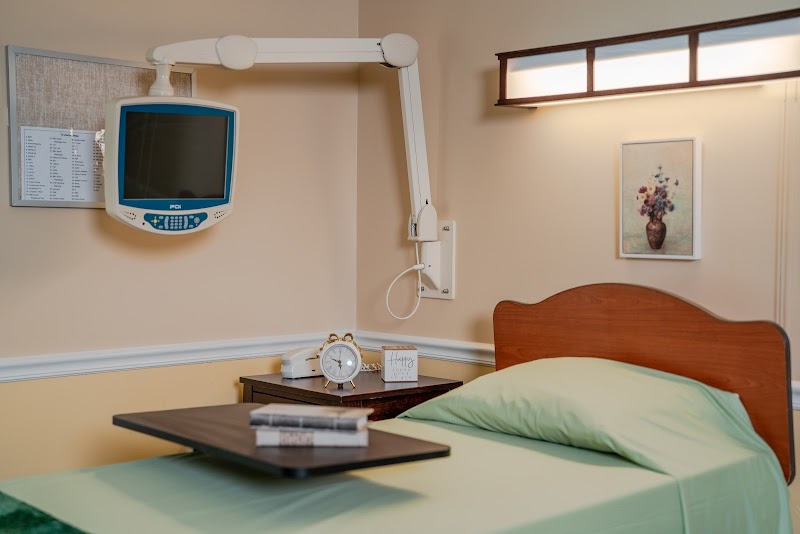
How is Yorkview Nursing And Rehabilitation Staffed?

CMS rates YORKVIEW NURSING AND REHABILITATION's staffing level at 3 out of 5 stars, which is average compared to other nursing homes. Staff turnover is 51%, compared to the Pennsylvania average of 46%.

What Have Inspectors Found at Yorkview Nursing And Rehabilitation?

State health inspectors documented 61 deficiencies at YORKVIEW NURSING AND REHABILITATION during 2023 to 2025. These included: 61 with potential for harm. While no single deficiency reached the most serious levels, the total volume warrants attention from prospective families.
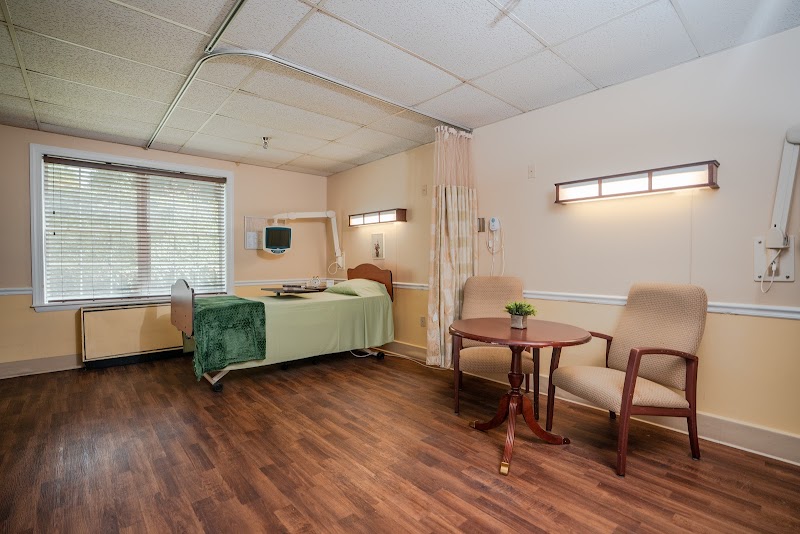
Who Owns and Operates Yorkview Nursing And Rehabilitation?

YORKVIEW NURSING AND REHABILITATION is owned by a for-profit company. For-profit facilities operate as businesses with obligations to shareholders or private owners. The facility operates independently rather than as part of a larger chain. With 270 certified beds and approximately 189 residents (about 70% occupancy), it is a large facility located in YORK, Pennsylvania.
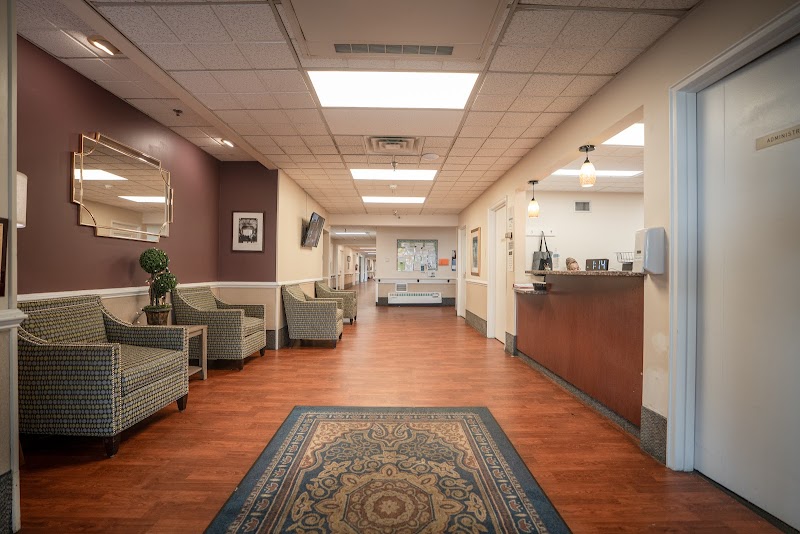
How Does Yorkview Nursing And Rehabilitation Compare to Other Pennsylvania Nursing Homes?

Compared to the 100 nursing homes in Pennsylvania, YORKVIEW NURSING AND REHABILITATION's overall rating (1 stars) is below the state average of 3.0, staff turnover (51%) is near the state average of 46%, and health inspection rating (1 stars) is much below the national benchmark.

What Should Families Ask When Visiting Yorkview Nursing And Rehabilitation?

Based on this facility's data, families visiting should ask: "Can I visit during a mealtime to observe dining assistance and food quality?" "How do you handle medical emergencies, and what is your hospital transfer rate?" "Can I speak with family members of current residents about their experience?"

Is Yorkview Nursing And Rehabilitation Safe?

Based on CMS inspection data, YORKVIEW NURSING AND REHABILITATION has a clean safety record: no substantiated abuse findings (meaning no confirmed cases of resident harm), no Immediate Jeopardy citations (the most serious violation level indicating risk of serious injury or death), and is not on the Special Focus Facility watch list (a federal program monitoring the lowest-performing 1% of nursing homes). The facility has a 1-star overall rating and ranks #100 of 100 nursing homes in Pennsylvania. While no facility is perfect, families should still ask about staff-to-resident ratios and recent inspection results during their visit.

Do Nurses at Yorkview Nursing And Rehabilitation Stick Around?

YORKVIEW NURSING AND REHABILITATION has a staff turnover rate of 51%, which is 5 percentage points above the Pennsylvania average of 46%. Moderate turnover is common in nursing homes, but families should still ask about staff tenure and how the facility maintains care continuity when employees leave.

Was Yorkview Nursing And Rehabilitation Ever Fined?

YORKVIEW NURSING AND REHABILITATION has no federal fines on record. CMS issues fines when nursing homes fail to meet care standards or don't correct problems found during inspections. The absence of fines suggests the facility has either maintained compliance or corrected any issues before penalties were assessed. This is a positive indicator, though families should still review recent inspection reports for the full picture.

Is Yorkview Nursing And Rehabilitation on Any Federal Watch List?

YORKVIEW NURSING AND REHABILITATION is not on any federal watch list. The most significant is the Special Focus Facility (SFF) program, which identifies the bottom 1% of nursing homes nationally based on persistent, serious quality problems. Not being on this list means the facility has avoided the pattern of deficiencies that triggers enhanced federal oversight. This is a positive indicator, though families should still review the facility's inspection history directly.