EBONY LAKE NURSING AND REHABILITATION CENTER
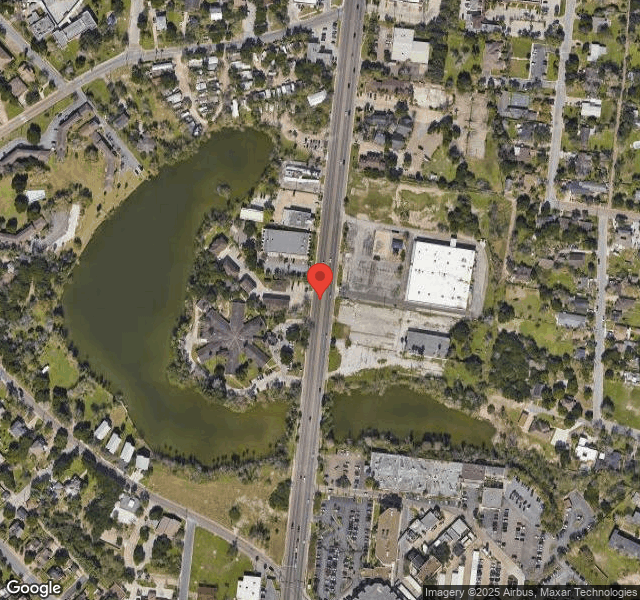
1001 CENTRAL BLVD, BROWNSVILLE, TX 78520 (956) 541-0917
Government - Hospital district 122 Beds WELLSENTIAL HEALTH Data: November 2025
Trust Grade
65/100
#453 of 1168 in TX
Last Inspection: September 2024

Within standard 12-15 month inspection cycle. Federal law requires annual inspections.

Overview

Ebony Lake Nursing and Rehabilitation Center in Brownsville, Texas has earned a Trust Grade of C+, which indicates a decent standing that is slightly above average. It ranks #453 out of 1168 facilities in Texas, placing it in the top half, and #6 out of 14 in Cameron County, meaning only five local options are better. The facility's performance trend is stable, with 15 concerns noted consistently over the last two years. Staffing is a weakness, rated at 1 out of 5 stars, but with a turnover rate of 40%, it is lower than the Texas average of 50%, suggesting some staff longevity. Notably, there have been concerning incidents, such as a failure to secure personal privacy for residents and a lack of accurate clinical documentation, which could impact residents' care and confidentiality. However, the facility has not incurred any fines, indicating no serious compliance issues.

Trust Score
C+
65/100
In Texas
#453/1168
Top 38%
Safety Record
Low Risk
No red flags
Inspections
Holding Steady
4 → 4 violations
Staff Stability
○ Average
40% turnover. Near Texas's 48% average. Typical for the industry.
Penalties
✓ Good
No fines on record. Clean compliance history, better than most Texas facilities.
Skilled Nurses
⚠ Watch
Each resident gets only 18 minutes of Registered Nurse (RN) attention daily — below average for Texas. Fewer RN minutes means fewer trained eyes watching for problems.
Violations
⚠ Watch
15 deficiencies on record. Higher than average. Multiple issues found across inspections.
★★★☆☆
3.0
Overall Rating
★☆☆☆☆
1.0
Staff Levels
★★★★☆
4.0
Care Quality
★★★★☆
4.0
Inspection Score
Stable
2024: 4 issues
2025: 4 issues

The Good

  • 4-Star Quality Measures · Strong clinical quality outcomes
  • Full Sprinkler Coverage · Fire safety systems throughout facility
  • No fines on record
  • Staff turnover below average (40%)

    8 points below Texas average of 48%

Facility shows strength in quality measures, fire safety.

The Bad

3-Star Overall Rating

Near Texas average (2.8)

Meets federal standards, typical of most facilities

Staff Turnover: 40%

Near Texas avg (46%)

Typical for the industry

Chain: WELLSENTIAL HEALTH

Part of a multi-facility chain

Ask about local staffing decisions and management

The Ugly 15 deficiencies on record

Sept 2025 2 deficiencies
CONCERN (D) 📢 Someone Reported This

A family member, employee, or ombudsman was alarmed enough to file a formal complaint

Potential for Harm - no one hurt, but risky conditions existed

Deficiency F0583 (Tag F0583)

Could have caused harm · This affected 1 resident

Based on observation, interview, and record review, the facility failed to ensure residents had a right to personal privacy and confidentiality of his or her personal and medical records for 12 reside...

Read full inspector narrative →
Based on observation, interview, and record review, the facility failed to ensure residents had a right to personal privacy and confidentiality of his or her personal and medical records for 12 residents' reviewed for residents' rights.The facility failed to ensure CMA A locked the medication cart computer screen and left an unidentified resident's picture exposed. This failure could place residents at risk of resident-identifiable information being accessed by unauthorized persons. The findings include:Observation and interview on 9/16/25 at 3:40 p.m. revealed CMA A walked out of a resident room from across the hall on the 400 hall and walked up to the unlocked computer screen on top of the medication cart counter which exposed a resident's picture. CMA A stated, she forgot to lock the computer screen and left the computer screen open which was a HIPAA violation and could result in an unauthorized person obtaining information from the resident and using their name fraudulently. During an interview on 9/16/25 at 5:40 p.m., the DON stated it was her expectation that staff locked the computer screens because exposed resident information was a HIPAA violation. The DON stated a resident's visible information could be used in the wrong way. Record review of the facility's document titled, Resident Rights, with revision date November 2021, revealed in part, .You have the right to: privacy, including during visits, phone calls and while attending to personal needs. Have facility information about you maintained as confidential
CONCERN (D) 📢 Someone Reported This

A family member, employee, or ombudsman was alarmed enough to file a formal complaint

Potential for Harm - no one hurt, but risky conditions existed

Medical Records (Tag F0842)

Could have caused harm · This affected 1 resident

**NOTE- TERMS IN BRACKETS HAVE BEEN EDITED TO PROTECT CONFIDENTIALITY** Based on interviews and record review, the facility failed to maintain clinical records on each resident that were complete and ...

Read full inspector narrative →
**NOTE- TERMS IN BRACKETS HAVE BEEN EDITED TO PROTECT CONFIDENTIALITY** Based on interviews and record review, the facility failed to maintain clinical records on each resident that were complete and accurately documented in accordance with accepted professional standards and practices for 1 (Resident #1) of 2 reviewed for accuracy and completeness of clinical records. The facility failed to accurately document in Resident #1's electronic medical record when she had her staples removed. This failure could place residents at risk for not receiving nursing services by adequately trained nurses and could result in a decline in health. Findings include: Record review of Resident #1's admission record dated 09/17/25 reflected an [AGE] year-old female with an admit date of 09/12/24 and a discharge date of 10/01/24. Her relevant diagnoses included left arm displaced comminuted (the pieces of the bone moved so much that a gap formed around the fracture) fracture of shaft of ulna(the long, tapering portion of the ulna bone), left arm displaced comminuted fracture of left humerus (long bone that runs from the shoulder and scapula), fracture of left pubis (one of the three bones that make up the hip bone), age-related physical debility (decline in strength and vitality associated with aging), and a commuted distal ulnar/radial fracture, left humeral shaft fracture, and left interior ramus fracture. Record review of Resident #1's Medicare 5-day MDS assessment dated [DATE] reflected a BIMS score of 9, which indicated her cognition was moderately impaired. Resident #1 had fractures and other multiple traumas as active diagnoses prior to being admitted . Record review of Resident #1's initial care plan dated 09/16/24 reflected: Problem: Resident #1 had an alteration in musculoskeletal status related to ulna/radius/humerus fracture, left pubis fracture. Interventions: in part included wearing a sling to the upper left extremity as per MD orders. Record review of Resident #1's progress note, dated 09/12/24 at 4:10 pm, authored by LVN B reflected in part [Resident #1] had been admitted from hospital . [Resident #1] was admitted to hospital related to a trip/fall at home in which she sustained a commuted distal ulnar/radial fracture, left humeral shaft fracture, left interior ramus fracture. [Resident #1] had left upper arm surgical wound with 30 staples, left wrist surgical wound with 12 staples. Record review of Resident #1's electronic medical record for the month of September 2024 reflected an entry on 09/23/24 which reflected: As per Dr., may remove staples from left surgical site. Start date 09/23/24. Order was signed off on 09/23/24 at 6:13 pm.Record review of Resident #1's progress note dated 09/30/24 at 4:49 pm, authored by LVN B reflected received orders from doctor, as per doctor may discontinue staples to left arm in facility. [Resident #1] and resident family made aware. In a telephone interview on 09/18/25 at 9:30 am, RN B said he remembered he entered an order to remove Resident #1's staples on 09/30/24 towards the end of his shift. RN B said he did not remember if he was the one who removed Resident #1's staples. In an interview on 09/18/25 at 10:00 am, LVN C said she received an order for Resident #1 on 09/23/24 to remove staples from the left surgical site. LVN C said she did not remember removing the staples herself and did not know who removed them. During a telephone interview on 09/18/25 at 10:37 am, Resident #1's RP said she had witnessed Resident #1's staples being removed on 09/23/24, by male nurse (did not get his name). Resident #1's RP said her mother had tolerated the removal and did not required medication. In an interview on 09/18/25 at 10:08 am, The DON said the facility's protocol for removing staples was to first obtain an order and then prepare the resident for the actual removal. The DON said after the removal, the nursing staff who removed the staples was required to enter a progress note that indicated whether the resident had tolerated the removal, if any significant findings were noted, the number of staples removed, and if any staples were left. The DON said the facility received two separate orders to remove Resident #1's staples, one on 09/23/24 and a second one on 09/30/24. She said she was not sure why they had received two. The DON said she was certain Resident #1's staples were removed on 09/23/24 as it was signed off on her electronic medical record. She said who signed off on the removal was the wound care nurse at that time and was no longer working at the facility. She said she could not explain why a second order was received on 09/30/24 and the documentation dated 09/30/24 was vague. The DON said the previous wound care nurse who removed Resident #1's staples had not documented the required information in Resident #1's electronic medical record. She said there were no negative outcomes to Resident #1 as her staples were removed on 09/23/24. This surveyor requested the facility's previous wound care nurse phone number but was not provided.Record review on 09/18/25 of Resident #1's electronic medical record reflected the previous wound care nurse had not documented she had removed Resident #1's staples. Record review of the facility's Documentation in the Medical Record policy dated 10/24/22 reflected: Policy: Each resident's medical record shall contain an accurate representation of the actual experiences of the resident and include enough information to provide a picture of the resident's progress through complete, accurate, and timely documentation. Policy Explanation and Compliance Guidelines: 1. Licensed staff and interdisciplinary team members shall document all assessments, observations, and services provided in the resident's medical record in accordance with state law and facility policy. 2.Documentation shall be completed at the time of service, but no later than the shift in which the assessment, observation, or care service occurred.
May 2025 2 deficiencies
CONCERN (D) 📢 Someone Reported This

A family member, employee, or ombudsman was alarmed enough to file a formal complaint

Potential for Harm - no one hurt, but risky conditions existed

Pharmacy Services (Tag F0755)

Could have caused harm · This affected 1 resident

**NOTE- TERMS IN BRACKETS HAVE BEEN EDITED TO PROTECT CONFIDENTIALITY** Based on interview and record review, the facility failed to provide pharmaceutical services (including procedures that assure t...

Read full inspector narrative →
**NOTE- TERMS IN BRACKETS HAVE BEEN EDITED TO PROTECT CONFIDENTIALITY** Based on interview and record review, the facility failed to provide pharmaceutical services (including procedures that assure the accurate acquiring, receiving, dispensing, and administering of all drugs and biologicals) to meet the needs of each resident for 1 of 4 residents (Residents #2), reviewed for pharmaceutical services, in that: The facility failed to ensure Resident #2's physician ordered Cozaar was held when her blood pressure was found to be out of parameters for administration. This failure could place residents at risk for not receiving medication as ordered. The findings included: 1. Record review of Resident #2's face sheet, dated 04/29/25, revealed the resident was an [AGE] year-old female who was initially admitted to the facility on [DATE] with diagnoses that included: other acute (sudden) kidney failure, secondary malignant neoplasm (cancerous tumor) of liver and intrahepatic bile duct, and secondary malignant neoplasm of retroperitoneum (is the space behind the peritoneum) and peritoneum (membrane that lines the abdominal cavity and covers the abdominal organs), essential (primary) hypertension (high blood pressure). Record review of Resident #2's MDS assessment, dated 04/22/25, revealed Resident #2 had a BIMS score of 10, indicating her cognition was moderately impaired. Record review of Resident #2's care plan with an initiation date of 04/21/25 reflected, [Resident #2] has altered cardiovascular status r/t (related to) CHF (congestive heart failure), hypertension with an initiation date of 05/02/25 with a goal of, The resident will be free from complications of cardiac problems through review date. with an initiation date of 05/02/25. Record review of Resident #2's physician's orders revealed orders for Cozaar Oral Tablet 50 MG, with additional directions of HOLD IF SBP (systolic blood pressure) <120 AND/OR DBP (diastolic blood pressure) <60 HOLD IF PULSE IS <60 with a start date of 04/18/25. Record review of Resident #2's April 2025 MAR revealed, Resident #2's physician order for, Cozaar Oral Tablet 50MG (Losartan Potassium) Give 1 tablet by mouth one time a day for HTN (hypertension) HOLD IF SBP is <120 AND/OR DBP <60 HOLD IF PULSE IS <60 was administered on 04/19/25, 04/20/25 and 04/21/25 based on check offs and signatures completed by MA A, MA B and MA C while Resident #2's blood pressure was out of parameters for administration of medication. On 04/19/25 Resident #2 had a blood pressure of 106/60, on 04/20/25 Resident #2 had a blood pressure of 114/68 and on 04/21/25 Resident #2 had a blood pressure of 106/71. During an interview with MA C on 04/25/25 at 4:58pm she stated she worked with Resident #2 on 04/21/25 and was responsible for administering Resident #2's medication. MA C stated prior to administering Cozaar she needed to check both blood pressure and pulse in the order to see if they would receive the medication or not. MA C stated on 04/21/25 she checked Resident #2's blood pressure and stated it was out of parameters and was at 106/71 from what she could recall. MA C stated she did not know provide Resident #2 with Cozaar and held it and stated her blood pressure was not within parameters. MA C stated she signed the MAR as administered by mistake and stated she did not notify any nurse about Resident #2's blood pressure being out of parameters and medication being held and stated she should have notified the nurse. MA C did not recall who the overnight nurse was. MA C stated she had received in-services over signing the MAR. During a follow up interview with MA C on 05/13/25 at 2:55pm MA C stated she would have to go to her DON for what the facility policy stated over accurately documenting on the MAR. MA C stated incorrect documentation could negatively impact them really bad and stated she did not know what to answer. During an interview with MA B on 04/29/25 at 2:42pm she stated she worked with Resident #2 on 04/20/25 and was responsible for administering Resident #2's medication. MA B stated prior to administering Cozaar she needed to look at the parameters, MA B stated she checked Resident #2's blood pressure and it was 114/68 and stated based on that reading it should not have been administered. MA B stated she assumed the parameters for Resident #2 were the same as before because they never had parameters like Resident #2's at the facility before. MA B stated the blood pressure parameters at the facility were all almost the same and were usually 100/60 and stated this one kind of slipped on us and she stated after she took Resident #2's blood pressure she gave her the Cozaar medication and Resident #2 spit it out due to being nauseous. MA B stated that because she had placed the medication in Residents #2's mouth she documented it as administered. MA B stated she could have written a note about the administered and spit out medication but did not, MA B stated she probably just forgot to write a note because they were busy most of the time. MA B stated she thought she had told a nurse about Resident #2 being administered her Cozaar and then spitting it out but could not remember. MA B stated she had received in-services over signing the MAR and following the parameters after the incident had occurred. MA B stated the facility policy for medication parameters stated to always take the blood pressure before administering. MA B stated she had not followed the facility policy due to not reading the parameters. MA B stated it was important to review orders, parameters, and directions prior to administering medication because it was procedure and important for the resident safety. MA B stated providing blood pressure mediation to a resident who was not within parameters could be negatively impacted because their blood pressure could go down. During an interview with MA A on 05/13/25 at 8:57am she stated she worked with Resident #2 on 04/19/25 and was responsible for administering Resident #2's medication. MA A stated prior to administering Cozaar she needed to see how the patient was and check their blood pressure and compare it to the parameters listed on the order to see if they would receive the medication or not. MA A stated on 04/19/25 she checked Resident #2's blood pressure but did not recall the exact reading and stated she thought it was 100 or 114 over 70. MA A was shown Resident #2's April 2025 MAR that revealed a blood pressure of 106/62, MA A stated based on the blood pressure her Cozaar should not be administered. MA A stated she did not administer Cozaar to Resident #2 on 04/19/25 and stated she should have coded it as 4 which she stated indicated the resident was out of parameters and the medication could not be given. MA A stated she did not know why she signed it as administered and stated she was just in a rush. MA A stated she should have notified the nurse that the Resident #2's blood pressure was out of parameters and that the medication would be held, MA A did not remember if she notified the nurse. MA A stated she had received in-services over signing the MAR. MA A stated she did not recall seeing a facility policy over accurately documenting on the MAR. MA A stated incorrect documentation could negatively impact a resident's health. During an interview with the DON on 05/13/25 at 5:29pm she stated MA A was responsible for administration and documentation on the MAR for Resident #2's Cozaar on 04/19/25, MA B was responsible on 04/20/25 and MA A on 04/21/25. The DON stated the staff had to check the blood pressure and pulse prior to administering and stated a blood pressure under 120/60 or a pulse under 60 would require the medication to be held. The DON stated all 3 staff members checked Resident #2's blood pressure and stated her Cozaar should not have been administered on any of the 3 days based on her blood pressure of 106/62 on 04/19/25, 114/68 on 04/20/25 and 106/71 on 04/21/25. The DON reviewed Resident #2's April 2025 MAR and confirmed the blood pressure of 106/62 on 04/19/25, 114/68 on 04/20/25 and 106/71 on 04/21/25. The DON stated MA A and C did not administer the medication on 04/19/25 and 04/25. The DON stated MA A and MA C signed as administered in error and stated it should have been coded as out of parameters. The DON stated MA B gave the medication to Resident #2 but she spit it out. The DON stated she did not know why MA B administered Cozaar to Resident #2 when she had her blood pressure out of parameters and stated it was a mistake she overlooked. The DON stated staff had been trained to check the blood pressure, look at the parameters and to notify the nurse if out of parameters and to document if given or not. The DON stated MA B could have written a note and should have documented it as not administered and should have notified the nurse of the blood pressure being out of parameters and being held. The DON stated in all 3 situation the staff should have notified the nurses and stated they had not based on what she knew. The DON stated all 3 staff had been trained on signing the MAR and following medication parameters. The DON stated all 3 staff were trained immediately after and prior but could not recall when. The DON stated the facility policy for following parameters for medication stated they were responsible for following physician orders. The DON stated the 3 staff did not follow the facility policies. The DON stated incorrect documentation on the MAR could negatively impact the resident because it reflected something was provided when it was not. The DON stated providing blood pressure medication to a resident whose blood pressure was not in parameter could negatively impact them on a case by case basis and could lower the blood pressure. The DON stated she determined staff were competent to provide residents medication while following the order in place by doing medication pass audits, training, and competencies. The DON stated all 3 staff have completed competencies for order, parameters and documentation. Record review of Medication Pass Competency Assessment dated 07/03/24 for MA A, MA B and MA C reflected they were checked off as met for, MAR is read prior to preparing medications. And checked pulse and/or blood pressure and recorded prior to med administration when orders/indicated and Medication held if Vital signs were not within the parameters as ordered and Residents refusal of medication is recorded. Record review of Medication Pass Competency Assessment dated 04/28/25 for MA A, reflected she was checked off as met for, MAR is read prior to preparing medications. And checked pulse and/or blood pressure and recorded prior to med administration when orders/indicated and Medication held if Vital signs were not within the parameters as ordered and Residents refusal of medication is recorded. Record review of Medication Pass Competency Assessment dated 04/29/25 for MA B reflected she was checked off as met for, MAR is read prior to preparing medications. And checked pulse and/or blood pressure and recorded prior to med administration when orders/indicated and Medication held if Vital signs were not within the parameters as ordered and Residents refusal of medication is recorded. Record review of Medication Pass Competency Assessment dated 04/30/25 for MA C reflected she was checked off as met for, MAR is read prior to preparing medications. And checked pulse and/or blood pressure and recorded prior to med administration when orders/indicated and Medication held if Vital signs were not within the parameters as ordered and Residents refusal of medication is recorded. Record review on facility Inservice dated 04/21/25 that covered topic of FOLLOW MD ORDERS AND PARAMETER FOR MEDICATION ADMINISTRATION with a summary of, CMAS AND CHARGE NURSES SHOULD FOLOW THE MD ORDERS WHEN ADMINISTER [administering] MEDICATIONS AS WELL AS MEDICATION ADMINISTRATION PARAMETERS. CMAS SHOULD NOTIFY CHARGE NURSE WHEN HOLDING MEDCIATION AND WHEN RESIDENT REFUSE MEDICATION CHARGE NURSE TO NOTIFY MD OF MEDICAITON REFUSALS AND WHEN MEDICZTIONS ARE HELD. Revealed MA A, MA B and MA C had all received the education. Record review of employee counseling report dated 04/21/25 revealed MA C had documented the administration of medication however no medication was required or administered per the residents' parameters. Record review of facility policy titled Medication Administration with an implementation date of 10/24/22 stated, 8. Obtain and record vital signs, when applicable or per physician orders. When applicable, hold medication for those vital signs outside of the physician prescribed parameters. and 19. Report and document any adverse side effects or refusals. And 20. Correct any discrepancies and report to nurse manager.
CONCERN (D) 📢 Someone Reported This

A family member, employee, or ombudsman was alarmed enough to file a formal complaint

Potential for Harm - no one hurt, but risky conditions existed

Medical Records (Tag F0842)

Could have caused harm · This affected 1 resident

**NOTE- TERMS IN BRACKETS HAVE BEEN EDITED TO PROTECT CONFIDENTIALITY** Based on interview and record review, the facility failed to maintain clinical records in accordance with accepted professional ...

Read full inspector narrative →
**NOTE- TERMS IN BRACKETS HAVE BEEN EDITED TO PROTECT CONFIDENTIALITY** Based on interview and record review, the facility failed to maintain clinical records in accordance with accepted professional standards and practices that are complete and accurately documented for 1 of 4 residents (Resident #2) reviewed for medical records accuracy, in that: Resident #2's April 2025 MAR documentation was inaccurate. Staff signed off on physician ordered medication as administered when it was not. This deficient practice could affect residents whose records are maintained by the facility and could place them at risk for errors in care, and treatment. The findings included: 1. Record review of Resident #2's face sheet, dated 04/29/25, revealed the resident was an [AGE] year-old female who was initially admitted to the facility on [DATE] with diagnoses that included: other acute (sudden) kidney failure, secondary malignant neoplasm (cancerous tumor) of liver and intrahepatic bile duct, and secondary malignant neoplasm of retroperitoneum (is the space behind the peritoneum) and peritoneum (membrane that lines the abdominal cavity and covers the abdominal organs), essential (primary) hypertension (high blood pressure). Record review of Resident #2's MDS assessment, dated 04/22/25, revealed Resident #2 had a BIMS score of 10, indicating her cognition was moderately impaired. Record review of Resident #2's care plan with an initiation date of 04/21/25 reflected, [Resident #2] has altered cardiovascular status r/t (related to) CHF (congestive heart failure), hypertension with an initiation date of 05/02/25 with a goal of, The resident will be free from complications of cardiac problems through review date. with an initiation date of 05/02/25. Record review of Resident #2's physician's orders revealed orders for Cozaar Oral Tablet 50 MG, with additional directions of HOLD IF SBP (systolic blood pressure) <120 AND/OR DBP (diastolic blood pressure) <60 HOLD IF PULSE IS <60 with a start date of 04/18/25. Record review of Resident #2's April 2025 MAR revealed, Resident #2's physician order for, Cozaar Oral Tablet 50MG (Losartan Potassium) Give 1 tablet by mouth one time a day for HTN (hypertension) HOLD IF SBP is <120 AND/OR DBP <60 HOLD IF PULSE IS <60 was administered on 04/19/25 by MA A, 04/20/25 by MA B and 04/21/25 by MA C based on check offs and signatures completed by MA A, MA B and MA C while Resident #2's blood pressure was out of parameters for administration of medication. On 04/19/25 Resident #2 had a blood pressure of 106/60, on 04/20/25 Resident #2 had a blood pressure of 114/68 and on 04/21/25 Resident #2 had a blood pressure of 106/71. During an interview with MA C on 04/25/25 at 4:58pm she stated she worked with Resident #2 on 04/21/25 and was responsible for administering Resident #2's medication. MA C stated prior to administering Cozaar she needed to check both blood pressure and pulse in the order to see if they would receive the medication or not. MA C stated on 04/21/25 she checked Resident #2's blood pressure and stated it was out of parameters and was at 106/71 from what she could recall. MA C stated Resident #2's blood pressure was not within parameters and stated she did not provide Resident #2 with Cozaar and held it. MA C stated she signed the MAR as administered by mistake and stated she did not notify any nurse about Resident #2's blood pressure being out of parameters and medication being held and stated she should have notified the nurse. MA C did not recall who the overnight nurse was. MA C stated she had received in-services over signing the MAR. During an interview with MA B on 04/29/25 at 2:42pm she stated she worked with Resident #2 on 04/20/25 and was responsible for administering Resident #2's medication. MA B stated prior to administering Cozaar she needed to look at the parameters, MA B stated she checked Resident #2's blood pressure and it was 114/68 and stated based on that reading it should not have been administered. MA B stated she assumed the parameters for Resident #2 were the same as before because they never had parameters like Resident #2's at the facility before. MA B stated the blood pressure parameters at the facility were all almost the same and were usually 100/60 and stated this one kind of slipped on us and she stated after she took Resident #2's blood pressure she gave her the Cozaar medication and Resident #2 spit it out due to being nauseous. MA B stated that because she had placed the medication in Residents #2's mouth she documented it as administered. MA B stated she could have written a note about the administered and spit out medication but did not, MA B stated she probably just forgot to write a note because they were busy most of the time. MA B stated she thought she had told a nurse about Resident #2 being administered her Cozaar and then spitting it out but could not remember. MA B stated she had received in-services over signing the MAR and following the parameters after the incident had occurred. MA B stated the facility policy for medication parameters stated to always take the blood pressure before administering. MA B stated she had not followed the facility policy due to not reading the parameters. MA B stated it was important to review orders, parameters, and directions prior to administering medication because it was procedure and important for the resident safety. MA B stated providing blood pressure medication to a resident who was not within parameters could be negatively impacted because their blood pressure could go down. During an interview with MA A on 05/13/25 at 8:57am she stated she worked with Resident #2 on 04/19/25 and was responsible for administering Resident #2's medication. MA A stated prior to administering Cozaar she needed to see how the patient was and check their blood pressure and compare it to the parameters listed on the order to see if they would receive the medication or not. MA A stated on 04/19/25 she checked Resident #2's blood pressure but did not recall the exact reading and stated she thought it was 100 or 114 over 70. MA A was shown Resident #2's April 2025 MAR that revealed a blood pressure of 106/62, MA A stated based on the blood pressure her Cozaar should not be administered. MA A stated she did not administer Cozaar to Resident #2 on 04/19/25 and stated she should have coded it as 4 which she stated indicated the resident was out of parameters and the medication could not be given. MA A stated she did not know why she signed it as administered and stated she was just in a rush. MA A stated she should have notified the nurse that the Resident #2's blood pressure was out of parameters and that the medication would be held, MA A did not remember if she notified the nurse. MA A stated she had received in-services over signing the MAR. MA A stated she did not recall seeing a facility policy over accurately documenting on the MAR. MA A stated incorrect documentation could negatively impact a residents health. During a follow up interview with MA C on 05/13/25 at 2:55pm MA C stated she would have to go to her DON for what the facility policy stated over accurately documenting on the MAR. MA C stated incorrect documentation could negatively impact them really bad and stated she did not know what to answer. During an interview with the DON on 05/13/25 at 5:29pm she stated MA A was responsible for administration and documentation on the MAR for Resident #2's Cozaar on 04/19/25, MA B was responsible on 04/20/25 and MA A on 04/21/25. The DON stated the staff had to check the blood pressure and pulse prior to administering and stated a blood pressure under 120/60 or a pulse under 60 would require the medication to be held. The DON stated all 3 staff members checked Resident #2's blood pressure and stated her Cozaar should not have been administered on any of the 3 days based on her blood pressure of 106/62 on 04/19/25, 114/68 on 04/20/25 and 106/71 on 04/21/25. The DON reviewed Resident #2's April 2025 MAR and confirmed the blood pressure of 106/62 on 04/19/25, 114/68 on 04/20/25 and 106/71 on 04/21/25. The DON stated MA A and C did not administer the medication on 04/19/25 and 04/25. The DON stated MA A and MA C signed as administered in error and stated it should have been coded as out of parameters. The DON stated MA B gave the medication to Resident #2 but she spit it out. The DON stated she did not know why MA B administered Cozaar to Resident #2 when she had her blood pressure out of parameters and stated it was a mistake she overlooked. The DON stated staff had been trained to check the blood pressure, look at the parameters and to notify the nurse if out of parameters and to document if given or not. The DON stated MA B could have written a note and should have documented it as not administered and should have notified the nurse of the blood pressure being out of parameters and being held. The DON stated in all 3 situation the staff should have notified the nurses and stated they had not based on what she knew. The DON stated all 3 staff had been trained on signing the MAR and following medication parameters. The DON stated all 3 staff were trained immediately after and prior but could not recall when. The DON stated the facility policy for accurately documenting on the MAR and following parameters for medication stated they were responsible for accurately documenting on the medication MAR and following physician orders. The DON stated the 3 staff did not follow the facility policies. The DON stated incorrect documentation on the MAR could negatively impact the resident because it reflected something was provided when it was not. The DON stated providing blood pressure medication to a resident whose blood pressure was not in parameter could negatively impact them on a case by case basis and could lower the blood pressure. The DON stated she determined staff were competent to provide residents medication while following the order in place by doing medication pass audits, training, and competencies. The DON stated all 3 staff have completed competencies for order, parameters and documentation. Record review of Medication Pass Competency Assessment dated 07/03/24 for MA A, MA B and MA C reflected they were checked off as met for, MAR is read prior to preparing medications. And checked pulse and/or blood pressure and recorded prior to med administration when orders/indicated and Medication held if Vital signs were not within the parameters as ordered and Residents refusal of medication is recorded. Record review of Medication Pass Competency Assessment dated 04/28/25 for MA A, reflected she was checked off as met for, MAR is read prior to preparing medications. And checked pulse and/or blood pressure and recorded prior to med administration when orders/indicated and Medication held if Vital signs were not within the parameters as ordered and Residents refusal of medication is recorded. Record review of Medication Pass Competency Assessment dated 04/29/25 for MA B reflected she was checked off as met for, MAR is read prior to preparing medications. And checked pulse and/or blood pressure and recorded prior to med administration when orders/indicated and Medication held if Vital signs were not within the parameters as ordered and Residents refusal of medication is recorded. Record review of Medication Pass Competency Assessment dated 04/30/25 for MA C reflected she was checked off as met for, MAR is read prior to preparing medications. And checked pulse and/or blood pressure and recorded prior to med administration when orders/indicated and Medication held if Vital signs were not within the parameters as ordered and Residents refusal of medication is recorded. Record review on facility Inservice dated 04/21/25 that covered topic of FOLLOW MD ORDERS AND PARAMETER FOR MEDICATION ADMINISTRATION with a summary of, CMAS AND CHARGE NURSES SHOULD FOLOW THE MD ORDERS WHEN ADMINISTER [administering] MEDICATIONS AS WELL AS MEDICATION ADMINISTRATION PARAMETERS. CMAS SHOULD NOTIFY CHARGE NURSE WHEN HOLDING MEDCIATION AND WHEN RESIDENT REFUSE MEDICATION CHARGE NURSE TO NOTIFY MD OF MEDICAITON REFUSALS AND WHEN MEDICZTIONS ARE HELD. Revealed MA A, MA B and MA C had all received the education. Record review of employee counseling report dated 04/21/25 revealed MA C had documented the administration of medication however no medication was required or administered per the residents' parameters. Record review of facility policy titled Medication Administration with an implementation date of 10/24/22 stated, 8. Obtain and record vital signs, when applicable or per physician orders. When applicable, hold medication for those vital signs outside of the physician prescribed parameters. and 19. Report and document any adverse side effects or refusals. And 20. Correct any discrepancies and report to nurse manager.
Sept 2024 4 deficiencies
CONCERN (D)

Potential for Harm - no one hurt, but risky conditions existed

Comprehensive Care Plan (Tag F0656)

Could have caused harm · This affected 1 resident

**NOTE- TERMS IN BRACKETS HAVE BEEN EDITED TO PROTECT CONFIDENTIALITY** Based on interviews and record review, the facility failed to develop and implement a person-centered care plan for each residen...

Read full inspector narrative →
**NOTE- TERMS IN BRACKETS HAVE BEEN EDITED TO PROTECT CONFIDENTIALITY** Based on interviews and record review, the facility failed to develop and implement a person-centered care plan for each resident that included measurable objectives and timeframes to meet a resident's medical, nursing, and mental and psychosocial needs that were identified in the comprehensive assessment for 1 of 4 residents (Resident #34) reviewed for comprehensive care plans. Resident #34's comprehensive care plan was not revised after the code status was changed from DNR to a Full Code. This failure could place residents at risk for inadequate care during an emergent situation. The findings included: Record review of Resident #34's face sheet dated [DATE] reflected a [AGE] year-old-male with an original admission date of [DATE]. Diagnoses included bone cancer, chronic obstructive pulmonary disease (lung disease causing restricted airflow and breathing problems), and type two diabetes (insufficient production of insulin in the body). Record review of Resident #34's care plan dated [DATE] and revised on [DATE] stated Resident #34 was a DNR. Interventions included: Ensure signed DNR is in medical record. If resident has a cardiac arrest, do not call 911 or initiate CPR. Notify MD/RP and follow instructions after notification. Record review of Resident #34's physician orders dated [DATE] reflected a code status of CPR (full code). In an interview on [DATE] 03:04 PM the MDS Coordinator stated Resident #34 was supposed to be a full code and the care plan should have reflected Resident #34's current code status. The MDS Coordinator stated Resident #34 used to be a DNR. The MDS Coordinator stated Resident #34 had gone to the hospital sometime in June or July of this year and when he returned to the facility from the hospital, Resident #34 and family wanted the code status to be changed to full code. The MDS Coordinator stated Resident #34's code status was overlooked. The MDS Coordinator stated staff follows the code status that was found at the top the of the chart which did state Resident #34 was a full code. The MDS Coordinator stated the DNR code status should have been removed and the care plan updated so it would have Resident #34's individualized plan of care. The MDS Coordinator stated she was going to correct Resident #34's care plan immediately. In an interview on [DATE] 09:55 AM the DON stated Resident #34's care plan should have been updated when the change in code status happened. The DON stated Resident #34 used to be a DNR and was on hospice services. The DON stated Resident #34 came back to the facility from the hospital and Resident #34 and his family agreed for the code status be updated to a full code. The DON stated Resident #34's care plan should match the correct code status so staff are able to know the correct plan of care and what action to take in case of an emergency. The DON stated the IDT looks over care plans and are audited quarterly or as needed. The DON stated Resident #34's care plan was missed. The DON stated she felt Resident #34 was not affected by the care plan not having the correct code status as the correct code status was in the Resident #34's chart and physician orders. Record review of facility's Care Plan Revision Upon Status Change policy dated [DATE] stated: Policy: The purpose of this procedure is to provide a consistent process for reviewing process for reviewing and revising the care plan for those residents experiencing a status change. Policy Explanation and Compliance Guidelines: 2. Procedure for reviewing and revising the care plan when a resident experiences a status change: b. The MDS Coordinator and the Interdisciplinary Team will discuss the resident condition and collaborate on intervention options. c. The team meeting discussion will be documented in the nursing progress notes. d. The care plan will be updated with new or modified interventions. f. Care plans will be modified as needed by the MDS Coordinator or other designated staff member. g. The Unit Manager or other designated staff member will communicate care plan interventions to all staff involved in the resident's care. h. The Unit Manager or other designated staff member will conduct an audit on all residents experiencing a change in status, at the time the change in status is identified, to ensure care plans have been updated to reflect current resident needs.
CONCERN (D) 📢 Someone Reported This

A family member, employee, or ombudsman was alarmed enough to file a formal complaint

Potential for Harm - no one hurt, but risky conditions existed

Respiratory Care (Tag F0695)

Could have caused harm · This affected 1 resident

**NOTE- TERMS IN BRACKETS HAVE BEEN EDITED TO PROTECT CONFIDENTIALITY** Based on observation, interview and record review, the facility failed to ensure that a resident who needs respiratory care, inc...

Read full inspector narrative →
**NOTE- TERMS IN BRACKETS HAVE BEEN EDITED TO PROTECT CONFIDENTIALITY** Based on observation, interview and record review, the facility failed to ensure that a resident who needs respiratory care, including tracheostomy care and tracheal suctioning, is provided such care, consistent with professional standards of practice, the comprehensive person-centered care plan, the residents' goals and preferences for 1 (Resident #8) of 6 residents reviewed for respiratory care in that: 1, The facility failed to date and/or change the suction canister, suction tubing, and suction device for Resident #8. 2. The facility failed to ensure there was a physician order to change the suction canister, suction tubing, suction device, oxygen tubing, and nebulizer for Resident #8. These failures could place residents that had a need for oxygen or suctioning at risk of infection. The findings included: Record review of Resident #8's admission record reflected a [AGE] year-old male that had an original admission date of 9/24/15 and was re-admitted on [DATE]. Diagnoses included Chronic Obstructive Pulmonary Disease (COPD - a group of lung diseases that block airflow and make it difficult to breathe), Congestive Heart Failure (the heart does not beat effectively enough and can cause fluid buildup in the lungs), Alzheimer's (a progressive disease that destroys memory and other important mental functions), and Dementia (loss of memory, language, problem-solving and other thinking abilities). Record review of Resident #8's Quarterly MDS dated [DATE] reflected a BIMS score of 2 which indicated Resident #8 had severe cognitive impairment. Resident #8's MDS also reflected that he was coded for oxygen therapy while a resident. Record review of Resident #8's comprehensive care plan reflected in part: Problem: Resident #8 has COPD and COPD with exacerbation (an increase in difficulty breathing). Initiated: 2/17/18, revised 3/8/21. Goal: Resident #8 will be free of signs/symptoms of respiratory infections through review date. Initiated: 2/17/18, revised: 3/6/24, target date: 11/26/24. Interventions: Give aerosol, nebulizer treatments or bronchodilators as ordered. Monitor/ document any side effects and effectiveness. Initiated: 2/17/18, revised: 5/12/21. Monitor for difficulty breathing on exertion. Initiated: 2/17/18, revised: 11/2/18. Monitor/document/report PRN (as needed) any signs/symptoms of respiratory infection: fever, chills, increase in sputum (document the amount, color, and consistency), chest pain, increased difficulty breathing, increased coughing and wheezing. Initiated 2/17/18. Record review of Resident #8's physician orders on 9/26/24 reflected an order dated 9/24/24 that stated, Oxygen at 3 lpm (liters per minute) via nasal cannula every shift for hypoxia, and an order dated 8/30/24 that stated, Suctioning by mouth every 8 hours as needed for congestion. There were no orders found that related to changing out oxygen or suction supplies. Observation of Resident #8's room on 9/24/24 at 9:31am revealed a suction canister was on top of a rolling table next to Resident #8's bed. The suction canister did not have a date on it and had approximately 400ml of a clear colored cloudy liquid inside. There was suction tubing connected to the suction canister on one end and to a Yankauer suction device (hard suction device used to suction secretions out of the mouth) on the other end. The suction tubing was not dated and the Yankauer suction device was slid into its previously opened packaging. The date on the Yankauer suction device packaging was 9/16/24. Observation of Resident #8's room on 9/26/24 at 9:02am revealed the suction canister was in the same location as before but had been dated 9/23 with [initials] below it written with black marker on the lid of the suction canister. The suction canister still contained approximately 400ml of a clear colored cloudy liquid. The suction tubing was still attached to the suction canister at one end and to the Yankauer suction device (hard suction device used to suction secretions out of the mouth) at the other end. The Yankauer suction device was still in the packaging dated 9/16/24. In an interview on 09/26/24 at 9:21am, RN B stated the suction canisters were one time use for a week. RN B stated they would change them out sooner than a week if they were smelly or if the resident had some kind of respiratory infection. RN B stated the suction tubing and Yankauer were supposed to be changed out weekly or as needed if soiled, as was the oxygen tubing. RN B stated the Yankauer, and suction tubing should have been changed when the canister was. RN B stated he last worked Monday night and if he would have had to suction Resident #8, he would have changed out the suction supplies, but Resident #8 has not needed to be suctioned. RN B stated if Resident #8 had needed a nebulizer treatment, he would check the date on the oxygen tubing and nebulizer and change it if it was over a week old. RN B stated he was going to go change out the suction supplies at the end of the interview. RN B stated if the supplies were not changed out, nosocomial infection, bacterial growth, and hospitalization could occur. In an interview on 9/26/24 at 9:49am the ADON stated suction supplies were to be changed every 7 days and as needed. The ADON stated if the suction or oxygen supplies were not changed out, bacteria could start to grow, and it could cause infection for the resident. The ADON stated, With the Yankauer dated 9/16/24, it makes me doubt the 9/23 date on the canister. The ADON stated [initials] might have been the respiratory therapist, but they did not have a nurse with those initials. The ADON stated the respiratory therapist had not been to the facility to see a resident for at least four days. The ADON stated the respiratory therapist worked as needed and would come in to see specific patients or do in-services. The ADON stated the did do in-service on supplies and the last one was in August for all staff. The ADON stated it was on the orders when the oxygen tubing was supposed to be changed out. In an interview on 9/26/24 at 9:53am the DON stated disposable supplies were to be changed out weekly or as needed if they were soiled. The DON stated if suction and oxygen supplies were not changed out, it could cause infection and possibly hospitalization. Record review of the facility's Infection Prevention and Control Program Policy dated 5/13/23 reflected in part: Policy: This facility has established and maintains an infection prevention and control program designed to provide a safe, sanitary and comfortable environment and to help prevent the development and transmission of communicable diseases and infections as per accepted national standards and guidelines. 2. All staff are responsible for following all policies and procedures related to the program. 10. Equipment Protocol: a. Single use disposable equipment is an alternative to sterilizing reusable medical instruments. Single use devices must be discarded after use and are never used for more than one resident. 11. Supplies Protocol: a. Sterile supplies shall be appropriately packaged and sterilized or purchased prepackaged and sterile from the manufacturer. b. Prepackaged sterile items are considered sterile until opened or damaged. Packaging shall be inspected prior to use. 16. Staff Education: a. All staff shall receive training, relevant to their specific roles and responsibilities, regarding the facility's infection prevention and control program, including policies and procedures related to their job function. b. All staff shall demonstrate competence in resident care procedures established by our facility.
CONCERN (D)

Potential for Harm - no one hurt, but risky conditions existed

Food Safety (Tag F0812)

Could have caused harm · This affected 1 resident

Based on observations, interviews, and record reviews, the facility failed to store, prepare, distribute and serve food in accordance with professional standards for food service safety for 1 (Cook E)...

Read full inspector narrative →
Based on observations, interviews, and record reviews, the facility failed to store, prepare, distribute and serve food in accordance with professional standards for food service safety for 1 (Cook E) of 3 kitchen staff reviewed for storage, preparation and sanitation. The facility failed to ensure [NAME] E performed hand hygiene for at least 20 seconds while prepping resident meals for breakfast. This failure could place residents at risk for cross-contamination and infections. The findings included: During a kitchen tour observation on 09/24/24 at 7:17 AM [NAME] E was observed washing her hands for 5 seconds after picking up an item off the kitchen floor. During a second observation on 09/24/24 at 7:31 AM [NAME] E was observed washing her hands for 3 seconds after taking food temperatures. In an interview on 09/24/24 at 07:30 AM [NAME] E stated handwashing should be done for 20 seconds as to avoid cross-contamination in food and spreading germs to residents. [NAME] E stated she dropped something on the floor and after picking it up, she went to wash her hands and became nervous because she knew she was being watched. [NAME] E stated she was last in-serviced on handwashing a few weeks ago but could not remember the date. In an interview on 09/24/24 at 01:29 PM the DM stated all staff should wash hands for at least 20 seconds as they are in-serviced regularly. The DM stated if hands were not washed it could lead to cross-contamination of food that was served to the resident. The DM stated she was going to conduct an in-service on hand hygiene immediately to all kitchen staff as to prevent cross-contamination to food. In an interview on 09/26/24 at 09:49 AM the ADON/Infection Control Preventionist, stated handwashing should be done for 20 to 30 seconds. The ADON stated handwashing should be done appropriately to stop the spread of infections and bacteria to residents, staff, and visitors. The ADON stated when infection control and handwashing in-services are conducted monthly, all staff including kitchen staff are in-serviced. The ADON stated it was important for all staff including kitchen staff to wash hands appropriately as they handle food. In an interview on 09/26/24 at 09:53 AM the DON stated handwashing should be at least 20-30seconds to prevent the spread of bacteria or germs to residents, staff, and visitors. The DON stated and record review revealed, a hands-on in-service on handwashing was conducted on 9/25/24 for all staff. Record review of facility's Hand Hygiene policy dated 10/24/22 stated: Policy: All staff will perform proper hand hygiene procedures to prevent the spread of infection to other personnel, residents, and visitors. This applies to all staff working in all locations within the facility. 5. Hand hygiene technique when using soap and water: c. Rub hands together vigorously for at least 20 seconds, covering all surfaces of the hands and fingers. References: FDA Food Code 2022 Title 21, Chapter 1, Subchapter B § 112.32: Washing hands thoroughly, including scrubbing with soap (or other effective surfactant) and running water that satisfies the requirements of § 112.44(a) (as applicable) for water used to wash hands, and drying hands thoroughly using single-service towels, sanitary towel service, electric hand dryers, or other adequate hand drying devices: (i) Before starting work; (ii) Before putting on gloves; (iii) After using the toilet; (iv) Upon return to the work station after any break or other absence from the work station; (v) As soon as practical after touching animals (including livestock and working animals), or any waste of animal origin; and (vi) At any other time when the hands may have become contaminated in a manner that is reasonably likely to lead to contamination of covered produce with known or reasonably foreseeable hazards.
CONCERN (D)

Potential for Harm - no one hurt, but risky conditions existed

Medical Records (Tag F0842)

Could have caused harm · This affected 1 resident

**NOTE- TERMS IN BRACKETS HAVE BEEN EDITED TO PROTECT CONFIDENTIALITY** Based on observations, interviews and record review, the facility failed to maintain clinical records on each resident that were...

Read full inspector narrative →
**NOTE- TERMS IN BRACKETS HAVE BEEN EDITED TO PROTECT CONFIDENTIALITY** Based on observations, interviews and record review, the facility failed to maintain clinical records on each resident that were complete and accurately documented in accordance with accepted professional standards and practices for 1 (Resident #31) of 6 residents reviewed for accuracy and completeness of clinical records. The facility failed to accurately document in the treatment administration record when Resident #31 received supplemental oxygen. This failure could result in residents' records not accurately reflecting the administration of treatments and could result in further error and a decline in heath. The findings included: Record review of Resident #31's face sheet dated 09/26/24 reflected an [AGE] year-old female with an admission date of 10/04/22 and an original admission date of 09/21/22. Pertinent diagnoses included Dementia (loss of cognitive functioning that interferes with daily life activities), and Diastolic Heart Failure (condition in which your heart's main pumping chamber (left ventricle) becomes stiff and unable to fill properly) Record review of Resident #31's Comprehensive MDS assessment section C, cognitive patterns, dated 09/05/24 reflected an inability to obtain a BIMS score due to Resident #31's status as rarely/never understood. MDS assessment section O, special treatments, procedures, and programs reflected Resident #31 had not received oxygen therapy in the past 14 days at the facility. Record review of Resident #31's care plan reflected the problem [Resident #31] had altered respiratory status/difficulty breathing r/t SOB, Anxiety initiated on 10/14/22. An intervention to treat the problem reflected Oxygen at 2 LPM via nasal canula as needed as per MD orders initiated on 11/04/22. Record review of Resident #31's order summary reflected an active order dated 11/03/22 for Oxygen at 2 LPM via nasal canula every 2 hours as needed for hypoxia [condition that occurs when the body or a part of the body does not receive enough oxygen] if < 92% Record review of Resident #31's MAR on 09/26/24 reflected the order for Oxygen at 2 LPM via nasal canula every 8 hours as needed for hypoxia IF < 92% had not been administered during the month of August 2024 and September 2024. During an observation at 8:53 AM on 09/24/24, Resident #31 laid in bed in her room and received 2 LPM of oxygen via nasal canula. Interview with Resident #31 was attempted at 8:53 AM on 09/24/24, but Resident #31 was unable to communicate back with this surveyor. During an observation at 10:49 AM on 09/26/24, Resident #31 laid in bed in her room and received 2 LPM of oxygen via nasal canula. During an interview with the MDS coordinator at 10:52 AM on 09/26/24, the MDS coordinator stated the Comprehensive MDS assessment dated [DATE] indicated Resident #31 did not receive oxygen therapy in the last 14 days. The MDS coordinator stated the MAR showed Resident #31 had not received oxygen therapy in the months of August 2024 and September 2024. During an interview with LVN A at 12:49 PM on 09/26/24, LVN A stated Resident #31 will use the 2 LPM oxygen as needed on some days. LVN A stated Resident #31 goes through periods where she needed it more and some where she needed it less. LVN A stated Resident #31 was on oxygen earlier this morning, but Resident #31's oxygen level was at 98% so she took Resident #31 off the oxygen at around 11:45 AM this morning. LVN A stated the nurse who administered the oxygen should be the one to sign the MAR that it was completed. LVN A stated she arrived at 6 AM but did not recall if Resident #31 was on oxygen when she arrived in the morning. LVN A stated if nurses did not sign the MAR when administering treatment, a resident could get a double dose of medication. LVN A stated if they did not sign the MAR then they would not have a record of how much oxygen Resident #31 was using. During an interview with the ADON at 1:03 PM on 09/26/24, the ADON stated Resident #31 received PRN oxygen sometimes. The ADON stated every time a resident received a PRN treatment, the nurse administering the treatment should sign the MAR. The ADON stated it was important to document how much oxygen Resident #31 received so they can make more informed treatment decisions about the resident in the future. During an interview the DON at 1:10 PM on 09/26/24, the DON stated she visited Resident #31 today at around 12:00PM and she was not on oxygen. The DON stated she had seen Resident #31 on oxygen this month but did not remember specific days or times. The DON stated if the order was PRN and it was administered, the nurse who administered the treatment should sign the MAR. The DON stated if Resident #31 was on oxygen, but it was not on the MAR then it would not reflect reality. The DON stated it was important to keep a record of how often the resident used oxygen so they can make adjustments to the order as needed. A policy for medication administration was requested from the administrator on 09/26/24 but none was provided.
Nov 2023 1 deficiency
CONCERN (D) 📢 Someone Reported This

A family member, employee, or ombudsman was alarmed enough to file a formal complaint

Potential for Harm - no one hurt, but risky conditions existed

Medical Records (Tag F0842)

Could have caused harm · This affected 1 resident

**NOTE- TERMS IN BRACKETS HAVE BEEN EDITED TO PROTECT CONFIDENTIALITY** Based on interview and record review, the facility failed to maintain medical records in accordance with accepted professional s...

Read full inspector narrative →
**NOTE- TERMS IN BRACKETS HAVE BEEN EDITED TO PROTECT CONFIDENTIALITY** Based on interview and record review, the facility failed to maintain medical records in accordance with accepted professional standards and practices that were complete and accurately documented for 1 of 3 residents (Resident #1) reviewed for accuracy of records. The facility did not document nursing assessments, communications with nurse practitioner, orders received, or health progress for R #1's change (constipation) on 10/17/23. R #1 was diagnosed with constipation and a UTI. This failure could place residents at risk of not having an accurate representation of their medical condition and not receiving needed services. The findings included: Record review of R #1's file reflected [AGE] year-old male with original admission date of 10/22/22. His diagnosis included: Cerebral Palsy (A group of disorders that affect movement, muscle tone, balance, and posture), Intestinal obstruction, Hyperlipidemia, Hypertension, Gastro-esophageal reflux disease, Unspecified dementia, Heart disease, Osteoporosis, muscle wasting and atrophy, unsteadiness on feet, lack of coordination, age-related physical debility, cognitive communication deficit, Dysphagia, and Severe intellectual disabilities. Record review of R #1's MDS assessment dated [DATE] reflected a BIMS score of 1 (severely impaired cognition). ADLs for bowel/bladder were always incontinent and was totally dependent. Record review of R #1's care plan dated 09/13/23 reflected R #1 had an alteration in gastrointestinal status related to history of intestinal obstruction. Date Initiated: 11/07/22. Interventions: Discuss with the resident/family/caregivers any concerns/fears/issues related to gastro-intestinal distress. Give medications as ordered. Monitor/document side effects and effectiveness. Obtain and monitor lab/ diagnostic work as ordered. Report results to MD and follow up as indicated. Care plan reflected R #1 had an ADL self-care performance deficit related to physical limitations such as weakness, Cerebral Palsy, and Intellectual disabilities. Date Initiated: 10/22/22. Toilet use: The resident required assistance by 1-2 staff for toileting as needed. Monitor/document/report any changes, any potential for improvement, reasons for self-care deficit, expected course, declines in function. Record review of R #1's file reflected no progress notes or change of condition forms for 10/17/23 when R #1 was noted to be possibly constipated by RN A, NP ordered a KUB and enema, and orders were carried out by RN A. Record review of R #1's vital signs for October 2023 reflected blood pressure was documented multiple times a day including on 10/17/23, 10/18/23, and 10/19/23 when R #1 exhibited changes in health. Pulse, respirations, temperature, and oxygen were only documented on 10/18/23, but not on any other day in October Staff interviews indicated vital signs should have included blood pressure, pulse, respirations, temperature, and oxygen. All vital signs should have been documented every day. Interview with LVN A on 11/03/23 at 1:05 PM. LVN A said LVN A worked on 10/18/23 with R #1. LVN A said vital signs were checked every shift and as needed. LVN A said LVN A only documented vital signs if they were abnormal. LVN A said the vital signs included blood pressure, pulse, respirations, oxygen, and temperature. LVN A said LVN A checked R #1's vital signs during her shift on 10/18/23 but did not document the vital signs because they were normal. LVN A said LVN A checked R #1's vital signs again, closer to the end of the shift at around 9:30 PM and that was when R #1's oxygen was low. LVN A said LVN A did document those vital signs. LVN A said LVN A administered oxygen, notified the NP, obtained, and carried out orders. LVN A said LVN A documented the change of condition form and progress notes for the change on 10/18/23 which were noted in the EMR. Interview with LVN B on 11/03/23 at 3:00 PM. LVN B said LVN B worked on 10/18/23 with R #1. LVN B said vital signs included blood pressure, pulse, respirations, oxygen, and temperature. LVN B said the vital signs were taken for every resident on every shift and as needed if there were any changes. LVN B said the vital signs should always be documented, not just if something was abnormal. LVN B said if vital signs were taken, then the results should have been documented. LVN B said on 10/18/23 LVN B received the results of the KUB and reported them to the NP. LVN B said NP gave orders for R #1 to receive an enema and a laxative. LVN B said the results of the KUB showed minor constipation, but NP still gave those orders for R #1. LVN B said the orders and communications with NP were documented by LVN B in the EMR in a progress note. LVN B said LVN B went into R #1's room to carry out the orders and R #1 tolerated the enema and laxative well. LVN B said there were no concerns. LVN B said LVN B documented the orders in the EMR as a progress note, input the orders in the orders tab, and that LVN B carried out the orders. LVN B said constipation would be considered a change of condition and there should have been at least a progress note documented. LVN B said LVN B did not know why there was no note or form filled out for the reason the KUB was ordered and what was going on that led to that concern of constipation. LVN B said there should have been at least a note for the change of condition (constipation) R #1 had on 10/17/23 and the KUB being done. Interview with RN A on 11/06/23 at 11:00 AM. RN A said RN A worked on 10/17/23 with R #1. RN A said R #1 did not eat as well as R #1 usually did so RN A assessed R #1. RN A said R #1's bowels sounded sluggish, so RN A notified NP and received orders for a KUB and an enema. RN A said RN A carried out the orders but forgot to document a change of condition form or a progress note. Interview with DON on 11/06/23 at 1:35 PM. DON said vital signs included blood pressure, pulse, respirations, and temperature. DON said oxygen would not be included unless there was an issue or concern of oxygen. DON said if vital signs were taken, then the vital signs should have been documented. DON said the nurses would be the staff that took vital signs and if the nurses only documented if there were abnormal results, DON did not know that was how the nurses were documenting. DON said the vital signs should have always been documented. DON said documentation should have been done for any change to the resident's condition. DON said constipation was considered a change of condition. DON said there should have been at least a progress note documented for the change, the communication with the NP, the orders, and if the orders were carried out. DON said RN did not document the change of condition form and failed to at least document a progress note. DON said if staff did not document accurately or completely, the staff would not know the resident's baseline to compare the resident's current status to. DON said a possible negative outcome to R #1 would have been that the nurses would have not known R #1's medical condition or needs. DON said RN A did carry out the orders and addressed R #1's health but RN A failed to document. Interview with ADM on 11/06/23 at 2:20 PM. ADM said documentation was very important and that was why the facility began additional training for documentation. ADM said ADM was aware that RN A failed to document for R #1's change on 10/17/23. ADM said the facility completed an in-service with RN A. ADM said RN A addressed R #1's health concerns, notified NP, carried out the orders, but failed to document. ADM said there was verbal communication, but documentation was important because the resident's care must be documented based on the facility's policy. Record review of one-on-one in-service record dated 11/03/23 for topic: documentation on change in condition or receiving new orders. Summary of training session: educational counseling given to RN A on the importance of documenting in the EMR when a resident has a change of condition, or when receiving a new order. Record review of the Charting and Documentation Policy (revised 07/15) Policy Statement: Services provided to the resident, or any changes in the resident's medical or mental condition, should be documented in the resident's medical record. 1. Observations, medications administered, services performed, etc., should be documented in the resident's clinical records. 4. Incidents, accidents, or changes in the resident's condition should be recorded.
Jun 2023 3 deficiencies
CONCERN (D)

Potential for Harm - no one hurt, but risky conditions existed

Deficiency F0583 (Tag F0583)

Could have caused harm · This affected 1 resident

**NOTE- TERMS IN BRACKETS HAVE BEEN EDITED TO PROTECT CONFIDENTIALITY** Based on observations and interview the facility failed to provide privacy for 2 of 8 residents observed for medication administ...

Read full inspector narrative →
**NOTE- TERMS IN BRACKETS HAVE BEEN EDITED TO PROTECT CONFIDENTIALITY** Based on observations and interview the facility failed to provide privacy for 2 of 8 residents observed for medication administration (Residents #61 and Resident #50) in that: -Resident #61's room door was left open during medication administration offering no privacy to resident. -Resident #50's room door was left open during medication administration offering no privacy to resident. This deficient practice could affect residents who require care and monitoring and place them at risk of not receiving the care and services to meet their needs. The findings included: 1. Resident # 61's face sheet dated 6/28/2023 documented a [AGE] year-old female admitted to the facility on [DATE] with a diagnosis of Down Syndrome (genetic disorder associated with physical growth delays, characteristics facial features and mild to moderate developmental and intellectual disability), Anorexia (eating disorder characterized by abnormally low body weight), Hypothyroidism (thyroid gland does not produce enough thyroid hormones), Muscle wasting and Atrophy (wasting away of muscle as a result of degeneration and lack of use). Record review of Resident #61's MDS dated [DATE] documented: Resident # 61 requires Extensive assistance for Bed Mobility, Transfers, Dressing and Toilet Use. Observation on 6/28/2023 at 3:08PM of medication administration. Medication Aide (MA) A knocked on resident's door, introduced herself to Resident # 61, MA A then raised resident's bed to appropriate height, washed hands for approximately 25 seconds, and put on gloves. MA A elevated Resident # 61's head of bed to appropriate elevation. MA A proceeded to explain to Resident # 61 about the medication being administered and administered medication to Resident # 61. MA A at no time provided privacy by drawing privacy curtain or closing Resident # 61's room door. Resident # 61's bed was located by room door and bed was visible from hallway. 2. Record review of Resident # 50's face sheet dated 6/28/2023 documented a [AGE] year old female admitted to the facility on [DATE] with a diagnosis of Dementia (a group of symptoms that affects mental cognitive tasks such as memory and reasoning), Type 2 Diabetes (high blood sugar, insulin resistance and lack of insulin), Anorexia (eating disorder characterized by abnormally low body weight), Dysphagia (language disorder that affects how you speak and understand language), and Muscle wasting and Atrophy. Record review of Resident #50's MDS dated [DATE] documented: Resident # 50 requires Extensive assistance for Bed Mobility, Toilet use and requires limited assistance with Transfers, Dressing, Eating, and Personal Hygiene. Observation on 6/28/2023 at 3:16PM of medication administration. MA A knocked on resident's door, introduced herself to Resident # 50, MA A then raised residents bed to appropriate height, washed hands for approximately 35 seconds, and put on gloves. MA A elevated Resident # 50's head of bed to appropriate elevation. MA A proceeded to explain to Resident # 50 about the medication being administered and administered medication to Resident # 50. MA A at no time provided privacy by drawing privacy curtain or closing Resident # 50's room door. Resident # 50's bed is located by room door and bed was visible from hallway. No interviews were able to be conducted with Resident #50 and Resident #61 due cognitive impairment and R#61 and R#50 were non-interviewable. Interview with MA A on 6/28/2023 at 3:37pm. MA A stated she has been working about 9 years with the facility as a MA. MA A stated, it is important for residents to have privacy because it was their right and she was nervous. MA A stated, she forgot to provide privacy and thought this surveyor was going to close the door. MA A stated she was In-serviced on Resident rights about a couple of months ago but could not remember exact date. Interview with DON, on 6/28/2023 at 4:02PM stated residents have the right to have privacy, so no one sees their treatments, care, or overhear the medications they are receiving. DON stated resident rights are important and is part of the facility's policy and DON ensures training is done with all staff to ensure resident privacy/rights are understood and practiced. Interview with Regional RN Consultant on 6/28/2023 at 4:05PM stated, all residents' have a right of privacy, dignity, and it is company policy that is frequently in-serviced on. Review of In-service on Resident Privacy dated 6/28/2023 and In-service on Resident Rights-Resident Has Right to Privacy dated 6/12/23 Review of Residents Rights (skills checklist) upon MA A's hire dated 8/30/2012 Review of Promoting/Maintaining Resident Dignity Policy dated 1/13/2023 states: It is the practice of this facility to protect and promote resident rights and treat each resident with respect and dignity as well as care for each resident in a manner and in an environment, that maintains or enhances resident's quality of life by recognizing each resident's individuality. 1. All staff members are involved in providing care to residents to promote and maintain resident dignity and respect resident rights. 12. Maintain resident privacy.
CONCERN (D)

Potential for Harm - no one hurt, but risky conditions existed

Safe Environment (Tag F0584)

Could have caused harm · This affected 1 resident

**NOTE- TERMS IN BRACKETS HAVE BEEN EDITED TO PROTECT CONFIDENTIALITY** Based on observation, record review, and interview, the facility failed to ensure a safe, clean, comfortable, and homelike envir...

Read full inspector narrative →
**NOTE- TERMS IN BRACKETS HAVE BEEN EDITED TO PROTECT CONFIDENTIALITY** Based on observation, record review, and interview, the facility failed to ensure a safe, clean, comfortable, and homelike environment, for 1 (Resident #3) of 1 resident observed for safe, comfortable, homelike environment. The facility failed to remove nail orange stick from Resident #3's bed after nail care had been attempted. These failures could place residents at risk of not being in a safe environment placing them at risk of injury. The findings were: Record review of Resident #3's face sheet dated 06/30/23, documented an [AGE] year-old male admitted [DATE], with diagnoses including cerebral infarction (stroke), gastronomy status (a tube inserted through the wall of the abdomen directly into the stomach used to give drugs and liquids, including liquid food, to the resident), colostomy status (a surgical operation in which a piece of the colon is diverted to an artificial opening in the abdominal wall to bypass a damaged part of the colon), dementia (a condition characterized by progressive or persistent loss of intellectual functioning, especially with impairment of memory and abstract thinking, and often with personality change, resulting from organic disease of the brain), Parkinson's Disease (a progressive disease of the nervous system marked by tremor, muscular rigidity, and slow, imprecise movement), pressure ulcer of sacral region, stage 4 (full thickness skin loss with extensive destruction; tissue death; or damage to muscle, bone, or supporting structure - such as tendon, or joint capsule), absence of right upper limb above elbow Record review of Resident #3's Quarterly Minimum Data Set assessment, dated 06/16/23, revealed he had a BIMS score of 03, indicating he had severe cognitive impairment. Quarterly MDS revealed Resident #3 was usually able to make self-understood, usually able to understand others, required extensive assistance of two staff for bed mobility and dressing, was totally dependent on two staff for toilet use and personal hygiene, was totally dependent on one staff for eating, and transfers only occurred once or twice with the assistance of two staff. Resident #3 had a Foley catheter and a colostomy bag. Record review of Resident #3's Care Plan, dated 06/19/23, revealed Resident #3 has a Foley catheter with the goal of Resident #3 would remain free from catheter-related trauma. Interventions included checking for tubing for kinks [as needed] each shift; Monitor and document intake and output as per facility policy; Monitor for s/sx of discomfort on urination and frequency; Monitor/document for pain/discomfort due to catheter; Monitor/record/report to MD for s/sx of UTI: pain, burning, blood tinged urine, cloudiness, no output, deepening of urine color, increased pulse, increased temp, Urinary frequency, foul smelling urine, fever, chills, altered mental status, change in behavior, change in eating patterns. The date initiated was 05/16/2022. Observation on 06/29/23 at 10:44 a.m., during incontinent care when CNAs A and CNA B repositioned resident to roll onto left side, an orange nail stick was observed under resident's right shoulder on rolled towel. In an interview on 06/29/23 at 11:10 a.m., CNA A stated she did not know who did resident's nails and left the nail stick in bed after attempting to complete nail care for Resident #3. In an interview on 06/29/23 at 11:13 a.m., CNA C stated she had been there since 3am and was with other CNAs when they turned the Resident #3 earlier. She stated she did not turn Resident #3 and did not see the nail stick when the other CNAs turned the resident. In an interview on 06/29/23 at 11:23 a.m., CNA E stated Resident #3 was turned about 10am. CNA E stated she was doing the nail care on Resident #3, and he did not want her to do the nail care. CNA E stated she forgot the nail stick. CNA E stated she was sorry, but did not state what the potential risk was. In an interview on 06/29/23 at 01:41 p.m., the Administrator stated staff should not have left a nail stick (orange stick) in a resident's bed. The Administrator stated the resident could have been poked in the head or anywhere else. In an interview on 06/29/23 at 02:34 p.m., the DON stated CNAs do nail care (cleaning) usually on Sundays, but Resident #3 must have refused care (since the CNA was attempting nail care on a Thursday). The DON stated Resident #3 could have been poked and caused injury from having the nail stick behind his right shoulder and the nail stick should have been removed from the room.
CONCERN (D)

Potential for Harm - no one hurt, but risky conditions existed

Incontinence Care (Tag F0690)

Could have caused harm · This affected 1 resident

**NOTE- TERMS IN BRACKETS HAVE BEEN EDITED TO PROTECT CONFIDENTIALITY** Based on observation, interview, and record review, the facility failed to ensure a resident with an indwelling urinary catheter...

Read full inspector narrative →
**NOTE- TERMS IN BRACKETS HAVE BEEN EDITED TO PROTECT CONFIDENTIALITY** Based on observation, interview, and record review, the facility failed to ensure a resident with an indwelling urinary catheter received treatment and services for 1 (Resident #3) of 16 residents reviewed for indwelling urinary catheters. The facility failed to ensure Resident #3's urinary catheter leg strap was applied. This failure could affect resident with an indwelling urinary catheter and place them at risk of tugging or pulling out the catheter. The findings included: Record review of Resident #3's face sheet dated 06/30/23, documented an [AGE] year-old male admitted [DATE], with diagnoses including cerebral infarction (stroke), colostomy status (a surgical operation in which a piece of the colon is diverted to an artificial opening in the abdominal wall to bypass a damaged part of the colon), obstructive and reflux uropathy (a disorder of the urinary tract that occurs due to obstructed urinary flow and can be either structural or functional), dementia (a condition characterized by progressive or persistent loss of intellectual functioning, especially with impairment of memory and abstract thinking, and often with personality change, resulting from organic disease of the brain), Parkinson's Disease (a progressive disease of the nervous system marked by tremor, muscular rigidity, and slow, imprecise movement), pressure ulcer of sacral region, stage 4 (full thickness skin loss with extensive destruction; tissue death; or damage to muscle, bone, or supporting structure - such as tendon, or joint capsule) Record review of Resident #3's Quarterly Minimum Data Set assessment, dated 06/16/23, revealed he had a BIMS score of 03, indicating he had severe cognitive impairment. Quarterly MDS revealed Resident #3 was usually able to make self-understood, usually able to understand others, required extensive assistance of two staff for bed mobility and dressing, was totally dependent on two staff for toilet use and personal hygiene, was totally dependent on one staff for eating, and transfers only occurred once or twice with the assistance of two staff. Resident #3 had a Foley catheter and a colostomy bag. Record review of Resident #3's Care Plan, dated 06/19/23, revealed Resident #3 has a Foley catheter with the goal of Resident #3 would remain free from catheter-related trauma. Interventions included checking for tubing for kinks [as needed] each shift; Monitor for s/sx of discomfort on urination and frequency; Monitor/document for pain/discomfort due to catheter; Monitor/record/report to MD for s/sx of UTI: pain, burning, blood tinged urine, cloudiness, no output, deepening of urine color, increased pulse, increased temp, Urinary frequency, foul smelling urine, fever, chills, altered mental status, change in behavior, change in eating patterns. The date initiated was 05/16/2022. Record review of Resident #3's physician order dated 10/24/22, revealed to check Foley catheter every shift for placement may use leg anchor to secure Foley in place. Observation on 06/29/23 at 10:44 a.m., during incontinent care when CNA A tucked the brief down between Resident #3's legs, revealed the Foley catheter tubing was not attached to the resident's leg. In an interview on 06/29/23 at 11:10 a.m., CNA B stated the nurse is responsible for placing the Foley leg band on the resident. She said if there is a leg band they (CNAs) see it is not attached, they (CNAs) will attach the Foley tubing. In an interview on 06/29/23 at 11:26 a.m., ADON F stated the nurses are responsible for placing the Foley catheter leg band. ADON F stated nurses are to check the catheter every shift including checking for the leg band. ADON F stated if there were not a leg band holding the Foley tubing, the Foley could tug and possibly be pulled out. In an interview on 06/29/23 at 11:29 a.m., LVN G for floor stated she is the nurse for Resident #3. She stated she rounded on Resident #3 this morning (06/29/23). LVN G stated she did notice Resident #3 did not have a leg band for the Foley. LVN G stated the DON told her a leg band was considered a restraint and she was going to clarify. LVN G stated there was a patch sticker (leg strap/band) holding the Foley tubing when she rounded the first time. LVN G stated she was going to check it again on her second round. She stated there was a patch sticker the first time she rounded around 6:45-6:50 a.m. (06/29/23). LVN G stated Resident #3 moves a lot (in the bed). LVN G stated with if there was nothing holding the Foley catheter tubing, the Foley could be pulled out. In an interview on 06/29/23 at 01:41 p.m., the Administrator stated there should be a leg band or something on a resident's leg to hold the catheter tubing, so it does not pull or do damage. In an interview on 06/29/23 at 02:34 p.m., the DON stated staff are supposed to use the anchors (leg bands) for Foley catheter tubing. DON stated CNAs and nurses are responsible for ensuring catheter tubing is secured with a leg band. If catheter tubing is not anchored, it can be pulled tugged or dislodge. NIH (https://www.ncbi.nlm.nih.gov/books/NBK482270/) accessed on 06/30/23. Last update May 30, 2023 indicated: Prevention of Inappropriate Self-Extraction of Foley Catheters Traumatic, unintended Foley catheter extractions, whether patient-initiated or accidental, can cause permanent urologic complications, affect hospital length of stay, decrease patient satisfaction grades, increase catheter-associated urinary tract infections (CAUTIs), and lower hospital quality scores. Interventions to Reduce Traumatic and Inappropriate Self-Extraction of Foley Catheters Identify Patients at Risk Every patient with a Foley catheter who has delirium or dementia is potentially at risk of a traumatic Foley catheter removal. This would include patients recovering from anesthesia, procedures, or sedation and particularly if the Foley catheter is new. Patients with head injuries are at particular risk. Often these patients are in the recovery room or intensive care unit (ICU) settings, but this may not always be the case. Other patients at risk include: Any patient with delirium or dementia, particularly an elderly nursing home patient with a recently placed Foley catheter or one who has a prior history of traumatic self-extraction of catheters. Patients who are constantly pulling or tugging on their Foley catheters. Patients with a history of agitation from brain injury, medications, or other illnesses. Patients admitted for mental status changes whose degree of confusion is unclear, and their tolerance of the new Foley catheter is not yet known. Patients with newly inserted Foley catheters who are just waking from anesthesia and may become agitated. Any patient being transferred where the catheter may become caught and accidentally pulled or tugged. Patients with a history of prior Foley catheter self-extractions.[4] Use Standard Preventive Measures All patients with Foley catheters should include a properly placed Foley stabilization device as well as additional observation by staff if patients appear confused or agitated. Do not use a Foley stabilization device on suprapubic catheters. Reposition the Foley Catheter Under the Thigh, Tape and Cover it In higher-risk patients, reposition the catheter by directing it under the thigh and then taping it directly to the skin without a gap. Leave no space under the tubing or the catheter for the patient to use his fingers to grab it. Being unable to encircle the catheter and tubing makes it much harder for the patient to secure purchase on the Foley and pull it out. The catheter needs to be completely secured with tape, starting almost at the level of the meatus and continuing as the catheter is secured underneath the thigh. Record review of SOM Appendix PP revised 10/21/22 https://www.cms.gov/regulations-and-guidance/guidance/transmittals/downloads/r8som.pdf CATHETERIZATION Additional care practices related to catheterization include: -Keeping the catheter anchored to prevent excessive tension on the catheter, which can lead to urethral tears or dislodging the catheter; and -Securing the catheter to facilitate flow of urine, preventing kinking of the tubing and position below the level of the bladder. (Also refer to F880 - Infection Control for policies and procedures related to care of the catheter and equipment, such as tubing, bags, etc.). Record review of CDC Center for Disease Control https://www.cdc.gov/infectioncontrol/guidelines/cauti/index.html Page last reviewed November 5, 2015 Catheter-Associated Urinary Tract Infections (CAUTI) II. Proper Techniques for Urinary Catheter Insertion E. Properly secure indwelling catheters after insertion to prevent movement and urethral traction. (Category IB)
Apr 2022 3 deficiencies
CONCERN (D)

Potential for Harm - no one hurt, but risky conditions existed

Pressure Ulcer Prevention (Tag F0686)

Could have caused harm · This affected 1 resident

**NOTE- TERMS IN BRACKETS HAVE BEEN EDITED TO PROTECT CONFIDENTIALITY** Based on observation, interview, and record review, the facility failed to ensure that the resident with pressure ulcers receive...

Read full inspector narrative →
**NOTE- TERMS IN BRACKETS HAVE BEEN EDITED TO PROTECT CONFIDENTIALITY** Based on observation, interview, and record review, the facility failed to ensure that the resident with pressure ulcers receives appropriate treatment/services received care and treatment consistent with professional standards of practice to promote healing and prevent further development of skin breakdown or pressure ulcers, for 1 Resident (Resident #49) of 2 residents reviewed for pressure ulcers. The facility failed to ensure Resident #49 who was identified as having a Stage 4 sacral pressure ulcer, received necessary treatment and services through proper wound care treatment to prevent the development of or worsening of pressure ulcers. These failures could place residents with pressure ulcers at risk for improper wound management, the development of new pressure ulcers, deterioration in existing pressure ulcers, infection, sepsis, and pain. The findings included: Record Review of Resident #49's Face Sheet dated 03/31/22 documented an [AGE] year-old male admitted on [DATE] with the diagnoses of: Dementia, stroke, end stage kidney diseases, dialysis, gastrostomy (stomach tube for feedings and medications), Type 2 Diabetes Mellitus, functional quadriplegia (the complete inability to move due to severe disability or frailty caused by another medical condition without physical injury or damage to the spinal cord), history of poliomyelitis ( infectious viral disease that affects the central nervous system and can cause temporary or permanent paralysis) Record review of Resident #49's March 2022 Consolidated Physician's Orders revealed Cleanse sacrum stage 2 pressure injury with NS and gauze, pat dry with gauze, apply Venelex ointment, apply gauze, secure with dermadressing or medfix tape QD (every day) and PRN (as needed) until resolved. One time a day. Start date 02/16/22. Record review of Resident #49's Care Plan dated 03/31/22 documented: -[Resident #49] has Stage 2 to sacral pressure ulcer development r/t Incontinence, Limited mobility with interventions: Administer treatments as ordered and monitor for effectiveness; Monitor/document/report PRN any changes in skin status: appearance, color, wound healing, s/sx of infection, wound size (length X width X depth), stage; Weekly treatment documentation to include measurement of each area of skin breakdown's width, length, depth, type of tissue and exudate -[Resident #49] has actual impairment to skin integrity of the Sacral area r/t Open wounds with interventions: Encourage good nutrition and hydration in order to promote healthier skin; Identify/document potential causative factors and eliminate/resolve where possible; Monitor/document location, size and treatment of skin injury. Report abnormalities, failure to heal, s/sx of infection, maceration etc. to MD. -[Resident #49] is totally dependent on staff assistance for all ADLs [Activities of Daily Living). Resident #49's Admission/readmission Skin Audit dated 02/09/22 (on admission) documented: Sacrum Stage 4 Pressure Ulcer (no measurements given) 02/09/22 at 09:58 p.m., Nurse's Note: Wound stage correction, Stage 2 to sacrum. Resident #49's Admission/readmission Skin Audit dated 02/11/22 documented (first measurements taken): Sacrum Stage 2 Pressure Ulcer 3cm x 1.9cm. Resident #49's Admission/readmission Skin Audit dated 03/31/22 documented (last measurements taken): Sacrum Stage 4 Pressure Ulcer 4.5cm x 5.5cm x 5cm. Resident #49's admission Minimum Data Set (MDS) dated [DATE] documented Resident #49: -had clear speech; made self understood and understood others; had a short and long-term memory problem with moderately impaired cognitive skills for daily decision making; -total dependence with two+ person physical assist for bed mobility, transfers, dressing, toilet use and personal hygiene; -required extensive assistance with one-person physical assist for eating; -was always incontinent of bowel and bladder; -was determined at risk for pressure ulcer development; -had two Stage 2 pressure ulcers at time of entry. Observation on 03/30/22 at 11:49 a.m., during Resident #49's stage 4 pressure ulcer wound care with LVN ADON F, LVN ADON F wiped stage 4 pressure ulcer wound bed with gauze with NS (normal saline). LVN ADON F then wiped Resident #49's stage 4 pressure ulcer wound bed, dry with gauze. In an interview on 03/30/22 at 12:05 p.m., LVN ADON F stated she did not think there was a difference between patting and wiping (of stage 4 pressure ulcer wound bed). LVN ADON F stated, Patting was patting (motion of patting). There is a different motion. LVN ADON F stated the orders for the wound care were for patting. LVN ADON F stated she could not remember if she patted or wiped during wound care. In an interview on 03/30/22 at 12:08 p.m., DON stated, There is a difference between patting dry and wiping dry (in wound care). Always follow the doctor's order. In an interview on 03/31/22 at 02:09 p.m., DON stated they did not have a policy/procedure for following Physician's orders (for wound care treatment). Record review of the National Pressure Ulcer Injury Stages (www.NPIAP.com) researched on 04/05/22 revealed: Pressure Injury: A pressure injury is localized damage to the skin and underlying soft tissue usually over a bony prominence or related to a medical or other device. The injury can present as intact skin or an open ulcer and may be painful. The injury occurs as a result of intense and/or prolonged pressure or pressure in combination with shear. The tolerance of soft tissue for pressure and shear may also be affected by microclimate, nutrition, perfusion, co-morbidities and condition of the soft tissue. Unstageable Pressure Injury: Obscured full-thickness skin and tissue loss Full-thickness skin and tissue loss in which the extent of tissue damage within the ulcer cannot be confirmed because it is obscured by slough or eschar. If slough or eschar is removed, a Stage 3 or Stage 4 pressure injury will be revealed. Stable eschar (i.e. dry, adherent, intact without erythema or fluctuance) on the heel or ischemic limb should not be softened or removed. Deep Tissue Pressure Injury: Persistent non-blanchable deep red, maroon or purple discoloration Intact or non-intact skin with localized area of persistent non-blanchable deep red, maroon, purple discoloration or epidermal separation revealing a dark wound bed or blood-filled blister. Pain and temperature change often precede skin color changes. Discoloration may appear differently in darkly pigmented skin. This injury results from intense and/or prolonged pressure and shear forces at the bone-muscle interface. The wound may evolve rapidly to reveal the actual extent of tissue injury or may resolve without tissue loss. If necrotic tissue, subcutaneous tissue, granulation tissue, fascia, muscle or other underlying structures are visible, this indicates a full thickness pressure injury (Unstageable, Stage 3 or Stage 4). Do not use DTPI to describe vascular, traumatic, neuropathic, or dermatologic conditions. A list provided by the facility on 03/28/22 revealed there were three residents with pressure ulcers receiving treatment.
CONCERN (D)

Potential for Harm - no one hurt, but risky conditions existed

Drug Regimen Review (Tag F0756)

Could have caused harm · This affected 1 resident

**NOTE- TERMS IN BRACKETS HAVE BEEN EDITED TO PROTECT CONFIDENTIALITY** Based on interview and record review the facility failed to ensure all irregularities identified by the licensed pharmacist were...

Read full inspector narrative →
**NOTE- TERMS IN BRACKETS HAVE BEEN EDITED TO PROTECT CONFIDENTIALITY** Based on interview and record review the facility failed to ensure all irregularities identified by the licensed pharmacist were reviewed and what, if any, action was taken to address it by the attending physician for 1 (R#48) of 5 residents reviewed for drug regimen review, in that: R#48's consultant pharmacist recommendation for the gradual dose reduction of quetiapine (antipsychotic) was not addressed. This deficient practice could affect residents who received monthly pharmacy reviews at risk of receiving unnecessary medications and dosages. The findings were: Review of R#48's Order Summary Report dated 03/31/22 revealed R#48 was admitted on [DATE]. R#48's diagnoses included unspecified dementia without behavioral disturbance (a group of symptoms that affects memory, thinking and interferes with daily life), unspecified dementia with behavioral disturbance, and unspecified psychosis not due to a substance (psychosis is a mental health problem that causes people to perceive or interpret things differently from those around them) or known physiological condition. Review of R#48's Order Summary Report dated 03/31/22 revealed an order with a start date of 11/20/21 for Seroquel tablet 50 mg (quetiapine fumarate), give 1 tablet by mouth a bedtime. Review of R#48's quarterly minimum data set assessment dated [DATE] revealed R#48 had a brief interview for mental status score of three which indicated a severe cognitive impairment. R#48 also received antipsychotic and antidepressant medication. Review of R#48's care plan revealed a problem area titled, R#48 uses antipsychotic medication Seroquel, date initiated 09/13/21, revision on 09/13/21. Review of R#48's Consultant Pharmacist/Physician Communication form for Quetiapine 50 mg, with a review date of 02/24/22 revealed: Please review the continued use of this antipsychotic. () Gradual dose reduce to quetiapine 25 mg hs; () discontinue no longer needed; () Continue the Antipsychotic as ordered, the benefits outweigh the risk for this resident who is without dementia related psychosis. I will continue to monitor for adverse side effects. A gradual dose reduction is clinically contraindicated at this time for reasons noted below: () The continued use is in accordance with relevant current standards of practice; Please document below resident specific clinical rational (existing underlying condition) for contraindication to entirely meet CMS requirement. SOM 483.45(e)(2). On 03/31/22 at 4:22 p.m. the Consultant Pharmacist was called regarding R#48's review of Quetiapine 50 mg. The Consultant Pharmacist did not answer the phone call and message was left requesting a return phone call. The surveyor was unable to speak to the Consultant Pharmacist. Further review of the Consultant Pharmacist/Physician Communication form for Quetiapine 50 mg, revealed no evidence of documentation by the physician addressing the recommendations made by the pharmacist consultant. During an interview with the Director of Nursing on 03/31/22 at 4:05 p.m., the Director of Nursing stated the physician was faxed R#48's Consultant Pharmacist/Physician Communication form for Quetiapine 50 mg. The Director of Nursing stated the physician has not signed the form. The Director of Nursing reviewed the facility's policy on pharmacy reviews with the surveyor and stated the facility does not have a policy on pharmacy reviews that addresses the time frames for steps in the medication regimen review process. The Director of Nursing said she was not aware that their pharmacy review policy needed to set time frames for responses from the physician to the pharmacy reviews and recommendations. The Director of Nursing stated what contributed to this error was the recent change in pharmacy and change of staff who oversee this process. The Director of Nursing stated she recently hired new Assistant Director of Nursing who will be in charge of this process. The Director of Nursing stated the new Assistant Directors of Nursing are still being trained on this process which caused this failure to occur. The Director of Nursing stated since the physician has not signed the form, the potential risk to R#48 is minimal. The Director of Nursing stated R#48 is still exhibiting behaviors which show the need for this medication. The Director of Nursing stated due to this, the physician may request an increase of the medication or keep the current dosage. The Director of Nursing said she is responsible for ensuring the physician responds in a timely manner to the pharmacist recommendations. The Director of Nursing said she is responsible for ensuring policies address required time frames that are needed.
CONCERN (D)

Potential for Harm - no one hurt, but risky conditions existed

Infection Control (Tag F0880)

Could have caused harm · This affected 1 resident

**NOTE- TERMS IN BRACKETS HAVE BEEN EDITED TO PROTECT CONFIDENTIALITY** Based on observation, record review, and interview, the facility failed to establish and maintain an infection prevention and co...

Read full inspector narrative →
**NOTE- TERMS IN BRACKETS HAVE BEEN EDITED TO PROTECT CONFIDENTIALITY** Based on observation, record review, and interview, the facility failed to establish and maintain an infection prevention and control program, designed to provide a safe, sanitary, and comfortable environment and to help prevent the development and transmission of communicable diseases and infections, for two of two residents (Resident #49 and Resident #54) reviewed for infection control, in that: Certified Nurse Aide (CNA) A did not perform hand hygiene before applying gloves after removing gloves when performing incontinent care for Resident #49, increasing the risk for infection or disease transmission. CNA A did not use 1 wipe per swipe on Resident #49 during incontinent care increasing the risk for cross-contamination or infection. LVN ADON did not perform Resident #49's wound treatment as prescribed increasing the risk for infection. CNA D washed her hands for 13 seconds during incontinent care for Resident #54 increasing the risk for transmission of communicable diseases or infection. This failure could place residents at risk for infections and cross contamination. The findings included: Record review of Resident #49's Face Sheet dated 03/31/22 documented an [AGE] year-old male admitted on [DATE] with the diagnoses of: Metabolic encephalopathy (chemical imbalance in the blood that affects the brain, it can lead to personality changes), dementia with behavioral disturbance, altered mental status, stroke, end stage kidney diseases, dialysis, gastrostomy (stomach tube for feedings and medications), Type 2 Diabetes Mellitus, hypertension (high blood pressure), functional quadriplegia (the complete inability to move due to severe disability or frailty caused by another medical condition without physical injury or damage to the spinal cord), history of poliomyelitis ( infectious viral disease that affects the central nervous system and can cause temporary or permanent paralysis), myocardial infarction (Heart attack), chronic heart failure dysphagia (difficulty swallowing). Record review of Resident #49's March 2022 Consolidated Physician's Orders revealed Cleanse sacrum stage 2 pressure injury with NS and gauze, pat dry with gauze, apply Venelex ointment, apply gauze, secure with dermadressing or medfix tape QD (every day) and PRN (as needed) until resolved. One time a day. Start date 02/16/22. Record review of Resident #49's Care Plan dated 03/31/22 documented: -[Resident #49] has Stage 2 to sacral pressure ulcer development r/t Incontinence, Limited mobility with interventions: Administer treatments as ordered and monitor for effectiveness; Monitor/document/report PRN any changes in skin status: appearance, color, wound healing, s/sx of infection, wound size (length X width X depth), stage; Weekly treatment documentation to include measurement of each area of skin breakdown's width, length, depth, type of tissue and exudate -[Resident #49] has actual impairment to skin integrity of the Sacral area r/t Open wounds with interventions: Encourage good nutrition and hydration in order to promote healthier skin; Identify/document potential causative factors and eliminate/resolve where possible; Monitor/document location, size and treatment of skin injury. Report abnormalities, failure to heal, s/sx of infection, maceration etc. to MD. -[Resident #49] is totally dependent on staff assistance for all ADLs [Activities of Daily Living). Record review of Resident #49's Admission/readmission Skin Audit dated 02/09/22 documented: Sacrum Stage 4 Pressure Ulcer (no measurements given); Left buttock Stage 4 Pressure Ulcer (no measurements given). Record review of 02/09/22 at 09:58 p.m., Nurse's Note: Wound stage correction, Stage 2 to sacrum, stage 2 to left buttock. Record review of Resident #49's Admission/readmission Skin Audit (initial assessment on admission) dated 02/11/22 documented: Sacrum Stage 2 Pressure Ulcer 3cm x 1.9cm. Record review of Resident #49's Admission/readmission Skin Audit (latest assessment) dated 03/31/22 documented: Sacrum Stage 4 Pressure Ulcer 4.5cm x 5.5cm x 5cm. Record review of Resident #49's admission Minimum Data Set (MDS) dated [DATE] documented Resident #49: -had clear speech; -made self understood and understood others; -had a short and long-term memory problem with moderately impaired cognitive skills for daily decision making; -total dependence with two+ person physical assist for bed mobility, transfers, dressing, toilet use and personal hygiene; -required extensive assistance with one person physical assist for eating; -was always incontinent of bowel and bladder; -was determined at risk for pressure ulcer development; -had two Stage 2 pressure ulcers at time of entry. Observation on 03/30/22 at 10:46 a.m., during incontinent care for Resident #49, CNA A used 1 wipe used for 3 swipes to clean scrotum failing to use 1 wipe for 1 swipe. CNA A removed gloves and put on new gloves without hand sanitizing during incontinent care on Resident #49. Interview on 03/30/22 at 11:31 a.m., with CNA A stated, You are supposed to use one (wipe) down and then throw it. One (wipe) down and throw it. Hand sanitizer is used when you take gloves off and in between hand washings. Interview on 03/30/22 at 11:34 a.m., with CNA B stated, You are only supposed to use one wipe per wipe front to back. Hand sanitizer is used when you take your gloves off before you put your new gloves on. Interview on 03/30/22 at 11:38 a.m., with LVN ADON E stating, One wipe per swipe when doing pericare on a resident. Always front to back. Wash your hands, put on gloves, when you take off your gloves, use hand sanitizer before putting on gloves. You could also wash your hands before putting on new gloves. Observation on 03/30/22 at 11:49 a.m., Resident #49's wound care with ADON F wiped resident's stage 4 pressure ulcer with gauze with NS (normal saline) crossing the wound bed. ADON F wiped pressure ulcer dry with gauze again crossing the stage 4 pressure ulcer wound bed. In an interview on 03/30/22 at 12:05 p.m., ADON F stated she did not think there was a difference between patting and wiping. ADON F stated, Patting was patting (motion of patting). There is a different motion. ADON F stated the orders for the wound care were for patting. ADON F stated she could not remember if she patted or wiped during wound care. In an interview on 03/30/22 at 12:08 p.m., DON stated, There is a difference between patting dry and wiping dry. Always follow the doctor's order. Resident # 54's Face Sheet dated 03/31/22 documented an [AGE] year-old female admitted on [DATE] with the diagnoses of: Osteomyelitis (bone infection), pressure ulcer of the sacral region, Stage 4, dementia, Extended Spectrum Beta Lactamase (ESBL - ESBLs are enzymes that break down commonly used antibiotics, such as penicillins and cephalosporins, making them ineffective) Resistance, dysphagia (difficulty swallowing), uterovaginal prolapse, Type 2 Diabetes Mellitus with hyperglycemia, hypertension (high blood pressure), pressure-induced deep tissue damage of left heel, kidney failure, pressure-induced deep tissue damage of right heel, pressure ulcer of right ankle, and history of transient, ischemic attack (TIA), and stroke without residual effects. Resident # 54's March 2022 Consolidated Physician's Orders revealed Cleanse sacrum stage 4 pressure injury with anasept moistened gauze, apply anasept wet to dry gauze packed into wound, Apply calmoseptine with nystatin powder 100,000 units to periwound rash secure with dressing or medfix tape QD and PRN one time a day, start date 02/26/22 . Record review of Resident #54's Care Plan dated 03/31/22 documented: -[Resident #54] has pressure ulcers r/t incontinence, impaired mobility, weakness -[Resident #54] has Stage 4 to sacral area with interventions: - - Administer treatments as ordered and monitor for effectiveness; - Monitor/document/report PRN any changes in skin status: appearance, color, wound healing, s/sx of infection, wound size (length X width X depth), stage; - Weekly treatment documentation to include measurement of each area of skin breakdown's width, length, depth, type of tissue and exudate Record review of Resident #54's Quarterly Minimum Data Set (MDS) dated [DATE] documented Resident #54: -had clear speech; -makes self sometimes understood and sometimes understands others; -Brief Interview for Mental Status (BIMS) 99 (resident was unable to complete the interview -had a short and long-term memory problem with moderately impaired cognitive skills for daily decision making; -extensive assistance with two+ person physical assist for bed mobility, transfers, dressing, toilet use and personal hygiene; -required extensive assistance with one person physical assist for eating; -was always incontinent of bowel; -resident not rated for bladder (catheter) -was determined at risk for pressure ulcer development; -had one Stage 4 pressure ulcer at time of entry. Record review of 01/27/22 at 09:58 p.m., Nurse's Note: patient noted with multiple wounds during head to toe skin assessment on admission: . 9) 7cm x 8.5cm black discoloration noted to sacrum, unstageable Record review of Resident #54's Admission/readmission Skin Audit dated 03/17/22 documented: Sacrum Stage 4 Pressure Ulcer 6cm x 7cm x 2cm Record review of Resident #54's Admission/readmission Skin Audit dated 03/31/22 documented: Sacrum Stage 4 Pressure Ulcer 4.5cm x 5.5cm x 5cm Observation on 03/30/22 at 03:17 p.m., revealed during incontinent care, CNA D, after several glove changes and use of hand sanitizer, removed her gloves and went into bathroom to wash her hands. Surveyor stood outside bathroom door and timed CNA D washing her hands, using surveyor wristwatch; CNA D washed her hands for 13 seconds. CNA D then put on gloves and continued to provide Resident #59 with incontinent care by cleaning her backside. Interview on 03/30/22 at 03:43 p.m., CNA D stated handwashing time was 20 seconds. Interview on 03/30/22 at 03:43 p.m., CNA C stated handwashing time was 30 seconds. Interview on 03/30/22 at 03:46 p.m., ADON E stated handwashing is 30 seconds or sing Happy Birthday two times. Interview on 03/30/22 at 03:48 PM ADON F stated handwashing time is 20 seconds. Interview on 03/30/22 at 03:50 PM h DON stating handwashing time is 20 seconds. Interview on 03/31/22 at 02:09 PM DON stated they did not have a policy/procedure for peri-care. Review of Hand Hygiene Policy (updated June 2019) revealed: This facility considers hand hygiene the primary means to prevent the spread of infections. All personnel shall be trained and regularly in-serviced on the importance of hand hygiene in preventing the transmission of healthcare-associated infections. All personnel shall follow the handwashing/hand hygiene procedures to help prevent the spread of infections to other personnel, residents, and visitors. Use an alcohol-based hand rub containing at least 62% alcohol; or, alternatively, soap (antimicrobial or non-antimicrobial) and water for the following situations: b. Before and after direct contact with residents; m. After removing gloves; The use of gloves does not replace hand washing/hand hygiene. Integration of glove use along with routine hand hygiene is recognized as the best practice for preventing healthcare-associated infections. Procedure Washing hands 1. Vigorously lather hands with soap and rub them together, creating friction to all surfaces, for a minimum of 20 seconds (or longer) under a moderate stream of running water, at a comfortable temperature Applying and Removing Gloves 1. Perform hand hygiene before applying non-sterile gloves.
Understanding Severity Codes (click to expand)
Life-Threatening (Immediate Jeopardy)
J - Isolated K - Pattern L - Widespread
Actual Harm
G - Isolated H - Pattern I - Widespread
Potential for Harm
D - Isolated E - Pattern F - Widespread
No Harm (Minor)
A - Isolated B - Pattern C - Widespread

Questions to Ask on Your Visit

  • "Can I speak with families of current residents?"
  • "What's your RN coverage like on weekends and overnight?"

Our Honest Assessment

Strengths
  • • No major safety red flags. No abuse findings, life-threatening violations, or SFF status.
  • • No fines on record. Clean compliance history, better than most Texas facilities.
  • • 40% turnover. Below Texas's 48% average. Good staff retention means consistent care.
Concerns
  • • 15 deficiencies on record. Higher than average. Multiple issues found across inspections.
Bottom line: Mixed indicators with Trust Score of 65/100. Visit in person and ask pointed questions.

About This Facility

What is Ebony Lake's CMS Rating?

CMS assigns EBONY LAKE NURSING AND REHABILITATION CENTER an overall rating of 3 out of 5 stars, which is considered average nationally. Within Texas, this rating places the facility higher than 99% of the state's 100 nursing homes. This mid-range rating indicates the facility meets federal standards but may have areas for improvement.

How is Ebony Lake Staffed?

CMS rates EBONY LAKE NURSING AND REHABILITATION CENTER's staffing level at 1 out of 5 stars, which is much below average compared to other nursing homes. Staff turnover is 40%, compared to the Texas average of 46%. This relatively stable workforce can support continuity of care.

What Have Inspectors Found at Ebony Lake?

State health inspectors documented 15 deficiencies at EBONY LAKE NURSING AND REHABILITATION CENTER during 2022 to 2025. These included: 15 with potential for harm.

Who Owns and Operates Ebony Lake?

EBONY LAKE NURSING AND REHABILITATION CENTER is owned by a government entity. Government-operated facilities are typically run by state, county, or municipal agencies. The facility is operated by WELLSENTIAL HEALTH, a chain that manages multiple nursing homes. With 122 certified beds and approximately 88 residents (about 72% occupancy), it is a mid-sized facility located in BROWNSVILLE, Texas.
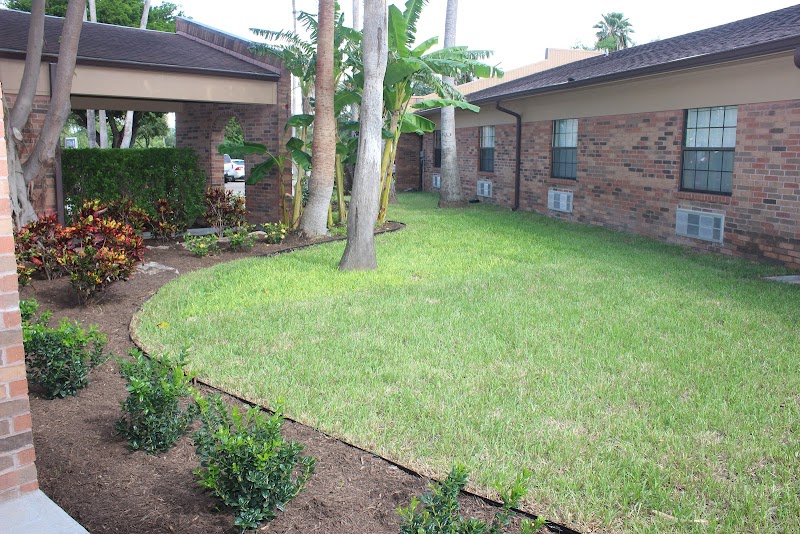
How Does Ebony Lake Compare to Other Texas Nursing Homes?

Compared to the 100 nursing homes in Texas, EBONY LAKE NURSING AND REHABILITATION CENTER's overall rating (3 stars) is above the state average of 2.8, staff turnover (40%) is near the state average of 46%, and health inspection rating (4 stars) is above the national benchmark.

What Should Families Ask When Visiting Ebony Lake?

Based on this facility's data, families visiting should ask: "Can you walk me through typical staffing levels on day, evening, and night shifts?" "Can I visit during a mealtime to observe dining assistance and food quality?" "How do you handle medical emergencies, and what is your hospital transfer rate?" "Can I speak with family members of current residents about their experience?" These questions are particularly relevant given the below-average staffing rating.

Is Ebony Lake Safe?

Based on CMS inspection data, EBONY LAKE NURSING AND REHABILITATION CENTER has a clean safety record: no substantiated abuse findings (meaning no confirmed cases of resident harm), no Immediate Jeopardy citations (the most serious violation level indicating risk of serious injury or death), and is not on the Special Focus Facility watch list (a federal program monitoring the lowest-performing 1% of nursing homes). The facility has a 3-star overall rating and ranks #1 of 100 nursing homes in Texas. While no facility is perfect, families should still ask about staff-to-resident ratios and recent inspection results during their visit.

Do Nurses at Ebony Lake Stick Around?

EBONY LAKE NURSING AND REHABILITATION CENTER has a staff turnover rate of 40%, which is about average for Texas nursing homes (state average: 46%). Moderate turnover is common in nursing homes, but families should still ask about staff tenure and how the facility maintains care continuity when employees leave.

Was Ebony Lake Ever Fined?

EBONY LAKE NURSING AND REHABILITATION CENTER has no federal fines on record. CMS issues fines when nursing homes fail to meet care standards or don't correct problems found during inspections. The absence of fines suggests the facility has either maintained compliance or corrected any issues before penalties were assessed. This is a positive indicator, though families should still review recent inspection reports for the full picture.

Is Ebony Lake on Any Federal Watch List?

EBONY LAKE NURSING AND REHABILITATION CENTER is not on any federal watch list. The most significant is the Special Focus Facility (SFF) program, which identifies the bottom 1% of nursing homes nationally based on persistent, serious quality problems. Not being on this list means the facility has avoided the pattern of deficiencies that triggers enhanced federal oversight. This is a positive indicator, though families should still review the facility's inspection history directly.