MESA HILLS POST ACUTE
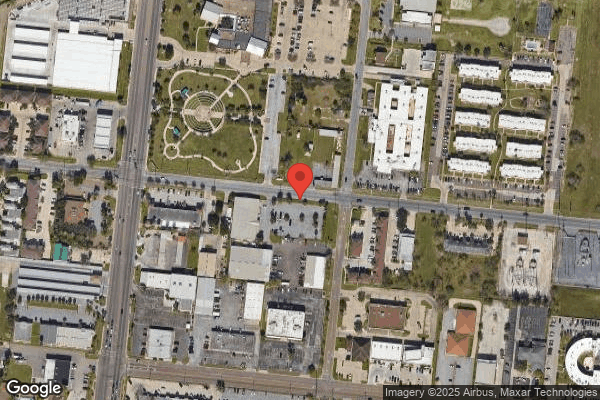
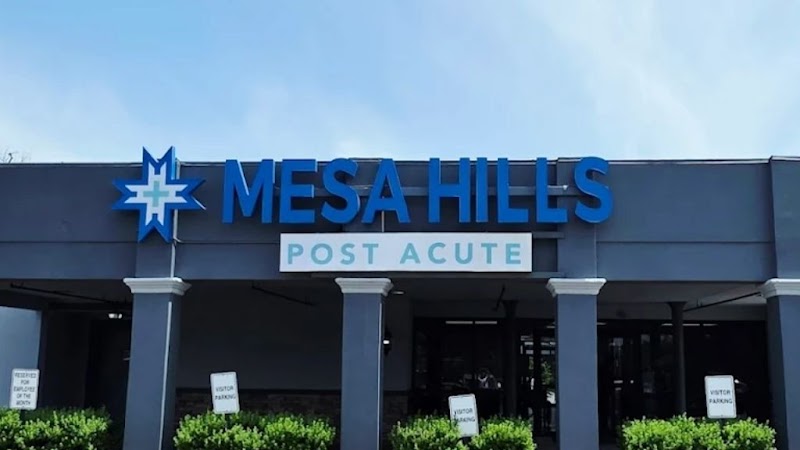
901 WILDROSE LN, BROWNSVILLE, TX 78520 (956) 546-4568
For profit - Limited Liability company 166 Beds Independent Data: November 2025 1 Immediate Jeopardy citation
Trust Grade
46/100
#523 of 1168 in TX
Last Inspection: May 2025

Inspected within the last 6 months. Data reflects current conditions.

Overview

Mesa Hills Post Acute in Brownsville, Texas has received a Trust Grade of D, which indicates below average performance and some concerns. It ranks #523 out of 1168 facilities in Texas, placing it in the top half, but it is #10 out of 14 in Cameron County, suggesting limited local options. The facility's situation is worsening, with the number of issues increasing from 10 in 2024 to 14 in 2025. Staffing is a concern with only 2 out of 5 stars and a turnover rate of 37%, which is better than the state average but still indicates instability. Additionally, the nursing home faced a critical incident where a resident eloped from the facility, highlighting inadequate supervision. Other concerns included the failure to develop comprehensive care plans for residents and unsatisfactory food safety practices in the kitchen. While the facility has some strengths, these significant weaknesses are important for families to consider.

Trust Score
D
46/100
In Texas
#523/1168
Top 44%
Safety Record
High Risk
Review needed
Inspections
Getting Worse
10 → 14 violations
Staff Stability
○ Average
37% turnover. Near Texas's 48% average. Typical for the industry.
Penalties
✓ Good
$19,388 in fines. Lower than most Texas facilities. Relatively clean record.
Skilled Nurses
⚠ Watch
Each resident gets only 12 minutes of Registered Nurse (RN) attention daily — below average for Texas. Fewer RN minutes means fewer trained eyes watching for problems.
Violations
⚠ Watch
28 deficiencies on record. Higher than average. Multiple issues found across inspections.
★★★☆☆
3.0
Overall Rating
★★☆☆☆
2.0
Staff Levels
★★☆☆☆
2.0
Care Quality
★★★☆☆
3.0
Inspection Score
Stable
2024: 10 issues
2025: 14 issues

The Good

  • Full Sprinkler Coverage · Fire safety systems throughout facility
  • No fines on record
  • Staff turnover below average (37%)

    11 points below Texas average of 48%

Facility shows strength in fire safety.

The Bad

3-Star Overall Rating

Near Texas average (2.8)

Meets federal standards, typical of most facilities

Staff Turnover: 37%

Near Texas avg (46%)

Typical for the industry

Federal Fines: $19,388

Below median ($33,413)

Minor penalties assessed

The Ugly 28 deficiencies on record

1 life-threatening
Jul 2025 1 deficiency
CONCERN (D) 📢 Someone Reported This

A family member, employee, or ombudsman was alarmed enough to file a formal complaint

Potential for Harm - no one hurt, but risky conditions existed

PASARR Coordination (Tag F0644)

Could have caused harm · This affected 1 resident

**NOTE- TERMS IN BRACKETS HAVE BEEN EDITED TO PROTECT CONFIDENTIALITY** Based on interview and record review, the facility failed to coordinate assessments with the PASRR program, including incorporat...

Read full inspector narrative →
**NOTE- TERMS IN BRACKETS HAVE BEEN EDITED TO PROTECT CONFIDENTIALITY** Based on interview and record review, the facility failed to coordinate assessments with the PASRR program, including incorporating the recommendations from the PASRR level II determination and the PASRR evaluation report into a resident's care planning for two (Resident #1 and Resident #2) of seventeen residents positive for PASRR. The facility failed to ensure the service request form was sent to the state PASRR unit, within 30 days of the IDT meeting, to assist Resident #1 and Resident #2 with receiving services identified in the meeting plan. This failure could affect PASRR positive residents by placing them at risk of their specialized needs not being met. Findings included: 1.Review of Resident #1's Resident Face Sheet dated 7/16/25, reflected he was a [AGE] year-old female who admitted to the facility 10/8/24. She was diagnosed with bipolar disorder (a mental health condition characterized by extreme shifts in mood, energy, and activity levels, alternating between periods of mania or hypomania and depression), anxiety disorder (a group of mental health conditions characterized by excessive, persistent, and uncontrollable feelings of worry, fear, and unease), severe intellectual disabilities (a condition that limits intelligence and disrupts abilities necessary for living independently). Review of Resident #1's care plan dated 10/9/24 reflected he required total care, and 1-2 person assists with all ADLs including bed mobility, transfers, dressing, eating, toileting, hygiene, and bathing. Record review of Resident #1 PASRR evaluation revealed: Positive pasarr evaluation done on 10/21/24 from tropical. PASRR comprehensive service plan form done on 4/29/25 revealed initial spt meeting took place at mesa hill for [NAME], services agreed to ILST, HC and habilitative physical and occupational therapy. No needs identify for behavioral supports, employment assistance supported employment, day habilitation. 2. Review of Resident #2's Resident Face Sheet dated 7/17/25, reflected he was a [AGE] year-old female who admitted to the facility 3/11/24. She was diagnosed with bipolar disorder (a mental health condition characterized by extreme shifts in mood, energy, and activity levels, alternating between periods of mania or hypomania and depression), severe intellectual disabilities (a condition that limits intelligence and disrupts abilities necessary for living independently). Review of Resident #2's care plan dated 3/11/24 reflected he required total care and 1-2 person assists with all ADLs including bed mobility, transfers, dressing, eating, toileting, hygiene, and bathing. Record Review of Resident #2 PASRR evaluation revealed: Pasarr evaluation was done on 4/11/24. The outcome resident had a negative pasrr evaluation. On 6/26/24. Resident was positive pasrr evaluation. The initial meeting was 7/9/24 and the recommendation was ILST OT PT and ST. During an observation on 7/16/25 at 3:00 p.m. Resident #1 was not able to communicate. During an observation on 7/16/25 at 3:05 p.m. Resident #2 was not able to communicate. During an interview on 7/16/25 at 3:20 p.m. MDS Nurse A said she was responsible for submitting PASRR specialized services through the Simple Online Portal, but that she was not working in the facility when Resident #1 and Resident #2 were admitted to the facility. MDS Nurse A said that there was a 30 days' time frame for submitting the PASRR recommendations from the Interdisciplinary Team from the first meeting. MDS Nurse A said that Resident #1 and Resident #2 were receiving physical and occupational therapy thru Medicare part B but not thru PASRR. During an interview on 7/17/25 at 1:00pm the ADON said that what she knew about PASRR was that the residents must come with a PASRR level I from the hospital and if the PASRR is positive the MDS nurse has to report it to the specialized services. The ADON said that the negative outcome was that the residents were not receiving the PASRR benefits. During an interview on 7/17/25 at 3:42pm the DON said that he was not that familiar with the PASRR, but as a DON he knew that when there was a resident with positive PASRR the facility had to report it within a time frame, but he was not sure what the time frame was. The DON said that what he knew was that all positives and negatives needed to be report it to the state. The DON said that the negative outcome was that the residents were not receiving the PASRR benefits. During an interview on 07/17/25 at 4:40 PM the Administrator said the facility was deficient and had not submitted the necessary forms to the state in order for the resident to receive specialized services agreed upon in the IDT meeting for Resident #1 and Resident #2. Record Review of facility policy titled PASRR pre-admission screening & resident review) undated revealed: To ensure each patient in the facility is screened for a mental disorder or intellectual disability prior to admission and that individuals with mental disorder or intellectual disability are evaluated and receive care and services in the most integrated setting appropriate to their needs
May 2025 7 deficiencies
CONCERN (D) 📢 Someone Reported This

A family member, employee, or ombudsman was alarmed enough to file a formal complaint

Potential for Harm - no one hurt, but risky conditions existed

Deficiency F0578 (Tag F0578)

Could have caused harm · This affected 1 resident

**NOTE- TERMS IN BRACKETS HAVE BEEN EDITED TO PROTECT CONFIDENTIALITY** Based on interview and record review, the facility failed to ensure residents had the right to formulate an advance directive fo...

Read full inspector narrative →
**NOTE- TERMS IN BRACKETS HAVE BEEN EDITED TO PROTECT CONFIDENTIALITY** Based on interview and record review, the facility failed to ensure residents had the right to formulate an advance directive for 1 (Resident #62) of 8 residents reviewed for Advance Directives. The facility failed to ensure Resident #62's OOH-DNR was completed. The OOH-DNR form did not have the physician's signature. This failure could affect all residents who have implemented Advance Directives and established their choice not to be resuscitated at risk of receiving CPR against their wishes. The findings were: Record review of Resident #62's electronic face sheet dated [DATE] reflected he was admitted to the facility on [DATE] and was [AGE] years old. His diagnoses included: Metabolic Encephalopathy (any disease or disorder of the brain, characterized by changes in brain function or structure), Unspecified Dementia (a group of symptoms caused by disorders that affect the brain in which a person loses the ability to think, remember, learn, make decisions, and solve problems), muscle weakness, and bipolar disorder (mental illness that causes unusual shifts in a person's mood, energy, activity levels, and concentration. Resident #62's electronic face sheet reflected he was Code Status: DNR. Record review of Resident #62's quarterly MDS assessment dated [DATE] reflected he scored an 11 on his BIMS which reflected moderate cognitive impairment. Resident #62 was independent with eating, oral hygiene, and upper body dressing ADLs, and required supervision or touching assistance with toileting hygiene, shower/bathing, lower body dressing, putting on/taking off footwear, and personal hygiene. Record review of Resident #62's undated comprehensive care plan revealed, Resident #62's Advanced Directive: Resident: Has Advanced Directive for Do Not Resuscitate (DNR) Date Initiated: [DATE]. o Advance Directives and Code Status will be honored. Date Initiated: [DATE]. o Review with resident/responsible party current Advance Directives and Code Status. Notify physician of expressed desire for changes as indicated. Date Initiated: [DATE]. o Staff will notify the hospital/ambulance/care provider of Advanced Directives and Code Status as indicated within HIPAA policy and procedure. Date Initiated: [DATE]. Record review of Resident #62's physician order dated [DATE] reflected ***Code Status: ***DNR*** .Active [DATE]. Record review of Resident #62's OOH-DNR form dated [DATE] revealed the form was signed in section C. Declaration by a qualified relative of the adult person who is incompetent or otherwise incapable of communication: I am the above person's: spouse. The OOH-DNR revealed the form was not signed by the attending physician below section E, Physician's Statement: I am the attending physician of the above noted person and have noted the existence of this order in the person's medical records. I direct health care professionals acting in our-of-hospital settings, including a hospital emergency department, not to initiate or continue for the person: cardiopulmonary resuscitation (CPR), transcutaneous cardiac pacing, defibrillation, advanced airway management, artificial ventilation. It also revealed the physician did not sign below section F, All persons who have signed above must sign below, acknowledging that this document has been properly completed. In an interview on [DATE] at 12:45 pm Social Services said upon admission, she informed the resident and/or family of their rights regarding the DNR status. If it was requested for the resident to be a DNR, she provided them with the form, helped them complete the form, and obtained their signatures. She then sends the form to Medical Records, who was responsible to get the form signed by the Physician. She said once the form was signed, she uploaded the form into PCC under the miscellaneous tab. She said she uploaded the form into PCC but saw that it was not signed. She said that she did not recall why she uploaded the form not signed. In an interview on [DATE] at 3:00 pm the Medical Records said she had the signed DNR form and that it was already scanned into PCC. She provided me a copy of the DNR, and it revealed the MD signed it today, [DATE]. I asked Medical Records if she just got the DNR form signed today, and she said yes, she had it signed today. She said usually when a resident came out of the hospital with a DNR, the social worker would provide her the documentation through email, and she would be responsible to get them signed right away by the physician. She said since the form was received last year and she started working in January of 2025, she had to look for Resident #62's DNR and got it signed today. She said since she started working this job in January, she ensured the DNR forms were signed immediately because DNRs were very important. She said if the DNR was not signed by the physician, then the resident was considered a full code and could potentially not get the appropriate care. In an interview on [DATE] at 4:14 pm CNA P said she knew the resident's DNRs showed on PCC. She said they were not allowed to resuscitate a resident. She said they must call the nurses and they should know if a resident was a DNR. She said if a DNR was not complete, it could make a resident receive resuscitation and it was not what was wanted. In an interview on [DATE] at 11:20 am LVN A said a resident who was a DNR should have a completed and signed by all parties and the DNR on file. She said if a DNR was not signed by the MD, it would affect the care for the resident if they coded because they would not know if they could provide resuscitation or not. She said if the DNR was not signed by the MD, then it was not valid. She said they would not be able to respect the resident's wishes of the DNR. They would have to provide CPR causing the resident harm. She said the DNR status of a resident was located on PCC. She said if it showed DNR on PCC that meant it had been verified and completed. In an interview on [DATE] at 11:40 am the ADON said if a resident was out of hospital DNR, they must verify that the form was current and ensure the MD signed the form in case the resident coded, to ensure they did not go against the resident's wishes. She said if the DNR was not signed by the physician, it was an incomplete DNR. The ADON said to her knowledge a DNR must be signed by the physician. She said the floor nurse receiving the order would update it in PCC. She said if PCC showed the resident in DNR status, it could have been that the resident went out to the hospital and the receiving nurse received report from hospital nurse that the resident was a DNR. She said if the RP requested a change, the nurse may also update PCC at that time. The ADON said PCC should not be updated until the completed DNR form was received and uploaded into PCC. The ADON said the negative outcome of the MD not signing the DNR could be causing the facility staff to provide resuscitation against the resident's wishes or not resuscitating a resident when the resident wanted to be. In an interview on [DATE] at 1:46 pm the DON said best practice was upon admission they talk to the resident and the family about code status. He said they must explain what a DNR was so they could decide. If they say yes, they want to be DNR, the facility started the document and explained what it entailed. The facility would obtain the resident/RP, witnesses, and the MD signatures. The DON said once everything was completed, they uploaded the document and then changed the code status on PCC. According to the DON, we explain to the resident / family that until the DNR was completed they were full code. The DON said that he did not know if the facility had a policy that stated one or the other was correct. The DON said they did not tell staff to place the DNR status until they received the DNR. He said they tell staff if PCC says DNR, they must check the form to ensure it was completed. The DON said legally if the MD did not sign, the DNR was not complete. He said if the DNR was not complete, they could not resuscitate a resident. He said if the legal document did not have the signatures in place, they would not be respecting the resident's wishes or not saving a resident's life. In an interview on [DATE] at 2:30 pm the ADM said his understanding regarding the DNR status of a resident was if the resident/family decided they wanted the resident to be a DNR, that should suffice. The ADM said they would get the resident/family signatures on the form. He said it was his understanding that they only need a physician's signature if the resident/family could not decide. He said if they had 2 family members sign and the resident/RP, then that was a valid DNR. The ADM said if the MD signature was required, then they would have an incomplete DNR, and the resident would be a full code and the full code would be against their wishes. The ADM provided me with a copy of the Physician's Order and said that since Resident #62 showed on the orders as a DNR status, that showed the DNR was ordered by the MD. Record review of the facility's Advance Directives policy dated 2001, revealed the Policy Statement The resident has the right to formulate an advance directive, including the right to accept or refuse medical or surgical treatment. Advance directives are honored in accordance with state law and facility policy. Policy Interpretation and Implementation 1. The facility defines the following in accordance with current OBRA definitions and guidelines: . b. Advance Directive - a written instruction, such as a living will or durable power of attorney for health care, recognized by state law (whether statutory or as recognized by the courts of the state), relating to the provisions of health care when the individual is incapacitated . (3) Do Not Resuscitate (DNR) - indicates that, in case of respiratory or cardiac failure, the resident, legal guardian, health care proxy, or representative (sponsor) has directed that no cardiopulmonary resuscitation (CPR) or other life-sustaining treatments or methods are to be used. Record review of the OOH DNR Order instructions for issuing and OOH-DNR Order revealed the Purpose: The Out-of-Hospital Do-Not-Resuscitate (OOH-DNR) Order on reverse side complies with Health and Safety Code (HSC), Chapter 166 for use by qualified persons or their authorized representatives to direct health care professionals to forgo resuscitation attempts and to permit the person to have a natural death with peace and dignity. Applicability: This OOH-DNR Order applies to health care professions in out-of-hospital settings, including physicians' offices, hospital clinics and emergency departments. Implementation: A competent adult person at least [AGE] years of age, or the person's authorized representative or qualified relative may execute or issue an OOH-DNR Order. The person's attending physician will document existence of the Order in the person's permanent medical record. The OOH-DNR Order may be executed as follows: . In addition: the OOH-DNR Order must be signed and dated by two competent adult witnesses, who have witnessed either the competent adult person making his/her signature in section A, or authorized declarant making his/her signature in either sections B, C, or E, and if applicable, have witnessed a competent adult person making and OOH-DNR Order by nonwritten communication to the attending physician, who must sign in Section D and also the physician's statement section.
CONCERN (D)

Potential for Harm - no one hurt, but risky conditions existed

Assessment Accuracy (Tag F0641)

Could have caused harm · This affected 1 resident

**NOTE- TERMS IN BRACKETS HAVE BEEN EDITED TO PROTECT CONFIDENTIALITY** Based on observation, interview, and record review the facility failed to ensure the assessment accurately reflected the residen...

Read full inspector narrative →
**NOTE- TERMS IN BRACKETS HAVE BEEN EDITED TO PROTECT CONFIDENTIALITY** Based on observation, interview, and record review the facility failed to ensure the assessment accurately reflected the resident's status for 1 (Resident #36) of 8 residents reviewed for accuracy of assessments. The facility failed to ensure Resident #36 was coded in the MDS for falls. This failure could place residents at risk of improper or incorrect care and services necessary for their physical, mental, and psychosocial well-being. The findings included: Record review of Resident #36's face sheet dated 05/06/25 revealed Resident #36 was admitted on [DATE] and was [AGE] years old. Resident #36 had diagnoses of Alzheimer's Disease (a progressive disease that affects memory, thinking, and behavior), muscle weakness, lack of coordination, and hemiplegia (paralysis or severe weakness on one side of the body) and hemiparesis (muscle weakness or partial paralysis on one side of the body) affecting left and right side. Record review of Resident #36's comprehensive care plan reflected: Resident #36 is at risk for falls r/t Psychoactive drug use, Unaware of safety needs Date Initiated: 02/28/2024 Revision on: 02/28/2024. Interventions: o Be sure the resident's call light is within reach and encourage the resident to use it for assistance as needed. The resident needs prompt response to all requests for assistance. Date Initiated: 02/28/2024 o bilateral floor mats as needed Date Initiated: 02/22/2025 Revision on: 03/23/2025 o Fall occurs; 72 hours documentation of; injuries and neuro checks as indicated Date Initiated: 02/28/2024 o Get resident up to wheelchair if restless in bed. Date Initiated: 03/10/2025 o Pt evaluate and treat as ordered or PRN. Date Initiated: 02/28/2024 o Replace bed to low bed to lowest position Date Initiated: 03/11/2025 o tent call light as tolerated Date Initiated: 03/25/2024 Revision on: 02/23/2025. Unwitnessed fall resident noted laying on mat by bed on floor, no injury Date Initiated: 03/10/2025 Revision on: 03/23/2025. Interventions: o For no apparent acute injury, determine and address causative factors of the fall. Date Initiated: 03/10/2025 o Get resident up to wheelchair if restless in bed. Date Initiated: 03/10/2025 o Monitor/document /report PRN x 72h to MD for s/sx: Pain, bruises, Change in mental status, New onset: confusion, sleepiness, inability to maintain posture, agitation. Date Initiated: 03/10/2025 o Neuro-checks Date Initiated: 03/10/2025 Revision on: 03/23/2025 o Pharmacy consult to evaluate medications. Date Initiated: 03/10/2025. Resident #36 was found lying PRONE ON THE FLOOR MAT BETWEEN BOTH BEDS, Date Initiated: 03/11/2025 Revision on: 03/23/2025. Interventions: o For no apparent acute injury, determine and address causative factors of the fall. Date Initiated: 03/11/2025 o Monitor/document /report PRN x 72h to MD for s/sx: Pain, bruises, Change in mental status, New onset: confusion, sleepiness, inability to maintain posture, agitation. Date Initiated: 03/11/2025 o Neuro-checks Date Initiated: 03/11/2025 Revision on: 03/23/2025 o Pharmacy consult to evaluate medications. Date Initiated: 03/11/2025 o Replace bed to low bed Date Initiated: 03/11/2025. Record review of Resident #36's quarterly MDS dated [DATE] reflected he scored a 04 on his BIMS which reflected a severe cognitive impairment. Required Supervision or touching assistance with eating, substantial/maximal assistance with shower/bathing and oral hygiene and dependent for toileting hygiene, upper and lower body dressing, putting on/taking off footwear and personal hygiene. Reflected no falls since admission/entry or reentry or the prior assessment, whichever was more recent. Record review of facility's incident log dated 5/4/25 revealed that on Resident #36 had falls on 2/22/25, 3/10/25 and 3/11/25. In an interview on 5/6/25 at 11:40 am the ADON said if a resident had a fall and the MDS did not accurately update on the MDS the resident had repeated falls, it would not trigger the interventions for those falls. She said the negative outcomes could be to cause a lack of attention to the care the resident needed or not changing a previous intervention that was not working to something new that would help. In an interview on 5/6/25 at 1:46 pm the DON said if a resident had any falls since the last MDS assessment, it should be captured on the next quarterly assessment. The DON said the MDS should review the incident log to see if there have been any changes. He said for him, the MDS at times failed to capture falls, so he would review incidents and would have contacted the therapist to inform, the resident needed a PT assessment. He said if the resident required a low bed, he would have informed his nurses. The DON said if the MDS failed to capture falls on the assessments, it did not reflect what was actually going on with the resident. It would show he was not having falls, when in reality he was. He said at some level, it could affect the type of care the resident would receive. The DON said they review reports and if those reports were not reflecting the correct information, it could affect his decision of what interventions to take. He said it could cause the resident to fall again because the assessment did not reflect what was exactly going on with the resident. In an interview on 5/6/25 at 2:23 pm MDS Q, she looked at Resident #36's most recent quarterly MDS and said it was coded inaccurately. She said the MDS Nurse who completed the assessment no longer worked at the facility. She said not capturing the falls on the MDS assessment was just an inaccuracy of the MDS itself. She looked at the care plan and said it looked like the interventions were updated for the falls, they were just not captured on the MDS. She said not capturing the falls accurately could affect for quality measures because it was not reflecting accurately but it would not have any affect for anything else negatively or positively. In an interview on 5/6/25 at 2:30 pm the ADM said as long as there were interventions in the care plan, the resident should have no negative effects for any falls not captured on the MDS. He said the facility goes over falls in the morning meetings, so the residents' needs should be met. Record review of the facility's Resident Assessments policy dated 2001 revealed the Policy Statement - A comprehensive assessment of each resident is completed at intervals designated by OBRA regulations and PPS requirements. Data from the Minimum Data Set (MDS) is submitted to the Internet Quality Improvement Evaluation System iQIES as required. Policy Interpretation and Implementation . 12. Information in the MDS assessments will consistently reflect information in the progress notes, plans of care, and resident observations/interviews. Record review of CMS's RAI Version 3.0 Manual dated 10/2024 reflected section: J1800: Any falls since admission/entry or reentry or Prior to Assessment. Coding instructions: Code 1, yes if the resident has fallen since the last assessment. Continue to number of falls since admission/entry or reentry or prior to assessment . J1900: Any falls since admission/entry or reentry or Prior to Assessment. Coding instructions: Code 2, two or more: if the resident had two or more non-injurious falls since admission/entry or reentry or prior assessment.
CONCERN (D)

Potential for Harm - no one hurt, but risky conditions existed

Deficiency F0687 (Tag F0687)

Could have caused harm · This affected 1 resident

**NOTE- TERMS IN BRACKETS HAVE BEEN EDITED TO PROTECT CONFIDENTIALITY** Based on observations, interviews, and record review, the facility failed to ensure residents received proper treatment and care...

Read full inspector narrative →
**NOTE- TERMS IN BRACKETS HAVE BEEN EDITED TO PROTECT CONFIDENTIALITY** Based on observations, interviews, and record review, the facility failed to ensure residents received proper treatment and care to maintain mobility and good foot health for 1 Resident (Resident #91) of 8 residents reviewed for foot care. The facility did not provide adequate foot care for Resident #91. Resident #91's nails were greyish/black, thick, and long. The nail of her right big toe was curving and growing toward her second toe. This failure could put residents at risk for infection, impaired mobility, and poor foot health as well as a decline in their quality of life. The findings were: Record review of Resident #91's admission Record indicated Resident #91 was admitted to the facility on [DATE] with diagnoses including unspecified dementia, unspecified severity, with other behavioral disturbance (the loss of cognitive function that interferes with daily life and activities), type 2 diabetes mellitus (a disease in which your blood glucose, or blood sugar, levels are too high), muscle weakness, and difficulty in walking and other lack of coordination. Record review of Resident #91's Order Summary Report for May 2025 revealed may consult with podiatrist for evaluation and treatment, order dated 01/14/2025 and podiatry care PRN, order dated 01/01/25. Record review of Resident #91's MDS quarterly assessment, dated 04/01/25 revealed Resident #91 would understand others and was understood by others, had severe cognitive impairment, and did not trigger for rejection of care, and required substantial assistance for personal hygiene and put on/off footwear. Record review of Resident #91's Comprehensive Care Plan dated 01/21/25 revealed Resident #91 had an ADL Self-Care deficit and the resident had diabetes mellitus. Interventions included refer to podiatrist /foot care nurse to monitor/document foot care needs and to cut long nails. Record review of Resident #91's Comprehensive Care Plan dated 02/18/25 revealed the resident had a behavior problem. Refused to allow toenails to be trimmed r/t dementia with aggression with interventions to anticipate and meet resident needs and Podiatrist to continue attempts. Record review of Nurse's Progress Notes dated 02/18/25 revealed the Podiatrist at bedside unable to trim her toenails. The Resident became combative, patient refused. Record review of progress notes from 02/18/25 through 05/06/25 did not reveal any further attempts by staff to trim Resident #91's toenails. Observation on 05/04/25 at 10:23 a.m., revealed Resident #91 was sitting on the bed. Greeted Resident #91 and she asked who was calling her Senora. She got up, walked toward the door, said yo me siento alla (I sit over there) and walked out of her room. The Resident had on red non-skid socks and the right foot sock was torn at the toes. The State Surveyor observed the resident's right toenail was long, discolored, crooked, and curved toward her second toe. Interview on 05/05/25 at 03:02 PM CNA D said Resident #91 had long toenails and the nurses knew about it, but Resident #91 would not allow the staff to touch her or change her. Resident #91 would hit and scratch staff when they tried to provide care. CNA D said it took three people to shower the resident because she would hit, kick, scratch, and spit at staff. CNA D said she did not know how they could cut her nails because she would not allow it. CNA D said perhaps Resident #91 would allow the doctor, but she did not think so. Resident #91 was confused and disoriented and even if they asked her if she wanted her nails cut, she would not answer correctly. In an interview via phone on 05/06/25 at 8:41 a.m., Resident #91's FM said she was aware of Resident #91's behavior of not allowing the staff or the Podiatrist to trim her nails. The FM said Resident #91 had the same behavior at home. The FM said she would try to visit on the weekend and hoped the Podiatrist would be able to see Resident #91 on the weekend. The FM said she was aware it was necessary for the Podiatrist to provide care to Resident #91 to prevent complications to her health. The FM said the resident was diabetic. Observation on 05/06/25 at 10:28 AM revealed Resident #91 was in her room. The resident was lying down in bed. The State Surveyor and LVN C were there to observe the resident's toenails. LVN C asked Resident #91 if he could see her right root and the resident stuck her foot out of the blanket and then quickly tucked it back in. LVN C asked Resident #91 if he could take off her sock so he could see her nails and Resident #91 declined. The resident asked to be left alone and for LVN C and the State Surveyor to leave her room. In an interview on 05/06/25 at 10:32 AM LVN C said Resident #91 had fungal infection in her nails because they were discolored and thick. LVN C said they have clipped some of the toenails, but the staff were not able to clip the big toes. LVN C said he had not measured the nails, but the nail of the big toe was over the nailbed. LVN C said it could be an inch or inch and a half over the nailbed. LVN C said by not allowing staff to cut her nails, it could put the resident at risk of pain or difficulty walking. LVN C said the Responsible Party was aware of the status of the nails. LVN said he had not attempted other methods for the resident to consent to care. LVN C said he could ask the doctor to prescribe Resident #91 a one-time dose of Ativan if the Responsible Party gave consent. In an interview via phone on 05/06/25 at 12:21 p.m., the Podiatrist said he had attempted two times in January and once in February to provide care to Resident #91, but she refused to allow him to trim her toenails. The Podiatrist said he was able to cut two of her toenails but then the resident became combative, and he had to stop. The Podiatrist said it was important for Resident #91 to receive treatment for her feet to prevent an infection or end up in the hospital due to complications. The Podiatrist said he would be willing to go this weekend if the FM would be there. The Podiatrist said he could prescribe a one-time dose of a medication to calm the resident so she could allow him to be able to trim her nails. The Podiatrist said he did not usually like to medicate his patients, but he could order some Benadryl for Resident #91. In an interview on 05/06/25 at 03:33 p.m., the DON said he tried to get a care plan meeting for the family so they could hear the facility's concerns and what they needed to do to get results for Resident #91. The DON said it was a bit difficult to get residents with dementia to agree to care. The staff tried to get the family to be present when they were providing the care to Resident #91. The DON said sometimes doctors required a resident to be sedated while providing the care, but he did not feel that Ativan would be a proper medication to administer to Resident #91. The DON said they could try the Benadryl, but it was not strong. They would have to ask the family to give consent for the medication. The DON said the negative outcome for Resident #91 not having her toenails cut could be the resident would have pain, or it could affect her ability to walk if she had pain. There was a risk the nail could cut into the skin of her second toe. The DON said LVN C had a good rapport with residents and perhaps he and the doctor could provide the nail care to Resident #91. In an interview on 05/06/25 at 04:02 p.m., the Administrator said they had morning meetings every day to go over any grievances and concerns. The Administrator said he was not aware Resident #91 had issues with her nails. The Administrator said the staff had tried to provide nail care to residents, but she had refused. The Administrator said the podiatrist had come to provide care to Resident #91, but she refused to have her toenails trimmed. The Administrator said it was a resident's right to refuse care. The Administrator said he had not seen resident 91's toenails. The Administrator said Resident #91 had refused requests to trim her toenails and the staff can't force her to accept the care. Record review of the facility's policy on Activities of Daily Living (ADL), Supporting dated 2001 indicated: Policy Statement Residents will be provided with care, treatment, and services as appropriate to maintain, improve their ability to carry out activities of daily living (ADLs). Resident who are unable to carry out activities of daily living independently will receive the services necessary to maintain good nutrition, grooming, and personal and oral hygiene. Policy Interpretation and Implementation 1. Residents will be provided with care, treatment, and services to ensure that their activities of daily living (ADLs) do not diminish unless circumstances of their clinical condition(s) demonstrate that diminishing ADLs are unavoidable. 2. Appropriate care and services will be provided for residents who are unable to carry out ADLs independently, with the consent of the resident and in accordance with the plan of care, including appropriate support and assistance with: a. Hygiene (bathing, dressing, grooming, and oral care) 4. If a resident with cognitive impairment or dementia resist care, staff will attempt to identify the underlying cause of the problem and not just assume the resident is refusing or declining care. Approaching the resident in a different way or at a different time or having another staff member speak with the resident may be appropriate.
CONCERN (D)

Potential for Harm - no one hurt, but risky conditions existed

Accident Prevention (Tag F0689)

Could have caused harm · This affected 1 resident

**NOTE- TERMS IN BRACKETS HAVE BEEN EDITED TO PROTECT CONFIDENTIALITY** Based on observation, interview, and record review the facility failed to ensure residents received adequate supervision to prev...

Read full inspector narrative →
**NOTE- TERMS IN BRACKETS HAVE BEEN EDITED TO PROTECT CONFIDENTIALITY** Based on observation, interview, and record review the facility failed to ensure residents received adequate supervision to prevent accidents and failed to ensure the resident environment remained as free of accident hazards as possible for 1 of 3 residents reviewed for accidents (Resident #97). The facility failed to provide adequate supervision to ensure Resident #97 did not obtain and keep cigarettes at his bedside. This failure could place residents who require supervision to prevent accidents and ensure their environment remains as free of accident hazards as possible, at risk for decreased quality of life or injury that could result in unnecessary hospitalization. Findings included: Record review of Resident #97's face sheet dated 05/04/25 indicated Resident #97 was a [AGE] year old male admitted on [DATE] with diagnoses of Type 2 Diabetes Mellitus (body's inability to use insulin properly, leading to high blood sugar levels requiring insulin injections to manage) without Complications, Essential (Primary) Hypertension (type of high blood pressure where no underlying cause is identified), Alcohol Abuse, uncomplicated, Other Abnormalities of Gait and Mobility (deviations from normal walking patterns and movement capabilities). Record review of Resident #97's MDS dated [DATE] revealed Resident #97's BIMS of 11 indicating moderate cognitive impairment suggesting need for increased assistance with daily tasks. Observation conducted on 05/04/25 at 9:38 a.m. revealed Resident #97 was observed lying down in bed in his room. It was observed next to his bed was a box of cigarettes. In an interview on 05/04/25 at 9:38 a.m. with Resident #97 stated he had the cigarettes in his jacket and did not tell the staff that he had them. He said he knew he was not supposed to have them in his room. In an interview on 05/04/25 at 9:46 a.m. with CNA O who stated she picked up Resident #97's food tray earlier and did not see the cigarettes in his room. She said residents were not supposed to have cigarettes in their room. She said they kept them locked at the nurses' station or cart. CNA O took the cigarettes to the nurse's station. In an interview on 05/04/25 at 9:48 a.m. LVN K stated she gave Resident #97 his medication at around 9:00 a.m. this morning and did not see the cigarettes on his nightstand. She said residents were not supposed to keep cigarettes in their room. She said nurses kept them in their carts locked and they gave them to the residents when they go outside to smoke at the designated times. In an interview on 05/06/25 at 4:29 p.m. the DON stated residents were not supposed to have any smoking items or paraphernalia in their rooms. He said that they were supposed to be kept in nurse's carts locked or in nurses medication room locked. The DON said he didn't know why the Resident #97 had cigarettes in his room. He said what can possibly happen was the resident can burn or die. The DON said all staff were inserviced on the smoking policy. He said he had done 2 inservices on smoking since he started working at this facility about a month ago. In an interview on 05/06/25 at 5:19 p.m. with the Administrator stated residents were not supposed to have cigarettes in their room. He said they were kept in the medication room locked. He said residents knew they were supposed to give them to staff and could not have them in their rooms. He said if cigarettes were kept in a resident's room, other residents could take them and may be a danger to others. He said Resident #97 went out on pass and maybe brought some back and didn't tell the staff. Record review of facility's policy on Smoking, dated: Revised October 2023, reflected: This facility has established and maintains safe resident smoking practices. 15. Residents without independent smoking privileges may not have or keep any smoking items, including cigarettes, tabaco, etc., except under direct supervision.
CONCERN (D)

Potential for Harm - no one hurt, but risky conditions existed

Infection Control (Tag F0880)

Could have caused harm · This affected 1 resident

**NOTE- TERMS IN BRACKETS HAVE BEEN EDITED TO PROTECT CONFIDENTIALITY** Based on observations, interviews, and record review, the facility failed to maintain an infection prevention and control progra...

Read full inspector narrative →
**NOTE- TERMS IN BRACKETS HAVE BEEN EDITED TO PROTECT CONFIDENTIALITY** Based on observations, interviews, and record review, the facility failed to maintain an infection prevention and control program designed to provide a safe, sanitary, and comfortable environment to help prevent the development and transmission of communicable diseases and infections for 1 Resident out of 5 (Resident #42) reviewed for Enhanced Barrier Protections (EBP) for infection control practices. LVN A failed to follow Enhanced Barrier Precautions for an indwelling medical device (gastrostomy tube) for Resident #42. This failure could place residents at risk for cross contamination and the spread of infection. Findings included: Review of Resident #42's admission Record, dated 5/5/25, revealed she was a [AGE] year-old female admitted to the facility on [DATE] with diagnoses including hemiplegia and hemiparesis following cerebral infarction affecting left non-dominant side (a condition that affects one side of the body, usually caused by a stroke or other brain injury) and gastrostomy status (is the presence of a gastrostomy, which is a surgical opening in the stomach that can be used for nutritional support or to decompress the stomach). Review of Resident #42's Care Plan dated 7/20/2019 revealed: Revised on 1/24/25 Focus: The resident required enhanced barrier precautions during high-contact resident care activities due to the presence of indwelling device, gastrostomy status. Goal: Enhanced barrier precautions will be followed during high-contact resident care activities. Interventions included: assess the ongoing need for enhanced barrier precautions, ensure items for following enhanced barrier precaution were in place, hand hygiene utilizing alcohol-based hand rub, and utilize PPE during high-contact resident care activities (dressing, bathing/showering, transferring, hygiene, linin changes, brief changes, toileting assistance, device care, and wound care). Review of Resident #42's quarterly MDS Assessment, dated 4/4/25 revealed her BIMS score was 2, meaning she was severely cognitive impaired. Further review revealed she had a diagnosis of a cerebral infarction. Resident #42 had a feeding tube while a resident and while not a resident marked. Resident was total dependent on staff for nutrition. Review of Resident #42's Order Summary Report, dated 5/5/24, revealed active enteral feedings (Isosource 1.5 at 60 Milliliters per hour times 22 hours via peg tube). There were no orders about enhanced barrier precautions. An observation on 5/5/25 at 7:00 a.m. of G-Tube medication administration revealed LVN A prepared medication for Resident #142. LVN A placed the medication cups and a cup filled with approximately 8 ounces of water on a tray and entered the resident's room. LVN A performed hand hygiene and put on gloves but did not put on a gown. LVN A turned off the feeding pump, checked for residual, administered the medication, reconnected the feeding tube, and turned the pump back on. LVN A removed her gloves and performed hand hygiene and left the room. In an interview with LVN A on 05/5/25 at 07:25 a.m. she stated any resident with a G-tube was required to be on enhanced barrier precautions. She stated she should have worn a gown and just overlooked it when she entered the room. She stated the risk of not following enhanced barrier precautions was the spread of infection. Interview on 5/5/25 at 7:50AM LVN B said it was important to use the EBP to protect residents from whatever microorganisms she could carry. LVN B said residents could be at risk of infection. LVN B said the nurses were responsible to make sure the PPE is available. Interview on 5/5/25 at 1:00 p.m. the ADON said he was the ICP. The ADON stated for EBP, there was PPE on the linen carts. The ADON said staff were supposed to wear them for chronic wounds, catheter, and ostomy care. The ADON stated the staff knew and had been in-serviced, the gowns were on the linen carts. The ADON stated it was important to use PPE to prevent any infection to the body through the open wounds or the ostomy. ADON was all staff responsibility to use PPE. In an interview on 5/6/25 at 10:45 a.m., the DON stated for EBP the staff needed to wear gowns and gloves for individuals with a catheter, feeding tube, or wounds. The DON said it was important to use PPE to prevent introducing any kind of infection to residents. The DON said that by not using EBP, it could put residents at higher risk for infection. DON was all staff responsibility to use PPE. Review of the facility's policy and procedure on Enhanced Barrier Precautions, revision date December 2024, revealed: Enhanced barrier precautions (EBPs) are utilized to prevent the spread of multi-drug-resistant organisms (Multi Drug Resistant Organisms). Indwelling medical devices include central lines, urinary catheters, feeding tubes, and tracheotomies.
CONCERN (E)

Potential for Harm - no one hurt, but risky conditions existed

Comprehensive Care Plan (Tag F0656)

Could have caused harm · This affected multiple residents

**NOTE- TERMS IN BRACKETS HAVE BEEN EDITED TO PROTECT CONFIDENTIALITY** Based on interviews, and record review, the facility failed to develop a comprehensive care plan for each resident that included...

Read full inspector narrative →
**NOTE- TERMS IN BRACKETS HAVE BEEN EDITED TO PROTECT CONFIDENTIALITY** Based on interviews, and record review, the facility failed to develop a comprehensive care plan for each resident that included measurable objectives and timeframes to meet a resident's medical, nursing, and mental and psychosocial needs that are identified in the comprehensive assessment and described the services that were to be furnished to attain or maintain the resident's medical, nursing, and mental and psychosocial needs for 3 (Resident #252, Resident #97 and Resident #72) of 8 residents reviewed for comprehensive care plans. 1. Resident #72's comprehensive care plan was not revised after he returned from being hospitalized on [DATE] for a recurrence of pneumonia. 2. The facility failed to develop a comprehensive person-centered care plan to address Resident #252's antibiotics for positive sputum culture. 3. The facility failed to develop a comprehensive person-centered care plan for Resident #97's cigarette use. These failures could place residents at risk for not receiving the appropriate care, services or treatments needed and place at risk for re-hospitalization. The findings included: 1. Record review of Resident #72's face sheet dated 05/5/25 reflected a [AGE] year-old-male with an original admission date of 11/20/24. Diagnoses included End Stage Renal Disease (condition in which the kidneys lose the ability to remove waste and balance fluids), metabolic encephalopathy (change in how the brain works due to underlying condition that can cause confusion, and muscle weakness. Record review of Resident #72's Change of Condition Evaluation dated 2/20/25 reflected the resident had SOB, oxygen level 95-97 room air, heart rate within normal limits. Resident stated the SOB happened only during transfers. Reported to the MD on call and ordered a chest x-ray. Attempted to report to the RP but no answer. Standing orders for SOB were being carried out. Will report to oncoming nurse. Record review of Resident #72's progress notes revealed on: 2/20/25 at 7:05 pm, Resident was c/o SOB during transfers. Oxygen level 95-97 room air, heart rate withing normal limits. Respiration 22. Resident states SOB only happens during transfers. Called Dr on call service. Informed them of standing orders for SOB are being carried out. Attempted to call responsible party but no answer. Will inform oncoming nurse. 2/20/25 at 7:05 pm Chest xrays 2 views orders. Will inform oncoming nurse. 2/24/25 at 8:00 pm Upon administering scheduled medications, resident c/o SOB. Resident had scheduled neb treatment and medications due. Administered as ordered. Nurse reassessed resident SPO2 was 83%. Pulse was 128. Patient was diaphoretic (excessively sweating) and in respiratory distress. Notified respiratory therapist who then placed patient on nonrebreather. Patient had improvement in O2. Resident placed on 4LPM via nasal cannula O2 sat 95%. Resident continued to be in distress with elevated heart sustaining between 118-120. Notified physician. Order to send patient to hospital to evaluate/treat. Nurse called 911 to transport patient and will call hospital to notify/report patients arrival. RP family member notified of change of condition and transfer. 2/25/25 at 2:29 am nurse called hospital for update: patient to be admitted admitting dx: pneumonia, flu ache. 3/2/2025 at 9:11 pm Resident is alert and oriented to self and situation. Able to follow simple commands. No visual signs of pain or discomfort. Calm and cooperative.As per Dr. standing order continue all medication. Record review of Resident #72's comprehensive care plan reflected: The resident has a Respiratory Infection r/t pneumonia Date Initiated: 01/22/2025 Revision on: 01/22/2025. The resident will be free of symptoms of respiratory distress through the review date. Date Initiated: 01/22/2025 Target Date: 02/19/2025. Interventions: o Antibiotic therapy as ordered by the physician. Date Initiated: 01/22/2025 o Bronchodilators via nebulizer as ordered by the physician. Monitor/document side effects and effectiveness. Record BP, pulse, and respiration rate. Date Initiated: 01/22/2025 o Document response to treatment. Date Initiated: 01/22/2025 o Encourage coughing, deep breathing. Date Initiated: 01/22/2025 o Encourage fluid intake. Date Initiated: 01/22/2025 o Give antipyretics as ordered. Monitor/document side effects and effectiveness. Record temperature. Date Initiated: 01/22/2025 o Give cough suppressant or expectorant as ordered. Monitor/document for side effects and effectiveness. Date Initiated: 01/22/2025 o Monitor/document and document level of consciousness and any changes. Date Initiated: 01/22/2025 o Monitor/document breath sounds, document rate, rhythm, and the use of any accessory muscles. Date Initiated: 01/22/2025 o Monitor/document/report to MD PRN for s/sx of dehydration: dry skin and mucous membranes, poor skin turgor, weight loss, anorexia, malaise, hypotension, increased heart rate (Tachycardia), fever, abnormal electrolyte levels. Date Initiated: 01/22/2025. The resident is on antibiotic therapy r/t pneumonia Date Initiated: 01/27/2025 Revision on: 01/27/2025 o The resident will be free of any discomfort or adverse side effects of antibiotic therapy through the review date. Date Initiated: 01/27/2025 Target Date: 02/19/2025 o Administer ANTIBIOTIC medications as ordered by physician. Monitor/document side effects and effectiveness Q-SHIFT. Date Initiated: 01/27/2025 o Monitor/document/report PRN adverse reactions to ANTIBIOTIC therapy: diarrhea, nausea, vomiting, anorexia, and hypersensitivity/allergic reactions (rashes, welts, hives, swelling face/throat). Date Initiated: 01/27/2025 o Monitor/document/report PRN s/sx of secondary infection r//t ANTIBIOTIC therapy: oral thrush (white coating in mouth, tongue), persistent diarrhea, and vaginitis/itchy perineum (area between anus and genitals)/whitish discharge/coating of the vulva/anus. Date Initiated: 01/27/2025 o Report pertinent lab results to MD Date Initiated: 01/27/2025. In an interview on 5/6/25 at 11:20 am LVN A said the floor nurse, ADONs or DONs update the care plans. She said the CNAs learn about changes when they came in and got report from the previous shift CNA or would get report from the nurses. She said if interventions were not updated in the care plan, it could affect the resident's care. She said they would not know how to properly take care of the resident because they would not know what new interventions to provide. She said a bad outcome for someone who returned from the hospital with pneumonia and the care plan was not updated could be that the resident could get pneumonia again, go into respiratory distress if not monitoring properly, or could go septic (life-threatening caused by the body's extreme response to infection) and back in the hospital. She said Resident # 72 was on nebulizer treatments, O2 saturations checked, lung sounds checked, and respirations checked. She said she was not sure if those interventions were there prior to his most recent hospitalization. She said the ADON or DON would update care plans when a resident returned from a hospital stay. In an interview on 5/6/25 at 11:40 am the ADON said if a resident was hospitalized and returned with a diagnosis of pneumonia, they should update the care plan. She said if pneumonia was previously care planned, then they would add to that care plan. She said they usually did new interventions and added any new medications. She said the care plan would have to be revised with a date. She said the MDS nurse, receiving nurse or DON were responsible for updating the care plans. She said the ADONs only updated if asked to do it if for some reason. In an interview on 5/6/25 at 1:46 pm the DON said care plans were updated on a case-by-case basis, because the resident went to the hospital for a reason. He said the care plan should be updated if a resident went to the hospital for pneumonia even if it was care planned previously. He said he would ensure there was a change in condition. He said a resident who had pneumonia would be sent to the hospital. He said for best practice yes, they needed to update the care plan because it needed to be documented somewhere. He said the IP would update the care plan if the resident was started on antibiotics, the floor nurse should update the care plan upon a resident's arrival. He said if pneumonia was care planned for a resident and still active, and he received a change in medication then it should be updated. The DON said if there was no new problem, for example the problem was resolved while the resident was in the hospital, they would not update the care plan. He said the floor nurse should have updated that care plan if it was active. He said the negative outcome would be the resident being at risk for the problem to happen again was increased. In an interview on 5/6/25 at 2:30 pm the ADM said for a care plan to be updated for pneumonia, he thought they got MD orders. He said he knew they sent residents out to the hospital with a diagnosis that had already been care planned. He said it could be that the admitting dx was already care planned and did not need to be updated. Record review of the facility's policy on Care Plans, Comprehensive Person-Centered with a revision date of March 2022, reflected the Policy Statement A comprehensive, person-centered care plan that includes measurable objectives and timetables to meet the resident's physical, psychosocial and functional needs is developed and implemented for each resident. Policy Interpretation and Implementation . 12. The interdisciplinary team reviews and updates the care plan: a. when there has been a significant change in the resident's condition; . c. when the resident has been readmitted to the facility from a hospital stay; . 2. Review of Resident #252's admission Record dated 05/5/2025 revealed an admission date of 04/7/2025. The Resident's diagnoses included chronic obstructive pulmonary disease (a progressive lung disease that makes it difficult to breath) and tracheostomy status (whether an individual has a tracheostomy tube, a surgical procedure where a hole is made in the windpipe to create an airway). Review of the Resident #252's physician orders dated 05/5/2025 revealed Resident #252 received Meropenem solution reconstituted 1 gram, administer 1 gram via intravenously every 12 hours for positive sputum culture for 14 days with a start day on 4/30/2025 and end date 5/14/2025. Review of Resident #252's most recent comprehensive MDS assessment dated [DATE], revealed the resident received tracheostomy care while a resident. Review of the Resident #252's Care Plan, dated 04/7/2025, revealed the care plan did not identify the resident's treatment for positive sputum culture. During an observation on 5/4/25 at 1:15 p.m. Resident #252 was in her room, she was laying on her bed, she was watching television. Call light was within reach from Resident #252. Resident #252 had a tracheostomy, she was not able to talk. During an interview on 05/5/25 at 1:44 p.m. the MDS nurse stated the care plan should have been updated when and by whomever received the order for the antibiotic. The MDS nurse stated if the care plan was not updated it could affect the nurses by not being able to give the care that Resident #252 needed. During an interview on 05/6/25 at 10:50 p.m. with DON stated the care plan had to be updated to give the resident the best care and to verify if the interventions were effective. The DON stated care plans were created upon admission within 48 hours, updated 14 days after admission, quarterly, and upon change of condition. The DON stated Resident #252 was at risk of not receiving a proper care that she required. DON said that the nurse that got the new order was responsible to start updating the care plan. Review of the facility Care planning - Interdisciplinary Team policy revised March 2022, reflected A comprehensive, person-centered care plan that includes measurable objectives and timetables to meet the resident's physical, psychosocial and functional need is developed and implemented for each resident. 3. Record review of Resident #97's face sheet dated 05/04/25 indicated Resident #97 was a [AGE] year old male admitted on [DATE] with diagnoses of Type 2 Diabetes Mellitus (body's inability to use insulin properly, leading to high blood sugar levels requiring insulin injections to manage) without Complications, Essential (Primary) Hypertension (type of high blood pressure where no underlying cause is identified), Alcohol Abuse, uncomplicated, Other Abnormalities of Gait and Mobility (deviations from normal walking patterns and movement capabilities). Record review of Resident #97's MDS dated [DATE] revealed Resident #97's BIMS of 11 indicating moderate cognitive impairment suggesting need for increased assistance with daily tasks. Record review of Resident #97's comprehensive care plan dated 03/31/25 revealed no documentation of Resident #97's use of cigarettes. Observation conducted on 05/04/25 at 9:38 a.m. revealed Resident #97 was observed laying down in bed in his room. It was observed next to his bed was a box of cigarettes. During an interview on 05/04/25 at 9:38 a.m. Resident #97 stated he had the cigarettes in his jacket and did not tell the staff that he had them. He said he knew he was not supposed to have them in his room. During an interview on 05/06/25 at 4:39 p.m. LVN X said the nurses and MDS nurses were supposed do care plans for residents. She said on the initial admission assessment it stated no to uses tobacco. She said it should have been care planned because although he wasn't a regular smoker because he didn't always have money for cigarettes, he did smoke. During an interview on 05/06/25 at 4:39 p.m. the DON stated if a resident is a smoker, it should be documented in the care plan. He said if Resident #97 did not mention that he was or was not a smoker when he was admitted then it would not be care planned. He said he was not working at the facility at the time Resident #97 was admitted and did not know if he was a smoker prior to admission. During an interview on 05/06/25 at 5:37 p.m. the Administrator stated that Resident #97 was not a smoker when he came in. He said he probably picked up the habit from others while staying at this facility. When asked about negative outcomes, the Administrator said the resident is alert and oriented and able to smoke on his own. Review of facility Care planning - Interdisciplinary Team policy revised March 2022, reflected A comprehensive, person-centered care plan that includes measurable objectives and timetables to meet the resident's physical, psychosocial and functional need is developed and implemented for each resident.
CONCERN (E)

Potential for Harm - no one hurt, but risky conditions existed

Food Safety (Tag F0812)

Could have caused harm · This affected multiple residents

Based on observation, interviews and record review, the facility failed to store, prepare, distribute and serve food in accordance with professional standards for food service safety for 1 of 1 kitche...

Read full inspector narrative →
Based on observation, interviews and record review, the facility failed to store, prepare, distribute and serve food in accordance with professional standards for food service safety for 1 of 1 kitchen reviewed for storage, preparation and sanitation. The facility failed to ensure all food products in walk-in freezer were labeled and dated. The facility failed to ensure employee medication and a soft drink cup were not stored in refrigerated. The facility failed to properly thaw raw chicken that was observed in the sink designated for vegetables only. The chicken was not under running water. There was raw ground beef on the sink counter next to the sink that contained the raw chicken. These failures could place residents at risk for food contamination and food-borne illnesses. Findings included: Observation and initial tour of the kitchen on 05/04/25 at 8:50 a.m. revealed raw chicken in a 2-compartment sink labeled Vegetables only with no water running as well as raw ground beef on the counter of the sink. Inside the reach-in refrigerator was a small box labeled as medication belonging to an employee as well as a large soft drink cup labeled big gulp. Inside the walk-in freezer were 3 clear bags containing meat that were not labeled or dated. During an interview on 05/04/25 at 9:02 p.m. the DD stated the meat in the freezer was chicken and it should have been labeled and dated. He said the medication belonged to an employee and it was not supposed to be kept in the facility refrigerator he said he will speak with the employee and counsel him on it. DD said the chicken and the beef on the sink that was labeled for vegetables only should not have been there. He said that could contaminate the vegetables and cause resident to become sick. He said staff gets in serviced on this and on labeling on a weekly basis he didn't know why staff did not do what they were supposed to but would be in servicing them again on it. the DD said the medication along with the soft drink that were found in the refrigerator should not have been in there. He said staff were told not to put personal items in there and were in serviced as well. He said anyone could grab the medication. During an interview on 05/04/25 at 3:40 p.m. DA Q stated the medication was supposed to be refrigerated and was supposed be taken once a week. He said he didn't have another refrigerator to put it in. DA Q also said he hadn't told his manager that he had been putting it in the refrigerator. He said he knew he wasn't supposed to be putting it there. During an interview on 05/06/25 at 5:28 p.m. the Administrator stated the staff were in serviced on kitchen policies by the DD and the DD also has huddles daily to remind staff on those policies. He said they shouldn't be putting meat to thaw on areas that were designated for something else. He said it could contaminate other food. Administrator also said that staff aren't supposed to be putting any medication or any personal items in the facility refrigerator. he said employees have lockers and they have employee lounge which has a refrigerator where staff can put their personal items. He said he didn't know why DA Q hadn't put the medication in those places. He said a negative outcome could be that it falls or touches food, it can possibly contaminate it but it was in a box so I don't think anything could happen unless its opened. Record review of facility's policy: Food Receiving and Storage, not dated, states, Policy Statement: Foods shall be received and stored in a manner that complies with safe food handling practices. 7. All foods stored in the refrigerator or freezer will be covered, labeled and dated (use by date). Reference FDA Food Code 2022 Ch. 3-307 Preventing Contamination from Other Sources 3-307.11 Miscellaneous Sources of Contamination. FOOD shall be protected from contamination that may result from a factor or source not specified under Subparts 3-301 - 3-306 3-501.13 Thawing Except as specified in (D) of this section, TIME/TEMPERATURE CONTROL FOR SAFETY FOOD shall be thawed: (B) Completely submerged under running water: (1) At a water temperature of 21oC (70oF) or below Pf, (2) With sufficient water velocity to agitate and float off loose particles in an overflow Pf. 6-305.11 Designation. (B) Lockers or other suitable facilities shall be provided for the orderly storage of EMPLOYEES' clothing and other possessions. 6-305.11 Designation. Street clothing and personal belongings can contaminate food, food equipment, and food-contact surfaces. Proper storage facilities are required for articles such as purses, coats, shoes, and personal medications.
Apr 2025 3 deficiencies 1 IJ
CRITICAL (J) 📢 Someone Reported This

A family member, employee, or ombudsman was alarmed enough to file a formal complaint

Immediate Jeopardy (IJ) - the most serious Medicare violation

Accident Prevention (Tag F0689)

Someone could have died · This affected 1 resident

**NOTE- TERMS IN BRACKETS HAVE BEEN EDITED TO PROTECT CONFIDENTIALITY** Based on observation, interview, and record review, the facility failed to ensure adequate supervision was provided for 1 of 3 r...

Read full inspector narrative →
**NOTE- TERMS IN BRACKETS HAVE BEEN EDITED TO PROTECT CONFIDENTIALITY** Based on observation, interview, and record review, the facility failed to ensure adequate supervision was provided for 1 of 3 residents reviewed for accidents and supervision. (Resident #1) The facility failed to ensure Resident#1 received adequate supervision to prevent elopement. Resident #1 eloped from the facility on 04/12/2024 and was found by the police department approximately 4.3 miles away from the facility. The non-compliance was identified as past non-compliance. The Immediate Jeopardy began on 04/12/2024 and ended on 04/25/2024. The facility had corrected the noncompliance before the survey began. This failure could prevent residents from receiving appropriate supervision which could lead to residents sustaining serious injury, harm, or death. Findings included: Record review of Resident #1's electronic facility face sheet dated 04/15/2025, revealed he was a [AGE] year-old male admitted to the facility on [DATE]. Diagnosis of Dementia, Schizophrenia (a mental condition that affects how people think, feel and behave), Alzheimer's Disease (a brain disorder that slowly destroys memory and thinking), Psychosis (when people lose some contact with reality), Muscle Weakness (loss of muscle tissue), Malnutrition (poor nutrition), and Lack of Coordination. Record review of Resident #1's quarterly MDS assessment, dated 01/20/2025 revealed a BIMS score of 02 indicating Resident #1 was severely cognitive impaired and ambulates independently. No mobilities devices needed. Record review of admission progress note dated 04/01/2024, revealed the report received from hospital nurse stated Resident #1 was found wandering streets and he had been trying to elope from home and ER. Resident #1 was admitted to the secured unit. Record review of incident report dated 04/13/2024, revealed on 04/12/24 at around 06:00 pm Resident #1 eloped from their facility. Staff found out after a change of shift, past 07:00pm. LVN A notified DON E. He then called the Administrator. ADON F called the police, started a case, and shared Resident #1's picture. The administrator sent a flyer for a Silver Alert to the PD. Resident #1 was found around 09:00 pm at a gas station approximately 4.3 miles away from the facility. DON E picked up Resident #1 and brought him back safe to their facility. Resident #1 was in good spirits; no injuries found during the head-to-toe assessment. Family and doctor were notified. Record Review of CNA B written statement for incident on 04/12/2024 indicated that around 04:45-05:00 p.m. Resident #1 came up to her and asked if he could look in a bag. After CNA B went to get residents to go to the dining room and later provided incontinent care. CNA B noticed an alarm sound. She opened the room door to check, and it was the alarm from the back door. She proceeded to turn the alarm off. CNA B thought someone forgot to turn it off when they came in. She did not think of anything afterwards. Record Review of facility incident report revealed CNA B was terminated 4/17/24. Surveyor attempted to interview CNA B on 04/15/2025 at 01:53 p.m. CNA B did not answer, left voicemail to return call. In an interview on 04/15/2025 at 02:45pm with LVN A stated Resident #1 was last seen at approximately 05:00 p.m. when CNA B was getting residents ready for dinner. LVN A stated he noticed Resident #1 was not in his room during shift change at approximately 07:00 p.m. He said he called DON E and started a search with staff. Then other staff started the elopement protocol. LVN A stated Resident #1 came back to the facility at approximately 09:00 p.m. and Resident #1's family member was present at the facility at this time. In an interview on 04/15/2025 at 04:30pm with DON E stated Resident #1 was missing for about 1-1.5 hours. He notified the family and doctor. DON E stated that all staff were looking for Resident #1. He stated that CNA B was performing patient care and turned off the alarm without checking with anyone if a resident was missing. DON E stated CNA B was terminated for not following elopement protocol. He stated PD gave Resident #1 a ride to a convenient store approximately 4.3 miles away. DON E said PD who gave him a ride notified facility after hearing the Silver Alert at around 09:00 pm. He said PD told them of Resident #1's location. DON E picked him up and took him back to the facility. He stated resident was placed on a 15-minute visual checks by nurse and the code was changed to the secure unit doors. DON E stated he a wander guard was placed, and medications were reviewed. DON E stated that the facility added a camera with motion detection on the back door and a fence to the back. DON E stated that the staff had elopement in-services and drills weekly. Staff had elopement in-services and drills. In an interview on 04/16/2025 at 09:23am with Administrator stated Resident #1 probably went out through the back door. The administrator said the exit door had a code and CNA B did not follow procedure. CNA B turned the alarm off and failed to notify the nurse. This was around 05:45pm. CNA B shift change came in at 06:00 p.m. and noticed that Resident #1 was missing. The administrator stated the resident was missing for less than 2 hours. Resident #1 was returned to the facility around 09:00 p.m. He stated the code was changed to the secure unit doors, added a camera with motion detection on the back door, and a fence to the back of the facility. He stated CNA B was terminated. The administrator stated there has been no elopements since the incident on 04/12/2024. Record review of an Elopement Policy with date of 10/2023, revealed Policy: It is the policy of this facility to ensure that the facility provides a safe and secure atmosphere for all residents in the facility. Purpose: To ensure that residents a risk for elopement are properly monitored. The Administrator was notified on 04/16/2025 at 02:21 p.m., that a past noncompliance Immediate Jeopardy situation had been identified due to the above failures. It was determined these failures placed Resident #1 in an Immediate Jeopardy situation on 04/12/2024. The facility had implemented the following interventions: Resident was placed on a 15-minute visual checks by nurse for 72 hours. Wander guard. Code changed to the Secure Unit Doors. Added a camera with motion detection on the back door. Added a fence to the back of the facility for an extra layer of security. Staff were trained in elopement/supervision procedures on 04/17/2024 and 04/25/2024. The care plan was updated on 04/12/2024 to include a wander guard and medications were reviewed. During an observation on 04/15/2025 at 5:05 p.m. revealed the cameras on the back door and the fence in the back area of the facility. Record review of an In-Service Attendance Record with subject of Elopement Drill and procedure, dated 04/17/2024 and 04/25/2024, indicated that staff signed the in-service record. In interviews on 04/15/2025 at 04:00 p.m. - 04/17/2025 at 09:58 a.m., 4 CNAs from different shifts were able to identify residents at risk for elopement, she was knowledgeable of the elopement policy and procedure. They were aware of the expectations of not turning off the alarm without notifying the nurse immediately. In interviews on 04/15/2025 from 02:45 p.m. - 04/17/2025 10:09 a.m., 5 LVNs from different shifts were able to identify residents at risk for elopement, all were knowledgeable of the elopement policy and procedure. The non-compliance was identified as past non-compliance. The Immediate Jeopardy began on 04/12/2024 and ended on 04/25/2024. The facility had corrected the noncompliance before the survey began.
CONCERN (D) 📢 Someone Reported This

A family member, employee, or ombudsman was alarmed enough to file a formal complaint

Potential for Harm - no one hurt, but risky conditions existed

Tube Feeding (Tag F0693)

Could have caused harm · This affected 1 resident

**NOTE- TERMS IN BRACKETS HAVE BEEN EDITED TO PROTECT CONFIDENTIALITY** Based on observation, interview, and record review, the facility failed to ensure residents who were fed by enteral means receiv...

Read full inspector narrative →
**NOTE- TERMS IN BRACKETS HAVE BEEN EDITED TO PROTECT CONFIDENTIALITY** Based on observation, interview, and record review, the facility failed to ensure residents who were fed by enteral means received the appropriate treatment and services to prevent complications of enteral feeding, for one Resident (Resident #2) of two residents reviewed for feeding tubes, in that: Certified Nurse Aide (CNA) C was not competent in and did not follow facility protocols regarding feeding tube nutrition and care. CNA A adjusted Resident #2's feeding pump while providing Resident #2 with incontinent care. This failure could place residents with feeding tubes at risk for reflux, aspiration, nausea, vomiting, cramps, or diarrhea. Findings included: Review of Resident #2's Face sheet dated 4/17/25 revealed age [AGE] year-old female admitted on [DATE] with the diagnosis gastrostomy (opening in the stomach for food status. Record Review of Resident #2's Care plan dated 3/12/21 revealed: The resident requires tube feeding related to dysphagia and history of swallowing problem. Date initiated 3/25/24. Goal: The resident will remain free of aspiration through the review date. Interventions: Monitor/document/report PRN any signs and symptoms of: Aspiration- fever, Shortness of breath, Tube dislodged, Infection at tube site, Self-extubation, Tube dysfunction or malfunction, Abnormal breath/lung sounds, Abnormal lab values, Abdominal pain, distension, tenderness, Constipation or fecal impaction, Diarrhea, Nausea/vomiting, Dehydration. Record Review of Resident #2's Minimum Data Set, dated [DATE] revealed: BIMS: 99 the resident was unable to complete the interview. Cognitive skills for daily decision making - severely impaired. Toilet use requires total dependence, two persons physical assist. Personal Hygiene- how resident maintains personal hygiene, including combing hair, brushing teeth, shaving, applying makeup, washing/drying face and hands (excludes baths and showers) requires total dependence, one persons physical assist. Nutritional Approaches - feeding tube while a resident During an observation of care for Resident # 2 on 4/17/25 at 11:05 AM, walked into a room, CNA C and CNA D were rendering incontinent care to Resident #2 . The resident's head was lowered; the feeding machine was on hold. After, CNA C and Nurse aide D changed the resident, CNA C pushed a button on the feeding pump to start the feeding. During an interview with CNA C on 4/17/25 at 11:25 AM, she revealed the facility and charge nurses did not allow CNAs to pause or run the resident's feeding machines when they needed to provide care. She revealed she would have a nurse with her at times and when the nurse was there, the nurse would pause or stop the g-tube feeding pump but usually the CNA's just pause it to provide care. She stated, CNAs were not allowed to turn off and turn on the pumps but I did it because did not see any nurse close. CNA C said that she was not properly trained on feeding pumps. During an interview with CNA D on 4/17/25 at 11:30 AM revealed while CNAs were in the resident's room to provide care, CNAs were not allowed to pause G-tube feeding machines. CNA D said that she was not properly trained on feeding pumps. She revealed she would have a nurse with her at times and when the nurse was there, the nurse would pause or stop the g-tube feeding pump but sometimes CNAs paused the feeding pumps when providing care. During an interview with LVN G on 4/17/25 at 11:35 AM revealed she paused the g-tube feeding machines before CNAs provide care or lowering the head of the bed. She said CNAs were not supposed to pause the feeding machine because was not under their scope of practice. LVN G said that CNAs did not call her to pause or restart the feeding machine. LVN G said that CNAs could forget to start the feeding machine, and the resident would not get the nutrients needed. During an interview with DON on 4/17/25 at 11:45 AM it was revealed CNAs were not supposed to pause, stop, or turn on feeding machines. He stated, they were to call a charge nurse that was licensed to do it before providing care. He revealed it was not within the CNAs scope of practice. When care needed to be provided to a g-tube resident, and they needed the feeding paused the CNAs should get a nurse to assist them. He revealed the importance of getting a charge nurse to assist the CNAs in handling feeding machines, was because it was not in the CNAs scope of practice. DON said that was not able to find a policy indicating to stop or start feeding machines by CNAs. Record review of CNA job description for dated March 2024 documented no skills for pausing or adjusting feeding tubes. Record review of the facility's Enteral feedings, safety precautions policy and procedure dated 11/18, revealed: To ensure the safe administration of enteral nutrition
CONCERN (E) 📢 Someone Reported This

A family member, employee, or ombudsman was alarmed enough to file a formal complaint

Potential for Harm - no one hurt, but risky conditions existed

Safe Environment (Tag F0584)

Could have caused harm · This affected multiple residents

**NOTE- TERMS IN BRACKETS HAVE BEEN EDITED TO PROTECT CONFIDENTIALITY** Based on interview, and record review the facility failed to ensure residents had the right to a safe, clean, comfortable, and h...

Read full inspector narrative →
**NOTE- TERMS IN BRACKETS HAVE BEEN EDITED TO PROTECT CONFIDENTIALITY** Based on interview, and record review the facility failed to ensure residents had the right to a safe, clean, comfortable, and homelike environment, including but not limited to receiving treatment and supports for daily living safely for 4 of 10 (Resident #3, Resident #4, Resident #5, and Resident #6)) residents reviewed for environment. 1.The facility failed to ensure Resident #3's room was thoroughly cleaned, the walls and in good condition. 2.The facility failed to ensure Resident #4's room was thoroughly cleaned, and in good condition. 3.The facility failed to ensure Resident #5's room was thoroughly cleaned; and in good condition; and had privacy from the outside. 4.The facility failed to ensure Resident #6's door to bathroom did not have a hole and walls were painted and free from black spots. These failures could place residents at risk of living in an unsafe, unclean, and unsanitary environment which could lead to a decreased quality of life. The findings included: 1.Record review of Resident #3's admission record, dated 04/17/25, reflected an [AGE] year-old male admitted to facility on 12/09/24. His relevant diagnoses included dementia (brain disorders that cause a gradual decline in cognitive abilities, such as memory, thinking, and reasoning) and cognitive communication disorder (communication impairment where difficulties arise due to problems with cognitive processes, rather than speech or language production itself). Record review of Resident #3's quarterly MDS assessment dated [DATE] reflected his BIMS score was 11, which indicated his cognition was moderately impaired. Record review of Resident #3's quarterly care plan dated 03/17/25 reflected Resident #3 resided in the secured unit related to his diagnosis of dementia, his interventions in part were to monitor for safety every 2 hours. During an observation of Resident #3's room on 04/15/25 at 12:46 p.m., reflected the following: the sink was missing the hot water knob, sink was cracked in the center, the area where the sharp dispenser was removed was left unpainted with four round holes on the wall, the bathroom door had a hole and paint was chipped and scuffed, brown sticky substances were on the corners of the floor. 2. Record review of Resident #4's admission record, dated 04/17/25, reflected a [AGE] year-old male admitted to facility on 07/15/24. His relevant diagnoses included encephalopathy (disease of the brain, often involving alterations in brain structure or function), schizophrenia (a disorder that affects a person's ability to think, feel, and behave clearly) and bipolar disorder (a mental illness characterized by extreme and persistent shifts in mood, energy, and activity levels). Record review of Resident #4's quarterly MDS assessment dated [DATE] reflected his BIMS score was 09, which indicated his cognition was moderately impaired. Record review of Resident #4's quarterly care plan dated 03/08/25 reflected: He resided in the memory unit due to his exit seeking behavior, interventions in part included to maintain his safety. He had a behavior problem/hygienic, the goal was to have Resident #6 live in clean condition through next review (date initiated 03/11/25) His interventions in part included to have dispatched to his room prn, housekeeping would round more often during the day and would clean his room before they left for the day, and staff would assist to keep his room clean for hygienic purposes throughout the day. During an observation of Resident #4's room on 04/15/25 at 12:51 p.m., reflected the following: four rubber gloves tied to the a/c vent, broken ceiling tiles throughout the room, horizontal blinds had broken and missing slats, soiled toilet paper on the bathroom floor next to trashcan, food particles on his chair, floor and mattress. 3.Record review of Resident #5's admission record, dated 04/15/25 reflected a [AGE] year-old male admitted to facility on 12/27/24 and an original admit date of 07/01/24. His relevant diagnoses included encephalopathy (disease of the brain, often involving alterations in brain structure or function), and bipolar disorder (a mental illness characterized by extreme and persistent shifts in mood, energy, and activity levels). Record review of Resident #5's quarterly MDS assessment dated [DATE] reflected his BIMS score was 00, which indicated his cognition was severely impaired. Record review of Resident #5's quarterly care plan dated 04/01/25 reflected: He was an elopement risk/wanderer related encephalopathy, interventions in part included to be housed in the memory unit. He preferred to lay on the floor, his interventions in part included to keep floor clean. During an observation of Resident #5's room on 04/15/25 at 1:00 p.m., reflected the following: a hospital bed with no mattress on A side, a mattress was on the floor with floor mats on each side on B side, the window had no blinds for privacy, the privacy curtain had the call light tied around it and laying on top of the overhead light on A side, the bed pad had a brown stain, closet door was ajar and unable to completely close, there were holes on the wall, bathroom door paint was chipped and scuffed, and Mutiple food particles on the floor. 4. Record review of Resident #6's admission record dated 04/15/25 reflected a [AGE] year-old female admitted to facility on 09/24/24 and an original admit date of 08/20/24. Her relevant diagnoses included dementia (brain disorders that cause a gradual decline in cognitive abilities, such as memory, thinking, and reasoning) and schizoaffective disorders (a mental health condition including schizophrenia and mood disorder symptoms). Record review of Resident #6's quarterly MDS assessment dated [DATE] reflected her BIMS score was 01, which indicated her cognition was severely impaired. Record review of Resident #6's quarterly care plan dated 03/20/25 reflected she resided in the memory unit due to her diagnosis of dementia. During an observation of Resident #6's room on 04/15/25 at 1:19 p.m., reflected the following: unpainted area where the sink used to be that had multiple black spots, and the bathroom door had a hole. During an interview on 04/15/25 at 1:20 p.m., Resident #6 said she had not had a mirror over her sink in a long time. She said she would like a mirror so she could see herself when she washed her hands. In an interview on 04/15/25 at 1:45 p.m., CNA H said Residents #3, #4, #5, and #6 was 1 of 2 resided on one of the memory units. He said Resident #4 and Resident #5 had destroyed furniture, fixtures and would throw things on the floor constantly. He said Resident #3 was bed bound and did not use the sink. CNA H said he was not aware Resident #6 was missing the mirror that was over her sink. CNA H said he knew Resident #5 did not have a blind on his window. He said Resident #5 would destroy the blinds as soon as they were replaced. He said for incontinent care, Resident #5 would be changed to the restroom because he had no privacy in the area where his mattress was. CNA H said it was the responsibility of the housekeeping department to clean the resident rooms. He said if he noticed a resident's room needed to be cleaned, he would call housekeeping. CNA H said the housekeeper had not gone to Hall 100 yet that day, he said they would usually go towards the end of the shift which was between 2:00 and 2:30 p.m. He said they would only go 1 time a day. CNA H said he had notified his charge nurse and the Maintenance Supervisor that there were some rooms with broken ceiling tiles, holes in the walls, and blinds missing. In an interview on 04/15/25 at 1:50 p.m., CNA J said she said she was aware Resident #3, #4, and #5 rooms needed to be cleaned and maintained, she said she had informed her charge nurse and the Maintenance Supervisor several times. She said Resident #3 was bed bound and would not use the sink. She said the facility had recently discharged a resident who resided in that hall that caused a lot of damage to the rooms. She said he would wander into Resident #3's room and would peel the paint off, break furniture, and would throw things on the floor. CNA J said Resident #4 liked to throw things on the floor and destroy the blinds. She said she was aware Resident #5 did not have a window blind. She said he would destroy it as soon it was replaced. She said during peri-care Resident #5 would be taken to the restroom. She said she was not aware there were food particles on the floor in Resident #5's room. She said he liked to crawl on the floor and a negative outcome could be that he would put the food particles in his mouth. She said she was not aware Resident #6 was missing the mirror that was above her sink. In an observation and interview on 04/15/25 at 2:01 p.m., the housekeeper said his shift had started at 7:00 a.m. on 04/15/25 and he had not yet cleaned the memory unit. He said he was not aware Resident #3's room needed to be cleaned. He said Resident #4 and #5 liked to throw food, wrappers, and toilet paper on the floor. He said it was his responsibility to ensure the resident rooms were cleaned daily and as needed. He said Hall 100 was the last hall he cleaned before his shift ended and said it was between 2:00 and 2:30 p.m. He said the residents in the secure unit make a lot of mess. He said it was too much for one person to clean but had not complained in fear that he would be terminated. He was observed as he inspected Resident #3, #4, #5 room and he said he had not been informed those room needed to be cleaned. He said the he cleaned the rooms one time a day unless staff would notified him it needed to be cleaned prn. In an interview on 04/15/25 at 2:17 p.m., the Maintenance Supervisor said he oversaw the maintenance and housekeeping departments. He said the facility had 5 housekeepers and each was assigned to different areas. He said Hall 100 (memory unit) was the last hall to be cleaned for the day. He accused a resident who had recently been discharged from the memory unit of destroying the ceiling tiles, broken fixtures, chipped walls and making holes in the walls. He said he had not been notified Resident #3, #4, #5's rooms needed to be cleaned. He said he would walk each hall daily and had not noticed anything broken. He was not able to say if there were any negative outcome to Resident #3, #4, #5 for not having their room clean and living in a room that was maintained. He said he had not noticed Resident #6's mirror was missing and said the black spots on the wall was humidity. In an observation and interview on 04/15/25 at 2:27 p.m., the Administrator said he was shocked to see Resident #3, #4, #5 and #6 rooms dirty and with furniture/fixtures/walls that needed repair. He said it was a known problem that some residents would break their blinds as soon as they were replaced. He said he was working on a plan to replace all the window blinds in Hall 100 (memory unit) with solar screens soon. He said it was the responsibility of all staff that entered the Hall 100 memory unit to ensure the resident's room was clean. He said a negative outcome for having broken ceiling tiles could be that they could fall on the residents. He was not able to say what the negative outcome of not having a clean room would be for the residents. Record review of the facility's work orders from January 2025 to April 2025 reflected no orders for blinds, holes in the wall or fixtures for Hall 100 memory unit. Record review of the facility's Resident Environment Quality policy not dated reflected: It is the policy of this facility to be designed, constructed, equipped, and maintained to provide a safe, functional, sanitary, and comfortable environment for residents, staff, and the public. Policy Explanation and Compliance guidelines: 4. Resident rooms must be designed and equipped for adequate nursing care, comfort, privacy of residents: d. Be designed or equipped to assure full visual privacy for each resident. 5. The facility must provide each resident with: d. Functional furniture appropriate to the resident's needs . General Guidelines: 1. Preventive maintenance schedules, for the maintenance of the building and equipment, should be followed to maintain a safe environment. 12. All facility personnel are responsible for reporting broken, defective or malfunctioning equipment or furnishings immediately upon identification of the issue.
Mar 2025 3 deficiencies
CONCERN (D) 📢 Someone Reported This

A family member, employee, or ombudsman was alarmed enough to file a formal complaint

Potential for Harm - no one hurt, but risky conditions existed

Report Alleged Abuse (Tag F0609)

Could have caused harm · This affected 1 resident

**NOTE- TERMS IN BRACKETS HAVE BEEN EDITED TO PROTECT CONFIDENTIALITY** Based on interview and record review, the facility failed to ensure that all alleged violations involving abuse, neglect, or mis...

Read full inspector narrative →
**NOTE- TERMS IN BRACKETS HAVE BEEN EDITED TO PROTECT CONFIDENTIALITY** Based on interview and record review, the facility failed to ensure that all alleged violations involving abuse, neglect, or mistreatment, including injuries of unknown source were reported immediately to the State Survey Agency, within two hours, if the events that cause the allegation involve abuse or result in serious injury, or not later than 24 hours if the events that cause the allegation do not involve abuse and do not result in serious bodily injury for 1 resident (Resident #2) of 3 residents reviewed for abuse/neglect, The facility did not report the allegation of resident abuse to the State Survey Agency within the frame for Resident #1 who had been found with drug paraphernalia in his room. This failure could place all residents at increased risk for potential abuse due to unreported allegations of abuse and neglect. The findings included: Record review of Resident #2's face sheet dated 03/30/2025 reflected she was a [AGE] year-old male who was admitted to facility on 7/19/2023, relevant diagnoses were cerebral infarction (disrupted blood flow to the brain), gastrostomy (an opening into the stomach from the abdominal wall for introduction of food), chronic obstructive pulmonary disease ( a group of diseases that cause long-term inflammation and damage to the airways and lungs, leading to breathing difficulties). Record review of Resident #2's quarterly MDS dated [DATE] reflected, Resident #2's BIMS score was 11 (moderate cognitive impairment). Resident #2 was impaired on both upper and lower extremities. Record review of Resident #2's progress notes dated 02/03/2025 at 23:16 p.m., revealed in part Staff detected a strong smoke odor from resident's room. Asked if he had been smoking and flatly denied hadn't smoked in his room and that he did not have anything with him. Staff searched drawers and found drug paraphernalia, removed from room. During an interview on 03/30/2025 at 11:45 a.m., LVN C said she was walking down the 100 hallway and detected a strong smoke odor from Resident #2's room. LVN C said that she asked resident if he had been smoking and resident denied been smoking in his room. LVN C said that she searched the room and found drug paraphernalia (refers to any equipment used for producing, concealing, or consuming illicit drugs. This includes items like bongs, roach clips, miniature spoons, and various types of pipes. In general, paraphernalia are the tools, accessories, or objects associated with a particular activity or lifestyle) and immediately removed it from room. LVN C said that she reported to the ADON. During an interview on 3/30/35 at 12:50p.m., ADON said that LVN C called her and told her about the incident with Resident #2. ADON said that she went into the facility and notify the Administrator. ADON said that the drug paraphernalia was removed from room by LVN C. ADON said that she notified the police, and asked the resident who gave the drug paraphernalia to him. ADON said that resident did not say where he got the drug paraphernalia from. During an interview on 03/30/2025 at 1:15 p.m., the DON said that was not reported to the State Agency because there was not a negative outcome and was not related to abuse and neglect. An interview on 01/10/2024 at 4:34 p.m., the Administrator said he had been informed by LVN C Resident #2's drug paraphernalia found on his room. The administrator said that he did not report it. The administrator said that to his knowledge was not supposed to be report it because that incident was not related to abuse or neglect. Record review of facility's policy on Abuse, Neglect and Exploitation dated 4/2021 reflected: Policy: Residents have the right to be free from abuse, neglect, misappropriation of resident property and exploitation. This includes but is not limited to freedom from corporal punishment, involuntary seclusion, verbal, mental, sexual or physical abuse, and physical or chemical restraint not required to treat the resident's symptoms. 9. Investigate and report any allegations within time frames required by federal requirements.
CONCERN (D) 📢 Someone Reported This

A family member, employee, or ombudsman was alarmed enough to file a formal complaint

Potential for Harm - no one hurt, but risky conditions existed

Accident Prevention (Tag F0689)

Could have caused harm · This affected 1 resident

**NOTE- TERMS IN BRACKETS HAVE BEEN EDITED TO PROTECT CONFIDENTIALITY** Based on observation, interview, and record review, the facility failed to ensure residents received adequate supervision and as...

Read full inspector narrative →
**NOTE- TERMS IN BRACKETS HAVE BEEN EDITED TO PROTECT CONFIDENTIALITY** Based on observation, interview, and record review, the facility failed to ensure residents received adequate supervision and assistance devices to prevent accidents for 1 of 4 residents reviewed for accidents. (Resident #3) The facility did not ensure Resident # 3's smoking supplies were stored at Nurses' station. This failure could place 4 residents who require supervision, at risk for a decreased quality of life or injury that could lead to an unnecessary hospitalization. Findings included: Record review of Resident #3's face sheet dated indicated Resident #3 was [AGE] years old male and admitted on [DATE] diagnoses of type 2 diabetes (the most common form of diabetes, characterized by the body's inability to use insulin properly, leading to high blood sugar levels, and often requiring lifestyle changes medication, or insulin injections to manage), anxiety disorder (a mental health condition characterized by persistent and excessive fear or worry that interferes with daily life, often accompanied by physical symptoms like a rapid heartbeat or sweating), nicotine dependence (a chronic condition characterized by compulsive and persistent need for nicotine, the addictive substance found in tobacco products). Record review of Resident #3's care plan dated 8/12/23 indicated Resident #3 was a smoker with interventions of the resident's smoking supplies are stored at nurses' station. Record review of Resident #3's MDS dated [DATE] revealed Resident #3's BIMS score of 14 (intact cognition). Observation conducted on 3/31/25 at 8:00 a.m. revealed Resident #3 was observed in the parking lot smoking and had a box of cigarettes and a lighter. During an interview on 3/31/25 at 8:00 a.m. with Resident #3 who stated she was outside smoking and that he forgot to give the cigarettes to the CNA D the night prior and he kept the cigarettes with him. During an interview on 3/31/25 at 9:03am with CNA D stated that she took residents to the designated area for smoking on 3/30/25 at 9:00pm. CNA D stated that she grabbed the cigarettes from the nurses' station. CNA D stated that she did not see that Resident #3 had a box of cigarettes and that she did not give the box to him. CNA D said that after residents were done smoking, she took the cigarettes back to the nurses' station. CNA D stated that resident was not supposed to keep the cigarettes and lighter with him was because he could cause a fire. During an interview on 3/31/25 at 10:00 am with the DON stated Resident #3 knew that for safety reasons he was supposed to give the cigarettes to the nurse when he came back from smoking. DON stated that a negative outcome was that resident could start a fire inside the facility. During an interview on 3/31/25 at 11:10 a.m. with the Administrator stated resident signed out and that was why Resident #3 was smoking in the parking lot. The administrator stated this resident had a BIMS of 14 and he was his own responsible party. The administrator stated that he did not know where the resident got the cigarettes from and did not know why the resident did not give the cigarettes to the nurse. The administrator said that the negative outcome could be that resident could cause a fire in the facility. Record review of facility's policy on Smoking reflected: This facility has established and maintains safe resident smoking practices. 15. Residents without independent smoking privileges may not have or keep any smoking items, including cigarettes, tobacco, etc., except under direct supervision.
CONCERN (D) 📢 Someone Reported This

A family member, employee, or ombudsman was alarmed enough to file a formal complaint

Potential for Harm - no one hurt, but risky conditions existed

Deficiency F0692 (Tag F0692)

Could have caused harm · This affected 1 resident

**NOTE- TERMS IN BRACKETS HAVE BEEN EDITED TO PROTECT CONFIDENTIALITY** Based on interview and record review the facility failed to maintain acceptable parameters of nutritional status, such as usual ...

Read full inspector narrative →
**NOTE- TERMS IN BRACKETS HAVE BEEN EDITED TO PROTECT CONFIDENTIALITY** Based on interview and record review the facility failed to maintain acceptable parameters of nutritional status, such as usual body weight or desirable body weight range and electrolyte balance, unless the resident's clinical condition demonstrates that this was not possible or resident preferences indicate otherwise for 1 of 17 residents reviewed for nutritional status (Resident #1). The facility failed to ensure Resident #1 did not have a significant weight loss in 3 months. The facility failed to follow the dietitian recommendations to Resident #1 who had experienced significant weight loss. These failures could place residents at risk for malnourishment, illness, skin breakdown, and decreased quality of life. Findings included: Record review of a face sheet dated 3/29/2025 indicated Resident #1 was a [AGE] year-old male who was initially admitted on [DATE] and readmitted on [DATE] with the diagnoses of bipolar disorder, current episode manic severe with psychotic features (a chronic mental health condition characterized by extreme mood swings between periods of mania (elevated mood) and depression), unspecific protein-calorie malnutrition (is the state of inadequate intake of food (as a source of protein, calories, and other essential nutrients) occurring in the absence of significant inflammation, injury, or another condition that elicits a systemic inflammatory response). Record review of the comprehensive care plan dated 7/2/2024 indicated Resident #1 was at risk for nutritional deficit related to dysphagia following a stroke, diabetes, malnutrition, mechanically altered diet. The goal was Resident #1 The resident will maintain adequate nutritional status as evidenced by maintaining weight, no signs and symptoms of malnutrition through review date. The interventions included to monitor/record/report to physician as needed signs and symptoms of malnutrition, double portion, med pass 120mililliters after meals for supplement for 30 days. Record review of an admission MDS dated [DATE] indicated Resident #1 BIMS score was not indicated. The MDS indicated Resident #1 had weight loss of 5% or more in the las 6 months. The MDS indicated Resident #1's height was 69 inches, and his weight was 119 pounds. Record review of the physician orders dated 3/29/2025 indicated Resident #1 ordered at limited concentrated sweets mechanical soft diet with double portions on 12/27/2024. The physician orders indicated on 12/27/2024 Resident #1's diet reflected with an added snack in between meals three times per day for supplement and med plus 2.0 after meals for wight loss. Record review of the computerized weights on 3/28/2025 - 3/29/2025 indicated on 3/28/2025 Resident #1's weight was 109.0 and on 12/29/2024 his weight was documented as 119.0. The computerized system had no other weights documented. The weight loss was noted at 10 pounds lost, which was -8.40% weight loss in 3 months. Record review of the Nutrition-Amount Eaten dated 3/29/2025 indicated: 3/24/2025 breakfast eaten was 76%-100% 3/24/2025 lunch eaten was 76%-100% 3/24/2025 dinner eaten was 76% -100% 3/25/2025 breakfast eaten was 76%-100% 3/25/2025 lunch eaten was 76%-100% 3/25/2025 dinner eaten was 76% -100% 3/26/2025 breakfast eaten was 76%-100% 3/26/2025 lunch eaten was 76%-100% 3/26/2025 dinner eaten was 76% -100% 3/27/2025 breakfast eaten was 76%-100% 3/27/2025 lunch eaten was 76%-100% 3/27/2025 dinner eaten was 76% -100% 3/28/2025 breakfast eaten was 76%-100% 3/28/2025 lunch eaten was 76%-100% 3/28/2025 dinner eaten was 76% -100% 3/29/2025 breakfast eaten was 76%-100% 3/29/2025 lunch eaten was 76%-100% 3/29/2025 dinner eaten was 76% -100% Record review of a Nutritional Recommendation to Physician dated 1/16/2025 indicated the physician agreed to the Nutritional Recommendation. Resident #1's nutritional assessment indicated he had a significant weight loss change, and she recommended to add multivitamin with minerals and fortified cereal. During an interview on 03/29/25 at 11:00 AM, the Dietitian stated that orders come direct from doctor. She further stated I just came to the facility on 3/20/25. Dietitian stated if there were issues with a resident, staff would call for a consult on admission. Yes, someone with supplements and still losing weight should be evaluated promptly . During an interview on 3/29/25 at 2:45pm with LVN A stated that he was able to have the new dietitian to add a multivitamin and fortified cereal, recommendations for Resident #1. LVN said that he reported the Dietitian recommendations to the FNP and that FNP agreed with the dietitian recommendations. LVN A stated that he thought he carried out the orders from the FNP. LVN said that he forgot to put in the new order to the Point Click Care System (electronic medication record). LVN A stated he did not know how he missed the new orders. During an interview on 3/29/25 at 3:00pm with FNP who stated that he was Resident #1 was losing weight. FNP stated that resident was on supplements and that he worked with the dietitian and followed with her recommendations. FNP stated that Resident #1 was taking anti-psychotropic medication, and these medications could cause weight loss. During an interview on 3/30/2025 at 2:33 p.m., the DON said he was not the DON when Resident #1 was readmitted in the facility. The DON said weights should be monitored weekly and interventions implemented when weights start declining. The DON said weights were monitored in the standards of care meetings. DON stated he was going to arrange a care plan meeting with the family and that he would start with that. Record Review of the Nutritional Assessment, Revised date 10/2017, read in part as part of the comprehensive assessment, a nutritional assessment, including current nutritional status and risk factor for impaired nutrition, shall be conducted for each resident. Once current conditions and risk factors for impaired nutritional are assessed and analyzed, individual care plans will be developed that address or minimize to the extent possible the resident's risks for nutritional complications. Such interventions will be developed within the context of the resident's prognosis and personal preferences. Record Review of the Medication and Treatment Orders, Revision date 7/2016, read in part orders for medications and treatments will be consistent with principles of safe and effective order writing. Medications shall be administered only upon the written order of a person duly licensed and authorized to prescribe such medications in this state.
Mar 2024 10 deficiencies
CONCERN (D)

Potential for Harm - no one hurt, but risky conditions existed

Resident Rights (Tag F0550)

Could have caused harm · This affected 1 resident

**NOTE- TERMS IN BRACKETS HAVE BEEN EDITED TO PROTECT CONFIDENTIALITY** Based on observation, interviews and record review, the facility failed to ensure each resident was treated with respect and dig...

Read full inspector narrative →
**NOTE- TERMS IN BRACKETS HAVE BEEN EDITED TO PROTECT CONFIDENTIALITY** Based on observation, interviews and record review, the facility failed to ensure each resident was treated with respect and dignity and care for each resident in a manner and in an environment that promotes maintenance or enhancement of his or her quality of life for one (Resident #72 ) of three residents reviewed for dignity. The facility failed to promote Resident #72's dignity by not covering his catheter's urinary collection bag with a privacy bag. This failure could place residents with catheters at risk for a loss of dignity, decreased self-worth and decreased self-esteem. Findings included: Record review of Resident #72's admission record dated 03/24/24, reflected Resident #72 was a [AGE] year-old-male admitted to the facility on [DATE] and was re-admitted on [DATE], with diagnoses which included, schizophrenia (severe mental disorder that affects the way a person thinks), bipolar disorder (mental disorder characterized by periods of depression and abnormally elevated moods), metabolic encephalopathy (brain disfunction caused by various diseases), functional quadriplegia (complete inability to move due to severe disability) and history of traumatic brain injury (injury caused by a blow to the head or body.) Record review of Resident #72's quarterly MDS assessment dated , 02/15/24 reflected Resident # 72 had severe cognitive impairment and was incontinent of bowel and bladder. Record review of Resident #72's physician orders dated 03/27/24 reflected no order for an indwelling catheter. Record review of Resident #72's care plans last revised on 03/18/24 reflected no care plans to address resident used an indwelling catheter. An observation and interview with Resident #72 on 03/27/24 at 10:05 AM revealed Resident #72 lying in bed, eating his breakfast, with his catheter drainage bag clipped to his right-side bed rail below his bladder level. The drainage bag was not in a privacy bag and light, yellow urine was visible in the drainage bag. Resident #72 was unable to respond to surveyor due to cognitive impairment. Interview on 03/27/24 at 8:52 am with LVN A revealed Resident #72's drainage bag should be placed in a privacy bag to respect his dignity. LVN A said it was the direct care staff and nurse's responsibility to ensure that the bag was placed in a privacy bag. LVN A said this failure affected Resident #72's privacy and dignity. Interview on 03/27/24 at 8:58 am with CNA B revealed Resident #72's drainage bag should have been placed in a privacy bag to protect his dignity. CNA B said she worked on 03/25/24 and she might have overlooked to ensure Resident #72's catheter drainage bag was placed inside a privacy bag. CNA B said it was the CNAs and nurse's responsibility to ensure the drainage bag was placed inside a privacy bag. Interview on 03/27/24 at 9:16 am with the DON revealed it was the CNAs and charge nurse's responsibility to ensure Resident #72 had the catheter drainage bad in a privacy bag to protect his dignity. Record review of the facility policy titled Foley Catheter Bag Privacy dated October 2012 reflected It is the policy to prioritize, dignity and respect of all residents, including those utilizing Foley catheter bags. Staff members are required to uphold strict standards regarding the privacy and confidentiality of resident's personal medical information and equipment. This preserves their dignity and autonomy. Foley catheter bags will be securely attached to the resident's bed or wheelchair, ensuring they are positioned discreetly and out of plain sight.
CONCERN (D)

Potential for Harm - no one hurt, but risky conditions existed

Deficiency F0558 (Tag F0558)

Could have caused harm · This affected 1 resident

**NOTE- TERMS IN BRACKETS HAVE BEEN EDITED TO PROTECT CONFIDENTIALITY** Based on observation, interview, and record review, the facility failed to provide services with reasonable accommodation of res...

Read full inspector narrative →
**NOTE- TERMS IN BRACKETS HAVE BEEN EDITED TO PROTECT CONFIDENTIALITY** Based on observation, interview, and record review, the facility failed to provide services with reasonable accommodation of resident needs and preferences, for 2 of 8 residents (Resident #11 and Resident # 35) reviewed for accommodation of needs. The facility staff did not provide Resident #11 and Resident #35 with a call light that was within reach. This failure could place residents who utilized call lights at risk for not having his/her needs met. Findings included: 1)Record review of the admission record for Resident #11 dated 03/27/24 reflected Resident #11 was admitted to the facility on [DATE], was a [AGE] year-old female with diagnosis that included diabetes (sustained high blood sugar levels), morbid obesity (overweight), chronic obstructive pulmonary disease with acute exacerbation (lung disease), legal blindness and asthma (inflammatory disease of the airways of the lungs.) Record review of the admission MDS assessment dated [DATE] for Resident #11 reflected Resident #11's cognitive status was moderately impaired (decisions poor; cues/supervision needed and received anti-depressant medication. Record review of the care plans last revised on 10/18/23 for Resident #11 reflected a focus care area resident is at risk for falls r/t deconditioning, gait/balance problems, incontinence and vision problems. Interventions included be sure call light is within reach and encourage to use it for assistance as needed. Observation on 03/25/24 at 10:34 am revealed Resident #11 lying in bed, alert, with push button call light cord clipped to her left shoulder gown. Resident #11 stated she was blind and attempted to find and reach her call light using her right arm. Resident #11 stated she could not see or touch the call light. Resident #11 had very limited range of motion on her right arm. Resident #11 said she would use her call light to ask for help if she could find it. Observation on 03/26/24 at 2:45 pm revealed Resident #11 was lying in bed, with call light cord clipped to her gown and lying on her chest. Resident #11 said she could not see or reach her call light. Interview on 03/26/24 at 2:52 pm with CNA C revealed Resident #11 was not able to use her call light to ask for assistance because the call light was placed where she could not see it or touch it. Interview on 03/27/24 at 9:12 am with LVN A revealed all staff were responsible to ensure that call light for Resident #11 was placed where she could touch it and reach for the call light. Observation on 03/27/24 at 9:02 am revealed Resident #11 lying in her bed. A head touch pad call light had been clipped to Resident #11's pillow. The pillow had fallen over the head of the bed and was lying on the floor behind Resident #11's bed and the wall. Resident #11 said she could not touch or feel a call light to ask for assistance. Interview on 03/27/24 at 9:02 am with CNA B revealed Resident #11's new head touch pad call light was clipped to her head pillow had fallen over the resident's bed. CNA B said she needed to ensure the pillow was secured in the bed under resident's head so resident could just slightly nod and touch the touch pad call light with her face or cheek. CNA B placed the pillow with the head touch pad call light next to resident's head while she was in bed. Resident #11 demonstrated she could nod towards the head touch pad call light and turn on the call light for assistance. 2)Record review of the admission record for Resident #35 dated 03/27/24 reflected Resident #35 was admitted to the facility on [DATE] and re-admitted on [DATE]. Resident #35 was a [AGE] year-old male with diagnosis that included encephalopathy, viral pneumonia, Parkinson's disease (progressive disorder that affects the nervous system), epilepsy, schizophrenic disorder, and repeated falls. Record review of the quarterly MDS assessment dated [DATE] for Resident #35 reflected. -had severe cognitive impairment. -needed assistance with bathing, dressing, using the toilet, or eating. Record review of the care plans dated 03/25/24 for Resident #35 reflected resident was at risk for falls related to gait and balance problems, unaware of safety needs. Interventions included to be sure the resident's call lights are within reach and encourage the resident to use it for assistance as needed, the resident needs prompt response to all requests for assistance. Observation on 03/25/24 at 11:26 am revealed Resident #35 lying in his bed and alert. The resident's push button call light was clipped to his left top side bed sheet. Resident #35 voiced he knew how to use the call light to ask for help but could not see or reach the call light. Resident #35 demonstrated he could not see or reach his call light using his right arm and hand. Observation on 03/26/24 at 9:18 am revealed Resident #35 lying in bed and alert. The resident's call light was clipped to his mattress sheet on his left side. The call light button was under his sheet on his left side. Resident #35 said he could not see or reach his call light. Interview on 03/26/24 at 3:01 pm with CNA C revealed Resident #35 did use his call light to ask for assistance. CNA C said Resident #35's call light should have been placed close to him so that he could see and reach it. CNA C said she did not know who had placed his call light where he could not reach it. CNA C said all staff were responsible to ensure his call light was placed where Resident #35 could see and reach it. Interview on 03/27/24 at 9:12 am with LVN A revealed all staff were responsible to ensure call lights were placed with sight and within reach including for Resident #11 and Resident #35. Interview on 3/27/24 at 9:16 am with the DON revealed every staff member was responsible to ensure the call lights were placed within sight and within reach. The DON said it was his responsibility to ensure that residents had the proper call light devices they could use. The DON said if the proper call lights were not used or placed within reach, the resident's needs would not be met to ask for assistance in all areas of care. Record review of the facility policy titled Resident Room Call Light Check dated August 2023 reflected. It is the policy to ensure the safety and well-being of all residents by maintaining proper placement and appropriation of call lights within their rooms. All staff entering a resident's room must conduct a thorough check to ensure the call light is easily accessible and functioning properly.
CONCERN (D)

Potential for Harm - no one hurt, but risky conditions existed

Comprehensive Care Plan (Tag F0656)

Could have caused harm · This affected 1 resident

**NOTE- TERMS IN BRACKETS HAVE BEEN EDITED TO PROTECT CONFIDENTIALITY** Based on observation, interview, and record review, the facility failed to develop and implement a comprehensive person-centered...

Read full inspector narrative →
**NOTE- TERMS IN BRACKETS HAVE BEEN EDITED TO PROTECT CONFIDENTIALITY** Based on observation, interview, and record review, the facility failed to develop and implement a comprehensive person-centered care plan for each resident that included measurable objectives and timeframes to meet a resident's medical, nursing, mental and psychosocial needs for 1 of 8 residents (Resident #11) reviewed for care plans in that: The facility failed to develop a care plan to address Resident #11's in-room activities. These failures could place residents at risk of not receiving individualized interventions for their care needs. The findings included: Record review of the admission record for Resident #11 dated 03/27/24 reflected Resident #11 was admitted to the facility on [DATE], was a [AGE] year-old female with diagnosis that included diabetes (sustained high blood sugar levels), morbid obesity (overweight), chronic obstructive pulmonary disease with acute exacerbation (lung disease), legal blindness and asthma (inflammatory disease of the airways of the lungs.) Record review of the admission MDS assessment dated [DATE] for Resident #11 reflected Resident #11: -cognitive status was moderately impaired (decisions poor; cues/supervision needed). -was somewhat important to participate in religious services and listen to music. -not very important to go outside to get fresh air when weather was good or keep up with the news. -not important at all to be around animals (pets). -important but can't do or no choice to do favorite activities or have books, newspapers, and magazines to read. Record review of the care plans last revised on 10/18/23 for Resident #11 did not include a care plan to address Resident #11's in room activities. Observation and interview on 03/25/24 at 3:05 pm revealed Resident #11 lying in bed and alert. Resident #11 said she spent most of her day in her room. Resident #11 said she was blind and preferred to stay in her room and did not remember if she was provided with any in room activities. Interview on 03/28/24 at 10:10 am with Activity Director revealed she had overlooked developing a care plan to address Resident #11's activity care plans. Resident #11 was provided with in-room activities. The activities provided to Resident #11 were documented in paper forms and currently were documented in electronic clinical chart. The Activity Director said she was responsible for developing the activity care plan for Resident #11. Record review of In-room activities dated January, February and March 2024 reflected Resident #11 was provided with in-room activities. Interview on 3/28/24 at 10:15 AM MDS/LVN K revealed the Activity Director was responsible to develop a care plan for activities for Resident #11. MDS/LVN K said she would sign off on the comprehensive care plans, and she had not seen that a care plan for activities for Resident #11 had not been developed. Interview on 03/28/24 at 10:50 am with the DON revealed the Activity Director was responsible to develop a care plan for activities and MDS/LVN K was responsible to ensure the care plan had been developed. The DON said the facility failed to develop a care plan to address the activities for Resident #11. This failure placed residents at risk for depression and not interacting socially. Record review of the facility policy titled Care Plans, Comprehensive Person-Centered dated March 2022 reflected A comprehensive, person-centered care plan should include measurable objectives and timetables to meet the resident's physical, psychosocial and functional needs.
CONCERN (D)

Potential for Harm - no one hurt, but risky conditions existed

Incontinence Care (Tag F0690)

Could have caused harm · This affected 1 resident

**NOTE- TERMS IN BRACKETS HAVE BEEN EDITED TO PROTECT CONFIDENTIALITY** Based on observation, interviews, and record review, the facility failed to ensure a resident who entered the facility with an i...

Read full inspector narrative →
**NOTE- TERMS IN BRACKETS HAVE BEEN EDITED TO PROTECT CONFIDENTIALITY** Based on observation, interviews, and record review, the facility failed to ensure a resident who entered the facility with an indwelling catheter and is incontinent of bladder receives appropriate treatment and services to prevent urinary tract infections for one of 8 residents (Resident #72) reviewed for incontinent care and catheter care, in that. The facility failed to obtain documented MD orders from re-admission from hospital for catheter use which included catheter size, balloon inflation parameter and frequency of care for Resident #72. This deficient practice could place residents at-risk for infection due to improper catheter care practices. Findings included: Record review of Resident #72's admission record dated 03/24/24, reflected Resident #72 was a [AGE] year-old-male admitted to the facility on [DATE] and was re-admitted on [DATE], with diagnoses which included, schizophrenia (severe mental disorder that affects the way a person thinks), bipolar disorder (mental disorder characterized by periods of depression and abnormally elevated moods), metabolic encephalopathy (brain dysfunction caused by various diseases), functional quadriplegia (complete inability to move due to severe disability) and history of traumatic brain injury (injury caused by a blow to the head or body.) Record review of Resident #72's quarterly MDS assessment dated , 02/15/24 reflected Resident # 72 had severe cognitive impairment and was incontinent of bowel and bladder. Record review of Resident #72's physician orders dated 03/27/24 reflected no order for an indwelling catheter. Record review of Resident #72's care plans last revised on 03/18/24 reflected no care plans to address resident used an indwelling catheter. Record review of the hospital records for Resident #72 dated 03/15/24 revealed no orders for a Foley catheter. Record review of the progress notes for Resident #72 dated 03/15/24 by LVN E reflected this nurse called hospital to get report on resident, spoke with nurse, resident admitted to hospital on [DATE] with diagnosis of hypokalemia, leukocytosis, 16Fr , F/C, pending resident arrival. An observation and interview with Resident #72 on 03/27/24 at 10:05 AM revealed Resident #72 lying in bed, eating his breakfast, with his catheter drainage bag clipped to his right-side bed rail below his bladder level. Resident #72 was unable to respond to surveyor due to cognitive impairment. Interview on 03/27/24 at 11:55 am with LVN A revealed she was not aware Resident #72 did not have MD orders for a Foley catheter in his clinical chart. LVN A said the charge nurse who admitted Resident #72 on 03/15/24 should have verified the hospital orders and obtained orders from Resident #72's physician. LVN A said she did not know which charge nurse had re-admitted Resident #72 on 03/15/24. LVN A said she had provided catheter care on 03/18/24 for Resident #72 but had not documented in his clinical chart. Interview on 03/27/24 at 10:52 am with the DON revealed that Resident #72 was re-admitted from the hospital on [DATE] by LVN I. LVN I failed to obtain MD orders for the Foley catheter for Resident #72 and enter into the resident's clinical records. The only documentation completed for Resident #72's foley catheter care was entered in the progress notes by LVN E on 03/15/24 at 6:06 pm. LVN E left before Resident #72 was re-admitted back to the facility by LVN I. Interview on 03/27/24 at 11:51 am with LVN E revealed he called the hospital on [DATE] at 6:06 pm to get an update on Resident #72 coming back to the facility. LVN E documented his notes on his progress notes, which included Resident #72 had a foley catheter. LVN E said he left work before Resident #72 was re-admitted to the facility on [DATE]. LVN E said when any resident was admitted , the admitting nurse must call the resident's MD and verify the hospital orders and enter in the resident's clinical chart. LVN E said usually the orders for a foley catheter would include to assess the foley catheter for proper placement, clean and empty the catheter bag. This treatment would be document into the MARs. LVN E said all nurses were able to enter the orders if they receive the MD orders. Interview on 03/27/24 at 1:26 pm with CNA G revealed she would empty the catheter bag for Resident #72 and document in the ADLs task. Resident #72 had returned to the facility since 03/15/24 with a catheter bag. Interview on 03/27/24 at 1:55 pm with LVN H revealed she had provided catheter care to Resident #72 but was not aware there was no orders for the foley catheter. LVN H said she did not document she had provided catheter care to Resident #72 in his clinical chart or in his progress notes. LVN H said she had worked in Resident #72's hall on 03/16/24 in the night shift. Interview on 03/28/24 at 7:55 am with LVN I revealed he admitted Resident #72 to the facility on [DATE] after receiving his hospital orders. LVN I said he called the hospital to verify the resident's orders. LVN I said Resident #72 came in with a foley catheter and he got verbal orders from Resident #72's MD for a foley catheter but he forgot to enter the foley catheter orders into Resident #72's clinical chart. LVN I said he came to work in Resident #72's hall on 03/22/24 and he documented a note in Resident #72's progress notes but not his foley catheter care. LVN I said he did not remember if he provided catheter care to Resident #72 that day. Interview on 03/28/24 at 10:53 am with the DON revealed LVN I failed to transcribe the MD orders for the foley catheter into Resident #72's clinical chart. The DON said LVN A did not document she provided catheter care for Resident #72 and LVN H did not document she provided catheter care for Resident #72 on 03/16/24 in his electronic clinical chart. The DON said on 03/28/24 Resident #72's MD had made orders for a catheter. The order was entered into Resident #72's electronic clinical chart and orders transferred into the MARs. The DON said staff failed to document catheter care in Resident #72's electronic clinical chart beginning on the day Resident #72 was admitted on [DATE]. The DON said failure to transcribe MD orders into Resident #72's clinical chart placed the resident at risk of infection for not checking the foley catheter every shift as needed. The DON said failure to document the care that was provided was a significant failure that no one caught the Resident #72 was missing the MD orders and the MARs did not indicate the required documentation when care was provided. The DON said he was responsible to ensure that staff had the correct orders, and they documented the care that was provided. Record review of the facility policy titled Physician Orders dated November 2014 reflected The purpose of this procedure is to establish uniform guidelines in the receiving and recording of medication orders. When recording orders for medication, specify the type, route, dosage, frequency, and strength of the medication ordered. Record review of the facility policy titled Charting and Documentation dated December 2022 reflected The services provided to the resident progress toward care plan goals. Any notable changes in the resident's medical, physical, functional, or psychosocial condition observed by staff, should be documented in the resident's medical record. The medical record is a format that facilitates communication between the interdisciplinary team.
CONCERN (D)

Potential for Harm - no one hurt, but risky conditions existed

Tube Feeding (Tag F0693)

Could have caused harm · This affected 1 resident

Based on observation, interview, and record review, the facility failed to ensure residents fed by enteral means received the appropriate treatment and services to prevent complications of enteral fee...

Read full inspector narrative →
Based on observation, interview, and record review, the facility failed to ensure residents fed by enteral means received the appropriate treatment and services to prevent complications of enteral feedings for 2 of 4 residents (Resident #77 and Resident #81) reviewed for enteral nutrition, in that: The facility failed to follow physician's orders to ensure that Resident #77 and Resident #81 received the appropriate amount of enteral nutrition. This deficient practice could affect residents receiving optimal enteral nutrition and place them at risk of health complications and decline. The findings include: Record review of care plan for Resident # 77 revealed: Resident is totally dependent on (1) staff for peg tube feedings. Patient is NPO . Initiated/revised 2/16/2024. Resident requires tube feeding r/t dysphagia. Refer to physician orders for peg tube care and feedings. Date initiated: 2/16/24. Record review of admission record/face sheet for Resident #77 revealed: Diagnosis of unspecified protein-calorie malnutrition and gastrostomy status. Record review of MAR revealed Resident #77's enteral feed of Nepro at 65 mL/Hours x 20 Hrs with start date of 3/23/24. MAR showed formula being given beginning 3/23/24 at 7pm - 7am shift to 3/28/24 7am - 7pm shift. Record review of Order Summary for Resident #77 revealed Enteral Feed: Nepro at 65 mL x 20 hours. Start date 3/23/24. Record review of Nurse's Note for Resident #77 dated 3/23/24 at 15:10:08 (3:10 pm) created by LVN M reveal: Dietary recommendations agreed by DR. - DC order for NEPRO at 60 mL x 20 hours - Begin Nepro at 65 mL x 20 hours . Orders carried out and noted. Observation of Resident # 77 on 03/26/24 at 11:30 AM revealed resident in bed with head of bed elevated and Nepro feeding at 60 mL/hr with approximately 500 cc remaining. G tube supplies next to bed. Record review of care plan for Resident # 81 revealed: Resident is totally dependent on (1) staff for tube feeding. Date initiated/revised on 3/13/24. Resident requires tube feeding r/t dysphagia, swallowing problem. Refer to feeding tube orders on physician orders. Date initiated 3/13/24. Record review of admission record/face sheet for Resident #81 revealed: Diagnosis for unspecified severe protein-calorie malnutrition and encounter for attention to gastrostomy. Record review of MAR revealed Resident #81 enteral feed of Nepro at 55 mL/Hr x 20 Hrs. Start date 3/16/24. MAR showed current order provided beginning 3/16/24 at 7am-7pm shift to 3/28/24 7am-7pm shift. Record review of Order Summary for Resident #81 revealed enteral feed: Nepro at 55 mL/Hr x 20 hrs. Start date 3/16/24. Record review of Nurse's Note for Resident #81 dated 3/15/24 at 19:31:03 (7:31 pm) revealed: Dietary recommendation by RDN: .DC Nepro at 45 mL x 22 hrs, Begin Nepro at 55 mL x 20 hrs. DR notified and agrees with orders. Observation of Resident #81 on 03/26/24 at 11:40 AM revealed resident in bed with head of bed elevated and Nepro with Carbsteady feeding at 60mL/hr with approximately 100 cc remaining. G tube supplies at bed side. Interview on 3/27/24 at 2:30 pm with LVN M, LVN M searched PCC (electronic medical record) and she stated that as per MD orders, Resident #77 is ordered Nepro at flow rate of 65 mL/hr x 20 hrs and Resident #81 is ordered Nepro at flow rate of 55 mL/hr x 20 hrs. LVN checked the rate set on the pumps and what was written on the supplement bags. She then checked nurses notes to verify. She verified the orders were correct. She said those orders were the last orders written in Nurse's notes. She said that all the nurses on the floor for each of their residents is responsible for ensuring the g-tube feeding pumps are set correctly. LVN M stated that the consequences for a resident not receiving the feeding at the rate ordered was Resident #77 could lose weight by receiving less than ordered and Resident #81 could gain weight, not tolerate the amount, and have emesis (vomiting) by receiving more than ordered. She said that she is unaware of another reason for not providing the feeding as ordered. She said that residents are currently at dialysis, and it was time to change tubing and hang a new bag for feeding. She said that she would have made sure everything was correct before they returned from dialysis. Interview on 3/27/2024 at 3:00 pm with ADON. She stated that when she does rounds, she periodically matches the bag with the flow rate, but that ultimately, it is the floor nurse's responsibility to ensure the flowrate of feedings are correct. She said that if a resident is not receiving enough feeding, nutrients will deplete which could lead to weight loss and deficiency and metabolic imbalances. She said that if residents are getting too much nutrition, it could cause weight gain and fluid overload. She said that there have been no issues with Resident #77 or Resident #81 that she is aware of. Interview on 3/27/2024 at 3:15 pm with DON. He stated that every shift nurse should be checking off on the g-tube feeding orders. All orders should be checked off q shift per nurse/floor nurse. He said that the negative effects for residents receiving less nutrition than ordered by MD could lead to malnutrition or not sufficient nutrition. He stated that the negative effects for residents receiving more nutrition than MD ordered could be over hydration or too much for their stomach to handle. Record review of policy titled Enteral Nutrition with revision date of November 2018 revealed: Adequate nutritional support through enteral nutrition is provided to residents as ordered. 4. Enteral nutrition is ordered by the provider based on the recommendations of the dietitian. 11. The Nurse confirms that orders for enteral nutrition are complete. Complete orders include: . e. Volume and rate of administration Record review of policy titled Enteral Feedings - Safety Precautions with revision date of November 2018 revealed, To ensure the safe administration of enteral nutrition. Preparation 2. The facility will remain current in and follow accepted best practices in enteral nutrition. Preventing errors in administration 1. Check the enteral nutrition label against the order before administration. Check the following information: . f. Method (pump, gravity, syringe); and Rate of administration (mL/hr). 2. On the formula label initial that the label was checked against the order.
CONCERN (D)

Potential for Harm - no one hurt, but risky conditions existed

Pharmacy Services (Tag F0755)

Could have caused harm · This affected 1 resident

Based on observation, interview, and record review, the facility failed to ensure a prescribed medication was given for 1 of 5 residents (Residents # 25) reviewed for Medication Pass. The facility fa...

Read full inspector narrative →
Based on observation, interview, and record review, the facility failed to ensure a prescribed medication was given for 1 of 5 residents (Residents # 25) reviewed for Medication Pass. The facility failed to prevent Resident #25 from missing his daily nose spray . These failures could place the residents at risk of not receiving the therapeutic dosage of medications prescribed by the physician. The findings included: Record review of Order Summary revealed Resident #25 ordered Fluticasone Propionate Nasal Spray 2 sprays in each nostril daily for Nasal Congestion. Record review of Resident #25's MAR revealed Fluticasone Propionate Nasal Spray not given on 3/26/24 with a numerical code of 9 = Other/See Nurse Notes. Nurse notes on medication order for Fluticasone Propionate revealed medication last order date 3/26/24. No other notes noted. Observation of Medication Pass on 03/26/24 at 07:31 AM with LVN H revealed Resident #25 did not receive his nasal spray. In an interview with LVN H on 3/26/24 at 7:40 am after the med pass for Resident #25 was complete, she stated that she needed to order the medication because she checked in the medication supply room and there was none in the facility. She stated that medications ordered usually come in the same day. Record review of Resident #25's MAR revealed that resident was scheduled to receive Flonase (Fluticasone Propionate) Nasal Suspension 50 mcg /spray, 2 sprays in both nostrils one time a day for Nasal Congestion. In an interview on 3/27/24 at 12:00 pm with LVN H, when asked if resident received medication yesterday by end of day, she stated that she was not able to access information due to currently completing an assessment. When asked if she contacted the MD regarding need for Flonase to be ordered, she stated that she only needs to call MD if that medication is missed for more than 2 days. In an interview on 3/27/2024 at 3:00 pm with the ADON, she stated that if the facility needed to order medication for a resident, the nurse would be responsible for placing the order. The nurse would need to call the MD to inform and follow any orders received. In an interview on 3/27/2024 at 3:15 pm with the DON, he stated that anytime there is a medication not available, the nurse needs to call the doctor to inform that the resident may miss a dose. The nurse must inform the doctor and resident or RP. Record review of policy titled Administering Medications with revision date of April 2023 revealed: Medications are administered in a safe and timely manner, and as prescribed. 3. Staffing schedules are arranged to ensure that medications are administered without unnecessary interruptions. 4. Medications are administered in accordance with prescriber orders, including any required time frame. 5. Medication administration times are determined by resident need and benefit, not staff convenience. Factors that are considered include: a. Enhancing optimal therapeutic effect of the medication . 20. For residents not in their rooms or otherwise unavailable to receive medication on the pass, the MAR may be flagged. After completing the medication pass, the nurse will return to the missed resident to administer the medication. 21. If a drug is withheld, refused, or given at a time other than the scheduled time, the individual administering the medication shall initial and circle the MAR space provided for that drug and dose.
CONCERN (D)

Potential for Harm - no one hurt, but risky conditions existed

Drug Regimen Review (Tag F0756)

Could have caused harm · This affected 1 resident

**NOTE- TERMS IN BRACKETS HAVE BEEN EDITED TO PROTECT CONFIDENTIALITY** Based on record review and interview, the facility failed to ensure any drug regimen irregularities reported by the Pharmacist C...

Read full inspector narrative →
**NOTE- TERMS IN BRACKETS HAVE BEEN EDITED TO PROTECT CONFIDENTIALITY** Based on record review and interview, the facility failed to ensure any drug regimen irregularities reported by the Pharmacist Consultant were acted upon, for one Resident (R#14) of nineteen residents whose medications were reviewed, in that: The facility's Pharmacy Consultant recommended that the physician review the use of duplicate antipsychotic therapy with Risperidone and Quetiapine. The facility failed to ensure the attending physician documented his rationale for making changes to Resident #14's antipsychotic therapy in Resident #14's medical record. These failures could place all residents receiving anti-psychotic medications at risk for adverse drug consequences. The findings were: 1) Record review of Resident #14's Physician's orders for March 2024 revealed Resident #14 was admitted to the facility on [DATE] and was a [AGE] year-old female with diagnosis that included schizophrenia (characterized by thoughts or experiences that seem out of touch with reality, disorganized speech or behavior, and decreased participation in daily activities), major depressive disorder (a persistent feeling of sadness and loss of interest and can interfere with daily activities) and anxiety disorder ( excessive, ongoing anxiety and worry). The same orders included the medications quetiapine fumarate oral tablet 50 mg, give 1 tablet via g-tube one time a day for schizophrenia with start date of 01/13/24 and risperidone oral tablet 2 mg, give 1 tablet via g-tube at bedtime for schizophrenia, start date of 01/19/24. Record review of Resident #14's quarterly Minimum Data Set (MDS) assessment, dated 03/01/24, revealed Resident #14 had severe cognitive impairment, did not have behavioral symptoms, had received anti-psychotic medications on a regular basis, has not had a GDR attempted and GDR has not been documented by a physician as clinically contraindicated. Record review of Resident #14's care plan, dated 2/20/24, revealed Resident #14 had a diagnosis of Schizophrenia with potential for disruptive and verbally abusive behaviors. Approaches included administer medications as ordered, monitor/document for side effects and effectiveness, intervene as necessary to protect the rights and safety of others, and approach/speak in a calm manner. Record review of Resident #14's care plan dated 02/20/24 indicated Resident #14 uses psychotropic medications due to schizophrenia. The approaches included administer medications as ordered, consult with pharmacy, MD to consider dosage reduction when clinically appropriate at lease quarterly, monitor/document/report PRN any adverse reactions of psychotropic medications such as unsteady gait, tardive dyskinesia, frequent falls, refusal to eat,, difficulty swallowing, dry mouth, suicidal ideations, social isolation and monitor/record occurrence of target behavior symptoms (delusions, pacing, wandering, disrobing, violence/aggression toward others. Record review of Pharmacy Consultant's recommendation letter titled, Note to Attending Physician/Prescriber for Resident #14's physician dated 03/04/24. The letter indicated: Two Antipsychotics. She was on Seroquel (Quetiapine) 50 mg daily. She was also on Risperdal (Risperidone) 2mg at bedtime. In many cases, the combined use of two or more antipsychotic medications had not been demonstrated to be more effective than a single agent and had the potential for increased side-effects. Please review the duplicate antipsychotic therapy with Risperidone and Quetiapine and choose from the following: 1. New order or order to discontinue therapy for______, 2. both medications are to be continued as they improve the quality of this resident's life. The benefit outweighs the risks. 3. Other. The Recommendation Letter also included a section for the Physician's Response, which included: Agree, Disagree, or Other. Resident #14's Physician checked Disagree, but no rationale was provided. There was a handwritten note by ADON/LVN L that indicated Dr. in disagreement, continue as ordered, dated 03/06/24. Record review of Resident #14's medical record did not contain any documentation of a rationale for the continued use of the Risperidone and Quetiapine. In an interview on 03/28/24 at 2:16 PM, ADON L said she was responsible for sending the Pharmacy Consultant Recommendation Letters to the physicians. Resident #14's physician did not provide a rationale for the use of two antipsychotic medications. ADON L said they have called the physician, but he is difficult to contact and when they do speak with him, he still would not provide a rationale. ADON L said the Pharmacy Consultant sent a recommendation for a GDR three months ago for Resident #14 and the physician refused the recommendation for the GDR and did not give a rationale at that time either. ADON L said their other doctors provide a rationale but not Resident 14's physician. ADON L said there was no negative outcome for Resident #14 because she was not overly sedated. In an interview on 03/28/24 at 2:23 PM, The DON said they met with Resident #14's physician last week because they had difficulty contacting him when they had something to discuss with him and because he would not provide a rationale when refusing the Pharmacy Consultant's recommendations. The DON said Resident #14 was the only resident with that physician. The DON said they would speak to Resident #14's RP and request a change in physician. The DON said they met with Resident #14's physician several times and the physician still would not provide a rationale. In an interview on 03/28/24 at 2:36 PM, The Pharmacy Consultant said she sent the Note to Attending Physician/Prescriber letter on 03/04/24. The Pharmacy Consultant said when using two antipsychotic medications for the same condition there is a concern that it might increase the side effects and they wanted to prevent that. The goal was to have the least amount of medication. However, it is up to the physician to decide if both medications would be continued, but a rationale for the continued use of the medications needs to be documented. In an interview on 03/28/24 at 2:57 PM, the Administrator said Resident #14's family member requested a change of physician to provide medical services for Resident #14. The facility informed R#14's physician of the request. The Administrator said Resident #14's physician sent the facility a strongly worded letter asking why the facility removed him as Resident #14's physician. The family later requested Resident #14 stay with Resident #14's usual physician. The Administrator said the physician had been ignoring their calls and their requests for providing a rationale when he denied the Pharmacy Consultants recommendation for a GDR. The Administrator said Resident #14 had a new RP and the Administrator would request a meeting with the RP and the physician. Record review of facility's policy and procedure for Tapering Medications and Gradual Dose Reduction indicated: Policy Statement: 1. After medications are ordered for a resident, the staff and practitioner shall seek an appropriate dose and duration for each medication that also minimizes the risk of adverse consequences. 2. All medications shall be considered for possible tapering. Tapering that is applicable to psychotropic medications are referred to as gradual dose reductions. 3. Residents who use psychotropic medications shall receive a gradual doses reductions and behavioral interventions, unless clinically contraindicated, in an effort to discontinue these drugs. Policy Interpretation and Implementation 13. For any individual who is receiving a psychotropic medication for a psychiatric disorder other than behavioral symptoms related to dementia (for example, schizophrenia, bipolar mania, or depression with psychotic features), the GDR may be considered contraindicated, if: a. the continued use is in accordance with relevant current standards of practice and the physician has documented the clinical rationale for why an attempted dose reduction would be likely to impair the resident's function or cause psychiatric instability by exacerbating an underling psychiatric disorder.
CONCERN (D)

Potential for Harm - no one hurt, but risky conditions existed

Deficiency F0761 (Tag F0761)

Could have caused harm · This affected 1 resident

Based on observation, interview, and record review, the facility failed to ensure all drugs and biologicals were stored and labeled in accordance with currently accepted professional principles and in...

Read full inspector narrative →
Based on observation, interview, and record review, the facility failed to ensure all drugs and biologicals were stored and labeled in accordance with currently accepted professional principles and include the appropriate accessory and cautionary instructions, and the expiration date when applicable in 1 of 2 medication rooms (medication storage located in 100 hallway) reviewed for medication storage and labeling. The facility failed to ensure that all medical supplies in the medication storage room in the 100 hallway were not past their expiration date. The facility's failure could result in residents receiving expired medical supplies, such as formula, as well as those supplies not being maintained at their best therapeutic level. The findings include: Observation of medication storage room in the 100 hallway on 03/26/24 at 04:15 PM revealed 12 cartons of Diabetisource tube feed formula passed the used by date of March 11, 2024 were located among currently dated cartons of Diabetisource tube feed formula. Interviewed LVN G who witnessed the medication storage and labeling review of the medication rooms on 3/26/24 at 4:15 pm and she stated that whenever she collected her supplies, she checked expiration dates to ensure residents do not receive expired formulas. If the supplies are expired, she marked them as expired and placed them in an appropriate shelf or location. LVN G stated that if a resident is given an expired supplement, they may not tolerate it well and may result in emesis (vomiting). Interviewed the ADON on 3/27/24 at 3:00 pm and she stated that she tries during rounds to investigate storage to look for expired medications/milk. She stated that she speaks to nursing staff and informs them if they spot anything, they can remove it and place in the appropriate location. She stated that the responsibility is on all staff. ADON L said that if expired formula is not located, and the resident was given an expired formula, it could cause the resident to not meet his or her nutritional needs. She said that staff are all trained on looking for expiration dates on all items. Interviewed the DON on 3/27/24 at 3:15 pm and he stated disposal of all medications is done with ADON and pharmacist. Staff remove any expired items and place them in an appropriate location. He stated that they will go into that specific cabinet or location to retrieve and discard. The DON logs anytime that medication has expired. He said narcotics going into locked cabinet at DON room. They go in once a week or 2 weeks, place the expired medication in the system and tag it. They place it in a biohazard bag. The pharmacist reconciles and signs and she takes it to destruct. They keep a log/record for all destroyed medications. Narcotics are done there with the pharmacist who brings a Drug Buster and DON and pharmacist sign the log sheet. The DON said the log was kept usually for 3 years, then it went into storage and stayed for 5 years. Record review of policy titled Medication Labeling and Storage with revision date of February 2023 revealed: The facility stores all medications and biologicals in locked compartments under proper temperature, humidity, and light controls. Only authorized personnel have access to keys. 2. The nursing staff is responsible for maintaining medication storage and preparation areas in a clean, safe, and sanitary manner. 3. If the facility has discontinued, outdated, or deteriorated medications or biologicals, the dispensing pharmacy is contacted for instructions regarding returning or destroying these items. Record review of policy titled Enteral Feedings - Safety Precautions with revision date of November 2018 revealed, To ensure the safe administration of enteral nutrition. Preparation 2. The facility will remain current in and follow accepted best practices in enteral nutrition. Preventing contamination 2. Maintain strict adherence to storage conditions and timeframes: . c. Maintain inventory controls and discard any formula past the expiration date.
CONCERN (D)

Potential for Harm - no one hurt, but risky conditions existed

Food Safety (Tag F0812)

Could have caused harm · This affected 1 resident

Based on observations, interviews, and record review, the facility failed to store, prepare, distribute, and serve food in accordance with professional standards for food service safety for one of one...

Read full inspector narrative →
Based on observations, interviews, and record review, the facility failed to store, prepare, distribute, and serve food in accordance with professional standards for food service safety for one of one kitchen reviewed for kitchen sanitation. The facility failed to label and date frozen food items in one of one walk in freezers. These failures could residents at risk for food contamination and food-borne illness and impact the health and nutrition of residents. Findings included: Observation on 03/25/24 at 9:02 am of the walk-in freezer revealed frozen food items, 10 bags of peas, 5 bags of green beans, 10 bag of corn, 5 bags of beef, 3 bags of pork and 2 bags of chicken that were undated. Interview on 03/25/24 at 9:15 am with the Dietary Manager revealed all the listed frozen food items had not been dated when they were received and placed in the walk-in freezer because he would keep inventory of food items placed in the freezer and made sure those items were used first and then he would order more food items to place in the freezer. The Dietary Manager said the freezer temperature was kept at -20 degrees Fahrenheit and foods were frozen solid. Observation on 03/26/24 at 12:05 pm revealed the frozen food items were dated with date of 03/06/24. Interview with Dietary Manager on 03/26/24 at 8:49 am with the Dietary Manager revealed he had dated the food items. The Dietary Manager said the failure to date the foods in the freezer had the potential that staff would not now which food items to use first in, first out. Record review of the facility policy titled Inventory and Cost Control dated 2019 reflected the director of the food and nutrition services will be responsible for maintaining a department budget and cost per-resident-day that meets goals set by the administrator. Follow the first in, first out method to use all food before it expires.
CONCERN (D)

Potential for Harm - no one hurt, but risky conditions existed

Medical Records (Tag F0842)

Could have caused harm · This affected 1 resident

**NOTE- TERMS IN BRACKETS HAVE BEEN EDITED TO PROTECT CONFIDENTIALITY** Based on interview, and record review, in accordance with accepted professional standards and practices, the facility failed to ...

Read full inspector narrative →
**NOTE- TERMS IN BRACKETS HAVE BEEN EDITED TO PROTECT CONFIDENTIALITY** Based on interview, and record review, in accordance with accepted professional standards and practices, the facility failed to maintain medical records on each resident that were complete, accurately documented, readily accessible, and systematically organized for 1 (Resident #72 ) of 8 residents reviewed for accurate medical records. The facility failed to correctly transcribe the physician orders for Resident #72 related to indwelling catheter and document the treatment orders for catheter care. This failure could place resident at risk of not receiving needed care or treatments by misleading care providers regarding what care or treatment resident should receive. The findings include: Record review of Resident #72's admission record dated 03/24/24, reflected Resident #72 was a [AGE] year-old-male admitted to the facility on [DATE] and was re-admitted on [DATE], with diagnoses which included, schizophrenia (severe mental disorder that affects the way a person thinks), bipolar disorder (mental disorder characterized by periods of depression and abnormally elevated moods), metabolic encephalopathy (brain disfunction caused by various diseases), functional quadriplegia (complete inability to move due to severe disability) and history of traumatic brain injury (injury caused by a blow to the head or body.) Record review of Resident #72's quarterly MDS assessment dated , 02/15/24 reflected Resident # 72 had severe cognitive impairment and was incontinent of bowel and bladder. Record review of Resident #72's physician orders dated 03/27/24 reflected no order for an indwelling catheter. Record review of Resident #72's care plans last revised on 03/18/24 reflected no care plans to address resident used an indwelling catheter. Record review of the hospital records for Resident #72 dated 03/15/24 revealed no orders for a Foley catheter. Record review of the progress notes for Resident #72 dated 03/15/24 by LVN E reflected this nurse called hospital to get report on resident, spoke with nurse, resident admitted to hospital on [DATE] with diagnosis of hypokalemia, leukocytosis, 16Fr , F/C, pending resident arrival. An observation and interview with Resident #72 on 03/27/24 at 10:05 AM revealed Resident #72 lying in bed, eating his breakfast, and his catheter drainage bag clipped to his right-side bed rail below his bladder level. Resident #72 was unable to respond to surveyor due to cognitive impairment. Interview on 03/27/24 at 11:55 am with LVN A revealed she was not aware Resident #72 did not have MD orders for a Foley catheter in his clinical chart. LVN A said the charge nurse who admitted Resident #72 on 03/15/24 should have verified the hospital orders and obtained orders from Resident #72's physician. LVN A said she did not know which charge nurse had re-admitted Resident #72 on 03/15/24. LVN A said she had provided catheter care on 03/18/24 for Resident #72 but had not documented in his clinical chart. Interview on 03/27/24 at 10:52 am with the DON revealed that Resident #72 was re-admitted from the hospital on [DATE] by LVN I. LVN I failed to obtain MD orders for the Foley catheter for Resident #72 and enter into the resident's clinical records. The only documentation completed for Resident #72's foley catheter care was entered in the progress notes by LVN E on 03/15/24 at 6:06 pm. LVN E left before Resident #72 was re-admitted back to the facility by LVN I. Interview on 03/27/24 at 11:51 am with LVN E revealed he called the hospital on [DATE] at 6:06 pm to get an update on Resident #72 coming back to the facility. LVN E documented his notes on his progress notes, which included Resident #72 had a foley catheter. LVN E said he left work before Resident #72 was re-admitted to the facility on [DATE]. LVN E said when any resident was admitted , the admitting nurse must call the resident's MD and verify the hospital orders and enter in the resident' clinical chart. LVN E usually said the orders for a foley catheter would include to assess the foley catheter for proper placement, clean and empty the catheter bag. This treatment would be document into the MARs. LVN E said all nurses were able to enter the orders if they receive the MD orders. Interview on 03/27/24 at 1:26 pm with CNA G revealed she would empty the catheter bag for Resident #72 and document in the ADLs task. Resident #72 had returned to the facility since 03/15/24 with a catheter bag. Interview on 03/27/24 at 1:55 pm with LVN H revealed she had provided catheter care to Resident #72 but was not aware there was no orders for the foley catheter. LVN H said she did not document she had provided catheter care to Resident #72 in his clinical chart or in his progress notes. LVN H said she had worked in Resident #72's hall on 03/16/24 in the night shift. Interview on 03/28/24 at 7:55 am with LVN I revealed he admitted Resident #72 to the facility on [DATE] after receiving his hospital orders. LVN I said he called Resident #72 to verify the resident's orders. LVN I said Resident #72 came in with a foley catheter and he got verbal orders from Resident #72's MD for a foley catheter but he forgot to enter the foley catheter orders into Resident #72's clinical chart. LVN I said he came to work in Resident #72's hall on 03/22/24 and he documented a note in Resident #72's progress notes but not his foley catheter care. LVN I said he did not remember if he provided catheter care to Resident #72 that day. Interview on 03/28/24 at 10:53 am with the DON revealed LVN I failed to transcribe the MD orders for the foley catheter into Resident #72's clinical chart. The DON said LVN A did not document she provided catheter care for Resident #72 and LVN H did not document she provided catheter care for Resident #72 on 03/16/24 in his electronic clinical chart. The DON said on 03/28/24 Resident #72's MD had made orders for a catheter. The order was entered into Resident #72's electronic clinical chart and orders transferred into the MARs. The DON said staff failed to document catheter care in Resident #72's electronic clinical chart beginning on the day Resident #72 was admitted on [DATE]. The DON said failure to transcribe MD orders into Resident #72's clinical chart placed the resident at risk of infection for not checking the foley catheter every shift as needed. The DON said failure to document the care that was provided was a significant failure that no one caught when the Resident #72 was missing the MD orders and the MARs did not indicate the required documentation when care was provided. The DON said he was responsible to ensure that staff had the correct orders, and they documented the care that was provided. Record review of the facility policy titled Physician Orders dated November 2014 reflected The purpose of this procedure is to establish uniform guidelines in the receiving and recording of medication orders. When recording orders for medication, specify the type, route, dosage, frequency, and strength of the medication ordered. Record review of the facility policy titled Charting and Documentation dated December 2022 reflected The services provided to the resident progress toward care plan goals. Any notable changes in the resident's medical, physical, functional, or psychosocial condition observed by staff, should be documented in the resident's medical record. The medical record is a format that facilitates communication between the interdisciplinary team.
Feb 2023 4 deficiencies
CONCERN (D)

Potential for Harm - no one hurt, but risky conditions existed

Comprehensive Care Plan (Tag F0656)

Could have caused harm · This affected 1 resident

**NOTE- TERMS IN BRACKETS HAVE BEEN EDITED TO PROTECT CONFIDENTIALITY** Based on interview and record review the facility failed to develop and implement a comprehensive person-centered care plan that...

Read full inspector narrative →
**NOTE- TERMS IN BRACKETS HAVE BEEN EDITED TO PROTECT CONFIDENTIALITY** Based on interview and record review the facility failed to develop and implement a comprehensive person-centered care plan that includes measurable objectives and time frames to meet a resident's medical and nursing needs to be furnished to attain or maintain the resident's highest practicable physical, mental, and psychosocial well-being for one of 8 residents (Resident #10) reviewed for care plans in that: Resident #10's comprehensive person-centered care plan did not address the resident's behavior of removing her nasal cannula used (O2 tubing) for oxygen therapy. This deficient practice could place residents in the facility at risk of not being provided with the necessary care or services and having personalized plans developed to address their specific needs. The findings included: Record review of the admission record dated 02/02/23 for Resident #10 indicated Resident #10 was a [AGE] year-old female who was initially admitted to the facility on [DATE] and re-admitted on [DATE]. Resident #10's diagnosis included intellectual disabilities, dysphagia (difficulty in swallowing), schizophrenia (chronic severe mental illness), cardiomegaly (enlargement of heart), anxiety disorder, diabetes, heart failure, gastrostomy status (surgical procedure of an external opening in stomach for nutritional support), insomnia (sleep disorder), and convulsions (seizures). Record review of Resident #10's most recent MDS quarterly assessment dated [DATE] revealed. -the resident's cognitive status was severely impaired for daily decision-making skills -had physical behavioral symptoms directed at others (hitting, kicking, pushing, and scratching). -had verbal behavioral symptoms directed at others (threatening others, screaming at others, and cursing at others). -required total dependence on two persons for bed mobility, dressing, toilet use and bathing. -received oxygen treatment. Record review of Resident #10's physician's orders dated 01/09/23 revealed an order for 2L NC every shift, start date 01/09/23. Record review of Resident #10's MARs/TARs dated February 2023 indicated an order for 2L NC, every shift, start date, 01/09/23. The resident's pulse, respirations and O2 SATs were documented. Record review of Resident #10's care plan, last review/revision date, 10/27/22 Resident #10 has oxygen therapy r/t CHF, and interventions included to monitor for s/sx of respiratory distress and report to MD (PRN), and oxygen settings at 02 via N/C @ 2L PRN. Resident #10's care plans did not include she had behaviors of removing her O2 tubing for oxygen therapy. Observation on 02/01/23 at 10:06 am revealed Resident #10 lying in bed. Resident #10's oxygen tank was turned on and Resident #10's O2 tubing for oxygen treatment was on her shoulder and not on her face. Observation on 02/01/23 at 2:46 pm revealed Resident #10 lying in bed, eyes closed and not responding to greeting by surveyor. Resident #10's O2 tubing for oxygen treatment was on the floor beside her bed. Interview on 02/01/23 at 2:50 pm with LVN C revealed Resident #10 was supposed to always have the O2 tubing on her nose. LVN C said resident would always take the O2 tubing off and it would be resting on her shoulder or sometimes on the floor. Staff would routinely come into her room and check that she did have the O2 tubing on her nose. LVN C said he would go and change the tubing on the O2 because it had been on the floor. Interview on 02/01/23 02:58 pm with CNA D revealed Resident #10 had a habit of throwing the O2 tubing on her shoulder or on the floor. CNA D said this behavior happened regularly. CNA D said when the O2 tubing fell off into the floor, or on her bed, they would get the nurse to change it and place it back on her nose. Interview on 02/02/23 at 9:48 am with CNA E revealed Resident #10 would remove her O2 tubing from her face often. CNA E said she had informed the charge nurses several times about this behavior. Interview on 02/02/23 at 9:48 am with CNA F revealed Resident #10 would remove her O2 tubing from her face often. CNA F said she had informed LVN D and LVN G when Resident #10 would remove her O2 tubing. Interview on 02/02/23 9:45 am with LVN G revealed Resident #10 removed her O2 tubing often. Staff had informed her that Resident #10 had this behavior and she had not documented on her clinical chart, progress notes. LVN G said staff had mentioned this to her often, but she had not documented for no reason other than she forgot. When staff would tell her Resident #10 had taken off O2 tubing she would go in and replace on her nose. If it was on the floor, she would replace the whole tubing due to infection control. Resident #10's orders did indicate the resident should be receiving O2 continuously. LVN G said she would check Resident #10's O2 levels SAT as need when she was seen having difficulty breathing. Interview on 02/02/23 at 1:58 pm with LVN/MDS H revealed Resident #10 was discharged to the hospital on [DATE] and returned on 11/26/22. This behavior of removing her O2 tubing should have been care planned so that staff could be informed on the interventions required to provide resident with specific care for this concern. Interview on 02/02/23 at 2:35 pm with the DON revealed Resident #10's behavior should be care planned to assess when and why resident was removing her O2 tubing. If Resident #10 is continuously removing her O2 tubing, she might not need it and they could obtain orders to administer only as PRN. The DON said her staff needed to be in-serviced to communicate the behaviors in their documentation so that it could be addressed in care planning. Record review of the facility policy titled :Care plan dated 01/01/23 indicated it is the policy of this center that staff must develop a comprehensive person centered care plan to meet the needs of the resident. Sources are, and are not limited to problems relating to diagnosis, behavior control problems, etc.
CONCERN (D)

Potential for Harm - no one hurt, but risky conditions existed

Pharmacy Services (Tag F0755)

Could have caused harm · This affected 1 resident

**NOTE- TERMS IN BRACKETS HAVE BEEN EDITED TO PROTECT CONFIDENTIALITY** Based on observation, interview and record review the facility failed to provide pharmaceutical services that assure acquiring, ...

Read full inspector narrative →
**NOTE- TERMS IN BRACKETS HAVE BEEN EDITED TO PROTECT CONFIDENTIALITY** Based on observation, interview and record review the facility failed to provide pharmaceutical services that assure acquiring, receiving, dispensing, and administering of all drugs and biologicals to meet the needs of one (Resident #50) of 10 residents whose medications were reviewed for pharmacy service. -LVN A prepped medications for Resident #50 and placed them unsecured in a medicine cup on the top drawer in the 300 hall medication cart to administer at a later time. This failure could place residents at risk of medication errors. The findings included: 1.) Record review of Resident #50's face sheet dated 02/03/2023 indicated Resident #50 was a [AGE] year-old male, admitted on [DATE] and readmitted on [DATE] with the diagnoses of Acute and chronic respiratory failure with hypercapnia, pulmonary fibrosis, chronic obstructive pulmonary disease, type 2 diabetes mellitus, gastroparesis, dysphagia, cognitive communication deficit, hypertension, tracheostomy, and depressive disorder. Record review of Resident #50's Minimum Data Set (MDS) documented: -BIMS score of 13 which means Resident #50 was Cognitively intact. -Resident #50 required extensive assistance with one-person physical assist for Dressing. -Resident #50 required supervision with set up help only for eating. -Resident #50 required limited assistance with one-person physical assistance for personal hygiene. Record review of Resident #50's physician orders documented: -Simethicone talet chewable 80 MG; give 2 tablets by mouth Three times a day. -busPIRone HCL tablet 15 MG; gie 1 tablet by mouth three times a day. -Gabapentin Capsule 300 MG; give 1 capsule by mouth three times a day. -Lactobacillus; give 1 capsule by mouth three times a day. During an observation of 300 hall nursing cart on 02/03/23 at 10:00 AM revealed there was a clear medication cup on the top shelf of the cart with prepped medication. In an interview with LVN A on 02/03/23 at 10:00 AM revealed the prepped medication in the clear medication cup are for Resident # 50 for later. He stated, he was not supposed to prep medication and he knows that. LVN A stated I give them to him at 11 AM and wanted to have them ready. He stated it was important to not prep medications because you never know what could happen because someone might get them and not know what medications they are. LVN A also revealed something might happen and the resident might not be able to get the medication, which could cause a medication error. During interview and observation of clear medication cup with LVN A revealed the first medications noted in a cup are 2 white tablets with the number 019 on them. It was revealed those 2 white tablets were simethicone 80 mg tablets. Next medication was a long square tablet noted in the medicine prepped cup, it was revealed it was buspirone HCL 15 mg. Next medication was a yellow capsule, and it was revealed as Gabapentin. Last pill was a white pill that the LVN A stated was Lactobacillus. In an interview with DON on 02/03/23 at 10:12 AM revealed prepping medications and having them placed in the cart is not a standard practice and should not be done. the staff are educated within the last 5 months on how to properly administer medications. DON revealed it was important to not prep medications because the nurses should be following the medication administration rules of right patient, right medication, right time, to ensure the right medication is administered to the right resident at the correct time. She revealed prepping medications can lead to medication errors. Record review of LVN A's Valley Grande Medication administration skill assessment dated [DATE] revealed pass checked off on all clinical proficiency criteria which include #7. Items dated when opened and #14. Medications are not left on top of the cart or a resident's bedside. Record review of the facility's Medication Administration policy dated 1/01/2023 documented it is the policy of this home that medication will be administered and documented as ordered by physician and in accordance with state regulations. Procedures include 3. Medication are administered at the time they are prepared.
CONCERN (E)

Potential for Harm - no one hurt, but risky conditions existed

Deficiency F0558 (Tag F0558)

Could have caused harm · This affected multiple residents

**NOTE- TERMS IN BRACKETS HAVE BEEN EDITED TO PROTECT CONFIDENTIALITY** Based on observation, interview, and record review, the facility failed to ensure residents received services with reasonable ac...

Read full inspector narrative →
**NOTE- TERMS IN BRACKETS HAVE BEEN EDITED TO PROTECT CONFIDENTIALITY** Based on observation, interview, and record review, the facility failed to ensure residents received services with reasonable accommodations of resident needs and preferences for 2 (Resident # 17, Resident #19) of 15 residents reviewed for accommodations of needs. The facility failed to ensure Resident #17's and Resident's 19's call light was within reach. This deficient practice could place residents at risk of injury or harm due to not being able to call for assistance. The findings were: Record review of Resident #17's admission Record indicated Resident #17 was a [AGE] year-old admitted to facility on 02/22/22 with diagnoses of anemia (condition in which the blood doesn't have enough red blood cells), hypertension (abnormally high blood pressure), and chronic kidney disease, stage 5 (the kidneys are getting very close to failure or have already failed). Record review of Resident #17's MDS quarterly assessment dated [DATE], revealed Resident #17: -understood and was understood by others, -was moderately cognitively impaired, -required extensive assistance of one person for dressing and personal hygiene, -totally dependent for bed mobility, toileting, and bathing, -had functional limitation in range of motion to both sides of the upper extremities (shoulder, elbow, wrist, hand). Record review of Resident #17's Comprehensive Care plan dated 02/10/22, revealed: Resident #17 has the potential for falls related to generalized weakness, poor safety awareness . Place the resident's call light within reach and encourage the resident to use it for assistance as needed. Record review of Resident #19's admission Record indicated Resident #19 was a [AGE] year-old admitted to facility on 03/20/12 with diagnoses of vascular dementia, cerebrovascular accident (a loss of blood flow to part of the brain), hemiplegia (muscle weakness or partial paralysis on one side of the body), affecting unspecified side, muscle weakness (generalized), and anxiety disorder. Record review of Resident #19's MDS quarterly assessment dated [DATE], revealed: Resident #19, -understood and was understood others, -was moderately cognitively impaired, -required extensive assistance of two persons for bed mobility and toileting, -totally dependent for dressing and personal hygiene, -had functional limitation in range of motion to one side of her upper extremities (shoulder, elbow, wrist, hand). Record review of Resident #19's Comprehensive Care plan dated 07/07/15, revealed: Resident #19 has and ADL self-care performance deficit. Encourage the resident to use bell to call for assistance. Observation and interview on 02/01/23 at 10:16 AM revealed Resident #19 lying down in bed A with the head of bed raised slightly. Resident was on her back and covered with a blanket up to her shoulders. Surveyor observed Resident #19's call light clipped to the bed sheet on the left side at top of head of bed and it is dangling off the bed. Surveyor asked Resident#19 if she used her call light and Resident #19 said she used the call light occasionally. Surveyor asked if she could press the call light and Resident said she did not know where it was. Surveyor told Resident #19 it was hanging off the bed. Resident #19 tried to grab the call light but was not able to. Observation on 02/01/23 at 10:17 AM revealed Resident #17 was lying in bed B with the head of bed raised. Surveyor observed Resident #17's call light clipped to the left side of the head of the bed with the call light dangling off the bed. Surveyor asked Resident #17 if she used her call light. Resident #17 said she used the call light to ask for assistance. Resident #17 said it was usually close to her hand. Resident #17 looked around and said she could not find it. Surveyor told Resident #17 the call light was clipped to the bed above her and hanging off the bed. Resident tried to reach around but could not get it. On 02/01/23 at 10:24 AM surveyor called Med Aide I to Resident #17 and Resident #19's room. Med Aide I told surveyor she was also assisting as a CNA. Med Aide I said Resident #19 could use the call light and Resident #19 could reach it. Med Aide I asked Resident #19 to grab the call light and Resident #19 tried to get it but was unsuccessful. Resident #19 told Med Aide I she could not reach it. Med Aide I then said she would place the call light for Resident #17 and Resident #19. Med Aide I said the CNAs were supposed to place them where the resident could reach the call light. In an interview on 02/01/23 at 10:48 AM CNA J said the resident should have the call light where the resident can reach it. CNA J said if the resident had debility on the left side, then the CNA had to place it on the right side so that the resident was able to reach it. If the resident was not able to use his hands, then the call light was placed close to his head so he could tap the soft side call light with his head. CNA J said that he just had an in-service on abuse/neglect and customer service. CNA J said it was important for the resident to have his call light to be able to ask for assistance. CNA J said a resident could fall or get hurt trying to call for assistance. In an interview on 02/01/23 at 01:45 PM the DON said the CNAs were to place the call light within reach. DON said she did spot checks and if she saw a resident that does not have the call light within reach, then the DON would look for the CNA and remind them that they must leave the call light within reach. The DON said if a resident does not have a call light the resident might have to verbally call for the staff or get up and must look for the CNA. The DON said the worst-case scenario would be that a resident might hurt themselves trying to get assistance. Record review of facility's Annual Competency Check Off indicated CNA's profeciency on all tasks including call lights were tested on August of 2022 and did not reveal any issues. Record review of the facility's Call Light Use Policy dated 01/01/23 indicated: It is the policy of this center to ensure residents have a call light within reach that they are physically able to access and that they have been instructed on its use. .12. Be sure call lights are placed near the resident, never on the floor or bedside stand.
CONCERN (E)

Potential for Harm - no one hurt, but risky conditions existed

Deficiency F0761 (Tag F0761)

Could have caused harm · This affected multiple residents

**NOTE- TERMS IN BRACKETS HAVE BEEN EDITED TO PROTECT CONFIDENTIALITY** Based on observation, interview, and record review; it was determined the facility failed to ensure medications were stored and ...

Read full inspector narrative →
**NOTE- TERMS IN BRACKETS HAVE BEEN EDITED TO PROTECT CONFIDENTIALITY** Based on observation, interview, and record review; it was determined the facility failed to ensure medications were stored and labeled in accordance with currently accepted professional principles on 1 of 3 medication carts (200) reviewed for medication storage in that: 1 liquid medication and 2 ointments found in 200 hall carts were not marked with the date they were opened and accessed. 1 ointment medications in the 200-hall medication cart were past the expired date. The failure could place residents receiving medication at risk for administration of medication incorrectly or that are ineffective resulting in exacerbation of the disease being treated or the introduction of infection from contamination. Findings include: During observation of 200 hall cart (back cart) on 02/03/23 at 09:33 AM revealed undated and expired medications. Findings include the medication Pink Bismuth regular strength -used for upset stomach reliever. Pink Bismuth was noted opened and used with no opened date. An antibiotic ointment bacitracin ointment tube was found opened with no open date and was noted with an expiration date of 04/2022. Calmoseptine ointment was found with no open date, but the tube was half empty and no expiration date noted on the tube. In an interview with LVN B on 02/03/23 at 09:39 AM revealed she had been working at the facility for 3 weeks. She revealed there was a lot of people who were using the cart throughout the day and weeks. She said it was everyone's responsibility to audit and make sure everything was dated when opened and not expired. She was unsure what date the medication cart was audited last. She revealed it was important to check for expiration dates so that nursing staff don't use those medications for residents and the staff should be following the expiration shelf life of the medications. In an interview with the DON on 02/03/23 at 09:48 AM revealed all the nurses and herself check for expired medication monthly and they do spot checks randomly. She revealed any bottle, vial, ointment, and medication opened should be dated when opened. The DON revealed a pharmacist comes monthly and would randomly pick a cart to audit for expired medications. The DON revealed depending on the pharmacists' findings, she will educate the staff individually or educate all the staff. She revealed it was important to date opened medication and check for expiration dates because the medication need to be affective and there could be possible infection control issues. Record review of Valley Grande Medication administration skill assessment dated [DATE] check off on all clinical proficiency criteria which include #7: Items dated when opened. Record review of the facility's Record of In-service for Medication carts dated 10/10/22 documented 3: Date items when opened. Record review of Medication Storage dated 03/08/2020 documented it is the policy of this center that medications will be stored appropriately as to be secure from tampering, exposure, or misuse . 12. Outdated, contaminated, or deteriorated medications, and those in containers that are cracked, soiled, or without secure closures are immediately removed from stock.
Understanding Severity Codes (click to expand)
Life-Threatening (Immediate Jeopardy)
J - Isolated K - Pattern L - Widespread
Actual Harm
G - Isolated H - Pattern I - Widespread
Potential for Harm
D - Isolated E - Pattern F - Widespread
No Harm (Minor)
A - Isolated B - Pattern C - Widespread

Questions to Ask on Your Visit

  • "What changes have you made since the serious inspection findings?"
  • "Can I speak with families of current residents?"
  • "What's your RN coverage like on weekends and overnight?"

Our Honest Assessment

Strengths
  • • 37% turnover. Below Texas's 48% average. Good staff retention means consistent care.
Concerns
  • • Multiple safety concerns identified: 1 life-threatening violation(s). Review inspection reports carefully.
  • • 28 deficiencies on record, including 1 critical (life-threatening) violation. These warrant careful review before choosing this facility.
  • • $19,388 in fines. Above average for Texas. Some compliance problems on record.
  • • Grade D (46/100). Below average facility with significant concerns.
Bottom line: Trust Score of 46/100 indicates significant concerns. Thoroughly evaluate alternatives.

About This Facility

What is Mesa Hills Post Acute's CMS Rating?

CMS assigns MESA HILLS POST ACUTE an overall rating of 3 out of 5 stars, which is considered average nationally. Within Texas, this rating places the facility higher than 99% of the state's 100 nursing homes. This mid-range rating indicates the facility meets federal standards but may have areas for improvement.
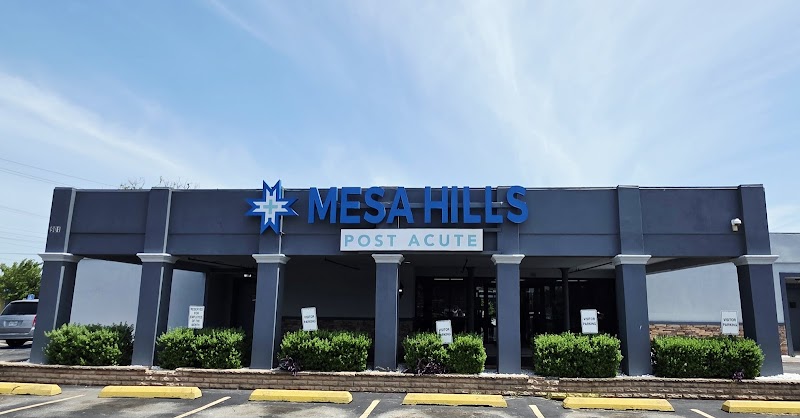
How is Mesa Hills Post Acute Staffed?

CMS rates MESA HILLS POST ACUTE's staffing level at 2 out of 5 stars, which is below average compared to other nursing homes. Staff turnover is 37%, compared to the Texas average of 46%. This relatively stable workforce can support continuity of care. RN turnover specifically is 60%, which is notably high. RNs provide skilled clinical oversight, so turnover in this role can affect medical care quality.

What Have Inspectors Found at Mesa Hills Post Acute?

State health inspectors documented 28 deficiencies at MESA HILLS POST ACUTE during 2023 to 2025. These included: 1 Immediate Jeopardy (the most serious level, indicating potential for serious harm or death) and 27 with potential for harm. Immediate Jeopardy findings are rare and represent the most serious regulatory concerns. They require immediate corrective action.
Who Owns and Operates Mesa Hills Post Acute?

MESA HILLS POST ACUTE is owned by a for-profit company. For-profit facilities operate as businesses with obligations to shareholders or private owners. The facility operates independently rather than as part of a larger chain. With 166 certified beds and approximately 95 residents (about 57% occupancy), it is a mid-sized facility located in BROWNSVILLE, Texas.
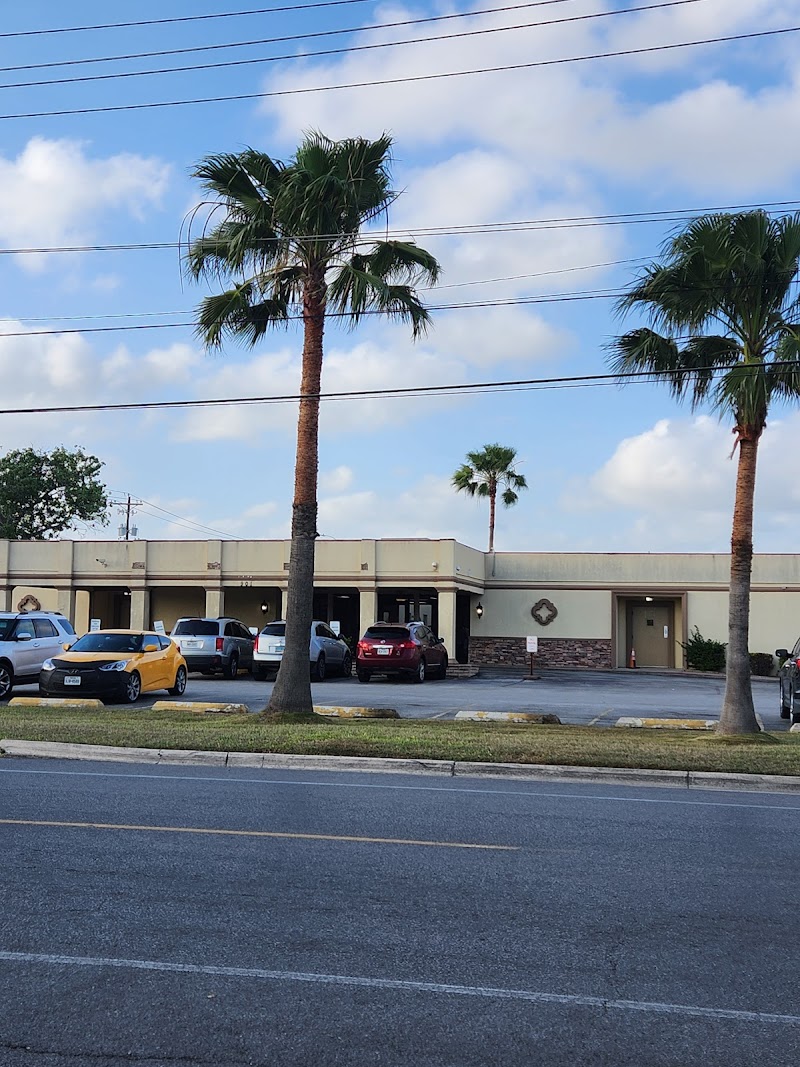
How Does Mesa Hills Post Acute Compare to Other Texas Nursing Homes?

Compared to the 100 nursing homes in Texas, MESA HILLS POST ACUTE's overall rating (3 stars) is above the state average of 2.8, staff turnover (37%) is near the state average of 46%, and health inspection rating (3 stars) is at the national benchmark.

What Should Families Ask When Visiting Mesa Hills Post Acute?

Based on this facility's data, families visiting should ask: "What changes have been made since the serious inspection findings, and how are you preventing similar issues?" "Can you walk me through typical staffing levels on day, evening, and night shifts?" "Can I visit during a mealtime to observe dining assistance and food quality?" "How do you handle medical emergencies, and what is your hospital transfer rate?" These questions are particularly relevant given the facility's Immediate Jeopardy citations and the below-average staffing rating.

Is Mesa Hills Post Acute Safe?

Based on CMS inspection data, MESA HILLS POST ACUTE has documented safety concerns. Inspectors have issued 1 Immediate Jeopardy citation (the most serious violation level indicating risk of serious injury or death). The facility has a 3-star overall rating and ranks #1 of 100 nursing homes in Texas. Families considering this facility should ask detailed questions about what corrective actions have been taken since these incidents.

Do Nurses at Mesa Hills Post Acute Stick Around?

MESA HILLS POST ACUTE has a staff turnover rate of 37%, which is about average for Texas nursing homes (state average: 46%). Moderate turnover is common in nursing homes, but families should still ask about staff tenure and how the facility maintains care continuity when employees leave.

Was Mesa Hills Post Acute Ever Fined?

MESA HILLS POST ACUTE has been fined $19,388 across 2 penalty actions. This is below the Texas average of $33,273. While any fine indicates a compliance issue, fines under $50,000 are relatively common and typically reflect isolated problems that were subsequently corrected. Families should ask what specific issues led to these fines and confirm they've been resolved.

Is Mesa Hills Post Acute on Any Federal Watch List?

MESA HILLS POST ACUTE is not on any federal watch list. The most significant is the Special Focus Facility (SFF) program, which identifies the bottom 1% of nursing homes nationally based on persistent, serious quality problems. Not being on this list means the facility has avoided the pattern of deficiencies that triggers enhanced federal oversight. This is a positive indicator, though families should still review the facility's inspection history directly.