LEGEND OAKS HEALTHCARE AND REHABILITATION CENTER -

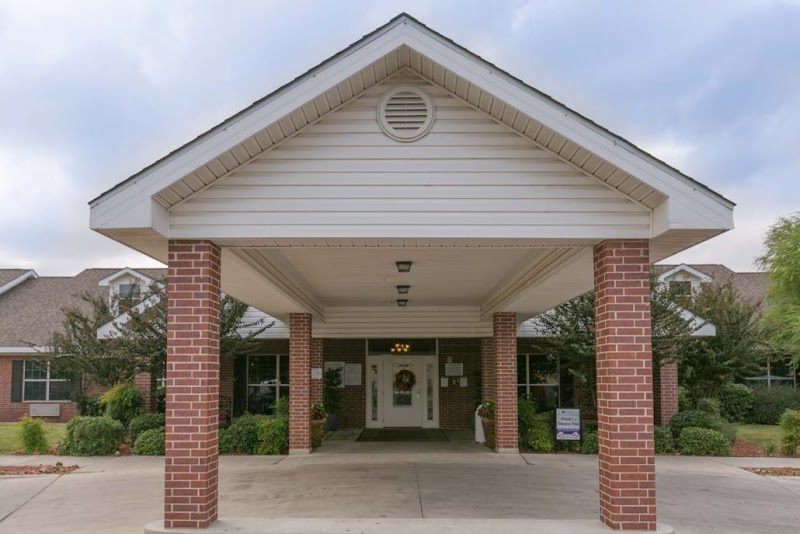
2003 W HUTCHINS PLACE, SAN ANTONIO, TX 78224 (210) 927-0800
For profit - Limited Liability company 126 Beds THE ENSIGN GROUP Data: November 2025
Trust Grade
80/100
#87 of 1168 in TX
Last Inspection: September 2024

Within standard 12-15 month inspection cycle. Federal law requires annual inspections.

Overview

Legend Oaks Healthcare and Rehabilitation Center has a Trust Grade of B+, which means it is above average and recommended for families considering this facility. It ranks #87 out of 1168 nursing homes in Texas, placing it in the top half, and #3 out of 62 in Bexar County, indicating that only two local options are better. However, the facility's trend is worsening, with the number of issues increasing from 7 in 2023 to 10 in 2024. Staffing is a relative strength, with a turnover rate of 44%, which is below the Texas average of 50%, but the facility has average RN coverage. Notably, there were no fines on record, which is a positive sign. On the downside, recent inspections revealed several concerning incidents, including the presence of spoiled food in the kitchen that could risk foodborne illness and failures in developing personalized care plans for residents, particularly regarding the use of bed rails without proper assessment or consent. These issues suggest that while the facility has strengths, there are significant areas that need improvement to ensure the safety and well-being of residents.

Trust Score
B+
80/100
In Texas
#87/1168
Top 7%
Safety Record
Low Risk
No red flags
Inspections
Getting Worse
7 → 10 violations
Staff Stability
○ Average
44% turnover. Near Texas's 48% average. Typical for the industry.
Penalties
✓ Good
No fines on record. Clean compliance history, better than most Texas facilities.
Skilled Nurses
⚠ Watch
Each resident gets only 26 minutes of Registered Nurse (RN) attention daily — below average for Texas. Fewer RN minutes means fewer trained eyes watching for problems.
Violations
⚠ Watch
21 deficiencies on record. Higher than average. Multiple issues found across inspections.
★★★★★
5.0
Overall Rating
★★★☆☆
3.0
Staff Levels
★★★★★
5.0
Care Quality
★★★★☆
4.0
Inspection Score
Stable
2023: 7 issues
2024: 10 issues

The Good

  • 5-Star Quality Measures · Strong clinical quality outcomes
  • Full Sprinkler Coverage · Fire safety systems throughout facility
  • No fines on record
  • Staff turnover below average (44%)

    4 points below Texas average of 48%

Facility shows strength in quality measures, fire safety.

The Bad

Staff Turnover: 44%

Near Texas avg (46%)

Typical for the industry

Chain: THE ENSIGN GROUP

Part of a multi-facility chain

Ask about local staffing decisions and management

The Ugly 21 deficiencies on record

Sept 2024 8 deficiencies
CONCERN (D)

Potential for Harm - no one hurt, but risky conditions existed

Deficiency F0578 (Tag F0578)

Could have caused harm · This affected 1 resident

**NOTE- TERMS IN BRACKETS HAVE BEEN EDITED TO PROTECT CONFIDENTIALITY** Based on interview and record review, the facility failed to ensure residents' right to formulate an advance directive for 1 of ...

Read full inspector narrative →
**NOTE- TERMS IN BRACKETS HAVE BEEN EDITED TO PROTECT CONFIDENTIALITY** Based on interview and record review, the facility failed to ensure residents' right to formulate an advance directive for 1 of 6 residents (Resident #320) reviewed for advanced directives, in that: The facility failed to ensure Resident #320's Out-of-Hospital Do Not Resuscitate (OOH DNR) was included in the medical record and correctly completed. This failure could place residents at-risk of having their end of life wishes dishonored, and of having CPR performed against their wishes. The findings included: Record review of Resident #320's face sheet, dated [DATE] revealed a [AGE] year-old male admitted to the facility on [DATE] with diagnoses that included dementia (a group of symptoms that affects memory, thinking, and interferes with daily life), Parkinson's disease (a movement disorder that affects the nervous system and worsens over time) without dyskinesia (uncontrolled, involuntary movements of the face, arms, and legs) without mention of fluctuations, and adult failure to thrive. Record review of Resident #320's initial admission record, dated [DATE] revealed the resident was sometimes understood and sometimes understood others. Record review of Resident #2's comprehensive care plan, initiated on [DATE] revealed the resident was a DNR. Record review of Resident #320's Order Summary Report, dated [DATE] revealed an order for DNR, with a start date of [DATE], and no end date. Record review Resident #320's DNR, dated [DATE], revealed it contained Resident #320's RP's signature and name in section C. The DNR was signed by two witnesses and two physicians. There were two physicians' signatures at the bottom of the document but no witness or RP signature at the bottom where any person who had signed above must sign below. During an interview on [DATE] at 2:20 p.m. the SW stated he was unsure if there were any pending DNR's and had just started at the facility. The SW was unsure if Resident #320 had a DNR or where the DNR was. During an interview on [DATE] at 2:59 p.m. the DON stated clinical staff was helping the SW with DNR paperwork since he was new and in training. The DON stated it took them a while to find the DNR and if Resident #320 had coded, he would have received CPR in the event of an emergency if they had taken that long to locate the DNR. The DON stated the RP's signature was not necessary on the document because they had two provider signatures. During an interview on [DATE] at 11:27 a.m. Resident #320's RP stated they did not complete a DNR form. The RP was shown the DNR form. The RP stated that was not their signature or print and was concerned someone would be forging their name on documents. The RP stated they did wish to execute a DNR but was not asked to fill out paperwork by the facility. The RP stated they only discussed the DNR with hospital staff prior to being admitted to the facility. Record review of the facility policy titled Advanced Directives and Associated Documentation, dated 1/2022, reflected . Procedure: 1. Prior to, upon, or immediately after admission, a facility staff member shall: a. Provide the resident/family or responsible agent written information regarding the right to accept or refuse medical treatment and the right to formulate Advance Directives b. Document in the resident health record that, at the time of admission, the resident/family has been provided with written information regarding advance directives. c. Inquire whether he/she has completed an Advance Directive. 2. If the resident is incapacitated at the time of admission and is unable to receive information or indicate whether or not he/she has executed an advance directive, the facility may give advance directive information to the resident's representative in accordance with existing State law. a. If the resident becomes able to receive information at a later point during his/her admission, the facility will follow its policy relative to the provision of advance directive information to extent permitted by the resident's condition. b. Information will be provided directly to the resident by a member of the care plan team, in a timely manner . 4. If the resident is incapacitated and not-capable of independent decision-making at the time of admission: a. Inform the surrogate decision maker to document his/her desire to initiate an advance directive and his/her knowledge that this decision is in the resident's best interest or is to comply with resident's known desires, when this need arises. b. If the surrogate decision-maker is a family member who is not the attorney-in-fact, conservator or guardian with health care decision power, all members of the immediate family with equal relationship to the resident will need to agree and sign the document. i. In the event opinions differ among family members, the Advance Directives will not be implemented until a resolution is achieved. c. If there is no surrogate decision maker who can act on behalf of an incapacitated resident, an Advance Directive order may be issued when the attending physician determines it is medically appropriate and concurrence is evident in the resident health record by the Interdisciplinary Team. 5. When an Advance Directive is completed: a. Review the Advance Directive to validate the document reflects the resident choices and that the document is signed and dated by the resident or responsible agent . d. Obtain copy of the Advance Directive and conservatorship/guardianship documents and place in the resident health record. 6. Obtain copy of the Advance Directive and conservatorship/guardianship documents and place in the resident health record. a. It should be noted that a Physician Orders for Life-Sustaining Treatment (or POLST) paradigm form is not an advance directive. b. Once the advance directive or information regarding resident preferences regarding treatment options is received by the facility, it will be confirmed in the resident medical record and communicated to members of the care plan team .
CONCERN (D)

Potential for Harm - no one hurt, but risky conditions existed

Incontinence Care (Tag F0690)

Could have caused harm · This affected 1 resident

**NOTE- TERMS IN BRACKETS HAVE BEEN EDITED TO PROTECT CONFIDENTIALITY** Based on observation, interview, and record review, the facility failed to ensure a resident who was incontinent of bladder rece...

Read full inspector narrative →
**NOTE- TERMS IN BRACKETS HAVE BEEN EDITED TO PROTECT CONFIDENTIALITY** Based on observation, interview, and record review, the facility failed to ensure a resident who was incontinent of bladder receives appropriate treatment and services to prevent urinary tract infections and to restore continence to the extent possible for 2 of 3 residents (Resident #77, and #312) reviewed for indwelling urinary catheter care. 1. The facility failed to ensure Resident #77's indwelling urinary catheter drainage bag was emptied and draining to gravity when provided with urinary catheter care. 2.The facility failed to ensure CNA C cleansed Resident #312 from the meatus (the opening of the urethra where urine exits the penis) outwards and washed the resident's scrotum, inner thighs, and thoroughly cleaned between his buttocks. These failures could place the residents with indwelling urinary catheter devices at risk for the development of new or worsening urinary tract infections. The findings included: 1. Record review of Resident #77's face sheet, dated 9/27/24 revealed a [AGE] year-old male admitted to the facility on [DATE] and re-admitted on [DATE] with diagnoses that included need for assistance with personal care, benign prostatic hyperplasia with lower urinary tract symptoms (a benign condition in which the prostate gland is larger than normal causing slow or block the flow of urine from the bladder), and cystitis (inflammation of the bladder or a lower urinary tract infection). Record review of Resident #77's most recent significant change MDS assessment, dated 7/29/24 revealed the resident was severely cognitively impaired for daily decision-making skills and utilized an indwelling urinary catheter. Record Review of Resident #77's comprehensive care plan with revision date 3/13/24 revealed the resident had an indwelling urinary catheter related to obstructive uropathy (urine flow blocked or slowed related to obstruction in any part of the urinary tract) with interventions that included to position the catheter bag and tubing below the level of the bladder and away from entrance room door, provide catheter care every shift and as needed, and a goal for the resident to remain free from catheter related trauma. Observation on 9/26/24 beginning at 5:09 p.m., revealed Resident #77's indwelling urinary catheter bag was filled with approximately 1,200 ml of urine and draining to gravity on the right side of the bed rail. Observation during catheter care revealed, CNA A took the indwelling urinary catheter bag and tubing and placed it on the foot of the bed next to Resident #77's right foot. Observations of the indwelling urinary catheter bag and tubing revealed they remained on Resident #77's bed throughout the catheter care until 5:47 p.m. During an interview on 9/26/24 at 5:57 p.m., CNA A stated she realized Resident #77's indwelling urinary catheter bag was filled with urine and should have emptied the bag prior to catheter care. CNA A further stated, the indwelling urinary catheter bag filled with urine could backflow and could give the resident a urinary tract infection or the catheter could dislodge. CNA A stated she was nervous. During an interview on 9/26/24 at 6:18 p.m., the DON stated, Resident #77's indwelling urinary catheter bag should have been emptied of urine prior to catheter care as it could dislodge and you don't want to push it and the urine could back flow causing an infection. Record review of CNA A's Comprehensive Clinical Competency Review Skills Checklist dated 5/25/24 revealed CNA A had satisfied the requirements for performing catheter care. 2. Record review of Resident #312's face sheet, dated 9/27/24 revealed a [AGE] year-old male admitted to the facility on [DATE] with diagnoses that included encounter for orthopedic aftercare following surgical amputation and benign prostatic hyperplasia (a condition in which the prostate gland grows larger than normal, but the growth is not caused by cancer) without lower urinary tract infection. Record review of Resident #312's admission MDS revealed it was not complete because he was a new admit. Record Review of Resident #312's comprehensive care plan with revision date 9/26/24 revealed the resident had an indwelling urinary catheter with interventions to provide catheter care every shift and as needed. During an observation on 9/27/24 at 11:28 a.m. revealed CNA C and CNA D provided catheter and incontinent care to resident #312. Resident #312 had purulent (thick, milky discharge) continuously dripping from his urethra (urethra is a tube that connects the urinary bladder to the urinary meatus for the removal of urine from the body). CNA C held Resident #312's penis and wiped in the wrong direction from the base to the tip of the penis. The purulent drainage was on the resident's scrotum and had dripped from the resident's penis onto his scrotum. CNA C did not clean the resident's scrotum or under the scrotum. CNA C then turned the resident to his side and cleaned his buttocks. CNA C did not fully sperate the resident's gluteus folds to reach the intergluteal cleft (the groove between the buttocks that runs from just below the sacrum to the perineum). During an interview on 9/27/24 at 11:59 a.m. CNA C stated he thought he wiped the right direction when he cleaned the resident's penis. CNA C stated if he wiped towards to meatus it could cause infection. CNA C stated he forgot to clean the resident's scrotum and under the scrotum because he focused on the catheter care and forgot. CNA C stated he thought he separated the resident's buttocks enough to clean between the folds because he observed fecal matter on the wipe. CNA C stated he had received training for catheter and peri care but did not have any male residents on his assigned hallway who received catheter care. CNA C stated he was asked to help with the catheter care for Resident #312 but was not familiar with the resident. During an interview on 9/27/24 at 12:09 p.m. the DON stated if staff did not clean the resident's penis the right direction or provide full peri care to include cleaning the scrotum and buttocks the resident could get an infection. The DON stated the resident was sent to the hospital the day prior and returned with a diagnosis of a UTI. The DON stated the resident was having a PICC line inserted to receive IV antibiotics. The DON stated they had no hospital paperwork but had requested it. Record review of CNA C's skills check list, dated 2/27/24, showed CNA C was trained and met standards for catheter care and perineal care. The check off stated with warm water and soap to cleanse around the meatus. Cleanse the glans using circular strokes from the meatus outward. Change the position of the washcloth with each cleansing stroke. With a clean washcloth, rinse with warm water using the above technique. Return foreskin to normal position .Wash and rinse the tip of penis using circular motion beginning at urethra. Continue washing down the penis to the scrotum and inner thighs .Clean the rectal area, wiping in strokes from the base of the scrotum and over the buttocks. Record review of the facility policy and procedure titled, Infection Control Policy/Procedure, Section: Quality of Care, Subject: Catheter Care, Indwelling, review date 12/2019 revealed in part, .It is the policy of this facility that each resident with an indwelling catheter will receive catheter care daily and PRN for soiling .Purpose: to Promote hygiene, comfort and decrease risk of infection for catheterized residents .Keep tubing below level of bladder .
CONCERN (D)

Potential for Harm - no one hurt, but risky conditions existed

Deficiency F0698 (Tag F0698)

Could have caused harm · This affected 1 resident

**NOTE- TERMS IN BRACKETS HAVE BEEN EDITED TO PROTECT CONFIDENTIALITY** Based on observation, interview and record review, the facility failed to ensure that residents who required dialysis received s...

Read full inspector narrative →
**NOTE- TERMS IN BRACKETS HAVE BEEN EDITED TO PROTECT CONFIDENTIALITY** Based on observation, interview and record review, the facility failed to ensure that residents who required dialysis received such services, consistent with professional standards of practice for 2 of 2 residents (Resident #226, and Resident #75) reviewed for dialysis in that: The facility did not maintain communication, coordination, and collaboration with the dialysis facility for Resident #226 and Resident #75. This deficient practice could affect residents who received dialysis treatments and place them at risk for complications and not receiving proper care and treatment to meet their needs. The findings were: 1. Record review of Resident #226's face sheet, dated 9/26/24 revealed a [AGE] year-old male admitted to the facility on [DATE] with diagnoses that included displacement of vascular dialysis catheter (a medical device used to access the bloodstream for dialysis treatment), end stage renal disease (condition in which the kidneys cease functioning on a permanent basis) and dependence on renal dialysis (process of removing excess water, solutes and toxins from the blood in people whose kidneys can no longer perform these functions naturally). Record review of Resident #226's most recent MDS assessment, dated 9/14/24 revealed the resident was moderately cognitively impaired for daily decision-making skills and was dependent on renal dialysis. Record review of Resident #226's comprehensive care plan, revision date 9/24/24 revealed the resident was at risk for impaired cognitive function/dementia or impaired thought processes related to confusion, end stage renal disease and dialysis. Record review of Resident #226's Order Summary Report, dated 9/26/24 revealed the following: - DIALYSIS COMMUNICATION FORM TO BE COMPLETED AND FILED/SCANNED IN CHART ON DIALYSIS DAYS, with order date 9/20/24 and no stop date - HEMODIALYSIS 3 X /WEEK EVERY TTHS AT DIALYSIS CLINIC 7:00 AM, with order date 9/24/24 and no stop date - RESIDENT HAS PERMACATH TO RU MONITOR SITE Q SHIFT FOR BLEEDING, PAIN, REDNESS, TENDERNESS, SWELLING, AND DISLODGEMENT every shift and as needed with order date 9/22/24 and no stop date Record review of Resident #226's Renal Dialysis Communication Form revealed the form dated 9/23/24 was missing the dialysis staff's signature and the form dated 9/26/24 revealed the Dialysis Center Information section requested the following information: Please send VS and BP regimen times given BP meds please. Patient's BP reading high today. During an interview on 9/25/24 at 8:17 a.m., Resident #226 stated he had been receiving dialysis treatments for 4 years and the dialysis port was on the upper left chest. During an interview on 9/26/24 at 3:46 p.m., the ADON stated she was responsible for making sure the Renal Dialysis Communication Forms were completed before being filed away. The ADON stated the nurses should check the form for completeness at the time it was received, and she checked the forms weekly for completeness before it was filed. The ADON stated the Renal Dialysis Communication Form for Resident #226, dated 9/23/24 was missing the dialysis staff's signature and the form dated 9/26/24 had information the dialysis clinic requested regarding the resident's blood pressure reading being elevated. The ADON could not confirm if the dialysis clinic had received the information requested on 9/26/24 by the dialysis clinic. During an interview on 9/26/24 at 4:12 p.m., the DON stated, Resident #226's Renal Dialysis Communication Form dated 9/23/24 was missing the dialysis clinic 's signature and the section for recommendations communications was unclear. The DON further stated, the communication form dated 9/26/24 had a note from dialysis about the resident's blood pressure that should have been clarified the day received today. The DON stated, the floor staff are supposed check these when they return, it's like an appointment, they should be checking like for orders and should be addressed as soon as possible. That is my expectation. The DON stated the ADON was supposed to be checking behind the nurses to ensure this does not happen, because of missing documentation and (missing) sheets in the past. 2. Record review of Resident #75's face sheet, dated 9/26/24 revealed a [AGE] year-old male readmitted to the facility on [DATE] and initially admitted on [DATE] with diagnoses that included type 2 diabetes mellitus (a condition that happens because of a problem in the way the body regulates and uses sugar as a fuel), chronic kidney disease (a gradual loss of kidney function), and dependence on renal dialysis (process of removing excess water, solutes and toxins from the blood in people whose kidneys can no longer perform these functions naturally). Record review of Resident #75's most recent MDS assessment, dated 9/13/24 revealed the resident's cognition was intact for daily decision-making skills and was dependent on renal dialysis. Record review of Resident #75's comprehensive care plan, revision date 8/12/24 revealed the resident needed dialysis related to renal failure with interventions to check arteriovenous fistula (connection or passageway between an artery and a vein) every day for bruit (abnormal sound generated by turbulent flow of blood in an artery due to either an area of partial obstruction or a localized high rate of blood flow through an unobstructed artery) and thrill (A vibratory sensation felt on the skin overlying an area of turbulence, often indicating a loud heart murmur caused by an incompetent heart valve.), obtain vital signs and weight, report significant changes in pulse, respirations, and blood pressure immediately. Record review of Resident #75's Order Summary Report, dated 9/26/24 revealed the following: - DIALYSIS COMMUNICATION FORM TO BE COMPLETED AND FILED/SCANNED IN CHART ON DIALYSIS DAYS, with order date 9/11/24 and no stop date. - Hemodialysis 3 times a week every Tuesday, Thursday, and Saturday at dialysis clinic at 9:15 a.m. transport, chair time 10:15 a.m., with order date 9/24/24 and no stop date. - Monitor and record every shift AV (arteriovenous) permacath (is a catheter, a special IV device, that medical professionals insert into a blood vessel) [NAME] (left upper chest or clavicle) for bleeding, redness, swelling, pain, signs and symptoms of infection, document (-) absent or if (+) present notify MD and dialysis, with an order date of 9/25/24, and no end date. -Monitor and record every shift AV shunt/fistula for bruit and thrill. Document (+) present or if (-). Absent notify MD and dialysis center, with an order date of 9/11/24, and no end date. Record review of Resident #75's nursing progress notes, dated 9/26/24, revealed a note written on 9/17/24 by LVN E that reflected, .Receiving dialysis. Dialysis type: Hemodialysis Resident response to dialysis is Resident denies pain, and s/s of discomfort to dialysis site. Resident tolerating dialysis treatment well at this time. Other observations and interventions include Resident noted to miss dialysis days at times. No s/s of discomfort noted . Record review of Resident #75's Renal Dialysis Communication Forms revealed there was no form for 9/17/24. The form for 9/24/24 was not completed upon return by facility staff, and the form for 9/26/24 was not completed upon return by staff. During an interview on 9/26/24 at 4:13 p.m. LVN E stated he wrote in a skilled nursing note that the resident missed dialysis on 9/17/24 and he documneted it in a note as miss dialysis at times. During an interview on 9/26/24 at 3:43 p.m. the ADON stated she oversaw reviewing the dialysis communication forms to ensure they were completed. The ADON stated the forms dated 9/24/24 and 9/26/24 were missing the information for the assessment done by their facility staff upon return. The ADON stated they still had time to complete the form for 9/26/24. The ADON stated the resident did not go to dialysis on 9/17/24. Record review of the facility policy and procedure titled, Dialysis (Renal), Pre- and Post-Care, dated 3/2009 revealed in part, .It is the policy of this facility to .Participate in ongoing communication and collaboration with the dialysis facility regarding dialysis care and services .The care of the resident receiving dialysis services will reflect ongoing communication, coordination and collaboration between the nursing home and dialysis staff .Staff will immediately contact and communicate with .designated dialysis staff .regarding any significant changes in the resident's status related to clinical complications or emergent situations .
CONCERN (D)

Potential for Harm - no one hurt, but risky conditions existed

Deficiency F0849 (Tag F0849)

Could have caused harm · This affected 1 resident

**NOTE- TERMS IN BRACKETS HAVE BEEN EDITED TO PROTECT CONFIDENTIALITY** Based on interview, and record review, the facility failed to collaborate with hospice representatives and coordinate the hospic...

Read full inspector narrative →
**NOTE- TERMS IN BRACKETS HAVE BEEN EDITED TO PROTECT CONFIDENTIALITY** Based on interview, and record review, the facility failed to collaborate with hospice representatives and coordinate the hospice care planning process for each resident receiving hospice services, to ensure quality of care for the resident, ensuring communication with the hospice medical director, the resident's attending physician, and others participating in the provision of care for 1 of 4 residents (Resident #320) reviewed for hospice services, in that: The facility failed to ensure Resident #138's most recent plan of care (POC), DNR, and hospice physician orders were available and at the facility. This deficient practice could place residents who receive hospice services at-risk of receiving inadequate end-of-life care due to a lack of documentation, coordination of care and communication of resident needs. The findings were: Record review of Resident #320's face sheet, dated [DATE] revealed a [AGE] year-old male admitted to the facility on [DATE] with diagnoses that included dementia (a group of symptoms that affects memory, thinking, and interferes with daily life), Parkinson's disease (a movement disorder that affects the nervous system and worsens over time) without dyskinesia without mention of fluctuations, and adult failure to thrive. Record review of Resident #320's initial admission record, dated [DATE] revealed the resident was sometimes understood and sometimes understands others and did not mention hospice. Record review of Resident #2's comprehensive care plan, initiated on [DATE] revealed the resident was a DNR and did not mention hospice. Record review of Resident #320's Order Summary Report, dated [DATE] revealed an order for DNR, with a start date of [DATE], and no end date. Record review of Resident #320's hospice binder on [DATE] at 11:27 a.m. Resident #320's hospice binder and EMR did not have the hospice plan of care or hospice physician orders. During an interview on [DATE] at 2:20 p.m. the SW stated he was unsure if there were any pending DNRs and had just started at the facility. The SW was unsure if resident #320 had a DNR or where the DNR was. During an interview on [DATE] at 2:59 p.m. the DON stated they had checked all the hospice residents documents the day prior and thought they were all in the binder. The DON stated they did find the DNR in the ADONs office, but it took them a while to find the DNR, and if the resident had coded, he would have received CPR in the event of an emergency, if they had taken that long to locate the DNR. The DON stated the DNR should have been in the binder along with the POC. Record review of the facility's policy titled Nursing Clinical, Quality of Care, Administration, End of Life Care, Hospice, dated 12/2019, stated POLICY: It is the policy of this facility to provide end of life care for dying residents .Through continuing interdisciplinary assessment, individualized plans will be developed and implemented . 2. A care plan will be developed based on the individualized assessments, the desires of the resident/surrogate decision-maker, and the physician's orders . 4. Hospice services will be offered as appropriate and as ordered by the physician. These services will be integrated into the overall individualized, interdisciplinary care plan. Collaboration with Hospice will include processes for orienting staff to facility policies and procedures which may include: residents rights, documentation and record keeping requirements .
CONCERN (D)

Potential for Harm - no one hurt, but risky conditions existed

Infection Control (Tag F0880)

Could have caused harm · This affected 1 resident

**NOTE- TERMS IN BRACKETS HAVE BEEN EDITED TO PROTECT CONFIDENTIALITY** Based on observation, interview, and record review, the facility failed to maintain an infection prevention and control program ...

Read full inspector narrative →
**NOTE- TERMS IN BRACKETS HAVE BEEN EDITED TO PROTECT CONFIDENTIALITY** Based on observation, interview, and record review, the facility failed to maintain an infection prevention and control program designed to provide a safe, sanitary, and comfortable environment and to help prevent the development and transmission of communicable disease and infection for 2 of 3 residents (Residents #77 and #312) reviewed for infection control, in that: 1. The facility failed to ensure CNA B used appropriate hand hygiene when removing her gloves after assisting Resident #77 with indwelling urinary catheter care. 2. The facility failed to ensure staff did not let Resident #312's catheter tubing touch the floor and used enhanced barrier precautions (EBP) when caring for the catheter and the resident. These deficient practices could place residents at-risk for infection due to improper care practices. The findings included: 1. Record review of Resident #77's face sheet, dated 9/27/24 revealed a [AGE] year-old male admitted to the facility on [DATE] and re-admitted on [DATE] with diagnoses that included need for assistance with personal care, benign prostatic hyperplasia with lower urinary tract symptoms (a benign condition in which the prostate gland is larger than normal causing slow or block the flow of urine from the bladder), and cystitis (inflammation of the bladder or a lower urinary tract infection). Record review of Resident #77's most recent significant change MDS assessment, dated 7/29/24 revealed the resident was severely cognitively impaired for daily decision-making skills and utilized an indwelling urinary catheter. Record Review of Resident #77's comprehensive care plan with revision date 3/13/24 revealed the resident had an indwelling urinary catheter related to obstructive uropathy (condition where urine flow is blocked or slowed, often related to an obstruction in any part of the urinary tract) with interventions that included to provide catheter care every shift and as needed, and a goal for the resident to remain free from catheter related trauma. Observation on 9/26/24 at 5:09 p.m., during indwelling urinary catheter care, CNA B helped CNA A pull back Resident #77's blanket, unfastened his disposable brief, and then repositioned Resident #77 from his back to his left side. After CNA A completed care, both CNA A and CNA B repositioned the resident onto his back. CNA B realized she had forgotten to get a clean pad to place underneath the resident's buttock area, removed her gloves, did not use appropriate hand hygiene, and opened the resident's bedroom door to retrieve a clean pad. CNA B returned to the bedside, continued to assist CNA A, took a clean brief and as she positioned the brief under the resident's buttocks, tore the disposable brief. CNA B then removed her gloves, did not use appropriate hand hygiene, and opened the resident's bedroom door to retrieve a clean disposable brief. CNA B then returned to the bedside with a clean brief and continued to assist CNA A with catheter care. During an interview on 9/26/24 at 5:57 p.m., CNA B stated she realized she had not washed or sanitized her hands after taking off her gloves after leaving the bedside which could result in cross contamination. CNA B stated cross contamination from not using appropriate hand hygiene could result in the resident developing an infection. During an interview on 9/26/24 at 6:18 p.m., the DON stated it was her expectation for the staff, when removing gloves, should be sanitizing, or washing their hands because it was proper infection control practice and failure to do so could result in a risk of infection. 2. Record review of Resident #312's face sheet, dated 9/27/24 revealed a [AGE] year-old male admitted to the facility on [DATE] with diagnoses that included encounter for orthopedic aftercare following surgical amputation and benign prostatic hyperplasia (a condition in which the prostate gland grows larger than normal, but the growth is not caused by cancer) without lower urinary tract infection. Record review of Resident #312's admission MDS revealed it was not complete because he was a new admit. Record Review of Resident #312's comprehensive care plan with revision date 9/26/24 revealed the resident had an indwelling urinary catheter with interventions to provide catheter care every shift and as needed. Record Review of Resident #312's physician's orders, dated 9/27/24, revealed: - catheter type Fr#16 ml 10 to closed urinary drainage system, diagnosis use for BPH, with an order date of 9/23/24 and no end date. - catheter care every shift. Monitor for urethral site for signs and symptoms of skin break down, pain/discomfort, unusual odors, urine characteristics or secretions, catheter pulling causing tension every shift, with a start date of 9/22/24, and no end date. During an observation on 9/24/24 at 10:07 a.m. revealed Resident #312 was noted to have his name outside the door with a pink label. During an observation and interview on 9/24/24 at 10:59 a.m. revealed Resident #312 was lying in bed.The resident was lying in the same position during the attempted interview and only moved his arms. The resident's bed was low to the floor and a catheter bag was in a dignity bag wedged under the bed and off the floor. About 1 foot of the catheter bag tubing was touching the floor. The resident stated he was thirsty and wanted to move up in the bed. During an interview on 9/24/24 at 11:00 a.m. Resident #312 kept pressing his call light over and over after staff entered the room. The resident then stated he wanted to sit up or move. LVN F entered the room and stated the catheter was normally not touching the floor. LVN F stated the resident would fidget and that caused the tube to touch the floor. LVN G then adjusted the catheter so the tube was not touching the floor. LVN F and LVN G then put on gloves only and adjusted the resident in bed to sit him up more. LVN F and LVN G were positioned on either side of the bed and their clothing was touching the residents bed and sheets as they repositioned the resident in the bed. Upon exiting the room LVN F stated the pink names on the resident's door meant he was on enhanced barrier precautions. When asked if they should have had on PPE for EBP, LVN F stated she was just notified he was on enhanced barrier precautions. LVN F then turned to other staff in the hallway and told them to make sure they were wearing gowns when providing care to Resident #312. During an interview on 9/27/24 at 12:09 p.m. the DON stated the catheter should not be touching the floor including the tubing because it was a risk for infection control. The DON stated the resident was sent to the hospital the day prior and returned with a diagnosis of a UTI. The DON stated the resident was having a PICC line inserted to receive IV antibiotics. The DON stated they did not have any paperwork available for the hospital visit. The DON stated staff was expected to wear a gown and gloves for residents on enhanced barrier precautions. The DON stated she did not think moving a resident in bed required the gown. The DON stated for example therapy staff did not wear the gowns if they were walking residents in the hallways. The DON stated staff did wear them for residents on EBP when they did transfers. The DON stated if staff's clothing made contact with the residents bedding and the resident during care then they should wear a gown. Record review of the facility's policy titled IPCP Standard and Transmission-Based Precautions, dated 3/2024, stated .3. Enhanced Barrier Protection (EBP): used in conjunction with standard precautions and expand the use of PPE through the use of gown and gloves during high-contact resident care activities that provide opportunities for indirect transfer of MDROs to staff hands and clothing then indirectly transferred to residents or from resident-to-resident. (e.g., residents with wounds and indwelling medical devices are at especially high risk of both acquisition of and colonization with MDROs) .c. c. Examples of high-contact resident care activities requiring gown and glove use for Enhanced Barrier Precautions include: i. Dressing ii. Bathing/showering iii. Transferring iv. Providing hygiene v. Changing linens vi. Changing briefs or assisting with toileting vii. Device care or use: central vascular line (including hemodialysis catheters), indwelling urinary catheter, feeding tube, tracheostomy/ventilator .
CONCERN (E)

Potential for Harm - no one hurt, but risky conditions existed

Deficiency F0655 (Tag F0655)

Could have caused harm · This affected multiple residents

**NOTE- TERMS IN BRACKETS HAVE BEEN EDITED TO PROTECT CONFIDENTIALITY** Based on observation, interview, and record review the facility failed to develop and implement a comprehensive person-centered ...

Read full inspector narrative →
**NOTE- TERMS IN BRACKETS HAVE BEEN EDITED TO PROTECT CONFIDENTIALITY** Based on observation, interview, and record review the facility failed to develop and implement a comprehensive person-centered care plan that includes measurable objectives and time frames to meet a resident's medical and nursing needs to be furnished to attain or maintain the resident's highest practicable physical, mental, and psychosocial well-being for 3 of 3 residents (Resident #226, Resident #221 and Resident #320) reviewed for comprehensive care plans in that: 1. The facility failed to ensure Resident #226's use of bed rails was care planned. 2. The facility failed to ensure Resident #221's use of bed rails was care planned. 3. The facility failed to ensure Resident #320's use of bed rails was care planned. This deficient practice could place residents at risk of not being provided with the necessary care or services and having personalized plans developed to address their specific needs. The findings included: 1. Record review of Resident #226's face sheet, dated 9/26/24 revealed a [AGE] year-old male admitted to the facility on [DATE] with diagnoses that included legal blindness (severe vision impairment), and hemiplegia (total paralysis of one side of the body) and hemiparesis (weakness or partial paralysis on one side of the body) following cerebral infarction (also known as a stroke; occurs when blood flow to a part of the brain is blocked) affecting unspecified side. Record review of Resident #226's most recent MDS assessment, dated 9/14/24 revealed the resident was moderately cognitively impaired for daily decision-making skills. Record review of Resident #226's baseline care plan, dated 9/12/24 revealed the use of bed rails was not included in the care plan. Record review of Resident #226's Enabling Device/Safety Device/Restraint Informed Consent, dated 9/12/24 revealed the resident's representative signed the document and was fully informed of the potential dangers in the usage of handrails and bed side rails. During an observation and interview on 09/25/24 8:12 a.m., Resident #226 stated he was completely blind, could not walk and needed help with transfers. Resident #226 was observed in the bed with quarter bed rails up on both sides of the bed. Resident #226 stated he had never tried to use the quarter rails. Observation on 09/26/24 at 2:08 p.m. revealed Resident #226 sleeping in bed and the quarter bed rails were up on both sides of the bed. 2. Record review of Resident #221's face sheet, dated 9/26/24 revealed a [AGE] year-old female admitted to the facility on [DATE] with diagnoses that included muscle wasting and atrophy and lack of coordination. Record review of Resident #221's baseline care plan, dated 9/13/24 revealed the resident was at risk for impaired cognitive function/dementia or impaired thought processes and did not have the use of bed rails included in the baseline care plan. Record review of Resident #221's Enabling Device/Safety Device/Restraint Informed Consent, dated 9/13/24 revealed the resident signed the document and was fully informed of the potential dangers in the usage of handrails and bed side rails. During an observation on 9/24/24 at 10:26 a.m., Resident #221 was sitting up in bed with quarter rails on both sides of the bed in the up position. During an observation and interview on 9/26/24 at 8:30 a.m., Resident #221 was sitting up in bed with quarter rails on both sides of the bed in the up position. Resident #221 stated the bed rails were always up and did not know how to put them down. Resident #221 stated she used the bed rails to reposition herself. 3. Record review of Resident #320's face sheet, dated 9/26/24 revealed a [AGE] year-old male admitted to the facility on [DATE] with diagnoses that included dementia (a group of symptoms that affects memory, thinking, and interferes with daily life), Parkinson's disease (a movement disorder that affects the nervous system and worsens over time) without dyskinesia without mention of fluctuations, and adult failure to thrive. Record review of Resident #320's initial admission record, dated 9/19/24 revealed the resident was sometimes understood and sometimes understood others. Record review of Resident #320's Enabling Device/Safety Device/Restraint Informed Consent, dated 9/19/24 revealed the resident representative signed the document and was fully informed of the potential dangers in the usage of hand rails and bed side rails. Record review of Resident #320's assessments, on 9/26/24, revealed they did not contain a Restraint/Enabling Device /Safety Device Evaluation. Record review of Resident #320's Order Summary Report, dated 9/26/24 revealed an order for bolsters placed on bed with a start date of 9/20/24, and no end date. Another order for MAY USE MOBILITY BARS TO AIDE IN EASY TURNING &REPOSITIONING WHILE IN BED every evening and night shift, with a start date of 9/19/24, and no end date. Record review of Resident #320's baseline care plan, dated 9/20/24 revealed the resident was at risk for impaired cognitive function/dementia or impaired thought processes and did not have the use of bed rails included in the baseline care plan. During an observation on 9/27/24 at 11:25 a.m. revealed Resident #320 was sitting in his bed with 1/8th rails in the upright position on either side of the bed. During an interview on 9/26/24 at 4:29 p.m., the DON revealed Resident #226, Resident #221, and Resident #320 had bed rails used as enablers and were affixed to the bed. The DON stated to have the bed rails it was required to have physician orders, a consent and the bed rails needed to be care planned. The DON stated, the use of bed rails should be care planned to make sure the staff are aware the bed rails are used as mobility bars to enhance mobility and not as a restraint. A careplan policy was requested and provided for comprehensive care plans, no baseline care plan policy was provided.
CONCERN (E)

Potential for Harm - no one hurt, but risky conditions existed

Deficiency F0700 (Tag F0700)

Could have caused harm · This affected multiple residents

**NOTE- TERMS IN BRACKETS HAVE BEEN EDITED TO PROTECT CONFIDENTIALITY** Based on observation, interview and record review, the facility failed to assess the resident for risk of entrapment from bed ra...

Read full inspector narrative →
**NOTE- TERMS IN BRACKETS HAVE BEEN EDITED TO PROTECT CONFIDENTIALITY** Based on observation, interview and record review, the facility failed to assess the resident for risk of entrapment from bed rails prior to installation and review the risks and benefits of bed rails with the resident or resident representative and obtain informed consent prior to installation for 3 residents of 9 residents (Resident #226, Resident #221, and Resident #320) reviewed for use of side or bed rails in that: 1. The facility failed to attempt to use appropriate alternatives prior to installing a side or bed rail for Resident #226 and failed to assess Resident #226 for risk of entrapment from bed rails before they were installed. 2. The facility failed to attempt to use appropriate alternatives prior to installing a side or bed rail for Resident #221 and failed to assess Resident #221 for risk of entrapment from bed rails before they were installed. 3. The facility failed to attempt to use appropriate alternatives prior to installing a side or bed rail for Resident #320 and failed to assess Resident #320 for risk of entrapment from bed rails before they were installed. This failure could affect residents who use bed or side rails as enablers and could result in entrapment. The findings included: 1. Record review of Resident #226's face sheet, dated 9/26/24 revealed a [AGE] year-old male admitted to the facility on [DATE] with diagnoses that included legal blindness (severe vision impairment), and hemiplegia (total paralysis of one side of the body) and hemiparesis (weakness or partial paralysis on one side of the body) following cerebral infarction (also known as a stroke; occurs when blood flow to a part of the brain is blocked) affecting unspecified side. Record review of Resident #226's most recent MDS assessment, dated 9/14/24 revealed the resident was moderately cognitively impaired for daily decision-making skills. Record review of Resident #226's Enabling Device/Safety Device/Restraint Informed Consent, dated 9/12/24 revealed the resident's representative signed the document and was fully informed of the potential dangers in the usage of hand rails and bed side rails. Record review of Resident #226's Restraint/Enabling Device /Safety Device Evaluation, dated 9/22/24 revealed the resident had Associated Health issues/diagnoses which contribute to potential for falls or need for Safety/Enabling Devices related to weakness. Further review of the document revealed, Indicate below, ALL measures you have tried Before Implementing Recommended Device. Check ALL that Apply was left blank. During an observation and interview on 09/25/24 8:12 a.m., Resident #226 stated he was completely blind, could not walk and needed help with transfers. Resident #226 was observed in the bed with quarter bed rails up on both sides of the bed. Resident #226 stated he had never tried to use the quarter rails. Observation on 09/26/24 at 2:08 p.m. revealed Resident #226 sleeping in bed and the quarter bed rails were up on both sides of the bed. 2. Record review of Resident #221's face sheet, dated 9/26/24 revealed a [AGE] year-old female admitted to the facility on [DATE] with diagnoses that included muscle wasting and atrophy and lack of coordination. Record review of Resident #221's baseline care plan, dated 9/13/24 revealed the resident was at risk for impaired cognitive function/dementia or impaired thought processes. Record review of Resident #221's Enabling Device/Safety Device/Restraint Informed Consent, dated 9/13/24 revealed the resident signed the document and was fully informed of the potential dangers in the usage of hand rails and bed side rails. Record review of Resident #221's Restraint/Enabling Device /Safety Device Evaluation dated 9/14/24 revealed the resident had Associated Health issues/diagnoses which contribute to potential for falls or need for Safety/Enabling Devices related to weakness. Further review of the document revealed, Indicate below, ALL measures you have tried Before Implementing Recommended Device. Check ALL that Apply was marked ¼ side rails right and ¼ side rails left. During an observation on 9/24/24 at 10:26 a.m., Resident #221 was sitting up in bed with quarter rails on both sides of the bed in the up position. During an observation and interview on 9/26/24 at 8:30 a.m., Resident #221 was sitting up in bed with quarter rails on both sides of the bed in the up position. Resident #221 stated the bed rails were always up and did not know how to put them down. Resident #221 stated she used the bed rails to reposition herself. During an interview on 9/26/24 at 4:29 p.m., the DON revealed Resident #226 and Resident #221 had bed rails used as enablers and were affixed to the bed. The DON stated the facility obtained a consent at the time of admission for the use of enablers. The DON stated to have the bed rails it was required to have physician orders, a consent and the bed rails needed to be care planned. The DON further stated, we do an assessment to make sure they are able to use it, and it is not a restraint. The DON stated, the use of bed rails should be care planned to make sure the staff are aware the bed rails are used as mobility bars to enhance mobility and not as a restraint. 3.Record review of Resident #320's face sheet, dated 9/26/24 revealed a [AGE] year-old male admitted to the facility on [DATE] with diagnoses that included dementia (a group of symptoms that affects memory, thinking, and interferes with daily life), Parkinson's disease (a movement disorder that affects the nervous system and worsens over time) without dyskinesia without mention of fluctuations, and adult failure to thrive. Record review of Resident #320's initial admission record, dated 9/19/24 revealed the resident was sometimes understood and sometimes understood others. Record review of Resident #320's Enabling Device/Safety Device/Restraint Informed Consent, dated 9/19/24 revealed the resident representative signed the document and was fully informed of the potential dangers in the usage of hand rails and bed side rails. Record review of Resident #320's assessments, on 9/26/24, revealed they did not contain a Restraint/Enabling Device /Safety Device Evaluation. Record review of Resident #320's Order Summary Report, dated 9/26/24 revealed an order for bolsters placed on bed with a start date of 9/20/24, and no end date. Another order for MAY USE MOBILITY BARS TO AIDE IN EASY TURNING &REPOSITIONING WHILE IN BED every evening and night shift, with a start date of 9/19/24, and no end date. Record review of Resident #320's baseline care plan, dated 9/20/24 revealed the resident was at risk for impaired cognitive function/dementia or impaired thought processes and did not have the use of bed rails included in the baseline care plan. During an observation on 9/27/24 at 11:25 a.m. revealed Resident #320 was sitting in his bed with 1/8th rails in the upright position on either side of the bed. The resident was not able to answer questions when asked. The resident also appeared to have a mattress with side bolsters. Record review of the facility policy and procedure titled, Mobility Bars, with revision date 5/2007 revealed in part, .It is the policy of this facility to use mobility bars .1. Based on resident's assessed medical needs .2. Used for treatment of medical symptoms or condition .3. Used for resident's mobility and/or transfer .Informed Consent .
CONCERN (E)

Potential for Harm - no one hurt, but risky conditions existed

Food Safety (Tag F0812)

Could have caused harm · This affected multiple residents

Based on observation, interview, and record review, the facility failed to store, prepare, distribute, and serve food in accordance with professional standards for food service safety for 1 of 1 kitch...

Read full inspector narrative →
Based on observation, interview, and record review, the facility failed to store, prepare, distribute, and serve food in accordance with professional standards for food service safety for 1 of 1 kitchen, in that: 1. The facility failed to ensure an opened bag of shredded cheese was stored in a sealed container in the reach-in cooler. 2. The facility failed to ensure a storage bag of cooked pork was sealed and labeled with a use-by date in the reach in cooler. 3. The facility failed to store a mop in the equipment storage closet in a position that allowed air drying. These failures could place residents who received meals and/or snacks from the kitchen at risk for food borne illness. The findings included: 1. Observation on 09/24/2024 at 9:26 AM revealed there was a 5-lb. bag of shredded cheddar cheese in the reach-in cooler. The cheese was in its original package and placed in a clear, gallon-sized storage bag with a zipper-seal. The package of cheese had been opened and the zipper-sealed bag was also open. During an interview on 09/24/2024 at 9:27 AM the DS stated the zipper-sealed bag should have been closed. The DS further stated any staff member who stored food in the cooler was responsible for ensuring all foods were properly labeled, dated, and stored in sealed containers or bags to prevent cross contamination and spoilage. 2. Observation on 09/24/2024 at 9:29 AM revealed leftover cooked pork in a gallon-sized storage bag with a zipper-seal. The bag was unsealed, and there was no prepared or use-by date on the bag. During an interview on 09/24/2024 at 9:30 AM the DS stated the storage bag of pork should have been sealed and labeled with a use-by date, and it was facility policy to use leftover food within seven days. The DS further stated all dietary staff knew they were supposed to store all leftover food sealed bags or containers and label and date the bags and containers with a use-by date to prevent cross contamination and spoilage. Staff was trained upon hire and all dietary staff had valid and current food handler certificates. 3. Observation on 09/26/2024 at 11:50 AM in the equipment storage closet revealed a mop stored with the mop head on the ground in a manner that did not allow for air drying. Further observation revealed the mop head was not completely dry to the touch. During an interview on 09/26/2024 at 11:50 AM, the DS stated the mop head was damp, the mop should have been stored on a hook in the closet, and dietary staff knew how it was supposed to be stored. When asked on 09/24/2024 at 9:45 AM for the facility's dietary policies, the DS stated the facility used the Texas Food Establishment Rules (TFER) as their policy manual. Record review of the Food Code, U.S. Public Health Service, U.S. FDA, 2022, U.S. Department of H&HS, revealed: 3-305.11, Food Storage, (A) Food shall be protected from contamination by storing the food: (1) in a clean, dry location; (2) Where it is not exposed to splash, dust, or other contamination. Record review of the of the Texas Food Establishment Rules (TFER), October 2015, §228.69(a)(1)(A) & (B) revealed it was the same verbiage as the U.S. Public Health Service, U.S. FDA, 2022, U.S. Department of H&HS, 3-305.11(A)(1) and (2), Food Storage. Record review of the Food Code, U.S. Public Health Service, U.S. FDA, 2022, U.S. Department of H&HS, revealed, 3-501.17 Ready-to-Eat/Time Temperature Control for Safety Food, Date Marking. (A) Except as specified in (E) -(G) of this section, refrigerated, ready-to-eat, time/temperature control for safety food prepared held in a food establishment for more than 24 hours shall be clearly marked to indicate the date or day by which the food shall be consumed on the premises, sold, or discarded when held at a temperature of 5ºC (41ºF) or less for a maximum of 7 days. The day of preparation shall be counted as Day 1. Record review of the Texas Food Establishment Rules (TFER), October 2015, §228.75 (g) (1) revealed it was the same verbiage as the Food Code, U.S. Public Health Service, U.S. FDA, 2022, U.S. Department of H&HS, 3-501.17(A), Ready-to-Eat/Time Temperature Control for Safety Food, Date Marking. Record review of the Food Code, U.S. Public Health Service, U.S. FDA, 2022, U.S. Department of H&HS, revealed, 6-501.16 Drying Mops. After use, mops shall be placed in a position that allows them to air-dry without soiling walls, equipment or supplies. Record review of the Texas Food Establishment Rules (TFER), October 2015, §228.186(f) revealed it was the same verbiage the Food Code, U.S. Public Health Service, U.S. FDA, 2022, U.S. Department of H&HS, 501.16, Drying Mops.
Mar 2024 2 deficiencies
CONCERN (D) 📢 Someone Reported This

A family member, employee, or ombudsman was alarmed enough to file a formal complaint

Potential for Harm - no one hurt, but risky conditions existed

Comprehensive Care Plan (Tag F0656)

Could have caused harm · This affected 1 resident

**NOTE- TERMS IN BRACKETS HAVE BEEN EDITED TO PROTECT CONFIDENTIALITY** Based on observation, interview, and record review, the facility failed to develop and implement a comprehensive person-centered...

Read full inspector narrative →
**NOTE- TERMS IN BRACKETS HAVE BEEN EDITED TO PROTECT CONFIDENTIALITY** Based on observation, interview, and record review, the facility failed to develop and implement a comprehensive person-centered care plan for each resident that included measurable objectives and timeframes to meet a resident's medical, nursing, mental and psychosocial needs for 2 of 8 residents (Residents #1 and #2) reviewed for care plans in that: Resident #1's and Resident #2's comprehensive care plan did not reflect they had dentures. This failure could place residents at risk of receiving inadequate interventions not individualized to their care needs. The findings included: 1. Record review of Resident #1's face sheet dated 03/22/2024 revealed a [AGE] year-old female initially admitted to the facility on [DATE] and readmitted on [DATE] with diagnoses which included surgical wound, pleural effusion (extra fluid around the lungs), atrial fibrillation, chronic diastolic (congestive) heart failure, and adult failure to thrive. Record review of Resident #1's discharge MDS, dated [DATE], showed Resident #1's cognition was intact. Record review of Resident #1's comprehensive care plan, close date 10/02/2023, revealed, the resident's dentures were not included in the care plan. Record review of Resident #2's face sheet dated 3/14/24 revealed a [AGE] year-old female admitted to the facility on [DATE] with diagnoses that included type 2 diabetes mellitus with hyperglycemia, hyperlipidemia (elevated cholesterol levels), dysphagia (a condition with difficulty in swallowing food or liquid), and need for assistance with personal care. Record review of Resident #2's most recent quarterly MDS assessment dated [DATE] revealed the resident was moderately cognitively impaired for daily decision-making skills. The MDS also indicated resident #2 was dependent on staff for oral hygiene. Record review of Resident #2's comprehensive care plan, with revision date 2/08/2 revealed 4 the resident's dentures were not included in the care plan. During an observation and interview on 3/22/24 at 5:20 p.m. Resident #2 was sitting in her bed. On her bedside table was a container with dentures. Resident #2 stated those were her dentures and she takes care of her dentures herself the staff had never helped her with them. Resident #2 stated she was seen by a dentist and has no issues. Resident #2 stated she likes to keep her dentures out of her mouth and in the container when she was not eating. During an interview on 03/22/24 at 3:16 p.m., the DON stated both Resident #1 and Resident #2 should have their dentures care planned so staff could have done the interventions for dentures. Record review of a document titled Inventory of Personal Effects, dated 07/20/2023, revealed resident #1 had dentures on admission. Record review of the facility policy and procedure titled, Care Planning, with revision date 05/2007 revealed in part, .It is the policy of this facility that the interdisciplinary team (IDT) shall develop a comprehensive person-centered care plan for each resident .7. The MDS Coordinator and/or Social Services staff will notify the resident, family and/or responsible party, and other interested parties designated by the resident, of the date and time of the care plan conference two (2) week prior to the meeting
CONCERN (E) 📢 Someone Reported This

A family member, employee, or ombudsman was alarmed enough to file a formal complaint

Potential for Harm - no one hurt, but risky conditions existed

Deficiency F0790 (Tag F0790)

Could have caused harm · This affected multiple residents

**NOTE- TERMS IN BRACKETS HAVE BEEN EDITED TO PROTECT CONFIDENTIALITY** Based on observation, interview, and record review, the facility failed to assist residents in obtaining routine dental services...

Read full inspector narrative →
**NOTE- TERMS IN BRACKETS HAVE BEEN EDITED TO PROTECT CONFIDENTIALITY** Based on observation, interview, and record review, the facility failed to assist residents in obtaining routine dental services to meet the needs of 1 of 2 residents (Resident #1) reviewed for dental services. The facility failed to ensure Resident #1's missing dentures were replaced. This failure could place residents at risk of not receiving needed dental care, difficulty eating, a decreased quality of life, weight loss, and discomfort. Findings included: Record review of a face sheet dated 03/22/2024 indicated Resident #1 was a [AGE] year-old female initially admitted to the facility on [DATE] and readmitted on [DATE] with diagnoses which included surgical wound, pleural effusion (extra fluid around the lungs), atrial fibrillation, chronic diastolic (congestive) heart failure, and adult failure to thrive. Record review of Resident #1's discharge MDS, dated [DATE], showed Resident #1's cognition was intact. Record review of Resident #1's care plan, close date 10/02/2023, revealed, the resident's dentures were not included in the care plan. The care plan also revealed Resident #1 had unplanned/unexpected weight loss related to poor food intake, recent hospitalization September -5.0% change [5.4%] initiated on 09/18/2023 with intervention to give supplements, if weight decline persisted to contact the physician and dietician, monitor and report any signs and symptoms of decreased appetite, nausea/vomiting, unexpected weight loss, or complaints of stomach pain. During an interview on 03/20/24 at 11:40 p.m. Resident #1's family member stated Resident #1 left the facility to go to the hospital and left all her belongings including her dentures and some paperwork at the facility. The family member stated when Resident #1 returned to the facility all her belonging were missing. The family member stated it was a weekend and staff told him possibly another staff member who worked during the week has the dentures. The family member stated the facility eventually had her see the facility dentist to see if she could qualify for dentures. The family member stated everyone at the facility knew her denture were missing and they gave him excuses and never replaced them. During an interview on 03/21/24 at 12:13 p.m. the social worker stated the facility did plan to replace Resident #1's missing dentures. The SW also stated she did not include the missing dentures for Resident #1 on the grievance log but she had a journal she could check for notes. The SW returned with a typed document and stated these were notes she had that were not documented on the grievance log. The SW stated the reason the dentures were never ordered for Resident #1 as of 03/21/24 was because the Resident's dentist never sent an invoice for the cost of new dentures. During an interview on 03/22/24 at 8:58 a.m. the DON stated the had a current resident who had missing dentures and they were able to replace them in about 2 weeks. The DON stated Resident #1 had to go to the ER and upon returning they did not know what happened to her dentures but they agreed to replace them. The DON stated they tried to get them covered by the insurance, but it was too soon for the insurance to get a new set. The DON stated they had agreed to pay for the dentures but Resident #1 had discharged and stopped communicating with them. During a follow up interview on 03/22/24 at 9:37 a.m. the SW and Administrator stated Resident #1 and the family refused to use the facility dentist and wanted to use their own dentist. This surveyor pointed out that the handwritten grievance report notes they provided stated the resident wished to try their dentist to see if they would be faster because they were told it would take up to 3 months with the facility dentist. The SW stated she did not try to use the facility dentist again when she was unable to get in touch with the resident's dentist. The SW stated she could not get in touch with Resident #1. The SW stated she tried to call the resident's representative or family member once and they did not answer. During a follow up interview on 03/22/24 at 10:48 a.m. Resident #1's family member stated after Resident #1 was discharged at the end of September 2023 he spoke with staff from the facility several times over the phone about replacing Resident #1' dentures. The family member stated he told the facility her dentures were missing and the facility staff stated they were going to check with the SW because it happened over the weekend. The family member stated when he went to the SW office to speak with her she stated they were still looking for the dentures. The SW stated they would have her see the facility dentist and see if she could qualify for a new set. The family member stated they transported the resident in her wheelchair to another room to be seen by the facility dentist. The family member stated the facility dentist looked at the resident and they talked to the dentist and assistant themselves. The family member stated nothing ever happened with the facility dentist so they took the resident to her dentist she got the dentures from. The family member stated they never told the facility they did not want to use their dentist and were only trying to get the dentures replaced. The family member stated they personally would go to the social workers office and talk to her about the resident having difficulty eating. The family member stated the facility was feeding her a regular diet and she had a hard time eating it without her dentures. The family member filed a complaint in November because they felt the facility was making excuses and did not replace the dentures. The family member stated the Resident passed at the beginning of March and it was very upsetting to them for the resident to have never had her dentures replaced and had to eat only soft foods. Record review of a document titled Inventory of Personal Effects, dated 07/20/2023, revealed Resident #1 had dentures on admission. Record review of the progress notes, dated 03/22/2024, revealed: -On 07/20/23 Resident #1 arrived at the facility with only dentures upon inventory. -On 07/22/23 at 1:30 p.m. Resident #1 had a change in condition with a low blood pressure and the resident refused to go to the hospital. -On 07/22/23 at 3:14 p.m. Resident RP requested the resident be sent to the hospital. -On 07/22/23 at 5:39 p.m. Resident #1 was sent to the hospital. -On 08/01/23 at 3:18 p.m. Resident #1 returned from the hospital. -On 08/05/23 at 10:53 a.m. Resident #1 asked about top/bottom dentures, briefs, and medical paper work that was left in the room on previous admission. Note stated the ADONs were aware and the social worker would follow up. -On 08/08/23 at 12:06 p.m. a note from the social worker stated SW met with resident at bedside to discuss discharge plans and goals. Resident recently readmitted to facility from hospital. Resident currently in facility for short term skilled services. Resident wishes to discharge back home after stay. Resident states she lives with family member in a single story home and has dme of wheelchair, walker, cane, shower chair. Resident states her family member would help with ADLs. Resident states her family member would transport her places. Resident wishes to be a full code. SW will continue to monitor and intervene as needed. (The dentures were not mentioned.) -On 08/11/23 at 2:34 p.m. Resident #1 was sent to hospital for seizure activity at approximately 12:30 p.m. -On 08/31/2023 at 6:25 p.m. Resident #1 returned to the facility. -On 09/07/23 at 2:01 p.m. a note from the social worker stated SW met with resident in room. Resident alert and oriented x3 and pleasant to speak with. Resident currently in facility for short term skilled services. Resident wishes to discharge back home after stay. Per resident, she lives with family member in a single story home and has dme of wheelchair, walker, cane, shower chair. Resident states her family member would help with ADLs. Resident states her family member provided transport. Resident wishes to be a full code. SW will continue to monitor and intervene as needed. The dentures were not mentioned. -On 09/24/23 at 12:02 p.m. the resident discharged home with family. (The dentures were not mentioned.) Record review of a document titled Inventory of Personal Effects, dated 08/01/2023, stated No new inventory resident stated she left items here at facility from previous admission. Record review of a document titled Oral Health Screening Form, dated 08/09/23, revealed patient has no natural teeth and a note stated small but adequate ridges patient wants new dentures present dentures lost. The document was signed by the facility's dentist. Record review of August 2023 log provided by the facility did not contain any information about Resident #1's lost dentures. Record review of an untitled and undated document provided by the SW stated: Resident #1 (DOB: .) -9/18/2023 Call to [Resident #1's dentist] No answer and left voicemail -9/19/2023 Call to [Resident #1's dentist] No answer and left voicemail -9/20/2023 Call to [Resident #1's dentist] No answer and left voicemail -10/4/2023 Call to Resident #1 No answer and left voicemail -[Resident #1] returned call 10/4/2023 at 4:01pm, and SW provided update that SW unable to talk to anyone at dentist office. SW asked resident to contact her dentist office to inform them that SW would be calling dentist office on behalf of resident. [Resident #1] voiced understanding. -10/7/2023 at 9:15AM Call from [Resident #1] called SW informed SW that she spoke with dentist office and informed them that SW would be calling -10/10/23 at 11:53AM Call [Resident #1's dentist] no answer and SW left voicemail. -10/13/23 at 12:15PM Call to [Resident #1] No answer and SW left voicemail -10/13/23 at 12:16PM Call to [Resident #1] husband No answer and left voicemail -10/27/2023 Call to [Resident #1's dentist] SW called dentist office and able to speak with office. Office states resident received new dentures too recently for insurance to cover. Office states top and bottom dentures will cost $2400. SW informed office invoice would need to be sent to facility so facility could cover. SW provided email address. Pending invoice at this time -11/14/23 9:04AM call to [Resident #1's dentist] SW called dentist office, no answer and left voicemail. -12/4/23 10:40AM call to [Resident #1's dentist] NO answer and SW left voicemail for office requesting return call. -12/8/23 at 11:24AM call to [Resident #1] No answer and SW left voicemail. -2/15/24 1:51PM call to [Resident #1's dentist] No answer and SW left voicemail -2/15/24 1:53PM call to [Resident #1] No answer and SW left voicemail. Record review of a document titled Grievance Resolution Form, dated 08/03/23, contained hand written notes and stated resident #1 returned from hospital and dentures not found in belongings left at facility . person reporting: resident . steps taken to investigate the grievance: search for dentures/ refer to dentist . summary of findings/ conclusion: resident left to hospital and left all personal belongings including dentures at facility. Upon returning dentures unable to be located [Resident #1] referred to [facility's] dentist and seen by dentist for new dentures . seen by [facility] dentist 8/9. [facility dentist] process can take up to three months. Resident states has outside dentist and wishes to see them for possible faster process . Record review of the facility's policy titled Missing Items, dated 07/2017, stated Policy: It is the policy of this community to ensure residents belongings are kept safe and secured in room. Procedures: 1. If resident reports missing items a Grievance Form is to be filled out for those items. -Inventory sheets will be reviewed to ensure that item was brought into facility .3. If report involves money or item of value. Administrator is to be notified immediately for further investigation. 4. Resolvement of items missing should be communicated to resident and/or family. Record review of the facility's policy titled Grievances, dated 11/2007, stated Policy: it is the policy of this facility to: 1. Voice grievances without discrimination or reprisal. Such grievances include those with respect to treatment .2. Prompt efforts by the facility to resolve grievances the resident may have, including those with respect to the behavior other residents. Purpose: To assure that concerns are quickly and thoroughly evaluated and acted upon in order to resolve issues which affect the quality of life and care for resident in our facility. Procedures: 1. Copies of the Grievance Resolution Form are available from the Social Services Designee or Administrator and at the nursing stations. These forms are to be initiated when concerns or complaints are made. 2. Residents and/or Families are informed of and given copy of the grievance policy during the admission process. General concerns may be voiced at Resident and/or Family Council meetings. 3. When a concern is voiced to a facility employee, the resident, family, guest or fellow employee is directed to the appropriate department supervisor to evaluate and resolve the issue. If the supervisor is not available, the matter is referred to the administrator. 4. The administrator evaluates and investigates the concern and takes appropriate action to resolve the concern and prevent further occurrences. 5. The administrator/ designee responds to the individual expressing the concern within (3) three working days of the initial concern to acknowledge receipt and describe steps taken towards resolution. If a concern form has not been initiated, it is initiated at this time by the administrator or designee. 6. The administrator/ designee completes the grievance resolution form and contacts all parties with the outcome. Grievance resolution forms are kept as legal confidential documents. They are not discoverable and only the portions completed by the concerned party shall be made available to same .
Jul 2023 7 deficiencies
CONCERN (D)

Potential for Harm - no one hurt, but risky conditions existed

Deficiency F0558 (Tag F0558)

Could have caused harm · This affected 1 resident

**NOTE- TERMS IN BRACKETS HAVE BEEN EDITED TO PROTECT CONFIDENTIALITY** Based on observation, interview, and record review, the facility failed to provide reasonable accommodation of resident needs fo...

Read full inspector narrative →
**NOTE- TERMS IN BRACKETS HAVE BEEN EDITED TO PROTECT CONFIDENTIALITY** Based on observation, interview, and record review, the facility failed to provide reasonable accommodation of resident needs for 2 of 10 residents reviewed for call light: (Resident # 24 and Resident # 158). 1. Resident # 24 call light was not placed within reach. 2. Nursing staff failed to ensure Resident #158's call light was placed within reach. This failure could place residents who used call lights for assistance at risk in maintaining and/or achieving independent functioning, dignity, and well-being. Findings included: 1. Record review of Resident's # 24 face sheet dated 7/27/23 revealed a [AGE] year-old female, admitted on [DATE] and readmitted on [DATE] with diagnoses that included: [Type 2 diabetes] condition in which your cells don't normally respond to insulin,[Heart Failure] condition in which heart muscle doesn't pump blood as well as it should and [Kidney dialysis Dependence] the process of removing excess water, solutes, and toxins from the blood in people whose kidneys can no longer perform these functions naturally. Record review of Resident # 24's Quarterly MDS, dated [DATE], Revealed a BIMS score of 11, indicating cognition was moderately impaired. Further review revealed that under section G, G0400 (Functional Limitation in range of motion), option # 2 was selected, indicating the resident is impaired on both sides and required assistance X 2. Record review of Resident # 24's care plan dated 4/13/2022 revealed: Keep call light within reach. Observation and interview on 07/25/2023 at 10:51 AM in Resident #24's room revealed that the call light was not visible. Further observation revealed that Resident #24's call light was on the seat in the middle of the room, outside the resident's reach. Resident #24 stated that she did not have a call light or know where her call light was. She added, Sometimes, I cannot find the call light, so I will wait until someone comes to my room to ask for something. During an interview on 07/25/2023 at 10:55 AM CNA C, revealed she was the assigned CNA for Resident # 24. CNA C confirmed that Resident #24's call light was on the seat next to her out of her reach; she stated it was out of Resident # 24's reach and must have been misplaced when she provided incontinent care this morning. CNA C noted that the lack of accessibility of a call light could negatively affect any resident if they needed assistance. During an interview on 07/25/2023 at 11:05 AM LVN B, revealed she was the assigned LVN for Resident # 24. LVN B confirmed that Resident #24's call light was out of reach of Resident #24 and was in a chair next to Resident # 24, out of arms reach; LVN B confirmed that it was not normal nursing practice for a resident to be left without a call light. LVN B remarked that the absence of the call light could constitute potential harm leading to a possible fall if the call light were not within reach. During an interview on 07/26/22 at 11:49 AM the DON, stated that the facility had a call light policy and staff has been in-serviced many times to keep call light within residents reach. The DON also confirmed that Resident # 24's care plan addressed the need for a call light within reach. She said she did not know why it was not within Resident #24's reach but would ensure all staff was in-serviced on this process again. The DON stated that the lack of call lights within reach risked possible negative patient outcomes . 2. Review of Resident #158's admission record, dated 7/28/23, revealed she was admitted to the facility on [DATE] with diagnoses including Heat Exhaustion and Major Depressive Disorder, recurrent (A mental health disorder characterized by persistently depressed mood or loss of interest in activities, causing significant impairment in daily life). Review of Resident #158's initial admission record, dated 7/21/23, revealed she was alert to time, place and person and able to follow simple commands. Review of Resident #158's Care Plan, dated 7/21/23, revealed she had an ADL Self Care Performance Deficit and one approaches included to encourage to participate to the fullest extent possible with each interaction and encourage to use bell to call for assistance. Observation and interview on 07/27/23 at 4:40 PM revealed Resident #158 sitting up in her wheelchair in front of the TV. Resident #158 stated the remote she had did not work on the TV. She asked to change it out. Resident #158 was encouraged to use the call light to get help from staff. She stated she did not know where it was located. Further observation revealed the call light was wrapped around the side rail of the bed behind Resident #158. Surveyor triggered the call light. CNA H responded to the call light within minutes, untangled the call light from the side rail and clipped it to Resident #158's shirt sleeve. CNA H stated the call light was not within Resident #158's reach and should be so she could ask for assistance as needed. CNA H stated he reported to work at 2 PM and did not transfer Resident #158 into her wheelchair. Interview on 07/27/23 at 4:45 PM LVN I revealed she had worked at the facility for 18 months and worked from 2 to 10 PM on the rehabilitation hall. She stated the MA and CNA's moved Resident #158 from side A to side B shortly before Surveyor walked into the resident's room. LVN I stated she had not been in the resident's room since being moved. She stated Resident #158 would use the call light for staff assistance and stated the call light should be within the resident's reach. She stated every staff who entered the room should check for call light placement making sure the resident had access to the call light. Interview on 07/28/23 at 01:47 PM the DON revealed CNA's on the hall reported they had just moved Resident #158 from side A to side B in the room She stated the CNA's also removed all the linens and walked out to dispose of the linens when the Surveyor walked into Resident #158's room. The DON stated the morning nurse and LVN I both reported Resident #158 did not like the call light clipped on her but stated the CNA's should have made sure the call light was within reach. The DON further stated any staff who went into the resident's room should check call light placement and ensuring it was within reach. Record review of facility policy. Call Light / Bell, dated 5/2007, revealed, Place call device is within residents reach.
CONCERN (D)

Potential for Harm - no one hurt, but risky conditions existed

Comprehensive Assessments (Tag F0636)

Could have caused harm · This affected 1 resident

**NOTE- TERMS IN BRACKETS HAVE BEEN EDITED TO PROTECT CONFIDENTIALITY** Based on interview and record review the facility failed to conduct initially a comprehensive standardized reproducible assessme...

Read full inspector narrative →
**NOTE- TERMS IN BRACKETS HAVE BEEN EDITED TO PROTECT CONFIDENTIALITY** Based on interview and record review the facility failed to conduct initially a comprehensive standardized reproducible assessment of each resident's functional capacity within 14 calendar days after admission for 1 of 6 residents (Resident #157) reviewed for comprehensive assessments. The facility failed to ensure Resident #157's comprehensive assessment was completed within 14 days. This deficient practice could place residents at risk of not having their needs met as needed. The findings were: Review of Resident #157's face sheet, dated 7/27/23, revealed she was admitted to the facility on [DATE] with diagnoses including Hypertensive Urgency and Type 2 Diabetes Mellitus without complications. Review of Resident #157's admission MDS assessment revealed it was completed on 7/27/23 revealed her BIMS was 3 out of 15 indicative of severe cognitive impairment. Interview on 07/28/23 at 11:39 AM the MDS Coordinator revealed a resident MDS assessment should be completed 14 days after admission. He stated Resident #157 was admitted to the facility on [DATE] and her admission MDS assessment was due on 7/17/23. The MDS Coordinator stated an MDS assessment identified Resident #157's personal historical information, care areas and services she would require and receive while in the facility. Interview on 07/28/23 at 02:00 PM the DON revealed the IDT and the MDS regional nurse's were responsible for ensuring the resident's MDS assessments were completed timely. The DON stated they had missed the due date for Resident #157's assessment. The DON stated the purpose of the MDS assessments was to identify a resident's care needs, services and level of care they required during their stay at the facility. Therefore, it was important to complete it timely in order to understand and plan for the resident's care. Facility policy was requested from the DON on 07/28/2023. No policy was provided prior to exit.
CONCERN (D)

Potential for Harm - no one hurt, but risky conditions existed

Deficiency F0657 (Tag F0657)

Could have caused harm · This affected 1 resident

**NOTE- TERMS IN BRACKETS HAVE BEEN EDITED TO PROTECT CONFIDENTIALITY** Based on interview and record review, the facility failed to ensure a comprehensive care plan was developed within 7 days after ...

Read full inspector narrative →
**NOTE- TERMS IN BRACKETS HAVE BEEN EDITED TO PROTECT CONFIDENTIALITY** Based on interview and record review, the facility failed to ensure a comprehensive care plan was developed within 7 days after the completion of the comprehensive assessment and failed to ensure the comprehensive care plan was reviewed and revised by the interdisciplinary team after each assessment; there was an update for 2 of 21 residents (Resident # 13 & #157) whose care plan was reviewed, in that: 1. The facility failed to update Resident #13's care plan when he started Depakote on 2/14/23. 2. The facility failed to develop Resident #157's comprehensive care plan within the required time frame. These deficient practices could place residents at risk of receiving incorrect care and cause health complications with subsequent illness. The findings were: 1. Record review of Resident #13's face sheet dated 7/26/2023 revealed the resident was an 86- year-old female who was admitted to the facility on [DATE] and had diagnoses that included: [Type 2 diabetes] condition in which your cells don't normally respond to insulin, [Atopic dermatitis] is a condition that causes dry, itchy, and inflamed skin and [anxiety disorder] persistent and excessive worry that interferes with daily activities. Record review of Resident #13's Quarterly MDS dated [DATE] revealed the resident had a BIMS score of 12, which indicated the resident was moderately impaired. Record review of Resident #13's physician orders, reviewed on 7/25/2023, revealed the resident had an order for Depakote written on 2/14/23. In an interview on 7/26/2023 at 9:39 a.m., MDS /RN D stated that at [facility name], we follow an interdisciplinary team approach to care plans, and all team members in nursing administration assist with care plans. MDS/ RN D confirmed that the care plan for Depakote should have been added when Resident # 13 started on the medication on 2/14/23. MDS/RN D reported the negative outcome with the care plan not added was staff would not know what side effects to look for. MDS/RN D did not know why the care plan was not added and referred the surveyor to the DON. In an Interview with DON on 7/27/23 at 10:35 a.m., the DON stated that the care plan had not been revised to include the medication Depakote for Resident # 13. The DON revealed that care plans are updated by the interdisciplinary team. She further revealed that the entire nursing leadership team is responsible for updating care plans, she was unsure of how the update to the care plan was missed. The DON stated that by not revising care plans nursing staff risked not being on the same page in regard to resident care. 2. Review of Resident #157's face sheet, dated 7/27/23, revealed she was admitted to the facility on [DATE] with diagnoses including Hypertensive Urgency and Type 2 Diabetes Mellitus without complications. Review of Resident #157's comprehensive care plan revealed it was completed on 7/25/23. Interview on 07/28/23 at 11:39 AM the MDS Coordinator revealed a resident comprehensive care plan should be completed 7 days after the completion of the admission assessment. He stated Resident #157 was admitted to the facility on [DATE]. Her care plan was due on 7/24/23 and was not completed until 7/25/23. The MDS Coordinator stated the care plan identified the residents care needs; goals and interventions to achieve the resident's goals to maintain or improve their current level of functioning. He stated a care plan was used as a tool to communicate the resident's care needs to nursing staff who all had access to it through their electronic software. Interview on 07/28/23 at 02:00 PM the DON revealed the IDT and the MDS regional nurse's were responsible for ensuring the resident's Care Plans were completed timely. The DON stated they had missed the due date for Resident #157's Care Plan. The DON also stated the care plan was used as a communication tool for nursing staff which identified the resident's care needs and level of care they needed. Record review of Facility policy Care Planning, dated 5/2007, revealed the Interdisciplinary team shall develop a comprehensive care plan.
CONCERN (D)

Potential for Harm - no one hurt, but risky conditions existed

Accident Prevention (Tag F0689)

Could have caused harm · This affected 1 resident

**NOTE- TERMS IN BRACKETS HAVE BEEN EDITED TO PROTECT CONFIDENTIALITY** Based on observation, interview and record review the facility failed to ensure each resident received assistive devices to prev...

Read full inspector narrative →
**NOTE- TERMS IN BRACKETS HAVE BEEN EDITED TO PROTECT CONFIDENTIALITY** Based on observation, interview and record review the facility failed to ensure each resident received assistive devices to prevent accidents for 1 of 6 residents (Resident #157) reviewed for falls. The facility failed to ensure nursing staff used a gait belt when providing Resident #157 with assistance during a transfer. This deficient practice could place any resident who required assistance with transfers at risk for avoidable falls. The findings were: Review of Resident #157's face sheet, dated 7/27/23, revealed she was admitted to the facility on [DATE] with diagnoses including Acute Kidney Failure, Dehydration and unspecified Dementia (range of conditions that affect the brain's ability to think, remember, and function normally). Review of Resident #157's admission MDS assessment, dated 7/27/23, revealed her BIMS was 3 out of 15 indicative of severe cognitive impairment, she required limited assistance by 1 person for transfers, was not steady and only able to stabilize and she had a fall in the last month prior to admission. Review of Resident #157's Care Plan, dated 7/25/23, revealed she had an ADL Self Care Performance Deficit r/t AKI , Insomnia , HTN, dementia , repeated falls, lack of coordination, need for assistance with personal care, weakness, incontinence and one of the interventions included she required limited assistance by 1 person with transfers. Review of Resident #157's transfer self-performance for July 2023 revealed she required limited to extensive assistance with transfers. Review of Resident #157's fall risk assessment, dated 7/3/23, revealed she was a medium risk for falling related to: 'she was disoriented x 2, had 1 to 2 falls in the past 3 months, was regularly incontinent and she required assistive devices with gait/balance/ambulation. Review of Resident #157's rehabilitation tab read PRECAUTIONS (OT) Present (OT) FALL RISK, confusion DX: 2 falls in 2 days and diagnosed with renal insufficiency, AKI, HTN, fever, frequent falls, dehydration, heat exposure, dementia. CT lumbar displayed multilevel spinal stenosis at L3-L4, L4-L5 (lumbar-spinal segment) PMH: renal insufficiency, dementia. Review of Resident #157's weight, dated 7/24/23, revealed she weighed 174 pounds. Observation and interview on 07/26/23 at 12:30 PM revealed Resident #157 sitting in a chair watching TV. She requested assistance with toileting and was encouraged to use call light for staff assistance. Resident #157 triggered the call light and CNA J responded to the call light within minutes. CNA J asked Resident #157 what she needed and Resident #157 asked CNA J for help to go to the bathroom. CNA J asked the Resident if she needed assistance and the resident said yes. Further observation revealed CNA J positioned the wheelchair next to Resident #157. CNA J then held Resident #157's right hand with her hand and lifted the resident with her left hand while holding onto under the resident's left arm. Resident #157 was not able to fully stand upright; was doubled over and extremely shaky and unsteady when she took a few steps. Resident #157 pivoted and sat on the wheelchair and it rolled back. CNA J stopped the wheelchair with her foot and then pulled Resident #157 back in the wheelchair by her pants. CNA J proceeded to wheel Resident #157 to the bathroom. Interview on 07/26/23 at 12:45 PM CNA J revealed she did not use a gait belt while assisting Resident #157 into the wheelchair because she thought Surveyor was going to tell her to do something else. When asked why she thought that she stated, I don't know. CNA J stated she should have used the gait belt for stability and safety to keep the Resident from falling. CNA J stated Resident #157 sometimes required assistance and sometimes she could help more. However, she stated regardless she should always use a gait belt which would help to prevent a fall or break the fall as needed. CNA J stated she engaged the brakes on the wheelchair but also noted the wheelchair rolled backwards when Resident #157 sat down. CNA J stated she would let the MS know about it because the wheelchair could need brakes. CNA J stated PT assessed all residents upon admission and would let the floor staff know what level of assistance the residents required. She stated PT provided training and she would also watch PT personnel while they transferred residents to learn proper techniques. Interview on 07/27/23 at 9:45 AM the DON revealed CNA J reported she did not use a gait belt while transferring Resident #157. The DON stated CNA J should use the gait belt for safety reasons and to prevent a fall in the event Resident #157 lost her balance. The DON stated CNA J also told her sometimes Resident #157 was sometimes more independent. However, she stated CNA J should always use a gait belt during a 1 person assist. The DON stated the CNA's were trained regularly on transferring techniques. Interview on 07/27/23 at 11:50 AM the ADM and DON revealed the ADM reiterated what CNA J reported previously. He stated the rehab depart assessed all residents upon admission to determine the level of assistance they required before staff were allowed to assist with any transfers. He stated residents were encouraged to do as much as they could on their own which was part of the rehab process. However, he stated a gait belt should be used for safety when the CNA's provided assistance during a 1 person transfer. The DON revealed she talked with the rehab department who told her Resident #157 had required supervision, stand by and extensive assistance with transfers at different times during her rehab process. Interview 07/27/23 at 11:30 AM the MS revealed he checked Resident #157's wheelchair. He stated the brakes were fine and when he engaged the brakes the wheelchair did not move. The MS stated he replaced the latch which engaged the brakes and tightened it up to ensure it was working properly. Review of a facility policy, Quality of Care, Transfer of a Resident, dated 05/2007, read It is the policy of this facility to transfer a resident in a safe manner. The procedures used to help residents during a transfer vary depending on the condition, abilities, and needs of the individual resident. The CNA should use the following guidelines to ensure safe and efficient transfers: 6. Use a gait belt for all transfers if gait belts are not contraindicated for the resident. 1. One-per transfers using a gait belt. B. Apply the gait felt around the resident's wait. D. Lock the wheelchair brakes.
CONCERN (D)

Potential for Harm - no one hurt, but risky conditions existed

Respiratory Care (Tag F0695)

Could have caused harm · This affected 1 resident

**NOTE- TERMS IN BRACKETS HAVE BEEN EDITED TO PROTECT CONFIDENTIALITY** Based on observation, interview, and record review the facility failed to ensure that a resident who needed respiratory care and...

Read full inspector narrative →
**NOTE- TERMS IN BRACKETS HAVE BEEN EDITED TO PROTECT CONFIDENTIALITY** Based on observation, interview, and record review the facility failed to ensure that a resident who needed respiratory care and services, including oxygen administration was provided such care, consistent with professional standards of practice for 1 of 1 residents (Resident #52) reviewed for respiratory therapy in that: The facility did not obtain a signed physician's order prior to providing oxygen therapy for Resident #52. This deficient practice could affect residents who received oxygen therapy and could result in incorrect oxygen support and an increase in respiratory complications. The findings were: Record review of Resident #52's face sheet, dated 07/27/2023, revealed an original admission date of 12/02/2022, and current admission of 03/08/2023 with diagnoses that included: senile degeneration of brain (progressive loss of memory, mental abilities, and personality changes), malignant neoplasm of colon (colon cancer), Crohn's disease (chronic bowel disease that causes inflammation and irritation in the digestive tract), and thrombocytopenia (abnormally low levels of platelets in the blood). Record review of Resident #52's Quarterly MDS dated [DATE], revealed the resident's BIMS score was 11, which indicated moderate cognitive impairment. Further review revealed Resident #52 had not received oxygen therapy during the 14 day look back period for this assessment. Record review of Resident #52's Care Plan revealed a focus created on 03/28/2023, respiratory. [Resident] has altered respiratory status/difficulty breathing r/t hx of SOB on hospice services. Further review revealed an intervention to provide oxygen as ordered. Record review of Resident #52's electronic medical record Order Summary Report, Active Orders as of 07/27/2023, revealed no orders for oxygen. Further review revealed an order for 2-4 liters NC PRN SOB as needed, with a discontinued date of 06/05/2023. During an observation of Resident #52 using oxygen and interview at the same time on 07/26/2023 at 03:15 pm, Resident #52 revealed he doesn't always use the oxygen, I don't use it when I sleep, but that he uses it when I need it. During an interview and record review with LVN A on 07/27/2023 at 01:01 pm, LVN A revealed Resident #52 uses the oxygen at times. Reviewed Resident #52's electronic record with LVN A who was unable to find a current order for oxygen therapy. LVN A stated that Resident #52 had used oxygen in the past and then stopped, so the doctor had discontinued the order. LVN A revealed however that Resident #52 continued to use the oxygen from time to time and she had looked yesterday to see if there was an order, didn't find one and was going to get the order. During an interview with the DON on 07/27/2023 at 04:46 p.m., the DON confirmed there had been no order for oxygen for Resident #52 and it should have been in place for the resident to be receiving oxygen therapy. She stated LVN A had brought it to her attention and the MD was contacted for an order. Record review of the facility's policy titled, Oxygen Administration, revised 05/2007, revealed, It is the policy of this facility that oxygen therapy is administered, as ordered by the physician or as a nursing measure until the order can be obtained. Procedure: 1. Obtain appropriate physician's order.
CONCERN (D)

Potential for Harm - no one hurt, but risky conditions existed

Deficiency F0712 (Tag F0712)

Could have caused harm · This affected 1 resident

**NOTE- TERMS IN BRACKETS HAVE BEEN EDITED TO PROTECT CONFIDENTIALITY** Based on interview and record review, the facility failed to ensure residents were seen by a physician at least once every 30 da...

Read full inspector narrative →
**NOTE- TERMS IN BRACKETS HAVE BEEN EDITED TO PROTECT CONFIDENTIALITY** Based on interview and record review, the facility failed to ensure residents were seen by a physician at least once every 30 days for the first 90 days after admission for 1 of 6 residents (Residents #51) whose care was reviewed. Physician K did not conduct an initial visit with Resident #151 within the first 30 days after admission. This deficient practice could place any newly admitted residents at risk for not having their physician visit completed in a timely manner and could lead to a decline in health status or untreated conditions. The findings were: Review of Resident #151's face sheet, dated 7/28/23, revealed her admission date was 7/17/23 with diagnoses including Hypertensive Urgency and Type 2 Diabetes Mellitus without complications. Further review revealed Resident #151 was skilled with QHS (Quaque [NAME] somni) waiver (a temporary exemption from a 3-day hospitalization prior to a skilled stay) and had part A (Provides inpatient/hospital coverage, skilled nursing, and hospice services), B (Provides outpatient/medical coverage) & D (Provides prescription coverage) medicare coverage. Review of Resident #151's EMR revealed no assessment from Resident #151's PCP, Physician K, since her admission on [DATE]. Further review revealed there was only a progress note, dated , 7/22/23, from NP L, who was affiliated with Physician K. Observation on 07/26/23 at 12:05 PM revealed Resident #151 was lying in bed with the head of bed at about 30-degree incline and eating lunch. Resident #151 stated her appetite had not been good. Further observation revealed she received the alternate meal: rice, baked fish, green beans and strawberry shortcake. Resident #151's face was pale in color. Interview on 7/28/23 at 3:45 PM with the DON and the ADM confirmed the initial medical assessment after Resident #151's was on 7/22/23 by NP L. The DON stated if Physician K had seen Resident #151, there would be a document in Resident #151's EMR titled, History and Physical. The Administrator and DON refuted the NP L was not allowed to conduct the initial physical assessment because NP L did not work for the facility. The ADM and DON stated Resident #151 had managed care part B coverage. Review of facility policy, Resident Services, Physician/NP Assessment, dated 05/2017, read: It is the policy of this facility to have written policies and procedures governing when the facility will require a physician assessment be conducted upon a resident. The Community shall require a physician assessment upon the following events: 2. New admission to physician.
CONCERN (F)

Potential for Harm - no one hurt, but risky conditions existed

Food Safety (Tag F0812)

Could have caused harm · This affected most or all residents

Based on observation, interview, and record review, the facility failed to store, prepare, distribute, and serve food in accordance with professional standards for food service safety for 1 of 1 kitch...

Read full inspector narrative →
Based on observation, interview, and record review, the facility failed to store, prepare, distribute, and serve food in accordance with professional standards for food service safety for 1 of 1 kitchen, in that: 1. There was a zipper-sealed bag in the reach in cooler filled with cut lettuce leaves that were brown. 2. There was a clear plastic storage container of food thickener in the dry storage room that was not properly sealed. These failures could place residents who received meals and/or snacks from the kitchen at risk for food borne illness. The findings included: 1. Observation on 07/25/2023 at 2:55 p.m. in the reach in cooler revealed a zipper-sealed bag that was filled with cut Romaine lettuce leaves. Most of the lettuce leaves had brown parts and there was a green slimy substance at the bottom of the bag indicating some of the lettuce was in a rotten state. There was a label on the bag that read, 7/10. During an interview on 07/25/2023 at 2:56 p.m. with the DS, she stated the date on the lettuce bag was the date it was stored in the cooler. The DS agreed that the bag of lettuce had been in the cooler for 15 days and was not fit to serve the residents because it could make them sick. The DS further stated all dietary staff members had been trained on when to discard produce no longer fit to serve both by her and the consultant dietitian. 2. Observation on 07/25/2023 at 3:00 p.m. in the dry storage room revealed a clear plastic food storage container on a rack containing food thickener. The container was approximately ¼ full and was loosely covered with a green plastic lid. The lid did not completely cover the container, leaving an area approximately 2 x 2 exposed. Further observation revealed when the DS attempted to seal the container with the lid, the lid did not fit on the container and the DS could not seal the container. The DS reached over to an adjacent rack, retrieved a lid from the rack, placed it on the container and sealed it. During an interview on 07/25/2023 at 3:02 p.m. with the DS she stated the the lid covering the container of food thickener the wrong one. She further stated dietary employees were likely in a hurry and grabbed the wrong lid to cover the container. The DS stated that all dietary staff store food in the dry storage room, were trained on how to properly store food, and failing to ensure containers were properly sealed could result in deterioration in food quality and potential contamination from rodents and pests, resulting in food borne illness. During a later interview on 07/25/2023 at 3:30 p.m. with the DS she stated the facility used the Texas Food Establishment Rules (TFER) dated October 2015 as its policy manual. Review of the TFER dated October 2015, §228.2 (143) revealed, Time/Temperature Controlled for Safety (TCS) food (TCS) - (formerly Potentially Hazardous Food) A food that requires time/temperature controlled for safety to limit pathogenic microorganism growth or toxin formation .a plant food that is heat-treated or consists of raw seed sprouts, cut melons, cut leafy greens, cut tomatoes or mixture of cut tomatoes that are not modified in a way so that they are unable to support pathogenic microorganism growth or toxin formation . Review of the TFER dated October 2015, §228.66 (a)(1)D, revealed Preventing food and Ingredient Contamination. Packaged and unpackaged food - separation, packaging and segregation. Food shall be protected from cross contamination by: storing the food in packages, covered containers or wrappings. Review of the U.S. FDA Food Guidance & Regulation (Food and Dietary Supplements) Program Information Manual Retail Food Protection: Recommendations for the Temperature Control of Cut Leafy Greens during Storage and Display in Retail Food Establishments, current as of 03/07/2022, revealed: Storage and Display. If fresh leafy greens are cut or chopped within the food establishment, the cut product must be discarded if not sold or served within 7 days of the time the product was cut (3-501.18). The product must be marked to indicate the date by which disposal is required, unless the cut product is held less than 24 hours from the time it was cut. (3-501.17). Review of the Food Code, U.S. Public Health Service, U.S. FDA, 2017, U.S. Department of H&HS, revealed, 3-305.1, Food Storage, (A) Food shall be protected from contamination by storing the food: (1) in a clean, dry location; (2) Where it is not exposited to splash, dust, or other contamination.
Jun 2022 4 deficiencies
CONCERN (D)

Potential for Harm - no one hurt, but risky conditions existed

Comprehensive Care Plan (Tag F0656)

Could have caused harm · This affected 1 resident

**NOTE- TERMS IN BRACKETS HAVE BEEN EDITED TO PROTECT CONFIDENTIALITY** Based on observation, interview, and record review, the facility failed to provide services as outlined by the comprehensive per...

Read full inspector narrative →
**NOTE- TERMS IN BRACKETS HAVE BEEN EDITED TO PROTECT CONFIDENTIALITY** Based on observation, interview, and record review, the facility failed to provide services as outlined by the comprehensive person-centered care plan that meet professional standards of quality for 1 of 24 residents (Resident #1) reviewed for professional standards in that: RN A did not provide enteral (feeding tube) feedings per the physician's order and as outlined on the comprehensive person-centered care plan. This deficient practice could place residents who required enteral feedings at risk for weight loss and could compromise other health and nutrition related diseases. The findings were: Record review of Resident #1's face sheet, dated 6/7/22 revealed an admission date of 8/28/17 and re-admission date of 10/15/20. Resident #1's diagnoses included diabetes, dysphasia (language disorder affecting the ability to communicate) following cerebral infarction (stroke), aphasia (inability to understand or express speech), dementia, major depressive disorder, anxiety disorder and gastrostomy (artificial opening into the stomach for nutritional support). Record review of Resident #1's most recent quarterly MDS, dated [DATE] revealed the resident was severely cognitively impaired for daily decision-making skills and required enteral feedings for nutrition. Record review of Resident #1's care plan, revision date 9/16/21 revealed the resident had a potential for nutritional problem related to NPO (nothing by mouth) diet and enteral feeding (tube feeding via the gastrostomy) with interventions that included, administer tube feeding as ordered. Record review of Resident #1's physician order summary report, dated 6/7/22 revealed an enteral feed order every shift for Glucerna 1.2 (a calorie-dense feeding formula) at 60 ml per 22 hours via a feeding pump and feedings stopped from 11:00 a.m. to 1:00 p.m. with start date 11/18/21 and no end date. Observation on 6/7/22 at 9:26 a.m. revealed Resident #1 in bed with the feeding pump at the bedside turned off and no feeding formula. Observation on 6/7/22 at 10:26 a.m. revealed Resident #1 in bed with the feeding pump at the bedside turned off and no feeding formula. During an interview and observation on 6/7/22 at 10:41 a.m., RN A was observed outside of Resident #1's room with the feeding formula Glucerna 1.2. RN A stated, Resident #1's feeding pump was disconnected around 9:00 a.m., I don't remember and stated she was instructed by the ADON to get another container of feeding formula because the current one the resident was using was almost empty. RN A stated she was aware the resident had a physician's order for enteral feedings for up to 22 hours and the pump was supposed to be turned off for down time from 11:00 a.m. to 1:00 p.m. RN A stated she didn't get Resident #1's feeding formula replaced because she could not find the feeding formula of Glucerna 1.2 and was assisting other residents and obtaining accu checks (blood sample obtained to measure blood sugar levels). RN A stated, Resident #1's feeding formula should have been infusing continuously up until 11:00 a.m. During an interview on 6/7/22 at 10:58 a.m., the ADON stated Resident #1 received enteral feedings continuously for 22 hours and then the feeding pump was supposed to be turned off for 2 hours from 11:00 a.m. to 1:00 p.m. The ADON stated she had instructed RN A to replace Resident #1's feeding formula because the feeding formula was almost empty. Record review of the facility policy and procedure titled, Administration of Medications, dated 7/2017 revealed in part, .It is the policy of this Facility, medication shall be administered as prescribed by the resident's physician, nurse practitioner, or physician's assistant .2. Medications must be given in accordance with the resident's service plan .3. Medications must be administered in accordance with the written orders of the attending physician .
CONCERN (D)

Potential for Harm - no one hurt, but risky conditions existed

Pharmacy Services (Tag F0755)

Could have caused harm · This affected 1 resident

Based on observation, interview, and record review, the facility failed to provide pharmaceutical services, including a system of records of receipt and disposition of all controlled drugs in sufficie...

Read full inspector narrative →
Based on observation, interview, and record review, the facility failed to provide pharmaceutical services, including a system of records of receipt and disposition of all controlled drugs in sufficient detail to enable an accurate reconciliation of controlled drugs for 1 (400 hall) of 4 medication carts reviewed in that: The 400 Hall medication cart contained an inaccurate narcotic log for Resident #79. This failure could place residents at risk of inaccurate care due to improper procedures. The findings included: Record review of Resident #79's admission Record, dated 06/08/2022, revealed an admission date of 05/10/2022 with diagnoses that included surgery on the digestive system, atrial fibrillation, cerebral infraction, gastrostomy, hyperlipidemia, atherosclerosis of native arteries of right leg with ulceration of unspecified site, type 2 diabetes, pneumonia, hypertension, pressure ulcer of sacral region and neuromuscular dysfunction of bladder. Record review of Resident #79's physician orders for the month of June 2022 revealed an order for tramadol HCL (a narcotic used to treat moderate to severe pain) 50 mg tablets Give 1 tablet by mouth every 6 hours as needed for Pain, with order date 5/13/22 and no end date. Record review of Resident #79's controlled substance administration records dated 05/13/22, revealed there were 17 tablets of 50 mg of tramadol tablets and documentation that it was last administered on 6/7/22 at 8:00 a.m. Record review of Resident #79's eMAR Dated 6/8/22 revealed tramadol 50 mg tablet was last administered on 6/8/2022 at 8:37 a.m. Observation on 06/08/22 1:24 p.m. with RN D revealed the 400-hall medication cart contained the blister pack for tramadol 50 mg tablets for resident #79 had 16 tablets in the package. RN D then stated I forgot to write this one down. I gave it this morning. RN D pulled up residents #79's electronic medication administration record (eMAR) on his computer screen and pointed to the time he last administered the tramadol. RN D stated I gave it at 8:37 a.m. RN D then wrote down the information on the controlled substance administration records. During an interview on 06/08/22 at 1:42 p.m., RN D stated the medication blister pack of tramadol 50 mg tablets for Resident #79 had 16 tablets in the package and did not match the same number of tablets documented on the resident's-controlled substance administration records form of 17 tablets. RN D stated he fixed the log as this surveyor was checking the 400-hall medication cart. RN D stated we are supposed to log in PCC and in the book at the time I give the medication. The count would be off at shift change if I don't. During an interview on 06/09/22 at 10:13 a.m., the DON stated when they pull the medication, they should log it in the MAR and the narcotic book. As a nurse or medication aide pulls a medication it should be documented. The DON stated at shift change the nurses go over the medication logbook to check the counts match what is in the narcotic medication box on the carts. Record review of the facility policy, titled Policy/Procedure - Administration and Documentation of Controlled medications, dated 6/2016; 7/2018, revealed in part .4. When a controlled substance is poured for administration, the administering staff will: d. Document in the appropriate area on the MAR or eMAR. E. Document on the narcotic count down sheet provided for each individual substance, the date, time, and signature of the staff member pouring and administering the medications. Staff member will correctly indicate the amount poured (i.e., 1 tab, 2 tabs. etc.) .
CONCERN (D)

Potential for Harm - no one hurt, but risky conditions existed

Medical Records (Tag F0842)

Could have caused harm · This affected 1 resident

**NOTE- TERMS IN BRACKETS HAVE BEEN EDITED TO PROTECT CONFIDENTIALITY** Based on interview and record review, the facility failed to maintain clinical records in accordance with accepted professional ...

Read full inspector narrative →
**NOTE- TERMS IN BRACKETS HAVE BEEN EDITED TO PROTECT CONFIDENTIALITY** Based on interview and record review, the facility failed to maintain clinical records in accordance with accepted professional standards and practices that are complete and accurately documented for 1 of 24 residents (Residents #1) reviewed for accuracy of medical records in that: The facility did not ensure Resident #1's Nutrition/Hydration Risk Evaluation accurately documented the resident's method of feeding. This deficient practice could affect residents whose records were maintained by the facility and place them at risk for errors in care and treatment. The findings were: Record review of Resident #1's face sheet, dated 6/7/22 revealed an admission date of 8/28/17 and re-admission date of 10/15/20. Resident #1's diagnoses included diabetes, dysphasia (language disorder affecting the ability to communicate) following cerebral infarction (stroke), aphasia (inability to understand or express speech), dementia, major depressive disorder, anxiety disorder and gastrostomy (artificial opening into the stomach for nutritional support). Record review of Resident #1's most recent quarterly MDS, dated [DATE] revealed the resident was severely cognitively impaired for daily decision-making skills and required enteral feedings for nutrition. Record review of Resident #1's care plan, revision date 9/16/21 revealed the resident had a potential for nutritional problem related to NPO (nothing by mouth) diet and enteral feeding (tube feeding via the gastrostomy) with interventions that included, administer tube feeding as ordered. Record review of Resident #1's physician order summary report, dated 6/7/22 revealed an enteral feed order every shift for Glucerna 1.2 (a calorie-dense feeding formula) at 60 ml per 22 hours via a feeding pump and feedings stopped from 11:00 a.m. to 1:00 p.m. with start date 11/18/21 and no end date and an order for NPO (nothing by mouth) diet with start date 10/15/20 and no end date. Record review of Resident #1's Nutrition/Hydration Risk Evaluation, dated 4/18/22 revealed the resident fed herself, consumed 75% to 100% of most meals, took snacks/supplements as offered and had few food dislikes. Further review of the Nutrition/Hydration Risk Evaluation revealed the assessment was completed by LVN B. During a telephone interview on 6/8/22 at 1:32 p.m., LVN B stated, Resident #1 was NPO and received nutrition via an enteral feeding tube. LVN B confirmed the Nutrition/Hydration Risk Evaluation, dated 4/18/22 had been completed by him and the entry in the document may have been done in error. LVN B stated, this assessment is not accurate because it doesn't match the resident. LVN B stated an inaccurate assessment of Resident #1 could result in the resident mistakenly being given nutrition by mouth and could cause the resident to choke or aspirate. During an interview on 6/8/22 at 1:53 p.m., the DON stated, Resident #1 had always been NPO and had an enteral feeding tube since the resident's admission in 2017. The DON stated, every resident in the facility required a Nutrition/Hydration Risk Evaluation, regardless of feeding method and was completed by the nurses quarterly. The DON stated, the Nutrition/Hydration Risk Evaluation, dated 4/18/22 for Resident #1 was not accurate because it did not match the resident. The DON stated LVN B should have been assessing the resident and looking at the physician's orders to help in completing the Nutrition/Hydration Risk Evaluation. The DON stated, the inaccuracy of the assessment could result in the resident being given nutrition by mouth and could cause the resident to aspirate. Record review of the facility policy and procedure titled, Charting and Documentation, revision date 5/2007 revealed in part, .The resident's clinical record is a concise account of treatment, assessment, care, response to care, signs, symptoms and progress of the resident's condition .6. To the nurse, it provides a multidisciplinary record of the physical and mental status of the resident .
CONCERN (D)

Potential for Harm - no one hurt, but risky conditions existed

Infection Control (Tag F0880)

Could have caused harm · This affected 1 resident

Based on observation, interview, and record review, the facility failed to establish and maintain an infection prevention and control program designed to provide a safe, sanitary, and comfortable envi...

Read full inspector narrative →
Based on observation, interview, and record review, the facility failed to establish and maintain an infection prevention and control program designed to provide a safe, sanitary, and comfortable environment and to help prevent the development and transmission of communicable diseases and infections for 1 of 8 residents (Resident #22) observed for infection control practices, in that: During the medication pass, MA C dropped Resident #22's Eliquis 5 mg tablet on the medication cart counter. This deficient practice could place residents at-risk for infection due to improper care practices. The findings were: Record review of Resident #22's face sheet, dated 6/8/22 revealed an admission date of 2/3/21. Resident #22's diagnoses included diabetes, chronic obstructive pulmonary disease (constriction of the airways and difficulty or discomfort in breathing), history of falling, muscle wasting, cognitive communication deficit, hyperlipidemia (high cholesterol), dementia, hypertension (high blood pressure) and chronic kidney disease stage 3 (mild to moderate damage to the kidneys). Record review of Resident #22's most recent quarterly MDS assessment, dated 3/23/22 revealed the resident was cognitively moderately impaired for daily decision-making skills. Record review of Resident #22's Physician Order Summary Report, dated 6/8/22 revealed an order for Eliquis 5 mg tablet by mouth one time a day for DVT (deep vein thrombosis, blood clot in a deep vein), with start date 2/22/22 and no end date. Observation on 6/8/22 at 8:28 a.m., during the medication pass, MA C removed Resident #22's Eliquis 5 mg tablet from the package and dropped the pill on the medication cart counter. MA C then picked up the Eliquis 5 mg tablet with her ungloved hand and placed the pill in the medication cup with the Resident's other medications. During an interview on 6/8/22 at 8:43 a.m., MA C confirmed Resident #22's Eliquis 5 mg tablet had fallen on the medication cart counter and was picked up with her ungloved hand. MA C stated the Eliquis 5 mg tablet should have been discarded because it was contaminated and was considered an infection control issue. MA C stated the contaminated pill could potentially cause an adverse effect to the Resident. During an interview no 6/9/22 at 8:31 a.m., the DON stated, MA C should have discarded Resident #22's Eliquis 5 mg tablet after it had been dropped on the medication cart counter because the counter could have been dirty, and it was considered cross contamination and an infection control issue. The DON stated nursing staff and medication aides were provided competencies on medication administration by the ADON, the DON and the Pharmacist Consultant. Record review of MA C's Oral Med Pass Skills Checklist, dated 2/10/22 revealed MA C had met the requirements for Medication Pass. Record review of the facility policy and procedure, titled Medication Administration - Oral, revision date 5/2007 revealed in part, .It is the policy of this facility to accurately prepare. Administer and document oral medications .1. Wash hands. Do not touch pills with your hands, pop/pour pills out directly into med cup .
Understanding Severity Codes (click to expand)
Life-Threatening (Immediate Jeopardy)
J - Isolated K - Pattern L - Widespread
Actual Harm
G - Isolated H - Pattern I - Widespread
Potential for Harm
D - Isolated E - Pattern F - Widespread
No Harm (Minor)
A - Isolated B - Pattern C - Widespread

Questions to Ask on Your Visit

  • "Can I speak with families of current residents?"
  • "What's your RN coverage like on weekends and overnight?"

Our Honest Assessment

Strengths
  • • Grade B+ (80/100). Above average facility, better than most options in Texas.
  • • No major safety red flags. No abuse findings, life-threatening violations, or SFF status.
  • • No fines on record. Clean compliance history, better than most Texas facilities.
  • • 44% turnover. Below Texas's 48% average. Good staff retention means consistent care.
Concerns
  • • 21 deficiencies on record. Higher than average. Multiple issues found across inspections.
Bottom line: Generally positive indicators. Standard due diligence and a personal visit recommended.

About This Facility

What is Legend Oaks Healthcare And Rehabilitation Center -'s CMS Rating?

CMS assigns LEGEND OAKS HEALTHCARE AND REHABILITATION CENTER - an overall rating of 5 out of 5 stars, which is considered much above average nationally. Within Texas, this rating places the facility higher than 99% of the state's 100 nursing homes. This rating reflects solid performance across the metrics CMS uses to evaluate nursing home quality.
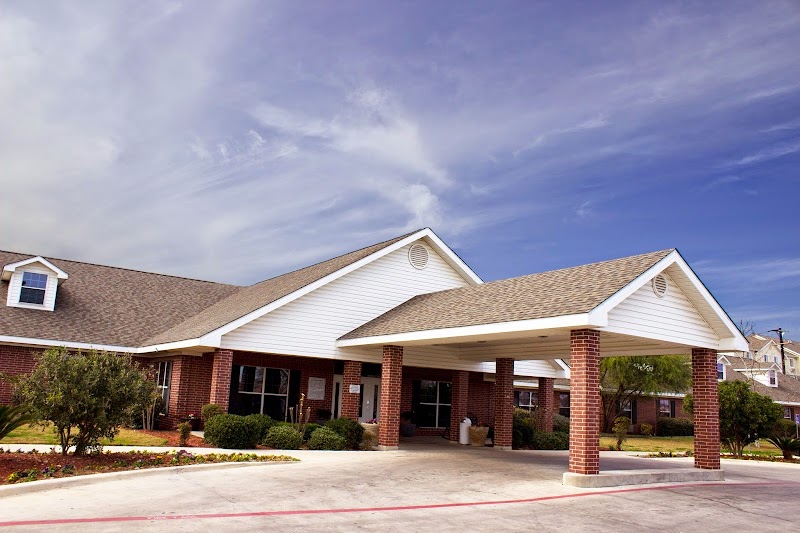
How is Legend Oaks Healthcare And Rehabilitation Center - Staffed?

CMS rates LEGEND OAKS HEALTHCARE AND REHABILITATION CENTER -'s staffing level at 3 out of 5 stars, which is average compared to other nursing homes. Staff turnover is 44%, compared to the Texas average of 46%. This relatively stable workforce can support continuity of care.

What Have Inspectors Found at Legend Oaks Healthcare And Rehabilitation Center -?

State health inspectors documented 21 deficiencies at LEGEND OAKS HEALTHCARE AND REHABILITATION CENTER - during 2022 to 2024. These included: 21 with potential for harm.
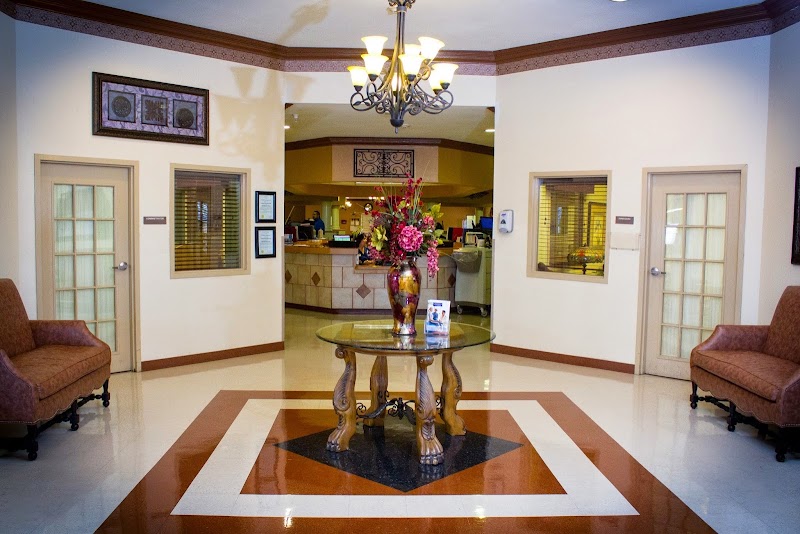
Who Owns and Operates Legend Oaks Healthcare And Rehabilitation Center -?

LEGEND OAKS HEALTHCARE AND REHABILITATION CENTER - is owned by a for-profit company. For-profit facilities operate as businesses with obligations to shareholders or private owners. The facility is operated by THE ENSIGN GROUP, a chain that manages multiple nursing homes. With 126 certified beds and approximately 109 residents (about 87% occupancy), it is a mid-sized facility located in SAN ANTONIO, Texas.
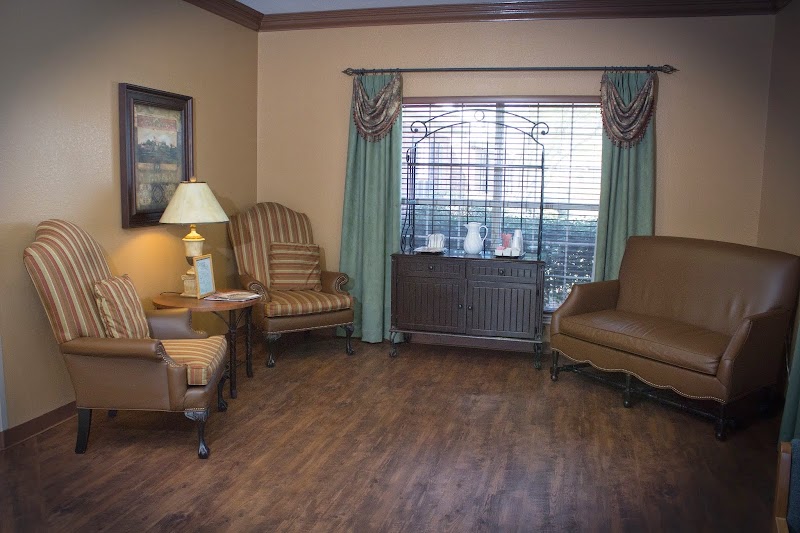
How Does Legend Oaks Healthcare And Rehabilitation Center - Compare to Other Texas Nursing Homes?

Compared to the 100 nursing homes in Texas, LEGEND OAKS HEALTHCARE AND REHABILITATION CENTER -'s overall rating (5 stars) is above the state average of 2.8, staff turnover (44%) is near the state average of 46%, and health inspection rating (4 stars) is above the national benchmark.

What Should Families Ask When Visiting Legend Oaks Healthcare And Rehabilitation Center -?

Based on this facility's data, families visiting should ask: "Can I visit during a mealtime to observe dining assistance and food quality?" "How do you handle medical emergencies, and what is your hospital transfer rate?" "Can I speak with family members of current residents about their experience?"

Is Legend Oaks Healthcare And Rehabilitation Center - Safe?

Based on CMS inspection data, LEGEND OAKS HEALTHCARE AND REHABILITATION CENTER - has a clean safety record: no substantiated abuse findings (meaning no confirmed cases of resident harm), no Immediate Jeopardy citations (the most serious violation level indicating risk of serious injury or death), and is not on the Special Focus Facility watch list (a federal program monitoring the lowest-performing 1% of nursing homes). The facility has a 5-star overall rating and ranks #1 of 100 nursing homes in Texas. While no facility is perfect, families should still ask about staff-to-resident ratios and recent inspection results during their visit.

Do Nurses at Legend Oaks Healthcare And Rehabilitation Center - Stick Around?

LEGEND OAKS HEALTHCARE AND REHABILITATION CENTER - has a staff turnover rate of 44%, which is about average for Texas nursing homes (state average: 46%). Moderate turnover is common in nursing homes, but families should still ask about staff tenure and how the facility maintains care continuity when employees leave.

Was Legend Oaks Healthcare And Rehabilitation Center - Ever Fined?

LEGEND OAKS HEALTHCARE AND REHABILITATION CENTER - has no federal fines on record. CMS issues fines when nursing homes fail to meet care standards or don't correct problems found during inspections. The absence of fines suggests the facility has either maintained compliance or corrected any issues before penalties were assessed. This is a positive indicator, though families should still review recent inspection reports for the full picture.

Is Legend Oaks Healthcare And Rehabilitation Center - on Any Federal Watch List?

LEGEND OAKS HEALTHCARE AND REHABILITATION CENTER - is not on any federal watch list. The most significant is the Special Focus Facility (SFF) program, which identifies the bottom 1% of nursing homes nationally based on persistent, serious quality problems. Not being on this list means the facility has avoided the pattern of deficiencies that triggers enhanced federal oversight. This is a positive indicator, though families should still review the facility's inspection history directly.