SOUTHAMPTON REHABILITATION AND HEALTHCARE CENTER


7246 FOREST HILL AVE, RICHMOND, VA 23225 (804) 320-7901
For profit - Partnership 195 Beds MARQUIS HEALTH SERVICES Data: November 2025
Trust Grade
28/100
#277 of 285 in VA
Last Inspection: September 2021

Over 2 years since last inspection. Current conditions may differ from available data.

Overview

Southampton Rehabilitation and Healthcare Center has received a Trust Grade of F, indicating significant concerns about the facility's quality of care. Ranking #277 out of 285 in Virginia places it in the bottom half of nursing homes in the state, and #6 out of 6 in Richmond City County, meaning there are no better local options. Although the facility is showing signs of improvement, with issues decreasing from 9 in 2024 to 5 in 2025, it still has a high turnover rate of 52%, which is average but concerning for continuity of care. The facility has racked up $22,132 in fines, which is higher than 78% of Virginia facilities, suggesting ongoing compliance issues, and it has less RN coverage than 77% of nursing homes in the state, which is worrisome since RNs are critical for catching potential problems. Specific incidents have raised alarms, such as a failure to protect a resident from sexual abuse by a staff member and inadequate safety measures that led to a resident's fall and hospitalization for fractured ribs. Overall, while there are some positive indicators, families should weigh these serious concerns carefully when considering this facility for their loved ones.

Trust Score
F
28/100
In Virginia
#277/285
Bottom 3%
Safety Record
Moderate
Needs review
Inspections
Getting Better
9 → 5 violations
Staff Stability
⚠ Watch
52% turnover. Above average. Higher turnover means staff may not know residents' routines.
Penalties
⚠ Watch
$22,132 in fines. Higher than 93% of Virginia facilities. Major compliance failures.
Skilled Nurses
⚠ Watch
Each resident gets only 23 minutes of Registered Nurse (RN) attention daily — below average for Virginia. Fewer RN minutes means fewer trained eyes watching for problems.
Violations
⚠ Watch
51 deficiencies on record. Higher than average. Multiple issues found across inspections.
★☆☆☆☆
1.0
Overall Rating
★☆☆☆☆
1.0
Staff Levels
★★★★☆
4.0
Care Quality
★★☆☆☆
2.0
Inspection Score
Stable
2024: 9 issues
2025: 5 issues

The Good

  • 4-Star Quality Measures · Strong clinical quality outcomes
  • Full Sprinkler Coverage · Fire safety systems throughout facility
  • No fines on record

Facility shows strength in quality measures, fire safety.

The Bad

1-Star Overall Rating

Below Virginia average (3.0)

Significant quality concerns identified by CMS

Staff Turnover: 52%

Near Virginia avg (46%)

Higher turnover may affect care consistency

Federal Fines: $22,132

Below median ($33,413)

Minor penalties assessed

Chain: MARQUIS HEALTH SERVICES

Part of a multi-facility chain

Ask about local staffing decisions and management

The Ugly 51 deficiencies on record

2 actual harm
Jun 2025 5 deficiencies
CONCERN (D) 📢 Someone Reported This

A family member, employee, or ombudsman was alarmed enough to file a formal complaint

Potential for Harm - no one hurt, but risky conditions existed

Resident Rights (Tag F0550)

Could have caused harm · This affected 1 resident

Based on observation, resident interview, staff interview, clinical record review and facility document review, it was determined that facility staff failed to promote resident's dignity for two of 61...

Read full inspector narrative →
Based on observation, resident interview, staff interview, clinical record review and facility document review, it was determined that facility staff failed to promote resident's dignity for two of 61 current residents in the survey sample, Residents #113 (R113) and R115. The findings include: 1. For R113, facility staff failed to allow person items to be placed on a shelf in front in the window of the resident's room. R113 was admitted to the facility with diagnosis that included but was not limited to major depressive disorder (1). On the most recent comprehensive MDS (minimum data set), a quarterly assessment with an ARD (assessment reference date) of 06/02/2025, R113 scored 15 out of 15 on the BIMS (brief interview for mental status), indicating R113 was cognitively intact for making daily decisions. On 06/11/25 at approximately 7:51 a.m. an interview was conducted with R113. R113 stated that she was told by a staff member that she was not allowed to have anything sitting on a shelf, above the PTAC (packaged terminal air conditioner) unit (self-contained heating and air conditioning system mounted through a wall), in front of the window in R113's room. R113 stated she had to remove some bottles of water and a stuff animal. On 06/11/2025 at approximately 9:05 a.m. an interview and observation of R113's room was conducted with OSM (other staff member) #1, director of maintenance. After observing the PTAC unit and shelf over the top of the unit he stated that the shelf was connected to the wall and that there was no reason why R113 could place anything in the window. When asked if the items would be resting on the PTAC unit he stated no. On 06/11/2025 at approximately 9:33 p.m. an interview was conducted with CNA (certified nursing assistant) #2. When asked about residents being allowed to place personal items in their room windows she stated that residents were not allowed because it was a safety hazard. On 06/11/2026 at approximately 2:20 p.m. an interview was conducted with LPN (licensed practical nurse) #2. When asked about residents being allowed to place personal items in their room windows she stated that residents were not allowed because it was a fire hazard. On 06/11/2025 at approximately 13:05 p.m. an interview was conducted with ASM (administrative staff member) #4, regional director of clinical services, regarding resident's placing personal items in their room windows. She stated that it was not a fire hazard, and residents were allowed to place items in their windows. When asked it was dignified to prevent a resident from displaying personal item in their room window she stated no. The facility's policy Resident Rights documented in part, 1. Federal and state laws guarantee certain basic rights to all residents of this facility. These rights include the resident's right to: b. be treated with respect, kindness, and dignity. On 06/11/2025 at approximately 4:40 p.m., ASM #1, administrator, ASM #2, director of nursing, ASM #3 assistant administrator, ASM #4, regional director of clinical services, and ASM #5, regional vice president, were made aware of the above findings. No further information was provided prior to exit. References: (1) It occurs when feelings of sadness, loss, anger, or frustration get in the way of your life over a long period of time. It also changes how your body works. This information was obtained from the website: https://medlineplus.gov/ency/article/000945.htm. 2. For R115, facility staff failed to provide a meal in a timely manner. R115 was admitted to the facility with diagnoses that included but were not limited to swallowing difficulties and a stroke. On the most recent comprehensive MDS (minimum data set), a quarterly assessment with an ARD (assessment reference date) of 04/07/2025, R115 scored 15 out of 15 on the BIMS (brief interview for mental status), indicating R115 was cognitively intact for making daily decisions. The comprehensive care plan for R115 dated 11/26/2024 documented in part, I have an ADL (activities of daily living) Self Care Performance Deficit r/t (related to) impaired mobility .Requires total care from staff for ADLs. On 06/10/25 at approximately 2:40 p.m. an observation revealed R115's lunch tray sitting on his over-the-bed table. R115 he stated that he had not eaten lunch and that he had been waiting to receive assistance with eating. At approximately 2:42 p.m. a CNA (certified nursing assistant) was observed entering R115's room and began to feed him. On 06/10/25 at approximately 2:54 p.m. an interview was conducted with LPN (licensed practical nurse) #1. When asked what time the lunch trays arrived on the unit on 06/10/2025, she stated they arrives at 1:30 p.m. On 06/11/2025 at approximately 1:55 p.m. an interview was conducted with LPN #2, unit manager. When asked to describe the procedure for passing out meal trays and assisting residents with eating she stated that when the meal trays arrive on the unit, all the trays are passed out to all the residents except those who are unable to feed themselves. The meal trays for the residents who require assistance with eating are left on the tray carts to stay warm. She when all the trays are passed out the CNAs (certified nursing assistants) get the meals from the cart for the residents requiring assistance and assist the residents on the CNAs assignment. When asked if it was dignified that a resident should wait over an hour to receive assistance to eat she stated no. When asked if she knew which CNA was assigned to feed lunch to R115 on 06/10/2025 she stated it was (Name of CNA #1). On 06/11/2025 at approximately 1:55 p.m. an interview was conducted with CNA #1. When asked if she was assigned to feed R115 on 06/10/2025 during lunch she stated yes. When informed of the observation described above she stated that she was caught up conducting resident care before the lunch trays arrived on the floor. CNA #1 stated that the care took longer than she expected and when she finished she went to the food cart and R115's lunch tray was not there and assumed someone else feed R115. When asked if it was dignified that a resident should wait over an hour to receive assistance to eat she stated no. On 06/11/2025 at approximately 4:40 p.m., ASM #1, administrator, ASM #2, director of nursing, ASM #3 assistant administrator, ASM #4, regional director of clinical services, and ASM #5, regional vice president, were made aware of the above findings. No further information was provided prior to exit.
CONCERN (D) 📢 Someone Reported This

A family member, employee, or ombudsman was alarmed enough to file a formal complaint

Potential for Harm - no one hurt, but risky conditions existed

Safe Environment (Tag F0584)

Could have caused harm · This affected 1 resident

Based on observation, resident interview, staff interview, facility document review, and clinical record review, the facility staff failed to provide a comfortable and homelike environment for one of ...

Read full inspector narrative →
Based on observation, resident interview, staff interview, facility document review, and clinical record review, the facility staff failed to provide a comfortable and homelike environment for one of 61 residents in the survey sample, Resident #85. The findings include: For Resident #85 (R85) (a resident who resided on the third floor), the facility staff failed to provide enough linens for resident care. R85's annual MDS (minimum data set) assessment with an ARD (assessment reference date) of 5/29/25 documented the resident scored 15 out of 15 on the BIMS (brief interview for mental status), indicating the resident was cognitively intact for making daily decisions. On 6/11/25 at 3:44 p.m., an interview was conducted with R85. The resident voiced concern that there were not enough linens for resident care. On 6/11/25 at 3:47 p.m., an interview was conducted with LPN (licensed practical nurse) #1 and CNA (certified nursing assistant) #12. CNA #12 stated a laundry aide delivers a linen cart for the 3:00 p.m. to 11:00 p.m. shift at approximately 3:15 p.m. and usually there is not enough linens for resident care. CNA #12 stated the nursing staff do not have access to the laundry room to obtain more linens and the laundry aide becomes, fussy if staff ask for more linens. LPN #1 stated a lack of linens on the unit usually occurs every day. A resident census report documented 68 residents resided on the third floor on 6/11/25. A linen delivery schedule dated 6/11/25 revealed the following linens were delivered to the third floor for the 3:00 p.m. to 11:00 p.m. shift: - 20 flat sheets -20 fitted sheets -10 pillowcases -30 towels -50 wash cloths -10 gowns -10 pads -5 blankets -5 bedspreads On 6/11/25 at 3:53 p.m., an observation of the designated third floor 3:00 p.m. to 11:00 p.m. linen cart (the only linen cart on the floor, located in the clean linen room) was conducted. The following was observed: - 29 washcloths - 10 gowns - 8 pillowcases - 13 towels - 12 fitted sheets - 4 pads - 8 fitted sheets - 7 bath blankets - 2 bed spreads On 6/11/25 at 5:03 p.m., an interview was conducted with OSM (other staff member) #7 (the environmental service district manager). OSM #7 stated linen aides take a linen cart to each floor in the morning, at 3:00 p.m., and then leave an extra cart for the 11:00 p.m. to 7:00 a.m. shift. OSM #7 stated extra linens are kept in the laundry room and the linen aides and receptionist have a key to the laundry room. (Note- linen aides were not scheduled for the entire 3:00 p.m.-11:00 p.m. and 11:00 p.m. to 7:00 a.m. shifts, and during an interview with the administrator on 6/11/25 at 5:15 p.m., the administrator stated the receptionist did not have a key to the laundry room). On 6/11/25 at 5:17 p.m., an interview was conducted with OSM #8 (a laundry aide who works part of the 3:00 p.m. to 11:00 p.m. shift). OSM #8 stated she has been a laundry aide for so long that she knows how to delegate how much linens should go on each cart but sometimes at the end of the month, she has to use her imagination because by then, the facility has to order more linens. OSM #8 stated she has to lock the door to the laundry room when she is not in there because staff will come in and take too many linens. OSM #8 stated no one has access to the laundry room after she leaves at 10:00 p.m. OSM #8 stated that when nursing staff requests extra linens, she may not have what they request because she is in the process of washing and drying linens, but she gives them what she can. On 6/12/25 at 11:04 a.m., an interview was conducted with RN (registered nurse) #1. RN #1 stated there usually is not enough linens to care for residents. On 6/12/25 at 11:39 a.m., an interview was conducted with CNA #9. CNA #9 stated some days there are enough linens on the cart and some days there are not enough linens on the cart. CNA #9 stated sometimes they have to wait for the laundry aides to wash and dry the linens and replenish the carts. On 6/12/25 at 3:12 p.m., ASM (administrative staff member) #1 (the administrator) and ASM #2 (the director of nursing) were made aware of the above concern. The facility policy titled, Homelike Environment documented, 2. The facility staff and management maximizes, to the extent possible, the characteristics of the facility that reflect a personalized, homelike setting. These characteristics include: e. clean bed and bath linens that are in good condition .
CONCERN (D) 📢 Someone Reported This

A family member, employee, or ombudsman was alarmed enough to file a formal complaint

Potential for Harm - no one hurt, but risky conditions existed

Deficiency F0806 (Tag F0806)

Could have caused harm · This affected 1 resident

Based on observation, resident interview, staff interview, facility document review, and clinical record review, the facility staff failed to honor a resident's food preferences/dislikes for one of 61...

Read full inspector narrative →
Based on observation, resident interview, staff interview, facility document review, and clinical record review, the facility staff failed to honor a resident's food preferences/dislikes for one of 61 residents in the survey sample, Resident #14. The findings include: For Resident #14 (R14), the facility staff failed to honor the resident's dislike for grits. R14's annual MDS (minimum data set) assessment with an ARD (assessment reference date) of 2/1/25 documented the resident scored 14 out of 15 on the BIMS (brief interview for mental status), indicating the resident was cognitively intact for making daily decisions. On 9/11/25 at 9:46 a.m., R14's breakfast tray was observed. R14's meal ticket documented the resident disliked grits. A bowl of grits was observed on R14's breakfast tray. R14 stated she receives food that she dislikes almost every day. On 6/12/25 at 8:42 a.m., an interview was conducted with OSM (other staff member) #10, the dietary district manager. OSM #10 stated that upon admission, the dietary staff talks to residents and obtains a list of their dislikes. OSM #10 stated the dietary staff enters this list into the computerized meal tracker system then during meal service, the meal tracker system identifies the resident's dislikes and generates an alternative food item that is printed on the meal ticket to be served. OSM #10 stated the dietary staff are supposed to follow the printed meal ticket when preparing residents' meal trays. On 6/12/25 at 3:12 p.m., ASM (administrative staff member) #1 (the administrator) and ASM #2 (the director of nursing) were made aware of the above concern. The facility policy titled, Resident Food Preferences documented, Individual food preferences will be assessed upon admission and communicated to the interdisciplinary team. No further information was presented prior to exit.
CONCERN (E) 📢 Someone Reported This

A family member, employee, or ombudsman was alarmed enough to file a formal complaint

Potential for Harm - no one hurt, but risky conditions existed

Deficiency F0697 (Tag F0697)

Could have caused harm · This affected multiple residents

Based on staff interview, facility document review, and clinical record review, the facility staff failed to implement a complete pain management program for one of 61 residents in the survey sample, ...

Read full inspector narrative →
Based on staff interview, facility document review, and clinical record review, the facility staff failed to implement a complete pain management program for one of 61 residents in the survey sample, Resident #317. The findings include: For Resident #317 (R317), the facility staff failed to attempt non-pharmacological interventions prior to the administration of PRN (as needed) tramadol (pain medication) on multiple dates in July 2024 and August 2024. A review of R317's clinical record revealed a physician's order dated 7/9/24 for tramadol 50mg (milligrams)-one tablet every six hours as needed for pain. A review of R317's July 2024 and August 2024 MARs (medication administration records) revealed the resident was administered PRN tramadol on 7/13/24, 7/17/24, 7/25/24, and 8/2/24. Further review of R317's clinical record (including the July 2024 and August 2024 MARs and nurses' notes) failed to reveal non-pharmacological interventions were offered/attempted prior to the administration of PRN tramadol on the above dates. On 6/12/25 at 10:24 a.m., an interview was conducted with RN (registered nurse) #1. RN #1 stated non-pharmaceutical interventions such as touch, relaxation, exercise, or music should be attempted prior to the administration of as needed pain medication, and this should be documented in a nurse's note. On 6/12/25 at 3:12 p.m., ASM (administrative staff member) #1 (the administrator) and ASM #2 (the director of nursing) were made aware of the above concern. The facility policy titled, Pain Assessment and Management documented, 2. Non-pharmacological interventions may be appropriate alone or in conjunction with medications. Some non-pharmacological interventions include: a. environmental - adjusting the room temperature, smoothing the linens, providing a pressure reducing mattress, repositioning, etc.; b. physical - ice packs, cool or warm compresses, baths, transcutaneous electrical nerve stimulation (TENS), massage, acupuncture, etc.; c. exercise - range of motion exercises to prevent muscle stiffness and contractures; and d. cognitive or behavioral - relaxation, music, diversions, activities, etc. No further information was presented prior to exit.
CONCERN (E) 📢 Someone Reported This

A family member, employee, or ombudsman was alarmed enough to file a formal complaint

Potential for Harm - no one hurt, but risky conditions existed

Deficiency F0757 (Tag F0757)

Could have caused harm · This affected multiple residents

Based on staff interview, facility document review, and clinical record review, the facility staff failed to monitor residents to prevent unnecessary medication administration for two of 61 residents ...

Read full inspector narrative →
Based on staff interview, facility document review, and clinical record review, the facility staff failed to monitor residents to prevent unnecessary medication administration for two of 61 residents in the survey sample, Residents #317, and #118. The findings include: 1. For Resident #317 (R317), the facility staff failed to monitor the resident's blood pressure for the administration of the medication Midodrine (used to treat low blood pressure) on multiple dates in July 2024. A review of R317's clinical record revealed a physician's order dated 7/17/24 for Midodrine 10mg (milligrams)-one tablet by mouth every eight hours. Hold for systolic blood pressure greater than 140. The medication was scheduled for 6:00 a.m., 2:00 p.m., and 10:00 p.m. Further review of R317's clinical record (including the July 2024 medication administration record, July 2024 blood pressure summary, and July 2024 nurses' notes) failed to reveal the resident's blood pressure was obtained prior to Midodrine administration on the following dates: -7/19/24 for the 2:00 p.m. and 10:00 p.m. doses -7/20/24 for the 2:00 p.m. dose -7/21/24 for the 2:00 p.m. dose -7/23/24 for the 2:00 p.m. dose -7/26/24 for the 2:00 p.m. dose -7/29/24 for the 6:00 a.m. dose -7/30/24 for the 2:00 p.m. dose On 6/12/25 at 10:24 a.m., R317's Midodrine order was reviewed with RN (registered nurse) #1. RN #1 stated the resident's blood pressure should have been checked right before every time Midodrine was administered, so the nurses knew if the resident's blood pressure was within parameters and if the medication could be given. On 6/12/25 at 3:12 p.m., ASM (administrative staff member) #1 (the administrator) and ASM #2 (the director of nursing) were made aware of the above concern. The facility policy titled, Administering Medications documented, 11. The following information is checked/verified for each resident prior to administering medications: b. Vital signs, if necessary . No further information was presented prior to exit.
Nov 2024 3 deficiencies
CONCERN (D) 📢 Someone Reported This

A family member, employee, or ombudsman was alarmed enough to file a formal complaint

Potential for Harm - no one hurt, but risky conditions existed

Comprehensive Care Plan (Tag F0656)

Could have caused harm · This affected 1 resident

**NOTE- TERMS IN BRACKETS HAVE BEEN EDITED TO PROTECT CONFIDENTIALITY** Based on observation, interview, clinical record review and facility documentation, the facility staff failed to develop and imp...

Read full inspector narrative →
**NOTE- TERMS IN BRACKETS HAVE BEEN EDITED TO PROTECT CONFIDENTIALITY** Based on observation, interview, clinical record review and facility documentation, the facility staff failed to develop and implement comprehensive resident centered care plan for 1 Resident (#5) in a survey sample of 5 Residents. The findings included: For Resident # 5 the facility staff failed to develop and implement a care plan that included interventions for preventing pressure ulcers. Resident #5 was admitted to the facility on 10/3 with diagnoses including but not limited to cerebral infarction due to unspecified cerebral artery, altered mental status, hypertension, gastro-esophageal reflux, hyperlipidemia, dementia, mood disturbance, anxiety degenerative disease of the nervous system, Type 2 diabetes, muscle wasting and atrophy cognitive communication deficit anemia and vitamin d deficiency. On 11/4/24 a review of the clinical record revealed that Resident #5 had mushy left heel noted during admission assessment and documented in the progress notes. No md notification or treatment orders were documented. On 11/4/24 the following observations were made: 11:20 p.m. - Resident in bed supine position, heels on bed, spouse at bedside. 12:00 pm Resident sitting up 45-degree angle in bed spouse at bedside assisting Resident with eating lunch. Resident dressed in hospital gown with long sleeved shirt under gown. 1:35 p.m. - Resident lying in bed eyes closed resting. Resident in hospital gown with long sleeved shirt underneath, lying in supine position heels on mattress. 3:00 p.m. - Resident in bed lying in supine position, heels on mattress, Resident is being moved to room [ROOM NUMBER]. 3:45 p.m. - Resident in new room lying in bed supine position still dressed in hospital gown, heels in contact with mattress. 3:55 p.m. - Asked LPN B (Licensed Practical Nurse) if she would look at Resident #5's skin with me and she stated that she would. Resident #5 had no open areas to the skin at this time. LPN B was asked if a Resident was noted in the documentation to have mushy left heel what if anything should be done, and she responded that the heels should be floated. When asked if that was all she stated that they should probably let the physician know. On 11/6/24 a review of the care plan read: FOCUS: I have impaired skin integrity r/t [Area left blank] Date Initiated: 10/28/2024 GOAL: will be at reduced risk for new or worsened impaired skin integrity daily through the review date. Date Initiated: 10/28/2024 Target Date: 01/21/2025 INTERVENTIONS: Administer treatments as ordered and monitor effectiveness. Date Initiated: 10/28/2024 Evaluate for the presence of pain and administer pain medication as ordered to promote my comfort. Monitor for side effects and effectiveness. Date Initiated: 10/28/2024 Monitor for new or worsening s/sx of complications and infection: necrosis, erythema, warmth, edema, exudate, foul odor, maceration, pain/tenderness, fever/chills, etc. Report to physician if noted and follow-up as indicated. Date Initiated: 10/28/2024 Obtain and monitor lab/diagnostic work as ordered. Report results to physician and follow up as indicated. Date Initiated: 10/28/2024. On the afternoon of 11/6/24 an interview was conducted with the DON (Director of Nursing) who was asked what the expectation is if a mushy left heel is identified and documented on admission, and she stated that she would expect the nurse to notify the physician to seek out any orders and implement nursing measures that do not require orders such as floating heels on a pillow. When asked about the expectation of staff turning and repositioning patients, she stated that it should be done every 2 hours or more as needed or desired by the Resident to prevent breakdown. On 11/6/24 during the end of day meeting the Administrator was made aware of the findings and no further information was provided.
CONCERN (D) 📢 Someone Reported This

A family member, employee, or ombudsman was alarmed enough to file a formal complaint

Potential for Harm - no one hurt, but risky conditions existed

Deficiency F0657 (Tag F0657)

Could have caused harm · This affected 1 resident

Based on observation, interview, clinical record review and facility documentation, the facility staff failed to review and revise the care plan care plan for 1 Resident (#5) in a survey sample of 5 R...

Read full inspector narrative →
Based on observation, interview, clinical record review and facility documentation, the facility staff failed to review and revise the care plan care plan for 1 Resident (#5) in a survey sample of 5 Residents. The findings included: For Resident # 5 the facility staff failed to revise the care plan after the Resident had an actual fall. Resident #5 was admitted to the facility on 10/3 with diagnoses including but not limited to cerebral infarction due to unspecified cerebral artery, altered mental status, hypertension, gastro-esophageal reflux, hyperlipidemia, dementia, mood disturbance, anxiety degenerative disease of the nervous system, Type 2 diabetes, muscle wasting and atrophy cognitive communication deficit anemia and vitamin d deficiency. On the morning of 11/6/24 a review of the progress notes revealed the following note: 11/5/24 10:50 a.m. - Nursing observations, evaluation, and recommendations are Resident was observed on the floor by social worker on left side of her bed in sitting position. Nursing staff was notified. When interview resident she stated she was trying to go to out. Resident has poor vision with glasses. Skin warm dry and intact. Patient is incontinent of bowel and bladder. Note she had a large BM. PROM x 4 extremities. an unwitnessed fall in her room. Assisted off the floor x 2 staff. No physical injuries noted. Neuro checks initiated. Husband at bedside and is aware. On 11/5/24 a review of the care plan revealed the following: FOCUS: I am at risk for falls r/t confusion., deconditioning/ weakness., gait/ balance problems., poor safety awareness. Date Initiated: 10/28/2024 GOAL: will be free of fall related injury through the next review date. Date Initiated: 10/28/2024 Target Date: 01/21/2025. INTERVENTIONS: Assist and/ or remind me to change position and get up from sitting or lying slowly due to orthostatic blood pressure problems (dizziness/fainting with position changes). Date Initiated: 10/28/2024 Be sure call light is within reach and provide reminders to use call for assistance as needed. Date Initiated: 10/28/2024 Create a safe environment; floors clear of clutter, clean up spills, adequate lighting. Date Initiated: 10/28/2024 Educate resident, involved family members, and caregivers about safety reminders, fall prevention, and what to do if a fall occurs. Date Initiated: 10/28/2024 Encourage adequate meal and fluid intake to help prevent hyper/hypoglycemic episodes and dehydration. Date Initiated: 10/28/2024 Encourage me to participate in activities that promote exercise, physical activity for strengthening and improved mobility. Date Initiated: 10/28/2024 Encourage resident to participate in activities that minimize the risk for falls while providing diversion and distraction. Date Initiated: 10/28/2024 Ensure that resident is wearing appropriate footwear when ambulating or mobilizing in w/c. Preferably rubber, non-slip soles or gripper socks. Date Initiated: 10/28/2024 Keep personal items and frequently used items within reach. Date Initiated: 10/28/2024. On 11/6/24 at 3:40 p.m. an interview was conducted with the DON who was asked what should happen after a fall and she stated the care plan should be updated to state the Resident had an actual fall and include new interventions to prevent future falls. When asked if this was done, she stated that it was not. On 11/6/24 during the end of day meeting the Administrator was made aware of the findings and no further information was provided.
CONCERN (D) 📢 Someone Reported This

A family member, employee, or ombudsman was alarmed enough to file a formal complaint

Potential for Harm - no one hurt, but risky conditions existed

Accident Prevention (Tag F0689)

Could have caused harm · This affected 1 resident

**NOTE- TERMS IN BRACKETS HAVE BEEN EDITED TO PROTECT CONFIDENTIALITY** Based on staff interview, facility documentation review and clinical record review, the facility staff failed to maintain a safe...

Read full inspector narrative →
**NOTE- TERMS IN BRACKETS HAVE BEEN EDITED TO PROTECT CONFIDENTIALITY** Based on staff interview, facility documentation review and clinical record review, the facility staff failed to maintain a safe environment for one dependent resident (Resident #4) in a survey sample of 6 residents. For Resident # 4, the facility staff failed to prevent a fall from the bed during incontinence care on 11/26/2023. Findings included: Resident #4 was admitted to the facility on [DATE] with the diagnoses of, but not limited to, Epilepsy, Parkinsonism, and Essential Hypertension, The most recent Minimum Data Set (MDS) was an admission assessment with an Assessment Reference Date (ARD) of 11/9/2023. The MDS coded Resident # 4 with a BIMS (Brief Interview for Mental Status)score of 4/15 indicating severe cognitive impairment; the resident required assistance with activities of daily living and bathing and always incontinent of bowel and bladder. Review of the closed electronic clinical record was conducted on 11/4/2024 to 11/6/2024. Review of the Progress Notes revealed documentation of a Nursing note on 11/26/2023 at 8:29 p.m. regarding a fall. The note stated the resident was laying on the left side while receiving ADL (Activities of Daily Living) care and fell out of the bed when the aid walked to the sink to get fresh water. The note also stated the resident was assessed, neuro (neurochecks) started, RP (Responsible Party made [sic], MD (Medical Doctor) notified. Per MD we can notify hospice of fall in person in the morning. Further review revealed no documentation of any injury sustained during the fall. Resident # 4 was discharged to home the next day on 11/27/2023 with Hospice care. On 11/6/2024 at 11:45 a.m., an interview was conducted with the Director of Nursing who stated CNA-B was no longer employed at the facility. She also stated that LPN (Licensed Practical Nurse)-C was also no longer employed at the facility. On 11/6/2024 at 1:15 PM an interview was conducted with the Director of Nursing who stated her expectation was for the staff to provide incontinence care in a safe manner. The Director of Nursing stated that the Certified Nursing Assistant was expected to provide incontinence care and to use a basin, If you have to leave the bedside, they should secure the resident ' s position prior to leaving the resident The Director of Nursing provided copies of education provided to the staff after Resident # 4 fell. The Director of Nursing stated the staff were expected to keep residents safe. On 11/6/2024 at 2:10 p.m., an interview was conducted with the Human Resources Director who gave the termination dates: CNA-B 02/21/2024 and LPN-C terminated employment on 03/08/2024. On 11/6/2024 at 3:05 p.m.,an interview was conducted CNA (Certified Nursing Assistant)-B who stated the expectation was that a resident should be returned to a safe position prior to the staff leaving the bedside. CNA-B stated staff members were expected to keep the residents safe. Review of the Fall report and investigation revealed a Witness Statement revealed the following excerpt from the statement: The CNA noticed that the patient in room _____ (redacted) was lying on her back. The CNA proceeded to set up to change the patient, using wash cloth, towels, soap and warm water. The CNA proceeded to turn the patient on her right side facing the door, with her right leg in front of her left leg, The CNA did make an attempt to pull her legs back onto the bed. The CNA proceeded to walk over toward the sink to wet the warm wash cloths. The patient fell forward onto the floor. The nurses assested [sic] the patient. Review of the care plan revealed that Resident #4 required assistance with Activities of Daily Living. During the end of day debriefing on 11/6/2024, the Administrator, Director of Nursing and Assistant [NAME] President of Operations were informed of the findings that the Certified Nursing Assistant failed to keep the resident safe during the provision of ADL care. No further information was provided.
Feb 2024 6 deficiencies 1 Harm
SERIOUS (G) 📢 Someone Reported This

A family member, employee, or ombudsman was alarmed enough to file a formal complaint

Actual Harm - a resident was hurt due to facility failures

Free from Abuse/Neglect (Tag F0600)

A resident was harmed · This affected 1 resident

Based on resident interview, staff interview, facility documentation review, and clinical record review, the facility staff failed to ensure freedom from abuse and neglect for one resident (Resident #...

Read full inspector narrative →
Based on resident interview, staff interview, facility documentation review, and clinical record review, the facility staff failed to ensure freedom from abuse and neglect for one resident (Resident #1) in a survey sample of 8 residents. The findings included: For Resident #1, the facility staff failed to ensure the resident was not sexually abused by a Certified Nursing Assistant (CNA)-B who was assigned to provide care for the resident's needs, and failed to report an allegation of abuse to the administrator timely. Resident #1 was admitted to the facility on with diagnoses that included but were not limited to: quadriplegia, C5-C7 (cervical spine 5-7) incomplete and dysthymic disorder. The most recent MDS (minimum data set) assessment was a Quarterly assessment with an ARD (Assessment Review Date) of 01/22/2024. The MDS coded Resident #1 with a BIMS (Brief Interview for Mental Status) score of 14 (of a possible 15 points) which indicated no cognitive impairment. Resident #1 required extensive assistance of staff persons with ADLs (activities of daily living). Review of the electronic clinical record was conducted throughout the survey. On 2/22/2024 at 2:28 p.m., an interview was conducted with the Administrator and Director of Nursing regarding a facility synopsis of events of alleged sexual abuse that occurred on 1/8/2024. They were asked if the facility staff members including Certified Nursing Assistants should be able to identify and report abuse and neglect. The Administrator stated that all the staff should be able to identify and report abuse and neglect. When asked if the sexual abuse allegation that occurred on 1/7/2024 was investigated, the Administrator stated it had not been investigated until it was reported the day after the incident occurred. When asked if this was reported to the appropriate offices, the Administrator stated Yes, it was investigated immediately once we were informed. Review of the facility investigation revealed the statements that Resident #1 did complain of taking pain medication, falling asleep and later waking up to Certified Nursing Assistant-B performing oral sex on him. On 2/24/2024 at 1:10 p.m., an interview was conducted with Resident #1 who was alert and oriented. Resident #1 stated he took his pain medication around 9 or 9:15 a.m. He stated Narcotics usually make me sleepy. He stated he was awake when CNA-B came in to assist with his bath. Resident # 1 stated CNA-B washed my top and asked are you comfortable. Resident #1 stated he went to sleep or napped and felt something crazy; his mouth was coming off my penis. Resident #1 stated he yelled and CNA-B told him No, please be quiet. Resident #1 stated CNA-B told him, I'm sorry, I will give you anything. I am going to lose my job. Resident #1 stated CNA-B offered money, marijuana plants or anything. Resident #1 stated he went through a mental shock. Resident #1 stated he told another girl who worked there as a CNA (CNA-C). Resident #1 stated he went to high school with CNA-C and felt comfortable with her so he confided what happened with CNA-B. Resident #1 stated he told CNA-C not to tell anyone. Resident #1 stated the incident happened on a Sunday and he knew the administrative staff was not on duty. He stated he intended to tell the administrative staff on the next day, 1/8/2024. Resident #1 stated he did not understand why CNA-B did that to me He stated he never made suggestions to CNA-B that he wanted any type of sexual encounter. Resident #1 stated it was very upsetting. During the interview, Resident #1 stated he typically would fall asleep after taking pain medication. On 1/7/2024, he did fall asleep but woke up for some reason and when he opened his eyes, he saw CNA-B taking his mouth off of his penis. Resident # 1 stated he was very shocked and upset about this incident. Resident #1 stated he had not known CNA-B outside of the facility. Resident #1 stated he knew this incident did not make him less of a man but it bothered him that CNA-B chose to violate him. Resident #1 stated he asked CNA-C did not report the incident because he asked her not to say anything. Resident #1 stated CNA-C was terminated but he did not think CNA-C should have been terminated. Resident #1 stated that was not fair because he heard a rumor from another CNA that CNA-B had committed this same type of act on another resident in another facility. As a result of this incident, Resident #1 required the use of anti-anxiety medications and therapy visits with the psychologist. Resident #1 stated he could not understand why that man did this to me. Resident #1 stated it was then and still is upsetting. The facility's Administrator and Director of Nursing immediately implemented its abuse policies on 1/8/2024 when they were informed of the allegation of sexual abuse of a resident by a staff member (CNA-B) which occurred on 1/7/2024. All of the employees involved were suspended pending the investigation. CNA-B was terminated and CNA-C was terminated for not immediately reporting an allegation of sexual abuse and for having an inappropriate relationship with Resident #1. Review of documentation sent to the Virginia State Board of Health Professions revealed that CNA-B and CNA-C were reported to the Board of Health Professions. Review of the documentation revealed the following documentation about implementing the abuse policy. (Facility's name redacted) Past Non Compliance Request 1. Yes, we had deficient practice. 2. Yes, the deficient practice occurred after the last survey. 3. Yes, we have presented sufficient evidence that the deficient practice has been corrected. a. All staff members were immediately re-educated on abuse policy and the reporting of abuse. b. The facility immediately reported the incident to the state agency, state licensing board and police. c. Employees were immediately contacted for a statement, suspended and removed from the schedule. d. Resident was seen by his Primary Physician and Psych seeing patient to help his through this traumatic event. e. Weekly audits conducted along with ADHOC (when necessary or needed) QAPI (Quality Assurance Performance Improvement) and Monthly QAPI reporting. 4. Yes, we now are in substantial compliance, and the deficient practice has not occurred again. a. Residents are asked 3 xs (three times) a week the abuse questions to ensure compliance b. No resident has reported abuse. c. Residents acknowledge they know whom to report abuse to and that staff ask then about it. 5. Facility is in compliance as of 1/8/24. Interviews were conducted with a total of over twenty staff members from all departments to include Nursing, Housekeeping, Laundry, Dietary, Maintenance and Administrative staff. All were able to state signs and symptoms of abuse, prevention of abuse, reporting immediately and to whom to report, and protecting the resident. They stated they could not return to work until they had the abuse training. They stated they know to report any suspicious behavior by coworkers. During the 4 days of survey, there were no observations, evidence, nor complaints of abuse expressed by residents. There were no other residents identified as having had been abused by the CNA. No further information was provided. This deficiency is cited at harm at past non-compliance.
CONCERN (D) 📢 Someone Reported This

A family member, employee, or ombudsman was alarmed enough to file a formal complaint

Potential for Harm - no one hurt, but risky conditions existed

Abuse Prevention Policies (Tag F0607)

Could have caused harm · This affected 1 resident

Based on staff interview and facility documentation review, the facility staff failed to implement the abuse policy for one resident (Resident #1) in a survey sample of 8 residents. Findings included...

Read full inspector narrative →
Based on staff interview and facility documentation review, the facility staff failed to implement the abuse policy for one resident (Resident #1) in a survey sample of 8 residents. Findings included: For Resident #1, the facility staff failed to implement their abuse policy as evidenced by failure to report an allegation of sexual abuse by a Certified Nursing Assistant (CNA)-B. According to the facility's documentation, Resident #1 reported an allegation of sexual abused to a Certified Nursing Assistant (CNA-C ) with whom he had a personal friendship. Resident #1 stated he told CNA-C not to say anything but he was upset because CNA-B had performed oral sex on him while he was sleepy after pain medication and being bathed. Review of the facility's investigation documents revealed that on 1/7/2024, Resident #1 confided in CNA-C that he had been sexually violated. When Resident #1 confided in another CNA (CNA-E) on 1/8/2024, CNA-E immediately reported to her supervisor who then reported to the Director of Nursing. It was then that the implementation of the abuse policy began. On 2/22/2024 during the end of day meeting, an interview was conducted with the facility Administrator and Director of Nursing. During the interview, the Administrator and Director of Nursing stated they were very upset that an allegation of abuse was not immediately reported to the charge nurse so that the abuse protocol could be implemented. Both stated that all residents were at risk. The Director of Nursing stated the facility would immediately protect the resident, assess the resident, notify the physician and resident representative, and protect the resident and other residents from any further harm or incidents. The facility policy titled, Abuse, Neglect, Exploitation or Misappropriation-Reporting and Investigating was reviewed. Excerpts from the policy read, .Reporting Allegations to the Administrator and authorities: 1. If resident abuse, neglect is suspected, the suspicion must be reported immediately to the administrator and to other officials according to state law. Another excerpt stated that :immediately is defined as a. within two hours of an allegation involving abuse or result in bodily injury. The resident's plan of care was revised to reflect interventions to minimize recurrence. Resident #1 requested that no more male certified nursing assistants be assigned to care for him. Review of documentation sent to the Virginia State Board of Health Professions revealed that CNA-B and CNA-C were reported to the Board of Health Professions. Review of the documentation revealed the following documentation about implementing the abuse policy. (Facility's name redacted) Past Non Compliance Request 1. Yes, we had deficient practice. 2. Yes, the deficient practice occurred after the last survey. 3. Yes, we have presented sufficient evidence that the deficient practice has been corrected. a. All staff members were immediately re-educated on abuse policy and the reporting of abuse. b. The facility immediately reported the incident to the state agency, state licensing board and police. c. Employees were immediately contacted for a statement, suspended and removed from the schedule. d. Resident was seen by his Primary Physician and Psych seeing patient to help his through this traumatic event. e. Weekly audits conducted along with ADHOC (when necessary or needed) QAPI (Quality Assurance Performance Improvement) and Monthly QAPI reporting. 4. Yes, we now are in substantial compliance, and the deficient practice has not occurred again. a. Residents are asked 3 xs (three times) a week the abuse questions to ensure compliance b. No resident has reported abuse. c. Residents acknowledge they know whom to report abuse to and that staff ask then about it. 5. Facility is in compliance as of 1/8/24. Interviews were conducted with a total of over twenty staff members from all departments to include Nursing, Housekeeping, Laundry, Dietary, Maintenance and Administrative staff. All were able to state signs and symptoms of abuse, prevention of abuse, reporting immediately and to whom to report, and protecting the resident. They stated they could not return to work until they had the abuse training. They stated they know to report any suspicious behavior by coworkers. During the 4 days of survey, there were no observations, evidence, nor complaints of abuse expressed by residents. During the end of day debriefings on 2/26/2024 and 2/27/2024, the Administrator and Director of Nursing were informed of the findings. No further information was provided. The deficiency is cited at past non-compliance.
CONCERN (D) 📢 Someone Reported This

A family member, employee, or ombudsman was alarmed enough to file a formal complaint

Potential for Harm - no one hurt, but risky conditions existed

Report Alleged Abuse (Tag F0609)

Could have caused harm · This affected 1 resident

Based on interview, clinical record review, and facility documentation review, the facility staff failed to report an allegation of abuse within 2 hours of an allegation involving sexual abuse, for on...

Read full inspector narrative →
Based on interview, clinical record review, and facility documentation review, the facility staff failed to report an allegation of abuse within 2 hours of an allegation involving sexual abuse, for one resident (Resident #1) in a survey sample of 8 residents. The findings included: For Resident #1, a facility staff member, CNA (Certified Nursing Assistant )-C failed to identify and report an allegations of sexual abuse to the Administrator. Review of the facility's investigation documents revealed that on 1/7/2024, Resident #1 confided in CNA-C that he had been sexually violated. When Resident #1 confided in another CNA (CNA-E) on 1/8/2024, CNA-E immediately reported to her supervisor who then reported to the Director of Nursing. CNA-C did not report the allegation to the administrator. Interviews were conducted with the Administrator and the Director of Nursing. They were asked if the Certified Nursing Assistant should be able to identify and report abuse and neglect. The Administrator stated all the staff should be able to identify and report abuse and neglect. When asked if the incident was investigated, the Administrator stated it had not been until the day after the incident when Resident #1 informed another staff member (CNA-E). When asked if it was reported to the appropriate offices, the Administrator stated it had been reported to the appropriate offices as soon as the Director of Nursing and Administrator were made aware. A review of the facility Policy for Abuse read as follows: The facility policy titled, Abuse, Neglect, Exploitation or Misappropriation-Reporting and Investigating was reviewed. Excerpts from the policy read, .Reporting Allegations to the Administrator and authorities: 1. If resident abuse, neglect is suspected, the suspicion must be reported immediately to the administrator and to other officials according to state law. Another excerpt stated that :immediately is defined as a. within two hours of an allegation involving abuse or result in bodily injury. Review of documentation sent to the Virginia State Board of Health Professions revealed that CNA-B and CNA-C were reported to the Board of Health Professions. Review of the documentation revealed the following documentation about implementing the abuse policy. (Facility's name redacted) Past Non Compliance Request 1. Yes, we had deficient practice. 2. Yes, the deficient practice occurred after the last survey. 3. Yes, we have presented sufficient evidence that the deficient practice has been corrected. a. All staff members were immediately re-educated on abuse policy and the reporting of abuse. b. The facility immediately reported the incident to the state agency, state licensing board and police. c. Employees were immediately contacted for a statement, suspended and removed from the schedule. d. Resident was seen by his Primary Physician and Psych seeing patient to help his through this traumatic event. e. Weekly audits conducted along with ADHOC (when necessary or needed) QAPI (Quality Assurance Performance Improvement) and Monthly QAPI reporting. 4. Yes, we now are in substantial compliance, and the deficient practice has not occurred again. a. Residents are asked 3 xs (three times) a week the abuse questions to ensure compliance b. No resident has reported abuse. c. Residents acknowledge they know whom to report abuse to and that staff ask then about it. 5. Facility is in compliance as of 1/8/24. Interviews were conducted with a total of over twenty staff members from all departments to include Nursing, Housekeeping, Laundry, Dietary, Maintenance and Administrative staff. All were able to state signs and symptoms of abuse, prevention of abuse, reporting immediately and to whom to report, and protecting the resident. They stated they could not return to work until they had the abuse training. They stated they know to report any suspicious behavior by coworkers. During the 4 days of survey, there were no observations, evidence, nor complaints of abuse expressed by residents. There were no other residents identified as having had been abused by the CNA. During the end of day debriefing on 2/26/2024 and 2/27/2024, the Administrator and Director of Nursing were made aware of the concerns. No further information was provided. The deficiency is cited at past non-compliance.
CONCERN (D) 📢 Someone Reported This

A family member, employee, or ombudsman was alarmed enough to file a formal complaint

Potential for Harm - no one hurt, but risky conditions existed

Deficiency F0919 (Tag F0919)

Could have caused harm · This affected 1 resident

Based on observations, resident interview, staff interview, facility documentation review, the facility staff failed to ensure an effectively functioning call bell system on two of three units affecti...

Read full inspector narrative →
Based on observations, resident interview, staff interview, facility documentation review, the facility staff failed to ensure an effectively functioning call bell system on two of three units affecting two residents (Residents #3 and #6) in a survey sample of 8 residents. Findings included: 1. For Resident #2, the call bell system did not work properly and the facility staff implemented the use of a cow bell system for notification of the need for assistance. On 2/23/2024, a cow bell was observed in Resident #2's room. An interview was conducted with Resident #2 who stated the cow bell had been in his room for a long time. Resident #2 stated the cow bell was really noisy and disturbed others. On 2/26/2024 at 10:10 a.m., an interview was conducted with the [NAME] President of Maintenance who stated he could provide the documents regarding maintenance because the Maintenance Director was off. The [NAME] President of Maintenance stated the facility utilized the electronic documentation of service requests in the computer system. Review of the facility's documentation of the tests of the nurse call system from October 2023 to January 30, 2024 revealed the call system was tested each month on each floor. There were weekly tests for each month. All of the documentation showed that the call bell systems passed on each floor of the facility every week. The monthly reports were documented as 9/16/2023, 10/2/2023, 11/6/2023, 12/8/2023, 12/29/2023, and 1/20/2024. The reports showed that on October 2, 2023, test of the Nurse Call System showed all of the units passed, however there was a note that stated Did a (sic) audit on the call lights and bulb, found 2 that were missing bulbs on the first floor. There were no other statements documented regarding the call bell system. During the end of day debriefing on 2/26/2024, the facility Administrator and Director of Nursing were informed of the findings. 2. For Resident #6, the facility staff failed to ensure the call bell system was working properly. Resident #6's most recent MDS (minimum data set) assessment at the time of the incident was a Quarterly assessment with an ARD (Assessment Review Date) of 1/28/2024. The MDS coded Resident #6 with a BIMS (Brief Interview for Mental Status) of 15/15 indicating no cognitive impairment. During rounds of the facility, Resident #6 complained that the call bell in her room did not work. She stated she waited for hours the previous night for the call bell to be answered. She stated the nursing staff members told her that her call bell was a ghost light because they could not see it lit up on the board at the nurses station and it did not light up outside her room. Resident #6 stated this did not happen often but she wanted it to be fixed. Resident #6 stated the facility staff member told her the problem existed in the bathroom of the adjoining room. She stated there was a certain way the call was pulled in the adjoining room and it affected the call bell in Resident # 6's room. The call light was turned on by the surveyor. The light on the inside of the room was illuminated. The light on top of the door did not illuminate. There were nursing staff members at the nurses station. The Director of Nursing went with the surveyor to the room to speak with Resident #6. The Director of Nursing checked the call bell at Resident #6's bedside and the call bell of the roommate. The Director of Nursing stated she would investigate the issue. Review of maintenance logs revealed monthly checks of the call light system. The Director of Nursing stated the Maintenance Department was expected to repair the call bell system as quickly as possible. The Director of Nursing also stated the expectation was for staff to investigate, make frequent rounds to determine where a light might be ringing if the audible sound could not be located. She also stated the staff should notify the Maintenance Department of any noted or reported issues with call bells. On 2/26/2024 at 10:10 a.m., an interview was conducted with the [NAME] President of Operations who stated the he would answer questions about the Maintenance of the call bell system because the Maintenance Director was not in the facility. The [NAME] President stated the facility had a process to routinely ensure the call system for residents was operational. The [NAME] President presented copies of the Maintenance Logs for six months including September 2023 to January 2024. During the 4 days of survey, there were observations of call bells not functioning properly. There were some call bells that did not have an audible sound at the nurse's station, One call bell in a room on the second floor was described as a Ghost light because the staff could hear the sound but could discern the location. On the last day of survey on 2/27/2024, the Administrator and the Director of Nursing made rounds with the surveyor on the first floor to check the call bell system. There were two rooms on the first floor that had call bells that did not illuminate when the call bell button was pressed. Those rooms had not been occupied at the beginning of survey but had recent admissions. During the end of day debriefing, the Administrator and Director of Nursing were informed of the findings. The Director of Nursing stated the call bell in Resident #6's room was affected by the bathroom call bell in the adjoining room. The Director Nursing stated the Maintenance Director was informed of the issues. No further information was provided.
CONCERN (E) 📢 Someone Reported This

A family member, employee, or ombudsman was alarmed enough to file a formal complaint

Potential for Harm - no one hurt, but risky conditions existed

Deficiency F0658 (Tag F0658)

Could have caused harm · This affected multiple residents

**NOTE- TERMS IN BRACKETS HAVE BEEN EDITED TO PROTECT CONFIDENTIALITY** Based on staff interview, facility documentation review, and clinical record review, the facility staff failed to meet professio...

Read full inspector narrative →
**NOTE- TERMS IN BRACKETS HAVE BEEN EDITED TO PROTECT CONFIDENTIALITY** Based on staff interview, facility documentation review, and clinical record review, the facility staff failed to meet professional standards of quality for three Residents (#3, #2, and #1) in a survey sample of 8 residents. Findings included: During tour of the facility on 2/22/2024, the nurses were asked the time of the next scheduled medication pass. The nurses stated 1:00 p.m., On the third floor, nurses were observed passing medications at 11:26 a.m. One nurse was observed standing at medication cart located at the nurses station. One nurse LPN (Licensed Practical Nurse)-F was observed pouring medications in medication cups and walking to a resident's room. The nurse returned to the nurses station, poured medications and walked to another resident's room. The nurse was observed repeating that with other residents. When asked if the medications she was administering was from the morning medication pass, LPN-F stated Yes. LPN-F stated she was handling something that happened earlier and was late passing the medications. Another nurse (LPN-H) was observed standing at another medication cart located at the nurses station. Review of the as worked schedule revealed there were several nurses working on the unit. There was no documentation presented to the surveyor about what happened earlier that prevented medications from being administered on time. Nor was there any information presented about whether any other nurses provided assistance to ensure medications were administered on time to the residents assigned to LPN-F. 1. For Resident # 3, the facility staff failed to follow professional standards regarding medication administration. Review of the January 2024 and February 2024 Medication Administration Records for Resident # 2 revealed documentation that numerous medications were not administered timely as ordered. There were numerous occasions when medications were administered late. Some medications were administered over 2 to 6 hours late. Interviews were conducted with seven licensed nurses who all stated that medications should be administered within one hour before and one hour after the time of scheduled administration. The nurses included but were not limited to: LPN (Licensed Practical Nurse)-B, LPN-D, LPN-E, LPN-F, LPN-G, LPN-H and LPN-J. Valid physicians orders were evident. The Director of Nursing stated the facility uses [NAME] as their nursing standard of practice. Guidance is given from [NAME] Solutions, Safe Medication Administration Practices, General 10/02/2015. Document all medications administered in the patient's MAR or EMAR (Electronic Medication Administration Record). If a medication wasn't administered, document the reason why, any interventions taken, practitioner notification, and the patient's response to interventions. Additional Guidance from [NAME]'s Nursing Center.com (www.nursingcenter.com) Rights of Medication Administration 6. Right documentation Document administration AFTER giving the ordered medication. Chart the time, route, and any other specific information as necessary. For example, the site of an injection or any laboratory value or vital sign that needed to be checked before giving the drug. Reference: Nursing2012 Drug Handbook. (2012). [NAME] & [NAME]: Philadelphia, Pennsylvania. www.nursingcenter.com Accessed online 2/26/2024 Review of the Facility's Policy on Administering Medications revealed the following excerpts, 7. Medications are administered within one (1) hour of their prescribed time, unless otherwise specified for example, before and after meal orders. 22. The individual administering the medication initials the resident's MAR on the appropriate line after giving each medication and before administering the next ones. During the end of day debriefing on 2/27/2024, the facility Administrator, Director of Nursing were informed of the findings. No further information was provided. 2. For Resident #2, the facility staff failed to follow professional standards regarding medication administration. Review of the January 2024 and February 2024 Medication Administration Records for Resident # 2 revealed documentation that numerous medications were not administered timely as ordered. There were numerous occasions when medications were administered late. Interviews were conducted with seven licensed nurses who all stated that medications should be administered within one hour before and one hour after the time of scheduled administration. The nurses included but were not limited to: LPN (Licensed Practical Nurse)-B, LPN-D, LPN-E, LPN-F, LPN-G, LPN-H and LPN-J. Valid physicians orders were evident. On 2/26/2024 during the end of day debriefing, the Administrator and Director of Nursing were informed of the findings that medications were not administered timely. The Director of Nursing stated the expectations were that nurses should administer medications as ordered by the physician. The Director of Nursing also stated nurses should administer medications timely and document immediately after the administration of the medication. Review of the Facility's Policy on Administering Medications revealed the following excerpts, 7. Medications are administered within one (1) hour of their prescribed time, unless otherwise specified for example, before and after meal orders. 22. The individual administering the medication initials the resident's MAR on the appropriate line after giving each medication and before administering the next ones. The Director of Nursing stated the facility uses [NAME] as their nursing standard of practice. Guidance is given from [NAME] Solutions, Safe Medication Administration Practices, General 10/02/2015. Document all medications administered in the patient's MAR or EMAR (Electronic Medication Administration Record). If a medication wasn't administered, document the reason why, any interventions taken, practitioner notification, and the patient's response to interventions. Additional Guidance from [NAME]'s Nursing Center.com (www.nursingcenter.com) Rights of Medication Administration 6. Right documentation Document administration AFTER giving the ordered medication. Chart the time, route, and any other specific information as necessary. For example, the site of an injection or any laboratory value or vital sign that needed to be checked before giving the drug. Reference: Nursing2012 Drug Handbook. (2012). [NAME] & [NAME]: Philadelphia, Pennsylvania. www.nursingcenter.com Accessed online 2/26/2024 During the end of day debriefing on 2/27/2024, the facility Administrator, Director of Nursing were informed of the findings. No further information was provided. 3. For Resident #1, the facility staff failed to follow professional standards regarding medication administration. Review of the January 2024 and February 2024 Medication Administration Records for Resident #1 revealed documentation that numerous medications were not administered timely as ordered. There were numerous occasions when medications were administered late. Interviews were conducted with six licensed nurses who all stated that medications should be administered within one hour before and one hour after the time of scheduled administration. The nurses included but were not limited to: LPN (Licensed Practical Nurse)-B, LPN-D, LPN-E, LPN-F, LPN-G, LPN-H and LPN-J. Valid physicians orders were evident. The Director of Nursing stated the facility uses [NAME] as their nursing standard of practice. Guidance is given from [NAME] Solutions, Safe Medication Administration Practices, General 10/02/2015. Document all medications administered in the patient's MAR or EMAR (Electronic Medication Administration Record). If a medication wasn't administered, document the reason why, any interventions taken, practitioner notification, and the patient's response to interventions. Additional Guidance from [NAME]'s Nursing Center.com (www.nursingcenter.com) Rights of Medication Administration 6. Right documentation Document administration AFTER giving the ordered medication. Chart the time, route, and any other specific information as necessary. For example, the site of an injection or any laboratory value or vital sign that needed to be checked before giving the drug. Reference: Nursing2012 Drug Handbook. (2012). [NAME] & [NAME]: Philadelphia, Pennsylvania. www.nursingcenter.com Accessed online 2/26/2024 Review of the Facility's Policy on Administering Medications revealed the following excerpts, 7. Medications are administered within one (1) hour of their prescribed time, unless otherwise specified for example, before and after meal orders. 22. The individual administering the medication initials the resident's MAR on the appropriate line after giving each medication and before administering the next ones. During the end of day debriefing on 2/27/2024, the facility Administrator, Director of Nursing were informed of the findings. No further information was provided.
CONCERN (E) 📢 Someone Reported This

A family member, employee, or ombudsman was alarmed enough to file a formal complaint

Potential for Harm - no one hurt, but risky conditions existed

Safe Environment (Tag F0921)

Could have caused harm · This affected multiple residents

Based on observation, resident interview, staff interview, and facility documentation review, the facility staff failed to provide a clean and comfortable environment on two of three floors and in the...

Read full inspector narrative →
Based on observation, resident interview, staff interview, and facility documentation review, the facility staff failed to provide a clean and comfortable environment on two of three floors and in the dining room Findings included: On the second and third floors, the shower rooms were observed to be in need of cleaning, affecting residents on those floors who use the shower rooms. During the initial tour of the facility on 2/22/2024, the dining room wall near the entrance of the kitchen was observed to be very dirty with pronounced brown colored streaks extending from the floor to approximately 4 feet up the wall. Residents were observed sitting at tables in the dining room eating meals. The residents had clear view of the dirty wall. The wall was observed to still be dirty on 2/23/2024 and 2/26/2024 during rounds. Residents were observed participating in activities while in the dining room at various times during the survey. On 2/26/2024, tour of the physical environment revealed other areas of concern. On 2/26/2024 at 11 a.m., an interview was conducted with an alert resident in the survey sample (Resident # 7) who stated the shower room on his floor was dirty. Resident #7 then stated he preferred to take a bath at the sink in his room instead of using the shower room. The Director of Nursing went with the surveyor to observe the condition of the shower room. The shower room had to be opened with a code entered by the facility staff. The room had a pungent odor and the commode was dirty with evidence of feces. There was no solid waste in the toilet bowl but stains of feces were evident. The Director of Nursing stated the room was not filthy but could use more cleaning. The Unit Manager stated the facility staff members had to enter a code to access the shower room. Residents could not enter the shower room without a staff member. The Unit Manager stated the facility's nursing staff should inform the Housekeeping department whenever the commode was noted to need cleaning. On 2/26/2024 during the end of day debriefing, the Administrator and Director of Nursing were informed of the findings. They were also informed of the dirty wall in the dining room. On 2/27/2024 at 9:15 a.m., an interview was conducted with the Regional Housekeeping Manager who stated he wanted to discuss any findings related to housekeeping. The Regional Housekeeping Manager toured the dining room on the first floor and shower rooms on the second and third floors with the surveyor. The Regional Housekeeping Manager stated the wall in the dining room where trays were stored was soiled. There was evidence that the wall had been cleaned from the day before but there was still residue/stains noted on the wall. He stated the staff members must have spilled coffee in that area. He also stated the facility's staff members should let the Housekeeping Department know when and if spills happen. Tour of the second floor shower room revealed the stale, pungent odor. The Regional Housekeeping Manager stated he could understand why Resident #7 complained about the shower room. He stated there was no ventilation in the shower room. When asked if he or one of his loved ones would want to shower in that room, he replied Honestly, no. Tour of the third floor shower room revealed odors, but not quite as pungent as on the second floor. There was evidence of an orange-ish colored residue on the walls and baseboards on the right side of the shower room near the stretcher. The Regional Housekeeping Manager and Housekeeping Director stated they could smell the odor. The Regional Housekeeping Manager stated he did not know what the facility could do about the odor but thought there needed to be better ventilation in the shower room. During the end of day debriefing on 2/27/2024, the facility's Administrator and Director of Nursing were again informed of the findings. No further information was provided.
Jul 2023 6 deficiencies
CONCERN (D) 📢 Someone Reported This

A family member, employee, or ombudsman was alarmed enough to file a formal complaint

Potential for Harm - no one hurt, but risky conditions existed

Deficiency F0558 (Tag F0558)

Could have caused harm · This affected 1 resident

**NOTE- TERMS IN BRACKETS HAVE BEEN EDITED TO PROTECT CONFIDENTIALITY** Based on Resident interview, staff interview, clinical record review, facility document review, the facility staff failed to acc...

Read full inspector narrative →
**NOTE- TERMS IN BRACKETS HAVE BEEN EDITED TO PROTECT CONFIDENTIALITY** Based on Resident interview, staff interview, clinical record review, facility document review, the facility staff failed to accommodate the needs of one resident (Resident #4) in a survey sample of 5 residents. Resident #4 was 1) not provided an evening meal on the day of admission [DATE]), 2) not provided any meal on 4-16-23 (Sunday) after another move the evening of 4-15-23 (Saturday night), and 3) not provided with a shower or tub bath during her stay. The findings included: Resident #4, was admitted to the facility on [DATE]. Diagnoses included; Gall bladder stones and cholecyctectomy. Resident #4's admission MDS (minimum data set) coded Resident #4 as having no memory deficits and oriented to person, place, time and situation, with no cognitive deficits. The Resident required assistance of one staff member to perform some activities of daily living, such as bathing, and the Resident was ambulatory with a walker. On 7-11-23 at 2:00 p.m., Resident #4 was interviewed via phone conversation and found to be a good historian, oriented to person, place, time, and situation. The discharged Resident complained that the day of admission on [DATE] the staff did not provide her with a meal, as she entered the facility at 6:00 PM and staff stated they had finished meal delivery. She further stated that after her evening room change on 4-15-23 from the first floor to the second floor there was a mix up and she did not receive meals again on 4-16-23. She stated she had eaten some snacks she had on that day. The Resident went on to state that she did not receive a single tub bath or shower during the entire 10 day stay, and that was completely unacceptable to her. On 7-11-23 the clinical record and facility ADL (activities of daily living) records were reviewed. The review revealed no meals were served to Resident #4 on 4-12-23, and 4-16-23. Bathing records indicated that Resident #4 did not receive tub baths nor showers during her 10 day stay, and she was documented as having had bed baths provided by herself, indicating, no staff assistance. Resident #4's care plan was reviewed and revealed that the Resident was to receive ADL care assistance and meals as part of her skilled nursing admission. On 7-12-23 at 12:00 PM the DON (director of nursing), and Administrator were notified of above findings. No further information was provided.
CONCERN (D) 📢 Someone Reported This

A family member, employee, or ombudsman was alarmed enough to file a formal complaint

Potential for Harm - no one hurt, but risky conditions existed

Safe Environment (Tag F0584)

Could have caused harm · This affected 1 resident

**NOTE- TERMS IN BRACKETS HAVE BEEN EDITED TO PROTECT CONFIDENTIALITY** Based on observation, staff interview, clinical record review, and the facility staff failed to ensure one Resident's environmen...

Read full inspector narrative →
**NOTE- TERMS IN BRACKETS HAVE BEEN EDITED TO PROTECT CONFIDENTIALITY** Based on observation, staff interview, clinical record review, and the facility staff failed to ensure one Resident's environment (Resident #2) was free from strong foul urine odors in a survey sample of 5 Residents. The findings included: Resident #2's environment smelled very strongly of urine odor. Resident #2, was admitted to the facility on [DATE]. The Resident voluntarily discharged the same day due to complaints of strong urine odors in the building and an inoperable elevator. Progress notes were reviewed and revealed not a single entry in the clinical record. Resident #2 did have two MDS (minimum data set) assessments with an ARD (assessment reference date) of 11-30-22 which were coded as admit and discharge assessments, as the Resident did not stay a single night. Resident #2 was discharged , so her particular room could not be examined, however, during initial tour of the building and specifically the second floor area where the Resident had been admitted , had a pervasive odor of foul urine on the entire hall. The first floor also smelled of urine near the elevator entrance. During the initial tour of the second floor on 7-11-23 at 1:00 PM, two Residents in different rooms were noted to have wet pants and the Licensed Practical Nurse for the unit (LPN A) was in one of those rooms administering medications. She was alerted to the foul odor and the wet pants of a Resident who was standing in the hallway. She stated that he was very hard to redirect and that he would often refuse to be cleaned. She also stated that in the room where this interview took place was a Resident that had suffered a urinary tract infection recently for which he had finished a course of antibiotics, however, he still continued to have strong urine. That room smelled of urine had wet droplets of a creamy substance on the floor, and the floor was sticky. Lunch carts were in the hallway and meal trays had just begun to be served. These Residents had not yet received their trays, and any spilled food or liquids would have been there since breakfast, as the LPN stated floors had been mopped before breakfast. The Administrator, and DON were made aware of the findings and agreed with LPN A's statement that the Residents observed on the second floor had the issues observed that day. The Administrator, and DON were advised of the strong urine odor evident on the first and second floors. No further information was provided by the facility.
CONCERN (D) 📢 Someone Reported This

A family member, employee, or ombudsman was alarmed enough to file a formal complaint

Potential for Harm - no one hurt, but risky conditions existed

Report Alleged Abuse (Tag F0609)

Could have caused harm · This affected 1 resident

**NOTE- TERMS IN BRACKETS HAVE BEEN EDITED TO PROTECT CONFIDENTIALITY** Based on observation, staff interview, clinical record review, facility document review, the staff failed to notify the state ag...

Read full inspector narrative →
**NOTE- TERMS IN BRACKETS HAVE BEEN EDITED TO PROTECT CONFIDENTIALITY** Based on observation, staff interview, clinical record review, facility document review, the staff failed to notify the state agency timely for an injury of unknown origin resulting in serious injury for one Resident (Resident #3) in a survey sample of 5 Residents. The findings included: For Resident #3, the facility staff failed to notify the state agency within the required timeframe of a serious injury involving an injury of unknown origin culminating in several rib fractures. Resident #3 was initially admitted to the facility on [DATE], and readmitted on [DATE]. Diagnoses included osteomyelitis, hemiparesis & hemiplegia status post stroke, Diabetes, history of falls, malnutrition, and pulmonary hypertension. Resident #3's most recent MDS (minimum data set) coded the Resident with a (BIMS) brief interview for mental status score of 10, indicating moderate cognitive impairment. Resident #3 was also coded as requiring assistance of one or two staff members for all activities of daily living. The Resident was incontinent of bowel and bladder, and at risk of falls. On 2-7-23 the Resident fell with no injuries assessed. On 2-16-23 the Resident was sent out for a planned vascular surgery appointment with a staff member from the facility who indicated in a statement that no injury occurred from the facility to the appointment. Upon arrival at the doctor's office for the appointment, the Resident was found to be lethargic, pale, unable to answer questions, and unable for a blood pressure to be obtained. All according to the vascular surgeon, who then sent the Resident to the hospital via 911 for evaluation. On 2-16-23 Resident #3 was admitted to the hospital with Acute Right 9th and 10th rib fractures, and age indeterminate right 3rd and 4th lateral rib fractures. according to hospital emergency room diagnostic records. The Resident was treated in the hospital and discharged back to the facility on 2-26-23, 10 days later. The facility completed an investigation including interviews of staff, transport personnel to the vascular appointment, vascular appointment notes, and hospital records. A facility Reported Incident (FRI) document was sent to the state agency notifying of the injury of unknown origin on 3-10-23 (3 weeks after the fractures were known), and a follow up on 3-13-23. On 7-12-23 at 11:00 AM The Administrator and Director of Nursing (DON) were advised of the failure to report timely. No further information was provided.
CONCERN (D) 📢 Someone Reported This

A family member, employee, or ombudsman was alarmed enough to file a formal complaint

Potential for Harm - no one hurt, but risky conditions existed

Quality of Care (Tag F0684)

Could have caused harm · This affected 1 resident

**NOTE- TERMS IN BRACKETS HAVE BEEN EDITED TO PROTECT CONFIDENTIALITY** Based on observation, Resident interview, staff interview, facility document review, clinical record review, and during a compla...

Read full inspector narrative →
**NOTE- TERMS IN BRACKETS HAVE BEEN EDITED TO PROTECT CONFIDENTIALITY** Based on observation, Resident interview, staff interview, facility document review, clinical record review, and during a complaint investigation, the facility staff failed to provide sufficient wound dressing care for one Resident (Resident #1) in a survey sample of 5 residents. The Findings included: For Resident #1, the facility staff failed to maintain clean dressings on the diabetic ulcered legs and hands of the Resident. Resident #1 was originally admitted to the facility on [DATE], and readmitted on [DATE] after partial amputation of his remaining hand and amputation of his remaining leg. His diagnosis included; Dialysis with kidney failure, diabetes, Hypertension, and peripheral vascular disease. The most recent Minimum Data Set (MDS) assessment was a quarterly Assessment with an Assessment Reference Date of 6-15-23. The MDS document coded Resident #1 as having a Brief Interview of Mental Status score of 11, indicating mildly impaired cognition. In addition, Resident #1 was coded as being able to understand and be understood by others. The Resident required extensive to total dependence on 1 to 2 staff members for all ADL's (activities of daily living). On 7-17-23 the Resident was not in the facility, and was at his regular dialysis appointment for the day. The Director of Maintenance was interviewed and related that ants had been a problem in the facility and copies of the maintenance log were provided to the surveyor. The logs revealed ants had been noted and complained about in the resident's room as Room full of ants on 6-20-23. On 7-17-23 at 3:00 PM Resident #1, and RN A (Registered Nursing) staff at his dialysis center were interviewed. The Resident agreed he had ants in his wound at the facility prior to going for the amputation in the hospital. The Dialysis nursing staff also stated that he had arrived on numerous occasions for dialysis, prior to this recent amputation, with days old stained, soiled, and weeping dressings to his legs and hand, which had to be cleaned and wrapped there at dialysis to prevent them from contaminating surfaces in the dialysis center. On 7-17-23 at 2:30 PM. the Administrator, and the Director of Nursing were informed of the findings. No further information was provided.
CONCERN (D) 📢 Someone Reported This

A family member, employee, or ombudsman was alarmed enough to file a formal complaint

Potential for Harm - no one hurt, but risky conditions existed

Accident Prevention (Tag F0689)

Could have caused harm · This affected 1 resident

**NOTE- TERMS IN BRACKETS HAVE BEEN EDITED TO PROTECT CONFIDENTIALITY** Based on observation, staff interview, clinical record review, facility document review, the staff failed to prevent a known acc...

Read full inspector narrative →
**NOTE- TERMS IN BRACKETS HAVE BEEN EDITED TO PROTECT CONFIDENTIALITY** Based on observation, staff interview, clinical record review, facility document review, the staff failed to prevent a known accident hazard for one Resident (Resident #3) in a survey sample of 5 Residents. The findings included: For Resident #3, the facility staff failed to ensure fall mats were provided. Resident #3 was initially admitted to the facility on [DATE], and readmitted on [DATE]. Diagnoses included osteomyelitis, hemiparesis & hemiplegia status post stroke, Diabetes, history of falls, malnutrition, and pulmonary hypertension. Resident #3's most recent MDS (minimum data set) coded the Resident with a (BIMS) brief interview for mental status score of 10, indicating moderate cognitive impairment. Resident #3 was also coded as requiring assistance of one or two staff members for all activities of daily living. The Resident was incontinent of bowel and bladder, and at risk of falls. Observation of Resident #3 occurred on 7-11-23 at approximately 1:00 PM. The Resident was lying in bed fully clothed, and seemed comfortable. LPN A was in the room administering medications to this Resident's room mate, and was asked by the surveyor why the only fall mat in the room for Resident #3 was against the opposite wall from the Resident's bed in a chair folded up. LPN A stated they had cleaned the floor before breakfast that morning and had not replaced the fall mat. The Resident's care plan was reviewed and revealed an intervention instituted on 2-7-23 after a fall, for fall mat to the left side of the bed at all times when resident in bed. After copies of all clinical and facility records from facility staff were received the DON was asked if this was a complete record, and her answer was Yes. On 7-12-23 at 11:00 AM The Administrator and Director of Nursing (DON) were advised of the failure of the staff to provide the necessary fall mat for safety for Resident #3, and late reporting to the state agency. No further information was provided.
CONCERN (D) 📢 Someone Reported This

A family member, employee, or ombudsman was alarmed enough to file a formal complaint

Potential for Harm - no one hurt, but risky conditions existed

Deficiency F0697 (Tag F0697)

Could have caused harm · This affected 1 resident

**NOTE- TERMS IN BRACKETS HAVE BEEN EDITED TO PROTECT CONFIDENTIALITY** Based on staff interview, clinical record review, facility document review, the facility staff failed to ensure one resident (Re...

Read full inspector narrative →
**NOTE- TERMS IN BRACKETS HAVE BEEN EDITED TO PROTECT CONFIDENTIALITY** Based on staff interview, clinical record review, facility document review, the facility staff failed to ensure one resident (Resident #4) was free from pain, in a survey sample of 5 residents. The findings included: For Resident #4, facility staff failed to administer Tylenol when requested by the Resident, and as ordered by the physician. Resident #4, was admitted to the facility on [DATE]. Diagnoses included; Gall bladder stones and cholecyctectomy. Resident #4's admission MDS (minimum data set) coded Resident #4 as having no memory deficits and oriented to person, place, time and situation, with no cognitive deficits. The Resident required assistance of one staff member to perform some activities of daily living, such as bathing, and the Resident was ambulatory with a walker. On 7-11-23 at 2:00 p.m., Resident #4 was interviewed via phone conversation and found to be a good historian, oriented to person, place, time, and situation. The discharged Resident complained that on the day of her discharge (4-21-23) that the staff did not provide her with pain medication (Tylenol) for right abdominal pain as requested by her. She further stated that the nurse came into her room and spoke to her angrily and argued with me stating that the nurse didn't have time to get her Tylenol for a headache. The discharged Resident stated she became scared, nauseated and upset and vomited blood. At this point the Resident stated she called 911, gathered what belongings she could and waited for the ambulance to arrive while the nurse continued to argue with me out near the nursing station while I waited for the ambulance. She stated she never received the Tylenol, and when the ambulance arrived they delivered her to the hospital where she stayed until she could be later transferred to another facility for care after her gastric bleeding event. On 7-11-23 the Medication Administration Record (MAR) was reviewed. The review revealed no Tylenol had been administered during the Resident's entire 10 day stay. Review of the progress notes indicated that the Resident did request Tylenol, however, the medication was not administered as ordered. No reason was given as to why it was withheld. Resident #4's care plan was reviewed and revealed that the Resident was to receive pain relief medications per physician orders as part of her skilled nursing admission. The nurse involved in the alleged incident was suspended for an allegation of abuse investigation regarding this Resident and not available for interview. Her written statement of the encounter was reviewed, and revealed that the Tylenol had not been given as requested. On 7-12-23 at 12:00 PM the DON (director of nursing), and Administrator were notified of above findings. No further information was provided.
Sept 2021 15 deficiencies
CONCERN (D)

Potential for Harm - no one hurt, but risky conditions existed

Deficiency F0573 (Tag F0573)

Could have caused harm · This affected 1 resident

**NOTE- TERMS IN BRACKETS HAVE BEEN EDITED TO PROTECT CONFIDENTIALITY** Based on staff interview, clinical record review, facility documentation review, and in the course of a complaint investigation,...

Read full inspector narrative →
**NOTE- TERMS IN BRACKETS HAVE BEEN EDITED TO PROTECT CONFIDENTIALITY** Based on staff interview, clinical record review, facility documentation review, and in the course of a complaint investigation, the facility staff failed for 1 resident (Resident #103) in the survey sample of 46 residents, to grant a written request for access to medical records. The Findings included: The facility staff failed to grant Resident #182's Responsible Party's request for a copy of medical records. Review of the Clinical record was conducted on 9/1/2021 and 9/2/2021. The Minimum Data Set, which was an admission Assessment with an Assessment Reference Date of 3/19/2021 was reviewed. Resident #182 was coded as having severely impaired cognition. Review of the record revealed Resident #182 had a Responsible party listed on the facesheet. Resident # 182 was hospitalized on [DATE] and did not return to the facility. The Responsible Party requested a copy of Resident # 182's medical record admission paperwork on 3/23/2020. On 09/03/2021, a review was conducted of facility documentation, revealing a request submitted on 3/23/2020. The Responsible Party alleged that she had not received a copy of the form to request medical records when she was contacted on 4/1/2020 by the Medical Records Coordinator. The Medical records request form was sent to the Responsible Party on 4/2/2020 via email. On 9/3/2021 at 11:57 A.M., an interview was conducted via telephone with the Medical Records Coordinator who stated that she sent a Medical Records request form to the Responsible Party via email on 3/23/2020. The Medical Records Coordinator stated she received approval from the legal department on 6/1/2021, notified the Responsible party that day and released the records on 6/4/2021 as soon as the Responsible Party came to the facility and paid the fee. The Medical Records Coordinator presented a timeline of the interactions with Resident #182's Responsible party regarding requests for the Medical Record. The Medical Records Coordinator stated she contacted the responsible party on 4/1/2020 since the signed request form had not been returned. After receiving the email request for medical records on 4/2/2020, the Responsible Party requested that the Medical Records form be resent via email, to which she complied.Then on 5/22/2020, the Responsible Party contacted the Medical Records Coordinator via email stating the Medical Records form had been faxed on 5/19/2020. The Medical Records Coordinator stated she confirmed the form had been received on 5/19/2020 and she forwarded it to the corporate legal department on that same day of 5/19/2020. The Medical Records Coordinator stated, on 5/29/2020, the Legal department denied the request and sent a letter to the Responsible Party asking for more information. The Medical Records Coordinator stated that almost exactly one year later on 5/25/2021, the Responsible Party sent the additional information to the legal department and they forwarded it to the Medical Records Coordinator to place in Resident #182's record. Then on 6/1/2021, the Legal department sent an email to the Medical Records Coordinator approving the request for the release of Resident #182's medical records. On 6/4/2021, the Responsible Party arrived at the facility and paid cash and was given the records the same day. The letter from the legal department dated 6/1/2021 authorized release of the medical records after they received the additional documentation 7 days earlier on 5/25/2021. The facility's policy on Request for Medical Records/Release of Information, Effective date 11/30 2014, Revision date 11/3/2020 stated that if a current or former resident or their personal Representative makes a request for medical records, a consent form will be filled out. The policy also stated: 9. Within 72 hours of receipt of the request, the legal department will contact the Center's Medical Records Custodian advising whether or not a copy of the resident's medical records may be released. According to the policy, the legal department would make a determination within 72 hours. The request was sent to the legal department on 5/19/2020 but the denial was returned on 5/29/2020. That was ten calendar days and 8 business days after the written request. The next determination letter from the legal department was received on 6/1/2021, 7 days after supporting documentation was sent on 5/25/2021. Both determination letters from the legal department were received over 72 hours after the requests for release of copies of the medical record. The Administrator was asked to provide a copy of the admission paperwork to determine if the Responsible Party was the one who signed the documents. A copy of the admission paperwork was not submitted by the end of the survey on 9/3/2021. The facility Administrator was informed of the findings on 9/3/2021. No further information was received. COMPLAINT DEFICIENCY
CONCERN (D)

Potential for Harm - no one hurt, but risky conditions existed

Deficiency F0583 (Tag F0583)

Could have caused harm · This affected 1 resident

Based on observation, staff interview and facility documentation review, the facility staff failed to uphold one Resident's (Resident #49) personal privacy during care, in a survey sample of 41 Reside...

Read full inspector narrative →
Based on observation, staff interview and facility documentation review, the facility staff failed to uphold one Resident's (Resident #49) personal privacy during care, in a survey sample of 41 Residents. This failure to uphold a Resident's privacy has the potential to violate the Resident's dignity and cause feelings of embarrassment. The findings included: On 9/1/21 at 4:06 PM, Surveyor B knocked on the room door of Resident #49. After hearing no response, Surveyor B opened the door and observed CNA B at the bedside providing care. Resident #49 was exposed and the privacy curtain was not pulled around Resident #49, leaving her exposed to her roommate as well as anyone entering the room. CNA B stated she was changing Resident #49's gown. CNA B was asked if she normally pulls the privacy curtain when providing care, CNA B stated, normally I do on this side [referring to between Resident #49 and her roommate], but there just isn't room. When asked why the privacy curtain would be used during care, CNA B stated, For her privacy. Resident #49 was not interviewable to ask how this violation of privacy made them feel. On 9/1/21 at approximately 4:30 PM, an interview was conducted with LPN C. LPN C was asked about the use of a privacy curtain during care, LPN C stated, Yes it should be pulled at all times for their dignity. On 9/1/21 at 8:18 PM, an interview was conducted with Employee C, the Assistant Director of Nursing (ADON). The ADON was asked, When do you expect a privacy curtain to be used? The ADON stated, Whenever they are giving any kind of patient care, it should be pulled. Review of the facility policy titled Resident and Patient Rights stated, It is the policy of the company that all employees will conduct themselves in a professional manner at all times, respecting the rights of each resident or patient to privacy, personal care, self-respect and confidentiality. The facility staff provided the survey team with a document titled, Virginia Resident's Rights and Responsibilities that read on page 5, Privacy: A. To be treated in a manner and in an environment that maintains or enhances your dignity, and respect in full recognition of your individuality and privacy. C. To have privacy when care or medical treatment is being provided. On 9/1/21 at approximately 8:20 PM, during an end of day meeting, the facility Administrator, ADON and Corporate Nurse Consultant were made aware of the findings. No further information was received.
CONCERN (D)

Potential for Harm - no one hurt, but risky conditions existed

Abuse Prevention Policies (Tag F0607)

Could have caused harm · This affected 1 resident

Based on staff interview, clinical record review and facility documentation review, the facility staff failed to implement their abuse policy by failing to conduct a post investigation follow-up repor...

Read full inspector narrative →
Based on staff interview, clinical record review and facility documentation review, the facility staff failed to implement their abuse policy by failing to conduct a post investigation follow-up report after an allegation of abuse involving two Residents (Resident #27 and Resident #70) in a survey sample of 41 Residents. The findings included: On 9/2/21, during a clinical record review, Resident #27's electronic health record revealed a nursing progress note entry dated 7/24/21 at 19:26, which read, Resident was involved in an incident with another resident. All management, MD/NP [medical doctor/ nurse practitioner], and RP [responsible person/party] have been notified of all recent events, according to facilities policy and procedure guidelines. On 9/2/21, Surveyor B asked the facility staff to provide any FRI's (Facility Reported Incidents) involving Resident #27 for the year 2021. Upon receipt of 2 FRI's, Surveyor B observed that the Resident to Resident altercation between Resident #27 and #70 on 7/24/21, had no post-investigation follow-up report, to state the investigation findings and steps taken. On 9/2/21 at 10:12 AM, the facility Administrator was asked about the post investigation follow-up report for the above noted incident. The facility Administrator stated, he was out of town at the time of the incident and Employee E [the corporate nurse] had completed the initial report and honestly there was no follow-up report completed. Review of the facility policy titled Abuse, Neglect, Exploitation & Misappropriation read on page 8, Review of Report: Report the results of all investigations to the Executive Director or his or her designated representative and to other officials in accordance with State law, including the State Survey Agency, within 5 working days of the incident, and if the alleged violation is verified appropriate corrective action must be taken. On 9/3/21, during an end of day meeting the facility Administrator, Assistant Director of Nursing and Corporate Nurse were made aware that the Resident to Resident altercation on 7/24/21, had no post investigation report completed. No further information was provided.
CONCERN (D)

Potential for Harm - no one hurt, but risky conditions existed

Report Alleged Abuse (Tag F0609)

Could have caused harm · This affected 1 resident

Based on staff interview, clinical record review and facility documentation review, the facility staff failed to report to the State Survey Agency the result(s) of an investigation within 5 working da...

Read full inspector narrative →
Based on staff interview, clinical record review and facility documentation review, the facility staff failed to report to the State Survey Agency the result(s) of an investigation within 5 working days, following an allegation of abuse involving two Residents (Resident #27 and Resident #70) in a survey sample of 41 Residents. The findings included: On 9/2/21, during a clinical record review, Resident #27's electronic health record revealed a nursing progress note entry dated 7/24/21 at 19:26, which read, Resident was involved in an incident with another resident. All management, MD/NP [medical doctor/ nurse practitioner], and RP [responsible person/party] have been notified of all recent events, according to facilities policy and procedure guidelines. On 9/2/21, Surveyor B asked the facility staff to provide any FRI's (Facility Reported Incidents) involving Resident #27 for the year 2021. Upon receipt of 2 FRI's, Surveyor B observed that the Resident to Resident altercation between Resident #27 and #70 on 7/24/21, had no post-investigation follow-up report, to indicate the results of the investigation and steps taken to protect the two Residents. On 9/3/21 at 10:37 AM, the facility Administrator was asked about the process of reporting following incidents of abuse or abuse allegations. When asked, What is the purpose of the follow-up report? The facility Administrator stated, To notify stake holders in making sure the Resident is protected. It lets you guys [the state survey agency] know the steps that were taken to protect the Resident. Review of the facility policy titled Abuse, Neglect, Exploitation & Misappropriation read on page 8, Review of Report: Report the results of all investigations to the Executive Director or his or her designated representative and to other officials in accordance with State law, including the State Survey Agency, within 5 working days of the incident, and if the alleged violation is verified appropriate corrective action must be taken. On 9/3/21, during an end of day meeting the facility Administrator, Assistant Director of Nursing and Corporate Nurse were made aware that the Resident to Resident altercation on 7/24/21,had no post investigation was was not sent to the State Survey Agency. No further information was provided.
CONCERN (D)

Potential for Harm - no one hurt, but risky conditions existed

Assessment Accuracy (Tag F0641)

Could have caused harm · This affected 1 resident

**NOTE- TERMS IN BRACKETS HAVE BEEN EDITED TO PROTECT CONFIDENTIALITY** 3. For Resident #57, the facility staff failed to accurately code the MDS (minimum data set) assessments for a period of one yea...

Read full inspector narrative →
**NOTE- TERMS IN BRACKETS HAVE BEEN EDITED TO PROTECT CONFIDENTIALITY** 3. For Resident #57, the facility staff failed to accurately code the MDS (minimum data set) assessments for a period of one year with regards to hospice services. On 9/2/21, a review of the electronic health record for Resident #57 was conducted. This review revealed that Resident #57's payer source was Hospice. A physician order dated 12/23/20, read, Admit to hospice [hospice company name redacted]. Hospice notes were entered into the clinical record which revealed ongoing hospice services. On 9/2/21, Resident #57's MDS (Minimum Data Set) (an assessment) with the ARD's (assessment reference dates) of 10/6/20, 1/6/21, 4/8/21, and 7/7/21, were reviewed and revealed that Section O, was not coded as the Resident being on hospice services. On 09/02/21 at 6:56 PM, an interview was conducted with the MDS nurse/LPN A. LPN A confirmed that the MDS for Resident #57 was not accurate. When asked why the MDS being accurate is important, LPN A stated, It's a 100% important because you are telling the truth about an assessment. LPN A confirmed that the facility uses the RAI manual as their guide to coding the MDS. Review of the Center for Medicare & Medicaid Services, Long-Term Care Facility Resident Assessment Instrument 3.0 User ' s Manual, Version 1.17.1, Effective October 2019, on page 494 read, O0100K, Hospice care. Code residents identified as being in a hospice program for terminally ill persons where an array of services is provided for the palliation and management of terminal illness and related conditions. The hospice must be licensed by the state as a hospice provider and/or certified under the Medicare program as a hospice provider. On 9/2/21, during an end of day meeting the facility Administrator and ADON (Assistant Director of Nursing) were made aware Resident #57's MDS not being coded accurately. No further information was received. Based on observation, interview, and clinical record review, the facility staff failed to accurately complete MDS assessments for (3) Residents (#'s 51, 55, 57) in a survey sample of 40 residents. The findings included: 1. For Resident #51, the facility staff did not accurately complete the Quarterly MDS (Minimum Data Set) assessment dated [DATE] to reflect the status of the Resident. On 8/31/21 at approximately 9 AM an observation was made of Resident #51 lying in bed, the head of bed was elevated to a 45° angle and his tube feeding was infusing. The Resident did not answer to his name being called. The resident opened his eyes however they did not focus on surveyor, and gave no indication that he understood what the surveyor was saying. A review of the MDS revealed that the facility answered question C0100 Should BIMS be assessed? The answer was marked (1) yes For the MDS question C0500 BIMS Score a dash (-) was placed in the box instead of 99 (unable to access). For section G functional status the following answers were entered in the MDS A - Bed mobility- (3) Extensive assistance with (3) two or more persons physical assist B - Transfers (3) extensive assist of (3) two persons physical assist C- Walk in room (7) happened only 1 or 2 times (2) one person physical assistance D - Walk in corridor (7) activity only occurred once or twice (2) one person physical assistance E - Locomotion on the unit he was coded at (7) activity occurred once or twice with (2) one person physical assist F Locomotion off the unit coded as (7) activity occurred once or twice (2) one person physical assistance G. Dressing (3) extensive assistance with (3) two person's physical assist H- Eating (3) extensive assistance with (2) person physical assist I - Toileting coded as (3) extensive assist with (3) two person physical assist J - Personal hygiene coded as (3) extensive assist with (3) two person physical assist G0600 mobility devices - wheelchair Section H - 0300 (bladder) - and 0400 (bowel) state Resident is Always incontinent. However this contradicts what is mentioned in section G- Functional Status - I -Toileting. On 9/1/21 at approximately 3 PM, an interview was conducted with the MDS nurse. The MDS nurse was new to this position and was not employed at the facility in June when the Quarterly MDS was completed. She stated that the person who signed off on that MDS no longer worked at the facility. When asked about Resident #51 she indicated she was familiar with him. She stated that based on what she knew about Resident #51 he could not answer any questions, therefore the BIMS could not be assessed. When asked what she would do in that case she stated I would score it 99-Unable to assess. She also stated that this resident us unable to stand or bear weight, or sit up in a wheelchair, he has to use stretcher transport if he goes anywhere. She stated that he is always incontinent of bowel and bladder. She stated he has to have a mechanical lift for transfers. She also stated that the coding on this resident's MDS was incorrect in that the resident is totally dependent on staff for all aspects of care. She stated this resident has persistent neurological condition related to accidental lack of oxygen and cannot follow commands and cannot be assessed verbally. When asked why an accurate MDS is important she stated because that is how we know what services the Resident needs and it is especially important when they cannot voice their needs. On 9/2/21 during the end of day meeting the Administrator was made aware of the concerns and no further information was made available. 2. For Resident #55 the facility staff failed to accurately complete the MDS On 8/31/21 during the initial tour Resident #55 was noted to be lying in bed with the head of the bed elevated. An attempt to talk to Resident # 55 and found that she did not speak English. The resident could not answer any questions. On 9/1/21 a review of the clinical record revealed that the MDS (minimum data set) assessment with an ARD (assessment reference date) of 7/2/21 coded as a quarterly review coded this resident having a BIMS (brief interview of mental status) score of Zero. However, this score is inaccurate in that 99 is the code for unable to assess. (Please see interview below with LPN A) Section F for preferences for customary routines and activities had all questions left unanswered. Section G0900 - Functional rehabilitation potential A. resident believes he or she is capable of increased independence and at least some ADLs (left unanswered) B direct care staff believe resident is capable of increased independence and at least some ADLs (left unanswered) On 9/1/21 at approximately 3 PM an interview was conducted with the LPN A who was asked if she was familiar with Resident #55 and she stated that she was. She stated that the Resident was non-English speaking and spoke only her native Korean. When asked if it was possible to interview the Resident in English she stated that the Resident would not understand. When asked if the Resident has dementia she stated that she does indeed have a dementia diagnosis. When asked how she would do an assessment for BIMS and evaluation for speech clarity if the Resident does not speak English? She indicated that the BIMS would be coded as 99 which means unable to assess. On 9/2/21 during the end of day meeting the Administrator was made aware of the concerns and no further information was made available.
CONCERN (D)

Potential for Harm - no one hurt, but risky conditions existed

Deficiency F0657 (Tag F0657)

Could have caused harm · This affected 1 resident

Based on interview, observation, clinical record review and facility documentation the facility staff failed to review and revise care plans for 1 Resident (#55) in a survey sample of 40 Residents. Th...

Read full inspector narrative →
Based on interview, observation, clinical record review and facility documentation the facility staff failed to review and revise care plans for 1 Resident (#55) in a survey sample of 40 Residents. The Findings include: For Resident #55 the facility staff failed to review and revise the care plan to include an actual fall with major injury on 6/4/21. On 9/1/21 during clinical record review it was discovered that Resident #55's care plan read as follows: [Resident name redacted] is at risk for falls/potential for injury r/t confusion unaware of safety needs, psychotropic medication, pacemaker, a fib, Tachycardia and history of pain. Dementia history of falls Under interventions from most recent fall (6/4/21) when she broke her hip it listed; send to ER for evaluation and X-ray to hip as ordered. On 9/1/21 an interview was conducted with LPN B who was asked the purpose of a care plan, she stated It directs care of the resident. She was also asked who has access to the care plan, and she stated all nursing staff have access. LPN B was then asked to review Resident # 55's care plan for falls and was asked if there were any issues with that section. LPN B stated that Send to the ER for evaluation and x-ray to hip as ordered were not interventions. Those are doctors' orders after a fall. Interventions are things to put in place to prevent them from falling. When asked what should happen after a resident falls she stated assess the resident, notify physician and family, fill out a fall investigation and document in the chart, and also update the care plan. When asked if there needed to be a new intervention with each fall she stated Yes on the day of the fall you should have a new intervention and the care plan should be updated to include the date of the fall. On 9/2/21 during the end of day meeting the Administrator was made aware of the concerns and no further information was made available.
CONCERN (D)

Potential for Harm - no one hurt, but risky conditions existed

Deficiency F0658 (Tag F0658)

Could have caused harm · This affected 1 resident

**NOTE- TERMS IN BRACKETS HAVE BEEN EDITED TO PROTECT CONFIDENTIALITY** Based on observations, resident interviews, staff interviews, and clinical record reviews, the facility staff failed to provide ...

Read full inspector narrative →
**NOTE- TERMS IN BRACKETS HAVE BEEN EDITED TO PROTECT CONFIDENTIALITY** Based on observations, resident interviews, staff interviews, and clinical record reviews, the facility staff failed to provide care and services according to professional standards of care for 1 resident (Resident #288) in a sample size of 46 residents. The findings included: 1. For Resident #288, the facility staff failed to provide wound treatment on 08/31/2021, 09/01/2021, and 09/02/2021 as ordered by the physician. On 09/01/2021 at 11:55 A.M., Resident #288 was interviewed. When asked if he had any wounds, Resident #288 indicated he had wounds on his right foot. When asked how he got the wounds, Resident #288 stated that his foot got all scratched up and it got worse and worse. Resident #288 moved the bed covers from his right foot to reveal the right foot with a dressing of kerlix and clear tape. The dressing was not dated or initialed. When asked if the dressing had been changed this day, Resident #288 stated it had not been changed today. Resident #288 indicated that the nurses haven't changed the dressing since his admission to the facility on [DATE]. Resident #288 stated that he did the dressings himself every day before arriving [at the facility] and that he put the new dressing on it last night myself. On 09/01/2021 at 12:10 P.M., an interview with Registered Nurse A (RN A), an agency nurse caring for Resident #288, was conducted. When asked when Resident #288 was admitted , RN A stated that Resident #288 was admitted a day and half ago. When asked about wound care for Resident #288's right foot, RN A stated that she had been asking staff since yesterday for gauze and kerlix [a gauze wrap] to change Resident #288's dressing but did not receive the supplies yet. When asked if Resident #288 changed his own dressing yesterday (08/31/2021), RN A stated, Yes. On 09/01/2021 and 09/02/2021, a review of Resident #288's clinical record revealed the following: A physician's order with a start date of 08/31/2021 documented, Silvadene Cream 1 % (Silver sulfadiazine) [a topical medicated cream]. Apply to right foot topically every day shift for wound care. A physician's order with a start date of 08/31/2021 documented, Wound Care: Clean with Silvadene apply non-stick gauze and wrap with kerlix once a day. According to Resident #288's Medication Administration Records and Treatment Administration Records for August and September 2021, the wound treatment (Silvadene, non-stick gauze, and kerlix to the right foot) was not signed off as administered on 08/31/2021. The wound treatment (Silvadene, non-stick gauze, and kerlix to the right foot) was signed off as administered by RN A on 09/01/2021. On 09/02/2021 at 7:05 P.M., this surveyor observed RN A change the dressing on Resident #288's right foot. After removing the old dressing (gauze and kerlix), RN A applied the silvadene to the wounds, covered the wounds with 4 x 4 gauze (which was not ordered), and wrapped Resident #288's right foot in kerlix. The old dressing did not have not non-stick gauze and RN A did not apply non-stick gauze to the wounds during the dressing change as ordered by the physician. On 09/02/2021 at approximately 7:30 P.M., this surveyor and RN A observed the physician's orders in the electronic health record. RN A stated she did not have the non-stick gauze available to put on the wounds. This surveyor and RN C, the night nurse on the unit, went to the supply room on the unit and verified that non-stick gauze was not in the supply room. On 09/02/2021 at approximately 8:00 P.M., the administrator and Regional Nurse Consultant were notified of findings. The administrator asked the supply employee, Employee F, to join the meeting. Employee F arrived to the conference room with a box full of non-stick gauze. Employee F stated that RN A requested a box of non-stick gauze be delivered to the unit for the following day 09/03/2021. On 09/03/2021 at approximately 5:00 P.M., the Regional Nurse Consultant was interviewed. When asked about the expectation for wound care, the Regional Nurse Consultant stated she would expect staff to observe clean technique for dressing changes and to follow wound orders. According to a [NAME] publication entitled, Taylor's Clinical Nursing Skills, 5th Edition, 2019, Chapter 8, page 431, an excerpt under the sub-header Assessment documented, Confirm any prescribed orders relevant to wound care and any wound care included in the nursing care plan. By the end of survey on 09/03/2021 at approximately 5:00P.M., the administrator indicated there was no further documentation or information to submit.
CONCERN (D)

Potential for Harm - no one hurt, but risky conditions existed

ADL Care (Tag F0677)

Could have caused harm · This affected 1 resident

Based on interview, clinical record review the facility staff failed to provide timely ADL care to 1 dependent Resident (#15) in a survey sample of 40 Residents. For Resident #15 the facility staff fa...

Read full inspector narrative →
Based on interview, clinical record review the facility staff failed to provide timely ADL care to 1 dependent Resident (#15) in a survey sample of 40 Residents. For Resident #15 the facility staff failed to provide incontinent care in a timely manner resulting in Resident #15 sitting in a soiled brief for 2 hours. The findings included: On 8/31/21 at approximately 12:15 PM Resident # 15 and his roommate, Resident # 100 were observed in their room. The surveyor began talking to Resident number 100 about care provided at the facility and he stated Just ask my roommate he rang the bell at 10 o'clock to get changed and its 12:15 and they just changed him. At approximately 12:20pm, an interview was conducted with Resident # 15 who stated, I can't wait to get out of this place, and yes I did ring at 10 o'clock to get changed. The CNA came into the room told me I have to go get something I'll be right back. She left and came back at 12:00 PM. I just now got changed at 12 o'clock. At 1:00 PM an interview was conducted with CNA B who stated that she tries to get to everyone as fast as she can but sometimes when she leaves a room someone else needs her and she gets busy and doesn't always get back right away. On 9/2/21 at approximately 2:00 PM an interview was conducted with the ADON who stated that it was his expectation that Residents are provided incontinent care as needed. She also stated that having a Resident wait 2 hours was an excessive amount of time. The Administrator was made aware of the concerns on 9/2/21 and no further information was provided.
CONCERN (D)

Potential for Harm - no one hurt, but risky conditions existed

Deficiency F0687 (Tag F0687)

Could have caused harm · This affected 1 resident

Based on observation, interview, and clinical record review and in the course of an investigation the facility staff failed to provide appropriate foot care for 1 Resident (# 12) in a survey sample of...

Read full inspector narrative →
Based on observation, interview, and clinical record review and in the course of an investigation the facility staff failed to provide appropriate foot care for 1 Resident (# 12) in a survey sample of 40 residents. The findings included: For Resident # 12 the facility staff failed to trim toenails or arrange for podiatry to do so for a Resident who is diabetic. On 8/31/21, an interview was conducted with resident #12 at approximately 10 AM. Resident # 12 was asked about the ADL care that he received from the facility and he stated he gets his showers but nobody ever cuts his toenails. When asked if he had seen the podiatrist he said, One time since I've been here. When asked if the surveyor could look at his feet, Resident #12 took off his shoes and the Surveyor observed that both feet had nails that were approximately 1/4 inch of an inch long. According to the admission MDS, Resident #12 was admitted in April 2018. During clinical record review, it was found that the resident had only one podiatry visit. The podiatrist saw the Resident on 3/16/21. Podiatry consult note dated 3/16/21 Walks with walker; extremely elongated toenails. 3/19:21 3:46 PM He is appreciative of the podiatry consult, as his toenails had grown quite long and were hurting when he walked. He reports this has completely resolved after his toenails were trimmed. 6/15/21 0930 Today [Resident #12's name redacted] appears to be doing well main issues continue to be long toenails (he is on the list to see podiatry) A review of resident number 12's care plan revealed: '[Resident #12's name redacted] has self-care performance deficit requires assistance with ADLs related to diabetes hypertension gastrointestinal stromal tumor COPD and impaired cognition. Date Initiated 11/19/18 Revised on 1/29/20 Check nail length and trim and clean on bath days as and as necessary. Report any changes to the nurse. Date initiated 11/19/18 Revision on 2/4/19. [Resident #12's name redacted] has diabetes mellitus. Inspect feet daily for open areas, sores, pressure areas, blisters edema or redness. On 9/2/21 at approximately 12:45 PM an interview was conducted with the ADON who stated the podiatrist comes to the facility every 2 weeks. When asked what the procedure was for getting on the list to be seen by podiatry she stated that there was a book at the nurse's station. When asked who usually cuts resident's nails she stated CNA's unless they are diabetic then it's the Nurses. When asked when they do this she stated usually on the bath days. The Surveyor asked to see all the podiatry notes for Resident #12 since admission, and was provided with one note from 3/16/21. When asked how often Medicare would pay for podiatry services for a diabetic Resident she stated every 3 months. On 9/3/21 during the end of day meeting the Administrator was made aware of the concerns and no further information was provided.
CONCERN (D)

Potential for Harm - no one hurt, but risky conditions existed

Deficiency F0761 (Tag F0761)

Could have caused harm · This affected 1 resident

4. The facility staff failed to appropriately store medications in the medication storage room on the third floor, multiple medications were available for use that had expired. On 9/1/21 at 10:39 AM,...

Read full inspector narrative →
4. The facility staff failed to appropriately store medications in the medication storage room on the third floor, multiple medications were available for use that had expired. On 9/1/21 at 10:39 AM, Surveyor B was accompanied by LPN C to the medication room on the third floor. A random sample of medications stored within the room revealed the following: Saline Nasal Spray with an expiration date of 8/21, Calcium 600+ D, expired 6/21. Advanced stress formula plus zinc tablets, two bottles, both with an expiration date of 7/21. On 9/1/21, LPN C was asked what the risk of giving expired medications to Residents is and she said, It could have an adverse reaction to the patient; cause more harm than good. They have an expiration date for a reason, they are more potent while good. On 9/1/21 at 8:18 PM, the Assistant Director of Nursing (ADON)/Employee C was told of the expired medications. When asked what should be done to ensure medications are within their shelf life, Employee C said, It [the storage room] should be checked at the beginning of each shift, usually the unit manager will go in and check it once or twice a week at least ''. Review of the facility policy titled, Storage and Expiration of Medications, Biologicals, Syringes and Needles revealed that page 2 read, 4. Facility should ensure that medications and biologicals that: (1) have an expired date on the label . are stored separate from other medications until destroyed or returned to the pharmacy or supplier. On 9/1/21, during an end of day meeting the facility Administrator and Assistant Director of Nursing were made aware of the expired medications in the third floor medication storage room being available for use. No further information was received. Based on observation, interview, and facility documentation the facility staff failed to appropriately label and store medications for 2 Residents (#'s 40, 102) in a sample of 40 Residents and failed to remove expired medication from use for one medication cart and one medication room. The findings included: 1. For Resident # 40 the facility staff failed to date the Resident's eye drops when they were opened. On 9/1/21 at approximately 8:45 AM while inspecting the medication carts and medication rooms with LPN D, it was noted that there was a bottle of Latanoprost 0.005% eye drops belonging to Resident #40 that was not dated when opened. The pharmacy sticker on the bottle stated This medication is good for 45 days after opening. At that time, an interview was conducted with LPN D who stated that the sticker on the bottle was a reminder to nurses that the bottle should be dated when opened since it is only good for 45 days. She stated the importance of dating the eye drop bottle is that so you will not know when they are expired and do not keep using them. On 9/1/21 at approximately 3:00 PM an interview was conducted with the Regional Nurse consultant who stated it was her expectation that medications that are only good for a certain time period will be dated when they are opened so that the nurses will know when to reorder and when the mediation will expire. On 9/2/21 during the end of day conference the Administrator was made aware of the concerns and no new information was provided. 2. For Resident #102 the facility staff failed to date the Resident's eye drops when they were opened. On 9/1/21 at approximately 8:45 AM while inspecting the medication carts and medication rooms with LPN D it was noted that there was a bottle of Latanoprost 0.005% eye drops belonging to Resident #102 that was not dated when opened. The pharmacy sticker on the bottle stated This medication is good for 45 days after opening. At that time an interview was conducted with LPN D who stated that the sticker on the bottle was a reminder to nurses that the bottle should be dated when opened since it is only good for 45 days. She stated the importance of dating the eye drop bottle is that so you will not know when they are expired and do not keep using them. On 9/2/21 at approximately 3:00 PM an interview was conducted with the Regional Nurse consultant who stated it was her expectation that medications that are only good for a certain time period will be dated when they are opened so that the nurses will know when to reorder and when the mediation will expire. On 9/3/21 during the end of day conference the Administrator was made aware of the concerns and no new information was provided. 3. For the facility Residents, the facility staff failed to dispose of expired medications. On 9/1/21 at approximately 8:55 AM while inspecting the medication carts and medication rooms with LPN D it was noted that there were 3 bottles of expired medications on a cart. The medications were as follows: B-12 100 mcg expired on 7/2021 600 mg Calcium + D expired on 7/2021 acetaminophen 500 mg/15 ml elixir expired on 8/2021 At that time (8:55) an interview was conducted with LPN D who stated that the medications did not have a Resident name on them because they were house stock. When asked what that meant she stated anyone with an order for that medicine could use that bottle. It was a multi dose bottle that could be used by multiple Residents, they were OTC (over the counter non prescription items). LPN D stated that the carts were supposed to be checked on night shift for expired medications. LPN D removed and disposed of the medications at that time. On 9/1/21 at approximately 3:00 PM an interview was conducted with the ADON who stated that it was her expectation that medication carts should be checked daily for expired medications and that the nurses should be looking at expiration dates when they are passing medications. On 9/2/21 during the end of day conference the Administrator was made aware of the concerns and no new information was provided.
CONCERN (D)

Potential for Harm - no one hurt, but risky conditions existed

Medical Records (Tag F0842)

Could have caused harm · This affected 1 resident

**NOTE- TERMS IN BRACKETS HAVE BEEN EDITED TO PROTECT CONFIDENTIALITY** Based on observation, staff interview, and clinical record review, the facility staff failed to maintain an accurate clinical re...

Read full inspector narrative →
**NOTE- TERMS IN BRACKETS HAVE BEEN EDITED TO PROTECT CONFIDENTIALITY** Based on observation, staff interview, and clinical record review, the facility staff failed to maintain an accurate clinical record for one resident (Resident #288) in a sample size of 46 residents. The findings included: For Resident #288, the nursing admission assessment documented a wound to the right heel when, in fact, Resident #288 had multiple wounds on the top and side of the right foot and no wound on the right heel. On 09/01/2021 at 11:55 A.M., Resident #288 was interviewed. When asked if he had any wounds, Resident #288 indicated he had wounds on his right foot. When asked how he got the wounds, Resident #288 stated that his foot got all scratched up and it got worse and worse. Resident #288 moved the bed covers from his right foot to reveal the right foot with a dressing of kerlix and clear tape. On 09/02/2021 at 7:05 P.M., this surveyor observed the wounds on Resident #288's right foot as Registered Nurse A (RN A) performed a wound treatment and dressing change. Resident #288 had 4 open wounds to the top and side of his right foot. There was no wound observed on Resident #288's right heel. On 09/02/2021 at 7:30 P.M., an interview with Registered Nurse C (RN C) was conducted. RN C verified she was the night nurse assigned to care for Resident #288. This surveyor and RN C observed Resident #288's admission nursing assessment dated [DATE] at 2:30 A.M. In Section M entitled Skin, there was one wound listed which documented, PVD [peripheral vascular disease], resident has ulcer on right heel. RN C stated she didn't know why it says Heel because the wounds are on the top of the foot. According to the Lippincott Manual of Nursing Practice, 10th edition, 2014, under the section entitled, Accountability, it was documented, The professional nurse must be proactive and take all appropriate measures to ensure that her own practice is not lacking, remiss, or deficient in any area or way. Useful, proactive measures include .examining the quality (accuracy and completeness) of documentation. On 09/03/2021 at approximately 5:00 P.M., the administrator was notified of Resident #288's inaccurate clinical record. The administrator indicated there was no further information or documentation to submit.
CONCERN (E)

Potential for Harm - no one hurt, but risky conditions existed

Deficiency F0680 (Tag F0680)

Could have caused harm · This affected multiple residents

Based on staff interviews and facility documentation review, the facility staff failed to provide a qualified therapeutic recreation specialist or an Activities professional meeting the regulatory req...

Read full inspector narrative →
Based on staff interviews and facility documentation review, the facility staff failed to provide a qualified therapeutic recreation specialist or an Activities professional meeting the regulatory requirement to oversee the facility's Activity Program. The findings included: On 09/02/2021 at approximately 2:15 P.M., an interview with Employee D, the Community Life Director, was conducted. When asked about her training and qualifications as an Activities professional, the Community Life Director stated that she had her Bachelor's degree in Education and her Master's degree in Business. Employee D also stated that the facility trained her to be the Community Life Director. When asked about previous work experience, the Community Life Director stated that in her previous employment, she was a teacher. On 09/02/2021 at approximately 2:50 P.M., an interview with Employee G, Human Resources, was conducted. When asked about the employment status of the Community Life Director, Employee G indicated that the Community Life Director was initially hired in January 2020 as a part time receptionist and then her status changed to full time Community Life Director in July 2020. When asked about qualifications for the position of Community Life Director, Employee G stated that I go by the job description. Employee G also stated that Community Life Director has her Bachelor's degree and she used to work as a teacher. A copy of the job description in Employee D's employee file entitled, Dir. [Director] Therapeutic & Recreational Services I & II was reviewed. Under the header, Education, it was documented, Must posses [sic], as a minimum, a Bachelor's degree in therapeutic recreation or equivalent training/experience. National Certification Council for Activity Professionals (NCCAP) certification required; Applicants/employees that currently do not have the NCCAP certification will be provided a provisional 6 months period to complete that certification while they work. An excerpt under the header, Experience documented, Must possess a minimum of two (2) years experience in therapeutic recreation. On 09/02/2021 at 3:00 P.M., the administrator was notified of findings. At 4:20 P.M., the administrator provided a signed letter dated 09/02/2021 from an education company. An excerpt of the letter documented the following: At the end of these courses she [the Community Life Director] will be eligible to take the national examination to become a certified Activity Director through the NCCAP. On 09/03/2021 by the end of survey, the administrator stated there was no further information or documentation to submit.
CONCERN (E)

Potential for Harm - no one hurt, but risky conditions existed

Deficiency F0886 (Tag F0886)

Could have caused harm · This affected multiple residents

Based on staff interview, facility documentation review and clinical record review, the facility staff failed to conduct COVID-19 testing of one Resident (Resident #112) who was symptomatic and failed...

Read full inspector narrative →
Based on staff interview, facility documentation review and clinical record review, the facility staff failed to conduct COVID-19 testing of one Resident (Resident #112) who was symptomatic and failed to conduct routine COVID-19 testing of all unvaccinated staff, to prevent the spread of COVID-19 infections within the facility. The findings included: 1. For Resident #112, the facility staff failed to conduct COVID-19 testing immediately following the Resident presenting with symptoms. Review of the clinical record for Resident #112 revealed a progress note dated 8/4/21 at 6:45 AM, that read, .Stuffy nose with intermittent cough. Large amount of yellow mucus from mouth. Unable to cough out anything from mouth. Afebrile. The clinical record revealed no evidence of COVID-19 testing following the display of COVID symptoms, until 8/7/21, when the facility staff conducted facility wide outbreak testing. On 09/02/21 at 11:11 AM, Surveyor B met with Employee C, the Infection Preventionist. Employee C was asked to provide the line listing of Resident's and Staff who have had symptoms and/or actual infections of COVID-19. Employee C stated, This is what I've started for myself, if they had one previously I can't find it, this is not a line listing per se but I wanted to keep track of things. When asked when this log was initiated, Employee C stated, Honestly I started this log yesterday. There is a log I'm sure I just haven't gotten into the system yet to find where it is located. Employee C, the Infection Preventionist provided Surveyor B with a document that was titled, LTC [long term care] Respiratory Surveillance Line List which had 3 Resident's names. Resident #112 was listed with a symptom onset date of 8/4/21. Employee C was asked if Resident #112 was tested since she was noted as having displayed symptoms of COVID-19, which included a cough, myalgia (body aches), and mucous. Employee C stated, That's a good question I really don't have an answer to that. They should have been tested. They weren't tested, that [the log] was just for my knowledge something to keep up with. The form/log provided did indicate that Resident #112 was tested via PCR test but didn't indicate a date this occurred. On 9/3/21, the facility Administrator and Corporate Clinical Nurse confirmed that they follow CDC (Center for Disease Prevention and Control) and CMS (Center for Medicare and Medicaid Services) recommendations/guidance and said their facility policy is based upon those principles. Review of the facility policy titled COVID-19 - Pandemic Plan read, Symptomatic testing: Test any staff or residents who have signs or symptoms of COVID-19 (regardless of their vaccination status). CMS in their QSO-20-38-NH Memo, with a revision date of 04/27/2021, read, Residents who have signs or symptoms of COVID-19, vaccinated or not vaccinated, must be tested immediately. While test results are pending, residents with signs or symptoms should be placed on transmission-based precautions (TBP) in accordance with CDC guidance. Once test results are obtained, the facility must take the appropriate actions based on the results. The CDC provided nursing home the following guidance, Testing residents with signs or symptoms of COVID-19: · At least daily, take the temperature of all residents and ask them if they have any COVID-19 symptoms. Perform viral testing of any resident who has signs or symptoms of COVID-19. Accessed online at: https://www.cdc.gov/coronavirus/2019-ncov/hcp/nursing-homes-testing.html On 9/3/21, during an end of day meeting the facility Administrator, ADON and Corporate Nurse were made aware of the findings. No further information was received. 2. The facility staff failed to conduct routine COVID-19 testing of all unvaccinated staff based on the county positivity rate for the month of June and July 2021. On 09/02/21 at 11:11 AM, Surveyor B met with Employee C, the Infection Preventionist. Employee C was asked to provide evidence of COVID-19 testing for staff during June and July. Employee C said, no testing was conducted during those months. On 9/2/21, the facility Administrator provided the survey team with County positivity rates of COVID during the months of June and July. During the period of 5/26/21-7/6/21, the positivity rate was less than 5%. From 7/7/21-7/27/21, the county positivity rate was 6% and 7.4%. On 9/3/21, the facility Administrator and Corporate Clinical Nurse confirmed that they follow CDC (Center for Disease Prevention and Control) and CMS (Center for Medicare and Medicaid Services) recommendations/guidance and said their facility policy is based upon those principles. Review of the facility policy titled COVID-19 - Pandemic Plan read, Routine Testing: Test all unvaccinated staff based on the extent of the virus in the community, using CMS' published county positivity rate in the prior week as the trigger for staff testing frequency. CMS in their QSO-20-38-NH Memo, with a revision date of 04/27/2021, read, Routine testing of unvaccinated staff should be based on the extent of the virus in the community. Fully vaccinated staff do not have to be routinely tested. Facilities should use their county positivity rate in the prior week as the trigger for staff testing frequency. Table 2 of this document provided the following frequency of testing requirements: Low, <5%, test unvaccinated staff once a month, Medium 5% - 10%, test unvaccinated staff once a week*. Accessed online at: https://www.cms.gov/files/document/qso-20-38-nh.pdf On 9/3/21, during an end of day meeting the facility staff were made aware that the facility was not in compliance with COVID-19 testing. No further information was received.
CONCERN (F)

Potential for Harm - no one hurt, but risky conditions existed

Infection Control (Tag F0880)

Could have caused harm · This affected most or all residents

**NOTE- TERMS IN BRACKETS HAVE BEEN EDITED TO PROTECT CONFIDENTIALITY** 4. The facility staff failed to have knowledge of the isolation status and properly isolate Residents while the facility was in ...

Read full inspector narrative →
**NOTE- TERMS IN BRACKETS HAVE BEEN EDITED TO PROTECT CONFIDENTIALITY** 4. The facility staff failed to have knowledge of the isolation status and properly isolate Residents while the facility was in an active COVID-19 outbreak. On 8/31/21 at 6:36 AM, upon the survey team's entry to the facility, LPN F and LPN G introduced themselves as supervisors. When asked about the COVID status of the facility and required PPE (personal protective equipment) to be worn they stated, Everyone is required to wear N-95 [medical respirator mask] and goggles. The 2nd and 3rd floors are COVID negative. On 8/31/21 at 7 AM, Surveyor B talked with LPN F, the third floor supervisor who again said, no Residents on this floor are on quarantine. On 8/31/21 at 7:13 AM, Surveyor B conducted general observations and initial tour on the third floor, east wing. Staff were observed to enter and exit out of multiple Resident rooms with no PPE on. Further observations revealed that the room Residents #57 and Resident #112 resided in had a sign on the door for contact precautions. Surveyor B approached the nursing station and spoke with LPN H to inquire why the room of Residents #57 and #112 were on precautions. LPN H stated, They are not. LPN H accompanied Surveyor B to the room and said, Someone just put it there [the isolation sign], she is not on isolation. When asked if the sign had been present during her shift, LPN H said No. On 8/31/21 at 8:50 AM, when Surveyors B and D return to the third floor, it was observed that all rooms had signs on the door for isolation and staff were observed to be donning (putting on) PPE to include isolation gowns and gloves prior to entering every room. LPN B, the unit manager approached the surveyors and stated, Everyone on the unit is on 14 day isolation. We let our Residents come out [of their rooms] but I prefer for my people [staff] to have gowns on in the rooms. Residents can sit in the hall but they have to be 6 feet apart. I told them we 're going to put the signs back up [isolation signage] and wear PPE until they tell me different. When asked why Residents were not on PPE earlier in the morning and staff were not wearing PPE in the rooms, LPN B stated, I don't know, there has been a lot of confusion about that. On 8/31/21 at 8:57 AM, the Facility Administrator, Assistant Director of Nursing and Corporate Nurse met with the survey team. The facility staff were made aware of the variations in practices observed on the third floor and asked for clarification on the isolation/quarantine status of Residents and the requirement of PPE use. The Administrator and Assistant Director of Nursing said Residents on the third floor are not on quarantine. The Corporate Nurse said they should be [Residents on the third floor should be on quarantine] and asked the Administrator to step out of the room. On 8/31/21 at 9:03 AM, LPN B joined the survey team and facility Administrator, ADON and Corporate Nurse. LPN B said, Clarify for me too, because at one point I was taught, if someone tests positive in our facility everyone in the facility should be on quarantine for 14 days, if that has changed I would like to know because that is my unit that I am responsible for so I put the signs back up and told my CNA's to wear everything. The facility Administrator said, What [Employee E name's redacted/the corporate nurse] just communicated is that the policy is that the third floor is able to have visitation, but per our pandemic plan the affected unit would remain without visitation for 14 days, so what [LPN B/unit manager's name redacted] is communicating is how the center has been operating and that's what [Employee E's name redacted] was just communicating. On 8/31/21 at 9:07 AM, the Facility Administrator, ADON, Corporate Nurse and LPN B all concurred that every Resident on the third floor in addition to the second floor is on quarantine and full use of PPE is required to enter the rooms. On 8/31/21 at 3:41 PM, The facility Administrator was asked if he expected staff to be aware of the quarantine status of Residents, he said, Yes. On 9/1/21 at 2:37 PM, an interview was conducted with Employee C, the ADON and Infection Preventionist who confirmed the facility is in an active outbreak situation. She stated, We had 3 different people test positive, we had a Resident that readmitted on 8/2, went out again on 8/7 tested positive on 8/7 at hospital. Then we had a staff member test positive on 8/26 [Employee Name redacted/LPN J] working 2nd floor, who was tested here at the facility. That put us back in outbreak testing. On 8/30 the staff [Employee name redacted/ LPN K] who was dedicated to the COVID unit, tested positive. On 9/3/21, the facility Administrator and Corporate Clinical Nurse confirmed that they follow CDC (Center for Disease Prevention and Control) and CMS (Center for Medicare and Medicaid Services) recommendations/guidance and said their facility policy is based upon those principles. Review of the facility policy titled, COVID-19 Pandemic Plan defined an outbreak as, in response to an outbreak, defined as any single new infection in staff or any nursing home onset infection in a resident. The policy further read, The center will implement the following infection control protocols during outbreak testing (these precautions should continue for residents until no new cases of COVID-19 have been identified for at least 14 days): Source control PPE while caring all residents includes, respirator, eye protection, gowns and gloves Residents should remain in their rooms Communal dining and activities should be restricted center may consider communal dining and activities for those residents/units without COVID-19. The CDC (Centers for Disease Prevention and Control) provides the following guidance to nursing facilities, New Infection in Healthcare Personnel or Resident: Respond to a Newly Identified SARS-CoV-2-infected Healthcare Personnel or Resident. Because of the high risk of unrecognized infection among residents, a single new case of SARS-CoV-2 infection in any HCP or a nursing home-onset SARS-CoV-2 infection in a resident should be evaluated as a potential outbreak. -Consider increasing monitoring of all residents from daily to every shift to more rapidly detect those with new symptoms. Implement facility-wide testing along with the following recommended infection prevention precautions: -HCP should care for residents using an N95 or higher-level respirator, eye protection (i.e., goggles or a face shield that covers the front and sides of the face), gloves, and gown. Residents should generally be restricted to their rooms and serial SARS-CoV-2 testing performed. This guidance was accessed online at: https://www.cdc.gov/coronavirus/2019-ncov/hcp/long-term-care.html On 8/31/21, during an end of day meeting, the facility Administrator and ADON were made aware of the concerns of facility staff's failure to have knowledge of the isolation status and properly isolate Residents while the facility was in an active COVID-19 outbreak. No further information was received. 5. The facility staff failed to wear proper PPE (Personal Protective Equipment) to prevent the spread of COVID-19 while the facility was in an active outbreak of COVID-19. On 9/1/21 at 11:21 AM, CNA D was observed to enter room [ROOM NUMBER], which had signage for isolation and PPE to be worn. CNA D entered the room without donning (putting on) gloves, she was observed to be in the room tying the neck portion of her isolation gown and adjusting the face shield. When asked about putting on PPE, CNA D said, I should have put it all on before entering the room. On 9/1/21 at 4:06 PM, CNA B was observed in Resident #49's room providing direct patient care. Resident 49's door had signage to indicate they were on isolation and another sign indicating full PPE was required prior to entering the room. CNA B was observed with no isolation gown on and throughout the duration of the observation CNA B's face mask was positioned below her nose. When CNA B was asked about the lack of an isolation gown she said, I got hot and I'm about to change. On 9/1/21 at 3:27 PM, CNA E was observed to enter a Resident room on the third floor north hall while only wearing eye protection and an N-95 mask, the mask was positioned below her nose. CNA E then goes through the shared bathroom to the adjoining room, talks to the Residents in that room and then exits. Surveyor B asked why she entered isolation rooms without PPE (isolation gown and gloves on), CNA E said, I just went to cut the light off it's no excuse. On 9/1/21 at approximately 3:45 PM, Employee L was observed to exit out of a Resident room that was on isolation. Employee L entered into the hallway in full PPE and began doffing [removing] her isolation gown in the hallway. Employee L then walked through the hall to the nursing station with her soiled isolation gown in hand, Surveyor B asked if she normally brings her used PPE up the hall in her hand, Employee L said, I don't have a trash can with me. On 9/1/21 at 4:00 PM, an interview was conducted with LPN C. When asked to verify what PPE is to be worn in Resident rooms on the third floor, LPN C said, eye protection, masks, gowns and gloves. She was asked to clarify when this PPE is needed, LPN C said, Any time a staff member would be in the room. LPN C was asked if there was any situations why a staff member would be in a Resident room without an isolation gown on and she said, If the gown got soiled and they were changing. Review of the facility policy titled, COVID-19 Pandemic Plan defined an outbreak as, in response to an outbreak, defined as any single new infection in staff or any nursing home onset infection in a resident. The policy further read, The center will implement the following infection control protocols during outbreak testing (these precautions should continue for residents until no new cases of COVID-19 have been identified for at least 14 days): Source control PPE while caring all residents includes, respirator, eye protection, gowns and gloves Residents should remain in their rooms Communal dining and activities should be restricted center may consider communal dining and activities for those residents/units without COVID-19. The CDC (Centers for Disease Prevention and Control) provides the following guidance to nursing facilities, New Infection in Healthcare Personnel or Resident: Respond to a Newly Identified SARS-CoV-2-infected Healthcare Personnel or Resident. Because of the high risk of unrecognized infection among residents, a single new case of SARS-CoV-2 infection in any HCP or a nursing home-onset SARS-CoV-2 infection in a resident should be evaluated as a potential outbreak. -Consider increasing monitoring of all residents from daily to every shift to more rapidly detect those with new symptoms. Implement facility-wide testing along with the following recommended infection prevention precautions: -HCP should care for residents using an N95 or higher-level respirator, eye protection (i.e., goggles or a face shield that covers the front and sides of the face), gloves, and gown. Residents should generally be restricted to their rooms and serial SARS-CoV-2 testing performed. This guidance was accessed online at: https://www.cdc.gov/coronavirus/2019-ncov/hcp/long-term-care.html On 9/1/21, during an end of day meeting the facility Administrator and ADON were made aware of the concerns of staff not wearing proper PPE. No further information was provided. 6. The facility staff failed to handle linen in a manner to prevent the spread of infection. On 9/1/21 at 4:06 PM, Surveyor B knocked on the room door of Resident #49. After hearing no response, Surveyor B opened the door and observed CNA B at the bedside providing care. Surveyor B observed soiled linen in the floor beside the bed of Resident #49. CNA B was asked about the linen and she said, I just changed her. On 9/1/21 at approximately 4:30 PM, an interview was conducted with LPN C. LPN C was asked about putting soiled linen on the floor. LPN C said, That's unacceptable, linen in floor could cause someone to trip and fall, it's a big infection control issue. We all know you set up your bag before you provide care so it is available to put soiled linen in. On 9/1/21 at 8:18 PM, an interview was conducted with Employee C, the Assistant Director of Nursing (ADON). The ADON stated soiled linens are to be put into a bag and not put on the floor for risk of spreading infection. On 9/1/21 at approximately 8:20 PM, during an end of day meeting, the facility Administrator, ADON and Corporate Nurse Consultant were made aware of the findings. No further information was received. 2. For Resident #288, the facility staff failed to adhere to standard infection control practices during a dressing change on 09/02/2021. On 09/02/2021 at 7:05 P.M., this surveyor observed Registered Nurse A (RN A) perform a wound dressing change for Resident #288 who was on isolation precautions due to COVID-19. RN A gathered supplies from the clean utility room which included reaching her bare hand into a non-sterile package of 4x4 gauze and obtaining several non-sterile 4x4's. RN A then walked down the hall and entered Resident #288's room wearing a gown, N-95, and faceshield but no gloves. RN A used her bandage scissors to cut open two packages of kerlix. RN A touched each of the kerlix wraps with her bare hands and placed the kerlix wraps in their package on Resident #288's tray table. Portions of the kerlix were touching the tray table. RN A placed the non-sterile 4x4's on the tray table. RN A did not clean the tray table prior to placing the gauze and kerlix directly on it. RN A then washed her hands, donned gloves and removed the old dressing. RN A removed her gloves and donned another pair of non-sterile gloves. RN A did not wash her hands prior to donning the new set of non-sterile gloves. RN A applied the Silvadene cream to the wounds with her gloved hand, then applied the non-sterile 4x4's to the wounds, and wrapped the right foot in kerlix. On 09/03/2021 at approximately 5:00 P.M., the Regional Nurse Consultant was interviewed. When asked about the expectation for wound care, the Regional Nurse Consultant stated she would expect staff to observe clean technique for dressing changes and to follow wound orders. According to a [NAME] publication entitled, Taylor's Clinical Nursing Skills, 5th Edition, 2019, Chapter 8, page 421, excerpts under the sub-header, Clean (non-sterile) Technique and Wound Care documented, The aim of the use of clean technique in wound care is to ensure that contamination of the wound, any supplies and the environment is minimized. Clean technique in wound care involves: Meticulous hand hygiene before initiating care and before/after glove changes. Sterile gloves should be worn if direct contact with the wound is necessary. On 09/03/2021 by the end of survey, the administrator stated there was no further information or documentation to submit. 3. For Resident #284, the nurse was observed to enter Resident #284's room to administer a medication without the proper personal protective equipment donned on 09/01/2021. On 09/01/2021 at 11:20 A.M., this surveyor observed Registered Nurse A (RN A) administer a medication to Resident #284 who was on isolation precautions due to COVID-19. There were three signs on Resident #284's room door. They were entitled, Airborne Precautions, Contact Precautions, and Droplet Precautions. Under the header Contact Precautions, an excerpt documented, Put on gloves before room entry. Discard gloves before room exit. RN A entered Resident #284's room wearing a gown, N-95, and faceshield but no gloves. RN A handed Resident #284 the medication cup, washed her hands, and then exited the room. When asked about the practice of wearing gloves during medication administration, RN A stated, It depends because you don't want the residents to feel germy. RN A also stated that she doesn't need to wear gloves when passing meds unless she is applying a patch. RN A also stated Resident #284 was on contact and droplet precautions so I want to make sure I wash my hands. On 09/01/2021 at approximately 5:00 P.M., a clinical record review revealed that Resident #284 was admitted to the facility with COVID-19. On 09/03/2021, a review of the facility policy revised on 07/28/2021 entitled, COVID-19 Pandemic Plan under the header Emergency Procedure in Section 18 entitled, Center will designated a unit/area for residents with a confirmed COVID-19 infection documented, Initiate transmission based precautions based on CDC guidance (Standard, Contact, and Droplet and eye protection). Including PPE - Respirator, (or facemask if respirators are not available) eye protection, gown and gloves. On 09/03/2021 by the end of survey, the administrator was notified of findings and stated there was no further information or documentation to submit. Based on observation, staff interviews, facility document review and clinical record review the facility staff failed to practice and maintain infection control measures to prevent the spread of infections to include Covid-19 while in an active Covid outbreak on 3 of 3 nursing units. The findings included: 1. For the facility in general, 3 employees failed to maintain infection control measures while working in the Resident rooms. Observations on 8/31/21: 830 AM all rooms on the second floor had signs posted on the doors that instructed to use 'Gown Gloves N95 and face shield' in room also there were signs instructing proper donning and doffing and handwashing. 8:45 AM - CNA C was in room [ROOM NUMBER] with no gloves, no gown, and no face shield, however she was wearing an N95 mask she exited the room without washing her hands but did use sanitizer in hall. 8:47 AM an interview was conducted with CNA C who stated I was only going in for a minute. I should have put on gown and gloves though. 12:40 PM observed CNA C again went into patient room with only a mask, no gown no gloves, again she did not wash her hands. 12:44-Employee H (maintenance tech) observed in Resident room [ROOM NUMBER] fixing TV with no gown or gloves on did not wash hands or use hand sanitizer when exiting the room. 12:47- Employee J (Maintenance Director) also went into room with no gown, and no gloves, just the N-95 face mask, he also did not wash his hands or use sanitizer upon exiting room 12:50 -An interview was conducted with both employees at that time. When asked about the sign on the door employee H said Oh my bad I should have had on gloves and gown. Employee J stated Oh I guess I should have gown and gloves on too. Actually they sent me up here with this clipboard to do an in-service on what PPE to wear in resident rooms. On 8/31/21 at 4:00 PM the ADON was interviewed about the lack of following directions for PPE and handwashing. The ADON stated that it was her expectation that all staff follow the protocol for PPE usage and handwashing. She stated that she would be continuing to educate on the importance of both. On 9/1/21 during the end of day meeting the Administrator was made aware of the concerns and no further information was provided.
CONCERN (F)

Potential for Harm - no one hurt, but risky conditions existed

Deficiency F0882 (Tag F0882)

Could have caused harm · This affected most or all residents

Based on staff interviews the facility staff failed to have a designated individual to serve as the Infection Preventionist (IP) who had completed specialized training in infection prevention and cont...

Read full inspector narrative →
Based on staff interviews the facility staff failed to have a designated individual to serve as the Infection Preventionist (IP) who had completed specialized training in infection prevention and control. This has the potential to affect all 106 Residents residing in the facility. The findings included: On 8/31/21, during an entrance conference with the facility Administrator, he identified the Assistant Director of Nursing (ADON) as the facilities designated Infection Preventionist. On 9/02/21 at 11:11 AM, Surveyor B met with Employee C, the ADON/Infection Preventionist. When surveyor B asked to see evidence of her training for the Infection Preventionist role, Employee C stated, I don't have any real training, I do know I've got to take those modules [referring to the Center for Disease Prevention and Control Infection Preventionist Training modules] but I haven't had any real training. On 9/2/21, during an end of day meeting with the facility Administrator, ADON and Corporate Nurse, they were made aware that Employee C doesn't have any specialized training in Infection Prevention and Control and therefore doesn't meet the regulatory requirement. They (the Administrator and Corporate Nurse) were asked if they have any other facility staff that have had any specialized training that would meet the requirements and they all agreed, No. The facility Administrator did provide evidence of the previous Infection Preventionist's training, but acknowledged her employment with the facility was terminated and she was no longer an active employee. No further information was received.
Oct 2018 16 deficiencies 1 Harm
SERIOUS (G)

Actual Harm - a resident was hurt due to facility failures

Accident Prevention (Tag F0689)

A resident was harmed · This affected 1 resident

**NOTE- TERMS IN BRACKETS HAVE BEEN EDITED TO PROTECT CONFIDENTIALITY** Based on Resident interview, staff interview, facility documentation and clinical record review the facility failed to ensure th...

Read full inspector narrative →
**NOTE- TERMS IN BRACKETS HAVE BEEN EDITED TO PROTECT CONFIDENTIALITY** Based on Resident interview, staff interview, facility documentation and clinical record review the facility failed to ensure the environment was free of accident hazards for 1 Resident (Resident # 122) in a survey sample of 46 Residents resulting in harm. For Resident #122, the facility failed to provide a safe raised commode seat resulting in a fall requiring hospitalization for 3 fractured ribs. Resident #122, a [AGE] year old woman, was admitted to the facility on [DATE] with diagnoses of but not limited to Anemia, Hypertension, history of knee replacement, unsteady gait, Osteoarthritis, Chronic Pain, Low back Pain, Her most recent (Minimum Data Set) MDS (a screening tool) had the Resident coded as having a (Brief Interview of Mental Status) BIMS score of 15 indicating no cognitive impairment. Resident #122 was coded as needing physical assistance of 1 staff member for all transfers and toileting. On 10/3/18 a review of the clinical record for Resident # 122 was conducted and it was found that on 8/30/18 at 11:45 PM, Resident #122 yelled out and was found on the floor of her bathroom (an unwitnessed fall) resulting in serious injury. According to the fall investigation dated 8/30/18 the Resident was assessed by nursing staff and denied any unusual pain. She was assisted back to her wheelchair where she stayed throughout the night because she refused to get into bed. According to the Medication Administration Record, Resident #122 was medicated with her routine Oxycodone 15 milligrams (mg), a Narcotic Pain Medication, at 12:00 AM and again at 4:00 AM on 8/31/18. In the morning of 8/31/18, Resident #122 was sent out to the emergency room for complaints of Shortness of breath and rib pain and was found to have 3 fractured ribs. On 10/04/2018 at 10:35 AM during an interview with Resident #122 she stated, They know I take myself to the toilet, they never want to help if you put the call light on someone comes in turns it off and tells you someone else will be in to help you soon. Then they never come back so you put the light on again, but if that toilet wasn't wobbling I would not have fallen. She also stated, They have fixed it a few times, if you call that fixing it. According to facility documentation in the Maintenance Log Book the Raised commode seat was fixed in room [ROOM NUMBER] (Resident #122's room) on 8/22/18. A raised commode seat is a device that fits over the toilet which raises the toilet seat about 5 inches and is clamped to the toilet to keep it in place. On 10/4/18 at 6:30 PM, during an interview with Employee C, a maintenance tech. Employee C stated that he tightened the toilet seat several times. He stated that Resident #122 would stop him in the hall and ask him to tighten the toilet seat. On 10/4/18 at 6:40 pm, in an interview, Administration D (the former administrator) stated that Maintenance was aware that the toilet seat was not fitting properly and that it had been adjusted several times. Administration D stated they educated Maintenance on 8/31/18 that if a piece of equipment has to be repaired several times then it should probably be removed until it can be replaced. Administration D stated the raised commode seat was removed after the fall on 8/30/18 but the facility could provide no evidence that the seat was ever removed on 8/30/18. However, according to the Maintenance Log the raised commode seat was not removed until 09/04/18 when the Resident returned from the hospital and once again complained the raised seat was not sturdy. On 10/4/18 at 6:40 PM during interview Administration D and Employee C both stated they did not know how the raised commode seat ended up back in the Resident's bathroom. On 10/4/18 an observation showed the raised seat was replaced with a bedside commode frame with handrails, placed over the existing toilet to add height but also to add stability with the handrails and legs that have nonskid tips that reach the floor. There was no further information provided.
CONCERN (D)

Potential for Harm - no one hurt, but risky conditions existed

Deficiency F0582 (Tag F0582)

Could have caused harm · This affected 1 resident

Based on staff interview and facility documentation review, the facility staff failed to ensure two residents (Resident #232 and 233) of 46 sampled residents was given a form CMS-10055 before discharg...

Read full inspector narrative →
Based on staff interview and facility documentation review, the facility staff failed to ensure two residents (Resident #232 and 233) of 46 sampled residents was given a form CMS-10055 before discharge from skilled nursing. The findings include: Resident #232 was discharged from skilled nursing on 09/05/2018. A review of the record showed no form CMS-10055 was provided to the resident. Resident #233 was discharged from skilled nursing on 07/08/2018. A review of the record showed no form CMS-10055 was provided to the resident. On 10/04/2018 at 11:15 am, an interview was conducted with employee D who issues the forms to the residents who are discharging from skilled nursing. Employee D stated that she did not know she was supposed to use form CMS-10055 but instead was using form CMS-R-131 The facility was informed of the findings during a briefing on 10/03/2018.
CONCERN (D)

Potential for Harm - no one hurt, but risky conditions existed

Free from Abuse/Neglect (Tag F0600)

Could have caused harm · This affected 1 resident

**NOTE- TERMS IN BRACKETS HAVE BEEN EDITED TO PROTECT CONFIDENTIALITY** Based on observation, resident interview, staff interview and clinical record review, the facility staff failed for 1 resident (...

Read full inspector narrative →
**NOTE- TERMS IN BRACKETS HAVE BEEN EDITED TO PROTECT CONFIDENTIALITY** Based on observation, resident interview, staff interview and clinical record review, the facility staff failed for 1 resident (Resident # 92) of the survey sample of 46 residents, to ensure that resident #92 was free from verbal abuse. For Resident #92, the facility staff failed to ensure that she was free of verbal abuse by facility staff on 2 occasions. The Findings included: Resident #92 was a [AGE] year old who was admitted to the facility on [DATE]. Resident #92's diagnosis included Obesity, Type 2 Diabetes Mellitus with Diabetic Neuropathy, Chronic Obstructive Pulmonary Disease, Low Back Pain, Major Depressive Disorder, Anxiety Disorder, Chronic Pain Syndrome, and Generalized Muscle Weakness. The Minimum Data Set, which was a Quarterly Assessment with an Assessment Reference Date of 8/24/18, coded Resident #92 as having a Brief Mental Status Score of 15, indicating that she was independent in daily decision making ability. Resident #92 was coded as requiring the physical assistance of 2 persons for transfers and toilet use. In addition, she was coded as requiring the physical assistance of 1 person for personal hygiene. On 10/3/18, at 11:00 A.M. an interview was conducted with Resident #92. The facility Liaison (Employee F) was present. Resident #92 stated that a staff member (Certified Nursing Assistant C) had frequently yelled and screamed at me and bullied me. Resident #92 stated that CNA C was abusive to her whenever she entered the room in response to the call bell, and had become intolerable to work with. She further stated that CNA C had repeated the abusive behavior on 10/2/18. Resident #92 stated that she usually used the call bell to receive incontinence care assistance. She further stated that she hadn't complained about her previously because she is the only one who will come in to work on the weekends. In addition, she stated that she had recently reported another CNA (CNA F) for calling her a liar when she stated that incontinence care had not been provided. On 10/3/18, a review was conducted of facility documentation. On 2/6/18, CNA C had received a written warning. The Employee Corrective Action Form read, Failure to comply with company's policies and procedures: eating, sitting, taking unauthorized breaks in residents' rooms, not answering call bells. According to the staff schedule, CNA C did work with Resident #92 on 10/2/18. On 9/27/18 the facility submitted a late follow-up to a Facility Reported Incident that occurred on 8/6/18. The incident involved a staff member (CNA F) who was reported for verbal abuse toward Resident #92. The follow-up report stated that CNA F would be re-educated on the abuse policy. On 10/3/18 at 11:33 A.M., The Administrator (Administration A) reported that CNA C had been suspended, and that the allegation had been reported to the Virginia Department of Health-Office of Long Term Care. No further information was received.
CONCERN (D)

Potential for Harm - no one hurt, but risky conditions existed

Employment Screening (Tag F0606)

Could have caused harm · This affected 1 resident

Based on observation, staff interview and facility documentation review the facility staff failed to screen employees for convictions of abuse, neglect, exploitation, misappropriation of property, or ...

Read full inspector narrative →
Based on observation, staff interview and facility documentation review the facility staff failed to screen employees for convictions of abuse, neglect, exploitation, misappropriation of property, or mistreatment. The facility staff failed to screen two employees prior to hire (Employee G, Employee B). The Findings included: On 10/3/18 at 11:45 A.M., an observation was completed of the facility kitchen. Employee G, and Employee B were working in the kitchen during lunch preparation and service. On 10/3/18 an interview was conducted with the Human Resources Manager (Employee J). The Human Resources Manager stated that the facility did not have any documentation on Employee G, or Employee B. She stated that they were sent by a food service agency. When asked if the facility had verified if they had been found guilty of abuse, neglect, or exploitation, the Human Services Manager stated that a background check had not been obtained by the facility prior to allowing them to work in the facility. They had worked in the facility for several months prior to the survey. On 10/3/18 a review was conducted of facility documentation. The Background Check Policy, dated 9/1/17 read, It is the policy of The Company to conduct background checks to include criminal background checks .An outside contractor is a person, group and/ or company who substantially perform the same services as an employee, such as agency personnel. Employees, contractors, agency personnel or volunteers whose background checks reveal convictions for formal action of the type prohibited by law or company policy from being employed in a health care center shall be discharged from employment. On 10/3/18 the facility Administrator was notified of the findings.
CONCERN (D)

Potential for Harm - no one hurt, but risky conditions existed

Transfer Requirements (Tag F0622)

Could have caused harm · This affected 1 resident

**NOTE- TERMS IN BRACKETS HAVE BEEN EDITED TO PROTECT CONFIDENTIALITY** Based on clinical record review, facility record review, and staff interview, the facility staff failed to send a plan of care t...

Read full inspector narrative →
**NOTE- TERMS IN BRACKETS HAVE BEEN EDITED TO PROTECT CONFIDENTIALITY** Based on clinical record review, facility record review, and staff interview, the facility staff failed to send a plan of care to the receiving hospital for one Resident (Resident #80) upon discharge to the hospital. For Resident #80, the facility staff failed to send a care plan to the emergency department with the Resident upon discharge. The findings included: Resident #80 was admitted to the facility on [DATE]. Diagnoses included; Stroke with left side weakness, encephalitis, depression, and dialysis. Resident #80's most recent Minimum Data Set (MDS), was a significant change assessment, with an assessment reference date of 8-22-18. The document coded the Resident as severely cognitively impaired. The document also coded Resident #80 as requiring total assistance from one to two staff members to complete all activities of daily living. The Resident was sent out to the hospital on 7-3-18 with seizure activity, according to the nursing progress notes, and Registered pharmacist's medication regimen review. Review of the social work, and physician's progress notes, revealed no indication that they were aware that the Resident had been hospitalized . Further there was no documentation indicating the Ombudsman had been notified of Resident #80's hospitalization. On 10-4-18 at 12:00 p.m., an interview was conducted with the Social Services representative, and the Director of Nursing. Both stated when asked for documentation that the ombudsman had been notified, We fax the Ombudsman, and produced the document, which had also been faxed to the doctor. When asked what documents were sent to the hospital with the Resident they stated the face sheet, DNR, and Meds. They were asked if a care plan denoting the Residents care needs was sent with him, they responded we didn't know we needed to. Nursing reaches out to RP by phone for the most part. There was no documentation of discharge to hospital to the RP in writing. On 10-4-18 at 2:00 p.m., the Administrator and DON (director of nursing) were notified of the findings.
CONCERN (D)

Potential for Harm - no one hurt, but risky conditions existed

Assessment Accuracy (Tag F0641)

Could have caused harm · This affected 1 resident

**NOTE- TERMS IN BRACKETS HAVE BEEN EDITED TO PROTECT CONFIDENTIALITY** Based on staff interview and facility documentation review, the facility staff failed to ensure an accurate assessment for 1 of ...

Read full inspector narrative →
**NOTE- TERMS IN BRACKETS HAVE BEEN EDITED TO PROTECT CONFIDENTIALITY** Based on staff interview and facility documentation review, the facility staff failed to ensure an accurate assessment for 1 of 46 residents sampled (Resident #54). Specifically, the facility staff coded on the BIMS a 99 and also did the staff assessment when in fact the resident scored a 5 on the BIMS and the facility staff assessment should not have been completed. The findings included: Resident #54 was admitted [DATE] with diagnoses: anxiety, depression, diabetes, and stroke. Her most recent assessment was a Quarterly Minimum Data Set (MDS) dated [DATE]. This MDS had a score of 99 for the Brief Interview of Mental Status (BIMS), located in Section C. This interview generates an assessment of the resident's cognitive ability. Resident #54 provided responses to 3 of the 7 questions in the BIMS interview (repeating three words, correct year, and recall of one prior item spoken by the interviewer). She provided incorrect responses to the remaining 4 questions. These questions are in MDS fields C0200-C0400. Her responses generated the following codes: 1. C0200 was coded as a 3, showing the resident repeated three words correctly 2. C0300 was coded as a 1 for the year, showing the resident missed the correct year by 2-5 years. The resident did not report the month or day of the week, resulting in a score of 0 for those questions 3. C0400 was coded as a 1, showing that the resident remembered one of the words provided earlier in the interview. The resident could not recall the other items, resulting in a score of 0 for those questions However, C0500 was coded as a 99, which indicates that the resident was unable to complete the interview and the facility staff completed the staff assessment of mental status (fields C0600 through C1000). Per the Resident Assessment Instrument (RAI) Manual for v 1.14 of the MDS (effective 10/1/2016), page C-15: C0500: BIMS Summary Score Steps for Assessment After completing C0200-C0400: 1. Add up the values for all questions from C0200 through C0400. 2. Do not add up the score while you are interviewing the resident. Instead, focus your full attention on the interview. Coding Instructions Enter the total score as a two-digit number. The total possible BIMS score ranges from 00 to 15. o If the resident chooses not to answer a specific question(s), that question is coded as incorrect and the item(s) counts in the total score. If, however, the resident chooses not to answer four or more items, then the interview is coded as incomplete and a staff assessment is completed. o To be considered a completed interview, the resident had to attempt and provide relevant answers to at least four of the questions included in C0200-C0400. To be relevant, a response only has to be related to the question (logical); it does not have to be correct. See general coding tips on page C-4 for residents who choose not to participate at all. o Code 99, unable to complete interview: if (a) the resident chooses not to participate in the BIMS, (b) if four or more items were coded 0 because the resident chose not to answer or gave a nonsensical response, or (c) if any of the BIMS items is coded with a dash. - Note: a zero score does not mean the BIMS was incomplete. To be incomplete, a resident had to choose not to answer or give completely unrelated, nonsensical responses to four or more items. Page C-17: C0600: Should the Staff Assessment for Mental Status (C0700-C1000) Be Conducted? Steps for Assessment 1. Review whether BIMS Summary Score item (C0500), is coded 99, unable to complete interview. Coding Instructions o Code 0, no: if the BIMS was completed and scored between 00 and 15. Skip to C1310. o Code 1, yes: if the resident chooses not to participate in the BIMS or if four or more items were coded 0 because the resident chose not to answer or gave a nonsensical response. Continue to C0700-C1000 and perform the Staff Assessment for Mental Status. Note: C0500 should be coded 99. Coding Tips o If a resident is scored 00 on C0500, C0700-C1000, Staff Assessment, should not be completed. 00 is a legitimate value for C0500 and indicates that the interview was complete. To have an incomplete interview, a resident had to choose not to answer or had to give completely unrelated, nonsensical responses to four or more BIMS items. At 10/03/18 04:37 PM an interview was conducted with Admin C, the corporate MDS consultant. When asked to review the BIMS coding for this MDS, Admin C replied I can see it already- they coded it a 99 and did the staff assessment. When asked what the correct code for C0500 would be, Admin C replied it should have been a 5, and not do the staff assessment. I will modify this MDS. When asked what the facility policy was for MDS accuracy, Admin C replied We follow the RAI Manual. No further information was provided prior to exit.
CONCERN (D)

Potential for Harm - no one hurt, but risky conditions existed

PASARR Coordination (Tag F0644)

Could have caused harm · This affected 1 resident

**NOTE- TERMS IN BRACKETS HAVE BEEN EDITED TO PROTECT CONFIDENTIALITY** Based on staff interview and facility documentation review, the facility staff failed to ensure an accurate PASARR assessment fo...

Read full inspector narrative →
**NOTE- TERMS IN BRACKETS HAVE BEEN EDITED TO PROTECT CONFIDENTIALITY** Based on staff interview and facility documentation review, the facility staff failed to ensure an accurate PASARR assessment for 1 of 46 residents sampled (Resident #54). The findings included: Resident #54 was admitted [DATE] with diagnoses: anxiety, depression, diabetes, and stroke. Her most recent assessment was a Quarterly Minimum Data Set (MDS) dated [DATE]. This MDS showed a diagnosis of Anxiety, Depression, and Psychotic disorder in fields I5700, I5800, and I5950 respectively. Her prior assessments dated 5/9/2018, 2/6/2018, 11/8/2017, 8/10/2017, 5/10/2017, and 2/7/2017 did not have Psychotic disorder coded, but did list Anxiety and Depression. Her admission History and Physical, dated 1/30/2017, did not list schizophrenia, psychosis, or dementia as active diagnoses. Her PASARR Level I, done 1/30/2017, showed that the field asking Does the resident have a major mental disorder diagnosable under DSM-IV (e.g. schizophrenia, mood, paranoid, panic, or other serious anxiety disorder; somatoform disorder; personality disorder; other psychotic disorder; or other mental disorder that may lead to a chronic disability) was not checked, and the comprehensive question Does the individual have a current serious mental illness (MI)? was checked NO. A review of the Diagnosis Report for the resident, dated 10/3/2018, shows a diagnosis of Bipolar Disorder, onset date 8/6/2018. On 10/4/2018 at 8:25 AM, an interview was held with Admin B, the Director of Nursing. When asked what the facility PASARR process was when a resident is newly diagnosed with a mental illness, Admin B replied Let me find out. On 10/4/2018 at 3:00 PM, a copy of the Pre-admission screening for Serious Mental Illness (SMI) and Intellectually Disabled (ID) Individuals [PASARR], revised September 2017 was left for the surveyor. This policy states: 4. If it is learned after admission that a Serious Mental Illness (SMI) or Intellectually Disabled (ID) Level II screening is indicated, it will be the responsibility of Social Services to coordinate and/or inform the appropriate agency to conduct the screening and obtain the results. No further information was provided prior to exit.
CONCERN (D)

Potential for Harm - no one hurt, but risky conditions existed

Deficiency F0657 (Tag F0657)

Could have caused harm · This affected 1 resident

**NOTE- TERMS IN BRACKETS HAVE BEEN EDITED TO PROTECT CONFIDENTIALITY** Based on observation, staff interview, facility documentation and clinical record review, the facility staff failed to, for one ...

Read full inspector narrative →
**NOTE- TERMS IN BRACKETS HAVE BEEN EDITED TO PROTECT CONFIDENTIALITY** Based on observation, staff interview, facility documentation and clinical record review, the facility staff failed to, for one Resident, Resident #104, in a survey sample of 46 residents, to ensure the care plan had targeted behaviors and non pharmacological interventions for the use of an antipsychotic medication. Resident #104's care plan had no targeted behaviors or non pharmacological interventions for the twice daily use of Geodon. The findings included: Resident #104 was admitted to the facility on [DATE]. Diagnoses included anemia, Alzheimer's dementia and psychosis. The most recent Minimum Data Set assessment was a quarterly assessment with an assessment reference date of 9-5-18. Resident #104 was coded as having short and long term memory impairments and was severely impaired in daily decision making. There were no behaviors coded for the last seven days of the ARD. On 10/2/18 at 1:01 PM, Resident #104 was observed eating in her room. She had a regular diet, eating well. On 10/03/18 at 10:38 AM, Review of the clinical record revealed the pharmacy requested on 6-1-18 a GDR (gradual dose reduction) for the use of Geodon (antipsychotic) 60 mg twice daily. The MD declined the recommendation with the statement, Continued use is in accordance with the current standard of practice However, Resident #104 had no diagnosis on record for the use of an antipsychotic and no documented behaviors (for over a year) that indicated the continued use of the antipsychotic medication. In addition, the physician had declined an earlier request for a GDR with the same rationale. On 10/04/18 at 9:20 AM, the facility presented a physician note dated 9-25-18 which stated, Recommend to continue with all current medications, including ferrous sulfate (iron), Vitamin D, oxybutynin (for bladder spasms), Donepezil (dementia) memantine (dementia) and Zyprexa (antipsychotic). However, Resident #104 was not taking Zyprexa, she was taking Geodon. On 10/04/18 at 9:24 AM, review of the PASARR- prescreening for mental illness, mental retardation, intellectual disability or related conditions, dated 6-21-16 revealed: No serious mental illness Schizophrenia, mood disorders, paranoid, panic or other serious anxiety disorder. Review of the admission orders (dated 6-8-16) revealed the resident was admitted with a Geodon order of 60 MG twice daily for psychotic disorder with delusions due to known physiological condition. The review showed there has been no GDR since with admission. Review of the care plan dated 9-20-18 revealed the following interventions for the use of antipsychotic medications: * Administer psychotropic medications as ordered by physician. Monitor for side effects and effectiveness every shift. * Consult with pharmacy, MD to consider dose reduction when clinically appropriate at least quarterly. * Monitor/document/report prn (as needed) any adverse reactions of psychotropic medications. * Monitor/record occurrence of for target behaviors symptoms. There were no targeted behaviors on the care plan nor any non pharmacological interventions on the plan of care. Review of Nursing Drug Handbook, 2019, pages 1604-1607 revealed the following information for Geodon: Indications for use: symptomatic treatment for schizophrenia, acute bipolar mania. There is a black box warning for elderly patients with dementia related psychosis, drug isn't indicated for use because of increased risk of death from CV (cardiovascular) events of infection. On 10/04/2018 at 2:50 PM: An interview was conducted regarding QAPI (quality assurance performance improvement) program. The Regional Administrator was asked about the residents who were receiving antipsychotic medications without GDR's stated, .If the Physician does not agree with Pharmacy Recommendations/making changes to the order, there's nothing much that can be done . On 10/4/18 at 5:20 PM, the Administrator and DON (director of nursing) were notified of the above findings.
CONCERN (D)

Potential for Harm - no one hurt, but risky conditions existed

Deficiency F0658 (Tag F0658)

Could have caused harm · This affected 1 resident

**NOTE- TERMS IN BRACKETS HAVE BEEN EDITED TO PROTECT CONFIDENTIALITY** Based on observation, staff interview, and clinical record review the facility staff failed to ensure professional standards of ...

Read full inspector narrative →
**NOTE- TERMS IN BRACKETS HAVE BEEN EDITED TO PROTECT CONFIDENTIALITY** Based on observation, staff interview, and clinical record review the facility staff failed to ensure professional standards of nursing for medication administration were followed for 1 residents (#83) of 46 residents in the survey sample. 1. For Resident #83 the facility staff failed to administer calcium per physician order. The findings included: Resident #83, an [AGE] year old, was admitted to the facility on [DATE]. Diagnoses included reflux, hypertension, hyperlipidemia, anemia, and depression. The most recent Minimum Data Set assessment was a quarterly assessment with an assessment reference date of 8/29/18. The resident was coded with a Brief Interview of Mental Status score of 11 indicating moderate cognitive impairment and required extensive assistance with activities of daily living. On 10/3/18 at 9:30 a.m., a medication pour and pass observation was conducted with Licensed Practical Nurse F (LPN F). LPN F was observed to prepare medications for Resident #83. LPN F was observed to administer the medications to Resident #83. LPN F administered one tablet of Calcium 600 milligrams to Resident #83 during the observation. Resident #83's physician orders were reviewed. A physician order dated 9/25/18 read. Calcium Carbonate tablet Give 500 mg (milligram) by mouth two times per day. This means an incorrect dose of calcium was administered to Resident #83 by LPN F. On 10/3/18 at 2:30 p.m., the Administrator and Director of Nursing were notified of the error observed during the medication pour and pass observation. The Director of Nursing stated that the facility used Mosby's as their nursing standards reference. Fundamentals of Nursing, 6th Edition, [NAME]-[NAME], p. 841, provides the following guidance for standards of medications administration. To ensure safe medication administration the nurse should be aware of a nursing standard called the six rights of medication administration. All medication errors can be linked, in some way, to an inconsistency in adhering to the six rights of medication administration. The six rights of medication administration include the following: 1. The right medication 2. The right dose 3. The right client 4. The right route 5. The right time 6. The right documentation
CONCERN (D)

Potential for Harm - no one hurt, but risky conditions existed

Quality of Care (Tag F0684)

Could have caused harm · This affected 1 resident

**NOTE- TERMS IN BRACKETS HAVE BEEN EDITED TO PROTECT CONFIDENTIALITY** Based on staff interview and facility documentation review, the facility staff failed to develop a comprehensive, collaborative ...

Read full inspector narrative →
**NOTE- TERMS IN BRACKETS HAVE BEEN EDITED TO PROTECT CONFIDENTIALITY** Based on staff interview and facility documentation review, the facility staff failed to develop a comprehensive, collaborative care plan with the hospice agency for 1 of 46 residents sampled (Resident #81). The findings included: Resident #81 was admitted [DATE] with diagnoses of: adult failure to thrive, schizophrenia, pressure ulcers, contractures, and dysphagia. She was admitted to hospice services on 8/21/2018. Resident #81 had an admission Minimum Data Set (MDS) on 8/14/2018 which did not show hospice services in field O0100k. On 8/22/18, the provider completed a significant change in status (SCSA) MDS, which did record hospice services. This SCSA assessment is required when a resident enrolls or dis-enrolls from hospice services. Per the RAI (Resident Assessment Instrument) Manual, v 1.14 (effective 10/1/2016), page 2-23: A SCSA is required to be performed when a terminally ill resident enrolls in a hospice program (Medicare-certified or State-licensed hospice provider) or changes hospice providers and remains a resident at the nursing home A SCSA must be performed regardless of whether an assessment was recently conducted on the resident. This is to ensure a coordinated plan of care between the hospice and nursing home is in place. A Medicare-certified hospice must conduct an assessment at the initiation of its services. This is an appropriate time for the nursing home to evaluate the MDS information to determine if it reflects the current condition of the resident, since the nursing home remains responsible for providing necessary care and services to assist the resident in achieving his/her highest practicable well-being at whatever stage of the disease process the resident is experiencing. From the RAI Manual, v 1.14, page 2-27: If a resident elects the Medicare Hospice program, it is important that the two separate entities (nursing home and hospice program staff) coordinate their responsibilities and develop a care plan reflecting the interventions required by both entities. The nursing home and hospice plans of care should be reflective of the current status of the resident. Resident # 81 had a facility care plan in the provider software that had no problem or goal that addressed hospice. She had a single intervention in her skin care plan that stated Notify physician and Hospice for change in condition. She had a hospice care plan in the hospice folder which had interventions for the nursing facility staff to carry out, but no signatures of provider staff other than the physician. It should be noted that by the end of the survey, Resident #81's care plan had extensive revisions for hospice services. Although requested several times, the facility staff did not produce any documentation that hospice staff attended the care plan meeting.
CONCERN (D)

Potential for Harm - no one hurt, but risky conditions existed

Respiratory Care (Tag F0695)

Could have caused harm · This affected 1 resident

**NOTE- TERMS IN BRACKETS HAVE BEEN EDITED TO PROTECT CONFIDENTIALITY** Based on observation, staff interview, and clinical record review, the facility staff failed to administer oxygen per physician ...

Read full inspector narrative →
**NOTE- TERMS IN BRACKETS HAVE BEEN EDITED TO PROTECT CONFIDENTIALITY** Based on observation, staff interview, and clinical record review, the facility staff failed to administer oxygen per physician order. For Resident #108, the facility staff failed to administer the correct amount of oxygen per physician order. The Findings included: Resident #108 was admitted to the facility on [DATE]. Resident #108's diagnoses included Generalized Muscle Weakness, Unspecified Dementia without Behavioral Disturbance, Altered Mental Status, Hypertension, and Chronic obstructive Pulmonary Disease. The Minimum Data Set, which was an admission Assessment with an Assessment Reference Date of 9/20/18 coded Resident #108 as requiring the use of oxygen therapy. On 10/2/18 a tour was conducted of the facility. Resident #108's oxygen was being administered at 3 liters per minute. On 10/3/18 at 1:55 P.M., Resident #108's oxygen was being administered at 3 liters per minute. On 10/2/18 a review was conducted of Resident #108's clinical record, revealing a signed physician's order that read, 10/1/18. Oxygen 2 liters per minute continuously. On 10/02/18 at 1:58 P.M., an interview was conducted with Licensed Practical Nurse A. She stated that she had set the Resident's oxygen at 3 liters per minute because she was told to do via the morning verbal report at the beginning of her shift. She was asked to inform the surveyor of what the physician's order stated. She looked at the order and stated, Oh wow, it's supposed to be 2 liters per minute. On 10/2/18 a review was conducted of facility documentation, revealing an Oxygen Therapy Policy dated 8/28/17. It read, Start O2 (oxygen) flowrate at the prescribed liter flow. On 10/3/18 at 3:00 P.M. the Administrator (Administration A) was informed of the findings. No further information was received.
CONCERN (D)

Potential for Harm - no one hurt, but risky conditions existed

Deficiency F0744 (Tag F0744)

Could have caused harm · This affected 1 resident

**NOTE- TERMS IN BRACKETS HAVE BEEN EDITED TO PROTECT CONFIDENTIALITY** Based on observation, staff interview, facility documentation and clinical record review, the facility failed to, for one Reside...

Read full inspector narrative →
**NOTE- TERMS IN BRACKETS HAVE BEEN EDITED TO PROTECT CONFIDENTIALITY** Based on observation, staff interview, facility documentation and clinical record review, the facility failed to, for one Resident, Resident #104 in a survey sample of 46 residents, to ensure the resident received care and services for dementia care. Resident #104 has been taking Geodon 60 mg (milligrams) twice daily with no appropriate diagnosis or behaviors since her admission [DATE]). There are no care plan interventions to address behaviors or for the continued use of an antipsychotic. The findings included: Resident #104 was admitted to the facility on [DATE]. Diagnoses included anemia, Alzheimer's dementia and psychosis. The most recent Minimum Data Set assessment was a quarterly assessment with an assessment reference date of 9-5-18. Resident #104 was coded as having short and long term memory impairments and was severely impaired in daily decision making. There were no behaviors coded for the last seven days of the ARD. On 10/2/18 at 1:01 PM, Resident #104 was observed eating in her room. She had a regular diet, eating well. On 10/03/18 at 10:38 AM, Review of the clinical record revealed the pharmacy requested on 6-1-18 a GDR (gradual dose reduction) for the use of Geodon (antipsychotic) 60 mg twice daily. The MD declined the recommendation with the statement, Continued use is in accordance with the current standard of practice However, Resident #104 had no diagnosis on record for the use of an antipsychotic and no documented behaviors (for over a year) that indicated the continued use of the antipsychotic medication. In addition, the physician had declined an earlier request for a GDR with the same rationale. On 10/04/18 at 9:20 AM, the facility presented a physician note dated 9-25-18 which stated, Recommend to continue with all current medications, including ferrous sulfate (iron), Vitamin D, oxybutynin (for bladder spasms), Donepezil (dementia) memantine (dementia) and Zyprexa (antipsychotic). However, Resident #104 was not taking Zyprexa, she was taking Geodon. On 10/04/18 at 9:24 AM, review of the PASARR- prescreening for mental illness, mental retardation, intellectual disability or related conditions, dated 6-21-16 revealed: No serious mental illness Schizophrenia, mood disorders, paranoid, panic or other serious anxiety disorder. Review of the admission orders (dated 6-8-16) revealed the resident was admitted with a Geodon order of 60 MG twice daily for psychotic disorder with delusions due to known physiological condition. The review showed there has been no GDR since with admission. Review of the care plan dated 9-20-18 revealed the following interventions for the use of antipsychotic medications: * Administer psychotropic medications as ordered by physician. Monitor for side effects and effectiveness every shift. * Consult with pharmacy, MD to consider dose reduction when clinically appropriate at least quarterly. * Monitor/document/report prn (as needed) any adverse reactions of psychotropic medications. * Monitor/record occurrence of for target behaviors symptoms. There were no targeted behaviors on the care plan nor any non pharmacological interventions on the plan of care. Review of Nursing Drug Handbook, 2019, pages 1604-1607 revealed the following information for Geodon: Indications for use: symptomatic treatment for schizophrenia, acute bipolar mania. There is a black box warning for elderly patients with dementia related psychosis, drug isn't indicated for use because of increased risk of death from CV (cardiovascular) events of infection. On 10/04/2018 at 2:50 PM: An interview was conducted regarding QAPI (quality assurance performance improvement) program. The Regional Administrator was asked about the residents who were receiving antipsychotic medications without GDR's stated, .If the Physician does not agree with Pharmacy Recommendations/making changes to the order, there's nothing much that can be done . On 10/4/18 at 5:20 PM, the Administrator and DON (director of nursing) were notified of the above findings.
CONCERN (D)

Potential for Harm - no one hurt, but risky conditions existed

Deficiency F0801 (Tag F0801)

Could have caused harm · This affected 1 resident

Based on observation, staff interview and facility record review, the facility staff failed to ensure that the Acting Dietary Manager was certified. The facility staff failed to ensure that the Acting...

Read full inspector narrative →
Based on observation, staff interview and facility record review, the facility staff failed to ensure that the Acting Dietary Manager was certified. The facility staff failed to ensure that the Acting Dietary Manager was Certified in Dietary Management. The facility did not have a Dietary Manager. The Findings included: On 10/3/18 at 11:45 A.M., an observation was completed of the facility kitchen. The Acting Dietary Manager (Employee A), was working in the kitchen during lunch preparation and service. She stated that her position was Assistant Dietary Manager and Executive Chef. Her hire date according to her employee file was 8/1/18. She stated since the former Dietary Manager quit, that she supervised the meal preparation, ordered food, and cooked food in the facility. She stated that she was not a Certified Dietary Manager, and that she planned to be trained for the certification the following week. On 10/3/18 a review was conducted of facility documentation, revealing a Employee A's Job Description that read, Assistant Manager & Executive Chef. Qualifications: Certified Dietary Manager. Skilled in motivating and supervising dining services personnel. On 10/3/18 the Administrator was informed of the findings. No further information was received.
CONCERN (D)

Potential for Harm - no one hurt, but risky conditions existed

Infection Control (Tag F0880)

Could have caused harm · This affected 1 resident

Based on observation, staff interview, and facility documentation review, the facility staff failed to provide Activities of Daily Living (ADL) care in a manner to prevent the spread of infection. A f...

Read full inspector narrative →
Based on observation, staff interview, and facility documentation review, the facility staff failed to provide Activities of Daily Living (ADL) care in a manner to prevent the spread of infection. A facility staff member carried a cloth bag from room to room, with no way to disinfect it. The Findings included: On 10-2-18 and 10-3-18 during multiple observations both days throughout the 7:00 a.m., to 3:00 p.m. shift, CNA (A) (certified nursing assistant A) was observed by 2 surveyors to be carrying a pink cotton cloth bag, (which resembled a ladies purse), in and out of Residents rooms. CNA (A) was observed laying it down on residents overbed tables when she entered each room. The bag contained shampoo, soap and other bathing supplies which were being used by CNA (A), and shared for all of the residents receiving ADL care from CNA (A). On 10-4-18 at 9:50 a.m., CNA (A) was interviewed, and stated the bag contained shampoo, soap and other bathing supplies which were being used by CNA (A) for all of the residents ADL care. She further stated I buy it myself, but I won't carry the bag, or the bottles into each room anymore. The Director of Nursing, and the Administrator were made aware of the findings at the end of day debrief on 10-4-18.
CONCERN (E)

Potential for Harm - no one hurt, but risky conditions existed

Medication Errors (Tag F0758)

Could have caused harm · This affected multiple residents

**NOTE- TERMS IN BRACKETS HAVE BEEN EDITED TO PROTECT CONFIDENTIALITY** 2. For Resident #71 the facility administered antipsychotic medication without proper diagnosis and without attempting at Gradua...

Read full inspector narrative →
**NOTE- TERMS IN BRACKETS HAVE BEEN EDITED TO PROTECT CONFIDENTIALITY** 2. For Resident #71 the facility administered antipsychotic medication without proper diagnosis and without attempting at Gradual Dose Reduction. Resident # 71 was admitted to the facility on [DATE] with diagnoses of but not limited to Dementia without behavioral disturbance, anxiety disorder, major depressive disorder, cognitive communication deficit r/t dementia, abnormal gait and mobility. Resident #71's most recent (Minimum Data Set) MDS with an (assessment reference date) ARD date of 8/28/2018 coded resident as having a (Brief Interview of Mental Status) BIMS score of 99 meaning severe cognitive impairment or unable to test. On 10/4/2018 during clinical record review it was found resident was receiving Risperidone (an antipsychotic) for a diagnosis of Dementia. According to Resident # 71's admission MDS and the Quarterly dated 5/7/2018 and the Quarterly dated 8/28/2018 in Section N - 0450 was checked yes indicating that the resident received Anti-Psychotic medication routinely. In addition, a box was checked - No indicating a GDR was Not attempted. Also a box was checked that indicated - No GDR has not been documented as clinically contraindicated. According to the Medication administration record Resident #71 was receiving Risperidone 3 Milligrams [an antipsychotic medication] twice daily for a diagnosis Dementia and Anxiety Disorder. The FDA and the Manufacturers boxed warning for Risperdal (Risperidone-an antipsychotic) state: WARNINGS: Cerebrovascular Adverse Events, Including Stroke, in Elderly Patients with Dementia Cerebrovascular adverse events (e.g., stroke, transient ischemic attack), including fatalities, were reported in patients (mean age [AGE] years; range 73-97) in trials of risperidone in elderly patients with dementia-related psychosis. In placebo-controlled trials, there was a significantly higher incidence of cerebrovascular adverse events in patients treated with risperidone compared to patients treated with placebo. RISPERDAL has not been shown to be safe or effective in the treatment of patients with dementia-related psychosis. On 10/4/18 at 2:50 PM during a meeting with Administration D regarding QAPI the question was posed: We have noticed that there are a number of residents currently receiving long term antipsychotic medications. Have you identified this as an issue, and if so what interventions are you looking at to reduce number of residents being given antipsychotic meds and the length of time they are on them? Administration D responded, If the Physician does not agree with Pharmacy Recommendations/making changes to the order, there's nothing much that can be done. 3. For Resident #122 the facility failed to perform a GDR on psychotropic medications in spite of Pharmacy recommendations and hospital warning that it was dangerous to give Ambien and narcotic pain medicine. Resident #122 a [AGE] year old woman admitted to the facility on [DATE] with diagnoses of but not limited to Anemia, Hypertension, history of knee replacement, unsteady gait, Osteoarthritis, Chronic Pain, Low back Pain, Her most recent (Minimum Data Set) MDS (a screening tool) has the Resident coded as having a (Brief Interview of Mental Status) BIMS score of 15 indicating no cognitive impairment. Resident #122 was coded as needing physical assistance of 1 staff member for all transfers and toileting. On 10/3/2018 during a review of clinical records it was found that Resident #122 was receiving Ambien 10 mg for insomnia, Cymbalta 60 mg (Antidepressant), Celexa 10 mg (antidepressant), Oxycodone 15 mg every 4 hours routinely (narcotic pain medicine) and Neurontin 300 mg (a seizure medication also used for Neuropathic pain). Also during clinical record review there was a Pharmacy Consultation Report dated 2/6/18 asking the physician to consider a GDR for AMBIEN 10 mg to which the Physician refused stating it was unsuccessful in the past. No GDR has been attempted since that request. Also during clinical record review there was a discharge summary from a recent hospitalization where the Resident fell off the toilet and fractured 3 ribs. The discharge summary stated - Hold home Ambien use, Dangerous combination given Opioid use and age According to the manufacturer of Ambien (Zolpidem) AMBIEN is a prescription medicine for the Short-Term treatment of adults who have trouble falling asleep. AMBIEN CR is a prescription medicine for treatment of adults with trouble falling asleep and/or waking up often during the night AMBIEN or AMBIEN CR may cause serious side effects, including: · Getting out of bed while not being fully awake and doing an activity that you do not know you are doing. · Abnormal thoughts and behavior. Symptoms include more outgoing or aggressive behavior than normal, confusion, agitation, Hallucinations, worsening of depression, and suicidal thoughts or actions · Memory loss · Anxiety · ·Falls, which may lead to severe injuries. According to Nursing 2015 Drug Guide pg. 1482 under the heading Indications and Dosage: Short Term management of Insomnia - Adults 5 or 10 Mg (Men) or 5 mg (Woman) by mouth immediately before bedtime Adjust a Dose- for Elderly or debilitated patients use 5 mg immediately before bedtime Under the heading INTERACTIONS: Drug to Drug- (Central Nervous System) CNS depressants may cause excessive CNS Depression. According to the FDA: FDA warns about serious risks and death when combining opioid pain or cough medicines with benzodiazepines; requires its strongest warning A U.S. Food and Drug Administration (FDA) review has found that the growing combined use of opioid medicines with benzodiazepines or other drugs that depress the central nervous system (CNS) has resulted in serious side effects, including slowed or difficult breathing and deaths. Opioids are used to treat pain and cough; benzodiazepines are used to treat anxiety, insomnia, and seizures. In an effort to decrease the use of opioids and benzodiazepines, or opioids and other CNS depressants, together, we are adding Boxed Warnings, our strongest warnings, to the drug labeling of prescription opioid pain and prescription opioid cough medicines, and benzodiazepines. Health care professionals should limit prescribing opioid pain medicines with benzodiazepines or other CNS depressants only to patients for whom alternative treatment options are inadequate. If these medicines are prescribed together, limit the dosages and duration of each drug to the minimum possible while achieving the desired clinical effect. Warn patients and caregivers about the risks of slowed or difficult breathing and/or sedation, and the associated signs and symptoms. Avoid prescribing prescription opioid cough medicines for patients taking benzodiazepines or other CNS depressants On 10/4/2018 the Administration was made aware during the end of day meeting and no further information was provided. 5. For Resident #81, the facility staff failed to ensure the resident was free from unnecessary PRN (as needed) psychotropic medications. Resident #81 was admitted [DATE] with diagnoses of: adult failure to thrive, schizophrenia, pressure ulcers, contractures, and dysphagia. On 9/15/2018, the physician ordered Haldol 1mg tablet: give 1 mg by mouth every 1 hours as needed for nausea/delirium. Note: Haldol is an antipsychotic medication. The renewal for the specific prescription was due by 9/29/2018. The physician order for Haldol was still in place and active for staff on 10/3/2018. A staff interview was conducted with Admin B (the Director of Nursing) on 10/3/2018 at 2:15 PM. When asked what the status of the order was, Admin B replied It is supposed to be reordered every 14 days. It has been more than that, so the order isn't valid anymore. When asked what the facility process is to ensure that orders were discontinued and renewed timely, Admin B didn't reply. Facility staff were asked to produce the policy or procedure for medication renewals, but did not. No further information was provided prior to exit. 6. For Resident #65 the facility staff failed to ensure the resident was free from unnecessary PRN (as needed) psychotropic medications. Resident #65, an [AGE] year old, was admitted to the facility on [DATE]. Diagnoses included hyperlipidemia, depression, end stage renal disease, dementia, and anxiety. The most recent Minimum Data Set assessment was a significant change assessment with an assessment reference date of 8/10/18. The resident was coded with a Brief Interview of Mental Status score of 5 indicating severe cognitive impairment and required extensive assistance with activities of daily living. Resident #65 had a physician order dated 8/7/18 for Haloperidol (antipsychotic medication) 1 milligram tab every hour as needed (PRN) for nausea. On 10/3/18 at 2:30 p.m. the Administrator and Director of Nursing were notified that Resident #65 had an order for a PRN antipsychotic medication for longer that 14 days. They were asked to provide documentation that the physician had assessed the resident to determine if the continuation of the medication was appropriate. No documentation was provided regarding the physician assessment. Based on observation, facility staff interview, clinical record review, and facility documentation review, the facility staff failed for 6 residents (131, 71, 122, 104, 81, 65) of the survey sample of 46 residents, to ensure that they were free from unnecessary psychotropic medications. 1. For Resident #131, the facility staff failed to ensure that he was free of unnecessary psychotropic medication (Seroquel). 2. For Resident #71 the facility administered antipsychotic medication without proper diagnosis and without attempting at Gradual Dose Reduction. 3. For Resident #122 the facility failed to perform a gradual dose reduction (GDR) on psychotropic medications in spite of Pharmacy recommendations and hospital warning that it was dangerous to give Ambien and narcotic pain medicine. 4. Resident #104 did not have an appropriate diagnosis for the use of Geodon (antipsychotic) as well as having no documented behaviors for over a year. The pharmacist issued two recommendations for a GDR (12-12-17 and 6-7-18) but the physician declined the recommendations. 5. For Resident #81, the facility staff failed to ensure the resident was free from unnecessary PRN (as needed) psychotropic medications. 6. For Resident #65 the facility staff failed to ensure the resident was free from unnecessary PRN (as needed) psychotropic medications. The Findings included: 1. For Resident #131, the facility staff failed to ensure that he was free of unnecessary psychotropic medication (Seroquel). Resident #131 was an [AGE] year old who was admitted to the facility on [DATE]. Resident #131's diagnoses included Unspecified Dementia without Behavioral Disturbance, Lower Urinary Tract Symptoms, Major Depressive Disorder, Hypertension, and Generalized Anxiety Disorder. The Minimum Data Set, which was an admission Assessment with an Assessment Reference Date of 9/14/18, coded Resident #131 as sometimes being able to understand and be understood by others. Resident #131's primary language was Spanish, and he spoke limited English. In addition, he was coded an not having any mood or behavioral issues. On 10/2/18 at 11:00 A.M., Resident #131 was observed sitting quietly in his room. He was well groomed and dressed appropriately. He smiled when greeted, and made appropriate eye-contact. On 10/2/18 a review was conducted of Resident #131's clinical record. His signed physician order read, 10/1/18. Seroquel Tablet 50 MG Give 1 tablet by mouth every 12 hours related to Generalized Anxiety Disorder. Resident #131's care plan read, The resident has impaired cognitive function/dementia or impaired thought process related to dementia. Resident will become combative with staff and confused. Resident #131's physician's order contained the following Black Box Warning, Dementia-Related Psychosis--not approved for dementia-related psychosis; increased mortality risk in elderly dementia patients on conventional or atypical antipsychotics; most deaths due to cardiovascular or infectious events. Resident #131's pharmacy reviews did not address the use of Seroquel. The risks associated with the use of Seroquel was not was not addressed in the clinical record. On 10/3/18 the facility Director of Nursing (Administration B), and Administrator (Administration A) were informed of the findings. No further information was received. 4. Resident #104 did not have an appropriate diagnosis for the use of Geodon (antipsychotic) as well as having no documented behaviors for over a year. The pharmacist issued two recommendations for a GDR (12-12-17 and 6-7-18) but the physician declined the recommendations. Resident #104 was admitted to the facility on [DATE]. Diagnoses included anemia, Alzheimer's dementia and psychosis. The most recent Minimum Data Set assessment was a quarterly assessment with an assessment reference date of 9-5-18. Resident #104 was coded as having short and long term memory impairments and was severely impaired in daily decision making. There were no behaviors coded for the last seven days of the ARD. On 10/2/18 at 1:01 PM, Resident #104 was observed eating in her room. She had a regular diet, eating well. On 10/03/18 at 10:38 AM, Review of the clinical record revealed the pharmacy requested on 6-1-18 a GDR (gradual dose reduction) for the use of Geodon (antipsychotic) 60 mg twice daily. The MD declined the recommendation with the statement, Continued use is in accordance with the current standard of practice However, Resident #104 had no diagnosis on record for the use of an antipsychotic and no documented behaviors (for over a year) that indicated the continued use of the antipsychotic medication. In addition, the physician had declined an earlier request for a GDR with the same rationale. On 10/04/18 at 9:20 AM, the facility presented a physician note dated 9-25-18 which stated, Recommend to continue with all current medications, including ferrous sulfate (iron), Vitamin D, oxybutynin (for bladder spasms), Donepezil (dementia) memantine (dementia) and Zyprexa (antipsychotic). However, Resident #104 was not taking Zyprexa, she was taking Geodon. On 10/04/18 at 9:24 AM, review of the PASARR- prescreening for mental illness, mental retardation, intellectual disability or related conditions, dated 6-21-16 revealed: No serious mental illness Schizophrenia, mood disorders, paranoid, panic or other serious anxiety disorder. Review of the admission orders (dated 6-8-16) revealed the resident was admitted with a Geodon order of 60 MG twice daily for psychotic disorder with delusions due to known physiological condition. The review showed there has been no GDR since with admission. Review of the care plan dated 9-20-18 revealed the following interventions for the use of antipsychotic medications: * Administer psychotropic medications as ordered by physician. Monitor for side effects and effectiveness every shift. * Consult with pharmacy, MD to consider dose reduction when clinically appropriate at least quarterly. * Monitor/document/report prn (as needed) any adverse reactions of psychotropic medications. * Monitor/record occurrence of for target behaviors symptoms. There were no targeted behaviors on the care plan nor any non pharmacological interventions on the plan of care. Review of Nursing Drug Handbook, 2019, pages 1604-1607 revealed the following information for Geodon: Indications for use: symptomatic treatment for schizophrenia, acute bipolar mania. There is a black box warning for elderly patients with dementia related psychosis, drug isn't indicated for use because of increased risk of death from CV (cardiovascular) events of infection. On 10/04/2018 at 2:50 PM: An interview was conducted regarding QAPI (quality assurance performance improvement) program. Administration A was asked about the residents who were receiving antipsychotic medications without GDR's stated, .If the Physician does not agree with Pharmacy Recommendations/making changes to the order, there's nothing much that can be done . On 10/4/18 at 5:20 PM, the Administrator and DON (director of nursing) were notified of the above findings.
CONCERN (E)

Potential for Harm - no one hurt, but risky conditions existed

Deficiency F0761 (Tag F0761)

Could have caused harm · This affected multiple residents

Based on observation and staff interview, the facility staff failed to ensure safe storage of medications. 1. Two medications were found to be expired, and open and available For Resident administrat...

Read full inspector narrative →
Based on observation and staff interview, the facility staff failed to ensure safe storage of medications. 1. Two medications were found to be expired, and open and available For Resident administration to Residents #52, and #133. 2. The facility staff failed to discard 2 bottles of expired medication (magnesium oxide) in 2 of 3 medication rooms (1st floor and 3rd floor medication rooms) 3. The facility staff failed to ensure the narcotic box was permanently affixed in 2 of 3 medication refrigerators (2nd and 1st floor medication rooms) In addition, the narcotic box in the 2nd floor medication refrigerator was not locked. The findings include: 1. Two medications were found to be expired, and open and available For Resident administration to Residents #52, and #133. On 10-3-18, at 10:00 a.m., during the medication pour and pass observation, with LPN (B) (licensed practical nurse (B), two pill form, bulk dose medications were noted to be expired. LPN (B) was asked during the medication pour and pass observation how medications are dated for expiration, and she responded we date them when we open them. She was asked how long would pills last that had been opened, and she responded usually one year. During the medication pour and pass observation the bulk dose medications in the medication cart were found to be open and revealed an open date, hand written on each of the bottles, with what appeared to be permanent markers. At 10:10 a.m., LPN (B) was shown the open date on the Magnesium Oxide 400 milligram tablets, for Resident (#52), after she prepared it for administration, and it was 9-16-2017. At 10:20 a.m., LPN (B) was shown the open date on the Vitamin D-3 1000 internationalized units tablets, for Resident (#133), after she prepared it for administration, and it was 8-1-17. Both medications were expired. She stated oh, I see, I will throw them away, and get a new bottle from central supply. The Central supply manager (Employee E) was asked to show the surveyor where bulk dose medications were stored. He opened the cabinet and revealed approximately one hundred bottles of different bulk dose tablet medications which were sealed and unopened. No open dates appeared on any of the bottles. Employee E was interviewed and stated I don't date the bulk dose medications when they arrive, the nurses date them when they are opened. The Director of Nursing and the administrator were made aware of the findings, and shown the bulk dose bottles of expired medications in the conference room at the end of day debriefing on 10-3-18. No further information was provided. 2. The facility staff failed to discard 2 bottles of expired medication (magnesium oxide) in 2 of 3 medication rooms (1st floor and 3rd floor medication rooms) On 10/02/2018 at 1:57 pm, an observation of the 3rd floor medication room was conducted with LPN L. The observation showed a bottle of magnesium oxide (500 milligram) that expired on 6/2018. LPN L verified the expiration date and stated that the magnesium oxide should have been discarded. On 10/02/18 at 02:25 pm, an observation of the 1st floor medication room was conducted the RN A. The observation showed a bottle of magnesium oxide 500 milligram (mg) that expired on 6/2018. RN A verified the expiration date and stated that the magnesium oxide should have been discarded. The facility was informed of the findings during a briefing on 10/03/2018. 3. The facility staff failed to ensure the narcotic box was permanently affixed in 2 of 3 medication refrigerators (2nd and 1st floor medication rooms.) In addition, the narcotic box in the 2nd floor medication refrigerator was not locked. On 10/02/18 at 02:06 pm, an observation of the 2nd floor medication room was conducted the LPN A. The observation showed the narcotic box in the medication refrigerator was not permanently affixed. In addition, the narcotic box was not locked and it contained lorazepam 2 mg/1 ml (2 milligrams per 1 milliliter) On 10/02/18 at 02:25 pm, an observation of the 1st floor medication room was conducted the RN A. The observation showed the narcotic box in the medication refrigerator was not permanently affixed. The facility was informed of the findings during a briefing on 10/03/2018.
Understanding Severity Codes (click to expand)
Life-Threatening (Immediate Jeopardy)
J - Isolated K - Pattern L - Widespread
Actual Harm
G - Isolated H - Pattern I - Widespread
Potential for Harm
D - Isolated E - Pattern F - Widespread
No Harm (Minor)
A - Isolated B - Pattern C - Widespread

Questions to Ask on Your Visit

  • "Can I speak with families of current residents?"
  • "What's your RN coverage like on weekends and overnight?"

Our Honest Assessment

Strengths
  • • Licensed and certified facility. Meets minimum state requirements.
Concerns
  • • 51 deficiencies on record, including 2 serious (caused harm) violations. Ask about corrective actions taken.
  • • $22,132 in fines. Higher than 94% of Virginia facilities, suggesting repeated compliance issues.
  • • Grade F (28/100). Below average facility with significant concerns.
Bottom line: Trust Score of 28/100 indicates significant concerns. Thoroughly evaluate alternatives.

About This Facility

What is Southampton Rehabilitation And Healthcare Center's CMS Rating?

CMS assigns SOUTHAMPTON REHABILITATION AND HEALTHCARE CENTER an overall rating of 1 out of 5 stars, which is considered much below average nationally. Within Virginia, this rating places the facility higher than 0% of the state's 100 nursing homes. A rating at this level reflects concerns identified through health inspections, staffing assessments, or quality measures that families should carefully consider.
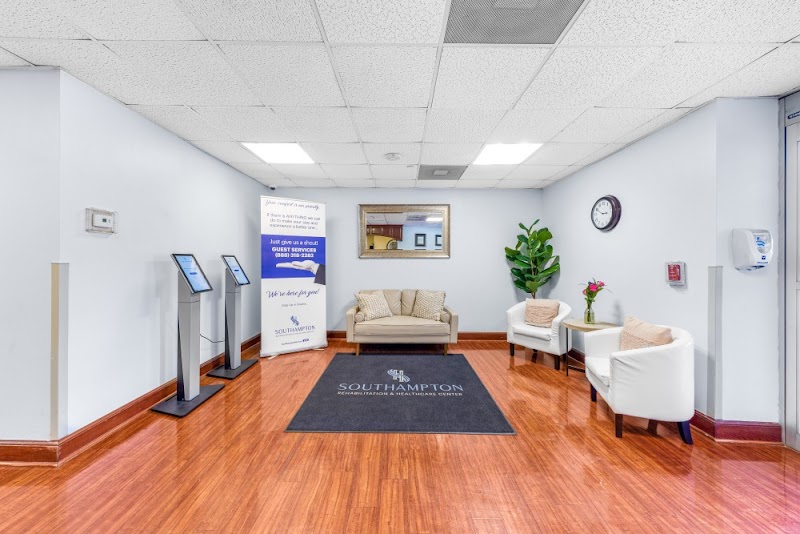
How is Southampton Rehabilitation And Healthcare Center Staffed?

CMS rates SOUTHAMPTON REHABILITATION AND HEALTHCARE CENTER's staffing level at 1 out of 5 stars, which is much below average compared to other nursing homes. Staff turnover is 52%, compared to the Virginia average of 46%. RN turnover specifically is 57%, which is notably high. RNs provide skilled clinical oversight, so turnover in this role can affect medical care quality.

What Have Inspectors Found at Southampton Rehabilitation And Healthcare Center?

State health inspectors documented 51 deficiencies at SOUTHAMPTON REHABILITATION AND HEALTHCARE CENTER during 2018 to 2025. These included: 2 that caused actual resident harm and 49 with potential for harm. Deficiencies causing actual harm indicate documented cases where residents experienced negative health consequences.
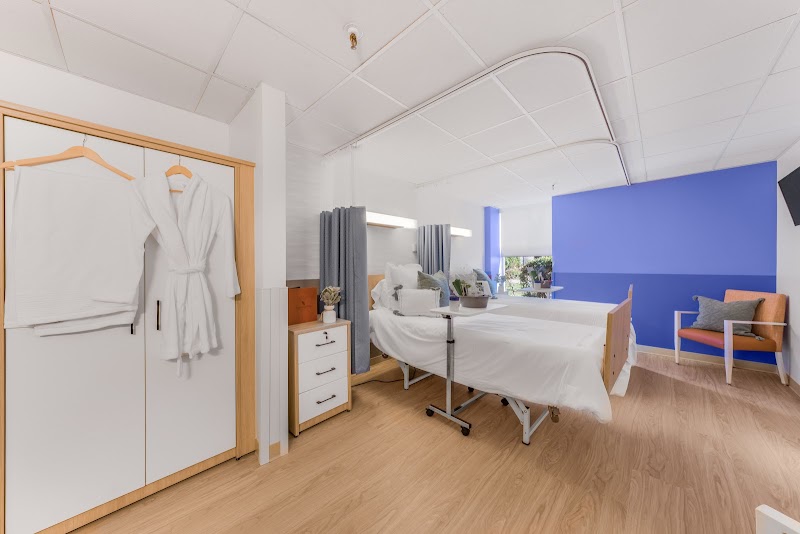
Who Owns and Operates Southampton Rehabilitation And Healthcare Center?

SOUTHAMPTON REHABILITATION AND HEALTHCARE CENTER is owned by a for-profit company. For-profit facilities operate as businesses with obligations to shareholders or private owners. The facility is operated by MARQUIS HEALTH SERVICES, a chain that manages multiple nursing homes. With 195 certified beds and approximately 176 residents (about 90% occupancy), it is a mid-sized facility located in RICHMOND, Virginia.
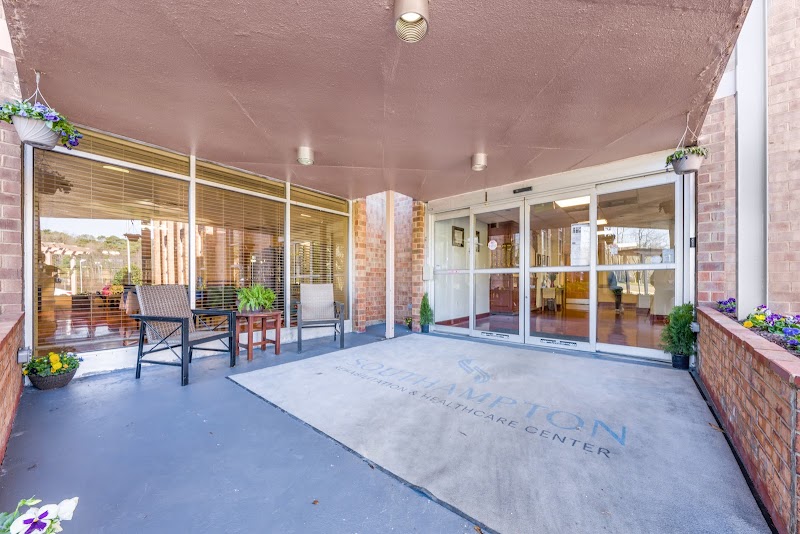
How Does Southampton Rehabilitation And Healthcare Center Compare to Other Virginia Nursing Homes?

Compared to the 100 nursing homes in Virginia, SOUTHAMPTON REHABILITATION AND HEALTHCARE CENTER's overall rating (1 stars) is below the state average of 3.0, staff turnover (52%) is near the state average of 46%, and health inspection rating (2 stars) is below the national benchmark.

What Should Families Ask When Visiting Southampton Rehabilitation And Healthcare Center?

Based on this facility's data, families visiting should ask: "Can you walk me through typical staffing levels on day, evening, and night shifts?" "Can I visit during a mealtime to observe dining assistance and food quality?" "How do you handle medical emergencies, and what is your hospital transfer rate?" "Can I speak with family members of current residents about their experience?" These questions are particularly relevant given the below-average staffing rating.

Is Southampton Rehabilitation And Healthcare Center Safe?

Based on CMS inspection data, SOUTHAMPTON REHABILITATION AND HEALTHCARE CENTER has a clean safety record: no substantiated abuse findings (meaning no confirmed cases of resident harm), no Immediate Jeopardy citations (the most serious violation level indicating risk of serious injury or death), and is not on the Special Focus Facility watch list (a federal program monitoring the lowest-performing 1% of nursing homes). The facility has a 1-star overall rating and ranks #100 of 100 nursing homes in Virginia. While no facility is perfect, families should still ask about staff-to-resident ratios and recent inspection results during their visit.

Do Nurses at Southampton Rehabilitation And Healthcare Center Stick Around?

SOUTHAMPTON REHABILITATION AND HEALTHCARE CENTER has a staff turnover rate of 52%, which is 6 percentage points above the Virginia average of 46%. Moderate turnover is common in nursing homes, but families should still ask about staff tenure and how the facility maintains care continuity when employees leave.

Was Southampton Rehabilitation And Healthcare Center Ever Fined?

SOUTHAMPTON REHABILITATION AND HEALTHCARE CENTER has been fined $22,132 across 3 penalty actions. This is below the Virginia average of $33,300. While any fine indicates a compliance issue, fines under $50,000 are relatively common and typically reflect isolated problems that were subsequently corrected. Families should ask what specific issues led to these fines and confirm they've been resolved.

Is Southampton Rehabilitation And Healthcare Center on Any Federal Watch List?

SOUTHAMPTON REHABILITATION AND HEALTHCARE CENTER is not on any federal watch list. The most significant is the Special Focus Facility (SFF) program, which identifies the bottom 1% of nursing homes nationally based on persistent, serious quality problems. Not being on this list means the facility has avoided the pattern of deficiencies that triggers enhanced federal oversight. This is a positive indicator, though families should still review the facility's inspection history directly.