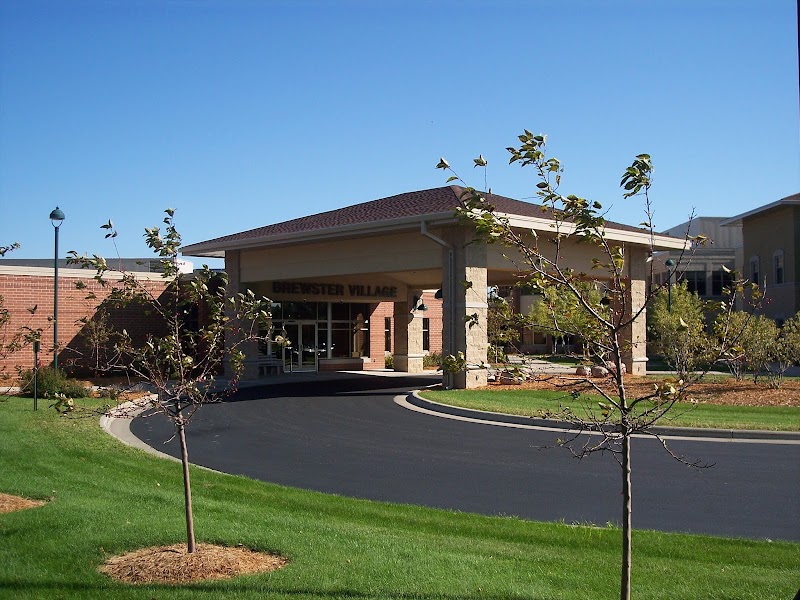
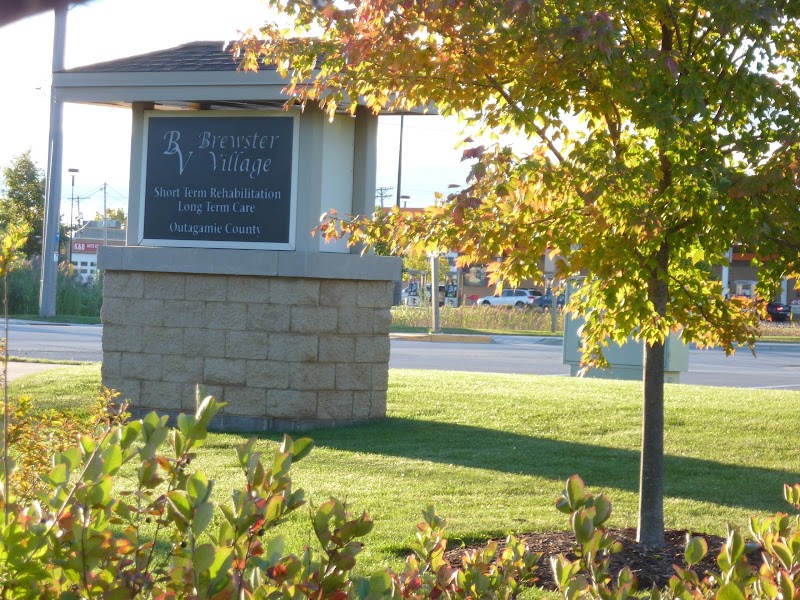
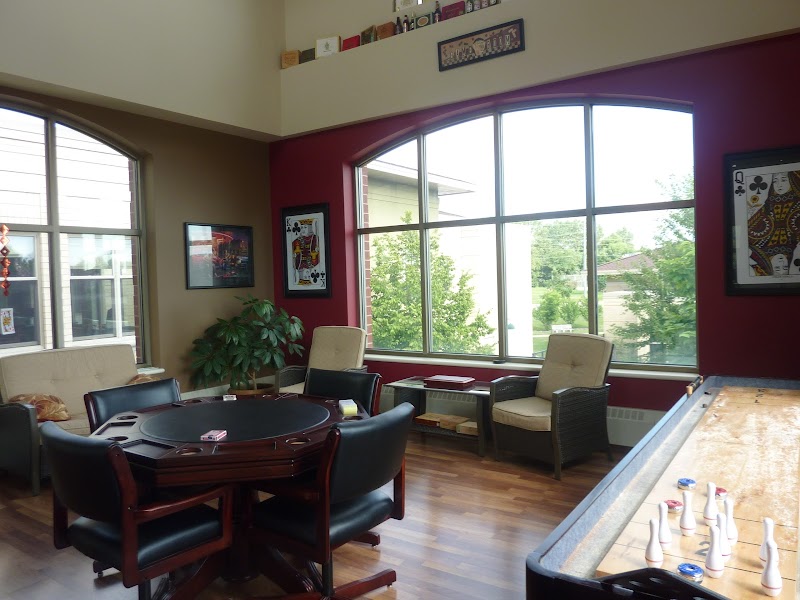
BREWSTER VILLAGE

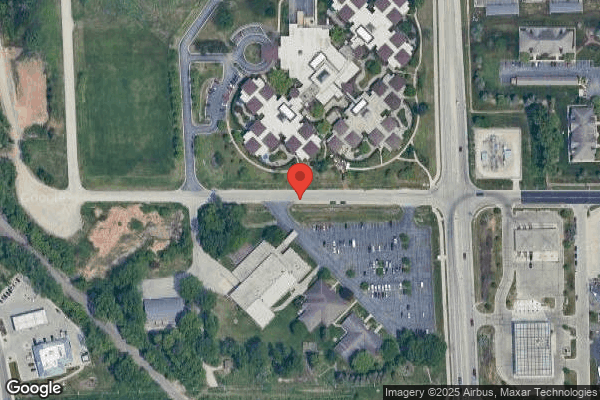
3300 W BREWSTER ST, APPLETON, WI 54914 (920) 832-5400
Government - County 204 Beds Independent Data: November 2025
Trust Grade
85/100
#9 of 321 in WI
Last Inspection: January 2025

Within standard 12-15 month inspection cycle. Federal law requires annual inspections.

Overview

Brewster Village in Appleton, Wisconsin, has a Trust Grade of B+, which means it is above average and recommended for families seeking care. It ranks #9 out of 321 facilities in the state, placing it in the top half, and is the best option out of 7 facilities in Outagamie County. However, the facility is experiencing a worrying trend, as the number of issues found during inspections rose from 1 in 2023 to 10 in 2025. Staffing is a strong point, with a perfect 5/5 star rating and a turnover rate of 36%, lower than the state average, indicating that staff are stable and familiar with the residents. On a positive note, Brewster Village has not incurred any fines, suggesting good compliance with regulations, and offers more RN coverage than 88% of Wisconsin facilities, ensuring better oversight for residents. Nevertheless, there have been specific concerns, such as not having a proper policy for Covid-19 vaccination and failing to consistently provide interpreter services for a resident who speaks Spanish, which could hinder communication about their medical needs. Additionally, grievances from residents were not adequately documented or resolved, raising concerns about the responsiveness of the facility to resident issues. Overall, while Brewster Village has strong staffing and a good reputation, these recent incidents indicate areas needing improvement.

Trust Score
B+
85/100
In Wisconsin
#9/321
Top 2%
Safety Record
Low Risk
No red flags
Inspections
Getting Worse
1 → 10 violations
Staff Stability
○ Average
36% turnover. Near Wisconsin's 48% average. Typical for the industry.
Penalties
✓ Good
No fines on record. Clean compliance history, better than most Wisconsin facilities.
Skilled Nurses
✓ Good
Each resident gets 85 minutes of Registered Nurse (RN) attention daily — more than 97% of Wisconsin nursing homes. RNs are the most trained staff who catch health problems before they become serious.
Violations
⚠ Watch
13 deficiencies on record. Higher than average. Multiple issues found across inspections.
★★★★★
5.0
Overall Rating
★★★★★
5.0
Staff Levels
★★★★☆
4.0
Care Quality
★★★★☆
4.0
Inspection Score
Stable
2023: 1 issues
2025: 10 issues

The Good

  • 5-Star Staffing Rating · Excellent nurse staffing levels
  • 4-Star Quality Measures · Strong clinical quality outcomes
  • Full Sprinkler Coverage · Fire safety systems throughout facility
  • No fines on record
  • Staff turnover below average (36%)

    12 points below Wisconsin average of 48%

Facility shows strength in staffing levels, quality measures, fire safety.

The Bad

Staff Turnover: 36%

Near Wisconsin avg (46%)

Typical for the industry

The Ugly 13 deficiencies on record

Aug 2025 1 deficiency
CONCERN (D) 📢 Someone Reported This

A family member, employee, or ombudsman was alarmed enough to file a formal complaint

Potential for Harm - no one hurt, but risky conditions existed

Grievances (Tag F0585)

Could have caused harm · This affected 1 resident

**NOTE- TERMS IN BRACKETS HAVE BEEN EDITED TO PROTECT CONFIDENTIALITY** Based on staff and resident interview and record review, the facility did not ensure grievances were documented, thoroughly inve...

Read full inspector narrative →
**NOTE- TERMS IN BRACKETS HAVE BEEN EDITED TO PROTECT CONFIDENTIALITY** Based on staff and resident interview and record review, the facility did not ensure grievances were documented, thoroughly investigated, and resolved for 2 residents (R) (R4 and R5) of 6 sampled residents.On 7/24/25, R4 and R5 reported rough care by staff during an investigation for a facility-reported incident that occurred on 7/23/25. The facility did not document the concerns a grievances, thoroughly investigate the concerns, or provide resolution for R4 and R5.Findings include:The facility's Grievance Policy and Procedure, revised 1/2024, indicates: The purpose of the grievance policy is to ensure the facility makes prompt efforts to resolve grievances .The intent of the grievance process is to support each villager's right to voice grievances ( .those about treatment, care .or violation of rights) and to assure that after receiving a complaint/grievance, the facility actively seeks a resolution .The facility will promote the grievance process throughout the organization. This includes .Educating all those affected by potential grievances or concerns on the facility's grievance process, including but not limited to: a. Villager .c. Employees .B. Grievance Official .The facility will train and designate an individual who is responsible for .b. Receiving and tracking all grievances through to their conclusion .f. Completing written/verbal grievance resolutions/decisions to the villager involved .E. A grievance or concern can be expressed orally to the Grievance Officer or staff or in writing. F. Grievances may be given to any team member who will forward the grievance to the Grievance Officer .G. Any team member who receives a complaint shall immediately attempt to resolve the complaint within their role and authority. If a complaint cannot be immediately resolved, the team member shall escalate that complaint to their supervisor and the Grievance Officer. Upon receipt of a grievance or concern, the Grievance Officer will review the grievance to determine immediately if the grievance meets a reportable complaint-consistent with the facility's abuse prevention policy. The Grievance Officer will initiate the appropriate notification and investigation process .The investigation will consist of .A review of the completed complaint report, an interview with the person(s) reporting the incident if applicable, interviews with any witnesses to the incident or concern .An interview with team members having contact with the villager during the relevant periods or shifts .A root-cause analysis of all circumstances surrounding the incident .On 8/15/25, Surveyor reviewed a facility-reported incident, dated 7/23/25. The investigation indicated during resident interviews completed by Social Worker (SW)-D on 7/24/25, R4 and R5 reported rough cares by staff. R4 indicated Registered Nurse (RN)-I is rough with R4's arm and grabs R4's arm and hand when obtaining R4's blood sugar. R5 indicated an unidentified staff member pulled R5's legs roughly in the wrong direction which caused R5 pain. Surveyor reviewed the facility's grievance file which did not contain grievances from R4 or R5.On 8/15/25 at 1:24 PM, Surveyor interviewed Grievance Officer (GO)-C about grievances for R4 and R5. GO-C indicated all of the facility's grievances were contained in the grievance file. Surveyor showed GO-C copies of R4 and R5's interviews that indicated concerns with rough care and asked if grievances were filed for R4 and R5's concerns. GO-C was aware of the interviews with R4 and R5 and verified the facility did not have documented follow-up regarding the concerns. GO-C indicated if residents express a concern, the concern should be addressed.On 8/15/25, Surveyor reviewed R4's medical record. R4 was admitted to the facility on [DATE] and had diagnoses including morbid obesity, type 2 diabetes, and generalized anxiety disorder. R4's Minimum Data Set (MDS) assessment, dated 6/13/25, had a Brief Interview for Mental Status (BIMS) score of 6 out of 15 which indicated R4 had severe cognitive impairment. The MDS assessment also indicated R4 was dependent on staff for cares and mobility. R4 made R4's own healthcare decisions.A progress note, dated 6/11/25, indicated R4 had a Power of Attorney for Healthcare (POAHC) that was not activated.On 8/15/25 at 2:08 PM, Surveyor interviewed R4 regarding R4's report of rough care from RN-I. R4 indicated RN-I is still rough and pulls/grabs R4's arm and fingers during blood sugar checks. R4 confirmed R4 informed SW-D about the concern and also informed RN-I that R4 did not like the treatment. R4 indicated SW-D did not follow-up on the concern. R4 denied pain or bruising, but stated R4 does not like to be grabbed and it is rude the way RN-I talks and grabs R4's fingers. R4 indicated R4 feels safe at the facility.On 8/15/25, Surveyor reviewed R5's medical record. R5 was admitted to the facility on [DATE] and had diagnoses including chronic pain syndrome, anxiety disorder, and spinal stenosis. R5's MDS assessment, dated 6/23/25, indicated R5 had a BIMS score of 00 out of 15 which indicated R5 had severe cognitive impairment. The MDS assessment also indicated R5 required substantial assistance with mobility such as rolling left and right. R5 had an activated POAHC for healthcare.Surveyor noted R5's plan care did not contain an intervention to handle R5's legs carefully.On 8/15/25 at 2:13 PM, Surveyor interviewed R5 who indicated staff are rough and pull R5's legs which causes pain. R5 indicated R5's legs did not currently hurt and R5 feels safe at the facility.On 8/15/25 at 2:20 PM, Surveyor interviewed Certified Nursing Assistant (CNA)-G and CNA-H who were not aware of R5's concern.On 8/15/25 at 2:25 PM, Surveyor interviewed SW-D who confirmed SW-D completed resident interviews for the facility-reported incident on 7/23/25 but did not recall R4 and R5's concerns and indicated the interviews were given to GO-C. SW-D indicated either SW-D or GO-C should have followed-up and asked if R4 and R5 wanted to file a grievance. SW-D did not know which staff R5 referrred to in the interview. SW-D stated SW-D immediately followed-up with staff after learning of R5's concern so staff would be more careful with R5's legs. SW-D could not recall who SW-D followed-up with but indicated SW-D did not follow-up with RN-I. SW-D was unsure if the staff education was documented and indicated SW-D would check for documentation and follow-up with Surveyor. (The documentation was not provided.)On 8/15/25 at 2:35 PM, Surveyor interviewed RN-F who was aware R5 had concerns about the way staff handled R5's legs which caused pain.On 8/15/25 at 2:38 PM, Surveyor interviewed RN-E who was not aware of rough cares reported by R4 or R5.On 8/15/25 at 4:28 PM, Surveyor interviewed Nursing Home Administrator (NHA)-A who indicated staff should have followed-up on R4 and R5's concerns and should have filed grievances.
Jan 2025 9 deficiencies
CONCERN (D)

Potential for Harm - no one hurt, but risky conditions existed

Deficiency F0552 (Tag F0552)

Could have caused harm · This affected 1 resident

**NOTE- TERMS IN BRACKETS HAVE BEEN EDITED TO PROTECT CONFIDENTIALITY** Based on observation, resident and staff interview, and record review, the facility did not ensure 1 resident (R) (R99) of 1 sam...

Read full inspector narrative →
**NOTE- TERMS IN BRACKETS HAVE BEEN EDITED TO PROTECT CONFIDENTIALITY** Based on observation, resident and staff interview, and record review, the facility did not ensure 1 resident (R) (R99) of 1 sampled resident was able to be informed of and participate in medical treatment/medical decisions in a language R99 could understand. R99's primary language was Spanish. R99 indicated a preference for staff to use interpreter services to ensure R99 could communicate medical treatment needs. Interpreter services were not consistently provided. In addition, R99's care plan did not address R99's language barrier. Findings include: The facility's undated Communication with Sensory Impaired Villagers policy indicates: .Interpreters and auxiliary aids will be provided at no cost to the villager. Villagers requiring an interpreter or an auxiliary aid should indicate to our staff that these services are required .Upon admission or as the need arises, the Minimum Data Set (MDS) Coordinator or the Social Worker shall assess the need for special communication provisions to sensory-impaired individuals, and document any need in the medical record .Upon initial review of the medical record, the Social Worker shall assist the villager and/or family members, and arrange for special communication provisions as desired . The facility's Care Planning Procedure policy, dated 10/2024, indicates: .care plan is developed that includes measurable objectives and time tables to meet the villager's medical, nursing, mental, and psychosocial needs as identified in the comprehensive assessment .Each individual has the right to determine the care and treatment they wish for themselves .Aspects of villager life for the team to discuss and consider for care plan approaches will include, but not be limited to: Personal Care .Dietary/Cultural preferences .Communication/memory . On 1/6/25, Surveyor reviewed R99's medical record. R99 was admitted to the facility on [DATE] and had diagnoses including acute kidney failure, chronic respiratory failure, type 2 diabetes, end stage renal disease, and dependence on renal dialysis. R99's MDS assessment, dated 10/24/24, had a Brief Interview for Mental Status (BIMS) score of 15 out of 15 which indicated R99 was not cognitively impaired. R99's MDS assessment, dated 10/30/24, indicated R99's preferred language was Spanish and R99 preferred an interpreter to communicate with a doctor or healthcare staff. R99 was responsible for R99's healthcare decisions. R99's care plan did not address communication including the need for an interpreter or list the language that R99 understood. A Social Services progress note, dated 7/16/24 (prior to admission), indicated R99 spoke Spanish and an interpreter would be needed as appropriate. A Social Services progress note, dated 10/24/24, indicated the Social Worker spoke with R99 through R99's cousin (as a translator) when R99 returned from a medical appointment. A Social Services progress note, dated 11/15/24, indicated the Social Worker spoke with R99 through R99's cousin's wife (who served as a translator) regarding Medicaid liability. In addition, multiple nursing progress notes from 7/16/24 through 11/15/24 indicated there was a communication barrier as R99 spoke Spanish and minimal English. The notes indicated R99 could answer basic questions and did well with gestures. On 1/7/25 at 1:01 PM, Surveyor interviewed R99 via a Spanish interpreter. Through the interpreter, R99 indicated R99 had difficulty communicating R99's needs to staff. R99 indicated R99's daughter communicated R99's needs to staff, however, R99's daughter was not always available to help. R99 indicated when R99 was admitted to the facility staff offered the use of an interpreter, however, staff don't offer an interpreter anymore. R99 indicated R99 primarily communicates with gestures or very simple questions from staff but preferred staff use an interpreter so R99 could understand and communicate better. R99 indicated R99 tried to communicate to staff that R99 needed medication for itchiness but was not successful. R99 stated R99's daughter puts cream on R99's itchy back but does not come daily to apply the cream and R99 is still itchy. R99 indicated staff did not inform R99 how to request an interpreter. R99 reiterated a second time that R99 preferred staff use an interpreter instead of waiting for R99's daughter to translate. R99 stated when R99 tried to tell staff that R99 disliked a breakfast food, staff gave R99 more of the food R99 disliked. R99 indicated that occurred because because R99 could not communicate R99's likes and dislikes to staff. On 1/7/25 at 1:01 PM, Surveyor observed a piece of paper with an interpreter contact number taped on R99's closet door approximately 5 feet off the ground which was above the line of sight for R99 who was wheelchair bound. On 1/7/25 at 2:13 PM, Surveyor interviewed Certified Nursing Assistant (CNA)-F who indicated when R99 wakes up at 7:00 or 7:15 AM, staff bring hygiene supplies. CNA-F indicated CNA-F would use an interpreter if CNA-F did not understand R99, however, R99 could speak a little English and use gestures to communicate. CNA-F indicated there was an interpreter phone number on the phone that CNA-F carried. CNA-F indicated if staff did not understand R99, an interpreter would be called. On 1/7/25 at 3:03 PM, Surveyor interviewed Director of Nursing (DON)-B who indicated R99 was able to communicate with staff via simple questions and answers. DON-B indicated more complex things were translated through R99's daughter. DON-B stated staff have access to an interpreter on the facility's phones. DON-B indicated nurses complete assessments for R99 by asking simple questions. Surveyor informed DON-B that R99 complained of itchiness that R99 was not able to communicate to nursing staff. DON-B indicated R99 should be able to initiate a conversation with staff. DON-B confirmed R99's care plan did not address a language barrier.
CONCERN (D)

Potential for Harm - no one hurt, but risky conditions existed

Deficiency F0558 (Tag F0558)

Could have caused harm · This affected 1 resident

**NOTE- TERMS IN BRACKETS HAVE BEEN EDITED TO PROTECT CONFIDENTIALITY** Based on observation and staff interview, the facility did not ensure call lights were within reach for 3 residents (R) (R80, R8...

Read full inspector narrative →
**NOTE- TERMS IN BRACKETS HAVE BEEN EDITED TO PROTECT CONFIDENTIALITY** Based on observation and staff interview, the facility did not ensure call lights were within reach for 3 residents (R) (R80, R83, and R93) of 4 sampled residents. During multiple observations between 1/6/25 and 1/8/25, R80 did not have a call light within reach. On 1/8/25, R83 was observed without a call light within reach. On 1/6/25, R93 was observed without a call light within reach. Findings include: The facility did not have a policy on ensuring call lights were within reach of residents. 1. From 1/6/25 to 1/8/25, Surveyor reviewed R83's medical record. R83 was admitted to the facility on [DATE] and had diagnoses including vascular dementia, generalized anxiety disorder, major depressive disorder, and encounter for palliative care. R83's Minimum Data Set (MDS) assessment, dated 10/29/24, had a Brief Interview for Mental Status (BIMS) score of 8 out of 15 which indicated R83 had moderately impaired cognition. R83's activities of daily living (ADL) care plan contained an intervention (dated 3/8/23) that indicated: I use the following notification devices: wall call light On 1/6/25 at 9:53 AM, Surveyor observed R83 in bed asleep. Surveyor noted R83's call light was wrapped around the lower rail of R83's bed and hung toward the floor. Surveyor noted had bilateral hand contractures. On 1/7/25 at 10:57 AM, Surveyor observed R83 in bed covered with blankets with R83's hands exposed. R83's call light was wrapped around a bed rail and hung toward the floor. When Surveyor asked if R83 could reach the call light, R83 said no. When Surveyor asked what R83 would do if R83 needed help, R83 indicated R83 didn't know. When asked if R83 wanted the call light within reach, R83 said yes. Surveyor then exited R83's room and found Registered Nurse (RN)-I who verified R83's call light was not within reach. RN-I indicated R83's call light should be within reach. RN-I indicated Hospice staff just gave R83 a shower and probably forgot to give R83 the call light. Surveyor informed RN-I of Surveyor's observation on 1/6/25 when R83's call light was also not within reach. RN-I indicated RN-I would provide education. On 1/8/25 at 9:00 AM, Surveyor observed R83 in bed and noted R83's call light was again wrapped around the lower rail of the bed and hung toward the floor out of R83's reach. On 1/8/25 at 9:02 AM, Surveyor showed Certified Nursing Assistant (CNA)-J R83's call light. CNA-J verified R83 was unable to reach the call light. CNA-J indicated R83's hands were so contracted that CNA-J did not think R83 could push the call light. When Surveyor asked if a soft touch call light had been tried with R83, CNA-J didn't think so but stated CNA-J would ask. 2. From 1/6/25 to 1/8/25, Surveyor reviewed R80's medical record. R80 was admitted to the facility on [DATE] and had diagnoses including aphasia, cerebral infarction due to thrombosis of right middle cerebral artery, vascular dementia, and hemiplegia (weakness on one side of the body) and hemiparesis (paralysis on one side of the body) following cerebral infarction affecting the left non-dominant side. R80's MDS assessment, dated 10/22/24, indicated R80 was severely cognitively impaired. R80's ADL care plan contained an intervention (dated 6/10/21) that indicated: I use the following notification devices: wall call light. On 1/8/25 at 9:00 AM, Surveyor observed R80 in a Broda chair in R80's room. R80's call light was wrapped around the lower rail of R80's bed approximately 3 feet from R80's Broda chair. R80 was not able to mobilize R80's self in the chair and was unable to answer Surveyor's questions. On 1/8/25 at 9:02 AM, Surveyor interviewed CNA-J who confirmed R80's call light was out of reach. When CNA-J gave R80 the call light, R80 pushed the call light repeatedly. CNA-J indicated R80 did not know how to use the call light. When Surveyor asked CNA-J to place the call light in R80's lap, R80 picked up the call light and pushed it. Surveyor asked CNA-J if the facility had tried a soft touch call light or other type of call light. CNA-J did not know. On 1/8/25 at 11:10 AM, Surveyor interviewed Director of Nursing (DON)-B who indicated the facility did not have a policy regarding call light access and indicated it was a standard of care for residents to have call lights within reach. DON-B indicated the facility had different options for call lights. If a resident isn't mobile, DON-B indicated DON-B expects a resident's call light to be within reach despite the resident's cognitive level. 3. From 1/6/25 to 1/8/25, Surveyor reviewed R93's medical record. R93 was admitted to the facility on [DATE] and had diagnoses including Alzheimer's dementia and left-sided hemiplegia (weakness on one side of the body). R93's MDS assessment, dated 8/21/24, indicated R93 had moderate cognitive impairment. R93's most recent MDS assessment did not contain a BIMS assessment. R93's care plan, dated 7/6/23 with a goal of 2/11/25, stated, I have potential for falls .ensure my call light is within reach. On 1/6/25 at 10:52 AM, Surveyor observed R93 in a chair in R93's room. Surveyor noted R93's call light was hanging next to R93's bed which was across the room and not within R93's reach. On 1/6/25 at 10:57 AM, Surveyor interviewed CNA-K who confirmed R93's call light was not within reach and placed the call light within reach of R93.
CONCERN (D)

Potential for Harm - no one hurt, but risky conditions existed

Notification of Changes (Tag F0580)

Could have caused harm · This affected 1 resident

**NOTE- TERMS IN BRACKETS HAVE BEEN EDITED TO PROTECT CONFIDENTIALITY** Based on staff interview and record review, the facility did not ensure a physician was notified of a change in condition for 1 ...

Read full inspector narrative →
**NOTE- TERMS IN BRACKETS HAVE BEEN EDITED TO PROTECT CONFIDENTIALITY** Based on staff interview and record review, the facility did not ensure a physician was notified of a change in condition for 1 resident (R) (R56) of 7 sampled residents. R56's physician was not notified of skin wounds until 7 days after the wounds were discovered. Findings include: The facility's Notification of Change in Condition/Treatment policy, dated 2/2024, indicates: .Significant changes in the villager's physical, mental, or psychosocial status, or accidents/other incidents shall be reported to the Physician/Nurse Practitioner by the Licensed Nurse .the date, time, and who was notified shall be documented in the villager's medical record . On 1/6/25, Surveyor reviewed R56's medical record. R56 was admitted to the facility on [DATE] and had diagnoses including urinary tract infection (UTI), neurocognitive disorder with Lewy bodies (a form of progressive dementia that affects a person's ability to think, reason, and process information), dementia, type 2 diabetes, and erythema intertrigo (a type of skin rash). R56 had an activated Power of Attorney for Healthcare (POAHC) who was responsible for R56's medical decision-making. R56's Minimum Data Set (MDS) assessment, dated 11/27/24, had a Brief Interview for Mental Status (BIMS) score of 12 out of 15 which indicated R56 had moderate cognitive impairment. R56's medical record contained nursing progress notes that indicated R56 had 2 small skin shearing areas on the coccyx that were identified on 11/26/24. The nurse initiated barrier cream, a pressure reducing pad on R56's bed and chair, and frequent turning/repositioning. A nursing assessment, dated 11/26/24. indicated the wounds were moisture-associated skin damage (prolonged exposure to excessive moisture) most likely due to urinary and/or stool incontinence. A different barrier cream was ordered and a task was initiated to update the wound team if the wounds worsened. A nursing assessment, dated 12/2/24, indicated the wounds were unstageable pressure injuries. The physician was updated regarding the wounds and treatment plan. On 1/8/25 at 12:15 PM, Surveyor interviewed wound care certified Registered Nurse (RN)-G who verified R56 had preventative skin impairment measures implemented upon admission, including a cushion in R56's chair and repositioning every 2 hours in bed and every hour in chair. RN-G verified the wounds on R56's coccyx were identified on 11/26/24. RN-G verified R56's physician was not notified until 12/2/24 when the wounds were diagnosed as unstageable. RN-G indicated the physician should have been notified when the wounds were discovered on 11/26/24. On 1/8/25 at 1:27 PM, Surveyor interviewed Director of Nursing (DON)-B who indicated the physician should have been notified of R56's wounds on 11/26/24.
CONCERN (D)

Potential for Harm - no one hurt, but risky conditions existed

Respiratory Care (Tag F0695)

Could have caused harm · This affected 1 resident

Based on observation, staff interview, and record review, the facility did not ensure 1 resident (R) (R10) of 3 sampled residents received the necessary care and treatment for oxygen therapy. R10 had ...

Read full inspector narrative →
Based on observation, staff interview, and record review, the facility did not ensure 1 resident (R) (R10) of 3 sampled residents received the necessary care and treatment for oxygen therapy. R10 had a physician order for 2-6 liters per minute (LPM) of oxygen and used oxygen continuously. R10 did not have a care plan for oxygen use. In addition, R10's oxygen tubing was not changed after R10 was diagnosed with pneumonia. Findings include: The facility's undated Changing of Disposable Respiratory Supplies policy indicates: Nasal cannula and oxygen tubing: Change when device becomes soiled, discolored, stiff or every 3 months. Discard if resident recently had a respiratory infection. From 1/6/25 to 1/8/25, Surveyor reviewed R10's medical record. R10 had diagnoses including congestive heart failure (CHF), dementia, and pneumonia. R10's Minimum Data Set (MDS) assessment, dated 2/2/24, had a Brief Interview for Mental Status (BIMS) score of 2 out of 15 which indicated R10 had severe cognitive impairment. R10 had a physician order, dated 10/23/24, for 2-6 LPM of oxygen via nasal cannula. R10's medical record did not contain a care plan for oxygen use. R10's medical record indicated R10 was diagnosed with pneumonia on 10/23/24 and had orders for a chest X-ray, antibiotics, and oxygen. R10's medical record did not contain documentation that indicated R10's nasal cannula and oxygen tubing were changed from 10/24/24 to 1/6/25 even though the facility's policy indicated respiratory devices should be discarded if a resident had a recent respiratory infection. On 1/6/25 at 9:35 AM, Surveyor observed R10 using oxygen at 2 LPM via nasal cannula. On 1/7/25 at 9:01 AM, Surveyor interviewed Registered Nurse (RN)-E who indicated R10's medical record did not indicate when R10's oxygen tubing was last changed. RN-E indicated there should be documentation on R10's Treatment Administration Record (TAR) to verify when oxygen tubing is changed. On 1/8/25 at 11:24 AM, Surveyor interviewed Director of Nursing (DON)-B who indicated R10 should have had a care plan for oxygen therapy and indicated a care plan was added on 1/7/25. DON-B indicated residents' oxygen tubing should be changed every 7 days and with a respiratory infection.
CONCERN (D)

Potential for Harm - no one hurt, but risky conditions existed

Deficiency F0698 (Tag F0698)

Could have caused harm · This affected 1 resident

**NOTE- TERMS IN BRACKETS HAVE BEEN EDITED TO PROTECT CONFIDENTIALITY** Based on staff and resident interview and record review, the facility did not ensure 1 resident (R) (R99) of 1 resident received...

Read full inspector narrative →
**NOTE- TERMS IN BRACKETS HAVE BEEN EDITED TO PROTECT CONFIDENTIALITY** Based on staff and resident interview and record review, the facility did not ensure 1 resident (R) (R99) of 1 resident received appropriate dialysis care and services. R99 received dialysis services. R99 did not have a dialysis care plan to ensure coordination of care and monitoring of R99's fistula (a surgically created connection between an artery and a vein in the arm). Findings include: The facility's Dialysis Coordination policy, dated 6/2024, indicates: Each villager that has outpatient dialysis services will be monitored for risk factors and complications which may include .Access Site Monitoring: .Nursing will .initiate hemodialysis (HD) care plan . On 1/6/25, Surveyor reviewed R99's medical record. R99 was admitted to the facility on [DATE] and had diagnoses including acute kidney failure, chronic respiratory failure, type 2 diabetes, end stage renal disease, and dependence on renal dialysis (blood purifying treatment given when kidneys are not functioning). R99 was responsible for R99's healthcare decisions. R99's Minimum Data Set (MDS) assessment, dated 10/24/24, had a Brief Interview for Mental Status (BIMS) score of 15 out of 15 which indicated R99 did not have impaired cognition. On 1/6/25 at 1:30 PM, Surveyor interviewed R99 (with R99's daughter interpreting). R99 indicated staff did not consistently assist R99 with personal hygiene prior to leaving the facility for dialysis. R99 indicated R99 still had on pajama pants because R99 did not receive assistance that day which was a dialysis day. On 1/7/25 at 12:37 PM, Surveyor reviewed R99's plan of care, dated 7/16/24, which did not contain a dialysis care plan and did not indicate R99 attended dialysis or had a right arm fistula. The care plan indicated R99 needed help with daily hygiene in the morning including set-up with oral care and assistance with dressing. On 1/7/25 at 1:01 PM, Surveyor interviewed R99 via a Spanish interpreter service. R99 indicated dialysis staff monitor R99's fistula, but facility staff do not. On 1/7/25 at 3:30 PM, Surveyor interviewed Director of Nursing (DON)-B who indicated R99's plan of care should include dialysis and fistula monitoring. DON-B indicated Certified Nursing Assistants (CNAs) should know when R99 has dialysis appointments and should know not to check R99's blood pressure on the right arm due to R99's fistula.
CONCERN (D)

Potential for Harm - no one hurt, but risky conditions existed

Pharmacy Services (Tag F0755)

Could have caused harm · This affected 1 resident

**NOTE- TERMS IN BRACKETS HAVE BEEN EDITED TO PROTECT CONFIDENTIALITY** Based on observation, staff and resident interview, and record review, the facility did not provide pharmaceutical services to m...

Read full inspector narrative →
**NOTE- TERMS IN BRACKETS HAVE BEEN EDITED TO PROTECT CONFIDENTIALITY** Based on observation, staff and resident interview, and record review, the facility did not provide pharmaceutical services to meet the needs of 1 resident (R) (R99) of 29 sampled residents. On 1/7/24 at approximately 2:00 PM, Surveyor observed a tube of 1% hydrocortisone (anti-itch cream) cream on a shelf under R99's refrigerator. Findings include: The facility's undated Self-Administration of Medications by Residents policy indicates: .If the resident desires to self-administer medication, an assessment is conducted by the Interdisciplinary Team .If the resident demonstrates the ability to safely self-administer medication, a further assessment of the safety of bedside medication storage is conducted .The manner of storage prevents access by other residents. Lockable drawers or cabinets are required only if unlocked storage is ineffective .The beside medication record is reviewed on each nursing shift, and the administration information is transferred to the Medication Administration Record (MAR) kept at the nursing station. Notation of each self-administered dose is made by placing a check mark in the appropriate space . On 1/6/25, Surveyor reviewed R99's medical record. R99 was admitted to the facility on [DATE] and had diagnoses including acute kidney failure, chronic respiratory failure, type 2 diabetes, end stage renal disease, and dependence on renal dialysis (blood purifying treatment given when kidneys are not functioning). R99's Minimum Data Set (MDS) assessment, dated 10/24/24, had a Brief Interview for Mental Status (BIMS) score of 15 out of 15 which indicated R99 did not have impaired cognition. R99 was responsible for R99's medical decision-making On 1/7/25 at 1:01 PM, Surveyor interviewed R99 and R99's daughter. R99 indicated via a Spanish interpreter that R99 needed an ointment. R99's daughter indicated R99 complained of an itchy back and R99's daughter applied Vasoline or a prednisone-like cream that was kept under R99's refrigerator when R99's daughter visited, including yesterday. On 1/7/25 at approximately 2:00 PM, Surveyor observed an open tube of 1% hydrocortisone cream on a shelf under R99's refrigerator. On 1/7/25 at approximately 2:30 PM, Surveyor reviewed R99's medical record which did not contain a self-administration of medication assessment or a medication storage assessment. On 1/7/25 at 3:51 PM, Surveyor interviewed Director of Nursing (DON)-B who indicated R99 did not have a self-administration of medication assessment, therefore, no medications should be in R99's room.
CONCERN (D)

Potential for Harm - no one hurt, but risky conditions existed

Medication Errors (Tag F0758)

Could have caused harm · This affected 1 resident

**NOTE- TERMS IN BRACKETS HAVE BEEN EDITED TO PROTECT CONFIDENTIALITY** Based on staff interview and record review, the facility did not ensure adequate monitoring for 1 resident (R) (R47) of 5 reside...

Read full inspector narrative →
**NOTE- TERMS IN BRACKETS HAVE BEEN EDITED TO PROTECT CONFIDENTIALITY** Based on staff interview and record review, the facility did not ensure adequate monitoring for 1 resident (R) (R47) of 5 residents reviewed for psychotropic medications. R47 was prescribed diazepam (an antianxiety medication), quetiapine fumarate (an antipsychotic medication), and mirtazapine (an antidepressant medication). R47's medical record did not contain monitoring interventions for adverse reactions to the psychotropic medications. Findings include: The facility's undated Psychotropic Drug Monitoring policy indicates: Psychotropic medication is any medication that affects brain activities associated with mental processes and behavior. These drugs include, but are not limited to .antipsychotic, antidepressant, antianxiety, and hypnotic .Residents who receive psychotropic medications are monitored to evaluate the effectiveness of the medication. Every effort is made to ensure the residents receiving these medications obtain the maximum benefit with the minimum of untoward effects. Procedure: .Effects of the medications are documented as a part of the care planning process .4) The need for and response to therapy are monitored and documented in the resident's medical record .Psychotropic drug monitoring guidelines include but may not be limited to: Antianxiety/Sedative Drugs: .2) Behavioral monitoring charting or similar mechanisms are used to document the resident's need for and response to drug therapy. Antidepressants: .3) The resident's subjective and/or objective improvement or maintenance of function is documented. 4) The resident is evaluated periodically for continued need for the antidepressant medication .Antipsychotics: .2) Residents receive antipsychotic medication only for behaviors that are quantitatively and objectively documented through the use of behavioral monitoring charts or a similar mechanism. 3) Residents receive antipsychotic medication only for behaviors that are persistent, that are not caused by preventable reasons, and are causing the resident to: a) Present a danger to self or others. b) Continuously scream, yell, or pace. c) Experience psychotic symptoms (such as hallucinations, paranoia, delusions) .6) Residents who are receiving antipsychotic drug therapy are adequately monitored for significant side effects of such therapy . From 1/6/25 to 1/8/25, Surveyor reviewed R47's medical record. R47 was admitted to the facility on [DATE] with diagnoses including non-traumatic brain dysfunction (anoxic brain injury), insomnia, bipolar disorder, and severe unspecified dementia with agitation. R47's Minimum Data Set (MDS) assessment, dated 10/23/24, indicated R47 was rarely/never understood. R47 had a Guardian. R47's medical record contained the following psychotropic medication orders: ~ diazepam 5 milligram (mg) tablet three times daily (TID) for anxiety/bipolar disorder ~ quetiapine fumarate 300 mg every morning for bipolar disorder ~ quetiapine fumarate 200 mg two times daily (BID) for bipolar disorder ~ mirtazapine 30 mg at bedtime (HS) for major depressive disorder R47's medical record did not contain monitoring interventions for adverse reactions to the psychotropic medications. On 1/8/25 at 11:13 AM, Surveyor interviewed Registered Nurse (RN)-L regarding psychotropic side effect/adverse reaction monitoring for R47. RN-L reviewed R47's medical record and indicated RN-L could not find any monitoring interventions for R47's psychotropic medications. RN-L and Surveyor reviewed R47's Medication Administration Record (MAR) and care plan which did not contain side effect/adverse reaction monitoring interventions. On 1/8/25 at 11:26 AM, Surveyor interviewed Director of Nursing (DON)-B who verified there were no adverse reaction psychotropic medication monitoring interventions in R47's medical record.
CONCERN (D)

Potential for Harm - no one hurt, but risky conditions existed

Infection Control (Tag F0880)

Could have caused harm · This affected 1 resident

**NOTE- TERMS IN BRACKETS HAVE BEEN EDITED TO PROTECT CONFIDENTIALITY** Based on observation, staff interview, and record review, the facility did not establish and maintain an infection prevention an...

Read full inspector narrative →
**NOTE- TERMS IN BRACKETS HAVE BEEN EDITED TO PROTECT CONFIDENTIALITY** Based on observation, staff interview, and record review, the facility did not establish and maintain an infection prevention and control program designed to prevent the development and transmission of communicable disease and infection for 2 residents (R) (R78 and R22) of 5 sampled residents observed during the provision of care. In addition, the facility did not have the appropriate transmission-based precautions in place for 1 (R214) of 3 sampled residents. Certified Nursing Assistant (CNA)-C did not appropriately cleanse hands or change gloves during incontinence care for R78. R22 was on enhanced barrier precautions (EBP). CNA-M and CNA-N did not don the appropriate personal protective equipment (PPE) during care for R22. R214 had a diagnosis of pneumonia and was symptomatic. R214 was not on droplet precautions. Findings include: The Facility's Hand/Hygiene Policy, dated 4/24, indicates: Hand hygiene is considered the single most important approach for preventing the spread of infection .Guidelines: 1. Cleanse your hands either with soap and water or alcohol-based hand gel: Before and after villager contact; Before and after any contact with villager environment, belongings, or equipment; Before and after wearing gloves; After moving from a dirty to clean area (i.e., moving between body sites, after touching any unsanitized area on a surface before touching anything else); During cares. The Facility's Enhanced Barrier Precautions Policy, dated 8/22, indicates: 1. EBP is an infection prevention and control intervention to reduce the spread of multidrug-resistant organisms (MDROs) to residents. 2. EBPs employ targeted gown and glove use during high-contact resident care activities when contact precautions do not otherwise apply. a. Gloves and gown are applied prior to performing the high-contact resident care activity .EBP is primarily intended to apply to care that occurs within a resident's room where high-contact resident care activities, including transfers, are bundled together with other high-contact activity, such as part of morning or evening care. This extended contact with the resident and their environment increases the risk of MDROs spreading to staffs' hands and clothes .5. EBP is indicated .for residents with wounds and/or indwelling medical devices regardless of MDRO colonization. The facility's Infection Surveillance policy, revised 8/2024, indicates: .1. When a resident exhibits signs/symptoms of a suspected infection .RN: .Review and ensure all policies and procedures are followed specific to presenting symptoms. C. Infection/Preventionist/Nursing Supervisor: .Monitor documentation until symptoms resolve and ensure interventions are initiated and appropriate. The Centers for Disease Control (CDC) at CDC.gov indicates: Transmission based precautions are the second tier of basic infection control and are to be used in addition to standard precautions for patients who may be infected or colonized with certain infectious agents for which additional precautions are needed to prevent infection transmission. Use droplet precautions for patients known or suspected to be infected with pathogens transmitted by respiratory droplets that are generated by a patient who is coughing, sneezing, or talking. 1. From 1/6/25 to 1/8/25, Surveyor reviewed R78's medical record. R78 was admitted to facility on 12/28/23 and had diagnoses including Parkinson's disease, dementia, urinary retention, overactive bladder, obstructive uropathy, benign prostatic hyperplasia (BPH), and urogenital implants. R78's Minimum Data Set (MDS) assessment, dated 12/26/24, had a Brief Interview for Mental Status (BIMS) score of 0 out of 15 which indicated R78 was severely cognitively impaired. The MDS also indicated R78 was dependent on staff for transfers, hygiene, toileting and dressing. R78 had a history of urinary tract infections (UTIs) on 8/20/24 and 10/12/24. On 1/8/25 at 9:24 AM, Surveyor observed CNA-C and CNA-D provide catheter care for R78. CNA-C and CNA-D washed hands and donned gloves. CNA-C washed R78's face, hands, and under arms with a wash cloth. CNA-C and CNA-D then unfastened R78's soiled brief. CNA-C cleansed R78's Foley catheter tubing from the suprapubic site downward and dried the tubing with a towel. CNA-C and CNA-D then rolled R78 on the left side and CNA-C removed R78's soiled brief. With the same soiled gloves, CNA-C cleansed R78's buttocks from front to back two times. With the same soiled gloves, CNA-C applied barrier cream to R78's buttocks. CNA-C then removed the right glove and donned a clean glove without washing or sanitizing CNA-C's right hand. CNA-C and CNA-D then put a clean brief underneath R78. CNA-C touched the clean brief, R78, and R78's sheets. With the same soiled gloves, CNA-C fastened R78's brief and put a clean shirt on R78. CNA-C then bagged the soiled linens and brief, removed gloves, and washed hands. On 1/8/25 at 9:42 AM, Surveyor interviewed CNA-C who verified CNA-C did not appropriately change gloves or cleanse hands during the provision of care for R78. 3. From 1/6/25 to 1/8/25, Surveyor reviewed R214's medical record. R214 was admitted to the facility on [DATE] and had diagnoses including pneumonia and muscle weakness. R214's MDS assessment, dated 12/3/24, had a BIMS score of 11 out of 15 which indicated R214 had moderate cognitive impairment. On 1/6/25 at 10:03 AM, Surveyor observed R214 in R214's room and noted a contact precautions sign on R214's door. A progress note, dated 1/3/25 at 5:25 PM, indicated new orders were received to start IM (intramuscular) Rocephin 1 gram with lidocaine for 5 days. A progress note, dated 1/4/25 at 9:53 PM, indicated R214 had a respiratory condition with fatigue and an occasional cough. A progress note, dated 1/5/25 at 2:59 PM, indicated R214 had an ongoing change in condition, including poor appetite and poor oral intake. R214 took sips but refused all AM meds due to nausea and spitting up mucus. A progress note, dated 1/6/25 at 3:33 PM, indicated R214 had pneumonia, respiratory fatigue, and a productive cough with green/yellow phlegm. R214's lungs were diminished bilaterally with even respirations. R214 had an unlabored frequent cough. On 1/7/25, Surveyor noted R214 was no longer on precautions and there was no precautions sign or PPE cart outside R214's room. On 1/8/25 at 11:41 AM, Surveyor interviewed Registered Nurse (RN)-H who verified R214 was on precautions on 1/6/25 but was taken off because R214 had pneumonia. RN-H indicated R214 exhibited symptoms and was placed on contact precautions during testing. When Surveyor indicated R214's progress notes indicated R214 was coughing up phlegm, RN-H verified that was correct. RN-H indicated R214 was not leaving R214's room and was started on Hospice that morning. RN-H also indicated staff were wearing masks throughout the facility. On 1/8/25 at 12:40 PM, Surveyor interviewed DON-B. When Surveyor indicated R214's progress notes indicated R214 coughed up yellow and green phlegm on 1/6/25 and was currently on an antibiotic for pneumonia, DON-B indicated if R214 was still coughing up sputum, R214 should be on droplet precautions. DON-B also confirmed staff should change their masks upon exiting R214's room. 2. From 1/6/25 to 1/8/25, Surveyor reviewed R22's medical record. R22 was admitted to the facility on [DATE] and had diagnoses including multiple sclerosis (MS), anxiety, and obstructive and reflux uropathy. R22's MDS assessment, dated 11/13/24, indicated R22 was not cognitively impaired. R22 was R22's own decision maker. R22 had a urostomy due to incontinence and was on EBP. On 1/7/25 at 1:41 PM, Surveyor observed an EBP sign on R22's door and observed CNA-M empty R22's urostomy bag while wearing a gown, gloves, and a mask. CNA-M then removed CMA-M's gown and gloves and called for assistance. On 1/7/25 at 1:51 PM, Surveyor observed CNA-M and CNA-N reposition R22 with pillows. CNA-M and CNA-N wore masks, but did not wear gowns and gloves when repositioning R22. CNA-M and CNA-N touched R22, R22's bed linens, and R22's pillows. On 1/7/25 at 1:57 PM, Surveyor interviewed CNA-M and CNA-N who verified CNA-M and CNA-N should have worn gowns and gloves while providing care for R22. CNA-M indicated EBP should be used when providing care to residents who have catheters, wounds, tube feedings, and ostomies. On 1/8/25 at 11:52 AM, Surveyor interviewed Director of Nursing (DON)-B who verified EBP should be used during high-contact care when a resident has an indwelling device, chronic wound, or history of an MDRO. DON-B verified repositioning a resident is considered high-contact care. DON-B also indicated DON-B expects staff to complete hand hygiene after removing soiled gloves before donning clean gloves. DON-B indicated R22 did not have an MDRO but verified R22 had a wound and a urostomy.
CONCERN (D)

Potential for Harm - no one hurt, but risky conditions existed

Deficiency F0883 (Tag F0883)

Could have caused harm · This affected 1 resident

**NOTE- TERMS IN BRACKETS HAVE BEEN EDITED TO PROTECT CONFIDENTIALITY** Based on staff interview and record review, the facility did not ensure vaccines were offered for 2 residents (R) (R80 and R36) ...

Read full inspector narrative →
**NOTE- TERMS IN BRACKETS HAVE BEEN EDITED TO PROTECT CONFIDENTIALITY** Based on staff interview and record review, the facility did not ensure vaccines were offered for 2 residents (R) (R80 and R36) of 5 sampled residents. R80 and R36 were not offered Prevnar 20 (PCV20) vaccines. Findings include: Abbreviations (www.cdc.gov): PCV13: 13-valent pneumococcal conjugate vaccine (Prevnar13®) PCV20: 20-valent pneumococcal conjugate vaccine (Prevnar 20®) PPSV23: 23-valent pneumococcal polysaccharide vaccine (Pneumovax23®) The most recent Centers for Disease Control and Prevention (CDC) recommendations for pneumococcal vaccinations indicate: For adults 65 years or older who have only received PPSV23, the CDC recommends: Give 1 dose of PCV15 or PCV20. The PCV20 dose should be administered at least 1 year after the most recent PPSV23 vaccination. Regardless of if PCV20 is given, an additional dose of PPSV23 is not recommended since they already received it. For those who have received PCV13 and 1 dose of PPSV23, the CDC recommends you give 1 dose of PCV20 at least 5 years after the last pneumococcal vaccine. For adults 65 years or older who have received PCV13, give 1 dose of PCV20 or PPSV23 at least 1 year after PCV13. Regardless of vaccine used, their vaccines are then complete. The facility's Pneumococcal Vaccine policy, revised 5/2024, indicates: All villagers [AGE] years of age or older should be offered the pneumococcal vaccine unless medically contraindicated. For adults 65 years and older who have not previously received any pneumococcal vaccine, the CDC recommends you give 1 dose of PCV20. If PCV20 is used, their pneumococcal vaccinations are complete. For adults 65 years or older who have only received a PPSV23, the CDC recommends you give 1 dose of PCV20. The PCV20 dose should be administered at least one year after the most recent PPSV23 vaccination. Their pneumococcal vaccinations are now complete. For adults 65 years and older who have only received PCV13, the CDC recommends you give 1 dose of PCV20. The PCV20 dose should be administered at least one year after the most recent PPSV13 as previously recommended. Their pneumococcal vaccinations are now complete. For Adults 65 years or older who have received the PVC20, their pneumococcal vaccinations are complete. 1. From 1/6/25 to 1/8/25, Surveyor reviewed R80's medical record. R80 was admitted to the facility on [DATE] and had diagnoses including Alzheimer's dementia. R80's Minimum Data Set (MDS) assessment, dated 10/22/24, indicated R80 had severely impaired cognition. R80 had an activated Power of Attorney (POA). R80's medical record indicated R80 declined the PCV13 and PPSV23 vaccines on dated 6/11/21. R80's medical record did not indicate R80 was offered or received the PCV20 vaccine. 2. From 1/6/25 to 1/8/25, Surveyor reviewed R36's medical record. R36 was admitted to the facility on [DATE] and had diagnoses including Alzheimer's dementia. R36's MDS assessment, dated 12/27/24, had a Brief Interview for Mental Status (BIMS) score of 9 out of 15 which indicated R36 had moderately impaired cognition. R36 had an activated POA. R36's medical record indicated R36 received the PCV13 vaccine on 6/20/16 and the PPSV23 vaccine on 3/5/08 (at [AGE] years of age). R36's medical record did not indicate R36 was offered or received the PCV20 vaccine. On 1/8/25 at 1:15 PM, Surveyor interviewed Director of Nursing (DON)-B who indicated R80 and R36 were not offered the PCV20 vaccine. According to the CDC guidelines, DON-B verified the PCV20 vaccine should have been offered to R80 and R36.
Nov 2023 1 deficiency
CONCERN (D)

Potential for Harm - no one hurt, but risky conditions existed

Deficiency F0849 (Tag F0849)

Could have caused harm · This affected 1 resident

**NOTE- TERMS IN BRACKETS HAVE BEEN EDITED TO PROTECT CONFIDENTIALITY** Based on staff interview and record review, the facility did not ensure coordination of Hospice services for 3 Residents (R) (R1...

Read full inspector narrative →
**NOTE- TERMS IN BRACKETS HAVE BEEN EDITED TO PROTECT CONFIDENTIALITY** Based on staff interview and record review, the facility did not ensure coordination of Hospice services for 3 Residents (R) (R104, R20, and R54) of 3 residents reviewed for Hospice services. R104 received Hospice services. The facility did not have a Hospice care plan or visit notes and did not have a facility care plan regarding Hospice services. R20 received Hospice services. The facility did not have a Hospice care plan or visit notes. R54 received Hospice services. The facility did not have Hospice care plan or visit notes. Findings include: The facility's Hospice Services policy, with a revised date of 1/2023, indicated: .9. Hospice nurses touch base with the Neighborhood Coordinator or .Nurse on each visit. Other Hospice staff contact the Neighborhood Coordinator, SW (Social Worker), or Nurse at their discretion. 10. Hospice staff document in the Hospice section and on the Physicians Orders within the health record. The facility's Hospice contract, with a review date of 2/19/21, indicated: .Plan of Care: a written plan prepared for each hospice patient, containing an assessment of the patient's needs, identification of services to be provided, and a detailed description of the scope and frequency of services needed to meet the patient's and his or her family's needs. The Plan of Care specifies which services and supplies are related to the patient's terminal illness, and, therefore will be furnished by Hospice. Part II. Services to be provided by Hospice - B. Hospice will develop, at the time a resident of the Facility is admitted into Hospice's program, a Plan of Care for the management and palliation of the resident's terminal illness .The plan of care will be updated as often as the patient condition requires, but no less frequently than every 15 days. Any changes in the Plan of Care must be discussed with the Hospice patient or his or her representative and the Facility's representatives and must be approved by the Hospice before being implemented. C. Hospice will furnish a copy of each Hospice patient's care plan to the facility at the time of the resident's admission into Hospice's program. In addition, for each Hospice patient residing in the Facility, Hospice will also provide Facility with (i) a copy of the Hospice patient's Hospice election form and any advance directives specific to such patient, (ii) a copy of the physician certification and recertification of terminal illness specific to each hospice patient .(v) Hospice medication information specific to each Hospice patient, and (vi) copies of Hospice physician and attending physician, if any, orders specific to each Hospice patient. 1. R104 was admitted to the facility on [DATE] with diagnoses including dementia and encounter for palliative care. R104's most recent Minimum Data Set (MDS) assessment contained a Brief Interview for Mental Status score (BIMS) of 0 out of 15 which indicated R104 had severely impaired cognition. R104 had an activated Power of Attorney (POA) for Healthcare (POA-E) and started on Hospice services prior to R104's admission to the facility. Between 11/27/23 and 11/29/23, Surveyor reviewed R104's medical record which did not contain a Hospice care plan developed by the facility, a care plan developed by Hospice, visit notes, or a visit schedule. On 11/27/23 at 11:24 AM, Surveyor interviewed POA-E who confirmed R104 received Hospice services from Hospice Provider (HP)-F and started Hospice services just prior to admission to the facility. POA-E indicated care from the facility's staff was excellent, however, POA-E had not seen much of Hospice staff and indicated communication with HP-F was not great. POA-E indicated POA-E did not know when Hospice staff were coming to visit, if they visited, or how the visit went. POA-E indicated POA-E did not see Hospice visit notes and did not receive regular phone calls with updates. POA-E also indicated there was not a binder in R104's room for visit notes. On 11/28/23 at 11:48 PM, Surveyor interviewed Registered Nurse (RN)-G who indicated R104 had a care conference last week that HP-F attended via phone. RN-G indicated communication and the schedule were discussed with HP-F at the care conference because there were issues. RN-G stated RN-G had not seen any improvement since the care conference and RN-G was not sure if R104 was assigned a nurse or team yet. RN-G indicated there should be a Hospice binder and a Hospice tab in R104's chart for Hospice staff to leave paperwork. Surveyor and RN-G reviewed R104's paper chart and noted R104 had neither. RN-G also could not locate Hospice visit notes or a Hospice care plan for R104. RN-G indicated RN-G would contact HP-F to see when they were coming. RN-G indicated R104's spouse visited regularly and it would be nice to know when Hospice staff were coming so R1's spouse could have some respite time. On 11/28/23 at 3:44 PM, Surveyor interviewed Social Services Coordinator (SSC)-C regarding R104's facility Hospice care plan. SSC-C confirmed R104 should have a facility Hospice care plan in addition to a care plan developed by Hospice. SSC-C indicated R104 was admitted to the facility on Hospice services so the care plan should have been automatically added. 2. R20 was admitted to the facility on [DATE] with diagnoses including unspecified dementia, Alzheimer's disease, and encounter for palliative care. R20's MDS assessment, dated 11/16/23, contained a BIMS score of 9 out of 15 which indicated R10 had moderately impaired cognition. R20 had an activated POA for Healthchare. Between 11/27/23 and 11/29/23, Surveyor reviewed R20's medical record and noted R20 began Hospice services with HP-F on 11/6/23. Surveyor noted R20's medical record did not contain a care plan provided by Hospice, visit notes, or a visit schedule. On 11/28/23 at 1:14 PM, Surveyor interviewed RN-G regarding R20's Hospice binder. RN-G pulled R20's Hospice binder from the shelf and handed it to Surveyor. The front of the binder contained the names of Hospice team members. Surveyor noted the binder was empty. Surveyor reviewed R20's paper chart and noted the Hospice tab was also empty. RN-G indicated the facility's social workers and nurses contacted HP-F and indicated communication with HP-F was difficult though it wasn't for lack of effort by the facility. On 11/28/23 at 1:23 PM, Surveyor interviewed RN-H who indicated R20's Hospice care plan and visit notes should be in R20's Hospice binder or in the Hospice tab of R20's paper chart. When Surveyor indicated both areas were empty, RN-H indicated RN-H was not surprised and RN-H was not impressed with HP-F's services. RN-H indicated Hospice staff should leave paperwork after visits. RN-H indicated RN-H tried to coordinate R20's care needs with HP-F yesterday (11/27/23), but no one from HP-F showed up. 3. From 11/27/23 through 11/29/23, Surveyor reviewed R54's medical record which indicated R54 started Hospice services on 9/29/23. Surveyor noted Hospice nurse visits were to start on 10/1/23 twice per week for 1 week then 1 once per week for 13 weeks. Hospice nurse aide visits were to start on 10/1/23 twice per week for 12 weeks then once per week for 1 week. Surveyor was unable to locate any Hospice visit notes. On 11/29/23 at 11:38 AM, RN-D reviewed R54's Hospice binder and paper chart with Surveyor. RN-D verified R54's Hospice binder and paper chart did not contain Hospice visit notes. RN-D verbalized an expectation that Hospice staff leave communication documentation in R54's Hospice binder or paper chart. On 11/28/23 at 3:08 PM, Surveyor interviewed SSC-C who verified SSC-C is the facility's designee for Hospice services. SSC-C indicated R54 had a Hospice care plan in R54's paper chart from 2 months ago, however, SSC-C had seen nothing since then. SSC-C contacted Hospice staff and discovered the Hospice team working with the facility isn't consistent. Per SSC-C, Hospice was working on getting the facility the paperwork and care plans needed for the residents who received Hospice services. SSC-C indicated Hospice has a newer nurse and will provide education to the nurse on what needs to happen for the residents who receive their services. SSC-C also indicated Hospice staff should be leave paperwork in residents' Hospice binders. SSC-C indicated one of the facility's units pulls the paperwork out of the binder to place in residents' paper charts and the other keeps the information in the binder. SSC-C verified Hospice should provide Hospice care plans and visit notes. SSC-S indicated the resident's nurse or care team coordinates to determine who contacts family when needed. SSC-C confirmed the process needs improvement. On 11/29/23 at 10:47 AM, SSC-C provided a Hospice visit note for R104, R20, and R54. SSC-C indicated SSC-C learned HP-F has a portal where HP-F uploads items. SSC-C stated SSC-C was currently going through the portal and printing the necessary items. SSC-C stated SSC-C would provide a visit schedule to family as well. SSC-C indicated the facility and HP-F need to come up with a better process.
Oct 2022 2 deficiencies
CONCERN (D)

Potential for Harm - no one hurt, but risky conditions existed

Comprehensive Care Plan (Tag F0656)

Could have caused harm · This affected 1 resident

**NOTE- TERMS IN BRACKETS HAVE BEEN EDITED TO PROTECT CONFIDENTIALITY** Based on interview and record review the facility did not develop and/or implement the comprehensive care plan for 2 Resident (R...

Read full inspector narrative →
**NOTE- TERMS IN BRACKETS HAVE BEEN EDITED TO PROTECT CONFIDENTIALITY** Based on interview and record review the facility did not develop and/or implement the comprehensive care plan for 2 Resident (R32 and R113) of 26 Residents reviewed. R32 received Hemodialysis (HD) and did not have a comprehensive person-centered care plan with the resident's goals, preferences, and monitoring. R113 had an indwelling urinary catheter and did not have a comprehensive person-centered care plan with resident's goals, preferences, and monitoring. Findings included: Dialysis policy was not provided to the Surveyor. 1. R32 was admitted to the facility on [DATE] with diagnosis to include: end stage renal disease receiving HD, diabetes and orthostatic hypotension (low blood pressure). On 7/27/22 the Brief Interview for Mental Status (BIMS) score was 15/15 which showed no cognitive impairment. R32 was their own decision maker. From 10/17/22 through 10/19/22, the Surveyor reviewed R32's medical record which identified R32 received HD three times a week. R32's record documented communication between the facility and the dialysis center. The Surveyor reviewed R32 physician orders, villager (resident) care guidelines and care plans which did not include: ~monitoring for risk factors and management for complications such as; ~access cite location or for infection ~restrictions on which are to use for blood pressure monitoring ~nutritional needs, fluid needs or restrictions ~to whom to report concerns to related to abnormal findings. On 10/18/22 at 2:34 PM, the Surveyor interviewed RN (Registered Nurse)-F who explained HD interventions would be located on the residents care plan, Medication Administration Record (MAR) and the Certified Nursing Assistant (CNA) guideline. RN-F was unable to locate any documented interventions for R32 regarding the location of HD fistula, dietary and fluid restrictions, or monitoring for adverse reactions. RN-F began to update R32 medical record to reflect HD orders. RN-F verified R32 had a fistula site in the right arm. On 10/19/22 at 8:39 AM, the Surveyor interviewed Director of Nursing (DON)-B who was unable to find a comprehensive care plan for HD care for R32 and verified RN-F began to add interventions into R32's medical record on 10/18/22, when asked. 10/19/22 at 9:11 AM, the Surveyor interviewed R32 who verified they had a fistula in the right arm. R32 was educated by the HD center not to allow blood pressure or lab draws on the right arm. The Surveyor reviewed R32 villager care guideline and there was no evidence of interventions specific to resident's HD care and supervision of fistula. 2. Facility provided a policy titled Indwelling Catheter Insertion, Care and Discontinuation Procedure, last revised 9/2022, which was reviewed by surveyor. The policy included general guidelines, procedures and how to prevent healthcare-associated infections for indwelling catheters. R113 was admitted to the facility on [DATE] with diagnosis to include: neuromuscular dysfunction of bladder, peripheral vascular disease, hypothyroidism and chronic kidney disease. On 8/31/22 the Brief Interview for Mental Status (BIMS) score was 15/15 which showed no cognitive impairment. From 10/17/22 through 10/19/22, the Surveyor reviewed R32's medical record which documented R113 had an indwelling urinary catheter. The Surveyor reviewed R113 physician orders, villager (resident) care guidelines and care plans which did not include: interventions to direct the provision of services and treatment for R32's indwelling urinary catheter. On 10/19/22 at 8:55 AM, the Surveyor interviewed CNA-G who explained that R113 uses a urinary leg bag during the day and a urinary bed bag at night. The staff assist R113 to change this bag each day shift and evening shift. On 10/19/22 at 9:01 AM, the Surveyor interviewed RN-H who explained resident interventions would be located on the care plans and CNA guidelines for identification of person centered care. On 10/19/22 at 9:06 AM, the Surveyor reviewed the CNA guideline for R113 which showed no evidence of interventions related to the indwelling urinary catheter. The Surveyor interviewed R113 who verified they prefer to wear a urine leg bag during the day and the urine bed bag when in bed for the evening. On 10/19/22 at 8:39 AM, the Surveyor interviewed DON-B who was unable to find a comprehensive care plan for R113 related to indwelling urinary catheter.
CONCERN (E)

Potential for Harm - no one hurt, but risky conditions existed

Deficiency F0887 (Tag F0887)

Could have caused harm · This affected multiple residents

**NOTE- TERMS IN BRACKETS HAVE BEEN EDITED TO PROTECT CONFIDENTIALITY** Based on interview and record review, the facility did not develop a policy for Covid-19 vaccination of residents and ensure edu...

Read full inspector narrative →
**NOTE- TERMS IN BRACKETS HAVE BEEN EDITED TO PROTECT CONFIDENTIALITY** Based on interview and record review, the facility did not develop a policy for Covid-19 vaccination of residents and ensure education regarding risks and benefits of Covid-19 vaccination was provided to residents/resident representatives. Facility did not have a policy to address Covid-19 (a mild to severe respiratory illness that is caused by a coronavirus and at the time of this situation considered pandemic, meaning worldwide spread) vaccination for residents. Facility medical records did not contain documented proof R112's guardian was educated regarding Covid-19 vaccination for informed decision prior to declining vaccine for R112. Facility vaccination rate was 88%. Findings include: Facility provided policy titled Vaccine Preventable Disease - Residents with revision date of 5/2022 stated, It is the policy of [NAME] Village to offer villagers (residents) the following vaccines in an effort to reduce vaccine preventable disease. Tetanus-Diphtheria . Influenza . Pneumovax & Prevnar . Measles-Mumps-Rubella . Hepatitis Vaccine . This document did not mention the Covid-19 vaccine. This document did not mention whether or not staff were to provide education to residents or resident representatives regarding individual vaccinations. On 10/19/22, Surveyor reviewed R112's medical record. R112 was admitted to the facility on [DATE] with diagnoses to include infantile idiopathic scoliosis (an abnormal and persistent sideways curve of the spine that affects infants and toddlers, the cause of which is not well understood), epilepsy (a chronic disorder that causes unprovoked, recurrent seizures), Lennox-Gastaut Syndrome (a severe condition characterized by recurrent seizures that begin early in life; affected individuals have multiple types of seizures, a particular pattern of brain activity, and impaired mental abilities), and developmental delay. R112's Minimum Data Set (MDS) assessment dated [DATE] indicated a Brief Interview for Mental Status (BIMS) was not completed as R112 was rarely/never understood. R112's medical record contained an Order on Petition for Successor Guardian (SG), dated 05/30/18 which indicated R112's SG was responsible for R112's health-care decisions. R112's medical record contained Vaccine Declination forms for vaccines other than Covid-19 vaccine, signed by R112's SG, which included reference to education provided. R112's medical record did not contain a Vaccine Declination form for Covid-19 vaccine. On 10/19/22, Surveyor reviewed facility provided email sent to SG dated 07/28/22 which stated, .We are working on setting up a Covid vaccine clinic here at [NAME] Village. If you would be interested in having [R112] receive the vaccine, just let us know. Otherwise, we will keep [R112] off the list . There was no response from SG. 10/19/22 at 10:59 AM, Surveyor interviewed Infection Preventionist (IP) I who verified the above email did not address education regarding Covid-19 vaccine. IP I indicated IP I would look for a response from SG and for Covid-19 vaccine education provided to SG. On 10/19/22, Surveyor reviewed facility provided email sent to SG dated 02/08/22 which stated, .Would you like [R112] to receive the Covid-19 vaccination if a clinic is offered here at BV ([NAME] Village)? Just let me know . On 10/19/22, Surveyor reviewed facility provided email response sent from SG dated 02/09/22 which stated, .Thanks for the offer, but I would still like to decline the vaccine for [R112] at this time . On 10/19/22 at 11:58 AM, Surveyor interviewed IP I who verified the email dated 02/08/22 did not contain education on Covid-19 vaccine. On 10/19/22 at 11:59 AM, Surveyor interviewed Director of Nursing (DON) B who stated, We do not have a Covid-19 vaccine policy for villagers (residents).
Understanding Severity Codes (click to expand)
Life-Threatening (Immediate Jeopardy)
J - Isolated K - Pattern L - Widespread
Actual Harm
G - Isolated H - Pattern I - Widespread
Potential for Harm
D - Isolated E - Pattern F - Widespread
No Harm (Minor)
A - Isolated B - Pattern C - Widespread

Questions to Ask on Your Visit

  • "Can I speak with families of current residents?"
  • "What's your RN coverage like on weekends and overnight?"

Our Honest Assessment

Strengths
  • • Grade B+ (85/100). Above average facility, better than most options in Wisconsin.
  • • No major safety red flags. No abuse findings, life-threatening violations, or SFF status.
  • • No fines on record. Clean compliance history, better than most Wisconsin facilities.
  • • 36% turnover. Below Wisconsin's 48% average. Good staff retention means consistent care.
Concerns
  • • 13 deficiencies on record. Higher than average. Multiple issues found across inspections.
Bottom line: Generally positive indicators. Standard due diligence and a personal visit recommended.

About This Facility

What is Brewster Village's CMS Rating?

CMS assigns BREWSTER VILLAGE an overall rating of 5 out of 5 stars, which is considered much above average nationally. Within Wisconsin, this rating places the facility higher than 99% of the state's 100 nursing homes. This rating reflects solid performance across the metrics CMS uses to evaluate nursing home quality.

How is Brewster Village Staffed?

CMS rates BREWSTER VILLAGE's staffing level at 5 out of 5 stars, which is much above average compared to other nursing homes. Staff turnover is 36%, compared to the Wisconsin average of 46%. This relatively stable workforce can support continuity of care.

What Have Inspectors Found at Brewster Village?

State health inspectors documented 13 deficiencies at BREWSTER VILLAGE during 2022 to 2025. These included: 13 with potential for harm.

Who Owns and Operates Brewster Village?

BREWSTER VILLAGE is owned by a government entity. Government-operated facilities are typically run by state, county, or municipal agencies. The facility operates independently rather than as part of a larger chain. With 204 certified beds and approximately 116 residents (about 57% occupancy), it is a large facility located in APPLETON, Wisconsin.

How Does Brewster Village Compare to Other Wisconsin Nursing Homes?

Compared to the 100 nursing homes in Wisconsin, BREWSTER VILLAGE's overall rating (5 stars) is above the state average of 3.0, staff turnover (36%) is near the state average of 46%, and health inspection rating (4 stars) is above the national benchmark.

What Should Families Ask When Visiting Brewster Village?

Based on this facility's data, families visiting should ask: "Can I visit during a mealtime to observe dining assistance and food quality?" "How do you handle medical emergencies, and what is your hospital transfer rate?" "Can I speak with family members of current residents about their experience?"

Is Brewster Village Safe?

Based on CMS inspection data, BREWSTER VILLAGE has a clean safety record: no substantiated abuse findings (meaning no confirmed cases of resident harm), no Immediate Jeopardy citations (the most serious violation level indicating risk of serious injury or death), and is not on the Special Focus Facility watch list (a federal program monitoring the lowest-performing 1% of nursing homes). The facility has a 5-star overall rating and ranks #1 of 100 nursing homes in Wisconsin. While no facility is perfect, families should still ask about staff-to-resident ratios and recent inspection results during their visit.

Do Nurses at Brewster Village Stick Around?

BREWSTER VILLAGE has a staff turnover rate of 36%, which is about average for Wisconsin nursing homes (state average: 46%). Moderate turnover is common in nursing homes, but families should still ask about staff tenure and how the facility maintains care continuity when employees leave.

Was Brewster Village Ever Fined?

BREWSTER VILLAGE has no federal fines on record. CMS issues fines when nursing homes fail to meet care standards or don't correct problems found during inspections. The absence of fines suggests the facility has either maintained compliance or corrected any issues before penalties were assessed. This is a positive indicator, though families should still review recent inspection reports for the full picture.

Is Brewster Village on Any Federal Watch List?

BREWSTER VILLAGE is not on any federal watch list. The most significant is the Special Focus Facility (SFF) program, which identifies the bottom 1% of nursing homes nationally based on persistent, serious quality problems. Not being on this list means the facility has avoided the pattern of deficiencies that triggers enhanced federal oversight. This is a positive indicator, though families should still review the facility's inspection history directly.