Avina of Kenosha

3100 Washington Rd., Kenosha, WI 53144 (262) 658-4622
For profit - Corporation 153 Beds AVINA HEALTHCARE Data: November 2025 4 Immediate Jeopardy citations
Trust Grade
0/100
#258 of 321 in WI
Last Inspection: July 2025

Inspected within the last 6 months. Data reflects current conditions.

Overview

Avina of Kenosha has received a Trust Grade of F, indicating significant concerns about the quality of care provided, which is the lowest rating on the scale. It ranks #258 out of 321 nursing homes in Wisconsin, placing it in the bottom half of facilities in the state, and #3 out of 7 in Kenosha County, meaning only two local options are worse. While the facility is showing some improvement, having reduced its number of issues from 20 in 2024 to 14 in 2025, it still faces serious challenges. Staffing is a weak point with a rating of 2 out of 5 stars and a turnover rate of 49%, which is on par with the state average but indicates that staff may not be stable. The facility has also accumulated $123,995 in fines, which is concerning and suggests ongoing compliance issues. Specific incidents raise alarm, such as a failure to provide CPR for a resident in need, which put their life at risk, and the lack of proper care for residents with pressure injuries, leading to severe complications. Additionally, there was a critical failure to assess a resident who showed signs of a significant change in condition, resulting in severe consequences. While there are areas of improvement, the significant deficiencies in care and alarming incidents make this facility a concerning option for families.

Trust Score
F
0/100
In Wisconsin
#258/321
Bottom 20%
Safety Record
High Risk
Review needed
Inspections
Getting Better
20 → 14 violations
Staff Stability
⚠ Watch
49% turnover. Above average. Higher turnover means staff may not know residents' routines.
Penalties
✓ Good
$123,995 in fines. Lower than most Wisconsin facilities. Relatively clean record.
Skilled Nurses
○ Average
Each resident gets 40 minutes of Registered Nurse (RN) attention daily — about average for Wisconsin. RNs are the most trained staff who monitor for health changes.
Violations
⚠ Watch
61 deficiencies on record. Higher than average. Multiple issues found across inspections.
★☆☆☆☆
1.0
Overall Rating
★★☆☆☆
2.0
Staff Levels
★★★☆☆
3.0
Care Quality
★☆☆☆☆
1.0
Inspection Score
Stable
2024: 20 issues
2025: 14 issues

The Good

  • Full Sprinkler Coverage · Fire safety systems throughout facility
  • No fines on record

Facility shows strength in fire safety.

The Bad

1-Star Overall Rating

Below Wisconsin average (3.0)

Significant quality concerns identified by CMS

Staff Turnover: 49%

Near Wisconsin avg (46%)

Higher turnover may affect care consistency

Federal Fines: $123,995

Well above median ($33,413)

Significant penalties indicating serious issues

Chain: AVINA HEALTHCARE

Part of a multi-facility chain

Ask about local staffing decisions and management

The Ugly 61 deficiencies on record

4 life-threatening 3 actual harm
Sept 2025 1 deficiency
CONCERN (D) 📢 Someone Reported This

A family member, employee, or ombudsman was alarmed enough to file a formal complaint

Potential for Harm - no one hurt, but risky conditions existed

Accident Prevention (Tag F0689)

Could have caused harm · This affected 1 resident

**NOTE- TERMS IN BRACKETS HAVE BEEN EDITED TO PROTECT CONFIDENTIALITY** Based on interview and record review, the facility did not ensure each resident received adequate supervision and assistance to ...

Read full inspector narrative →
**NOTE- TERMS IN BRACKETS HAVE BEEN EDITED TO PROTECT CONFIDENTIALITY** Based on interview and record review, the facility did not ensure each resident received adequate supervision and assistance to prevent accidents for 1 (R3) of 3 residents reviewed for falls.R3 has a history of falls and is assessed to be at a high risk for falls. R3 has an active care plan intervention for Dycem (a versatile, non-slip material used for various applications, including wheelchair use) to be in place in R3's wheelchair to prevent falling. On 8/30/25, R3 slid out of R1's wheelchair and fell on the floor. R3 did not have Dycem in R3's wheelchair at the time of the fall. Findings include:The facility policy dated 1/30/23 and titled, Accidents/Fall Prevention Program, documents, in part: The facility strives to promote safety, dignity, and overall quality of life for its residents by providing an environment that is free from any hazards for which the facility has control and by providing appropriate supervision and interventions to prevent avoidable accidents. An immediate/initial care plan for fall risk will be developed for any newly admitted residents whose assessment indicated the resident was at greater risk for falls/accidents. This plan of care is communicated to all appropriate staff. Each incident/accident or fall must be investigated and/or assessed using a root cause analysis process to determine the cause of the episode to prevent any further injury. A resident's individual care plan is to be updated with any changes or new interventions post fall, incident, and accident, communicated to appropriate staff and implemented.R3 was admitted to the facility on [DATE] with diagnoses that include Severe vascular dementia with mood disturbance, Type 2 Diabetes, and Generalized Osteoarthritis.R3's Quarterly Minimum Data Set (MDS) assessment dated [DATE] documents that R3 is severely cognitively impaired. R3 requires partial/moderate assist for hygiene and transfers. R3 has had 2 falls without injury since the last MDS assessment. R3's Annual Fall Care Area assessment dated [DATE] documents, in part: The resident has an [Activity of Daily Living (ADL)] self-care performance deficit [with] risk for falls. [related to] activity intolerance, musculoskeletal impairment [with] associated pain limiting mobility, respiratory failure, cognitive impairment, presence of intermittent incontinence of bladder.R3's fall risk assessment dated [DATE] documents a score of 15, indicating R3 has a high risk of falls.R3's fall risk care plan initiated 10/17/2024 documents the following pertinent interventions: Encourage the resident to use bell to call for assistance (initiated 1/29/25). Dycem in wheelchair (initiated 7/14/25), Grip strips on left side to left side of the bed (initiated 10/28/23). Pommel cushion added to [wheelchair] for pelvic alignment (initiated 6/23/23). Keep commonly used items within reach (initiated 1/5/25).R3's Certified Nursing Assistant (CNA) Kardex documents, in part: Dycem in wheelchair.R3's progress note entered by Licensed Practical Nurse (LPN)-H dated 8/30/25 at 5:30 PM, documents, in part: Writer notified [R3] had [unwitnessed fall] was found on bilateral buttocks. Fall appears to result from new [wheelchair] cushion which caused [R3] to slide out [wheelchair]. Neuro [checks] initiated. No presenting [signs/symptoms] impairment or changes to baseline [ADL] functions/mental status.On 9/3/25 at 1:04 PM, Surveyor attempted to reach LPN-H by telephone. Surveyor left a voicemail message but was unable to interview LPN-H.On 9/3/25 at 10:30 AM, Surveyor requested the facility's fall investigation into R3's fall on 8/30/25.R3's Interdisciplinary (IDT) note created on 9/3/25 at 10:51 AM and an effective date of 9/2/25 at 3:30 PM, documents, in part: IDT met to review unwitnessed fall that occurred on 8/30/2025 at approximately [5:30 PM]. Staff found resident on the floor seated on bilateral buttocks near [R3's] wheelchair. No injuries identified. [R3] has a history of self-transferring without asking for assistance [related to] impaired cognition and memory. Fall appears related to absence of Dycem in wheelchair at the time of incident, allowing resident to slide from the seat. Staff were re-educated on following Kardex interventions, specifically ensuring Dycem placement to reduce risk of slipping. Care plan reviewed and updated to reflect interventions for continued fall prevention.Surveyor noted that R3's IDT note was created on 9/3 at 10:51 AM, after Surveyor asked for R3's fall investigation.R3's facility fall investigation dated 8/30/25 documents, in part: R3 was wearing shoes at the time of the fall. R3 was assisted to the bathroom at 5 PM, 30 minutes before the fall. R3 was seen sitting in R3's wheelchair just prior to R3's fall. R3's fall risk care plan documents the following intervention with a creation date of 9/3/25 and an initiation date of 9/2/25: Educate staff on following Kardex and interventions.Included in the fall investigation is a CNA Education Note dated 9/3/25. Surveyor noted there is not a time documented on the CNA Education Note. The note documents, in part: Topic-Following resident care plans-fall prevention interventions. Date-9/3/25. Staff Educated- CNA-G. Education provided- Reviewed importance of following the individualized resident care plan at all times. Discussed the resident's risk of falls related to impaired cognition and history of self-transferring. Reinforced need to check wheelchair setup each shift, including cushion, Dycem, and bed height if transferring. Reviewed prompt reporting to nurse if care plan interventions cannot be followed or if equipment is missing/needs replacement. Included in the Education note was a Signature of staff receiving education. Documented in the space is: Over the phone. Signature of Educator. Documented in the space is [Registered Nurse (RN), Unit Manager (UM)-D]. The signature section was dated 9/3/25.Surveyor noted that the education was completed on 9/3/25 which was a day later than the documented IDT note and fall intervention which the facility documented was initiated on 9/2/25. Surveyor noted the education was completed after the Survey had started. Surveyor noted that no other CNAs were educated in relation to this investigation.On 9/3/25 at 1:15 PM, Surveyor interviewed UM-D, who investigated R3's fall on 8/30/25. UM-D stated that through investigation, UM-D found that R3 had the correct Pommel cushion on the wheelchair at the time of the fall, but Dycem was not under the cushion to prevent R3 from falling. UM-D stated that UM-D was aware that LPN-H documented that it was a new cushion but again stated that it was not a new cushion and that it was the correct cushion used. UM-D stated that the root cause of the fall was due to the missing Dycem on R3's wheelchair. UM-D stated that the primary CNA working with R3 at the time of the fall was CNA-G. UM-D confirmed that UM-D completed education with CNA-G today before CNA-G's scheduled PM shift. UM-D indicated that if R3's CNA Kardex would have been followed the fall could have been avoided, that is why education was completed. UM-D stated that CNAs are to check at the beginning of every shift to assure that resident's interventions are in place. On 9/3/25 at 2:23 PM, Surveyor interviewed CNA-G. Surveyor asked where to find fall interventions for residents. CNA-G stated that they are listed on the Kardex. Surveyor asked when CNAs check to make sure that interventions listed are in place. CNA-G stated that CNA-G is supposed to make sure interventions are in place at the beginning of each shift. Surveyor asked what happened on 8/30/25 when R3 fell. CNA-G stated that CNA-G was working to pass dinner trays. CNA-G stated that CNA-G had just been in R3's room to make sure R3 had everything needed for R3's dinner tray. CNA-G left the room and was passing other resident's trays when CNA-G heard R3 yelling for staff. CNA-G found R3 sitting on the floor in R3's room. Surveyor asked if R3's wheelchair was checked at the beginning of R3's shift. CNA-G stated that it is supposed to be checked. CNA-G stated that R3 can be difficult because R3 will put things in R3's wheelchair and will mess up R3's room and R3 can get very confused. Surveyor asked what CNA-G believed the cause of the fall was. CNA-G stated that R3's correct wheelchair cushion was on R3's wheelchair but the Dycem was not on the wheelchair.On 9/3/25 at 2:28 PM, Surveyor informed Nursing Home Administrator (NHA)-A of the concern that R3 has a history of falls, and it is at high risk for falls. R3 has an active fall intervention for Dycem to be on R3's wheelchair. On 8/30/25, R3 fell out of R3's wheelchair when Dycem was not on R3's wheelchair. NHA-A acknowledged the concern. No further information was provided.
Jul 2025 8 deficiencies
CONCERN (D)

Potential for Harm - no one hurt, but risky conditions existed

Grievances (Tag F0585)

Could have caused harm · This affected 1 resident

**NOTE- TERMS IN BRACKETS HAVE BEEN EDITED TO PROTECT CONFIDENTIALITY** Based on observation, interviews, and record review the facility did not address and resolve grievances conveyed on behalf of 1 ...

Read full inspector narrative →
**NOTE- TERMS IN BRACKETS HAVE BEEN EDITED TO PROTECT CONFIDENTIALITY** Based on observation, interviews, and record review the facility did not address and resolve grievances conveyed on behalf of 1 (R7) of 1 resident reviewed for grievances. * On 7/21/2025, Surveyor interviewed R7, regarding grievances that were reported to staff. R7 indicated reporting concerns with portion sizes of meals to R7's caring partner. R7's meal ticket didn't show double portions. R7 voiced concerns about getting double portions with every meal. Findings include:The facility's policy, titled Resident and Family Grievances, with implemented date of 3/4/2025 documents: Policy Explanation and Compliance Guidelines: .10. Procedure:a. This facility will not retaliate or discriminate against anyone who files a grievance or participates in the investigation of the grievance.b. Staff member receiving the grievance will record the nature and specifics of the grievance on the designated grievance form or assist the resident or family member to complete the form.c. Forward the grievance form to the grievance official as soon as practicable.R7 was admitted to the facility on [DATE] with diagnoses that include intertrochanteric fracture of left femur, chronic obstructive pulmonary disease, type II diabetes malleolus, chronic systolic congestive heart failure, hyperglycemia, presence of automatic cardiac defibrillator.R7's admission Minimum Data Set (MDS), dated [DATE], documents a Brief Interview of Mental Status (BIMS) of 15, indicating R7 is cognitively intact. The MDS documents R7's eating as, setup or clean-up assistance, Helper sets and cleans up, and then resident completes activity.R7's (nutritional) care plan, dated 5/7/2025, with a target date of 8/22/2025, under the intervention section it is documented as: Provide, serve diet as ordered. Surveyor could not locate any documentation of double portions in the care plan. On 7/21/2025, at 2:21 PM, Surveyor interviewed R7, who indicated that concerns were not being addressed and resolved with reporting. R7 stated giving complaints to R7's caring partner, this was Certified Nursing Assistant (CNA) Scheduler-J. A Caring Partner is a program at the facility that involves all residents to have an employee in management to report concerns to. R7 stated that the resolution was to have double portions with meals, R7 stated this doesn't happen with all meals. On 7/22/2025, at 8:32 AM, Surveyor observed R7's meal size and ticket. R7 stated that R7 will have to call down to kitchen to ask for a larger portion. Surveyor observed the meal ticket for breakfast and no size or preferences were documented on R7's meal ticket. Surveyor reviewed the grievance log from April 2025 to current. There were no documented grievances for R7.On 7/23/2025, at 9:52 AM, Surveyor interviewed CNA Scheduler-J, who stated that there was a concern from R7 related to portion size. CNA Scheduler-J stated there is a form to be filled out regarding concerns or grievances. CNA-Scheduler-J indicated that the form would be turned into the social worker upon completion. CNA Scheduler-J indicated that a form would only be fill out if the concern was something serious. CNA Scheduler-J stated that R7's meal size concern was addressed with Dietary Manager-C when reported a month ago. CNA Scheduler-C indicated that a form didn't need to be filled out for this concern as it was addressed verbally.On 7/23/2025, at 10:32 AM, Surveyor interviewed Dietary Manager (DM)-C, who stated DM-C remembers addressing the concern of portion size from R7 and that it was addressed with double portions. DM-C indicated that the concern was reported to him verbally and addressed verbally after, no documentation of R7's concern. DM-C stated the meal ticket should show R7's preferences on them, and that double portions was missed with R7's meal tickets, but that DM-C will be adding it to the tickets right away.On 7/23/2025, at 10:09 AM, Surveyor interviewed Social Services Director (SSD)-I, who stated that with any concern, a grievance form needs to be filled out. SSD-I stated that SSD-I wasn't aware of any concerns from R7. SSD-I stated that SSD-I will be following up with R7 today to address any concerns. On 7/24/2025, at 7:40 AM, Surveyor interviewed Director of Nursing (DON)-B, who stated CNA Scheduler-J is a newer employee, to not only this company but also long-term care. DON-B indicated that CNA Scheduler-J, didn't know how to address the concern as a caring partner as CNA Scheduler-J is a newer employee. On 7/24/2025, at 8:24 AM, Surveyor informed Nursing Home Administrator (NHA)-A, of the concern with R7's grievances being addressed. Surveyor informed NHA-A that R7's caring partner didn't report grievances to social services or fill out a grievance form. NHA-A indicated that training would occur with CNA Scheduler-J on how to handle grievances. NHA-A indicated an understanding of the concern mentioned above.No additional information received as to why R7's grievance for double portions were not documented and addressed and or resolved.
CONCERN (D)

Potential for Harm - no one hurt, but risky conditions existed

Deficiency F0638 (Tag F0638)

Could have caused harm · This affected 1 resident

**NOTE- TERMS IN BRACKETS HAVE BEEN EDITED TO PROTECT CONFIDENTIALITY** Based on interview and record review, the facility did not ensure quarterly Minimum Data Set (MDS) assessments were completed in...

Read full inspector narrative →
**NOTE- TERMS IN BRACKETS HAVE BEEN EDITED TO PROTECT CONFIDENTIALITY** Based on interview and record review, the facility did not ensure quarterly Minimum Data Set (MDS) assessments were completed in the timeframe prescribed in the Long-Term Care Facility Resident Assessment Instrument (RAI) 3.0 User's Manual for 1 (R69) of 8 residents reviewed for late MDS assessments.* R69's Quarterly MDS assessment dated [DATE] was completed after the specified timeframe.Findings include:The Long-Term Care Facility Resident Assessment Instrument (RAI) 3.0 User's Manual dated 10/2024 documents: The Quarterly assessment is an OBRA (Omnibus Budget Reconciliation Act) non-comprehensive assessment for a resident that must be completed at least every 92 days following the previous OBRA assessment of any type. The MDS completion date (item Z0500B) must be no later than 14 days after the ARD (Assessment Reference Date) (ARD + 14 calendar days).R69's Quarterly MDS assessment dated [DATE], per the RAI Manual, must be completed by 7/2/2025. R69's Quarterly MDS assessment was completed on 7/22/2025, 20 days after it was due to be completed.In an interview on 7/23/2025 at 8:24 AM, Surveyor asked Licensed Practical Nurse (LPN)-K how many MDS nurses were employed at the facility. LPN-K stated LPN-K works full time and another LPN works part time. LPN-K stated LPN-K had been out of the facility on medical leave for three months and returned to work full time on 6/30/2025. Surveyor asked LPN-K if there was anyone covering LPN-K's workload while LPN-K was gone. LPN-K stated a couple MDS coordinators from sister facilities assisted with MDS assessments but was not sure of the extent of coverage. Surveyor shared with LPN-K the concern R69 had a late quarterly assessment. LPN-K was aware of the late assessment and agreed it was behind schedule.On 7/23/2025 at 10:26 AM, Surveyor shared with Nursing Home Administrator (NHA)-A the concern R69's Quarterly MDS assessment was not completed timely. NHA-A stated LPN-K made NHA-A aware of the concern and agreed staffing of the MDS coordinators was difficult for a period of time making assessments late.No additional information was provided.
CONCERN (D)

Potential for Harm - no one hurt, but risky conditions existed

Deficiency F0657 (Tag F0657)

Could have caused harm · This affected 1 resident

**NOTE- TERMS IN BRACKETS HAVE BEEN EDITED TO PROTECT CONFIDENTIALITY** Based on interview and record review the facility did not revise care plans or complete a care conference for 2 (R61, R9) of 18 ...

Read full inspector narrative →
**NOTE- TERMS IN BRACKETS HAVE BEEN EDITED TO PROTECT CONFIDENTIALITY** Based on interview and record review the facility did not revise care plans or complete a care conference for 2 (R61, R9) of 18 residents care plans that were reviewed. *R61 did not have hearing or depression focus areas added to R6's initial care plans. R61’s comprehensive care plan was not completed timely after admission to the facility. *R9 did not have a care conference after the MDS assessment 6/2025. Findings include: The facility's policy, titled Comprehensive Care Plans, with implemented date of 3/25/2025 documents: “Policy Explanation and Compliance Guidelines: …1. The care planning process will include an assessment of the resident’s strengths and needs and will incorporate the resident’s personal cultural preferences in developing goals of care. All services provided or arranged by the facility, as outlined by the comprehensive care plan, must meet professional standards of quality, and incorporate culturally competent in trauma-informed care as indicated.2. The Comprehensive Care plan will be developed within 7 days after the completion of the comprehensive MDS assessment. …3. Comprehensive Care plan will describe, at a minimum, the following: a. The services that are to be furnished to obtain or maintain a resident’s highest practicable physical, mental, and psychosocial well-being.” 1.) R61 was admitted to the facility on [DATE] and has diagnoses that include pneumonia, acute respiratory failure, hypertension, dysphasia, depression and anxiety. R61's discharge Minimum Data Set (MDS), dated [DATE], documents a Brief Interview of Mental Status (BIMS) of 11, indicating R61 is cognitively intact. The MDS started on 6/13/2025, was not completed and surveyor could not locate a completed BIMS score, or comprehensive care plan. R61's PHQ9 (PHQ-9 (Patient Health Questionnaire-9 that objectifies and assesses degree of depression severity via questionnaire) documented a score of 10, indicating moderate depression. Surveyor noted that at the time of the assessment, a referral for psychiatric services for R61. Surveyor noted that despite the facility completing R61's PHQ9 assessment for depression, an initial care plan with a focus on depression was not developed or implemented for R61. R61's care plan initiated on 6/13/2025, did not have a focus area for hearing deficit or depression. The initial care plan was started, and no revisions were made for the comprehensive days until 40 days post admission. On 7/21/2025, at 10:39 AM, Surveyor observed a sign posted on R61’s back wall, in R61’s personal room. This sign documented to speak up, as resident is hard of hearing. R61 stated having 1 hearing aid, that is at home, and not at the facility. R61’s stated that family will be bringing it in, but currently R61’s family is in bad health, and can’t bring it to the facility. R61 indicated not being able to give a time frame of when family will be able to bring in the hearing aid. On 7/23/2025, at 10:25 AM, Surveyor interviewed Social Services Director (SSD)-I, who informed surveyor that the floor nurse would start the initial care plan for residents. SSD-I stated not knowing about the hearing deficit and will be following up on this with R61. SSD-I stated the admitting nurse would be expected to add the focus areas (hearing and depression) to the care plan. Surveyor asked about the depression care plan and if SSD-I would address the care plan for depression. SSD-I stated that SSD-I wouldn’t add information until after the initial psych visit. On 7/23/2025, at 10:37 AM, Surveyor interviewed SSD-I, who indicated that SSD-I will be adding all focus areas to the care plan and that the floor nurses should be addressing depression, hearing and refusals on the initial care plan. SSD-I stated that the MDS not being completed timely caused the initial care plan to also be late. On 7/23/2025, at 1:24 PM, Surveyor interviewed Unit Manager (UM)-F, who stated that nurses on the floor can update and start the care plan, and then after that the Unit managers will go through the care plan and check for accuracy. UM-F indicated not being the unit manager that reviewed R61’s admission and believes UM-F was on vacation when R61 was admitted . UM-F indicated the whole nursing team knows how to enter focus areas into the care plan and they would all be aware of what areas should be in the care plan. The following focus area care plan was initiated on 7/23/2025: -Communication deficit related to hearing loss-R61 has a mood problem related to diagnosis of anxiety and depression. Surveyor noted that the focus areas were added to R61’s care plan after Surveyor informed the facility that R61 did not have these focus areas in the current care plan. On 7/24/2025, at 7:49 AM, Surveyor interviewed Director of Nursing (DON)-B, who stated that DON-B would expect the floor nurse to complete the initial care plan with all concerns, like hearing and depression. DON-B indicated that the unit managers would go through and clean up and add more information if needed to the care plan. Surveyor informed DON-B that Unit Manager-F indicated being on vacation at the time R61 was admitted and didn’t do this for R61. DON-B indicated that the nursing staff had monitoring for behaviors in place, and we were doing all the interventions as we should, it just didn't make it into the care plan. On 7/24/2025, at 8:24 AM, Surveyor informed Nursing Home Administrator (NHA)-A of concern with R61’s care plan, focus areas that did not include hearing and depression. Surveyor also informed NHA-A of comprehensive care plan being late. NHA-A indicated that this is a concern and NHA-A indicated that she will be talking with nursing staff to ensure that care plans are updated and accurate. No additional information was provided as to why R61's care plans were initiated and updated to include R61's depression and hearing deficit. 2.) R9 was admitted to the facility on [DATE] with diagnoses chronic obstructive pulmonary disease, asthma, morbid obesity, diabetes, congestive heart failure, bipolar disorder, anxiety, depression, panic disorder, and post-traumatic stress disorder. R9’s Quarterly Minimum Data Set (MDS) assessment dated [DATE] documented R9 was cognitively intact with a Brief Interview for Mental Status (BIMS) score of 15. On 7/21/2025 at 10:32 AM, Surveyor observed R9 in bed in R9’s room. Surveyor asked R9 if R9 participated in Care Plan meetings or Care Conferences. R9 was not sure what Care Conferences were. Surveyor shared with R9 meetings should be held every three months to discuss R9’s preferences and goals so a personalized Care Plan could be either developed or revised and the meetings usually consisted of nursing staff, social services, dietary, and any other disciplines pertinent to the resident’s care. R9 was not aware of any meetings and stated R9 would like to have a meeting. On 3/18/2025 at 3:01 PM in the progress notes, a social worker documented an annual Care Conference was held with R9, the social worker, the nursing unit manager, and R9’s Case Manager and Registered Nurse from the managed care service. No documentation of a care conference was found after 3/18/2025. In an interview on 7/23/2025 at 8:57 AM, Surveyor asked Social Services Director (SSD)-I how often care conferences are held for residents. SSD-I stated for long term care residents care conferences are offered quarterly. Surveyor asked SSD-I when was the last time R9 had a care conference. SSD-I stated R9 had been in and out of the hospital in June, 2025 so that last care conference was March, 2025. SSD-I stated SSD-I met with R9 at the beginning of July 2025 so needs to schedule a care conference. Surveyor asked when care conferences should be scheduled. SSD-I stated they follow the MDS assessment schedule. Surveyor noted R9 had a Quarterly MDS assessment completed 6/7/2025 and had been in the facility from 6/3/2025-6/23/2025 with no care conference scheduled. On 7/23/2025 at 9:04 AM in the progress notes, SSD-I documented SSD-I reached out to R9’s case management team to schedule a quarterly care conference. Surveyor noted this was done after Surveyor’s conversation with SSD-I. On 7/23/2025 at 3:03 PM, Surveyor shared with Nursing Home Administrator (NHA)-A and Director of Nursing (DON)-B the concern R9 did not have a care conference since 3/18/2025 and R9 would like to attend a care conference meeting. Surveyor shared with NHA-A and DON-B the conversation with SSD-I and the progress notes in R9’s medical record that a care conference will be scheduled. No additional information was provided.
CONCERN (E)

Potential for Harm - no one hurt, but risky conditions existed

Comprehensive Assessments (Tag F0636)

Could have caused harm · This affected multiple residents

**NOTE- TERMS IN BRACKETS HAVE BEEN EDITED TO PROTECT CONFIDENTIALITY** Based on interview and record review, the facility did not ensure admission and annual comprehensive Minimum Data Set (MDS) asse...

Read full inspector narrative →
**NOTE- TERMS IN BRACKETS HAVE BEEN EDITED TO PROTECT CONFIDENTIALITY** Based on interview and record review, the facility did not ensure admission and annual comprehensive Minimum Data Set (MDS) assessments were completed in the timeframe prescribed in the Long-Term Care Facility Resident Assessment Instrument (RAI) 3.0 User's Manual for 6 (R35, R10, R75, R79, R87, and R34) of 8 residents reviewed for late MDS assessments.*R35's admission MDS assessment dated [DATE] was completed after the specified timeframe.*R10's Annual MDS assessment dated [DATE] was in progress and had not been completed at the time of survey, 7/21/2025.*R75's admission MDS assessment dated [DATE] was in progress and had not been completed at the time of survey, 7/21/2025.*R79's admission MDS assessment dated [DATE] was in progress and had not been completed at the time of survey, 7/21/2025.*R87's admission MDS assessment dated [DATE] was completed after the specified timeframe.*R34's Annual MDS assessment dated [DATE] was in progress and had not been completed at the time of survey, 7/21/2025.Findings include:The Long-Term Care Facility Resident Assessment Instrument (RAI) 3.0 User's Manual dated 10/2024 documents: The admission assessment is a comprehensive assessment for a new resident . that must be completed by the end of day 14, counting the date of admission to the nursing home as day 1. The Annual assessment is a comprehensive assessment for a resident that must be completed on an annual basis (at least every 366 days) unless an SCSA or an SCPA has been completed since the most recent comprehensive assessment was completed. The MDS completion date (item Z0500B) must be no later than 14 days after the ARD (Assessment Reference Date) (ARD + 14 calendar days). This date may be earlier than or the same as the CAA(s) (Care Area Assessment) completion date, but not later than. The CAA(s) completion date (item V0200B2) must be no later than 14 days after the ARD (ARD + 14 calendar days). This date may be the same as the MDS completion date, but not earlier than.1.)R35 was admitted to the facility on [DATE]. Per the RAI Manual, R35's admission MDS assessment must be completed by 6/27/2025. R35's admission MDS assessment was completed on 7/21/2025, 24 days after it was due to be completed.2.)R10's Annual MDS assessment dated [DATE], per the RAI Manual, must be completed by 7/4/2025. On 7/21/2025, R10's Annual MDS assessment was In Progress and not completed.3.)R75 was admitted to the facility on [DATE]. Per the RAI Manual, R75's admission MDS assessment must be completed by 7/4/2025. On 7/21/2025, R75's admission MDS assessment was In Progress and not completed.4.)R79 was admitted to the facility on [DATE]. Per the RAI Manual, R79's admission MDS assessment must be completed by 7/10/2025. On 7/21/2025, R79's admission MDS assessment was In Progress and not completed.5.)R87 was admitted to the facility on [DATE]. Per the RAI Manual, R87's admission MDS assessment and CAAs must be completed by 6/24/2025. R87's admission MDS assessment was completed on 7/11/2025, 17 days after it was due to be completed, and the CAAs were completed on 7/18, 24 days after it was due to be completed.6.)R34's Annual MDS assessment dated [DATE], per the RAI Manual, must be completed by 7/8/2025. On 7/21/2025, R10's Annual MDS assessment was In Progress and not completed.On 7/23/2025 at 8:24 AM, Surveyor asked Licensed Practical Nurse (LPN)-K how many MDS nurses were employed at the facility. LPN-K stated LPN-K works full time and another LPN works part time as MDS nurses. LPN-K stated LPN-K had been out of the facility on medical leave for three months and returned to work full time on 6/30/2025. Surveyor asked LPN-K if there was anyone covering LPN-K's workload while LPN-K was gone. LPN-K stated a couple MDS coordinators from sister facilities assisted with MDS assessments but was not sure of the extent of coverage. Surveyor shared with LPN-K the concerns R35, R10, R75, R79, R87, and R34 had late comprehensive assessments. LPN-K was aware of the late assessments and agreed they were behind schedule.On 7/23/2025 at 10:26 AM, Surveyor shared with Nursing Home Administrator (NHA)-A the concerns with resident comprehensive MDS assessments not being completed timely. NHA-A stated LPN-K made NHA-A aware of the concern and agreed staffing of the MDS coordinators was difficult for a period of time making assessments late.No additional information was provided.
CONCERN (E)

Potential for Harm - no one hurt, but risky conditions existed

MDS Data Transmission (Tag F0640)

Could have caused harm · This affected multiple residents

**NOTE- TERMS IN BRACKETS HAVE BEEN EDITED TO PROTECT CONFIDENTIALITY** Based on interview and record review, the facility did not ensure admission, quarterly, and discharge Minimum Data Set (MDS) ass...

Read full inspector narrative →
**NOTE- TERMS IN BRACKETS HAVE BEEN EDITED TO PROTECT CONFIDENTIALITY** Based on interview and record review, the facility did not ensure admission, quarterly, and discharge Minimum Data Set (MDS) assessments were completed and transmitted in the timeframe prescribed in the Long-Term Care Facility Resident Assessment Instrument (RAI) 3.0 User's Manual for 5 (R102, R35, R79, R87, and R69) of 8 residents reviewed for late MDS assessments.*R102's Discharge Return Anticipated MDS assessment dated [DATE] was not completed or transmitted by the specified timeframe.*R35's admission MDS assessment dated [DATE] was not transmitted by the specified timeframe.*R79's Discharge Return Anticipated MDS assessment dated [DATE] and R79's Entry tracking record dated 7/11/2025 were not completed or transmitted by the specified timeframe.*R87's admission MDS assessment dated [DATE] was not transmitted by the specified timeframe.*R69's Quarterly MDS assessment dated [DATE] was not transmitted by the specified timeframe.Findings include:The Long-Term Care Facility Resident Assessment Instrument (RAI) 3.0 User's Manual dated 10/2024 documents: The admission assessment is a comprehensive assessment for a new resident and, under some circumstances, a returning resident that must be completed by the end of day 14, counting the date of admission to the nursing home as day 1 . The MDS completion date (item Z0500B) must be no later than day 14. This date may be earlier than or the same as the CAA(s) (Care Area Assessments) completion date, but not later than. The CAA(s) completion date (item V0200B2) must be no later than day 14. The care plan completion date (item V0200C2) must be no later than 7 calendar days after the CAA(s) completion date (item V0200B2) (CAA(s) completion date + 7 calendar days). Transmission Date No Later Than: Care Plan Completion Date + 14 calendar days. (The Quarterly assessment) MDS must be transmitted (submitted and accepted) electronically no later than 14 calendar days after the MDS completion date (Z0500B + 14 calendar days). The Entry tracking record is the first item set completed for all residents. Must be completed within 7 days after the admission/reentry. Must be submitted no later than the 14th calendar day after the entry (entry date (A1600) + 14 calendar days). OBRA Discharge assessments consist of discharge return anticipated and discharge return not anticipated. Must be completed (item Z0500B) within 14 days after the discharge date (A2000 + 14 calendar days). Must be submitted within 14 days after the MDS completion date (Z0500B + 14 calendar days).In an interview on 7/23/2025 at 8:24 AM, Surveyor asked Licensed Practical Nurse (LPN)-K how many MDS nurses were employed at the facility. LPN-K stated LPN-K works full time and another LPN works part time. LPN-K stated LPN-K had been out of the facility on medical leave for three months and returned to work full time on 6/30/2025. Surveyor asked LPN-K if there was anyone covering LPN-K's workload while LPN-K was gone. LPN-K stated a couple MDS coordinators from sister facilities assisted with MDS assessments but was not sure of the extent of coverage. Surveyor shared with LPN-K the concerns R102, R35, R79, R87, and R69 had entry tracking records, discharge assessments, quarterly assessments, and admission assessments that had not been transmitted in the timeframe allotted. LPN-K was aware of the late assessments and agreed they were behind schedule.1.) R102 was discharged from the facility on 5/23/2025. Per the RAI Manual, R102's Discharge Return Anticipated MDS assessment must be completed by 6/6/2025 and transmitted by 6/20/2025. R102's Discharge Return Anticipated MDS assessment was completed on 6/20/2025, 14 days late, and transmitted on 6/27/2025, 7 days late.2.) R35 was admitted to the facility on [DATE]. Per the RAI Manual, R35's admission MDS assessment must be transmitted by 7/18/2025. R35's admission MDS assessment had not been transmitted at the time of survey, 7/21/2025.3.) R79 was discharged from the facility on 7/8/2025. Per the RAI Manual, R79's Discharge Return Anticipated MDS assessment must be completed by 7/10/2025. On 7/21/2025, R79's Discharge Return Anticipated MDS assessment was In Progress and not completed.R79 was readmitted to the facility on [DATE]. Per the RAI Manual, R79's Entry Tracking Record must be completed by 7/18/2025. On 7/21/2025, R79's Entry Tracking Record was In Progress and not completed.4.) R87 was admitted to the facility on [DATE]. The facility combined R87's admission MDS assessment with R87's Discharge Return Anticipated MDS assessment. Per the RAI Manual, R87's admission MDS assessment and Discharge Return Anticipated MDS assessment must be transmitted by 7/15/2025. On 7/21/2025, R87's admission MDS assessment and Discharge Return Anticipated MDS assessment had not been transmitted at the time of survey.5.) R69's Quarterly MDS assessment dated [DATE], per the RAI Manual, must be transmitted by 7/16/2025. On 7/21/2025, R69's Quarterly MDS assessment had not been transmitted at the time of survey.On 7/23/2025 at 10:26 AM, Surveyor shared with Nursing Home Administrator (NHA)-A the concerns with resident MDS assessments not being completed and transmitted timely. NHA-A stated LPN-K made NHA-A aware of the concern and agreed staffing of the MDS coordinators was difficult for a period of time making assessments and transmissions late.No additional information was provided.
CONCERN (E)

Potential for Harm - no one hurt, but risky conditions existed

Deficiency F0804 (Tag F0804)

Could have caused harm · This affected multiple residents

Based on observation, interview, and record review, the facility did not ensure that food was prepared to conserve nutritive value and flavor. This has the potential to effect 4 of 4 ( R15, R49, R58, ...

Read full inspector narrative →
Based on observation, interview, and record review, the facility did not ensure that food was prepared to conserve nutritive value and flavor. This has the potential to effect 4 of 4 ( R15, R49, R58, R106) residents residing at the facility whom receive a puree diet.*Cook-D was observed not following a recipe for preparing texture and modified consistency food for puree diets. Findings include:The facility's undated policy titled, Standardized Recipes documents under the Policy section: Standardized recipes will be used when preparing menu items.Under the Procedure section it documents: 1.) Standardized recipes ( in appropriate portion sizes) for each set of cycle menus will be maintained in the facility.2.) The director of dining services or designee will be responsible for adjusting and recording the recipes for the needed yield.3.) Cooks/chefs are expected to use and follow the recipes provided.On 7/22/25 at 10:55 AM, Surveyor observed [NAME] -D prepare pureed cornbread for the lunch meal. Cook- D stated that there are currently 5 residents who receive puree meals ( facility list provided had 4 residents listed). Surveyor observed Cook- D place several pieces of cooked cornbread into a commercial blender and then pour a small amount (not measured) of whole milk from a milk carton into the blender. Cook- C then closed the blender and activated the blender for approximately 10 seconds. The top of the blender was removed and then Cook- D poured thickening powder (unmeasured) into the blender. Surveyor asked if he was following a recipe or how Cook-D knew when the food is the correct puree consistency. Cook-D stated that he is looking for a certain consistency, but he was unable to indicate what that consistency would be like( i.e. pudding like). Cook-D showed Surveyor the contents of the blender and Surveyor noted that the puree food in the blender had a consistency that was thinner than pudding. Cook-D then emptied the pureed corn bread into a holding metal container, scrapped the sides of the blade for the remaining cornbread into the container and moved onto the next task.On 7/23/25 at 2:05 AM, Surveyor interviewed DM (Dietary Manager)- C regarding the process for pureeing foods. DM-C stated that there is a recipe for each food item that is to be pureed before the meal service. Surveyor shared the observation of Cook-D not following a recipe when pureeing the cornbread for the lunch meal on 7/22/25. DM-C stated that Cook-D should have followed the recipe to ensure that the right texture is achieved for puree.On 7/24/25, during the daily exit meeting, Surveyor informed Nursing Home Administrator (NHA)-A of the above findings. No additional information was provided as to why Cook- D did not follow the recipe for the lunch item on 7/22/25 to ensure the appropriate texture for pureed meal.
CONCERN (F)

Potential for Harm - no one hurt, but risky conditions existed

Food Safety (Tag F0812)

Could have caused harm · This affected most or all residents

Based on observation, record review, and interview the facility did not ensure that food was stored, prepared and served under sanitary conditions in 1 of 1 kitchens.* On 7/22/25 , Surveyor observed C...

Read full inspector narrative →
Based on observation, record review, and interview the facility did not ensure that food was stored, prepared and served under sanitary conditions in 1 of 1 kitchens.* On 7/22/25 , Surveyor observed Cook-D not wearing a facial hair restraint that completely covered his hair from contacting exposed food while pureeing a lunch item.* On 7/22/25, Surveyor observed Dietary Aide- E handling exposed foods without all of his hair under the hair restraint. Cook- D did not have his facial hair restrained while handling exposed foods preparing the lunch meal trays.* On 7/22/25, Surveyor observed Cook- D not clean the thermometer probe between different foods as Cook-D took the temperature of several food items.These deficient practices have the potential to affect 90 of 90 residents who reside in the facility at the time of survey and who receive their meals from the main kitchen. All of the food for the facility is stored, prepared and served from the main kitchen.Findings include:The facility's policy with no date titled, Employ Sanitary Practices documents under the Policy section: All food and nutrition services employees will practice good personal hygiene and safe food handling procedures.Under the Procedures section it documents:1.) Wear hair restraints ( hairnet, hat, and/or beard restraint) to prevent hair from contacting exposed food. 2.) Wash hands before handling food, using posted hand-washing procedures.On 7/22/25 at 10:55 AM, Surveyor observed [NAME] -D prepare puree cornbread for the lunch meal. Cook- D was observed to have a surgical mask that sat below on his chin, leaving his mustache hair exposed and not restrained. Cook-D's mustache was exposed for the entire observation while Cook-D made purred cornbread. On 7/22/25 at 11:25 AM, Surveyor observed Cook-D take temperatures of the prepared food for the lunch meal. Cook-D remained with his mustache hair exposed to the foods and not restrained. Cook-D was also observed to not clean the thermometer probe between each different type of food on the steam table. On 7/22/25 at 11:28 AM, Surveyor observed Dietary Aide- E assisting with plating ready to eat foods on lunch meal trays that were being served to residents. Surveyor observed Dietary Aide-E to have hair that rested just above his shoulders. Dietary Aide- E was observed to not have all of his hair underneath the hair restraint while plating ready to eat foods. Surveyor noted that Cook- D was also assisting to plate ready to eat foods while Cook-D had his mustache hair exposed. During this observation, Dietary Manager- C asked Surveyor how the observation was going. Surveyor stated that both Dietary Aide- E and Cook- D did not have their hair properly restrained while working with exposed foods. Dietary Manager- C stated that he also observed that but did not want to call the staff out in front of the Surveyor.On 7/23/25 at 2:05 PM, Surveyor interviewed Dietary Manger-C regarding sanitary practices in the kitchen. Dietary Manager- C stated that all hair must be tucked underneath the hair restraints and that beard nets are also to be used to restrain all facial hair, including mustache hair. On 7/24/25, during the daily exit meeting, Surveyor informed NHA (Nursing Home Administrator)-A of the above findings. Surveyor requested any additional information. No additional information was provided as to why dietary staff did not always prepare and serve food under sanitary conditions.
CONCERN (F)

Potential for Harm - no one hurt, but risky conditions existed

Staffing Data (Tag F0851)

Could have caused harm · This affected most or all residents

**NOTE- TERMS IN BRACKETS HAVE BEEN EDITED TO PROTECT CONFIDENTIALITY** Based upon interview and record review, the facility did not ensure the mandatory staffing data, submitted for the second quarte...

Read full inspector narrative →
**NOTE- TERMS IN BRACKETS HAVE BEEN EDITED TO PROTECT CONFIDENTIALITY** Based upon interview and record review, the facility did not ensure the mandatory staffing data, submitted for the second quarter of 2025 (January 1- March 31) was accurate, based on payroll and other verifiable and auditable data in a uniform format according to specifications established by CMS (Centers for Medicare and Medicaid Services). During review of the payroll-based-journal (PBJ) staffing data for the facility, the facility was triggered for excessively low weekend staffing. This had the potential to affect all 90 residents. Findings include: The facility's assessment dated [DATE] was reviewed, including staffing hours and acuity levels of care being provided. The facility's assessment documented staffing needs in the facility and triggered for low weekend staffing for the second quarter of 2025 Surveyor reviewed nursing schedules, along with the nurse staff posting hours and noted that there were no documented trends or gaps in weekend staff coverage. On 7/23/2025, at 9:09 AM, Surveyor interviewed Scheduler-J, and reviewed the nurse schedules, during this interview. Scheduler-J stated they have been in this role for about 7 months and that the facility does not use agency staff and have a lot of log-term staff to fill any absences. Scheduler-J stated they over staff on weekends for call-ins and that the facility had no staffing concerns as the facility has a consistent number of staff nurses working at the facility. On 7/23/2025, at 10:37 AM, Surveyor interviewed Director of Recruitment (DOR)-H via phone. DOR-H submits the PBJ staffing reports to CMS for the facility. DOR-H stated they pull from the timecards from the period and they input staff time into the computer system. DOR-H stated that the system will alert you for staffing concerns and if there is, an alerts will come up, and that DOR-G will notify the Nursing Home Administrator (NHA)-A of the alert. DOR-H informed Surveyor that there was an alert that came up from the software that you're at the bottom 20th percentile for staffing and that this alert came up for all of the company's facilities. DOR-H informed Surveyor that DOR-H did not investigate further what caused the alert for all of the company's facilities. DOR-H stated that the facility hasn't changed staffing patterns and did not understand why this was triggered. On 7/23/2025, at 1:16 PM, Surveyor interviewed NHA-A regarding any PBJ alerts. NHA-A informed Surveyor that NHA-A was not aware of any staffing alerts and was not aware of having low staffing on the weekends. No additional information was provided as to why the facility did not ensure that mandatory staffing data, submitted for the second quarter of 2025 (January 1- March 31) was accurate, based on payroll and other verifiable and auditable data in a uniform format according to specifications established by CMS.
May 2025 2 deficiencies
CONCERN (E) 📢 Someone Reported This

A family member, employee, or ombudsman was alarmed enough to file a formal complaint

Potential for Harm - no one hurt, but risky conditions existed

Deficiency F0804 (Tag F0804)

Could have caused harm · This affected multiple residents

Based on observation, record review, and interviews, the facility failed to ensure food was served and received at palatable food temperatures for nine of nine residents (Resident (R) R2, R11, R8, R13...

Read full inspector narrative →
Based on observation, record review, and interviews, the facility failed to ensure food was served and received at palatable food temperatures for nine of nine residents (Resident (R) R2, R11, R8, R13, R15, R16, R17, R18, and R19) reviewed for palatability of 19 sample residents. This had the potential to result in residents not eating the food and resulting in weight loss. Findings include: Review of R2's quarterly Minimum Data Set (MDS) located in the MDS tab of the electronic medical record (EMR) with an Assessment Reference Date (ARD) of 04/03/25 revealed she had a Brief Interview for Mental Status (BIMS) score of 15 out of 15 indicating she was cognitively intact. During an interview on 05/08/25 at 8:25 AM, R2 stated the food was sometimes cold. Review of R11's quarterly MDS located in the MDS tab of the EMR with an ARD of 03/06/25 and revealed he had a BIMS score of 10 out of 15 which indicated he had moderately impaired cognition. During an interview on 05/09/25 at 5:31 AM, R11 stated the food was not always good and it was cold. During an interview on 05/09/25 at 8:00 AM, R8 stated the food could be warmer. During an interview on 05/09/25 at 8:05 AM, R13 stated the eggs he received were cold and hard. 1. During an observation and interview on 05/09/25 at 7:01 AM Cook2 was observed placing the food on the steam table. At 7:05 AM she began serving breakfast meal without first taking the temperature of the food items on the steam table. At 7:13 AM after Cook2 finished serving all the trays for the first food cart the Certified Dietary Manager (CDM) took the temperature of the foods on the steam table at the request of the surveyor. The puree sausage was 118 degrees Fahrenheit (F), and the ground sausage was 120 degrees F. Cook2 verified she had not taken the temperature of the food items on the steam table prior to starting the service and stated they did have residents on puree and mechanical soft diets on the cart that had received the puree sausage and ground sausage. Review of a list of residents whose trays were placed on the cart along with their diets revealed R15 and R16 received puree diets and therefore received the pureed sausage and R17, R18, and R19 received a mechanical soft diet and therefore received the ground sausage. 2. During an observation and interview on 05/09/25 a test tray was placed on the cart for the rehabilitation unit at 7:28 AM after all the residents' meals were served from the steam table/tray line. The cart arrived at the rehabilitation unit at 7:32 AM and at 7:50 AM after all the trays were delivered to the residents on the unit the food temperatures of the test tray were obtained. The two hard boiled eggs were 105.3 degrees F. The eggs did not taste hot. The CDM felt the egg and verified it was not at a palatable temperature and stated it should have been warmer.
CONCERN (F) 📢 Someone Reported This

A family member, employee, or ombudsman was alarmed enough to file a formal complaint

Potential for Harm - no one hurt, but risky conditions existed

Food Safety (Tag F0812)

Could have caused harm · This affected most or all residents

Based on observations, document review, interviews, and facility policy review, the facility failed to ensure proper dishwasher temperature and sanitizer levels, failed to thaw liquid eggs in a safe m...

Read full inspector narrative →
Based on observations, document review, interviews, and facility policy review, the facility failed to ensure proper dishwasher temperature and sanitizer levels, failed to thaw liquid eggs in a safe manner; failed to ensure food in the refrigerator and dry storage was labeled, dated, and not past the use by date; failed to ensure food on the steam table was held at a safe temperature level; and failed to ensure utensils and dishes were clean in one of one kitchen and one of one rehabilitation unit. This had the potential to result in the spread of infections and food born illness for 86 of the 87 residents consuming food in the facility. Findings include: Review of the undated facility's policy titled, Sanitation of Dishes/Dish Machine revealed the low temperature dish machine should have a water temperature of 120 degrees F [Fahrenheit] and the sanitizer level should be 50 PPM [parts per million]. Review of the safe thawing Practice section of the undated facility's policy titled, General HACCP [Hazard Analysis Critical Control Point] Guidelines for Food Safety revealed food could be thawed out by completely submerging the item in clean running water that was running fast enough to agitate and float particles off. Review of the undated facility's policy titled, Food Safety and Sanitation under food storage, revealed all refrigerated foods should be labeled, covered, and dated when stored. Perishable food should be used prior to the use by date on the package. Review of the facility's undated policy titled, General HACCP Guidelines for food safety revealed hot foods should be held at 135 degrees F or greater. 1. During an observation and interview on 05/08/25 at 8:53 AM, Dietary Aide (DA) 2 and DA1 were observed washing the breakfast dishes in the low temperature dishwasher. The chlorine sanitizer level of the rinse cycle was checked using the chlorine test strips. The strip did not change color, indicating the sanitizer level was zero PPM. According to the gauge on the bottom front of the dishwasher the water temperature was 105 degrees F. DA1 verified the sanitizer was zero PPM. After verifying it, she continued to run the soiled dishes through the dishwasher without making any adjustments or informing anyone. She stated she did not know how to check the dish washer sanitizer because she had never been trained. DA2 continued removing the dishes from the clean end of the dishwasher and putting them away in the kitchen. During an observation and interview on 05/08/25 at 9:04 AM, the sanitizer level and temperature of the water was checked again with the assistance of the Certified Dietary Manager (CDM). The sanitizer again measured zero PPM, and the water was 105 degrees F. A sign on the front of the dishwasher stated if the water was colder than 120 F or hotter than 140 F to contact maintenance. Review of the Dish Machine Log- Low Temp located on a clip board on the top of the dish washer indicated the water temperature and the sanitizer level had not been checked the evening prior nor the morning of 05/08/25. The log contained blanks for supper for all days in May and all the areas were blank for 05/03/25 and 05/04/25. On 05/08/25 at 9:24 AM the staff continued to run the dishes through the dishwasher and put them away. At that time, the CDM was queried about the dishwasher and verified the staff were continuing to use the dishwasher after they became aware it was not sanitizing the dishes. Review of the document titled, Customer Service Report, dated 05/08/25, revealed the technician came out to check the dish machine and found worn out squeeze tubes on the sanitizer and rinse agent and wrote maintenance turned up the water temperature. The technician wrote that the dish machine was fully functional at this time. 2. During an observation and interview on 05/08/25 at 8:53 AM, a five-gallon plastic container full of water and containing three one-gallon bags of eggs was sitting in the sink across and to the side of the food service area. Water was not running into the container of water, and the eggs were sitting in the water. Cook1 stated he placed the frozen bags of eggs in the water to thaw out between 7:15 AM and 7:30 AM. He stated he thawed too many and planned on placing them back in the refrigerator. He verified the water was not running over the container of water containing bags of eggs. At 9:23 AM, the CDM checked the temperature of the water and the eggs. The water was 53.1 degrees F, and the eggs were 32 to 51 degrees F depending on where the thermometer was stuck in the bag. The CDM verified the eggs were not being kept at a safe temperature level. During an interview on 05/08/25 at 12:01 PM, with the Director of Nursing/Infection Preventionist and review of the infection control line list and tracking and trending back to January 2025 revealed there was no outbreak of diarrhea, vomiting or gastrointestinal infections. 3. During an observation and interview on 05/08/25 at 9:07 AM, there was a pan of mashed potatoes and a pan of hamburgers from the steam table, in the walk-in refrigerator that was not dated or labeled. In a box there were four pork roasts that were completely thawed out and were not dated to indicate when it was thawed out. The CDM stated he would have expected the items to be dated when they were placed in the refrigerator. During an observation and interview on 05/08/25 at 9:10 AM, there was a gallon container of cottage cheese with an opened date of 05/06/25 written on it with a black marker. The use by date stamped on the container by the manufacturer was 04/28/25. The CDM stated the 05/06/25 date was the date the staff opened the container. The CDM verified the dates and stated they should not have been using the cottage cheese because it was past the use by date. During an observation and interview on 05/08/25 at 9:20 AM, there was an unlabeled undated plastic bag of raisin bran dried cereal in the food storage room. The bag was open to air and was not sealed. The CDM stated it was not supposed to be in there and should have been thrown out. 4. On 05/09/25 at 7:01 AM Cook2 was observed placing the food on the steam table. At 7:05 AM she began serving breakfast meal without first taking the temperature of the food items on the steam table. At 7:13 AM after Cook2 finished serving all the trays for the first food cart the CDM took the temperature of the foods on the steam table at the request of the surveyor. The puree sausage was 118 degrees F, and the ground sausage was 120 degrees F. Cook2 verified she had not taken the temperature of the food items on the steam table prior to starting the service and stated they did have residents on puree and mechanical soft diets on the cart that had received the puree sausage and ground sausage. 5. During an observation and interview on 05/08/25 at 9:20 AM seven of seven food serving utensils inspected in the clean utensil drawer were soiled with dried food residue. The CDM verified the utensils were soiled and removed them from the drawer. During an observation and interview on 05/09/25 at 7:28 AM, the staff on the rehabilitation unit were observed serving resident juice in 8-ounce clear plastic cups. Seven of the cups were soiled with a white residue on the inside surface. When the white substance was rubbed it came off on the finger. During the observation, Certified Nurse Aide (CNA) 8 was observed pouring cranberry juice in the glasses and taking them to the residents. She was asked if the glasses always had a white film in them and she stated they did. The CDM was present and verified the cups were not clean and should not have been used.
Jan 2025 3 deficiencies
CONCERN (D) 📢 Someone Reported This

A family member, employee, or ombudsman was alarmed enough to file a formal complaint

Potential for Harm - no one hurt, but risky conditions existed

Safe Environment (Tag F0584)

Could have caused harm · This affected 1 resident

**NOTE- TERMS IN BRACKETS HAVE BEEN EDITED TO PROTECT CONFIDENTIALITY** Based on observations, interviews, and record review, the facility failed to ensure appropriate door closure with an operating d...

Read full inspector narrative →
**NOTE- TERMS IN BRACKETS HAVE BEEN EDITED TO PROTECT CONFIDENTIALITY** Based on observations, interviews, and record review, the facility failed to ensure appropriate door closure with an operating door latch for one of six residents (Resident (R) 4) reviewed for privacy of 12 sample residents. This failure resulted in the potential to affect resident safety, security, and privacy. Findings include: Review of the admission Record located under the Profile tab in the electronic medical record (EMR) revealed R4 was admitted on [DATE] with diagnoses that included bilateral primary osteoarthritis of knee. Review of the quarterly Minimum Data Set (MDS) with an Assessment Reference Date (ARD) of 11/15/24 revealed a Brief Interview for Mental Status (BIMS) score of 15 out of 15 indicating R4 was cognitively intact. During an interview on 01/07/25 at 11:22 AM, R4's door was observed to have a towel and pillowcase draped over the inside corner of the door. R4 stated, That's to keep it shut because it doesn't stay closed. It's been like that since September. A CNA [Certified Nurse Aide] came up with the idea of putting the linens up there and it works. The biggest problem I had was when the door didn't stay closed, others could see me on the commode. When the resident was asked if she had reported the problem with the door, R4 stated, Yeah, I think, they all know about it. During an observation on 01/07/25 at 11:30 AM, the door upon closing revealed the latch did not engage with the strike plate. During an interview on 01/07/25 at 2:15 PM, the Administrator confirmed that the door did not remain closed in its frame stating, It's probably related to the weather, expanding and contracting. During an interview on 01/07/25 at 3:30 PM the Unit Manager/Registered Nurse (RN1) discussed where the maintenance work orders were located and how the orders were submitted. RN1 said she was not aware of the problem with R4's door not staying closed.
CONCERN (D) 📢 Someone Reported This

A family member, employee, or ombudsman was alarmed enough to file a formal complaint

Potential for Harm - no one hurt, but risky conditions existed

Pharmacy Services (Tag F0755)

Could have caused harm · This affected 1 resident

**NOTE- TERMS IN BRACKETS HAVE BEEN EDITED TO PROTECT CONFIDENTIALITY** Based on interviews, record review, and review of the facility policy, the facility failed to ensure a fingerstick blood sugar t...

Read full inspector narrative →
**NOTE- TERMS IN BRACKETS HAVE BEEN EDITED TO PROTECT CONFIDENTIALITY** Based on interviews, record review, and review of the facility policy, the facility failed to ensure a fingerstick blood sugar test (FSBS), and insulin was documented as administered, per the physician's order for one of three residents (Resident (R) 3) reviewed of 12 sample residents. This failure placed the resident at risk for serious medical consequences. Findings include: Review of the facility's policy titled, Medication Errors, revised February 2023, revealed .Medication errors, once identified, will be evaluated to determine if considered significant or not by utilizing the following three general guidelines .Resident's Condition .If the resident's condition requires rigid control .or monitoring of lab values .Drug Category .If the medication is from a category that usually requires the resident to be titrated to a specific blood level .To prevent medication errors and ensure safe medication administration, nurses should verify the following information .Right medication, dose, route, and time of administration, right resident and right documentation . Review of the admission Record located in the Profile tab of the electronic medical record (EMR) revealed R3 was admitted to the facility on [DATE] with diagnoses that included type one diabetes (juvenile diabetes) with ketoacidosis and coma (a process which forms toxic acids known as ketones in the blood or urine which can lead to a coma due to high levels of ketones.) Review of the admission Minimum Data Set (MDS) located in the MDS tab of the EMR with an Assessment Reference Date (ARD) of 12/02/24 revealed R3 had a Brief Interview for Mental Status (BIMS) score of 15 out of 15 which indicated R3 was cognitively intact and had been administered insulin during the seven-day observation period. Review of the December 2024 Medication Administration Record (MAR) located in the Orders tab of the EMR, revealed the following medications were not documented as having been obtained or administered for R3: 1. Insulin Lispro [fast-acting insulin] 100 UNIT/ML [Unit/Milliliter] Solution pen-injector. Inject 4 units subcutaneously three times a day for DM [diabetes mellitus] Start Date-12/05/24. There was no documentation that R3 was administered this medication on 12/7/24 at 8:00 AM or 12:00 PM. 2. Insulin Lispro Subcutaneous Solution Pen-injector 100 UNIT/ML. Inject as per sliding scale: if 150-199 = 1 unit; 200-249 = 2 units; 250-299 = 3 units; 300-349 = 4 units; 350-400 = 5 units over 400 administer 6 units, subcutaneously three times a day for DM. Start Date 12/05/24. There was no documentation to show that an FSBS was obtained or insulin administered on 12/07/24 at 8:00 AM and 12:00 PM. Review of the Nursing Progress Notes located in the Progress Notes tab of the EMR did not show any documentation on 12/07/24 that R3 had been assessed for the FSBS or insulin administered. During an interview on 01/07/24 at 2:15 PM, the Director of Nursing (DON) stated she had contacted Registered Nurse (RN) 3 regarding the blank documentation on the MAR for the insulin and FSBS. The DON stated, When I spoke to [RN3] on 01/07/24 regarding the identified blanks for the insulin and FSBS, [RN3] stated, 'I get so busy I forget to document' but did not indicate whether the insulin or FSBS had been obtained or administered for [R3]. The DON further stated, It is my expectation that medications are to be administered, as ordered, by the physician and is documented on the MAR.
CONCERN (D) 📢 Someone Reported This

A family member, employee, or ombudsman was alarmed enough to file a formal complaint

Potential for Harm - no one hurt, but risky conditions existed

Medical Records (Tag F0842)

Could have caused harm · This affected 1 resident

**NOTE- TERMS IN BRACKETS HAVE BEEN EDITED TO PROTECT CONFIDENTIALITY** Based on interviews, record review, and review of facility policy, the facility failed to ensure the Medication Administration R...

Read full inspector narrative →
**NOTE- TERMS IN BRACKETS HAVE BEEN EDITED TO PROTECT CONFIDENTIALITY** Based on interviews, record review, and review of facility policy, the facility failed to ensure the Medication Administration Record (MAR) and/or treatment administration record (TAR) was complete and accurate for two of 12 sample residents (Resident (R) 10 and R7) reviewed for accurate documentation. - R10's MARs were not accurately documented to show medications werev administered according to physician orders. -R7's TARs were not accurately completed to show consistent application of ordered treatments to R7's pressure injuries. Findings include: Review of the facility's policy titled, Medication Administration-General Guidelines, revised January 2018, revealed .The individual who administers the medication dose records the administration on the resident's MAR/eMAR [electronic medication administration record] directly after the medication is given. At the end of each medication pass, the person administering the medications reviews the MAR/eMAR to ensure necessary doses were administered and documented. In no case should the individual who administered the medications report off-duty without first recording the administration of any medications . Review of the admission Record located in the Profile tab of the electronic medical record (EMR) revealed R10 was admitted to the facility on [DATE] with diagnoses that included end-stage renal disease (ESRD), dementia, and diabetes. Review of the admission Minimum Data Set (MDS) located in the MDS tab of the EMR with an Assessment Reference Date (ARD) of 12/24/24 revealed R10 had a Brief Interview for Mental Status (BIMS) score of 10 out of 15 which indicated R10 was moderately cognitively impaired. Review of the December 2024 eMAR revealed the following medications were not signed out as having been administered to R10: 1. Amoxicillin-Pot Clavulanate Oral Suspension Reconstituted [an antibiotic] 250-62.5 MG [milligram]/5ML [milliliter]. Give 10ml by mouth in the morning for PNA/UTI [pneumonia/urinary tract infection] for 5 days-Start Date 12/18/24. There was no documentation to show that R10 was administered the antibiotic on 12/22/24, as ordered. 2. Donepezil HCL [hydrogen chloride] Oral Tablet 5 MG. Give 5mg by mouth at bedtime for Dementia-Start Date 12/17/24. There was no documentation to show the medication was administered on 12/19/24, as ordered. 3. Famotidine Oral Tablet 20 MG. Give 20mg by mouth at bedtime for GERD [gastric esophageal reflux disease]-Start Date 12/17/24. There was no documentation to show that R10 was administered the medication on 12/19/24, as ordered. 4. Ferrous Sulfate [an iron supplement]. Give 650mg by mouth three times a day for supplement-Start Date 12/18/24. There was no documentation to show the medication was administered at 12:00 PM and 8:00 PM, as ordered. 5. Guaifenesin-DM [Dextromethorphan] Oral Syrup 100-10MG/5ML. Give 5ml by mouth three times a day for cough-Start Date 12/18/24. There was no documentation to show the medication was administered at 12:00 PM on 12/19/24, as ordered. 6. Renvela Oral Packet 0.8GM. Give 800mg by mouth three times a day for CKD/Dialysis [chronic kidney disease]-Start Date 12/18/24. There was documentation to show the medication was administered at 12:00 PM on 12/19/24, as ordered. 7. Ipratropium-Albuterol Inhalation Solution [a breathing medication] 0.5-2.5 (3) MG/3ML. 3ml inhale orally four times a day for SOB [shortness of breath]-Start Date 12/27/24. There was no documentation to show this was administered at 8:00 PM on 12/19/24, as ordered. During an interview on 01/17/25 at 2:15 PM, the Director of Nursing (DON) stated that she contacted Registered Nurse (RN) 5 regarding the blanks in documentation. The DON stated that RN5 was to have administered the 6:00 AM dose on 12/22/24 but was passed onto the day shift nurse, RN4 who stated that she did give the medication, however she did not document this on the MAR. In addition, the DON stated that Licensed Practical Nurse (LPN) 3 told her that the medications were administered on 12/19/24, however, she did not document this on the eMAR. The DON stated, My expectation is the medications are to be documented on the eMAR after being administered. 2.) Review of the admission Record located in the Profile tab of the electronic medical record (EMR) revealed R7 was admitted to the facility on [DATE] with diagnoses that included paraplegia (paralysis of two limbs), morbid obesity, and a sacral pressure ulcer. Review of the admission Minimum Data Set (MDS) located in the MDS tab of the EMR with an Assessment Reference Date (ARD) of 09/24/24 revealed R7 had a Brief Interview for Mental Status (BIMS) score of 15 out of 15 which indicated R7 was cognitively intact and had one Stage IV pressure ulcer (full thickness tissue loss with exposed bone, tendon, or muscle) on his sacrum (tailbone area). Review of the Physician Orders, dated 10/24, located in the Orders tab of the EMR, revealed the following wound care orders for R7's pressure ulcers: -Cleanse wound to left buttock with normal saline, pat dry, skin prep to peri wound, apply Iodosorb gel, followed by calcium alginate, and cover with bordered gauze, daily and PRN [as needed]. Start Date: 09/24/24 Review of the Treatment Administration Record (TAR) revealed there was no documentation to show that the treatment for R7's left buttock was administered on 10/04/24 and 10/31/24. -Cleanse wound to right lateral ankle with normal saline, pat dry, skin prep to peri wound, apply Iodosorb to wound bed, followed by calcium alginate, and cover with bordered gauze daily and PRN. Start date: 10/22/24. Review of the TAR revealed there was no documentation to show that the treatment for R7's right ankle wound was administered on 10/31/24. -Cleanse wound to right lateral hip with normal saline, pat dry, skin prep to peri wound, apply medihoney to wound bed, and cover with bordered gauze daily and PRN. Start Date: 09/24/24. Review of the TAR revealed there was no documentation to show that the treatment for the right hip was administered on 10/04/24. -Cleanse wound to sacrum with normal saline, pat dry, skin prep to peri wound, apply Iodosorb gel to wound bed, followed by calcium alginate, and cover with ABD [large pad dressing] and tape daily and PRN. Start Date: 09/24/24. Review of the TAR revealed there was no documentation to show that the treatment to R7's sacrum was administered on 10/04/24 and 10/31/24. -Cleanse wound to right lateral ankle with normal saline, pat dry, skin prep to peri wound, apply collagen powder to wound bed, followed by calcium alginate, and cover with bordered gauze daily and PRN. Start Date: 10/26/24. Review of the TAR revealed there was no documentation to show that the treatment for R7's right ankle wound was administered on 10/04/24. Review of the Physician Orders, dated 11/24, located in the Orders tab of the EMR, revealed the following wound care orders for R7's pressure ulcers: -Cleanse wound to left buttock with normal saline, pat dry, skin prep to peri wound, apply Iodosorb gel, followed by calcium alginate, and cover with bordered gauze, daily and PRN [as needed]. Start Date: 09/24/24 Review of the TAR revealed there was no documentation to show that the treatment to R7's left buttock was administered on 11/04/24. -Cleanse wound to sacrum with normal saline, pat dry, skin prep to peri wound, apply Iodosorb gel to wound bed, followed by calcium alginate, and cover with ABD [large pad dressing] and tape daily and PRN. Start Date: 09/24/24. Review of the TAR revealed there was no documentation to show that the treatment to R7's sacrum was administered on 11/04/24. Cleanse wound to right lateral ankle with normal saline, pat dry, skin prep to peri wound, apply medihoney to wound bed, followed by calcium alginate, and cover with bordered gauze daily and PRN. Start Date: 11/05/24. Review of the TAR revealed there was no documentation to show that the treatment to R7's right ankle was administered on 11/15/24. -Cleanse wound to left buttock with normal saline, pat dry, skin prep to peri wound, apply medihoney to wound bed, and cover with bordered gauze daily and PRN. Start Date: 11/12/24. Review of the TAR revealed there was no documentation to show that the treatment to R7's left buttock was administered on 11/15/24. -Cleanse wound to right upper lateral leg with normal saline, pat dry, skin prep to peri wound, apply medihoney to wound bed, and cover with bordered gauze daily and PRN. Start Date: 11/12/24. Review of the TAR revealed there was no documentation to show the treatment for R7's right upper leg was administered on 11/15/24. -Cleanse wound to sacrum with normal saline, pat dry, skin prep to peri wound, apply medihoney to wound bed, followed by calcium alginate, and cover with ABD and tape daily and PRN. Start Date: 11/05/24. Review of the TAR revealed there was no documentation to show the updated treatment to R7's sacrum was administered on 11/15/24. Review of the Physician Orders, dated 12/24, located in the Orders tab of the EMR revealed the following wound care orders for R7's pressure ulcers: -Cleanse wound to left buttock with normal saline, pat dry, skin prep to peri wound, apply medihoney to wound bed, and cover with bordered gauze daily and PRN. Start Date: 11/05/24. Review of the TAR revealed there was no documentation to show that the treatment to R7's left buttock was administered on 12/05/24, 12/06/24, 12/07/24. -Cleanse wound to right lateral ankle with normal saline, pat dry, skin prep to peri wound, apply medihoney to wound bed, followed by calcium alginate, and cover with bordered gauze daily and PRN. Start Date: 11/05/24. Review of the TAR revealed there was no documentation to show the treatment for R7's right ankle was administered on 12/05/24, 12/06/24, 12/07/24, 12/19/24, 12/20/24, 12/21/24, and 12/22/24. -Cleanse wound to sacrum with normal saline, pat dry, skin prep to peri wound, apply medihoney to wound bed, followed by calcium alginate, and cover with ABD and tape daily and PRN. Start Date: 11/05/24. Review of the TAR revealed there was no documentation to show that R7's treatment to his sacrum was administered on 12/05/24, 12/06/24, 12/07/24, 12/19/24, 12/20/24, 12/21/24, and 12/22/24. During an interview on 01/07/25 at 12:20 PM, R7 was asked if he was receiving wound care daily. R7 stated, Yes. R7 was asked if he left the facility often to go out into the community. He stated, Yes. R7 was asked if wound care was done before he left the facility. He stated, Well, if I don't get it, then they are supposed to make up for it later, but not sure. I do think it's healing though. During an interview on 01/07/25 at 1:22 PM, the Director of Nursing (DON) stated, If [R7] is out [of the facility] on a shift and not back by the end of the shift, then the nurses are to pass on the information to the next shift on what needs to be done. The DON further stated that she tried to call [Registered Nurse (RN) 3] to ask why the treatments were not documented as administered but RN3 was not available. The DON stated, My expectation is that medications and treatments are to be documented as administered at the time that it was done or document that the resident was out of the facility at the time the treatment was to be administered. The next shift nurse would then use a PRN order for the particular wound treatment and document that it was administered. During a follow-up interview on 01/27/25 at 2:15 PM, the DON stated that she was able to contact RN3 and ask about the missing documentation regarding R7's treatments. The DON stated that RN3 said, I get too busy, I forget to sign out for medications and treatments.
Oct 2024 3 deficiencies
CONCERN (E) 📢 Someone Reported This

A family member, employee, or ombudsman was alarmed enough to file a formal complaint

Potential for Harm - no one hurt, but risky conditions existed

Accident Prevention (Tag F0689)

Could have caused harm · This affected multiple residents

**NOTE- TERMS IN BRACKETS HAVE BEEN EDITED TO PROTECT CONFIDENTIALITY** Based on observation, interviews, and facility policy review, the facility failed to ensure water temperatures were maintained a...

Read full inspector narrative →
**NOTE- TERMS IN BRACKETS HAVE BEEN EDITED TO PROTECT CONFIDENTIALITY** Based on observation, interviews, and facility policy review, the facility failed to ensure water temperatures were maintained at safe and comfortable temperatures with the potential for burn-related injuries or for residents to receive showers at uncomfortable temperature levels for three of four units (South unit, North unit, and [NAME] unit) affecting 36 of 81 residents in the facility. Findings include: Review of the facility's policy titled, Water Temperature Policy with an effective date of 10/22/24 revealed the acceptable range for water temperatures was between 110 degrees Fahrenheit (F) and 120 degrees F. During an interview on 10/21/24 at 12:31 PM a resident wishing to remain anonymous stated the water was cold when they assisted her with a shower but lately it has been working. During an interview on 10/22/24 at 1:46 PM a resident wishing to remain anonymous stated the water at his bathroom sink had been very hot lately. During an interview on 10/22/24 at 10:25 PM a resident wishing to remain anonymous stated the staff gave him a pan of water to take a bed bath with and it was so hot he could not hold his hands in it. During observations and interviews on 10/22/24 at 1:18 PM the water temperature in the south unit shower room was 81 degrees F. The Maintenance Employee (ME) verified the water was too cold to take a comfortable shower. The water temperature was tested in the sinks in the bathrooms located from seven resident rooms on the south unit. The water temperatures fluctuated from 94 degrees F to 124 degrees F. The water temperature was over 120 degrees F at two of the seven-bathroom sinks checked. The water temperature was 124 degrees F in room one and 123-degrees F in room two. Review of the floor plan and the Census Sheet revealed the south unit had a total of 17 resident rooms each with a bathroom containing a sink and a toilet off of each room. During observations and interviews on 10/22/24 at 1:30 PM the water temperatures were obtained on the north unit. The water temperature in the shower in the north central shower room was 125 degrees F. This was the only shower on the north unit. The ME stated the water temperature should measure 110 degrees F and verified it was hot to touch. The water temperature on the north unit was obtained at the sinks in 16 resident bathrooms. The water temperatures in five of the 16 rooms were over 120 degrees F. The water temperatures fluctuated between 80.2 degrees F and 139 degrees F. The water temperature in room [ROOM NUMBER] and room [ROOM NUMBER] was 125 degrees F; the water temperature at the sink in room [ROOM NUMBER]'s bathroom was 135 degrees F and at the sinks in room [ROOM NUMBER] and room [ROOM NUMBER] was 139 degrees F. Review of the Census Sheet revealed 22 residents resided on the north unit at the time the temperatures were obtained therefore this could have the potential to effect all 22 residents as a result of the shower being over 120 degrees F. During observations on 10/22/24 at 2:00 PM the water temperatures on the west unit were tested in 16 rooms. The water temperatures fluctuated between 106 degrees F and 124 degrees F. The shower in the shower room on the west unit measured 106 degrees F. The water temperature in seven of the 16 rooms tested over 120 degrees F. The water temperature at the sink in the bathroom from room [ROOM NUMBER], room [ROOM NUMBER], and room [ROOM NUMBER] were 122 degrees F; the water temperature in room [ROOM NUMBER] was 124 degrees F; and room [ROOM NUMBER], room [ROOM NUMBER], room [ROOM NUMBER] had a water temperature of 123 degrees F. During an interview on 10/22/24 at 2:55 PM, ME was asked if he checked the hot water temperatures in the facility. He stated he checked the water temperature at the hot water tanks once per week. When asked if he checked them in the resident rooms, he stated he randomly checked them every couple of weeks, but he did not write it down. During interviews on 10/22/24 at 3:08 PM, the water temperatures were shared with the Administrator, Regional Nurse Consultant (RNC) 1 and Regional Nurse Consultant (RNC) 2. When a copy of the water temperature policy was requested, the Administrator stated they did not have a water temperature policy. The monitoring logs for the water temperatures were requested and a notebook titled Hot Water Tank Temp's Daily Log was provided. Review of the notebook titled Hot Water Tank Temp's Daily Log revealed the water temperatures were logged daily for the Domestic Tank 1 on the west unit, Domestic Tank 2 on the rehab unit, Domestic Tank 3 on the rehab unit, the water tank for the kitchen and the water tank serving the laundry. The logs did not have temperatures of the water temperatures in the showers, or the sinks located in the resident bathroom. At 3:56 PM, the Administrator verified the water temperatures were not monitored in the shower rooms nor at residents' bathroom sinks. She provided a list showing the facility had four shower rooms and 81 resident bathrooms. She stated she would have expected the maintenance department to check water temperatures regularly.
CONCERN (E) 📢 Someone Reported This

A family member, employee, or ombudsman was alarmed enough to file a formal complaint

Potential for Harm - no one hurt, but risky conditions existed

Deficiency F0919 (Tag F0919)

Could have caused harm · This affected multiple residents

**NOTE- TERMS IN BRACKETS HAVE BEEN EDITED TO PROTECT CONFIDENTIALITY** Based on observations, interviews, and facility policy review, the facility failed to maintain a functioning call system with au...

Read full inspector narrative →
**NOTE- TERMS IN BRACKETS HAVE BEEN EDITED TO PROTECT CONFIDENTIALITY** Based on observations, interviews, and facility policy review, the facility failed to maintain a functioning call system with auditory alarms to alert staff when a resident called for assistance for one of three call light systems (North station). This could result in residents' needs/care being delayed unnecessarily for the 22 residents in the North Hall. Findings include: Review of the facility's policy titled, Call Light Policy revised 01/28/23 revealed, Purpose: To respond to resident's needs and requests in a timely manner .2. Make sure the call light is plugged in and in good working order. Call light system defects will be reported to the Maintenance Department for servicing . During an interview on 10/21/24 at 3:04 PM, Certified Medication Tech (CMT) 1 was behind the nursing station on the North wing and she stated the call light panel behind the nursing station did not work. When asked how long it had not worked, she stated she did not know and I would have to talk to maintenance . Observation on 10/21/24 at 5:42 PM revealed room [ROOM NUMBER]'s call light was on over the door to the room. The panel at the nurse's station did not light up or make a noise. Staff saw the light on over the door and answered it quickly. Observation on 10/22/24 at 1:30 PM revealed the call light for room [ROOM NUMBER] was on over the door, however the light on the panel in the nursing station did not light up or make noise. Maintenance Employee (ME) was present at the time and confirmed the light and alarm did not work properly at the North nurse's station. During an observation and interview on 10/23/24 at 12:09 PM, ME was working on the annunciator for the call system at the North nurse's station. He confirmed it did not work and said he had no idea how long it had been broken. During an interview on 10/23/24 12:15 PM, Registered Nurse (RN) 3 was in the nurse's station during random call light audits. RN3 stated .It's supposed to make noise too . RN3 stated it had been broken about a month ago and she reported it to Maintenance. During an interview on 10/23/24 12:18 PM, Certified Nurse Aid (CNA) 1 stated the call system quit making noise a month ago and maintenance just needed to put a work order in for it. During an interview on 10/23/24 at 3:14 PM the Administrator verified the call light on the north unit at the nursing station was still not alarming audibly. She stated she did not fill out a work order, but she did tell the maintenance man. She stated she checked the work orders and could not find a work order for it, so she submitted one. The Administrator stated the lights still worked to alert staff, but the sound was broken. During an interview on 10/23/24 at 4:10 PM ME stated that the call light stopped alarming about a month ago and it was reported but no work order had been submitted. ME stated he called a couple of different companies, and they told him they could not fix the issues because the system was too old. He stated he did find someone to come to the facility on Friday that had a low voltage alarm like on the call light system.
CONCERN (F) 📢 Someone Reported This

A family member, employee, or ombudsman was alarmed enough to file a formal complaint

Potential for Harm - no one hurt, but risky conditions existed

Menu Adequacy (Tag F0803)

Could have caused harm · This affected most or all residents

Based on observations, menu review, and interviews, the facility failed to ensure the menu was followed for all the diets listed on the menu spreadsheet for 81 of 81 residents who receive food from th...

Read full inspector narrative →
Based on observations, menu review, and interviews, the facility failed to ensure the menu was followed for all the diets listed on the menu spreadsheet for 81 of 81 residents who receive food from the facility. Failure to follow the spread sheet had the potential to result in weight loss and for residents to feel hungry. Findings include: Review of the Client List Report dated 10/22/24 and provided by the facility, revealed the facility had 60 residents on regular consistency diets, 13 residents on mechanical soft consistency diets, and eight residents on puree consistency diets. The facility did not have any residents who were on tube feedings and did not receive their meals from the dietary department. During lunch observations on the north, south and west units on 10/22/24 from 11:50 AM to 12:40 PM, three unidentified residents stated they often did not get enough food during the meals. During an observation and interview on 10/22/24 at 11:29 AM, the [NAME] was observed serving the noon meal from the steam table in the kitchen. She stated she was serving the residents on all the regular consistency diets and mechanical soft diets a #6 (5.3 ounce) scoop of Chicken Cacciatore and 3-ounces of carrots. The pasta was mixed in with the chicken Cacciatore. She stated she was giving the residents on the puree diet a 4-ounce scoop of puree chicken and a 4-ounce scoop of puree carrots. She stated she did not serve the purees chicken cacciatore because a lot of them did not like tomato, so she just gave all the purees a 4-ounce scoop of puree chicken instead. She was observed serving these portions to all residents on regular consistency diets, mechanical soft consistency diets, and puree consistency diets unless they received alternate food items. Review of the paper menu spreadsheet titled Daily Spreadsheet .Week 4 Tuesday provided by the facility, revealed the residents on all regular and mechanical soft texture diets were supposed to receive 6-ounces of Chicken Cacciatore, 4-ounces of Penne pasta, and 4-ounces of butter carrots. Per the menu the residents on puree textured diets were supposed to receive 8-ounces of puree chicken cacciatore, 4-ounces of puree penne pasta, and 4-ounces of puree carrots. During an interview on 10/22/4 at 11:39 AM, the Dietary Manager (DM) verified the cook was not following the menu for any of the diets. The DM verified the cook should have been serving 4-ounces of penne pasta and 6-ounces of chicken cacciatore and she was only serving 5.3-ounces of the pasta and chicken cacciatore mixed together to the residents on regular and mechanical soft diets. The DM verified she should have been serving 4-ounces of carrots and was only serving 3-ounces of carrots to residents on regular and mechanical soft consistency diets. The DM verified she should have been serving 8-ounces of puree chicken cacciatore and 4-ounces of puree penne pasta and she was only serving 4-ounces of puree chicken to the residents on puree consistency diets. During an interview on 10/22/24 at 1:03 PM, the Administrator stated she would have expected the menu to be followed.
Aug 2024 2 deficiencies
CONCERN (D) 📢 Someone Reported This

A family member, employee, or ombudsman was alarmed enough to file a formal complaint

Potential for Harm - no one hurt, but risky conditions existed

Respiratory Care (Tag F0695)

Could have caused harm · This affected 1 resident

**NOTE- TERMS IN BRACKETS HAVE BEEN EDITED TO PROTECT CONFIDENTIALITY** Based on record review, interview, and facility policy review, the facility failed to ensure there was a physician's order for o...

Read full inspector narrative →
**NOTE- TERMS IN BRACKETS HAVE BEEN EDITED TO PROTECT CONFIDENTIALITY** Based on record review, interview, and facility policy review, the facility failed to ensure there was a physician's order for oxygen therapy for one of two residents (Resident (R) 3) reviewed for oxygen therapy. The lack of physician's orders for oxygen therapy could lead to inappropriate oxygen therapy and medical compromise. Findings include: Review the facility's undated policy titled, Oxygen Administration, undated, revealed Oxygen will be safely administered per physician's orders .Procedure: If oxygen is continued beyond 24 hours, obtain a physician order. Review of R3's undated admission Record located in the Profile tab of the electronic medical record (EMR) revealed the resident was most recently readmitted to the facility on [DATE] with diagnoses which included chronic obstructive pulmonary disease (COPD). Review of R3's 5-day Minimum Data Set (MDS) with an assessment reference date (ARD) of 07/18/24 and located under the MDS tab of the EMR revealed the facility assessed the resident to have a Brief Interview for Mental Status (BIMS) score of 13 out of 15 which indicated the resident was cognitively intact. Continued review of the MDS revealed the resident was not assessed as using oxygen during the assessment period. Review of R3's Care Plan dated 07/12/24 and located under the ''Care Plan'' tab of the EMR revealed a focus area for chronic obstructive pulmonary disease with interventions that included to Give aerosol or bronchodilators as ordered .Monitor for difficulty breathing on exertion, Monitor for signs/symptoms of acute respiratory insufficiency: anxiety, confusion, shortness of breath at rest, cyanosis, somnolence. The Care Plan did not include oxygen therapy as an intervention. Review of R3's Physician Orders located under the Orders tab of the EMR, revealed no order for oxygen therapy. Review of R3's Progress Note dated 07/21/24 and located in the EMR under the Progress Notes tab, indicated the resident was sent out 911 (emergent) to the hospital for low oxygen saturation of 77% .PRN (as needed) albuterol was given which increased oxygen saturation to 85% .oxygen increased from 2L (liters) to 5L with a positive response in oxygen sat to 91%. Review of a pulmonary note dated 07/23/24 located in the EMR under the Misc tab revealed R3 was initially admitted without oxygen therapy but due to oxygen saturations in the 80s, R3 was tried on oxygen on 07/15/24. The note indicated during the physician evaluation R3 was using 3L of oxygen. R3 reported to the pulmonologist that he felt better with the oxygen and was continuing to use it unless it fell off. During an interview on 08/27/24 at 2:19 PM the Director of Nursing (DON) stated the pulmonologist had indicated in a progress note to continue monitoring oxygen saturations and continue using supplemental oxygen. The DON stated the oxygen order did not get processed.
CONCERN (D) 📢 Someone Reported This

A family member, employee, or ombudsman was alarmed enough to file a formal complaint

Potential for Harm - no one hurt, but risky conditions existed

Pharmacy Services (Tag F0755)

Could have caused harm · This affected 1 resident

Based on observation, interview, record review, and review of the facility's policy, the facility failed to ensure residents medications were administered in accordance with their policy for one of th...

Read full inspector narrative →
Based on observation, interview, record review, and review of the facility's policy, the facility failed to ensure residents medications were administered in accordance with their policy for one of three residents (Resident (R) 8) reviewed for medication administration out of 20 sampled residents. Specifically, R8 was ordered to be administered his medications via a gastrostomy tube (g-tube). The resident was administered his medications as a cocktail (administer more than one medication at a time); however, there was no physician order for the medications to be administered as a cocktail. This placed the resident at risk for his G-Tube to become clogged. Findings include: Review of the facility's policy titled, Medication Administration-Gastrostomy Tube, dated 05/19/22 revealed Use liquid preparations whenever possible. Check with the pharmacist if in doubt about availability of medication in liquid form or whether tablets are crushable. Enteric-coated medications, sublingual tablets, and sustained release medications should never be crushed. lf more than one medication is being given at a dosing time, administer each medication separately, flushing the tube with approximately 10 ml of tepid water between medications, or enough to clear the tubing, Tablets will be finely pulverized and dispersed well in tepid water . Review of R8's Medication Administration Record (MAR) dated August 2024 and located under the Orders tab of the electronic medical record (EMR) revealed R8 had the following medication orders: Docusate Sodium Oral Liquid 50 milligrams (mg)/5 milliliters (ml) , give 10 ml via g-tube two times a day for constipation Keppra Oral Solution 100 mg./ml, give 10 ml via g-tube two times a day for seizure disorder Famotidine Oral Tablet 20 mg., give 20 mg. via g-tube three times a day for gastroesophageal reflux disease (GERD) Guaifenesin Oral Syrup 100 mg./5ml, give 15 ml via g-tube four times a day for cough Observation and interview on 08/28/28 at 9:00 AM of Licensed Practical Nurse (LPN) 5 administering R8 his medications revealed the LPN measured 10 ml of Docusate sodium and poured it into a plastic cup. Continued observation revealed LPN5 then measured two more liquid medications (Keppra and Guaifenesin) and poured them both into the plastic cup with the Docusate sodium. LPN5 then crushed the Famotidine tablet and added the crushed medication to the plastic cup with the liquid medications. The LPN was stopped prior to administering the medication and asked about the facility's policy and procedure for administering more than one medication via the G-Tube. LPN5 stated that she was not aware of the facility's policy and procedure. The medications were not administered at that time. During an interview on 08/28/28 at 5:40 PM, the Director of Nursing (DON) stated it was her expectation LPN5 would have followed the facility's policy for medication administration via the g-tube.
Apr 2024 12 deficiencies 1 IJ
CRITICAL (J) 📢 Someone Reported This

A family member, employee, or ombudsman was alarmed enough to file a formal complaint

Immediate Jeopardy (IJ) - the most serious Medicare violation

Pressure Ulcer Prevention (Tag F0686)

Someone could have died · This affected 1 resident

**NOTE- TERMS IN BRACKETS HAVE BEEN EDITED TO PROTECT CONFIDENTIALITY** Based on observation, interview, and record review the facility did not ensure that residents with pressure injuries received ne...

Read full inspector narrative →
**NOTE- TERMS IN BRACKETS HAVE BEEN EDITED TO PROTECT CONFIDENTIALITY** Based on observation, interview, and record review the facility did not ensure that residents with pressure injuries received necessary treatment and services consistent with professional standards of practice to promote healing and prevent new pressure injuries from developing for 8 (R50, R64, R65, R67, R70, R73, R78 and R235) of 9 residents reviewed for pressure injuries. * R78 developed a stage 4 pressure injury to the right posterior ankle despite the Facility knowing the resident was at risk for pressure injuries because the resident wore PRAFO boots. The Facility failed to perform checks each shift to monitor the skin under the boot to prevent skin issues from developing. The Facility failed to obtain written orders on length of time the PRAFO (contractor/LE (lower extremity) braces) boots should be worn. The resident's plan of care did not include interventions related to the PRAFO boots and was not updated for over a month regarding right posterior heel pressure wound after the discovery of the wound. A comprehensive assessment of the wound was not documented until the wound doctor saw R78 on 2/5/2024. This created a finding of Immediate Jeopardy (IJ) at a scope and severity of a J (immediate jeopardy/isolated) that began on 1/30/2024. On 04/24/24 at 09:37 AM the Surveyor notified the Director of Nursing (DON)-B, Nursing Home Administrator (NHA)-A and Facility Consultants about the immediate jeopardy. The immediate jeopardy was removed on 4/24/24 when the facility implemented their action plan. The deficient practice continues at a scope and severity of a G (actual harm/isolated) for the following examples regarding Residents R65, R235 and R64. * R65 was admitted to the facility from the hospital with an unstageable pressure injury on the coccyx. The pressure injury was not assessed on the day of admission. The pressure injury deteriorated to a stage 4 pressure injury with multiple courses of antibiotics after R65's admission. The resident developed multiple infections related to possible soiled dressing from stool that were not addressed in the treatment record to change dressings as needed. R65's air mattress was observed set to a higher weight load than what R65 weighed. Additionally, the wound physician indicated part of the issue with R65's wound involved offloading pressure. The facility did not establish a clear, individualized plan of care regarding repositioning for R65. * R50's air mattress was set to 550 pounds on several observations during the survey and R50's most recent weight is 185.9 pounds. * R235's guardian filed a grievance requesting R235 have an established repositioning schedule to prevent the development of a pressure injury. The facility did not establish an individualized repositioning schedule, and R235 developed a facility acquired, stage 3 pressure injury. * R70's air mattress was set to 550 pounds on several observations during the survey and R70's most recent weight is 152.2 pounds. * R64 was admitted to the facility with a sacral pressure injury and a chronic left heel pressure injury. The left heel was healed and then reopened on 11/11/23. The wound was not comprehensively assessed by a Registered Nurse (RN) until 11/13/23 when it was unstageable. On 2/7/24 through 2/13/24 R64 was hospitalized and underwent an incision to the bone with partial resection of left calcaneus and incision and drainage of left Achilles abscess. The resident was readmitted [DATE] and the wound was not comprehensively assessed by a RN until 2/19/24. During survey, R64 was observed on day 1 and day 2 without offloading interventions in place. *R67's air mattress was observed to be set to 210 pounds on multiple days of the survey despite R67 weighing 144 pounds. R67 is at risk for pressure injuries. *R73 was observed during multiple days of the survey to have their feet resting against the foot board of the bed and expressing discomfort from the pressure/position. R73 is at risk for pressure injuries. Findings include: The Facility Policy and Procedure titled Pressure Ulcers/Skin Integrity/Wound Management implemented 1/30/2023, revised 1/24/2024 documents (in part) . Policy: A system is in place for the prevention, identification, treatment and documentation of pressure and non-pressure wounds . Procedure . 2. Assessment and Treatment It is important that each existing pressure ulcer be identified, whether present on admission or developed after admission, and that factors that may have influenced its development, the potential for development of additional ulcers, or for the deterioration of the pressure ulcer(s) be recognized, assessed, and addressed as follows: a. Differentiate the type of ulcer (pressure-related versus non-pressure-related) because interventions may vary depending on the specific type of ulcer. b. Determine the ulcer's stage. c. Describe and monitor the ulcers characteristics. d. Monitor the progress toward healing and for potential complications. e. Determine if infection is present. f. Assess, treat, and monitor pain, if present; and g. Monitor dressings and treatments. 3. Treatment/Management a. Residents with risk for or who have a loss of skin integrity will receive the appropriate treatment/services, and residents who are determined to be at risk for or who have loss of skin integrity will receive appropriate treatment/services . 4. Documentation a. Assessment i. Assessment information should identify specific factors that might increase the risk of pressure ulcer development or affect healing of a pressure ulcer such as: 1. Decreased mobility . 4. Use of restraints . 6. Non-compliance or history of non-compliance. 7. Altered sensory perception . 10. History of pressure ulcers . ii. For a resident who was admitted with a pressure ulcer or who developed one may include the following documentation. 1. Ulcer site and characteristics at the time of admission or onset, including measurements . b. Care Planning . iii. The care plan should address prevention of any skin breakdown, including sheering or friction, repositioning or off-loading; pressure relief equipment; and the care and treatment to be provided to the resident for a pressure ulcer or non-pressure wound behaviors and preferences. iv. If a resident refuses or resists staff interventions, the care plan should reflect efforts to seek alternatives as well as education to resident and/or family regarding the risks. This education should be documented. v. Care plan interventions should be revised if there is recurring skin breakdown, a lack of progress toward healing, or if the resident acquires a new ulcer . 1.) R78 was admitted to the facility on [DATE] from (name of hospital in Illinois) where they had been since 11/9/2023. R78 has diagnoses that include acute cystitis without hematuria, fusion of spine-thoracic region, paraplegia, morbid (severe) obesity due to excessive calories, muscle weakness, need for assistance with personal care, depression, and anxiety disorder. Braden assessment on 12/1/24 indicates R78 is at mild risk for pressure injuries. Review of the discharge paperwork from the hospital R78 discharged from indicates R78 Occupational Therapy was working with R78 on the use of bilateral lower extremity PRAFO orthotics to prevent plantar flexion contractures. The orthosis wear schedule is noted to be 4 hours on/off with R78 being dependent in a supine position to don/doff orthotics. Precautions noted: If redness, swelling, numbness or tingling occurs, please remove splint, and notify OT. The documentation indicates orthotics were donned throughout session. The paperwork indicates R78 has a wound on their buttocks. There was no order for the PRAFO orthotics on admission on [DATE]. On 04/23/24 at 10:42 AM Surveyor spoke with DON-B and requested a physician order for the PRAFO orthotic and to talk to therapy about monitoring of the PRAFO orthotic for effectiveness. Surveyor was told will try to find if someone is still here from therapy to help with that. No order to the PRAFO orthotic was provided to Surveyor. On 04/23/24 at 03:32 PM DON-B told Surveyor there is no actual order for the PRAFO orthotics. On 12/1/23 the facility initiated a care plan with a focus area the resident is resistive to care AEB refusing scheduled medications, wound treatments and occasional therapy services r/t anxiety with new admission and debilitating comorbidities causing immobility and decreased independence. The Focus indicates it was revised on 12/18/23. Goals indicate: the resident will participate in care by performing/participating in self-care needs (ostomy care, med management, and therapy) w/less than 2-3 refusals by the next review date. Initiated 12/1/23, revised 1/2/24, target date 5/30/24. Interventions/Tasks include: - Allow the resident to make decisions about treatment regime, to provide sense of control, Date Initiated: 12/1/23. - Encourage as much participation/interaction by the resident as possible during care activities, Date Initiated: 12/1/23. - Give clear explanation of all care activities prior to an (sic) as they occur during each contact, Date Initiated: 12/1/23. - If possible, negotiate a time for ADLs so that the resident participates in the decision-making process. Return at the agreed upon time, Date Initiated: 12/1/23. - Praise the resident when behavior is appropriate, Date Initiated: 12/1/23 - Provide resident with opportunities for choice during care revision, Date Initiated: 12/1/23. Surveyor noted this plan of care was not updated to address if R78 was refusing to remove the PRAFO orthotics or not allowing staff to check R78's skin under the PRAFO. There is no intervention on the care plan to discuss risks and benefits with R78 regarding decisions to refuse care. R78's skin was assessed on 12/4/23 (3 days after admission) by the facility. The skin impairment wound form dated 12/4/23 indicates R78 has a pressure injury on their sacrum that is an unstageable pressure injury. Measurements of wound indicate wound measured by (name of wound physician practice) wound MD. See note. The assessment for wound tissue bed, to indicate tissue percentages, is blank along with details regarding pain and treatment. R78 is noted to have a second wound on the right buttock that is a stage 3. The measurement of the wound also indicates wound measured by (name of wound physician practice) wound MD. See note. The assessment for wound tissue bed to indicate tissue percentages is blank along with details regarding pain and treatments. The skin evaluation indicates there is a stage 2 pressure injury to the left ankle that is documented as resolved. The notes indicate for skin ulcer/injury treatments: pressure reducing device for bed, turning/repositioning program, nutrition, or hydration to manage skin problems, pressure ulcer/injury care, application of nonsurgical dressings (with or without topical medications) other than to feet, applications of ointments/medications other than to feet. Barriers to wound healing include paraplegia, HTN (hypertension), obesity. Current wound/skin integrity interventions indicate: Resident assessed by (name of wound physician practice) wound MD and wound team. Resident admitted to facility with preexisting pressure wounds to sacrum, R (right) buttock, and L (left) posterior ankle resolved. Resident wears bilateral ankle contractor braces, foam dressings continued for bilateral posterior ankles and R lateral foot where there is blanchable redness. Resident requires extensive assistance of two with repositioning in bed, off-loading positioning wedges are being used. Bilateral half side rails in place to allow resident to assist with repositioning. Air mattress in place. Currently eating 51-100% of meals. Wound physician (MD)-Q's wound evaluation dated 12/4/23 indicates wound present on back and buttock. Left and right lower extremity normal. The sacrum wound is unstageable measuring 2.5 x 2.2 x 0.7 40% necrotic tissue, 30% slough, 30% granulation tissue. Recommendations were to offload wound, reposition per facility protocol, group 2 mattress. This area was debrided by MD-Q. The right lower buttock, stage 3 measured 3.5 x 4.5 x 0.1. 10% slough, 60% granulation tissue, 30% skin. Recommendations to off load wound, reposition per facility protocol. There was no evaluation noted of R78's bilateral ankles. Surveyor noted orders for-Foam dressing to R lateral foot for protection. Every day shift every Mon, Wed, Fri - start 12/6/2023, d/c 2/23/2024. -Foam dressing to R/L posterior ankles for protection. Every day shift every Mon, Wed, Fri - start 12/6/2023, d/c 2/23/2024. On 04/24/24 at 08:38 AM Surveyor spoke with Director of Nursing (DON)-B to confirm where the order for Foam dressing to R/L posterior ankles for protection. Every day shift every Mon, Wed, Fri. came from. DON-B shared the wound doctor looked at the posterior heels after resident was admitted and during that initial assessment these recommendations were given verbally. The foam was an intervention, not an order from Wound Doctor-Q. -Check skin integrity under ankle contractor braces. Every, day shift - start 12/5/2023, d/c 2/23/2024. Review of R78's treatment administration record indicates the time for this treatment order is 6:15 AM. Facility documentation shows that staff monitored the skin only once daily from 12/5/23 to 2/23/24. On 12/8/24 a treatment order was added to complete nursing assessment skin observation tool every day shift every Friday for shower day skin monitoring. Surveyor noted there were no physician orders for R78 to wear the PRAFO orthotics or documentation the physician was consulted with regarding the wearing of the braces. Further, none of the recommendations that were noted in the discharge paperwork from occupational therapy regarding a donning and doffing schedule and signs and symptoms to monitor for with the use of the PRAFO orthotic for R78 were recorded. Review of the physical therapy evaluation dated 12/2/24 does not include reference or assessment of R78's PRAFO orthotics. On 12/4/24 the physical therapy summary of daily skilled services references passive stretches BLE (bilateral lower extremities) with PRAFO boot removal, ankle, knee, and hip ROM (range of motion) practiced with hold at the end of each movement to provide stretch, managed well. Repositioned in bed with roll side to side with max a (assist) x 2, placed PRAFO boots, wedges to deweight (sic) the sacral area and scooted up in bed with max a x2 with pts (patients) support with the headboard. On 12/8/23 R78 expressed concerns with positioning schedule. With physical therapy noting R78 is to be positioned Q (every) 2 hours for skin breakdown prevention. R78's interdisciplinary team conference was held on this date. Review of R78's physical therapy notes from 12/2/23-1/29/24 indicate occasional reference to R78 wearing the PRAFO orthotics however, the use of the orthotics do not appear to be documented as an ongoing part of the physical therapy evaluations. On 1/11/24 physical therapy notes: splint and brace program established/trained: PRAFO boot donning and doffing and skin check - nursing able to manage. The note also references a restorative program being established. On 04/24/24 at 12:07 PM Surveyor spoke to the Rehab Director-FF at the Facility about a discharge recommendation made by one of the physical therapists on 1/11/2024 that states splint and brace program established/trained: PRAFO boot donning and doffing and skin check-nursing able to manage. Rehab Director-FF shared they did not know what that means, will try to reach out to the Physical Therapist that made the note. Surveyor noted no additional information was provided and Surveyor was not able to speak to Therapist. On 1/25/24 physical therapy references R78 is taking the PRAFO boots off for a couple of hours when the wife visits and performs skin check. Review of the Skin impairment/Wound evaluation assessment completed on 1/29/2024 documents presence of a pressure injury to the sacrum. Surveyor notes there is no assessment of documentation on the skin impairment/wound evaluation of the bilateral areas on R78's ankles. only the one wound, no documentation of skin concerns to the bilateral lower extremities. A progress note written on 1/30/2024 at 9:03 pm indicates writer approached by pts spouse with skin concerns to bilateral Achilles. Upon assessment pressure injury noted to right Achilles and 2 small abrasions noted to left Achilles. NP (nurse practitioner) updated, NOR (new order) for medihoney daily to right Achilles and skin prep BID (twice daily) to left Achilles. txs (treatments) placed. pt tolerated well no complaints of pain or discomfort noted at this time. A Facility Skin Impairment/Wound Evaluation assessment was completed on 1/30/2024 that identifies a new stage 4 pressure injury to R78's right Achilles. The wound is measured as 1.5 by 2.0; no depth and no tissue description are included. On 04/23/24 at 11:32 AM Surveyor placed call to Licensed Practical Nurse (LPN)-U who was there when Family Member-V reported the skin change. LPN-U remembers Family Member-V telling them about it. They measured the area, and the other LPN updated the Nurse Practitioner. They got an order and let the supervisor know. Surveyor asked if LPN-U remembered what the wound looked like, LPN-U does not remember just knows they measured it and put a dressing on. On 04/23/24 at 11:34 AM Surveyor left a message for the other LPN who was there when Family Member-V reported the wound, a call back was not received. On 04/23/24 at 11:30 AM Surveyor called the charge nurse on duty when the skin change was reported on, 1/30/2024, no call back was received. The following orders were entered into the Treatment Administration Record (TAR) Cleanse Right Achilles with NS, pat dry apply medihoney and cover with dry gauze one time a day, start 1/31/2024, d/c (discontinue) 2/6/2024. Surveyor notes the treatment obtained from the Nurse Practitioner was entered and first signed out on 1/31/2024 the day after the Stage 4 pressure injury was identified. There is no description of the wound to identify the tissue type and if the tendon was visible at this time. On 04/23/24 at 12:34 PM Surveyor spoke with Family Member-V who would take the boots off. Family Member-V did not know how long the boots should be off daily, there was no order they knew of. When asked how often Family Member-V looked at R78's feet leading up to the discovery, Family Member-V stated being at facility five days a week Monday through Friday for a couple hours in the evening. The boots would be removed then and [NAME] lotion was put on R78's feet by Family Member-V. On 1/30/2024 when Family Member-V took the boots off, the dressing was 1/2 off and there was drainage on it, Family Member-V indicated they saw the wound and got the nurse. Surveyor asked Family Member-V about other opportunities when R78's feet could be observed. Family Member-V stated R78 should get a shower once a week and they should be cleaning R78 up other days. R78 was seen on 2/5/2024 by (name of wound physician practice) Wound Doctor-Q and the right posterior Achilles was added as a 3rd pressure wound. The wound was classified as a stage 4 of the right, posterior, Achilles tendon ankle. Etiology: pressure. Additional wound detail provided by Wound Doctor-Q states it is a medical instrument (boot) pressure sore. The wound size was (L x W x D): 2.6 x 3.1 x 0.6 cm. Exudate: Light Sero - sanguineous Thick adherent devitalized necrotic tissue: 40 % Slough: 20 % Other viable tissues: 40 % (Tendon) DRESSING TREATMENT PLAN Santyl apply once daily with Gauze island w/ bdr (border) over Recommendations: Off-Load Wound; Float Heels in Bed; Pressure Off-Loading Boot DEBRIDEMENT PROCEDURE completed. Review of R78's record indicates the intervention. On 2/5/24 the TAR was updated to include apply bilateral prevlon (sic) boots. Document refusals every shift. Surveyor noted this did not get added to R78's care plans until 3/1/24. On 04/23/24 at 11:00 AM Surveyor spoke with the (name of wound physician practice) Wound Doctor-Q via telephone and clarified that the tendon was visible before debridement procedure was completed on 2/5/2024. Wound Doctor-Q stated it was visible right away. R78 is then seen weekly by the (name of wound physician practice) Wound Doctor-Q. Notes each week 2/12/24 - 4/15/24 indicate that the wound decreased in size and continued to improve. The final note stated: Wound Size (L x W x D): 1.4 x 0.9 x 0.1 cm Granulation tissue: 100 % Wound progress: Improved evidenced by decreased surface area. Dressing(s) same Same recommendations No treatment needed by wound doctor, assessment only. On 4/22/24 at 11:49 AM Surveyor observed wound assessment provided by Wound Doctor-Q. Upon entering R78's room resident was wearing Prevalon boots on both feet, had a pressure relieving wedge under hip and another at upper back area. Wound Doctor-Q assessed right posterior ankle wound as smaller than last measurement, stated that no treatments needed, Facility should continue same dressing. Surveyor noted when the doctor asked if R78 needed lidocaine for pain management during wound evaluation R78 replied that resident does not feel pain from sternum down due to paralysis. On 04/22/24 at 12:44 PM Surveyor interviewed R78 about the orthotics R78 wore before developing the stage 4 pressure wound and those R78 is wearing now. R78 stated being admitted to Facility with a different type of boot meant to prevent drop foot, they had a hard sole with kick stands. R78 stated being in them for quite some time. R78 brought the boots which R78 got from (name of rehabilitation hospital program/lab) and continued to use them to prevent foot drop. R78 said that the boots had added padding where pressure wound started and thinks that the padding wore down and that was the problem. R78 states that Family Member-V pointed the skin change out to staff on 1/30/2024 in the evening. R78 stated that staff were not taking boots off and assessing feet daily. Family Member-V would take boots off in the evening and put lotion on feet. That is when the pressure wound was found on the back of the heel area. Per R78 they never refused any precautions, recommendations, or treatments. On 04/23/24 at 09:05 AM Surveyor spoke with Director of Nursing (DON)-B who confirmed R78 had the contractor boots (PRAFO orthotics) since admission and that two-nursing staff were in with R78 when Family Member-V informed them of the skin change. Surveyor asked DON-B for additional documentation or progress notes about the checking of skin integrity up to 1/30/2024. On 04/23/24 at 09:54 AM Surveyor spoke with Registered Nurse (RN)-W. RN-W signed the Treatment Administration Record (TAR) on 1/30/2024 for Check skin integrity under ankle contractor braces every, day shift. When RN-W was asked if staff checked under braces every day, RN-W replied yes, especially shower days. Surveyor noted 1/30/24 was not R78's Friday shower day. RN-W stated that if they signed it out on TAR then they did it and does not remember any skin impairment at that time. If a skin impairment was found, RN-W would complete a skin impairment eval and the unit manager is alerted. On 04/23/24 at 11:18 AM Surveyor followed up with R78 regarding the pressure wound. Per R78 Family Member-V was cleaning up feet and noticed that the callus on back of heel had turned to a wound. R78 states he was getting a shower once a week and made no refusals, actually wanted more showers that's why Family Member-V would give bed baths and clean up. When asked about daily skin checks, R78 shared he does not remember anyone from Facility taking boots off and looking at skin every day. R78 could not remove boots by himself, Family Member-V took them off nightly to give R78 a break from wearing them. On 04/23/24 at 01:59 PM Surveyor informed DON-B, Nursing Home Administrator (NHA)-A and the consultants that there was a very serious concern related to R78's facility acquired pressure injury. Surveyor shared concerns with R78 developing an avoidable, facility acquired stage 4 pressure injury when the facility did not get physician orders for R78's wearing of the PRAFO orthotics and assessed how long R78 should be wearing the orthotics daily to prevent possible skin breakdown. On 4/24/24 a progress note dated 4/23/2024 at 6:13 pm, signed by the facility therapy Physiatrist-GG was provided to the Surveyor stating Discussed with DON and leadership. Patient had arrived here in Dec from previous facility with rigid PRAFO boots, which (R78) had worn until developed some skin breakdown on back of distal leg/ankle. The use of these boots, which was well-tolerated at the previous facility, was reasonable to help prevent soft tissue injury and plantar flexion contracture for the patient. Surveyor noted that there are no details about how long to wear the boots or interventions to prevent skin breakdown and this was obtained by the Facility after they were informed of the serious concern. There is no documentation provided to the Surveyor to indicate Physiatrist-GG had assessed or consulted on R78's use of the PRAFO orthotics prior to R78 developing the stage 4 pressure injury to the right ankle. On 4/24/24 the Facility provided a late entry progress note to Surveyor stating LATE ENTRY FOR 1/31/24 Writer and (LPN-O) went to assess resident skin concerns to right achilleas (sic). Wound observed and assessed. Skin appears slightly open 0.2 cm x 0.2 x 0.1cm with slight purple hue periwound (sic). Total wound measured at approximately 1.5 cm x 2 cm. NP updated on wound. Orders to continue current treatment until seen by wound MD. Resident offered additional education on offloading and given offloading device options to try. At this time feels most comfortable offloading with pillows as (R78) directs staff to adjust, resident was urged to use device that would effectively float heels to relieve any pressure, and educated to ensure that heels are not touching surface because from what (R78) showed as preference pillows did not offer effective offloading. (R78) also decline to stop utilizing PRAFO boots despite education of prevelon (sic) boot benefits. We did confirm that (R78) had extra padding in the PRAFO boot. (R78) clarified wants them on at all times and Family Member-V will remove for a couple hours in the evening. On 04/24/24 at 09:58 AM Surveyor called LPN-U and asked about the PRAFO boots being worn after the pressure injury was discovered. LPN-U stated (R78) requested to continue to wear the PRAFO boots then switched on 2/5/2024 to the Prevalon boots after the wound doctor educated on the risks and benefits. Surveyor noted there is no indication facility staff discussed the risks and benefits of wearing the PRAFO with R78 at any time prior to Wound Doctor-Q's assessment of R78's right ankle, facility acquired pressure injury. On 04/24/24 at 10:05 AM Surveyor asked R78 when he started to wear the Prevalon boots and R78 can't remember, just knows switched to Prevalon boots at some point. Surveyor notes that Facility did not get physician orders on when or how long to wear the PRAFO boots only a recommendation for foam dressing to posterior ankles for protection every mon, wed, fri. R78's skin was only assessed daily not per shift. The Facility did not clarify with physicians' orders at admission for wearing the PRAFO orthotics. R78 continued to wear the orthotics after the pressure wound developed, Facility provided no evidence of risk analysis given to R78. There was no plan of care intervention for the PRAFO boots for Certified Nursing Aides (CNAs) even though the Facility recognizes resident wore from admission and had a pressure wound to the left posterior heel upon admission. On 4/25/24 the facility submitted additional documentation to review/consider regarding R78's Right Achilles Pressure Injury. Submitted was a pamphlet regarding a Pressure Relieving Ankle Foot Orthosis Instructions for wearing your Pressure Relieving Ankle Foot Orthosis (PRAFO) Surveyor noted this pamphlet is from a Prosthetic and Orthotic Department in a hospital in [NAME] Canada and it is not from the hospital or physician who originally ordered the PRAFO prior to admission. The facility highlighted the section asking When should the PRAFO be worn? A PRAFO should ideally be worn at all times, only being removed for wound care and showering, unless otherwise indicated by your doctor. Surveyor noted it is not even clear if the pictured PRAFO boot is the model R78 was using. Additionally, it is noted the facility did not give the doctor the opportunity to indicate otherwise when wearing the PRAFO as it was never assessed on discussed with a facility physician for orders for use. The facility also submitted an investigational summary indicating despite R78's many risks, the stage 4, facility acquired pressure injury should be considered unavoidable. The facility indicates in this information R78 had previously had a stage 4 pressure injury on this Achilles area necessitating the need to restage the area as a stage 4. There is no indication in R78's facility record R78 was admitted with a healed stage 4 pressure injury to the right Achilles and was assessed for the risk of redeveloping a stage 4 pressure injury to that ankle. The facility contends the occupational therapy notes included in the facility admission documents was not an order to be followed, was just a recommendation and the right of the resident to self-direct care and wear the braces continuously without specific wearing and removal orders relieves the facility of culpability. There is no indication the facility evaluated R78 for the wearing of the PRAFO orthotics, instituted ongoing evaluations of R78's tolerance of the devices post admission and present R78 with the risks and benefits of wearing such devices based upon an assessment of the devices for R78. The Facility's failure to provide care necessary to prevent the development and the deterioration of a pressure injury created a reasonable likelihood for serious harm, leading to a finding of immediate jeopardy. The Facility removed the immediate jeopardy on 4/24/24 when the Facility implemented the following: * R78 no longer uses his PRAFO boots. The pressure injury to his right Achilles is healing. His plan of care has been reviewed and is appropriate. * Any resident who wears a splint/brace has the potential for skin breakdown. Splint/brace orders will be obtained by Qualified Therapist or Physiatrist. * Orders for splint/brace and skin integrity checks will be reviewed by nursing and initiated. * Care plans have been reviewed and reflect the use of the splint/brace.? * Any new or worsening skin integrity issues will require a documented comprehensive RN assessment. This will include physician notification and care plan review. * Nursing staff to be educated on identifying a splint/brace along with the risk for skin breakdown related to the device. * Nursing staff to be educated on following the wearing schedule for splint/braces and completing skin integrity checks according to the plan of care. * Nursing staff will receive education on the need for an RN assessment when any new or worsening wound is found. * Education will begin April 24, 2024, for nursing staff and will continue and be provided prior to the start of their next shift for nursing staff. * Facility reviewed the policy for prevention of pressure injuries. * Medical Director is aware and involved in plan. * DON/designee will audit all brace/splint monitoring orders and wearing schedules three times per week to ensure completion. * DON/Nurse Managers will audit skin checks for braces/splints three times weekly to ensure compliance. * Results of audits will be reviewed through the QAPI process[TRUNCATED]
SERIOUS (G) 📢 Someone Reported This

A family member, employee, or ombudsman was alarmed enough to file a formal complaint

Actual Harm - a resident was hurt due to facility failures

Accident Prevention (Tag F0689)

A resident was harmed · This affected 1 resident

**NOTE- TERMS IN BRACKETS HAVE BEEN EDITED TO PROTECT CONFIDENTIALITY** Based on observation, record review, and interview, the facility did not ensure that residents received adequate assistance devi...

Read full inspector narrative →
**NOTE- TERMS IN BRACKETS HAVE BEEN EDITED TO PROTECT CONFIDENTIALITY** Based on observation, record review, and interview, the facility did not ensure that residents received adequate assistance devices to prevent accidents for 2 (R65 and R67) of 7 residents reviewed for accidents. *R65 was transferred using a pivot transfer when R65's Care Plan indicated R65 transferred using a sit-to-stand lift. R65 sustained a broken tibia and fibula. *R67 was observed to not not have a fall mat in place per Care Plan. Findings include: The facility policy and procedure entitled Fall Prevention Program dated 5/2023 states in part: Procedure: 1. A care plan for fall prevention will be implemented and maintained to assure the safety of residents who are at risk. The program will be inclusive of measures which determine the individual needs of each resident by assessing the risk of falls, and implementation of appropriate staff interventions to assure adequate supervision is provided, and that assistive devices are utilized when necessary. Fall Incident Reports will be reviewed, and quality issues identified to assure the on-going effectiveness of the prevention program. 6. Fall prevention strategies will be utilized for residents at risk for falls including individualized interventions in accordance with the assessed needs of each resident. 1.) R65 was admitted to the facility on [DATE] with diagnoses of malnutrition, anorexia receiving the majority of nutrition through a gastrostomy tube, diabetes, polyneuropathy, adult failure to thrive, and depression. R65's Significant Change Minimum Data Set (MDS) assessment dated [DATE] indicated R65 was cognitively intact with a Brief Interview for Mental Status (BIMS) score of 15. R65 did not have an activated Power of Attorney. R65's Activities of Daily Living Care Plan was initiated on 6/23/2023 and had the following interventions in place on 3/11/2024: -Bed mobility: 1 assist extensive with bilateral side rails. -Eating: Setup and clean up assist/cue and encourage for meals. Offer alternative if R65 declines meal. Enteral nutrition via pump overnight. -Transfer: 2 assist with sit-to-stand mechanical lift On 3/11/2024 at 3:45 PM in the progress notes, nursing charted R65 complained of pain to the right leg and when asked if R65 could lift the leg, R65 started to scream. Tramadol was given at 2:58 PM and an ambulance was contacted for transfer to the hospital. The Emergency Department Provider Note dated 3/11/2024 documented R65 presented to the emergency department complaining of right leg pain. R65 stated R65 was being transferred from the wheelchair to the bed when during the transfer the right leg became trapped between the left leg and the bed. R65 felt a pop and extreme pain in the leg. X-rays were taken of the right leg and knee with results showing a fracture of the right tibia and fibula. On 3/15/2024 at 3:09 PM in the progress notes, nursing charted R65 was readmitted to the facility after being treated for a right tibia/fibula fracture and has an external fixation device to the right lower extremity. The device is not to be touched and to only lift the leg from the bottom for repositioning. R65 is non-weight bearing to the right lower leg. Surveyor reviewed the facility investigation of R65's right tibia and fibula fracture. The investigation was started by Registered Nurse Supervisor (RN Sup)-AA. The investigation form stated RN Sup-AA was approached by staff on 3/11/2024 to assess R65 due to R65 being transferred from the wheelchair to the bed when R65 started crying out in excruciating pain from the right knee down to the right foot. R65 told RN Sup-AA that R65 was in the wheelchair and wanted to go to bed. R65 told RN Sup-AA the Certified Nursing Assistant (CNA) wanted to get the lift and R65 told the CNA R65 did not want to use the lift as R65 had been doing pivot transfers with therapy. R65 told RN Sup-AA during the transfer R65's left leg crossed behind the right leg and R65 heard a pop snap-like noise and immediately felt severe pain from the right knee down to the ankle. CNA-X completed a statement on the investigation form which stated CNA-X answered R65's call light where R65 requested to be transferred back to bed from the wheelchair. CNA-X told R65 it would be a minute because CNA-X needed to get the lift. R65 told CNA-X that R65 was being transferred by pivot transfer. CNA-X knew that R65 was being transferred in therapy by a pivot transfer so CNA-X decided that CNA-X could do a pivot transfer with R65. During the transfer, CNA-X positioned CNA-X in front of R65 with a gait belt around R65's waist. CNA-X stated R65 stood up and transferred towards R65's right side which was R65's dominant side and R65's leg moved during the transfer crossing behind R65's right leg and when R65 was lowered to the bed, R65 started to yell out in pain. CNA-X immediately notified the RN to assess R65. The investigation was continued by Director of Nursing (DON)-B. DON-B wrote up a summary of the event. CNA-X was suspended pending an investigation on 3/11/2024. Statements were obtained from R65, CNA-X, and RN Sup-AA. It was determined by the facility that CNA-X did not follow R65's plan of care. In an interview on 4/21/2024 at 10:33 AM, R65 stated a caregiver was transferring R65 from the wheelchair to the bed and instead of using the sit-to-stand lift, the CNA lifted R65 by herself. R65 stated R65's right leg went under the bed which the CNA could not see and put R65 in bed. R65 stated both bones below the knee broke. Surveyor asked R65 to clarify how the CNA moved R65 from the wheelchair. R65 stated the CNA physically picked R65 up. R65 stated R65 used to weigh a lot less but had been gaining weight so the CNA would have been able to pick up R65 but not at that time. Surveyor observed R65's right leg with external fixators in place. In an interview on 4/23/2024 at 9:22 AM, Surveyor asked RN Sup-AA to review the incident on 3/11/2024 where R65 sustained a fractured tibia and fibula. RN Sup-AA stated RN Sup-AA did the investigation of the incident and interviewed CNA-X to find out what happened. RN Sup-AA stated CNA-X said CNA-X was going to transfer R65 and was going to get the lift when R65 said no, R65 had been doing pivot transfers in therapy and R65 could transfer that way. RN Sup-AA stated CNA-X said CNA-X gave in to R65 and R65's legs got twisted in the turn. RN Sup-AA stated when R65 was talked to, R65 said R65 wanted to do a pivot transfer and thought R65 had broken the leg. RN Sup-AA stated R65 was in a lot of pain even after Tramadol was given so RN Sup-AA went to the Nurse Practitioner (NP) and the NP agreed to send R65 out without getting an x-ray first. RN Sup-AA stated the hospital said R65 had a fracture and a history of osteoporosis. RN Sup-AA an investigation was competed. RN Sup-AA stated RN Sup-AA got CNA-X's statement and R65's statement as part of the investigation. On 4/24/2024 at 11:56 AM, Surveyor shared with Nursing Home Administrator (NHA)-A the concern CNA-X transferred R65 with a pivot transfer rather than using the sit-to-stand lift that was in R65's Care Plan and R65 sustained a fractured tibia and fibula during the transfer. NHA-A stated CNA-X did not follow R65's Care Plan. 2.) R67 was admitted to the facility on [DATE] with diagnoses that included Hemiplegia and Hemiparesis following Cerebral Infarction. On 4/22/24, Surveyor reviewed R67's care plan for risk for falls with a start date of 3/26/23 and noted the intervention floor mat to the right side of the bed was initiated 1/24/24. On 4/22/24, Surveyor reviewed R67's current Certified Nursing Assistant care card and noted under safety, it indicates floor mat at right side of bed. On 4/22/24, Surveyor reviewed R67's last fall risk assessment dated [DATE] and noted it indicated R67 was at high risk for falls. On 4/21/24 at 10:30 AM, R67 was observed in bed and no fall mat was observed on the right side of R67's bed. On 4/21/24 at 1:30 PM, R67 was observed in bed and no fall mat was observed on the right side of R67's bed. On 4/22/24 at 8:30 AM, R67 was observed in bed and no fall mat was observed on the right side of R67's bed. On 4/22/24 at 11:30 AM, R67 was observed in bed and no fall mat was observed on the right side of R67's bed. On 04/22/24 at 2:41 PM, Surveyor took Licensed Practical Nurse (LPN)-O into R67's room. LPN-O looked for R67's floor mat and did not find it. LPN-O indicated R67 should have a floor mat on the right side of his bed. The above findings were shared with Administrator-A and Director of Nurses-B on 4/23/24 at 3:00 PM. Additional information was requested if available. None was provided.
SERIOUS (G) 📢 Someone Reported This

A family member, employee, or ombudsman was alarmed enough to file a formal complaint

Actual Harm - a resident was hurt due to facility failures

Incontinence Care (Tag F0690)

A resident was harmed · This affected 1 resident

**NOTE- TERMS IN BRACKETS HAVE BEEN EDITED TO PROTECT CONFIDENTIALITY** Based on record review and interview, the facility did not ensure a resident with an indwelling catheter was assessed for remova...

Read full inspector narrative →
**NOTE- TERMS IN BRACKETS HAVE BEEN EDITED TO PROTECT CONFIDENTIALITY** Based on record review and interview, the facility did not ensure a resident with an indwelling catheter was assessed for removal of the catheter as soon as possible for 1 (R65) of 3 residents reviewed with indwelling catheters. *R65 was admitted to the facility with a urinary catheter and the catheter was not removed due to resident convenience with no conversation of risks or benefits documented. R65 was hospitalized [DATE] and 1/6/2024 with sepsis due to a catheter associated urinary tract infection. Findings include: R65 was admitted to the facility on [DATE] with diagnoses of malnutrition, anorexia receiving the majority of nutrition through a gastrostomy tube, diabetes, polyneuropathy, adult failure to thrive, and depression. R65's Significant Change Minimum Data Set (MDS) assessment dated [DATE] indicated R65 was cognitively intact with a Brief Interview for Mental Status (BIMS) score of 15, had a Stage 4 pressure injury to the coccyx, and had an indwelling urinary catheter. R65 did not have an activated Power of Attorney. On 4/5/2024 at 8:23 PM in the progress notes, nursing charted R65 was admitted to the facility with diagnoses of failure to thrive, weakness, and urinary tract infection (UTI). R65 had a Foley catheter in place. R65's Urinary Catheter Care Plan was initiated on 4/5/2023 with the following interventions: -Monitor for signs/symptoms of catheter complications such as leaking, obstruction, etc. -Monitor/document for pain/discomfort due to catheter. On 4/6/2024 at 2:46 AM in the progress notes, nursing charted R65 was currently on cephalexin 500 mg four times daily for UTI with the last date of antibiotic on 4/11/2024. On 4/6/2023, R65 had a diagnosis of urinary retention. On 4/11/2023, R65 had a Urology consult. The Urologist charted R65 was seen for an inpatient consultation on 3/24/2023 for urinary retention. While R65 was in the hospital, R65 was unable to urinate, and a Foley catheter was placed. The Urologist charted R65 wants to continue with a chronic Foley catheter due to limited mobility and the Foley catheter makes R65's life easier. The Urologist charted R65 was to follow up with the Urologist in a month for a symptom check and discuss a possible voiding trial. On 5/11/2023, R65 had a Urology consult. The Urologist charted R65 was seen one month ago. The Urologist charted R65 wanted to continue with the Foley catheter. The catheter was exchanged and will come back in four weeks for the next catheter change. The Urologist discussed with R65 bladder management options and R65 wanted to continue with the chronic Foley catheter due to limited mobility and the Foley catheter makes R65's life easier. The Urologist charted R65 was to follow up with the Urologist in a month for a symptom check and discuss a possible voiding trial versus a catheter exchange. On 6/13/2023 at 6:15 AM in the progress notes, the Nurse Practitioner (NP) documented R65 had a diagnosis of urinary retention with a plan to attempt a voiding trial. No documentation was found that R65 had the catheter removed to attempt a voiding trial. On 6/16/2023 at 11:21 AM in the progress notes, Licensed Practical Nurse (LPN)-Z charted R65 was being sent to the emergency room due to altered mental status verbalizing wanting to harm self with no identified plan. R65 was currently being treated for an infection to the sacral wound and the physician would like further work up. The NP was updated and agreed to sending R65 to the hospital. The hospital Discharge summary dated [DATE] documented R65 was admitted with a diagnosis of sepsis due to UTI and osteomyelitis. The infective organism of the UTI was Escherichia coli and was catheter related. Escherichia coli is a bacteria found in fecal matter. R65 received intravenous antibiotics for the UTI as well as osteomyelitis of the Stage 4 sacral pressure injury. On 6/23/2023, R65's Urinary Catheter Care Plan was revised to include the catheter was maintained for wound treatment. Surveyor did not find any documentation by the Wound Physician that the indwelling urinary catheter was recommended for wound healing. On 8/1/2023, R65's diagnosis of urinary retention was removed from the diagnosis list. On 1/6/2024 at 9:34 PM in the progress notes, nursing charted R65 had nausea and vomiting twice and complained of pain in bilateral hands. Vital signs were blood pressure 69/41, pulse 122, oxygen saturation 96% on room air, temperature 98.2, and respirations 18. R65 was showing signs of being lethargic and was slow to answer questions. R65 tested negative for COVID-19. R65 stated they were not feeling well. 911 was activated and R65 was taken to the hospital. The hospital Discharge summary dated [DATE] documented R65 was admitted to the hospital for septic shock due to Escherichia coli in the urine with a catheter in place. R65 received intravenous antibiotics for the UTI. On 3/15/2024, R65 had an order for the antibiotic cephalexin 500 mg four times daily for five days for a UTI. On 4/5/2024, R65 had an order for the antibiotic Bactrim DS 800-160 mg twice daily for six administrations for a UTI caused by proteus mirabilis. On 4/21/2024 at 10:28 AM, Surveyor talked to R65 about having the Foley catheter. R65 stated R65 has had the catheter for a year because of urinary retention. R65 had fractured the right tibia and fibula with external fixators in place and stated R65 was unable to get up to go to the bathroom with the broken leg. R65 stated the catheter plugs up and then leaks into an incontinence product and when that happens, the catheter is changed out which sometimes can take a while for staff to change it. Surveyor asked R65 if R65 has had any infections with the catheter. R65 stated yes. In an interview on 4/23/2024 at 9:32 AM, Surveyor asked Registered Nurse Supervisor (RN Sup)-AA about R65's urinary catheter. RN Sup-AA stated R65 had a history of urinary retention so has had a chronic Foley catheter with chronic UTIs caused by lots of microorganisms. Surveyor asked RN Sup-AA if R65 had ever had a voiding trial to see if R65 still needed the catheter. RN Sup-AA did not know and stated LPN-Z was the unit manager recently and may know if a voiding trial was done. RN Sup-AA stated R65 has a large sacral wound and now has the external fixators on the leg so it would be appropriate for R65 to have a catheter. RN Sup-AA stated R65 sees the Urologist regularly. Surveyor shared with RN Sup-AA that no documentation was found showing R65 was given the risks and benefits of having a catheter. Surveyor asked RN Sup-AA if there had ever been that conversation. RN Sup-AA did not know but thought they had been trying to get the catheter out. RN Sup-AA stated R65 has had problems with clogging of the catheter which should be flushed when that happens. RN Sup-AA stated R65 was good about saying if the catheter was leaking and they try to irrigate the catheter and will change it out if it will not flush. In an interview on 4/23/2024 at 9:43 AM, Surveyor asked LPN-Z if R65 ever had a voiding trial to see if R65 could have the catheter removed. LPN-Z stated the facility had done a trial to get rid of R65's catheter but was not sure when that was done. Surveyor shared documentation was found of a voiding trial being done in the hospital discharge notes but no documentation was found of the facility attempting to remove the catheter. LPN-Z stated it was R65's preference to keep the catheter and it is for better healing of the wound as well. On 4/24/2024 at 11:59 AM, Surveyor shared with Nursing Home Administrator (NHA)-A the concern R65 had not had an attempt to remove the urinary catheter in the last year since admission and R65 developed sepsis twice requiring hospitalization and intravenous antibiotics; R65 had oral antibiotics twice for a UTI as well. Surveyor shared with NHA-A the concern no documentation was found of a conversation with R65 of the risk versus benefits of having an indwelling urinary catheter. No documentation was found that the catheter was in place due to wound healing. On 4/29/24 the facility provided additional information indicating a formal diagnosis of neurogenic bladder was obtained for R65. Surveyor reviewed and noted the information provided by the facility.
CONCERN (D)

Potential for Harm - no one hurt, but risky conditions existed

Resident Rights (Tag F0550)

Could have caused harm · This affected 1 resident

**NOTE- TERMS IN BRACKETS HAVE BEEN EDITED TO PROTECT CONFIDENTIALITY** Based on observations, record review, interviews, and facility policy review, the facility failed to ensure dignity was provided...

Read full inspector narrative →
**NOTE- TERMS IN BRACKETS HAVE BEEN EDITED TO PROTECT CONFIDENTIALITY** Based on observations, record review, interviews, and facility policy review, the facility failed to ensure dignity was provided for one of eighteen residents (Resident (R) 19) of 39 sampled residents. The facility failed to ensure staff were seated while assisting residents during meals and refrained from calling residents feeders during dining services. Findings include: Review of the facility's policy titled, Dignity, revised 07/21/22, indicated The facility shall promote care for residents in a manner and in an environment that maintains or enhances each resident's dignity and respect in full recognition of his or her individuality .Staff shall carry out activities in a manner which assists the resident to maintain and enhance his/her self-esteem and self-worth .Maintaining a resident's dignity should include but is not limited to the following .promoting resident independence and dignity while dining, such as avoiding: staff standing over residents while assisting them to eat; staff interacting/conversing only with each other rather than with residents while assisting with meals .Staff should address residents with the name or pronoun of the resident's choice, avoiding the use of labels for residents such as feeders . Review of the facility's policy titled, Resident Rights, dated 05/03/22, indicated Purpose: To promote the exercise of rights for each resident, including any who face barriers (such as communication problems, hearing problems, and cognitive limits) in the exercise of these rights. A resident, even though determined to be incompetent, should be able to assert these rights based on his or her degree of capability. Review of an undated Face Sheet located in R19's electronic medical record (EMR) under the Resident tab indicated R19 was admitted to the facility on [DATE]. Review of the medical diagnoses located in R19's EMR under the Med Diag tab indicated diagnoses to include Alzheimer's disease with late onset, dementia in other diseases classified elsewhere unspecified severity, and GERD (Gastroesophageal reflux disease). Review of Physician Orders, dated 11/29/23, located in R19's EMR under the Orders tab indicated, General diet, pureed texture. Regular (thin liquid) consistency. Review of a quarterly Minimum Data Set (MDS) located in R19's EMR under the MDS tab with an Assessment Reference Date (ARD) of 02/23/24 revealed R19 had a Brief Interview for Mental Status (BIMS) score of zero out of 15 indicating severe cognitive impairment. The MDS further indicated R19 required substantial/maximal assistance with eating indicating the ability to use suitable utensils to bring food and/or liquid to the mouth and swallow food and/or liquid once the meal was placed before the resident. Review of the Care Plan, revised on 02/29/24, located in R19's EMR under the Care Plan tab, indicated Resident requires assist with eating meals. Interventions were Staff to feed [name of R19] breakfast and lunch every day. Further review of the care plan revised on 11/28/23 indicated, R19 had an ADL (Activity of Daily Living) self-care performance deficit r/t (related to) impaired balance, limited mobility. Interventions included .provide assistance for all meals, provide physical assistance and encouragement and verbal cues during meals. During a breakfast meal observation on 04/21/24 at 9:32 AM, R19 was observed seated in a high-back wheelchair in the South dining room. At this time, R19 was observed to be non-communicative, and had a plate of pureed breakfast in front of her on the dining table. A staff member identified as Certified Nursing Assistant (CNA)-C was observed standing on the left side of R19 and feeding her. Two additional residents were observed seated on each side of R19 while CNA-C was standing up to feed R19. At this time, the TV was observed to be on, and while CNA-C was standing to feed R19, the CNA was observed not communicating with the resident. CNA-C was observed scooping a small amount of the pureed food onto a spoon then put it into R19's mouth. CNA-C would wait for R19 to swallow the food, then would pick up another spoonful of food and put it in R19's mouth. At this time, there was no communication from the CNA to R19 as to what the food was. CNA-C was standing up, watching the TV to feed the resident. At this time, R19 was observed to be non-communicative and reliant on the CNA to feed her. During a second meal observation on 04/22/24 at 8:05 AM, R19 was observed to be seated at the South dining room table with a plate of pureed food in front of her. At this time, CNA-C was again observed standing up to feed R19. CNA-C was observed saying to R19, You Ready, then would pick up a spoonful of the pureed food and put it into the resident's mouth while standing up. During this time, CNA-C did not communicate with R19 as to what the resident was receiving for the meal, or any further communication. At this time, another staff member identified as the HR Coordinator was observed walking up to CNA-C, conversing with the CNA, and stood in place of CNA-C while she left. At this time, the HR Coordinator was observed saying to R19, You like eggs and grits, then proceeded to touch R19's spoon on the plate and stir the grits around also while standing up as if going to feed R19. CNA-C was observed returning to R19, and by doing so, CNA-C and the HR Coordinator were observed talking with one another while R19 was seated in between them. At this time, R19 was observed to be non-communicative and reliant on the CNA to feed her. During an interview on 04/22/24 at 9:00 AM, CNA-C stated, I feed [name of R19] and she is the only 'feeder' here in the dining room at this time. CNA-C then stated, My other co-worker would be feeding the other 'feeder' in her room and if both 'feeders' were here in the dining room, I would be feeding them both. When asked if there was a reason why she was standing up to feed R19, CNA-C stated, No, I just stand. It's my preference to stand when I feed her. I'm just a standing person. I'm not much of a sitter, and nobody ever mentioned anything to me. During an interview on 04/22/24 at 12:20 PM, regarding staff observed standing to feed R19 and the use of the term feeder, Administrator-A stated, It would be my expectation that our staff should be engaging residents during mealtimes. As far as standing up to feed a resident, I would have to look at what our policy says, but it would be my expectation that staff should be sitting down to feed a resident and they should not be calling them feeders.
CONCERN (D) 📢 Someone Reported This

A family member, employee, or ombudsman was alarmed enough to file a formal complaint

Potential for Harm - no one hurt, but risky conditions existed

Report Alleged Abuse (Tag F0609)

Could have caused harm · This affected 1 resident

**NOTE- TERMS IN BRACKETS HAVE BEEN EDITED TO PROTECT CONFIDENTIALITY** Based on record review and interview, the facility did not ensure allegations of mistreatment that resulted in serious bodily in...

Read full inspector narrative →
**NOTE- TERMS IN BRACKETS HAVE BEEN EDITED TO PROTECT CONFIDENTIALITY** Based on record review and interview, the facility did not ensure allegations of mistreatment that resulted in serious bodily injury were reported to the State Agency for 1 (R65) of 2 reportable incidents reviewed. R65 was transferred from the wheelchair to the bed with the assistance of Certified Nursing Assistant (CNA)-X. R65's Care Plan indicated R65 transferred with the use of a sit-to-stand lift. CNA-X did not follow R65's Care Plan and R65 sustained a fractured right tibia and fibula. This incident was not reported to the State Agency. Findings include: The facility policy and procedure entitled Abuse Policy undated, states: Definitions: . Neglect is defined . as the failure of the facility, its employees or service providers to provide goods and services to a resident that are necessary to avoid physical harm, pain, mental anguish or emotional distress. Neglect occurs when the facility is aware of, or should have been aware of, goods or services that a resident(s) requires but the facility failed to provide them to the resident that has resulted or may result in physical harm, pain, mental anguish, or emotional distress. Neglect includes cases where the facility's indifference or disregard for resident care, comfort or safety, resulted in or could have resulted in, physical harm, pain, mental anguish, or emotional distress. Neglect may be the result of a pattern of failures or may be the result of one or more failures involving the resident and one staff member. Procedures: . IV. Internal Reporting Requirements and Identification of Allegations: Employees are required to report any incident, allegation or suspicion of potential abuse, neglect, exploitation, mistreatment or misappropriation of resident property they observe, hear about, or suspect to the administrator immediately, to an immediate supervisor who must then immediately report it to the administrator or to a compliance hotline or compliance officer. In the absence of the administrator, reporting can be made to an individual who has been designated to act in the administrator's absence. Any allegation of abuse or any incident that results in serious bodily injury will be reported to the required regulatory agencies immediately, but not more than two hours of the allegation of abuse. Any incident that does not involve abuse and does not result in serious bodily injury shall be reported within 24 hours. VII. External Reporting: 1. Initial Reporting of Allegations. When an allegation of abuse, exploitation, neglect, mistreatment or misappropriation of resident property has been made, the administrator, or designee, shall complete and submit a DQA form F-62617, notifying DQA that an occurrence of potential abuse, neglect, exploitation, mistreatment or misappropriation of resident property has been reported to the administrator and is being investigated. This report shall be made immediately. The term 'immediately' as it is used in this policy in relation to reporting abuse, neglect, exploitation, mistreatment, misappropriation of resident property, and suspicion of a crime shall be defined as, 'following management of the immediate risk to the resident or residents, including the administration of necessary medical attention, and establishing the safety of the resident or residents involved' or not later than two hours after forming the suspicion, if the events that cause the suspicion result in serious bodily injury, or not later than 24 hours if the events that cause suspicion do not result in serious bodily injury. R65 was admitted to the facility on [DATE] with diagnoses of malnutrition, anorexia receiving the majority of nutrition through a gastrostomy tube, diabetes, polyneuropathy, adult failure to thrive, and depression. R65's admission Minimum Data Set (MDS) assessment dated [DATE] indicated R65 had moderate cognitive impairment with a Brief Interview for Mental Status (BIMS) score of 12 and was dependent on staff for eating and toileting hygiene and needed substantial/maximal assistance with bed mobility. R65 did not have an activated Power of Attorney. R65's Activities of Daily Living Care Plan revised on 2/21/2024 indicated R65 was to transfer with the assist of two staff with a sit-to-stand mechanical lift. On 3/11/2024 at 3:45 PM in the progress notes, nursing charted R65 complained of pain to the right leg and when asked to lift the leg, R65 started to scream. Tramadol was administered at 2:58 PM and R65 was transported to the hospital for evaluation and treatment. The facility Incident Report was initiated by Registered Nurse Supervisor (RN Sup)-AA on 3/11/2024. RN Sup-AA documented RN Sup-AA was approached by staff to assess R65 due to R65 being transferred from the wheelchair to the bed and during the transfer R65 started to cry out in excruciating pain from the right knee down to the right foot. R65 told RN Sup-AA that R65 wanted to go to bed, and the CNA wanted to get the lift, but R65 told the CNA R65 did not want to use the lift because they had been doing pivot transfers with therapy. R65 told RN Sup-AA that during the transfer the left leg moved crossing behind the right leg and R65 heard a pop/snap-like noise and immediately felt severe pain from the right knee down to the ankle. In a statement by CNA-X to RN Sup-AA, CNA-X stated R65 requested to be transferred back into bed from the wheelchair. CNA-X told R65 it would be a minute because CNA-X had to got and get the lift. R65 told CNA-X that R65 was being transferred in therapy by a pivot transfer, so CNA-X decided that they could do a pivot transfer. CNA-X attempted to transfer R65 using a gait belt and stood R65 up and began the pivot transfer. R65's left leg moved behind R65's right leg and when R65 was lowered to the bed, R65 yelled out in pain. R65 sustained a displaced bicondylar fracture of the right tibia and a fracture of the shaft of the right fibula. The incident of CNA-X not transferring R65 per R65's Care Plan resulting in a fracture of the right tibia and fibula was not reported to the State Agency. In an interview on 4/24/2024 at 11:56 AM, Surveyor asked Nursing Home Administrator (NHA)-A why the incident with R65 on 3/11/2024 was not reported to the State Agency. NHA-A stated NHA-A and Regional Consultant (RC)-N discussed the incident and determined the incident was not intentional and did not fit the definition of abuse. NHA-A stated they utilized a flow chart that indicated the incident was not a reportable event. Surveyor shared with NHA-A that the flow chart they used was not for Nursing Home use. NHA-A stated they had not seen that stipulation on the flow chart. No further information was provided at that time.
CONCERN (D)

Potential for Harm - no one hurt, but risky conditions existed

Deficiency F0645 (Tag F0645)

Could have caused harm · This affected 1 resident

**NOTE- TERMS IN BRACKETS HAVE BEEN EDITED TO PROTECT CONFIDENTIALITY** Based on record review and interview, the facility did not ensure Preadmission Screening and Resident Review (PASARR) Level I sc...

Read full inspector narrative →
**NOTE- TERMS IN BRACKETS HAVE BEEN EDITED TO PROTECT CONFIDENTIALITY** Based on record review and interview, the facility did not ensure Preadmission Screening and Resident Review (PASARR) Level I screens were resubmitted to the State mental health authority after a 30-day exemption had expired and the resident was still in the facility for 1 (R73) of 3 residents reviewed for PASARR compliance. R73 was admitted [DATE]. A PASARR Level I was completed with a 30-day exemption on [DATE]. On [DATE] with R73 was still a resident at the facility, no PASARR Level I was resubmitted. Findings include: R73 was admitted to the facility on [DATE]. R73 has a diagnosis of Paranoid Schizophrenia and Bipolar Disorder. R73 has an order for Buspar and Depakote for her mental disorders. A Level I PASARR was submitted to the State screening agency on [DATE] indicating R73 had a serious mental illness. Section B: short term exemptions was completed indicating R73 had an exemption from a Level II screen due to a hospital discharge and an expected stay at the facility for less than 30 days. On [DATE] during record review, a second Level I PASARR screen and subsequent Level II was not found. On [DATE] at 1:20 PM Director of Nurses-B was interviewed and indicated R73 should have had another PASARR Level 1 completed when she stayed at the facility for more than 30 days and it was not completed. The above findings were shared with Administrator-A and Director of Nurses-B on [DATE]. Additional information was requested if available. None was provided.
CONCERN (D) 📢 Someone Reported This

A family member, employee, or ombudsman was alarmed enough to file a formal complaint

Potential for Harm - no one hurt, but risky conditions existed

Deficiency F0657 (Tag F0657)

Could have caused harm · This affected 1 resident

**NOTE- TERMS IN BRACKETS HAVE BEEN EDITED TO PROTECT CONFIDENTIALITY** Based on interview, and record review the facility did not revise resident care plans for 2 (R65, R235) of 18 resident care plan...

Read full inspector narrative →
**NOTE- TERMS IN BRACKETS HAVE BEEN EDITED TO PROTECT CONFIDENTIALITY** Based on interview, and record review the facility did not revise resident care plans for 2 (R65, R235) of 18 resident care plans reviewed and did not ensure care conferences were held quarterly to get resident input in their care. *R235's care plan was not revised to include showers two times a week as discussed with facility and R235's guardian. R235 did not receive a shower two times a week. *R65 did not have care conferences to ensure participation in the development of a care plan on a quarterly basis. Findings include: 1.) R235 was admitted to the facility on [DATE] and has diagnoses that include spastic diplegic cerebral palsy, acute kidney failure, severe protein-calorie malnutrition, expressive language disorder, nontraumatic ischemic infarction of muscle, left ankle, and foot, neuromuscular dysfunction of bladder, peripheral vascular disease, muscle weakness, and cognitive communication deficit. R235's admission minimum data set (MDS) dated [DATE] indicated R235 had severely impaired cognition with a brief interview of mental status (BIMS) score of 0 and the facility assessed R235 needing total assist with 1 staff member for shower/bed bath, toileting hygiene, and personal hygiene. R235 has an indwelling catheter, incontinent of bowel and wore adult briefs for protection. R235 had upper and lower extremity impairments and required a Hoyer lift with two staff members for transfers. R235's activities of daily living (ADL) self-care performance care plan initiated on 1/1/32024 with the following intervention: . -PERSONAL HYGIENE: the resident requires substantial/max assistance by (1) staff. Shower: Tuesday PM . R235's Care [NAME] the certified nursing assistants (CNAs) use to see what cares residents need has the following care intervention: -Personal Hygiene/Oral Care: PERSONAL HYGIENE: the resident requires substantial/ max assistance by (1) staff. Shower Tuesday PM On 2/19/2024 R235's guardian filed a grievance with the facility requesting R235 have a bed bath twice a week because R235's hair is greasy and unkept and smells like R235 has not had a bath in a while. The Summary states that the plan of care was revised with the guardian on 2/22/2024. Surveyor noted that R235's care plan or care [NAME] were never revised to include R235's bed bath twice a week as discussed between Social Services (SS-BB) and R235's guardian on 2/22/2024. Surveyor reviewed R235's February 2024 medication administration record (MAR) and had the following order: COMPLETE: Assessment>Nursing: skin observation tool, every day shift every Monday for SHOWER DAY SKIN MONITORING (start 1/15/2023) at 6:15 AM. Staff signed out completed on 2/5/2024, 2/12/2024, and 2/19/2024. Surveyor reviewed R235's March 2024 MAR and had the following order: COMPLETE: Assessment>Nursing: skin observation tool, every day shift every Tuesday for SHOWER DAY SKIN MONITORING (start 1/15/2023) at 6:15 AM. Staff signed out completed on 3/12/2024, and 3/19/2024. On 4/22/2024 at 3:32 PM Surveyor interviewed Social Services (SS)-BB who stated when a grievance gets reported it gets dispersed to the appropriate care team. In regard to R235's showers the concern would have been sent to the unit manager. SS-BB stated any follow up would be done with the staff member addressing the concern or SS-BB to follow up if needed. On 4/23/2024 at 12:45 PM Surveyor interviewed licensed practical nurse (LPN)-Z who was the unit manager at the time of R235 was admitted to the facility. LPN-Z did not recall R235 or concerns regarding increase in showers. Surveyor asked LPN-Z what the process would be in addressing a grievance and following through with the interventions that resulted with the conclusion of a grievance. LPN-Z stated would address the concern regarding what the issue was and if the care plan of care [NAME] had to be revised, it would be changed and communicated to staff regarding the changes implemented. LPN-Z also stated that it should be put on the 24 hour board to alert of a change. LPN-Z stated that she then follows up with the person filing the grievance and gives back to SS-BB so the grievance can get closed out. LPN-Z stated that she would also monitor charting of staff to make sure the intervention is being completed. On 4/23/2024 at 2:13 PM Surveyor interviewed SS-BB who stated SS-BB recalls talking with R235's guardian frequently and reviewing the plan of care for R235. SS-BB did not recall any concerns related to the care plan that R235's guardian had. On 4/23/2024 at 3:23 PM Surveyor shared concerns with nursing home administrator (NHA)-A, director of nursing (DON)-B, regional director of operations-M, and regional consultant-N about R235's care plan not being revised for R235 to get a bed bath two times a week per R235's guardian request and R235 did not receive a shower two times a week. No further information was provided at this time. 2.) The facility policy and procedure entitled Care Plan Conferences undated, states: POLICY: The facility will conduct a care plan review/conference at least quarterly, and as needed, that is interdisciplinary, provides an in-depth review of the resident's plan of care, and provides an opportunity for resident and family discussions/input. PROCEDURE Note: Care plan meetings are typically composed of the resident, family, and/or the resident's durable power of attorney, the charge nurse or unit manager, the nursing assistant principally responsible for the resident, the social worker, activities director, and dietitian or dietary manager. The resident physician, appropriate therapist, and the medical director may also be in attendance (this may vary). 1. Care plan may be written prior to the care plan meeting, knowing that input from resident or family may require it to be revised. 2. Care conferences are scheduled routinely per facility schedule. 3. Each resident's plan of care is reviewed at least quarterly. 4. All attendees are documented. 5. The resident and/or family are invited to attend the care conference. A written invitation is sent to the families by Social Services or designee. R65 was admitted to the facility on [DATE] with diagnoses of malnutrition, anorexia receiving the majority of nutrition through a gastrostomy tube, diabetes, polyneuropathy, adult failure to thrive, and depression. R65's admission Minimum Data Set (MDS) assessment dated [DATE] indicated R65 had moderate cognitive impairment with a Brief Interview for Mental Status (BIMS) score of 12 and was dependent on staff for eating and toileting hygiene and needed substantial/maximal assistance with bed mobility. R65 did not have an activated Power of Attorney. In an interview on 4/21/2024, Surveyor asked R65 if R65 participated in care conferences to discuss their wishes as it relates to their care plan. R65 stated care conferences did not happen very often. On 4/7/2023 at 1:18 PM in the progress notes, Social Services charted a care conference was set up for R65 on 4/13/2023 at 11:30 AM to be held in R65's room. R65 was given a piece of paper with the scheduled care conference and Social Services explained to R65 what the care conference was. Social Services let R65 know that family members could be invited to attend if R65 wished. On 4/14/2023 at 9:24 AM in the progress notes, Social Services charted the care conference was to be rescheduled due to R65 being out to an appointment. On 5/4/2023 at 11:15 AM, a care conference was held with Social Services, nursing, therapy, Business Office Manager, R65 and R65's family member. Surveyor noted this was R65's first care conference since admission. On 9/14/2023 at 11:02 AM in the progress notes, Social Services charted a care conference was set up for R65 on 9/28/2023 at 11:00 AM to be held in R65's room. R65 was given a piece of paper with the scheduled care conference and Social Services explained to R65 what the care conference was. Social Services let R65 know that family members could be invited to attend if R65 wished. No documentation was found of R65 having a care conference on 9/28/2023. Surveyor noted the last care conference had been on 5/4/2023, over four months prior and not on a quarterly basis. On 1/3/2024 at 11:45 AM, a care conference was held with the nursing manager, Social Services, the dietician, and R65. Surveyor noted 8 months had elapsed since the last documented care conference. On 2/17/2024 at 11:58 AM in the progress notes, Social Services charted a quarterly care conference for R65 was scheduled for 3/14/2024 at 11:30 AM in the small conference room. R65 was informed of the date, time, and location and encouraged R65 to invite family to join. Surveyor noted R65 was in the hospital from [DATE]- 3/15/2024. No documentation was found of R65 having a care conference after 1/3/2024. In an interview on 4/22/2024 at 3:42 PM, Surveyor asked Social Services (SS)-BB about R65's care conferences. SS-BB stated R65 had a care conference scheduled in 3/2024 when R65 went to the hospital and that may have to be followed up on. Surveyor shared with SS-BB that the only documentation of care conferences in R65's medical record occurred on 5/4/2023 and 1/3/2024. Surveyor asked SS-BB if the care conferences would be documented anywhere other than the medical record. SS-BB stated R65 had a care conference scheduled for 9/28/2023 but there was not documentation that a care conference was held and if there was a conference, it should be in the record. SS-BB stated SS-BB was not the social worker at that time and SS-BB could not find any additional documentation of care conferences happening between 5/2023 and 1/2024. SS-BB stated care conferences should be held every quarter. On 4/24/2024 at 11:59 AM, Surveyor shared with Nursing Home Administrator-A the concern R65 did not have quarterly care conferences from 5/2023 through 1/2024. No further information was provided at that time.
CONCERN (D)

Potential for Harm - no one hurt, but risky conditions existed

Deficiency F0757 (Tag F0757)

Could have caused harm · This affected 1 resident

**NOTE- TERMS IN BRACKETS HAVE BEEN EDITED TO PROTECT CONFIDENTIALITY** Based on interview and record review, the facility did not ensure 1 (R70) of 5 residents drug regime was free from unnecessary m...

Read full inspector narrative →
**NOTE- TERMS IN BRACKETS HAVE BEEN EDITED TO PROTECT CONFIDENTIALITY** Based on interview and record review, the facility did not ensure 1 (R70) of 5 residents drug regime was free from unnecessary medications *R70 was admitted to the facility with an order for Eliquis twice daily. The facility did not implement a care plan or orders to monitor for any adverse side effects that could result from taking an anticoagulant. Findings include: The facility policy entitled Unnecessary Drugs (General) initiated on 4/1/2008 states: Each resident's drug regimen must be free from unnecessary drugs. An unnecessary drug is any drug used: . Without adequate monitoring . In the presence of adverse consequences which indicate the dose should be reduced or discontinued R70 was admitted to the facility on [DATE] and has diagnoses that include end stage renal disease, dependence on renal dialysis, left foot toes amputated, type 2 diabetes mellitus (DM) with diabetic neuropathy, atherosclerosis of bilateral legs, peripheral vascular disease, vascular dementia, chronic pain syndrome, major depressive disorder, anxiety disorder, and cerebral atherosclerosis. R70's annual MDS dated [DATE] indicated R70 had moderately impaired cognition with a BIMS score of 11 and the facility assessed R70 needing total assist of with one staff member for toileting hygiene, and moderate assist with one staff member for personal hygiene and repositioning. R70 has impairment to her left lower extremity due to having left toes amputated and unable to bare weight. R70 has a history of falls and most recent fall risk score assessed on 8/7/2023 indicates R70 is a high risk with a score of 10. R70 has an order for: Eliquis Oral Tablet 2.5 MG (Apixaban)- Give 1 tablet by mouth two times a day for anti-coagulant. Start date 6/30/2023. Surveyor reviewed R70's medication administration record (MAR) and treatment administration record (TAR) for January 2024 to current and noted there was no monitoring for Eliquis for signs and symptoms of adverse effects from this medication such as bleeding, bruising, etc. R70 is high risk for falls and has a history of falls and being on an anticoagulant in creases the risk of bleeding during a fall for R70. Surveyor completed a record review of R70's comprehensive care plan and noted there is no person-centered care plan for R70's anticoagulant. On 4/23/2024 at 9:22 AM Surveyor interviewed registered nurse supervisor (RN supervisor)-AA who stated typically only coumadin or warfarin are monitored, and care planned. Surveyor asked RN supervisor-AA how staff would monitor for any adverse reactions from Eliquis which is also an anticoagulant. RN supervisor-AA stated there may be something in R70's cardiovascular care plan otherwise staff assess vitals and neurological assessments every shift and would note if anything is not trending per resident's baseline. Surveyor reviewed R70's altered cardiovascular status related to . Atrial fibrillation . initiated on 4/21/2023 and there are no interventions related to monitoring for bleeding, bruising, etc . related to adverse reactions from taking an anticoagulant mediation (Eliquis). On 4/24/2024 at 11:55 AM Surveyor shared concerns with nursing home administrator (NHA)-A of R70 not being monitored for adverse reactions from taking the anticoagulant Eliquis and that there is not a comprehensive care plan for R70 taking the Eliquis. No further information was provided at this time.
CONCERN (D)

Potential for Harm - no one hurt, but risky conditions existed

Medication Errors (Tag F0758)

Could have caused harm · This affected 1 resident

**NOTE- TERMS IN BRACKETS HAVE BEEN EDITED TO PROTECT CONFIDENTIALITY** Based on interview and record review the facility did not ensure Residents who receive anti-psychotic drugs were assessed for th...

Read full inspector narrative →
**NOTE- TERMS IN BRACKETS HAVE BEEN EDITED TO PROTECT CONFIDENTIALITY** Based on interview and record review the facility did not ensure Residents who receive anti-psychotic drugs were assessed for the potential side effects of the anti-psychotic drugs for 1 (R82) of 5 residents reviewed for unnecessary medications. R82 did not have an Abnormal Involuntary Movement Scale (AIMS) assessment completed on 3/22/24 when prescribed anti-psychotic medication. Findings include: On 4/22/24 the facility's policy titled, Aims Side Effect Monitoring dated 1/24 was reviewed and read: The examination will be performed either at the time of resident's admission or when the medications are initially prescribed. R82 was admitted to the facility on [DATE] with diagnoses that included Anxiety, Depression and Traumatic Brain Injury. On 4/23/24 R82's current physicians orders were reviewed and read: Seroquel 200 milligram (mg) at bedtime with a start date of 3/22/24 for Anxiety. Seroquel is an anti-psychotic medication. On 4/23/24 R82's medical record was reviewed and no Abnormal Involuntary Movement Scale (AIMS) assessment was found. On 4/23/24 at 3:23 PM Director of Nurses-B was interviewed and indicated that R82's did not have an AIM's completed while in the facility and should have had one completed. The above findings were shared with Administrator-A and Director of Nurses-B on 4/23/24. Additional information was requested if available. None was provided.
CONCERN (F)

Potential for Harm - no one hurt, but risky conditions existed

Food Safety (Tag F0812)

Could have caused harm · This affected most or all residents

Based on observation, interview, and facility policy review, the facility failed to ensure that items in the reach in cooler and freezer were dated/labeled according to professional standards and ensu...

Read full inspector narrative →
Based on observation, interview, and facility policy review, the facility failed to ensure that items in the reach in cooler and freezer were dated/labeled according to professional standards and ensure a large silver metal exhaust/vent located above the kitchen dishwasher was in good working condition. These failures had the potential to affect 80 of 81 residents who were served food from the facility kitchen. Findings include: Review of the facility's undated policy titled, Food Storage, revealed Sufficient storage facilities will be provided to keep foods safe, wholesome, and appetizing. Procedure: Leftover food will be stored in covered containers or wrapped carefully and securely. Each item will be clearly labeled and dated before refrigerated. Leftover food is used within 7 days is discarded .Refrigerated food storage: All foods should be covered, labeled, and dated. All foods will be checked to assure that foods (including leftovers) will be consumed by their safe use by dates, or frozen, or discarded. The initial kitchen inspection was conducted with the Dietary Manager (DM)-J beginning on 04/21/24 at 8:15 AM. The following concerns were noted: Observation of the reach in cooler at 8:17 AM, revealed there to be a large open bag of shredded cheese in a clear plastic bag sitting on a wire rack that was not dated as to when it had been opened. Observation also revealed there to be two large pieces of uncooked pork in a silver metal container in the lower left bottom of the cooler. At this time, there was no covering, date and/or label as to how long it had been sitting in the metal container. During an interview with the Dietary Manager (DM)-J on 04/21/24 at 8:20 AM, regarding the undated open bag of shredded cheese and uncooked pork, he stated, I'm not sure why these are in there. The cook should be dating and labeling the foods. They may just have overlooked these things that were not dated. They should be dated though. I will have to throw them out. Regarding the uncooked pork, I'm not sure how long it has been in here. Observation of the kitchen freezer made at 8:30 AM alongside the DM-J, revealed there to be one large box of uncovered lettuce with brown edges. Also observed was one large open bag of Hormel Breakfast Sausage Crumble with no date as to when it had been opened. During interview, DM-J stated, That should have a date on it. Observation of the kitchen at 8:33 AM alongside DM-J, revealed a large 4x4 silver metal exhaust/vent hanging from the ceiling, tilted downward, and was located directly above the dishwasher. At this time, cold air was observed to be blowing from the vent and down in front of the dishwasher. It was observed to have red duct tape wrapped around it on all four sides of the vent multiple times. Red duct tape was also observed to be partially hanging off the right bottom corner edge and could be seen moving independently as the cold air blowing from the bottom of the vent. The bottom two metal flaps of the exhaust/vent were observed to be bent in together. During the interview, DM-J stated, I'm not sure how long this has been like this. It may have come from the previous dish machine to help with the exhaust. I'm not sure how long it has been like this to be honest with you. You will have to talk to our maintenance guy. During a second observation of the kitchen on 04/22/24 at 7:30 AM, the large 4x4 silver metal exhaust/vent located directly above the dishwasher, was still observed hanging from the ceiling and tilted downward. At this time, it was still observed to be blowing cold air directly in front of the dishwasher. It continued to have the red duct tape wrapped around all four sides multiple times, and the piece of red duct tape was still observed to be partially hanging off the right bottom of the vent. During a second observation of the reach in cooler on 04/22/24 at 7:32 AM, the uncooked pork was removed. During an interview, DM-J stated, We did a spring-cleaning last night, and we should have been dating our food. During an observation and interview on 04/22/24 at 7:45 AM regarding the exhaust/vent hanging from the ceiling tilted downwards and blowing cold air in front of the dishwasher, revealed it still to be blowing cold air and still with all four sides with the red duct tape. The two bottom flaps were still observed to be bent in towards each other. At this time, Maintenance Assistant-I stated, It is a vent. It has been like this since the new dishwasher was put in about eight months ago. It used to be a vent for the old dishwasher, but now it's pretty much obsolete. We can still turn on the switch and turn it on if needed. He then stated, The purpose of it is, it's an exhaust. In the wintertime, the metal flaps were hanging down and it was freezing up the lines on the new dishwasher, so as a result, I put the tape on it as a temporary fix. During an observation and interview on 04/22/24 at 7:47 AM, regarding the exhaust/vent hanging from the ceiling and tilted downwards and blowing cold air in front of the dishwasher, revealed it still to be blowing cold air and still with all four sides with the red duct tape. The bottom metal flaps were still observed to be bent in towards each other. At this time, Maintenance Director-H stated, Yeah, that has been like that for a while. We will have to take it down and put a bottom section on it and put a cover on it. In the wintertime, it was freezing the lines on the other dishwasher. It was blowing cold air on the old dishwasher and freezing it up, so now we need to have someone come and redo it. We just taped it up as a temporary fix. At this time, Maintenance Director-H stated, I had someone look at it, but I don't remember when that was, I don't have a work order or anything. We just taped over it and put tape on it as a temporary fix but will need to get it done correctly. During an observation and interview on 04/23/24 at 10:15 AM, the large silver metal 4x4 exhaust/vent hanging from the ceiling and facing down towards the dishwasher, was now observed to be gone. There was a yellow ladder in front of the dishwasher. During the interview, DM-J stated, The vent is now gone. I'm not sure when it was taken out. During an interview on 04/23/24 at 10:25 AM, a (name of) Contractor with Heating and Air Conditioning Company-L stated, We removed the exhaust this morning. It was exhaust from the old dishwasher. It had to be able to tie into the exhaust, but the new dishwasher does not have to be connected or tie into the exhaust. When I saw it this morning, the damper was open. I also saw it blowing cold air this morning when I came in, so I shut it. We want to seal it up. You don't want cold air blowing into the dishwasher because it could potentially freeze the pipes. He then stated, The old dishwasher was connected to it and with the new dishwasher, there are no exhaust connections, and it serves no purpose now. He stated, This is the first time we were notified about the exhaust from our company. This is the first time I've heard anything. Prior to today, I hadn't been called out to look at this. During an interview on 04/23/24 at 10:30 AM regarding dating/labeling foods, the Registered Dietician (RD) stated, The dietary manager or cooks would be responsible for dating and labeling all foods. That would be my expectation for them to be checking things to ensure the food is being dated and labeled. During an observation and interview on 04/23/24 at 10:35 AM of the kitchen exhaust/vent area where the vent was removed above the dishwasher, Administrator-A stated that to her knowledge, That other one (referring to the exhaust/vent) had been here when we put the new dishwasher in. It was a damper system we had here. We put a different dishwasher in at that time and we did not replace or repair the exhaust/vent at that time, but we will fix it now.
CONCERN (F)

Potential for Harm - no one hurt, but risky conditions existed

Garbage Disposal (Tag F0814)

Could have caused harm · This affected most or all residents

Based on observations, interviews, and facility policy review, the facility failed to ensure the outside garbage dumpster lids remained closed, and the garbage storage area was maintained in a sanitar...

Read full inspector narrative →
Based on observations, interviews, and facility policy review, the facility failed to ensure the outside garbage dumpster lids remained closed, and the garbage storage area was maintained in a sanitary condition to prevent the harborage of pests with the potential to affect 81 of 81 residents residing in the facility. Findings include: Review of the facility's policy titled, Pest Control, effective 05/19/22, revealed Purpose: To prevent or control insects and rodents from spreading disease. Guidelines: The facility shall be kept in such condition and cleaning procedures used to prevent the harborage or feeding of insects or rodents. Observation made on 04/21/24 at 8:45 AM, of the outside garbage area revealed there to be three large metal garbage bins. At this time, all three garbage bins were observed to be full of garbage and the lids were open. During observations and interview on 04/21/23 at 8:45 AM, the Dietary Manager (DM)-J stated, One of the bins I think is for recyclables, and the other two bins are for garbage. At this time, observation was made of the area around the garbage bins which revealed the area to be dirty. Observation revealed there to be items on the ground such as pieces of garbage bags on the ground, paper cups, several medication cups, Styrofoam cups, several used gloves, and one soiled adult brief open and on the ground. Also observed was one metal rodent trap which was observed to be empty. At this time, DM-J acknowledged the area surrounding the garbage bins should be clean. When asked about the lids being open to the three garbage containers, DM-J stated, The lids on the garbage bins are not normally open and they should be closed. During a second observation made on 04/22/24 at 7:45 AM, the garbage bins were now observed to be closed, however small medication cups and plastic lids were observed to be on the ground. During an interview on 04/22/24 at 7:47 AM, regarding the outside garbage area, Maintenance Director-H stated, Well, the lids should always be closed, and I think housekeeping is responsible for making sure the outside area is clean. We are not here on the weekends and staff are supposed to make sure the lids are closed, and the area is clean. During an interview on 04/23/24 at 7:30 AM, regarding the outside garbage area, Plant Operations Manager-K stated, We are supposed to check the garbage area every day and make sure nothing is going out like linens and towels. We are supposed to make sure the lids are closed, and the area is clean. The CNAs (Certified Nursing Assistants) also bring out the trash and we bring our trash from the building as well. He then stated, On the weekends, we are supposed to be doing that as well. We are supposed to be making sure the lids are closed and the area is clean. This Sunday though, we were very short staffed, and we were behind on laundry, and it just didn't get done. That is probably why the garbage lids were open. The CNAs probably left the lids open. I didn't get a chance to come out here to clean the area. During a second interview on 04/23/24 at 9:50 AM, regarding the outside garbage area, Plant Operations Manager-K stated, It would also be my expectation for my staff to ensure the garbage lids are closed and area is being kept clean back there if I'm not here.
CONCERN (F)

Potential for Harm - no one hurt, but risky conditions existed

Infection Control (Tag F0880)

Could have caused harm · This affected most or all residents

Based on observation and record review, the facility did not maintain an infection prevention and control program designed to provide a safe, sanitary and comfortable environment and to help prevent t...

Read full inspector narrative →
Based on observation and record review, the facility did not maintain an infection prevention and control program designed to provide a safe, sanitary and comfortable environment and to help prevent the development and transmission of communicable diseases and infections. The facility did not maintain a system of surveillance, tracking and trending of infections and identifying possible communicable diseases or infections before they can spread to other persons in the facility potentially affecting 81 of 81 residents. ~ The facility had an Infection Control Program that did not accurately track, trend or analyze the infection rate and data to help decrease the rates, numbers and spread of infections in the facility. Line lists did not accurately identify infections in the facility. There was no system of surveillance including maps to identify monthly infections on units. There were no trending analysis of Community Acquired Infections or Healthcare Associated Infections (HAI's). The Infection Preventionist was unaware of how to use the computer based Infection Prevention program that analyzed and kept the data for the facility. ~ The facility had an outbreak of Covid 19 in December 2023 and 2 outbreaks of RSV in March and April of 2024. There were no summaries, timelines, contact tracing or documentation of the outbreaks explaining the course of the outbreak and the steps the facility took to mitigate the outbreak. Findings include: Surveyor reviewed facility's Infection Prevention and Control Manual: Infection Prevention and Control Program with a date of 2020. Documented was: .Elements of the Program Include: - Policies, procedures, and practices which promote consistent adherence to evidence-based infection control practices; - Program oversight including planning, organizing, implementing, operating, monitoring, and maintaining all of the elements of the program and ensuring that the facility's interdisciplinary team is involved in infection prevention and control; - The facility will designate one or more individuals as the infection preventionist's) who is responsible for the facility's Infection Prevention and Control Program. - Surveillance, including process and outcome surveillance, will include monitoring, data analysis, documentation and communicable diseases reporting (as required by State and Federal law and regulation). Surveillance activities will be conducted to identify practice, infection trends and early identification of new infections and potential outbreak situations. - Education, including upon hire, annually and as necessary based upon new policies, procedures, new information, or facility need, including training in infection prevention and control practices, to ensure compliance with facility requirements as well as State and Federal regulations and updates with new standards of practice. Competency evaluations or testing may be included as a follow up when indicated. - Antibiotic Stewardship and review including reviewing data to monitor the appropriate use of antibiotics in the resident population. - This Committee also communicates the findings from data collection to the nursing home and directs changes in practice based on identified trends, government infection control advisories, and other factors. - Conducting data analysis to help detect unusual or unexpected outcomes and to determine the effectiveness of infection prevention and control practices; - Documenting observations related to the causes of infection and/or infection trends; and - Implementing measures to prevent the transmission of infectious agents and to reduce risks for device and procedure-related infections. - Defining and managing appropriate resident health initiatives, such as: The immunization program (influenza, pneumonia, etc.); Tuberculosis screening on admission and following the discovery of a new case, and managing active cases consistent with State requirements; - Providing a nursing home liaison (i.e. Infection Preventionist) for working with local and State health agencies. - Managing food safety, including employee health and hygiene, pest control, investigating potential food-borne illnesses, and waste disposal. - Identifying the staff's roles and responsibilities for the routine implementation of the program as well as in case of an outbreak of a communicable disease, an episode of infection, or the threat of a bio-hazard attack - Manage system for recording Infection Prevention and Control Incidents and correction action . Surveyor reviewed facility's Infection Prevention and Control Manual: Infection Surveillance - Overview with a date of 2020. Documented was: Purpose Infection prevention begins with routine and ongoing surveillance to identify possible communicable diseases or infections before they can spread to other persons in the facility or have the potential to cause, an outbreak. This facility has established a system, based upon national standards of practice and the facility assessment to closely monitor all residents who exhibit signs/symptoms of infection through ongoing surveillance including a systematic method for collecting, analyzing and interpretation of data, followed by dissemination of that information to identify infections, infection risks and outbreaks to those who can improve the outcomes for quality. The intent of surveillance is to identify possible communicable diseases or infections before they can spread to other persons in the facility. In addition, Surveillance is crucial in the identification of possible clusters, changes in prevalent organisms, or increases in the rate of infection promptly. The results should be used to plan infection control activities, direct in-service education, and identify individual resident problems in need of intervention. DEFINITIONS Community -acquired infections (a.k.a. present on admission): infections that are present or incubating at the time of admission and which generally develop within 72 hours of admission. Healthcare-associated infection (HAI): an infection that residents acquire, that is associated with a medical or surgical intervention (e.g., podiatry, wound care debridement) within a nursing home and was not present or incubating at the time of admission. ELEMENTS OF SURVEILLANCE: Essential elements of a surveillance system include: - Standardized definitions and listings of the symptoms of infections based upon national standards of practice - Surveillance will be based upon the information from the facility assessment, including the resident population and the services and care provided, - Use of monitoring tools such as surveys and data collection templates, walking rounds throughout the healthcare facility; - Identification of resident populations at risk for infection; - Identification of the processes or outcomes selected for surveillance; - A system for notification of early detection, communication and management of a potentially infectious, symptomatic resident at time of admission or within the facility population - Statistical analysis of data that can uncover an outbreak; and - Feedback of results to the primary caregivers and/or practitioners so that they can continually assess the residents' physical condition for signs of infection. - A system to communicate infection-related information at time of transfer . On 4/23/24 Surveyor requested facility's Infection Line Lists from December 2023 through April 2024 that track infections, antibiotic use, signs and symptoms of infections, wellness dates, diagnostic testing and transmission based precautions for residents and staff from Infection Preventionist (IP)-T. On 4/23/24 and 4/24/24 Surveyor was provided individual unit handwritten lists and employee lists: December 2023: South unit (with 1 name listed) North unit (with 1 name listed) Rehab unit (with 1 name listed) Employee list [No [NAME] Unit list was provided] January 2024: Employee List [No South, North, Rehab or [NAME] Unit lists were provided] February 2024: West unit (with 2 names listed) Rehab unit Employee list [No South or North Unit lists were provided] March 2024: South unit (with 1 name listed) North unit (with 1 name listed) West unit (with 2 names listed) Rehab unit Employee list April 2024: North/South unit (with 2 names listed) Rehab unit (with 2 names listed) West unit (with 2 names listed) Employee list Surveyor was also provided an Infection Control Log for the facility printed from the computer based program Real Time for April 2024. Surveyor noted there were 33 residents listed on this list versus 6 total on the handwritten lists. No Real Time Log was provided for any other month. Surveyor reviewed Outbreak information provided by facility. Surveyor was given Covid 19 information from December 2023 and RSV from March and April 2024. Included with the Covid 19 outbreak information was line lists only. Included with the RSV outbreak information was line lists, laboratory respiratory panel results and chest X-ray results. There were no summaries, timelines, contact tracing or documentation of the outbreaks explaining the course of the outbreak and the steps the facility took to mitigate the outbreak. On 4/23/24 at 1:42 PM Surveyor interviewed IP-T. Surveyor asked about the missing line lists. IP-T stated she gave Surveyor all the ones she has. Surveyor asked why there were so few residents on the line lists. IP-T was unsure. Surveyor asked about the computer program Real Time. IP-T stated the unit nurses use the program but she just started in February in this position and she does not know how to use the program. IP-T stated if she needs something out of it she has to ask someone else to print it for her. IP-T stated I like the [handwritten] paper method better. Surveyor asked about mapping and surveillance. IP-T stated she usually does mapping and opened her Infection Control binder to January 2024 to a blank map. IP-T stated she started in February. Surveyor noted the only mapping that was completed was March 2024 out of December 2023 through April 2024. Surveyor asked about the outbreaks and if there was a summary or timeline written about what happened, what the facility did and what was put in place. IP-T stated no. Surveyor asked about data analysis. IP-T stated the computer program does that. IP-T stated she does not know how to use the program. IP-T stated she is learning. Surveyor asked for any additional information or data collected and documented. No other line lists or additional information was provided by IP-T. On 4/24/24 at 8:27 AM Surveyor interviewed Nursing Home Administrator (NHA)-A and Regional Director of Operations (RDO)-M. Surveyor discussed concerns with missing line lists and overall program. Surveyor noted the lack of residents listed on the handwritten line lists. Surveyor asked if it was feasible that (for example) only 3 residents had infections or signs and symptoms in the entire month of December. RDO-M stated no it is not. Surveyor noted the April computer list does not match the written list. NHA-A stated she will look it over and get back to Surveyor. Surveyor noted IP-T stated she does not know how to use the computer program. NHA-A stated yes, that is also a problem. Surveyor stated there were no summaries for the 3 outbreaks. NHA-A stated there should be with a timeline of what was done. Surveyor requested all missing line lists and other documentation. On 4/24/24 at 10:06 AM Regional Consultant (RC)-N stated to Surveyor that they cannot find any January resident line list. RC-N stated IP-T is getting trained in Real Time. Surveyor asked when IP-T started in the IP position. RDO-M provided a date of 2/14/24. Surveyor asked if any additional documentation was found. RC-N stated she struggling to pull all the months together and they do not have it. No additional documentation was supplied to Surveyor.
Mar 2024 3 deficiencies
CONCERN (D) 📢 Someone Reported This

A family member, employee, or ombudsman was alarmed enough to file a formal complaint

Potential for Harm - no one hurt, but risky conditions existed

Deficiency F0697 (Tag F0697)

Could have caused harm · This affected 1 resident

**NOTE- TERMS IN BRACKETS HAVE BEEN EDITED TO PROTECT CONFIDENTIALITY** Based on record review, interview, and policy review, the facility failed to assess the effectiveness of Tylenol for complaints ...

Read full inspector narrative →
**NOTE- TERMS IN BRACKETS HAVE BEEN EDITED TO PROTECT CONFIDENTIALITY** Based on record review, interview, and policy review, the facility failed to assess the effectiveness of Tylenol for complaints of pain for one of three residents (Resident (R)5. Findings include: Review of R5's admission Record, located in the Profile tab of the electronic medical record (EMR) revealed admission to the facility on [DATE] at 4:36 PM with diagnoses of cerebral infarction, hemiplegia and hemiparesis, difficulty in walking, aphasia, lack of coordination and muscle weakness. Review of R5's admission Minimum Data Set (MDS) under the MDS tab of the EMR, with an Assessment Reference Date (ARD) of 01/27/24, revealed a Brief Interview for Mental Status (BIMS), was unable to be completed due to the resident was rarely understood. Further review revealed the resident required substantial assistance with bed mobility and dependent on staff for transfers. Review of R5's Care Plan, located under the Care Plan tab of the EMR and dated 01/26/24, revealed The resident has pain and receiving as needed (PRN) pain medication. Interventions in place were to anticipate the residents need for pain relief and respond immediately to any complaint of pain, and notify the physicians if interventions were unsuccessful or if current complaint was a significant change from resident's past experience of pain. Review of a Nurse's Note, in the EMR, under the Notes tab written by PM Nursing Supervisor (PMS), dated 01/26/24 at 9:40 PM, indicated, nurse informed by unit staff that resident was seen crawling from her room. No injuries noted. Gripper socks noted to bilateral feet, call light within reach. Review of R5 Medication Administration Record (MAR) located under the Orders tab of the EMR, dated January 2024, indicated, acetaminophen (Tylenol) 325 milligrams (MG) 2 tabs as needed for mild pain was signed off on 01/27/24 by Licensed Practical Nurse (LPN) 3 at 10:34 AM for a pain level of four. There was no documentation of follow-up for effectiveness. Tylenol was administered by Certified Nurse Aide/Medication Tech (CNA) 6, on 01/27/24 at 2:16 PM for a pain level of six with no assessment for the effectiveness of the Tylenol. Review of a Nurse's Note, in the EMR, under the Notes tab written by LPN2 dated 01/27/24 at 5:24 PM indicated, resident complained of eight out of 10 pain in lower back. Tylenol has not been effective. The family was requesting the resident be sent to hospital for evaluation. Updated physician. Review of a Nurse's Note, in the EMR, under the Notes tab written by CNA6 dated 01/28/24 at 2:44 PM indicated, call placed to hospital to get an update on resident and informed the admitting diagnosis was a right hip fracture. During an interview on 03/13/24 at 2:20 PM, LPN2 said that after pain medication was administered staff should reassess within 30 to 40 minutes to see if it was effective and if not, they should notify the physician. She became aware around 4:00 PM on 01/27/24 when R5 pain was at an eight and the Tylenol was not effective, and she reached out to the on call and got orders to send the resident to the hospital. During an interview on 03/13/24 at 2:47 PM, CNA6 said with any new onset of pain staff should assess the pain and administer any pain medication the resident had a prescription for. Staff should reassess within an hour for effectiveness and document that. She said she informed LPN2 during the evening shift on 01/27/24 that R5 was administered Tylenol but her pain was increasing and LPN2 reached out to on call to make them aware the Tylenol was ineffective. During an interview on 03/14/24 at 8:40 AM the Director of Nursing (DON) said it was not appropriate for the morning shift nurse who gave Tylenol at 10:34 AM not to reassess R5 to see if the medication was effective and that the physician should have been notified much sooner if it was not effective. Review of the facility's policy titled Policy & Procedure, dated 11/03/23, revealed upon resident change of condition, proper assessment, and provider notification will occur to provide timely delivery of clinical care .
CONCERN (E) 📢 Someone Reported This

A family member, employee, or ombudsman was alarmed enough to file a formal complaint

Potential for Harm - no one hurt, but risky conditions existed

Safe Environment (Tag F0584)

Could have caused harm · This affected multiple residents

Based on observations, record review, staff and resident interviews and review of facility policy, the facility failed to ensure a comfortable and environment throughout the building. The facility was...

Read full inspector narrative →
Based on observations, record review, staff and resident interviews and review of facility policy, the facility failed to ensure a comfortable and environment throughout the building. The facility was without adequate linens to ensure resident needs were met, including washcloths, hand towels, and hospital gowns. A total of 19 residents were reviewed in the sample. Findings include: On 03/12/24 at 1:30 PM Laundry Aide (LA1) was observed stocking the linen closet on the [NAME] Unit. There were no washcloths and no hospital gowns in the closet prior to LA1 stacking the closet. LA1 stocked the closet with 10 wash cloths and eight hospital gowns and stated, We don't have enough (washcloths or hospital gowns). The residents and staff come down (to the laundry room) and ask for them .especially washcloths and we just don't have enough of them. This is all there is. During an interview with Resident (R) 4 on 03/13/24 at 9:15 AM, she stated, They (the facility) did not have any gowns last night. I had to lay here with no gown (because they were out of them). They run out of supplies a lot wipes, gowns, wash clothes, towels, sheets, and blankets. During a group meeting conducted with ten alert and oriented residents on 03/13/24 at 10:00 AM, the residents unanimously stated the facility was very short on hospital gowns, washcloths, and hand towels. They stated, We don't have enough washcloths. We are always out of washcloths. Three of the residents stated they had to supply their own washcloths if they wanted to be sure to have access to any and stated they had to wear t-shirts or street clothes to bed that week because the facility did not have enough hospital gowns. During an interview with Registered Nurse (RN) 2 on 03/13/24 at 11:24 AM, she stated, The availability of linens is bad. We (staff) can't find what we need. Fitted sheets, flat sheets, gowns, towels, the whole nine yards. Aides have a hard time doing their job because they have to run around trying to find linen and there is a 50/50 chance they will find it. This had been going on for years on and off but has been way worse for the last few months. This morning one of my residents was asking for a face towel and we didn't have any, so I had to give her a bath towel. I feel for my residents. They are not getting the best (care) because it is hard to work if (staff doesn't) have the proper equipment (to provide care). During a tour of the facility with the Housekeeping and Laundry Director (HLD) on 03/13/24 at 11:43 AM, he stated he was actually the facility's Maintenance Director, however he was filling in as the Housekeeping and Laundry Director as well until the newly hired Housekeeping and Laundry Director could start working. He stated he had been filling in as the Housekeeping and Laundry Director for approximately a month. He stated he met with staff in the laundry department every so often and whenever he received a call from them. He stated he would put in an order for linens if the laundry staff told him they were running low on something. The Housekeeping and Laundry Director stated he was aware the facility was running low on washcloths because laundry staff had reported this to him a few days earlier. He said he would put in an order for more washcloths, but the order would have to be approved by administration before it could be placed. The South Unit linen closet was observed during the tour. There were no washcloths or hand towels and only three hospital gowns in the closet. The South Unit Linen Closet was observed next and no washcloths or hand towels and only three hospital gowns were in the closet. The [NAME] Unit linen closet was observed and contained no wash cloths or hand towels. The Rehabilitation Unit linen closet was observed last and contained no hospital gown and no washcloths or hand towels. The facility's laundry room area was observed with the Maintenance Director and the Floor Tech (who was acting as the facility's Laundry Aide/doing laundry) on 03/13/24 at 11:58 AM. There were a total of 12 washcloths, no hand towels, and six hospital gowns in the laundry room. The Floor Tech (FT) stated, We have a grand total of 12 washcloths and that is it. We are very short on washcloths. The Floor Tech stated, We have a total of six gowns down here it seems like we are short on those, too. We had a whole bunch of hand towels before, but now we don't have any hand towels at all. During an interview with the Administrator (NHA) on 03/13/24 at 12:05 PM, she acknowledged the facility was running very low on linens, including washcloths, hand towels, and hospital gowns. She stated linen inventory had been monitored by their previous Housekeeping Supervisor who had only been with the facility for a few weeks before quitting and, thought the Maintenance Director was temporarily filling in, no one had officially been in the Housekeeping and Laundry Director position since the previous Director left. She stated a new director was supposed to be starting the following Friday. The Administrator stated the facility did not have any specific policy related to the number of linens expected to be maintained in the facility, however she stated her expectation was the facility should have enough linen to meet the needs of residents. Review of the facility's invoices for linens revealed prior to the complaint investigation, 40 washcloths had last been ordered on 01/30/24. 80 Washcloths and five hospital gowns were ordered by the facility during the investigation on 03/13/24. During an interview with the Floor Tech and Housekeeper (HK1) on 03/13/24 at 1:30 PM, HK1 stated she had housekeeping duties but she also did laundry for the facility. The Floor Tech and HK1 both stated one of the facility's dryers and one of the washers were not working. They stated neither the washer or the dryer had been working for a long time and this was causing laundry to get backed up. HK1 confirmed the facility was very low on washcloths and hand towels. During an interview with Certified Nursing Assist (CNA) 1 on 03/13/24 at 2:08 PM, she stated, Mostly we barely have any linens. We are missing mostly towels, slide sheets, everything. We only get three washcloths sometimes from laundry. Today we only got three (washcloths). It causes issues with providing care because we can't give (residents) their showers and can't wash them up correctly. We don't have the linens we need to shower people. During an interview with CNA3 on 03/14/24 at 1:15 PM, she confirmed the facility was very short on linens including washcloths and hand towels and stated that sometimes the lack of supplies (washcloths and towels) caused staff to be unable to shower/bath residents per their plan of care. Review of the facility's Bathing-Shower Policy and Procedure, updated dated 11/08/23 read, in pertinent part, To ensure resident's cleanliness to maintain proper hygiene and dignity; and Procedure: 1. Gather all supplies needed; washcloth, towel, comb, shampoo, clothes .
CONCERN (E) 📢 Someone Reported This

A family member, employee, or ombudsman was alarmed enough to file a formal complaint

Potential for Harm - no one hurt, but risky conditions existed

Accident Prevention (Tag F0689)

Could have caused harm · This affected multiple residents

**NOTE- TERMS IN BRACKETS HAVE BEEN EDITED TO PROTECT CONFIDENTIALITY** Based on record review, interview and policy review, the facility failed to ensure staff prevented accident hazards for 3 (R6, R...

Read full inspector narrative →
**NOTE- TERMS IN BRACKETS HAVE BEEN EDITED TO PROTECT CONFIDENTIALITY** Based on record review, interview and policy review, the facility failed to ensure staff prevented accident hazards for 3 (R6, R17, R18) of 3 residents reviewed. after a resident fell out of bed during care, a resident fell during an improper transfer and that two staff transferred a resident when using a mechanical lift for three (Residents (R)6, R17, and R18) out of three residents reviewed for accidents hazards. Findings include: 1. Review of R6's admission Record, located in the Profile tab of the electronic medical record (EMR) revealed admission to the facility on [DATE] with diagnoses of Parkinson's, lack of coordination, and repeated falls. Review of R6's admission Minimum Data Set (MDS) under the MDS tab of the EMR, with an Assessment Reference Date (ARD) of 02/13/24, revealed a Brief Interview for Mental Status (BIMS), score of 13 out of 15 which indicated no cognitive impairment. Further review revealed the resident required partial/moderate assistance with bed mobility. Review of R6's Care Plan, located under the Care Plan tab of the EMR and dated 02/08/24, revealed The resident was at risk for activities of daily living (ADL) self-care deficit related to limiting mobility with associated weakness secondary to post fall and Parkinson's. Intervention in place were resident required the supervision of staff with bed mobility. Review of a Nurse's Note, in the EMR, under the Notes tab written by Licensed Practical Nurse (LPN) 2, dated 02/13/24 at 7:43 PM. indicated, Assigned CNA [Certified Nursing Assistant] was performing cares on resident, CNA instructed resident to roll onto her left side. Resident rolled over too far and resident was assisted to the floor by assigned CNA. Review of Fall incident report, dated 02/13/24 at 7:34 PM, revealed resident rolled out of bed when care was being done. Review of statement by CNA4 revealed I was taking care of (R6) and I told (R6) to turn on her side and my phone was ringing and ringing and I paused to turn it off and then (R6) rolled but I caught her. I was not talking on my phone, Yes, I pause (sic) the phone because it was loud and I could not hear her and she could not hear me. Review of statement by LPN2 revealed (CNA4) informed me (R6) had a fall. When I took (R6) vitals (R6) said (CNA4) was on her phone with her boyfriend and she rolled out of the bed and she hit her head on the night stand and fell on the floor. There was no injury reported by the resident. An attempted phone call on 03/13/24 at 1:28 PM with CNA4 was unsuccessful. A message was left requesting a return call. During an interview on 03/13/24 at 2:20 PM LPN2 said CNA4 told her in the room in front of R6 that R6 was rolling out of the bed and that CNA4 caught her and lowered her to the ground. But when CNA4 left the room, R6 told her she was not assisted to the floor and that she actually fell onto the floor because CNA4 was talking on the phone. She reported it to the PM Nursing Supervisor (PMS) and the physician and started neuro checks. She said she knew that PMS spoke with CNA4 who wrote a statement but unsure of anything that occurred. During an interview on 03/13/24 at 3:33 PM, PMS said that LPN2 said CNA4 initially reported that R6 was lowered to the floor but R6 reported she fell to the floor. R6 said CNA4 was on her phone while she was providing care and R6 tried to tell CNA4 multiple times she was about to fall but CNA4 did not hear her since she was talking on the phone. She said CNA4 denied being on the phone but admitted it was ringing but she never answered it. During an interview on 03/14/24 at 8:40 AM the Director of Nursing (DON) said R6 was on an air mattress at the time of the fall but they did not initially think staff contributed towards the fall. But she stated R6 was able to provide information about the phone call and it was determined CNA4 was on the phone while she was providing care and partially contributed to the fall. 2. Review of R17's admission Record, located in the Profile tab of the EMR revealed admission to the facility on [DATE] with diagnoses of morbid obesity, and lack of coordination. Review of R17's quarterly MDS under the MDS tab of the EMR, with an ARD of 01/24/24, revealed a BIMS, score of six out of 15 which indicated severe cognitive impairment. Further review revealed the resident required partial/moderate assistance with bed mobility and transfers. Review of R17's Care Plan, located under the Care Plan tab of the EMR and dated 10/19/23, revealed The resident was at risk for activities of daily living (ADL) self-care deficit related to weakness, impaired mobility and deconditioning with neuropathy, obesity and musculoskeletal impairment. Interventions in place were two staff assist with mechanical lift for transfers. Review of a Nurse's Note, in the EMR, under the Notes tab written by LPN1, dated 02/07/24 at 10:35 AM, indicated, nurse called to residents room at this time CNA was transferring resident from bed to wheelchair and utilizing walker for resident to stand up next to bed when resident left leg gave out and staff attempted to ease resident to the floor. Review of Fall incident report, dated 02/07/24 at 10:30 AM, revealed, R17 was transferring with staff and walker next to bed going to wheelchair and left leg gave out and resident started going down to the floor. Further review revealed interdisciplinary team (IDT) note revealed staff was educated for transfer status. An attempted phone call on 03/13/24 at 3:18 PM to LPN1 was unsuccessful and a message was left requesting a return call. During an interview on 03/13/24 at 4:22 PM CNA8 stated staff are aware of a resident's transfer status by looking in the [NAME]. She said on 02/07/24 when she was transferring R17 the resident was going from the bed to the chair, when R17 stood up his left leg went out and she helped lower him to the ground. She said he was a one to two staff assist pivot transfer and that it was in the computer that R17 was a one to two person assist with transfers. She said she thinks she did a written statement, but she did not recall if anyone reeducated her or talked with her about proper transfers. She said she remembered someone told her that R17 could be a one person assist with transfers, but she can't remember who or when and thinks the care plan wasn't updated. CNA8 admitted that she did not look at the care plan before she transferred R17 on 02/07/24. But she said it should always be two people with mechanical lift transfers. During an interview on 03/14/24 at 8:40 AM the DON said staff identified that CNA8 did not have a 2nd staff assist her when she transferred R17. She said she thought they reeducated all the CNA staff about proper transferring. The former unit manager spoke with CNA8 but there was no write up or anything. 3. Review of R18's admission Record, located in the Profile tab of the EMR revealed admission to the facility on [DATE] with diagnoses of spinal stenosis. Review of R18's Significant Change MDS under the MDS tab of the EMR, with an ARD of 01/03/24, revealed a BIMS, score of 15 out of 15 which indicated no cognitive impairment. Further review revealed R18 required partial/moderate assistance with bed mobility and transfers. Review of R18's Care Plan, located under the Care Plan tab of the EMR, dated 04/11/23, revealed The resident was at risk for activities of daily living (ADL) self-care deficit related to risk for falls and impaired balance and mobility. Interventions in place were assist of one staff with stand-pivot transfer to two wheeled wheelchair. Review of R18's Tasks, located under the Task tab of the EMR, dated 03/13/24, revealed extensive assistance of two staff with stand-pivot transfers to two wheeled wheelchair. Observation on 03/14/24 at 5:18 AM CNA5 transferred R18 from his wheelchair to the bed via Hoyer lift by himself without a 2nd staff to assist. During an interview on 03/14/24 at 5:55 AM CNA5 stated he was aware that two staff should be assisting during any transfer with a Hoyer or mechanical lift. He stated there was not usually a float on his hall to assist him with transfers. But when asked why he never even attempted to locate another staff to assist he stated because he assumed everyone was busy. But he knew a resident's transfer status was located in the [NAME] and that staff should not be doing mechanical lift transfers without two staff. During an interview on 03/14/24 at 8:40 AM the DON said CNA5 has been educated on proper transfers with mechanical lift. She said she expected staff to follow the [NAME], and any transfer via a mechanical lift requires two staff and if staff were unsure, they should not be transferring them and they should get another staff including a nurse or a manager to assist. A review of the facility's policy titled Accidents/Fall Prevention Program dated 01/30/23, revealed, The facility strives to promote safety, providing dignity, and overall quality of life for its residents by an environment that is free from any hazards for which the facility has control and by providing appropriate supervision and interventions to prevent avoidable accidents. Review of the facility's policy titled Resident Handling Policy dated 06/29/23, revealed, the Resident Handling Policy exists to ensure a safe working environment for resident handlers. Resident transfer and ambulation status will be reviewed via a care-plan time frame and on an as needed basis. Resident Handling Policy Resident transfer status will be found on pcc to inform the staff of the appropriate technique to use. Transfers, the transfers will be designated into one of the following categories: Independent I person transfer, 2-person transfer, Sit to Stand = I caregivers required, Hoyer (Full Lift) (requires 2 caregivers).
Oct 2023 1 deficiency
CONCERN (F) 📢 Someone Reported This

A family member, employee, or ombudsman was alarmed enough to file a formal complaint

Potential for Harm - no one hurt, but risky conditions existed

Food Safety (Tag F0812)

Could have caused harm · This affected most or all residents

**NOTE- TERMS IN BRACKETS HAVE BEEN EDITED TO PROTECT CONFIDENTIALITY** Based on observations, interviews, record review, and policy review, the facility failed to ensure that the kitchen was maintain...

Read full inspector narrative →
**NOTE- TERMS IN BRACKETS HAVE BEEN EDITED TO PROTECT CONFIDENTIALITY** Based on observations, interviews, record review, and policy review, the facility failed to ensure that the kitchen was maintained in an orderly manner to prepare, distribute, and serve food in accordance with professional standards for food service safety. In addition, the facility failed to ensure that kitchen staff followed proper sanitation procedures to help prevent an outbreak of foodborne illness. This has the potential to affect 83 out of 85 residents in the facility who received an oral diet. Findings include: During the initial tour of the kitchen with the Interim Dietary Manager (IDM) on 10/11/23, between 10:00 AM-12:00 PM, the following concerns were observed: 1. The steam table had five wells with brown water in all five of them. Also, in two of the five wells, there was black unknown burnt substance caked on the bottom of the wells. 2. On top of the steam table, steam table pans were observed to have dried food scattered throughout, and a dark tacky unknown substance was noted around the outside of the steam table pans. 3. The juice machine was leaking a red colored liquid into a clear bucket underneath the juice machine. The IDM indicated that there had been a work order placed to fix the machine; however, the work order was not received prior to the exit of survey. 4. In the dish washer area, the ceiling had a moderate buildup of an unknown gray substance. 5. Floors throughout the kitchen were dirty with unknown food, used napkins with unknown brown substances on the napkins, clear medication cups, straws, paper, and dried food. Also, the tile grout was black. 6. During an interview with the IDM, the IDM indicated that there was no master cleaning schedule. He said that the dietary aides (DA) and cooks were responsible for the cleaning of the kitchen every morning and every night. The IDM indicated that cleaning would include wiping down the outside of all equipment, sweeping, mopping, spraying the black mats, and wiping down and sanitizing all kitchen surfaces. The IDM stated that kitchen staff did not complete a deep cleaning of the kitchen. The IDM stated the deep cleaning was completed by a third party. The IDM stated that he had been making a cleaning schedule for each dietary position. 7. The sign above the Ecolab box in the dish washer area was in a plastic sheet sleeve, and the bottom half of the sign had a black unknown substance on it. 8. The stainless-steel back splash near the Ecolab box had dark brown and light cream-colored unknown substances randomly splattered on the back splash. The IDM stated the area had not been cleaned since he had been here, which was for three weeks. 9. DA2 was observed without a hair net. DA2 had long dreadlocks which hung past the end of his hat. 10. DA1 was not wearing a beard net and had little stubs of hair on his chin. 11. DA1 and DA3 were not wearing a beard net and had facial hair. 12. Cook1 went to the hand washing sink, placed soap in his left hand, turned on the hot water facet with his left hand, rubbed his hands together for less than 10 seconds, rinsed his hands, and turned off the facet with his left hand. Cook1 then used a paper towel to dry his hands. This same observation happened on two separate occasions. 13. While observing Cook2 at the steam table, Cook2 used a three-ounce scoop for the steamed rice and fixed 19 trays for the therapy unit. The IDM indicated four ounces of rice were supposed to be served. The three-ounce scoop was changed by the IDM after the 19 trays were sent to the therapy unit. 14. An unknown granulated white substance was observed on the bottom shelf of the stainless-steel table, located after entering the kitchen and across from the stainless-steel prep table. 15. During an interview with the IDM, the IDM confirmed that all staff are to wear a hair net and beard nets if they have beards. 16. During the initial tour, the IDM confirmed all these concerns except for the handwashing issues. Findings include: Review of the facility provided document titled, Handwashing Steps, dated 06/15/22, that was placed above the handwashing sink in the kitchen, revealed the following: 1. Wet your hands with clean, running water (warm or cold), turn off the tap, and apply soap. 2. Lather your hands by rubbing them together with the soap. Lather the backs of your hands, between your fingers, and under your nails. 3. Scrub your hands for at least 20 seconds. Need a timer? Hum the Happy Birthday song from beginning to end twice. 4. Rinse your hands well under clean, running water. 5. Dry your hands using a clean towel 6. Grab additional clean towel and turn off water. Review of the facility provided policy titled, Hand Hygiene/Handwashing, revised 05/23, revealed, Hand hygiene means cleaning your hands by using either handwashing (washing hands with soap and water), antiseptic hand wash, or antiseptic hand rub (i.e., alcohol-based hand sanitizer including foam or gel) . Procedure for Washing Hands with Soap and Water: 1. Turn on water, adjust the temperature and allow water to run continuously. 2. Turn paper towel crank or lever to ready for towel use. 3. Wet hands with running water with fingertips down. 4. Apply hand washing agent. Lather all surfaces of hands and wrists and between fingers. 5. Vigorously rub hands together to create friction for at least 15-20 seconds. 6. Rinse hands thoroughly holding under running water with fingertips down. 7. Dry hands and use paper towel on turn off faucets. 8. Hand lotion may be used, if desired and available. Review of the undated facility provided policy titled, Policy and Procedure Manual, revealed, Taking Accurate Temperature using Metal Stem Thermometer: 1. To take temperatures, a clean, rinsed, sanitized, and air-dried thermometer that is the metal stem type, numerically scaled and accurate to plus or minus two degrees Fahrenheit (F) is needed . 2. To take hot food temperatures, insert the thermometer at a 45-degree angle to the middle of the food item, taking care not to touch the container or bone if applicable. Wait for the thermometer to rise to the maximum temperature, read and record the temperature and then remove the thermometer from the food item and immediately clean and sanitize. Repeat these guidelines until all hot food temperatures have been taken .4. Temperatures should be taken periodically to assure hot foods stay above 135 degrees F and cold foods stay below 41 degrees F during the serving process. Review of the undated facility policy titled, Cleaning Instructions: Steam Tables, revealed, Steam tables will be maintained in a clean and sanitary condition. Steam tables should be cleaned after each use and thoroughly cleaned at least once per day. Procedure: 1. Unplug the unit from electrical outlet. 2. Remove the servicing pans and clean according to the guidelines for pots and pans. Send the servicing pans through the dish machine for final cleaning, rinsing, and sanitizing if needed. 3. Clean the inside and outside of each unit the steam table. Use hot water and a detergent. Rinse and dry thoroughly. Sanitize surfaces that might come in contact with food or utensils. 4. If the unit is heated by steam, drain the water, and remove the top section to clean. Water should be drained out and the tank cleaned at least once a day. De-[NAME] may be needed to remove lime deposits. 5. If units are heated by electricity, be careful not to get water into the sockets. 6. Carefully clean around the electrical elements weekly. Review of the undated facility policy titled, Cleaning Dishes-Manual Dishwashing, revealed, Dishes and cookware will be cleaned and sanitized after each meal. Procedure: 1. Scrape dishes into a clean waste basket and/or garbage disposal. 2. Rinse dishes off and stack them carefully. Pre-soak as needed. 3. Clean and sanitize sinks prior to beginning. Prepare sinks according to the chart below. Place a few dishes into the sink at a time. Clean thoroughly with a clean cloth or sponge. Scrub items as needed using a scouring pad. Rinse in sink two and sanitize in sink three following the directions below. 4. After dishes are done, clean and sanitize sinks and faucets. 5. Check sanitation sink frequently using a test strip to assure the level of sanitizing solution is appropriate. Follow chemical manufacturer's guidelines to prepare sanitizing solution. Sink one: Wash: Wash dishes in detergent and warm water to remove all soil: 1. Prepare the clean sink by measuring the appropriate amount of water into the sink and marking the sink with a water line. 2. Determine the appropriate amount of detergent to be used and follow the manufacturer's directions for use. 3. Water should be at 110 degrees F. 4. Change water frequently to assure effective cleaning of dishes. Sink two: Rinse: Rinse dishes in clean, warm water. 1. Prepare the clean sink with hot water. 2. Rinse the dishes thoroughly before placing in the sanitizing sink. Sink three: Sanitize: Sanitize dishes: 1. Measure the appropriate amount of sanitizing chemical into the appropriate amount of water (following the manufacturer's guidelines). Water should be 75 to 100 degrees F. 2. Test the sanitizing solution in the sink using the manufacturer's suggested test strips to assure appropriate level. 3. Place the dishes in the sanitizing sink. Allow to stand according to the manufacturer's guidelines for sanitizer (or see chart below). 4. All dishes to air dry. Invert dishes in a single layer to air dry. Check all dishes to be sure to air dry. Check all dishes to be sure they are clean and dry prior to storing. Note: If hot water is used as the sanitizing method, water must be at least 171 degrees F and dishes must be immersed for at least 30 seconds. Review of the undated facility policy titled, Portion Control, revealed, Individuals will receive the appropriate portions of food as outlined on the menu. Control at the point of service is necessary to assure that accurate portion sizes are served. Procedure: 1. Standardized recipes should be used to avoid waste caused by overproduction. Recipes should be adjusted as needed and the yield and serving size specified on each recipe. 2. The menu should list the specific portion size for each food item. Menus should be posted at the tray line so staff can refer to the proper portions for each diet. 3. Food should be served with ladles, scoops, spoodles and spoons of standard sizes. Scales should be used as needed to weigh meat portions. Scoops should be leveled off (not overflowing) for the most accurate portion size. A. Portions that are too small result in the individual not receiving the nutrients needed. B. Portions that are too large increase food costs as well as providing the individual more food than needed. 4. Food and nutrition services staff will receive training on proper portion sizes at regular intervals by the director of food and nutrition services. The director of food and nutrition services, registered dietitian nutritionist (RDN) or designee will observe meals on a routine basis to assure quality control of portion sizes. Serving Utensils . #5 scoop, ¾ cup, six ounces . #8 scoop, half cup, four ounces . #20 scoop, three 1/8 tablespoon (Tbsp), one ¾ to two ounces. Review of undated facility policy titled, Cleaning and Sanitation of Dining and Food Services Areas, revealed, The food and nutrition services staff will maintain the cleanliness and sanitation of the dining and food service areas through compliance with a written, comprehensive cleaning schedule. Procedure: 1. The director of food and nutrition services will determine all cleaning and sanitation tasks needed for the department. 2. Tasks shall be designated to be the responsibility of specific positions in the department . 3. Staff will be trained on the frequency of cleaning as necessary. 4. The methods and guidelines to be used and agents used for cleaning shall be developed for each task or piece of equipment to be cleaned . 5. A cleaning schedule will be posted for all cleaning tasks, and staff will initial the tasks as completed . 6. Staff will be held accountable for cleaning assignments. Review of the facility provided undated documentation titled, Dietary Aide Expectations, revealed the following: . hair nets on head at all times . keep all workspaces clean/sanitized, wipe down dishwashing area at the end of each shift, sweep and mop at the end of both shifts or anytime there are spills. There was evidence that DA2, DA3 and Cook2 signed that they acknowledged these expectations; however, there was no evidence of acknowledgement from Cook1 or DA1. During a tour of the kitchen with the IDM on 10/13/23, between 11:35 AM and 1:20 PM, the following concerns were observed: 1. Upon entering the kitchen, as the surveyor was washing her hands, the IDM was observed putting on a beard guard under his mask. 2. During steam table food holding temperature checks with Cook2, Cook2 did not calibrate the thermometer prior to using it for temperatures. During observations of the food temperature checks, Cook2 used a dry pink and white cloth to clean the thermometer between checking each different food instead of using alcohol wipes. 3. Cook2 obtained the holding temperature of the pureed ham. The holding temperature was noted to be 117.1 degrees Fahrenheit (F.) Cook2 stated the holding temperature should be between 165-170 degrees F and stated she had not served any of the pureed ham. Cook2 did not remove the pureed ham. She continued to dish food, including fixing five plates containing the pureed ham. 4. While observing the meal service, Cook2 was unable to state how many ounces of baked ham each resident with a regular diet was to receive. 5. Review of the facility provided Production Sheet- [name of facility]- Friday/Wednesday (F/W) 23/24 Menu Week 1 Friday, dated 10/13/23, revealed the portion size of baked ham was to be three ounces. 6. During an observation at 11:45 AM, DA3 washed his hands at the hand washing sink. DA3 turned the water on with his left hand, put soap in his hand, rubbed his hands together for less than 10 seconds, turned off the left side faucet with his left hand, and then used a paper towel to dry his hands. 7. During an observation at 11:50 AM, the IDM washed his hands. The IDM turned the left side of the faucet on with his left hand, put soap in his hand, and rubbed his hands together for at least 20 seconds. He then turned off the faucet with his left hand and used a paper towel to dry his hands. He then donned gloves to help distribute food trays. 8. During an observation at 11:55 AM, Cook1 went to the hand washing sink to wash his hands. He put the soap on his hands, rubbed them together for less than 10 seconds, turned on the left side faucet with his hands, rinsed his hands, and turned off the faucet with his left hand. Cook1 did not dry his hands, went into the dry storage room, obtained a loaf of bread, and placed the bread on the stainless-steel prep table. Cook1 went back to the hand washing sink, put soap in his left hand, rubbed hands together for less than 10 seconds, turned on the hot water with left hand, rinsed his hands, and turned the water off with his left hand. He then dried his hands with a paper towel. Cook1 donned gloves and went back to prep table to finish making peanut butter and jelly sandwiches. After completing the sandwiches, Cook1 went back to handwashing sink, removed his gloves, put soap in his left hand, rubbed them together for less than 10 seconds, and turned on the water. He turned off the water with his left hand, and drip dried his hands. Cook1 then donned a new pair of gloves on and went back to making more sandwiches. 9. Cook1 had a beard net on; however, it did not cover his whole beard area. He was wearing the net under his lips, and it did not go up all the way on either side, which left his facial hair exposed. 10. Paper, cups, and dried food were noted on the kitchen floors. 11. During an observation at 12:13 PM, DA3 took trays to the dining room and then picked up a tray ticket off of the floor. DA3 removed his gloves, went over to the handwashing sink, and turned on the water after applying soap to his left hand. He rubbed his hands together for less than 10 seconds, rinsed his hands, and turned the water off with his left hand. He then dried his hands with a paper towel, donned gloves, and returned to the tray line. 12. During an observation at 12:15 PM, the IDM left his office, entered the kitchen, and washed his hands. The IDM turned on the water with his left hand, put soap in his left hand, and washed his hands for at least 20 seconds. The IDM dried his hands by lifting them halfway up in the air past the sink and started shaking them in the air, over the sink area, which was to the right of the prep table. 13. During an interview at 12:40 PM, the IDM indicated that the holding steam table temperatures should be 135 degrees F. or higher. 14. During an interview at 12:55 PM, the IDM indicated that dietary staff should wash their hands at the handwashing sink by turning on the water, lathering up their hands with soap, rubbing their hands together for at least 20 seconds, and making sure staff washed between their fingers and under nails. The IDM stated staff were then to rinse their hands, dry with a paper towel, and turn off the facet with another paper towel. 15. During an interview at 1:00 PM, Cook1 indicated that he did not feel that he had been properly trained. Cook1 stated that he had received no education since being hired three weeks ago. 16. During an interview and observation at 1:02 PM, four big blocks of half thawed hamburger meat were observed sitting in a big gray bucket containing cool water and without the water running. The IDM indicated that this hamburger meat should be placed under running cold water and not just sitting in water. 17. During an interview at 1:04 PM, Cook2 indicated that since she was hired in 1992, she had not had any further training. Cook2 stated that meat should be thawed in a pan under running cold water if the meat was going to be used the same day, and if not using the same day, the meat could be placed on pan in the bottom of the cooler. Cook2 stated that when she started working at the facility, her supervisor told her that the food holding temperatures on the steam table should be between 165-170 degrees F. and confirmed that she has not received different training. 18. During an observation and interview at 1:07 PM, Cook1 indicated that he was unsure of how long items remained in the wash bin of the three-compartment sink prior to starting to wash them. Cook1 stated he usually let them sit between five to 10 minutes, rinsed them off, and then put them in the sanitizing and disinfecting sink and made sure the water in that sink covered the items. During the interview, the surveyor observed Cook1 take two medium sized square stainless-steel pans that were in the wash sink to the rinse sink. Cook1 rinsed the pans off, and then he washed them. Cook1 then dipped the pans in and out of the sanitizing and disinfecting sink and placed them together on top of a gray crate in the dishwasher area without allowing them to air dry. Cook1 placed these two pans with other pans that had come out of the dishwasher (five x-large, long stainless-steel pans, and five small stainless-steel pans) and stacked them all together without allowing them to air dry. Cook1 then placed multiple utensils that had gone through the dishwasher and not been allowed to air dry, inside the top x-large, long stainless-steel pan. He then placed these stacked pans and multiple utensils in their place in the kitchen with the other pans and utensils. 19. During an interview at 1:15 PM, the IDM indicated that all items that come out of the 3-compartment sink and dishwasher should be allowed to air dry and should not be placed with the others until dry. The IDM stated that items washed in the three-compartment sink should be placed in the wash sink for five to ten minutes, then moved to the rinse sink and rinsed. The IDM stated after rinsing, the items should be placed in the sanitizing and disinfecting sink for a few seconds and taken out to air dry.
Feb 2023 17 deficiencies 3 IJ (1 affecting multiple)
CRITICAL (J) 📢 Someone Reported This

A family member, employee, or ombudsman was alarmed enough to file a formal complaint

Immediate Jeopardy (IJ) - the most serious Medicare violation

Quality of Care (Tag F0684)

Someone could have died · This affected 1 resident

**NOTE- TERMS IN BRACKETS HAVE BEEN EDITED TO PROTECT CONFIDENTIALITY** Based on interview and record review, the facility did not ensure 1 of 1 resident (R87) with a significant change in condition h...

Read full inspector narrative →
**NOTE- TERMS IN BRACKETS HAVE BEEN EDITED TO PROTECT CONFIDENTIALITY** Based on interview and record review, the facility did not ensure 1 of 1 resident (R87) with a significant change in condition had a comprehensive assessment performed. On [DATE] at approximately 5:30 a.m., R87's husband asked RN (Registered Nurse) T for assistance because R87 was not feeling well. RN T did not perform a comprehensive assessment into the change in condition. On [DATE] at approximately 6:00 a.m., R87 became unresponsive, 911 was called, and CPR (cardiopulmonary resuscitation) was initiated. On [DATE], R87 was transferred and admitted into the hospital with a diagnosis of cardiac arrest. R87 subsequently passed away while in the hospital on [DATE]. The facility's failure to perform a comprehensive assessment into a change in condition created a finding of immediate jeopardy that began on [DATE]. Surveyor notified NHA (Nursing Home Administrator) A of the immediate jeopardy on [DATE] at 12:30 p.m. The immediate jeopardy was removed on [DATE]. The deficient practice continues at a scope/severity of D (potential for harm/ isolated) as the facility continues to implement its action plan. Findings include: R87 was admitted to the facility on [DATE] with diagnoses of internal prosthetic of right shoulder, type 2 diabetes, CHF (congestive heart failure,) and anxiety. The medical record indicates R87 had moderate cognitive impairment and R87's husband was the APOAHC (Activated Power of Attorney for Health Care.) The nurses note dated [DATE] at 5:42 a.m. documents Resident has been awake all shift calling several family members including her husband. Husband came in this morning around 5:30 am yelling at CNA (Certified Nursing Assistant) because resident is having what he has called anxiety attacks and was requesting anxiety medication for his wife. Writer went and spoke with husband in regard to resident and informed him that at this time there is nothing I can administer to resident. Writer also informed husband that we would request something during office hours of the dr. Husband then stated that wife was taking something at home for anxiety and didn't understand why writer couldn't just give her something because she is in distress. Writer assessed resident and saw no signs of distress. Resident was laying in bed not speaking. Writer again informed husband that I would pass it along in morning report to request something to assist resident with her anxiety. Husband then stated resident has more anxiety pills at home and he himself will bring them in and administer them to wife. Writer advised husband that he can bring in the medication but he could NOT administer the medication to the resident and the facility still needs to have an order to administer the medication. Husband then stated that he will bring it in and administer the medication and what you don't know won't hurt you. Writer informed husband that will be documented. The nurses note dated [DATE] at 8:08 a.m. indicates, Writer walked onto the rehab floor at 0600 (6:00 am) and was called down the hall by NOC (night) nurse to call 911 for a resident who did not have a pulse and was not breathing, writer called 911, and they (911) informed me that they had received a call for room [ROOM NUMBER], it was later clarified that the husband had made the call (to 911) from the room, RN confirmed resident's code status, writer hung up with 911 and took crash cart to the room. Chest compressions were in progress by RN when writer entered with crash cart, writer turned on AED and placed pads on patient, Another RN assisted with giving rescue breaths via ambu bag, no shock was advised for patient and AED (automated external defibrillator) gave instructions to continue CPR (Cardiopulmonary resuscitation), writer took over compressions until EMS arrived, EMS worked on resident in room for approximately another 10 minutes and transported resident to the hospital, directions were given to resident's spouse via EMS. The next nurses note dated [DATE] at 8:32 a.m. indicates, Writer was with resident at about 5:30am resident was alert, talking, moving, and watching TV. Writer was called back to room at 5:54am because husband called facility from room to have wife checked. Writer went back to room to check residents vital signs and assess resident. At that time writer applied blood pressure cuff and obtained glucometer. Writer noticed resident wasn't breathing and was unable to obtain a pulse. Writer began CPR. Writer called out for assistance. Other nurses came to assist. The other nurses took over so that I could print transfer documents, then EMS arrived and took over care. EMS then transferred resident to (name of hospital) ER. The nurses note dated [DATE] 11:33 am states, called ER for update, Resident admitted into ICU (Intensive Care Unit). The nursed note dated [DATE] 15:30 (3:30pm states, spoke to hospital ICU, admitting DX (diagnosis) cardiac arrest. The nurses note dated [DATE] 10:33 am states, reported to facility that resident passed away at the hospital. The hospital record dated [DATE] indicated R87 had a cardiac arrest and was intubated. The documentation indicated R87 may have anoxic brain injury and there was discussion with the family regarding aggressive life support. R87 was taken off life support on [DATE]. On [DATE] at 3:00 p.m., Surveyor asked NHA (nursing home administrator) A if there was an investigation into R87's unresponsive episode on [DATE]? NHA A stated she was not working at the facility during this time but would look for any information. On [DATE] at 9:30 am, NHA A gave Surveyor a statement from RN T. NHA A stated she had no other information for Surveyor other than RN T's statement. Additionally NHA A informed Surveyor RN T no longer works at the facility. On [DATE], Surveyor reviewed a statement dated [DATE], written by RN T, which indicates At about 5:30 a.m. I was called to Rehab for resident in (R87) husband. Her husband came in because resident was having what he called an anxiety attack. He said resident had been calling him all night. I spoke with husband in regards to resident not having anything for anxiety available for me to give and that we will be requesting something when the Drs office opens. Her husband informed me that she normally takes something at home and give them to her himself and what we don't know wont hurt us (conversation documented in progress note). I talked with resident's husband until roughly 5:40 a.m. While I was in the room speaking with the husband the resident was alert, talking, moving and breathing. She did not appear to be in any kind of distress or having any complications at that time. After this conversation I returned to [NAME] unit to complete my work on that hall. At 5:54 a.m. I received a call from the North hall CNA that the husband had called the facility from (R87 room) stating someone needed to come check his wife's vital signs because she didn't look good and if we didn't hurry up he was calling 911. At that time I went to rehab obtained the vital sign cart and proceeded to the room. As I approached the room I overheard the husband on the phone with 911. I approached the resident to start assessing her and her vital signs. At that time I noticed the resident was limp and wasn't responding. I attempted to call for help from my cell phone to the facility but didn't get an answer and attempted to overhead page from the room but was unsuccessful. I ran up the hall to get the code status, glucose machine and to overhead page for help. I returned to the room and resident and couldn't feel a pulse and resident wasn't breathing. I paused to look in the hall for help. I saw a day shift nurse who I called out for help. The day shift nurse from rehab and north came in the room to help. We continued with CPR and attached the AED to resident. Shortly after EMS arrived and took over. I called the on call manager to inform her of what happened. On [DATE] at 11:44 a.m., Surveyor interviewed R87's husband. R87's husband stated on [DATE], R87 called him around 4:00 a.m. and told him she doesn't feel good and he needed to come to the facility. R87's husband stated he told R87 to put her call light on and he would call the facility to get R87 assistance. R87's husband stated he hung up with R87 then called the facility and spoke to whoever picked up the phone and reported R87 needed assistance because she didn't feel well. R87's husband stated after a few minutes R87 called him again and stated no one showed up and she still doesn't feel well. R87's husband stated he told R87 that he was going to come in. R87's husband stated he called the facility before leaving his house and no one picked up the phone, it just rang and rang. R87's husband stated between leaving his house and getting to the facility, R87 called him at least ten times. R87's husband stated when he arrived at R87's room he found R87 gasping for breath and looking gray. R87's husband stated R87's call light was on. R87's husband stated he didn't see anyone in the hallway so he called the nurses station and asked for someone to come to R87's room. R87's husband stated a nurse did eventually showed up and he stated he thought R87 was having an anxiety attack and needed assistance. R87's husband stated he did have a conversation with RN T regarding him bringing in R87's medications from home. Surveyor asked R87's husband if RN T performed an assessment on R87, such as listening to her heart, obtaining vital signs, or touching her at any point. R87's husband stated RN T did not perform an assessment. R87's husband stated RN T came in and talked with him then looked at R87 and walked out. R87's husband stated R87 continued to not feel well so he called again to the nurses' desk asking for assistance. R87's husband stated after a few minutes, when they didn't show up to R87's room, he called 911. R87's husband stated after he called 911, RN T showed up and looked at R87 and went out and came back with a crash cart. Surveyor asked R87's husband at any point did R87 stop breathing? R87's husband stated he seems to remember R87 struggling to breath until the paramedics arrived. Surveyor asked R87's husband if RN T performed CPR on R87? R87's husband stated the paramedics arrived right when RN T was going to perform CPR. On [DATE] at 3:00 p.m., Surveyor discussed with NHA A the concern there is no comprehensive assessment of R87's change in condition. In addition, Surveyor shared concerns regarding lack of staff response to R87's husband's telephone call to the facility reporting R87 not feeling well, the facility not answering the phone after R87's husband tried calling the facility back several times prior to arriving at the facility, and the lack of timely response to R87's call light. Surveyor explained the concern R87's husband's view of the incident from [DATE] is different than RN T's statement. Surveyor explained the concern R87 had a change in condition that required CPR and there is no investigation into the incident. On [DATE], NHA A stated LPN P worked the north/south unit on [DATE] on NOC shift and still works at the facility. NHA A stated she talked with LPN P and wrote up a statement. LPN P's statement dated [DATE] indicates LPN P was working north/south unit on [DATE]. LPN P indicates she remembers R87's husband calling (unknown time) and stated he was trying to reach the rehab nurse because his wife was anxious and had her call light on. LPN P indicates she then went to rehab and found RN T and told her what R87's husband said. RN T told LPN P that RN T had been in and out of R87's room all night and that as soon as they leave the room R87 puts the call light on again. LPN P then states around 6:00 a.m. she heard a page that stated, all nurses to rehab. LPN P stated she went to rehab unit and saw RN T coming out of R87's room yelling call 911 because this lady is coding. LPN P stated she got the crash cart, a med tech (unknown name) called 911, and RN T initiated CPR until paramedics arrived and took over. Surveyor explained to NHA A the concern R87 was experiencing a change in condition and RN T did not perform a comprehensive assessment which then R87 became unresponsive and needing CPR. Surveyor also explained the nurses notes and RN T's statement along with LPN P's statement do not coordinate with each other. The facility's failure to perform a comprehensive assessment when R87 was experiencing a change in condition created a finding of immediate jeopardy. The facility removed the immediate jeopardy on [DATE], when the facility completed the following: - Nursing staff will receive re-education on detecting change in condition and conducting proper nursing assessments in the event of identifying a change of condition. - Nursing staff will receive re-education on physician notification policy. - Staff will receive re-education on call lights and responding to grievances (family concerns.) - Staff will receive re-education on resident adjustment post new admission including education on responding to reports of anxiety. - Education for licensed nurses will be done in person by NHA, DON (Director of Nursing,) or nurse managers. Education began on [DATE] with licensed nurses on the schedule. Education will continue and be provided prior to the start of next shift for those not in attendance on [DATE]. Education for staff began on [DATE] and was done by NHA, DON/nurse manager, or HR. Education will continue and will be provided prior to the start of the next shift for those not in attendance on [DATE]. - The Facility reviewed the policy and procedure on [DATE] for physician notification including the definition of a change of condition and timing of notification in conjunction with current standards of practice. - The Facility reviewed the policy on call lights. - The Facility reviewed the grievance policy (family concerns) - The Facility reviewed the policy for caring partners which outlines a process to address resident adjustment post admission and includes addressing mental health needs. - The Medical director has reviewed and provide input regarding the above policies. - Nursing managers / DON will conduct audits during morning clinical review to identify potential change of condition and ensure that an assessment has been completed, physician/family notified as needed and care plan updated as indicated. - Results of audits will be reviewed at QAPI (Quality Assurance Performance Improvement) meeting for further recommendations.
CRITICAL (J) 📢 Someone Reported This

A family member, employee, or ombudsman was alarmed enough to file a formal complaint

Immediate Jeopardy (IJ) - the most serious Medicare violation

Accident Prevention (Tag F0689)

Someone could have died · This affected 1 resident

**NOTE- TERMS IN BRACKETS HAVE BEEN EDITED TO PROTECT CONFIDENTIALITY** 2. R68 was admitted to the facility on [DATE] with diagnoses of congestive heart failure, diabetes, dementia with behavioral di...

Read full inspector narrative →
**NOTE- TERMS IN BRACKETS HAVE BEEN EDITED TO PROTECT CONFIDENTIALITY** 2. R68 was admitted to the facility on [DATE] with diagnoses of congestive heart failure, diabetes, dementia with behavioral disturbance, depression, and anxiety. R68's quarterly Minimum Data Set (MDS) assessment dated [DATE] coded R68's Brief Interview for Mental Status (BIMS) score was 14 indicting R68 was cognitively intact. R68 was independent for transfers and used a wheelchair for mobility throughout the facility. R68 was not coded as wandering or having behaviors. On 3/7/2021 at 4:23 PM in the progress notes, nursing charted R68 went outside with the smoking residents and tried to open the gate. A wanderguard was placed on R68 at that time. On 3/8/2021, R68's Elopement Risk Care Plan was initiated with the following interventions: -Apply wander guard; monitor function and placement. -Distract resident from wandering by offering pleasant diversions, structured activities, food, conversation, television, and books. -Monitor exit seeking behavior. On 10/20/2021, R68's Elopement Risk Care Plan was revised with the intervention: R68 refused wander guard placement; now placed on the wheelchair to ensure patient safety while transferring in the wheelchair. On 3/8/2021, on the Treatment Administration Record (TAR,) an order was initiated to check the wander guard placement, location, and function daily with the wander guard being on the back bar on the left of the wheelchair. On 3/22/2021 at 2:24 PM, in the progress notes, nursing charted R68 eloped out of the west door that afternoon stating the door said to hold for 15 seconds and it will open. The wander guard was in place. R68 was redirected and will continue to be monitored. No further elopement attempts were documented. On 4/10/2022 at 7:31 PM, in the progress notes, nursing charted R68 received a shower that evening, and the wander guard was noted to be missing. A new wander guard was requested. On 4/11/2022 at 3:55 AM, in the progress notes, nursing charted the wander guard was unable to be located. The wander guard was last seen on 4/10/2022 to the left side of the wheelchair. R68 was sleeping. On 4/11/2022, an Elopement Risk Evaluation was completed and determined R68 was not at risk for elopement with a score of 1. (A score of 4 or more requires action unless resident is not ambulatory.) On 4/11/2022 at 11:21 AM in the progress notes, nursing charted R68 was re-evaluated and determined to not be at risk for elopement due to increased awareness. The Elopement Risk Care Plan was resolved. On 4/11/2022, R68's Elopement Risk Care Plan was resolved and the orders on the TAR regarding the wander guard were discontinued. On 7/11/2022, an Elopement Risk Evaluation was completed and determined R68 was not at risk for elopement with a score of 1. On 7/16/2022 at 9:13 PM in the progress notes, Licensed Practical Nurse (LPN)-L charted R68 used the code to go out the door to the parking lot while LPN-L was on the phone. LPN-L and a Certified Nursing Assistant went to bring R68 back inside and R68 was swearing all the way into the building. A wander guard was replaced on R68 and R68 was continued to be monitored. On 7/16/2022 at 9:59 PM in the progress notes, nursing charted the wander guard was placed on R68's wheelchair due to R68 resisting when attempting to put the wander guard on the ankle. Surveyor did not find any documentation that the physician or emergency contact was notified of the elopement and the Elopement Risk Care Plan was not reinstated. On 7/16/2022 on the TAR, orders were initiated to check the wander guard every shift. On 8/14/2022 on the TAR, the order to check the wander guard was discontinued. On 8/23/2022 at 6:51 PM in the progress notes, LPN-L charted R68 went to the reception area, pushed through the door, and went across the street. LPN-N from rehab heard the overhead page from reception calling for a CNA first and then the receptionist called a manager STAT, so LPN-N went down to reception where the receptionist told LPN-N R68 went through the doors. LPN-N went out to find R68 and found him two blocks down the street. When R68 was returned, R68 was screaming that R68 was going to get out of the facility again. LPN-L charted R68 will continue to be monitored every 15 minutes. LPN-L charted Nursing Home Administrator and the Director of Nursing were called. LPN-L charted R68 had a wander guard on the wheelchair. Surveyor did not find any documentation that the physician or emergency contact were notified of the 8/23/22 elopement and the Elopement Risk Care Plan was not reinstated. No orders were in the TAR to check the wander guard for placement and function. On 8/24/2022 at 4:33 AM in the progress notes, nursing charted R68 was sleeping and continued to be on 15-minute checks. On 9/6/2022 at 6:46 PM in the progress notes, nursing charted the staff heard the door alarm going off on the [NAME] Unit; R68 was found wheeling self in the parking lot. When asked where R68 was going, R68 stated R68 was getting a tire for R68's bike. Staff redirected R68 back into the building without any complications. Surveyor did not find any documentation that the physician or emergency contact were notified of the elopement and the Elopement Risk Care Plan was not reinstated. No orders were in the TAR to check the wander guard for placement and function. On 9/30/2022, an Elopement Risk Evaluation was completed and determined R68 was at risk for elopement with a score of 5. (A score of 4 or more requires action unless resident is not ambulatory.) On 10/6/2022, R68's Elopement Risk Care Plan was reinitiated with the following interventions: -Monitor function of wander guard; place in rear pocket of the wheelchair due to R68 refusing to wear. -R68 will sign out prior to leaving building per policy due to BIMS revealing cognitively intact and own designated decision maker. On 10/11/2022 on the TAR, orders were initiated to check the wander guard placement (wheelchair rear pocket,) location, and function every shift. On 10/14/2022, the Elopement Risk Care Plan was resolved and the order to check the wander guard was discontinued. Surveyor noted no Elopement Risk Assessment was completed to determine if R68 was no longer a risk. On 1/1/2023, an Elopement Risk Evaluation was completed and determined R68 was at risk for elopement with a score of 5. (A score of 4 or more requires action unless resident is not ambulatory.) On 1/23/2023 at 9:33 AM, Surveyor observed R68 in the dining area across from the nurses' station. R68 was sitting in a wheelchair with an orange flag about five feet high attached to the back of the wheelchair. R68 was conversing with other residents at the table. On 1/23/2023, the Elopement Risk Care Plan was reinitiated. No interventions or goals were initiated at that time, just the focus statement. On 1/24/2023 in the morning, Surveyor requested from Nursing Home Administrator (NHA)-A any documentation of investigations for R68's elopements on 7/16/2022, 8/23/2022, and 9/6/2022. On 1/24/2023 at 3:24 PM, Surveyor met with NHA-A, Director of Nursing (DON)-B, Registered Nurse (RN) Consultant-C, and Corporate Consultant-D and requested any elopement investigations for R68. NHA-A stated they were unaware of R68 eloping. Surveyor stated R68 had eloped on 7/16/2022, 8/23/2022, and 9/6/2022 per the progress notes. NHA-A stated they would look into it and get back to Surveyor with any information. On 1/24/2023, the Elopement Risk Care Plan had the following interventions added: -Identify pattern of wandering: Is wandering purposeful, aimless, or escapist? Is resident looking for something? Does it indicate the need for more exercise? Intervene as appropriate. -Monitor exit seeking behavior. -The resident's triggers for wandering/eloping are wanting their personal belongings (motorcycle). The resident's behaviors is de-escalated by calling sister, remind resident motorcycle was sold, redirect by offering resident activity or snacks. -Wander guard to be kept in the wheelchair pocket due to refusal to wear. On 1/25/2023 on the TAR, an order to monitor the placement and function of the wander guard every shift was initiated. In an interview on 1/26/2023 at 3:21 PM, Corporate Consultant-D stated on 8/23/2022, R68 rolled over the receptionist's toe when R68 was trying to leave the building. Corporate Consultant-D stated staff never left eyes off of R68 during that time. In an interview on 1/26/2023 at 3:53 PM, LPN-I, who does the assessments for the MDS, stated R68's MDS was coming due and LPN-I saw the elopement Care Plan was not in place, so LPN-I called LPN UM-H to verify R68 had a wander guard on. LPN-I stated LPN UM-H told LPN-I that R68 had a wander guard on the left ankle; the wander guard had been on the wheelchair until recently and they put a sticker on it so R68 would accept it. Surveyor asked LPN-I if R68 had always had a wander guard on. LPN-I stated LPN-I did an assessment in 4/2022 and due to increased cognition, the wander guard was removed the Care Plan was resolved. Surveyor asked LPN-I if the wander guard was reinstated after 7/16/2022 when R68 got out of the building. LPN-I stated LPN-I was not sure because LPN-I was not covering R68 at that time. LPN-I stated they did a partial investigation and found out the nurse never took their eyes off of R68; they say R68 left and got R68 back into the building. LPN-I stated on 8/23/2022, R68 ran over the receptionist's foot to get out of the building; the receptionist called for help and the nurse came right away and ran after R68 to bring R68 back to the facility. LPN-I stated LPN-N was the nurse that ran after R68 at that time. LPN-I stated R68 went out of the rehab door, and LPN-I was not sure if the wander guard alarms with that door or not. LPN-I stated if someone was going out the door, the door would not automatically close if someone with a wander guard went through the door. LPN-I did not know anything about R68's elopement on 9/6/2022. Surveyor asked LPN-I why R68's Elopement Risk Care Plan was resolved on 10/14/2022? LPN-I stated neither LPN-I nor LPN UM-H resolved the Care Plan and did not know who did, so could not answer the question. LPN-I stated LPN-I reinstated the Elopement Risk Care Plan on 1/23/2023 but did not realize until the next day or so that no goals or interventions were reinstated so LPN-I put the interventions in at some time this week. LPN-I stated because R68 was under quarterly review for MDS, LPN-I noticed the Elopement Risk Care Plan was not in and it should not have been removed. Surveyor asked LPN-I if there is a book or binder showing which residents were at risk for elopement? LPN-I stated there are wander guard books in the staff lounge and maybe at every nurses' station, and one at reception. LPN-I stated it has the resident's name, picture, and face sheet so staff know who to be aware of. In an interview on 1/30/2023 at 9:18 AM, Surveyor asked NHA-A and Corporate Consultant-D if any investigations were done at the time of the elopements. Corporate Consultant-D stated no, they could not say that there were any investigations and could not recall that happening. Corporate Consultant-D stated staff were interviewed on 1/26/2023 and 1/27/2023 regarding R68's elopements. Those interviews were supplied to Surveyor. Corporate Consultant-D reviewed the staff statements with Surveyor. Corporate Consultant-D stated LPN-L was at the desk talking on the phone on 7/16/2022 when LPN-L heard the alarm go off from the wander guard; LPN-L got R68 from the parking lot. Corporate Consultant-D stated the wander guard alarm worked, notifying staff of R68 leaving the building. Surveyor shared with Corporate Consultant-D that the progress notes for that date indicate R68 punched in the code to get out of the door, so the interview with LPN-L did not match the events as recorded in R68's medical record. Corporate Consultant-D stated Receptionist-J, Admissions Coordinator-M, and LPN-L were interviewed regarding R68's elopement on 8/23/2022. Corporate Consultant-D stated Receptionist-J stated R68 wheeled past Receptionist-J, and R68 ran over Receptionist-J's foot. Corporate Consultant-D stated a code was needed to get in or out of the inner door at that time. Surveyor asked Corporate Consultant-D how R68 got out of the building so quickly if a code was needed to get out? Corporate Consultant-D was not sure. Corporate Consultant-D stated Receptionist-J ran to the phone to page for help; maybe one minute passed from the time of the page until LPN-N got to the reception area. Corporate Consultant-D stated Admissions Coordinator-M heard the exchange between Receptionist-J and R68 but did not get up. Corporate Consultant-D stated they had not been able to get in touch with the nurse involved with the elopement on 9/6/2022 so they do not have any information on that event. Surveyor shared with NHA-A and Corporate Consultant-D the concerns that none of the elopements were investigated at the time of the events to determine the root causes and then implement measures to keep R68 safe. Surveyor shared R68's Elopement Risk Care Plan was resolved on 4/11/2022 and not put back into place until 10/6/2022 and then resolved again on 10/14/2022 with no assessment to determine if R68 was at risk for elopement or not. Surveyor shared the intermittent orders to monitor the location and function of R68's wander guard and the concern there was no documentation the physician or emergency contacts were made aware of R68's elopements. NHA-A stated R68 was their own person so they can come and go as they please and the elopements were acted on immediately. Surveyor shared with NHA-A and Corporate Consultant-D that if R68 was their own person and not at risk for elopement, R68 would not have a wander guard on and would not have been escorted back to the facility. Surveyor reviewed the staff statements obtained by Corporate Consultant-D. -Elopement on 7/16/2022: LPN-L stated to Corporate Consultant-D on 1/27/2023 LPN-L was on the phone at the nurses' station and heard the west door alarm sounding. LPN-L placed the call on hold and immediately responded to the door in less than ten seconds. LPN-L saw R68 had exited to the parking lot where LPN-L immediately went and brought R68 back into the building. -Elopement on 8/23/2022: Receptionist-J stated to Corporate Consultant-D on 1/27/2023 that on 8/23/2022 R68 came zooming by the reception desk attempting to get out of the building at approximately 6:00 PM. Receptionist-J stated Receptionist-J immediately jumped up to stop R68. R68 pushed past Receptionist-J and ran over Receptionist-J's foot in the process. Receptionist-J paged for help and the nurses and CNAs came running. Receptionist-J told them R68 went outside, and they ran outside to catch R68, and they did. Receptionist-J stated the time from trying to stop R68 and the nurses running to get R68 was approximately one minute. -Elopement on 8/23/2022: Admissions Coordinator-M stated to Corporate Consultant-D on 1/27/2023 that on 8/23/2022 at about 6:00 PM, Admissions Coordinator-M was in their office next to the reception area. Admissions Coordinator-M had their door open halfway and heard the commotion. Admissions Coordinator-M heard Receptionist-J say no to R68 followed by Ow and then heard Receptionist-J yelling for help. Receptionist-J overhead paged for the nurse and staff to help. Admissions Coordinator-M could not see as the door was blocking the view. Admissions Coordinator-M ran out where Receptionist-J was and Receptionist-J stated R68 ran over Receptionist-J's foot when Receptionist-J tried to stop R68, but R68 pushed past Receptionist-J and got out of the building. Admissions Coordinator-M stated LPN-N and two CNAs came quickly and went outside and got R68. -Elopement on 8/23/2022: LPN-N stated to Corporate Consultant-D on 1/26/2023 that the receptionist overhead paged for the west wing nurse to come to the receptionist at 6:51 PM on 8/23/2022. LPN-N stated LPN-N went to the receptionist and the receptionist stated a resident had left the building. LPN-N stated from the first page to when LPN-N went to the receptionist was one minute. LPN-N yelled to page a CNA and LPN-N ran outside and looked around. LPN-N went to the sidewalk and looked across the street. R68 was in the wheelchair across the street and going forward. LPN-N crossed the street and hollered for R68 to stop. R68 started to roll faster. LPN-N ran and caught up to R68 and brought R68 back to the facility. In an interview on 1/30/2023 at 11:46 AM, Surveyor asked Receptionist-J if a wander guard would set an alarm off at that door. Receptionist-J stated yes, the alarm would sound. Surveyor asked Receptionist-J to state what happened on 8/23/2022. Receptionist-J stated R68 was going out of the building and ran over Receptionist-J's foot. Receptionist-J stated the alarm sounded and Receptionist-J yelled for help. Surveyor asked if Receptionist-J called on the overhead page to get help? Receptionist-J stated no, staff heard the alarm and Receptionist-J yelled down the hallway for help. Receptionist-J stated a nurse and a couple of CNAs ran to the area and Receptionist-J told them R68 had gotten out, so they ran after R68. Surveyor asked Receptionist-J if there was a binder with residents at risk for elopement? Receptionist-J stated yes and provided the binder. Surveyor noted there were eight residents in the binder including R68. Receptionist-J stated the Activities Director updates the binder but was not sure how often. Surveyor noted the written statement provided by Corporate Coordinator-D of the interview with Receptionist-J and the in-person interview with Receptionist-J did not have the same facts and differed from the progress notes in R68's medical record of the events of 8/23/2022. No investigations of the elopements were completed on 7/16/2022, 8/23/2022, and 9/6/2022 and therefore no root cause analyses were completed to determine appropriate interventions to keep R68 safe. The elopement on 8/23/2022 had R68 crossing the street the facility is located on; the street is a four-lane divided road with a large, elevated median including turn lanes with extensive traffic. R68 went across the parking lot, across this heavily trafficked road and down two blocks in a wheelchair before being reached by facility staff. No Elopement Risk Care Plan was in place at the time of the elopements and no Care Plan was initiated after the elopements. The Elopement Risk Care Plan was initiated on 1/23/2023 after the survey team had entered the building for the recertification survey. No further information was provided to Surveyor. The facility's failure to not evaluate and analyze residents' falls and elopement attempts to determine a root cause analysis, the failure to implement resident centered care plan interventions to reduce future risk of falls and elopements, the failure to monitor interventions for effectiveness and modify interventions to provide additional supervision to mitigate the risk of another accident occurring, and the failure to provide the supervision necessary to prevent falls and elopement for both R29 and R68 created a finding of immediate jeopardy that began on 8/17/22. The facility removed the immediate jeopardy on 1/31/23, when it had completed the following: - Licensed nurses received re-education on completing a thorough risk management entry following a fall or exit seeking event that could result in an elopement. Entries may include witnessed statements, contributing factors and post-fall investigation. Education was done in person by NHA, DON, or nurse managers with an interactive problem solving exercise. Education began on 1/31/23 with licensed nurses on the schedule. Education will continue and be provided prior to the start of next shift for those not in attendance on 1/31/23. - Staff was re-educated on policy and procedure for falls and elopements/potential elopements. - The IDT has been re-educated on conducting a comprehensive assessment and root cause analysis following a fall or an event/behavior pattern that indicates a resident might be at risk for elopement. The root cause analysis is also the process by which the IDT will determine specific level of supervision that would be required to maintain resident safety. Any determined interventions are care planned. IDT education is being provided by Corporate consultant team in person with interactive group problem solving session. IDT has been re-educated on updating care plans utilizing information gathered through the root cause analysis process as well as ensuring physician has been notified when applicable. IDT education was provided by Corporate consultant team in person with interactive group problem solving session. - The Fall policy and procedure was reviewed and revised to reflect current facility practice which includes a root cause analysis process for updating the care plan to reflect individual resident needs including level of supervision. The IDT will be responsible to ensure the level of supervision is care planned and revised as necessary based on resident assessment. - Elopement policy and procedure was reviewed and revised to reflect current facility practice that includes an assessment process to develop care plans that are resident centered. This policy reflects the need to update the physician in the event a resident is determined to be at risk for elopement or has actually eloped. The IDT will be responsible to ensure the level of supervision is care planned and revised as necessary based on resident assessment. Elopement policy will reflect the need to change the door alarm code in the event a resident becomes aware of the code. Elopement and Fall policy were reviewed with opportunity for input by the medical director on 1/31/2023. - All falls will be audited during clinical IDT meeting to include a root cause analysis and IDT summary of facility actions. - Behaviors that could indicate risk for elopement will be reviewed during clinical IDT to include a root cause analysis and care plan updates as identified. - Door alarms will be audited daily for proper functioning x 4 weeks then weekly ongoing. Wanderguard bracelets will be audited daily for function. - Results of fall and elopement investigations will be reviewed during QAPI to identify patterns or trends. The deficient practice continues at a scope/severity of D potential for harm/isolated based on the following example: 3. R72 was admitted to the facility on [DATE] with diagnoses of diabetes, peripheral vascular disease, anxiety, depression, and a right below the knee amputation. R72's quarterly Minimum Data Set (MDS) assessment dated [DATE] indicated R72 was cognitively intact with a Brief Interview for Mental Status (BIMS) score of 15 and coded R72 needing extensive assist with bed mobility and totally dependent for toileting and was always incontinent of bowel and bladder. R72 had multiple falls when admitted to the facility due to the newly right below the knee amputation. R72 had poor balance and was forgetful to the fact that there was not a right leg to stand on. Each fall was not comprehensively assessed, and the Falls Care Plan was not revised with an appropriate intervention to prevent future falls in similar circumstances. R72's At Risk for Falls Care Plan was initiated on 1/31/2022 and the following interventions were in place on 8/29/2022: -Be sure resident's call light is within reach and encourage the resident to use it for assistance as needed. -Educate the resident/family/caregivers about safety reminders and what to do if a fall occurs. -Ensure that the resident is wearing appropriate footwear. -Physical Therapy evaluate and treat as ordered or as needed. -Resident needs re-education on safety and asking for staff assistance and using reacher related to impulsive behaviors. -Resident to be provided a reacher and longer charger with staff assistance to encourage phone, pen pouch, and paper along with water at bedside table within reach. -Resident to have a night light in room to improve visual function in the evening. -Resident to have a psych consult related to increased behaviors. -Resident to have all commonly used items within reach, i.e., reacher, remote, phone, etc. to increase patient safety and independence. -Resident to have Dycem placed in wheelchair to increase safety while in the wheelchair. -Resident to have medication review related to increased falls with attention seeking behaviors. -Resident to have scoop mattress to increase safety while in bed related to rolling out of bed. -Review information on past falls and attempt to determine cause of falls; record possible root causes, alter/remove any potential causes if possible; educate resident/family/caregivers/interdisciplinary team as to causes. -The resident needs a safe environment with the bed in low position at night. R72's Activities of Daily Living Care Plan was initiated on 1/31/2022 and had the following interventions in place on 8/29/2022: -Bed Mobility: the resident requires limited assist by one staff to turn and reposition in bed every shift and as necessary; two-person extensive assist to boost. -Toilet Use: The resident requires moderate to extensive assist by one staff for toileting. Fall #1: On 8/29/2022 at 4:04 PM in the progress notes, nursing charted R72 fell out of bed when R72 was being rolled to be changed. R72 stated they were rolled too far and fell over the side of the bed. On 8/29/2022 at 4:14 PM in the progress notes, nursing charted R72 had a witnessed fall. R72 was being changed and rolled to the right side and R72 continued to roll off the bed. R72 caught themselves between the bed and the nightstand and was eased to the floor. R72 complained of pain 3 out of 10 to bilateral knees but the pain subsided once back in bed. The Nurse Practitioner and emergency contact was notified. R72's At Risk for Falls Care Plan was revised on 8/29/2022 with the following interventions: -Resident to have bilateral bed rails to increase safety and independence with bed mobility. -Staff re-education on proper bed mobility and safety with transfers. On 8/30/2022 at 9:16 AM, the Interdisciplinary Team (IDT) met to review the fall. R72 was rolled too far when the brief was being changed and rolled off the bed, catching themselves on the nightstand and staff assisted R72 to the floor. R72 had a single left side partial bedrail in place. The IDT determined the intervention of a right side bedrail to assist with bed mobility and education of staff to ask for additional staff if resident is not assisting would be added to the care plan. R72's Activities of Daily Living Care Plan was revised on 8/30/2022 with the following intervention: Side Rails: Bilateral half rails up as per doctor's order for safety during care provision to assist with bed mobility; observe for injury or entrapment related to side rail use; reposition every shift and as necessary to avoid injury. R72's Activities of Daily Living Care Plan was revised on 9/1/2022 with the following intervention: Toilet Use: the resident requires extensive to dependent assist by one staff for toileting. Fall #2: On 9/10/2022 at 3:44 PM in the progress notes, nursing charted R72 rolled to the floor and complained of pain to the head. 911 was called and R72 was transferred to the hospital. On 9/10/2022 at 10:10 PM in the progress notes, nursing charted when the nurse was walking down the hall, R72 was not in bed. The nurse entered the room and found R72 in a prone position. R72 denied hitting the head but said the foot was hurting. R72 was given Tylenol and vital signs were within normal range. The nurse assisted R72 back into bed per care plan. The nurse again asked R72 if R72 had any pain. R72 replied that the middle of the head was hurting. R72 sounded confused with the replies and the nurse sent R72 to the hospital for evaluation. R72 was admitted to the hospital for medical reasons not associated with the fall. The physician and emergency contact were made aware. Surveyor did not find any IDT notes of the review of the fall. The At Risk for Falls Care Plan was not revised. Fall #3: On 10/29/2022 at 10:09 AM in the progress notes, nursing charted R72 was found lying on the floor in R72's room on the left side. R72 was slightly confused per usual. R72 was responding, speaking well, and pupils and hand grasps were equal. Surveyor did not find any IDT notes of the review of the fall. The At Risk for Falls Care Plan was not revised. On 1/23/2023 at 9:52 AM, Surveyor observed R72 sleeping in bed. The bed had a scoop mattress and bilateral partial siderails in place. On 1/23/2023 at 12:13 PM, Surveyor asked R72 if R72 had any falls while at the facility. R72 could not recall ever falling at the facility. In an interview on 1/26/2023 at 8:58 AM, Licensed Practical Nurse (LPN)-H stated when a resident has a fall, a fall packet is completed by the nurse on the floor. LPN-H stated the nurse tells the IDT what they saw and if the resident cannot tell them what happened, the nurse summarizes what they see. LPN-H stated in the morning meeting with the clinical managers, the falls are reviewed, and they investigate a little more to come up with the Care Plan interventions to prevent future falls. LPN-H stated MDS nurses are a part of the meeting, and they update the Care Plan after the meeting. Surveyor asked LPN-H if staff statements are obtained, such as when the last time the resident was toileted or what the resident was doing the last time they were seen. LPN-H stated LPN-H had not seen staff statements in a long time. LPN-H stated they used to be part of the packet, but now the packet is down to one sheet. LPN-H stated the resident is interviewed the next day if they are interviewable to find out what happened. In an interview on 1/26/2023 at 4:08 PM, Surveyor reviewed R72's falls with Licensed Practical Nurse (LPN)-I. LPN-I was the Unit Manager prior to their current position in MDS. Surveyor asked LPN-I how R72 fell out of bed on 8/29/2022. LPN-I stated the CNA probably used too much force when rolling R72 to change the brief. LPN-I stated R72 was on an air mattress and sometimes it does not take much to roll off an air mattress. Surveyor shared with LPN-I that R72 did not have an air mattress at that time; the air mattress was put on the bed on 9/9/2022. LPN-I stated R72 should have been rolled toward the CNA and not away. Surveyor shared with LPN-I that no IDT notes or Care Plan revisions were found after R72's falls on 9/10/2022 or 10/29/2022. LPN-I recalled R72 refusing to have the bed on the rehab unit moved to the long-term care unit and the rehab bed had a scoop mattress. LPN-I did not know when the scoop mattress was replaced on R72's bed, but Surveyor had observed a scoop mattress on R72's bed. LPN-I stated LPN-I was on vacation on 10/29/2022 so another unit manager would have covered any of the falls at that time so could not speak as to why there were no IDT notes or Care Plan revisions. LPN-I stated either the Director of Nursing (DON) or the Assistant Director of Nursing (ADON) run the IDT meetings and the MDS nurse would revise the Care Plan after the meeting. In an interview on 1/30/2023 at 1:17 PM, Surveyor reviewed with DON-B and Registered Nurse (RN) Consultant-C R72's falls on 8/29/2022, 9/10/2022, and 10/29/2022. DON-B stated R72 was on an air mattress on 8/29/2022 when the CNA rolled R72 off the bed. Surveyor shared the air mattress was not added to the Care Plan until 9/9/2022. Surveyor shared one of the interventions to prevent future falls after the fall on 8/29/2022 was to educate staff on how to turn residents when providing cares. No education documentation was provided. RN Consultant-C stated a CNA sometimes has to roll the resident away from them to get the resident clean. Surveyor shared with RN Consultant-C that R72's Care Plan stated R72 was a two person assist if needed. DON-B and RN Consultant-C did not have any explanation as to why there were no IDT meetin
CRITICAL (K) 📢 Someone Reported This

A family member, employee, or ombudsman was alarmed enough to file a formal complaint

Immediate Jeopardy (IJ) - the most serious Medicare violation

Deficiency F0678 (Tag F0678)

Someone could have died · This affected multiple residents

**NOTE- TERMS IN BRACKETS HAVE BEEN EDITED TO PROTECT CONFIDENTIALITY** Based on interview and record review, the facility did not ensure staff provided basic life support to 1 (R37) of 1 Residents wh...

Read full inspector narrative →
**NOTE- TERMS IN BRACKETS HAVE BEEN EDITED TO PROTECT CONFIDENTIALITY** Based on interview and record review, the facility did not ensure staff provided basic life support to 1 (R37) of 1 Residents who required Cardiopulmonary Resuscitation (CPR.) The facility currently has 50 out of 92 residents who desire CPR (Full Code.) The failure of staff to immediately call a code for R37 on the overhead page system, failure to call 911, the failure to not start CPR immediately, the failure to bring the crash cart & AED (Automated External Defibrillator) into R37's room during the code, and RN-NN instructing LPN-MM to stop CPR created a finding of immediate jeopardy that began on [DATE]. Administrator-A, DON (Director of Nursing)-B, Corporate Consultant-C, & Regional Clinical of Operations-D were notified of the immediate jeopardy on [DATE] at 12:18 p.m. The immediate jeopardy was removed on [DATE]. The deficient practice continues at a scope/severity of E (potential for more than minimal harm/pattern) as the facility continues to implement and monitor their action plan. Findings include: The Cardiopulmonary Resuscitation-CPR policy & procedure with an effective date of [DATE] documents under guidelines: This facility will provide basic life support including CPR - Cardiopulmonary Resuscitation, when a resident requires such emergency care, prior to the arrival of emergency medical services, subject to physician order and resident choice indicated in the resident's advanced directives. Under CPR Procedure it is documented: 1. Employee to verify safety of the scene/environment. 2. Check for resident response. Tap or shake shoulder of resident asking, Are you okay? 3. Simultaneously assess the resident for breathing and pulse for 10 seconds. If necessary, open the airway: Head-tilt/chin-lift technique. If a head, neck, or spinal injury is suspected, utilize the modified jaw-thrust maneuver. 4. Shout for nearby help or pull the call light for assistance. Activate emergency response System by announcing overhead, 3 times CODE BLUE and LOCATION. 5. Staff immediately instructed to retrieve emergency cart/equipment. If collapse was witnessed and staff member alone, leave resident to activate the emergency response system and retrieve emergency cart (unless another staff member is able to retrieve device) before beginning CPR. 5. Identify code status/advance directive preferences. If the resident has a valid advance directive, indicating Do Not Resuscitate, DO NOT PERFORM CPR: ILLINOIS - a POLST (Physician Orders for Life-Sustaining Treatment Form that indicates that resuscitation is not desired.) WISCONSIN - a POST (Physician Orders for Scope of Treatment form that indicates that resuscitation is not desired). 6. If a DNR order/Advanced Directive does NOT exist or if Advance Directive does not indicate DO Not Resuscitate, begin resuscitation efforts. 7. If Resident does not exhibit normal breathing and has a pulse, begin rescue breathing. 1 breath every 5-6 seconds (10-12 per minute) using face mask or Resuscitator Bag. If resident is presenting with agnal breaths, continue as if resident is not breathing. 8. Check pulse approximately every 2 minutes. 9. If no pulse, begin CPR. Place backboard under resident in bed or assist resident to a firm, flat surface if possible. Compress chest compressions at a rate of 100-200 per minute (place 2 hands on the lower half of the sternum). Compress to a depth of at least 2 (inches). Ensure full recoil following each compression. Minimize any pauses in compressions. Ventilate 2 breaths after 30 compressions, each breath to be delivered over 1 second, causing chest to rise (30:2 Ration for both 1 or 2 rescuers). Use face mask or resuscitator bag. 10. Continue resuscitation efforts until one of the following occurs: Resident presents with effective, spontaneous circulation. Care is transferred to emergency responders to provide advanced life support. The rescuer is not able to continue due to exhaustion, dangerous environmental hazards or efforts to resuscitate places others in danger. Reliable and valid criteria that indicates irreversible death are met, criteria of obvious death are identified or criteria for termination of resuscitation is met. 11. Turn CPR over to emergency personnel upon arrival and prepared to take over. The Automated External Defibrillator (AED) Policy dated [DATE] documents Purpose: The purpose of this policy is to provide information regarding the use of the AED. The use of the AED: The AED is to be applied to a victim if indicated, during a code blue response. R37 was readmitted to the facility on [DATE] with diagnoses which included hemiplegia and hemiparesis following cerebral infarction affecting right dominate side, COPD (chronic obstructive pulmonary disease,) panlobular emphysema, diabetes mellitus, hypertension, depression, aphasia, and anxiety disorder. R37 was his own person. Resident's care plan notes Resident has advanced directive CPR - Full Code which was initiated [DATE]. Interventions are: * Code status will be reviewed on a quarterly basis and PRN (as needed) initiated [DATE]. * Resident has decided to remain a full code initiated [DATE]. The physician order dated [DATE] documents Full Code - (Provide CPR.) The orders administration note dated [DATE] at 3:54 p.m. documents Albuterol Sulfate HFA Aerosol Solution 108 (90 Base) MCG/ACT 2 puff inhale orally every 4 hours as needed for SOB (shortness of breath)/Wheezing Audible wheezing noted. The orders administration note dated [DATE] at 5:51 p.m. documents Albuterol Sulfate HFA Aerosol Solution 108 (90 Base) MCG/ACT 2 puff inhale orally every 4 hours as needed for SOB/Wheezing PRN (as needed) Administration was: Effective. The next nurses note is dated [DATE] at 4:59 a.m. and documents The Resident passed away at 04:50 am. The CPR initiated. Doctor was notified. [Name] called and notified via voice mail. Then author called his daughter [name] and notified the time of death. The Resident was unresponsive to the treatment. No pulse, BP (blood pressure)/heart rate were absent. The only vital signs documented on [DATE] were at 12:53 a.m. for 94% oxygen via nasal cannula. The nurses note dated [DATE] at 5:11 a.m. documents Nurses note Time of Death Resident observed with no pulse, respirations or audible heart tones. Time of death: The Resident passed away at 04:50 am. The CPR initiated. Doctor was notified. The Resident was unresponsive to the treatment. No pulse, BP/heart rate were absent. Second nurse confirming death. (If needed): The charge nurse evaluated ETD (estimated time of death) announced. Family Notification: Then author called his daughter [name] and notified the time of death. Physician Notification: The physician [name] notified. Coroner Notification: Other Notification (Describe): The Resident was unresponsive to the treatment. No pulse, BP/heart rate were absent. CPR performed. Authorization received to release body to funeral home. Post mortem care performed.: Notification that death is a coroner case, post mortem care deferred.: Funeral home notification: Requested documents faxed to coroner office: Time of transport to funeral home/coroner office: Belongings transported with body: Disposition of belongings to family. (Be specific): Eligible medications returned to pharmacy. Others to be destroyed.: Other notes: The Resident passed away at 04:50 am. The CPR initiated. Doctor was notified. [name] called and notified via voice mail. Then author called his daughter [name] and notified the time of death. The Resident was unresponsive to the treatment. No pulse, BP/heart rate were absent. On [DATE] at 1:51 p.m., Surveyor asked RN (Registered Nurse)-BB if there are AED machines in the facility. RN-BB replied we do. Surveyor inquired where they are located. RN-BB stated on the crash cart and he will show Surveyor. RN-BB then showed Surveyor the crash cart with an AED on top of the cart and stated if someone is unresponsive you should bring it with you. On [DATE] at 1:58 p.m., Surveyor asked RN-O if each unit has a crash cart. RN-O replied yes. Surveyor then asked if there are AEDs in the Facility. RN-O replied yes. On [DATE] at 3:19 p.m., Surveyor asked Administrator-A what time night shift staff leave. Administrator-A informed Surveyor they are here until 6:00 a.m. unless schedule says they are leaving early. Surveyor informed Administrator-A Surveyor needs to speak with two night shift staff, LPN (Licensed Practical Nurse)-MM and CNA (Certified Nursing Assistant)-LL. Administrator-A informed Surveyor LPN-MM was here today for a CPR class as he could not come back to work until he completed the CPR class. On [DATE] at 5:45 a.m., Surveyor met with CNA-LL. Surveyor asked CNA-LL to explain what occurred on [DATE] with R37. CNA-LL explained he walked into R37's room for routine change, R37 was coughing a little, he asked R37 if he needed a break and R37 could speak. After CNA-LL got the brief on, R37 started having a major coughing fit, seemed pretty bad. CNA-LL stated he then went to get LPN-MM. Surveyor asked if LPN-MM went to R37's room. CNA-LL replied yes. CNA-LL informed Surveyor he assumed R37 was like this because his oxygen was not on. CNA-LL informed Surveyor LPN-MM placed R37's oxygen back on, R37 seemed to be doing okay, LPN-MM told him to continue with his rounds and check R37 frequently. CNA-LL informed Surveyor he would take care of a resident and when finished would go back and check R37. CNA-LL stated during the third time of checking R37, R37 was not responsive. CNA-LL informed Surveyor he called R37's name & rubbed his chest to try to wake him. CNA-LL informed Surveyor he went to get LPN-MM. LPN-MM came in, looked at R37 & checked his vital signs. CNA-LL informed Surveyor he stayed with R37 while LPN-MM went to get the other nurse. CNA-LL indicated while he was in R37's room he continued to try to wake R37 up by calling his name, rubbing his chest, and trying to get his attention. CNA-LL informed Surveyor the two nurses came in and LPN-MM started CPR. Surveyor asked CNA-LL if the nurses had the AED with them. CNA-LL replied no, and stated they didn't get the crash cart either. CNA-LL informed Surveyor the two nurses took turns doing CPR and after a couple rounds of doing CPR they pronounced him dead and called the family. Surveyor asked if a code was announced on the overhead page. CNA-LL informed Surveyor he doesn't remember. Surveyor asked if 911 was called. CNA-LL replied no. Surveyor asked CNA-LL how R37 was at the start of his shift. CNA-LL replied he was fine, nothing wrong with him. CNA-LL informed Surveyor R37 always had respiratory issues but not that bad. Surveyor asked what R37's respiratory issues were. CNA-LL informed Surveyor R37 frequently coughed and always wore oxygen. Surveyor asked CNA-LL if R37 could tell him what was wrong with him. CNA-LL replied R37 was coughing too much to tell him what was wrong. Surveyor asked CNA-LL if he has received any recent in-services. CNA-LL replied yes, this past Friday on what to do during a code blue. On [DATE] at 6:01 a.m., Surveyor met with LPN-MM. Surveyor asked LPN-MM to explain to Surveyor what occurred on [DATE] with R37. LPN-MM informed Surveyor he was working on the north & south units that night. CNA-LL came and told him R37 was uncomfortable, went there, R37 did not have the nasal cannula on and was having difficulty breathing. LPN-MM informed Surveyor he put R37's nasal cannula on, checked his pulse & breathing. Surveyor asked when CNA-LL came to get him was he on R37's unit? LPN-MM explained he was on the South unit, the other unit. LPN-MM indicated this was not the way R37 used to look and went to get the charge nurse RN-NN. LPN-MM indicated he told RN-NN there was something wrong with R37, was still breathing. Surveyor asked if RN-NN came back with him to R37's room. LPN-MM replied yes, saw R37 was a little more uncomfortable and started CPR. Surveyor asked LPN-MM if CNA-LL informed him R37 was coughing. LPN-MM replied no he didn't tell me that got the charge nurse and started CPR. Surveyor informed LPN-MM, CNA-LL had informed Surveyor CNA-LL went to get him when R37 was coughing bad, you went in placed R37's oxygen back on and told CNA-LL to check R37 frequently. CNA-LL indicated after the third time of checking R37, he went and got you and this is when you went to get RN-NN. LPN-MM informed Surveyor he doesn't remember the time line. LPN-MM informed Surveyor R37 couldn't be revived. LPN-MM informed Surveyor he asked if he should call a code and RN-NN told him no, he's dead, she's in charge so I went with her. LPN-MM informed Surveyor he called the Kenosha police as he didn't have the coroner's phone number, called the POA (power of attorney) sister in law, the daughter, & director when charge nurse pronounced R37 dead. Surveyor asked LPN-MM if he took R37's vital signs would this be documented? LPN-MM replied he didn't know how many times he went in R37's room. Surveyor asked LPN-MM if he brought the crash cart or AED in R37's room? LPN-MM replied no. Surveyor asked why not? LPN-MM replied because I was doing CPR, she told me to give CPR. Surveyor asked LPN-MM how he was doing CPR? LPN-MM replied chest compressions. Surveyor asked LPN-MM if he is CPR certified? LPN-MM replied yes and went through the CPR class yesterday. Surveyor asked if 911 was called? LPN-MM replied no and that he asked the charge nurse and she said no need. Surveyor asked LPN-MM who pronounced R37? LPN-MM replied the charge nurse. Surveyor asked who was doing CPR? LPN-MM replied I was. Surveyor asked if RN-NN also did CPR? LPN-MM replied no. LPN-MM informed Surveyor while he was performing CPR he asked RN-NN to call 911 and she said no need. Surveyor asked LPN-MM why he stopped CPR? LPN-MM said R37 was not responding so declared him dead. Surveyor asked how many rounds of CPR were performed? LPN-MM replied 3, 3 to 4. Surveyor asked LPN-MM if he had an ambu bag? LPN-MM replied no, did CPR for 15 to 20 minutes. Surveyor asked LPN-MM to explain how he did CPR. LPN-MM stated he did 30 compressions then checked for respirations and RN-NN stated carry on, carry on. Surveyor asked LPN-MM if a code was called on the overhead paging? LPN-MM replied No, I asked her and she said no. Surveyor asked LPN-MM where he would find a Resident's code status? LPN-MM informed Surveyor in the patient's chart & PCC (pointclickcare.) Surveyor asked how he knew R37 was a full code? LPN-MM informed Surveyor when he gives medication it's there. Surveyor asked LPN-MM on the night of [DATE] did he check R37's code status? LPN-MM replied no, then stated he rechecked the code status. Surveyor asked LPN-MM if there was anything else he wanted to tell Surveyor? LPN-MM informed Surveyor it was a very particular situation, never came up with this situation, what he was told was strange. Surveyor asked LPN-MM what he meant by what he was told was strange? LPN-MM informed Surveyor not to call the code, 911, and declaring dead by the charge nurse. LPN-MM informed Surveyor he asked RN-NN what needs to be documented and she was not able to give him information on what to document. Surveyor asked LPN-MM when he called the doctor did he speak with the doctor? LPN-MM replied yes. Surveyor asked LPN-MM what he told the doctor? LPN-MM said R37 was not responding and he's dead. Surveyor asked LPN-MM if he informed the doctor R37 had been coughing and CPR was performed? LPN-MM replied no, it was a short conversation and put the phone down. On [DATE] at 9:35 a.m., Surveyor spoke to RN-NN on the telephone. Surveyor asked RN-NN to explain to Surveyor what occurred on [DATE] with R37. RN-NN informed Surveyor she was working on another unit and first name of LPN-MM came up to her at 4:40 a.m. and told her R37 didn't have a pulse. RN-NN informed Surveyor she went to the room, the patient was cold to touch, didn't have a pulse, and began CPR. Surveyor inquired who started CPR. RN-NN replied first name of LPN-MM. Surveyor inquired if CPR was on the bed or floor. RN-NN replied left R37 on the bed. RN-NN informed Surveyor we did another round of CPR, there was still no pulse and called the doctor that R37 passed away and did CPR. Surveyor asked who made the decision to stop CPR? RN-NN stated there were no pulses present and I said to stop it. Surveyor asked RN-NN if she called a code or called 911? RN-NN replied no. Surveyor asked RN-NN why didn't she call a code or call 911? RN-NN replied I was thinking he was a DNR (do not resuscitate.) Surveyor asked RN-NN if they brought the crash cart & AED into R37's room? RN-NN replied no, and stated the patient was new to me, didn't know the patient. The facility's failure to provide R37 with CPR in accordance with current standards of practice and the facility's policies, the failure to call an overhead code blue 3 times and to immediately start CPR, the failure to call 911, the failure to retrieve the emergency cart/equipment such as the crash cart, AED, Ambu bag in order to provide CPR, and the failure to continue resuscitation efforts until care is transferred to emergency responders to provide advanced life support created a finding of immediate jeopardy. The facility removed the immediate jeopardy on [DATE] when it had completed the following: * All departments received reeducation on basic life support including the CPR policy in the form of verbal education with verification of competency. Training was provided by the NHA, DON, and Nurse Managers. Training was initiated on [DATE] and was completed on [DATE]. The training occurred both individually and in small groups. Staff received reeducation prior to beginning of their next shift. * This training has been incorporated into the orientation process for all new hires. Education includes: Facility policy on CPR and how to respond in the event someone is found unresponsive. Location of the crash carts. Use of AED. Activation of Emergency Response Calling 911. Identification of code status. Once you initiate CPR you cannot stop until 911 arrives and assumes responsibility for the code. * CPR drills have been conducted on each shift and will be ongoing. * Review of CPR Policy on [DATE] by NHA, DON, Medical Director, and Corporate Nurse Consultant. * The CPR Policy was revised on [DATE] to reflect the use of an advanced directive form that indicates full code or DNR status. * Crash Cart Inventory audit in place [DATE] to be completed daily. * Facility has developed a process for internal review of code status events to be completed by IDT team following a Code Event. * Process in place to ensure CPR certification is current. * The facility has established a system to ensure that staff provide care and treatment related to code status based upon resident wishes, standards of practice, and policy and procedures. * Facility has established a system to ensure that advanced directives/code preferences are reflected accurately and timely in the resident's medical record in conjunction with physician consultation. * Hospice providers have been informed of facility policy for obtaining code status. In the event there is a request for a change in code status for a hospice patient, the hospice providers have been instructed to inform the Nurse manager assigned to the unit. If it is outside of normal business hours, the staff nurse will contact the nurse manager on call to facilitate the request immediately. * Facility has developed a process for internal review of code status events to be completed by IDT following a code. IDT team will Audit Post Code Forms following each code event. This will be ongoing. * Crash Cart Inventory Form will be audited by Unit Managers Weekly and following a code event. This is ongoing. Review of audits will be part of the ongoing QAPI (quality assurance performance improvement) process.
SERIOUS (G) 📢 Someone Reported This

A family member, employee, or ombudsman was alarmed enough to file a formal complaint

Actual Harm - a resident was hurt due to facility failures

Pressure Ulcer Prevention (Tag F0686)

A resident was harmed · This affected 1 resident

**NOTE- TERMS IN BRACKETS HAVE BEEN EDITED TO PROTECT CONFIDENTIALITY** Based on observation, record review, and interview, the facility did not ensure a resident with pressure ulcers received necessa...

Read full inspector narrative →
**NOTE- TERMS IN BRACKETS HAVE BEEN EDITED TO PROTECT CONFIDENTIALITY** Based on observation, record review, and interview, the facility did not ensure a resident with pressure ulcers received necessary treatment and services consistent with professional standards of practice to prevent new ulcers from developing for 1 of 6 residents (R56) reviewed for pressure injuries. R56 developed multiple pressure injuries while in the facility with some of them healing. R56 developed a Stage 3 pressure injury to the left clavicle due to the head contracting to the left on 10/20/2022 that was last assessed on 11/15/2022. No weekly assessment was completed on 11/22/22. R56 was hospitalized from [DATE] to 11/28/2022. No documentation was found regarding the left clavicle pressure injury on readmission. On the Skin Integrity Care Plan, the intervention of a neck pillow was initiated on 12/20/2022. Observations were made on 1/23/2023 and 1/24/2023 of R56 without the neck pillow in place. On 1/24/2023, R56 developed an unstageable pressure injury to the left clavicle. R56 had incomplete documentation with missing assessments, conflicting staging of pressure injuries, or no staging of pressure injuries for the following areas: right lateral ankle, left mandible, right elbow, sacrum, chest region, right ear, back of the right ear, right posterior shoulder, right heel, and right lateral ankle. Findings: The facility policy and procedure entitled, Pressure Injury and Skin Condition Assessment dated 5/19/2022 states: Purpose: To establish guidelines for assessing, monitoring and documenting the presence of skin breakdown, pressure injuries and other ulcers and assuring interventions are implemented. Pressure and other ulcers (diabetic, arterial, venous) will be assessed and measured at least every seven (7) days by licensed nurse, and documented in the resident's record. 1. A skin condition assessment and pressure ulcer risk assessment (Braden) will be completed at the time of admission/readmission. The pressure ulcer risk assessment will be updated quarterly and as necessary. 2. Residents identified will have a weekly skin assessment by a licensed nurse. 3. A wound assessment will be initiated and documented in the resident chart when pressure and/or other ulcers are identified by licensed nurse. 7. At the earliest sign of a pressure injury or other skin problem, the resident, legal representative, and attending physician will be notified. The initial observation of the ulcer or skin breakdown will also be described in the nursing progress notes. 10. Pressure injuries and other ulcers (arterial, diabetic, venous) will be measured at least weekly and recorded in centimeters in the resident's clinical record. 11. A wound assessment for each identified open area will be completed and will include: a. Site location b. Size (length x width x depth) c. Stage of Pressure ulcer d. Odor e. Drainage f. Description g. Date and initials of the individual performing the assessment 12. Measure length vertically in relation to head-to-toe position. Measure width horizontally in relation to hip-to-hip. Measure depth straight down into the deepest part of the wound. *If the wound is necrotic and the base of the wound bed is not visible or tunneling, the stage cannot be measured and must be recorded as non-stageable with a undetermined depth. 14. Dressings which are applied to pressure ulcers, skin tears, wounds, lesions or incisions shall include the date of the licensed nurse who performed the procedure. Dressing will be checked daily for placement, cleanliness, and signs and symptoms of infection. 18. Physician ordered treatments shall be initialed by the staff on the electronic Treatment Administration Record after each administration. Other nursing measures not involving medications shall be documented in the weekly wound assessment or nurses noted [sic]. R56 was admitted to the facility on [DATE] with diagnoses of malignant neoplasm of the lung with secondary malignant neoplasm of the brain, hemiplegia affecting the left side, and seizures. R56 was hospitalized from [DATE] through 9/8/2022 with a cerebral infarction resulting in a persistent vegetative stage diagnosed on [DATE]. On 9/8/2022, on the admission Data Collection and Baseline Care Plan Tool, nursing documented R56's skin was intact. R56's Annual Minimum Data Set (MDS) assessment dated [DATE] indicated R56 was not understood and could not understand with severe cognitive impairment per staff assessment. R56 was totally dependent for all activities of daily living including bed mobility. R56 had an indwelling urinary catheter and received all nutrition through a gastrostomy tube (G tube). R56 was admitted to the hospital on [DATE] until 10/3/2022. On 10/3/2022, on the admission Data Collection and Baseline Care Plan Tool, nursing documented R56's skin was intact with edema. R56's Skin Integrity Care Plan was initiated on 12/21/2018 and the following interventions were in place on 10/18/2022: -Alternating pressure mattress and wheelchair cushion. -Educate resident/family/caregivers of causative factors and measures to prevent skin injury. -Encourage good nutrition and hydration in order to promote healthier skin. -Float heels as able. -Identify/document potential causative factors and eliminate/resolve where possible. -Monitor for side effects of the antibiotics and over-the-counter pain medications: gastric distress, rash, or allergic reactions which could exacerbate skin injury. -Monitor and document location, size and treatment of skin injury; report abnormalities, failure to heal, signs and symptoms of infection, maceration etc. to physician. -Turn and reposition as necessary. On 10/18/2022, R56 developed a Stage 3 pressure injury to the sacrum. This assessment was completed by the wound physician. On 10/20/2022 at 1:48 PM in the progress notes, nursing charted R56 presented with new open areas to the left mandible, the left collar bone, the right shoulder, the right elbow, and the coccyx. The nurse charted staff were interviewed, and the areas began as blister-like areas to the skin raised approximately 0.1 cm and were uniform with the skin tone. The physician was notified, and treatments were ordered. The assessment was completed by Licensed Practical Nurse (LPN)-I. No Registered Nurse (RN) assessment was documented. On 10/20/2022, comprehensive wound assessments were completed by LPN-I on each open area and were documented as follows: -Sacrum: Stage 3 pressure injury -Right posterior shoulder: Stage 3 pressure injury -Right elbow: Stage 3 pressure injury -Left mandible: Stage 3 pressure injury -Left clavicle: Stage 3 pressure injury R56 was admitted to the hospital from [DATE] until 10/29/2022. On 10/29/2022, on the admission Data Collection and Baseline Care Plan Tool, RN-K documented R56 had the following skin issues: an indwelling catheter, a G tube to the left upper quadrant of the abdomen, and a bandage to the right side of the neck from an intravenous line placement. A comprehensive assessment of the 5 pressure injuries noted prior to hospitalization was not completed on this date. On 10/29/2022, the Certified Nursing Assistant (CNA) Care Card indicated R56 was to be turned and repositioned and the heels offloaded. On 11/1/2022, three days after readmission, comprehensive wound assessments were done by an RN on each open area and were documented as follows: -Sacrum: Unstageable pressure injury -Right shoulder: trauma (had been a Stage 3 pressure injury) -Right elbow: Unstageable -Left clavicle: Unstageable On 11/15/2022, the wound assessments were completed by LPN-I. No RN assessment was documented. R56 was admitted to the hospital from [DATE] until 11/28/2022. On 11/28/2022, on the admission Data Collection and Baseline Care Plan Tool, Director of Nursing (DON)-B documented R56 had skin issues to the following 9 areas: chest, right elbow, back of the right ear, mid right ear, coccyx, anterior right thigh, outer right ankle, right heel, and posterior right shoulder. A Skin Impairment/Wound Form was completed by DON-B for each area and documented the following: -Chest: pressure injury with no staging -Right elbow: pressure injury with no staging -Back of the right ear: Stage 3 pressure injury -Mid right ear: Stage 4 pressure injury -Coccyx: Stage 2 pressure injury (downgraded from assessment prior to hospitalization) -Anterior right thigh: pressure injury with no staging -Outer right ankle: pressure injury with no staging -Right heel: Unstageable pressure injury -Posterior right shoulder: pressure injury with no staging R56's Significant Change MDS dated [DATE] indicated in the Pressure Ulcer Care Area Assessment that R56 had Unstageable pressure injuries to the sacrum and the right heel, a Deep Tissue Injury to the left chest, and a Stage 4 pressure injury to the right ear related to a history of stroke with left-sided weakness (addressing 4 areas). Surveyor noted the right elbow, back of the right ear, anterior right thigh, outer right ankle, and posterior shoulder (5 areas) were not included in the Care Area Assessment. On 12/6/2022, the wound assessments were completed by LPN UM-H. No RN assessment was documented. On 12/20/2022, R56's Skin Integrity Care Plan was revised with the intervention: neck pillow. R56 was admitted to the hospital from [DATE] until 1/9/2023. On 1/9/2023, on the admission Data Collection and Baseline Care Plan Tool, nursing documented R56 had skin issues to the following areas: right upper ear and right heel. A comprehensive assessment of the areas of concern were not completed on this date. On 1/16/2023, seven days after readmission, R56 was seen by the wound physician and a Skin Impairment/Wound Form was completed by LPN UM-H for each area and documented the following: -Right posterior upper ear: Stage 3 pressure injury -Right posterior heel: Unstageable pressure injury On 1/24/2023, R56 developed an Unstageable pressure injury to the left clavicle. Each pressure injury site will be addressed individually. SACRUM PRESSURE INJURY On 10/18/2022, on the Skin Impairment/Wound Form, nursing documented R56 had a Stage 2 pressure injury to the sacrum measuring 2.3 cm x 1.9 cm x 0.1 cm with 100% epithelial tissue. R56 was seen by the wound physician on 10/18/2022. The wound physician's documentation indicated R56 had a Stage 3 pressure injury to the sacrum measuring 2.13 cm x 1.95 cm x 0.1 cm with 100% granulation tissue. The wound physician ordered a treatment to cleanse the wound with half strength Dakin's solution, apply skin prep to the peri wound, and cover the wound with a foam dressing every Tuesday, Thursday, and Saturday and as needed. Surveyor noted the facility and the wound physician had different staging of the wound, slightly different measurements, and different tissue types in the wound bed. On 10/20/2022, on the Skin Impairment/Wound Form, nursing documented the sacrum pressure injury was a Stage 3 measuring 2.3 cm x 1.9 cm x 0.1 cm with 100% granulation tissue. This staging reflected the same staging as the wound physician on 10/18/2022. The Treatment Administration Record (TAR) had the wound treatment to be started on 10/20/2022 as ordered by the wound physician. The treatment was not initialed as completed on 10/20/2022. The TAR had the sacrum wound treatment changed to be completed every other day starting on 10/21/2022. The treatment was not initialed as completed on 10/23/2022. R56 was admitted to the hospital from [DATE] until 10/29/2022. On 10/29/2022, on the admission Data Collection and Baseline Care Plan Tool, nursing documented R56 had the following skin issues: an indwelling catheter, a G tube to the left upper quadrant of the abdomen, and a bandage to the right side of the neck from an intravenous line placement. No documentation of assessments of the skin were found on readmission to the facility. On 10/31/2022 on the TAR, the treatment to the sacrum was restarted. On 11/1/2022, on the Skin Impairment/Wound Form, the sacrum pressure injury was Unstageable and measured 2.15 cm x 1.09 cm x 0.1 cm with 1-25% granulation tissue and 51-75% slough. R56 was seen by the wound physician on this date and the wound physician documentation was the same for the sacrum Unstageable pressure injury. R56's sacral wound was comprehensively assessed weekly from 11/1/2022-11/15/2022. The pressure injury continued to be Unstageable, progressively getting smaller in size. No weekly assessment was completed on 11/22/2022. R56 was admitted to the hospital from [DATE] until 11/28/2022. On 11/28/2022, on the admission Data Collection and Baseline Care Plan Tool, nursing charted R56 had a wound to the coccyx that measured 2.0 cm x 2.0 cm. On 11/28/2022, on the Skin Impairment/Wound Form, nursing charted the coccyx was a Stage 2 pressure injury that measured 2 cm x 2 cm. No depth was documented. The wound base was 100% granulation tissue. Surveyor noted prior to the hospitalization, the wound was Unstageable and the staging cannot be downgraded to a Stage 2. Surveyor noted the use of sacrum and coccyx were used interchangeably for the same area. On 12/6/2022, on the Skin Impairment/Wound Form, nursing charted the sacrum was an Unstageable pressure injury that measured 1.5 cm x 1.5 cm x 0.1 cm with 100% granulation tissue. Surveyor noted with 100% of the wound base exposed, the wound was stageable as a Stage 3 pressure injury due to the previous presence of slough in the wound bed. On 12/12/2022, R56 was seen by the wound physician. The wound physician was new to the resident and no documentation was found of the sacrum. In an interview on 1/26/2023 at 9:04 AM, Licensed Practical Nurse (LPN) Unit Manager (UM)-H stated the area must have healed on 12/12/2022 because there is no more documentation on the area and the wound physician was thorough in looking at all the areas since this was the first assessment by this wound physician. RIGHT SHOULDER PRESSURE INJURY/TRAUMA On 10/20/2022, on the Skin Impairment/Wound Form, nursing documented the right shoulder had a Stage 3 pressure injury that measured 2.5 cm x 3.2 cm x 0.1 cm with 40% granulation, 50% slough, and 10% eschar. On 10/20/2022 on a second Skin Impairment/Wound Form, the same nurse documented the right shoulder had a Stage 4 pressure injury with the same measurements as the previous assessment. The wound base had 50% granulation, 40% slough, and 10% eschar. Surveyor noted the pressure injury had different staging, Stage 3 and Stage 4, and different percentages describing the wound base. R56 was admitted to the hospital from [DATE] until 10/29/2022. On 10/29/2022, on the admission Data Collection and Baseline Care Plan Tool, nursing documented R56 had the following skin issues: an indwelling catheter, a G tube to the left upper quadrant of the abdomen, and a bandage to the right side of the neck from an intravenous line placement. No documentation of assessments of the skin were found on readmission to the facility. On 11/1/2022, on the Skin Impairment/Wound Form, nursing charted the right shoulder had a wound caused by trauma and measured 1.22 cm x 1.21 cm x 0.1 cm with no description of the wound base. R56 was seen by the wound physician on this date and documented the left shoulder, not the right shoulder, was caused by trauma and had the same measurements. The wound base had partial granulation, but the rest of the wound base was not described. On 11/8/2022, on the Skin Impairment/Wound Form, nursing charted the right shoulder trauma wound measured 1.05 cm x 0.81 cm x 0.1 cm with no description of the wound base. The wound physician documents the same measurements for the left shoulder, not the right shoulder. The wound base had partial granulation, but the rest of the wound base was not described. On 11/15/2022, on the Skin Impairment/Wound Form, nursing charted the right shoulder trauma wound measured 0.8 cm x 0.8 cm x 0.1 cm with no description of the wound base. No weekly assessment was completed on 11/22/2022. R56 was admitted to the hospital from [DATE] until 11/28/2022. On 11/28/2022, on the admission Data Collection and Baseline Care Plan Tool, nursing charted R56 had a wound to the right posterior shoulder that measured 3.0 cm x 2.0 cm with 100% granulation tissue. On 11/28/2022, on the Skin Impairment/Wound Form, nursing charted R56 had a pressure injury to the right posterior shoulder that measured 3.0 cm x 2.0 cm with no depth and 100% granulation. The pressure injury was not staged, and Surveyor was not able to determine if the right posterior shoulder was the same area that had been documented on (10/20/22) prior to hospitalization. In an interview on 1/26/2023 at 9:04 AM, LPN UM-H was not able to clarify where on the right shoulder the wound was or if the right shoulder and the right posterior shoulder were the same areas being documented on. On 12/6/2022, on the Skin Impairment/Wound Form, nursing charted the right posterior shoulder wound had healed. On 12/12/2022, on the Skin Impairment/Wound Form, nursing charted the right shoulder had an Unstageable pressure injury measuring 1 cm x 1 cm x 0.1 cm with no wound base description. R56 was seen by the new wound physician on 12/12/2022 and the wound physician documented the Unstageable pressure injury to the right posterior shoulder had the same measurements with 100% necrotic tissue. The right posterior shoulder Unstageable pressure injury was comprehensively assessed and documented on weekly from 12/12/2022 until 1/2/2023 when the wound healed. RIGHT ELBOW PRESSURE INJURY On 10/20/2022, on the Skin Impairment/Wound Form, nursing documented the right elbow had a Stage 3 pressure injury that measured 1.2 cm x 1.2 cm x 0.1 cm with 100% granulation tissue. On 10/20/2022 on a second Skin Impairment/Wound Form, the same nurse documented the same information regarding the right elbow pressure injury. R56 was admitted to the hospital from [DATE] until 10/29/2022. On 10/29/2022, on the admission Data Collection and Baseline Care Plan Tool, nursing documented R56 had the following skin issues: an indwelling catheter, a G tube to the left upper quadrant of the abdomen, and a bandage to the right side of the neck from an intravenous line placement. No documentation of assessments of the skin were found on readmission to the facility. On 11/1/2022, on the Skin Impairment/Wound Form, nursing charted the right elbow was an Unstageable pressure injury measuring 0.68 cm x 0.9 cm x 0.1 cm with no wound base description. R56 was seen by the wound physician on this date and documented the right elbow was Unstageable and had the same measurements. The wound base had eschar. R56's right elbow Unstageable pressure injury was comprehensively assessed on 11/8/2022 and 11/15/2022. No weekly assessment was completed on 11/22/2022. R56 was admitted to the hospital from [DATE] until 11/28/2022. On 11/28/2022, on the admission Data Collection and Baseline Care Plan Tool, nursing charted R56 had a wound to the right elbow that measured 1.0 cm x 1.0 cm with 100% granulation tissue. On 11/28/2022, on the Skin Impairment/Wound Form, nursing charted R56 had a pressure injury to the right elbow that measured 1.0 cm x 1.0 cm with no depth and 100% granulation. The pressure injury was not staged. On 12/6/2022, on the Skin Impairment/Wound Form, nursing charted the right elbow pressure injury had healed. LEFT MANDIBLE (Jawbone) PRESSURE INJURY On 10/20/2022, on the Skin Impairment/Wound Form, nursing documented the left mandible had a Stage 3 pressure injury that measured 1.0 cm x 1.5 cm x 0.1 cm with 100% epithelial tissue. On 10/20/2022 on a second Skin Impairment/Wound Form, the same nurse documented the left mandible had a Stage 2 pressure injury with the same measurements and description of the wound base. Surveyor was unable to determine if the pressure injury was a Stage 2 or a Stage 3. A neck pillow was recommended to keep the pressure off the area. R56 was admitted to the hospital from [DATE] until 10/29/2022. On 10/29/2022, on the admission Data Collection and Baseline Care Plan Tool, nursing documented R56 had the following skin issues: an indwelling catheter, a G tube to the left upper quadrant of the abdomen, and a bandage to the right side of the neck from an intravenous line placement. No documentation of assessments of the skin were found on readmission to the facility. No further documentation of a pressure injury to the left mandible was found. LEFT CLAVICLE (Collarbone) PRESSURE INJURY On 10/20/2022, on the Skin Impairment/Wound Form, nursing documented the left clavicle had a Stage 3 pressure injury that measured 0.5 cm x 0.7 cm x 0.1 cm with 100% granulation tissue. On 10/20/2022 on a second Skin Impairment/Wound Form, the same nurse documented the left clavicle had a Stage 2 pressure injury with the same measurements with 100% epithelial tissue. Surveyor was unable to determine if the pressure injury was a Stage 2 or a Stage 3 or what type of tissue was in the wound base. A neck pillow was recommended to keep the pressure off the area. R56 was admitted to the hospital from [DATE] until 10/29/2022. On 10/29/2022, on the admission Data Collection and Baseline Care Plan Tool, nursing documented R56 had the following skin issues: an indwelling catheter, a G tube to the left upper quadrant of the abdomen, and a bandage to the right side of the neck from an intravenous line placement. No documentation of assessments of the skin were found on readmission to the facility. On 11/1/2022, on the Skin Impairment/Wound Form, nursing charted the left clavicle was an Unstageable pressure injury measuring 1.63 cm x 1.13 cm x 0.1 cm with 1-25% granulation and 51-75% slough. R56 was seen by the wound physician on this date and the wound physician documentation was the same for the left clavicle Unstageable pressure injury. R56's left clavicle Unstageable pressure injury was comprehensively assessed and documented on 11/8/2022 and 11/15/2022. No weekly assessment was completed on 11/22/2022. R56 was admitted to the hospital from [DATE] until 11/28/2022. On 11/28/2022, on the admission Data Collection and Baseline Care Plan Tool, nursing charted R56 had multiple wounds, but there was no documentation of a wound to the left clavicle. The wound may have healed while in the hospital. On 12/20/2022, R56's Skin Integrity Care Plan was revised with the intervention: neck pillow. On 1/23/2023 at 10:42 AM, Surveyor observed R56 lying in bed on an air mattress with no neck pillow in place. The head of the bed was slightly elevated and R56's head was leaning down and forward to the left with the side of the face resting on the left clavicle. On 1/24/2023 at 12:16 PM, Surveyor observed R56 lying in bed on an air mattress with no neck pillow in place. The head of the bed was slightly elevated and R56's head was leaning down and forward to the left with the side of the face resting on the left clavicle. On 1/24/2023, on the Skin Impairment/Wound Form, nursing charted R56 had a Stage 2 pressure injury to the left clavicle that measured 2 cm x 2.5 cm with no depth. The wound base had 60% granulation and 40% slough. The form was revised to state the pressure injury was Unstageable. In an interview on 1/25/2023 at 2:20 PM, LPN UM-H stated R56 had a pressure injury to the left clavicle in the past and thought it looked like the area reopened. Surveyor observed LPN UM-H and Registered Nurse (RN)-K complete the wound treatment to the left clavicle. R56 had a neck pillow in place. LPN UM-H stated the wound to the left clavicle was probably from the head leaning down on it; R56 leans to the left. RN-K removed the dressing from the clavicle. The dressing did not have a date or initials on it for when it was placed. LPN UM-H stated the wound measured 2 cm x 2.5 cm and the wound base was pink. RN-K washed the wound with normal saline and applied a border foam dressing. On 1/27/2023 on the TAR, the following orders were initiated: -Check skin integrity around back of neck and neck pillow area; keep skin dry and clean every shift for monitoring. -Place neck pillow on resident for protection every shift. -Cleanse wound to left clavicle with normal saline, apply medi honey, and cover with foam bordered gauze daily. CHEST REGION PRESSURE INJURY R56 was admitted to the hospital from [DATE] until 11/28/2022. On 11/28/2022, on the admission Data Collection and Baseline Care Plan Tool, nursing charted R56 had a wound to the chest that measured 4.0 cm x 2.0 cm with 100% granulation. On 11/28/2022, on the Skin Impairment/Wound Form, nursing charted the chest region had a pressure injury. The wound measured 4.0 cm x 2.0 cm with 100% granulation. The wound was not staged and the location on the chest was not specified. On 12/6/2022, on the Skin Impairment/Wound Form, nursing charted the chest pressure injury measured 3.5 cm x 1.9 cm x 0.1 cm with 100% granulation tissue. The wound was not staged and the location on the chest was not specified. No further documentation was found regarding the chest pressure injury. In an interview on 1/30/2023 at 2:07 PM, LPN UM-H and LPN-I were unable to recall where the wound was on R56's chest. Surveyor shared the concern there was no more documentation of the chest wound after 12/6/2022. LPN-I looked on the electronic medical record and agreed there was no more documentation on the chest wound after 12/6/2022 and could not give a reason why an assessment was not completed. RIGHT ANTERIOR THIGH PRESSURE INJURY R56 was admitted to the hospital from [DATE] until 11/28/2022. On 11/28/2022, on the admission Data Collection and Baseline Care Plan Tool, nursing charted R56 had a wound to the right anterior thigh that measured 1.0 cm x 1.0 cm with 100% granulation. On 11/28/2022, on the Skin Impairment/Wound Form, nursing charted the right anterior thigh had a pressure injury. The wound measured 1.0 cm x 1.0 cm with 100% granulation. The wound was not staged and did not have a depth measurement. On 12/6/2022, on the Skin Impairment/Wound Form, nursing charted the right anterior thigh wound had healed. MID RIGHT EAR PRESSURE INJURY R56 was admitted to the hospital from [DATE] until 11/28/2022. On 11/28/2022, on the admission Data Collection and Baseline Care Plan Tool, nursing charted R56 had a wound to the mid right ear that measured 3.0 cm x 1.0 cm with 100% granulation. On 11/28/2022, on the Skin Impairment/Wound Form, nursing charted the right ear had a pressure injury. The wound measured 3.0 cm x 1.0 cm with 100% granulation. The wound was not staged and did not have a depth measurement. On 12/6/2022, on the Skin Impairment/Wound Form, nursing charted the mid right ear had a pressure injury that measured 2.0 cm x 0.7 cm x 0.1 cm with 100% granulation. The wound was not staged. On 12/12/2022 on the Skin Impairment/Wound Form, nursing charted the right ear Stage 4 pressure injury measured 1.4 cm x 1.0 cm x 0.1 cm with 60% granulation and 40% slough. R56 was seen by the wound physician on the same date and had the same documentation. This was the first time the wound had been staged since 11/28/22. The mid right ear Stage 4 pressure injury was comprehensively assessed weekly from 12/12/2022 until R56 was hospitalized on [DATE]. R56 returned to the facility on 1/9/2023 and the wound had healed. The wound physician saw R56 on 1/16/2023 and documented the wound had resolved. BACK OF RIGHT EAR PRESSURE INJURY R56 was admitted to the hospital from [DATE] until 11/28/2022. On 11/28/2022, on the admission Data Collection and Baseline Care Plan Tool, nursing charted R56 had a wound to the back of the right ear that measured 2.0 cm x 1.0 cm with 100% granulation. On 11/28/2022, on the Skin Impairment/Wound Form, nursing charted the back of the right ear had a pressure injury. The wound measured 2.0 cm x 1.0 cm with 100% granulation. The wound was not staged and did not have a depth measurement. On 12/6/2022, on the Skin Impairment/Wound Form, nursing charted the back of the right ear had a pressure injury that measured 1.2 cm x 0.8 cm x 0.1 cm with 100% granulation. The wound was not staged. The back of the right ear pressure injury was not comprehensively assessed weekly after 12/6/2022 until 1/2/2023. On 1/2/2023, on the Skin Impairment/Wound Form, nursing charted the posterior upper right ear Stage 3 pressure injury measured 1.2 cm x 0.6 cm x 0.1 cm with 100% granulation. R56 was seen by the wound physician on this date and recognized this area as a new wound. The wound physician's documentation of the Stage 3 pressure injury was the same as the facility documentation. R56 was admitted to the hospital from [DATE] until 1/9/2023. On 1/9/2023, on the admission Data Collection and Baseline Care Plan Tool, nursing charted R56 had a wound to the right upper ear that measured 0.5 cm x 0.5 cm x 0.1 cm. The pressure injury was not staged and did not have any description of the wound base. On 1/16/2023, on the Skin Impairment/Wound Form, nursing charted the right posterior upper ear Stage 3 pressure injury measured 0.4 cm x 0.3 cm x 0.1 cm with 100% granulation. R56 was seen by the wound physician on the same date and had the same documentation. On 1/23/2023, on the wound physician notes, the right posterior upper ear Stage 3 pressure injury had healed. RIGHT HEEL PRESSURE INJURY R56 was admitted to the hospital from [DATE] until 11/28/2022. On 11/28/2022, on the admission Data Collection and Baseline Care Plan Tool, nursing charted R56 had a wound to the right heel that measured 10.0 cm x 10.0 cm with 100% necrotic tissue. On 11/28/2022, on the Skin Impairment/Wound Form, nursing charted the right heel had a pressure injury. The wound measured 10.0 cm x 10.0 cm with 100% eschar. The wound was not staged and did not have a depth measurement. On 12/6/2022, on the Skin Impairment/Wound Form, nursing charted the right heel had a pressure injury. The wound measured 9.8 cm x 8.7 cm x 0.1 cm with 100% eschar. The wound was not staged. On 12/12/2022, on the Skin Impairment/Wound Form, nursing charted the right heel Unstageable pressure injury measured 5.5 cm x 0.7 cm x 0 cm with no wound base description. R56 was seen by the wound physician on the same date. The wound physician documentation states the right posterior heel Deep Tissue Injury (DTI) measured 5.5 cm x 7.0 cm x not measurable depth due to intact skin. Surveyor noted the facility and the wound physician had a difference in measurements and a difference in staging. Surveyor noted R56 was comprehensively assessed weekly by the wound physician on 12/19/2022, 12/26/2022, and 1/2/2023. The facility documented the pressure injury to be Unstageable while the wound physician documented the wound to be a DTI. The measurements were the same for both the facility and the wound physician. R56 was admitted to the hospital from [DATE] until 1/9/2023. On 1/9/2023, on the admission Data Collection and Baseline Care Plan Tool, nursing charted R56 had a wound to the right heel that measured 5.0 cm x 7.5 cm. The pressure injury was not staged, did not have a depth, and did not have any description of the wound base. On 1/16/2023, on the Skin Impairment/Wound Form, nursing charted the right posterior heel Unstageable pressure injury measured 4.5 cm x 7.2 cm with no depth measured and no wound base description. R5
CONCERN (D) 📢 Someone Reported This

A family member, employee, or ombudsman was alarmed enough to file a formal complaint

Potential for Harm - no one hurt, but risky conditions existed

Report Alleged Abuse (Tag F0609)

Could have caused harm · This affected 1 resident

**NOTE- TERMS IN BRACKETS HAVE BEEN EDITED TO PROTECT CONFIDENTIALITY** Based on interview and record review the facility did not ensure 1 (R87) of 7 residents reviewed for allegations of abuse report...

Read full inspector narrative →
**NOTE- TERMS IN BRACKETS HAVE BEEN EDITED TO PROTECT CONFIDENTIALITY** Based on interview and record review the facility did not ensure 1 (R87) of 7 residents reviewed for allegations of abuse reported the allegation to the state agency. On [DATE], R87 had a change in condition, became unresponsive and needed CPR. R87's husband threatened to give R87 antianxiety medications from home if the facility wasn't going to get an order for it. The facility suspected R87's husband may have given R87 some medication prior to R87 becoming unresponsive. The facility called the police to report the suspicion of a crime but did not notify the state agency. Findings include: The facility abuse policy (not dated) documents, Any allegation of abuse or any incident that results in serious bodily injury will be reported to the required regulatory agencies immediately, but not more than two hours of the allegation of abuse. Any incident that does not involve abuse and does not result in serious bodily injury shall be reported within 24 hours. R87 was admitted to the facility on [DATE] with diagnoses of internal prosthetic of right shoulder, type 2 diabetes, CHF (congestive heart failure) and anxiety. The medical record indicates R87 had moderate cognitive impairment and R87's husband was the APOAHC (Activated power of attorney for health care). The nurses note dated [DATE] at 5:42 a.m. indicate Resident has been awake all shift calling several family members including her husband. Husband came in this morning around 5:30 am yelling at CNA (Certified Nursing Assistant) because resident is having what he has called anxiety attacks and was requesting anxiety medication for his wife. Writer went and spoke with husband in regard to resident and informed him that at this time there is nothing I can administer to resident. Writer also informed husband that we would request something during office hours of the dr. Husband then stated that wife was taking something at home for anxiety and didn't understand why writer couldn't just give her something because she is in distress. Writer assessed resident and saw no signs of distress. Resident was laying in bed not speaking. Writer again informed husband that I would pass it along in morning report to request something to assist resident with her anxiety. Husband then stated resident has more anxiety pills at home and he himself will bring them in and administer them to wife. Writer advised husband that he can bring in the medication but he could NOT administer the medication to the resident and the facility still needs to have an order to administer the medication. Husband then stated that he will bring it in and administer the medication and what you don't know won't hurt you. Writer informed husband that will be documented. The nurses note dated [DATE] at 8:50 a.m. indicate a police report was filed in relation to the code situation with R87. The hospital record dated [DATE] indicate per previous RN report, she spoke with (facility) staff who had concerns that patient was given something by husband which could have caused her to code. Previous RN told (facility) staff that if that was something they were concerned about, that they would have to file a police report so that it could be further investigated. KPD (Kenosha police department) officer is at bedside speaking with family. On [DATE] during the daily exit meeting with DON (Director of Nursing) B and NHA (Nursing Home Administrator) A, Surveyor asked for the investigation into the incident on [DATE] that caused the facility to call the police. On [DATE] at 9:30 a.m. Surveyor interviewed NHA A. NHA A stated she was not working at the facility on [DATE] and was unable to find any investigation into [DATE] incident with R87. NHA A stated she feels the situation did not warrant a call to the police or an investigation into the incident and stated the staff at that time were overzealous. NHA A stated this incident was not reported to the state agency. Surveyor asked if the staff on [DATE] were concerned enough to call the police and file a report why was this not self reported and reported to the state agency. NHA A stated she didn't know the reason why it wasn't reported.
CONCERN (D) 📢 Someone Reported This

A family member, employee, or ombudsman was alarmed enough to file a formal complaint

Potential for Harm - no one hurt, but risky conditions existed

Investigate Abuse (Tag F0610)

Could have caused harm · This affected 1 resident

**NOTE- TERMS IN BRACKETS HAVE BEEN EDITED TO PROTECT CONFIDENTIALITY** Based on interview and record review the Facility did not investigate 2 (R37 & R87) of 7 allegations of mistreatment. * The Faci...

Read full inspector narrative →
**NOTE- TERMS IN BRACKETS HAVE BEEN EDITED TO PROTECT CONFIDENTIALITY** Based on interview and record review the Facility did not investigate 2 (R37 & R87) of 7 allegations of mistreatment. * The Facility did not investigate R37's missing gold ring. * The Facility did not investigate an incident involving R87 which occurred on [DATE] that caused the Facility to notify the police. Findings include: The Abuse Policy which is not dated under section IV Internal Reporting Requirements and Identification of Allegations includes documentation of All residents, visitors, volunteers, family members or others are encouraged to report their concerns or suspected incidents of potential abuse, neglect, exploitation, mistreatment or misappropriation of resident property to the administrator or an immediate supervisor who must then immediately report it to the administrator or the designated individual in the administrator's absence. Such reports may be made without fear of retaliation. Anonymous reports will also be thoroughly investigated. Reports will be documented and a record kept of the documentation. Under section VI. Internal investigation includes documentation of 1. All incidents will be documented, whether or not abuse, neglect, exploitation, mistreatment or misappropriation of resident property occurred, was alleged or suspected. 2. Any incident or allegation involving abuse, neglect, exploitation, mistreatment or misappropriation of resident property will result in a thorough and concise investigation. 4. Investigation Procedures. The appointed investigator will, at a minimum, attempt to interview the person who reported the incident, anyone likely to have direct knowledge of the incident and the resident, if interviewable. Any written statements that have been submitted will be reviewed, along with any pertinent medical records or other documents. Residents to whom the accused has regularly provided care, and employees with whom the accused has regularly worked, will be interviewed. 1. R37 expired at the Facility on [DATE]. On [DATE] at 11:43 a.m. Surveyor asked Administrator-A for the Facility's grievance log and self reports to the State agency since [DATE]. Surveyor was provided with the requested information. Surveyor did not note a grievance or self report regarding R37's gold ring. On [DATE] at 10:19 a.m. Surveyor spoke with R37's family member on the telephone regarding R37's missing clipper and gold ring. R37's family member explained to Surveyor after R37 passed away the family was informed they could leave his belongings in R37's room and come back later for his belongings. R37's family member informed Surveyor when they came back they noted the clippers and gold ring were missing. R37's family member informed Surveyor she received a call from [first name of] RN (Registered Nurse) Unit Manager-JJ indicating they had R37's clipper. R37's family member indicated when they came to pick up the clipper she went to Administrator-A office about the missing ring. R37's family member informed Surveyor Administrator-A wrote about the ring on a piece of paper along with her phone number. R37's family member informed Surveyor R37's ring was old, beat up, wore the ring as a wedding band, and R37 wore the ring for a very long time. On [DATE] at 8:59 a.m. Surveyor asked RN Unit Manager-JJ if there were any concerns brought to her attention about R37 missing personal items. RN Unit Manager-JJ replied no. Surveyor asked RN Unit Manager-JJ if she was aware of a missing clipper or ring which belonged to R37. RN Unit Manager-JJ informed Surveyor the clipper was found. RN Unit Manager-JJ stated she was given the clipper, called the family and they came to pick the clipper up. Surveyor asked when the family picked up the clipper did they ask about R37's ring. RN Unit Manager-JJ replied not to me. On [DATE] at 9:04 a.m. Surveyor spoke with LPN (Licensed Practical Nurse)-KK to inquire if there were any concerns about missing items. LPN-KK informed Surveyor there was a missing clipper and ring when R37 passed away and the family spoke with Administrator-A. LPN-KK informed Surveyor the clipper was found but doesn't know about the status of the ring. Surveyor asked LPN-KK if she knew what the ring looked like. LPN-KK replied no and explained she didn't see a ring but the ring is not something she noticed. On [DATE] at 11:47 a.m. Surveyor asked Administrator-A if there was a concern regarding R37's missing items. Administrator-A replied no then stated oh after the event the shaver and a ring was reported missing. Administrator-A informed Surveyor the ring was not on the inventory sheet, the shaver was found and called the family the next day. Surveyor asked Administrator-A if an investigation was done for R37's missing ring. Administrator-A replied no I didn't. Surveyor inquired how she became aware of R37's missing ring. Administrator-A informed Surveyor the daughter in law came, think [first name] came in to clean out R37's items the next day, the shaver and ring were missing. Stated the ring was a gold looking thing, couldn't describe the ring and R37 usually had it on. Administrator-A indicated they called the daughter in law back, informing her they discovered the razor (clipper) but couldn't locate the ring. Surveyor informed Administrator-A the Facility should have investigated R37's missing gold ring. 2. R87 was admitted to the facility on [DATE] with diagnoses of internal prosthetic of right shoulder, type 2 diabetes, CHF (congestive heart failure) and anxiety. The medical record indicates R87 had moderate cognitive impairment and R8's husband was the APOAHC (Activated power of attorney for health care). The nurses note dated [DATE] at 5:42 a.m. indicate Resident has been awake all shift calling several family members including her husband. Husband came in this morning around 5:30 am yelling at CNA (Certified Nursing Assistant) because resident is having what he has called anxiety attacks and was requesting anxiety medication for his wife. Writer went and spoke with husband in regard to resident and informed him that at this time there is nothing I can administer to resident. Writer also informed husband that we would request something during office hours of the dr. Husband then stated that wife was taking something at home for anxiety and didn't understand why writer couldn't just give her something because she is in distress. Writer assessed resident and saw no signs of distress. Resident was laying in bed not speaking. Writer again informed husband that I would pass it along in morning report to request something to assist resident with her anxiety. Husband then stated resident has more anxiety pills at home and he himself will bring them in and administer them to wife. Writer advised husband that he can bring in the medication but he could NOT administer the medication to the resident and the facility still needs to have an order to administer the medication. Husband then stated that he will bring it in and administer the medication and what you don't know won't hurt you. Writer informed husband that will be documented. The nurses note dated [DATE] at 8:50 a.m. indicate a police report was filed in relation to the code situation with R87. The hospital record dated [DATE] indicate per previous RN report, she spoke with (facility) staff who had concerns that patient was given something by husband which could have caused her to code. Previous RN told (facility) staff that if that was something they were concerned about, that they would have to file a police report so that it could be further investigated. KPD (Kenosha police department) officer is at bedside speaking with family. On [DATE] during the daily exit meeting with DON (Director of Nursing) B and NHA (nursing home administrator) A, Surveyor asked for the investigation into the incident on [DATE] that caused the facility to call the police. On [DATE] at 9:30 a.m. Surveyor interviewed NHA (Nursing Home Administrator) A. NHA A stated she was not working at the facility on [DATE] and was unable to find any investigation into [DATE] incident with R87. Surveyor asked if the staff on [DATE] were concerned about the incident with R87 and they notified the police about their concerns, why wasn't an investigation completed into this incident. NHA A stated she didn't know the reason why it wasn't investigated.
CONCERN (D) 📢 Someone Reported This

A family member, employee, or ombudsman was alarmed enough to file a formal complaint

Potential for Harm - no one hurt, but risky conditions existed

ADL Care (Tag F0677)

Could have caused harm · This affected 1 resident

**NOTE- TERMS IN BRACKETS HAVE BEEN EDITED TO PROTECT CONFIDENTIALITY** Based on observation, record review and interviews, 3 (R17, R10, R64, R17) of 5 residents reviewed did not receive required assi...

Read full inspector narrative →
**NOTE- TERMS IN BRACKETS HAVE BEEN EDITED TO PROTECT CONFIDENTIALITY** Based on observation, record review and interviews, 3 (R17, R10, R64, R17) of 5 residents reviewed did not receive required assistance with Activities of Daily Living. * On 12/17/22, R17 was hospitalized with diagnoses of COVID and submandibular abscess. The facility could not provide documentation to ensure R17 was getting proper oral hygiene in accordance with R17's plan of care. * R10 did not receive assistance with bathing in accordance with facility protocol. * R64 did not receive assistance with nail care in accordance with facility protocol. Findings include: 1. R17 was admitted to the facility on [DATE] with diagnoses of chronic obstructive pulmonary disease, hearing loss and dementia. R17's admission MDS (Minimum Data Set) assessment with a reference date of 4/8/22 does not indicate R17's dental status. The MDS assessment indicates R17 requires extensive assistance of one person for personal hygiene, which includes brushing teeth/oral care. This MDS indicates R17 scored an 8 on the Brief Interview for Mental Status (BIMS) indicating R17 is moderately cognitively impaired for daily decision making skills. The quarterly MDS dated [DATE] also indicates R17 requires extensive assist with 1 staff member for hygiene which includes a resident brushing their teeth/oral care and remains moderately cognitively impaired for daily decision making skills. The MDS indicates no concerns in regards to R17's dental status. On 1/25/23, Surveyor reviewed R17's care card indicating R17 has a regular consistency diet with thin liquids. R17 care card indicates R17 has upper and lower dentures. On 1/25/23, Surveyor reviewed the Nurse Practitioner's progress note from 12/15/22. The progress note documentation reads: I have been asked to see the patient regarding a lump on the patient's neck. Patient reports it just started a couple days ago, however the area in question is a very large firm growth on the left side of her mandibula extending distally and midline. It is slightly tender to the touch, no warmth or erythema, scant fluctuance but immobile .Will order x-ray as well as ultrasound. Patient also has a runny nose and cough. Will order rapid COVID test. Follow-up with results. On 12/17/22, R17 was admitted to the hospital with diagnoses of COVID-19 and submandibular abscess. R17 was readmitted to the facility on [DATE]. On 1/25/23, Surveyor reviewed R17's medical record including ADL (Activities of Daily Living) documentation, progress notes and care plans. On 1/25/23, Surveyor reviewed R17's comprehensive care plan. R17's care plan with an initiation date of 1/9/23 and a revision date of 1/10/23 reads: The resident has an active infection; sialadenitis (L. Sub-mandible) due to sialolithiasis r/t refusals of routine denture cleansing. Interventions include Administer antibiotic as per MD orders . Monitor resident behaviors. On 1/30/23, Surveyor conducted interview with RN Unit Manager-JJ. Surveyor asked RN Unit Manager-JJ how often oral care should be provided to residents with dentures. RN Unit Manager-JJ responded that they would expect nursing staff to provide oral care at least daily, if not every shift. Surveyor asked where Surveyor could find documentation of nursing staff's oral care for residents. RN Unit Manager-JJ told Surveyor that they would find this information in the electronic medical record as daily charting by nurse's aides. Surveyor reviewed R17's personal hygiene documentation, including oral care, for last 60 days. Surveyor was unable to identify documentation of R17 receiving assistance with oral care and cleansing of their dentures for the last 60 days. On 1/30/23 at 2:20 PM, Surveyor conducted interview with NHA (Nursing Home Administrator)-A. Surveyor shared concerns related to lack of documentation of R17's oral care, R17's 12/17/22 hospitalization from 12/17/22-12/23/22 due to sub-mandibular abscess and lack of care plan updates regarding R17's denture usage until 1/9/23. NHA-A reported that they would look into this further and will supply additional information if available. No additional information was supplied to the Survey team upon exit from the facility on 1/30/23. 2. R10 was admitted to the facility on [DATE] with diagnoses of arthritis, acute kidney injury and dementia. R10's Annual MDS (Minimum Data Set) assessment dated [DATE] reports R10 has a BIMS (Brief Interview for Mental Status) score of 3, indicating R10 has severe cognitive deficits and is not capable of daily decision making. R10's MDS indicates that R10 requires total assistance of 1 staff with showers/bathing. Per R10's medical record, R10 is to receive showers twice weekly. On 1/23/23 at 12:30 PM, Surveyor made observations of R10. R10 was noted to be laying in bed, in a hospital gown positioned on their right side facing the wall. R10's hair appeared disheveled and greasy at this time. Surveyor observed R10's closet. R10's closet was noted with ample clothing. On 1/23/23 at 2:55 PM, Surveyor made observations of R10. R10 was noted to be laying in bed, in a hospital gown positioned on their back. R10's hair appeared disheveled and greasy at this time. Surveyor observed R10's closet. R10's closet was noted with ample clothing. On 1/24/23 at 9:25 AM, Surveyor made observations of R10. R10 was noted to be laying in bed, in a hospital gown positioned on their back. R10's hair appeared disheveled and greasy at this time. Surveyor observed R10's closet. R10's closet was noted with ample clothing. On 1/24/23 at 12:30 PM, Surveyor made observations of R10. R10 was noted to be laying in bed, in a hospital gown positioned on their back. R10's hair appeared disheveled and greasy at this time. Surveyor observed R10's fingernails which were long and appeared dirty. Surveyor observed R10's closet. R10's closet was noted with ample clothing. On 1/24/23 at 1:30 PM, Surveyor made observations of R10. R10 was noted to be laying in bed, in a hospital gown positioned on their back. R10's hair appeared disheveled and greasy at this time. Surveyor observed R10's closet. R10's closet was noted with ample clothing. On 1/24/23 at 2:06 PM, Surveyor conducted interview with LPN (Licensed Practical Nurse)-CC. Surveyor asked LPN-CC if residents should be wearing hospital gowns if they have adequate amounts of clothes in their closets. LPN-CC responded that it would be a resident's preference if they would like to get dressed. Surveyor asked LPN-CC if residents who are not able to make their own decisions should receive ADL cares such as bathing and dressing in accordance with their care plan. LPN-CC responded I would believe so. On 1/25/23, Surveyor requested facility's bathing documentation for R10. Surveyor reviewed R10's bathing documentation for the last 30 days. Surveyor was unable to identify that R10 received bathing twice weekly as indicated by their plan of care. On 1/25/23 at 3:00 PM, Surveyor reported concerns related to R10's general appearance including disheveled, greasy hair, long fingernails and no evidence of bathing for the previous 30 days. No additional information was supplied by facility at this time. 3. R64 was admitted to the facility on [DATE] with diagnoses of cerebral infarction, vascular dementia and lung cancer. R64's Annual MDS assessment dated [DATE] reports R64 is rarely to never understood and is not capable of daily decision making. R64's MDS indicates that R64 requires extensive assistance of 1 staff with showers/bathing. Per R64's medical record, R64 is to receive showers twice weekly. On 1/23/23 at 12:37 PM, Surveyor made observations of R64. R64 was ambulating independently in the hallway. R64's hair appeared to be disheveled and greasy. R64's facial hair appeared very long and unkempt. On 1/23/23 at 3:40 PM, Surveyor made observations of R64. R64 was ambulating independently in the hallway. R64's hair appeared to be disheveled and greasy. R64's facial hair appeared very long and unkempt. On 1/24/23 at 8:40 AM, Surveyor made observations of R64. R64 was ambulating independently in their room. R64's hair appeared to be disheveled and greasy. R64's facial hair appeared very long and unkempt. On 1/24/23 at 12:45 PM, Surveyor made observations of R64. R64 was ambulating independently in the hallway. R64's hair appeared to be disheveled and greasy. R64's facial hair appeared very long and unkempt. On 1/24/23 at 2:06 PM, Surveyor conducted interview with LPN-CC. Surveyor asked LPN-CC if residents who are not able to make their own decisions should receive ADL cares such as bathing and dressing in accordance with their care plan. LPN-CC responded I would believe so. On 1/25/23, Surveyor requested facility's bathing documentation for R64. Surveyor reviewed R64's bathing documentation for the last 30 days. Surveyor was unable to identify that R64 received bathing twice weekly as indicated by their plan of care. On 1/25/23 at 3:00 PM, Surveyor reported concerns related to R64's general appearance including disheveled, greasy hair and unkempt facial hair. No additional information was supplied by facility at this time.
CONCERN (D)

Potential for Harm - no one hurt, but risky conditions existed

Deficiency F0692 (Tag F0692)

Could have caused harm · This affected 1 resident

**NOTE- TERMS IN BRACKETS HAVE BEEN EDITED TO PROTECT CONFIDENTIALITY** Based on record review and staff interviews, that facility did not always ensure that they obtained accurate weights to be able ...

Read full inspector narrative →
**NOTE- TERMS IN BRACKETS HAVE BEEN EDITED TO PROTECT CONFIDENTIALITY** Based on record review and staff interviews, that facility did not always ensure that they obtained accurate weights to be able to comprehensively assess 1 out of 9 (R80) residents who were at nutritional risk for weight loss. * A review of R80's weights using multiple methods of obtaining weights reflected R80 had various weight losses and weight gains from one week to another. On 10/30/22 R80 weighed 210 pounds and on 10/30/22 the same date was noted to also weight 269 pounds. R80's weight on 10/30/22 was 269 pounds. On 11/9/22, R80's weight 241.6. On 12/1/22, R80's weight was 230.4 pounds etc. The dietician disputed the weight value with no further follow up. Staff were not consistently using one method to weigh R80. R80's Certified Nursing Assistant (CNA) [NAME] did not indicated in which manner R80 should be weighed. This is evidenced by: Policy Review: Weight Monitoring Program, last revised 9/1/22. Each resident's weight will be monitored consistently and closely by the interdisciplinary team. All residents with patterned or significant weight changes will be assessed by the facility's interdisciplinary team as indicated. Interventions to address nutritional issues will be initiated and incorporated into the resident's care plan and re-evaluated on a timely and periodic basis. Procedure: 1. Upon admission/ readmission to the facility, the nursing staff will weigh each resident, establish an accurate weight, and document the weight weekly × 4 weeks and at least monthly thereafter or as ordered by the physician. The Dietician will determine ideal/desired body weight and document in the record. 2. Weights are to be taken (by nursing staff) at least monthly or as ordered by the physician. If a pattered or significant weight loss or gain is noted, the resident is to be re-weighed using a consistent scale. 3. Scales should be checked routinely for accuracy by the maintenance/designee 4. In the event of a pattered or significant weight loss/gain of at least 5% in 30 days, 7.5% in 90 days or 10% in 180 days, the following interventions will be carried out: Notification of attending physician by the nursing staff. Notification of Dietician. The Dietician will assess the resident, document the assessment and make recommendations. Orders may be obtained for nutritional supplements or other 5. If the resident's significant weight loss/gain is explainable (i.e., weight reduction program, dialysis, diuretic therapy), documentation must be entered into the resident's medical record to support this determination, with appropriate revisions to the care plan as needed. R80 was originally admitted to the facility on [DATE]. R80's diagnosis include sepsis due to Methicillin Susceptible Staphylococcus Aureus, acute respiratory failure, type 2 Diabetes, congestive heart failure, acute kidney failure, Hyperlipidemia and depression,. A review of the admission MDS (Minimum Data Set), dated 11/6/22 indicates that R80 is BIMS (brief interview for mental status ) of 15. No behaviors present during reference period. R80 needs extensive assistance with activities of daily living. R80 does experience pain, almost constantly, at a pain rating of 7 (0-10) scale. R80's weight is documented at 269 pounds and has not had a weight loss or gain. Surveyor conducted a review of R80's Individual Plan of Care which indicated that R80 has an alteration in nutritional status r/t a therapeutic diet. Date Initiated: 11/02/2022. Interventions included: o Weight maintenance thru next care plan review date. o Weigh resident every week x 4 weeks after admission/readmission, then monthly Date Initiated: 11/02/2022 Weights: 1/4/2023 234.3 Lbs Sitting 12/27/2022 236.0 Lbs Sit down scale 12/26/2022 230.0 Lbs Sit down scale 12/23/2022 222.7 Lbs Sit down scale (Dietician- R disputed this value on 12/28/22) 12/22/2022 232.0 Lbs Standing 12/19/2022 234.0 Lbs Sit down scale 12/12/2022 225.0 Lbs Sit down scale (Dietician - R disputed this value on 12/28/22) 12/1/2022 230.4 Lbs Sit down scale (Dietician-R dispute value on 12/9/22) 11/9/2022 241.6 Lbs Sitting 10/30/2022 269.0 Lbs Mechanical Lift (Dietician-R disputed this value on 12/28/22) 10/30/2022 210.0 Lbs Mechanical Lift (data error) A review of the weights shows that there were various methods to obtaining R80's weights such as using the mechanical lift scale, standing on the scale and sitting down on the scale. It was noted that there was also various weights recorded, showing weight loss and weight gains from week to week. An admission Nutritional Assessment was completed on 11/2/22 which indicated; R80's weight is documented as 269 pounds. R80 assessed. Reported decreased appetite over the past 3 weeks r/t increased back pain and decreased oral intake. RN aware. Recorded average intake also poor at 44%. Preferences gathered. R80 reported 10# weight loss over the past month. No wasting or edema noted. R80 with increased needs for LBM maintenance and skin integrity. Reviewed over high protein foods with resident. Stressed importance of consumption at this time. Offered additional snacks for R80. Resident declined at this time. R80 open to trying house shake once daily. Current diet and new supplementation appropriate to meet needs daily. Est needs 78.1 kg adjbw: 1953 kcal (25 kcal/kg), 78-94 g (1-1.2 g/kg), 1953 ml/kcal. Weight at admission and then x4 weeks. RD ( Registered Dietician) to f/u PRN (as needed). The Significant change nutritional assessment dated [DATE] indicates R80 weighs 242. Assessment/ progress note: Weight trigger: Current weight of 241.6# reflects -5.0% change [ Comparison Weight 10/30/2022, 269.0 Lbs, -10.2% , -27.4 Lbs ] over the past month. Receiving regular (liberalized) diet with improving average oral intake of 71%. R80 continues to consume House shake QD. Recommending continuing. Adding additional snacks throughout the day. R80 continues to state main barrier to intake is pain and nausea. Currently on anti-emetics. RN aware. Encouraged smaller more frequent meals/snacks. Recommended sipping on fluids throughout the day to help with Nausea. No new labs available. Medications reviewed. Diuretics present. Fluid shifts may impact weight changes. Current diet remains appropriate to meet needs daily. RD to f/u PRN. On 12/16/2022 16:01 (4:01pm) the Nutritional Assessment Progress Note Text documents: Weight trigger: Current weight of 225# reflects -5.0% change [ Comparison Weight 11/9/2022, 241.6 Lbs, -6.9% , -16.6 Lbs ] over the past month. Receiving Regular diet with poor oral intake average of 61%. Currently on House Shake QD (every day). Increasing to TID (three times a day) r/t continued poor oral intake. Continued to recommend focusing on high protein foods daily. R80 states pain improved since admission but still remains present. RN aware. Hx of T2DM, CHF, HLD. Discouraged consumption of high fat/greasy/fried/concentrated sweet/sodium laden foods and seasonings. Hesitant to further restrict diet r/t poor oral intake. Continuing diet liberalization. No new labs present. R80 currently on diuretics. Fluid changes may impact weight changes. Continues to meet fluid needs per report. Recommended to continue especially while on diuretics. Medications reviewed. Current diet and additional supplementation remain appropriate to meet needs daily. RD to f/u PRN. On 01/25/23 at 11:59 a.m., Surveyor conducted an interview with Dietician- R regarding R80's documented weights and the number of times the accuracy was questioned by Dietician- R. Dietician- R stated he has had many conversations with staff about the proper way to weigh a resident and that the same method needs to be used for accuracy. Surveyor asked Dietician- R how the staff are to know what method to weigh each resident. Dietician- R stated it should be on the individual plan of care and it is based on their transfer status. Dietician - R stated he runs a weekly report on resident weights and the report flags any changes that occur for 5 % 7% or 10 % differences. Surveyor asked if there is a concern that staff are not obtaining weights correctly and using the same method each time. Dietician- R stated yes and he has addressed this with Administrator- A who then relayed it to the nursing managers. The nursing managers were then supposed to address it with the direct care staff. Dietician- R stated he will ask for reweighs if the weight appears to be way off. Either I ask and they get it for me or I'm obtaining the reweigh. Each unit should have a Hoyer and sit to stand with the capability to obtain a weight. On 01/25/23 at 02:00 p.m., Surveyor interviewed Director of Nursing (DON) - B regarding staff obtaining residents weights and the inaccuracies that have been noted. DON- B stated that we have had some issue with Hoyers and taking the weights. DON- B stated the facility got different scales. DON- B sated that they continue to follow- up on the accuracy of the weights and that it is a work in progress. When the staff do the weights they document in the vital signs tab. DON- B stated they are working on a process for collaborating all the scales. The Nutrition Note dated 1/25/2023 at 6:15 p.m., followed up with R80 regarding weight trends. R80 reported being edematous at admission to facility. Hx of CHF noted. R80 continues diuretics at this time. Weight trends stable. Continues house supplement TID for LBM maintenance. Average oral intake of 90% noted. Continuing liberalized diet. RD to f/u PRN. Surveyor conducted an interview with LPN- P on 1/30/23 at 1:33 p.m. regarding staff obtaining resident weights. LPN- P stated that the Certified Nursing Assistants (CNA) will usually get the weights on bath days and the way they obtain the weight is based on how the resident transfers. (i.e. Hoyer, sit to stand). Surveyor conducted an interview with CNA- Q on 1/30/23 at 1:36 p.m. regarding how the staff know which means to obtain a resident weight. CNA- Q stated that it is written on the CNA [NAME]. Surveyor conducted a review of R80's CNA [NAME] and it was not indicated in which manner to weigh R80. R80's transfer status was that she requires extensive assist of 1 staff with wheeled walker.
CONCERN (D)

Potential for Harm - no one hurt, but risky conditions existed

Drug Regimen Review (Tag F0756)

Could have caused harm · This affected 1 resident

Based on interview and record review the Facility did not ensure the physician acted upon recommendations by the pharmacist for 1 (R53) of 2 Residents reviewed with pharmacy recommendations. On 12/20/...

Read full inspector narrative →
Based on interview and record review the Facility did not ensure the physician acted upon recommendations by the pharmacist for 1 (R53) of 2 Residents reviewed with pharmacy recommendations. On 12/20/22 Consultant Pharmacist-Z recommended clarification of indications for use for R53's Risperidone 0.25 mg (milligrams) with directions to give one tablet by mouth one time a day for sleep. This recommendations was not acted upon by the physician and on 1/17/23 Consultant Pharmacist-Z drug regimen report recommended the same clarification. Findings include: The Documentation and Communication of Consultant Pharmacist Recommendations policy and procedure from 2006 American Society of Consultant Pharmacists and Med-Pass, Inc. (Revised January 2018) under procedures includes documentation of B.) Comments and recommendations concerning medication therapy are communicated in a timely fashion. The timing of these recommendations should enable a response prior to the next medication regimen review. In the event of a problem requiring immediate attention of the prescriber, the responsible prescriber or physician's designee is contacted by the consultant pharmacist or the facility, and the prescriber response is documented on the consultant pharmacist review record or elsewhere in the resident's medical record. R53's diagnoses includes chronic systolic (congestive) heart failure, unspecified severe protein calorie malnutrition, Alzheimer's disease, and atrial fibrillation. The physician's order dated 12/19/22 documents Risperidone tablet 0.25 mg with directions to give one tablet by mouth one time a day for sleep. The pharmacy note dated 12/20/22 documents Pharmacist Medication Regimen Review Review of Medical History, Diagnosis, Pharmacy Orders and Administration Record.: Additional Comments: Pharmacist Statement: Medication regimen review completed. Recommendations are documented in a separate, written report. Name and Title of Reviewing Pharmacist The pharmacy note dated 1/17/23 documents Pharmacist Medication Regimen Review Review of Medical History, Diagnosis, Pharmacy Orders and Administration Record: Additional Comments: Pharmacist Statement: Medication regimen review completed. Recommendations are documented in a separate, written report. Name and Title of Reviewing Pharmacist: On 1/26/23 at 1:34 p.m. Surveyor asked Regional Clinical of Operations-D for R53's pharmacy recommendations dated 12/20/22 & 1/17/23. On 1/26/23 at 3:04 p.m. during the end of the day meeting Surveyor informed Administrator-A, DON (Director of Nursing)-B, Corporate Consultant-C and Regional Clinical of Operations-D Surveyor had received R53's pharmacy recommendation dated 1/17/23 but did not receive the 12/20/22 recommendation. On 1/30/23 at 7:45 a.m. Surveyor reviewed R53's pharmacy recommendations. R53's pharmacy recommendation dated 12/20/22 documents Risperidone tablet 0.25 mg Give 1 tablet by mouth one time a day for sleep. Indications related to antipsychotic use are typically limited to those indicated in prescribing guidelines. Please consider clarification of indication of use. Surveyor noted the physician does not address or sign the pharmacy recommendation dated 12/20/22. R53's pharmacy recommendation dated 1/17/23 documents MRR (medication regimen review) Date: 12/20/22 Recommendation: Risperidone tablet 0.25 mg Give 1 tablet by mouth one time a day for sleep. Indications related to antipsychotic use are typically limited to those indicated in prescribing guidelines. Please consider clarification of indication of use. At the bottom of this form documents CMS (Centers for Medicare & Medicaid Services) guidelines require pharmacist recommendations be reviewed, acted upon, or clinical rationale documented. Surveyor noted the physician does not address or sign the pharmacy recommendation dated 1/17/23. Surveyor was unable to locate in R53's medical record the prescriber addressed the pharmacy recommendations dated 12/20/22 & 1/17/23. On 1/30/23 at 8:05 a.m. Surveyor asked DON-B what is the Facility's system regarding pharmacy recommendations. DON-B informed Surveyor they print out the recommendations, separate them according to the doctor and either fax or have the nurse practitioner sign them. Surveyor asked where the signed pharmacy recommendations are kept. DON-B informed Surveyor they go to medical records department as part of their medical record. Surveyor asked DON-B who follows up to ensure the doctor addresses the pharmacist recommendations. DON-B informed Surveyor either the nursing managers or herself. Surveyor showed DON-B R53's pharmacy recommendations dated 12/20/22 & 1/17/23 which have not been addressed or signed. Surveyor asked for R53's signed recommendations. DON-B informed Surveyor she will have to get back to Surveyor. On 1/30/23 at 12:26 p.m. Surveyor asked DON-B if she is able to provide Surveyor with R53's pharmacy recommendations dated 12/20/22 & 1/17/23 with documentation the physician addressed this recommendation. DON-B informed Surveyor it was not done. R53's physician did not address the pharmacy recommendation dated 12/20/22 & again on 1/17/23.
CONCERN (D)

Potential for Harm - no one hurt, but risky conditions existed

Medication Errors (Tag F0758)

Could have caused harm · This affected 1 resident

**NOTE- TERMS IN BRACKETS HAVE BEEN EDITED TO PROTECT CONFIDENTIALITY** Based on interview and record review, the Facility did not ensure that 1 (R53) of 5 Residents were free from unnecessary drugs. ...

Read full inspector narrative →
**NOTE- TERMS IN BRACKETS HAVE BEEN EDITED TO PROTECT CONFIDENTIALITY** Based on interview and record review, the Facility did not ensure that 1 (R53) of 5 Residents were free from unnecessary drugs. * R53 received Risperidone (Risperdal) 0.25 mg (milligrams) once daily without indications for use. Finding include: The Psychotropic Drug Use policy which is not dated under Objective documents All residents have the right to be free from unnecessary medications imposed for the purposes of discipline or convenience and not required to treat medical symptoms. Based on a comprehensive assessment of a resident, the facility will assure the residents are not given psychotropic medications unless psychotropic drug therapy is necessary to treat a specific condition and residents who use psychotropic drugs receive gradual dose reductions and behavioral interventions unless clinically contraindicated, with the ultimate goal to discontinue these drugs as appropriate. Under Policy documents Psychotropic use: Antipsychotic drugs will be used only after identifying and assessing possible underlying causes of the symptoms to be treated including environmental and psychosocial stressors, and treatable medical conditions. Prior to the administration of a PRN (as needed) psychotropic medication, non-pharmacological interventions will be attempted and documented in the resident's clinical record. The clinical record will document one or more of the following specific conditions for implementation of an antipsychotic medication: a.) Schizophrenia b.) Schizo-affective disorder c.) Delusional disorder d.) Mood disorders e.g. mania, bipolar disorder, depression with psychotic features, and treatment refractory major depression e.) Acute psychotic episodes f.) Brief reactive psychosis g.) Schizophreniform disorder h.) Atypical psychosis i.) Tourette's disease j.) Huntington's disease k.) Organic mental syndromes including Alzheimer's disease or dementia with associated psychotic and/or agitated features. The Interdisciplinary Team will quantify (number of episodes) and objectively review specific behaviors (hitting, paranoia, delusions) when implementing antipsychotic medications that cause the resident to: Present a danger to themselves, President a danger to others, Display impairment in functional ability (as a result of the behavior). R53 was readmitted to the facility on [DATE] with diagnoses which includes chronic systolic (congestive) heart failure, unspecified severe protein calorie malnutrition, Alzheimer's disease, and atrial fibrillation. The physician's order dated 12/19/22 documents Risperidone tablet 0.25 mg with directions to give one tablet by mouth one time a day for sleep. On 1/26/23 at 8:14 a.m. Surveyor met with LPN (Licensed Practical Nurse) Unit Manager-H to discuss R53. Surveyor inquired if R53 has any behaviors. LPN Unit Manager-H informed Surveyor not since R53 has been on her unit and R53 is usually pleasant. Surveyor inquired if psych services has seen R53. LPN Manager-H informed Surveyor she doesn't see him on her list. Surveyor inquired what this list is. LPN Unit Manager-H explained they have an in house psych NP (Nurse Practitioner) who works with [name of medical group]. Surveyor asked LPN Unit Manager-H why R53 is receiving Risperdal (Risperidone). LPN Unit Manager-H replied not sure, don't see a diagnosis. My nurse put it in for sleep. Surveyor inquired if they do sleep assessments. LPN Unit Manager-H informed Surveyor if a resident or family complains of restless or not getting enough sleep they will do a three day study. LPN Unit Manager-H informed Surveyor when R53 was first admitted on [DATE] looks like he was already on the Risperdal. Surveyor asked LPN Unit Manager-H if there was any assessment as to why R53 needs this antipsychotic. LPN Unit Manager-H informed Surveyor she's not sure but can find out. Surveyor informed LPN Unit Manager-H Surveyor did note an order dated 12/2/22 for Risperidone 0.25 mg with directions to give one tablet by mouth for antipsychotic which is not an indication for use. LPN Unit Manager-H informed Surveyor she is going to talk to medical records or admission for the paperwork when first admitted as she doesn't see it in the electronic medical record. On 1/26/23 at 9:53 a.m. Surveyor asked LPN Unit Manager-H if she has information regarding R53's Risperdal. LPN Unit Manager-H replied no and explained she's been with another Surveyor. On 1/26/23 at 10:53 a.m. LPN Unit Manager-H informed Surveyor she couldn't find any diagnosis for R53's Risperdal and they must of missed it. LPN Unit Manager-H informed Surveyor the only thing she recalls is MDS (minimum data set) talking to a nurse practitioner and the nurse practitioner didn't want to do anything at the time because they didn't have a diagnosis. Surveyor asked LPN Unit Manager-H about R53's diagnoses of sleep for the Risperdal. LPN Unit Manager-H informed Surveyor it's not an appropriate diagnosis. On 1/26/23 at 10:29 a.m. Surveyor asked MDS Coordinator/LPN-AA why R53 is on Risperdal (Risperidone). MDS Coordinator/LPN-AA informed Surveyor R53 was admitted with an antipsychotic and also had adult failure to thrive & dementia. MDS Coordinator/LPN-AA explained when R53 was first admitted he was a PAN (post acute network) patient and they have been bringing up and trying to address indications for psychotropic medication. MDS Coordinator/LPN-AA informed Surveyor they get resistance from PAN staff to do a gradual dose reduction and discontinue medication. MDS Coordinator/LPN-AA informed Surveyor R53 had follow up with [first name] our psych who reviewed the gradual dose reduction and indications but then R53 ended up being discharged . Surveyor informed MDS Coordinator/LPN-AA when R53 returned from the hospital the indication for use of Risperdal was sleep. MDS Coordinator/LPN-AA informed Surveyor she doesn't think she was the one who coded him and they will have to readdress this with the NP to get the medication discontinued. Surveyor asked where [first name] psych's information would be. MDS Coordinator/LPN-AA informed Surveyor she thinks he emails it to the unit managers. Surveyor informed MDS Coordinator/LPN-AA Surveyor spoke to LPN Unit Manager-H and R53 was not seen by psych. MDS Coordinator/LPN-AA informed Surveyor she doesn't know if he is psych and that he comes maybe once or twice a month. MDS Coordinator/LPN-AA informed Surveyor she's not sure if he's attached to psych or just reviews the medication. Surveyor determined later MDS Coordinator/LPN-AA was referring to Consultant Pharmacist-Z. R53's MD/NP notes dated 12/6/22, 12/7/22, 12/17/22, 12/19/22, & 1/19/23 do not address the indication for R53 receiving Risperdal 0.25 mg once daily. On 1/26/23 at 3:04 p.m. Surveyor informed Administrator-A, DON (Director of Nursing)-B, Corporate Consultant-C and Regional Clinical of Operations-D R53 is receiving Risperdal (Risperidone) an antipsychotic for sleep. The nurses note dated 1/26/23 at 5:13 p.m. documents Call placed to [name of] hospice in regards to DC (discontinue) of Risperidone. Message also left for POA (power of attorney)/daughter [name] to update in regards to DC of Risperidone.
CONCERN (D)

Potential for Harm - no one hurt, but risky conditions existed

Unnecessary Medications (Tag F0759)

Could have caused harm · This affected 1 resident

Based on observation, interview, and record review the Facility did not ensure there was a medication error rate below 5 percent. There were 2 medication errors in 32 opportunities which resulted in a...

Read full inspector narrative →
Based on observation, interview, and record review the Facility did not ensure there was a medication error rate below 5 percent. There were 2 medication errors in 32 opportunities which resulted in a medication error rate of 6.25%. Medication errors were identified for R34 & R84. * R34 received the incorrect dose of Sertraline HCL. R34 received 100 mg (milligrams). The physician orders are for 125 mg of Sertraline. * R84 received the incorrect dose of Vitamin B-12. R84 received 200 mcg (micrograms). R84 should have received 500 mcg. Findings include: 1. On 1/23/23 at 8:40 a.m. Surveyor observed RN (Registered Nurse)-O pour 30 ml (milliliters) of Pro Stat into a medication cup for R34 and cleanse her hands. RN-O then prepare R34's medication which consisted of Tylenol 325 mg two tablets, EC (enteric coated) Aspirin 325 mg one tablet, Benztropine Mesylate 0.5 mg one tablet, Benztropine Mesylate 1 mg one tablet, Multivitamin with minerals one tablet, Divalproex Sodium 500 mg two tablets, Duloxetine 60 mg one capsule, Furosemide 40 mg one tablet, Gabapentin 100 mg three capsules, Levothyroxine 25 mcg (micrograms) one tablet, Naproxen 500 mg one tablet, Fish Oil 1000 mg one capsule, Omeprazole 20 mg one capsule, Potassium Chloride 10 meq (milliequivalents) two tablets, Vitamin D3 50 mcg (2000 iu) one tablet and Sertraline hcl 100mg one tablet. On 1/23/23 at 8:50 a.m. Surveyor verified with RN-O there are 21 tablets/capsules in the medication cup. On 1/23/23 at 8:51 a.m. RN-O administered the Pro Stat to R34 and gave him a drink of water. RN-O then administered R34's medication whole with water. On 1/23/23 at 9:58 a.m. Surveyor informed RN-O Surveyor would like to see R34's medication blister packs which RN-O provided to Surveyor. Surveyor noted there are two blister packs for R34's Sertraline. One blister pack is Sertraline 100 mg and the other is Sertraline 25 mg with directions for one tablet by mouth once daily with 100 mg (total dose = 125 mg) for depression. On 1/23/23 at 9:59 a.m. Surveyor informed RN-O she administered R34 Sertraline 100 mg but did not administer Sertraline 25 mg for a total dose of 125 mg. Surveyor informed RN-O Surveyor had verified the number of tablets/capsules in R34's medication cup prior to administration. RN-O informed Surveyor she will give the 25 mg now. On 1/23/23 at 10:01 a.m. RN-O informed R34 this is the one pill missing and explained to R34 he takes 125 mg but she gave him 100 mg. RN-O stated here is the 25 mg and administered Sertraline 25 mg to R34. This observation resulted in one medication error for R34. 2. On 1/24/23 at 6:57 a.m. Surveyor observed Med Tech-X obtain R84's vital signs and cleanse her hands. On 1/24/23 at 7:00 a.m. Med Tech-X prepared R84's medication which consisted of Carvedilol 12.5 mg one tablet, Multivitamin one tablet, and Vitamin B12 100 mcg two tablets. Med Tech-X informed Surveyor she doesn't have Spironolactone 25 mg. On 1/24/23 at 7:05 a.m. Surveyor verified with Med Tech-X there are 4 tablets in R84's medication cup. On 1/24/23 at 7:05 a.m. Med Tech-X informed R84 she has her medication, there is one medication missing which she is going to speak with the nurse about. Med Tech-X then administered R84's medication whole with water. On 1/24/23 at 9:15 a.m. Surveyor reviewed R84's physician orders and noted there is an order dated 12/27/22 which documents Vitamin B12 tablet (Cyanocobalamin) with instructions to give 500 mg by mouth one time a day. Surveyor noted 500 mg should be 500 mcg. On 1/24/23 at 12:33 p.m. Surveyor informed RN (Registered Nurse) Unit Manager-Y of the observation of Med Tech-X administering R84 two tablets of Vitamin B-12 100 mcg which is not according to R84's physician orders. RN Unit Manager-Y informed Surveyor she wants to check the bottle in the medication cart but needs to wait for the nurse for the keys. On 1/24/23 at 12:47 p.m. RN Unit Manager-Y opened the rehab medication cart and noted there are two bottles of Vitamin B12. One bottle is 500 mcg and the other is 100 mcg. Surveyor informed RN Unit Manager-Y Med Tech-X dispensed two tablets from the Vitamin B 100 mcg bottle. RN Unit Manager-Y informed Surveyor she doesn't know why Med Tech-X did this. This observation resulted in one medication error for R84. On 1/24/23 at 3:14 p.m. Administrator-A, DON (Director of Nursing)-B, Corporate Consultant-C and Regional Clinical of Operations-D were informed of the medication errors for R34 & R84.
CONCERN (E) 📢 Someone Reported This

A family member, employee, or ombudsman was alarmed enough to file a formal complaint

Potential for Harm - no one hurt, but risky conditions existed

Safe Environment (Tag F0584)

Could have caused harm · This affected multiple residents

Based on observation and interview the Facility did not have bath towels and wash cloths available for personal cares. Multiple observations of the 4 of 4 linen rooms on 1/26/23 revealed no bath towel...

Read full inspector narrative →
Based on observation and interview the Facility did not have bath towels and wash cloths available for personal cares. Multiple observations of the 4 of 4 linen rooms on 1/26/23 revealed no bath towels or wash cloths. The 4 linen rooms were located on the Rehab unit, West, North and South units. The Facility has a census of 92 Residents. Findings include: On 1/26/23 at 8:41 a.m. Surveyor asked CNA (Certified Nursing Assistant)-FF if there are times when Residents don't receive their scheduled showers. CNA-FF replied yes. Surveyor inquired why. CNA-FF informed Surveyor because there are no towels. Surveyor inquired how often this occurs. CNA-FF indicated quite frequently. On 1/26/23 at 8:47 a.m. Surveyor checked the clean linen room on the rehab unit. Surveyor did not observe any wash cloths or any towels. On 1/26/23 at 8:50 a.m. Surveyor checked the clean linen room on the west unit. Surveyor did not observe any wash cloths or towels in this clean linen room. Surveyor did observe a cart in the room but there wasn't any wash cloths or towels on the cart. On 1/26/23 at 8:52 a.m. Surveyor asked CNA-GG if there are any concerns with linen or towels. CNA-GG informed Surveyor there aren't enough towels but some residents have their own personal towels. On 1/26/23 at 8:55 a.m. Surveyor checked the clean linen room on the north unit. Surveyor observed only 1 bath towel in the clean linen room. On 1/26/23 at 8:57 a.m. Surveyor asked CNA-U if there is concern with not enough towels. CNA-U replied yes and explained they had some this morning that she used for a few wash up and will have to wait for the next time they are delivered to get some more towels. Surveyor asked CNA-U when linen, towels, & wash cloths are delivered to the unit. CNA-U informed Surveyor honestly there is not a set time and she can't say. CNA-U informed Surveyor hopefully by lunch time they will get more towels. Surveyor asked CNA-U if there are no towels or wash cloths how does she provide cares to Residents. CNA-U informed Surveyor she will use wipes, depending on how bad the incontinence is she will use a bath blanket. Surveyor asked CNA-U how she dries Residents. CNA-U replied with a bath blanket too. Surveyor asked CNA-U if there are times when Resident's showers aren't completed because there are no towels or wash cloths. CNA-U replied plenty of times. On 1/26/23 at 9:03 a.m. Surveyor asked CNA-HH if there are any concerns with not having linen or towels. CNA-HH informed Surveyor depends if there is a call in in laundry. On 1/26/23 at 9:05 a.m. Surveyor checked the South clean linen room. Surveyor observed there are no wash cloths or towels. On 1/26/23 at 9:06 a.m. Surveyor asked CNA-II if there is a concern with not having enough towels or wash cloths. CNA-II informed Surveyor sometimes there are none in the clean linen room. CNA-II indicated they are told to take a bed blanket to wash up their residents. Surveyor inquired how often there isn't enough towels or wash cloths. CNA-II informed Surveyor it depends on the day and if there is staff in the laundry. Surveyor asked CNA-II if there is any time she can't give a Resident a shower because there are no towels or wash cloths. CNA-II replied yes definitely and stated it was a good thing they had some this morning as she was able to give 2 showers. Surveyor inquired if she has reported she wasn't able to give a Resident their shower because of no towels. CNA-II informed there are shower sheets which they are suppose to explain why a resident didn't get a shower or in PCC (pointclickcare) a note stating why the shower wasn't given. Surveyor asked CNA-II if she would write on the shower sheet there were no towels available. CNA-II informed Surveyor she would but didn't know what other staff do. On 1/26/23 at 10:43 a.m. Surveyor checked the clean linen room on the rehab unit. Surveyor did not observe any towels or wash cloths. On 1/26/23 at 10:45 a.m. Surveyor checked the clean linen room on the west unit. Surveyor did not observe any towels or wash cloths. On 1/26/23 at 10:46 a.m. Surveyor checked the clean linen room on the north unit. Surveyor did not observe any towels or wash cloths. On 1/26/23 at 12:36 p.m. Surveyor checked the clean linen room on the rehab unit. Surveyor did not observe any towels or wash cloths. On 1/26/23 at 12:38 p.m. Surveyor checked the clean linen room on the west unit. Surveyor did not observe any towels or wash cloths. On 1/26/23 at 12:52 p.m. during the tour of the laundry with Laundry-EE, Surveyor inquired when Laundry-EE delivers towels to the units. Laundry-EE informed Surveyor as soon as she has enough to take out to each wing. Surveyor observed a small stack of towels & wash cloths folded and asked if these are the only towels she has to deliver to the units. Laundry-EE replied yes but she took out towels out twice already. Surveyor counted the folded towels and noted there are 16 towels and 3 wash cloths. Surveyor asked Laundry-EE if staff has complained there are enough towels or wash cloths. Laundry-EE informed Surveyor she has heard complaints from 2nd shift staff that they never have towels and never sees the person from the laundry on the floor. Surveyor asked if there are scheduled times when she delivers linen & towels. Laundry-EE informed Surveyor as soon as the bin is full and there is enough to bring out to the units she will deliver to the units and collect the soiled linen. Surveyor inquired if there is a certain number of towels she delivers to each unit. Laundry-EE informed Surveyor she tries to split everything up between the four units. Surveyor asked Laundry-EE if there are par (periodic automatic replenishment) levels for what each unit should receive. Laundry-EE replied no. Surveyor asked Laundry-EE if there are any towels she still needs to wash. Laundry-EE replied she needs to go to the units and collect but is not sure if they are finished with lunch. Surveyor informed Laundry-EE of the observations of no towels or wash cloths in the clean linen room on all four units. Laundry-EE stated that's what I mean, put towels out twice, don't think there is enough towels but not sure what their budget is. On 1/26/23 at 2:06 p.m. Surveyor checked the clean linen room on the rehab unit. Surveyor observed there are 2 towels and no wash cloths. On 1/26/23 at 2:07 p.m. Surveyor checked the clean linen room on the west unit. Surveyor observed there are 5 towels and 1 wash cloth. On 1/26/23 at 2:08 p.m. Surveyor checked the clean linen room on the north unit. Surveyor observed there are 8 towels and 3 wash cloths. On 1/26/23 at 2:10 p.m. Surveyor checked the clean linen room on the south unit. Surveyor observed there are 7 towels and 2 wash cloths. On 1/26/23 at 3:04 p.m. Surveyor informed Administrator-A, DON (Director of Nursing)-B, Corporate Consultant-C and Regional Clinical of Operations-D of the multiple observations of no towels or wash cloths in the clean linen rooms. Surveyor asked Administrator-A for a count of the number of towels and wash cloths in the building today (1/26/23). On 1/30/23 at 8:10 a.m. Surveyor verified the number of towels written on a small piece of paper with Administrator-A. On 1/26/23 there were 83 towels and 52 wash cloths. Surveyor was provided with a receipt from Costco dated 1/27/23 which included 17 packages, each package with 6 towels and 9 packages, each package with of 24 wash cloths. Surveyor was also provided with 3 orders from Amazon. Three packages containing 12 towels each was shipped on December 26, 2022, 4 packages containing 50 wash cloths each was shipped on December 27, 2022, and three packages containing 12 towels each was shipped on January 5, 2023. Surveyor was also provided with 3 order history details. One shipment of one item was delivered on 11/7/22, one shipment of one time has a status of return received, and one shipment of one item has a status of in process and is arriving on 2/2/23. These order history details only has a picture of towels but does not indicate how many were ordered. On 1/30/23 at 9:19 a.m. Surveyor asked R58 if there was a concern with not having enough towels or wash cloths. R58 informed Surveyor a couple times he didn't receive a shower because there were no towels or wash cloths. On 1/30/23 at 9:35 a.m. Surveyor asked R75 if there are any problems with not having enough towels. R75 informed Surveyor sometimes they are out of them but she has her own towels she can use.
CONCERN (E)

Potential for Harm - no one hurt, but risky conditions existed

Deficiency F0730 (Tag F0730)

Could have caused harm · This affected multiple residents

Based on interview and record review the Facility did not ensure 1 CNA (Certified Nursing Assistant)-E of 5 randomly selected CNAs had a performance review at least once every 12 months. This deficien...

Read full inspector narrative →
Based on interview and record review the Facility did not ensure 1 CNA (Certified Nursing Assistant)-E of 5 randomly selected CNAs had a performance review at least once every 12 months. This deficient practice has the potential to affect those residents whom CNA-E provides care to. A performance review was not completed for CNA-E in 2022. Findings include: On 1/23/23 Surveyor randomly selected 5 CNA's (CNA/Med Tech-F, CNA-E, CNA-U, CNA-V, & CNA-W) from the Facility's employee list to review for performance reviews. On 1/23/23 at 11:45 a.m. Surveyor provided CNA/Med Tech-F, CNA-E, CNA-U, CNA-V & CNA-W's names to Administrator-A and requested their performance reviews. On 1/26/23 at 9:52 a.m. Surveyor reviewed the performance reviews for CNA/Med Tech-F, CNA-E, CNA-U, CNA-V & CNA-W. CNA-E was hired on 1/22/19. A performance review was completed on 1/16/21. Surveyor was not able to locate a performance review in 2022 for CNA-E. On 1/26/23 at 10:48 a.m. Surveyor informed HR (Human Resources)-G the last performance review provided to Surveyor for CNA-E is dated 1/16/21 and asked if one was completed in 2022. HR-G informed Surveyor he will look into this and get back to Surveyor. On 1/26/23 at 1:30 p.m. Surveyor asked HR-G if he has a performance review during 2022 for CNA-E. HR-G informed Surveyor he doesn't have one then re checked CNA-E's file. HR-G informed Surveyor looks like the only one I have is from 2021. Surveyor inquired who is responsible to ensure a performance review is completed at least once every 12 months. HR-G informed Surveyor normally the staff member is responsible to turn the review into HR. On 1/30/23 at 1:47 p.m. Surveyor informed DON (Director of Nursing)-B, Corporate Consultant-C and Regional Clinical of Operations-D of the above.
CONCERN (E)

Potential for Harm - no one hurt, but risky conditions existed

Deficiency F0761 (Tag F0761)

Could have caused harm · This affected multiple residents

**NOTE- TERMS IN BRACKETS HAVE BEEN EDITED TO PROTECT CONFIDENTIALITY** Based on observation, interview, and record review the Facility did not ensure medications were disposed of when expired, stored...

Read full inspector narrative →
**NOTE- TERMS IN BRACKETS HAVE BEEN EDITED TO PROTECT CONFIDENTIALITY** Based on observation, interview, and record review the Facility did not ensure medications were disposed of when expired, stored properly, dated when opened in 2 of 2 medication carts and 1 of 2 medication rooms affecting R72, R12, R41, R16, R59, and new admissions to the rehab unit. 1 (R84) of 1 Resident's hospital orders were not transcribed correctly. * R72 glargine insulin vial & R12's lantus pen was not disposed of when expired. * A med cup not labeled containing 10+ white tablets was observed in the South medication cart. * R41's albuteral inhaler was not dated when opened. * R16's albuteral inhaler was not disposed of when expired. * R59's bag of 0.9% sodium chloride 100 ml (milliliters) was expired in the refrigerator located in the Rehab unit medication room. * 2 vials of stock tuberculin were observed open & used but not dated in the refrigerator located in the Rehab unit medication room. * R84's Vitamin B 12 hospital order dated [DATE] was not transcribed correctly. Findings include: 1. On [DATE] at 8:31 a.m. Surveyor observed in the west medication cart for rooms 40 to 50 in the top drawer a Glargine insulin vial for R72 with a hand written notation of exp (expired) discard when new one come and a lantus insulin pen for R12 with a handwritten notation of exp. discard when new come. On [DATE] at 8:35 a.m. Surveyor showed RN (Registered Nurse)-BB R72's insulin vial and R12's insulin pen with the handwritten notation of exp discard when new come. RN-BB indicated he would dispose of these. 2. On [DATE] at 9:01 a.m. Surveyor observed in the top drawer of the south unit's medication cart a medication cup containing approximately 10+ white tablets. 3. On [DATE] at 9:02 a.m. Surveyor observed in the top drawer of the south unit's medication cart R41's albuteral sulfate inhaler that was not dated when opened. 4. On [DATE] at 9:04 a.m. Surveyor observed in the top drawer of the south unit's medication cart an albuteral sulfate inhaler for R16. This inhaler had a written notation on the label of exp. (expired) discard when new one comes in. On [DATE] at 9:05 a.m. Surveyor asked LPN (Licensed Practical Nurse)-CC if an inhaler should be dated when started. LPN-CC informed Surveyor it should be. Surveyor showed LPN-CC R41's albuteral inhaler which is not dated. Surveyor showed LPN-CC R16's albuteral inhaler with the handwritten notation of exp. discard when new one comes in. LPN-CC informed Surveyor she doesn't know about this & should be thrown out. LPN-CC then disposed of R16's inhaler. Surveyor inquired about the multiple white tablets in the medication cup in the top drawer of the med cart. LPN-CC informed Surveyor she doesn't know what it is, haven't used them and probably should have thrown them away but left the med cup in the cart. 5. On [DATE] at 10:49 a.m. Surveyor observed the rehab's unit medication room with LPN-DD. Surveyor observed in the refrigerator a bag of 0.9% sodium chloride 100 ml (milliliter) for R59 with the expiration date of [DATE]. Surveyor showed LPN-DD this expired IV (intravenous) solution. There were 2 vials of stock tuberculin, open & used but not dated. Surveyor asked LPN-DD if the tuberculin vials should be dated when opened. LPN-DD replied yes. 6. On [DATE] at 7:00 a.m. Surveyor observed Med Tech-X prepare and administer R84's medication which include 2 tablets of Vitamin B 12 100 mcg (micrograms). On [DATE] at 9:15 a.m. Surveyor checked R84's physician's orders. The physician orders include an order dated [DATE] for Vitamin B 12 tablet (Cyanocobalamin) with directions to give 500 mg (milligrams) by mouth one time a day. On [DATE] at 12:50 p.m. Surveyor spoke to RN Unit Manager-Y regarding Surveyor's observation of Med Tech-X administering 200 mcg of Vitamin B 12 to R84. Surveyor informed RN Unit Manager-Y R84's physician orders is Vitamin B 12 500 mg. Surveyor stating 1000 mcg equals 1 mg and questioned the order. Surveyor then reviewed the hospital Discharge summary dated [DATE] and noted under medications includes Vitamin B-12 500 mcg tablet. Under details documents Take 500 mcg by mouth daily. Surveyor informed RN Unit Manager-Y the hospital discharge summary documents micrograms not milligrams. RN Unit Manager-Y informed Surveyor the hospital order was transcribed incorrectly. RN Unit Manager-Y indicated no one had brought this to her attention.
CONCERN (E)

Potential for Harm - no one hurt, but risky conditions existed

Infection Control (Tag F0880)

Could have caused harm · This affected multiple residents

**NOTE- TERMS IN BRACKETS HAVE BEEN EDITED TO PROTECT CONFIDENTIALITY** Based on observation, interview, and record review, the facility did not ensure a safe, sanitary environment to help prevent the...

Read full inspector narrative →
**NOTE- TERMS IN BRACKETS HAVE BEEN EDITED TO PROTECT CONFIDENTIALITY** Based on observation, interview, and record review, the facility did not ensure a safe, sanitary environment to help prevent the development and transmission of communicable diseases and infections for 22 of 23 residents on the [NAME] Unit, 2 (R34 and R84) of 7 residents receiving medication, and 4 (R84, R387, R388, and R389) of 4 residents having blood sugars taken. Observations were made of residents on the [NAME] Unit during mealtimes. No hand hygiene was offered to the residents prior to receiving their meals. * An observation was made during medication pass of R34's Benztropine 0.5 mg tablet and 1 mg tablet being in the nurse's bare hand and then placed into the medication cup. R84's Spironolactone 25 mg tablet was on the medication cart; the med tech with gloved hand picked the medication up from the medication cart, placed it in the med cup and then administered this medication to R84. * Observations were made of residents getting their blood sugars checked and the glucometers were not cleaned between each resident affecting R84, R387, R388, and R389. Findings: The facility policy and procedure entitled Hand Hygiene/Handwashing dated 5/17/2022 states: Definition: Hand Hygiene means cleaning your hands by using either handwashing (washing hands with soap and water), antiseptic hand wash, or antiseptic hand run (i.e. alcohol-based sanitizer including foam or gel). Examples of When to Perform Hand Hygiene (Either Alcohol Based Hand Sanitizer or Handwashing): Before eating. On 1/23/2023 at 12:45 PM on the [NAME] Unit, Surveyor observed lunch trays being served to the residents on the [NAME] Unit. Surveyor observed lunch trays being served to residents in their rooms and six residents on the small dining area across from the nurses' station. No hand hygiene was offered to any of the residents prior to the meal being served. On 1/25/2023 at 12:52 PM, Surveyor observed lunch trays being served to residents in their rooms and in the small dining area across from the nurses' station. No hand hygiene was offered to any of the residents prior to the meal being served. On 1/26/2023 at 3:04 PM, Surveyor shared with Nursing Home Administrator (NHA)-A, Director of Nursing-B, Registered Nurse Consultant-C, and Corporate Consultant-D the observations at lunchtime on 1/23/2023 and 1/25/2023 of no hand hygiene offered to residents on the [NAME] Unit. NHA-A agreed residents should have their hands cleaned prior to eating. No further information was provided at that time. 2. On 1/23/23 at 8:40 a.m. Surveyor observed RN (Registered Nurse)-O prepare and administer medication to R34. During this observation RN-O punched Benztropine Mesylate 0.5 mg (milligrams) from the blister pack into the palm of her bare hand, and then place the tablet into the medication cup. RN-O punched Benztropine Mesylate 1 mg from the blister pack into the palm of her bare hand and then place the tablet into the medication cup. RN-O did not touch the rest of R34's medication. On 1/23/23 at 8:54 a.m. Surveyor asked RN-O why she placed Benztropine Mesylate 0.5 mg & Benztropine Mesylate 1 mg into her hand prior to placing these medications in the med cup. RN-O stated I did and explained to Surveyor not suppose to touch medication. 3. On 1/24/23 at 7:13 a.m. Med Tech-X went to see if Spironolactone 25 mg is in contingency for R84. On 1/24/23 at 7:29 a.m. Med Tech-X opened the packet containing Spironolactone 25 mg. After opening this packet the tablet fell onto the top of the medication cart. Med Tech-X placed a glove on, picked up the tablet, and placed the tablet in a medication cup. At 7:30 a.m. Med Tech-X administer the medication to R84. On 1/24/22 at 7:33 a.m. Surveyor asked Med Tech-X why she picked R84's Spironolactone 25 mg off the medication cart, placed the medication in a medication cup and then administered the medication to R84. Med Tech-X informed Surveyor she should have thrown the medication away. The Glucometer Cleaning policy and procedure with an effective date of 5/17/22 under guidelines documents The blood glucose monitor should be cleaned and disinfected between each resident test. 4. On 1/24/23 at 7:09 a.m. Surveyor observed LPN (Licensed Practical Nurse)-DD check R388's blood sugar. LPN-DD cleansed R388's right index finger with an alcohol pad, poked this finger, squeezed the right index finger, and placed a drop of blood on the strip. LPN-DD stated the blood sugar is 228. LPN-DD removed her gloves, placed the glucometer on top of the medication cart, and cleansed her hands. At 7:14 a.m. LPN-DD administered R388 medication and then cleansed her hands. At 7:16 a.m. Surveyor observed LPN-DD place the glucometer inside the medication cart. Surveyor noted LPN-DD did not disinfect the glucometer after obtaining R388's blood sugar and before placing the glucometer in the medication cart. Surveyor reviewed R388's medical record. Surveyor noted R388 has a diagnosis of diabetes mellitus and did not note any Bloodborne diseases such as Hepatitis B, Hepatitis C or HIV (human immunodeficiency virus). 5. On 1/24/23 at 7:18 a.m. Surveyor observed LPN-DD cleanse her hands, remove the glucometer from the medication cart, place gloves on and place the lancet in the glucometer. Surveyor inquired if R84 has her own glucometer. LPN-DD informed Surveyor R84 does not have her own glucometer. At 7:20 a.m. LPN-DD entered R84, cleansed R84's left middle finger with an alcohol pad, poked the finger, squeezed, and placed a drop of blood on the strip. LPN-DD stated the blood sugar is 139 and gave R84 an alcohol pad to place over her finger. LPN-DD removed her gloves, cleansed her hands and placed the glucometer on top of the medication cart. At 7:26 a.m. Surveyor observed LPN-DD place the glucometer into the top drawer of the medication cart. Surveyor noted LPN-DD did not clean the glucometer prior to placing the glucometer in the medication cart. Surveyor reviewed R84's medical record. Surveyor noted R84 has a diagnosis of diabetes mellitus and did not note any Bloodborne diseases such as Hepatitis B, Hepatitis C or HIV (human immunodeficiency virus). 6. On 1/24/23 at 8:30 a.m. Surveyor observed LPN-DD check R389's blood sugar. LPN-DD placed gloves on, cleansed R389's left middle finger, poked the finger, squeezed, and placed blood on the strip. LPN-DD stated the blood sugar is 110. LPN-DD placed the glucometer in the box, went into the bathroom, removed her gloves and washed her hands. Surveyor reviewed R389's medical record. Surveyor noted R389 has a diagnosis of diabetes mellitus and did not note any Bloodborne diseases such as Hepatitis B, Hepatitis C or HIV (human immunodeficiency virus). 7. On 1/24/23 at 8:35 a.m. LPN-DD stated she was going to do [room of R387]. Surveyor observed LPN-DD has the box with the glucometer in the box. Surveyor asked LPN-DD if she was going to do a blood sugar. LPN-DD replied yes. Surveyor asked LPN-DD who disinfects the glucometer. LPN-DD informed Surveyor she thinks third shift and we wipe the glucometer down with a bleach wipe. LPN-DD then stated let me go get a bleach wipe. LPN-DD went to the medication cart, placed gloves on, removed a wipe from the Clorox bleach germicidal wipe container and wiped the glucometer for approximately five seconds. LPN-DD removed her gloves and walked down the hall in direction of R387's room. On 1/24/23 at 8:38 a.m. Surveyor looked at the Clorox bleach germicidal wipe container's label. Surveyor noted the label states to clean and disinfect and deodorize hard non porous surfaces: Wipe surface to be disinfected. Use enough wipes for treated surface to remain visibly wet for the contact time listed on label. Surveyor noted the contact time listed on the label for HIV is one minute. Surveyor also noted 30 seconds was the least amount of contact time for bacteria listed. LPN-DD did not clean glucometer according to manufactures instructions. On 1/24/23 at 12:33 p.m. Surveyor asked RN (Registered Nurse) Unit Manager-Y how the glucometers are cleaned. RN Unit Manager-Y informed Surveyor they should be cleaned between every patient. Surveyor inquired how the glucometers are cleaned. RN Unit Manager-Y informed Surveyor either with cleaning wipes or alcohol pads. Surveyor informed RN Unit Manager-Y of the observations of LPN-DD not disinfecting glucometer. On 1/24/23 at 3:14 p.m. Administrator-A, DON (Director of Nursing)-B, Corporate Consultant-C and Regional Clinical of Operations-D were informed of the above.
CONCERN (E)

Potential for Harm - no one hurt, but risky conditions existed

Room Equipment (Tag F0908)

Could have caused harm · This affected multiple residents

Based upon observation and interview, the Facility did not ensure Facility equipment was maintained in proper working order. The laundry is located in a smoke compartment which includes the main entra...

Read full inspector narrative →
Based upon observation and interview, the Facility did not ensure Facility equipment was maintained in proper working order. The laundry is located in a smoke compartment which includes the main entrance area/common area, 1 of 2 dining rooms (east dining room), 2 resident rooms and the kitchen. This deficient practice has the potential to affect those residents who may be in the entrance common area, who may be in the east dining room and the residents residing in the 2 resident rooms. * Surveyor observed 4 of 4 dryers in the laundry room had an accumulation of lint on the wires above the screen and under & in the back of the lint screen which is a potential fire hazard. Findings include: On 1/26/23 at 12:40 p.m. Surveyor toured the laundry room with Laundry-EE. While on the dryer side of the laundry room Surveyor asked Laundry-EE how often the lint is cleaned from the dryers. Surveyor observed there are 4 working commercial dryers. Laundry-EE informed Surveyor she checks the dryers when she comes in and cleans the lint at the end of the day. Laundry-EE explained she leaves at 3:00 p.m. so she cleans the dryers by 2:30 p.m. or 2:45 p.m. Surveyor inquired if there is a log showing when lint has been removed from the dryers. Laundry-EE replied no and explained there used to be but someone went to the union who said they didn't have one. Surveyor informed Laundry-EE Surveyor would like to see the lint screens for the 4 dryers. Surveyor noted the following: * The dryer all the way to the left has a small accumulation of lint on the screen. * The 2nd dryer to the left has lint clumps on the flat portion above the screen, there is an accumulation of lint on the wires above the screen, and a smaller clump towards the back on the floor section where the screen is located. Surveyor asked Laundry-EE if anyone cleans the lint from the wires. Laundry-EE informed Surveyor she used to do it but then a wire was pulled out so it's now vacuumed which she thinks 2nd shift does. * The 3rd dryer to the left has an accumulation of lint on the wires above the screen, the screen is blanketed with lint and is coming off the screen, and there are multiple clumps on the floor section of the dryer. * The dryer all the way to the right has an accumulation of lint on the wires above the lint screen, there is a large clump of lint on the floor of the dryer in front of the lint screen and there are multiple clumps of lint on the floor of the dryer towards the left side. Surveyor inquired about this large clump of lint. Laundry-EE informed Surveyor the lint probably fell off the screen. On 1/26/23 at 3:04 p.m. Surveyor informed Administrator-A, DON (Director of Nursing)-B, Corporate Consultant-C and Regional Clinical of Operations-D were informed of the above. On 1/30/23 at 2:02 p.m. during a meeting with DON-B, Corporate Consultant-C and Regional Clinical of Operations-D Surveyor asked for the Facility's policy and procedure regarding cleaning lint from dryers. Regional Clinical of Operations-D informed Surveyor later the Facility does not have a policy.
CONCERN (F)

Potential for Harm - no one hurt, but risky conditions existed

Deficiency F0726 (Tag F0726)

Could have caused harm · This affected most or all residents

Based on interview and review of employee records, the facility did not ensure CNA (Certified Nursing Assistant)/Med Tech-F was qualified to pass medications to residents residing in the Facility afte...

Read full inspector narrative →
Based on interview and review of employee records, the facility did not ensure CNA (Certified Nursing Assistant)/Med Tech-F was qualified to pass medications to residents residing in the Facility after 12/22/22. This has the potential to affect all 92 residents residing in the Facility. CNA/Med Tech-F has a current CNA certificate, was enrolled at [name of] University for diploma in practical nursing and completed pharmalogical for nurses with lab course during the spring semester 2021. CNA/Med Tech-F graduated from [name of] University on 12/22/21. As of 1/25/23, CNA/Med Tech-F did not obtain her LPN (Licensed Practical Nurse) license and has not applied to take the take the med aide challenge exam. Findings include: On 1/23/23, Surveyor randomly selected 8 facility employees including CNA/Med Tech-F to review their personnel records for background information and CNA certifications. On 1/23/23 at 11:45 a.m., Surveyor provided Administrator-A with the names of the employees including CNA/Med Tech-F, and requested their background information and CNA certifications. On 1/26/23 at 10:48 a.m., Surveyor met with HR (Human Resources)-G. Surveyor informed HR-G the CNA certification for CNA/Med Tech-F provided to Surveyor does not indicate CNA/Med Tech-F is a Med Tech and requested HR-G to reprint the certification. HR-G reprinted the certification for Surveyor and Surveyor noted CNA/Med Tech-F is still not listed as being a Med Tech. HR-G then informed Surveyor CNA/Med Tech-F was in nursing school and passed a pharmacy course. HR-G provided Surveyor with CNA/Med Tech-F's transcript from [name of] University dated 8/6/21. Surveyor noted CNA/Med Tech-F passed a pharmacology for Nursing with lab during the Spring 2021 semester. On 1/26/23 at 2:14 p.m., Surveyor asked HR-G if CNA/Med Tech-F was still attending [name of] University. HR-G replied, I don't know. Surveyor informed HR-G Surveyor needs to know if CNA/Med Tech-F graduated from [name of] University or if she is still in school. If CNA/Med Tech-F is still in school, Surveyor will need to see proof she is still in school such as a letter from [name of] University, transcript, or tuition bill. Surveyor informed HR-G if CNA/Med Tech-F stopped going to school, Surveyor will need to know when she stopped going to school. Surveyor informed HR-G Surveyor will speak with him on 1/30/23. On 1/30/23 at 8:13 a.m., Surveyor met with HR-G regarding CNA/Med Tech-F. HR-G provided Surveyor with a copy of a diploma from [name of] University which indicated CNA/Med Tech-F graduated on 12/22/21. Surveyor asked HR-G if CNA/Med Tech-F took the LPN boards? HR-G informed Surveyor he didn't know but his assumption is no because CNA/Med Tech-F is not a LPN. On 1/30/23 at 8:39 a.m., Surveyor asked HR-G if he could look to see if CNA/Med Tech-F is licensed as a LPN. HR-G informed Surveyor he doesn't see [CNA/Med Tech-F] is on the list as having a LPN license. On 1/30/23 at 10:35 a.m. Surveyor reviewed daily nursing schedules from 12/26/22 to 1/22/23 and noted CNA/Med Tech-F worked as a Med Tech during the following: 12/28/22 during the AM (morning) shift on the rehab unit 12/30/22 during the AM shift on the south unit 12/31/22 during the AM shift on the rehab unit 1/6/23 during the PM (evening) shift on the west unit 1/7/23 during the PM shift on the south unit 1/10/23 during the AM shift on the rehab unit 1/12/23 during the AM shift on the rehab unit 1/17/23 during the NOC (night) shift on the north & south units 1/25/23 during the AM shift on the rehab unit. On 1/30/23 at 12:55 p.m., Surveyor asked HR-G how CNA/Med Tech-F is qualified to administer Resident's medication? HR-G informed Surveyor he Googled nursing home regulations for Med Techs and informed Surveyor Med Techs need to be a nursing student & take a qualifying course, take a med tech course, or graduate from nursing & doesn't have a license. Surveyor informed HR-G after graduating, CNA/Med Tech-F had a year to pass the LPN boards and if CNA/Med Tech-F did not receive her LPN license in a year she would have to apply for & take a med aide challenge exam. Surveyor informed HR-G, CNA/Med Tech-F did not obtain her LPN license, has not applied for this challenge exam, and as of 12/22/22 she does not qualify to administer medications to residents. On 1/30/23 at 1:47 p.m., Surveyor informed DON (Director of Nursing)-B, Corporate Consultant-C, and Regional Clinical of Operations-D of the above.
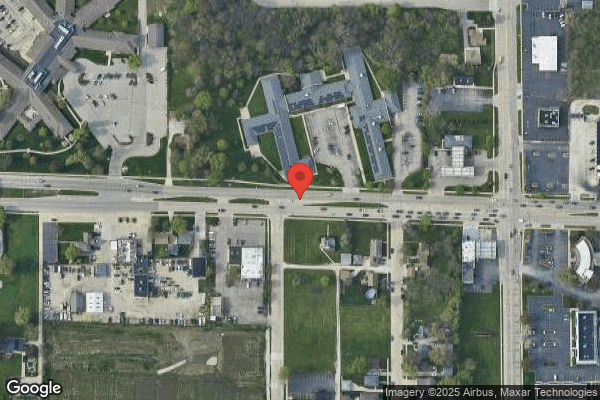
Nov 2022 9 deficiencies
CONCERN (D) 📢 Someone Reported This

A family member, employee, or ombudsman was alarmed enough to file a formal complaint

Potential for Harm - no one hurt, but risky conditions existed

Notification of Changes (Tag F0580)

Could have caused harm · This affected 1 resident

**NOTE- TERMS IN BRACKETS HAVE BEEN EDITED TO PROTECT CONFIDENTIALITY** Based on interview, record review, and policy review, the facility failed to notify one (Resident (R) 10)'s representative, out ...

Read full inspector narrative →
**NOTE- TERMS IN BRACKETS HAVE BEEN EDITED TO PROTECT CONFIDENTIALITY** Based on interview, record review, and policy review, the facility failed to notify one (Resident (R) 10)'s representative, out of a survey sample of 25, when the resident sustained a change in her condition and had to be transported to a local hospital. Findings include: Review of a document provided by the facility titled NOTIFICATION OF CHANGE IN RESIDENT HEALTH STATUS undated indicated . The facility will consult the resident's physician, nurse practitioner or Medical Director and when indicated notify the resident's legal representative or an interested family member, as well as case managers, when there is. Life threatening conditions are such things as a heart attack or respiratory distress. Clinical complications are such things as development of a pressure injury or other significant wound, onset or recurrent periods of delirium, urinary tract infection, or persistent decline in psychosocial status.Notification Time: Immediate. Definition of Immediate: As soon as possible no longer than 24 hours. Review of R10's admission Record located in the electronic medical record (EMR) undated indicated the resident was admitted to the facility on [DATE] with diagnoses of acute and chronic respiratory failure and chronic obstructive pulmonary disease. Review of R10's admission Minimum Data Set (MDS) located in the EMR under the MDS tab with an Assessment Reference Date (ARD) of 03/17/22 had a Brief Interview of Mental Status (BIMS) score of 15 out of 15 which indicated the resident was cognitively intact. Review of R10's Health Status Note located in the EMR under the Prog (Progress) Note tab dated 04/29/22, revealed the resident requested to be sent to the hospital stating that she felt she was going to die. R10's vital signs were abnormal at the time. There was no evidence the facility notified the resident's representative of her change in condition and the resident was to be transported to the hospital. Review of a document provided by the facility titled Resident Concern Form, dated 05/02/22 indicated R10's representative notified the facility he was not informed of the resident's change in condition and the resident was then sent to the hospital. The resolution, written by the previous Director of Nursing (DON), indicated the resident's representative was not the medical Power of Attorney nor the resident's legal guardian. During an interview on 11/03/22 at 9:14 AM, Administrator-A stated, staff should be making a phone call to the Responsible Party on a change in a resident's condition and transfer to a hospital.
CONCERN (D) 📢 Someone Reported This

A family member, employee, or ombudsman was alarmed enough to file a formal complaint

Potential for Harm - no one hurt, but risky conditions existed

Free from Abuse/Neglect (Tag F0600)

Could have caused harm · This affected 1 resident

**NOTE- TERMS IN BRACKETS HAVE BEEN EDITED TO PROTECT CONFIDENTIALITY** Based on interview, record review, and review of facility policy, the facility failed to ensure one of two residents (Resident (...

Read full inspector narrative →
**NOTE- TERMS IN BRACKETS HAVE BEEN EDITED TO PROTECT CONFIDENTIALITY** Based on interview, record review, and review of facility policy, the facility failed to ensure one of two residents (Resident (R) 20) reviewed for abuse was free of physical abuse by a staff member when Certified Nurse Aide (CNA) U slapped at R20's hands and yelled at her. Findings include: Review of a document provided by the facility titled Abuse Prevention Program, dated 08/19/22 indicated . This facility affirms the right of our residents to be free from abuse, neglect, exploitation, misappropriation of property or mistreatment. This facility therefore prohibits abuse, neglect, exploitation, misappropriation of property, and mistreatment of residents . The facility has attempted to establish a resident sensitive and resident secure environment. The purpose of this policy is to assure that the facility is doing all that is within its control to prevent occurrences of abuse, neglect, exploitation, misappropriation of property and mistreatment of residents. Review of R20's admission Record located in the electronic medical record (EMR) under the Profile tab revealed the resident was admitted to the facility on [DATE]. Review of R20's Minimum Data Set (MDS) located in the EMR under the MDS tab with an Assessment Reference Date (ARD) of 07/15/22, revealed a Brief Interview of Mental Status (BIMS) score of six out of 15 indicating the resident was severely cognitively impaired. Review of R20's Care Plan located in the EMR under the Care Plan tab dated 10/07/22, revealed The resident is resistive to cares, activities of daily living due to dementia. Resident is known to become aggressive with staff verbally and physically, attempt to strike out or hit. During an interview on 10/31/22 at 10:15 AM, R20 was unable to recall the incident with CNA U. During an interview with the Nurse Practitioner (NP) DD on 11/01/22 at 11:00 AM revealed she witnessed CNA U slap R20's hands and yell at her saying What are you doing? You are hurting me you psychopath expletive! She stated that the event occurred on 07/21/22 at approximately 1:30 PM. NP DD revealed she tried to report the incident to the Registered Nurse (RN) on duty and she was on break. Then she said she tried to tell the Director of Nursing (DON) B, but she was in a meeting. NP DD revealed she had to leave the facility and the next day DON B called her and asked her to email a report of the incident to her and she sent it on 07/22/22 at 6:00 PM. NP DD confirmed that R20 did not sustain any injuries from the event and seemed unaware that it even occurred. During an interview with CNA U on 11/01/22 at 3:00 PM, revealed CNA U initially denied slapping R20's hands. She then stated that R20 pulled her hair, so she removed her [R20's] hand off her hair. CNA U denied the allegation of slapping even though NP DD witnessed the event. During an interview with Administrator A and Regional Nurse Consultant (RNC) M on 11/01/22 at 2:30 PM, revealed that the former Administrator handled the investigation. An attempt to reach the former Administrator was made on 11/02/22 at 12:46 PM. The former Administrator did not return the call by the end of survey on 11/03/22.
CONCERN (D) 📢 Someone Reported This

A family member, employee, or ombudsman was alarmed enough to file a formal complaint

Potential for Harm - no one hurt, but risky conditions existed

Report Alleged Abuse (Tag F0609)

Could have caused harm · This affected 1 resident

**NOTE- TERMS IN BRACKETS HAVE BEEN EDITED TO PROTECT CONFIDENTIALITY** Based on interview, record review, and facility policy review, the facility failed to report an allegation of potential staff to...

Read full inspector narrative →
**NOTE- TERMS IN BRACKETS HAVE BEEN EDITED TO PROTECT CONFIDENTIALITY** Based on interview, record review, and facility policy review, the facility failed to report an allegation of potential staff to resident abuse in a timely manner to the State Survey Agency (SSA) for one of two (Residents (R) 20) of a total sample of 25 residents reviewed for abuse/neglect. Findings include: Review of a document provided by the facility titled Abuse Prevention Program, dated 08/19/22 indicated . This facility affirms the right of our residents to be free from abuse, neglect, exploitation, misappropriation of property, or mistreatment. This facility therefore prohibits abuse, neglect, exploitation, misappropriation of property, and mistreatment of residents . The facility has attempted to establish a resident sensitive and resident secure environment. The purpose of this policy is to assure that the facility is doing all that is within its control to prevent occurrences of abuse, neglect, exploitation, misappropriation of property and mistreatment of residents. Internal Reporting Requirements of the report dictates 'Any allegation of abuse or any incident that results in serious bodily injury will be reported to the Illinois Department of Public Health immediately, and not more than two hours of the allegation of abuse. Any incident that does not involve abuse and does not result in serious bodily injury shall be reported within 24 hours. Review of R20's admission Record located in the electronic medical record (EMR) under the Profile tab revealed the resident was admitted to the facility on [DATE]. Review of R20's Minimum Data Set (MDS) located in the EMR under the MDS tab with an Assessment Reference Date (ARD) of 07/15/22, revealed a Brief Interview of Mental Status (BIMS) score of six out of 15 indicating the resident was severely cognitively impaired. During an interview with the Nurse Practitioner (NP) DD on 11/01/22 at 11:00 AM revealed she witnessed Certified Nursing Assistant (CNA) U slap R20's hands and yell at her saying what are you doing? You are hurting me you psychopath expletive! She stated that the event occurred on 07/21/22 at approximately 1:30 PM. NP DD revealed she tried to report the incident to the Registered Nurse (RN) on duty and she was on break. Then she said she tried to tell the Director of Nursing (DON), but she was in a meeting. NP DD revealed she had to leave the facility and the next day DON B called her and asked her to email a report of the incident to her and she sent it on 07/22/22 at 6:00 PM. NP DD confirmed that R20 did not sustain any injuries from the event and seemed unaware that it even occurred. Review of the facility's investigation records (undated) revealed no definite evidence when the incident was reported to Nursing, Administration, or to the SSA. The Misconduct Incident Report completed by the Department of Health Services Division of Quality Assurance indicates the final investigation summary report was 07/25/22. During an interview with Administrator A and Regional Nurse Consultant (RNC) M on 11/01/22 at 2:30 PM, revealed that the former Administrator handled the investigation. The RNC M stated that the report to the SSA should have been made immediately. Administrator A and RNC M both agreed there was not proper documentation in the facility's file to confirm the date the report was submitted to the SSA. An attempt to reach the former Administrator was made on 11/02/22 at 12:46 PM. The former Administrator did not return the call by the end of survey on 11/03/22.
CONCERN (D) 📢 Someone Reported This

A family member, employee, or ombudsman was alarmed enough to file a formal complaint

Potential for Harm - no one hurt, but risky conditions existed

Investigate Abuse (Tag F0610)

Could have caused harm · This affected 1 resident

**NOTE- TERMS IN BRACKETS HAVE BEEN EDITED TO PROTECT CONFIDENTIALITY** Based on observation, interview, record review, and facility policy review, the facility failed to thoroughly investigate an all...

Read full inspector narrative →
**NOTE- TERMS IN BRACKETS HAVE BEEN EDITED TO PROTECT CONFIDENTIALITY** Based on observation, interview, record review, and facility policy review, the facility failed to thoroughly investigate an allegation of staff to resident abuse for one of two residents (Resident (R) 20) reviewed for abuse in a total sample of 25 residents. An incomplete investigation has the potential to place other residents in the facility at risk for abuse. Findings include: Review of a document provided by the facility titled Abuse Prevention Program, dated 08/19/22 indicated . This facility affirms the right of our residents to be free from abuse, neglect, exploitation, misappropriation of property, or mistreatment. This facility therefore prohibits abuse, neglect, exploitation, misappropriation of property, and mistreatment of residents . The facility has attempted to establish a resident sensitive and resident secure environment. The purpose of this policy is to assure that the facility is doing all that is within its control to prevent occurrences of abuse, neglect, exploitation, misappropriation of property and mistreatment of residents. Internal Reporting Requirements dictates 'Any allegation of abuse or any incident that results in serious bodily injury will be reported to the Illinois Department of Public Health immediately, and not more than two hours of the allegation of abuse. Any incident that does not involve abuse and does not result in serious bodily injury shall be reported within 24 hours'. Investigation Procedures dictates 'The appointed investigator will, at a minimum, attempt to interview the person who reported the incident, anyone likely to have direct knowledge of the incident, and the resident, if interviewable. Review of R20's admission Record located in electronic medical record (EMR) under the Profile tab revealed the resident was admitted to the facility on [DATE]. Review of R20's Minimum Data Set (MDS) located in the EMR under the MDS tab with an Assessment Reference Date (ARD) of 07/15/22, revealed a Brief Interview of Mental Status (BIMS) score of six out of 15 indicating the resident was severely impaired cognitively. During an interview with the Nurse Practitioner (NP) DD on 11/01/22 at 11:00 AM revealed she witnessed Certified Nursing Assistant (CNA) U slap R20's hands and yell at her saying what are you doing? You are hurting me you psychopath expletive! She stated that the event occurred on 07/21/22 at approximately 1:30 PM. During an interview with CNA U on 11/01/22 at 3:00 PM, CNA U denied having a direct interview with the Administrator, Human Resources, or the Director of Nursing (DON) regarding the incident between her and R20. During an interview on 11/02/22 at 9:00 AM, Administrator A stated that the former Administrator handled the investigation. The Administrator stated that CNA U should have been interviewed. Review of the facility's investigation, provided by the facility (undated) revealed the investigation did not include an interview with CNA U.
CONCERN (D) 📢 Someone Reported This

A family member, employee, or ombudsman was alarmed enough to file a formal complaint

Potential for Harm - no one hurt, but risky conditions existed

Assessment Accuracy (Tag F0641)

Could have caused harm · This affected 1 resident

**NOTE- TERMS IN BRACKETS HAVE BEEN EDITED TO PROTECT CONFIDENTIALITY** Based on observation, record review, staff interview, and review of the Resident Assessment Instrument (RAI) Manual, the facilit...

Read full inspector narrative →
**NOTE- TERMS IN BRACKETS HAVE BEEN EDITED TO PROTECT CONFIDENTIALITY** Based on observation, record review, staff interview, and review of the Resident Assessment Instrument (RAI) Manual, the facility failed to ensure one resident out of 25 sampled residents (Resident (R) 21) had an accurate Minimum Data Set (MDS) assessment. Findings include: Review of the RAI Manual, dated 10/01/19, indicated, . It is important to note here that information obtained should cover the same observation period as specified by the Minimum Data Set (MDS) items on the assessment and should be validated for accuracy (what the resident's actual status was during that observation period) by the IDT (Interdisciplinary Team) completing the assessment. Review of R21's admission Record located in the electronic medical record (EMR) admission Record under the Profile tab revealed R21 was admitted to the facility on [DATE] with a diagnosis of adult failure to thrive. Review of R21's Weight Summary located in the EMR under the Wts (Weights)/Vitals, dated 09/27/22, indicated the resident sustained a 10 percent (%) weight loss from her comparison weight dated 04/01/22. Review of the quarterly MDS assessment with an Assessment Reference Date (ARD) of 09/27/22 failed to indicate the resident sustained a 10% weight loss within the past six months. During an interview on 11/02/22 at 9:16 AM the MDS Coordinator (MDSC) L stated the MDS assessment was to be accurate. MDSC L confirmed the section of the MDS did not reflect R21's weight loss sustained in the past six months. MDSC L stated the Registered Dietician (RD) E completed the section on nutrition. During an interview on 11/02/22 at 9:36 AM, RD E confirmed the nutrition section was not accurate and did not reflect R21's weight loss.
CONCERN (D) 📢 Someone Reported This

A family member, employee, or ombudsman was alarmed enough to file a formal complaint

Potential for Harm - no one hurt, but risky conditions existed

ADL Care (Tag F0677)

Could have caused harm · This affected 1 resident

Based on observation, interview, record review, and policy review, the facility failed to ensure one of 24 residents (Resident (R)11) who was dependent on staff received assistance with activities of ...

Read full inspector narrative →
Based on observation, interview, record review, and policy review, the facility failed to ensure one of 24 residents (Resident (R)11) who was dependent on staff received assistance with activities of daily living (ADL). Findings include: Review of R11's Care Plan from the electronic medical record (EMR) under the Care Plan tab showed a facility admission date of 10/26/21 and was care planned as: Focus: The resident has an ADL self-care performance deficit due to her diagnosis of left hip replacement, CHF (congestive heart failure), Chronic pain, and obesity. Date Initiated: 10/26/2021 Revision on: 11/04/2021 Goal: The resident will improve current level of function through next review date. Date Initiated: 10/26/2021 Revision on: 11/08/2021 Target Date: 01/16/2023 The ADL of showering/bathing was not addressed. Review of R11's medical diagnoses from the EMR and under the Med Diag tab showed the resident was admitted to the facility with osteoarthritis of hip, presence of artificial hip joint, congestive heart failure, hypertension, obesity, cognitive communication deficit, psychosis, anxiety, and depression. Review of R11's quarterly Minimum Data Set [MDS] with an assessment reference date (ARD) of 07/28/22 showed a Brief Interview for Mental Status [BIMS] score of 15 out of 15, indicative of being cognitively intact. The MDS also showed R11 was totally dependent on the assistance of one person for bathing. Review of R11's EMR Tasks tab, Bathing subtab revealed the resident was scheduled for showers on Mondays and Thursdays on the afternoon shift. Question 3 of the Bathing task was Type of Bathing Received revealed for 10/01/21 through 10/31/21, R11 received a shower on 10/03/21 and 10/28/21, for a total of two times out of eight opportunities. During an interview and observation on 10/31/22 at 12:20 PM, R11 was noted to be in need of a hair wash. When asked about showers, R11 stated, I am supposed to have showers on Mondays and Thursdays. I ask but they say, Too many people, I'm second [clarified, shift] but I want to switch to first shift. During a follow-up interview and observation on 11/02/22 at 10:40 AM, R11 was noted to have even oilier and stringier hair. When asked if she had received a shower, R11 responded, No, I think my shower day is now first on Friday, is that right? In response to a request for August 2022 and September 2022 shower documentation for R11, the facility provided sheets with a body diagram (nurse aides could document skin issues noted during bathing) which revealed the resident received showers on 08/08/22, 08/22/22, 09/19/22 (noted Refused BB [bed bath] given), and 09/21/22. During an interview on 11/02/22 at 5:19 PM regarding two showers/baths in August, two in September, and two in October, Director of Nursing (DON) B stated, No, that is not enough showers. Review of the facility policy Bathing - Shower and Tub Bath, effective date 05/03/22, revealed: Purpose: To ensure resident's cleanliness to maintain proper hygiene and dignity. Guidelines: A shower, tub bath or bed/sponge bath will be offered a minimum of one time weekly and according to the resident's preferred frequency and as needed or requested.
CONCERN (D) 📢 Someone Reported This

A family member, employee, or ombudsman was alarmed enough to file a formal complaint

Potential for Harm - no one hurt, but risky conditions existed

Accident Prevention (Tag F0689)

Could have caused harm · This affected 1 resident

**NOTE- TERMS IN BRACKETS HAVE BEEN EDITED TO PROTECT CONFIDENTIALITY** Based on record review, staff interviews, review of facility policy, and observations, the facility failed to ensure one residen...

Read full inspector narrative →
**NOTE- TERMS IN BRACKETS HAVE BEEN EDITED TO PROTECT CONFIDENTIALITY** Based on record review, staff interviews, review of facility policy, and observations, the facility failed to ensure one resident (Resident (R) 17) of one resident reviewed for accidents was transferred by a mechanical lift with two staff members as directed by the Care Plan. There was a total resident sample of 25. Findings include: Review of a document provided by the facility titled Resident Handling Policy.LIMITED-LIFT. undated indicated . Transfers.he transfers will be designated into one of the following categories.Hoyer (requires 2 caregivers). This policy is to be followed at all times. Review of R17's admission Record located in the electronic medical records (EMR) under the Profile tab indicated the resident was admitted to the facility on [DATE], with a diagnosis of malignant neoplasm (cancer) of the brain unspecified. Review of R17's Care Plan located in the EMR under the Care Plan tab dated 09/22/22 indicated the resident had an activity of daily living self-care deficient related to impaired mobility. The intervention for the focus of the care plan revealed the resident required two staff when moving the resident from one surface to another surface. Review of R17's 5-day Minimum Data Set (MDS) with an Assessment Reference Date (ARD) of 10/03/22 located in the EMR under the MDS tab indicated staff could not determine the resident's Brief Interview for Mental Status (BIMS) score. The assessment revealed the resident had short-and-long-term memory problems. The assessment indicated the resident was totally dependent on two staff for bed mobility and transfers. During an observation on 10/31/22 at 4:55 PM, Certified Nursing Assistant (CNA) S was observed to transfer R17 from the bed and suspend her at the foot of the bed. A Mechanical Service Technician (MST) Y was in the room and worked on the resident's bed. Registered Nurse (RN) N was at the medication cart, located on the outside hallway of the resident's room. CNA S stated she transferred the resident from the bed so MST Y could exchange the resident's bed for a new bed. CNA S stated she thought she could transfer the resident on her own, in the mechanical lift, since RN N was present. During an interview on 11/01/22 at 9:50 AM, Licensed Practical Nurse (LPN) P stated there should be two staff members when a resident was transferred with a mechanical lift. During an interview on 11/02/22 at 12:05 PM, the RN Nurse Consultant (RNC) M stated there should be two staff members involved in the use of a mechanical lift transfer.
CONCERN (D) 📢 Someone Reported This

A family member, employee, or ombudsman was alarmed enough to file a formal complaint

Potential for Harm - no one hurt, but risky conditions existed

Deficiency F0692 (Tag F0692)

Could have caused harm · This affected 1 resident

**NOTE- TERMS IN BRACKETS HAVE BEEN EDITED TO PROTECT CONFIDENTIALITY** Based on observations, record review, and staff interviews, the facility failed to ensure adequate interventions were provided t...

Read full inspector narrative →
**NOTE- TERMS IN BRACKETS HAVE BEEN EDITED TO PROTECT CONFIDENTIALITY** Based on observations, record review, and staff interviews, the facility failed to ensure adequate interventions were provided to establish proper nutrition for one (Resident (R) 3) of four reviewed for nutrition in a total sample of 24 residents. The facility failed to weigh the resident weekly for the first four weeks as directed by the resident's Care Plan. The facility failed to immediately assess R3's nutritional status after the resident had a significant weight loss of 25.4 pounds (lbs.)/18.2 percent (%) loss over a seven-week timeframe and failed to immediately notify R3's medical provider of the significant weight loss. Findings include: Review of a document provided by the facility titled Resource: Audit to Assess Quality of Nutrition Care Provided, undated indicated .interviews with Health Care Practitioners interview interdisciplinary team (lDT) members on various shifts (e.g., nursing assistant, registered dietitian nutritionist or RDN, director of food and nutrition services, charge nurse, social worker, occupational therapist, attending physician, medical director, etc.) to determine, how.Food and fluid intake, eating ability and weight (and changes to any of these) are monitored and reported.Nutrition interventions, such as snacks, frequent meals, and calorie-dense foods or nutritional supplements, are provided to prevent or address impaired nutritional status (e.g., unplanned weight changes) .Nutrition-related goals in the care plan are established, implemented, and monitored periodically.Care plans are modified when indicated to stabilize or improve nutritional status (e.g., reduction in medications, additional assistance with eating, therapeutic diet orders).health care practitioner is involved in evaluating and addressing underlying causes of nutritional risks and impairment (e.9., review of medications or underlying medical causes).Review information including the RAl (Resident Assessment Instrument), diet and medication orders, activities of daily living documentation, and nursing, RDN, rehabilitation, and social service notes. Determine if the individual's weight and nutritional status were assessed in the context of his/her overall condition and prognosis, if nutritional requirements and risk factors were identified, and if causes of the individual's nutritional risks or impairment were sought.Did the facility identify the individual's desirable or usual weight range, and identify weight loss/gain.Did the facility identify the significance of any weight changes, and what interventions were needed. Did the facility notify the individual and/or family and physician of significant weight loss or gain. Review of R3's admission Record located in the electronic medical record (EMR) under the Profile tab indicated the resident was admitted to the facility on [DATE] with a diagnosis of fracture of left pubis. Review of R3's admission Minimum Data Set (MDS) located in the EMR under the MDS tab with an Assessment Reference Date (ARD) of 11/12/21 indicated the resident had a Brief Interview for Mental Status (BIMS) score of 12 out of 15 which indicated the resident was moderately cognitively impaired. The assessment revealed the resident required supervision with set up for eating. The assessment revealed the resident had no recent weight loss. Under the Care Area Assessment indicated the resident triggered under nutrition and directed the staff to develop a Care Plan. Review of R3's Care Plan located in the EMR under the Care Plan tab dated 11/10/21 indicated R3 had an alteration in nutritional status and was on a therapeutic diet. The intervention indicated the resident was to be weighed weekly times four weeks and then monthly. Review of R3's Weights located in the EMR under the Wts (weights)/Vitals tab revealed following weights: On 11/08/21 the resident weighed 139.4 lbs. and on 11/18/21 the resident weighed 131.4 lbs. which revealed an eight lb., 5% weight loss in 10 days. On 12/16/21 the resident weighed 114 lbs., revealing a 17.4 lb., 13.2% significant weight loss from 11/18/21 (a one-month time frame). There was no evidence the resident was weighed weekly. In addition, from the resident's initial weight on 11/08/21 (139.4 lbs.) to 12/27/21 (114 lbs.) revealed a 25.4 lb./18.2% significant weight loss in a timeframe of seven weeks. Review of R3's Orders located in the EMR under the Orders tab indicated the resident was not on any physician ordered diuretic. Review of a document provided by the facility titled Follow Up Question Report, dated 11/05/21 to 12/28/21 indicated R3's food intake was 51 to 75 % of her meals served. Review of R3's Progress Notes, located in the EMR under the Progress Notes tab failed to indicate the medical provider was notified of the resident's significant weight loss. During an interview on 11/01/22 at 1:46 PM, the Registered Dietitian (RD) E stated he runs a weekly report, and this was when critical weight losses were noted and follows up on any identified issues. During the interview, RD E reviewed R3's EMR and confirmed the resident sustained a significant weight loss. RD E stated the last time he saw the resident was on 11/26/21 and he liberalized her diet since there was a 5% weight loss identified. During a follow up interview on 11/01/22 at 3:39 PM, RD E confirmed he was not able to generate a report during R3's stay which would show she triggered for review of her significant weight loss. RD E stated he had no additional information which would show the resident's significant weight loss was re-evaluated. During a telephone interview on 11/01/22 at 4:33 PM, R3 stated she believes she lost weight when she was a former resident at the facility. During an interview on 11/01/22 at 4:48 PM, the Nurse Practitioner (NP) stated she was not notified of R3's significant weight loss. The NP stated she was unable to meet with the resident and address the issue while the resident was at the facility. The NP stated it would be her expectation for the facility staff to notify her when a resident sustained a significant weight loss.
CONCERN (D) 📢 Someone Reported This

A family member, employee, or ombudsman was alarmed enough to file a formal complaint

Potential for Harm - no one hurt, but risky conditions existed

Infection Control (Tag F0880)

Could have caused harm · This affected 1 resident

**NOTE- TERMS IN BRACKETS HAVE BEEN EDITED TO PROTECT CONFIDENTIALITY** Based on observation, interviews, record review, review of the Centers for Disease Control and Prevention (CDC) guidelines, and ...

Read full inspector narrative →
**NOTE- TERMS IN BRACKETS HAVE BEEN EDITED TO PROTECT CONFIDENTIALITY** Based on observation, interviews, record review, review of the Centers for Disease Control and Prevention (CDC) guidelines, and facility policy review, the facility failed to ensure two staff members, one Certified Nursing Assistant (CNA) S and one Mechanical Service Technician (MST) Y donned (put on) personal protective equipment (PPE) prior to entering one (Resident (R) 17)'s room to provide care and services, who was under contact transmission-based precautions. The facility also failed to ensure one Registered Nurse (RN) EE performed adequate hand sanitation during wound care for R23. Findings include: Per the Centers for Disease Control (CDC), titled Contact Precautions, indicated . . Contact Precautions are intended to prevent transmission of infectious agents, including epidemiologically important microorganisms, which are spread by direct or indirect contact with the patient or the patient's environment.Contact precautions also apply where the presence of excessive wound drainage, fecal incontinence, or other discharges from the body suggest an increased potential for extensive environmental contamination and risk of transmission. A single-patient room is preferred for patients who require Contact Precautions.Healthcare personnel caring for patients on Contact Precautions wear a gown and gloves for all interactions that may involve contact with the patient or potentially contaminated areas in the patient's environment. Donning PPE upon room entry and discarding before exiting the patient room is done to contain pathogens, especially those that have been implicated in transmission through environmental contamination.C. difficile. other intestinal tract pathogens. https://www.cdc.gov/infectioncontrol/guidelines/isolation/precautions.html Retrieved on 11/02/22 Review of a document provided by the facility titled Infection Prevention Guidelines, dated 05/17/22 indicated .It is the policy of this facility to, when necessary, prevent the transmission of infections within the facility through the use of Isolation Precautions. In addition to Standard Precautions, use Contact Precautions for residents known or suspected to be infected with microorganisms that can be easily transmitted by direct or indirect contact, such as handling environmental surfaces or resident-care items. 1. Review of R17's admission Record located in the electronic medical records (EMR) under the Profile tab indicated the resident was re-admitted to the facility on [DATE] with a diagnosis of enterocolitis due to clostridium difficile (C-diff/inflammation of the colon caused by bacteria). During an observation on 10/31/22 at 4:55 PM, CNA S was in R17's room without a gown and gloves on. On the outside of the resident's room was a poster which revealed the resident was on contact isolation and staff and visitors were to don a gown and gloves. CNA S was observed to transfer R17 from the bed and to a chair. MST Y was observed working on the resident's bed and had no gown or gloves on. Registered Nurse (RN) N was observed on the outside hallway of the resident's room. RN N stated it was okay for the CNA not to don PPE since she was not performing personal care on the resident. During an interview on 11/02/22 at 12;50 PM, MST Y stated staff did not direct him to don a gown and gloves prior to entering R17's room and working on her bed. During an interview on 11/02/22 at 12:05 PM, RN Nurse Consultant M stated anyone who enters a contact isolation room should don a gown and gloves. 2. Observation of wound care on 11/03/22 at 8:32 AM showed RN EE donned gloves after an unobserved handwash in R23's restroom, removed the old dressing, doffed her gloves, and performed a handwash in the restroom that was seven seconds from the turning on of the water to the paper towel pull. RN EE donned gloves and cleaned the wound, removed the gloves, and performed a handwash in the restroom that was four seconds from water on to towel pull. RN EE returned to the bedside, dated the dressing, donned gloves, and applied a medication to the alginate; applied skin prep around the heel, applied the medicated alginate over the wound and covered with the dated bordered dressing. RN EE removed the gloves and performed a hand wash that was five seconds from water on to towel pull. In an interview on 11/03/22 at 8:43 AM regarding effective handwashing, RN EE stated she sang the Happy Birthday or Row Row Row Your Boat song. When asked how many times she sang it, RN EE responded, I do once through. Review of the Centers for Disease Control (CDC) website for When and How to Wash Hands (https://www.cdc.gov/handwashing/when-how-handwashing.html) showed: .Follow these five steps every time. 2. Lather your hands by rubbing them together with the soap. Lather the backs of your hands, between your fingers, and under your nails. 3. Scrub your hands for at least 20 seconds. Need a timer? Hum the Happy Birthday song from beginning to end twice. Review of the facility policy titled Hand Hygiene / Handwashing, effective 05/17/22, showed: Definition: Hand Hygiene means cleaning your hands by using either handwashing (washing hands with soap and water), antiseptic hand wash, or antiseptic hand rub (i.e., alcohol-based hand sanitizer including foam or gel). Procedure for Washing Hands with Soap and Water: -Turn on water, adjust the temperature and allow water to run continuously. -Turn paper towel crank or lever to ready for towel use. -Wet hands with running water with fingertips down. -Apply hand washing agent. Lather all surfaces of hands and wrists and between fingers. -Vigorously rub hands together to create friction for at least 15-20 seconds. -Rinse hands thoroughly holding under running water with fingertips down. -Dry hands and use paper towel to turn off faucets. -Hand lotion may be used, if desired and available.
Understanding Severity Codes (click to expand)
Life-Threatening (Immediate Jeopardy)
J - Isolated K - Pattern L - Widespread
Actual Harm
G - Isolated H - Pattern I - Widespread
Potential for Harm
D - Isolated E - Pattern F - Widespread
No Harm (Minor)
A - Isolated B - Pattern C - Widespread

Questions to Ask on Your Visit

  • "What changes have you made since the serious inspection findings?"
  • "Can I speak with families of current residents?"
  • "What's your RN coverage like on weekends and overnight?"

Our Honest Assessment

Strengths
  • • Licensed and certified facility. Meets minimum state requirements.
Concerns
  • • Multiple safety concerns identified: 4 life-threatening violation(s), 3 harm violation(s), $123,995 in fines, Payment denial on record. Review inspection reports carefully.
  • • 61 deficiencies on record, including 4 critical (life-threatening) violations. These warrant careful review before choosing this facility.
  • • $123,995 in fines. Extremely high, among the most fined facilities in Wisconsin. Major compliance failures.
  • • Grade F (0/100). Below average facility with significant concerns.
Bottom line: This facility has 4 Immediate Jeopardy findings. Serious concerns require careful evaluation.

About This Facility

What is Avina Of Kenosha's CMS Rating?

CMS assigns Avina of Kenosha an overall rating of 1 out of 5 stars, which is considered much below average nationally. Within Wisconsin, this rating places the facility higher than 0% of the state's 100 nursing homes. A rating at this level reflects concerns identified through health inspections, staffing assessments, or quality measures that families should carefully consider.

How is Avina Of Kenosha Staffed?

CMS rates Avina of Kenosha's staffing level at 2 out of 5 stars, which is below average compared to other nursing homes. Staff turnover is 49%, compared to the Wisconsin average of 46%.

What Have Inspectors Found at Avina Of Kenosha?

State health inspectors documented 61 deficiencies at Avina of Kenosha during 2022 to 2025. These included: 4 Immediate Jeopardy (the most serious level, indicating potential for serious harm or death), 3 that caused actual resident harm, and 54 with potential for harm. Immediate Jeopardy findings are rare and represent the most serious regulatory concerns. They require immediate corrective action.

Who Owns and Operates Avina Of Kenosha?

Avina of Kenosha is owned by a for-profit company. For-profit facilities operate as businesses with obligations to shareholders or private owners. The facility is operated by AVINA HEALTHCARE, a chain that manages multiple nursing homes. With 153 certified beds and approximately 87 residents (about 57% occupancy), it is a mid-sized facility located in Kenosha, Wisconsin.

How Does Avina Of Kenosha Compare to Other Wisconsin Nursing Homes?

Compared to the 100 nursing homes in Wisconsin, Avina of Kenosha's overall rating (1 stars) is below the state average of 3.0, staff turnover (49%) is near the state average of 46%, and health inspection rating (1 stars) is much below the national benchmark.

What Should Families Ask When Visiting Avina Of Kenosha?

Based on this facility's data, families visiting should ask: "What changes have been made since the serious inspection findings, and how are you preventing similar issues?" "Can you walk me through typical staffing levels on day, evening, and night shifts?" "Can I visit during a mealtime to observe dining assistance and food quality?" "How do you handle medical emergencies, and what is your hospital transfer rate?" These questions are particularly relevant given the facility's Immediate Jeopardy citations and the below-average staffing rating.

Is Avina Of Kenosha Safe?

Based on CMS inspection data, Avina of Kenosha has documented safety concerns. Inspectors have issued 4 Immediate Jeopardy citations (the most serious violation level indicating risk of serious injury or death). The facility has a 1-star overall rating and ranks #100 of 100 nursing homes in Wisconsin. Families considering this facility should ask detailed questions about what corrective actions have been taken since these incidents.

Do Nurses at Avina Of Kenosha Stick Around?

Avina of Kenosha has a staff turnover rate of 49%, which is about average for Wisconsin nursing homes (state average: 46%). Moderate turnover is common in nursing homes, but families should still ask about staff tenure and how the facility maintains care continuity when employees leave.

Was Avina Of Kenosha Ever Fined?

Avina of Kenosha has been fined $123,995 across 2 penalty actions. This is 3.6x the Wisconsin average of $34,319. Fines at this level are uncommon and typically indicate a pattern of serious deficiencies, repeated violations, or failure to correct problems promptly. CMS reserves penalties of this magnitude for facilities that pose significant, documented risk to resident health or safety. Families should request specific documentation of what issues led to these fines and what systemic changes have been implemented.

Is Avina Of Kenosha on Any Federal Watch List?

Avina of Kenosha is not on any federal watch list. The most significant is the Special Focus Facility (SFF) program, which identifies the bottom 1% of nursing homes nationally based on persistent, serious quality problems. Not being on this list means the facility has avoided the pattern of deficiencies that triggers enhanced federal oversight. This is a positive indicator, though families should still review the facility's inspection history directly.