SHERIDAN HEALTH AND REHABILITATION CENTER

8400 SHERIDAN RD, KENOSHA, WI 53143 (262) 658-4141
For profit - Limited Liability company 81 Beds CHAMPION CARE Data: November 2025 6 Immediate Jeopardy citations
Trust Grade
0/100
#308 of 321 in WI
Last Inspection: August 2024

Within standard 12-15 month inspection cycle. Federal law requires annual inspections.

Overview

Sheridan Health and Rehabilitation Center has received a Trust Grade of F, indicating significant concerns and a poor level of care. They rank #308 out of 321 facilities in Wisconsin, placing them in the bottom half, and #6 out of 7 in Kenosha County, meaning only one local option is better. The facility's trend is improving, with the number of issues decreasing from 14 in 2024 to 4 in 2025. Staffing is a relative strength with a turnover rate of 45%, which is below the state average, although they have a below-average staffing rating of 2 out of 5 stars. However, the facility has incurred concerning fines of $192,421, which is higher than 89% of Wisconsin facilities, indicating repeated compliance problems. Specific incidents of concern include not providing adequate care for residents experiencing changes in their health, such as failure to monitor a resident’s blood sugar, leading to serious complications like gangrene. Another critical issue was a staff member working without the necessary nursing license for an extended period, which could have jeopardized the care of multiple residents. These findings highlight both serious systemic problems in care and regulatory compliance, while the improving trend offers some hope for better management in the future.

Trust Score
F
0/100
In Wisconsin
#308/321
Bottom 5%
Safety Record
High Risk
Review needed
Inspections
Getting Better
14 → 4 violations
Staff Stability
⚠ Watch
45% turnover. Above average. Higher turnover means staff may not know residents' routines.
Penalties
✓ Good
$192,421 in fines. Lower than most Wisconsin facilities. Relatively clean record.
Skilled Nurses
○ Average
Each resident gets 41 minutes of Registered Nurse (RN) attention daily — about average for Wisconsin. RNs are the most trained staff who monitor for health changes.
Violations
⚠ Watch
67 deficiencies on record. Higher than average. Multiple issues found across inspections.
★☆☆☆☆
1.0
Overall Rating
★★☆☆☆
2.0
Staff Levels
★★☆☆☆
2.0
Care Quality
★☆☆☆☆
1.0
Inspection Score
Stable
2024: 14 issues
2025: 4 issues

The Good

  • Full Sprinkler Coverage · Fire safety systems throughout facility
  • No fines on record

Facility shows strength in fire safety.

The Bad

1-Star Overall Rating

Below Wisconsin average (3.0)

Significant quality concerns identified by CMS

Staff Turnover: 45%

Near Wisconsin avg (46%)

Higher turnover may affect care consistency

Federal Fines: $192,421

Well above median ($33,413)

Significant penalties indicating serious issues

Chain: CHAMPION CARE

Part of a multi-facility chain

Ask about local staffing decisions and management

The Ugly 67 deficiencies on record

6 life-threatening 4 actual harm
May 2025 4 deficiencies
CONCERN (D) 📢 Someone Reported This

A family member, employee, or ombudsman was alarmed enough to file a formal complaint

Potential for Harm - no one hurt, but risky conditions existed

Report Alleged Abuse (Tag F0609)

Could have caused harm · This affected 1 resident

**NOTE- TERMS IN BRACKETS HAVE BEEN EDITED TO PROTECT CONFIDENTIALITY** Based on interview, record review, and policy review, the facility failed to ensure reportable allegations of abuse were reporte...

Read full inspector narrative →
**NOTE- TERMS IN BRACKETS HAVE BEEN EDITED TO PROTECT CONFIDENTIALITY** Based on interview, record review, and policy review, the facility failed to ensure reportable allegations of abuse were reported to the State Agency (SA) in a timely manner and failed to notify the police of the abuse allegation for three residents (Resident (R)5, R8 and R11) of five residents reviewed for abuse in the sample of 20. Findings include: 1. Review of R11's annual Minimum Data Set (MDS) with an Assessment Reference Date (ARD) of 03/07/25 in the electronic medical record (EMR) under the MDS tab revealed R11 was originally admitted to the facility on [DATE] and readmitted on [DATE] with diagnoses that included paroxysmal atrial fibrillation, chronic diastolic (congestive) heart failure, type 2 diabetes mellitus, and pulmonary fibrosis. R11 had a Brief Interview for Mental Status (BIMS) score of 13 out of 15, which indicated R11 was cognitively intact. Review of the facility's investigation into the incident revealed that on 01/04/25, Licensed Practical Nurse (LPN)1 heard agency Certified Nurse Aide (CNA)1 yelling at R11 to roll over by herself and she can do it herself. LPN1 removed CNA1 from the room and escorted the CNA1 out of the facility. Administrator and Director of Nursing (DON) contacted immediately . The investigation indicated the only notification to the SA was dated 01/09/25. During an interview on 5/29/25 at 1:45 PM the Administrator stated she did not call law enforcement and did not send to the SA the mandated 24-hour report until the 5th day after the incident due to system glitches with the State's online reporting portal. 2. Review of R5's annual MDS with an ARD of 04/04/25 located on the MDS tab of the EMR revealed he was admitted to the facility on [DATE] and readmitted on [DATE] with diagnoses that included polyneuropathy, poly-osteoarthritis, type 2 diabetes mellitus hypothyroidism, alcohol abuse, insomnia, schizoaffective disorder, bipolar type, major depressive disorder, and anxiety disorder. R5 had a BIMS score of 14 out of 15, which indicated R5 was cognitively intact. Review of the facility's investigation of the incident of alleged misappropriation of R5's cash revealed the facility reported the incident to the SA. During an interview on 05/28/25 at 4:59 PM, the Administrator stated that staff came to her with money that R5 had given them in cards for Valentine's Day, and wanted to return the money to the resident. The total sum of the cash returned by staff was $58. The Administrator stated she returned the cash to R5. The Administrator thought R4 had a lock box where he kept valuables like cash and felt it was safe to return the money to him. A few days later, R5 reported that he was missing $58. When asked if he kept the money in his lock box, R5 stated he had lost the key to his lock box and had not used it in a while. When asked where the money was kept, R5 stated it was in his wallet on the bedside table. The incident was reported to the SA. During an interview on 05/29/25 at 11:39 AM, R5 stated someone took his money off the bedside table. During an interview on 5/29/25 at 12:41 PM, the Administrator stated she did not know she must call law enforcement when there is suspicion that a crime has been committed against any residents. She stated that R5 declined an offer to notify the police. The Administrator stated she attempted to submit the 5-day follow-up to the initial report but could not log into the Misconduct Reporting System. The Administrator stated she submitted the report via email. 3. Review of R8's Face Sheet located under the Profile tab of the EMR revealed he was admitted to the facility on [DATE] with diagnoses which included paroxysmal atrial fibrillation. Review of R8's quarterly MDS with an ARD of 08/09/24 and located in the MDS tab of the EMR, revealed a BIMS score of 15 out of 15 which indicated the resident was cognitively intact. Review of R8's Initial SW/CM (Social Worker/Case Manager) Assessment/Plan of Care Note from the hospital and provided by the facility, dated 01/28/24, revealed R8 stated he feels verbally abused by staff and that they often say things to intimidate residents like, don't forget I put you to bed at night. During an interview on 05/29/25 at 2:15 PM, the Administrator stated they received the information from the hospital soon after R8 went to the hospital. She stated she completed an investigation somewhere between 02/03/25 through 02/17/25. She stated it never occurred to her to report it to the SA but agreed it should have been. The Administrator stated since R8 had not told us about the incident she did not think she needed to report to incident to the SA. Review of the facility's policy titled Abuse Neglect and Exploitation revised 12/22/24 revealed, . Reporting of all alleged violations to the Administrator, state agency, adult protective services and to all other required agencies (e.g. law enforcement when applicable) within specified timeframes . Immediately, but not later than 2 hours after the allegation is made if the events that cause the allegation involve abuse .
CONCERN (D) 📢 Someone Reported This

A family member, employee, or ombudsman was alarmed enough to file a formal complaint

Potential for Harm - no one hurt, but risky conditions existed

Investigate Abuse (Tag F0610)

Could have caused harm · This affected 1 resident

**NOTE- TERMS IN BRACKETS HAVE BEEN EDITED TO PROTECT CONFIDENTIALITY** Based on record review, staff interviews, and policy review, the facility failed to complete a thorough investigation of abuse a...

Read full inspector narrative →
**NOTE- TERMS IN BRACKETS HAVE BEEN EDITED TO PROTECT CONFIDENTIALITY** Based on record review, staff interviews, and policy review, the facility failed to complete a thorough investigation of abuse allegations for three residents (Residents (R)1, R6, and R8) out of 20 sampled residents. The facility demonstrated their lack of knowledge in completing a thorough investigation, which had the potential to increase a resident's risk of abuse throughout the facility. Findings include: Review of the facility's policy titled Abuse Neglect and Exploitation revised 12/22/24 revealed, . Reporting of all alleged violations to the Administrator, state agency, adult protective services and to all other required agencies (e.g. law enforcement when applicable) within specified timeframe's .An immediate investigation is warranted when suspicion of abuse, neglect or exploitation, or reports abuse, neglect or exploitation occur .Providing complete and thorough documentation of the investigation. 1. Review of R2's Face Sheet located under the Profile tab of the electronic medical record (EMR) revealed he was admitted to the facility on [DATE] with diagnosis which included dementia. Review of R2's quarterly Minimum Data Set (MDS) with an Assessment Reference Date (ARD) of 02/19/25 and located in the MDS tab of the EMR, revealed a Brief Interview for Mental Status (BIMS) score of one out of 15 which indicated the resident was severely cognitively impaired. Review of R1's Face Sheet located under the Profile tab of the EMR revealed she was admitted to the facility on [DATE] with diagnosis which included fibromyalgia. Review of R1's quarterly MDS with an ARD of 04/22/25 and located in the MDS tab of the EMR, revealed a BIMS score of 15 out of 15 which indicated the resident was cognitively intact. Review of Misconduct Incident Report provided by the facility, dated 05/06/25, revealed (R2) touched [R1] breast .[R1] stated to staff that she allowed [R2] to hug her multiple times but the last 2 times he touched her breast. When asked when this occurred, she stated that it was at least 2 weeks ago and around Easter [April 20th] she could not give a specific date. [R1] reported during the interview that she thought it was an accident the first time but the second time she felt it was an intentional rub across the breast. 2. Review of R6's Face Sheet located under the Profile tab of the EMR revealed she was admitted to the facility on [DATE] with diagnosis which included dementia. Review of R6's quarterly MDS with an ARD of 05/02/25 and located in the MDS tab of the EMR, revealed a BIMS score of three out of 15 which indicated the resident was severely cognitively impaired. Review of R7's Face Sheet located under the Profile tab of the EMR revealed she was admitted to the facility on [DATE] with diagnosis which included paraplegia. Review of R7's quarterly MDS with an ARD of 01/31/25 and located in the MDS tab of the EMR, revealed a BIMS score of 15 out of 15 which indicated the resident was cognitively intact. Review of Misconduct Incident Report provided by the facility, dated 02/11/25, revealed Resident to resident altercation in presence of staff members. [R7] made threats of sexually inappropriate behavior to [R6]. At approximately 0300 [3:00AM] 2 CNAs [Certified Nurse Aides] reported to LPN [Licensed Practical Nurse's name], that while they were changing [R6]'s brief [R7] told them he was going to rape [R6], and they he needed to stop running around with his white butt out. CNA told him not to talk like that, and he continued to say he was going to do it around 5am [5:00 AM] and cover his mouth . 3. Review of R8's Face Sheet located under the Profile tab of the EMR revealed he was admitted to the facility on [DATE] with diagnoses which included Paroxysmal Atrial Fibrillation. Review of R8's quarterly MDS with an ARD of 08/09/24 and located in the MDS tab of the EMR, revealed a BIMS score of 15 out of 15 which indicated the resident was cognitively intact. Review of R8's Initial SW/CM (Social Worker/Case Manager) Assessment/Plan of Care Note, from the hospital and provided by the facility, dated 01/28/24, revealed R8 stated he feels verbally abused by staff and that they often say things to intimidate residents like, don't forget I put you to bed at night During an interview on 05/28/25 at 5:26 PM, the Administrator and the Director of Nursing (DON) stated they did not conduct a thorough investigation and contact the police for R1 and R6 because the residents didn't want to press charges. They both stated that they thought if the resident did not want the police contacted then they did not need to contact the police. During an interview on 05/29/25 at 2:15 PM, the Administrator stated they received the information from the hospital soon after R8 went to the hospital. She stated she completed an investigation somewhere between 02/03/25 through 02/17/25. She stated the investigation was not completed timely after learning of the allegation from the hospital.
CONCERN (D) 📢 Someone Reported This

A family member, employee, or ombudsman was alarmed enough to file a formal complaint

Potential for Harm - no one hurt, but risky conditions existed

Deficiency F0657 (Tag F0657)

Could have caused harm · This affected 1 resident

**NOTE- TERMS IN BRACKETS HAVE BEEN EDITED TO PROTECT CONFIDENTIALITY** Based on record review, interview, and review of facility policy, the facility failed to revise the care plan for one resident [...

Read full inspector narrative →
**NOTE- TERMS IN BRACKETS HAVE BEEN EDITED TO PROTECT CONFIDENTIALITY** Based on record review, interview, and review of facility policy, the facility failed to revise the care plan for one resident [(R)4] of 20 after a change in the resident's medication self-administration status. This failure had the potential for the resident's need to be not known by nursing staff. Findings include: Review of facility's policy titled Comprehensive Care Plans revised 05/01/25 revealed: It is the guideline of this facility to develop and implement a comprehensive person-centered care plan for each resident .5. The comprehensive care plan will be reviewed and revised by the interdisciplinary team after each comprehensive and quarterly MDS assessment . Review of the policy titled Resident Self-Administration of Medication revised 04/17/25 revealed: It is the guideline of this facility to support each resident's right to self-administer medication. A resident may only self-administer medications after the facility's interdisciplinary team has determined which medications may be self-administered safely .The care plan must reflect resident self-administration and storage arrangements for such medications . Review of R4's Minimum Data Set (MDS) with an Assessment Reference Date of 02/28/25 record located on the MDS tab of the electronic medical record (EMR) revealed R4 was readmitted to the facility on [DATE]. with diagnoses that included end stage renal disease, asthma, type 2 diabetes mellitus without complications, thoracolumbar region spondylopathies, paroxysmal atrial fibrillation, depression, intestinal obstruction, personal history of sudden cardiac arrest, and left knee arthritis. Review of R4's care plan located on the Care Plan tab of the EMR revealed, Medication Self-Administration: R4 has requested to execute right to self-administer medications revised 02/06/23; R4's prescribed medications will be safely stored and secure at bedside. Lock box secured on bedside table. Revision on: 04/08/2023 .R4 is able to self-administer scheduled medication per evaluation but is not able to administer any medications that have hold parameters. Revision on 04/08/23. During an interview on 05/27/25 at 3:24PM, R4 stated she is no longer permitted to self-administer her medications because she failed the test of not leaving a medication on the bedside table. R4 stated she used to be able to keep her medications in her room, but since she failed the test, she is no longer allowed to keep mediations to self-administer. During an interview 05/28/25 at 4:57 PM, the Director of Nursing (DON) stated R4 hoards her medications, leaves them at the bedside, and does not take them in a timely manner. When medications are scheduled to be taken twice daily, R4 would keep the morning dose and take both the morning and evening dose at once. The DON stated she determined this was not safe for R4 and after several violations, terminated R4's self-administration of medication. The DON stated she had two years of documentation of R4 being non-compliant with the terms of self-administration of medications. Review of the Self-Administration of Medications Evaluation dated 01/02/25 located under the Assessment tab of the electronic medical record (EMR) revealed R4 was not safe to self-administer medications. When informed that R4's care plan has not been updated, the DON stated it should have been updated and that she was responsible for revising the care plan. The DON stated she just did R4's quarterly on 05/21/25 and must have missed updating that aspect of the care plan. During an interview on 05/29/25 at 11:00 AM, the Administrator provided the same care plan that indicated R4 could self-administer her medications. The Administrator stated she did not find any updated care plan.
CONCERN (E) 📢 Someone Reported This

A family member, employee, or ombudsman was alarmed enough to file a formal complaint

Potential for Harm - no one hurt, but risky conditions existed

Free from Abuse/Neglect (Tag F0600)

Could have caused harm · This affected multiple residents

**NOTE- TERMS IN BRACKETS HAVE BEEN EDITED TO PROTECT CONFIDENTIALITY** Based on record review, staff interviews, and policy review, the facility failed to protect residents from resident-to-resident ...

Read full inspector narrative →
**NOTE- TERMS IN BRACKETS HAVE BEEN EDITED TO PROTECT CONFIDENTIALITY** Based on record review, staff interviews, and policy review, the facility failed to protect residents from resident-to-resident abuse for five (Residents (R)1, R6, R19, R12 and R11) of 20 sampled residents. This failure had the potential to create an environment where other residents had the potential to be abused. Findings include: Review of the facility's policy titled Abuse Neglect and Exploitation revised 12/22/24 revealed . The facility will implement policies and procedures to prevent and prohibit all types of abuse . 1. Review of R2's Face Sheet located under the Profile tab of the electronic medical record (EMR) revealed he was admitted to the facility on [DATE] with diagnosis which included dementia. Review of R2's quarterly Minimum Data Set (MDS) with an Assessment Reference Date (ARD) of 02/19/25 and located in the MDS tab of the EMR revealed a Brief Interview for Mental Status (BIMS) score of one out of 15 which indicated the resident was severely cognitively impaired. Review of R1's Face Sheet located under the Profile tab of the EMR revealed she was admitted to the facility on [DATE] with diagnosis which included fibromyalgia. Review of R1's quarterly MDS with an ARD of 04/22/25 and located in the MDS tab of the EMR revealed a BIMS score of 15 out of 15 which indicated the resident was cognitively intact. Review of Misconduct Incident Report provided by the facility dated 05/06/25 revealed, [R2] touched [R1] breast .[R1] stated to staff that she allowed [R2] to hug her multiple times but the last 2 times he touched her breast. When asked when this occurred, she stated that it was at least 2 weeks ago and around Easter (April 20th) she could not give a specific date. [R1] reported during the interview that she thought it was an accident the first time but the second time she felt it was an intentional rub across the breast. [R1] stated during the interview that she will no longer allow [R2] to hug her anymore and nothing has happened since the incident . 2. Review of R6's Face Sheet located under the Profile tab of the EMR revealed she was admitted to the facility on [DATE] with diagnosis which included dementia. Review of R6's quarterly MDS with an ARD of 05/02/25 and located in the MDS tab of the EMR revealed a BIMS score of three out of 15 which indicated the resident was severely cognitively impaired. Review of R7's Face Sheet located under the Profile tab of the EMR revealed she was admitted to the facility on [DATE] with diagnosis which included paraplegia. Review of R7's quarterly MDS with an ARD of 01/31/25 and located in the MDS tab of the EMR revealed a BIMS score of 15 out of 15 which indicated the resident was cognitively intact. Review of Misconduct Incident Report provided by the facility dated 02/11/25 revealed, Resident to resident altercation in presence of staff members. [R7] made threats of sexually inappropriate behavior to [R6] At approximately 0300 [3:00 AM] 2 CNAs [Certified Nurse Aides] reported to LPN [Licensed Practical Nurse's name] that while they were changing [R6]'s brief [R7] told them he was going to rape [R6] and they he needed to stop running around with his white butt out. CNA told him not to talk like that, and he continued to say he was going to do it around 5am [5:00 AM] and cover his mouth . 3. Review of R12's Face Sheet located under the Profile tab of the EMR revealed he was admitted to the facility on [DATE] with diagnosis which included cerebral infarction. Review of R12's quarterly MDS with an ARD of 04/24/25 and located in the MDS tab of the EMR revealed a BIMS score of 15 out of 15 which indicated the resident was cognitively intact. Review of R19's Face Sheet located under the Profile tab of the EMR revealed he was admitted to the facility on [DATE] with diagnoses which included absence of right leg and end stage renal disease. Review of R19's admission MDS with an ARD of 03/13/25 and located in the MDS tab of the EMR revealed a BIMS score of 14 out of 15 which indicated the resident was cognitively intact. Review of Misconduct Incident Report provided by the facility dated 05/18/25 revealed, [R12] was in the courtyard and [R19] came out with his music playing. She asked him to turn that (expletive) off he said No. She then called him a [racial expletive], [expletive] and R19 called her a [racial expletive]. R12 went to grab for his phone in his shirt pocket and slapped him. R19 reacted by swinging at her resulting in him hitting her in the face . DON [Director of Nursing] and Administrator contacted Police Department and residents were asked if they wanted to press charges on each other. Both declined. During an interview on 05/28/25 at 5:26 PM, the Administrator and the DON confirmed these incidents occurred and agreed that the incident between R12 and R19 and R6 and R7 were physical and verbal abuse. 4. Review of R11's annual MDS with an ARD of 03/07/25 revealed R11 was originally admitted to the facility on [DATE] and readmitted on [DATE] with diagnoses that included paroxysmal atrial fibrillation, chronic diastolic (congestive) heart failure, type 2 diabetes mellitus, and pulmonary fibrosis. R11 had a BIMS score of 13 out of 15, which indicated R11 was cognitively intact. Review of the facility's investigation into the incident revealed, On 01/04/25, Licensed Practical Nurse (LPN)1 heard agency CNA1 yelling at R11 to roll over by herself .she can do it herself. LPN1 immediately ran into the room and removed CNA1 from the room and escorted the CNA1 out of the facility. Administrator and DON contacted immediately. R11 stated that she was not physically touched and denied any physical harm. During an interview on 05/28/25 at 4:14 PM, the DON stated CNA1 was an agency CNA who was no longer permitted to work in the facility. The DON stated that on 01/04/25, LPN1 heard CNA1 yelling at R11. LPN1 went to the room and attempted to stop CNA1 from yelling at R11. CNA1 threatened LPN1, and LPN1 walked CNA1 out of the building. The DON stated this was verbal abuse. During an interview on 05/29/25 at 1:37 PM, LPN1 stated that she recalled the incident with CNA1 and R11 on 01/04/25. LPN1 stated she was sitting at the nurse's station when she heard a commotion coming from R11's room. CNA1 was yelling loudly at R11. LPN1 stepped in and brought CNA1 out of the room and told her, We do not speak to residents that way. CNA1 stated LPN1 was not her nurse and started to scream at LPN1. LPN1 escorted CNA1 out of the building and called the Administrator.
Nov 2024 7 deficiencies
CONCERN (D) 📢 Someone Reported This

A family member, employee, or ombudsman was alarmed enough to file a formal complaint

Potential for Harm - no one hurt, but risky conditions existed

Deficiency F0553 (Tag F0553)

Could have caused harm · This affected 1 resident

**NOTE- TERMS IN BRACKETS HAVE BEEN EDITED TO PROTECT CONFIDENTIALITY** Based on interview, record review, and facility policy review, the facility failed to inform a family member of care conferences...

Read full inspector narrative →
**NOTE- TERMS IN BRACKETS HAVE BEEN EDITED TO PROTECT CONFIDENTIALITY** Based on interview, record review, and facility policy review, the facility failed to inform a family member of care conferences and/or provide sufficient notice in advance of care conferences for one of three residents (Resident (R) 3) reviewed for care planning out of a total sample of 13. This had the potential to affect the family member's right to have input into the development of the resident's care plan. Findings include: Review of the facility's policy titled, Care Planning-Resident Participation (Care Conference), dated 09/18/24, revealed, . The facility will honor the resident's choice in individuals to be included in the care planning process .The facility will make an effort to schedule the conference at the best time of the day for the resident/resident's representative .If the participation of the resident and/or resident representative is determined not practicable for the development of the resident's care plan, an explanation will be documented in the resident's medical record . Review of R3's Profile tab of the electronic medical record (EMR) revealed the resident was admitted to the facility on [DATE] with diagnoses that included chronic kidney disease stage 3 and mild protein-calorie malnutrition. Review of R3's Social Services Evaluation, dated 06/30/24 and located under the Progress Notes tab of the EMR, revealed, . This writer met with [R3] to complete initial CC [care conference] . There was no documented evidence that R3's family member (Family (F) 3) was in attendance or was invited to participate in the development of the initial care plan. Review of R3's quarterly Minimum Data Set (MDS), located under the MDS tab of the EMR and with an Assessment Reference Date (ARD) of 09/03/24, revealed R3 had a Brief Interview for Mental Status (BIMS) score of 15 out of 15, which indicated the resident was cognitively intact. Review of R3's Care Conference, located under the Evaluations tab of the EMR and dated 10/15/24, revealed, . Care conference held with residents [family member] on the phone . Review of R3's Progress Notes, Evaluations, and Documents tabs of the EMR revealed no documented evidence that F3 had been invited in advance to attend the resident's care conference. Review of R3's Progress Notes tab of the EMR revealed no documented evidence R3 was asked who she wanted to be invited to her care conferences. During an interview on 11/18/24 at 10:07 AM, R3 stated she wanted her family member to be involved in all aspects of her care. During an interview on 11/18/24 at 1:24 PM, F3 stated that on 10/15/24, she had been at work and received a phone call from the Social Services Director (SSD) who informed her they were having a care plan conference at that time, and they were wanting to know if she could participate. F3 stated it was spur of the moment and that was the only invitation she had received regarding care conferences. F3 stated she wanted to be invited to attend care conferences because she was very involved in R3's care. During an interview on 11/19/24 at 10:52 AM, the SSD was asked if invitations to care conferences were issued. She stated, Yes. The SSD stated if a resident was alert and oriented, they would be provided with a letter inviting them to their care conference, and if the resident had requested family or a responsible party be invited, those individuals would be called. She stated the invitations were issued to anyone that the resident wanted to be invited. The SSD stated she did not have a system to track invitations offered to family members and/or responsible parties. The SSD stated R3 wanted to keep F3 involved in her care and that was why the Interdisciplinary Team (IDT) had called F3 on 10/15/24. The SSD was asked if F3 had been informed in advance of the care conference on 10/15/24. She stated, No. She stated she had asked F3 if she could talk at that time, and if she had said no, they would have rescheduled. The SSD was asked if F3 had been invited to R3's other care conferences. She stated she had no documented evidence of the invitations. During an interview on 11/19/24 at 2:34 PM, the Director of Nursing (DON) stated it was her expectation that family members be invited in advance to care plan conferences.
CONCERN (D) 📢 Someone Reported This

A family member, employee, or ombudsman was alarmed enough to file a formal complaint

Potential for Harm - no one hurt, but risky conditions existed

ADL Care (Tag F0677)

Could have caused harm · This affected 1 resident

**NOTE- TERMS IN BRACKETS HAVE BEEN EDITED TO PROTECT CONFIDENTIALITY** Based on observation, interview, record review, and review of facility policy, the facility failed to provide nail care to one o...

Read full inspector narrative →
**NOTE- TERMS IN BRACKETS HAVE BEEN EDITED TO PROTECT CONFIDENTIALITY** Based on observation, interview, record review, and review of facility policy, the facility failed to provide nail care to one of three residents (Resident (R) 12) reviewed for assistance with activities of daily living (ADLs). R12 had fingernails that extended approximately one-half inch beyond the tips of his fingers and required staff assistance in trimming them. This failure caused R12 to have unmet personal hygiene needs. Findings include: Review of the facility's undated policy titled, Nail Care revealed, . Routine cleaning and inspection of nails will be provided during ADL care on an ongoing basis . Routine nail care, to include trimming and filing, will be provided on a regular schedule . Nail care will be provided between scheduled occasions as the need arises . The resident's plan of care will identify . The frequency of nail care to be provided . The type of nail care to be provided . The person(s) responsible for providing nail care . Review of R12's Profile tab of the electronic medical record (EMR) revealed R12 was admitted to the facility on [DATE] with diagnoses that included paraplegia. Review of R12's Care Plan, dated 09/09/24 and located under the Care Plan tab of the EMR, revealed a focus of a deficit in ADL self-care performance. Interventions included the assistance of one staff member for personal hygiene. The care plan did not specifically address nail care. Review of R12's admission Minimum Data Set (MDS), with an Assessment Reference Date of 09/15/24 and located under the MDS tab of the EMR, recorded R12 scored 15 out of 15 on the Brief Interview for Mental Status (BIMS), which indicated the resident was cognitively intact. It was recorded that the resident had bilateral upper and lower extremity functional limitations in range of motion and was dependent on staff for personal hygiene. Review of R12's Physician Order, dated 11/14/24 and located under the Orders tab of the EMR, revealed, . Bed Rest for 1 week . During an observation and interview on 11/18/24 at 9:46 AM, R12's fingernails on all digits were observed to extend past the tip of his fingers approximately one-half inch. The nails appeared thick. R12 stated his nails needed to be cut, but he did not know how to go about getting that done since they were so thick. R12 stated he did not have any nail clippers. R12 stated no staff member had asked him or offered to provide nail care for him. During an interview on 11/19/24 at 11:49 AM, Certified Nurse Aide (CNA) 1 stated nail care was provided to residents on shower days. CNA1 stated she did not know if staff had asked R12 if he would like his nails trimmed. She stated, His nails are long. During an interview on 11/19/24 at 12:00 PM, the Director of Nursing (DON) was asked to observe R12's fingernails. She stated they were long. The DON stated that because R12 was alert and oriented, it was on him to ask for his nails to be clipped. The DON asked R12 if he would like clippers and a file to trim his nails. He stated, Yes. During an observation with Licensed Practical Nurse (LPN) 1 on 11/19/24 at 2:11 PM, R12 was noted to have his fingernails on his left hand trimmed. LPN1 stated staff had to soak R12's nails to soften them enough to clip.
CONCERN (D) 📢 Someone Reported This

A family member, employee, or ombudsman was alarmed enough to file a formal complaint

Potential for Harm - no one hurt, but risky conditions existed

Pressure Ulcer Prevention (Tag F0686)

Could have caused harm · This affected 1 resident

**NOTE- TERMS IN BRACKETS HAVE BEEN EDITED TO PROTECT CONFIDENTIALITY** Based on interview, record review, and review of facility policy, the facility failed to ensure pressure ulcer treatments were o...

Read full inspector narrative →
**NOTE- TERMS IN BRACKETS HAVE BEEN EDITED TO PROTECT CONFIDENTIALITY** Based on interview, record review, and review of facility policy, the facility failed to ensure pressure ulcer treatments were ordered and treatments provided for two of four residents (Resident (R) 12 and R2) reviewed for pressure ulcers out of a total sample of 13. This failure put R12 and R2 at risk for deterioration of their pressure ulcers. Findings include: Review of the facility's undated policy titled Pressure Injury Prevention and Management revealed, . This facility is committed to . provide treatment and services to heal the pressure ulcer/injury, prevent infection and the development of additional pressure ulcers/injuries . 1. Review of a hospital facsimile, dated 09/06/24, located under the Documents tab of the electronic medical record (EMR), and addressed to the Assistant Director of Nursing (ADON), revealed, . Wound care notes for [R12] . Plan: Wound care . Left and right buttocks wounds: Cleansed liberally with wound cleanser and gauze, pat dry. Apply 3M No Sting skin barrier to surrounding skin for protection. Cut strip of Aquacel AG/Hydrofiber AG and tuck into 2 areas of depth/track to left side of sacrum. Then apply Aquacel Ag/Hydrofiber Ag to the rest of the wound bases. 4 pieces of Aquacel AG to right buttock and ½ a strip to left buttock folded in half. Cover with the large foam border dressings. On the right buttock you will need to cut one of the edges off of the foam border and toggle the dressings together to make a large dressing. Change daily . Review of R12's Profile tab of the electronic medical record (EMR) revealed R12 was admitted to the facility on [DATE] with diagnoses that included paraplegia and pressure ulcer of unspecified site. Review of R12's Physician Orders, located under the Orders tab of the EMR, revealed no documented evidence of any physician orders for R12's pressure ulcers until 09/11/24. Review of R12's Physician Order, dated 09/11/24 and located under the Orders tab of the EMR, revealed, . Gently cleanse right and left buttock wound with saline or wound cleanser. Apply calcium alginate dressing and cover with border gauze daily, everyday shift for wound care . Review of R12's Treatment Administration Records (TARs) dated September 2024 and located under the Orders tab of the EMR and Progress Notes, located under the Progress Notes tab of the EMR, revealed no documented evidence R12 received any treatment to the pressure ulcers located on his buttocks until 09/11/24. During an interview on 11/19/24 at 2:09 PM, Licensed Practical Nurse (LPN) 1 stated when a resident who had pressure ulcer was admitted to the facility, the nurse should look for treatment orders, and if there were none present on the paperwork, the physician should be contacted immediately for treatment orders. During the survey, the ADON was out of the facility and unavailable for interview. During an interview on 11/19/24 at 2:34 PM, the Director of Nursing (DON) was asked why R12 did not have orders for treatments for his pressure ulcers upon admission and why the resident did not receive treatments for his pressure ulcers until 09/11/24. She reviewed the clinical record and conferred with Unit Manager (UM) 1. The DON stated it appeared the ADON received treatment orders from the Medical Director on the morning of 09/10/24 but received the orders past the time frame for day shift treatments to be completed, so he put the orders in to begin on the following day. The DON stated she had educated the ADON on ensuring that orders were implemented on the day they were received. The DON stated the facility had received orders for the resident's pressure ulcer treatments prior to his arrival at the facility. The DON gave no explanation for why those orders had not been implemented. 2. Review of R2's Profile tab of the EMR revealed R2 was admitted to the facility on [DATE] with diagnoses that included unspecified open wound of the right buttock, chronic osteomyelitis, and unspecified quadriplegia. Review of hospital Case Management notes, with a fax date of 09/09/24 and located under the Documents tab of the EMR, revealed R2 was to have a wound vacuum (wound vac) system for treatment of his pressure ulcer. It was recorded, Wound vac 125 mgHg [millimeters Mercury] continuous suction black foam, change every M/W/F [Monday, Wednesday, Friday] . Review of R2's Progress Notes, dated 09/09/24 at 5:02 PM and located under the Progress Notes tab of the EMR, revealed the resident had arrived at the facility. It was recorded that his dressings were clean, dry, and intact. Review of R2's Progress Notes, dated 09/09/24 at 9:47 PM and located under the Progress Notes tab of the EMR, revealed, . wound dressing changed, wound vac still needed . Review of R2's Progress Notes, dated 09/10/24 at 1:19 AM, revealed, . Resident has wounds to right buttock and left hip. Right buttock has a wound down to bone with 2 cm [centimeter] width and approximately 6 cm depth. Wet to dry dressing applied to right buttock until wound vac arrives . Review of R2's Orders and Progress Notes tabs of the EMR revealed no physician's order for the wet to dry dressing. Review of R2's Physician Orders, dated 09/10/24 at 11:00 AM, revealed, . right gluteal fold: wound vac at 125 mm hg continuous. Cleanse with NS [normal saline]. Apply black foam to wound bed, change T,TH, Sat [Tuesday, Thursday, Saturday]. If vac fails apply wet to dry with NS with bordered gauze . Review of R2's Progress Notes, dated 09/10/24 at 1:14 PM, revealed, . Wound vac ordered and will be applied when arrives . Review of the supply house Proof of Delivery revealed the wound vac system was delivered to the facility on [DATE] at 9:32 AM. Review of R2's Progress Notes tab and Treatment Administration Records (TARs), dated 09/11/24, revealed no documented evidence the wound vac system was applied after it was delivered to the facility. There was no documented evidence that any type of wound treatment was completed on 09/11/24. Review of R2's Progress Notes, dated 09/12/24 at 2:59 PM, revealed the wound vac system had been put into place for R2. During an interview on 11/19/24 at 8:12 AM, UM 1 confirmed the wound vac was not started until 09/12/24 and stated it was because it had to be ordered after the resident arrived at the facility, and delivery took one to two days. She stated the facility's wound doctor saw the resident on 09/12/24 and the wound vac was started then. The UM was asked for the physician's order for the wet to dry dressing that was applied on 09/10/24 at 1:19 AM. She reviewed the clinical record and stated the order for the wound vac system, dated 09/10/24 at 11:00 AM, was the order used for the wet to dry dressing because that order called for a wet to dry dressing if the wound vac system failed. UM1 stated she believed a wet to dry dressing had been applied on 09/11/24. She stated there was no other order for dressing changes other than the order for the wound vac system. During an interview on 11/19/24, the DON confirmed there was no order for wet to dry dressings to be applied to R2's pressure ulcer until the wound vac was started. The DON confirmed the order dated 09/10/24 for a wet to dry dressing if the wound vac system failed was different from having an order for dressing changes until the system was started. The DON confirmed there was no documented evidence that a dressing change was completed on 09/11/24.
CONCERN (D) 📢 Someone Reported This

A family member, employee, or ombudsman was alarmed enough to file a formal complaint

Potential for Harm - no one hurt, but risky conditions existed

Tube Feeding (Tag F0693)

Could have caused harm · This affected 1 resident

**NOTE- TERMS IN BRACKETS HAVE BEEN EDITED TO PROTECT CONFIDENTIALITY** Based on observation, interview, record review, facility policy review, and review of current standards of practice, the facilit...

Read full inspector narrative →
**NOTE- TERMS IN BRACKETS HAVE BEEN EDITED TO PROTECT CONFIDENTIALITY** Based on observation, interview, record review, facility policy review, and review of current standards of practice, the facility failed to ensure one of one resident (Resident (R) 3) reviewed for enteral feedings out of a total sample of 13 received appropriate care and services to prevent complications. This failure had the potential to cause increased risk of infection for R3. Findings include: Review of the facility's policy titled, Care and Treatment of Feeding Tubes, dated 08/21/24, revealed, . It is a policy of this facility to utilize feeding tubes in accordance with current clinical standards of practice, with interventions to prevent complications to the extent possible . Review of the Journal of Parenteral and Enteral Nutrition, located at https://www.nutritioncare.org/uploadedFiles/01_Site_Directory/Guidelines_and_Clinical_Resources/EN_Pathway/Boullata_et_al-2016-Journal_of_Parenteral_and_Enteral_Nutrition.pdf, revealed, . Practice Recommendations . standardize the labels for all EN [enteral nutrition] formula containers, bags, or syringes to include who prepared the formula, date/time it was prepared, and date and time it was started . Review of 17.3 Assessments Related to Enteral Tubes, located at https://wtcs.pressbooks.pub/nursingskills/chapter/17-3-assessments-related-to-enteral-tubes/, revealed, . Assess the tube insertion site daily for signs of pressure injury and skin breakdown . Review of R3's Profile tab of the electronic medical record (EMR) revealed the resident was admitted to the facility on [DATE] with diagnoses that included chronic kidney disease stage 3, mild protein-calorie malnutrition, and gastrostomy status. Review of R3's Care Plan, dated 06/28/24 and located under the Care Plan tab of the EMR, revealed a focus, . The resident requires tube feeding r/t [related to] dysphagia . Interventions included to provide care to the feeding tube site as ordered and to monitor for signs and symptoms of infection. Review of R3's quarterly Minimum Data Set, with an Assessment Reference Date (ARD) of 09/03/24 and located under the MDS tab of the EMR, revealed R3 had a Brief Interview for Mental Status (BIMS) score of 15 out of 15, which indicated the resident was cognitively intact. It was recorded that the resident had a feeding tube and received 51% or more of her total caloric intake through tube feedings. Review of R3's Physician Orders, dated 09/13/24 and located under the Orders tab of the EMR, revealed R3 was to receive, . Vital 1.5 [an enteral feeding] 60 ml [milliliters] q [every] 4 hours then 1 hour break (0500, 1000, 1500 [5:00 AM, 10:00 AM, 3:00 PM]) & 60 ml q 8 hours (2000-0400 [8:00 PM - 4:00 AM]) . Review of the resident's physician orders revealed no orders for the care and treatment of the resident's feeding tube insertion site. Review of R3's Treatment Administration Record (TAR), dated 11/17/24 through 11/19/24 and located under the Orders tab of the EMR, revealed, . Change and date enteral feeding piston one time a day for PEG [percutaneous endoscopic gastrostomy] tube care . It was recorded that this was to be done on the night shift. The TAR documented the care had been done on 11/17/24, 11/18/24, and 11/19/24. During an observation on 11/19/24 at 8:35 AM, R3 was observed lying in bed. An enteral feeding and water flush bag were noted hanging and infusing. There was no label on the enteral feeding container or the water flush bag. A piston syringe and container were noted on the resident's bedside table. The container was dated 11/17/24. R3 was asked when staff had last assessed her feeding tube insertion site. She stated it had been a while. During an observation and interview on 11/19/24 at 8:40 AM, Unit Manager (UM) 1 was asked to observe R3's feeding tube insertion site. UM1 lifted R3's gown, and a split gauze dressing was noted taped around the feeding tube. The date on the tape was 11/17/24. UM1 confirmed the date. UM1 confirmed the dressing had areas of what appeared to be dried blood. UM1 was asked how often the insertion site was to be cleaned. She stated, Every night. UM1 confirmed the current date was 11/19/24. UM1 was asked what the facility's policy was for how long an enteral feeding and water flush could be used before it was changed. She stated, 24 hours. She was asked how she would know how long R3's feeding and water flush had been hanging. UM1 observed the enteral feeding container and water flush bag and stated, I would not. She confirmed that neither the enteral feeding nor water flush bag were labeled with a hanging date or the name of who had hung them. UM1 was asked what the date on the syringe and container was. She stated, 11/17. UM1 confirmed the syringe and container were supposed to be changed daily. UM1 was asked how she monitored to ensure the nurses completed their tasks. She stated she made rounds. On the back of the enteral feeding pump, inside the recessed area near the top of the pump, a build-up of a dark yellow substance was noted. UM1 confirmed the substance appeared to be dried enteral feeding formula. UM1 was asked how often the feeding pumps were supposed to be cleaned. She stated, I'm not sure. UM1 was asked who was responsible for cleaning the pump. She stated, I'm not sure. I guess it would be the floor nurses. During an interview on 11/19/24, the Director of Nursing (DON) confirmed all enteral feedings and water flushes should be labeled with the date and time of when they were hung and the initial of who hung them. She stated that they should be changed every 24 hours. The DON stated the syringe and container should be changed every 24 hours. She stated that dressing changes should be done daily or as ordered by the physician, and the insertion site should be cleaned at that time. The DON stated the tube feeding pump should be cleaned regularly. The DON stated failure to do these things was an infection control concern.
CONCERN (D) 📢 Someone Reported This

A family member, employee, or ombudsman was alarmed enough to file a formal complaint

Potential for Harm - no one hurt, but risky conditions existed

Pharmacy Services (Tag F0755)

Could have caused harm · This affected 1 resident

**NOTE- TERMS IN BRACKETS HAVE BEEN EDITED TO PROTECT CONFIDENTIALITY** Based on interview and record review, the facility failed to ensure medications were available for administration for two of thr...

Read full inspector narrative →
**NOTE- TERMS IN BRACKETS HAVE BEEN EDITED TO PROTECT CONFIDENTIALITY** Based on interview and record review, the facility failed to ensure medications were available for administration for two of three residents (Resident (R) 5 and R2) reviewed for medication availability out of a total sample of 13. R5 did not have pain medication available to treat pain and R2 did not receive cefepime, an antibiotic, for 22 hours after admission to the facility. This had the potential to cause uncontrolled pain for R5 and increased risk of infection complications for R2. Findings include: 1. Review of R5's Profile tab of the electronic medical record (EMR) revealed R5 was admitted to the facility on [DATE] with diagnoses that included spondylosis without myelopathy and polyosteoarthritis. Review of R5's quarterly Minimum Data Set (MDS), with an Assessment Reference Date (ARD) of 08/22/24 and located under the MDS tab of the EMR, revealed R5 scored 15 out of 15 on the Brief Interview for Mental Status (BIMS), which indicated the resident was cognitively intact. Review of R5's Progress Notes and Documents tabs revealed R5 underwent outpatient surgery on 11/08/24 related to a left ankle bone infection. Review of R5's Physician Orders, dated 11/08/24 and located under the Orders tab of the EMR, revealed R5 was to receive hydrocodone-acetaminophen 5/325 milligram (mg) tablet, two tabs by mouth every four hours as needed for post operative pain for 14 days. Review of R5's Medication Administration Records (MARs), located under the Orders tab of the EMR, revealed R5 received the following doses of hydrocodone-acetaminophen: 11/16/24 - one dose at 12:02 PM for a pain level of 5 (on a zero to 10 scale, with zero being no pain and 10 being the worst pain imaginable), one dose at 4:16 PM for a pain level of 7, and one dose at 8:17 PM for a pain level of 4. 11/17/24 - one dose at 5:30 AM for a pain level of 8, and one dose at 7:40 PM for a pain level of 5. Review of R5's Progress Notes tab of the EMR revealed no documented evidence that any of the doses administered on 11/16/24 and 11/17/24 were less than the physician prescribed. During an interview on 11/18/24 at 9:21 AM, R5 stated his pain level was at a 10. He stated he was out of pain medication. R5 stated on 11/16/24, a nurse had given one pill instead of two as ordered, and then on 11/17/24 on the evening shift when he had asked for pain medication, the evening shift nurse had told him he only had one pain pill left but she could give him that if he wanted. R5 stated he had been told the medication had been reordered, but he was in pain. He stated he could have the pain medication every four hours, but he had not asked because he knew he was out. R5 stated his pain was usually at 3 or 4, and that was tolerable to him. He stated the pain on the evening of 11/17/24 kept him from enjoying the football games on television. He stated, Sure took the joy out of it. Review of R5's Controlled Drug Record, dated 11/17/24 at 7:40 PM and provided by the facility, revealed R5 received one tablet of hydrocodone-acetaminophen 5/325. It was recorded that this was the last tablet of hydrocodone-acetaminophen the resident had. During an interview on 11/18/24 at 7:42 AM, Licensed Practical Nurse (LPN) 1 stated when a narcotic pain medication needed to be reordered, the nurse was to call the pharmacy, the pharmacy would let the nurse know if a new prescription was required, and if so, the nurse was to contact the physician to have a new prescription sent to the pharmacy. Review of R5's Progress Note, dated 11/18/24 at 9:48 AM, revealed, . writer spoke with Pharmacy re: delivery of hydrocodone 5/325 mg stated medication would be delivered on first run around 230 PM per Pharmacist . requested a code to get medication from contingency due to increased pain to left ankle rated 10 per resident authorization code . medication obtained and given to resident . During an interview on 11/19/24 at 1:52 PM, LPN2, who was assigned to R5 on the evening shift on 11/17/24, stated R5 had requested pain medication during her shift, but he only had one tablet left. She stated she had let R5 know and had administered the one tablet. LPN2 stated the day shift on 11/17/24 had not informed her that R5 was almost out of pain medication. LPN2 stated she had called the nurse practitioner for a prescription to be sent to the pharmacy. LPN2 stated medications were supposed to be reordered when only the last row of medication on the medication card was left. LPN2 stated she did not know if a previous shift had attempted to reorder the medications because no one told her. During an interview on 11/19/24 at 3:08 PM, the Director of Nursing (DON) stated the facility had pain medications available in the contingency box, and there was no reason for R5 to have been without pain medication. The DON stated when the resident had complained of pain to the evening shift nurse on 11/17/24, the nurse should have taken the necessary steps to procure pain medication for R5 from the contingency box. The DON stated a medication error had occurred on 11/16/24 when the resident was only administered one pain medication and again on 11/17/24 when the nurse only administered one pain medication. The DON was asked to provide the facility's policy on reordering narcotic pain medications. A policy was not provided prior to the end of the survey. 2. Review of R2's Profile tab of the EMR revealed R4 was admitted to the facility on [DATE] with diagnoses that included unspecified open wound of the right buttock, chronic osteomyelitis, and unspecified quadriplegia. Review of R2's hospital Physician Discharge Summary, dated 09/09/24 at 1:00 PM and located under the Documents tab of the EMR, revealed the resident was to receive the following antibiotics due to a diagnosis of acute and chronic multifocal osteomyelitis (bone infection): cefepime 2 grams (gm) every 12 hours intravenously (IV) twice daily until 10/02/24, ciprofloxacin (Cipro) 750 milligrams (mg), take one tablet by mouth twice daily until 10/02/24, and metronidazole (Flagyl) 500 mg one tablet every eight hours until 10/02/24. The discharge summary recorded the resident last received cefepime at 7:49 AM on 09/09/24 and Flagyl at 7:53 AM. Review of R2's Progress Notes, dated 09/09/24 at 5:02 PM and located under the Progress Notes tab of the EMR, revealed the resident had arrived at the facility, and the nursing admission assessment had been started. Review of R2's MAR dated 09/10/24 and located under the Orders tab of the EMR, revealed R2 received Cipro and Flagyl on the morning shift of 09/10/24. The MAR indicated the resident did not receive cefepime until 3:00 PM on 09/10/24. This was 22 hours after the resident arrived at the facility and 31 hours after the last dose. Review of R2's Progress Note, dated 09/10/24 at 1:14 PM and located under the Progress Notes tab of the EMR revealed, . IV ABT [antibiotic] has not arrived, will be delivered today, [physician's name withheld] aware of missed doses of unavailable medications . During an interview on 11/19/24 at 7:42 AM, LPN1 was asked what the facility's policy was for ordering IV antibiotics for a newly admitted resident. LPN1 stated the facility had some antibiotics in the facility's contingency boxes, and if the antibiotic needed was not there, staff should order the antibiotic stat (for immediate delivery). LPN1 stated stat orders were delivered within one to one and one-half hours. LPN1 stated the unit managers usually put orders in for new admissions. LPN1 was asked if the facility had a local pharmacy to use for emergency situations. She stated she was not sure. During an interview on 11/19/24 at 8:12 AM, Unit Manager (UM) 1 confirmed R2 did not receive the first dose of cefepime until 3:00 PM on 09/10/24. She stated the medication may not have been available in the facility's contingency kit, and the pharmacy might not have delivered it based on the cut off time for orders. UM1 confirmed the IV antibiotic met the criteria for ordering stat. UM1 stated stat orders were delivered typically within three to five hours. During an interview on 11/19/24 at 9:41 AM, the DON stated that new admissions do not normally receive their medications until the following day. She was asked if the facility had the ability to order medications, such as IV antibiotics, for a stat delivery. She said yes. She stated if an order was placed before 3:00 PM, it would be delivered after 10:00 PM. She stated if an order was called in at 8:00 or 9:00 PM, then stat would be on the next pharmacy run. She was asked why R2 was admitted at approximately 5:00 PM on 09/09/24 but did not receive the first dose of cefepime until 3:00 PM on 09/10/24. She stated, That's when it was available.
CONCERN (D) 📢 Someone Reported This

A family member, employee, or ombudsman was alarmed enough to file a formal complaint

Potential for Harm - no one hurt, but risky conditions existed

Deficiency F0804 (Tag F0804)

Could have caused harm · This affected 1 resident

**NOTE- TERMS IN BRACKETS HAVE BEEN EDITED TO PROTECT CONFIDENTIALITY** Based on observation, interview, record review, and review of facility policy, the facility failed to serve food that was served...

Read full inspector narrative →
**NOTE- TERMS IN BRACKETS HAVE BEEN EDITED TO PROTECT CONFIDENTIALITY** Based on observation, interview, record review, and review of facility policy, the facility failed to serve food that was served at an appetizing temperature for one of three residents (Resident (R) 5) reviewed for food palatability out of a total sample of 13. This failure had the potential for R5 to have unmet nutritional needs. Findings include: Review of the facility's policy titled, Food Preparation Guidelines, dated 10/24/22, revealed, . It is the policy of this facility to prepare foods in a manner to preserve or enhance a resident's nutrition and hydration status . Food and drinks shall be palatable, attractive, and at a safe and appetizing temperature . Strategies to ensure resident satisfaction include . Serving hot foods/drinks hot . Review of R5's Profile tab of the electronic medical record (EMR) revealed R5 was admitted to the facility on [DATE] with diagnoses that included spondylosis without myelopathy and polyosteoarthritis. Review of R5's quarterly Minimum Data Set (MDS), with an Assessment Reference Date (ARD) of 08/22/24 and located under the MDS tab of the EMR, revealed R5 scored 15 out of 15 on the Brief Interview for Mental Status (BIMS), which indicated the resident was cognitively intact. During an interview on 11/18/24 at 9:21 AM, R5 stated he ate his meals in his room, and all meals, and especially breakfast meals, were lukewarm when served. R5 stated the food had good flavor, but it bordered on being cold. R5 stated he had made multiple complaints related to food temperatures. On 11/19/24 at 8:56 AM, a sample test tray consisting of biscuits and gravy was obtained. It was the last tray served for the morning meal. It was noted the meal trays were delivered on a cart with a zippered insulated cover. As trays were being delivered, the cover was left unzipped. The test tray was served approximately 15 minutes after the food cart had been delivered to the North hall. The Dietary Manager (DM) measured the serving temperature of the biscuits and gravy, and it registered 110 degrees Fahrenheit (F). Upon tasting the food, a thin film was noted to have developed on top of the food. The food did not taste over seasoned or sweet. The DM confirmed the serving temperature was too low for palatability. During an interview on 11/19/24 at 8:56 AM, the DM confirmed residents had complained about the serving temperatures of food. She stated they tried to make sure all plates were heated. The DM stated an enclosed metal cart had been ordered as she did not think the insulated cover was sufficient. The DM stated that sometimes, staff on the floor did not get meal trays delivered quickly enough, and that was a problem as well. On 11/19/24 at 9:02 AM, the DM provided the holding temperatures for the breakfast meal. It was recorded that the holding temperature for the biscuits and gravy had been measured to be 180 degrees F.
CONCERN (D) 📢 Someone Reported This

A family member, employee, or ombudsman was alarmed enough to file a formal complaint

Potential for Harm - no one hurt, but risky conditions existed

Infection Control (Tag F0880)

Could have caused harm · This affected 1 resident

**NOTE- TERMS IN BRACKETS HAVE BEEN EDITED TO PROTECT CONFIDENTIALITY** Based on observation, interview, record review, and review of facility policy, the facility failed to perform pressure ulcer tre...

Read full inspector narrative →
**NOTE- TERMS IN BRACKETS HAVE BEEN EDITED TO PROTECT CONFIDENTIALITY** Based on observation, interview, record review, and review of facility policy, the facility failed to perform pressure ulcer treatments in a manner to prevent potential cross contamination for one of four residents (Resident (R) 12) reviewed for pressure ulcers out of a total sample of 13. Licensed Practical Nurse (LPN) 1 took the treatment cart into the resident's room while performing the treatment and placed unused supplies back into the cart after the treatment was performed. This placed any residents requiring treatments at risk for cross-contamination. Findings include: Review of the facility's policy titled, Infection Prevention and Control Program, dated 05/16/23, revealed, . This facility has established and maintains an infection prevention and control program designed to provide a safe, sanitary, and comfortable environment and to help prevent the development and transmission of communicable diseases and infections as per accepted national standards and guidelines . All staff shall assume that all residents are potentially infected or colonized with an organism that could be transmitted during the course of providing resident care services . Review of R12's Profile tab of the electronic medical record (EMR) revealed R12 was admitted to the facility on [DATE] with diagnoses that included paraplegia and pressure ulcer of unspecified site. During an observation and interview on 11/19/24 at 2:11 PM, LPN 1 was observed providing a pressure ulcer treatment to R12. When the surveyor entered the resident's room, the treatment cart was noted to be in the resident's room. Pressure ulcer treatment supplies, including a bottle of Dakin's solution, gauze pads, a tube of Santyl (a medication used in the treatment of pressure ulcers), and foam bordered dressings, were noted on the top of the cart. While performing the treatment, LPN1 poured Dakin's solution from the bottle onto gauze. After completing the treatment, LPN1 placed the opened bottle of Dakin's solution, three unopened packages of dressing supplies, and the tube of Santyl back into the treatment cart. She then pushed the treatment cart out of the room and back to the nurses' station. Once LPN1 arrived at the nurses' station, she stepped away from the treatment cart and asked LPN2 if she was ready to take report for the next shift. The surveyor asked LPN1 to stop giving report. LPN1 was asked if she always took the treatment cart into a resident's room when completing wound care. She stated not always, but if the treatment was involved, she liked to take the cart into the room to keep the supplies tidy. At this time, LPN1 stated she was going to wipe the treatment cart down with a sanitizing wipe and began wiping down the top of the cart. LPN1 was asked if she placed supplies back into the treatment cart after they had been out in the resident's room. She stated yes. She stated the supplies had not been opened. During an interview on 11/19/24 at 2:34 PM, the Director of Nursing (DON) confirmed it was an infection control concern to take the treatment cart into a resident's room and then to put supplies that had been out in the resident's room back into the treatment cart. The DON confirmed the supplies should have been left in R12's room. The DON stated she had not observed LPN1 do this before.
Aug 2024 4 deficiencies
CONCERN (D)

Potential for Harm - no one hurt, but risky conditions existed

Comprehensive Care Plan (Tag F0656)

Could have caused harm · This affected 1 resident

**NOTE- TERMS IN BRACKETS HAVE BEEN EDITED TO PROTECT CONFIDENTIALITY** Based on observation, interview, and record review, the facility did not ensure that a plan of care was developed based on the f...

Read full inspector narrative →
**NOTE- TERMS IN BRACKETS HAVE BEEN EDITED TO PROTECT CONFIDENTIALITY** Based on observation, interview, and record review, the facility did not ensure that a plan of care was developed based on the findings of the comprehensive assessment for 1 (R11) of 1 resident reviewed for hearing loss. The facility did not develop a plan of care that addresses R11's hearing loss or interventions of wearing or the refusal of wearing hearing aids. Findings include: The facility policy entitled Care Plan Revisions Upon Status Change no date indicated documents: The purpose of this procedure is to provide a consistent process for reviewing and revising the care plan . Policy Explanation and Compliance Guidelines: 1. The comprehensive care plan will be reviewed, and revised as necessary . 2. Procedure for reviewing and revising the care plan: . b. The minimum data set (MDS) Coordinator and the Interdisciplinary team will discuss the resident condition and collaborate on intervention options. d. The care plan will be updated with the new or modified interventions. e. Staff involved in the care of the resident will report resident response to new or modified interventions. f. Care plans will be modified as needed by the MDS Coordinator or other designated staff member. g. The unit manager or other designated staff member will communicate care plan interventions to all staff involved in the resident's care. R11 was admitted the facility on 5/16/2024 and has diagnoses that include urinary tract infection, moderate protein-calorie malnutrition, disease of the pericardium, and anemia. R11's quarterly MDS dated [DATE] indicated R11 had intact cognition with a Brief Interview of Mental Status (BIMS) score of 15 and the facility assessed minimal assistance with 1 staff member for upper body dressing, and moderate assist with 1 staff member for lower body dressing. R11 has impairment to R11's upper and lower extremities. R11 was marked as having both right and left hearing aids with adequate hearing and no difficulty with normal conversations. On 8/20/2024, at 9:44 AM Surveyor observed R11 in R11's room and was painting a picture. Surveyor had to get close to R11's ear and speak in a low tone and slowly in order for R11 to hear what Surveyor was saying. Surveyor asked R11 if R11 had hearing aids. R11 replied that R11's hearing aids were in R11's top drawer but did not wear them because R11 did not like them, and they never worked. R11 was able to understand and converse with Surveyor, however Surveyor had to be right by R11's face or right ear in order for R11 to hear Surveyor. Surveyor reviewed R11's care plan and noted that R11 did not have a care plan for R11's hearing loss or interventions for how staff communicated to R11 successfully without R11's hearing aids. Surveyor reviewed R11's certified nursing assistant (CNA) [NAME] and noted there were no interventions included regarding direction for staff on how to successfully communicate with R11 with R11's difficulty in hearing. Surveyor observed facility staff conversing with R11 by getting right in front of R11's face to speak with R11. On 8/22/2024, at 9:41 AM Surveyor interviewed CNA-H who stated CNA-H does not work much with R11 but has to talk to R11 really close to R11's face. CNA-H was not sure if R11 had hearing aids or not. On 8/22/2024, at 9:52 AM Surveyor interviewed CNA-G who stated R11 has hearing aids but refuses to wear them. CNA-G stated R11 does well when staff get on R11's level and speaks clearly and directly at R11. On 8/22/2024, at 10:37 AM Surveyor interviewed assistant director of nursing (ADON)-E who stated R11 has hearing aids but chooses not to wear them. Surveyor shared concern that there is no care plan or interventions for R11 and staff to help facility communication between R11 and other persons. ADON-E acknowledged concern and stated would address R11's hearing aids. On 8/22/2024, at 11:40 AM Surveyor interviewed director of nursing (DON)-B who stated DON-B usually initiated the care plans and missed R11's hearing loss/ hearing aids. DON-B stated a care plan will be initiated right away as well as interventions added to the [NAME] to assist staff and R11 with communication and interventions with R11's hearing aids. No further information was provided at this time.
CONCERN (D)

Potential for Harm - no one hurt, but risky conditions existed

Medication Errors (Tag F0758)

Could have caused harm · This affected 1 resident

**NOTE- TERMS IN BRACKETS HAVE BEEN EDITED TO PROTECT CONFIDENTIALITY** Based on interview and record review, the facility did not ensure 1 (R52) of 3 residents were free from unnecessary psychotropic...

Read full inspector narrative →
**NOTE- TERMS IN BRACKETS HAVE BEEN EDITED TO PROTECT CONFIDENTIALITY** Based on interview and record review, the facility did not ensure 1 (R52) of 3 residents were free from unnecessary psychotropic medications ordered on an as needed (PRN) basis. On 8/1/2024 R52 was prescribed Ativan (anti-anxiety medication) 0.5 mg every eight hours PRN without an end date. Findings include: The facility policy entitled Unnecessary Drugs- Without adequate indication for Use no date indicated documents: It is the facility's policy that each resident's drug regimen is managed and monitored to promote or maintain the resident's highest practicable mental, physical, and psychosocial well-being free from unnecessary drugs. Policy Explanation and Compliance Guidelines: . 2. The attending physician will assume leadership in medication management by developing, monitoring, and modifying the medication regimen in collaboration with residents and/or representatives, other professionals, and the interdisciplinary team. Each resident's drug regimen will be reviewed on an ongoing basis, taking into consideration the following elements: . b. Duration of use . R52 was admitted to the facility on [DATE] with diagnoses that include traumatic hemorrhage of cerebrum, chronic respiratory failure, chronic obstructive pulmonary disease, Schizophrenia, major depressive disorder, and anxiety. Surveyor reviewed R52's physician orders and noted on 8/1/2024 the physician prescribed: Ativan (Lorazepam) 0.5 mg- Give 1 tablet by mouth every eight hours as needed for anxiety. (Start date: 8/1/24) Surveyor noted there was not end date on R52's PRN Ativan medication. On 8/22/2024, at 8:35 AM, Surveyor shared concern with director of nursing (DON)-B that R52 did not have an end date to R52's PRN Ativan medication. DON-B stated it must have been missed and recalls R52 recently being prescribed that medication. DON-B stated DON-B will make sure an end date gets added to R52's PRN Ativan medication. On 8/22/2024 at the facility exit meeting Surveyor shared the concern with nursing home administrator (NHA)-A regarding R52's PRN Ativan medication not having an end date.
CONCERN (D)

Potential for Harm - no one hurt, but risky conditions existed

Unnecessary Medications (Tag F0759)

Could have caused harm · This affected 1 resident

**NOTE- TERMS IN BRACKETS HAVE BEEN EDITED TO PROTECT CONFIDENTIALITY** Based on observation, interview and record review the facility did not ensure that it maintained a medication error rate below 5...

Read full inspector narrative →
**NOTE- TERMS IN BRACKETS HAVE BEEN EDITED TO PROTECT CONFIDENTIALITY** Based on observation, interview and record review the facility did not ensure that it maintained a medication error rate below 5 percent during observations of medication administration affecting 2 (R9 and R24) of 3 residents observed. Three medication errors were observed out of twenty-eight opportunities, for a total error rate of 10.71 %. * R9 was administered levothyroxine after breakfast and not on an empty stomach per medication guidelines and R9 was Administered Timolol Maleate eye drops after their manufacturers instructions of discarding them 4 weeks after opening. * R24 was administered 150 milligrams (MG) of Venlafaxine immediate release when she was ordered to have 150 MG of extended release Venlafaxine. Findings include: 1.) R9 was admitted to the facility on [DATE] with diagnoses that included: Hypothyroidism and Glaucoma. On 8/21/24 at 9:22 AM, the Surveyor observed Licensed Practical Nurse (LPN) -C administer medication to R9. R9 was observed coming back to her room after eating breakfast. LPN-C poured levothyroxine 37.5 micrograms (MCG) from R9's medication card. LPN-C then took R9's Timolol Maleate 0.5% eye drops out of the cart and the date open was 6/22 (no year). LPN-C then administered R9's levothyroxine with other medications and gave R9 her Timolol Maleate 0.5% eye drops one drop in each eye. On 8/21/24, R9's current physicians orders were reviewed and documented: Levothyroxine 25 MCG 1 and 1/2 tablets (37.5 MCG) by mouth in the morning with a start date of 3/6/24. Timolol Maleate 0.5 MG instill 1 drop in both eyes in the morning. On 8/21/24, the website Drugs.com was reviewed for the medication levothyroxine and documented: Take levothyroxine on an empty stomach, at least 30-60 minutes before breakfast. On 8/21/24, the website for the manufacturers (Novartis) of Timolol Maleate was reviewed and documented: Timolol Maleate instructions for use, handling and disposal: Any contents remaining 4 weeks after opening should be discarded. On 8/22/24 at 10:00 AM, Nursing Home Administrator (NHA)-A and Director of Nurses (DON)-B were made aware of the above findings. DON-B indicated that levothyroxine should be scheduled for the night shift to administer before breakfast. 2.) R24 was admitted to the facility on [DATE] with diagnoses that included depression. On 8/22/24 at 8:35 AM, the Surveyor observed Licensed Practical Nurse (LPN) -D administer medication to R24. LPN-C poured Venlafaxine 37.5 MG from R24's medication card LPN-D then indicated she did not have the additional 150 MG of Venlafaxine and would get it from the back up medication supply. LPN-D then came back to the medication cart and indicated she was instructed to give 4 more immediate release tablets from R24's medication card to equal an extra 150 MG of Venlafaxine. LPN-D then administered R24 a total of five 37.5 MG tablets of Venlafaxine to R24. Immediately after the observation, R24's current physicians orders were reviewed and documented: Venlafaxine 37.5 MG 1 tablet one time a day with a start date of 5/29/24. Venlafaxine extended release 24 hours 150 MG on time a day. LPN-D was interviewed immediately after the record review and indicated she was instructed to give the regular release tablets because they did not have any extended release tablets in the back up medication supply. LPN-D indicated she would call R24's doctor right away with the medication error. On 8/22/24 , the peak, half-life and side effects of Venlafaxine were reviewed on the website Drugs.com and documented: Immediate release peak plasma time is 2-3 hours and extended release peak time is 5.5-9 hours. Half- life for immediate release Venlafaxine plasma time is 5 hours and extended release Venlafaxine half-life is 10.7 hours. Side effects of Venlafaxine include: dizziness, nausea, vomiting, hypotension, tachycardia, and numb hands and feet. On 8/22/24 at 10:00 AM, Nursing Home Administrator (NHA)-A and Director of Nurses (DON)-B were made aware of the above findings. Additional information was requested if available as to why R24 was give immediate release Venlafaxine instead of extended release as ordered. None was provided.
CONCERN (D)

Potential for Harm - no one hurt, but risky conditions existed

Deficiency F0760 (Tag F0760)

Could have caused harm · This affected 1 resident

**NOTE- TERMS IN BRACKETS HAVE BEEN EDITED TO PROTECT CONFIDENTIALITY** Based on interviews and record reviews, the facility did not ensure 1 of 3 residents reviewed (R24) was free of significant medi...

Read full inspector narrative →
**NOTE- TERMS IN BRACKETS HAVE BEEN EDITED TO PROTECT CONFIDENTIALITY** Based on interviews and record reviews, the facility did not ensure 1 of 3 residents reviewed (R24) was free of significant medication errors. * R24 was administered 150 milligrams (MG) of Venlafaxine immediate release when she was ordered to have 150 MG of extended release Venlafaxine. Findings include: R24 was admitted to the facility on [DATE] with diagnoses that included depression. On 8/22/24 at 8:35 AM, the Surveyor observed Licensed Practical Nurse (LPN) -D administer medication to R24. LPN-C poured Venlafaxine 37.5 MG from R24's medication card. LPN-D then indicated she did not have the additional 150 MG of Venlafaxine and would get it from the back up medication supply. LPN-D then came back to the medication cart and indicated she was instructed to give 4 more immediate release tablets from R24's medication card to equal an extra 150 MG of Venlafaxine. LPN-D then administered R24 a total of five 37.5 MG tablets of Venlafaxine to R24. Immediately after the observation, R24's current physicians orders were reviewed and documented: Venlafaxine 37.5 MG 1 tablet one time a day with a start date of 5/29/24. Venlafaxine extended release 24 hours 150 MG one time a day. LPN-D was interviewed immediately after the record review and indicated she was instructed to give the regular release tablets because they did not have any extended release tablets in the back up medication supply. LPN-D indicated she would call R24's doctor right away with the medication error. On 8/22/24, the peak, half-life and side effects of Venlafaxine were reviewed on the website Drugs.com and documented: Immediate release peak plasma time is 2-3 hours and extended release peak time is 5.5-9 hours. Half- life for immediate release Venlafaxine plasma time is 5 hours and extended release Venlafaxine half-life is 10.7 hours. Side effects of Venlafaxine include: dizziness, nausea, vomiting, hypotension, tachycardia, and numb hands and feet. On 8/22/24 at 10:00 AM, Nursing Home Administrator (NHA)-A and Director of Nurses (DON)-B were made aware of the above findings. Additional information was requested if available as to why R24 was give immediate release Venlafaxine instead of extended release as ordered. None was provided.
Jun 2024 3 deficiencies
CONCERN (D) 📢 Someone Reported This

A family member, employee, or ombudsman was alarmed enough to file a formal complaint

Potential for Harm - no one hurt, but risky conditions existed

Transfer Notice (Tag F0623)

Could have caused harm · This affected 1 resident

**NOTE- TERMS IN BRACKETS HAVE BEEN EDITED TO PROTECT CONFIDENTIALITY** Based on record review, interview, and policy review, the facility failed to ensure two of two residents and their resident repr...

Read full inspector narrative →
**NOTE- TERMS IN BRACKETS HAVE BEEN EDITED TO PROTECT CONFIDENTIALITY** Based on record review, interview, and policy review, the facility failed to ensure two of two residents and their resident representatives (Resident (R)1 and R14) reviewed for facility initiated emergent hospital transfer, from a total sample of 32 residents, were provided with written transfer/discharge notice that stated the reason for transfer, the place of transfer, and other information regarding the transfer. This failure had the potential to affect the resident and their Resident Representative (RR) by not having the knowledge of where and why a resident was transferred, and/or how to appeal the transfer, if desired. Findings include: Review of the facility policy titled, Transfer and Discharge including AMA [Against Medical Advice]), dated 10/26/22 showed: Policy: It is the policy of this facility to permit each resident to remain in the facility, and not initiate transfer or discharge for the resident from the facility, except in limited circumstances. Policy Explanation and Compliance Guidelines: . 4. The facility's transfer/discharge notice will be provided to the resident and the resident's representative in a language and manner in which they can understand. The notice will include all of the following at the time it is provided: a. The specific reason and basis for transfer or discharge. b. The effective date of transfer or discharge. c. The specific location (such as the name of the new provider or description and/or address if the location is a residence) to which the resident is to be transferred or discharged . d. An explanation of the right to appeal the transfer or discharge to the State. e. The name, address (mailing and email) and telephone number of the State entity which receives such appeal hearing requests. f. Information on how to obtain an appeal form. g. Information on obtaining assistance in completing and submitting the appeal hearing request. h. The name, address (mailing and email), and phone number of the representative of the Office of the State Long-Term Care Ombudsman. 1. Review of R1's admission Record from the electronic medical record (EMR) Profile tab showed a facility admission date of 03/07/22, readmissions on 05/24/22 and 12/21/23 Review of R1's EMR Progress Notes tab showed emergent transfers to the hospital on [DATE], 01/07/24, and 02/12/24. Further review of the Progress Notes did not show evidence R1 and RR were provided with a written notice of transfer with the required information. Review of the EMR Miscellaneous tab did not show evidence the written notice of transfer had been provided for any of the trips to R1 or RR. 2. Review of R14's admission Record from the EMR Profile tab showed a facility admission date on 12/09/22 and readmission date of 05/26/23 Review of R14's EMR Progress Notes from the EMR Progress Notes tab showed on 04/27/24, R14 was sent to the hospital after a fall. Further review of the EMR Progress Notes and Miscellaneous tab did not show evidence of the provision of a written notice of transfer to R14 or RR. In an interview on 06/22/24 at 3:56 PM, Licensed Practical Nurse (LPN) 2 described the process for an emergent transfer stating that she would contact the nurse practitioner with the reason and get order to transfer, call 911 and give them the vital signs. While I was out of the room the aide would be staying with the resident. Then complete the SBAR Change in Condition form, if a fall, do the fall packet and all assessments; print the face sheet, medication list, and a report of what happened. When asked who that packet went to, LPN2 stated it went to the emergency services, not to the resident, plus she gives them a verbal report. When asked if anything written was given to the Resident and/or RR, LPN2 stated, No. During an interview on 06/22/24 at 4:10 PM, the Director of Nursing (DON) stated she was not aware of the written notice of transfer.
CONCERN (D) 📢 Someone Reported This

A family member, employee, or ombudsman was alarmed enough to file a formal complaint

Potential for Harm - no one hurt, but risky conditions existed

Quality of Care (Tag F0684)

Could have caused harm · This affected 1 resident

**NOTE- TERMS IN BRACKETS HAVE BEEN EDITED TO PROTECT CONFIDENTIALITY** Based on interviews, record review, and facility policy review, the facility failed to ensure physician orders were followed for...

Read full inspector narrative →
**NOTE- TERMS IN BRACKETS HAVE BEEN EDITED TO PROTECT CONFIDENTIALITY** Based on interviews, record review, and facility policy review, the facility failed to ensure physician orders were followed for three of five residents (Resident (R) 2, R30, R32) reviewed for weights, out of a sample of 32 residents. This failure could create a scenario where significant weight loss or gain is not recognized as no baseline weight was established. Findings include: Review of the facility's policy titled Weight Monitoring, dated 05/2024, showed: Policy: Based on the resident's comprehensive assessment, the facility will ensure that all residents maintain acceptable parameters of nutritional status, such as usual body weight or desirable body weight range and electrolyte balance, unless the resident's clinical condition demonstrates that this is not possible or resident preferences indicate otherwise. Compliance Guidelines: Weight can be a useful indicator of nutritional status. Significant unintended changes in weight (loss or gain) or insidious weight loss (gradual unintended loss over a period of time) may indicate a nutritional problem. 5. A weight monitoring schedule will be developed upon admission for all residents: . b. Newly admitted residents - monitor weight weekly for 4 weeks . 1. Review of R2's admission Record from the electronic medical record (EMR) Profile tab showed an admission date of 02/08/24 with diagnoses that included hemiplegia and hemiparesis following cerebral infarct, nontraumatic subarachnoid hemorrhage, congestive heart failure (CHF), hydrocephalus, obesity, hypertension, dilated cardiomyopathy. Review of R2's Physician Orders from the EMR Orders tab showed an order for weekly weights for four weeks, starting 02/23/24 and ending 03/22/24. Review of R2's weights from the EMR Vitals tab showed weights were taken on 02/08/24 and 03/19/24. 2. Review of R30's admission Record from the EMR Profile tab showed an original facility admission date of 10/13/21, with a readmission date of 04/30/24, with diagnoses that included pleural effusion, morbid obesity, asthma, type II diabetes, end stage renal disease, atrial fibrillation, atrioventricular block, and hypertension. Review of R30's Physician Orders from the EMR Orders tab showed an order for weekly weights for four weeks, starting 5/13/24 and ending on 06/03/24. Review of R30's weights from the EMR Vitals tab showed weights were taken on 05/01/24, 05/03/24, 05/31/24, and 06/03/24. 3. Review of R32's admission Record from the EMR Profile tab showed an original facility admission date of 08/19/22, with a readmission on [DATE], and diagnoses that included heart failure, morbid obesity, chronic obstructive pulmonary disease (COPD), acute kidney failure, atrial fibrillation, cancer, and hypertension. Review of R32's Physician Orders from the EMR Orders tab showed an order for weekly weights for four weeks, starting 04/15/24 and ending 06/18/24. Review of R32's weights from the EMR Vitals tab showed one weight taken on 04/02/24. During an interview on 06/22/24 at 3:50 PM, Licensed Practical Nurse (LPN) 1 stated she was to comply with physician orders, and if it is not clear, you double check with the physician. In an interview on 06/22/24 at 4:10 PM, the Director of Nursing (DON) stated she expected that the weights would be taken as ordered.
CONCERN (F) 📢 Someone Reported This

A family member, employee, or ombudsman was alarmed enough to file a formal complaint

Potential for Harm - no one hurt, but risky conditions existed

Deficiency F0801 (Tag F0801)

Could have caused harm · This affected most or all residents

Based on interviews and facility job description review, the facility failed to ensure a qualified full-time staff with the required certification and skill sets was employed to serve as Food Service ...

Read full inspector narrative →
Based on interviews and facility job description review, the facility failed to ensure a qualified full-time staff with the required certification and skill sets was employed to serve as Food Service Manger (FSM) for 52 of 53 census residents. Findings include: Review of the facility's undated job description titled Food Service Manager revealed: Overview: The primary purpose of your job position is to assist the Dietitian in planning, organizing, developing and directing the overall operation of the Food Services Department in accordance with current federal, state, and local standards, guidelines and regulations governing our facility, and as may be directed by the Administrator, to assure that quality nutritional services are provided on a daily basis and that the Food Services Department is maintained in a clean, safe, and sanitary manner. Qualifications: Graduate of an accredited course in dietetic training approved by the American Dietetic Association Minimum of two (2) years' experience in a supervisory capacity in a hospital, nursing care facility, or other related medical facility preferred Must have training in cost control, food management, diet therapy, etc. During an interview on 06/22/24 at 8:50 AM the FSM stated she started the position in October 2023. The FSM stated I'm in the process of getting it [my certificate]. I haven't started the course yet. During an interview on 06/22/24 at 10:00 AM the Administrator provided the FSM's resume which did not include food management positions or experience. The Administrator stated he was not aware the Food Service Manager lacked training, and that she should have had it before hired in the position.
Jul 2023 7 deficiencies 1 Harm
SERIOUS (G) 📢 Someone Reported This

A family member, employee, or ombudsman was alarmed enough to file a formal complaint

Actual Harm - a resident was hurt due to facility failures

Accident Prevention (Tag F0689)

A resident was harmed · This affected 1 resident

**NOTE- TERMS IN BRACKETS HAVE BEEN EDITED TO PROTECT CONFIDENTIALITY** Based on observation, interview, and record review, the facility did not ensure that 3 of 6 residents (R36, R8, R48) reviewed fo...

Read full inspector narrative →
**NOTE- TERMS IN BRACKETS HAVE BEEN EDITED TO PROTECT CONFIDENTIALITY** Based on observation, interview, and record review, the facility did not ensure that 3 of 6 residents (R36, R8, R48) reviewed for accidents received adequate supervision and assistance devices to prevent residents from sustaining continued falls. * The facility did not complete a fall investigation for a second fall R36 sustained on 2/12/2023 and there was no root cause analysis completed for a fall that occurred on 4/27/2023. On 5/4/23, R36 was noted to have been drinking alcohol and exhibiting intoxicated type behaviors. On 5/4/23, R36 had a fall with a head injury, requiring staples. There was no indication the facility increased supervision and monitoring of R36 when R36 was noted with intoxicated type behaviors. There was no indication if care planned interventions were in place at the time of the fall. * R8 was missing a fall investigation for a fall on 12/31/2022, and the physician was not updated regarding R8's falls until several hours later for falls that occurred on 12/26/2023. * On 5/18/23 at approximately 7:30 pm, R48 crawled out of a window and left the facility. The off duty Kitchen Manager (KM)-M saw R48 outside the facility but did not report it to anyone until the following morning. Certified Nursing Assistant (CNA)-N stated she was given a report shortly after the elopement from Licensed Practical Nurse (LPN)-I that R48 left the building. LPN-I denied giving this report or seeing R48 outside the building. Staff did not immediately notify administration of R48's elopement and return to the facility thus delaying interventions being put in place for closer supervision to prevent further elope and to provide for a safe environment. Example 1 regarding R36 rises to a scope and severity level of G (harm/isolated.) Findings include: The facility policy, titled Accidents and Supervision, dated 12/29/2022, states: The resident environment will remain as free of accident hazards as possible. Each resident will receive adequate supervision and assistive devices to prevent accidents. This includes: 1. Identifying hazards and risks 2. Evaluating and analyzing hazards and risks 3. Implementing interventions to reduce hazards and risks 4. Monitoring for effectiveness and modifying interventions when necessary . Policy Explanation and Compliance Guidelines: The facility shall establish and utilize a systemic approach to address resident risk and environmental hazards to minimize the likelihood of accidents. 1. Identification of Hazards and Risks - the process through which the facility becomes aware of potential hazards in the resident environment and the risk of a resident having an avoidable accident. a. All staff . are to be involved in observing and identifying potential hazards in the environment, while taking into consideration the unique characteristics and abilities of each resident. b. The facility should make a reasonable effort to identify the hazards and risk factors for each resident . 2. Evaluation and Analysis - the process of examining data to identify specific hazards and risks and to develop targeted interventions to reduce the potential for accidents. Interdisciplinary involvement is a critical component of this process . 3. Implementation of Interventions - using specific interventions to try to reduce a resident's risk from hazards in the environment . 4. Monitoring and Modification - monitoring is the process of evaluating the effectiveness of care plan interventions. Modification is the process of adjusting interventions as needed to make them more effective in addressing hazards and risks . 5. Supervision - Supervision is an intervention and a means of mitigating accident risk. The facility will provide adequate supervision to prevent accidents . The facility should apply the systemic approach to address resident risk and environmental hazards to minimize the likelihood of accidents. The following steps are necessary in preparation for application of the systemic approach: . 2. The licensed nurse will: a. Conduct an assessment of the resident b. Document inside the medical record c. Consult with physician and resident representative d. Initiate a plan of care to address the known history and/ or observation 3. A root cause analysis should be completed to determine: a. Causal or contributing factor . b. Determine individualized interventions . 1. R36 was admitted to the facility on [DATE] and has diagnoses that include alcohol dependence, alcoholic hepatitis with ascites and hepatic failure, attention deficit hyperactivity disorder, major depressive disorder, anxiety disorder, schizoaffective disorder, convulsions, quadriplegia, multiple sclerosis, muscle weakness, and cognitive communication deficit. R36's quarterly minimum data set (MDS) dated [DATE] indicated R36 had intact cognition with a Brief Interview for Mental Status (BIMS) score of 13 and the facility assessed R36 needing extensive assist with bathing, and supervision with transferring, dressing, toileting, and hygiene. R36 is wheelchair bound and not steady and has to be stabilized with staff present. R36 is sometimes incontinent of bowel and bladder and will usually wear an adult brief. R36 has alcohol dependence and has frequent episodes of being intoxicated in the facility. R36's Risk for falls care plan, initiated on 10/19/2021, had the following interventions in place: - Anticipate and meet the resident's needs (initiated 10/19/2021) - Complete 3 day bowel and bladder diary and schedule toileting if appropriate - Encourage resident to ask for assistance - Fall assessment to be completed upon admission, after falls, quarterly, and as needed - Follow therapy recommendations for transfers and mobility - Place call light within reach - Review information on past falls and attempt to determine cause of falls - Place Dycem under wheelchair seat cushion to prevent sliding (initiated 10/31/2021) - Keep all routinely/always used items within reach (initiated 11/12/2021) - Therapy to evaluate for positioning when using manual wheelchair as needed (initiated 3/4/2022) - Encourage resident to limit alcohol intake as it attributed impaired safety awareness (initiated 4/8/2022) - Encourage resident to limit alcohol intake; offer counseling/cessation treatment (initiated 5/5/2022) - Monitor for intoxication, maintain resident safety, ensure all pathways are free of obstacles and clutter (initiated 6/3/2022) - Encourage resident to wear non-skid shoes or grippy socks when up in manual wheelchair (initiated 7/27/2022) - Replace old Dycem to seat of wheelchair (initiated 8/14/2022) - Place body pillow to left side when resident in bed to provide security and assist in defining parameter (initiated 10/23/2022) - Provide and encourage resident to contact resources for alcohol addiction/abuse and encourage (R36) to call when in crisis. (Initiated 10/24/2022) - Medication review (initiated 1/16/2023) - Resident moved to a room closer to nursing station for increased supervision (initiated 1/22/2023) - Recommend Antabuse (initiated 2/13/2023) - Non prescribed medications removed from room and held for resident. Resident aware and ok wth removal (initiated 3/10/2023) - Place visual cue - Call Don't Fall sign, non-prescribed medications removed. - (R36) is to be one assist with using bathroom. Encourage to use call light for assist through all shifts (initiated 4/28/2023) - Resident encouraged to have door remain open when intoxicated (initiated 5/10/2023) R36's orders for alcohol are as follows: - R36 may have 3 drinks a day. One ounce liquor per drink. Maximum of the three ounces within two hours in a 24 hour period. Hold liquor if R36 appears to be intoxicated or impaired as needed. Started on 4/12/2023 - Hold medications until sober every shift for intoxication. Started 4/15/2023 On 2/12/2023 at 12:53 PM in the progress notes, nursing charted that R36 was found on R36's bedroom floor. R36 was halfway under R36's bed and snoring. Nursing was unable to wake R36 with verbal stimuli. R36 was lethargic and R36's eyes were opening and closing. Nursing noted that R36 did not smell of alcohol and was unable to determine if R36 hit head. 911 was called and R36 was sent to the emergency room for evaluation and treatment. On 2/12/2023 at 6:26 PM in the progress notes, nursing charted R36 returned from the emergency room on a stretcher and was transferred to R36's bed. Nursing charted about ten minutes later R36 fell out of bed and hit R36's head which resulted in two large bumps. Nursing charted that R36's roommate witnessed R36 having seizure like activity and fell out of bed. 911 was called and R36 was taken back to the emergency room. On 7/12/2023 at 2:34 PM, Surveyor reviewed the fall investigation report for R36's two falls that occurred on 2/12/2023. Surveyor noted there was no fall investigation report for R36's second fall on 2/12/2023. On 7/13/2023 at 10:37 AM, Surveyor interviewed Licensed Practical Nurse (LPN)-F who stated LPN-F slightly recalled R36's second fall on 2/12/2023. LPN-F stated the nurse that was on duty at time of the fall would initiate a fall packet and investigation right after the fall. LPN-F was not sure why there was not a fall investigation for R36's second fall on 2/12/2023. On 7/12/2023 at 3:43 PM, Surveyor received a fall investigation report for a fall R36 had on 4/27/2023. Surveyor noted there was no charting in progress notes regarding R36's fall on 4/27/2023. Surveyor reviewed the fall investigation and noted there was no fall investigation form started or root cause analysis to determine how/why R36 fell. Surveyor noted a Therapy screening tool from 5/2/2023 stating R36 had a fall in the bathroom and therapy to evaluate. On 5/4/2023 at 12:26 AM in the progress notes, nursing charted that R36 signed out and left the facility. Nursing charted that two staff went to look for R36. R36 was found behind the facility with another resident. R36 and the other resident were brought back inside the facility. Nursing charted it appeared that R36 had been drinking. On 5/4/2023 at 6:37 AM in the progress notes, nursing charted R36 slept through night. On 5/4/2023 at 9:39 AM in the progress notes, nursing charted R36 was overly giggly and talkative in the morning. Nursing charted that R36 was flopping around in R36's wheelchair and rummaging through R36's belongings. Nursing tried to determine when/what was R36's last drink but R36 could not remember. On 5/4/2023 at 10:58 AM in the progress notes, nursing charted that R36 was in R36's bathroom and nursing heard a thud and R36's roommate began to yell. Nursing charted that R36 was found lying on R36's back, and blood was pooling around R36's head. Nursing observed a laceration to the back of R36's head and R36's wheelchair was tipped over. 911 was called and R36 was transported to the emergency room. On 5/4/2023 at 3:19 PM in the progress notes, nursing charted that R36 returned to facility from the emergency room and had 6 staples to R36's posterior scalp. Nursing charted R36's neurological status was intact and at R36's baseline. Surveyor noted R36 had been suspected of drinking alcohol on 5/4/23 at 12:26 am. Even though R36 was noted to have slept throughout the night, nursing charting at 9:39 am described R36 as exhibiting intoxicated behaviors such as overly giggly, talkative, flopping around in her wheelchair, and rummaging through belongings. Surveyor did not notice the facility increasing their supervision and/or monitoring of R36 in order to maintain her safety when she was exhibiting intoxicated type behaviors. Surveyor noted the facility's 5/4/23 fall investigation indicated a root cause analysis of R36 being intoxicated stating to EMS (emergency medical services) she drank a couple of bottles today. The facility's fall investigation indicated R36 did not know how her wheelchair tipped over while she was in the bathroom. R36 was noted wearing heeled ankle boots without socks. R36 is noted to sometimes be incontinent of bowel and bladder wearing an adult brief. R36 is assessed to be able to self toilet. The facility's investigation does not indicate if R36 was incontinent at the time of this fall. The facility's investigation does not indicate if increased supervision and monitoring of R36 was conducted to maintain R36's safety. There was no indication if the fall prevention strategies identified in R36's care plan were in place at the time of the fall such as ensuring pathways were free of obstacles and clutter, whether R36 was encouraged to wear non-skid shoes or grippy socks, whether there was Dycem in R36's wheelchair, and whether R36's door to her room was open. On 7/12/2023 at 11:18 AM, Surveyor interviewed Registered Nurse (RN)-K who stated staff try to keep an eye on R36 especially when R36 is intoxicated. Staff are not able to remove alcohol from R36's room unless the alcohol is out in the open and observed. RN-K stated R36's intoxication has improved since getting a physician order for PRN (as needed) drinks. RN-K stated it is probably because R36 knows R36 can have it and does not feel like R36 has to hide it then. On 7/13/2023 at 1:07 PM, Surveyor informed Nursing Home Administrator (NHA)-A and Director of Nursing (DON)-B of Surveyor's serious concerns with R36's falls, and intoxication with falls and head injury. DON-B stated they tried to implement a 1:1 for R36 but it made R36 more agitated and anxious, so they stopped. Moving R36's room closer to nursing station has helped. Surveyor stated that the fall with head injury happened in the room across from nursing station. 2. R8 was admitted to the facility on [DATE] with the following diagnoses type 2 diabetes mellitus with complications and polyneuropathy, bilateral above the knee amputations, cerebral infarct, congestive heart failure, altered mental status, major depressive disorder, seizures, and peripheral vascular disease. R8's quarterly Minimum Data Set (MDS) dated [DATE] indicated R8 had intact cognition with a Brief Interview for Mental Status (BIMS) score of 14 and assessed R8 needing limited assist with bed mobility, transferring, dressing, toileting, and hygiene. R8 frequently went outside to smoke and R8 rolled R8's own cigarettes. R8's fall care plan, initiated on 3/28/2022, had the following interventions in place: - Anticipate and meet resident's needs (initiated 3/28/2022) - Be sure residents call light is within reach and encourage the resident to use it for assistance as needed. The resident needs prompt response to all requests for assistance - educate resident/family/caregivers about safety reminders and what to do if a fall occurs - Physical therapy to evaluate and treat as ordered and as needed - review information on past falls and attempt to determine cause of falls. Record possible root causes. Alter/ remove any potential causes if possible. Educate resident/family/caregivers/ interdisciplinary team as to causes. - move resident to high traffic area for better observation (initiated 5/14/2022) - place Dycem to seat in wheelchair to prevent sliding, replace Dycem to wheelchair (initiated 9/18/2022) - therapy to assess wheelchair appropriateness for sleeping/safety and address as indicated (initiated 10/27/2022) - educate resident to ensure wheelchair is locked before transferring (initiated 11/29/2022) - when resident in room at bedside, ensure all personal items are within reach (initiated 12/26/2022) - monitor when up in wheelchair; if resident is napping encourage to lie down in bed (initiated 1/14/2023) - 3 day bowel and bladder program quarterly and with change in condition (initiated 3/23/2023) - bed to wall for room management and tray table to side of bed allowing view of TV On 12/26/2022 at 9:42 PM in the progress notes nursing charted that R8 had an unwitnessed fall in R8's room. R8 stated R8 was reaching for coffee on R8's side table and fell out of the wheelchair. R8 denied hitting R8's head but got a cut on bridge of nose when sunglasses R8 was wearing bumped into the side table. On 7/12/2023 at 11:42 AM Surveyor reviewed the fall investigation report and noted that the physician was not updated about R8's fall until the next morning on 12/27/2022 at 11:00 AM. On 12/31/2022 at 7:13 PM in the progress notes nursing charted R8 had unwitnessed fall in R8's bedroom. R8 stated R8 slid out of wheelchair. A fall investigation report was not able to be found for R8's fall on 12/31/2022. On 7/13/2023 at 10:37 AM Surveyor interviewed Licensed Practical Nurse (LPN)-F who stated LPN-F slightly recalled R8's fall on 12/31/2022. LPN-F stated the nurse that was on duty at time of the fall would initiate a fall packet and investigation right after the fall. LPN-F was not sure why there was not a fall investigation for R8 fall on 12/31/2022. On 7/13/2023 at 1:07 PM Surveyor informed Nursing Home Administrator (NHA)-A and DON-B of Surveyor's concerns regarding R8's missing fall report for 12/31/2022 fall. DON-B stated DON-B is unable to locate information for falls prior to DON-B starting the DON position on 3/28/2023. No further information was provided at this time. 3. R48 was admitted to the facility on [DATE] with diagnoses that included Contracture of Muscle, Left Hand, Moderate Protein-Calorie Malnutrition, Encephalopathy, Anxiety and Alcohol Dependency. Surveyor reviewed R48's Annual Minimum Data Set (MDS) with an assessment reference date of 6/9/23. Documented under Cognition was a Brief Interview for Mental Status (BIMS) score of 11 which indicated moderately impaired cognition. Surveyor reviewed Comprehensive Care Plan with an initiation date of 4/7/23. Documented was: Focus: Elopement: [R48] is at risk for elopement related to [alcohol (etoh)] abuse history and resistant to having a [activated power of attorney (APOA)] and resistive to environment. Goal: Resident will not leave the facility without a staff member, family member, or other approved person present. Interventions: o Monitor resident for signs that [she] may be planning on leaving the facility such as wearing a coat or jacket, carrying a bag with possessions in it, or makes statements that [she] is going to leave. Intervene by asking [R48] if [she] is going somewhere and offer an alternative activity. o Wander guard on left leg Check function every shift and [as needed (PRN)]. o Activated POA included in treatment plan. Update as indicated by change in condition or treatment. Surveyor reviewed an Investigation Report prepared by Nursing Home Administrator (NHA)-A. Documented was: Description of event: On 5/18/2023 at approximately 7:30 PM resident R48 exited the facility and came back at approximately 7:50 PM. no injuries noted, POA and MD have been updated. Resident Information: R48 was admitted to this facility on 6/9/2021 and currently has the following dx: Contractor of muscle (left hand), moderate protein calorie malnutrition, AKI, A-fib, Hypokalemia, hypomagnesemia, Anemia, Hypothyroidism, Alcohol Dependence, change in bowel habit, chronic pain, SIRS. [R48's daughter], is her activated POA-HC. [R48] has a BIMS (Brief Interview for Mental Status) score of 10 meaning R48's cognition is moderately impaired. [R48] has a wander guard in place but has not shown any signs of exit seeking. Actions Taken: o Skin assessment was completed, no new areas were noted. o Pain assessment was completed, no new pain was identified. o The elopement risk was completed; 1:1 placed initially. o [R48] statement was taken by this writer and [Director of Nursing (DON)-B]. Per [R48], she climbed out of the window of resident [R41's] room at approximately 7:30 PM and returned around 7:55 PM. [R48] stated that she went to the liquor store and did not do anywhere else. Per [R48], she climbed back in the window. [R48] denied falling or hurting herself when doing this. [R48] was providing verbal risks of her behavior and verbalized understanding. o The window that [R48] climbed out of was immediately assessed to ensure it opened and closed properly. o Staff Statements were collected which indicated that staff was unaware of [R48] leaving the facility. o Staff member, [KM-M], (who was picking her children up from work) stated she did see [R48] outside of the facility around 7:55 PM walking to the side of the building but was unaware that she was not suppose to be out. [KM-D] was re-educated regarding notification to Administrator. o [CNA-N] stated that [LPN-I] informed her that [R48] was out of the facility and was going to get her. o [LPN-I] stated that she was not aware that [R48] was out of the facility that night. Per [LPN-I], she recalls seeing a shadow, by a resident's window in their room, but was unable to recall what room she saw this in. o POA was notified and care conference has been scheduled for 5/31/2023 at 11:00AM o MD was notified o Staff statements were collected. Investigation conclusion: After this investigation it was concluded that [R48] exited the building via bedroom window to go to the liquor store. Per [R48], she was only gone for about 25 minutes. A skin assessment and pain assessment were completed which resulted in no new concerns. [R48's POA] updated the situation. A care conference was scheduled for 5/31/2023 to discuss a plan for discharge to a less restrictive environment for [R48] to assist to increase her sense of autonomy. [R48] was placed on a 1:1 until 5/24/2023 when Maintenance completed house wide audit to ensure all windows opened and closed appropriately for resident safety. [R48] has continued to socialize with other residents and participates in the activities of her choice. On 07/12/23 at 3:35 PM Surveyor interviewed CNA-N. Surveyor asked about the night of 5/18/23 when R48 eloped. CNA-N stated that LPN-I asked if she saw that R48 was outside. CNA-N stated LPN-I said to her I think I just saw her outside and I am going to go check. CNA-N stated LPN-I brought R48 back inside. Surveyor asked if she notified Administration. CNA-N stated no, LPN-I would do that. Surveyor asked if any increased supervision of R48 was put in place or any other interventions at that time. CNA-N stated no, she was put on 1:1 the next day, 5/19/23. On 7/13/23 at 7:33 AM Surveyor interviewed LPN-I. Surveyor asked about the night of 5/18/23 when R48 eloped. LPN-I stated she did not know R48 eloped. LPN-I stated she was walking past one room and saw a shadow out a window but thought it was one of the employees. Surveyor asked if she ever told CNA-N that R48 was outside. LPN-I stated someone (not sure who) asked her where [R48] was at one point but she did not know and just assumed she was smoking. Surveyor asked if she checks on R48 frequently. LPN-I stated no, R48 can walk by herself and she goes to the courtyard to smoke a lot. Surveyor asked if she notified Administration. LPN-I stated no because she was unaware she left the building. On 7/13/23 at 9:47 AM Surveyor interviewed KM-M. Surveyor asked about the night of 5/18/23 when R48 eloped. KM-M stated she was off work but came to the facility to give another employee a ride home. KM-M stated she saw R48 walk from the back of building to the front door. KM-M stated she was carrying a black bag. Surveyor asked if she notified Administration or any staff currently working. KM-M stated No, but I should have reported it immediately. KM-M stated she let management know at morning meeting on 5/19/23. KM-M stated she was reeducated on the situation. On 7/13/23 at 1:06 PM Surveyor interviewed Nursing Home Administrator (NHA)-A, Director of Nursing (DON)-B, Consultant-C and Consultant-D. Surveyor asked when the 5/18/23 elopement was reported to them. NHA-A stated 5/19/23. Surveyor asked if the staff were trained on reporting elopement immediately to prevent further elopement and protect the resident. NHA-A stated yes, especially KM-M because she is a member of management.
CONCERN (D)

Potential for Harm - no one hurt, but risky conditions existed

Deficiency F0625 (Tag F0625)

Could have caused harm · This affected 1 resident

**NOTE- TERMS IN BRACKETS HAVE BEEN EDITED TO PROTECT CONFIDENTIALITY** Based on record review and interview, the facility did not provide a bed hold notice upon transfer to the hospital as required f...

Read full inspector narrative →
**NOTE- TERMS IN BRACKETS HAVE BEEN EDITED TO PROTECT CONFIDENTIALITY** Based on record review and interview, the facility did not provide a bed hold notice upon transfer to the hospital as required for 1 (R1) of 4 residents reviewed for hospitalization. *R1 was hospitalized on [DATE]. The facility did not provide a bed hold notice for R1's hospitalization on 4/3/23. Findings include: R1 was admitted to the hospital on [DATE] On 7/13/23 at 9:35 AM, Surveyor asked SSC (Social Services Coordinator)-H if the facility had any evidence that a bed hold notice been provided to R1 and R1's representative on 4/3/23. SSC-H said she would look into this. On 7/13/23, at 3:05 PM, Surveyor conducted an interview with Nursing Home Administrator (NHA)-A. NHA-A notified Surveyor there was no documentation in R1's record indicating R1 and R1's responsible party was provided with a bed hold notice. No further information was provided by the facility at this time.
CONCERN (D) 📢 Someone Reported This

A family member, employee, or ombudsman was alarmed enough to file a formal complaint

Potential for Harm - no one hurt, but risky conditions existed

Pressure Ulcer Prevention (Tag F0686)

Could have caused harm · This affected 1 resident

**NOTE- TERMS IN BRACKETS HAVE BEEN EDITED TO PROTECT CONFIDENTIALITY** 2. R62 was admitted to the facility on [DATE] with diagnoses of cognitive communication deficit, malnutrition and weakness. R62 ...

Read full inspector narrative →
**NOTE- TERMS IN BRACKETS HAVE BEEN EDITED TO PROTECT CONFIDENTIALITY** 2. R62 was admitted to the facility on [DATE] with diagnoses of cognitive communication deficit, malnutrition and weakness. R62 was admitted to the facility with an unstageable pressure area to the sacrum. On 7/10/23 at 11:30 AM, Surveyor observed R62 in their bed. Surveyor was unable to visualize R62's heels. Surveyor noted R62 has a pressure relieving air mattress in place on their bed. Surveyor noted a setting of 200 mm/hg (millimeters/mercury) for R62's pressure relieving air mattress. On 7/11/23 at 8:35 AM, Surveyor observed R62 in their bed. Surveyor noted a setting of 200 mm/hg for R62's pressure relieving air mattress. On 7/11/23 at 10:50 AM, Surveyor observed R62 in their bed. Surveyor noted a setting of 200 mm/hg for R62's pressure relieving air mattress. On 7/12/23 at 10:50 AM, Surveyor observed R62 in their bed during a wound dressing change. Surveyor noted a setting of 200 mm/hg for R62's pressure relieving air mattress. Surveyor asked CNA (Certified Nursing Assistant)-S if they were responsible for checking settings for resident's pressure relieving air mattresses. CNA-S responded that they are not responsible and they would call the nurse in charge if a mattress alarm was going off. On 7/12/23 at 11:20 AM, Surveyor conducted interview with LPN (Licensed Practical Nurse)-J. Surveyor asked LPN-J how they ensure the settings for each resident's pressure relieving air mattress. LPN-J responded that each resident's pressure relieving air mattress is set according to the resident's weight. On 7/13/23 at 11:30 AM, Surveyor reviewed R62's current weight and noted R62's current weight of 130.5 pounds. On 7/13/23 at 1:10 PM,, Surveyor shared concerns with NHA (Nursing Home Administrator)-A and DON (Director of Nursing)-B related to R62's pressure relieving air mattress settings being incorrectly set in accordance with manufacture instructions. The facility did not provide any additional information at this time. Based on observation, interview and record review, the facility did not ensure that residents with pressure injuries receives appropriate care, treatment, and preventative interventions to promote healing for 2 (R26 and R62) of 6 residents reviewed for pressure injuries. 1. R26 had a right gluteal pressure injury and is at high risk for pressure injuries. On 6/15/23 R26's sacral would reopened. Treatments were for the right gluteal fold, sacrum and a protective dressing was put in place for the right buttocks on Tuesdays, Thursdays and Saturdays. On 7/10/23 Surveyor observed R26 with 3 bandages dated 7/6/23 which should have been changed Saturday 7/8/23. Documentation showed missed wound treatments on 7/8/23. On 7/10/23, the facility changed the order to Mondays, Wednesdays and Fridays. On 7/13/23 Surveyor again observed R26 with 3 bandages dated 7/11/23 (Tuesday) which should have been changed 7/12/23 (Wednesday). 2. R33 was observed with his air mattress on the incorrect settings. Findings include: Surveyor reviewed facility's Pressure Ulcer/Skin Breakdown - Clinical Protocol policy with a revision date of April 2018. Documented was: Assessment and Recognition 1. The nursing staff and practitioner will assess and document an individual's significant risk factors for developing pressure ulcers; for example, immobility, recent weight loss, and a history of pressure ulcer(s). 2. In addition, the nurse shall describe and document/report the following: a. Full assessment of pressure sore including location, stage, length, width and depth, presence of exudates or necrotic tissue; b. Pain assessment; c. Resident's mobility status; d. Current treatments, including support surfaces; and e. All active diagnoses. 3. The staff and practitioner will examine the skin of newly admitted residents for evidence of existing pressure ulcers or other skin conditions. 4. The physician will assist the staff to identify the type (for example, arterial or stasis ulcer) and characteristics (presence of necrotic tissue, status of wound bed, etc.) of an ulcer. 5. The physician will help identify and define any complications related to pressure ulcers. Cause Identification 1. The physician will help identify factors contributing or predisposing residents to skin breakdown; for example, medical comorbidities such as diabetes or congestive heart failure, overall medical instability, cancer or sepsis causing a catabolic state, and macerated or friable skin. 2. The physician will clarify the status of relevant medical issues; for example, whether there is a soft tissue infection or just wound colonization, whether the wound has necrotic tissue, and the impact of comorbid conditions on healing an existing wound. Treatment/Management 1. The physician will order pertinent wound treatments, including pressure reduction surfaces, wound cleansing and debridement approaches, dressings (occlusive, absorptive, etc.), and application of topical agents. 2. The physician will help identify medical interventions related to wound management; for example, treating a soft tissue infection surrounding an ulcer, removing necrotic tissue, addressing comorbid medical conditions, managing pain related to the wound or to wound treatment, etc. 3. The physician will help staff characterize the likelihood of wound healing, based on a review of pertinent factors; for example: a. Healing or Prevention Likely: The resident's underlying physical condition, prognosis, personal goals and wishes, care instructions, and ability to cooperate with the treatment plan make wound healing and subsequent wound prevention realistic. b. Healing or Prevention Possible: Healing may be delayed or may occur only partially; wounds may occur despite appropriate preventive efforts. c. Healing or Prevention Unlikely: The resident is likely to decline or die because of his/her overall medical instability; wounds reflect the individual's overall medical instability; an existing wound is unlikely to improve significantly; additional wounds are likely to occur despite preventive efforts . Monitoring 1. During resident visits, the physician will evaluate and document the progress of wound healing especially for those with complicated, extensive, or poorly-healing wounds. 2. The physician will guide the care plan as appropriate, especially when wounds are not healing as anticipated or new wounds develop despite existing interventions. a. Healing may be delayed or may not occur, or additional ulcers may occur because of other factors which cannot be modified. b. Current approaches should be reviewed for whether they remain pertinent to the resident/patient's medical conditions, are affected by factors influencing wound development or healing, and the impact of specific treatment choices made by the resident/patient or a substitute decision-maker. 1. R26 was admitted to the facility 10/13/18 with diagnoses that included Hemiplegia and Hemiparesis Following Cerebral Infarction Affecting Right Dominant Side, Type 2 Diabetes Mellitus, Peripheral Vascular Disease and Muscle Weakness. R7 had a suprapubic foley catheter for urine collection and a colostomy for fecal collection. Surveyor reviewed R26's Annual Minimum Data Set (MDS) with an assessment reference date of 6/15/23. Documented under Section C, Cognition was a Brief Interview for Mental Status (BIMS) score of 14 which indicated cognitively intact. Documented under Section G, Functional Status for Bed Mobility and Transfers was 4/3 which indicated Total dependence - full staff performance every time during entire 7-day period; Two plus persons physical assist. Documented under Section M, Determination of Pressure Ulcer/Injury Risk was Is this resident at risk of developing pressure ulcers/injuries? Yes and Does this resident have one or more unhealed pressure ulcers/injuries? Yes . # of Stage 4 pressure ulcer/injuries: 1. On 7/10/23 at 11:43 AM Surveyor interviewed R26. Surveyor asked if they were caring for the wound and changing the bandage for his pressure injury on his buttocks. R26 stated not like they should be. R26 stated he believes they have missed changing the bandage quite a few times. Surveyor reviewed R26's Comprehensive Care Plan with initiation date of 11/13/19. Documented was: Focus: Resident is at risk for impaired skin integrity [related to (r/t)]: assist needed with turning and/or repositioning, decreased mobility, Diabetes, bowel incontinence Goal: The resident will have no further skin breakdown through next review date Interventions: o Assist to reposition approximately q 2-3 hours and [as needed (prn)] o Barrier cream after each incontinent episode and PRN o Complete Braden scale upon admission, weekly x4, quarterly, with SCOC and o Left side resident prefers body pillow and prevlon boot o Right side resident prefers foot elevated with pillow o Specialty Air Mattress: Monitor for inflation q shift o Monitor skin with all cares. Report any changes to nurse o Update MD PRN o OK for hoyer pad to be left under resident when up in wheelchair o Refer to RD PRN The Care Plan was updated 6/19/2023 to include: o Gel cushion to [wheelchair (w/c)]. Surveyor reviewed R26's Comprehensive Care Plan with initiation date of 1/14/20 with revisions starting 2/18/22. Documented was: Focus: Resident has Impaired Skin integrity R/t Thin, Fragile skin, Chair fast, [Incontinent] of stool, Needs assist with skin care and repositioning. Goals: Area to show [signs and symptoms (s/sx)] of healing by next review date o Treatment as ordered o Measure area weekly o monitor for s/sx of worsening skin tissue o monitor pain and offer PRN analgesic as ordered o Update MD with changes in wound status and PRN The Care Plan was updated 6/15/2023 to include: o Will be seen [by Wound MD-Q] weekly until resolved. The Care Plan was updated 6/22/2023 to include: o Enhanced Precautions. Surveyor reviewed R26's Braden Scale for Predicting Pressure Sore Risks with an effective date of 6/15/23. Documented was a score of 16.0 which indicated moderate risk. Surveyor reviewed R26's Electronic Medical Record (EMR) and noted a Stage 4 pressure injury to right gluteal fold that was identified 3/30/22. On 4/27/23 a Weekly Wound Assessment was completed and documented .2. Wound Description: Site: 55) Right gluteal fold. Type: Pressure. Length: 2.0 cm. Width: 0.7 cm. Depth: 0.5 cm. Stage: IV. 3a. Percentage of granulation: 80 .3d. Percentage of epithelialization: 20 . Surveyor reviewed MD orders for R26. Documented with a start date of 4/15/23 and an end date of 6/15/23 was Wash right Gluteal fold with Saline and pat dry. Skin prep peri wound for protection. Apply Derma Blue to wound bed followed by foam dressing. Every evening shift every Tue, Thu, Sat for wound care. Surveyor reviewed R26's Treatment Administration Record (TAR) for April and May 2023 for wound care to right gluteal fold. The TAR was blank on 4/29/23 and 5/13/23 noting wound treatments were not completed on these dates. The right gluteal fold pressure injury wound was measured weekly and continued to be stable per Wound MD-Q through 6/15/23. Documented 6/15/2023 at 1:47 PM in R26's Progress Notes was Seen by in house [Wound MD-Q] Stage 4 Sacral wound re-opened. Area small-wound MD assessed- see initial skin sheet for further info. Denies pain. Treatment ordered. Resident and [Power of Attorney (POA)] aware. On 6/15/23 a Weekly Wound Assessment was completed and documented .2. Wound Description: Site: 55) Right gluteal fold. Type: Pressure. Length: 0.9 cm. Width: 0.7 cm. Depth: 1.0 cm. Stage: IV. 3a. Percentage of granulation: 100 . Documented was .2. Wound Description: Site: 53) Sacrum. Type: Pressure. Length: 0.6 cm. Width: 0.3 cm. Depth: 0.1 cm. Stage: IV. 3a. Percentage of granulation: 80 .3d. Percentage of epithelialization: [20] . Surveyor reviewed MD orders for R26. Documented with a start date of 6/16/23 and an end date of 6/29/23 was Wash right Gluteal fold with Saline and pat dry. Skin prep peri wound for protection. Apply Derma Blue (Cut to size) to wound bed followed by foam dressing. Every evening shift every Tue, Thu, Sat for wound care. Documented with a start date of 6/16/23 and an end date of 6/29/23 was Wash Sacral wound with Saline and pat dry. Skin prep peri wound. Cover wound with foam dressing. Every evening shift for wound care. Documented with a start date of 6/16/23 and an end date of 7/10/23 was Foam dressing to right buttocks for protection. Every evening shift every Tue, Thu, Sat. Surveyor noted that R26 now had 2 Stage 4 pressure injuries with treatments and a treatment to the right buttocks for protection. On 6/22/23 a Weekly Wound Assessment was completed and documented .2. Wound Description: Site: 55) Right gluteal fold. Type: Pressure. Length: 0.9 cm. Width: 0.3 cm. Depth: 0.7 cm. Stage: IV. 3a. Percentage of granulation: 100 . Documented was .2. Wound Description: Site: 53) Sacrum. Type: Pressure. Length: 0.6 cm. Width: 0.3 cm. Depth: 0.1 cm. Stage: IV. 3a. Percentage of granulation: 80 .3d. Percentage of epithelialization: [20] . On 6/29/23 a Weekly Wound Assessment was completed and documented .2. Wound Description: Site: 55) Right gluteal fold. Type: Pressure. Length: 1.1 cm. Width: 0.7 cm. Depth: 0.7 cm. Stage: IV. 3a. Percentage of granulation: 100 . Documented was .2. Wound Description: Site: 53) Sacrum. Type: Pressure. Length: 0.5 cm. Width: 0.6 cm. Depth: 0.1 cm. Stage: IV. 3a. Percentage of granulation: 80 .3d. Percentage of epithelialization: [20] . Surveyor reviewed MD orders for R26. Documented with a start date of 7/1/23 and an end date of 7/6/23 was Wash right Gluteal fold with Saline and pat dry. Skin prep peri wound for protection. Apply Alginate AG wound bed followed by foam dressing. Every evening shift every Tue, Thu, Sat for wound care. Documented with a start date of 6/29/23 and an end date of 7/6/23 was Wash Sacral wound with Saline and pat dry. Skin prep peri wound. Cover wound with Derma blue and cover with foam dressing. Every evening shift every Tue, Thu, Sat for wound care. Documented with a start date of 6/16/23 and an end date of 7/10/23 was Foam dressing to right buttocks for protection. Every evening shift every Tue, Thu, Sat. On 7/6/23 a Weekly Wound Assessment was completed and documented .2. Wound Description: Site: 55) Right gluteal fold. Type: Pressure. Length: 1.0 cm. Width: 0.7 cm. Depth: 0.5 cm. Stage: IV. 3a. Percentage of granulation: 90 . 3d. Percentage of epithelialization: 10 . Documented was .2. Wound Description: Site: 53) Sacrum. Type: Pressure. Length: 0.7 cm. Width: 0.5 cm. Depth: 0.1 cm. Stage: IV. 3a. Percentage of granulation: 90 .3d. Percentage of epithelialization: 10 . Surveyor reviewed MD orders for R26. Documented with a start date of 7/8/23 and an end date of 7/10/23 was Wash right Gluteal fold with Saline and pat dry. Skin prep peri wound for protection. Apply Derma Blue wound bed followed by foam dressing. Every evening shift every Tue, Thu, Sat for wound care. Documented with a start date of 7/8/23 and an end date of 7/10/23 was Wash Sacral wound with Saline and pat dry. Skin prep peri wound. Cover wound with foam dressing. Every evening shift every Tue, Thu, Sat for wound care. Documented with a start date of 6/16/23 and an end date of 7/10/23 was Foam dressing to right buttocks for protection. Every evening shift every Tue, Thu, Sat. On 7/10/23 at 11:49 AM Surveyor observed R26's bottom with 3 bandages. The sacrum and right buttocks were noted to have brown substance on them and dated 7/6/23. The right gluteal fold bandage was soaked through with brown and red liquid and dated 7/6/23. Surveyor reviewed R26's TAR for July 2023. The TAR was blank for the right gluteal fold, right buttocks and sacrum treatments on 7/8/23 noting wound treatments were not completed on that date as ordered. On 7/10/23 at 11:49 AM Surveyor observed R26's wound care completed by Licensed Practical Nurse (LPN)-P. LPN-P removed the 3 bandages and Surveyor asked her to verify the date on the bandages. LPN-P stated the bandages were dated 7/6/23. After observation of wound care for R26 a Progress Note was documented on 7/10/23 at 3:32 PM. Documented was [Wound MD-Q] notified of missed dressing change from 07/08/23. No new orders at this time. Writer measured wound and no decline or change of condition was noted. Dressing changed by writer with help from [Assistant Director of Nursing (ADON)-R], dated 07/10/23. Surveyor reviewed MD orders for R26. Documented with a start date of 7/10/23 was Wash right Gluteal fold with Saline and pat dry. Skin prep peri wound for protection. Apply Derma Blue wound bed followed by foam dressing. Every evening shift every Mon, Wed, Fri for wound care. Documented with a start date of 7/10/23 was Wash Sacral wound with Saline and pat dry. Skin prep peri wound. Cover wound with foam dressing. Every evening shift every Mon, Wed, Fri for wound care. Documented with a start date of 7/10/23 was Foam dressing to right buttocks for protection. Every evening shift every Mon, Wed, Fri. Surveyor noted on 7/10/23, the treatments to these 3 areas was changed from Tuesdays, Thursdays and Saturdays to Mondays, Wednesdays and Fridays. Surveyor reviewed R26's TAR for July 2023. The TAR was blank for the next scheduled treatment on Wednesday 7/12/23 for the right gluteal fold and sacrum treatments noting wound treatments were not completed on that date 7/12/23 (Wednesday) as ordered. The TAR was signed out as completed for the right buttocks on 7/12/23. On 7/13/23 at 10:27 AM Surveyor observed Wound MD-Q assess R26's right gluteal fold and sacrum wound. Surveyor noted the 3 dressings that included the right buttocks bandage were dated 7/11/23 (Tuesday). Surveyor noted the dressings should have been dated 7/12/23 (Wednesday) due to the change in treatment to Monday, Wednesday and Friday. Surveyor asked Wound MD-Q about R26's wounds. Wound MD-Q stated the sacrum was now healed and the right gluteal fold had some maceration around the edges but it was not necrotic. Surveyor asked about the missed wound treatments. Wound MD-Q stated it was vital to complete all the treatments for the wounds to completely heal. On 7/13/23 at 10:55 AM Surveyor interviewed Director of Nursing (DON)-B. Surveyor asked what the process was when a wound treatment is missed. DON-B stated the treatment needs to be done ASAP (As soon as possible), MD notified and assess the wound and see if it is declined. Surveyor asked about the missed wound treatment on 7/8/23. DON-B stated after it was identified on 7/10/23 she changed the treatment days to Monday, Wednesday and Friday so she could keep closer watch on wound treatments being completed. Surveyor asked if TAR audits were being done to made sure wound treatments were being completed. DON-B stated yes, by the unit managers weekly. Surveyor asked if that was documented somewhere, DON-B stated no, the managers tell her if something is missing. Surveyor noted that the missing wound treatment for 7/8/23 was identified by the Surveyor and not the facility. DON-B stated we are making sure the dressings are being changed. DON-B stated on 7/10/23 after the missed treatment they did a facility wide skin sweep. Surveyor asked why R26's dressings were dated 7/11/23 when she had the order changed to Monday, Wednesday and Friday. Surveyor asked why they were dated 7/11/23. DON-B stated they were changed 7/11/23 because they were soiled. Surveyor asked why they were not changed 7/12/23. DON-B stated there was an agency nurse scheduled that shift and she did not complete her tasks. Surveyor asked if the agency nurse was directed not to change them. DON-B stated no, she should have completed the dressing change.
CONCERN (D)

Potential for Harm - no one hurt, but risky conditions existed

Deficiency F0692 (Tag F0692)

Could have caused harm · This affected 1 resident

**NOTE- TERMS IN BRACKETS HAVE BEEN EDITED TO PROTECT CONFIDENTIALITY** Based on observation, record review and interview, the facility did not provide adequate nutritional support to 1 of 2 residents...

Read full inspector narrative →
**NOTE- TERMS IN BRACKETS HAVE BEEN EDITED TO PROTECT CONFIDENTIALITY** Based on observation, record review and interview, the facility did not provide adequate nutritional support to 1 of 2 residents reviewed for Nutrition. * R62 was admitted to the facility on [DATE]. The facility did not accurately conduct a baseline weight upon admission for R62 in accordance with their policy and procedure. The facility did not provide nutritional supplement for R62 per dietician recommendations. Findings include: R62 was admitted to the facility on [DATE] with diagnoses of malnutrition and cognitive communication deficit. Surveyor reviewed the facility's policy titled Weight Assessment and Intervention with a revision date of September 2008. The facility's policy reads: The multidisciplinary team will strive to prevent, monitor and intervene for undesirable weight loss. Policy Interpretation and Implementation: Weight Assessment 1. The nursing staff will measure resident weights on admission, the next day, and weekly for two weeks, thereafter. If no weight concerns are noted at this point, weights will be measured monthly thereafter. 2. Any weight change of 5% or more since the last weight assessment will be retaken the next day for confirmation. If the weight is verified, nursing will immediately notify the Dietitian in writing Verbal notification must be confirmed in writing. 3. The Dietitian will respond to notification. Surveyor reviewed R62's medical record including physicians orders, weights and comprehensive care plan. Surveyor noted R62's weight on 6/7/23 at the hospital prior to admission to be 140.0 pounds. Surveyor reviewed facility's weight documentation for R62. Surveyor noted R62's documented weight of 179.0 pounds on 6/7/23. Surveyor noted R62's documented weight of 179.0 pounds on 7/10/23. No further documentation was noted. On 7/10/23, Surveyor observed R62 in their wheelchair. Surveyor noted R62 with a thin, frail constituition. Surveyor noted R62 had a magic cup (dietary supplement) at bedside and at this time unopened. On 7/11/23 at 1:03 PM, Surveyor conducted interview with Dietician-T. Surveyor asked Dietician-T what the facility's protocol for obtaining and assessing weights on admission. Dietician-T responded that nursing staff should weigh the resident three days in a row then weekly for 3 weeks and then on a monthly schedule unless a physician has a different order for a resident. On 7/11/23 at 1:16 PM, Dietician-T approached Surveyor. Dietician-T told Surveyor they wanted to clarify the facility's procedure for obtaining weights on admission. Dietician-T told Surveyor that weights for new residents are to be obtained on admission, then weekly for four weeks and monthly thereafter. Surveyor asked Dietician-T if they ever review hospital records for new admissions when conducting nutrition assessments. Dietician-T did not have a response to this question at this time. On 7/12/23, Surveyor watched CNA (Certified Nursing Assistant)-S obtain R62's weight via Hoyer lift. Surveyor noted R62's current weight of 132.5 pounds. Surveyor noted a 5.3% weight loss from 6/7/23 per hospital documentation to 7/12/23's obtained weight at facility. On 7/13/23 at 10:15 AM, DON (Director of Nursing)-B told Surveyor that R62's weight must not be accurate as the Hoyer lifts are not a good method to weight residents. Surveyor watched DON-B obtain R62's weight on the facility's weight scale. R62's weight combined with their wheelchair was noted at 180.2. Surveyor was instructed by DON-B to subtract 50 pounds from the gross weight to account for R62's wheelchair weight to obtain R62's true weight. Surveyor noted R62's current weight after deducting the wheelchair weight was 130.2 pounds. Surveyor noted a 7% weight loss from R62's 6/7/23 hospital weight of 140 pounds to R62's current facility obtained weight on 7/13/23 of 130.2 pounds. Surveyor reviewed a Nutrition progress note from 7/12/23 from Dietician-T. The Nutrition note documents: Nutritional Update. Resident not eating (50% or less meal intake for 3 meals in the last 3 days) triggered 7/10/23 documented. Over the last week resident has majority of 0-25% intakes. Possible poor intake lately . Nutritional supplement Magic cup provided, he's had 100% intake since modifying order (7/7-7/11). Given poor intake, he would benefit having Magic cup with meals to help meets. Recommend 4 oz magic cup w/ meals . On 7/13/23, Surveyor reviewed R62's Physician orders. Surveyor notes an order from 6/13/23 for Magic cup one time a day for supplement 4 oz. Surveyor noted Dietician-T's recommendations from 7/12/23 for Magic cup supplement three times daily with meals had not yet been implemented as of 7/13/23. On 7/13/23 at 1:10 PM, Surveyor conducted an interview with NHA (Nursing Home Administrator)-A and DON-B. Surveyor shared concerns related to R62's nutritional problems including a 7 % overall weight loss from 6/7/23-7/13/23. Surveyor shared concerns about the facility not following their current policy and procedure related to obtaining resident weights upon admission to the facility. Surveyor shared concerns that Dietician-T's recommendations for Magic cup supplement three times daily with meals have not yet been implemented by the facility. NHA-A told Surveyor that they would be following up on these issues.
CONCERN (D)

Potential for Harm - no one hurt, but risky conditions existed

Deficiency F0698 (Tag F0698)

Could have caused harm · This affected 1 resident

**NOTE- TERMS IN BRACKETS HAVE BEEN EDITED TO PROTECT CONFIDENTIALITY** Based on observation, interview, and record review the Facility did not ensure consistent communication for 1 (R20) of 1 Residen...

Read full inspector narrative →
**NOTE- TERMS IN BRACKETS HAVE BEEN EDITED TO PROTECT CONFIDENTIALITY** Based on observation, interview, and record review the Facility did not ensure consistent communication for 1 (R20) of 1 Residents reviewed who receive dialysis services. R20 did not have communication forms between the Facility and Dialysis provider until April 1, 2023. On 7/10/23 R20 was observed waiting for pick up for dialysis. R20 had no communication paperwork to bring with her to the dialysis appointment. Additionally, the dialysis center is noted to not send communication paperwork back to the facility. There is inconsistent communication between the facility and the dialysis center. Findings include: The facility policy, entitled Hemodialysis, implemented on 2/15/2023, states: This facility will provide the necessary care and treatment, consistent with professional standards of practice, physician orders, the comprehensive person-centered care plan, and the resident's goals and preferences, to meet the special medical, nursing, mental, and psychosocial needs of residents receiving hemodialysis. Purpose: the facility will assure that each resident receives care and services for the provision of hemodialysis and/or peritoneal dialysis consistent with professional standards of practice. This will include: -The ongoing evaluation of the resident's condition and monitoring for complications before and after dialysis treatments received at a certified dialysis facility. -Ongoing evaluation and oversight of the resident before, during and after dialysis treatments, including monitoring of the resident's condition treatments, monitoring for complications, implementation of appropriate interventions, and using appropriate infection control practices. -Ongoing communication and collaboration with the dialysis facility regarding care and services. Compliance Guidelines: . 2. The facility will coordinate and collaborate with the dialysis facility to assure that: a. the resident's needs related to dialysis are met. b. the provision of dialysis treatments and care of the resident meets current standards of practice for the safe administration of the dialysis treatments. c. Documentation requirements are met to assure that treatments are provided as ordered by the nephrologist, attending practitioner and dialysis team. d. There is ongoing communication and collaboration for the development and implementation of the dialysis care plan by nursing home and dialysis staff. 4. The licensed nurse will communicate to the dialysis facility via telephonic communication or written format, such as a dialysis communication form or other form, that will include, but limited to: . a. timely medication administration (initiated, held, or discontinued) by the nursing home and/or dialysis facility. b. physician/ treatment orders, laboratory values, and vital signs . d. nutritional/fluid management including documentation of weights, resident compliance with food/fluid restrictions or the provision of meals before, during and/or after dialysis and monitoring intake and output measurements as ordered e. dialysis treatment provided and residents response, including declines in functional status, falls, and the identification of symptoms that may interfere with treatments. f. dialysis adverse reactions/ complications and/or recommendations for follow up observations and monitoring, and/or concerns related to the vascular access site. R20 was admitted to the facility on [DATE] and has diagnoses that include end stage renal disease, type 2 diabetes mellitus, depression, and cognitive communication deficit. R20's quarterly minimum data set (MDS) dated [DATE] indicated R20 has intact cognition with a Brief Interview for Mental Status (BIMS) score of 15 and the facility assessed R20 needing extensive assist with bed mobility and total assist with transferring using a Hoyer lift, dressing, toileting, and hygiene. R20's hemodialysis care plan was initiated on 1/20/2023 with the following interventions: - Assess residents dialysis port/shunt for signs of bleeding every shift and when resident returns from dialysis. Assess that the dressing is dry, intact, and free from signs of infections. If active bleeding present, apply pressure and call 911. - Maintain NO blood pressure, injections, or intravenous fluids (IVs) to resident shunt extremity. Ensure no blood draws from access site. - Include resident in treatment plan. Update as indicated by change in condition or change in treatment plan. On 7/10/2023 at 11:24 AM Surveyor spoke with R20 who was waiting to be picked up for Dialysis. Surveyor asked if R20 had any paperwork or a binder R20 takes with to Dialysis. R20 responded that R20 takes paperwork to doctor appointments that the facility provides but does not take paperwork from the facility to dialysis. On 7/10/2023 Surveyor observed Patient Treatment Information for Dialysis in R20's hard chart. There were sheets starting 4/1/2023 through 5/5/2023 that were completed by both facility staff and dialysis staff. Surveyor did not observe any other forms in the binder or R20's medical chart on Point Click Care (PCC- Healthcare software provider). On 7/12/2023 at 10:56 AM Surveyor asked Director of Nursing (DON)-B where dialysis information can be located for residents. DON-B responded that no communication was happening between the facility and dialysis centers prior to DON-B starting the DON position at the facility on 3/28/2023. DON-B stated that DON-B and the nursing home administrator (NHA)-A started a process for communication between the facility and dialysis centers for better communication and tracking when residents go out for dialysis. DON-B is currently communicating with the dialysis center management because there is issue with the dialysis center not sending the paperwork back. R20's treatment administration record (TAR) has an order to send R20 to dialysis with a completed dialysis communication form every day and evening shift every Monday, Wednesday, and Friday with a start date of 6/2/2023. On 7/13/2023, at 10:31 AM Surveyor interviewed licensed registered nurse (LPN)-E who stated the process for sending a resident to dialysis was to fill out the patient communication form and send it to dialysis with the resident. Surveyor asked LPN-E what happens when the resident returns from dialysis. LPN-E stated that the dialysis forms usually do not come back with the resident. LPN-E takes the residents vital signs and checks the dialysis access site when the resident returns from dialysis. Surveyor asked if nursing would call dialysis center to get report. LPN-E stated No, the dialysis center would only call if the resident had to go to the emergency room, but nothing else. On 7/13/2023 at 12:45 PM Surveyor informed NHA-A and DON-B of Surveyors concern that there is no consistent communication between the facility and Dialysis center for residents receiving dialysis treatments. No other information was provided at this time.
CONCERN (D)

Potential for Harm - no one hurt, but risky conditions existed

Infection Control (Tag F0880)

Could have caused harm · This affected 1 resident

**NOTE- TERMS IN BRACKETS HAVE BEEN EDITED TO PROTECT CONFIDENTIALITY** Based on observation and interview the facility did not ensure 1 (R33) of 5 residents observed during wound treatment had the ne...

Read full inspector narrative →
**NOTE- TERMS IN BRACKETS HAVE BEEN EDITED TO PROTECT CONFIDENTIALITY** Based on observation and interview the facility did not ensure 1 (R33) of 5 residents observed during wound treatment had the necessary hand hygiene performed. On 7/12/23 at 8:14 a.m. Surveyor observed pressure injury treatment performed on R33. RN K had missed opportunity for hand hygiene during the observation. Findings include: R33 was admitted to the facility on [DATE] with diagnoses of quadriplegia, schizophrenia, cerebral infarction and pulmonary hypertension. R33 has a healing Stage 4 pressure injury. On 7/12/23 at 8:14 a.m. Surveyor observed R33 receive treatment to the sacrum pressure injury. RN K proceeded to perform the wound treatment. During the wound treatment, RN K performed donning and doffing gloves along with hand hygiene prior to cleaning the wound, after cleaning the wound and prior to applying the prescribed santyl to the wound bed. After RN K completed the wound treatment, she kept the gloves on and proceed to place a clean brief on R33, placed a clean pillow under R33 calf, clean up the area she had the treatment items on, placed a clean sheet over R33, touched R33 bed controller then removed the gloves and washed her hands. On 7/12/23 at 11:20 a.m. Surveyor interviewed Director of Nursing (DON) B. Surveyor explained the observation regarding RN K missed opportunity to remove soiled gloves and perform hand hygiene. DON B stated her expectation was for RN K to remove the soiled gloves and perform hand hygiene after she completed the would treatment and prior to performing other tasks such as touching clean items.
CONCERN (E) 📢 Someone Reported This

A family member, employee, or ombudsman was alarmed enough to file a formal complaint

Potential for Harm - no one hurt, but risky conditions existed

Quality of Care (Tag F0684)

Could have caused harm · This affected multiple residents

**NOTE- TERMS IN BRACKETS HAVE BEEN EDITED TO PROTECT CONFIDENTIALITY** The facility policy, entitled Accidents and Supervision, dated 12/29/2022, states: The resident environment will remain as free ...

Read full inspector narrative →
**NOTE- TERMS IN BRACKETS HAVE BEEN EDITED TO PROTECT CONFIDENTIALITY** The facility policy, entitled Accidents and Supervision, dated 12/29/2022, states: The resident environment will remain as free of accident hazards as possible. Each resident will receive adequate supervision and assistive devices to prevent accidents . Policy Explanation and Compliance Guidelines: The facility shall establish and utilize a systemic approach to address resident risk and environmental hazards to minimize the likelihood of accidents. 2. The licensed nurse will: a. Conduct an assessment of the resident b. Document inside the medical record c. Consult with physician and resident representative d. Initiate a plan of care to address the known history and/ or observation 3. A root cause analysis should be completed to determine: a. Causal or contributing factor . b. Determine individualized interventions. 3. R36 was admitted to the facility on [DATE] and has diagnoses that include alcohol dependence, alcoholic hepatitis with ascites and hepatic failure, attention deficit hyperactivity disorder, major depressive disorder, anxiety disorder, schizoaffective disorder, convulsions, quadriplegia, multiple sclerosis, muscle weakness, and cognitive communication deficit. R36's quarterly minimum data set (MDS) dated [DATE] indicated R36 had intact cognition with a Brief Interview for Mental Status (BIMS) score of 13 and the facility assessed R36 needing extensive assist with bathing, and supervision with transferring, dressing, toileting, and hygiene. R36 is wheelchair bound and not steady and to be stabilized with staff present. R36 in sometimes incontinent of bowel and bladder and will usually wear an adult brief. R36 has alcohol dependence and has frequent episodes of being intoxicated in the facility. R36 Risk for falls care plan, initiated on 10/19/2021, had the following interventions in place: - Anticipate and meet the resident's needs (initiated 10/19/2021) - complete 3 day bowel and bladder diary and schedule toileting if appropriate - Encourage resident to ask for assistance - Fall assessment to be completed upon admission, after falls, quarterly, and as needed - Follow therapy recommendations for transfers and mobility - Place call light within reach - review information on past falls and attempt to determine cause of falls - Place Dycem under wheelchair seat cushion to prevent sliding (initiated 10/31/2021) - Keep all routinely always used items within reach (initiated 11/12/2021) - Therapy to evaluate for positioning when using manual wheelchair as needed (initiated 3/4/2022) - Encourage resident to limit alcohol intake as it attributed impaired safety awareness (initiated 4/8/2022) - Encourage resident to limit alcohol intake; offer counseling/cessation treatment (initiated 5/5/2022) - Monitor for intoxication, maintain resident safety, ensure all pathways are free of obstacles and clutter (initiated 6/3/2022) - Encourage resident to wear non-skid shoes or grippy socks when up in manual wheelchair (initiated 7/27/2022) - Replace old Dycem to seat of wheelchair (initiated 8/14/2022) - Place body pillow to left side when resident in bed to provide security and assist in defining parameter (initiated 10/23/2022) - Provide and encourage resident to contact resources for alcohol addiction/abuse and encourage R36 to call when in crisis. (Initiated 10/24/20202) - Medication review (initiated 1/16/2023) - Resident moved to a room closer to nursing station for increased supervision (initiated 1/22/2023) - Recommend Antabuse (initiated 2/13/2023) - non prescribed medications removed from room and held for resident. Resident aware and ok with removal (initiated 3/10/2023) - Place visual cue- Call Don't Fall sign, non-prescribed medications removed. - R36 is to be one assist with using bathroom. Encourage to use call light for assist through all shifts (initiated 4/28/2023) - Resident encouraged to have door remain open when intoxicated (initiated 5/10/2023) On 1/10/2023 at 9:30 AM in the progress notes nursing charted that R36 was found lying on R36's bedroom floor. R36 was unable to tell staff how R36 fell. Nursing charted that R36 appeared to be hung over. On 7/12/2023 at 2:06 PM Surveyor reviewed the fall investigation for R36's fall on 1/10/2023. Surveyor noted that there were no neurological checks completed for R36's unwitnessed fall. On 3/10/2023 at 10:40 AM in the progress notes nursing charted R36 was observed sitting on R36's bedroom floor in front of R36's wheelchair. Nursing charted R36 was wearing only socks on R36's feet and stated R36 was practicing getting up. On 7/12/2023 at 2:28 PM surveyor reviewed the fall investigation for R36's unwitnessed fall on 3/10/2023, Surveyor noted that Neurological checks were not completed. On 7/12/2023 at 3:25 PM Surveyor interviewed Director of Nursing (DON)-B who stated there is no policy for neurological checks. The expectation for staff is if a resident has an unwitnessed fall, neurological checks will be initiated on paper and times will be filled out on the paper by nursing staff initiating the neurological checks. If a resident had a witnessed fall and did not hit their head, no need to do neurological checks. On 7/13/2023 at 10:37 AM Surveyor interviewed Licensed Practical Nurse (LPN)-F who stated if LPN-F had a resident with an unwitnessed fall LPN-F would document on the 24 hour board and initiate neurological checks for every 15 minutes for 1 hour, then every half hour. On 7/13/2023 at 1:07 PM Surveyor informed nursing home administrator (NHA)-A and DON-B of Surveyor's concern with R36 not having neurological checks after unwitnessed falls that occurred on 1/10/2023 and 3/10/2023. DON-B stated regarding the missing neurological checks DON-B was unable to locate where the previous DON had them. No further information was provided at this time. 2. R8 was admitted to the facility on [DATE] with the following diagnoses type 2 diabetes mellitus with complications and polyneuropathy, bilateral above the knee amputations, cerebral infarct, congestive heart failure, altered mental status, major depressive disorder, seizures, and peripheral vascular disease. R8's quarterly Minimum Data Set (MDS) dated [DATE] indicated R8 had intact cognition with a Brief Interview for Mental Status (BIMS) score of 14 and assessed R8 needing limited assist with bed mobility, transferring, dressing, toileting, and hygiene. R8 frequently went outside to smoke and R8 rolled R8's own cigarettes. R8's fall care plan, initiated on 3/28/2022, had the following interventions in place: - Anticipate and meet resident's needs (initiated 3/28/2022) - Be sure residents call light is within reach and encourage the resident to use it for assistance as needed. The resident needs prompt response to all requests for assistance - educate resident/family/caregivers about safety reminders and what to do if a fall occurs - Physical therapy to evaluate and treat as ordered and as needed - review information on past falls and attempt to determine cause of falls. Record possible root causes. Alter/ remove any potential causes if possible. Educate resident/family/caregivers/ interdisciplinary team as to causes. - move resident to high traffic area for better observation (initiated 5/14/2022) - place Dycem to seat in wheelchair to prevent sliding, replace Dycem to wheelchair (initiated 9/18/2022) - therapy to assess wheelchair appropriateness for sleeping/safety and address as indicated (initiated 10/27/2022) - educate resident to ensure wheelchair is locked before transferring (initiated 11/29/2022) - when resident in room at bedside, ensure all personal items are within reach (initiated 12/26/2022) - monitor when up in wheelchair; if resident is napping encourage to lie down in bed (initiated 1/14/2023) - 3 day bowel and bladder program quarterly and with change in condition (initiated 3/23/2023) - bed to wall for room management and tray table to side of bed allowing view of TV On 12/26/2022 at 9:42 PM in the progress notes nursing charted that R8 had an unwitnessed fall in R8's room. R8 stated R8 was reaching for coffee on R8's side table and fell out of the wheelchair. R8 denied hitting R8's head but got a cut on bridge of nose when sunglasses R8 was wearing bumped into the side table. On 7/12/2023 at 11:42 AM Surveyor reviewed the fall investigation report. Surveyor noted there was no RN assessment completed prior to getting R8 off the floor and neurological checks were not completed on R8 for R8's unwitnessed fall. On 1/12/2023 at 1:31 AM in progress notes nursing charted R8 was found sitting on the floor in R8's bedroom. R8 stated a lady put R8 on the floor. Nursing charted staff assisted R8 back into wheelchair. On 7/12/2023 at 12:34 PM Surveyor reviewed the fall investigation report for R8's fall on 1/12/2023. Surveyor noted there was no RN assessment completed for R8 before R8 was lifted off the ground and neurological checks were not completed for R8's unwitnessed fall. On 2/13/2023 at 10:21 PM in the progress notes nursing charted R8 had fall around 9:45 PM. R8 was found lying on back on the floor in R8's bedroom. Nursing charted R8 stated R8 fell asleep and fell out of R8's wheelchair. On 7/12/2023 at 12:54 PM Surveyor reviewed the fall investigation report for R8's fall on 2/13/2023. Surveyor noted there was no RN assessment completed for R8 before staff lifted R8 off the floor and there were no neurological checks completed for R8's unwitnessed fall. On 2/23/2023 at 2:15 AM in the progress notes nursing charted R8 was found sitting on floor in R8's bedroom between R8's wheelchair and bed. R8 stated R8 fell out of R8's wheelchair. Nursing charted staff assisted R8 back into R8's bed. On 2/23/2023 at 2:44 AM in the progress notes nursing charted RN was called to assess R8 post fall. RN found R8 resting well in bed, small slight bump to top of head. Surveyor noted that a RN did not assess R8 until after R8 was lifted off the floor and put back into bed by staff. On 7/12/2023 at 1:39 PM Surveyor interviewed certified nursing assistant (CNA)-L who stated when a resident falls CNA-L will get a nurse to assess the resident. CNA-L stated CNA-L never lifts a resident off the floor until CNA-L is told/assisted. Surveyor asked CNA-L process if a RN is not in the building. CNA-L was not sure what to do if an RN was not in building. CNA-L stated CNA-L will get the nurse in charge of the resident. On 7/13/2023 at 10:37 AM Surveyor interviewed Licensed Practical Nurse (LPN)-F who stated LPN-F does not move a resident who fell until assessed. LPN-F will let the Director of Nursing (DON) or Assistant Director of Nursing (ADON) know of the fall and determine if to lift the resident or send resident out to get checked. Surveyor asked LPN-F what process was if a RN was not in the building and a resident fell. LPN-F stated there is always a RN on call if a RN in not present in the building. On 7/13/2023 at 1:07 PM Surveyor informed Nursing Home Administrator (NHA) -A and DON-B of Surveyor's concerns regarding R8's fall investigations missing RN assessments and neurological checks for unwitnessed falls. DON-B stated DON-B is unable to locate information for falls prior to DON-B starting the DON position on 3/28/2023. No further information was provided at this time. Based on interview, observation and record review, the facility did not ensure 4 (R48, R33, R36, R8) of 16 residents reviewed for quality of care received treatment and care in accordance with professional standards of practice. * Staff did not understand the 4/12/23 physician's order for R48 which documented may have 1 drink a day. One ounce liquor per drink. Maximum of three ounces within 2 hours in a 24 hour period. Hold liquor if [R48] appears to be intoxicated or impaired. As needed. Staff were not consistently following the order resulting in R48 receiving 3 times the amount ordered. * During wound care for R33, staff did not use soap for incontinence care prior to dressing change. * R36 was missing neurological checks for unwitnessed falls that occurred on 1/10/2023 and 3/10/2023. * R8 did not have RN assessments before being lifted off the ground and neurological checks completed for unwitnessed falls on: 1/12/2023, 2/13/2023, 2/23/2023, and 12/26/2023. Findings include: 1. R48 was admitted to the facility on [DATE] with diagnoses that included Contracture of Muscle, Left Hand, Moderate Protein-Calorie Malnutrition, Encephalopathy, Anxiety and Alcohol Dependency. Surveyor reviewed R48's Annual Minimum Data Set (MDS) with an assessment reference date of 6/9/23. Documented under Cognition was a Brief Interview for Mental Status (BIMS) score of 11 which indicated moderately impaired. Surveyor reviewed Progress Notes for R48. Documented on 4/5/2023 at 3:00 PM was On 4/5/2023 this writer and Social Service Coordinator (SSC) spoke with [R48] regarding suspicion of intoxication. [R48] denied drinking. This writer reminded [R48] of the paper that was given to her that had the hotline for AA (Alcoholics Anonymous). [R48] stated yes, but that she does not need it. This writer and SSC explain the importance of not providing others with Alcohol (resident denied doing this) and not drinking herself. [R48] was also informed of the AA support group we are planning on starting at the facility. [R48] was informed she will be updated with the details of the meeting when available. This writer and SSC spoke with [R48] about the possibility of getting and order from the MD for her to have one drink per day if she thought this would help. [R48] stated she would like to have that. When asked what her preference of drink was, [R48] was unable to give an answer but stated she would think about it. SSC to [follow up (f/u)] regarding AA meeting information the order received from MD. Surveyor reviewed R48's MD orders. Documented with a start date of 4/12/23 was May have 1 drink a day. One ounce liquor per drink. Maximum of the three ounces within two hours in 24 hour period. Hold liquor if [R48] appears to be intoxicated or impaired. As needed. On 7/12/23 at 11:07 AM Surveyor spoke with SSC-H. Surveyor asked about the as needed alcohol order for R48. SSC-H stated R48 can ask for an allotted amount of alcohol poured by the staff to deter her from finding it other ways and becoming intoxicated. Surveyor asked how much alcohol is the facility supplying for her. SSC-H reviewed the written order and stated she can have 1 drink a day, 1 ounce of liquor per drink, a max of 3 ounces in 24 hours. Surveyor asked if the order made sense. SSC-H stated It sure doesn't. Surveyor asked SSC-D to clarify what the order was. SSC-H stated she will ask the Administration. On 7/12/23 at 11:14 AM Surveyor interviewed Licensed Practical Nurse (LPN)-J. Surveyor asked about R48's alcohol order. LPN-J stated there is a bottle of vodka locked up. R48 can get a Medicine cup full or 30mLs and she can have 3 in one hour. R48 stated if R48 gets 2 within 1 hour and then the next hour she asks for one more she does not get it. LPN-J stated She has to ask for 3 within the 1 hour in a 24 hour period. Surveyor noted this was different from the order and what SSC-H stated. On 7/12/23 at 3:45 PM Surveyor interviewed LPN-G. Surveyor asked about R48's alcohol order. LPN-G stated R48 calls it her sleep medicine. LPN-G stated she fills a medicine cup, and that is one ounce. LPN-G stated she can get up to three. LPN-G stated she usually pours all 3 into a bigger cup and gives it to R48. LPN-G stated that is all R48 gets for a 24 hour period. Surveyor noted this was different from the order, what LPN-J stated and what SSC-H stated. On 7/13/23 at 1:06 PM Surveyor interviewed Nursing Home Administrator (NHA)-A, Director of Nursing (DON)-B, Consultant-C and Consultant-D. Surveyor asked how much alcohol is R48 allowed in a day. DON-B stated 1 drink but the order is confusing. DON-B stated she thinks it is 3 shots. Surveyor noted the confusion with staff about the order and their answers during interviews. NHA-A stated she could see that and that they would fix it. DON-B stated she would speak with the NP or MD and clarify. Surveyor reviewed Treatment Administration Record for R48. Documented was R48 receiving 2 ounces of liquor on 5/7/23 and 5/24/23. Documented was R48 receiving 3 ounces of liquor on 5/4/23, 5/6/34, 5/11/23, 5/17/23, 5/18/23, 5/19/23, 5/21/23, 5/23/23, 5/31/23, 6/11/23, 6/12/23, 6/14/23, 6/15/23, 6/26/23, 6/29/23, 6/30/23, 7/3/23, 7/4/23, 7/6/23, 7/7/23 and 7/11/23. On 7/13/23 at 2:36 PM DON-B reported to Surveyor that she clarified the order with the NP and it should only be one drink of one ounce. DON-B stated she will be reeducating the staff and updating the MD order. 2. R33 was admitted to the facility on [DATE] with diagnoses of quadriplegia, schizophrenia, cerebral infarct and pulmonary hypertension. R33 has a healing Stage 4 pressure injury. On 7/12/23 at 8:14 a.m. Surveyor observed R33 receive treatment to the sacrum pressure injury. Surveyor observed RN K removed R33 brief and positioned R33 on their right side. R33 had a bowel movement and the stool was near the dressing over R33 sacrum. RN K removed the dressing and took a basin with water and towel to the bedside. RN K took the towel and wet it with water and proceeded to remove the stool from the buttocks and sacrum area. RN K did not use any soap to clean the stool from the buttocks and sacrum area. RN K proceeded to clean, apply prescribed treatment and cover with bordered dressing to the sacrum pressure injury. After pressure injury treatment was completed, Surveyor asked RN K if she used soap to clean R33 when he was soiled with stool. RN K stated she did not use soap because R33 had morning cares earlier in the morning. On 7/12/23 at 11:20 a.m. Surveyor interviewed Director of Nursing B. Surveyor explained the observation regarding R33 being soiled with stool and RN K cleaning R33 with just water and no soap. DON B stated her expectation was for RN K to use soap and water to clean R33, even though R33 had morning cares earlier in the morning.
Mar 2023 4 deficiencies 1 IJ
CRITICAL (J) 📢 Someone Reported This

A family member, employee, or ombudsman was alarmed enough to file a formal complaint

Immediate Jeopardy (IJ) - the most serious Medicare violation

Deficiency F0742 (Tag F0742)

Someone could have died · This affected 1 resident

**NOTE- TERMS IN BRACKETS HAVE BEEN EDITED TO PROTECT CONFIDENTIALITY** Based on interview and record review, the facility did not ensure 1 of 3 residents (R2) reviewed who displayed or had diagnoses ...

Read full inspector narrative →
**NOTE- TERMS IN BRACKETS HAVE BEEN EDITED TO PROTECT CONFIDENTIALITY** Based on interview and record review, the facility did not ensure 1 of 3 residents (R2) reviewed who displayed or had diagnoses of a mental disorder or psychosocial adjustment difficulty received appropriate treatment and services to attain their highest practicable mental and psychosocial well-being. R2 has self-injurious behavior, hallucinations, delusions, and suicidal and homicidal ideations including threats to staff and R3 (a peer.) There are multiple notes, including from 11/22/22, 12/2/22, 1/10/23, 2/14/23, & 2/21/23 from Psychologist-J documenting the facility is not an appropriate placement for R2. There is no evidence the facility addressed alternative placement except to refer to other nursing homes in the Milwaukee area. Progress notes in August document R2 engaging in self-injurious behavior to include chewing on and eating his fingers including removing bandages to further injure himself. A nurse's note dated 10/13/22 documents: Resident came back from [Name of] Hospital with orders to start Amoxicillin 875-125 mg 1 tablet PO (by mouth) 2 x (two times) day for 14 days for eating his own finger. Psychologist-J's progress notes dated 11/22/22 document: R2 has significant delusions which are violent in nature. Psychologist-J's progress note dated 1/10/22 documents: R2's mind is racing and he's broken. There was no assessment for R2 and no revisions in R2's care plan. On 1/2/23, the psych PA (physician assistant) recommended adding melatonin 3 mg (milligrams) at hour of sleep and increasing R2's Buspirone to 20 mg three times daily. This recommendation was not implemented. This was reordered on 2/16/23. This recommendation was still not implemented until 2/21/23. On 1/5/23, R2 called 911. EMTs determined R2 was having a mental health issue, he was hearing voices and the voices were taunting him. R2's physician was not notified, there was no assessment, and R2's care plan was not revised. On 1/9/23, R2 indicated to LPN/UM-N he calls 911 due to panic attacks and the voices being too loud in his head. LPN/UM-N discussed non medication interventions with R2. These interventions were not incorporated into R2's plan of care and R2's physician was not notified regarding the voices in his head being too loud. On 2/14/23, R2 was involved in a resident-to-resident altercation with R3. R2 made homicidal statements after this altercation. There is no evidence crisis was called and no revisions in R2's plan of care. On 2/14/23, Psychologist-J saw R2. During this session R2 made homicidal ideations toward a staff member he had a verbal argument with and toward R3. Psychologist-J indicated the staff would call the police regarding these statements. The police were not contacted after, there was no plan implemented to protect staff, & resident's and R2's plans of care were not revised. Psychologist-J's note dated 2/21/23 documents: R2 needs an activated power of attorney as well as long term commitment. The facility did not start the process for activating R2's power of attorney. On 2/28/23, R2 called 911 stating his head hurts, he was having chest pain, and no one is taking care of him. In the hospital R2 voiced suicidal and homicidal ideations and was transferred to a mental health institute. Upon return the facility did not implement a plan of what staff should be aware of with regard to R2's prior suicidal and homicidal ideations. The failure of staff to provide services to R2 for his mental health issues including assessments and revisions in his care plan after R2 made suicidal statements and homicidal statements regarding staff and R3, not implementing recommendations regarding R2's severe eating disorder, R2 not being appropriately placed, and activating a power of attorney created a finding of immediate jeopardy that began on 10/13/22. Administrator-A, DON (Director of Nursing)-B, RN (Registered Nurse) Regional Educator-L, & Sr. (Senior) Dir. (Director) of Clinical Services-M were notified of the immediate jeopardy on 3/8/23 at 11:03 a.m. The immediate jeopardy was removed on 3/9/23. The deficient practice continues at a scope/severity of E (potential for more than minimal harm/pattern) as the facility continues to implement and monitor their action plan. Findings include: The Behavioral Assessment, Intervention, and Monitoring policy 2001 Med Pass inc (Revised December 2016) under Management documents: 1. The interdisciplinary team will evaluate behavioral symptoms in resident to determine the degree of severity, distress and potential safety risk to the resident, and develop a plan of care accordingly. Safety strategies will be implemented immediately if necessary to protect the resident and others from harm. a. Atypical behavior will be differentiated from behavior that is dangerous or problematic for the resident(s) or staff, or behavior that signals underlying distress. b. If the behavior is atypical but not problematic or dangerous and the resident does not appear to be in distress, then the IDT (interdisciplinary team) will monitor for changes but not necessarily intervene to normalize the behavior. 7. Interventions will be individualized and part of an overall care environment that supports physical, functional and psychosocial needs, and strives to understand, prevent or relieve the resident's distress or loss of abilities. 8. Interventions and approaches will be based on a detailed assessment of physical, psychological and behavioral symptoms and their underlying causes, as well as the potential situational and environmental reasons for the behavior. The care plan will include, as a minimum: a. A description of the behavioral symptoms, including: (1) Frequency; (2) Intensity; (3) Duration; (4) Outcomes; (5) Location; (6) Environment; and (7) Precipitating factors or situations. b. Targeted and individualized interventions for the behavioral and/or psychosocial symptoms; c. The rationale for the interventions and approaches; d. Specific and measurable goals for targeted behaviors; and e. How the staff will monitor for effectiveness of the interventions. The Suicide & Homicidal Prevent policy dated 2/1/23 under Policy Explanation and Compliance Guidelines documents: 1. All staff members will immediately report any suicidal or homicidal ideation to the resident's charge nurse and facility social worker. 2. Immediately notify the resident's physician or physician extender if the resident presents with suicidal or homicidal ideation, even if he or she isn't specific about a plan or intent. 3. If applicable, notify the resident's responsible party of the resident's suicidal or homicidal ideation and any orders received from the resident's physician. 4. The resident will not be left alone. One on one care will be provided until arrangements can be made for the resident to receive emergency psychiatric care, or until the resident's physician determines that the risk of suicide is no longer present. 5. Objectively and thoroughly document the resident's mood and behaviors as well as all actions taken, in the medical record. 6. If the resident requires inpatient psychiatric services, State specific guidelines and requirements will be followed. Law enforcement to be notified if warranted. R2 was admitted to the facility on [DATE]. Diagnoses includes major depressive disorder, anxiety disorder, bipolar disorder, attention deficit hyperactivity disorder, and personality disorder. R2's psychotropic medications include Abilify 25 mg (milligrams) administered at hour of sleep with an order date of 8/10/22, Buspirone 20 mg three times a day with an order date of 2/21/23, Lamotrigine 25 mg one time a day for 14 days, 50 mg one time a day for next 14 days and then 100 mg one time a day with an order date of 2/27/23. R2's care plan includes: Resident has a behavior problem r/t (related to) attention seeking 12-17-22 noted to be intoxicated, declined AA (alcoholics anonymous) states incident was isolated. Altercation with another resident. Initiated 3/31/22 & revised 12/30/22. Interventions documented are: * Explain all procedures to the resident, before starting and allow me, the resident, to adjust to changes. Initiated 3/31/22. Revised 11/15/22 without any change to verbiage of intervention. * If reasonable, discuss the resident's behavior. Explain/reinforce why behavior is inappropriate and/or unacceptable to the resident. Initiated 3/31/22. Revised 11/15/22 without any change to verbiage of intervention. * Monitor behavior episodes and attempt to determine underlying cause. Consider location, time of day, persons involved, and situations. Document behavior and potential causes. Initiated 3/31/22. Revised 11/15/22 without any change to verbiage of intervention. The Resident is/has potential to demonstrate physical behaviors biting fingers and finger nails r/t poor impulse control and attention seeking behavior 2/23/23 declining medication care plan initiated 7/26/22 and revised 2/24/23. Interventions documented are: * Redirect resident from concentrating on fingers to another activity. Initiated 10/20/22. * Analyze of key times, places, circumstances, triggers, and what de-escalates behavior and document. Initiated 7/26/22. * Give the resident as many choices as possible about care and activities. Initiated 7/26/22. Revised 11/15/22 without any change to verbiage of intervention. * Monitor resident's fingers for biting/chewing. Redirect when visualized to be chewing/biting on fingers. Initiated 10/25/22. * Psych services consult as needed. Initiated 10/25/22. * When the resident becomes agitated: Intervene before agitation escalates; Guide away from source of distress; Engage calmly in conversation; If response is aggressive, staff to walk calmly away, and approach later. Initiated 7/26/22. Revised 11/15/22 without any change to verbiage of intervention. The E-MAR (electronic medication administration record) dated 8/1/22 documents: Biting fingers and taking off treatment to effected areas intentionally. The nurses note dated 8/19/22 includes documentation of Very agitated, wanting staff to call 911 said he was bleeding. It was where he chewed on his fingers Crawled out of bed and crawled around his room, refusing to be assisted back to bed for 30 minutes. The nurses note dated 10/13/22 documents: Resident came back from [Name of] Hospital with orders to start Amoxicillin 875-125 mg 1 tablet PO (by mouth) 2 x (two times) day for 14 days for eating his own finger. The nurses note dated 10/18/22 indicates, Resident approached the nurses station and states he had a dream that their fingers tasted like chicken so the resident stated they wanted a bandage to cover their finger. The resident then showed this nurse their middle finger where the resident chewed their finger. This nurse cleansed the finger with normal saline and applied a bandage. Will monitor. The nurses note dated 10/19/22 documents, Psych services notified of residents behavior of biting finger(s). Request sent for resident to be seen next time provider is in. The nurses note dated 10/27/22 includes documentation of, Resident came out to nurses station. Needed R (right) middle finger cleaned, and bandage applied to tip. Resident stated was hungry and started to chew on finger, slight bleeding noted gave snacks now. Surveyor noted R2's care plan was not revised until 10/20/22 regarding R2 chewing on his finger although there is a nurses note dated 6/5/22 regarding biting off the nail and skin of the right middle finger. The nurses note dated 11/3/22 documents, Seen by in house wound MD (medical doctor). Wound improved, treatment changed, resident aware of treatment change and encouraged not to bite on finger. Psychologist-J note dated 11/22/22 documents [R2's first name] continues to self-abuse by eating his fingers and excessive caloric intake. He complains continually about being hungry and feels that he has no option other than to eat his fingers or food. He is unable to attempt learned stress reducing techniques. He presents with significant delusions, which, at times are violent in nature. [R2's first name] is not appropriately placed in his current facility, and in my professional opinion, would be better served at a state agency. The nurses note dated 11/30/22 documents, Pt (patient) constantly asked to call 911 because he was having pain. Upon assessment pt did not appear to be distressed and started laughing when asked about pain and reason he felt the need to be sent out. He stated that he needed to get to Milwaukee by his mother that was in the hospital and ambulance on the way. Pain medication offered but refused and 911 was not called. Psychologist-J note dated 12/2/22 documents, [R2's first name] presented as angry. He stated that his roommate kicked me out of the room. I asked him why the roommate would attempt to kick him out of his room, to which he stated that he was not sure. (Note: The roommate is hospitalized at this time). He continues fearing that his cousin is attempting to kill him. He complains of possible auditory hallucinations; however, the authenticity of his complaints have not been determined. He has been systematically destroying the blinds on his windows. He states for no reason for this behavior. [R2's first name] is not appropriately placed in his current placement. He would be better served in a long-term mental health facility. Psychologist-J note dated 12/6/22 documents, [R2's first name] was eating his hospital gown when I entered his room. He was waiting for breakfast and stated that he was hungry and could not wait. Significant delusions were noted, as were hallucinations. [R2's first name] refuses to discuss the future and appears to have no plans or goals for himself, other than to remain in his current placement and talk with his family. His attention, concentration and judgement are severely impaired. On 12/18/22, R2 was involved in a resident-to-resident altercation with R1. The facility's investigation revealed both residents were intoxicated. Psychologist-J note dated 12/20/22 documents, [R2's first name] has been, by self-reporting, sleeping excessively. He states he has no interest in getting up or socially interacting with others. He did not eat breakfast, and stated that he was not hungry, which is unusual for [R2's first name]. He denied SI (suicidal ideations) or intent. The nurses note dated 12/26/22 at 12:20 a.m. documents, Resident presented with c/o (complaint of) anxiety. Resident stated, I was watching television and I saw something walk pass him out the corner of my eye. Writer assured Resident that no one was in his room. Resident stated to writer that whatever walked pass him had wings. Resident stated that he was scared, his body was shaking, his body was vibrating within, and that he felt like someone was sitting on his chest. Writer assessed resident's vitals BP (blood pressure) 102/70, P (pulse)-96 (right), 95/73 (left), P-82, T (temperature) 98.6, R (respirations)-20 POX (pulse oximetry)- 97% room air. Resident did not appear to be in any physical distress. Writer contacted [name] NP (nurse practitioner) and received one time order for Hydroxyzine 25 mg. Writer administered to resident as indicated. Resident was noted speaking to mother on the phone for a while but is now in bed sleeping. The NP (Nurse Practitioner) note dated 12/26/22 under history of present illness documents, [AGE] year old male seen today for reports of increased anxiety last night with reports of hallucinations from patient. Patient also reports increased alcohol use. Patient is stable in no acute distress. Under assessment/plan documents 1. anxiety, stable on meds reports symptoms to psych. 2. bipolar disorder, stable reports increased symptoms to psych. 3. hallucinations. stable alcohol use discouraged. Surveyor noted R2's care plan was not revised to include interventions regarding alcohol use after R2 reported increase in alcohol use to the NP on 12/26/22. The nurses note dated 12/29/22 at 12:51 a.m. documents, Resident reportedly called 911 and was transported to hospital. Writer called to get report from ER (emergency room) nurse but was placed on hold and left. Resident to return to facility per ambulance service. The nurses note dated 12/29/22 at 2:16 a.m. documents, Resident returned from [hospital name] ER with NNOs (no new orders). Labs were drawn and per ambulance service creatinine and WBC (white blood count) slightly elevated. No results sent with resident discharge. Psych PA (Physician Assistant)-K note dated 1/2/23 under history of present illness documents, [AGE] year old male Patient seen at [Facility's name] for increase in anxiety. He has been calling 911 multiple times without an emergency. This is per the Director of Nursing. Patient states he gets irritated with other residents, and he has had a room change. He states he likes to chew on his fingers and eat junk food. He states his mood has been down. He talks about a new girlfriend. He states he is having some family difficulty and usually talks on the phone with them regularly. He continues on BuSpar on 15 mg (milligrams) three times a day and Abilify 25 mg a day. He denies any suicidal or homicidal ideation. Vital signs are blood pressure 123/73, temperature 96.9, weight is 312 pounds. Nursing documentation states that he did go out of the facility on pass recently. Under Review of System for Psychiatric: + (positive) anxiety; +depression; denies suicidal ideation; +insomnia; +hallucinations; +paranoia; +delusions; Under Assessment & Plan includes Other insomnia [G47.09] (unchanged) Plan: Consider adding melatonin 3 mg QHS (every hour sleep), work on good sleep hygiene. He should try listening to calm music or trying noise canceling headphones. For Disposition: documents For increase in anxiety recommend increase buspirone to 20 mg TID (three times daily) (max 60 mg/day) continue to maintain good support and CBT (cognitive behavioral therapy). Would consider next to increase Abilify to 15 mg BID (twice daily) (max 30 mg/day). Goal to use lowest effective dose for managing his symptoms, feel he is manic/anxious at today's visit. Surveyor noted Psych PA-K's recommendation to add Melatonin 3 mg QHS and increase Buspirone to 20 mg TID was not implemented until 2/21/23. The nurses note dated 1/5/23 at 1:12 a.m. documents, Resident called 911 for nausea. When the EMTs (emergency medical technicians) arrived, it was determined that resident is having mental health issues. He was hearing voices and he reported that the voices were taunting him. Resident agreed to stay at the facility. His mom spoke to him on the phone and is going to try to get the names of his psych doctors he has seen in the past. Will monitor resident. The nurses note dated 1/5/23 at 6:17 a.m. documents, Resident has been asleep since shortly after the EMTs left. No further reports of hallucinations. Will monitor. The IDT (interdisciplinary team) note dated 1/5/23 at 1:40 p.m. documents, IDT meeting with resident to review 911 calls and request to go to ED without symptoms. Resident stated the food was better and my mom will have to pay the bill, she owes me. Review with resident that he is self-responsible and when bills are issues, he would be responsible. Resident verbalized understanding of education regarding alerting staff to needs. Resident pleasant and verbalizing willingness to communicate with staff for any needs. The nurses note dated 1/8/23 at 4:15 a.m. documents, Resident displayed signs of anxiety at beginning of shift, resident went into room and stated that they were sleepy. Resident currently sleeping in bed with call light within reach. The nurses note dated 1/9/23 at 4:22 a.m. documents, Writer received report that resident called 911 with c/o lung pain and anxiety and that resident was transported to [hospital name] ER. Resident returned to facility per Ambulance service at 0300 (3:00 a.m.) Resident currently sitting up in w/c (wheelchair) watching movie on his phone. VSS (vital signs stable) 115/72, 95, 97.9, 95% room air. Offer no c/o anxiety, of lung pain. The nurses note dated 1/9/23 at 11:29 a.m. documents, Discussion with resident regarding his frequent calls to 911. He indicates he called because he was having a panic attack, and the voices were too loud in his head. Writer educated resident of some non-medication interventions to try when he has these issues as an alternative to calling emergent services such as notifying the nurse on duty first, then trying ice (applying to back of neck, wrists, or drinking something cold or chewing ice), moving to a quiet room where he can decompress and lay down. Education regarding breathing techniques to help him relax (breathe in through nose for 4 counts, hold for 4 counts and breathe out of mouth for 4 counts). After much discussion, resident then indicated that the reasons he calls 911 is because he wants to go to Milwaukee to be closer to his family (grandfather?) and he is hoping one of the hospitals will transfer him closer to the family. Educated resident to indicate this is not the appropriate channel or path to take if he wants to be moved closer to his family and is tying up emergent services in the community. This note was written by LPN/UM (Licensed Practical Nurse/Unit Manager)-N. There is no evidence R2's physician was notified regarding the voices being loud in his head and R2's care plan was not revised to include non-medication interventions. Surveyor was unable to interview LPN/UM-N as she is no longer employed at the facility. The nurses note dated 1/10/23 at 11:58 a.m. documents, Message to Social Services to discuss potential DC (discharge) options for resident to be nearer to family. The social service note dated 1/10/23 at 1:23 p.m. documents, SSC (social service coordinator) met with resident to go over risk vs benefit of calling 911 when not appropriate. If resident feels he is having a health issue or a change of condition to notify his nurse for assessment and treatment and the nurse will determine if emergency services are necessary. Resident verbalized understanding. Psychologist-J note dated 1/10/23 documents, [R2's first name] states that people are talking about his brother. He is using his phone to make calls to threaten the individuals that are responsible. [R2's first name] used significant profanity throughout the session, and described himself as a bigot, racist and having a big mouth. He further states, My mind is racing, and I'm broken, and I want to go for a 72 hour hold. After our session, I determined that he is not suicidal, and not a danger to others in the facility. Later in the same day, he was observed repeatedly singing 18 Men On a Dead Man's Chest, Away we Go. [R2's first name] is not appropriately placed at this facility. The social service note dated 1/13/23 at 12:45 p.m. documents, SSC sent referrals per resident and family to facilities in Milwaukee area, [nursing home name] and [nursing home name]. Psychologist-J note dated 1/17/23 documents, [R2's first name] would like to relocate to be closer to family in Milwaukee. He states that if he is not relocated by next week, he will leave the facility go to my grandpa's in Milwaukee, stand on his doorstep, and he'll have to let me in. We reviewed the pros and cons of this plan, focusing on the negative consequences and the lack of planning. He has not slept for at least 48 hours. He was escorted to his room this morning, and told to go to bed; however, he continued to roam the hallways. He is frustrated that he does not like the food in the facility, and no one will give him money to purchase take-out food. Delusions were noted. Psychologist-J note dated 2/7/23 documents, [R2's first name] was talking with his family when I entered his room. His phone was on his bed, and his family could be heard screaming and swearing from his phone. [R2's first name] insisted that this type of interaction was normal when he spoke with his family, and that at this point in time, They were trying to kill my sister. I asked [R2's first name] to end the phone conversation so that we could talk, and he did so without delay. He expressed his anger towards several staff members, as he feels that they are not helpful to him. He states that he requires extra assistance, because my hands don't work. It should be noted that he spends most of his day typing on his phone. He informed me that he planned to call 911 regarding the staff, (Note: He has called 911 on several occasions). I suggested that he speak with the DON prior to making any further 911 calls. He agreed to consider my suggestion. The nurses note dated 2/14/23 at 1:20 a.m. documents, Resident had an altercation with another resident [R3's initials]. Resident alleged physical assault by [R3's initials]. Resident called [initials of police department]. [Initials of police department] arrived and took a statement from resident. Resident made homicidal statements. Resident was educated of outcome by [initials of police department] when making homicidal statements. Resident now in room, sitting in wheelchair eating pizza. Resident shows no signs of injury. The nurses note dated 2/14/23 at 8:49 a.m. documents, Res (Resident) propelling self in wheelchair using profanity. Res states, I'm just pissed off at my ex-girlfriend. Resident was redirected. Psychologist-J note dated 2/14/23 documents [R2's first name] was engaged in a physical altercation last night with an elderly resident. He stated that the man attacked him for no reason. [R2's first name] called 911, and after investigating, the police sent him to their respective rooms. This morning [R2's first name] engaged in a verbal altercation with a staff member, which I witnessed. [R2's first name] made threats, stating that he was going to kill both the worker and the man he had the physical altercation with. He has gone so far as to make a plan for the attack. The staff will contact the police with this information today. [R2's first name] does not like the food provided by the facility, and often begs staff for money needed to order food. Unfortunately, the staff often will give him the money he requests. [R2's first name] has a severe eating disorder, and he should not be verbally or financially encouraged to purchase outside of the meals provided. [R2's first name] is not appropriately placed. The social service note dated 2/14/23 at 11:35 a.m. documents, SSC resident met with psych services today to follow up after reported incident. The behavior evaluation dated 2/14/23 is check for history of behavior, behavior occurs less than daily. Verbal, repetitive & other is checked. Under other information documents Resident repetitive & food seeking constantly. Resistive to long term care, attention seeking. The nurses note dated 2/15/23 at 1:21 p.m. documents, Res agitated this morning. Upset his room is being deep cleaned and floors waxed. Worried his belongings will be misplaced. Res redirected. In activity at this time. The nurses note dated 2/15/23 at 11:22 p.m. documents, Resident very agitated that a DVD, cords, CD's clothing and condiments are missing after his room was cleaned. The admin (Administrator), DON (Director of Nursing) and Business Office Mgr (Manager) are aware. Resident called and spoke with [initials of police department]. Resident has been loud all shift complaining about his missing items. He has been complaining to fellow residents, staff, and people on the phone. When asked to lower his voice because people are sleeping, he continued to speak loudly. Unable to redirect resident to wait until the morning about his missing items. Staff has searched his room already. Psych PA-K's note dated 2/16/23 under history of present illness documents, [AGE] year old male seen for f/u (follow up) at [Facility's name]. He is alert, self-propelling in the hallway, asks to see writer. He asks for food; states he is hungry. He then asks another resident for food. He is smiling, in a good mood. He then beginning sic (began) to swear/use profanity in the hallway. Nursing staff asks him to stop using profanity and he says excuse me, I will stop. He tells provider have a good day and self-propels down the hallway. States mood and sleep are down/difficult. Speech is quick, jumps from topic to topic. Does fabricate per staff. No SI/HI (suicidal ideations/homicidal ideations). VS (vital signs) BP 112/62 T (temperature) 97.9 W (weight) 311.6 lb (pounds). Under Review of System for Psychiatric documents +anxiety; +depression; denies suicidal ideation; +insomnia; +hallucinations; +paranoia; +delusions; Under Assessment & Plan includes Other insomnia [G47.09] (unchanged) Plan: Consider adding melatonin 3 mg QHS (every hour sleep), work on good sleep hygiene. He should try listening to calm music or trying noise canceling headphones. For Disposition: documents For increase in anxiety recommend increase buspirone to 20 mg TID (max 60 mg/day) continue to maintain good support and CBT. Would consider next to increase Abilify to 15 mg BID (max 30 mg/day). Goal to use lowest effective dose for managing his symptoms, feel he is manic/anxious at today's visit. Surveyor noted Psych PA-K's recommendation to add Melatonin 3 mg QHS and increase Buspirone to 20 mg TID was not implemented until 2/21/23. The APNP (Advanced Practice Nurse Prescriber) note dated 2/20/23 under history of present illness documents, [AGE] year old male seen today for recent ER visit for anxiety symptoms of chest pain, coping skills discussed with patient at length. Patient is stable in no acute distress but is asking for more food and staff said he does this often. He is also asking for a prescription for Xanax and I explained that his psych doctor would need to address this issue. Under assessment/plan documents 1. anxiety, stable on meds coping technique to reduce anxiety discussed. 2. bipolar disorder, stable reports increased symptoms to psych. 3. hallucinations. stable alcohol use discouraged. Psychologist-J note dated 2/21/23 documents [R2's first name] brother and uncle died within the past week. He states that he has only met his brother a few times, but he is grieving the loss of his uncle. He has not been sleeping well, and states that he has flashbacks and nightmares at night. He told me that he was depressed and tired. He denied SI or intent. He wanted to be placed in a 72 hour hold at a mental health unit. He was only interested in being placed at a facility where he had previously been a patient. I told him there were several hospitals that had mental health units, and that he would mostly likely be placed closer to this facility. He rejected that idea, stating that he didn't want to go anywhere but Milwaukee. He stated that he needed something, but he could not articulate what it was. [R2's first name] needs an active POA (power of attorney), as well as a long-term psychiatric commitment. The social service note dated 2/21/23 at 10:59 a.m. documents, Resident verbalizing that his little brother on his dad's side passed away that he never met. Resident has a history of attention seeking behaviors and telling unsubstantiated stories. SSC unable to verify but placed a call to resident's mother to confirm SSC awaiting call back. Resident was seen by psych services today and resident verbalized no concerns or trauma or ill effects. The social services note dated 2/21/23 at 4:00 p.m. documents, Resident PHQ9 today of 20 and psych services updated, and resident seen today. A PHQ9 score of 20 indicates severe depression. The [R2's first name] has a potential to have a psychosocial well-being problem as it relates to his PHQ-9 of score of 20 and dx (diagnosis) of anxiety, bipolar, MDD (major depressive disorder) care plan initiated & revised 2/21/23 has the following interventions: * Consult with: Social services and Psych services regarding [R2's first
CONCERN (D) 📢 Someone Reported This

A family member, employee, or ombudsman was alarmed enough to file a formal complaint

Potential for Harm - no one hurt, but risky conditions existed

Accident Prevention (Tag F0689)

Could have caused harm · This affected 1 resident

**NOTE- TERMS IN BRACKETS HAVE BEEN EDITED TO PROTECT CONFIDENTIALITY** Based on observation, interview, and record review, the facility did not ensure 1 (R1) of 3 residents reviewed received adequate...

Read full inspector narrative →
**NOTE- TERMS IN BRACKETS HAVE BEEN EDITED TO PROTECT CONFIDENTIALITY** Based on observation, interview, and record review, the facility did not ensure 1 (R1) of 3 residents reviewed received adequate supervision and assessments to prevent accidents. *R1 had a Power of Attorney (POA) that was activated on 3/28/2022. R1 eloped from the facility on 2/7/2023 and was found by Emergency Medical Services (EMS) tipped over in their wheelchair on the sidewalk. EMS brought R1 back to the facility. R1 had an abrasion to the head but refused to be taken to the hospital and refused an assessment. On 2/28/2023, R1's POA was deactivated and R1 is now their own person. R1 was known by staff to request to leave the building in their wheelchair. There was no assessment completed to ensure R1 was able to safely maneuver their wheelchair across streets, avoid hazards, go in and out of doorways, and up and down ramps. There was no care plan initiated to notify staff that R1 can leave the building and the safety process/notification needed prior to R1 leaving the building and when to notify the administration if R1 is intoxicated and not safe to leave to building. Findings Include: Surveyor requested a policy and procedure from Nursing Home Administrator (NHA) A regarding safety for residents who desire to leave the building, however there was not a policy and procedure provided. R1 was admitted to the facility on [DATE] with diagnoses of alcohol dependence and alcohol abuse, muscle weakness, and abnormalities with gait and mobility. R1 was admitted to the facility with a POA that was activated on 3/28/2022. R1's Quarterly MDS (Minimum Data Set) dated, 12/20/22, documents a BIMS (Brief Interview for Mental Status) score of 13, indicating R1 is cognitively intact for daily decision making. Section G (Functional Status) documents R1 is independent with bed mobility, transfers, toilet use, and personal hygiene. On 2/7/2023, R1 eloped from the facility and was found by Emergency Medical Services (EMS) tipped over in their wheelchair on the sidewalk away from the facility. EMS brought R1 back to the facility and R1 had an abrasion to the head but refused to be taken to the hospital and refused an assessment. On 2/28/2023, R1's POA was deactivated and R1 is now their own person. On 3/1/2023 at 8:30 AM, Surveyor observed R1 sitting on the side of the bed eating breakfast. Surveyor did not observe R1 to have a wander guard on. On 3/1/2023 at 8:32 AM, Surveyor interviewed Registered Nurse (RN) C. RN C reported R1 should not have a wander guard on because R1's POA was deactivated so R1 could leave the facility if they wished. RN C and Surveyor went into R1's room together. RN C asked R1 if they had on a wander guard and R1 lifted their ankle and said No. RN C reminded R1 that if they wanted to leave the building, R1 needed to let RN C know and sign out. R1 stated that they knew that he had to sign out and that they needed to let the nurse know. RN C and R1 went to the nurse's station together and RN C showed R1 where to sign out and asked him to put his phone number down so the facility could contact R1 if needed. R1 informed RN C they understood. On 3/1/2023 at 2:49 PM, Surveyor interviewed RN D. RN D reported that R1 likes to leave the building. RN D reported that if R1 would leave the building, they would call NHA A and Director of Nursing (DON) B. On 3/2/2023 at 8:05 AM, Surveyor interviewed Licensed Practical Nurse (LPN) G. LPN G reported that they were familiar with R1 but is usually not assigned to R1. LPN G reported they are aware of R1 wanting to leave the building and thinks he would go get alcohol. On 3/2/2023 at 8:10 AM, Surveyor interviewed Business Office Manager H. Business Office Manager H reported that R1 liked to leave the building to go to the store. Business Office Manager H reported that R1 would use his wheelchair when leaving the building. On 3/2/2023 at 8:15 AM, Surveyor interviewed Certified Nursing Assistant (CNA) I. CNA I reported that R1 would want to go to the gas station. CNA I reported that R1 would ask staff and then would leave with their wheelchair. On 3/2/2023 at 8:20 AM, Surveyor reviewed R1's medical record and was unable to locate an assessment for R1 to ensure that R1 was safe to leave the building and was safely able to maneuver their wheelchair across streets, avoid hazards, go in and out of doorways, and up and down ramps that was completed after 2/28/23 when R1's POA was deactivated and R1 was their own person. On 3/2/2023 at 8:30 AM, Surveyor requested an assessment for R1 that showed R1 was assessed to be safe to leave the building from NHA A and DON B. On 3/2/2023 at 8:49 AM, NHA A and DON B reported that there is no formal safety assessment completed for R1. Surveyor asked NHA A and DON B how it was determined R1 was safe to leave the building, when on 2/7/23, R1 tipped their wheelchair over and fell on the sidewalk. NHA A reported they did have a meeting about it, but a formal assessment was not completed. DON B reported that if R1 wants to leave the building, DON B and R1 will discuss whether it is safe for R1 to leave the building at the time. DON B reported that if R1 is intoxicated and not safe to leave, then it will be an argument. On 3/2/2023 at 8:57 AM, Surveyor interviewed Social Service Coordinator E. Social Service Coordinator E reported that R1 does often want to leave the building. Surveyor asked if Social Service Coordinator E is aware if R1 is going to get alcohol. Social Service Coordinator E reported that they cannot prove that R1 is going to get alcohol. Social Service Coordinator E reported when R1's POA was activated, R1's POA gave R1 permission to leave the building. Social Service Coordinator E reported that R1's POA reported R1 has a long history of alcoholism. Social Service Coordinator E reported now R1 is their own person R1 can leave the building. On 3/6/2023 at 7:54 AM, Surveyor interviewed Therapy Director F. Therapy Director F reported that they complete safety assessments on residents who use electric wheelchairs, however if there is a safety concern, an assessment will be completed for a resident who uses a manual wheelchair. Therapy Director F reported most residents at the facility with manual wheelchairs are safe. Therapy Director F reported that the safety assessment includes moving in and out of doorways, going up and down ramps, locking the breaks of the wheelchair, and transferring from the wheelchair. Surveyor asked if they completed an assessment for R1 to be able to leave the building. Therapy Director F reported that R1 was in therapy when they were first admitted , and R1 was not leaving the building at that time, so they did not assess R1 for safety when leaving the building. Therapy Director F reported that R1 was independent in their wheelchair at that time. Therapy Director F reported if the nursing department had concerns regarding safety for R1, they would complete a safety assessment for R1. On 3/6/2023 at 10:41 AM Surveyor interviewed RN C. RN C reported that R1 is able the leave the building if they wish. Surveyor asked RN C how it was determined that R1 was safe to leave the building. RN C reported that she does not know how it was determined that R1 is safe to leave the building and is not really involved in that process. RN C reported that the process for when R1 requests to go on pass is that R1 needs to let a nurse know, R1 must tell them where R1 is going and when they are going to be back. RN C reported that R1 only goes a few blocks away to a gas station or the store and comes back in 20-30 minutes. RN C reported that they do not complete an assessment on R1 when they come back to facility, and this would be done if R1 would be gone for an extended period. Surveyor asked RN C what they would do if R1 was requesting to go on pass and was intoxicated. RN C reported that they are not sure what they are supposed to do, but they can't keep R1 from leaving the building. RN C reported they would explain to R1 that it is not safe for them to leave the building right now. RN C reported that if they had concerns for R1's safety, they would call the police, DON B, and NHA A. Surveyor reviewed R1's care plan. Surveyor noted R1's care plan did not include a care plan with interventions to ensure that R1 can safely leave the building and what facility staff should do if R1 is intoxicated and is requesting to leave the building. On 3/6/2023 at 9:27 AM Surveyor informed NHA A of the concerns that there was no assessment completed to ensure R1 was able to safely maneuver their wheelchair across streets, avoid hazards, go in and out of doorways, and up and down ramps after R1 tipped over in their wheelchair and fell on the sidewalk on 2/7/2023. Surveyor also shared that there was no care plan initiated to notify staff that R1 can leave the building and the process needed prior to R1 leaving the building and when to notify the administration if R1 is intoxicated and not safe to leave to building. NHA A reported that moving forward this information is going to be put in R1's special instructions in their medical record that way all staff have access to that information. NHA A reported they are planning a staff meeting for this week to address a lot of the concerns that Surveyors shared during survey. There was no additional information provided by the facility.
CONCERN (D) 📢 Someone Reported This

A family member, employee, or ombudsman was alarmed enough to file a formal complaint

Potential for Harm - no one hurt, but risky conditions existed

Deficiency F0692 (Tag F0692)

Could have caused harm · This affected 1 resident

**NOTE- TERMS IN BRACKETS HAVE BEEN EDITED TO PROTECT CONFIDENTIALITY** Based on record review and interview, the facility did not maintain acceptable parameters of nutritional status, such as usual b...

Read full inspector narrative →
**NOTE- TERMS IN BRACKETS HAVE BEEN EDITED TO PROTECT CONFIDENTIALITY** Based on record review and interview, the facility did not maintain acceptable parameters of nutritional status, such as usual body weight, for 1 (R8) of 1 residents reviewed for weight maintenance. R8 received all nutrition through a gastrostomy tube and gained 27.5 pounds in four months, from 157 pounds on 9/13/2022 to 184.5 pounds on 1/11/2023, a significant weight gain of 17.5%. R8 was being monitored by a Registered Dietitian and the dietitian did not adjust the caloric needs to maintain usual body weight. Findings include: The facility policy and procedure entitled Weight Assessment and Intervention from MED-PASS ©2001 revised 9/2008 states: Weight Assessment: 1. The nursing staff will measure resident weights on admission, the next day, and weekly for two weeks thereafter. If no weight concerns are noted at this point, weights will be measured monthly thereafter. 2. Weights will be recorded in each unit's Weight Record chart or notebook and in the individual's medical record. 3. Any weight change of 5% or more since the last weight assessment will be retaken the next day for confirmation. If the weight is verified, nursing will immediately notify the Dietitian in writing. Verbal notification must be confirmed in writing. 4. The Dietitian will respond within 24 hours of receipt of written notification. 5. The dietitian will review the unit Weight Record by the 15th of the month to follow individual weight trends over time. Negative trends will be evaluated by the treatment team whether or not the criteria for 'significant' weight change has been met. 6. The threshold for significant unplanned and undesired weight loss will be based on the following criteria [where percentage of body weight loss = (usual weight - actual weight) / (usual weight) x 100]: a. 1 month - 5% weight loss is significant; greater than 5% is severe. b. 3 months - 7.5% weight loss is significant; greater than 7.5% is severe. c. 6 months - 10% weight loss is significant; greater than 10% is severe. 7. If the weight change is desirable, this will be documented and no change in the care plan will be necessary. Analysis: 1. Assessment information shall be analyzed by the multidisciplinary team and conclusions shall be made regarding the: a. Resident's target weight range (including rationale if different from ideal body weight); b. Approximate calorie, protein, and other nutrient needs compared with the resident's current intake; c. The relationship between current medical condition or clinical situation and recent fluctuations in weight; and d. Whether and to what extent weight stabilization or improvement can be anticipated. Interventions: . 2. The Dietitian will discuss undesired weight gain with the resident and/or family. 3. Interventions for undesired weight gain should consider resident preferences and rights. A weight loss regimen should not be initiated for a cognitively capable resident without his/her approval and involvement. The facility policy and procedure entitled Enteral Nutrition from MED-PASS ©2001 revised 11/2018 states: 3. The dietitian, with input from the provider and nurse: a. Estimates calorie, protein, nutrient and fluid needs; b. Determines whether the resident's current intake is adequate to meet his or her nutritional needs; c. Recommends special food formulations; and d. Calculates fluids to be provided (beyond free fluids in formula). 4. Enteral nutrition is ordered by the provider based on the recommendations of the dietitian. 6. If the resident has a feeding tube placed prior to admission or returning to the facility, the provider and the interdisciplinary team will review the rationale for the placement of the feeding tube, the resident's current clinical and nutritional status, and the treatment goals and wishes of the resident. 8. The dietitian monitors residents who are receiving enteral nutrition, and makes appropriate recommendations for interventions to enhance tolerance and nutritional adequacy of enteral feedings. R8 was admitted to the facility on [DATE] with diagnoses of multiple sclerosis, protein calorie malnutrition, quadriplegia, Stage 4 pressure ulcers to the sacrum and other site, depression, neoplasm of the colon, and dysphagia. R8 received all nutrition through a gastrostomy tube due to dysphagia (swallowing difficulties). No weight was obtained on admission, 7/25/2022. R8 was admitted with the following orders: -Osmolite 1.5 at 50 ml/hour continuous. -150 ml water flushes every four hours. -ProSource 30 ml daily (protein for wound healing). -Arginaid twice daily (to help with wound healing). On 7/27/2022 on the Nutritional Assessment form, Registered Dietician (RD)-X documented R8's most recent height was 66 inches and 159 pounds with a recommended weight range of 142 pounds. RD-X documented R8 had diagnoses of MS (Multiple Sclerosis), pressure areas, gastrostomy, protein calorie malnutrition, and dysphasia (difficulty speaking). Medications and laboratory values were reviewed. R8 had a Stage 4 pressure injury to the sacrum and a Stage 4 pressure injury to the right lower leg with no edema. Estimated nutritional needs were calculated. RD-X documented R8 was admitted for long term care from the hospital and due to advancing MS was bed bound. R8 had an activated Power of Attorney (POA) and palliative care was discussed in the hospital per the hospital discharge summary. RD-X recommended an increase of the Osmolite 1.5 from 50 ml/hour to 60 ml/hour with 175 ml water flushes every four hours. RD-X documented the tube feeding and flush would meet the estimated kcal, protein and water needs. RD-X documented R8's height and weight were obtained form the hospital record. RD-X documented the goal was to maintain tube feeding without signs or symptoms of intolerance or difficulty, prevent adverse significant weight loss, and maintain positive hydration status. On 7/28/2022, R8's Osmolite 1.5 was increased to 60 ml/hour. R8's Nutrition Care Plan was initiated on 7/31/2022 with the following focus: R8 requires tube feeding related to dysphagia secondary to MS; R8 takes nothing by mouth; R8 is at nutritional risk related to impaired skin. The goal was R8 would be free of aspiration through the review date and the insertion site would be free of signs or symptoms of infection. The interventions include: -Monitor weight per facility protocol; notify physician/RD of confirmed significant weight changes. -Monitor/document/report to physician as needed: aspiration, fever, shortness of breath, tube dislodged, infection at the tube site, self-extubation, tube dysfunction or malfunction, abnormal breath or lung sounds, abnormal lab values, abdominal pain, distension, tenderness, constipation or fecal impaction, diarrhea, nausea/vomiting, or dehydration. -Obtain and monitor lab/diagnostic work as ordered; report results to physician and follow up as indicated. -Provide local care to gastrostomy tube site as ordered and monitor for signs or symptoms of infection. -RD to evaluate quarterly and as needed; monitor caloric intake, estimate needs; make recommendations for changes to tube feeding as needed. On 8/5/2022, R8 weighed 158.6 pounds. On 8/10/2022, R8 weighed 157.9 pounds. On 8/17/2022, R8 weighed 155.0 pounds. On 8/27/2022 at 7:54 AM in the progress notes, RD-X charted R8's Stage 4 pressure injuries to the sacrum and right lower leg were noted to be improved in the last week. R8's weight was 155 pounds was a 2.2% loss in two weeks. R8's BMI (body mass index) was at the high end of normal at 25. R8's Osmolite 1.5 had been running at 60 ml/hour which met estimated nutritional needs with no intolerance noted. R8 also was receiving Arginaid twice daily and ProSource 30 ml daily for wound healing. RD-X charted a recommendation R8's Osmolite 1.5 be increased to 65 ml/hour and an increase to water flushes from 150 ml to 175 ml every four hours. RD-X charted with the increase in tube feeding and water flushes, R8 would meet the higher end of estimated kcal needs and exceed the estimated protein and fluid needs. RD-X also recommended weekly weights times four weeks. On 8/29/2022, R8's Osmolite 1.5 was increased to 65 ml/hour. On 8/29/2022 at 11:52 AM in the progress notes, Director of Nursing (DON)-B charted R8's POA was contacted and advised of RD-X's recommendations. R8's POA voiced no concerns. On 9/13/2022, R8 weighed 157.0 pounds. Surveyor noted weekly weights were not obtained as per RD-X recommendation. On 9/15/2022 at 2:14 PM in the progress notes, RD-T charted R8's weight was stable in the 150s since admission with a BMI at 25.3 which is within normal limits. RD-T charted weekly weights were in place, increased nutrition needs for wound healing were able to be met, mediations were reviewed, and RD-T recommended to continue the plan of care and monitor R8. R8's Nutrition Care Plan was revised on 9/15/2022 with the following interventions: -Provide supplements via gastrostomy tube as ordered. -Provide tube feeding and free water flushes as ordered via gastrostomy tube. On 9/21/2022, R8 weighed 170.0 pounds. That was an increase of 13 pounds in one week, an 8% weight gain. No re-weight was obtained. On 9/24/2022 at 5:35 PM in the progress notes, DON-B charted R8 had a significant weight gain. The Nurse Practitioner was advised, and the dietician reviewed R8's weight gain with no recommendations at that time. DON-B charted R8's POA was contacted and informed of the weight increase. The POA requested the dietician to re-evaluate R8 for a possible decrease in enteral feedings. DON-B charted DON-B would advise the dietician of the POA's request and update the POA of any planned changes to the regimen. On 10/20/2022, R8 weighed 198 pounds. That was an increase of 28 pounds in one month, a 16.4% weight gain. No re-weight was obtained. On 10/21/2022 at 11:51 AM in the progress notes, nursing charted R8 had a weight warning due to 198 pounds entered on 10/20/2022. Nursing charted the weight was reviewed and nursing was waiting for a re-weight to be completed. Nursing charted the weight will be addressed as indicated after the re-weight. No re-weight was obtained. On 10/21/2022 at 2:49 PM in the progress notes, RD-T charted a follow-up on weights, skin, and tube feeding. RD-T charted R8's weights were 198 pounds on 10/20/2022, 170 pounds on 9/21/2022, and 159 pounds on 8/5/2022 which showed a significant weight gain of 28 pounds or 16.4% in 30 days and a weight gain of 39 pounds in two months. RD-T charted RD-T questioned the accuracy of the weights and would request a re-weight. RD-T charted R8's BMI was 32.0 indicating obesity with no edema noted. RD-T charted the Osmolite 1.5 continued at 65 ml/hour along with free water flushes of 175 ml every four hours; Arginaid twice daily and ProSource 30 ml once daily to aid in skin healing. RD-T charted medications were reviewed and R8 had increased needs for skin healing and, with the tube feeding and supplements, nutritional needs were being met. RD-T recommended continuing the plan of care, reweighing R8, and monitoring. Surveyor noted no re-weight was obtained at that time. R8's Nutrition Care Plan focus was revised on 10/21/2022 to include R8 had significant weight gain for 30 days in October 2022. On 10/26/2022 on the Nutritional Assessment form, RD-U documented R8 currently weighed 198 pounds with a 16.4% weight gain in one month and a 27.74% weight gain in two months. RD-U documented a re-weight was requested for the 10/20/2022 weight. RD-U documented the tube feeding and supplements meet or exceed the estimated nutrition needs. RD-U documented increased nutrient needs were present related to increased demand in wound healing as evidenced by a Stage 4 pressure injury to the sacrum. (Surveyor noted the pressure injury to the sacrum had healed and R8 had a Stage 4 pressure injury to the right lower leg.) RD-U documented no new nutrition interventions were needed at that time. RD-U documented the goals were to maintain tube feeding without signs or symptoms of intolerance or difficulty, prevent adverse significant weight loss, maintain positive hydration status and wound healing as medically feasible. RD-U documented the plan was to continue the current regime and reweigh for accuracy. On 11/10/2022 at 4:13 PM in the progress notes, RD-U charted R8's Stage 4 pressure injury to the right lower leg was stable and Osmolite 1.5 continued at 65 ml/hour along with free water flushes of 175 ml every four hours; Arginaid twice daily and ProSource 30 ml once daily to aid in skin healing. RD-U charted medications were reviewed and R8 had increased needs for skin healing and, with the tube feeding and supplements, nutritional needs were being met. RD-U recommended continuing the plan of care and was waiting for a re-weight or the November weight. RD-U would follow as needed. On 11/16/2022, R8 weighed 198 pounds. Surveyor noted this was the same weight as 10/20/2022. On 11/23/2022 at 8:45 AM in the progress notes, RD-V charted R8's current body weight was 198 pounds with a BMI of 32.0 indicating obesity. RD-V charted R8 had a significant weight gain of 39.4 pounds, or 24.8% increase, in three months. RD-V charted Osmolite 1.5 continued at 65 ml/hour along with free water flushes of 175 ml every four hours; Arginaid twice daily and ProSource 30 ml once daily to assist with wound healing. RD-V charted R8 continued to tolerate the tube feeding well with no nausea, vomiting, coughing, or diarrhea. RD-V charted no edema was noted and R8 had a Stage 4 pressure injury to the right lower leg. RD-V charted the supplements of Arginaid and ProSource wound continue. RD-V charted R8 triggered for a significant weight gain times three months with the weight being stable in the last month. RD-V charted they were waiting for a re-weight to assure accuracy of the weights. RD-V recommended continuing the current plan of care with goals being no significant weight changes, maintaining tube feeding tolerance, and wound healing. On 11/29/2022, R8 weighed 178.5 pounds. Surveyor noted this was a 19.5 pound loss since 11/16/2022. On 11/30/2022 at 11:54 AM in the progress notes, RD-V charted R8's POA and family called RD-V regarding R8's tube feeding. RD-V charted R8's POA stated that R8 had gained a lot of weight and wanted the tube feeding to be cut in half or turned off for a couple of days. RD-V explained to R8's POA the importance of the tube feeding and the amount R8 was getting. RD-V charted R8's POA verbalized understanding but stated that the tube feeding rate per hour needed to be changed. RD-V informed R8's POA that RD-V would look more in depth into the matter. RD-V charted R8's weights had been fairly stable from high 150 pounds to 170 pounds. RD-V charted RD-V spoke with DON-B and the weights from 10/20/2022 and 11/16/2022 would be struck from the record due to suspected inaccuracy. RD-V charted DON-B stated they would do an updated BMP, CBC, and TSH. RD-V stated R8 would continue to be monitored. Surveyor noted the weights of 198 pounds on 10/20/2022 and 11/16/2022 were struck from R8's record. Surveyor noted R8, even with those weights removed, had gained 23.5 pounds, or 15%, in three months, from 8/17/2022 to 11/29/2022. On 12/7/2022 at 5:28 PM in the progress notes, nursing charted nursing called R8's POA regarding the POA's concerns with R8's tube feeding and question of the possible discontinuing of the tube feeding. A message was left on R8's POA's cellphone. On 12/8/2022 at 3:03 PM in the progress notes, RD-V charted a monthly tube feeding assessment. RD-V charted R8 had a Stage 4 pressure injury to the right lower leg. R8's current body weight was 178.5 pounds with BMI of 28.8 which was slightly overweight for age. RD-V charted R8 had a significant weight gain of 23.5 pounds in the last three months. RD-V charted Osmolite 1.5 continued at 65 ml/hour along with free water flushes of 175 ml every four hours; Arginaid twice daily and ProSource 30 ml once daily to assist with wound healing. RD-V charted R8 continued to tolerate the tube feeding well with no nausea, vomiting, coughing, or diarrhea. RD-V charted no edema was noted and R8 had increased nutritional needs for skin healing. RD-V charted R8 was noted with a significant weight gain times three months. RD-V recommended decreasing the tube feeding to Osmolite 1.5 at 60 ml/hour continuously with free water flush of 175 ml every four hours. RD-V charted that would continue to meet the increased estimated kcal, protein, and water needs. RD-V recommended weekly weights for four weeks to monitor the change in rate of tube feeding. RD-V charted the goals were: no significant weight changes, no signs or symptoms of dehydration, maintain tube feeding tolerance, and wound healing. On 12/11/2022, R8's Osmolite 1.5 was decreased to 60 ml/hour. Surveyor noted the decrease in tube feeding rate was three days after RD-V made the recommendation. On 12/14/2022, R8 weighed 179.8 pounds. On 12/17/2022, R8 weighed 179.2 pounds. On 12/18/2022, R8 weighed 179.4 pounds. On 12/29/2022 at 3:56 PM in the progress notes, RD-V charted R8 triggered for a significant weight gain over the last three months. RD-V charted R8's current body weight was 179.4 pounds with a BMI of 29 indicating overweight. RD-V charted R8 had a significant weight gain of 22.4 pounds, or 14.3%, in three months. RD-V charted R8 was receiving Osmolite 1.5 at 60 ml/hour continuous with free water flushes of 175 ml every four hours. RD-V charted R8 was receiving Arginaid twice daily and ProSource 30 ml daily to assist with wound healing. RD-V charted the tube feeding and flushes continue to meet increased estimated kcal, protein, and water needs. RD-V charted R8 was tolerating the current tube feeding and flushes well. RD-V charted R8 had a Stage 4 pressure injury to the right lower leg and noted R8 had a slightly decreased sodium lab from 12/2/2022. RD-V recommended discontinuing the ProSource and adding ProHeal 30 ml twice daily; the tube feeding and ProHeal would provide 2360 kcal and 120 grams of protein. RD-V charted R8 was noted to have a significant weight gain in three months likely related to increased nutrition needs related to wound healing. RD-V charted the tube feeding and water flushes would continue due to the tube feeding being adjusted on 12/8/2022. RD-V recommended to continue with weekly weights to monitor weights and the change in tube feeding on 12/8/2022. RD-V charted the goals were for no significant weight changes, no signs or symptoms of dehydration, maintain tube feeding tolerance, and wound healing. On 1/3/2023 at 2:45 PM in the progress notes, nursing charted R8 had abdominal swelling that appeared to be fluid build up from the tube feeding. R8's abdomen was warm and hard to the touch. DON-B suggested an abdominal x-ray and the nurse practitioner ordered R8 to be sent to the emergency room. At 10:40 PM in the progress notes, nursing charted the emergency room called and was sending R8 back to the facility due to the CT scan having the same results as in the past. Nursing charted R8's POA refused to have R8 be admitted to the hospital for a colonoscopy in the morning. On 1/4/2023 at 2:30 AM in the progress notes, nursing charted R8 returned to the facility with a new order for Keflex 500 mg twice daily for five days due to a urinary tract infection with hematuria. Nursing charted R8 had a diagnosis of a mass of the cecum. At 10:21 AM in the progress notes, nursing charted R8 was seen by the nurse practitioner and was given an order to send R8 to the emergency room due to a firm, round abdomen, and the absence of bowel sounds. R8 was admitted to the hospital. On 1/11/2023 at 9:43 PM in the progress notes, nursing charted R8 was readmitted to the facility at 5:30 PM with tube feeding running at 45 ml/hour with 100 ml water flush. On 1/11/2023 when R8 returned from the hospital, the tube feeding order was Osmolite 1.5 at 45 ml/hour. On 1/11/2023, R8 weighed 184.5 pounds. On 1/13/2023 on the Nutritional Evaluation form, RD-V documented R8 weighed 184.5 pound with a recommended weight range of 130 pounds plus or minus 10 pounds. RD-V documented R8 was overweight and had a pressure injury to the sacrum. RD-V documented the re-entry assessment showed R8 was tolerating the tube feeding well with no nausea, vomiting, coughing or diarrhea. RD-V documented R8 did not have any edema. RD-V recommended adjusting the tube feeding to meet the increased needs to assist with wound healing and would also adjust the time of the tube feeding to allow time for bowel rest. RD-V recommended Osmolite 1.5 at 75 ml/hour for 18 hours a day with 175 ml of free water flushes every four hours. RD-V also recommended ProHeal 30 ml twice daily to assist with wound healing. RD-V would continue to monitor. RD-V documented the goals were no significant weight changes, wound healing, and tube feeding tolerance. On 1/20/2023, R8 weighed 180 pounds. On 1/21/2023, R8's Osmolite 1.5 was increased to 75 ml/hour for 18 hours per day. Surveyor noted the increase in tube feeding rate was eight days after RD-V made the recommendation. No weights were documented in R8's record after 1/20/2023. On 2/9/2023, R8 was sent to the hospital for a change in condition and altered mental status. R8 did not return to the facility. In an interview on 3/21/2023 at 8:46 AM, Surveyor reviewed with RD-W R8's weight gain and asked RD-W why so many different dietitians, RD-X, RD-T, RD-U, and RD-V, were involved in R8's care while at the facility. RD-W stated RD-W did not work as the dietitian at the facility until after R8 was already discharged but stated the dietitians all work for the same company and RD-V was the assigned dietitian, but the other dietitians would help with resident assessments when the census was high. RD-V could not answer to R8's weight gain while on tube feeding. In an interview on 3/21/2023 at 8:50 AM, Surveyor asked Director of Maintenance-Y how often the scales in the facility were calibrated, how many scales were in the facility, and if there had been any issues with scales not staying calibrated. Director of Maintenance-Y stated the scales are calibrated monthly using a 10-pounds weight. Director of Maintenance-Y stated since Director of Maintenance-Y started working at the facility in 5/2022, there have been no problems with the scales. Director of Maintenance-Y stated the facility has two standing scales and four Hoyer lift scales, two of which are brand new. In an interview on 3/21/2023 at 10:00 AM, Surveyor shared with DON-B the concern of R8's significant weight gain with 100% of the nutrition coming from tube feeding. DON-B stated R8's POA had expressed concern with R8's weight gain, but R8 had a wound so extra calories were warranted. DON-B stated R8's POA told the dietitian they wanted less tube feeding but the dietitian did not agree. DON-B stated DON-B knew R8 had picked up a little weight and suggested to R8's POA they could maybe do a bolus feeding instead of the continuous feeding. DON-B stated the dietitian reached out to R8's POA as well. Surveyor shared with DON-B the concern R8's weights were not being monitored and re-weights were not done timely if at all. Surveyor agreed with DON-B that extra calories are needed to aid in wound healing, but when R8 had significant weight gains, the dietitian did not re-evaluate or address the excess calories to maintain an ideal weight. Surveyor shared with DON-B the concern that R8's weights on 10/20/2022 and 11/16/2022 were struck from R8's record with no investigation to determine the validity of the weights. Surveyor shared with DON-B that R8, even with those two weights removed, still had a significant weight gain. Surveyor shared with DON-B that the hospital determined on admission the rate of the tube feeding to be at 50 ml/hour which the dietitian increased to 65 ml/hour and on readmission on [DATE], the hospital determined the rate of the tube feeding to be at 45 ml/hour. DON-B stated R8 did not have any difficulty breathing and DON-B was aware hospice was talked about when R8 was in the hospital. In an interview on 3/21/2023 at 10:26 AM, Surveyor shared with Nursing Home Administrator-A and Registered Nurse (RN) Regional Educator-L the concern R8 received 100% of their nutrition through a gastrostomy tube where the facility has complete control over the amount of calories and nutrients provided and R8 had a significant weight gain while at the facility that was not addressed. RN Regional Educator-L stated the dietitian wanted increased calories for wound healing. RN Regional Educator-L stated R8 had a Stage 4 pressure injury to the sacrum and a Stage 4 pressure injury to the right leg of which one had healed and the other was almost healed when R8 discharged . Surveyor agreed with RN Regional Educator-L that increased calories are needed for wound healing, but Surveyor shared with RN Regional Educator-L the concern the dietitian did not adjust the caloric intake when R8's weight increased significantly, and re-weights were not done to verify those weights. R8 did not have weekly weights when recommended by the dietitian and R8's POA contacted the facility more than once to address their concern with R8's increase in weight. No further information was provided at that time.
CONCERN (E) 📢 Someone Reported This

A family member, employee, or ombudsman was alarmed enough to file a formal complaint

Potential for Harm - no one hurt, but risky conditions existed

Deficiency F0949 (Tag F0949)

Could have caused harm · This affected multiple residents

**NOTE- TERMS IN BRACKETS HAVE BEEN EDITED TO PROTECT CONFIDENTIALITY** Based on interview and record review the Facility did not provide behavioral health training to staff who care for Residents who...

Read full inspector narrative →
**NOTE- TERMS IN BRACKETS HAVE BEEN EDITED TO PROTECT CONFIDENTIALITY** Based on interview and record review the Facility did not provide behavioral health training to staff who care for Residents who were diagnosed with a mental, psychosocial, or substance use disorder consistent with the Facility assessment. This has the potential to affect R2 and 47 of 66 Residents identified by the Facility as having behavioral and/or substance use disorder. Findings include: The Facility's Assessment Tool last updated 3/6/23 indicates in section 1.3, residents the Facility may accept under the Category section includes Psychiatric/Mood Disorders. Common diagnoses documents Psychosis (Hallucinations, Delusions, etc.), Impaired Cognition, Mental Disorder, Depression, Bipolar Disorder (i.e., Mania/Depression), Schizophrenia, Post-Traumatic Stress Disorder, ETOH (alcohol) Abuse, Anxiety Disorder, & Behavior that needs attention. Under section 1.5 for mental health the number/average or range of residents with behavioral health needs is 15 and active or current substance use disorders is 9 residents. Under section 3.4 documents [Name of Facility] strives to provide the highest quality care to the residents it serves through regular and thorough training, education, and competencies of all licensed and unlicensed staff. The list below is a representation, but not all inclusive: includes Caring for persons with Behavioral Disturbances: Alzheimer's or other dementia, AODA (alcohol and other drugs of abuse), Substance Abuse. R2 was admitted to the facility on [DATE]. Diagnoses includes major depressive disorder, anxiety disorder, bipolar disorder, attention deficit hyperactivity disorder, and personality disorder. The nurses note dated 2/28/23 at 12:11 p.m. documents Called [hospital name] campus and checked on status of resident, he is still in the ER, diagnosis is unstable psychotic episode, plan of care is to chapter into a psychiatric facility, [name] RN has mad sic (made) all the necessary calls to facilities and is awaiting cal back for admission information into a facility. She will call with update of which facility resident is admitted to when information becomes available. Contact information provided. The nurses note dated 3/1/23 at 7:08 a.m. documents Writer called [hospital name] ER to determine placement facility for psychiatric services. Resident was transferred to [name]. Updated NP (Nurse Practitioner). The nurses note dated 3/2/23 at 2:27 p.m. documents Resident arrived at facility via [name of] Transportation, no report obtained from sending facility, unsure of any medication changes or circumstances surrounding readmission. On 3/6/23 at 10:35 a.m. Surveyor asked SSC (Social Service Coordinator)-E after R2 returned from the mental health institute if she provided any behavioral training to staff. SSC-E informed Surveyor staff are to call the crisis center if R2 verbalizes any suicidal or homicidal ideation's and didn't know if DON (Director of Nursing)-B or Administrator-A in-serviced staff. On 3/6/23 at 10:43 a.m. Surveyor asked LPN (Licensed Practical Nurse)-G after R2 returned from the mental health institute if she was provided with any training. LPN-G informed Surveyor R2 is on one to one, closely monitor and if verbalizes any suicidal or homicidal ideation's to call the crisis center but hasn't been provided with any behavioral training. On 3/6/23 at 10:50 a.m. Surveyor asked CNA (Certified Nursing Assistant)-I since R2 has returned form the mental health institute if she has been provided with any behavioral training. CNA-C informed Surveyor since R2 has come back he's on a one to one, so no. On 3/6/23 at 11:08 a.m. Surveyor asked DON-B after R2 returned from the mental health institute if there was any training provided to staff. DON-B informed Surveyor if R2 had any behavior, suicidal or homicidal ideation's or aggression staff was to contact the crisis center. DON-B informed Surveyor he put the crisis center information under the special instructions in the medical record and the evening shift was verbally educated in regards to the process. Surveyor inquired what the process is. DON-B informed Surveyor to maintain safety, contact crisis, take directions from them, and tell the DON & Administrator. DON-B informed Surveyor this information was be relayed shift to shift. Surveyor inquired if there was any behavioral training provided to staff. DON-B informed Surveyor he could not say and would have to speak to Administrator-A. On 3/6/23 at approximately 11:30 a.m. Surveyor asked Administrator-A for any behavioral & substance use training provided to staff. On 3/6/23 at 1:00 p.m. Administrator-A informed Surveyor she is not able to locate any behavioral & substance use training. Surveyor inquired what their training process is. Administrator-A explained corporate sends monthly which topics are to be covered and there there is a post test for competency. Surveyor inquired if the training is on a computer program. Administrator-A replied no and explained there is a paper sign in sheet with the education provided attached. Administrator-A informed Surveyor in March they are going to start education on dementia and dementia with behaviors.
Feb 2023 16 deficiencies 5 IJ (1 facility-wide)
CRITICAL (J) 📢 Someone Reported This

A family member, employee, or ombudsman was alarmed enough to file a formal complaint

Immediate Jeopardy (IJ) - the most serious Medicare violation

Pressure Ulcer Prevention (Tag F0686)

Someone could have died · This affected 1 resident

**NOTE- TERMS IN BRACKETS HAVE BEEN EDITED TO PROTECT CONFIDENTIALITY** Based on observation, interview and record review, the facility did not ensure residents with pressure injuries received appropr...

Read full inspector narrative →
**NOTE- TERMS IN BRACKETS HAVE BEEN EDITED TO PROTECT CONFIDENTIALITY** Based on observation, interview and record review, the facility did not ensure residents with pressure injuries received appropriate care and treatment to promote healing, prevent infection and prevent new pressure injuries from developing for 2 (R13 and R7) of 6 residents reviewed for pressure injuries. 1. R13 was admitted to the facility 5/26/22 and assessed to be at high risk for pressure injuries. On 10/6/22, the facility documented R13 had a healed pressure injury to the sacrum. Between 10/6/22 and 10/20/22 there were no skin assessments documented for R13. R13 was hospitalized on [DATE] and the hospital identified a 6 cm (centimeter) abscess due to pressure ulceration on R13's right gluteal area. R13 required surgery including debridement of skin, subcutaneous tissue, muscle, fascia perineum, right buttocks, bilateral groin and bilateral scrotum. R13 required a colostomy for wound healing and was transferred back to the facility on [DATE]. Upon readmission the wound was not comprehensively assessed until 11/10/22. Multiple wound treatments were not documented as being completed in November. R13 was hospitalized again 11/28/22 for a dislodged G-tube but wounds were noted by the hospital to be deteriorating and R13 was diagnosed with osteomyelitis. A PICC line was placed and F13 was transferred back to the facility on [DATE] with orders for 4 weeks of antibiotics for the wound infection and weekly labs. Upon readmission the wound was not comprehensively assessed until 12/8/22 and a fourth wound, a Deep Tissue Injury (DTI) was identified to the left heel. Multiple wound treatments were not documented as being completed in December nor were the weekly labs requested by the Infectious Disease MD obtained. The facility identified wound treatments were not being completed but the problem continued. On 12/29/22, an additional wound was identified to the left upper buttocks. On 1/4/23 R13 went to the Infectious Disease MD who had to extend the use of the antibiotics for the wound infection for another 2 weeks. By 1/5/23 the wound to the left heel had deteriorated from DTI to Stage 3, the left upper buttocks wound from Stage 2 to unstageable and undermining to the sacral wound. The left heel wound was healed by February 2023 but all other wounds noted deterioration on 1/26/23 or 2/2/23. Multiple wound treatments were not documented as completed in January and the facility again identified that wound treatments were not being completed but the problem continued through February. On 2/4/23, R13 was again transferred to the hospital and admitted . At time of the onsite survey R13 remained in the hospital with plans for surgical debridement of the wounds again. 2. R7 was admitted to the facility in 2018 and had a history of pressure injuries. On 3/30/22 a wound was found to his right gluteal fold and assessed as trauma. On 4/20/22 the Wound MD(Medical Doctor) assessed the wound as an Unstageable pressure injury and then a Stage 4. The wound deteriorated needing debridement due to necrotic tissue, undermining and became infected. The infection needed to be treated with IV (intravenous) antibiotics and then a wound vac. The wound improved to the point that it was almost healed on 2/2/23 according to the Wound MD. On 2/7/23 Surveyor observed wound care completed to R7 and when the nurse went to remove the bandage it was dated 2/2/23, was completely saturated, malodorous and had been on for 5 days even though the treatment was scheduled for daily. The facility had been aware in previous months that wound treatments were not being completed. Although they implemented at PIP (Performance Improvement Plan), it was not effective noted by the current observations. On 2/9/23, Surveyor again observed the wound with the Wound MD and the wound had deteriorated, had a 20% increase in length and was again necrotic and needed to be chemically debrided. The facility's failure to comprehensively assess the wounds and skin timely, complete wound treatments as ordered, prevent new wounds from forming, prevent deterioration of existing wounds and prevent infections for these wounds created a finding of Immediate Jeopardy (IJ) that began on 10/20/22. Surveyor notified Current Nursing Home Administrator (NHA)-P, Director of Nursing (DON)-B and RN (Registered Nurse) Regional Educator (RN)-V of the IJ on 2/13/22 at 4:35 PM. The IJ was removed on 2/21/23, however the deficient practice continues at a scope/severity level of E (Potential for Harm/pattern) as the facility continues to implement its action plan. The AMDA (American Medical Directors Association) clinical practice guideline entitled Pressure Ulcers and Other Wounds, dated 2017, states in part: .A pressure ulcer [Injury] is localized damage to the skin or underlying soft tissue, usually over a bony prominence or related to a medical or other device. The ulcer may present as intact skin or as an open ulcer and may be painful. The ulcer occurs as a result of intense or prolonged pressure or pressure in combination with shear. Recognition: Early recognition of pressure ulcers and of any risk associated with the development of pressure ulcers and other wounds is critical to their successful prevention and management. Assessment: The purpose of the assessment is to collect enough information to evaluate the patient's general condition, characterize a pressure ulcer; and identify related causes and complications. Step 2. Examine the patient's skin thoroughly to identify existing pressure ulcers. Examine the patient's skin upon admission or readmission. Step 3. Assess the patient's overall physical and psychosocial health and characterize the pressure ulcers. A pressure ulcer should be assessed along with the patient's overall clinical, functional, and cognitive status weekly reassessment and documentation of ulcer characteristics is recommended. More frequent assessment may be necessary for ulcers that are not responding to treatment or are worsening despite treatment. Step 4. Identify factors that can influence ulcer treatment and healing.functional status. Functional factors, including impaired mobility, a self-care deficit, and incontinence (especially fecal incontinence), may influence the severity, duration, and healing of a pressure ulcer. Step 5.Documentation should cover all pertinent characteristics of existing pressure ulcers, including location; size; depth; maceration; color of the ulcer and surrounding tissues; a description of any drainage, eschar, necrosis, odor, tunneling, or undermining; tissue types covering the wound bed; .and a description of the peri-wound skin .including type and amount of drainage. Step 6. Identifying priorities in managing the ulcer and the patient .Pain control related to the ulcer and any comorbid conditions.The same factors that increase a patient's susceptibility to developing pressure ulcers .may also impair the healing of an existing pressure ulcer . Surveyor reviewed facility's Pressure Ulcer/Skin Breakdown - Clinical Protocol policy with a revision date of April 2018. Documented was: Assessment and Recognition 1. The nursing staff and practitioner will assess and document an individual's significant risk factors for developing pressure ulcers; for example, immobility, recent weight loss, and a history of pressure ulcer(s). 2. In addition, the nurse shall describe and document/report the following: a. Full assessment of pressure sore including location, stage, length, width and depth, presence of exudates or necrotic tissue; b. Pain assessment; c. Resident's mobility status; d. Current treatments, including support surfaces; and e. All active diagnoses. 3. The staff and practitioner will examine the skin of newly admitted residents for evidence of existing pressure ulcers or other skin conditions. 4. The physician will assist the staff to identify the type (for example, arterial or stasis ulcer) and characteristics (presence of necrotic tissue, status of wound bed, etc.) of an ulcer. 5. The physician will help identify and define any complications related to pressure ulcers. Cause Identification 1. The physician will help identify factors contributing or predisposing residents to skin breakdown; for example, medical comorbidities such as diabetes or congestive heart failure, overall medical instability, cancer or sepsis causing a catabolic state, and macerated or friable skin. 2. The physician will clarify the status of relevant medical issues; for example, whether there is a soft tissue infection or just wound colonization, whether the wound has necrotic tissue, and the impact of comorbid conditions on healing an existing wound. Treatment/Management 1. The physician will order pertinent wound treatments, including pressure reduction surfaces, wound cleansing and debridement approaches, dressings (occlusive, absorptive, etc.), and application of topical agents. 2. The physician will help identify medical interventions related to wound management; for example, treating a soft tissue infection surrounding an ulcer, removing necrotic tissue, addressing comorbid medical conditions, managing pain related to the wound or to wound treatment, etc . 3. The physician will help staff characterize the likelihood of wound healing, based on a review of pertinent factors; for example: a. Healing or Prevention Likely: The resident's underlying physical condition, prognosis, personal goals and wishes, care instructions, and ability to cooperate with the treatment plan make wound healing and subsequent wound prevention realistic. b. Healing or Prevention Possible: Healing may be delayed or may occur only partially; wounds may occur despite appropriate preventive efforts. c. Healing or Prevention Unlikely: The resident is likely to decline or die because of his/her overall medical instability; wounds reflect the individual's overall medical instability; an existing wound is unlikely to improve significantly; additional wounds are likely to occur despite preventive efforts . Monitoring 1. During resident visits, the physician will evaluate and document the progress of wound healing especially for those with complicated, extensive, or poorly-healing wounds. 2. The physician will guide the care plan as appropriate, especially when wounds are not healing as anticipated or new wounds develop despite existing interventions. a. Healing may be delayed or may not occur, or additional ulcers may occur because of other factors which cannot be modified. b. Current approaches should be reviewed for whether they remain pertinent to the resident/patient's medical conditions, are affected by factors influencing wound development or healing, and the impact of specific treatment choices made by the resident/patient or a substitute decision-maker. 1. R13 was admitted to the facility on [DATE] with diagnoses that included Unspecified Cord Compression, Quadriplegia due to Motor Vehicle Accident, Type 2 Diabetes Mellitus (DM) with Diabetic Neuropathy, Chronic Obstructive Respiratory Failure (COPD), Congestive Heart Failure (CHF) and Chronic Kidney Disease (CKD). Surveyor reviewed R13's Braden Scale for Predicting Pressure Sore Risks with an effective date of 5/26/22, documented a score of 9 indicating R13 is at very high risk for the development of pressure injuries. Surveyor reviewed R13's Quarterly Minimum Data Set (MDS) with an assessment reference date of 6/1/22, which documents a Brief Interview for Mental Status (BIMS) score of 13 which indicates R13 is cognitively intact; requires total assist of 2 + staff for bed mobility and transfers; is at risk for the development of pressure ulcers/injuries. Surveyor reviewed R16's Care Area Assessment (CAA) related to Pressure Ulcer/Injury with an assessment date of 6/1/22. Documented under Nature of the Problem/Condition was Resident is at risk for impaired skin integrity [related to (R/T)] Quadriplegia [status post (s/p)] Spinal cord compression, CHF (Congestive Heart Failure), CKD (Chronic Kidney Disease), COPD (Chronic Obstructive Pulmonary Disease), DM (Diabetes Mellitus) type 2, Oxygen use, Medication use, Dependent on staff for all [activities of daily living (ADL's)], and Bowel incontinence. Surveyor reviewed R13's Comprehensive Care Plan with initiation date of 6/5/22. Documented was Focus: Resident has Actual impaired skin integrity R/T Quadriplegia s/p Spinal cord compression, CHF, CKD, COPD, DM type 2, Oxygen use, Medication use, Dependent on staff for all ADL's, and Bowel incontinence. History of pressure related skin breakdown. Resident prefers to lay on back. Refuses repositioning at times. Goal: Resident will have intact skin, free of redness, blisters or discoloration by/through review date [as evidenced by (AEB)] weekly skin audits. Interventions: - Air mattress set to 360 check functioning every shift - I need assistance to turn/reposition at least every 2-3 hours with rounds, more often as needed or requested. - Monitor nutritional status. Serve diet as ordered, monitor intake and record. - Monitor, document and report [signs and symptoms (s/s)] of skin breakdown/impairment. - Obtain and monitor lab/diagnostic work as ordered. Report results to MD and follow up as indicated. Surveyor reviewed R13's wound documentation. In June, July, August and September of 2022, R13 is documented as having a Stage 3 pressure injury to sacrum. It was assessed, monitored and a treatment was in place. Surveyor reviewed MD (Medical Doctor) orders for R7 for prevention of pressure injuries's. Documented with a start date of 8/26/22 was Zinc Oxide Cream 15 % Apply to PERI-RECTAL AREA topically every 8 hours as needed for SKIN PROTECTION and Head to toe skin assessment weekly one time a day every Fri (Friday) for Skin Monitoring. On 9/29/22, Wound MD-J assessed R13's pressure injury on the sacrum. Wound MD-J reclassified it Wound Status: HEALED. Observations of the wound were documented by Wound MD-J as Woundbed assessment: Fully granulated. Surveyor reviewed R13's Weekly Wound Assessment with an assessment date of 9/29/22. Documented was .B. Wound Description. 1. Type of wound: Pressure. 2. Wound Description: Site: 53) Sacrum. Type: Pressure. Length: 2.9 cm. (centimeter) Width: 2.0 cm. Depth: 0.1 cm. Stage: III. 3a. Percentage of granulation: 70. 3b. Percentage of slough: 0. 3c. Percentage of eschar: 0. 3d. Percentage of epithelialization: 30 . Surveyor notes this contradicted the Wound MD's assessment on the same day that documented the wound was healed. Survyeor was unable to locate documentation the facility addressed the discrepancy in the two assessments. Surveyor reviewed R13's Weekly Wound Assessment with an assessment date of 10/6/22. Documented was .B. Wound Description. 1. Type of wound: Pressure. 2. Wound Description: Site: 53) Sacrum. Type: Pressure. Length: 0 cm. Width: 0 cm. Depth: 0 cm. Stage: III. 3a. Percentage of granulation: 100. Surveyor noted the facility stated the wound was healed on 10/6/22. Surveyor reviewed MD orders for R7 for prevention of the wound site. Documented with a start date of 10/8/22 was Apply foam dressing to Sacrum for protection. Every day shift every Tue (Tuesday), Thu (Thursday), Sat (Saturday). Surveyor reviewed R13's Treatment Administration Record (TAR) for October 2022. The sacrum dressing was signed out as completed 10/8/22, 10/11/22, 10/13/22, 10/15/22, 10/18/22, and 10/20/22. Surveyor reviewed R13's TAR for October 2022. The Head to Toe Skin Assessment was blank and not documented as completed 10/7/22 and 10/14/22. Surveyor reviewed Evaluations and Progress Notes for R13 and there were no skin assessments documented as completed between 10/7/22 and 10/20/22. Documented 10/20/2022, at 9:23 AM, in R13's Progress Notes was Patient is alert with acute confusion and lethargy noted. Vital signs 133/69, 99, 18, 91% 2l, 100.8. He is being treated for upper resp (respiratory) infection with oral [antibiotics (ABT) at this time. Upon observation patient is speaking incoherently. His mentation changes from acute confusion and yelling to lethargy and uneasily aroused within minutes. Stated Please get me off the mill. Lung sound adventitious no s/sx (signs/symptoms) of resp distress noted at this time. Writer placed a call to [Nurse Practitioner (NP)-M] with updates. New order placed to send him to the ER (Emergency Room) for eval (evaluation) and treat . Surveyor reviewed R13's Hospital Report from admission on [DATE]. Documented by General Surgery on 10/20/22 was Impression . right buttocks abscess secondary to what appears to be a pressure ulceration. Assessment and Plan: Right buttocks abscess with what appears to be acute nonviable skin overlying this region. Recommend incision and drainage and debridement. Plan on incision and drainage and debridement right buttocks . Documented on 10/21/22 in Hospital Progress Notes was: Assessment/Diagnostic and Therapeutic Plan: Patient Active Hospital Problem List: [status post (s/p)] debridement of wound of perineum, scrotum, right buttock, Fournier's gangrene of perineum, Abscess of right-sided buttock, Leukocytosis, Fever, AMS (altered mental status). -Patient presents to the emergency department w/(with). Altered mental status -Fever, temp of 102F, tachycardia, AMS on admission. -Leukocytosis w/ left shift, elevated [creatine phosphate] and procalcitonin on admission. -Blood cultures w/ [no growth to date (NGTD)] on admission. -CT (Computerized Tomography) of [anterior/posterior (A/P)] w/ 6 cm partially imaged soft tissue abscess [within] right medial gluteal region, suspected acute proctocolitis, G-tube more anterior than expected in location relative to stomach (functioning properly thus far) on admission. -Underwent debridement of skin, subcutaneous tissue, muscle, fascia perineum, right buttocks, bilateral groin and bilateral scrotum by General surgery on 10/20 by [MD]. -Found to have extensive necrotizing infection of skin, subcutaneous tissues of perineum, scrotum, buttocks. -Noted to be spiking fevers this AM, temp of 101F and 102F, given Tylenol w/improvement -Continue Vancomycin, pharmacy to dose, Zosyn for antimicrobial coverage. -General surgery following, will abide by their recommendations . Documented on R13's Patient Discharge Summary with a date of 11/3/22 was Discharge Diagnoses: -Fournier's gangrene in male (10/20/2022) POA (Power of Attorney): Yes -Right buttock abscess s/p debridement -Fournier's gangrene of perineum -Coccyx pressure ulcer -S/p colostomy creation 10/25 -Probable sepsis -Acute blood loss anemia -Iron deficiency anemia -Thrombocytosis -Urinary tract infection -Altered mental status resolved . R13 was readmitted to the facility on [DATE]. Documented in Progress Notes on 11/3/2022 at 2:13 PM was Patient is alert and able to make needs known. re-admitted to facility from [hospital.] Arrived via stretcher and assisted to bed with 4 staff members. readmission dx (diagnoses) include: Fournier gangrene of the perineum, UTI (urinary tract infection), Sepsis, colostomy, altered mental status, and acute blood loss . Wound observation and measurements performed . Coccyx wound 6 x 3.5 50% slough, 25% eschar Left buttocks: 3.0 x4.0 x 3.0 right buttocks: 6.0 x10.0 x 4.5, under scrotum 6.0 x3.1 x 0.4. moderate amounts of drainage noted with dressing change. No foul odor noted . Surveyor notes there were no assessments of the wound bed or any description of the type of wounds. Surveyor reviewed R13's Admission/readmission Evaluation with a date of 11/3/22. Documented under the Skin Integrity section was an assessment date of 11/10/22. Surveyor notes this is 7 days after R13's readmission to the facility. Documented was Site: 32) Left buttocks. Type: Surgical Incision. Length: 5.0 cm. Width: 4.0 cm. Depth: 1.0 cm. Stage: N/A. Site: 53) Sacrum. Type: Pressure. Length: 6 cm. Width: 3.5 cm. Depth: 0.1 cm. Stage: Unstageable. Site: Other (specify): Rt (right) butt to Scrotum. Type: Surgical Incision. Length: 15.0 cm. Width: 10.0 cm. Depth: 4.5 cm. Stage: N/A. Surveyor notes there were no comprehensive assessments of the wound beds upon R13's readmission to the facility. MD orders documented Clean wound to coccyx, left buttocks, right buttocks, scrotum and perineum with normal saline wash. [followed by (F/B)] pat dry F/B wet to dry dressing with Vashe wash [twice daily (BID) and [as needed (PRN)] two times a day with a start date of 11/3/2022. Surveyor notes this order was not documented on R13's November TAR and there was no documentation that it was completed 11/3/22 through 11/10/22. Surveyor reviewed R13's Weekly Skin Check with a date of 11/4/22. Documented was Resident admitted with open areas to coccyx, left buttocks, right buttocks. and scrotum. Areas were surgically debrided at hospital. There were no assessments of the wounds on 11/4/22. MD orders documented Head to toe skin assessment weekly one time a day every Thu (Thursday) with a start date of 11/10/2022. Wound MD-J and the facility assessed the wounds and surgical incisions on 11/10/22. Survyeor notes this is 1 week after readmission. Surveyor reviewed R13's Weekly Wound Assessments dated 11/10/22. Documented was .B. Wound Description. 1. Type of wound: Non-Pressure. 2. Wound Description: Site: Other (specify): Rt buttocks-Scrotum. Type: Surgical Incision. Length: 14.7 cm. Width: 10.0 cm. Depth: 3.2 cm. Stage: N/A. 3a. Percentage of granulation, new connective tissue and small blood vessels that form on the surface of a wound during the healing process that presents as shiny red tissue: 75. 3b. Percentage of slough: A layer of yellow, gray or brown non-viable tissue: 25. 3c. Percentage of eschar: A crust of thick, hard black non-viable tissue: 0. 3d. Percentage of epithelialization: Pearly pink new tissue present over the wound bed: 0 . Documented was .B. Wound Description. 1. Type of wound: Pressure. 2. Wound Description: Site: 53) Sacrum. Type: Pressure. Length: 3.6 cm. Width: 4.0 cm. Depth: 0.1 cm. Stage: Unstageable. 3a. Percentage of granulation: 25. 3b. Percentage of slough: 75. 3c. Percentage of eschar: 0. 3d. Percentage of epithelialization: 0 . Documented was .B. Wound Description. 1. Type of wound: Non-Pressure. 2. Wound Description: Site: Other (specify): Left buttocks. Type: Surgical Incision. Length: 5.0 cm. Width: 3.2 cm. Depth: 1.9 cm. Stage: N/A. 3a. Percentage of granulation: 75. 3b. Percentage of slough: 25. 3c. Percentage of eschar: 0. 3d. Percentage of epithelialization: 0 . Wound MD-J changed the treatments and MD orders were placed in chart. Documented with a start date of 11/10/22 was Wash right buttocks-Scrotum wound with 1/2 strength Dakin's solution and pat dry. Pack wound with Alginate AG and cover with [abdominal dressing (ABD)] and secure with tape. Every day and evening shift for wound care, Santyl Ointment 250 UNIT/GM (gram) (Collagenase) Apply to Sacral wound topically every day shift for wound care Wash wound with 1/2 strength Dakin's solution and pat dry. Skin prep per wound. Apply Santyl to wound bed followed by Bordered Gauze and Santyl Ointment 250 UNIT/GM (Collagenase) Apply to Left buttocks wound topically every day shift for wound care Wash wound with 1/2 strength Dakin's solution and pat dry. Skin prep peri wound. Apply Santyl to wound bed followed by Calcium Alginate and cover with Bordered gauze. R13's Care Plan was updated on 11/10/22 to include: Focus: re-admitted [DATE] with Surgical wounds to Left buttocks and right buttocks/Scrotum and an Unstageable pressure wound to Sacrum Interventions: - Administer medications as ordered. Monitor/document for side effects and effectiveness. - Administer treatments as ordered and monitor for effectiveness. - Assess/record/monitor wound healing (FREQ) (frequency). Measure length, width and depth where possible. Assess and document status of wound perimeter, wound bed and healing progress. Report improvements and declines to the MD. Wound MD-J and the facility assessed the wounds and surgical incisions on 11/17/22. Documented on R13's Weekly Wound Assessments dated 11/17/22 was .B. Wound Description. 1. Type of wound: Non-Pressure. 2. Wound Description: Site: Other (specify): Rt buttocks-Scrotum. Type: Surgical Incision. Length: 10.9 cm. Width: 8.7 cm. Depth: 3.7 cm. Stage: N/A. 3a. Percentage of granulation: 75. 3b. Percentage of slough: 25. 3c. Percentage of eschar: 0. 3d. Percentage of epithelialization: 0 . Documented was .B. Wound Description. 1. Type of wound: Pressure. 2. Wound Description: Site: 53) Sacrum. Type: Pressure. Length: 3.4 cm. Width: 3.1 cm. Depth: 0.1 cm. Stage: Unstageable. 3a. Percentage of granulation: 25. 3b. Percentage of slough: 75. 3c. Percentage of eschar: 0. 3d. Percentage of epithelialization: 0 . Documented was .B. Wound Description. 1. Type of wound: Non-Pressure. 2. Wound Description: Site: Other (specify): Left buttocks. Type: Surgical Incision. Length: 5.7 cm. Width: 2.9 cm. Depth: 1.7 cm. Stage: N/A. 3a. Percentage of granulation: 75. 3b. Percentage of slough: 25. 3c. Percentage of eschar: 0. 3d. Percentage of epithelialization: 0 . Wound MD-J changed the treatment to the right buttocks - scrotum wound. Documented with a start date of 11/18/22 was Wash right buttocks-Scrotum wound with 1/2 strength Dakin's solution and pat dry. Pack wound with Moistened Dakin's Gauze and cover with ABD and secure with tape every day and evening shift for wound care. The facility assessed the wounds and surgical incisions on 11/23/22. Documented on R13's Weekly Wound Assessments dated 11/23/22 was .B. Wound Description. 1. Type of wound: Non-Pressure. 2. Wound Description: Site: Other (specify): Rt buttocks-Scrotum. Type: Surgical Incision. Length: 16 cm. Width: 6.0 cm. Depth: 2.2 cm. Stage: N/A. 3a. Percentage of granulation: 75. 3b. Percentage of slough: 25. 3c. Percentage of eschar: 0. 3d. Percentage of epithelialization: 0 . Documented was .B. Wound Description. 1. Type of wound: Pressure. 2. Wound Description: Site: 53) Sacrum. Type: Pressure. Length: 3.5 cm. Width: 4.0 cm. Depth: 0.1 cm. Stage: Unstageable. 3a. Percentage of granulation: 25. 3b. Percentage of slough: 75. 3c. Percentage of eschar: 0. 3d. Percentage of epithelialization: 0 . Documented was .B. Wound Description. 1. Type of wound: Non-Pressure. 2. Wound Description: Site: Other (specify): Left buttocks. Type: Surgical Incision. Length: 6.0 cm. Width: 1.9 cm. Depth: 1.3 cm. Stage: N/A. 3a. Percentage of granulation: 75. 3b. Percentage of slough: 25. 3c. Percentage of eschar: 0. 3d. Percentage of epithelialization: 0 . R13 was sent out and admitted to the hospital on [DATE] for a dislodged G-tube. Surveyor reviewed TAR for R13 from 11/11/22 when wound treatments started through 11/26/22. There were 13 dates blank and 1 documented refusal of 32 possible treatment dates for right buttocks-scrotum wound treatment noting only 17 wound treatments as documented completed. There were 10 dates blank and 1 documented refusal of 16 possible treatment dates for left buttocks wound treatment noting only 5 wound treatments as documented completed. The order for the sacral wound was not documented on November TAR. R13 was hospitalized from [DATE] through 12/3/22. Documented in the Hospital Discharge Summary was .Discharge Diagnoses: Principle Problem: Dislodged gastronomy tube. Active Problems: . Sacral and ischial decubitus ulcers. Right ischial osteomyelitis .Hospital Course: . Patient also has known decubitus ulcers of his coccyx and left buttocks. Imaging was performed to the area, with concerns about osteomyelitis in the right ischium. It was previously debrided 1 month prior. After discussion with [infectious disease (ID)], patient will have a PICC (Peripherally Inserted Central Catheter) line placed today, will continue Zosyn upon discharge and it will be needed for 6 weeks. It has been requested that he has weekly [complete blood count lab (CBC)], [basic metabolic panel (BMP)] and [C-Reactive Protein lab (CRP)] checks, for results to be sent to [ID MD]. Also follow-up with [ID MD] will need to be coordinated with wound care as they have the ability to turn and position him for better examination . Documented in Progress Notes on 12/3/2022 was Resident returned from hospital via stretcher. Resident now has PICC line in R. (right) arm. Returning with order for IV antibiotic q. (every) 8 hours. Continue with soft diet, nectar thickened liquids. Wound clinic and Infectious Disease want appointment scheduled; papers left on reception desk for scheduling . Added to MD orders with a start date of 12/3/22 and end date of 1/3/22 was Piperacillin Sod-Tazobactam So Solution Reconstituted 3.375 (3-0.375) GM Use 3.375 gram intravenously every 8 hours related to OSTEOMYELITIS, UNSPECIFIED (M86.9) until 01/02/2023. Surveyor reviewed R13's Admission/readmission Evaluation with a date of 12/3/22. Documented was Site: 32) Left buttocks. Type: Surgical Incision. Length: Blank. Width: Blank. Depth: Blank. Stage: Blank. Site: 53) Sacrum. Type: Pressure. Length: Blank. Width: Blank. Depth: Blank. Stage: Unstageable. Other (specify): Rt arm. Type: IV/Sub q/Implanted Port. Length: Blank. Width: Blank. Depth: Blank. Stage: Blank. Site: Other (specify): Rt butt to Scrotum. Type: Surgical Incision. Length: Blank. Width: Blank. Depth: Blank. Stage: Blank. There were no assessments of the wounds or measurements on the readmission assessment. Surveyor reviewed R13's Initial Wound Assessment with a date of 12/3/22. Documented was A. Onset. 1. Date wound was identified: 12/3/2022. 2. Where was the wound acquired? 2. Present upon admission/readmission to facility. B. Wound Description. 1. Type of wound: Pressure. 2. Wound Description: Site: 53) Sacrum. Type: Pressure. Length: 16 cm. Width: 5 cm. Depth: Blank. Stage: Unstageable. 3a. Percentage of granulation: Blank. 3b. Percentage of slough: Blank. 3c. Percentage of eschar: Blank. 3d. Percentage of epithelialization: Blank . There were no other assessments of the wounds or measurements on this assessment. The sacral wound was the only one mentioned and there was no assessment of the wound bed. Upon readmission the wound treatment orders were not changed. Documented with a start date of 11/18/22 and end date of 12/8/22 was Wash right buttocks-Scrotum wound with 1/2 strength Dakin's solution and pat dry. Pack wound with Moistened Dakin's Gauze and cover with ABD and secure with tape. Every day and evening shift for wound care. Documented with a start date of 11/10/22 and end date of 12/8/22 was Santyl Ointment 250 UNIT/GM (Collagenase) Apply to Left buttocks wound topically every day shift for wound care Wash wound with 1/2 strength Dakin's solution and pat dry. Skin prep peri wound. Apply Santyl to wound bed followed by Calcium Alginate and cover with Bordered gauze. Surveyor notes there was no order for the sacral wound and was not documented on the December TAR. Antibiotic order was documented as Piperacillin Sod-Tazobactam So Solution Reconstituted 3.375 (3-0.375) GM Use 3.375 gram intravenously every 8 hours related to OSTEOMYELITIS, UNSPECIFIED (M86.9) until 01/03/2023. Also documented with a start date of 12/7/22 was CRP: one time a day every Wed (Wednesday) related to OSTEOMYELITIS, UNSPECIFIED (M86.9) until 01/02/2023. BMP: one time a day every Wed related to OSTEOMYELITIS, UNSPECIFIED (M86.9) until 01/02/2023. CBC: one time a day every Wed until 01/02/2023. Documented with a start date of 12/7/22 and end date of 1/4/23 was P[TRUNCATED]
CRITICAL (J) 📢 Someone Reported This

A family member, employee, or ombudsman was alarmed enough to file a formal complaint

Immediate Jeopardy (IJ) - the most serious Medicare violation

Incontinence Care (Tag F0690)

Someone could have died · This affected 1 resident

**NOTE- TERMS IN BRACKETS HAVE BEEN EDITED TO PROTECT CONFIDENTIALITY** Based on interview and record review, the facility did not ensure 1 (R13) of 4 residents reviewed had care and treatment based u...

Read full inspector narrative →
**NOTE- TERMS IN BRACKETS HAVE BEEN EDITED TO PROTECT CONFIDENTIALITY** Based on interview and record review, the facility did not ensure 1 (R13) of 4 residents reviewed had care and treatment based upon current standards of practice for indwelling catheter care to prevent urinary tract infections (UTI's.) R13 had an indwelling foley catheter placed on 5/27/22 for urinary retention and was noted to have signs and symptoms of a UTI at that time. The facility did not put orders and preventative measures in place to prevent R13 from Urinary Tract Infections (UTIs). R13 was noted to have a UTI but treatment was delayed by 5 days. On 8/16/22 R13 had blood in his urine, the Nurse Practitioner (NP)-M was notified and a Urine Analysis (UA) with Culture and Sensitivity (C&S) was ordered. The UA was sent out 8/17/22 but the C&S was never evaluated even though it was sent to the facility on 8/21/22. NP-M was not aware and ordered a resistive antibiotic for the UTI that was not effective and the infection continued. R13 had a change of condition including altered metal status (AMS) and was hospitalized with sepsis and septic shock due to a UTI and the infection spread to his kidneys resulting in pyelonephritis and an upper UTI. There was no update to the care plan or catheter care to reflect the UTI, further monitoring or consistent cleaning. R13 returned to the facility and hospitalized again 10/20/22 through 11/3/22 with multiple problems including UTI. R13 returned to the facility and hospitalized again 11/28/22 through 12/3/22 with multiple problems including another UTI. On 2/2/23 R13 had nausea and vomiting and orders were received to monitor vital signs that was not completed. On 2/4/23 resident had another change of condition that included AMS, hypotension and hyperglycemia that was not reported timely to the MD or NP. The facility did not recognize the continued pattern of hypotension and AMS related to R13's history of UTIs. Hours later NP-M was updated and resident was sent to the hospital and admitted to the ICU with hypotension and sepsis related to a UTI. The facility's failure to address signs and symptoms of a UTI, follow up on labs orders to effectively treat UTIs and daily care and prevention of catheter associated UTIs created a finding of Immediate Jeopardy (IJ) that began on 8/22/22. Surveyor notified Current Nursing Home Administrator (NHA)-P, Director of Nursing (DON)-B and RN Regional Educator (RN)-V of the IJ on 2/13/22 at 4:35 PM. The IJ was removed on 2/17/23, however; the deficient practice continues at a scope/severity level of D (Potential for Harm/Isolated) as the facility continues to implement their action plan. Findings include: Surveyor reviewed facility's Urinary Tract Infections/Bacteriuria - Clinical Protocol policy with a revision date of April 2018. Documented was: Assessment and Recognition 1. The physician and staff will identify individuals with a history of symptomatic urinary tract infections, and those who have risk factors for example, an indwelling urinary catheter, kidney stones, urinary outflow obstruction, ete,) for UTIs. 2. The staff and practitioner will identify individuals with possible signs and symptoms of a UTI. a. Signs and symptoms of a UTI may be specific to the urinary tract and/or generalized. The presentation of symptomatic UTIs varies. b. Nurses should observe, document, and report signs and symptoms (for example, fever or hematuria) in detail and avoid premature diagnostic conclusions. c. New onset of nonspecific or general symptoms alone (change in mental status, decline in appetite, etc.) is not enough to diagnose a UTI, Urine odor, color and clarity also are not adequate to indicate bacteriuria or a UTI. d. Acute deterioration in previously stable chronic urinary symptoms may indicate an acute infection. Multiple concurrent findings such as fever with hematuria or catheter obstruction are more likely to be due to a urinary source. c. A positive urine culture in someone with chronic genitourinary symptoms is not enough to diagnose a symptomatic UTI. The presence of either pyuria or a positive leukocyte esterase test alone are not enough to prove that the individual has a UTI, but the absence of pyuria or a negative leukocyte esterase test is fairly strong evidence that a UTI is not present. Cause Identification 1. The physician will help nursing staff interpret any signs, symptoms, and lab test results. Diagnosis must be based on the entire picture and not just on one or several findings in isolation. a. Before diagnosing a UTI or urosepsis and ordering antibiotics, the physician should consider a resident's overall picture including specific evidence that helps confirm or refute the diagnosis of a UTI (as discussed above). 3. The physician will help identify causes of, and factors contributing to, bacteriuria or UTIs such as bladder outlet obstruction, kidney stones, neurological impairments, and medications that can cause urinary retention. 4. Because nonspecific or systemic symptoms can be due to diverse factors either instead of or along with a UTI, the staff and practitioner will also consider additional or alternative causes regardless of whether bacteriuria or urinary symptoms is present. a. For example, a patient with a UTI could also have confusion caused by fluid and electrolyte imbalance such as hypernatremia as a result of several days of inadequate food and fluid intake. Treatment/Management 1. The physician will order appropriate treatment for verified or suspected UTIs and/or urosepsis based on a pertinent assessment. a. Empirical treatment should be based on a documented description of an individual's symptoms and on consideration of relevant test results, co-existing illnesses and conditions, and pertinent risk factors. b. Generally, symptomatic UTIs should be treated. Bacteriuria alone (an asymptomatic UTI*) should not be treated routinely, because treating it does not materially change outcomes, improve longevity, or correct underlying problems. c. In select situations, empirical antimicrobial therapy may be warranted if urosepsis or other complications are suspected. f. In select situations, empirical antimicrobial therapy may be warranted for febrile individuals with non-specific symptoms. 5. The physician will not treat asymptomatic individuals whose urine is colonized with yeast or with multidrug-resistant organisms such as methicillin-resistant Staphylococcus aureus or enterococcus without careful review and clinical rationale. 6. The physician should consider stopping antibiotics or switching parenteral to oral antibiotics in individuals with uncomplicated UTIs who have been febrile and asymptomatic for at least 48 hours. 7. The physician will help the staff identify suspected sepsis related to a UTI and identify whether hospitalization may be warranted. 8. Fever and change in mental status alone do not automatically warrant hospitalization, nor is there compelling evidence that hospitalization improves the ultimate outcomes in individuals with symptomatic UTIs. Sepsis, however, may sometimes warrant more aggressive inpatient treatment. Monitoring 1. The physician and nursing staff will review the status of individuals who are being treated for a UTI and adjust treatment accordingly. a. Decisions should be made primarily on the basis of clinical signs and symptoms. The goal of treatment in most cases is to control signs and symptoms of infection, not to eliminate bacteriuria. g. Follow-up urine cultures after antibiotic treatment are not indicated routinely, but may be helpful if the symptoms are not resolving or complications are present. 2. When a resident has a persistent or recurrent urinary tract infection after treatment with antibiotics, the physician will review the situation carefully with the nursing staff and consider other or additional issues (such as urinary obstruction or indwelling catheter change or removal) before prescribing additional courses of antibiotics. a. Physicians should justify continuing or resuming antibiotic treatment beyond an initial course. Surveyor reviewed facility's Catheter Care, Urinary policy with a revision date of September 2014. Documented was: .Documentation The following information should be recorded in the resident's medical record: 1. The date and time that catheter care was given. 41. The name and title of the individual(s) giving the catheter care. 42. All assessment data obtained when giving catheter care. 43. Character of urine such as color (straw-colored, dark, or red), clarity (cloudy, solid pa and odor. 44. Any problems noted at the catheter-urethral junction during perineal care such as bleeding, irritation, crusting, or pain. 45. Any problems or complaints made by the resident related to the procedure. 46. How the resident tolerated the procedure. 47. If the resident refused the procedure, the reason(s) why and the intervention taken. 48. The signature and title of the person recording the data . Surveyor reviewed facility's Change in a Resident's Condition or Status policy with a revision date of May 2017. Documented was: Policy Statement Our facility shall promptly notify the resident, his or her Attending Physician, and representative (sponsor) of changes in the resident's medical/mental condition and/or status (e.g., changes in level of care, billing/payments, resident rights, etc.). Policy Interpretation and Implementation a. accident or incident involving the resident; b. discovery of injuries of an unknown source; c. adverse reaction to medication; d. significant change in the resident's physical/emotional/mental condition; e. need to alter the resident's medical treatment significantly; f. refusal of treatment or medications two (2) or more consecutive times); g. need to transfer the resident to a hospital/treatment center; h. discharge without proper medical authority; and/or i. specific instruction to notify the Physician of changes in the resident's condition. 2. A significant change of condition is a major decline or improvement in the resident's status that: a. Will not normally resolve itself without intervention by staff or by implementing standard disease-related clinical interventions (is not self-limiting); b. Impacts more than one area of the resident's health status; c. Requires interdisciplinary review and/or revision to the care plan; and d. Ultimately is based on the judgment of the clinical staff and the guidelines outlined in the Resident Assessment Instrument. 3. Prior to notifying the Physician or healthcare provider, the nurse will make detailed observations and gather relevant and pertinent information for the provider, including (for example) information prompted by the Interact SBAR Communication Form . R13 was admitted to the facility on [DATE] with diagnoses that included Unspecified Cord Compression, Quadriplegia due to Motor Vehicle Accident, Type 2 Diabetes Mellitus (DM) with Diabetic Neuropathy, Chronic Obstructive Respiratory Failure (COPD), Congestive Heart Failure (CHF), Neuromuscular Dysfunction of Bladder, Retention of Urine and Chronic Kidney Disease (CKD). Surveyor reviewed R13's most recent Quarterly Minimum Data Set (MDS) with an assessment reference date of 6/1/22. Documented under Section C, Cognition a Brief Interview for Mental Status (BIMS) score of 13 which indicated cognitively intact. Documented under Section G, Functional Status for Bed Mobility and Transfers was 4/3 which indicated Total dependence - full staff performance every time during entire 7-day period; Two plus persons physical assist. Documented under Section H, Appliances was A. Indwelling catheter (including suprapubic catheter and nephrostomy tube): Yes. Surveyor reviewed R16's Care Area Assessment (CAA) related to Urinary Incontinence and Indwelling Catheter with an assessment date of 6/1/22. Documented under Nature of the Problem/Condition was Resident is at risk for complication [related to (R/T) having a Foley Catheter. Surveyor reviewed MD orders for R13 for catheter care. Documented with a start date of 5/26/22 was Record foley output every shift, May irrigate foley catheter with 30 cc H20 (water) for catheter malfunction, Foley catheter care with soap and water every shift for INDWELLING CATHETER CARE AND as needed for Prophylaxis, and Maintain 16 FR/ 5 ML bulb foley catheter to straight drain. Change every month and PRN (as needed). Surveyor reviewed R13's Comprehensive Care Plan with initiation date of 6/5/22. Documented was Focus: Resident is at risk for complication R/T (related to) having a Foley Catheter. Goal: Resident will be free from adverse complications associated with catheter use through the next review date [as evidenced by (AEB)] clinical documentation. Interventions: Monitor for [signs and symptoms (s/s)] of UTI (pelvic pain, increased urge to urinate, pain with urination, blood in urine) and report to physician if noted. Provide catheter care to prevent urinary tract infections: Maintain a closed, sterile system, maintain catheter tubing below level of the bladder, ensure that catheter tubing does not have kinks or twists. Perform catheter care [every (Q)] shift and [as needed (PRN)]. Change catheter and catheter drainage/collection system per order/policy. Maintain resident dignity. Cover Catheter bag when out of bed in social areas of facility. Empty residents catheter bag Q shift and PRN. Record and monitor output. Surveyor reviewed Tasks for CNA (Certified Nursing Assistant) completion for R13. Documented was Catheter: Document output in mLs. There were no other tasks for CNA's to complete. Documented 5/27/2022 at 3:42 PM in R13's Progress Notes was Resident vital signs stable. No signs of distress at this time. Straight cath this AM was 350cc output. Foley inserted this afternoon. 250cc output. Obtained new order for insulin glargine. Obtained order for temporary bolus feeds. Urine output cloudy. Obtained order for UA. 30 minute checks completed today. No complaints from resident at this time. Added to MD orders for R13 on 5/27/22 was UA one time only for cloudy urine for 5 Days. There was no UA charting, collection of sample or evaluations of cloudy urine on 5/28/22, 5/29/22, 5/30/22 or 5/31/22. The sample was collected 6/1/22 but treatment was not started until 6/7/22 when an order was placed for Cipro Tablet 500 MG (Ciprofloxacin HCl) Give 1 tablet via G-Tube one time a day for UTI until 06/09/2022. On 6/15/22 R13 was hospitalized for Pneumonia. He was readmitted to the facility 6/20/22. MD orders for catheter care were not put in place except Maintain 16 FR/ 5 ML bulb foley catheter to straight drain. Change every month and PRN for Neurogenic Bladder and Intake and output every shift. There were no orders for cleansing, emptying or general catheter care. Documented in R13's Progress Notes on 8/16/2022 at 5:17 PM was Resident had considerable amount of blood in urine. [NP-M] notified, UA ordered. Added to MD orders for R13 on 8/16/22 was Urinalysis w/ C&S. Documented in R13's Progress Notes on 8/17/2022 at 1:22 AM was 97.5 98%3L [alert and orientated (A/O)] x3 . Writer encouraging fluids: given now. Foley patent: clear light amber urine in bag: no s/s of blood in urine. Waiting to get a good U/A sample soon . Surveyor noted R13 had a catheter and UA sample could be obtained by closed system at any time. Documented in R13's Progress Notes on 8/17/2022 at 5:42 AM was Writer obtained U/A sample now: will call for [pick up]. R13's UA sample was sent to the lab and results that were positive for bacteria/UTI were sent back to the facility 8/17/22 at 11:12 AM. The C&S would be processed due to positive bacteria. Documented in R13's Progress Notes on 8/19/2022 at 5:42 AM was Patient is alert with increased confused noted from baseline. Writer called to the room by CNA. Patient screaming I am not going to the strip bar. T-99.8, b/p-143/66 SP02-95% 2L 02 via [nasal cannula.] Foley cath patent draining clear yellow urine with foul smell. A U/A was collected that reveal + [positive]for bacteria however culture and sensitivity is pending. Writer placed a call to [NP-M]. She is advised of his symptoms. New order to start Cipro 500mg PO daily x3 days. Writer left a message for his brother [name of] to call facility for updates . An MD order was added for R13 and started 8/19/22 was Cipro 500mg [by mouth (PO)] Q day x3 days DX [diagnosis]: UTI, one time a day for UTI for 3 Days. Documented in Progress Notes on 8/19/2022 at 7:32 PM was Resident's 1600 blood sugar [BS] was elevated at 487. 18 units were given per sliding scale for BS over 450 and then MD was contacted. On call MD gave [order] to give an additional 4 units of insulin which were given. Will recheck BS at HS to see the effects of the additional units. No s/s of hyperglycemia seen or reported by resident. Will continue to monitor. Documented in Progress Notes on 8/21/2022 at 1:58 AM was 98.8 now: PRN Tylenol and cool compress effective: 99.0 at start. A/O x3 at start. Sleeping well in bed now. No c/o any. No c/o pain now. Foley patent: clear light amber urine noted: No s/s of blood in urine noted. No adverse s/s with PO ATB [by mouth antibiotic] use for UTI noted. No confusion noted. Resident drinking fluids: also pushed in G-tube . Surveyor reviewed R13's lab results printed for Surveyor on 2/9/23. Surveyor reviewed C&S originally reported to facility from lab on 8/20/22 at 7:33 AM. This report was not part of R13's medical record. Documented was an abnormal urine culture growing Proteus Mirabilis and Providencia Stuartii organisms. The Culture and Sensitivity results showed both organisms were resistant to treatment by Cipro antibiotic prescribed for the UTI on 8/19/22 and was an ineffective treatment for the UTI. There is no documentation this report was given to NP-M or any other MD for follow-up on the ineffective antibiotic. On 8/22/22 R13 had a change of condition and an SBAR [Situation Background Assessment Recommendation] was completed at 12:43 PM. Documented was: eINTERACT SBAR Summary for Providers Situation: The Change In Condition/s reported on this CIC [change in condition] Evaluation are/were: Altered mental status Behavioral symptoms (e.g. agitation, psychosis) At the time of evaluation resident/patient vital signs, weight and blood sugar were: - Blood Pressure: BP 114/69- 8/22/2022 12:32 Position: Lying r/arm - Pulse: P 129 - 8/22/2022 12:32 Pulse Type: Regular - RR: R 22.0 - 8/22/2022 12:32 - Temp: T 101.0 - 8/22/2022 12:32 . - Mental Status Evaluation: Altered level of consciousness (hyperalert, drowsy but easily aroused, difficult to arouse) Other symptoms or signs of delirium(e.g. inability to pay attention, disorganized thinking) - Functional Status Evaluation: No changes observed - Behavioral Status Evaluation: Other behavioral symptoms - Respiratory Status Evaluation: - Cardiovascular Status Evaluation: Resting pulse greater than 100 or less than 50 - Abdominal/GI Status Evaluation: - GU/Urine Status Evaluation: - Skin Status Evaluation: - Pain Status Evaluation: Does the resident/patient have pain? - Neurological Status Evaluation: Altered level of consciousness (hyperalert, drowsy but easily aroused, difficult to arouse) Abnormal speech Nursing observations, evaluation, and recommendations are: Resident presents with AMS, incoherent non-sensical speech, inability to follow direction or describe condition associated with change in mentation Primary Care Provider Feedback: Primary Care Provider responded with the following feedback: A. Recommendations: Send to ED [emergency department] for evaluation and possible treatment . NP-M visited the resident on 8/22/22 and documented in her visit note .ASSESSMENT/PLAN: 1. UTI-stable on cipro. 2. Altered mental status-unstable send to ER for eval. R13 was admitted to the hospital 8/22/22 through 8/26/22 for Sepsis, Acute pyelonephritis, fever, infectious encephalopathy and DM2 [type 2 diabetes mellitis]. Documented in Hospital Discharge Summary was: .Patient presented to emergency department w/ AMS, fever, hypotension -Met [Systemic inflammatory response syndrome (SIRS)] and [every] [Sequential Organ Failure Assessment (SOFA)] criteria for sepsis w/ temp or 101.3F, tachypnea w/ RR [respiration rate] of 31, AMS, SBP [systolic blood pressure] < [greater than] 90, white count of 21, lactic acid of 2.8 on admission -UA w/ moderate [Leukocyte esterase (LE)], [white blood cells (WBC)] 6-10, moderate bacteria on admission -CT [computerized tomography] [Anterior/Posterior] w/ mild bilateral hydronephrosis w/ enhancing renal pelves, ureters suggesting an upper tract infection, some heterogenous enhancement evident w/in both kidneys suggesting pyelonephritis, bladder wall thickening consistent w/ cystitis an admission -Started on Zosyn for antimicrobial coverage, [vital signs stable (vss)], mentation improved following initiation of ABX; transitioned to Cefdinir prior to discharge, per urine culture sensitivities -Patient was deemed appropriate for discharge on 08/26. He was instructed to f/u w/ [primary care physician (PCP)] within the week . R13 was admitted back to the facility with an order for Cefdinir Capsule 300 MG Give 1 capsule via PEG-Tube two times a day for UTI for 20 Administrations with a start date of 8/27/22 and an end date of 9/5/22. MD orders for catheter care were not put in place except Maintain 16 FR/ 5 ML bulb foley catheter to straight drain. Change every month and PRN for Neurogenic Bladder. There were no orders for cleansing, emptying or general catheter care. There was no other documentation besides intermittent catheter output. There were no revisions to the care plan or other documentation to monitor for infection. Documented in Progress Notes on 10/20/2022 at 9:23 AM for R13 was Patient is alert with acute confusion and lethargy noted. Vital signs 133/69, 99, 18, 91% 2l, 100.8. He is being treated for upper resp [respiratory] infection with oral ABT at this time. Upon observation patient is speaking incoherently. His mentation changes from acute confusion and yelling to lethargy and uneasily aroused within minutes. Stated Please get me off the mill . R13 was admitted to the hospital 10/20/22 through 11/3/22 for multiple diagnoses and was noted to have another UTI. Documented in Hospital Discharge Summary was: .Urinary tract infection Altered mental status-resolved Presented to ED with AMS & fever Vitals and labs as pen above Urine culture greater than 100,000 Pseudomonas aeruginosa Sensitive to Zosyn, completed course Patient's UA + still for UTI he is being placed on Cefdinir and Cipro Via G-tube for 5 days as d/w my attending MD-this is why patient's discharge was held overnight . R13 was admitted back to the facility with an order for Cipro Tablet 500 MG (Ciprofloxacin HCl) Give 1 tablet via G-Tube two times a day for UTI for 5 Days and Cefdinir Capsule 300 MG Give 1 capsule via G-Tube two times a day for UTI for 5 Days with end dates of 11/8/2022. MD orders for catheter care were added back into the TAR [treatment administration record] on readmission. Documented with a start date of 11/3/22 was Record foley output every shift every shift for Monitoring, May irrigate foley catheter with 30 ml H2O for obstruction, Maintain 16 FR/ 5 ML bulb foley catheter to straight drain. Change every month and PRN and Foley catheter care with soap and water every shift for Indwelling Urinary Catheter Care AND as needed for Prophylaxis. Surveyor reviewed November TAR for R13 for documentation of completed Foley catheter care with soap and water. There were 12 dates blank of 65 possible treatment entries and no PRN entries. R13 was admitted to the hospital 11/26/22 through 12/3/22 for multiple diagnoses with another UTI. Documented in Progress Notes on 11/28/2022 at 12:42 PM was call placed to [name of hospital] regarding resident status. [G-Tube (GT)] was removed and he is eating. He has a nutritional consult pending and thus it is pending when he will be having GT re-inserted. He is on IV abt for a + UA (organism not specified to this writer), some BP meds were held as he is running low BP's while in hospital and his hemoglobin is dropping also. Diflucan and Vanco are ongoing at this time. R13 was admitted back to the facility with MD orders continuing for Record foley output every shift every shift for Monitoring, May irrigate foley catheter with 30 ml H2O for obstruction, Maintain 16 FR/ 5 ML bulb foley catheter to straight drain. Change every month and PRN and Foley catheter care with soap and water every shift for Indwelling Urinary Catheter Care AND as needed for Prophylaxis. Surveyor reviewed December 2022 TAR for R13 for documentation of completed Foley catheter care with soap and water. There were 19 dates blank of 83 possible treatment entries and no PRN entries. Documented in Progress Notes on 1/4/2023 at 2:36 AM was Writer changed foley and foley bag now: had 300cc clear yellow urine in old bag: new tube patent now. Surveyor reviewed January 2023 TAR for R13 for documentation of completed Foley catheter care with soap and water. There were 20 dates blank of 93 possible treatment entries and no PRN entries. On 2/2/23 R13 had a change of condition and an SBAR was completed at 1:31 PM. Documented was: eINTERACT SBAR Summary for Providers Situation: The Change In Condition/s reported on this CIC Evaluation are/were: Nausea/Vomiting At the time of evaluation resident/patient vital signs, weight and blood sugar were: - Blood Pressure: BP 139/78 - 1/19/2023 21:01 Position: Lying r/arm - Pulse: P90 - 1/19/2023 21:01 Pulse Type: Regular - RR: R 18.0 - 1/13/2023 18:15 - Temp: T 97.0 - 2/2/2023 01:42 Route: Forehead (non-contact) . - Mental Status Evaluation: No changes observed - Functional Status Evaluation: No changes observed - Behavioral Status Evaluation: - Respiratory Status Evaluation: - Cardiovascular Status Evaluation: - Abdominal/GI Status Evaluation: No changes observed - GU/Urine Status Evaluation: - Skin Status Evaluation: - Pain Status Evaluation: Does the resident/patient have pain? - Neurological Status Evaluation: Nursing observations, evaluation, and recommendations are: c/o nausea, no emesis as of yet. ongoing monitoring for emesis or changes Primary Care Provider Feedback: Primary Care Provider responded with the following feedback: A. Recommendations: new order for PRN zofran, monitoring for changes in vital signs or emesis. Surveyor noted the vital signs were not current including BP and pulse on the SBAR were from 1/19/22 and RR from 1/13/22 and not at time of change of condition. There were no other vital signs documented even though the recommendations included monitor vital signs. There were no updates to the care plan or increased monitoring of the resident. Documented on 2/3/2023 at 1:22 AM was 97.1 98% RA [room air] A/O [alert and oriented] x3. Sleeping well in bed since start. No c/o any. No c/o pain. Writer did dressing change to sacrum/buttock now. 400cc clear yellow urine from foley now and MED soft formed BM from colostomy now. Air mattress working well. Pillows in place. P boots on. No SOB or coughing noted. Fluids given. Pleasant with staff. There was no BP or RR included in the charting and no mention of nausea or vomiting. Surveyor reviewed R13's vital signs taken 2/14/23 at 1:43 AM. Documented was: Blood Pressure: 95 / 52 mmHg Temperature: 97.9 °F Pulse: 92 bpm Respirations: 20 Breaths/min Blood Sugar: 423.0 mg/dL O2 Saturation: 98.0 % Documented in Progress Notes on 2/4/2023 at 3:54 AM was Resident appeared drowsy during [night] shift. This writer obtained vital signs from resident and placed them in the chart. Resident hypotensive and hyperglycemic. Resident able to respond to verbal stimuli. Resident was provided fluids and fluids pushed through g-tube. Will continue to monitor and document as necessary. Surveyor noted the vital signs of low BP and high BS were flagged as abnormal on the electronic medical record but no MD was contacted. Also the resident was noted as drowsy which may have indicated AMS but there was no assessments completed. Also, documented as part of R13's Insulin Order was if Blood glucose > [greater than] 400 give 12 units and call MD/NP for additional orders . No NP or MD was contacted. Documented in Progress Notes on 2/4/2023 at 7:06 AM was Resident blood pressure currently reading at 76/50 with blood present in foley. Assessment done with another nurse. [NP-M] notified. [Former LPN-L] aware. There was no other assessments or evaluations documented in R13's medical record. Documented in Progress Notes on 2/4/2023 at 10:58 AM was Call placed to [name of hospital] ER [emergency room] requesting report on resident status. Resident admitted to ICU for sepsis. Surveyor reviewed R13's hospital record from 2/4/23 admission. Documented was: .Patient Active Hospital Problem List: Sepsis (CMS-HCC) (2/4/2023) [present on admission (POA)]: Yes Assessment: Unstable with several episodes of hypotension raising suspicion of septic shock. Not requiring pressors at the present time. Seems to be responding fairly to IV fluid resuscitation. Plan: Continue IV fluid resuscitation. Close monitor position of electrolytes given his hyponatremia and hypochloremia. Consider pressors if refractory to IV fluid resuscitation. Consider stress dose steroids if septic shock persistent Continue IV antibiotics with Zosyn UTI (urinary tract infection) (2/4/2023) POA: Yes Assessment: UTI with secondary sepsis and likely septic shock Plan: Continue IV antibiotics. Continue IV fluid resuscitation Serial labs Careful monitoring of electrolytes given his hyponatremia and hypochloremia . On 2/9/23 at 1:26 PM Surveyor interviewed Former Unit Manager LPN-L. Surveyor asked about R13's history of UTI's and the interventions that were in place. LPN-L stated R13 had a long history of sepsis with UTI's and was treated with antibiotics at least twice. Surveyor asked what catheter care was being done for R13. LPN-L stated I hope he was getting it cleaned. LPN-L stated she was not sure if the CNA's or the nurses on the unit were in charge. LPN-L stated if she was working the floor she would do it but not sure about the other nurses. Surveyor asked where staff would know what catheter care to do and when. LPN-L stated it should be in the orders and the care plan. Surveyor asked how you know that catheter care was completed. LPN-L stated it would be signed out as completed on the TAR. On 2/13/23 at 10:10 AM Surveyor interviewed NP-M. Surveyor asked about ordering R13's Cipro antibiotic back in August. NP-M stated she did not exactly remember the situation but remember ordering the Cipro to[TRUNCATED]
CRITICAL (K) 📢 Someone Reported This

A family member, employee, or ombudsman was alarmed enough to file a formal complaint

Immediate Jeopardy (IJ) - the most serious Medicare violation

Quality of Care (Tag F0684)

Someone could have died · This affected multiple residents

**NOTE- TERMS IN BRACKETS HAVE BEEN EDITED TO PROTECT CONFIDENTIALITY** Based on interview and record review, the facility did not ensure residents received treatment and care based on a comprehensive...

Read full inspector narrative →
**NOTE- TERMS IN BRACKETS HAVE BEEN EDITED TO PROTECT CONFIDENTIALITY** Based on interview and record review, the facility did not ensure residents received treatment and care based on a comprehensive assessment in accordance with professional standards of practice for residents experiencing changes in condition and for diabetic care for 4 of 14 sampled residents (R8, R9, R19, and R1.) There were no Registered Nurse (RN) assessments and there was a lack of monitoring by a competent licensed nursing staff for residents (R8, R9, R19) who experienced a change in condition requiring hospitalization. Additionally, the facility was not monitoring R1's blood sugars closely and was not conducting diabetic foot checks. R1 was hospitalized and was found to have gangrene on the toes of his left foot extending onto the dorsum of the foot as well as plantar surface. *R8 was sent to the hospital on [DATE] via 911 for shortness of breath and low oxygenation. A timeline of events leading up to R8's hospitalization could not be determined due to lack of documentation. The last vital sign assessment of R8 was on 11/22/22. A physician order was in place to monitor temperature and oxygen saturation every shift and notify the physician and Director of Nursing (DON) immediately if any symptoms were present such as cough, fever greater than 100.0, and/or decreased oxygen saturation. Checkmarks were placed on the Medication Administration Record/Treatment Administration Record (MAR/TAR) with no values documented of the temperature or oxygen saturation levels. R8 was not comprehensively assessed by a licensed professional prior to hospitalization on 11/27/2022 and at the time of the change of condition, no vital signs were documented, and no circumstances around the change of condition were documented. A non-nurse (Staff Member F) was working as a Licensed Practical Nurse (LPN) from 11/22/2022 through 11/27/2022 and was assigned to R8 on 11/27/22 during R8's change in condition. R8 passed away in the hospital on [DATE]. *R9 had a change in condition on 11/27/2022 with an oxygen saturation level of 74%. R9 was not comprehensively assessed by a licensed professional at the time of the change in condition. A non-nurse (Staff Member F) was assigned to R9 on 11/27/2023. Staff Member F did not get a Registered Nurse (RN) to assess R9 during this change in condition. Staff Member F contacted the Nurse Practitioner who ordered R9 to be sent to the hospital for evaluation and treatment. R9 refused to go to the hospital at that time. Staff Member F did not notify the Nurse Practitioner of R9's refusal. R9 was sent out to the hospital on [DATE] at 1:45 AM with an oxygen saturation level of 70-71%. Complete vital signs were not documented at the time when the change of condition was first noted on 11/27/2022 or prior to leaving the facility on 11/28/2022 and no documentation was found describing the circumstances around the change of condition or between the time the change of condition was first noted and when R9 was sent to the hospital. A timeline of events could not be determined due to lack of documentation. R9 did not return to the facility. * R19 was sent to the hospital on [DATE] for a change in condition. A non-nurse (Staff Member F) was assigned to R19's unit on 10/25/2022. The medication administration record for 10/25/2022 indicates Staff Member F administered some of R19's morning medication. On 10/25/2023 R19's oxygen saturation level was 63%. R19's medical record did not have any documentation on 10/25/2022 indicating R19 had a change in condition that would require hospitalization: no progress note, no change of condition evaluation documentation, and no vital signs. A timeline of events could not be determined due to lack of documentation. R19 was admitted into the hospital on [DATE]. Cross-reference F726 for Competent Nursing Staff. Staff Member-F was not a licensed nurse or a Certified Nursing Assistant. *R1 was admitted to the facility on [DATE] without any skin concerns. The hospital Discharge summary dated [DATE] under the section Follow Up Items for PCP (Primary Care Physician)/Outpatient Providers includes documentation of - Patient should have his DM (diabetes mellitus) meds (medications) optimized, he is noted to have diarrhea from Metformin, recommend PCP to consider alternate PO (by mouth) meds. There is no evidence the facility discussed this recommendation with R1's physician or physician extender to monitor R1's blood sugars closely. This physician's note was not scanned into the electronic medical record and the facility only obtained blood sugar for R1 one time which was on 12/4/22. Diabetic foot checks were not being completed, staff were not removing R1's gripper socks during cares and weekly skin assessments were not consistently being completed. On 1/7/23, R1 was transferred to the hospital. The emergency department note dated 1/7/23 documents - Left foot with toes 3 through 5 completely gangrenous and the distal portion of 2nd toe gangrenous. This extends little bit onto the dorsum of the foot as well as plantar surface. Proximal redness. The facility was unaware of R1's left foot gangrene until the hospital notified facility staff of this. The facility failure to have a licensed professional (RN) comprehensively assess residents (R8, R9, and R19) who were having a change in condition, the failure of the facility to have licensed professional staff monitoring residents with changes in condition, the failure to closely monitor R1's diabetic status to include the monitoring of blood sugars, and the failure to conduct diabetic foot checks and the monitoring of pain, created a finding of immediate jeopardy that began on 11/22/2022. Surveyor notified Nursing Home Administrator (NHA)-P and Director of Nursing (DON)-B of the immediate jeopardy on 2/13/2023 at 4:35 PM. The immediate jeopardy was removed on 2/21/23. The deficient practice continues at a scope/severity of E (potential for harm/pattern) as the facility continues to implement and monitor the effectiveness of their removal plan. Findings: The facility policy and procedure entitled Change in a Resident's Condition or Status dated with revision 5/2017 states: Policy Interpretation and Implementation: 1. The nurse will notify the resident's Attending Physician or physician on call when there has been a (an): . d. significant change in the resident's physical/emotional/mental condition; e. need to alter the resident's medical treatment significantly; . g. need to transfer the resident to a hospital/treatment center; . 2. A 'significant change' of condition is a major decline or improvement in the resident's status that: a. Will not normally resolve itself without intervention by staff or by implementing standard disease-related clinical interventions (is not 'self-limiting'); b. Impacts more than one area of the resident's health status; c. Requires interdisciplinary review and/or revision to the care plan; and d. Ultimately is based on the judgment of the clinical staff and the guidelines outlined in the Resident Assessment Instrument. 3. Prior to notifying the Physician or healthcare provider, the nurse will make detailed observations and gather relevant and pertinent information for the provider, including (for example) information prompted by the Interact SBAR Communication Form. 4. Unless otherwise instructed by the resident, a nurse will notify the resident's representative when: . b. There is a significant change in the resident's physical, mental or psychosocial status; . e. It is necessary to transfer the resident to a hospital/treatment center. 8. The nurse will record in the resident's medical record information relative to changes in the resident's medical/mental condition or status. 1. R8 was admitted to the facility on [DATE] with diagnoses of spastic quadriplegic cerebral palsy, anxiety, schizophrenia, intellectual disabilities, scoliosis, gastro-esophageal reflux disease, and dysphagia requiring a gastrostomy feeding tube for nutrition. R8's admission Minimum Data Set (MDS) assessment dated [DATE] indicated R8 was severely cognitively impaired per staff assessment and was dependent for all activities of daily living. On 11/22/2022 at 12:23 PM in the progress notes, nursing charted R8 was visited by a community Case Manager and R8's Guardian. Nursing charted R8 was placed in a Broda chair with a Hoyer lift and positioned with pillows. Nursing charted R8 was able to tolerate being reclined and upright in the Broda chair for approximately one hour before being transferred back to bed. On 11/22/2022 (pm shift,) R8's vital signs were as follows: blood pressure 129/67, temperature 97.6, pulse 71, respirations 18, and oxygen saturation 97%. Surveyor noted the vital signs were obtained on 11/22/2022 because there was a physician order to obtain vital signs and monitor edema weekly on Tuesday PM shift. Surveyor noted a physician order was in place to monitor temperature and oxygen saturation every shift and notify the physician and Director of Nursing (DON) immediately if any symptoms were present such as cough, fever greater than 100.0, and/or decreased oxygen saturation. Surveyor noted checkmarks were placed on the Medication Administration Record/Treatment Administration Record (MAR/TAR) and no values were documented of the temperature or oxygen saturation level. R8 was not comprehensively assessed by a licensed professional prior to hospitalization on 11/27/2022 and at the time of the change of condition, no vital signs were documented, and no circumstances around the change of condition were documented. A non-nurse was working as a Licensed Practical Nurse (LPN) from 11/22/2022 through 11/27/2022 and was assigned to R8's unit during this timeframe. There was no documentation in the progress notes between 11/22/2022 and 11/26/2022. No vital signs were documented after 11/22/2022. On 11/27/2022 at 11:34 AM in the progress notes, Staff Member-F, an unlicensed employee, charted R8 was sent out 911 at 11:00 AM for shortness of breath and low oxygen saturation. Staff Member-F charted the community Case Manager was unavailable and a message was left for them to call the facility for an update on the changes in R8. Staff Member-F charted R8's guardian was called and notified of changes, the Nurse Practitioner was updated, and the DON was aware. Surveyor did not find any documentation of Staff Member-F contacting a Registered Nurse to do an assessment of R8 for the change in status. No vital signs were documented. No details surrounding the change in condition were documented. Surveyor requested and received the Emergency Medical Service (EMS) report of R8's change of condition on 11/27/2022. The report states the following: EMS received the 911 call on 11/27/2022 at 11:11 AM and an ambulance unit and fire engine were dispatched to the scene for a call regarding a resident with complaints of difficulty breathing. On arrival, R8 was lying in bed in the care of staff. R8 was noted to have an altered mental status with the last known well time being 30 minutes ago. Staff stated R8 was not verbal and normally with an altered mentation, but this morning when giving R8 a bath, R8 became more altered than normal and was gasping for air. Staff stated R8's oxygen saturation was in the 70's and they applied oxygen via nasal cannula with no relief. R8's past medical history of cerebral palsy and scoliosis was noted. At 11:25 AM, R8's vital signs were assessed: blood pressure 98/58, oxygen saturation 71%, pulse 140 and regular, respirations 24 and rapid, blood glucose over 500, and temperature 98.0. (Surveyor noted R8's blood pressure and oxygen saturation were low and R8's pulse, respirations, and blood glucose were high.) R8's lungs were noted with rhonchi bilaterally, and R8 was placed on a mask with high flow oxygen. R8 was then moved to the ambulance for a further assessment. Once in the ambulance, vital signs were noted again, and R8's blood glucose read high on the glucose monitor. Intravenous (IV) access was attempted twice but was unsuccessful. R8's Glasgow Coma Scale was 8 and inconclusive on the stroke scale. R8 was placed on a heart monitor that showed sinus tachycardia (fast heart rate.) R8's oxygen saturation was 96% with the high flow oxygen. During the secondary assessment, no new issues were found. R8 was placed in a position of comfort and transported to the hospital at 11:34 AM. Surveyor requested and received the hospital record of R8's change of condition on 11/27/2022. The hospital medical record states the following: -The Emergency Department (ED) Triage note on 11/27/2022 at 12:04 PM states: R8 presented to the ED for shortness of breath. Staff stated R8 was having shortness of breath and was turning blue and they put oxygen at 2 liters per nasal cannula on R8 with no increase in oxygen saturations. R8 was placed on a non-rebreather oxygen mask in the rescue squad and the oxygen saturation increased to 96%. R8 was alert and oriented times two which was baseline for R8 per nursing home staff. -The Death Summary Note on 11/28/2022 at 7:16 PM describes R8's hospital course and states: R8 was a [AGE] year-old patient with a history of mental retardation, cerebral palsy, seizure disorder, anxiety, spastic quadriplegia, and scoliosis that presented with shortness of breath and hypoxia. R8 was noted to be turning blue at the nursing home. R8 did not improve with oxygen at 2 liters per nasal cannula and EMS was called. R8 was placed on BiPAP, tested negative for influenza and COVID, and was found to be febrile with a temperature of 100.8. R8 was started on empiric Rocephin. R8 coded and was intubated. R8 responded to epinephrine and then coded a second time. An epinephrine drip was started. Dark drainage was noted around the gastrostomy tube site and tested positive for occult blood. R8 was started on a Protonix drip. R8 was too unstable for any type of procedure and due to renal function and instability, they were unable to proceed with a CT scan. R8 was able to be weaned off the insulin drip and started on Lantus insulin and sliding scale insulin. R8 remained acidotic with worsening lactic acid. R8 was started on a Bicarb drip and nephrology was consulted. A conversation was had with R8's family about R8's poor prognosis and multiorgan failure with R8 requiring to be on four full dose pressors. R8 coded again on 11/28/2022; the ED was the first to respond to the room. LUCAS (an external automated chest compression device) was placed for compressions. R8 began to lose a large amount of blood from the mouth from compressions. R8 was already on multiple pressors, and no shockable rhythm was detected. Time of death was called at 4:44 PM (on 11/28/2022). Surveyor reviewed the 24-hour board that lists the residents in the facility that were being monitored for a change in condition, new medication, new skin area of concern, or any other focused monitoring for 11/22/2022 through 11/27/2022. R8 was not on the 24-hour board for monitoring of any condition. Surveyor requested the staff schedule for 11/27/2022. DON-B was the manager on call that day. Staff Member-F was listed as working day shift and was listed as the Charge Nurse for the day shift. Registered Nurse (RN)-X and two Licensed Practical Nurses (LPNs) from an agency were on the staff schedule on day shift. Certified Nursing Assistant (CNA)-W, CNA-Y, and CNA-Z were listed as the CNA staff on the unit Staff Member-F was working on day shift. In an interview on 2/2/2023 at 1:52 PM, Surveyor asked DON-B if DON-B recalled R8. DON-B stated R8 was on continuous tube feeding and needed to have everything done for R8. DON-B stated R8 liked to be in the fetal position and was non-verbal but moaned when uncomfortable. Surveyor noted DON-B was the manager on call for that day. Surveyor asked DON-B if DON-B recalled R8's change of condition on 11/27/2022. DON-B did not remember R8's change of condition. Surveyor asked DON-B if DON-B was called by Staff Member-F on 11/27/2022 either before, during, or after R8 was transferred to the hospital. DON-B did not remember being called on 11/27/2022. Surveyor asked DON-B if Staff Member-F was available for an interview. DON-B stated Staff Member-F no longer worked at the facility. DON-B stated Staff Member-F did not pass the Practical Nursing boards exam and did not return to work at the facility after failing the boards. Surveyor shared with DON-B the concerns that when R8 had difficulty breathing with low oxygen saturations, no RN was notified of R8's change in condition and R8 was not assessed by an RN, no vital signs were documented, and no documentation was found describing the events prior to the change in condition or the change in condition itself. DON-B stated DON-B would see if more information could be found regarding that incident. In an interview on 2/8/2023 at 1:17 PM, Surveyor asked CNA-W if CNA-W recalled R8. CNA-W stated R8 was very contracted and needed to be repositioned every two hours to make R8 comfortable. Surveyor asked CNA-W if CNA-W could recall what happened with R8 on 11/27/2022. CNA-W stated R8 was fine on first shift and R8 was sent out on second shift. Surveyor clarified with CNA-W that R8 was sent out 911 on day shift. CNA-W agreed R8 was a full code but could not really remember that day. CNA-W stated R8 was not verbal and could not track with the eyes; R8 would moan sometimes but really did not have any communication. Surveyor asked CNA-W if CNA-W could recall working with Staff Member-F. CNA-W stated Staff Member-F would float between the two units. CNA-W remembered on 11/27/2022 an oxygen mask was placed on R8 because the oxygen levels were low. Surveyor asked CNA-W if R8 looked blue or distressed. CNA-W could not remember R8 looking blue or having difficulty breathing. Surveyor asked CNA-W if Staff Member-F called any other nurses to come and assess R8. CNA-W could not recall any other nurses being called to assess R8. In an interview on 2/8/2023 at 1:28 PM, Surveyor asked RN-X if RN-X recalled R8. RN-X recalled R8 had tube feeding for nutrition and would not really respond to staff because R8 was non-verbal. RN-X stated R8 resided on the unit RN-X did not work on. Surveyor asked RN-X if RN-X was called to assess R8 when R8 had a change in condition on 11/27/2022. RN-X stated RN-X did not get a call to assess R8 but heard R8 had desaturated. RN-X stated usually an LPN would call an RN before calling 911, but RN-X did not assess R8 before R8 left the building. RN-X stated RN-X was the only RN in the building at that time. Surveyor reviewed the time clock punches for 11/27/2022. RN-X was not working day shift on 11/27/2022 as was stated on the staffing schedule provided to Surveyor by the facility and was not in the building when R8 had a change in condition. During the daily meeting with the facility on 2/8/2023 at 2:49 PM, Surveyor shared with Nursing Home Administrator-P, Licensed Practical Nurse Unit Manager (LPN UM)-G, Regional Director of Operations (RDO)-U, and RN Regional Educator-V the concerns regarding R8's change of condition on 11/27/2022. On 11/27/2022, R8 had a change in condition with respiratory status. Staff Member-F did not have R8 assessed by an RN or any licensed staff with that change in condition, no vital signs were documented, and nothing was documented as to the circumstances prior to or during the change of condition. Surveyor shared DON-B did not recall being notified of the change of condition and was the manager on call that day. In an interview on 2/9/2023 at 9:24 AM, CNA-Y and CNA-Z talked to Surveyor together and had the same recollection of R8 and the events on 11/27/2022. CNA-Y and CNA-Z stated all R8 did was lie in bed in the fetal position and they would reposition R8 every two hours. CNA-Y stated R8 was usually a screamer when cares were being provided and CNA-Y recalled R8 was not screaming out like normal. CNA-Z stated it was like R8 had a cold, like R8 had nasal congestion. CNA-Y stated they noticed that R8 was different than normal and told Staff Member-F. CNA-Y stated Staff Member-F went in to do vital signs and R8's oxygen level was low, so they gave R8 oxygen and then Staff Member-F called the doctor and 911. Surveyor asked CNA-Y and CNA-Z if they remember R8 turning blue or gasping for air. CNA-Y and CNA-Z stated R8 was having a hard time breathing, but R8 was not blue. In an interview on 2/13/2023 at 10:18 AM, Surveyor asked Nurse Practitioner (NP)-M if NP-M was called on 11/27/2022 when R8 was having a change of condition. NP-M stated NP-M did not recall being notified of R8 being sent out and did not know any details of the transfer. On 2/13/2023 at 11:52 AM, Surveyor shared with NHA-P and RN Educator-V the serious concerns regarding R8's change of condition on 11/27/2022 with the lack of assessment by any licensed professional, the lack of documentation at that time with no vital signs or description of preceding events, and R8 passing away in the hospital on [DATE]. No further information was provided at that time. 2. R9 was admitted to the facility on [DATE] with diagnoses of blastomycosis and chronic obstructive pulmonary disease. On 11/25/2022 at 7:56 PM, R9's temperature was 98.1 and respirations were 19. On 11/26/2022 at 8:42 PM in the progress notes, Registered Nurse (RN)-X charted R9 visited with family and had issues with anxiety. R9 refused medications and refused to eat dinner but took sips of fluids. R9 verbalized wanting to be Hospice. On 11/27/2022 at 4:44 AM, R9's oxygen saturation was 93%. On 11/27/2022 at 9:15 AM, R9's blood pressure was 144/87 and pulse was 73. On 11/27/2022 at 10:48 AM, R9's oxygen saturation was 97%. On 11/27/2022 at 4:22 PM, R9's oxygen saturation was 92%. Surveyor noted a complete set of vital signs was not obtained at any one time from 11/25/2022 through 11/27/2022. On 11/27/2022 at 4:24 PM in the progress notes, Staff Member-F, an unlicensed employee, charted R9's oxygen saturation was 74% and R9 was positioned in high [NAME] (sitting upright). Staff Member-F charted an albuterol inhaler was administered and the oxygen saturation did not increase. (Surveyor noted the albuterol inhaler on the Medication Administration Record was not signed out as being administered.) Staff Member-F charted the Nurse Practitioner (NP) was contacted and the NP requested R9 be sent to the hospital. Staff Member-F charted R9 refused to go to the hospital and the NP was notified of the refusal. Surveyor noted no Registered Nurse (RN) was contacted to do an assessment of R9 at the time of the change of condition and no vital signs were documented. Per the staffing schedule, RN-X was in the building at the time of R9's change of condition. On 11/28/2022 at 12:49 AM in the progress notes, Licensed Practical Nurse (LPN)-E charted R9 had an oxygen saturation of 70-71% on 4 liters of oxygen per nasal cannula and R9 was tachypneic (fast heart rate). On 11/28/2022 at 12:54 AM, R9's oxygen saturation was 71%. Surveyor noted no other vital signs were documented. On 11/28/2022 at 5:44 AM in the progress notes, LPN-E charted R9 was transported to the hospital for evaluation at 1:45 AM. The LPN charted the NP had instructed R9 to be sent out during the previous shift due to shortness of breath, but R9 refused to go at that time. The LPN charted a message was left for the NP and the Director of Nursing of R9's transfer to the hospital. Surveyor noted per the staffing schedule, no RN was in the building at the time R9 was sent out to the hospital. R9 did not return to the facility. On 2/8/2023 at 7:50 AM, Surveyor conducted a telephone interview with LPN-E, who completed the documentation on 11/28/22 at 12:49 AM and 5:44 AM. LPN-E stated LPN-E could not recall R9 or the incident. LPN-E stated there is not an RN in the facility at all times, but the Director of Nursing (DON) can be called if needed. On 2/8/2023 at 8:20 AM, Surveyor interviewed Licensed Practical Nurse Unit Manager (LPN UM)-G. LPN UM-G indicated when a resident presents with a change in condition the facility does not call a resident assessment an assessment. LPN UM-G stated the facility uses the term an evaluation and LPNs can complete evaluations. LPN UM-G did indicate a head-to-toe evaluation should have been completed. LPN UM-G reviewed R9's medical record and verified an evaluation had not been completed. In an interview on 2/13/2023 at 10:18 AM, Surveyor asked NP-M if NP-M was notified on 11/27/2022 of R9 refusing to go to the hospital. NP-M stated NP-M did not recall R9 refusing. Surveyor shared with NP-M that R9 was sent out a few hours later with oxygen saturations in the low 70's. NP-M stated NP-M was glad someone sent R9 out with oxygen saturation levels that low. On 2/13/2023 at 4:35 PM, Surveyor shared with Nursing Home Administrator (NHA)-P, DON-B, RN Regional Educator-V, and LPN Unit Manager-G the concern with R9 not being comprehensively assessed by an RN with a change in condition on 11/27/2022 when Staff Member-F, an unlicensed employee, was caring for R9, no vital signs were obtained on 11/27/2022 and 11/28/2022 when R9 was in distress, and NP-M was not notified R9 had refused transfer to the hospital on [DATE]. No further information was provided at that time. 3. R19 was admitted to the facility on [DATE] with diagnoses of acute and chronic respiratory failure, chronic obstructive pulmonary disease (COPD), diabetes, emphysema, alcoholic cirrhosis of the liver, metabolic encephalopathy, bipolar disorder, anxiety, alcohol abuse, nicotine dependence, and depression. On 10/21/2022 at 12:13 AM in the progress notes, Registered Nurse (RN)-X charted R19 went outside to smoke and had been following the safety rules to remove oxygen when smoking. On 10/23/2022 at 7:46 AM in the progress notes, a Licensed Practical Nurse (LPN) charted R19 had removed oxygen multiple times throughout the night shift to smoke cigarettes; R19 was educated on what occurs when not having oxygen on for periods of time while smoking. The LPN charted R19 would continue to be monitored for oxygen saturation levels and document as necessary. On 10/23/2022 at 8:18 AM in the electronic Medication Administration note, an LPN charted oxygen was on at that time and the LPN had to consistently remind R19 to keep the oxygen on due to R19 taking the oxygen off multiple times to smoke. No documentation was found in R19's progress notes from 10/23/2022 until 10/28/2022. On 10/25/2022 at 8:50 AM, R19's oxygen saturation was 63%. No other vital signs were noted. Surveyor noted R19 had a Discharge Return Anticipated Minimum Data Set (MDS) assessment completed with a date of 10/25/2022. Surveyor could not find any documentation in R19's medical record on 10/25/2022: no progress note, no vital signs other than low oxygenation at 8:50 AM, and no change of condition SBAR (Situation-Background-Assessment-Recommendation) form showing the details of the change in status or notification to the physician, Nurse Practitioner, or family member. Surveyor reviewed R19's Medication Administration Record (MAR). R19 received medication on the night shift of 10/24/2022 and did not receive all the morning medications on 10/25/2022. The medication documentation for the morning of 10/25/2022 was written by Staff Member-F, an unlicensed employee. Surveyor asked for the nursing schedule for 10/25/2022. Staff Member-F was assigned to R19's unit on that date. Surveyor reviewed R19's Hospital Discharge summary dated [DATE]. R19 was admitted to the hospital on [DATE] with hypoxemia and increased respiratory distress. R19 was placed on BiPAP in the emergency room and had slow progressive improvement. R19 was weaned off to an oxygen mask followed by nasal cannula and required an average of 2 to 5 liters per minute by nasal cannula. R19 was placed on intravenous (IV) antibiotics to cover HCAP (healthcare associated pneumonia) due to recent hospitalization for pneumonia and COPD exacerbation as well as respiratory failure that required mechanical ventilation as well as residing at a nursing home facility. R19 had significant improvement in respiratory status. On 10/27/2022, R19 was clinically stable and at baseline and was discharged back to the nursing home. On 2/13/2023 at 4:35 PM, Surveyor shared with Nursing Home Administrator (NHA)-P, DON-B, RN Regional Educator-V, and LPN Unit Manager-G the concern with R19 not having any documentation of a change of condition on 10/25/2022 that required hospitalization. Surveyor was not able to find any progress notes, vital signs other than low oxygenation, or change of condition SBAR form indicating what had occurred requiring hospitalization and lack of documentation of who was notified. Surveyor shared the concern Staff Member-F was the employee listed on the schedule to care for R19 and Staff Member-F was not licensed as a nurse. No further information was provided at that time. The Nursing Care of the Resident with Diabetes Mellitus 2001 Med-Pass, Inc. (Revised December 2015) under Glucose Monitoring includes documentation of; 1. The management of individuals with diabetes mellitus should follow relevant protocols and guidelines. 2. The physician will order the frequency of glucose monitoring. Under Medication Management documents; 1. Insulin (injectable or inhaled) is required for individuals with type I diabetes. 2. Insulin (injectable) can be administered via syringe, pump, or pen. 3. Medication management of type II diabetes may include oral hypoglycemic agents with or without insulin. Under documentation includes; Documentation should reflect the carefully assessed diabetic resident and include the following: 1. Vital signs as ordered; 2. Level of consciousness; 3. Assessment of the skin including the following: a. Color, moisture, and temperature; and b. Any redness, ulcers, irritation, abrasions, and/or pruritus (itching). 4. Accurate intake and output; 5. Percentage of meals consumed; 6. Emotional reactions, moods; 7. Careful assessment of pain (including symptoms such as discomfort and/or paresthesia (numbness, tingling) should include the following: a. Characteristics of pain: (1) Intensity of pain (as measured on a standardized pain scale); (2) Descriptors of pain; (3) Pattern of pain (e.g., constant or intermittent); (4) Location and radiation of pain; and (5) Frequency, timing and duration of pain. b. Impact of pain on quality of life; c. Factors that precipitates or exacerbate pain; d. Factors and strategies that reduce pain; and e. Symptoms that accompany pain (e.g., nausea, anxiety). 8. Motor weakness; 9. Urinary symptoms including retention and incontinence; 10. Bowel dysfunction including diarrhea and constipation; 11. Blood pressure problems including orthostatic hypotension; 12. Assessment of the feet should include the following: a. Hygiene; b. Temperature; c. Color; d. Circulation (e.g., pedal pulses, toe capillary refill); e. Any abrasions, sores and/or injuries; f. Any corns or calluses; and g. The condition of the toes and toenails. 13. Injection site rotation (if insulin is ordered); and 14. Blood sugar results and other pertinent laboratory studies. The foot care policy 2001 Med Pass, Inc. (Revised March 2018) under Policy Interpretation and Implementation includes documentation of; 1. Residents will be provided with foot care and treatment in accordance with professional standards of practice. 2. Overall foot care will include the care and treatment of medical conditions associated with foot complications (e.g., diabetes, peripheral vascular disease, etc.). 4. R1 was admitted to the facility on [DATE]. Diagnoses includes diabetes mellitus, morbid obesity, cerebral infarction, vertigo, adult failure to thrive, vertigo, cocaine abuse, depression, and hypertension. R1 was discharged from the Facility on 1/7/23. The hospital history and physical dated 11/19/22 under past medical history includes documentation of Type II (2) or unspecified type diab[TRUNCATED]
CRITICAL (K) 📢 Someone Reported This

A family member, employee, or ombudsman was alarmed enough to file a formal complaint

Immediate Jeopardy (IJ) - the most serious Medicare violation

Deficiency F0726 (Tag F0726)

Someone could have died · This affected multiple residents

**NOTE- TERMS IN BRACKETS HAVE BEEN EDITED TO PROTECT CONFIDENTIALITY** Based on record review and interview, the facility did not ensure nursing staff had the specific competencies and skill sets nec...

Read full inspector narrative →
**NOTE- TERMS IN BRACKETS HAVE BEEN EDITED TO PROTECT CONFIDENTIALITY** Based on record review and interview, the facility did not ensure nursing staff had the specific competencies and skill sets necessary to care for residents' needs including nursing licensure affecting 3 of 4 residents (R8, R9, and R19) who had a change in condition and potentially affecting all 69 residents in the facility. Staff Member-F completed coursework on 6/9/2022 at a nursing school and graduated with a diploma for Practical Nursing on 8/30/2022. Staff Member-F applied for a temporary Licensed Practical Nurse (LPN) license with the assistance of Director of Nursing (DON)-B on 7/20/2022. Staff Member-F was never granted the temporary LPN license. Staff Member-F never took the LPN boards to obtain an LPN license. Staff Member-F was not certified as a Certified Nursing Assistant. Staff Member-F worked as an LPN at the facility from 7/25/2022 until 12/16/2022 without an LPN license for a total of 90 days and 121 shifts. Staff Member-F worked without a Registered Nurse in the building for 16 shifts and was designated as the charge nurse for 6 shifts. Staff Member-F performed all duties assigned to LPN staff without having an LPN license, including passing medication, doing wound care, and monitoring residents with a change in condition. R8 had a change in condition on 11/27/2022. Non-nurse, Staff Member-F was assigned to R8 during R8's change in condition. On 11/27/2022, Staff Member-F did not contact an RN to conduct an assessment of R8's change in condition. On 11/27/2022, R8 was sent to the hospital. R8 passed away in the hospital on [DATE]. R9 had a change in condition on 11/27/2022. Non-nurse, Staff Member-F was assigned to R9 on 11/27/2022 when R9 experienced a change of condition. Staff Member-F did not obtain a complete set of vitals on 11/27/2022. On 11/27/2022, Staff Member-F did not sign out on the Medication Administration record as having administered an albuterol inhaler due to R9's decrease in oxygen saturation. Staff Member-F did not have an RN assess R9's change in condition. Staff Member-F contacted the Nurse Practitioner due to R9's shortness of breath. The Nurse Practitioner ordered R9 to be sent to the hospital. R9 refused going to the hospital. Staff Member-F did not contact the Nurse Practitioner to inform of R9's refusal to go to the hospital. On 11/28/2022, R9 continued to have low oxygen saturations levels and R9 was transferred to the hospital and did not return. R19 was sent to the hospital on [DATE] for a change in condition. Staff Member-F was assigned to R19's unit on 10/25/2022. The medication administration record for 10/25/2022 indicates Staff Member-F administered some of R19's morning medication. On 10/25/2023 R19's oxygen saturation level was 63%. R19's medical record did not have any documentation on 10/25/2022 indicating R19 had a change in condition that would require hospitalization: no progress note, no change of condition evaluation documentation, and no vital signs. A timeline of events could not be determined due to lack of documentation. R19 was admitted into the hospital on [DATE]. The facility failure to verify licensure of Staff Member-F, to ensure nursing staff had the appropriate competencies and skills to provide for the care of residents, and to assure resident safety created a finding of immediate jeopardy that began on 7/25/2022. Surveyor notified Nursing Home Administrator (NHA)-P of the immediate jeopardy on 2/13/2023 at 4:35 PM. The immediate jeopardy was removed on 2/17/23. The deficient practice continues at a scope/severity of F (potential for harm/widespread) as the facility continues to implement and monitor its action plan. Findings include: Cross-reference F684 for Quality of Care. Staff Member-F was involved in changes of condition for three residents (R8, R9, and R19). The Wisconsin Department of Safety and Professional Services website https://dsps.wi.gov/Credentialing/Health/info3087.pdf states: BOARD OF NURSING CREDENTIALING INFORMATION FOR REGISTERED NURSE/LICENSED PRACTICAL NURSE APPLICANTS documents in part . 4. Temporary Permit for Exam Applicants (Form #2434) (optional) - In addition to Form #2434 and the $10.00 temporary permit fee, the Department also requires a completed application for permanent licensure and proof of graduation from a WI Board-approved school or comparable school of professional/ practical nursing prior to granting a temporary permit. A temporary permit cannot be processed until all of those requirements are satisfied. Exam applicants must have a supervising RN and the department must receive proof of graduation/ completion from the school prior to issuance. A temporary permit is valid for a period of three months or until the holder receives notification of failing the NCLEX (National Council Licensure Examination) examination. An applicant for RN/LPN licensure who holds a valid permit under this Temporary Permit section or Subchapter IV of Wis. Admin. Code ch. N2 may use the title Graduate Nurse/Graduate Practical Nurse or the letters GN/GPN and shall not practice beyond the scope of the license the holder is seeking to obtain. The holder is required to practice under the direct supervision of an RN. The supervisor must be on-site and immediately available at all times. You may not practice as an RN/LPN in Wisconsin unless you have either a permanent license or temporary permit. The facility policy and procedure entitled Competency of Nursing Staff revised 10/2017 from the MED-PASS manual ©2001 states: Policy Statement: 1. All nursing staff must meet the specific competency requirements of their respective licensure and certification requirements defined by State law. 2. In addition, licensed nurses and nursing assistants employed (or contracted) by the facility will: a. participate in a facility-specific, competency-based staff development and training program; and b. demonstrate specific competencies and skill sets deemed necessary to care for the needs of residents, as identified through resident assessments and described in plans of care. Policy Interpretation and Implementation: 1. The staff development and training program is created by the nursing leadership, with input from the medical director, and is designed to train nursing staff to deliver individualized, safe, quality care and services for the residents. 2. The following factors are considered in the creation of the competency-based staff development and training program: a. An evaluation of the current program to ensure basic nursing competencies; b. Any gaps in education or training that may be contributing to poor outcomes; c. Specialized skills or training needed based on the resident population; d. A method to track, assess, plan, implement and evaluate the effectiveness of training; and e. A method to evaluate critical thinking skills and management of care in complex environments with multiple interruptions. 3. The facility assessment includes an evaluation of the staff competencies that are necessary to provide the level and types of care specific to the resident population. 4. Competency in skills and techniques necessary to care for residents' needs includes but is not limited to competencies in areas such as: a. Preventing abuse, neglect and exploitation of resident property; b. Dementia management; c. Resident rights; d. Person centered care; e. Communication; f. Basic nursing skills; g. Basic restorative services; h. Skin and wound care; i. Medication management; j. Pain management; k. Infection control; l. Identification of changes in condition; and m. Cultural competency. 5. Facility and resident-specific competency evaluations will be conducted upon hire, annually and as deemed necessary based on the facility assessment. 6. Facility and resident-specific competency evaluations will include: a. Lecture with return demonstration for physical activities; b. A pre- and post-test for documentation issues; c. Demonstrated ability to use tools, devices, or equipment used to care for residents; d. Reviewing adverse events that occurred as an indication of gaps in competency; or e. Demonstrated ability to perform activities that are within the scope of practice an individual is licensed or certified to perform. 7. Competency demonstrations will be evaluated based on the staff member's ability to use and integrate knowledge and skills obtained in training, which will be evaluated by staff already deemed competent in that skill or knowledge. 8. Inquiries concerning staff competency evaluations should be referred to the Director of Nursing Services or to the Personnel Director. Surveyor noted this policy and procedure was not dated by the facility or signed by the Medical Director. Surveyor reviewed the medical records for R8, R9, and R19 all whom experienced a change in condition and required hospitalization. Surveyor noted non-nurse staff member F, was working as a Licensed Practical Nurse during R8, R9, and R19's changes in condition and did not have the competencies and skills necessary to care for the residents. 1. R8 was sent to the hospital on [DATE] via 911 for shortness of breath and low oxygenation. A non-nurse (Staff Member-F) was working as a Licensed Practical Nurse (LPN) from 11/22/2022 through 11/27/2022. Staff Member-F was assigned to R8 on 11/27/2022 when R8 experienced a change of condition. On 11/27/2022, Staff Member-F did not contact an RN to conduct an assessment of R8's change in condition. The Medication/Treatment records had no values documented for R8's saturation levels. Staff Member-F did not contact an RN to conduct an assessment of R8's change in condition. and at the time of the change of condition, no vital signs were documented, At the time of the change in condition there was documentation in R8's medical record regarding the circumstances of the change of condition. On 11/27/2022, R8 and was sent to the hospital. R8 passed away in the hospital on [DATE]. 2. R9 had a change in condition on 11/27/2022 with an oxygen saturation level of 74%. A non-nurse (Staff Member- F) was assigned to R9 on 11/27/2022 when R9 experienced a change of condition. Staff Member-F did not obtain a complete set of vitals on 11/27/2022. On 11/27/2022, Staff Member-F did not sign out on the Medication Administration record as having administered an albuterol inhaler due to R9's decrease in oxygen saturation. Staff Member- F did not have an RN assess R9's change in condition. Staff Member-F contacted the Nurse Practitioner due to R9's shortness of breath. The Nurse Practitioner ordered R9 to be sent to the hospital. R9 refused going to the hospital. Staff Member-F did not contact the Nurse Practitioner to inform of R9's refusal to go to the hospital. On 11/28/2022 R9 continued to have low oxygen saturations levels and R9 was transferred to the hospital and did not return. 3. R19 was sent to the hospital on [DATE] for a change in condition. Staff Member-F was assigned to R19 unit on 10/25/2022. The medication administration record for 10/25/2022 indicates Staff Member-F administered some of R19's morning medication. On 10/25/2023 R19's oxygen saturation level was 63%. R19's medical record did not have any documentation on 10/25/2022 indicating R19 had a change in condition that would require hospitalization: no progress note, no change of condition evaluation documentation, and no vital signs. A timeline of events could not be determined due to lack of documentation. R19 was admitted into the hospital on [DATE]. (Cross Reference F684) During R8's record review, Surveyor noted Staff Member-F charted a progress note on 11/27/2022 regarding R8's change in condition. Surveyor reviewed the facility employee list and noted Staff Member-F was listed as a current employee with a status of LPN. On 2/7/2023 at 1:52 PM, Surveyor requested from DON-B to speak to Staff Member-F regarding R8's change in condition. DON-B stated Staff Member-F no longer worked at the facility because Staff Member-F did not pass the nursing boards and did not want to work as a caregiver so did not return to work. In an interview on 2/8/2023 at 8:30 AM, LPN Unit Manager (UM)-G stated Staff Member-F did not have a CNA license. LPN UM-G stated Staff Member-F worked as a Graduate Nurse after going to school for an LPN but let the temporary license expire and no longer works at the facility. On 2/9/2023 at 9:13 AM, Surveyor called the Wisconsin Department of Safety and Professional Services (DSPS) and inquired if Staff Member-F had received a temporary LPN license. The DSPS staff member stated no license was found for Staff Member-F. The DSPS staff member stated Staff Member-F had submitted an application for a temporary LPN license and a notation was attached to the application that read pending applicant input. The DSPS staff member stated the temporary application had been submitted on 7/20/2022 but no other supporting documentation, such as a diploma or transcript, had been submitted and therefore a temporary license was not issued. Surveyor reviewed all staffing schedules from 7/25/2022 through 12/16/2022. Staff Member-F worked a total of 90 days and 121 shifts in that timeframe. From 7/25/2022 through 8/31/2022, Staff Member-F worked with an RN or LPN except for three shifts where Staff Member-F was listed on the staffing schedule as an LPN working independently without shadowing a nurse. From 9/1/2022 through 12/16/2022, Staff Member-F was listed on the staffing schedule as working independently as an LPN without being paired up with a nurse. Staff Member-F worked 16 shifts with no RN on the schedule and Staff Member-F was listed as the charge nurse for 6 shifts. In an interview on 2/9/2023 at 2:59 PM, Surveyor asked Human Resources (HR)-Q, who works for a sister facility, what the process was for hiring an individual to work for that company. HR-Q stated when an individual applies for employment, the application is reviewed by HR. HR-Q stated the HR department is responsible for running the individual's background check, checking their licensure or certification depending on their position, and checking references. HR-Q stated once the background check and references are cleared, the individual's information is forwarded the Director of Nursing (DON) to schedule an interview. HR-Q stated once the interview is completed, the applicant is called to set up orientation. Surveyor asked HR-Q if the hiring process was the same for a Certified Nursing Assistant (CNA), LPN, or RN. HR-Q stated yes, the process is the same. HR-Q stated HR-Q always checks on the licensure or certification before the interview is scheduled because it has happened in the past where the individual was not certified, and they do not want to waste anyone's time by going through the interview process and not being qualified for the job. Surveyor asked HR-Q what the process was for an individual who has graduated from nursing school but has not yet taken their licensure exam. HR-Q stated the individual's information is given to the DON along with a copy of their diploma and transcript. HR-Q stated the DON helps the individual apply for a temporary license. HR-Q stated they get a test date for the exam and then follow up to get the results. Surveyor asked HR-Q what the process was for someone with a temporary license while working at the facility. HR-Q stated until the test is completed and passed, the graduate nurse must work with an RN on the same schedule and on the same unit because the RN is responsible for the graduate nurse. HR-Q stated the DON gets an email verification of the temporary license, and if they want to check on the status, there is a phone number and email address they can use to contact the licensing agency. HR-Q stated you can also go online to look up the licensure as well. Surveyor shared with HR-Q that Surveyor had been unable to find any confirmation that Staff Member-F had any type of nursing license or CNA certification. HR-Q agreed that HR-Q had the same results: no CNA certification, no temporary LPN license, and no official LPN license. On 2/9/2023 at 3:15 PM at the daily exit meeting with the facility, Surveyor shared with Nursing Home Administrator (NHA)-A the concern Staff Member-F did not have a temporary LPN license, was not always working under an RN while employed, was a charge nurse on the schedule at times, and no training, competencies, or orientation packet had been provided to Surveyor. Surveyor shared Staff Member-F was the employee caring for residents when they had a change in condition and was not licensed to care for residents. In an interview on 2/13/2023 at 7:55 AM, Surveyor asked HR-R, the HR for the facility, what happened with the hiring process of Staff Member-F. HR-R stated Staff Member-F was the first graduate nurse the facility had hired; typically, they do not hire anyone until they are licensed. Surveyor asked HR-R what job description Staff Member-F signed when hired. HR-R thought Staff Member-F had signed a job description for Graduate Nurse and stated HR-R would get a copy of it. (Surveyor was provided a copy of the job description Staff Member-F had signed; the job description was for an LPN.) HR-R stated Staff Member-F put in an application for employment and HR-R put Staff Member-F in the computer and got the pay situated. HR-R stated DON-B interviewed Staff Member-F and DON-B did the paperwork that was faxed for a temporary LPN license. HR-R stated HR-R followed up on the temporary LPN license in December 2022 and found out there was a mistake on the application, so it was never processed. HR-R stated once they found that out, they took Staff Member-F off the working schedule. Surveyor asked HR-R if the facility had a copy of Staff Member-F's diploma or transcript from nursing school. HR-R stated no, they did not have either of those documents. HR-R stated HR-R thought Staff Member-F was still in school and about to graduate. Surveyor asked HR-R if Staff Member-F had any training records or competencies completed while working at the facility, such as an orientation packet. HR-R stated DON-B would have training information. In an interview on 2/13/2023 at 8:10 AM, DON-B stated DON-B interviewed Staff Member-F prior to hiring Staff Member-F and found out Staff Member-F was a Graduate Nurse. DON-B stated Staff Member-F showed DON-B their credentials. DON-B was unable to provide Staff Member-F's diploma or transcript from nursing school to Surveyor. DON-B stated Staff Member-F showed DON-B their notice of graduation stating Staff Member-F finished the nursing program and was eligible to be a Graduate Nurse. DON-B stated DON-B and Staff Member-F completed the application for temporary LPN license and Staff Member-F told DON-B that Staff Member-F would pay for the temporary license. DON-B stated DON-B thought Staff Member-F had completed the application process. DON-B stated Staff Member-F had scheduled a date for the LPN boards which was in mid to late summer of 2022, and then told DON-B Staff Member-F had rescheduled the boards to a later date. Surveyor asked DON-B if DON-B ever got confirmation Staff Member-F had received the temporary LPN license. DON-B stated no. Surveyor asked DON-B if DON-B ever followed up on the temporary LPN license by contacting the licensing agency. DON-B stated no. Surveyor shared with DON-B the observation of Staff Member-F being listed on the working schedule as being the charge nurse. DON-B stated Staff Member-F was a regular employee and so was designated as a charge nurse if the other nurses working were agency staff. Surveyor asked DON-B if Staff Member-F worked only when there was an RN in the building. DON-B stated it was possible there were no RNs in the building when Staff Member-F was working. Surveyor asked DON-B to see the job description for a Graduate Nurse. DON-B stated they do not have a job description for a Graduate Nurse. Surveyor asked DON-B if there were any other Graduate Nurses working at the facility. DON-B stated Staff Member-F was the first Graduate Nurse working for the facility and there will not be any more after this. Surveyor asked DON-B if Staff Member-F had provided the facility with a copy of the diploma or transcript from nursing school. DON-B stated no, but DON-B saw the transcript and knew that Staff Member-F had passed the pharmacology course. Surveyor asked DON-B to see Staff Member-F's orientation packet, training, and competencies. DON-B stated HR would have that information. Surveyor noted HR-R had said DON-B would have that information. In an interview on 2/13/2023 at 8:27 AM, Scheduler-S stated Staff Member-F was an LPN that had just graduated. Surveyor asked Scheduler-S if Staff Member-F had worked part-time or full-time. Schedule-S stated Staff Member-F worked part-time but would pick up shifts. Surveyor asked Scheduler-S if Staff Member-F could work any time or did Staff Member-F have to be scheduled when any certain nurse worked. Scheduler-S stated Staff Member-F did not have any restrictions; Staff Member-F could work anywhere with anyone. Surveyor asked Scheduler-S if Staff Member-F was ever the nurse in charge when working. Scheduler-S stated if Staff Member-F was the only nurse working that was not from an agency, then Staff Member-F would be listed as the charge nurse. Surveyor asked Scheduler-S if an RN had to be working when Staff Member-F was working. Scheduler-S stated no. In a phone interview on 2/13/2023 at 9:03 AM, University Registrar-T stated Staff Member-F completed all courses of the (LPN) nursing program on 6/9/2022, but the date of 8/30/2022 was the last date of the semester and therefore the date used for official graduation. The facility provided to Surveyor Staff Member-F's orientation packet with signed materials on 7/25/2022. No competencies were provided. No copy of a diploma or transcript was provided. Surveyor noted the LPN job description stated date of hire was 8/22/2022 for 40 hours per week and was signed by Staff Member-F on 10/19/2022. On 2/13/2023 at 4:35 PM, Surveyor shared with NHA-A and DON-B the concern Staff Member-F worked as an LPN at the facility from 7/25/2022 until 12/16/2022 without an LPN license. Staff Member-F worked without a Registered Nurse in the building for 16 shifts and was designated as the charge nurse for 6 shifts. Staff Member-F performed all duties assigned to LPN staff without having an LPN license, including passing medication, doing wound care, and monitoring residents with a change in condition. No further information was provided at that time. The Facility failure to verify licensure of Staff Member-F, to ensure nursing staff had the appropriate competencies and skills to provide for the care of residents and to assure resident safety created a finding of Immediate Jeopardy. The facility removed the jeopardy on 2/17/23 when it had completed the following: Actions for Potentially Affected Residents: -Center in-house residents reviewed by physician or physician extender for ill effects. -Current employees reviewed for active licensure and/or credentialing, upon discovery of any employees found to be not in compliance would result in the immediate removal from the schedule until requirements are met and in employee file. Systemic Actions: -Facility reviewed current practice of hiring licensed/credentialed nursing staff and updated process flow to include: Staff member will not be placed on the schedule until validation of licensed/credentials are obtained and available in employee file; At this time the facility will no longer utilize graduate nurses or nurses who had temporary licenses. -Facility conducts monthly education on various topics to include, but not limited to, Communication, Change of Conditions, Caregiver Misconduct. Each educational session includes a post quiz to validate competencies and retention of the information provided. Education: -Re-education to Human Resource Director, Administrator, and Director of Nursing by Regional Leadership applicable facility policies and procedures, which include the: Expectations around the hiring process of licensed/credential staff hiring process. -The Administrator and/or designee to audit: new hires for licenses/credentials 8 weekly times 4 weeks. Results of audits/monitoring will be provided to QAPI (Quality Assurance Performance Improvement), which may further modify audit expectations based on results of initial audits. -AD HOC QAPI meeting - the QAPI Committee (composed of but not limited to Administrator, Director of Nursing, Assisted Director of Nursing, and Medical Director) to be held to review the alleged deficiency, discuss above action items and planned audits related to findings. The following Policy & Procedures were also reviewed: Licensure, Certification, and Registration of Personnel.
CRITICAL (L) 📢 Someone Reported This

A family member, employee, or ombudsman was alarmed enough to file a formal complaint

Immediate Jeopardy (IJ) - the most serious Medicare violation

Administration (Tag F0835)

Someone could have died · This affected most or all residents

⚠️ Facility-wide issue

**NOTE- TERMS IN BRACKETS HAVE BEEN EDITED TO PROTECT CONFIDENTIALITY** Based on observation, interview and record review, the facility was not administered in a manner to ensure residents attained or...

Read full inspector narrative →
**NOTE- TERMS IN BRACKETS HAVE BEEN EDITED TO PROTECT CONFIDENTIALITY** Based on observation, interview and record review, the facility was not administered in a manner to ensure residents attained or maintained their highest level of practicable well-being. This deficient practice had the potential to affect all 69 residents residing in the facility at the time of the survey. During a complaint survey conducted on 2/8/2023-2/14/2023, it was determined 14 deficiencies existed including the deficient practice at F835 (Administration). Each of the deficiencies identified systemic issues within the faclity that were not addressed by facility administration through established processes. Five of the deficiencies have been identified to be deficient at a severity level of immediate jeopardy at a scope of isolated, pattern, and widespread. Additionally, systemic concerns were identified regarding notification of changes of condition, the environment, allegations of abuse, reporting and investigating allegations of abuse, pharmacy services, significant medication errors, laboratory services, and radiology and other diagnostic services. Staff Member-F completed coursework on 6/9/2022 at a nursing school and graduated with a diploma for Practical Nursing on 8/30/2022. Staff Member-F applied for a temporary Licensed Practical Nurse (LPN) license with the assistance of Director of Nursing (DON)-B on 7/20/2022. DON-B submitted the temporary license application and never verified Staff Member-F received the temporary LPN license. Staff Member-F was never granted the temporary LPN license. Staff Member-F never took the LPN boards to obtain an LPN license. Staff Member-F was not certified as a Certified Nursing Assistant. Staff Member-F worked as an LPN at the facility from 7/25/2022 until 12/16/2022 without an LPN license for a total of 90 days and 121 shifts. Staff Member-F worked without a Registered Nurse in the building for 16 shifts and was designated as the charge nurse for 6 shifts. Staff Member-F performed all duties assigned to LPN staff without having an LPN license, including passing medication, doing wound care, and monitoring residents with a change in condition. *R8 was sent to the hospital on [DATE] via 911 for shortness of breath and low oxygenation. R8 was under the care of Staff Member-F at the time of the change of condition. R8 was not comprehensively assessed by a licensed professional at the time of the change of condition, no vital signs were documented, and no circumstances around the change of condition were documented. A timeline of events could not be determined due to lack of documentation. R8 passed away in the hospital on [DATE]. *R9 had a change in condition on 11/27/2022 with an oxygen saturation level of 74%. R9 was under the care of Staff Member-F at the time of the change of condition. R9 was not comprehensively assessed by a licensed professional at the time of the change in condition. Staff Member-F contacted the Nurse Practitioner who ordered R9 to be sent to the hospital for evaluation and treatment. R9 refused to go to the hospital at that time. Staff Member-F did not notify the Nurse Practitioner of this refusal. R9 was sent out to the hospital by an LPN on 11/28/2022 at 1:45 AM with an oxygen saturation level of 70-71%. Complete vital signs were not documented at the time when the change of condition was first noted on 11/27/2022 or prior to leaving the facility on 11/28/2022 and no documentation was found describing the circumstances around the change of condition or between the time the change of condition was first noted and when R9 was sent to the hospital. A timeline of events could not be determined due to lack of documentation. R9 did not return to the facility. *R19 was sent to the hospital on [DATE] for a change in condition. R19 was under the care of Staff Member-F at the time of the change of condition. R19's medical record did not have any documentation on 10/25/2022 indicating R19 had a change in condition that would require hospitalization: no progress note, no change of condition evaluation documentation, and no vital signs. A timeline of events could not be determined due to lack of documentation. The failure of administration to ensure the building was administered in a manner that enabled it to use its resources effectively and efficiently to attain or maintain the highest practicable level of physical, mental, and psychosocial well-being of each resident created a situation of immediate jeopardy that began on 7/25/2022. Surveyor notified Nursing Home Administrator (NHA)-A of the immediate jeopardy on 2/13/2023 at 4:15 PM. The immediate jeopardy was removed on 2/21/23. However, the deficient practice continues at a scope/severity of F (potential for harm/widespread) as the facility continues to implement its action plan. Findings include: The Wisconsin Department of Safety and Professional Services website https://dsps.wi.gov/Credentialing/Health/info3087.pdf states: BOARD OF NURSING CREDENTIALING INFORMATION FOR REGISTERED NURSE/LICENSED PRACTICAL NURSE APPLICANTS . 4. Temporary Permit for Exam Applicants (Form #2434) (optional) - In addition to Form #2434 and the $10.00 temporary permit fee, the Department also requires a completed application for permanent licensure and proof of graduation from a WI Board-approved school or comparable school of professional/ practical nursing prior to granting a temporary permit. A temporary permit cannot be processed until all of those requirements are satisfied. Exam applicants must have a supervising RN and the department must receive proof of graduation/ completion from the school prior to issuance. A temporary permit is valid for a period of three months or until the holder receives notification of failing the NCLEX examination. An applicant for RN/LPN licensure who holds a valid permit under this Temporary Permit section or Subchapter IV of Wis. Admin. Code ch. N2 may use the title Graduate Nurse/Graduate Practical Nurse or the letters GN/GPN and shall not practice beyond the scope of the license the holder is seeking to obtain. The holder is required to practice under the direct supervision of an RN. The supervisor must be on-site and immediately available at all times. You may not practice as an RN/LPN in Wisconsin unless you have either a permanent license or temporary permit. The facility policy and procedure entitled Competency of Nursing Staff revised 10/2017 from the MED-PASS manual ©2001 states: Policy Statement: 1. All nursing staff must meet the specific competency requirements of their respective licensure and certification requirements defined by State law. 2. In addition, licensed nurses and nursing assistants employed (or contracted) by the facility will: a. participate in a facility-specific, competency-based staff development and training program; and b. demonstrate specific competencies and skill sets deemed necessary to care for the needs of residents, as identified through resident assessments and described in plans of care. Policy Interpretation and Implementation: 1. The staff development and training program is created by the nursing leadership, with input from the medical director, and is designed to train nursing staff to deliver individualized, safe, quality care and services for the residents. 2. The following factors are considered in the creation of the competency-based staff development and training program: a. An evaluation of the current program to ensure basic nursing competencies; b. Any gaps in education or training that may be contributing to poor outcomes; c. Specialized skills or training needed based on the resident population; d. A method to track, assess, plan, implement and evaluate the effectiveness of training; and e. A method to evaluate critical thinking skills and management of care in complex environments with multiple interruptions. 3. The facility assessment includes an evaluation of the staff competencies that are necessary to provide the level and types of care specific to the resident population. 4. Competency in skills and techniques necessary to care for residents' needs includes but is not limited to competencies in areas such as: a. Preventing abuse, neglect and exploitation of resident property; b. Dementia management; c. Resident rights; d. Person centered care; e. Communication; f. Basic nursing skills; g. Basic restorative services; h. Skin and wound care; i. Medication management; j. Pain management; k. Infection control; 1. Identification of changes in condition; and m. Cultural competency. 5. Facility and resident-specific competency evaluations will be conducted upon hire, annually and as deemed necessary based on the facility assessment. 6. Facility and resident-specific competency evaluations will include: a. Lecture with return demonstration for physical activities; b. A pre- and post-test for documentation issues; c. Demonstrated ability to use tools, devices, or equipment used to care for residents; d. Reviewing adverse events that occurred as an indication of gaps in competency; or e. Demonstrated ability to perform activities that are within the scope of practice an individual is licensed or certified to perform. 7. Competency demonstrations will be evaluated based on the staff member's ability to use and integrate knowledge and skills obtained in training, which will be evaluated by staff already deemed competent in that skill or knowledge. 8. Inquiries concerning staff competency evaluations should be referred to the Director of Nursing Services or to the Personnel Director. Surveyor noted this policy and procedure was not dated by the facility or signed by the Medical Director. The facility policy and procedure entitled Quality Assurance and Performance Improvement (QAPI) Program revised 4/2014 from the MED-PASS manual ©2001 states: Policy Statement: This facility shall develop, implement, and maintain an ongoing, facility-wide Quality Assurance and Performance Improvement (QAPI) program that builds on the Quality Assessment and Assurance Program to actively pursue quality of care and quality of life goals. Policy Interpretation and Implementation: The primary purpose of the Quality Assurance and Performance Improvement Program is to establish data-driven, facility-wide processes that improve the quality of care, quality of life and clinical outcomes of our residents. Five Strategic Elements: The QAPI program has been developed with five strategic elements in mind. 1. Design and scope: a. The program is ongoing and comprehensive. b. It involves the full range of services and departments in the facility. c. It covers all systems of care and management practices, with priority given to quality care, quality of life and resident choice. d. Goals, targets and benchmarks are established and measured based on the best available evidence. 2. Governance and leadership: a. Input is sought from facility staff, residents, family members and individuals who are involved in the care of residents. b. Resources are allocated to conduct QAPI efforts. c. Members of the facility leadership are accountable for QAPI efforts. d. Staff are trained in QAPI systems and culture. e. Staff are encouraged to identify and report quality concerns as well as opportunities for improvement. 3. Feedback, data systems and monitoring: a. Systems are in place to monitor care and services. b. Systems are designed to incorporate feedback from caregivers, residents, family and staff as appropriate. c. Care processes and outcomes are monitored using performance indicators. These performance indicators are measured against quality benchmarks and targets that the facility has established. d. Adverse events are tracked, monitored and investigated as they occur. e. Action plans are implemented to prevent recurrence of adverse events. 4. Performance improvement projects: a. Performance improvement projects (PIPs) are initiated when problems are identified. b. PIPs involve systematically gathering information to clarify issues and to intervene for improvements. 5. Systematic analysis and systematic action: a. Root Cause Analysis (RCA) is used to determine whether identified issues are exacerbated by the way care and services are organized or delivered, and if so, how. b. RCA serves as a highly structured approach to fully understanding the nature of an identified problem, its cause and the implications of making changes to improve the problem. QAPI Action Steps: The following steps are employed or will be employed to support and enhance the facility QAPI program: 1. Establishing a QAPI Committee/sub-committee that works in tandem with the facility leadership and the QA&A Committee. 2. Allocating resources for QAPI initiatives. 3. Providing staff, family members and residents with information about the QAPI program and inviting them to meet with QAPI leadership. 4. Providing concrete channels of communication between staff, residents, family members and leadership. 5. Establishing a zero tolerance policy for retaliation against individuals who appropriately report or communicate quality concerns. 6. Creating task-oriented or goal-oriented teams for QAPI: a. Establishing a clear purpose for each team. b. Defining specific roles for each team member. 7. Utilizing established QAPI self-assessment tools to initiate and then periodically re-evaluate the QAPI program. 8. Identifying this facility's Guiding Principles and the [sic] using them to guide decision-making and set priorities. 9. Establishing a QAPI Plan that guides quality efforts and serves as the main document that supports the QAPI implementation. 10. Communicating the QAPI plan and principles to all caregivers, including consultants, contractors and business associates. 11. Communicating the QAPI plan and principles to residents and families, and encouraging their participation in the systems. 12. Providing frequent leadership and staff training on the QAPI plan and its underlying principles, including the concept that systems of care and business practices must support quality care or be changed. 13. Gathering and using QAPI data in an organized and meaningful way. Areas that may be appropriate to monitor and evaluate include: a. Clinical outcomes: pressure ulcers, infections, medication use, pain, falls, etc.) [sic]; b. Complaints from residents and families; c. Re-hospitalizations; d. Staff turnover and assignments; e. Staff satisfaction; f. Care plans; g. State surveys and deficiencies; and h. MDS assessment data. 14. Setting measurable goals for improvement that may include percentage of reductions (or increases) from the measured baseline of a particular goal. 15. Identifying benchmarks of performance and comparing facility data with national and state performance benchmarks. 16. Recognizing patterns in systems of care that can be associated with quality problems. 17. Prioritizing identified quality issues based on risk of harm and frequency of occurrence, and determining which will become the focus of PIPs. 18. Planning, conducting and documenting PIPs. 19. Conducting Root Cause Analysis to identify the underlying issues that contribute to recognized problems. 20. Taking systematic action targeted at the root causes of identified problems. This encompasses the utilization of corrective actions that provide significant and meaningful steps to improve processes and do not depend on staff to simply 'do the right thing.' Surveyor noted this policy and procedure was not dated by the facility or signed by the Medical Director. The Facility Assessment Tool dated 8/18/2017 was provided to Surveyor. The Facility Assessment Tool was not a completed Facility Assessment. The Facility Assessment Tool was used by the facility on 1/2022 and updated on 2/1/2022 and 2/8/2023. The facility assessment tool did not have a date that it was reviewed with QAA/QAPI committee. The Facility Assessment Tool was completed for the resident population in the following areas: the number of beds, the average daily census, the average range of residents being admitted /discharged on a weekday and a weekend, the Major RUG-IV Categories the residents were categorized as, the number of residents receiving special treatments, and the breakdown of the extent of assistance residents needed with Activities of Daily Living. The Facility Assessment Tool was completed for the overall staffing needed in the facility with no other specific hourly or shift breakdown of staffing needs. The Facility Assessment Tool had suggestions for developing an individualized Facility Assessment, but was just a tool to be used and was not a comprehensive assessment of the facility's resident population, staffing needs, or any detailed breakdown of what the facility could manage to provide quality care for their residents. Surveyor was investigating a change in condition R8 had on 11/27/2022 and noted Staff Member-F had charted in the progress notes regarding the change in condition. Surveyor reviewed the facility employee list and noted Staff Member-F was listed as a current employee with a status of LPN. On 2/7/2023 at 1:52 PM, Surveyor requested from DON-B to speak to Staff Member-F regarding R8's change in condition. DON-B stated Staff Member-F no longer worked at the facility because Staff Member-F did not pass the nursing boards and did not want to work as a caregiver so did not return to work. In an interview on 2/8/2023 at 8:30 AM, LPN Unit Manager (UM)-G stated Staff Member-F did not have a CNA license. LPN UM-G stated Staff Member-F worked as a Graduate Nurse after going to school for an LPN but let the temporary license expire and no longer works at the facility. On 2/9/2023 at 9:13 AM, Surveyor called the Department of Safety and Professional Services (DSPS) and inquired if Staff Member-F had received a temporary LPN license. The DSPS staff member stated no license was found for Staff Member-F. The DSPS staff member stated Staff Member-F had submitted an application for a temporary LPN license and a notation was attached to the application that read pending applicant input. The DSPS staff member stated the temporary application had been submitted on 7/20/2022 but no other supporting documentation, such as a diploma or transcript, had been submitted and therefore a temporary license was not issued. The Temporary Permit Request for Registered Nurse or Licensed Practical Nurse states: Applicants who wish to practice under the supervision of more than one RN must submit an additional (Form #2434) for each supervising RN. I, the above-named applicant, will be employed to work as a RN/LPN at the address listed below under the direct supervision of a RN who has an active Wisconsin RN license. The form was signed by Staff Member-F, dated 7/20/2022, and DON-B information written in DON-B's handwriting was provided as the RN Supervisor for Staff Member-F. Surveyor reviewed all staffing schedules from 7/25/2022 through 12/16/2022. Staff Member-F worked a total of 90 days and 121 shifts in that timeframe. From 7/25/2022 through 8/31/2022, Staff Member-F worked with an RN or LPN except for three shifts where Staff Member-F was listed on the staffing schedule as an LPN working independently without shadowing a nurse. From 9/1/2022 through 12/16/2022, Staff Member-F was listed on the staffing schedule as working independently as an LPN without being paired up with a nurse. Staff Member-F worked 16 shifts with no RN on the schedule and Staff Member-F was listed as the charge nurse for 6 shifts. In an interview on 2/9/2023 at 2:59 PM, Surveyor asked Human Resources (HR)-Q, who works for a sister facility, what the process was for hiring an individual to work for that company. HR-Q stated when an individual applies for employment, the application is reviewed by HR. HR-Q stated the HR department is responsible for running the individual's background check, checking their licensure or certification depending on their position, and checking references. HR-Q stated once the background check and references are cleared, the individual's information is forwarded the Director of Nursing (DON) to schedule an interview. HR-Q stated once the interview is completed, the applicant is called to set up orientation. Surveyor asked HR-Q if the hiring process was the same for a Certified Nursing Assistant (CNA), LPN, or RN. HR-Q stated yes, the process is the same. HR-Q stated HR-Q always checks on the licensure or certification before the interview is scheduled because it has happened in the past where the individual was not certified, and they do not want to waste anyone's time by going through the interview process and not being qualified for the job. Surveyor asked HR-Q what the process was for an individual who has graduated from nursing school but has not yet taken their licensure exam. HR-Q stated the individual's information is given to the DON along with a copy of their diploma and transcript. HR-Q stated the DON helps the individual apply for a temporary license. HR-Q stated they get a test date for the exam and then follow up to get the results. Surveyor asked HR-Q what the process was for someone with a temporary license while working at the facility. HR-Q stated until the test is completed and passed, the graduate nurse must work with an RN on the same schedule and on the same unit because the RN is responsible for the graduate nurse. HR-Q stated the DON gets an email verification of the temporary license, and if they want to check on the status, there is a phone number and email address they can use to contact the licensing agency. HR-Q stated you can also go online to look up the licensure as well. Surveyor shared with HR-Q that Surveyor had been unable to find any confirmation that Staff Member-F had any type of nursing license or CNA certification. HR-Q agreed that HR-Q had the same results: no CNA certification, temporary LPN license, or official LPN license. On 2/9/2023 at 3:15 PM at the daily exit meeting with the facility, Surveyor shared with Nursing Home Administrator (NHA)-A the concern Staff Member-F did not have a temporary LPN license, was not always working under an RN while employed, was a charge nurse on the schedule at times, and no training, competencies, or orientation packet had been provided to Surveyor. Surveyor shared Staff Member-F was the employee caring for residents when they had a change in condition and was not licensed to care for residents. In an interview on 2/13/2023 at 7:55 AM, Surveyor asked HR-R, the HR for the facility, what happened with the hiring process of Staff Member-F. HR-R stated Staff Member-F was the first graduate nurse the facility had hired; typically, they do not hire anyone until they are licensed. Surveyor asked HR-R what job description Staff Member-F signed when hired. HR-R thought Staff Member-F had signed a job description for Graduate Nurse and stated HR-R would get a copy of it. (Surveyor was provided a copy of the job description Staff Member-F had signed; the job description was for an LPN.) HR-R stated Staff Member-F put in an application for employment and HR-R put Staff Member-F in the computer and got the pay situated. HR-R stated DON-B interviewed Staff Member-F and DON-B did the paperwork that was faxed for a temporary LPN license. HR-R stated HR-R followed up on the temporary LPN license in December 2022 and found out there was a mistake on the application, so it was never processed. HR-R stated once they found that out, they took Staff Member-F off the working schedule. Surveyor asked HR-R if the facility had a copy of Staff Member-F's diploma or transcript from nursing school. HR-R stated no, they did not have either of those documents. HR-R stated HR-R thought Staff Member-F was still in school and about to graduate. Surveyor asked HR-R if Staff Member-F had any training records or competencies completed while working at the facility, such as an orientation packet. HR-R stated DON-B would have training information. In an interview on 2/13/2023 at 8:10 AM, DON-B stated DON-B interviewed Staff Member-F prior to hiring Staff Member-F and found out Staff Member-F was a Graduate Nurse. DON-B stated Staff Member-F showed DON-B their credentials. DON-B was unable to provide Staff Member-F's diploma or transcript from nursing school to Surveyor. DON-B stated Staff Member-F showed DON-B their notice of graduation stating Staff Member-F finished the nursing program and was eligible to be a Graduate Nurse. DON-B stated DON-B and Staff Member-F completed the application for temporary LPN license and Staff Member-F told DON-B that Staff Member-F would pay for the temporary license. DON-B stated DON-B thought Staff Member-F had completed the application process. DON-B stated Staff Member-F had scheduled a date for the LPN boards which was in mid to late summer of 2022, and then told DON-B Staff Member-F had rescheduled the boards to a later date. Surveyor asked DON-B if DON-B ever got confirmation Staff Member-F had received the temporary LPN license. DON-B stated no. Surveyor asked DON-B if DON-B ever followed up on the temporary LPN license by contacting the licensing agency. DON-B stated no. Surveyor shared with DON-B the observation of Staff Member-F being listed on the working schedule as being the charge nurse. DON-B stated Staff Member-F was a regular employee and so was designated as a charge nurse if the other nurses working were agency staff. Surveyor asked DON-B if Staff Member-F worked only when there was an RN in the building. DON-B stated it was possible there were no RNs in the building when Staff Member-F was working. Surveyor asked DON-B to see the job description for a Graduate Nurse. DON-B stated they do not have a job description for a Graduate Nurse. Surveyor asked DON-B if there were any other Graduate Nurses working at the facility. DON-B stated Staff Member-F was the first Graduate Nurse working for the facility and there will not be any more after this. Surveyor asked DON-B if Staff Member-F had provided the facility with a copy of the diploma or transcript from nursing school. DON-B stated no, but DON-B saw the transcript and knew that Staff Member-F had passed the pharmacology course. Surveyor asked DON-B to see Staff Member-F's orientation packet, training, and competencies. DON-B stated HR would have that information. Surveyor noted HR-R had said DON-B would have that information. In an interview on 2/13/2023 at 8:27 AM, Scheduler-S stated Staff Member-F was an LPN that had just graduated. Surveyor asked Scheduler-S if Staff Member-F had worked part-time or full-time. Schedule-S stated Staff Member-F worked part-time but would pick up shifts. Surveyor asked Scheduler-S if Staff Member-F could work any time or did Staff Member-F have to be scheduled when any certain nurse worked. Scheduler-S stated Staff Member-F did not have any restrictions; Staff Member-F could work anywhere with anyone. Surveyor asked Scheduler-S if Staff Member-F was ever the nurse in charge when working. Scheduler-S stated if Staff Member-F was the only nurse working that was not from an agency, then Staff Member-F would be listed as the charge nurse. Surveyor asked Scheduler-S if an RN had to be working when Staff Member-F was working. Scheduler-S stated no. In a phone interview on 2/13/2023 at 9:03 AM, University Registrar-T stated Staff Member-F completed all courses of the nursing program on 6/9/2022, but the date of 8/30/2022 was the last date of the semester and therefore the date used for official graduation. The facility provided to Surveyor Staff Member-F's orientation packet with signed materials on 7/25/2022. No competencies were provided. No copy of a diploma or transcript was provided. Surveyor noted the LPN job description stated date of hire was 8/22/2022 for 40 hours per week and was signed by Staff Member-F on 10/19/2022. No signed job description was provided for Staff Member-F when Staff Member-F was hired on 7/25/2022. R8 was admitted to the facility on [DATE] with diagnoses of spastic quadriplegic cerebral palsy, anxiety, schizophrenia, intellectual disabilities, scoliosis, gastro-esophageal reflux disease, and dysphagia requiring a gastrostomy feeding tube for nutrition. R8's admission Minimum Data Set (MDS) assessment dated [DATE] indicated R8 was severely cognitively impaired per staff assessment and was dependent for all activities of daily living. On 11/22/2022 at 12:23 PM in the progress notes, nursing charted R8 was visited by a community Case Manager and R8's Guardian. Nursing charted R8 was placed in a Broda chair with a Hoyer lift and positioned with pillows. Nursing charted R8 was able to tolerate being reclined and upright in the Broda chair for approximately one hour before being transferred back to bed. On 11/22/2022, R8's vital signs were as follows: blood pressure 129/67, temperature 97.6, pulse 71, respirations 18, and oxygen saturation 97%. Surveyor noted the vital signs were obtained on 11/22/2022 because there was a physician order to obtain vital signs and monitor edema weekly on Tuesday PM shift. Surveyor noted a physician order was in place to monitor temperature and oxygen saturation every shift and notify the physician and Director of Nursing (DON) immediately if any symptoms were present such as cough, fever greater than 100.0, decreased oxygen saturation. Surveyor noted checkmarks were placed on the Medication Administration Record/Treatment Administration Record (MAR/TAR) and no values were documented of the temperature or oxygen saturation level. No documentation was found in the progress notes between 11/22/2022 and 11/27/2022. No vital signs were documented after 11/22/2022. Surveyor noted Staff Member-F was assigned to work on 11/22/2022, 11/23/2022, 11/24/2022, 11/25/2022 (AM and PM shift), 11/26/2022 (AM and PM shift) and 11/27/2022. No RN was on the schedule for 11/23/2022, 11/24/2022, and 11/25/2022 when Staff Member-F was working and Staff Member-F was listed as the charge nurse with no RN on the schedule for 11/27/2022 AM shift. On 11/27/2022 at 11:34 AM in the progress notes, Staff Member-F, an unlicensed employee, charted R8 was sent out 911 at 11:00 AM for shortness of breath and low oxygen saturation. Staff Member-F charted the community Case Manager was unavailable and a message was left for them to call the facility for an update on the changes in R8. Staff Member-F charted R8's Guardian was called and notified of changes, the Nurse Practitioner was updated, and the DON was aware. Surveyor did not find any documentation of Staff Member-F contacting a Registered Nurse to do an assessment of R8 for the change in status. No vital signs were documented. No details surrounding the change in condition were documented. Surveyor requested and received the Emergency Medical Service (EMS) report of R8's change of condition on 11/27/2022. The report states the following: EMS received the 911 call on 11/27/2022 at 11:11 AM and an ambulance unit and fire engine were dispatched to the scene for a call regarding a resident with complaints of difficulty breathing. On arrival, R8 was lying in bed in the care of staff. R8 was noted to have an altered mental status with the last known well time being 30 minutes ago. Staff stated R8 was not verbal and normally with an altered mentation, but this morning when giving R8 a bath, R8 became more altered than normal and was gasping for air. Staff stated R8's oxygen saturation was in the 70's and they applied oxygen via nasal cannula with no relief. R8's past medical history of cerebral palsy and scoliosis was noted. At 11:25 AM, R8's vital signs were assessed: blood pressure 98/58, oxygen saturation 71%, pulse 140 and regular, respirations 24 and rapid, blood glucose over 500, and temperature 98.0. (Surveyor noted R8's blood pressure and oxygen saturation were low and R8's pulse, respirations, and blood glucose were high.) R8's lungs were noted with rhonchi bilaterally, and R8 was placed on a mask with high flow ox[TRUNCATED
CONCERN (D) 📢 Someone Reported This

A family member, employee, or ombudsman was alarmed enough to file a formal complaint

Potential for Harm - no one hurt, but risky conditions existed

Notification of Changes (Tag F0580)

Could have caused harm · This affected 1 resident

Based on record review and staff interview, the facility did not ensure 1 of 22 sampled resident's representative was notified of a change in condition. Resident (R) 9 had a change in condition and th...

Read full inspector narrative →
Based on record review and staff interview, the facility did not ensure 1 of 22 sampled resident's representative was notified of a change in condition. Resident (R) 9 had a change in condition and the interested representative was not notified. Findings: According to the Electronic Medical Record (EMR), R9 was admitted to the facility with diagnoses of Blastomycosis and Chronic Obstructive Pulmonary Disease. R9 had a family member listed as the responsible party on the EMR profile. The Progress Notes dated 11/27/22, indicated R9 presented with an oxygen saturation of 74%. The Nurse Practitioner was notified and orders received to send R9 to the hospital. R9 refused transfer. The documentation does not indicate R9's interested representative was notified of the change in condition nor was there documentation that R9 did not want the representative notified. The Progress Notes dated 11/27/22 at 12:49 AM, indicated R9 continued with an oxygen saturation of 70 -71%. R9 was short of breath and has rapid breathing. No documentation the interested representative was notified. The Progress Notes dated 11/27/22 at 5:44 AM, indicated R9 was transferred to the hospital for evaluation. The documentation does not indicate R9's interested representative was notified of the change in condition nor was there documentation that R9 did not want the representative notified. On 02/08/22 at 8:20 AM, the Surveyor interviewed Licensed Practical Nurse Unit Manager (LPN UM) G. LPN UM G verified there is no documentation indicating R9's representative was informed of R9's change in condition and the nurse that documented the change of condition is no longer employed at the facility.
CONCERN (D) 📢 Someone Reported This

A family member, employee, or ombudsman was alarmed enough to file a formal complaint

Potential for Harm - no one hurt, but risky conditions existed

Investigate Abuse (Tag F0610)

Could have caused harm · This affected 1 resident

Based on interview and record review the Facility did not have evidence allegations of abuse were thoroughly investigated for 1 (R6) of 7 Residents reviewed for abuse. R6's resident to resident alterc...

Read full inspector narrative →
Based on interview and record review the Facility did not have evidence allegations of abuse were thoroughly investigated for 1 (R6) of 7 Residents reviewed for abuse. R6's resident to resident altercation on 11/18/22 and 12/20/22 were not investigated. Findings include: The Abuse Investigating and Reporting policy 2001 Med Pass, Inc (Revised July 2017) under Policy Statement documents All reports of resident abuse, neglect, exploitation, misappropriation of resident property, mistreatment and/or injuries of unknown source (abuse) shall be promptly reported to local, state and federal agencies (as defined by current regulations) and thoroughly investigated by facility management. Under the Role of the Investigator documents The individual conducting the investigation will, as a minimum: a. Review the completed documentation forms; b. Review the resident's medical record to determine events leading up to the incident; c. Interview the person(s) reporting the incident; d. Interview any witnesses to the incident; e. Interview the resident (as medically appropriate); f. Interview the resident's Attending Physician as needed to determine the resident's current level of cognitive function and medical condition; g. Interview staff members (on all shifts) who have had contact with the resident during the period of the alleged incident; h. Interview the resident's roommate, family members, and visitors; i. Interview other residents to whom the accused employee provides care or services; and j. Review all events leading up to the alleged incident. R6's diagnoses includes developmental disorder of speech and language, schizoaffective disorder, and bipolar depression. R6's nurses note dated 11/18/22 documents Resident grabbing at staff and residents aggressively. Difficult to redirect. Resident reportedly grabbed another resident and pinched her face. On 2/8/23 at 2:55 p.m. during the end of the day meeting with Current Administrator-P, LPN (Licensed Practical Nurse)/(Unit Manager)-G, RDO (Regional Director of Operations)-U and RN (Registered Nurse)/Regional Educator-V Surveyor asked for any self reports involving R6. On 2/14/23 at 10:49 a.m. Surveyor inquired if there is an investigation regarding R6's resident to resident altercation on 11/18/22. RN Regional Educator-V informed Surveyor they have nothing. * R6's nurses note dated 12/20/22 documents Resident pushed against [R21's initials] w/c (wheelchair) and attack resident pulling back of his hair and then injured right hand between w.c. causing very small scratch right hand 3rd digit redness and minimal swelling. Lorazepam 0.5 was given hour before incident not effective. Noted grabbing on writer clothes pushing against nursing station and attempting to get out of w/c several times. Resident then became drowsy around 02:30 (2:30 a.m.). 0520 (5:20 a.m.) asleep in bed. RN (Registered Nurse) present time of incident. On 2/8/23 at 2:55 p.m. during the end of the day meeting with Current Administrator-P, LPN (Licensed Practical Nurse)/(Unit Manager)-G, RDO (Regional Director of Operations)-U and RN (Registered Nurse)/Regional Educator-V Surveyor asked for any self reports involving R6. Surveyor was not provided with a self report for R6's resident to resident altercation with R21 on 12/20/22. On 2/14/23 at 10:49 a.m. Surveyor inquired if there is an investigation regarding R6's resident to resident altercation with R21 on 12/20/22. RN Regional Educator-V informed Surveyor they have nothing.
CONCERN (D) 📢 Someone Reported This

A family member, employee, or ombudsman was alarmed enough to file a formal complaint

Potential for Harm - no one hurt, but risky conditions existed

Pharmacy Services (Tag F0755)

Could have caused harm · This affected 1 resident

**NOTE- TERMS IN BRACKETS HAVE BEEN EDITED TO PROTECT CONFIDENTIALITY** Based on interview and record review the Facility did not always provide pharmaceutical services to meet the needs of 1 (R6) of ...

Read full inspector narrative →
**NOTE- TERMS IN BRACKETS HAVE BEEN EDITED TO PROTECT CONFIDENTIALITY** Based on interview and record review the Facility did not always provide pharmaceutical services to meet the needs of 1 (R6) of 3 Residents. R6 was readmitted to the facility on [DATE]. Buspar 5 mg (milligrams) three times daily & as needed Lorazepam was not transcribed and Risperdal 0.25 mg was transcribed once daily when the discharge summary documented it should be administered twice a day. Findings include: The Medication Orders Non-Controlled Medication Orders Policy and Procedure, dated 2007, PharMerica Corp under procedures for documentation of the medication order documents b. Written transfer orders (sent with a resident from a hospital or other health care facility) • Implement a transfer order without further validation if it is signed and dated by the resident's current attending physician, unless the order is unclear or incomplete or the date signed is different from the date of admission. • If the order is unsigned or signed by another prescriber or the date is other than the date of admission, the receiving nurse verifies the order with the current attending prescriber before medications are administered. The nurse documents verification on the admission order record by entering the time, date, and signature. Example: Order verified by phone with Dr. [NAME]/M [NAME], RN. • The nurse who transcribes the orders to the physician order sheet and/or MAR (medication administration record) documents on the admission form the date, the time and by whom the orders were noted, as follows: (Noted 3 p.m., 5/17/12, M. [NAME], RN). • Orders are transmitted to the pharmacy with any additional information required for a new admission. R6 was readmitted to the facility on [DATE]. The nurses note dated 1/20/23, includes documentation of resident arrived via ambulance from hospital @ (at) 1430 (2:30 p.m.) Resident has been re-admitted to the facility. The hospital patient Discharge summary dated [DATE] under CONTINUE these medications which have NOT CHANGED includes busPIRone 5 mg (milligrams) tablet Commonly known as Buspar Take 5 mg by mouth 3 times daily. Reasons Anxiety Disorder. LORazepam 0.5 mg tablet Commonly known as: Ativan Take 0.5 mg by mouth every 6 hours as needed. Reasons Feeling Anxious. risperiDONE 0.25 mg tablet Commonly known as: Risperdal. Take 0.25 mg by mouth 2 times daily. The nurses note dated 1/22/23 documents Resident is being monitored as a 1:1 due to behaviors, CNA (Certified Nursing Assistant) requested that writer administer a PRN (as needed) dose of medication due to increased restlessness and agitation. When EMAR (electronic medication administration record) was pulled up, there was no available PRN medication, orders from Hospital discharge reviewed, findings of 2 missed medication orders Scheduled Buspar and PRN Ativan. [Name of ] NP (Nurse Practitioner) updated, and orders obtained to monitor for increased behaviors of restlessness and correct orders in EMAR, ADON (Assistant Director of Nursing) updated and medication error risk management completed in PCC (pointclickcare), orders corrected and medications administered this shift per orders. VM (voice mail) left for APOA (activated power of attorney), Will continue to monitor. On 2/13/23, Surveyor reviewed R6's January 2023 MAR (medication administration record). Surveyor noted risperiDONE Oral Tablet 0.25 mg (Risperidone). Give 0.25 mg by mouth one time a day for bipolar disorder with a start date of 1/21/23. Surveyor noted the hospital discharge summary documents Risperidone is to be taken 2 times daily. R6 only received Risperidone 0.25 mg once daily on 1/21/23 & 1/22/23. On 1/23/23 R6 started receiving Risperidone 0.25 mg twice daily. busPIRone hcl oral tablet 5 mg (Buspirone hcl) Give 5 mg by mouth three times a day for anxiety disorder was started on the 12:00 p.m. dose on 1/22/23. R6 missed one dose of Buspirone 5 mg on 1/20/23, three doses on 1/21/23, and one dose on 1/22/23. LORazepam oral tablet 0.5 mg (Lorazepam) Give 0.5 mg by mouth every 6 hours as needed for anxiety disorder was not started until 1/22/23. On 2/14/23, at 9:27 a.m., Surveyor asked LPN (Licensed Practical Nurse)/UM (Unit Manager)-G what the Facility's system is for ensuring medications from the hospital discharge summary are transcribed correctly. LPN/UM-G explained normally the admitting nurse does the medication orders and they are reviewed by a second nurse or a supervisor. Surveyor informed LPN/UM-G when R6 was readmitted on [DATE] the scheduled buspar and as needed lorazepam were not transcribed and risperdal was transcribed incorrectly. LPN/UM-G informed Surveyor she was out of town that weekend. Former LPN/UM-L was on call, R6 was admitted after hours, the orders were done and not reviewed by Former LPN/UM-L as they should of been.
CONCERN (D) 📢 Someone Reported This

A family member, employee, or ombudsman was alarmed enough to file a formal complaint

Potential for Harm - no one hurt, but risky conditions existed

Deficiency F0760 (Tag F0760)

Could have caused harm · This affected 1 resident

**NOTE- TERMS IN BRACKETS HAVE BEEN EDITED TO PROTECT CONFIDENTIALITY** Based on observation, interview, and record review, the facility did not ensure that residents were free from significant medica...

Read full inspector narrative →
**NOTE- TERMS IN BRACKETS HAVE BEEN EDITED TO PROTECT CONFIDENTIALITY** Based on observation, interview, and record review, the facility did not ensure that residents were free from significant medication errors for 1 (R5) of 3 residents reviewed for medications. R5's Seroquel (Quetiapine) order was transcribed incorrectly upon admission to the facility from the hospital. R5 was receiving the incorrect dose of Seroquel for seven months until facility was alerted about the incorrect dosage by R5's family member. Findings include: The facility policy entitled, Medication Orders- Non-Controlled Medication Orders, dated 12/2012, states: Medications are administered only upon the receipt of a clear, complete, and signed order by a person lawfully authorized to prescribe. Medication orders from physician assistants, nurse practitioners (NP), clinical nurse specialists, pharmacists, and other appropriately licensed personnel are accepted if they comply with the requirements listed below, are in accordance with state law, and comply with applicable formularies or prescribing protocols that have been provided to the nursing care center by the responsible physician. DOCUMENTATION OF THE MEDICATION ORDER 1. Care should be taken to avoid errors or misinterpretation of handwritten information. Particular attention must be given to how medication names and strengths are expressed when writing medication orders. 2. Each medication order is documented in the resident's medical record with the date, time, and signature of the person receiving the order. The order is recorded on . and on the Medication Administration Record (MAR) or Treatment Administration Record (TAR). b. Written transfer orders (sent with a resident from a hospital or other health care facility). * Implement a transfer order without further validation if it is signed and dated by the resident's current attending physician unless the order is unclear or incomplete or the date signed is different from the date of admission. * If the order is unsigned or signed by another prescriber or the date is other than the date of admission, the receiving nurse verifies the order with the current attending prescriber before medications are administered. The nurse documents verification on the admission order record by entering the time, date, and signature. * The nurse who transcribes the orders to the physician order sheet and or MAR documents in the admission for the date, the time, and by whom the orders were noted. * Orders are transmitted to the pharmacy with any additional information required for new admission. R5 was admitted to the facility on [DATE] and diagnoses that include alcohol dependence, and major depressive disorder. R5's quarterly MDS (Minimum Data Set) assessment dated [DATE], indicates R5 has moderately impaired cognition with a Brief Interview for Mental Status (BIMS) score of 08. R5 is assessed as being independent with bed mobility, transfers, walking, dressing, toileting, and hygiene and requiring supervision with eating and bathing. R5 is continent of bowel and bladder. R5 often had diarrhea because of fatty liver/ alcoholism and would occasionally wear incontinence products for protection. R5 usually went home on the weekends and stayed with R5's family members. R5's Care Plan was initiated on 6/16/2022 with a focus area of: Resident is at risk for side effects/adverse reactions related to taking anti-psychotic medications with the following interventions: - Administer medications per order and monitor for effectiveness. - Complete an Abnormal Involuntary Movement Scale (AIMS) assessment every 6 months and PRN (As Needed) with change. - Monitor for drug related side effects, drowsiness, sedation, dizziness, lethargy, headache, insomnia, increased confusion, vertigo, dry mouth, and tardive dyskinesia. - Monitor, Report and Document targeted behaviors, Psychosis: hallucinations, agitation, aggression, delusions. - Utilize non- pharmacological interventions-1:1 conversation, offer activities of choice, identify triggers, remove triggers, provide calm environment, offer reassurance, redirect as needed. On 6/16/2022, R5's discharge medication list from the hospital listed medications R5 should continue taking at the facility. R5's Physician orders for Quetiapine (Seroquel) was documented as follows: - Quetiapine 25 milligram (MG) tablet, Take one tablet (25mg total) by mouth nightly. - Quetiapine 25 MG tablet, take one tablet (25mg total) by mouth two times a day as needed (PRN) for agitation, psychosis. Surveyor reviewed R5's June 2022 Medication Administration Record (MAR). R5's Quetiapine order were transcribed as follows: - Quetiapine Fumarate Tablet 25 MG- Give 1 tablet my mouth one time a day for psychosis at 2100 (9:00 PM). Start on 6/15/2022. - Quetiapine Fumarate Tablet 25 MG- Give 1 tablet by mouth two times a day for psychosis at 0800 (8:00 AM) and 1600 (4:00 PM). Start 6/16/2022. Surveyor noted the facility transcribed R5's Physician orders for Quetiapine 25 MG incorrectly upon admission into the facility and R5 received 75 MG (daily total) of Quetiapine instead of the Physician ordered 25 MG (daily total) with the availability of 2 PRN (As Needed) doses of 25 MG each. Surveyor reviewed R5's MAR from July 2022, August 2022, September 2022, October 2022, November 2022, December 2022. Surveyor observed no changes made to R5's Quetiapine order resulting in R5 receiving the wrong dose of Quetiapine for seven months. On 6/27/2022 the Clinical Pharmacist (Clinical Pharmacist) did a Medication Regimen Review (MRR) on R5's medications. The Clinical Pharmacist made a recommendation note to the attending physician/prescriber regarding R5's Quetiapine (Seroquel) order. The recommendation states: - Federal guidelines for long-term care facilities require an evaluation of antipsychotic usage upon admission. This resident was recently admitted with and order for Seroquel 25 MG twice daily. Please consider a trial dose reduction to assess continued need for treatment and check one of the following . Surveyor noted that there is not a physician's signature on the recommendation letter. Surveyor reviewed monthly MRR recommendations from the Clinical Pharmacist. Surveyor reviewed the Clinical Pharmacist's monthly recommendations and noted there were no further recommendations for Seroquel order for 8/2022, 9/2022, 10/2022, 11/2022, 12/2022, or 1/2023. On 2/13/2023, at 10:16 AM, Surveyor interviewed Clinical Pharmacist-FF. Clinical Pharmacist-FF informed Surveyor that Clinical Pharmacist-FF is not the Clinical Pharmacist for this facility. Clinical Pharmacist-FF provided Surveyor with the phone number for the Clinical Pharmacist that covers this facility. On 2/13/2023, at 10:21 AM, Surveyor attempted to call Clinical Pharmacist for the facility. There was no answer. Surveyor left message for Clinical Pharmacist to call surveyor back and provided phone number. Surveyor never received a return phone call. On 1/3/2023, on R5's January 2023 MAR. R5's Quetiapine Fumarate 25mg orders were discontinued (D/C). New orders for Quetiapine Fumarate are as follows: - Quetiapine Fumarate Tablet 25 MG- Give 1 tablet by mouth two times a day for psychosis at 8:00 AM and 1800 (6:00 PM). Monitor for symptoms for 2 weeks and re-eval. Start: 1/3/2023, D/C: 1/13/2023. - Quetiapine Fumarate Tablet 25 MG- Give 25 mg by mouth in the evening (PM) related to major depressive disorder. Start: 1/13/2023. - Quetiapine Fumarate Tablet 25 MG- Give 0.5 (1/2) tablet by mouth in the morning (AM) for psychosis. Monitor for 2 weeks and re-eval. Start: 1/14/2023. On 1/16/2023 R5's family member reported a grievance to the Director of Nursing (DON)-B regarding R5's Quetiapine medication not being transcribed correctly when R5 was admitted . On 1/17/2023, DON-B filled out a Medication Error report (#1915) regarding R5's Quetiapine order: DON-B reviewed R5's medication regimen. DON-B confirmed the discrepancy regarding R5's admission transcription medication. DON-B documented R5's Quetiapine order on admission to the facility PRN dose transcribed and entered as scheduled. Transcription error reviewed with NP, R5 did not experience any adverse reactions, no new orders provided. Psychology physician assistant (Psych PA) contacted and advised. Gradual dose reduction (GDR) initiated for R5. Education provided to staff member regarding transcription of medications and implementation of orders. On 2/7/2023, at 1:36 PM, Surveyor observed R5 lying in bed watching TV. R5 was pleasant. R5 informed surveyor of goal to get back home with a home care aide. On 2/9/2023, at 1:22 PM, in the progress notes, DON-B documented R5 had no adverse reactions to current GDR of Quetiapine. DON-B discussed with Psych PA. DON-B will D/C (discontinue) R5's 0.5 MG dose and continue nightly dose of Quetiapine for 14 days. After 14 days Psych PA will review and possibly decrease dose to 12.5 mg at bedtime (HS). R5 and R5's guardian advised of changes. R5 and guardian expressed no concerns. Nursing to continue to monitor. On 2/9/2023, in R5's February 2023 MAR. R5's Quetiapine Fumarate orders were D/C. New order for R5's Quetiapine are as follows: -Quetiapine Fumarate oral Tablet 25MG- Give 25 MG by mouth in the evening (PM) related to Major depressive disorder for 14 days. After 14 days decrease PM dose to 12.5 MG every bedtime. Start: 2/9/2023 On 2/9/2023, at 3:11 PM, Surveyor interviewed Licensed Practical Nurse (LPN)-EE. Surveyor asked LPN-EE to explain how admission orders/medication orders are entered for residents being admitted to the facility. LPN-EE stated the admitting nurse will enter the orders into the system. LPN-EE stated DON-B will usually put the orders in if DON-B is available. The orders are double checked with another registered nurse. LPN-EE stated the DON, assistant DON (ADON), and the unit manager (UM) will review the orders. Surveyor asked LPN-EE who would review the orders if the resident was admitted after hours, on the weekend, or on a holiday. LPN-EE replied that there is a weekend clinical manager on call that looks over all the admits. On 2/13/2022, at 10:00 AM, Surveyor interviewed NP-M. Surveyor asked if NP-M saw the Clinical Pharmacist recommendation from 6/27/2022 regarding R5's Quetiapine order for a GDR. NP-M stated NP-M remembered talking to DON-B about a GDR for R5's Quetiapine order. Surveyor asked NP-M who usually changes the orders and is there any follow-up. NP-M stated that the DON will usually put the new orders in. NP-M stated NP-M reviews medications for R5 monthly. Surveyor asked NP-M what physician follows R5 for R5's Quetiapine order. NP-M stated that R5 recently had a visit with the psych PA (on 2/9/2023) so psych will now follow R5 for R5's Quetiapine orders. On 2/13/2023, at 10:55 AM, Surveyor interviewed DON-B. Surveyor asked DON-B how DON-B was informed R5's Quetiapine medication error. DON-B stated that R5's family member mentioned it to DON-B, DON-B Could not recall when R5's family member informed DON-B of the medication dosing being incorrect. Surveyor asked DON-B to explain the admission process and transcribing medications for newly admitted residents. DON-B stated that the admitting nurse transcribes the orders into the facility system and another nurse will review the orders for accuracy. Surveyor asked DON-B how MRR recommendations made by the Clinical Pharmacist are handled. DON-B stated they (DON-B) receives the recommendations, and the they will notify the prescribing physicians of the Clinical Pharmacist recommendations. Surveyor asked DON-B if there is any follow-up with the physician if changes need to be made. DON-B stated they follow up to verify changes have been made. Surveyor asked DON-B about R5's Quetiapine order and the recommendations made by the Clinical Pharmacist on 6/27/2022. DON-B stated he gave the recommendations to the Psych NP. Surveyor asked DON-B what physician was following R5 for R5's Quetiapine medication. DON-B stated R5 is being followed by Psych Physician and Psych NP. Surveyor informed DON-B that Psych was not listed on R5's list of providers. Surveyor requested all Psych consultation notes for R5. Surveyor informed DON-B and LPN Unit Manager (LPN UM)-G of Surveyor's concern that R5 received the wrong dose of Quetiapine for 7 months. On 2/13/2023, at 1:30 pm, DON-B provided Surveyor with R5's psych consultation notes. Surveyor received one psych consultation note dated 1/13/2023. On 1/13/2022 R5 was seen by the Psych PA. Psych PA's disposition for R5 is: R5 tolerating GDR Seroquel, attempt additional GDR Seroquel 12.5 mg by mouth AM, 25mg PM, redirect PRN/allow R5 to vent; monitor for side effects. Psych PA placed order in Point Click Care system. DON-B aware of changes. Psych NP to recheck R5 in the next few weeks/month. Nursing to continue to monitor R5's mood, and behaviors. R5 has good family support. No further information provided at that time.
CONCERN (D) 📢 Someone Reported This

A family member, employee, or ombudsman was alarmed enough to file a formal complaint

Potential for Harm - no one hurt, but risky conditions existed

Laboratory Services (Tag F0770)

Could have caused harm · This affected 1 resident

**NOTE- TERMS IN BRACKETS HAVE BEEN EDITED TO PROTECT CONFIDENTIALITY** Based on interview and record review, the facility did not ensure 2 (R13 and R6) of 3 residents reviewed for laboratory services...

Read full inspector narrative →
**NOTE- TERMS IN BRACKETS HAVE BEEN EDITED TO PROTECT CONFIDENTIALITY** Based on interview and record review, the facility did not ensure 2 (R13 and R6) of 3 residents reviewed for laboratory services received quality and timely services for labs drawn at the facility. 1. R13 had an indwelling foley catheter placed 5/27/22 for urinary retention and was noted to have signs and symptoms of a UTI at that time. The facility did not put orders and preventative measures in place to prevent R13 from Urinary Tract Infections (UTIs). R13 was noted to have a UTI but treatment was delayed by 5 days. On 8/16/22 R13 had blood in his urine, the Nurse Practitioner (NP)-M was notified and a Urine Analysis (UA) with Culture and Sensitivity (C&S) was ordered. The UA was sent out 8/17/22 but the C&S was never evaluated even though it was sent to the facility on 8/21/22. NP-M was not aware and ordered a resistive antibiotic for the UTI that was not effective and the infection continued. R13 was hospitalized [DATE] through 12/3/22 and was diagnosed with osteomyelitis. The Infectious Disease (ID) MD ordered IV antibiotics and ordered weekly labs to monitor the infection. The facility did not complete the labs and they were not sent to the ID MD until 12/28/22. 2. R6 had an order for Depakote medication. Behavioral Health Services that prescribed the medication requested a Depakote level be drawn 2 weeks after the start of the medication that was not added to R6's orders and not completed as requested. Findings include: Surveyor reviewed facility's Lab and Diagnostic Test Results - Clinical Protocol policy with a revision date of November 2018. Documented was: Assessment and Recognition 1. The physician will identify and order diagnostic and lab testing based on the resident's diagnostic and monitoring needs. 2. The staff will process test requisitions and arrange for tests. 3. The laboratory, diagnostic radiology provider, or other testing source will report test results to the facility. Review by Nursing Staff 1. When test results are reported to the facility, a nurse will first review the results. a. If staff who first receive or review lab and diagnostic test results cannot follow the remainder of this procedure for reporting and documenting the results and their implications, another nurse in the facility (supervisor, charge nurse, etc.) should follow or coordinate the procedure. 2. Before contacting the physician, the person who is to communicate results to a physician will gather, review, and organize the information and be prepared to discuss the following (to the extent that such information is available): a. The individual's current condition and details of any recent changes in status, including vital signs and mental status; b. Major diagnoses, allergies, current medications, any recent pertinent lab work, actions already taken to address results and treat the resident/patient, and pertinent aspects of advance directives (for example, limitations on testing and treatment); c. Why the lab and diagnostic tests were obtained (for example, as a routine screen or follow-up; to assess a condition change or recent onset of signs and symptoms, or to monitor a serum medication level; d. How test results may relate to the individual's current condition and treatment; and e. Any concerns and questions the physician will be expected to address regarding the resident. 3. A nurse will identify the urgency of communicating with the Attending Physician based on physician request, the seriousness of any abnormality, and the individual's current condition. 4. A nurse will try to determine whether the test was done: a. As a routine screen or follow-up; b. To assess a condition change or recent onset of signs and symptoms; or c. To monitor a drug level. (1) The reason for getting a test often affects the urgency of acting upon the result. (2) If the reason for performing the test cannot be identified, the nurse should proceed as though the tests were ordered to assess a condition change or recent onset of signs and symptoms . Determining the Reason for Testing .a. If the resident has signs and symptoms of acute illness or condition change and he/she is not stable or improving, or there are no previous results for comparison, then the nurse will notify the physician promptly to discuss the situation, including a description of relevant clinical findings as well as the test results. b. If the individual is stable or improving and the results do not warrant immediate notification, then the nursing staff may notify the physician routinely (for example, a stable individual with slightly abnormal follow-up test results, or low or therapeutic drug blood levels). Options for Physician Notification A physician can be notified by phone, fax, voicemail, e-mail, mail, pager, or a telephone message to another person acting as the physician's agent (for example, office staff). a. Facility staff should document information about when, how, and to whom the information was provided and the response. This should be done in the Progress Notes section of the medical record and not on the lab results report, because test results should be correlated with other relevant information such as the individual's overall situation, current symptoms, advance directives, prognosis, etc. b. Direct voice communication with the physician is the preferred means for presenting any results requiring immediate notification, especially when the resident's clinical status is unstable or current treatment needs review or clarification. c. For information that does not need immediate physician response, staff may use alternatives such as faxing, voice mail, or a clipboard in the facility. 2. Alternatively, the staff and physician may also establish designated times during the day when they will review test results with the physician by phone. Physician Responses 1. Time frames. A physician will respond within an appropriate time frame, based on the request from nursing staff and the clinical significance of the information. a. A physician should respond within one hour regarding a lab test result requiring immediate notification, and by the end of the next office day to a non-emergency message regarding non-immediate lab test notification with a request for response (for example, by late Wednesday afternoon for a call made on Tuesday). b. If the Attending or Covering Physician does not respond to immediate notification within an hour, the nursing staff should contact the Medical Director for assistance. 2. Physician decisions. When responding to notification of test results, the physician and staff will discuss the implications of the test results for the resident, as well as subsequent actions; for example, obtaining additional tests, new or modified medication orders, additional monitoring, etc . R13 was admitted to the facility on [DATE] with diagnoses that included Unspecified Cord Compression, Quadriplegia due to Motor Vehicle Accident, Type 2 Diabetes Mellitus (DM) with Diabetic Neuropathy, Chronic Obstructive Pulmonary Disease (COPD), Congestive Heart Failure (CHF), Neuromuscular Dysfunction of Bladder, Retention of Urine and Chronic Kidney Disease (CKD). Surveyor reviewed R13's Comprehensive Care Plan with initiation date of 6/5/22. Documented was: Focus: Resident has Actual impaired skin integrity . Goal: Resident will have intact skin, free of redness, blisters or discoloration by/through review date [as evidenced by (AEB)] weekly skin audits. Interventions . -Obtain and monitor lab/diagnostic work as ordered. Report results to MD and follow up as indicated. On 5/27/2022, at 3:42 PM, R13's Progress Notes document, Resident vital signs stable. No signs of distress at this time. Straight cath (catheter) this AM (morning) was 350cc (cubic centimeter) output. Foley inserted this afternoon. 250cc output. Obtained new order for insulin glargine. Obtained order for temporary bolus feeds. Urine output cloudy. Obtained order for UA (urine analysis). 30 minute checks completed today. No complaints from resident at this time. Added to MD orders for R13 on 5/27/22 was UA one time only for cloudy urine for 5 Days. There was no charting related to a UA, collection of sample or evaluations of cloudy urine on 5/28/22, 5/29/22, 5/30/22 or 5/31/22. The urine sample was collected 6/1/22 but treatment was not started until 6/7/22 when an order was obtained for Cipro Tablet 500 MG (milligram) (Ciprofloxacin HCl) Give 1 tablet via G-Tube one time a day for UTI until 06/09/2022. Documented in R13's Progress Notes on 8/16/2022, at 5:17 PM was Resident had considerable amount of blood in urine. [NP-M] notified, UA ordered. Added to MD orders for R13 on 8/16/22 was Urinalysis w/(with) C&S (culture and sensitivity). Documented in R13's Progress Notes on 8/17/2022, at 1:22 AM. was 97.5 98% 3L (liters)[alert and orientated (A/O)] x3 . Writer encouraging fluids: given now. Foley patent: clear light amber urine in bag: no s/s of blood in urine. Waiting to get a good U/A sample soon . Surveyor noted R13 had a catheter and UA sample could be obtained by closed system at any time. Documented in R13's Progress Notes on 8/17/2022, at 5:42 AM, was Writer obtained U/A sample now: will call for [pick up]. R13's UA sample was sent to the lab and results were positive for bacteria/UTI (Urinary Tract Infection) were sent back to the facility 8/17/22, at 11:12 AM. The C&S would be processed due to positive bacteria. Documented in R13's Progress Notes on 8/19/2022, at 5:42 AM, was Patient is alert with increased confused noted from baseline. Writer called to the room by CNA (Certified Nursing Assistant). Patient screaming I am not going to the strip bar. T (temperature)=99.8, b/p (blood pressure)=143/66 SP02 (oxygen saturation)=95% 2L (liters) o2 (oxygen) via [nasal cannula.] Foley cath patent draining clear yellow urine with foul smell. A U/A was collected that reveal + (positive) for bacteria however culture and sensitivity is pending. Writer placed a call to [NP-M]. She is advised of his symptoms. New order to start Cipro 500mg PO (per oral) daily x3 days. Writer left a message for his brother [name of brother] to call facility for updates . An MD order was added for R13's and started on 8/19/22 was Cipro 500mg [by mouth (PO)] Q day x3 days DX (diagnoses): UTI, one time a day for UTI for 3 Days. Documented in Progress Notes on 8/19/2022, at 7:32 PM, was Resident's 1600 (4:00 PM)blood sugar was elevated at 487. 18 units were given per sliding scale for BS (blood sugar)over 450 and then MD was contacted. On call MD gave [order] to give an additional 4 units of insulin which were given. Will recheck BS at HS (hour of sleep) to see the effects of the additional units. No s/s of hyperglycemia seen or reported by resident. Will continue to monitor. Documented in Progress Notes on 8/21/2022, at 1:58 AM, was 98.8 now: PRN Tylenol and cool compress effective: 99.0 at start. A/O (alert and oriented) x3 at start. Sleeping well in bed now. No c/o any. No c/o pain now. Foley patent: clear light amber urine noted: No s/s of blood in urine noted. No adverse s/s with PO ATB (antibiotic) use for UTI noted. No confusion noted. Resident drinking fluids: also pushed in G-tube . Surveyor reviewed R13's lab results printed for Surveyor on 2/9/23. Surveyor reviewed C&S originally reported to facility from lab on 8/20/22 at 7:33 AM. This report was not part of R13's medical record. Documented was an abnormal urine culture growing Proteus Mirabilis and Providencia Stuartii organisms. The Culture and Sensitivity results showed both organisms were Resistant to treatment by Cipro antibiotic prescribed for the UTI on 8/19/22 and was an ineffective treatment for the UTI. There is no documentation this report was given to NP-M or any other MD for follow-up on the identified ineffective antibiotic. R13 was hospitalized from [DATE] through 12/3/22. Documented in the Hospital Discharge Summary was .Discharge Diagnoses: Principle Problem: Dislodged gastronomy tube. Active Problems: . Sacral and ischial decubitus ulcers. Right ischial osteomyelitis .Hospital Course: . Patient also has known decubitus ulcers of his coccyx and left buttocks. Imaging was performed to the area, with concerns about osteomyelitis in the right ischium. It was previously debrided 1 month prior. After discussion with [infectious disease (ID)], patient will have a PICC (peripherally inserted central catheter) line placed today, will continue Zosyn upon discharge and it will be needed for 6 weeks. It has been requested that he has weekly [complete blood count lab (CBC)], [basic metabolic panel (BMP)] and [C-Reactive Protein lab (CRP)] checks, for results to be sent to [ID MD]. Also follow-up with [ID MD] will need to be coordinated with wound care as they have the ability to turn and position him for better examination . Surveyor reviewed MD orders for R13 with a start date of 12/7/22. Documented was CRP: one time a day every Wed related to OSTEOMYELITIS, UNSPECIFIED (M86.9) until 01/02/2023. BMP: one time a day every Wed related to OSTEOMYELITIS, UNSPECIFIED (M86.9) until 01/02/2023. CBC: one time a day every Wed until 01/02/2023. Documented with a start date of 12/7/22 and end date of 1/4/23 was Please fax weekly lab results drawn on Wednesday (CBC, BMP CRP) to [ID MD] @ [phone number] one time a day every Wed (Wednesday), Thu (Thursday). Surveyor noted labs should have been drawn and sent to the ID MD on 12/7/22, 12/14/22 and 12/21/22. These labs were not completed. On 1/3/23, R13 went out to see the Infectious Disease MD. Noted was the IV Abx needed to continue for 2 more weeks as infection was not cleared. Documented was Antibiotics for osteomyelitis of the right ischial bone need to continue for at least 2 more weeks. I will change to once a day IV (intravenous) ertapenem now. The PICC should be kept in place until that is done. We need labs done weekly to follow his infection, which were requested upon discharge but not done except 1 CRP on 12/28/2022. This was still elevated. Continue wound care as you are doing. We will be stopping [R13's] antibiotics in 2 weeks and after that wound care should monitor. No appointment will be made in this clinic. If signs of infection appear he will need to go to the ED (Emergency Department). On 2/13/23, at 10:10 AM, Surveyor interviewed NP-M. Surveyor asked about ordering R13's Cipro antibiotic back in August. NP-M stated she did not exactly remember the situation but remember ordering the Cipro to be proactive about the symptoms of the UTI. Surveyor asked if she ever saw the C&S that stated Cipro was resistant to the UTI organisms. NP-M stated no, and if she would have, she would have changed the order immediately. On 2/13/23, at 11:13 AM, Surveyor interviewed Director of Nursing (DON)-B and Licensed Practical Nurse (LPN)-G. Surveyor asked how staff know if lab results were reviewed and sent to the appropriate MD or NP. DON-B stated there should be a progress note. Surveyor noted R13's 8/20/22 C&S not being reported to NP-M as there was no progress note and NP-M stated they were not aware because they would have changed the antibiotic order had they known. DON-B stated the C&S was reported to NP-M and it was in an email. Surveyor asked for the documentation of this. On 2/13/23, LPN-G brought Surveyor a copy an email between DON-B and NP-M with UA results but it was dated 6/14/22. On 2/14/23, at 8:34 AM, DON-B reported that he had no documentation or email reporting the C&S results to NP-M from 8/20/22. Surveyor asked about the labs not completed for the ID MD. DON-B stated he identified those not being completed on 12/28/23. DON-B stated he ordered them STAT that day and again 1/4/23. 2) R6's diagnoses includes developmental disorder of speech and language, schizoaffective disorder, and bipolar depression. The physician's order note dated 1/13/23 written by PAC (Physician Assistant Certified) Psych-O documents [Name of] Psych in to see pt (patient), continues to have agitation/aggression/combativeness, grabbing at others. Bipolar depression history, lowered lamotrigine to 100 mg (milligrams) daily and added depatoke sprinkles 125 mg twice a day please check depakote level in 2 weeks results to [PAC Psych-O, name of group]. Surveyor reviewed R6's medical record and was unable to locate an order for the depakote level under the orders tab in R6's electronic medical record or the results of a depakote level for R6. On 2/8/23, at 2:55 p.m., during the end of the day meeting with Current Administrator-P, LPN (Licensed Practical Nurse)/(Unit Manager)-G, RDO (Regional Director of Operations)-U and RN (Registered Nurse)/Regional Educator-V Surveyor asked for any laboratory reports for R6 obtained in January & February. On 2/9/23, at 7:00 a.m., Surveyor reviewed the laboratory reports provided for R6. Surveyor was only provided with a CMP (comprehensive metabolic panel) and CBC (complete blood count) collected on 2/8/23. Surveyor was not provided with a depakote level for R6. On 2/13/23, at 9:57 a.m., Surveyor met with LPN/UM-G to discuss R6. Surveyor informed LPN/UM-G Surveyor had noted a physician order note dated 1/13/23 for a depakote level in two weeks and Surveyor did not note this was completed. LPN/UM-G informed Surveyor she will look into this and get back to Surveyor. On 2/13/23, at 1:09 p.m., LPN/UM-G informed Surveyor R6's depakote level was not done. On 2/14/23, at 9:27 a.m., Surveyor asked LPN/UM-G why R6's depakote level was not done. LPN/UM-G informed Surveyor it was over looked and usually DON-B would receive this. On 2/14/23, at 10:44 a.m., Surveyor asked DON-B why R6's depakote level was not done. DON-B informed Surveyor PAC Psych-O usually communicates with him and he places the order. DON-B informed Surveyor this did not happen as PAC Psych-O did not communicate with him.
CONCERN (D) 📢 Someone Reported This

A family member, employee, or ombudsman was alarmed enough to file a formal complaint

Potential for Harm - no one hurt, but risky conditions existed

Deficiency F0777 (Tag F0777)

Could have caused harm · This affected 1 resident

**NOTE- TERMS IN BRACKETS HAVE BEEN EDITED TO PROTECT CONFIDENTIALITY** Based on record review and interview the facility did not ensure 1 (R10) of 1 Residents who required a diagnostic service had th...

Read full inspector narrative →
**NOTE- TERMS IN BRACKETS HAVE BEEN EDITED TO PROTECT CONFIDENTIALITY** Based on record review and interview the facility did not ensure 1 (R10) of 1 Residents who required a diagnostic service had the services obtained timely and the results reported to the physician promptly. Wound MD (Medical Doctor)-J ordered a bilateral lower extremity ultrasound for R10 on [DATE]. The imaging company did not perform this service until [DATE], the results were not reported to the Facility until [DATE] and the Facility reported the results to another physician on [DATE]. Findings include: The Lab and Diagnostic Test Results - Clinical Protocol 2005 Med-Pass Inc, (Revised [DATE]) under assessment and recognition documents: 1. The physician will identify and order diagnostic and lab testing based on the resident's diagnostic and monitoring needs. 2. The staff will process test requisitions and arrange for tests. 3. The laboratory, diagnostic radiology provider, or other testing source will report test results to the facility. Under options for Physician Notifications includes documentation of Facility staff should document information about when, how, and to whom the information was provided and the response. This should be done in the Progress Notes section of the medical record and not on the lab results report, because test results should be correlated with other relevant information such as the individual's overall situation, current symptoms, advance directives, prognosis, etc. R10's diagnoses includes diabetes mellitus, hypertension, hemiplegia and hemiparesis following cerebrovascular disease, and depressive disorders. R10's left dorsal foot wound evaluation completed by Wound MD (Medical Doctor) on [DATE] under notes documents BLE (bilateral lower extremities) Arterial duplex ultrasound please. The nurses note dated [DATE] documents, Seen by in house wound MD Assessed wound to right dorsal foot and toes. Areas classified as Arterial wounds, betadine ordered. Continue with heel boots. BLE Arterial Duplex Ultrasound ordered. Guardian aware. The physician order dated [DATE] documents, BLE Arterial Duplex ultrasound. The ordering physician is Wound MD-J. The nurses note dated [DATE] documents, [Name of] Imaging here for BLE ultrasound. DX (diagnosis): wounds. Results pending. The nurses note dated [DATE] documents, Being monitored for bilateral heel wounds and poor appetite. Eats very little. Bilateral heels area darkened and boggy. Toes to the left foot are dark purple. Feet are cool unable to palpate pulses. Doppler flow studies are pending. Will monitor. The nurses note dated [DATE] documents, Call placed at approx (approximately) 1230 (12:30 p.m.) to [name of] mobile imaging with request for recent Doppler results to be faxed to facility at [telephone number]. Additional call made at 1349 (1:49 p.m.) as results have not been received yet with request for results to be faxed again to the same number. The nurses note dated [DATE] documents, Seen by in house wound MD. Decline noted to right foot toes 4th and 5th toes necrotic. Continue with Betadine. Wound MD awaiting Arterial ultrasound results. Guardian aware. There is no further documentation regarding the results of R10's bilateral lower extremities arterial duplex ultrasound. R10 expired on [DATE]. On [DATE], at 11:44 a.m., Surveyor informed DON (Director of Nursing)-B and LPN (Licensed Practical Nurse)/UM (Unit Manager)-G Surveyor is unable to locate R10's ultrasound and requested a copy of the results. On [DATE], at 12:30 p.m., LPN/UM-G provided Surveyor with the results. Surveyor informed LPN/UM-G Wound MD-J ordered the BLE arterial ultrasound on [DATE], wasn't completed until [DATE], five days later and inquired about the delay. LPN/UM-G informed Surveyor she put the order in, and the delay may be the diagnostic company. Surveyor inquired who would follow up to ensure the ultrasound was completed. LPN/UM-G replied the nurses. Surveyor asked when the Facility received the results as Surveyor noted the ultra sound was signed by the imaging company's physician on [DATE]. LPN/UM-G informed Surveyor they must of received the results on [DATE]. Surveyor inquired when Wound MD-J was notified of the results. LPN/UM-G informed Surveyor she will have to get back to Surveyor. On [DATE], at 9:44 a.m., Surveyor met with LPN/UM-G. Surveyor asked LPN/UM-G to explain the Facility's system for obtaining diagnostic tests. LPN/UM-G explained for R10 she didn't get the order during wound rounds and that she received a text from the wound nurse (Wound RN (Registered Nurse)-K) with multiple Doppler orders. LPN/UM-G informed Surveyor she put R10's order in herself, printed the face sheet, order, requisition form and faxed the information. Surveyor inquired who would follow up to ensure the diagnostic test was completed. LPN/UM-G informed Surveyor herself and the floor nurses. Surveyor inquired why the imaging company didn't perform the test until [DATE]. LPN/UM-G informed Surveyor they have had problems with [name of] imaging coming in timely. Surveyor informed LPN/UM-G the report was signed by [name of] imaging company on [DATE] and inquired when Wound MD-J was notified of the results as there is no documentation in R10's medical record. LPN/UM-G indicated she believed that day. LPN-UM-G informed Surveyor she knows the ultrasound was completed and will check with DON-B. On [DATE], at approximately 11:10 a.m., DON-B provided Surveyor with emails between DON-B and Physician-N dated [DATE]. Surveyor noted Physician-N was emailed the results of R10's bilateral lower extremities ultrasound on [DATE] at 11:23 a.m. Surveyor asked DON-B why he emailed the results to Physician-N when Wound MD-J ordered the diagnostic test. DON-B informed Surveyor he was unaware Wound MD-J had ordered the test.
CONCERN (E) 📢 Someone Reported This

A family member, employee, or ombudsman was alarmed enough to file a formal complaint

Potential for Harm - no one hurt, but risky conditions existed

Safe Environment (Tag F0584)

Could have caused harm · This affected multiple residents

**NOTE- TERMS IN BRACKETS HAVE BEEN EDITED TO PROTECT CONFIDENTIALITY** Based on observation, staff and resident interviews, the facility did not ensure that 5 of 8 residents had the right to a safe, ...

Read full inspector narrative →
**NOTE- TERMS IN BRACKETS HAVE BEEN EDITED TO PROTECT CONFIDENTIALITY** Based on observation, staff and resident interviews, the facility did not ensure that 5 of 8 residents had the right to a safe, clean and comfortable environment. This deficient practice has the potential to affect 37 residents who resided on the North unit. * The shower room on the North unit was observed to have rusty pipes and wall heater. An old wound dressing dated 1/26/23 was on the floor. There was missing floor tile. The shower drain had hair in it. There was a cracked cover exposing wiring. The shower room was cluttered with equipment such as shower chairs. 3 bags of soiled linen was observed on the floor. Resident rooms and bathrooms (R2, R15, Resident rooms: 119, 121, 124, 125, 127, 127) were not clean and sanitary with urinal equipment observed on the floor, feces noted on front of the toilet bowel, water faucet not turning off etc. Resident rooms had door protective panels that were broken and torn away from the door. Vents were extremely dusty and bathrooms were in need of deep cleaning. Findings: On 02/07/23 at 9:30: AM, the Surveyor observed Certified Nursing Assistant (CNA) C take R18 into the shower room. CNA C was moving shower chairs around in the room to get R18 in. On 02/07/23 at 10:35 AM, the Surveyor observed the North unit shower room. The shower room contained 2 shower chairs with 2 bariatric shower chairs. A wound dressing was observed on the floor in the shower area. The dressing had a date of 01/26/23. The floor had a crescent shaped area with an irregular measurement of 12 inches by 3 inches of missing tiles exposing a bare concrete floor. The shower drain on the floor which is approximately 6 inches in diameter is about 1/3 plugged with dirty hair. The heater box located on the wall is very rusty and dust is observed on the fan blades inside the unit. The pipes in the shower room are very rusty. There is a cracked area approximately 3 inches in length observed on a wire covering. 3 bags of soiled linens were observed on the floor. On 02/07/23 at 10:45 AM, the Surveyor interviewed CNA C. CNA C stated the shower room is always used as a storage room and have to move shower chairs around to get residents in the room. CNA C indicated housekeeping staff clean the shower room. On 02/07/23 at 10:20 AM, the Surveyor observed R2's bathroom. A large amount of fecal matter was observed dried onto the front of the toilet bowl. A urine collection cap was noticed tipped on its side on the floor under the sink. A moderate amount of dried yellow, brown substance was observed on the floor in the bathroom. The faucet on the sink was corroded and covered in a bluish green covering. The water faucet does not turn off so water runs continuously. Dirt and debris observed on the edge of the floor. A large amount of dust was observed on the heat register in R2's room. On 02/02/23 at 10:30 AM, the Surveyor interviewed Housekeeper (Hskg) H. Hskg H verified she had already finished cleaning R2's room. Hskg H and the Surveyor observed the room. Hskg H stated she was unable to remove the dried fecal matter in the toilet. Hskg H stated she tries to clean the rooms the best of she can. At 10:50 AM, Hskg H was able to remove the dried fecal matter from the toilet. On 02/07/23 at 11:05 AM, the Surveyor observed the door of room [ROOM NUMBER] has a bottom panel in place as a door protector. The left side of the panel is cracked and a bare wood appearance is showing along the edge. The door panel is pulled away from the door and some areas of the left side of the panel has broken off. On 02/07/23 at 11:10 AM, the Surveyor observed the door of room [ROOM NUMBER] has a bottom door panel. The right side of the panel has peeled away. The panel has pulled away from the door at the bottom right side approximately 1 1/2 feet. Bare wood on the door is exposed. On 02/07/23 at 3:55 PM, the Surveyor observed the bathroom in room [ROOM NUMBER]. A urinal is observed laying on its side behind the toilet. The bottom of the urinal has a dried yellow substance that was visible. There is ground in dirt at the edge of the bathroom floor. On 02/08/23 at 8:10 AM, the Surveyor observed the following rooms: ~ room [ROOM NUMBER]- Faucet corroded on the bathroom sink. Heat vent in the room had an accumulation of dust. ~ room [ROOM NUMBER]- Room heat vent was very dusty. ~ room [ROOM NUMBER]- Heat register in room is very rusty and the front of the register is pulled away from the unit exposing a rusty appliance. A large amount of dirt and debris located on top of the register. ~ room [ROOM NUMBER]- Floor coving to the right of the bathroom door has pulled away from the wall and flopped forward. The area that has pulled away is approximately 1 foot. On 02/08/23 at 10:30 AM, after the housekeeper has cleaned the above areas. Rooms remained in the condition as initially observed. On 02/08/23 at 10:00 AM, the Surveyor observed R15's room. The bottom of the door panel is chipped and pulled away from the door. The Surveyor interviewed R15. R15 stated the door has always been that way and needs to be fixed. R15 indicated she feels the facility is dirty. On 02/08/23 at 10:10 AM, the Surveyor interviewed R16. R16 indicated she felt the facility is dirty and in need of a deep cleaning. On 02/08/23 at 10:20 AM, the Surveyor interviewed R17. R17 stated the shower room is always cluttered and staff have to move items around just so she can get to the shower area. R17 indicated the shower room is always dirty and items left on the floor. On 02/08/23 at 10:55 AM, the Surveyor and Licensed Practical Nurse Unit Manager (LPN UM) G reviewed all the above areas. LPN UM G stated the areas do need some cleaning and maintenance needs to be done.
CONCERN (E) 📢 Someone Reported This

A family member, employee, or ombudsman was alarmed enough to file a formal complaint

Potential for Harm - no one hurt, but risky conditions existed

Free from Abuse/Neglect (Tag F0600)

Could have caused harm · This affected multiple residents

**NOTE- TERMS IN BRACKETS HAVE BEEN EDITED TO PROTECT CONFIDENTIALITY** Based on interview and record review the Facility did not ensure at least 4 of 4 residents (R6, R21, R22, and R1) reviewed invol...

Read full inspector narrative →
**NOTE- TERMS IN BRACKETS HAVE BEEN EDITED TO PROTECT CONFIDENTIALITY** Based on interview and record review the Facility did not ensure at least 4 of 4 residents (R6, R21, R22, and R1) reviewed involving resident to resident altercations with R6, were free from abuse. R6 was the aggressor in at least 4 resident to resident altercations on 11/18/22, 11/25/22, 12/1/20, & 12/20/22, along with multiple incidents of R6 grabbing &/or hitting staff and residents. The Facility did not initiate a behavior care plan until 11/28/22, ten days after the initial resident to resident altercation occurred, did not revise the care plan timely, did not consistently investigate R6's resident to resident altercations and did not evaluate the effectiveness of the interventions once implement to help prevent potential abuse to R6, R21, R22, R1. Findings include: The Resident-to-Resident Altercations policy 2001 Med-Pass, Inc. (Revised December 2016) under Policy Interpretation and Implementation documents; 1. Facility staff will monitor residents for aggressive/inappropriate behavior towards other residents, family members, visitors, or to the staff. Occurrences of such incidents shall be promptly reported to the Nurse Supervisor, Director of Nursing Services, and to the Administrator. 1. If two residents are involved in an altercation, staff will: a. Separate the residents, and institute measures to calm the situation; b. Identify what happened, including what might have led to aggressive conduct on the part of one or more of the individuals involved in the altercation; c. Notify each resident's representative and Attending Physician of the incident; d. Review the events with the Nursing Supervisor and Director of Nursing, add possible measures to try to prevent additional incidents; e. Consult with the Attending Physician to identify treatable conditions such as acute psychosis that may have caused or contributed to the problem; f. Make any necessary changes in the care plan approaches to any or all of the involved individuals; g. Document in the resident's clinical record all interventions and their effectiveness; h. Consult psychiatric services as needed for assistance in assessing the resident, identifying causes, and developing a care plan for intervention and management as necessary or as may be recommended by the Attending Physician or Interdisciplinary Care Planning Team; i. Complete a Report of Incident/Accident form and document the incident, findings, and any corrective measures taken in the resident's medical/clinical record; j. If, after carefully evaluating the situation, it is determined that care cannot be readily given within the facility, transfer the resident; and k. Report incidents, findings, and corrective measures to appropriate agencies as outlined in our facility's abuse reporting policy. R6's diagnoses includes developmental disorder of speech and language, schizoaffective disorder, and bipolar depression. R6's nurses note dated 11/18/22 documents Resident grabbing at staff and residents aggressively. Difficult to redirect. Resident reportedly grabbed another resident and pinched her face. On 2/14/23 at 10:49 a.m. Surveyor inquired if there is an investigation regarding R6's resident to resident altercation on 11/18/22. RN Regional Educator-V informed Surveyor they have nothing. The Facility did not assess R6, did not investigate this resident to resident altercation or the behavior of grabbing staff & residents, and did not initiate a behavior care plan until 11/28/22, 10 days after this incident to help prevent potential abuse to R6 and to other Residents R6 may have contact with. R6's nurses note dated 11/25/22 documents Resident is agitated, noted presence of hair, pulling, slapping, pinching, and grabbing other residents and staff. Writer included at this time. hall nurse notified nurse practitioner and received order for Buspar 10 mg daily as needed for agitation and restlessness. Attempts made to contact guardian and call went straight to voicemail on both home and mobile numbers. The incident report dated 11/25/22 under Nursing Description documents Resident was observed grabbing other resident's arms and pulling hair of other resident and then slapping him. This was stopped immediately and residents were separated by writer. No apparent injury to this resident and the male resident denied any injury also. Resident then approached another male resident and grabbed his arm. This resident began vocalizing his discontent and asked resident to stop. He then grabbed her arm on her wrist stating I am stronger than you? These residents were also separated and no apparent injury to this resident either. Resident continued to self propel wc (wheelchair) and follow other staff through facility. She grabbed this writer wrists, pinched and slapped writer body also. Resident was verbally asked to stop and does not adjust her behaviors. This incident involved R6 with R21 & R22. Under Resident Description documents Resident is Developmentally disabled and has a dx (diagnosis) also of schizo. Unable to verbalize many words and grunts. Does say coffee? Under immediate action taken documents Resident was immediately separated from other residents, continued to be physically aggressive with staff. No PRN (as needed) was available for agitation and restlessness. NP (nurse practitioner) notified and gave orders for Buspar (buspirone) 10 mg (milligrams) po (by mouth) qd (every day) daily PRN. No apparent injury to resident, monitoring 72 hours for behavior and to monitor wrists for potential bruising r/t (related to) altercation with second resident. Under other information documents Frequent wandering, baseline is grabbing or reaching for staff and other residents when passing in hallway. The facility self reported the 11/25/22 resident to resident altercation, a behavior care plan was initiated on 11/28/22, and R6 was placed on one to one on 11/29/22. Surveyor noted the Facility has not addressed the behavior of grabbing other Residents. The nurses note dated 11/27/22 at 1:09 p.m. documents Very agitated. Pacing around facility grabbing on to fellow residents. Has been noted to be slapping staff. She intentionally threw a facility computer to the ground. Staff is being 1:1 with the resident as much as possible. Recently started on Buspar. No adverse medication reactions. Mentation and neuro status remain at resident's baseline. The nurses note dated 11/27/22 at 5:30 p.m. documents Resident's behavior is escalating. She is constantly grabbing and hitting staff and fellow residents. NP (Nurse Practitioner) [name] notified, DON (Director of Nursing) notified, guardian notified. Orders received to send resident to ER (emergency room) for eval and treatment. 911 was called. She has been transferred to ER at [hospital name]. The nurses note dated 11/28/22 at 4:21 a.m. documents Resident returned to facility per [name] service. N.O. (new order) Keflex to start. Resident alert and requesting breakfast and coffee. The resident is/has potential to demonstrate physical behaviors care plan initiated 11/28/22 and revised on 11/29/22 has the following interventions: * Assess and anticipate resident's needs: food, thirst, toileting needs, comfort level, body positioning, pain, etc. Initiated 11/28/22 & revised 12/10/22. * Evaluate for side effects of medications. Initiated 11/28/22. * Resident may require a firm no when she needs to disengage or let go of others. Initiated 11/28/22. * When I become/the resident becomes/resident becomes) agitated: Intervene before agitation escalates; Guide away from source of distress; Engage calmly in conversation; If response is aggressive, staff to walk calmly away, and approach later. Initiated 11/28/22 & revised 11/29/22. * 1:1 monitoring or safety. Initiated 11/29/22. * Keep away from high traffic areas when able. Initiated 1/11/23. * Redirect traffic around resident when unable to redirect resident. Initiated 1/11/23. The nurses note dated 11/29/22 at 12:22 p.m. documents Call placed to [name] NP from psych services and [name] NP regarding resident's continued and un redirectable behaviors towards staff. Resident presents as a risk to self and to others. Awaiting return call back. The nurses note dated 11/29/22 at 1:38 p.m. documents Spoke with [name] NP with psych services, her recommendation is to send resident out for evaluation. Spoke with [name] NP and gave orders to send resident out due to resident's harm to self and others, attempting to stab staff member with pencil, throwing self against wall, combative, hitting, kicking, and biting staff members. The nurses note dated 11/29/22 at 3:31 p.m. documents Resident transported via 911 to [hospital name] due to resident being a risk of harming self and others. Hospital notified by [name] NP of psych services on resident's current condition. POA (power of attorney) called and left message to call facility. The nurses note dated 11/30/22 at 12:50 a.m. documents Returned from ER in stable condition. She was given fluids in the ER. Arrived with NNO ( no new orders). She willingly went to bed and rapidly fell asleep. Will monitor. The facility did not evaluate the effectiveness of their interventions and did not revise R6's behavior care plan until 12/10/22 to prevent potential abuse to R6. R6's nurses note dated 12/1/22 documents Resident agitated and combative. Hit a fellow resident (R1) in the face. Hitting staff. Sent to [name of hospital] ER (emergency room) for an eval. (evaluation) and treat. She was sent back after receiving Ativan. Is presently asleep. Will monitor. The Facility self reported this resident to resident altercation, conducted an investigation although the investigation does not indicate what R6 was doing prior to the incident and did not evaluate the effectiveness of their interventions already in place. Also according to R6's behavior care plan, on one to one began on 11/29/22, the Facility's investigation does not include why R6 was not provided with a one to one and after this altercation, R6 was placed back on 1 to 1. R6's behavior care plan was not revised until 12/10/22. The social service note dated 12/6/22 documents SSC (Social Service Coordinator) spoke with guardian giving updates. Guardian stated she has had these bouts of increased behaviors throughout the years and after a few weeks she returns to non behavioral baseline. The nurses note dated 12/18/22 at 7:49 a.m. documents Res (resident) restless and yelling, grabbing and pulling on any and every object. Writer attempted to escort res to her room res slapped writer across the face. Res not easily consoled or redirected at this time. [name] NP aware. The nurses note dated 12/18/22 at 8:55 a.m. documents Res combative. Pulled writer's hair. Took several staff members to detach her hand from the back of my head. Res climbing on and over nurses station. [name] NP aware. Rest sent to [hospital name] ER for eval and treatment. [Name] the guardian has been updated. She is very apologetic. Stating those behaviors are why she was not able to care of her at home anymore. [Name] Unit Manager on-call made aware. The nurses note dated 12/18/22 at 11:26 a.m. documents [Hospital name] called. Stated they will be sending res back with NNO. This is her baseline and there is nothing they can do for her. Awaiting on res to arrive back. The nurses note dated 12/18/22 at 2:20 p.m. documents Resident returned to the Facility. The medication administration note on 12/18/22 at 4:49 p.m. documents Resident continues to have behaviors grabbing, pulling, and hitting on staff. Resident standing up in w/c (wheelchair) and throwing herself back almost knocking over w/c. Resident grabbing writers arm and standing up trying to bite. Staff unable to redirect staff sic (resident). No 1:1. The nurses note on 12/18/22 at 6:01 p.m. documents Resident continue to be combative with staff. Resident smacked CNA (Certified Nursing Assistant) across her face. Hitting writer numerous times across back and closing hand in med cart. Resident continue to try and tip chair over by standing and throwing herself back. Resident grabbing on staff clothing as they pass by. Resident unable to be redirected. Behaviors continue. The Facility did not evaluate the effectiveness of their interventions, did not implement their intervention of one to one as evidenced by the nurses note at 4:49 p.m. and R6's behavior care plan was not revised until 1/11/23 to help prevent potential abuse to R6 and others. The nurses note dated 12/19/22 at 10:24 a.m. documents At 0900 (9:00 a.m.) as needed Ativan was administered due to increased agitation and aggressive behaviors. Medication was ineffective. Resident continues lashing out at 1 on 1 caregiver. Resident choked, hit and scratched at caregiver. Will continue to maintain 1:1 intervention as well as continue to attempt as needed medication. The nurses note dated 12/19/22 at 2:28 p.m. documents Despite interventions, including redirection, distraction, speaking in low calm voice, providing snacks and drinks and as needed anxiety medication, resident continued to be agitated and aggressive. Continued to unsafely attempt to self transfer, hit staff, yell out and grab at other residents and visitors as the sic (they) walked by her. Will continue to attempt interventions and monitor. The Facility did not evaluate the effectiveness of their interventions and R6's behavior care plan was not revised until 1/11/23 to help prevent potential abuse to R6 and other Residents R6 may have contact with. The nurses note dated 12/20/22 documents Resident pushed against [R21's initials] w/c (wheelchair) and attack resident pulling back of his hair and then injured right hand between w.c. causing very small scratch right hand 3rd digit redness and minimal swelling. Lorazepam 0.5 was given hour before incident not effective. Noted grabbing on writer clothes pushing against nursing station and attempting to get out of w/c several times. Resident then became drowsy around 02:30 (2:30 a.m.). 0520 (5:20 a.m.) asleep in bed. RN (Registered Nurse) present time of incident. On 2/14/23 at 10:49 a.m. Surveyor inquired if there is an investigation regarding R6's resident to resident altercation with R21 on 12/20/22. RN Regional Educator-V informed Surveyor they have nothing. The Facility did not investigate R6's resident to resident altercation with R21, they did not evaluate the effectiveness of their interventions, and R6's behavior care plan was not revised until 1/11/23 to help prevent potential abuse to R6 and Residents R6 may have contact with. The medication administration note dated 12/24/22 at 2:53 p.m. documents non-compliant with cares, grabbing staff and other residents, throwing beverages on floor. The nurses note dated 12/24/22 at 4:31 p.m. documents Remains on 24 hoard while continuing on 1:1. 1:1 in place. Behaviors exhibited during start of shift. Resident grabbing staff/other residents, walking without w/c, throwing water on the floor, yelling out. Writer administered prn Lorazepam. Effective. Continues to be monitored. The Facility did not evaluate the effectiveness of their interventions and R6's behavior care plan was not revised until 1/11/23 to help prevent potential abuse to R6 and other Residents R6 may have contact with. On 2/13/23 at 8:56 a.m. Surveyor met with SSC (Social Service Coordinator)-BB to discuss R6. SSC-BB informed Surveyor R6 used to live in a group home and when admitted R6 was lethargic, not very engaged, is getting better and more active. SSC-BB informed Surveyor there were some issues and R6 had to be put on a one to one. Surveyor inquired when R6 was placed on the one to one. SSC-BB informed Surveyor off the top of her head she doesn't know but will get the date for Surveyor. Surveyor asked once R6 was placed on one to one did the one to one ever stop. SSC-BB replied no. SSC-BB informed Surveyor R6's guardian offered some insight as R6 had behavior when she lived with the guardian but the behavior lasted for a shorter period of time and then went back to her baseline. SSC-BB informed Surveyor they have not seen this yet. Surveyor asked SSC-BB when staff are doing one to one is staff at arm's length from R6. SSC-BB replied yes, they are next to R6. Surveyor inquired if SSC-BB is involved with care plans. SSC-BB replied yes. SSC-BB explained she also updates the care plans and they have discussions regarding the care plans. Surveyor informed SSC-BB R6 was involved in a resident to resident altercation on 12/1/22 & 12/20/22 and inquired if the one to one staff was with R6 when these incidents occurred. SSC-BB informed Surveyor she would have to look into this. On 2/13/23 at 9:57 a.m. Surveyor met with LPN/UM-G to discuss R6. Surveyor went over the nurses notes which discussed R6 grabbing or hitting staff and residents and inquired what was done to prevent this further behavior. LPN/UM-G explained the one to one was implemented on 11/29/22 for the first and second shift and on 12/19/22 the third shift was added. LPN/UM-G informed Surveyor she wasn't here when R6 was first admitted but understands she was in bed and then gradually her behavior started. Surveyor inquired if the one to one every stopped. LPN/UM-G replied no. Surveyor asked if there was a one to one how was R6 able to grab & or hit other residents and staff. LPN/UM-G informed Surveyor even with a one to one she will grab staff & residents, they can't stop her and the only way to prevent this is to keep R6 in her room all the time which they can't do. LPN/UM-G informed Surveyor she will look into the dates Surveyor provided to see if there was one to one staff assigned and get back to Surveyor. Surveyor informed LPN/UM-G Surveyor noted a behavior care plan was initiated on 11/28/22 and inquired if there was a previous care plan. LPN/UM-G informed Surveyor she would find out. On 2/13/23 at 12:59 p.m. SSC-BB informed Surveyor R6 started having a one to one for the first and second shifts as this is when the behavior was occurring. Something happened on third shift and one to one was started. Surveyor asked when the third shift one to one started. SSC-BB informed Surveyor she's not sure of the exact date and LPN (Licensed Practical Nurse)/UM (Unit Manager)-G is going through this. SSC-BB informed Surveyor they did specific education on R6 being impulsive, keeping R6 out of high traffic areas. Surveyor inquired when this education was done. SSC-BB indicated 1/20/23. On 2/14/23 at 9:27 a.m. Surveyor met with LPN/UM-G to discuss R6. Surveyor inquired if there was a behavior care plan prior to 11/28/22. LPN/UM-G replied no. LPN/UM-G explained there was no behavior when R6 was admitted , R6 was basically bed bound, gradually R6 would have a day with an episode but there was no behavior care plan in place until the behaviors started to be constant. Surveyor informed LPN/UM-G R6's first resident to resident altercation was on 11/18/22 and a care plan was not implemented until 10 days later which placed R6 and other residents at risk for potential abuse. Surveyor inquired if LPN/UM-G was able to determine whether according their plan of care a one to one was present. LPN/UM-G provided Surveyor with a list of dates Surveyor had questioned with staff assigned. LPN/UM-G explained if there was not a name on a particular date she (LPN/UM-G) wasn't able to determine who was the one to one staff member and if it was rotation there wasn't one particular staff member assigned but staff took turns during their shift. Surveyor noted according to the information LPN/UM-G provided Surveyor there was no one to one staff member on 12/1/22 when R6 was involved in a resident to resident altercation with R1. 12/14/22 no staff listed for first & third shift, 12/17/22 & 12/18/22 no staff assigned during any of the three shifts, 12/19/22 no staff listed for 1st & 2nd shift, 12/20/22 when R6 had a resident to resident altercation with R21 staff rotated on first & third shift and there was no staff listed for 2nd shift.
CONCERN (E) 📢 Someone Reported This

A family member, employee, or ombudsman was alarmed enough to file a formal complaint

Potential for Harm - no one hurt, but risky conditions existed

Report Alleged Abuse (Tag F0609)

Could have caused harm · This affected multiple residents

**NOTE- TERMS IN BRACKETS HAVE BEEN EDITED TO PROTECT CONFIDENTIALITY** 2. R4 was admitted to the facility on [DATE] with diagnoses of anxiety and adjustment disorder with depressed mood. R4's Quarte...

Read full inspector narrative →
**NOTE- TERMS IN BRACKETS HAVE BEEN EDITED TO PROTECT CONFIDENTIALITY** 2. R4 was admitted to the facility on [DATE] with diagnoses of anxiety and adjustment disorder with depressed mood. R4's Quarterly Minimum Data Set (MDS) assessment dated [DATE] indicated R4 had severe cognitive impairment with a Brief Interview for Mental Status (BIMS) score of 03 and coded R4 as having hallucinations, delusions, verbal behaviors toward others, and wandering. On 2/14/2023 at 1:24 AM in the progress notes, nursing charted R4 had a resident-to-resident altercation with R20. Nursing charted R4 did not appear agitated prior to the incident and sustained no injury; R4 was able to be redirected and was currently resting in a chair in the dining room. On 2/14/2023 at 1:26 AM, in the progress notes, nursing charted the Assistant Director of Nursing (ADON) was made aware of the incident via voicemail. R20 was admitted to the facility on [DATE] with diagnoses of attention-deficit hyperactivity disorder, morbid obesity, depression, anxiety, and bipolar disorder. R20's Quarterly MDS assessment dated [DATE] indicated R20 was cognitively intact with a BIMS score of 13 and coded R20 as having delusions. On 2/14/2023 at 1:20 AM in the progress notes, nursing charted R20 had an altercation with R4 where R20 alleged physical assault by R4. Nursing charted R20 called the police department and when the police arrived, the police took a statement from R20. R20 made homicidal statements and R20 was educated by the police about making homicidal statements. Nursing charted R20 was currently sitting in their room in a wheelchair, eating pizza. Nursing charted R20 did not show any signs of injury. On 2/14/2023 at 1:26 AM in the progress notes, nursing charted the ADON was made aware of the incident via voicemail. In an interview on 2/14/2023, at 9:24 AM, Surveyor asked Nursing Home Administrator (NHA)-P if there had been any reports of resident-to-resident altercations in the last couple of days. NHA-P stated there was an altercation early that morning and was submitting a report to the State Agency at that very moment. Surveyor asked NHA-P how NHA-P became aware of the incident. NHA-P stated the ADON Licensed Practical Nurse Unit Manager (LPN UM)-G told NHA-P that LPN UM-G had a voicemail and they listened to the voicemail together this morning. Surveyor asked NHA-P who was the manager on call last night. NHA-P stated LPN UM-G was on call. Surveyor asked Director of Nursing (DON)-B if DON-B was notified of the incident last night. DON-B stated DON-B got a call from a nurse in the middle of the night, but it was in regards to a resident that fell and was not notified of the resident-to-resident altercation. NHA-P stated NHA-P has called the nurse that documented the incident to get a detailed statement of what happened and then will get a statement from the residents involved. Surveyor asked NHA-P what time the incident happened. NHA-P stated the incident occurred at approximately 12:30 AM. Surveyor shared with NHA-P the concern the allegation of abuse was not reported within the two hours of the incident occurring. NHA-P agreed the report was not done timely. No further information was provided at that time. Based on interview and record review the Facility did not self report to the State agency and/or report allegations of abuse within the required time frame for 6 (R6, R21, R22, R1, R4, & R20) of 7 Resdents. * R6's resident to resident altercation on 11/18/22 was not reported to the State agency. R6's resident to resident altercation with R21 & R22 on 11/25/22 was not reported to the State agency within the required time frame for the 5 day report. R6's resident to resident altercation with R1 on 12/1/22 was not reported to the State agency within the required time frame for the 5 day report. R6's resident to resident altercation with R21 on 12/20/22 was not reported to the State agency. * R4 and R20 had a resident-to-resident altercation on 2/14/2023 at approximately 12:30 AM when R4 allegedly hit R20 and R20 made homicidal threats to R4. The facility did not report the allegation of abuse to the State Agency within the required two-hour time frame. Findings include: The Abuse Investigating and Reporting policy 2001 Med Pass, Inc (Revised July 2017) under Policy Statement documents All reports of resident abuse, neglect, exploitation, misappropriation of resident property, mistreatment and/or injuries of unknown source (abuse) shall be promptly reported to local, state and federal agencies (as defined by current regulations) and thoroughly investigated by facility management. Findings of abuse investigation will also be reported. Under the section Reporting includes documentation of: 1. All alleged violations involving abuse, neglect, exploitation, or mistreatment, including injuries of an unknown source and misappropriation of property will be reported by the facility Administrator, or his/her designee, to the following persons or agencies: a. The State licensing/certification agency responsible for surveying/licensing the facility; b. The local/State Ombudsman' c. The Resident's Representative (Sponsor) of Record; d. Adult Protective services (where state law provides jurisdiction in long-term care); e. Law enforcement officials; f. The resident's Attending Physician; and g. The facility Medical Director. 2. An alleged violation of abuse, neglect, exploitation or mistreatment (including injuries of unknown source and misappropriation of resident property) will be reported immediately, but not later than: a. Two (2) hours if the alleged violation involves abuse OR has resulted in serious bodily injury; or b. Twenty-four (24) hours if the alleged violation does not involve abuse AND has not resulted in serious bodily injury. 5. The Administrator, or his/her designee, will provide the appropriate agencies or individuals listed above with a written report of the findings of the investigation within five (5) working days of the occurrence of the incident. 1. R6's diagnoses includes developmental disorder of speech and language, schizoaffective disorder, and bipolar depression. * R6's nurses note dated 11/18/22 documents Resident grabbing at staff and residents aggressively. Difficult to redirect. Resident reportedly grabbed another resident and pinched her face. On 2/8/23 at 2:55 p.m. during the end of the day meeting with Current Administrator-P, LPN (Licensed Practical Nurse)/(Unit Manager)-G, RDO (Regional Director of Operations)-U and RN (Registered Nurse)/Regional Educator-V Surveyor asked for any self reports involving R6. On 2/14/23 at 10:49 a.m. Surveyor inquired about a self report regarding R6's resident to resident altercation. RN Regional Educator-V informed Surveyor they have nothing. This resident to resident altercation was not reported to the State agency. * R6's nurses note dated 11/25/22 documents Resident is agitated, noted presence of hair, pulling, slapping, pinching, and grabbing other residents and staff. Writer included at this time. hall nurse notified nurse practitioner and received order for Buspar 10 mg daily as needed for agitation and restlessness. Attempts made to contact guardian and call went straight to voicemail on both home and mobile numbers. The incident report dated 11/25/22 under nursing description documents Resident was observed grabbing other resident's arms and pulling hair of other resident and then slapping him. This was stopped immediately and residents were separated by writer. No apparent injury to this resident and the male resident denied any injury also. Resident then approached another male resident and grabbed his arm. This resident began vocalizing his discontent and asked resident to stop. He then grabbed her arm on her wrist stating I am stronger than you?. These residents were also separated and no apparent injury to this resident either. Resident continued to self propel wc (wheelchair) and follow other staff through facility. She grabbed this writer wrists, pinched and slapped writer body also. Resident was verbally asked to stop and does not adjust her behaviors. This incident involved R6 with R21 & R22. Surveyor reviewed the Facility's self report and noted the initial reporting was submitted within the required time frame but the 5 day (F-62447) was not submitted until 12/13/22. This report should have been submitted by 12/2/22. On 2/14/23 at approximately 10:50 a.m. Surveyor inquired why the 5 day for R6 was not submitted until 12/13/22. RN (Registered Nurse) Regional Educator-V informed Surveyor Prior Administrator-AA is no longer with the company and is unable to explain why the 5 days was submitted after the required time. * R6's nurses note dated 12/1/22 documents Resident agitated and combative. Hit a fellow resident (R1) in the face. Hitting staff. Sent to [name of hospital] ER (emergency room) for an eval. (evaluation) and treat. She was sent back after receiving Ativan. Is presently asleep. Will monitor. Surveyor reviewed the Facility's self report and noted the 5 day (F62447) was not submitted until 1/23/23. This should have been submitted by 12/9/22. On 2/14/23 at approximately 10:50 a.m. Surveyor inquired why the 5 day for R6 was not submitted until 1/23/23. RN (Registered Nurse) Regional Educator-V informed Surveyor Prior Administrator-AA is no longer with the company and is unable to explain why the 5 days was submitted after the required time. * R6's nurses note dated 12/20/22 documents Resident pushed against [R21's initials] w/c (wheelchair) and attack resident pulling back of his hair and then injured right hand between w.c. causing very small scratch right hand 3rd digit redness and minimal swelling. Lorazepam 0.5 was given hour before incident not effective. Noted grabbing on writer clothes pushing against nursing station and attempting to get out of w/c several times. Resident then became drowsy around 02:30 (2:30 a.m.). 0520 (5:20 a.m.) asleep in bed. RN (Registered Nurse) present time of incident. On 2/8/23 at 2:55 p.m. during the end of the day meeting with Current Administrator-P, LPN (Licensed Practical Nurse)/(Unit Manager)-G, RDO (Regional Director of Operations)-U and RN (Registered Nurse)/Regional Educator-V Surveyor asked for any self reports involving R6. Surveyor was not provided with a self report for R6's resident to resident altercation with R21 on 12/20/22. On 2/14/23 at 10:49 a.m. Surveyor inquired about a self report regarding R6's resident to resident altercation with R21 on 12/20/22. RN Regional Educator-V informed Surveyor they have nothing. This resident to resident altercation was not reported to the State agency.
CONCERN (F) 📢 Someone Reported This

A family member, employee, or ombudsman was alarmed enough to file a formal complaint

Potential for Harm - no one hurt, but risky conditions existed

Deficiency F0730 (Tag F0730)

Could have caused harm · This affected most or all residents

Based on interview and record review, the facility did not complete a performance review of 5 of 5 CNAs (Certified Nursing Assistants) reviewed. This had the potential to affect all 69 residents who r...

Read full inspector narrative →
Based on interview and record review, the facility did not complete a performance review of 5 of 5 CNAs (Certified Nursing Assistants) reviewed. This had the potential to affect all 69 residents who reside in the facility. Findings include: On 2/22/23, the facility policy titled In-service Training Program, Nurse Aide, dated 10/17 was reviewed and read: The facility will complete a performance review at least every 12 months. In-service training will be based on the outcome of the annual performance reviews, addressing weaknesses identified in the reviews. Annual in-services must include training in dementia management and abuse prevention. On 2/22/23 at 9:00 AM, Surveryor asked for the performance reviews for CNA-W who was hired by the facility on 7/29/15, CNA-Y who was hired by the facility on 11/19/20, CNA-PP who was hired by the facility on 8/3/19, CNA-QQ who was hired by the facility on 8/27/21, and CNA-RR who was hired by the facility on 6/8/15. On 2/22/23 at 1:40 PM, Administrator-P was interviewed and indicated no performance evaluations in the past 12 months could be found for CNA-W, CNA-Y, CNA-PP, CNA-QQ, or CNA-RR. On 2/22/23 at 1:45 PM, Regional Educator-V was interviewed and indicated it was the responsibility of the Director of Nurses to complete annual performance reviews and ensure training requirements are met. On 2/22/23 at 2:00 PM, DON-B was interviewed and indicated he did not complete performance evaluations for CNA-W, CNA-Y, CNA-PP, CNA-QQ, or CNA-RR and often completes training with no documentation. On 2/22/23 at 2:30 PM, Administrator-A and DON-B were informed of the of the above findings. Additional information was requested if available. None was provided.
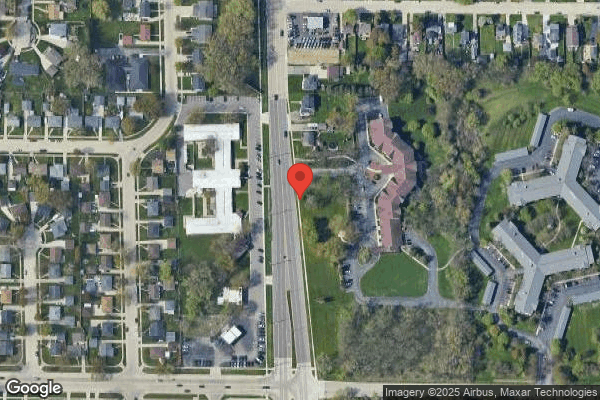
CONCERN (F) 📢 Someone Reported This

A family member, employee, or ombudsman was alarmed enough to file a formal complaint

Potential for Harm - no one hurt, but risky conditions existed

Deficiency F0947 (Tag F0947)

Could have caused harm · This affected most or all residents

Based on interview and record review the Facility did not ensure 5 (CNA-W, CNA-Y CNA-PP, CNA-QQ and CNA-RR,) of 5 randomly sampled CNA's (Certified Nursing Assistants) who had been employed for over a...

Read full inspector narrative →
Based on interview and record review the Facility did not ensure 5 (CNA-W, CNA-Y CNA-PP, CNA-QQ and CNA-RR,) of 5 randomly sampled CNA's (Certified Nursing Assistants) who had been employed for over a year received dementia management and resident abuse prevention training. This has the potential to affect all 69 of the Residents residing in the Facility. Findings include: On 2/22/23 the facility policy titled in-service Training Program, Nurse Aide dated 10/17 was reviewed and read: The facility will complete a performance review at least every 12 months. In-service training will be based on the outcome of the annual performance reviews, addressing weaknesses identified in the reviews. Annual in-services must include training in dementia management and abuse prevention. On 02/22/23, Administrator-P was provided the names of CNA-W, CNA-Y, CNA-PP, CNA-QQ, and CNA-RR who were five randomly selected CNAs and requested their in-service training in the past year for Abuse and Dementia training. On 02/22/23 in-service training records were provided and included: 1. CNA-W was hired on 07/29/2015, and is assigned to work throughout the facility as needed. The Surveyor was not provided with any in-service training hours for Abuse or Dementia training in the past 12 months. 2. CNA-Y was hired on 11/19/2020, and is assigned to work throughout the facility as needed. The Surveyor was not provided with any in-service training hours for Dementia training in the past 12 months. 3. CNA-PP was hired on 08/03/2019, and is assigned to work throughout the facility as needed. The Surveyor was not provided with any in-service training hours for Dementia training in the past 12 months. 4. CNA-QQ was hired on 08/27/2021, and is assigned to work throughout the facility as needed. The Surveyor was not provided with any in-service training hours for Abuse or Dementia training in the past 12 months. 5. CNA-RR was hired on 06/08/2015, and is assigned to work throughout the facility as needed. The Surveyor was not provided with any in-service training hours for Abuse or Dementia training in the past 12 months. On 2/22/23 at 1:40 PM Administrator-P was interviewed and indicated the above abuse and dementia training's for CNA-W, CNA-Y, CNA-PP, CNA-QQ, and CNA-RR for the last 12 months could not be found. On 2/22/23 at 1:45 PM Regional Educator-V was interviewed and indicated it was the responsibility of the Director of Nurses and Administrator to complete annual performance reviews and ensure training requirements are meet. On 2/22/23 at 2:00 PM DON-B was interviewed and indicated he often completes training with no documentation and realizes this is not the best practice and needs to work on it. On 2/22/23 at 2:30 PM Administrator-A and DON-B were informed of the of the above findings. Additional information was requested if available. None was provided.
Nov 2022 5 deficiencies 1 Harm
SERIOUS (G) 📢 Someone Reported This

A family member, employee, or ombudsman was alarmed enough to file a formal complaint

Actual Harm - a resident was hurt due to facility failures

Accident Prevention (Tag F0689)

A resident was harmed · This affected 1 resident

**NOTE- TERMS IN BRACKETS HAVE BEEN EDITED TO PROTECT CONFIDENTIALITY** Based on observation, interview, record review, and facility policy review the facility failed to ensure the resident environmen...

Read full inspector narrative →
**NOTE- TERMS IN BRACKETS HAVE BEEN EDITED TO PROTECT CONFIDENTIALITY** Based on observation, interview, record review, and facility policy review the facility failed to ensure the resident environment remained as free of accident hazards and possible for two of five residents (Resident (R) 12 and R8) reviewed for accidents. The facility failed to thoroughly investigate an incident when facility staff served R12 hot noodles and subsequently sustained 3rd degree burns from the noodles. Additionally, the facility did not ensure R12's interventions for accidents were consistently implemented. The facility failed to ensure R8 had an electric blanket assessed and monitored prior to use. R8 was at high risk for skin damage. Findings include: 1. Review of R12's admission Record, undated, located in the electronic medical record (EMR) under the Profile tab, revealed an admission date of 07/09/21 with medical diagnosis that included primary osteoarthritis, unspecified hand. a. Review of the facility policy titled Foods Brought by Family/Visitors, dated 10/2017, revealed Facility staff will assist the resident with accessing his or her food if unable to do so independently. Family/visitors are asked to prepare and transport food using safe food handling practices. including: Safe cooling and reheating processes . all personnel involved in preparing handling serving or assisting the resident with meals or snacks will be trained in safe food handling practices. The facility provided a copy of an incident report, for an incident on 09/27/22 with R12. The Description stated [R12] observed with burn injuries to right lower quadrant, mid-chest, and upper chest. The Immediate action revealed the area was cleaned, dried, and treated. The Nurse Practitioner and wound care doctor were notified. The report indicated R12 did not go to the hospital. Under pre-disposing environment factors other was checked but the form did not indicate what other factors were. Under pre-disposing psychological factors, weakness/fainting was checked. A note on the form documented Resident states she may have missed the edge of the overbed table and spilled on herself. A note on the report by the Director of Nursing (DON) documented . resident indicated she requested staff to make noodles for her . original container [Styrofoam cup] placed in second container so resident can handle independently. resident unaware of injury and did not experience pain . advised to screen for service needs . mild pain noted on assessment. [new interventions] apply clothing protector, encourage resident to allow foods to cool prior to handling. The report lacked documentation of the name of the staff who discovered the incident, circumstances around the situation at time of discovery, how long R12's call light had been on, vital signs, and if the staff member serving the noodles had heated them in accordance with facility polices. In response to a request for additional information regarding the investigation, the Administrator provided an in-service given to the staff after the incident on handling hot liquids. No additional investigation was provided. During an interview on 11/20/22 at 2:34 PM, R12 verbalized she needed assistance when eating because she had pain in her shoulders, her hands were numb and painful in September leading to her having carpel tunnel surgery in October. R12 stated a concern that it took a long time for the staff to answer the call light when she spilled hot noodles on herself causing a burn. R12 stated she could not feel the heat from the burn until staff moved her clothing to examine the area. Review of the R12's medical record lacked documentation of the incident resulting in injury from the hot noodle soup on 09/27/22. Review of R12's quarterly Minimum Data Set (MDS) with an Assessment Reference Date of 07/30/22 revealed facility staff coded R12 as having no upper extremity impairment and requiring only set up assistance with meals. During an interview on 11/21/22 at 4:47 PM, MDS Coordinator-E explained R12 had not been identified as having upper extremity impairment on the MDS due to having gross motor movement. Fine motor movement impairment was not identified on the MDS but R12 did have fine motor movement impairment. During an interview on 11/22/22 at 9:34 AM, Registered Nurse (RN)-N confirmed the dressing changes were still being done on the chest and abdomen for R12 since the incident with the hot soup on 09/27/22. RN-N confirmed the soup with noodles served was too hot and caused the burns on R12 and should have been documented in the progress notes. During an interview on 11/22/22 at 12:05 PM, DON-B confirmed that an agency staff prepared the ramen for R12 and served it to her, DON-B could not identify the name of the staff who served the resident. During an interview on 11/22/22 at 12:44 PM, Registered Nurse-Wound Nurse-S confirmed treating the wounds on R12 and confirmed the injuries to R12 were third degree burns on her right breast and two areas on her upper abdomen. Review of R12's medical record indicates R12's burns are being treated with Silvadene which is a topical treatment used for partial or full thickness burns to prevent infection. b. During an interview on 11/20/22 at 2:34 PM, R12 verbalized she needed assistance when eating because she had pain in her shoulders, her hands were numb, and her right dominate hand was in a splint following carpel tunnel surgery. R12 had carpel tunnel surgery on 10/12/22. Review of R12's quarterly MDS located in the EMR under the MDS tab with an ARD of 10/23/22, revealed a Brief Interview for Mental Status (BIMS) score of 15 out of 15, indicating R12 was cognitively intact. The MDS documented R12 had no upper body limitations and required set up assistance for meals. Review of the physician orders under the Orders tab in the EMR revealed an order dated 11/04/22 to ensure clothing protector is placed on resident with all meals and all hot snacks for protection every shift for prevention [of burns]. Review of R12's EMR Care Plan, located under the Care Plan tab revealed a care plan that addressed accidents related to general weakness, on 09/27/22 interventions were added to have R12 wear a clothing protector and to encourage the resident to allow foods to cool. Interventions included to keep call light within reach. During an observation on 11/21/22 at 8:30 AM, R12 was in bed and the call light was out of reach for the resident, on the floor. During an observation on 11/21/22 at 9:07 AM, R12 was sitting in bed eating a banana with her left hand. The breakfast tray was on the overbed table in front of the resident and included a hot beverage. R12 did not have a clothing protector. During an interview on 11/21/22 at 9:07 AM, R12 verbalized sometimes staff placed a towel on her chest between her neck and the food tray. On 11/21/22 at 9:10AM, Assistant Director of Nursing (ADON)-C came into the room asking R12 do you need assistance today? and R12 replied I need it every day. During an observation on 11/21/22 at 10:39 AM, R12 was in bed and her call light was on the floor, not hooked to the bed to be within reach for the resident. During an interview on 11/21/22 at 4:47 PM, MDS Coordinator-E confirmed R12 was to have a clothing protector in place with meals. 2. Review of a document provided by the facility titled Electrical Appliances, dated January 2019, indicated . Only authorized electrical appliances will be permitted in resident living areas. Should electrical appliances be permitted, each must be in good working order, free of frayed cords, and UL (underwriter's laboratory) approved. The apparatus must be clearly labeled with UL certifications and./or standards confirming external and internal credibility. Facility must identify and evaluate hazards and risks and implement interventions and monitoring for safe use. Review of R8's EMR's titled admission Record indicated R8 was admitted to the facility on [DATE] with diagnoses that included type II diabetes mellitus and neuropathy. Review of R8's EMR quarterly Minimum Data Set (MDS) with an Assessment Reference Date (ARD) of 10/19/22 located under the (MDS) tab indicated the resident had a Brief Interview for Mental Status (BIMS) score of 15 out of 15 which revealed the resident was cognitively intact. This assessment indicated the resident was extensive assistance of two staff for bed mobility and was totally dependent on two staff for transfers. This assessment revealed the resident had an ostomy. Review of R8's electronic medical record (EMR) Care Plan, located under the Care Plan tab failed to indicate the resident used an electric blanket. Review of R8's EMR, failed to indicate the resident was assessed for the use of an electric blanket nor did the clinical record indicate a discussion with the resident on the risks verses benefits of the use of an electric blanket. During an observation on 11/20/22 at 2:19 PM, R8 had a heating blanket on him. R8 stated staff have not done any assessment with him for the use of a heating blanket. During an observation on 11/21/22 at 8:25 AM, R8 still had a heating blanket on. During an interview on 11/21/22 at 5:05 PM, Administrator-A stated a heating blanket was a potential accident hazard. At 5:40 PM, Administrator-A and surveyor entered R8's room and Administrator-A stated he was not aware of R8's use of a heating blanket. Administrator-A stated there was no risk assessment done for the use of the heating blanket. R8 informed Administrator-A and surveyor that he had the blanket at the facility for several months and that facility staff had washed it several times for him. A request was made for the manufacturer's guidelines for the heating blanket and this document was not provided by the end of the survey. During an interview on 11/22/22 at 8:35 AM, Maintenance Director-T stated he was not aware of R8's use of a heating blanket. Maintenance Director-T stated the heating blanket was not monitored. Maintenance Director-T stated it was important to monitor a heating blanket for frayed wires.
CONCERN (D) 📢 Someone Reported This

A family member, employee, or ombudsman was alarmed enough to file a formal complaint

Potential for Harm - no one hurt, but risky conditions existed

Report Alleged Abuse (Tag F0609)

Could have caused harm · This affected 1 resident

**NOTE- TERMS IN BRACKETS HAVE BEEN EDITED TO PROTECT CONFIDENTIALITY** Based on interview, document review, and review of facility policy, the facility failed to ensure an allegation of verbal abuse ...

Read full inspector narrative →
**NOTE- TERMS IN BRACKETS HAVE BEEN EDITED TO PROTECT CONFIDENTIALITY** Based on interview, document review, and review of facility policy, the facility failed to ensure an allegation of verbal abuse from 1 (R14) of 1 residents reviewed, that was documented by nursing staff, was reported State Survey Agency (SSA) within 2 hours of the allegation of abuse. Nursing staff documented Resident (R) 14 was yelling at and using racial slurs towards other residents. Findings include: Review of a document provided by the facility titled Policy & Procedure Abuse and Neglect Reporting and Investigating, dated 05/09/19 indicated . IDENTIFICATION, INVESTIGATING AND REPORTING OF ABUSE: Abuse is defined differently under both State and Federal law and Regulation. Please review the key definitions in this policy that should be considered when determining whether an event constitutes abuse. All allegations of Resident abuse, neglect, exploitation, mistreatment, injuries of unknown origin and misappropriation should be reported immediately to the charge nurse. The charge nurse is responsible for immediately reporting the allegations of abuse to the administrator or designated representative . All allegations of Resident abuse, neglect, exploitation, mistreatment, injuries of unknown origin and misappropriation shall be reported to the state survey agency no later than two (2) hours after the allegation is made, if the events that caused the allegation involved abuse and result in serious bodily injury or not later than twenty-four (24) hours if the events that cause the allegation involve abuse but do not result in serious bodily injury. Review of R14's electronic medical record (EMR) titled admission Record, indicated the resident was admitted to the facility on [DATE] with a diagnosis of alcohol dependence. Review of R14's EMR admission Minimum Data Set (MDS) with an Assessment Reference Date (ARD) located under the MDS tab dated 09/08/22 indicated the resident had a Brief Interview for Mental Status (BIMS) score of 12 out of 15 which revealed the resident was cognitively intact. The assessment indicated the resident was able to ambulate with the use of a cane or a wheelchair. Review of R14's EMR nursing Progress Notes, located under the Prog [progress] Notes tab dated 10/10/22 documented R14 was intoxicated and was swearing and yelling at other residents, along with racial slurs and was disruptive of the residents' environment. The agency nurse who documented the 10/10/22 progress note was not available to be interviewed. During an interview on 11/22/22 at 9:44 AM, Director of Nursing (DON)-B stated he was not aware of the allegations of abuse towards other residents made by R14. DON-B stated the nurse who wrote the nursing progress notes did not inform him. DON-B stated he would have handled this by reporting the allegations of potential verbal abuse to the Administrator. During an interview on 11/22/22 at 1:08 PM, Administrator-A stated he was aware of the verbal abuse against staff but not towards other residents. Administrator-A stated he could hear R14 yelling and screaming clear down to his office. Administrator-A stated he attempted to calm the resident down but was not successful. Administrator-A stated he expected staff to report any allegation of verbal abuse to him immediately.
CONCERN (D) 📢 Someone Reported This

A family member, employee, or ombudsman was alarmed enough to file a formal complaint

Potential for Harm - no one hurt, but risky conditions existed

Investigate Abuse (Tag F0610)

Could have caused harm · This affected 1 resident

**NOTE- TERMS IN BRACKETS HAVE BEEN EDITED TO PROTECT CONFIDENTIALITY** Based on interview, record review, and review of facility's policy, the facility failed to ensure a thorough investigation of an...

Read full inspector narrative →
**NOTE- TERMS IN BRACKETS HAVE BEEN EDITED TO PROTECT CONFIDENTIALITY** Based on interview, record review, and review of facility's policy, the facility failed to ensure a thorough investigation of an allegation of verbal abuse was completed from 1 (R14) of 1 residents reviewed, that was documented by nursing staff. Nursing staff documented Resident (R) 14 was yelling at and using racial slurs towards other residents this was not investigated by the facility as an allegation of abuse. Findings include: Review of a document provided by the facility titled Policy & Procedure Abuse and Neglect Reporting and Investigating, dated 05/09/19 indicated . IDENTIFICATION, INVESTIGATING AND REPORTING OF ABUSE: Abuse is defined differently under both State and Federal law and Regulation . Should an incident or suspected incident of Resident abuse (as defined above) be reported or observed, the administrator or his/her designee will designate a member of management to investigate the alleged incident. The facility will use the checklist for concerns and self-reports for guidance . Review the complete documentation of the allegation of Resident abuse . Review the Resident's medical record to determine events leading up to the incident . Documentation of any physical assessment conducted will be made in the Resident's chart and a copy of this documentation will be included in the abuse investigation file . The Director of Nursing or designated nurse will notify the Resident's attending . physician of the alleged incident. The responsible family member or responsible party, as documented on the Resident's chart, will be notified of the incident, and advised of the status of the investigation and the actions and reporting being taken . Interview the person(s) reporting the incident and the alleged perpetrator and document witness statements . Interview all witnesses to the incident and document all witness statements . Interview staff members (on all shifts) who have had contact with the resident during the period of the alleged incident . Review of R14's electronic medical records (EMR) admission Record, indicated the resident was admitted to the facility on [DATE]. Review of R14's EMR nursing Progress Notes, located under the Prog [progress] Notes tab dated 10/10/22 documented R14 was intoxicated and was swearing and yelling at other residents, along with racial slurs and was disruptive the residents' environment. The agency nurse who documented the 10/10/22 progress note was not available to be interviewed. During an interview on 11/22/22 at 1:08 PM, Administrator-A stated he was the abuse coordinator for the facility and did not complete an investigation of potential verbal abuse by R14 towards other residents.
CONCERN (D) 📢 Someone Reported This

A family member, employee, or ombudsman was alarmed enough to file a formal complaint

Potential for Harm - no one hurt, but risky conditions existed

ADL Care (Tag F0677)

Could have caused harm · This affected 1 resident

**NOTE- TERMS IN BRACKETS HAVE BEEN EDITED TO PROTECT CONFIDENTIALITY** Based on observations, interviews, record review, and policy review, the facility failed to ensure residents who were dependent ...

Read full inspector narrative →
**NOTE- TERMS IN BRACKETS HAVE BEEN EDITED TO PROTECT CONFIDENTIALITY** Based on observations, interviews, record review, and policy review, the facility failed to ensure residents who were dependent on staff for shaving received services for one (Resident (R) 10) reviewed for Activities of Daily Living (ADL) assistance out of a survey sample of 16 residents. Findings include: Review of a document provided by the facility titled Activities of Daily Living (ADL's) Supporting, dated 03/18, indicated . Residents who are unable to carry out activities of daily living independently will receive the services necessary to maintain good nutrition, grooming and personal and oral hygiene. Review of R10's electronic medical records (EMR) admission Record, located under the Profile tab indicated the resident was admitted to the facility on [DATE] with a diagnosis of spastic quadriplegic cerebral palsy. Review of R10's quarterly EMR titled Minimum Data Set (MDS) with an Assessment Reference Date (ARD) located under the MDS tab dated 08/16/22 indicated staff could not determine a Brief Interview for Mental Status (BIMS) score. The assessment indicated the resident was totally dependent on one staff for bed mobility and totally dependent on two staff for transfers. During an observation on 11/20/22 at 2:12 PM, R10 was observed in bed and facing the window. She was observed to have approximately one-half inch of upper lip and chin hair. R10 was unable to respond to questions. During an observation on 11/21/22 at 8:41 AM, R10 was again observed in bed. The resident was observed with upper lip and chin hair. During an interview/observation on 11/21/22 at 5:30 PM, Administrator-A confirmed R10 had upper lip and chin hair and it needed to be taken care of. During an interview on 11/22/22 at 9:44 AM, Director of Nursing-B stated R10 received bed baths, and it was his expectation staff should have paid attention to her facial hair and shave it off.
CONCERN (D) 📢 Someone Reported This

A family member, employee, or ombudsman was alarmed enough to file a formal complaint

Potential for Harm - no one hurt, but risky conditions existed

Deficiency F0691 (Tag F0691)

Could have caused harm · This affected 1 resident

**NOTE- TERMS IN BRACKETS HAVE BEEN EDITED TO PROTECT CONFIDENTIALITY** Based on observation, interview, record review, and facility policy review the facility failed to ensure residents with colostom...

Read full inspector narrative →
**NOTE- TERMS IN BRACKETS HAVE BEEN EDITED TO PROTECT CONFIDENTIALITY** Based on observation, interview, record review, and facility policy review the facility failed to ensure residents with colostomies (a surgical opening of the large intestine in which fecal material passes) were provided colostomy care consistent with standards of care for two of four residents (Resident (R) 9 and R8) reviewed for colostomy cares. Findings include: Review of the facility policy titled Colostomy/Ileostomy Care, dated October 2010, revealed .The purpose of this procedure is to provide guidelines that will aid in preventing exposure of the resident's skin to fecal matter. The following information should be recorded in the resident's medical record: l. The date and time the colostomy/Ileostomy care was provided. 2. The name and title of the individual(s) who provided the colostomy/Ileostomy care. 3. Any breaks in resident's skin signs of infection . or excoriation of skin. 4. How the resident tolerated the procedure. 5. If the resident refused the procedure, the reason(s) why and the intervention taken. 6. The signature and title of the person recording the data. 1. Review of R9's admission Record located in the electronic medical record (EMR) under the Profile tab, revealed an admission date of 10/13/21 with medical diagnoses that included unspecified intestinal obstruction, unspecified as to partial verses complete obstruction. Review of R9's annual Minimum Data Set (MDS) located in the EMR under the MDS tab with an Assessment Reference Date (ARD) of 10/21/22, revealed a Brief Interview for Mental Status (BIMS) score of 15 out of 15, indicating R9 was cognitively intact. During an interview on 11/22/22 at 10:16 AM, R9 verbalized several nights ago had told the Certified Nursing Assistant (CNA) to empty the [colostomy] bag and then they had to lay in bed for an hour and a half in feces because CNA did not know how to change the bag and had to wait for someone else to do it. Review of the physician orders under the Orders tab in the EMR lacked documentation of orders for the care of the colostomy for R9. During an interview on 11/22/22 at 12:05 PM, Director of Nursing (DON)-B explained the orders for R9 colostomy care should be imbedded in the standing orders (batch orders). Documentation of care should be found in the Treatment Administration Record (TAR) or the Medication Administration Record (MAR) in the EMR for colostomy care for any resident who had a colostomy. Review of the batch order set, provided by the facility, for R9 lacked orders for colostomy care. Review of the MAR and TAR, located in the EMR under the Orders tab, for R9 lacked documentation of colostomy care. During an interview on 11/22/22 at 2:10 PM, CNA-Q explained the CNAs empty the colostomy bags for residents with colostomies and do not change the bag. Nurses do that. During and interview on 11/22/22 at 2:19 PM, Licensed Practical Nurse (LPN)-M verbalized the CNA emptied the colostomy bags and the nurse changed the colostomy bag. LPN-M verified there was no documentation for R9 concerning colostomy care and if it was not marked on the MAR or TAR it should be in the progress notes. LPN-M reviewed the progress notes for R9 then verbalized there was no way to know when the last time the colostomy bag for R9 had been changed. 2. Review of R8's EMR Care Plan, located under the Care Plan tab dated 09/12/21 indicated the resident had an alteration in gastrointestinal status related to a colostomy. The intervention was to provide colostomy care per order and to update the physician with changes. Review of R8's EMR admission Record located under the Profile tab indicated the resident was admitted to the facility on [DATE]. Review of R8's EMR, failed to indicate the resident had physician orders for the care of his colostomy. Review of R8's EMR quarterly MDS with an ARD of 10/19/22 located under the MDS tab indicated the resident had a BIMS score of 15 out of 15 which revealed the resident was cognitively intact. This assessment indicated the resident required extensive assistance of two staff for bed mobility and was totally dependent on two staff for transfers. This assessment revealed the resident had an ostomy. Review of R8's EMR TAR located under the Orders tab dated from August 2022 through November 2022 indicated staff were to change the resident's colostomy wafer and pouch every three days and as needed for leakage. During an observation of R8's wound care 11/21/22 at 11:56 AM with Licensed Practical Nurse (LPN)-J, a large amount of tape was observed across R8's abdomen and colostomy site. R8 stated it was there to hold his colostomy bag in place. LPN-J stated she had not placed the tape. During an interview on 11/21/22 at 2:34 PM, Certified Nursing Assistant (CNA)-O stated she placed tape around the pouch to secure it better to R8 and this prevented leakage. CNA-O stated prior to placing paper tape on the pouch she applied skin prep. During an interview on 11/22/22 at 9:44 AM, Director of Nursing (DON)-B stated R8 was at risk for skin problems. DON-B stated the CNAs were not to use tape to secure the colostomy pouch and this placed R8 at risk for skin problems. DON-B stated his expectation was for the CNAs to empty the pouch frequently.
Mar 2022 17 deficiencies 2 Harm
SERIOUS (G)

Actual Harm - a resident was hurt due to facility failures

Pressure Ulcer Prevention (Tag F0686)

A resident was harmed · This affected 1 resident

**NOTE- TERMS IN BRACKETS HAVE BEEN EDITED TO PROTECT CONFIDENTIALITY** Based on observation, interview and record review, the facility did not ensure that 2 (R31 & R2) of 11 residents reviewed and at...

Read full inspector narrative →
**NOTE- TERMS IN BRACKETS HAVE BEEN EDITED TO PROTECT CONFIDENTIALITY** Based on observation, interview and record review, the facility did not ensure that 2 (R31 & R2) of 11 residents reviewed and at risk for developing pressure injuries received consistent measures to prevent the development of pressure injuries. * R31 did not have a coccyx/sacrum stage II pressure injury assessed or provided with treatment from admission to 2/2/22. R31's sacrum pressure injury then progressed to a stage III. * R2 did not have initial left heel pressure injury assessed by an RN (Registered Nurse). R2 did not have his left heel pressure injury assessed on the week of 1/5/22. Findings include: 1. R31 was admitted to the facility on [DATE] with a diagnoses that include: Dementia without Behavioral Disturbance, Diabetes Mellitus Type II, Sepsis and Dysphagia. R31's admission MDS (Minimum Data Set) dated 1/12/22, documents that R31 has short and long term memory problems, has severely impaired cognitive skills for daily decision making, and requires extensive assistance and a one person physical assist for his bed mobility needs. Section M (Skin Conditions) documents that R31 has no unhealed pressure ulcers/injuries and that he is not at risk for the development of pressure injuries/ulcers. R31's Pressure Injury/Ulcer CAA (Care Area Assessment), dated 1/12/22, documents under the Care Plan Considerations section, No presence of pressure areas, ongoing interventions to reduce risks for potential skin integrity impairment weakness present and reliance on staff for assist with adls (activities of daily living) and mobility. In contrast, R31's admission assessment, dated 1/5/22, documents that R31 had a coccyx stage II, and right and left heel pressure injuries present on admission the facility. R31's nursing note, dated 1/5/22, documents, Nurses Note Text: Resident arrived by stretcher per Ambulance services. Admitting Dx: Hematuria r/t (related to) blood clot formed from newly placed suprapubic catheter 12/22/22 .Rarely verbalizes d/t (due to) dementia .Reported pressure areas to bilateral heels, and pink stage 2 to coccyx. Mepilex in place for protection. R31's physician progress note, dated 1/6/22 documents, Physician Progress Note Text: Patient seen today following recent admission. He was recently hospitalized from [DATE] to 01/05/22 for sepsis, hematuria, and UTI (urinary tract infection) . He is non-verbal at baseline. He is awake and alert resting in bed grinding his teeth at this time. He has suprapubic foley catheter draining blood tinged urine with noted blood clots. He has a wound to his right heel that is dressed. Surveyor noted that despite R31's admission assessment and nursing note dated 1/5/22, and R31's physician progress note dated 1/6/22 all referencing to R31 having pressure injuries, R31's admission MDS dated [DATE] incorrectly documented that R31 did not have any pressure injuries present. Surveyor also noted that despite the above documentation, R31's Pressure Ulcer/Injury CAA dated 1/12/22 incorrectly documents under the Care Plan Considerations sections that R31 did not have any open pressure areas. R31's admission Braden Scale For Predicting Pressure Sore/Injury Risk, assessment dated [DATE], documents a score of 12, indicating that R31 is at high risk for the development of pressure injuries. R31's nursing note, dated 1/29/22, documents, Nurses Note Text: 97.3 (degrees Fahrenheit) .Dressing change now to coccyx: no BM (bowel movement) now .Turned off coccyx: air mattress and P (Prevalon) boots used. Surveyor was unable to locate any documentation that facility nursing staff assessed, measured or staged R31's pressure injuries upon R31's readmission to the facility on 1/5/22 through 2/2/22. Surveyor was unable to locate any wound treatments ordered for R31's sacrum pressure injury from 1/5/22 to 2/2/22. R31's initial wound assessment, completed by Wound physician and dated 2/2/22 documents, Wound Location: Sacrum; Length: 4.24 cm (centimeters); Width: 3.62 cm; Maximum Depth: 0.2 cm; Etiology: Pressure Ulcer-Unstageable; Woundbed assessment: Granulation 1-25%, Slough 51-75 %.; Formularies: Cleanse with 1/2 strength Dakin's solution, Protect Periwound with Skin Prep, apply Santyl to wound bed, cover with bordered gauze, change daily. Surveyor noted that R31 had pressure injury interventions, weekly wound assessments and treatments as ordered by the wound physician from 2/2/22 to 2/23/22. R31's wound physician assessment dated [DATE] documents, Wound Location: Sacrum; Length: 2.13 cm (centimeters); Width: 2.06 cm; Maximum Depth: 0.2 cm; Etiology: Pressure Ulcer-Stage 3; Woundbed assessment: Granulation 76-100%.; Formularies: Cleanse with saline, protect periwound with skin prep, apply alginate to wound bed, cover wound with bordered gauze, change daily, change PRN (as needed) for soiling and/or saturation. Surveyor noted that R31 had pressure injury interventions, weekly wound assessments and treatments as ordered by the wound physician from 2/24/22 to 3/16/22. Surveyor noted that despite the facility's lack of initial assessment and treatment to R31's sacrum/coccyx wound, R31's sacrum pressure injury started improving when treatment was started on 2/2/22. On 3/21/22, at 11:44 a.m., Surveyor informed ADON (Assistant Director of Nursing)-D, whom was in charge of wound care at the facility, of the above findings. Surveyor asked ADON-D if the facility had done any weekly assessments and or daily treatments of R31's coccyx/sacrum pressure injury from 1/5/22 to 2/2/22, as Surveyor was unable to locate any in R31's medial record. ADON-D informed Surveyor that she could not recall if R31 had any pressure injuries upon admission. ADON-D informed Surveyor that around 1/29/22, a facility staff member came up to her and informed her R31 had a pressure injury to his sacrum. ADON-D informed Surveyor that she could not provide any information regarding R31's sacrum pressure injury prior to 1/29/22. ADON-D informed Surveyor that she and wound physician did not formally assess R31's sacrum pressure injury until 2/2/22. ADON-D informed Surveyor that if facility staff were aware of open areas when R31 was admitted to the facility, they should have notified her so she could assess and get a treatment in place. No additional information was provided as to why the facility did not ensure R31 received necessary treatment and services from 1/5/22 to 2/2/22, to promote healing of a pressure injury. 2. R2 was admitted to the facility on [DATE] with a diagnosis that included Schizophrenia, Dysphagia, Asthma and Overactive Bladder. R2's Quarterly MDS (Minimum Data Set), dated 3/4/22, documents a BIMS (Brief Interview for Mental Status) score of 3, indicating that R2 is severely cognitively impaired. Section G (Functional Status) documents that R2 requires extensive assistance and a one personal physical assist for his bed mobility needs. Section G also documents that R2 has total dependence on staff and requires a one person physical assist for his transfer needs. Section G0400 (Functional Limitation in Range of Motion) documents that R2 has no impairment to either side of both his upper and lower extremities. Section M (Skin) documents that R2 is at risk for the development of pressure injuries. R2's Pressure Ulcer CAA (Care Area Assessment), dated 12/2/21, documents under the Care Plan Considerations section, Resident has episodes of incontinence and relies on staff for assist with mobility and presence of weakness. R2's Braden Scale for Predicting Pressure Sore/Injury Risk Assessment, dated 6/5/21, documents a score of 15, indicating that R2 is at moderate risk for the development of pressure injuries. R2's skin integrity plan of care, dated 12/7/20, documents the following interventions as in place prior to 12/5/21, Turn and Reposition Q (every) 2-3 hours; Prevalon boots or pillow to offload heels; Skin Prep to heels for protection; avoid friction and shearing-use lift sheet for transfers. R2's nursing note completed by LPN-R and dated 12/5/21 documents, Nurses Note Text: Writer was walking past resident room in beginning of shift when it was noticed that prevlon boot was off. Writer went to put boot back on resident left foot and the suspected deep tissue injury was seen. Boot was reapplied and scheduled skin prep applied. Area measures 3.5 cm x 4 cm. On call NP (nurse practitioner) with [name of medical group] notified, DON (Director of Nursing) notified, and healthcare POA (power of attorney) updated. On call NP with [name of medical group] said to continue with keeping the prevlon boot on and skin prep to both heels. Resident was compliant with keeping prevlon boot on left foot. Resident denies having any pain on the suspected deep tissue injury area. Surveyor was unable to locate any RN (Registered Nurse) assessment for R2's initial wound assessment dated [DATE]. R2's initial wound assessment completed by Wound physician and dated 12/8/21 documents, Wound Location: Left Medial Heel; Length: 4.19 cm (centimeters); Width: 3.71 cm; Maximum Depth: 0.0 cm; Etiology: Pressure Ulcer-Suspected DTI (deep tissue injury); Woundbed assessment: Purple; Formularies: Change daily, cleanse with betadine. Surveyor noted that R2 had pressure injury interventions, weekly wound assessments and treatments as ordered by the wound physician from 12/8/22 to 1/5/22. Surveyor was unable to locate a weekly wound assessment for R2's left heel pressure injury for the week of 1/5/22. Surveyor also noted that despite the facility's lack of weekly wound assessment of R2's left heel, R2's left heel pressure injury continued healing while R2 resided at the facility. R2's Weekly Pressure Ulcer Log dated 3/16/22 documents, Site: Left Heel; Unstageable, 0.75 cm length; width: 1.25 cm Depth: 0.1 cm, Comments: Improvement. On 3/21/22 at 11:44 a.m., Surveyor informed ADON (Assistant Director of Nursing)-D, whom was in charge of wound care at the facility, of the above findings. Surveyor asked ADON-D if the facility had done any weekly assessment on R2's left heel pressure injury for the week of 1/5/22, as Surveyor was unable to locate any in R2's medial record. ADON-D informed Surveyor that she was out sick and not working at the facility for the week of 1/5/22 and that she could not provide any additional information as to why R2 did not have a weekly assessment on his left heel pressure injury for the week of 1/5/22. Surveyor asked ADON-D if R2's left heel had been assessed by an RN on 12/5/21, as Surveyor noted that the initial finding of the wound was only assessed by LPN-R. ADON-D informed Surveyor that she could not provide any information as to if there was an RN assessment of R2's left heel on 12/5/21. ADON-D informed Surveyor that there should have been an RN assessment following up LPN-R's initial left heel pressure injury assessment on 12/5/21. On 3/21/22 at 4:11 p.m., Surveyor informed DON (Director of Nursing)-B of the above findings. No additional information was provided as to why the facility did not ensure that R2 received necessary treatment and services, consistent with professional standards of practice, to promote healing, prevent infection and prevent new injuries from developing.
SERIOUS (G)

Actual Harm - a resident was hurt due to facility failures

Deficiency F0697 (Tag F0697)

A resident was harmed · This affected 1 resident

**NOTE- TERMS IN BRACKETS HAVE BEEN EDITED TO PROTECT CONFIDENTIALITY** Based on interview and record review the facility did not ensure that 1 (R3) of 5 Residents reviewed for pain management receive...

Read full inspector narrative →
**NOTE- TERMS IN BRACKETS HAVE BEEN EDITED TO PROTECT CONFIDENTIALITY** Based on interview and record review the facility did not ensure that 1 (R3) of 5 Residents reviewed for pain management received pain management consistent with professional standards of practice and Resident choice related to pain management. R3 was admitted to hospice on 10/23/21. On 3/11/22 R3 pain medication was increased. R3 did not receive requested and prescribed pain medication until 3/18/22. Findings Include: The facility policy, entitled Pain Assessment and Management dated as revised March 2015, states: Purpose The purpose of this procedure are to help the staff identify pain in the Resident, and to develop interventions that are consistent with the Resident's goals and needs and that address the underlying causes of pain . Defining Goals and Appropriate Interventions: 1. The pain management interventions shall be consistent with the Resident's goals for treatment. Such goals will be specifically defined and documented. 2. Pain management interventions shall reflect the sources, type, and severity of pain. 3. Pain management interventions shall address the underlying causes of the Resident's pain. Implementing Pain Management Strategies: 6. Implement the medication regimen as ordered, carefully documenting the results of the interventions. Monitoring and Modifying Approaches: 1. Re-assess the Resident's pain and consequences of pain at least each shift for acute pain or significant changes in levels of chronic pain and at least weekly in stable chronic pain. 2. Monitor the following factors to determine if the Resident's pain is being adequately controlled: a. The Resident's response to interventions and level of comfort over time b. The status of underlying cause(s) of pain c. The presence of adverse consequences to treatment Documentation 1. Document the Resident's reported level of pain with adequate detail (enough information to gauge the status of pain and effectiveness of interventions for pain) as necessary and in accordance with the pain management program . Reporting 1. Significant change in the level of the Resident's pain . 3. Prolonged, unrelieved pain despite care plan interventions . R3 was admitted to the facility on [DATE], with diagnoses of Hereditary and Idiopathic Neuropathy, Chronic Obstructive Pulmonary Disease (COPD), Adult Failure to Thrive, Dyspagia, and Anxiety Disorder. R3 is her own person. R3's Interim Care Plan dated 10/8/21, documents R3 has pain and is taking pain medications. Surveyor notes that R3's comprehensive care plan reflects a focused problem that R3 is at risk/potential for pain due to generalized discomfort, neuropathy initiated: on 10/18/21, along with all interventions put in place on 10/18/21. Surveyor notes this focused problem along with interventions for R3 has not been revised since 10/18/21. Surveyor notes that R3 elected to accept hospice care on 10/23/21. R3's Significant Change Minimum Data Set (MDS), dated [DATE], documents R3's short and long term memory is impaired, and R3 demonstrates severely impaired skills for daily decision making. Surveyor notes that R3's MDS documents R3 is receiving hospice care. The MDS also documents that R3 requires total dependence for bed mobility, transfers, dressing, toileting, and bathing. The MDS also documents that R3's PHQ-9 (Mood Score for the Patient Health Questionnaire) is 14 indicating that R3 has moderate depressive symptoms. R3's MDS documents R3 is receiving scheduled pain medication regimen. R3's pain assessment dated [DATE], documents R3 has vocal complaints of pain. Surveyor notes R3's pain in February ranged from 2-8 on a scale of 1-10, 10 being high pain. Surveyor notes R3's pain in March, prior to the increase in pain medication, ranged from 2-10. Surveyor noted R3 was receiving the ordered Norco Tablet 5-325 MG two times per day for pain. Surveyor notes per R3's MARs, R3 had Acetaminophen Tablet and Ibuprofen Tablet ordered as needed. On 3/10/2022, the following was documented by R3's physician: PATIENT ENCOUNTER History of Present Illness: Patient is a [AGE] year-old status post COVID-19 who has become increasingly weak, is now on hospice. COPD , HTN (Hypertension) , depression. Her oral intake is poor hardly eating or drinking. She states that she has pain all over unable to localize it denies shortness of breath does have a cough. She is sleeping a lot on and and off all day and at night. Looks uncomfortable and is reluctant to engage in conversation. REVIEW OF SYSTEMS Constitutional Displays Fatigue, Displays Poor Appetite, Displays Weight Loss, Displays Weakness Extrem, Psychiatric Displays Anxiety, Displays Depression, Displays Memory Loss, Displays Mood Changes, Pain 5 Physical Exam: Constitutional: thin, alert not cooperative, uncomfortable Psychiatric: Oriented x 3, cognition intact, mood sad CARE PLAN / ASSESSMENT ICD 10 or DX: Chronic obstructive pulmonary disease, unspecified, Adult failure to thrive, Essential, primary hypertension, major depressive disorder, recurrent severe w/o (without) psych (psychotic) features, generalized anxiety disorder, Polyosteoarthritis, unspecified, other specified polyneuropathies, COVID-19. Patient is a [AGE] year-old status post Covid who has become increasingly weak poor appetite and is on hospice just wants comfort oriented care. Is very uncomfortable at this time has generalized pain. On 3/11/22, R3 transferred to a new hospice provider. Surveyor reviewed R3's hospice progress notes and noted the following: On 3/14/22, R3's medical record documents: Chaplain visit for assessment. R3 is bed, states that R3 hurts all over. Surveyor noted that there is a fax communication in R3's hospice binder dated 3/13/22, documenting R3's Norco Tablet 5-325 MG (milligrams) two times daily to be discontinued and changed to Norco Tablet 5-325 MG four times daily for pain and a new order for Morphine oral concentrate 20 MG/1 mL (milliliter). Give 10 MG (0.5mL) every 2 hours as needed sublingual. Surveyor reviewed R3's current MARs (Medication Administration Records) and physician orders as of 3/16/22 and notes, R3's medication changes ordered on 3/13/22 were not reflected on the MARs or current physician orders. On 3/16/22, at 1:17 PM, Surveyor spoke to R3 who stated that R3 was having pain. On 3/16/22, at 1:19 PM, Surveyor spoke to Certified Nursing Assistant (CNA-M) who stated that R3 often complains of pain. On 3/16/22, at 1:42 PM, Surveyor confirmed with Medication Technician (MT-N) that R3's Medication Administration Record (MAR) documented R3 was to receive Norco Tablet 5-325 MG two times a day for pain. On 3/17/22, at 8:55 AM, Surveyor spoke to R3 who stated R3's pain is constant and Surveyor observed grimacing by R3. On 3/17/22, at 12:50 PM, Surveyor interviewed hospice nurse (RN-J) who confirmed that on 3/11/22 RN-J initiated the change of R3's pain medication. RN-J stated RN-J verbally informed DON-B of the medication change on 3/11/22. RN-J stated that RN-J always faxes the medication changes to the pharmacy and the facility and that is what RN-J did with R3's medication changes on 3/11/22. RN-J states that RN-J visited R3 on 3/13/22 and checked to make sure the facility's MAR for R3 reflected the medication change. RN-J stated RN-J was informed by the 2nd shift agency nurse that the change in pain medication had been done. Surveyor notes the fax communicating the change in R3's medication was sent on 3/13/22 to the attention of DON-B. Surveyor notes there is no documentation of the conversation between RN-J and the 2nd shift agency nurse. On 3/17/22, at 1:15 PM, Surveyor shared with Administrator (NHA-A) and Corporate Registered Nurse (RN-O) that R3's pain medication had been changed significantly on 3/11/22 and the facility had not made the change as reflected in R3's current MAR and physician orders, thus R3 had not been receiving pain medication as prescribed by hospice. Surveyor shared the concern at this time of the break down in communication between hospice and the facility. On 3/17/22, at 1:39 PM, DON-B brought to Surveyor, R3's 'Medication Profile' and stated to Surveyor, I am telling you the morphine is not on there. Surveyor showed DON-B the fax dated 3/13/22, at 3:57 PM from hospice to DON-B reflecting the requested medication changes for R3 . DON-B stated, well it must be still up on the fax machine. Surveyor notes that R3's electronic medical record (EMR) contains a note dated 3/17/2022, at 7:00 PM stating the following: Spoke with Hospice RN-J, discussed current regimen, made aware of Medication Error with no adverse effects. Son was called with message left to update, [name of nurse] RN to also attempt to call Son [name of son] to discuss. All medications reviewed for accuracy with no new changes at this time. R3's pain assessment dated [DATE], documents R3 has been in pain or hurting in the last 5 days and movement causes pain, lying on either side and R3 winces when turned. R3's hospice progress notes note dated 3/17/22 noted R3 was in a lot of pain. On 3/21/22, at 9:29 AM, Surveyor observed R3 in bed with eyes closed. Surveyor observed R3 to be restless and had facial grimacing. On 3/21/22, at 11:15 AM, Surveyor interviewed R3. R3 stated the following to Surveyor: I am so upset. I haven't been out of bed in 3 months and I wish I could get up. Its probably too late now. I have pain all the time no matter what time of the day. It bothers me all through my body, all day. I have a bedsore that hurts. They don't give me meds before they put the bandage on, before they put the pads on. Surveyor asked R3 on a scale of of 1-10 where is your pain at this time. I know all about those pain scales. I am at between a 9 and 10. Everything is so painful. I'm so alone, the grief is so bad. I can't see my TV, I'm losing my eyesight, but it's not even plugged in for me to listen to. I feel like suicide, I know I can't do anything. I will be 98 in 2 days. I know people have it worse than me, but I am miserable. Every morning I don't want to get up and face another day. On 3/21/22, at 11:40 AM, Surveyor interviewed CNA-L who stated that R3 complains of a lot of pain, especially with repositioning. On 3/21/22, at 1:48 PM, Surveyor spoke to RN-J again. RN-J stated RN-J sent the morphine order on 3/11/22, and called the pharmacy about 6:30 PM. RN-J stated RN-J wanted the medications sent out that night. RN-J was informed the facility got the medications. RN-J recalls talking to the floor nurse, and talked to DON-B who was in the building on 3/11/22 regarding the pain medication changes with follow up by fax on 3/13/22. RN-J stated DON-B acknowledged understanding. RN-J stated RN-J informed DON-B the medications were coming for R3. RN-J felt comfortable R3 would be getting the medications right away. RN-J is not sure why it did not happen. RN-J stated the family had expressed concerns with R3's pain. R3 is alert and oriented and had expressed that R3 was having pain with R3's wound. R3 is able to express what R3 wants and needs. R3 wanted to keep the Norco because R3 felt R3 was getting some relief and didn't want to change the pain medication so RN-J increased the dosage. RN-J stated R3 was clearly in pain when RN-J assessed R3. RN-J stated the morphine was ordered for R3's breakthrough pain and is part of the comfort package. On 3/21/22, at 3:14 PM, Surveyor shared the concern with NHA-A and DON-B that R3's pain had not been managed by the facility as evidenced by verbal and physical signs that R3 was in pain frequently throughout the day. Surveyor shared the concern that hospice had ordered for an increase in R3's pain medication along with morphine added as needed for breakthrough pain on 3/11/22 with follow up fax on 3/13/22 and the facility did not make the change until 3/17/22 when Surveyor brought it to the facility's attention. Surveyor shared that R3 has verbalized being in constant pain, evident during the survey process and as a result R3 is expressing emotional and psychosocial distress.
CONCERN (D)

Potential for Harm - no one hurt, but risky conditions existed

Deficiency F0565 (Tag F0565)

Could have caused harm · This affected 1 resident

Based on Resident interview, staff interview, and record review the facility did not provide feedback as to the steps taken to address Resident grievances voiced at Resident Council meetings for 2 (R2...

Read full inspector narrative →
Based on Resident interview, staff interview, and record review the facility did not provide feedback as to the steps taken to address Resident grievances voiced at Resident Council meetings for 2 (R29 and R30) of 5 Resident Council attendees. During the Resident Council Group interview held on 3/17/22, at 10:00 AM, R29 and R30 were both in agreement the facility has not provided them with feedback related to steps taken to resolve grievances reported by the group at previous Resident Council meetings. Findings Include: Surveyor reviewed the facility's Resident Council policy and procedure revised April 2017. Policy Statement The facility supports Residents' rights to organize and participate in the Resident Council. Policy Interpretation and Implementation 1. The purpose of the Resident Council is to provide a forum for: a. Residents, families and Resident representatives to have input in the operation of the facility b. Discussion of concerns and suggestions for improvements c. Consensus building and communication between Residents and facility staff d. Disseminating information and gathering feedback from interested Residents . 5. A Resident Council Response Form will be utilized to track issues and their resolution. The facility department related to any issues will be responsible for addressing the item(s) of concern. 6. The Quality Assurance and Performance Improvement (QAPI) Committee will review information and feedback from the Resident Council as part of their quality review. Issues documented on council response forms may be referred to the QAPI Committee, if applicable. On 3/16/22, at 2:39 PM, Surveyor reviewed the Resident Council minutes provided by the facility. Surveyor notes there are concerns documented as being discussed from month to month, and there is no documented resolution to the concerns. 9/18/21 Resident Council minutes documented concerns: Would like less pasta; New bags not being put in room trash cans after being taken out and south hall mopping and room garbage not being done daily. 10/7/21 Resident Council documented concerns: Food is being passed out late for every meal; Need to have different variety of meals; Would like to have fresh fruit; Not being given items that are on their tickets; Trash not taken out on the weekends; Rooms not being cleaned on the weekends; Clothes not being returned and receiving other Residents' clothing; Bathroom sink has not been fixed for months; Call lights not being answered right away; Medications not being given on time; Residents not getting showers; Overall issues with not getting cares as needed and attitude of staff. 11/3/21 Resident Council minutes documented concerns: Food is always cold; Not being given items that are on their tickets; Would like more options of lunch meat; Trash not taken out on the weekends; Rooms not being cleaned on the weekends; Clothes not being returned and receiving other Residents' clothing; Medications not being given on time; Call lights not being answered right away; Overall issues with not getting cares as needed and attitude of staff. 1/27/22 Resident Council minutes documented concerns: Food is always cold; Preferences on tickets aren't being recognized; Not receiving laundry back on a timely matter, potentially also missing laundry; Medications not being given on time, so late that they come with next set that is received 4 hours later, not always receiving all of the medications; Call lights are being ignored. 2/28/22 Resident Council minutes documented concerns: Food is always cold; Not being given items that are on their tickets; Would like more options of lunch meat; Rooms not being cleaned on the weekends; Clothes not being returned and receiving other Residents' clothing; Trash not taken out on the weekends; Medications not being given on time; Call lights are being ignored; Overall issues with not getting cares as needed and attitude of staff. On 3/17/22, at 10:02 AM, Surveyor conducted a Resident group interview. Of the 5 Residents in attendance, 2 Residents (R30 and R29) attended facility Resident Council meetings on a regular basis, and for 3 Residents it was their first time attending a Resident group meeting. R29 confirmed with Surveyor that R29 is the Resident Council president. R29 and R30 confirmed the same concerns are discussed every month according to the Residents who attended the group interview. R29 and R30 affirmed the facility did not provide any feedback related to expressed concerns and how they are addressed by the facility and the steps taken by the facility to resolve concerns. R29 and R30 gave examples of concerns discussed routinely at Resident Council meetings such as: cold food, lack of food variety, long call light response times, clothing concerns related to laundry, and medication concerns. R29 and R30 confirmed these concerns are brought up at several Resident Council meetings and Residents did not see any changes made and no facility staff explained a plan to address the grievances. Surveyor reviewed R29's electronic medical record (EMR) and notes R29's Quarterly Minimum Data Set (MDS) assessment, dated 1/13/22, documents R29's Brief Interview for Mental Status (BIMS) score to be 15, indicating R29 is cognitively intact for daily decision making. Surveyor reviewed R30's electronic medical record (EMR) and notes R30's Quarterly Minimum Data Set (MDS) assessment, dated 12/8/21, documents R30's Brief Interview for Mental Status (BIMS) score to be 14, indicating R30 is cognitively intact for daily decision making. On 3/17/22, at 11:07 AM, Surveyor interviewed Activities Director (AD-K) in regards to the process for addressing concerns that are expressed at the Resident Council Meetings. AD-K explained AD-K takes the concerns from Resident Council, types the minutes up, and gives the written minutes to the Nursing Home Administrator (NHA-A). AD-K stated that NHA-A is supposed to take care of the concerns and address them. Sometimes, if it's a specific concern, like a missing clothing item, AD-K will let laundry know. AD-K does not know if any concerns are followed up, and that is on me. AD-D stated there are no written concerns/grievances or resolutions from each of the Resident Council meetings. On 3/22/22, at 10:45 AM, Surveyor spoke to AD-K again. AD-K explained that during COVID, AD-K went room to room for Resident Council meetings. As of January 2022, the Residents were able to gather for a group meetings. AD-K stated there are no minutes from December 2021 because there was no meeting. Surveyor reviewed the facility grievance/concern log and notes there was no grievances from Resident Council included. On 3/22/22, at 11:58 AM, Surveyor interviewed NHA-A about the process of concerns/grievances brought up at Resident Council meetings. Surveyor spoke to NHA-A in regards to documentation of resolutions for Resident Council meeting concerns. NHA-A verified that NHA-A is the Grievance Officer. NHA-A stated NHA-A does not have written resolution or steps/interventions taken to resolve the Resident Council meeting concerns. NHA-A has no completed Resident Council Response Forms utilized to track issues and their resolution. NHA-A explained that NHA-A verbally shares concerns with the designated department manager. NHA-A stated that the expectation would be that the department manager would verbally provide a resolution to the Resident. NHA-A confirmed there is no documentation of the concern/grievance and no documentation of the resolution provided to the Resident. NHA-A agreed that based on the same concerns/grievances being brought up several months in a row, that the concerns/or grievances must not be addressed as they keep coming up. NHA-A understands the concern that there is no process in place for concern/grievances to be resolved from the Resident Council group meetings. Surveyor shared the concern with NHA-A that there is no evidence of concerns/grievances from the Resident Council group that facility staff provided responses, actions, and rationale regarding Resident concerns. NHA-A acknowledges and understands the concern. No further information was provided at this time.
CONCERN (D)

Potential for Harm - no one hurt, but risky conditions existed

Deficiency F0604 (Tag F0604)

Could have caused harm · This affected 1 resident

**NOTE- TERMS IN BRACKETS HAVE BEEN EDITED TO PROTECT CONFIDENTIALITY** Based on observation, interview and record review, the Facility did not ensure that 1 (R68) of 1 Residents reviewed for restrain...

Read full inspector narrative →
**NOTE- TERMS IN BRACKETS HAVE BEEN EDITED TO PROTECT CONFIDENTIALITY** Based on observation, interview and record review, the Facility did not ensure that 1 (R68) of 1 Residents reviewed for restraints was free from physical restraints. R68 was observed to have an abdominal binder on. The Facility did not assess or care plan R68's abdominal binder and there is no documentation as to when the abdominal binder should be released. Findings include: On 3/17/22, the facility's policy and procedure for use of Restraints, 2001 Med-Pass Inc. (Revised April 2017) under the section: Policy Interpretation and Implementation, documents: . 6. Prior to placing a resident in restraints, there shall be a pre-restraining assessment and review to determine the need for restraints. The assessment shall be used to determine possible underlying causes of the problematic medical symptoms and to determine if there are less restrictive interventions (programs, devices, referrals, etc.) that may improve the symptoms. 17. Care plans for residents in restraints will reflect interventions that address not only the immediate medical symptom(s), but the underlying problems that may be causing the symptom(s). 18. Care plans shall also include the measures taken to systematically reduce or eliminate the need for restraint use. R68 was admitted to the facility on [DATE], with diagnoses which included gastronomy tube use, dysphasia and Di [NAME] Syndrome. On 3/15/22, at 11:05 AM, R68 was observed in bed on her back wearing a gown. An abdominal binder was observed around R68's abdominal covering her gastronomy tube. On 3/16/22, at 12:26 PM, R68 was observed in bed on her back wearing a gown. Certified Nursing Assistant (CNA)-P was in the room and was asked to show the Surveyor R68's abdominal binder. CNA-P lifted R68's gown and the abdominal binder was observed around R68's abdomen. On 3/16/22, R68's current physician's orders were reviewed and read: Apply Abdominal Binder - gastronomy (G)-Tube protection, monitor skin underneath every shift, start date: 12/6/21. On 3/16/22, R68's current care plan was reviewed and the only mention of R68's abdominal binder was an intervention under the care plan for alteration in gastrointestinal status, dated: 12/6/21: which documents: Abdominal binder-G tube protection. On 3/16/22, at 3:00 PM, Director of Nurses (DON)-B was interviewed and indicated the abdominal binder was placed after R68 pulled out her G-tube and it was being used to prevent her from doing it again. On 3/16/22, R68's medical record was reviewed and no assessment for the need for the abdominal binder or directions for use could be found. On 3/17/22, at 3:00 p.m., Administrator-A and DON-B were informed the observations of R68 having an abdominal binder without an assessment or care plan for the use of the physical restraint.
CONCERN (D)

Potential for Harm - no one hurt, but risky conditions existed

Assessment Accuracy (Tag F0641)

Could have caused harm · This affected 1 resident

**NOTE- TERMS IN BRACKETS HAVE BEEN EDITED TO PROTECT CONFIDENTIALITY** Based on interview and record review, the facility did not ensure that 1 (R31) of 18 residents reviewed, had assessments that ac...

Read full inspector narrative →
**NOTE- TERMS IN BRACKETS HAVE BEEN EDITED TO PROTECT CONFIDENTIALITY** Based on interview and record review, the facility did not ensure that 1 (R31) of 18 residents reviewed, had assessments that accurately reflect the resident's status. * R31's MDS (Minimum Data Set) assessment, dated 1/12/22, incorrectly documented R31 had no pressure injuries present upon admission. R31's Pressure Ulcer/Injury CAA (Care Area Assessment) incorrectly documented R31 did not have any open areas present upon admission. Findings include: 1.) R31 was admitted to the facility on [DATE] with a diagnosis that included Dementia without Behavioral Disturbance, Diabetes Mellitus Type II, Sepsis and Dysphagia. R31's admission MDS (Minimum Data Set) assessment, dated 1/12/22, documents that R31 has short and long term memory problems. Section C1000 (Cognitive Skills for Daily Decision Making) documents that R31 has severely impaired cognitive skills for daily decision making. Section G (Functional Status) documents that R31 requires extensive assistance and a one person physical assist for his bed mobility needs. Section G0400 (Functional Limitation of Range of Motion) documents that R31 has no impairment to either side of his upper or lower extremities. Section M (Skin Conditions) documents that R31 has no unhealed pressure ulcers/injuries and that he is not at risk for the development of pressure injuries/ulcers. R31's Pressure Injury/Ulcer CAA (Care Area Assessment), dated 1/12/22, documents under the Care Plan Considerations section, No presence of pressure areas, ongoing interventions to reduce risks for potential skin integrity impairment weakness present and reliance on staff for assist with adls (activities of daily living) and mobility. R31's admission assessment, dated 1/5/22, documents that R31 had a coccyx stage II, and right and left heel pressure injuries present on admission the facility. R31's nursing note dated 1/5/22 documents, Nurses Note Text: Resident arrived by stretcher per Ambulance services. Admitting Dx (diagnosis): Hematuria r/t (related to) blood clot formed from newly placed suprapubic catheter 12/22/22 .Rarely verbalizes d/t (due to) dementia .Reported pressure areas to bilateral heels, and pink stage 2 to coccyx. Mepilex in place for protection. R31's physician progress note dated 1/6/22 documents, Physician Progress Note Text: Patient seen today following recent admission. He was recently hospitalized from [DATE] to 01/05/22 for sepsis, hematuria, and UTI (urinary tract infection) . He is non-verbal at baseline. He is awake and alert resting in bed grinding his teeth at this time. He has suprapubic foley catheter draining blood tinged urine with noted blood clots. He has a wound to his right heel that is dressed. Surveyor noted that despite R31's admission assessment and nursing note dated 1/5/22, and R31's physician progress note dated 1/6/22, R31's admission MDS dated [DATE] incorrectly documented that R31 did not have any pressure injuries present. Surveyor also noted that despite the above documentation, R31's Pressure Ulcer/Injury CAA dated 1/12/22 incorrectly documents under the Care Plan Considerations sections that R31 did not have any open pressure areas. On 3/22/22, at 12:00 p.m., Surveyor informed MDS RN-I of the above findings. Surveyor asked MDS RN-I why the section under the Care Plan Considerations for R31's Pressure Ulcer/Injury CAA dated 1/12/22 documented R31 had no open pressure areas when R31's admission assessment and nursing note dated 1/5/22, and R31's physician progress note dated 1/6/22 documented the presence of a pressure injury to R31's coccyx and heels. MDS RN-I informed Surveyor that it must have been an error on her part and that she would have to go and review R31's medical record to correct R31's Pressure Ulcer/Injury CAA. Surveyor asked MDS RN-I if Section M in R31's admission MDS, dated [DATE], was also incorrect as it documented that R31 had no unhealed pressure injuries present upon admission. MDS RN-I again informed Surveyor that it must have been an error on her part and that she would have to go and review R31's medical record to correct R31's admission MDS dated [DATE]. No additional information was provided.
CONCERN (D)

Potential for Harm - no one hurt, but risky conditions existed

Deficiency F0645 (Tag F0645)

Could have caused harm · This affected 1 resident

**NOTE- TERMS IN BRACKETS HAVE BEEN EDITED TO PROTECT CONFIDENTIALITY** Based on record review and interview, the facility did accurately complete a Pre-admission Screening & Resident Review (PASARR) ...

Read full inspector narrative →
**NOTE- TERMS IN BRACKETS HAVE BEEN EDITED TO PROTECT CONFIDENTIALITY** Based on record review and interview, the facility did accurately complete a Pre-admission Screening & Resident Review (PASARR) assessment for 1 (R50) of 2 residents reviewed. * R50's PASARR Level I screen was completed incorrectly and should have been resubmitted for reevaluation after the correct information was documented. Findings include: 1. R50 was admitted to the facility on [DATE] with a diagnosis that included: Morbid Obesity, Right Artificial Hip Joint, Major Depressive Disorder and Bipolar Disorder. R50's Quarterly MDS (Minimum Data Set) assessment, dated 2/7/22, documents a BIMS (Brief Interview for Mental Status) score of 14, indicating that R50 is cognitively intact. Section N (Medications) documents that R50 had taken 7 out of 7 days a prescribed antidepressant medication during the assessment period. R50's Psychotropic Drug Use CAA (Care Area Assessment), dated 5/10/21, documents that R50 triggered for further assessment for the use of psychotropics medications, however the Analysis of Findings and Care Plan Considerations sections were left blank and provided no additional information. R50's physician order, dated 5/3/21, documents, Ziprasidone HCl Capsule 40 MG (milligrams), Give 40 mg by mouth two times a day for mood/agitation. On 3/15/21, at 2:26 p.m., Surveyor reviewed R50's PASARR Level 1 screen dated 4/27/21. R50's PASARR Level 1 screen documents, The resident is not suspected of having a serious mental illness. Surveyor noted that No is selected for all the questions for section A, B and section C of R50's PASARR Level I screen despite R50 having a diagnosis of Bipolar Disorder upon admission. Surveyor noted that No is answered in Section A despite R50 being on the above antipsychotic medication for mood/agitation upon admission to the facility. R50's PASARR Level I screen documents, Check one of the boxes below based on the responses to the questions in Section A of this form. The resident is suspected of having (check the appropriate box below and forward a copy of this Level I Screen to the regional screening agency): A serious mental illness. Surveyor was unable to locate a Level II screen for R50. On 3/16/22, at 12:15 p.m., Surveyor informed SS (Social Services)-G of the above findings. Surveyor asked if R50's PASARR Level I dated 4/27/21 was accurate, as Surveyor informed SS-G that R50 had a diagnosis of Bipolar Disease and was regularly taking an antipsychotic medication. SS-G informed Surveyor that she was unsure if R50's PASARR Level 1 was accurate but that she would review it and let Surveyor know. On 3/16/22, at 1:38 p.m., SS-G informed Surveyor that R50's PASARR Level 1 was incorrect and was resubmitted to reflect R50's Bipolar Disorder diagnosis and psychotropic drug use. On 3/16/22, at 3:20 p.m., during the daily exit, Surveyor informed NHA (Nursing Home Administrator)-A and DON (Director of Nursing)-B of the above findings. No additional information was provided as to why R50's PASARR Level I was completed incorrectly and not resubmitted for reevaluation after the correct information was included.
CONCERN (D)

Potential for Harm - no one hurt, but risky conditions existed

Accident Prevention (Tag F0689)

Could have caused harm · This affected 1 resident

**NOTE- TERMS IN BRACKETS HAVE BEEN EDITED TO PROTECT CONFIDENTIALITY** Based on observation, interview and record review, the facility did not ensure that 3 (R69, R59, R62) of 7 residents reviewed re...

Read full inspector narrative →
**NOTE- TERMS IN BRACKETS HAVE BEEN EDITED TO PROTECT CONFIDENTIALITY** Based on observation, interview and record review, the facility did not ensure that 3 (R69, R59, R62) of 7 residents reviewed received adequate supervision and assistance devices to prevent accidents. *R69 had 3 falls (1/4/22, 1/10/22 and 1/12/22) while residing at the facility. The facility did not conduct a thorough investigation into R64's fall on 1/4/22 contributing to the continuation of falls. On 1/10/22, R69 sustained a fall that resulted in a laceration which required application of surgical staples to R69's scalp. The facility did not conduct a through investigation including including witness statements or interviews with staff members related to R69's falls. *R59 was observed to not have their bed in the lowest position per care plan interventions. *R62 had sustained a fall on 10/30/21. The facility did not conduct through investigations including witness statements or interviews with staff members related to R62's falls. Findings include: The Facility's Falls and Fall Risk, Managing Policy, with a review date of March 2018, documents . Based on previous evaluations and current data, the staff will identify interventions related to the resident's specific risks and causes to try to prevent the resident from falling and to try to minimize complications from falling. Resident-Centered Approaches to Managing Falls and Fall Risk. 1. The staff, with the input of the attending physician, will implement a resident-centered fall prevention plan to reduce the specific risk factor(s) of falls for each resident at risk or with a history of falls. 2. If a systemic evaluation of a resident's fall risk identifies several possible interventions, the staff may choose to prioritize interventions. 5. If falling recurs despite initial interventions, staff will implement additional or different interventions or indicate why the current approach remains relevant. 6. If underlying causes cannot be readily identified or corrected, staff will try various interventions, based on assessment of the nature or category of falling, until falling is reduced or stopped, or until the reason for the continuation of the falling is identified as unavoidable. 7. In conjunction with the attending physician, staff will identify and implement relevant interventions to try to minimize serious consequences of falling. Monitoring Subsequent Falls and Fall Risk 1. The staff will monitor and document each resident's response to interventions intended to reduce falling or the risks of falling. 2. If interventions have been successful in preventing falling, staff will continue the interventions or reconsider whether these measures are still needed if a problem that required the intervention has resolved. 3. If the resident continues to fall, staff will re-evaluate the situation and whether it is appropriate to continue or change current interventions. As needed, the attending physician will help the staff reconsider possible causes that may not previously been identified. 4. The staff and/or physician will document the basis for conclusions that specific irreversible risk factors exist that continue to present a risk for falling or injury due to falls. R69 was admitted to the facility on [DATE] with diagnoses of Stroke, Parkinson's Disease, and Muscle Weakness. R69's admission MDS (Minimum Data Set) Assessment with an ARD (Assessment Reference Date) of 1/10/22 indicates that R69 was rarely to never understood. R69 required extensive assistance of 1 staff member with bed mobility, ambulation, dressing and personal hygiene. R69 required extensive assistance of 2 staff with transfers to different surfaces. R69's admission MDS notes that R69 had multiple falls prior to admission to the facility. Surveyor reviewed R69's closed medical record. A fall risk assessment was completed on 1/3/22 which indicated that R69 was at a moderate risk for falls. Surveyor reviewed R69's fall investigation/incident reports from 1/4/22, 1/10/22 and 1/12/22 and noted the following: Fall 1 Surveyor reviewed the facility's fall investigation dated 1/4/22 which reads .R69 with medical diagnoses including Schizoaffective Disorder - Bipolar type, DM, Hemiplegia affecting R side, Anemia, and Generalized muscle weakness attempted independent transfer resulting in fall. On discovery staff observed resident sitting on floor in no apparent distress next to his bed. When asked intent resident indicated that he was going to get pudding. Room lighting adequate, call light and personal effects within reach, wheelchair next to bed but out-of-sight d/t (due to) resident impulsivity, no other extrinsic factors observed; staff notes resident may have slid off side of bed. Physical assessment unremarkable, PROM (Passive Range of Motion) to all extremities did not illicit any verbal or nonverbal indicators of pain, VSS resident afebrile without s/sx (signs/symptoms) of acute illness. Intervention: Scoop mattress. POC (Plan of care) updated. The Fall investigation indicates that R69's bed was placed in a low position with a fall mat placed next to the bed. Surveyor reviewed R 69's fall care plan with an creation date of 1/4/22 which reads: The Resident is at risk/has potential for falls, accidents and incidents r/t Deconditioning, Gait/balance problems, generalized weakness, Hx (History) of stroke with weakness poor safety awareness, takes psychotropicmedications, unsteady gait. Surveyor noted the initiation of a scoop mattress being applied to R69's bed on 1/4/22. On 3/22/22 Surveyor asked DON (Director of Nursing)-B who would be responsible for conducting the fall investigations. DON-B told Surveyor that the facility's Interdisciplinary team works together to conduct fall investigations. Surveyor asked who would be responsible for gathering witness and staff statements during a fall investigation. DON-B reported that the nurse working at the time of a resident's fall would be responsible for initiating the investigation and collecting interviews at the time of the fall. DON-B told Surveyor there were no interviews from staff or residents conducted related to R69's fall on 1/4/22. Fall 2 Surveyor reviewed the facility's fall investigation dated 1/10/22 which reads: .Unobserved fall with head injury 1/10/2022 .Room lighting adequate, no clutter observed; pathways clear, bed in lowest functional position, resident wearing appropriate non-skid grippy socks, resident continent; resident unable to provide explanation or intent. Physical assessment unremarkable, PROM does not illicit any verbal or nonverbal indicators of pain, laceration noted to R posterior side of head. Gauze with pressure applied .In house NP (Nurse Practitioner) advised; resident seen orders provided for ER (Emergency Room) f/u (follow up) due to suspected head injury . Emergency services dispatched for transfer to ED (Emergency Department) for evaluation and possible treatment. Case Manager notified; message left to contact facility when able. Guardian advised. Therapy advised to screen for possible service needs; recommendations pending. Care plan reviewed - If resident is up in chair keep in close visual proximity. Surveyor reviewed R69's fall care plan with an initiation date of 1/4/22. Surveyor did not note any new care plan interventions documented related to R69's fall on 1/10/22. On 3/22/22 at 11:34 AM, Surveyor conducted interview with LPN (Licensed Practical Nurse)-T. LPN-T did not recall R69's fall on 1/10/22. LPN-T told Surveyor that they were not assigned to R69 on 1/10/22. Surveyor asked LPN-T when a resident falls if there should be an investigation conducted on the fall including a root cause analysis, interviews and witness statements with staff and/or residents. LPN-T I believe so .I don't do that part though. LPN-T told Surveyor that they don't know who is responsible for conducting fall investigations but it must be someone in management. On 3/22/22 at 12:04 PM, Surveyor conducted interview with LPN (Licensed Practical Nurse)-S. LPN-S recalled that they had been on their way out of the facility when a staff member that they do not recall approached LPN-S and informed them that R69 was sitting on the floor in their room. LPN-S recalled that they had not been working with R69 that day but assisted when they noted that R69 had sustained a laceration to their scalp. LPN-S added that LPN-S recalled R69 had gone out to the hospital but was not sure what the outcome was after the fall on 1/10/22. Surveyor reviewed nurse progress notes with LPN-S which showed that LPN-S documented on 1/10/22 that R69 returned from the emergency room with staples in place to scalp. LPN-S responded they are a pool employee and do not work at the facility often lately. Surveyor asked LPN-S when a resident falls if there should be a investigation conducted with interviews or witness statements being obtained from staff or residents. LPN-S responded there should be a full investigation conducted . LPN-S responded that the facility's DON or ADON (Assistant Directors of Nursing) would be involved with the investigations and that LPN-S would not collect statements from staff or residents. Fall 3 Surveyor reviewed the facility's investigation dated 1/12/22 which reads: IT note regarding unobserved fall without injury 1/12/2022 .light adequate, call light and personal effects within reach; call light not activated, resident wearing incontinence brief (dry) and grippy socks, surrounding area free of clutter or obstacles .Physical assessment unremarkable for injury .does not illicit verbal or non-verbal indicators of pain, VSS, resident afebrile without s/sx of acute illness, initial neuro check at baseline. Resident assisted back to bed via mechanical lift and assist of two. Medications reviewed for possible contributing factors .Care plan reviewed - Place fall matt to R side of bed, maintain bed in lowest functional position. Surveyor reviewed R69's fall care plan with an initiation date of 1/4/22. On 1/12/2022 DON-B updated R69's care plan with the following intervention Fall matt place to R side of bed, bed in lowest functioning position. Surveyor noted that these interventions were previously in place for R69's falls on 1/4/22 and 1/10/22. On 3/22/22 at 1:15 PM, Surveyor asked DON (Director of Nursing)-B who would be responsible for conducting fall investigations. DON-B told Surveyor that the facility's Interdisciplinary team works together to conduct fall investigations. Surveyor asked who would be responsible for gathering staff and resident statements during a fall investigation. DON-B reported that the nurse working at the time of a resident's fall would be responsible for initiating the investigation and collecting interviews at the time of the fall. DON-B told Surveyor that they would expect the nurse on duty at the time of the fall to initiate an investigation including interviews and witness statements with staff and residents. Surveyor asked if DON-B was aware of any statements that were gathered for R69's falls on 1/4/22, 1/10/22 and 1/12/22. DON-B responded that they would have to look into this. Surveyor asked who would be responsible for updating R69's care plan after each fall. DON-B told Surveyor that it would be a team effort and that themselves or another member of the nursing staff would update care plans. Surveyor asked why DON-B had updated R69's care plan on 1/12/22 with interventions that were documented to be in place for previous falls on 1/4/22 and 1/10/22. DON-B responded that they did not realize that the interventions they had selected for R69's fall on 1/12/22 had already been implemented. On 3/22/22 at 2:00 PM, Surveyor informed NHA (Nursing Home Administrator)-A of concerns related to R69's falls on 1/4/22, 1/10/22/ and 1/12/22 as Surveyor has not received any statements from staff or residents related to each individual fall investigation for R69. Surveyor shared concern related to R69's 1/10/22 fall in which R69 sustained a laceration to the scalp which resulted in application of surgical staples at the Emergency Room. No additional information was provided to Surveyor at this time. 2. R59 was admitted to the facility on [DATE] with diagnoses of Cerebral Infarction, Metabolic Encephalopathy and Left below knee amputation. An admission MDS assessment dated [DATE] was completed. Surveyor noted R59 sustained a fall in the last month previous to admission to the facility. Surveyor reviewed R59's Fall care plan with an initiation date of 2/10/22 which reads: The Resident is at risk/has potential for falls, accidents and incidents r/t Deconditioning, impaired cognition R59's current fall interventions read: .3/13/22 bed to be put in lowest position. On 3/15/22 at 11:43 AM, Surveyor observed R59 in bed with the bed positioned approximately 3 feet from the floor. R59 was noted with their right lower extremity dangling from the bed. R59's bed was not in the lowest possible position. On 3/15/22 at 1:45 PM, Surveyor observed R59 in bed with the bed positioned approximately 3 feet from the floor. R59's bed was not in the lowest possible position. On 3/15/22 at 3:15 PM, Surveyor observed R59 in bed with the bed positioned approximately 3 feet from the floor. R59's bed was not in the lowest possible position. On 3/16/22 at 8:05 AM, Surveyor observed R59 in bed with the bed positioned approximately 3 feet from the floor. R59 was noted with their right lower extremity dangling from the bed. R59's bed was not in the lowest possible position. On 3/16/22 at 10:25 AM, Surveyor observed R59 in bed with the bed positioned approximately 3 feet from the floor. R59's bed was not in the lowest possible position. On 3/22/22 at 11:00 AM, Surveyor conducted interview with ADON (Assistant Director of Nursing)-D. Surveyor asked how staff are made aware of safety interventions for residents. ADON-D responded that staff should check resident's care plans to know how to care for them safely. Surveyor asked how staff would know if a resident should have their bed in a low position. ADON-D told Surveyor that this would be documented on resident care cards and in their comprehensive care plan. On 3/22/22 at 2:00 PM, Surveyor informed NHA (Nursing Home Administrator)-A of concerns related to R59's being observed in a bed that was not in the lowest position on 3/15/22 and 3/16/22 when R59's care plan stated their bed should be in the lowest position. No additional information was provided to Surveyor at this time. 3. R62 was admitted to the facility on [DATE], and has diagnoses that include: End Stage Renal Disease, Schizophrenia, Cerebral Infarction and Dependence on Renal Dialysis. R62's admission MDS (Minimum Data Set) Assessment with an ARD (Assessment Reference Date) of 11/5/21 indicates that R62 was has a BIMS (Brief Interview for Mental Status) Inteview score of 6, which indicates R62 does not have the mental capacity for making daily decisions. R62 requires supervision of 1 staff member with cares and is unsteady when walking but are able to stabilize without staff assistance. Surveyor reviewed R62's fall investigation from 10/30/21 which reads: Regarding unobserved fall without injury 10/29/2021. Comment: Resident observed lying on the floor by care staff during routine rounds. Prior to discovery resident resting in bed without complaint. Resident unable/unwilling to provide explanation or intent; crawled back to bed independently prior to RN's arrival. Immediate intervention - assess surroundings to ensure pathways unobstructed and free of clutter. VSS, resident febrile s/sx of acute illness, resident offering no complaints of pain with physical assessment .Neuro check at baseline .Fall risk assessment reviewed - resident remains moderate risk .Therapy advised to screen; recommendations pending. Care plan reviewed - maintain bed in lowest functional position. On 3/22/22 at 10:15 AM, Surveyor asked DON (Director of Nursing)-B who would be responsible for conducting fall investigations. DON-B told Surveyor that the facility's Interdisciplinary team works together to conduct fall investigations. Surveyor asked who would be responsible for gathering staff and resident statements during a fall investigation. DON-B reported that the nurse working at the time of a resident's fall would be responsible for initiating the investigation and collecting interviews at the time of the fall. DON-B told Surveyor that they would expect the nurse on duty at the time of the fall to initiate an investigation including interviews and witness statements with staff and residents. Surveyor asked if DON-B was aware of any statements that were gathered for R62's fall on 10/29/21. DON-B responded that they would have to look into this. On 3/22/22 at 2:00 PM, Surveyor informed NHA (Nursing Home Administrator)-A of concerns related to R62's fall on 10/29/21 as Surveyor has not received any statements from staff or residents related to each individual fall investigation for R62. No additional information was provided to Surveyor at this time.
CONCERN (D)

Potential for Harm - no one hurt, but risky conditions existed

Deficiency F0692 (Tag F0692)

Could have caused harm · This affected 1 resident

**NOTE- TERMS IN BRACKETS HAVE BEEN EDITED TO PROTECT CONFIDENTIALITY** Based on interview and record review the facility did not ensure 1 (R31) of 4 residents reviewed for weight loss maintained acce...

Read full inspector narrative →
**NOTE- TERMS IN BRACKETS HAVE BEEN EDITED TO PROTECT CONFIDENTIALITY** Based on interview and record review the facility did not ensure 1 (R31) of 4 residents reviewed for weight loss maintained acceptable parameters of nutritional status. * R31 experienced a weight loss of 22.4 lbs. (pounds) in 58 days (14.7%). The facility identified the need for supplements upon R31's admission, however they did not implement the supplement recommendations until 3/7/22. Findings include: R31 was admitted to the facility on [DATE] with a diagnosis that included Dementia without Behavioral Disturbance, Diabetes Mellitus Type II, Sepsis and Dysphagia. R31's Hospital Discharge summary dated [DATE] documents, His (R31) condition is declining and his nutritional status is extremely poor .He will be discharged with puree level for diet and thick liquids. His condition will most likely continue to decline since his nutritional status is poor. His daughter has been able to get him to eat somewhat and may be involved in his feedings. R31's admission weight as obtained by the facility on 1/5/22 was documented in R31's medical record as 152.4 lbs (pounds.) R31's admission MDS (Minimum Data Set) dated 1/12/22 documents R31 has short and long term memory problems. Section C1000 (Cognitive Skills for Daily Decision Making) documents R31 has severely impaired cognitive skills for daily decision making. Section G (Functional Status) documents that R31 has total dependence and requires a one person physical assist for his eating needs. Section G0400 (Functional Limitation of Range of Motion) documents that R31 has no impairment to either side of his upper or lower extremities. Section K (Swallowing/Nutritional Status) documents that R31 has not experienced any unplanned weight loss. R31's Nutritional Status CAA (Care Area Assessment) dated 1/12/22, documents that R31 triggered for further assessment for his nutritional status, however the Analysis of Findings and Care Plan Considerations sections were left blank and provided no additional information. R31's Nutritional Assessment (conducted by Dietician-H) dated 1/13/22 documents, Assessment: BMI (body mass index) indicates normal weight. Noted hospital weight 148# (pounds). Noted improving intake after poor appetite; consuming 26-75% mechanically-altered diet; dysphagia. Lactose-restricted. Resident eats better for daughter. Food preferences honored. Noted pressure areas. Meds and labs reviewed. May benefit from supplement for wound healing and additional protein/calories; Plan/Recommendations: Regular, Puree, Nectar-thick Liquids Fluids throughout the day Recommend Prosource, 30 ml BID; 30 g (grams) protein/200 cal. Surveyor was unable to locate any documentation in R31's medical record that R31's nutritional plan and recommendation by Dietician-H was implemented for R31 on 1/13/22. R31's weight as obtained by the facility on 3/4/22 was documented in R31's medical record as 130.0 lbs. Surveyor noted that on 01/05/2022, R31 weighed 152.4 lbs and that on 03/04/2022, R31 weighed 130 pounds which is a -14.70 % Loss or a 22.4 pound weight loss in 59 days, which is considered a sever weight loss. R31's nutritional note (written by Dietician-H) dated 3/7/22 documents, Nutrition Text: Current weight 130#, demonstrating unplanned significant weight loss of - 14.7% ~ 60 days (152). 70 inches. BMI 18.7. Resident consumes a usual 51-100% Regular, Puree, Nectar-thick Liquids diet. Lactose-restricted. Dependent for eating and drinking. Sacrum, unstageable; improved. Noted some loose stools. Estimated needs based on actual weight 130# / 59 kg: 1475-1770 calories (kg x 25-30), 1475-1770 ml fluids (kg x 25-30), 71-83 g protein (kg x 1.2-1.4). Recommend provide fluids throughout the day. Recommend Prosource, 30 ml BID for additional calories and protein. R31's physician order dated 3/7/22 documents, Prosource 30 ml (milliliters) B.I.D. (twice a day) daily; two times a day for Weight Loss. Surveyor noted that R31 experienced a weight loss of 22.4 lbs. (pounds) in 58 days (14.7%) and that the facility did not implement the supplements recommended by Dietician-H on 1/13/22 until 3/7/22. On 3/17/22 at 1:03 p.m., Surveyor informed Dietician-H of the above findings. Surveyor asked Dietician-H why there was a delay in providing R31 with the supplements that were initially recommended by her (Dietician-H) on 1/13/22 and not provided until 3/7/22. Dietician-H informed Surveyor that she did not know why there was a delay in providing R31 with the supplements that were initially recommended by her on 1/13/22 and not provided until 3/7/22. Dietician-H informed Surveyor that she should speak with DON (Director of Nursing)-B for additional information. On 3/17/22 at 2:51 p.m., Surveyor informed DON-B of the above findings. Surveyor asked DON-B why there was delay in providing R31 with the supplements that were initially recommended by Dietician-H on 1/13/22 and not provided until 3/7/22. DON-B informed Surveyor that R31's initial dietician recommendations for supplements on 1/13/22 did not make it into R31's medical record and that he noticed the need for supplements on 3/7/22 after it was re-recommended. No additional information was provided as to why 312 did not receive nutritional supplements on 1/13/22 to prevent further weight loss.
CONCERN (D)

Potential for Harm - no one hurt, but risky conditions existed

Respiratory Care (Tag F0695)

Could have caused harm · This affected 1 resident

**NOTE- TERMS IN BRACKETS HAVE BEEN EDITED TO PROTECT CONFIDENTIALITY** Surveyor reviewed the facility's Oxygen Administration policy and procedure revised 10/2010. Purpose The purpose of this proce...

Read full inspector narrative →
**NOTE- TERMS IN BRACKETS HAVE BEEN EDITED TO PROTECT CONFIDENTIALITY** Surveyor reviewed the facility's Oxygen Administration policy and procedure revised 10/2010. Purpose The purpose of this procedure is to provide guidelines for safe oxygen (O2) administration. Preparation 1. Verify that there is a physician's order for this procedure. Review the physician's orders or facility protocol for oxygen administration. 2. Review the Resident's care plan to assess for any special needs of the Resident. 3. Assemble the equipment and supplies as needed. 2. R3 was admitted to the facility on [DATE] with diagnoses of Hereditary and Idiopathic Neuropathy, Chronic Obstructive Pulmonary Disease (COPD), Adult Failure to Thrive, Dyspagia, and Anxiety Disorder. R3 is her own person. R3's Significant Change Minimum Data Set (MDS) dated [DATE] documents R3's short and long term memory is impaired, and R3 demonstrates severely impaired skills for daily decision making. Surveyor notes that R3's MDS documents R3 is receiving O2 therapy. Surveyor notes that R3's comprehensive care plan has a focus that R3 has COPD initiated on 10/18/21 and the only intervention involving O2 is to give O2 therapy as ordered by the Physician initiated on 10/18/21. On 3/15/22 at 9:28 AM, Surveyor observed R3 in bed on continuous O2 at 2 liters. Surveyor observed that the O2 tubing with nasal cannula was not marked with a date on the tubing. Surveyor did not locate a date on the humidifier bottle. On 3/17/22 at 8:50 AM, Surveyor interviewed Assistant Director of Nursing(ADON-C) who stated the expectation is to change the O2 tubing 1 time a week and it needs to be dated. ADON-C stated there should be an order to change the tubing and documentation of the tubing being changed would be found on on Medication Administration Record (MAR). On 3/17/22 at 8:55 AM, Surveyor observed R3 in bed on continuous O2 at 2 liters. Surveyor observed that the O2 tubing with nasal cannula was not marked with a date on the tubing. Surveyor did not locate a date on the humidifier bottle. Surveyor reviewed R3's physician orders active as of 3/16/22 which contains no order to change R3's O2 tubing on a weekly basis. Surveyor notes that R3's MARS and Treatment Administration Record (TAR) does not contain documentation that R3's O2 tubing has been changed on a weekly basis. On 3/17/22 at 1:47 PM, Surveyor interviewed Corporate Registered Nurse (RN-O). RN-O stated that the expectation would be that there should be an order to change R3's O2 tubing 1 time a week, dated when changed, and documentation of this would be located in the MAR. Surveyor shared the concern that R3's O2 tubing is not marked with the date it was last changed and there is no documentation on the MAR. Surveyor notes that R3's physician orders active as of 3/21/22 reflect that on 3/18/22 orders to change and label humidifier bottle on oxygen concentrator weekly one time a day every Wednesday and change O2 tubing every week and label one time a day every Wednesday was initiated. On 3/21/22 at 3:14 PM, Surveyor shared the concern with Administrator (NHA-A) and Director of Nursing (DON-B) that R3's O2 tubing or humidifier bottle has been not been marked with a date during the survey process, and there was no order for both to be changed. No further information was provided at this time. Based on interview and record review the facility did not ensure 2 (R10 and R3) of 3 sampled residents received respiratory care and services in accordance with professional standards of practice and resident's plan of care. * R10's tracheostomy stoma was left open to air and not covered per physician orders. * R3 received oxygen therapy while at the facility. R3 did not have physician orders for when staff should change oxygen equipment. Findings include: The facility's policy dated as revised August 2013 and titled, Tracheostomy Care documents, Site and Stoma Care: 7. Apply a fenestrated gauze pad around the insertion site. 1. R10 was admitted to the facility on [DATE] with a diagnosis that included Quadriplegic Cerebral Palsy, Contracture, Chronic Respiratory Failure, Tracheostomy and Cognitive Communication Deficit. R10's Quarterly MDS (Minimum Data Set) dated 12/17/21 documents short and long term memory problems. Section C1000 (Cognitive Skills for Daily Decision Making) documents that R10 has severely impaired skills for daily decision making. Due to R10's mental status, Surveyor was unable to interview R10 regarding the ADL (Activities of Daily Living) care she received from staff at the facility. Section G (Functional Status) documents that R10 requires total assistance and two person physical assist for her bed mobility, transfer and personal hygiene needs. R10's respiratory care plan dated as initiated on 2/25/22 documents under the Focus section, Resident has altered respiratory status/Difficulty Breathing r/t Chronic Respiratory Failure with Hypoxia; History of Tracheostomy. R10's Hospital Discharge notes dated 3/10/22 documents, Hospital Course: Tracheostomy Malfunction: Patient has a history of tracheostomy and it got pulled out around noon on day of admission. She normally wears a size 7.0 Portex tracheostomy tube, ER (emergency room) was only able to get a 4.0 Shiely fenestrated uncuffed; stoma swelling likely; Wound Care: Split 4 x 4 gauze around trach (tracheostomy) site. Surveyor was unable to locate the above physician order in R10's medical record. On 3/15/22 at 10:22 a.m., Surveyor observed R10 laying supine in bed with her tracheostomy stoma open and uncovered. Surveyor observed that R10's tracheostomy stoma site was open to air and that R10 had copious amounts of phlegm and sputum coming from the stoma site. Surveyor noted that R10's tracheostomy stoma site was left uncovered despite R10's physician orders dated 3/10/22 for Split 4 X 4 gauze around the tracheostomy site. On 3/15/22 at 1:01 p.m., Surveyor observed R10 laying supine in bed with her tracheostomy stoma open and uncovered. Surveyor observed that R10's tracheostomy stoma site was open to air and that R10 had copious amounts of phlegm and sputum coming from the stoma site. Surveyor noted that R10's tracheostomy stoma site was left uncovered despite R10's physician orders dated 3/10/22. On 3/16/22 at 7:56 a.m., Surveyor observed R10 laying supine in bed with her tracheostomy stoma open and uncovered. Surveyor observed that R10's tracheostomy stoma site was open to air and that R10 had copious amounts of phlegm and sputum coming from the stoma site. Surveyor noted that R10's tracheostomy stoma site was left uncovered despite R10's physician orders dated 3/10/22. On 3/16/22 at 12:26 p.m., Surveyor observed R10 laying supine in bed with her tracheostomy stoma open and uncovered. Surveyor observed that R10's tracheostomy stoma site was open to air and that R10 had copious amounts of phlegm and sputum coming from the stoma site. Surveyor noted that R10's tracheostomy stoma site was left uncovered despite R10's physician orders dated 3/10/22. On 3/16/22 at 2:08 p.m., Surveyor observed R10 laying supine in bed with her tracheostomy stoma open and uncovered. Surveyor observed that R10's tracheostomy stoma site was open to air and that R10 had copious amounts of phlegm and sputum coming from the stoma site. Surveyor noted that R10's tracheostomy stoma site was left uncovered despite R10's physician orders dated 3/10/22. On 3/16/22 at 3:20 p.m., during the daily exit meeting, Surveyor informed NHA (Nursing Home Administrator)-A and DON (Director of Nursing)-B of the above findings. Surveyor asked DON-B if R10's tracheostomy stoma should be left open to air despite R10's physician orders dated 3/10/22. DON-B informed Surveyor that he would look at R10's medical orders and evaluate R10's tracheostomy site. On 3/17/22 at 8:31 a.m., Surveyor observed R10 laying supine in bed with her tracheostomy stoma open and uncovered. Surveyor observed that R10's tracheostomy stoma site was open to air and that R10 had copious amounts of phlegm and sputum coming from the stoma site. Surveyor noted that R10's tracheostomy stoma site was left uncovered despite R10's physician orders dated 3/10/22. On on 3/17/22 at 1:41 p.m., Surveyor observed R10 laying supine in bed with her tracheostomy stoma open and uncovered. Surveyor observed that R10's tracheostomy stoma site was open to air and that R10 had copious amounts of phlegm and sputum coming from the stoma site. Surveyor noted that R10's tracheostomy stoma site was left uncovered despite R10's physician orders dated 3/10/22. On 3/21/22 at 3:31 p.m., Surveyor asked DON-B why R10 did not have her tracheostomy stoma covered per R10's physician orders dated 3/10/22. DON-B informed Surveyor that R10 had decannulated herself and that she had declined to have her tracheostomy tube placed again. DON-B informed Surveyor that he had had spoken to staff about having R10's tracheostomy stoma covered per R10's physician orders. DON-B informed Surveyor that he had added R10's physician order to R10's medical record to ensure that R10's tracheostomy stoma remained covered. On 3/22/22 at 11:56 a.m., Surveyor reviewed R10's medical record and noted the following physician order dated 3/17/22 for R10, Monitor and cleanse tracheotomy area every shift for Tracheotomy care Wash and pat dry tracheotomy area with saline. Cover with 4 x 4 Gauze and secure with paper tape. AND as needed Wash and pat dry tracheotomy area with saline. Cover with 4 x 4 Gauze and secure with paper tape. No additional information was provided as to why staff did not ensure R10 received necessary respiratory care consistent with professional standards of care.
CONCERN (D)

Potential for Harm - no one hurt, but risky conditions existed

Deficiency F0698 (Tag F0698)

Could have caused harm · This affected 1 resident

**NOTE- TERMS IN BRACKETS HAVE BEEN EDITED TO PROTECT CONFIDENTIALITY** Based on observation, interview and record review, the facility did not ensure that 1 (R62) of 1 resident requiring dialysis ser...

Read full inspector narrative →
**NOTE- TERMS IN BRACKETS HAVE BEEN EDITED TO PROTECT CONFIDENTIALITY** Based on observation, interview and record review, the facility did not ensure that 1 (R62) of 1 resident requiring dialysis services received monitoring of their dialysis catheter site. * R62 did not have monitoring of their dialysis catheter site on a daily basis by facility since their admission to the facility on [DATE]. Findings include: The Facility's Dialysis policy (not dated) states the following: . The intent of this requirement is that the facility assures each resident receives care and services for the provision of hemodialysis and/or peritoneal dialysis consistent with professional standards of practice including the: Ongoing assessment of the resident's condition and monitoring for complications before and after dialysis treatments received at a certified dialysis facility; . Ongoing assessment and oversight of the resident before, during and after dialysis treatments, including monitoring the resident's condition during treatments, monitoring for complications, implementing appropriate interventions and using appropriate infection control practices; and Ongoing communication and collaboration with the dialysis facility regarding dialysis care and services. Communication with the Dialysis Facility: Provide the following information to dialysis treatment facility by sending a completed dialysis communication form with the resident: access location site, bruit, thrill, bleeding at graft/fistula site after last dialysis treatment (describe), post-dialysis complications, signs of infection, blood pressure, pulse and respiration, time of last meal, diet, medications given prior to dialysis treatment, new medications since last dialysis treatment. Following dialysis, the Dialysis facility should provide communication to the facility on: lab work/results if available, pre-dialysis blood pressure, pulse, respiration and weight, post-dialysis blood pressure, pulse, respiration and weight, access site difficulties, signs of infection, change in resident condition after dialysis treatment, medication given at dialysis facility, and new medications started at the dialysis facility. The Facility's End-Stage Renal Disease, Care of a Resident with Residents with end-stage renal disease (ESRD) (not dated) states the following: .Staff caring for residents with ESRD, including residents receiving dialysis care outside the facility, shall be trained in the care and special needs of these residents. Education and training of staff includes, specifically: The nature and clinical management of ESRD (including infection prevention and nutritional needs); The type of assessment data that is to be gathered about the resident's condition on a daily or per shift Basis .The care of grafts and fistulas .How the care plan will be developed and implemented; How information will be exchanged between the facilities .The resident's comprehensive care plan will reflect the resident's needs related to ESRD/dialysis care. R62 was admitted to the facility on [DATE], and has diagnoses that include: End Stage Renal Disease, Schizophrenia, Cerebral Infarction and Dependence on Renal Dialysis. R62's care plan with an initiation date of 11/1/21 states: Resident needs Hemo Dialysis. I will have no s/sx of complications from dialysis. Interventions include: Monitor/document/report to MD PRN (as needed) any s/sx (signs/symptoms) of infection to access site: Redness, Swelling, warmth or drainage, Check dressing daily at permacath access site. (Right Upper Chest). Surveyor reviewed R62's MAR (Medication Treatment Record) and TAR (Treatment Administration Record). Surveyor could not identify monitoring of R62's permacath on a daily basis in R62's medical record. On 3/16/22 at 2:45 PM, Surveyor conducted interview with DON (Director of Nursing)-B. Surveyor asked DON-B how often a resident receiving dialysis should have monitoring of their dialysis access site. DON-B responded that a resident's dialysis site should be monitored on at least a daily basis. Surveyor shared concern that they could not identify staff's monitoring of R62's dialysis site in the medical record. DON-B told Surveyor that they would look into this matter further. On 3/17/22, Surveyor noted the following order from 3/16/2022 which was entered into the electronic charting system at 11:54 PM: Monitor Dialysis Port (Right upper Chest) Q shift for bleeding or s/sx of infection, every shift for Monitoring. Surveyor confirmed with DON-B that the daily monitoring of R62's dialysis site had not been documented in their medical record since their admission to the facility on [DATE].
CONCERN (D)

Potential for Harm - no one hurt, but risky conditions existed

Drug Regimen Review (Tag F0756)

Could have caused harm · This affected 1 resident

**NOTE- TERMS IN BRACKETS HAVE BEEN EDITED TO PROTECT CONFIDENTIALITY** Based on record review and interview, the facility did not have an attending physician review and document that an identified me...

Read full inspector narrative →
**NOTE- TERMS IN BRACKETS HAVE BEEN EDITED TO PROTECT CONFIDENTIALITY** Based on record review and interview, the facility did not have an attending physician review and document that an identified medication irregularity, based on a pharmacist report, for 1 (R50) of 5 residents was addressed and reviewed. Findings include: R50 was admitted to the facility on [DATE] with a diagnosis that included Morbid Obesity, Right Artificial Hip Joint, Major Depressive Disorder and Bipolar Disorder. R50's Quarterly MDS (Minimum Data Set) dated 2/7/22 documents a BIMS (Brief Interview for Mental Status) score of 14, indicating that R50 is cognitively intact. Section N (Medications) documents that R50 had taken 7 out of 7 days of antidepressant medication during the assessment period. R50's Psychotropic Drug Use CAA (Care Area Assessment) dated 5/10/21, documents that R50 triggered for further assessment for the use of psychotropics medications, however the Analysis of Findings and Care Plan Considerations sections were left blank and provided no additional information. R50's physician order dated 5/3/21 documents, Ziprasidone HCl Capsule 40 MG (milligrams) Give 40 mg by mouth two times a day for mood/agitation. R50's Pharmacy Medication Review Active Recommendations dated 1/18/22 documents, Recommendation: This resident has been taking the antipsychotic Ziprasidone 40 mg (milligrams) twice daily since 5/3/21. Please evaluate the current dose and consider a dose reduction. IMPORTANT: Please add resident specific documentation to support the above action or check below if information was added to physician progress notes. Surveyor was unable to locate any evidence in R50's medical record that an attending physician reviewed and documented a rationale for R50's above identified medication recommendation as documented in R50's pharmacist report dated 1/18/22. Surveyor reviewed R50's physician orders for the above recommendation and noted that the above recommendation were not implemented and that R50's medication orders remained the same despite R50's pharmacy recommendations report dated 1/18/22. Surveyor reviewed R50's January, February and March 2022 MAR (Medication Administration Record) and noted that R50 continued to receive the above medication without any changes despite R50's pharmacy recommendations report dated 1/18/22. On 3/16/22 at 3:02 p.m., Surveyor informed DON (Director of Nursing)-B of the above findings. Surveyor asked DON-B if R50's physician had reviewed and documented a rationale for R50's above identified medication recommendation as documented in R50's pharmacist report dated 1/18/22, as Surveyor was unable to locate any in R50's medical record. DON-B informed Surveyor that R50 is followed by a psychiatrist that does not prescribe medication and that he could not provide any information as to why R50's physician did not review or document a rationale for R50's above identified medication recommendation. On 3/17/22 at 11:19 a.m., Surveyor asked SS (Social Services)-G, whom deals with psychotropic medication use at the facility, if R50's physician had documented a rationale for R50's above identified medication recommendation as documented in R50's pharmacist report dated 1/18/22. SS-G informed Surveyor that she had no information as to why R50's physician did not review or document a rationale for R50's above identified medication recommendation. No additional information was provided as to why R50 did not have have an attending physician review and document that an identified medication irregularity, based on a pharmacist report, was addressed and reviewed.
CONCERN (D)

Potential for Harm - no one hurt, but risky conditions existed

Deficiency F0849 (Tag F0849)

Could have caused harm · This affected 1 resident

**NOTE- TERMS IN BRACKETS HAVE BEEN EDITED TO PROTECT CONFIDENTIALITY** Based on record review and interviews, the facility did not ensure hospice services providing end of life were coordinated for 1...

Read full inspector narrative →
**NOTE- TERMS IN BRACKETS HAVE BEEN EDITED TO PROTECT CONFIDENTIALITY** Based on record review and interviews, the facility did not ensure hospice services providing end of life were coordinated for 1 (R3) of 1 sampled Resident receiving hospice services, including the coordination of pain management. * R3 had been admitted to hospice services on 10/23/21. On 3/11/22, R3 was admitted to a new hospice provider. As of 3/22/22, the facility did not have a hospice plan of care, a schedule of hospice visits, list of hospice staff, hospice medication specific to R3 or physician certification of the terminal illness specific to R3. The facility did not process hospice orders for pain medications causing uncontrolled pain to R3 (Cross-reference F697). Findings include: Surveyor reviewed the facility's Hospice Program policy and procedure revised July 2017. Policy Statement Hospice services are available to Residents at the end of life. Policy Interpretation and Implementation 5. Hospice providers who contract with this facility: a. must have a written agreement with the facility outlining (in detail) the responsibilities of the facility and the hospice agency; and c. are held responsible for meeting the same professional standards and timeliness of service as any contracted individual or agency associated with the facility. 9. In general, it is the responsibility of the hospice to manage the Resident's care as it relates to the terminal illness and related conditions, including: a. Determining the appropriate hospice plan of care d. Changing the level of services provided when it is deemed appropriate e. Providing medical direction, nursing, and clinical management of the terminal illness f. Providing spiritual, bereavement and/or psychosocial counseling and social services as needed g. Providing medical supplies, durable medical equipment, and medications necessary for the palliation of pain and symptoms 10. In general, it is the responsibility of the facility to meet the Resident's personal care and nursing needs in coordination with the hospice representative, and ensure that the level of care provided is appropriately based on the individual Resident's needs. These include: h. Notifying the hospice about the following: 1. A significant change in the Resident's physical, mental, social, or emotional status 2. Clinical complications that suggest a need to alter the plan of care 3. A need to transfer the Resident from the facility for any condition 4. The Resident's death i. Communicating with the hospice provider (and documenting such communication) to ensure that the needs of the Resident are addressed and met 24 hours per day 12. The facility has designated a representative to coordinate care provided to the Resident by our facility and staff and the hospice staff. a. Collaborating with hospice representatives and coordinating facility staff participation in the hospice care planning process for Residents receiving these services k. Communicating with hospice representatives and other healthcare providers participating in the provision of care for the terminal illness, related conditions, and other conditions, to ensure quality of care for the Resident and family l. Ensuring that the facility communicates with the hospice medical director, the Resident's attending physician, and other practitioners participating in the provision of care to the Resident as needed to coordinate the hospice care with the medical care provided by other physicians m. Obtaining the following information from the hospice: 1. The most recent hospice plan of care specific to each Resident 2. Hospice election form 5. Physician certification and recertification of the terminal illness specific to each Resident 6. Names and contact information for hospice personnel involved in hospice care of each Resident 7. Instruction on how to access hospice's 24 hour on call system 8. Hospice medication information specific to each Resident 9. Hospice physician and attending physician (if any) orders specific to each Resident n. Ensuring that the facility staff provides orientation on the policies and procedures of the facility, including Resident rights, appropriate forms, and record keeping requirements, to hospice staff furnishing care to the Residents. 13. Coordinated care plans for Resident receiving hospice services will include the most recent hospice plan of care as well as the care and services provided by our facility(including the responsible provider and discipline assigned to specific tasks) in order to maintain the Resident's highest practicable physical, mental and psychosocial well-being. 14. The coordinated care plan will reflect the Resident's goals and wishes, as stated in his or her advance directives and during ongoing communication with the Resident or representative, including: a. Palliative goals and objectives b. Palliative interventions c. Medical treatment and diagnostic tests 15. The coordinated care plan shall be revised and updated as necessary to reflect the Resident's current status including: a. Diagnosis b. Problem list c. Symptom management d. Bowel and bladder care o. Nutrition and hydration needs p. Oral care q. Skin integrity r. Spiritual, activity and psychosocial needs s. Mobility and positioning The facility had a signed contract with the hospice provider which was initiated October 4, 2018. The contract indicates the hospice and facility share the responsibility of documentation of communication between hospice and facility to ensure the Hospice patient needs are addressed 24 hours a day. Duties and Obligations of Hospice 2.3 Communication of Plan of Care and Information Hospice shall furnish to facility at the time of the patient's admission to the facility or as soon as possible: -Patient identification information and information necessary for billing and claims processing as needed -Copies of the hospice current plan of care and any subsequent updates thereto -Copies of the patient's hospice election for any advance directives -Physician certification and recertification of terminal illness as applicable -Names and contact information for hospice personnel involved in hospice care of the patient -Hospice patient medication information for the specific patient -Hospice and attending physician orders if any specific to the patient Other Applicable: 2.7-Updates to Assessments and Plan of Care -Hospice shall include input from facility representatives in interdisciplinary (IDT) meetings in which hospice plans of care, assessments, and ongoing needs of hospice patients are developed, reviewed, updated, and discussed. 2.9-Documentation of Communication -Hospice shall document all communications with facility representatives or facility staff in writing, in the patient's record. Hospice staff shall promptly document all information related to visits, orders, revisions to orders, patient status,changes in status or condition, responses to medication or therapies, patient and family needs or requests in the patient's clinical record. Duties and Obligations of Facility 3.1 Facility Services Facility will furnish facility services to each hospice patient in accordance with the hospice patient's plan of care 3.4 Participation in Hospice Plan of Care In accordance with applicable Federal and State laws and regulations, a representative of the facility shall participate in and/or give input to the IDT and other clinical and planning meetings, and coordinate with Hospice in the development of the Plan of Care, abide by and furnish facility services in accordance with the plan of care. Coordination of Services 4.1 Development and Implementation of Plan of Care- When a Resident is authorized by hospice for admission to the hospice program, or when the facility admits a hospice patient to the facility, hospice and facility shall jointly develop and agree upon the hospice patient's plan of care. The hospice patient's plan of care shall specifically identify whether the hospice or the facility is responsible for performing the respective functions that are detailed in the hospice patient's plan of care. 4.2 Modification of Plan of Care-Hospice and facility shall jointly coordinate and participate in periodic review and modification of each hospice patient's plan of care at intervals specified in the plan of care, taking into account any changes in the hospice patient's condition. R3 was admitted to the facility on [DATE] with diagnoses of Hereditary and Idiopathic Neuropathy, Chronic Obstructive Pulmonary Disease (COPD), Adult Failure to Thrive, Dyspagia, and Anxiety Disorder. R3 is her own person. R3's Significant Change Minimum Data Set (MDS) dated [DATE] documents R3's short and long term memory is impaired, and R3 demonstrates severely impaired skills for daily decision making. Surveyor notes that R3's MDS documents R3 is receiving hospice care. The MDS also documents that R3 requires total dependence for bed mobility, transfers, dressing, toileting, and bathing. The MDS also documents that R3's PHQ-9 (Mood Score for the Patient Health Questionnaire) is 14 indicating that R3 has moderate depression. Surveyor notes that R3 elected to accept hospice care on 10/23/21. R3 then transferred to a new hospice provider on 3/11/22. Surveyor reviewed R3's comprehensive care plan on 3/16/22 which did not contain or document anywhere that R3 was hospice care. R3's care plan did not address R3's medical, nursing, mental, and psychosocial needs identified in the comprehensive assessment related to hospice care. On 3/15/22 at 1:03 PM, Surveyor noted the nurse's station had a binder specific to R3's hospice services. Hospice Certified Nursing Assistant (CNA-Q) confirmed this was R3's hospice binder of documentation. Surveyor notes that the binder did not contain a list of medications, physician certification, list of hospice staff providing care to R3, and no hospice plan of care for R3. Surveyor noted there is a fax communication dated 3/13/22 documenting for R3's Norco Tablet 5-325 MG two times daily to be discontinued and changed to Norco Tablet 5-325 MG four times daily for pain and a new order for Morphine oral concentrate 20 MG/1 mL. Give 10 MG (0.5mL) every 2 hours as needed sublingual. (Cross-reference F697). Surveyor reviewed R3's current MARS and physician orders as of 3/16/22 and notes that R3's medication changes were not reflected on the MARS or current physician orders. On 3/16/22 at 1:01 PM, Social Services (SS-G) informed Surveyor that R3's family requested the switch in hospice providers due to lack of communication from the first hospice provider. SS-G stated Director of Nursing (DON-B) handled the transfer of services. On 3/16/22 at 3:05 PM, DON-B confirmed that DON-B is the liaison between the facility and hospice providers. On 3/17/22 at 12:50 PM, Surveyor interviewed hospice nurse (RN-J) who confirmed that on 3/11/22 RN-J initiated the change of R3's pain medication. RN-J stated RN-J verbally informed DON-B of the medication change. RN-J stated that RN-J always faxes the medication changes to the pharmacy and the facility and that is what RN-J did with R3's medication changes. RN-J states that RN-J visited R3 on 3/13/22 and checked to make sure the facility's MAR for R3 reflected the medication change. RN-J stated RN-J was informed by the 2nd shift agency nurse that the change in pain medication had been done. Surveyor notes the fax communicating the change in R3's medication was sent on 3/13/22 to the attention of DON-B. Surveyor notes there is no documentation of this conversation. On 3/17/22 at 1:15 PM, Surveyor shared with Administrator (NHA-A) and Corporate Registered Nurse (RN-O) that R3's pain medication had been changed significantly on 3/11/22 with follow up by fax on 3/13/22 and the facility had not made the change as reflected in R3's current MAR and physician orders. This resulted in R3 not receiving the revised pain medications as prescribed by hospice. Surveyor shared the concern at this time of the break down in communication between hospice and the facility. Surveyor notes that R3's electronic medical record (EMR) contains a note dated 3/17/2022 at 7:00 PM stating the following: Spoke with Hospice RN-J, discussed current regimen, made aware of Medication Error with no adverse effects. Son was called with message left to update, .RN to also attempt to call Son .to discuss. All medications reviewed for accuracy with no new changes at this time. On 3/21/22 at 1:48 PM, Surveyor spoke to RN-J again. RN-J stated RN-J sent the morphine order to the pharmacy on 3/11/22, and called the pharmacy about 6:30 PM. RN-J stated RN-J wanted the medications sent out that night (3/11/22) . RN-J was informed the facility got the medications. RN-J recalls talking to the floor nurse, and talked to DON-B who was in the building on 3/11/22 regarding the pain medication changes. RN-J stated DON-B acknowledged understanding. RN-J stated RN-J informed DON-B the medications were coming for R3. RN-J felt comfortable R3 would be getting the medications right away. RN-J is not sure why it did not happen. On 3/21/22 at 3:14 PM Surveyor shared the concern with NHA-A and DON-B that the communication process including how the communication will be documented between the facility and the hospice provider, in order to ensure that the needs of R3 are addressed and met 24 hours per day did not happen as evident of the medication error. Surveyor also shared that collaboration with the hospice representatives and coordinating facility staff participation in the hospice care planning process for R3 including obtaining the most recent hospice plan of care specific to R3 did not occur. No further information was provided at this time by the facility.
CONCERN (D)

Potential for Harm - no one hurt, but risky conditions existed

Deficiency F0919 (Tag F0919)

Could have caused harm · This affected 1 resident

**NOTE- TERMS IN BRACKETS HAVE BEEN EDITED TO PROTECT CONFIDENTIALITY** Based on observation and interview, the facility did not provide a working call light system for 2 (R2 & R52) of 18 sampled resi...

Read full inspector narrative →
**NOTE- TERMS IN BRACKETS HAVE BEEN EDITED TO PROTECT CONFIDENTIALITY** Based on observation and interview, the facility did not provide a working call light system for 2 (R2 & R52) of 18 sampled residents. Findings include: 1. R2 was admitted to the facility on [DATE] with a diagnosis that included Schizophrenia, Dysphagia, Asthma and Overactive Bladder. R2's Quarterly MDS (Minimum Data Set) dated 3/4/22 documents a BIMS (Brief Interview for Mental Status) score of 3, indicating that R2 is severely cognitively impaired. Section G (Functional Status) documents that R2 requires extensive assistance and a one personal physical assist for his bed mobility needs. Section G also documents that R2 has total dependence on staff and requires a one person physical assist for his transfer needs. Section G0400 (Functional Limitation in Range of Motion) documents that R2 has no impairment to either side of both his upper and lower extremities. On 3/15/22 at 10:11 a.m., Surveyor observed R2 laying supine in bed and yelling out for help. Surveyor approached R2 and asked him what he needed help with. R2 informed Surveyor that he needed help from staff and that when he calls for help, he has to yell at the top of his lungs to get staff to help him as no one comes to help him. Surveyor asked R2 why he doesn't press his call light to ask for staff assistance. R2 informed Surveyor that the call light did not work and that staff do not come when he pressed the call light. R2 stated, That [Expletive] (referring to the call light) doesn't work. Surveyor observed R2's call light button to be taped down, preventing the call light from being activated. Surveyor then pressed R2's call light push pad and walked outside of R2's room. Surveyor observed that despite pressing and activating R2's call light push pad, R2's call light would not activate and the light outside of R2's room did not turn on. On 3/15/22 at 12:58 p.m., Surveyor observed R2 laying supine in bed. Surveyor walked into R2's room and observed R2's call light button to be taped down, preventing the call light from being activated. Surveyor then pressed R2's call light push pad and walked outside of R2's room. Surveyor observed that despite pressing and activating R2's call light push pad, R2's call light would not activate and the light outside of R2's room did not turn on. On 3/15/22 at 2:56 p.m., Surveyor observed R2 laying supine in bed. Surveyor walked into R2's room and observed R2's call light button to be taped down, preventing the call light from being activated. Surveyor then pressed R2's call light push pad and walked outside of R2's room. Surveyor observed that despite pressing and activating R2's call light push pad, R2's call light would not activate and the light outside of R2's room did not turn on. Surveyor then walked over and informed ADON (Assistant Director of Nursing)-C of the above findings. On 3/15/22 at 2:58 p.m., Surveyor walked into R2's room with ADON-C and asked ADON-C why R2's call light button was taped down and not working. ADON-C pressed R2's call light pad and confirmed that R2's call light was not working. ADON-C informed Surveyor she did not know why R2's call light button was taped down and not working. On 3/16/22 at 7:55 a.m., Surveyor observed R2 laying supine in bed. Surveyor pressed R2's call light push pad and walked outside of R2's room. Surveyor observed that the light bulb outside of R2's room was changed and R2's call light was now on and activated. No additional information was provided as to why the facility did not provide a working call light system for R2. 2. R52 was readmitted to the facility on [DATE] with a diagnosis that included Speech and Language Deficits, Diabetes Mellitus Type II, Chronic Obstructive Pulmonary Disease and Major Depressive Disorder. R52's Quarterly MDS (Minimum Data Set) dated 2/9/22 documents a BIMS (Brief Interview for Mental Status) score of 15, indicating that R52 is cognitively intact. On 3/15/22 at 1:05 p.m., Surveyor interviewed R52 regarding the quality of life at the facility. Surveyor asked R52 if she had any environmental concerns with her room. R52 informed Surveyor that her call light was not working and informed Surveyor that she had to connect the wires to activate her call light. Surveyor observed R52's call light cord to be missing the call light button and in its place, Surveyor observed two exposed wires, one white and one black coming from the call light cord that was connected to the wall. On 3/15/22 at 2:57 p.m., Surveyor walked into R52's room and observed R52's call light cord to be missing the call light button and in its place, Surveyor observed two exposed wires, one white and one black, coming from the call light cord that was connected to the wall. On 3/15/22 at 3:03 p.m., Surveyor walked into R52's room with ADON-C and asked ADON-C why R2's call light button missing and had exposed wires instead. ADON-C informed Surveyor she did not know why R2's call light button was missing and not working. ADON-C then removed R52's call light cord with the exposed wires and informed Surveyor that she would replace it with a working call light button. No additional information was provided as to why the facility did not provide a working call light system for R52.
CONCERN (E)

Potential for Harm - no one hurt, but risky conditions existed

Comprehensive Assessments (Tag F0636)

Could have caused harm · This affected multiple residents

**NOTE- TERMS IN BRACKETS HAVE BEEN EDITED TO PROTECT CONFIDENTIALITY** 12.) R62 was admitted to the facility on [DATE]. R62 had an admission MDS (Minimum Data Set) assessment, dated 11/5/21 completed...

Read full inspector narrative →
**NOTE- TERMS IN BRACKETS HAVE BEEN EDITED TO PROTECT CONFIDENTIALITY** 12.) R62 was admitted to the facility on [DATE]. R62 had an admission MDS (Minimum Data Set) assessment, dated 11/5/21 completed. Surveyor reviewed R62's admission MDS assessment dated [DATE]. The following CAAs were triggered on the assessment: Delirium, Cognitive Loss/Dementia, Communication, ADL Functional/Rehabilitation Potential, Urinary incontinence, Psychosocial Well-Being, Activities, Falls, Nutritional Status, Dehydration/Fluid Maintenance and Pressure Ulcer. The Surveyor noted the CAAs were not completed to include a summary of the triggered areas. The above findings were shared with NHA-A and DON-B on 3/21/22 at 3:00 PM. Additional information was requested if available. The facility could not supply any additional information during the Survey. 13.) R59 was admitted to the facility on [DATE]. An admission MDS assessment dated [DATE] was completed. Surveyor reviewed R59's admission MDS assessment dated [DATE]. The following CAAs were triggered on the assessment: ADL Functional/Rehabilitation Potential, Urinary incontinence, Psychosocial Well-Being, Activities, Falls, Nutritional Status, Pressure Ulcer. The Surveyor noted the CAAs were not completed to include a summary of the triggered areas. The above findings were shared with NHA-A and DON-B on 3/21/22 at 3:00 PM. Additional information was requested if available. The facility could not supply any additional information during the Survey. 14.) R69 was admitted to the facility on [DATE]. An admission MDS assessment dated [DATE] was completed. Surveyor reviewed R69's admission MDS assessment dated [DATE]. The following CAAs were triggered on the assessment: Delirium, Cognitive Loss/Dementia, Communication, Urinary incontinence, Psychosocial Well-Being, Mood State, Activities, Falls, Nutritional Status, Pressure Ulcer, Psychosocial Drug use and Pain. The Surveyor noted the CAAs were not completed to include a summary of the triggered areas. The above findings were shared with NHA-A and DON-B on 3/21/22 at 3:00 PM. Additional information was requested if available. The facility could not supply any additional information during the Survey. 15.) R64 was admitted to the facility on [DATE]. An admission MDS assessment dated [DATE] was completed. Surveyor reviewed R64's admission MDS assessment dated [DATE]. The following CAAs were triggered on the assessment: ADL Functional/Rehabilitation Potential, Urinary incontinence, Psychosocial Well-Being, Mood State, Activities, Pressure Ulcer, Pain and Return to Community Referral. The Surveyor noted the CAAs were not completed to include a summary of the triggered areas. The above findings were shared with NHA-A and DON-B on 3/21/22 at 3:00 PM. Additional information was requested if available. The facility could not supply any additional information during the Survey. 8) R7 was admitted to the facility on [DATE], with diagnoses of Encephalopathy, Unspecified Dementia with Behavioral Disturbances, and Major Depressive Disorder. R7 has a legal guardian. Surveyor reviewed R7's admission Minimum Data Set (MDS) assessment, dated 5/21/21, and the following Care Area Assessment (CAAs) were triggered on the assessment: Delirium, Cognitive Loss/Dementia, Urinary Incontinence and Indwelling Catheter, Psychosocial Well-Being, Mood State, Behavioral Symptoms, Activities, Falls, Nutritional Status, Pressure Ulcer, Psychotropic Drug Use, and Return to Community Referral. Surveyor notes the CAAs were not completed to include a summary of the triggered areas. 9) R19 was admitted to the facility on [DATE], with diagnoses of Multiple Sclerosis, Paraplegia, Neuromuscular Dysfunction of Bladder, and Colostomy Status. R19 is his own person. Surveyor reviewed R19's admission Minimum Data Set (MDS) assessment, dated 10/13/21, and the following Care Area Assessment (CAAs) were triggered on the assessment: Activities of Daily Living(ADL) Functional/Rehabilitation Potential, Urinary Incontinence and Indwelling Catheter, Psychosocial Well-Being, Mood State, Activities, Nutritional Status, Dehydration/Fluid Maintenance, Pressure Ulcer, Pain, and Return to Community Referral. Surveyor notes the CAAs were not completed to include a summary of the triggered areas. 10) R35 was admitted to the facility on [DATE], with diagnoses of End Stage Renal Disease, Paroxysmal Atrial Fibrillation, Type 1 Diabetes Mellitus, and Morbid Obesity. R35 is her own person. Surveyor reviewed R35's admission Minimum Data Set (MDS) assessment, dated 10/20/21, and the following Care Area Assessment (CAAs) were triggered on the assessment: Activities of Daily Living(ADL) Functional/Rehabilitation Potential, Urinary Incontinence and Indwelling Catheter, Falls, Nutritional Status, Dehydration/Fluid Maintenance, and Pressure Ulcer. Surveyor notes the CAAs were not completed to include a summary of the triggered areas. 11) R55 was admitted to the facility on [DATE], with diagnoses of Nondisplaced Bimalleolar Fracture of Left Lower Leg, Type 1 Diabetes Mellitus, Chronic Obstructive Pulmonary Disease, and Bipolar Disease. R55 is her own person. Surveyor reviewed R55's admission Minimum Data Set (MDS) assessment, dated 1/12/22, and the following Care Area Assessment (CAAs) were triggered on the assessment: Activities of Daily Living(ADL) Functional/Rehabilitation Potential, Urinary Incontinence and Indwelling Catheter, Psychosocial Well Being, Mood State, Activities, Falls, Nutritional Status, Dehydration/Fluid Maintenance, and Pressure Ulcer, Psychotropic Drug Use, and Return to Community Referral. Surveyor notes the Nutrition CAA was not completed to include a summary of the triggered areas. Surveyor also notes the other CAAs are all identical word for word in the summary of triggered areas. The above findings were shared with the Administrator (NHA-A) and Director of Nursing (DON-B) on 3/22/22, at 2:00 PM. Additional information was requested if available. None was provided. 6.) R31 was admitted to the facility on [DATE] with a diagnosis that included Dementia without Behavioral Disturbance, Diabetes Mellitus Type II, Sepsis and Dysphagia. R31's MDS (Minimum Data Set) dated 1/12/22 documents that R31 has short and long term memory problems. Section C1000 (Cognitive Skills for Daily Decision Making) documents that R31 has severely impaired cognitive skills for daily decision making. Section K (Swallowing/Nutritional Status) documents that R31 has not experienced any unplanned weight loss. R31's Nutritional Status CAA (Care Area Assessment), dated 1/12/22, documents that R31 triggered for further assessment for his nutritional status, however the Analysis of Findings and Care Plan Considerations sections were left blank and provided no additional information. 7.) R50 was admitted to the facility on [DATE] with a diagnosis that included Morbid Obesity, Right Artificial Hip Joint, Major Depressive Disorder and Bipolar Disorder. R50's Quarterly MDS (Minimum Data Set) dated 2/7/22 documents a BIMS (Brief Interview for Mental Status) score of 14, indicating that R50 is cognitively intact. Section N (Medications) documents that R50 had taken 7 out of 7 days of antidepressant medication during the assessment period. R50's Psychotropic Drug Use CAA (Care Area Assessment) dated 5/10/21, documents that R50 triggered for further assessment for the use of psychotropics medications, however the Analysis of Findings and Care Plan Considerations sections were left blank and provided no additional information. Interview with MDS RN (Registered Nurse)-I On 3/22/22,at 12:00 p.m., Surveyor informed MDS RN-I of the above findings. Surveyor asked MDS RN-I why the sections under the Analysis of Findings and Care Plan Considerations for the above residents were left blank and incomplete. MDS RN-I informed Surveyor that she was not trained on how to fill out the CAAs and that she did not know that the Analysis of Findings and Care Plan Considerations section had to be filled out. MDS RN-I informed Surveyor that the week of 3/7/22 she received information on properly filling out the CAA assessments and that going forward she would ensure that the Analysis of Findings and Care Plan Considerations sections would be completed. MDS RN-I also informed Surveyor that she would not be going back to previous CAA assessments to correct them or add information into the Analysis of Findings and Care Plan Considerations sections. No additional information was provided. Based on record review and interview, the facility did not comprehensively assess residents for their functional capacity either initially or periodically by documenting a summary of information regarding the care areas triggered when completing the Minimum Data Set (MDS) assessment for 15 (R9, R68, R57, R30, R49, R31, R50, R7, R19, R35, R55, R62, R59, R69 and R64) Care Area Assessments of a comprehensive MDS assessment. R9, R68, R57, R30, R49, R31, R50, R7, R19, R35, R55, R62, R59, R69, and R64 did not have Care Area Assessments completed with a summary of the triggered areas on comprehensive MDS assessments. Findings include: The facility policy and procedure entitled MDS 3.0 Process dated 10/2021 reads: . D. The center will address the needs and strengths of each resident through completion of the MDS 3.0 and the Care Area Assessments (CAA) to develop a comprehensive, individualized plan of care. E. Triggered Care Areas will be evaluated by the interdisciplinary team to determine the underlying causes, potential consequences and relationships to other triggered care areas. F. The Care Area Assessments (CAAs) process consists of the following steps: 1. Identify areas of concern triggered on the MDS: -This can be done using software or by manually using the CAT (Care Area Trigger) logic tables in the RAI (Resident Assessment Instrument) User's Manual. 2. Review the triggered CAAs by doing an in-depth, resident-specific assessment of the triggered condition: -History taking; -Physical assessment; -Gathering of relevant information (labs, tests, etc.); and -Sequencing of clinically significant events. 3. Define the problem (s): -Identify the functional, physical, and/or behavioral implications of the problem (s); -Identify the relationships between risk factors, triggers and problems; -Distinguish between causes and consequences; and -Look for common causes of multiple issues. 4. Make decisions about the care plan: -Determine whether the problem (s) needs intervention; -Evaluate the resident's goals, wishes, strengths and needs; -Design interventions that address causes, not symptoms; and -Establish which items need further assessment or additional review. 5. The IDT (Interdisciplinary Team) will employ tools and resources during the CAA process, including evidenced-based research and clinical practice guidelines, along with sound clinical decision making and problem-solving. 6. CAA documentation explains the basis for the care plan. This documentation should include: -Causes and contributing factors for the triggered care areas; -The nature of the condition or issue (i.e., What exactly is the problem and why is it a problem?); -Complications contributing to (or caused by) the care area; -Risk factors related to the condition; -Factors that should be considering in developing the care plan (including reasons to care plan or not to care plan particular findings); -Any need for further evaluation by the physician or other healthcare provider; -Resources and tools used for decision-making; -Conclusions that arose from the care area assessment process; and -Completion of Section V of the MDS. 1.) R9 was admitted to the facility on [DATE]. An Annual MDS assessment, dated 9/12//21, was completed. The Surveyor reviewed R9's Annual MDS assessment, dated 9/12/21, and the following CAAs were triggered on the assessment: Communication, Urinary Incontinence and Indwelling Catheter, Falls, Nutritional Status, and Pressure Ulcer. The Surveyor noted the CAAs were not completed to include a summary of the triggered areas. The above findings were shared with the Administrator and Director of Nursing on 3/21/22 at 3:00 PM. Additional information was requested if available. None was provided. 2.) R68 was admitted to the facility on [DATE]. An admission MDS assessment, dated 11/17/21, was completed. The Surveyor reviewed R68's admission MDS assessment dated [DATE] and the following CAAs were triggered on the assessment: Delirium, Cognitive loss/Dementia, Visual Function, Communication, Urinary Incontinence and Indwelling Catheter, Psychosocial Well-Being, Mood State, Activities, Falls, Tube Feeding, Dehydration/Fluid Maintenance, Pressure Ulcer, and Psychotropic Drug Use. The Surveyor noted the CAAs were not completed to include a summary of the triggered areas. The above findings were shared with the Administrator and Director of Nursing on 3/21/22 at 3:00 PM. Additional information was requested if available. None was provided. 3.) R57 was admitted to the facility on [DATE]. An admission MDS assessment, dated 7/3/21, was completed. The Surveyor reviewed R57's admission MDS assessment, dated 7/3/21, and the following CAAs were triggered on the assessment: Cognitive Loss/Dementia, ADL Functional/ Rehabilitation Potential, Urinary Incontinence and Indwelling Catheter, Psychosocial Well-Being, Mood State, Activities, Falls, Nutritional Status, Pressure Ulcer, Psychotropic Drug Use and Return to Community Referral. The Surveyor noted the CAAs were not completed to include a summary of the triggered areas. The above findings were shared with the Administrator and Director of Nursing on 3/21/22 at 3:00 PM. Additional information was requested if available. None was provided. 4.) R30 was admitted to the facility on [DATE]. An Annual MDS assessment dated [DATE] was completed. The Surveyor reviewed R30's Annual MDS assessment, dated 3/12/21, and the following CAAs were triggered on the assessment: Visual Function, ADL Functional/Rehabilitation Potential, Urinary Incontinence and Indwelling Catheter, Falls, Nutritional Status, Pressure Ulcer and Psychotropic Drug Use. The Surveyor noted the CAAs were not completed to include a summary of the triggered areas. The above findings were shared with the Administrator and Director of Nursing on 3/21/22 at 3:00 PM. Additional information was requested if available. None was provided. 5.) R49 was admitted to the facility on [DATE]. An admission MDS assessment dated [DATE] was completed. The Surveyor reviewed R49's admission MDS assessment, dated 11/18/21, and the following CAAs were triggered on the assessment: ADL Functional/ Rehabilitation Potential, Urinary Incontinence and Indwelling Catheter, Psychosocial Well-Being, Activities, Falls, Nutritional Status, Pressure Ulcer, Psychotropic Drug Use and Return to Community Referral. The Surveyor noted the CAAs were not completed to include a summary of the triggered areas. The above findings were shared with the Administrator and Director of Nursing on 3/21/22 at 3:00 PM. Additional information was requested if available. None was provided.


CONCERN (E)

Potential for Harm - no one hurt, but risky conditions existed

Comprehensive Care Plan (Tag F0656)

Could have caused harm · This affected multiple residents

**NOTE- TERMS IN BRACKETS HAVE BEEN EDITED TO PROTECT CONFIDENTIALITY** Based on observations, record reviews and interviews, the facility did not develop a comprehensive person-centered care plan for...

Read full inspector narrative →
**NOTE- TERMS IN BRACKETS HAVE BEEN EDITED TO PROTECT CONFIDENTIALITY** Based on observations, record reviews and interviews, the facility did not develop a comprehensive person-centered care plan for 3 (R64, R68, R3) of 18 sampled residents. *R64 requires extensive to total assistance with ADLs (Activities of Daily Living). The Facility did not develop a comprehensive car plan to acknowledge R64's ADL Functional Needs and provision of care. *R68 was observed wearing an abdominal binder. The Facility did not develop a comprehensive care plan to acknowledge initiation of R68's abdominal binder as a physical restraint. *R3 was enrolled in Hospice Services on 10/23/21. The Facility did not develop a comprehensive care plan to acknowledge R3's enrollment of Hospice Services and provision of care. Finding includes: Policy The facility's Comprehensive Care Plan Policy with a revision date of September 2013 reads: .1. A comprehensive care plan for each Resident is developed within 7 days of completion of the Resident Assessment (MDS). 2. The care plan is based on the Resident's comprehensive assessment and is developed by a Care Planning/Interdisciplinary Team . 1. R64 was admitted to the facility on [DATE] with diagnoses including Left Hip Fracture, Arthritis, Muscle Weakness and Cardiomyopathy. Surveyor reviewed R64's admission MDS (Minimum Data Set) assessment dated [DATE] reads that R64 requires extensive to total assistance with ADLs, including personal hygiene and bathing. R64's MDS indicates that R64's preferences for bathing are Very Important to this resident. On 3/15/22 at 10:05 AM, Surveyor conducted an interview with R64. R64 told Surveyor that their skin and scalp are very dry and itchy. R64 shared that they haven't had a shower or tub bath in several weeks. R64 told Surveyor that staff will wash their peri area when resident is incontinent but they do not feel like a bed bath meets their hygiene needs as staff are cleaning the resident's perineal area and not their entire body. Surveyor notes R64 with dry, flaky skin and disheveled hair at the time of this interview. On 3/16/22, Surveyor reviewed R64's comprehensive care plan. Surveyor could not identify an ADL care plan to address R64's bathing needs and preferences. On 3/17/22 at 3:00 PM, Surveyor conducted interview with NHA (Nursing Home Administrator)-A. Surveyor asked who would be responsible for ensuring that resident's ADL care plan would be initiated. NHA-A told Surveyor that the facility had a previous MDS coordinator who should have been initiating comprehensive care plans for residents. Surveyor informed NHA-A of concerns related R64 not having a ADL care plan initiated to address their bathing needs and preferences. NHA-A told Surveyor that they would look into this matter further. No additional information was provided to Surveyor. 3. R3 was admitted to the facility on [DATE] with diagnoses of Hereditary and Idiopathic Neuropathy, Chronic Obstructive Pulmonary Disease (COPD), Adult Failure to Thrive, Dyspagia, and Anxiety Disorder. R3 is her own person. R3's Significant Change Minimum Data Set (MDS) dated [DATE] documents R3's short and long term memory is impaired, and R3 demonstrates severely impaired skills for daily decision making. Surveyor notes that R3's MDS documents R3 is receiving hospice care. The MDS also documents that R3 requires total dependence for bed mobility, transfers, dressing, toileting, and bathing. The MDS also documents that R3's PHQ-9 (Mood Score for the Patient Health Questionnaire) is 14 indicating that R3 has moderate depression. Surveyor notes that R3 elected to accept hospice care on 10/23/21. R3 then transferred to a new company on 3/11/22. Surveyor reviewed R3's comprehensive care plan on 3/16/22 which did not contain or document anywhere that R3 was hospice care. R3's care plan did not address R3's medical, nursing, mental, and psychosocial needs identified in the comprehensive assessment related to hospice care. On 3/21/22 at 3:14 PM, Surveyor shared the concern with Administrator(NHA-A) and Director of Nursing (DON-B) the concern that R3's comprehensive care plan did not address R3's comprehensive needs related to hospice care. No further information was provided at this time. 2. R68 was admitted to the facility on [DATE] with diagnoses which included gastronomy tube use, dysphasia and Di [NAME] Syndrome. On 3/15/22 at 11:05 a.m. R68 was observed in bed on her back wearing a gown. An abdominal binder was observed around R68's abdominal covering her gastronomy tube. On 3/16/22 at 12:26 PM R68 was observed in bed on her back wearing a gown. Certified Nursing Assistant (CNA)-P was in the room and was asked to show the Surveyor R68's abdominal binder. CNA-P lifted R68's gown and the abdominal binder was observed around R68's abdomen. On 3/16/22 R68's current physician's orders were reviewed and read: Apply Abdominal Binder - gastronomy(G)-Tube protection, monitor skin underneath every shift start date 12/6/21. On 3/16/22 R68's current care plan was reviewed and the only mention of R68's abdominal binder was an intervention under the care plan for Alteration in gastrointestinal status dated 12/6/21 that read: Abdominal binder-G tube protection. On 3/16/22 at 3:00 PM Director of Nurses (DON)-B was interviewed and indicated the abdominal binder was placed after R68 pulled out her G-tube and it was being used to prevent her from doing it again. On 3/17/22 at 3:00 p.m. Administrator-A and DON-B were informed the observations of R68 having an abdominal binder without a care plan for the physical restraint.
CONCERN (E)

Potential for Harm - no one hurt, but risky conditions existed

ADL Care (Tag F0677)

Could have caused harm · This affected multiple residents

**NOTE- TERMS IN BRACKETS HAVE BEEN EDITED TO PROTECT CONFIDENTIALITY** 2. R64 was admitted to the facility on [DATE] with diagnoses including Left Hip Fracture, Arthritis, Muscle Weakness and Cardiom...

Read full inspector narrative →
**NOTE- TERMS IN BRACKETS HAVE BEEN EDITED TO PROTECT CONFIDENTIALITY** 2. R64 was admitted to the facility on [DATE] with diagnoses including Left Hip Fracture, Arthritis, Muscle Weakness and Cardiomyopathy. Surveyor reviewed R64's admission MDS (Minimum Data Set) assessment dated [DATE] reads that R64 requires extensive to total assistance with ADLs, including personal hygiene and bathing. R64's MDS indicates that R64's preferences for bathing are Very Important to this resident. On 3/15/22 at 10:05 AM, Surveyor conducted an interview with R64. R64 told Surveyor that their skin and scalp are very dry and itchy. R64 shared that they haven't had a shower or tub bath in several weeks. R64 told Surveyor that staff will wash their peri area when resident is incontinent but they do not feel like a bed bath meets their hygiene needs as staff are cleaning the resident's perineal area and not their entire body. Surveyor notes R64 with dry, flaky skin and disheveled hair. On 3/16/22, Surveyor reviewed R64's [NAME]. Surveyor could not identify which day R64 was scheduled for a shower or tub bath. Surveyor requested a copy of R64's bathing documentation for the last 30 days. On 3/17/22, Surveyor reviewed R64's bathing documentation for the last 30 days. R64's bathing documentation indicates that R64 last received a shower on 2/18/22. On 3/22/22 at 10:37 AM, Surveyor conducted interview with ADON (Assistant Director of Nursing)-D. ADON-D told Surveyor that residents should be receiving a shower or tub bath on at least a weekly basis. On 3/22/22 at 1:20 PM, Surveyor conducted interview with NHA-A. Surveyor asked how staff would be aware of how often a resident should be receiving a shower or tube bath. NHA-A told Surveyor that residents should receive a shower or tub bath at least weekly and that information should be in their medical record. Surveyor informed NHA-A of concerns related to R64 receiving 1 documented shower in the last 30 days and R64's preference of receiving a shower on at least a weekly basis. No additional information was provided at this time. 3. R59 was admitted to the facility on [DATE]. An admission MDS assessment dated [DATE] was completed. The Surveyor reviewed R59's admission MDS assessment dated [DATE]. R59's MDS indicates that R59 requires total assistance of 1 staff for bathing. R59's MDS indicates that the importance of taking a bath is Very Important to them. On 03/15/22 at 10:57 AM, Surveyor attempted to conduct interview with R59. R59 was noted in bed, lying on their back. R59 was found to be disheveled and unshaven. R59 was wearing a hospital gown at this time and their hands were noted with a brown substance underneath their fingernails. Surveyor asked how long it has been since they had a shower or bath. R59 declined questions at the time of this interview and wanted to take a nap. On 3/16/22, Surveyor reviewed R59's [NAME]. Surveyor could not identify which day R59 was scheduled for a shower or tub bath. Surveyor requested a copy of R59's bathing documentation for the last 30 days. On 3/17/22, Surveyor reviewed R59's bathing documentation for the last 30 days. R59's bathing documentation indicates that R59 has not received a shower or tub bath in the last 30 days On 3/22/22 at 10:37 AM, Surveyor conducted interview with ADON (Assistant Director of Nursing)-D. ADON-D told Surveyor that residents should be receiving a shower or tub bath on at least a weekly basis. On 3/22/22 at 1:20 PM, Surveyor conducted interview with NHA-A. Surveyor asked how staff would be aware of how often a resident should be receiving a shower or tub bath. NHA-A told Surveyor that residents should receive a shower or tub bath at least weekly and that information should be in their medical record. Surveyor informed NHA-A of concerns related to R59 not receiving a documented shower in the last 30 days. No additional information was provided at this time. 4. R10 was admitted to the facility on [DATE] with a diagnosis that included Quadriplegic Cerebral Palsy, Contracture, Chronic Respiratory Failure, Tracheostomy and Cognitive Communication Deficit. R10's Quarterly MDS (Minimum Data Set) dated 12/17/21 documents short and long term memory problems. Section C1000 (Cognitive Skills for Daily Decision Making) documents that R10 has severely impaired skills for daily decision making. Due to R10's mental status, Surveyor was unable to interview R10 regarding the ADL (Activities of Daily Living) care she received from staff at the facility. Section G (Functional Status) documents that R10 requires total assistance and two person physical assist for her bed mobility, transfer, personal hygiene and bathing needs. R10 did not trigger for a ADL (Activities of Daily Living) CAA (Care Area Assessment). R10's ADL (Activities of Daily Living) care plan dated as initiated on 3/18/20 documents under the Focus section, Resident has Impaired Mobility r/t (related to) spastic quadriplegia, cerebral palsy, bilateral upper and lower extremity contractures. Under the Interventions section it documents, Personal Hygiene- A1 (assist of 1); Bathing- A1 (assist of 1). On 3/15/22 at 10:22 a.m., Surveyor observed R10 laying supine in bed with her tracheostomy stoma open and uncovered. Surveyor observed R10 to have a white dry substance, believed to be respiratory phlegm and sputum, on her chest, down the sides of her neck and on her jaw and face. On 3/15/22 at 1:01 p.m., Surveyor observed R10 laying supine in bed with her tracheostomy stoma open and uncovered. Surveyor observed R10 to have a white wet substance, believed to be respiratory phlegm and sputum, on the top of her chest, down sides of her neck and on her jaw and face. On 3/16/22 at 7:56 a.m., Surveyor observed R10 laying supine in bed with her tracheostomy stoma open and uncovered. Surveyor observed R10 to continue have a white wet substance, believed to be respiratory phlegm and sputum, on the top of her chest, down sides of her neck and on her jaw and face. On 3/16/22 at 12:26 p.m., Surveyor observed R10 laying supine in bed with her tracheostomy stoma open and uncovered. Surveyor observed R10 to continue have a white wet substance, believed to be respiratory phlegm and sputum, on the top of her chest, down sides of her neck and on her jaw and face. On 3/16/22 at 2:08 p.m., Surveyor observed R10 laying supine in bed with her tracheostomy stoma open and uncovered. Surveyor observed R10 to continue have a white substance, believed to be respiratory phlegm and sputum, on the top of her chest, down sides of her neck and on her jaw and face. On 3/16/22 at 3:20 p.m., during the daily exit meeting, Surveyor informed NHA (Nursing Home Administrator)-A and DON (Director of Nursing)-B of the above findings. At the time no additional information was provided. On 3/17/22 at 8:31 a.m., Surveyor observed R10 laying supine in bed with her tracheostomy stoma open and uncovered. Surveyor observed R10 to continue have a wet white substance, believed to be respiratory phlegm and sputum, on the top of her chest, down sides of her neck and on her jaw and face. On on 3/17/22 at 1:41 p.m., Surveyor observed R10 laying supine in bed with her tracheostomy stoma open and uncovered. Surveyor observed R10 to continue have a white substance, believed to be respiratory phlegm and sputum, on the top of her chest, down sides of her neck and on her jaw and face. On 3/21/22 at 3:31 p.m., Surveyor asked DON-B why R10 did not have her tracheostomy stoma covered and why R10 had wet phlegm on her chest, neck, jaw and face. DON-B informed Surveyor that R10 had decannulated her self and that she had declined to have her tracheostomy tube placed again. DON-B informed Surveyor that he had had spoken to staff about having R10's tracheostomy stoma covered to prevent the sputum and phlegm from getting on R10's body. No additional information was provided as to why staff did not ensure R10 received necessary services to maintain good groom and personal hygiene. Based on interview and record review, the facility did not ensure that 4 (R9, R64, R59 and R10 ) of 4 Residents reviewed who were unable to carry out activities of daily living (ADLs) received the necessary services to maintain good hygiene. * R9, R64 and R59 did not receive showers according to their shower schedules. * R10 did not receive care of discharge from her tracheotomy sight. Findings include: 1. R9 was admitted to the facility on [DATE] with diagnoses that included Hemiplegia. R9 's quarterly MDS (Minimum Data Set) assessment, with an assessment reference date of 12/13/21, documents a BIMS (Brief Interview Mental Status) score of 12 which indicates moderate cognitive impairment. R9 is dependent on two plus person physical assist from staff for bathing. The Surveyor reviewed R9's bathing schedule due to a concerns R9 was not receiving showers. On 3/15/22 at 12:33 PM R9 was interviewed and indicated he hadn't had a shower in about 2 months and he would like to get one once a week. On 3/17/22 R9's Certified Nursing Assistant (CNA) caretracker documentation for bathing was reviewed and R9 was not documented as having a shower from 12/27/21 to 3/16/22. On 3/17/22 R9's CNA [NAME] was reviewed and no shower day was on the [NAME]. On 3/17/22, R9's shower documentation was reviewed for February/ March 2022 and identified no documentation of R9 receiving a shower from 2/21/22 to 3/22/22. On 3/21/22, at 2:00 PM, Administrator-A was interviewed and indicated R9 should have showers on Mondays and she could not find any documentation that they were done. Administrator-A also indicated shower days should be on the CNA [NAME] and was not for R9. The above findings were shared with the Administrator and Director of Nurses on 3/21/22 at 3:00 PM. Additional information was requested if available. None was provided.
CONCERN (E)

Potential for Harm - no one hurt, but risky conditions existed

Food Safety (Tag F0812)

Could have caused harm · This affected multiple residents

Based on observation, record review, and interview the facility did not ensure that food was prepared, distributed, and served in accordance with professional standards for food service safety in 1 of...

Read full inspector narrative →
Based on observation, record review, and interview the facility did not ensure that food was prepared, distributed, and served in accordance with professional standards for food service safety in 1 of 1 serving kitchens. * Cook-F was observed touching ready to eat food with gloved hands after touching non-sanitized food surfaces. This food was then observed being served to residents to eat. This deficient practice has the potential to affect 69 of 72 residents whom receive food from the main serving kitchen at the facility. Findings include: The facility's policy dated October 2017 and titled, Preventing Foodborne Illness-Employee Hygiene and Sanitary Practices documents under the Policy Interpretation and Implementation section, Employees must wash their hands: f. After handling soiled equipment or utensils . h. After engaging in other activities that contaminate the hands; 9. Food service employees will be trained in the proper use of utensils such as tongs, gloves, deli paper and spatulas as tools to prevent foodborne illness; 10. Gloves are considered single-use items and must be discarded after completing the task for which they are used. The use of disposable gloves does not substitute for proper handwashing. 1. Food Handling On 3/21/22 at 8:20 a.m., Surveyor observed Cook-F serving from the main serving table which serves all of the food, including room trays, for the entire facility. Surveyor observed Cook-F wearing gloves on both hands and touching the top of the metal plate warmer and grabbing paper food slips with both gloved hands. Surveyor then observed Cook-F use her right gloved hand to grab a piece of ready to eat toast and place it on a plate for a resident to eat. Surveyor noted that Cook-F did not remove her gloves or wash her hands after contaminating her gloves after touching non-sanitized food surfaces and before touching ready to eat food. On 3/21/22 at 8:22 a.m., Surveyor observed Cook-F wearing gloves on both hands and grabbing a food bowl, a plate base and paper food slips with both gloved hands. Surveyor then observed Cook-F use her right gloved index finger to scoop up ready to oatmeal back into a bowl for a resident to eat. Surveyor noted that Cook-F did not remove her gloves or wash her hands after contaminating her gloves after touching non-sanitized food surfaces and before touching ready to eat food. On 3/21/22 at 8:23 a.m., Surveyor observed Cook-F wearing gloves on both hands and grabbing a food bowl and paper food slips with both gloved hands. Surveyor then observed Cook-F use her right gloved hand to grab a piece of ready to eat toast and place it on a plate for a resident to eat. Surveyor noted that Cook-F did not remove her gloves or wash her hands after contaminating her gloves after touching non-sanitized food surfaces and before touching ready to eat food. On 3/21/22 at 8:24 a.m., Surveyor observed Cook-F wearing gloves on both hands and grabbing a plate base and paper food slips with both gloved hands. Surveyor then observed Cook-F use her right gloved hand to grab a piece of ready to eat toast and place it on a plate for a resident to eat. Surveyor noted that Cook-F did not remove her gloves or wash her hands after contaminating her gloves after touching non-sanitized food surfaces and before touching ready to eat food. On 3/21/22 at 8:26 a.m., Surveyor observed Cook-F wearing gloves on both hands and grabbing paper food slips with both gloved hands. Surveyor then observed Cook-F use her right gloved hand to grab a piece of ready to eat toast and place it on a plate for a resident to eat. Surveyor noted that Cook-F did not remove her gloves or wash her hands after contaminating her gloves after touching non-sanitized food surfaces and before touching ready to eat food. On 3/21/22 at 8:28 a.m., Surveyor observed Cook-F wearing gloves on both hands and grabbing paper food slips and a plate base with both gloved hands. Surveyor then observed Cook-F use her right gloved hand to grab a piece of ready to eat toast and place it on a plate for a resident to eat. Surveyor noted that Cook-F did not remove her gloves or wash her hands after contaminating her gloves after touching non-sanitized food surfaces and before touching ready to eat food. On 3/22/22 at 9:29 a.m., Surveyor informed Dietary Manager-E of the above findings. Surveyor asked Dietary Manager-E if dietary staff should be washing their hands or using utensils before handling ready to eat food after touching non-sanitized food surfaces. Dietary Manager-E informed Surveyor that she would provide education to dietary staff about washing their hands or using utensils before handling ready to eat food after touching non-sanitized food surfaces. On 3/22/22 at approximately 9:40 a.m., Surveyor informed NHA (Nursing Home Administrator)-A of the above findings. No additional information as to why food was not prepared, distributed, and served in accordance with professional standards for food service safety.
Understanding Severity Codes (click to expand)
Life-Threatening (Immediate Jeopardy)
J - Isolated K - Pattern L - Widespread
Actual Harm
G - Isolated H - Pattern I - Widespread
Potential for Harm
D - Isolated E - Pattern F - Widespread
No Harm (Minor)
A - Isolated B - Pattern C - Widespread

Questions to Ask on Your Visit

  • "What changes have you made since the serious inspection findings?"
  • "Can I speak with families of current residents?"
  • "What's your RN coverage like on weekends and overnight?"

Our Honest Assessment

Strengths
  • • Licensed and certified facility. Meets minimum state requirements.
Concerns
  • • Multiple safety concerns identified: 6 life-threatening violation(s), 4 harm violation(s), $192,421 in fines, Payment denial on record. Review inspection reports carefully.
  • • 67 deficiencies on record, including 6 critical (life-threatening) violations. These warrant careful review before choosing this facility.
  • • $192,421 in fines. Extremely high, among the most fined facilities in Wisconsin. Major compliance failures.
  • • Grade F (0/100). Below average facility with significant concerns.
Bottom line: This facility has 6 Immediate Jeopardy findings. Serious concerns require careful evaluation.

About This Facility

What is Sheridan Center's CMS Rating?

CMS assigns SHERIDAN HEALTH AND REHABILITATION CENTER an overall rating of 1 out of 5 stars, which is considered much below average nationally. Within Wisconsin, this rating places the facility higher than 0% of the state's 100 nursing homes. A rating at this level reflects concerns identified through health inspections, staffing assessments, or quality measures that families should carefully consider.

How is Sheridan Center Staffed?

CMS rates SHERIDAN HEALTH AND REHABILITATION CENTER's staffing level at 2 out of 5 stars, which is below average compared to other nursing homes. Staff turnover is 45%, compared to the Wisconsin average of 46%. This relatively stable workforce can support continuity of care.

What Have Inspectors Found at Sheridan Center?

State health inspectors documented 67 deficiencies at SHERIDAN HEALTH AND REHABILITATION CENTER during 2022 to 2025. These included: 6 Immediate Jeopardy (the most serious level, indicating potential for serious harm or death), 4 that caused actual resident harm, and 57 with potential for harm. Immediate Jeopardy findings are rare and represent the most serious regulatory concerns. They require immediate corrective action.

Who Owns and Operates Sheridan Center?

SHERIDAN HEALTH AND REHABILITATION CENTER is owned by a for-profit company. For-profit facilities operate as businesses with obligations to shareholders or private owners. The facility is operated by CHAMPION CARE, a chain that manages multiple nursing homes. With 81 certified beds and approximately 56 residents (about 69% occupancy), it is a smaller facility located in KENOSHA, Wisconsin.

How Does Sheridan Center Compare to Other Wisconsin Nursing Homes?

Compared to the 100 nursing homes in Wisconsin, SHERIDAN HEALTH AND REHABILITATION CENTER's overall rating (1 stars) is below the state average of 3.0, staff turnover (45%) is near the state average of 46%, and health inspection rating (1 stars) is much below the national benchmark.

What Should Families Ask When Visiting Sheridan Center?

Based on this facility's data, families visiting should ask: "What changes have been made since the serious inspection findings, and how are you preventing similar issues?" "Can you walk me through typical staffing levels on day, evening, and night shifts?" "Can I visit during a mealtime to observe dining assistance and food quality?" "How do you handle medical emergencies, and what is your hospital transfer rate?" These questions are particularly relevant given the facility's Immediate Jeopardy citations and the below-average staffing rating.

Is Sheridan Center Safe?

Based on CMS inspection data, SHERIDAN HEALTH AND REHABILITATION CENTER has documented safety concerns. Inspectors have issued 6 Immediate Jeopardy citations (the most serious violation level indicating risk of serious injury or death). The facility has a 1-star overall rating and ranks #100 of 100 nursing homes in Wisconsin. Families considering this facility should ask detailed questions about what corrective actions have been taken since these incidents.

Do Nurses at Sheridan Center Stick Around?

SHERIDAN HEALTH AND REHABILITATION CENTER has a staff turnover rate of 45%, which is about average for Wisconsin nursing homes (state average: 46%). Moderate turnover is common in nursing homes, but families should still ask about staff tenure and how the facility maintains care continuity when employees leave.

Was Sheridan Center Ever Fined?

SHERIDAN HEALTH AND REHABILITATION CENTER has been fined $192,421 across 2 penalty actions. This is 5.5x the Wisconsin average of $35,003. Fines at this level are uncommon and typically indicate a pattern of serious deficiencies, repeated violations, or failure to correct problems promptly. CMS reserves penalties of this magnitude for facilities that pose significant, documented risk to resident health or safety. Families should request specific documentation of what issues led to these fines and what systemic changes have been implemented.

Is Sheridan Center on Any Federal Watch List?

SHERIDAN HEALTH AND REHABILITATION CENTER is not on any federal watch list. The most significant is the Special Focus Facility (SFF) program, which identifies the bottom 1% of nursing homes nationally based on persistent, serious quality problems. Not being on this list means the facility has avoided the pattern of deficiencies that triggers enhanced federal oversight. This is a positive indicator, though families should still review the facility's inspection history directly.