LITTLE CHUTE HEALTH SERVICES
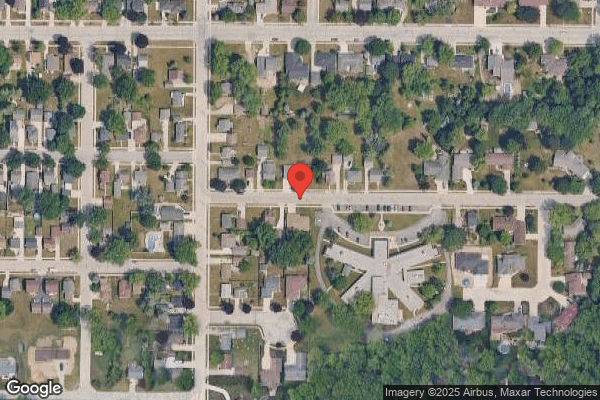
1201 GARFIELD AVE, LITTLE CHUTE, WI 54140 (920) 788-5806
For profit - Corporation 50 Beds NORTH SHORE HEALTHCARE Data: November 2025 1 Immediate Jeopardy citation
Trust Grade
58/100
#100 of 321 in WI
Last Inspection: April 2025

Within standard 12-15 month inspection cycle. Federal law requires annual inspections.

Overview

Little Chute Health Services has a Trust Grade of C, indicating it is average compared to other facilities. It ranks #100 out of 321 nursing homes in Wisconsin, placing it in the top half, but #5 out of 7 in Outagamie County suggests there are better local options. Unfortunately, the facility's trend is worsening, as the number of reported issues increased from 3 in 2024 to 8 in 2025. Staffing is a strength with a 4 out of 5-star rating and a turnover rate of 40%, which is below the state average, indicating that staff are generally stable. However, the facility faces concerns with $30,109 in fines, which is average, and it has critical incidents such as failing to provide adequate supervision for a resident at risk of elopement and not consistently following hot water safety protocols, both of which could pose risks to residents' safety.

Trust Score
C
58/100
In Wisconsin
#100/321
Top 31%
Safety Record
High Risk
Review needed
Inspections
Getting Worse
3 → 8 violations
Staff Stability
○ Average
40% turnover. Near Wisconsin's 48% average. Typical for the industry.
Penalties
○ Average
$30,109 in fines. Higher than 69% of Wisconsin facilities. Some compliance issues.
Skilled Nurses
✓ Good
Each resident gets 60 minutes of Registered Nurse (RN) attention daily — more than 97% of Wisconsin nursing homes. RNs are the most trained staff who catch health problems before they become serious.
Violations
⚠ Watch
14 deficiencies on record. Higher than average. Multiple issues found across inspections.
★★★★☆
4.0
Overall Rating
★★★★☆
4.0
Staff Levels
★★★☆☆
3.0
Care Quality
★★★★☆
4.0
Inspection Score
Stable
2024: 3 issues
2025: 8 issues

The Good

  • 4-Star Staffing Rating · Above-average nurse staffing levels
  • Full Sprinkler Coverage · Fire safety systems throughout facility
  • No fines on record
  • Staff turnover below average (40%)

    8 points below Wisconsin average of 48%

Facility shows strength in staffing levels, fire safety.

The Bad

Staff Turnover: 40%

Near Wisconsin avg (46%)

Typical for the industry

Federal Fines: $30,109

Below median ($33,413)

Moderate penalties - review what triggered them

Chain: NORTH SHORE HEALTHCARE

Part of a multi-facility chain

Ask about local staffing decisions and management

The Ugly 14 deficiencies on record

1 life-threatening
Jul 2025 2 deficiencies
CONCERN (D) 📢 Someone Reported This

A family member, employee, or ombudsman was alarmed enough to file a formal complaint

Potential for Harm - no one hurt, but risky conditions existed

Quality of Care (Tag F0684)

Could have caused harm · This affected 1 resident

**NOTE- TERMS IN BRACKETS HAVE BEEN EDITED TO PROTECT CONFIDENTIALITY** Based on observation, staff interview, and record review, the facility did not ensure the appropriate care and treatment regardi...

Read full inspector narrative →
**NOTE- TERMS IN BRACKETS HAVE BEEN EDITED TO PROTECT CONFIDENTIALITY** Based on observation, staff interview, and record review, the facility did not ensure the appropriate care and treatment regarding dressing changes and lab work was provided for 2 residents (R) (R3 and R9) of 3 sampled residents.Staff did not complete R3's peripherally inserted central catheter (PICC) line dressing change as ordered. In addition, R3's weekly labs were not completed as ordered.Staff did not complete R9's PICC line dressing change as ordered. Findings include:The facility's Dressing Change for Vascular Access Devices policy, revised 10/2024, indicates: Purpose: To prevent local and systemic infection related to the intravenous (IV) catheter .A sterile dressing is maintained on all peripheral and central vascular access devices to protect the site, provide a microbial barrier, and to provide vascular access device securement .3. Central venous access device and peripheral midline dressings are changed every 7 days and immediately if the integrity of the dressing is compromised, if moisture, drainage, or blood is present, or for further assessment if infection is suspected. Transparent semi-permeable membrane dressings are changed every 7 days and as needed (PRN). 4. Initial dressings after catheter placement will be changed PRN if saturated, and 24-48 hours post insertion of midlines, PICCS, or other central venous access devices if gauze is present under the dressing and/or there is blood/drainage under the dressing. Initial dressing with Biopatch/Guardiva at the site may be left in place for 7 days unless it is saturated or the dressing is otherwise compromised. 1.On 7/23/25, Surveyor reviewed R3's medical record. R3 was admitted to the facility on [DATE] and had diagnoses including osteomyelitis of right tibia and fibula, infection of amputation stump and right lower extremity, and acquired absence of right leg below the knee. R3's Minimum Data Set (MDS) assessment, dated 5/22/25, had a Brief Interview for Mental Status (BIMS) score of 12 out of 15 which indicated R3 had intact cognition. R3 had a Power of Attorney for Healthcare (POAHC). R3's medical record contained the following order:~ PICC dressing change: Change catheter site dressing with transparent dressing as needed and one time a day every Monday (initiated 5/15/25).R3's Medication Administration Record (MAR) and Treatment Administration Record (TAR) contained orders for a weekly PICC line dressing change. Staff documented PICC line dressing changes on 5/19/25 and 5/26/25. There was no documentation that dressing changes were completed on 6/9/25 and 6/16/25. R3's PICC line dressing was changed at the infectious disease clinic on 6/2/25. On 7/23/25 at 10:15 AM, Surveyor interviewed Infectious Disease Registered Nurse (IDRN)-F and confirmed R3's PICC line dressing was changed at R3's infectious disease appointment on 6/16/25.On 7/23/25 at 11:48 AM, Surveyor interviewed Director or Nursing (DON)-B who confirmed R3's PICC line dressing was changed by facility staff on 5/19/25 and 5/26/25 but was not changed by facility staff the week of 6/9/25 or 6/16/25. DON-B confirmed R3's PICC line dressing was changed by clinic staff on 6/2/25 and was due to be changed on 6/9/25. DON-B indicated PICC line dressings should be changed weekly or as needed and stated R3's PICC line was discontinued on 6/23/25. 2. R3's medical record contained the following laboratory orders:~ Hospital discharge order (start date 5/15/25): Weekly lab draw CBC w/ diff, Creatinine, ALT, CRP, ESR.~ Infectious disease order (start date 6/2/25): Continue weekly labs.~ Facility order (start date 5/20/25): Lab Draw: CBC w/ diff, Creatinine, ALT, CRP, ESR every day shift every Tuesday until 6/16/25. R3's medical record indicated labs were drawn on 5/19/25, 5/27/25, 6/3/25, and 6/10/25 and results were received. R3's medical record did not indicate labs were drawn the week of 6/16/25. On 7/23/25 at 11:48 AM, Surveyor interviewed DON-B who confirmed R3's labs were not drawn the week of 6/16/25 because the order staff entered was discontinued in error on 6/16/25. DON-B indicated the facility received an order from the infectious disease clinic on 6/2/25 to continue weekly labs with no end date. On 7/23/25 at 2:00 PM, Surveyor interviewed DON-B who indicated the facility does not have a policy for laboratory orders and drawing lab work. 2. On 7/23/25, Surveyor reviewed R9's medical record. R9 was admitted to the facility on [DATE] and had diagnoses including bacteremia and atrial fibrillation. R9's MDS assessment, dated 6/11/25, had a BIMS score of 14 out of 15 which indicated R9 had intact cognition. R9 was responsible for R9's healthcare decisions.R9's medical record contained the following order:~ Change PICC line dressing per sterile technique one time a day every 7 day(s) for PICC line maintenance (start date 6/17/25; discontinued 7/1/25).R9's MAR and TAR contained orders for a weekly PICC line dressing change on Mondays and as needed. There was no documentation that R9's PICC line dressing was changed on 6/18/25 or 6/25/25.On 7/23/25 at 12:27 PM, Surveyor interviewed DON-B who indicated R9's PICC line dressing was changed by Registered Nurse (RN)-D on 6/18/25 and 6/26/25 but the dressing changes were not documented. DON-B indicated if a dressing change is not documented it is considered not completed. DON-B indicated PICC line dressings should be changed weekly or as needed if the dressing is soiled.
CONCERN (D) 📢 Someone Reported This

A family member, employee, or ombudsman was alarmed enough to file a formal complaint

Potential for Harm - no one hurt, but risky conditions existed

Accident Prevention (Tag F0689)

Could have caused harm · This affected 1 resident

**NOTE- TERMS IN BRACKETS HAVE BEEN EDITED TO PROTECT CONFIDENTIALITY** Based on staff and resident interview and record review, the facility did not ensure adequate supervision was implemented for 1 ...

Read full inspector narrative →
**NOTE- TERMS IN BRACKETS HAVE BEEN EDITED TO PROTECT CONFIDENTIALITY** Based on staff and resident interview and record review, the facility did not ensure adequate supervision was implemented for 1 resident (R) (R2) of 8 sampled residents.On 7/1/25, R8 reported to Registered Nurse (RN)-E that R2 rubbed R8's arm and made sexual statements to R8 including What size are your breasts? and Can I feel your breasts? The facility did not place R2 on supervision to prevent reoccurrence. On 7/13/25, RN-E witnessed R2 rubbing R1's arm. RN-E intervened and R1 indicated that R1 squeezed R2's breasts. R2 was placed on 1:1 supervision following the incident.Findings include:The facility's Abuse, Neglect and Exploitation policy, dated 7/15/22, indicates the facility will implement policies and procedures to prevent and prohibit all types of abuse, neglect, misappropriation of resident property, and exploitation that achieves .B. Identifying, correcting, and intervening in situations in which abuse .is more likely to occur with the deployment of trained and qualified, registered, licensed, and certified staff to meet the needs of the resident and assure that the staff assigned have knowledge of the individual resident's care needs and behavioral symptoms .D. The identification, ongoing assessment, care planning for appropriate interventions, and monitoring of residents with needs and behaviors which might lead to conflict or neglect .Possible indicators of abuse include but are not limited to .5. Verbal abuse of a resident overheard, or inappropriate verbal conducted overheard.On 7/23/25, Surveyor reviewed a facility-reported incident (FRI) that indicated RN-E observed R2 rubbing R1's arm on 7/13/25. RN-E observed the interaction from down the hall and immediately intervened and separated R1 and R2. RN-E interviewed R1 who stated R2 had hands on me like this and visually squeezed R1's breasts with R1's hands. R2 was placed on 1:1 supervision. From 7/23/25 to 7/24/25, Surveyor reviewed R1's medical record. R1 was admitted to the facility on [DATE] and had diagnoses including schizophreniform disorder. R1's Minimum Data Set (MDS) assessment, dated 5/28/25, had a Brief Interview for Mental Status (BIMS) score of 8 out of 15 which indicated R1 had moderately impaired cognition. R1 had a Guardian for healthcare decisions.From 7/23/25 to 7/24/25, Surveyor reviewed R2's medical record. R2 was admitted to the facility on [DATE] and had diagnoses including dementia with other behavioral disturbance, depression, and anxiety disorder. R2's MDS assessment, dated 4/22/25, had a BIMS score of 9 out of 15 which indicated R2 had moderately impaired cognition. R2 had a Guardian for healthcare decisions. A care plan, revised 8/7/24, indicated R2 was at risk for behavior symptoms related to depression/anxiety, impaired cognition with history of touching staff inappropriately during personal cares and had a history of making sexual comments to staff due to sexual dysfunction and advancing dementia. A care plan, revised 2/4/25, indicated R2 had a history of inappropriate verbal and physical behavior related to cognitive impairment and displayed the following behaviors: Asking female staff to get in bed with R2; Asking female staff to lift up their shirt; Physically touching female staffs' breasts, pubic region, and buttocks. The care plan also indicated R2 had a history of entering a female resident's room without permission and touched the resident's leg without permission. A progress note in R2's medical record, dated 7/1/25 and written by RN-E, stated R2 rubbed the back of R8's hand and stated, What size are your breasts? R8 stated to R2, You are very inappropriate. R2 then asked, Can I feel your breasts? R8 reported the incident to RN-E.From 7/23/25 to 7/24/25, Surveyor reviewed R8's medical record. R8 was admitted to the facility on [DATE] and had diagnoses including spinal stenosis, type 2 diabetes, congestive heart failure, and insomnia. R8's MDS assessment, dated 6/11/25, had a BIMS score of 15 out of 15 which indicated R8 had intact cognition. R8 was responsible for R8's healthcare decisions.On 7/23/25 at 11:21 AM, Surveyor interviewed Nursing Home Administrator (NHA)-A who stated the 7/1/25 note written by RN-E was inaccurate. NHA-A indicated R2 and R8 brushed past each other in their wheelchairs in the hallway. NHA-A indicated Assistant Director of Nursing (ADON)-C followed-up with RN-E on proper documentation and Director of Nursing (DON)-B followed-up with R8 who stated R2 never touched R8 and the statements R2 made occurred a long time ago, not on 7/1/25. On 7/23/25 at 11:51 AM, Surveyor interviewed R8 who stated R2 made inappropriate statements to R8 in the past, but not recently. R8 denied R2 touched R8 recently. R8 indicated R8 was not concerned with R2, denied any distress, and stated staff were usually with R2. On 7/23/25, Surveyor reviewed facility documentation that indicated DON-B followed-up with R8 on 7/2/25. R8 stated R2 did not touch R8 but did say that R8 had large breasts. R8 denied any mental or emotional distress regarding interactions with R2. R8 indicated to DON-B that R2 was old and did not know any better. On 7/23/25 at 2:46 PM, Surveyor interviewed NHA-A and DON-B. DON-B stated R8 verified that R2 made inappropriate statements to R8, however, R8 indicated the statements were made in the past. On 7/23/25 at 3:02 PM, Surveyor interviewed RN-E via phone. RN-E stated RN-E did not witness anything on 7/1/25 but charted what R8 reported to RN-E. RN-E indicated R8 denied that R2 touched R8 but confirmed that R2 made inappropriate statements on 7/1/25. RN-E stated R8 was not distressed by the events and told R2 the statements were inappropriate. RN-E reported the event to ADON-C. On 7/23/25 at 3:18 PM, Surveyor interviewed ADON-C who confirmed RN-E informed ADON-C of the incident on 7/1/25 and ADON-C was on the phone with RN-E when RN-E interviewed R8. ADON-C stated R8 indicated R2 touched R8 on the arm years ago. ADON-C stated R8 confirmed that R2 made inappropriate statements on 7/1/25.R2's care plan goals, revised 7/1/25, indicated R2 would reduce the number of sexual comments made to staff, would not initiate contact of a sexual nature with residents, and would not make sexual comments to residents. The care plan did not include safety measures or interventions following the incident on 7/1/25. On 7/24/25 at 9:11 AM, Surveyor interviewed NHA-A who stated no new interventions were implemented following the incident on 7/1/25 because R2's care plan already contained appropriate interventions and the facility did not think additional interventions were needed. NHA-A stated R8 is alert and oriented and able to report that nothing occurred on 7/1/25. NHA-A stated R2 stays in R2's room the majority of the day and staff are aware they should keep an eye on R2 when R2 is out of the room. NHA-A stated education was provided to RN-E on proper documentation. NHA-A acknowledged the facility could have done more following the incident on 7/1/25, including having RN-E document clarification of the note in R2's medical record to prevent miscommunication.
Jun 2025 1 deficiency
CONCERN (D) 📢 Someone Reported This

A family member, employee, or ombudsman was alarmed enough to file a formal complaint

Potential for Harm - no one hurt, but risky conditions existed

Deficiency F0657 (Tag F0657)

Could have caused harm · This affected 1 resident

**NOTE- TERMS IN BRACKETS HAVE BEEN EDITED TO PROTECT CONFIDENTIALITY** Based on staff interview and record review, the facility did not revise the comprehensive plan of care to reflect personal care ...

Read full inspector narrative →
**NOTE- TERMS IN BRACKETS HAVE BEEN EDITED TO PROTECT CONFIDENTIALITY** Based on staff interview and record review, the facility did not revise the comprehensive plan of care to reflect personal care needs for 1 resident (R) (R2) of 1 sampled resident. R2's care plan did not reflect specialized techniques of care that R2 required with activities of daily living. Findings include: The facility's Comprehensive Care Plan policy, revised 9/23/22, indicates: It is the policy of this facility to develop and implement a comprehensive person-centered care plan for each resident .5. The comprehensive care plan will be reviewed and revised as appropriate by the interdisciplinary team after each Comprehensive and Quarterly Minimum Data Set (MDS) assessment and as needed with change in condition . On 6/13/25 at 9:20 AM, Surveyor reviewed R2's medical record. R2 was admitted to the facility on [DATE] and had diagnoses including cerebral vascular accident with right-sided hemiplegia, dysphagia, aphasia, depression, cognitive communication deficit, and epilepsy. R2's MDS assessment, dated 3/24/25, had a Brief Interview for Mental Status (BIMS) score of 0 out of 15 which indicated R2 had severe cognitive impairment. On 6/13/25 at 10:22 AM, Surveyor interviewed R2 who indicated staff were not gentle with R2 during cares. R2 did not want Surveyor to observe cares and did not want to provide any further details. On 6/13/25 at 12:22 PM, Surveyor interviewed Certified Nursing Assistant (CNA)-D who indicated R2 had right-sided weakness and staff should be careful during care since R2 had right arm pain with movement. CNA-D indicated R2 had same routine every day. CNA-D indicated CNA-D described each step of care to R2 during the process and carefully lifted R2's right arm due to R2's complaints of right arm pain with movement. CNA-D indicated R2 became easily frustrated if R2 was rushed and had confusion at times. CNA-D indicated it was important to ask if R2 needed a rest during cares. CNA-D indicated R2 often refused cares and only complained of right arm pain with movement. On 6/13/25 at 12:30 PM, Surveyor interviewed Licensed Practical Nurse (LPN)-E who indicated R2 had right-sided weakness and staff needed to work slowly and provide step-by-step explanation to R2 during care. On 6/13/25 at 1:13 PM, Surveyor interviewed CNA-F who indicated R2 required explicit explanation with each action during personal care because R2 got worked up with what to do next. CNA-F indicated R2's arm could be sore so it was necessary to monitor for pain and inform R2 whenever the arm would be lifted. CNA-F indicated R2 built up anxiousness during personal cares and the process could scare R2. CNA-F indicated once personal cares were completed, R2 had no complaints of pain. CNA-F indicated R2's personal care needs could be shared in shift report, however, CNA-F could not identify where specific actions to take during R2's cares were documented. On 6/13/25 at 2:05 PM, Surveyor interviewed CNA-G who indicated R2 tried not to move the right side if possible. CNA-G indicated it was important to talk through the care process while completing cares. CNA-G indicated R2 did not complain of right arm pain, however, CNA-G would contact the nurse if R2 reported any pain. On 6/13/25 at 2:09 PM, Surveyor interviewed CNA-H who indicated it was important to be extra careful with R2's right arm during personal cares because R2's right arm was sore. Surveyor noted R2's care plan, dated 6/11/25, indicated R2 had a right-sided deficit but did not provide patient-centered care technique specific to R2's needs during personal cares including to provide a detailed explanation prior to each step of the process, to provide care slowly and gently, to offer breaks during care, and to monitor for signs of increased frustration. The care plan also indicated R2 had muscle spasms and at times could shake R2's head yes/no when asked if having pain, however, R2 was inconsistent with reporting pain. A risk for difficulty in communication section contained an intervention for staff to explain each activity prior to starting it. On 6/13/25 at 1:50 PM, Surveyor interviewed [NAME] President of Success (VPS)-C, Director of Nursing (DON)-B, and Nursing Home Administrator (NHA)-A. VPS-C indicated R2's care plan addressed following personal choices. DON-B indicated staff were trained on techniques to provide care to a resident with deficits and R2 could express pain. NHA-A stated R2's mood goal indicated to offer choices to enhance a sense of control.
Apr 2025 5 deficiencies
CONCERN (D)

Potential for Harm - no one hurt, but risky conditions existed

ADL Care (Tag F0677)

Could have caused harm · This affected 1 resident

**NOTE- TERMS IN BRACKETS HAVE BEEN EDITED TO PROTECT CONFIDENTIALITY** Based on observation, staff and resident interview, and record review, the facility did not ensure nail care was provided for 1 ...

Read full inspector narrative →
**NOTE- TERMS IN BRACKETS HAVE BEEN EDITED TO PROTECT CONFIDENTIALITY** Based on observation, staff and resident interview, and record review, the facility did not ensure nail care was provided for 1 resident (R) (R21) of two sampled residents. R21's fingernails were not trimmed per R21's request. Findings include: From 3/30/25 to 4/1/25, Surveyor reviewed R21's medical record. R21 was admitted to the facility on [DATE] and had a diagnosis of quadriplegia. R21's most recent Minimum Data Set (MDS) assessment, dated 3/14/25, indicated R21 had intact cognition. R21's plan of care, dated 3/20/25, indicated R21 had an activity of daily living (ADL) self-care deficit and was dependent on staff to complete ADLs due to physical limitations secondary to transverse myelitis quadriplegia. R21's plan of care also indicated R21 was at risk for alteration in skin integrity related to impaired mobility and contained interventions for personal hygiene assist of one, bathing/showering assist of one, and to be extra careful when trimming R21's nails due to abnormal nails and build-up under the nails. R21 had a nursing order, dated 3/16/25, for weekly vital signs, weight, and nail care every Sunday. On 3/30/25 at 11:14 AM, Surveyor interviewed R21 who indicated R21 asked staff to trim R21's fingernails on 3/29/25. R21 indicated R21's fingernails were not trimmed and were longer than R21 preferred. R21 indicated R21 left the facility for a family gathering on 3/30/25 and wanted R21's nails trimmed prior to the gathering. On 4/1/25 at 11:20 AM, Surveyor interviewed R21 who indicated R21 asked several staff members to trim R21's fingernails over the previous several days. R21 indicated R21's fingernails still had not been trimmed and were longer than R21 preferred. On 4/1/25 at 12:23 PM, Surveyor interviewed Registered Nurse (RN)-G who had completed nail care for R21 in the past but had not trimmed R21's nails in several months due to a change in job duties. RN-G indicated all nurses can provide nail care and nursing staff are expected to address nail care on shower days as part of the bath care check list. RN-G confirmed R21 asked RN-G to trim R21's nails on 3/29/25, however, RN-G did not provide nail care for R21. On 4/1/25 at 1:33 PM, Surveyor interviewed Director of Nursing (DON)-B who indicated the facility does not have a policy specific to nail care or grooming. DON-B indicated nail care is not routinely documented. DON-B indicated staff should complete nail care on shower days and confirmed R21's shower days were Thursday and Sunday. On 4/1/25 at 4:40 PM, Surveyor observed R21's fingernails and noted they extended approximately two millimeters past the fingertip. R21 confirmed staff had not yet trimmed R21's nails which were longer than R21 preferred. R21 referred to R21's fingernails as claws.
CONCERN (D)

Potential for Harm - no one hurt, but risky conditions existed

Deficiency F0757 (Tag F0757)

Could have caused harm · This affected 1 resident

**NOTE- TERMS IN BRACKETS HAVE BEEN EDITED TO PROTECT CONFIDENTIALITY** Based on staff interview and record review, the facility did not ensure 2 residents (R) (R7 and R16) of 6 sampled residents were...

Read full inspector narrative →
**NOTE- TERMS IN BRACKETS HAVE BEEN EDITED TO PROTECT CONFIDENTIALITY** Based on staff interview and record review, the facility did not ensure 2 residents (R) (R7 and R16) of 6 sampled residents were monitored for adverse reactions to high-risk medications. R7 was prescribed furosemide (a diuretic medication) for edema (swelling). R7 was not monitored for adverse reactions to the high-risk medication. R16 was prescribed cefazolin (an antibiotic medication) for infection. R16 was not monitored for adverse reactions to the high-risk medication. Findings include: The facility's Medication Management policy, dated 1/2025, indicates: Each resident's drug regimen is reviewed to ensure it is free from unnecessary drugs. This includes any drug: .for excessive duration, without adequate monitoring .in the presence of adverse consequences which indicate the dose should be reduced or discontinued; or any combination of these reasons. Medication management is based on the care process and includes recognition or identification of the problem/need .management/treatment, monitoring, and revising interventions .In order to optimize the therapeutic benefit of medication therapy and minimize or prevent potential adverse consequences, facility staff, the attending physician/prescriber, and the consultant pharmacist perform ongoing monitoring for appropriate, effective, and safe medication use .The facility's medication management supports and promotes .evaluation of a resident's physical, behavioral, mental, and psychosocial signs and symptoms in order to identify the underlying cause(s), including adverse consequences of medications; selection and use of medications in doses and for the duration appropriate to each resident's clinical conditions, age, and underlying causes of symptoms and based on assessing relative risks and benefits .permit use to the lowest possible dose or allow medication to be discontinued; and the monitoring of medications for efficacy and adverse consequences. To address the issue of antimicrobial stewardship, the center has developed an antimicrobial stewardship program that will optimize the treatment of infections while reducing the adverse events associated with antibiotic use .The facility assures that residents are being adequately monitored for adverse consequences . The facility's Antibiotic Stewardship Program policy, revised 11/18/22, indicates: .3. Licensed nurses participate in the program through assessment of residents and following protocols as established by the program. 4. The program includes antibiotic use protocols and a system to monitor antibiotic use .b) Monitoring antibiotic use: i. Monitor response to antibiotics .iv. Monitor during each monthly medication regimen review when the resident has been prescribed or is taking an antibiotic . 1. From 3/30/25 to 4/1/25, Surveyor reviewed R7's medical record. R7 was admitted to the facility on [DATE] and had diagnoses including heart failure, high blood pressure, and diabetes. R7's Minimum Data Set (MDS) assessment, dated 2/13/25, had a Brief Interview for Mental Status (BIMS) score of 14 out of 15 which indicated R7 was not cognitively impaired. R7 was responsible for R7's healthcare decisions. R7's medical record contained a physician order for furosemide 20 milligrams once daily for edema. On 3/31/25 at 3:18 PM, Surveyor interviewed Director of Nursing (DON)-B who indicated monitoring for adverse reactions to furosemide should be in R7's care plan. DON-B indicated the facility was in the process of changing high-risk medication monitoring from medication administration records (MARs) and treatment administration records (TARs) to residents' care plans. On 4/1/25 at 1:32 PM, Surveyor requested a diuretic/congestive heart failure/high blood pressure management policy. [NAME] President of Success (VPS)-C indicated the facility does not have a policy specific to diuretic/congestive heart failure/high blood pressure management. 2. From 3/30/25 to 4/1/25, Surveyor reviewed R16's medical record. R16 was admitted to the facility on [DATE] and had diagnoses including intraspinal abscess and granuloma (spinal cord bacterial infection and inflammation), end stage renal disease, and dependence on renal dialysis. R16's MDS assessment, dated 3/5/25, had a BIMS score of 8 out of 15 which indicated R16 had moderately impaired cognition. R16 was responsible for R16's healthcare decisions. R16's medical record indicated R16 was prescribed cefazolin 2 grams on Tuesdays and Thursdays and 3 grams on Saturdays administered at dialysis. R16's medical record did not indicate staff monitored R16 for adverse reactions to the antibiotic medication. On 3/31/25, Surveyor reviewed R16's MAR which contained monitoring for adverse reactions to antibiotic medication with a start date of 3/31/25 at 10:00 PM. On 3/31/25 at 3:16 PM, Surveyor interviewed DON-B who verified there was no antibiotic monitoring in R16's medical record prior to 3/31/25.
CONCERN (D)

Potential for Harm - no one hurt, but risky conditions existed

Medication Errors (Tag F0758)

Could have caused harm · This affected 1 resident

**NOTE- TERMS IN BRACKETS HAVE BEEN EDITED TO PROTECT CONFIDENTIALITY** Based on staff interview and record review, the facility did not ensure an as needed (PRN) psychotropic medication order for 1 r...

Read full inspector narrative →
**NOTE- TERMS IN BRACKETS HAVE BEEN EDITED TO PROTECT CONFIDENTIALITY** Based on staff interview and record review, the facility did not ensure an as needed (PRN) psychotropic medication order for 1 resident (R) (R7) of 5 sampled residents was discontinued after 14 days. R7 was prescribed lorazepam (an anti-anxiety medication) for anxiety. R7's PRN lorazepam order was not discontinued after 14 days and did not contain a stop date. Findings include: The facility's Medication Management policy, dated 1/2025, indicates: Each resident's drug regimen is reviewed to ensure it is free from unnecessary drugs. This includes any drug: .for excessive duration, without adequate monitoring .in the presence of adverse consequences which indicate the dose should be reduced or discontinued; or any combination of these reasons. Medication management is based on the care process and includes recognition or identification of the problem/need .management/treatment, monitoring, and revising interventions .In order to optimize the therapeutic benefit of medication therapy and minimize or prevent potential adverse consequences, facility staff, the attending physician/prescriber, and the consultant pharmacist perform ongoing monitoring for appropriate, effective, and safe medication use .The facility's medication management supports and promotes .evaluation of a resident's physical, behavioral, mental, and psychosocial signs and symptoms in order to identify the underlying cause(s), including adverse consequences of medications; selection and use of medications in doses and for the duration appropriate to each resident's clinical conditions, age, and underlying causes of symptoms and based on assessing relative risk and benefits .permit use to the lowest possible dose or allow medication to be discontinued; and the monitoring of medications for efficacy and adverse consequences .Additional specific guidelines are applied to psychotropic drugs which are defined as any drugs that affect brain activity associated with mental processes and behavior. This includes .anti-anxiety and hypnotics .1. Based on a comprehensive assessment of a resident, the facility must ensure: PRN (as needed) psychotropic drugs are limited to 14 days. Exception: If the attending physician or prescribing practitioner believes it is appropriate for the PRN order to be extended beyond 14 days, he or she should document their rationale in the resident's medical record and indicate the duration for the PRN order .The intent of the requirement is that: .PRN orders for psychotropic medications are only used when the medication is necessary and PRN use is limited .When monitoring residents receiving psychotropic medication, the facility must evaluate the effectiveness of the medication as well as look for potential adverse consequences .The facility assures that residents are being adequately monitored for adverse consequences . From 3/30/25 to 4/1/25, Surveyor reviewed R7's medical record. R7 was admitted to the facility on [DATE] and had diagnoses including depression, anxiety, and schizoaffective disorder. R7's Minimum Data Set (MDS) assessment, dated 2/13/25, had a Brief Interview for Mental Status (BIMS) score of 14 out of 15 which indicated R7 was not cognitively impaired. R7 was responsible for R7's healthcare decisions. R7's medical record contained a physician order for lorazepam 1 milligram, give 1 tablet by mouth every 24 hours as needed for anxiety. The order was started on 1/24/25 and did not contain a stop date. On 3/31/25, Surveyor reviewed a fax from R7's Primary Care Provider ((PCP)-N), dated 2/20/25, that indicated a message was sent to PCP-N to discontinue PRN lorazepam for R7 due to non use The request to discontinue R7's PRN lorazepam was not addressed. On 3/31/25 at 3:18 PM, Surveyor interviewed Director of Nursing (DON)-B who indicated the facility was struggling to obtain a stop date for R7's PRN lorazepam from PCP-N. DON-B indicated staff faxed PCP-N's office but PCP-N's office wanted staff to email instead; however PCP-N did not respond with a stop date.
CONCERN (D)

Potential for Harm - no one hurt, but risky conditions existed

Deficiency F0804 (Tag F0804)

Could have caused harm · This affected 1 resident

**NOTE- TERMS IN BRACKETS HAVE BEEN EDITED TO PROTECT CONFIDENTIALITY** Based on observation, staff and resident interview, and record review, the facility did not ensure food was served in a manner t...

Read full inspector narrative →
**NOTE- TERMS IN BRACKETS HAVE BEEN EDITED TO PROTECT CONFIDENTIALITY** Based on observation, staff and resident interview, and record review, the facility did not ensure food was served in a manner that conserved palatability and temperature for 1 resident (R) (R21) of 14 sampled residents. The facility served R21's meals at an unappetizing temperature. Findings include: The 2022 Federal Food and Drug Administration (FDA) Food Code documents at 3-501.16: Bacterial growth and/or toxin production can occur if time/temperature control for safety food remains in the temperature danger zone of 5 degrees Celsius (C) to 57 degrees C (41 degrees Fahrenheit (F) to 135 degrees F) too long. From 3/30/25 to 4/1/25, Surveyor reviewed R21's medical record. R21 was admitted to the facility on [DATE] and had a diagnosis of quadriplegia. R21's most recent Minimum Data Set (MDS) assessment, dated 3/14/25, indicated R21 had intact cognition. A care plan, dated 3/20/25, indicated R21 was at risk for nutritional status change related to congestive heart failure and quadriplegia and was dependent on staff for oral intake. On 3/30/25 at 11:14 AM, Surveyor interviewed R21 who indicated meals are rarely served hot and food is typically lukewarm. R21 indicated R21's meal tray is delivered and left on the bedside table until a staff is available to assist. R21 indicated meal trays have been on R21's bedside table for up to an hour before staff arrived to feed R21. On 4/1/25, Surveyor reviewed the facility's posted meal service times and noted breakfast for R21's unit was scheduled to be delivered at 7:50 AM. Surveyor noted R21's unit was the first unit to receive meal trays. On 4/1/25 at 8:05 AM, Surveyor noted a breakfast tray was delivered to R21's room and was on the bedside table. On 4/1/25 at 8:28 AM, Surveyor observed Certified Nurse Assistant (CNA)-K enter R21's room to feed R21. CNA-K indicated meal trays are delivered to all residents before staff assist residents with eating. On 4/1/25 at 8:31 AM, Surveyor observed Dietary Manager (DM)-L temp a cup of milk (which was at 43 degrees F) on R21's breakfast tray. DM-L confirmed milk should be held at less than 41 degrees F. R21 indicated the waffle on R21's breakfast tray was not warm. On 4/1/25 at 9:06 AM, Surveyor interviewed CNA-M who indicated meal trays on R21's unit are the first trays delivered. CNA-M confirmed all trays are delivered prior to CNAs assisting residents with eating. On 4/1/25 at 9:11 AM, Surveyor interviewed CNA-F who confirmed R21's unit is the first unit to receive meal trays. CNA-F confirmed all meal trays are distributed before residents are assisted with eating. CNA-F indicated several residents reported their food got cold while they waited for assistance. CNA-F indicated R21 reported on multiple occasions that R21's food got cold while R21 waited to be fed. CNA-F did not assist R21 with filing a grievance for the cold food. CNA-F indicated CNA-F took R21's tray back to the kitchen on several occasions to reheat the food prior to feeding R21. On 4/1/25 at 9:41 AM, Surveyor interviewed Director of Nursing (DON)-B who indicated the facility does not have a policy specific to feeding assistance. DON-B indicated CNAs should leave meal trays covered and in the service cart until staff are ready to assist residents. DON-B was not aware R21 had concerns about meal trays left on R21's bedside table for extended periods of time.
CONCERN (D)

Potential for Harm - no one hurt, but risky conditions existed

Infection Control (Tag F0880)

Could have caused harm · This affected 1 resident

**NOTE- TERMS IN BRACKETS HAVE BEEN EDITED TO PROTECT CONFIDENTIALITY** Based on observation, staff interview, and record review, the facility did not maintain an infection prevention and control prog...

Read full inspector narrative →
**NOTE- TERMS IN BRACKETS HAVE BEEN EDITED TO PROTECT CONFIDENTIALITY** Based on observation, staff interview, and record review, the facility did not maintain an infection prevention and control program designed to prevent the transmission of communicable disease and infection for 1 resident (R) (R138) of 14 sampled residents. R138 was on enhanced barrier precautions (EBP) which require staff to wear personal protective equipment (PPE) during high-contact resident cares. On 3/31/25, staff provided care, transferred, and disconnected R138's tube feeding without donning the appropriate PPE. In addition, there was not an EBP sign posted on or near R138's door. Findings include: The facility's Enhanced Barrier Precautions policy, revised 8/8/24, indicates: It is the policy of this facility to implement enhanced barrier precautions for the prevention of transmission of multidrug-resistant organisms (MDROs) .Enhanced barrier precautions (EBP) refer to an infection control intervention designed to reduce the transmission of multidrug-resistant organisms that employs targeted gown and glove use during high-contact resident care activities .3. Implementation of EBP .b. Personal protective equipment (PPE) for EBP is only necessary when performing high-contact care activities and may not need to be donned prior to entering the resident's room .4. High-contact resident care activities include: a. dressing, b. bathing, c. transferring, d. providing hygiene, e. changing linens, f. changing briefs or assisting with toileting, g. device care or use: central lines, urinary catheters, feeding tubes .5. EBP should be followed outside the resident's room when performing transfers and assisting during bathing in a shared/common shower room and when working with residents in the therapy gym, specifically when anticipating close physical contact while assisting with transfers and mobility. In general, gowns and gloves would not be recommended when performing transfers in common areas such as dining or activity rooms where contact is anticipated to be shorter in duration .EBP should be used for the duration of the affected resident's stay in the facility or until resolution of the wound or discontinuation of the indwelling medical device that placed them at higher risk. From 3/30/25 to 4/1/25, Surveyor reviewed R138's medical record. R138 was admitted to the facility on [DATE] and had diagnoses including hemiplegia and hemiparesis following cerebral infarction (stroke), dysphagia, retention of urine, gastrostomy, and myocardial infarction (heart attack). R138 had an indwelling Foley catheter and percutaneous endoscopic gastrostomy (PEG) tube (a feeding tube). R138's Minimum Data Set (MDS) assessment, dated 3/27/25, indicated R138 had severely impaired cognition. R138 had a Guardian. R138's medical record contained a physician order for a nothing per oral (NPO) diet and an enteral feeding order for continuous feed (dated 3/21/25). R138's medical record also contained an order for EBP due to PEG tube (dated 3/22/25). On 3/30/25 at 10:24 AM, Surveyor observed a PPE cart outside R138's door but did not observe an EBP sign on or near R138's door. On 3/31/25 at 9:56 AM, Surveyor noted R138's tube feeding was paused. Rehab Director (RD)-P and Certified Nursing Assistants (CNA)-F and CNA-O were present. CNA-F and CNA-O were completing cares and preparing to transfer R138 from bed to wheelchair. On 3/31/25 at 10:01 AM, Surveyor observed Licensed Practical Nurse (LPN)-E complete hand hygiene and don gloves prior to entering R138's room to disconnect R138's tube feeding from the PEG site so staff could transfer R138. LPN-E did not don a gown. On 3/31/25 at 10:03 AM, Surveyor interviewed LPN-E, RD-P, CNA-F, and CNA-O and asked if R138 was on precautions. LPN-E and CNA-O initially indicated R138 was not on precautions. LPN-E indicated R138 had an indwelling Foley catheter but did not have an infection and was not on precautions. When Surveyor asked about EBP, LPN-E indicated R138 should be on EBP due to R138's Foley catheter and PEG tube. LPN-E confirmed none of the staff present had on the appropriate PPE except gloves. LPN-E and CNA-F confirmed there was not an EBP sign outside R138's door. On 3/31/25 at 11:20 AM, Surveyor interviewed Director of Nursing (DON)-B who confirmed R138 was on EBP. DON-B indicated staff should follow EBP guidelines and don the appropriate PPE due to R138's Foley catheter and PEG tube. On 4/1/25 at 10:27 AM, Surveyor interviewed DON-B and Nursing Home Administrator (NHA)-A who indicated staff education for EBP was started yesterday prior to Surveyor informing DON-B about Surveyor's observations on 3/30/25 and 3/31/25. On 4/1/25 at 1:31 PM, Surveyor interviewed DON-B regarding when EBP education started on 3/31/25. DON-B indicated EBP education was started between 7:00 AM and 7:30 AM when DON-B realized there was not an EBP sign outside R138's door. DON-B confirmed the EBP education sheet contained a date but did not contain a time.
Mar 2024 2 deficiencies 1 IJ
CRITICAL (J) 📢 Someone Reported This

A family member, employee, or ombudsman was alarmed enough to file a formal complaint

Immediate Jeopardy (IJ) - the most serious Medicare violation

Accident Prevention (Tag F0689)

Someone could have died · This affected 1 resident

**NOTE- TERMS IN BRACKETS HAVE BEEN EDITED TO PROTECT CONFIDENTIALITY** Based on staff interview and record review, the facility did not ensure adequate supervision was provided for 1 resident (R) (R...

Read full inspector narrative →
**NOTE- TERMS IN BRACKETS HAVE BEEN EDITED TO PROTECT CONFIDENTIALITY** Based on staff interview and record review, the facility did not ensure adequate supervision was provided for 1 resident (R) (R89) of 1 resident reviewed for elopement. Upon admission on [DATE], R89 was assessed to be at risk for elopement and a wanderguard (a security device that triggers an alarm if the wearer exits the facility) was placed on R89's right ankle. On 2/10/24 at 9:00 AM, a community member altered staff that R89 was a few blocks away from the facility. Staff were unaware R89 left the facility but were able to locate R89 and bring him back to the facility. An assessment indicated R89 had no injuries. The failure to provide adequate supervision created a finding of Immediate Jeopardy (IJ) which began on 2/10/24. Surveyor notified Nursing Home Administrator (NHA)-A of the immediate jeopardy on 3/25/24 at 3:30 PM. The immediate jeopardy was removed and corrected on 2/10/24. Findings include: The facility's Elopement/Unsafe Wandering policy, with a review date of 8/9/22, indicates: This facility ensures that residents who exhibit wandering behavior and/or are at risk for elopement receive adequate supervision to prevent accidents and receive care in accordance with their person-centered plan of care addressing the unique factors contributing to wandering or elopement risk . On 3/25/24, Surveyor reviewed R89's medical record. R89 was admitted to the facility on [DATE] with diagnoses including cellulitis (infection of the skin and the soft tissues underneath) of both upper limbs, Alzheimer's disease, diabetes mellitus (a disease in which blood sugar levels are too high,) and superficial frostbite of both hands. R89's Minimum Data Set (MDS) assessment, dated 2/12/24, contained a Brief Interview for Mental Status (BIMS) score of 5 out of 15 which indicated R89 had severe cognitive impairment. R89's medical record indicated R89's Power of Attorney for Healthcare (POAHC) was responsible for R89's healthcare decisions. R89 was discharged from the facility on 2/26/24. R89's care plan, initiated on 2/5/24, indicated R89 was an elopement risk/wanderer and a wanderguard was placed on R89's right ankle. R89's care plan was revised on 2/6/24 with the following interventions: provide structured activities as (R89) allows, redirect/reorient as needed/appropriate, and (R89) has 1-on-1 staff and must be within eyesight at all times through review date, except when (R89) is in (R89's) room. At that time, designated staff can sit outside (R89's) door as (R89) has a private room and private bathroom with only one exit door. R89's care plan was revised on 2/10/24 and contained the following intervention: (R89) has a 1-on-1 staff placed. On 3/25/24, Surveyor reviewed the facility's investigation which indicated: Upon admission to the facility, R89's wander risk assessment indicated R89 was at risk for wandering. A wanderguard was placed on R89. On 2/6/24 (the day after admission), R89 kissed another resident upon that resident's request .R89 was placed on 1:1 supervision related to the event as R89 adjusted to a new setting. 1:1 supervision was initiated while R89 was awake. At night, a motion sensor was placed on R89's door to alert staff if R89 exited the room .On 2/10/24 at approximately 9:00 AM, a neighbor of the facility came to the facility and spoke with Business Office Manager (BOM)-C. The neighbor stated they saw a person walking behind a wheelchair down the road and asked if it was a resident of the facility. Upon receiving the report, BOM-C informed nursing staff and requested a CNA (Certified Nursing Assistant) ride with BOM-C to identify the person. A head count was done. Approximately 10 minutes later, BOM-C and the CNA returned with R89 who was dressed in pants, shirts, a jacket, socks, one shoe on one foot, and a gripper sock on the other foot. The weather was sunny and 35 degrees. R89 did not present with any signs of injury. BOM-C stated upon entering the facility through the front doors, R89's wanderguard alarmed. R89 was placed on 1:1 supervision and the nurse completed an assessment. R89 did not sustain any injury. BOM-C checked the alarm panel at the nurse's station and noted the clear box that covered the panel was removed and the switch for the back door (leading to the parking lot) was disengaged. BOM-C engaged the switch and placed the clear box over the panel. BOM-C then went to the door and noted the alarm box on the top right corner of the door was shut off. The alarm was placed to provide a louder decibel when the door was opened. The disengaged alarm panel was on a door that staff used to take the garbage out. BOM-C turned the alarm box on. Immediate education was initiated and was ongoing. NHA-A and the Director of Nursing (DON) reviewed the schedule to identify staff who were assigned to provide 1:1 supervision for R89. NHA-A and the DON did not see that a staff member was assigned to provide 1:1 supervision .Scheduler (SCH)-H received immediate education related to the expectations when scheduling 1:1 supervision. The investigation indicated police were notified, other residents were reviewed and assessed for elopement risk, and staff were interviewed. The investigation contained proof the Scheduler and all staff were educated on the 1:1 process and the trash removal process, including a new process where only certain staff are allowed to disable alarms and staff must be placed at the door for security if the alarms aren't functioning. Elopement drills were conducted and 1:1 schedule audits were completed on each shift. The investigation did not include the address of the house where R89 was found. On 3/25/24 at 12:11 PM, Surveyor opened the back door and activated the alarm. Surveyor observed staff respond immediately to the alarm and wait for a manager to silence the alarm. The investigation included BOM-C's signed statement, dated 2/10/24, that indicated: Upon arriving on [NAME] Street, R89 was spotted walking on the side of the road pushing R89's wheelchair and approaching a person in their driveway. R89 walked up the driveway and started talking to the person. BOM-C and the CNA introduced themselves to the person R89 was talking to and stated they were from the facility. BOM-C and the CNA offered R89 a ride back to the facility. R89 did not appear to have any injuries and accepted the ride. The investigation included SCH-H's signed statement, dated 2/10/24, that indicated: I was notified that (R89) needed to be scheduled with a 1:1 staff for the foreseeable future on 2/6/2024 following an incident with (R89) and another resident. In attempts to get the 1:1 covered, I was not able to get a facility staff member or agency staff member to pick up the shift on Saturday morning, but had the schedule filled for the remainder of the weekend and Monday as a 1:1 with (R89). I did not realize that scheduling the 1:1 placed with (R89) at all times took precedence over scheduling CNAs to care for all of the other residents in the building. On 3/25/24, Surveyor reviewed a map of Little Chute and noted there was a wooded area behind the facility (on the side of the facility where R89 exited) and a river beyond the wooded area. The map indicated [NAME] Avenue was approximately three blocks from the front entrance of the facility. On 3/25/24 at 10:56 AM, Surveyor interviewed BOM-C who could not recall the address of the house where R89 was found but indicated the house was approximately 4 blocks from the facility. BOM-C stated the house was blue and near the intersection of [NAME] Avenue and Roosevelt Street. BOM-C indicated the house was on the opposite side of [NAME] Avenue and verified R89 had to cross [NAME] Avenue at some point. BOM-C indicated the weather on 2/20/24 was sunny, partly cloudy, and cold. BOM-C verified R89 willingly came back to the facility. On 3/25/24 at 1:27 PM, Surveyor interviewed CNA-D who verified CNA-D went with BOM-C to assist R89 back to the facility. CNA-D indicated CNA-D was assigned to R89's unit on 2/10/24. CNA-D indicated CNA-D assisted R89 to the dining room (which was in the same hall as the door R89 exited through) at approximately 8:00 AM. CNA-D stated R89 attempted to go into the kitchen several times, needed to be redirected, and was super quick. CNA-D could not recall when CNA-D started assisting other residents back to their rooms after breakfast and could not recall if any staff members were in the dining room during that time. CNA-D indicated CNA-D did not know R89 was gone from the facility until the neighbor informed staff. CNA-D stated R89 was found approximately three or four blocks from the facility and verified R89 came back to the facility willingly. CNA-D stated, (R89) was freezing. As far as I know, (R89) was wearing a bigger sweatshirt. I don't recall (R89) having a jacket on. CNA-D indicated R89 was wearing sweatpants and a sweatshirt with a shoe on one foot and a gripper sock on whatever foot (R89) had toes amputated. CNA-D indicated it was not made clear to CNA-D that someone had to stay with R89 at all times. CNA-D indicated whoever was scheduled on 1:1 duty for R89 never showed and nothing was communicated to CNA-D that CNA-D needed to stay with R89. On 3/25/24 at 2:00 PM, Surveyor interviewed CNA-G who verified CNA-G worked the AM shift on 2/10/24. CNA-G indicated the last time CNA-G saw R89 before CNA-G was notified that R89 left the facility without staffs' knowledge was before breakfast when CNA-G observed R89 sitting by the nurses' station. CNA-G verified the staff assigned to 1:1 duty for R89 did not show up for work. CNA-G did not recall a discussion about adjusting duties or tasks to provide 1:1 supervision for R89. CNA-G indicated CNA-G was not assigned to R89's wing. On 3/25/24 at 2:36 PM, Surveyor interviewed [NAME] President of Success (VPS)-E who indicated after talking to all staff involved, NHA-A and DON-B determined R89 was out of the building for approximately 10 minutes. On 3/25/24 at 4:00 PM, Surveyor drove to the house near the intersection of [NAME] Avenue and Roosevelt Street as described in the above interview with BOM-C. Surveyor reviewed Maps on Surveyor's phone which indicated the house was 0.3 miles from the facility. The walking time between the facility and the house was listed as six minutes. Surveyor observed sidewalks on both sides of all streets in the area. The failure to provide adequate supervision for R89 created a reasonable likelihood for serious harm which created a finding of immediate jeopardy. The facility removed and corrected the jeopardy on 2/10/24 when it completed the following: 1. Initiated 1:1 supervision for R89. 2. Ensured door alarms were engaged and functioning. 2. Interviewed and assessed other residents for elopement risk. 3. Interviewed and educated staff on 1:1 scheduling and the 1:1 process, the trash removal process, and the new alarm process. 4. Completed elopement drills and 1:1 schedule audits on each shift.
CONCERN (D)

Potential for Harm - no one hurt, but risky conditions existed

Deficiency F0761 (Tag F0761)

Could have caused harm · This affected 1 resident

Based on observation, staff interview, and record review, the facility did not ensure all medications were labeled appropriately for 2 Residents (R) (R138 and R8) of 5 residents observed during medica...

Read full inspector narrative →
Based on observation, staff interview, and record review, the facility did not ensure all medications were labeled appropriately for 2 Residents (R) (R138 and R8) of 5 residents observed during medication administration. R138 was administered furosemide 40 mg (milligrams). The medication card was not labeled correctly. R8 was administered metoprolol succinate ER (extended release) 50 mg. The medication card was not labeled correctly. Findings include: The facility's Medication Ordering and Receiving From Pharmacy Provider policy and procedure, dated 1/23, indicates: .Each prescription medication will be labeled to include specific directions for use .3. Improperly or inaccurately labeled medications are refused and returned to the dispensing pharmacy. 1. On 3/26/24 at 9:00 AM, Surveyor observed Licensed Practical Nurse (LPN)-F administer medication to R138. LPN-F retrieved a medication card for R138 from the medication cart and handed the card to Surveyor. The medication card label read furosemide 40 mg one tablet daily. On 3/26/24, Surveyor reviewed R138's current physician order which stated furosemide 40 mg by mouth twice daily for edema. On 3/26/24 at 11:17 AM, Surveyor interviewed LPN-F who verified the medication card for R138 stated furosemide 40 mg daily and R138's physician order stated furosemide 40 mg twice daily. LPN-F verified the medication card label was incorrect. 2. On 3/26/24 at 9:15 AM, Surveyor observed LPN-F administer medication to R8. LPN-F retrieved a medication card for R8 from the medication cart and handed the card to Surveyor. The medication card label read metoprolol succinate ER 25 mg by mouth one tablet twice daily. On 3/26/24, Surveyor reviewed R8's current physician order which stated metoprolol succinate ER tab 24 (hour) 50 mg. Give 1 tab (by mouth) one time a day for (atrial fibrillation) rate control, (congestive heart failure), (hypertension) = 75 mg dose. Of note, R138 also received metoprolol succinate ER 25 mg by mouth 1 tablet daily. On 3/26/24 at 11:24 AM, Surveyor interviewed LPN-F who verified the medication card for R8 stated metoprolol succinate ER 25 mg twice daily and R8's physician order stated metoprolol succinate ER on ce daily. LPN-F verified the medication card label was incorrect. On 3/26/24 at 12:44 PM, Surveyor interviewed Director of Nursing (DON)-B who verified DON-B was aware of medication card label errors. DON-B stated DON-B expected medication cards to be labeled correctly.
Jan 2024 1 deficiency
CONCERN (D) 📢 Someone Reported This

A family member, employee, or ombudsman was alarmed enough to file a formal complaint

Potential for Harm - no one hurt, but risky conditions existed

Abuse Prevention Policies (Tag F0607)

Could have caused harm · This affected 1 resident

Based on staff interview and record review, the facility did not implement their written policies and procedures to prohibit and prevent abuse for 1 (Certified Nursing Assistant (CNA)-C) of 8 facility...

Read full inspector narrative →
Based on staff interview and record review, the facility did not implement their written policies and procedures to prohibit and prevent abuse for 1 (Certified Nursing Assistant (CNA)-C) of 8 facility and contracted staff reviewed for caregiver background checks. The facility did not ensure a thorough and timely caregiver background check was completed for CNA-C. Findings include: The facility's Abuse, Neglect and Exploitation policy, with a review date of 7/15/22, indicated: It is the policy of this facility to provide protections for the health, welfare and rights of each resident by developing and implementing written policies and procedures that prohibit and prevent abuse, neglect, exploitation and misappropriation of resident property .Potential employees will be screened for a history of abuse, neglect, exploitation, or misappropriation of resident property. 1. Background, reference, and credentials checks shall be conducted on potential employees, contracted temporary staff, students affiliated with academic institutions, volunteers, and consultants. Background checks, including re-checks, will be completed consistent with applicable state laws and regulations .3. The facility will maintain documentation of proof that the screening occurred . On 1/10/24, Surveyor reviewed background check information for eight facility and contracted staff, including CNA-C who was hired on 12/1/19. Two Background Information Disclosure (BID) forms were provided for CNA-C, one dated 5/30/19 and one dated 11/23/19. An Integrated Background Information System (IBIS) letter, dated 5/30/19, was also provided. There were no Department of Justice (DOJ) criminal background check letters provided and no background check documents dated within the previous four years. On 1/10/24 at 1:08 PM, Surveyor interviewed Business Office Manager (BOM)-D who indicated BOM-D was responsible for the facility's Human Resources duties. BOM-D indicated the facility obtained BID forms, DOJ letters and IBIS letters on all employees upon hire, as well as proof of certification or licensure if required. BOM-D verified the facility was also required to complete background checks, including DOJ and IBIS letters, every four years. On 1/10/24 at 1:40 PM, Surveyor interviewed BOM-D who indicated CNA-C transferred to the facility from a sister facility. BOM-B verified the facility did not have a DOJ letter from CNA-C's hire and did not complete a background check, including DOJ and IBIS letters, for CNA-C within the previous four years. BOM-D indicated the facility completed an audit in early December 2023 to ensure the facility had all employee files on site, but verified the audit did not include verification that all required documents were in the files. On 1/10/24 at 2:18 PM, Surveyor interviewed Nursing Home Administrator (NHA)-A who verified the facility should complete the required background check process every four years for all employees. NHA-A indicated the facility did not have a policy regarding the frequency of background checks and stated, It's just the standard.
May 2023 1 deficiency
CONCERN (D) 📢 Someone Reported This

A family member, employee, or ombudsman was alarmed enough to file a formal complaint

Potential for Harm - no one hurt, but risky conditions existed

Notification of Changes (Tag F0580)

Could have caused harm · This affected 1 resident

**NOTE- TERMS IN BRACKETS HAVE BEEN EDITED TO PROTECT CONFIDENTIALITY** Based on staff interview and record review, the facility did not ensure a physician was notified of a change in condition for 1 ...

Read full inspector narrative →
**NOTE- TERMS IN BRACKETS HAVE BEEN EDITED TO PROTECT CONFIDENTIALITY** Based on staff interview and record review, the facility did not ensure a physician was notified of a change in condition for 1 Resident (R) (R1) of 5 residents. R1 complained of feeling feverish, developed an elevated temperature and stated R1's hand was not working properly. A physician was not notified of R1's elevated temperature or the concerns regarding R1's hand. Findings include: The facility's Change in Condition of the Resident policy, revised 9/20/22, contained the following information: When a resident presents with a possible change of condition, after a fall or other possible trauma, or noted changes in mental or physical functioning: 1. Assess the resident's need for immediate care/medical attention. Provide emergency care as needed. 2. Assess/evaluate the resident. This assessment/evaluation could include, but is not limited to, the following: a. Vital signs, oxygen saturation, blood glucose level .3. Notify resident's physician . On 5/31/23, Surveyor reviewed R1's medical record. R1 was admitted to the facility on [DATE] and discharged to the hospital on 5/19/23. R1 had diagnoses that included Multiple Sclerosis (MS), stage 4 pressure injury of the right buttocks, muscle weakness, major depressive disorder, and anxiety. R1's most recent Minimum Data Set (MDS) assessment contained a Brief Interview for Mental Status (BIMS) score of 14 out of 15 which indicated R1 had intact cognition. R1 required extensive assistance with most activities of daily living (ADLs). A progress note, dated 5/15/23 at 9:51 PM, indicated R1 complained of feeling feverish and stated when R1 gets an infection, R1's hand doesn't want to work. R1's temperature was 100.4 degrees and Morphine and Tylenol were given. R1's temperature was rechecked and R1 was afebrile at 98.4 degrees. R1's medical record did not indicate a physician was notified of R1's change in condition and proof of notification was not provided by the facility. On 5/31/23 at 3:28 PM, Surveyor interviewed Licensed Practical Nurse (LPN)-C who stated LPN-C would conduct a further assessment and update the physician for a temperature of 100.4 degrees or other complaints expressed by a resident. On 5/31/23 at 3:43 PM, Surveyor interviewed Director of Nursing (DON)-B who stated DON-B would notify the physician with a temperature of 100.4 degrees and staff should notify the physician with a temperature 2 degrees above normal for the resident.
Mar 2023 2 deficiencies
CONCERN (E)

Potential for Harm - no one hurt, but risky conditions existed

Accident Prevention (Tag F0689)

Could have caused harm · This affected multiple residents

**NOTE- TERMS IN BRACKETS HAVE BEEN EDITED TO PROTECT CONFIDENTIALITY** Based on observation, staff interview, and record review, the facility did not ensure hot water temperatures were in the accepta...

Read full inspector narrative →
**NOTE- TERMS IN BRACKETS HAVE BEEN EDITED TO PROTECT CONFIDENTIALITY** Based on observation, staff interview, and record review, the facility did not ensure hot water temperatures were in the acceptable range for 6 of 6 Resident (R) areas reviewed. In addition, a fall intervention was not consistently followed for 1 (R31) of 4 residents reviewed for falls. Hot water temperatures in resident areas were outside the range of 110 degrees to 115 degrees and posed a risk for burns. R31's care plan contained an intervention for a Dycem (a non-slip material) in R31's wheelchair. The intervention was not consistently implemented. Findings include: 1. Per Appendix PP in the State Operations Manual (SOM), the time it takes to acquire a 3rd degree burn at the water temperatures listed below is as follows: ~155° Fahrenheit (F) - 1 second ~148° F - 2 seconds ~140° F - 5 seconds ~124° F - 3 minutes ~120° F - 5 minutes ~100° F is a safe temperature for bathing though it is noted burns can occur even at water temperatures below those identified depending on an individual's condition and the length of exposure. In addition, the State of Wisconsin Code, DHS 132.83(7)(a)2 indicates: The temperature of hot water at plumbing fixtures used by residents may not exceed the range of 110-115° F. The facility has a boiler room above the J wing that contains 3 hot water tanks which feed hot water to various wings in the building. The building contains the following 5 wings: ~The H, K and L wings contains resident rooms. ~The I wing contains resident rooms and the shower room. ~The J wing contains the beauty shop and the kitchen. On 3/27/23 and 3/29/23, Surveyor reviewed hot water temperatures in each wing of the building and noted the following: ~On 3/27/23 at 8:49 AM, Surveyor washed hands in the handwashing sink in the kitchen. Surveyor noted the water was so hot, Surveyor immediately pulled Surveyor's hands out. Surveyor requested Dietary Manager (DM)-G temp the water which was 154.7 degrees F. ~03/27/23 at 10:00 AM, the hot water temperature in R29's bathroom was 122.4 degrees F. R29 stated in an interview it took awhile for the water to get hot, but once the water got hot, it got really hot. R29 resided on the L wing. ~On 3/27/23 at 10:05 AM, the hot water temperature in the shower room on the I wing was 121.6 degrees F when the hot water was fully on. Certified Nursing Assistant (CNA)-F stated in an interview that the water gets really hot and CNA-F doesn't fully turn on the hot water. CNA-F stated CNA-F lets residents feel the water before the water touches their body. ~On 3/27/23 at 12:53 PM, the hot water temperature in R28's bathroom was 123.2 degrees F. R28 stated R28 sometimes heated R28's coffee with the water. R28 resided on the K wing. ~On 3/28/23 at 2:39 PM, the hot water temperature in the hair washing sink in the beauty shop was 145 degrees F. An interview with Nursing Home Administrator (NHA)-A indicated the beauty shop was not used since NHA-A was hired in August of 2022; however, Surveyor noted the door was unlocked when NHA-A and Surveyor entered the room. NHA-A stated the door is unlocked so residents can access the beauty shop because the facility does not want to restrict residents from resident areas. On 3/29/23 at 12:03 PM, the hot water temperature in empty resident room (ER)-M was 123.4 F. ER-M was located on the H wing. ~On 3/29/23 at 12:06 PM, the hot water temperature in R30's bathroom was 120.4 degrees F. R30 resided on the H wing and did not express any concerns regarding water temperatures. On 3/28/23 at 1:27 PM, Surveyor interviewed Regional Maintenance Director (RMD)-D related to hot water temperatures who stated RMD-D liked to keep hot water temperatures in resident rooms between 110 and 115 degrees F. At that time, Surveyor, RMD-D and Maintenance Director (MD)-C viewed the hot water tanks in the boiler room. RMD-D stated the water in the hot water tanks should go to a mixing valve that is set at approximately 115 degrees F so by the time the water reaches its destination, the temperature is approximately 110 degrees F. Surveyor noted the mixing valve was set at 142 degrees F. In a subsequent interview with MD-C on 3/29/23 at 11:35 AM, MD-C stated MD-C did not think the mixing valve was working and needed to get a plumber to look at it. 2. The facility's Fall Prevention and Management Guidelines, last reviewed on 11/8/22, contained the following information: Each resident .will receive care and services in accordance with their individualized plan of care to minimize the likelihood of falls or reduce the possibility/severity of injury .The policy further indicates: 7. When any resident experiences a fall, the facility will review the resident's care plan and update with any new interventions put in place to try to prevent additional falls. R31 was admitted to the facility on [DATE] with diagnoses to include Alzheimer's disease, dementia, chronic obstructive pulmonary disease (COPD) and diabetes. R31's Minimum Data Set (MDS) assessment, dated 1/9/23, contained a Brief Interview for Mental Status (BIMS) score of 3 out of 15 which indicated R31 had severe cognitive impairment. R31's plan of care indicated R31 was at risk for falls and required the assistance of one staff for transfers. Between 3/27/23 and 3/29/23, Surveyor reviewed R31's medical record and noted the following: R31 had 5 falls between 12/1/22 and 1/14/22. On 12/15/22, R31 had a witnessed fall in which staff observed R31 fall between a chair and table while pushing a cart near the nurses' station. A Dycem in R31's wheelchair was added as a result of the fall. Surveyor noted R31's care plan was not updated with the intervention until 1/18/23. Surveyor also noted the Dycem was on R31's care plan, but was not on R31's [NAME] (an abberviated care plan) which Certified Nursing Assistant (CNA) staff often used to identify care needs for residents. On 3/29/23 at 11:13 AM, Surveyor interviewed CNA-O who stated CNA-O reviews residents' care needs in the computer, uses the [NAME] and also accesses residents' care plans for care needs and interventions. On 3/29/23 at 9:15 AM, Surveyor asked Assistant Director of Nursing (ADON)-N to feel underneath R31's cushion to determine if the Dycem was in place. ADON-N indicated ADON-N just started at the facility, but stated if R31's care plan contained an intervention for a Dycem, the Dycem should be there. Surveyor requested ADON-N have R31 stand up. On 3/29/23 at 9:32 AM, Surveyor observed ADON-N and CNA-O transfer R31 out of R31's wheelchair. Director of Nursing (DON)-B was also present. DON-B stated the Dycem should be under R31; however, the Dycem was small and R31 liked to hide things. When R31 stood up, Surveyor noted there was not a Dycem under R31. DON-B left the room, returned with a Dycem and placed the Dycem under R31. Surveyor interviewed DON-B who confirmed when R31 was seated in the wheelchair, it would be difficult for R31 to remove the Dycem. DON-B also stated staff should ensure the Dycem is under R31 prior to transferring R31 to the wheelchair.
CONCERN (F)

Potential for Harm - no one hurt, but risky conditions existed

Infection Control (Tag F0880)

Could have caused harm · This affected most or all residents

2. The facility's Hand Hygiene policy, dated 11/2/2022, contained the following information: All staff will perform hand hygiene procedures to prevent the spread of infection to other personnel, resid...

Read full inspector narrative →
2. The facility's Hand Hygiene policy, dated 11/2/2022, contained the following information: All staff will perform hand hygiene procedures to prevent the spread of infection to other personnel, residents, and visitors .Hand hygiene is indicated & will be performed under the conditions listed in, but not limited to, the attached hand hygiene table: * After handling contaminated objects. * Before applying and after removing personal protective equipment (PPE), including gloves. * Before and after handling clean or soiled dressings, linens, etc. * After handling items potentially contaminated with blood, body fluids, secretions, or excretions. * When, during resident care, moving from a contaminated body site to a clean body site. * After assistance with personal body functions (e.g., elimination, hair grooming, smoking). On 3/28/23 at 9:41 AM, Surveyor observed CNA-E provide incontinence care for R13. CNA-E cleansed hands and donned clean gloves. Surveyor noted R13 had a medium-large bowel movement. CNA-E removed R13's soiled brief, cleansed R13's peri area, disposed of the soiled brief in a garbage bag and tied the bag. Without removing gloves and cleansing hands, CNA-E placed a clean brief under R13 and retrieved a tube of DermaCerin cream from R13's closet. With the same soiled gloves, CNA-E applied DermaCerin to R13's peri area, fastened R13's brief and changed R13's shirt. CNA-E then removed soiled gloves. Without washing or sanitizing hands, CNA-E continued to touch multiple items in R13's room including R13's brief, DermaCerin tube, and clothing. Immediately following the observation, Surveyor interviewed CNA-E regarding hand hygiene. CNA-E verified CNA-E did not remove soiled gloves following incontinence care and prior to applying DermaCerin cream and touching multiple items in R13's room. CNA-E also verified CNA-E did not wash or sanitize hands following glove removal and prior to touching additional items in R13's room. On 3/29/23 at 11:26 AM, Surveyor interviewed Director of Nursing (DON)-B who stated DON-B expected staff to perform hand hygiene prior to donning gloves, in between glove changes, and following glove removal. DON-B stated staff should remove gloves following incontinence care, wash or sanitize hands, and don clean gloves before proceeding with care. Based on observation, staff interview, and record review, the facility did not establish and maintain an infection prevention and control program based on current standards of practice, designed to provide a safe environment and to help prevent the development and transmission of communicable disease and infection. This practice had the potential to affect all 33 residents residing in the facility. In addition, staff did perform appropriate hand hygiene during an observation of incontinence care for 1 resident (R) (R13) of 2 residents. The facility's Water Management Plan (WMP) was not based on current standards of practice and did not: - Describe the building's water system using text and an accurate flow diagram of the system. - Include an assessment of the facility's water system to identify all locations where Legionella could grow and spread. - Maintain acceptable ranges of control limits (temperature ranges) and corrective actions when control limits are not met. - Include a process to confirm the WMP is being implemented and is effective. As of 3/29/23, the facility did not have a system for preventing the growth and spread of Legionella in the facility's water system. During an observation of cares for R13, Certified Nursing Assistant (CNA)-E did not perform appropriate hand hygiene following glove removal before touching multiple surfaces and items. Findings include: The 7/6/18 revised Centers for Medicaid and Medicare Services (CMS) Quality, Safety and Oversight Letter 17-30 titled Requirement to Reduce Legionella Risk in Healthcare Facility Water Systems to Prevent Cases and Outbreaks of Legionnaires' Disease (LD) contains the following information: Facilities must have water management plans and documentation that, at a minimum, ensure each facility: - Conducts a facility risk assessment to identify where Legionella and other opportunistic waterborne pathogens (e.g., Pseudomonas, Acinetobacter, Burkholderia, Stenotrophomonas, nontuberculous mycobacteria, and fungi) could grow and spread in the facility's water system. - Develops and implements a water management program that considers the ASHRAE (American Society of Heating, Refrigerating and Air-Conditioning Engineers) industry standard and the CDC (Centers for Disease Control and Prevention) toolkit. - Specifies testing protocols and acceptable ranges for control measures and documents the results of testing and corrective actions taken when control limits are not maintained. The 6/24/21 CDC Toolkit titled Developing a Water Management Program to Reduce Legionella Growth & Spread in Buildings identifies the key elements of a water management program for healthcare facilities that include: 1. Establish a water management program team. 2. Describe the building water systems using text and flow diagrams. 3. Identify areas where Legionella could grow and spread. 4. Describe where control measures should be applied and how to monitor them. 5. Establish ways to intervene when control limits are not met. 6. Make sure the program is running as designed and is effective. 7. Document and communicate all the activities. The CDC's Core Infection Prevention and Control Practices for Safe Healthcare Delivery in All Settings located at https://www.cdc.gov/infectioncontrol/guidelines/core-practices/index.html#anchor_72633 contains the following information: This document concisely describes a core set of infection prevention and control practices that are required in all healthcare settings, regardless of the type of healthcare provided. The practices were selected from among existing CDC recommendations and are the subset that represent fundamental standards of care that are not expected to change based on emerging evidence or to be regularly altered by changes in technology or practices and are applicable across the continuum of healthcare settings . Core Practice Category 4. Performance Monitoring and Feedback notes: 1. Identify and monitor adherence to infection prevention practices and infection control requirements. 2. Provide prompt, regular feedback on adherence and related outcomes to healthcare personnel and facility leadership. 3. Train performance monitoring personnel and use standardized tools and definitions. 4. Monitor the incidence of infections that may be related to care provided at the facility and act on the data and use information collected through surveillance to detect transmission of infectious agents in the facility. The facility's Legionella Surveillance policy states hot water will be stored above 140 degrees and circulated at a minimum return temperature of 124 degrees. On 3/28/23 at 1:27 PM, Surveyor interviewed Maintenance Director (MD)-C and Regional Maintenance Director (RMD)-D where the facility's water tanks were located. There were 4 water tanks (1 holding tank and 3 hot water tanks). RMD-D was unsure where water was distributed from two of the tanks. The temperature was set at 120 degrees; however, RMD-D stated the temperature should be set at 160 degrees. The third tank from the left was marked as a laundry/kitchen hot water tank. The tank did not have a functioning temperature gauge and the water temperature was unknown. The tank on the right side was a new tank with a temperature reading of 160 degrees. RMD-D was unsure where the water from the tank was distributed in the facility. The mixing valve was set at 142 degrees which RMD-D stated was too high. RMD-D stated the mixing valve should be at 115 degrees so when water reaches the rooms, the temperature will be 108-111 degrees. MD-C and RMD-D were unsure if there was a water map for the facility and stated the water temperatures were not being checked. On 3/28/23 at 2:05 PM, Surveyor requested the facility's Water Management Plan. Surveyor was provided the facility's Legionella Surveillance Plan, dated 10/24/22. Surveyor requested the water plan assessment; however, a water plan assessment was not provided. On 3/29/23 at 10:17 AM, Surveyor interviewed Nursing Home Administrator (NHA)-A. Surveyor indicated RMD-D stated one of the hot water tanks was marked for laundry/kitchen; however, RMD-D was unsure where water was distributed from two of the hot water tanks. NHA-A indicated the other two hot water tanks distributed water to resident wings. NHA-A stated NHA-A had a water management plan with drawings and provided a document titled Water Management Plan, dated 1/31/23. The document did not include the name of the facility. NHA-A identified a pen drawing on page 2 of the document as the water system map. The drawing did not contain an accurate flow diagram of the water tanks and water flow system. The drawing contained three tanks and a mixing valve to the right of the last tank on the right; however, there were four tanks in the room and the mixing valve was located against the back wall between the second and third tanks. On 3/29/23 at 11:35 AM, Surveyor interviewed MD-C in the water tank room. When facing the water tanks, Surveyor noted (starting from the left) a black water holding tank (water temperature 124 degrees), a tan water heater tank set at 130 degrees, a light gray water heater tank marked laundry/kitchen set at 156 degrees, and a dark gray colored water heater tank set at 160 degrees. MD-C stated the mixing valve temperature gauge for the first two tanks was not working and, therefore the temperature at the site of the mixing valve was unknown. MD-C stated there was not a mixing valve for the two tanks on the right. The temperature for the second tank was set at 130 degrees; however, the temperature gauge was not functioning and the actual water temperature was unknown. The facility's beauty salon, located on the same wing as the laundry and kitchen, was not identified in the Water Management Plan as an area of concern for Legionella growth though the room was not being used. No preventative measures were being conducted in the beauty salon. The facility's Water Management Plan did not contain components of a thorough assessment of the water system and preventive and monitoring measures were not initiated.
Understanding Severity Codes (click to expand)
Life-Threatening (Immediate Jeopardy)
J - Isolated K - Pattern L - Widespread
Actual Harm
G - Isolated H - Pattern I - Widespread
Potential for Harm
D - Isolated E - Pattern F - Widespread
No Harm (Minor)
A - Isolated B - Pattern C - Widespread

Questions to Ask on Your Visit

  • "What changes have you made since the serious inspection findings?"
  • "Can I speak with families of current residents?"
  • "What's your RN coverage like on weekends and overnight?"

Our Honest Assessment

Strengths
  • • 40% turnover. Below Wisconsin's 48% average. Good staff retention means consistent care.
Concerns
  • • Multiple safety concerns identified: 1 life-threatening violation(s), $30,109 in fines. Review inspection reports carefully.
  • • 14 deficiencies on record, including 1 critical (life-threatening) violation. These warrant careful review before choosing this facility.
  • • $30,109 in fines. Higher than 94% of Wisconsin facilities, suggesting repeated compliance issues.
  • • Grade C (58/100). Below average facility with significant concerns.
Bottom line: Mixed indicators with Trust Score of 58/100. Visit in person and ask pointed questions.

About This Facility

What is Little Chute Health Services's CMS Rating?

CMS assigns LITTLE CHUTE HEALTH SERVICES an overall rating of 4 out of 5 stars, which is considered above average nationally. Within Wisconsin, this rating places the facility higher than 99% of the state's 100 nursing homes. This rating reflects solid performance across the metrics CMS uses to evaluate nursing home quality.

How is Little Chute Health Services Staffed?

CMS rates LITTLE CHUTE HEALTH SERVICES's staffing level at 4 out of 5 stars, which is above average compared to other nursing homes. Staff turnover is 40%, compared to the Wisconsin average of 46%. This relatively stable workforce can support continuity of care.

What Have Inspectors Found at Little Chute Health Services?

State health inspectors documented 14 deficiencies at LITTLE CHUTE HEALTH SERVICES during 2023 to 2025. These included: 1 Immediate Jeopardy (the most serious level, indicating potential for serious harm or death) and 13 with potential for harm. Immediate Jeopardy findings are rare and represent the most serious regulatory concerns. They require immediate corrective action.

Who Owns and Operates Little Chute Health Services?

LITTLE CHUTE HEALTH SERVICES is owned by a for-profit company. For-profit facilities operate as businesses with obligations to shareholders or private owners. The facility is operated by NORTH SHORE HEALTHCARE, a chain that manages multiple nursing homes. With 50 certified beds and approximately 36 residents (about 72% occupancy), it is a smaller facility located in LITTLE CHUTE, Wisconsin.

How Does Little Chute Health Services Compare to Other Wisconsin Nursing Homes?

Compared to the 100 nursing homes in Wisconsin, LITTLE CHUTE HEALTH SERVICES's overall rating (4 stars) is above the state average of 3.0, staff turnover (40%) is near the state average of 46%, and health inspection rating (4 stars) is above the national benchmark.

What Should Families Ask When Visiting Little Chute Health Services?

Based on this facility's data, families visiting should ask: "What changes have been made since the serious inspection findings, and how are you preventing similar issues?" "Can I visit during a mealtime to observe dining assistance and food quality?" "How do you handle medical emergencies, and what is your hospital transfer rate?" "Can I speak with family members of current residents about their experience?" These questions are particularly relevant given the facility's Immediate Jeopardy citations.

Is Little Chute Health Services Safe?

Based on CMS inspection data, LITTLE CHUTE HEALTH SERVICES has documented safety concerns. Inspectors have issued 1 Immediate Jeopardy citation (the most serious violation level indicating risk of serious injury or death). The facility has a 4-star overall rating and ranks #1 of 100 nursing homes in Wisconsin. Families considering this facility should ask detailed questions about what corrective actions have been taken since these incidents.

Do Nurses at Little Chute Health Services Stick Around?

LITTLE CHUTE HEALTH SERVICES has a staff turnover rate of 40%, which is about average for Wisconsin nursing homes (state average: 46%). Moderate turnover is common in nursing homes, but families should still ask about staff tenure and how the facility maintains care continuity when employees leave.

Was Little Chute Health Services Ever Fined?

LITTLE CHUTE HEALTH SERVICES has been fined $30,109 across 2 penalty actions. This is below the Wisconsin average of $33,380. While any fine indicates a compliance issue, fines under $50,000 are relatively common and typically reflect isolated problems that were subsequently corrected. Families should ask what specific issues led to these fines and confirm they've been resolved.

Is Little Chute Health Services on Any Federal Watch List?

LITTLE CHUTE HEALTH SERVICES is not on any federal watch list. The most significant is the Special Focus Facility (SFF) program, which identifies the bottom 1% of nursing homes nationally based on persistent, serious quality problems. Not being on this list means the facility has avoided the pattern of deficiencies that triggers enhanced federal oversight. This is a positive indicator, though families should still review the facility's inspection history directly.