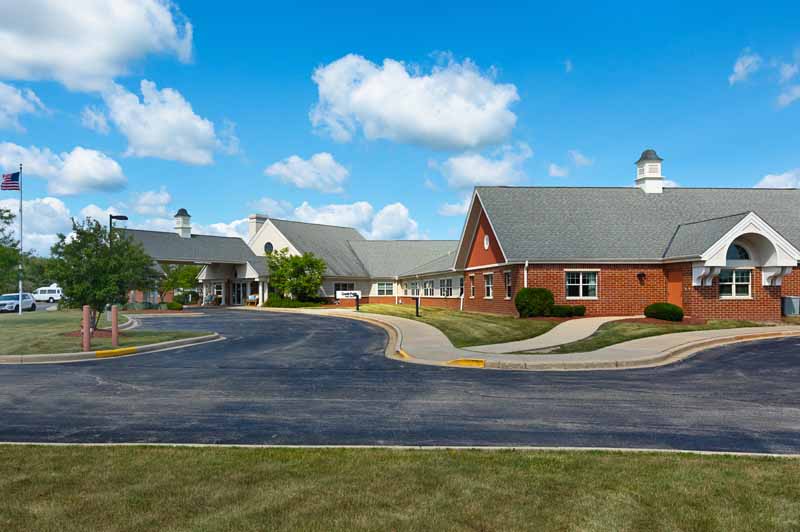
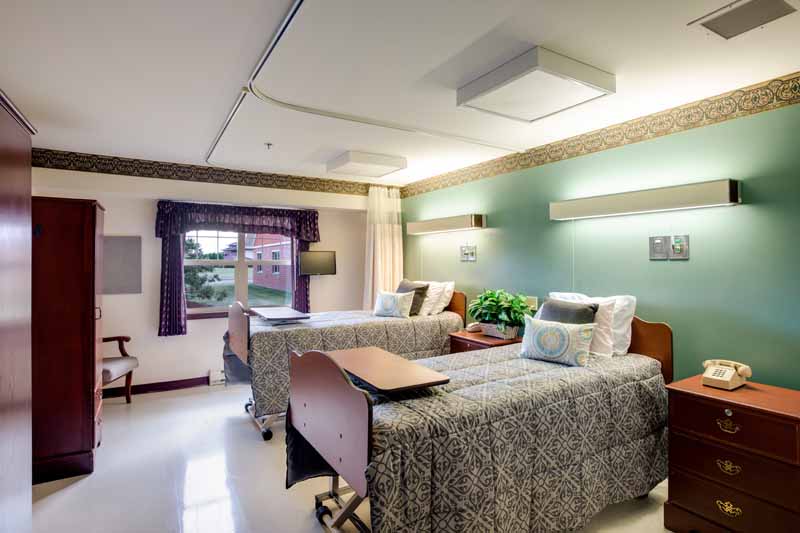
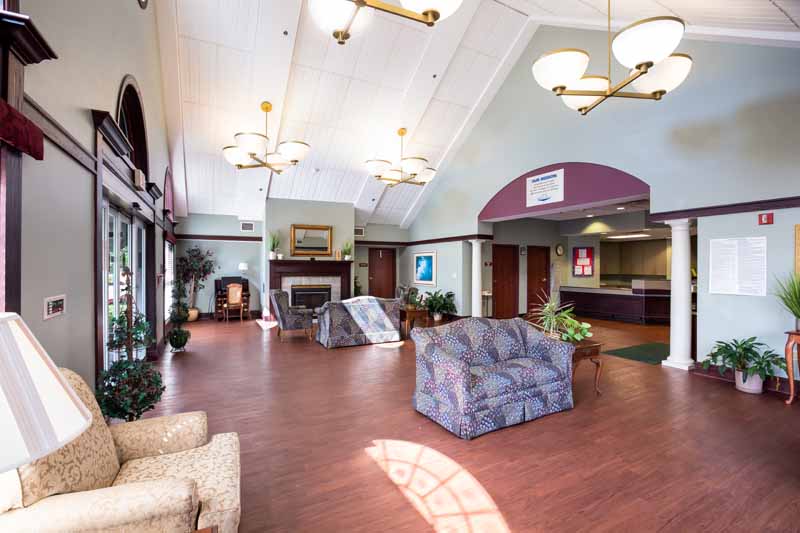
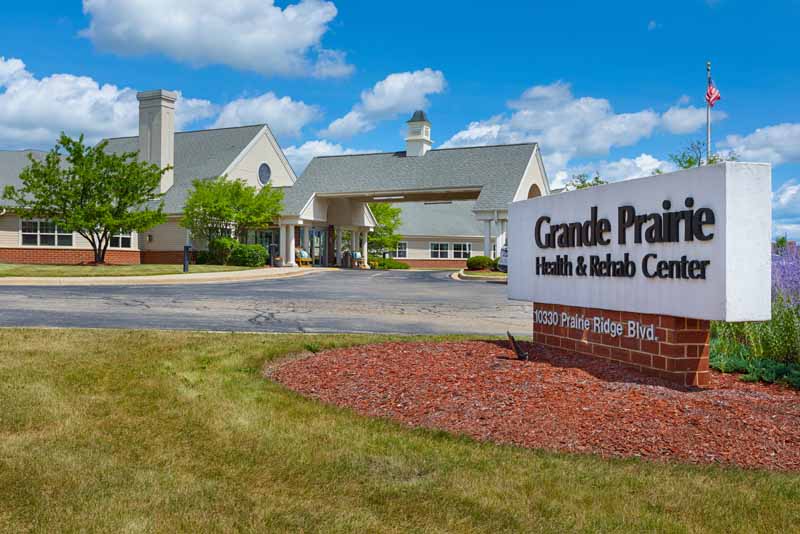
Complete Care at Grande Prairie

10330 Prairie Ridge Blvd., Pleasant Prairie, WI 53158 (262) 612-2800
For profit - Partnership 118 Beds COMPLETE CARE Data: November 2025 3 Immediate Jeopardy citations
Trust Grade
0/100
#268 of 321 in WI
Last Inspection: November 2024

Within standard 12-15 month inspection cycle. Federal law requires annual inspections.

Overview

Complete Care at Grande Prairie in Pleasant Prairie, Wisconsin, has received a Trust Grade of F, which indicates significant concerns about the care provided-essentially, this facility is rated poorly. It ranks #268 out of 321 facilities in the state, placing it in the bottom half, and it is #5 out of 7 in Kenosha County, meaning just two local options are better. While the facility is improving, with issues decreasing from 8 in 2024 to 4 in 2025, it still faces serious challenges, as evidenced by $232,090 in fines, which is concerning and higher than 88% of Wisconsin facilities. Staffing is average with a 3/5 rating, and turnover is at 47%, which is in line with the state average. However, there are critical concerns, including failures to investigate allegations of abuse and a lack of proper care assessments that have led to severe incidents, such as a resident being found unresponsive after not receiving appropriate monitoring. Overall, while there are some areas of improvement, the facility has significant weaknesses that families should carefully consider.

Trust Score
F
0/100
In Wisconsin
#268/321
Bottom 17%
Safety Record
High Risk
Review needed
Inspections
Getting Better
8 → 4 violations
Staff Stability
⚠ Watch
47% turnover. Above average. Higher turnover means staff may not know residents' routines.
Penalties
⚠ Watch
$232,090 in fines. Higher than 85% of Wisconsin facilities, suggesting repeated compliance issues.
Skilled Nurses
✓ Good
Each resident gets 43 minutes of Registered Nurse (RN) attention daily — more than average for Wisconsin. RNs are trained to catch health problems early.
Violations
⚠ Watch
41 deficiencies on record. Higher than average. Multiple issues found across inspections.
★☆☆☆☆
1.0
Overall Rating
★★★☆☆
3.0
Staff Levels
★★★☆☆
3.0
Care Quality
★☆☆☆☆
1.0
Inspection Score
Stable
2024: 8 issues
2025: 4 issues

The Good

  • Full Sprinkler Coverage · Fire safety systems throughout facility
  • No fines on record

Facility shows strength in fire safety.

The Bad

1-Star Overall Rating

Below Wisconsin average (3.0)

Significant quality concerns identified by CMS

Staff Turnover: 47%

Near Wisconsin avg (46%)

Higher turnover may affect care consistency

Federal Fines: $232,090

Well above median ($33,413)

Significant penalties indicating serious issues

Chain: COMPLETE CARE

Part of a multi-facility chain

Ask about local staffing decisions and management

The Ugly 41 deficiencies on record

3 life-threatening 4 actual harm
Mar 2025 4 deficiencies 1 IJ (1 affecting multiple)
CRITICAL (K) 📢 Someone Reported This

A family member, employee, or ombudsman was alarmed enough to file a formal complaint

Immediate Jeopardy (IJ) - the most serious Medicare violation

Investigate Abuse (Tag F0610)

Someone could have died · This affected multiple residents

**NOTE- TERMS IN BRACKETS HAVE BEEN EDITED TO PROTECT CONFIDENTIALITY** Based on interview and record review, the facility did not thoroughly investigate 2 of 4 allegations of abuse involving resident...

Read full inspector narrative →
**NOTE- TERMS IN BRACKETS HAVE BEEN EDITED TO PROTECT CONFIDENTIALITY** Based on interview and record review, the facility did not thoroughly investigate 2 of 4 allegations of abuse involving residents (R) (R5 and R1) and did not take steps to prevent further potential abuse while an investigation was in progress. The facility was made aware of an incident involving allegations of abuse that occurred involving R5 and two staff members. The facility did not investigate the incident causing R5 to be fearful and cautious. R5 sought evaluation and treatment for left knee pain following the incident. The staff member alleged to have abused R5 was allowed to work approximately 46 shifts following the incident, resulting in R5 and other residents to not be safeguarded from additional potential abuse. The facility's failure to thoroughly investigate allegations of abuse allowed accused staff to continue working with residents following the incident resulting in the failure to safeguard residents from potential further abuse. These failures created a finding of Immediate Jeopardy that began on 01/13/2025 . Nursing Home Administrator (NHA)-A and Director of Nursing (DON)-B were notified of the Immediate Jeopardy on 03/19/2025 at 12:16 PM. The Immediate Jeopardy was removed on 3/20/25, however the deficient practice continues at a scope/severity of D (potential for harm/isolated) due to the following example: *On 3/3/2025, the facility investigated allegations of sexual abuse for R1. The CNA was allowed to work 2 additional weeks at the facility while the investigation was in progress. These deficient practices has the potential to affect the residents on the unit which CNA-J was working on after the alleged incident. Findings include: The facility's policy titled Abuse, Neglect and Exploitation, dated as reviewed/revised on 10/2024, documents: Definitions: Abuse means the willful infliction of injury, unreasonable confinement, intimidation or punishment with resulting physical harm, pain or mental anguish, which can include staff to resident abuse and certain resident to resident altercations .Instances of abuse of all residents, irrespective of any mental or physical condition, cause physical harm, pain or mental anguish. It includes verbal abuse, sexual abuse, physical abuse, and mental abuse including abuse facilitated or enabled through the use of technology. Alleged Violation is a situation or occurrence that is observed or reported by staff, resident, relative, visitor or others that has not yet been investigated and if verified, could be an indication of noncompliance with Federal requirements related to mistreatment, exploitation, neglect, or abuse . Mistreatment means inappropriate treatment or exploitation of a resident . Physical Abuse includes, but is not limited to hitting slapping punching biting and kicking. It also includes controlling behavior through corporal punishment. Serious bodily injury means an injury involving extreme physical pain; involving substantial risk of death; involving protracted loss or impairment of the function of a bodily member, organ, or mental faculty; requiring medical intervention such as surgery, hospitalization, or physical rehabilitation; or an injury resulting from criminal sexual abuse . Policy Explanation and Compliance Guidelines: 1. The facility will develop and implement written policies and procedures that: a. Prohibit and prevent abuse, neglect, and exploitation of residents and misappropriation of resident property; b. Establish policies and procedures to investigate any such allegations; . The components of the facility abuse prohibition plan are discussed herein: . V. Investigation of alleged abuse, neglect and exploitation A. An immediate investigation is warranted when suspicion of abuse, neglect or exploitation, or reports of abuse, neglect or exploitation occur VI. Protection of resident The facility will make efforts to ensure all residents are protected from physical and psychosocial harm, as well as additional abuse, during and after an investigation. Examples include but are not limited to: A. Responding immediately to protect the alleged victim in integrity of the investigation: . D. Room or staffing changes, if necessary, to protect the residents from the alleged perpetrator; E. Protection from retaliation by perpetrator. 1.) R5 was admitted to the facility on [DATE] with diagnoses that included chronic obstructive pulmonary disease, unspecified dementia without disturbance, psychotic disturbance, mood disturbance and anxiety, pain in right knee, pain in left knee, anxiety disorder, peripheral vascular disease, pain in right wrist, pain in left shoulder, and rotator cuff tear or rupture of left shoulder. R5's Annual Minimum Data Set (MDS), dated [DATE], documents R5 is able to understand and be understood and a staff assessment for mental status was conducted which documented R5 has a memory problem but was able to recall current season, location of own room, staff names and faces, and he/she is in a nursing home/hospital swing bed. The MDS documents R5 has modified independence-some difficulty in new situations only, R5 has no behaviors/rejection of care exhibited, uses a walker, and is not on antipsychotic drug therapy. R5's Quarterly MDS dated [DATE], documents a staff assessment for mental status was conducted and that R5 has a memory problem but was able to recall current season, location of own room, staff names and faces, and he/she is in a nursing home/hospital swing bed. The MDS documents R5 has modified independence-some difficulty in new situations only, R5 has no behaviors/rejection of care exhibited, uses a walker, and is not on antipsychotic drug therapy. On 03/17/2025 at 08:50 AM, Surveyor interviewed R5. R5 informed Surveyor R5 was attacked in the doorway to kitchen by a named staff member, later identified as Certified Nursing Assistant (CNA)-J. Surveyor asked R5 what led up to the incident and R5 indicated being unsure and stated CNA-J is a belligerent and stupid person. R5 indicated that Adult Protective Services (APS) came to the facility and spoke with R5. R5 was unsure who notified APS and indicated there were many witnesses. R5 informed Surveyor CNA-J told R5 that Director of Nursing (DON)-B said R5 could not come in the kitchen. R5 indicated speaking with DON-B regarding the incident and was told it would be taken care of. R5 informed Surveyor R5 was hurt during the incident and had pain to left rib cage, left shoulder, and left foot. R5 stated R5 does not feel safe at the facility, the incident is not taken care of and stated, I was abused! R5 stated R5 is fearful and is very careful with what R5 says and does now in the facility. Surveyor reviewed staff roster for the last name of the staff member R5 identified. Surveyor noted 2 staff with that last name, so Surveyor interviewed one of the two staff members with the same last name and was able to determine that the individual alleged to have been in altercation with R5 was CNA-J. On 03/17/2025 at 10:42 AM, Surveyor spoke with Director of Dietary-N. Director of Dietary-N was not here the day of the incident but knows of incident involving R5. Director of Dietary-N was informed the following day by a DA-M who witnessed the incident between CNA-J and R5. On 03/17/2025 at 10:45 AM, Director of Dietary-N called DA-M via telephone. DA-M indicated on the day of the incident, dietary staff were getting ready to serve dinner, when R5 came to get ice. DA-M stated DA-M heard CNA-J saying, get away from there. DA-M then saw that CNA-J had the resident by the forearm area, then pushed the cart away aggressively trying to get the drink from R5's hand. DA-M stated CNA-J then pushed R5 and the cart, and R5 fell into the door. DA-M stepped in between resident and CNA-J. DA-M asked R5 if R5 was okay and DA-M stated R5 stated R5 was rattled. DA-M observed milk and coffee on the floor, DA-M walked resident back to R5's room. CNA-J kept yelling. DA-M spoke to DON-B and stated DON-B wasn't interested, and DON-B rolled DON-B's eyes. CNA-J proceeded to cause problems in the kitchen slamming doors and talking crap. The next day, Director of Dietary-N and DA-M went to talk to DON-B regarding CNA-J but again DON-B did not seem interested. On 03/17/2025 at 10:54 AM, Surveyor interviewed Lead Cook-P. Lead Cook-P indicated on the evening of the incident, Lead Cook-P heard commotion by the door to the dining room. Lead Cook-P indicated Lead Cook-P did not see what had occurred but indicated milk had fallen off the cart and onto the floor. On 03/17/2025 at 1:26 PM, Surveyor interviewed DON-B. Surveyor asked DON-B if an incident occurred in the dining room involving R5. DON-B indicated there was an incident possibly in December or January, involving two staff members yelling at each other and milk spilled on the floor. DON-B indicated R5 was there, CNA-J was telling R5 that R5 cannot grab milk from the cart due to infection control concerns and told resident DON-B said that. DON-B indicated DON-B spoke with both staff, and they never mentioned R5 being grabbed or pushed. DON-B indicated DON-B spoke to R5 at the time but only talked about not going into the pushcart due to infection control. [Note: R5 told surveyor that DON-B had told him the problem would be taken care of.) DON-B indicated the incident was not reported or investigated due to it being an incident between two staff members and DON-B had informed the staff members to separate. Surveyor reviewed R5's Electronic Medical Record (EMR) and noted an office visit with R5's Orthopedic Doctor on 01/13/2025 that documented, Seen for left knee pain, patient last seen for issue on 10.18.24 where he completed 3 injection series of Synvics injections. Patient was slammed into a door jam [sic] at Grande Prairie approximately 10 days ago which is when the pain began. Describes pain as sharp that radiates from the anterior of the left knee cap that radiates down the left leg. Patient rates the pain a 10/10, Patient states the pain does interfere with sleep. Patient states walking aggravates the pain. The patient does not endorse catching, popping, grinding, clicking. The patient does complain of leg buckling/giving way. Patient is not experiencing numbness/paresthesias, or gross motor weakness. The patient cannot walk for as long as they would like or exercise without pain. The symptoms aren't activity-related and don't improve with rest. The patient does have difficulty with Activities of Daily Living (ADLs) due to current symptoms. Patient denies any fever, chills, or issues with bowel/bladder functions .Assessment and Plan: Primary osteoarthritis of left knee Patient presents in office for an increase in left knee pain following an injury at his rehab facility. According the patient he was forcibly pressed into a wall in the left knee was twisted during the incident and his pain has been increased since. X-rays are negative for fracture; the knee is stable upon exam. Most likely this incident caused a flare in his arthritis for which a cortisone shot was given today .will follow up in our office as needed. On 03/18/2025 at 02:38 PM, Surveyor spoke with Registered Nurse (RN)-O from R5's Orthopedics office. RN-O indicated R5 was seen on 01/13/2025, and per R5's statement, R5 was suffering from left knee pain because of the incident involving CNA-J and R5. RN-O stated R5 called the doctor's office on 03/03/2025 complaining of still having pain in the left knee following the incident. RN-O encouraged R5 to be seen in urgent care and then RN-O then called in the complaint to APS. RN-O informed Surveyor R5 called the doctor's office again on 03/06/2025 with same complaints, and informed Surveyor RN-O called the facility to follow up which led R5 to be sent to emergency room on [DATE] for shortness of breath and edema. On 03/17/2025 at 3:22 PM, Surveyor left voice message for CNA-J requesting CNA-J call Surveyor. No return call was made. On 03/17/2025 at 3:04 PM, Surveyor asked DON-B and NHA-A about R5's Office visit note dated 01/13/2025. Surveyor asked if there was a separate incident or if this would be from the same incident in the kitchen area. DON-B indicated she would guess it is the same incident and indicated no other incidents occurred. DON-B stated the information from the visit was not brought to DON-B's attention. NHA-A stated a good guess of when the incident occurred between CNA-J and R5 would be around the time of the last annual survey. NHA-A indicated police have now been notified. On 03/18/2025 at 07:36 AM, DON-B updated Surveyor regarding the investigation into the incident involving R5 and CNA-J. DON-B stated DON-B thinks the incident occurred near the end of December and is trying to get in touch with CNA-J but has not got a call back. DON-B indicated she is attempting to pinpoint the exact date the incident occurred. Surveyor noted, DON-B stated she found a note dated 01/08/2025 by another CNA indicating kitchen staff was following CNA-J around on unit but DON-B did not follow up because DON-B is not in charge of kitchen staff, per DON-B. DON-B informed Surveyor CNA-J was upset because DON-B told CNA-J to stay out of the kitchen, but did not tell kitchen staff to stay off the unit where CNA-J was working. Surveyor noted CNA-J worked 12/21/24, 12/23/24, 12/25/24 in the dining room per the schedule, but was not scheduled for dining room after those dates. Surveyor noted CNA-J worked a total of 46 shifts from 01/01/2025 through 03/16/2025 and noted CNA-J was scheduled to work on 03/17/2025. On 03/17/2025 at 3:20 PM, DON-B informed Surveyor CNA-J was suspended as of today, pending investigation. On 03/18/2025 at 2:30 PM, Surveyor spoke with Adult Protective Services (APS)-K. APS-K informed Surveyor APS received a call through the elder abuse hotline from R5's doctor's office on 03/03/2025 regarding an abuse allegation. APS-K went to the facility on [DATE] and spoke with R5 whom indicated the incident happened near the kitchen door in the dining room. APS-K informed Surveyor R5 stated that CNA-J pushed R5 against the wall causing R5 foot pain. APS-K informed R5 APS-K would contact the Division of Quality Assurance (DQA). APS-K indicated APS-K did not speak to any staff at the facility because if a complaint is deemed credible, the complaint is sent to DQA. On 03/18/2025 at 2:54 PM, DON-B sent an email to Surveyor documenting R5 goes out for many appointments and does not give the facility the after-visit summaries for nursing to review. DON-B informed Surveyor the medical records person must then call the doctor's office to have the after-visit summaries faxed over. DON-B informed Surveyor the facility received R5's doctor office visit record from the 01/13/2025 visit with orthopedics over a month later, on 02/17/2025. DON-B informed Surveyor at the time, the document was uploaded but not given to a nurse to review. Surveyor noted that the facility did not follow up with R5's orthopedic office despite R5 being seen and reporting pain from the alleged incident on 1/13/25. The facility's failure to thoroughly investigate allegations of abuse allowed accused staff to continue working with residents following the incident resulting in the failure to safeguard residents from potential further abuse. These failures created a reasonable likelihood for serious harm thus leading to a finding of Immediate Jeopardy that began on 01/13/2025. Nursing Home Administrator (NHA)-A and Director of Nursing (DON)-B were notified of the Immediate Jeopardy on 03/19/2025 at 12:16 PM. The Immediate Jeopardy was removed on 3/20/25 when the facility completed the following: - R5 was interviewed by the Director of Social Services and Local Law Enforcement on 3/18/25 to verify any adverse outcomes were present. - The resident was interviewed and wants to remain at the facility and declines any referrals for other living arrangements. A thorough investigation was initiated by the Director of Nursing, Administrator, and Regional Nurse. All staff with knowledge of the incident were interviewed. - Residents that still reside at the facility who could have potentially witnessed the incident were interviewed by the Unit Manager. - An in-service education program on Investigations and Reporting will be conducted by the Regional Team Leaders. All Department Heads addressing circumstances that require reporting for timely investigations, and their responsibilities related to investigations. Abuse policies were reviewed to include all sources of abuse, investigations and reporting. - A random audit of five (5) residents/staff weekly for four (4) consecutive weeks was initiated. These residents/staff will be interviewed to ensure that any incidents are identified, properly investigated, and reported to the appropriate people. - Grievances were reviewed at the Clinical Stand-up meeting for any potential investigations, - Compliance will be monitored at the QAPI meeting until such time consistent substantial compliance has been met. The deficient practice continues at a scope/severity level of D (potential for harm/isolated) related to the following example: 2.) R1 was admitted to facility on 7/10/2023 with diagnoses that include hemiplegia and hemiparesis following an unspecified cerebrovascular disease affecting R1's left dominant side, repeated falls, bipolar disorder, depression, dysphasia, cognitive communication deficit, and need for assistance with personal cares. R1's Quarterly Minimum Data Set (MDS) dated [DATE], documented a Brief Interview for Mental Status (BIMS) score of 15, indicating that R1's cognition was intact. Section B documented that R1 is understood and understands. Section E documents that R1 did not exhibit any behavioral symptoms. R1's Behavioral care plan, dated 7/17/2023, with a target date of 3/20/2025, documents under the intervention section: Rude, uncooperative behavior, refusals, risks versus benefits completed, caregivers to provide opportunity for positive interaction/attention. Psych services, explain all procedures to resident before starting to allow the resident time to adjust to changes, if reasonable, discuss the resident's behavior explain/reinforce why behaviors inappropriate and/or unacceptable to the resident. Intervene as necessary to protect the rights and safety of others. Approach/speak in a calm manner. Divert attention. Remove from situation intake to alternate location as needed. Monitor behavior episodes and attempt to determine underlying cause. Praise any indication of the resident's progress/improvement in behavior. Provide a program of activities that is of interest and accommodates resident's status. Refuse shower in skin check: a resident because of holiday, Staff encouraged to: use the buddy system, at all times, when going into resident's room. Surveyor noted that the facility documented in R1's MDS that no behaviors were exhibited but had mentions of R1's behaviors though out R1's behavioral care plan. On 3/17/2025 at 9:06 AM, Surveyor interviewed R1, who stated that Certified Nursing Assistant (CNA)-H, assisted with washing R1 up for cares. R1 stated that CNA-H washed R1's breast. R1 indicated that everyone at the facility knows R1 will do that independently. R1 stated that R1 told CNA-H, No, you don't wash me there. R1 stated CNA-H stated: Oh (R1's name). R1 indicated that CNA-H continued to wash R1's breast. R1 stated that she told CNA-H, Don't Oh (R1's name) me. R1 indicated telling CNA-H that R1 knows resident rights and that R1 will call the state to report the incident. R1 indicated this occurred on 2/27/2025 and again on 3/3/2025. R1 stated that R1 left a voicemail with the unit manager (UM)-E, and R1 indicated that the notification was left on UM-E's voicemail. R1 said, I will call the state. R1 indicated not hearing back from UM-E. On 3/17/2025 at 11:00 AM, Surveyor interviewed UM-E who indicated that UM-E will receive complaints via telephone or by voicemail. UM-E stated that R1 is one resident that will call her for complaints, but that UM-E did not get a complaint about someone inappropriately touching R1. UM-E indicated that if this was reported to UM-E, this would've been addressed right away. UM-E stated not writing down concerns, but that UM-E will address them verbally when received. UM-E stated not being part of an investigation with this matter but that Social Services (SS)-F indicated that R1 is now on the buddy system. On 3/17/2025 at 11:26 AM, Surveyor received a file from UM-E, which documented that an investigation relating to these allegations was started and that UM-E was unaware of this. Surveyor reviewed R1's electronic record, and reviewed progress notes from March 2025, but Surveyor could not locate any documentation relating to R1's behaviors and nursing staff. Surveyor reviewed behavioral charting from CNA's task list for March 2025 and noted that no behaviors were documented for R1. Surveyor reviewed the facility's investigation file, dated 3/6/2025. Both CNA-H and CNA-I had statements in the file that were similar. Surveyor noted statements from both CNAs indicated that R1 was updated on getting a bed bath and that R1 agreed. Both CNA statements documented, that R1 washed her face and neck area and that both CNA's grabbed washcloths and started to wash R1's arms and under R1's arms. Both CNA statements documented that before cleaning R1's breast, R1 stated nobody has permission to touch her breasts. It is documented on both CNA statements that R1 washed her own breasts. Surveyor reviewed statements from Social Service (SS) -F dated 3/6/2025. SS-F's statement documented that SS-F asked R1 if she had any concerns with staff, residents or cares. The statement from SS-F documented that R1 stated she has no concerns. On 3 /17/2025 at 11:46 AM, Surveyor was informed by the Nursing Home Administrator (NHA)-A, that CNA-H is now suspended. NHA-A indicated that the allegation wasn't reported before because R1 didn't say that R1 was inappropriately touched until today (3/17/25). Surveyor reviewed the complaint file that was dated 3/6/2025, and CNA-H was an active employee, working at the facility from 3/6/2025 until 3/17/2025. On 3/17/2025 at 12:39 PM, Surveyor interviewed SS-F, who indicated that R1's allegation wasn't SS-F's investigation, and that SS-F believes it was Director of nursing (DON)-B that was investigating it. SS-F indicated asking R1 if she had any concerns with cares or staff. SS-F indicated not asking R1 about being inappropriately touched, SS-F indicated only asking R1 about any care and staffing concerns. On 3/17/2025 at 12:49 PM, Surveyor interviewed Human Resources (HR)-G, who indicated CNA-H made concerned statements to HR-G. The above-mentioned statements were regarding CNA-H being worried about R1 reporting CNA-H to the state. HR-G indicated this occurred around 3/6/2025. HR-G indicated asking SS-F to go and speak with R1. HR-G stated that this was reported to Nursing Home Administrator (NHA)-A and Director of Nursing (DON)-B. HR-G indicated that NHA-A asked HR-G to go retrieve some statements from staff, and HR-G collected statements and then was done with any more involvement with the investigation. On 3/17/2025, at 1:58 PM, Surveyor interviewed DON-B, who stated that all the investigation information was brought to NHA-A. DON-B indicated being informed there was conflicting statements, one CNA stated R1 washed herself and the other CNA something different. DON-B indicated not remembering what the other CNA stated and directed Surveyor to speak with NHA-A. DON-B stated that NHA-A would be the person to decide if the investigation needed to be reported. On 3/17/2025 at 2:09 PM, Surveyor interviewed NHA-A, who stated being the one that decides if something is to be reported to the state agency. NHA-A indicated that R1 denied the statements. Surveyor reviewed SS-F's statement collected from R1 on 3/6/2025 with NHA-A and there were no denied statements of allegation. Surveyor explained that SS-F was interviewed and stated SS-F did not ask R1 about being inappropriately touched. NHA-A indicated R1 wasn't directly asked about being inappropriately touched but R1 was asked about concerns with cares or staff. On 3/17/2025 at 3:09 PM, Surveyor informed NHA-A of having concerns that a thorough investigation into R1's allegation did not occur and was not reported to the state agency. NHA-A indicated NHA-A wouldn't lead someone into making a statement like that. NHA-A indicated the police are currently in the building for other residents and will also be seeing R1 for this reporting. On 3/18/2025 at 10:05 AM, Surveyor Interviewed R1, and asked R1 about feeling safe at the facility. R1 informed Surveyor that R1 is not currently scared and that R1 feels safe at the facility. R1 indicated, that the only reason R1 is not scared is because CNA-H does not work with R1 anymore. R1 stated that the facility had police talk with R1 about R1's allegation yesterday. On 3/18/2025 at 10:22 AM, Surveyor informed DON-B. of the concerns that the facility did not thoroughly investigate or report R1's allegation of potential abuse. Surveyor explained that reporting is for the allegation of abuse not that the abuse occurred. DON-B stated that NHA-A was out today, but that DON-B would pass on the information to NHA-A. No additional information was received regarding why a thorough investigation was not completed after a report from CNA-H and R1's allegation was received. No additional information received as to why CNA-H continued to work around residents and in care of residents at the facility from 3/6/2025 through 3/17/2025.
SERIOUS (G) 📢 Someone Reported This

A family member, employee, or ombudsman was alarmed enough to file a formal complaint

Actual Harm - a resident was hurt due to facility failures

Free from Abuse/Neglect (Tag F0600)

A resident was harmed · This affected 1 resident

**NOTE- TERMS IN BRACKETS HAVE BEEN EDITED TO PROTECT CONFIDENTIALITY** Based on interviews and record review, the facility failed to protect the residents' right to be free from verbal and or physica...

Read full inspector narrative →
**NOTE- TERMS IN BRACKETS HAVE BEEN EDITED TO PROTECT CONFIDENTIALITY** Based on interviews and record review, the facility failed to protect the residents' right to be free from verbal and or physical abuse by Certified Nursing Assistant (CNA)-J. *R5 reported that R5 was attacked in the doorway of the kitchen, in the dining room, at the facility resulting in R5 to be fearful and cautious in the facility. R5 reported left shoulder, left rib and left knee pain following the incident. R5 sought evaluation and treatment for R5's left knee pain on 01/13/2025 resulting in R5 requiring an invasive injection into R5's left knee. Findings: Findings include: The facility's policy, titled Abuse, Neglect and Exploitation, dated as reviewed/revised on 10/2024, documents: Definitions: Abuse means the willful infliction of injury, unreasonable confinement, intimidation or punishment with resulting physical harm, pain or mental anguish, which can include staff to resident abuse and certain resident to resident altercations .Instances of abuse of all residents, irrespective of any mental or physical condition, cause physical harm, pain or mental anguish. It includes verbal abuse, sexual abuse, physical abuse, and mental abuse including abuse facilitated or enabled through the use of technology. Alleged Violation is a situation or occurrence that is observed or reported by staff, resident, relative, visitor or others nut has not yet been investigated and if verified, could be indication of noncompliance with Federal requirements related to mistreatment, exploitation, neglect, or abuse . Mistreatment means inappropriate treatment or exploitation of a resident . Physical Abuse includes, but is not limited to hitting slapping punching biting and kicking. It also includes controlling behavior through corporal punishment. Serious bodily injury means an injury involving extreme physical pain; involving substantial risk of death; involving protracted loss or impairment of the function of a bodily member, organ, or mental faculty; requiring medical intervention such as surgery, hospitalization, or physical rehabilitation; or an injury resulting from criminal sexual abuse . Policy Explanation and Compliance Guidelines: 1. The facility will develop and implement written policies and procedures that: a. Prohibit and prevent abuse, neglect, and exploitation of residents and misappropriation of resident property; b. Establish policies and procedures to investigate any such allegations . The components of the facility abuse prohibition plan are discussed herein: V. Investigation of alleged abuse, neglect and exploitation A. On immediate investigation is warranted when suspicion of abuse, neglect or expectation, or reports of abuse, neglect or exploitation occur VI. Protection of resident The facility will make efforts to ensure all residents are protected from physical and psychosocial harm, as well as additional abuse, during and after an investigation. Examples include but are not limited to: A. Responding immediately to protect the alleged victim in integrity of the investigation: . D. Room or staffing changes, if necessary, to protect the residents from the alleged perpetrator; E. Protection from retaliation by: . VII. Reporting/Response A. The facility will have written procedures that include: 1. Reporting of all alleged violations to the administrator, state agency, Adult Protective Services and to all required agencies (e.g., law enforcement when applicable) within specified time frames: a. Immediately, but not later than 2 hours after the allegation is made, if the event that caused delegation involves abuse or result in serious bodily injury, or b. Not later than 24 hours of the event that caused the allegation do not involve abuse and do not result in serious bodily injury. 1.) R5 was admitted to the facility on [DATE] with diagnoses that included chronic obstructive pulmonary disease, unspecified dementia without disturbance psychotic disturbance mood disturbance and anxiety, pain in right knee, pain in left knee, anxiety disorder, peripheral vascular disease, pain in right wrist, pain in left shoulder and rotator cuff tear or rupture of left shoulder. R5's Annual Minimum Data Set (MDS), dated [DATE], documents that R5 is able to understand and be understood and that a staff assessment for mental status was conducted that documented R5 has a memory problem and was able to recall current season, location of own room, staff names and faces, and that he/she is in a nursing home/hospital swing bed. The MDS documents that R5 has modified independence- some difficulty in new situations only, that R5 has no behaviors/rejection of care exhibited, uses a walker, and is not on antipsychotic drug therapy. R5's Quarterly MDS, dated [DATE], documents a staff assessment for mental status was conducted and that R5 has a memory problem and was able to recall current season, location of own room, staff names and faces, and that he/she is in a nursing home/hospital swing bed. The MDS documents that R5 has modified independence- some difficulty in new situations only, that R5 has no behaviors/rejection of care exhibited, uses a walker, and is not on antipsychotic drug therapy. On 03/17/2025, at 08:50 AM, Surveyor interviewed R5. R5 informed Surveyor that R5 was attacked in the doorway to kitchen by a named staff member, later identified as Certified Nursing Assistant (CNA)-J. Surveyor asked R5 about what led up to the incident and R5 indicated being unsure and stated CNA-J is a belligerent and stupid person. R5 indicated that Adult Protective Services (APS) came to the Facility and spoke with R5. R5 unsure who notified APS and indicated there were many witnesses. R5 informed Surveyor that CNA-J told R5 that Director of Nursing (DON)-B said that R5 could not come in the kitchen. R5 indicated speaking with DON-B regarding the incident and was told it would be taken care of. R5 informed Surveyor that R5 was hurt during the incident and had pain to left rib cage, left shoulder, and left foot. R5 stated that R5 does not feel safe at the facility, that the incident is not taken care of and stated, I was abused!. R5 stated that R5 is fearful and is very careful with what R5 says and does now in the facility. Surveyor reviewed staff roster for the last name of the staff member R5 identified. Surveyor noted 2 staff with that last name, so Surveyor interviewed one of the two staff members with the same last name and was able to determine that the individual alleged to have been in altercation with R5 was CNA-J. On 03/17/2025, at 9:37 AM, Surveyor left a voice message with Adult Protective Services (APS)-K. On 03/17/2025, at 10:37 AM, Surveyor spoke with Dietary Aide (DA)-L. DA-L stated that DA-L heard about the incident involving R5, and indicated R5 will usually come to the kitchen door to get juice/milk/ice etc. at mealtimes. DA-L indicated DA-L was not working that day of incident. On 03/17/2025, at 10:42 AM, Surveyor spoke with Director of Dietary-N. Director of Dietary-N was not here the day of the incident but knows of incident involving R5. Director of Dietary-N was informed the following day by a DA-M who witnessed the incident between CNA-J and R5. Director of Dietary-N indicated DA-M is not working today but stated Director of Dietary-N could call DA-M via phone. Director of Dietary-N stated that DA-M and Director of Dietary-N spoke with DON-B together the following day. On 03/17/2025, at 10:45 AM, Director of Dietary-N called DA-M via telephone who witnessed the incident between CNA-J and R5. DA-M indicated on the day of the incident, dietary staff were getting ready to serve dinner, when R5 came to get ice. DA-M stated that DA-M heard CNA-J saying, get away from there. DA-M then saw that CNA-J had the resident by the forearm area, then pushed the cart away aggressively trying to get the drink from R5's hand. DA-M stated that CNA-J then pushed R5 and the cart, and R5 fell into the door. DA-M stepped in between resident and CNA-J. DA-M asked R5 if R5 was okay and DA-M stated R5 stated that R5 was rattled. DA-M observed milk and coffee on the floor, DA-M walked resident back to R5's room. CNA-J kept yelling. DA-M spoke to DON-B and stated DON-B wasn't interested, and DON-B rolled DON-B's eyes. CNA-J proceeded to cause problems in the kitchen slamming doors and talking crap. The next day Director of Dietary-N and DA-M went to talk to DON-B regarding CNA-J but again DON-B did not seem interested. On 03/17/2025, at 10:54 AM, Surveyor interviewed Lead Cook-P. Lead Cook-P indicated on the evening of the incident, Lead Cook-P heard commotion by the door to the dining room. Lead Cook-P indicated Lead Cook-P did not see what had occurred but indicated milk had fallen off the cart and onto the floor. On 03/17/2025, at 1:26 PM, Surveyor interviewed DON-B. Surveyor asked DON-B if an incident occurred in the dining room involving R5. DON-B indicated there was an incident possibly in December or January, involving two staff members yelling at each other and milk spilled on the floor. DON-B indicated R5 was there, that CNA-J was telling R5 that R5 cannot grab milk from the cart due to infection control concerns and told resident that DON-B said that. DON-B indicated that DON-B spoke with both staff, and they never mentioned R5 being grabbed or pushed. DON-B indicated DON-B spoke to R5 at the time but only talked about not going into the pushcart due to infection control. DON-B indicated the incident was not reported or investigated due to it being an incident between two staff members and DON-B had informed the staff members to separate. Surveyor reviewed R5's Electronic Medical Record (EMR) and noted an office visit with R5's Orthopedic Doctor on 01/13/2025 that documented, Seen for left knee pain, patient last seen for issue on 10.18.24 where he completed 3 injection series of Synvics injections. Patient was slammed into a door jam at Grand Prairie approximately 10 days ago which is when the pain began. Describes pain as sharp that radiates from the anterior of the left knee cap that radiates down the left leg. Patient rates the pain a 10/10, Patient states the pain does interfere with sleep. Patient states walking aggravates the pain. The patient does not endorse catching, popping, grinding, clicking. The patient does complain of leg buckling/giving way. Patient is not experiencing numbness/paresthesias, or gross motor weakness. The patient cannot walk for as long as they would like or exercise without pain. The symptoms aren't activity-related and don't improve with rest. The patient does have difficulty with Activities of Daily Living (ADLs) due to current symptoms. Patient denies any fever, chills, or issues with bowel/bladder functions .Assessment and Plan: Primary osteoarthritis of left knee Patient presents in office for an increase in left knee pain following an injury at his rehab facility. Corded the patient he was forcibly pressed into a wall in the left knee was twisted during the incident and his pain has been increased since. X-rays are negative for fracture; the knee is stable upon exam. Most likely this incident caused a flare in his arthritis for which a cortisone shot was given today .will follow up in our office as needed. On 03/17/2025, at 3:20 PM, DON-B informed Surveyor that CNA-J was suspended as of today, pending investigation. On 03/17/2025, at 3:22 PM, Surveyor left voice message for CNA-J requesting CNA-J call Surveyor. On 03/17/2025, at 3:04 PM, Surveyor asked DON-B and NHA-A about R5's Office visit note dated 01/13/2025. Surveyor asked if there was a separate incident or if this would be from the same incident in the kitchen area. DON-B indicated that she would guess it is the same incident and indicated no other incidents occurred. DON-B stated that the information from the visit was not brought to DON-B's attention. NHA-A stated that a good guess of when the incident occurred between CNA-J and R5 would be around the time of the last annual survey. NHA-A indicated police have now been notified. On 03/18/2025, at 07:36 AM, DON-B updated Surveyor regarding the investigation into the incident involving R5 and CNA-J. DON-B stated that DON-B thinks the incident occurred near the end of December and is trying to get in touch with CNA-J but has not got a call back. DON-B indicated she is attempting to pin point exact date the incident occurred. Surveyor noted, DON-B stated she found a note dated 01/08/2025 by another CNA indicating kitchen staff was following CNA-J around on unit but DON-B did not follow up because DON-B is not in charge of kitchen staff, per DON-B. DON-B informed Surveyor that CNA-J was upset because DON-B told CNA-J to stay out of the kitchen, but did not tell kitchen staff to stay off the unit where CNA-J was working. On 03/18/2025, at 08:37 AM, Surveyor interviewed Social Services Director (SS)-F. Social Services Director-F indicated R5's last care conference was 12/18/2025, R5 is his own person, R5 refuses Brief Interview for Mental Status (BIMS), declines psychiatric services and stated that no referrals to be seen for psych services have been made for R5. SS-F stated that R5 has no activated Power of Attorney (POA) and stated that SS-F is not aware of any situation involving allegations of abuse with R5 but would expect to be notified if there were any. Surveyor noted CNA-J worked 12/21/24, 12/23/24, 12/25/24 in the dining room per the schedule, but was not scheduled for dining room after those dates. Surveyor noted CNA-J worked a total of 46 shifts from 01/01/2025 through 03/16/2025 and noted CNA-J was scheduled to work on 03/17/2025. On 03/18/2025, at 2:30 PM, Surveyor spoke with Adult Protective Services (APS)-K. APS-K informed Surveyor that APS received a call through the elder abuse hotline from R5's doctor's office on 03/03/2025 regarding an abuse allegation. APS-K went to the facility on [DATE] and spoke with R5 whom indicated the incident happened near the kitchen door in the dining room. APS-K informed Surveyor that R5 stated that CNA-J pushed R5 against the wall causing R5 foot pain. APS-K informed R5 that APS-K would contact the Division of Quality Assurance (DQA). APS-K indicated APS-K did not speak to any staff at the facility because if a complaint is deemed credible, the complaint is sent to DQA. On 03/18/2025, at 02:38 PM, Surveyor spoke with Registered Nurse (RN)-O from R5's Orthopedics' office. RN-O indicated R5 was seen on 01/13/2025, and that per R5's statement, R5 was suffering from left kneed pain because of the incident involving CNA-J and R5. RN-O stated that R5 called the doctor's office on 03/03/2025 complaining of still having pain in the left knee following the incident. RN-O encouraged R5 to be seen in urgent care and then RN-O then called in the complaint to APS. RN-O informed Surveyor that R5 called the doctor's office again on 03/06/2025 with same complaints, and informed Surveyor that RN-O called the facility to follow up which led R5 to be sent to emergency room on [DATE] for shortness of breath and edema. On 03/18/2025, at 2:54 PM, DON-B sent an email to Surveyor documenting that R5 goes out for many appointments and does not give the facility the after-visit summaries for nursing to review. DON-B informed Surveyor that the medical records person must then call the doctor's office to have the after-visit summaries faxed over. DON-B informed Surveyor that the Facility received R5's doctor office visit record from the 01/13/2025 visit with orthopedics over a month later, on 02/17/2025. DON-B informed Surveyor that at the time, the document was uploaded but not given to a nurse to review. On 03/19/2025, at 09:43 AM, Surveyor received email from DON-B containing resident witness statements conducted on 03/19/2025, regarding the incident between CNA-J and R5. Surveyor noted the following questions lead the resident's statements, Did you witness an altercation in the dining room around Christmas time between a resident and staff member? If so, did you see the staff member push a resident into the wall? Did you see a staff member touch a resident in the dining room? If so, who was the resident and who was the staff. Describe. Surveyor noted that a resident witness statement, dated 03/19/2025, documents yes CNA-J started yelling (talking) loudly toward R5, did not see CNA-J - hit or push R5, CNA-J backed R5 down by talking to R5. Another resident statement, dated 03/19/2025, documents yes I did CNA-J was in the right and was looking out for everyone, denies R5 was pushed into the wall and indicated if R5 said that then R5 is lying, CNA-J told R5 if R5 wanted something to ask for it and moved the cart away which upset R5 because R5 does not like to be told no and indicated the kitchen staff thought they could put their two cents in. Another resident statement, dated 03/19/2025, documents the resident heard about the incident but did not witness it. No additional information was provided.
SERIOUS (G) 📢 Someone Reported This

A family member, employee, or ombudsman was alarmed enough to file a formal complaint

Actual Harm - a resident was hurt due to facility failures

Accident Prevention (Tag F0689)

A resident was harmed · This affected 1 resident

**NOTE- TERMS IN BRACKETS HAVE BEEN EDITED TO PROTECT CONFIDENTIALITY** Based on observation, interview, and record review, the facility did not ensure residents received adequate supervision and assi...

Read full inspector narrative →
**NOTE- TERMS IN BRACKETS HAVE BEEN EDITED TO PROTECT CONFIDENTIALITY** Based on observation, interview, and record review, the facility did not ensure residents received adequate supervision and assistive devices to prevent accidents for 1 (R6) of 2 residents reviewed for falls. R6 was assessed as needing bilateral enabler bars on the bed to assist with positioning and bed mobility. An enabler bar was placed on the left side of the bed. No enabler bar was placed on the right side of the bed. R6's care plan had the intervention of bilateral enabler bars until 1/7/2025 when the care plan was revised to reflect what was actually in place, the left enabler bar only. On 3/10/2025, Certified Nursing Assistant (CNA)-C was providing cares to R6 and rolled R6 away from CNA-C. R6 continued to roll to the right and fell out of bed sustaining a right hip fracture requiring surgical intervention. The post-fall intervention was to place an enabler bar to the right side of the bed, which should have been in place per the admission assessment for siderail use. Findings include: The facility's policy and procedure titled Incidents and Accidents dated 7/2024 documents: The propose of incident reporting can include: -Assuring that appropriate and immediate interventions are implemented and corrective actions are taken to prevent recurrences and improve the management of resident care. -Conducting root cause analysis to ascertain causative/contributing factors as part of the Quality Assurance Performance Improvement (QAPI) to avoid further occurrences. -Alert risk management and/or administration of occurrences that could result in claims or further reporting requirements. The facility's policy and procedure titled Turing and Repositioning dated 10/2024 documents: 5. Use the appropriate number of staff to perform the tasks safely. The facility's policy and procedure titled Proper Use of Side Rails dated 10/2019 documents: General Guidelines: . 2. Side rails are only permissible if they are used to treat a resident's medical symptoms or to assist with mobility and transfer of residents. 3. An assessment will be made to determine the resident's symptoms, risk of entrapment and reason for using side rails. When used for mobility or transfer, an assessment will include a review of the resident's: a. Bed mobility; b. Ability to change positions, transfer to and from bed or chair, and to stand and toilet; c. Risk of entrapment from the use of side rails; and d. That the bed's dimensions are appropriate for the resident's size and weight. 4. The use of side rails as an assistive device will be addressed in the resident care plan. 5. Consent for using restrictive devices will be obtained from the resident or legal representative per facility protocol. 6. Less restrictive interventions that will be incorporated in care planning include: a. Providing restorative care to enhance abilities to stand safely and to walk; b. Providing a trapeze to increase bed mobility; c. Placing the bed lower to the floor and surrounding the bed with a soft mat; . 7. Documentation will indicate if less restrictive approaches are not successful, prior to considering the use of side rails. 8. The risks and benefits of side rails will be considered for each resident. 9. Consent for side rail use will be obtained from the resident or legal representative, after presenting potential benefits and risks. 1.) R6 was admitted to the facility on [DATE] with diagnoses of repeated falls, diabetes, cognitive communication deficit, schizophrenia, and depression. R6's admission Minimum Data Set (MDS) assessment dated [DATE] documented a Brief Interview for Mental Status (BIMS) score of 12, indicating that R6 has moderate cognitive impairment. The MDS documented that R6 was always incontinent of bowel and bladder with total dependence for toileting hygiene and moderate assistance with bed mobility. R6's Falls Care Area Assessment (CAA) dated 10/29/2024 documented the CAA was triggered due to R6 requiring assistance for all transfers which placed R6 at an increased risk for further falls with a history of falling in the past. R6's Admit/Readmit Assessment form dated 10/23/2024 and completed by a Licensed Practical Nurse (LPN) documents under Section M: Mobility/Safety/Fall Risk/Recliner/Side rail, based on the evaluation, R6 needed a half side rail to the right and left side of the bed to promote independence with bed mobility and a consent was received for bilateral side rails. No alternatives were documented as being attempted before the side rails were installed. The LPN documented R6 could be at risk for falls due to weakness. On 10/23/2024, R6's POA signed the Informed Consent: Side Rail(s)/Mobility Bar(s) form. The form documented: An assessment was conducted to determine the appropriateness and need for side rail(s)/mobility bar(s). Side rails/mobility bars are metal or plastic bars that are attached to either on, or both sides of the bed frame, depending on the resident's needs. In some instances, side rails/mobility bars may present an inherent safety risk. In order to implement side rails/mobility bars, it must be determined that the benefits of the use of side rails/mobility bars outweighs the risk and therefore side rails/mobility bars are not a restraint for the resident. Potential benefits of side rails/mobility bars include: -The ability to aid in turning and positioning in bed. -Provides a hand hold for the resident to utilize when transferring in or out of bed. -Assist the resident to attain/maintain their highest practicable level. I understand that side rails/mobility bars are to be used only as mobility aids, and not as a physical restraint, or a way to prevent falls. I understand that the facility will continue to evaluate the need for the side rails/mobility bars in the future. If the side rails/mobility bars are no longer able to be used for their intended purpose of improving bed mobility, or as a supportive device during transfers to and from bed, then the side rails/mobility bars will be removed so they are not un unintended physical restraint. By signing below, I acknowledge that I have been provided with education regarding the risks and benefits of side rails/mobility bars. I understand the placement and use of side rails/mobility bars creates a potential for serious injury up to and including death. Despite being aware and understanding the risks, I consent to the placement of side rails/mobility bars. Surveyor noted the form did not indicate if the consent was for one or two side rails/mobility bars. R6's Activities of Daily Living (ADL) Care Plan was initiated on 10/23/2024 with the intervention right and left enabler bars to increase independent bed mobility added on 10/25/2024. This care plan and intervention was initiated by LPN Unit Manager (UM)-E. R6's At Risk for Falls Care Plan was initiated on 10/23/2025 with interventions: -Anticipate and meet R6's needs. -Be sure the call light is within reach and encourage R6 to use it for assistance as needed; R6 needs prompt response to all requests for assistance. -Ensure R6 is wearing appropriate footwear when ambulating or mobilizing in the wheelchair. -Follow facility fall protocol. -R6 needs a safe environment with even floors free from spills and/or clutter, adequate, glare-free light, a working and reachable call light, the bed in low position at night, slide fails as ordered, handrails on walls, and personal items within reach. R6's ADL Care Plan was revised on 1/7/2025 with the intervention left enabler bar to increase independent bed mobility. This intervention was revised by LPNUM-E. Surveyor noted the right enabler bar was removed from R6's care plan. On 3/10/2025 at 9:48 AM on the SBAR (Situation, Background, Assessment, Request) form, Registered Nurse (RN)-D documented R6 had a witnessed fall. R6 had rolled out of bed and had complaints of right hip pain. R6 was unable to extend the right leg and R6 was sent to the hospital for evaluation and treatment. RN-D documented things that make the conditions or symptoms better are assist of two for bed mobility. R6's fall/incident investigation documents under the nursing description of the fall section: R6 was in bed with the bed elevated as the CNA was standing behind R6 providing incontinence cares. R6 was on the side already while cares were being performed when R6 attempted to grab the side of the bed and turn themselves more. R6 was already in an appropriate position for the CNA, but R6 attempted to roll further. R6 rolled over too far, causing R6 to fall. The interdisciplinary team (IDT) determined a long-term intervention to prevent future falls was to place a right side enabler bar as R6 was able to assist with rolling but had nothing to hold onto. R6's ADL Care Plan was revised on 3/10/2025 with the intervention left enabler bar to increase independent bed mobility - add right enabler bar. This intervention was revised by LPNUM-E. R6's At Risk for Falls Care Plan was revised on 3/10/2025 with the intervention place right side enabler bar. R6's hospital record dated 3/10/2025 documented R6 presented to the emergency department to be evaluated after a fall. R6 had a witnessed fall out of bed landing on the right side while staff was changing R6. The x-ray results showed an acute fracture of the right femoral neck. R6 underwent a right hip hemiarthroplasty to stabilize the bone and improve mobility. On 3/13/2025, R6 was readmitted to the facility. On 3/13/2025 on the Admit/Readmit Assessment form, an LPN documented in Section M: Mobility/Safety/Fall Risk/Recliner/Side rail, based on the evaluation, R6 did not need a full side rail, a half side rail, a quarter side rail, a bed bar, or an enabler on the bed. The LPN documented R6 was a low risk for falls. On 3/13/2025, R6's POA signed a second Informed Consent: Side Rail(s)/Mobility Bar(s) form. Surveyor noted the form did not indicate if the consent was for one or two side rails/mobility bars. On 3/17/2025 at 10:21 AM, Surveyor observed R6 in bed. Enabler bars were on both sides of the bed. Surveyor asked R6 how R6 was feeling. R6 stated R6 had pain in the right leg. Surveyor asked R6 if R6 was taking any pain medication and did it help. R6 stated, yes, R6 was getting medicine but it did not help very much. Surveyor asked R6 what happened that caused R6 to have pain. R6 stated the staff rolled R6 in bed and R6 fell onto the floor. Surveyor asked R6 how many staff were helping R6 when R6 fell. R6 stated one staff member was in the room. R6 stated the staff member was behind R6 cleaning R6 up. Surveyor asked R6 if the facility staff put an enabler bar on the right side of the bed. R6 said yes, they put it on the bed after R6 fell. In an interview on 3/17/2025 at 10:33 AM, Surveyor asked CNA-C if CNA-C knew who was caring for R6 on 3/10/2025 when R6 fell to the floor from bed. CNA-C stated CNA-C was doing cares with R6 when R6 fell. CNA-C stated the bed had been raised so CNA-C could do cares. CNA-C stated CNA-C rolled R6 away from CNA-C onto the side and was trying to wipe R6 when CNA-C could feel R6 rolling further away from CNA-C. CNA-C stated CNA-C told R6 to not move but R6 rolled off the bed. CNA-C thought R6 was trying to help CNA-C by turning over further. CNA-C stated CNA-C immediately got the nurse and R6 stayed on the floor until rescue personnel arrived. Surveyor clarified with CNA-C that CNA-C initially rolled R6 away from CNA-C. CNA-C stated yes. At 1:48 PM, Surveyor interviewed CNA-C regarding any education that had been provided to CNA-C after R6 fell from the bed. CNA-C stated CNA-C was educated on turning residents toward CNA-C and CNA-C stated CNA-C signed the education. In an interview on 3/17/2025 at 12:37 PM, Surveyor asked RN-D if RN-D was involved in the fall R6 had on 3/10/2025. RN-D stated RN-D was walking down the hall when CNA-C said CNA-C needed a nurse. RN-D stated CNA-C had been doing cares when CNA-C rolled R6 and R6 slid off the bed. RN-D stated R6 told RN-D R6 fell out of bed and had bumped the head. RN-D stated RN-D did a neurological check which was fine, but the hips did not feel symmetrical and R6 could not extend the right leg without grimacing. RN-D stated R6 stayed on the floor, and they called Emergency Medical Technicians (EMTs). Surveyor asked RN-D what the proper technique was for rolling a resident in bed. RN-D stated you should pull the resident towards you, and if you are on the other side of the bed, you move around the bed and pull towards you. In an interview on 3/17/2025 at 12:50 PM, Surveyor asked LPNUM-E if LPNUM-E had knowledge about R6's fall on 3/10/2025. LPNUM-E stated RN-D told LPNUM-E about the fall. LPNUM-E stated CNA-C was performing cares on R6 when R6 fell out of bed. Surveyor asked LPNUM-E how a CNA should roll a resident in bed. LPNUM-E stated CNA should pull the resident toward them. Surveyor asked LPNUM-E how the fall was reviewed. LPNUM-E stated the IDT meets and looks at the immediate intervention that was put in place and then determine a long-term intervention. LPNUM-E stated R6 only needed the enabler to the left side when R6 was admitted and they determined R6 would benefit from having an enabler on the right side as well. LPNUM-E stated an assessment for the enabler is usually done on admission. LPNUM-E stated R6's POA agreed to the second enabler. Surveyor asked LPNUM-E how often assessments are completed for enablers or side rails. LPNUM-E stated assessments are done quarterly by nursing staff. At 1:20 PM, LPNUM-E provided a Side Rail Consent form dated 3/10/2025 and a Half Side Rail/Bed Bar/Enabler Assessment form dated 3/13/2025 that had been printed from the computer charting system with hand-written answers completing the form. The assessment documented bilateral half siderail, bed bar, or enabler is not a restraint and will be utilized to enable R6 to attain to maintain their highest practicable level. The form was not in R6's medical record with no way to verify when it had been completed. In an interview on 3/17/2025 at 3:00 PM, Surveyor asked Director of Nursing (DON)-B about the hand-written assessment and consent forms LPNUM-E had provided. DON-B stated sometimes nurses handwrite the consent and wait for a signature before putting them in the record. Surveyor shared with DON-B R6 has a signed consent for the bed rails dated 3/13/2025 that was signed by R6's POA the day R6 readmitted to the facility in R6's medical record. DON-B did not know about the consent. DON-B stated R6 had only one enabler on the bed and now has two, so the second consent was needed. On 3/17/2025 at 4:35 PM, Surveyor shared with DON-B the concerns with R6's fall from bed. R6 fell from bed when CNA-C was performing cares behind R6 after rolling R6 away from CNA-C. R6's admission assessment for siderails documented bilateral enablers were needed and that was put in R6's ADL Care Plan. R6's ADL Care Plan was revised on 1/7/2025 to have a left enabler bar only with no assessment at that time to determine the need for enabler. The intervention after the fall was to put an enabler on the right side of the bed when that should have been in place with the initial admission assessment. When R6 was readmitted to the facility, the assessment for siderails documented no enablers were needed yet R6 had bilateral enablers placed on the bed. R6's fall resulted in a fractured right hip requiring surgical intervention. In an interview on 3/18/2025 at 8:56 AM, Surveyor shared with LPNUM-E the observation of LPNUM-E initiating R6's ADL Care Plan on admission with the intervention of bilateral enabler bars to R6's bed and then LPNUM-E revised R6's ADL Care Plan on 1/7/2025 to have only the left enabler bar to R6's bed. LPNUM-E stated the original assessment for siderails indicated bilateral enablers so that was why LPNUM-E put that in R6's care plan. LPNUM-E stated when LPNUM-E did a sweep of the unit to see what was actually in place on the bed, R6 only had an enabler bar on the left side so LPNUM-E revised R6's care plan to reflect what was in place. Surveyor clarified with LPNUM-E that R6 only had the left enabler bar in place since admission and LPNUM-E did not observe R6's bed until 1/7/2025, over two months after R6 was admitted . LPNUM-E stated LPNUM-E had observed R6's bed prior to that time but was not comparing the observations with R6's care plan. Surveyor noted the care plan revision was made to reflect what in place rather than the care plan driving what the assessment indicated should be in place. No additional information was provided as to why the facility did not ensure that R6 had assistive devices in place to prevent accidents for R6.
CONCERN (D) 📢 Someone Reported This

A family member, employee, or ombudsman was alarmed enough to file a formal complaint

Potential for Harm - no one hurt, but risky conditions existed

Report Alleged Abuse (Tag F0609)

Could have caused harm · This affected 1 resident

**NOTE- TERMS IN BRACKETS HAVE BEEN EDITED TO PROTECT CONFIDENTIALITY** 2.) Surveyor reviewed a facility investigation regarding a resident to resident physical altercation between R3 and R4. This inc...

Read full inspector narrative →
**NOTE- TERMS IN BRACKETS HAVE BEEN EDITED TO PROTECT CONFIDENTIALITY** 2.) Surveyor reviewed a facility investigation regarding a resident to resident physical altercation between R3 and R4. This incident was reported to the state agency. R3 was admitted to the facility on [DATE] with diagnoses of quadriplegia, type 2 diabetes, and anxiety. R3's annual MDS (minimum data set) dated 2/8/25 indicates R3 is cognitively intact and is dependent for ADLs (activities of daily living). R4 was admitted to the facility on [DATE] with diagnoses of ESRD (end stage renal disease), type 2 diabetes, and PTSD (post traumatic stress disorder). R4's quarterly MDS dated [DATE] documents that R4 is cognitively intact and independent for ADLs. The facility investigation dated 1/24/25 documents that R3 was in bed and thought R4 was trying to climb in bed with him. R3 then threw water at R4 and R4 retaliated by throwing a fan at R3 hitting R3 in the shin. The investigation reveal R4 denied trying to get in bed with R3. R4's statement indicated the room was dark and he was walking and touched R3's bed on his way to his own bed. The facility investigation indicates both residents were separated and R4 slept in a different room. Interviews were conducted with R3 and R4 and staff involved. R3 and R4 are no longer are roommates and no further incidents have occurred. The investigation does not indicate whether the police were notified of this resident to resident altercation. On 3/17/25 at 3:10 p.m., Surveyor interviewed NHA (Nursing Home Administrator)-A. Surveyor asked NHA-A if the police were notified of R3 and R4's physical altercation. NHA-A stated he thought they were called but it's obvious they weren't called because it's not documented. No additional information was provided as to why R3 and R4's resident to resident physical altercation was not reported to law enforcement. Based on interview and record review, the facility did not report 3 (R5, R1, R3 and R4) of 4 reportable incidents to the State survey agency and/or Law Enforcement within the required timeframe. The facility was made aware of an incident involving allegations of abuse that occurred involving R5 and two staff members. The facility did not report to law enforcement the allegation of potential abuse. R5 sought evaluation and treatment for R5's left knee pain following the incident. The staff member alleged to have abused R5 was allowed to work approximately 46 shifts following the incident, resulting in R5 and other residents to not be safeguarded from additional potential abuse. * On 3/3/2025, the facility investigated allegations of sexual abuse for R1 and did not update the police or state agency within the 2-hour time frame. Suspension of the accused CNA did not occur until 3/17/2025. * On 1/24/25, R3 and R4 had a resident-to-resident altercation. During the investigation, the facility did not call the police. Findings include: The facility's policy titled Abuse, Neglect and Exploitation, dated as reviewed/revised on 10/2024, documents: Definitions: Abuse means the willful infliction of injury, unreasonable confinement, intimidation or punishment with resulting physical harm, pain or mental anguish, which can include staff to resident abuse and certain resident to resident altercations .Instances of abuse of all residents, irrespective of any mental or physical condition, cause physical harm, pain or mental anguish. It includes verbal abuse, sexual abuse, physical abuse, and mental abuse including abuse facilitated or enabled through the use of technology. Alleged Violation is a situation or occurrence that is observed or reported by staff, resident, relative, visitor or others that has not yet been investigated and if verified, could be indication of noncompliance with Federal requirements related to mistreatment, exploitation, neglect, or abuse . Mistreatment means inappropriate treatment or exploitation of a resident . Physical Abuse includes, but is not limited to hitting slapping punching biting and kicking. It also includes controlling behavior through corporal punishment. Serious bodily injury means an injury involving extreme physical pain; involving substantial risk of death; involving protracted loss or impairment of the function of a bodily member, organ, or mental faculty; requiring medical intervention such as surgery, hospitalization, or physical rehabilitation; or an injury resulting from criminal sexual abuse . Policy Explanation and Compliance Guidelines: 1. The facility will develop and implement written policies and procedures that: a. Prohibit and prevent abuse, neglect, and exploitation of residents and misappropriation of resident property; b. Establish policies and procedures to investigate any such allegations; . The components of the facility abuse prohibition plan are discussed herein: . VII. Reporting/Response A. The facility will have written procedures that include: 1. Reporting of all alleged violations to the administrator, state agency, Adult Protective Services and to all required agencies (e.g., law enforcement when applicable) within specified time frames: a. Immediately, but not later than 2 hours after the allegation is made, if the event that caused delegation involves abuse or results in serious bodily injury, or b. Not later than 24 hours of the event that caused the allegation do not involve abuse and do not result in serious bodily injury. 1.) R5 was admitted to the facility on [DATE] with diagnoses that included chronic obstructive pulmonary disease, unspecified dementia without disturbance, psychotic disturbance mood disturbance and anxiety, pain in right knee, pain in left knee, anxiety disorder, peripheral vascular disease, pain in right wrist, pain in left shoulder, and rotator cuff tear or rupture of left shoulder. R5's Annual Minimum Data Set (MDS), dated [DATE], documents that R5 is able to understand and be understood and that a staff assessment for mental status was conducted that documented R5 has a memory problem but was able to recall current season, location of own room, staff names and faces, and that he/she is in a nursing home/hospital swing bed. The MDS documents R5 has modified independence-some difficulty in new situations only, R5 has no behaviors/rejection of care exhibited, uses a walker, and is not on antipsychotic drug therapy. R5's Quarterly MDS, dated [DATE], documents a staff assessment for mental status was conducted and R5 has a memory problem but was able to recall current season, location of own room, staff names and faces, and that he/she is in a nursing home/hospital swing bed. The MDS documents R5 has modified independence-some difficulty in new situations only, R5 has no behaviors/rejection of care exhibited, uses a walker, and is not on antipsychotic drug therapy. On 03/17/2025 at 08:50 AM, Surveyor interviewed R5. R5 informed Surveyor R5 was attacked in the doorway to kitchen by a named staff member, later identified as Certified Nursing Assistant (CNA)-J. Surveyor asked R5 what led up to the incident and R5 indicated being unsure and stated CNA-J is a, belligerent and stupid person. R5 indicated Adult Protective Services (APS) came to the facility and spoke with R5. R5 was unsure who notified APS and indicated there were many witnesses. R5 informed Surveyor CNA-J told R5 that Director of Nursing (DON)-B said R5 could not come in the kitchen. R5 indicated speaking with DON-B regarding the incident and was told it would be taken care of. R5 informed Surveyor R5 was hurt during the incident and had pain to left rib cage, left shoulder, and left foot. R5 stated R5 does not feel safe at the facility, the incident is not taken care of, and stated, I was abused! R5 stated R5 is fearful and is very careful with what R5 says and does now in the facility. Surveyor reviewed the staff roster for the last name of the staff member R5 identified. Surveyor noted 2 staff with that last name, so Surveyor interviewed one of the two staff members with the same last name and was able to determine that the individual alleged to have been in an altercation with R5 was CNA-J. On 03/17/2025 at 9:37 AM, Surveyor left a voice message with Adult Protective Services (APS)-K. On 03/17/2025 at 10:45 AM, Director of Dietary-N called DA-M via telephone. DA-M indicated on the day of the incident, dietary staff were getting ready to serve dinner, when R5 came to get ice. DA-M stated DA-M heard CNA-J saying, get away from there. DA-M then saw that CNA-J had the resident by the forearm area, then pushed the cart away aggressively trying to get the drink from R5's hand. DA-M stated CNA-J then pushed R5 and the cart, and R5 fell into the door. DA-M stepped in between resident and CNA-J. DA-M asked R5 if R5 was okay and DA-M stated R5 stated R5 was rattled. DA-M observed milk and coffee on the floor; DA-M walked resident back to R5's room. CNA-J kept yelling. DA-M spoke to DON-B and stated DON-B wasn't interested, and DON-B rolled DON-B's eyes. CNA-J proceeded to cause problems in the kitchen slamming doors and talking crap. The next day Director of Dietary-N and DA-M went to talk to DON-B regarding CNA-J but again DON-B did not seem interested. On 03/17/2025 at 10:54 AM, Surveyor interviewed Lead Cook-P. Lead Cook-P indicated on the evening of the incident, Lead Cook-P heard commotion by the door to the dining room. Lead Cook-P indicated Lead Cook-P did not see what had occurred but indicated milk had fallen off the cart and onto the floor. On 03/17/2025 at 1:26 PM, Surveyor interviewed DON-B. Surveyor asked DON-B if an incident occurred in the dining room involving R5. DON-B indicated there was an incident possibly in December or January, involving two staff members yelling at each other and milk spilled on the floor. DON-B indicated R5 was there, CNA-J was telling R5 that R5 cannot grab milk from the cart due to infection control concerns and told resident DON-B said that. DON-B indicated DON-B spoke with both staff, and they never mentioned R5 being grabbed or pushed. DON-B indicated DON-B spoke to R5 at the time but only talked about not going into the pushcart due to infection control. DON-B indicated the incident was not reported or investigated due to it being an incident between two staff members and DON-B had informed the staff members to separate. Surveyor reviewed R5's Electronic Medical Record (EMR) and noted an office visit with R5's Orthopedic Doctor on 01/13/2025 that documented, Seen for left knee pain, patient last seen for issue on 10.18.24 where he completed 3 injection series of Synvics injections. Patient was slammed into a door jam [sic] at Grand Prairie approximately 10 days ago which is when the pain began. Describes pain as sharp that radiates from the anterior of the left knee cap that radiates down the left leg. Patient rates the pain a 10/10, Patient states the pain does interfere with sleep. Patient states walking aggravates the pain. The patient does not endorse catching, popping, grinding, clicking. The patient does complain of leg buckling/giving way. Patient is not experiencing numbness/paresthesias, or gross motor weakness. The patient cannot walk for as long as they would like or exercise without pain. The symptoms aren't activity-related and don't improve with rest. The patient does have difficulty with Activities of Daily Living (ADLs) due to current symptoms. Patient denies any fever, chills, or issues with bowel/bladder functions .Assessment and Plan: Primary osteoarthritis of left knee Patient presents in office for an increase in left knee pain following an injury at his rehab facility. According to the patient he was forcibly pressed into a wall in the left knee was twisted during the incident and his pain has been increased since. X-rays are negative for fracture; the knee is stable upon exam. Most likely this incident caused a flare in his arthritis for which a cortisone shot was given today .will follow up in our office as needed. On 03/17/2025 at 3:04 PM, Surveyor asked DON-B and NHA-A about R5's Office visit note dated 01/13/2025. Surveyor asked if there was a separate incident or if this would be from the same incident in the kitchen area. DON-B indicated she would guess it is the same incident and indicated no other incidents occurred. DON-B stated the information from the visit was not brought to DON-B's attention. NHA-A stated a good guess of when the incident occurred between CNA-J and R5 would be around the time of the last annual survey. NHA-A indicated police have now been notified. On 03/18/2025 at 07:36 AM, DON-B updated Surveyor regarding the investigation into the incident involving R5 and CNA-J. DON-B stated DON-B thinks the incident occurred near the end of December and is trying to get in touch with CNA-J but has not received a call back. DON-B indicated she is attempting to pinpoint the exact date the incident occurred. Surveyor noted, DON-B stated she found a note dated 01/08/2025 by another CNA indicating kitchen staff was following CNA-J around on unit but DON-B did not follow up because DON-B is not in charge of kitchen staff, per DON-B. DON-B informed Surveyor that CNA-J was upset because DON-B told CNA-J to stay out of the kitchen, but did not tell kitchen staff to stay off the unit where CNA-J was working. On 03/18/2025 at 08:37 AM, Surveyor interviewed Social Services Director (SS)-F. Social Services Director-F indicated R5's last care conference was 12/18/2024, R5 is his own person, R5 refuses Brief Interview for Mental Status (BIMS), declines psychiatric services and stated no referrals to be seen for psych services have been made for R5. SS-F stated R5 has no activated Power of Attorney (POA) and stated SS-F is not aware of any situation involving allegations of abuse with R5 but would expect to be notified if there were any. Surveyor noted CNA-J worked 12/21/24, 12/23/24, and 12/25/24 in the dining room per the schedule, but was not scheduled for dining room after those dates. Surveyor noted CNA-J worked a total of 46 shifts from 01/01/2025 through 03/16/2025 and noted CNA-J was scheduled to work on 03/17/2025. On 03/18/2025 at 2:30 PM, Surveyor spoke with Adult Protective Services (APS)-K. APS-K informed Surveyor APS received a call through the elder abuse hotline from R5's doctor's office on 03/03/2025 regarding an abuse allegation. APS-K went to the facility on [DATE] and spoke with R5 whom indicated the incident happened near the kitchen door in the dining room. APS-K informed Surveyor R5 stated that CNA-J pushed R5 against the wall causing R5 foot pain. APS-K informed R5 that APS-K would contact the Division of Quality Assurance (DQA). APS-K indicated APS-K did not speak to any staff at the facility because if a complaint is deemed credible, the complaint is sent to DQA. On 03/18/2025 at 02:38 PM, Surveyor spoke with Registered Nurse (RN)-O from R5's Orthopedics office. RN-O indicated R5 was seen on 01/13/2025, and per R5's statement, R5 was suffering from left knee pain because of the incident involving CNA-J and R5. RN-O stated R5 called the doctor's office on 03/03/2025 complaining of still having pain in the left knee following the incident. RN-O encouraged R5 to be seen in urgent care and RN-O then called in the complaint to APS. RN-O informed Surveyor R5 called the doctor's office again on 03/06/2025 with same complaints, and informed Surveyor RN-O called the facility to follow up which led R5 to be sent to emergency room on [DATE] for shortness of breath and edema. On 03/18/2025 at 2:54 PM, DON-B sent an email to Surveyor documenting that R5 goes out for many appointments and does not give the facility the after-visit summaries for nursing to review. DON-B informed Surveyor that the medical records person must then call the doctor's office to have the after-visit summaries faxed over. DON-B informed Surveyor the facility received R5's doctor office visit record from the 01/13/2025 visit with orthopedics over a month later, on 02/17/2025. DON-B informed Surveyor at the time, the document was uploaded but not given to a nurse to review. Surveyor noted that the facility did not follow up with R5's orthopedic office despite R5 being seen and reporting pain from the alleged incident on 1/13/25. Surveyor noted that the facility did not follow up or notify law enforcement, the administrator or the state agency of the above allegations on 1/13/25. On 03/19/2025 at 09:43 AM, Surveyor received email from DON-B containing resident witness statements conducted on 03/19/2025 regarding the incident between CNA-J and R5. Surveyor noted the following questions led the resident's statements, Did you witness an altercation in the dining room around Christmas time between a resident and staff member? If so, did you see the staff member push a resident into the wall? Did you see a staff member touch a resident in the dining room? If so, who was the resident and who was the staff. Describe. Surveyor noted that a resident witness statement, dated 03/19/2025, documents yes CNA-J started yelling (talking) loudly toward R5, did not see CNA-J hit or push R5, CNA-J backed R5 down by talking to R5. Another resident statement, dated 03/19/2025, documents yes I did CNA-J was in the right and was looking out for everyone, denies R5 was pushed into the wall and indicated if R5 said that then R5 is lying, CNA-J told R5 if R5 wanted something to ask for it and moved the cart away which upset R5 because R5 does not like to be told no and indicated the kitchen staff thought they could put their two cents in. Another resident statement, dated 03/19/2025, documents the resident heard about the incident but did not witness it. No additional information was provided. 3.) R1 was admitted to facility on 7/10/2023 with diagnoses that include hemiplegia and hemiparesis following an unspecified cerebrovascular disease affecting R1's left dominant side, repeated falls, bipolar disorder, depression, dysphasia, cognitive communication deficit, and need for assistance with personal cares. R1's Quarterly Minimum Data Set (MDS) dated [DATE], documented a Brief Interview for Mental Status (BIMS) score of 15, indicating that R1's cognition was intact. Section B documented that R1 is understood and understands. Section E documents that R1 did not exhibit any behavioral symptoms. R1's Behavioral care plan, dated 7/17/2023, with a target date of 3/20/2025, documents under the intervention section: Rude, uncooperative behavior, refusals, risks versus benefits completed, caregivers to provide opportunity for positive interaction/attention. Psych services, explain all procedures to resident before starting to allow the resident time to adjust to changes, if reasonable, discuss the resident's behavior explain/reinforce why behaviors inappropriate and/or unacceptable to the resident. Intervene as necessary to protect the rights and safety of others. Approach/speak in a calm manner. Divert attention. Remove from situation intake to alternate location as needed. Monitor behavior episodes and attempt to determine underlying cause. Praise any indication of the resident's progress/improvement in behavior. Provide a program of activities that is of interest and accommodates resident's status. Refuse shower in skin check: a resident because of holiday, Staff encouraged to: use the buddy system, at all times, when going into resident's room. Surveyor noted that the facility documented in R1's MDS that no behaviors were exhibited but had mentions of R1's behaviors thoughout R1's behavioral care plan. On 3/17/2025 at 9:06 AM, Surveyor interviewed R1 who stated that Certified Nursing Assistant (CNA)-H assisted with washing R1 up during cares. R1 stated that CNA-H washed R1's breast. R1 indicated that everyone at the facility knows R1 will do that independently. R1 stated that R1 told CNA-H, No, you don't wash me there. R1 stated, CNA-H stated: Oh (R1's name). R1 indicated that CNA-H continued to wash R1's breast. R1 stated that she told CNA-H, Don't Oh (R1's name) me. R1 indicated telling CNA-H that R1 knows resident rights and that R1 will call the state to report the incident. R1 indicated this occurred on 2/27/2025 and again on 3/3/2025. R1 stated that R1 left a voicemail with the Unit Manager (UM)-E and R1 indicated that the notification was left on UM-E's voicemail. R1 said, I will call the state. R1 indicated not hearing back from UM-E. On 3/17/2025 at 11:00 AM, Surveyor interviewed UM-E who indicated that UM-E will receive complaints via telephone or by voicemail. UM-E stated that R1 is one resident that will call her for complaints, but that UM-E did not get a complaint about someone inappropriately touching R1. UM-E indicated that if this was reported to UM-E, this would've been addressed right away. UM-E stated not writing down concerns, but that UM-E will address them verbally when received. UM-E stated not being part of an investigation with this matter but that Social Services (SS)-F indicated that R1 is now on the buddy system. On 3/17/2025 at 11:26 AM, Surveyor received a file from UM-E, which documented that an investigation relating to these allegations was started and that UM-E was unaware of this. Surveyor reviewed R1's electronic record, and reviewed progress notes from March 2025, but Surveyor could not locate any documentation relating to R1's behaviors and nursing staff. Surveyor reviewed behavioral charting from CNAs' task list for March 2025 and noted that no behaviors were documented for R1. Surveyor reviewed the facility's investigation file, dated 3/6/2025. Both CNA-H and CNA-I had statements in the file that were similar. Surveyor noted statements from both CNAs indicated that R1 was updated on getting a bed bath and that R1 agreed. Both CNA statements documented that R1 washed her face and neck area and that both CNAs grabbed washcloths and started to wash R1's arms and under R1's arms. Both CNA statements documented that before cleaning R1's breast, R1 stated nobody has permission to touch her breasts. It is documented on both CNA statements that R1 washed her own breasts. Surveyor reviewed statements from Social Service (SS)-F dated 3/6/2025. SS-F's statement documented that SS-F asked R1 if she had any concerns with staff, residents, or cares. The statement from SS-F documented that R1 stated she has no concerns. On 3/17/2025 at 11:46 AM, Surveyor was informed by the Nursing Home Administrator (NHA)-A that CNA-H is now suspended. NHA-A indicated that the allegation wasn't reported before because R1 didn't say that R1 was inappropriately touched until today (3/17/25). Surveyor reviewed the complaint file that was dated 3/6/2025 and CNA-H was an active employee, working at the facility from 3/6/2025 until 3/17/2025. On 3/17/2025, at 12:39 PM, Surveyor interviewed SS-F, who indicated that R1's allegation wasn't SS-F's investigation, and that SS-F believes it was Director of Nursing (DON)-B that was investigating it. SS-F indicated asking R1 if she had any concerns with cares or staff. SS-F indicated not asking R1 about being inappropriately touched; SS-F indicated only asking R1 about any care and staffing concerns. On 3/17/2025 at 12:49 PM, Surveyor interviewed Human Resources (HR)-G, who indicated CNA-H made concerned statements to HR-G. The above-mentioned statements were regarding CNA-H being worried about R1 reporting CNA-H to the state. HR-G indicated this occurred around 3/6/2025. HR-G indicated asking SS-F to go and speak with R1. HR-G stated that this was reported to Nursing Home Administrator (NHA)-A and Director of Nursing (DON)-B. HR-G indicated that NHA-A asked HR-G to go retrieve some statements from staff, and HR-G collected statements and then was done with any more involvement with the investigation. On 3/17/2025 at 1:58 PM, Surveyor interviewed DON-B, who stated that all the investigation information was brought to NHA-A. DON-B indicated being informed there were conflicting statements; one CNA stated R1 washed herself and the other CNA stated something different. DON-B indicated not remembering what the other CNA stated and directed Surveyor to speak with NHA-A. DON-B stated that NHA-A would be the person to decide if the investigation needed to be reported. On 3/17/2025 at 2:09 PM, Surveyor interviewed NHA-A, who stated being the one that decides if something is to be reported to the state agency. NHA-A indicated that R1 denied the statements. Surveyor reviewed SS-F's statement collected from R1 on 3/6/2025 with NHA-A and there were no denied statements of allegation. Surveyor explained that SS-F was interviewed and stated SS-F did not ask R1 about being inappropriately touched. NHA-A indicated R1 wasn't directly asked about being inappropriately touched but R1 was asked about concerns with cares or staff. On 3/17/2025 at 3:09 PM, Surveyor informed NHA-A of having concerns that a thorough investigation into R1's allegation did not occur and the allegation was not reported to the state agency. NHA-A indicated NHA-A wouldn't lead someone into making a statement like that. NHA-A indicated the police are currently in the building for other residents and will also be seeing R1 for this reporting. On 3/18/2025 at 10:05 AM, Surveyor Interviewed R1, and asked R1 about feeling safe at the facility. R1 informed Surveyor that R1 is not currently scared and that R1 feels safe at the facility. R1 indicated that the only reason R1 is not scared is because CNA-H does not work with R1 anymore. R1 stated that the facility had police talk with R1 about R1's allegation yesterday. On 3/18/2025 at 10:22 AM, Surveyor informed DON-B of the concerns that the facility did not thoroughly investigate or report R1's allegation of potential abuse. Surveyor explained that reporting is for the allegation of abuse not that the abuse occurred. DON-B stated that NHA-A was out today, but that DON-B would pass on the information to NHA-A. No additional information was received regarding why a thorough investigation was not completed after a report from CNA-H and R1's allegation were received. No additional information received as to why CNA-H continued to work around residents and in care of residents at the facility from 3/6/2025 through 3/17/2025.
Nov 2024 3 deficiencies
CONCERN (D)

Potential for Harm - no one hurt, but risky conditions existed

Deficiency F0554 (Tag F0554)

Could have caused harm · This affected 1 resident

**NOTE- TERMS IN BRACKETS HAVE BEEN EDITED TO PROTECT CONFIDENTIALITY** Based on observations, interviews, record review, and facility policy review, the facility failed to assess two of 18 sampled re...

Read full inspector narrative →
**NOTE- TERMS IN BRACKETS HAVE BEEN EDITED TO PROTECT CONFIDENTIALITY** Based on observations, interviews, record review, and facility policy review, the facility failed to assess two of 18 sampled residents (Resident (R) 11 and R45) for self-administration of medications. This failure led to medications being left at the bedside where they could be accessed by other residents. Findings include: Review of a facility policy titled Resident Self-Administration of Medication dated 2024 indicated .It is the policy of this facility to support each resident's right to self-administer medication. A resident may only self-administer medications after the facility's interdisciplinary team has determined which medications may be self-administered.Residents are offered the opportunity to self-administer medications during the routine assessment by the facility's interdisciplinary team.When determining if self-administration is clinically appropriate for a resident, the interdisciplinary team should be at a minimum consider the following.The medications appropriate and safe for self-administration.The resident's ability to ensure that medication is stored safely and securely. 14. The care plan must reflect resident self-administration and storage arrangements for such medications and CGM [Continuous Glucose Monitors] devices . 16. A re-assessment for safety at a minimum should be considered by the interdisciplinary team for the following: a. Significant change in resident's status . 1. Review of R11's electronic medical record (EMR) titled admission Record located under the Profile tab indicated the resident was admitted to the facility on [DATE]. Review of R11's EMR titled quarterly Minimum Data Set (MDS) with an Assessment Reference Date (ARD) of 09/30/24 indicated the resident had a Brief Interview for Mental Status (BIMS) score of 13 out of 15 which revealed the resident was cognitively intact. Review of R11's EMR titled Care Plan located under the Care Plan tab failed to contain evidence the resident was assessed for the safe administration of medications. Review of R11's EMR failed to contain evidence that the resident was assessed for the safe administration of medications. During an interview conducted on 11/12/24 at 3:10 PM, R11 was observed with a plastic cup of several medications. The resident stated she arrived back from dialysis and needed to eat so the staff left the medications for her to take after. During an interview conducted on 11/12/24 at 3:15 PM, Licensed Practical Nurse (LPN) 2 stated medications were not to be left at the bedside and then entered R11's room. During this observation the resident told LPN2 that the medications were left by staff so she could eat her meal first. LPN2 then left the resident's room without taking the medications with him. During an interview on 11/13/24 at 10:51 AM, LPN1 stated there was no safety assessment for R11's self-administration of medications. LPN1 stated the medications were inadvertently left at the bedside by an agency nurse. During an interview on 11/13/24 at 11:22 AM, the Director of Nursing (DON) confirmed there was no safety assessment for R11 and the self-administration of medications. 2. Review of R45's annual MDS with an ARD of 07/28/24 located in the MDS tab of the EMR revealed an admission date of 04/29/22, had a BIMS score of 15 out of 15, which indicated R45 had intact cognition and had diagnoses of unspecified asthma, uncomplicated, other specified cataract, and arthritis. Review of R45's Care Plan, revised 10/31/24, located in the EMR under the Care Plan tab revealed R45 indicated functional decline, decreased movement of BLE [bilateral extremities], increased edema. An intervention included May leave meds at bedside. Review of R45's Orders located in the EMR under the Order tab revealed Fluticasone Propionate HFA [Hydrofluoroalkane] Aerosol 110 MCG[MicroGram]/ACT 2 puff inhale orally in the morning for Wheezing, dated 04/29/22 and Fluticasone Propionate Suspension 50 MCG/ACT 1 spray in each nostril two times a day for Allergies, dated 09/23/22. Review of R45's Self Administration of Medications, dated 12/15/22, located in the EMR under the Assessment tab revealed Resident will administer medication to self only once nurse has collected meds [medications] and provided them. Review of R45's November 2024 Medication Administration Record (MAR) located in the EMR under the Order tab revealed May leave meds at bedside., May leave meds at bedside: - Fluticasone Propionate (inhaler) - Fluticasone Propionate Suspension (nasal spray). Review of R45's Quarterly/Annual/Significant Change Assessments, dated 08/28/23, 10/30/23, 01/26/24, 02/27/24, 04/27/24, 05/07/24, 07/26/24, and 10/28/24 located in the EMR under the Assessment tab revealed a section titled Self Administration of medications included a. Does the resident desire to self administer his/her own medications? 2. No Observation on 11/11/24 at 8:51 AM, R45 was in her wheelchair in her room eating breakfast. Medications were observed on R45's overbed table. The medications included an inhaler and a bottle of nasal spray. R45 was asked if the medications were hers and R45 responded very slowly, Yes. Observation on 11/12/24 at 10:16 AM, R45 was sitting in her wheelchair in her room watching television and eating puffed chips. R45 was again observed with an inhaler on her overbed table. R45 was asked if the medication was hers and did the nurse leave it for her to use. R45 responded very slowly, Yes. On 11/12/24 at 10:22 AM, Certified Nurse Aide (CNA)2 was in R45's room. CNA2 was asked if the nurse left R45's inhaler with her every day and CNA2 stated, Yes. During an interview on 11/13/24 at 9:13 AM, LPN4 was asked if R45 can have inhaler and nasal spray medications at bedside. LPN4 stated, Yes and she's watched her before. LPN stated R45 can self-administer her medications and (R45) likes to do her puffer from her inhaler herself and the nasal spray. LPN4 was asked if there was an order for self-administration. LPN4 reviewed the EMR and stated, No order and no specifics. LPN4 was asked what the facility policy included. LPN4 stated she wasn't sure but confirmed it wasn't care planned with details such as to what medications could be left at bedside and for how long. LPN4 went on to say assessments for self-administration should be quarterly and are flagged in the EMR when they are due. During an interview on 11/13/24 at 11:02 AM, Director of Nursing (DON) was asked if she was aware R45's inhaler and nasal spray were being left with R45 in her room. The DON stated she wasn't aware. The DON was asked what her expectation was for medications left with R45 in her room. The DON stated she couldn't answer that until she looked into it. During a follow-up interview on 11/13/24 at 11:20 AM, the DON was asked how often R45's self-administration assessments were conducted as the last one was dated 12/15/22. The DON stated the Quarterly/Annual/Significant Change Assessment included the self-administration medication and confirmed the last quarterly assessment was missed but hadn't gone through all the assessments. The DON reviewed the EMR and pointed to the section that read Self Administration of medications a. Does the resident desire to self administer his/her own medications? DON stated the medications are listed on the original assessment. The DON was also asked about R45's care plan not including details about R45's self-administration. The DON confirmed the care plan only included an intervention that medications could be left at bedside but lacked what kind of medication these could be.
CONCERN (D)

Potential for Harm - no one hurt, but risky conditions existed

Food Safety (Tag F0812)

Could have caused harm · This affected 1 resident

Based on observation, interview, record review, and policy review, the facility failed to ensure leftovers were cooled properly, over easy eggs were pasteurized or cooked thoroughly for one (Resident ...

Read full inspector narrative →
Based on observation, interview, record review, and policy review, the facility failed to ensure leftovers were cooled properly, over easy eggs were pasteurized or cooked thoroughly for one (Resident (R)55) of one resident, and the ice machine was routinely cleaned in one of one kitchen reviewed for food handling practices. This deficient practice had the potential to cause food-borne illness and affect 32 of 33 residents who received meals prepared in the facility's only kitchen. Findings include: Review of the facility policy titled Ice Machine, revised 06/12/24, revealed Frequency: Monthly- Remove ice, Wash inside machine, Use sanitizing solution and clean cloth, Allow to air dry, Refill with ice. Review of the facility policy titled Cooling Monitor for Hazardous Foods, dated 05/01/19, revealed Food handling rules for cooling hazardous foods will be used by Dietary employees. Hazardous foods will be defined as: . eggs . Procedure: Transfer cooked product to a container(s) with a depth no greater than two inches, . Leave container uncovered or loosely covered during the cooling process, .If temperature doesn't reach 70 degrees in 2 hours, reheat to 165 degrees and try cooling process again. Review of the facility policy titled Egg Cookery and Shortage, revised 05/01/22, revealed To serve eggs free of salmonella and acceptable to the patient/patient Procedures: .Individually prepared eggs shall be cooked to heat all parts to 145 degrees F [Fahrenheit] or above. The following cooking times are recommended: . A soft egg shall not be served unless the temperature is at least 140 degrees F for 3 minutes or 145 degrees F for 15 seconds. Generally, at these temperatures, the whites are completely set, and the yolks have congealed. Pasteurized eggs in the shell may be cooked and served individually per resident's preference. 1. On 11/12/24 at 1:59 PM, the ice machine located in the kitchen was observed filled with ice and the interior contained a mold-like substance that included a collection of dark spots and light-yellow shinny substance alone the walls, door, and top. The Dietary Manager (DM) acknowledged the mold-like substances and started to wipe the inside lid. The DM was asked when the last time the ice machine was cleaned. The DM stated an outside company cleans it every six months. The DM confirmed the dietary department had not cleaned the interior since he had started his employment one and a half years ago. During an interview on 11/12/24 at 4:10 PM, the Administrator was asked if he was aware of the ice machine not cleaned routinely and a mold-like substance was present. The Administrator stated he was made aware, and then stated, it's clean now. The Administrator was asked for evidence of the last time the ice machine was cleaned by the outside company and manufacture's requirements. The Administrator provided an invoice, dated 08/03/22, from an outside company who cleaned the ice machine last. 2. On 11/12/24 at 2:09 PM, the DM was asked if there were any leftovers from breakfast or lunch. The DM stated, Yes, then pointed to a metal pan (four-inch deep stainless steel) filled with scrambled eggs in the walk-in refrigerator. The DM stated the leftover eggs were from the 11/12/24 breakfast and were taken directly from the steam table at 8:00 AM or 8:30 AM. The DM removed the pan and measured the scrambled eggs at 46 degrees F. The DM stated the eggs were prepared from pasteurized liquid eggs. The DM was asked what method the staff used to quickly cool down leftovers and if he was aware of the rule to cool food down to 41 degrees F within six hours. The DM stated, No, they usually didn't have leftovers. The DM then immediately disposed of the eggs in the trash can. 3. On 11/13/24 at 7:56 AM, during the observation of meal service in the kitchen, two shelled eggs were noted to be sitting out on the counter at room temperature. Dietary Aide (DA)1 and the DM were asked about the eggs. DA1 stated they had a resident who sometimes wanted over easy but that morning he changed to scrambled eggs. DA1 then asked if they had other residents who requested over easy fried eggs. DA1 Will stated, Yes, R55 was getting two over easy eggs, and the DA1 lifted a lid from a plate that was sitting on the steam table and showed the two fried eggs he had prepared for him. Review of R55's Minimum Data Set (MDS) with an Assessment Reference Date (ARD) of 07/26/24 revealed an admission date of 05/22/23, had a Brief Interview for Mental Status (BIMS) score of 15 out of 15, which indicated he had intact cognition and had diagnoses type 2 diabetes mellitus, other spondylosis with radiculopathy, lumbar region, and hypertension. On 11/13/24 at 8:47 AM, R55's breakfast was delivered to his room. R55 was served two fried eggs, two slices of toast, coffee, and a sausage patty. R55 place one fried egg between two slices of toast making it into a sandwich and ate it. The second fried egg was still on the plate and a liquid yolk was present. R55 was asked if his egg yolk was runny and R55 confirmed his fried eggs were runny. During an interview on 11/13/24 at 8:53 AM, the DM was asked what eggs were used for the over easy eggs served that morning, 11/13/24. The DM went into the walk-in refrigerator and removed the box of fresh shelled eggs, placing it on to the kitchen counter. The box was noted to have a Best by 10/30 date on it and only a few eggs remained. The label on the box did not indicate the eggs were pasteurized. The DM was asked if he was aware of the requirement to use pasteurized shelled eggs for over easy fried eggs. The DM stated, No. During an interview on 11/13/24 at 1:41 PM, the Registered Dietitian (RD) was asked if she was aware of the mold-like substance observed inside the ice machine on 11/13/24 and RD stated she just heard. The RD asked if she was aware of a pan of left-over scrambled eggs not cooled down properly and RD stated, No. The RD was asked if she was aware of unpasteurized eggs being used for over easy eggs at breakfast 11/13/24 and RD stated, Yes, she heard about it 11/13/24. The RD went on to say she had only been working at the facility for about two weeks as a replacement to the full-time RD who recently left her employment with the facility. The RD was asked what her expectation was for the above sanitation issues. The RD stated to follow the cleaning schedule and regulation. The RD was asked for any past kitchen RD audits. None were provided. During an interview on 11/14/24 at 9:34 AM, the Regional Staff (RS) confirmed the box of unpasteurized eggs was discarded and pasteurized eggs were purchased.
CONCERN (D)

Potential for Harm - no one hurt, but risky conditions existed

Infection Control (Tag F0880)

Could have caused harm · This affected 1 resident

Based on observations, interviews, and policy review, the facility failed to ensure two of two Licensed Practical Nurses (Licensed Practical Nurses (LPN) 3 and LPN 5) followed Enhanced Barrier Precaut...

Read full inspector narrative →
Based on observations, interviews, and policy review, the facility failed to ensure two of two Licensed Practical Nurses (Licensed Practical Nurses (LPN) 3 and LPN 5) followed Enhanced Barrier Precautions (EBP) during medication administration for two of two residents (Resident (R) 68 and R231). Findings include: Review of the facility's revised October 2024 Enhanced Barrier Precautions policy revealed EBP would have been followed when providing high-contact resident care activities including feeding tubes and PICC (peripheral inserted central catheter) lines. During an observation on 11/13/24 at 8:50 AM of LPN3 during medication administration through a gastrostomy tube (tube inserted into the stomach) for R231 revealed she did not put on a barrier gown prior to accessing his gastrostomy tube. There was an EBP sign on R231's door and supplies beside the door. During an interview on 11/13/24 at 2:52 PM with LPN3 revealed she did not put a barrier gown on as she did not feel there was no risk of any type of infectious transmission. She agreed she should have used the barrier gown according to the policy as it was a high contact procedure. During an observation on 11/13/24 at 10:15 AM of LPN5 during medication administration through a PICC line for R68 revealed she did not put on a barrier gown prior to accessing his PICC line. During an interview on 11/13/24 at 2:30 PM with LPN5 revealed she had not worn a barrier gown as she had not thought it was necessary due to just the PICC line being accessed and not his wounds. She agreed she should have followed the policy as it was a high-risk activity. During an interview on 11/13/24 at 3:00 p.m. with the Director of Nursing confirmed LPN's 3 and 5 should have worn a barrier gown prior to the medication administration through the gastrostomy tube and PICC line. The policy for EBP had indicated both of those were high-risk activities.
Jan 2024 5 deficiencies
CONCERN (D) 📢 Someone Reported This

A family member, employee, or ombudsman was alarmed enough to file a formal complaint

Potential for Harm - no one hurt, but risky conditions existed

Deficiency F0578 (Tag F0578)

Could have caused harm · This affected 1 resident

Based on interview and record review, the Facility did not ensure the medical record contained advanced directives for 1 (R5) of 5 residents. On 10/2/23 SW (Social Worker)-F received physician's stat...

Read full inspector narrative →
Based on interview and record review, the Facility did not ensure the medical record contained advanced directives for 1 (R5) of 5 residents. On 10/2/23 SW (Social Worker)-F received physician's statement of incapacity form from Physician-H for R5. As of 1/4/24 there has been no follow up from the Facility for a 2nd physician signature to activate R5's healthcare power of attorney. Findings include: The Residents' Rights Regarding Treatment and Advanced Directives policy last revised 10/23 under Policy Explanation and Compliance Guidelines includes 4. The facility will periodically assess the resident for decision-making abilities and approach the health care proxy or legal representative if the resident is determined not to have decision making capacities. R5's diagnoses includes dementia, hypertension, anxiety, and chronic kidney disease. The quarterly MDS (Minimum Data Set) with an assessment reference date of 11/28/23 has a BIMS (Brief Interview Mental Status) score of 12 which indicates moderate cognitive impairment. The social service note dated 9/28/23 written by SW (Social Worker)-F documents Writer introduced self and completed BIMS assessment with resident. Writer called [Physician-H's] office and faxed over HCPOA (healthcare power of attorney) to be activated. Social Services to visit as needed. The social service note dated 10/2/23 written by SW-F documents, Writer received Physician's statement of incapacity form from [Physician-H]. Writer will have second doctor sign form to complete activation of HCPOA. Social Services to visit as needed. The social service note dated 10/18/23 written by SW-F documents, Writer has not received second doctors signature to activate HCPOA. Social Services to visit as needed. Surveyor did not note any documentation after 10/18/23 regarding a second signature to activate R5's power of attorney for healthcare. On 1/3/24 at 10:00 a.m. Surveyor noted under the profile tab there is no documentation R5's power of attorney was activated. R5 is listed as the responsible party and R5's daughter is listed as emergency contact #1. On 1/3/24 at 2:13 p.m. Surveyor asked SW-F what the process is if a Resident's power of attorney needs to be activated. SW-F informed Surveyor they need to make sure the power of attorney papers have been filled out or if the Resident is able to fill out the papers. The next step is to fax over the incapacity form to their doctor or the house doctor and then get a 2nd physician signature. Surveyor asked who is responsible to ensure the 2nd signature is obtained. SW-F informed Surveyor it is the social worker. SW-F informed Surveyor they usually have the PA (physician assistant), [Name of medical group], or their own physician. SW-F informed Surveyor it may take a couple days but she will follow up. Surveyor asked SW-F if R5 has an activated power of attorney for healthcare. SW-F informed Surveyor the family wanted to possibly get the power of attorney activated. SW-F informed Surveyor she thinks the doctor didn't think it was in R5's best interest to activate her power of attorney. Surveyor asked SW-F where this documentation is as Surveyor noted there was a social service note that indicated [Physician-H] signed the activation form and then there is another social service note dated 10/18/23 that the second signature has not been received. Surveyor informed SW-F Surveyor didn't see anything after 10/18/23. Surveyor asked SW-F to look into this and get back to Surveyor. On 1/4/24 at 8:21 a.m. Surveyor spoke with SW-F regarding R5. SW-F informed Surveyor she did get Physician-H's signature and PA (Physician Assistant)-J told her & SSD (Social Services Director)-I she did not feel comfortable being the 2nd signature and PA-J was going to document that but as we can see that didn't happen. SW-F informed Surveyor she was going to have their in house psych, Psychologist-K be the 2nd signature. Surveyor asked if Psychologist-K saw R5. SW-F replied she did but her note is confusing. SW-F explained her note says she was evaluating R5 for POA activation but the note doesn't state whether R5's power of attorney should be activated or she's of sound mind and shouldn't be activated. Surveyor asked SW-F if she followed up with Psychologist-K. SW-F replied I did not. SW-F informed Surveyor Psychologist-K went out on leave and another psychologist, Psychologist-L came to the Facility so yes guess there was miscommunication. Psychologist-L's note dated 12/7/23 does not address R5's assessment for power of attorney activation & whether power of attorney should be activated or not. On 1/4/24 at 1:55 p.m. Surveyor informed DON (Director of Nursing)-B of the above.
CONCERN (D) 📢 Someone Reported This

A family member, employee, or ombudsman was alarmed enough to file a formal complaint

Potential for Harm - no one hurt, but risky conditions existed

Report Alleged Abuse (Tag F0609)

Could have caused harm · This affected 1 resident

Based on interview and record review the Facility staff did not report to the Administrator & the Facility did not self report to the State agency an allegation of neglect for 1 (R1) of 2 Residents. R...

Read full inspector narrative →
Based on interview and record review the Facility staff did not report to the Administrator & the Facility did not self report to the State agency an allegation of neglect for 1 (R1) of 2 Residents. R1's allegation of not receiving cares during the morning of 11/4/23 was not reported to the Administrator or State agency. Findings include: The Facility's abuse, neglect and exploitation policy and procedure last revised 11/23 section VII Reporting/Response documents: A. The facility will have written procedures that include: 1. Reporting all alleged violations to the Administrator, state agency, adult protective services and to all other required agencies (e.g. law enforcement when applicable) within specified timeframe's: a. Immediately, but not later than 2 hours after the allegation is made, if the events that cause the allegation involve abuse or result in serious bodily injury, or b. Not later than 24 hours if the events that cause the allegation do not involve abuse and do not result in serious bodily injury. B. The Administrator will follow up with government agencies, during business hours, to confirm the initial report was received, and to report the results of the investigation when final within 5 working days of the incident, as required by state agencies. R1's diagnoses include encephalopathy, urinary tract infection, infection and inflammatory reaction due to indwelling urethral catheter, morbid obesity, diabetes mellitus, neuromuscular dysfunction of bladder, chronic kidney disease, and hypertension. The admission MDS (Minimum Data Set) with an assessment reference date of 11/12/23 has a BIMS (Brief Interview Mental Status) score of 12 which indicates moderately impaired. R1 is assessed as being independent for eating, requiring substantial/maximal assistance for toilet hygiene & dressing, partial/moderate assistance for mobility roll left to right, and dependent for transfer. R1 has an indwelling catheter and is always incontinent of bowel. The nurses note dated 11/4/23 at 18:24 (6:24 p.m.) documents Resident complaining about not being changed at all during the morning. Aid just changed all her sheets and blankets and got her cleaned up. No additional complaints at this time. This note was written by RN (Registered Nurse)-N. On 1/3/24 at 2:08 p.m. Surveyor asked SW (Social Worker)-F if she was ever made aware of R1 voicing a concern that she had not been changed. SW-F replied no. On 1/4/24 at 10:32 a.m. Surveyor showed LPN/UM (Licensed Practical Nurse)-G R1's 11/4/23 nurses note at 18:24 (6:24 p.m.) and asked if anyone reported to her R1 complained of not receiving cares. LPN/UM-G informed Surveyor she doesn't remember anyone reporting this. Surveyor asked if this is something which should have been reported to her. LPN/UM-G replied yes and explained staff should report if a resident is not being changed or properly taken care of and then she would have reported it to the DON (Director of Nursing)/Administrator. On 1/4/24 at 1:05 p.m. Surveyor spoke with RN (Registered Nurse)-N on the telephone. Surveyor read RN-N her nurses note on 11/4/23 at 18:24 (6:24 p.m.) RN-N informed Surveyor she wrote just what R1 said. Surveyor asked RN-N if she reported what R1 said to anyone. RN-N replied no I did not report it to management or anyone. Surveyor asked RN-N why she didn't report this. RN-N informed Surveyor she just spoke with her aides. Surveyor asked RN-N if R1 had voiced concerns prior to this about not receiving cares. RN-N replied no never heard any complaints. RN-N informed Surveyor she knows R1 was upset and had staff change her. Surveyor again asked RN-N why she didn't report this. RN-N replied I'm thinking, it's because, I just don't remember. On 1/4/24 at 1:55 p.m. Surveyor informed DON-B of R1's 11/4/23 nurses note which documented R1 complained of not being changed at all during the morning, which is an allegation of neglect, and asked if there was any documentation which would show cares were provided during the morning of 11/4/23 and if not why this wasn't reported to the Administrator and State Agency. On 1/4/24 at approximately 3:00 p.m. Surveyor was provided with a nurses note dated 11/4/23 at 13:28 (1:28 p.m.) which documents Resident PICC (peripherally inserted central catheter) line remains, able to make needs know, no complaint of pain, VSS (vital signs stable). On 1/4/24 at 3:21 p.m. Surveyor asked DON-B if she has any information which would show R1 received cares on 11/4/23. DON-B informed Surveyor just the note she provided to Surveyor. Surveyor informed DON-B the note she provided Surveyor did not document cares were provided to R1. Surveyor informed DON-B RN-N should have reported the allegation of possible neglect and the Facility should have conducted an investigation. R1's allegation of neglect was not report to the Administrator or State agency. On 1/8/24 at 12:07 p.m. Administrator-A emailed a statement from CNA (Certified Nursing Assistant)-E dated 1/8/24 which documents I do not remember 11/4/23 exactly; however, every day I am here, I do cares for all of my residents and assist the other CNAs when they need help. Surveyor noted RN-N should have reported this allegation to the administrator. The facility should have reported this allegation to the State Agency.
CONCERN (D) 📢 Someone Reported This

A family member, employee, or ombudsman was alarmed enough to file a formal complaint

Potential for Harm - no one hurt, but risky conditions existed

Investigate Abuse (Tag F0610)

Could have caused harm · This affected 1 resident

Based on interview and record review the Facility did not investigate an allegation of neglect for 1 (R1) of 2 Residents reviewed for abuse. On 11/4/23, R1 alleged not being changed all morning. R1's ...

Read full inspector narrative →
Based on interview and record review the Facility did not investigate an allegation of neglect for 1 (R1) of 2 Residents reviewed for abuse. On 11/4/23, R1 alleged not being changed all morning. R1's allegation of neglect was not investigated. Findings include: The Facility's abuse, neglect and exploitation policy and procedure last revised 11/23 section V Investigation of alleged Abuse, Neglect and Exploitation documents: A. An immediate investigation is warranted when suspicion of abuse, neglect for exploitation or reports of abuse, neglect or exploitation occur. B. Written procedures for investigations include: 1. Identifying staff responsible for the investigation. 2. Exercising caution in handling evidence that could be used in a criminal investigation (e.g. not tampering, or destroying evidence); 3. Investigating different types of alleged violations; 4. Identifying and interviewing all involved persons, including the alleged victim, alleged perpetrator, witnesses, and others who might have knowledge of the allegations; 5. Focusing the investigation on determining if abuse, neglect, exploitation, and/or mistreatment has occurred, the extent, and cause; and 6. Providing complete and thorough documentation of the investigation. R1's diagnoses include encephalopathy, urinary tract infection, infection and inflammatory reaction due to indwelling urethral catheter, morbid obesity, diabetes mellitus, neuromuscular dysfunction of bladder, chronic kidney disease, and hypertension. The admission MDS (Minimum Data Set) with an assessment reference date of 11/12/23 has a BIMS (Brief Interview Mental Status) score of 12 which indicates moderately impaired. R1 is assessed as being independent for eating, requiring substantial/maximal assistance for toilet hygiene & dressing, partial/moderate assistance for mobility roll left to right, and dependent for transfer. R1 has an indwelling catheter and is always incontinent of bowel. The nurses note dated 11/4/23 at 18:24 (6:24 p.m.) documents, Resident complaining about not being changed at all during the morning. Aid just changed all her sheets and blankets and got her cleaned up. No additional complaints at this time. This note was written by RN (Registered Nurse)-N. On 1/3/24 at 2:08 p.m. Surveyor asked SW (Social Worker)-F if she was ever made aware of R1 voicing a concern that she had not been changed. SW-F replied no. On 1/4/24 at 10:32 a.m. Surveyor showed LPN/UM (Licensed Practical Nurse)-G R1's 11/4/23 nurses note at 18:24 (6:24 p.m.) and asked if anyone reported to her R1 complained of not receiving cares. LPN/UM-G informed Surveyor she doesn't remember anyone reporting this. Surveyor asked if this is something which should have been reported to her. LPN/UM-G replied yes and explained staff should report if a resident is not being changed or properly taken care of and then she would have reported it to the DON (Director of Nursing)/Administrator. On 1/4/24 at 1:05 p.m. Surveyor spoke with RN (Registered Nurse)-N on the telephone. Surveyor read RN-N her nurses note on 11/4/23 at 18:24 (6:24 p.m.) RN-N informed Surveyor she wrote just what R1 said. Surveyor asked RN-N if she reported what R1 said to anyone. RN-N replied no I did not report it to management or anyone. Surveyor asked RN-N why she didn't report this. RN-N informed Surveyor she just spoke with her aides. Surveyor asked RN-N if R1 had voiced concerns prior to this about not receiving cares. RN-N replied no never heard any complaints. RN-N informed Surveyor she knows R1 was upset and had staff change her. Surveyor again asked RN-N why she didn't report this. RN-N replied I'm thinking, it's because, I just don't remember. On 1/4/24 at 1:55 p.m. Surveyor informed DON-B of R1's 11/4/23 nurses note which documented R1 complained of not being changed at all during the morning, which is an allegation of neglect, and asked if there was any documentation which would show cares were provided during the morning of 11/4/23 and if not why this wasn't investigated. On 1/4/24 at approximately 3:00 p.m. Surveyor was provided with a nurses note dated 11/4/23 at 13:28 (1:28 p.m.) which documents Resident PICC (peripherally inserted central catheter) line remains, able to make needs know, no complaint of pain, VSS (vital signs stable). On 1/4/24 at 3:21 p.m. Surveyor asked DON-B if she has any information which would show R1 received cares on 11/4/23. DON-B informed Surveyor just the note she provided to Surveyor. Surveyor informed DON-B the note she provided Surveyor did not document cares were provided to R1. Surveyor informed DON-B RN-N should have report the allegation of possible neglect and the Facility should have conducted an investigation. R1's allegation of neglect was not investigated. On 1/8/24 at 12:07 p.m. Administrator-A emailed a statement from CNA (Certified Nursing Assistant)-E dated 1/8/24 which documents, I do not remember 11/4/23 exactly; however, every day I am here, I do cares for all of my residents and assist the other CNAs when they need help. This allegation of neglect was not thoroughly investigated by the facility.
CONCERN (D) 📢 Someone Reported This

A family member, employee, or ombudsman was alarmed enough to file a formal complaint

Potential for Harm - no one hurt, but risky conditions existed

Accident Prevention (Tag F0689)

Could have caused harm · This affected 1 resident

**NOTE- TERMS IN BRACKETS HAVE BEEN EDITED TO PROTECT CONFIDENTIALITY** Based on observation, interview and record review the facility did not provide adequate supervision and interventions to prevent...

Read full inspector narrative →
**NOTE- TERMS IN BRACKETS HAVE BEEN EDITED TO PROTECT CONFIDENTIALITY** Based on observation, interview and record review the facility did not provide adequate supervision and interventions to prevent accidents for 2 (R4 and R6) of 3 sampled Residents identified by the facility to be at risk for falls. *On 11/10/23, R4 had a fall from the toilet resulting in a skin tear to the left elbow. The facility did not complete a thorough investigation and determine a root cause analysis for R4's fall. *On 1/4/24, R6 was not transferred per plan of care (including the care sheet), which indicates the use of 2 staff assist and the use of a sit to stand. Findings Include: On 1/4/24, the facility provided Surveyors with the Incidents and Accidents policy and procedure implemented 7/23/23. Surveyor reviewed the policy and procedure and notes the following applicable: .Policy: It is the policy of this facility for staff to utilize risk management/fall packet to report, investigate, and review any accidents or incidents that occur or allegedly occur, on facility property and may involve or allegedly involve a Resident. Policy Explanation: The purpose of incident reporting can include: >Assuring that appropriate and immediate interventions are implemented and corrective actions are taken to prevent recurrences and improve the management of Resident care. >Conducting root cause analysis to ascertain causative/contributing factors as part of the Quality Assurance Performance Improvement (QAPI) to avoid further occurrences. >Alert risk management and/or administration of occurrences that could result in claims or further reporting requirements. >Meeting regulatory requirements for analysis and reporting of incidents and accidents. Compliance Guidelines: 2. Licensed staff will utilize risk management and fall packet to report incidents/accidents and assist with completion of any investigative information to identify root causes. 6. In the event of an incident or accident, immediate assistance will be provided or securement of the area will be initiated unless it places one at risk. 7. Any injuries will be assessed by the licensed nurse or practitioner and the affected individual will not be moved until safe to do so. 8. The supervisor or other designee will be notified of the incident/accident. 9. The nurse will contact Resident's practitioner to inform them of the incident/accident, report any injuries or other findings, and obtain orders, if indicated, which may include transportation to the hospital. 10. In the event of an unwitnessed fall or blow to the head, the nurse will initiate neurological checks as per protocol and document on the neurological flow sheet. 11. The Resident's family or representative will be notified of the incident/accident and any orders obtained or if the Resident is to be transported to the hospital. 12. The nurse will enter the incident/accident information into the appropriate form/system within 24 hours of occurrence and will document all pertinent information. 15. If the incident/accident was witnessed by other people, the supervisor or designee will obtain written documentation of the event by those that witnessed it and submit that documentation to the Director of Nursing and/or Administrator. 1. R4 was admitted to the facility on [DATE] with diagnoses of Unspecified Fracture of Sternum, Subsequent Encounter For Fracture, Wedge Compression Fracture of Third Thoracic Vertebra, Wedge Compression Fracture of T5-T6 Vertebra, Syncope and Collapse, Chronic Kidney Disease, Stage 3, Heart Failure, Cognitive Communication Deficit, and Need for Assistance with Personal Care. R4 had an unactivated Health Care Power of Attorney (HCPOA). R4 discharged from the facility on 11/11/23. Surveyor reviewed R4's admission Minimum Data Set (MDS) dated [DATE] which documents R4's Brief Interview for Mental Status (BIMS) score to be an 8, indicating R4 demonstrated moderately impaired skills for daily decision making. R4's MDS also documents that R4 had range of motion impairment on both sides of upper extremities. R4's MDS also documents that R4 requires partial/moderate assistance for bed mobility, and partial/moderate assistance for toilet transfer. R4's fall care area assessment dated [DATE] documents the following: [R4] requires assistance for all transfers which places [R4] at increased risk for further falls. [R4] is at risk for falls S/P hospitalization due to syncope resulting to a fall sustaining multiple fractures to sternum, T3 and T6 including left rib fracture with pneumothorax causing generalized weakness and a decline in his functional status. [R4] is working with physical and occupational therapy for strengthening and in improving [R4's] mobility/ambulation status. [R4] requires redirection which [R4] scored an 8 on [R4's] BIMS indicating moderately impaired cognition. [R4] is able to verbalize [R4's] needs and wants when asked. Needs anticipated to maintain safety. Safety awareness will be reinforced especially to all transfers and use of call light encouraged. R4's care card indicates that R4 requires partial assist of 1 staff to move between surfaces as necessary. Be sure R4's call light is within reach and encourage R4 to use it for assistance as needed. R4 needs prompt response to all requests for assistance. Ensure that R4 is wearing appropriate footwear when ambulating or mobilizing in wheelchair. On 11/10/23 the following was added to R4's care card: do not leave unattended while in bathroom. R4 had the following applicable care plans initiated 10/20/23: R4 is at risk for falls S/P hospitalization due to syncope resulting to a fall sustaining multiple fractures to sternum, T3 and T6 including left rib fracture with pneumothorax causing generalized weakness and a decline in his functional status. Interventions include: -10/20/23 anticipate and meet R4's needs -10/20/23 be sure R4's call light is within reach and encourage R4 to use it for assistance as needed. R4 needs prompt response to all requests for assistance -10/20/23 educate R4/family/caregivers about safety reminders and what to do if a fall occurs -10/20/23 encourage R4 to participate in activities that promote exercise, physical activity for strengthening and improved mobility -10/20/23 ensure that R4 is wearing appropriate footwear when ambulating or mobilizing in wheelchair -10/20/23 R4 needs a safe environment -11/10/23 do not leave unattended while in bathroom R4 has has an Activities of Daily Living (ADLS) self-care performance deficit due to weakness and decreased mobility post hospitalization due to syncope resulting to a fall sustaining multiple fractures to sternum, T3 and T6 including left rib fracture with pneumothorax causing generalized weakness and a decline in his functional status. TOILET USE: R4 requires limited assistance by 1 staff for toileting-Initiated 10/20/23 R4's Admit/Readmit assessment dated [DATE] indicates R4 is high risk for falls. Surveyor reviewed R4's physical (PT) and occupational (OT) treatment notes from admission [DATE]) to discharge (11/11/23). On 11/9/23 it was documented in the PT discharge summary that R4 requires supervision or touching assistance for toilet transfers. The OT Discharge summary dated [DATE] documents R4 was provided skilled treatment interventions included instructing and training R4 in compensatory strategies. ADL retraining, toilet transfers training, facilitation of increased dynamic sitting and standing tolerance/balance, sit to stand training with verbal and tactile cues for hand and foot placement, instruction in upper body strengthening exercises, use of assistive devices and safety precautions in order to increase ADL and functional transfers independence to discharge home safely. On 11/10/23 at 6:33 AM, R4 had a fall off the toilet. Both representative and physician were notified. Neuro Checks were completed for R4. R4 sustained a small skin tear to R4's left elbow. Per family request, R4 was not to be left alone on the toilet. R4's care card and care plan were updated. On 1/3/24, Surveyor was provided the fall packet for R4's fall. Surveyor notes that the 'Post Incident Questionnaire' for R4's fall was not complete with documentation to all questions. Surveyor had to request additional information, specifically witness statements. The facility was only able to provide Certified Nursing Assistant (CNA-C) statement which documented that CNA-C had just come on shift and found R4 on the floor of the bathroom. Per CNA-C statement, R4 was last seen by the night CNA. The facility was unable to provide any other statements, specifically the CNA who may have assisted R4 to the toilet. The facility was unable to provide any documentation on what time R4 was placed on the toilet to determine how long R4 had been on the toilet. The facility did not complete a root cause analysis of R4's fall. On 1/3/24 at 1:21 PM, Surveyor interviewed CNA-C who recalled R4's call light was on when CNA-C arrived at 6:30 AM for CNA-C's shift. CNA-C reported CNA-C usually arrives before the shift to get report. CNA-C stated the night shift CNA did not indicate that R4 was on the toilet. CNA-C stated had R4 self-transferred, R4 would have fallen prior to getting on the toilet. CNA-C stated R4's wheelchair was in the bathroom. CNA-C answered R4's call light and found R4 on the floor of the bathroom. R4 had indicated R4 had slipped off the toilet. CNA-C stated R4 knew R4 was supposed to get help before attempting to get off the toilet by R4's self. On 1/4/24 at 1:54 PM, Surveyor shared the concern with Director of Nursing (DON-B) that a full thorough fall investigation was not completed including a root cause analysis of R4's fall. Statements from all involved staff were not obtained. DON-B provided no further information at this time. The Safe Resident Handling/Transfers policy last revised 10/23 under compliance guidelines includes 11. Resident lifting and transferring will be performed according to the resident's individual plan of care. 2. R6's diagnoses includes Alzheimer's Disease, dementia, hypertension, muscle weakness, and anxiety. The ADL (activities daily living) self-care performance deficit r/t (related to) Alzheimer's dementia care plan initiated 7/3/22 and revised 1/17/23 includes an intervention initiated 7/3/22 & revised 10/17/22 of *TRANSFER: I require extensive assistance by 2 staffs to move between surfaces every 2-3 hours and as necessary. The quarterly MDS (Minimum Data Set) with an assessment reference date of 9/30/23 has a BIMS (Brief Interview Mental Status) score of 1 which indicates severe impairment. R6 is assessed as requiring extensive assistance with two plus person physical assist for bed mobility & transfer, extensive assistance assistance with one person physical assist for toilet use, and does not ambulate. R6 is assessed as always incontinent of bowel and bladder. The Visual/Bedside [NAME] Report as of 1/4/24 under the transferring section documents *TRANSFER: I require extensive assistance by 2 staffs to move between surfaces every 2-3 hours and as necessary. On 1/4/24 at 7:33 a.m. Surveyor observed CNA (Certified Nursing Assistant)-E in R6's room. Surveyor asked CNA-E what he was going to do. CNA-E informed Surveyor he was going to get R6 dressed and up. CNA-E placed gloves on raised the height of R6's bed and informed R6 he was going to get her ready. CNA-E unfastened the incontinence product, removed stool from R6's rectal area using a wipe, removed the incontinence product and placed a new incontinence product under R6. Surveyor noted R6 would not allow CNA-E to wipe the frontal perineal area. CNA-E fastened the incontinence product, placed pants on R6, and removed a shirt from the closet. CNA-E removed the pajama top and placed a shirt on R6. CNA-E placed the wheelchair along R6's bed, lowered the bed down and stated to R6 Ok [R6's first name] are you ready to get into the chair. At 7:48 a.m. CNA-E sat R6 on the edge of the bed telling R6 he has her and transferred R6 from the bed into the wheelchair by placing his hands under R6's axillary (armpit) and lifting R6 off the bed & into the wheelchair. Surveyor observed CNA-E did not use a gait belt or any mechanical lift. CNA-E placed slippers & sweater on R6, brushed R6's hair, washed R6's face and then wheeled R6 into the dining room. On 1/4/24 at 7:55 a.m. Surveyor asked CNA-E how he knows how to transfer a Resident. CNA-E informed Surveyor they have care sheets at the nurses station. Surveyor asked CNA-E if a Resident is transferred by a sit to stand how many staff are required. CNA-E informed Surveyor normally two people. Surveyor asked if they use gait belts at the Facility. CNA-E replied yes. Surveyor asked CNA-E why he transferred R6 by himself without a gait belt or any other transfer device. CNA-E informed Surveyor he spoke with therapy and since R6's knees are contracted they can transfer R6 with one or two assist if able. Surveyor asked CNA-E to show Surveyor the care sheets he was referring to. Surveyor then accompanied CNA-E to the nurses station where CNA-E provided Surveyor with the care sheet dated 1/3/23. This care sheet includes R6. Under the transfer section documents sit to stand x (times) 2. On 1/4/24 at 9:18 a.m. Surveyor asked Director of Rehab/PT (Physical Therapy)-D if therapy has recommended how R6 is to be transferred. Director of Rehab/Pt-D informed Surveyor R6 has not been on therapy since March 2023. On 1/4/24 at 10:57 a.m. Surveyor asked LPN (Licensed Practical Nurse)/UM (Unit Manager)-G how R6 should be transferred. LPN/UM-G informed Surveyor with a sit to stand times two (two staff). Surveyor informed LPN/UM-G of this morning's observation of CNA-E transferring R6 by himself and not using a sit to stand lift. On 1/4/24 at 1:55 p.m. Surveyor informed DON (Director of Nursing)-B of the above.
CONCERN (D) 📢 Someone Reported This

A family member, employee, or ombudsman was alarmed enough to file a formal complaint

Potential for Harm - no one hurt, but risky conditions existed

Pharmacy Services (Tag F0755)

Could have caused harm · This affected 1 resident

**NOTE- TERMS IN BRACKETS HAVE BEEN EDITED TO PROTECT CONFIDENTIALITY** Based on observation, interview, and record review the Facility did not obtain and provide medications to meet the needs of each...

Read full inspector narrative →
**NOTE- TERMS IN BRACKETS HAVE BEEN EDITED TO PROTECT CONFIDENTIALITY** Based on observation, interview, and record review the Facility did not obtain and provide medications to meet the needs of each resident for 2 (R5 & R1) of 3 Residents reviewed for medications. * R5's scheduled twice daily Hydrocodone-Actaminophen 5-325 mg (milligram) tablet was not available for multiple days from 10/28/23 to 11/1/23. * R1 did not receive Ertapenem Sodium (antibiotic) injection solution reconstituted 1 gram intravenously on 10/29/23 at 1:00 p.m. Findings include: 1. R5's diagnoses include dementia, low back pain, other chronic pain, and anxiety disorder. R5's physician orders include an order dated 5/5/23 of Hydrocodone-Acetaminophen oral tablet 5-325 mg (Hydrocodone-Acetaminophen) controlled drug. Give 1 tablet by mouth every morning and at bed time for chronic pain. The nurses note dated 10/31/23 at 15:26 (3:26 p.m.) documents Called [Pharmacy name] about Hydrocodone and when it will be delivered. Stated it will be delivered tonight. The nurses note dated 10/31/23 at 22:47 (10:47 p.m.) documents, Hydrocodone did not arrive with the pharmacy drop tonight. Called [Pharmacy name] 2 more times and spoke to [Name] two times to get state Hydrocodone for tonight. Both codes did not work in contingency. Resident sleeping at this time. The nurses note dated 11/1/23 at 21:59 (9:59 p.m.) documents called pharmacy, spoke to [Name]. Hydrocodone needs a new script. Called [Physician-H] and was told to call again during open hours tomorrow. Wrote note to pass it on to AM (morning) nurse tomorrow. Surveyor reviewed R5's October MAR (medication administration record) and noted R5 did not receive the scheduled Hydrocodone-Acetaminophen 5-325 mg on 10/28/23 at 8:00 a.m., 10/29/23 at 8:00 a.m., 10/30/23 at 8:00 a.m. & 8:00 p.m., and 10/31/23 at 8:00 a.m. & 8:00 p.m. According to R5's October MAR R5's pain level at 6:30 a.m. on 10/28/23 was 9, 10/29/23 was 7, 10/30/23 was 9 & on 10/31/23 was 10. Surveyor reviewed R5's November MAR and noted R5 did not receive the scheduled Hydrocodone-Acetaminophen 5-325 mg on 11/1/23 at 8:00 a.m. According to R5's November MAR R5's pain level at 6:30 a.m. was 10. On 1/3/24 at 10:14 a.m. Surveyor spoke with R5. During this conversation R5 did not voice any pain concerns to Surveyor. On 1/4/23 at 9:47 a.m. Surveyor asked LPN (Licensed Practical Nurse)-M the process for reordering narcotic medication for Residents. LPN-M explained if there is a valid script the medication can be ordered on the computer and if there isn't a valid script have to get a hold of [medical group] or the physician who prescribed the medication. Surveyor inquired if there is a certain number of pills in the blister pack that would prompt a nurse to reorder the narcotic medication. LPN-M informed Surveyor usually it's your judgement as you don't want the resident to run out of medication. On 1/4/24 at 10:44 a.m. Surveyor asked LPN (Licensed Practical Nurse)/UM (Unit Manager)-G the process for reordering narcotic medication for Residents. LPN/UM-G informed Surveyor the medication can be reordered on the computer. If the medication is not received, they call the pharmacy and ask where the medication is. LPN/UM-G informed Surveyor if a new script is required the pharmacy will let them know when they call. Surveyor asked if there is a certain number of pills in the blister pack that would prompt the nurse to reorder a Resident's medication. LPN/UM-G replied typically 5 and explained it would depend on how often the medication is given but 2 to 5 days in advance. Surveyor informed LPN/UM-G of R5 not receiving Hydrocodone-Acetaminophen 5-325 mg on 10/28/23 to 11/1/23. LPN/UM-G informed Surveyor she didn't know why it wasn't ordered. LPN/UM-G explained the nurses on the medication carts are responsible for ordering medication. LPN/UM-G informed Surveyor if a Resident requires a new script they are at the mercy of the doctor if they don't send the script. On 1/4/24 at 1:55 p.m. Surveyor informed DON (Director of Nursing)-B of the above. 2. R1 was admitted to the facility on [DATE] & discharged on 11/13/23. Diagnoses include encephalopathy, urinary tract infection, infection and inflammatory reaction due to indwelling urethral catheter, morbid obesity, diabetes mellitus, neuromuscular dysfunction of bladder, chronic kidney disease, and hypertension. The hospital after visit summary printed on 10/27/23 under summary of your discharge medications includes Sodium chloride 0.9% Solution 100 mL (milliliters) with Ertapenem 1 g (gram) recon (reconstituted) Soln (Solution) 1 g. with directions to Inject 1 g into the vein daily for 10 days. Next dose due: Tomorrow 10/28/23. The nurses note dated 10/27/23 documents Resident admitted to facility. Resident signed consent forms herself. Alert and orientated X3 (times three). suprapubic cath (catheter) in place. Resident DNR (do not resuscitate) status - fax to [medical group name] for DR (doctor) signature. Right arm midline intact. NKA (no known allergies). The baseline care plan dated 10/27/23 is checked for I.V. therapy & I.V. orders. There is a handwritten notation which documents Ertapenem 1 g (gram) daily x (times) 18 day. The emar (electronic medication administration note) dated 10/29/23 at 13:05 (1:05 p.m.) documents Ertapenem Sodium Solution Reconstituted 1 gm (gram) Use 1 gram intravenously one time a day related to infection and inflammatory reaction due to indwelling urethral catheter, subsequent encounter (T83.511D) for 18 days. Pharmacy has not delivered medication yet and I cannot get a hold of pharmacy to see when it will be delivered. The nurses note dated 10/29/23 at 22:13 (10:13 p.m.) documents Resident is on the 24-hour board as a new admit. Resident is currently receiving IV (intravenous) antibiotic which is awaiting from pharmacy. Spoke with [name of medical group] on call [Name] who will be sending script to pharmacy start date is for 10/30 once daily for 10 days ending on 11/8/23. Will continue to monitor on 24-hour board. The PA (physician assistant) note dated 10/30/23 under history of present illness includes documentation of The patient was recently admitted to the hospital for altered mental status suspected to be due to acute UTI (urinary tract infection). She follows with a urologist secondary to history of neurogenic bladder and recurrent UTIs and was found to have MDRO (multi drug resistant organism) bacterial UTI. She was admitted with ID (infectious disease) and urology consult and stated on ertapenem Nursing staff reports that she missed several days of her IV antibiotics due to pharmacy not sending her medication. They deny noting any fever, chills, hematuria or other concerns. Discharge summary, admission records, EMR (electronic medical record) reviewed. patient discussed with staff. The nurses note dated 10/30/23 at 12:40 documents Writer called pharmacy regarding resident's IV abt (antibiotic). Pharmacy stated they did not have order for medication and writer informed them that resident was admitted on Friday 10/27/23 and order was sent then. Order was found by pharmacy tech. Writer asked that medication be stated out to facility. Writer spoke with PA (physician assistant) and medication to be start today and run for 18 days. Writer obtained a vial from backup and administered to resident for 1pm dose today. Will continue with plan of care at this time. This note was written by LPN/UM (Licensed Practical Nurse/Unit Manager)-G. Review of R1's October MAR (medication administration record) revealed R1 did not receive the 1300 (1:00 p.m.) dose of Ertapenem Sodium injection solution reconstituted 1 gram on 10/29/23. On 1/3/24 at 1:50 p.m. Surveyor asked LPN/UM-G how medications are ordered for a new admission. LPN/UM-G informed Surveyor once they review the medication they input the medication into the system which goes directly to the pharmacy. Certain medications like IV medications have to be faxed from the AVS (after visit summary) to the pharmacy. Surveyor inquired who follows up to ensure the medications are delivered. LPN/UM-G informed Surveyor typically herself or the nurse on the floor will call and see where the medications are if they haven't been delivered. LPN/UM-G informed Surveyor she will reach out to the pharmacy if they don't receive medications and if they don't receive a Resident's medication they will discuss this in morning report. LPN/UM-G informed Surveyor she will also update the Administrator and Corporate nurse. Surveyor asked LPN/UM-G why R1's IV antibiotic was not delivered. LPN/UM-G replied I personally don't know what happened. LPN/UM-G explained R1 came in on Friday or over the weekend and when she came in on Monday, she was told R1 didn't have the antibiotic and they had been calling the pharmacy. LPN/UM-G informed Surveyor she reached out to the pharmacy and told them she didn't the IV antibiotic stat. LPN/UM-G informed Surveyor R1 hadn't gotten a prescription from the hospital and she also reached out to the doctor regarding the missing doses. Surveyor asked LPN/UM-G if Ertapenem Sodium is in contingency. LPN/UM-G informed Surveyor they only had 1 vial. Surveyor inquired if this was the vial she pulled from contingency. LPN/UM-G replied yes. Surveyor informed LPN/UM-G of the concern of R1 not receiving Ertapenem Sodium injection 1 gram according to the AVS and orders.
Sept 2023 4 deficiencies
CONCERN (D) 📢 Someone Reported This

A family member, employee, or ombudsman was alarmed enough to file a formal complaint

Potential for Harm - no one hurt, but risky conditions existed

Deficiency F0554 (Tag F0554)

Could have caused harm · This affected 1 resident

**NOTE- TERMS IN BRACKETS HAVE BEEN EDITED TO PROTECT CONFIDENTIALITY** Based on observation, interview, and record review, the facility did not ensure that self-administration of medications was dete...

Read full inspector narrative →
**NOTE- TERMS IN BRACKETS HAVE BEEN EDITED TO PROTECT CONFIDENTIALITY** Based on observation, interview, and record review, the facility did not ensure that self-administration of medications was determined to be clinically appropriate for 3 (R68, R7, and R66) of 3 residents reviewed for self- administration of medications out of a total sample of 18. * R68 had Voltaren gel and Clobetasol located in room but did not have an assessment or doctors order to determine if R68 was safe to self-administer medications. * R7 had Voltaren gel located in room but did not have an assessment or doctors order to determine if R7 was safe to self- administer medications. * R66 had glucose tablets on the dresser but did not have an assessment or doctors order to determine if R66 was safe to self-administer medications. Findings include: The facility policy, entitled Resident Self-Administration of Medication, dated 10/1/2022, states: It is the policy of this facility to support each resident's right to self-administer medication. A resident may only self-administer medications after the facility's interdisciplinary team has determined which medications may be self-administered safely. Policy Explanation and Compliance Guidelines: . 3. When determining if self- administration is clinically appropriate for a resident, the interdisciplinary team should at a minimum consider the following: a. The medications appropriate and sale for self-administration. b. The resident's physical capacity to swallow without difficulty, open medication bottles, administer injections, etc. c. The resident's cognitive status, including their ability to correctly name their medications and know what conditions they are taken for. d. The resident's capability to follow directions and tell time to know when medications need to be taken. e. The resident's comprehension of instructions for the medications they are taking, including the does, timing, and signs of side effects, and when to report to the facility. f. The resident's ability to understand what refusal of medication is, and appropriate steps taken by staff to educate when this occurs. g. The resident's ability to ensure that medication is stored safely and securely. 4. The results of the interdisciplinary team assessment are recorded on the Medication Self-Administration Assessment Form, which is placed in the resident's medical record. 8. All nurses and aides are required to report to the charge nurse on duty any medication found at the bedside not authorized for bedside storage. Unauthorized medications are given to the charge nurse for return to family or responsible party. Families or responsible parties are reminded of policy and procedures regarding resident self- administration when necessary. 13. The care plan must reflect residents' self-administration and storage arrangements for such medications. 1.) R68 was admitted to the facility on [DATE] with diagnoses that include hemiplegia (right dominant side), myocardial infarction, type 2 diabetes mellitus, aphasia, and anxiety disorder. On 9/7/2023 at 7:27 AM Surveyor observed registered nurse (RN)-K during medication pass. RN-K was unable to locate R68's Voltaren gel in the medication cart. R68 stated R68 had it the room and applied the Voltaren gel themselves. RN-K was not aware R68 could apply the Voltaren gel and observed R68 put on the Voltaren gel. RN-K finished medication pass for R68 and walked out of the room leaving the Voltaren gel in R68's room. Surveyor asked RN-K how RN-K would find out if it was ok if the medication stayed in R68's room. RN-K stated RN-K was not sure and would talk with the unit manager. R68 came out of R68's room and showed RN-K that R68 also has Clobetasol cream in the room that R68 applies themselves as well. Surveyor did not observe an assessment, care plan or a physician order for R68 to self-administer R68's own medications. 2.) R7 was admitted to the facility on [DATE] with diagnoses that include osteoarthritis, blindness of the right eye, muscle wasting and atrophy, left hip replacement, and reduced mobility. On 9/7/2023 at 7:57 AM Surveyor observed RN-K during medication pass. RN-K was unable to locate R7's Voltaren gel. When RN-K was administering medications, R7 stated the Voltaren gel was in a drawer in R7's dresser. R7 stated it is kept there so when R7 has pain it can be applied. Surveyor asked R7 if R7 applies the Voltaren gel themselves. R7 stated that R7 asks other people to do it. Surveyor asked R7 what other people apply the Voltaren gel. R7 replied that staff and sometimes family. RN-K was not aware if R7 could have Voltaren gel left in R7's room. RN-K finished medication pass for R7 and left the Voltaren gel in R7's room. RN-K stated RN-K will notify the unit manager. Surveyor did not observe an assessment, care plan or a physician order for R68 to self-administer R7's own medications or to keep medications in R7's room. On 9/7/2023 at 10:34 AM Surveyor interviewed licensed practical nurse, unit manager (LPNUM)-J who stated self-administration of medications should be care planned and the resident is educated on where the medications need to be kept in the bedroom and demonstrate how to take the medication and when. Surveyor asked LPNUM-J if R68 or R7 were ever assessed to keep ointments in R68 and R7's rooms, LPNUM-J replied R7 was never assessed and felt R68 had an assessment prior but would have to investigate it more. On 9/7/2023 at 11:10 AM Surveyor interviewed director of nursing (DON)-B who stated R68 and R7 should not have had the ointments in their room because they did not have assessments completed. DON-B stated self-administration of medications should be care planned but not always put on the MAR. Surveyor asked DON-B if staff is unaware if a resident is able to self-administer, what should happen to the medication. DON-B stated the nursing staff should remove the medication from the resident's room and bring it to the attention of the unit manager or DON to further investigate. On 9/7/2023 at 3:01 PM Surveyor told DON-B and nursing home administrator (NHA)-A of above concerns regarding R68 and R7 having medications in room without being assessed to self-administer the medications. No further information was provided at this time. 3.) R66 was admitted to the facility on [DATE] with diagnoses that include Type 2 Diabetes Mellitus, Chronic Diastolic (Congestive) Heart Failure, Lymphedema, Peripheral Vascular Disease, and Cellulitis. R66's admission MDS (Minimum Data Set) dated 07/24/23, documents a BIMS (Brief Interview of Mental Status) score of 15, indicating that R66 is cognitively intact for daily decision making. On 09/06/23, at 10:01 AM, Surveyor observed a bottle of glucose tablets on the bedside dresser of R66's room. Surveyor noted the bottle of tablets and asked R66 about them. R66 confirmed that R66 would self-administer the glucose tablets when needed. On 09/07/23, Surveyor reviewed the EHR (Electronic Health Record) for R66 and noted there was no self-administration of medication assessment conducted by the IDT (Interdisciplinary Team) related to the observed glucose tablets. Surveyor also noted R66 did not have a physician's order for the glucose tablets. On 09/11/23, at 08:34 AM, Surveyor observed R66 in their room sitting up in a wheelchair, eating their breakfast meal. Surveyor noted the bottle of glucose tablets remained on the bedside dresser. On 09/11/23, at 08:43 AM, Surveyor interviewed Director of Nursing (DON) - B to ask for documentation related to R66 being assessed for self-administration of medication. DON-B stated she would check. On 09/11/23, Surveyor reviewed R66's medical record and noted a self-administration of medication assessment was completed earlier that morning on 09/11/23 at 9:17 AM by RN (Registered Nurse) - G that was only related to Latanoprost Eye Drops, not for Glucose Tablets. On 09/11/23 at 12:32 PM, Surveyor interviewed R66 who stated that staff put my tablets in the drawer because I'm not supposed to have them. Surveyor observed R66's dresser had a top drawer that contained a key lock, but the second drawer was open and pulled out. Surveyor observed that the glucose tablets were clearly visible within the drawer due to it being propped open. R66 told Surveyor staff gave them a direction to use the call light prior to taking the glucose tablets. R66 explained that when they feel blood sugar dropping, it is easier to take the tablets. R66 confirmed that the bottle of tablets had been in the room since arrival to the facility. On 09/11/23, at 12:58 PM, Surveyor interviewed Registered Nurse (RN) Unit Manager - F, to ask about R66's self-administering medications. RN Unit Manager - F informed Surveyor that R66 has not been assessed to self-administer. We have taken some meds (medications) out of the room. They're in the med fridge right now. R66 has family that brings things in. We told R66 the rules that we are supposed to supply the medications and everything else. On 09/11/23, at 1:24 PM, Surveyor interviewed DON-B regarding R66. Surveyor asked if there was an assessment for self-administration of medications for R66. DON-B explained they did not see a self admin for R66. RN-G spoke to R66 today. Before that we did not have anything. RN-G went in and assessed R66 today because prior to, we had the issue with the Voltaren gels. They did a whole house sweep of anything that would be in R66's room. They went in today and saw R66's eye drops. RN-G went in and spoke with R66 about it and went over the eye drops. R66 was not assessed for the glucose tablets. What was discussed with R66 per RN-G, R66 was not assessed for that, so those were removed. We have no orders for those glucose tablets. Surveyor explained to DON-B the concern that after the sweep of the resident rooms this Surveyor observed glucose tablets in R66's dresser drawer that was propped open. DON-B stated that she was wondering if R66's family is bringing those in. DON-B stated R66 was educated today that they should not take the glucose tablets when they do not know what their blood sugar is. Surveyor informed DON-B of the multiple observations of the glucose tablets in R66's room without a physician's order and without an assessment to evaluate if R66 is safe to self-administer such medication. On 09/11/23, Surveyor was provided documentation from facility that RN-G noted resident is not to keep OTC (over the counter) glucose tablets at bedside. OTC glucose tablets removed from resident's room and given to nursing staff.
CONCERN (D) 📢 Someone Reported This

A family member, employee, or ombudsman was alarmed enough to file a formal complaint

Potential for Harm - no one hurt, but risky conditions existed

Accident Prevention (Tag F0689)

Could have caused harm · This affected 1 resident

**NOTE- TERMS IN BRACKETS HAVE BEEN EDITED TO PROTECT CONFIDENTIALITY** Based on observation, interview and record review, the facility did not ensure 1 (R20) of 19 sampled residents were free of from...

Read full inspector narrative →
**NOTE- TERMS IN BRACKETS HAVE BEEN EDITED TO PROTECT CONFIDENTIALITY** Based on observation, interview and record review, the facility did not ensure 1 (R20) of 19 sampled residents were free of from accident hazards and were provided supervision and assistive devices to prevent avoidable accidents. R20's call light was observed laying on the floor and not within reach and their bed was not at the lowest level as identified as a fall prevention intervention in R20's care plan. Findings Include: R20 was admitted to the facility on [DATE] with diagnoses of Hemiplegia and Hemiparesis Following Cerebral Infarction, Type 2 Diabetes, Aphasia Following Infarction, Dysphasia, and Cognitive Communication Deficit. R20's Quarterly Minimum Data Set (MDS) dated [DATE] indicates that a BIMS (Brief Interview for Mental Status) could not be performed for R20 due to cognitive deficits. The MDS further documents R20 requires extensive assistance of two+ person physical assistance for bed mobility, and total dependence of two+ person physical assistance for transferring. R20's care plan, dated 05/10/23, with a target date of 11/14/23, documents interventions for falls that include in part: -Fall mat to bedside while resident is in bed, bed in lowest position. Date Initiated 07/20/23; -Be sure the resident's call light is within reach and encourage the resident to use it for assistance as needed. The resident needs prompt response to all requests for assistance. Date Initiated: 05/10/2023 On 09/06/23, at 12:58 PM, Surveyor observed R20 in bed with the television on. R20 pointed at the floor and patted the mattress. R20 looked at surveyor but did not speak. Surveyor observed that R20 had a fall mat in place beside the bed. Surveyor observed R20's call light was on the floor and not within reach. On 09/06/23, at 03:32 PM, Surveyor observed R20 in bed watching television that is placed to the right of R20. Surveyor observed R20's call light on the floor, on the left side of the bed, and not within reach. Surveyor noted that R20's bed was raised to surveyor's waist level, approximately the height of a bedside table and not in the lowest position as indicated on the care plan. On 09/07/23, at 07:42 AM, Surveyor observed of R20 in their room. R20's call light was attached to the left side of the bed, wrapped around the left rail and within resident's reach. The bed was observed to be at waist level of surveyor and not in he lowest position per the care plan. On 09/11/23, at 08:42 AM, Surveyor observed R20 in bed. R20's call light was clipped to R20's night gown. Surveyor noted that the bed was not in the lowest position, but at surveyor's waist level. On 09/11/23, at 10:18 AM, Surveyor observed R20 lying in bed with the call light clipped to their hospital gown. Bed is noted at surveyor's waist level and not at the lowest position as care planned. Fall mat in place at right side of bed. On 09/11/23, at 10:22 AM, Surveyor spoke with Certified Nursing Assistant (CNA)- H, in the hallway just outside of R20's room, to ask about R20's needs with call lights and fall interventions. CNA-H explained that staff keep R20's call light close to R20's body. Aides reposition R20 every 2 hours. When R20 is in the room, we clip the call light to R20's gown. The only problem is, we can only converse with yes or no questions. I have not seen R20 try to remove it (call light). R20 only wants it in a specific area. CNA-H and Surveyor observed R20's current bed height. CNA-H stated R20's bed should be at the lowest level when in bed and it currently was not in the lowest position. CNA-H tells surveyor that after R20's cares were done, it (bed) may not have been moved back to the lowest position. CNA-H informs surveyor that R20 did have 1 fall because R20 tried to get up. On 09/11/23, at 1:22 PM, Surveyor spoke with Director of Nursing (DON)-B and informed her of the observations of R20's bed being at waist level during multiple observations and their call light laying on the floor out of the resident's reach. DON-B informed Surveyor that R20's bed is to be at the lowest level. Surveyor described observations and concerns regarding the level of the bed and call light. On 09/11/23, at 03:37 PM, Surveyor observed R20 to be in bed. Surveyor observed R20's bed had been lowered, flat to the ground. Resident waved to Surveyor.
CONCERN (D)

Potential for Harm - no one hurt, but risky conditions existed

Medication Errors (Tag F0758)

Could have caused harm · This affected 1 resident

**NOTE- TERMS IN BRACKETS HAVE BEEN EDITED TO PROTECT CONFIDENTIALITY** 2.) R10 was admitted to the facility on [DATE] and has diagnoses that include Alzheimer's disease, dementia with agitation, inso...

Read full inspector narrative →
**NOTE- TERMS IN BRACKETS HAVE BEEN EDITED TO PROTECT CONFIDENTIALITY** 2.) R10 was admitted to the facility on [DATE] and has diagnoses that include Alzheimer's disease, dementia with agitation, insomnia and is on Hospice. R10's Minimum Data Set (MDS) dated [DATE] indicates R10 has a brief interview for mental status (BIMS) score of 2 indicating severely impaired cognition. Review of R10's behaviors indicated R10 has no behaviors but would at times refuse cares or not take medications. On 9/7/2023 R10's current physicians orders were reviewed and read: Quetiapine Fumarate 25 mg- Give 1 tablet by mouth in the evening related to dementia with agitation. Quetiapine Fumarate (Seroquel) is an antipsychotic medication used to treat schizophrenia. Quetiapine Fumarate has a black box warning for increased risk of death and cerebrovascular events in dementia. On 9/7/2023 at 3:15 PM Surveyor interviewed Director of Nursing (DON)-B who stated that when residents are admitted nursing goes over psychotropic medication and psychologist will go over as well for any changes or if resident is stable on medication. DON-B stated the psychologist usually comes once a month to the facility to assess residents. Surveyor expressed concern that R10's diagnoses for receiving Quetiapine Fumarate are not appropriate diagnoses for the use of the medication. DON-B stated DON-B will talk with the psychologist for further direction. No other information was provided at this time. Based on observation, record review, and interview, the facility did not ensure psychotropic medications had a gradual dose reduction or documentation that a gradual dose reduction was clinically contraindicated, had behavior monitoring that was reflective of the resident behaviors, and were given for specific diagnosed conditions for 2 (R52 and R10) of 5 residents reviewed for unnecessary medications. *R52 did not have timely gradual dose reductions of aripiprazole, an antipsychotic, or duloxetine, an antidepressant, or documentation stating the gradual dose reduction was clinically contraindicated for those medications, and behavior monitoring was not individualized for R52 with behaviors that R52 presented with. *R10 did not have an appropriate diagnosis for the use of quetiapine. Findings include: The facility policy and procedure entitled Use of Psychotropic Medication dated 10/2022 states: Policy: Residents are not given psychotropic drugs unless the medication is necessary to treat a specific condition, as diagnosed and documented in the clinical record, and the medication is beneficial to the resident, as demonstrated by monitoring and documentation of the resident's response to the medication(s). Policy Explanation and Compliance Guidelines: . 2. The indications for initiating, withdrawing, or withholding medications(s) [sic], as well as the use of non-pharmacological approaches, will be determined by: a. Assessing the resident's underlying condition, current signs, symptoms, expressions, and preferences and goals for treatment. b. Identification of underlying causes (when possible). 6. Residents who use psychotropic drugs shall receive gradual dose reductions, unless clinically contraindicated, in an effort to discontinue these drugs. 7. Residents who use psychotropic drugs shall also receive non-pharmacological interventions to facilitate reduction or discontinuation of the psychotropic drugs. 1.) R52 was admitted to the facility on [DATE] with diagnoses of hemiplegia and hemiparesis due to cerebral infarction, bipolar disorder, depression, and anxiety. R52's annual Minimum Data Set (MDS) assessment dated [DATE] indicated R52 was cognitively intact with a Brief Interview for Mental Status (BIMS) score of 14 and had no behaviors during the seven day lookback period and was taking an antipsychotic and an antidepressant for those seven days. R52 did not have an activated Power of Attorney. On 8/1/2022, R52 was admitted with an order for the antipsychotic aripiprazole 5 mg daily for bipolar disorder and an order for the antidepressant duloxetine 60 mg daily for depression. Surveyor noted no behavior or medication side effect monitoring was being documented in R52's medical record for either medication on admission. R52's Antipsychotic Medication Care Plan was initiated on 8/8/2022 with the following interventions: -Administer psychotropic medications as ordered by physician; monitor for side effects and effectiveness every shift. -Consult with pharmacy; physician to consider dosage reduction when clinically appropriate at least quarterly. -Discuss with physician, family regarding ongoing need for use of medications; review behaviors/interventions and alternate therapies attempted and their effectiveness as per facility policy. -Monitor/document/report as needed any adverse reactions of psychotropic medications: unsteady gait, tardive dyskinesia, extrapyramidal symptoms (shuffling gait, rigid muscles, shaking), frequent falls, refusal to eat, difficulty swallowing, dry mouth, depression, suicidal ideations, social isolation, blurred vision, diarrhea, fatigue, insomnia, loss of appetite, weight loss, muscle cramps, nausea, vomiting, behavior symptoms not usual to the person. -Monitor/record occurrence of my target behavior symptoms (SPECIFY: pacing, wandering, disrobing, inappropriate response to verbal communication, violence/aggression towards staff/others, etc.) and document per facility protocol. R52's Antidepressant Medication Care Plan was initiated on 8/8/2022 with the following interventions: -Administer antidepressant medications as ordered by physician; monitor/document side effects and effectiveness every shift. -Educate (R52) and family/caregivers about risks, benefits, and the side effects and/or toxic symptoms of (SPECIFY: anti-depressant drugs being given). -Monitor/document/report as needed adverse reactions to antidepressant therapy: change in behavior/mood/cognition; hallucinations/delusions; social isolation, suicidal thoughts, withdrawal; decline in ADL (activities of daily living) ability, continence, no voiding; constipation, fecal impaction, diarrhea; gait changes, rigid muscles, balance problems, movement problems, tremors, muscle cramps, falls; dizziness/vertigo; fatigue, insomnia; appetite loss, weight loss, nausea/vomiting, dry mouth, dry eyes. On 4/17/2023, the pharmacist submitted a note to the attending physician/prescriber that stated R52 had current orders for Abilify 5 mg daily and duloxetine 60 mg daily with the last dose change in September 2022. The pharmacist stated R52 was due for a gradual dose reduction per CMS and State of Wisconsin regulations. The pharmacist stated: Within the first year a resident is admitted on a psychotropic medication, or after a psychotropic medication has been initiated in the facility, a gradual dose reduction (GDR) must be attempted in two separate quarters (with at least one month between the attempts), unless clinically contraindicated. After the first year, a GDR must be attempted annually, unless clinically contraindicated. The pharmacist recommended decreasing the duloxetine to 40 mg per day and continue the Abilify 5 mg per day. A signature was hand-written in the physician/prescriber section of the note dated 4/26/2023, 9 days after the recommendation was written. No dose reduction was done at that time. On 5/22/2023, the pharmacist submitted a note to the attending physician/prescriber that stated R52 had a current order for Abilify 5 mg daily for bipolar since August 2022 and R52 was due for a dose reduction of the Abilify. The pharmacist stated: Within the first year a resident is admitted on a psychotropic medication, or after a psychotropic medication has been initiated in the facility, a gradual dose reduction (GDR) must be attempted in two separate quarters (with at least one month between the attempts), unless clinically contraindicated. After the first year, a GDR must be attempted annually, unless clinically contraindicated. The pharmacist recommendation stated: A dose reduction is not recommended at this time, but will continue to monitor (R52's) Abilify and will assess (R52's) response monthly. Long term use of Abilify is supported by the American Psychiatric Association guidelines for bipolar disorder is the clinical rationale. The resident is not experiencing adverse effects to Abilify. The physician/prescriber section of the note stated to please provide clinical rationale per CMS guidelines. The physician/prescriber did not sign or date the note. No changes to R52's medication regimen were implemented, and no documentation was found in R52's medical record that a GDR was clinically contraindicated for Abilify. On 5/30/2023, R52's duloxetine was decreased from 60 mg daily to 40 mg daily, 43 days after the pharmacist recommendation and 34 days after the physician signature on the pharmacist note from 4/17/2023. On 6/29/2023 on the Medication Administration Record (MAR), an order was initiated due to the use of an antipsychotic medication to observe for behaviors: tearfulness, isolation, and refusal of visitors; and to observe for medication side effects: dry mouth, constipation, blurry vision, disorientation, confusion, difficulty urinating, hypotension, dark urine, yellow skin, nausea, vomiting, lethargy, drooling, and extrapyramidal symptoms and document every shift. On 6/29/2023 on the MAR, an order was initiated due to the use of an antidepressant medication to observe for behaviors: tearfulness, isolation, and refusal of visitors; and to observe for medication side effects: GI upset, insomnia, fatigue, dizziness, dry mouth, and headache and document every shift. Surveyor noted the behaviors listed on R52's Antipsychotic Medication Care Plan of pacing, wandering, disrobing, inappropriate response to verbal communication, violence/aggression towards staff/others were not the same behaviors being monitored on the MAR for the use of aripiprazole: tearfulness, isolation, and refusal of visitors. On 8/29/2023, the pharmacist submitted a note recommending R52 be referred to psychiatry to provide support for the diagnosis of bipolar disorder which was being treated with aripiprazole. A hand-written note stated R52 was on the list for services. On 9/6/2023 at 1:14 PM, Surveyor observed R52 in the outside smoking area of the facility. R52 was pleasant and talkative with no adverse behaviors noted. On 9/7/2023 at 10:19 AM, Surveyor requested from Director of Nursing (DON)-B R52's face sheet and Care Plan. Surveyor received the requested information at 1:05 PM. On 9/7/2023 at 3:01 PM at the daily exit with Nursing Home Administrator (NHA)-A and DON-B, Surveyor asked DON-B if the facility had behavior meetings for the residents that were on psychotropic medications. DON-B stated those residents were reviewed in the morning meeting prior to the monthly psych service visit. Surveyor asked DON-B who managed R52's psychotropic medications. DON-B did not know and told Surveyor to ask Social Worker (SW)-C. On 9/7/2023, after Surveyor had requested R52's psychiatric information, a consent for psychiatric services was completed. On 9/8/2023, R52's aripiprazole was decreased from 5 mg daily to 2 mg daily by the psychiatric services. In an interview on 9/11/2023 at 2:00 PM, Surveyor asked SW-C who was following R52's psychiatric medications. SW-C stated R52's primary physician was managing R52's medications. SW-C stated R52 had a consent to see psychiatric services on 9/8/2022 to assist in stopping smoking but that consent was missed and R52 was not referred to them at that time. SW-C stated R52 was just seen by psychiatric services and thought they had reduced R52's Abilify. Surveyor shared with SW-C that the pharmacist had made a recommendation in April 2023 for a dose reduction of duloxetine and that was not followed up on until over a month later. SW-C stated SW-C does not see any of the pharmacy recommendations so could not speak to that. Surveyor shared with SW-C the contradictions in behaviors in R52's Care Plan and on the MAR. SW-C stated nursing documents all the behavior monitoring. Surveyor asked SW-C if R52 had specific behaviors that SW-C was aware of. SW-C was not aware of R52 having any behaviors. On 9/11/2023 at the daily exit with NHA-A and DON-B, Surveyor requested any behavior meeting notes for R52 and asked who manages R52's psychotropic medications. DON-B stated SW-C manages R52's psychotropic medications. Surveyor shared with NHA-A and DON-B the observation that R52 had a psychiatric consent signed on 9/7/2023 and was seen on 9/7/2023, but the physician order for psychiatric services was not obtained until 9/8/2023. Surveyor shared the concern R52's behaviors listed in the Care Plan did not match the behaviors being monitored on the MAR. Surveyor shared no documentation by the physician was found indicating a GDR was clinically contraindicated. Surveyor requested from NHA-A and DON-B any documentation showing a GDR was clinically contraindicated by the physician. On 9/12/2023 at 7:40 AM, the facility provided to Surveyor a timeline for the psychotropic medications. -11/17/2022 the Physician Assistant reviewed, examined, and recommended to continue the medications. -2/20/2023 the physician did the monthly visit with R52 and reviewed medications for GDR; no med changes were noted. -5/30/2023 duloxetine was decreased to 40 mg daily. -9/8/2023 aripiprazole was decreased to 2 mg daily. Surveyor noted the facility has nine months to complete the first GDR to have two attempted GDRs within the first year in the facility. R52's first GDR was ten months after admission and the second GDR was thirteen months after admission. Documentation was found to continue the medications but there was no documentation as to why a GDR was clinically contraindicated. In an interview on 9/12/2023 at 10:08 AM, Surveyor shared with DON-B the behaviors listed on R52's Antipsychotic Medication Care Plan: pacing, wandering, disrobing, inappropriate response to verbal communication, violence/aggression towards staff/others and the behaviors listed on R52's MAR: tearfulness, isolation, and refusal of visitors were not equivalent. Surveyor asked DON-B what behaviors R52 demonstrates with bipolar disorder and depression. DON-B stated DON-B did not know if those behaviors were exhibited by R52 but may have been when R52 was first admitted . DON-B stated R52 is a lot more cheerful as time has gone on and adjusted to the facility. DON-B stated DON-B had never known R52 to disrobe and was definitely not a wanderer or aggressive. Surveyor shared the concern with DON-B that staff are documenting R52 as not having these behaviors when these are not typical behaviors R52 has ever had; staff should be documenting on specific behaviors that R52 demonstrates when either the bipolar disorder or depression are manifesting. DON-B agreed the behaviors listed are not behaviors R52 has ever had. Surveyor shared the concern R52's GDR for psychotropic medications were not timely and there was no physician documentation a GDR was clinically contraindicated and the reason why even when the pharmacist had provided appropriate language. In an interview on 9/12/2023 at 10:30 AM, Surveyor shared with SW-C that DON-B had stated residents that were seen by psychiatric services were reviewed at behavior meetings prior to the psychiatric visit. Surveyor asked SW-C if R52 was included in behavior meetings since R52 had not been seen by the psychiatric services until a few days ago. SW-C stated the facility does not have behavior meetings. In an interview on 9/12/2023 at 10:32 AM, Certified Nursing Assistant (CNA)-D, who cares for R52, stated R52 was really nice and had not had any behaviors that CNA-D had seen. Surveyor asked CNA-D if the CNAs chart on behaviors for R52. CNA-D stated all residents that have behavior charting, including R52, have a lot of different behaviors to choose from, but there was not anything specific to the resident that CNA-D was aware of, just general acting-out behaviors. On 9/12/2023 at 10:37 AM, DON-B asked Surveyor what physician documentation was missing from R52's chart. Surveyor reiterated if the physician feels a GDR is not indicated at that time, the physician needs to document why the GDR is clinically contraindicated at that time. In an interview on 9/12/2023 at 10:47 AM on the phone, Physician-E stated Physician-E writes in their notes the medications are reviewed and if they are not changed, it is because a GDR is not indicated at that time. Physician-E stated if there is a GDR, Physician-E will change the medication and indicate the change in their notes. Surveyor explained to Physician-E that the federal regulation states there needs to be written documentation by the physician as to a GDR being clinically contraindicated and then the reason why the medication should not be decreased. Physician-E stated Physician-E has never had to write that before and that it is implied if the resident is staying at the same dose, the GDR is clinically contraindicated. Physician-E stated the pharmacist reviews all medications monthly and would let Physician-E know when a GDR is needed. Surveyor shared with Physician-E that the pharmacist recommendation that was provided in April 2023 and May 2023 had the verbiage that Physician-E could have used when stating why the GDR was clinically contraindicated and when a GDR was indicated. On 9/12/2023 at 1:08 PM, Surveyor shared with NHA-A and DON-B the concerns R52 did not have timely gradual dose reductions of aripiprazole or duloxetine or documentation stating the gradual dose reduction was clinically contraindicated for those medications, and behavior monitoring was not individualized for R52 with behaviors that R52 presented with. No further information was provided at that time.
CONCERN (E)

Potential for Harm - no one hurt, but risky conditions existed

Safe Environment (Tag F0584)

Could have caused harm · This affected multiple residents

**NOTE- TERMS IN BRACKETS HAVE BEEN EDITED TO PROTECT CONFIDENTIALITY** Based on observation and interview the facility did not ensure residents the right to a safe, clean, comfortable and homelike en...

Read full inspector narrative →
**NOTE- TERMS IN BRACKETS HAVE BEEN EDITED TO PROTECT CONFIDENTIALITY** Based on observation and interview the facility did not ensure residents the right to a safe, clean, comfortable and homelike environment. This deficient practice has the potential to affect 2 of 3 units where residents were observed eating in the dining room on Garden Hall and [NAME] Hall lounge on 9/7/23 and on 9/11/23. Ten residents were served and ate their meals on delivery trays and staff was observed assisting with feeding while standing next to the resident which was not homelike. Findings include: The facility policy, entitles Serving a Meal, dated 10/01/2022, states: Residents should be encouraged to eat in the dining room . 4. Arrange the dishes and silverware so the resident can reach them easily. It is often helpful to take dishes off the tray . On 09/07/23, at 12:26 PM, Surveyor observed lunch on Garden Hall. There were 10 residents sitting in the dining room. All 10 residents had their lunch meal served on a delivery tray. All 10 residents ate their meal off of the delivery tray. The meal was not served in a homelike fashion. R4 was observed being fed by Certified Nursing Assistant (CNA)-L who was standing next to R4 while assisting with feeding. R4 was not fed by staff in a dignified/homelike manner. On 09/07/23, at 12:35 PM, Surveyor observed CNA-L wash hands and then go to another resident and start to feed the resident while standing. This resident was not fed by staff in a dignified/homelike manner. On 09/07/23, at 12:42 PM, Surveyor interviewed CNA-L who informed Surveyor that the residents do typically eat their meals off the delivery tray. Surveyor asked why the residents eat their meals off the tray and CNA-L stated that it just depends on where the resident is. CNA-L stated that if residents are in their room they eat off of the tray. Surveyor asked if residents should be eating off of a tray in the dining room and she stated, I guess not. Surveyor asked CNA-L if it was customary to stand next to a resident while assisting with feeding and she stated, I guess not. On 09/07/23, at 12:49 PM, Surveyor observed two residents eating lunch in [NAME] Hall lounge. Both residents were observed eating their meal off of a delivery tray. These meals were not served in a homelike fashion. On 09/11/23, at 08:36 AM, Surveyor observed three residents eating breakfast in [NAME] Hall lounge. These three residents were served their breakfast on a delivery tray. All three residents ate their meal off of the delivery tray. On 09/11/23, at 08:39 AM, Surveyor observed the dining room on Garden Hall. Eight residents were observed in the dining room. All residents were observed eating breakfast off of delivery trays. On 09/11/23, at 01:44 PM, Surveyor interviewed the Director of Nursing (DON)-B who informed Surveyor that residents eating in Garden dining room, main dining room and lounge spaces should not be eating their meals on delivery trays. DON-B confirmed that staff assisting a resident with feeding should be seated and comfy with the resident and not standing. Surveyor informed DON-B of observations during survey. On 09/11/23, at 03:09 PM, at the end of the meeting with Nursing Home Administrator-A and DON-B, Surveyor informed them of the multiple observations of residents eating their meals off a delivery tray and staff standing while feeding residents. The Facility did provide a copy of their policy. No additional information provided.
Mar 2023 5 deficiencies 1 IJ
CRITICAL (J) 📢 Someone Reported This

A family member, employee, or ombudsman was alarmed enough to file a formal complaint

Immediate Jeopardy (IJ) - the most serious Medicare violation

Quality of Care (Tag F0684)

Someone could have died · This affected 1 resident

**NOTE- TERMS IN BRACKETS HAVE BEEN EDITED TO PROTECT CONFIDENTIALITY** Based on interview and record review, the facility did not ensure residents received treatment and care based on a comprehensive...

Read full inspector narrative →
**NOTE- TERMS IN BRACKETS HAVE BEEN EDITED TO PROTECT CONFIDENTIALITY** Based on interview and record review, the facility did not ensure residents received treatment and care based on a comprehensive assessment in accordance with professional standards of practice for residents experiencing changes in condition and failed to assess non-pressure wounds weekly for 2 of 7 residents (R1 and R3) reviewed for changes in condition. *R1 was observed on the floor mat next to their bed covered with emesis on [DATE]. R1 was assisted back to bed. A Registered Nurse did not perform an assessment at the time of R1's fall. R1 was found several hours later in bed with severe facial bruising and lethargy. A Registered Nurse did not conduct an assessment of R1 at this time. R1 was later found pulseless and not breathing. R1 expired at the facility on [DATE]. The facility's failure to have a licensed professional (RN) comprehensively assess residents (R1) who were having a change in condition, the failure of the facility to have licensed professional staff monitoring residents with changes in condition, the failure to closely monitor R1's neurological status after falling out of bed, and failure to update a physician after R1's fall on [DATE] created a finding of immediate jeopardy that began on [DATE]. Surveyor notified Nursing Home Administrator (NHA)-A and Director of Nursing (DON)-B of the immediate jeopardy on [DATE] at 3:35 PM. The immediate jeopardy was removed on [DATE]. The deficient practice continues at a scope/severity of E (potential for harm/pattern) as the facility continues to implement and monitor the effectiveness of their removal plan and as evidenced by; *R3 fell on [DATE] and on [DATE]. The facility did not conduct neuro checks after the falls. In addition, R3 had multiple non pressure wounds to the left hip, bilateral lower extremities (left shin, right leg, left leg,) and right upper extremity where non pressure wound assessments were not completed. Findings include: R1 was admitted to the facility on [DATE] with diagnoses of left hip dislocation, lymphedema, and malnutrition. R1's MDS (Minimum Data Set) admission Assessment with an assessment reference date of [DATE] documents a BIMS (brief interview mental status) score of 6 which indicates R1 has severe cognitive impairment with daily decision making skills. R1 required extensive assistance with a one person physical assist for bed mobility, transfers, & toilet use, and was non-ambulatory. Surveyor reviewed R1's progress notes. On [DATE], R1 was noted to not have had a bowel movement in approximately 2.5 days. A bisacodyl suppository was administered by LPN (Licensed Practical Nurse)-M. On [DATE] at 4:15 AM, CNA (Certified Nursing Assistant)-N noted R1 on a floor mat next to their bed covered with emesis. CNA-N and LPN-M assisted resident back to bed at this time and cleaned R1's body and face. On [DATE] at 6:36 AM, LPN-M documented, Emesis x2 this shift. PRN (as needed)suppository given w (with) no results. NP updated. Enema x1 given as instructed. No results at this time. Resident positioned on side. HOB (head of bed) elevated. Bed in low position. LPN-M did not notify the on-call NP about resident R1 being observed on the floor mat. LPN-M did not report observations of resident on the floor to oncoming day shift nursing staff. LPN-M is no longer employed by the facility and was not available for interview at the time of this survey. On [DATE] at 11:45 AM, Surveyor conducted an interview with CNA-N. CNA-N told Surveyor R1 had been restless throughout the night shift on [DATE] and they had been checking on R1 approximately every 15 minutes that night to make sure R1 was ok. CNA-N went to take a scheduled break and notified LPN-M that they would be off of the Garden unit where R1 resides. When CNA-N returned from their break at approximately 4:15 AM, they went to check on R1, who was discovered on a floor mat next to their bed covered with emesis. CNA-N notified LPN-M immediately to come to R1's room. CNA-N told Surveyor the night shift LPN-M conducted vital signs and did check resident's neurological status when they were discovered on the floor mat. CNA-N did not note any obvious injuries to R1 at the time of the fall. Surveyor asked CNA-N if they had been asked to complete any sort of witness statement or documentation regarding R1 being observed on the floor? CNA-N told Surveyor they were not asked to write up any statements related to observations of resident on the floor or to participate in a fall investigation. On [DATE] at 12:35 PM, Surveyor conducted an interview with CNA-O. CNA-O had arrived at the facility on [DATE] at approximately 6:40 AM. CNA-O told Surveyor they had asked LPN-M if there was anything new going on with residents on the unit since when CNA-O worked on [DATE] LPN-M did not report anything new to CNA-O. CNA-O recalled arriving to R1's room at approximately 7:45 AM to provide care. CNA-O noted a raised lump and discolorations to the left side of R1's face and R1's lower lip with dried blood. CNA-O told Surveyor that R1 did not look right at all and was very sleepy. CNA-O reported to RN-I immediately about R1's change of condition. RN-I went to R1's room at this time and observed R1's condition including facial injuries. CNA-O saw that RN-I reported R1's status to LPN Unit Manager-D at this time. LPN Unit Manager-D did not go to R1's room at this time but told RN-I they would let DON-B know about R1 at the facility's morning meeting. Surveyor asked CNA-O if RN-I had taken R1's vital signs or conducted an assessment of R1 or any neurological exam? CNA-O told Surveyor they did not witness anyone going to take vital signs or perform any type of assessment until approximately 9:00 AM when LPN-F came to R1's room with a vitals cart. On [DATE] at 1:30 PM, Surveyor conducted interview with LPN-F. LPN-F told Surveyor that they had been assigned to work between 2 units on [DATE]. LPN-F was assigned to work on the [NAME] unit and take a portion of the Garden unit also. R1 was residing on the Garden unit on [DATE]. LPN-F had been working on the [NAME] unit at the beginning of their shift to obtain blood sugar readings and administer insulin to their diabetic patients before breakfast. On [DATE] at approximately 9:00 AM, LPN-F was told by RN-I to go to R1's room and take R1's vital signs. LPN-F noted R1 with extensive facial discolorations and lethargy, and a Blood Pressure reading was taken at this time which showed 110/40. Writer left to speak with LPN Unit Manager-D to report their serious concerns. At approximately 9:15 AM, LPN-F was directed by LPN Unit Manager-D to reach out to R1's power of attorney for further direction and update R1's doctor to see how to further proceed. LPN-F went back to check on R1 to retake vital signs at approximately 10 AM. At this time, LPN-F noted no chest rise when entering and checked for pulse which was absent. LPN-D knew that R1 had a Do Not Resuscitate order in place and did not attempt life saving measures at this time. LPN-F notified R1's doctor and power of attorney at 11:00 AM about resident expiration. R1's remains were released to the funeral home approximately 30 minutes later. Surveyor asked LPN-F if they knew why RN-I had not assessed R1 prior to LPN-F coming into R1's room when CNA-O reported R1's serious change of condition at approximately 7:45 AM? LPN-F told Surveyor that they are not sure why an assessment wasn't conducted when RN-I became aware of R1's change of condition and injuries. LPN-F told Surveyor that as an LPN, they would not be allowed to assess residents as it is out of their scope of practice as an LPN. On [DATE] at 2:30 PM, Surveyor interviewed RN-I. Surveyor asked RN-I if they had conducted any assessment for R1 on [DATE] when CNA-O came with serious concerns related to R1's physical and neurological status? RN-I told Surveyor No. Surveyor asked if a resident is noted with a change of condition whether or not an RN should assess the resident? RN-I told Surveyor that they had not been assigned to R1 that day so when they reported to LPN Unit Manager-D, they figured that LPN Unit Manager-D would take care of the next steps to help R1. Surveyor asked why RN-I wouldn't have decided to assess R1 at this time as LPNs or LPN Unit Manager-D would not be able to assess R1 as they function as LPNs? RN-I told Surveyor that it did not occur to RN-I to conduct an assessment of R1 including vital signs, full body assessment, and neurological checks. Surveyor noted approximately a 1 hour and 15 minutes gap before vital signs were obtained by assigned LPN-F which showed a low blood pressure reading of 110/40. Surveyor reviewed a police report related to R1's expiration at facility on [DATE]. On [DATE], per police report, an Anonymous staff member went to the police department and reported R1's death seemed suspicious and they were concerned about the injuries to R1's face. An investigation was initiated at the facility by the police department. The county medical examiner performed an exam of R1's corpse. The facility confirmed LPN-M did not initiate a fall investigation for R1's fall, failure to perform neurological checks, and did not report the observation of R1 on the floor to oncoming nursing staff. On [DATE] at 12:25 PM, Surveyor conducted interview with DON (Director of Nursing)-B. Surveyor asked DON-B if they had conducted any assessment of R1 on [DATE]? DON-B told Surveyor that they had worked with R1 on the evening of [DATE] and did not note any injuries or any abnormalities in R1's behavior that evening. DON-B did not conduct an assessment of R1 on [DATE]. Surveyor asked if a resident experiences a change of condition or an unwitnessed fall from bed if they should have an assessment conducted by an RN, including neurological checks? DON-B responded that they had not been aware of R1's fall from bed on [DATE] until conducting further investigation into R1's death and that LPN-M did not conduct a fall investigation. Surveyor shared concerns that RN-I did not respond accordingly to R1's unexplained facial discolorations and altered mental status when CNA-O reported concerns on [DATE]. Surveyor shared concerns that no vital signs were obtained for R1 until approximately 1 hour and 15 minutes after change of condition was reported to RN-I. DON-B did not have any additional information at this time. On [DATE] at 12:45 PM, Surveyor made NHA (Nursing Home Administrator)-A aware of concerns related to R1's unwitnessed fall on [DATE] with no RN assessment, no ongoing neurological checks, and the facility's failure to respond to R1's change of condition on [DATE] in accordance with standards of practice. No additional information was provided. The facility's failure to conduct ongoing neurological checks after R1 fell, the failure to notify the MD/NP of resident being found on the floor mat, the failure of the LPN to notify the oncoming first shift of R1's fall, and the failure to complete an RN assessment of R1 when a change in condition was noted created a finding of immediate jeopardy. The immediate jeopardy was removed on [DATE] when: * The Director of Nursing (DON)/Designee provided education to all nursing staff on recognizing a change in condition. This education includes what is considered a change in condition, reporting and assessment by RN with MD notification. * The Medical Director reviewed the deficient practice and reviewed the facility's policy with recommendation of changes. The Medical Director reviewed the staff education provided. All nursing staff was educated on the facility policy and procedure regarding notification of changes. The training included Nursing staff to complete the SBAR (Situation, Background, Assessment, Recommendation) and notification of change training handouts with competency and any change in condition will be clearly identified in the medical record with plan of action. All changes in conditions will be placed on the 24 hour board for shift to shift communication with follow up with nursing management team. * The DON/Designee provided education to LPNs/RNs on understanding the scope of practice. The LPNs will work under general supervision with delegation of tasks from an RN. RNs are to be consulted for any assessments needed. This will include onsite/phone triage. * The DON/Designee provided education to all licensed nursing staff on falls and management of such. This education included defining details of falls, steps in the procedures, and documentation requirements. Staff completed Relias training on About Falls which included handouts with competency. Education was provided on the policy and procedures including assessing falls and their causes, interventions, notifications, and documentation requirements. * On [DATE], the facility reviewed policies on Changes in Condition, Falls, MD notification, and prompt RN assessments. Policies and systems were reviewed and updated with the Medical Director to ensure they meet the current standards of practice. * Audits have been developed. Change in condition audits consist of the SBAR, prompt RN assessment, MD family/representative notification, orders and follow up. DON/Designee will complete audits daily for two weeks, three times a week for four weeks, and then weekly x three months. * All change in condition/audits will be reviewed at morning meeting and afternoon clinical. Any policy deviations will be immediately corrected. * Audits will be reviewed by the QAPI (Quality Assessment Performance Improvement) committee until such time compliance is achieved as determined by the committee. * The facility assessments/policies will be updated and reviewed as needed with partnership of the Medical Director. The deficient practice continues at a scope and severity level of E (potential for harm/pattern) as evidenced by: 2. R3 was admitted to the facility on [DATE], was hospitalized from [DATE] to [DATE], and expired in the facility on [DATE]. R3 was reviewed as a closed record review. R3's diagnoses included heart failure, atrial fibrillation, depressive disorder, anxiety disorder, diabetes mellitus, hypertension, and fracture of left femur. R3 was receiving IV (intravenous) Vancomycin and oral antibiotics for left hip infection upon admission. The impaired tissue integrity care plan initiated [DATE] has the following interventions: * Assess site of impaired tissue integrity and its condition. Initiated [DATE]. * Monitor site of impaired tissue integrity w (with) tx (treatment) and weekly shower for color changes, redness, swelling, warmth, pain, or other signs of infection. Initiated [DATE]. * Provide skin tissue care as needed. Initiated [DATE]. * Treatments as ordered. Initiated [DATE]. The admission MDS (Minimum Data Set) with an assessment reference date of [DATE] documents a BIMS (Brief Interview Mental Status) score of 14 which indicates resident is cognitively intact. R3 requires extensive assistance with one person physical assist for bed mobility, transfers, & toilet use and does not ambulate. R3 is coded yes for fracture related to fall in 6 months prior to admission and has not fallen since admission. R3 is coded as having 0 venous or arterial ulcers. Neuro checks The nurses note dated [DATE] at 10:16 p.m. documents: Writer called to residents room, reported fall. Resident found sitting on the floor on her buttocks with her back against the edge of the bed and legs outward in front of her. Resident stated she was self transferring from the wheelchair to bed and fell, landing on her left hip. Neuro check WNL (within normal limit). Denies hitting her head. ROM (range of motion) to bilateral upper extremities WNL, hand grasps equal. ROM to bilateral lower extremities not attempted, resident yelling out in pain stating pain in her left hip. Foot presses equal. Left hip is residents surgical hip, S/P (status post) non-union of left intertrochanteric femur fracture and removal of hardware on [DATE]. Resident to be sent to [Hospital name] E.R. (emergency room) for evaluation. Husband [name] notified. Call placed to Dr. [name], MD (medical doctor) paged. Awaiting call back. The nurse's note dated [DATE] at 3:52 a.m. documents: Resident back from [Hospital name] ER, VS (vital signs) stable BP (blood pressure) 148/79, P (pulse) 75, Temp (temperature) 97.3, O2 (oxygen) 98%, BS (blood sugar) check 128. Res (Resident) c/o (complained of) pain to L (left) knee at a pain level 8 in a scale from 0-10, PRN (as needed) med (medication) admin (administered). ER imaging showed no fx (fracture). ER Dx (diagnosis) Hypoglycemia, Acute pain to L knee. Res c/o SOB (shortness of breath), R (respirations) 18, PRN breathing tx (treatment) admin. Surveyor reviewed R3's medical record and was unable to locate neuro checks for R3. On [DATE] at 9:55 a.m., Surveyor asked RN (Registered Nurse)/UM (Unit Manager)-E when neuro checks are completed after a resident's fall? RN/UM-E explained if the fall is witnessed and the resident hits their head neuro checks are completed. If a fall is unwitnessed whether they hit their head or not neuro checks are completed. Surveyor inquired how often neuro checks are completed? RN/UM-E replied per the packet. Surveyor inquired what this means? RN/UM-E informed Surveyor every 30 minutes times four, every hour times four, every four hours for twenty four hours and every eight hours for the remainder of the 72 hours. Surveyor inquired if a Resident goes to the emergency room following a fall and returns does the facility do neuro checks upon their return? RN/UM-E informed Surveyor they would complete neuro checks until 72 hours post fall. On [DATE] at 10:15 a.m., Surveyor reviewed R3's fall investigation for the fall on [DATE] which consisted of an incident report, post fall assessment, and pain evaluation all dated [DATE]. Surveyor did not note any neuro checks in this fall investigation packet. The nurse's note dated [DATE] at 5:10 p.m. documents: Writer was called over to Mesa unit in regards to resident fall. Upon entering room the resident was laying on the floor on her right side with her feet next to the bed and body outwards away from the bed. Resident alert. Large hematoma noted to left forehead, ice applied. No other head injury noted. Multiple small skin tears noted on residents right forearm and hand, bleeding stopped. Writer informed staff not to move the resident until paramedics arrived, resident made comfortable. Resident is alert and oriented. Resident demanding a glass of water, instructed resident that no PO (by mouth) intake could be given related to her head injury. Paramedics arrived. Resident demanding they give her a glass of water, demanding her blue cup I'm not going anywhere until I get my blue glass of water. The assigned nurse told resident she would give the blue glass to her husband when he came. Resident transported to [name] E.D. (emergency department) for evaluation and treatment. The nurse's note dated [DATE] at 9:37 p.m. includes documentation of: I placed signs in [R3's first name] room, to use call button, and not get up alone. [R3's first name] returned from the ER. As the EMTs (emergency medical technicians) wheeled her into the facility, she asked me as she passed the nurse station Is it time for my pain pill yet?? The EMTs put her in bed and came to give me report Surveyor reviewed R3's medical record and was unable to locate neuro checks for R3. On [DATE] at 10:15 a.m., Surveyor reviewed R3's fall investigation for the fall on [DATE] which consisted of an incident report, post fall assessment, pain evaluation, risk for falls, SBAR (situation, background, assessment, request,) all dated [DATE] and follow up 72 hours post fall dated [DATE]. Surveyor did not note any neuro checks in this fall investigation packet. On [DATE] at 12:16 p.m., Surveyor asked RN (Registered Nurse)/UM (Unit Manager)-E where Surveyor would be able to locate neuro checks. RN/UM-E informed Surveyor they are in the falls packet. Surveyor informed RN/UM-E Surveyor was unable to locate neuro checks following R3's falls on [DATE] & [DATE]. Surveyor then provided RN/UM-E the fall investigation packet Surveyor had been provided with. RN/UM-E reviewed the fall packets and informed Surveyor he doesn't see the neuro checks. Neuro checks were not completed after R3's falls on [DATE] & [DATE]. Non Pressure Wounds The nurse's note dated [DATE] documents: Resident arrived via ambulance. She was able to pivot transfer off the gurney and she took a few steps to get into bed. She has a dressing to her left hip with a drain. The drain has dark red colored drainage. No edema to her lowers. Her bilateral lowers are discolored and cool to the touch and per resident they are always like that. She has a central line to her right upper arm single lumen. She has upper and lower dentures and does not have them with her. No hearing aides and hearing is adequate. Her abdomen is bruised across the whole lower abdomen. She is alert and oriented and call light within reach. She is able to maneuver the bed with her controls. Family is present. The nurse's note dated [DATE] documents: Resident obtained a skin tear to her left anterior shin area. She self transfers into her wheelchair and during the transfer at approx (approximately) 0730 (7:30 a.m.) she obtained a 1 cm (centimeter) x (times) 1 cm skin tear in a v shape. The area has some bleeding. It was cleaned and dressing applied. The nurse's note dated [DATE] documents: Dressing changed to left hip. Moderate amount of sero-sanguineous drainage to old dressing. There are approximately 41 staples intact to incision. There is no redness, swelling or warmth to incision. The incision is approximated but the proximal area is slightly opened between the staples. Resident denies any pain to the area. Resident skin tear to her left anterior shin area has no active bleeding. Dressing changed and she has some clear drainage from the area. It remains approximately 1 cm x 2 cm in a V shape. No s/sx (signs/symptoms) of infection-no redness, warmth or pain to the area. Order received from Dr. [name] for dressing changes as he is covering for Dr. [name]. The nurse's note dated [DATE] documents: IV ABT (intravenous antibiotic) infused without difficulty. BLE (bilateral lower extremity) dressings chgd (changed). Refused legs to be wrapped. states can't stand them on! Yells out @ (at) x's (times). The nurse's note dated [DATE] includes documentation of .She continues to remove her dressings several times on each shift. Writer just had the staff put bath blankets on her bed to absorb the fluid, as she took her dressings off twice this shift. Staff will continue to monitor as needed. The nurse's note dated [DATE] documents: Writer changed resident L hip dressing. Moderate amt (amount) sero-sanguineous drng (drainage) noted on old dressing. Noted entire incision line slightly reddened. Has 1 area that has dehisced. Packed area with cling, noted area to be deep. receiving IV ABT (antibiotics) for L hip infection. Resident has an appt. (appointment) with [name] wound care 7-15-22. The nurse's note dated [DATE] documents: This Pt. (patient) has an open area to her left hip incision, where the area has dehisced. The Pt. state's that this has been open for awhile. Writer will check with the wound nurse to see if she is aware of this wound. The area does not look infected, however, it does has a small amount of yellowish drainage. The nurse's note dated [DATE] documents: This Pt. dressings are intact to her lower legs. She had no complaints of wet dressings this shift. She stayed in bed most of his shift. Only calling out two to three different times. Staff will continue to monitor her weeping legs. The nurse's note dated [DATE] documents: Patient has been sleeping off and on all shift. Patient removed dressings to right shin and is screaming to get her 6 rolls of gauze to her. patient has called writer names all night. Patient is insisting that writer redo dressing because doctor told her that was the new orders. The nurse's note dated [DATE] documents: BLE (bilateral lower extremity) & L (left) hip open areas tx's (treatments) done as ordered. No behavior issues noted. The nurse's note dated [DATE] documents: Patient has been awake most of shift, leg wounds were redressed at beginning of shift. Patient has tried to take off dressings to have writer redo dressings a second time. Patient will not get into bed when asked. Patient also took supplies for leg wounds and wrapped right arm up with gauze and tape by self. The nurse's note dated [DATE] documents: Resident has a pressure dressing to her left foot. She verbalized her desire to remove the dressing as she wanted to see what it looked like. I educated her on the importance of keeping the pressure dressing in place. It is secure. I updated her husband [name] and also spoke with [name] RN from Dr. [name] office. There are no new concerns and she stated she would let doctor know and get back to me if there were new orders. The nurse's note dated [DATE] documents: Resident had a lot of crying out until HS (hour sleep). Husband asked her what she was doing, stated yelling out, that's what I do. Tx to BLE done. Medicated for pain x 1. R3 was hospitalized [DATE] to [DATE]. The hospital Discharge summary dated [DATE] under physical examination for skin documents multiple wounds over bil (bilateral) lower extremities. Non-healing left hip wound. Buttock wounds/excoriation. Wounds have improved since admission. The skilled nurses note dated [DATE] documents under skin/wound: No new changes to skin integrity noted. Has wounds Resident has treatable wounds. Dressing changed as per treatment orders. Multiple leg wounds, wound to buttocks, surgical wound to L hip. R3 expired in the Facility on [DATE]. Left trochanter (hip) The weekly non pressure condition record dated [DATE] under site for this assessment is other, for describe other documents Left Hip. Date of onset [DATE]. Measurements are length 20, width 0.5, and depth 0.0. Under description of site documents S/P (status post) hip surgery incision edges are approximated with staples, moderate amt. (amount) of serous drainage, no odor, peri wound slight red in color and warm to touch, no s/s (signs/symptoms) of infection Surveyor was unable to locate an assessment during the week of [DATE] to [DATE]. The Orthapaedics NP (nurse practitioner) note dated [DATE] under physical exam includes documentation of Examination of her left posterolateral incision reveals staples that are present. She has two areas of dehiscence about the most proximal aspect of her incision that measures 2 cm (centimeter) most proximally and 1 cm in length distally about her incision. The remainder of her incision is well approximated without signs of infection. There is no erythema, no active or intermittent drainage. The weekly non pressure condition record dated [DATE] documents date of onset [DATE] type is surgical incision. Measurements are length 3.0, width 2.2, and depth 2.5. Under description of site documents S/P (status post) surgical incision to left trochanter of hip, incision line meas (measures) approximately 25 cm (centimeter) in length after staples were removed hip incision dehisced, incision line has attached edges, moderate amt. (amount) serous drainage, no odor, no s/s of infection. Surveyor was unable to locate assessments during the week of [DATE] to [DATE] & [DATE] to [DATE]. The outpatient wound care progress note dated [DATE] Under history of present illness documents Pt. (patient) had left hip replacement on [DATE] by [physician's name], has partial area of incision that is a dehisced wound. Under wound assessment documents Left hip with dehiscence of incision, has granulation, fibrin, has edema, no induration, no purulence, sero sananguineous drainage. Surveyor noted there are no measurements. The weekly non pressure condition report dated [DATE] documents for measurements length 3, width 2, depth 2. Under description of site documents Surgical dehiscence of incision: wound bed has granulation, with fibrin, peri-wound has slight edema, no induration, no drainage, no odor, no s/s of infection. Surveyor was unable to locate an assessment during the week of [DATE] to [DATE]. The outpatient wound care progress note dated [DATE] under wound assessment documents Left hip with dehiscence of incision, has granulation, fibrin, tunneling does not probe to bone. The wound hip/trochanter measurements are length 1.5 cm (centimeters), width 0.2 cm and depth 2.5 cm. Surveyor was unable to locate assessments during the week of [DATE] to [DATE] & [DATE] to [DATE]. The weekly wound evaluation flow sheet dated [DATE] for left hip under type documents surgical incision. Length 1.05 cm, width 0.05 cm and depth 1.00 cm. The outpatient wound care progress note dated [DATE] under wound assessment documents Left hip with dehiscence of incision, has granulation, fibrin, tunneling does not probe to bone. No peri wound induration, erythema, or warmth. The wound hip/trochanter left incision measures length 2.4 cm, width 0.6 cm. & depth 1.5 cm. The wound hip/trochanter left measure length 16.8 cm, width 12 cm, depth 0.2 cm. R3 was hospitalized from [DATE] to [DATE]. The hospital Discharge summary dated [DATE] documents under other diagnoses Nonhealing surgical wound, subsequent encounter. The weekly wound evaluation flow sheet for wound evaluation week 2 dated [DATE] documents length .9 cm, width .1 cm, and depth .7 cm. Under additional notes documents area improving per last assessment. Under other documents patient just returned from hospital. The weekly wound evaluation flow sheet for wound evaluation week 3 dated [DATE] documents length .9 cm, width .1 cm, and depth .6 cm. Wound bed is 75% granulation and 25% slough. Under current wound status/additional comments documents area stable. R3 expired in the facility on [DATE]. Surveyor noted the facility's non pressure assessments were completed by Traveling Wound RN-L who is no longer at the facility. Bilateral Lower Extremities (BLE) The weekly non pressure condition record for site is other. For describe other documents left leg shin. Date of onset is [DATE]. Existing is checked. Under type documents skin tear. Length 0.5 cm, width 1 cm. Description of site documents Skin tear edges are approximated, small amt. (amount) of serous drainage, no s/s of infection, no odor, peri-wound slight edematous. There are no assessments of R3's BLE until [DATE]. The outpatient wound care progress note dated [DATE] under history of present illness documents Pt. (patient) was previously recommended 10-20 mmHg compression but did not have any on for visit today. Pt . Reports BLE with weeping and scattered wounds. Under wound assessment documents BLE with edema, hemosiderin staining (appearance of brownish patches above the ankles), weeping, scattered partial and full thickness wounds, has slough, fibrin, nonviable tissue. Surveyor noted there are no measurements of R3's bilateral lower extremities wounds. Surveyor was unable to locate assessments during the week of [DATE] to [DATE] & [DATE] to [DATE]. The outpatient wound care progress note dated [DATE] under history of present illness includes documentation of: Pt was previously recommended 10-20 mmHg compression but did not have any on for visit today. Under wound assessment documents BLE with edema, hemosiderin staining, weeping, scattered partial and full thickness wounds, has slough, fibrin, nonviable tissue. The wound right leg documents length 4 cm (centimeters), width 4 cm, and depth 0.2 cm. The wound left leg documents length 5 cm, width 4 cm and depth 0.2cm. Surveyor was unable to locate assessments during the
SERIOUS (G) 📢 Someone Reported This

A family member, employee, or ombudsman was alarmed enough to file a formal complaint

Actual Harm - a resident was hurt due to facility failures

Pressure Ulcer Prevention (Tag F0686)

A resident was harmed · This affected 1 resident

**NOTE- TERMS IN BRACKETS HAVE BEEN EDITED TO PROTECT CONFIDENTIALITY** Based on observation, interview, and record review, the facility did not ensure that residents with pressure injuries or at risk...

Read full inspector narrative →
**NOTE- TERMS IN BRACKETS HAVE BEEN EDITED TO PROTECT CONFIDENTIALITY** Based on observation, interview, and record review, the facility did not ensure that residents with pressure injuries or at risk for pressure injuries received necessary treatment and services, consistent with professional standards of practice, to prevent the development of pressure injuries and to promote healing for 2 (R3 & R14) of 6 Residents reviewed for pressure injuries. * R3's weekly head to toe skin check dated [DATE] documents small open area on buttocks. There was not a comprehensive assessment of R3's left buttocks until [DATE] which documents a left buttocks Stage 3 pressure injury. There are no further assessments of R3's left buttocks, there was no treatment initiated, and the care plan was not revised. R3 expired on [DATE]. * R14 was observed without a dressing on her back pressure injury for an extended period of time and R14's heels were not being offloaded. Findings include: 1) R3 was admitted to the facility on [DATE], was hospitalized from [DATE] to [DATE], and expired in the Facility on [DATE]. R3's diagnoses included heart failure, atrial fibrillation, depressive disorder, anxiety disorder, diabetes mellitus, hypertension, and fracture of left femur. The nurses note dated [DATE], documents Resident arrived via ambulance. She was able to pivot transfer off the gurney and she took a few steps to get into bed. She has a dressing to her left hip with a drain. The drain has dark red colored drainage. No edema to her lowers. Her bilateral lowers are discolored and cool to the touch and per resident they are always like that. She has a central line to her right upper arm single lumen. She has upper and lower dentures and does not have them with her. No hearing aides and hearing is adequate. Her abdomen is bruised across the whole lower abdomen. She is alert and oriented and call light within reach. She is able to maneuver the bed with her controls. Family is present. The potential for pressure ulcer development care plan initiated [DATE] has the following interventions: * The resident requires the bed as flat as possible to reduce sheer. Initiated [DATE]. * Monitor nutritional status. Serve diet as ordered, monitor intake and record. Initiated [DATE]. * Monitor/document/report PRN (as needed) any changes in skin status: appearance, color, wound healing, s/sx (signs/symptoms) of infection, wound size (length x (times) width x depth), stage. Initiated [DATE]. * Obtain and monitor lab/diagnostic work as ordered. Report results to MD (Medical Doctor) and follow up as indicated. Initiated [DATE]. * Teach resident/family the importance of changing positions for prevention of pressure ulcers. Encourage small frequent position changes. Initiated [DATE]. * The resident requires supplemental protein, amino acids, vitamins, minerals as ordered to promote wound healing. Initiated [DATE]. * The resident requires pressure reducing device on bed/chair. Initiated [DATE]. * Treat pain as per orders prior to treatment/turning etc to ensure the resident's comfort. Initiated [DATE]. The admission MDS (minimum data set) with an assessment reference date of [DATE], documents a BIMS (brief interview of mental status) score of 14 which indicates R3 is cognitively intact. R3 requires extensive assistance with one person physical assist for bed mobility, transfers, & toilet use and does not ambulate. R3 is coded as being continent of urine and occasionally incontinent of bowel. R3 is at risk for pressure injuries and is coded as not having any pressure injuries. The head to toe skin check dated [DATE] under further description of skin issues documents, Buttocks has redness on both sides. Small open area on left buttock. This skin check was completed by LPN (Licensed Practical Nurse)-G. The outpatient wound care progress note dated [DATE] under wound assessment includes documentation of Buttock, superficial wound, full thickness, minimal drainage, mainly granular. Under local wound care documents buttock - barrier cream daily and prn (as needed) stooling by [name of Facility] RN (Registered Nurse). Surveyor noted there are no measurements documented. The weekly pressure ulcer record dated [DATE] documents site for this assessment 32) Left buttocks. Under date of onset documents [DATE]. For the question is this a new or existing pressure ulcer new is checked. Under Site documents 32) left buttocks, type is Pressure, length 0.5, width 0.5, & depth is 0.10. Stage is documented as III (3). Under description of site documents attached edges, wound bed superficial mainly granular tissue, no drainage, no odor, no s/s (signs/symptoms) infection. R3's physician and responsible party were notified on [DATE]. This assessment was completed by Traveling Wound RN (Registered Nurse)-L. Surveyor reviewed R3's physician orders and was unable to locate a treatment for R3's stage 3 left buttocks pressure injury. Surveyor reviewed R3's progress notes from [DATE] to [DATE] when R3 was transferred to the hospital. Surveyor was unable to locate any documentation in the progress notes regarding R3's left buttocks pressure injury. Surveyor reviewed R3's assessments under the assessment tab and was unable to locate any weekly pressure ulcer assessment after [DATE]. On [DATE] at 9:37 a.m., Surveyor met with RN (Registered Nurse)/UM (Unit Manager)-E to discuss R3. Surveyor informed RN/UM-E Surveyor had noted a weekly skin to toe check dated [DATE] which documented a small open area on R3's left buttocks which was completed by a LPN. Surveyor noted a comprehensive assessment was not completed until [DATE] and was unable to locate any further assessment or treatment. Surveyor asked RN/UM-E to look into this and get back to Surveyor. On [DATE] at 10:44 a.m., RN/UM-E informed Surveyor he spoke with DON (Director of Nursing)-B and they are still working on it. RN/UM-E informed Surveyor during this time they had a traveling wound nurse who was helping them. On [DATE] at 12:14 p.m., RN/UM-E informed Surveyor they are still looking for the weekly measurements and they have a call out to the traveling wound nurse. On [DATE] at 1:26 p.m., RN/UM-E informed Surveyor he doesn't know where the assessments are for R3's left buttocks pressure injury. RN/UM-E informed Surveyor they had a contracted wound nurse who may have been helping the staff nurse, may have seen the pressure injury and put the assessment in herself. Surveyor informed RN/UM-E there are no comprehensive assessments, treatments, or change in R3's care plan for R3's left buttocks Stage 3 pressure injury. RN/UM-E replied, I see that. On [DATE], at 1:58 p.m. Administrator-A and DON-B were informed of the above. 2.) R14's diagnoses includes diabetes mellitus, peripheral vascular disease, and dementia. R14 has been receiving hospice services since [DATE]. The pressure ulcer care plan initiated [DATE] & revised on [DATE] has the following interventions: * New APM (Alternating Pressure Mattress) to be provided by facility as hospice does not have this available. Initiated [DATE]. * New APM placed. Initiated [DATE]. * Administer medications as ordered. Observe/document for side effects and effectiveness. Initiated [DATE]. * Administer treatments as ordered and observe for effectiveness. See the emars (electronic medication administration record) in pcc (pointclickcare) for specific details on pressure ulcer/skin area tx's (treatments). Initiated [DATE] & revised [DATE]. * Complete a full body check weekly and document. Initiated [DATE]. * Educate the resident/family/caregivers as to causes of skin breakdown; including: transfer/positioning requirements; importance of taking care during ambulating/mobility, good nutrition and frequent repositioning. Initiated [DATE]. * Enc (encourage) turn and reposition every 2-3 hrs (hours). Initiated [DATE] & revised [DATE]. * Follow facility policies/protocols for the prevention/treatment of skin breakdown. Initiated [DATE]. * If the resident refuses treatment, confer with the resident, IDT (interdisciplinary team) and family to determine why and try alternative methods to gain compliance. Document alternative methods. Initiated [DATE]. * Inform the resident/family/caregivers of any new area of skin breakdown. Initiated [DATE]. * [R14's first name] has a low air loss mattress to aid in pressure reduction. Initiated [DATE] & revised [DATE]. * [R14's first name] will have heel boots on as much as she can tolerate and allow. Initiated [DATE] & revised [DATE]. * Observe nutritional status. Serve diet as ordered, observe intake and record. Initiated [DATE]. * Observe/document/report PRN (as needed) any changes in skin status: appearance, color, wound healing, s/sx (signs/symptoms) of infection, wound size (length x (times) width x depth), stage. Initiated [DATE]. * Obtain and observe lab/diagnostic work as ordered. Report results to MD (medical doctor) and follow up as indicated. Initiated [DATE]. * Provide incontinence care after each incontinence episode, or per established toileting plan. Initiate [DATE]. * The resident requires supplemental protein, amino acids, vitamins, minerals as ordered to promote wound healing. Initiated [DATE]. * The resident requires pressure relieving/reducing device on bed/chair. Initiated [DATE] & revised [DATE]. * Treat pain as per orders prior to treatment/turning etc. to ensure the resident's comfort. Initiated [DATE]. * Weekly treatment documentation to include measurement of each area of skin breakdown's width, length, depth, type of tissue and exudate. Initiated [DATE]. The quarterly MDS (minimum data set) with an assessment reference date of [DATE] documents a BIMS (brief interview of mental status) score of 9 which indicates moderately impaired cognition. R14 requires extensive assistance with two plus person physical assist for bed mobility, is dependent with two plus person physical assist for transfers, and does not ambulate. R14 is at risk for developing pressure injuries and is coded as having one Stage 3 pressure injury. Wound NP (Nurse Practitioner)-K's note dated [DATE], under interventions in place documents LAL (low air loss) air mattress and boots for offloading, house barrier cream as needed, pressure relieving cushion for when out of bed, assist with every 2 hours turns while in bed as needed. Physical examination documents Stage III (3) pressure injury to the mid back partial thickness wound 0.4 cm (centimeters) x (times) 0.5 cm x 0.1 cm. The base is pink and there is a small amount of serosanguineous drainage. Peri wound with moist tissue. No signs or symptoms of infection. Status: Reopened. Plan: Silver alginate bordered foam change weekly. The Braden assessment dated [DATE] has a score of 14 which indicates moderate risk for the development of pressure injuries. Wound NP-K's note dated [DATE] under interventions in place documents, LAL air mattress and boots for offloading, house barrier cream as needed, pressure relieving cushion for when out of bed, assist with every 2 hours turns while in bed as needed. Physical examination documents Stage III (3) pressure injury to the mid back-proximal. Partial thickness wound 0.7 cm (centimeters) x (times) 0.9 cm x 0.1 cm. The base is red and there is a small amount of serosanguineous drainage. Peri wound with moist tissue. No signs or symptoms of infection. Status: Reopened. Plan: Silver alginate bordered foam change weekly. Stage 2 PI (pressure injury) spine distal. Partial thickness wound measuring 0.9 cm x 0.9 cm x 0.1 cm. The base is red and there is a small amount of serosanguineous drainage. Peri-wound with blanchable erythema. No s/s of infection. Status: New. Plan: Silver alginate and border foam change weekly. The physician orders with a start date of [DATE] documents wound care mid back 2 areas: cleanse with soap and water, pat dry, silver alginate to wound bed and cover with border foam every day shift every Friday for wound care and start date of [DATE] wound care mid back 2 areas: cleanse with soap and water, pat dry, silver alginate to wound bed and cover with border foam every 24 hours as needed for if soiled. On [DATE], at 8:38 a.m., Surveyor observed R14 in bed on her back with the head of the bed elevated in a high position. Surveyor observed R14's right heel is resting directly on a pillow and the left heel is on the mattress. R14's heels are not being offloaded and R14 is not wearing pressure relieving boots. On [DATE], from 9:27 a.m. to 10:10 a.m., Surveyor observed morning and incontinence cares for R14 with CNA-C. During this observation at 9:46 a.m. Surveyor asked CNA-C if R14 has any skin concerns. CNA-C informed Surveyor R14 has a wound on her back. Surveyor asked CNA-C if Surveyor can see the date on the dressing. CNA-C informed Surveyor the dressing came off when she was rolling R14. CNA-C showed Surveyor the dressing which was dated 2/20. CNA-C informed Surveyor the nurse is going to do the dressing when she changes the catheter. Surveyor observed after CNA-C washed R14's upper body, CNA-C placed a shirt on R14. Surveyor noted there is not a dressing over R14's back pressure injuries. On [DATE], at 10:14 a.m., LPN/UM-D and LPN-F entered R14's room with supplies to change R14's Foley catheter. LPN-UM-D informed R14 she was going to change her urinary catheter. Surveyor observed LPN/UM-D remove R14's catheter, attach the urinary collection bag to the new catheter and inserted the Foley catheter. At 10: 18 a.m. LPN-F placed the collection bag in a privacy bag and placed the bag on R14's bed frame. LPN/UM-D informed R14 they need to put a brief on her. At this time LPN-F left R14's room for an incontinence brief. LPN-F returned with an incontinence brief. LPN/UM-D asked R14 if she wanted to get up or stay in bed. R14 informed LPN/UM-D & LPN-F she wanted to get up. LPN/UM-D and LPN-F placed an incontinence brief & pants on R14 and a hoyer sling was placed under R14. LPN-F informed R14 they would be back in about 10 minutes as staff are using the hoyer lift & left R14's room. LPN/UM-D placed socks on R14, covered R14 with a blanket, raised the head of the bed and lowered the bed down. LPN/UM-D placed the call light within reach and cleaned & placed glasses on R14. LPN/UM-D placed a pillow under R14's lower legs, removed her gloves, performed hand hygiene, and left R14's room. Surveyor observed R14's heels are resting directly on the pillow and are not being offloaded. Surveyor noted neither LPN/UM-D or LPN-F did the treatment to R14's back pressure injuries and there is no dressing over the pressure injuries. On [DATE], at 1:17 p.m., Surveyor observed R14 on her right side. Surveyor observed R14's heels are not being offloaded and R14 is not wearing pressure relieving boots. On [DATE], at 1:48 p.m., Surveyor accompanied LPN-F to R14's room. Surveyor asked LPN-F if there should be a dressing on R14's back. LPN-F informed Surveyor there should be because she changed it yesterday. LPN-F placed gloves on, lowered the head of R14's bed, removed the pillow from R14's left side and rolled R14 onto her right side. LPN-F lifted up the back of R14's shirt stating should be right here, nope it's not there. Surveyor noted CNA-C entered R14's room. LPN-F asked CNA-C if she removed R14's patch. CNA-C indicated the dressing had come off during her bed bath. LPN-F stated did you tell me. CNA-C replied I forgot. On [DATE], at 1:57 p.m., Surveyor observed LPN/UM-D and LPN-F enter R14's room. LPN/UM-D applied a Foley catheter tubing device to R14's upper left thigh, removed her gloves, washed her hands, and placed gloves on. LPN/UM-D informed R14 going to do your back now. R14 was positioned on her right side and LPN/UM-D completed R14's pressure injury treatment according to physician's orders. After completing the treatment LPN/UM-D asked R14 if she wanted to lay on her back or left side. R14 was placed on her back, LPN/UM-D and LPN-F repositioned R14 up in bed and a pillow was placed under R14's knees. Surveyor observed R14's heels are resting directly on the mattress. LPN/UM-D raised the head of the bed, lowered the height of the bed, removed her gloves, performed hand hygiene and LPN/UM-D & LPN-F left R14's room. On [DATE], at 10:28 a.m., Surveyor observed R14 in bed on her right side. Surveyor observed R14's heels are not being offloaded and R14 is not wearing pressure relieving boots. On [DATE], at 1:20 p.m., Surveyor observed R14 in bed on her back with her lunch tray on an over bed table in front of R14. Surveyor observed R14's heels are not being offloaded and R14 is not wearing pressure relieving boots. On [DATE], at 3:33 p.m., Surveyor observed R14 in bed on her back. R14's heels are not being offloaded and R14 is not wearing pressure relieving boots. On [DATE], at 10:29 a.m., Surveyor observed R14 in bed on her back with hospice staff in R14's room. Surveyor observed R14 heels are not being offloaded and R14 is not wearing pressure relieving boots. On [DATE], at 10:32 a.m., Surveyor met with LPN/UM-D to discuss R14. Surveyor asked LPN/UM-D if a Resident's pressure injury dressing is off what should the CNA do. LPN/UM-D informed Surveyor the CNA should let the nurse know right away. Surveyor informed LPN/UM-D Surveyor had noted Wound NP-K's notes documents under interventions boots for offloading. LPN/UM-D informed Surveyor R14 uses pillows to float her heels and this was more of a recommendation from the NP. LPN/UM-D informed Surveyor Wound NP-K and the wound nurse has been informed R14 prefers not to have boots and just use pillows for floating R14's heels. Surveyor informed LPN/UM-D Surveyor has observed a pillow under R14's legs but R14's heels are not being offloaded. Surveyor informed LPN/UM-D Surveyor has multiple observations where R14's heels are not being offloaded. On [DATE], at 10:40 a.m., Surveyor informed DON (Director of Nursing)-B of the above.
CONCERN (D) 📢 Someone Reported This

A family member, employee, or ombudsman was alarmed enough to file a formal complaint

Potential for Harm - no one hurt, but risky conditions existed

Deficiency F0657 (Tag F0657)

Could have caused harm · This affected 1 resident

**NOTE- TERMS IN BRACKETS HAVE BEEN EDITED TO PROTECT CONFIDENTIALITY** Based on record review and staff interview, the facility did not ensure that they revised the individual plan of care for 1 out ...

Read full inspector narrative →
**NOTE- TERMS IN BRACKETS HAVE BEEN EDITED TO PROTECT CONFIDENTIALITY** Based on record review and staff interview, the facility did not ensure that they revised the individual plan of care for 1 out of 18 (R18) residents reviewed. R18 had several refusals of both blood sugar checks and insulin administration as well as a history of Diabetic Ketoacidosis (serious complication of diabetes). The plan of care was not updated to reflect R18's refusals and did not include interventions to aide in R18's compliance with the physician orders. Evidenced by: R18 was originally admitted on [DATE] with diagnosis that included Type 1 Diabetes Mellitus with Ketoacidosis without coma, cognitive communication deficit, hypertension, hyperlipidemia, anxiety disorder and mild cognitive impairment. A review of the admission Minimum Data Set (MDS), dated [DATE], documents R18 had a BIMS (brief interview for mental status) score of 13, indicating R18 is cognitively intact; has a diagnosis that includes malnutrition; received insulin injections for 7 out of 7 days during reference period. Surveyor conducted a review of R18's individual plan of care, initiated on 11/22/23, which documents R18 has Diabetes Mellitus type 1. Interventions include: Diabetes mediation as ordered by doctor, monitor/ document for side effects and effectiveness. Plan a teaching program based on resident/ family/ caregiver level of understanding and knowledge deficits. Monitor/ document for level of cooperation, any cognitive or physical deficits or concerns. Surveyor notes R18's plan of care also documents R18 has a behavior problem due to yelling at staff-has anxiety. This plan of care was initiated on 12/14/22. R18's medical record documents: SNF (Skilled Nursing Facility) progress noted, dated 1/6/23; written by Physician Assistant; Follow up mood, blood sugars. The patient (R18) is seen lying in bed appearing comfortable. He tells me he's very frustrated that he hasn't gotten a PB&J (Peanut Butter and Jelly) sandwich yet. I informed him he should really try to limit his in between meal snacks at which point he got very upset with me and started shouting. Staff reports he appears to be doing about the same with no acute concerns. EMR (Electronic Medical Record) reviewed. Lab Results- 12/02 cholesterol 161 triglycerides 108 HDL (high-density lipoprotein) 41 LDL (low-density lipoprotein) 98. 11/30 BUN (Blood Urea Nitrogen) 16 sodium 138 potassium 4.2 chloride 101 bicarb 31 anion gap 6 creatinine 0.47 calcium 9.0 WBC (White Blood Cells) 9.0 hemoglobin 11.3 hematocrit 35 platelets 310 hemoglobin A1c 12.3. Assessment and Plan; Type 1 diabetes mellitus with ketoacidosis without coma *: Hemoglobin A1c 12.3. Currently on deglu[DATE] units nightly, lispro 10 U TID (three times a day) w/meals plus ISS (insulin sliding scale), decreased on 12/21 due to hypoglycemia in the morning. Sugars are much improved when patient is compliant with diet. Eats lots of PB&J. eMAR (electronic medication administration record) note dated 1/12/23, 9:22 p.m. 6:39 p.m.; Insulin Lispro Solution 100 UNIT/ML (milliliter) Inject as per sliding scale: if 200 - 250 = 4 units; 251 - 300 = 6 units; 301 - 350 = 8 units; 351 - 400 = 10 units; 401 - 500 = 12 unit above 400, call MD (Medical Doctor), subcutaneously four times a day for DM (Diabetes Mellitus) Pt (patient) refused medications and to check blood glucose. eMAR note dated 1/14/23, at 6:39 p.m.; Insulin Lispro Solution Inject 10 unit subcutaneously with meals related to TYPE 1 DIABETES MELLITUS WITH KETOACIDOSIS WITHOUT COMA (E10.10) Patient refused lunch and dinner and did not want his insulin this evening. Patient educated on the importance of taking his insulin. Will try again at bedtime. eMAR note dated 1/15/23, at 12:42 p.m.; Insulin Lispro Solution 100 UNIT/ML Inject as per sliding scale: if 200 - 250 = 4 units; 251 - 300 = 6 units; 301 - 350 = 8 units; 351 - 400 = 10 units; 401 - 500 = 12 unit above 400, call MD, subcutaneously four times a day for DM Patient refused insulin. He allowed me to take his accu check but persistently yelled NOOOOOO at me when attempting to give him insulin. Patient also refused lunch this afternoon. Patient has been educated on the importance of taking his insulin injections as well as eating meals. Behavior Note dated 1/16/23, at 10:00 p.m.; (R18) has poor personal hygiene. R18 requires assistance with all adl's (activities of daily living) and showers but refuses all care. When the CNA (Certified Nursing Assistant) and nurse attempted to provide personal hygiene care to the (R18), the (R18) became extremely agitated. Repeating the words, No!, No! The writer provided therapeutic communication and education to the pt. Endorsement to night shift nurse. (R18) also has a poor appetite and refused to eat dinner with a dx (diagnoses) of Type I Diabetes. The writer was able to get the pt to eat a small snack at the end of the shift. Nursing note dated 1/18/23, at 9:26 p.m.; Resident refused all HS (hour of sleep) medication & blood sugar check. Upset with staff due to attempting to do cares with him. Loud, yelling. Activity participation note dated 1/19/23; (R18's) care conference was held today. He has not been participating well in therapy, and they have about a week left of covered services. (R18) often refuses cares, medications, and stays in bed much of the time. He does get up to smoke outside. (R18's) family is supportive and visit him. He was living with his father. In order to return home, he needs to be independent with his cares, and medications. (R18) states this is what he wants, and that he will try harder. His activity care plan addressed his being here short term. With his refusal to participate in therapy and cares, this care plan will be reworded to reflect his desire, but realistic that he needs to become more independent. His goal to participate in activities of interest to him, as independently as possible remains appropriate. See updated care plan and review progress x (times) 90 days. eMAR note dated 1/19/23, at 6:46 p.m.; Insulin Lispro Solution 100 UNIT/ML Inject as per sliding scale if 200 - 250 = 4 units;251 - 300 = 6 units; 301 - 350 = 8 units; 351 - 400 = 10 units; 401 - 500 = 12 unit above 500, call MD, subcutaneously four times a day for DM. refused the dinner tray, refused insulin for 222 BS (blood sugar), states that is ok for him eMAR note dated 1/20/23, at 8:33 p.m.; Inject as per sliding scale: if 200 - 250 = 4 units; 251 - 300 = 6 units; 301 - 350 = 8 units; 351 - 400 = 10 units; 401 - 500 = 12 unit above 500, call MD, subcutaneously four times a day for DM won't let us stick him again. eMAR note dated 1/23/23, at 8:55 p.m., (Medication Administration Note) Insulin Lispro Solution Inject 10 unit subcutaneously with meals related to TYPE 1 DIABETES MELLITUS WITH KETOACIDOSIS WITHOUT COMA (E10.10) Patient refused insulin. Stated he didn't need it and he was not going to eat breakfast. Writer explained the importance of taking medications as prescribed. Nurse's note dated 1/25/23, at 8:26 p.m.; Resident refused all medications for nighttime. Unable to get resident to cooperate. eMAR note dated 1/26/23, at 7:58 p.m., Insulin Lispro Solution Inject 10 unit subcutaneously with meals related to TYPE 1 DIABETES MELLITUS WITH KETOACIDOSIS WITHOUT COMA (E10.10) refused blood sugars and insulin. eMAR note dated 1/27/23, at 8:16 p.m. R18; Insulin Lispro Solution 100 UNIT/ML Inject as per sliding scale: if 200 - 250 = 4 units; 251 - 300 = 6 units; 301 - 350 = 8 units; 351 - 400 = 10 units; 401 - 500 = 12 unit above 500, call MD, subcutaneously four times a day for DM states I don't think I need it. eMAR note dated 1/29/23, at 8:13 p.m.: refused all after saying he would take. Nursing note dated 1/29/23, at 10:14 p.m., R18 refused all blood glucose checks, insulin & meds. Writer asked before if resident would take his insulin, responded yes. Went to give insulin, resident yelled I'm not taking that! Further review of R18's medical record did not indicate that the facility assessed the reasoning why R18 would refuse blood sugar checks and insulin administration at times. The plan of care did not reflect ways to encourage R18 to follow physician orders or to provide additional education on the risks and benefits of not having the insulin administered based on the blood sugar checks and sliding scale. Nursing note dated 1/30/23, at 3:35 a.m., Emesis x3. Refused to allow writer to obtain vitals, ref (refused) check of blood glucose, ref listen to lungs. Can hear rattling when resident breathes. Called [name of medical practice group] on call and received order to send to ER (Emergency Room). Writer called for Ambulnz (sic) (ambulance) to p/u (pick up) for transport. Nursing note dated 1/30/23, at 9:17 a.m., Pharmacist from [name of hospital] contacted writer to get an updated medication list. Pharmacist stated patient was admitted to the ICU for DKA ( Diabetic Ketoacidosis). Nursing note dated 2/3/23, at 10: 44 p.m., R18 readmitted to facility @ (at) 1530 (3:30 PM) per ambulance. Alert, orientated to self, surroundings. Upon R18's re-admission to the facility, the plan of care was not updated to reflect that R18 has had many refusals of both insulin administration and blood sugar checks. The plan of care did not discuss ways to encourage/educate R18 on the need to follow physician orders to prevent the possibility of Diabetic Ketoacidosis. Nursing note dated 2/4/23, at 9:02 p.m.; R18 was readmitted to facility today status post hospitalization for diabetes. Resident was resistant tonight to allowing writer to check his blood sugar, but resident was able to be persuaded on third try. insulin given as prescribed. Resident color is good, oxygen level has stayed above 90 all night. Nursing note dated 2/9/23, at 6:31 a.m.; Went to check on R18, CNA reported resident wasn't looking good. Found resident in acute respiratory distress. Immediately upon assessment 911 called and resident transported to ER. Nursing note 2/15/23, at 5:23 p.m., R18 arrived at facility status post hospitalization. R18 is noncompliant with his diabetic regimen and was admitted to hospital for DKA. Other dx (diagnoses) include hyperkalemia, acute respiratory failure, sepsis, hypothermia, hypoxia. wbc were 37.2 , anemia, impaired cognitive function. R18 wt (weight) in hospital was 119 1.6 oz. (ounces) [R18's name] returned with an indwelling foley catheter. He has clear yellow urinary output. R18 has notable edema to left upper extremity. He has an abrasion to his left shin. right heel shows some redness and appears soft to touch. R18 has red spots on both arms and his back which also has scattered moles. R18 has a beard. He was apprehensive during skin check and the rest will be done later on as he did not want to be turned or repositioned. R18 has a pureed diet with thickened liquids. He is not appearing to be in pain. He has oxygen on per nasal canula and sats (saturation) are 93 percent. his color is normal for him. R18 will be started on Seroquel. On 2/23/23, at 3:00 p.m., Surveyor interviewed Director of Nursing (DON)- B regarding R18's refusals of blood sugar checks and insulin administration. Surveyor asked if the facility had provided R18 with the risk/benefits of not taking the insulin per the physician orders. Surveyor also asked if the plan of care had been updated regarding R18's refusals and if interventions were put in place to encourage R18 to follow the physician orders. DON- B stated she would need to review the medical chart and would get back to the Surveyor. On 2/27/23, Surveyor conducted an additional review of R18's medical record. At this time, it was noted the plan of care had been revised on 2/23/23 to state R18 has a behavior problem due to yelling at staff-has anxiety. R18 refuses cares. The plan of care did not indicate that R18 has had refusals of medications and potential reasons why R18 was refusing. The plan of care still didn't include interventions to encourage R18 to comply with the physician orders and that R18 was at risk, due to history, of Diabetic Ketoacidosis.
CONCERN (D) 📢 Someone Reported This

A family member, employee, or ombudsman was alarmed enough to file a formal complaint

Potential for Harm - no one hurt, but risky conditions existed

Accident Prevention (Tag F0689)

Could have caused harm · This affected 1 resident

**NOTE- TERMS IN BRACKETS HAVE BEEN EDITED TO PROTECT CONFIDENTIALITY** Based on interview, and record review, the facility did not ensure 2 (R4 and R3) of 7 residents reviewed received adequate super...

Read full inspector narrative →
**NOTE- TERMS IN BRACKETS HAVE BEEN EDITED TO PROTECT CONFIDENTIALITY** Based on interview, and record review, the facility did not ensure 2 (R4 and R3) of 7 residents reviewed received adequate supervision and assistive devices to prevent accidents. *R4 had a fall on [DATE]. There was no evidence of an interdisciplinary team (IDT) review of R4's fall to determine a root cause analysis of the fall and a specific care plan intervention was not put into place to prevent further falls. R4's care plan documented Bed Modified after R4's fall, but staff did not know what this intervention means. Staff interviews also revealed that staff did not know where to find specific fall interventions for a resident to ensure those interventions were in place. *R3 on falls on [DATE] and [DATE]. There was not a thorough investigation into both falls, that included staff statements, as to when the resident was last seen and toileted to determine a root cause analysis to prevent further falls. *R3 was found with the call light cord wrapped around their body on [DATE]. There was no investigation to determine the cause of the incident and interventions out into place to prevent the incident from reoccurring. Findings Include: The facility policy, entitled Assessing Falls and their causes, with a revision date of 10/2019, states (in part) . The purposes of this procedure are to provide guidelines for assessing a resident after a fall and to assist staff in identifying causes of the fall . Defining Details of Falls: 1. After an observed or probable fall, clarify the details of the fall, such as when the fall occurred and what the individual was trying to do at the time the fall occurred. 2. For each individual, distinguish falls in the following categories: 1. Rolling, sliding, or dropping from an object (e.g., from bed or chair to floor); 2. Falling while attempting to stand up from a sitting or lying position; or 3. Falling while already standing and trying to ambulate. Identifying Causes of a Fall or Fall Risk: 1. Within 24 hours of a fall, begin to try to identify possible or likely causes of the incident. Refer to resident-specific evidence including medical history, known functional impairments, etc. 2. Evaluate chains of events or circumstances preceding a recent fall, including. a. Time of day of the fall; b. Time of the last meal; c. What the resident was doing; d. Whether the resident was standing, walking, reaching, or transferring from one position to another; e. Whether the resident was among other persons or alone; f. Whether the resident was trying to get to the toilet; 1. Whether any environmental risk factors were involved (e.g., slippery floor, poor lighting, furniture or objects in the way); and/or 2. Whether there is a pattern of falls for this resident. 1. Continue to collect and evaluate information until the cause of falling is identified or it is determined that the cause cannot be found. 2. As indicated, the attending physician will examine the resident or may initiate testing to try to identify causes. 3. Consult with the attending physician or medical director to confirm specific causes from among multiple possibilities. When possible, document the basis for identifying specific factors as the cause . The facility policy, entitled Falls Clinical Protocol, with a revision date of 10/2019, states (in part) .: .Cause Identification 1. For an individual who has fallen, the staff and practitioner will begin to try to identify possible causes within 24 hours of the fall. Often, multiple factors contribute to a falling problem. 2. If the cause of a fall is unclear, or if a fall may have a significant medical cause such as a stroke or an adverse drug reaction (ADR), or if the individual continues to fall despite attempted interventions, a physician will review the situation and help further identify causes and contributing factors. a. After a fall, the physician should review the resident's gait, balance, and current medications that may be associated with dizziness or falling. b. Many categories of medications, and especially combinations of medications in several of those categories, increase the risk of falling. 3. The staff and physician will continue to collect and evaluate information until either the cause of the falling is identified, or it is determined that the cause cannot be found or is not correctable. Treatment/Management 1. Based on the preceding assessment, the staff and physician will identify pertinent interventions to try to prevent subsequent falls and to address the risks of clinically significant consequences of falling. a. Examples of such interventions may include calcium and vitamin D supplementation to address osteoporosis, use of hip protectors, addressing medical issues such as hypotension and dizziness, and tapering, discontinuing, or changing problematic medications (for example, those that could make the resident dizzy or cause blood pressure to drop significantly on standing). 2. If underlying causes cannot be readily identified or corrected, staff will try various relevant interventions, based on assessment of the nature or category of falling, until falling reduces or stops or until a reason is identified for its continuation (for example, if the individual continues to try to get up and walk without waiting for assistance). Monitoring and Follow-Up 1. The staff, with the physician's guidance, will follow up on any fall with associated injury until the resident is stable and delayed complications such as late fracture or subdural hematoma have been ruled out or resolved. a. Delayed complications such as late fractures and major bruising may occur hours or days after a fall, while signs of subdural hematomas or other intracranial bleeding could occur up to several weeks after a fall. 6. If the cause is unknown but no additional evaluation is done, the physician or nursing staff should note why (e.g., workup already done, finding a cause would not change the approach, etc.). Documentation; When a resident falls, the following information should be recorded in the resident's medical record: 1. The condition in which the resident was found (e.g., resident found lying on the floor between bed and chair). 2. Assessment data, including vital signs and any obvious injuries. 3. Interventions, first aid, or treatment administered. 4. Notification of the physician and family, as indicated. 5. Completion of a falls risk assessment. 6. Appropriate interventions taken to prevent future falls. 7. The signature and title of the person recording the data. 1. R4 was admitted to the facility on [DATE] with diagnoses of hemiplegia and hemiparesis, cerebral infarction, muscle weakness. R4 is no longer residing in the facility. R4's admission MDS (Minimum Data Set) dated, [DATE], documents a BIMS (Brief Interview for Mental Status) score of 11, indicating R4 is moderately impaired for daily decision making. Section G (Functional Status) documents R4 requires extensive assistance of two plus-person physical assist for bed mobility and toileting needs and total dependence with two plus-person physical assist with transfers. Falls Care Area Assessment (CAA) under the Care Plan Considerations section documents, R4 triggered for falls due to requiring assistance for all transfers which placed R4 at risk for falls. R4 was hospitalized prior to admission due to right sided weakness related to Cerebral Vascular Accident (CVA) complicated by deep vein thrombosis to the right arm causing generalized weakness and a decline in functional status. R4 requires significant assistance for activities of daily living and uses a Hoyer lift for all transfers. R4 uses a wheelchair for general mobility and is working with therapy for strengthening and in improving mobility status until reaching the maximum potential that can be prior to discharge. R4 has cognitive communication deficit. R4 has a foley catheter in place due to obstructive uropathy and uses oxygen due to shortness of breath. R4 is usually able to verbalize needs and wants when asked. Safety awareness will be reinforced especially to all transfers and use of call light encouraged. Follow plan of care. R4's care plan, initiated [DATE], documents that R4 is at risk for falls related to Deconditioning, Gait/balance problems, Vision/hearing problems, indwelling catheter, new admission, medication side effects, hospitalization due to right sided weakness effected by recent CVA. The interventions section, initiated [DATE], documents R4 needs a safe environment with even floors free from spills and/or clutter; adequate, glare-free light; a working and reachable call light, handrails on walls, personal items within reach, ensure that R4 is wearing appropriate footwear when ambulating or mobilizing in wheelchair, anticipate and meet R4's needs. Surveyor reviewed R4's fall investigation, dated [DATE], that documents R4 was trying to get out of bed, and rolled out to his knees onto the floor. R4 was unable to state what he was trying to do or where he was going. Surveyor noted this investigation did not include an Interdisciplinary Team (IDT) review of the fall that includes a root cause analysis to determine the cause of the fall. Surveyor reviewed R4's medical record and was unable to find evidence that an IDT review was completed to determine the root cause analysis of the fall. Surveyor reviewed R4's care plan and noted the care plan was updated and documented [DATE] bed modified. R4's Nurse's Notes, dated [DATE], documents that R4's wife requested enabler bars be added to R4's bed. On [DATE] at 2:00 PM, Surveyor interviewed Director of Nursing (DON) B. DON B reported that the Unit Managers are responsible for updating the care plan after a resident fall. Surveyor reported that Surveyor was unable to find an IDT review of R4's fall on [DATE] and asked DON B what bed modified means. DON B reported they do not know what bed modified means and would expect the unit managers to use more specific care plan interventions. On [DATE] at 10:27 AM, Surveyor interviewed Licensed Practical Nurse (LPN) F. Surveyor asked LPN F where they would look to find specific fall interventions for a resident to ensure interventions are in place. LPN F reported that specific fall interventions should be in the resident's chart, either in physician's orders or the care plan. LPN F reported that bed modified could mean a variety of things and didn't know specifically what it means. On [DATE] at 10:27 AM, Surveyor interviewed Certified Nursing Assistant (CNA) H. CNA H reported that they did not know where to find specific fall interventions for a resident. CNA H reported she was new to the facility and started a week ago. On [DATE] at 2:20 PM, Surveyor interviewed Registered Nurse (RN) I. RN I reported that they did not know where to find specific fall interventions for a resident. RN I reported if they are taking care of a resident, they make sure they have a fall mat and their call light is in reach. RN I reported they also try to keep the resident in sight of staff, but as far as specific interventions, they did not know where that would be found. RN I reported they do not know what bed modified means. On [DATE] at 2:22 PM, Surveyor interviewed LPN J. LPN J reported they do not know what bed modified means. LPN J reported that usually the care plan should say something like enabler bars or side rails so staff can ensure interventions are in place for a resident. On [DATE] at 12:30 PM, Surveyor interviewed DON B. Surveyor shared concerns regarding R4's fall on [DATE] and that there was no evidence of an IDT review of the fall to determine a root cause analysis of the fall and no specific fall care plan intervention put into place. Surveyor also shared concerns regarding staff interviews and that facility staff did not know where to find specific fall interventions for a resident and staff do not know what bed modified means. DON B reported that R4's care plan intervention was enabler bars. Surveyor reported that R4's nurses note from [DATE] documented that the wife requested enabler bars be put on R4's bed. DON B reported that they spoke to the unit manager and provided education regarding care plan interventions and that they need to be more specific. No additional information was provided by the facility. 2. R3 was admitted to the facility on [DATE], was hospitalized from [DATE] to [DATE], and expired in the Facility on [DATE]. R3 was reviewed as a closed record review. R3's diagnoses includes heart failure, atrial fibrillation, depressive disorder, anxiety disorder, diabetes mellitus, hypertension, and fracture of left femur. The admission MDS (minimum data set) with an assessment reference date of [DATE] documents a BIMS (brief interview mental status) score of 14 which indicates cognitively intact. R3 requires extensive assistance with one person physical assist for bed mobility, transfers & toilet use and does not ambulate. R3 is coded yes for fracture related to fall in 6 months prior to admission and has not fallen since admission. The Facility developed an at risk for falls care plan on [DATE] and an actual fall care plan on [DATE]. The nurses note dated [DATE] at 10:16 p.m. documents Writer called to residents room, reported fall. Resident found sitting on the floor on her buttocks with her back against the edge of the bed and legs outward in front of her. Resident sated she was self transferring from the wheelchair to bed and fell, landing on her left hip. Neuro check WNL (within normal limit). Denies hitting her head. ROM (range of motion) to bilateral upper extremities WNL, hand grasps equal. ROM to bilateral lower extremities not attempted, resident yelling out in pain stating pain in her left hip. Foot presses equal. Left hip is residents surgical hip, S/P (status post) non-union of left intertrochanteric femur fracture and removal of hardware on [DATE]. Resident to be sent to [Hospital name] E.R. (emergency room) for evaluation. Husband [name] notified. Call placed to Dr. [name] , MD (medical doctor) paged. Awaiting call back. The nurses note dated [DATE] at 3:52 a.m. documents Resident back from [Hospital name] ER, VS (vital signs) stable BP (blood pressure) 148/79, P (pulse) 75, Temp (temperature) 97.3, O2 (oxygen) 98%, BS (blood sugar) check 128. Res (Resident) c/o (complained of) pain to L (left) knee at a pain level 8 in a scale from 0-10, PRN (as needed) med (medication) admin (administered). ER imaging showed no fx (fracture). ER Dx (diagnosis) Hypoglycemia, Acute pain to L knee. Res c/o SOB (shortness of breath), R (respirations) 18, PRN breathing tx (treatment) admin. On [DATE] at 3:06 p.m. during the end of the day meeting with Administrator-A and DON (Director of Nursing)-B Surveyor asked for R3's fall investigations from [DATE] to [DATE]. On [DATE] at 10:15 a.m. Surveyor reviewed R3's fall investigation for R3's fall on [DATE] which consisted of an incident report, post fall assessment, & pain evaluation all dated [DATE]. The incident report dated [DATE] under incident description for nursing description documents Late entry: Resident attempting to self transfer out of bed without calling for assistance. Bed was too high and then resident slipped and fell. Hit left hip on bed while falling. Found on buttocks by staff. Unable to touch or move injured leg without resident c/o pain Leg not deformed, no rotation, or visible injury noted. Surveyor was unable to locate any staff statements as to who last saw R3, when was R3 last toileted, etc and why was R3 trying to self transfer to determine a root cause to help prevent further falls. The nurses note dated [DATE] at 5:10 p.m. documents Writer was called over to Mesa unit in regards to resident fall. Upon entering room the resident was laying on the floor on her right side with her feet next to the bed and body outwards away from the bed. Resident alert. Large hematoma noted to left forehead, ice applied. No other head injury noted. Multiple small skin tears noted on residents right forearm and hand, bleeding stopped. Writer informed staff not to move the resident until paramedics arrived, resident made comfortable. Resident is alert an oriented. Resident demanding a glass of water, instructed resident that no PO (by mouth) intake could be given related to her head injury. Paramedics arrived. Resident demanding they give her a glass of water, demanding her blue cup I'm not going anywhere until I get my blue glass of water. The assigned nurse told resident she would give the blue glass to her husband when he came. Resident transported to [name] E.D. (emergency department) for evaluation and treatment. On [DATE] at 10:15 a.m. Surveyor reviewed R3's fall investigation for R3's fall on [DATE] which consisted of an incident report, post fall assessment, pain evaluation, risk for falls, SBAR (situation, background, assessment, request) all dated [DATE] and follow up 72 hours post fall dated [DATE]. The incident report dated [DATE] under incident description for nursing description documents Resident found on bedroom floor after fall. Resident had bed in highest position prior to falling. See SBAR and progress note for more detail. Surveyor was unable to locate any staff statements as to who last saw R3, when was R3 last toileted, etc and why was R3 trying to self transfer to determine a root cause to help prevent further falls. On [DATE] at 12:16 p.m. Surveyor asked RN (Registered Nurse)/UM (Unit Manager)-E if he was involved in fall investigations. RN/UM-E replied yes. RN/UM-E informed Surveyor first the LPN or RN will assess the Resident and then clarified only the RN can assess the resident, will make sure they are safe, get a set of vitals and start the fall process. Surveyor inquired what is the fall process. RN/UM-E informed Surveyor there is a falls packet which staff will complete. RN/UM-E informed Surveyor they will get a detail report from the resident if the Resident is able to. Surveyor inquired if staff are interviewed. RN/UM-E replied yes and explained there is a section for staff that witness the fall and if it was an unwitnessed fall then staff will be asked when they last saw the resident, what the resident was doing. Surveyor informed RN/UM-E Surveyor had noted R3 had six falls while she was at the Facility. Surveyor informed RN/UM-E for R3's fall on [DATE] Surveyor did not note any staff statements, why R3 was trying to self transfer etc. RN/UM-E informed Surveyor it should be in the packet. Surveyor provided RN/UM-E with R3's fall's packet and asked RN/UM-E if he could find this information. RN/UM-E reviewed the packet and informed Surveyor No I don't see it in there. Surveyor then informed RN/UM-E Surveyor was unable to locate this information for R3's fall on [DATE]. Surveyor provided RN/UM-E the fall packet for R3's fall on [DATE]. RN/UM-E informed Surveyor he doesn't see it in there. The nurses note dated [DATE] documents CNA (Certified Nursing Assistant) reports to me that she entered [R3's first name] room, She was screaming out, after just being provided cares 20 min (minutes) ago. CNA reports that [R3's first name] had wrapped the call bell around her neck and torso. CNA also reports that the bed is in the lowest position to the floor and her leg was hanging over the side of the bed and [R3's first name] is screaming she is going to fall out of bed. CNA asked [R3's first name] to pick her leg up into bed and she did so. [R3's first name] states Ohh that's better. On [DATE] at 9:37 a.m. Surveyor met with RN (Registered Nurse)/UM (Unit Manager)-E to discuss R3. Surveyor informed RN/UM-E there is a nurses note dated [DATE] which documents the call cord was wrapped around R3's neck and torso and inquired if the Facility investigated this and what was done. RN/UM-E informed Surveyor he will look into this and get back to Surveyor. On [DATE] at 1:31 p.m. Surveyor asked RN/UM-E if he has any information regarding R3's nurses note dated [DATE]. RN/UM-E informed Surveyor he hasn't gotten to it yet but needs to clarify if the call light was wrapped around R3's neck or somewhere near the neck. Surveyor asked RN/UM-E when the CNA reported this to the nurse what should the nurse have done. RN/UM-E informed Surveyor the nurse should have reported this to himself, Administrator and DON (Director of Nursing). Surveyor asked RN/UM-E if this was reported to him. RN/UM-E informed Surveyor he doesn't remember as it was too far back. On [DATE] at 1:58 p.m. Surveyor met with Administrator-A and DON (Director of Nursing)-B and inquired if they were aware of the nurses note dated [DATE] for R3 which documented the call light was wrapped around her neck. Administrator-A informed Surveyor he was not aware of this. DON-B informed Surveyor she did see it and asked the nurse to write a follow up note as R3 was tangled up with the call cord. On [DATE] at 2:57 p.m. RN/UM-E informed Surveyor the nurse said it was an isolated incident, R3 was sleeping and got tangled up. The nurse understands she should have followed up but made sure R3 was safe before she left. RN/UM-E informed Surveyor the call light was more up by the upper chest and she was not trying to do self harm. Surveyor asked RN/UM-E who was the nurse he spoke with. RN/UM-E informed Surveyor LPN (Licensed Practical Nurse)-G. Surveyor informed RN/U-E the Facility should have investigated this incident and assessed the call light for safety.
CONCERN (D) 📢 Someone Reported This

A family member, employee, or ombudsman was alarmed enough to file a formal complaint

Potential for Harm - no one hurt, but risky conditions existed

Incontinence Care (Tag F0690)

Could have caused harm · This affected 1 resident

Based on observation, interview, and record review the Facility did not ensure 1 (R14) of 6 Residents reviewed received appropriate treatment and services related to catheter care. *R14's collection b...

Read full inspector narrative →
Based on observation, interview, and record review the Facility did not ensure 1 (R14) of 6 Residents reviewed received appropriate treatment and services related to catheter care. *R14's collection bag was observed laying directly on the floor under R14's bed and without an anchor device to hold the tubing in place. Findings include: The catheter care policy, not dated, under Policy documents, It is the policy of this facility to ensure that residents with indwelling catheters receive appropriate catheter care and maintain their dignity and privacy when indwelling catheters are in use. Under Policy Explanation includes Privacy bags will be available and catheter drainage bags will be covered at all times while in use. R14's diagnoses includes diabetes mellitus, dementia, urinary retention, obstructive and reflux uropathy (urine can't drain and flows backward from bladder to kidney). The indwelling catheter care plan initiated 9/19/21 & revised 2/23/23 includes an intervention initiated 9/19/21 of Anchor catheter to prevent excess tension. The physician's orders with an order date of 1/5/22 documents use catheter securing device to reduce excessive tension on the tubing and facilitate urine flow. Rotate site of securement daily and PRN (as needed) every shift. On 2/21/23 at 8:38 a.m. Surveyor observed R14 in bed on her back with the head of bed up high. Surveyor observed the urinary collection bag is resting directly on the floor under R14's bed on the right side and is not in a privacy bag. On 2/21/23 at 9:05 a.m. Surveyor observed CNA (Certified Nursing Assistant)-C in R14's room wearing gloves. Surveyor asked CNA-C what she was going to do. CNA-C informed Surveyor she was going to reposition R14 and check her bottom. CNA-C lowered the head of R14's bed, informed R14 she was going to check her bottom, unfastened the incontinence product and stated she has a catheter but it's leaking with the catheter in. CNA-C informed Surveyor she will let the nurse know. CNA-C informed Surveyor she will clean R14 up and change the linen. CNA-C fastened R14's incontinence product, covered R14 and raised the head of the bed. At 9:06 a.m. CNA-C picked up the collection bag off the floor which contained approximately 200 cc (cubic centimeters) of urine, attached the collection bag to the bed frame and stated she was going to get a catheter cover. CNA-C removed her gloves, cleansed her hands and left R14's room. On 2/21/23 at 9:11 a.m. Surveyor observed LPN (Licensed Practical Nurse)/UM (Unit Manager)-D inform R14 she has to change her catheter. LPN/UM-D informed R14 she has to get the supplies and left R14's room. On 2/21/23 from 9:27 a.m. to 10:10 a.m. Surveyor observed morning and incontinence cares for R14 with CNA-C. On 2/21/23 at 10:14 a.m. LPN/UM-D and LPN-F entered R14's room with supplies to change R14's Foley catheter. LPN-UM-D informed R14 she was going to change her urinary catheter. Surveyor observed LPN/UM-D remove R14's catheter, attach the urinary collection bag to the new catheter and inserted the Foley catheter. At 10: 18 a.m. LPN-F placed the collection bag in a privacy bag and placed the bag on R14's bed frame. LPN/UM-D informed R14 they need to put a brief on her. At this time LPN-F left R14's room for an incontinence brief. LPN-F returned with an incontinence brief. LPN/UM-D asked R14 if she wanted to get up or stay in bed. R14 informed LPN/UM-D & LPN-F she wanted to get up. LPN/UM-D and LPN-F placed an incontinence brief & pants on R14 and a hoyer sling was placed under R14. LPN-F informed R14 they would be back in about 10 minutes as staff are using the hoyer lift & left R14's room. LPN/UM-D placed socks on R14, covered R14 with a blanket, raised the head of the bed and lowered the bed down. LPN/UM-D placed the call light within reach and cleaned & placed glasses on R14. LPN/UM-D placed a pillow under R14's lower legs, removed her gloves, performed hand hygiene, and left R14's room. Surveyor noted neither LPN/UM-D or LPN-F placed a secure device for R14's Foley catheter tubing during this observation. On 2/21/23 at 1:48 p.m. Surveyor accompanied LPN-F to R14's room. Surveyor inquired if R14 has a catheter securing device on. LPN-F informed Surveyor should be there. Surveyor informed LPN-F during the observation earlier when LPN/UM-D changed R14's Foley catheter, Surveyor did not observe a catheter securing device. LPN-F checked R14 for the catheter securing device and stated No, nothing there. LPN-F explained they must of forgotten to put it on. On 2/21/23 at 1:57 p.m. Surveyor observed LPN/UM-D & LPN-F enter R14's room wash their hands and placed gloves on. LPN-F pulled up R14's pants on the left leg. LPN/UM-D applied skin prep on R14's left upper thigh, placed on the catheter securing device on R14's left upper thigh and secured the tubing. On 2/27/23 at 10:32 a.m. Surveyor asked LPN/UM-D where a Resident's urinary collection bag should be placed. LPN/UM-D informed Surveyor it should be lower. LPN/UM-D explained if the Resident is in bed the collection bag should be on the bed frame or underneath the wheelchair bars if they are sitting in a wheelchair. Surveyor informed LPN/UM-D of the observation on 2/21/23 of R14's collection bag being observed directly on the floor under R14's bed. On 2/27/23 at 10:40 a.m. Surveyor informed DON (Director of Nursing)-B of the above.
May 2022 20 deficiencies 1 IJ
CRITICAL (J)

Immediate Jeopardy (IJ) - the most serious Medicare violation

Quality of Care (Tag F0684)

Someone could have died · This affected 1 resident

**NOTE- TERMS IN BRACKETS HAVE BEEN EDITED TO PROTECT CONFIDENTIALITY** Based on interview and record review, the facility failed to ensure that 3 (R11, R4, and R181) of 23 residents reviewed for qual...

Read full inspector narrative →
**NOTE- TERMS IN BRACKETS HAVE BEEN EDITED TO PROTECT CONFIDENTIALITY** Based on interview and record review, the facility failed to ensure that 3 (R11, R4, and R181) of 23 residents reviewed for quality of care received treatment and care in accordance with professional standards of practice, the comprehensive person-centered care plan, and the residents' choices, that will meet each resident's physical, mental, and psychosocial needs. ~ R181 was admitted [DATE] from the hospital following surgery for a bowel perforation. The facility failed to get orders for her JP drain or the abdominal incision, which had 19 sutures. The facility did not do a follow up to the R181's low potassium level, did not follow up and schedule appointments within a week to general surgery and cardiology, did not get treatment orders for the abdominal incision (including ABD pads and abdominal binder), did not routinely monitor and assess the abdominal incision or the JP drain, did not monitor blood pressure even after low readings, and did not question the nurse practitioner's repeated comments that the resident was stable. The resident was hospitalized due to complications from the JP drain 10 days after admission. The resident was readmitted and again was not monitored for lab values, low BP, GI assessments, surgical incision, dehydration due to nausea, vomiting and loose stools. On [DATE] R181's granddaughter asked that she be sent out because she was in severe pain. The resident was transferred to the emergency room about 2:52 PM. She was hospitalized with diagnoses that included acute respiratory failure with hypoxia, septic shock due to acute kidney injury and micro perforation of intestine, acute peritonitis, lactic acidosis, hypokalemia, syncope due to the above, hypotension, and history of c-diff and acute cystitis. Blood pressure was 66/32. Her right leg was twice the size of her left leg. She was hemodynamically unstable and not a surgical candidate. The resident died on [DATE] at 8:17 PM. The facility's failure to properly care for R181's surgical incision, JP drain, to assess low BPs, GI and incision, to obtain ordered labs, to schedule ordered MD appointments and to monitor and follow up on dehydration created a finding of Immediate Jeopardy beginning on [DATE]. Nursing Home Administrator (NHA)-A was informed of the Immediate Jeopardy on [DATE] at 2:36 PM. The Immediate Jeopardy was removed on [DATE] when the facility implemented an action plan related to standards of practice, MD orders and quality of care for residents. This deficient practice continues at a scope/severity of E (potential for harm/pattern) as the facility continues to implement its action plan and as evidenced by the following: ~ R11 developed trauma wounds to the left first, second, third, and fourth toes that were discovered on [DATE]. No comprehensive assessment was made of the wounds, no documentation the physician was notified, no treatment was obtained, and no revision of the care plan was made to prevent further trauma to the areas when discovered. ~ R4 was admitted to the facility on [DATE] with a chronic vascular wound to the left lower leg. No documentation was found of a weekly assessment from [DATE] through [DATE]. R4 had a history of refusing treatments and assessments and no documentation of an assessment or refusal of an assessment was found for [DATE] and [DATE]. Findings include: Surveyor reviewed facility's admission to the Center policy with a revision date of [DATE]. Documented was: .Admission-Nursing 1. If not already initiated, the licensed nurse creates the resident's Electronic Health Record (EHR). 2. The licensed nurse obtains and verifies the physician's admitting orders. 3. Orders for medications and/or care are entered into the Electronic Health Record (EHR) . 5. The licensed nurse notifies the attending physician of the resident's admission and completes an initial assessment of the resident using the Nursing admission Data Collection (UDA). 6. The nursing staff develops and initiates the Baseline Care Plan (UDA) within 48 hours of admission . Surveyor reviewed facility's Skin Management policy with a revision date of [DATE]. Documented was: .NON-PRESSURE WOUNDS . 5. Wounds will be assessed weekly and status/progress documented on the Weekly Non-Pressure Skin Condition Record (UDA). 6. The resident is assessed for pain, and appropriate interventions are implemented and care planned . 8. The resident is added to the 24-Hour Report via Progress Note. Care Plan interventions are implemented and discussed during shift report with members of the care team. 9. The nurse will monitor the area closely during treatment to evaluate appropriateness of treatment regimen . 11. Consult with rehabilitation services for evaluation and options for treatment intervention, such as edema management. 12. Consultation with a certified wound care nurse, wound consultant, or surgeon may be appropriate. EDEMA REDUCTION 1. Consult with the attending physician for treatment plan. 2. Consult with rehabilitation services for treatment interventions for edema management . Surveyor reviewed facility's Diagnostic Services Management policy with a revision date of [DATE]. Documented was: POLICY Residents requiring laboratory, radiology or other diagnostic services will receive accurate and timely testing services from certified diagnostic facilities in accordance with Federal regulations to support diagnosis, treatment, prevention, and assessment. The facility is responsible for quality and timely services whether or not services are provided by the facility or an outside agency. Medically necessary diagnostic services may be ordered by the resident's physician, physician assistant, nurse practitioner or clinical nurse specialist in accordance with State law and scope of practice laws. Diagnostic testing results are promptly reported to the ordering physician/licensed practitioner or in accordance with the physician's/licensed practitioner's orders. Abnormal or results showing critical values are reported immediately to the ordering physician/licensed practitioner. The resident and/or resident representative will be notified of abnormal findings promptly. Diagnostic reports are maintained in the resident's medical record . Surveyor reviewed facility's Change in Resident's Condition policy with a revision date of February 2017. Documented was: The nursing staff, the resident, the attending physician and the resident's legal representative are notified when changes in the resident's condition occur. Communication with the Interdisciplinary Team and caregivers is also important to ensure that consistency and continuity are maintained for the resident's benefit. GUIDELINES: 1. For life-threatening events, call 911 if initial assessment indicates that such action is necessary. 2. Prompt notification is required when there is an accident involving the resident which results in injury and has the potential for requiring physician intervention; a significant change in the resident's attending physical, mental, or psychosocial status, including a deterioration in health, mental, or psychosocial status in either life threatening conditions or clinical complications; or a need to alter treatment significantly. 3. If the attending physician cannot be reached, nursing attempts to contact the following providers in this order until a physician has been contacted: the physician on call, the facility Medical Director, the Division Medical Director and emergency services. 4. The SBAR Communication Form and the Progress Note are used to: a. Assess and document changes in condition in an efficient and effective manner; b. Provide assessment information to the physician, and c. Provide clear comprehensive documentation. [5.] Changes in condition are communicated from shift to shift through the 24 Hour Report. [6.] Changes in the resident status that affect the problem(s)/goal(s) or approach(es) on his or her care plan are documented as revisions and communicated to the interdisciplinary caregivers. Surveyor reviewed facility's Assessment, General Survey policy with a date of February 18, 2022. Documented was: Introduction The goal of an assessment is to determine the care, treatment, and services that will meet the patient's initial and continuing needs. The purpose of a general survey assessment is to provide an overall review of the patient's wellness. The general survey assessment begins with the first encounter with the patient and continues throughout the assessment process. Nonverbal cues enable you to use more targeted questions to obtain additional relevant information. The general survey assessment typically includes the patient's general appearance, apparent state of health, demeanor, facial expression or affect, grooming, posture, and gait. The depth and frequency of a more detailed assessment depends on several factors, including the patient's needs and the care, treatment, and services the patient received. Information you obtain at the patient's first contact may indicate a need for more data or a more intensive assessment . Documentation Document significant normal and abnormal findings in an objective, organized manner and according to the order of information you collected. Record the date, time, name of the practitioner you notified of any abnormal results, prescribed interventions, and the patient's response to those interventions (as indicated). Document teaching provided to the patient and family (if applicable), their understanding of that teaching, and any need for follow-up teaching . R181 was admitted to the facility on [DATE] with diagnoses that included Atrial Fibrillation (AFib), History of Gastric Bypass, Ventral Hernia, Hydronephrosis, Hyponatremia, Saddle Pulmonary Embolism (PE), Sepsis, Obesity, Diabetes Mellitus 2 (DM2), Anemia, Diverticulosis, Covid Pneumonia with Hypoxia and Respiratory Failure. Surveyor reviewed R181's MDS (Minimum Data Set) admission Assessment with an assessment reference date of [DATE]. Documented under Cognition was a BIMS (brief interview mental status) score of 15 which indicated cognitively intact. Prior to admission, R181 had been hospitalized from [DATE] to [DATE]. Discharge Summary from hospital documented: .Subacute care follow up - monitor bowel regimen . Hospital Course: [AGE] year old female with [past medical PM] including polymyalgia rheumatica, T2DM, hypertension, atrial fibrillation, PE on Eliquis who presents today from [subacute rehab (SAR)] with [complaints of (c/o)] increasing abdominal pain and [nausea and vomiting (N/V)]. The patient was recently discharged from this facility on [DATE] for AFib with VR and findings of saddle PE with heart strain. She was taken urgently for thrombectomy. Post procedure she developed hemoptysis and increased [oxygen (02)] requirements. Her 02 requirements gradually improved. She then developed anemia while on heparin [drip (gtt)] for PE. She was noted to have melena stools and required 1 [unit (U)] [packed red blood cells (PRBC)] with stabilization of [hemoglobin (hgb)]. She was eventually transitioned to [oral (po)] Eliquis at discharge. She was also hospitalized on [DATE] for acute hypoxic respiratory failure covid-19 pneumonia, atrial fibrillation with VR, and subsegmental pulmonary embolism treated initially with heparin infusion and transitioned to PO Eliquis. During that hospital stay she did develop left flank pain and worsening hydronephrosis for which she underwent retrograde pyelogram and stent placement. Patient was planning on ureteral stent removal just prior to her hospitalization last month and therefore had been off Eliquis when she developed saddle embolus. Patient stated she has been off Eliquis for about 2 weeks in anticipation of procedure. Patient has since had stent removed by urology on [DATE] with recommended [follow up (f/u)] in 6 weeks. This admission patient with finding of incarcerated hernia. [CT scan] was obtained showing bowel perforation in area of the incarceration. Gen surgery was consulted and patient taken to OR from ED. She had small section of colon removed in the area of the incarceration and [abdominal (abd)] wash out. Blood and urine cultures are growing klebsiella [pneumoniae (PNA)], [extended spectrum beta-lactamase [ESBL)] infection. She was treated with vancomycin and meropenem. Eliquis restarted . Significant Diagnostic Studies/Procedures: XXX[DATE] SODIUM 140 . Latest reference range and units: 136 - 145 mmol/L . POTASSIUM (K+) 4.2 . Latest reference range and units: 3.5 - 5.1 mmol/L . [blood urea nitrogen (BUN)] 11 Latest reference range and units: 7 - 26 mg/dL . [CREATININE (Cr)] 0.84 Latest reference range and units: 0.55 - 1.11 mg/dL . Surveyor reviewed facility's report sheet for incoming admission for R181. Documented was .Hernia Repair, [abdominal (Abd)] pads over incision then abd binder . [Jackson Pratt (JP)] drain on right side, empty [every (Q)] shift, Abd incision . Surveyor reviewed admission Data Collection assessment with a date of [DATE]. There was no assessment documented of the abdominal incision. There was no assessment documented of the JP drain. Surveyor reviewed Baseline and Comprehensive Care Plan for R181. There was no care plan in place for the abdominal incision or JP drain care, management or monitoring. Surveyor reviewed admission MD Orders for R181. There were no MD orders in place for the abdominal incision or JP drain care, management or monitoring per report sheet by taken by facility. On [DATE] Nurse Practitioner (NP)-CC visited R181. Visit note documented .Physical Exam: abdomen with surgical staples, protrusion of abdomen, tender to palpation . ASSESSMENT/PLAN: 1. Sepsis, stable monitoring labs. 2. ESBL, stable on antibiotics, follows infectious disease. 3. Hernia, stable general surgery follow up. 4. Perforation of intestine, stable post surgical repair, bed rails for mobility . There was no comprehensive assessment of the abdominal incision and no mention of the JP drain. On [DATE] NP-CC wrote an order in for [complete blood count (CBC)] and [comprehensive metabolic panel (CMP)] . Surveyor reviewed R181's labs. These labs were not completed for R181. There were no orders written to address the abdominal incision or JP drain care, management or monitoring per report sheet taken by facility. Surveyor reviewed R181's Electronic Medical Record (EMR). There was no documentation of the abdominal incision or JP drain care, management or monitoring on [DATE]. Surveyor reviewed Skin - Weekly Non-Pressure Condition Record assessment with a date of [DATE]. Documented was .Site: 14) Abdomen; Type: Surgical Incision; Length: 9 cm; Width: 0.1 cm; Depth: [blank]; Stage: N/A; Description of the site: area scabbed over. No drainage noted . There is no comprehensive assessment of the abdominal incision or JP drain. On [DATE] NP-CC visited R181 again. Visit note documented .Physical Exam: abdomen with surgical staples, protrusion of abdomen, tender to palpation . ASSESSMENT/PLAN: 1. Sepsis, stable monitoring labs. 2. ESBL, stable on antibiotics, follows infectious disease. 3. Hernia, stable general surgery follow up. 4. Perforation of intestine, stable post surgical repair, bed rails for mobility-awaiting installation . There was no comprehensive assessment of the abdominal incision and no mention of the JP drain. Surveyor reviewed R181's Electronic Medical Record (EMR). There was no documentation of the abdominal incision or JP drain care, management or monitoring on [DATE] and [DATE]. Surveyor reviewed Physical Therapy note from [DATE]. Documented was per [nursing (nsg)] reports [patient (pt)] not eating well and updated and discussed. [With (w/)] improved intake and fluids to improve task participation and healing to improve quicker, pt agreeable though reports of they need to wake me up to eat. Pt approached this date at lunch and stated I'm done w/ 2 bites only consumed off of plate. pt reports [symptoms (sx's)] in abdomen. pt reports of spinning w/ [weight bearing] trial and seated. BP 85/? diff to hear assessment and advised pt to cont to drink fluids. updated to nsg regarding concerns W/ BP's. Surveyor reviewed R181's Progress Notes from [DATE], [DATE] and [DATE]. There was no documentation of decreased appetite. There was no documentation of concern with low BP's. There was no documentation of the abdominal incision or JP drain care, management or monitoring. On [DATE] at 12:03 PM, a dose of Loperamide HCl Capsule 2 MG: Give 1 capsule by mouth as needed for diarrhea, up to twice daily was administered. There was no other documentation of loose stools or assessment of R181. On [DATE] orders were entered for R181 documenting Stool sample for [Clostridioides difficile (c diff)] and Stool sample for diarrhea. Surveyor reviewed R181's labs. There was no stool sample collected for R181. On [DATE] NP-CC visited R181 again. Visit note documented .[History of Present Illness (HPI)]: [AGE] year old female seen today for nausea and loose stool. Patient reports symptoms 3 days in duration. Patient is stable in no acute distress . Physical Exam: abdomen with surgical staples, protrusion of abdomen, tender to palpation . ASSESSMENT/PLAN: 1. Nausea - stable Zofran and bland diet encouraged. 2. Loose stools - stable stool sample ordered. There was no comprehensive assessment of the abdominal incision and no mention of the JP drain. The stool sample was yet to be collected. Surveyor reviewed R181's Skin - Head to Toe Skin Checks with an assessment date of [DATE]. Documented was .JP drain to right pelvic area . There was no comprehensive assessment of the abdominal incision and no other charting of care, management or monitoring of either. Surveyor reviewed R181's labs. There was a CMP and CBC drawn on [DATE] at 8:37 PM. Lab results were faxed to the facility at 10:41 PM on [DATE]. The labs were not reviewed by NP-CC until [DATE]. Results included: SODIUM 135 (L) Range: 136 - 145 mmol/L . POTASSIUM 3.1 (L) Range: 3.4 - 5.1 mmol/L . BUN 29 (H) Range: 7 - 26 mg/dL . CREATININE 1.30 (H) Range: 0.50 - 1.10 mg/dL . NP-CC signed and dated the top of the CMP and CBC and wrote repeat in 1 week on the CBC lab. On [DATE] NP-CC visited R181 again. Visit note documented .HPI: [AGE] year old female seen today for nausea and loose stool. Recent labs reviewed. Patient is in no acute distress . Physical Exam: abdomen with surgical staples, protrusion of abdomen, tender to palpation, poor skin turgor, 24 gauge IV in left forearm placed, blood return noted . ASSESSMENT/PLAN: 1. Nausea - stable Zofran changed to scheduled q 8 hours and bland diet encouraged. 2. Loose stools - stable awaiting stool sample results. 3. Anemia - stable repeat CBC in one week. 4. Dehydration - stable BUN 29, creat 1.30, potassium 3.1, creatinine 1.30, albumin 2.3, calcium 7.9, repeat labs in 2 days. 5% dextrose 50 ml/hr X 3 days ordered. Peripheral IV 24 gauge placed in left forearm by writer using sterile technique, clear dressing applied, blood return noted, IV fluids running. There was no comprehensive assessment of the abdominal incision and no mention of the JP drain. The stool sample was yet to be collected. NP-CC did not address the low Potassium level of 3.1. NP-CC did address the low Sodium, high BUN and high Creatinine with fluids for dehydration. Surveyor reviewed R181's Progress Notes. Documented under Administration Note on [DATE] at 11:22 AM was Dextrose Solution 5% Use 50 ml/hr intravenously every 24 hours for dehydration for 3 Days: on order. The IV fluids for dehydration were not administered. Surveyor reviewed Skin - Weekly Non-Pressure Condition Record assessments with a date of [DATE]. There is no assessment of the abdominal incision or JP drain. Surveyor reviewed R181's Progress Notes. Documented under Administration Note on [DATE] at 12:36 PM was Dextrose Solution 5% Use 50 ml/hr intravenously every 24 hours for dehydration for 3 Days: Medication not available. Pharmacy has been called and medication has been ordered STAT. [NP-CC] notified, [NP-CC] said to hang [normal saline (NS)] until dextrose arrives. This order was not put into the EMR and no IV fluids for dehydration were administered. Surveyor reviewed Occupational Therapy note from [DATE]. Documented was Pt feeling sick, vomiting and diarrhea. On [DATE] NP-CC visited R181 again. Visit note documented .HPI: [AGE] year old female seen today for follow up for nausea, loose stool, anemia, and dehydration. Patient reports slight improvement to symptoms. Patient is in no acute distress . Physical Exam: abdomen with surgical staples, protrusion of abdomen, decreased tender to palpation . ASSESSMENT/PLAN: 1. Nausea - stable Zofran changed to scheduled q 8 hours and bland diet encouraged. 2. Loose stools - stable awaiting stool sample results. 3. Anemia - stable repeat CBC in one week. 4. Dehydration - stable BUN 29, creat 1.30, potassium 3.1, creatinine 1.30, albumin 2.3, calcium 7.9, repeat labs in 2 days. 5% dextrose 50 ml/hr X 3 days, may substitute lactated ringers or normal saline if no dextrose available. There was no comprehensive assessment of the abdominal incision and no mention of the JP drain. NP-CC did not address the low Potassium level of 3.1. NP-CC did address the low Sodium, high BUN and high Creatinine with fluids for dehydration, but the IV fluids were not administered. Surveyor reviewed R181's Progress Notes. Documented on [DATE] at 6:04 AM was pt had blood in brief during the noc. will leave report for dayshift nurse to follow up. Documented on [DATE] at 10:30 AM was Resident has had two episodes of bloody stool. She is stating she is having pain near her rectum, and is nauseous. BP 95/55 but is in the normal range for resident. NP has been notified as of 3-17-22 0800. R181 was sent to the hospital and admitted from [DATE] through [DATE]. Hospital admission note documented: Assessment and Plan: Gl bleed C/o loose dark maroon stools × 3 days Just hospitalized in Jan w/ Gl bleed; received 1 unit PRBC, had NM bleeding scan Recent colon resection [DATE]; this could be [secondary] to surgery Hgb 9.1 (prior 8-9 range); BUN 21 Type and screen done Started on protonix 40mg [twice daily (BID)] IV; Held home Eliquis PO, IV fluids 100cc/hr Gen surgery already on for pneumoperitoneum; await further advice [hemoglobin and hemtocrit (H&H)] q6 hrs; monitor [Telemetry] . Pneumoperitoneum Confirmed on CT imaging Recent surgery at Ascension for incarcerated hernia and bowel perforation, had colon resection [DATE]- still has surgical drain in place ED provider contacted [Surgeon-AA] at Ascension; no beds available [MD of general surgery] consulted; no urgent need for surgery at this time; await further advice [nothing by mouth (NPO)] C diff infx C/o diarrhea x 3 days Tested + 2 days ago; wasn't on [treatment (tx)]; per ED provider [facility] couldn't get hold of a doc to get tx Was started in ED on oral vancomycin; will continue . Mild acute kidney injury Creatinine 1.06 (typically under 1) Given 600ml IV fluids in ED; continue at 100 cc/hr Likely [secondary] to dehydration and/or meds Avoid nephrotoxins today Am labs ordered, monitor Hypokalemia K+ 2.8 Supplemented 20 meq in ED; will order another 40 meq Likely [secondary] to home medication/diarrhea AM labs ordered; monitor . Patient Discharge Summary with a date of [DATE] documented: .Admitting Diagnosis: Gl bleed Discharge Diagnosis: C. difficile colitis Secondary Diagnoses: Pneumoperitoneum likely due to JP drain, chronic anemia, chronic hypocalcemia, diabetes mellitus type 2, hypertension, atrial fibrillation no longer on Eliquis due to recurrent Gl bleeding, history of PE status post IVC filter placement . Hospital Course: [R181] is a(n) 75 Y female who presents with bloody diarrhea for 3 days prior to admission. Patient also complained of 10 out of 10 generalized abdominal pain with associated nausea and vomiting. Patient was noted to have recently been hospitalized in [DATE] with Gl bleed receiving 1 unit packed red blood cells. She also has a history of saddle PE with right heart strain status post embolectomy and IC filter placement. She was found to have strangulated ventral hernia with bowel perforation and required Cohn's resection with colostomy placement and this was performed at Ascension on [DATE]. Patient still had a JP drain in place at the time of her presentation to our facility. CT imaging showed concern for pneumoperitoneum however after review by [MD] and clinical evaluation he suspected the pneumoperitoneum was secondary to the JP drain so this was removed. She was also seen in consultation by Gl who determined the patient's hematochezia and diarrhea was from C. difficile infection. For this the patient was started on oral vancomycin for 14 days total. Patient's stools were formed and infrequent prior to her discharge. Additionally patient had no further Gl blood loss prior to her discharge. She was seen by [cardiology] who indicated patient did not need to continue her Eliquis given her recurrent GI bleeding and the presence of an IVC filter placed. Patient has been advised to follow- up with [Cardiologist-BB] to discuss continued use of her Eliquis. Around the time of discharge it was noted the patient had some superficial necrosis of the incision area therefore the top of 8 staples were removed by [MD] and the other staples are to be left in place for at least another week. Patient has been advised to follow-up with [Surgeon-AA] who performed the surgery at Ascension for further instruction. Patient has been cleared by all consultants for discharge today and follow-up as indicated. Patient is agreeable and eager anticipating her discharge today . Lab values: POTASSIUM 4.0 Range: 3.4 - 5.1 mmol/L . BUN 8 Range: 7 - 26 mg/dL . CREATININE 0.79 Range: 0.50 - 1.10 mg/dL . After Visit Summary with a date of [DATE] documented: What's Next: -Schedule an appointment with [Primary MD] as soon as possible for a visit in 1 week(s) -Schedule an appointment with [Cardiologist-BB] as soon as possible for a visit in 1 week(s) -Schedule an appointment with Ascension physicians' general surgery [Surgeon-AA] as soon as possible for a visit in 1 week(s) . Surveyor reviewed R181's stool sample and Urine Culture collected [DATE] at the facility. Surveyor noted labs were sent to the facility [DATE] and [DATE] but not reviewed or followed up on until [DATE] when resident had already been hospitalized for 4 days. Surveyor reviewed admission Data Collection and Skin - Head to Toe Skin Checks assessment with a date of [DATE]. Documented was .Site: 14) Abdomen; Type: Surgical Incision . There was no comprehensive assessment documented of the abdominal incision. Surveyor reviewed readmission MD Orders for R181. There were no MD orders in place for the abdominal incision treatment, management or monitoring. Surveyor reviewed Comprehensive Care Plan for R181. There was no care plan added for the abdominal incision care, management or monitoring. Surveyor reviewed R181's EMR. There was no documentation that follow up appointments were made with Surgeon-AA or Cardiologist-BB. Surveyor reviewed Comprehensive Care Plan for R181. There was no care plan in place for the abdominal incision or GI assessments, management or monitoring. Surveyor reviewed R181's vital signs. On [DATE] the resident's blood pressure was 152/66, pulse 77. This was the last set of vital signs taken until [DATE]. On [DATE] NP-CC visited R181 again. Visit note documented .HPI: [AGE] year old female seen today for re H&P for C-diff, perforation of intestine, saddle embolus. Patient and writer discuss plan of care. Patient is in no acute distress . Physical Exam: abdomen with surgical staples, protrusion of abdomen decreased tender to palpation . ASSESSMENT/PLAN: 1. C-diff, stable on vanco. 2. Perforation of intestine, stable follow up with surgeon encouraged. 3. Saddle embolus- stable blood thinner stopped in hospital, IV filter in place. There was no comprehensive assessment of the abdominal incision. There is no instruction or orders for monitoring of R181's GI system, BP or documentation of nursing to schedule follow up appointment. Surveyor reviewed MD Orders for R181 placed by NP-CC on [DATE]. Documented was: Furosemide Tablet 20 MG: Give 1 tablet by mouth one time a day for diuretic. Ondansetron HCl Tablet 4 MG: Give 1 tablet by mouth with meals for nausea. admission Labs. Surveyor noted there was no order for a potassium supplement with the diuretic order per standard practice. According to American Family Physician, Hypokalemia and hyperkalemia are common electrolyte disorders caused by changes in potassium intake, altered excretion, or transcellular shifts. Diuretic use and gastrointestinal losses are common causes of hypokalemia, whereas kidney disease, hyperglycemia, and medication use are common causes of hyperkalemia. When severe, potassium disorders can lead to life-threatening cardiac conduction disturbances and neuromuscular dysfunction. Therefore, a first priority is determining the need for urgent treatment through a combination of history, physical examination, laboratory, and electrocardiography findings. Indications for urgent treatment include severe or symptomatic hypokalemia or hyperkalemia; abrupt changes in potassium levels; electrocardiography changes; or the presence of certain comorbid conditions. Hypokalemia is treated with oral or intravenous potassium. To prevent cardiac conduction disturbances, intravenous calcium is administered to patients with hyperkalemic electrocardiography changes . Causes: GI losses are another common cause of hypokalemia, particularly among hospitalized patients.9 The mechanism by which upper GI losses induce hypokalemia is indirect and stems from the kidney's response to the associated alkalosis. As a portion of daily potassium is excreted in the colon, lower GI losses in the form of persistent diarrhea can also result in hypokalemia and may be accompanied by hyperchloremic acidosis. https://www.aafp.org/afp/2015/0915/p487.html#:~:text=Hypokalemia%20is%20treated%20with%20oral,patients%20with%20hyperkalemic%20electrocardiography%20changes Surveyor reviewed R181's labs faxed to the facility at 4:09 PM on [DATE]. Results included: POTASSIUM 3.0 (L) Range: 3.4 - 5.1 mmol/L . Noted on the top was sent to NP-CC. NP-CC did not address the low potassium or schedule a potassium supplement that should have been added to counteract the loss of the potassium from the diuretic. NP-CC increased the Ondansetron from as needed to scheduled and as needed with no other instructions or reasoning. Surveyor reviewed MD orders. Documented on [DATE] with a start date of [DATE] was Klor-Con 10 Tablet Extended Release 10 MEQ (Potassium Chloride ER), Give 1 tablet by mouth one time a day for low potassium. There were no repeat labs ordered to check the level of the low potassium from [DATE]. From [DATE] through [DATE] there were no assessments, no treatments, no vital signs, and no gastrointestinal assessments. Surveyor reviewed Administration Note for R181 from [DATE] at 10:11 AM which documented wrap lower extremities in kerlix then ace wrap. everyday shift for edema; no edema this shift. There was no assessments of the edema
SERIOUS (G)

Actual Harm - a resident was hurt due to facility failures

Pressure Ulcer Prevention (Tag F0686)

A resident was harmed · This affected 1 resident

**NOTE- TERMS IN BRACKETS HAVE BEEN EDITED TO PROTECT CONFIDENTIALITY** Based on observation, interview, and record review, the facility did not ensure residents received care, consistent with profess...

Read full inspector narrative →
**NOTE- TERMS IN BRACKETS HAVE BEEN EDITED TO PROTECT CONFIDENTIALITY** Based on observation, interview, and record review, the facility did not ensure residents received care, consistent with professional standards of practice, to prevent the development of pressure injuries for 1 (R11) of 4 residents reviewed for pressure injuries. R11 was admitted to the facility on [DATE] with a Stage 4 pressure injury to the sacrum that was not comprehensively assessed until 2/25/2022 and a treatment not in place until 2/22/2022. There was no documentation the physician was notified of the new skin impairment. R11 was determined to be at high risk for the development of pressure injuries, but did not have any interventions in place to float the heels or have heel boots until R11 developed a stage 3 pressure injury to the right foot and an unstagable pressure injury to the left foot. On 4/25/2022, R11 was discovered to have developed a stage 3 pressure injury to the right outer plantar aspect of the right foot. On 4/26/2022, R11 was discovered to have an unstagable pressure injury to the outer plantar aspect of the left foot. R11 was observed to have both feet pressed against the footboard of the bed on 4/25/2022 and 4/26/2022. A comprehensive assessment was not completed when the pressure injuries were discovered on 4/25 and 4/26/2022, and the care plan (addressing the removal of R11's foot board) was not revised to prevent further damage, until 4/27/2022. Findings include: The facility policy and procedure entitled Skin Management dated 7/2017 states: 4. Residents admitted with skin impairments will have: a. Interventions implemented to promote healing; b. A physician's order for treatment; c. Wound location and characteristics documented in the Nursing admission Data Collection Set (UDA); . e. Notification of the presence of skin Impairment to the resident's representative and attending physician and documentation in the Nursing admission Data Collection Set (UDA) or Progress Notes; f. Completion of the Weekly Pressure Condition Record for pressure ulcers . 5. A Care Plan is developed upon admission, and reviewed upon readmission, identifying the contributing risks for breakdown, including history of skin impairment or the actual impairment, and the interventions implemented to promote healing and prevent further breakdown. 7. If a new pressure ulcer is identified, either upon admission, readmission, or during the resident's stay, the wound is, assessed and documented on the Weekly Pressure Ulcer Record (UDA). 8. The licensed nurse will document daily monitoring of pressure ulcers on the Treatment Administration Record (TAR). 9. The Physician's Order will be written to monitor each pressure ulcer and documentation of the TAR will reflect the status of the dressing, surrounding skin color and skin and pain associated with the wound. ONGOING SKIN ASSESSMENTS: 1. A 'Weekly Skin Check' will be completed in the resident's record using the Head to Toes Skin Check (UDA) (User-Defined Assessment). Note: Alterations or change(s) in skin integrity, breaks in the resident's skin including skin tear, bruises, abrasions, ulcers, rash, surgical wounds etc., are recorded on the Head to Toe Skin Check UDA. 2. An SBAR Communication Form and Progress Note (UDA) is completed and a new physician's order is obtained for new incidence of compromised skin integrity. 3. The nurse will initiate treatments, interventions, Care Plan, and the appropriate skin documentation records in a timely manner according to Practice Guidelines. 4. Pressure ulcers are measured and staged in accordance with the Practice Guidelines. R11 was admitted to the facility on [DATE] with diagnoses of cellulitis of the left lower limb, amputation of the left fifth toe, chronic osteomyelitis, morbid obesity, depression, moderate protein-calorie malnutrition, dementia, osteoarthritis, thoracic, thoracolumbar and lumbosacral intervertebral disc disorder, chronic kidney disease and dysphagia. R11's hospital Discharge summary dated [DATE] indicated an active problem list included a Stage 3 pressure injury to the left buttock noted on 9/21/2021 and a Stage 4 pressure injury to the sacral region noted on 12/12/2019. Review of the hospital paperwork did not show any active treatment or assessments of any pressure injuries to the left buttock or sacral region. No treatment orders were sent from the hospital on discharge. On 2/17/2022 on the admission Data Collection form, nursing documented in the Skin Integrity section R11 had a perineal cyst to the sacrum. The wound had no measurements or descriptive characteristics. R11's Pressure Ulcer to Sacrum Stage IV Care Plan initiated on 2/18/2022 had the following interventions: -Administer treatments as ordered and observe for effectiveness. -Assist to reposition and/or turn at frequent intervals to provide pressure relief. -Evaluate and treat by the wound doctor as needed. -Observe dressing to ensure it is intact and adhering; report loose dressing to Treatment nurse. -Provide incontinence care after each incontinence episode, or per established toileting plan. -Pressure relieving mattress. -When up in wheelchair, ensure a cushion is in chair. R11's Potential Risk for Impairment to Skin Integrity Care Plan initiated on 2/18/2022 had the following interventions: -Encourage good nutrition and hydration in order to promote healthier skin. -Identify/document potential causative factors and eliminate/resolve where possible. -Keep skin clean and dry; use lotion on dry skin. -Monitor dressing to ensure it is intact and adhering. -Provide treatment as ordered. -Use a draw sheet or lifting device to move resident. -Use caution during transfers and bed mobility to prevent striking arms, legs, and hands against any sharp or hard surface. -Weekly treatment documentation to include measurement of each area of skin breakdown's width, length, depth, type of tissue and exudate and any other notable changes or observations. There was no documentation the MD was notified on admission of the pressure injury to the sacrum on 2/17/22. On 2/21/2022, a treatment order was received to cleanse the left lateral buttock wound with soap and water and apply a foam bordered gauze daily. On 2/23/2022, the treatment order was changed to cleanse the left lateral buttock with normal saline, apply skin prep to the surrounding area, pack the wound with iodoform, and cover with border gauze daily. On 2/24/2022, R11's Braden assessment had a score of 12 indicating R11 was at high risk for pressure injury. R11's admission Minimum Data Set (MDS) assessment dated [DATE] indicated R11 had severe cognitive impairment with a Brief Interview for Mental Status (BIMS) score of 00 and needed extensive assistance with all activities of daily living including bed mobility, eating, toilet use, and hygiene. The Care Area Assessment for Pressure Injuries state: Resident has impaired mobility requiring assistance for (R11's) mobility & repositioning which places (R11) at increased risk for further pressure ulcer development. (R11) also has incontinence issue which is another contributing issue due to exposure of skin to moisture. (R11) is S/P (status post) hospitalization due to left foot ulcer with osteomyelitis/cellulitis to LLE (left lower extremity) and underwent 5th ray amputation/resection & debridement of soft tissue resulting to generalized weakness and a decline in (R11's) functional status. (R11) is WBAT (weight bearing as tolerated) to LLE with surgical shoe at present. (R11) uses broda chair for (R11's) general mobility and working with PT/OT for strengthening and in improving (R11's) mobility status. (R11) is a hoyer lift for all transfers. (R11) is also working with ST (speech therapy) due to cognition & swallowing issue which (R11) is on mechanical soft diet. (R11) has chronic dementia which is another complicating issue in addition t [sic] morbid obesity with hypoventilation, CKD (chronic kidney disease) & asthma. Needs anticipated per staffs at all times due to severe cognitive impairment R/T (related to) dementia. On 2/25/2022 on the Weekly Pressure Ulcer Record, Director of Nursing (DON)-B charted the sacrum Stage 4 pressure injury was present on admission and measured 0.7 cm x 0.6 cm x 2.0 cm with the wound bed unable to be seen due to the area being tunneled. DON-B charted the wound physician described the wound as having early/partial granulation with a small amount of serous drainage. DON-B noted this was the first wound round assessment of the pressure injury. R11 had been admitted on [DATE] and the first comprehensive assessment was on 2/25/2022, eight days after admission. The Stage 4 sacral pressure injury was comprehensively assessed and documented on weekly after 2/25/2022. R11's Pressure Ulcer to Sacrum Stage IV Care Plan was revised on 2/25/2022 with the following interventions: -Administer medications as ordered; observe/document for side effects and effectiveness. -Assess/record/observe wound healing; measure length, width and depth where possible; assess and document status of wound, perimeter, wound bed and healing progress; report improvements and declines to the physician. -Complete a full body check weekly and document. -Treat pain as per orders prior to treatment/turning etc. to ensure the resident's comfort. -Weekly treatment documentation to include measurement of each area of skin breakdown's width, length, depth, type of tissue and exudate. On 3/3/2022, R11's Braden assessment score was 13 indicating R11 was at moderate risk for developing a pressure injury. On 3/10/2022, R11's Braden assessment score was 11 indicating R11 was at high risk for developing a pressure injury. R11's Pressure Ulcer to Sacrum Stage IV Care Plan was revised on 3/11/2022 with the following interventions: -Assist to reposition and/or turn at least every 2 hours to provide pressure relief. -Observe dressing during ADL care/incontinent care to ensure it is intact and adhering; report loose dressing to charge nurse. -Low air loss mattress. On 4/25/2022 at 9:26 AM, Surveyor observed R11 lying in bed in a hospital gown and a sheet covering the left side of the body with the right leg unclothed and uncovered. R11 had slid down in bed so the bottom of both feet were up against the foot board. On 4/25/2022, R11 was seen by Nurse Practitioner (NP)-CC. NP-CC documented in the NP notes nursing staff reported no new changes; R11 was alert and oriented times two, the right side of the neck was stiff, no pitting edema present in the upper extremities, and obese. On 4/26/2022 at 10:57 AM, Surveyor observed R11 lying in bed with a gown on and no sheet covering R11's feet. R11 had slid down in bed so both feet were up against the foot board. R11 did not have any heel boots on, any pillows under the calves to lift the heels off the bed, or any dressings to the feet. Surveyor observed two heel boots on R11's Broda chair in the room. R11's feet were very dry with excessive dry skin build-up on the toes of both feet. R11 stated the right foot hurt. Surveyor asked R11 if R11 could raise the right foot up. R11 complied. Surveyor observed the bottom of the right foot on the outer aspect of the ball of the foot to have an open area approximately 1.5 cm x 1.5 cm with a red wound base and callous-type skin surrounding the wound. Surveyor asked R11 if R11 could raise the left foot up. R11 complied. Surveyor observed the bottom of the left foot on the outer aspect of the ball of the foot to have a wound measuring approximately 3 cm x 2 cm with necrotic tissue. The lateral aspect of the left foot had an area that measured 1 cm x 1 cm with eschar. Surveyor reviewed R11's chart after the observation of R11's feet on 4/26/2022. Physician orders had been entered that morning by RN-J: - Referral to the wound physician for wound care for foot ulcers. -Heel boots on while in bed in the evening for wounds on feet. -Right sole of foot-collagenase and foam border dressing daily one time a day for wound care to start on 4/27/2022. No documentation of a comprehensive assessment of the left foot wounds was found. No change in R11's Care Plan was found. No documentation of the physician being notified of the new skin alteration was found. On 4/26/2022 at 1:42 PM, Surveyor observed R11 sitting in a Broda chair in the TV community area. R11 had bare feet; no heel boots or dressings were observed. In an interview on 4/26/2022 at 1:55 PM, Surveyor asked Certified Nursing Assistant (CNA)-P what staff member was caring for R11 that day. CNA-P stated CNA-P was caring for R11 and is a total care resident. Surveyor asked CNA-P if any wounds were noticed that morning when doing morning cares with R11. CNA-P stated R11 got a bed bath that morning and CNA-P did not notice any wounds when cleaning R11 up. CNA-P stated R11 had a dressing on the backside but was told that is changed on second shift. In an interview on 4/26/2022 at 1:58 PM, Surveyor asked RN-J about the wound care orders RN-J had entered into R11's medical record that morning. RN-J stated the wound to R11's feet was reported to RN-J at change of shift that morning by the night shift nurse and NP-CC was going to look at the wounds today. RN-J stated the second shift nurse yesterday, 4/25/2022, called NP-CC about the wounds. RN-J stated RN-J transcribed the orders into the computer after NP-CC looked at R11's feet. Surveyor asked RN-J if RN-J had looked at R11's feet. RN-J stated RN-J looked at R11's feet with NP-CC and NP-CC ordered collagenase to the right foot wound, but that is not in stock. RN-J stated the wound on the right foot was dry and calloused and the wound on the left foot was had been there before. Surveyor asked RN-J if any measurements were taken of the areas. RN-J stated no, RN-J just looked at the feet. On 4/26/2022 at 2:13 PM in the progress notes, RN-J charted NP-CC was notified by the facility nurse that R11 had a wound to the right foot. RN-J observed the wound with NP-CC. The wound was dry at that time. There was also a dry callous type wound to the outer left foot. Both areas were dry and open to the air. R11 appeared to have no non-verbal signs of pain or discomfort to the feet. Boots were applied to bilateral feet for comfort. On 4/26/2022 at 2:35 PM in the progress notes, RN-J charted RN-J was updated regarding areas noted on the feet. RN-J assessed R11's feet to update Wound Physician-K. R11 was noted to have a small 0.5 cm x 0.7 cm open area to the plantar aspect of the foot at the base of the fifth toe; the area is open and dry. RN-J charted to leave open to air and update the physician. RN-J charted the area that was noted to the left lateral foot was dried calloused scar tissue from a resolved wound with no signs or symptoms of infection; the physician will be updated. On 4/26/2022 at 2:46 PM in the progress notes, RN-J charted Wound Physician-K had been updated regarding the noted areas. RN-J charted Wound Physician-K said to leave both feet open to the air and will be evaluated during rounds on 4/27/2022. No documentation was found of a comprehensive assessment of the right and left feet pressure injuries and the Care Plan was not revised to prevent further damage. On 4/26/2022 at 9:33 PM in the progress notes, nursing charted: Writer went to do this Pt. dressing to (R11's) coccyx wound, when we noticed blood on this Pt. right foot and the foot board of (R11's) bed. writer looked at (R11's) right foot and noted on the sole of (R11's) foot, just below (R11's) fifth digit there was an open area, about the size of a dime. and about 1/8 inch in depth. There had been a callous over that area. Pt. was so low in the bed (R11's) foot had been rubbing against the footboard and writer believes that's what opened up the callous. Writer cleaned the area with normal saline, and applied a border gauze to the area. Writer then called the NP and told her about the wound, and asked her to please see it in the AM. Then staff pulled (R11) up in the bed so (R11's) feet weren't touching the foot of the bed. No documentation of an assessment to R11's left toes were found. On 4/27/2022 at 9:16 AM, Surveyor observed R11 sleeping in bed. R11 had heel boots on. In an interview on 4/27/2022 at 9:33 AM, NP-CC stated the facility has an in-house wound doctor that does all the wounds. NP-CC stated NP-CC saw R11 yesterday, 4/26/2022, and saw R11's feet; one foot had a dry-looking ulcer and the right foot had wound orders because it was open. NP- stated the toes needed help, too. NP-CC stated the night nurse texted NP-CC on Monday night, 4/25/2022 at 9:33 PM, to look at R11's feet in the morning. NP-CC stated the nurse texted NP-CC about a small open area to the sole of the right foot just under the small toe; that was the only area that was reported. NP-CC stated the nurse cleaned it up and put a bandage on it. NP-CC stated no treatment orders were given at that time. NP-CC stated heel booties were ordered after NP-CC saw R11's feet on 4/26/2022. NP-CC stated nothing was actively bleeding at that time and put in an order for the in-house wound specialist. NP-CC stated the tops of the toes on the left foot had wounds as well. Surveyor asked NP-CC if a progress note had been written after the visit as it was not in R11's medical record. NP-CC stated yes, a note was written and NP-CC sends it in to medical records where it is scanned into the chart. NP-CC read from the NP note that the right foot ulcer was open and the left foot ulcer was dry. NP-CC stated wound care, heel boots and a referral were also in the note as orders. Surveyor asked NP-CC who does a comprehensive assessment of the wound. NP-CC stated the nurse is expected to do the measurements. Surveyor asked NP-CC what the expectation for documentation was. NP-CC stated NP-CC would expect an assessment by the nurse that found the wounds with notification of the NP and the fact that the nurse dressed the wounds documented. Surveyor reviewed NP-CC NP note dated 4/26/2022. The chief complaint was follow-up on the right plantar ulcer, left plantar ulcer, and muscle weakness. The note states: R11 was seen today for reports from nursing of wound to bottom of right foot. Patient is stable in no acute distress. The physical exam states: right foot ulcer underneath 5th toe, open, reddened wound bed, left foot dry ulcer to lateral side of foot, flaking and thickened skin to bilateral feet. No measurements of the wound were documented. On 4/27/2022 at 2:17 PM, Surveyor observed wound care with Wound Physician-K, Registered Nurse (RN)-L, and Certified Nursing Assistant (CNA)-M. R11 was rolled onto the left side with heel boots on. The sacral wound dressing was removed, and the packing was removed. Wound Physician-K measured the depth of the sacral wound: 0.8 cm deep. RN-L packed the wound with iodoform gauze and covered with a bordered dressing. Wound Physician-K assessed the right lateral foot wound; the wound was a Stage 3 pressure injury. RN-L stated R11 used to have a callous over that area at one point. Wound Physician-K assessed the left lateral foot wound; the wound was an Unstageable pressure injury. RN-L stated the area is close to where R11 had the surgery to the fifth toe. Surveyor shared with Wound Physician-K and RN-L the observations on 4/25/2022 and 4/26/2022 of R11 having both feet pressed up against the foot board. Wound Physician-K stated the foot board needed to be removed from the bed to prevent further damage and RN-L removed the foot board at that time. RN-L stated R11 had no wounds on the feet last week. Surveyor asked RN-L what the process was when a new skin issue is found. RN-L stated DON-B is told about a wound and then passes that information on to RN-L and the resident is assessed on wound rounds with RN-L and Wound Physician-K. RN-L stated RN-L was told verbally yesterday to look at R11's feet. Surveyor told RN-L no assessment was completed by the nurse that found the wounds. Surveyor asked RN-L what the expectation was for the nurses in the facility when a new area is found. RN-L stated the resident gets a head-to-toe skin check done once a week by the nurses and they would document any new areas there and then an SBAR (Situation, Background, Assessment, Recommendation) should be completed with a progress note of the new area. Surveyor reviewed Wound Physician-K's documented assessment on 4/27/2022. Wound Physician-K charted the left distal/lateral foot had an Unstageable pressure injury that measured 1.97 cm x 1.55 cm x 0.1 cm with eschar. The right lateral foot had a Stage 3 pressure injury that measured 1.54 cm x 1.34 cm x 0.1 cm with 51-75% granulation and 1-25% slough. Treatments were ordered for each wound. On 4/27/2022 on the Weekly Pressure Ulcer Record, RN-L charted the left distal/lateral foot had an Unstageable pressure injury that measured 1.97 cm x 1.55 cm x 0.1 cm with 100% eschar. The treatment note stated Betadine followed by ABD and Kerlix. The wound notes stated: Wound care right posterior calf blister: cleanse with normal saline, pat dry, place silver alginate over wound and cover with border foam dressing. This was not the correct location or treatment for R11. On 4/27/2022 on the Weekly Pressure Ulcer Record, RN-L charted the right plantar foot had a Stage 3 pressure injury that measured 1.54 cm x 1.34 cm x 0.1 cm with 25% slough and 75% granulation. The treatment note stated half-strength Dakin's wash, skin prep peri-wound, and Santyl to the wound bed followed by border gauze. The wound notes stated: reviewed risks and benefits of repositioning, floating heels while in bed, and good nutritional intake up to and including death. On 4/28/2022 at 3:31 PM, Surveyor shared with Nursing Home Administrator (NHA)-A the concerns regarding R11's pressure injuries. On admission, R11's sacral Stage 4 pressure injury was not comprehensively assessed for eight days with no treatment for four days. R11 was determined to be at high risk for pressure injuries per the Braden assessments but R11 did not have any interventions in place to float the heels or have heel boots until after R11 developed an Unstageable pressure injury and a Stage 3 pressure injury. R11's right foot pressure injury was discovered on 2/25/2022 by the second shift nurse; no comprehensive assessment or documentation of the wound was completed and there was no documentation the physician or NP were notified. The left foot pressure injury was discovered on 4/26/2022 by NP-CC when NP-CC assessed the right foot. No comprehensive assessment was completed by NP-CC or RN-J when following up on the notification made by the nurse the day before in a text message to NP-CC. The pressure injuries were not comprehensively assessed until 4/27/2022 when R11 was seen by the wound physician and the cause of the pressure injuries, the foot board of the bed, was not addressed until Surveyor brought the observation of R11 with feet pressed up against the foot board to Wound Physician-K. No further information was provided at that time.
CONCERN (D)

Potential for Harm - no one hurt, but risky conditions existed

Safe Environment (Tag F0584)

Could have caused harm · This affected 1 resident

**NOTE- TERMS IN BRACKETS HAVE BEEN EDITED TO PROTECT CONFIDENTIALITY** Based on observation and interview, the facility did not ensure the environment was clean and at a comfortable temperature for 1...

Read full inspector narrative →
**NOTE- TERMS IN BRACKETS HAVE BEEN EDITED TO PROTECT CONFIDENTIALITY** Based on observation and interview, the facility did not ensure the environment was clean and at a comfortable temperature for 1 (R11) of 18 sampled residents. R11 had the window wide open with wind blowing in when the outside temperature was in the 40-45-degree range and R11 was visibly shivering and complaining of being cold. R11 had a brown substance observed on the wall below the window for three days during the survey that was not cleaned until Surveyor brought it to the facility's attention. Findings include: On 4/25/2022 at 9:26 AM, Surveyor observed R11 lying in bed in a hospital gown and a sheet covering the left side of the body with the right leg unclothed and uncovered. The bed was up against the outer wall with a window at the bottom half of the bed. Surveyor observed a brown substance on the wall below the window. The window was wide open with wind blowing in causing the curtain to [NAME]. The temperature outside was in the low 40's. R11 was visibly shivering and stated R11 was freezing. Surveyor agreed the room was very chilly. Surveyor informed a staff member of R11's open window and R11 complaining of being cold. The staff member closed R11's window. On 4/26/2022 at 10:57 AM, Surveyor observed R11 lying in bed. The brown substance was observed on the wall under the window. On 4/27/2022 at 2:17 PM, Surveyor was observing wound care with Wound Physician-K, Registered Nurse (RN)-L, and Certified Nursing Assistant (CNA)-M. R11's bed was at windowsill height. Surveyor asked CNA-M to lower the bed and the brown substance on the wall below the window was observed by Wound Physician-K, RN-L, and CNA-M. On 4/27/2022 at 3:31 PM, Surveyor shared with Nursing Home Administrator (NHA)-A the observation of R11 visibly shaking due to the open window and cold temperature on 4/25/2022 and R11's wall with the brown substance under the window that was observed for the past three days. On 4/28/2022 at 8:05 AM, NHA-A stated R11's wall had been cleaned. No further information was provided at that time.
CONCERN (D)

Potential for Harm - no one hurt, but risky conditions existed

Deficiency F0645 (Tag F0645)

Could have caused harm · This affected 1 resident

**NOTE- TERMS IN BRACKETS HAVE BEEN EDITED TO PROTECT CONFIDENTIALITY** Based on interview and record review, the facility did not ensure that the PASRR (Pre-admission Screen and Resident Review) Leve...

Read full inspector narrative →
**NOTE- TERMS IN BRACKETS HAVE BEEN EDITED TO PROTECT CONFIDENTIALITY** Based on interview and record review, the facility did not ensure that the PASRR (Pre-admission Screen and Resident Review) Level I screen was completed correctly for 1 (R16) of 5 Residents reviewed with diagnosis of serious mental illness and/or developmental disability resulting in no Level II completed for R16. *R16's PASRR dated 6/21/21 and 2/22/22 both document that R16 is not suspected of having a serious mental illness or developmental disability with no medications. R16 has diagnoses of Bipolar and Post Traumatic Syndrome Disorder(PTSD) and was on Lamictal. Findings Include: Surveyor reviewed the facility's PASRR policy and procedure dated 11/17 and notes the following: Policy Pre-admission screening is coordinated for Residents identified to have a mental disorder and/or intellectual disability in accordance with Federal and State law. Recommendations from the PASRR Level II determination and the PASRR evaluation report are incorporated in the Resident's assessment, care planning and transitions of care. Residents currently diagnosed or with newly evident or possible mental disorder, intellectual disability, or a related condition are referred for Level II PASRR review upon significant change in status assessment. Purpose To ensure individuals with mental disorder and intellectual disabilities receive the care and services they need in the most appropriate setting. Definition PASRR is a federal requirement to help ensure that individuals are not inappropriately placed in nursing homes for long term care. PASRR requires that 1) all applicants to a Medicaid-certified nursing facility be evaluated for mental disorder and/or intellectual disability; 2) be offered the most appropriate setting for their needs (in the community, a nursing facility, or acute care settings); and 3) receive the services they need in those settings. Procedure 7. Upon a significant change in status assessment, nursing will refer Residents currently diagnosed with or Residents with newly evident or possible mental disorder, intellectual disability, or a related condition for a PASRR level II review. R16's most recent admission to the facility on 2/22/22 documents R16 has diagnoses of Bipolar Disorder, PTSD, Paraplegia, Parkinson's Disease, and Type 2 Diabetes Mellitus. R16 is his own person. R16's admission Minimum Data Set, dated [DATE] documents R16's Brief Interview for Mental Status(BIMS) to be a 14, indicating R16 is cognitively intact for daily decision making. R16's Patient Health Questionnaire(PHQ-9) score is a 5, indicating mild depression. Surveyor notes R16's MDS documents R16 has diagnoses of Bipolar and PTSD. Surveyor also notes that R16's MDS does not document that R16 has diagnoses of Seizure Disorder or Epilepsy. Surveyor reviewed R16's comprehensive care plan and notes that R16 has no documented focused problem related to diagnoses of Bipolar, PTSD, or mood disturbance. Surveyor reviewed R16's 6/22/21 hospital paperwork and notes there is no documented diagnoses of Seizure Disorder or Epilepsy for R16 Surveyor reviewed R16's hospital paperwork from the Veteran Administration(VA) and notes the following: 1/17/22-Instructions to continue Lamictal 50mg daily for Bipolar II 1/31/22-Lamictal 100 mg, diagnosis of Bipolar was established on 11/12/15 Surveyor reviewed R16's current physician orders and notes R16 has been administered Trazodone 50 mg at bedtime since 4/18/22. Surveyor was provided a new dated PASRR completed 4/26/22 by Social Worker(SW-C) on R16. Under Section A of R16's PASRR for Questions Regarding Mental Illness both Current Diagnosis and Medications are checked yes. Surveyor notes that SW-C did not check any box in response to the questions of Resident is not or is suspected of having a serious mental illness or developmental disability. SW-C provided documentation that R16's PASRR Level I was sent in for a Level II determination on 4/26/22. On 4/27/22 at 8:07 AM, Surveyor asked SW-C why the original PASRRs dated 6/21/21 and 2/22/22 did not reflect that R16 had a major mental illness. SW-C stated that SW-C does not believe that R16 was admitted on any medications and the Trazodone was added 4/18/22. SW-C confirmed that when the Trazodone was added for R16, SW-C did not initiate a new PASRR. On 4/27/22 at 8:41 AM, SW-C provided requested hospital paperwork on R16. Surveyor shared with SW-C that R16's 4/26/22 PASRR was not completed correctly to reflect that R16 has a diagnosis of major mental illness. On 4/27/22 at 9:09 AM, SW-C was informed awhile back that R16 has a diagnosis of Epilepsy in response to Surveyor's question that on R16's PASRRs dated 6/21/21 and 2/22/22, R16's Level 1 should have been triggered by R16's diagnosis of Bipolar and medication Lamictal. On 4/27/22 at 3:50 PM, Surveyor shared with Administrator(NHA-A) and Director of Nursing(DON-B) that R16's 6/21/21 and 2/22/22 PASRRs Level I were not completed correctly to reflect R16's major mental illness of Bipolar and being on Lamictal. Surveyor also shared that the updated 4/26/22 completed was not correctly done. No further information was provided at this time. On 4/28/22 at 10:46 AM, SW-C informed Surveyor that the PASRR process starts with Admissions. Admissions does the Level 1 and SW-C sends in if a Resident requires a Level II. On 4/28/22 at 10:53 AM, Surveyor interviewed Admissions(AD-D). AD-D confirmed it is AD-D's responsibility to do a Level I on each Resident. AD-D stated that AD-D gets AD-D's information on a Resident from the referrals.
CONCERN (D)

Potential for Harm - no one hurt, but risky conditions existed

ADL Care (Tag F0677)

Could have caused harm · This affected 1 resident

**NOTE- TERMS IN BRACKETS HAVE BEEN EDITED TO PROTECT CONFIDENTIALITY** Based on observation, interview and record review, the facility did not ensure that 1 (R51) of 3 residents reviewed for Activiti...

Read full inspector narrative →
**NOTE- TERMS IN BRACKETS HAVE BEEN EDITED TO PROTECT CONFIDENTIALITY** Based on observation, interview and record review, the facility did not ensure that 1 (R51) of 3 residents reviewed for Activities of Daily Living (ADLs) were given the appropriate treatment and services to maintain or improve their ability to carry out the activities of daily living for hygiene. R51 did not receive showers twice weekly per Plan of Care. Findings include: R51 was admitted to facility on 3/17/22 with diagnoses that included Sepsis due to Pseudomonas, Multiple Sclerosis, Muscle Weakness, Osteoporosis and Other Abnormalities of Gait and Mobility. Surveyor reviewed R51's MDS (Minimum Data Set) Annual Assessment with an assessment reference date of 12/17/21. Documented under Cognition was a BIMS (brief interview mental status) score of 14 which indicated cognitively intact. Documented under Functional Status for Transfer was 7/3 which indicated Activity occurred only once or twice - activity did occur but only once or twice; Two+ persons physical assist. Documented under functional status for bathing was 3/2 which indicated Physical help in part of bathing activity; One person physical assist. On 4/25/22 at 10:59 AM Surveyor interviewed R51. Surveyor asked if R51 had any concerns with ADL's being completed. R51 stated she does not get showers regularly. R51 stated she is supposed to get showered twice a week. R51 pointed to a sign on the wall that stated Shower days are Mondays and Thursdays. R51 stated it is written right on the wall. I have only had 1 shower in 4 weeks. Surveyor reviewed R51's Certified Nursing Assistant (CNA) [NAME] that documented Bathing: ADL - Monday, Thursday PM . matching the sign posted on R51's wall. Surveyor reviewed R51's Comprehensive Plan of Care with an initiation date of 3/22/22. Documented was: Focus [R51] has an ADL self-care performance deficit [related to (r/t)] MS w/ paraplegia impacting her overall functional status complicated by sepsis . Goal I will maintain current level of function in through the review date. Interventions: . - BATHING/SHOWERING: Check nail length and trim and clean on bath day and as necessary. Report any changes to the nurse. - BATHING/SHOWERING: Provide sponge bath when a full bath or shower cannot be tolerated. - BATHING/SHOWERING: The resident requires as scheduled and as necessary . - PERSONAL HYGIENE: The resident requires assist by staff with personal hygiene and oral care . On 3/10/22 at 9:00 AM Surveyor interviewed Certified Nursing Assistant (CNA)-JJ. Surveyor asked how CNA's know what days R51's showers are. CNA-JJ showed Surveyor the unit shower book. Surveyor asked when R51's showers were. CNA-JJ stated according to the book Thursday on PM shift and Monday on PM shift. Surveyor reviewed the sheet in front of shower book that documented R51's showers were on Monday and Thursday PM shift. Surveyor asked how CNA's know showers are completed. CNA-JJ stated when a shower is completed you fill out a shower sheet and put it in the book. Surveyor asked to see R51's shower sheets. CNA-JJ showed Surveyor 2 shower sheets for R51. On 4/11/22 a shower sheet documenting a bed bath was given but no shower. On 4/25/22 a shower sheet documenting a bed bath was given but no shower. Surveyor reviewed R51's shower documentation and shower sheets for last 4 weeks from 3/28/22 through 4/25/22. The 4/11/22 and 4/25/22 bed baths were the only charting found. There were no showers documented. On 5/2/22 at 9:39 AM Surveyor requested any additional shower charting for R51 from Director of Nursing (DON)-B. Surveyor noted there were only 2 sheets in the shower book and were for bed baths and not showers. At 11:42 AM DON-B stated she could not find any additional shower sheets or documentation for R51. Surveyor asked how often R51 was getting a shower. DON-B stated it should be twice a week. DON-B stated, I am not sure where the documentation is but if it was not charted it was not done. DON-B stated she will look for additional shower sheets for R51. No further documentation was provided.
CONCERN (D)

Potential for Harm - no one hurt, but risky conditions existed

Deficiency F0687 (Tag F0687)

Could have caused harm · This affected 1 resident

**NOTE- TERMS IN BRACKETS HAVE BEEN EDITED TO PROTECT CONFIDENTIALITY** Based upon interview and record review, the facility did not ensure 1 (R8) of 3 residents reviewed for foot care received daily ...

Read full inspector narrative →
**NOTE- TERMS IN BRACKETS HAVE BEEN EDITED TO PROTECT CONFIDENTIALITY** Based upon interview and record review, the facility did not ensure 1 (R8) of 3 residents reviewed for foot care received daily checks in accordance with standards of care. R8 has a diagnosis of diabetes mellitus, and the facility did not complete diabetic foot checks per facility's standard of practice. Findings include: Surveyor reviewed the facility's Diabetic Management policy and procedure dated 12/21 and notes the following applicable: Diabetic Management involves both preventive measures and treatment of complications. Upon admission, the interdisciplinary team (IDT) works together to implement a plan of care to minimize complications. Routine Care -Diabetic foot care is provided during daily routine care R8 was admitted to the facility on [DATE] with diagnoses of Paraplegia, Hemiplegia and Hemiparesis, Dysphagia, Cerebrovascular Disease (CVA), and Type 2 Diabetes Mellitus. R8 has an activated Health Care Power of Attorney (HCPOA). R8's Quarterly Minimum Data Set (MDS) dated [DATE] documents R8's Brief Interview for Mental Status (BIMS) score to be 10, indicating R8 demonstrates moderately impaired skills for daily decision making. R8's MDS documents that R8 has a diagnosis of Diabetes Mellitus. Surveyor reviewed R8's comprehensive care plan and notes there is a documented focused problem revised on 10/3/21: (R8) has a higher potential for further developing pressure sores because (R8) has a medical condition history of CVA with residual effects, left side hemiparesis as well as Diabetes that causes (R8) not to be able to feel when (R8) needs to move. Surveyor reviewed R8's current physician orders and notes there is no order for diabetic foot checks due to R8's diagnosis of Diabetes Mellitus. Surveyor reviewed R8's Medication and Treatment Administration Record (MARS and TARS) and notes there is no documentation that the facility was completing diabetic foot checks. On 4/27/22 at 3:48 PM, Director of Nursing (DON-B) informed Surveyor that the facility's standard of practice for any Resident that is diabetic should have diabetic foot checks completed. DON-B stated the diabetic foot checks would be done at HS (bedtime) and diabetic foot checks would be located on the MAR/TAR and physician orders instructing licensed staff to complete. DON-B confirmed that R8 should have been having diabetic foot checks completed every day. Surveyor shared the concern with Administrator (NHA-A) and DON-B at this time, that diabetic foot checks have not been done on R8. No further information was provided at this time.
CONCERN (D)

Potential for Harm - no one hurt, but risky conditions existed

Deficiency F0688 (Tag F0688)

Could have caused harm · This affected 1 resident

**NOTE- TERMS IN BRACKETS HAVE BEEN EDITED TO PROTECT CONFIDENTIALITY** 2. R59 was admitted to the facility on [DATE] with diagnoses of Hemiplegia and Hemiparesis following other cerebrovascular disea...

Read full inspector narrative →
**NOTE- TERMS IN BRACKETS HAVE BEEN EDITED TO PROTECT CONFIDENTIALITY** 2. R59 was admitted to the facility on [DATE] with diagnoses of Hemiplegia and Hemiparesis following other cerebrovascular disease affecting right dominate side, Dysarthria and Aphasia following cerebrovascular disease, Type 2 Diabetes, and Sensorineural hearing loss bilateral. R59's Limited Physical Mobility Care Plan, initiated on 4/13/17 and revised on 2/17/20, has the following interventions: -Please place my palm guard to the right hand. Initiated on 1/11/18 (no revision date). - My direct staff will provide gentle range of motion as tolerated with daily care. Revised on 12/6/17. -My direct staff will provide supportive care, assistance with mobility as needed. Document assistance as needed. Revised on 12/6/17. -Nursing rehab/restorative: Active ROM (range of motion) program #2 Please assist with PROM (passive range of motion) to my right UE (upper extremity) and assist with ROM program to include manual stretching and ROM to right LE per my handout and standing LE AROM (left extremity active range of motion) exercises per my handout 3 to 6 times per week. Apply palm guard to right hand following PROM. Revised on 9/22/20. On 9/18/20, the facility documents a Transition to Restorative Therapy plan for R59 to include range of motion and splint/brace assistance to right upper extremity to increase/maintain passive range of motion of right upper extremity. Make sure palm guard is clean and correctly on right hand to prevent contracture of right hand. On 1/12/21, R59's Occupational Therapy (OT) Therapist Progress and Discharge Summary states Patient has participated in skilled OT services including therapeutic exercise of right upper extremity passive range of motion (UE PROM) and stretching, and implementation of new palm guard and review of restorative program. Patient discharged to LTC (Long term care) setting with recommendations including continue with restorative program for right UE PROM. R59's Annual Minimum Data Set (MDS), with an assessment reference date of 12/22/21, indicates R59's BIMS (Brief Interview Mental Status) is 00 or severely impaired cognitively. Section G0400 (Functional Limitation in Range of Motion) documents that R59 has impairment to one side for upper and lower extremities. Section O0500 (Restorative Nursing Program) documents that R59 had no brace or splint assistance in the past 7 calendar days. On 4/25/22 at 10:59 AM, Surveyor observed R59 in his room with no palm guard on his right hand. Surveyor observed a posted sign in R59's room stating Resident to wear right palm guard as shown. On in AM with ADL (activities of daily living) and off at bed. Remove if complaint/irritation with resident. See OT with any questions. On 4/25/22 at 3:00 PM, Surveyor reviewed R59's electronic health record and did not see a physician's order for a right upper extremity palm guard. On 4/26/22 at 10:50 AM, Surveyor observed R59 in his room with no palm guard on right hand. On 4/27/22 at 8:50 AM, Surveyor observed R59 eating breakfast with no palm guard on his right hand. On 4/27/22 at 8:59 AM, Surveyor interviewed Licensed Practical Nurse (LPN)-E. LPN-E indicated they were not sure why R59 was not wearing his palm guard. LPN-E states R59 does not normally refuse putting the palm guard on so was not sure why he was not wearing it today or this week. LPN-E stated the CNA (Certified Nursing Assistant) staff did not tell her there was any issue trying to get the palm guard on recently. LPN-E indicated that R59 should be wearing the palm guard daily and it gets put on during the day and then off at night. On 4/27/22 at 9:14 AM, Surveyor interviewed CNA-F. CNA-F stated R59 was combative this morning and did not place the palm guard on. CNA-F indicated there was no place to document the refusal and did not tell anyone that the resident was combative. CNA-F stated she was aware of the need to wear the palm guard. On 4/27/22 at 9:40 AM, Surveyor interviewed Occupational Therapist (OT)-G. OT-G stated the facility's restorative program ended at the end of 2021. OT-G said there are no certified nursing assistants that are trained to just do restorative care anymore. OT-G indicated that R59 is to wear a palm guard and has not heard of any concerns about refusals to wear it or any issues with it. OT-G stated there are extra palm guards so if they are old or lost or if there is a concern with the resident, the therapy department is notified by nursing. OT-G stated R59 has not been reevaluated since January 2021 for the palm guard. On 04/27/22 at 10:36 AM, Surveyor interviewed Director of Nursing (DON)-B. DON-B stated that R59 can refuse cares often and can be combative but was unsure where this would be documented by staff or if it was documented. DON-B indicated she was not sure why R59 was not wearing the palm guard but will investigate it and provide more information. On 04/27/22 at 2:19 PM, Surveyor observed R59 in a chair eating a cookie while watching television with no palm guard on. On 04/27/22 at 3:42 PM, Surveyor informed DON-B and Nursing Home Administrator (NHA)-A of the concern that R59 was observed the past three days not wearing a right upper extremity palm guard as care planned and there was no physician's order for the palm guard. No further information was provided. On 04/28/22 at 10:20 AM, Surveyor observed R59 with no palm guard on. On 4/28/22 at 10:22 AM, Surveyor interviewed CNA-I. CNA-I stated R59 did not have a palm guard on because she couldn't find it today and was not sure where it went. CNA-I indicated she was not sure what else to do so told the nurse about it and stated she did not document it anywhere. Based on observation, interview and record review, the facility did not ensure 3 (R8, R11 & R59) of 6 residents reviewed with limited range of motion received appropriate treatment and services to increase range of motion and/or to prevent further decrease in range of motion. * R8 was observed without their left hand splint and was not receiving restorative nursing care including range of motion as recommended by occupational therapy. * R11 was observed without a neck brace and foot drop positioning device per comprehensive care plan. * R59 was observed without a palm guard device in place per comprehensive care plan. Findings include: The facility Module called Splint or Brace Assistance (undated) states the following (in part): .Goals and Objectives. The goals and objectives of this program module are: To maintain range of motion for functional use of a joint To teach the resident to independently apply the brace or splint, to monitor the skin under the brace or splint, and to use the brace or splint correctly (if the resident has the movement and ability to understand) To apply the splint or brace correctly according to a wear schedule and to monitor the skin's response to the brace during and after wear To encourage the use of the brace or splint with functional activities during the day Splint or brace assistance may be part of an interdisciplinary contracture management program as included within the resident's comprehensive care plan within the nursing facility and will involve the assistance of the Restorative aide. The minutes and number of times daily that the restorative aide applies the splint or brace or works with the resident on splint or brace application should be recorded in the clinical record. The total minutes per day can be added together and do not have to occur all at once. Splint or brace assistance can be either: Staff providing verbal and physical guidance and direction to teach a resident to apply, manipulate and care for a brace or splint or Staff applying and removing a brace or splint to a resident using a planned schedule and techniques for applying the brace or splint. The staff will assess the resident's skin and circulation under the brace or splint and correctly position the limb after splint application. The splint or brace is prescribed by a physician and often placed initially on the resident by a licensed therapist who will evaluate correct type and use of splint for the needs of a resident. 1. R8 was admitted to the facility 12/1/21 with diagnoses of paraplegia, Diabetes Mellitus and left upper and lower extremity contractures. Surveyor reviewed R8's Quarterly MDS (Minimum Data Set) dated 2/14/22. R8 has limitations in range of motion to their left upper and lower extremities and right lower extremities. Surveyor reviewed R8's medical record including physician orders, progress notes, therapy notes, comprehensive care plan Treatment administration record and nursing assistant documentation. On 4/25/22 at 10:50 AM, Surveyor observed R8 in bed in a hospital gown. R8's left hand was noted with a muscle contracture. No splint or restorative device was noted at this time to the left upper extremity. On 4/26/22 at 8:30 AM, Surveyor observed R8 in bed in a hospital gown. R8's left hand was noted with a muscle contracture. No splint or restorative device was noted at this time to the left upper extremity. On 4/26/22 at 1:00 PM, Surveyor observed R8 up in their wheelchair in the dining room. R8's left hand was noted with a muscle contracture. No splint or restorative device was noted at this time to the left upper extremity. On 4/27/22 at 11:30 AM, Surveyor observed R8's up in their wheelchair in the dining room. R8's left hand was noted with a muscle contracture. No splint or restorative device was noted at this time to the left upper extremity. On 4/28/22 at 10:00 AM, Surveyor conducted interview with OT-KK. OT-KK confirmed that they had provided OT services to R8 from 2/1/22 to 2/18/22 to screen for use of a different wheelchair. In February 2022, OT-KK had made recommendations for Gentle L (left) UE (upper extremity) ROM (range of motion) with gentle end stretch within available range with emphasis on L (left) hand secondary to contracture hx (history). Tolerated without c/o (complaint) for four hour wear. No red areas noted when doffing. OT-KK told Surveyor that when they discharge a resident from OT services, they provide the nursing staff with a communication form that directs nursing staff how to don and doff splints and give specific directions for splint usage as well as return demonstration of splint application by nursing staff. OT-KK added that they had taken a photo of R8's hand in the splint for nursing staff to reference to ensure proper placement of splint. Surveyor requested copies of OT-KK's OT notes and discharge summary for R8 from February 2022. On 4/28/22 at 10:35 AM, OT-KK provided Surveyor with copies of R8's OT notes and discharge summary from February 2022. R8's OT Discharge summary dated [DATE] reads Orthotic to left hand worn per recommendation .to be worn during day hours. OT-KK told Surveyor at this time that they had stopped in R8's room and noted that their left hand splint was found in their room. Surveyor reviewed R8's medical record. Surveyor did not note a care plan referencing use of R8's left hand splint or range of motion. Surveyor did not note any documented refusals by R8 in regards to left hand splint. On 4/28/22 at 3:30 PM, Surveyor shared concerns with NHA-A related to observations of R8 not wearing their left hand splint on 4/25/22, 4/26/22, 4/27/22 and 4/28/22. No additional information was supplied by the facility at this time. 3. R11 was admitted to the facility on [DATE] with diagnoses of cellulitis of the left lower limb, amputation of the left fifth toe, chronic osteomyelitis, morbid obesity, depression, moderate protein-calorie malnutrition, dementia, osteoarthritis, thoracic, thoracolumbar and lumbosacral intervertebral disc disorder, chronic kidney disease and dysphagia. R11's admission Minimum Data Set (MDS) assessment dated [DATE] indicated R11 had severe cognitive impairment with a Brief Interview for Mental Status (BIMS) score of 00 and needed extensive assistance with all activities of daily living including bed mobility, eating, toilet use, and hygiene. The Care Area Assessment for Activities of Daily Living state: Resident is S/P (status post) hospitalization due to left foot ulcer with osteomyelitis/cellulitis to LLE (left lower extremity) and underwent 5th ray amputation/resection & debridement of soft tissue resulting to generalized weakness and a decline in (R11's) functional status. (R11) is WBAT (weight bearing as tolerated) to LLE with surgical shoe at present. (R11) uses broda chair for (R11's) general mobility and working with PT/OT (physical therapy/occupational therapy) for strengthening and in improving her mobility status. (R11) is a hoyer lift for all transfers. (R11) is also working with ST (speech therapy) due to cognition & swallowing issue which (R11) is on mechanical soft diet. (R11) has chronic dementia which is another complicating issue in addition t [sic] morbid obesity with hypoventilation, CKD (chronic kidney disease) & asthma. Needs anticipated per staffs [sic] at all times due to severe cognitive impairment R/T (related to) dementia. On 3/30/2022, an order was initiated for R11 to wear PRAFO boots to bilateral lower extremities when up in Broda chair to prevent plantarflexion contractures every day and evening shift. Per the website https://www.scheckandsiress.com/patient-information/care-and-use-of-your-device/prafo-orthosis-for-pressure-relief-of-the-ankle-and-foot/#:~:text=A%20PRAFO%C2%AE%20is%20a,the%20back%20of%20the%20heel, PRAFO® is a device that is worn on the calf and foot similar to a boot and is often used for patients that spend the majority of their time in bed. One reason for its use is to prevent bedsores or ulcers from developing on the back of the heel. A bedsore or decubitus ulcer is caused by constant pressure on the back of the heel that can occur when lying in one position for prolonged periods of time. A PRAFO® orthosis creates air space around the back of the heel, alleviating pressure and preventing heel ulcers. A second reason for the use of a PRAFO® orthosis is to position the foot. While lying down, a person usually has the foot pointed downward at the ankle and this is called plantar flexion. This is not a problem for short intervals, but muscle tightness develops when the foot is not ranged upward at the ankle (dorsiflexed). The result is that deformities can develop called contractures. On 4/8/2022, an order was initiated for R11 to wear a soft collar neck brace in bed to prevent contracture. The brace was to be off when up in chair and for feeding per therapy. The order was started on 4/11/2022. On 4/8/2022 at 7:45 AM in the progress notes, Occupational Therapist (OT)-G charted R11 was to wear a soft neck collar in bed and off when in the chair to prevent neck contracture. The Velcro tab goes in the back. On 4/25/2022 at 10:53 AM, Surveyor observed R11 in bed with no soft collar neck brace on. On 4/26/2022 at 10:57 AM, Surveyor observed R11 in bed with no soft collar neck brace on. A triangle positioner was observed on the floor and not in bed. A soft collar neck brace was observed on the bedside table. A sign on the wardrobe door stated: Neck brace to be worn when (R11) is in bed. (off when up). On 4/26/2022 at 12:51 PM, Surveyor observed R11 in the dining room in the Broda chair. R11 had bare feet. R11 did not have PRAFO boots on. On 4/26/2022 at 1:42 PM, Surveyor observed R11 up in the Broda chair in front of the TV in the community room. R11 had bare feet. R11 did not have PRAFO boots on. On 4/27/2022 at 9:16 AM, Surveyor observed R11 sleeping in bed. R11 had the neck brace in place. In an interview on 4/27/2022 at 9:33 AM, Nurse Practitioner (NP)-CC stated R11 has a soft neck brace that physical therapy was trying out to see if that would help with positioning. In an interview on 4/28/2022 at 10:04 AM, OT-G stated R11 came from the hospital with a neck contracture and thought a collar would be the least restrictive so R11 was to wear it just when R11 was in bed. OT-G stated OT-G put the order for the collar in and posted a sign in the room of when the collar was to be worn. OT-G stated staff were instructed on how to put the collar on. Surveyor shared with OT-G the multiple observations of R11 not wearing the collar. Review of the CNA Care Card for 4/28/2022 did not have any information about R11 wearing a neck brace or PRAFO boots to both feet. On 4/28/2022 at 3:31 PM, Surveyor shared with Nursing Home Administrator-A the observations of R11 not wearing the soft collar neck brace and PRAFO boots as ordered. No further information was provided at that time.
CONCERN (D)

Potential for Harm - no one hurt, but risky conditions existed

Incontinence Care (Tag F0690)

Could have caused harm · This affected 1 resident

**NOTE- TERMS IN BRACKETS HAVE BEEN EDITED TO PROTECT CONFIDENTIALITY** Based on observation, interview and record review, the facility did not ensure that 1 (46) of 1 residents reviewed received appr...

Read full inspector narrative →
**NOTE- TERMS IN BRACKETS HAVE BEEN EDITED TO PROTECT CONFIDENTIALITY** Based on observation, interview and record review, the facility did not ensure that 1 (46) of 1 residents reviewed received appropriate treatment and services related to catheter care. * R46 was observed with their catheter bag not having a privacy cover and was noted with kinked tubing on 4/25/22 and 4/26/22 Findings include: R46 was admitted to the facility on [DATE] with diagnoses of cancer and urinary retention. R46's admission MDS (Minimum Data Set) dated 2/4/22 documents a BIMS (Brief Interview for Mental Status) score of 15, indicating that R46 is cognitively intact. Section H (Bladder and Bowel) documents that R46 had an subrapubic catheter in place upon admission to the facility. On 4/25/22 at 1:53 PM, Surveyor made observations of R46. Surveyor noted R46's urinary drainage bag hanging on wheelchair with no privacy cover in place. Surveyor notes that R46's urinary drainage bag tubing is kinked. On 4/26/22 at 8:53 AM, Surveyor made observations of R46. Surveyor noted R46's urinary drainage bag hanging on their wheelchair with no privacy cover in place. On 4/26/22, Surveyor reviewed R46's urinary catheter care plan with an initiation date of 2/6/22. Surveyor notes intervention to check catheter tubing for kinks each shift. On 4/26/22 at 2:22 PM, Surveyor informed DON-B of the above findings. No additional information was provided as to why R46 did not receive appropriate treatment and services to prevent urinary tract infections.
CONCERN (D)

Potential for Harm - no one hurt, but risky conditions existed

Tube Feeding (Tag F0693)

Could have caused harm · This affected 1 resident

**NOTE- TERMS IN BRACKETS HAVE BEEN EDITED TO PROTECT CONFIDENTIALITY** Based on record review and interview, the facility did not ensure residents with enteral nutrition were comprehensively assessed...

Read full inspector narrative →
**NOTE- TERMS IN BRACKETS HAVE BEEN EDITED TO PROTECT CONFIDENTIALITY** Based on record review and interview, the facility did not ensure residents with enteral nutrition were comprehensively assessed and monitored for nutritional status for 1 (R23) of 1 residents reviewed for enteral nutrition. R23 received 100% of nutrition through a gastrostomy tube (g-tube) after returning from the hospital on 1/3/2022. Weekly weights were not obtained as ordered to monitor R23's nutritional status. Findings include: The facility policy and procedure entitled Weight Management dated 3/2022 states: POLICY: Resident's nutritional status will be monitored on a regular basis to aid in the maintenance of acceptable parameters, such as body weight and protein levels, unless the resident's clinical condition demonstrates that this is not possible. Accurate weights are obtained by having staff follow a consistent approach to weighing and by using an appropriately serviced and functioning scale. FUNDAMENTAL INFORMATION: Nutrition: The measurement of weight is a guide in determining nutritional status. Therefore, the evaluation of the significance of weight gain or loss is a part of the assessment process. Nutritional status, including weight, is influenced by calories, protein, and fluid. Weight can be a useful indicator of nutritional status, when evaluated within the context of the individual's personal history and overall condition. Significant unintended changes in weight (loss or gain) or insidious weight loss may indicate a nutritional problem. PRACTICE GUIDELINES: Weights will be obtained by nursing staff using the following process. 1. Weigh all residents upon admission and readmission; weigh weekly for an additional three (3) weeks, then monthly or as indicated by physician orders and/or the medical status of the resident. 2. Complete monthly weights in the same week each month (Example: 3rd week of every month). 3. Identify as best as possible, a consistent day for obtaining weekly weights. 6. As residents are weighed, staff can compare current weight to previous weight. Residents with weight variance are re-weighed within 48 hours. Weight variance include: a. Weight change of 5 lbs.; or b. Weight change of 3 lbs. if weight less than 100 lbs. If variance is noted, staff will determine if resident has a change such as a splint, edema, prosthesis, new shoes, bag, etc. If a resident is weighed in a wheelchair, the same wheelchair, attachments, assistive devices, etc. should be used each time the resident is weighed to ensure accurate weights. 7. Staff members will be assigned to: a. Obtain weight and re-weight data; b. Determine residents that should be re-weighed; c. Enter final, validated weigh data in the Weights & Vitals section of the electronic health record for each resident; and d. Review weight reports (Weight & Vitals Exception Report) to evaluate and verify weight data. 8. The electronic health record calculates the percent of loss or gain automatically. Significant weight variance is defined as: 5% in one month (30 days); 7.5% in three months (90 days); 10% in six months (180 days). 9. Those residents identified with significant weight change or insidious weight loss will be identified using the Weights & Vitals Exception Report. The Physician, resident/resident representative and Registered Dietitian will be notified, and an assigned IDT member will complete a General Notification Note in the electronic health record. 10. The licensed nurse or assigned IDT member will update the resident's care plan with a new intervention to address the significant weight change or insidious weight loss until the IDT reviews at the next At-Risk Review Meeting. 11. Weekly At Risk Review Meeting will be conducted on each resident with weight loss until the IDT determines the weight has stabilized and can discontinue from weekly review. R23 was admitted to the facility on [DATE] and currently has diagnoses of cerebral infarction with dysphasia, malnutrition, coronary artery disease, chronic obstructive pulmonary disease, dementia, dysphagia, anxiety, depression, and gastro-esophageal reflux disease. R23 was discharged to the hospital on [DATE] and was readmitted to the facility on [DATE] after placement of a g-tube for enteral nutrition. On 1/3/2022, R23 weighed 137.0 pounds. R23's Significant Change Minimum Data Set (MDS) assessment dated [DATE] indicated R23 had severe cognitive impairment with a Brief Interview for Mental Status (BIMS) score of 4 and was completely dependent on staff to provide nutrition. R23 was coded as having weight loss and not on a prescribed weight loss program. The Tube Feeding Care Area Assessment stated: Resident is S/P (status post) G-Tube (gastrostomy tube) placement due to dysphagia which (R23) is on continuous tubefeeding at present. (R23) is S/P hospitalization due to sepsis R/T (related to) UTI (Urinary Tract Infection) complicated by risk of aspiration due to swallowing issue requiring G-tube placement causing generalized weakness and a decline in her functional at present. (R23) is NPO (nothing by mouth) at present and on continuous tubefeeding of Jevity running 40ml/hr including water flushes per G-tube. (R23) is working with ST (Speech Therapy) at present R/T dysphagia including communication cognitive deficits scoring 4 on her BIMS indicating severe cognitive impairment R/T vascular dementia contributed by previous CVA (cardiovascular accident) with dysphasia. (R23) is also working with PT/OT (Physical Therapy/Occupational Therapy) for strengthening and in improving her mobility/ambulation status if able until reaching her maximum potential that she can be. (R23) is hard of hearing and uses pocket talker with set-up help which (R23) also compensates with tone modification. Other compounding diagnosis are CKD (chronic kidney disease), depression, COPD (chronic obstructive pulmonary disease) and CAD (coronary artery disease). (R23) is usually able to verbalize her needs and wants when given a times. On 1/6/2022 on the Medication Administration Record (MAR), an order was put in to weigh R23 weekly every Monday for monitoring. On 1/17/2022, Registered Dietician (RD)-II completed a re-admission Nutrition Data Collection form that stated: NKFA (no known food allergies) or intolerances noted has begun oral trials with SLP (Speech and Language Pathologist) (puree texture and honey thick liquids) Resident in hospital 12/25 thru 1/3 and back out to hospital 1/8 thru 1/11-a feeding tube placed during first hospitalization due to dysphagia (may explain stomach pain as PEG done x2 the initial and the replacement in short period of time readmit weight from 1/3 is down 9.4% 30 days. down 13.1% 90 days and down 17.9% 180 days-Resident may demonstrate weight regain with TF (tube feeding) regimen vision appears adequate and hearing aids worn for decreased hearing Will follow and assist as needed [sic]. On 1/20/2022 on the Nutrition RD Assessment form, RD-II charted R23 was dependent on enteral support related to difficulty swallowing as evidenced by R23 having dysphagia and was NPO (nothing by mouth) status; a g-tube was placed for provision of nutrition and hydration. RD-II charted the nutrition interventions were NPO/tube feedings and waster flushes per order and speech therapy to monitor for feeding intolerance. R23 had increased gastrointestinal upset and distress with dysfunctional or high residuals. RD-II was to monitor labs as available and monitor weights with notification to the physician for significant weight variances. On 1/20/2022, R23 weighed 140.2 pounds, a weight gain of 3.2 pounds, or 2.3%, in 17 days. On 2/3/2022, R23 weighed 140.9 pounds. On 2/7/2022, R23 weighed 135.0 pounds, a weight loss of 5 pounds, or 4.2%, in 4 days. A re-weight was not obtained to verify the accuracy of the weight. On 3/21/2022, R23 weighed 147.0 pounds, a weight gain of 12 pounds, or 8.2%, in 42 days. No other weights were documented after 3/21/2022. On 3/23/2022, RD-II completed a quarterly nutrition assessment that stated: NKFA (no known food allergies) or intolerances noted weight is up 8.9% 42 days from 2/4 thru 2/17 bolus feedings were reduced to x4/day due to increased GI (gastrointestinal) discomfort; 2/17 x6/day bolus feedings resumed, wt (weight) in February reflected 17.2% weight loss in 180 days ST (Speech Therapy) services remains ordered for treatment of dysphagia POC (plan of care) reviewed and updated, will follow and assist as needed [sic]. In an interview on 4/26/2022 at 10:45 AM, Registered Nurse (RN)-LL stated R23 did not want to have a gastrostomy tube but R23's family member insisted. RN-LL stated R23 had pulled the g-tube out three times and it is now sutured in place. Surveyor observed RN-LL administer medications through R23's g-tube. RN-LL placed a foam dressing around the g-tube insertion site and stated the wound physician told the staff to put the dressing there and when RN-LL comes in the next day or after returning after having a few days off, no dressing is in place. There had been no dressing in place prior to RN-LL placing the dressing. In an interview on 4/26/2022 at 1:13 PM, RD-II stated RD-II would like to have weights taken on residents at the beginning of the month. Surveyor asked RD-II if R23 had weekly weights obtained as ordered. RD-II stated the MAR has checkmarks for the weekly weights, but there were no numbers entered for weights. RD-II stated there are weight sheets at the nurses' station. RD-II stated the nurses' notes for R23 indicate the g-tube was in and ripped out and then put back in. RD-II stated R23 would refuse to have tube feedings done at first and is now accepting them. RD-II stated Speech Therapy was working on getting R23 back on oral intake. Surveyor asked RD-II how staff are notified that a weight is needed on a resident. RD-II stated RD-II makes a list per unit of the weights that need to be obtained and gives the list to Director of Nursing (DON)-B. RD-II stated DON-B lets staff know what weights are needed. Surveyor asked RD-II if RD-II knew that R23 did not have any weights obtained since 3/21/2022. RD-II was unaware R23 had not been weighed in over a month. Surveyor asked RD-II if getting a weight on a resident that was getting 100% of their nutrition through a g-tube was important. RD-II stated yes. In an interview on 4/26/2022 at 1:22 PM, CNA-MM stated weights are taken on shower days unless the resident has congestive heart failure and then it is done daily. Surveyor asked CNA-MM how the CNA knows what resident needs a weight. CNA-MM stated the nurse would have a list of who needs to be weighed that day. In an interview on 4/26/2022 at 1:24 PM, Surveyor asked RN-LL if R23 had been weighed recently. RN-LL stated R23 is not weighed as often as they probably should be. RN-LL pulled up R23's electronic health record. RN-LL stated R23 weighed in the 200's when first admitted , but then got really sick and without the g-tube R23 shrunk down to the 140's. RN-LL stated R23 was 135 pounds in February 2022 and 147 pounds in March 2022. RN-LL stated R23 does not want to get out of bed anymore. RN-LL reviewed the MAR and stated, yes, it does not look like anyone is weighing R23. RN-LL stated there were 3 CNAs working that day so they should be able to get a weight on R23. RN-LL stated R23's wheelchair was right by the scale so it would be easy to get the weight; the hard part would be to get R23 out of bed. RN-LL weighed the wheelchair to subtract that weight from the total and stated the staff will get R23 out of bed and weigh R23; RN-LL would get the weight to Surveyor. On 4/27/2022, Surveyor reviewed weights for R23. No weight had been documented on 4/26/2022. In an interview on 4/27/2022 at 2:05 PM, Surveyor asked Licensed Practical Nurse (LPN)-NN if R23 had a dressing to the g-tube site in place. LPN-NN stated a new dressing was put on after removing the old dressing; there was no drainage on the dressing. Surveyor asked LPN-NN if R23 had a weight documented from 4/26/2022. LPN-NN reviewed R23's electronic health record and stated no, but LPN-NN would have the CNA get R23's weight that day. On 4/28/2022, Surveyor reviewed weights for R23. No weight had been documented on 4/26/2022 or 4/27/2022. On 4/28/2022 at 3:31 PM, Surveyor shared with Nursing Home Administrator (NHA)-A the concern R23 was on tube feeding for 100% of their nutrition and had fluctuations with weight loss and weight gain from 1/5/2022 when the g-tube was inserted through 3/21/2022; R23 had an order to be weighed weekly and that had not been completed on a consistent weekly basis. Surveyor shared with NHA-A that R23 had not been weighed since 3/21/2022 and when Surveyor shared that information with RD-II, RD-II was not aware R23 had not been weighed. No further information was provided at that time.
CONCERN (D)

Potential for Harm - no one hurt, but risky conditions existed

Deficiency F0700 (Tag F0700)

Could have caused harm · This affected 1 resident

Based on observation, interview and record review the Facility did not assess the risk of entrapment and review the risk & benefits for 1 (R8) of 1 residents observed having side rails in bed. Finding...

Read full inspector narrative →
Based on observation, interview and record review the Facility did not assess the risk of entrapment and review the risk & benefits for 1 (R8) of 1 residents observed having side rails in bed. Findings include: Surveyor reviewed the facility's Bed Rail Management policy with a release date of September 2021. It reads: The licensed nurse evaluates the resident's need for assistive devices and/or alternatives to bed rails that will facilitate safe bed mobility, transfer ability and positioning and documents such devices in the resident's care plan If Alternatives to bed rail(s) are determined to be ineffective, the nurse alerts the IDT (Interdisciplinary Team) and the Bed Rail Safety Review User Defined Assessment (UDA) is completed to reflect the need for bed rail(s) .The Bed Rail Safety Review UDA is completed by the licensed nurse upon admission, readmission, quarterly, annually, and with significant change in status for residents with bed rails. R8 was admitted to the facility 12/1/21 with diagnoses of paraplegia, Diabetes Mellitus and left upper and lower extremity contractures. Surveyor reviewed R8's Quarterly MDS (Minimum Data Set) dated 2/14/22. R8 has limitations in range of motion to their left upper and lower extremities and right lower extremities. Surveyor reviewed R8's medical record including physician orders, progress notes, therapy notes, and comprehensive care plan. On 4/25/22 at 10:50 AM, Surveyor observed R8 in bed in a hospital gown. R8 was positioned on their back with 2 half rails up. On 4/26/22 at 8:30 AM, Surveyor observed R8 in bed in a hospital gown. R8 was positioned on their back with 2 half rails up. On 4/26/22, Surveyor reviewed R8's Bed Rail Safety Review dated 12/22/21. Surveyor notes that the Bed Rail Safety Review dated 12/22/21 indicates that no alternatives to bed rails had been attempted prior to initiation of bed rails. Surveyor could not identify a comprehensive care plan for R8 related to bed rail use. Surveyor notes that R8 has not had a Bed Safety Rail Review in the last quarter per facility policy. On 4/28/22 at 3:30 PM, Surveyor shared concerns with NHA-A related to lack of Bed Safety Rail Reviews per facility policy and no comprehensive care plan in place to address R8's side rail usage. The facility did not supply any additional information at this time.
CONCERN (D)

Potential for Harm - no one hurt, but risky conditions existed

Pharmacy Services (Tag F0755)

Could have caused harm · This affected 1 resident

**NOTE- TERMS IN BRACKETS HAVE BEEN EDITED TO PROTECT CONFIDENTIALITY** Based on interview and record review the facility did not ensure that 1 (R181) of 5 sampled residents were provided pharmaceutic...

Read full inspector narrative →
**NOTE- TERMS IN BRACKETS HAVE BEEN EDITED TO PROTECT CONFIDENTIALITY** Based on interview and record review the facility did not ensure that 1 (R181) of 5 sampled residents were provided pharmaceutical services including procedures that assure the accurate acquiring, receiving, dispensing, and administering of all drugs to meet the individual needs of the resident. * R181 was admitted to the facility 3/7/22 through 3/17/22 with a prescription for Prevacid (Lansoprazole) for GI upset. The Prevacid was unavailable for 4 of those days and there was no documentation of the NP (Nurse Practitioner), MD (physician) or pharmacy being contacted. The resident had nausea and vomiting during these 4 days and decreased intake. * R181 was admitted to the facility 3/7/22 through 3/17/22 with prescriptions for Digoxin. The Digoxin flagged for drug interactions with different medications R181 was on. The pharmacy would not fill the medication until it was clarified with the Cardiologist. The Cardiologist was not contacted and the medication was not administered for 10 days. * The resident was readmitted to the facility 3/23/22 with orders to follow up with Cardiologist to restart Eliquis (Apixaban). This appointment was not made, the cardiologist was not contacted and the resident was never restarted on the medication. Findings include: Surveyor reviewed facility's Process for Written or Faxed Orders policy with a revision date of January 2012. Documented was: The following procedures outline the process for receiving a written or faxed order from a physician or state-permitted health care professional (nurse practitioner or physician's assistant). 1. Physician Writes the Order. The physician or state-permitted health care professional (nurse practitioner or physician's assistant) will write the order on the Interim Order Sheet. A licensed nurse must receive the order. 2. Licensed Nurse Verifies the Order. The licensed nurse receiving the order must verify that the order is complete. The order should include: 3. Licensed Nurse Transcribes the Order on the [medication administration record (MAR)] or [treatment administration record (TAR)]. The receiving nurse will transcribe the order in permanent ink on the MAR, TAR, or other appropriate document. If the order is not required to be documented on the MAR or TAR, it must be followed-up according to facility policy (e.g. mental health consult). - Date/Time - Drug or Product - Dosage - Route and/or site, of administration if applicable - Frequency - Diagnosis/Indication for use - Physician signature - Duration (e.g. antibiotics, Lovenox®) - Lab monitoring as applicable - Notes on use of the E-Kit, if utilized a. Every transcribed order must have an Original Order Date documented with the order on the MAR/TAR. b. If the order is for a limited time (e.g. antibiotics for seven days or has an automatic stop order) indicate the stop date on the MAR or TAR for the appropriate date range. 4. Licensed Nurse Places the Order with the Pharmacy. If needed the nurse will place a new order with the pharmacy. 5. Licensed Nurse Notes the Order. Noting the order indicates that the receiving nurse has verified the order, transcribed it on the MAR/TAR and placed an order with the pharmacy as needed. To note the order write the word noted next to the order, sign, write your title and date. 6. Licensed Nurse Distributes Copies. The nurse will communicate the transcribed new or changed order to the following areas: a. Pharmacy for dispensing b. Medical records associate for transcription c. Physician for signature . R181 was admitted to the facility on [DATE] with diagnoses that included Atrial Fibrillation (AFib), History of Gastric Bypass, Ventral Hernia, Hydronephrosis, Hyponatremia, Saddle Pulmonary Embolism (PE), Sepsis, Obesity, Diabetes Mellitus 2 (T2DM), Anemia, Diverticulosis, Covid Pneumonia with Hypoxia and Respiratory Failure. R181 was hospitalized from [DATE] to 3/7/22. Discharge Medication Summary from hospital documented: Lansoprazole 15 mg disintegrating tablet, Take 1 tablet (15 mg total) by mouth every morning before breakfast .Digoxin 250 mcg tablet, Take 1 tablet (250 mcg total) by mouth daily . Surveyor reviewed MD orders for R181. Documented with an order date of 3/7/22 was: Prevacid SoluTab Tablet Delayed Release Disintegrating 15 MG, Give 1 tablet by mouth one time a day for GI. Digoxin Tablet 250 MCG, Give 1 tablet by mouth one time a day for bradycardia. Surveyor reviewed Progress Notes for R181. Documented on 3/7/22 at 5:18 PM was a Physician Order Note that documented: Digoxin Tablet 250 MCG Give 1 tablet by mouth one time a day for blood clot Has triggered the following drug protocol alerts/warning(s): Drug to Drug Interaction The system has identified a possible drug interaction with the following orders: Ventolin HFA Aerosol Solution 108 (90 Base) MCG/ACT . Interaction: Plasma concentrations Digoxin Tablet 250MCG may be decreased by Ventolin HFA Aerosol Solution 108 (90 Base) MCG/ACT. Pharmacologic effects of Digoxin Tablet 250MCG may be altered. Clinical significance is not known. LORazepam Tablet 0.5 MG . Interaction: Plasma concentrations and pharmacologic effects of Digoxin Tablet 250MCG may be increased by LORazepam Tablet 0.5MG. dilTIAZem HCl ER Beads Capsule Extended Release 24 Hour 360 MG . Interaction: Pharmacologic effects of Digoxin Tablet 250MCG may be increased by dilTIAZem HCl ER Beads Capsule Extended Release 24 Hour 360MG. Elevated DIGOXIN serum concentrations and toxicity may occur. Prevacid SoluTab Tablet Delayed Release Disintegrating 15 MG . Interaction: Plasma concentrations and pharmacologic effects of Digoxin Tablet 250MCG may be increased by proton pump inhibitors, possibly due to increased gastric absorption. Clinical significance is not known. hydroCHLOROthiazide Tablet 12.5 MG . Interaction: Co-administration of hydroCHLOROthiazide Tablet 12.5MG and Digoxin Tablet 250MCG may result in hypokalemia, and possibly hypomagnesemia, which may increase the risk of toxic digitalis arrhythmias. Progress Notes for R181 documented on 3/8/22 at 2:33 PM, Administration Note: Digoxin Tablet 250 MCG, Give 1 tablet by mouth one time a day for bradycardia: on clinical hold due to drug interaction w/ Diltiazem. Writer to inform Dr. There is no documentation of the MD being notified. On 3/8/22 and 3/9/22 Nurse Practitioner (NP)-CC visited R181. There is no documentation of the NP-CC addressing the Digoxin order. Surveyor reviewed R181's MAR for March 2022. On 3/9/22 and 3/10/22, R181's Digoxin was signed out as administered but the Digoxin was not available as it had not been delivered by pharmacy. Progress Notes for R181 documented on 3/11/22 at 1:06 PM, Administration Note: Digoxin Tablet 250 MCG, Give 1 tablet by mouth one time a day for bradycardia: pharmacy will not fill until clarified due to use with Cardizem. There is no documentation of the MD being notified. Progress Notes for R181 documented on 3/12/22 at 9:33 AM, Administration Note: Digoxin Tablet 250 MCG, Give 1 tablet by mouth one time a day for bradycardia: Unavailable. There is no documentation of the MD being notified. Progress Notes for R181 documented on 3/12/22 at 9:33 AM, Administration Note: Prevacid SoluTab Tablet Delayed Release Disintegrating 15 MG, Give 1 tablet by mouth one time a day for GI: unavailable. There is no documentation of the MD being notified. Progress Notes for R181 documented on 3/13/22 at 7:58 AM, Administration Note: Digoxin Tablet 250 MCG, Give 1 tablet by mouth one time a day for bradycardia: Unavailable. There is no documentation of the MD being notified. Progress Notes for R181 documented on 3/13/22 at 7:59 AM, Administration Note: Prevacid SoluTab Tablet Delayed Release Disintegrating 15 MG, Give 1 tablet by mouth one time a day for GI: unavailable. There is no documentation of the MD being notified. Surveyor reviewed R181's Medication Administration Record (MAR) for March 2022. On 3/14/22, R181's Digoxin was signed out as administered but the Digoxin was not available as it had not been delivered by pharmacy. Progress Notes for R181 documented on 3/14/22 at 8:30 AM, Administration Note: Prevacid SoluTab Tablet Delayed Release Disintegrating 15 MG, Give 1 tablet by mouth one time a day for GI: Unavailable. There is no documentation of the MD being notified. Progress Notes for R181 documented on 3/15/22 at 8:44 AM, Administration Note: Digoxin Tablet 250 MCG, Give 1 tablet by mouth one time a day for bradycardia: Unavailable. There is no documentation of the MD being notified. Progress Notes for R181 documented on 3/15/22 at 8:43 AM, Administration Note: Prevacid SoluTab Tablet Delayed Release Disintegrating 15 MG, Give 1 tablet by mouth one time a day for GI: Unavailable. There is no documentation of the MD being notified. Progress Notes for R181 documented on 3/16/22 at 1:34 PM, Administration Note: Digoxin Tablet 250 MCG, Give 1 tablet by mouth one time a day for bradycardia: Med on hold from pharmacy for adverse reaction with another medication. MD has been notified. There is no other documentation of the MD being notified. On 3/14/22, 3/15/22 and 3/16/22 Nurse Practitioner (NP)-CC visited R181. There is no documentation of the NP-CC addressing the unavailable Digoxin or Prevacid. R181 was sent to the hospital and admitted from 3/17/22 through 3/23/22 with diagnoses that included GI bleed, C. diff and Pneumoperitoneum. Surveyor reviewed After Visit Summary with a date of 3/23/22 that documented: What's Next: -Schedule an appointment with [Primary MD] as soon as possible for a visit in 1 week(s) -Schedule an appointment with [Cardiologist-BB] as soon as possible for a visit in 1 week(s) . Apixaban 5 MG tablet Commonly known as: ELIQUIS Start taking on: March 28, 2022 Take 1 tablet (5 mg total) by mouth 2 times daily. Reasons: A. fib HOLD Until 3/28/22 but discuss with [Cardiologist-BB] about risks/benefits of resuming this medication and if it is needed For: A. fib What changed: - how to take this - additional instructions - These instructions start on March 28, 2022. If you are unsure what to do until then, ask your doctor or other care provider . Surveyor reviewed MD orders and MAR for R181. The Eliquis was never restarted or reordered. Surveyor reviewed R181's Progress Notes. The Cardiologist was never consulted on restarting the Eliquis. The facility did not schedule the appointment with Cardiologist-BB until 4/5/22 and then canceled it because there was no transportation. It was rescheduled for 4/27/22 but the resident was hospitalized [DATE] and passed away in the hospital. On 4/27/22 at 9:32 AM Surveyor interviewed NP-CC. Surveyor asked who would be contacted if a medication was unavailable. NP-CC stated she would be or MD-PP except for pain medications and cardiac medications if Cardiology handles those. Surveyor asked if she or MD-PP handled R181's Eliquis or Digoxin. NP-CC stated no, the cardiologist would handle those medications. NP-CC stated they would get involved if the cardiologist could not be reached. Surveyor asked if she was aware R181's Digoxin and Prevacid was unavailable during her first admission. NP-CC was unaware of this. NP-CC stated but the cardiologist should have been notified about the cardiac meds. On 4/27/22 at 8:47 AM Surveyor interviewed Nurse-QQ from Cardiologist-BB's office. Surveyor asked if they had been contacted about R181's Digoxin or Eliquis. Nurse-QQ stated no. Nurse-QQ stated the last appointment R181 had with Cardiologist-BB was 12/7/21. Nurse-QQ stated there would have been a note in the patient's chart if anyone at the facility had called. Nurse-BB stated the facility should have called about both medications because they were being monitored by Cardiologist-BB. On 4/27/22 at 4:05 PM Surveyor interviewed DON-B. Surveyor asked what the process is when medications get flagged by the system for drug interactions. DON-B stated the nurse would update the NP or MD. Surveyor asked what the timeframe to update the NP or MD was. DON-B stated right away. Surveyor noted the Digoxin, Prevacid and Eliquis were not followed up on and no one contacted the cardiologist. DON-B stated that should not have happened and they should have been followed up on and contacted right awaw.
CONCERN (D)

Potential for Harm - no one hurt, but risky conditions existed

Drug Regimen Review (Tag F0756)

Could have caused harm · This affected 1 resident

**NOTE- TERMS IN BRACKETS HAVE BEEN EDITED TO PROTECT CONFIDENTIALITY** Based on record review and interview, the facility did not ensure a medication irregularity identified by the pharmacist was act...

Read full inspector narrative →
**NOTE- TERMS IN BRACKETS HAVE BEEN EDITED TO PROTECT CONFIDENTIALITY** Based on record review and interview, the facility did not ensure a medication irregularity identified by the pharmacist was acted upon by the physician, medical director or the director of nursing for 1 (R8) of 5 Residents. Per pharmacy recommendation dated 3/29/22, R8's Plavix should be discontinued due to R8 already receiving Eliquis and the facility did not review and address this recommendation. Findings Include: R8 was admitted to the facility on [DATE] with diagnoses of Paraplegia, Hemiplegia and Hemiparesis, Dysphagia, Cerebrovascular Disease (CVA), Long Term Use of Anticoagulants, and Type 2 Diabetes Mellitus. R8 has an activated Health Care Power of Attorney (HCPOA). R8's Quarterly Minimum Data Set (MDS) dated [DATE] documents R8's Brief Interview for Mental Status (BIMS) score to be 10, indicating R8 demonstrates moderately impaired skills for daily decision making. R8's MDS documents that R8 has a diagnosis of Diabetes Mellitus. Surveyor reviewed R8's comprehensive care plan and notes the following focused problem: R8 receives anticoagulant therapy (Eliquis medication) r/t Atrial fibrillation Date Initiated: 01/02/2021 Revision on: 01/02/2021 On 2/17/22, R8's Nurse Practitioner (NP) documented that R8's Plavix was okay to be discontinued due to being on Eliquis. On 2/28/22, the monthly pharmacist review documented the following: R8's medication administration record (MAR) or prescriber order sheets includes items that need clarification. NP discontinued Plavix per 2/17/22 note; still on physician orders. Advise. On 3/39/22, the monthly pharmacist review documented the following: Comment: R8 receives Eliquis and Plavix. The Plavix was discontinued per 2/17/22 per NP note. Recommendation: Please discontinue Plavix. Concomitant use of Eliquis and select medications may further increase the risk for serious, potentially fatal bleeding. Combination therapy with an antiplatelet agent may be an appropriate choice in select higher risk individuals. Per the drug regimen review this recommendation was sent to the Administrator (NHA-A) and Director of Nursing (DON-B) at the facility. Surveyor was provided R8's current physician orders on 4/27/22 during the survey process. Surveyor notes the following medications ordered for R8: -Plavix 75 MG-Give 1 tablet one time a day due to CVA-start date of 12/1/21 -Eliquis 5 MG-Give 1 tablet by mouth every 12 hours for Atrial Fib-start date of 12/2/21 Surveyor reviewed R8's current MAR and notes that R8 has been administered both Plavix and Eliquis. On 4/27/22 at 3:48 PM, Surveyor shared the concern with Administrator (NHA-A) and Director of Nursing (DON-B) that R8's pharmacist recommendation to discontinue the use of Plavix due to being on Eliquis which could potentially result in negative outcome was never followed up on by the facility. No further information was provided at this time. On 4/28/22 10:15 AM, Surveyor notes that Plavix has been discontinued for R8 effective 4/28/22. Surveyor reviewed R8's electronic medical record (EMR) and notes there was no complications as a result of being on both Plavix and Eliquis.
CONCERN (D)

Potential for Harm - no one hurt, but risky conditions existed

Infection Control (Tag F0880)

Could have caused harm · This affected 1 resident

Based on observation, record review, and interview, the facility did not maintain a sanitary environment while passing medications for 1 (R23) of 3 residents observed receiving medications. R23 receiv...

Read full inspector narrative →
Based on observation, record review, and interview, the facility did not maintain a sanitary environment while passing medications for 1 (R23) of 3 residents observed receiving medications. R23 received medications through a gastrostomy tube prepared by Registered Nurse (RN)-LL. RN-LL touched medications with bare hands and medications touched the medication cart prior to being crushed and administered. Findings include: The facility policy and procedure entitled General Dose Preparation and Medication Administration dated 1/1/2022 states: 3.4 Facility staff should not touch the medication when opening a bottle or unit dose package. 3.5 If a medication which is not in a protective container is dropped, Facility staff should discard it according to Facility policy. On 4/26/2022 at 10:25 AM, Surveyor observed RN-LL prepare medications for R23. RN-LL removed Carvedilol from the blister pack and the medication fell on top of the medication cart. RN-LL picked up the Carvedilol with bare fingers and put the Carvedilol into a medication cup. RN-LL removed Sertraline from the blister pack and the medication fell on top of the medication cart. RN-LL picked up the Sertraline with bare fingers and put the Sertraline into a medication cup. RN-LL removed Lisinopril from the blister pack and the medication fell into a med cup with another medication in it. RN-LL picked up the Lisinopril from the med cup and put the Lisinopril into an empty med cup. RN-LL crushed each medication individually and administered the medications with water through R23's gastrostomy tube. On 4/26/2022 at 3:01 PM, Surveyor shared with Nursing Home Administrator-A and Director of Nursing (DON)-B the observation of RN-LL preparing medications for R23. DON-B agreed the medications that landed on the medication cart and touched by RN-LL should not have been administered. No further information was provided at that time.
CONCERN (D)

Potential for Harm - no one hurt, but risky conditions existed

Deficiency F0883 (Tag F0883)

Could have caused harm · This affected 1 resident

**NOTE- TERMS IN BRACKETS HAVE BEEN EDITED TO PROTECT CONFIDENTIALITY** Based on interview and record review, the facility did not track, offer and/or administer appropriate pneumonia or influenza vac...

Read full inspector narrative →
**NOTE- TERMS IN BRACKETS HAVE BEEN EDITED TO PROTECT CONFIDENTIALITY** Based on interview and record review, the facility did not track, offer and/or administer appropriate pneumonia or influenza vaccinations to 2 (R23 and R52) of 5 residents reviewed for immunizations. *R23 does not have documentation of an influenza vaccine being offered or administered and no evidence R23 refused the vaccine. *R52 does not have documentation of a pneumonia vaccine being offered or administered and no evidence R52 refused the vaccine. Findings include: The facility policy, Immunizations: Influenza (Flu) Vaccination of Residents, revised August 2021, indicated (in part): The Advisory Committee on Immunization Practices recommends vaccinating persons who are at high risk for serious complications from influenza, including those [AGE] years of age and older, who are residents of nursing homes. . A. All consenting residents of the center shall receive the influenza vaccine annually unless there is a documented contraindication. B. These vaccines may be administered by any appropriately qualified personnel who are following center procedures, without the need for an individual physician evaluation or order. Every year, the center will track which residents received the vaccine, as well as those who refused or did not get vaccinated. Administration Procedure: Current and newly admitted residents will be offered the influenza vaccine from October of each year through the end of March the following year.Residents may refuse vaccination. Vaccination refusal and reasons why should be documented by the center. 1. R23 was admitted to the facility on [DATE]. On 4/26/22 at 1:00 PM, Surveyor reviewed R23's medical record and noted R23 received the pneumococcal 23 and Prevnar 13 vaccine but was unable to locate a current influenza vaccination. On 4/28/22 at 10:14 AM, Surveyor informed the Director of Clinical Education (DCE)-H that Surveyor was unable to locate if R23 was offered and/or was administered the Influenza vaccine for this past flu season. On 4/28/22 at 2:30 PM, DCE-H provided R23's personal immunization history. DCE-H stated there was no documentation an influenza vaccine was offered to R23. No further information was provided. 2. R52 was admitted to the facility on [DATE]. On 4/26/22 at 1:15 PM, Surveyor reviewed R52's medical record and noted R52 received the influenza vaccine but was unable to locate any pneumonia vaccination records. On 4/28/22 at 10:15 AM, Surveyor informed the Director of Clinical Education (DCE)-H that Surveyor was unable to locate if R52 was offered and/or was administered any pneumonia vaccination(s). On 4/28/22 at 2:30 PM, DCE-H provided R52's personal immunization history. DCE-H stated there was no documentation of any pneumonia vaccine(s) was offered to R52. No further information was provided.
CONCERN (D)

Potential for Harm - no one hurt, but risky conditions existed

Deficiency F0887 (Tag F0887)

Could have caused harm · This affected 1 resident

**NOTE- TERMS IN BRACKETS HAVE BEEN EDITED TO PROTECT CONFIDENTIALITY** Based on interview and record review, the facility did not track, offer and/or administer appropriate COVID-19 vaccinations to 1...

Read full inspector narrative →
**NOTE- TERMS IN BRACKETS HAVE BEEN EDITED TO PROTECT CONFIDENTIALITY** Based on interview and record review, the facility did not track, offer and/or administer appropriate COVID-19 vaccinations to 1 (R52) of 5 residents reviewed for immunizations. *R52 does not have documentation that a COVID-19 vaccine was offered or administered and no evidence R52 refused the vaccine. Findings include: The Facility Policy Immunizations: SARS-CoV-2 (COVID-19) Vaccination of Residents, updated October 2021, documents the following (in part): .When COVID-19 vaccine is available at the center, all residents of the center shall be offered the COVID-19 vaccine unless there is a documented medical contraindication, or the resident has been fully vaccinated.C. The center will educate residents or resident representatives, if applicable, regarding the benefits and potential side effects associated with receiving the COVID-19 vaccine and offer the COVID-19 vaccine, unless it is medically contraindicated or the resident has already been immunized. D. The center will maintain appropriate documentation in the resident's medical record to reflect that the resident was provided the required COVID-19 vaccine education, and whether the resident received the vaccine. G. The center will track which residents received the vaccine, as well as those who refused or did not get vaccinated. R52 was admitted to the facility on [DATE]. On 4/26/22 at 1:15 PM, Surveyor reviewed R52's medical record and noted R52 received the one part of the COVID-19 Pfizer vaccine series on 1/14/22 but was unable to locate any second COVID-19 vaccination record. On 4/28/22 at 10:15 AM, Surveyor informed the Director of Clinical Education (DCE)-H that Surveyor was unable to locate if R52 was offered and/or was administered a second COVID-19 vaccination. DCE-H stated they would look for it and get back with the Surveyor. On 4/28/22 at 2:30 PM, DCE-H provided R52's personal immunization history. DCE-H stated there was no documentation of any second COVID-19 vaccine was offered to R52. DCE-H indicated it just was overlooked as the Director of Nursing-B has been too busy. No further information was provided.
CONCERN (E)

Potential for Harm - no one hurt, but risky conditions existed

Deficiency F0625 (Tag F0625)

Could have caused harm · This affected multiple residents

**NOTE- TERMS IN BRACKETS HAVE BEEN EDITED TO PROTECT CONFIDENTIALITY** 7. R67 was admitted to the facility on [DATE] with diagnoses of Type 2 Diabetes Mellitus, End Stage Renal Disease, Dependence on...

Read full inspector narrative →
**NOTE- TERMS IN BRACKETS HAVE BEEN EDITED TO PROTECT CONFIDENTIALITY** 7. R67 was admitted to the facility on [DATE] with diagnoses of Type 2 Diabetes Mellitus, End Stage Renal Disease, Dependence on Renal Dialysis, Heart Failure and Peripheral Vascular Disease. R67's admission MDS (Minimum Data Set) with an assessment reference date of 2/18/22, documents that R67 has a BIMS (Brief Interview for Mental Status) assessment score of 13 indicating R67 is cognitively intact for daily decision making. R67 is R67's own person. R67 was sent out to the hospital on 3/10/22. R67 was readmitted to the facility from the hospital on 3/15/22. R67 was sent out to the hospital on 4/5/22. R67 was readmitted to the facility from the hospital on 4/8/22. On 4/26/22, Surveyor reviewed R67's electronic health record and was unable to locate any documentation that a bed hold notice was provided to R67 for the two hospitalizations. On 4/26/22 at 11:08 AM, Surveyor interviewed R67. R67 stated they did not remember receiving any thing from the facility after the hospital transfers and was not sure what a bed hold notice was. On 4/27/22 at 10:26 AM, Surveyor interviewed Director of Nursing (DON)-B. DON-B stated the facility issues a blanket bed hold at admission and does not provide individual notices to the resident or the residents family at the time of hospitalization. DON-B indicated R67 does not have a bed hold notice for the two transfers to the hospital. On 4/27/22 at 3:31 PM, Surveyor notified Nursing Home Administrator (NHA)-A that R67 has not been provided a bed hold notice when discharged to the hospital on 3/10/22 and 4/5/22. No further information was provided. On 4/28/22 at 1:38 PM, Surveyor interviewed Social Services Director (SSD) - C. SSD-C indicated the facility does not provide bed hold notices, but the bed hold policy is reviewed at admission. 2. R19 was transferred to the hospital on 2/16/22 and returned to the facility on 2/22/22. On 4/28/22 at 10:00 AM, Surveyor requested a copy of R19's bed hold notification for hospitalization on 2/16/22 from NHA-A. On 4/28/22 at 3:30 PM, NHA-A informed Surveyor that there was no written bed hold notification for R19's hospitalization on 2/16/22. 3. R47 was transferred to the hospital on 1/25/22 and returned to the facility on 2/2/22. On 4/28/22 at 10:00 AM, Surveyor requested a copy of R47's bed hold notification for hospitalization on 1/25/22 from NHA-A. On 4/28/22 at 3:30 PM, NHA-A informed Surveyor there was no written bed hold notification for R47's hospitalization on 1/25/22. 4. R183 was transferred to the hospital on 4/16/22 and did not return to the facility. On 4/28/22 at 10:00 AM, Surveyor requested a copy of R183's bed hold notification for hospitalization on 4/16/22 from NHA-A. On 4/28/22 at 3:30 PM, NHA-A informed Surveyor that there was no written bed hold notification for R183's hospitalization on 4/16/22. 5. R182 was transferred to the hospital on [DATE] and did not return to the facility. On 4/28/22 at 10:00 AM, Surveyor requested a copy of R182's bed hold notification for hospitalization on 12/27/21 from NHA-A. On 4/28/22 at 3:30 PM, NHA-A informed Surveyor that there was no written bed hold notification for R182's hospitalization on 12/27/21. 6. R28 was transferred to the hospital on 4/7/22 and returned to the facility on 4/12/22. On 5/2/22 at 9:30 AM, Surveyor requested a copy of R28's bed hold notification for hospitalization on 4/7/22 from NHA-A. On 5/2/22 at 9:35 PM, NHA-A informed Surveyor there was no written bed hold notification for R28's hospitalization on 4/7/22. 8. The medical record indicates R181 was transferred to the hospital on 3/17/22 through 3/23/22 and transferred to hospital on 4/6/22 due to a change in condition. Surveyor reviewed R181's Electronic Medical Record (EMR). There was no Bed Hold notice for R181 for either hospitalization. 9. The medical record indicates R51 was transferred to the hospital on 3/23/22 through 4/2/22 due to a change in condition. Surveyor reviewed R51's EMR. There was no Bed Hold notice for R51 for this hospitalization. On 4/28/22 at 3:13 PM Surveyor interviewed Nursing Home Administrator (NHA)-A. Surveyor asked if he had a bed hold notice for R181's or R51's hospitalizations. NHA-A stated no, the facility had not been providing those. Based on record review and interview, the facility did not provide a bed hold notice upon transfer to the hospital as required for 9 (R52, R19, R47, R183, R182, R28, R67, R181, and R51) of 9 residents reviewed for transfer to the hospital. R52 was transferred to the hospital on 2/17/2022, 3/18/2022, and 4/13/2022. A bed hold notice was not provided to R52 or R52's representative at the time of transfer. R19 was transferred to the hospital on 2/1/2022 and 2/16/2022. A bed hold notice was not provided to R19 or R19's representative at the time of transfer. R47 was transferred to the hospital on [DATE] and 1/25/2022. A bed hold notice was not provided to R47 or R47's representative at the time of transfer. R183 was transferred to the hospital on 4/16/2022. A bed hold notice was not provided to R183 or R183's representative at the time of transfer. R182 was transferred to the hospital on [DATE]. A bed hold notice was not provided to R182 or R182's representative at the time of transfer. R28 was transferred to the hospital on 4/7/2022. A bed hold notice was not provided to R28 or R28's representative at the time of transfer. R67 was transferred to the hospital on 3/10/2022 and 4/5/2022. A bed hold notice was not provided to R67 or R67's representative at the time of transfer. R181 was transferred to the hospital on 3/17/2022 and 4/6/2022. A bed hold notice was not provided to R181 or R181's representative at the time of transfer. R51 was transferred to the hospital on 3/23/2022 and 5/1/2022. A bed hold notice was not provided to R51 or R51's representative at the time of transfer. Findings include: 1. R52 was admitted to the facility on [DATE] with diagnoses of Type 1 Diabetes, left leg below the knee amputation, malnutrition, immunodeficiency, and depression. On 2/17/2022 at 4:57 PM in the progress notes, nursing charted R52 had an altered mental status and agreed to go to the emergency room. R52 was admitted to the hospital with hyperglycemia. Surveyor reviewed R52's medical record and no copy of a bed hold notice was found for the hospital transfer and admission on [DATE]. On 3/18/2022 at 3:25 PM in the progress notes, nursing charted R52 had gotten HI readings on the glucometer for blood sugars but was not willing to go to the emergency room. The nurse tried sending R52 to the hospital multiple times but R52 kept refusing despite explaining the risks and benefits. R52's family came to see R52 and gave R52 soda due to R52 complaining of thirst. R52's labs came back with four critical results: sodium 113, potassium 6.8, carbon dioxide 4 and blood glucose 1304. The nurse spoke to the family and R52 agreed to go to the hospital. Surveyor reviewed R52's medical record and no copy of a bed hold notice was found for the hospital transfer and admission on [DATE]. On 4/13/2022 at 4:37 PM in the progress notes, nursing charted R52 was vomiting blood-tinged emesis that morning and R52 had refused to go to the hospital. The nurse consulted with the Nurse Practitioner (NP) and the nurse and NP talked to R52 about going to the hospital. R52 agreed and R52 was transferred by ambulance at 8:05 AM to the hospital. Surveyor reviewed R52's medical record and no copy of a bed hold notice was found for the hospital transfer and admission on [DATE]. In an interview on 4/27/2022, Surveyor asked Registered Nurse (RN)-J what information is sent with a resident when being transferred to the hospital. RN-J stated a face sheet, and a current medication list is sent with the resident. RN-J stated there may be more papers that are sent, but RN-J had just started working at the facility and was not sure what else would be sent with a resident. At the daily exit with the facility on 4/27/2022 at 3:31 PM, Nursing Home Administrator (NHA)-A stated the facility had not been sending appeal rights with the bed hold notice with residents when they were transferred to the hospital. No further information was provided at that time.
CONCERN (E)

Potential for Harm - no one hurt, but risky conditions existed

Deficiency F0692 (Tag F0692)

Could have caused harm · This affected multiple residents

**NOTE- TERMS IN BRACKETS HAVE BEEN EDITED TO PROTECT CONFIDENTIALITY** 3. R47 was admitted to the facility on [DATE] with diagnoses of Diabetes Mellitus, Dementia and Osteoporosis. R47's Significant...

Read full inspector narrative →
**NOTE- TERMS IN BRACKETS HAVE BEEN EDITED TO PROTECT CONFIDENTIALITY** 3. R47 was admitted to the facility on [DATE] with diagnoses of Diabetes Mellitus, Dementia and Osteoporosis. R47's Significant Change MDS (Minimum Data Set) dated 4/4/22 notes a BIMS (Brief Interview for Mental Status) score of 03 indicating R47 is severely cognitively impaired and unable to participate in daily decision making. R47 requires limited assistance of 1 staff member with eating, including set up and cueing. On 7/13/21 in the Vital Sign section of R47's EHR, R47 had a weight of 114 pounds. No weight was recorded for August 2021. On 9/17/21, R47 had a weight of 111.8 pounds. On 11/23/21, R47 had a weight of 100.9 pounds. On 12/2/21, R47 had a weight of 99.6 pounds. No weight was recorded for January 2022. On 2/4/22, R47 had a weight of 106.8 pounds. No weight was recorded for March 2022. On 4/1/22, R47 had a weight of 88.0 pounds. On 4/6/22, R47 had a weight of 90.0 pounds. Surveyor noted from 7/13/21 to 4/6/22 R47 had a 24 pound weight loss or a 21 % overall weight loss. R47 had a 10.9 pound weight loss from 11/23/21 until 4/6/22 (10.8% weight loss in 6 months). R47's Physician Orders dated 3/17/19 indicate R47 is to be weighed monthly. Surveyor reviewed R47's nutrition care plan dated 11/10/15 interventions include, .I choose to have a HS (Hours of Sleep) snack nightly, Meal assistance PRN, Observe/record/report to MD PRN s/sx of malnutrition: Emaciation (Cachexia), muscle wasting, significant weight loss. Surveyor notes 4/2022 wt down 28.4% 180 days-Hospice Ordered, Weights as Resident allows . On 4/25/22 at 1:00 PM, Surveyor observed R47 in room for lunch meal. R47 was noted laying in their bed with their lunch tray untouched with supplement shake on tray. On 4/26/22 at 8:15 AM, Surveyor observed R47 lying in bed. No meal tray was present at the time of observation. On 4/26/22 at 9:15 PM, Surveyor observed R47 lying in bed. No meal tray was present at the time of observation. On 4/28/22 at 8:25 AM, Surveyor conducted interview with RD-II. Surveyor asked RD-II how often R47 should be weighed. RD-II responded that until R47 was enrolled into hospice, R47 was to be weighed monthly. Surveyor asked RD-II why R47's monthly weights for August 2021, January 2022 and March 2022 were not conducted. RD-II did not know why R47 did not have weights conducted for August 2021, January 2022 and March 2022. Surveyor asked RD-11 what interventions had been implemented related to R47's 21% weight loss from July 2021 to April 2022. RD-II told Surveyor that R47 is now on Hospice care due to a decline and has nutritional shakes when they feel like drinking them. RD-II told Surveyor that R47 often refuses meals. Surveyor asked RD-II if a resident often has refusals whether or not there should be documentation of refusals or a care plan in place to address resident refusals. RD-II did not have a response to Surveyor's question. On 4/28/22 at 3:30 PM, Surveyor shared concern with NHA-A related to R47's 21% unplanned weight loss and observations of R47 not receiving set up with meals. The facility did not provide any additional information at this time. 4. R70 was admitted to the facility on [DATE] with diagnoses of Diabetes Mellitus, Schizophrenia and Hypothyroidism. R70's Quarterly MDS (Minimum Data Set) dated 4/14/22 notes a BIMS (Brief Interview for Mental Status) score of 05 indicating R70 is severely cognitively impaired and unable to participate in daily decision making. R70 requires set up and cueing at mealtimes. On 7/21/21 in the Vital Sign section of R70's EHR, R70 had a weight of 184.6 pounds. On 8/3/21 R70 had a weight of 186.4 pounds. On 8/10/21, R70 had a weight of 184.6 pounds. On 9/4/21, R70 had a weight of 184.8 pounds. On 10/4/21, R70 had a weight of 185.0 pounds. On 11/12/21, R70 had a weight of 188.2 pounds. On 12/2/21, R70 had a weight of 183.2. On 12/3/22, R70 had a weight of 181.4 pounds. On 1/26/22, R70 had a weight of 168.4 pounds. On 2/4/22, R70 had a weight of 166.7. No weight was recorded for March 2022. On 4/26/22, R70 had a weight of 167.4. R70 had a 14.8 pound weight loss or 8.07% weight loss from December 2, 2021 to January 26, 2022 which is considered a severe weight loss in one month. R70 had a 20.5 pound weight loss or 10.89% weight loss from November 2021 to April 26, 2022 (6 months) which is considered significant weight loss. Surveyor noted R70 did not receive a monthly weight check in March 2022. R70's Physician Orders dated 12/14/21 indicate R70 is to be weighed monthly. On 4/25/22 at 12:30 PM, Surveyor observed R70 in the dining room for the lunch meal. R70 was noted with food particles on their face and on their clothing protector. R70 was provided set up with their meal. On 4/26/22 at 8:30 AM, Surveyor observed R70 in the dining room for breakfast. No food particles were noted on their face. R70 was provided set up with their meal. On 4/28/22 at 8:25 AM, Surveyor conducted an interview with RD-II. Surveyor asked RD-II how often R70 should be weighed. RD-II responded that R70 was hospitalized in January 2022 and that they had sustained a desired weight loss. Surveyor asked RD-II if a 7% weight loss in one month would be considered a healthy loss. RD-II did not have a response to Surveyor's question. Surveyor asked how often R70 should be weighed. RD-II responded that R70 should have been weighed weekly after their hospitalization for four weeks then monthly thereafter. RD-II told Surveyor they did not know why R70 wasn't weigh ed weekly after their January 2022 Hospitalization. On 4/28/22 at 3:30 PM, Surveyor shared concern with NHA-A related to R70's 7% weight loss from December 2021 to January 2022. Surveyor shared concern related to R70 not receiving monthly weights per physician orders. The facility was unable to provide any additional information at this time. 2. R181 was admitted to the facility on [DATE] with diagnoses that included Atrial Fibrillation (AFib), History of Gastric Bypass, Ventral Hernia, Hydronephrosis, Hyponatremia, Saddle Pulmonary Embolism (PE), Sepsis, Obesity, Diabetes Mellitus 2 (T2DM), Anemia, Diverticulosis, Covid Pneumonia with Hypoxia and Respiratory Failure. R181 was hospitalized from [DATE] to 3/7/22. Discharge Summary from hospital documented: .Subacute care follow up - monitor bowel regimen . Hospital Course: [AGE] year old female with [past medical PM] including polymyalgia rheumatica, T2DM, hypertension, atrial fibrillation, PE on Eliquis who presents today from [subacute rehab (SAR)] with [complaints of (c/o)] increasing abdominal pain and [nausea and vomiting (N/V)]. The patient was recently discharged from this facility on 2/2/22 for AFib with VR and findings of saddle PE with heart strain. She was taken urgently for thrombectomy. Post procedure she developed hemoptysis and increased [oxygen (02)] requirements. Her 02 requirements gradually improved. She then developed anemia while on heparin [drip (gtt)] for PE. She was noted to have melena stools and required 1 [unit (U)] [packed red blood cells (PRBC)] with stabilization of [hemoglobin (hgb)]. She was eventually transitioned to [oral (po)] Eliquis at discharge . Surveyor reviewed R181's MDS (Minimum Data Set) admission Assessment with an assessment reference date of 3/14/22. Documented under Cognition was a BIMS (brief interview mental status) score of 15 which indicated cognitively intact. Documented under Functional Status for Eating was 0/0 which indicated Independent - no help or staff oversight at any time; No setup or physical help from staff. R181 was hospitalized from [DATE] to 3/7/22. Discharge Summary from hospital documented Diet: cardiac diet. Surveyor reviewed facility's report sheet for incoming admission for R181. Documented was Diet: general. This contradicted the hospital directions of a cardiac diet. Surveyor reviewed MD orders for R181. Documented with a start date of 3/8/22 was Regular Diet, regular texture, regular consistency and Weights: Weekly on Thursday AM; every day shift every Thu. Surveyor reviewed Weights and Vitals Summary for R181 who weighed 233.11 lbs. on 3/7/22. There were no other weights taken for R181. Surveyor reviewed Physical Therapy note from 3/11/22. Documented was per [nursing (nsg)] reports [patient (pt)] not eating well and updated and discussed. [With (w/)] improved intake and fluids to improve task participation and healing to improve quicker, pt agreeable though reports of they need to wake me up to eat. Pt approached this date at lunch and stated I'm done w/ 2 bites only consumed off of plate. pt reports [symptoms (sx's)] in abdomen. pt reports of spinning w/ [weight bearing] trial and seated. BP 85/? diff to hear assessment and advised pt to cont to drink fluids. updated to nsg regarding concerns W/ BP's. There was no Nutrition assessment completed after resident was found with decreased food and fluid intake. Surveyor reviewed R181's Progress Notes from 3/11/22, 3/12/22 and 3/13/22. There was no documentation of decreased intake or to increase fluids. There was no Nutrition assessment. On 3/13/22 at 12:03 PM, a dose of Loperamide HCl Capsule 2 MG: Give 1 capsule by mouth as needed for diarrhea, up to twice daily was administered. On 3/13/22 orders were entered for R181 documenting Stool sample for [Clostridioides difficile (c diff)] and Stool sample for diarrhea. On 3/14/22 NP-CC visited R181. Visit note documented .[History of Present Illness (HPI)]: [AGE] year old female seen today for nausea and loose stool. Patient reports symptoms 3 days in duration. Patient is stable in no acute distress . Physical Exam: abdomen with surgical staples, protrusion of abdomen, tender to palpation . ASSESSMENT/PLAN: 1. Nausea - stable Zofran and bland diet encouraged. 2. Loose stools - stable stool sample ordered. Surveyor reviewed R181's labs. There was a CMP and CBC drawn on 3/14/22. Results included: SODIUM 135 (L) Range: 136 - 145 mmol/L . POTASSIUM 3.1 (L) Range: 3.4 - 5.1 mmol/L . BUN 29 (H) Range: 7 - 26 mg/dL . CREATININE 1.30 (H) Range: 0.50 - 1.10 mg/dL . ALBUMIN 2.3 (L) Range: 3.8 - 5.0 g/dL . Surveyor reviewed R181's Nutrition - Amount Eaten charting. The only documentation of intake was on 3/14/22 at 9:08 PM and documented What percentage of meal was eaten? 76% - 100%. Surveyor reviewed Nutrition Data Collection assessment with a date of 3/14/22 prepared by Registered Dietician (RD)-II. Documented was: A. Vital Signs . 2. Weight: 233.11 Date: 03/07/2022 21:45 . B. Weight Status 1. Is there a change in weight? a. No Change . F. Dehydration Risk Factors 1. Dehydration Risk Factors (check all that apply) 1e. Diuretic Use 1j. Other: prn Zofran ordered 3/14, prn loperamide given . I. Diet/Meal Intake . 2. Diet/Supplement/Snack/Fortified Foods: Regular Diet regular texture regular liquids 3. Average meal intake percent/day: 1 meal 0-25% noted thus far . J. Pertinent lab values: [Blank] K. Summary/Plan Progress Notes: [no known food allergies (NKFA)] or intolerances noted stool culture ordered for loose stooling requests soup with lunch and dinner meals vitamin and mineral supplements ordered for additional nutritional support glasses for vision and hearing appears adequate last albumin level 2.4 [below normal level (BNL)] while in hospital [diabetes mellitus (DM)] and receives prednisone for immunosuppression, may result in elevated blood glucose levels-no medications ordered for blood glucose management presently improved [oral (PO)] intake anticipated as Resident recovers from [gastrointestinal (Gl)] surgery. Surveyor reviewed Nutrition RD Assessment with a date of 3/14/22 prepared by RD-II. Documented was: .B. Nutrition Diagnosis: 1e. Inadequate oral intake. C. Problem/Etiology/Signs/Symptoms Statement 1. [Nutrition Diagnosis Statement (PES)] Statement Inadequate oral intake from meals related to decreased appetite as evidenced by x1 meal 0-25% thus far; recovering from recent Gl surgery 2. Nutrition Interventions Diet per order honor preferences [bedtime (HS)] snack monitor intake all meals monitor tolerance to food textures and fluid consistencies in diet during meals, notify nurse of increased chewing/swallowing difficulties monitor labs as available monitor weights-notify MD of significant weight variances medications per order vitamin/mineral supplements per order. 3. Nutrition Goals Will consume 76-100% of meals Will tolerate food/beverage intake without increased GI upset, distress or dysfunction . RD-II did not address the labs drawn on 3/14/22 noting the low Albumin. RD-II did not accurately assess intake as only one meal intake was documented, and it contradicted the actual amount documented in R181's chart. There were no vitamins or supplements put in place by RD-II to aid in low Albumin or decreased intake. On 3/15/22 NP-CC visited R181. Visit note documented .HPI: [AGE] year old female seen today for nausea and loose stool. Recent labs reviewed. Patient is in no acute distress . Physical Exam: abdomen with surgical staples, protrusion of abdomen, tender to palpation, poor skin turgor, 24 gauge IV in left forearm placed, blood return noted . ASSESSMENT/PLAN: 1. Nausea - stable Zofran changed to scheduled q 8 hours and bland diet encouraged. 2. Loose stools - stable awaiting stool sample results. 3. Anemia - stable repeat CBC in one week. 4. Dehydration - stable BUN 29, creat 1.30, potassium 3.1, creatinine 1.30, albumin 2.3, calcium 7.9, repeat labs in 2 days. 5% dextrose 50 ml/hr X 3 days ordered. Peripheral IV 24 gauge placed in left forearm by writer using sterile technique, clear dressing applied, blood return noted, IV fluids running. Surveyor reviewed R181's Progress Notes. Documented under Administration Note on 3/15/22 at 11:22 AM was Dextrose Solution 5 % Use 50 ml/hr intravenously every 24 hours for dehydration for 3 Days: on order. The IV fluids for dehydration were not administered. Surveyor reviewed R181's Progress Notes. Documented under Administration Note on 3/16/22 at 12:36 PM was Dextrose Solution 5% Use 50 ml/hr intravenously every 24 hours for dehydration for 3 Days: Medication not available. Pharmacy has been called and medication has been ordered STAT. [NP-CC] notified, [NP-CC] said to hang [normal saline (NS)] until dextrose arrives. This order was not put into the EMR and no IV fluids for dehydration were administered. RD-II did not reassess the resident to address the dehydration or increase in oral fluids needed. RD-II did not reassess the resident to address the nausea or diarrhea or decreased oral intake. R181 was sent to the hospital and admitted from 3/17/22 through 3/23/22 with diagnoses that included GI bleed, C. diff and Pneumoperitoneum. Surveyor reviewed the Hospital Discharge summary dated [DATE] that documented Diet: carb controlled, no dairy, low fiber. Surveyor reviewed MD orders for R181. Documented with a start date of 3/23/22 was Diet: [carb-controlled diet (CCD), regular texture, regular consistency. This order did not address the hospital directions of no dairy, low fiber. Surveyor reviewed Weights and Vitals Summary for R181 who weighed 233.11 lbs. on 3/7/22. There were no other weights taken for R181. Surveyor reviewed R181's labs faxed to the facility at 4:09 PM on 3/29/22. Results included: POTASSIUM 3.0 (L) Range: 3.4 - 5.1 mmol/L . ALBUMIN 1.8 (L) Range: 3.8 - 5.0 g/dL . Surveyor reviewed Nutrition Data Collection assessment with a date of 3/31/22 prepared by Registered Dietician (RD)-II. Documented was: A. Vital Signs . 2. Weight: 233.11 Date: 03/07/2022 21:45 . B. Weight Status 1. Is there a change in weight? a. No Change . F. Dehydration Risk Factors 1. Dehydration Risk Factors (check all that apply) 1e. Diuretic Use . I. Diet/Meal Intake . 2. Diet/Supplement/Snack/Fortified Foods: [carb-controlled diet (CCD)] regular texture regular liquids 3. Average meal intake percent/day: 4 meals 76-100% 3 meals 51-75% 3 meals 26-50% J. Pertinent lab values: [Blank] K. Summary/Plan Progress Notes: NKFA or intolerances noted requests soup with lunch and dinner meals vitamin and mineral supplements ordered for additional nutritional support glasses for vision and hearing appears adequate last albumin level 2.3 BNL while in hospital improved PO intake anticipated as Resident recovers from recent surgery. Surveyor reviewed Nutrition RD Assessment with a date of 3/31/22 prepared by RD-II. Documented was: .B. Nutrition Diagnosis: 1e. Inadequate oral intake. C. Problem/Etiology/Signs/Symptoms Statement 1. PES Statement Inadequate oral intake from meals related to decreased appetite as evidenced by 4 meal 76-100%, 3 meals 51-75%, 3 meals 26-50%, 2 meals 0-25% and 2 meal refusals; recovering from recent surgery 2. Nutrition Interventions Diet per order honor preferences HS snack monitor intake all meals monitor tolerance to food textures and fluid consistencies in diet during meals, notify nurse of increased chewing/swallowing difficulties monitor labs as available monitor weights-notify MD of significant weight variances medications per order vitamin/mineral supplements per order. 3. Nutrition Goals Will consume 76-100% of meals Will tolerate food/beverage intake without increased GI upset, distress or dysfunction . RD-II did not address the labs drawn on 3/29/22 noting the low Albumin that dropped from 2.3 to 1.8. There were no vitamins or supplements put in place by RD-II to aid in low Albumin or decreased intake. R181 received multiple doses of Zofran 4 MG 1 tablet by mouth every 6 hours as needed for Nausea and Vomiting with no documentation or assessment on 4/4/22 at 7:23 PM, 4/5/22 at 3:04 AM, 4/5/22 at 3:06 AM and 4/5/22 4:26 AM. Surveyor reviewed Progress Notes for R181. Documented on 4/4/22 at 4:33 AM was This Pt. has been having loose stools for the last three to four days. She is having a lot of visitors lately, and they bring her lots of sweet snacks. This Pt. also says she is having trouble swallowing regular foods, so her friend brought her some baby food, and she is tolerating them well. Writer will ask her MD for a Speech eval. for swallowing this week. Surveyor reviewed Progress Notes for R181. Documented on 4/4/22 at 6:05 PM was [new order] to aid in wound healing per dietician and NP request. Patient updated on new orders . An order for Protein Liquid, Give 30 mL by mouth two times a day for supplement was added to R181's orders. The RD did not address the trouble swallowing, decreased input, loose stools, nausea and vomiting or baby food being eaten. On 4/6/22 the resident's granddaughter asked that she (R181) be sent out because she was in severe pain. The resident was transferred to the emergency room about 2:52 PM. R181 was hospitalized with diagnoses that included acute respiratory failure with hypoxia, septic shock due to acute kidney injury and micro perforation of intestine, lactic acidosis, hypokalemia, syncope due to the above, hypotension, and history of c-diff. The resident passed away on 4/7/22. On 4/28/22 at 9:27 AM Surveyor interviewed RD-II. Surveyor asked when residents are weighed. RD-II stated on admission, on readmission, after 3 weeks in facility and as needed. Surveyor asked when residents are assessed for nutrition. RD-II stated on admission, on readmission, and as needed. Surveyor asked about the 3/14/22 assessment. RD-II stated R181's appetite was down so she added soup with meals. RD-II stated R181 did not want any supplement at that time. Surveyor asked where that was documented and what other interventions were put in place for inadequate oral intake charted on this assessment. RD-II stated it wasn't charted and R181 did not want any ensure or boost and that RD-II remembers our conversation. RD-II stated R181 wanted to improve her ability to eat on her own accord. Surveyor asked about R181's fluid intake. RD-II stated she was not on any restrictions. Surveyor asked about NP-CC ordered IV fluids for dehydration. RD-II stated she was unaware of this. Surveyor asked if this would be something she would monitor. RD-II stated No, nursing would monitor fluid intake. Surveyor asked if she would monitor food intake? RD-II stated yes. Surveyor asked why there was only one intake evaluated for R181 during the first admission. RD-II stated that is all there was. Surveyor asked why R181 was on a regular instead of a CCD diet on her first admission. RD-II stated that what was ordered. Surveyor noted the hospital paperwork stated CCD diet. RD-II stated she was unaware. Surveyor asked why R181 was on a CCD diet after readmission? RD-II stated maybe they switched, maybe they went to a different diet because she was a diabetic. Surveyor asked about no dairy and no fiber orders from the hospital. RD-II stated she was unaware. Surveyor asked about R181's 3/31/22 Nutritional Assessment. Surveyor asked why she was using the 3/7/22 weight. RD-II stated that was the last weight taken. Surveyor asked if R181 should have been reweighed. RD-II stated yes, on readmission. Surveyor asked if she requested a weight on readmission. RD-II was unsure. Surveyor asked if RD-II reviews labs. RD-II stated yes. Surveyor asked why the lab sections of the Nutritional Assessments from 3/14/22 and 3/31/22 were blank. RD-II stated because she did not see any labs in the chart. Surveyor noted labs were taken 3/14/22 and 3/29/22. RD-II stated if there are no labs behind the blue tab in the chart, I can't review them. Surveyor asked why the 3/14/22 and 3/31/22 assessments are almost the exact same note. RD-II stated they were a little different. RD-II stated from 3/14/22 to 3/31/22 intake was decreased but it was better than before. Surveyor asked what interventions were put in place for inadequate oral intake charted on the 3/31/22 assessment. RD-II stated a CCD Diet and soup with meals. Surveyor noted soup with meals was supposed to already be in place and the CCD Diet should have been ordered on 3/7/22. RD-II did not respond. Surveyor asked if she was aware of R181 having nausea, diarrhea and vomiting. RD-II stated no. Surveyor asked if that would be something she would reassess nutritional status for. RD-II did not answer. Surveyor asked if she was not aware why she documented prn Zofran ordered 3/14, prn loperamide given on the 3/14/22 assessment. RD-II stated R181 had an order for PRN Zofran, but she was not taking it. Surveyor noted that according to her charting she was continuously taking it and then it was scheduled. Surveyor asked if any other interventions were put in place. RD-II stated on 4/4/22 she ordered Prostat. Surveyor stated that was for wound healing and the decreased input, nausea, loose stools and vomiting was not addressed. Surveyor asked for any additional information, assessments or interventions put in place. No other information was provided. Based on record review and interview, the facility did not ensure residents maintained acceptable parameters of nutritional status with monitoring of weights for 4 (R11, R181, R70, and R47) of 7 residents reviewed for nutrition. * R11's admission weight was 352 pounds. R11 had a weight loss of 19.4% in 6 days (68.4 pound weight loss) with no reweight or nutritional assessment to address the weight loss. R11 lost an additional 5.4% the following 31 days. R11 had a total weight loss of 23.75% (83.6 pounds weight loss) since admission to the facility. Weekly weights were not obtained as ordered or monitored. The dietician and physician were not notified of the weight loss. * R181 was admitted into the facility on 3/7/22. The hospital discharge summary documented for a cardiac diet. The facility report sheet for incoming admission indicated general diet. R181 was weighed one time while at the facility from 3/7/2022 to 4/7/2022, even though there was a physician's order for weekly weights. R181's one weight obtained by the facility was on 3/7/22 of 233.11 pounds. On 3/11/22 R was noted to be consuming decreased food and fluid intake with no nutritional assessment completed. On 3/13/22, R181 was given administered Loperamide for diarrhea (PRN). On 3/14/22 the Nurse Practitioner visited with R181 for nausea and loose stool with reports of symptoms 3 days in duration. On 3/14/22 labs were drawn, with low sodium, potassium, and albumin noted. The only documentation of a meal percentage consumed was on 3/14/22. The 3/14/22 Registered Dietitians (RD) assessment dated [DATE] did not address the labs drawn on 3/14/22 and the low albumin. The RD's assessment for R181's intake was based on the documentation of only 1 meal intake, indicating an incorrect amount of 0-25% intake whereas the amount documented for the 3/14/22 meal was noted to be 76-100%. On 3/15/22, NP ordered 5% dextrose IV for 3 days (for dehydration), which was not administered on 3/15 or on 3/16/22 as the medication was not available. A STAT order was obtained to hang normal saline until the dextrose arrived. The order was not put into the electronic record and no IV fluids for dehydration were administered. The Dietitian did not reassess R181 for dehydration or increase in oral fluids needs, did not assess R's nausea or diarrhea or decreased oral intake. R181 was sent to the hospital and was admitted on [DATE] through 3/23/22 with diagnoses of GI bleed, C. diff and pneumoperitoneum. R181 was readmitted into the facility on 3/23/22. The MD's diet order did not address the hospital's diet directions of no dairy or low fiber. The facility did not reweigh R181 upon readmission but continued to use the weight of 233.11 pounds from when R181 was originally admitted into the facility. Lab results dated 3/29/22 indicated low potassium and albumin. The RD's assessment dated [DATE] did not address the low lab and that the albumin dropped from 2.3 to 1.8 from 3/14/22 to 3/29/22. There were no vitamins or supplements put in place to aid in the low albumin or decreased intake. On 4/4/22, an order for Protein Liquid two times a day was added, however the RD did no address R181's trouble with swallowing, decreased input, loose stools, nausea, vomiting or baby food being eaten. On 4/6/22 R181 was hospitalized with diagnoses that included acute respiratory failure, septic shock due to acute kidney injury and micro perforation of intestine, lactic acidosis, hypokalemia, syncope, hypotension and history of c-diff. R181 passed away on 4/7/22 * R47 requires limited assistance of 1 staff member with eating including set up and cueing. According to physician's orders, R47 is to be weighed monthly. No weights were obtained for August 2021, January 2022, and March 2022. R47 had a 24 pound or (21%) weight loss from July 2021 to April 2022. R47 had a 10.9 pound (10.8%) weight loss in 6 months. R47 had an unplanned weight loss and was observed not receiving set up with her meal on 4/25/22. * R70 had a 14.8 pound weight loss or 8.07% weight loss from December 2, 2021 to January 26, 2022 which is considered a severe weight loss in one month. R70 had a 20.5 pound weight loss or 10.89% weight loss from November 2021 to April 26, 2022 (6 months) which is considered significant weight loss. Surveyor noted R70 did not receive a monthly weight check in March 2022, even though there are physician's orders for monthly weights. Findings include: The facility policy and procedure entitled Weight Management dated 3/2022 states: POLICY: Resident's nutritional status will be monitored on a regular basis to aid in the maintenance of acceptable parameters, such as body weight and protein levels, unless the resident's clinical condition demonstrates that this is not possible. Accurate weights are obtained by having staff follow a consistent approach to weighing and by using an appropriately serviced and functioning scale. FUNDAMENTAL INFORMATION: Nutrition: The measurement of weight is a guide in determining nutritional status. Therefore, the evaluation of the significance of weight gain or loss is a part of the assessment process. Nutritional status, including weight, is influenced by calories, protein, and fluid. Weight can be a useful indicator of nutritional status, when evaluated within the context of the individual's personal history and overall condition. Significant unintended changes in weight (loss or gain) or insidious weight loss may indicate a nutritional problem. PRACTICE GUIDELINES: Weights will be obtained by nursing staff using the following process. 1. Weigh all residents upon admission and readmission; weigh weekly for an additional three (3) weeks, then monthly or as indicated by physician orders and/or the medical status of the resident. 2. Complete monthly weights in the same week each month (Example: 3rd week of every month). 3. Identify as best as possible, a consistent day for obtaining weekly weights. 6. As residents are weighed, staff can compare current weight to previous weight. Residents with weight variance are re-weighed within 48 hours. Weight variance include: a. Weight change of 5 lbs.; or b. Weight change of 3 lbs. if weight less than 100 lbs. If variance is noted, staff will determine if resident has a change such as a splint, edema, prosthesis, new shoes, bag, etc. If a resident is weighed in a wheelchair, the same wheelchair, attachments, assistive devices, etc. should be used each time the resident is weighed to ensure accurate weights. 7. Staff members will be assigned to: a. Obtain weight and re-weight data; b. Determine residents that should be re-weighed; c. Enter final, validated weight data in the Weights & Vitals section of the electronic health record for each resident; and d. Review weight reports (Weight & Vitals Exception Report) to evaluate and verify weight data. 8. The electronic health record calculates the percent of loss or gain automatically. Significant weight variance is defined as: 5% in one month (30 days); 7.5% in three months (90 days); 10% in six months (180 days). 9. Those residents identified with significant weight change or insidious weight loss will be identified using the Weights & Vitals Exception Report. The Physician, resident/resident representative and Registered Dietitian will be notified, and an assigned IDT (Interdisciplinary team) member will complete a General Notification Note in the electronic health record. 10. The licensed nurse or assigned IDT member will update the resident's care plan with a new intervention to address the significant weight change or insidious weight loss until the IDT reviews at the next At-Risk Review Meeting. 11. Weekly At Risk Review Meeting will be conducted on each resident with weight loss until the IDT determines the weight has stabilized and can discontinue from weekly review. 1. R11 was admitted to the facility on [DATE] with diagnoses of cellulitis of the left lower limb, amputation of the left fifth toe, chronic osteomyelitis, morbid obesity, depression, moderate protein-calorie malnutrition, dementia, osteoarthritis, thoracic, thoracolumbar and lumbosacral intervertebral disc disorder, chronic kidney disease and dysphagia. R11's hospital Discharge summary dated [DATE] charted R11's weight to be 352 pounds. On 2/17/2022, R11 had the following orders: -multivitamin daily -weekly weights on Tuesdays [NAME][TRUNCATED]
CONCERN (E)

Potential for Harm - no one hurt, but risky conditions existed

Deficiency F0947 (Tag F0947)

Could have caused harm · This affected multiple residents

Based on interview and record record the Facility did not ensure 5 (CNA-O, CNA-P, CNA-Q, CNA-R & CNA-OO) of 5 randomly sampled CNAs (Certified Nursing Assistant), who had been employed for over a year...

Read full inspector narrative →
Based on interview and record record the Facility did not ensure 5 (CNA-O, CNA-P, CNA-Q, CNA-R & CNA-OO) of 5 randomly sampled CNAs (Certified Nursing Assistant), who had been employed for over a year, had documented performance reviews. 4 of the 5 CNAs (CNA-O, CNA-P, CNA-Q & CNA-R) did not have documented completion of Resident abuse training. This deficient practice has the potential to affect a pattern of residents residing in the facility. Findings Include: Surveyor reviewed the facility's Abuse & Neglect Prohibition policy and procedure revised 8/17 and noted the following: Training 1. The facility will train each employee on this policy during orientation, annually, and more often as determined by the facility. 2. The facility will provide training regarding related policies and procedures. Surveyor reviewed the facility's 2022 Facility Assessment and noted the following as being applicable: Required in-service training for nurse aides. In-service training must-483.95(g)(3) address areas of weakness as determined in nurse aides' performance reviews and facility assessment at 483.70(e) and may address the special needs of Residents as determined by the facility staff. On 4/27/22 at 12:49 PM, Surveyor reviewed 5 randomly selected CNA employee files for review during the survey process. Surveyor noted that all 5 CNA employee files were missing documentation of Resident abuse training having been completed. All 5 CNA employees also were missing documentation that each CNA had a completed performance review. Files reviewed included: CNA-O, CNA-P, CNA-Q, CNA-R, & CNA-OO. On 4/27/22 at 3:37 PM, Surveyor shared the concern with Administrator (NHA-A) and Director of Nursing (DON-B) about the missing documentation of Resident abuse training and a performance review being completed for CNA-O, CNA-P, CNA-Q, CNA-R, & CNA-OO. NHA-A and DON-B stated the would look for the documentation and provide to Surveyor. On 4/28/22 at 7:49 AM, Surveyor reviewed the documentation of employees that signed in for a Resident abuse inservice dated 1/18/22. Surveyor notes that CNA-O, CNA-P, CNA-Q, & CNA-R had not signed in as being at the 1/18/22 Resident abuse inservice. The only CNA who was documented in attendance was CNA-OO. On 4/28/22 at 11:30 AM, Surveyor shared the concern with NHA-A again about CNA-O, CNA-P, CNA-Q, CNA-R not having received the Resident abuse training. Surveyor also shared that all 5 CNAs: CNA-O, CNA-P, CNA-Q, CNA-R, & CNA-OO had no documentation of a performance review being completed. NHA-A understands the concern and had no further information to provide.
MINOR (C)

Minor Issue - procedural, no safety impact

Abuse Prevention Policies (Tag F0607)

Minor procedural issue · This affected most or all residents

Based on interview and record review, the facility did not ensure that it implemented written policies and procedures to prohibit and prevent abuse, neglect, and exploitation of Residents as evidenced...

Read full inspector narrative →
Based on interview and record review, the facility did not ensure that it implemented written policies and procedures to prohibit and prevent abuse, neglect, and exploitation of Residents as evidenced by not completing background checks on 1 of 8 facility staff. The facility did not have a completed Department of Justice, Background Information Disclosure, and Integrated Background Information System checks for contracted Licensed Practical Nurse (LPN-S). This had the potential to effect all Residents residing in the facility at the time of the survey. The Facility did not maintain updated background checks for facility staff, including the DOJ (Department of Justice), BID (Background Information Disclosure) and the IBIS (Integrated background information system) checks. Complete background checks are required for all caregivers initially upon hire and again every 4 years. Findings include: Surveyor reviewed the facility's Abuse&Neglect Prohibition policy and procedure revised 8/17 and noted the following: Purpose: To help ensure a Resident's right to a safe and healthy environment Procedure: 1. The facility will screen for employees with a history of abusive behavior, or who may be at risk for being abusive. 2. The facility will ensure that prospective temporary or agency staff will be screened in accordance with HR 0410.00, Facility Contract Staffing Services. Surveyor also reviewed the facility's Background Checks policy and procedure revised 2/17 and noted the following: Policy Background checks are conducted for all applicants, rehired employees, or transferring employees after an offer of employment is made. Successful completion of the background check is required for employment. Purpose To help ensure employment of qualified personnel in a manner that meets all applicable Federal and State requirements. Outside Contractors Eligible contractors must provide contract workers who have successfully passed a background check, which meets or exceeds Federal and/or State requirements for the job the contract worker is to perform. Procedures Background Check Authorization 4. Some State statues require that State-specific forms be used to obtain background information. In such cases, applicant/employee signs both the Authorization and the State form. a. The signed Authorization form and any State-specific forms are scanned and uploaded to the designated web capture site for access by the Background Verification Department. On 4/27/22, at 9:33 AM, a sample of employees to review for background check compliance was selected by this Surveyor. The sample included LPN-S. Background information provided to this Surveyor by the facility documents: LPN-S was hired on 4/18/22. Surveyor noted there was no completed BID form for LPN-S. LPN-S's employee file did not contain any DOJ or IBIS letter. On 4/27/22 at 11:47 AM, Surveyor spoke to Human Resources(HR-T) in regards to LPN-S's missing required background check documents. HR-T stated that the required background checks were not completed because LPN-S is a contracted employee and the agency would be responsible for that. On 4/27/22 at 3:37 PM, Surveyor shared the concern with Administrator(NHA-A) and Director of Nursing (DON-B) about LPN-S not having the required background check completed prior to employment at the facility. NHA-A understands the concern and no further information was provided at this time.
MINOR (C)

Minor Issue - procedural, no safety impact

Deficiency F0888 (Tag F0888)

Minor procedural issue · This affected most or all residents

Based on interview and record review, the Facility's policy is for all eligible employees to be vaccinated against COVID-19 unless they meet exemption requirements; those who are not must meet additio...

Read full inspector narrative →
Based on interview and record review, the Facility's policy is for all eligible employees to be vaccinated against COVID-19 unless they meet exemption requirements; those who are not must meet additional precautions. The facility did not ensure their additional precautions of routine COVID-19 testing every three days was put into place to help prevent the spread of COVID-19, for 6 out of 8 staff (Staff U, V, W, X, Y Z), who have non-medical COVID-19 vaccination exemptions. Findings include: The Facility's policy, Immunizations: Sars-CoV-2 (COVID-19) Mandatory Vaccination Program for Employees, revised 1/31/22, states (in part): 1. The Company recognizes the major impact and associated morbidity and mortality of COVID-19 infection on residents and employees of nursing homes and the effectiveness of vaccines in preventing illness, hospitalizations and death and reducing health care costs. At this time, the Company will require eligible employees to be vaccinated against COVID-19 unless they meet exemption requirements, as outlined by CMS. i. Employees who have an approved exemption, and are thus not fully vaccinated are required to follow additional precautions which include the need to wear a mask at all times while in the center/office as part of source control measures, social distancing where practicable, and routine SARS-CoV-2 viral testing at a frequency of every three days, or, within three days of the next scheduled shift. The facility currently has a 100% staff vacination rate with 8 staff having a non-medical approved exemption. On 4/26/22 at 1:32 PM, Surveyor met with Director of Nursing (DON)-B. DON-B stated the last staff who tested positive with COVID-19 was on 1/26/22 and the last resident who tested positive was on 1/25/22. DON-B said there were 8 staff with waivers in the facility and they all were non-medical waivers. DON-B indicated all staff with waivers get tested twice weekly when they come into work. DON-B provided Surveyor with the non-medical exemptions, testing line lists and the policy for COVID-19 employee vaccination program. On 4/26/22 at 3:00 PM, Surveyor could not find testing results for 6 staff that have worked in the facility since mandatory vaccination requirements (Staff U, V, W, X, Y Z). On 4/27/22 at 3:58 PM, Surveyor interviewed Staff-V. Staff-V stated she has not been tested since she received the exemption except for today. Staff-V indicated they have been working consistently throughout the facility since the exemption and was not aware tests were needed until now. On 4/27/22 at 4:06 PM, Surveyor interviewed DON-B. DON-B stated the exempted staff should have been tested two times a week, but it did not end up happening. DON-B said it was busy and just got lost. On 4/28/22 at 10:14 AM, Surveyor informed Director of Clinical Education (DCE)-H and Nursing Home Administrator (NHA)-A of the concern of non-vaccinated staff not getting tested regularly. DCE-H stated the waivers were all in place by 2/4/22 and testing should have continued for the staff with exemptions. DCE-H would be getting more information on the staff who were not tested and will get back to discuss with the Surveyor. On 4/28/22 at 3:00 PM, Surveyor met with DCE-H. DCE-H indicated the following 6 staff should have been tested, but were not: Staff-U has a non-medical exemption. Staff-U has worked 31 days since 2/4/22 and has been tested twice during the time frame of 2/4-4/27/22. Staff-V has a non-medical exemption. Staff-V has worked 48 days since 2/4/22 and has not been tested during the time frame of 2/4-4/27/22. Staff-W has a non-medical exemption. Staff-W has worked 40 days since 2/4/22 and has not been tested during the time frame of 2/4-4/27/22. Staff-X has a non-medical exemption. Staff-X has worked 5 days since 2/4/22 and has not been tested during the time frame of 2/4-4/27/22. Staff-Y has a non-medical exemption. Staff-Y has worked 15 days since 2/4/22 and has not been tested during the time frame of 2/4-4/27/22. Staff-Z has a non-medical exemption. Staff-Z has worked 3 days since 2/4/22 and has not been tested during the time frame of 2/4-4/27/22. On 4/28/22 at 3:15 PM, Surveyor interviewed DCE-H and NHA-A. DCE-H stated testing just wasn't done as it should be as DON-B is just too busy and it got overlooked. No further information was provided
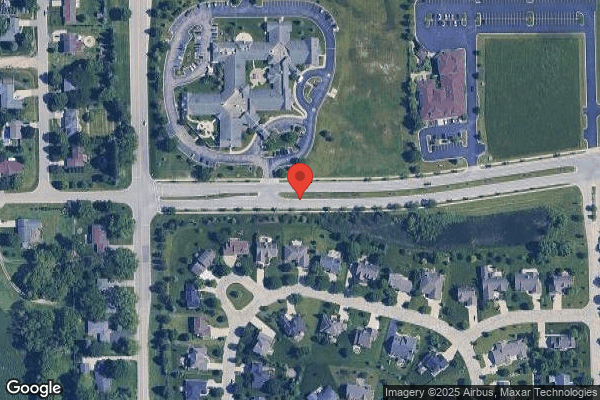
Understanding Severity Codes (click to expand)
Life-Threatening (Immediate Jeopardy)
J - Isolated K - Pattern L - Widespread
Actual Harm
G - Isolated H - Pattern I - Widespread
Potential for Harm
D - Isolated E - Pattern F - Widespread
No Harm (Minor)
A - Isolated B - Pattern C - Widespread

Questions to Ask on Your Visit

  • "What changes have you made since the serious inspection findings?"
  • "What safeguards are in place to prevent abuse and neglect?"
  • "Can I speak with families of current residents?"
  • "What's your RN coverage like on weekends and overnight?"

Our Honest Assessment

Strengths
  • • Licensed and certified facility. Meets minimum state requirements.
Concerns
  • • Multiple safety concerns identified: Federal abuse finding, 3 life-threatening violation(s), 4 harm violation(s), $232,090 in fines. Review inspection reports carefully.
  • • 41 deficiencies on record, including 3 critical (life-threatening) violations. These warrant careful review before choosing this facility.
  • • $232,090 in fines. Extremely high, among the most fined facilities in Wisconsin. Major compliance failures.
  • • Grade F (0/100). Below average facility with significant concerns.
Bottom line: This facility has a substantiated abuse finding. Extreme caution advised. Explore alternatives.

About This Facility

What is Complete Care At Grande Prairie's CMS Rating?

CMS assigns Complete Care at Grande Prairie an overall rating of 1 out of 5 stars, which is considered much below average nationally. Within Wisconsin, this rating places the facility higher than 0% of the state's 100 nursing homes. A rating at this level reflects concerns identified through health inspections, staffing assessments, or quality measures that families should carefully consider.

How is Complete Care At Grande Prairie Staffed?

CMS rates Complete Care at Grande Prairie's staffing level at 3 out of 5 stars, which is average compared to other nursing homes. Staff turnover is 47%, compared to the Wisconsin average of 46%.

What Have Inspectors Found at Complete Care At Grande Prairie?

State health inspectors documented 41 deficiencies at Complete Care at Grande Prairie during 2022 to 2025. These included: 3 Immediate Jeopardy (the most serious level, indicating potential for serious harm or death), 4 that caused actual resident harm, 32 with potential for harm, and 2 minor or isolated issues. Immediate Jeopardy findings are rare and represent the most serious regulatory concerns. They require immediate corrective action.

Who Owns and Operates Complete Care At Grande Prairie?

Complete Care at Grande Prairie is owned by a for-profit company. For-profit facilities operate as businesses with obligations to shareholders or private owners. The facility is operated by COMPLETE CARE, a chain that manages multiple nursing homes. With 118 certified beds and approximately 88 residents (about 75% occupancy), it is a mid-sized facility located in Pleasant Prairie, Wisconsin.

How Does Complete Care At Grande Prairie Compare to Other Wisconsin Nursing Homes?

Compared to the 100 nursing homes in Wisconsin, Complete Care at Grande Prairie's overall rating (1 stars) is below the state average of 3.0, staff turnover (47%) is near the state average of 46%, and health inspection rating (1 stars) is much below the national benchmark.

What Should Families Ask When Visiting Complete Care At Grande Prairie?

Based on this facility's data, families visiting should ask: "What changes have been made since the serious inspection findings, and how are you preventing similar issues?" "What safeguards and monitoring systems are in place to protect residents from abuse or neglect?" "Can I visit during a mealtime to observe dining assistance and food quality?" "How do you handle medical emergencies, and what is your hospital transfer rate?" These questions are particularly relevant given the facility's Immediate Jeopardy citations and the substantiated abuse finding on record.

Is Complete Care At Grande Prairie Safe?

Based on CMS inspection data, Complete Care at Grande Prairie has documented safety concerns. The facility has 1 substantiated abuse finding (meaning confirmed case of resident harm by staff or other residents). Inspectors have issued 3 Immediate Jeopardy citations (the most serious violation level indicating risk of serious injury or death). The facility has a 1-star overall rating and ranks #100 of 100 nursing homes in Wisconsin. Families considering this facility should ask detailed questions about what corrective actions have been taken since these incidents.

Do Nurses at Complete Care At Grande Prairie Stick Around?

Complete Care at Grande Prairie has a staff turnover rate of 47%, which is about average for Wisconsin nursing homes (state average: 46%). Moderate turnover is common in nursing homes, but families should still ask about staff tenure and how the facility maintains care continuity when employees leave.

Was Complete Care At Grande Prairie Ever Fined?

Complete Care at Grande Prairie has been fined $232,090 across 2 penalty actions. This is 6.6x the Wisconsin average of $35,400. Fines at this level are uncommon and typically indicate a pattern of serious deficiencies, repeated violations, or failure to correct problems promptly. CMS reserves penalties of this magnitude for facilities that pose significant, documented risk to resident health or safety. Families should request specific documentation of what issues led to these fines and what systemic changes have been implemented.

Is Complete Care At Grande Prairie on Any Federal Watch List?

Complete Care at Grande Prairie is not on any federal watch list. The most significant is the Special Focus Facility (SFF) program, which identifies the bottom 1% of nursing homes nationally based on persistent, serious quality problems. Not being on this list means the facility has avoided the pattern of deficiencies that triggers enhanced federal oversight. This is a positive indicator, though families should still review the facility's inspection history directly.