DOVE HEALTHCARE - RICE LAKE
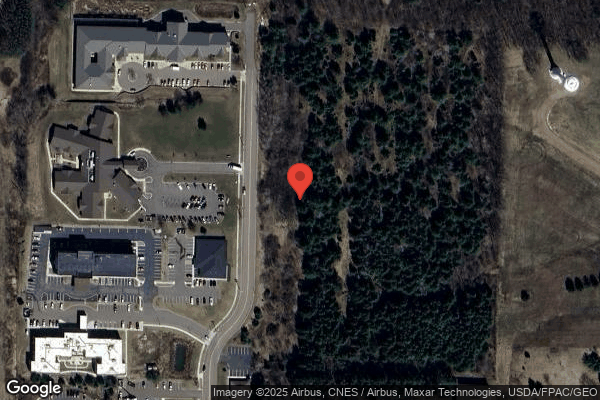
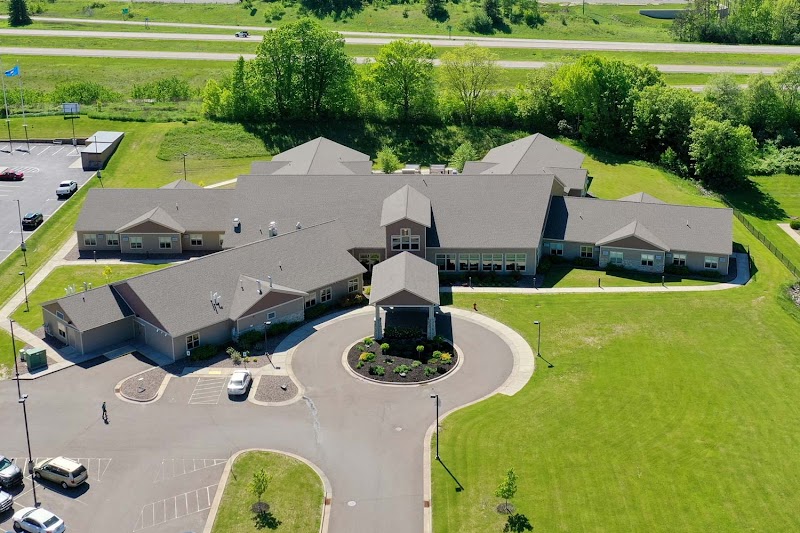
910 BEAR PAW AVE, RICE LAKE, WI 54868 (715) 234-2604
For profit - Limited Liability company 50 Beds DOVE HEALTHCARE Data: November 2025
Trust Grade
90/100
#28 of 321 in WI
Last Inspection: August 2025

Inspected within the last 6 months. Data reflects current conditions.

Overview

Dove Healthcare in Rice Lake, Wisconsin has received an excellent Trust Grade of A, which means they are highly recommended and perform above average compared to other facilities. They rank #28 out of 321 nursing homes in the state, placing them in the top half, and #2 out of 5 in Barron County, indicating that only one local option is better. The facility is new with only one inspection on record, and while they have a strong overall rating of 5 out of 5 stars, they did have two documented concerns related to communication about transfers and discharges, which could affect resident safety. Staffing is a strength, with a turnover rate of 0%, well below the state average, but they have less RN coverage than 82% of Wisconsin facilities, which could impact care. On a positive note, Dove Healthcare has not incurred any fines, which suggests they maintain compliance with regulations.

Trust Score
A
90/100
In Wisconsin
#28/321
Top 8%
Safety Record
Low Risk
No red flags
Inspections
Too New
0 → 2 violations
Staff Stability
○ Average
Turnover data not reported for this facility.
Penalties
✓ Good
No fines on record. Clean compliance history, better than most Wisconsin facilities.
Skilled Nurses
✓ Good
Each resident gets 70 minutes of Registered Nurse (RN) attention daily — more than 97% of Wisconsin nursing homes. RNs are the most trained staff who catch health problems before they become serious.
Violations
✓ Good
Only 2 deficiencies on record. Cleaner than most facilities. Minor issues only.
★★★★★
5.0
Overall Rating
★★★★☆
4.0
Staff Levels
★★★★☆
4.0
Care Quality
★★★★★
5.0
Inspection Score
Stable
: 0 issues
2025: 2 issues

The Good

  • 4-Star Staffing Rating · Above-average nurse staffing levels
  • 4-Star Quality Measures · Strong clinical quality outcomes
  • Full Sprinkler Coverage · Fire safety systems throughout facility
  • No fines on record

Facility shows strength in staffing levels, quality measures, fire safety.

The Bad

Chain: DOVE HEALTHCARE

Part of a multi-facility chain

Ask about local staffing decisions and management

The Ugly 2 deficiencies on record

Aug 2025 2 deficiencies
CONCERN (D)

Potential for Harm - no one hurt, but risky conditions existed

Deficiency F0627 (Tag F0627)

Could have caused harm · This affected 1 resident

**NOTE- TERMS IN BRACKETS HAVE BEEN EDITED TO PROTECT CONFIDENTIALITY** Based on interview and record review, the facility did not ensure proper documentation and communication for discharge for 1 of ...

Read full inspector narrative →
**NOTE- TERMS IN BRACKETS HAVE BEEN EDITED TO PROTECT CONFIDENTIALITY** Based on interview and record review, the facility did not ensure proper documentation and communication for discharge for 1 of 2 residents reviewed (R42).-Facility did not provide documented reasoning in the medical record for what needs could not be met for R42.-The facility did not provide and document sufficient preparation and orientation to R42 to ensure safe and orderly transfer or discharge from the facility. -Facility did not communicate with hospital staff after transfer to ensure R42 no longer needed skilled services.Findings include:Facility policy titled, Transfer and Discharge Requirements, last reviewed January 2020, reads in part: Medical record documentation will include the following.the basis for the transfer.as applicable, the specific resident need(s) that cannot be met, facility attempts to meet the resident needs and the service available at the receiving facility to meet the need(s).If the transfer is due to a significant change in the resident's condition, but not an emergency requiring immediate transfer, then prior to any action, [Facility Name] must conduct the appropriate assessment to determine if a new care plan would allow the facility to meet the resident's needs.R42 was admitted to the facility on [DATE], with diagnoses including metabolic encephalopathy (brain disorder secondary to sepsis), Parkinsons's disease, depression, and acute kidney failure.R42's pertinent medications include Pramipexole and Duloxetine.R42's most recent Minimum Data Set (MDS), dated [DATE], did not have a Brief interview for Mental Status (BIMS) score available. MDS did indicate R42 to be cognitively independent with daily decision making.R42's care plan prior to any noted concerns/behaviors included alteration in mood and risk for adverse effects related to antidepressant medication use and history of hallucinations, and potential for alteration to mood pattern. Interventions included report to physician signs of adverse reaction such as decline in mental status, behavioral health consults as needed, monitor me for changes in my mood or behavior. Notify my Medical Doctor (MD), Registered Nurse (RN) and Social Worker (SW) if you see concerns, and monitor/record mood to determine if problems seem to be related to external causes such as medications.On 05/30/35 at 9:00 PM, progress note indicated R42 attempted inappropriate touching and verbalized sexual comments to a female staff member during cares. Care plan was revised to include R42 to have 2 staff members for peri care on 05/30/25.On 05/31/25 at 4:30 AM, progress note indicated R42 had made a call to 911 stating R42 was being held captive by the facility, wanting to leave, and was hallucinating. Redirection of R42 was ineffective but R42 calmed when Family Member (FM) D arrived. Nurse Manager (NM) C was contacted. NM C informed staff R42 needed to go to the emergency room (ER) related to new onset behaviors.On 05/31/25 at 8:30 AM, progress note indicates ambulance was called. NM C was in facility and discussed with FM D that discharge is needed to meet R42's needs and facility would not be able to continue care.On 05/31/25 at 9:21 AM, progress note reads in part: Discharging hospital stated R42 had some hallucinations the night before discharge and it was attributed to infection and new setting. NM C did speak with FM D in regard to behaviors and how facility is unable to meet R42's needs at this time and that memory care would be more appropriate if after ER evaluation R42 is determined not to need further medical intervention.Of note, there is no physician documentation as to why R42's needs are unable to be met and the reason for discharge.On 05/31/25 at 10:40 AM, progress note states R42 was sent to ER and will not be returning to the facility.On 05/31/25 at 3:31 PM, progress note states FM D returned to the facility and stated two doctors evaluated R42 and reported there is absolutely nothing wrong with him. R42 was cleared by ER staff to return home with FM D.R2's record review did not show any indication of communication between facility and hospital staff after transfer for evaluation to determine if R42 would need to return to the facility.Record review indicated general behavior monitoring was in place since admission with each shift prior to morning of discharge marked NB (no behaviors observed). The AM shift the day of discharge, general behavior monitoring indicated VP (verbalizing persistent beliefs that are not true) and NI (no interventions attempted.)Surveyor noted no new interventions to help R42 with his behaviors demonstrated on 5/30/25.On 08/13/25 at 11:35 AM, Surveyor interviewed FM D. FM D stated the facility admitted R42 knowing about the diagnoses of Parkinson's and sepsis, as well as the episodes of hallucinations R42 had the night prior to admission to the facility and they accepted him. FM D was called to facility in relation to behaviors. FM D stated facility was sending R42 to ER for increased aggression and behaviors as they (the facility) did not know how to handle it. FM D stated facility told FM D the orders came from upper management that R42 could not stay there and not to bring him back. FM D was unable to name staff member but stated it was the same person that completed R42's admission paperwork. FM D was asked if she wanted R42 to return. FM D indicated after the way they were treated, she did not want to bring R42 back but instead took him home to care for him where he is still residing and doing well.On 08/13/25 at 1:23 PM, Surveyor interviewed DON B. DON B stated the whole situation happened really fast from behavior onset to transfer. DON B stated the reason for transfer was due to behaviors/combativeness and to evaluate for infection or something else. DON B stated the facility would not be able to meet R42's needs if R42 continued to be combative/behavioral. DON B stated the facility does not have any additional documentation to support statement of behaviors and interventions prior to transfer. DON B stated there was no contact to provider prior to transfer or documentation for the reason for discharge because it happened too fast. The facility should have had more documentation to demonstrate observation of behaviors.Record review indicates 4 hours between R42's 911 call by and staff call for transport via ambulance to ER.On 08/13/25 at 1:26 PM, Surveyor interviewed NM C. NM C stated R42 had been admitted to facility for short-term rehab and over the weekend had a change of condition. NM C stated R42 had called 911 stating R42 was held against R42's will and was verbally abusive to staff. NM C stated R42 wanted to go home and was combative, not allowing staff to touch R42. NM C stated R42 had been sexually inappropriate the evening prior to discharge. NM C stated R42 had a cognition change around 4:00 AM on 05/31/25. NM C did confirm R42 did not hit anyone in the facility. NM stated NM C arrived at the facility on 05/31/25 around 8-8:30 AM. NM C stated R42, FM D, and ambulance staff were present in R42's room and R42 was beginning to clear. NM C stated after R42 had made sexual comments to staff, the care plan was changed to two-assist with cares. NM C stated no physician orders were obtained for transfer, R42 was agreeable to discharge, and charge nurse was in contact with ER. NM C stated, regarding care plan changes, that R42 was 1:1, but not technically. NM C stated NM C had a conversation with FM D that R42's behaviors are not typically something they care for at the facility. NM C stated, in relation to ER staff being contacted, that FM D called later that day and said there was nothing wrong with R42. NM C stated NM C was the nurse who had done the admission paperwork for R42.On 08/13/25 at 2:44 PM, Surveyor interviewed Director of Nursing (DON) B. DON B stated the charge nurse has the responsibility to determine appropriateness for transfer and no provider notification/order is needed. DON B stated they were unable to find any additional documentation related to R42's discharge. DON B stated no behaviors were documented as R42 was only there for 2 days.
CONCERN (D)

Potential for Harm - no one hurt, but risky conditions existed

Deficiency F0628 (Tag F0628)

Could have caused harm · This affected 1 resident

**NOTE- TERMS IN BRACKETS HAVE BEEN EDITED TO PROTECT CONFIDENTIALITY** Based on interview and record review, the facility did not notify the resident (R) or the resident's representative(s) of the tr...

Read full inspector narrative →
**NOTE- TERMS IN BRACKETS HAVE BEEN EDITED TO PROTECT CONFIDENTIALITY** Based on interview and record review, the facility did not notify the resident (R) or the resident's representative(s) of the transfer/discharge reason, the duration of the bed-hold policy, and the reserve bed payment in writing. This has the potential to affect all 37 residents. R34 was transferred to the hospital on [DATE] and did not receive written notice of transfer or bed hold reserve payment notice. R42 was transferred to the hospital on 5/13/25, and R42 nor Family Member (FM) D received any written notice of transfer or bed hold reserve payment notice. R8 was transferred to the hospital on 7/24/25 and did not receive written notice of transfer or bed hold reserve payment notice This is evidenced by: Facility policy titled, “Transfer and Discharge Requirement,” with a reviewed date of 01/2020, states in part: “Notice Before Transfer: Before a resident transfer or discharges, Dove Healthcare will – a) Notify the resident and the resident's representative(s) of the transfer or discharge and the reasons for the move in writing and in a language and manner they understand. Contents of the Notice: It is the policy of Dove Healthcare that the written notice of transfer or discharge must include the following: a) The reason for the transfer/discharge: b) The effective date of transfer/discharge: c) The location to which the resident is transferred/discharged : d) A statement of the resident's appeal rights including the name, address (mailing and email) and telephone number of the entity which receives such requests; and information on how to obtain an appeal form and assistance in completing the form and submitting the appeal hearing request: e) The name, address, and telephone number of the State Long-Term Care Ombudsman…” Example 1 R34 was admitted to the facility on [DATE] with pertinent diagnoses of atrial fibrillation and constipation. R34's quarterly Minimum Data Set (MDS) assessment, dated 07/01/25, noted a Brief Interview for Mental Status (BIMS) score of 14/15 indicating cognition intact. On 07/11/25, R34 was transferred to the hospital via ambulance with nausea/vomiting and irregular heart rate and admitted to the hospital for treatment. R34 returned to the facility on [DATE]. Ombudsman notified. No documentation of written transfer notice or bed hold. On 08/13/25 at 11:52 AM, Surveyor interviewed Director of Nursing (DON) B regarding bed hold notice and written transfer notice. DON B stated that no written transfer notices were being provided to residents and was unaware of this requirement. DON B stated that bed hold notices are included with the admission packet but not given to residents at time of transfer. Example 2 R42 was admitted to the facility on [DATE] with diagnoses including metabolic encephalopathy (brain disorder secondary to sepsis), Parkinsons's disease, depression, and acute kidney failure. Most recent Minimum Data Set (MDS), dated [DATE], did not have a Brief Interview for Mental Status (BIMS) score available. MDS did indicate R42 to be cognitively independent with daily decision making. On 05/31/25, R42 was transferred to the hospital via ambulance with change in condition and increased behaviors. On 08/13/25 at 11:35 AM, Surveyor interviewed Family Member (FM) D. FM D stated R42 nor FM D received any paperwork upon leaving facility for transfer to hospital. On 08/13/2025 at 1:23 PM, Surveyor interviewed Director of Nursing (DON) B. DON B stated the whole situation happened really fast from behavior onset to transfer. DON B stated there was no contact to provider prior to transfer as everything happened too fast. On 08/13/2025 at 1:26 PM, Surveyor interviewed Nurse Manager (NM) C. NM C stated NM C did not get any discharge or leaving AMA paperwork, and no paperwork was given to R42 or FM D at the time of leaving. NM C also stated NM C did not go over a bed hold. Example 3 R8 was admitted to the facility on [DATE]. R8's current diagnoses include acute kidney failure, type 2 diabetes mellitus, chronic peripheral venous insufficiency, and weakness. On 07/24/25, R8 was transferred to the hospital with no urine output and increased edema. R8 returned to the facility on [DATE]. Review of R8's chart identified no documented bed hold notice including the daily rate cost and the notice for reason of transfer. On 08/11/25 at 11:24 AM, Surveyor interviewed R8 about written notice of bed hold and reason for transfer. R8 stated did not receive written notices.
Understanding Severity Codes (click to expand)
Life-Threatening (Immediate Jeopardy)
J - Isolated K - Pattern L - Widespread
Actual Harm
G - Isolated H - Pattern I - Widespread
Potential for Harm
D - Isolated E - Pattern F - Widespread
No Harm (Minor)
A - Isolated B - Pattern C - Widespread

Questions to Ask on Your Visit

  • "Can I speak with families of current residents?"
  • "What's your RN coverage like on weekends and overnight?"

Our Honest Assessment

Strengths
  • • Grade A (90/100). Above average facility, better than most options in Wisconsin.
  • • No major safety red flags. No abuse findings, life-threatening violations, or SFF status.
  • • No fines on record. Clean compliance history, better than most Wisconsin facilities.
  • • Only 2 deficiencies on record. Cleaner than most facilities. Minor issues only.
Concerns
  • • No significant concerns identified. This facility shows no red flags across CMS ratings, staff turnover, or federal penalties.
Bottom line: Generally positive indicators. Standard due diligence and a personal visit recommended.

About This Facility

What is Dove Healthcare - Rice Lake's CMS Rating?

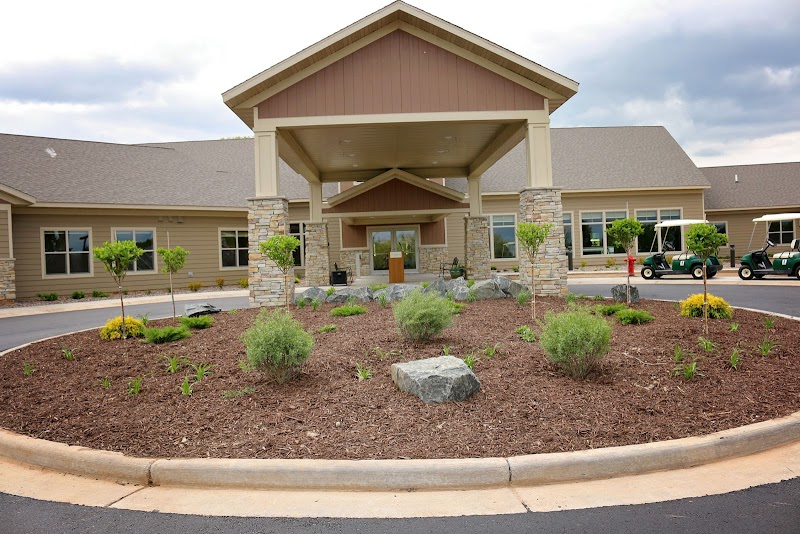
CMS assigns DOVE HEALTHCARE - RICE LAKE an overall rating of 5 out of 5 stars, which is considered much above average nationally. Within Wisconsin, this rating places the facility higher than 99% of the state's 100 nursing homes. This rating reflects solid performance across the metrics CMS uses to evaluate nursing home quality.
How is Dove Healthcare - Rice Lake Staffed?

CMS rates DOVE HEALTHCARE - RICE LAKE's staffing level at 4 out of 5 stars, which is above average compared to other nursing homes.

What Have Inspectors Found at Dove Healthcare - Rice Lake?

State health inspectors documented 2 deficiencies at DOVE HEALTHCARE - RICE LAKE during 2025. These included: 2 with potential for harm.
Who Owns and Operates Dove Healthcare - Rice Lake?

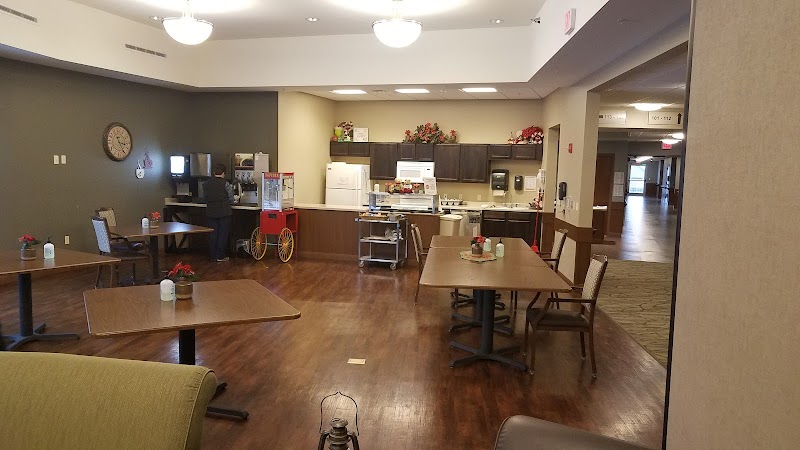
DOVE HEALTHCARE - RICE LAKE is owned by a for-profit company. For-profit facilities operate as businesses with obligations to shareholders or private owners. The facility is operated by DOVE HEALTHCARE, a chain that manages multiple nursing homes. With 50 certified beds and approximately 25 residents (about 50% occupancy), it is a smaller facility located in RICE LAKE, Wisconsin.
How Does Dove Healthcare - Rice Lake Compare to Other Wisconsin Nursing Homes?

Compared to the 100 nursing homes in Wisconsin, DOVE HEALTHCARE - RICE LAKE's overall rating (5 stars) is above the state average of 3.0 and health inspection rating (5 stars) is much above the national benchmark.

What Should Families Ask When Visiting Dove Healthcare - Rice Lake?

Based on this facility's data, families visiting should ask: "Can I visit during a mealtime to observe dining assistance and food quality?" "How do you handle medical emergencies, and what is your hospital transfer rate?" "Can I speak with family members of current residents about their experience?"

Is Dove Healthcare - Rice Lake Safe?

Based on CMS inspection data, DOVE HEALTHCARE - RICE LAKE has a clean safety record: no substantiated abuse findings (meaning no confirmed cases of resident harm), no Immediate Jeopardy citations (the most serious violation level indicating risk of serious injury or death), and is not on the Special Focus Facility watch list (a federal program monitoring the lowest-performing 1% of nursing homes). The facility has a 5-star overall rating and ranks #1 of 100 nursing homes in Wisconsin. While no facility is perfect, families should still ask about staff-to-resident ratios and recent inspection results during their visit.

Do Nurses at Dove Healthcare - Rice Lake Stick Around?

DOVE HEALTHCARE - RICE LAKE has not reported staff turnover data to CMS. Staff turnover matters because consistent caregivers learn residents' individual needs, medications, and preferences. When staff frequently change, this institutional knowledge is lost. Families should ask the facility directly about their staff retention rates and average employee tenure.

Was Dove Healthcare - Rice Lake Ever Fined?

DOVE HEALTHCARE - RICE LAKE has no federal fines on record. CMS issues fines when nursing homes fail to meet care standards or don't correct problems found during inspections. The absence of fines suggests the facility has either maintained compliance or corrected any issues before penalties were assessed. This is a positive indicator, though families should still review recent inspection reports for the full picture.

Is Dove Healthcare - Rice Lake on Any Federal Watch List?

DOVE HEALTHCARE - RICE LAKE is not on any federal watch list. The most significant is the Special Focus Facility (SFF) program, which identifies the bottom 1% of nursing homes nationally based on persistent, serious quality problems. Not being on this list means the facility has avoided the pattern of deficiencies that triggers enhanced federal oversight. This is a positive indicator, though families should still review the facility's inspection history directly.