Edenbrook Sheboygan

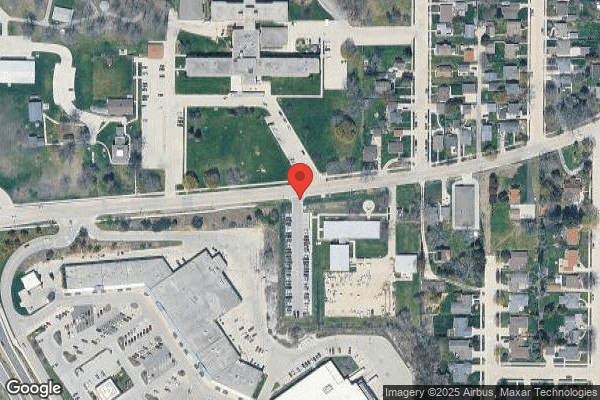
3014 ERIE AVE, SHEBOYGAN, WI 53081 (920) 459-3028
For profit - Corporation 121 Beds EDEN SENIOR CARE Data: November 2025 2 Immediate Jeopardy citations
Trust Grade
0/100
#277 of 321 in WI
Last Inspection: April 2025

Within standard 12-15 month inspection cycle. Federal law requires annual inspections.

Overview

Edenbrook Sheboygan has received a Trust Grade of F, indicating significant concerns about the facility's quality of care. It ranks #277 out of 321 nursing homes in Wisconsin, placing it in the bottom half of all facilities, and is the lowest-ranked option in Sheboygan County. While the facility is showing some improvement in its issues-reducing from 13 in 2024 to 9 in 2025-there are still serious concerns, including 41 total deficiencies found during inspections. Staffing is below average with a 60% turnover rate, and the facility has incurred $305,663 in fines, which is higher than 91% of Wisconsin facilities. Specific incidents include a resident developing a severe pressure injury due to a lack of proper care and another resident being inadequately supervised after a suicide risk assessment, leading to a dangerous situation. While the facility has average RN coverage, the overall condition raises significant red flags for families considering care for their loved ones.

Trust Score
F
0/100
In Wisconsin
#277/321
Bottom 14%
Safety Record
High Risk
Review needed
Inspections
Getting Better
13 → 9 violations
Staff Stability
⚠ Watch
60% turnover. Above average. Higher turnover means staff may not know residents' routines.
Penalties
○ Average
$305,663 in fines. Higher than 67% of Wisconsin facilities. Some compliance issues.
Skilled Nurses
✓ Good
Each resident gets 44 minutes of Registered Nurse (RN) attention daily — more than average for Wisconsin. RNs are trained to catch health problems early.
Violations
⚠ Watch
41 deficiencies on record. Higher than average. Multiple issues found across inspections.
★☆☆☆☆
1.0
Overall Rating
★★☆☆☆
2.0
Staff Levels
★★☆☆☆
2.0
Care Quality
★☆☆☆☆
1.0
Inspection Score
Stable
2024: 13 issues
2025: 9 issues

The Good

  • Full Sprinkler Coverage · Fire safety systems throughout facility
  • No fines on record

Facility shows strength in fire safety.

The Bad

1-Star Overall Rating

Below Wisconsin average (3.0)

Significant quality concerns identified by CMS

Staff Turnover: 60%

14pts above Wisconsin avg (46%)

Frequent staff changes - ask about care continuity

Federal Fines: $305,663

Well above median ($33,413)

Significant penalties indicating serious issues

Chain: EDEN SENIOR CARE

Part of a multi-facility chain

Ask about local staffing decisions and management

Staff turnover is elevated (60%)

12 points above Wisconsin average of 48%

The Ugly 41 deficiencies on record

2 life-threatening 1 actual harm
Sept 2025 1 deficiency
CONCERN (D) 📢 Someone Reported This

A family member, employee, or ombudsman was alarmed enough to file a formal complaint

Potential for Harm - no one hurt, but risky conditions existed

Deficiency F0605 (Tag F0605)

Could have caused harm · This affected 1 resident

**NOTE- TERMS IN BRACKETS HAVE BEEN EDITED TO PROTECT CONFIDENTIALITY** Based on observation, staff interview, and record review, the facility did not ensure 1 resident (R) (R2) of 3 sampled residents...

Read full inspector narrative →
**NOTE- TERMS IN BRACKETS HAVE BEEN EDITED TO PROTECT CONFIDENTIALITY** Based on observation, staff interview, and record review, the facility did not ensure 1 resident (R) (R2) of 3 sampled residents was free from a chemical restraint not required to treat the resident's medical symptoms. The facility did not implement non-pharmacological interventions prior to administering antipsychotic medication to decrease R2's behaviors. Findings Include:The facility's Policy & Procedure Psychotropic Medication, dated 5/1/25, indicates: Purpose: To provide guidance for the psychopharmacologic drug treatment for a resident with a specific condition, including but not limited to dementia and other cognitive disorders, and/or behaviors as documented in the resident's clinical record .1. An assessment must be conducted to identify specific behaviors/symptoms, potential causative factors, and recommendations for managing identified behavior. 2. The medical record documentation must reflect the specific behaviors/symptoms and the resident's response to non-pharmacological interventions to manage the behaviors/symptoms .7. After implementation of psychotropic medication, behavior/symptom and medication side-effects will be monitored and documented. 8. Residents receiving antipsychotic medication will be assessed using the Abnormal Involuntary Movement Scale (AIMS) upon admission or initiation of antipsychotic medication therapy and every six months and upon significant change while remaining on antipsychotic medication therapy. 9. Residents will receive ongoing evaluation to identify possible causes that may be reduced or eliminated through care plan modification. 10. For those residents requiring as needed (PRN) psychotropic medication administration, non-pharmacological interventions need to be attempted and documented prior to medication administration. Residents receive PRN medication only if necessary to treat a diagnosed specific condition that is documented in the clinical record .14. A plan of care will be developed to include precipitating factors, non-pharmacologic interventions, and potential side effects. On 9/3/25, Surveyor reviewed R2's medical record. R2 was admitted to the facility on [DATE] and had diagnoses including malignant neoplasm of overlapping sites of rectum, anus and anal canal, anxiety disorder, and depression. R2's Minimum Data Set (MDS) assessment, dated 5/31/24, had a Brief Interview for Mental Status (BIMS) score of 00 (not appropriate to assess) out of 15 which indicated R2 had severely impaired cognition. R2 had an activated Power of Attorney of Healthcare (POAHC).R2's medical record contained the following orders:~ Lorazepam oral tablet 1 milligram (mg) - Give 1 tablet by mouth every 2 hours as needed for anxiety, agitation, restlessness (start date 8/26/25).~ Haloperidol oral tablet 1 mg - Give 1 tablet by mouth every 6 hours for restlessness and agitation (start date 8/26/25). ~ Haloperidol oral tablet 2 mg - Give 1 tablet by mouth every 6 hours for restlessness and agitation (start date 9/3/25).R2's Kardex (an abbreviated care plan used by nursing staff) contained the following: ~ Frequent monitoring for increased anxiety or restlessness.~ Monitor for Target Behaviors - 1. Social isolation interventions for behaviors: Encourage (R2) to participate in social activities of choice.A care plan, dated 6/12/25, indicated R2 was at high risk for falls related to weakness, cancer, and heart disease. The care plan contained the following interventions:~ Check on (R2) every 2 hours while in bed for safety (initiated 5/20/25)~ Bed controller out of reach related to cognition (initiated 4/29/25)~ Bolster mattress (initiated 4/14/25)~ Encourage (R2) to use call light for assistance (initiated 3/13/25); Sign in room to use call light when assistance is needed (initiated 3/13/25)~ Frequent monitoring for increased anxiety or restlessness (initiated 6/1/25)~ (R2) moves (R2's) self from lowest bed position to floor mattress, sometimes to floor (initiated 8/1/25)~ Staff to ensure (R2) is lying in the center of the bed (initiated 3/13/25)~ Toileting schedule implemented (initiated 3/13/25)~ While (R2) is up and out of bed, place in common area for supervision (initiated 4/16/25)~ Implement sensory strategies to meet sensory needs. (Stimulation of the 5 senses, beware of over-stimulating. Agitation may be a sign that sensory stimulation should be changed. Sensory activities: walking, conversation, music, [NAME] lamp/light show, tasting/eating/snacking, aromatherapy, nail care/hand massage, bath, weighted blanket, fidget pads, sensory boards) (initiated 4/8/24)~ Provide/offer snacks in between meals and/or with signs of restlessness (initiated 4/8/24)~ Encourage to wear gripper socks when up (initiated 3/13/25); Fall mat at bedside (initiated 5/7/24); Ensure the environment is free of clutter (initiated 4/1/24).R2 was assessed for anxiety disorder. Interventions included:~ Monitor for Target Behaviors - 1. Social isolation interventions for behaviors: Encourage (R2) to participate in social activities of choice (initiated 4/8/25).~ Monitor/document/report PRN any adverse reactions to anti-anxiety medications: drowsiness, lack of energy, clumsiness, slow refluxes, slurred speech, confusion, disorientation, depression, dizziness, lightheadedness, impaired thinking and judgment, memory loss, forgetfulness, nausea, stomach upset, and blurred or double vision (initiated 4/1/25).~ Offer anti-anxiety medication as ordered by physician. Monitor for side effects and effectiveness (initiated 4/1/24). (R2 did not have an antipsychotic medication care plan.) R2's medical record did not contain any progress notes regarding behaviors in July of 2025.A progress note, dated 8/26/25 at 12:19 PM, indicated Registered Nurse (RN)-C notified R2's Hospice Nurse Practitioner (NP) that lorazepam was ineffective. RN-C received an order to discontinue scheduled and PRN lorazepam and start haloperidol 1 mg four times daily (QID) and every 4 hours PRN.A progress note, dated 8/26/25 at 8:15 PM, indicated R2 was agitated and crying out. Lorazepam was administered. R2's Medication Administration Record (MAR) indicated the following: ~ Anxiety - Monitor/document/report adverse effects: drowsiness, lack of energy, clumsiness, slow refluxes, slurred speech, confusion, disorientation, depression, dizziness, lightheadedness, impaired thinking and judgment, memory loss, forgetfulness, nausea, stomach upset, and blurred or double vision. Every shift document why - if side effects noted, and document side effects in progress note. Document N - checked and no side effects noted (start date 7/18/24).R2's MAR indicated R2 experienced anxiety on the 8/4/25, 8/6/25, and 8/31/25 PM shifts. R2's August and September 2025 MARs indicated R2 received 1 mg of haloperidol on the following dates:~ 8/26/25 at 6:00 PM~ 8/27/25, 8/28/25, 8/29/25, 8/30/25, 8/31/25, 9/1/25, and 9/2/25 at 12:00 AM, 6:00 AM, 12:00 PM, and 6:00 PM~ 9/3/25 at 12:00 AM and 6:00 AMR2's MAR indicated R2 received 2 mg of haloperidol on 9/3/25 at 12:00 PM.R2's MAR indicated R2 was administered lorazepam on the following dates:~ 8/26/25 at 4:56 PM~ 8/29/25 at 4:11 AM and 3:25 PM~ 8/30/25 at 6:40 AM and 8:14 PMSurveyor reviewed R2's Treatment Administration Record (TAR) which contained an identification (ID) key that indicated:~ 2 = Pinching~ 3 = Scratching~ 4 = Hitting/Punching~ 12 = Cursing at Others~ 19 = Throwing/Smearing Food~ 21 = Screaming/Yelling out~ 27 = No Behaviors ObservedR2's TAR indicated the following:~ From 8/1/25 to 8/8/25, R2's behavior was documented as 27 on all shifts.~ On 8/9/25, R2's behavior was documented as 21, 3, and 19 on the AM shift, not applicable (NA) on the PM shift, and 27 on the night (NOC) shift.~ On 8/10/25, R2's behavior was documented as 27 on the AM shift, 21 on the PM shift, and 27 on the NOC shift.~ From 8/11/25 to 8/20/25, R2's behavior was documented as 27 on all shifts.~ On 8/21/25, R2's behavior was documented as 27 on the AM shift, 21 on the PM shift, and NA on the NOC shift.~ On 8/22/25, R2's behavior was documented as 27 on all shifts.~ On 8/23/25, R2's behavior was documented as 21, 2, and 3 on the AM shift, 21 and 3 on the PM shift, and 27 on the NOC shift.~ On 8/24/25, R2's behavior was documented as 27 on all shifts.~ On 8/25/25, R2's behavior was documented as 21, 3, 4, and 12 on the AM shift.~ From 8/26/25 to 8/31/25, R2's behavior was documented as 27 on all shifts.~ On 9/1/25 and 9/2/25, R2's behavior was documented as 27 on all shifts.On 9/3/25 at 9:55 AM, Surveyor interviewed Certified Nursing Assistant (CNA)-G who indicated R2 receives Hospice services and is bedbound. CNA-G indicated CNA-G was instructed by nurses not to get R2 out of bed. CNA-G indicated CNA-G asked about bringing R2 out of R2's room but nursing staff does not listen to CNA-G. CNA-G indicated CNA-G follows R2's Kardex and offers R2 a snack and water, change R2's brief, and/or repositions R2 when R2 is restless. CNA-G indicated R2 does not use the soft touch call light in R2's room and is not on frequent checks. CNA-G indicated R2 is anxious at times, is not alert and oriented, and cries out for R2's kids. CNA-G indicated R2 has a Mepilex dressing on the coccyx due to skin breakdown and is propped with pillows in bed but scoots out of bed onto a fall mat that is even with the bed. On 9/3/25 at 11:00 AM, Surveyor interviewed Hospice CNA (HCNA)-E who indicated HCNA-E sees R2 twice weekly for a full bed bath and cares. HCNA-E worked with R2 since May of 2025 and had not seen R2 out of bed at the facility. HCNA-E indicated R2 has not had any falls since a fall mat was implemented. On 9/3/25 at 12:12 PM, Surveyor interviewed Hospice Secretary (HS)-F who indicated Hospice provided R2 with 2 floor mats and an alternating air mattress with a side bolster. HS-F indicated a Broda chair was not provided for R2. On 9/3/25 at 12:15 PM, Surveyor interviewed Hospice RN (HRN)-D who indicated HRN-D worked with R2 for 1 month. HRN-D indicated HRN-D visits twice weekly and as needed and has not observed R2 out of bed. HRN-D indicated the facility called recently and requested R2's lorazepam order be changed to Haldol.On 9/3/25 at 2:10 PM, Surveyor interviewed RN-C who indicated R2 is restless at times and rolls all over the bed and onto a fall mat next to the bed. RN-C indicated R2 yells out daily and is often found on the fall mat when staff check on R2 as they walk past R2's room. RN-C indicated staff do not follow a schedule to check on R2 who is not on frequent checks and does not use a call light to call for assistance. RN-C indicated R2's behaviors of calling out and attempting to get out of bed had increased. RN-C felt R2's restlessness increased because R2 was not able to get out of bed. RN-C indicated R2 is appropriate for a Broda chair but stated staff have not tried to get R2 into a Broda chair. RN-C asked Hospice about a Broda chair but was told R2's family does not want R2 out of bed. RN-C indicated RN-C contacted the Hospice NP and requested an order for Haldol in place of lorazepam since lorazepam was ineffective and R2 continued to be restless in bed. RN-C received a verbal order to administer haloperidol 1 mg every 6 hours. RN-C indicated staff attempt to decrease restlessness for R2 by making sure R2's brief is dry, offering food and water, and changing R2's bedding. RN-C indicated assessing R2 for pain was tricky and stated RN-C administered as needed morphine when R2 was restless, grimacing, or bracing R2's self.On 9/3/25 at 2:42 PM, Surveyor interviewed Assistant Director of Nursing (ADON)-H who indicated R2's behavior interventions include providing companionship, talking with R2, and music. When Surveyor indicated R2 was observed throughout the day in bed without music, ADON-H indicated staff play music on the TV at times, however, R2 does not like the light of the TV. ADON-H indicated ADON-H would request a radio from R2's family or Hospice. ADON-H indicated R2's dietary intake was better when staff fed R2 in a wheelchair in the dining room. ADON-H indicated R2 loves interaction and enjoys being in a wheelchair. ADON-H indicated R2 requires 1:1 supervision while in the wheelchair because R2 attempts to get out of the wheelchair. ADON-H indicated R2 was in a Broda chair supplied by the facility during R2's last fall. ADON-H indicated R2's POAHC does not want R2 in a wheelchair since R2 has fallen out of a wheelchair. ADON-H indicated the facility does not have a signed risks versus benefits statement regarding getting R2 up in a wheelchair and indicated ADON-H had R2 in a wheelchair for dinner last night which was not documented. ADON-H stated RN-C contacted the Hospice NP for a Haldol order and indicated R2's behavior has not changed since Haldol was started. ADON-H indicated R1 refused to take medication on 9/2/25 and R2's Haldol order was increased to 2 mg every 6 hours for restlessness and agitation. When Surveyor asked about documentation that indicated R2 ambulates, ADON-H indicated R2 has not ambulated in the 5 months ADON-H has been employed. ADON-H indicated R2 is up in a wheelchair 3 to 4 times a week but it is not documented. On 9/3/25 at 4:00 PM, Surveyor interviewed Nursing Home Administrator (NHA)-A who indicated R2's POAHC does not want R2 out of bed. NHA-A indicated the facility should have obtained a risks versus benefits statement for R2. NHA-A also indicated non-pharmacological interventions should be reviewed, updated, and added to R2's care plan.
Jul 2025 1 deficiency
CONCERN (E) 📢 Someone Reported This

A family member, employee, or ombudsman was alarmed enough to file a formal complaint

Potential for Harm - no one hurt, but risky conditions existed

ADL Care (Tag F0677)

Could have caused harm · This affected multiple residents

**NOTE- TERMS IN BRACKETS HAVE BEEN EDITED TO PROTECT CONFIDENTIALITY** Based on observation, staff, resident, and resident representative interview, and record review, the facility did not ensure 4 r...

Read full inspector narrative →
**NOTE- TERMS IN BRACKETS HAVE BEEN EDITED TO PROTECT CONFIDENTIALITY** Based on observation, staff, resident, and resident representative interview, and record review, the facility did not ensure 4 residents (R) (R1, R2, R7, and R10) of 5 sampled residents who required assistance for activities of daily living (ADLs) were provided care in a timely manner.R1 expressed concerns about long call light response times. On 7/9/25, R1 indicated R1 was incontinent and requested to be changed but was told R1 would have to wait until after lunch.R2 and R2's Guardian expressed concerns about call light response times and that R2 was not changed timely. R7 expressed concerns about long call light response times. R7 filed a grievance related to the concerns but continued to experience long call light response times.R10 expressed concerns about long call light response times which resulted in R10 having to wait for R10's needs to be met.Findings include:The facility's Activities of Daily Living policy, revised 2/25/25, indicates: Based on the comprehensive assessment of a resident and consistent with the resident's needs and choices .8. Residents have the right to be involved in decisions about their care, including ADLs. Care should be provided in a way that respects the resident's dignity, preferences, and privacy.The facility's Call Light Use and Response policy, revised 7/18/23, indicates: To respond to a resident's call for assistance .2. Answer call lights promptly whether or not the staff person is assigned to the resident or not.On 7/9/25, Surveyor reviewed resident council minutes, dated 6/24/25, which indicated call light response times were still long on the second shift on the third floor and Certified Nursing Assistants (CNAs) sat in the nurses' station while call lights were on. The Overview of Action section indicated the issue was resolved and the facility would continue to run audits and work with the Assistant Director of Nursing (ADON) and Director of Nursing (DON). (Surveyor noted staff education was not provided regarding call light response times and there were no completed call light audits attached.) On 7/9/25, Surveyor reviewed the facility's grievances and noted a grievance, dated 5/28/25, that indicated call light response times were long over the weekend. In response, the facility ran call light audits on both floors, including an audit for R1 between 5/31/25 and 6/2/25. The audit contained the following highlighted dates/times/call light response times:~ On 6/1/25 at 4:13 PM: A response time of 42 minutes.~ On 6/1/25 at 5:57 PM: 1 hour and 16 minutes.In addition, Surveyor noted the following call light response times that were in excess of 30 minutes:~ On 5/31/25 at 2:57 PM: 36 minutes.~ On 5/31/25 at 5:53 PM: 55 minutes.The resolution of the grievance indicated random call light audits were completed to determine patterns or long wait times, most results were in normal limits, and the facility would continue to monitor. Surveyor noted the facility had also highlighted call light response times for other residents on the audit, including one response time on 6/2/25 at 2:19 PM for 1 hour and one on 6/1/25 at 6:36 AM for 1 hour and 20 minutes. The audits included in the grievance contained an average call light response time of less than 30 minutes. The grievance did not contain staff education regarding the long call light response times that were discovered during the audits.1. On 7/9/25, Surveyor reviewed R1's medical record. R1 was admitted to the facility on [DATE] and had diagnoses including mild neurocognitive disorder, adult neglect or abandonment, post traumatic stress disorder (PTSD), and major depressive disorder. R1's Minimum Data Set (MDS) assessment, dated 5/6/25, had a Brief Interview for Mental Status (BIMS) score of 15 out of 15 which indicated R1 had intact cognition. R1 did not have an activated Power of Attorney for Healthcare (POAHC).A care plan, initiated on 5/21/25, indicated R1 had a hyper-fixation on being changed/going to the bathroom. The care plan contained a goal that indicated R1 will decrease the repetitive need to be checked for bowel movements less than 3 times per day. Caregivers will support R1's need to be checked repeatedly for bowel movements by encouraging R1 to discuss with caregivers prior the need to have a bowel movement. Staff will discuss R1's current needs prior to going in the lift.A care plan, initiated on 5/1/25, indicated R1 had bowel incontinence related to weakness, limited mobility, and required staff assistance for toileting needs. The care plan contained an intervention, dated 5/1/25, to check R1 every 2 hours and assist with toileting as needed. An ADL care plan, initiated on 5/1/25, indicated R1 required extensive assistance of 1 staff for toileting and toileting hygiene. R1's plan of care also indicated R1 required a full body lift with the assistance of 2 staff.On 7/9/25 at 11:40 AM, Surveyor observed staff wheel R1 back to R1's room after an activity. On 7/9/25 at 11:57 AM, Surveyor interviewed R1 who indicated it sometimes took staff 1 to 2 hours to respond to R1's call light. R1 indicated R1 was sitting in R1's own shit during the interview and had asked to be changed but staff stated R1 had to wait until after lunch. During an interview at 12:16 PM, R1 indicated R1's call light was on but Certified Nursing Assistant (CNA)-C turned the light off and said R1 would be changed after lunch. At 12:21 PM, Surveyor could smell stool and asked R1 to activate the call light. At 12:23 PM, a staff member responded. R1 stated R1 needed to be changed and indicated R1's bottom hurt. The staff member indicated they would get help. At 12:27 PM, CNA-C and a nurse entered the room to provide care. On 7/9/25, Surveyor reviewed R1's call light log and noted on 7/9/25 at 11:40 AM, R1's call light was on for 2 minutes. Surveyor interviewed CNA-C who indicated CNA-C did not answer R1's call light prior to assisting with changing R1. On 7/9/25, Surveyor reviewed R1's call light log for the previous 30 days which indicated R1 used the call light 501 times. Surveyor noted 98 call light response times were over 30 minutes which meant approximately 19% of R1's call light response times were greater than 30 minutes. The following call light response times were also noted:~ Number of call light response times between 30 minutes and 45 minutes: 41~ Number of call light response times between 45 minutes and 1 hour: 34~ Number of call light response times between 1 hour and 1.5 hours: 18~ Number of call light response times between 1.5 hours and 2 hours: 3 (6/3/25 at 6:19 PM: 1 hour and 40 minutes; 6/18/25 at 7:49 AM: 1 hour and 37 minutes; 7/6/25 at 6:56 AM: 1 hour and 41 minutes)~ Number of call light response times greater than 2 hours: 1 (7/6/25 at 4:58 PM: 2 hours and 46 minutes)On 7/9/25 at 2:58 PM, Surveyor interviewed Nursing Home Administrator (NHA)-A who indicated R1 was hyper-fixated on thinking R1 had a bowel movement and activated the call light for a courtesy wipe which was on R1's care plan. NH-A indicated staff check and change R1 every 2 hours, however, staff can be in R1's room many times per day. NHA-A indicated R1 activates the call light thinking R1 had a bowel movement. Surveyor informed NHA-A that R1 was told by staff that R1 had to wait until after lunch to be changed and was changed at approximately 12:30 PM. Surveyor observed the change and noted R1 was incontinent of stool. NHA-A indicated NHA-A would look into it and confirmed a resident should not be left sitting in a bowel movement. 2. On 7/9/25, Surveyor reviewed R2's medical record. R2 was admitted to the facility on [DATE] and had diagnoses including vascular dementia, major depressive disorder, aphasia and dysarthria following cerebral infarction, type 2 diabetes mellitus with diabetic chronic kidney disease, anxiety disorder, and hemiplegia/hemiparesis following cerebral infarction affecting the right non-dominant side. R2's MDS assessment, dated 5/3/25, had a BIMS score of 7 out of 15 which indicated R2 had severely impaired cognition. R2 had a Guardian for decision making.A care plan, initiated on 6/16/22, indicated R2 had ADL self-care performance deficits and required the assistance of 1 staff for bed mobility. R2 required the assistance of 2 staff and a full body lift (revised 11/18/24) for transfers. For toileting, R2 required assistance to be checked and changed with AM and HS (evening) cares and per R2's request. The care plan contained interventions to provide peri-care twice daily (BID) and with each incontinent episode and apply barrier cream to protect skin.A care plan, initiated on 6/16/22 and revised on 2/21/24, indicated R2 exhibited behavior symptoms (psychosocial adaptation and/or psychotropic medication use) and used inappropriate language toward staff and others. The care plan also indicated R2 yelled from R2's room and disrupted other residents on the unit. Surveyor noted an intervention was added during the survey on 7/9/25 that indicated R2 no longer used a bell and preferred the call light on at all times and always within reach.A care plan, initiated on 6/16/22 and revised on 10/31/24, indicated R2 had alteration in elimination and functional bladder and bowel incontinence secondary to cerebrovascular accident (CVA) (stroke). The care plan contained interventions, dated 6/16/22, to encourage/assist with check and change, provide peri-care with AM and HS cares and with each incontinent episode, apply barrier cream, and monitor skin integrity with cares. An additional intervention, dated 2/21/24, indicated R2 called out to staff when R2 was incontinent and needed to be changed and staff should answer promptly. A care plan, initiated on 6/21/22, indicated R2 had a seizure disorder.On 7/9/25 at 11:22 AM, Surveyor interviewed R2 who indicated R2's call light did not work. When Surveyor asked R2 to activate the call light, Surveyor heard an audible beeping sound and noted the call light worked. R2 then yelled to staff in the hallway that R2 needed to be changed. R2 also indicated call light response can take a while.On 7/10/25 at 11:51 AM, Surveyor interviewed R2's Guardian ((GD)-F) via phone. GD-F indicated R2's biggest concern was call light response time and indicated R2 leaves the light on because no one comes when it is on. GD-F indicated R2 called GD-F on R2's cell phone in the past 90 days and indicated R2 was sitting in shit and no one was coming. GD-F indicated GD-F tries to contact the facility when R2 calls but has a difficult time getting ahold of anyone, especially in the evening. GD-F indicated when staff do answer, they tell GD-F they are very busy. GD-F also indicated staff walk by R2's room when the call light is on and do not check to see what R2 needs which makes R2 upset and yell as people walk by. GD-F does not think R2 is checked or changed timely due to R1's calls to GD-F when R2 needs to be changed but no one responds. On 7/9/25, Surveyor reviewed R2's call light log for 6/9/25 through 7/9/25 which indicated R2 activated the call light 605 times. Surveyor noted approximately 183 call light response times were greater than 30 minutes which meant approximately 30% of R2's call light response times were greater than 30 minutes. The following call light response times were also noted:~ Call light response times between 30 minutes and 1 hour: 89 ~ Call light response times between 1 and 2 hours: 74 ~ Call light response times between 2 and 3 hours: 14 ~ Call light response times greater than 3 hours: 3 ~ Call light response times greater than 4 hours: 3On 7/9/25 at 2:28 PM, Surveyor interviewed Director of Nursing (DON)-B who indicated R2's call light is always on and when staff enter the room they state R2 has no concerns, however, sometimes R2 has a need. DON-B indicated staff gave R2 a bell but R2 was not receptive to using the bell. DON-B indicated after staff respond to the call light, R2 turns the call light back on and gets anxious when staff take the call light out of R2's hands when doing cares. When asked how staff know if R2 has a need if R2's call light is on at all times, DON-B indicated staff check on R2 frequently. On 7/9/25 at 3:02 PM, Surveyor interviewed CNA-D who indicated R2 activates the call light all the time. CNA-D indicated when staff turn off the light and exit the room, R2 activates the call light again. CNA-D indicated R2 does not seem to understand that R2 activates the call light all the time. 3. On 7/9/25, Surveyor reviewed R7's medical record. R7 was admitted to the facility on [DATE] and had diagnoses including type 2 diabetes, acquired absence of right foot, acquired absence of other left toe(s), and peripheral vascular disease (PVD). R7's MDS assessment, dated 7/1/25, had a BIMS score of 15 out of 15 which indicated R7 had intact cognition. The MDS assessment also indicated R1 required partial to moderate assistance of staff (helper does less than half) for toilet transfers. A care plan, initiated on 6/25/25, indicated R7 was at risk for alteration in skin integrity related to diabetes mellitus type 2 and had foot ulcers to bilateral plantar feet, right with infection, stage 2 pressure injuries to bilateral post/proximal thighs, and a deep tissue injury on the right plantar. A care plan. initiated on 6/26/25, indicated R7 was prescribed intravenous (IV) medication. On 7/9/25 at 11:43 AM, Surveyor interviewed R7 who indicated call light response times can be approximately 30-60 minutes depending on the time of day. R7 indicated R7's IV was beeping that morning and R7 had to wait 30 minutes. R7 spoke with CNA and nursing staff about the long call light response times and was once told staff could not change R7 when R7 was incontinent because R7's IV was running.Surveyor reviewed a grievance, dated 6/27/25, that indicated on the 6/26/25 PM shift, R7 reported that R7 was incontinent of urine and had diarrhea and loose stools numerous times in one brief due to R7's antibiotics. R7 activated the call light, however, 3 CNAs turned the light off. R7 stated it occurred between 6:45 PM and 9:45 PM when 2 nurses entered the room to hang an IV and called a CNA to help clean up R7. The grievance indicated staff were told by a nurse that a resident can not be changed while an IV is running. Staff education was completed.On 7/9/25, Surveyor reviewed R7's call light response log for 6/25/25 through 7/9/25 which indicated R7 used the call light 107 times. Surveyor noted 9 response times were greater than 30 minutes which meant approximately 5% of R7's call light response times were greater than 30 minutes. The following call light response times were also noted:~ On 6/26/25 at 6:48 PM: 1 hour and 4 minutes (related to grievance)~ On 6/26/25 at 8:31 PM: 1 hour and 5 minutes (related to grievance)~ On 6/27/25 at 6:25 AM: 1 hour and 34 minutes~ On 6/27/25 at 10:45 AM: 1 hour and 14 minutes~ 7/1/25 at 7:15 AM: 35 minutes~ 7/6/25 at 10:56 AM: 35 minutes~ 7/6/25 at 8:58 PM: 56 minutes~ 7/8/25 at 8:42 AM: 43 minutes~ 7/9/25 at 7:46 AM: 44 minutes4. On 7/9/25, Surveyor reviewed R10's medical record. R10 was admitted to the facility on [DATE] and had diagnoses including dementia without behavioral disturbance, Parkinson's disease, generalized anxiety disorder, obsessive compulsive disorder (OCD), and weakness. R10's MDS assessment, dated 7/1/25, had a BIMS score of 11 out of 15 which indicated R10 had moderately impaired cognition. A care plan, initiated on 5/24/22 and revised on 1/7/25, indicated R10 had an ADL self-care performance deficit and altered mobility related to dementia, weakness, chronic pain and Parkinson's disease. The care plan contained an intervention, revised on 9/23/24, that indicated R10 required limited assistance of 1 staff for bed mobility and supervision for toileting hygiene. R10 required contact guard assistance (CGA) of 1 staff and a four-wheeled walker in and out of the bathroom. The care plan also contained an intervention to stay in room or close by when R10 is on the commode/toilet. On 5/20/25, a risk versus benefit statement was implemented for self-transfers and indicated R10 transferred with limited assistance of 1 staff with a wheeled walker and gait belt (revised on 2/19/25).A care plan, initiated on 10/31/24 and revised on 5/28/25, indicated R10 had functional bladder and bowel incontinence and a diagnosis of benign prostatic hypertrophy (BPH). The care plan contained interventions, dated 10/31/24, that indicated R10 used disposable briefs, staff should clean R10's peri-area after each incontinence episode, and staff should check R10 when toileting. A care plan, initiated on 5/24/22 and revised on 1/7/25, indicated R10 was at high risk for falls related to Parkinson's disease, neuropathy, and dementia with impaired safety awareness. The care plan contained an intervention, dated 11/5/24, to revise R10's toileting schedule to ensure R10's needs are addressed and to prevent self-transferring. An intervention, dated 6/25/24, indicated staff should check on R10 every 2 hours when in room to help prevent self-transfers.On 7/9/25 at 11:34 AM, Surveyor interviewed R10 who indicated R10 had to wait a long time for staff to answer R10's call light. R10 indicated R10 did not use the call light much because there was no point. R10 stated in two instances R10 waited 1 hour and 1 hour and 20 minutes. R10 indicated one of the times R10 had to use the bathroom and needed assistance. On 7/9/25, Surveyor reviewed R10's call light log for 6/26/25 through 7/9/25 and noted R10 used the call light 52 times. Surveyor noted 14 call light response times were more than 30 minutes which meant approximately 27% of R10's call light response times were greater than 30 minutes. The following call light response times were also noted: ~ On 6/26/25 at 5:49 PM: 58 minutes~ On 6/27/25 at 6:15 PM: 40 minutes~ On 6/28/25 at 5:52 PM: 32 minutes~ On 6/29/25 at 2:56 PM: 54 minutes~ On 6/29/25 at 5:30 PM: 54 minutes~ On 6/30/25 at 6:06 PM: 34 minutes~ On 7/1/25 at 6:10 PM: 37 minutes~ On 7/1/25 at 7:08 PM: 35 minutes~ On 7/2/25 at 6:02 PM: 1 hour and 55 minutes~ On 7/4/25 at 3:23 AM: 31 minutes~ On 7/4/25 at 1:12 PM: 41 minutes~ On 7/4/25 at 7:05 PM: 41 minutes~ On 7/5/25 at 6:32 PM: 2 hours and 20 minutes~ On 7/6/25 at 6:25 PM: 33 minutesOn 7/9/25 at 3:02 PM, Surveyor interviewed CNA-D who indicated staff should answer call lights within 15 minutes, however, it can be difficult to answer lights timely around meal time.On 7/9/25 at 3:15 PM, Surveyor interviewed CNA-E who indicated there are issues answering call lights timely, especially after meals. On 7/9/25 at 2:58 PM, Surveyor interviewed NHA-A who was not aware of a standard call light response time and did not provide an expectation for a reasonable number of minutes it should take to answer a resident's call light. NHA-A verified NHA-A was at the resident council meeting in May when call light response times were discussed. NHA-A stated follow-up was completed but not documented. NHA-A stated NHA-A reminds residents at resident council meetings that if they use their call light during high need times (after meals, getting up, going to bed, shift change), they might have to wait a bit longer. When asked about the grievance investigation related to call light response times, NHA-A indicated the average call light response time was okay, however, some of the audits showed one-offs or that call lights were activated during busy times (after meals, before bed, when nurses were passing medications). NHA-A indicated there was not an investigation or staff education after the audits were completed despite the discovery that call light response times were lengthy. NHA-A indicated call light audits are not run or checked regularly but are completed when a concern is reported. When Surveyor showed NHA-A the call light audits for R1, R2, R7, and R10, NHA-A confirmed there were multiple extensive call light response times that should have been followed-up on.
Apr 2025 6 deficiencies
CONCERN (D)

Potential for Harm - no one hurt, but risky conditions existed

Deficiency F0551 (Tag F0551)

Could have caused harm · This affected 1 resident

**NOTE- TERMS IN BRACKETS HAVE BEEN EDITED TO PROTECT CONFIDENTIALITY** Based on staff interview and record review, the facility did not ensure 1 resident (R) (R47) of 2 sampled residents with a Guard...

Read full inspector narrative →
**NOTE- TERMS IN BRACKETS HAVE BEEN EDITED TO PROTECT CONFIDENTIALITY** Based on staff interview and record review, the facility did not ensure 1 resident (R) (R47) of 2 sampled residents with a Guardian had protective placement in the facility. R47 had a legal Guardian at the time of admission on [DATE]. The facility did not have evidence of court-ordered protective placement (required when nursing home residency exceeds 90 days). Findings include: State Statute Chapter 55.03(4) indicates court-ordered protective placement is required for any resident admitted to a nursing home who has a legal Guardian and whose nursing home stay exceeds 90 days. Protective placement is reviewed annually (State Statute Chapter 55.18) to determine if placement continues to be the least restrictive and in the best interest of the resident. On 4/28/25, Surveyor reviewed R47's medical record. R47 was admitted to the facility on [DATE] and had diagnoses including traumatic brain injury, restlessness and agitation, anxiety, and mood disorder. R47's Minimum Data Set (MDS) assessment, dated 3/12/25, had a Brief Interview for Mental Status (BIMS) score of 14 out of 15 which indicated R47 had intact cognition. R47 had court-ordered Michigan Guardian paperwork, dated 6/14/24, for healthcare decisions. R47's medical record did not contain protective placement documentation. On 4/29/25 at 8:28 AM, Surveyor interviewed Social Services Director (SSD)-D who indicated SSD-D notified Aging and Disability Resource Center Staff (ADRCS)-E on 11/18/24 of R47's admission to the facility on [DATE] and the need for protective placement. SSD-D provided Surveyor a copy of the communication. A response from ADRCS-E, dated 11/18/24, indicated ADRCS-E contacted R47's son twice and needed copies of R47's Michigan Guardianship papers (petitions, doctors report, orders, letters of Guardianship) before ADRCS-E could move forward. On 4/29/25 at 8:37 AM, Surveyor interviewed ADRCS-E who indicated an email was sent to the facility on [DATE] requesting assistance in obtaining petitions for Guardianship, an order for Guardianship, a physician's report, and a letter of Guardianship to move forward. The email indicated if the facility did not have the documents the should contact the Register in Probate in Michigan. ADRCS-E indicated ADRCS-E had not received any of the requested documents. ADRCS-E indicated ADRCS-E identified last week that R47 was at a facility in another city in WI prior to admission which would require the protective placement paperwork to be filed in that county. ADRCS-E notified R47's Guardian of the update. On 4/30/25 at 9:50 AM, Surveyor interviewed SSD-D who indicated SSD-D left a message on 4/30/25 with the county in which R47 previously resided to forward R47's protective placement paperwork. SSD-D also left a message for ADRCS-E regarding SSD-D's request. SSD-D indicated R47's Guardian frequently visited the facility and had developed a good rapport with SSD-D. On 4/30/25 at 1:42 PM, Surveyor interviewed Regional Director of Clinical Services (RDCS)-F who indicated an effort was made to obtain protective placement, however, the facility could have pursued it further.
CONCERN (D)

Potential for Harm - no one hurt, but risky conditions existed

Transfer Notice (Tag F0623)

Could have caused harm · This affected 1 resident

**NOTE- TERMS IN BRACKETS HAVE BEEN EDITED TO PROTECT CONFIDENTIALITY** Based on staff interview and record review, the facility did not notify the State Long-Term Care Ombudsman when 2 residents (R) ...

Read full inspector narrative →
**NOTE- TERMS IN BRACKETS HAVE BEEN EDITED TO PROTECT CONFIDENTIALITY** Based on staff interview and record review, the facility did not notify the State Long-Term Care Ombudsman when 2 residents (R) (R17 and R46) of 6 sampled residents were transferred to the hospital. R17 was transferred to the hospital on [DATE]. The facility did not notify the Ombudsman of R17's hospital transfer. R46 was transferred to the Emergency Department (ED) on 3/19/25 and 3/28/25. The facility did not notify the Ombudsman of R46's ED transfers. Findings include The facility's Admission, Readmission, Bed Hold and Transfer/Discharge Policy, dated 10/12/21, indicates a copy of the transfer/discharge notice must be sent to a representative of the Office of the State Long-Term Care Ombudsman .The facility must update the Office of the State Long-Term Care Ombudsman of any unplanned or emergency transfers or discharges. 1. From 4/28/25 to 4/30/25, Surveyor reviewed R17's medical record. R17 was admitted to the facility on [DATE]. On 12/24/24, R17 had a change in condition and was transferred to the hospital. R17 returned from the hospital on [DATE]. Surveyor reviewed the facility's list of December 2024 transfers and discharges which was sent to the Ombudsman on 1/16/25 via email. Surveyor noted R17's 12/24/24 hospital transfer was not included on the list. On 4/30/25 at 12:11 PM, Surveyor interviewed Medical Records (MR)-I who confirmed MR-I was responsible for sending monthly reports to the Ombudsman. MR-I confirmed R17's 12/24/24 hospital transfer was not included on the list that MR-I sent to the Ombudsman. MR-I verified R17's 12/24/24 transfer should have been on the list. 2. From 4/28/25 to 4/30/25, Surveyor reviewed R46's medical record. R46 was admitted to the facility on [DATE]. On 3/19/25 and 3/28/25, R46 had a change in condition and was transferred to the ED. R46 returned to the facility on the same days R46 was transferred. Surveyor reviewed the facility's list of March 2025 transfers and discharges which was sent to the Ombudsman on 4/1/25 via email. Surveyor noted R46's 3/19/25 and 3/28/25 transfers were not included on the list. On 4/30/25 at 12:11 PM, Surveyor interviewed MR-I who confirmed R46's 3/19/25 and 3/28/25 ED transfers were not included on the list MR-I sent to the Ombudsman. MR-I indicated MR-I was not aware the Ombudsman needed to be notified of ED transfers.
CONCERN (D)

Potential for Harm - no one hurt, but risky conditions existed

PASARR Coordination (Tag F0644)

Could have caused harm · This affected 1 resident

**NOTE- TERMS IN BRACKETS HAVE BEEN EDITED TO PROTECT CONFIDENTIALITY** 2. On 4/28/25, Surveyor reviewed R13's medical record. R13 was admitted to the facility on [DATE] and had diagnoses including de...

Read full inspector narrative →
**NOTE- TERMS IN BRACKETS HAVE BEEN EDITED TO PROTECT CONFIDENTIALITY** 2. On 4/28/25, Surveyor reviewed R13's medical record. R13 was admitted to the facility on [DATE] and had diagnoses including dementia, anxiety, depression, and psychotic disorder. R13's MDS assessment, dated 2/27/25, had a Brief Interview for Mental Status (BIMS) score of 4 out of 15 which indicated R13 had severely impaired cognition. R13's PASRR Level I Screen was completed on 11/19/24 by the facility. The Level I Screen indicated R13 did not have a major mental disorder and did not receive psychotropic medication to treat symptoms or behaviors of a major mental disorder. As a result of the Level I Screen, a Level II Screen was not completed. R13's physician orders indicated R13 was prescribed the following medications with contributing diagnoses: ~ Lorazepam (an antianxiety medication) 1 mg as needed every two hours for anxiety (beginning 3/14/25) ~ Seroquel (an antipsychotic medication) 25 mg for delusional disorder (from 1/23/25 to 4/4/25) ~ Sertraline (an antidepressant medication) 75 mg daily for depression (beginning 4/17/25) R13's medical record did not contain an updated PASRR Level I or Level II Screen for the initiation of new psychotropic medication or changes in R13's diagnoses. On 4/28/25 at 12:30 PM, Surveyor interviewed Nursing Home Administrator (NHA)-A who verified R13 should have had an updated PASRR Level I Screen and a Level II Screen a due to the changes in R13's medication and diagnoses. Based on staff interview and record review, the facility did not ensure a Pre-admission Screening and Resident Review (PASRR) Level I Screen was updated to initiate a PASRR Level II Screen when a newly evident mental disorder and/or change in medication was identified for 2 residents (R) (R46 and R13) of 8 sampled residents. R46 and R13 received new diagnoses and orders for psychotropic medication, including an antipsychotic medication. The facility did not update R46 and R13's PASRR Level I Screen and submit for PASRR Level II reevaluation. Findings include: 1. From 4/28/25 to 4/30/25, Surveyor reviewed R46's medical record. R46 was admitted to the facility on [DATE] and had diagnoses including frontotemporal neurocognitive disorder, vascular dementia, delirium, Parkinson's disease, anxiety disorder, and major depressive disorder. R46's Minimum Data Set (MDS) assessment, dated 3/26/25, indicated R46 was rarely to never understood and had severely impaired cognition. R46's PASRR Level I Screen was completed on 1/16/25 by R46's previous skilled nursing facility. The Level I Screen indicated R46 had a diagnosis of a major mental disorder and received Celexa (an antidepressant medication) and Wellbutrin (an antidepressant medication). The Level I Screen also indicated R46 did not have cognitive deficits due to dementia. Based on the information provided on the Level I Screen, R46's previous facility submitted for a PASRR Level II Screen which was completed on 1/17/25. R46's physician orders indicated R46 was prescribed the following medications with contributing diagnoses which were not included on R46's PASRR Level I or Level II Screens: ~ Buspirone (an antianxiety medication) 7.5 milligrams (mg) three times daily for anxiety disorder ~ Divalproex sodium extended release (ER) (an anticonvulsant medication) 250 mg in the AM for mood stabilization ~ Divalproex sodium ER 500 mg at bedtime for mood stabilization ~ Mirtazapine (an antidepressant medication) 7.5 mg at bedtime for appetite stimulant. (The original order date of 3/18/25 had a corresponding diagnosis of mood.) ~ Olanzapine (an antipsychotic medication) 7.5 mg for behaviors R46's medical record did not contain an updated PASRR Level I or Level II Screen for the initiation of new psychotropic medication and changes in R46's diagnoses. On 4/30/25 at 12:18 PM, Surveyor interviewed Social Service Director (SSD)-D who confirmed SSD-D was responsible for completing the PASRR process. SSD-D verified R46 had several medication changes and additions since R46 was admitted to the facility. SSD-D acknowledged R46's PASRR Level I Screen should have been updated and resubmitted for another Level II evaluation.
CONCERN (D)

Potential for Harm - no one hurt, but risky conditions existed

Accident Prevention (Tag F0689)

Could have caused harm · This affected 1 resident

**NOTE- TERMS IN BRACKETS HAVE BEEN EDITED TO PROTECT CONFIDENTIALITY** Based on observation, staff and resident interview, and record review, the facility did not ensure adequate supervision and assi...

Read full inspector narrative →
**NOTE- TERMS IN BRACKETS HAVE BEEN EDITED TO PROTECT CONFIDENTIALITY** Based on observation, staff and resident interview, and record review, the facility did not ensure adequate supervision and assistance devices were provided for 1 resident (R) (R33) of 3 sampled residents. R33 had 7 falls in the past 6 months. R33's plan of care indicated R33 required assistance with ambulation and transfers to the bathroom and bed, however, staff allowed R33 to ambulate and transfer independently in R33's room. Findings include: The facility's Care Plan - Baseline and Comprehensive policy, revised 6/20/23, indicates: To ensure each resident receives care individualized to him or herself and that goals and approaches for care are communicated to all parties including caregivers, the resident, and the resident's representative .Procedures: .10. Areas of concern that are identified during the resident assessment will be evaluated before interventions are added to the care plan .13. The Interdisciplinary Team must review and update the care plan: a. When there has been a significant change in the resident's condition; b. When the desired outcome is not met . On 4/28/25, Surveyor reviewed R33's medical record. R33 was admitted to the facility on [DATE] and had diagnoses including dementia, psychotic disturbance, anxiety, frontal lobe and executive function deficit, Parkinson's disease, and spondylosis. R33's Minimum Data Set (MDS) assessment, dated 4/6/25, had a Brief Interview for Mental Status (BIMS) score of 15 out of 15 which indicated R33 was not cognitively impaired. R33 had a corporate Guardianship for healthcare decisions. R33's plan of care indicated R33 had a self-care performance deficit and altered mobility related to dementia, weakness, chronic pain, and Parkinson's disease. The care plan contained the following interventions: Bed mobility: Limited assist 1 (revised 9/23/24); Toilet use: Supervision with toilet hygiene - caregiver assist of 1 and 4 wheeled walker in/out of bathroom. Stay in room or close by when on commode/toilet (revised 10/8/24); Transfer: Limited assist 1 with wheeled walker and gait belt (revised 2/19/25); and Keep bed in low position (revised 10/8/24). R33's [NAME] (an abbreviated care plan used by nursing staff) contained the same assistance levels as R33's care plan. Surveyor reviewed R33's fall history and noted R33 had 7 unwitnessed falls in the past 6 months. R33 had 3 separate falls on 11/1/24 and also fell on 1/29/25, 2/5/25, 3/13/25, and 4/17/25. On 4/28/25 at 1:02 PM, Surveyor observed R33 ambulate from the bathroom to a chair to a wheelchair in R33's room. Surveyor noted R33's bed was not in a low position. Surveyor interviewed R33 who indicated R33 was independent with transfers, ambulation, and toileting. On 4/29/25 at 10:27 AM, Surveyor interviewed Licensed Practical Nurse (LPN)-G who indicated R33 transfers from bed to wheelchair and from wheelchair to wheeled walker to the bathroom, and self-propels a wheelchair to the dining room. LPN-G indicated R33's bed is set at a normal height and R33 calls for assistance when needed. On 4/30/25 at 9:13 AM, Surveyor interviewed Certified Nursing Assistant (CNA)-H who indicated R33 is independent with toileting and transfers in R33's room, however, staff like to assist R33 because R33 does not clean R33's self properly after toileting. CNA-H indicated R33 should call for assistance but does not. On 4/30/25 at 9:17 AM, Surveyor interviewed Director of Nursing (DON)-B who indicated DON-B expects staff to follow residents' plans of care.
CONCERN (D)

Potential for Harm - no one hurt, but risky conditions existed

Infection Control (Tag F0880)

Could have caused harm · This affected 1 resident

**NOTE- TERMS IN BRACKETS HAVE BEEN EDITED TO PROTECT CONFIDENTIALITY** Based on observation, staff interview, and record review, the facility did not establish and maintain an infection prevention an...

Read full inspector narrative →
**NOTE- TERMS IN BRACKETS HAVE BEEN EDITED TO PROTECT CONFIDENTIALITY** Based on observation, staff interview, and record review, the facility did not establish and maintain an infection prevention and control program designed to prevent the development and transmission of communicable disease and infection for 2 residents (R) (R43 and R107) of 7 sampled residents. R43 was on droplet precautions. On 4/29/25, Maintenance/Transport Employee (MTE)-L was observed programming a remote control in R43's room without a mask, gloves, or eye protection. R107 was on enhanced barrier precautions (EBP) (an infection control strategy that uses gloves and gowns during high-contact resident cares to reduce the spread of multidrug-resistant organisms). On 4/28/25, Assistant Director of Nursing (ADON)-C administered R107's intravenous medication without wearing a gown. Findings include: The facility's Isolation Precautions policy, dated 5/8/24, indicates: Purpose: To establish transmission-based precautions for residents who are suspected or confirmed to have a communicable disease/infection that can be transmitted to others. Procedure: 1. Transmission-based precautions will be used when transmission cannot be reasonably prevented by standard precautions alone. 2. Post clear signage on the door or wall outside the resident's room indicating the type of precautions and required personal protective equipment (PPE) (e.g., gown and gloves). 3. For enhanced barrier precautions (EBP), signage should also clearly indicate the high-contact resident care activities that require the use of gowns and gloves. Droplet Precautions: 1. Implement droplet precautions for residents with suspected or confirmed to be infected with a communicable disease/infection transmitted via droplets generated by sneezing. talking, or during procedures such as suctioning .3. Prior to entering the isolation room, the following steps are required: a. Perform hand-hygiene and apply gloves, gown, and mask .b. While providing direct resident care, remove gloves and wash hands after coming in contact with infectious material. c. Remove gown and gloves and perform hand-hygiene before leaving room (do not use alcohol-based hand gels for isolation due to suspected or confirmed Clostridium difficile). The facility's Enhanced Barrier Precautions (EBP) policy and procedure, dated 3/26/25, indicates: EBP is used in conjunction with standard precautions and expands to donning of a gown and gloves during high-contact resident care activities that provide opportunities for transfer of multidrug-resistant organisms (MDROS) to staffs' hands and clothes. 1. On 4/29/25, Surveyor reviewed R43's medical record. R43 was admitted to the facility on [DATE] and had diagnoses including vascular dementia, hemiplegia, diabetes, and chronic kidney disease. R43's Minimum Data Set (MDS) assessment, dated 3/28/25, had a Brief Interview for Mental Status (BIMS) score of 6 out of 15 which indicated R43 was severely cognitively impaired. The MDS assessment also indicated R43 was dependent on staff for toileting and required substantial maximal assistance with dressing and hygiene. R43 was placed on droplet precautions due to upper respiratory symptoms of congestion and cough as well as malaise and general aches. On 4/22/25, R43 tested positive for rhinovirus. A chest X-ray noted nothing acute. R43 was prescribed Levaquin (an antibiotic medication) 750 milligrams (mg) daily for pneumonia prophylactic. On 4/29/25 at 10:09 AM, Surveyor knocked on R43's door to speak with R43 from the doorway. Surveyor noted Maintenance/Transport Employee (MTE)-L sitting in a chair next to R43. MTE-L was not wearing a mask, gloves, or eye protection and indicated MTE-L was programming R43's remote control. Surveyor proceeded down the hallway and spoke with Registered Nurse (RN)-K who indicated R43 was on droplet precautions and staff should don a mask, gloves, and eye protection before entering R43's room. When Surveyor indicated MTE-L was in R43's room without a mask, gloves, or eye protection, RN-K indicated RN-K would speak with MTE-L right away. On 4/29/25 at 1:50 PM Surveyor interviewed RN-K who verified MTE-L was in R43's room without a mask, gloves, or eye protection. RN-K reminded MTE-L that MTE-L needs to wear a mask, gloves and eye protection if a resident is on droplet precautions. RN-K verified the sign outside R43's room indicated R43 was on droplet precautions and stated what PPE was required before entering R43's room. 2. From 4/28/25 to 4/30/25, Surveyor reviewed R107's medical record. R107 was admitted to the facility on [DATE] and had diagnoses including acute osteomyelitis and sepsis. R107's MDS assessment, dated 4/25/25, had a BIMS score of 15 out of 15 which indicated R107 was not cognitively impaired. R107 had an order to infuse 1 mg of cefepime (an antibiotic medication) intravenously (IV) over 30 minutes via peripherally inserted central catheter (PICC) line (a thin flexible tube that is inserted into a vein in the arm and threaded up into a larger vein in the chest near the heart). On 4/28/25 at 9:18 AM, Surveyor observed an EBP sign outside R107's room and observed ADON-C administer R107's IV antibiotic. Surveyor observed ADON-C wash hands and apply gloves prior to administering the antibiotic. ADON-C did not don a gown in accordance with the facility's EBP policy for high-contact-resident care. On 4/28/25 at 9:35 AM, Surveyor interviewed ADON-C who acknowledged ADON-C should have worn a gown when administering R107's IV antibiotic. ADON-C verified R107 was on EBP and had an EBP sign posted outside R107's room. On 4/30/25 at 1:26 PM, Surveyor interviewed Director of Nursing (DON)-B who confirmed staff should wear gowns during high-contact cares for a resident on EBP. DON-B confirmed administering IV medication is considered high-contact resident care.
CONCERN (F)

Potential for Harm - no one hurt, but risky conditions existed

Food Safety (Tag F0812)

Could have caused harm · This affected most or all residents

Based on observation, staff interview, and record review, the facility did not ensure food was prepared and served in a safe and sanitary manner. This practice had the potential to affect 58 of 59 res...

Read full inspector narrative →
Based on observation, staff interview, and record review, the facility did not ensure food was prepared and served in a safe and sanitary manner. This practice had the potential to affect 58 of 59 residents residing in the facility. One resident received nutrition via tube feeding. The facility's dishwasher did not reach the minimum wash temperature to prevent the spread of foodborne illness. Staff did not complete appropriate hand hygiene during two meal service observations. Findings include: On 4/28/25 at 8:58 AM, Surveyor interviewed Dietary Manager (DM)-J who stated the facility follows the Wisconsin Food Code. Dishwasher Temperatures: The Wisconsin Food Code documents at 4-204.113 Warewashing Machine, Data Plate Operating Specifications: A warewashing machine shall be provided with an easily accessible and readable data plate affixed to the machine by the manufacturer that indicates the machine(s) design and operating specifications including the: (A) Temperatures required for washing, rinsing, and sanitizing. The Wisconsin Food Code documents at 4-501.110 Mechanical Warewashing Equipment, Wash Solution Temperature: (A) The temperature of the wash solution in spray type warewashers that use hot water to sanitize may not be less than: (1) For a stationary rack, single temperature machine, 74 degrees C (165 degrees F); (2) For a stationary rack, dual temperature machine, 66 degrees C (150 degrees F); (3) For a single tank, conveyor, dual temperature machine, 71 degrees C (160 degrees F); or (4) For a multi-tank, conveyor, multi-temperature machine, 66 degrees C (150 degrees F). The facility's undated Dishwashing Procedure states the policy is to ensure consistency in dishwashing methods as well as compliance with temperatures and concentrations of all chemicals used for mechanical warewashing equipment, including hot water sanitizing and chemical sanitizing machines. On 4/29/25 at 1:30 PM, Surveyor observed the dishwashing process with DM-J. Surveyor noted the facility has an American Dish Service model ADC-44 multi-tank conveyor dish machine. Surveyor noted a data plate on the front of the machine listed the following operational requirements for hot water sanitizing temperatures: ~ Final sanitizing rinse minimum temperature: 180 degrees F ~ Pump rinse tank minimum temperature: 160 degrees F ~ Wash tank minimum temperature: 159 degrees F During the observation, Surveyor noted the wash temperatures did not meet the minimum posted temperature. During Surveyor's first observation, the dish machine displayed a temperature of 156 degrees F. During Surveyor's second observation, the dish machine displayed a temperature of 158 degrees F. The temperatures were confirmed by DM-J who sent another rack through the conveyor and included an internal thermometer. The thermometer indicated the internal temperature of the machine reached 156.5 degrees F for that cycle. Surveyor did not observe staff rewash the dishes to ensure the wash temperature reached the minimum requirement. On 4/29/25, Surveyor reviewed the facility's dishwashing temperature log for March 2025 and noted the following wash temperatures: ~ 3/21/25: 154 degrees F ~ 3/24/25: 157 degrees F ~ 3/25/25: The original temperature was crossed out and 150 degrees F was written on the side. ~ 3/26/25: 157 degrees F ~ 3/27/25: 156 degrees F On 4/29/25 at 1:30 PM, Surveyor interviewed DM-J who stated the company that does maintenance on the dish machine indicated if the wash temperature is above 150 degrees F, it is good. DM-J indicated the wash temperature should be at least 160 degrees F. On 4/29/25 at 1:58 PM, Surveyor interviewed Corporate Dietitian (CD)-O who confirmed the data plate on the dish machine indicates a minimum wash temperature of 159 degrees F. Hand Hygiene: The Wisconsin Food Code documents at 3-304.15 Gloves, Use Limitation: If used, single-use gloves shall be used for only one task such as working with ready-to-eat food or with raw animal food, used for no other purpose, and discarded when damaged or soiled, or when interruptions occur in the operation. The Wisconsin Food Code documents at Chapter 2 Personal Cleanliness 2-301.14 When to Wash: Food employees shall clean their hands and exposed portions of their arms as specified under 2-301.12 immediately before engaging in food preparation including working with exposed food, clean equipment and utensils, and unwrapped single-service and single-use articles and: (A) After touching bare human body parts other than clean hands and clean, exposed portions of arms; .(E) After handling soiled equipment or utensils; (F) During food preparation, as often as necessary to remove soil and contamination and to prevent cross-contamination when changing tasks; (G) When switching between working with raw food and working with ready-to-eat food; (H) Before putting on gloves to initiate a task that involves working with food; and (I) After engaging in other activities that contaminate the hands. The facility's Sanitation and Cleaning Schedule policy, dated 8/15/23, indicates: .2. All food service employees must use one of two acceptable sanitary procedures when handling foods: a) Hands are washed using appropriate procedure and food is handled with tongs, deli paper, or other utensils. b) Disposable gloves are used and changed when soiled, torn, or switching tasks. 3. Barehand contact with ready-to-eat food is not permitted by dietary staff preparing or serving food. On 4/28/25 at 11:54 AM, Surveyor observed Dietary Aide (DA)-M don a pair of gloves prior to lunch service. DA-M did not wash hands prior to donning gloves. DA-M plated food with gloved hands and touched scoop handles, drawer handles, and cabinet door handles with gloved hands. Without changing gloves or cleansing hands, DA-M scooped mash potatoes onto a plate and touched the potatoes with a gloved hand. DA-M used the opposite gloved hand to wipe off the potatoes. DA-M then continued serving with visibly soiled gloves. Surveyor also observed DA-M touch ready-to-eat food in bowls with gloved hands and put the food on plates. DA-M continued to touch scoop handles, drawers handles, and cabinet door handles. Surveyor did not observe DA-M change gloves or cleanse hands throughout lunch service. On 4/29/25 at 11:56 AM, Surveyor observed DA-N use hand sanitizer and don gloves prior to lunch service. DA-N completed food holding temperatures and touched the thermometer, sanitizing wipes, and cabinet door handles with gloved hands. During a temperature check, DA-N touched a piece of chicken baked in tomato sauce with a gloved hand when removing the thermometer. Without changing gloves or cleansing hands, DA-N touched cabinet door handles, residents' meal slips, and scratched DA-N's head with visibly soiled gloves. DA-N then removed a chopped grilled cheese sandwich from a bowl and put it on a resident's plate. DA-N did not change gloves or cleanse hands throughout lunch service. On 4/29/25 at 1:46 PM, Surveyor interviewed DM-J who stated staff complete annual hand hygiene training. DM-J confirmed DA-M and DA-N should have changed gloves and completed hand hygiene after touching contaminated surfaces and when their gloves were visibly soiled. DM-J confirmed the facility's policy indicates staff should not touch ready-to-eat food unless using a utensil.
Feb 2025 1 deficiency 1 IJ
CRITICAL (J) 📢 Someone Reported This

A family member, employee, or ombudsman was alarmed enough to file a formal complaint

Immediate Jeopardy (IJ) - the most serious Medicare violation

Pressure Ulcer Prevention (Tag F0686)

Someone could have died · This affected 1 resident

**NOTE- TERMS IN BRACKETS HAVE BEEN EDITED TO PROTECT CONFIDENTIALITY** Based on observation, staff interview, and record review, the facility did not provide the appropriate care and services to prev...

Read full inspector narrative →
**NOTE- TERMS IN BRACKETS HAVE BEEN EDITED TO PROTECT CONFIDENTIALITY** Based on observation, staff interview, and record review, the facility did not provide the appropriate care and services to prevent pressure injuries from developing and/or promote healing for 1 resident (R) (R1) of 5 sampled residents. On 12/19/24, R1 developed what was initially classified as an arterial wound on the left foot (hallux) by former Assistant Director of Nursing (ADON)-C, who is not wound care certified. Pressure relieving interventions for R1's feet were not implemented, and the wound was not formally assessed until 1/2/25. R1 was hospitalized from [DATE] to 1/13/25 for pneumonia and a urinary tract infection (UTI). On 1/13/25 at the hospital, R1's left foot wound was classified as an unstageable deep tissue injury. Pressure-relieving interventions (heel boots) for R1's feet were not implemented or added to R1's plan of care until 1/23/25. On 1/29/25, R1's wound was classified as a stage 4 pressure injury and the treatment order was changed. Staff did not transcribe the new treatment order correctly and did not complete wound care as ordered by R1's physician. In addition, during multiple observations on 2/10/25, R1 was observed in a recliner without heel boots. The failure to properly assess and monitor a new wound, implement pressure-relieving interventions, and transcribe a treatment order correctly led to a finding of immediate jeopardy that began on 1/29/25. Nursing Home Administrator (NHA)-A was notified of the immediate jeopardy on 2/24/25 at 1:45 PM. The immediate jeopardy was removed on 2/24/25, however, the deficient practice continues at a scope/severity level D (potential for more than minimal harm/isolated) as the facility continues to implement its action plan. Findings include: The facility's Pressure Injury Prevention and Wound Care Management Policy, revised 3/4/24, indicates: The facility will ensure that a resident who is admitted without a pressure injury does not develop a pressure injury unless clinically unavoidable and that a resident who has a pressure injury will receive care and services to promote healing and to prevent additional ulcers .Skin injuries (pressure and non-pressure) should be assessed weekly by the wound nurse or designee. Weekly documentation will include pertinent characteristics of existing ulcers, including location, size, depth, maceration, color of the ulcer and surrounding tissue, and a description of any drainage, eschar, necrosis, odor, tunneling or undermining. Documentation of wound characteristics will be completed using the Skin and Wound Assessment form. Wound and skin care interventions will be monitored and evaluated for effectiveness. On 2/10/25, Surveyor reviewed R1's medical record. R1 was admitted to the facility on [DATE] and had diagnoses including peripheral vascular disease, type 2 diabetes, chronic obstructive pulmonary disease, chronic kidney disease, and congestive heart failure. R1's most recent Minimum Data Set (MDS) assessment, dated 1/27/25, noted a Brief Interview for Mental Status (BIMS) score of 13 out of 15 which indicated R1 had intact cognition. R1 made R1's own healthcare decisions. R1's comprehensive care plan, developed on 11/5/24, indicated R1 was at risk for alteration in skin integrity related to weakness, low body mass index (BMI)/weight loss, peripheral vascular disease, diabetes, anemia, congestive heart failure, chronic obstructive pulmonary disease, chronic kidney disease, and declining health status. Interventions for a pressure-relieving air mattress on bed and a pressure-relieving cushion for wheelchair were initiated on 11/5/24. Surveyor reviewed R1's progress notes, weekly skin assessments, and wound assessments for December 2024 to February 2025 and noted the following: ~ A nursing progress note, dated 12/19/24, indicated ADON-C identified a skin concern for R1 and noted a small black dot with surrounding redness on R1's left medial foot. R1 was prescribed antibiotics for cellulitis. ADON-C (who was not wound care certified) classified the wound as arterial. There were no documented wound assessments until two weeks later. ~ A Skin and Wound Evaluation, dated 1/2/25, indicated R1 had an in-house acquired left medial (arterial) foot wound that measured 2.8 centimeters (cm) x 2.3 cm x 1.6 cm that was present for two weeks and was healable. Nurse Practitioner (NP)-D determined the wound was arterial in nature. Nursing updated R1's care plan, and interventions to turn and reposition every two hours and monitor weights per facility policy were initiated on 1/2/25. ~ A Skin and Wound Evaluation, dated 1/7/25, indicated R1 had a left medial (arterial) foot wound that measured 3.3 cm x 2.4 cm x 1.8 cm and was healable. The wound was noted to be stable despite its increase in size. ~ From 1/11/25 to 1/13/25, R1 was hospitalized for pneumonia and a UTI. R1's left medial foot wound was assessed at the hospital on 1/13/25 and classified as an unstageable deep tissue injury (DTI). ~ A Skin and Wound Evaluation, dated 1/14/25, indicated R1 had a left medial (arterial) foot wound that measured 3.2 cm x 2.6 cm x 1.6 cm. The wound bed was pink/red and R1 experienced intermittent pain with wound cleansing. Medical Doctor (MD)-E was notified and ordered a new treatment. ~ A Skin and Wound Evaluation, dated 1/23/25, indicated R1 had an unstageable left medial (pressure) foot wound that measured 2.9 cm x 2.4 cm x 1.6 cm. The treatment was adjusted R1's care plan was revised on 1/23/25 and indicated R1 had a pressure injury on the left medial foot related to impaired mobility and functional ability. An intervention to have heel boots on at all times (may come off for transfers) was added on 1/23/25. ~ A Skin and Wound Evaluation dated 1/29/25, indicated R1 had an unstageable left medial (pressure) foot wound that measured 1.9 cm x 2.1 cm x 1.1 cm and contained 20% slough and 80% eschar (dead tissue). ~ A Wound Clinic Visit note, dated 1/29/25, indicated R1 had a stage 4 pressure injury on the left foot that measured 2.1 cm x 1.1 cm x 0.1 cm. Surgical excisional debridement removed 2.31 cm of devitalized tissue and necrotic muscle tissue. (The post-debridement assessment of the previously unstageable necrotic wound revealed underlying deep tissue at the muscle/fascia level which had been obscured by necrosis prior to that point.) The note indicated the wound was then classified as a stage 4 pressure injury. R1's dressing order was changed to apply Leptospermum honey and a gauze island dressing to be changed daily. ~ A Skin and Wound Evaluation, dated 2/5/25, indicated R1 had a stage 4 left medial (pressure) foot wound that measured 1.6 cm x 2.1 cm x 1 cm and had light serosanguineous (blood-tinged) drainage ~ A Wound Clinic Visit note, dated 2/5/25, indicated R1 had a stage 4 pressure injury on the left foot that measured 2.1 cm x 1.0 cm x 0.1 cm and contained light serosanguineous drainage. Surgical excisional debridement removed additional necrotic muscle tissue. R1's treatment was continued from the previous wound clinic visit. Surveyor reviewed R1's treatment administration records (TARs) for November 2024 to February 2025 and noted the following: ~ From 11/1/24 to 1/12/25, R1 had an order for diabetic foot checks daily and to notify the provider of any concerns. Diabetic foot checks were documented as completed with no concerns identified. ~ From 1/14/25 to 1/23/25, R1 had an order to apply Iodoflex to the left foot to aide in demarcation of eschar tissue followed by a foam dressing every 3 days and as needed. Every day shift every 3 day(s) for wound care and as needed. ~ From 1/23/25 to 1/29/25, R1 had an order to apply Medihoney to the left medial foot wound, apply skin prep to the peri-wound, and cover with a foam border. Every day shift every other day for wound care and as needed. ~ From 1/30/25 to the present, R1's TAR indicated to apply Medihoney to the left medial foot wound, apply skin prep to the peri-wound, and cover with a gauze island. Daily. Every day shift every other day for wound care. (Note: R1's TAR indicated the treatment was being completed every other day rather than daily as ordered by the wound clinic on 1/29/25.) On 2/10/25 at 9:43 AM, Surveyor observed R1 in a recliner without heel boots. Surveyor observed heel boots in the corner of R1's room. Surveyor interviewed R1 who stated R1 wore the heel boots at times and had no problem wearing them when offered. On 2/10/25 at 10:45 AM and 1:12 PM, Surveyor observed R1 in a recliner without heel boots. On 2/10/25 at 1:24 PM, Surveyor interviewed NHA-A regarding the assessment and treatment of R1's pressure injury. NHA-A stated ADON-C classified R1's left medial foot wound as arterial on 12/19/24. NHA-A verified ADON-C was not wound care certified. NHA-A also verified there were no documented wound assessments until 1/2/25 and no pressure-relieving interventions for R1's feet until 1/23/25. NHA-A stated when R1 came back from the hospital on 1/13/25, R1's left medial foot wound was re-classified as a pressure injury. NHA-A stated the facility identified deficiencies and initiated a past non-compliance plan on 1/20/25. NHA-A stated the facility completed skin sweeps for all residents and was in the process of completing audits to ensure wounds were identified and assessed and treatments were being completed as ordered. Director of Nursing (DON)-B verified R1's wound treatment was currently not being completed as ordered due to a transcription error. DON-B also indicated R1 was compliant with wearing heel boots. The failure to correctly identify, assess, monitor, and implement appropriate interventions for a resident at risk for pressure injuries led to serious harm for R1 which created a finding of immediate jeopardy. The facility removed the jeopardy on 2/24/25 when it completed the following: 1. Educated staff on the Pressure Injury Prevention and Wound Care Management policy, specifically related to physician orders, documentation, treatment completion, implementation of care plan interventions, and how to access the [NAME] (an abbreviated care plan used by nursing staff). 2. Conducted a skin sweep of all residents to ensure there were no new areas of skin alteration. 3. Conducted a chart audit of all residents with pressure injuries to ensure accuracy of physician orders, treatments were being completed, and care plan interventions were appropriate and effective. 4. Implemented a system where a second licensed staff is needed to confirm physician orders for accuracy. 5. Implemented skin and wound audits.
Nov 2024 5 deficiencies
CONCERN (D) 📢 Someone Reported This

A family member, employee, or ombudsman was alarmed enough to file a formal complaint

Potential for Harm - no one hurt, but risky conditions existed

Notification of Changes (Tag F0580)

Could have caused harm · This affected 1 resident

**NOTE- TERMS IN BRACKETS HAVE BEEN EDITED TO PROTECT CONFIDENTIALITY** Based on staff interview and record review, the facility did not ensure a physician was notified when 1 resident (R) (R3) of 2 s...

Read full inspector narrative →
**NOTE- TERMS IN BRACKETS HAVE BEEN EDITED TO PROTECT CONFIDENTIALITY** Based on staff interview and record review, the facility did not ensure a physician was notified when 1 resident (R) (R3) of 2 sampled residents was sent to the hospital. On 9/25/24, R3's Power of Attorney for Healthcare (POAHC) contacted Emergency Medical Services (EMS) to have R3 sent to the emergency room (ER). Staff did not notify R3's physician and R3 did not return to the facility. Findings include: The facility's Change in Condition policy, revised 11/13/24, indicates: To ensure prompt notification .of the attending physician of changes in the resident's physical, psychosocial, and/or mental condition or status. 2. Specific information that requires prompt notification includes, but is not limited to .a need to transfer the resident to a hospital/treatment center. 3. Notification of medical professional .will be documented in medical record. On 11/25/24, Surveyor reviewed R3's medical record. R3 was admitted to the facility on [DATE], received Hospice services, and had diagnoses including malignant neoplasm of middle lobe, bronchus or lung, secondary malignant neoplasm of right lung, secondary malignant neoplasm of bone, and secondary malignant neoplasm of brain. R3's Minimum Data Set (MDS) assessment, dated 9/17/24, had a Brief Interview for Mental Status (BIMS) score of 11 out of 15 which indicated R3 had moderately impaired cognition. R3 had an activated POAHC. A progress note, dated 9/25/24 at 12:28 PM, indicated EMS was called by R3's POAHC because R3 was not behaving normally and had head pain. R3's vital signs were within normal limits. R3's POAHC did not notify facility staff about R3's change in condition or that EMS was notified. Hospice staff were updated. On 11/25/24, Surveyor requested documentation that R3's physician was notified when R3 was transferred to the hospital. On 11/25/24 at 2:32 PM, Surveyor interviewed Nursing Home Administrator (NHA)-A who indicated facility staff notified Hospice staff of R3's hospital transfer but did not notify R3's physician. NHA-A confirmed a resident's physician should be notified if a resident is transferred to the hospital. When NHA-A asked if notification of R3's Hospice provider was sufficient, Surveyor indicated R3's physician should have been notified in addition to Hospice staff.
CONCERN (D) 📢 Someone Reported This

A family member, employee, or ombudsman was alarmed enough to file a formal complaint

Potential for Harm - no one hurt, but risky conditions existed

Investigate Abuse (Tag F0610)

Could have caused harm · This affected 1 resident

**NOTE- TERMS IN BRACKETS HAVE BEEN EDITED TO PROTECT CONFIDENTIALITY** Based on staff interview and record review, the facility did not ensure an allegation of abuse was thoroughly investigated for 2...

Read full inspector narrative →
**NOTE- TERMS IN BRACKETS HAVE BEEN EDITED TO PROTECT CONFIDENTIALITY** Based on staff interview and record review, the facility did not ensure an allegation of abuse was thoroughly investigated for 2 residents (R) (R1 and R2) of 13 sampled residents. R1 and R2 had resident-to-resident altercations on 10/11/24 and 10/13/24. The resident-to-resident altercations were not thoroughly investigated. Findings include: The facility's Abuse Prevention/Vulnerable Adult Plan policy, revised 10/29/24, indicates: It is the policy of the facility to provide professional care and services in an environment that is free from any type of abuse, neglect, mistreatment, or exploitation. The facility will follow the federal guidelines dedicated to the prevention of abuse and timely and thorough investigations of allegations .Residents and staff will be monitored for protection .4. Investigation .G. Document resident behaviors at the time of the incident, as well as observations made of resident's behavior during the investigation. On 11/25/24, Surveyor reviewed R1's medical record. R1 was admitted to the facility on [DATE] and had diagnoses including history of mental and behavioral disorders, dementia, psychotic disturbance, mood disturbance, and anxiety. R1's Minimum Data Set (MDS) assessment, dated 10/14/24, had a Brief Interview for Mental Status (BIMS) score of 5 out of 15 which indicated R1 had severely impaired cognition. R1 had a legal guardian. On 11/25/24, Surveyor reviewed R2's medical record. R2 was admitted to the facility on [DATE] and had diagnoses including early onset Alzheimer's disease, dementia, delusional disorder, generalized anxiety disorder, post-traumatic stress disorder, and cognitive communication deficit. R2's MDS assessment, dated 11/2/24, had a BIMS score of 3 out of 15 which indicated R2 had severely impaired cognition. R2 had an activated Power of Attorney for Healthcare (POAHC). On 11/25/24, Surveyor reviewed a facility-reported incident (FRI). The initial report, submitted to the State Agency on 10/13/24, stated on 10/11/24, R2 approached R1 in the dining room, yelled at R1, and used inappropriate language. Staff separated R1 and R2 and kept both residents safe. On 10/13/24, R2 again approached R1 in the dining room and yelled at R1. Staff again separated R1 and R2 and kept both residents safe. Staff notified local law enforcement as well as R1 and R2's representatives and R2's physician. Residents and staff were interviewed. The FRI indicated R2 was monitored via 15-minute checks until a psychiatric appointment on 10/15/24 when medication changes were initiated. Staff education was provided. On 11/25/24 at 3:04 PM, Surveyor interviewed Nursing Home Administrator (NHA)-A who verified staff completed 15-minute checks for R2 from 10/13/24 through 10/15/24. NHA-A indicated the 15-minute checks were documented on a log that NHA-A would provide to Surveyor. On 11/25/24 at 4:37 PM, Surveyor interviewed Director of Nursing (DON)-B who indicated if a resident is placed on 15-minute checks, DON-B expects staff to complete and document the 15-minute checks. On 11/25/24 at 4:41 PM, Surveyor interviewed NHA-A who indicated NHA-A could not find documentation of R2's 15-minute checks.
CONCERN (D) 📢 Someone Reported This

A family member, employee, or ombudsman was alarmed enough to file a formal complaint

Potential for Harm - no one hurt, but risky conditions existed

ADL Care (Tag F0677)

Could have caused harm · This affected 1 resident

**NOTE- TERMS IN BRACKETS HAVE BEEN EDITED TO PROTECT CONFIDENTIALITY** Based on staff interview and record review, the facility did not ensure oral care was consistently completed for 3 residents (R)...

Read full inspector narrative →
**NOTE- TERMS IN BRACKETS HAVE BEEN EDITED TO PROTECT CONFIDENTIALITY** Based on staff interview and record review, the facility did not ensure oral care was consistently completed for 3 residents (R) (R3, R5, and R6) of 7 sampled residents. Oral care was not consistently documented as completed, unavailable, or refused in R3's medical record. Oral care was not consistently documented as completed, unavailable, or refused in R5's medical record. Oral care was not consistently documented as completed, unavailable, or refused in R6's medical record. Findings include: The facility's Activities of Daily Living (ADLs) Policy and Procedures, dated 3/15/21, indicates: .1. A resident will be given the appropriate treatment and services to maintain or improve his or her ability to carry out ADLs. 2. The facility will provide care and services for the following ADLs: Hygiene - bathing, dressing, grooming, and oral care .3. Staff will document a resident's level of independence in performing ADLs .7. If a resident refuses care, this shall be reported to the nurse and the resident should be re-approached. Documentation of refusal shall be completed in the electronic medical record. 1. On 11/25/24, Surveyor reviewed R3's medical record. R3 was admitted to the facility on [DATE], received Hospice services, and had diagnoses including malignant neoplasm of middle lobe, bronchus or lung, secondary malignant neoplasm of right lung, secondary malignant neoplasm of bone, and secondary malignant neoplasm of brain. R3's Minimum Data Set (MDS) assessment, dated 9/17/24, had a Brief Interview for Mental Status (BIMS) score of 11 out of 15 which indicated R3 had moderately impaired cognition. R3 had an activated Power of Attorney for Healthcare (POAHC). The MDS assessment also indicated R3 required partial/moderate assistance for oral care. R3 was transferred to the hospital on 9/25/24 and did not return to the facility. R3's medical record indicated oral care was not completed for two days while R3 was at the facility. Documentation for the other days indicated R3 refused oral care (4 days) or oral care was completed (9 days). On 11/25/24 at 4:37 PM, Surveyor interviewed Director of Nursing (DON)-B who indicated DON-B expects staff to complete and document oral care daily for all residents. 2. On 11/25/24, Surveyor reviewed R5's medical record. R5 was admitted to the facility on [DATE] and had diagnoses including hemiplegia (paralysis on one side of the body) and hemiparesis (weakness on one side of the body) following a stroke affecting the right non-dominant side, diabetes type 2, depression, and anxiety. R5's MDS assessment, dated 11/7/24, had a BIMS score of 10 out of 15 which indicated R5 had moderately impaired cognition. R5 had a guardian for health care decisions. Oral care documentation in R5's medical record from 11/12/24 to 11/25/24 indicated R5 did not receive oral care on 1 of 14 days. On 11/14/24, there was no AM shift or night (NOC) shift documentation; Not Applicable (NA) was checked on the PM shift. On the other days, oral care was documented at least daily. On 11/25/24 at 3:50 PM, Surveyor interviewed DON-B who indicated DON-B expects staff to complete oral care at least daily. Surveyor reviewed R5's oral care documentation for 11/14/24 with DON-B who indicated if it was not documented, it was not done. DON-B was unsure why NA was documented on 11/14/24. 3. On 11/25/24, Surveyor reviewed R6's medical record. R6 was admitted to the facility on [DATE] and had diagnoses including vascular dementia, oropharyngeal dysphagia, sepsis, and weight loss. R6's MDS assessment, dated 10/24/24, had a BIMS score of 7 out of 15 which indicated R6 had severely impaired cognition. R6 had a guardian for health care decisions. Oral care documentation in R6's medical record from 11/12/24 to 11/25/24 indicated R6 did not receive oral care on 2 of 14 days. On 11/13/24, there was no AM shift documentation; on the PM and NOC shifts, NA was documented. On 11/22/24, there was no AM shift documentation; on the PM and NOC shifts, NA was documented. On 11/25/24 at 3:50 PM, Surveyor interviewed DON-B who verified staff should complete and document oral care for residents once daily. DON-B was unsure why NA was documented on 11/13/24 and 11/22/24.
CONCERN (D) 📢 Someone Reported This

A family member, employee, or ombudsman was alarmed enough to file a formal complaint

Potential for Harm - no one hurt, but risky conditions existed

Incontinence Care (Tag F0690)

Could have caused harm · This affected 1 resident

**NOTE- TERMS IN BRACKETS HAVE BEEN EDITED TO PROTECT CONFIDENTIALITY** Based on observation, staff interview, and record review, the facility did not ensure appropriate catheter care and services wer...

Read full inspector narrative →
**NOTE- TERMS IN BRACKETS HAVE BEEN EDITED TO PROTECT CONFIDENTIALITY** Based on observation, staff interview, and record review, the facility did not ensure appropriate catheter care and services were provided for 2 residents (R) (R9 and R3) of 7 sampled residents. On 11/25/24, R9's catheter tubing and uncovered drainage bag were observed on the floor. R3 had a Foley catheter upon admission. R3 did not have a physician order for catheter care or documentation related to catheter care and output. Findings include: The facility's Policy and Procedure for Foley Catheter Management, dated 3/1/24, does not address the positioning/placement of catheter tubing or drainage bags. The policy indicates catheter bags will be covered when in common areas for privacy and dignity. The policy indicates: Proper care will be provided for the management of a Foley catheter to drain urine from the bladder and to prevent reflux of urine back into the bladder .8. The resident's service plan will reflect the use of the catheter. The Centers for Disease Control and Prevention (CDC) guidelines for proper technique for urinary catheter maintenance indicate at section 111.B.2: Do not rest the urinary drainage bag on the floor. 1. On 11/25/24, Surveyor reviewed R9's medical record. R9 was admitted to the facility on [DATE] and had diagnoses including history of multiple sclerosis and encounter for fitting and adjustment of urinary device. R9's Minimum Data Set (MDS) assessment, dated 11/13/24, had a Brief Interview for Mental Status (BIMS) score of 15 out of 15 which indicated R9 was not cognitively impaired. On 11/25/24 at 2:30 PM, Surveyor observed R9's uncovered catheter drainage bag on the floor on the left side of R9's bed. On 11/25/24 at 2:40 PM, Surveyor interviewed Certified Nursing Assistant (CNA)-C who verified the catheter bag should be covered with a privacy bag and should not be on the floor. On 11/25/24 at 3:30 PM, Surveyor interviewed Nursing Home Administrator (NHA)-A who indicated NHA-A needed to review the facility's policy and procedure for catheter care. 2. On 11/25/24, Surveyor reviewed R3's medical record. R3 was admitted to the facility on [DATE], received Hospice services, and had diagnoses including malignant neoplasm of middle lobe, bronchus or lung, secondary malignant neoplasm of right lung, secondary malignant neoplasm of bone, and secondary malignant neoplasm of brain. R3's Minimum Data Set (MDS) assessment, dated 9/17/24, had a Brief Interview for Mental Status (BIMS) score of 11 out of 15 which indicated R3 had moderately impaired cognition. R3 had an activated Power of Attorney for Healthcare (POAHC). The MDS assessment also indicated R3 had an indwelling catheter. R3 was transferred to the emergency room (ER) on 9/25/24 and did not return to the facility. R3's medical record indicated R3 had an indwelling Foley catheter upon admission on [DATE] but did not contain catheter care or output documentation. R3's catheter care plan was not initiated until 9/24/24. In addition, R3's baseline care plan did not address R3's catheter. On 11/25/24 at 2:15 PM, Surveyor interviewed Director of Nursing (DON)-B who indicated DON-B did not work at the facility when R3 was a resident but would review R3's catheter orders and documentation. On 11/25/24 at 3:27 PM, Surveyor interviewed DON-B who indicated R3 had a catheter during R3's stay at the facility, however, there were no orders or documentation and a care plan was not initiated until 9/24/24. DON-B confirmed catheter care orders and a care plan should have been initiated upon admission. On 11/25/24 at 5:00 PM, Surveyor interviewed Nursing Home Administrator NHA-A who indicated the facility completed a mock survey in October (2024) and recognized there were residents in the facility who did not have catheter orders or care plans. NHA-A indicated nursing staff education was not yet completed.
CONCERN (D) 📢 Someone Reported This

A family member, employee, or ombudsman was alarmed enough to file a formal complaint

Potential for Harm - no one hurt, but risky conditions existed

Deficiency F0919 (Tag F0919)

Could have caused harm · This affected 1 resident

**NOTE- TERMS IN BRACKETS HAVE BEEN EDITED TO PROTECT CONFIDENTIALITY** Based on observation, staff interview, and record review, the facility did not provide a working call light for 1 resident (R) (...

Read full inspector narrative →
**NOTE- TERMS IN BRACKETS HAVE BEEN EDITED TO PROTECT CONFIDENTIALITY** Based on observation, staff interview, and record review, the facility did not provide a working call light for 1 resident (R) (R9) of 6 sampled residents. On 11/25/24, R9's call light was not in working condition. Findings include: The facility's Policy and Procedure for Call Light Use and Response, revised 7/18/23, indicates to assure the call system is in working order. On 11/25/24, Surveyor reviewed R9's medical record. R9 was admitted to the facility on [DATE] and had diagnoses including history of multiple sclerosis, encounter for fitting and adjustment of urinary device, dysphagia, muscle wasting, and pressure ulcer of left buttock. R9's Minimum Data Set (MDS) assessment, dated 11/13/24, had a Brief Interview for Mental Status (BIMS) score of 15 out of 15 which indicated R9 was not cognitively impaired. On 11/25/24 at 2:30 PM, Surveyor observed R9 in bed with a call light attached to a blanket within R9's reach. R9 indicated R9 activated the call light because R9 wanted to be repositioned. Surveyor noted R9's call light was not activated and asked R9 to push the call light a second time. Surveyor noted R9's call light did not activate. When Surveyor alerted Certified Nursing Assistant (CNA)-C, Surveyor and CNA-C returned to R9's room and verified R9's call light was not functioning. CNA-C repositioned R9 and stated CNA-C would contact maintenance staff to repair the call light. On 11/25/24 at 3:30 PM, Surveyor interviewed Nursing Home Administrator (NHA)-A who indicated residents' call lights should be working at all times.
Aug 2024 2 deficiencies
CONCERN (D) 📢 Someone Reported This

A family member, employee, or ombudsman was alarmed enough to file a formal complaint

Potential for Harm - no one hurt, but risky conditions existed

Safe Environment (Tag F0584)

Could have caused harm · This affected 1 resident

**NOTE- TERMS IN BRACKETS HAVE BEEN EDITED TO PROTECT CONFIDENTIALITY** Based on observation and staff and resident interview, the facility did not ensure a clean, comfortable, or home-like environmen...

Read full inspector narrative →
**NOTE- TERMS IN BRACKETS HAVE BEEN EDITED TO PROTECT CONFIDENTIALITY** Based on observation and staff and resident interview, the facility did not ensure a clean, comfortable, or home-like environment for 1 Resident (R) (R4) of 10 sampled residents. R4's wheelchair was visibly dirty. The facility did not have documentation that indicated R4's wheelchair was routinely cleaned. Findings include: On 8/19/24, Surveyor reviewed R4's medical record. R4 was admitted to the facility on [DATE]. R4's Minimum Data Set (MDS) assessment, dated 7/26/24, had a Brief Interview for Mental Status (BIMS) score of 13 out of 15 which indicated R4 had intact cognition. On 8/19/24 at 12:45 PM, Surveyor interviewed Nursing Home Administrator (NHA)-A who stated night shift Certified Nursing Assistants (CNAs) should complete wheelchair cleaning. NHA-A indicated residents' wheelchairs should be cleaned on bath days and stated the task was listed on the bath schedule that night shift CNAs should check for the following day. NHA-A stated staff do not document when wheelchair cleaning is completed or if residents refuse wheelchair cleaning. NHA-A stated the facility will add a wheelchair cleaning task for night shift to sign off. NHA-A stated NHA-A expects staff to clean residents' wheelchairs weekly and as needed. On 8/19/24 at 1:05 PM, Surveyor observed R4 in a wheelchair in R4's room. Surveyor noted R4's wheelchair had dried debris on both wheels and a bar at the bottom of the wheelchair contained what appeared to be greasy layers of dirt. Surveyor donned a glove and wiped the bar to see if the dirt and debris would come off. Surveyor removed some dirt and debris with the glove; however, some dirt and debris remained. Surveyor interviewed R4 who stated R4 did not know if R4's wheelchair had been cleaned but didn't think so. R4 stated R4 would like R4's wheelchair cleaned. On 8/19/24 at 1:15 PM, Surveyor interviewed CNA-M who stated night shift staff are supposed to clean residents' wheelchairs; however, CNA-M was not sure if night shift staff documented wheelchair cleaning. When Surveyor asked CNA-M to look at R4's wheelchair, CNA-M confirmed R4's wheelchair was dirty and stated CNA-M noticed some wheelchairs in the facility that could be cleaned.
CONCERN (D) 📢 Someone Reported This

A family member, employee, or ombudsman was alarmed enough to file a formal complaint

Potential for Harm - no one hurt, but risky conditions existed

Quality of Care (Tag F0684)

Could have caused harm · This affected 1 resident

**NOTE- TERMS IN BRACKETS HAVE BEEN EDITED TO PROTECT CONFIDENTIALITY** Based on staff interview and record review, the facility did not ensure care and treatment were provided in a timely manner for ...

Read full inspector narrative →
**NOTE- TERMS IN BRACKETS HAVE BEEN EDITED TO PROTECT CONFIDENTIALITY** Based on staff interview and record review, the facility did not ensure care and treatment were provided in a timely manner for 1 Resident (R) (R2) of 10 sampled residents. Staff did not notify R2's physician timely of a change in condition on 6/4/24. In addition, staff did not document completed assessments for R2's change in condition on 6/4/24. Findings include: The facility's Change in Condition policy, revised on 7/6/21, indicates: To ensure prompt notification of the resident, the attending physician, and Durable Power of Attorney/responsible party of changes in the resident's physical, psychosocial and/or mental condition and/or status .The physician and Durable Power of Attorney/responsible party will be notified when there has been a change that is sudden in onset, a change that is a marked difference in usual signs/symptoms .Specific information that requires prompt notification includes, but is not limited to: .i. Any unusual occurrence, accident or incident involving the resident .m. A need to alter the resident's medical treatment significantly .o. A need to transfer the resident to a hospital/treatment center .Nurse will complete assessment and document findings in resident record . The facility's Neurological Status Evaluation policy, revised on 3/13/24, indicates: The licensed nurse may perform the neurological status evaluation without a physician's order when there is concern over change in mental status functioning .Particular attention should be paid to widening pulse pressure (difference between systolic and diastolic pressures). This may be indicative of increasing intracranial pressure (ICP) .Neurological evaluation should be complete, specific, and compare the right side of the body with the left . On 8/14/24, Surveyor reviewed R2's medical record. R2 was admitted to the facility on [DATE] with diagnoses including anemia and diabetes mellitus. R2's Minimum Data Set (MDS) assessment, dated 5/23/24, had a Brief Interview for Mental Status (BIMS) score of 14 out of 15 which indicated R2 had intact cognition. R2's medical record indicated R2 was responsible for R2's healthcare decisions. A progress note, dated 6/4/24 at 10:42 AM, indicated: The Director of Nursing (DON) received an order from an Nurse Practitioner (NP) to send R2 to the emergency room (ER) to be evaluated and obtain a head scan due to a fall that morning. A fall investigation, dated 6/4/24, indicated R2 was found face down on the floor between R2's bed and recliner. R2 had a forehead/top of scalp contusion and complained of right shoulder pain. A sheet was on the cushion in R2's recliner and the recliner was elevated. R2 stated R2 did not know what happened and must have been sleeping. R2 was assisted up with a lift. Neurological checks were initiated and vital signs were stable. An ice pack was applied to R2's forehead. The investigation indicated a Medical Doctor (MD) for R2's Primary Care Provider (PCP) was notified at 6:45 AM, the DON was notified at 7:00 AM, R2's spouse was notified at 7:20 AM, an NP was notified at 10:09 AM, and R2's adult child was notified at 10:20 AM. On 8/14/24 at 1:50 PM, Surveyor interviewed NP-C via phone who stated R2's primary NP (NP-D) was out of the office but NP-C could review R2's clinic notes. NP-C stated R2's clinic notes contained an entry, dated 6/4/24 at 10:31 AM, from a clinic nurse to NP-D regarding three voicemails left by facility staff regarding R2's fall. The entry did not state what the voicemails said or what time the voicemails were received. NP-C stated NP-D responded to the entry at 11:10 AM and indicated NP-D had spoken with the facility's DON earlier on 6/4/24; however, the entry did not document the time of NP-D's conversation with the DON. On 8/14/24 at 2:45 PM, Surveyor interviewed Certified Nursing Assistant (CNA)-E via phone. CNA-E verified CNA-E was one of the CNAs who found R2 on the floor on 6/4/24 and stated R2 slept in R2's recliner. CNA-E stated sometime after 4:00 AM on 6/4/24, CNA-E and CNA-F entered R2's room and found R2 face down on the floor between the recliner and the bed. R2's call light was fastened to the recliner and R2 had not activated the call light that shift. CNA-E stated the nurse was immediately notified and assisted the CNAs with repositioning R2 onto R2's back and transferring R2 to bed via mechanical lift. CNA-E stated, (R2) was talking jibberish. (R2) vomited and we had to clean (R2) up .there was blood .(R2) complained of pain in (R2's) back and hips. (R2) did not remember what happened. CNA-E stated the nurse brought in the vital signs machine and the CNAs left to attend to other residents. On 8/19/24, Surveyor reviewed the Medical Examiner's (ME) Report for R2, dated 6/8/24, which indicated R2's cause of death was sepsis due to urinary tract infection and malignant neoplasm (cancer) of colon. The ME Report indicated although the fall was recent in relation to R2's decline, the fall did not result in any injuries that would result in death, unlike the other natural medical diagnoses that were discovered during R2's hospital stay. On 8/19/24 at 9:39 AM, Surveyor interviewed NP-D who stated NP-D was unsure when facility staff left voicemails at the office but referenced NP-D's cell phone and stated NP-D had missed calls from the facility on 6/4/24 at 9:51 AM, 9:53 AM, and 10:02 AM. NP-D stated NP-D attempted to call the facility at 10:15 AM on 6/4/24 with no answer. NP-D then looked at text messages and stated NP-D received a text message from the facility at 10:08 AM that they wanted to send (R2) to the ER. NP-D texted back ok to send to ER. Following a discussion of the above scenario, NP-D stated facility staff should have contacted R2's PCP immediately after the fall to send R2 to the ER. When asked how facility staff contact the PCP or on-call provider, NP-D stated, When they call the office, it should have forwarded to whoever contacts the on-call physician. When asked what the expectation is if facility staff get the PCP or on-call provider's voicemail, NP-D said facility staff should have called NP-D's cell phone and stated, One would hope they would have just sent out to ER and gotten an order later. On 8/19/24 at 10:31 AM, Surveyor interviewed Registered Nurse (RN)-G who stated RN-G was on another floor on the 6/4/24 AM shift when RN-G was asked to look at R2 around breakfast time. RN-G stated RN-G had never seen R2 before. After RN-G saw R2's condition, RN-G asked DON-B to come and stated, Once I talked to (DON-B), they shipped (R2) out (to the ER). RN-G stated R2 had fallen during the night shift and when RN-G talked to RN-H (the night shift nurse), RN-H told RN-G that RN-H had spoken with a physician and was told to just monitor R2. On 8/19/24, Surveyor reviewed R2's electronic Medication Administration Record (eMAR) which contained the following note: ~ On 6/4/24 at 6:43 AM: R2 was found laying face down on the floor between R2's bed and recliner. R2 stated R2 did not know what happened. The recliner was elevated and R2 was sitting on a bedsheet over the cushion. R2 hit R2's head and had a contusion on the forehead. R2 was assisted up by staff with a mechanical lift. Neurological checks were initiated and within normal limits (WNL). Vital signs (VS) were stable. R2 complained of right shoulder pain. Range of motion (ROM) was WNL. The DON and on-call MD (MD-I) were notified. MD-I stated to wait and monitor R2's right shoulder pain and update R2's PCP. On 8/19/24 at 12:07 PM, Surveyor interviewed NP-D who stated MD-I was a nephrologist (kidney specialist) with a different medical group than R2's PCP. NP-D stated R2's PCP group had MD-J (same first name as MD-I but different last name) who sometimes took calls for R2's PCP. NP-D called the clinic in the presence of Surveyor and asked which MD was on-call in the early morning of 6/4/24. Clinic staff informed NP-D that PCPs were responsible for call during all weekday hours and call rotation only covered weekend hours. Since 6/4/24 was a Tuesday, R2's PCP (MD-K) would have been on-call. NP-D stated NP-D would contact MD-J and MD-K and ask them to call Surveyor regarding if either received calls from the facility regarding R2's change in condition on 6/4/24. On 8/19/24, Surveyor reviewed a Neurological Observation Checklist for R2's fall on 6/4/24. Instructions at the top of the checklist indicated: This checklist should be used at the following intervals for follow-up of all falls. Any change in resident condition requires a phone call to the primary care physician. Initial assessment followed by every 15 minutes x 4, every 30 minutes x 2, every hour x 2, and once per shift for 72 hours. The checklist contained entries on the first page for 6/4/24 at 5:30 AM, 5:45 AM, 6:00 AM, 6:15 AM, 6:30 AM, and 7:15 AM. The second page contained entries that assessed R2's right arm strength at 5:30 AM, 5:45 AM, and 6:00 AM; entries that assessed R2's left arm strength at 5:30 AM and 5:45 AM; a set of vital signs at 5:30 AM that indicated R2's blood pressure was 128/64 (normal considered approximately 120/80), pulse was 120 (normal considered 60-100) and respirations were 20 (normal considered 12-20); and entries that assessed R2's pupil reaction time at 5:30 AM, 5:45 AM, 6:00 AM, and 6:15 AM. On 8/19/24, Surveyor reviewed R2's medical record for any additional vital signs obtained on 6/4/24. No additional vital signs were documented. On 8/19/24 at 1:59 PM, Surveyor interviewed Regional Director of Clinical Operations (RDCO)-K. Following a discussion of the above information regarding R2's fall and change in condition on 6/4/24, RDCO-K stated staff were expected to do a complete neurological assessment each time. RDCO-K verified more than one set of vital signs should have been obtained to assess for changes. RDCO-K verified 5:30 AM to 10:00 AM was a long time to wait before R2 was sent to the ER on [DATE]. On 8/19/24 at 3:15 PM, Surveyor interviewed RN-H via phone. RN-H stated at approximately 5:00 AM on 6/4/24, CNAs notified RN-H that R2 was on the floor. RN-H assessed R2 and assisted the CNAs with transferring R2 from floor to bed with a mechanical lift. RN-H notified DON-B and the on-call physician. RN-H was surprised the on-call physician did not send R2 to the ER. RN-H said R2's mentation did not seem changed and stated, (R2) was always a little confused. RN-H denied seeing any vomit and did not recall being told that R2 had vomited. When asked why only one set of vital signs were obtained, RN-H indicated RN-H obtained multiple sets of vital signs and stated, I probably didn't get them in (documented) or didn't have enough time. When asked why RN-H called MD-I, RN-H stated RN-H referenced a printed notification of who was on-call. When RN-H was told MD-I was a nephrologist at a different medical clinic than R2's PCP, RN-H stated, That's interesting. When asked if RN-H was sure that RN-H spoke to MD-I on 6/4/24, RN-H stated, I specifically ask the name so I can write it in the notes. When asked if RN-H left messages on an answering machine at R2's PCP's clinic, RN-H stated, I don't remember that. On 8/19/24 at 3:46 PM, Surveyor interviewed CNA-F via phone. CNA-F verified CNA-F was with CNA-E when R2 was found on the floor on 6/4/24. CNA-F stated R2 was face down with R2's head pointed toward the end of the bed. CNA-F stated R2 had been in R2's recliner which was in a completely elevated position like a standing position when R2 was found on the floor. CNA-F stated the nurse assisted with rolling R2 over and transferring R2 to bed via mechanical lift. CNA-F denied seeing any vomit but noted bruising and bleeding on R2's face. CNA-F stated R2 did not seem more confused than usual. On 8/19/24 at 4:07 PM, Surveyor interviewed MD-K via phone. MD-K verified MD-K was R2's PCP and was on-call during the early morning hours of 6/4/24. MD-K stated MD-K did not receive any calls from the facility regarding R2 on 6/4/24. When asked about the call sheet referenced by RN-H in the above interview, MD-K stated the clinic does not send call sheets to facilities because the facility just needs to call the clinic number and the calls are automatically routed to a call center when the clinic is not open. Call center staff then contact the on-call physician to return the call to the facility. MD-K stated falls with head injuries should always be evaluated in the ER immediately which would have been MD-K's order had MD-K been contacted on 6/4/24. On 8/19/24 at 5:09 PM, Surveyor received a voice message from MD-J that indicated MD-J was not notified of R2's fall on 6/4/24 and there was no record at the clinic call center that the facility attempted to contact a physician at the clinic on 6/4/24.
Jul 2024 2 deficiencies 1 IJ
CRITICAL (J) 📢 Someone Reported This

A family member, employee, or ombudsman was alarmed enough to file a formal complaint

Immediate Jeopardy (IJ) - the most serious Medicare violation

Accident Prevention (Tag F0689)

Someone could have died · This affected 1 resident

**NOTE- TERMS IN BRACKETS HAVE BEEN EDITED TO PROTECT CONFIDENTIALITY** Based on staff interview and record review, the facility did not ensure adequate supervision was provided for 1 Resident (R) (R1...

Read full inspector narrative →
**NOTE- TERMS IN BRACKETS HAVE BEEN EDITED TO PROTECT CONFIDENTIALITY** Based on staff interview and record review, the facility did not ensure adequate supervision was provided for 1 Resident (R) (R1) of 3 residents reviewed for suicidal ideation. On 6/12/24, R1 went to the Emergency Department (ED) for suicidal ideation. An ED note instructed the facility to continue 1:1 supervision for R1, however, R1 returned to the facility without adequate supervision in place and no documented 1:1 supervision. On 6/13/24 at approximately 6:30 AM, R1 ran into the dining room and sat down near Certified Nursing Assistant (CNA)-G who left the dining room a short time later to assist other residents. R1 crawled out an open second story window without a screen, walked along a narrow ledge that was approximately 18 inches wide to a roof landing, and stood on the far ledge of the landing with R1's arms outstretched. R1 stated that R1 wanted to die. Registered Nurse (RN)-I went out the window, pulled R1 away from the ledge of the landing, walked R1 back along the same narrow ledge, and assisted R1 back through the window and into the facility. The facility's failure to supervise a resident who expressed suicidal ideation, experienced hallucinations, and recently returned from the hospital with a recommendation for 1:1 supervision created a reasonable likelihood for serious harm which lead to a finding of immediate jeopardy that began on 6/13/24. Nursing Home Administrator (NHA)-A was notified of the immediate jeopardy on 7/2/24 at 12:00 PM. The immediate jeopardy was removed on 7/2/24, however, the deficient practice continues at a scope/severity level D (potential for more than minmal harm/isolated) as the facility continues to implement its action plan. Findings include: The facility's Responding to Intent of Self-Harm or Suicide Threat policy, revised 3/17/23, states that any staff member who becomes aware of a resident's intent to self harm, including but not limited to suicidal ideation, suicidal attempt and/or parasuicidal behaviors/self-directed violence, is required to report the behavior immediately or as soon as possible given the situation. Staff may be requested to provide routine checks as directed by the Nursing Home Administrator (NHA) and/or Director of Nursing (DON) or as otherwise ordered by the physician. The checks are to be documented in the medical record. The routine checks are to continue until the designated staff or psychiatrist deems the checks no longer necessary. Continued documentation must be kept ongoing. Said documentation should include all plans, goals, interventions, and care plan updates when applicable. Always document efforts, situation, observations, dates and times, location, witnesses, staff members present, outcomes, who was contacted and who made the contact, as well as future plans for safety. On 7/1/24, Surveyor reviewed R1's medical record. R1 was admitted to the facility on [DATE] with diagnoses including Alzheimer's disease, vascular dementia with mood disturbance, schizoaffective disorder, anxiety, schizophrenia, insomnia, depression, and chronic pain. R1's most recent Minimum Data Set (MDS) assessment, dated 5/20/24, had a Brief Interview for Mental Status (BIMS) score of 1 out of 15 which indicated R1 had severe cognitive impairment. R1 was not interviewed for the Patient Health Questionnaire (PHQ-9) (an assessment tool used to assess the severity of depression) and the staff assessment was also not completed. The MDS also indicated R1 was independent with ambulation. R1's care plan, revised 2/26/24, indicated R1 received specialized psychiatric services for schizoaffective disorder and schizophrenia and exhibited behaviors such as disrobing, verbal aggression, refusing cares/medication, and wandering. R1's medical record contained the following information: ~ A nursing note, dated 2/6/24 at 9:49 AM, indicated R1 repeatedly stated, I'm a bad person. I made a lot of mistakes. I don't like myself. I don't want to live. ~ A nursing note, dated 6/3/24 at 10:59 PM, indicated R1 experienced a mental decline over the last 2 weeks, was unwilling to take medication, was more melancholy, talked less, was more apprehensive, and had a sadder look on R1's face. ~ A nursing note, dated 6/8/24 at 10:10 AM, indicated R1 sobbed loudly in R1's room and stated R1's dead baby was in Heaven and everyone else was going straight to Hell. R1 spoke about R1's self in the third person and preferred not to be called R1's name. The name R1 chose to call R1's self changed frequently. R1 also spoke and looked to R1's left with nobody there. The writer crushed medication in pudding and convinced R1 to take the medication. R1 thought writer was trying to poison R1. ~ A Psych Services Visit note, dated 6/10/24, indicated R1 reported suffering every day but no suicidal ideation. ~ A nursing note, dated 6/11/24 at 11:30 AM, indicated R1 sang Oh God please send me to Hell at breakfast. R1 then screamed, walked swiftly to R1's bedroom without R1's walker, and slammed the door. R1 also tried to elope out the west exit door. R1 cried and told staff R1 wanted to leave the city so God could take R1 to Heaven and end R1's suffering. ~ A nursing note, dated 6/11/24 at 10:19 PM, indicated R1 was calm at the beginning of the shift but refused medication and then showed signs of agitation. Staff attempted to meet R1's needs and redirect and calm R1. At approximately 8:30 PM, R1 deteriorated to the point where R1 was yelling and screaming. R1 resisted redirection and attempts to calm, made statements that R1 wished R1 was dead, and put R1's finger in a socket. R1 was immediately placed on direct 1:1 observation to monitor and provide for R1's safety. Director of Nursing (DON)-B and Psych Services were notified. Staff attempted to contact Crisis Services with no response. The on-call physician ordered to R1 be sent to the ED for evaluation and treatment. ~ An ED note, dated 6/11/24, indicated R1 presented to the ED for psychiatric evaluation. Per Emergency Medical Services (EMS), R1 experienced suicidal ideation and stated I want to die several times. R1 stated R1 had a lot of physical and emotional pain which is why R1 wanted to die. R1 was not admitted to the hospital due to an activated guardianship and was discharged back to the facility. The note indicated facility staff should call Psych in the morning and continue 1:1 nursing. ~ A nursing note, dated 6/12/24 at 2:29 AM, indicated R1 returned to the facility at 2:00 AM. R1 was stable and calm but started crying and had hallucinations. R1 rested in bed with direct observation of staff at all times. ~ A nursing note, dated 6/12/24 at 6:46 AM, indicated R1 was tearful during the night and stated R1 did not want to live anymore. The writer and a CNA took turns sitting, talking, and praying with R1. ~ A Psych Services Visit note, dated 6/12/24, indicated R1 was acutely worsening/declining. Staff reported during the night (NOC) shift (10:00 PM - 6:00 AM) that R1 threw R1's self against a wall, acted out, was violent, and yelled. R1's Seroquel was restarted at 25 mg (milligrams) BID (twice daily.) ~ A nursing note, dated 6/13/24 at 7:15 AM, indicated at approximately 6:30 AM, R1 was sitting in the dining room with a CNA. R1 became agitated and displayed self-harming behavior. The writer went to the dining room toward R1 and instructed the CNA to get the charge nurse. The charge nurse immediately assisted R1 to safety and the writer notified management. The writer spoke to the Assistant Director of Nursing (ADON) and was advised to call 911. EMS and a police officer arrived at 7:00 AM. At 7:15 AM, R1 left with EMS to the hospital. The writer updated R1's guardian on R1's suicidal ideation and hospital transfer. ~ An ED note, dated 6/13/24, indicated R1 presented to the ED with altered mental status and suicidal ideation. R1 discharged from the ED at approximately 10:19 AM. ~ A Threats to Harm Self Summary, dated 6/13/24 at 5:17 PM, indicated Behavioral Consulting Services (BCS) followed R1 who recently had a gradual dose reduction (GDR) of Seroquel (an antipsychotic medication) which was decreased and ultimately discontinued. R1 did not tolerate the GDR and Seroquel was restarted last evening. R1 stated R1 wanted to die and end R1's suffering. R1 sang to God asked God to take R1 to Heaven. R1 had a clear plan to jump off a ledge/out the window. The following interventions were placed: 1:1 scheduled; Cords/call light removed from R1's room; Lock on bathroom door removed; Plastic utensils to be used with all meals; Window affixed not to open greater than 4-6 inches; Outlet covers on outlets; Shoelaces removed. ~ A nursing note, dated 6/14/24 at 3:22 AM indicated R1 slept for a short time at the beginning of shift but was awake, agitated, and spoke about wanting to die. Staff were at R1's side to reassure R1 and keep R1 safe. ~ A nursing note, dated 6/14/24 at 12:38 PM, indicated R1 stated to a Med Tech, I don't want to be alive anymore. The Med Tech alerted a nurse right away. ~ A nursing note, dated 6/15/24 at 1:42 AM, indicated R1 continued on 1:1 supervision. R1 was agitated at the start of the shift and made frequent comments that R1 wanted to die. R1 refused medication. ~ A nursing note, dated 6/15/24 at 10:21 PM, indicated R1 was occasionally calm, generally anxious, often agitated, and sometimes stated R1 wished R1 could leave R1's body and go to Heaven. Approximately every 2 hours, R1 emitted a maximum volume scream that lasted 1-2 minutes. R1 was angry, grabbed at staff, and was hard to redirect. ~ A Psych Services Visit note, dated 6/17/24, indicated R1 climbed out a second story window last week with the intent to jump to R1's death. R1 continued to express a desire to end R1's life. R1 reported feeling possessed and experienced several delusions/hallucinations during the visit. Suicidal ideation was noted with 1:1 status as an intervention. ~ A nursing note, dated 6/20/24 at 10:20 PM, indicated R1 refused medication and was verbally and physically aggressive toward staff. ~ A nursing note, dated 6/24/24 at 1:19 PM, indicated R1 wept and screamed from R1's room to the lounge. R1 sat in a recliner in the lounge, was visibly upset, and spoke non-sensibly. R1 stated R1 wanted R1's hair short and begged the writer to cut R1's hair off. When the writer tried to explain to R1 that a professional should cut R1's hair, R1 screamed, hit R1's self in the head, and asked, Why can't I cut my hair off? R1 got out of a recliner, screamed, and walked at a fast pace down the hallway. ~ A Psych Services Visit note, dated 6/24/24, indicated R1 experienced hallucinations, was on 1:1 status, and continued to state that R1 wanted to die. The note also indicated R1 ran through the hallway and went in empty resident rooms. ~ A nursing note, dated 6/24/24 at 6:07 PM, indicated R1 pulled out a small chunk of hair. The writer called the Crisis line. Since R1 had no injury, staff were told to continue 1:1 supervision and call 911 if R1 injured R1's self. ~ A nursing note, dated 6/30/24 at 10:13 AM, indicated R1 continued on 1:1 supervision with increased confusion, agitation, psychosis, and increased aggression. On the previous shift, R1 bit a caregiver and attempted to go after 2 residents. On 7/1/24 at 10:56 A.M., Surveyor interviewed CNA-G regarding R1's incident on 6/13/24. CNA-G stated CNA-G was not told anything in morning report and did not see anything in R1's care plan that indicated R1 was on 1:1 direct supervision. CNA-G stated CNA-G had been in the dining room on the morning of 6/13/24 when R1 ran into the dining room and sat down. CNA-G verified there were no other staff or residents in the dining room at the time. CNA-G stated CNA-G left the dining room to assist other residents and saw Licensed Practical Nurse (LPN)-H and LPN-K prepare medications at the carts just outside the dining room and within eyesight of R1. CNA-G stated CNA-G was approximately 1 or 2 resident rooms away when CNA-G head staff yell for assistance. CNA-G also reported that during a recent 1:1 assignment on the morning of 6/30/24, CNA-G observed R1 enter an empty resident room with no safety precautions in place (i.e., removal of phone cords/call lights, etc.) CNA-G stated CNA-G waited outside the room and heard R1 rummage around/move something. CNA-G looked in the room and observed R1 attempt to slide a chair into the hallway. CNA-G stated CNA-D did not follow R1 into the empty room so R1 would not get agitated. On 7/1/24 at 1:01 PM, Surveyor interviewed LPN-H regarding R1's incident on 6/13/24. LPN-H stated LPN-H was told that R1 went to the ED during the NOC shift but was not told that R1 was on 1:1 supervision. LPN-H stated LPN-H was only told to keep an eye on R1. When asked what keep an eye on R1 meant, LPN-H stated R1 should be kept within eyesight but verified that did not happen due to lack of staff and no direct assignments. LPN-H stated LPN-H was preparing medication at the medication cart outside the dining room and saw R1 go into the dining room and sit down. LPN-H then saw CNA-G leave the dining room to assist other residents. While LPN-H looked at a computer and in the medication cart, R1 got up and started climbing out the second story window in the dining room. LPN-H verified that LPN-H looked away from R1 to prepare medication for a resident. LPN-H stated by the time LPN-H got across the dining room to the open window, R1 had climbed out onto the ledge and was moving toward the rooftop. LPN-H got RN-I and other staff to assist and called out the window for R1 to come back inside. LPN-H stated RN-I climbed out the window and walked along the ledge to the roof to get R1 to safety. LPN-H verified LPN-H had been assigned to R1's 1:1 supervision several times since the incident and had not been provided education regarding R1's supervision/suicidal ideation. On 7/2/24, Surveyor reviewed staff schedules from 6/11/24 through 7/2/24 and noted there were no staff assigned to be 1:1 with R1 until 6/13/24 at 11:30 AM. On 7/1/24 at 2:58 PM, Surveyor interviewed NHA-A and Regional Operations Manager (ROM)-L regarding R1's supervision. NHA-A and ROM-L verified R1 was not on documented/scheduled 1:1 supervision until R1 returned from the ED on 6/13/24 at approximately 10:30 AM. NHA-A stated staff were assigned to R1's 1:1 supervision and were to keep R1 in eyesight at all times, remain side-by-side with R1 when out of R1's room, and document in R1's medical record on an observation flow sheet. On 7/1/24, Surveyor observed the second floor dining room. Per staff interview, R1 climbed out the second window from the right. Surveyor noted the second window from the right did not have a screen and was bolted shut and unable to be opened. The window was approximately 18 inches high and opened downward at an approximate 45 degree angle. The ledge outside the window was approximately 18 inches wide and covered with aluminum siding. The ledge extended approximately 25 feet to the right onto a rooftop landing covered with gravel. There was a cement sidewalk below. Per staff interview, R1 went to the far ledge which was approximately 1.5 stories high with grass below and stood on the ledge with intent to jump. On 7/1/24 at 3:01 PM, Surveyor requested the facility's investigation for the incident on 6/13/24. The facility's incident report indicated staff observed R1 climb out the second floor dining room window and walk on a ledge toward a second landing while stating R1 wanted to die and end R1's suffering. The report indicated R1 had a recent failed GDR of Seroquel and the medication had been resumed on 6/12/24. The investigation included staff statements from RN-I, LPN-K, and CNA-J. NHA-A verified there were no written statements from LPN-H or CNA-G in the investigation file. ~ RN-I's statement indicated RN-I had come to work at approximately 6:30 AM and was working on the third floor. CNA-G came to the nurses' station and stated R1 had gone onto the roof. RN-I climbed out the open dining room window and walked along the ledge to the rooftop landing. RN-I hugged R1 from behind and pulled R1 back from the ledge of the landing. RN-I walked back along the ledge and went back through the open window with R1. RN-I assured that staff were with R1 before RN-I left to notify administration. ~ LPN-K's statement indicated LPN-K and LPN-H were preparing AM medication at medication carts just outside the dining room. LPN-K verified that after CNA-G walked away from R1, LPN-H observed R1 dart to an open window without a screen and climb out. LPN-K then heard LPN-H scream and ran to see what happened. LPN-K observed R1 outside the second floor window and observed RN-I go out the window and guide R1 back inside. LPN-K conducted a head-to-toe assessment of R1 with no injuries noted. LPN-K stated R1 returned to the facility from the ED at approximately 10:30 AM and LPN-K provided 1:1 supervision. ~ CNA-J's statement indicated shortly after CNA-J arrived at 6:00 AM, CNA-J observed R1 walk around the hallways/common areas while crying. CNA-J's statement indicated CNA-J was giving another resident a bath when R1 climbed out the window. On 7/1/24, Surveyor reviewed the facility's staff education: ~ On 6/13/24, the facility initiated education regarding notification of changes to [NAME] of Attorney (POAs)/administration/police/Medical Doctors (MDs)/etc., care plan revisions, and accidents/supervision. Administrative staff conducted a walk-through to ensure all windows were adjusted to not open more than 6 inches, including all common areas and resident rooms. All residents were reviewed for psychosocial behavior and suicidal ideation and their care plans were updated as needed. An audit tool was initiated to monitor compliance with notifications and revision of care plans related to threats of self harm and incident reporting. Audits were scheduled weekly x 4, bi-weekly x 2, and monthly x 1 to ensure compliance. ~ On 6/21/24, the facility initiated education regarding R1's care plan updates and 1:1 supervision expectations such as filling out the log and walking with R1 when out of R1's room. At the time of the survey, the facility had educated 34 of their 74 regular staff (~46% of staff). A comparison of the facility's schedules (including 1:1 supervision assignments) with the staff training revealed that at least 13 staff members who were assigned to R1's 1:1 supervision between 6/21/24 and 7/1/24 had not been educated. On 7/1/24, Surveyor reviewed the facility's Observation Flow Sheets for R1 and noted the log did not begin until 6/13/24 at 3:00 PM which was approximately four and a half hours after R1 returned from the ED. On 6/17/24 from 6:15 PM to 10:15 PM, the observation log indicated R1's location, but did not include initials for the staff member responsible for R1's 1:1 supervision. The failure to supervise a resident who had suicidal ideation, experienced hallucinations, and recently returned from the hospital, created a reasonable likelihood for serious harm which led to a finding of Immediate Jeopardy. The facility removed the jeopardy on 7/1/24 when it had completed the following: 1. Maintained 1:1 supervision for R1. 2. Educated staff immediately or before their next scheduled shift on the requirements of 1:1 supervision, checking the schedule to determine who is assigned to 1:1 supervision, and referencing residents' care plans to see which residents require 1:1 supervision. 3. Conducted ongoing 1:1 shift audits to ensure adequate and safe supervision was provided. 4. Conducted ongoing staff interviews to ensure 1:1 supervision competency.
CONCERN (D) 📢 Someone Reported This

A family member, employee, or ombudsman was alarmed enough to file a formal complaint

Potential for Harm - no one hurt, but risky conditions existed

Deficiency F0761 (Tag F0761)

Could have caused harm · This affected 1 resident

**NOTE- TERMS IN BRACKETS HAVE BEEN EDITED TO PROTECT CONFIDENTIALITY** Based on observation, staff interview, and record review, the facility did not ensure medications for 10 Residents (R) (R3, R4, ...

Read full inspector narrative →
**NOTE- TERMS IN BRACKETS HAVE BEEN EDITED TO PROTECT CONFIDENTIALITY** Based on observation, staff interview, and record review, the facility did not ensure medications for 10 Residents (R) (R3, R4, R5, R6, R7, R8, R9, R10, R11, and R12) of 10 residents in 2 of 2 medications carts were stored, labeled or dated appropriately. The facility also did not ensure 1 of 1 refrigerator in the medication storage room that contained insulin vials maintained a temperature of 41 degrees Fahrenheit (F) or lower. In addition, the facility did not ensure 2 of 2 medication carts were locked when unattended. Medication carts contained unopened insulin vials that should remain refrigerated until opened. The carts also contained open, undated, and expired medications. Refrigerator temperature log sheets for the second floor medication room refrigerator contained temperatures greater than 41 degrees F. The log sheets indicated the temperature should be 41 degrees F or lower. On 7/1/24, the thermometer in the refrigerator read 44 degrees F. The refrigerator contained unopen insulin vials which should be stored between 36 degree and 46 degrees F to preserve the integrity of the medication. Treatment carts contained expired and unlabeled treatments and were not locked when left in areas accessible to residents and visitors. Findings include: The Glargine insulin manufacture [NAME] Lilly insert labeled 16.2 Storage indicates: Store unused Insulin Glargine in a refrigerator between 36°F and 46°F (2°C (Celsius) and 8°C). Do not freeze. Discard Insulin Glargine if it has been frozen. Protect Insulin Glargine from direct heat and light. The insert also indicates that an in-use vial or open SoloStar (insulin pen) is good for 28 days refrigerated or room temperature. The Diabetes Disaster Response Coalition states in Safe Storage of Insulin pamphlet Pdf. dated 2018: According to the product labels from all three U.S. insulin manufacturers, it is recommended that insulin be stored in a refrigerator at approximately 36°F to 46°F. This is recommended for unopened insulin. The ipratropium bromide and albuterol nebulizer packaging indicates: Storage Conditions: Protect From Light. Unit-dose vials should remain stored in the protective foil pouch at all times. Once removed from the foil pouch, the individual vials should be used within two weeks. Discard if the solution is not colorless. The facility's Medication Storage policy, with a revision date of 2/12/24, indicates under general guidelines: 4. Expired medications are to be removed from medication carts prior to or at the time of expiration. 7. Compartments containing medications should be locked when not in use. Trays or carts used to transport such items should not be left unattended. 9. Medications requiring refrigeration should be stored in the refrigerator. The policy indicates for multi-dose vials: 2. Insulin vials may not be stored at temperatures that exceed 75 degrees F. The policy indicates for stock medications: 1. Medications will be stored in accordance with manufacturer guidance and not exceed expiration dates unless a shortened shelf-life once opened. On 7/1/24 at 10:01 AM, Surveyor observed the 2 [NAME] medication cart and noted the following: 1. R6's Glargine insulin 100u/ml (milliliters) was opened on 5/23/24. Per the manufacturer label, the insulin expires 28 days after opening. 2. Unopened lispro insulin was stored unrefrigerated. 3. An open and undated vial of Lantus insulin for R6. 4. R7's ipratropium bromide and albuterol nebulizer was undated and out of the foil packaging. The start date indicated 5/2/23. 5. Calcium carbonate 500 mg (milligram) chewable antacid with an expiration date of 6/2024. 6. Chondroitin sulfate 400 mg with an expiration date of 9/2023. 7. Iron 27 mg with an expiration date of 4/2024. 8. A povidone iodine swab stick with an expiration date of 1/2024. 9. A non-adherent pad (dressing) with an expiration date of 3/2024. 10. An open, undated, and unlabeled bottle of ultra eye drops for R6. 11. An open, undated, and unlabeled bottle of ultra eye drops for R8. 12. An open and undated bottle of Ketorolac eye drop solution 0.5% for R8. 13. A Ziplock bag labeled Flonase sensimist 27.5 mg nasal spray for R9 that contained a Kirkland brand fluticasone proprionate without a name or open date. 14. An open and undated fluticasone nasal spray for R1. On 7/2/24 at 10:35 AM, Surveyor confirmed the open, undated, and expired medications with Licensed Practical Nurse (LPN)-E. On 7/2/24 at 10:38 AM, Surveyor observed the 2 East medication cart and noted the following: 1. Once daily multivitamins with an expiration date of 6/2024. 2. Fish oil with an expiration date of 3/2024. 3. Lanta regular strength antacid and anti-gas with an expiration date of 4/2024. 4. Open and undated Budesonide 0.5 mg/2 mL nebulizer vial (3 foil packs) for R3. 5. Open an undated ipratropium bromide and albuterol nebulizer (3 foils packs) for R3. 6. An open and undated vial of Glargine insulin for R4. 7. An open, undated, and unlabeled Glargine insulin pen for R4. 8. An open and undated Lantus insulin pen for R5. 9. An unused and unrefrigerated Lantus insulin pen for R5. 10. A bag of two open and undated vials of Glargine insulin for R5. 11. Seven open and undated vials of ipratropium bromide and albuterol nebulizer for R7 that were not in the foil packaging. 12. A bag of 2 open and undated vials of ipratropium bromide and albuterol nebulizer for R5 that were not in the foil packaging. 13. An open and undated vial of Lantus insulin for R11. On 7/2/24 at 11:05 AM, Surveyor confirmed the open, undated, and expired medications with LPN-E. On 7/2/24 at 11:08 AM, Surveyor interviewed Registered Nurse (RN)-D who confirmed a red and black cart in between the medication carts was a treatment cart. RN-D indicated the cart was never locked but contained residents' treatments for the East and [NAME] halls. On 7/2/24 at 11:08 AM, Surveyor observed the treatment cart and noted the following: 1. [NAME] pain relief gel labeled with a resident's first name. 2. A box of 9 Saline Jet vials with the top ripped off and no visible expiration date. 3. A container of petroleum jelly with an expiration date of 6/2024. 4. Hydrocortisone cream with an expiration date of 5/2024. On 7/2/24 at 11:21 AM, Surveyor verified the above expired and unlabeled treatment supplies with LPN-E. On 7/1/24 at 11:20 AM, Surveyor entered a locked medication storage room with LPN-E who stated night shift staff were responsible for checking refrigerator temperatures. Surveyor observed the refrigerator temperature record sheet and noted temperatures that were out of range. The record sheet stated Record temperature daily. Temperature to be 41 degrees Fahrenheit or lower. If temperature is above 41 degrees report it to maintenance immediately. Remove items and place in another refrigerator until temperature is at 41 degrees or lower . Surveyor noted the temperature of the refrigerator was 44 degrees F per the thermometer on the top shelf. LPN-E confirmed the temperature. Surveyor noted the June 2024 record sheet contained 5 missing temperatures on the 20th, 22nd, 23rd, 25th, and 30th, and noted 3 temperatures were out range. The temperature on the 17th was 42 degrees and temperatures on the 18th and 19th were 50 degrees. Surveyor noted the May 2024 record sheet contained 4 missing temperatures on the 5th, 23rd, 30th, and 31st, and noted 3 temperatures were out of range. Temperatures on the 14th and 15th was 42 degrees and the temperature on the 16th was 45 degrees. On 7/1/24 Surveyor observed the medication storage area and noted the following: 1. A bottle of hand sanitizer gel with an expiration date of 7/2022. 2. Two bottles of sterile water for irrigation with expiration dates of 11/3/23. 3. A box of Bisacodyl suppositories with an expiration date of 6/2024. On 7/1/24, Surveyor verified the expired supplies/medication with RN-D. On 7/1/24 at 12:43 PM, Surveyor noted the third floor treatment cart was unlocked in a common area. The following items were on top of the cart: Dermal wound cleanser, castor oil, and an Aquaphor jar with a label for R12. Medication Tech (MT)-F confirmed the treatment cart was not locked and could be accessed by residents or visitors. On 7/1/24 at 3:15 PM, Surveyor interviewed Director of Nursing (DON)-B who confirmed nebulizers should be kept in foil and should be kept per manufacturer's recommendations. DON-B indicated opened insulin should be dated, stored in the medication cart, and disposed of after 28 days unless otherwise stated. DON-B stated unopened insulin vials and pens should be stored in the refrigerator. DON-B indicated when eye drops and insulin are opened, staff should label the items with an open date, and staff should use the expiration date noted on bulk medication bottles. DON-B stated night shift staff were responsible for checking medication refrigerators. DON-B confirmed the facility had not been tracking if maintenance was notified of out-of-range temperatures or if the refrigerators had been checked by maintenance when temperatures were found out of range. DON-B confirmed the missing and out-of-range temperatures per the temperature record sheets labeled May and June of 2024.
Feb 2024 4 deficiencies 1 Harm
SERIOUS (G)

Actual Harm - a resident was hurt due to facility failures

Pressure Ulcer Prevention (Tag F0686)

A resident was harmed · This affected 1 resident

**NOTE- TERMS IN BRACKETS HAVE BEEN EDITED TO PROTECT CONFIDENTIALITY** Based on observation, staff interview, and record review, the facility did not provide the necessary care and services to preven...

Read full inspector narrative →
**NOTE- TERMS IN BRACKETS HAVE BEEN EDITED TO PROTECT CONFIDENTIALITY** Based on observation, staff interview, and record review, the facility did not provide the necessary care and services to prevent and/or promote healing for 2 Residents (R) (R32 and R18) of 4 residents reviewed for pressure injuries. R32 had an area of moisture-associated skin damage (MASD) that was identified on 12/18/23. R32 did not have a documented treatment for the area until 1/13/24 and did not see a wound doctor until 1/24/24. The area deteriorated to an unstageable pressure injury that became infected. The facility did not contact R32's physician when the wound deteriorated and R32's care plan was not updated until 1/24/24. In addition, on 2/28/24, Surveyor observed R32 sitting on a sling in R32's wheelchair. R18 was admitted to the facility with pressure injuries on the left buttock and left heel. R18's Treatment Administration Record (TAR) indicated R18's treatments were not consistently completed. In addition, R18's skin integrity care plan contained an intervention that was not implemented. Findings include: The facility's Pressure Injury Prevention and Wound Care Management policy, with a review date of 2/24/23, indicates: It is the policy of this facility that each resident receives the necessary care and services to attain or maintain the highest practicable physical, mental, and psychosocial well being, in accordance with the comprehensive assessment and plan of care. A resident who has a pressure injury will receive care and services to promote healing and to prevent additional ulcers .Risk Identification and Assessment: 7. Skin impairments, including pressure injuries, non-pressure wounds .should be assessed and documented weekly by the Wound Nurse, or designee, using PCC (Point Click Care) Weekly Wound Assessment. 9. Daily, the clinicians responsible for caring for the resident will assess the status of the dressing if present, (intact, soiled, leaking) and evaluate for complications such as infection and/or uncontrolled pain. 12. Wound and skin care interventions will be monitored for effectiveness. Care plans will include specific measurable goals and interventions. The care plan will be reviewed and revised at least quarterly, or with significant change in condition Prevention and Treatment Guidelines: The skin care program will be utilized following the guidelines of the Agency for Healthcare Research and Quality (AHRQ), the National Pressure Ulcer/Injuries Advisory Panel (NPIAP) and current standards of clinical practice .3. Wounds will be treated based on the etiology of the wound .9. Nursing staff should update the attending physician immediately of wounds that have developed complications and/or not healing as anticipated. The attending physician will also be updated upon assessment if a wound has not improved in 2 weeks. 1. R32 was admitted to the facility on [DATE] with diagnoses including pressure ulcer of the right buttock, unstageable, neuromuscular dysfunction of the bladder, aphasia following cerebral infarction, obesity, paraplegia (paralysis on one side of the body), and lumbar spina bifida (a birth defect in which the spinal cord fails to develop properly) with hydrocephalus (a build-up of fluid in the cavities of the brain). R32's Minimum Data Set (MDS) assessment, dated 1/30/24, contained a Brief Interview for Mental Status (BIMS) score of 14 out of 15 which indicated R32 had intact cognition. Between 2/26/24 and 2/28/24, Surveyor reviewed R32's medical record and noted the following care plans: ~Alteration in skin integrity related to decreased mobility, incontinence, and history of skin breakdown (initiated 5/17/23). Interventions included: Reposition every 2 hours or as needed; Heel suspension boots while in bed; Manage clinical conditions and contributing factors to decrease risk of skin breakdown; Use a pressure relieving cushion for wheelchair; Use A&D ointment, BAZA, or other skin barrier cream on skin as needed; Keep skin clean and dry. ~Alteration in elimination related to indwelling Foley and bowel incontinence (initiated 5/17/23). Interventions included: Apply barrier cream to peri area after each incontinent episode; Check and change as needed due to incontinence, incontinent of bowel. ~Infection: (R32) is on an antibiotic for wound infection multiple bacteria (initiated 2/11/24). Interventions included: Antibiotics per Medical Doctor (MD) order; Isolation precautions: Contact precautions; Communicate (R32's) status and precautions to all care providers; Monitor infected site daily and report changes to provider as applicable; Notify MD/Nurse Practitioner (NP) with any change in condition; Observe color and consistency of urine and report changes to nurse. ~Nutritional status related to spina bifida, paraplegia, neurogenic bowel, constipation, pressure ulcer of sacrum, obesity, hypertension, aphasia, dysphasia, and history of UTI (urinary tract infection) (initiated 5/17/23). Interventions included: Double protein portions; Provide supplements with med pass as ordered; Document and monitor acceptance. ~A resolved care plan in R32's medical record indicated R32 was admitted with a stage 4 pressure injury on the sacrum (initiated 6/7/23). The care plan was resolved on 10/23/23 when R32's pressure injury healed. ~Pressure Ulcer (unstageable) on the right buttocks related to decreased sensory perception, impaired mobility and functional ability, and paraplegia or quadriplegia (initiated 1/24/24). Interventions included: Monitor air mattress and ensure mattress settings are at manufacturer recommendations; Turn and reposition at least every 2 hours and on a schedule that is specific to routine and tolerance; Position body with pillows/support devices, and protect bony prominences; Foley catheter to prevent contamination of wound. Between 2/26/24 and 2/28/24, Surveyor reviewed R32's orders prior to 12/18/23 (when the area of MASD was discovered) and noted the following: ~An intervention for an air mattress due to pressure sore and limited mobility every shift for wound was in place per R32's TAR prior to the discovery of the area of MASD on R32's gluteal fold on 12/18/23. ~An order for Pro-Stat AWC 30 cc (cubic centimeters) 2 times daily for wound healing was in place per R32's TAR prior to the discovery of the area of MASD on R32's gluteal fold on 12/18/23. Between 2/26/24 and 2/28/24, Surveyor reviewed R32's medical record and noted the following: ~A progress note, dated 12/18/23 at 3:35 PM, indicated: New open area to right buttock. Appears to be a result of shearing. Calling (MD-K) to update. Left voicemail to call back. ~A progress note, dated 12/18/23 at 3:40 PM, indicated: Cleansed and applied Mepilex to right buttock until MD-K calls back. ~A fax in R32's chart, dated 12/18/23, indicated: New areas of concern: .2. Right buttock: new open area looks like shearing. Did attempt to call related to both alterations since we could not contact you. Area cleansed and Mepilex in place. Please review and advise .Physician Response: 3rd floor call me to discuss tonight (MD-K). A note at the bottom indicated: Spoke with MD-K. MD-L updated. ~A progress note, dated 12/18/23 at 10:08 PM, indicated: Spoke with (MD-K). Writer was under the impression (MD-K) was on call, but MD-K sent email to MD-L regarding faxed updates. ~A weekly wound assessment, dated 12/25/23, indicated R32 had MASD related to incontinence-associated dermatitis (IAD) to the right gluteal fold that measured 1.9 cm (centimeters) x 3.4 cm. The treatment section was not filled out. ~A progress note, dated 12/29/23 at 1:57 PM, indicated: Advance Practice Nurse Practitioner (APNP)-J saw (R32). Refer to wound care for open area to right buttocks. ~On 12/29/23, APNP-J responded to the fax sent on 12/18/23 related to R32's open area and indicated APNP-J would refer R32 to wound care. ~A fax sent to MD-L, dated 12/31/23, indicated: Also note wound to right buttock .applying Mepilex at this time. Wound care to assess .Please advise at next facility visit. Physician response on 1/2/4: Can (R32) be seen by wound MD? A note on the fax indicated: Copy wound MD. ~A progress note, dated 1/2/24 at 3:03 PM, indicated R32 would be seen by the wound MD. ~A weekly wound assessment, dated 1/8/24, indicated R32 had MASD on the right gluteal fold related to IAD that measured 4 cm x 2.8 cm. The assessment indicated the wound contained moderate serous exudate (a type of drainage that appears as clear or pale yellow, thin, and watery plasma. During the inflammatory stage, serous is a regular part of healing, and small amounts are considered normal.) and no evidence of infection. The edges of the wound were attached and the surrounding tissue was fragile. The treatment section indicated the dressing was intact. No other treatment sections were filled out. A note indicated: New wound. Will be assessed by wound MD on next round. The wound was marked as deteriorating. ~A fax to MD-L, dated 1/13/24, indicated: Deep tissue wound right sacral buttocks. Can we cleanse with normal saline (NS) or soap water? Apply foam dressing daily and PRN (as needed). On 1/13/24, MD-L indicated Yes. R32's medical record indicated the first treatment for the area was initiated on 1/13/24. The treatment order indicated: Right buttocks, cleanse with soap and water or NS, apply form dressing daily and PRN in the evening. The order was discontinued on 1/23/24. ~A weekly wound assessment, dated 1/18/24, indicated R32 had MASD on the right gluteal fold related to IAD that measured 4.5 cm x 3.85 cm. The wound contained moderate serosanguineous exudate (drainage that contains blood and a clear yellow liquid known as blood serum and can be a sign of healing in small amounts) and there was no evidence of infection. The periwound tissue was attached and the surrounding skin was fragile. The treatment section indicated the dressing was intact, but no other treatments were marked. A note indicated: Wound care MD to assess area. Unstageable. Will continue to monitor. The wound was marked as deteriorating. ~On 1/23/24, a change in treatment indicated: Right buttocks cleanse with NS, apply Santyl to wound bed, cover with foam dressing daily and PRN for soiling every evening shift. The order was discontinued on 1/26/24. ~A weekly wound assessment, dated 1/24/24, indicated R32 was seen by the wound MD for an unstageable pressure injury that measured 7.6 cm x 6.6 cm. The wound bed contained eschar (necrotic tissue that is typically dry, black, firm, and usually adhered to the wound bed and edges) and there was no evidence of infection. The wound contained moderate serosanguineous drainage with a faint odor after cleansing and the edges were attached. The dressing was intact and the treatment indicated: Cleansing solution: Sodium hypochlorite; Debridement: Enzymatic; dry dressing. A note that indicated: Call placed to Power of Attorney (POA) for verbal permission for debridement. Bedrest order until improvement in wound. The wound was marked as deteriorating. ~On 1/24/24, an unstageable pressure injury care plan was initiated. ~On 1/24/24, an order was initiated for bedrest (no wheelchair time) while wound to buttocks heals. Every shift for wound rounds. ~On 1/26/24, R32's treatment was changed to: Right buttocks wound, cleanse with Dakins, apply Santyl to wound bed, cover with ABD pad, and tape daily and PRN for soiling every evening shift. The order was discontinued on 2/6/24. ~A weekly wound assessment, dated 1/31/24, indicated R32 had an unstageable pressure injury due to slough and/or eschar on the right gluteal fold that measured 6.3 cm x 3.9 cm. The wound bed contained granulation(granulation tissue formation is required for the healing of deep pressure ulcers), eschar, and moderate exudate. The treatment section was not filled out. The wound was marked as improving. ~A weekly wound assessment, dated 2/7/24, indicated R32 had an unstageable pressure injury due to slough and/or eschar that measured 7 cm x 4.6 cm with no evidence of infection. The wound contained light serous exudate with a faint odor after cleansing. The periwound edges were attached with fragile surrounding tissue and the dressing was intact. The treatment was NS and enzymatic debridement; primary dressing: Calcium Alginate, secondary dressing: dry. The wound was marked as improving. ~On 2/7/24, R32's treatment was changed to: Cleanse with Dakins, apply Santyl to area of eschar and Calcium Alginate to granulation wound bed, cover with moist gauze daily and PRN every evening shift. The order was discontinued on 2/24/23. ~A progress note, dated 2/10/24 at 9:21 PM, indicated: Per on-call MD, new order for culture swab of coccyx wound and UA (urinalysis) with culture and sensitivity due to fever of 102.7 degrees Fahrenheit (F). Keflex 500 mg (milligrams) TID (three times daily) for 2 days. ~On 2/11/24, MD-K ordered to stop Keflex and start ciprofloxacin 500 mg BID (twice daily). ~On 2/12/24, R32 started ciprofloxacin for a UTI and completed the course of antibiotics on 2/17/24. ~A weekly wound assessment, dated 2/14/24, indicated R32 had an unstageable pressure injury due to slough and/or eschar that measured 6.5 cm x 3.3 cm. The wound bed contained granulation with eschar and moderate serosanguineous exudate with a faint odor after cleansing. The dressing was intact. The remainder of the treatment section was not completed. The wound was marked as improving and the section for MD/Provider indicated an infection. A note indicated: Slow improvement. (R32) to see outpatient wound care on 2/15/24 for further management. On 2/15/24, R32 saw the wound clinic. The wound clinic note indicated: .for evaluation of sacral pressure ulcer. Reports it has been there for approximately 3 weeks. Was treated by a wound provider who came to the facility; however, the contract recently ended recently with no new provider stepping in so (R32) is here for ongoing care. Culture was obtained on 2/10/24 without antibiotics prescribed. (R32) grew out proteus mirabilis, strep agalactiae group B, and Escherichia (E) coli. Large amount of boggy eschar to wound base was debrided, however, unable to get to a viable wound bed in this area because there's more slough underneath. Very heavily draining. No foul odor. Some surrounding erythema (redness), but no increased warmth, fluctuance, or induration. No bone probed. Measured 10.4 cm x 8 cm x 1.9 cm. Plan: Due to the amount of necrotic tissue and drainage, .prescribed Augmentin based on culture results. Will also order an X-ray to rule out osteomyelitis (infection of the bone). Would like to start a referral to general surgery as was not able to get to the base of the wound. Still quite a bit of dead tissue that could cause more infection if not removed. For now, will have facility start BID Dakins moist dressing changes. ~On 2/15/24, R32's treatment was changed to: Sacrum: Remove dressing, irrigate with saline then apply .5% Dakins, moist gauze to wound, and cover with .dressing. Change BID and as needed two times daily. The order was discontinued on 2/27/24. ~A weekly wound assessment, dated 2/21/14, indicated R32 had an unstageable pressure injury due to slough and/or eschar that measured 8.6 cm x 4.1 cm. The wound bed contained granulation, slough, and no eschar and had heavy serosanguineous drainage. The periwound was attached with surrounding fragile tissue and the dressing was intact. The treatment indicated: NS cleansing solution; sodium hypochlorite. The primary dressing was antimicrobial, the secondary dressing was foam. The wound was marked as improving and the MD/Provider indicated an infection. A note indicated: Continue bedrest and outpatient wound clinic. ~On 2/22/24, R32 saw the wound clinic. The wound clinic note indicated: Unstageable pressure ulcer of sacrum, quality improving. Plan: There is less necrotic tissue present today, but still unable to get to base of wound. Surgery office contacted. (R32) can be seen on (2/26/24). Will continue with Dakin's .25% moist gauze for now. Wound measures 10.5 cm x 10 cm x 2.3 cm. The wound was noted to be improving. ~On 2/28/24, R32 saw the wound clinic. The would clinic note indicated: The wound measured 8.6 cm x 11.2 cm x 1.9 cm. Sacral/coccyx X-ray: Impression: Decreased bone stock of the distal coccyx which is of uncertain age. This could reflect sequelae from prior or active osteomyelitis. Assessment: After debridement, the wound is nearly all granular. Will plan to start NPWT (negative pressure wound therapy) (wound vac) at next appointment .Reviewed X-ray results, will plan to proceed with MRI (magnetic resonance imaging) (a diagnostic test that can create detailed images of nearly every structure and organ inside the body) versus CT (computed tomography) (a diagnostic imaging procedure that uses a combination of X-rays and computer technology to produce images of the inside of the body). Discussed advanced imaging options with Radiology. Due to prior shunt and underlying hardware, CT without contrast was recommended. Order placed. ~On 2/28/24 at 10:31 AM, Surveyor observed R32 in the lobby in R32's wheelchair. Per Registered Nurse (RN)-D, R32 just returned from a wound care appointment. Surveyor observed a blue sling underneath R32 in the wheelchair. On 2/28/24 at 11:34 AM, Surveyor interviewed Assistant Director of Nursing (ADON)-I who was also the wound care nurse. When asked about the missing orders between 12/18/23 and 1/13/24, ADON-I indicated on 12/18/23, a fax was sent to MD-L and the nurse indicated staff were going to apply foam to the wound. ADON-I said MD-L said okay and to have R32 see the wound MD (who was off over the holidays). ADON-I indicated ADON-I saw R32 on wound rounds and placed a call to the wound MD who agreed to see R32 on 1/24/24. There was an order to cover the wound with Mepilex which ADON-I continued on wound rounds, however, ADON-I confirmed the order was not entered in R32's medical record and there was no documentation the treatment was completed. ADON-I indicated the treatment was provided in report so staff knew to complete it. ADON-I verified ADON-I did not check R32's medical record to see if the order was transcribed, but should have. ADON-I indicated staff noticed the order was not in R32's medial record on 1/13/24. The MD was notified and the order was entered. ADON-I verified orders should to be transcribed in the medical record and documented as completed. Surveyor asked if there was documentation that the MD was notified when R32's wound deteriorated as noted on the 12/25/23, 1/8/24, and 1/18/24 weekly wound assessments. ADON-I did not provide notification that the MD was notified of the deterioration or that there was a delay in having R32 seen by the wound doctor. When Surveyor asked about weekly wound assessments and noted more than one week between in-house wound assessments, dated 12/25/23 to 1/8/24 (2 weeks) and 1/8/24 and 1/18/24, ADON-I verified wound assessments should be completed weekly. ADON-I indicated ADON-I had issues with the camera during the 12/31/23 assessment and thought the assessment uploaded. When Surveyor informed ADON-I that Surveyor observed R32 sitting on a sling in R32's wheelchair which was not on R32's care plan, ADON-I confirmed residents should have a care plan intervention to leave a sling underneath them when in a wheelchair. When Surveyor asked ADON-I about the delay in R32 seeing a wound doctor, ADON-I verified APNP-J responded to the 12/18/23 fax on 12/29/23 and indicated R32 should see the wound doctor, but R32 did not see a wound doctor until 1/24/23 (26 days later). ADON-I indicated the facility's wound doctor was out of the office over the holidays and when ADON-I contacted the wound doctor, ADON-I was under the impression the wound doctor would see R32 the following week. The facility realized the contracted wound doctor was inconsistent with facility visits and worked on getting a new contract. In the meantime, ADON-I stated R32 was scheduled to see wound care at the local hospital. ADON-I confirmed a resident should be seen by a wound doctor as soon as possible if ordered by a physician. When asked if the facility had a backup wound doctor if the regular wound doctor was on vacation or couldn't see a resident, ADON-I indicated that's when the facility should refer a resident to the outpatient clinic. ADON-I reviewed ADON-I's cell phone history and stated ADON-I contacted the wound MD around 12/31/23 to inform the wound MD the facility had a new resident ADON-I contacted the wound MD again on 1/8/24 and expected a 1/10/24 visit that did not happen. ADON-I confirmed contact with the wound MD was not documented in R32's medical record. ADON-I acknowledged that was a long period of time and indicated the backup for the wound doctor should get the resident seen at an outpatient clinic. When Surveyor asked why R32's care plan not was not updated after the MASD area was discovered on 12/18/24 or until after R32 saw the wound doctor on 1/24/24, ADON-I indicated residents' care plans should be reviewed if there is a new issue to ensure all new approaches are added and discontinued approaches are removed. On 2/27/24 at 4:35 PM, Surveyor interviewed APNP-J via phone who confirmed APNP-J was initially notified of R32's wound. APNP-J indicated generally APNP-J does not write wound orders and refers residents to a wound doctor. APNP-J indicated R32 had loose stools for awhile and the biggest problem was getting R32's bowels regulated. APNP-J reviewed R32's medical record, but could not locate an order or treatment request until 1/13/24. APNP-J indicated R32 was not seen by a wound specialist until 2/15/24 (the outpatient wound clinic). APNP-J confirmed there was a delay and would have wanted R32 seen sooner. APNP-J also indicated APNP-J wanted to be notified when R32's wound deteriorated. APNP-J checked APNP-J's documentation and confirmed the facility notified APNP-J of the wound, but did not request APNP-J care for the wound if the wound doctor was unavailable. APNP-J could not find documentation that indicated R32's physician was notified when a wound doctor was not available. APNP-J indicated communication was difficult because sometimes there were verbal discussions, sometimes there were faxes, and sometimes there were phone calls. APNP-J stated APNP-J is not sure what happens to a fax on the facility's end after APNP-J responds. The above example was cited at a severity/scope level G (Actual Harm/Isolated). 2. R18 was admitted to the facility on [DATE] with diagnoses including type 2 diabetes, pressure ulcer of left buttock, and pressure ulcer of left heel. R18's MDS assessment, dated 2/23/24, contained a BIMS score of 11 out of which indicated R18 had moderate cognitive impairment. R18 had a skin integrity care plan (initiated 4/13/22) related to R18's current pressure ulcers and bilateral leg edema (swelling). Interventions included: Use wedge under right shoulder and along right side to keep straight in bed. On 2/26/24 at 10:52 AM, Surveyor observed R18 in bed without a wedge underneath R18's right side. On 2/27/24 at 10:20 AM, Surveyor observed R18 asleep in bed without a wedge underneath R18's right side and noted R18's head leaned to the right. On 2/27/24 at 10:58 AM, Surveyor interviewed R18 and asked if the green wedge cushion on R18's chair should be under R18's right shoulder. R18 was unsure what Surveyor was referring to. On 2/28/24 at 12:56 PM, ADON-I indicated ADON-I placed the wedge underneath R18's right shoulder. ADON-I verified the wedge should have been in place per R18's skin integrity care plan. Between 2/26/24 and 2/28/24, Surveyor reviewed R18's medical record and noted the following: ~An order, dated 10/2/23, indicated: Left buttock: Cleanse with soap and water, cover with skin prep, allow to dry and apply Allevyn Life foam dressing in the evening until healed. The order was discontinued on 12/4/23. Surveyor noted in October 2023, documentation indicated the treatment was not completed on 4 out of 31 opportunities. In November 2023, documentation indicated the treatment was not completed on 5 out of 30 opportunities. ~An order, dated 10/17/23, indicated: Left heel: Cleanse with NS, apply Santyl to wound bed followed by border gauze daily. Apply tubigrip and heel protector boots (to be worn at all times) every evening shift. The order was discontinued on 10/30/23. In October 2023, documentation indicated the treatment was not completed on 4 out of 14 opportunities. ~An order, dated 11/15/23, indicated: Left foot (bottom): Cleanse with NS and apply foam dressing daily. Apply tubigrip and heel protector boots (to be worn at all times.) every evening shift. The order was discontinued on 2/21/24. In December 2023, documentation indicated the treatment was not completed on 3 out of 31 opportunities. In January 2024, documentation indicated the treatment was not completed on 2 out of 31 opportunities. ~An order, dated 12/12/23, indicated: Wound to ischium, left buttocks: Cleanse with saline, apply Dakins 0.25%, soak for 5 minutes, apply Aquacel AG to wound, cover with Mepilex border, and seal with Tegaderm 3 times per week and PRN every evening shift. The order was discontinued on 2/15/24. In December 2023, documentation indicated the treatment was not completed on 3 out of 19 opportunities. In January 2024, documentation indicated the treatment was not completed on 2 out of 31 opportunities. On 2/28/24 at 1:59 PM, Surveyor interviewed Director of Nursing (DON)-B who indicated DON-B expected staff to document all treatments. DON-B indicated if the treatment was not completed, there should be a note.
CONCERN (D)

Potential for Harm - no one hurt, but risky conditions existed

Grievances (Tag F0585)

Could have caused harm · This affected 1 resident

**NOTE- TERMS IN BRACKETS HAVE BEEN EDITED TO PROTECT CONFIDENTIALITY** Based on staff and resident interview and record review, the facility did not ensure grievance forms and investigations were com...

Read full inspector narrative →
**NOTE- TERMS IN BRACKETS HAVE BEEN EDITED TO PROTECT CONFIDENTIALITY** Based on staff and resident interview and record review, the facility did not ensure grievance forms and investigations were completed in a timely manner for 2 Residents (R) (R168 and R170) of 23 sampled residents. R168 informed staff of missing laundry items. A grievance form was not completed and the grievance was not investigated in a timely manner. R170 informed staff of a missing blanket. A grievance form was not completed and the grievance was not investigated in a timely manner. Findings include: The facility's Grievance Policy, with a revision date of 1/14/22, indicates: 1. Facility will make prompt efforts to resolve all grievances .4. Residents have the right to file grievances orally or in writing .6. The Administrator or designee, who is the Grievance Official, is responsible for overseeing the grievance process, receiving and tracking grievances through to their conclusions; leading the necessary investigations by the facility .9. The grievance form includes the date the grievance was received, a summary statement of the residents grievance, the steps taken to investigate the grievance, a summary of the pertinent findings or conclusions regarding the residents' concerns, whether the grievance was confirmed or not confirmed, corrective action taken, or to be taken, and the date the written decision was issued. 1. R168 was admitted to the facility on [DATE] with diagnoses including status post cerebral vascular accident (CVA) (stroke). R168's Minimum Data Set (MDS) assessment, dated 2/15/24, contained a Brief Interview for Mental Status (BIMS) score of 8 out of 15 which indicated R168 had moderately impaired cognition. On 2/26/24 at 11:13 AM, Surveyor interviewed R168 who informed Surveyor that R168 was missing clothing. R168 indicated R168 sent clothes to the laundry and had nothing to wear. R168 stated there was one t-shirt in R168's closet and R168 had been wearing the same pair of pants for awhile. R168 indicated R168 told multiple staff that R168 was waiting for R168's laundry and stated, I don't have anything to wear. On 2/28/24 at 9:04 AM, Surveyor again interviewed R168 who indicated R168 had no clothing when R168 was admitted to the facility. R168 stated R168 arrived from the hospital and R168's belongings were locked in R168's apartment. R168 indicated the facility provided R168 with clothing, including two sweaters, two sweatshirts, three pair of sweat pants, and t-shirts. R168 said the items were sent to laundry and had not come back. Surveyor looked in R168's closet and noted R168 had one t-shirt and one sweatshirt. R168 said staff found something for R168 to wear that morning, but R168 didn't have any clean pants. R168 indicated R168 was going to cancel a doctor's appointment that day because R168 refused to go anywhere looking dirty. R168 stated R168 had talked to everyone R168 could think of, but didn't think anyone in laundry cared that R168's clothing was lost. On 2/27/24, Surveyor reviewed the facility's grievance file which did not contain a grievance form for R168. On 2/28/24 at 10:58 AM, Surveyor interviewed Social Worker (SW)-M regarding R168's missing laundry. SW-M indicated SW-M was unsure if R168's statements were factual. SW-M stated R168 was admitted without clothing and R168 indicated R168 was missing multiple bags of clothing. SW-M stated the facility was working with R168 and an outside entity to assist R168 with getting clothing from R168's apartment. SW-M also indicated R168 stated R168 likes to be clean. Surveyor informed SW-M that R168 indicated the missing clothes were items the facility provided to R168 because R168 did not have clothing when R168 was admitted . SW-M indicated SW-M would follow up with R168. On 2/28/24 at 11:33 AM, SW-M verified a grievance form was not completed for R168. 2. R170 was admitted to the facility on [DATE] with diagnoses including rib fractures and a history of falls. R170's MDS assessment, dated 2/13/24, contained a BIMS score of 15 out of 15 which indicated R170 had intact cognition. On 2/26/24 at 1:37 PM, Surveyor interviewed R170 who indicated R170's blanket was sent to laundry and was missing for approximately two weeks. R170 stated R170 told staff, but hadn't heard anything. On 2/27/24, Surveyor reviewed the facility's grievance file which did not contain a grievance form for R170. On 2/28/24 at 11:02 AM, Surveyor interviewed SW-M who indicated R170 told SW-M that R170 was missing a [NAME] blanket. SW-M verified R170 had the blanket upon admission. SW-M indicated SW-M and the Maintenance Director spoke about the blanket last week, and SW-M assured R170 last week that there would be some resolution. SW-M verified a grievance form was not completed for R170. On 2/28/24 at 11:33 AM, SW-M approached Surveyor and indicated R170's blanket was found. On 2/28/24 at 12:36 PM, Surveyor interviewed Nursing Home Administrator (NHA)-A who verified grievance forms should have been completed for R168 and R170's concerns.
CONCERN (D) 📢 Someone Reported This

A family member, employee, or ombudsman was alarmed enough to file a formal complaint

Potential for Harm - no one hurt, but risky conditions existed

Investigate Abuse (Tag F0610)

Could have caused harm · This affected 1 resident

**NOTE- TERMS IN BRACKETS HAVE BEEN EDITED TO PROTECT CONFIDENTIALITY** Based on staff interview and record review, the facility did not ensure a potential allegation of abuse was thoroughly investiga...

Read full inspector narrative →
**NOTE- TERMS IN BRACKETS HAVE BEEN EDITED TO PROTECT CONFIDENTIALITY** Based on staff interview and record review, the facility did not ensure a potential allegation of abuse was thoroughly investigated for 2 Residents (R) (R55 and R366) of 23 sampled residents. A facility-reported incident (FRI) indicated R55 was observed holding R366's face and kissing R366's lips on 2/4/24. The FRI was not thoroughly investigated. Finding include: The facility's Vulnerable Adult Abuse and Neglect Prevention policy, with a revision date of 10/4/23, indicates: Purpose: To provide residents a safe environment that is fee from harm .9. Resident-to-resident abuse: a. the resident has the right to be free from verbal, sexual, physical, and mental abuse, corporal punishment, exploitation, and involuntary seclusion. Residents must not be subjected to abuse by anyone, including but not limited to facility staff, other residents, consultants, volunteers, staff from other agencies serving the resident, family members, legal guardians, friends, or other individuals. From 2/26/24 through 2/28/24, Surveyor reviewed R55's medical record. R55 was admitted to the facility on [DATE] with diagnoses including history of Alzheimer's disease, schizoaffective disorder, and bipolar disorder. R55's Minimum Data Set (MDS) assessment, dated 1/25/24, contained a Brief Interview for Mental Status (BIMS) score of 12 out of 15 which indicated R55 had moderate cognitive impairment. R55's medical record indicated R55 had an activated guardian for healthcare. R366 was admitted to the facility on [DATE] with diagnoses including history of Alzheimer's disease, metabolic encephalopathy, and hypertension. R366's MDS assessment, dated 1/23/24, contained a BIMS score of 11 out of 15 which indicated R366 had moderate cognitive impairment. R366's medical record indicated R366 had an activated power of attorney for healthcare (POAHC). R366 was discharged from the facility on 2/6/24. From 2/26/24 through 2/28/24, Surveyor reviewed a FRI that indicated on 2/4/24, staff observed R55 hold R366's face and kiss R366's lips. On 2/28/24 at 10:35 AM, Surveyor interviewed Social Worker (SW)-M who stated SW-M interviewed R55 and R366 during the investigation and assessed their ability to consent to a sexual relationship. The assessment indicated R366 did not have the capacity to consent to a sexual relationship. SW-M interviewed R366's POAHC who indicated R366 was known to seek relationships. SW-M stated R55 was also assessed for the ability to consent to a sexual relationship. The assessment indicated R55 had the capacity to consent, but R55 stated R55 did not want and was not looking for a relationship with R366. An investigation summary indicated R366's plan of care was updated with interventions that included: Provide a safe environment; Monitor relationships while allowing much needed psychosocial aspect; and Encourage social engagement safely. Surveyor reviewed R366's plan of care and noted R366's plan of care was not updated prior to R366's discharge from the facility. R55's intimate and personal relationship care plan indicated R55 was vulnerable and showed increased or inappropriate interest in a female resident. R55's plan of care contained interventions that included: Offer simple tasks to R55 to help staff with a means of distraction; and Educate R55 on the risks of sexual activities and safe sexual practices. The facility's investigation did not indicate staff education on the incident, updated care plan interventions for R55 and R366, or abuse (including understanding sexual relationships) was completed. On 2/27/24 at 1:07 PM, Surveyor interviewed Certified Nursing Assistant (CNA)-N and CNA-O who indicated CNA-N and CNA-O did not receive education regarding abuse/sexual relationships or R55 and R366's updated care plan interventions. CNA-N and CNA-O were not aware of the incident between R55 and R366 and were not aware of interventions to monitor R55 for seeking female companionship. On 2/28/24 at 10:09 AM, Surveyor interviewed Registered Nurse (RN)-P who stated RN-P did not receive abuse/sexual relationship education, education regarding the incident between R55 and R366, or education on R55 and R366's updated care plan interventions. On 2/27/24 at 4:20 PM, Surveyor interviewed Nursing Home Administered (NHA)-A who verified the facility did not provide staff education following the incident on 2/4/24.
CONCERN (D)

Potential for Harm - no one hurt, but risky conditions existed

Drug Regimen Review (Tag F0756)

Could have caused harm · This affected 1 resident

**NOTE- TERMS IN BRACKETS HAVE BEEN EDITED TO PROTECT CONFIDENTIALITY** Based on staff interview and record review, the facility did not ensure pharmacy recommendations were acted on by a physician fo...

Read full inspector narrative →
**NOTE- TERMS IN BRACKETS HAVE BEEN EDITED TO PROTECT CONFIDENTIALITY** Based on staff interview and record review, the facility did not ensure pharmacy recommendations were acted on by a physician for 3 Residents (R) (R2, R14 and R52) of 5 residents reviewed for unnecessary medications. The facility did not follow up on five pharmacy recommendations for R2 that were not acknowledged by R2's physician. The facility did not follow up on five pharmacy recommendations for R14 that were not acknowledged by R14's physician. The facility did not follow up on six pharmacy recommendations for R52 that were not acknowledged by R52's physician. Findings include: The facility's Medication Regimen Review Policy and Procedure indicates: Procedure: 2. Routine medication regimen reviews will be completed monthly .5. The consultant pharmacist will communicate his/her findings and recommendations in writing on a medication regimen review report. 6. Any irregularities will be communicated to the physician utilizing a written recommendation and report for consideration. The facility's Psychotropic Medication Policy and Procedure indicates: Purpose: To provide guidance for the psychopharmacologic drug treatment for a resident with a specific condition, including but not limited to dementia and other cognitive disorders, and/or behaviors as documented in the resident's clinical record .Procedure: 4. The physician should evaluate use of antipsychotic medication use if one (1) of the following is/are the only indication: a. wandering; b. poor self-care; c. restlessness; d. impaired memory; e. anxiety; f. depression; g. insomnia; h. unsociability; i. indifference to surroundings; j. fidgeting; k. nervousness; l. uncooperativeness; or m. agitated behaviors which do not represent danger to the resident or others .6. Psychotropic medications will be administered upon a physicians' order. 1. On 2/28/24, Surveyor reviewed R2's medical record. R2 was admitted to the facility on [DATE] and had diagnoses including Alzheimer's dementia with agitation, diabetes type 2, depression, asthma, mood lability, psychosis, and congestive heart failure (CHF). R2's Minimum Data Set (MDS) assessment, dated 12/4/23, contained a Brief Interview for Mental Status (BIMS) score of 12 out of 15 which indicated R2 had moderate cognitive impairment. On 2/28/24, Surveyor reviewed R2's Medication Regimen Review Prescriber Recommendation and Prescriber Recommendations Pending a Response forms from Pharmacy (PH)-Q, dated 10/30/23, 11/15/23, 12/20/23, 1/28/24, and 2/25/24. The forms did not contain signatures from R2's physician. R2 was prescribed the following mediation: -quetiapine (an antipsychotic medication) 12.5 mg (milligrams) once daily at HS (bedtime) for dementia with agitation. The consultant pharmacist indicated the medication was initiated during a hospitalization from 9/4/23-9/12/23 related to small bowel obstruction with postoperative ileus and aspiration pneumonia. The hospital discharge summary noted no behavioral concerns during R2's hospitalization. The pharmacist indicated the indications related to antipsychotic use are typically limited to those in the prescribing guidelines. Expressions or indications of distress that support the use of antipsychotic medication should indicate a danger to the resident or others, cause significant distress to the resident, and indicate non-pharmacological approaches have failed. The consultant pharmacist requested R2's physician consider discontinuation of quetiapine. Surveyor noted the forms, dated 10/30/23, 11/15/23, 12/20/23, 1/28/24 and 2/25/24, contained the same information and the same request. The Prescriber Recommendations Pending a Response forms, dated 11/15/23 and 1/28/24, included a statement to the physician that Centers for Medicare and Medicaid Services (CMS) guidelines require pharmacist recommendations be reviewed, acted upon, or clinical rational documented. 2. On 2/28/24, Surveyor reviewed R14's medical record. R14 was admitted to the facility on [DATE] and had diagnoses including dementia with agitation, diabetes mellitus, schizoaffective disorder, anxiety, sedative, hypnotic or anxiolytic dependence, psychoactive substance dependence, opioid dependence, and delusional disorder. R14's MDS assessment, dated 2/4/24, contained a BIMS score of 15 out of 15 which indicated R14 had intact cognition On 2/28/24, Surveyor reviewed R14's Medication Regimen Review Prescriber Recommendation and Prescriber Recommendations Pending a Response forms from PH-Q, dated 10/30/23, 11/15/23, 12/20/23, 1/28/24, and 2/25/24, and noted the forms were not signed by R14's physician. R14 was prescribed the following medication: -lurasidone (an antipsychotic medication) 120 mg once daily for schizophrenia. -loxapine (an antipsychotic medication) 30 mg once daily at HS (bedtime) for schizophrenia. -loxapine 10 mg twice daily (AM, PM) for schizophrenia. -escitalopram (an antidepressant medication) 10 mg once daily for anxiety. -divalproex sprinkle capsule (an anticonvulsant medication) 125 mg once daily (in the AM) for mood disorder. -divalproex sprinkle capsule 250 mg once daily (at HS) for mood disorder. -lorazepam (an antianxiety medication) 1 mg three times daily for anxiety. Surveyor noted all the forms contained the same information and the same request: A prescriber note with clinical rationale for why an attempted dose reduction would impair function or cause psychiatric instability and exacerbate an underlying medical/psychiatric disorder is recommended. Gradual dosage reductions (GDR) are also periodically recommended for all psychotropics. CMS guidelines require periodic notification and prescriber documentation related to psychotropic medication use in skilled long term care facilities. Please consider one of the following: -Patient is stable and functioning at the highest level on current dosages of medications. Dosage reductions would be detrimental. The benefits of a reduction do not outweigh the risks and are clinically contraindicated. -Will attempt a GDR; GDRs for other psychotropic medication ordered is contraindicated. -A brief note including resident behaviors that support the continued use of this regimen and why a GDR would be likely to impair the resident's function, increase distressed behavior, or exacerbate an underlying medical or psychiatric disorder. 3. On 2/28/24, Surveyor reviewed R52's medical record. R52 was admitted to the facility on [DATE] with diagnoses including Alzheimer's disease, dementia, major depressive disorder, generalized anxiety disorder, cognitive communication deficits, and gastroparesis. R52's MDS assessment, dated 1/26/24, contained a BIMS score of 00 which indicated R52 had severe cognitive impairment On 2/28/24, Surveyor reviewed R52's Medication Regimen Review Prescriber Recommendation, Medication Regimen Review Nursing Recommendation, and Prescriber Recommendations Pending a Response forms from PH-Q, dated 10/19/23, 10/30/23, 11/15/23, 12/20/23, 1/28/24, and 2/25/24. The forms did not contain signatures from R52's physician. R52 was prescribed the following medication: -Remeron 7.5 mg at HS for depression, mood, and sleep. -suvorexant 5 mg at HS for sleep for Alzheimer's related to generalized anxiety disorder. -donepezil HCl 10 mg for Alzheimer's. -Seroquel 25 mg twice daily for restlessness/agitation. -Lexapro 20 mg daily for depression. -trazodone 50 mg at HS for behavioral disturbance. -Eliquis 2.5 mg twice daily for acute embolism and thrombosis of unspecified deep veins of right lower extremity. -omeprazole delayed release 20 mg (2 tablets) daily for gastroesophageal reflux disease (GERD). -lorazepam 0.5 mg twice daily for generalized anxiety disorder. Surveyor noted the forms, dated 11/15/23 and 1/28/24, had the same information and same request: A prescriber note with clinical rationale for why an attempted dose reduction would impair function or cause psychiatric instability and exacerbate an underlying medical/psychiatric disorder is recommended. GDRs are also periodically recommended for all psychotropics. CMS guidelines require periodic notification and prescriber documentation related to psychotropic medication use in skilled long term care facilities. Please consider one of the following: -Patient is stable and functioning at the highest level on current dosages of medication. Dosage reduction would be detrimental. The benefits of a reduction do not outweigh the risks and is clinically contraindicated. -Will attempt a GDR; GDRs for other psychotropic medication ordered is contraindicated. -A brief note including resident behaviors that support the continued use of this regimen and why a GDR would be likely to impair the resident's function, increase distressed behavior, or exacerbate an underlying medical or psychiatric disorder. The facility did not obtain a physician response to the Medication Regimen Review Prescriber Recommendation, Medication Regimen Review Nursing Recommendation, and Prescriber Recommendations Pending a Response forms, dated 10/19/23, 10/30/23, 11/15/23, 12/20/23, 1/28/24, and 2/25/24. In addition, R52 was due for a GDR assessment in January 2024. R52's medical record did not indicate an assessment was completed. On 2/28/24 at 3:27 PM, Surveyor interviewed Director of Nursing (DON)-B who indicated the facility changed pharmacies in October of 2023 from PH-R to PH-Q. DON-B indicated the facility had the October 2023 to present Medication Regimen Review and Pharmacy Recommendations from PH-Q, but stated the records from PH-R could not be provided. DON-B verified the Pharmacy Recommendations from PH-Q from October 2023 to the present did not contain a physician response. DON-B was unsure if the physician was contacted regarding GDRs in any other way.
Apr 2023 5 deficiencies
CONCERN (D) 📢 Someone Reported This

A family member, employee, or ombudsman was alarmed enough to file a formal complaint

Potential for Harm - no one hurt, but risky conditions existed

Accident Prevention (Tag F0689)

Could have caused harm · This affected 1 resident

Based on staff interview and record review, the facility did not ensure neurological checks were completed per policy after a fall for 1 Resident (R) (R10) of 3 residents reviewed for falls. Staff di...

Read full inspector narrative →
Based on staff interview and record review, the facility did not ensure neurological checks were completed per policy after a fall for 1 Resident (R) (R10) of 3 residents reviewed for falls. Staff did not complete neurological checks after R10 fell on 4/16/23. Findings include: The National Library of Medicine (https://www.ncbi.nlm.nih.gov/) states, The neurological examination in the setting of trauma is a systematic evaluation of important clinical signs that provide evidence to help determine further management and investigation of the patient's condition .In the setting of trauma, a neurologic examination is focused on identifying and assessing the functions of vital portions of the central nervous system. The facility's Post Fall Policy, revised on 5/25/22, contained the following information: Monitoring and reassessment. Monitor resident every shift for 72 hours. Monitor for evidence of pain or changes in cognition. Monitor for signs of head injury, including but not limited to, reduced level of consciousness, lethargy, significant weakness in one or more of the extremities and rapid deterioration in neurological function. Update MD (Medical Doctor)/NP (Nurse Practitioner) with evidence of acute changes after a fall. On 4/16/23 at 5:59 PM, Surveyor observed R10 sitting in a wheelchair in R10's room with a fall mat in front of the wheelchair. On 4/16/23 at 6:14 PM, a food service staff walked by R10's room and observed R10 on the floor in front of the wheelchair. Surveyor observed nursing staff respond promptly and evaluate R10. On 4/16/23 at 6:14 PM, Surveyor observed R10 sitting on R10's knees in front of R10's wheelchair. On 4/16/23 at 6:39 PM, Surveyor interviewed Registered Nurse (RN)-C who stated RN-C updated Director of Nursing (DON)-B regarding R10's situation and stated RN-C did not consider it a fall because R10 had a history of slithering out of R10's wheelchair. When Surveyor asked RN-C what is considered a fall, RN-C stated when a resident is found on the floor and what occurred was unwitnessed. On 4/17/23 at 4:53 PM, Surveyor interviewed DON-B who verified DON-B considered R10 being found on the floor a fall. DON-B stated staff did a risk management on R10 on 4/17/23 because staff did not have all of the information last night. On 4/17/23 at 5:35 PM, Surveyor interviewed DON-B regarding R10's neurological checks. DON-B verified neurological checks should have been started. DON-B stated DON-B did not see any neurological checks, but would continue to check. On 4/17/23, Surveyor was not provided neurological checks for R10.
CONCERN (D) 📢 Someone Reported This

A family member, employee, or ombudsman was alarmed enough to file a formal complaint

Potential for Harm - no one hurt, but risky conditions existed

Infection Control (Tag F0880)

Could have caused harm · This affected 1 resident

Based on observation and staff interview, the facility did not maintain an infection control program designed to prevent the development and transmission of disease and infection during a care observa...

Read full inspector narrative →
Based on observation and staff interview, the facility did not maintain an infection control program designed to prevent the development and transmission of disease and infection during a care observation for 1 Resident (R) (R6) of 11 sampled residents. Staff did not remove gloves and/or cleanse hands during an observation of incontinence care for R6. Findings include: The facility's Hand Hygiene policy, with a reviewed/revised date of 1/16/23, stated staff will be trained and regularly educated on the importance of hand hygiene in preventing the transmission of healthcare-associated infections. Hand hygiene will be performed after handling items potentially contaminated with body fluids and after removing gloves. The Morbidity and Mortality Weekly Report, dated 10/25/02 and published by the Centers for Disease Control and Prevention (CDC), titled Guideline for Hand Hygiene in Health Care Settings contains recommendations to wash hands after removing gloves and to decontaminate hands after contact with body fluids or excretions and when moving from a contaminated body site to a clean body site during patient care. The above information can also be found at: https://www.cdc.gov/handhygiene/providers/index.html with the page last reviewed on January 8, 2021. 1. On 4/16/23 at 5:43 PM, Surveyor observed Certified Nursing Assistant (CNA)-K and CNA-L provide incontinence care for R6. CNA-K and CNA-L washed hands and donned gloves. CNA-K verified R6 was incontinent of stool. CNA-K removed a disposable incontinence pad that contained stool from underneath R6 and handed the soiled incontinence pad to CNA-L. CNA-L carried the disposable pad to the trash. Without removing gloves and cleansing hands, CNA-L attached R6's clean brief, pulled down R6's gown, and pulled a sheet over R6. CNA-K advised CNA-L to change gloves at that time. CNA-L removed gloves, and without cleansing hands, assisted CNA-K with moving R6's bed. CNA-L then removed gloves and sanitized hands. On 4/16/23 at 6:13 PM, Surveyor interviewed CNA-L regarding hand hygiene during incontinence care for R6. CNA-L verified the above observations and stated, I thought you only had to change gloves if got poop on them. CNA-L should have removed gloves and cleansed hands when going from dirty to clean during the provision of care.
CONCERN (E) 📢 Someone Reported This

A family member, employee, or ombudsman was alarmed enough to file a formal complaint

Potential for Harm - no one hurt, but risky conditions existed

Investigate Abuse (Tag F0610)

Could have caused harm · This affected multiple residents

**NOTE- TERMS IN BRACKETS HAVE BEEN EDITED TO PROTECT CONFIDENTIALITY** Based on staff interview and record review, the facility did not thoroughly investigate and prevent further potential abuse whil...

Read full inspector narrative →
**NOTE- TERMS IN BRACKETS HAVE BEEN EDITED TO PROTECT CONFIDENTIALITY** Based on staff interview and record review, the facility did not thoroughly investigate and prevent further potential abuse while an investigation was in progress for 4 Residents (R) (R2, R4, R1, and R12) of 14 sampled residents. R2 had a history of resident-to-resident altercations. R2 had a resident-to-resident altercation with R4 on 3/22/23. R2 had a resident-to-resident altercation with R1 on 4/2/23 that was not thoroughly investigated as other residents were not protected from future potential abuse. R2 also had a resident-to-resident altercation with R1 on 4/12/23 and an attempted altercation with R12. Findings include: The facility's policy and procedure entitled Vulnerable Adult Abuse and Neglect Prevention with a revision date of 10/3/22, stated the purpose of the policy was to provide residents a safe environment that is free from harm. It is the policy of the facility to provide professional care and services in an environment that is free from any type of abuse. The facility will follow the federal guidelines dedicated to the prevention of abuse and timely and thorough investigations of allegations. The guidelines include compliance with the seven federal components of prevention and investigation. Residents will be protected from abuse, neglect, and harm while they are residing at the facility. No abuse or harm of any type will be tolerated and residents and staff will be monitored for protection. Resident to Resident Abuse: The resident has the right to be free from verbal, sexual, physical, and mental abuse, corporal punishment, exploitation, and involuntary seclusion. Residents must not be subjected to abuse by anyone, including, but not limited to facility staff, other residents, consultants, or volunteers, staff of other agencies serving the resident, family members or legal guardians, friends, or other individuals. Prevention includes an analysis of the assessment, care planning, and monitoring of residents with needs and behaviors which might lead to conflict or neglect, such as residents with a history of aggressive behaviors. During an investigation, the facility will identify and implement appropriate interventions, i.e. increase 1:1, psychological consultation, etc. Protection of residents during the investigation includes safety, security, support of the resident, their roommate, if applicable, and other residents with the potential to be affected. The policy states the facility will remove a resident from the situation, examine and interview the resident, consider a room change, and other measures deemed appropriate and in accordance with existing safety policies and procedures. On 4/16/23 and 4/17/23, Surveyor reviewed the medical record of R2. R2 was admitted to the facility with diagnoses to include Alzheimer's disease and anxiety. R2's most recent quarterly Minimum Data Set (MDS) assessment documented R2's cognition was 2 out of 15 (the higher the score, the more cognizant). The MDS indicated R2 ambulated independently, had verbal behaviors, and wandered one to three days during the assessment period. 1. On 4/16/23 and 4/17/23, Surveyor reviewed a facility-reported incident (FRI) with a discovery date of 3/23/23. The FRI indicated R4's left arm was contacted by R2 during a resident-to-resident altercation. The altercation was reported to staff by R4. To ensure R2 and R4's safety as well as the safety of other residents, the facility immediately ensured R2 and R4 were separated and their whereabouts were monitored. R2's care plan was updated with an intervention to offer R2 to assist with post meal clean up because R2 enjoyed assisting with meal clean up in the past. A referral was submitted to Behavioral Care Solutions (BCS) and R2 was seen on 3/27/23. In addition, R2's Depakote was increased and staff were educated on challenging behaviors in dementia care. The altercation between R2 and R4 was not witnessed and the facility concluded the incident was not a deliberate act from R2. R4 did not suffer pain, physical injury, or psychological or emotional harm as a result of the alleged altercation. 2. On 4/16/23 and 4/17/23, Surveyor reviewed a FRI with a discovery date of 4/2/23. The FRI indicated R1's right arm was contacted by R2 during a resident-to-resident altercation. To ensure R1, R2 and other residents' safety, staff immediately separated R1 and R2 and their whereabouts were monitored. Per staff interview, the contact was not forceful, which indicated the contact was not an act that could have caused pain or injury. Added care plan interventions per a facility timeline provided to Surveyor on 4/18/23 via email included if R2 is heard mumbling under R2's breath, staff will intervene as it seems to be a precursor for R2's behavior. Other interventions included redirect R2 from the area, talk with R2 about family, and ensure R2 is a safe distance away from others when seated. On 4/3/23, a care conference was held with family to discuss non-pharmacological interventions such as a picture album. Education was completed with family on the potential use of lorazepam more often than requested by family. On 4/3/23, one 500 milligram (mg) tablet of Tylenol was added for pain and Depakote was increased [NAME] two 125 mg tablets every morning and one tablet every PM. On 4/5/23, lorazepam was increased to 1 mg on Friday for baths. 3. On 4/17/23, Surveyor reviewed a FRI (24 hour report) with a discovery date of 4/12/23. The facility had not completed the five day investigation and provided the investigation information obtained. The 24 hour FRI indicated staff witnessed R2 have a physical altercation with R1 and an attempted altercation with R12. R2 was immediately removed from the area and redirected. Body checks of the residents involved and other residents that were unable to be interviewed were initiated. A medication review was initiated. R12 was interviewed regarding the attempted altercation and stated, That's just how (R2) is. R12 stated R12 does not feel scared (at the facility) and does not feel scared of other residents in the facility. Added information and care plan interventions per a facility timeline provided to Surveyor on 4/18/23 via email included: On 4/12/23 at approximately 10:00 AM, R2 was witnessed contacting R1 on top of R1's head and shook the back of R12's chair. No apparent injuries or adverse effects were noted. The furniture in the common area was rearranged and moved further apart. An intervention was added to provide R2 with a stress ball when in the common area to keep R2's hands busy and reduce anxiety. Other interventions included: Redirect R2 away from others when exhibiting signs of frustration; Offer to walk to chapel with R2; Update R2's activity care plan to indicate R2 enjoys card games; Complete a behavioral tracker tool to identify the root causes of R2's behaviors. Further interventions to protect other residents included: Offer coffee or drink of choice when waiting in dining room for meal to be served; Music to be played during all meals; Activity programing to be reviewed, specifically, before and after meal activities; Encompass dementia training for staff; Excessive noise and lighting to be reviewed. The pharmacist reviewed R2's medications and felt Depakote could be contributing to R2's behaviors since Depakote was recently increased. Findings were sent to R2's provider for further analysis. The Ombudsman was contacted and recommended the facility obtain a more thorough social history. R2's plan of care will be updated with additional findings. To specifically address protecting other residents, the activity program will be reviewed to include: All residents in green house gardening and outside raised garden beds when weather permits; Obtain books on tape for R2 to include Catholic services, hymns and other topics of interest; Palliative care consultation through Hospice services to be discussed with R2's Power of Attorney (POA). R2's provider declined the start of antipsychotic medication and a urinalysis. On 4/17/23 at 3:50 PM, Surveyor interviewed Nursing Home Administrator (NHA)-A regarding how the facility was keeping other residents safe from R2. NHA-A stated the facility was keeping other residents safe from R2 by separating the residents right away after an incident. NHA-A stated the facility reviewed R2's medications and called the Ombudsman for suggestions. NHA-A stated there was a fourth incident with R2 (the first one was in December 2022 with R13) and two other residents. When asked if the facility provided R2 with 1:1 monitoring, NHA-A stated the facility did not consider 1:1 monitoring and protected other residents by adding something to keep R2 busy. NHA-A verified keeping R2 busy with meal clean up did not work as a prior intervention. In addition, NHA-A verified interventions to keep other residents safe included staff are now aware mumbling is a precursor and can intervene when they hear R2 mumbling (if a staff member is within hearing distance), and since Depakote could be a trigger, the dose was changed along with the other interventions indicated above.
CONCERN (E) 📢 Someone Reported This

A family member, employee, or ombudsman was alarmed enough to file a formal complaint

Potential for Harm - no one hurt, but risky conditions existed

Deficiency F0725 (Tag F0725)

Could have caused harm · This affected multiple residents

Based on observation, staff and resident interview, and record review, the facility did not have sufficient nursing staff to ensure the highest practicable physical, mental, and psychosocial well-bein...

Read full inspector narrative →
Based on observation, staff and resident interview, and record review, the facility did not have sufficient nursing staff to ensure the highest practicable physical, mental, and psychosocial well-being for 5 Residents (R9, R8, R14, R10, and R11) of 5 residents. R9's call light was answered after it was activated for two hours and two minutes and R9 asked Surveyor to get a staff member so R9 would not be incontinent. Staff provided assistance, but the call light was not turned off. Thirty-eight minutes later, Surveyor noted R9 was still on the commode. R9 asked Surveyor to get staff to assist R9 with cares. R8's call light was answered after it was activated for twenty-one minutes. When the call light was answered, staff turned off the call light without providing assistance. R8 did not receive assistance until twenty-seven minutes after the call light was first activated. R14's call light was answered after it was activated for twenty-three minutes. R10 had one missed weekly skin check. R11 had two missed weekly skin checks. Findings include: 1. On 4/16/23 at 4:24 PM, Surveyor noted R9's call light was activated. During a continuous observation, Surveyor observed multiple staff walk by R9's room. At 5:19 PM, Surveyor knocked on R9's door and was told to enter. R9 stated R9's call light was on because R9 needed to use the commode for a bowel movement. R9 stated the call light was on for awhile but was not exactly sure how long. R9 stated at times R9 had to wait up to two hours for staff to answer R9's call light. R9 stated, I wish the call light was more reliable. At 5:41 PM, Certified Nursing Assistant (CNA)-F entered R9's room and provided R9 with a dinner tray. CNA-F did not ask about R9's call light. At 5:49 PM, CNA-F returned to R9's room with yogurt and R9 asked CNA-F if R9's call light was activated in the hall. CNA-F verified R9's call light was activated and stated CNA-F just noticed R9's call light was activated. R9 told CNA-F that R9 needed to use the commode. CNA-F stated CNA-F needed to finish passing meal trays and would return. At 6:24 PM, R9 asked Surveyor to get a staff member to assist R9 because R9 was worried R9 was going to be incontinent. Surveyor approached Registered Nurse (RN)-C regarding R9's request. At 6:26 PM, Surveyor observed RN-C enter R9's room to provide care. At 6:29 PM, Surveyor observed RN-C leave R9's room and noted R9's call light was still activated. At 7:07 PM, Surveyor knocked on R9's door and was told to enter. Surveyor observed R9 on the commode. R9 stated R9 activated the call light right after RN-C left, but no one came. R9 asked Surveyor to get a staff member to assist R9 with getting cleaned up. On 4/16/23 at 7:13 PM, Surveyor interviewed CNA-G regarding call light response times. CNA-G stated there is not a centralized area to see if call lights are activated on the second floor. CNA-G stated unless staff go down the hall, staff do not realize call lights are activated. On 4/17/23 at 3:43 PM, Surveyor interviewed Anonymous Staff Member (ASM)-H regarding sufficient staffing and call light response times. ASM-H verified there is not always enough staff and call light response times can be long, but staff do their best. On 4/17/23 at 3:55 PM, Surveyor interviewed ASM-I regarding staffing and call light response times. ASM-I stated at times there is only one CNA per floor which is not enough staff to meet residents' needs. On 4/17/23 at 3:58 PM, Nursing Home Administrator (NHA)-A was interviewed regarding call light response times. NHA-A stated NHA-A expected staff to respond to call lights in 5 to 10 minutes and to have a reason if it took longer. 2. On 4/17/23 at 12:26 PM, Surveyor noted R8's call light was activated. At 12:46 PM, Surveyor knocked on R8's door, entered the room and asked R8's about call light. R8 stated R8 wanted a meal tray removed from the room and to be cleaned up. At 12:47 PM, Surveyor observed a CNA enter R8's room and turn off R8's call light without providing assistance. At 12:48 PM, Surveyor observed R8 activate R8's call light again. At 12:53 PM, Surveyor observed a staff member enter R8's room and assist R8 with care needs. (See staff interviews under example one). 3. On 4/17/23 at 1:14 PM, Surveyor noted R14's call light was activated. At 1:37 PM, Surveyor observed a staff member enter R14's room and assist R14 with care needs. On 4/17/23 at 1:45 PM, Surveyor interviewed R14 regarding call light response times. R14 stated R14 needed to use the commode. R14 stated R14 activates R14's call light before R14 really needs to use the commode because R14 knows R14 will have to wait awhile. On 4/17/23 at 12:38 PM, R14 approached Surveyor and stated R14's biggest concern was long call light response times. R14 stated it can take staff up to one hour and thirty minutes to respond to R14's call light. R14 verified R14 reported the concern to staff, but things haven't improved. (See staff interviews under example one). 4. On 4/17/23, Surveyor reviewed R10's medical record. Surveyor noted R10's medical record did not contain a weekly skin check for 3/28/23. On 4/17/23 at 5:31 PM, Surveyor interviewed Licensed Practical Nurse (LPN)-E regarding staffing and cares. LPN-E verified there is not enough staff to complete all cares and stated things are missed when there is only one nurse on duty. On 4/17/23 at 5:36 PM, Surveyor interviewed ASM-J regarding staffing and call light response times. ASM-J stated there is not enough staff and at times there is only one CNA and one nurse per floor. ASM-J stated staff need to prioritize what is most important and verified weekly skin checks can be missed. 5. On 4/17/23, Surveyor reviewed R11's medical record. Surveyor noted R11's medical record did not contain weekly skin checks for 2/27/23 and 3/27/23. On 4/17/23, Surveyor was provided with weekly skin checks, dated 2/27/23 and 3/27/23. Surveyor reviewed the skin checks and noted the facility's computerized medical record software contained a locked date of 4/17/23 for both skin checks. (See staff interviews under example 4). On 4/17/23 at 4:53 PM, Surveyor interviewed Director of Nursing (DON)-B regarding weekly skin checks for R10 and R11. DON-B verified skin checks should be done weekly. Surveyor asked DON-B about R11's weekly skin checks that were dated 2/27/23 and 3/27/23 with a locked date of 4/17/23. DON-B was unsure why the weekly skin checks were locked on 4/17/23. DON-B stated the facility should have paper copies of the bath and weekly skin checks; however, the paper copies were not provided to Surveyor.
CONCERN (E) 📢 Someone Reported This

A family member, employee, or ombudsman was alarmed enough to file a formal complaint

Potential for Harm - no one hurt, but risky conditions existed

Deficiency F0761 (Tag F0761)

Could have caused harm · This affected multiple residents

Based on observation and staff interview, the facility did not ensure all drugs and biologicals were stored in accordance with currently accepted standards of practice for 2 of 4 medication carts. Thi...

Read full inspector narrative →
Based on observation and staff interview, the facility did not ensure all drugs and biologicals were stored in accordance with currently accepted standards of practice for 2 of 4 medication carts. This had the potential to affect all residents who had medications stored in the 2 medication carts. A medication cart used to pass medication to residents on the third floor was observed unlocked with the top draw open and not in direct supervision of the nurse on duty. A medication cart used to pass medication to residents on the second floor was observed unlocked and not in direct supervision of the nurse on duty. Findings include: The facility's Medication Storage policy, revised on 9/21/19, contained the following information: 7. Compartments containing medications should be locked when not in use. Trays or carts used to transport such items should not be left unattended .11. All controlled drugs are stored under double-lock and key. On 4/16/23 at 7:02 PM, Surveyor observed one of the second floor medication carts unlocked with the top drawer open. Surveyor did not observe any staff within view of the medication cart. At 7:04 PM, Registered Nurse (RN)-D returned to the medication cart and observed Surveyor. RN-D approached Surveyor and apologized for leaving the cart open and stated RN-D was distracted with the needs of the unit. RN-D verified the medication cart should not be left unlocked. On 4/17/23 at 3:00 PM, Surveyor observed one of the third floor medication carts unlocked. Surveyor did not observe any staff within view of the medication cart. Surveyor observed a nursing staff in the office with their back to the door. At 3:45 PM, Surveyor approached Licensed Practical Nurse (LPN)-E at the medication cart and questioned LPN-E about the medication cart being unlocked. LPN-E stated, You busted me. On 4/17/23 at 3:58 PM, Surveyor interviewed Nursing Home Administrator (NHA)-A who verified NHA-A expects the medication carts to be locked.
Jan 2023 9 deficiencies
CONCERN (D)

Potential for Harm - no one hurt, but risky conditions existed

Deficiency F0551 (Tag F0551)

Could have caused harm · This affected 1 resident

**NOTE- TERMS IN BRACKETS HAVE BEEN EDITED TO PROTECT CONFIDENTIALITY** Based on staff interview and record review, the facility did not ensure the right to make decisions for a Resident (R) was exten...

Read full inspector narrative →
**NOTE- TERMS IN BRACKETS HAVE BEEN EDITED TO PROTECT CONFIDENTIALITY** Based on staff interview and record review, the facility did not ensure the right to make decisions for a Resident (R) was extended only to those delegated by the resident or court for 2 (R8 and R47) of 16 sampled residents. The facility did not obtain R8's Power of Attorney (POA) for healthcare document to ensure R8's named designee was the person making healthcare decisions when R8's physicians determined R8 was incapacitated (not able to effectively receive and evaluate health information or not able to make or communicate a decision) on [DATE]. The facility did not obtain R47's permanent guardianship document to ensure the correct person was making decisions for R47 after R47's temporary guardianship expired in 2020. Findings include: 1. From [DATE] through [DATE], Surveyor reviewed R8's medical record which documented R8 had a finding of incapacity prior to admission in 2019. R8's medical record did not contain R8's POA for healthcare form documenting who R8 designated as a decision maker in case of incapacity. On [DATE] at 3:42 PM, Nursing Home Administrator (NHA)-A verified R8's medical record did not contain R8's POA for healthcare document; however, R8 was incapacitated. 2. From [DATE] through [DATE], Surveyor reviewed R47's medical record which documented R47 was found incompetent by a court and assigned a temporary guardian for 60 days on [DATE]. R47 was admitted to the facility during the 60 day temporary guardianship. Surveyor noted R47's medical record did not contain an updated court document indicating the court's determination following R47's temporary guardianship. On [DATE] at 3:42 PM, NHA-A confirmed R47's medical record guardianship paperwork was expired and a current court determination was not in R47's medical record.
CONCERN (D)

Potential for Harm - no one hurt, but risky conditions existed

Abuse Prevention Policies (Tag F0607)

Could have caused harm · This affected 1 resident

Based on staff interview and record review, the facility did not ensure their abuse policy was implemented for 1 (Licensed Practical Nurse (LPN)-C) of 8 employees reviewed for background checks. Agenc...

Read full inspector narrative →
Based on staff interview and record review, the facility did not ensure their abuse policy was implemented for 1 (Licensed Practical Nurse (LPN)-C) of 8 employees reviewed for background checks. Agency LPN-C was hired on 10/25/22. LPN-C did not have a Background Information Disclosure (BID) form, a Department of Justice (DOJ) check, and an Integrated Background Information Systems (IBIS) check completed before hire. Findings include: The facility's Vulnerable Adult Abuse and Neglect Prevention policy, revised on 10/3/22, contained the following information: A criminal background check will be conducted on all prospective employees as provided by the facility's policy on criminal background checks On 1/24/23, Surveyor completed the review of background check information for a sample of employees. Surveyor noted LPN-C was hired on 10/25/22; however, LPN-C's BID, DOJ and IBIS forms were not completed as part of the background check process. On 1/24/23 at 11:21 AM, Surveyor interviewed Nursing Home Administrator (NHA)-A. NHA-A verified LPN-C was an agency nurse and did not have a thorough background check completed until 1/24/23.
CONCERN (D) 📢 Someone Reported This

A family member, employee, or ombudsman was alarmed enough to file a formal complaint

Potential for Harm - no one hurt, but risky conditions existed

ADL Care (Tag F0677)

Could have caused harm · This affected 1 resident

**NOTE- TERMS IN BRACKETS HAVE BEEN EDITED TO PROTECT CONFIDENTIALITY** Based on observation, staff interview, and record review, the facility did not ensure bathing assistance was provided as indicat...

Read full inspector narrative →
**NOTE- TERMS IN BRACKETS HAVE BEEN EDITED TO PROTECT CONFIDENTIALITY** Based on observation, staff interview, and record review, the facility did not ensure bathing assistance was provided as indicated for 1 Resident (R) (R47) of 16 sampled residents. Surveyor noted R47's hair was not clean and well groomed. R47's medical record indicated R47 was bathed once in the previous 30 days. Findings include: From 1/23/23 through 1/25/23, Surveyor reviewed R47's medical record which indicted R47 had a diagnosis of dementia and a temporary legal guardian for decision making in place since 2020. R47's Minimum Data Set (MDS), dated [DATE], documented R47 was not bathed during the seven day look-back period. R47's MDS, dated [DATE], documented R47 required the assistance of one staff for part of bathing. R47's care plan documented R47 could bath independently after set-up. Surveyor noted R47's care plan did not indicate R47 declined to bathe or what to do if R47 declined to bathe when offered. Thirty days of bathing documentation revealed R47 was scheduled to be bathed on Saturdays and was last bathed on 1/14/23. On 1/23/23 at 2:33 PM, Surveyor observed R47 and noted R47's hair was disheveled and appeared greasy. On 1/25/23 at 11:57 AM, Surveyor attempted to interview R47. Surveyor noted R47's hair still appeared greasy. R47 shrugged and frowned when asked if R47's hair felt clean. R47 was not able to say if R47 was bathed as often as R47 desired. On 1/25/23 at 12:07 PM, Licensed Practical Nurse (LPN)-D stated to Surveyor R47's hair may appear greasy because R47 had a habit of running R47's hands through R47's hair. LPN-D reviewed R47's bathing documentation with Surveyor. Upon review of the previous 30 days of R47's Certified Nursing Assistant (CNA) task charting, LPN-D verified R47's medical record documented R47 was only bathed on 1/14/23. LPN-D confirmed LPN-D worked the previous Saturday (1/21/23), but was uncertain if staff bathed R47 that day. On 1/25/23 at 12:14 PM, Director of Nursing (DON)-B indicated to Surveyor bathing was supposed to be offered at least weekly to each resident.
CONCERN (D)

Potential for Harm - no one hurt, but risky conditions existed

Incontinence Care (Tag F0690)

Could have caused harm · This affected 1 resident

**NOTE- TERMS IN BRACKETS HAVE BEEN EDITED TO PROTECT CONFIDENTIALITY** Based on staff interview and record review, the facility did not provide services to prevent a urinary tract infection (UTI) for...

Read full inspector narrative →
**NOTE- TERMS IN BRACKETS HAVE BEEN EDITED TO PROTECT CONFIDENTIALITY** Based on staff interview and record review, the facility did not provide services to prevent a urinary tract infection (UTI) for 2 Residents (R) (R25 and R38) of 3 sampled residents with urinary catheters. R25 and R38's medical records contained orders to change their urinary catheters every thirty days and their drainage bags every fourteen days. Those orders were not in accordance with the facility's policy and procedure. Findings include: The facility's Foley Catheter Management policy and procedure, dated 11/4/20, contained the following information: 9. Indwelling Foley catheters will not be changed at routine, fixed intervals. Catheters and drainage bags will be changed based on clinical indications such as infection, obstruction, or when the closed system is compromised. The facility's policy and procedure referenced the source Guideline for Prevention of Catheter-Associated Urinary Tract Infections 2009. R25 was admitted to the facility in 2016 with diagnoses to include sepsis unspecified organism, multiple sclerosis (MS), diabetes, acute kidney failure, functional quadriplegia, overactive bladder, and neuromuscular dysfunction of the bladder. R25's Minimum Data Set (MDS), dated [DATE], contained a Brief Interview for Mental Status (BIMS) score of 12/15 which meant R25 had moderately impaired cognition. R25 was their own decision maker and had a diagnosis of a UTI at the time of the investigation. On 1/24/23, Surveyor reviewed R25's medical record which included the following orders: ~ Change catheter monthly 16fr (French)/10cc (cubic centimeter) balloon every night shift starting on the 2nd and ending on the 2nd every month. Apply lidocaine 30 minutes prior to Foley change. Order Date: 02/04/22. ~ Change Foley bag every 14 days every night shift. Order Date: 08/10/21. R38 was admitted to the facility in December of 2022 with diagnoses to include chronic urine retention with leaky Foley catheter, and possible catheter-associated urinary tract infection. R38's most recent MDS, dated [DATE], contained a BIMS score of 15/15 which indicated R38 had intact cognition. R38 was their own decision maker. On 1/24/23, Surveyor reviewed R38's medical record which included the following orders: ~ Change Foley catheter every 4 weeks in the evening starting on the 16th and ending on the 16th of every month. Order Date: 01/03/23. ~ Change urinary bag every night shift every 14 days. Ensure date is on bag when changed. Order Date: 01/05/23. On 1/24/23 at 6:02 PM, Surveyor interviewed Director of Nursing (DON)-B who stated the policy for changing Foley catheters used to be every thirty days. DON-B stated the facility's new policy was not to change catheters at set intervals, but to change them when indicated so as not to increase the risk of infection. DON-B stated drainage bags should not be changed at a fixed interval of every fourteen days, but should also be changed as indicated. DON-B verified R25 and R38's current Foley catheter and drainage bag change orders were incorrect and did not follow the facility's current policy.
CONCERN (D) 📢 Someone Reported This

A family member, employee, or ombudsman was alarmed enough to file a formal complaint

Potential for Harm - no one hurt, but risky conditions existed

Pharmacy Services (Tag F0755)

Could have caused harm · This affected 1 resident

Based on staff interview and record review, the facility did not provide accurate administration of pharmaceuticals for 1 Resident (R) (R25) of 6 residents reviewed for medication administration. R25'...

Read full inspector narrative →
Based on staff interview and record review, the facility did not provide accurate administration of pharmaceuticals for 1 Resident (R) (R25) of 6 residents reviewed for medication administration. R25's medical record did not contain documentation ensuring R25 received one of four doses of intramuscular Rocephin 1 gram (ceftriaxone - generic name, antibiotic.) Findings include: On 1/24/23, Surveyor reviewed R25's medical record which included the following information: ~1/1/23 at 4:05 PM: Health Status Note from Nurse Practitioner stated: .Orders received as follows: Rocephin 1 GM (gram) IM (intramuscular) X1 (times one) now and then daily for 3 more days . ~ Order for cefTRIAXone Sodium injection Solution Reconstituted (Ceftriaxone Sodium) Inject 1 gram intramuscularly in the morning for possible UTI (urinary tract infection) for 3 Administrations -Order Date-01/01/2023 (9:02 AM). R25's January 2023 Medication Administration Record (MAR) indicated R25's 1/2/23 dose of IM Rocephin was documented as 9 meaning Other/See Progress Notes; however, Surveyor noted R25's progress notes did not contain further information and there was no evidence the IM dose of Rocephin was administered. On 1/25/23 at 3:05 PM, Surveyor interviewed DON-B who stated DON-B did not know if there was a missed dose of ceftriaxone on 1/2/23 according to R25's medical record. DON-B stated the Medication Technician who entered 9 could not administer intramuscular injections and would have to have a nurse administer the injection.
CONCERN (D)

Potential for Harm - no one hurt, but risky conditions existed

Deficiency F0761 (Tag F0761)

Could have caused harm · This affected 1 resident

**NOTE- TERMS IN BRACKETS HAVE BEEN EDITED TO PROTECT CONFIDENTIALITY** Based on observation, record review and staff interview the facility did not ensure medications were accurately labeled to ensur...

Read full inspector narrative →
**NOTE- TERMS IN BRACKETS HAVE BEEN EDITED TO PROTECT CONFIDENTIALITY** Based on observation, record review and staff interview the facility did not ensure medications were accurately labeled to ensure safe administration for 2 Residents (R) (R29 and R46) of 2 residents observed receiving eye drops. On 1/24/23, Licensed Practical Nurse (LPN)-I was observed ready to administer eye drops to R29 from an open and undated container. On 1/24/23, LPN-I was observed ready to administer eye drops to R46 from an open and undated container. In addition, LPN-I administered eye drops to R46 from an opened container that was dated 12/7/22. A reference sheet provided to the facility from the pharmacy indicated that eye drop was to be discarded 28 days after opening which was 1/04/23. Findings include: A facility-provided document titled Medications with Shortened Expiration Dating Once Opened, with a revision date of 2/2022, indicated Ophthalmic (for the eyes) Solution Refresh Tears Lubricant eye drops were to be discarded 90 days after the open date. In addition, the document stated for Ophthalmic Solutions not specifically named on the chart, Refer to manufacturer. If no information, default to 28 days. On 1/24/23, Surveyor reviewed R29's medical record. R29 was admitted to the facility on [DATE] with diagnoses to include Alzehimer's disease (a type of brain disorder that causes problems with memory, thinking and behavior), diabetes mellitus (a disease in which blood sugar levels are too high) and chronic obstructive pulmonary disease (a chronic inflammatory lung disease that causes obstructed airflow from the lungs). On 1/24/23, Surveyor reviewed R46's medical record. R46 was admitted to the facility on [DATE] with diagnoses to included osteoarthritis (a type of joint disease that results from breakdown of joint cartilage and underlying bone), chronic kidney disease (gradual loss of kidney function) and hypothyroidism (a condition in which the thyroid gland doesn't produce enough of certain crucial hormones). On 1/24/23 at 7:50 AM, Surveyor observed LPN-I prepare medication to be administered to R29 which included a bottle of Timolol Maleate Solution (used to treat eye conditions of increased eye pressure) 0.5 % with no open date. Prior to administration, Surveyor stopped LPN-I and asked what open date was listed on the bottle of Timolol Maleate. LPN-I verified there was no open date on the bottle. LPN-I stated, I'm gonna have to get rid of it (bottle of Timolol Maleate). On 1/24/23 at 8:01 AM, Surveyor observed LPN-I prepare medication to be administered to R46 which included a bottle of Refresh Optive Solution (used to treat dry eye syndrome) 0.5-0.9 % with no open date. Additionally included was a bottle of Muro 128 Solution (used to reduce swelling of the surface of the eye in certain eye conditions) with an open date of 12/7/22. When questioned how long Muro 128 was good once opened, LPN-I stated, I believe sixty days. R46 was not in a location conducive to receiving eye drops, therefore, LPN-I indicated administration of R46's eye drops would need to be completed at a later time. On 1/24/23 at 9:13 AM, Surveyor interviewed LPN-I who indicated there were no other bottles of Timolol Maleate for R29 in the medication room and stated, I had to reorder (R29)'s eye drops. On 1/24/23 at 9:15 AM, Surveyor observed LPN-I prepare medication to be administered to R46 which included the bottle of Refresh Optive Solution with no open date and the bottle of Muro 128 Solution with an open date of 12/7/22. Prior to administration, Surveyor stopped LPN-I and asked what open date was on the Refresh Optive Solution. LPN-I verified there was no open date on the Refresh Optive Solution and stated, I can't give those. LPN-I indicated Refresh Optive Solution would have to be obtained from the pharmacy for R46. On 1/24/23 at 9:26 AM, Surveyor observed LPN-I administer one drop of Muro 128 to each of R46's eyes from the bottle dated 12/7/22. On 1/24/23, Surveyor reviewed R29's medical record which contained the following physician's order: ~ Timolol Maleate Solution 0.5 % Instill 1 drop in both eyes two times a day for eye health. On 1/24/23, Surveyor reviewed R46's medical record which contained the following physician's orders: ~ Refresh Optive Solution 0.5-0.9 % Instill 1 drop in both eyes two times a day for dry eyes. ~ Muro 128 Solution Instill 1 drop in both eyes every day and evening shift for dry eyes, pressure. On 1/24/23 at 11:48 AM, Surveyor interviewed Director of Nursing (DON)-B who verified eye drop bottles were to be dated when opened. DON-B was unsure how long specific eye drops could safely be used once opened and referred Surveyor to the facility's Consultant Pharmacist. On 1/24/23 at 12:46 PM, Surveyor interviewed Consultant Pharmacist (CP)-J via phone. CP-J verified the document referenced above was provided to the facility by the pharmacy. CP-J indicated the manufacturers of Timolol Maleate and Muro 128 did not specify how long opened eye drops could safely be used, therefore, the facility should use the default timeframe of 28 days. CP-J indicated Refresh eye drops could safely be used for 90 days. CP-J indicated bottles must be labeled with the open date when opened.
CONCERN (D) 📢 Someone Reported This

A family member, employee, or ombudsman was alarmed enough to file a formal complaint

Potential for Harm - no one hurt, but risky conditions existed

Medical Records (Tag F0842)

Could have caused harm · This affected 1 resident

**NOTE- TERMS IN BRACKETS HAVE BEEN EDITED TO PROTECT CONFIDENTIALITY** 2. R25 was admitted to the facility in 2016 with diagnoses to include sepsis, multiple sclerosis (MS), diabetes mellitus, acute ...

Read full inspector narrative →
**NOTE- TERMS IN BRACKETS HAVE BEEN EDITED TO PROTECT CONFIDENTIALITY** 2. R25 was admitted to the facility in 2016 with diagnoses to include sepsis, multiple sclerosis (MS), diabetes mellitus, acute kidney failure, functional quadriplegia, overactive bladder, and neuromuscular dysfunction of bladder. R25 had a diagnosis of urinary tract infection (UTI) at the time of the investigation. R25's Minimum Data Set (MDS), dated [DATE], contained a Brief Interview for Mental Status (BIMS) score of 12/15 which meant R25 had moderately impaired cognition. R25 was their own decision maker. On 1/24/23 at 2:33 PM, Surveyor reviewed R25's medical record which included the following order/tasks: ~Medication Administration Record (MAR) Catheter care every shift (three times per day). Surveyor noted from 1/1/23-1/23/23, catheter care was missed six times. In addition, R25's December 2022 MAR indicated catheter care was missed nine times and R25's November 2022 MAR indicated catheter care was missed four times. R25: Tasks: Catheter Care; In January of 2023, there were forty missed documentations in Certified Nursing Assistant (CNA) charting out of sixty-nine shifts. In December of 2022, there were fifty-three missed documentations out of ninety-three shifts. R38 was admitted to the facility in December of 2022 with diagnoses to include chronic urine retention with leaky Foley catheter, and possible catheter associated urinary tract infection. R38's MDS, dated [DATE], contained a BIMS score of 15/15 which meant R38's cognition was intact. R38 was their own decision maker. On 1/24/23, Surveyor reviewed R38's medical record which contained the following tasks: ~Catheter Care; January 2023 in CNA documentation added 1/18/23 for catheter care to be performed every shift (three times per day.) From 1/18/23 through 1/30/23, there were eleven missed documentations out of thirty-nine shifts. ~Activities of Daily Living (ADL) Personal Hygiene every shift (three times per day.) From 1/23 through 1/23/23, there were thirty-one missed documentations out of sixty-nine shifts. On 1/24/23 at 8:21 AM, Surveyor interviewed R38 who stated the facility did not clean R38's catheter from catheter entrance into the urethra and down. R38 stated staff did not even provide R38 with a wash cloth to clean up daily. On 1/24/23 at 12:25 PM, Surveyor observed CNA-G perform catheter care for R38. Surveyor interviewed R38 upon completion of catheter care. R38 again stated the only time R38 recalled having catheter care performed was when R38's tubing was changed. On 1/24/23 at 12:44 PM, Surveyor interviewed CNA-G who stated CNA-G performed catheter care in the morning with morning cares, but stated CNA-G did not normally work on third floor. CNA-G stated catheter care should be performed in the morning and evening with cares. On 1/24/23 at 5:31 PM, Surveyor interviewed Licensed Practical Nurse (LPN)-H who stated nurses document catheter care as being complete in the medical record when CNAs complete catheter care for residents. LPN-H stated nurses do not perform catheter care. LPN-H stated the CNAs also document in the medical record when they complete catheter care for residents. On 1/24/23 at 5:49 PM, Surveyor interviewed Director of Nursing (DON)-B who stated there was an issue with CNA Point of Care (POC) charting and the tasks that were not marked as complete and DON-B was aware of the documentation issue. DON-B stated the facility began training CNAs on the importance of POC charting with new hire training. DON-B verified the facility should have initiated catheter care task documentation in R38's medical record on the day of R38's admission. Based on Resident (R) interview, staff interview, and record review, the facility did not ensure medical records were complete for 3 (R60, R25, and R38) of 19 sampled residents. The facility did not document R60's blood pressure three times per day in accordance with monitoring per R60's plan of care. The facility did not document R25 and R38's catheter care three times per day per R25 and R38's plan of care. Findings include: 1. From 1/23/23 through 1/25/23, Surveyor reviewed R60's medical record which documented R60's Legal Guardian (LG)-F expressed concerns with R60's low blood pressure history. LG-F met with facility staff for R60's care conference on 12/9/22 which resulted in a nursing order added to monitor R60's blood pressure three times per day. The nursing order was changed to monitor each shift as of 12/18/22 (still three times per day). R60's blood pressure monitoring documentation revealed monitoring was not completed every shift on 12/12/22, 12/13/22, 12/15/22, 12/16/22, 12/23/22, 12/24/22, 12/27/22, 1/12/23, and 1/14/23. On 1/25/23 at 3:05 PM, Surveyor reviewed R60's blood pressure monitoring documentation with Director of Nursing (DON)-B who verified R60's blood pressure was not monitored per the care plan agreement made with LG-F during R60's care conference. DON-B expressed an expectation that orders, nursing orders, and care plans be followed. On 1/25/23 at 11:43 AM, Surveyor interviewed Social Worker (SW)-E regarding R60. SW-E confirmed LG-F was frequently involved in R60's care decision making. SW-E stated LG-F expressed concerns regarding R60's blood pressures at the time of admission because LG-F viewed low blood pressures as the root of R60's health issues. LG-F wanted R60's blood pressure monitored more frequently than three times per day but agreed to compromise at monitoring three times per day.
CONCERN (D)

Potential for Harm - no one hurt, but risky conditions existed

Infection Control (Tag F0880)

Could have caused harm · This affected 1 resident

**NOTE- TERMS IN BRACKETS HAVE BEEN EDITED TO PROTECT CONFIDENTIALITY** 3. On 1/23/23 at 10:24 AM, CNA-M and CNA-N entered R9's room with Surveyor and transferred R9 from wheelchair to bed. After R9 w...

Read full inspector narrative →
**NOTE- TERMS IN BRACKETS HAVE BEEN EDITED TO PROTECT CONFIDENTIALITY** 3. On 1/23/23 at 10:24 AM, CNA-M and CNA-N entered R9's room with Surveyor and transferred R9 from wheelchair to bed. After R9 was positioned in bed and R9's soiled incontinence brief was removed, CNA-M cleansed R9's buttocks and peri-area and, without removing soiled gloves, placed a clean brief underneath R9. With the same soiled gloves, CNA-M retrieved a tube of cream from R9's night stand and applied cream to R9's buttocks. CNA-M then changed gloves and performed hand hygiene. On 1/23/23 at 10:42 AM, Surveyor interviewed CNA-M who stated CNA-M completes peri-care, applies cream and then performs hand hygiene. CNA-M stated that is the way CNA-M provided care in a different state prior to working at the current facility. On 1/24/23 at approximately 5:00 PM, Surveyor interviewed DON-B who verified CNA-M should have changed gloves and performed hand hygiene after providing peri-care and before applying cream to R9's buttocks. Based on observation. record review and staff interview, the facility did not ensure staff performed proper hand hygiene for 2 Residents (R) (R29 and R46) of 3 residents observed during medication administration and 1 Resident (R9) of 4 residents observed during the provision of incontinence care. Licensed Practical Nurse (LPN)-I did not perform appropriate hand hygiene during an observation of blood glucose monitoring for R29 on 1/24/23. LPN-I did not perform appropriate hand hygiene during an observation of medication administration for R46 on 1/24/23. Certified Nursing Assistant (CNA)-M did not perform appropriate hand hygiene during an observation of incontinence care for R9 on 1/23/23. Findings include: The facility's Hand Hygiene policy, with a revision date of 1/16/23, contained the following information: Purpose: To provide guidelines to staff for proper and appropriate hand washing and hygiene techniques that will aid in the prevention of the transmission of infections .The use of gloves does not replace hand hygiene .Hand hygiene is always the final step after removing and disposing of personal protective equipment (PPE) .Staff will perform hand hygiene by washing hands for at least twenty (20) seconds with antimicrobial or non-antimicrobial soap and water should be performed under the following conditions: .b. Before applying gloves and after removing gloves or other PPE .If hands are not visibly soiled, use an alcohol-based hand rub for all the following situations: d. Before applying gloves and after removing gloves or other PPE . On 1/24/23, Surveyor reviewed R29's medical record. R29 was admitted to the facility on [DATE] with diagnoses to include Alzheimer's disease (a type of brain disorder that causes problems with memory, thinking and behavior), diabetes mellitus (a disease in which blood sugar levels are too high) and chronic obstructive pulmonary disease (a chronic inflammatory lung disease that causes obstructed airflow from the lungs). On 1/24/23, Surveyor reviewed R46's medical record. R46 was admitted to the facility on [DATE] with diagnoses to include osteoarthritis (a type of joint disease that results from breakdown of joint cartilage and underlying bone), chronic kidney disease (gradual loss of kidney function) and hypothyroidism (a condition in which the thyroid gland doesn't produce enough of certain crucial hormones). 1. On 1/24/23 at 7:54 AM, Surveyor observed LPN-I don gloves, obtain R29's blood sugar level via fingerstick and exit R29's room without removing gloves and performing hand hygiene. Surveyor then observed LPN-I walk down the hall to the medication cart, remove LPN-I's gloves and, without performing hand hygiene, remove keys from LPN-I's pocket. LPN-I then opened the medication cart, put supplies in a drawer and opened another drawer to look for hand sanitizer. LPN-I was unable to locate hand sanitizer on or in the medication cart. LPN-I then sanitized hands with sanitizer from a wall unit in the hallway. 2. On 1/24/23 at 9:26 AM, Surveyor observed LPN-I don gloves, administer eye drops to R46, remove gloves and, without performing hand hygiene, wipe R46's eye with a tissue. LPN-I then cleansed hands and donned clean gloves. LPN-I applied medicated gel to R46's right and left shoulders, removed the glove from LPN-I's left hand and, without performing hand hygiene, placed a cap on the tube of medicated gel. LPN-I then removed LPN-I's right glove and, without performing hand hygiene, placed the tube in a box and then performed hand hygiene. On 1/24/23 at 9:29 AM, Surveyor interviewed LPN-I who verified LPN-I should have performed hand hygiene immediately following each glove removal. On 1/24/23 at 11:48 AM, Surveyor interviewed Director of Nursing (DON)-B who verified LPN-I should have performed hand hygiene immediately following each glove removal.
CONCERN (F)

Potential for Harm - no one hurt, but risky conditions existed

Food Safety (Tag F0812)

Could have caused harm · This affected most or all residents

Based on observation, staff interview, and record review, the facility did not ensure food was stored, prepared, and served in a sanitary manner. The practices had the potential to affect all 59 resid...

Read full inspector narrative →
Based on observation, staff interview, and record review, the facility did not ensure food was stored, prepared, and served in a sanitary manner. The practices had the potential to affect all 59 residents. - Staff did not accurately document warewashing machine (dishwasher) temperatures. - Staff did not monitor dishwasher internal surface temperature on a regular basis. - Dietary Aide (DA)-L did not sanitize dishes in the three compartment sink for the amount of time required by the sanitizing solution manufacturer. - Staff did not organize the refrigerator to prevent cross-contamination. - Staff did not discard open beverages when required. - Staff did not ensure a can opener, meat slicer and mixer were clean. - Staff did not cover or invert a meat slicer and mixer when not in use. Findings include: During an initial kitchen tour that began at 9:57 AM on 1/23/23, Dietary Manager (DM)-K stated the facility used the Food and Drug Administration (FDA) Food Code as its standard of practice. Dishwasher Monitoring - Accuracy FDA Food Code 2022 documented at Annex 3 4-703.11 .Efficacious sanitization depends on warewashing being conducted within certain parameters .The actual temperatures and rinse pressure should be consistent with the machine manufacturer's operating instructions and within limits specified in §§ 4-501.112 and 4-501.113. If either the temperature or pressure of the final rinse spray is higher than the specified upper limit, spray droplets may disperse and begin to vaporize resulting in less heat delivery to utensil surfaces. Temperatures below the specified limit will not convey the needed heat to surfaces. During an initial kitchen tour that began at 9:57 AM on 1/23/23, Surveyor reviewed dishwasher monitoring logs and noted all wash temperatures were documented at 160 degrees Fahrenheit (F) and all sanitizing rinse temperatures were documented at 180 degrees F. At the time of review, DM-K verified every log entry was exactly the same per category and did not accurately document the actual operating temperatures. Dishwasher Monitoring - Internal Surface FDA Food Code 2022 documented at 4-703.11, After being cleaned, equipment food-contact surfaces and utensils shall be sanitized in: .(B) Hot water mechanical operations by being cycled through EQUIPMENT that is set up as specified under §§ 4-501.15, 4-501.112, and 4-501.113 and achieving a UTENSIL surface temperature of 71oC (160oF) as measured by an irreversible registering temperature indicator; During an initial kitchen tour that began at 9:57 AM on 1/23/23, Surveyor reviewed dishwasher monitoring logs and noted monitoring logs did not document internal surface temperatures. At the time of the monitoring log review, DM-K indicated the facility had internal surface monitoring test strips but did not have a system to ensure regular use as part of monitoring dishwasher function. Three Compartment Sink - Sanitizing The sanitizing solution product manufacturer label documented dishes and utensils must be immersed in sanitizing solution for 60 seconds (one minute) to be sanitized. On 1/24/23 at 11:34 AM, Surveyor noted wall signs in the three compartment sink area directed staff to immerse dishes and utensils for 60 seconds in the sanitizing solution sink. Surveyor observed Dietary Aide (DA)-L dip dishes and utensils in the sink and remove them in less than five seconds. Surveyor interviewed DA-L, who verified the dishes and utensils were dipped in sanitizing solution and immediately removed. DA-L stated DA-L followed the procedure as trained. DA-L followed Surveyor to DM-K who stated DM-K's understanding was that dishes and utensils only needed to be dipped in the sanitizing solution. DM-K then reviewed the sanitizing solution product manufacturer label and verified a 60 second (one minute) immersion time was required per the manufacturer. Refrigerator Cross-Contamination FDA Food Code 2022 documented at 3-302.11 Separation, Packaging, and Segregation. (A) FOOD shall be protected from cross contamination by: .(2) Except when combined as ingredients, separating types of raw animal FOODS from each other such as beef, FISH, lamb, pork, and POULTRY during storage, preparation, holding, and display by: .(b) Arranging each type of FOOD in EQUIPMENT so that cross contamination of one type with another is prevented During an initial kitchen tour that began at 9:57 AM on 1/23/23, Surveyor observed and DM-K verified raw chicken was shelved above cooked ham and raw ground beef. DM-K indicated the order should have been cooked ham, raw ground beef, then raw chicken on the bottom when stored above one another in the refrigerator. Beverage Discard Process FDA Food Code 2022 documented at 3-501.17 Ready-to-Eat, Time/Temperature Control for Safety Food, Date Marking .(B) Except as specified in ¶¶ (E) - (G) of this section, refrigerated, READY-TO-EAT TIME/TEMPERATURE CONTROL FOR SAFETY FOOD prepared and PACKAGED by a FOOD PROCESSING PLANT shall be clearly marked, at the time the original container is opened in a FOOD ESTABLISHMENT and if the FOOD is held for more than 24 hours, to indicate the date or day by which the FOOD shall be consumed on the PREMISES, sold, or discarded, based on the temperature and time combinations specified in ¶ (A) of this section and: (1) The day the original container is opened in the FOOD ESTABLISHMENT shall be counted as Day 1; and (2) The day or date marked by the FOOD ESTABLISHMENT may not exceed a manufacturer's use-by date if the manufacturer determined the use-by date based on FOOD safety. During an initial kitchen tour that began at 9:57 AM on 1/23/23, Surveyor observed and DM-K verified a reach-in refrigerator contained the following open dated items which were not discarded in seven days or the alternative ten days per manufacturer requirements: - One 46 ounce (oz) container of honey-thickened apple juice opened 1/11/23. The manufacturer's label stated to use or discard after ten days (1/21/23). - One 46 oz container of nectar-thickened cranberry juice cocktail opened 1/10/23. The manufacturer's label stated to use or discard after ten days (1/20/23). - One 46 oz container of prune juice opened 1/12/23. The FDA Food code seven day discard date was 1/19/23. At the time of the observation, DM-K verified the containers of beverages should have been discarded at the seven or ten day use deadline. Equipment Cleaning FDA Food Code 2022 documented at 4-601.11 Equipment, Food-Contact Surfaces, Nonfood-Contact Surfaces, and Utensils. (A) EQUIPMENT FOOD-CONTACT SURFACES and UTENSILS shall be clean to sight and touch .(C) NonFOOD-CONTACT SURFACES of EQUIPMENT shall be kept free of an accumulation of dust, dirt, FOOD residue, and other debris. During an initial kitchen tour that began at 9:57 AM on 1/23/23, Surveyor observed and DM-K verified a can opener cutting edge contained an accumulation of black debris adhered to the cutting edge. Crumbs and food debris were visible on the can opener's mounting base. A meat slicer contained white and pink meat residue on the slide plate. An industrial-size mixer contained dried white food debris on the mixing head. DM-K was not certain but thought the white substance was a frosting glaze. DM-K stated the can opener was used on 1/23/23; however, the meat slicer and mixer were not in use on 1/23/23 prior to Surveyor's observation. Meat Slicer and Mixer Storage FDA Food Code 2022 documented at 4-903.11 Equipment, Utensils, Linens, and Single-Service and Single-Use Articles .(B) Clean EQUIPMENT and UTENSILS shall be stored as specified under ¶ (A) of this section and shall be stored: .(2) Covered or inverted. During an initial kitchen tour that began at 9:57 AM on 1/23/23, Surveyor observed and DM-K verified the mixer and meat slicer were both uncovered and the mixer bowl was not inverted. DM-K confirmed the mixer and meat slicer were not in use on 1/23/23 prior to Surveyor's observation. DM-K denied having a practice to cover the equipment or invert the mixer bowl for storage.
Nov 2022 5 deficiencies
CONCERN (D) 📢 Someone Reported This

A family member, employee, or ombudsman was alarmed enough to file a formal complaint

Potential for Harm - no one hurt, but risky conditions existed

Deficiency F0558 (Tag F0558)

Could have caused harm · This affected 1 resident

Based on observation, Resident (R) interview, staff interview, and record review, the facility did not ensure a call device was within reach for 1 (R4) resident and a door was fully open per resident ...

Read full inspector narrative →
Based on observation, Resident (R) interview, staff interview, and record review, the facility did not ensure a call device was within reach for 1 (R4) resident and a door was fully open per resident preference for 1 (R5) of 7 sampled residents. Certified Nursing Assistant (CNA)-H did not ensure R4's call device was in R4's reach prior to leaving R4 alone in resident's room. Unknown staff did not ensure R5's resident room door was fully open per R5's preference, care plan, and sign on door. Findings include: 1. On 11/21/22 at 11:12 AM, Surveyor observed CNA-H exit R4's room. At 11:23 AM, Surveyor entered R4's room and observed R4's call device was not in reach. R4 did not respond to Surveyor's questions. CNA-H entered R4's room, verified R4's call device was not in reach, and indicated CNA-H was coming right back and CNA-H had to multi-task. On 11/21/22 at 1:53 PM, Director of Nursing (DON)-B communicated to Surveyor an expectation that call devices be placed in resident reach each time staff leave room because an emergency may prevent staff's plan of a timely return to resident's room. 2. On 11/21/22 at 11:12 AM, Surveyor observed R5's call light illuminated above resident room door. At 11:48 AM, Surveyor entered R5's room. At the time of entry, R5 asked Surveyor to push resident room door all the way open. Surveyor pushed door all the way open upon R5's request and noted R5's door bore a sign instructing that door should be left all the way open. An unidentified staff person entered room after Surveyor and inquired what R5 needed. R5 indicated to staff that call light was on to request door to be opened fully, which was now complete. R5 indicated to Surveyor that staff frequently closed door to hallway partially but R5 wanted to door open so R5 could observe the bustle in the hallway. R5's care plan reflected R5's preference of to leave the door open fully. R5 could not recall which staff person closed door partially.
CONCERN (D) 📢 Someone Reported This

A family member, employee, or ombudsman was alarmed enough to file a formal complaint

Potential for Harm - no one hurt, but risky conditions existed

Grievances (Tag F0585)

Could have caused harm · This affected 1 resident

Based on observation, Power of Attorney (POA) interview, staff interview, and record review, the facility did not ensure a Resident (R) related grievance was resolved for 1 (R2) of 7 sampled residents...

Read full inspector narrative →
Based on observation, Power of Attorney (POA) interview, staff interview, and record review, the facility did not ensure a Resident (R) related grievance was resolved for 1 (R2) of 7 sampled residents. Facility did not resolve environmental cleanliness grievance, dated 11/11/22, filed by POA-E on R2's behalf. Findings include: On 11/21/22, Surveyor reviewed facility grievance file which documented grievance by R2's activated POA-E, dated 11/11/22, alleging second floor and elevator, including door tracks, of facility were dirty. Investigation area of grievance form documented maintenance and housekeeping were notified; elevator tracks and second floor were examined. Resolution area of form documented elevator cleaned and first, second, and third floors of build cleaned with a machine. Grievance form documented resolution on same date as expressed (11/11/22) and POA-E as satisfied with resolution. On 11/21/22 at 11:50 AM, POA-E met with Surveyor at facility and expressed dissatisfaction with cleanliness. POA-E indicated a grievance was filed but concerns were not resolved and cleanliness was POA-E's ongoing concern. POA-E explained that spills stayed for weeks. POA-E requested Surveyor to complete environmental tour with POA-E. POA-E pointed out and Surveyor observed the facility elevator had an accumulation of debris in door tracks, dried spills and crumbs of unknown substances on the elevator threshold. POA-E commented the interior of elevators were improved since grievance was filed. POA-E entered R2's room with Surveyor, half-closed resident room door, and pointed to floor. Surveyor observed debris on floor along coving. Surveyor observed dried splash and crumbs on wheeled base of R2's bedside table. POA-E denied receiving follow-up from the facility regarding grievance. On 11/21/22 at 2:59 PM, Surveyor interviewed Nursing Home Administrator (NHA)-A regarding POA-E's grievance. NHA-A verified grievance follow-up with POA-E did not occur. At 3:16 PM, NHA-A and Surveyor began an environmental tour of second floor, where R2 lived. When NHA-A verified areas of concern with cleaning in elevators, common areas, and when NHA-A saw the state of R6's room, NHA-A verbalized the state of cleanliness was not ok. (Refer to F584 for concerns with cleanliness.)
CONCERN (D) 📢 Someone Reported This

A family member, employee, or ombudsman was alarmed enough to file a formal complaint

Potential for Harm - no one hurt, but risky conditions existed

Deficiency F0657 (Tag F0657)

Could have caused harm · This affected 1 resident

Based on Power of Attorney (POA) interview, staff interview, and record review, the facility did not ensure a Resident (R) and the resident's representative were invited to participate in quarterly ca...

Read full inspector narrative →
Based on Power of Attorney (POA) interview, staff interview, and record review, the facility did not ensure a Resident (R) and the resident's representative were invited to participate in quarterly care planning for 1 (R2) of 7 sampled residents. The facility did not document a care conference for R2 since 3/10/22. Findings include: On 11/21/22, Surveyor reviewed R2's medical record which documented R2 had an activated POA-E who made medical decisions for R2. R2's care plan did not document a preference to remove R2's socks before application of pressure redistribution boots at night, preference for areas to include night hygiene, or preference for distance of head from headboard. Surveyor noted R2's most recent care conference was 3/10/22. On 11/21/22, Surveyor reviewed facility grievance file which documented POA-E's grievance, dated 11/11/22, complaining of bedtime hygiene cares not including all areas of preference and preference for distance of R2's head from headboard when in bed. On 11/21/22 at 11:50 AM, Surveyor interviewed POA-E regarding R2's cares. POA-E expressed dissatisfaction with follow-through of preferences regarding R2's care including socks being left on under pressure redistribution boots at night in bed. POA-E did not verbalize being invited to a care conference in the past three months. On 11/21/22 at 3:46 PM, Surveyor interviewed Social Worker (SW)-I regarding R2's care conferences. SW-I was not able to locate documentation of R2's care conference since 3/10/22. SW-I recalled a care conference happened around June 2022 after SW-I was employed at facility. SW-I verified care conferences were supposed to occur every three months at a minimum.
CONCERN (D) 📢 Someone Reported This

A family member, employee, or ombudsman was alarmed enough to file a formal complaint

Potential for Harm - no one hurt, but risky conditions existed

Infection Control (Tag F0880)

Could have caused harm · This affected 1 resident

Based on observation and interview the facility did not establish and maintain an infection prevention and control program designed to provide a safe and sanitary environment to prevent the transmissi...

Read full inspector narrative →
Based on observation and interview the facility did not establish and maintain an infection prevention and control program designed to provide a safe and sanitary environment to prevent the transmission of communicable diseases and infections for 1 Resident (R) (R3) of 2 residents observed for infection prevention. The facility did not ensure adequate hand hygiene was performed after a Certified Nursing Assistant (CNA) made contact with potentially contaminated resident environments and prior to contact with a resident or their environment. Findings: According to the CDC (Centers for Disease Control and Prevention), performing hand hygiene with alcohol based hand rub or soap and water prevents the spread of infectious diseases. One opportunity the CDC recommends to perform hand hygiene is, after touching a patient or the patient's immediate environment. According to the World Health Organization's 5 Moments for Hand Hygiene, moment number five states, When? Clean your hands after touching any object or furniture in the patient's immediate surroundings when leaving - even if the patient has not been touched. Why? To protect yourself and the health-care environment from harmful patient germs. On 11/21/22 at 10:41 AM, Surveyor observed R1's peri-care and transfer from commode to wheelchair performed by CNA-C and CNA-D. CNA-C, wearing gloves, cleaned R1's backside after R1 was done urinating in commode. CNA-C did not take soiled gloves off after cleaning R1's peri-area. CNA-C pulled up R1's underwear and pants, adjusted the lift strap behind R1, then positioned R1 into the wheelchair. CNA-C then opened the door with CNA-C's long sleeve over CNA-C's hand and opened R1's room door to exit R1's room. CNA-C used the sleeve to enter into the shower room to wash CNA-C's hands with soap and water. Surveyor immediately interviewed CNA-C who verified CNA-C did not change gloves and perform hand hygiene after cleaning R1's peri-area and prior to touching clean items. CNA-C stated the lift is R1's and stays in R1's room. Lift was placed in the bathroom and was not sanitized. On 11/21/22 at 4:00 PM, Surveyor interviewed Director of Nursing (DON)-A who verified CNA-C should have changed gloves and performed hand hygiene after performing the soiled task and prior to moving on to clean portion of peri-care and also prior to leaving R1's room.
CONCERN (E) 📢 Someone Reported This

A family member, employee, or ombudsman was alarmed enough to file a formal complaint

Potential for Harm - no one hurt, but risky conditions existed

Safe Environment (Tag F0584)

Could have caused harm · This affected multiple residents

Based on observation, resident representative interview, staff interviews, and record review, the facility did not ensure resident rooms and common areas were clean for 34 residents who were housed on...

Read full inspector narrative →
Based on observation, resident representative interview, staff interviews, and record review, the facility did not ensure resident rooms and common areas were clean for 34 residents who were housed on the second floor of 64 facility residents. Resident rooms, dining rooms, lounge, and elevators were not clean. Surveyor observed dried splash on vertical areas and accumulation of debris in elevator tracks, on wall mounted devices, and on floors where coving met flooring. Findings include: On 11/21/22, Surveyor reviewed facility grievance file which documented grievance by Resident (R)2's activated Power of Attorney (POA)-E, dated 11/11/22, alleging second floor and elevator of facility were dirty. Investigation area of grievance form documented maintenance and housekeeping were notified; elevator tracks and second floor were examined. Resolution area of grievance form documented elevator cleaned and first, second, and third floors of build cleaned with a machine. Grievance form documented resolution on same date as expressed (11/11/22) and POA-E as satisfied with resolution. (See F585 for concerns with grievance resolution.) On 11/21/22 at 11:50 AM, POA-E met with Surveyor at facility and expressed dissatisfaction with cleanliness. POA-E indicated a grievance was filed but concerns were not resolved and cleanliness was POA-E's ongoing concern. POA-E explained that spills stayed for weeks. POA-E requested Surveyor to complete environmental tour with POA-E. POA-E pointed out and Surveyor observed the facility elevator had an accumulation of debris in door tracks, dried spills and crumbs of unknown substances on the elevator threshold. POA-E commented the interior of elevators were improved since grievance was filed. POA-E entered R2's room with Surveyor, half-closed resident room door, and pointed to floor. Surveyor observed debris on floor along coving. Surveyor observed dried splash and crumbs on wheeled base of R2's bedside table. POA-E denied receiving follow-up from the facility regarding grievance. On 11/21/22 at 12:14 PM, Surveyor interviewed HouseKeeper (HK)-F, who was cleaning on second floor, regarding cleaning. HK-F indicated housekeeping staff were short one to two people and weekends were more difficult to get tasks accomplished. HK-F denied being offered additional, overtime hours but was aware of efforts to hire additional staff. HK-F expressed there were time constraints which impacted the amount of cleaning HK-F could provide in any one resident room. At the time of interview, HK-F indicated R7's room was being cleaned while R7 was out, which was common practice. R7's room only needed final floor mopping. Surveyor toured R7's room with HK-F. Surveyor observed and HK-F verified a dried spill covered part of R7's wall and coving. Crumbs had accumulated behind R7's room door. On 11/21/22 at 2:08 PM, Surveyor interviewed Maintenance and Housekeeping Supervisor (MHS)-G regarding cleaning. MHS-G explained the facility was currently short of housekeepers. MHS-G proceeded to tour elevators and second floor with Surveyor. Surveyor observed and MHS-G verified an accumulation of debris in elevator door tracks, dried splash and debris on elevator doorway threshold, lounge area counter spaces had dried splash on vertical surfaces, both dining rooms were not clean and dried splash and dust accumulations were present on window sills and heat registers, MHS-G denied having an audit process in place. MHS-G indicated the facility added elevator cleaning to a weekly cleaning list on 11/21/22. MHS-G verified resident rooms had some accumulation of dirt and explained housekeepers do what they can daily and try to ensure each resident room is deep cleaned at least weekly. MHS-G indicated the cleaning chemicals were changed in the past four months to provide a deeper clean. MHS-G observed R6's room, verified there was dried, sticky reddish pink substance on floor and verbalized that the facility still needed to hire two to four housekeepers. On 11/21/22 at 2:59 PM, Surveyor interviewed Nursing Home Administrator (NHA)-A regarding POA-E's grievance. NHA-A verified grievance follow-up with POA-E did not occur. At 3:16 PM, NHA-A and Surveyor began an environmental tour of second floor, where R2 lived. NHA-A verified areas of concern with cleaning in elevators, common areas, and R6's room. When NHA-A saw the state of R6's room, NHA-A verbalized the state of cleanliness was not ok.
Understanding Severity Codes (click to expand)
Life-Threatening (Immediate Jeopardy)
J - Isolated K - Pattern L - Widespread
Actual Harm
G - Isolated H - Pattern I - Widespread
Potential for Harm
D - Isolated E - Pattern F - Widespread
No Harm (Minor)
A - Isolated B - Pattern C - Widespread

Questions to Ask on Your Visit

  • "What changes have you made since the serious inspection findings?"
  • "Why is there high staff turnover? How do you retain staff?"
  • "Can I speak with families of current residents?"
  • "What's your RN coverage like on weekends and overnight?"

Our Honest Assessment

Strengths
  • • Licensed and certified facility. Meets minimum state requirements.
Concerns
  • • Multiple safety concerns identified: 2 life-threatening violation(s), 1 harm violation(s), $305,663 in fines. Review inspection reports carefully.
  • • 41 deficiencies on record, including 2 critical (life-threatening) violations. These warrant careful review before choosing this facility.
  • • $305,663 in fines. Extremely high, among the most fined facilities in Wisconsin. Major compliance failures.
  • • Grade F (0/100). Below average facility with significant concerns.
Bottom line: Trust Score of 0/100 indicates significant concerns. Thoroughly evaluate alternatives.

About This Facility

What is Edenbrook Sheboygan's CMS Rating?

CMS assigns Edenbrook Sheboygan an overall rating of 1 out of 5 stars, which is considered much below average nationally. Within Wisconsin, this rating places the facility higher than 0% of the state's 100 nursing homes. A rating at this level reflects concerns identified through health inspections, staffing assessments, or quality measures that families should carefully consider.

How is Edenbrook Sheboygan Staffed?

CMS rates Edenbrook Sheboygan's staffing level at 2 out of 5 stars, which is below average compared to other nursing homes. Staff turnover is 60%, which is 14 percentage points above the Wisconsin average of 46%. High turnover can affect care consistency as new staff learn residents' individual needs. RN turnover specifically is 56%, which is notably high. RNs provide skilled clinical oversight, so turnover in this role can affect medical care quality.

What Have Inspectors Found at Edenbrook Sheboygan?

State health inspectors documented 41 deficiencies at Edenbrook Sheboygan during 2022 to 2025. These included: 2 Immediate Jeopardy (the most serious level, indicating potential for serious harm or death), 1 that caused actual resident harm, and 38 with potential for harm. Immediate Jeopardy findings are rare and represent the most serious regulatory concerns. They require immediate corrective action.

Who Owns and Operates Edenbrook Sheboygan?

Edenbrook Sheboygan is owned by a for-profit company. For-profit facilities operate as businesses with obligations to shareholders or private owners. The facility is operated by EDEN SENIOR CARE, a chain that manages multiple nursing homes. With 121 certified beds and approximately 56 residents (about 46% occupancy), it is a mid-sized facility located in SHEBOYGAN, Wisconsin.

How Does Edenbrook Sheboygan Compare to Other Wisconsin Nursing Homes?

Compared to the 100 nursing homes in Wisconsin, Edenbrook Sheboygan's overall rating (1 stars) is below the state average of 3.0, staff turnover (60%) is significantly higher than the state average of 46%, and health inspection rating (1 stars) is much below the national benchmark.

What Should Families Ask When Visiting Edenbrook Sheboygan?

Based on this facility's data, families visiting should ask: "What changes have been made since the serious inspection findings, and how are you preventing similar issues?" "How do you ensure continuity of care given staff turnover, and what is your staff retention strategy?" "Can you walk me through typical staffing levels on day, evening, and night shifts?" "Can I visit during a mealtime to observe dining assistance and food quality?" These questions are particularly relevant given the facility's Immediate Jeopardy citations, the facility's high staff turnover rate, and the below-average staffing rating.

Is Edenbrook Sheboygan Safe?

Based on CMS inspection data, Edenbrook Sheboygan has documented safety concerns. Inspectors have issued 2 Immediate Jeopardy citations (the most serious violation level indicating risk of serious injury or death). The facility has a 1-star overall rating and ranks #100 of 100 nursing homes in Wisconsin. Families considering this facility should ask detailed questions about what corrective actions have been taken since these incidents.

Do Nurses at Edenbrook Sheboygan Stick Around?

Staff turnover at Edenbrook Sheboygan is high. At 60%, the facility is 14 percentage points above the Wisconsin average of 46%. Registered Nurse turnover is particularly concerning at 56%. RNs handle complex medical decisions and coordinate care — frequent RN changes can directly impact care quality. High turnover means new staff may not know residents' individual needs, medications, or preferences. It can also be disorienting for residents, especially those with dementia who rely on familiar faces. Families should ask: What is causing the turnover? What retention programs are in place? How do you ensure care continuity during staff transitions?

Was Edenbrook Sheboygan Ever Fined?

Edenbrook Sheboygan has been fined $305,663 across 5 penalty actions. This is 8.5x the Wisconsin average of $36,136. Fines at this level are uncommon and typically indicate a pattern of serious deficiencies, repeated violations, or failure to correct problems promptly. CMS reserves penalties of this magnitude for facilities that pose significant, documented risk to resident health or safety. Families should request specific documentation of what issues led to these fines and what systemic changes have been implemented.

Is Edenbrook Sheboygan on Any Federal Watch List?

Edenbrook Sheboygan is not on any federal watch list. The most significant is the Special Focus Facility (SFF) program, which identifies the bottom 1% of nursing homes nationally based on persistent, serious quality problems. Not being on this list means the facility has avoided the pattern of deficiencies that triggers enhanced federal oversight. This is a positive indicator, though families should still review the facility's inspection history directly.