SHEBOYGAN HEALTH SERVICES
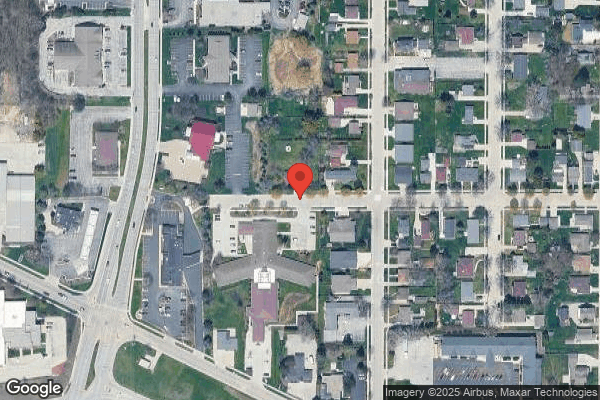
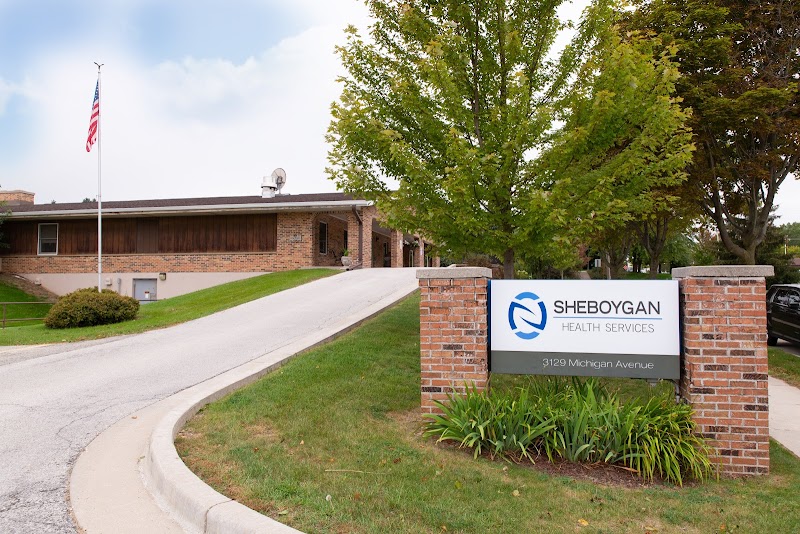
3129 MICHIGAN AVE, SHEBOYGAN, WI 53082 (920) 458-1155
For profit - Corporation 64 Beds NORTH SHORE HEALTHCARE Data: November 2025
Trust Grade
53/100
#243 of 321 in WI
Last Inspection: December 2024

Within standard 12-15 month inspection cycle. Federal law requires annual inspections.

Overview

SHEBOYGAN HEALTH SERVICES has a Trust Grade of C, which means it is average compared to other nursing homes. It ranks #243 out of 321 facilities in Wisconsin, placing it in the bottom half, and #6 out of 8 in Sheboygan County, indicating only two local options are better. Unfortunately, the facility's condition is worsening, with issues increasing from 3 in 2023 to 13 in 2024. Staffing is a strong point, rated at 4 out of 5 stars, with a turnover rate of 29%, significantly lower than the state average, which suggests that staff are familiar with the residents. However, there have been concerning incidents, such as food not being stored properly, meals being served late, and residents not receiving important bed-hold policy information when transferred to the hospital, highlighting a need for improvement in management practices. Overall, while there are strengths in staffing, the facility has notable weaknesses that families should consider.
Trust Score
C
53/100
In Wisconsin
#243/321
Bottom 25%
Safety Record
Low Risk
No red flags
Inspections
Getting Worse
3 → 13 violations
Staff Stability
✓ Good
29% annual turnover. Excellent stability, 19 points below Wisconsin's 48% average. Staff who stay learn residents' needs.
Penalties
✓ Good
No fines on record. Clean compliance history, better than most Wisconsin facilities.
Skilled Nurses
✓ Good
Each resident gets 54 minutes of Registered Nurse (RN) attention daily — more than average for Wisconsin. RNs are trained to catch health problems early.
Violations
⚠ Watch
26 deficiencies on record. Higher than average. Multiple issues found across inspections.
★★☆☆☆
2.0
Overall Rating
★★★★☆
4.0
Staff Levels
★☆☆☆☆
1.0
Care Quality
★★★☆☆
3.0
Inspection Score
Stable
2023: 3 issues
2024: 13 issues

The Good

  • 4-Star Staffing Rating · Above-average nurse staffing levels
  • Low Staff Turnover (29%) · Staff stability means consistent care
  • Full Sprinkler Coverage · Fire safety systems throughout facility
  • No fines on record
  • Staff turnover is low (29%)

    19 points below Wisconsin average of 48%

Facility shows strength in staffing levels, staff retention, fire safety.

The Bad

2-Star Overall Rating

Below Wisconsin average (3.0)

Below average - review inspection findings carefully

Chain: NORTH SHORE HEALTHCARE

Part of a multi-facility chain

Ask about local staffing decisions and management

The Ugly 26 deficiencies on record

Dec 2024 9 deficiencies
CONCERN (D)

Potential for Harm - no one hurt, but risky conditions existed

Safe Environment (Tag F0584)

Could have caused harm · This affected 1 resident

Based on observation, staff and resident interview, and record review, the facility did not maintain a home-like environment with a comfortable temperature for 1 resident (R) (R6) of 14 sampled reside...

Read full inspector narrative →
Based on observation, staff and resident interview, and record review, the facility did not maintain a home-like environment with a comfortable temperature for 1 resident (R) (R6) of 14 sampled residents. The heating/air conditioning unit in R6's room did not work which resulted in an inability to control the temperature in R6's room. Findings include: The facility's Safe and Homelike Environment policy, dated 6/2022, indicates: In accordance with residents' rights, the facility will provide a safe, clean, comfortable and homelike environment, allowing the resident to use his or her personal belonging to the extent possible .comfortable and safe temperature levels means that the ambient temperature should be in a relatively narrow range that minimizes residents' susceptibility to loss of body heat and risk of hypothermia/hyperthermia and is comfortable for the residents .7. The facility will maintain comfortable and safe temperature levels. a. The facility should strive to keep the temperature in common resident areas between 71 and 81 degrees Fahrenheit (F) . From 12/2/24 to 12/4/24, Surveyor reviewed R6's medical record. R6 was admitted to facility on 12/8/11 and had diagnoses including venous insufficiency, chronic obstructive pulmonary disease (COPD), lymphedema, gout, and morbid obesity. R6's Minimum Data Set (MDS) assessment, dated 10/20/24, had a Brief Interview for Mental Status (BIMS) score of 15 out of 15 which indicated R6 was not cognitively impaired. R6 was responsible for R6's healthcare decisions. On 12/2/24 at 12:39 PM, Surveyor interviewed R6 in R6's room. R6 indicated the heating/air conditioning unit did not work and R6's room got very cold in the winter. Surveyor noted the room felt cold and did not see a temperature control panel in the room. On 12/3/24 at 2:57 PM, Surveyor interviewed Maintenance Director (MD)-J who verified the heating/air conditioning unit in R6's room did not work and the temperature in R6's room was dependent on hall heat that filtered into the room and wall water heat. MD-J indicated the facility's heating/air conditioning units controlled two rooms. The unit that serviced R6's room also serviced a lounge next to R6's room. The lounge contained a temperature control unit for the two rooms. MD-J indicated the facility replaced 6 heating/air conditioning units in residents' rooms in 2024 and were budgeted in 2025 to replace 6 additional heating/air conditioning units that did not work. On 12/3/24 at 3:14 PM, Surveyor interviewed R6 who indicated R6 only received heat when the sun shone in R6's room. R6 stated the wall water heat register only worked when it was bitter cold. R6 stated the heating/air conditioning unit had not worked since last winter. R6 stated when R6 gets cold, R6 wears sweaters and crawls under the covers to warm up. R6 indicated R6 did not want to change rooms and would rather tolerate the cold. On 12/4/24 at 8:13 AM, Surveyor interviewed Nursing Home Administrator (NHA)-A and [NAME] President of Success (VPS)-C. NHA-A and VPS-C verified the heating/air conditioning unit in R6's room was not functional and indicated staff offered to move R6 to another room but R6 declined.
CONCERN (D)

Potential for Harm - no one hurt, but risky conditions existed

Deficiency F0646 (Tag F0646)

Could have caused harm · This affected 1 resident

**NOTE- TERMS IN BRACKETS HAVE BEEN EDITED TO PROTECT CONFIDENTIALITY** Based on staff interview and record review, the facility did not ensure the state mental health authority was notified in a time...

Read full inspector narrative →
**NOTE- TERMS IN BRACKETS HAVE BEEN EDITED TO PROTECT CONFIDENTIALITY** Based on staff interview and record review, the facility did not ensure the state mental health authority was notified in a timely manner following a significant change in mental illness for 2 residents (R) (R7 and R22) of 5 sampled residents. R7 was admitted to the facility on [DATE] with a diagnosed mental illness with corresponding medication. The facility did not update and submit R7's Preadmission Screen and Resident Review (PASRR) Level I for additional Level II screening following changes to R7's medications. R22 was admitted to the facility on [DATE] with a diagnosed mental illness with corresponding medication. The facility did not update and submit R22's PASRR Level I for additional Level II screening following changes in R22's medications. Findings include: According to the Centers for Medicare and Medicaid Services' (CMS) Long-Term Care Facility Resident Assessment Instrument 3.0 User Manual, dated October 2023, if a significant change in status (SCSA) occurs for an individual known or suspected to have a mental illness, intellectual disability, or related condition (as defined by 42 CFR 483.102), a referral to the State Mental Health or Intellectual Disability/Developmental Disabilities Administration authority (SMH/ID/DDA) for a possible Level II PASRR evaluation must promptly occur as required by Section 1919(e)(7)(B)(iii) of the Social Security Act .The nursing facility must provide the SMH/ID/DDA authority with referrals as described below, independent of the findings of the SCSA. PASRR Level II is to function as an independent assessment process for this population with special needs, in parallel with the facility's assessment process. Nursing facilities should have a low threshold for referral to the SMH/ID/DDA so that these authorities may exercise their expert judgment about when a Level II evaluation is needed .Referral should be made as soon as the criteria indicating such are evident - the facility should not wait until the SCSA is complete. In addition, a referral for Level II Resident Review Evaluations is required for individuals previously identified by PASRR to have mental illness, intellectual disability/developmental disability, or a related condition in the following circumstances: note: .A resident who exhibits behavioral, psychiatric, or mood-related symptoms suggesting the presence of a diagnosis of mental illness as defined under 42 CFR 483.100 (where dementia is not the primary diagnosis) .A resident transferred, admitted , or readmitted to a nursing facility following an inpatient psychiatric stay or equally intensive treatment. 1. On 12/4/24, Surveyor reviewed R7's medical record. R7 was admitted to the facility on [DATE] and had diagnoses including Alzheimer's disease, dementia, and major depressive disorder. R7's Minimum Data Set (MDS) assessment, dated 12/9/24, had a Brief Interview for Mental Status (BIMS) score of 00 out of 15 which indicated R7 was severely cognitively impaired. R7 had an activated Power of Attorney for Healthcare (POAHC) to assist with healthcare decisions. A PASRR Level I Screen, dated 12/14/21, indicated R7 had a serious mental illness with corresponding medication of Zoloft (an antidepressant medication). R7 had a physician order for Zoloft 75 milligrams (mg) one time a day for depression (dated 7/4/24) and an order for quetiapine fumarate (an antipsychotic medication) 12.5 mg two times a day for major depressive disorder (dated 10/22/24). R7's medical record did not contain an updated PASRR Level I that included the addition of R7's antipsychotic medication. R7's medical record did not include a PASRR Level II Reevaluation for R7's mental illness with changes to R7's medications. 2. On 12/4/24, Surveyor reviewed R22's medical record. R22 was admitted to the facility on [DATE] and had diagnoses including generalized anxiety disorder, major depressive disorder, and delusional disorder. R22's MDS assessment, dated 9/10/24, had a BIMS score of 9 out of 15 which indicated R22 had moderate cognitive impairment. R22 was responsible for R22's healthcare decisions. A PASRR Level I Screen, dated 8/19/21, indicated R22 had a serious mental illness with corresponding medications of Ativan (an antianxiety medication), and fluoxetine (an antidepressant medication). R22 had physician orders for buspirone (an antianxiety medication) 5 mg two times a day for anxiety (dated 10/8/24), escitalopram (an antidepressant medication) 10 mg one time a day for depression (dated 7/21/23), and Abilify (an antipsychotic medication) 2 mg one time a day for depression. R22's medical record did not contain an updated PASRR Level I that included the addition of R22's antipsychotic medication. R22's medical record did not include a PASRR Level II Reevaluation for R22's mental illness with changes to R22's medications. On 12/4/24 at 1:06 PM, Surveyor interviewed Social Service Coordinator (SSC)-I who had worked in SSC-I's current role for one month with no prior experience in Social Services. SSC-I verified SSC-I was responsible for completing PASRR requirements but had limited knowledge on PASRR requirements including when a Level I should be updated and when a Level II should be resubmitted. SSC-I confirmed SSC-I was not aware R7 and R22 needed an updated Level I and reevaluation of Level II by the state mental health authority. On 12/4/24 at 1:14 PM, Surveyor interviewed Nursing Home Administrator (NHA)-A and [NAME] President of Success (VPS)-C regarding PASRR expectations. VPS-C stated VPS-C was not aware R7 and R22's Level I Screens should have been resent for review for Level II Screens until Surveyor requested the documents. VPS-C stated it was the previous SSC's responsibility to ensure PASRRs were up-to-date with their quarterly review and confirmed it was also an expectation of SSC-I.
CONCERN (D)

Potential for Harm - no one hurt, but risky conditions existed

ADL Care (Tag F0677)

Could have caused harm · This affected 1 resident

**NOTE- TERMS IN BRACKETS HAVE BEEN EDITED TO PROTECT CONFIDENTIALITY** Based on observation, staff and resident interview, and record review, the facility did not ensure oral care was consistently co...

Read full inspector narrative →
**NOTE- TERMS IN BRACKETS HAVE BEEN EDITED TO PROTECT CONFIDENTIALITY** Based on observation, staff and resident interview, and record review, the facility did not ensure oral care was consistently completed for 1 resident (R) (R3) of 14 sampled residents. Oral care was not consistently documented as completed, unavailable, or refused in R3's medical record. Findings include: The facility's Oral Care Policy, dated 8/5/22. indicates: It is the practice of this facility to provide oral care to residents in order to prevent and control plaque-associated oral diseases. From 12/2/24 to 12/4/24, Surveyor reviewed R3's medical record. R3 was admitted to the facility on [DATE] and had diagnoses including metastatic kidney cancer to pancreas status post pancreatectomy, status post left nephrectomy, status post thyroidectomy for thyroid gland metastasis, schizophrenia, and diabetes. R3's Minimum Data Set (MDS) assessment, dated 11/20/24, had a Brief Interview for Mental Status (BIMS) score of 11 out of 15 which indicated R3 had moderate cognitive impairment. R3 had an activated Power of Attorney for Healthcare (POAHC). R3's activities of daily living (ADL) care plan, dated 3/30/24, indicated R3 had a self-care deficit related to decreased mobility and an inability to care for self. The care plan contained interventions to offer teeth brushing to R3 and assist as necessary. In addition, R3's plan of care indicated R3 had dental or oral cavity health problems as evidenced by dentures and contained interventions to assist with upper dentures and oral hygiene as needed. A provider note, dated 6/12/24, indicated R3 complained of oral pain but there was no obvious abnormality. Surveyor reviewed Certified Nursing Assistant (CNA) documentation related to the completion of oral care and noted the following: ~On 10/1/24, oral hygiene was not documented on the AM shift. ~On 10/4/24, oral hygiene was not documented on the PM shift (agency staff worked the PM shift). ~On 10/10/24, oral hygiene was not documented on the AM and PM shifts (agency staff worked both shifts). ~On 10/18/24, oral hygiene was not documented on the AM shift (agency staff worked the AM shift). ~On 10/20/24, oral hygiene was not documented on the AM or PM shifts. ~On 11/30/24, oral hygiene was not documented on the AM and PM shifts (agency staff worked both shifts). ~On 12/1/24, oral hygiene not documented on the AM or PM shifts. ~On 12/3/24, oral hygiene was not documented on the PM shift. On 12/2/24 at 10:00 AM, Surveyor interviewed R3 who indicated food was stuck in R3's bottom teeth and staff had not yet offered to help R3 brush R3's teeth. Surveyor observed a dry toothbrush in a basin by R3's sink. On 12/3/24 at 11:01 AM, Surveyor interviewed Director of Nursing (DON)-B who indicated DON-B expects staff to brush residents' teeth during AM and PM cares and offer to brush residents' teeth after meals. DON-B indicated R3 often refused oral hygiene. On 12/4/24 at 9:40 AM, Surveyor and Registered Nurse (RN)-F observed food debris in R3's lower teeth. R3 stated R3's teeth were not brushed. RN-F indicated the food debris was probably from breakfast and RN-F would have a CNA provide oral care. On 12/4/24 at 11:46 AM, Surveyor interviewed DON-B who reviewed R3's oral hygiene documentation for October, November, and December (2024) and verified oral hygiene on the above dates was not documented. DON-B indicated if oral hygiene was not documented it indicated oral hygiene was not completed. DON-B indicated agency staff may have worked the shifts when oral hygiene was not documented. DON- B indicated agency staff don't have access to document in residents' electronic medical records. On 12/4/24 at 2:02 PM, Surveyor interviewed DON-B who indicated the facility did not complete the documentation review for agency staff who may have completed R3's oral hygiene because it was discovered the facility's own staff also did not complete the task.
CONCERN (D)

Potential for Harm - no one hurt, but risky conditions existed

Incontinence Care (Tag F0690)

Could have caused harm · This affected 1 resident

**NOTE- TERMS IN BRACKETS HAVE BEEN EDITED TO PROTECT CONFIDENTIALITY** Based on observation, staff interview, and record review, the facility did not ensure 1 resident (R) (R2) of 3 sampled residents...

Read full inspector narrative →
**NOTE- TERMS IN BRACKETS HAVE BEEN EDITED TO PROTECT CONFIDENTIALITY** Based on observation, staff interview, and record review, the facility did not ensure 1 resident (R) (R2) of 3 sampled residents received the appropriate care and services to prevent urinary tract infections (UTIs). On 12/2/24, R2's uncovered nephrostomy tube drainage bag was observed on the floor. Findings include: The facility's Nephrostomy and Cystostomy Tube Care Policy, dated 7/21/22, indicates: A nephrostomy tube is a catheter or tube surgically inserted into the kidney to divert urine from the ureters or bladder .d. Interventions to prevent complication or promote dignity associated with the tube(s): .iv. Physical management of tubing and collection bag to prevent infection or dislodgement .7. Considerations for care .b. Maintain the drainage bag below the level of the kidney. Keep bags covered for dignity. From 12/2/24 to 12/4/24, Surveyor reviewed R2's medical record. R2 was hospitalized from [DATE] to 11/19/24 and had diagnoses including severe sepsis due to UTI, large staghorn right renal calculus (kidney stone) with mild hydronephrosis status post bilateral nephrostomy tube placement, multiple sclerosis (MS), diabetes, and neuromuscular dysfunction of the bladder. R2's Minimum Data Set (MDS) assessment, dated 11/23/24, had a Brief Interview for Mental Status (BIMS) score of 15 out of 15 which indicated R2 was not cognitively impaired. R2 made R2's own healthcare decisions. On 12/2/24 at 1:36 PM and 1:53 PM, Surveyor noted R2's left uncovered nephrostomy bag was on the floor behind R2's wheelchair. On 12/2/24 at 1:54 PM, Surveyor interviewed Registered Nurse (RN)-F who verified R2's left uncovered nephrostomy bag was on the floor which could cause contamination. RN-F indicated R2's nephrostomy bags were usually covered under R2's sweater. RN-F indicated nephrostomy tubes should be in a dependent position and nephrostomy bags should be off the floor for infection control purposes.
CONCERN (D)

Potential for Harm - no one hurt, but risky conditions existed

Respiratory Care (Tag F0695)

Could have caused harm · This affected 1 resident

Based on observation, staff interview, and record review, the facility did not ensure 1 resident (R) (R22) of 2 sampled residents received the necessary care and treatment for respiratory therapy. On ...

Read full inspector narrative →
Based on observation, staff interview, and record review, the facility did not ensure 1 resident (R) (R22) of 2 sampled residents received the necessary care and treatment for respiratory therapy. On 12/3/24, R22 received oxygen at a rate that was above the rate ordered by R22's provider. Findings include: The facility's Oxygen Concentrator policy, dated 6/27/22, indicates: To provide oxygen for therapeutic use by utilizing a concentrator that converts ambient air to a higher concentration level of oxygen. It is commonly used to provide oxygen therapy .9. Adjust the flow meter control knob to the flow setting prescribed by the physician. From 12/2/24 to 12/4/24, Surveyor reviewed R22's medical record. R22 had diagnoses including chronic obstructive pulmonary disease (COPD), thrombotic pulmonary embolism, pulmonary hypertension, anxiety, and dependence on supplemental oxygen. R22's Minimum Data Set (MDS) assessment, dated 9/10/24, had a Brief Interview for Mental Status (BIMS) score of 9 out of 15 which indicated R22 had moderate cognitive impairment. R22 made R22's own healthcare decisions. R22 had a physician order, dated 11/3/24, for oxygen via stationary system for in-room activities at 1-4 liters per minute via nasal cannula daily to keep oxygen saturation level equal to or greater than 90% every shift. On 12/3/24 at 8:22 AM, Surveyor noted R22 was receiving 4.5 liters of oxygen via nasal cannula. On 12/3/24 at 2:12 PM, Surveyor and Licensed Practical Nurse (LPN)-E observed R22's oxygen concentrator and noted R22 was receiving oxygen at 5 liters. LPN-E indicated R22's flow rate was usually set at 3 liters. LPN-E adjusted R22's oxygen incrementally to 4 liters until R22's oxygen saturation level was at 92%.
CONCERN (D)

Potential for Harm - no one hurt, but risky conditions existed

Pharmacy Services (Tag F0755)

Could have caused harm · This affected 1 resident

**NOTE- TERMS IN BRACKETS HAVE BEEN EDITED TO PROTECT CONFIDENTIALITY** Based on observation, staff and resident interview, and record review, the facility did not provide pharmaceutical services to e...

Read full inspector narrative →
**NOTE- TERMS IN BRACKETS HAVE BEEN EDITED TO PROTECT CONFIDENTIALITY** Based on observation, staff and resident interview, and record review, the facility did not provide pharmaceutical services to ensure the accurate administration of medication for 1 resident (R) (R16) of 4 sampled residents. R16 had an order for Artificial Tears ophthalmic solution 1 drop per eye 3 times per day for dry eyes. R16 did not receive 16 doses of the scheduled medication and was told the medication was unavailable. Findings include: The facility's Medication Administration policy, dated 1/2023, indicates: Medications are administered as prescribed in accordance with manufacturers' specifications, good nursing principles and practices, and only by persons legally authorized to do so .Medication Administration: 1. Medications are administered in accordance with written orders of the prescriber .14. Medications are administered within 60 minutes of scheduled time . On 12/3/24, Surveyor reviewed R16's medical record. R16 was admitted to the facility on [DATE] and had diagnoses including spastic quadriplegic cerebral palsy, bipolar disorder, anxiety, and depression. R16's Minimum Data Set (MDS) assessment, dated 10/26/24, had a Brief Interview for Mental Status (BIMS) score of 15 out of 15 which indicated R16 was not cognitively impaired. R16 was responsible for R16's healthcare decisions. On 12/2/24 at 1:35 PM and on 12/4/24 at 9:20 AM, Surveyor interviewed R16 who wore glasses and indicated staff had not provided R16's eye drops for 7 days. R16 indicated staff informed R16 that the facility was waiting on a pharmacy shipment. R16 indicated R16 cannot see the print on the television without the drops due to dryness which causes pain. R16 indicated on the third day without the eye drops, R16 reported to staff that R16's eyes hurt. Surveyor reviewed R16's medication orders and noted R16 was prescribed Artificial Tears ophthalmic solution 1 drop per eye 3 times per day for dry eyes on 8/13/24. Surveyor reviewed R16's November and December 2024 Medication Administration Records (MARs) which indicated the following: ~On 11/26/24, all three doses were not administered (medication not available). ~On 11/27/24, all three doses were not administered (medication not available). ~On 11/28/24, all three doses were administered. ~On 11/29/24, all three doses were administered. ~On 11/30/24, one dose was administered and two doses were not administered (medication not available). ~On 12/1/24, one dose was administered and two doses were not administered (medication not available). ~On 12/2/24, all three doses were administered. ~On 12/3/24, one dose was administered. On 12/3/24 at 12:43 PM, Surveyor interviewed Registered Nurse (RN)-H who indicated RN-H did not provide Artificial Tears to R16 on 12/3/24 or the previous weekend because the facility was waiting on a pharmacy shipment. RN-H indicated Director of Nursing (DON)-B ordered the medication, but it had not arrived and the facility was out. RN-H verified RN-H documented in error that the doses were administered. On 12/3/24 at 12:56 PM, Surveyor interviewed DON-B who indicated DON-B expects ordered medications to be provided as prescribed and MAR documentation to be accurate. On 12/3/24 at 2:00 PM, Surveyor interviewed [NAME] President of Success (VPS)-C who retrieved a box of Artificial Tears from downstairs which was shown to Surveyor. VPS-C was unsure why staff did not know to go downstairs to obtain the medication.
CONCERN (D)

Potential for Harm - no one hurt, but risky conditions existed

Deficiency F0804 (Tag F0804)

Could have caused harm · This affected 1 resident

Based on observation, staff and resident interview, and record review, the facility did not ensure food was served at a palatable temperature for 1 resident (R) (R18) of 1 sampled resident. On 12/2/2...

Read full inspector narrative →
Based on observation, staff and resident interview, and record review, the facility did not ensure food was served at a palatable temperature for 1 resident (R) (R18) of 1 sampled resident. On 12/2/24, Dietary Manager (DM)-G reheated a bowl of soup in the microwave and served the soup to R18 without checking the temperature. Approximately 14 minutes after being served, R18 indicated the soup was still too hot to eat. Findings include. The facility's Food Temperatures policy and procedure, revised 8/16/22, indicates hot food items may not fall below 135 degrees Fahrenheit (F) after cooking unless it is an item which is to be rapidly cooled to below 42 degrees F and reheated to at least a minimum of 165 degrees F (for a minimum of 15 seconds) prior to serving. Caution should be taken when serving food and liquids to avoid the risk of burns. On 12/2/24 at 1:00 PM, Surveyor observed DM-G microwave a bowl of soup for 1 minute and 30 seconds. DM-G removed the bowl from the microwave and handed the bowl to a Certified Nursing Assistant (CNA) to serve to R18. DM-G did not stir or temp the soup before the CNA served the soup to R18. Surveyor noted R18 was hesitant to eat the soup. On 12/2/24 at 1:14 PM, Surveyor interviewed R18 who indicated the soup was still too hot to eat. On 12/3/24 at 2:30 PM, Surveyor interviewed DM-G who indicated DM-G did not record the temperature of R18's reheated soup on the facility's temperature log. Surveyor reviewed the temperature log and verified there were no temperatures documented on 12/2/24 for R18's reheated soup. DM-G indicated the temperature was obtained after DM-G reheated the soup in the microwave but was not recorded. Surveyor did not observe DM-G obtain the temperature of the soup. On 12/3/24 at 3:03 PM, Surveyor received a Microwave Temp Log from DM-G. The log was back-dated for 12/2/24 and indicated yes to 'did the food reach 165 degrees'. The temperature was documented at 186 degrees and initialed by DM-G. The log also indicated how to safely reheat food in a microwave and read: Reheat food, then let sit for 2 minutes, remove the lid and stir with a clean utensil, wipe clean the probe of the food thermometer using single use food-grade wipes then insert food probe into food, so stem is covered, food is ready for consumption at 165 degrees F. On 12/4/25 at 12:57 PM, Surveyor interviewed DM-G who indicated DM-G had DM-G's backed turned to Surveyor on 12/2/24 when DM-G took the temperature of R18's soup. Surveyor indicated Surveyor observed DM-G hand the bowl of soup directly to a CNA without obtaining the temperature or stirring the bowl.
CONCERN (D)

Potential for Harm - no one hurt, but risky conditions existed

Medical Records (Tag F0842)

Could have caused harm · This affected 1 resident

**NOTE- TERMS IN BRACKETS HAVE BEEN EDITED TO PROTECT CONFIDENTIALITY** Based on staff interview and record review, the facility did not ensure medical records contained accurate and complete document...

Read full inspector narrative →
**NOTE- TERMS IN BRACKETS HAVE BEEN EDITED TO PROTECT CONFIDENTIALITY** Based on staff interview and record review, the facility did not ensure medical records contained accurate and complete documentation for 2 residents (R) (R16 and R31) of 14 sampled residents. R16's Medication Administration Record (MAR) indicated six doses of Artificial Tears were provided when the medication was unavailable for administration. R31 received dialysis three times per week. R31's medical record did not contain a physician's order for dialysis. Findings include: The facility's Medication Administration policy, dated 1/2023, indicates: Medications are administered as prescribed in accordance with manufacturers' specifications, good nursing principles and practices, and only by persons legally authorized to do so .Documentation: 1. The individual who administers the medication dose records the administration on the resident's MAR immediately following the medication being given .4. The resident's MAR/Treatment Administration Record (TAR) is initialed by the person administering the medication in the space provided under the date and the on the line for that specific medication dose administration and time. Initials on each MAR/TAR are verified with a full signature in the space provided or on the nursing care center's master employee signature log . 1. On 12/3/24, Surveyor reviewed R16's medical record. R16 was admitted to the facility on [DATE] and had diagnoses including spastic quadriplegic cerebral palsy, bipolar disorder, anxiety, and depression. R16's Minimum Data Set (MDS) assessment, dated 10/26/24, had a Brief Interview for Mental Status (BIMS) score of 15 out of 15 which indicated R16 was not cognitively impaired. R16 was responsible for R16's healthcare decisions. Surveyor reviewed R16's medication orders and noted R16 was prescribed Artificial Tears ophthalmic solution 1 drop per eye 3 times per day for dry eyes on 8/13/24. Surveyor reviewed R16's MAR which indicated the following: ~On 11/26/24, all three doses were not administered (medication not available). ~On 11/27/24, all three doses were not administered (medication not available). ~On 11/28/24, all three doses were administered. ~On 11/29/24, all three doses were administered. ~On 11/30/24, one dose was administered and two doses were not administered (medication not available). ~On 12/1/24, one dose was administered and two doses were not administered (medication not available). ~On 12/2/24, all three doses were administered. ~On 12/3/24, one dose was administered. On 12/3/24 at 12:43 PM, Surveyor interviewed Registered Nurse (RN)-H who indicated RN-H did not provide Artificial Tears to R16 on 12/3/24 or on the previous weekend because the facility was waiting on a pharmacy shipment. RN-H verified RN-H documented in error that RN-H had administered the doses and R16's MAR was inaccurate. On 12/3/24 at 12:56 PM, Surveyor interviewed Director of Nurses (DON)-B who indicated DON-B expects staff to provide accurate documentation in a resident's MAR. 2. On 12/3/24, Surveyor reviewed R31's medical record. R31 was admitted to the facility on [DATE] and had diagnoses including end stage renal disease-dialysis dependent, diabetes, and coronary artery disease. R31's MDS assessment, dated 9/15/24, had a BIMS score of 15 out of 15 which indicated R31 was not cognitively impaired. R31 was responsible for R31's healthcare decisions. Surveyor reviewed R31's physician orders and noted R31 did not have an order for dialysis, however, R31 received dialysis three times per week on Tuesdays, Thursdays, and Saturdays. On 12/3/24 at 2:07 PM, Surveyor interviewed DON-B who reviewed R31's physician orders and verified R31 did not have a physician's order for dialysis. DON-B indicated R31 should have a dialysis order.
CONCERN (E)

Potential for Harm - no one hurt, but risky conditions existed

Deficiency F0809 (Tag F0809)

Could have caused harm · This affected multiple residents

Based on observation, staff and resident interview, and record review, the facility did not serve meals consistently at regular meal times. This practice had the potential to affect more than 4 of the...

Read full inspector narrative →
Based on observation, staff and resident interview, and record review, the facility did not serve meals consistently at regular meal times. This practice had the potential to affect more than 4 of the 36 residents residing in the facility. On 12/2/24, breakfast service started approximately 38 minutes after the posted meal time. Staff served the last breakfast tray 1 hour and 12 minutes after the posted meal time. On 12/2/24, lunch service started approximately 30 minutes after the posted meal time. Staff served the last lunch tray 1 hour and 16 minutes after the posted meal time. Findings include: The facility's Frequency of Meals policy and procedure, revised 9/2017, indicates: The Dining Services Director will ensure that each meal is served within the designated time frame unless there is an emergency situation or resident request. Between 12/2/24 and 12/4/24, Surveyor reviewed the facility's Resident Council minutes. The Resident Council minutes from 9/10/24 indicated: Cold food on hot plate. Progress of concern: Ongoing. New concerns: Late meals. On 12/2/24 at 12:05 PM, Surveyor interviewed R24 who indicated R24 waited too long for meals. On 12/2/24 at 1:55 PM, Surveyor interviewed R31 who indicated meals arrived an hour after the posted meal times. On 12/2/24, Surveyor observed a posting outside the dining room that indicated: Breakfast 8:00 AM, Lunch 12:00 PM, and Supper 5:00 PM. On 12/2/24 at 8:14 AM, Surveyor began observing breakfast service in the dining room. On 12/2/24 at 8:32 AM, Dietary Manager (DM)-G completed food temperatures. On 12/2/24 at 8:38 AM, DM-G started plating meal trays. Surveyor noted breakfast service started 38 minutes after the posted meal time. On 12/2/24 at 8:53 AM, Surveyor noted the last dining room meal tray was completed. On 12/2/24 at 9:12 AM, Surveyor noted the last room tray was delivered 1 hour and 12 minutes after the posted meal time. On 12/2/24 at 12:27 PM, Surveyor began observing lunch service in the dining room. On 12/2/24 at 12:29 PM, DM-G completed food temperatures. On 12/2/24 at 12:30 PM, DM-G started plating meal trays. Surveyor noted lunch started 30 minutes after the posted meal time. On 12/2/24 at 12:47 PM, Surveyor noted the last dining room meal tray was completed. On 12/2/24 at 12:58 PM, Surveyor noted room room trays were plated and ready to deliver. On 12/2/24 at 1:16 PM, Surveyor noted the last room tray was delivered 1 hour and 16 minutes after the posted meal time. On 12/3/24 at 12:53 PM, Surveyor interviewed DM-G regarding meal timeliness. DM-G indicated breakfast in the dining room was at 8:15 AM and room trays were delivered at 8:30 AM. DM-G indicated lunch in the dining room was at 12:15 PM and room trays were delivered at 12:30 PM. When Surveyor asked about the posted meal times, DM-G indicated there was a communication problem and stated DM-G notified Nursing Home Administrator (NHA)-A who would take care of it. On 12/4/24, Surveyor observed a posting outside the dining room that still indicated: Breakfast 8:00 AM, Lunch 12:00 PM, and Supper 5:00 PM.
Oct 2024 3 deficiencies
CONCERN (D) 📢 Someone Reported This

A family member, employee, or ombudsman was alarmed enough to file a formal complaint

Potential for Harm - no one hurt, but risky conditions existed

Abuse Prevention Policies (Tag F0607)

Could have caused harm · This affected 1 resident

Based on staff interview and record review, the facility did not implement policies and procedures that prohibit and prevent abuse for 2 of 8 facility and contracted staff reviewed for caregiver backg...

Read full inspector narrative →
Based on staff interview and record review, the facility did not implement policies and procedures that prohibit and prevent abuse for 2 of 8 facility and contracted staff reviewed for caregiver background checks. The facility did not ensure thorough and timely caregiver background checks were completed for Certified Nursing Assistant (CNA)-C and Maintenance Staff (MS)-D. Findings include: The facility's Abuse, Neglect and Exploitation policy, with a review date of 7/15/22, indicates: It is the policy of this facility to provide protections for the health, welfare and rights of each resident by developing and implementing written policies and procedures that prohibit and prevent abuse, neglect, exploitation, and misappropriation of resident property .Screening A. Potential employees will be screened for a history of abuse, neglect, exploitation, or misappropriation of resident property. 1. Background, reference, and credentials checks shall be conducted on potential employees, contracted temporary staff, students affiliated with academic institutions, volunteers, and consultants. Background checks, including re-checks, will be completed consistent with applicable state laws and regulation. On 10/14/24, Surveyor reviewed background check information for 8 facility and contracted staff, including CNA-C and MP-D. CNA-C's hire date was listed as 4/4/17. The facility did not provide proof that a Background Information Disclosure (BID) form, Department of Justice (DOJ) criminal background check letter, or Integrated Background Information System (IBIS) letter was obtained for CNA-C within the previous four years. MP-D's hire date was listed as 7/5/23. The facility provided a BID form and DOJ and IBIS letters for MP-D that were dated 2/23/24. The facility did not provide proof that a BID form, DOJ letter, or IBIS letter was obtained for MP-D prior to or on the date of MP-D's hire. On 10/14/24 at 12:21 PM, Surveyor interviewed Business Office Manager (BOM)-E who indicated BOM-E usually completes a caregiver background check before a new staff is brought into the facility. BOM-E indicated caregiver background checks should be completed every four years. Following a discussion of the above findings for CNA-C and MP-D, BOM-E indicated BOM-E would recheck their files. BOM-E indicated MP-D's documents, dated 2/23/24, may have been obtained if MP-D started to drive the facility's van. On 10/14/24 at 12:35 PM, Surveyor interviewed Nursing Home Administrator (NHA)-A with BOM-E present. NHA-A indicated the facility was unable to find additional documents for CNA-C and MP-D. BOM-E indicated BOM-E's tracking sheet indicated all staff were up to date for caregiver background checks. On 10/14/24 at 1:47 PM, Surveyor reviewed an electronic spreadsheet used for caregiver background check tracking with BOM-E. BOM-E indicated the spreadsheet did not indicate when the most recent updates were entered. The spreadsheet indicated the most recent caregiver background check for CNA-C was completed on 4/13/21. BOM-E verified the facility had no proof the caregiver background check occurred because there were no documents in CNA-C's file. BOM-E verified MP-D's name was on the spreadsheet but there were no caregiver background check dates listed for MP-D.
CONCERN (D) 📢 Someone Reported This

A family member, employee, or ombudsman was alarmed enough to file a formal complaint

Potential for Harm - no one hurt, but risky conditions existed

Report Alleged Abuse (Tag F0609)

Could have caused harm · This affected 1 resident

**NOTE- TERMS IN BRACKETS HAVE BEEN EDITED TO PROTECT CONFIDENTIALITY** Based on staff interview and record review, the facility did not ensure an allegation of abuse was reported to the State Agency ...

Read full inspector narrative →
**NOTE- TERMS IN BRACKETS HAVE BEEN EDITED TO PROTECT CONFIDENTIALITY** Based on staff interview and record review, the facility did not ensure an allegation of abuse was reported to the State Agency (SA) and local law enforcement in a timely manner for 1 resident (R) (R3) of 4 sampled residents. On 9/11/24, R3 alleged staff pushed R3 to the floor. The facility did not report the allegation of abuse to the SA or local law enforcement. Findings include: The facility's Abuse, Neglect and Exploitation policy, with a review date of 7/15/22, indicates: It is the policy of this facility to provide protections for the health, welfare, and rights of each resident by developing and implementing written policies and procedures that prohibit and prevent abuse, neglect, exploitation, and misappropriation of resident property .Reporting/Response A. The facility will have written procedures that include: 1. Reporting of all alleged violations to the Administrator, State Agency, Adult Protective Services, and to all other required agencies (e.g., law enforcement when applicable) within specified timeframes. On 10/14/24, Surveyor reviewed R3's medical record. R3 was admitted to the facility on [DATE] with diagnoses including alcoholic cirrhosis of liver and personal history of other mental and behavioral disorders. R3's Minimum Data Set (MDS) assessment, dated 8/23/24, stated R3's Brief Interview for Mental Status (BIMS) score was 15 out of 15 which indicated R3 had intact cognition. R3's was responsible for R3's healthcare decisions. R3's medical record indicated R3 was transferred to an emergency room (ER) on 9/11/24. R3 returned to the facility on 9/11/24 but refused to exit the vehicle and left/was discharged from the facility against medical advice (AMA). A progress note, dated 9/11/24, indicated R3 entered other residents' rooms and was assisted out of the rooms by staff. The note indicated R3 became increasingly aggressive with staff while looking for R3's spouse. R3 lost R3's balance and fell to the floor. The note indicated R3 continued to scream, did not allow anyone to touch R3, and wanted to be sent to the hospital. R3 alleged R3 was pushed down. On 10/14/24, Surveyor reviewed a fall investigation for R3's fall. The investigation did not mention R3's allegation of physical abuse (being pushed). On 10/14/24 at 12:39 PM, Surveyor interviewed Nursing Home Administrator (NHA)-A who, following a discussion of the above note in R3's medical record, verified R3's allegation of being pushed was an allegation of abuse. NHA-A could not recall when NHA-A was notified of R3's fall. NHA-A verified the facility did not report R3's allegation of abuse to the SA. On 10/14/24 at 12:54 PM, Surveyor interviewed NHA-A with Director of Nursing (DON)-B present. DON-B indicated DON-B could not recall if DON-B was notified of R3's allegation of abuse. DON-B verified the nurse on duty did not mention R3's allegation of abuse on 9/11/24 when the nurse called DON-B about sending R3 to the hospital. NHA-A indicated if NHA-A had been notified of R3's allegation of abuse in a timely manner, NHA-A would have reported the allegation of abuse to the SA.
CONCERN (D) 📢 Someone Reported This

A family member, employee, or ombudsman was alarmed enough to file a formal complaint

Potential for Harm - no one hurt, but risky conditions existed

Investigate Abuse (Tag F0610)

Could have caused harm · This affected 1 resident

**NOTE- TERMS IN BRACKETS HAVE BEEN EDITED TO PROTECT CONFIDENTIALITY** Based on staff interview and record review, the facility did not ensure an allegation of abuse was thoroughly investigated for 1...

Read full inspector narrative →
**NOTE- TERMS IN BRACKETS HAVE BEEN EDITED TO PROTECT CONFIDENTIALITY** Based on staff interview and record review, the facility did not ensure an allegation of abuse was thoroughly investigated for 1 resident (R) (R3) of 4 sampled residents. On 9/11/24, R3 alleged staff pushed R3 to the floor. The facility did not thoroughly investigate the allegation of abuse. Findings include: The facility's Abuse, Neglect and Exploitation policy, with a review date of 7/15/22, indicates: It is the policy of this facility to provide protections for the health, welfare, and rights of each resident by developing and implementing written policies and procedures that prohibit and prevent abuse, neglect, exploitation, and misappropriation of resident property .An immediate investigation is warranted when an allegation or suspicion of abuse, neglect, or exploitation, or reports of abuse, neglect, or exploitation occur. B. Written procedures for investigations include: .4. Identifying and interviewing all involved persons, including the alleged victim, alleged perpetrator, witnesses, and others who might have knowledge of the allegation(s) .6. Providing complete and thorough documentation of the investigation. On 10/14/24, Surveyor reviewed R3's medical record. R3 was admitted to the facility on [DATE] with diagnoses including alcoholic cirrhosis of liver and personal history of other mental and behavioral disorders. R3's Minimum Data Set (MDS) assessment, dated 8/23/24, stated R3's Brief Interview for Mental Status (BIMS) score was 15 out of 15 which indicated R3 had intact cognition. R3 was responsible for R3's healthcare decisions. R3's medical record indicated R3 was transferred to an emergency room (ER) on 9/11/24. R3 returned to the facility on 9/11/24, but refused to exit the vehicle and left/was discharged from the facility against medical advice (AMA). A progress note, dated 9/11/24, indicated R3 entered other residents' rooms and was assisted out of the rooms by staff. The note indicated R3 became increasingly aggressive with staff while looking for R3's spouse. R3 lost R3's balance and fell to the floor. The note indicated R3 continued to scream, did not allow anyone to touch R3, and wanted to be sent to the hospital. R3 alleged that R3 was pushed down. On 10/14/24, Surveyor reviewed a fall investigation for R3's fall. The investigation did not mention R3's allegation of physical abuse (being pushed). The investigation contained interviews with three staff and indicated witness statements were attached. Surveyor was not provided with the witness statements. On 10/14/24 at 12:39 PM, Surveyor interviewed Nursing Home Administrator (NHA)-A who, following a discussion of the above note in R3's medical record, verified an allegation of being pushed was an allegation of abuse. On 10/14/24 at 12:54 PM, Surveyor interviewed NHA-A with Director of Nursing (DON)-B present. NHA-A indicated the facility was unable to locate witness statements associated with R3's allegation of abuse on 9/11/24. DON-B indicated witness statements were written on 9/11/24; however, the witness statements were destroyed the next morning (9/12/24) after DON-B entered the information in the facility's electronic fall investigation document. DON-B indicated DON-B could not recall if DON-B was notified of R3's allegation of abuse. DON-B verified the nurse on duty did not mention R3's allegation of abuse on 9/11/24 when the nurse called DON-B about sending R3 to the hospital. NHA-A indicated if NHA-A had been notified of R3's allegation of abuse in a timely manner, NHA-A would have immediately initiated abuse investigation procedures, including a thorough investigation.
Apr 2024 1 deficiency
CONCERN (D) 📢 Someone Reported This

A family member, employee, or ombudsman was alarmed enough to file a formal complaint

Potential for Harm - no one hurt, but risky conditions existed

Accident Prevention (Tag F0689)

Could have caused harm · This affected 1 resident

**NOTE- TERMS IN BRACKETS HAVE BEEN EDITED TO PROTECT CONFIDENTIALITY** Based on staff interview and record review, the facility did not ensure the environment remained as free of accident hazards as ...

Read full inspector narrative →
**NOTE- TERMS IN BRACKETS HAVE BEEN EDITED TO PROTECT CONFIDENTIALITY** Based on staff interview and record review, the facility did not ensure the environment remained as free of accident hazards as possible for 1 resident (R) (R1) of 3 residents reviewed for falls. R1 fell in the facility on 1/26/24. The root cause of the fall was not identified and R1's plan of care was not updated to prevent future falls. Findings include: The facility's Accidents and Supervision policy, with a review date of 7/14/22, indicates: Evaluation and analysis of a fall involves examining the data to identify specific hazards and risks and developing targeted interventions to reduce the potential for accidents. Interventions will be implemented based on results of the fall evaluation and analysis of information about hazards and risks based on relevant standards. The facility will also ensure interventions are implemented correctly and evaluate the effectiveness of new interventions. On 4/9/24, Surveyor reviewed R1's medical record. R1 was admitted to the facility on [DATE] with diagnoses including Parkinson's disease, dementia, type 2 diabetes, and arthritis. R1's most recent Minimum Data Set (MDS) assessment, dated 1/15/24, contained a Brief Interview for Mental Status (BIMS) score of 2 out of 15 which indicated R1 had severely impaired cognition. An admission assessment, dated 1/12/24, indicated R1 was at risk for falls and included the following interventions: bed in low position and non-slip footwear. A fall assessment, dated 1/26/24, indicated R1 was found on the floor. The assessment indicated R1's bed was in a low position and R1 did not sustain any injuries. The assessment indicated floor mats were added as a fall intervention. An Interdisciplinary Team (IDT) progress note, dated 1/27/24, indicated the IDT reviewed R1's fall and added an intervention to keep R1's bed in the lowest position. The IDT did not identify a root cause for the fall. Surveyor noted R1's fall care plan did not contain an intervention for fall mats and did not contain any interventions after 1/12/24. On 4/9/24 at 2:13 PM, Surveyor interviewed [NAME] President of Success (VPS)-C who verified there were no interventions implemented after R1's fall. VPS-C verified the IDT should have implemented a different intervention since the low bed was already in place prior to the fall.
Sept 2023 2 deficiencies
CONCERN (D)

Potential for Harm - no one hurt, but risky conditions existed

Deficiency F0582 (Tag F0582)

Could have caused harm · This affected 1 resident

Based on staff interview and record review, the facility did not ensure the Skilled Nursing Facility Advance Beneficiary Notice (SNFABN) form was completed in its entirety for 2 Residents (R) (R20 and...

Read full inspector narrative →
Based on staff interview and record review, the facility did not ensure the Skilled Nursing Facility Advance Beneficiary Notice (SNFABN) form was completed in its entirety for 2 Residents (R) (R20 and R37) of 3 residents who remained in the facility when their Medicare Part A benefits ended. R20's SNFABN did not have a preference selected under the Options section of the form. R37's SNFABN did not have a preference selected under the Options section of the form. Findings include: On 9/26/23 at 1:14 PM, Surveyor reviewed the required notices for sampled residents whose Medicare Part A services ended and whose preference was to remain in the facility. Surveyor noted the Options section of the SNFABN form provided to R20 and R37 was blank. On 9/27/23 at 9:55 AM, Surveyor interviewed Social Services Designee (SSD)-D who stated the previous social worker was responsible for reviewing the SNFABN form with residents, but SSD-D is now responsible for completing the forms. SSD-D stated the Resident Care Management Specialist (Licensed Practical Nurse (LPN)-C)) fills in the name, date, services, and cost sections of the form. LPN-C then provides the form to SSD-D to review with residents who select an option and sign the form. SSD-D stated SSD-D did not receive formal training, but reads the form to residents and has them sign the form. SSD-D denied additional knowledge about the form, including the Options section. On 9/27/23 at 10:28 AM, Surveyor interviewed LPN-C who confirmed LPN-C fills in the form and gives the form to SSD-D to review with residents and have them sign. LPN-C stated LPN-C took over the task after the previous social worker said they were not educated on how to fill out the form. LPN-C confirmed LPN-C fills in the name, service, and cost section of the form, but denied LPN-C completes the Options section. On 9/27/23 at 10:35 AM, Surveyor reviewed the facility's policy on Advanced Beneficiary Notice of Non-Coverage which indicates: If the beneficiary cannot or will not make a choice, the notice should be annotated. Surveyor noted no additional information or explanation was noted on the form, or in the residents' medical records. On 9/27/23 at 10:44 AM, Surveyor interviewed Nursing Home Administrator (NHA)-A who acknowledged an option was not selected on R20 and R37's SNFABN forms. NHA-A stated NHA-A's expectation is that staff ensure the form is completed in its entirety before the resident signs the form.
CONCERN (D)

Potential for Harm - no one hurt, but risky conditions existed

Deficiency F0637 (Tag F0637)

Could have caused harm · This affected 1 resident

**NOTE- TERMS IN BRACKETS HAVE BEEN EDITED TO PROTECT CONFIDENTIALITY** Based on staff interview and record review, the facility did not ensure an SCSA (Significant Change in Status Assessment) was co...

Read full inspector narrative →
**NOTE- TERMS IN BRACKETS HAVE BEEN EDITED TO PROTECT CONFIDENTIALITY** Based on staff interview and record review, the facility did not ensure an SCSA (Significant Change in Status Assessment) was completed for 1 Resident (R) (R19) of 13 sampled residents. The facility did not complete and submit an SCSA when R19 had a significant change on or about 8/15/23. Findings include: The Long-Term Care Facility Resident Assessment Instrument 3.0 User's Manual Version 1.15 indicates: A significant change is a major decline or improvement in a resident's status that: 1. Will not normally resolve itself without intervention by staff or by implementing standard disease-related clinical interventions, the decline is not considered self-limiting; 2. Impacts more than one area of the resident's health status; and 3. Requires interdisciplinary review and/or revision of the care plan. On 9/26/23, Surveyor reviewed R19's medical record. R19 was admitted to the facility on [DATE] with diagnoses to include alcohol-induced dementia (cognitive loss caused by excessive/chronic ingestion of alcohol resulting in damage to the frontal lobes of the brain causing disinhibition, loss of planning and executive functions, and a disregard for the consequences of behavior). R19's Minimum Data Set (MDS) assessment, dated 8/15/23, contained a Brief Interview for Mental Status (BIMS) score of 8 out of 15 which indicated R19 had moderately impaired cognition. R19's Power of Attorney for Healthcare (POAHC) document, dated 6/7/18 and activated 4/29/22, indicated R19's POAHC agent was responsible for R19's healthcare decisions. R19's MDS assessment, dated 5/30/23, indicated R19 required supervision of one staff for bed mobility and could complete transfers and use the toilet independently with set-up from staff. R19's MDS assessment, dated 8/15/23, indicated R19 required extensive assistance of one staff for bed mobility, transfers and toilet use. R19's Care Area Assessment (CAA) for the 8/15/23 MDS indicated: CAA area triggered due to ADL (activities of daily living) assistance during look-back period since re-admission from the hospital .extensive assistance has been needed with several ADLs, see POC (plan of care) .(R19) recently re-admitted to the facility after hospitalization for fall with scalp laceration and pneumonia. (R19) has required extensive assistance with several of (R19's) ADLs as per documentation. (R19) is refusing therapy services. A referral for hospice has also been made, but (R19) didn't qualify at this time. Due to increased number of falls and confusion, 1:1 has been put into place for (R19's) safety. On 9/27/23 at 11:52 AM, Surveyor interviewed Director of Nursing (DON)-B who verified R19's goal of care was palliative and stated, (R19's) not able to walk anymore. (R19's) very weak and able to pivot transfer only. On 9/28/23 at 8:52 AM, Surveyor interviewed Licensed Practical Nurse (LPN)-C who indicated LPN-C was the facility's MDS Coordinator. LPN-C verified LPN-C completed R19's 8/15/23 MDS. When asked what qualified as a significant change, LPN-C indicated one of the reasons to do an SCSA was a change in two or more care areas. LPN-C verified LPN-C did not complete an SCSA for R19 on 8/15/23, but should have. LPN-C indicated R19 was due for an Annual MDS and a corporate staff opened R19's Annual MDS. LPN-C indicated the facility's care team discussed the potential hospice component, but LPN-C didn't change the MDS from Annual status to SCSA status. LPN-C indicated a corporate Registered Nurse (RN) signed R19's 8/15/23 MDS as complete and correct. LPN-C verified R19's 8/15/23 MDS should have been an SCSA based on a change in the three care areas listed above.
Sept 2023 1 deficiency
CONCERN (D) 📢 Someone Reported This

A family member, employee, or ombudsman was alarmed enough to file a formal complaint

Potential for Harm - no one hurt, but risky conditions existed

Accident Prevention (Tag F0689)

Could have caused harm · This affected 1 resident

**NOTE- TERMS IN BRACKETS HAVE BEEN EDITED TO PROTECT CONFIDENTIALITY** Based on observation, staff interview and record review, the facility did not ensure adequate fall prevention interventions were...

Read full inspector narrative →
**NOTE- TERMS IN BRACKETS HAVE BEEN EDITED TO PROTECT CONFIDENTIALITY** Based on observation, staff interview and record review, the facility did not ensure adequate fall prevention interventions were in place for 1 Resident (R) (R1) of 3 sampled residents. The facility did not educate Certified Nursing Assistant (CNA)-C, who was new to facility, on the expected use of a gait belt during R1's transfers. R1's care plan did not contain an intervention for the use of a gait belt during transfers when R1 fell on 8/29/23. Findings include: The facility's Fall Prevention and Management Guidelines policy, dated 11/08/22, indicates: Each resident will be assessed for fall risk and will receive care and services in accordance with their individualized plan of care to minimize the likelihood of falls or reduce the possibility/severity of injury .When any resident experiences a fall, the facility will: .Review the resident's care plan and update with any new interventions put in place to try to prevent additional falls. The facility's Safe Resident Handling and Transfers policy, with a revision date of 8/5/22, indicates: It is the policy of this facility to ensure that residents are handled and transferred safely to prevent or minimize risks for injury and provide and promote a safe, secure and comfortable experience for the resident while keeping the employees safe in accordance with current standards and guidelines .All residents require safe handling when transferred to prevent or minimize the risk for injury to themselves and the employees that assist them .1. The interdisciplinary team or designee will evaluate and assess each resident's individual mobility needs, taking into account other factors as well, such as weight and cognitive status. 2. The resident's mobility needs will be addressed on admission and reviewed quarterly, after a significant change in condition or based on direct care staff observations or recommendations .5. Handling aids may include gait belts, transfer boards, and other devices .11. Staff will be educated on the use of safe handling/transfer practices to include the use of mechanical lift upon hire .13. Staff members are expected to maintain compliance with safe handling/transfer practices .14. Resident lifting and transferring will be performed according to the resident's individual plan of care. On 9/13/23, Surveyor reviewed R1's medical record. R1 was admitted to the facility on [DATE] with diagnoses to include Alcohol-Induced Dementia (cognitive loss caused by excessive/chronic ingestion of alcohol resulting in damage to the frontal lobes of the brain causing disinhibition, loss of planning and executive functions, and a disregard for the consequences of behavior). R1's Minimum Data Set (MDS) assessment, dated 8/15/23, contained a Brief Interview for Mental Status (BIMS) score of 8 out of 15 which indicated R1 had moderately impaired cognition. R1's Power of Attorney for Healthcare (POAHC) document, dated 6/7/18 and activated on 4/29/22, indicated R1's POAHC agent was responsible for R1's healthcare decisions. R1's medical record indicated R1 had a history of multiple falls, including a fall on 8/18/23 during which R1 sustained vertebral (spine) fractures at T12 and L1 (thoracic vertebra number 12 and lumbar vertebra number 1). The facility implemented 1:1 staff supervision of R1 following the fall on 8/18/23. R1's care plan was updated and stated, One to One within arm's reach of resident. R1's care plan intervention Transfer: Assist of 1 supervision with assistive device (wheelchair/walker) remained unchanged. On 9/13/23, Surveyor reviewed the facility's investigation for Office of Caregiver Quality (OCQ) incident report 1169484, dated 9/1/23, which contained the following information: On the morning of 8/29/23 around (6:00 AM), (R1) fell and hit the back of (R1's) head while transferring to the bathroom. (CNA (Certified Nursing Assistant)-C) was there for the one-on-one and was assisting (R1) .(CNA-C) was interviewed stated (CNA-C) was helping (R1) to the bathroom when (R1) started to fall backwards. (CNA-C) had (CNA-C's) hand on (R1's) back, but was unable to catch (R1). (DON (Director of Nursing)-B) asked what (R1's) transfer status was prior to this and (CNA-C) stated (R1) was contact guard assist. DON asked if (CNA-C) used a gait belt. (CNA-C) stated no and said (R1) had on gripper socks and was using a 2 wheeled walker. R1's medical record indicated R1 sustained an abrasion to the head on 8/29/23 which measured 3 centimeters (cm) by 3.5 cm, and a skin tear to the inner left antecubital (inner elbow) which measured 0.8 cm by 1.2 cm. Staff provided first aid for R1's injuries, and notified R1's physician and POAHC. R1's injuries did not require transfer to the emergency room (ER). The facility updated R1's care plan with the following: ~Toileting: Assist of 1 with Gait Belt and wheelchair, pivot transfer ~Transfer: Assist of 1 with Gait belt, With wheelchair, pivot transfer ~Commode placed at bedside for nighttime use On 9/13/23 at 11:33 AM, Surveyor interviewed DON-B who stated, Our policy doesn't really state use of gait belt (for assisting residents during transfers) but that is our expectation. On 9/13/23 at 12:11 PM, Surveyor interviewed CNA-C via phone. When asked what R1's care needs were prior to the fall on 8/29/23, CNA-C stated, I don't know. I don't usually work there. CNA-C indicated CNA-C worked routinely at a facility owned by the same corporation and stated, I just picked up hours there (at R1's facility). CNA-C verified CNA-C's assignment for the 8/28/23 night shift going into 8/29/23 was to provide 1:1 assistance for R1. CNA-C indicated R1 was up and down to the bathroom a few times during the shift and used a wheeled walker during transfers and ambulation. CNA-C indicated CNA-C gave R1 a shower at approximately 3:00 AM, and walked with R1 through the hall to/from the shower room and R1's room. CNA-C indicated R1 did fine while transferring and ambulating without the use of a gait belt until R1 fell. CNA-C indicated sometime between 5:00 AM and 5:30 AM on 8/29/23, a nurse gave R1 a Percocet. CNA-C indicated R1 slept for a few minutes then got out of R1's recliner. CNA-C was assisting R1 to the bathroom when (R1) lost balance and I was not able to catch (R1) or lower (R1) down. CNA-C stated, I'm only four feet eleven (inches tall). CNA-C indicated CNA-C did not use a gait belt during any of R1's transfers or ambulation during the shift. CNA-C stated, I didn't know. I wasn't instructed on how (R1) transferred. When asked if there was a care instruction sheet in R1's room, CNA-C stated, Not that I seen at the time. I was just told that (R1) gets up and down to the bathroom. When asked if other staff witnessed CNA-C transfer and ambulate R1 without a gait belt, CNA-C stated, I believe they seen me take (R1) to the shower. I asked someone to bring me soap. CNA-C did not recall the name of the staff member. CNA-C indicated nobody corrected CNA-C in real time for not using a gait belt. CNA-C indicated staff members who provided 1:1 supervision for R1 while CNA-C took breaks also did not use a gait belt when transferring or ambulating R1. CNA-C verified CNA-C observed other staff transfer and ambulate R1 without a gait belt. CNA-C indicated CNA-C was not aware of R1's vertebral fractures until after R1 fell on 8/29/23. CNA-C stated, I just knew (R1) was 1:1 because of (R1's) falls. I picked up at the last minute on a weekend. The nurse should have told me. On 9/13/23, Surveyor reviewed R1's August 20203 Medication Administration Record (MAR) which indicated R1 had a physician order for Oxycodone-Acetaminophen (Percocet) (used to treat moderate to severe pain) every six hours, scheduled for 12:00 AM, 6:00 AM, 12:00 PM and 6:00 PM. The MAR indicated R1 was administered the 6:00 AM dose of Percocet on 8/29/23. On 9/13/23 at 12:51 PM, Surveyor observed the left upper/back area of R1's head and noted a healed abrasion with a tiny scab and no signs or symptoms of infection. On 9/13/23 at 1:04 PM, Surveyor interviewed DON-B who verified the facility expected staff to use a gait belt with assisted transfers. DON-B stated, Anyone who is not a lift (mechanical lift) we expect they (staff) use a gait belt with assisted transfers. When asked how as needed staff knew the expectation, DON-B stated, We have a packet that they go through and we show them the [NAME] (care instruction sheet) binder and they know where the [NAME] is on the computer as well. DON-B indicated the binder was kept at the nurses' station. When asked how as needed staff knew R1's care needs, DON-B stated, Normally, that is explained to the 1:1 (staff) when they get here. When asked if the facility had proof that as needed staff were educated, DON-B stated, I don't believe anything is signed. More of a verbal understanding. On 9/13/23 at 1:47 PM, Surveyor interviewed Nursing Home Administrator (NHA)-A who verified R1's care plan did not contain an intervention for a gait belt at the time of R1's fall on 8/29/23. When asked if the facility did an audit of other residents' care plans regarding the need for gait belt use, NHA-A indicated the facility conducted audits to ensure the required equipment, as indicated by therapy assessments, was available in residents' rooms. On 9/13/23 at 1:53 PM, Surveyor interviewed DON-B and NHA-A. When asked what contact guard assist meant, DON-B indicated contact guard assist meant with or without a gait belt dependent on therapy recommendations. When asked how staff knew residents' therapy recommendations, NHA-A asked DON-B, If therapy recommends gait belt we would put on care plan, if therapy doesn't feel gait belt needed gait belt would not be listed on care plan? DON-B stated, That's an accurate statement. Obviously, if they are assist of one, like we go like this (Surveyor observed DON-B lift NHA-A's right upper arm from underneath) we will not be pulling arms, they have to have a gait belt. When questioned what criteria was used to determine required use of a gait belt, DON-B stated, If they (staff) have to provide any lifting assistance or (resident is) high fall risk they (staff) should be using a gait belt. DON-B indicated CNA-C was not part of our building and that the shift worked by CNA-C was CNA-C's first time here. DON-B indicated the facility completed one-on-one education with CNA-C after R1's fall on 8/29/23. NHA-A indicated NHA-A conducted a care plan audit for residents to make sure care plan matched what was in room. DON-B verified the care plan audit did not specifically address gait belt issues.
Aug 2022 10 deficiencies
CONCERN (D)

Potential for Harm - no one hurt, but risky conditions existed

Deficiency F0561 (Tag F0561)

Could have caused harm · This affected 1 resident

**NOTE- TERMS IN BRACKETS HAVE BEEN EDITED TO PROTECT CONFIDENTIALITY** Based on interview and record review, the facility did not promote and facilitate resident self-determination through support of...

Read full inspector narrative →
**NOTE- TERMS IN BRACKETS HAVE BEEN EDITED TO PROTECT CONFIDENTIALITY** Based on interview and record review, the facility did not promote and facilitate resident self-determination through support of resident choice for 1 Resident (R) (R11) of 12 residents reviewed. The facility did not allow R11 to bring personal belongings to the facility from R11's storage unit when requested. Finding include: R11 was admitted to the facility on [DATE] with diagnosis to include but not limited to: schizophrenia, depression, obsessive compulsive disorder and diabetes. R11's Minimum Data Set (MDS) assessment, dated 6/7/22, indicated R11's Brief Interview for Mental Status (BIMS) score was 15 out of 15, no impaired cognition. R11 was their own decision maker. On 8/15/22 at 9:27 AM, the Surveyor interviewed R11 who voiced concern of wanting more collectable stuffed animals brought to the facility from the storage unit R11 owned. Surveyor observed one stuffed animal display in R11 room and space in R11 room for more displays. On 8/16/22 at 10:39 AM, the Surveyor interviewed Social Service Director (SSD)-F who explained R11 does have a storage unit and the SSD goes out of the way to take R11 for trips out to the unit. R11 will request to go at times that are not convenient for the schedule of the SSD-F or safe for R11 due to the weather. R11 and the facility had not come to an agreement on what stuffed animals to bring so R11 has not been allowed to bring any others than the one display in R11's room until an agreement is made. R11 was offered a corner net for R11's room to hold some of the stuffed animals but wanted shelves. The only other intervention discussed was donation of items. SSD-F recalled taking R11 out to the unit five or six time since admission to the facility. SSD-F explained that R11 is a hoarder and they are trying to keep R11's room safe from clutter and hoarding. The Surveyor reviewed R11's medical record for documentation of management of resident care and choice of personal belongings in the care conferences notes, comprehensive care planning, behavior monitoring, intervention for activities (trips to the storage unit), and diagnosis of hoarding or history of hoarding. R11 medical record showed no evidence of management of resident care and personal belongings. The surveyor requested from the facility documentation of above items, and nothing was provided. The Surveyor reviewed R11 medical record which contained a document titled Psychopharmacologic medication Evaluation dated 3/4/22 which indicated.Summary of behavioral trends & psychoactive usage: Symptoms increased r/t (related to) storage unit and not having all possessions around [R11] . No new intervention documented. On 3/4/22 R11 had a Patient Health Questioner (PHQ-9) screening complete for depression which revealed a score of 9 which indicates mild depression. The PHQ-9 can function as a screening tool, an aid in diagnosis, and as a symptom tracking tool that can help track a patient's overall depression severity as well as track the improvement of specific symptoms with treatment. The Surveyor reviewed R11's Quarterly Care Conference Summary dated 6/8/22.activity summary concern: Resident had been avoiding group activities as they have been obsessing about their storage unit and wanting to go look at their belongings. Activity summary: writer had encouraged resident to engage in group activities as they have in the past. Writer has also encouraged resident to engage in putting together puzzles as they have enjoyed them in the past . No documentation of when trips were made to storage unit or when future trips will take place for R11. On 6/6/22 R11 PHQ-9 score revealed a score of 18 which indicated moderately severe depression. No new intervention was provided to surveyor or documented in R11's medical record. On 8/16/22 at 11:31 AM, the Surveyor interviewed R11 who was in the bathroom but requested to know what the Surveyor wanted and the Surveyor explained they were back to talk more about the storage unit. R11 stated [pronoun indicating gender] donated it all and that makes R11 feel terrible. The Surveyor explained they would come back shortly. On 8/16/22 at 12:00 PM, the Surveyor, R11 and the Unit Manager (UM)-C began to walk the hallway towards the dinning room. When R11 verbalized that the SSD-F was donating and selling all of R11 belongings out of the storage unit. The (UM)-C clarified with R11 who R11 was talking about and R11 stated my social worker. The UM-C left and asked R11 to continue to make their way to lunch at 12:07 PM the Surveyor asked R11 what type of items have been sold. R11 stated folding chairs and lamps. R11 went to the dinning room to eat lunch. On 8/16/22 at 12:20 PM, the Surveyor interviewed Director of Nursing (DON)-B and UM-C to report allegations and confirm allegations were reported to Nursing Home Administrator (NHA)-A. On 8/16/22 at 1:20 PM, the Surveyor verified the investigation had been initiated. On 8/17/22 at 11:26 AM, the Surveyor interviewed DON-B who agreed that R11's room would be able to accommodate more of R11 personal belonging without clutter or safety concerns of hoarding.
CONCERN (D)

Potential for Harm - no one hurt, but risky conditions existed

Grievances (Tag F0585)

Could have caused harm · This affected 1 resident

Based on observation, Resident (R) interview, staff interviews, and record review, the facility did not ensure grievances were documented and resolved for 1 (R24) of 12 sampled residents. Facility sta...

Read full inspector narrative →
Based on observation, Resident (R) interview, staff interviews, and record review, the facility did not ensure grievances were documented and resolved for 1 (R24) of 12 sampled residents. Facility staff did not document and resolve R24's grievances regarding missing pants and malfunctioning window covering. Findings include: Missing Pants On 8/15/22 at 9:22 AM, R24 complained to Surveyor that a pair of gray, nylon material pants were missing for about 2 weeks. R24 recalled telling staff, including Social Services Director (SSD)-F, pants were missing. Staff responded that R24's pants were not found. R24 explained R24 admitted to facility directly from another county's hospital with only a hospital gown so R24's family member purchased two pairs of nylon material pants for R24. R24's camouflage pattern pants were placed on chair next to R24's bed and R24 motioned to camouflage pattern while indicating same style of pants but gray color were missing. On 8/15/22, Surveyor reviewed facility grievance binder which did not document any concerns from R24. On 8/16/22 at 9:11 AM, Surveyor interviewed SSD-F regarding R24's missing pants. SSD-F confirmed R24 reported missing pants in past. SSD-F explained SSD-F went to laundry, found pants, and placed label in alternate location since pants were soiled in usual labeling location. SSD-F indicated no grievance was documented because SSD-F located pants on same day R24 voiced grievance. On 8/16/22 at 1:38 PM, Certified Nursing Assistant (CNA)-I verified R24 reported missing pants to CNA-I on 8/22/22. CNA-I recalled checking with laundry and not finding R24's pants. CNA-I explained CNA-I forgot about R24's pants after that. CNA-I denied filling out a grievance form regarding R24's missing pants. On 8/16/22 at 12:49 PM, SSD-F reported to Surveyor that SSD-F found and returned pants to R24. On 8/16/22 at 12:50 PM, Surveyor interviewed R24. R24's voice rose as R24 confirmed R24 still had camouflage pattern pants and gray pants were still missing. On 8/16/22 at 12:52 PM, Surveyor interviewed SSD-F who confirmed returning pants to R24. Surveyor indicated R24's alleged gray pants were still missing. SSD-F explained camouflage pants were located and confirmed gray pants were still missing. While speaking with Surveyor, SSD-F verbalized a grievance form would be filled out for R24's missing pants, took out a grievance form, and began completing grievance form in front of Surveyor. Malfunctioning Window Cover On 8/15/22 at 9:11 AM, R24 complained to Surveyor that the window shade was hard to operate and fell of the track sometimes. R24 denied feeling privacy was violated by window covering malfunctioning and not being able to consistently closed. R24 indicated staff were well aware of issue since staff operated window covering. R24 explained R24 also verbalized complaints about window covering to various CNA who assisted R24 with cares. On 8/15/22, Surveyor reviewed facility grievance binder which did not document any concerns from R24. On 8/16/22 at 11:04 AM, Surveyor interviewed CNA-I regarding R24's window covering. CNA-I confirmed being aware of window covering not functioning properly. CNA-I described window covering chain as finicky. CNA-I indicated CNA-I reported window covering issues to a nurse and filled out a TELS (maintenance electronic request system) request. CNA-I explained CNA-I did not work with R24 immediately upon R24's admission but R24's window covering was malfunctioning for entire time CNA-I worked with R24 to date of investigation. On 8/16/22 at 10:36 AM, Surveyor interviewed Maintenance Supervisor (MS)-L regarding R24's window covering. MS-L explained the window covering was a black out drape. At the time of interview, MS-L and Surveyor entered R24's room with R24's permission to assess R24's window covering. Surveyor observed MS-L assessed R24's window covering. Window covering chain made unusually noises as MS-L attempted to maneuver window covering up and down. MS-L revealed a clamp was busted. MS-L explained a clamp would be obtained from an unoccupied room so R24's window covering could be fixed. MS-L could not recall any TELS requests for R24's window covering.
CONCERN (D)

Potential for Harm - no one hurt, but risky conditions existed

Comprehensive Care Plan (Tag F0656)

Could have caused harm · This affected 1 resident

**NOTE- TERMS IN BRACKETS HAVE BEEN EDITED TO PROTECT CONFIDENTIALITY** Based on interview and record review the facility did not develop and/or implement the comprehensive care plan for 1 Resident (R...

Read full inspector narrative →
**NOTE- TERMS IN BRACKETS HAVE BEEN EDITED TO PROTECT CONFIDENTIALITY** Based on interview and record review the facility did not develop and/or implement the comprehensive care plan for 1 Resident (R12) of 12 residents reviewed. Facility did not develop a care plan to address R12's routine of purchasing over the counter medications when out in the community and storing in room at the facility for personal use. Finding Include: R12 was admitted to the facility on [DATE] with diagnosis to include but not limited to: Dementia, Diabetes and Chronic Kidney Disease. R12's Minimum Data Set (MDS) assessment dated [DATE] stated R12's Brief Interview for Mental Status (BIMS) score was 11 out of 15, which indicated R12 had moderately impaired cognition. R12 had an activated Power of Attorney for Health Care (POAHC) with activation date of 11/15/21. On 8/15/22 at 10:04 AM, the Surveyor observed a box of Dulcolax laxative on R12's bedside table. R12 removed medication from box and three of eight pills were gone. R12 explained that R12 sibling will take R12 to town shopping once or twice a month and R12 purchased the medication the last time they were in town. R12 did not know if R12 had been assessed to have medication at bedside. R12 did not have desire to self administer medication and was agreeable if nursing staff took care of any medication R12 had. On 8/15/22 at 10:13 AM, the Surveyor interviewed Registered Nurse (RN)-M who verified R12 should not have medications at bedside and explained that when he goes out shopping staff should be checking for over the counter (OTC) medications upon return to the facility and should assess and obtain a physician's order for any new medications. The Surveyor reviewed R12's plan of care and did not find evidence of intervention for R12 when bringing OTC medication to the facility. On 8/16/22 at 9:37 AM, the Surveyor interviewed RN-K identified intervention of searching items when R12 comes back from shopping trips and verified it was not documented in R12 comprehensive care plan. On 8/16/22 at 10:34 AM, the Surveyor interviewed Social Service Director (SSD)-F who explained intervention of checking items brought into the facility after shopping trips was agreed upon by POAHC and resident. On 8/16/22 at 11:13 AM, the Surveyor interviewed Director of Nursing (DON)-B verified the interventions were not implemented in R12 care plan.
CONCERN (D)

Potential for Harm - no one hurt, but risky conditions existed

ADL Care (Tag F0677)

Could have caused harm · This affected 1 resident

Based on observation, Resident (R) interviews, staff interviews, and record review, the facility did not ensure tilting assistance was provided in a timely manner for 2 (R79 and R278) of 13 sampled an...

Read full inspector narrative →
Based on observation, Resident (R) interviews, staff interviews, and record review, the facility did not ensure tilting assistance was provided in a timely manner for 2 (R79 and R278) of 13 sampled and supplemental sampled residents. Staff did not respond to R79's call light for 22 minutes; R79 was waiting to use the toilet. Staff did not respond to R278's call light for 32 minutes; R278 was waiting to use the toilet. Findings include: 1. On 8/17/22, Surveyor observed R79's call light was on from 9:50 AM until 10:12 AM (22 minutes). At 10:10 AM, Surveyor approached R79, who was seated in wheelchair in doorway of R79's room. R79 explained the call light was on because R79 needed assistance going to the toilet. R79 revealed R79 was sometimes incontinent of urine but that was not caused by call light wait times. At 10:12 AM, Certified Nursing Assistant (CNA)-I arrived, asked what R79 needed, obtained an additional staff member, and assisted R79 to toilet. R79's care plan documented R79 needed transfer assistance from two staff for tilting. On 8/17/22 at 10:29 AM, Surveyor interviewed CNA-I regarding R79's call light response time. CNA-I indicated CNA-H was on break at the time R79's call light wait time was long. CNA-I explained that while one CNA called in, it was not unusual to have only two CNA working the daytime shift. On 8/17/22 at 10:31 AM, Surveyor interviewed Nursing Home Administrator (NHA)-A regarding scheduling and ensuring resident needs are met timely. NHA-A explained staffing levels were determined by leadership team decisions. During the day, when a CNA went on break, NHA-A expected staff to find the Director of Nursing (DON)-B or the unit manager if a resident needed two assistants for something. Floor nurses were also expected to assist as able. 2. On 8/17/22, Surveyor observed R278's call light was on from 9:35 AM until 10:07 AM (32 minutes). At 10:07 AM, when CNA-I entered R278's room, Surveyor was in hallway outside R278's room when Surveyor overheard R278's visitor communicate to CNA-I that R278 needed to use the bathroom. R278's care plan documented R278 needed one assistant for toileting. On 8/17/22 at 10:45 AM, Surveyor interviewed R278 who indicated staff came when they could. R278 verified it was a long wait to use the toilet. R278 disclosed R278 was incontinent of urine when CNA-I arrived to assist. R278 indicated R278 experienced incontinence even when call light wait time was reasonable. On 8/17/22 at 10:29 AM, Surveyor interviewed CNA-I regarding call light response time. CNA-I indicated CNA-H was on break at the time of interview. CNA-I explained that while one CNA called in, it was not unusual to have only two CNA working the daytime shift. On 8/17/22 at 10:31 AM, Surveyor interviewed Nursing Home Administrator (NHA)-A regarding scheduling and ensuring resident needs are met timely. NHA-A explained staffing levels were determined by leadership team decisions. During the day, when a CNA went on break, NHA-A expected staff to find the Director of Nursing (DON)-B or the unit manager if a resident needed two assistants for something. Floor nurses were also expected to assist as able.
CONCERN (D)

Potential for Harm - no one hurt, but risky conditions existed

Quality of Care (Tag F0684)

Could have caused harm · This affected 1 resident

Based on Resident (R) interview, Resident Representative (RR) interview, staff interviews, and record review, the facility did not ensure timely assessment and treatment for a skin concern for 1 (R79)...

Read full inspector narrative →
Based on Resident (R) interview, Resident Representative (RR) interview, staff interviews, and record review, the facility did not ensure timely assessment and treatment for a skin concern for 1 (R79) of 12 sampled residents. Certified Nursing Assistant (CNA)-H did not report R79's skin concern to Registered Nurse (RN)-K when R79 complained of red, itchy, open area on skin under breast. R79's Primary Care Provider (PCP) was not able to intervene and prescribe treatment until Surveyor intervention. Findings include: On 8/15/22 at 10:46 AM, Surveyor interviewed R79 with RR-N's input and assistance. R79 was not able to hear Surveyor well so R79 asked RR-N to answer some of the time. R79 indicated a red, itchy, open area of skin was discovered under R79's breast during morning cares on 8/15/22. RR-N explained R79 had issues in the past with skin under breast and used nystatin powder at home. R79 instructed RR-N to bring nystatin from home. RR-N explained to R79 that the nursing home staff needed to manage medications while at the nursing home. From 8/15/22 through 8/17/22, Surveyor reviewed R79's medical record which documented RR-N was R79's designated Power of Attorney (POA) for health care. R79's POA was not activated at the time of investigation and R79 was responsible for R79's own medical decision making. Surveyor noted there were no skin assessment, progress notes, or PCP updates regarding R79's skin under breast in medical record. On 8/17/22 at 12:38 PM, Surveyor interviewed CNA-H regarding R79's care on 8/15/22. CNA-H verified caring for R79 on 8/15/22 and R79 complaining of skin under breast being itchy. CNA-H explained CNA-H looked at R79's skin under breast and CNA-H didn't see anything but normal colored skin. CNA-H was not able to recall whether or not CNA-I communicated R79's concern to R79's nurse. On 8/17/22 at 9:58 AM, Surveyor interviewed RN-K, who verified working as the nurse responsible for R79's care on 8/15/22. RN-K denied any knowledge of R79's skin concern. RN-K verbalized an expectation that skin concerns be reported to by CNAs to a nurse as soon as possible. On 8/17/22 at 10:20 AM, Surveyor overheard RN-K communicating to R79's PCP via telephone to obtain an order for nystatin, which R79 explained RR-N brought to facility for R79.
CONCERN (D)

Potential for Harm - no one hurt, but risky conditions existed

Deficiency F0740 (Tag F0740)

Could have caused harm · This affected 1 resident

**NOTE- TERMS IN BRACKETS HAVE BEEN EDITED TO PROTECT CONFIDENTIALITY** Based on observation, interview, and record review, the facility did not provide behavioral health services to ensure the highes...

Read full inspector narrative →
**NOTE- TERMS IN BRACKETS HAVE BEEN EDITED TO PROTECT CONFIDENTIALITY** Based on observation, interview, and record review, the facility did not provide behavioral health services to ensure the highest practicable mental and psychosocial well-being for 1 Resident (R) (R11) of 12 sampled residents. The facility did not ensure R11 was re-established with psychiatric services when physician ordered referral. The facility did not address R11's depression when R11's 9 item Patient Health Questionnaire (PHQ-9) went from 9 (mild depression) to 18 (moderately severe depression) between 3/4/22 and 6/6/22. Finding include: R11 was admitted to the facility on [DATE] with diagnosis to include but not limited to: Schizophrenia, Depression, Obsessive Compulsive Disorder and Diabetes. R11's Minimum Data Set (MDS) assessment dated [DATE] stated R11's Brief Interview for Mental Status (BIMS) score was 15 out of 15, which indicated R11 had no impaired cognition. R11 was their own decision maker. From 8/15/22 through 8/17/22 the Surveyor reviewed R11's medical records which included on 3/4/22 R11 had a Patient Health Questioner (PHQ-9) screening complete for depression which revealed a score of 9 which indicates mild depression. The PHQ-9 can function as a screening tool, an aid in diagnosis, and as a symptom tracking tool that can help track a patient's overall depression severity as well as track the improvement of specific symptoms with treatment. On 6/6/22 R11's PHQ-9 score revealed a score of 18 which indicated moderately severe depression. No new intervention was provided to surveyor or documented in R11's medical record for change in PHQ-9 changes. The Surveyor reviewed behavior note dated 3/14/22 which stated, .Attempting to encourage resident to change Primary Care Physician (PCP) to get resident connected with a psychiatrist at Aurora. Resident does not like change . On 7/2/22 R11 had a physician visit with R11 primary care provider which included a Plan: . 6. Schizophrenia, will need to establish with new psychiatry provider when one becomes available . On 8/17/22 at 9:53 AM, the Surveyor interviewed DON-B who explained there were calls made out to the county regarding past and future appointments. DON-B explained they meet monthly to collaborate with a team for resident with behavioral health concerns. R11 has not been included in the monthly meeting related to lack of reported concerns. No evidence of appointments was provided to the Surveyor. On 8/17/22 at 10:03 AM, the Surveyor interviewed Registered Nurse (RN)-K who explained R11 was admitted to the facility under psychiatric services through community care last appointment was in December 2021. In May of 2022 R11 primary care provider managed R11's psychiatric care and medication management since psychiatrist left practice. RN-K could not find a scheduled appointment for R11 with a psychiatrist. On 8/17/22 at 11:26 AM, the Surveyor interviewed Regional Nurse-O who explained that the facility corporation has a contract with and outside vendor called Life Source that provide behavior health services.
CONCERN (D)

Potential for Harm - no one hurt, but risky conditions existed

Pharmacy Services (Tag F0755)

Could have caused harm · This affected 1 resident

**NOTE- TERMS IN BRACKETS HAVE BEEN EDITED TO PROTECT CONFIDENTIALITY** Based on observation, interview and record review, the facility did not provide pharmaceutical services to ensure safe administr...

Read full inspector narrative →
**NOTE- TERMS IN BRACKETS HAVE BEEN EDITED TO PROTECT CONFIDENTIALITY** Based on observation, interview and record review, the facility did not provide pharmaceutical services to ensure safe administration of drugs and biologicals for 1 Resident (R) (R19) of 7 residents observed during medication administration. Facility did not ensure correct administration of R19's Lidocaine (used for pain management) Patch 8/3/22 through 8/15/22. Findings include: Facility provided policy titled Medication Administration dated June 2017 stated, Purpose: To safely and accurately administer physician-ordered medication to each resident . Procedure: . 5. Remember the six (6) Rs (Rights) of correct medication administration: . c. Right Dose *Verify against MAR (Medication Administration Record). *Check the medical record for the physician's order if unsure . e. Right Time . On 8/16/22, Surveyor reviewed R19's medical record. R19 was admitted to the facility on [DATE] with diagnoses to include Paraplegia (impairment in motor or sensory function of the lower extremities). On 8/16/22 at 7:56 AM, Surveyor observed Licensed Practical Nurse (LPN)-D prepare medications to administer to R19. Included in R19's medications was one Lidocaine Patch 4% (percent). During observation of medication administration, Surveyor observed LPN-D remove an old Lidocaine patch from R19's Left Flank (Hip/Lower Back area) prior to applying R19's new Lidocaine patch to approximately the same area. On 8/16/22, Surveyor reviewed R19's MAR which stated, Lidocaine Patch 4% Apply to left hip/mid thoracic spine topically every 12 hours for pain on AM (morning) off HS (hour of sleep/evening) (left hip and mid thoracic spine) topical patch. The MAR contained initials of nurses who administered medications at AM medication pass and HS medication pass. For the date of 8/3/22, there was a checkmark and nurse initials for HS time. For the dates of 8/4/22 through 8/14/22, there were checkmarks and nurse initials for AM and HS times. For the date of 8/15/22, the AM and HS times both stated 9 with the initials, which indicated reader should see the nursing progress notes for additional information. On 8/16/22, Surveyor reviewed R19's nursing progress notes which stated, Waiting Arrival at 7:53 AM on 8/15/22 and stated, patch not avail (available) at 8:17 PM on 8/15/22. On 8/16/22 at 9:15 AM, Surveyor interviewed LPN-D who stated, I usually have to take it (Lidocaine patch) off in the morning. On 8/16/22, Surveyor reviewed R19's medical record which contained the original physician's order for R19's Lidocaine Patch in a Memo to Physician/Mid-Level Practitioner document signed and dated by physician on 8/3/22 which stated, Resident requesting topical Lidocaine Patch 4% to left hip and mid thoracic spine On 12 hr (hours) (Day) Off 12 hr for chronic pain of 5-7 (on 0-10 scale, 10 being worst) . Practitioner Order: Let's try Lidocaine patch . On 8/16/22 at 3:07 PM, Surveyor interviewed Registered Nurse (RN)-E via phone. RN-E verified RN-E had documented the evening of 8/15/22 patch not avail and stated, I didn't put one (lidocaine patch) on [R19] last night. We were out of stock. I charted and let the DON (Director of Nursing) know. RN-E indicated RN-E applied a lidocaine patch to R19 every evening RN-E was assigned to R19's unit. RN-E indicated RN-E worked at the facility evening shifts usually Mondays through Thursdays each week. On 8/16/22 at 3:17 PM, Surveyor interviewed DON-B. Discussed above findings indicated staff had been applying R19's Lidocaine patch twice daily since 8/3/22 instead of On for 12 hr and Off for 12 hr as directed in physician's order. Discussed patch removed by LPN-D the morning of 8/16/22 had been on R19 since sometime on 8/14/22. DON-B verified medication errors occurred with patch being left on over 48 hours and patches being placed twice daily instead of as ordered by R19's physician.
CONCERN (E)

Potential for Harm - no one hurt, but risky conditions existed

Deficiency F0625 (Tag F0625)

Could have caused harm · This affected multiple residents

Based on interview and record review, the facility did not ensure that 4 Residents (R) (R6, R19 R21 and R7) of 4 sampled residents reviewed for hospitalizations received written information of the dur...

Read full inspector narrative →
Based on interview and record review, the facility did not ensure that 4 Residents (R) (R6, R19 R21 and R7) of 4 sampled residents reviewed for hospitalizations received written information of the duration of the bed hold policy, the reserve bed payment policy and the right to return to the facility. The facility did not provide R6 with a written bed hold notice when R6 was transferred to the hospital on 5/14/22. The facility did not provide R19 with a written bed hold notice when R19 was transferred to the hospital on 6/13/22. The facility did not provide R7 with a written bed hold notice when R7 was transferred to the hospital on 8/11/22. The facility did not provide R21 with a written bed hold notice when R21 was transferred to the hospital on 7/1/22. Findings include: Facility policy called Bed-Hold Policy dated 6/12/18 indicated. . The facility will notify the resident at the time of admission and again prior to a hospital transfer or therapeutic leave of its bed-hold and return policy . 1. From 8/15/22 through 8/16/22, Surveyor reviewed R6's medical record which documented the facility transferred R6 to the hospital on 5/14/22. Surveyor noted R6's record did not contain a written bed hold notice. 2. From 8/15/22 through 8/16/22, Surveyor reviewed R19's medical record which documented the facility transferred R19 to the hospital on 6/13/22. Surveyor noted R19's record did not contain a written bed hold notice. On 8/16/22 at 3:04 PM, Surveyor interviewed Director of Nursing (DON)-B and Unit Manager (UM)-C who identified the facility had not implemented the corporate policy for transfer notices and had begun education for all staff. 3. From 8/15/22 through 8/16/22, Surveyor reviewed R7's medical record which documented the facility transferred R7 to the hospital on 8/11/22 for stroke like symptoms. Surveyor noted R7's record did not contain a written bed hold notice. 4. From 8/15/22 through 8/16/22, Surveyor reviewed R21's medical record which documented the facility transferred R21 to the hospital on 7/1/22 for osteomylitis. Surveyor noted R21's record did not contain a written bed hold notice. On 8/16/22 at 3:04 PM, a Surveyor interviewed Director of Nursing (DON)-B and Unit Manager (UM)-C who identified the facility had not implemented the corporate policy for transfer notices and had begun education for all staff.
CONCERN (F)

Potential for Harm - no one hurt, but risky conditions existed

Food Safety (Tag F0812)

Could have caused harm · This affected most or all residents

Based on observation, staff interviews, and record review, the facility did not ensure food was stored and served under sanitary conditions. The practices had the potential to affect all 27 residents....

Read full inspector narrative →
Based on observation, staff interviews, and record review, the facility did not ensure food was stored and served under sanitary conditions. The practices had the potential to affect all 27 residents. Facility did not maintain freezer to prevent build-up of ice descending from condenser unit onto box of lasagna noodles and shelving. Facility did not ensure Certified Nursing Assistant (CNA)-J was trained when to wash hands while processing dishes through dishwashing machine. Findings include: On 8/16/22, Dietary Manager (DM)-G indicated the facility utilized the Wisconsin (WI) Food Code as its standard of practice. Freezer WI Food Code 2020 documents at 4-501.11(A) Equipment shall be maintained in a state of repair . On 8/15/22 during initial kitchen tour beginning at 8:26 AM, Surveyor observed and Dietary [NAME] (DC)-P verified the walk-in freezer had ice extending down from the condenser unit until a box of lasagna noodles and shelving under unit at back of freezer. DC-P indicated the ice in a waterfall shape was present in the walk-in freezer since DC-P began working at the facility in April 2022. DC-P denied ever submitting a maintenance request regarding the freezer's ice build-up. DC-P explained DC-P usually tried not to place food items on shelving below the condenser unit. On 8/16/22 at 10:34 AM, Maintenance Supervisor (MS)-L stated an expectation that staff communicate maintenance needs verbally or through the electronic TELS (maintenance request tracking system) system. MS-L denied any outstanding requests for freezer maintenance prior to Surveyor investigation start on 8/15/22. MS-L explained MS-L discovered the freezer condensation line was clogged after Surveyor began investigation. Hand Hygiene WI Food Code 2020 documents at 2-301.14 When to Wash. FOOD EMPLOYEES shall clean their hands and exposed portions of their arms as specified under § 2-301.12 immediately before engaging in FOOD preparation including working with exposed FOOD, clean EQUIPMENT and UTENSILS, and unwrapped SINGLE-SERVICE and SINGLE- USE ARTICLES . (E) After handling soiled EQUIPMENT or UTENSILS; On 8/16/22 at 1:49 PM, Surveyor observed CNA-J processing dishes through the facility dishwashing machine. Surveyor observed CNA-J remove gloves and put on new gloves without washing hands when moving from dirty dish to clean dish processing in dishwasher area. CNA-J explained CNA-J typically works as CNA but occasionally assisted in kitchen due to staffing needs. CNA-J denied being formally trained in the kitchen or awareness of needing to wash hands with glove changes while moving from dirty to clean dish processing. On 8/16/22 at 2:20 PM, DM-G verified CNA-J was not trained in kitchen processes and should wash hands when moving from dirty to clean dish processing.
MINOR (C)

Minor Issue - procedural, no safety impact

Transfer Notice (Tag F0623)

Minor procedural issue · This affected most or all residents

Based on interview and record review, the facility did not ensure that 3 Residents (R) (R6, R19 and R21) of 4 sampled residents reviewed for hospitalizations received written notification of transfer ...

Read full inspector narrative →
Based on interview and record review, the facility did not ensure that 3 Residents (R) (R6, R19 and R21) of 4 sampled residents reviewed for hospitalizations received written notification of transfer when residents were transferred out of the facility. The facility did not provide R6 with a written transfer notice when R6 was transferred to the hospital on 5/14/22. The facility did not provide R19 with a written transfer notice when R19 transferred to the hospital on 6/13/22. The facility did not provide R21 with a written transfer notice when R21 transferred to the hospital on 7/1/22. Findings include: 1. From 8/15/22 through 8/17/22, Surveyor reviewed R6's medical record which documented the facility transferred R6 to the hospital on 5/14/22. Surveyor noted R6's record did not contain a written transfer notice. 2. From 8/15/22 through 8/16/22, Surveyor reviewed R19's medical record which documented the facility transferred R19 to the hospital on 6/13/22. Surveyor noted R19's record did not contain a written transfer notice. On 8/16/22 at 3:04 PM, Surveyor interviewed Director of Nursing (DON)-B and Unit Manager (UM)-C who identified the facility had not been consistently following policy for transfer notices and had begun education for all staff. 3. From 8/15/22 through 8/17/22, Surveyor reviewed R21's medical record which documented the facility transferred R21 to the hospital on 7/1/22 for Osteomylitis. Surveyor noted R21's record did not contain a written transfer notice. On 8/16/22 at 3:04 PM, a Surveyor interviewed Director of Nursing (DON)-B and Unit Manager (UM)-C who identified the facility had not been consistently following policy for transfer notices and had begun education for all staff.
Understanding Severity Codes (click to expand)
Life-Threatening (Immediate Jeopardy)
J - Isolated K - Pattern L - Widespread
Actual Harm
G - Isolated H - Pattern I - Widespread
Potential for Harm
D - Isolated E - Pattern F - Widespread
No Harm (Minor)
A - Isolated B - Pattern C - Widespread

Questions to Ask on Your Visit

  • "Can I speak with families of current residents?"
  • "What's your RN coverage like on weekends and overnight?"

Our Honest Assessment

Strengths
  • • No major safety red flags. No abuse findings, life-threatening violations, or SFF status.
  • • No fines on record. Clean compliance history, better than most Wisconsin facilities.
  • • 29% annual turnover. Excellent stability, 19 points below Wisconsin's 48% average. Staff who stay learn residents' needs.
Concerns
  • • 26 deficiencies on record. Higher than average. Multiple issues found across inspections.
  • • Grade C (53/100). Below average facility with significant concerns.
Bottom line: Mixed indicators with Trust Score of 53/100. Visit in person and ask pointed questions.

About This Facility

What is Sheboygan Health Services's CMS Rating?

CMS assigns SHEBOYGAN HEALTH SERVICES an overall rating of 2 out of 5 stars, which is considered below average nationally. Within Wisconsin, this rating places the facility higher than 0% of the state's 100 nursing homes. A rating at this level reflects concerns identified through health inspections, staffing assessments, or quality measures that families should carefully consider.
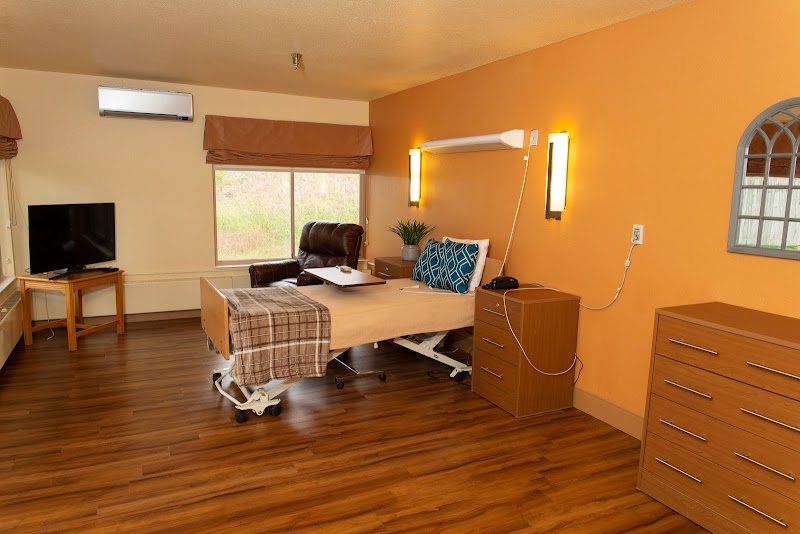
How is Sheboygan Health Services Staffed?

CMS rates SHEBOYGAN HEALTH SERVICES's staffing level at 4 out of 5 stars, which is above average compared to other nursing homes. Staff turnover is 29%, compared to the Wisconsin average of 46%. This relatively stable workforce can support continuity of care.

What Have Inspectors Found at Sheboygan Health Services?

State health inspectors documented 26 deficiencies at SHEBOYGAN HEALTH SERVICES during 2022 to 2024. These included: 25 with potential for harm and 1 minor or isolated issues.
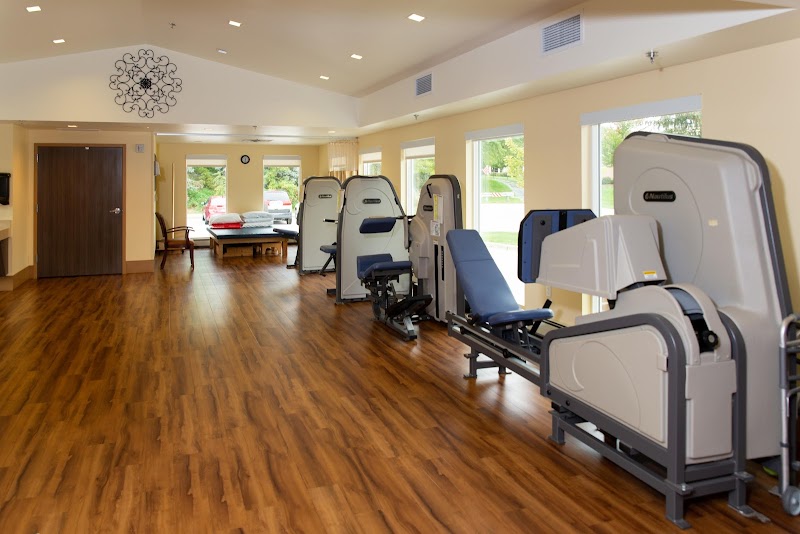
Who Owns and Operates Sheboygan Health Services?

SHEBOYGAN HEALTH SERVICES is owned by a for-profit company. For-profit facilities operate as businesses with obligations to shareholders or private owners. The facility is operated by NORTH SHORE HEALTHCARE, a chain that manages multiple nursing homes. With 64 certified beds and approximately 39 residents (about 61% occupancy), it is a smaller facility located in SHEBOYGAN, Wisconsin.

How Does Sheboygan Health Services Compare to Other Wisconsin Nursing Homes?

Compared to the 100 nursing homes in Wisconsin, SHEBOYGAN HEALTH SERVICES's overall rating (2 stars) is below the state average of 3.0, staff turnover (29%) is significantly lower than the state average of 46%, and health inspection rating (3 stars) is at the national benchmark.

What Should Families Ask When Visiting Sheboygan Health Services?

Based on this facility's data, families visiting should ask: "Can I visit during a mealtime to observe dining assistance and food quality?" "How do you handle medical emergencies, and what is your hospital transfer rate?" "Can I speak with family members of current residents about their experience?"

Is Sheboygan Health Services Safe?

Based on CMS inspection data, SHEBOYGAN HEALTH SERVICES has a clean safety record: no substantiated abuse findings (meaning no confirmed cases of resident harm), no Immediate Jeopardy citations (the most serious violation level indicating risk of serious injury or death), and is not on the Special Focus Facility watch list (a federal program monitoring the lowest-performing 1% of nursing homes). The facility has a 2-star overall rating and ranks #100 of 100 nursing homes in Wisconsin. While no facility is perfect, families should still ask about staff-to-resident ratios and recent inspection results during their visit.

Do Nurses at Sheboygan Health Services Stick Around?

Staff at SHEBOYGAN HEALTH SERVICES tend to stick around. With a turnover rate of 29%, the facility is 17 percentage points below the Wisconsin average of 46%. Low turnover is a positive sign. It means caregivers have time to learn each resident's needs, medications, and personal preferences. Consistent staff also notice subtle changes in a resident's condition more quickly.

Was Sheboygan Health Services Ever Fined?

SHEBOYGAN HEALTH SERVICES has no federal fines on record. CMS issues fines when nursing homes fail to meet care standards or don't correct problems found during inspections. The absence of fines suggests the facility has either maintained compliance or corrected any issues before penalties were assessed. This is a positive indicator, though families should still review recent inspection reports for the full picture.

Is Sheboygan Health Services on Any Federal Watch List?

SHEBOYGAN HEALTH SERVICES is not on any federal watch list. The most significant is the Special Focus Facility (SFF) program, which identifies the bottom 1% of nursing homes nationally based on persistent, serious quality problems. Not being on this list means the facility has avoided the pattern of deficiencies that triggers enhanced federal oversight. This is a positive indicator, though families should still review the facility's inspection history directly.