SHEBOYGAN PROGRESSIVE HEALTH SERVICES
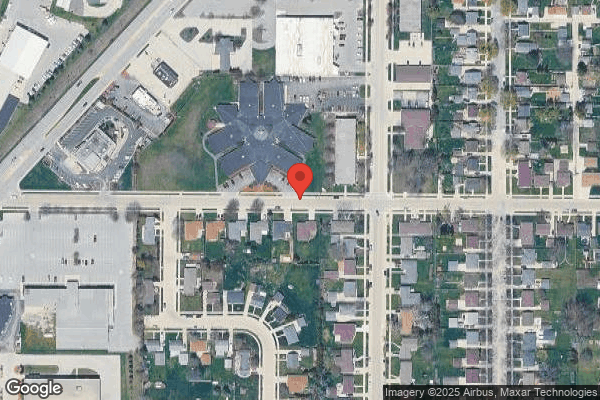
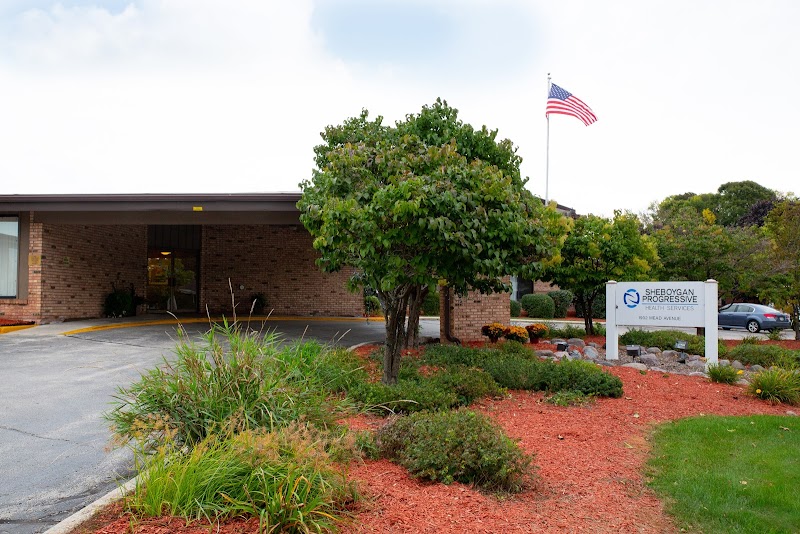
1902 MEAD AVE, SHEBOYGAN, WI 53081 (920) 458-8333
For profit - Corporation 50 Beds NORTH SHORE HEALTHCARE Data: November 2025
Trust Grade
55/100
#172 of 321 in WI
Last Inspection: June 2024

Within standard 12-15 month inspection cycle. Federal law requires annual inspections.

Overview

Sheboygan Progressive Health Services has a Trust Grade of C, which means it is average and falls in the middle of the pack in terms of quality. It ranks #172 out of 321 facilities in Wisconsin, placing it in the bottom half, and #4 out of 8 in Sheboygan County, indicating there are only three local options rated higher. The facility is improving, as it has reduced its issues from 4 in 2024 to 2 in 2025. Staffing is a notable strength, with a turnover rate of 34%, which is better than the state average of 47%, meaning staff are more likely to stay long-term and build relationships with residents. However, there were concerning incidents, such as a resident being transferred without necessary assistive devices, leading to falls and additional surgeries, and issues with food safety protocols that could affect all residents. Overall, while there are strengths in staffing and a lack of fines, families should be aware of the facility's areas needing improvement.

Trust Score
C
55/100
In Wisconsin
#172/321
Bottom 47%
Safety Record
Moderate
Needs review
Inspections
Getting Better
4 → 2 violations
Staff Stability
○ Average
34% turnover. Near Wisconsin's 48% average. Typical for the industry.
Penalties
✓ Good
No fines on record. Clean compliance history, better than most Wisconsin facilities.
Skilled Nurses
✓ Good
Each resident gets 47 minutes of Registered Nurse (RN) attention daily — more than average for Wisconsin. RNs are trained to catch health problems early.
Violations
⚠ Watch
27 deficiencies on record. Higher than average. Multiple issues found across inspections.
★★★☆☆
3.0
Overall Rating
★★★☆☆
3.0
Staff Levels
★★★☆☆
3.0
Care Quality
★★★☆☆
3.0
Inspection Score
Stable
2024: 4 issues
2025: 2 issues

The Good

  • Full Sprinkler Coverage · Fire safety systems throughout facility
  • No fines on record
  • Staff turnover below average (34%)

    14 points below Wisconsin average of 48%

Facility shows strength in fire safety.

The Bad

3-Star Overall Rating

Near Wisconsin average (3.0)

Meets federal standards, typical of most facilities

Staff Turnover: 34%

12pts below Wisconsin avg (46%)

Typical for the industry

Chain: NORTH SHORE HEALTHCARE

Part of a multi-facility chain

Ask about local staffing decisions and management

The Ugly 27 deficiencies on record

1 actual harm
Feb 2025 2 deficiencies
CONCERN (D) 📢 Someone Reported This

A family member, employee, or ombudsman was alarmed enough to file a formal complaint

Potential for Harm - no one hurt, but risky conditions existed

Abuse Prevention Policies (Tag F0607)

Could have caused harm · This affected 1 resident

Based on staff interview and record review, the facility did not implement their written policy and procedure to prevent abuse, neglect, injuries of unknown origin, and misappropriation of resident pr...

Read full inspector narrative →
Based on staff interview and record review, the facility did not implement their written policy and procedure to prevent abuse, neglect, injuries of unknown origin, and misappropriation of resident property for 1 (Certified Nursing Assistant (CNA)-C) of 8 staff reviewed for caregiver background checks. CNA-C's background check information indicated CNA-C was convicted of disorderly conduct in 2022 and 2025. The facility did not request a copy of CNA-C's criminal complaint, judgement of conviction, or relevant court and police documents as instructed by the Background Information Disclosure (BID) form and Department of Health Services (DHS) memo P-00274 Wisconsin Caregiver Program: Offenses Affecting Caregiver Eligibility. Findings include: DHS memo P-00274 Wisconsin Caregiver Program: Offenses Affecting Caregiver Eligibility for Chapter 50 Programs, dated 4/2020, contains the following information: This document lists Wisconsin crimes and other offenses that the Wisconsin State Legislature, under the Caregiver Law, Wis. Stat. § 50.065, has determined require rehabilitation review approval before a person may receive regulatory approval, work as a caregiver, reside as a non-client resident at, or contract with an entity .Additional information must be obtained when: The BID or Department of Justice (DOJ) response indicates a conviction of any of the following, where the conviction occurred five years or less from the date on which the information was obtained .6. Disorderly conduct .These convictions do not prohibit employment, but do require the entity to obtain the criminal complaint and judgment of conviction from the Clerk of Courts office in the county where the person was convicted. The facility's Caregiver Background Checks policy, revised August 2017, contains the following information: A reported history of criminal activity will be reviewed by the Human Resources Department for further consideration of hiring decisions. On 2/27/25, Surveyor reviewed background check information for 8 sampled staff, including CNA-C who began employment at the facility on 7/25/23 and completed a BID form on 1/6/25. CNA-C's Department of Justice (DOJ) letter indicated CNA-C was convicted of disorderly conduct on 3/17/22 and 1/6/25. Surveyor noted CNA-C's background check information did not include a judgement of conviction or information related to the criminal complaints. On 2/27/25 at 1:35 PM, Surveyor interviewed Nursing Home Administrator (NHA)-A who stated the facility did not request additional information related to CNA-C's disorderly conduct convictions in 2022 and 2025. NHA-A verified all staff require a full background check prior to employment at the facility.
CONCERN (D) 📢 Someone Reported This

A family member, employee, or ombudsman was alarmed enough to file a formal complaint

Potential for Harm - no one hurt, but risky conditions existed

Pharmacy Services (Tag F0755)

Could have caused harm · This affected 1 resident

**NOTE- TERMS IN BRACKETS HAVE BEEN EDITED TO PROTECT CONFIDENTIALITY** Based on observation, staff and resident interview, and record review, the facility did not provide pharmaceutical services to e...

Read full inspector narrative →
**NOTE- TERMS IN BRACKETS HAVE BEEN EDITED TO PROTECT CONFIDENTIALITY** Based on observation, staff and resident interview, and record review, the facility did not provide pharmaceutical services to ensure the accurate administration of medication for 1 resident (R) (R4) of 18 sampled residents. On 2/27/25, R4 was observed self-administering medication. During the observation, R4 dropped pills in R4's bed and was unable to find them. R4 did not have a physician's order to self-administer medication or a self-administration of medication assessment that indicated R4 could self-administer medication. Findings include: The facility's Medication Administration Self-Administration by Resident policy, dated January 2023, indicates: Residents who desire to self-administer medication are permitted to do so with a prescriber's order and if the nursing care center's interdisciplinary team has determined that the practice would be safe and the medications are appropriate and safe for self-administration. Procedures: 1. If the resident desires to self-administer medication, an assessment is conducted by the interdisciplinary team of the resident's cognitive, physical, and visual ability to carry out this responsibility during the care planning process . On 2/27/25, Surveyor reviewed R4's medical record. R4 was admitted to the facility on [DATE] and had diagnoses including diabetes, weakness, chronic pain, and hypertension. R4's Minimum Data Set (MDS) assessment, dated 12/15/24, had a Brief Interview for Mental Status (BIMS) score of 15 out of 15 which indicated R4 was not cognitively impaired. R4's medical record indicated R4 was responsible for R4's healthcare decisions. R4's medical record indicated R4 had a change in condition on 2/26/25 and was prescribed normal saline .9% 1 liter intravenously every shift for dehydration and was placed on 2 liters of oxygen via nasal cannula to maintain an oxygen saturation level above 90%. On 2/27/25 at 9:23 AM, Surveyor observed R4 attempt to self-administer medication from a cup placed on R4's table. Surveyor noted R4 had difficulty retrieving pills from the medication cup. R4 spilled three pills into R4's bed linens and was unable to find them. R4 indicated R4 always self-administers medication. R4's medical record did not contain a physician's order to self-administer medication or a self-administration of medication assessment that indicated R4 could safely and accurately self-administer medication. On 2/27/25 at 12:51 PM, Surveyor interviewed Director of Nursing (DON)-B who indicated a resident should have a physician's order and a self-administration of medication assessment completed prior to self-administering medication. DON-B verified R4 did not have an order to self-administer medication or a self-administration of medication assessment that indicated R4 could safely and accurately self-administer medication. On 2/27/25 at 12:56 PM, Surveyor interviewed Registered Nurse (RN)-D who verified RN-D left a cup of medication on the table for R4 to self-administer. RN-D indicated R4 can usually self-administer medication without difficulty. On 2/27/25 at 2:51 PM, Surveyor interviewed RN-D who indicated RN-D should not have left medication with R4 due to R4's change in condition. RN-D verified R4 did not have a physician's order to self-administer medication or a self-administration of medication assessment.
Jun 2024 3 deficiencies
CONCERN (D)

Potential for Harm - no one hurt, but risky conditions existed

MDS Data Transmission (Tag F0640)

Could have caused harm · This affected 1 resident

**NOTE- TERMS IN BRACKETS HAVE BEEN EDITED TO PROTECT CONFIDENTIALITY** Based on staff interview and record review, the facility did not ensure the required Minimum Data Set (MDS) assessment data was ...

Read full inspector narrative →
**NOTE- TERMS IN BRACKETS HAVE BEEN EDITED TO PROTECT CONFIDENTIALITY** Based on staff interview and record review, the facility did not ensure the required Minimum Data Set (MDS) assessment data was transmitted timely for 3 residents (R) (R45, R46 and R47) of 4 residents reviewed for MDS completion. Two of R45's MDS assessments, both dated 1/30/24, did not have completed transmissions as of 6/17/24. Two of R46's MDS assessments, dated 11/29/23 and 12/15/23, did not have completed transmissions as of 6/17/24. Two of R47's MDS assessments, both dated 7/2/23, did not have completed transmissions as of 6/17/24. Findings include: Chapter 5 of Centers for Medicare & Medicaid Services' (CMS') Long-Term Care Facility Resident Assessment Instrument (RAI) User's Manual dated October 2023 (for use Effective October 1, 2023) indicates: Nursing homes are required to submit Omnibus Budget Reconciliation Act (OBRA) required Minimum Data Set (MDS) records for all residents in Medicare or Medicaid-certified beds regardless of the payer source .When the transmission file is received by iQIES, the system performs a series of validation edits to evaluate whether or not the data submitted meet the required standards. MDS records are edited to verify that clinical responses are within valid ranges and are consistent, dates are reasonable, and records are in the proper order with regard to records that were previously accepted by iQIES for the same resident. The provider is notified of the results of this evaluation by error and warning messages on a Final Validation Report. All error and warning messages are detailed and explained in the Error Messages guide .Providers must transmit all sections of the MDS 3.0 required for their state-specific instrument, including the Care Area Assessment (CAA) Summary (Section V) and all tracking or correction information. Transmission requirements apply to all MDS 3.0 records used to meet both federal and state requirements .Assessment Transmission: Comprehensive assessments must be transmitted electronically within 14 days of the Care Plan Completion Date . 1. On 6/17/24, Surveyor reviewed R45's medical record. R45 was admitted to the facility on [DATE] with diagnoses including diabetes mellitus. R45 had a planned discharge to the community on 1/30/24. R45's medical record contained a completed, but not accepted, Medicare 5 Day MDS assessment, dated 1/30/24. In addition, R45's medical record contained a completed, but not accepted, Discharge Return Not Anticipated MDS assessment, dated 1/30/24. 2. On 6/17/24, Surveyor reviewed R46's medical record. R46 was admitted to the facility on [DATE] with diagnoses including chronic obstructive pulmonary disease (COPD). R46 had a planned discharge to the community on 12/15/23. R46's medical record contained a completed, but not accepted, Medicare 5 Day MDS assessment, dated 11/29/23. In addition, R46's medical record contained a completed, but not accepted, Discharge Return Not Anticipated MDS assessment, dated 12/15/23. 3. On 6/17/24, Surveyor reviewed R48's medical record. R48 was admitted to the facility on [DATE] with diagnoses including COPD. R48 passed away at the facility on 7/2/23. R48's medical record contained a completed, but not accepted, End of PPS Part A Stay MDS assessment, dated 7/2/24. In addition, R48's medical record contained a completed, but not accepted, Death in Facility MDS assessment, dated 7/2/24. On 6/18/24 at 10:32 AM, Surveyor interviewed Registered Nurse (RN)-C who stated RN-C started as the MDS nurse in December of 2023 and was still in training. RN-C stated regional staff were responsible for the transmission of MDS assessments. On 6/18/24 at 10:41 AM, Surveyor interviewed Director of Clinical Reimbursement (DCR)-D who verified regional staff were responsible for the transmission of MDS assessments. DCR-D stated the process was completed within the facility's electronic medical record (EMR) system and DCR-D had access to the iQIES system. Following a review of the above scenarios, DCR-D verified the above listed MDS assessments showed completed only and transmission was not complete/accepted. DCR-D stated, We should have caught it when it closed. DCR-D further stated, It was a coding error on our end. When asked if DCR-D checked iQIES for missing assessment reports, DCR-D indicated DCR-D had not.
CONCERN (D)

Potential for Harm - no one hurt, but risky conditions existed

Accident Prevention (Tag F0689)

Could have caused harm · This affected 1 resident

**NOTE- TERMS IN BRACKETS HAVE BEEN EDITED TO PROTECT CONFIDENTIALITY** Based on staff interview and record review, the facility did not ensure the resident environment remained as free of accident ha...

Read full inspector narrative →
**NOTE- TERMS IN BRACKETS HAVE BEEN EDITED TO PROTECT CONFIDENTIALITY** Based on staff interview and record review, the facility did not ensure the resident environment remained as free of accident hazards as possible for 2 residents (R) (R24 and R10) of 5 sampled residents. R24 experienced a fall due to an improper sling size for a sit-to-stand (STS) lift when only one staff was present during the transfer. R10 experienced pain due to an improper sling size for a STS lift when only one staff was present during the transfer. Findings include: The facility's Safe Resident Handling and Transfers policy, dated 8/5/22, indicates: .8. The facility will ensure there are appropriate amounts of varying sizes of slings to accommodate residents and that residents will be measured correctly as per the manufacturer's instructions on proper sling sizing .10. Two staff members must be utilized when transferring residents with a mechanical lift .14. Resident lifting and transferring will be performed according to the resident's individual plan of care . The manufacturer's Patient Sling Reference Guide recommendations, dated 2007, indicate: Available sling sizes are P, medium, large, extra-large, and XXL and states sling size and fit can vary significantly depending on patient weight and girth. 1. From 6/17/24 to 6/19/24, Surveyor reviewed R24's medical record. R24 was admitted to the facility on [DATE] and had diagnoses including hemiparesis (paralysis on one side of the body) following cerebral infarction (otherwise known as stroke) affecting the left dominant side, weakness, and recurrent left hip dislocation. R24's Minimum Data Set (MDS) assessment, dated 5/18/24, documented R24's Brief Interview for Mental Status (BIMS) score was 15 out of 15 which indicated R24 had intact cognition. R24's care plan indicated R24 had an activity of daily living (ADL) self-care deficit related to physical limitations and left hemiparesis. The care plan contained an intervention, initiated on 11/30/22 and discontinued on 1/2/24, that stated to transfer R24 with a STS lift with a standard size sling and the assistance of two staff. The care plan indicated after 1/2/24, staff should use a full mechanical lift to transfer R24. On 6/18/24, Surveyor reviewed a Witnessed Fall Report, dated 5/18/24. In the report, Certified Nursing Assistant (CNA)-G indicated R24 let go of the STS lift handles and R24's arm slipped through the sling when R24 was being toileted. The report indicated R24's fall was slow and controlled. R24 did not hit R24's head during the fall and did not complain of pain after the fall. On 6/18/24 at 1:46 PM, Surveyor interviewed CNA-G regarding R24's fall on 5/18/24. CNA-G stated at the time of the fall, CNA-G used the STS lift alone without the assistance of a second staff. CNA-G was aware of the facility's policy that two staff were needed for mechanical lift transfers but stated a second staff was not available at the time. CNA-G was aware the lift had different size slings and stated the sling used for R24 on was too loose. CNA-G stated R24 slid out of the sling and CNA-G assisted R24 to the floor in a slow and controlled manner. CNA-G stated CNA-G did not know how to determine the correct size sling to use and did not know how to choose an appropriate sling for a resident. On 6/18/24 at 1:55 PM, Surveyor interviewed CNA-F and CNA-H. CNA-F and CNA-H stated sling size is determined by a resident's weight. CNA-F and CNA-H were unsure if sling size is listed in residents' care plans. CNA-F showed Surveyor a standard size sling. Surveyor noted the sling contained an extra large manufacturer's label. CNA-F referred to the weight limit tag on the sling which stated the sling was safe up to 450 pounds. CNA-F stated there were no residents over 450 pounds and the sling was appropriate for all residents. CNA-F stated CNA-F adjusts the straps if the sling is too loose for a resident. On 6/19/24 at 11:43 AM, Surveyor interviewed R24 who described the incident on 5/18/24 when R24 fell from a STS lift. R24 stated R24 fell out of the lift because the sling was too large. On 6/19/24 at 11:46 AM, Surveyor interviewed Licensed Practical Nurse (LPN)-K who stated CNAs decide which sling to use with each resident. LPN-K stated LPN-K did not know how to determine the correct sling size. On 6/19/24 at 11:48 AM, Surveyor interviewed Registered Nurse (RN)-L who stated RN-L refers to the manufacturer's guide to choose the sling size based on the resident's weight. RN-L stated Director of Nursing (DON)-B records the proper sling size in the residents' care plans. On 6/19/24 at 11:52 AM, Surveyor interviewed RN-J who stated RN-J refers to manufacturer's guidance, the sling size listed in the care plan, and weight sizes on slings to choose a sling size for a resident. RN-J did not know who was responsible for documenting sling sizes in residents' care plans. 2. From 6/17/24 to 6/19/24, Surveyor reviewed R10's medical record. R10 was admitted to the facility on [DATE] and had diagnoses including hemiparesis following cerebral infarction affecting the right dominant side and morbid obesity. R10's MDS assessment, dated 5/14/24, indicated R10's BIMS score was 15 out of 15. R10's care plan, dated 5/29/24, stated R10 had an ADL self-care deficit with right sided weakness and physical limitations. The care plan contained interventions for maximum assistance with toileting with a STS lift and two staff during waking hours and transfer with STS lift with the assistance of two staff with an Invacare standard size sling. On 6/17/24 at 12:12 PM, Surveyor interviewed R10 who described an incident that occurred in the last month when CNA-I assisted R10 to the bathroom with a STS lift. R10 stated the sling was too small and caused pain in R10's arms. On 6/18/24 at 10:25 AM, Surveyor interviewed CNA-E who verified R10 transfers to the toilet with a STS lift. CNA-E stated if R10 is lifted with a standard size sling, the sling pinches R10's arms and causes pain. CNA-E stated R10 requires a size larger than the standard size sling. CNA-E stated each unit has a STS lift and a standard size sling is kept with the lift and used for most residents. During the interview, CNA-E took Surveyor to a closet in the central dining area where lift slings were stored. CNA-E could not locate the size sling CNA-E stated R10 needed. On 6/18/24 at 10:39 AM, Surveyor interviewed DON-B who stated DON-B expects two staff to be present for mechanical lift transfers and the appropriate sized sling to be used. On 6/18/24 at 11:08 AM, Surveyor interviewed DON-B and Nursing Home Administrator (NHA)-A who were unaware R10 experienced pain due to an incorrect size lift sling. On 6/18/24 at 3:34 PM, Surveyor interviewed NHA-A who investigated R10's report of pain with a mechanical lift transfer. NHA-A's investigation indicated CNA-I used a STS lift without a second staff present. NHA-A stated NHA-A expects staff to determine which sling to use based on the manufacturer's recommendations. NHA-A stated the sling size should be evaluated by a nurse or physical therapist and documented in the resident's care plan. On 6/19/24 at 11:38 AM, Surveyor interviewed R10 who used a STS lift for all out-of-bed activities. R10 stated R10 preferred to have larger size sling when transferred with the STS lift. R10 stated staff use a smaller size sling multiple times per week. R10 stated the smaller sling puts pressure on R10's arms and causes pain. On 6/19/24 at 12:55 PM, Surveyor interviewed NHA-A who stated there are no specific staff responsible for choosing sling sizes. NHA-A stated staff should check the resident's care plan or manufacturer's instructions posted at the nurses' station to determine the correct sling size for each resident.
CONCERN (F)

Potential for Harm - no one hurt, but risky conditions existed

Food Safety (Tag F0812)

Could have caused harm · This affected most or all residents

Based on observation, staff interview, and record review, the facility did not ensure food was stored and prepared in a safe and sanitary manner. This practice had the potential to affect all 31 resid...

Read full inspector narrative →
Based on observation, staff interview, and record review, the facility did not ensure food was stored and prepared in a safe and sanitary manner. This practice had the potential to affect all 31 residents residing in the facility. Procedures for reheating food in a microwave were not followed. Cooling temperature logs were not completed for leftover and pre-made food. Cold food items were not maintained at a proper temperature during meal service. Staff did not complete appropriate hand hygiene during meal service. Findings include: On 6/17/24 at 9:47 AM, Surveyor conducted an initial tour of the kitchen. Surveyor interviewed Dietary Manager (DM)-N who stated the facility follows the Federal Food and Drug Administration (FDA) Food Code as its standard of practice and uses a contracted provider for dietary services. Reheating Procedures: The 2022 FDA Food Code documents at 3-403.11 Reheating for Hot Holding (B): .Time/Temperature control for safety food reheated in a microwave oven for hot holding shall be reheated so that all parts of the food reach a temperature of at least 165 degrees Fahrenheit (F) and the food is rotated or stirred, covered, and allowed to stand covered for 2 minutes after reheating. The facility's contracted service's Food: Preparation policy, dated February 2023, states all foods are prepared in accordance with the FDA Food Code. The policy also states when reheating, food will be rapidly heated to 165 degrees F for 15 seconds. On 6/18/24 at 11:53 AM, Surveyor observed lunch service. Surveyor observed [NAME] (CK)-O heat a bowl of tomato soup in the microwave for approximately 30 seconds. CK-O then asked a nursing staff to remove the bowl from the microwave and serve it to a resident. Surveyor observed the nursing staff remove the bowl from the microwave and serve it to a resident without stirring or checking the temperature. On 6/18/24 at 1:48 PM, Surveyor interviewed CK-O who confirmed the temperature of the tomato soup was not checked prior to serving. CK-O stated CK-O knows the soup is hot enough when CK-O can see steam. CK-O was not aware CK-O should check the temperature of microwave heated foods prior to serving. CK-O was also not aware what temperature the soup should be before serving and that CK-O should wait two minutes before serving. Food Cooling Log: The 2022 FDA Food Code documents at 3-501.14 Cooling: (A) Cooked time/temperature control for safety food shall be cooled: (1) Within 2 hours from 57°C (Celsius) (135°F) to 21°C (70°F); and (2) Within a total of 6 hours from 57°C (135°F) to 5°C (41°F) or less. (B) Time/temperature control for safety food shall be cooled within 4 hours to 5°C (41°F) or less. The facility's contracted service's Food: Preparation policy, dated February 2023, states all foods are prepared in accordance with the FDA Food Code and cooks are responsible for food preparation techniques which minimize the amount of time food items are exposed to temperatures greater than 41 degrees F and/or less than 135 degrees F, or per state regulation. The policy also states prepared hot food items not intended for immediate service will be cooled using the following guidelines: Place in shallow pans or cut/slice to promote rapid cooling, Time/Temperature Control for Safety (TCS) foods will be cooled from 135 degrees F to 70 degrees F within 2 hours and from 70 degrees F to 41 degrees F within 4 hours. The total cooling time cannot exceed 6 hours with the clock starting at 135 degrees F. During an initial tour of the kitchen on 6/17/24 at 9:47 AM, Surveyor observed a container of ravioli. DM-N stated the ravioli was left over from a previous meal. Surveyor reviewed the kitchen's cooling log and noted the ravioli was not documented on the log. DM-N confirmed the ravioli should be documented on the cooling log. On 6/18/24 at 11:38 AM, Surveyor interviewed Regional Dietary Manager (RDM)-M who stated the facility does not usually keep leftovers and verified pre-made food items should be documented on the cooling log. RDM-M stated the facility has a new cook who was not aware of the documentation procedures for cooling logs. RDM-M stated education was completed with all staff on the importance of completing the cooling log. During an observation of lunch service on 6/18/24, at 11:53 AM, Surveyor observed a container of cold macaroni salad. CK-O stated CK-O made the salad the previous day and placed it in the cooler overnight. CK-O stated CK-O separated the salad into separate smaller containers and left the containers to cool, then placed them in an ice bath prior to placing the macaroni salad in the cooler. CK-O verified CK-O did not document the macaroni salad on the cooling log. RDM-M confirmed the macaroni salad should have been documented on the cooling log. Surveyor reviewed the ingredients for the macaroni salad which included elbow noodles, green onions, green peas, celery, canned red peppers, sweet pickled relish, mayo salad dressing, salt, and garlic salt. Holding Temperatures: The 2022 FDA Food Code documents at 3-501.16 Time/Temperature Control for Safety Food (TCS), for hot and cold holding: Bacterial growth and/or toxin production can occur if time/temperature control for safety food remains in the temperature Danger Zone of 41 degrees F to 135 degrees F too long. Up to a point, the rate of growth increases with an increase in temperature within this zone. Beyond the upper limit of the optimal temperature range for a particular organism, the rate of growth decreases. Operations requiring heating or cooling of food should be performed as rapidly as possible to avoid the possibility of bacterial growth (A) Except during preparation, cooking, or cooling, or when time is used as the public health control .(1) At 135 degrees F or above or (2) At 41 degrees F or less. On 6/18/24 at 11:53 AM, Surveyor observed lunch service. Surveyor observed cold macaroni salad that was removed from the cooler and placed on top of ice next to hot foods on the steam stable. CK-O took the initial temperature which was 42.3 degrees F for the regular texture macaroni salad and 48 degrees F for the pureed macaroni salad. CK-O then placed the salads in the freezer for 5 minutes. CK-O removed the salads from the freezer and temped the salads which were 39 degrees F for the regular texture macaroni salad and 41 degrees F for the pureed macaroni salad. CK-O stated the temperature should be 41 degrees F or less for cold foods. Lunch service began at 11:53 AM and ended at 1:03 PM. Following the last tray served, Surveyor asked CK-O to take the temperature of the macaroni salad which was 50.2 degrees F. CK-O confirmed the temperature was outside of the appropriate temperature for cold food holding. Hand Hygiene: The 2022 FDA Food Code documents at 2-301.14: Food employees shall clean their hands and exposed portions of their arms as specified under § 2-301.12 immediately before engaging in food preparation including working with exposed food, clean equipment and utensils, and unwrapped single-service and single-use articles. The 2022 FDA Food Code documents at 3-301.11 Preventing Contamination from Hands indicates: (A) Food employees shall wash their hands as specified under § 2-301.12. (B) Except when washing fruits and vegetables as specified under §3-302.15 or as specified in (D) and (E) of this section, food employees may not contact exposed, ready-to-eat food with their bare hands and shall use suitable utensils such as deli tissue, spatulas, tongs, single-use gloves, or dispensing equipment. The facility's contracted service's Food: Preparation policy, dated February 2023, states staff will practive proper hand washing techniques and glove use, and dining services staff will be responsible for food preparation procedures that avoid contamination by potentially harmful physical, biological, and chemical contamination. On 6/18/24, at 11:53 AM, Surveyor observed tray line lunch service. At the beginning of service, Surveyor observed CK-O don gloves without completing hand hygiene. With gloved hands, CK-O untied and opened a bag of hot dog buns, removed a steam table cover, picked up a plate, removed a hot dog bun, and used both gloved hands to open the bun. CK-O used tongs to put the hot dog in the bun. With the same gloved hands, CK-O touched a macaroni salad container, a bag of chips, and a meal ticket and placed items on a tray. Surveyor observed CK-O follow the same procedure for 9 resident meal trays until RDM-M intervened and educated CK-O on the proper procedure for handling ready-to-eat food. RDM-M instructed CK-O to complete hand hygiene and retrieve additional tongs. CK-O completed hand hygiene and returned to the steam table with tongs. RDM-M instructed CK-O to don a glove on the left hand and use tongs in the right hand to remove a bun from the bag. RDM-M instructed CK-O not to touch any surfaces, other than the bun, with CK-O's gloved left hand. During the remainder of tray line service, Surveyor observed CK-O touch three plates, serving utensils, and the bag of hot dog buns on four occasions without removing the left glove and completing hand hygiene. Following the observation, Surveyor interviewed RDM-M who confirmed Surveyor's observation and verified gloves should be changed after touching contaminated surfaces. RDM-M also confirmed hand hygiene should be completed before re-gloving.
Mar 2024 1 deficiency
CONCERN (D) 📢 Someone Reported This

A family member, employee, or ombudsman was alarmed enough to file a formal complaint

Potential for Harm - no one hurt, but risky conditions existed

Grievances (Tag F0585)

Could have caused harm · This affected 1 resident

**NOTE- TERMS IN BRACKETS HAVE BEEN EDITED TO PROTECT CONFIDENTIALITY** Based on staff and resident interview and record review, the facility did not make a prompt effort to thoroughly investigate and...

Read full inspector narrative →
**NOTE- TERMS IN BRACKETS HAVE BEEN EDITED TO PROTECT CONFIDENTIALITY** Based on staff and resident interview and record review, the facility did not make a prompt effort to thoroughly investigate and resolve grievances for 1 Resident (R) (R1) of 5 sampled residents. On 2/15/24, R1 expressed grievances during a meeting with staff and Ombudsman (OMB)-C. The grievances were not investigated or resolved. Findings include: The facility's Grievance/Complaint Report, with a revised date of 1/2020, indicates: This form is utilized to provide written documentation of any grievance or complaint expressed or filed by a resident or resident representative as well as to record the follow-up action taken and results thereof . On 3/13/24, Surveyor reviewed R1's medical record. R1 was admitted to the facility on [DATE] with diagnoses including chronic obstructive pulmonary disease (COPD) (a chronic inflammatory lung disease that causes obstructed airflow from the lungs), bipolar disorder (a serious mental illness characterized by extreme mood swings), schizoaffective disorder (a mental disorder in which a person experiences a combination of schizophrenia symptoms, such as hallucinations or delusions, and mood disorder symptoms, such as depression or mania) and major depressive disorder. R1's Minimum Data Set (MDS) assessment, dated 12/7/24, contained a Brief Interview for Mental Status (BIMS) score of 15 out of 15 which indicated R1 had no cognitive impairment. R1's medical record indicated R1 was responsible for R1's healthcare decisions. On 3/13/24 at 10:10 AM, Surveyor interviewed R1 who indicated R1 expressed care concerns during a meeting on 2/15/24 regarding staff not providing incontinence care timely or frequently enough and hurrying through cares. R1 indicated R1 saw no improvement and did not receive any resolution from the facility. R1 stated R1 expressed additional concerns on 3/9/24 which staff stated they were acting on. On 3/13/24, Surveyor reviewed R1's medical record which did not contain documentation of a meeting on 2/15/24. On 3/13/24, Surveyor reviewed the facility's grievances which did not contain documentation of the concerns R1 expressed on 2/15/24 and 3/9/24. On 3/13/24 at 1:15 PM, Surveyor interviewed Nursing Home Administrator (NHA)-A who indicated the facility had one grievance from R1 which the facility was still working on. On 3/13/24, Surveyor reviewed a Grievance/Complaint Report, dated 3/9/24, that indicated: .(R1) notes not being toileted/changed as often as (R1) would prefer. (R1) requested CNA (Certified Nursing Assistant) get items from vending machine and (R1) had to wait a long time to get requested items .(NHA-A) met with (R1) on 3/11/24 to learn of concerns. (R1) prefers to be changed every 2-3 hours and is comfortable being woken up to have care .(NHA-A) met with CNAs and nursing staff to update on requests and (change) of care plan. Education provided on POC (Point of Care) charting to ensure knowledge of charting cares provided more than once per shift .Investigation initiated and re-education initiated and is ongoing. Attached documents included a call light audit tool, proof of staff education, and R1's care plan updates. On 3/13/24 at 1:55 PM, Surveyor interviewed OMB-C via phone. OMB-C indicated OMB-C attended a meeting on 2/15/24 with R1, Director of Nursing (DON)-B, and the facility's Social Worker (SW). OMB-C indicated R1 expressed concerns that staff rushed through cares and did not change R1 frequently enough which R1 feared could lead to urinary tract infections (UTIs). OMB-C indicated OMB-C followed up with an email to DON-B and received a response. On 3/13/24, Surveyor reviewed emails between OMB-C and DON-B, dated 2/23/24, that indicated: (from OMB-C to DON-B) .I just wanted to follow up and see how things are going since our meeting last week for (R1). Has anything new come up? Are items (R1) discussed in the meeting being addressed as discussed? Just looking for some follow up information .and (from DON-B to OMB-C) .(R1) continues with the same complaint/concerns about (R1's) care and (R1's) roommate's care. I have provided education to the individuals (R1) named as well as all staff. I have not received any new concerns, just a repeat of the same conversation. We will continue to educate staff about meeting all of the residents' needs . On 3/13/24 at 2:10 PM, Surveyor interviewed DON-B who indicated DON-B participated in the meeting via phone on 2/15/24 with R1, OMB-C and the facility's SW. DON-B indicated discussions occurred regarding R1's concerns of not being toileted or changed and staff rushing and not doing cares the way R1 liked and regarding the facility educating staff on R1's care needs. DON-B indicated a discussion also occurred regarding R1's choice to purchase products that were usually provided by the facility, but R1 preferred specific brands. DON-B indicated R1 would praise specific staff one minute then complain of (same staff) the next. DON-B stated DON-B did not document the meeting and thought the SW would do so. DON-B indicated when DON-B hung up, the SW later told DON-B that R1, OMB-C and the SW continued to discuss the same concerns over and over. On 3/13/24 at 2:45 PM, Surveyor interviewed DON-B who indicated the facility did not have documentation of the meeting on 2/15/24. When asked what the facility did in response to the concerns expressed by R1, DON-B indicated the facility scheduled OMB-C to come at the end of March to provide resident rights training for staff. On 3/13/24 at 2:59 PM, Surveyor interviewed NHA-A who verified the facility did not have documentation that any of the concerns expressed by R1 on 2/15/24 were investigated or addressed by the facility.
Jul 2023 2 deficiencies
CONCERN (D) 📢 Someone Reported This

A family member, employee, or ombudsman was alarmed enough to file a formal complaint

Potential for Harm - no one hurt, but risky conditions existed

Abuse Prevention Policies (Tag F0607)

Could have caused harm · This affected 1 resident

Based on staff interview and record review, the facility did not implement written policies and procedures to prohibit mistreatment, neglect and abuse of residents for 2 staff (Certified Nursing Assis...

Read full inspector narrative →
Based on staff interview and record review, the facility did not implement written policies and procedures to prohibit mistreatment, neglect and abuse of residents for 2 staff (Certified Nursing Assistant (CNA)-C and Registered Nurse (RN)-D) of 8 staff reviewed during the caregiver program compliance check. CNA-C was hired on 1/3/23. The facility did not have a completed Background Information Disclosure (BID) form for CNA-C. RN-D was hired on 2/27/23. The facility did not have a Department of Justice (DOJ) letter for RN-D. Findings include: The facility's Abuse Prohibition Policies and Procedures, revised 7/15/22, stated the facility will provide protections for the health, welfare and rights of each resident by developing and implementing written polices and procedures that prohibit and prevent abuse, neglect, exploitation and misappropriation of resident property. One of the components of the policy included screening of potential employees. Potential employees will be screened for a history of abuse, neglect, exploitation, or misappropriation of resident property. Background, reference, and credentials checks shall be conducted on potential employees, contracted temporary staff, students affiliated with academic institutions, volunteers, and consultants. Background checks, including re-checks, will be completed consistent with applicable state laws and regulation. Responsibility of performance of compliance checks on contracted temporary staff will be established via contractual agreement. Screenings may be conducted by the facility itself, third-party agency or academic institution. The facility will maintain documentation of proof that the screening occurred. 1. On 7/12/23, Surveyor reviewed background check information for CNA-C. The facility did not have a BID form for CNA-C and was unable to get CNA-C's BID form from CNA-C's staffing agency who also did not have a completed BID form for CNA-C. 2. On 7/12/23, Surveyor reviewed background check information for RN-D. The facility did not have a DOJ letter for RN-D until the facility printed the DOJ letter from the agency website on 7/12/23. On 7/12/23 at 2:33 PM, Surveyor interviewed Staffing Coordinator (SC)-E regarding a BID form for CNA-C and a DOJ letter for RN-D. SC-E stated the facility was unable to obtain a BID form from CNA-C's staffing agency and the facility did not attempt to have CNA-C fill out a BID form. On 5/6/23 after CNA-C no longer worked at the facility, SC-E was advised to look through background checks for agency staff to ensure all parts of the background check were completed as required. SC-E went through all background checks and missed RN-D's DOJ letter. SC-E stated, Printed it (DOJ letter) today (7/12/23). Hopefully, didn't miss another one. In addition, SC-E indicated SC-E was advised on 6/9/23 that background checks do not need to be printed, but need to be verified as reviewed. SC-E stated printing the information was how SC-E verified the background checks were reviewed.
CONCERN (E) 📢 Someone Reported This

A family member, employee, or ombudsman was alarmed enough to file a formal complaint

Potential for Harm - no one hurt, but risky conditions existed

Deficiency F0729 (Tag F0729)

Could have caused harm · This affected multiple residents

Based on staff interview and record review, the facility did not ensure 1 Certified Nursing Assistant (CNA) (CNA-C) of 5 CNAs had a valid Certified Nursing Assistant Certification. CNA-C's Certified ...

Read full inspector narrative →
Based on staff interview and record review, the facility did not ensure 1 Certified Nursing Assistant (CNA) (CNA-C) of 5 CNAs had a valid Certified Nursing Assistant Certification. CNA-C's Certified Nursing Assistant Certification was not active because CNA-C had a substantiated finding of neglect on 6/28/22. Despite the substantiated finding of neglect, CNA-C continued to work at the facility after 6/28/22. Findings include: On 7/12/23, Surveyor requested CNA-C's background check and CNA registry information. On 7/12/23, Surveyor reviewed CNA-C's Certified Nursing Assistant Certification from https://wi.tmuniverse.com which indicated CNA-C had a substantiated finding of neglect on 6/28/22. Due to the substantiated finding on file, CNA-C cannot work as a caregiver in Department of Health Services (DHS) regulated facilities in Wisconsin, except those specifically approved under the rehabilitation review process. When CNA-C was hired at the facility on 1/3/23, the facility accepted a CNA registry from a staffing agency, dated 3/10/22, and did not review the current registry before the facility allowed CNA-C to start work on 1/3/23. On 7/12/23, the facility provided CNA-C's schedule and/dates the facility paid CNA-C's staffing agency when CNA-C worked. The schedule/dates the facility paid the staffing agency included when CNA-C worked on the 100, 200, and 600 units. CNA-C worked at the facility with a substantiated finding of neglect on 3/2/23, 3/6/23, 3/11/23, 3/16/23, 3/20/23, 3/21/23, 3/22/23, and 3/28/23 even though CNA-C was not allowed to work as a caregiver in DHS regulated facilities. On 3/28/23, a resident reported an allegation of physical abuse that involved CNA-C. On 4/11/23, the facility was advised that CNA-C was not allowed to work in DHS regulated facilities due to a substantiated finding of neglect on 6/28/22. On 7/12/23 at 2:33 PM, Surveyor interviewed Scheduling Coordinator (SC)-E who verified CNA-C worked at the facility with a substantiated finding of neglect. SC-E stated going forward, SC-E reviews the staffing agency computerized background checks, including the CNA registry, for every new agency employee to ensure CNAs do not have substantiated findings. SC-E verified the facility does not complete their own check of the CNA registry to make sure a CNA is eligible to work in a federally certified nursing home prior to allowing a CNA to work at the facility. On 7/12/23 at 3:35 PM, Surveyor interviewed [NAME] President of Success (VPS)-F who stated the facility is expected to check the status of a CNA on the CNA registry prior to allowing the CNA to work in the facility as opposed to checking what the agency has documented online.
Apr 2023 7 deficiencies 1 Harm
SERIOUS (G) 📢 Someone Reported This

A family member, employee, or ombudsman was alarmed enough to file a formal complaint

Actual Harm - a resident was hurt due to facility failures

Accident Prevention (Tag F0689)

A resident was harmed · This affected 1 resident

**NOTE- TERMS IN BRACKETS HAVE BEEN EDITED TO PROTECT CONFIDENTIALITY** Based on staff interview and record review, the facility did not ensure 1 Resident (R) (R48) of 3 sampled residents reviewed for...

Read full inspector narrative →
**NOTE- TERMS IN BRACKETS HAVE BEEN EDITED TO PROTECT CONFIDENTIALITY** Based on staff interview and record review, the facility did not ensure 1 Resident (R) (R48) of 3 sampled residents reviewed for falls had adequate assistive devices and interventions in place to prevent accidents. R48 was at risk for falls. R48's care plan contained interventions for the assistance of one staff and a gait belt for transfers. R48 had a functional maintenance program (FMP) from therapy that was not given to nursing or incorporated in R48's plan of care. The FMP indicated R48 was to be transferred with a front wheeled walker in addition to a gait belt. R48 was transferred without a front wheeled walker and/or gait belt twice. R48 fell twice on R48's right leg below-the-knee post amputation surgical site and required two additional surgeries to close the site. Findings include: The facility's Fall Prevention and Management Guidelines policy, revised on 11/8/22, indicated each resident will be assessed for fall risk and will receive care and services in accordance with their individualized plan of care to minimize the likelihood of falls or reduce the possibility/severity of injury. A diagnosis of a loss of limb may contribute to an increase in falls or increased risk of injury, should a fall occur. When a resident experiences a fall, the facility will review the resident's care plan and update with any new interventions put in place to try to prevent additional falls. Each fall will be reviewed with the interdisciplinary team (IDT). Actions of the IDT may include additional revisions to the plan of care including assistive devices and education of staff as to any care plan revisions. 1. On 4/4/23, Surveyor reviewed R48's medical record. R48 was admitted to the facility for short-term rehab with a diagnosis of below-the-knee amputation (BKA) of the right leg. R48's five day Minimum Data Set (MDS) assessment, dated 3/20/23, indicated R48's cognition was intact. R48 required extensive assistance of two plus staff for transfers, did not ambulate, and required limited assistance from two plus staff for toileting. R48's balance was not steady, and R48 required staff assistance to stabilize. R48 had one fall since admission. On 4/4/23, Surveyor reviewed R48's plan of care, last revised on 3/3/23. R48's plan of care indicated R48 had an activities of daily living (ADL) self-care deficit related to right BKA. An intervention initiated on 3/3/23, with a revision date of 3/28/23, indicated R48 was to transfer with the assistance of one staff and a gait belt. Another intervention, initiated on 3/27/23 and revised on 3/28/23, indicated R48 was to use a two wheeled walker (front wheeled walker) and one assist for transfers, and a gait belt. On 4/4/23, Surveyor reviewed R48's post fall assessment. The post fall assessment indicated on 3/19/23, Licensed Practical Nurse (LPN)-L was assisting R48 with transferring from the wheelchair to the toilet when R48's left leg gave out. LPN-L was able to get R48 to the toilet, but R48's right leg surgical wound hit the floor. R48 was sent to the Emergency Department (ED) for evaluation. R48's surgical wound was sutured, and R48 returned to the facility. The notes on the post fall assessment stated the IDT met on 3/20/23 and indicated physical therapy (PT) would reinforce the need for use of the two wheeled walker with all transfers and a gait belt. The post fall assessment indicated R48's plan of care was reviewed and updated. On 4/4/23, Surveyor reviewed R48's Critical Event Worksheet with a discovery date of 3/28/23. The summary stated R48 fell on 3/19/23 when LPN-L transferred R48 without a gait belt and R48's amputation site reopened during the incident. R48 was sent to the hospital, required sutures at the amputation site, and returned to the facility following the procedure. Systemic measures to prevent recurrence included staff education on following the care plan and [NAME] (an abbreviated care plan often used by Certified Nursing staff) for the transfer status of residents and stated five staff members will be audited per week for four weeks. On 4/4/23, Surveyor reviewed R48's post fall assessment which stated on 3/27/23, Certified Nursing Assistant (CNA)-M was transferring R48 from the toilet to the wheelchair with a gait belt when R48 fell to the floor in the bathroom. R48's right leg amputation stump made contact with the floor when R48's leg gave out/slipped. R48 was sent to the ED for evaluation. On 4/4/23, Surveyor reviewed a statement written by CNA-M regarding R48's fall on 3/27/23. CNA-M documented CNA-M and a nurse assisted R48 onto the toilet on the morning of 3/27/23. When CNA-M assisted R48 off the toilet, CNA-M helped R48 stand by using a gait belt and bars in the bathroom. R48's foot lost grip on the floor and R48 went down on the toilet seat. On the way down, R48's amputation stump bumped the floor of the bathroom. R48's care plan stated R48 required the assistance of one staff with transfers and toileting. A progress note, dated 3/27/23 at 11:20 AM, stated when CNA-M assisted R48 off of toilet, R48's left foot lost footing and R48 fell backwards onto the toilet. R48 was holding the assistance bars in the bathroom on the left side and leaned to the right bumping R48's amputation stump on the floor. The notes on the post fall assessment indicated the IDT met on 3/28/23 and determined CNA-M followed R48's plan of care with one assist and use of a gait belt. R48's toilet transfer status changed to sit-to-stand lift and physical therapy was to continue working with R48 toward independence. R48's care plan was updated. On 4/4/23, Surveyor reviewed R48's hospital records. The records indicated R48 had a right BKA on 2/27/23 and fell on 3/19/23 when R48 was transferred at the facility without a gait belt. R48 had right leg pain and was diagnosed with traumatic wound dehiscence. A dressing was placed on the wound and Keflex (an antibiotic) was started until R48 could have surgery to close the wound. On 3/23/23, Orthopedic Surgeon (OS)-O completed irrigation, debridement, and re-closure of the right BKA traumatic wound dehiscence. In addition, the hospital records indicated R48 was admitted to the hospital on [DATE] for right leg suture site pain after falling at the facility a second time and was again diagnosed with traumatic wound dehiscence. OS-O again completed irrigation, debridement, and re-closure of the right BKA traumatic wound dehiscence. On 4/4/23 at 12:51 PM, Surveyor interviewed Nursing Home Administrator (NHA)-A regarding R48's falls. With the first fall on 3/19/23, it was noted therapy notes indicated R48 should be transferred with a two wheeled walker and a gait belt. LPN-L did not use a two wheeled walker or gait belt when LPN-L transferred R48. LPN-L and other staff were educated starting on 4/3/23. The intervention to use a two wheeled walker and gait belt with transfers was not added to R48's care plan until 3/28/23 after R48's second fall. On 4/4/23 at 1:13 PM, Surveyor interviewed [NAME] President of Success (VPS)-C regarding R48's falls. VPS-C verified R48's care plan was not updated with a two wheeled walker until after the second fall on 3/27/23. VPS-C stated someone did not update the care plan. On 4/4/23 at 1:58 PM, Surveyor interviewed LPN-L who stated LPN-L was educated regarding R48's fall on 3/19/23 and verified LPN-L did not use a gait belt or front wheeled walker when transferring R48. The education provided was to follow therapy guidelines of using a two wheeled walker when transferring R48. On 4/4/23 at 2:03 PM, Surveyor interviewed Occupational Therapist (OT)-K who verified R48 progressed rapidly to use a two wheeled walker with the assistance of one staff. A FMP was documented in R48's medical record on 3/17/23 to use a front wheeled walker (two wheeled walker) with the assistance of one staff and a gait belt for all transfers. On 4/4/23 at 2:10 PM, Surveyor interviewed Director of Nursing (DON)-B regarding education provided to staff after R48's falls. DON-B verified education was only provided for LPN-L. DON-B stated the education for other staff began after the survey started on 4/3/23 and was ongoing. The education included where to locate the [NAME] for proper knowledge of resident needs and requirements for safe transfer, and fall risk reduction. The objectives included how to identify where the [NAME] is located and how to access the [NAME], identification of when a gait belt should be used, the protocol for observed changes in resident needs, and how to indicate and place interventions on a resident's care plan and [NAME]. On 4/4/23 at 3:30 PM, Surveyor interviewed NHA-A who stated NHA-A was not able to provide the FMP from 3/17/23 for R48 which indicated R48 was to use a front wheeled walker for transfers as indicated by OT-K. The front wheeled walker was documented in R48's medical record, but Director of Rehab (DOR)-N stated to NHA-A staff must not have made a copy of it. Staff would not know a two wheeled walker was needed to transfer R48 unless they read it in the computer. On 4/4/23 at 3:57 PM, Surveyor interviewed OS-O via telephone. OS-O stated the need for irrigation, debridement and re-closure of R48's right BKA surgical site was caused by a direct blow to the area from the falls. OS-O verified the irrigation, debridement and re-closure occurred twice within four days because with the first fall, an on-call physician saw R48 but wanted OS-O to look at the wound since OS-O performed the amputation. The wound was bandaged and when OS-O returned from vacation, OS-O checked the wound and completed the surgery. The second surgery was completed by OS-O right away after R48 fell. Education was not completed timely for staff after R48 fell the first time on 3/19/23 and did not include therapy staff who did not provide nursing with R48's FMP. Education was not completed timely for R48's second fall on 3/27/23 and again did not include therapy staff who did not provide nursing with R48's FMP to use a wheeled walker with transfers.
CONCERN (D)

Potential for Harm - no one hurt, but risky conditions existed

Deficiency F0558 (Tag F0558)

Could have caused harm · This affected 1 resident

**NOTE- TERMS IN BRACKETS HAVE BEEN EDITED TO PROTECT CONFIDENTIALITY** Based on observation and resident and staff interview, the facility did not ensure call lights were within reach for 2 Residents...

Read full inspector narrative →
**NOTE- TERMS IN BRACKETS HAVE BEEN EDITED TO PROTECT CONFIDENTIALITY** Based on observation and resident and staff interview, the facility did not ensure call lights were within reach for 2 Residents (R3 and R25) of 17 residents reviewed. R3 was observed on multiple occasions in R3's room without a call light within reach. R25 was observed without a call light within reach in R25's room. Findings include: R3 was admitted to the facility on [DATE] and had diagnoses of cerebral palsy and anxiety disorder. R3's Minimum Data Set (MDS) assessment, dated 1/18/23, contained a Brief Interview for Mental Status (BIMS) score of 6 out of 15 which indicated R3 had severe cognitive impairment. R3's MDS also indicated R3 did not have upper extremity (shoulder, elbow,wrist, and hand) impairment. R25 was admitted to the facility on [DATE] with a diagnosis of Alzheimer's disease. R25's Significant Change MDS assessment, dated 2/4/23, indicated R25 was rarely or never understood. R25's MDS also indicated R25 did not have upper extremity impairment. Between 4/3/23 and 4/5/23, Surveyor made the following observations: ~On 4/3/23 at 10:24 AM, Surveyor entered R3's room to interview R3 who stated R3 wanted a cup of coffee. Surveyor noted R3's call light was on the bed and not within R3's reach. Surveyor exited the room and informed Certified Nursing Assistant (CNA)-J that R3 wanted a cup of coffee and R3's call light was out of reach. CNA-J stated the call light should be near R3, moved the call light within R3's reach and obtained a cup of coffee for R3. ~On 4/3/23 at 2:13 PM, Surveyor observed R3 in R3's room in a wheelchair facing the door. Surveyor noted R3's call light was on the bed and not within R3's reach. ~On 4/3/23 at 4:08 PM, Surveyor observed R3 in the same location in R3's roomand noted R3's call light was not within reach. ~On 4/5/23 at 10:46 AM, Surveyor observed R25 in a wheelchair in R25's room with a bedside table in front of R25. Surveyor noted R25's call light was not within reach. On 4/5/23 at 11:06 AM, Surveyor interviewed Nursing Home Administrator (NHA)-A who stated NHA-A expected call lights to be within residents' reach when residents are in their rooms.
CONCERN (D)

Potential for Harm - no one hurt, but risky conditions existed

Comprehensive Care Plan (Tag F0656)

Could have caused harm · This affected 1 resident

**NOTE- TERMS IN BRACKETS HAVE BEEN EDITED TO PROTECT CONFIDENTIALITY** Based on observation, staff interview, and record review, the facility did not ensure care plan interventions were followed for ...

Read full inspector narrative →
**NOTE- TERMS IN BRACKETS HAVE BEEN EDITED TO PROTECT CONFIDENTIALITY** Based on observation, staff interview, and record review, the facility did not ensure care plan interventions were followed for 2 Residents (R) (R33 and R2) of 17 residents reviewed. R33 had care plan interventions for a splint on the left hand and a pillow under R33's right arm. The interventions were not consistently implemented. R2 had care plan interventions for padded side rails and bed in a low position. The interventions were not consistently implemented. Findings include: The facility's Comprehensive Care Plan policy, revised on 9/23/22, contained the following information: It is the policy of this facility to .implement a comprehensive person-centered care plan for each resident .8. Staff responsible for carrying out interventions specified in the care plan will be notified of their roles and responsibilities for carrying out the interventions initially and when changes are made. 1. R33 was admitted to the facility on [DATE] with a diagnosis of cerebral palsy. R33's Minimum Data Set (MDS) assessment, dated 3/5/23, indicated R33 was rarely or never understood which indicated R33 had severe cognitive impairment. R33's MDS also indicated R33 had range of motion (ROM) impairments to both upper and lower extremities. R33 had an activities of daily living (ADL) self-care deficit care plan related to cerebral palsy and bilateral upper extremity contractures. The care plan contained an intervention for a pillow under R33's right arm when in Broda chair and a nursing/restorative intervention, initiated on 1/17/23, for: Splint/brace program left hand resting splint. On in AM. Off HS (evening). 1st strap; over knuckles and between thumb and index finger. 2nd strap; over wrist. 3rd strap; over forearm. Monitor skin prior to applying splint and with removal of splint. Keep splint dry and clean. Between 4/3/23 and 4/5/23, Surveyor made the following observations: ~On 4/3/23 at 1:16 PM, Surveyor observed R33 in a Broda chair in the solarium without a splint on the left hand or a pillow under the right arm. ~On 4/4/23 at 10:14 AM, Surveyor observed R33 in a Broda chair in R33's room without a splint on the left hand or a pillow under the right arm. ~On 4/4/23 at 4:20 PM, Surveyor observed R33 in a Broda chair in the solarium without a splint on the left hand or a pillow under the right arm. ~On 4/5/23 at 9:42 AM, Surveyor observed R33 in a Broda chair in the solarium without a splint on the left hand or a pillow under the right arm. On 4/4/23 at 2:16 PM, Surveyor interviewed Occupational Therapist (OT)-K who stated R33 was discharged from therapy on 1/12/23 with goals to tolerate resting splint without signs or symptoms of skin breakdown in order to maintain passive ROM and to demonstrate improvement in right upper extremity (RUE) (hand) and left upper extremity (LUE) (hand) medicarpal phalangeal (MP) joint (finger) extension. OT-K stated R33's right hand did not need a splint, but R33 should wear a splint on the left hand daily. R33 stated when R33 was in therapy, R33 tolerated the splint. 2. R2 was admitted to the facility on [DATE] with diagnoses of spastic hemiplegia cerebral palsy, functional quadriplegia, severe intellectual disability, and unspecified convulsions. R2's MDS assessment, dated 2/17/23, indicated R2 was rarely or never understood which indicated R2 had severe cognitive deficits. R2 had an ADL self-care deficit care plan related to decreased functional mobility, physical limitations due to contractures, and total assistance for all cares. R2's plan of care contained an intervention for a safety device of 2-½ assist rails for limited mobility due to cerebral palsy, hemiparesis, and contractures. Related interventions included: Padded assist rails while in bed; Ensure proper positioning with proper body alignment while using safety device; Observe for effectiveness of safety devices. In addition, R2 had a falls care plan related to impaired balance that contained interventions for bed in low position and attempt to keep call light within reach. Between 4/3/23 and 4/5/23, Surveyor made the following observations: ~On 4/3/23 at 12:48 PM, Surveyor observed R2 in bed. Surveyor noted R2's bed was not in the low position and R2's side rails were not padded. Immediately following the observation, Surveyor asked Certified Nursing Assistant (CNA)-G if R2's bed should be in the low position. CNA-G stated CNA-G was new and asked another CNA if R2's bed should be in the low position. CNA-G then stated CNA-G thought the bed should probably be in the low position and lowered the bed. ~ On 4/4/23 at 10:09 AM, Surveyor observed R2 in bed. Surveyor noted R2's bed was not in the low position and R2's side rails were not padded. On 4/3/23 at 9:55 AM, Surveyor interviewed CNA-G who stated CNA-G was an agency CNA and this was CNA-G's second time working in the facility. Surveyor asked CNA-G how CNA-G knew or was informed of residents' care needs. CNA-G pulled out a resident roster that contained residents' names and room numbers. CNA-G told Surveyor CNA-G wrote notes on the sheet for some of the main things. Surveyor reviewed the sheet with CNA-G and noted there were only 3 care items identified on the sheet. If a resident required a Hoyer lift, H was handwritten next to their name. If a resident needed a shower, Shower was written next to their name. If CNA-G needed to record urinary output for a resident, that was handwritten on the sheet also. CNA-G stated CNA-G took the basics and asked questions if needed. On 4/3/23 at 4:29 PM, Surveyor interviewed agency CNA-E who stated CNA-E worked in the facility a couple of times and doesn't see care plans or a [NAME] (a brief summary of a resident's care needs that often includes fall interventions, diet information, restorative care, transfer status and activities of daily living (ADL) needs, etc.). When asked how CNA-E knows residents' care needs, CNA-E stated CNA-E asks what CNA-E needs to know for the residents and writes it down. When asked if Surveyor could see the sheet CNA-E follows, CNA-E told Surveyor the sheet was in CNA-E's bag, but since CNA-E worked a couple of shifts at the facility, CNA-E was pretty familiar with the residents. When Surveyor asked how CNA-E is notified of changes between shifts, CNA-E stated CNA-E gets the changes in shift report from the nurse. On 4/5/23 at 11:06 AM, Surveyor informed Nursing Home Administrator (NHA)-A of Surveyor's observations and that agency staff were not using a [NAME] or printed care plans to care for residents. NHA-A stated NHA-A expected all staff to implement care plan approaches per residents' care plans.
CONCERN (D)

Potential for Harm - no one hurt, but risky conditions existed

Pharmacy Services (Tag F0755)

Could have caused harm · This affected 1 resident

**NOTE- TERMS IN BRACKETS HAVE BEEN EDITED TO PROTECT CONFIDENTIALITY** Based on observation and staff interview, the facility did not ensure medications were dispensed and administered in accordance ...

Read full inspector narrative →
**NOTE- TERMS IN BRACKETS HAVE BEEN EDITED TO PROTECT CONFIDENTIALITY** Based on observation and staff interview, the facility did not ensure medications were dispensed and administered in accordance with the facility's self-administration policy for 1 Resident (R) (R22) of 17 residents. Surveyor observed a medication cup that contained 2 white oblong pills on R22's bedside table. R22 did not have an assessment for self-administration of medication or a physician's order to self-administer medication. Findings include: The facility's Self-Administration of Medications policy, revised in January 2018, contained the following information: If the resident desires to self-administer medications, an assessment is conducted by the interdisciplinary team of the resident's cognitive (including orientation to time), physical, and visual ability to carry out this responsibility during the care planning process. R22 was admitted to the facility on [DATE] and had diagnoses of spastic hemiplegic cerebral palsy, insomnia, chronic pain syndrome, and major depressive disorder. R22's Minimum Data Set (MDS) assessment, dated 1/11/23, contained a Brief Interview for Mental Status (BIMS) score of 10 out of 15 which indicated R22 had mild cognitive impairment. R22 had an activated Power of attorney for Healthcare (POAHC). On 4/3/23, Surveyor reviewed R22's medical record and noted the following order: ~ Acetaminophen (Tylenol) 500 mg (milligrams) Give 2 tablets QID (4 times a day) for general pain. On 4/3/23 at 12:29 PM, Surveyor interviewed R22 who was resting in bed. Surveyor observed a medication cup on R22's bedside table that contained 2 white oblong pills. R22 stated the medication was Tylenol and was provided by a nurse. On 4/3/23, Surveyor reviewed R22's medical record which did not contain a self-administration of medication assessment or a physician's order to self-administer medication. On 4/3/23 at 12:43 PM, Surveyor interviewed Registered Nurse (RN)-H who stated R22 did not have a self-administration of medication assessment. RN-H said RN-H left the Tylenol for R22 to take when R22 wanted because R22 was slow in taking medication that morning. RN-H stated R22 would not pass a self-administration of medication assessment due to R22's cognition. On 4/4/23 at 12:35 PM, Surveyor interviewed Director of Nursing (DON)-B who stated medication should not be left at the bedside unless a resident has a self-administration of medication assessment and a physician's order to do so.
CONCERN (D)

Potential for Harm - no one hurt, but risky conditions existed

Drug Regimen Review (Tag F0756)

Could have caused harm · This affected 1 resident

**NOTE- TERMS IN BRACKETS HAVE BEEN EDITED TO PROTECT CONFIDENTIALITY** Based on staff interview and record review, the facility did not ensure a timely physician response to pharmacy recommendations...

Read full inspector narrative →
**NOTE- TERMS IN BRACKETS HAVE BEEN EDITED TO PROTECT CONFIDENTIALITY** Based on staff interview and record review, the facility did not ensure a timely physician response to pharmacy recommendations for 2 Residents (R) (R33 and R40) of 5 residents reviewed for unnecessary medications. R40 had pharmacy recommendations for gradual dose reductions on 11/23/22 and 12/20/22. The recommendations were not addressed timely. R33 had a pharmacy recommendation for a gradual dose reduction on 12/20/22. The recommendation was not addressed timely. Findings include: 1. R40 was admitted to the facility on [DATE] and had diagnoses that included schizoaffective bipolar type disorder, depression, and insomnia. Between 4/3/23 and 4/5/23, Surveyor reviewed R40's medical record and noted the following pharmacy recommendations: ~On 12/20/22, the pharmacist recommended a gradual dose reduction of trazadone (an antidepressant and sedative medication) for R40. ~On 11/23/22, the pharmacist recommended a gradual dose reduction of escitalopram (an antidepressant medication) for R40. Surveyor noted R40's medical record did not contain a response to the gradual dose reduction recommendations. On 4/5/23 at 11:31 AM, Surveyor interviewed Director of Nursing (DON)-B who stated the 12/20/22 recommendation was not addressed by the physician; however, the recommendation was readdressed this month. DON-B stated DON-B faxed the recommendation to the physician on 3 different occasions. The last time DON-B faxed the recommendation was on 3/21/23. DON-B contacted the provider's office who informed DON-B they do not always check faxes. DON-B stated DON-B called the physician and asked the physician to review the recommendation and send a response to the facility. DON-B stated the physician did not follow through with the 11/23/22 recommendation. DON-B stated the pharmacist reissued the recommendation in January and the recommendation was addressed. 2. R33 was admitted to the facility on [DATE] with diagnoses that included cerebral palsy, dementia, anxiety, and depression. Between 4/3/23 and 4/5/23, Surveyor reviewed R33's medical record and noted a pharmacy recommendation, dated 12/20/22, for a gradual dose reduction of buspirone (an antidepressant medication). Surveyor noted R33's medical record did not contain a response to the gradual dose reduction recommendation. On 4/4/23 at 4:14 PM, DON-B informed Surveyor the 12/20/22 recommendation was missed and was readdressed in March of 2023. DON-B stated the pharmacy sends monthly reports with recommendations to DON-B who forwards the recommendations to the provider. When the provider responds, DON-B processes any changes. DON-B was unsure if this was completed in December, but acknowledged the need for ensuring timely physician response.
CONCERN (D)

Potential for Harm - no one hurt, but risky conditions existed

Deficiency F0947 (Tag F0947)

Could have caused harm · This affected 1 resident

**NOTE- TERMS IN BRACKETS HAVE BEEN EDITED TO PROTECT CONFIDENTIALITY** Based on staff interview and record review, the facility did not ensure required nurse aid training was completed for 1 of 2 Cer...

Read full inspector narrative →
**NOTE- TERMS IN BRACKETS HAVE BEEN EDITED TO PROTECT CONFIDENTIALITY** Based on staff interview and record review, the facility did not ensure required nurse aid training was completed for 1 of 2 Certified Nursing Assistants (CNAs) reviewed. CNA-E worked in the facility as an agency CNA. The facility was unable to provide evidence CNA-E received the required training which included abuse and neglect, dementia care, and care for individuals with cognitive disabilities. Findings include: The facility's contract with Agency-F, dated 11/29/22, indicated Agency F will collect and retain the following documents per Health Care Provider (HCP): Annual Training. On 4/3/23 at 9:55 AM, Surveyor interviewed agency CNA-G who stated it was CNA-G's second time working in the facility. CNA-G showed Surveyor a printed roster sheet with handwritten notes that contained information on residents' transfer status, showers and documentation of urinary output. CNA-G stated CNA-G did not see care plans and used the sheet to care for residents. CNA-G stated there is not much training; however, CNA-G asks a lot of questions of regular staff. On 4/3/23 at 4:29 PM, Surveyor interviewed CNA-E who was seated in the solarium with two residents. CNA-E stated CNA-E worked for an agency and was new to the facility. CNA-E stated when CNA-E works in the facility, CNA-E receives a printed roster with resident names and room numbers and writes down what CNA-E needs to know. When asked how CNA-E is notified of changes with residents and updates on facility policies/trainings, CNA-E stated CNA relies on the nurse to relay that information during shift report. When Surveyor asked if Surveyor could see the roster sheet CNA-E uses, CNA-E stated CNA-E did not have sheet on hand because it was in CNA-E's bag. CNA-E stated CNA-E worked at the facility a few times recently and knew the residents pretty well. CNA-E stated CNA-E does not see care plans or a [NAME] (an brief summary of a resident's care needs that often includes fall interventions, diet information, restorative care, transfer status and activities of daily living (ADL) needs, etc.) while working in the facility. Between 4/3/23 and 4/5/23, Surveyor noted the following residents' care plans were not being followed: ~R2 had diagnoses of spastic cerebral palsy and severe intellectual disability and was assessed as having severe cognitive disabilities. Surveyor noted R2 did not have fall interventions in place. (See F656 for additional information). ~R33 had diagnoses of cerebral palsy and dementia and was assessed as having severe cognitive deficits. For the entirety of the survey, Surveyor noted R33 was not wearing a splint on the left hand and did not have a pillow under the right arm as care planed. (See F656 for additional information). On 4/5/23 at 11:06 AM, Nursing Home Administrator (NHA)-A stated agency CNAs do not complete an in-person orientation with a staff member. NHA-A stated the facility has a binder in the front of the building so agency CNAs can read and sign the required trainings prior to working the floor. On 4/5/23, Surveyor reviewed the training packet agency staff should sign prior to working the floor. The binder contained the following documents for agency staff to read: Notice of covered individuals reporting obligations under the Elder Justice Act; Health Insurance Portability and Accountability Act (HIPAA); Code of Conduct (supplement to Employee Handbook dated July 2018); Resident Rights; Infection Control; Abuse, Neglect, and Exploitation policy, dated 7/15/22; Compliance with reporting allegations of Abuse, Neglect, and Exploitation; and instructions on how to navigate the electronic health record (EHR). Surveyor noted the binder did not contain education on dementia care or individuals with cognitive disabilities. The packet also contained the following signature and test pages: signature page for Notice of covered individuals reporting obligations under the Elder Justice Act; HIPAA test and signature page; Code of Conduct acknowledgement; Resident Rights acknowledgement; Abuse, Neglect, Misappropriation, and Exploitation signature page and knowledge test; Infection Control test; signature page for employee's notice of reportable conditions; and test on conducting an investigation in a skilled nursing facility for abuse, neglect, and exploitation. On 4/5/23 at 1:06 PM, NHA-A stated the facility did not have signed training records for CNA-E. NHA-A stated when agency staff fill out the training records, the records go directly to the business office where each agency CNA has a file that contains the required paperwork. NHA-A verified CNA-E worked in the facility on the following dates: 3/30/23, 4/3/23, 4/4/23, and was scheduled to work later in the day on 4/5/23. NHA-A stated NHA-A would ensure CNA-E read and signed the appropriate trainings prior to starting the shift. Surveyor asked if Agency-F had the required trainings on file for CNA-E. NHA-A contacted Agency-F to request training records; however, the facility was unable to provide the records.
MINOR (C)

Minor Issue - procedural, no safety impact

Deficiency F0730 (Tag F0730)

Minor procedural issue · This affected most or all residents

Based on staff interview, the facility did not ensure 15 of 15 Certified Nursing Assistants (CNAs) received annual performance reviews. The facility was unable to provide evidence CNAs received annua...

Read full inspector narrative →
Based on staff interview, the facility did not ensure 15 of 15 Certified Nursing Assistants (CNAs) received annual performance reviews. The facility was unable to provide evidence CNAs received annual performance reviews. Findings include: On 4/5/23 at 1:28 PM as part of the Long Term Care Survey Process Staffing Task, Surveyor asked Nursing Home Administrator (NHA)-A if the facility conducted annual performance reviews for CNAs. On 4/5/23, Surveyor noted the facility employed 15 direct hire CNAs. On 4/5/23 at 1:28 PM, NHA-A stated annual performance reviews for CNAs were supposed to be completed, but there were none found. NHA-A stated the reviews should be completed every 12 months by the department head.
Feb 2023 2 deficiencies
CONCERN (D) 📢 Someone Reported This

A family member, employee, or ombudsman was alarmed enough to file a formal complaint

Potential for Harm - no one hurt, but risky conditions existed

Abuse Prevention Policies (Tag F0607)

Could have caused harm · This affected 1 resident

Based on record review and staff interview, the facility did not implement their written policies and procedures to prohibit and prevent abuse, neglect, injuries of unknown origin, and misappropriatio...

Read full inspector narrative →
Based on record review and staff interview, the facility did not implement their written policies and procedures to prohibit and prevent abuse, neglect, injuries of unknown origin, and misappropriation of resident property by conducting a thorough background check for 1 (Certified Nursing Assistant (CNA)-C) of 8 employees reviewed for background checks. CNA-C was hired on 10/24/22. CNA-C's Department of Justice (DOJ) document revealed CNA-C was convicted of disorderly conduct on 12/23/20. The facility did not have additional information from the County Clerk of Courts regarding the disposition of the case and the facts of the incident. Findings include: The Wisconsin Caregiver Program Manual section 4.2.0, dated 12/2020, contains the following information: Additional information must be obtained when: .3. The BID (Background Information Disclosure) or DOJ response indicates a conviction of .Disorderly conduct Wis. Stat. 947.01 .when the conviction occurred five years or less from the date on which the information was obtained. Section 4.2.1.1 states: When a person has a conviction record listed in 4.2.0, the criminal complaint and judgment of conviction must be obtained from the County Clerk of Courts or Tribal Courts office in the county where the person was convicted. Findings include: The facility's Abuse, Neglect and Exploitation policy, dated 7/15/2022, contains the following information: Screening .1. Background, reference, and credentials checks shall be conducted on potential employees, contracted temporary staff .Background checks, including re-checks, will be completed consistent with applicable state laws and regulation. On 2/1/23, Surveyor reviewed eight sampled staff during the caregiver program compliance check task with the following results: CNA-C was hired on 10/24/22. CNA-C's DOJ response form, dated 5/20/22, indicated CNA-C had a disorderly conduct conviction dated 12/23/20. The facility did not have additional information from the County Clerk of Courts regarding the disposition of the case and facts of the incident. On 2/1/23 at 3:47 PM, Surveyor interviewed Nursing Home Administrator (NHA)-A who indicated no additional information was obtained regarding the conviction documented in CNA-C's DOJ response form.
CONCERN (D) 📢 Someone Reported This

A family member, employee, or ombudsman was alarmed enough to file a formal complaint

Potential for Harm - no one hurt, but risky conditions existed

Accident Prevention (Tag F0689)

Could have caused harm · This affected 1 resident

**NOTE- TERMS IN BRACKETS HAVE BEEN EDITED TO PROTECT CONFIDENTIALITY** Based on staff interview and record review, the facility did not ensure neurological checks were completed per policy after a fa...

Read full inspector narrative →
**NOTE- TERMS IN BRACKETS HAVE BEEN EDITED TO PROTECT CONFIDENTIALITY** Based on staff interview and record review, the facility did not ensure neurological checks were completed per policy after a fall for 1 Resident (R) (R4) of 2 residents reviewed for falls. Staff did not complete neurological checks at the frequency and intervals required per the facility's policy after R4 fell on [DATE] and 12/8/22. Findings include: The National Library of Medicine (https://www.ncbi.nlm.nih.gov/) states, The neurological examination in the setting of trauma is a systematic evaluation of important clinical signs that provide evidence to help determine further management and investigation of the patient's condition .In the setting of trauma, a neurologic examination is focused on identifying and assessing the functions of vital portions of the central nervous system. The facility's policy titled Fall Prevention and Management Guidelines, revised on 11/8/22, states, When any resident experiences a fall, the facility will: .2) Neuro checks for any unwitnessed fall or witnessed fall where resident hits their head. The policy detailed the frequency as initially, then three times at 15 minute intervals, then twice at 30 minute intervals, followed by four times at hourly intervals, and finally nine times at eight hour intervals. On 2/1/23, Surveyor reviewed R4's medical record which documented R4 had unwitnessed falls on 12/5/22 and 12/8/22. R4's 12/8/22 fall resulted in a visible external head injury. Neurological checks were initiated following both falls. Neurological checks after the initial checks were documented as follows: 12/5/22 fall at 4:35 PM: The 15 minute interval checks were not completed. The final check of hourly intervals was not completed. Neurological checks resumed on 12/6/22 with two checks at eight hour intervals and a final check three hours later. Ten of 19 neurological checks were not completed. 12/8/22 fall at 3:15 PM: The final 15 minute interval check was not completed. Two hourly interval checks were not completed. No eight hour interval checks were completed. Twelve of 19 neurological checks were not completed. On 2/1/23 at 1:56 PM, Surveyor interviewed Director of Nursing (DON)-B regarding neurological checks following a fall. DON-B denied the facility had a system to audit neurological checks to ensure neurological checks were completed per policy. DON-B stated DON-B became aware R4's neurological checks were not completed per policy on the date of Surveyor's investigation.
Apr 2022 10 deficiencies
CONCERN (D)

Potential for Harm - no one hurt, but risky conditions existed

Report Alleged Abuse (Tag F0609)

Could have caused harm · This affected 1 resident

Based on record review and staff interview, the facility did not ensure an allegation of abuse and misappropriation of personal property were reported in a timely manner for 2 Residents (R) (R15 and R...

Read full inspector narrative →
Based on record review and staff interview, the facility did not ensure an allegation of abuse and misappropriation of personal property were reported in a timely manner for 2 Residents (R) (R15 and R23) of 2 residents. 1. R15 reported an allegation of abuse on 04/12/22. The allegation of abuse was not investigated by the facility in a timely manner. 2. R23 reported an allegation of misappropriation of personal property on 02/07/22. The results of the investigation were not submitted to the State Agency in a timely manner. Findings include: The facility's Abuse Prevention Program policy, dated March 2018, stated: #7. Reporting/Responding: Abuse Policy Requirement: The facility must report alleged violations related to mistreatment, exploitation, neglect or abuse: including injuries of unknown source and misappropriation of resident property and report the results of all investigations to the proper authorities within prescribed timeframes. Results of the investigation will be reported to the state agency within 5 working days of the initial allegation . 1. On 4/13/22 at 8:20 AM, Surveyor interviewed R15 who explained that roommate R352 was rummaging in R15's closet and taking R15's shoes on the evening of 4/12/22. R15 asked R352 to stop and R352 threw a shoe at R15. While R15 was holding closet door shut, R352 hit R15 on the right wrist. R15 left the room and reported to (Licensed Practical Nurse) LPN-H. On 4/13/22 at 8:33 AM, Surveyor interviewed Nursing Home Administrator (NHA)-A who had no knowledge of the situation between R15 and R352. NHA-A explained there would be an immediate investigation of this incident. On 4/13/22 at 12:24 PM, Surveyor interviewed NHA-A who verified and provided documentation of immediate education regarding abuse reporting to LPN-H. This was followed by an assessment, intervention for R15 and R352, and all staff education regarding immediate reporting, abuse, neglect, and misappropriation. Self-reported incident was submitted to the State Agency. 2. On 4/12/22 at 12:56 PM, Surveyor interviewed R23 who reported to the facility that about a month ago, R23 was missing a maroon purse with 25 dollars and a bottle of expensive perfume. R23 was not given an explanation of the outcome of the investigation. On 4/13/22, Surveyor reviewed facility's grievances and self-reports. Surveyor found a grievance/complaint form dated 2/7/22 which indicated R23 reported missing a maroon purse with 25 dollars. On 4/13/22 at 3:01 PM, Surveyor interviewed NHA-A who verified grievance was not submitted to the State Agency. The purse was not found and no follow up was provided to R23.
CONCERN (D)

Potential for Harm - no one hurt, but risky conditions existed

Investigate Abuse (Tag F0610)

Could have caused harm · This affected 1 resident

Based on interview and record review, the facility did not initiate or complete a thorough investigation of an allegation of abuse and misappropriation of property for 2 Residents (R) (R15 and R23) of...

Read full inspector narrative →
Based on interview and record review, the facility did not initiate or complete a thorough investigation of an allegation of abuse and misappropriation of property for 2 Residents (R) (R15 and R23) of 2 sampled residents. 1. R15 reported an allegation of abuse on 04/12/22. The facility's staff did not report or initiate an investigation of alleged abuse. 2. R23 reported misappropriation of a maroon purse, 25 dollars, and perfume. The facility's investigation did not include submission to the State Agency, resident interview, and police contact for missing items. Findings include: The facility's Abuse Prevention Program policy, dated March 2018, stated: #5) Investigation: Abuse Policy Requirement: The facility's immediate response is to protect the alleged victim. To protect the alleged victim, the facility has clear delineated roles of those responsible for investigating and will respond to ensure protection of the alleged victim, identify any other alleged victims, ensure the safety of all other residents and the integrity of the investigation. Collection of evidence and documentation will be ongoing until determination is made. All involved persons will be identified including the victim, alleged perpetrator, witness(es) and others with any information about the incident. 1. On 4/13/22 at 8:20 AM, Surveyor interviewed R15 who explained that roommate R352 was rummaging in R15's closet and taking R15's shoes on the evening of 4/12/22. R15 asked R352 to stop and R352 threw a shoe at R15. While R15 was holding the closet door shut R352 hit R15 on the right wrist. R15 left room and reported to Licensed Practical Nurse (LPN) H. On 4/13/22 at 8:33 AM, Surveyor interviewed Nursing Home Administrator (NHA) A who had no knowledge of the situation between R15 and R352. NHA A explained there would be an immediate investigation of this incident. On 4/13/22 at 12:24 PM, Surveyor Interviewed NHA A who indicated and provided documentation of immediate education regarding reporting to LPN H, assessment and intervention for R15 and R352, and all staff education regarding immediate reporting of abuse, neglect, and misappropriation. 2. On 4/12/22 at 12:56 PM, Surveyor interviewed R23 who reported to the facility that about a month ago, R23 was missing maroon purse with 25 dollars and a bottle of expensive perfume. R23 was not given an explanation of the outcome of the investigation. On 4/13/22, Surveyor reviewed facility's grievances and self-reports. Surveyor found a grievance/complaint form dated 2/7/22 which indicated R23 reported missing maroon purse with 25 dollars. Upon review of the investigation there was no evidence of resident interviews, a police report regarding the missing property, or a submission to the State Agency. On 4/13/22 at 3:01 PM, Surveyor interviewed NHA A who verified grievance was not submitted to the State Agency. NHA A also verified that the police were not contacted, and other resident interviews did not take place. Additionally, R23's purse was not found.
CONCERN (D)

Potential for Harm - no one hurt, but risky conditions existed

Incontinence Care (Tag F0690)

Could have caused harm · This affected 1 resident

Based on observations, interviews, and record review, the facility did not provide services to prevent a UTI (Urinary Tract Infection) for 1 Resident (R) (R17) of 3 sampled residents with urinary cath...

Read full inspector narrative →
Based on observations, interviews, and record review, the facility did not provide services to prevent a UTI (Urinary Tract Infection) for 1 Resident (R) (R17) of 3 sampled residents with urinary catheters. R17's urinary catheter (a tube inserted into the bladder to drain urine into a collection bag) was observed coiled under R17's right leg and the urinary collection bag was laying on the end of R17's bed at bladder level. Findings include: The facility document titled, Catheter Care, Indwelling Catheter, with revision date of 2/22/21 stated; Purpose: to prevent infection, to reduce irritation. Procedure: . 5. Make sure the IUC (indwelling urinary catheter) and urine collecting tubing is free of obstruction and kinks to maintain an unobstructed urine flow 14. Ensure that the drainage bag is always secured below the level of the bladder and not resting on the floor 15. Be sure tubing is not kinked, twisted, obstructed, or caught on bed parts . R17 was admitted with diagnoses which include history of UTI, TURP (transurethral resection of the prostate, performed 2/7/22), BPH (benign prostatic hyperplasia) with lower urinary tract symptoms, and MS (multiple sclerosis.) R17's orders included use of indwelling urinary catheter due to urine retention, TURP, and hematuria (blood in urine.) R17's medical record revealed a general note dated 2/16/22 at 3:02 PM which stated, (R17) went to the ED (emergency department) and was diagnosed with a UTI and prescribed an antibiotic. On 4/12/22 at 12:41 PM, Surveyor observed R17's urinary collection bag laying on R17's bed. R17 verified placement of bag on R17's bed. On 4/12/22 at 12:47 PM, Surveyor interviewed Licensed Practical Nurse (LPN) M who stated R17 has had some urinary catheter issues in the past and had surgery recently which has helped. LPN M and Surveyor observed the position of R17's urinary catheter tubing coiled under R17's right leg and the urinary collection bag laying on R17's bed at bladder level. LPN M stated the urinary collection bag should not be on the bed, and that it should be hanging on the side of the bed below bladder level. LPN M stated the urinary collection bag was not full so it would not really cause a problem with backflow, but had it not been caught it would be a problem. LPN M also stated because the tubing was coiled under R17's leg that would be a problem as well. LPN M hung the urinary collection bag on side of R17's bed and uncoiled the tubing from under R17's right leg. On 4/13/22 at 5:30 PM, Surveyor interviewed DON B who stated the expectation was the urinary collection bag should be hanging below bladder level.
CONCERN (D)

Potential for Harm - no one hurt, but risky conditions existed

Deficiency F0810 (Tag F0810)

Could have caused harm · This affected 1 resident

3. On 4/12/22 to 4/14/22, Surveyor reviewed R30's medical record which documented R30 had diagnosis of stroke. R30's care plan was reviewed and indicated R30's adaptive equipment as built up utensils ...

Read full inspector narrative →
3. On 4/12/22 to 4/14/22, Surveyor reviewed R30's medical record which documented R30 had diagnosis of stroke. R30's care plan was reviewed and indicated R30's adaptive equipment as built up utensils and lipped plate. On 4/12/22 at 1:20 PM, Surveyor observed R30 eating lunch. R30's meal ticket indicated R30 utilized a lipped plate. R30 was not provided a lipped plate. On 4/13/22 at 1:22 PM, Surveyor observed R30 eating lunch. R30's meal ticket indicated R30 utilized a lipped plate. R30 was not provided a lipped plate. On 4/13/22 at 2:17 PM, Surveyor interviewed Dietary Manager (DM) F regarding residents receiving adaptive equipment. DM-F verified that the meal tickets indicated if a resident has adaptive equipment and they expected residents to receive any adaptive equipment indicated on the meal ticket. Based on observation, resident interview, staff interview, and record review, the facility did not provide special assistive eating equipment for 3 Residents (R) (R3, R33, and R30) of 3 sampled residents reviewed for assistive devices. 1. The facility did not provide R3 with a lipped plate (raised plate edges to prevent spills) as indicated on the resident's plan of care. 2. The facility did not provide R33 with a lipped plate as indicated on the resident's plan of care. 3. The facility did not provide R30 with a lipped plate as indicated on the resident's plan of care. Findings include: 1. R3 was admitted with a diagnosis of rheumatoid arthritis (inflammation of joints.) R3's medical record revealed R3 required meals to be served on a lipped plate with built-up utensils. 4/12/22 at 1:29 PM, Surveyor interviewed R3 regarding lunch and the meal R3 was eating. R3 stated R3 received a guest tray and did not order a guest tray. Surveyor observed the meal ticket on R3's lunch tray had guest tray crossed out and R3's name written in black marker on the top. R3 was utilizing built up utensils (foam wrapped around handle of utensils), but R3 stated R3 usually gets a lipped plate. R3 did not have a lipped plate. R3 had a regular plate. R3 stated R3 will deal with it. On 4/13/22 at 1:22 PM, Surveyor observed R3's lunch tray and R3 was not served lunch on a lipped plate. R3's meal ticket stated guest tray. 2. R33 was admitted with diagnoses that included multiple sclerosis (MS), muscle weakness, spinal stenosis, and anxiety disorder. R33's medical record revealed R33 required meals to be served on a lipped plate with built up utensils. On 4/12/22 at 1:10 PM, Surveyor interviewed R33 who stated R33 had the adaptive utensils and cup as ordered, but would not get meals served on a lipped plate approximately three out of seven days as indicated on the meal ticket. On 4/13/22 at 9:14 AM, Surveyor was in R33's room with CNA O. CNA O completed R33's cares, then R33's breakfast tray was delivered. Surveyor interviewed CNA O who stated R33 usually has a lipped plate and verified R33's breakfast was not served on a lipped plate as stated on R33's meal ticket.
CONCERN (D)

Potential for Harm - no one hurt, but risky conditions existed

Infection Control (Tag F0880)

Could have caused harm · This affected 1 resident

Based on observation, interviews, and record review, the facility did not maintain an infection control program designed to prevent the development and transmission of disease and infection during a p...

Read full inspector narrative →
Based on observation, interviews, and record review, the facility did not maintain an infection control program designed to prevent the development and transmission of disease and infection during a peri-care observation involving 1 Resident (R) (R33) of 18 sampled residents. CNA O did not perform appropriate hand hygiene during peri-care of R33. Findings include: According to the CDC (Centers for Disease Control and Prevention), performing hand hygiene with alcohol based hand rub or soap and water prevents the spread of infectious diseases. One opportunity the CDC recommends to perform hand hygiene is, after touching a patient or the patient's immediate environment. The facility document titled Hand Washing stated; 1. When to wash hands: .j. After engaging in activities that contaminate the hands. On 4/13/22 at 8:52 AM, Surveyor observed incontinence care performed for R33 by CNA O. CNA O was wearing gloves on both hands while using the right hand to clean R33's buttocks. CNA O then took off right glove with left gloved hand. CNA O did not change their left glove or sanitize prior to putting a new glove on right hand. CNA O applied protective ointment to R33's buttocks with CNA O's contaminated gloved left hand. On 4/13/22 at 9:16 AM, Surveyor interviewed CNA O. CNA O verified they did not appropriately change gloves and perform hand hygiene after cleaning R33's buttocks. On 4/13/22 at 5:30 PM, Surveyor interviewed Director of Nursing (DON) B regarding the missed hand hygiene opportunity with CNA O. DON B verified CNA O should have taken both gloves off and performed hand hygiene prior to putting new gloves on and continuing with peri-care.
CONCERN (F)

Potential for Harm - no one hurt, but risky conditions existed

Deficiency F0809 (Tag F0809)

Could have caused harm · This affected most or all residents

On 4/12/22, Surveyor began continuous observation of dining room for lunch meal service at 12:20 PM. At 12:55 PM trays were delivered to 600 wing. At 12:58 PM trays were delivered to 100 wing. At 1:00...

Read full inspector narrative →
On 4/12/22, Surveyor began continuous observation of dining room for lunch meal service at 12:20 PM. At 12:55 PM trays were delivered to 600 wing. At 12:58 PM trays were delivered to 100 wing. At 1:00 PM trays were delivered to 200 wing. At 1:06 PM trays were delivered to 300 wing. At 1:06 PM, kitchen staff pushed lunch meal food cart into the dining room. Staff served food to the first dining room resident at 1:08 PM (38 minutes after expected delivery of meals.) On 4/13/22, Surveyor began continuous observation of dining room for breakfast meal service at 7:58 AM. At 7:58, Surveyor observed the first residents enter the dining room. At 8:45 AM the first cart was brought to unit for tray service. At 8:55 AM last cart brought to unit for tray service. At 8:56 AM, kitchen staff pushed breakfast meal food cart into the dining room. On 4/13/22 at 12:59 PM, Surveyor observed kitchen staff push lunch meal food cart into the dining room for beginning of meal service. On 4/13/22 at 1:06 PM, Surveyor interviewed R102's Family Member (FM) K, who is R102's activated Power of Attorney (POA), regarding meal timing. R102's FM K expressed concerns regarding meals coming too late. FM K stated on 4/12/22 breakfast was not served until almost 9:40 AM and on 4/13/22 breakfast was served after 9:00 AM. FM K verified R102's lunch tray was just delivered at approximately 1:05 PM. On 4/13/22 at 1:10 PM, Surveyor interviewed FM L, who is R44's activated POA, regarding meals. FM L discussed all meals were always late. FM L indicated breakfast usually came after 9:00 AM, lunch after 1:00 PM or later and dinner routinely after 6:00 PM. FM L reported that on 4/12/22 they expressed concerns to management regarding late meal service. FM L verified R44 had been in facility for almost two weeks and the meal times were consistently late. On 4/13/22 at 1:03 PM, Surveyor interviewed Registered Nurse (RN) I regarding meal times. RN I verified breakfast trays typically arrive around 9:00 AM and lunch trays around 1:00 PM. On 4/13/22 at 1:16 PM, Surveyor interviewed Certified Nursing Assistant (CNA) J regarding meal times. CNA J stated breakfast trays typically come between 9:00 AM and 9:15 AM and lunch is served between 1:00 PM and 1:15 PM. CNA J indicated some residents had voiced concerns that they would want meals sooner. On 4/14/22 at 1:50 PM, Surveyor interviewed Nursing Home Administrator (NHA) A regarding meals being served after the posted times. NHA A indicated they expect meals to be served within 15 minutes of the posted times. NHA A verified meals being served late had been an ongoing concern for months. Based on observation and Resident (R) and staff interviews, the facility did not ensure meals were served at regular times comparable to normal mealtimes in the community or in accordance with resident needs, preferences, requests, and plan of care for 5 residents (R3, R5, R44, R15, and R102) who were served in either their own rooms or dining rooms. This practice had the potential to effect all 53 residents at the facility. The facility began meal service, including room trays and dining room service, more than 20 minutes after the posted service time for three of three observed meals. Findings include: On 4/12/22, Surveyor observed meal time posting in dining room which documented breakfast meal service time of 8:00 AM tray service and 8:30 AM dining room, and lunch meal service time of 12:00 PM tray service and 12:30 PM dining room. On 4/12/22 at 1:17 PM, Surveyor observed R3 receive lunch tray (47 minutes after expected meal service.) R3 was seated in dining room. On 4/12/22 at 1:05 PM, Surveyor observed R15's lunch tray delivered to R15's room (35 minutes after expected meal service.) On 4/12/22 at 2:20 PM, Surveyor interviewed R5's family member (FM) N, who stated R5 often waits for meals to be delivered and that meals are late. FM N stated FM N does not want R5 sitting in their wheelchair in dining room for too long waiting for breakfast and lunch. FM N stated FM N is at the facility for supper with R5 which is delivered to R5 in R5's room while FM N visits. FM N stated dinner was usually served late. FM N stated last night, on 4/11/22, supper was served at 6:15 PM and that two to three nights ago supper was served at 6:30 PM and should be served at 5:30 PM. On 4/13/22 at 11:58 AM, Surveyor observed R5 being brought into the dining room at the end of the 100 hall. At 11:59 AM, three more residents entered the dining room. At 1:02 PM, R5 was still sitting in same spot in wheelchair in the dining room waiting for lunch. At 1:06 PM, R5 received lunch tray. (one hour and 8 minutes after first arriving in dining room.)
CONCERN (F)

Potential for Harm - no one hurt, but risky conditions existed

Food Safety (Tag F0812)

Could have caused harm · This affected most or all residents

Based on staff interviews and record review, the facility did not ensure food and food contact surfaces were stored under sanitary conditions. This practice had the potential to effect all 53 resident...

Read full inspector narrative →
Based on staff interviews and record review, the facility did not ensure food and food contact surfaces were stored under sanitary conditions. This practice had the potential to effect all 53 residents (R) at the facility. 1. Warewashing: Staff did not measure or monitor internal surface temperature of dishes going through the facility's high temperature dishwasher. 2. Items located in the kitchen and kitchenettes were not properly dated or were past the manufacturer's best by date. Findings include: On 4/12/22 at 9:33 AM, Surveyor completed the initial tour of the facility kitchen areas with Dietary Manager (DM) F. DM F indicated that the facility followed both the FDA (Food and Drug Administration) Federal Food Code and the Wisconsin Food Code as the facility standards of practice. 1. Per the FDA Federal Food Code, dated 2017, under section 4-302.13 Temperature Measuring Devices, Manual and Mechanical Warewashing: . (B) In hot water mechanical WAREWASHING operations, an irreversible registering temperature indicator shall be provided and readily accessible for measuring the UTENSIL surface temperature. The Wisconsin Food Code, revised July 2020, documents the following related to sanitization of equipment and utensils: . Hot Water and Chemical After being cleaned, EQUIPMENT FOOD-CONTACT SURFACES and UTENSILS shall be SANITIZED in: (B) Hot water mechanical operations by being cycled through EQUIPMENT that is set up as specified under 4-501.15, 4-501.112, and 4-501.113 and achieving a UTENSIL surface temperature of 71°C (160°F) as measured by an irreversible registering temperature indicator On 4/12/22 at 9:33 AM, during the brief initial tour of the kitchen area, Surveyor observed the facility dishwasher temperature logs. Surveyor noted current logs in use were filled out with appropriate wash temperatures (reaching 150 degrees Fahrenheit) and final rinse temperatures (reaching 180 degrees Fahrenheit) for a mechanical hot water, high temperature sanitizing machine. Surveyor asked DM F if the facility had a practice for monitoring internal surface temperatures of utensils within the dishwasher. DM F provided Surveyor with a clipboard with no monitoring for the month of April. DM F revealed that the facility's DM quit on Friday (4/8/22) and DM F was assisting the facility until the new DM can start. On 4/13/22 at 12:07 PM, Surveyor interview DM F regarding monitoring internal surface temperatures of utensils within the dishwasher. DM F stated they expect monitoring to be completed daily. 2. Item dating / expired items The FDA food code 2017 documented at 3-501.17, Ready to Eat, Time Temperature Control for Safety Food Date Marking ready-to eat, time/temperature control for safety food prepared and held in a food establishment for more than 24 hours shall be clearly marked to indicate the date or day by which the food shall be consumed on the premises, sold, or discarded when held at a temperature of 41 degrees F or less for a maximum of 7 days. The day of preparation shall be counted as Day 1. The FDA Food Code 2017 at 3-501.17 (B) indicated: Commercially processed food open and hold cold .refrigerated, ready to eat time/temperature control for safety food prepared and packaged by a food processing plant shall be clearly marked, at the time the original container is opened in a food establishment and if the food is held for more than 24 hours, to indicate the date or day by which the food shall be consumed on the premises, sold, or discarded, based on the temperature and time combinations specified in paragraph (A) of this section and: (1) The day the original container is opened in the food establishment shall be counted as Day 1; and (2) The day or date marked by the food establishment may not exceed a manufacturer's use-by date if the manufacturer determined the use-by date based on food safety. The FDA food code at Manufacturer's use-by dates indicates: .the manufacturer's use-by date is its recommendation for using the product while its quality is at its best. Although it is a guide for quality, it could be based on food safety reasons. It is recommended that food establishments consider the manufacturer's information as good guidance to follow to maintain the quality (taste, smell, and appearance) and salability of the product. If the product becomes inferior quality-wise due to time in storage, it is possible that safety concerns are not far behind. Facility policy titled Food Storage: Dry Goods, dated 9/2017, stated: All dry goods will be appropriately stored in accordance with the FDA Food Code On 4/12/22 during the initial tour of the kitchen, the following items were noted to be either past the manufacturer's best by date or use by date. Dry Storage Area: ~6 boxes [NAME] cake mix (bakers source) with best by date of 12/12/21. ~3 Jars of Dijon mustards with a best by date of 3/30/22 ~1 Bag of opened Jiffy Marshmallow with best by date of 8/25/21 and an open date of 2/22/22. Cooler: ~1 Jar of opened Dijon mustard with a best by date of 3/30/22. On 4/12/22 during the initial tour both DM F and Dietary Aide (DA) G acknowledged all of the above items were out of compliance. 200 and 300 Wing refrigerator: Facility policy titled, Food Brought in From Outside Sources and Personal Food Storage, dated 4/2020, states: Food brought to the facility by family members or friends for a loved one or for a special event will be handled according to safe food handling guidelines. 4. Foods and beverages brought in from outside sources that require refrigeration or freezing will be labeled with the patient/resident's name and date and stored in the refrigerator/freezer apart from facility food. On 4/12/22 at 10:19 AM, Surveyor observed the following foods in the 200 wing refrigerator out of compliance: ~10 Activia Yogurt containers with use by date of 3/25/22. ~1 Yoplait yogurt container with no resident's name on it. On 4/12/22 at 10:22 AM, Surveyor observed the following foods in the 300 wing refrigerator out of compliance: ~Insulated cup with fluids in it with no cover and no resident's name or date on it. ~Storage container with resident's name on it but no date on container. ~Storage bag with 1 slice of cheese in it with no resident's name or date on it. ~Storage bag with 2 slices of cheese in it with no resident's name or date on it. On 4/12/22 at 10:28, Surveyor interviewed Nursing Home Administrator (NHA) A regarding Surveyor's observations in the 200 and 300 wing refrigerators. NHA A verified above items were out of compliance.
CONCERN (F)

Potential for Harm - no one hurt, but risky conditions existed

Deficiency F0882 (Tag F0882)

Could have caused harm · This affected most or all residents

Based on staff interview and record review, the facility did not ensure a staff person designated as the Infection Preventionist (IP) completed specialized training in infection prevention and control...

Read full inspector narrative →
Based on staff interview and record review, the facility did not ensure a staff person designated as the Infection Preventionist (IP) completed specialized training in infection prevention and control potentially affecting all 53 residents in the facility. Director of Nursing (DON) B and Assistant Director of Nursing (ADON) C were the designated full-time Infection Preventionists of the facility. Neither DON B nor ADON C completed specialized training for infection prevention and control. Findings include: On 4/14/22 at 9:33 AM, Surveyor interviewed DON B and ADON C for the survey infection control task. DON B and ADON C were the designated full-time Infection Preventionists for the facility. Surveyor asked DON B and ADON C if either had taken any infection control courses as required by CMS (Centers for Medicare and Medicaid Services). DON B and ADON C verified the CDC (Centers for Disease Control and Prevention) training was in progress. DON B and ADON C verified the training was not completed. Surveyor reviewed hire dates for DON B and ADON C. DON B was hired on 8/30/21 and ADON C was hired on 9/21/21. On 4/14/22 at 12:03 PM, Surveyor interviewed Registered Nurse (RN) Consultant E regarding required training for the IP. RN Consultant E verified DON B and ADON C did not have the required training completed.
MINOR (B)

Minor Issue - procedural, no safety impact

Transfer Notice (Tag F0623)

Minor procedural issue · This affected multiple residents

Based on resident and staff interviews and record review, the facility did not ensure a written notification of transfer was provided to a Resident (R) who was transferred to the hospital for 1 (R23) ...

Read full inspector narrative →
Based on resident and staff interviews and record review, the facility did not ensure a written notification of transfer was provided to a Resident (R) who was transferred to the hospital for 1 (R23) of 1 sampled residents reviewed for hospitalizations, which can have the potential to affect all 53 residents. The facility did not provide R23 and/or R23's resident representative with a written transfer notice when R23 was transferred to the hospital on four occasions: 3/2/22, 3/23/22, 4/6/22, and 4/8/22. Findings include: From 4/12/22 through 4/14/22, Surveyor reviewed R23's medical record which documented the facility transferred R23 to the hospital on 3/2/22, 3/23/22, 4/6/22 and 4/8/22. Surveyor noted R23's record did not contain a written transfer notice. On 4/13/22 at 1:55 PM, Surveyor interviewed R23 regarding hospitalizations. R23 denied seeing or being given a transfer notice. On 4/13/22 at 2:53 PM, Surveyor interviewed Nursing Home Administrator (NHA) A who verified the facility did not provide a written notification of transfer to residents and/or resident representative. NHA A verified the facility did not have a policy or process in place for written notification of transfer. On 4/14/22 at 7:45 AM, Surveyor interviewed Director of Nursing (DON) B who verified the facility did not provide a notification of transfer to resident and/or resident representative. DON B verified the facility did not have a process in place for written notification of transfer.
MINOR (B)

Minor Issue - procedural, no safety impact

Deficiency F0625 (Tag F0625)

Minor procedural issue · This affected multiple residents

Based on interview and record review, the facility did not ensure that 1 Resident (R) (R23) of 1 sampled resident reviewed for hospitalizations received written information of the duration of the bed ...

Read full inspector narrative →
Based on interview and record review, the facility did not ensure that 1 Resident (R) (R23) of 1 sampled resident reviewed for hospitalizations received written information of the duration of the bed hold policy, the reserve bed payment policy, and the right to return to the facility. This could have the potential to affect all 53 residents. The facility did not provide R23 and/or R23's resident representative with a written bed hold notice when R23 was transferred to the hospital on four occasions: 3/2/22, 3/23/22, 4/6/22, and 4/8/22. Findings include: Facility policy called, Bed-Hold Policy, dated 6/12/18 indicated: 2. The facility will notify the resident at the time of admission and again prior to a hospital transfer or therapeutic leave of its bed-hold and return policies . From 4/12/22 through 4/14/22, Surveyor reviewed R23's medical record which documented the facility transferred R23 to the hospital on 3/2/22, 3/23/22, 4/6/22, and 4/8/22. Surveyor noted R23's record did not contain a written bed hold notice. On 4/13/22 at 1:55 PM, Surveyor interviewed R23 regarding hospitalizations. R23 denied seeing or being given a bed hold notice. On 4/13/22 at 2:53 PM, Surveyor interviewed Nursing Home Administrator (NHA) A who verified the facility did not provide a written notification of bed hold to resident and/or resident representative. NHA A verified the facility did not have a policy or process in place for bed hold notification. On 4/14/22 at 7:45 AM, Surveyor interviewed Director of Nursing (DON) B who verified the facility did not provide a written notification of bed hold to resident and/or resident representative. DON B verified the facility did not have a policy or process in place for bed hold notification.
Understanding Severity Codes (click to expand)
Life-Threatening (Immediate Jeopardy)
J - Isolated K - Pattern L - Widespread
Actual Harm
G - Isolated H - Pattern I - Widespread
Potential for Harm
D - Isolated E - Pattern F - Widespread
No Harm (Minor)
A - Isolated B - Pattern C - Widespread

Questions to Ask on Your Visit

  • "Can I speak with families of current residents?"
  • "What's your RN coverage like on weekends and overnight?"

Our Honest Assessment

Strengths
  • • No fines on record. Clean compliance history, better than most Wisconsin facilities.
  • • 34% turnover. Below Wisconsin's 48% average. Good staff retention means consistent care.
Concerns
  • • 27 deficiencies on record, including 1 serious (caused harm) violation. Ask about corrective actions taken.
  • • Grade C (55/100). Below average facility with significant concerns.
Bottom line: Mixed indicators with Trust Score of 55/100. Visit in person and ask pointed questions.

About This Facility

What is Sheboygan Progressive Health Services's CMS Rating?

CMS assigns SHEBOYGAN PROGRESSIVE HEALTH SERVICES an overall rating of 3 out of 5 stars, which is considered average nationally. Within Wisconsin, this rating places the facility higher than 0% of the state's 100 nursing homes. This mid-range rating indicates the facility meets federal standards but may have areas for improvement.
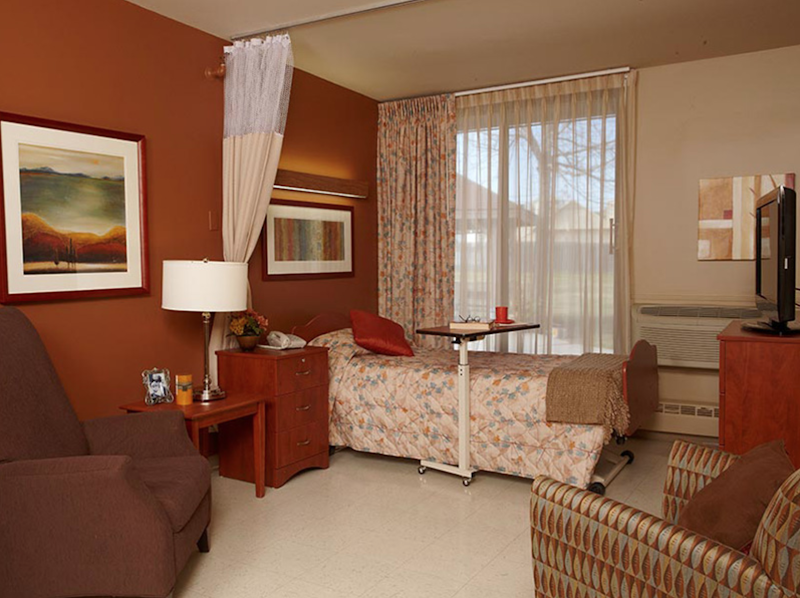
How is Sheboygan Progressive Health Services Staffed?

CMS rates SHEBOYGAN PROGRESSIVE HEALTH SERVICES's staffing level at 3 out of 5 stars, which is average compared to other nursing homes. Staff turnover is 34%, compared to the Wisconsin average of 46%. This relatively stable workforce can support continuity of care.

What Have Inspectors Found at Sheboygan Progressive Health Services?

State health inspectors documented 27 deficiencies at SHEBOYGAN PROGRESSIVE HEALTH SERVICES during 2022 to 2025. These included: 1 that caused actual resident harm, 23 with potential for harm, and 3 minor or isolated issues. Deficiencies causing actual harm indicate documented cases where residents experienced negative health consequences.
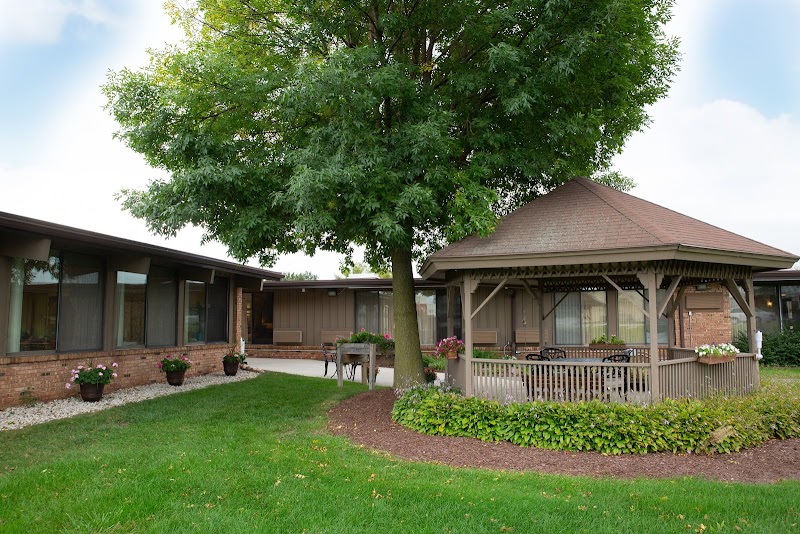
Who Owns and Operates Sheboygan Progressive Health Services?

SHEBOYGAN PROGRESSIVE HEALTH SERVICES is owned by a for-profit company. For-profit facilities operate as businesses with obligations to shareholders or private owners. The facility is operated by NORTH SHORE HEALTHCARE, a chain that manages multiple nursing homes. With 50 certified beds and approximately 45 residents (about 90% occupancy), it is a smaller facility located in SHEBOYGAN, Wisconsin.
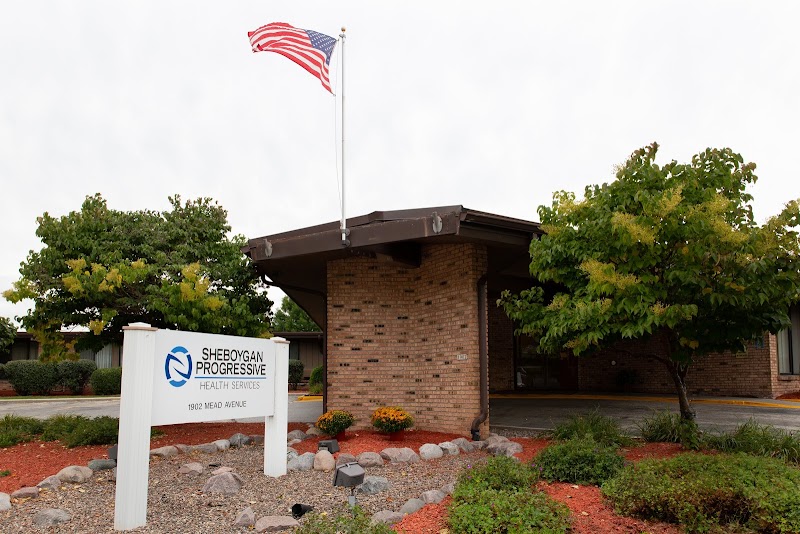
How Does Sheboygan Progressive Health Services Compare to Other Wisconsin Nursing Homes?

Compared to the 100 nursing homes in Wisconsin, SHEBOYGAN PROGRESSIVE HEALTH SERVICES's overall rating (3 stars) matches the state average, staff turnover (34%) is significantly lower than the state average of 46%, and health inspection rating (3 stars) is at the national benchmark.

What Should Families Ask When Visiting Sheboygan Progressive Health Services?

Based on this facility's data, families visiting should ask: "Can I visit during a mealtime to observe dining assistance and food quality?" "How do you handle medical emergencies, and what is your hospital transfer rate?" "Can I speak with family members of current residents about their experience?"

Is Sheboygan Progressive Health Services Safe?

Based on CMS inspection data, SHEBOYGAN PROGRESSIVE HEALTH SERVICES has a clean safety record: no substantiated abuse findings (meaning no confirmed cases of resident harm), no Immediate Jeopardy citations (the most serious violation level indicating risk of serious injury or death), and is not on the Special Focus Facility watch list (a federal program monitoring the lowest-performing 1% of nursing homes). The facility has a 3-star overall rating and ranks #1 of 100 nursing homes in Wisconsin. While no facility is perfect, families should still ask about staff-to-resident ratios and recent inspection results during their visit.

Do Nurses at Sheboygan Progressive Health Services Stick Around?

SHEBOYGAN PROGRESSIVE HEALTH SERVICES has a staff turnover rate of 34%, which is about average for Wisconsin nursing homes (state average: 46%). Moderate turnover is common in nursing homes, but families should still ask about staff tenure and how the facility maintains care continuity when employees leave.

Was Sheboygan Progressive Health Services Ever Fined?

SHEBOYGAN PROGRESSIVE HEALTH SERVICES has no federal fines on record. CMS issues fines when nursing homes fail to meet care standards or don't correct problems found during inspections. The absence of fines suggests the facility has either maintained compliance or corrected any issues before penalties were assessed. This is a positive indicator, though families should still review recent inspection reports for the full picture.

Is Sheboygan Progressive Health Services on Any Federal Watch List?

SHEBOYGAN PROGRESSIVE HEALTH SERVICES is not on any federal watch list. The most significant is the Special Focus Facility (SFF) program, which identifies the bottom 1% of nursing homes nationally based on persistent, serious quality problems. Not being on this list means the facility has avoided the pattern of deficiencies that triggers enhanced federal oversight. This is a positive indicator, though families should still review the facility's inspection history directly.